AB 2233: Behavioral health treatment plans.
- Session Year: 2025-2026
- House: Assembly
- Latest Version Date: 2026-09-27
Current Status:
Passed
(2026-09-27: Chaptered by Secretary of State - Chapter 591, Statutes of 2026.)
Introduced
In Committee
Awaiting First Chamber Vote
Passed First Chamber
In Committee
Awaiting Second Chamber Vote
Passed Second Chamber
Enacted
Existing law, the Knox-Keene Health Care Service Plan Act of 1975, provides for the licensure and regulation of health care service plans by the Department of Managed Health Care, and makes a willful violation of the act a crime. Existing law provides for the regulation of health insurers by the Department of Insurance. Existing law requires a health care service plan contract or health insurance policy to provide coverage for behavioral health treatment for pervasive developmental disorder or autism. Existing law requires this treatment to be provided under a prescribed treatment plan that is reviewed no less than every 6 months by the qualified autism service provider.
This bill would prohibit a health care service plan or health insurer from imposing restrictions on the utilization of authorized treatment hours within the treatment plans 6-month authorization period. The bill would require authorized hours to remain available for use throughout the authorization period if the use of the hours is consistent with the treatment plan and clinical guidelines, and is documented in the treatment plan and progress reports. Because a willful violation of these provisions by a health care service plan would be a crime, the bill would impose a state-mandated local program.
The California Constitution requires the state to reimburse local agencies and school districts for certain costs mandated by the state. Statutory provisions establish procedures for making that reimbursement.
This bill would provide that no reimbursement is required by this act for a specified reason.
Existing law, the Knox-Keene Health Care Service Plan Act of 1975, provides for the licensure and regulation of health care service plans by the Department of Managed Health Care, and makes a willful violation of the act a crime. Existing law provides for the regulation of health insurers by the Department of Insurance. Existing law requires a health care service plan contract or health insurance policy to provide coverage for behavioral health treatment for pervasive developmental disorder or autism. Existing law requires this treatment to be provided under a prescribed treatment plan that is reviewed no less than every 6 months by the qualified autism service provider.
This bill would prohibit a health care service plan or health insurer from imposing restrictions on the utilization of authorized treatment hours within the treatment plans 6-month authorization period. The bill would require authorized hours to remain available for use throughout the authorization period if the use of the hours is consistent with the treatment plan and clinical guidelines, and is documented in the treatment plan and progress reports. Because a willful violation of these provisions by a health care service plan would be a crime, the bill would impose a state-mandated local program.
The California Constitution requires the state to reimburse local agencies and school districts for certain costs mandated by the state. Statutory provisions establish procedures for making that reimbursement.
This bill would provide that no reimbursement is required by this act for a specified reason.
Existing law, the Knox-Keene Health Care Service Plan Act of 1975, provides for the licensure and regulation of health care service plans by the Department of Managed Health Care, and makes a willful violation of the act a crime. Existing law provides for the regulation of health insurers by the Department of Insurance. Existing law requires a health care service plan contract or health insurance policy to provide coverage for behavioral health treatment for pervasive developmental disorder or autism. Existing law requires this treatment to be provided under a prescribed treatment plan that is reviewed no less than every 6 months by the qualified autism service provider.
This bill would prohibit a health care service plan or health insurer from imposing restrictions on the utilization of authorized treatment hours within the treatment plans 6-month authorization period. The bill would require authorized hours to remain available for use throughout the authorization period if the use of the hours is consistent with the treatment plan and clinical guidelines, and is documented in the treatment plan and progress reports. Because a willful violation of these provisions by a health care service plan would be a crime, the bill would impose a state-mandated local program.
The California Constitution requires the state to reimburse local agencies and school districts for certain costs mandated by the state. Statutory provisions establish procedures for making that reimbursement.
This bill would provide that no reimbursement is required by this act for a specified reason.
Existing law, the Knox-Keene Health Care Service Plan Act of 1975, provides for the licensure and regulation of health care service plans by the Department of Managed Health Care, and makes a willful violation of the act a crime. Existing law provides for the regulation of health insurers by the Department of Insurance. Existing law requires a health care service plan contract or health insurance policy to provide coverage for behavioral health treatment for pervasive developmental disorder or autism. Existing law requires this treatment to be provided under a prescribed treatment plan that is reviewed no less than every 6 months by the qualified autism service provider.
This bill would prohibit a health care service plan or health insurer from imposing restrictions on the utilization of authorized treatment hours within the treatment plans 6-month authorization period. The bill would require authorized hours to remain available for use throughout the authorization period. period if the use of the hours is consistent with the treatment plan and clinical guidelines, and is documented in the treatment plan and progress reports. Because a willful violation of these provisions by a health care service plan would be a crime, the bill would impose a state-mandated local program.
The California Constitution requires the state to reimburse local agencies and school districts for certain costs mandated by the state. Statutory provisions establish procedures for making that reimbursement.
This bill would provide that no reimbursement is required by this act for a specified reason.
Existing law, the Knox-Keene Health Care Service Plan Act of 1975, provides for the licensure and regulation of health care service plans by the Department of Managed Health Care, and makes a willful violation of the act a crime. Existing law provides for the regulation of health insurers by the Department of Insurance. Existing law requires a health care service plan contract or health insurance policy to provide coverage for behavioral health treatment for pervasive developmental disorder or autism. Existing law requires this treatment to be provided under a prescribed treatment plan that is reviewed no less than every 6 months by the qualified autism service provider.
This bill would prohibit a health care service plan or health insurer from imposing restrictions on the utilization of authorized treatment hours within the treatment plans 6-month authorization period. The bill would require authorized hours to remain available for use throughout the authorization period. Because a willful violation of these provisions by a health care service plan would be a crime, the bill would impose a state-mandated local program.
The California Constitution requires the state to reimburse local agencies and school districts for certain costs mandated by the state. Statutory provisions establish procedures for making that reimbursement.
This bill would provide that no reimbursement is required by this act for a specified reason.
(a)(1)Every health care service plan contract that provides hospital, medical, or surgical coverage shall also provide coverage for behavioral health treatment for pervasive developmental disorder or autism no later than July 1, 2012. The coverage shall be provided in the same manner and is subject to the same requirements as provided in Section 1374.72.
(2)Notwithstanding paragraph (1), as of the date that the proposed final rulemaking for essential health benefits is issued, this section does not require any benefits to be provided that exceed the essential health benefits that all health plans will be required by federal regulations to provide under Section 1302(b) of the federal Patient Protection and Affordable Care Act (Public Law 111-148), as amended by the federal Health Care and Education Reconciliation Act of 2010 (Public Law 111-152).
(3)This section does not affect services for which an individual is eligible pursuant to Division 4.5 (commencing with Section 4500) of the Welfare and Institutions Code or Title 14 (commencing with Section 95000) of the Government Code.
(4)This section does not affect or reduce any obligation to provide services under an individualized education program, as defined in Section 56032 of the Education Code, or an individual service plan, as described in Section 5600.4 of the Welfare and Institutions Code, or under the federal Individuals with Disabilities Education Act (20 U.S.C. Sec. 1400 et seq.) and its implementing regulations.
(b)Every health care service plan subject to this section shall maintain an adequate network that includes qualified autism service providers who supervise or employ qualified autism service professionals or paraprofessionals who provide and administer behavioral health treatment. A health care service plan is not prevented from selectively contracting with providers within these requirements.
(c)(1)A health care service plan contract issued, amended, or renewed on or after January 1, 2026, shall not require an enrollee previously diagnosed with pervasive developmental disorder or autism to receive a rediagnosis to maintain coverage for behavioral health treatment for pervasive developmental disorder or autism.
(2)This subdivision does not prohibit or restrict a treating provider from reevaluating an enrollee for purposes of determining the appropriate treatment. The treatment plan shall be made available to the health care service plan upon request.
(3)This subdivision does not prohibit a treating provider from prescribing a rediagnosis at the discretion of the physician licensed pursuant to Chapter 5 (commencing with Section 2000) of Division 2 of the Business and Professions Code or a psychologist licensed pursuant to Chapter 6.6 (commencing with Section 2900) of Division 2 of the Business and Professions Code.
(4)A health care service plan shall not discontinue or delay existing treatment while waiting for a rediagnosis to be completed.
(5)This subdivision does not prohibit a health care service plan from requiring utilization review. For the purpose of this section, utilization review is distinct from a rediagnosis.
(d)For the purposes of this section, the following definitions shall apply:
(1)Behavioral health treatment means professional services and treatment programs, including applied behavior analysis and evidence-based behavior intervention programs, that develop or restore, to the maximum extent practicable, the functioning of an individual with pervasive developmental disorder or autism and that meet all of the following criteria:
(A)The treatment is prescribed by a physician and surgeon licensed pursuant to Chapter 5 (commencing with Section 2000) of, or is developed by a psychologist licensed pursuant to Chapter 6.6 (commencing with Section 2900) of, Division 2 of the Business and Professions Code.
(B)The treatment is provided under a treatment plan prescribed by a qualified autism service provider and is administered by one of the following:
(i)A qualified autism service provider.
(ii)A qualified autism service professional supervised by the qualified autism service provider.
(iii)A qualified autism service paraprofessional supervised by a qualified autism service provider or qualified autism service professional.
(C)The treatment plan has measurable goals over a specific timeline that is developed and approved by the qualified autism service provider for the specific patient being treated. The treatment plan shall be reviewed no less than once every six months by the qualified autism service provider and modified whenever appropriate. A health care service plan shall not impose restrictions on the utilization of authorized treatment hours within the six-month authorization period, including weekly caps or limitations that result in the forfeiture of unused hours, if the use of the hours is reasonably consistent with the treatment plan and clinical guidelines, and is documented in the treatment plan and progress reports. Authorized hours shall remain available for use throughout the authorization period to ensure the enrollee may fully access their approved treatment if the use of the hours is reasonably consistent with the treatment plan and clinical guidelines, and is documented in the treatment plan and progress reports. The treatment shall be consistent with Section 4686.2 of the Welfare and Institutions Code pursuant to which the qualified autism service provider does all of the following:
(i)Describes the patients behavioral health impairments or developmental challenges that are to be treated.
(ii)Designs an intervention plan that includes the service type, number of hours, and parent participation needed to achieve the plans goal and objectives, and the frequency at which the patients progress is evaluated and reported.
(iii)Provides intervention plans that utilize evidence-based practices, with demonstrated clinical efficacy in treating pervasive developmental disorder or autism.
(iv)Discontinues intensive behavioral intervention services when the treatment goals and objectives are achieved or no longer appropriate.
(D)The treatment plan is not used for purposes of providing or for the reimbursement of respite, daycare, or educational services and is not used to reimburse a parent for participating in the treatment program. The treatment plan shall be made available to the health care service plan upon request.
(2)Qualified autism service provider means an individual described in Section 4999.200 of the Business and Professions Code.
(3)Qualified autism service professional means an individual who meets all of the criteria set forth in Section 4999.201 of the Business and Professions Code.
(4)Qualified autism service paraprofessional means an unlicensed and uncertified individual who meets all of the criteria set forth in Section 4999.202 of the Business and Professions Code.
(5)Rediagnosis means a subsequent undertaking by any method, device, or procedure, whether gratuitous or not, to ascertain or establish if a person is suffering from a physical or mental health disorder, pursuant to Section 2038 of the Business and Professions Code. Rediagnosis also means prescription of a subsequent diagnosis of pervasive developmental disorders or autism to ascertain or establish if a person is suffering from a pervasive developmental disorder or autism.
(6)Utilization review means utilization review or utilization management functions that prospectively, retrospectively, or concurrently review and approve, modify, or deny, based in whole or in part on medical necessity to cure and relieve, treatment recommendations by physicians licensed pursuant to Chapter 5 (commencing with Section 2000) of Division 2 of the Business and Professions Code before, after, or concurrent with the provision of medical treatment services. Utilization review refers to an evaluation of existing treatment to ensure an enrollee receives the proper care at the proper time.
(e)This section does not apply to either of the following:
(1)A specialized health care service plan that does not deliver mental health or behavioral health services to enrollees.
(2)A health care service plan contract in the Medi-Cal program (Chapter 7 (commencing with Section 14000) of Part 3 of Division 9 of the Welfare and Institutions Code).
(f)This section does not limit the obligation to provide services under Section 1374.72.
(g)As provided in Section 1374.72 and in paragraph (1) of subdivision (a), in the provision of benefits required by this section, a health care service plan may utilize case management, network providers, utilization review techniques, prior authorization, copayments, or other cost sharing.
SEC. 2.Section 10144.51 of the Insurance Code is amended to read:10144.51.(a)(1)Every health insurance policy shall also provide coverage for behavioral health treatment for pervasive developmental disorder or autism no later than July 1, 2012. The coverage shall be provided in the same manner and is subject to the same requirements as provided in Section 10144.5.
(2)Notwithstanding paragraph (1), as of the date that the proposed final rulemaking for essential health benefits is issued, this section does not require any benefits to be provided that exceed the essential health benefits that all health insurers will be required by federal regulations to provide under Section 1302(b) of the federal Patient Protection and Affordable Care Act (Public Law 111-148), as amended by the federal Health Care and Education Reconciliation Act of 2010 (Public Law 111-152).
(3)This section does not affect services for which an individual is eligible pursuant to Division 4.5 (commencing with Section 4500) of the Welfare and Institutions Code or Title 14 (commencing with Section 95000) of the Government Code.
(4)This section does not affect or reduce any obligation to provide services under an individualized education program, as defined in Section 56032 of the Education Code, or an individual service plan, as described in Section 5600.4 of the Welfare and Institutions Code, or under the federal Individuals with Disabilities Education Act (20 U.S.C. Sec. 1400 et seq.) and its implementing regulations.
(b)Pursuant to Article 6 (commencing with Section 2240) of Subchapter 2 of Chapter 5 of Title 10 of the California Code of Regulations, every health insurer subject to this section shall maintain an adequate network that includes qualified autism service providers who supervise or employ qualified autism service professionals or paraprofessionals who provide and administer behavioral health treatment. A health insurer is not prevented from selectively contracting with providers within these requirements.
(c)(1)A health insurance policy issued, amended, or renewed on or after January 1, 2026, shall not require an insured previously diagnosed with pervasive developmental disorder or autism to receive a rediagnosis to maintain coverage for behavioral health treatment for pervasive developmental disorder or autism.
(2)This subdivision does not prohibit or restrict a treating provider from reevaluating an insured for purposes of determining the appropriate treatment. The treatment plan shall be made available to the insurer upon request.
(3)This subdivision does not prohibit a treating provider from prescribing a rediagnosis at the discretion of the physician licensed pursuant to Chapter 5 (commencing with Section 2000) of Division 2 of the Business and Professions Code or a psychologist licensed pursuant to Chapter 6.6 (commencing with Section 2900) of Division 2 of the Business and Professions Code.
(4)A health insurer shall not discontinue or delay existing treatment while waiting for a rediagnosis to be completed.
(5)This subdivision does not prohibit a health insurer from requiring utilization review. For the purpose of this section, utilization review is distinct from a rediagnosis.
(d)For the purposes of this section, the following definitions shall apply:
(1)Behavioral health treatment means professional services and treatment programs, including applied behavior analysis and evidence-based behavior intervention programs, that develop or restore, to the maximum extent practicable, the functioning of an individual with pervasive developmental disorder or autism, and that meet all of the following criteria:
(A)The treatment is prescribed by a physician and surgeon licensed pursuant to Chapter 5 (commencing with Section 2000) of, or is developed by a psychologist licensed pursuant to Chapter 6.6 (commencing with Section 2900) of, Division 2 of the Business and Professions Code.
(B)The treatment is provided under a treatment plan prescribed by a qualified autism service provider and is administered by one of the following:
(i)A qualified autism service provider.
(ii)A qualified autism service professional supervised by the qualified autism service provider.
(iii)A qualified autism service paraprofessional supervised by a qualified autism service provider or qualified autism service professional.
(C)The treatment plan has measurable goals over a specific timeline that is developed and approved by the qualified autism service provider for the specific patient being treated. The treatment plan shall be reviewed no less than once every six months by the qualified autism service provider and modified whenever appropriate. A health insurer shall not impose restrictions on the utilization of authorized treatment hours within the six-month authorization period, including weekly caps or limitations that result in the forfeiture of unused hours, if the use of the hours is reasonably consistent with the treatment plan and clinical guidelines, and is documented in the treatment plan and progress reports. Authorized hours shall remain available for use throughout the authorization period to ensure the insured may fully access their approved treatment if the use of the hours is reasonably consistent with the treatment plan and clinical guidelines, and is documented in the treatment plan and progress reports. The treatment shall be consistent with Section 4686.2 of the Welfare and Institutions Code pursuant to which the qualified autism service provider does all of the following:
(i)Describes the patients behavioral health impairments or developmental challenges that are to be treated.
(ii)Designs an intervention plan that includes the service type, number of hours, and parent participation needed to achieve the plans goal and objectives, and the frequency at which the patients progress is evaluated and reported.
(iii)Provides intervention plans that utilize evidence-based practices, with demonstrated clinical efficacy in treating pervasive developmental disorder or autism.
(iv)Discontinues intensive behavioral intervention services when the treatment goals and objectives are achieved or no longer appropriate.
(D)The treatment plan is not used for purposes of providing or for the reimbursement of respite, daycare, or educational services and is not used to reimburse a parent for participating in the treatment program. The treatment plan shall be made available to the insurer upon request.
(2)Qualified autism service provider means an individual described in Section 4999.200 of the Business and Professions Code.
(3)Qualified autism service professional means an individual who meets all of the criteria set forth in Section 4999.201 of the Business and Professions Code.
(4)Qualified autism service paraprofessional means an unlicensed and uncertified individual who meets all of the criteria set forth in Section 4999.202 of the Business and Professions Code.
(5)Rediagnosis means a subsequent undertaking by any method, device, or procedure, whether gratuitous or not, to ascertain or establish if a person is suffering from a physical or mental health disorder, pursuant to Section 2038 of the Business and Professions Code. Rediagnosis also means prescription of a subsequent diagnosis of pervasive developmental disorders or autism to ascertain or establish if a person is suffering from a pervasive developmental disorder or autism.
(6)Utilization review means utilization review or utilization management functions that prospectively, retrospectively, or concurrently review and approve, modify, or deny, based in whole or in part on medical necessity to cure and relieve, treatment recommendations by physicians licensed pursuant to Chapter 5 (commencing with Section 2000) of Division 2 of the Business and Professions Code before, after, or concurrent with the provision of medical treatment services. Utilization review refers to an evaluation of existing treatment to ensure the insured receives the proper care at the proper time.
(e)This section does not apply to either of the following:
(1)A specialized health insurance policy that does not cover mental health or behavioral health services or an accident-only, specified disease, hospital indemnity, or Medicare supplement policy.
(2)A health insurance policy in the Medi-Cal program (Chapter 7 (commencing with Section 14000) of Part 3 of Division 9 of the Welfare and Institutions Code).
(f)This section does not limit the obligation to provide services under Section 10144.5.
(g)As provided in Section 10144.5 and in paragraph (1) of subdivision (a), in the provision of benefits required by this section, a health insurer may utilize case management, network providers, utilization review techniques, prior authorization, copayments, or other cost sharing.
SEC. 3.No reimbursement is required by this act pursuant to Section 6 of Article XIIIB of the California Constitution because the only costs that may be incurred by a local agency or school district will be incurred because this act creates a new crime or infraction, eliminates a crime or infraction, or changes the penalty for a crime or infraction, within the meaning of Section 17556 of the Government Code, or changes the definition of a crime within the meaning of Section 6 of Article XIIIB of the California Constitution.
(a)(1)Every health care service plan contract that provides hospital, medical, or surgical coverage shall also provide coverage for behavioral health treatment for pervasive developmental disorder or autism no later than July 1, 2012. The coverage shall be provided in the same manner and is subject to the same requirements as provided in Section 1374.72.
(2)Notwithstanding paragraph (1), as of the date that the proposed final rulemaking for essential health benefits is issued, this section does not require any benefits to be provided that exceed the essential health benefits that all health plans will be required by federal regulations to provide under Section 1302(b) of the federal Patient Protection and Affordable Care Act (Public Law 111-148), as amended by the federal Health Care and Education Reconciliation Act of 2010 (Public Law 111-152).
(3)This section does not affect services for which an individual is eligible pursuant to Division 4.5 (commencing with Section 4500) of the Welfare and Institutions Code or Title 14 (commencing with Section 95000) of the Government Code.
(4)This section does not affect or reduce any obligation to provide services under an individualized education program, as defined in Section 56032 of the Education Code, or an individual service plan, as described in Section 5600.4 of the Welfare and Institutions Code, or under the federal Individuals with Disabilities Education Act (20 U.S.C. Sec. 1400 et seq.) and its implementing regulations.
(b)Every health care service plan subject to this section shall maintain an adequate network that includes qualified autism service providers who supervise or employ qualified autism service professionals or paraprofessionals who provide and administer behavioral health treatment. A health care service plan is not prevented from selectively contracting with providers within these requirements.
(c)(1)A health care service plan contract issued, amended, or renewed on or after January 1, 2026, shall not require an enrollee previously diagnosed with pervasive developmental disorder or autism to receive a rediagnosis to maintain coverage for behavioral health treatment for pervasive developmental disorder or autism.
(2)This subdivision does not prohibit or restrict a treating provider from reevaluating an enrollee for purposes of determining the appropriate treatment. The treatment plan shall be made available to the health care service plan upon request.
(3)This subdivision does not prohibit a treating provider from prescribing a rediagnosis at the discretion of the physician licensed pursuant to Chapter 5 (commencing with Section 2000) of Division 2 of the Business and Professions Code or a psychologist licensed pursuant to Chapter 6.6 (commencing with Section 2900) of Division 2 of the Business and Professions Code.
(4)A health care service plan shall not discontinue or delay existing treatment while waiting for a rediagnosis to be completed.
(5)This subdivision does not prohibit a health care service plan from requiring utilization review. For the purpose of this section, utilization review is distinct from a rediagnosis.
(d)For the purposes of this section, the following definitions shall apply:
(1)Behavioral health treatment means professional services and treatment programs, including applied behavior analysis and evidence-based behavior intervention programs, that develop or restore, to the maximum extent practicable, the functioning of an individual with pervasive developmental disorder or autism and that meet all of the following criteria:
(A)The treatment is prescribed by a physician and surgeon licensed pursuant to Chapter 5 (commencing with Section 2000) of, or is developed by a psychologist licensed pursuant to Chapter 6.6 (commencing with Section 2900) of, Division 2 of the Business and Professions Code.
(B)The treatment is provided under a treatment plan prescribed by a qualified autism service provider and is administered by one of the following:
(i)A qualified autism service provider.
(ii)A qualified autism service professional supervised by the qualified autism service provider.
(iii)A qualified autism service paraprofessional supervised by a qualified autism service provider or qualified autism service professional.
(C)The treatment plan has measurable goals over a specific timeline that is developed and approved by the qualified autism service provider for the specific patient being treated. The treatment plan shall be reviewed no less than once every six months by the qualified autism service provider and modified whenever appropriate. A health care service plan shall not impose restrictions on the utilization of authorized treatment hours within the six-month authorization period, including weekly caps or limitations that result in the forfeiture of unused hours, if the use of the hours is reasonably consistent with the treatment plan and clinical guidelines, and is documented in the treatment plan and progress reports. Authorized hours shall remain available for use throughout the authorization period to ensure the enrollee may fully access their approved treatment if the use of the hours is reasonably consistent with the treatment plan and clinical guidelines, and is documented in the treatment plan and progress reports. The treatment shall be consistent with Section 4686.2 of the Welfare and Institutions Code pursuant to which the qualified autism service provider does all of the following:
(i)Describes the patients behavioral health impairments or developmental challenges that are to be treated.
(ii)Designs an intervention plan that includes the service type, number of hours, and parent participation needed to achieve the plans goal and objectives, and the frequency at which the patients progress is evaluated and reported.
(iii)Provides intervention plans that utilize evidence-based practices, with demonstrated clinical efficacy in treating pervasive developmental disorder or autism.
(iv)Discontinues intensive behavioral intervention services when the treatment goals and objectives are achieved or no longer appropriate.
(D)The treatment plan is not used for purposes of providing or for the reimbursement of respite, daycare, or educational services and is not used to reimburse a parent for participating in the treatment program. The treatment plan shall be made available to the health care service plan upon request.
(2)Qualified autism service provider means an individual described in Section 4999.200 of the Business and Professions Code.
(3)Qualified autism service professional means an individual who meets all of the criteria set forth in Section 4999.201 of the Business and Professions Code.
(4)Qualified autism service paraprofessional means an unlicensed and uncertified individual who meets all of the criteria set forth in Section 4999.202 of the Business and Professions Code.
(5)Rediagnosis means a subsequent undertaking by any method, device, or procedure, whether gratuitous or not, to ascertain or establish if a person is suffering from a physical or mental health disorder, pursuant to Section 2038 of the Business and Professions Code. Rediagnosis also means prescription of a subsequent diagnosis of pervasive developmental disorders or autism to ascertain or establish if a person is suffering from a pervasive developmental disorder or autism.
(6)Utilization review means utilization review or utilization management functions that prospectively, retrospectively, or concurrently review and approve, modify, or deny, based in whole or in part on medical necessity to cure and relieve, treatment recommendations by physicians licensed pursuant to Chapter 5 (commencing with Section 2000) of Division 2 of the Business and Professions Code before, after, or concurrent with the provision of medical treatment services. Utilization review refers to an evaluation of existing treatment to ensure an enrollee receives the proper care at the proper time.
(e)This section does not apply to either of the following:
(1)A specialized health care service plan that does not deliver mental health or behavioral health services to enrollees.
(2)A health care service plan contract in the Medi-Cal program (Chapter 7 (commencing with Section 14000) of Part 3 of Division 9 of the Welfare and Institutions Code).
(f)This section does not limit the obligation to provide services under Section 1374.72.
(g)As provided in Section 1374.72 and in paragraph (1) of subdivision (a), in the provision of benefits required by this section, a health care service plan may utilize case management, network providers, utilization review techniques, prior authorization, copayments, or other cost sharing.
SEC. 2.Section 10144.51 of the Insurance Code is amended to read:10144.51.(a)(1)Every health insurance policy shall also provide coverage for behavioral health treatment for pervasive developmental disorder or autism no later than July 1, 2012. The coverage shall be provided in the same manner and is subject to the same requirements as provided in Section 10144.5.
(2)Notwithstanding paragraph (1), as of the date that the proposed final rulemaking for essential health benefits is issued, this section does not require any benefits to be provided that exceed the essential health benefits that all health insurers will be required by federal regulations to provide under Section 1302(b) of the federal Patient Protection and Affordable Care Act (Public Law 111-148), as amended by the federal Health Care and Education Reconciliation Act of 2010 (Public Law 111-152).
(3)This section does not affect services for which an individual is eligible pursuant to Division 4.5 (commencing with Section 4500) of the Welfare and Institutions Code or Title 14 (commencing with Section 95000) of the Government Code.
(4)This section does not affect or reduce any obligation to provide services under an individualized education program, as defined in Section 56032 of the Education Code, or an individual service plan, as described in Section 5600.4 of the Welfare and Institutions Code, or under the federal Individuals with Disabilities Education Act (20 U.S.C. Sec. 1400 et seq.) and its implementing regulations.
(b)Pursuant to Article 6 (commencing with Section 2240) of Subchapter 2 of Chapter 5 of Title 10 of the California Code of Regulations, every health insurer subject to this section shall maintain an adequate network that includes qualified autism service providers who supervise or employ qualified autism service professionals or paraprofessionals who provide and administer behavioral health treatment. A health insurer is not prevented from selectively contracting with providers within these requirements.
(c)(1)A health insurance policy issued, amended, or renewed on or after January 1, 2026, shall not require an insured previously diagnosed with pervasive developmental disorder or autism to receive a rediagnosis to maintain coverage for behavioral health treatment for pervasive developmental disorder or autism.
(2)This subdivision does not prohibit or restrict a treating provider from reevaluating an insured for purposes of determining the appropriate treatment. The treatment plan shall be made available to the insurer upon request.
(3)This subdivision does not prohibit a treating provider from prescribing a rediagnosis at the discretion of the physician licensed pursuant to Chapter 5 (commencing with Section 2000) of Division 2 of the Business and Professions Code or a psychologist licensed pursuant to Chapter 6.6 (commencing with Section 2900) of Division 2 of the Business and Professions Code.
(4)A health insurer shall not discontinue or delay existing treatment while waiting for a rediagnosis to be completed.
(5)This subdivision does not prohibit a health insurer from requiring utilization review. For the purpose of this section, utilization review is distinct from a rediagnosis.
(d)For the purposes of this section, the following definitions shall apply:
(1)Behavioral health treatment means professional services and treatment programs, including applied behavior analysis and evidence-based behavior intervention programs, that develop or restore, to the maximum extent practicable, the functioning of an individual with pervasive developmental disorder or autism, and that meet all of the following criteria:
(A)The treatment is prescribed by a physician and surgeon licensed pursuant to Chapter 5 (commencing with Section 2000) of, or is developed by a psychologist licensed pursuant to Chapter 6.6 (commencing with Section 2900) of, Division 2 of the Business and Professions Code.
(B)The treatment is provided under a treatment plan prescribed by a qualified autism service provider and is administered by one of the following:
(i)A qualified autism service provider.
(ii)A qualified autism service professional supervised by the qualified autism service provider.
(iii)A qualified autism service paraprofessional supervised by a qualified autism service provider or qualified autism service professional.
(C)The treatment plan has measurable goals over a specific timeline that is developed and approved by the qualified autism service provider for the specific patient being treated. The treatment plan shall be reviewed no less than once every six months by the qualified autism service provider and modified whenever appropriate. A health insurer shall not impose restrictions on the utilization of authorized treatment hours within the six-month authorization period, including weekly caps or limitations that result in the forfeiture of unused hours, if the use of the hours is reasonably consistent with the treatment plan and clinical guidelines, and is documented in the treatment plan and progress reports. Authorized hours shall remain available for use throughout the authorization period to ensure the insured may fully access their approved treatment if the use of the hours is reasonably consistent with the treatment plan and clinical guidelines, and is documented in the treatment plan and progress reports. The treatment shall be consistent with Section 4686.2 of the Welfare and Institutions Code pursuant to which the qualified autism service provider does all of the following:
(i)Describes the patients behavioral health impairments or developmental challenges that are to be treated.
(ii)Designs an intervention plan that includes the service type, number of hours, and parent participation needed to achieve the plans goal and objectives, and the frequency at which the patients progress is evaluated and reported.
(iii)Provides intervention plans that utilize evidence-based practices, with demonstrated clinical efficacy in treating pervasive developmental disorder or autism.
(iv)Discontinues intensive behavioral intervention services when the treatment goals and objectives are achieved or no longer appropriate.
(D)The treatment plan is not used for purposes of providing or for the reimbursement of respite, daycare, or educational services and is not used to reimburse a parent for participating in the treatment program. The treatment plan shall be made available to the insurer upon request.
(2)Qualified autism service provider means an individual described in Section 4999.200 of the Business and Professions Code.
(3)Qualified autism service professional means an individual who meets all of the criteria set forth in Section 4999.201 of the Business and Professions Code.
(4)Qualified autism service paraprofessional means an unlicensed and uncertified individual who meets all of the criteria set forth in Section 4999.202 of the Business and Professions Code.
(5)Rediagnosis means a subsequent undertaking by any method, device, or procedure, whether gratuitous or not, to ascertain or establish if a person is suffering from a physical or mental health disorder, pursuant to Section 2038 of the Business and Professions Code. Rediagnosis also means prescription of a subsequent diagnosis of pervasive developmental disorders or autism to ascertain or establish if a person is suffering from a pervasive developmental disorder or autism.
(6)Utilization review means utilization review or utilization management functions that prospectively, retrospectively, or concurrently review and approve, modify, or deny, based in whole or in part on medical necessity to cure and relieve, treatment recommendations by physicians licensed pursuant to Chapter 5 (commencing with Section 2000) of Division 2 of the Business and Professions Code before, after, or concurrent with the provision of medical treatment services. Utilization review refers to an evaluation of existing treatment to ensure the insured receives the proper care at the proper time.
(e)This section does not apply to either of the following:
(1)A specialized health insurance policy that does not cover mental health or behavioral health services or an accident-only, specified disease, hospital indemnity, or Medicare supplement policy.
(2)A health insurance policy in the Medi-Cal program (Chapter 7 (commencing with Section 14000) of Part 3 of Division 9 of the Welfare and Institutions Code).
(f)This section does not limit the obligation to provide services under Section 10144.5.
(g)As provided in Section 10144.5 and in paragraph (1) of subdivision (a), in the provision of benefits required by this section, a health insurer may utilize case management, network providers, utilization review techniques, prior authorization, copayments, or other cost sharing.
SEC. 3.No reimbursement is required by this act pursuant to Section 6 of Article XIIIB of the California Constitution because the only costs that may be incurred by a local agency or school district will be incurred because this act creates a new crime or infraction, eliminates a crime or infraction, or changes the penalty for a crime or infraction, within the meaning of Section 17556 of the Government Code, or changes the definition of a crime within the meaning of Section 6 of Article XIIIB of the California Constitution.
(a)(1)Every health care service plan contract that provides hospital, medical, or surgical coverage shall also provide coverage for behavioral health treatment for pervasive developmental disorder or autism no later than July 1, 2012. The coverage shall be provided in the same manner and is subject to the same requirements as provided in Section 1374.72.
(2)Notwithstanding paragraph (1), as of the date that the proposed final rulemaking for essential health benefits is issued, this section does not require any benefits to be provided that exceed the essential health benefits that all health plans will be required by federal regulations to provide under Section 1302(b) of the federal Patient Protection and Affordable Care Act (Public Law 111-148), as amended by the federal Health Care and Education Reconciliation Act of 2010 (Public Law 111-152).
(3)This section does not affect services for which an individual is eligible pursuant to Division 4.5 (commencing with Section 4500) of the Welfare and Institutions Code or Title 14 (commencing with Section 95000) of the Government Code.
(4)This section does not affect or reduce any obligation to provide services under an individualized education program, as defined in Section 56032 of the Education Code, or an individual service plan, as described in Section 5600.4 of the Welfare and Institutions Code, or under the federal Individuals with Disabilities Education Act (20 U.S.C. Sec. 1400 et seq.) and its implementing regulations.
(b)Every health care service plan subject to this section shall maintain an adequate network that includes qualified autism service providers who supervise or employ qualified autism service professionals or paraprofessionals who provide and administer behavioral health treatment. A health care service plan is not prevented from selectively contracting with providers within these requirements.
(c)(1)A health care service plan contract issued, amended, or renewed on or after January 1, 2026, shall not require an enrollee previously diagnosed with pervasive developmental disorder or autism to receive a rediagnosis to maintain coverage for behavioral health treatment for pervasive developmental disorder or autism.
(2)This subdivision does not prohibit or restrict a treating provider from reevaluating an enrollee for purposes of determining the appropriate treatment. The treatment plan shall be made available to the health care service plan upon request.
(3)This subdivision does not prohibit a treating provider from prescribing a rediagnosis at the discretion of the physician licensed pursuant to Chapter 5 (commencing with Section 2000) of Division 2 of the Business and Professions Code or a psychologist licensed pursuant to Chapter 6.6 (commencing with Section 2900) of Division 2 of the Business and Professions Code.
(4)A health care service plan shall not discontinue or delay existing treatment while waiting for a rediagnosis to be completed.
(5)This subdivision does not prohibit a health care service plan from requiring utilization review. For the purpose of this section, utilization review is distinct from a rediagnosis.
(d)For the purposes of this section, the following definitions shall apply:
(1)Behavioral health treatment means professional services and treatment programs, including applied behavior analysis and evidence-based behavior intervention programs, that develop or restore, to the maximum extent practicable, the functioning of an individual with pervasive developmental disorder or autism and that meet all of the following criteria:
(A)The treatment is prescribed by a physician and surgeon licensed pursuant to Chapter 5 (commencing with Section 2000) of, or is developed by a psychologist licensed pursuant to Chapter 6.6 (commencing with Section 2900) of, Division 2 of the Business and Professions Code.
(B)The treatment is provided under a treatment plan prescribed by a qualified autism service provider and is administered by one of the following:
(i)A qualified autism service provider.
(ii)A qualified autism service professional supervised by the qualified autism service provider.
(iii)A qualified autism service paraprofessional supervised by a qualified autism service provider or qualified autism service professional.
(C)The treatment plan has measurable goals over a specific timeline that is developed and approved by the qualified autism service provider for the specific patient being treated. The treatment plan shall be reviewed no less than once every six months by the qualified autism service provider and modified whenever appropriate. A health care service plan shall not impose restrictions on the utilization of authorized treatment hours within the six-month authorization period, including weekly caps or limitations that result in the forfeiture of unused hours due to unavoidable circumstances, including patient illness, family travel, or provider unavailability, hours, if the use of the hours is reasonably consistent with the treatment plan and clinical guidelines, and is documented in the treatment plan and progress reports. Authorized hours shall remain available for use throughout the authorization period to ensure the enrollee may fully access their approved treatment if the use of the hours is reasonably consistent with the treatment plan and clinical guidelines, and is documented in the treatment plan and progress reports. The treatment shall be consistent with Section 4686.2 of the Welfare and Institutions Code pursuant to which the qualified autism service provider does all of the following:
(i)Describes the patients behavioral health impairments or developmental challenges that are to be treated.
(ii)Designs an intervention plan that includes the service type, number of hours, and parent participation needed to achieve the plans goal and objectives, and the frequency at which the patients progress is evaluated and reported.
(iii)Provides intervention plans that utilize evidence-based practices, with demonstrated clinical efficacy in treating pervasive developmental disorder or autism.
(iv)Discontinues intensive behavioral intervention services when the treatment goals and objectives are achieved or no longer appropriate.
(D)The treatment plan is not used for purposes of providing or for the reimbursement of respite, daycare, or educational services and is not used to reimburse a parent for participating in the treatment program. The treatment plan shall be made available to the health care service plan upon request.
(2)Qualified autism service provider means an individual described in Section 4999.200 of the Business and Professions Code.
(3)Qualified autism service professional means an individual who meets all of the criteria set forth in Section 4999.201 of the Business and Professions Code.
(4)Qualified autism service paraprofessional means an unlicensed and uncertified individual who meets all of the criteria set forth in Section 4999.202 of the Business and Professions Code.
(5)Rediagnosis means a subsequent undertaking by any method, device, or procedure, whether gratuitous or not, to ascertain or establish if a person is suffering from a physical or mental health disorder, pursuant to Section 2038 of the Business and Professions Code. Rediagnosis also means prescription of a subsequent diagnosis of pervasive developmental disorders or autism to ascertain or establish if a person is suffering from a pervasive developmental disorder or autism.
(6)Utilization review means utilization review or utilization management functions that prospectively, retrospectively, or concurrently review and approve, modify, or deny, based in whole or in part on medical necessity to cure and relieve, treatment recommendations by physicians licensed pursuant to Chapter 5 (commencing with Section 2000) of Division 2 of the Business and Professions Code before, after, or concurrent with the provision of medical treatment services. Utilization review refers to an evaluation of existing treatment to ensure an enrollee receives the proper care at the proper time.
(e)This section does not apply to either of the following:
(1)A specialized health care service plan that does not deliver mental health or behavioral health services to enrollees.
(2)A health care service plan contract in the Medi-Cal program (Chapter 7 (commencing with Section 14000) of Part 3 of Division 9 of the Welfare and Institutions Code).
(f)This section does not limit the obligation to provide services under Section 1374.72.
(g)As provided in Section 1374.72 and in paragraph (1) of subdivision (a), in the provision of benefits required by this section, a health care service plan may utilize case management, network providers, utilization review techniques, prior authorization, copayments, or other cost sharing.
(h)This section does not prohibit a health care service plan from applying evidence-based utilization management or a clinically appropriate schedule, provided an enrollee is permitted to reasonably make up missed services within the authorization period.SEC. 2.Section 10144.51 of the Insurance Code is amended to read:10144.51.(a)(1)Every health insurance policy shall also provide coverage for behavioral health treatment for pervasive developmental disorder or autism no later than July 1, 2012. The coverage shall be provided in the same manner and is subject to the same requirements as provided in Section 10144.5.
(2)Notwithstanding paragraph (1), as of the date that the proposed final rulemaking for essential health benefits is issued, this section does not require any benefits to be provided that exceed the essential health benefits that all health insurers will be required by federal regulations to provide under Section 1302(b) of the federal Patient Protection and Affordable Care Act (Public Law 111-148), as amended by the federal Health Care and Education Reconciliation Act of 2010 (Public Law 111-152).
(3)This section does not affect services for which an individual is eligible pursuant to Division 4.5 (commencing with Section 4500) of the Welfare and Institutions Code or Title 14 (commencing with Section 95000) of the Government Code.
(4)This section does not affect or reduce any obligation to provide services under an individualized education program, as defined in Section 56032 of the Education Code, or an individual service plan, as described in Section 5600.4 of the Welfare and Institutions Code, or under the federal Individuals with Disabilities Education Act (20 U.S.C. Sec. 1400 et seq.) and its implementing regulations.
(b)Pursuant to Article 6 (commencing with Section 2240) of Subchapter 2 of Chapter 5 of Title 10 of the California Code of Regulations, every health insurer subject to this section shall maintain an adequate network that includes qualified autism service providers who supervise or employ qualified autism service professionals or paraprofessionals who provide and administer behavioral health treatment. A health insurer is not prevented from selectively contracting with providers within these requirements.
(c)(1)A health insurance policy issued, amended, or renewed on or after January 1, 2026, shall not require an insured previously diagnosed with pervasive developmental disorder or autism to receive a rediagnosis to maintain coverage for behavioral health treatment for pervasive developmental disorder or autism.
(2)This subdivision does not prohibit or restrict a treating provider from reevaluating an insured for purposes of determining the appropriate treatment. The treatment plan shall be made available to the insurer upon request.
(3)This subdivision does not prohibit a treating provider from prescribing a rediagnosis at the discretion of the physician licensed pursuant to Chapter 5 (commencing with Section 2000) of Division 2 of the Business and Professions Code or a psychologist licensed pursuant to Chapter 6.6 (commencing with Section 2900) of Division 2 of the Business and Professions Code.
(4)A health insurer shall not discontinue or delay existing treatment while waiting for a rediagnosis to be completed.
(5)This subdivision does not prohibit a health insurer from requiring utilization review. For the purpose of this section, utilization review is distinct from a rediagnosis.
(d)For the purposes of this section, the following definitions shall apply:
(1)Behavioral health treatment means professional services and treatment programs, including applied behavior analysis and evidence-based behavior intervention programs, that develop or restore, to the maximum extent practicable, the functioning of an individual with pervasive developmental disorder or autism, and that meet all of the following criteria:
(A)The treatment is prescribed by a physician and surgeon licensed pursuant to Chapter 5 (commencing with Section 2000) of, or is developed by a psychologist licensed pursuant to Chapter 6.6 (commencing with Section 2900) of, Division 2 of the Business and Professions Code.
(B)The treatment is provided under a treatment plan prescribed by a qualified autism service provider and is administered by one of the following:
(i)A qualified autism service provider.
(ii)A qualified autism service professional supervised by the qualified autism service provider.
(iii)A qualified autism service paraprofessional supervised by a qualified autism service provider or qualified autism service professional.
(C)The treatment plan has measurable goals over a specific timeline that is developed and approved by the qualified autism service provider for the specific patient being treated. The treatment plan shall be reviewed no less than once every six months by the qualified autism service provider and modified whenever appropriate. A health insurer shall not impose restrictions on the utilization of authorized treatment hours within the six-month authorization period, including weekly caps or limitations that result in the forfeiture of unused hours due to unavoidable circumstances, including patient illness, family travel, or provider unavailability, hours, if the use of the hours is reasonably consistent with the treatment plan and clinical guidelines, and is documented in the treatment plan and progress reports. Authorized hours shall remain available for use throughout the authorization period to ensure the insured may fully access their approved treatment if the use of the hours is reasonably consistent with the treatment plan and clinical guidelines, and is documented in the treatment plan and progress reports. The treatment shall be consistent with Section 4686.2 of the Welfare and Institutions Code pursuant to which the qualified autism service provider does all of the following:
(i)Describes the patients behavioral health impairments or developmental challenges that are to be treated.
(ii)Designs an intervention plan that includes the service type, number of hours, and parent participation needed to achieve the plans goal and objectives, and the frequency at which the patients progress is evaluated and reported.
(iii)Provides intervention plans that utilize evidence-based practices, with demonstrated clinical efficacy in treating pervasive developmental disorder or autism.
(iv)Discontinues intensive behavioral intervention services when the treatment goals and objectives are achieved or no longer appropriate.
(D)The treatment plan is not used for purposes of providing or for the reimbursement of respite, daycare, or educational services and is not used to reimburse a parent for participating in the treatment program. The treatment plan shall be made available to the insurer upon request.
(2)Qualified autism service provider means an individual described in Section 4999.200 of the Business and Professions Code.
(3)Qualified autism service professional means an individual who meets all of the criteria set forth in Section 4999.201 of the Business and Professions Code.
(4)Qualified autism service paraprofessional means an unlicensed and uncertified individual who meets all of the criteria set forth in Section 4999.202 of the Business and Professions Code.
(5)Rediagnosis means a subsequent undertaking by any method, device, or procedure, whether gratuitous or not, to ascertain or establish if a person is suffering from a physical or mental health disorder, pursuant to Section 2038 of the Business and Professions Code. Rediagnosis also means prescription of a subsequent diagnosis of pervasive developmental disorders or autism to ascertain or establish if a person is suffering from a pervasive developmental disorder or autism.
(6)Utilization review means utilization review or utilization management functions that prospectively, retrospectively, or concurrently review and approve, modify, or deny, based in whole or in part on medical necessity to cure and relieve, treatment recommendations by physicians licensed pursuant to Chapter 5 (commencing with Section 2000) of Division 2 of the Business and Professions Code before, after, or concurrent with the provision of medical treatment services. Utilization review refers to an evaluation of existing treatment to ensure the insured receives the proper care at the proper time.
(e)This section does not apply to either of the following:
(1)A specialized health insurance policy that does not cover mental health or behavioral health services or an accident-only, specified disease, hospital indemnity, or Medicare supplement policy.
(2)A health insurance policy in the Medi-Cal program (Chapter 7 (commencing with Section 14000) of Part 3 of Division 9 of the Welfare and Institutions Code).
(f)This section does not limit the obligation to provide services under Section 10144.5.
(g)As provided in Section 10144.5 and in paragraph (1) of subdivision (a), in the provision of benefits required by this section, a health insurer may utilize case management, network providers, utilization review techniques, prior authorization, copayments, or other cost sharing.
(h)This section does not prohibit a health insurer from applying evidence-based utilization management or a clinically appropriate schedule, provided an insured is permitted to reasonably make up missed services within the authorization period.SEC. 3.No reimbursement is required by this act pursuant to Section 6 of Article XIIIB of the California Constitution because the only costs that may be incurred by a local agency or school district will be incurred because this act creates a new crime or infraction, eliminates a crime or infraction, or changes the penalty for a crime or infraction, within the meaning of Section 17556 of the Government Code, or changes the definition of a crime within the meaning of Section 6 of Article XIIIB of the California Constitution.
(a)(1)Every health care service plan contract that provides hospital, medical, or surgical coverage shall also provide coverage for behavioral health treatment for pervasive developmental disorder or autism no later than July 1, 2012. The coverage shall be provided in the same manner and is subject to the same requirements as provided in Section 1374.72.
(2)Notwithstanding paragraph (1), as of the date that the proposed final rulemaking for essential health benefits is issued, this section does not require any benefits to be provided that exceed the essential health benefits that all health plans will be required by federal regulations to provide under Section 1302(b) of the federal Patient Protection and Affordable Care Act (Public Law 111-148), as amended by the federal Health Care and Education Reconciliation Act of 2010 (Public Law 111-152).
(3)This section does not affect services for which an individual is eligible pursuant to Division 4.5 (commencing with Section 4500) of the Welfare and Institutions Code or Title 14 (commencing with Section 95000) of the Government Code.
(4)This section does not affect or reduce any obligation to provide services under an individualized education program, as defined in Section 56032 of the Education Code, or an individual service plan, as described in Section 5600.4 of the Welfare and Institutions Code, or under the federal Individuals with Disabilities Education Act (20 U.S.C. Sec. 1400 et seq.) and its implementing regulations.
(b)Every health care service plan subject to this section shall maintain an adequate network that includes qualified autism service providers who supervise or employ qualified autism service professionals or paraprofessionals who provide and administer behavioral health treatment. A health care service plan is not prevented from selectively contracting with providers within these requirements.
(c)(1)A health care service plan contract issued, amended, or renewed on or after January 1, 2026, shall not require an enrollee previously diagnosed with pervasive developmental disorder or autism to receive a rediagnosis to maintain coverage for behavioral health treatment for pervasive developmental disorder or autism.
(2)This subdivision does not prohibit or restrict a treating provider from reevaluating an enrollee for purposes of determining the appropriate treatment. The treatment plan shall be made available to the health care service plan upon request.
(3)This subdivision does not prohibit a treating provider from prescribing a rediagnosis at the discretion of the physician licensed pursuant to Chapter 5 (commencing with Section 2000) of Division 2 of the Business and Professions Code or a psychologist licensed pursuant to Chapter 6.6 (commencing with Section 2900) of Division 2 of the Business and Professions Code.
(4)A health care service plan shall not discontinue or delay existing treatment while waiting for a rediagnosis to be completed.
(5)This subdivision does not prohibit a health care service plan from requiring utilization review. For the purpose of this section, utilization review is distinct from a rediagnosis.
(d)For the purposes of this section, the following definitions shall apply:
(1)Behavioral health treatment means professional services and treatment programs, including applied behavior analysis and evidence-based behavior intervention programs, that develop or restore, to the maximum extent practicable, the functioning of an individual with pervasive developmental disorder or autism and that meet all of the following criteria:
(A)The treatment is prescribed by a physician and surgeon licensed pursuant to Chapter 5 (commencing with Section 2000) of, or is developed by a psychologist licensed pursuant to Chapter 6.6 (commencing with Section 2900) of, Division 2 of the Business and Professions Code.
(B)The treatment is provided under a treatment plan prescribed by a qualified autism service provider and is administered by one of the following:
(i)A qualified autism service provider.
(ii)A qualified autism service professional supervised by the qualified autism service provider.
(iii)A qualified autism service paraprofessional supervised by a qualified autism service provider or qualified autism service professional.
(C)The treatment plan has measurable goals over a specific timeline that is developed and approved by the qualified autism service provider for the specific patient being treated. The treatment plan shall be reviewed no less than once every six months by the qualified autism service provider and modified whenever appropriate. A health care service plan shall not impose restrictions on the utilization of authorized treatment hours within the six-month authorization period, including weekly caps or limitations that result in the forfeiture of unused hours. hours due to unavoidable circumstances, including patient illness, family travel, or provider unavailability, if the use of the hours is reasonably consistent with the treatment plan and clinical guidelines, and is documented in the treatment plan and progress reports. Authorized hours shall remain available for use throughout the authorization period to ensure the enrollee may fully access their approved treatment. treatment if the use of the hours is reasonably consistent with the treatment plan and clinical guidelines, and is documented in the treatment plan and progress reports. The treatment shall be consistent with Section 4686.2 of the Welfare and Institutions Code pursuant to which the qualified autism service provider does all of the following:
(i)Describes the patients behavioral health impairments or developmental challenges that are to be treated.
(ii)Designs an intervention plan that includes the service type, number of hours, and parent participation needed to achieve the plans goal and objectives, and the frequency at which the patients progress is evaluated and reported.
(iii)Provides intervention plans that utilize evidence-based practices, with demonstrated clinical efficacy in treating pervasive developmental disorder or autism.
(iv)Discontinues intensive behavioral intervention services when the treatment goals and objectives are achieved or no longer appropriate.
(D)The treatment plan is not used for purposes of providing or for the reimbursement of respite, daycare, or educational services and is not used to reimburse a parent for participating in the treatment program. The treatment plan shall be made available to the health care service plan upon request.
(2)Qualified autism service provider means an individual described in Section 4999.200 of the Business and Professions Code.
(3)Qualified autism service professional means an individual who meets all of the criteria set forth in Section 4999.201 of the Business and Professions Code.
(4)Qualified autism service paraprofessional means an unlicensed and uncertified individual who meets all of the criteria set forth in Section 4999.202 of the Business and Professions Code.
(5)Rediagnosis means a subsequent undertaking by any method, device, or procedure, whether gratuitous or not, to ascertain or establish if a person is suffering from a physical or mental health disorder, pursuant to Section 2038 of the Business and Professions Code. Rediagnosis also means prescription of a subsequent diagnosis of pervasive developmental disorders or autism to ascertain or establish if a person is suffering from a pervasive developmental disorder or autism.
(6)Utilization review means utilization review or utilization management functions that prospectively, retrospectively, or concurrently review and approve, modify, or deny, based in whole or in part on medical necessity to cure and relieve, treatment recommendations by physicians licensed pursuant to Chapter 5 (commencing with Section 2000) of Division 2 of the Business and Professions Code before, after, or concurrent with the provision of medical treatment services. Utilization review refers to an evaluation of existing treatment to ensure an enrollee receives the proper care at the proper time.
(e)This section does not apply to either of the following:
(1)A specialized health care service plan that does not deliver mental health or behavioral health services to enrollees.
(2)A health care service plan contract in the Medi-Cal program (Chapter 7 (commencing with Section 14000) of Part 3 of Division 9 of the Welfare and Institutions Code).
(f)This section does not limit the obligation to provide services under Section 1374.72.
(g)As provided in Section 1374.72 and in paragraph (1) of subdivision (a), in the provision of benefits required by this section, a health care service plan may utilize case management, network providers, utilization review techniques, prior authorization, copayments, or other cost sharing.
(h)This section does not prohibit a health care service plan from applying evidence-based utilization management or a clinically appropriate schedule, provided an enrollee is permitted to reasonably make up missed services within the authorization period.
SEC. 2.Section 10144.51 of the Insurance Code is amended to read:10144.51.(a)(1)Every health insurance policy shall also provide coverage for behavioral health treatment for pervasive developmental disorder or autism no later than July 1, 2012. The coverage shall be provided in the same manner and is subject to the same requirements as provided in Section 10144.5.
(2)Notwithstanding paragraph (1), as of the date that the proposed final rulemaking for essential health benefits is issued, this section does not require any benefits to be provided that exceed the essential health benefits that all health insurers will be required by federal regulations to provide under Section 1302(b) of the federal Patient Protection and Affordable Care Act (Public Law 111-148), as amended by the federal Health Care and Education Reconciliation Act of 2010 (Public Law 111-152).
(3)This section does not affect services for which an individual is eligible pursuant to Division 4.5 (commencing with Section 4500) of the Welfare and Institutions Code or Title 14 (commencing with Section 95000) of the Government Code.
(4)This section does not affect or reduce any obligation to provide services under an individualized education program, as defined in Section 56032 of the Education Code, or an individual service plan, as described in Section 5600.4 of the Welfare and Institutions Code, or under the federal Individuals with Disabilities Education Act (20 U.S.C. Sec. 1400 et seq.) and its implementing regulations.
(b)Pursuant to Article 6 (commencing with Section 2240) of Subchapter 2 of Chapter 5 of Title 10 of the California Code of Regulations, every health insurer subject to this section shall maintain an adequate network that includes qualified autism service providers who supervise or employ qualified autism service professionals or paraprofessionals who provide and administer behavioral health treatment. A health insurer is not prevented from selectively contracting with providers within these requirements.
(c)(1)A health insurance policy issued, amended, or renewed on or after January 1, 2026, shall not require an insured previously diagnosed with pervasive developmental disorder or autism to receive a rediagnosis to maintain coverage for behavioral health treatment for pervasive developmental disorder or autism.
(2)This subdivision does not prohibit or restrict a treating provider from reevaluating an insured for purposes of determining the appropriate treatment. The treatment plan shall be made available to the insurer upon request.
(3)This subdivision does not prohibit a treating provider from prescribing a rediagnosis at the discretion of the physician licensed pursuant to Chapter 5 (commencing with Section 2000) of Division 2 of the Business and Professions Code or a psychologist licensed pursuant to Chapter 6.6 (commencing with Section 2900) of Division 2 of the Business and Professions Code.
(4)A health insurer shall not discontinue or delay existing treatment while waiting for a rediagnosis to be completed.
(5)This subdivision does not prohibit a health insurer from requiring utilization review. For the purpose of this section, utilization review is distinct from a rediagnosis.
(d)For the purposes of this section, the following definitions shall apply:
(1)Behavioral health treatment means professional services and treatment programs, including applied behavior analysis and evidence-based behavior intervention programs, that develop or restore, to the maximum extent practicable, the functioning of an individual with pervasive developmental disorder or autism, and that meet all of the following criteria:
(A)The treatment is prescribed by a physician and surgeon licensed pursuant to Chapter 5 (commencing with Section 2000) of, or is developed by a psychologist licensed pursuant to Chapter 6.6 (commencing with Section 2900) of, Division 2 of the Business and Professions Code.
(B)The treatment is provided under a treatment plan prescribed by a qualified autism service provider and is administered by one of the following:
(i)A qualified autism service provider.
(ii)A qualified autism service professional supervised by the qualified autism service provider.
(iii)A qualified autism service paraprofessional supervised by a qualified autism service provider or qualified autism service professional.
(C)The treatment plan has measurable goals over a specific timeline that is developed and approved by the qualified autism service provider for the specific patient being treated. The treatment plan shall be reviewed no less than once every six months by the qualified autism service provider and modified whenever appropriate. A health insurer shall not impose restrictions on the utilization of authorized treatment hours within the six-month authorization period, including weekly caps or limitations that result in the forfeiture of unused hours. hours due to unavoidable circumstances, including patient illness, family travel, or provider unavailability, if the use of the hours is reasonably consistent with the treatment plan and clinical guidelines, and is documented in the treatment plan and progress reports. Authorized hours shall remain available for use throughout the authorization period to ensure the insured may fully access their approved treatment. treatment if the use of the hours is reasonably consistent with the treatment plan and clinical guidelines, and is documented in the treatment plan and progress reports. The treatment shall be consistent with Section 4686.2 of the Welfare and Institutions Code pursuant to which the qualified autism service provider does all of the following:
(i)Describes the patients behavioral health impairments or developmental challenges that are to be treated.
(ii)Designs an intervention plan that includes the service type, number of hours, and parent participation needed to achieve the plans goal and objectives, and the frequency at which the patients progress is evaluated and reported.
(iii)Provides intervention plans that utilize evidence-based practices, with demonstrated clinical efficacy in treating pervasive developmental disorder or autism.
(iv)Discontinues intensive behavioral intervention services when the treatment goals and objectives are achieved or no longer appropriate.
(D)The treatment plan is not used for purposes of providing or for the reimbursement of respite, daycare, or educational services and is not used to reimburse a parent for participating in the treatment program. The treatment plan shall be made available to the insurer upon request.
(2)Qualified autism service provider means an individual described in Section 4999.200 of the Business and Professions Code.
(3)Qualified autism service professional means an individual who meets all of the criteria set forth in Section 4999.201 of the Business and Professions Code.
(4)Qualified autism service paraprofessional means an unlicensed and uncertified individual who meets all of the criteria set forth in Section 4999.202 of the Business and Professions Code.
(5)Rediagnosis means a subsequent undertaking by any method, device, or procedure, whether gratuitous or not, to ascertain or establish if a person is suffering from a physical or mental health disorder, pursuant to Section 2038 of the Business and Professions Code. Rediagnosis also means prescription of a subsequent diagnosis of pervasive developmental disorders or autism to ascertain or establish if a person is suffering from a pervasive developmental disorder or autism.
(6)Utilization review means utilization review or utilization management functions that prospectively, retrospectively, or concurrently review and approve, modify, or deny, based in whole or in part on medical necessity to cure and relieve, treatment recommendations by physicians licensed pursuant to Chapter 5 (commencing with Section 2000) of Division 2 of the Business and Professions Code before, after, or concurrent with the provision of medical treatment services. Utilization review refers to an evaluation of existing treatment to ensure the insured receives the proper care at the proper time.
(e)This section does not apply to either of the following:
(1)A specialized health insurance policy that does not cover mental health or behavioral health services or an accident-only, specified disease, hospital indemnity, or Medicare supplement policy.
(2)A health insurance policy in the Medi-Cal program (Chapter 7 (commencing with Section 14000) of Part 3 of Division 9 of the Welfare and Institutions Code).
(f)This section does not limit the obligation to provide services under Section 10144.5.
(g)As provided in Section 10144.5 and in paragraph (1) of subdivision (a), in the provision of benefits required by this section, a health insurer may utilize case management, network providers, utilization review techniques, prior authorization, copayments, or other cost sharing.
(h)This section does not prohibit a health insurer from applying evidence-based utilization management or a clinically appropriate schedule, provided an insured is permitted to reasonably make up missed services within the authorization period.
SEC. 3.No reimbursement is required by this act pursuant to Section 6 of Article XIIIB of the California Constitution because the only costs that may be incurred by a local agency or school district will be incurred because this act creates a new crime or infraction, eliminates a crime or infraction, or changes the penalty for a crime or infraction, within the meaning of Section 17556 of the Government Code, or changes the definition of a crime within the meaning of Section 6 of Article XIIIB of the California Constitution.
(a)(1)Every health care service plan contract that provides hospital, medical, or surgical coverage shall also provide coverage for behavioral health treatment for pervasive developmental disorder or autism no later than July 1, 2012. The coverage shall be provided in the same manner and is subject to the same requirements as provided in Section 1374.72.
(2)Notwithstanding paragraph (1), as of the date that the proposed final rulemaking for essential health benefits is issued, this section does not require any benefits to be provided that exceed the essential health benefits that all health plans will be required by federal regulations to provide under Section 1302(b) of the federal Patient Protection and Affordable Care Act (Public Law 111-148), as amended by the federal Health Care and Education Reconciliation Act of 2010 (Public Law 111-152).
(3)This section does not affect services for which an individual is eligible pursuant to Division 4.5 (commencing with Section 4500) of the Welfare and Institutions Code or Title 14 (commencing with Section 95000) of the Government Code.
(4)This section does not affect or reduce any obligation to provide services under an individualized education program, as defined in Section 56032 of the Education Code, or an individual service plan, as described in Section 5600.4 of the Welfare and Institutions Code, or under the federal Individuals with Disabilities Education Act (20 U.S.C. Sec. 1400 et seq.) and its implementing regulations.
(b)Every health care service plan subject to this section shall maintain an adequate network that includes qualified autism service providers who supervise or employ qualified autism service professionals or paraprofessionals who provide and administer behavioral health treatment. A health care service plan is not prevented from selectively contracting with providers within these requirements.
(c)(1)A health care service plan contract issued, amended, or renewed on or after January 1, 2026, shall not require an enrollee previously diagnosed with pervasive developmental disorder or autism to receive a rediagnosis to maintain coverage for behavioral health treatment for pervasive developmental disorder or autism.
(2)This subdivision does not prohibit or restrict a treating provider from reevaluating an enrollee for purposes of determining the appropriate treatment. The treatment plan shall be made available to the health care service plan upon request.
(3)This subdivision does not prohibit a treating provider from prescribing a rediagnosis at the discretion of the physician licensed pursuant to Chapter 5 (commencing with Section 2000) of Division 2 of the Business and Professions Code or a psychologist licensed pursuant to Chapter 6.6 (commencing with Section 2900) of Division 2 of the Business and Professions Code.
(4)A health care service plan shall not discontinue or delay existing treatment while waiting for a rediagnosis to be completed.
(5)This subdivision does not prohibit a health care service plan from requiring utilization review. For the purpose of this section, utilization review is distinct from a rediagnosis.
(d)For the purposes of this section, the following definitions shall apply:
(1)Behavioral health treatment means professional services and treatment programs, including applied behavior analysis and evidence-based behavior intervention programs, that develop or restore, to the maximum extent practicable, the functioning of an individual with pervasive developmental disorder or autism and that meet all of the following criteria:
(A)The treatment is prescribed by a physician and surgeon licensed pursuant to Chapter 5 (commencing with Section 2000) of, or is developed by a psychologist licensed pursuant to Chapter 6.6 (commencing with Section 2900) of, Division 2 of the Business and Professions Code.
(B)The treatment is provided under a treatment plan prescribed by a qualified autism service provider and is administered by one of the following:
(i)A qualified autism service provider.
(ii)A qualified autism service professional supervised by the qualified autism service provider.
(iii)A qualified autism service paraprofessional supervised by a qualified autism service provider or qualified autism service professional.
(C)The treatment plan has measurable goals over a specific timeline that is developed and approved by the qualified autism service provider for the specific patient being treated. The treatment plan shall be reviewed no less than once every six months by the qualified autism service provider and modified whenever appropriate, and appropriate. A health care service plan shall not impose restrictions on the utilization of authorized treatment hours within the six-month authorization period, including weekly caps or limitations that result in the forfeiture of unused hours. Authorized hours shall remain available for use throughout the authorization period to ensure the enrollee may fully access their approved treatment. The treatment shall be consistent with Section 4686.2 of the Welfare and Institutions Code pursuant to which the qualified autism service provider does all of the following:
(i)Describes the patients behavioral health impairments or developmental challenges that are to be treated.
(ii)Designs an intervention plan that includes the service type, number of hours, and parent participation needed to achieve the plans goal and objectives, and the frequency at which the patients progress is evaluated and reported.
(iii)Provides intervention plans that utilize evidence-based practices, with demonstrated clinical efficacy in treating pervasive developmental disorder or autism.
(iv)Discontinues intensive behavioral intervention services when the treatment goals and objectives are achieved or no longer appropriate.
(D)The treatment plan is not used for purposes of providing or for the reimbursement of respite, daycare, or educational services and is not used to reimburse a parent for participating in the treatment program. The treatment plan shall be made available to the health care service plan upon request.
(2)Qualified autism service provider means an individual described in Section 4999.200 of the Business and Professions Code.
(3)Qualified autism service professional means an individual who meets all of the criteria set forth in Section 4999.201 of the Business and Professions Code.
(4)Qualified autism service paraprofessional means an unlicensed and uncertified individual who meets all of the criteria set forth in Section 4999.202 of the Business and Professions Code.
(5)Rediagnosis means a subsequent undertaking by any method, device, or procedure, whether gratuitous or not, to ascertain or establish if a person is suffering from a physical or mental health disorder, pursuant to Section 2038 of the Business and Professions Code. Rediagnosis also means prescription of a subsequent diagnosis of pervasive developmental disorders or autism to ascertain or establish if a person is suffering from a pervasive developmental disorder or autism.
(6)Utilization review means utilization review or utilization management functions that prospectively, retrospectively, or concurrently review and approve, modify, or deny, based in whole or in part on medical necessity to cure and relieve, treatment recommendations by physicians licensed pursuant to Chapter 5 (commencing with Section 2000) of Division 2 of the Business and Professions Code before, after, or concurrent with the provision of medical treatment services. Utilization review refers to an evaluation of existing treatment to ensure an enrollee receives the proper care at the proper time.
(e)This section does not apply to either of the following:
(1)A specialized health care service plan that does not deliver mental health or behavioral health services to enrollees.
(2)A health care service plan contract in the Medi-Cal program (Chapter 7 (commencing with Section 14000) of Part 3 of Division 9 of the Welfare and Institutions Code).
(f)This section does not limit the obligation to provide services under Section 1374.72.
(g)As provided in Section 1374.72 and in paragraph (1) of subdivision (a), in the provision of benefits required by this section, a health care service plan may utilize case management, network providers, utilization review techniques, prior authorization, copayments, or other cost sharing.
SEC. 2.Section 10144.51 of the Insurance Code is amended to read:10144.51.(a)(1)Every health insurance policy shall also provide coverage for behavioral health treatment for pervasive developmental disorder or autism no later than July 1, 2012. The coverage shall be provided in the same manner and is subject to the same requirements as provided in Section 10144.5.
(2)Notwithstanding paragraph (1), as of the date that the proposed final rulemaking for essential health benefits is issued, this section does not require any benefits to be provided that exceed the essential health benefits that all health insurers will be required by federal regulations to provide under Section 1302(b) of the federal Patient Protection and Affordable Care Act (Public Law 111-148), as amended by the federal Health Care and Education Reconciliation Act of 2010 (Public Law 111-152).
(3)This section does not affect services for which an individual is eligible pursuant to Division 4.5 (commencing with Section 4500) of the Welfare and Institutions Code or Title 14 (commencing with Section 95000) of the Government Code.
(4)This section does not affect or reduce any obligation to provide services under an individualized education program, as defined in Section 56032 of the Education Code, or an individual service plan, as described in Section 5600.4 of the Welfare and Institutions Code, or under the federal Individuals with Disabilities Education Act (20 U.S.C. Sec. 1400 et seq.) and its implementing regulations.
(b)Pursuant to Article 6 (commencing with Section 2240) of Subchapter 2 of Chapter 5 of Title 10 of the California Code of Regulations, every health insurer subject to this section shall maintain an adequate network that includes qualified autism service providers who supervise or employ qualified autism service professionals or paraprofessionals who provide and administer behavioral health treatment. A health insurer is not prevented from selectively contracting with providers within these requirements.
(c)(1)A health insurance policy issued, amended, or renewed on or after January 1, 2026, shall not require an insured previously diagnosed with pervasive developmental disorder or autism to receive a rediagnosis to maintain coverage for behavioral health treatment for pervasive developmental disorder or autism.
(2)This subdivision does not prohibit or restrict a treating provider from reevaluating an insured for purposes of determining the appropriate treatment. The treatment plan shall be made available to the insurer upon request.
(3)This subdivision does not prohibit a treating provider from prescribing a rediagnosis at the discretion of the physician licensed pursuant to Chapter 5 (commencing with Section 2000) of Division 2 of the Business and Professions Code or a psychologist licensed pursuant to Chapter 6.6 (commencing with Section 2900) of Division 2 of the Business and Professions Code.
(4)A health insurer shall not discontinue or delay existing treatment while waiting for a rediagnosis to be completed.
(5)This subdivision does not prohibit a health insurer from requiring utilization review. For the purpose of this section, utilization review is distinct from a rediagnosis.
(d)For the purposes of this section, the following definitions shall apply:
(1)Behavioral health treatment means professional services and treatment programs, including applied behavior analysis and evidence-based behavior intervention programs, that develop or restore, to the maximum extent practicable, the functioning of an individual with pervasive developmental disorder or autism, and that meet all of the following criteria:
(A)The treatment is prescribed by a physician and surgeon licensed pursuant to Chapter 5 (commencing with Section 2000) of, or is developed by a psychologist licensed pursuant to Chapter 6.6 (commencing with Section 2900) of, Division 2 of the Business and Professions Code.
(B)The treatment is provided under a treatment plan prescribed by a qualified autism service provider and is administered by one of the following:
(i)A qualified autism service provider.
(ii)A qualified autism service professional supervised by the qualified autism service provider.
(iii)A qualified autism service paraprofessional supervised by a qualified autism service provider or qualified autism service professional.
(C)The treatment plan has measurable goals over a specific timeline that is developed and approved by the qualified autism service provider for the specific patient being treated. The treatment plan shall be reviewed no less than once every six months by the qualified autism service provider and modified whenever appropriate, and appropriate. A health insurer shall not impose restrictions on the utilization of authorized treatment hours within the six-month authorization period, including weekly caps or limitations that result in the forfeiture of unused hours. Authorized hours shall remain available for use throughout the authorization period to ensure the insured may fully access their approved treatment. The treatment shall be consistent with Section 4686.2 of the Welfare and Institutions Code pursuant to which the qualified autism service provider does all of the following:
(i)Describes the patients behavioral health impairments or developmental challenges that are to be treated.
(ii)Designs an intervention plan that includes the service type, number of hours, and parent participation needed to achieve the plans goal and objectives, and the frequency at which the patients progress is evaluated and reported.
(iii)Provides intervention plans that utilize evidence-based practices, with demonstrated clinical efficacy in treating pervasive developmental disorder or autism.
(iv)Discontinues intensive behavioral intervention services when the treatment goals and objectives are achieved or no longer appropriate.
(D)The treatment plan is not used for purposes of providing or for the reimbursement of respite, daycare, or educational services and is not used to reimburse a parent for participating in the treatment program. The treatment plan shall be made available to the insurer upon request.
(2)Qualified autism service provider means an individual described in Section 4999.200 of the Business and Professions Code.
(3)Qualified autism service professional means an individual who meets all of the criteria set forth in Section 4999.201 of the Business and Professions Code.
(4)Qualified autism service paraprofessional means an unlicensed and uncertified individual who meets all of the criteria set forth in Section 4999.202 of the Business and Professions Code.
(5)Rediagnosis means a subsequent undertaking by any method, device, or procedure, whether gratuitous or not, to ascertain or establish if a person is suffering from a physical or mental health disorder, pursuant to Section 2038 of the Business and Professions Code. Rediagnosis also means prescription of a subsequent diagnosis of pervasive developmental disorders or autism to ascertain or establish if a person is suffering from a pervasive developmental disorder or autism.
(6)Utilization review means utilization review or utilization management functions that prospectively, retrospectively, or concurrently review and approve, modify, or deny, based in whole or in part on medical necessity to cure and relieve, treatment recommendations by physicians licensed pursuant to Chapter 5 (commencing with Section 2000) of Division 2 of the Business and Professions Code before, after, or concurrent with the provision of medical treatment services. Utilization review refers to an evaluation of existing treatment to ensure the insured receives the proper care at the proper time.
(e)This section does not apply to either of the following:
(1)A specialized health insurance policy that does not cover mental health or behavioral health services or an accident-only, specified disease, hospital indemnity, or Medicare supplement policy.
(2)A health insurance policy in the Medi-Cal program (Chapter 7 (commencing with Section 14000) of Part 3 of Division 9 of the Welfare and Institutions Code).
(f)This section does not limit the obligation to provide services under Section 10144.5.
(g)As provided in Section 10144.5 and in paragraph (1) of subdivision (a), in the provision of benefits required by this section, a health insurer may utilize case management, network providers, utilization review techniques, prior authorization, copayments, or other cost sharing.
SEC. 3.No reimbursement is required by this act pursuant to Section 6 of Article XIIIB of the California Constitution because the only costs that may be incurred by a local agency or school district will be incurred because this act creates a new crime or infraction, eliminates a crime or infraction, or changes the penalty for a crime or infraction, within the meaning of Section 17556 of the Government Code, or changes the definition of a crime within the meaning of Section 6 of Article XIIIB of the California Constitution.
|
Date
|
Status
|
|---|---|
| Sep 27, 2026 | Chaptered by Secretary of State - Chapter 591, Statutes of 2026. |
| Sep 27, 2026 | Approved by the Governor. |
| Aug 27, 2026 | Enrolled and presented to the Governor at 4 p.m. |
| Aug 20, 2026 | Senate amendments concurred in. To Engrossing and Enrolling. (Ayes 76. Noes 0.). |
| Aug 20, 2026 | Senate amendments concurred in. To Engrossing and Enrolling. (Ayes 76. Noes 0. Page 6325.). |
| Aug 20, 2026 | Senate amendments concurred in. To Engrossing and Enrolling. |
| Aug 19, 2026 | In Assembly. Concurrence in Senate amendments pending. |
| Aug 19, 2026 | Read third time. Passed. Ordered to the Assembly. (Ayes 38. Noes 0.). |
| Aug 19, 2026 | Read third time. Passed. Ordered to the Assembly. (Ayes 38. Noes 0. Page 5549.). |
| Aug 10, 2026 | Read second time. Ordered to third reading. |
| Aug 6, 2026 | Read third time and amended. Ordered to second reading. |
| Jun 16, 2026 | Read second time. Ordered to third reading. |
| Jun 15, 2026 | From committee: Be ordered to second reading pursuant to Senate Rule 28.8. |
| Jun 8, 2026 | Read second time and amended. Re-referred to Com. on APPR. |
| Jun 4, 2026 | From committee: Amend, and do pass as amended and re-refer to Com. on APPR. (Ayes 9. Noes 0.) (June 3). |
| May 6, 2026 | Referred to Com. on HEALTH. |
| Apr 16, 2026 | In Senate. Read first time. To Com. on RLS. for assignment. |
| Apr 16, 2026 | Read third time. Passed. Ordered to the Senate. (Ayes 66. Noes 0.) |
| Apr 16, 2026 | Read third time. Passed. Ordered to the Senate. (Ayes 66. Noes 0. Page 4679.) |
| Apr 9, 2026 | Read second time. Ordered to third reading. |
| Apr 8, 2026 | From committee: Do pass. (Ayes 13. Noes 0.) (April 8). |
| Mar 25, 2026 | From committee: Do pass and re-refer to Com. on APPR. with recommendation: To Consent Calendar. (Ayes 16. Noes 0.) (March 24). Re-referred to Com. on APPR. |
| Mar 9, 2026 | Referred to Com. on HEALTH. |
| Feb 20, 2026 | From printer. May be heard in committee March 22. |
| Feb 19, 2026 | Read first time. To print. |
|
Date
|
Description
|
Location
|
Votes
|
|
|---|---|---|---|---|
| Aug 20, 2026 | AB 2233 Ta Concurrence in Senate Amendments | Assembly Floor |
Passed |
|
| Aug 19, 2026 | Assembly 3rd Reading AB2233 Ta et al. By Valladares | Senate Floor |
Passed |
|
| Jun 3, 2026 | Do pass as amended, but first amend, and re-refer to the Committee on [Appropriations] | Senate Standing Committee on Health |
Passed |
|
| Apr 16, 2026 | AB 2233 Ta Assembly Third Reading | Assembly Floor |
Passed |
|
| Apr 8, 2026 | Do pass. | Assembly Standing Committee on Appropriations |
Passed |
|
| Mar 24, 2026 | Do pass and be re-referred to the Committee on [Appropriations] with recommendation: To Consent Calendar | Assembly Standing Committee on Health |
Passed |
This list shows positions taken on this bill by organizations on the date displayed, which is linked to the original source.
Positions by individuals are not included.
|
Organization
|
Position
|
Date
|
|---|---|---|
| Abedi INC. | ** Support | |
| Abedi, Inc. | ** Support | |
| Accelerated Behavioral Change, Inc. | ** Support | |
| Aces 2020, LLC | ** Support | |
| American Academy Of Pediatrics, California | ** Support | |
| Applied Behavior Consultants, Inc. | ** Support | |
| Association Of California Life & Health Insurance Companies | ** Against | |
| Association of California Life and Health Insurance Companies (ACLHIC) | ** Against | |
| Autism Behavior Services, INC. | ** Support | |
| Autism Business Association | ** Support | |
| Autism Business Association (ABA) | ** Support | |
| Autism Learning Partners | ** Support | |
| Autism Speaks | ** Support | |
| Autism Spectrum Therapies | ** Support | |
| Behavior Frontiers, LLC | ** Support | |
| Behavior Frontiers, LLC. | ** Support | |
| Bloom Behavioral Health INC | ** Support | |
| Bright Minds | ** Support | |
| California Academy of Child and Adolescent Psychiatry | ** Support | |
| California Association For Behavior Analysis | ** Support | |
| California Association Of Health Plans | ** Against | |
| California Behavioral Health Association | ** Support | |
| California Children’s Hospital Association | ** Support | |
| California Health Coalition Advocacy | ** Support | |
| California Psychological Association | ** Support | |
| Center for Autism and Related Disorders | ** Support | |
| Center for Autism and Related Disorders (CARD) | ** Support | |
| Coalition for Developmental Approaches | ** Support | |
| Doogri Institute | ** Against | |
| Hearts of ABA | ** Support | |
| National Coalition for Access to Autism Services | ** Support | |
| Occupational Therapy Association Of California | ** Support | |
| Rady Children’s Hospital | ** Support | |
| Special Needs Network, Inc. | ** Support | |
| Speech-Language Pathology and Audiology and Hearing Aid Dispensers Board | ** Support | |
| the arc and united cerebral palsy california | ** Support | |
| The Autism Business Association (ABA) | ** Support |
CONCURRENCE IN SENATE AMENDMENTS
CSA1 Bill Id:AB 2233
Author:(Ta)
As Amended Ver:August 6, 2026
Majority vote
SUMMARY
Prohibits a health plan or health insurer from imposing restrictions on the utilization of authorized treatment hours for pervasive developmental disorder (PDD) or autism within a behavioral health treatment (BHT) plan's six-month authorization period, as specified. Requires authorized hours to remain available for use throughout the authorization period.
Senate Amendments
- Narrow the prohibition on utilization restrictions for authorized treatment hours to only apply if the use of the hours are reasonably consistent with the treatment plan and clinical guidelines, and are documented in the treatment plan or progress reports; and,
- Further qualify that the authorized hours are to remain available for use throughout the authorization period if the use of the hours are reasonably consistent with the treatment plan and clinical guidelines, and are documented in the treatment plan or progress reports.
COMMENTS
PDDs – now known as autism spectrum disorder (ASD) – are a group of developmental delays that affect social and communication skills. According to the California Health Benefits Review Program, ASD is characterized by deficits in social interactions and communication, sensory processing, stereotypic (repetitive) behaviors or interests, and sometimes cognitive function. The symptoms of ASD fall along a continuum, ranging from mild impairment to profound disability. ASD diagnoses are often made early in life, as individuals often demonstrate symptoms in early childhood. The cause (or causes) of ASD remain unknown, and research into genetic etiology, as well as environmental factors, continues to be explored. There is no cure for ASD; however, there is evidence that treatment, including BHT, may improve some symptoms.
California law requires BHT coverage and requires a qualified autism service provider to review a treatment plan no less than once every six months and modify whenever appropriate. This bill would prohibit health plans from restricting hours authorized under a BHT plan for the six-month period between reviews.
According to the Author
This bill will protect people with disabilities from losing coverage of essential treatment that has already been prescribed to them from a doctor and approved by a healthcare plan if they are unable to make it to an appointment. The author states that this bill will not infringe on a healthcare plan's discretion to conduct utilization reviews of the services and treatment being provided whenever appropriate. The author continues that this bill simply ensures that once care is prescribed by a doctor and approved, patients are able to use it. The author states that utilization reviews are intended to ensure appropriate care, not to undermine approved treatment through administrative design. The author argues that when patients lose authorized hours due to inflexible utilization rules, care is disrupted, progress may be delayed or reversed, and families face unnecessary stress navigating coverage limitations unrelated to medical need. The author concludes that California has long led the nation in health care consumer protections, and this bill addresses a narrow but significant gap in existing law to ensure that approved care is truly available to those who need it.
Arguments in Support
The Autism Business Association (ABA) supports this bill, stating that their members (autism providers) have observed that health plans have initiated a practice of imposing weekly caps on behavioral services. ABA argues that despite patients receiving authorizations for six-month periods, these arbitrary weekly limits restrict the delivery of necessary care. ABA continues that under this current practice, if a patient misses a session for any reason—whether due to illness, family emergency, or provider availability—they are strictly prohibited from making up those hours later in the authorization period. ABA argues that this rigidity disrupts the continuity of care, prevents individuals from receiving the full dosage of treatment deemed medically necessary, and ultimately hinders therapeutic progress. ABA concludes that by ensuring that authorized service hours can be utilized flexibly within the authorization period, this bill protects patients from losing essential care and allows providers to deliver treatment that is both consistent and effective.
Arguments in Opposition
The Doogri Institute opposes this bill, stating that it risks perpetuating known fraud vulnerabilities in California's behavioral health treatment system by removing practical utilization constraints without sufficient safeguards.
FISCAL COMMENTS
According to the Senate Appropriations Committee, pursuant to Senate Rule 28.8, negligible state costs.
VOTES:
ASM HEALTH: 16-0-0
YES: Bonta, Chen, Addis, Aguiar-Curry, Pacheco, Caloza, Carrillo, Mark González, Johnson, Patel, Patterson, Rogers, Sanchez, Schiavo, Sharp-Collins, Stefani
ASM APPROPRIATIONS: 13-0-2
YES: Wicks, Hoover, Arambula, Caloza, Dixon, Fong, Mark González, Krell, Muratsuchi, Pacheco, Pellerin, Solache, Ta
ABS, ABST OR NV: Calderon, Tangipa
ASSEMBLY FLOOR: 66-0-14
YES: Addis, Aguiar-Curry, Ahrens, Alanis, Alvarez, Ávila Farías, Bains, Bauer-Kahan, Bennett, Boerner, Bryan, Calderon, Caloza, Carrillo, Castillo, Chen, Connolly, Davies, DeMaio, Elhawary, Ellis, Fong, Gabriel, Gallagher, Garcia, Gipson, Jeff Gonzalez, Mark González, Hadwick, Haney, Hoover, Irwin, Johnson, Kalra, Krell, Lackey, Lowenthal, McKinnor, Muratsuchi, Nguyen, Ortega, Pacheco, Papan, Patel, Patterson, Pellerin, Petrie-Norris, Ramos, Ransom, Michelle Rodriguez, Rogers, Blanca Rubio, Sanchez, Schultz, Sharp-Collins, Solache, Soria, Stefani, Ta, Tangipa, Wallis, Ward, Wicks, Wilson, Zbur, Rivas
ABS, ABST OR NV: Arambula, Berman, Bonta, Dixon, Flora, Harabedian, Hart, Jackson, Lee, Macedo, Quirk-Silva, Celeste Rodriguez, Schiavo, Valencia
UPDATED
VERSION: August 6, 2026
CONSULTANT: Riana King / HEALTH / (916) 319-2097 FN: 0003797
SENATE RULES COMMITTEE Office of Senate Floor Analyses (916) 651-4171 | AB 2233 |
THIRD READING
Bill No: AB 2233
Author: Ta (R), et al.
Amended: 8/6/26 in Senate
Vote: 21
SENATE HEALTH COMMITTEE: 9-0, 6/3/26
AYES: Weber Pierson, Valladares, Caballero, Durazo, Gonzalez, Grove, Menjivar, Padilla, Pérez
NO VOTE RECORDED: Rubio, Smallwood-Cuevas
SENATE APPROPRIATIONS COMMITTEE: Senate Rule 28.8
ASSEMBLY FLOOR: 66-0, 4/16/26 - See last page for vote
SUBJECT: Behavioral health treatment plans
SOURCE: Autism Business Association
DIGEST:
This bill prohibits health plans and insurers from imposing restrictions on the utilization of authorized treatment hours within a six-month authorization period, including weekly caps or limitations that result in the forfeiture of unused hours if the use of the hours are reasonably consistent with the treatment plan and clinical guidelines, and is documented in the treatment plan and progress reports. Requires authorized hours to remain available for use throughout the authorization period to ensure the enrollee or insured may fully access approved treatment if reasonably consistent with the treatment plan and clinical guidelines and documented in the treatment plan and progress reports.
Senate Floor Amendments of 8/6/2026 remove a qualifier that tied the prohibition on plans and insurers from imposing weekly caps or limitations on unused hours “due to unavoidable circumstances, including patient illness, family travel, or provider unavailability,” and delete a provision that indicates plans and insurers are not prohibited from utilization management.
ANALYSIS:
- Requires, under the federal Mental Health Parity and Addiction Equity Act (MHPAEA), commercial health plans that offer mental health and substance use disorder benefits to do so in a manner comparable to medical and surgical benefits.
- Prohibits commercial health plans that provide mental health or substance use-disorder benefits from placing limits on those benefits that are less favorable than the limits placed on medical/surgical benefits.
- Requires health plans to ensure that financial requirements, such as copayments, coinsurance, and deductibles; and treatment limitations, such as the number and frequency of visits that are applied to mental health or substance use disorder benefits, are not more restrictive than the predominant requirements applied to most of the medical and surgical benefits.
- Prohibits health plans from imposing non-quantitative treatment limits such as medical necessity and utilization management on mental health and substance use disorder benefits that apply more restrictively than are applied to medical/surgical benefits. [42 United States Code (U.S.C.) Sect. 300gg-26]
Existing state law:
- Establishes the Department of Managed Health Care (DMHC) to regulate health plans under the Knox-Keene Health Care Services Plan Act of 1975; the California Department of Insurance (CDI) to regulate health and other insurers; the Department of Health Care Services (DHCS) to administer the Medi-Cal program; and the Department of Developmental Disabilities to administer services to people with developmental disabilities. [Health and Safety Code (HSC) §1340, et seq., Insurance Code (INS) §106, et seq., Welfare and Institutions Code (WIC) §14000, et seq., and WIC §4400, et seq.]
- Requires, under California’s mental health parity law, every health plan contract and insurance policy that provides hospital, medical, or surgical coverage to provide coverage for medically necessary treatment of mental health and substance use disorders under the same terms and conditions applied to other medical conditions, as specified. [HSC §1374.72 and INS §10144.5]
- Requires every health plan contract and health insurance policy that provides hospital, medical, or surgical coverage to cover behavioral health treatment for pervasive developmental disorder or autism. Requires the coverage to be provided in the same manner and to be subject to the same requirements as provided in California’s mental health parity law. [HSC §1374.73 and INS §10144.51]
- Prohibits health plans and insurers from requiring an enrollee or insured previously diagnosed with pervasive developmental disorder or autism to receive a rediagnosis to maintain coverage for behavior health treatment for pervasive developmental disorder or autism. Permits a plan or insurer to require utilization review, which is distinct from rediagnosis. [HSC §1374.73 and INS §10144.51]
- Requires a behavioral health treatment plan to have measurable goals over a specific timeline that is developed and approved by a Qualified Autism Service (QAS) provider for the specific patient being treated, reviewed no less than once every six months by the QAS provider and modified whenever appropriate, and to be consistent with existing law that applies to applied behavioral analysis services or intensive behavioral intervention, or both, provided by regional center vendors, as specified, and does all of the following:
- Describes the patient’s behavioral health impairments or developmental challenges that are to be treated;
- Designs an intervention plan that includes the service type, number of hours, and parent participation needed to achieve the plan’s goal and objectives, and the frequency at which the patient’s progress is evaluated and reported;
- Provides intervention plans that utilize evidence-based practices, with demonstrated clinical efficacy in treating pervasive developmental disorder or autism; and,
- Discontinues intensive behavioral intervention services when the treatment goals and objectives are achieved or no longer appropriate. [HSC §1374.73 and INS §10144.51]
- Exempts Medi-Cal managed care plans from the requirements above. [HSC §1374.73 and INS §10144.51]
This bill:
- Prohibits health plans and insurers from imposing restrictions on the utilization of authorized treatment hours within a six-month authorization period, including weekly caps or limitations that result in the forfeiture of unused hours if the use of the hours is reasonably consistent with the treatment plan and clinical guidelines, and is documented in the treatment plan and progress reports.
- Requires authorized hours to remain available for use throughout the authorization period to ensure the enrollee or insured may fully access approved treatment if the use of hours is reasonably consistent with the treatment plan and clinical guidelines and is documented in the treatment plan and progress reports.
Background
According to the author of this bill:
This bill will protect people with disabilities from losing coverage of essential treatment that has already been prescribed to them by a healthcare provider and approved by a healthcare plan if they are unable to make it to an appointment. This bill will not infringe on a healthcare plan’s discretion to conduct utilization reviews of the services and treatment being provided whenever appropriate. This bill simply ensures that once care is prescribed and approved, patients are actually able to use it. Utilization reviews are intended to ensure appropriate care, not to undermine approved treatment through administrative design. When patients lose authorized hours due to inflexible utilization rules, care is disrupted, progress may be delayed or reversed, and families face unnecessary stress navigating coverage limitations unrelated to medical need. California has long led the nation in health care consumer protections. This bill addresses a narrow but significant gap in existing law to ensure that approved care is truly available to those who need it.
Background on autism. According to the California Health Benefits Review Program (CHBRP) analysis of SB 562 (Portantino of 2022), autism spectrum disorder is a developmental disability characterized by deficits in social interactions and communication, sensory processing, stereotypic (repetitive) behaviors or interests, and sometimes cognitive function. Symptoms fall along a continuum, ranging from mild impairment to profound disability. Reliable diagnoses can be made by age two, though the median age is 51 months, with black children being diagnosed later than white children. The causes remain unknown though research into genetic etiology and environmental factors continue to be explored.
Behavioral health therapy. According to CHBRP, behavioral health therapy aims to modify the behavior of individuals with autism spectrum disorder and improve their cognitive, language and social functioning by assessing environmental stimuli and reinforcing appropriate responses. Some treatment modalities are based primarily on behavioral theory (e.g. Applied Behavioral Analysis), while others are based primarily on developmental theory or on a hybrid of behavioral and developmental theory. CHBRP found evidence for the medical effectiveness of all of these modalities, though there were significant variations in how effective each modality was for particular outcomes.
Medicaid. This bill applies to state-regulated commercial health insurance, not individuals covered by Medi-Cal or Medi-Cal managed care plans. However, there have been federal reports on questionable billing patterns related to applied behavior analysis services, and the Trump administration has begun intensely focusing on fraud in the Medicaid program. In April of 2026, DHCS announced a change in utilization management practices related to applied behavior analysis and behavioral health treatment. DHCS indicates that utilization of these services has increased significantly, with some patterns of overuse and misuse, and, that DHCS’ current policies are less stringent than peer states and/or clinical guidelines. DHCS is establishing utilization thresholds that would trigger authorization reviews for services exceeding those defined thresholds (e.g., more than 25 hours per week) along with a defined exception process on medical necessity. DHCS indicates that these thresholds are intended to align with clinical guidelines for appropriate levels of care, and that could include age-based thresholds when supported by evidence. DHCS requires an autism spectrum disorder diagnosis for enrollees age five and older in order to receive applied behavioral analysis services, and additional supporting documentation such as treatment plans and progress notes to support medical necessity and authorizations.
The Wall Street Journal reported in a June 1, 2026, story on the growth of autism therapy that the industry has “attracted predatory providers who bill for phantom services, pad hours and charge steep fees for care delivered by low-wage workers with minimal training.” One anecdote in the story described a 70-minute visit with a behavior technician that was billed $30,500 for the visit. A parent was billed $916,000 and sent to collections when insurance refused excessive and undocumented billings from a provider. Another provider billed up to $1,320 an hour for routine autism-therapy, the plan paid $792 an hour.
FISCAL EFFECT: Appropriation: No Fiscal Com.: Yes Local: Yes
SUPPORT: (Verified 8/6/26)
Autism Business Association (source)
ABEDI, Inc.
Accelerated Behavioral Change, Inc.
ACES 2020, LLC
American Academy of Pediatrics, California
Autism Behavior Services, Inc.
Autism Learning Partners
Autism Speaks
Autism Spectrum Therapies
Behavior Frontiers, LLC.
Bright Minds
California Academy of Child and Adolescent Psychiatry
California Association for Behavior Analysis
California Behavioral Health Association
California Children’s Hospital Association
California Health Coalition Advocacy
California Psychological Association
Center for Autism and Related Disorders
Coalition for Developmental Approaches
National Coalition for Access to Autism Services
Occupational Therapy Association of California
Rady Children’s Hospital
Special Needs Network, INC.
Speech-Language Pathology and Audiology and Hearing Aid Dispensers Board
The Arc and United Cerebral Palsy California
OPPOSITION: (Verified 8/6/26)
One individual
ARGUMENTS IN SUPPORT: The Autism Business Association (ABA), the sponsor of this bill, writes that plans have initiated a practice of imposing weekly caps on behavioral services despite patients receiving authorizations for six-month periods, which restrict the delivery of necessary care. The Coalition for Developmental Approaches writes that weekly caps “disregard the full six-month authorization periods typically granted, can prevent individuals from accessing the care they need to achieve meaningful outcomes. If a session is missed due to illness or scheduling problems, individuals are prohibited from making up those approved hours later in the authorization period. Weekly caps without any options for makeup sessions are arbitrary and inappropriate to the nature of behavioral health treatment for autistic children.” The National Coalition for Access to Autism Services writes that “a damaging loophole has allowed insurers to impose weekly or monthly caps on how authorized hours can be used with that [six-month authorization] period and has allowed [health plans] to extinguish unused hours at the end of a billing cycle without carrying them forward. The real-world consequences of this practice are serious. A child may miss sessions due to illness, a provider scheduling conflict, or any number of life events… This creates an artificial reduction in care that is not driven by clinical judgement, medical necessity, or the child’s treatment plan. It is driven solely by administrative convenience for the insurer.”
ARGUMENTS IN OPPOSITION: An individual wrote in with concerns that “this bill risks perpetuating known fraud vulnerabilities in California’s behavioral health treatment system by removing practical utilization constraints without sufficient safeguards.”
ASSEMBLY FLOOR: 66-0, 4/16/26
AYES: Addis, Aguiar-Curry, Ahrens, Alanis, Alvarez, Ávila Farías, Bains, Bauer-Kahan, Bennett, Boerner, Bryan, Calderon, Caloza, Carrillo, Castillo, Chen, Connolly, Davies, DeMaio, Elhawary, Ellis, Fong, Gabriel, Gallagher, Garcia, Gipson, Jeff Gonzalez, Mark González, Hadwick, Haney, Hoover, Irwin, Johnson, Kalra, Krell, Lackey, Lowenthal, McKinnor, Muratsuchi, Nguyen, Ortega, Pacheco, Papan, Patel, Patterson, Pellerin, Petrie-Norris, Ramos, Ransom, Michelle Rodriguez, Rogers, Blanca Rubio, Sanchez, Schultz, Sharp-Collins, Solache, Soria, Stefani, Ta, Tangipa, Wallis, Ward, Wicks, Wilson, Zbur, Rivas
NO VOTE RECORDED: Arambula, Berman, Bonta, Dixon, Flora, Harabedian, Hart, Jackson, Lee, Macedo, Quirk-Silva, Celeste Rodriguez, Schiavo, Valencia
Prepared by: Teri Boughton / HEALTH / (916) 651-4111
8/10/26 17:31:24
**** END ****
SENATE RULES COMMITTEE Office of Senate Floor Analyses (916) 651-4171 | AB 2233 |
THIRD READING
Bill No: AB 2233
Author: Ta (R), et al.
Amended: 6/8/26 in Senate
Vote: 21
SENATE HEALTH COMMITTEE: 9-0, 6/3/26
AYES: Weber Pierson, Valladares, Caballero, Durazo, Gonzalez, Grove, Menjivar, Padilla, Pérez
NO VOTE RECORDED: Rubio, Smallwood-Cuevas
SENATE APPROPRIATIONS COMMITTEE: Senate Rule 28.8
ASSEMBLY FLOOR: 66-0, 4/16/26 - See last page for vote
SUBJECT: Behavioral health treatment plans
SOURCE: Autism Business Association
DIGEST:
This bill prohibits health plans and insurers from imposing restrictions on the utilization of authorized treatment hours within a six-month authorization period, including weekly caps or limitations that result in the forfeiture of unused hours due to unavoidable circumstances, if the use of the hours is reasonably consistent with the treatment plan and clinical guidelines, and is documented in the treatment plan and progress reports. Requires authorized hours to remain available for use throughout the authorization period to ensure the enrollee or insured may fully access approved treatment if reasonably consistent with the treatment plan and clinical guidelines and documented in the treatment plan and progress reports.
ANALYSIS:
- Requires, under the federal Mental Health Parity and Addiction Equity Act (MHPAEA), commercial health plans that offer mental health and substance use disorder benefits to do so in a manner comparable to medical and surgical benefits.
- Prohibits commercial health plans that provide mental health or substance use-disorder benefits from placing limits on those benefits that are less favorable than the limits placed on medical/surgical benefits.
- Requires health plans to ensure that financial requirements, such as copayments, coinsurance, and deductibles; and treatment limitations, such as the number and frequency of visits that are applied to mental health or substance use disorder benefits, are not more restrictive than the predominant requirements applied to most of the medical and surgical benefits.
- Prohibits health plans from imposing non-quantitative treatment limits such as medical necessity and utilization management on mental health and substance use disorder benefits that apply more restrictively than are applied to medical/surgical benefits. [42 U.S.C. Sect 300gg-26]
Existing state law:
- Establishes the Department of Managed Health Care (DMHC) to regulate health plans under the Knox-Keene Health Care Services Plan Act of 1975; the California Department of Insurance (CDI) to regulate health and other insurers; the Department of Health Care Services (DHCS) to administer the Medi-Cal program; and the Department of Developmental Disabilities to administer services to people with developmental disabilities. [HSC §1340, et seq., INS §106, et seq., WIC §14000, et seq., and WIC §4400, et seq.]
- Requires, under California’s mental health parity law, every health plan contract and insurance policy that provides hospital, medical, or surgical coverage to provide coverage for medically necessary treatment of mental health and substance use disorders under the same terms and conditions applied to other medical conditions, as specified. [HSC §1374.72 and INS §10144.5]
- Requires every health plan contract and health insurance policy that provides hospital, medical, or surgical coverage to cover behavioral health treatment for pervasive developmental disorder or autism. Requires the coverage to be provided in the same manner and to be subject to the same requirements as provided in California’s mental health parity law. [HSC §1374.73 and INS §10144.51]
- Prohibits health plans and insurers from requiring an enrollee or insured previously diagnosed with pervasive developmental disorder or autism to receive a rediagnosis to maintain coverage for behavior health treatment for pervasive developmental disorder or autism. Permits a plan or insurer to require utilization review, which is distinct from rediagnosis. [HSC §1374.73 and INS §10144.51]
- Requires a behavioral health treatment plan to have measurable goals over a specific timeline that is developed and approved by a Qualified Autism Service (QAS) provider for the specific patient being treated, reviewed no less than once every six months by the QAS provider and modified whenever appropriate, and to be consistent with existing law that applies to applied behavioral analysis services or intensive behavioral intervention, or both, provided by regional center vendors, as specified, and does all of the following:
- Describes the patient’s behavioral health impairments or developmental challenges that are to be treated;
- Designs an intervention plan that includes the service type, number of hours, and parent participation needed to achieve the plan’s goal and objectives, and the frequency at which the patient’s progress is evaluated and reported;
- Provides intervention plans that utilize evidence-based practices, with demonstrated clinical efficacy in treating pervasive developmental disorder or autism; and,
- Discontinues intensive behavioral intervention services when the treatment goals and objectives are achieved or no longer appropriate. [HSC §1374.73 and INS §10144.51]
- Exempts Medi-Cal managed care plans from the requirements above. [HSC §1374.73 and INS §10144.51]
This bill:
- Prohibits health plans and insurers from imposing restrictions on the utilization of authorized treatment hours within a six-month authorization period, including weekly caps or limitations that result in the forfeiture of unused hours due to unavoidable circumstances, including patient illness, family travel, or provider unavailability, if the use of the hours is reasonably consistent with the treatment plan and clinical guidelines, and is documented in the treatment plan and progress reports.
- Requires authorized hours to remain available for use throughout the authorization period to ensure the enrollee or insured may fully access approved treatment if the use of hours is reasonably consistent with the treatment plan and clinical guidelines and is documented in the treatment plan and progress reports.
- Indicates that this does not prohibit a health plan or insurer from applying evidence-based utilization management or a clinically appropriate schedule, provided an enrollee or insured is permitted to reasonably make up missed services within the authorization period.
Comments
According to the author of this bill:
“This bill will protect people with disabilities from losing coverage of essential treatment that has already been prescribed to them by a healthcare provider and approved by a healthcare plan if they are unable to make it to an appointment. This bill will not infringe on a healthcare plan’s discretion to conduct utilization reviews of the services and treatment being provided whenever appropriate. This bill simply ensures that once care is prescribed and approved, patients are actually able to use it. Utilization reviews are intended to ensure appropriate care, not to undermine approved treatment through administrative design. When patients lose authorized hours due to inflexible utilization rules, care is disrupted, progress may be delayed or reversed, and families face unnecessary stress navigating coverage limitations unrelated to medical need. California has long led the nation in health care consumer protections. This bill addresses a narrow but significant gap in existing law to ensure that approved care is truly available to those who need it.”
Background
Background on autism. According to the California Health Benefits Review Program (CHBRP) analysis of SB 562 (Portantino of 2022), autism spectrum disorder is a developmental disability characterized by deficits in social interactions and communication, sensory processing, stereotypic (repetitive) behaviors or interests, and sometimes cognitive function. Symptoms fall along a continuum, ranging from mild impairment to profound disability. Reliable diagnoses can be made by age two, though the median age is 51 months, with black children being diagnosed later than white children. The causes remain unknown though research into genetic etiology and environmental factors continue to be explored.
Behavioral health therapy. According to CHBRP, behavioral health therapy aims to modify the behavior of individuals with autism spectrum disorder and improve their cognitive, language and social functioning by assessing environmental stimuli and reinforcing appropriate responses. Some treatment modalities are based primarily on behavioral theory (e.g. Applied Behavioral Analysis), while others are based primarily on developmental theory or on a hybrid of behavioral and developmental theory. CHBRP found evidence for the medical effectiveness of all of these modalities, though there were significant variations in how effective each modality was for particular outcomes.
Medicaid. This bill applies to state-regulated commercial health insurance, not individuals covered by Medi-Cal or Medi-Cal managed care plans. However, there have been federal reports on questionable billing patterns related to applied behavior analysis services, and the Trump administration has begun intensely focusing on fraud in the Medicaid program. In April of 2026, DHCS announced a change in utilization management practices related to applied behavior analysis and behavioral health treatment. DHCS indicates that utilization of these services has increased significantly, with some patterns of overuse and misuse, and, that DHCS’ current policies are less stringent than peer states and/or clinical guidelines. DHCS is establishing utilization thresholds that would trigger authorization reviews for services exceeding those defined thresholds (e.g., more than 25 hours per week) along with a defined exception process on medical necessity. DHCS indicates that these thresholds are intended to align with clinical guidelines for appropriate levels of care, and that could include age-based thresholds when supported by evidence. DHCS requires an autism spectrum disorder diagnosis for enrollees age five and older in order to receive applied behavioral analysis services, and additional supporting documentation such as treatment plans and progress notes to support medical necessity and authorizations.
The Wall Street Journal reported in a June 1, 2026, story on the growth of autism therapy that the industry has “attracted predatory providers who bill for phantom services, pad hours and charge steep fees for care delivered by low-wage workers with minimal training.” One anecdote in the story described a 70-minute visit with a behavior technician that was billed $30,500 for the visit. A parent was billed $916,000 and sent to collections when insurance refused excessive and undocumented billings from a provider. Another provider billed up to $1,320 an hour for routine autism-therapy, the plan paid $792 an hour.
FISCAL EFFECT: Appropriation: No Fiscal Com.: Yes Local: Yes
SUPPORT: (Verified 6/15/26)
Autism Business Association (source)
ABEDI, Inc.
Accelerated Behavioral Change, Inc.
ACES 2020, LLC
American Academy of Pediatrics, California
Autism Behavior Services, Inc.
Autism Learning Partners
Autism Speaks
Autism Spectrum Therapies
Behavior Frontiers, LLC.
Bright Minds
California Association for Behavior Analysis
California Behavioral Health Association
California Children’s Hospital Association
California Health Coalition Advocacy
California Psychological Association
Center for Autism and Related Disorders
Coalition for Developmental Approaches
National Coalition for Access to Autism Services
Occupational Therapy Association of California
Rady Children’s Hospital
Special Needs Network, INC.
Speech-Language Pathology and Audiology and Hearing Aid Dispensers Board
The Arc and United Cerebral Palsy California
OPPOSITION: (Verified 6/15/26)
One individual
ARGUMENTS IN SUPPORT: The Autism Business Association (ABA), the sponsor of this bill, writes that plans have initiated a practice of imposing weekly caps on behavioral services despite patients receiving authorizations for six-month periods, which restrict the delivery of necessary care. The Coalition for Developmental Approaches writes that weekly caps “disregard the full six-month authorization periods typically granted, can prevent individuals from accessing the care they need to achieve meaningful outcomes. If a session is missed due to illness or scheduling problems, individuals are prohibited from making up those approved hours later in the authorization period. Weekly caps without any options for makeup sessions are arbitrary and inappropriate to the nature of behavioral health treatment for autistic children.” The National Coalition for Access to Autism Services writes that “a damaging loophole has allowed insurers to impose weekly or monthly caps on how authorized hours can be used with that [six-month authorization] period and has allowed [health plans] to extinguish unused hours at the end of a billing cycle without carrying them forward. The real-world consequences of this practice are serious. A child may miss sessions due to illness, a provider scheduling conflict, or any number of life events… This creates an artificial reduction in care that is not driven by clinical judgement, medical necessity, or the child’s treatment plan. It is driven solely by administrative convenience for the insurer.”
ARGUMENTS IN OPPOSITION: An individual wrote in with concerns that “this bill risks perpetuating known fraud vulnerabilities in California’s behavioral health treatment system by removing practical utilization constraints without sufficient safeguards.”
ASSEMBLY FLOOR: 66-0, 4/16/26
AYES: Addis, Aguiar-Curry, Ahrens, Alanis, Alvarez, Ávila Farías, Bains, Bauer-Kahan, Bennett, Boerner, Bryan, Calderon, Caloza, Carrillo, Castillo, Chen, Connolly, Davies, DeMaio, Elhawary, Ellis, Fong, Gabriel, Gallagher, Garcia, Gipson, Jeff Gonzalez, Mark González, Hadwick, Haney, Hoover, Irwin, Johnson, Kalra, Krell, Lackey, Lowenthal, McKinnor, Muratsuchi, Nguyen, Ortega, Pacheco, Papan, Patel, Patterson, Pellerin, Petrie-Norris, Ramos, Ransom, Michelle Rodriguez, Rogers, Blanca Rubio, Sanchez, Schultz, Sharp-Collins, Solache, Soria, Stefani, Ta, Tangipa, Wallis, Ward, Wicks, Wilson, Zbur, Rivas
NO VOTE RECORDED: Arambula, Berman, Bonta, Dixon, Flora, Harabedian, Hart, Jackson, Lee, Macedo, Quirk-Silva, Celeste Rodriguez, Schiavo, Valencia
Prepared by: Teri Boughton / HEALTH / (916) 651-4111
6/16/26 16:43:04
**** END ****
SENATE COMMITTEE ON HEALTH
Senator Akilah Weber Pierson, Chair
BILL NO: AB 2233
AUTHOR: | Ta | ||
VERSION: | February 19, 2026 | ||
HEARING DATE: | June 3, 2026 | ||
CONSULTANT: | Teri Boughton | ||
SUBJECT: Behavioral health treatment plans
SUMMARY:
Prohibits health plans and insurers from imposing restrictions on the utilization of authorized treatment hours within a six-month authorization period, including weekly caps or limitations that result in the forfeiture of unused hours. Requires authorized hours to remain available for use throughout the authorization period to ensure the enrollee or insured may fully access approved treatment.
Existing federal law: Requires, under the federal Mental Health Parity and Addiction Equity Act (MHPAEA), commercial health plans that offer mental health and substance use disorder benefits to do so in a manner comparable to medical and surgical benefits. Prohibits commercial health plans that provide mental health or substance use-disorder benefits from placing limits on those benefits that are less favorable than the limits placed on medical/surgical benefits. Requires health plans to ensure that financial requirements, such as copayments, coinsurance, and deductibles; and treatment limitations, such as the number and frequency of visits that are applied to mental health or substance use disorder benefits, are not more restrictive than the predominant requirements applied to most of the medical and surgical benefits. Prohibits health plans from imposing non-quantitative treatment limits such as medical necessity and utilization management on mental health and substance use disorder benefits that apply more restrictively than are applied to medical/surgical benefits. [42 U.S.C. Sect 300gg-26]
Existing law:
- Establishes the Department of Managed Health Care (DMHC) to regulate health plans under the Knox-Keene Health Care Services Plan Act of 1975; the California Department of Insurance (CDI) to regulate health and other insurers; the Department of Health Care Services (DHCS) to administer the Medi-Cal program; and the Department of Developmental Disabilities to administer services to people with developmental disabilities. [HSC §1340, et seq., INS §106, et seq., WIC §14000, et seq., and WIC §4400, et seq.]
- Requires, under California’s mental health parity law, every health plan contract and insurance policy that provides hospital, medical, or surgical coverage to provide coverage for medically necessary treatment of mental health and substance use disorders under the same terms and conditions applied to other medical conditions, as specified. [HSC §1374.72 and INS §10144.5]
- Requires every health plan contract and health insurance policy that provides hospital, medical, or surgical coverage to cover behavioral health treatment for pervasive developmental disorder or autism. Requires the coverage to be provided in the same manner and to be subject to the same requirements as provided in California’s mental health parity law. [HSC §1374.73 and INS §10144.51]
- Prohibits health plans and insurers from requiring an enrollee or insured previously diagnosed with pervasive developmental disorder or autism to receive a rediagnosis to maintain coverage for behavior health treatment for pervasive developmental disorder or autism. Permits a plan or insurer to require utilization review, which is distinct from rediagnosis. [HSC §1374.73 and INS §10144.51]
- Requires a behavioral health treatment plan to have measurable goals over a specific timeline that is developed and approved by a Qualified Autism Service (QAS) provider for the specific patient being treated, reviewed no less than once every six months by the QAS provider and modified whenever appropriate, and to be consistent with existing law that applies to applied behavioral analysis services or intensive behavioral intervention, or both, provided by regional center vendors, as specified, and does all of the following:
- Describes the patient’s behavioral health impairments or developmental challenges that are to be treated;
- Designs an intervention plan that includes the service type, number of hours, and parent participation needed to achieve the plan’s goal and objectives, and the frequency at which the patient’s progress is evaluated and reported;
- Provides intervention plans that utilize evidence-based practices, with demonstrated clinical efficacy in treating pervasive developmental disorder or autism; and,
- Discontinues intensive behavioral intervention services when the treatment goals and objectives are achieved or no longer appropriate. [HSC §1374.73 and INS §10144.51]
- Exempts Medi-Cal managed care plans from the requirements above. [HSC §1374.73 and INS §10144.51]
This bill:
- Prohibits health plans and insurers from imposing restrictions on the utilization of authorized treatment hours within a six-month authorization period, including weekly caps or limitations that result in the forfeiture of unused hours.
- Requires authorized hours to remain available for use throughout the authorization period to ensure the enrollee or insured may fully access approved treatment.
FISCAL EFFECT:
According to the Assembly Appropriations Committee, CDI estimates costs of $6,000 in fiscal year (FY) 2026-27 and $18,000 in FY 2027-28 to review policy forms and enforce the new requirements (Insurance Fund), and DMHC estimates minor and absorbable costs.
PRIOR VOTES:
Assembly Floor: | 66 - 0 |
Assembly Appropriations Committee: | 13 - 0 |
Assembly Health Committee: | 16 - 0 |
COMMENTS:
- Author’s statement. According to the author, this bill will protect people with disabilities from losing coverage of essential treatment that has already been prescribed to them by a healthcare provider and approved by a healthcare plan if they are unable to make it to an appointment. This bill will not infringe on a healthcare plan’s discretion to conduct utilization reviews of the services and treatment being provided whenever appropriate. This bill simply ensures that once care is prescribed and approved, patients are actually able to use it. Utilization reviews are intended to ensure appropriate care, not to undermine approved treatment through administrative design. When patients lose authorized hours due to inflexible utilization rules, care is disrupted, progress may be delayed or reversed, and families face unnecessary stress navigating coverage limitations unrelated to medical need. California has long led the nation in health care consumer protections. This bill addresses a narrow but significant gap in existing law to ensure that approved care is truly available to those who need it.
- Background on autism. According to the California Health Benefits Review Program (CHBRP) analysis of SB 562 (Portantino of 2022), autism spectrum disorder is a developmental disability characterized by deficits in social interactions and communication, sensory processing, stereotypic (repetitive) behaviors or interests, and sometimes cognitive function. Symptoms fall along a continuum, ranging from mild impairment to profound disability. Reliable diagnoses can be made by age two, though the median age is 51 months, with black children being diagnosed later than white children. The causes remain unknown though research into genetic etiology and environmental factors continue to be explored.
- Behavioral health therapy. According to CHBRP, behavioral health therapy aims to modify the behavior of individuals with autism spectrum disorder and improve their cognitive, language and social functioning by assessing environmental stimuli and reinforcing appropriate responses. Some treatment modalities are based primarily on behavioral theory (e.g. Applied Behavioral Analysis), while others are based primarily on developmental theory or on a hybrid of behavioral and developmental theory. CHBRP found evidence for the medical effectiveness of all of these modalities, though there were significant variations in how effective each modality was for particular outcomes.
- Medicaid. This bill applies to state-regulated commercial health insurance, not individuals covered by Medi-Cal or Medi-Cal managed care plans. However, there have been federal reports on questionable billing patterns related to applied behavior analysis services, and the Trump administration has begun intensely focusing on fraud in the Medicaid program. In April of 2026, DHCS announced a change in utilization management practices related to applied behavior analysis and behavioral health treatment. DHCS indicates that utilization of these services has increased significantly, with some patterns of overuse and misuse, and, that DHCS’ current policies are less stringent than peer states and/or clinical guidelines. DHCS is establishing utilization thresholds that would trigger authorization reviews for services exceeding those defined thresholds (e.g., more than 25 hours per week) along with a defined exception process on medical necessity. DHCS indicates that these thresholds are intended to align with clinical guidelines for appropriate levels of care, and that could include age-based thresholds when supported by evidence. DHCS is also requiring an autism spectrum disorder diagnosis for enrollees age five and older in order to receive applied behavioral analysis services, and additional supporting documentation such as treatment plans and progress notes to support medical necessity and authorizations.
- Related legislation. SB 874 (Weber Pierson) requires the DHCS to ensure unlicensed providers of behavioral health treatment services are fingerprinted; convene a stakeholder workgroup to review the implementation of behavioral health treatment services in the Medi-Cal program in 2027 and 2028; release and maintain clinical guidance on the provision of the behavioral health treatment services; and, submit a report to the Legislature on the provision of behavioral health treatment services by January 1, 2029. SB 874 is pending in the Assembly Health Committee.
AB 277 (Alanis) requires persons who provide behavioral health treatment services to undergo a background check if they do not hold a current and valid license issued by a California state licensing board that requires a fingerprint-based background check. AB 277 is set for hearing on June 1, 2026, in the Senate Business, Professions, and Economic Development Committee.
- Prior legislation. SB 402 (Valladares, Chapter 413, Statutes of 2025) moves the existing statutory framework outlining the qualifications for qualified autism service providers, qualified autism service professionals, and qualified autism service paraprofessionals from the Health and Safety Code and Insurance Code to the Business & Professions Code.
AB 951 (Ta, Chapter 84, Statutes of 2025) prohibits a health plan or insurer from requiring an enrollee or insured with a diagnosis of pervasive developmental disorder or autism, to receive a rediagnosis in order to maintain coverage for behavioral health treatment.
AB 1977 (Ta of 2024) would have prohibited a health plan contract or health insurance policy from requiring an enrollee or insured previously diagnosed with pervasive developmental disorder or autism to be reevaluated or receive a new behavioral diagnosis to maintain coverage for behavioral health treatment for pervasive developmental disorder or autism. AB 1977 was vetoed by Governor Newsom, who wrote:
This bill would prohibit a health plan from requiring an enrollee who was previously diagnosed with pervasive developmental disorder (PDD) or autism to be reevaluated or receive a new behavioral diagnosis to maintain coverage. Under existing law, health plans may require utilization review (UR) to ensure enrollees receive the right care at the right time and to control costs for unnecessary services. Plans are prohibited from conducting UR more frequently than prescribed or recommended by the nonprofit professional association for the relevant clinical specialty, such as the Council of Autism Service Providers (CASP). While plans should make every effort to streamline UR processes and reduce unnecessary burdens for families, prohibiting reasonable UR entirely does not strike an appropriate balance.
- Support. The Autism Business Association (ABA), the sponsor of this bill, writes that plans have initiated a practice of imposing weekly caps on behavioral services despite patients receiving authorizations for six-month periods, which restrict the delivery of necessary care. The Coalition for Developmental Approaches writes that weekly caps “disregard the full six-month authorization periods typically granted, can prevent individuals from accessing the care they need to achieve meaningful outcomes. If a session is missed due to illness or scheduling problems, individuals are prohibited from making up those approved hours later in the authorization period. Weekly caps without any options for makeup sessions are arbitrary and inappropriate to the nature of behavioral health treatment for autistic children.” The National Coalition for Access to Autism Services writes that “a damaging loophole has allowed insurers to impose weekly or monthly caps on how authorized hours can be used with that [six-month authorization] period and has allowed [health plans] to extinguish unused hours at the end of a billing cycle without carrying them forward. The real-world consequences of this practice are serious. A child may miss sessions due to illness, a provider scheduling conflict, or any number of life events… This creates an artificial reduction in care that is not driven by clinical judgement, medical necessity, or the child’s treatment plan. It is driven solely by administrative convenience for the insurer.”
- Opposition. The California Association of Health Plans (CAHP) and the Association of California Life and Health Insurance Companies (ACLHIC) believe this bill removes their ability to conduct utilization management on applied behavioral analysis therapy. CAHP and ACLHIC raise concerns about bad actors exploiting the system and that this bill could incentivize fraudulent billing and undermine clinical safety. CAHP and ACLHIC refer to Office of Inspector General audits of state Medicaid programs and a Wall Street Journal article on growth in companies providing this treatment and increased Medicaid payments. An individual also writes in with concerns that “this bill risks perpetuating known fraud vulnerabilities in California’s behavioral health treatment system by removing practical utilization constraints without sufficient safeguards.”
- Policy comment. This bill does not apply to Medi-Cal. However, it is reasonable to assume that commercial health plans are experiencing similar patterns of concerning billings as has been identified nationally in Medicaid programs. Commercial health insurers are expected to responsibly manage the expenditure of premium dollars and facilitate access to quality health care services and treatment. Utilization management practices must be consistent with clinical guidelines and be consistent with mental health parity requirements. This bill may need amendments to maintain appropriate utilization management by health plans.
- Suggested amendments agreed to by the author.
A health care service plan shall not impose restrictions on the utilization of authorized treatment hours within the six-month authorization period, including weekly caps or limitations that result in the forfeiture of unused hours due to unavoidable circumstances, including patient illness, family travel, or provider unavailability when the use of the hours are reasonably consistent with the treatment plan and clinical guidelines, and are documented in the treatment plan or progress reports. Authorized hours shall remain available for use throughout the authorization period to ensure the enrollee may fully access their approved treatment when the use of the hours are reasonably consistent with the treatment plan and clinical guidelines, and are documented in the treatment plan or progress reports.
(h) Nothing in this section shall prohibit a health plan/insurer from applying evidence-based utilization management or a clinically appropriate schedule, provided an enrollee/insured is permitted to reasonably make up missed services within the authorization period.
SUPPORT AND OPPOSITION:
Support: Autism Business Association (sponsor)
ABEDI, Inc.
Accelerated Behavioral Change, Inc.
ACES 2020, LLC
American Academy of Pediatrics, California
Autism Behavior Services, Inc.
Autism Learning Partners
Autism Speaks
Autism Spectrum Therapies
Behavior Frontiers, LLC.
Bright Minds
California Association for Behavior Analysis
California Behavioral Health Association
California Health Coalition Advocacy
California Psychological Association
Center for Autism and Related Disorders
Coalition for Developmental Approaches
National Coalition for Access to Autism Services
Occupational Therapy Association of California
Rady Children’s Hospital
Special Needs Network, INC.
Speech-Language Pathology and Audiology and Hearing Aid Dispensers Board
Oppose: Association of California Life & Health Insurance Companies
California Association of Health Plans
One individual
-- END --
ASSEMBLY THIRD READING
ATR Bill Id:AB 2233
Author:(Ta)
As Introduced Ver:February 19, 2026
Majority vote
SUMMARY
Prohibits a health plan or health insurer from imposing restrictions on the utilization of authorized treatment hours for pervasive developmental disorder (PDD) or autism within a behavioral health treatment (BHT) plan's six-month authorization period. Requires authorized hours to remain available for use throughout the authorization period.
Major Provisions
COMMENTS
PDDs – now known as autism spectrum disorder (ASD) – are a group of developmental delays that affect social and communication skills. According to the California Health Benefits Review Program, ASD is characterized by deficits in social interactions and communication, sensory processing, stereotypic (repetitive) behaviors or interests, and sometimes cognitive function. The symptoms of ASD fall along a continuum, ranging from mild impairment to profound disability. ASD diagnoses are often made early in life, as individuals often demonstrate symptoms in early childhood. The cause (or causes) of ASD remain unknown, and research into genetic etiology, as well as environmental factors, continues to be explored. There is no cure for ASD; however, there is evidence that treatment, including BHT, may improve some symptoms.
California law requires BHT coverage and requires a qualified autism service provider to review a treatment plan no less than once every six months and modify whenever appropriate. This bill would prohibit health plans from restricting hours authorized under a BHT plan for the six-month period between reviews.
According to the Author
This bill will protect people with disabilities from losing coverage of essential treatment that has already been prescribed to them from a doctor and approved by a healthcare plan if they are unable to make it to an appointment. The author states that this bill will not infringe on a healthcare plan's discretion to conduct utilization reviews of the services and treatment being provided whenever appropriate. The author continues that this bill simply ensures that once care is prescribed by a doctor and approved, patients are able to use it. The author states that utilization reviews are intended to ensure appropriate care, not to undermine approved treatment through administrative design. The author argues that when patients lose authorized hours due to inflexible utilization rules, care is disrupted, progress may be delayed or reversed, and families face unnecessary stress navigating coverage limitations unrelated to medical need. The author concludes that California has long led the nation in health care consumer protections, and this bill addresses a narrow but significant gap in existing law to ensure that approved care is truly available to those who need it.
Arguments in Support
The Autism Business Association (ABA) supports this bill, stating that their members (autism providers) have observed that health plans have initiated a practice of imposing weekly caps on behavioral services. ABA argues that despite patients receiving authorizations for six-month periods, these arbitrary weekly limits restrict the delivery of necessary care. ABA continues that under this current practice, if a patient misses a session for any reason—whether due to illness, family emergency, or provider availability—they are strictly prohibited from making up those hours later in the authorization period. ABA argues that this rigidity disrupts the continuity of care, prevents individuals from receiving the full dosage of treatment deemed medically necessary, and ultimately hinders therapeutic progress. ABA concludes that by ensuring that authorized service hours can be utilized flexibly within the authorization period, this bill protects patients from losing essential care and allows providers to deliver treatment that is both consistent and effective.
Arguments in Opposition
The Association of California Life and Health Insurance Companies (ACLHIC) and the California Association of Health Plans (CAHP) are opposed to this bill, citing significant concerns with removing a plan's ability to conduct utilization management on ABA therapy. CAHP and ACLHIC argue that this bill creates a statutory 'blind spot' that incentivizes fraudulent billing and undermines clinical safety. CAHP and ACLHIC argue the bill: (a) weakens program integrity protections, noting the bill would allow a provider to bill 80-100 hours in a week if a child is misses therapy due to illness for several weeks; (b) interferes with "medical necessity" oversight, by requiring authorized hours to remain available regardless of a changes in a member's condition; and (c) fails to distinguish access issues from bad actors. CAHP and ACLHIC conclude this bill removes core utilization guardrails, creates a safe harbor for bad actors to exploit the system, accelerates already unsustainable cost trends, and undermines individualized care.
FISCAL COMMENTS
According to the Assembly Appropriations Committee, the California Department of Insurance estimates costs of $6,000 in fiscal year (FY) 2026-27 and $18,000 in FY 2027-28 to review policy forms and enforce the new requirements (Insurance Fund). The Department of Managed Health Care estimates minor and absorbable costs.
VOTES
ASM HEALTH: 16-0-0
YES: Bonta, Chen, Addis, Aguiar-Curry, Pacheco, Caloza, Carrillo, Mark González, Johnson, Patel, Patterson, Rogers, Sanchez, Schiavo, Sharp-Collins, Stefani
ASM APPROPRIATIONS: 13-0-2
YES: Wicks, Hoover, Arambula, Caloza, Dixon, Fong, Mark González, Krell, Muratsuchi, Pacheco, Pellerin, Solache, Ta
ABS, ABST OR NV: Calderon, Tangipa
UPDATED
VERSION: February 19, 2026
CONSULTANT: Riana King / HEALTH / (916) 319-2097 FN: 0002345
Date of Hearing: April 8, 2026
ASSEMBLY COMMITTEE ON APPROPRIATIONS
Buffy Wicks, Chair
ABPCA Bill Id:AB 2233
Author:(Ta) – As Introduced Ver:February 19, 2026
Policy Committee: | Health | Vote: | 16 - 0 |
|
| ||
|
|
Urgency: No State Mandated Local Program: Yes Reimbursable: No
SUMMARY:
This bill prohibits a health plan or insurance policy from imposing restrictions on the utilization of authorized treatment hours for pervasive developmental disorder (PDD) or autism within a behavioral health treatment (BHT) plan’s six-month authorization period.
FISCAL EFFECT:
The California Department of Insurance estimates costs of $6,000 in fiscal year (FY) 2026-27 and $18,000 in FY 2027-28 to review policy forms and enforce the new requirements (Insurance Fund).
The Department of Managed Health Care estimates minor and absorbable costs.
COMMENTS:
- Purpose. This bill is sponsored by Autism Business Association. According to the author:
[This bill] will protect people with disabilities from losing coverage of essential treatment that has already been prescribed to them from a doctor and approved by a healthcare plan if they are unable to make it to an appointment. [This bill] will not infringe on a healthcare plan’s discretion to conduct utilization reviews of the services and treatment being provided whenever appropriate. This bill simply ensures that once care is prescribed by a doctor and approved, patients are actually able to use it...When patients lose authorized hours due to inflexible utilization rules, care is disrupted, progress may be delayed or reversed, and families face unnecessary stress navigating coverage limitations unrelated to medical need …This bill addresses a narrow but significant gap in existing law to ensure that approved care is truly available to those who need it.
- Background. PDDs – now known as autism spectrum disorder (ASD) – are a group of developmental delays that affect social and communication skills. ASD is characterized by deficits in social interactions and communication, sensory processing, stereotypic (repetitive) behaviors or interests, and sometimes cognitive function. There is no cure for ASD; however, there is evidence that treatment, including BHT, may improve some symptoms.
California law requires BHT coverage and requires a qualified autism service provider to review a treatment plan no less than once every six months and modify whenever appropriate. This bill would prohibit health plans from restricting hours authorized under a BHT plan for the six-month period between reviews.
- Opposition. The Association of California Life and Health Insurance Companies (ACLHIC) and the California Association of Health Plans (CAHP) write jointly in opposition that they have “significant concerns with removing a plan’s ability to conduct utilization management on applied behavioral analysis (ABA) therapy” and that this bill “creates a statutory ‘blind spot’ that incentivizes fraudulent billing and undermines clinical safety.” CAHP and ACLHIC argue the bill: (a) weakens program integrity protections, noting the bill would allow a provider to bill 80-100 hours in a week if a child is misses therapy due to illness for several weeks; (b) interferes with “medical necessity” oversight, by requiring authorized hours to remain available regardless of a changes in a member’s condition; and (c) fails to distinguish access issues from bad actors. CAHP and ACLHIC conclude this bill “removes core utilization guardrails, creates a safe harbor for bad actors to exploit the system, accelerates already unsustainable cost trends, and undermines individualized care.”
Doogri Institute, in opposing this bill, states the bill risks perpetuating known fraud vulnerabilities in California’s BHT system by removing practical utilization constraints without sufficient safeguards.
Analysis Prepared by: Allegra Kim / APPR. / (916) 319-2081
Date of Hearing: March 24, 2026
ASSEMBLY COMMITTEE ON HEALTH
Mia Bonta, Chair
ABPCA Bill Id:AB 2233
Author:(Ta) – As Introduced Ver:February 19, 2026
SUBJECT: Behavioral health treatment plans.
SUMMARY: Prohibits a health plan or health insurer from imposing restrictions on the utilization of authorized treatment hours for pervasive developmental disorder (PDD) or autism within a behavioral health treatment (BHT) plan’s 6-month authorization period. Requires authorized hours to remain available for use throughout the authorization period.
EXISTING LAW:
- Establishes the Department of Managed Health Care (DMHC) to regulate health plans and the California Department of Insurance (CDI) to regulate health insurance. [Health and Safety Code (HSC) § 1340, et seq.; Insurance Code (INS) § 106, et seq.]
- Requires every health plan contract and health insurance policy that provides hospital, medical, or surgical coverage to cover BHT for PDD or autism. Requires the coverage to be provided in the same manner and to be subject to the same requirements as provided in California’s mental health parity law. [HSC § 1374.73 and INS § 10144.51]
- Prohibits a health plan contract or health insurance policy from requiring an enrollee previously diagnosed with PDD or autism to receive a rediagnosis to maintain coverage for BHT. Prohibits a plan or insurer from discontinuing or delaying existing treatment while waiting for a rediagnosis to be completed. [HSC § 1374.73 and INS § 10144.51]
- Defines BHT for purposes of 2) above as professional services and treatment programs, including applied behavior analysis and evidence-based intervention programs, that develop or restore, to the maximum extent practicable, the functioning of an individual with PDD or autism and that meet specified criteria regarding the treatment plan. Specifies that licensed physicians and psychologists must prescribe, develop and supervise treatment, and administer a treatment plan. [HSC § 1374.73 and INS § 10144.51]
- Specifies that BHT services can be provided by, among others, the following: a qualified autism service professional or qualified autism service paraprofessional supervised and employed by a qualified autism services provider. [HSC § 1374.73 and INS § 10144.51]
- Requires a BHT plan to have measurable goals over a specific timeline that is developed and approved by the qualified autism services provider for the specific patient being treated. Requires the treatment plan to be reviewed no less than once every six months by the qualified autism services provider and modified whenever appropriate, and requires the qualified autism services provider to do all of the following:
- Describe the patient’s behavioral health impairments or developmental challenges that are to be treated;
- Design an intervention plan that includes the service type, number of hours, and parent participation needed to achieve the plan or insurer’s goal and objectives, and the frequency at which the patient’s progress is evaluated and reported;
- Provide intervention plans that utilize evidence-based practices, with demonstrated clinical efficacy in treating PDD or autism; and,
- Discontinue intensive behavioral intervention services when the treatment goals and objectives are achieved or no longer appropriate. [HSC § 1374.73 and INS § 10144.51]
FISCAL EFFECT: Unknown. This bill has not been analyzed by a fiscal committee.
COMMENTS:
- PURPOSE OF THIS BILL. According to the author, this bill will protect people with disabilities from losing coverage of essential treatment that has already been prescribed to them from a doctor and approved by a healthcare plan if they are unable to make it to an appointment. The author states that this bill will not infringe on a healthcare plan’s discretion to conduct utilization reviews of the services and treatment being provided whenever appropriate. The author continues that this bill simply ensures that once care is prescribed by a doctor and approved, patients are able to use it. The author states that utilization reviews are intended to ensure appropriate care, not to undermine approved treatment through administrative design. The author argues that when patients lose authorized hours due to inflexible utilization rules, care is disrupted, progress may be delayed or reversed, and families face unnecessary stress navigating coverage limitations unrelated to medical need. The author concludes that California has long led the nation in health care consumer protections, and this bill addresses a narrow but significant gap in existing law to ensure that approved care is truly available to those who need it.
- BACKGROUND. PDDs – now known as autism spectrum disorder (ASD) – are a group of developmental delays that affect social and communication skills. According to the California Health Benefits Review Program, ASD is characterized by deficits in social interactions and communication, sensory processing, stereotypic (repetitive) behaviors or interests, and sometimes cognitive function. The symptoms of ASD fall along a continuum, ranging from mild impairment to profound disability. ASD diagnoses are often made early in life, as individuals often demonstrate symptoms in early childhood. The cause (or causes) of ASD remain unknown, and research into genetic etiology, as well as environmental factors, continues to be explored. There is no cure for ASD; however, there is evidence that treatment, including BHT, may improve some symptoms.
California law requires BHT coverage and requires a qualified autism service provider to review a treatment plan no less than once every six months and modify whenever appropriate. This bill would prohibit health plans from restricting hours authorized under a BHT plan for the six month period between reviews.
- SUPPORT. The Autism Business Association (ABA) supports this bill, stating that their members (autism providers) have observed that health plans have initiated a practice of imposing weekly caps on behavioral services. ABA argues that despite patients receiving authorizations for six-month periods, these arbitrary weekly limits restrict the delivery of necessary care. ABA continues that under this current practice, if a patient misses a session for any reason—whether due to illness, family emergency, or provider availability—they are strictly prohibited from making up those hours later in the authorization period. ABA argues that this rigidity disrupts the continuity of care, prevents individuals from receiving the full dosage of treatment deemed medically necessary, and ultimately hinders therapeutic progress. ABA concludes that by ensuring that authorized service hours can be utilized flexibly within the authorization period, this bill protects patients from losing essential care and allows providers to deliver treatment that is both consistent and effective.
- PREVIOUS LEGISLATION.
- AB 951 (Ta), Chapter 84, Statutes of 2025, prohibits a health care service plan contract or health insurance policy from requiring an enrollee or insured previously diagnosed with PDD or autism to receive a rediagnosis to maintain coverage for BHT for their condition.
- SB 402 (Valladares), Chapter 413, Statutes of 2025, repeals the definition of qualified autism service provider, qualified autism service professional, and qualified autism service paraprofessional in the Health and Safety Code and Insurance Code and recasts them in the Business and Professions Code.
- AB 1977 (Ta) of 2024 would have prohibited a health plan contract or health insurance policy issued, amended, or renewed on or after January 1, 2025 from requiring an enrollee or insured previously diagnosed with PDD or autism to be reevaluated or review a new behavioral diagnosis to maintain coverage for BHT for PDD or autism. AB 1977 was vetoed by Governor Newsom, who stated:
“This bill would prohibit a health plan from requiring an enrollee who was previously diagnosed with PDD or autism to be reevaluated or receive a new behavioral diagnosis to maintain coverage.
Under existing law, health plans may require utilization review (UR) to ensure enrollees receive the right care at the right time and to control costs for unnecessary services. Plans are prohibited from conducting UR more frequently than prescribed or recommended by the nonprofit professional association for the relevant clinical specialty, such as the CASP. While plans should make every effort to streamline UR processes and reduce unnecessary burdens for families, prohibiting reasonable UR entirely does not strike an appropriate balance.”
- AB 2449 (Ta) of 2024 would have required that the Qualified Applied Behavior Analysis Credentialing Board be recognized as a national entity that may certify a qualified autism services provider, and would have authorized the certification to be accredited by the American National Standards Institute. AB 2499 was held on the Senate Appropriations Committee suspense file.
- SB 805 (Portantino), Chapter 635, Statutes of 2023, expands the criteria for a qualified autism service professional to include a psychological associate, an associate marriage and family therapist, an associate clinical social worker, or an associate professional clinical counselor, as specified. Requires those positions to meet the criteria for a Behavioral Health Professional, as provided. Requires the Department of Developmental Services (DDS) to adopt regulations, on or before July 1, 2026, to address the use of Behavioral Health Professionals and Behavioral Health Paraprofessionals in BHT group practice. Requires DDS to establish rates and the educational or experiential qualifications and professional supervision requirements necessary for these positions to provide behavioral intervention services, as specified.
- SB 562 (Portantino) of 2021 would have revised the definition of BHT to require the services and treatment programs provided to be based on behavioral, developmental, relationship-based, or other evidence-based models. The bill would have revised the definition of a qualified autism service professional to include a registered, certified, or licensed associate or assistant regulated by one of a list of specified professional boards, and supervised by a qualified autism services provider practicing in the associate’s or assistant’s field of medicine. SB 562 would have revised the training requirements for a qualified autism service paraprofessional by authorizing training to be provided by a qualified autism services provider practicing the evidence-based treatment modality that the qualified autism service paraprofessional will administer. The bill would have required the qualified autism services provider to design an intervention plan that includes parent or caregiver participation, when clinically appropriate, that is individualized to the patient, or to develop an alternative plan if a parent or caregiver cannot participate, as specified. The bill would have prohibited using the lack of parent or caregiver participation, implementation of an alternative plan, or the setting, location, or time of treatment as a reason to deny or reduce coverage for medically necessary services. SB 562 was vetoed by Governor Newsom, who stated in part:
“Early diagnosis of ASD and subsequent participation in evidence-based intervention and therapies, provided by licensed and certified individuals, make all the difference in an individual's long-term health outcomes. Research finds that Black and Latino children are often misdiagnosed and diagnosed later with ASD than their white peers. It is incumbent upon us to ensure that any intervention is medically-necessary, evidence-based and grounded in research that is conducted to reduce disparities.”
- SB 855 (Wiener), Chapter 151, Statutes of 2020, requires commercial health plans and insurers to provide full coverage for the treatment of all mental conditions and substance use disorders. SB 855 also establishes specific standards for what constitutes medically necessary treatment and criteria for the use of clinical guidelines. SB 855 applies to all state-regulated health plans and insurers that provide hospital, medical, or surgical coverage, and to any entity acting on the plan or insurer's behalf. A health plan cannot limit benefits or coverage for mental health or substance use disorder treatments or services when medically necessary. California law requires health care coverage of behavioral health and wellness screenings.
- AB 796 (Nazarian), Chapter 493, Statutes of 2016, eliminates the sunset date on the health insurance mandate to cover BHT for pervasive developmental disorder or autism.
- SB 126 (Steinberg) Chapter 680, Statutes of 2013, extends, until January 1, 2017, the sunset date of an existing state health benefit mandate that requires health plans and health insurance policies to cover BHT for pervasive developmental disorder or autism and requires plans and insurers to maintain adequate networks of these service providers.
- SB 946 (Steinberg and Evans), Chapter 650, Statutes of 2011, imposed a set of rules regarding BHT that health plans and health insurers in California must cover for individuals with autism and PDD. SB 946 also identifies the required qualifications of individuals who provide BHT, and permits individuals who are not licensed by the state to provide BHT, as long as the detailed criteria set forth in SB 946 are met. Additionally, SB 946 specifies requirements of treatment plans, including measurable goals for a specific patient and review no less than once every six months and modified whenever appropriate.
REGISTERED SUPPORT / OPPOSITION:
Support
Abedi INC.
Aces 2020, LLC
Applied Behavior Consultants, INC.
Autism Behavior Services, INC.
Autism Business Association
Autism Learning Partners
Behavior Frontiers, LLC
Bloom Behavioral Health INC
Center for Autism and Related Disorders (CARD)
Coalition for Developmental Approaches
Hearts of ABA
National Coalition for Access to Autism Services
One individual
Opposition
None on file
Analysis Prepared by: Riana King / HEALTH / (916) 319-2097

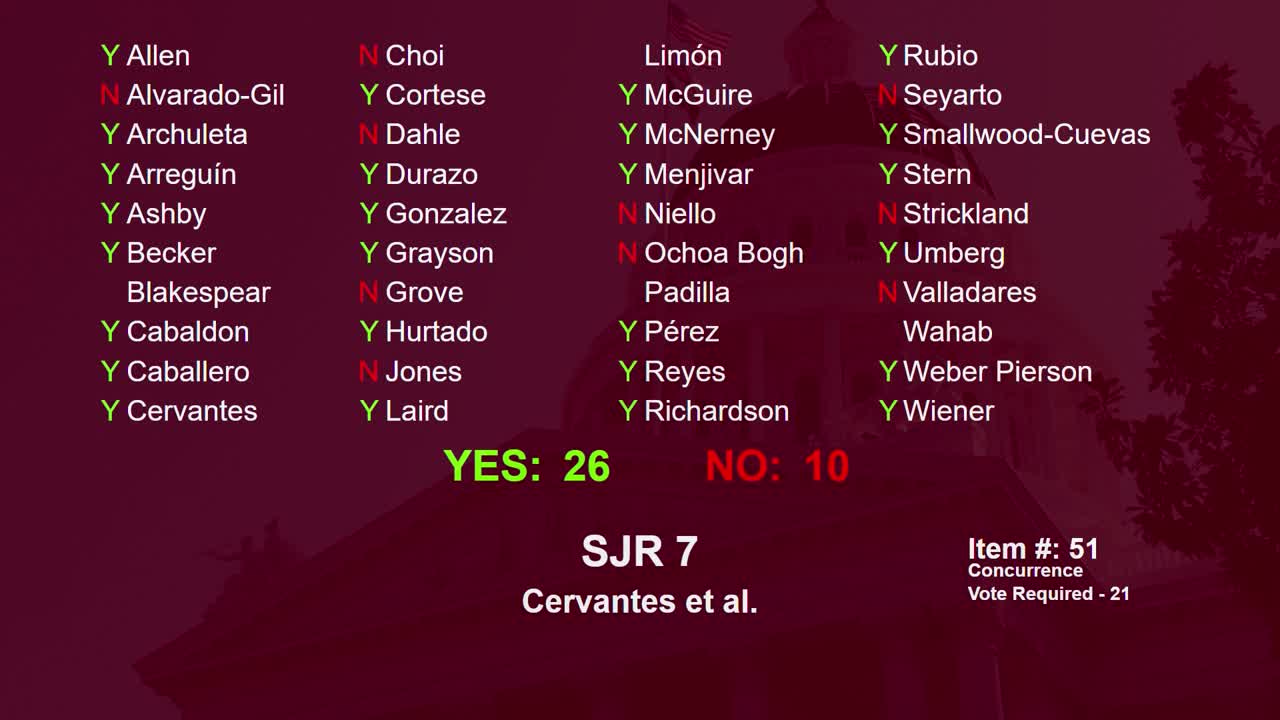


Bill Author

Bill Co-Author(s):