AB 224: Health care coverage: essential health benefits.
- Session Year: 2025-2026
- House: Assembly
- Latest Version Date: 2025-10-13
Current Status:
Passed
(2025-10-13: Chaptered by Secretary of State - Chapter 680, Statutes of 2025.)
Introduced
In Committee
Awaiting First Chamber Vote
Passed First Chamber
In Committee
Awaiting Second Chamber Vote
Passed Second Chamber
Enacted
Existing law requires the Department of Insurance to regulate health insurers. Existing law requires an individual or small group health insurance policy issued, amended, or renewed on or after January 1, 2017, to include, at a minimum, coverage for essential health benefits pursuant to the federal Patient Protection and Affordable Care Act. Existing law requires a health insurance policy to cover the same health benefits that the benchmark plan, the Kaiser Foundation Health Plan Small Group HMO 30 plan, offered during the first quarter of 2014, as specified.
This bill would express the intent of the Legislature to review Californias essential health benefits benchmark plan and establish a new benchmark plan for the 2027 plan year for health insurers. The bill would require, commencing January 1, 2027, if the United States Department of Health and Human Services approves a new essential health benefits benchmark plan for the state, as specified, the benchmark plan for health insurers to include certain additional benefits, including coverage for specified fertility services and specified durable medical equipment.
Existing law requires the Department of Insurance to regulate health insurers. Existing law requires an individual or small group health insurance policy issued, amended, or renewed on or after January 1, 2017, to include, at a minimum, coverage for essential health benefits pursuant to the federal Patient Protection and Affordable Care Act. Existing law requires a health insurance policy to cover the same health benefits that the benchmark plan, the Kaiser Foundation Health Plan Small Group HMO 30 plan, offered during the first quarter of 2014, as specified.
This bill would express the intent of the Legislature to review Californias essential health benefits benchmark plan and establish a new benchmark plan for the 2027 plan year for health insurers. The bill would require, commencing January 1, 2027, if the United States Department of Health and Human Services approves a new essential health benefits benchmark plan for the state, as specified, the benchmark plan for health insurers to include certain additional benefits, including coverage for specified fertility services and specified durable medical equipment.
Existing law requires the Department of Insurance to regulate health insurers. Existing law requires an individual or small group health care service plan contract or health insurance policy issued, amended, or renewed on or after January 1, 2017, to include, at a minimum, coverage for essential health benefits pursuant to the federal Patient Protection and Affordable Care Act. Existing law requires a health care service plan contract or health insurance policy to cover the same health benefits that the benchmark plan, the Kaiser Foundation Health Plan Small Group HMO 30 plan, offered during the first quarter of 2014, as specified.
This bill would express the intent of the Legislature to review Californias essential health benefits benchmark plan and establish a new benchmark plan for the 2027 plan year. year for health insurers. The bill would require, commencing January 1, 2027, if the United States Department of Health and Human Services approves a new essential health benefits benchmark plan for the state, as specified, the benchmark plan identified above for health insurers to include certain additional benefits, including coverage for specified fertility services and specified durable medical equipment. Because a violation of the bill by a health care service plan would be a crime, the bill would impose a state-mandated local program.
The California Constitution requires the state to reimburse local agencies and school districts for certain costs mandated by the state. Statutory provisions establish procedures for making that reimbursement.This bill would provide that no reimbursement is required by this act for a specified reason.Existing law, the Knox-Keene Health Care Service Plan Act of 1975, requires the Department of Managed Health Care to license and regulate health care service plans. plans and makes a willful violation of the act a crime. Existing law requires the Department of Insurance to regulate health insurers. Existing law requires an individual or small group health care service plan contract or health insurance policy issued, amended, or renewed on or after January 1, 2017, to include, at a minimum, coverage for essential health benefits pursuant to the federal Patient Protection and Affordable Care Act. Existing law requires a health care service plan contract or health insurance policy to cover the same health benefits that the benchmark plan, the Kaiser Foundation Health Plan Small Group HMO 30 plan, offered during the first quarter of 2014, as specified.
This bill would express the intent of the Legislature to review Californias essential health benefits benchmark plan and establish a new benchmark plan for the 2027 plan year. The bill would limit the applicability of the current benchmark plan benefits to plan years on or before the 2027 plan year. The bill would require, commencing January 1, 2027, if the United States Department of Health and Human Services approves a new essential health benefits benchmark plan for the state, as specified, the benchmark plan identified above to include certain additional benefits, including coverage for specified fertility services and specified durable medical equipment. Because a violation of the bill by a health care service plan would be a crime, the bill would impose a state-mandated local program.
The California Constitution requires the state to reimburse local agencies and school districts for certain costs mandated by the state. Statutory provisions establish procedures for making that reimbursement.
This bill would provide that no reimbursement is required by this act for a specified reason.
Existing law, the Knox-Keene Health Care Service Plan Act of 1975, requires the Department of Managed Health Care to license and regulate health care service plans. Existing law requires the Department of Insurance to regulate health insurers. Existing law requires an individual or small group health care service plan contract or health insurance policy issued, amended, or renewed on or after January 1, 2017, to include, at a minimum, coverage for essential health benefits pursuant to the federal Patient Protection and Affordable Care Act. Existing law requires a health care service plan contract or health insurance policy to cover the same health benefits that the benchmark plan, the Kaiser Foundation Health Plan Small Group HMO 30 plan, offered during the first quarter of 2014, as specified.
This bill would express the intent of the Legislature to review Californias essential health benefits benchmark plan and establish a new benchmark plan for the 2027 plan year. The bill would limit the applicability of the current benchmark plan benefits to plan years on or before the 2027 plan year.
It is the intent of the Legislature to review Californias essential health benefits benchmark plan and establish a new benchmark plan for the 2027 plan year for health insurers.
SEC. 2.Section 10112.27 of the Insurance Code is amended to read:10112.27.(a)An individual or small group health insurance policy issued, amended, or renewed on or after January 1, 2017, shall include, at a minimum, coverage for essential health benefits pursuant to the federal Patient Protection and Affordable Care Act (PPACA) and as outlined in this section. This section shall exclusively govern the benefits a health insurer must cover as essential health benefits. For purposes of this section, essential health benefits means all of the following:
(1)Health benefits within the categories identified in Section 1302(b) of PPACA: ambulatory patient services, emergency services, hospitalization, maternity and newborn care, mental health and substance use disorder services, including behavioral health treatment, prescription drugs, rehabilitative and habilitative services and devices, laboratory services, preventive and wellness services and chronic disease management, and pediatric services, including oral and vision care.
(2)(A)The health benefits covered by the Kaiser Foundation Health Plan Small Group HMO 30 plan (federal health product identification number 40513CA035) as this plan was offered during the first quarter of 2014, as follows, regardless of whether the benefits are specifically referenced in the plan contract or evidence of coverage for that plan:
(i)Medically necessary basic health care services, as defined in subdivision (b) of Section 1345 of the Health and Safety Code and Section 1300.67 of Title 28 of the California Code of Regulations.
(ii)The health benefits mandated to be covered by the plan pursuant to statutes enacted before December 31, 2011, as described in the following sections of the Health and Safety Code: Sections 1367.002, 1367.06, and 1367.35 (preventive services for children); Section 1367.25 (prescription drug coverage for contraceptives); Section 1367.45 (AIDS vaccine); Section 1367.46 (HIV testing); Section 1367.51 (diabetes); Section 1367.54 (alpha-fetoprotein testing); Section 1367.6 (breast cancer screening); Section 1367.61 (prosthetics for laryngectomy); Section 1367.62 (maternity hospital stay); Section 1367.63 (reconstructive surgery); Section 1367.635 (mastectomies); Section 1367.64 (prostate cancer); Section 1367.65 (mammography); Section 1367.66 (cervical cancer); Section 1367.665 (cancer screening tests); Section 1367.67 (osteoporosis); Section 1367.68 (surgical procedures for jaw bones); Section 1367.71 (anesthesia for dental); Section 1367.9 (conditions attributable to diethylstilbestrol); Section 1368.2 (hospice care); Section 1370.6 (cancer clinical trials); Section 1371.5 (emergency response ambulance or ambulance transport services); subdivision (b) of Section 1373 (sterilization operations or procedures); Section 1373.4 (inpatient hospital and ambulatory maternity); Section 1374.56 (phenylketonuria); Section 1374.17 (organ transplants for HIV); Section 1374.72 (mental health parity); and Section 1374.73 (autism/behavioral health treatment).
(iii)Any other benefits mandated to be covered by the plan pursuant to statutes enacted before December 31, 2011, as described in those statutes.
(iv)The health benefits covered by the plan that are not otherwise required to be covered under Chapter 2.2 (commencing with Section 1340) of Division 2 of the Health and Safety Code, to the extent otherwise required pursuant to Sections 1367.18, 1367.21, 1367.215, 1367.22, 1367.24, and 1367.25 of the Health and Safety Code, and Section 1300.67.24 of Title 28 of the California Code of Regulations.
(v)Any other health benefits covered by the plan that are not otherwise required to be covered under Chapter 2.2 (commencing with Section 1340) of Division 2 of the Health and Safety Code.
(B)If there are any conflicts or omissions in the plan identified in subparagraph (A) as compared with the requirements for health benefits under Chapter 2.2 (commencing with Section 1340) of Division 2 of the Health and Safety Code that were enacted before December 31, 2011, the requirements of Chapter 2.2 (commencing with Section 1340) of Division 2 of the Health and Safety Code shall control, except as otherwise specified in this section.
(C)Notwithstanding subparagraph (B) or any other provision of this section, the home health services benefits covered under the plan identified in subparagraph (A) shall not be in conflict with Chapter 2.2 (commencing with Section 1340) of Division 2 of the Health and Safety Code.
(D)For purposes of this section, the Paul Wellstone and Pete Domenici Mental Health Parity and Addiction Equity Act of 2008 (Public Law 110-343) shall apply to a policy subject to this section. Coverage of mental health and substance use disorder services pursuant to this paragraph, along with any scope and duration limits imposed on the benefits, shall be in compliance with the Paul Wellstone and Pete Domenici Mental Health Parity and Addiction Equity Act of 2008 (Public Law 110-343), and all rules, regulations, and guidance issued pursuant to Section 2726 of the federal Public Health Service Act (42 U.S.C. Sec. 300gg-26).
(E)Commencing January 1, 2027, if the United States Department of Health and Human Services approves a new essential health benefits benchmark plan for the State of California pursuant to submissions to the department made on behalf of the state in 2025 for this purpose, the benchmark plan described in subparagraph (A) shall additionally include all of the following benefits:
(i)Services to evaluate, diagnose, and treat infertility that include all of the following:
(I)Artificial insemination.
(II)Three attempts to retrieve gametes.
(III)Three attempts to create embryos.
(IV)Three rounds of pretransfer testing.
(V)Cryopreservation of gametes and embryos.
(VI)Two years of storage for cryopreserved embryos.
(VII)Unlimited storage for cryopreserved gametes.
(VIII)Unlimited embryo transfers.
(IX)Two vials of donor sperm.
(X)Ten donor eggs.
(XI)Surrogacy coverage for the services described above.
(XII)Health testing of the surrogate for each attempted round of covered services.
(ii)All of the following durable medical equipment:
(I)Mobility devices, including, but not limited to, walkers and manual and power wheelchairs and scooters.
(II)Augmented communications devices, including, but not limited to, speech-generating devices, communications boards, and computer applications.
(III)Continuous positive airway pressure machines.
(IV)Portable oxygen.
(V)Hospital beds.
(iii)(I)An annual hearing exam.
(II)One hearing aid per ear every three years.
(3)With respect to habilitative services, in addition to any habilitative services and devices identified in paragraph (2), coverage shall also be provided as required by federal rules, regulations, or guidance issued pursuant to Section 1302(b) of PPACA. Habilitative services and devices shall be covered under the same terms and conditions applied to rehabilitative services and devices under the policy. Limits on habilitative and rehabilitative services and devices shall not be combined.
(4)With respect to pediatric vision care, the same health benefits for pediatric vision care covered under the Federal Employees Dental and Vision Insurance Program vision plan with the largest national enrollment as of the first quarter of 2014. The pediatric vision care services covered pursuant to this paragraph shall be in addition to, and shall not replace, any vision services covered under the plan identified in paragraph (2).
(5)With respect to pediatric oral care, the same health benefits for pediatric oral care covered under the dental benefit received by children under the Medi-Cal program as of 2014, including the provision of medically necessary orthodontic care provided pursuant to the federal Childrens Health Insurance Program Reauthorization Act of 2009. The pediatric oral care benefits covered pursuant to this paragraph shall be in addition to, and shall not replace, any dental or orthodontic services covered under the plan identified in paragraph (2).
(b)Treatment limitations imposed on health benefits described in this section shall be no greater than the treatment limitations imposed by the corresponding plans identified in subdivision (a), subject to the requirements set forth in paragraph (2) of subdivision (a).
(c)Except as provided in subdivision (d), this section does not permit a health insurer to make substitutions for the benefits required to be covered under this section, regardless of whether those substitutions are actuarially equivalent.
(d)To the extent permitted under Section 1302 of PPACA and any rules, regulations, or guidance issued pursuant to that section, and to the extent that substitution would not create an obligation for the state to defray costs for any individual, an insurer may substitute its prescription drug formulary for the formulary provided under the plan identified in subdivision (a) if the coverage for prescription drugs complies with the sections referenced in clauses (ii) and (iv) of subparagraph (A) of paragraph (2) of subdivision (a) that apply to prescription drugs.
(e)A health insurer, or its agent, producer, or representative, shall not issue, deliver, renew, offer, market, represent, or sell any product, policy, or discount arrangement as compliant with the essential health benefits requirement in federal law, unless it meets all of the requirements of this section. This subdivision shall be enforced in the same manner as Section 790.03, including through the means specified in Sections 790.035 and 790.05.
(f)This section applies regardless of whether the policy is offered inside or outside the California Health Benefit Exchange created by Section 100500 of the Government Code.
(g)This section does not exempt a health insurer or a health insurance policy from meeting other applicable requirements of law.
(h)This section does not prohibit a policy from covering additional benefits, including, but not limited to, spiritual care services that are tax deductible under Section 213 of the Internal Revenue Code.
(i)Subdivision (a) does not apply to any of the following:
(1)A policy that provides excepted benefits as described in Sections 2722 and 2791 of the federal Public Health Service Act (42 U.S.C. Sec. 300gg-21; 42 U.S.C. Sec. 300gg-91).
(2)A policy that qualifies as a grandfathered health plan under Section 1251 of PPACA or any binding rules, regulations, or guidance issued pursuant to that section.
(j)This section shall not be implemented in a manner that conflicts with a requirement of PPACA.
(k)An essential health benefit is required to be provided under this section only to the extent that federal law does not require the state to defray the costs of the benefit.
(l)This section does not obligate the state to incur costs for the coverage of benefits that are not essential health benefits as defined in this section.
(m)An insurer is not required to cover, under this section, changes to health benefits that are the result of statutes enacted on or after December 31, 2011.
(n)(1)On or before January 1, 2027, the commissioner may issue guidance to health insurers regarding compliance with this section. This guidance shall not be subject to the Administrative Procedure Act (Chapter 3.5 (commencing with Section 11340) of Part 1 of Division 3 of Title 2 of the Government Code).
(2)The commissioner may promulgate regulations subject to the Administrative Procedure Act (Chapter 3.5 (commencing with Section 11340) of Part 1 of Division 3 of Title 2 of the Government Code) to implement this section. This subdivision shall not be construed to impair or restrict the commissioners rulemaking authority pursuant to another provision of this code or the Administrative Procedure Act.
(3)The commissioner shall consult with the Department of Managed Health Care in issuing guidance and in adopting regulations pursuant to paragraphs (1) and (2) for the purpose of implementing this section.
(o)This section does not impose on health insurance policies the cost sharing or network limitations of the plans identified in subdivision (a) except to the extent otherwise required to comply with this code, including this section, and as otherwise applicable to all health insurance policies offered to individuals and small groups.
(p)For purposes of this section, the following definitions apply:
(1)Habilitative services means health care services and devices that help a person keep, learn, or improve skills and functioning for daily living. Examples include therapy for a child who is not walking or talking at the expected age. These services may include physical and occupational therapy, speech-language pathology, and other services for people with disabilities in a variety of inpatient or outpatient settings, or both. Habilitative services shall be covered under the same terms and conditions applied to rehabilitative services under the policy.
(2)(A)Health benefits, unless otherwise required to be defined pursuant to federal rules, regulations, or guidance issued pursuant to Section 1302(b) of PPACA, means health care items or services for the diagnosis, cure, mitigation, treatment, or prevention of illness, injury, disease, or a health condition, including a behavioral health condition.
(B)Health benefits does not mean any cost-sharing requirements such as copayments, coinsurance, or deductibles.
(3)PPACA means the federal Patient Protection and Affordable Care Act (Public Law 111-148), as amended by the federal Health Care and Education Reconciliation Act of 2010 (Public Law 111-152), and any rules, regulations, or guidance issued thereunder.
(4)Small group health insurance policy means a group health insurance policy issued to a small employer, as defined in subdivision (q) of Section 10753.
It is the intent of the Legislature to review Californias essential health benefits benchmark plan and establish a new benchmark plan for the 2027 plan year for health insurers.
SEC. 2.Section 10112.27 of the Insurance Code is amended to read:10112.27.(a)An individual or small group health insurance policy issued, amended, or renewed on or after January 1, 2017, shall include, at a minimum, coverage for essential health benefits pursuant to the federal Patient Protection and Affordable Care Act (PPACA) and as outlined in this section. This section shall exclusively govern the benefits a health insurer must cover as essential health benefits. For purposes of this section, essential health benefits means all of the following:
(1)Health benefits within the categories identified in Section 1302(b) of PPACA: ambulatory patient services, emergency services, hospitalization, maternity and newborn care, mental health and substance use disorder services, including behavioral health treatment, prescription drugs, rehabilitative and habilitative services and devices, laboratory services, preventive and wellness services and chronic disease management, and pediatric services, including oral and vision care.
(2)(A)The health benefits covered by the Kaiser Foundation Health Plan Small Group HMO 30 plan (federal health product identification number 40513CA035) as this plan was offered during the first quarter of 2014, as follows, regardless of whether the benefits are specifically referenced in the plan contract or evidence of coverage for that plan:
(i)Medically necessary basic health care services, as defined in subdivision (b) of Section 1345 of the Health and Safety Code and Section 1300.67 of Title 28 of the California Code of Regulations.
(ii)The health benefits mandated to be covered by the plan pursuant to statutes enacted before December 31, 2011, as described in the following sections of the Health and Safety Code: Sections 1367.002, 1367.06, and 1367.35 (preventive services for children); Section 1367.25 (prescription drug coverage for contraceptives); Section 1367.45 (AIDS vaccine); Section 1367.46 (HIV testing); Section 1367.51 (diabetes); Section 1367.54 (alpha-fetoprotein testing); Section 1367.6 (breast cancer screening); Section 1367.61 (prosthetics for laryngectomy); Section 1367.62 (maternity hospital stay); Section 1367.63 (reconstructive surgery); Section 1367.635 (mastectomies); Section 1367.64 (prostate cancer); Section 1367.65 (mammography); Section 1367.66 (cervical cancer); Section 1367.665 (cancer screening tests); Section 1367.67 (osteoporosis); Section 1367.68 (surgical procedures for jaw bones); Section 1367.71 (anesthesia for dental); Section 1367.9 (conditions attributable to diethylstilbestrol); Section 1368.2 (hospice care); Section 1370.6 (cancer clinical trials); Section 1371.5 (emergency response ambulance or ambulance transport services); subdivision (b) of Section 1373 (sterilization operations or procedures); Section 1373.4 (inpatient hospital and ambulatory maternity); Section 1374.56 (phenylketonuria); Section 1374.17 (organ transplants for HIV); Section 1374.72 (mental health parity); and Section 1374.73 (autism/behavioral health treatment).
(iii)Any other benefits mandated to be covered by the plan pursuant to statutes enacted before December 31, 2011, as described in those statutes.
(iv)The health benefits covered by the plan that are not otherwise required to be covered under Chapter 2.2 (commencing with Section 1340) of Division 2 of the Health and Safety Code, to the extent otherwise required pursuant to Sections 1367.18, 1367.21, 1367.215, 1367.22, 1367.24, and 1367.25 of the Health and Safety Code, and Section 1300.67.24 of Title 28 of the California Code of Regulations.
(v)Any other health benefits covered by the plan that are not otherwise required to be covered under Chapter 2.2 (commencing with Section 1340) of Division 2 of the Health and Safety Code.
(B)If there are any conflicts or omissions in the plan identified in subparagraph (A) as compared with the requirements for health benefits under Chapter 2.2 (commencing with Section 1340) of Division 2 of the Health and Safety Code that were enacted before December 31, 2011, the requirements of Chapter 2.2 (commencing with Section 1340) of Division 2 of the Health and Safety Code shall control, except as otherwise specified in this section.
(C)Notwithstanding subparagraph (B) or any other provision of this section, the home health services benefits covered under the plan identified in subparagraph (A) shall not be in conflict with Chapter 2.2 (commencing with Section 1340) of Division 2 of the Health and Safety Code.
(D)For purposes of this section, the Paul Wellstone and Pete Domenici Mental Health Parity and Addiction Equity Act of 2008 (Public Law 110-343) shall apply to a policy subject to this section. Coverage of mental health and substance use disorder services pursuant to this paragraph, along with any scope and duration limits imposed on the benefits, shall be in compliance with the Paul Wellstone and Pete Domenici Mental Health Parity and Addiction Equity Act of 2008 (Public Law 110-343), and all rules, regulations, and guidance issued pursuant to Section 2726 of the federal Public Health Service Act (42 U.S.C. Sec. 300gg-26).
(E)Commencing January 1, 2027, if the United States Department of Health and Human Services approves a new essential health benefits benchmark plan for the State of California pursuant to submissions to the department made on behalf of the state in 2025 for this purpose, the benchmark plan described in subparagraph (A) shall additionally include all of the following benefits:
(i)Services to evaluate, diagnose, and treat infertility that include all of the following:
(I)Artificial insemination.
(II)Three attempts to retrieve gametes.
(III)Three attempts to create embryos.
(IV)Three rounds of pretransfer testing.
(V)Cryopreservation of gametes and embryos.
(VI)Two years of storage for cryopreserved embryos.
(VII)Unlimited storage for cryopreserved gametes.
(VIII)Unlimited embryo transfers.
(IX)Two vials of donor sperm.
(X)Ten donor eggs.
(XI)Surrogacy coverage for the services described above.
(XII)Health testing of the surrogate for each attempted round of covered services.
(ii)All of the following durable medical equipment:
(I)Mobility devices, including, but not limited to, walkers and manual and power wheelchairs and scooters.
(II)Augmented communications devices, including, but not limited to, speech-generating devices, communications boards, and computer applications.
(III)Continuous positive airway pressure machines.
(IV)Portable oxygen.
(V)Hospital beds.
(iii)(I)An annual hearing exam.
(II)One hearing aid per ear every three years.
(3)With respect to habilitative services, in addition to any habilitative services and devices identified in paragraph (2), coverage shall also be provided as required by federal rules, regulations, or guidance issued pursuant to Section 1302(b) of PPACA. Habilitative services and devices shall be covered under the same terms and conditions applied to rehabilitative services and devices under the policy. Limits on habilitative and rehabilitative services and devices shall not be combined.
(4)With respect to pediatric vision care, the same health benefits for pediatric vision care covered under the Federal Employees Dental and Vision Insurance Program vision plan with the largest national enrollment as of the first quarter of 2014. The pediatric vision care services covered pursuant to this paragraph shall be in addition to, and shall not replace, any vision services covered under the plan identified in paragraph (2).
(5)With respect to pediatric oral care, the same health benefits for pediatric oral care covered under the dental benefit received by children under the Medi-Cal program as of 2014, including the provision of medically necessary orthodontic care provided pursuant to the federal Childrens Health Insurance Program Reauthorization Act of 2009. The pediatric oral care benefits covered pursuant to this paragraph shall be in addition to, and shall not replace, any dental or orthodontic services covered under the plan identified in paragraph (2).
(b)Treatment limitations imposed on health benefits described in this section shall be no greater than the treatment limitations imposed by the corresponding plans identified in subdivision (a), subject to the requirements set forth in paragraph (2) of subdivision (a).
(c)Except as provided in subdivision (d), this section does not permit a health insurer to make substitutions for the benefits required to be covered under this section, regardless of whether those substitutions are actuarially equivalent.
(d)To the extent permitted under Section 1302 of PPACA and any rules, regulations, or guidance issued pursuant to that section, and to the extent that substitution would not create an obligation for the state to defray costs for any individual, an insurer may substitute its prescription drug formulary for the formulary provided under the plan identified in subdivision (a) if the coverage for prescription drugs complies with the sections referenced in clauses (ii) and (iv) of subparagraph (A) of paragraph (2) of subdivision (a) that apply to prescription drugs.
(e)A health insurer, or its agent, producer, or representative, shall not issue, deliver, renew, offer, market, represent, or sell any product, policy, or discount arrangement as compliant with the essential health benefits requirement in federal law, unless it meets all of the requirements of this section. This subdivision shall be enforced in the same manner as Section 790.03, including through the means specified in Sections 790.035 and 790.05.
(f)This section applies regardless of whether the policy is offered inside or outside the California Health Benefit Exchange created by Section 100500 of the Government Code.
(g)This section does not exempt a health insurer or a health insurance policy from meeting other applicable requirements of law.
(h)This section does not prohibit a policy from covering additional benefits, including, but not limited to, spiritual care services that are tax deductible under Section 213 of the Internal Revenue Code.
(i)Subdivision (a) does not apply to any of the following:
(1)A policy that provides excepted benefits as described in Sections 2722 and 2791 of the federal Public Health Service Act (42 U.S.C. Sec. 300gg-21; 42 U.S.C. Sec. 300gg-91).
(2)A policy that qualifies as a grandfathered health plan under Section 1251 of PPACA or any binding rules, regulations, or guidance issued pursuant to that section.
(j)This section shall not be implemented in a manner that conflicts with a requirement of PPACA.
(k)An essential health benefit is required to be provided under this section only to the extent that federal law does not require the state to defray the costs of the benefit.
(l)This section does not obligate the state to incur costs for the coverage of benefits that are not essential health benefits as defined in this section.
(m)An insurer is not required to cover, under this section, changes to health benefits that are the result of statutes enacted on or after December 31, 2011.
(n)(1)On or before January 1, 2027, the commissioner may issue guidance to health insurers regarding compliance with this section. This guidance shall not be subject to the Administrative Procedure Act (Chapter 3.5 (commencing with Section 11340) of Part 1 of Division 3 of Title 2 of the Government Code).
(2)The commissioner may promulgate regulations subject to the Administrative Procedure Act (Chapter 3.5 (commencing with Section 11340) of Part 1 of Division 3 of Title 2 of the Government Code) to implement this section. This subdivision shall not be construed to impair or restrict the commissioners rulemaking authority pursuant to another provision of this code or the Administrative Procedure Act.
(3)The commissioner shall consult with the Department of Managed Health Care in issuing guidance and in adopting regulations pursuant to paragraphs (1) and (2) for the purpose of implementing this section.
(o)This section does not impose on health insurance policies the cost sharing or network limitations of the plans identified in subdivision (a) except to the extent otherwise required to comply with this code, including this section, and as otherwise applicable to all health insurance policies offered to individuals and small groups.
(p)For purposes of this section, the following definitions apply:
(1)Habilitative services means health care services and devices that help a person keep, learn, or improve skills and functioning for daily living. Examples include therapy for a child who is not walking or talking at the expected age. These services may include physical and occupational therapy, speech-language pathology, and other services for people with disabilities in a variety of inpatient or outpatient settings, or both. Habilitative services shall be covered under the same terms and conditions applied to rehabilitative services under the policy.
(2)(A)Health benefits, unless otherwise required to be defined pursuant to federal rules, regulations, or guidance issued pursuant to Section 1302(b) of PPACA, means health care items or services for the diagnosis, cure, mitigation, treatment, or prevention of illness, injury, disease, or a health condition, including a behavioral health condition.
(B)Health benefits does not mean any cost-sharing requirements such as copayments, coinsurance, or deductibles.
(3)PPACA means the federal Patient Protection and Affordable Care Act (Public Law 111-148), as amended by the federal Health Care and Education Reconciliation Act of 2010 (Public Law 111-152), and any rules, regulations, or guidance issued thereunder.
(4)Small group health insurance policy means a group health insurance policy issued to a small employer, as defined in subdivision (q) of Section 10753.
It is the intent of the Legislature to review Californias essential health benefits benchmark plan and establish a new benchmark plan for the 2027 plan year. year for health insurers.
SEC. 2.Section 1367.005 of the Health and Safety Code is amended to read:1367.005.(a)An individual or small group health care service plan contract issued, amended, or renewed on or after January 1, 2017, shall include, at a minimum, coverage for essential health benefits pursuant to the federal Patient Protection and Affordable Care Act (PPACA) and as outlined in this section. For purposes of this section, essential health benefits means all of the following:(1)Health benefits within the categories identified in Section 1302(b) of PPACA: ambulatory patient services, emergency services, hospitalization, maternity and newborn care, mental health and substance use disorder services, including behavioral health treatment, prescription drugs, rehabilitative and habilitative services and devices, laboratory services, preventive and wellness services and chronic disease management, and pediatric services, including oral and vision care.(2)(A)The health benefits covered by the Kaiser Foundation Health Plan Small Group HMO 30 plan (federal health product identification number 40513CA035) as this plan was offered during the first quarter of 2014, as follows, regardless of whether the benefits are specifically referenced in the evidence of coverage or plan contract for that plan:(i)Medically necessary basic health care services, as defined in subdivision (b) of Section 1345 and Section 1300.67 of Title 28 of the California Code of Regulations.(ii)The health benefits mandated to be covered by the plan pursuant to statutes enacted before December 31, 2011, as described in the following sections: Sections 1367.002, 1367.06, and 1367.35 (preventive services for children); Section 1367.25 (prescription drug coverage for contraceptives); Section 1367.45 (AIDS vaccine); Section 1367.46 (HIV testing); Section 1367.51 (diabetes); Section 1367.54 (alpha-fetoprotein testing); Section 1367.6 (breast cancer screening); Section 1367.61 (prosthetics for laryngectomy); Section 1367.62 (maternity hospital stay); Section 1367.63 (reconstructive surgery); Section 1367.635 (mastectomies); Section 1367.64 (prostate cancer); Section 1367.65 (mammography); Section 1367.66 (cervical cancer); Section 1367.665 (cancer screening tests); Section 1367.67 (osteoporosis); Section 1367.68 (surgical procedures for jaw bones); Section 1367.71 (anesthesia for dental); Section 1367.9 (conditions attributable to diethylstilbestrol); Section 1368.2 (hospice care); Section 1370.6 (cancer clinical trials); Section 1371.5 (emergency response ambulance or ambulance transport services); subdivision (b) of Section 1373 (sterilization operations or procedures); Section 1373.4 (inpatient hospital and ambulatory maternity); Section 1374.56 (phenylketonuria); Section 1374.17 (organ transplants for HIV); Section 1374.72 (mental health parity); and Section 1374.73 (autism/behavioral health treatment).(iii)Any other benefits mandated to be covered by the plan pursuant to statutes enacted before December 31, 2011, as described in those statutes.(iv)The health benefits covered by the plan that are not otherwise required to be covered under this chapter, to the extent required pursuant to Sections 1367.18, 1367.21, 1367.215, 1367.22, 1367.24, and 1367.25, and Section 1300.67.24 of Title 28 of the California Code of Regulations.(v)Any other health benefits covered by the plan that are not otherwise required to be covered under this chapter.(B)If there are any conflicts or omissions in the plan identified in subparagraph (A) as compared with the requirements for health benefits under this chapter that were enacted prior to December 31, 2011, the requirements of this chapter shall be controlling, except as otherwise specified in this section.(C)Notwithstanding subparagraph (B) or any other provision of this section, the home health services benefits covered under the plan identified in subparagraph (A) shall be deemed to not be in conflict with this chapter.(D)For purposes of this section, the Paul Wellstone and Pete Domenici Mental Health Parity and Addiction Equity Act of 2008 (Public Law 110-343) shall apply to a contract subject to this section. Coverage of mental health and substance use disorder services pursuant to this paragraph, along with any scope and duration limits imposed on the benefits, shall be in compliance with the Paul Wellstone and Pete Domenici Mental Health Parity and Addiction Equity Act of 2008 (Public Law 110-343), and all rules, regulations, or guidance issued pursuant to Section 2726 of the federal Public Health Service Act (42 U.S.C. Sec. 300gg-26).(E)Commencing January 1, 2027, if the United States Department of Health and Human Services approves a new essential health benefits benchmark plan for the State of California pursuant to submissions to the department made on behalf of the state in 2025 for this purpose, the benchmark plan described in subparagraph (A) shall additionally include all of the following benefits:(i)Services to evaluate, diagnose, and treat infertility that include all of the following:(I)Artificial insemination.(II)Three attempts to retrieve gametes.(III)Three attempts to create embryos.(IV)Three rounds of pretransfer testing.(V)Cryopreservation of gametes and embryos.(VI)Two years of storage for cryopreserved embryos.(VII)Unlimited storage for cryopreserved gametes.(VIII)Unlimited embryo transfers.(IX)Two vials of donor sperm.(X)Ten donor eggs.(XI)Surrogacy coverage for the services described above.(XII)Health testing of the surrogate for each attempted round of covered services.(ii)All of the following durable medical equipment:(I)Mobility devices, including, but not limited to, walkers and manual and power wheelchairs and scooters.(II)Augmented communications devices, including, but not limited to, speech-generating devices, communications boards, and computer applications.(III)Continuous positive airway pressure machines.(IV)Portable oxygen.(V)Hospital beds.(iii)(I)An annual hearing exam.(II)One hearing aid per ear every three years.(3)With respect to habilitative services, in addition to any habilitative services and devices identified in paragraph (2), coverage shall also be provided as required by federal rules, regulations, and guidance issued pursuant to Section 1302(b) of PPACA. Habilitative services and devices shall be covered under the same terms and conditions applied to rehabilitative services and devices under the plan contract. Limits on habilitative and rehabilitative services and devices shall not be combined.(4)With respect to pediatric vision care, the same health benefits for pediatric vision care covered under the Federal Employees Dental and Vision Insurance Program vision plan with the largest national enrollment as of the first quarter of 2014. The pediatric vision care benefits covered pursuant to this paragraph shall be in addition to, and shall not replace, any vision services covered under the plan identified in paragraph (2).(5)With respect to pediatric oral care, the same health benefits for pediatric oral care covered under the dental benefit received by children under the Medi-Cal program as of 2014, including the provision of medically necessary orthodontic care provided pursuant to the federal Childrens Health Insurance Program Reauthorization Act of 2009. The pediatric oral care benefits covered pursuant to this paragraph shall be in addition to, and shall not replace, any dental or orthodontic services covered under the plan identified in paragraph (2).(b)Treatment limitations imposed on health benefits described in this section shall be no greater than the treatment limitations imposed by the corresponding plans identified in subdivision (a), subject to the requirements set forth in paragraph (2) of subdivision (a).(c)Except as provided in subdivision (d), this section does not permit a health care service plan to make substitutions for the benefits required to be covered under this section, regardless of whether those substitutions are actuarially equivalent.(d)To the extent permitted under Section 1302 of PPACA and any rules, regulations, or guidance issued pursuant to that section, and to the extent that substitution would not create an obligation for the state to defray costs for any individual, a plan may substitute its prescription drug formulary for the formulary provided under the plan identified in subdivision (a) if the coverage for prescription drugs complies with the sections referenced in clauses (ii) and (iv) of subparagraph (A) of paragraph (2) of subdivision (a) that apply to prescription drugs.(e)A health care service plan, or its agent, solicitor, or representative, shall not issue, deliver, renew, offer, market, represent, or sell any product, contract, or discount arrangement as compliant with the essential health benefits requirement in federal law, unless it meets all of the requirements of this section.(f)This section applies regardless of whether the plan contract is offered inside or outside the California Health Benefit Exchange created by Section 100500 of the Government Code.(g)This section does not exempt a plan or a plan contract from meeting other applicable requirements of law.(h)This section does not prohibit a plan contract from covering additional benefits, including, but not limited to, spiritual care services that are tax deductible under Section 213 of the Internal Revenue Code.(i)Subdivision (a) does not apply to any of the following:(1)A specialized health care service plan contract.(2)A Medicare supplement plan.(3)A plan contract that qualifies as a grandfathered health plan under Section 1251 of PPACA or any rules, regulations, or guidance issued pursuant to that section.(j)This section shall not be implemented in a manner that conflicts with a requirement of PPACA.(k)An essential health benefit is required to be provided under this section only to the extent that federal law does not require the state to defray the costs of the benefit.(l)This section does not obligate the state to incur costs for the coverage of benefits that are not essential health benefits as defined in this section.(m)A plan is not required to cover, under this section, changes to health benefits that are the result of statutes enacted on or after December 31, 2011.(n)(1)The department may adopt emergency regulations implementing this section. The department may, on a one-time basis, readopt any emergency regulation authorized by this section that is the same as, or substantially equivalent to, an emergency regulation previously adopted under this section.(2)The initial adoption of emergency regulations implementing this section and the readoption of emergency regulations authorized by this subdivision shall be deemed an emergency and necessary for the immediate preservation of the public peace, health, safety, or general welfare. The initial emergency regulations and the readoption of emergency regulations authorized by this section shall be submitted to the Office of Administrative Law for filing with the Secretary of State and each shall remain in effect for no more than 180 days, by which time final regulations may be adopted.(3)The initial adoption of emergency regulations implementing this section made during the 201516 Regular Session of the Legislature and the readoption of emergency regulations authorized by this subdivision shall be deemed an emergency and necessary for the immediate preservation of the public peace, health, safety, or general welfare. The initial emergency regulations and the readoption of emergency regulations authorized by this section shall be submitted to the Office of Administrative Law for filing with the Secretary of State and each shall remain in effect for no more than 180 days, by which time final regulations may be adopted.(4)The director shall consult with the Insurance Commissioner to ensure consistency and uniformity in the development of regulations under this subdivision.(5)This subdivision shall become inoperative on July 1, 2018.(o)For purposes of this section, the following definitions apply:(1)Habilitative services means health care services and devices that help a person keep, learn, or improve skills and functioning for daily living. Examples include therapy for a child who is not walking or talking at the expected age. These services may include physical and occupational therapy, speech-language pathology, and other services for people with disabilities in a variety of inpatient or outpatient settings, or both. Habilitative services shall be covered under the same terms and conditions applied to rehabilitative services under the plan contract.(2)(A)Health benefits, unless otherwise required to be defined pursuant to federal rules, regulations, or guidance issued pursuant to Section 1302(b) of PPACA, means health care items or services for the diagnosis, cure, mitigation, treatment, or prevention of illness, injury, disease, or a health condition, including a behavioral health condition.(B)Health benefits does not mean any cost-sharing requirements such as copayments, coinsurance, or deductibles.(3)PPACA means the federal Patient Protection and Affordable Care Act (Public Law 111-148), as amended by the federal Health Care and Education Reconciliation Act of 2010 (Public Law 111-152), and any rules, regulations, or guidance issued thereunder.(4)Small group health care service plan contract means a group health care service plan contract issued to a small employer, as defined in Section 1357.500.SEC. 3.SEC. 2.Section 10112.27 of the Insurance Code is amended to read:10112.27.(a)An individual or small group health insurance policy issued, amended, or renewed on or after January 1, 2017, shall include, at a minimum, coverage for essential health benefits pursuant to the federal Patient Protection and Affordable Care Act (PPACA) and as outlined in this section. This section shall exclusively govern the benefits a health insurer must cover as essential health benefits. For purposes of this section, essential health benefits means all of the following:
(1)Health benefits within the categories identified in Section 1302(b) of PPACA: ambulatory patient services, emergency services, hospitalization, maternity and newborn care, mental health and substance use disorder services, including behavioral health treatment, prescription drugs, rehabilitative and habilitative services and devices, laboratory services, preventive and wellness services and chronic disease management, and pediatric services, including oral and vision care.
(2)(A)The health benefits covered by the Kaiser Foundation Health Plan Small Group HMO 30 plan (federal health product identification number 40513CA035) as this plan was offered during the first quarter of 2014, as follows, regardless of whether the benefits are specifically referenced in the plan contract or evidence of coverage for that plan:
(i)Medically necessary basic health care services, as defined in subdivision (b) of Section 1345 of the Health and Safety Code and Section 1300.67 of Title 28 of the California Code of Regulations.
(ii)The health benefits mandated to be covered by the plan pursuant to statutes enacted before December 31, 2011, as described in the following sections of the Health and Safety Code: Sections 1367.002, 1367.06, and 1367.35 (preventive services for children); Section 1367.25 (prescription drug coverage for contraceptives); Section 1367.45 (AIDS vaccine); Section 1367.46 (HIV testing); Section 1367.51 (diabetes); Section 1367.54 (alpha-fetoprotein testing); Section 1367.6 (breast cancer screening); Section 1367.61 (prosthetics for laryngectomy); Section 1367.62 (maternity hospital stay); Section 1367.63 (reconstructive surgery); Section 1367.635 (mastectomies); Section 1367.64 (prostate cancer); Section 1367.65 (mammography); Section 1367.66 (cervical cancer); Section 1367.665 (cancer screening tests); Section 1367.67 (osteoporosis); Section 1367.68 (surgical procedures for jaw bones); Section 1367.71 (anesthesia for dental); Section 1367.9 (conditions attributable to diethylstilbestrol); Section 1368.2 (hospice care); Section 1370.6 (cancer clinical trials); Section 1371.5 (emergency response ambulance or ambulance transport services); subdivision (b) of Section 1373 (sterilization operations or procedures); Section 1373.4 (inpatient hospital and ambulatory maternity); Section 1374.56 (phenylketonuria); Section 1374.17 (organ transplants for HIV); Section 1374.72 (mental health parity); and Section 1374.73 (autism/behavioral health treatment).
(iii)Any other benefits mandated to be covered by the plan pursuant to statutes enacted before December 31, 2011, as described in those statutes.
(iv)The health benefits covered by the plan that are not otherwise required to be covered under Chapter 2.2 (commencing with Section 1340) of Division 2 of the Health and Safety Code, to the extent otherwise required pursuant to Sections 1367.18, 1367.21, 1367.215, 1367.22, 1367.24, and 1367.25 of the Health and Safety Code, and Section 1300.67.24 of Title 28 of the California Code of Regulations.
(v)Any other health benefits covered by the plan that are not otherwise required to be covered under Chapter 2.2 (commencing with Section 1340) of Division 2 of the Health and Safety Code.
(B)If there are any conflicts or omissions in the plan identified in subparagraph (A) as compared with the requirements for health benefits under Chapter 2.2 (commencing with Section 1340) of Division 2 of the Health and Safety Code that were enacted before December 31, 2011, the requirements of Chapter 2.2 (commencing with Section 1340) of Division 2 of the Health and Safety Code shall control, except as otherwise specified in this section.
(C)Notwithstanding subparagraph (B) or any other provision of this section, the home health services benefits covered under the plan identified in subparagraph (A) shall not be in conflict with Chapter 2.2 (commencing with Section 1340) of Division 2 of the Health and Safety Code.
(D)For purposes of this section, the Paul Wellstone and Pete Domenici Mental Health Parity and Addiction Equity Act of 2008 (Public Law 110-343) shall apply to a policy subject to this section. Coverage of mental health and substance use disorder services pursuant to this paragraph, along with any scope and duration limits imposed on the benefits, shall be in compliance with the Paul Wellstone and Pete Domenici Mental Health Parity and Addiction Equity Act of 2008 (Public Law 110-343), and all rules, regulations, and guidance issued pursuant to Section 2726 of the federal Public Health Service Act (42 U.S.C. Sec. 300gg-26).
(E)Commencing January 1, 2027, if the United States Department of Health and Human Services approves a new essential health benefits benchmark plan for the State of California pursuant to submissions to the department made on behalf of the state in 2025 for this purpose, the benchmark plan described in subparagraph (A) shall additionally include all of the following benefits:
(i)Services to evaluate, diagnose, and treat infertility that include all of the following:
(I)Artificial insemination.
(II)Three attempts to retrieve gametes.
(III)Three attempts to create embryos.
(IV)Three rounds of pretransfer testing.
(V)Cryopreservation of gametes and embryos.
(VI)Two years of storage for cryopreserved embryos.
(VII)Unlimited storage for cryopreserved gametes.
(VIII)Unlimited embryo transfers.
(IX)Two vials of donor sperm.
(X)Ten donor eggs.
(XI)Surrogacy coverage for the services described above.
(XII)Health testing of the surrogate for each attempted round of covered services.
(ii)All of the following durable medical equipment:
(I)Mobility devices, including, but not limited to, walkers and manual and power wheelchairs and scooters.
(II)Augmented communications devices, including, but not limited to, speech-generating devices, communications boards, and computer applications.
(III)Continuous positive airway pressure machines.
(IV)Portable oxygen.
(V)Hospital beds.
(iii)(I)An annual hearing exam.
(II)One hearing aid per ear every three years.
(3)With respect to habilitative services, in addition to any habilitative services and devices identified in paragraph (2), coverage shall also be provided as required by federal rules, regulations, or guidance issued pursuant to Section 1302(b) of PPACA. Habilitative services and devices shall be covered under the same terms and conditions applied to rehabilitative services and devices under the policy. Limits on habilitative and rehabilitative services and devices shall not be combined.
(4)With respect to pediatric vision care, the same health benefits for pediatric vision care covered under the Federal Employees Dental and Vision Insurance Program vision plan with the largest national enrollment as of the first quarter of 2014. The pediatric vision care services covered pursuant to this paragraph shall be in addition to, and shall not replace, any vision services covered under the plan identified in paragraph (2).
(5)With respect to pediatric oral care, the same health benefits for pediatric oral care covered under the dental benefit received by children under the Medi-Cal program as of 2014, including the provision of medically necessary orthodontic care provided pursuant to the federal Childrens Health Insurance Program Reauthorization Act of 2009. The pediatric oral care benefits covered pursuant to this paragraph shall be in addition to, and shall not replace, any dental or orthodontic services covered under the plan identified in paragraph (2).
(b)Treatment limitations imposed on health benefits described in this section shall be no greater than the treatment limitations imposed by the corresponding plans identified in subdivision (a), subject to the requirements set forth in paragraph (2) of subdivision (a).
(c)Except as provided in subdivision (d), this section does not permit a health insurer to make substitutions for the benefits required to be covered under this section, regardless of whether those substitutions are actuarially equivalent.
(d)To the extent permitted under Section 1302 of PPACA and any rules, regulations, or guidance issued pursuant to that section, and to the extent that substitution would not create an obligation for the state to defray costs for any individual, an insurer may substitute its prescription drug formulary for the formulary provided under the plan identified in subdivision (a) if the coverage for prescription drugs complies with the sections referenced in clauses (ii) and (iv) of subparagraph (A) of paragraph (2) of subdivision (a) that apply to prescription drugs.
(e)A health insurer, or its agent, producer, or representative, shall not issue, deliver, renew, offer, market, represent, or sell any product, policy, or discount arrangement as compliant with the essential health benefits requirement in federal law, unless it meets all of the requirements of this section. This subdivision shall be enforced in the same manner as Section 790.03, including through the means specified in Sections 790.035 and 790.05.
(f)This section applies regardless of whether the policy is offered inside or outside the California Health Benefit Exchange created by Section 100500 of the Government Code.
(g)This section does not exempt a health insurer or a health insurance policy from meeting other applicable requirements of law.
(h)This section does not prohibit a policy from covering additional benefits, including, but not limited to, spiritual care services that are tax deductible under Section 213 of the Internal Revenue Code.
(i)Subdivision (a) does not apply to any of the following:
(1)A policy that provides excepted benefits as described in Sections 2722 and 2791 of the federal Public Health Service Act (42 U.S.C. Sec. 300gg-21; 42 U.S.C. Sec. 300gg-91).
(2)A policy that qualifies as a grandfathered health plan under Section 1251 of PPACA or any binding rules, regulations, or guidance issued pursuant to that section.
(j)This section shall not be implemented in a manner that conflicts with a requirement of PPACA.
(k)An essential health benefit is required to be provided under this section only to the extent that federal law does not require the state to defray the costs of the benefit.
(l)This section does not obligate the state to incur costs for the coverage of benefits that are not essential health benefits as defined in this section.
(m)An insurer is not required to cover, under this section, changes to health benefits that are the result of statutes enacted on or after December 31, 2011.
(n)(1)The commissioner may adopt emergency regulations implementing this section. The commissioner, on a one-time basis, may readopt any emergency regulation authorized by this section that is the same as, or substantially equivalent to, an emergency regulation previously adopted under this section.(2)The initial adoption of emergency regulations implementing this section and the readoption of emergency regulations authorized by this subdivision shall be deemed an emergency and necessary for the immediate preservation of the public peace, health, safety, or general welfare. The initial emergency regulations and the readoption of emergency regulations authorized by this section shall be submitted to the Office of Administrative Law for filing with the Secretary of State and each shall remain in effect for no more than 180 days, by which time final regulations may be adopted.(3)The initial adoption of emergency regulations implementing this section made during the 201516 Regular Session of the Legislature and the readoption of emergency regulations authorized by this subdivision shall be deemed an emergency and necessary for the immediate preservation of the public peace, health, safety, or general welfare. The initial emergency regulations and the readoption of emergency regulations authorized by this section shall be submitted to the Office of Administrative Law for filing with the Secretary of State and each shall remain in effect for no more than 180 days, by which time final regulations may be adopted.(4)The commissioner shall consult with the Director of the Department of Managed Health Care to ensure consistency and uniformity in the development of regulations under this subdivision.(5)This subdivision shall become inoperative on July 1, 2018.(n)(1)On or before January 1, 2027, the commissioner may issue guidance to health insurers regarding compliance with this section. This guidance shall not be subject to the Administrative Procedure Act (Chapter 3.5 (commencing with Section 11340) of Part 1 of Division 3 of Title 2 of the Government Code).
(2)The commissioner may promulgate regulations subject to the Administrative Procedure Act (Chapter 3.5 (commencing with Section 11340) of Part 1 of Division 3 of Title 2 of the Government Code) to implement this section. This subdivision shall not be construed to impair or restrict the commissioners rulemaking authority pursuant to another provision of this code or the Administrative Procedure Act.
(3)The commissioner shall consult with the Department of Managed Health Care in issuing guidance and in adopting regulations pursuant to paragraphs (1) and (2) for the purpose of implementing this section.
(o)This section does not impose on health insurance policies the cost sharing or network limitations of the plans identified in subdivision (a) except to the extent otherwise required to comply with this code, including this section, and as otherwise applicable to all health insurance policies offered to individuals and small groups.
(p)For purposes of this section, the following definitions apply:
(1)Habilitative services means health care services and devices that help a person keep, learn, or improve skills and functioning for daily living. Examples include therapy for a child who is not walking or talking at the expected age. These services may include physical and occupational therapy, speech-language pathology, and other services for people with disabilities in a variety of inpatient or outpatient settings, or both. Habilitative services shall be covered under the same terms and conditions applied to rehabilitative services under the policy.
(2)(A)Health benefits, unless otherwise required to be defined pursuant to federal rules, regulations, or guidance issued pursuant to Section 1302(b) of PPACA, means health care items or services for the diagnosis, cure, mitigation, treatment, or prevention of illness, injury, disease, or a health condition, including a behavioral health condition.
(B)Health benefits does not mean any cost-sharing requirements such as copayments, coinsurance, or deductibles.
(3)PPACA means the federal Patient Protection and Affordable Care Act (Public Law 111-148), as amended by the federal Health Care and Education Reconciliation Act of 2010 (Public Law 111-152), and any rules, regulations, or guidance issued thereunder.
(4)Small group health insurance policy means a group health insurance policy issued to a small employer, as defined in subdivision (q) of Section 10753.
SEC. 4.No reimbursement is required by this act pursuant to Section 6 of Article XIIIB of the California Constitution because the only costs that may be incurred by a local agency or school district will be incurred because this act creates a new crime or infraction, eliminates a crime or infraction, or changes the penalty for a crime or infraction, within the meaning of Section 17556 of the Government Code, or changes the definition of a crime within the meaning of Section 6 of Article XIIIB of the California Constitution.It is the intent of the Legislature to review Californias essential health benefits benchmark plan and establish a new benchmark plan for the 2027 plan year.
SEC. 2.Section 1367.005 of the Health and Safety Code is amended to read:1367.005.(a)An individual or small group health care service plan contract issued, amended, or renewed on or after January 1, 2017, shall include, at a minimum, coverage for essential health benefits pursuant to the federal Patient Protection and Affordable Care Act (PPACA) and as outlined in this section. For purposes of this section, essential health benefits means all of the following:
(1)Health benefits within the categories identified in Section 1302(b) of PPACA: ambulatory patient services, emergency services, hospitalization, maternity and newborn care, mental health and substance use disorder services, including behavioral health treatment, prescription drugs, rehabilitative and habilitative services and devices, laboratory services, preventive and wellness services and chronic disease management, and pediatric services, including oral and vision care.
(2)(A)For plan years on or before the 2027 plan year, The health benefits covered by the Kaiser Foundation Health Plan Small Group HMO 30 plan (federal health product identification number 40513CA035) as this plan was offered during the first quarter of 2014, as follows, regardless of whether the benefits are specifically referenced in the evidence of coverage or plan contract for that plan:
(i)Medically necessary basic health care services, as defined in subdivision (b) of Section 1345 and Section 1300.67 of Title 28 of the California Code of Regulations.
(ii)The health benefits mandated to be covered by the plan pursuant to statutes enacted before December 31, 2011, as described in the following sections: Sections 1367.002, 1367.06, and 1367.35 (preventive services for children); Section 1367.25 (prescription drug coverage for contraceptives); Section 1367.45 (AIDS vaccine); Section 1367.46 (HIV testing); Section 1367.51 (diabetes); Section 1367.54 (alpha-fetoprotein testing); Section 1367.6 (breast cancer screening); Section 1367.61 (prosthetics for laryngectomy); Section 1367.62 (maternity hospital stay); Section 1367.63 (reconstructive surgery); Section 1367.635 (mastectomies); Section 1367.64 (prostate cancer); Section 1367.65 (mammography); Section 1367.66 (cervical cancer); Section 1367.665 (cancer screening tests); Section 1367.67 (osteoporosis); Section 1367.68 (surgical procedures for jaw bones); Section 1367.71 (anesthesia for dental); Section 1367.9 (conditions attributable to diethylstilbestrol); Section 1368.2 (hospice care); Section 1370.6 (cancer clinical trials); Section 1371.5 (emergency response ambulance or ambulance transport services); subdivision (b) of Section 1373 (sterilization operations or procedures); Section 1373.4 (inpatient hospital and ambulatory maternity); Section 1374.56 (phenylketonuria); Section 1374.17 (organ transplants for HIV); Section 1374.72 (mental health parity); and Section 1374.73 (autism/behavioral health treatment).
(iii)Any other benefits mandated to be covered by the plan pursuant to statutes enacted before December 31, 2011, as described in those statutes.
(iv)The health benefits covered by the plan that are not otherwise required to be covered under this chapter, to the extent required pursuant to Sections 1367.18, 1367.21, 1367.215, 1367.22, 1367.24, and 1367.25, and Section 1300.67.24 of Title 28 of the California Code of Regulations.
(v)Any other health benefits covered by the plan that are not otherwise required to be covered under this chapter.
(B)If there are any conflicts or omissions in the plan identified in subparagraph (A) as compared with the requirements for health benefits under this chapter that were enacted prior to December 31, 2011, the requirements of this chapter shall be controlling, except as otherwise specified in this section.
(C)Notwithstanding subparagraph (B) or any other provision of this section, the home health services benefits covered under the plan identified in subparagraph (A) shall be deemed to not be in conflict with this chapter.
(D)For purposes of this section, the Paul Wellstone and Pete Domenici Mental Health Parity and Addiction Equity Act of 2008 (Public Law 110-343) shall apply to a contract subject to this section. Coverage of mental health and substance use disorder services pursuant to this paragraph, along with any scope and duration limits imposed on the benefits, shall be in compliance with the Paul Wellstone and Pete Domenici Mental Health Parity and Addiction Equity Act of 2008 (Public Law 110-343), and all rules, regulations, or guidance issued pursuant to Section 2726 of the federal Public Health Service Act (42 U.S.C. Sec. 300gg-26).
(E)Commencing January 1, 2027, if the United States Department of Health and Human Services approves a new essential health benefits benchmark plan for the State of California pursuant to submissions to the department made on behalf of the state in 2025 for this purpose, the benchmark plan described in subparagraph (A) shall additionally include all of the following benefits:
(i)Services to evaluate, diagnose, and treat infertility that include all of the following:
(I)Artificial insemination.
(II)Three attempts to retrieve gametes.
(III)Three attempts to create embryos.
(IV)Three rounds of pretransfer testing.
(V)Cryopreservation of gametes and embryos.
(VI)Two years of storage for cryopreserved embryos.
(VII)Unlimited storage for cryopreserved gametes.
(VIII)Unlimited embryo transfers.
(IX)Two vials of donor sperm.
(X)Ten donor eggs.
(XI)Surrogacy coverage for the services described above.
(XII)Health testing of the surrogate for each attempted round of covered services.
(ii)All of the following durable medical equipment:
(I)Mobility devices, including, but not limited to, walkers and manual and power wheelchairs and scooters.
(II)Augmented communications devices, including, but not limited to, speech-generating devices, communications boards, and computer applications.
(III)Continuous positive airway pressure machines.
(IV)Portable oxygen.
(V)Hospital beds.
(iii)(I)An annual hearing exam.
(II)One hearing aid per ear every three years.
(3)With respect to habilitative services, in addition to any habilitative services and devices identified in paragraph (2), coverage shall also be provided as required by federal rules, regulations, and guidance issued pursuant to Section 1302(b) of PPACA. Habilitative services and devices shall be covered under the same terms and conditions applied to rehabilitative services and devices under the plan contract. Limits on habilitative and rehabilitative services and devices shall not be combined.
(4)With respect to pediatric vision care, the same health benefits for pediatric vision care covered under the Federal Employees Dental and Vision Insurance Program vision plan with the largest national enrollment as of the first quarter of 2014. The pediatric vision care benefits covered pursuant to this paragraph shall be in addition to, and shall not replace, any vision services covered under the plan identified in paragraph (2).
(5)With respect to pediatric oral care, the same health benefits for pediatric oral care covered under the dental benefit received by children under the Medi-Cal program as of 2014, including the provision of medically necessary orthodontic care provided pursuant to the federal Childrens Health Insurance Program Reauthorization Act of 2009. The pediatric oral care benefits covered pursuant to this paragraph shall be in addition to, and shall not replace, any dental or orthodontic services covered under the plan identified in paragraph (2).
(b)Treatment limitations imposed on health benefits described in this section shall be no greater than the treatment limitations imposed by the corresponding plans identified in subdivision (a), subject to the requirements set forth in paragraph (2) of subdivision (a).
(c)Except as provided in subdivision (d), this section does not permit a health care service plan to make substitutions for the benefits required to be covered under this section, regardless of whether those substitutions are actuarially equivalent.
(d)To the extent permitted under Section 1302 of PPACA and any rules, regulations, or guidance issued pursuant to that section, and to the extent that substitution would not create an obligation for the state to defray costs for any individual, a plan may substitute its prescription drug formulary for the formulary provided under the plan identified in subdivision (a) if the coverage for prescription drugs complies with the sections referenced in clauses (ii) and (iv) of subparagraph (A) of paragraph (2) of subdivision (a) that apply to prescription drugs.
(e)A health care service plan, or its agent, solicitor, or representative, shall not issue, deliver, renew, offer, market, represent, or sell any product, contract, or discount arrangement as compliant with the essential health benefits requirement in federal law, unless it meets all of the requirements of this section.
(f)This section applies regardless of whether the plan contract is offered inside or outside the California Health Benefit Exchange created by Section 100500 of the Government Code.
(g)This section does not exempt a plan or a plan contract from meeting other applicable requirements of law.
(h)This section does not prohibit a plan contract from covering additional benefits, including, but not limited to, spiritual care services that are tax deductible under Section 213 of the Internal Revenue Code.
(i)Subdivision (a) does not apply to any of the following:
(1)A specialized health care service plan contract.
(2)A Medicare supplement plan.
(3)A plan contract that qualifies as a grandfathered health plan under Section 1251 of PPACA or any rules, regulations, or guidance issued pursuant to that section.
(j)This section shall not be implemented in a manner that conflicts with a requirement of PPACA.
(k)An essential health benefit is required to be provided under this section only to the extent that federal law does not require the state to defray the costs of the benefit.
(l)This section does not obligate the state to incur costs for the coverage of benefits that are not essential health benefits as defined in this section.
(m)A plan is not required to cover, under this section, changes to health benefits that are the result of statutes enacted on or after December 31, 2011.
(n)(1)The department may adopt emergency regulations implementing this section. The department may, on a one-time basis, readopt any emergency regulation authorized by this section that is the same as, or substantially equivalent to, an emergency regulation previously adopted under this section.
(2)The initial adoption of emergency regulations implementing this section and the readoption of emergency regulations authorized by this subdivision shall be deemed an emergency and necessary for the immediate preservation of the public peace, health, safety, or general welfare. The initial emergency regulations and the readoption of emergency regulations authorized by this section shall be submitted to the Office of Administrative Law for filing with the Secretary of State and each shall remain in effect for no more than 180 days, by which time final regulations may be adopted.
(3)The initial adoption of emergency regulations implementing this section made during the 201516 Regular Session of the Legislature and the readoption of emergency regulations authorized by this subdivision shall be deemed an emergency and necessary for the immediate preservation of the public peace, health, safety, or general welfare. The initial emergency regulations and the readoption of emergency regulations authorized by this section shall be submitted to the Office of Administrative Law for filing with the Secretary of State and each shall remain in effect for no more than 180 days, by which time final regulations may be adopted.
(4)The director shall consult with the Insurance Commissioner to ensure consistency and uniformity in the development of regulations under this subdivision.
(5)This subdivision shall become inoperative on July 1, 2018.
(o)For purposes of this section, the following definitions apply:
(1)Habilitative services means health care services and devices that help a person keep, learn, or improve skills and functioning for daily living. Examples include therapy for a child who is not walking or talking at the expected age. These services may include physical and occupational therapy, speech-language pathology, and other services for people with disabilities in a variety of inpatient or outpatient settings, or both. Habilitative services shall be covered under the same terms and conditions applied to rehabilitative services under the plan contract.
(2)(A)Health benefits, unless otherwise required to be defined pursuant to federal rules, regulations, or guidance issued pursuant to Section 1302(b) of PPACA, means health care items or services for the diagnosis, cure, mitigation, treatment, or prevention of illness, injury, disease, or a health condition, including a behavioral health condition.
(B)Health benefits does not mean any cost-sharing requirements such as copayments, coinsurance, or deductibles.
(3)PPACA means the federal Patient Protection and Affordable Care Act (Public Law 111-148), as amended by the federal Health Care and Education Reconciliation Act of 2010 (Public Law 111-152), and any rules, regulations, or guidance issued thereunder.
(4)Small group health care service plan contract means a group health care service plan contract issued to a small employer, as defined in Section 1357.500.
SEC. 3.Section 10112.27 of the Insurance Code is amended to read:10112.27.(a)An individual or small group health insurance policy issued, amended, or renewed on or after January 1, 2017, shall include, at a minimum, coverage for essential health benefits pursuant to the federal Patient Protection and Affordable Care Act (PPACA) and as outlined in this section. This section shall exclusively govern the benefits a health insurer must cover as essential health benefits. For purposes of this section, essential health benefits means all of the following:
(1)Health benefits within the categories identified in Section 1302(b) of PPACA: ambulatory patient services, emergency services, hospitalization, maternity and newborn care, mental health and substance use disorder services, including behavioral health treatment, prescription drugs, rehabilitative and habilitative services and devices, laboratory services, preventive and wellness services and chronic disease management, and pediatric services, including oral and vision care.
(2)(A)For plan years on or before the 2027 plan year, The health benefits covered by the Kaiser Foundation Health Plan Small Group HMO 30 plan (federal health product identification number 40513CA035) as this plan was offered during the first quarter of 2014, as follows, regardless of whether the benefits are specifically referenced in the plan contract or evidence of coverage for that plan:
(i)Medically necessary basic health care services, as defined in subdivision (b) of Section 1345 of the Health and Safety Code and Section 1300.67 of Title 28 of the California Code of Regulations.
(ii)The health benefits mandated to be covered by the plan pursuant to statutes enacted before December 31, 2011, as described in the following sections of the Health and Safety Code: Sections 1367.002, 1367.06, and 1367.35 (preventive services for children); Section 1367.25 (prescription drug coverage for contraceptives); Section 1367.45 (AIDS vaccine); Section 1367.46 (HIV testing); Section 1367.51 (diabetes); Section 1367.54 (alpha-fetoprotein testing); Section 1367.6 (breast cancer screening); Section 1367.61 (prosthetics for laryngectomy); Section 1367.62 (maternity hospital stay); Section 1367.63 (reconstructive surgery); Section 1367.635 (mastectomies); Section 1367.64 (prostate cancer); Section 1367.65 (mammography); Section 1367.66 (cervical cancer); Section 1367.665 (cancer screening tests); Section 1367.67 (osteoporosis); Section 1367.68 (surgical procedures for jaw bones); Section 1367.71 (anesthesia for dental); Section 1367.9 (conditions attributable to diethylstilbestrol); Section 1368.2 (hospice care); Section 1370.6 (cancer clinical trials); Section 1371.5 (emergency response ambulance or ambulance transport services); subdivision (b) of Section 1373 (sterilization operations or procedures); Section 1373.4 (inpatient hospital and ambulatory maternity); Section 1374.56 (phenylketonuria); Section 1374.17 (organ transplants for HIV); Section 1374.72 (mental health parity); and Section 1374.73 (autism/behavioral health treatment).
(iii)Any other benefits mandated to be covered by the plan pursuant to statutes enacted before December 31, 2011, as described in those statutes.
(iv)The health benefits covered by the plan that are not otherwise required to be covered under Chapter 2.2 (commencing with Section 1340) of Division 2 of the Health and Safety Code, to the extent otherwise required pursuant to Sections 1367.18, 1367.21, 1367.215, 1367.22, 1367.24, and 1367.25 of the Health and Safety Code, and Section 1300.67.24 of Title 28 of the California Code of Regulations.
(v)Any other health benefits covered by the plan that are not otherwise required to be covered under Chapter 2.2 (commencing with Section 1340) of Division 2 of the Health and Safety Code.
(B)If there are any conflicts or omissions in the plan identified in subparagraph (A) as compared with the requirements for health benefits under Chapter 2.2 (commencing with Section 1340) of Division 2 of the Health and Safety Code that were enacted before December 31, 2011, the requirements of Chapter 2.2 (commencing with Section 1340) of Division 2 of the Health and Safety Code shall control, except as otherwise specified in this section.
(C)Notwithstanding subparagraph (B) or any other provision of this section, the home health services benefits covered under the plan identified in subparagraph (A) shall not be in conflict with Chapter 2.2 (commencing with Section 1340) of Division 2 of the Health and Safety Code.
(D)For purposes of this section, the Paul Wellstone and Pete Domenici Mental Health Parity and Addiction Equity Act of 2008 (Public Law 110-343) shall apply to a policy subject to this section. Coverage of mental health and substance use disorder services pursuant to this paragraph, along with any scope and duration limits imposed on the benefits, shall be in compliance with the Paul Wellstone and Pete Domenici Mental Health Parity and Addiction Equity Act of 2008 (Public Law 110-343), and all rules, regulations, and guidance issued pursuant to Section 2726 of the federal Public Health Service Act (42 U.S.C. Sec. 300gg-26).
(E)Commencing January 1, 2027, if the United States Department of Health and Human Services approves a new essential health benefits benchmark plan for the State of California pursuant to submissions to the department made on behalf of the state in 2025 for this purpose, the benchmark plan described in subparagraph (A) shall additionally include all of the following benefits:
(i)Services to evaluate, diagnose, and treat infertility that include all of the following:
(I)Artificial insemination.
(II)Three attempts to retrieve gametes.
(III)Three attempts to create embryos.
(IV)Three rounds of pretransfer testing.
(V)Cryopreservation of gametes and embryos.
(VI)Two years of storage for cryopreserved embryos.
(VII)Unlimited storage for cryopreserved gametes.
(VIII)Unlimited embryo transfers.
(IX)Two vials of donor sperm.
(X)Ten donor eggs.
(XI)Surrogacy coverage for the services described above.
(XII)Health testing of the surrogate for each attempted round of covered services.
(ii)All of the following durable medical equipment:
(I)Mobility devices, including, but not limited to, walkers and manual and power wheelchairs and scooters.
(II)Augmented communications devices, including, but not limited to, speech-generating devices, communications boards, and computer applications.
(III)Continuous positive airway pressure machines.
(IV)Portable oxygen.
(V)Hospital beds.
(iii)(I)An annual hearing exam.
(II)One hearing aid per ear every three years.
(3)With respect to habilitative services, in addition to any habilitative services and devices identified in paragraph (2), coverage shall also be provided as required by federal rules, regulations, or guidance issued pursuant to Section 1302(b) of PPACA. Habilitative services and devices shall be covered under the same terms and conditions applied to rehabilitative services and devices under the policy. Limits on habilitative and rehabilitative services and devices shall not be combined.
(4)With respect to pediatric vision care, the same health benefits for pediatric vision care covered under the Federal Employees Dental and Vision Insurance Program vision plan with the largest national enrollment as of the first quarter of 2014. The pediatric vision care services covered pursuant to this paragraph shall be in addition to, and shall not replace, any vision services covered under the plan identified in paragraph (2).
(5)With respect to pediatric oral care, the same health benefits for pediatric oral care covered under the dental benefit received by children under the Medi-Cal program as of 2014, including the provision of medically necessary orthodontic care provided pursuant to the federal Childrens Health Insurance Program Reauthorization Act of 2009. The pediatric oral care benefits covered pursuant to this paragraph shall be in addition to, and shall not replace, any dental or orthodontic services covered under the plan identified in paragraph (2).
(b)Treatment limitations imposed on health benefits described in this section shall be no greater than the treatment limitations imposed by the corresponding plans identified in subdivision (a), subject to the requirements set forth in paragraph (2) of subdivision (a).
(c)Except as provided in subdivision (d), this section does not permit a health insurer to make substitutions for the benefits required to be covered under this section, regardless of whether those substitutions are actuarially equivalent.
(d)To the extent permitted under Section 1302 of PPACA and any rules, regulations, or guidance issued pursuant to that section, and to the extent that substitution would not create an obligation for the state to defray costs for any individual, an insurer may substitute its prescription drug formulary for the formulary provided under the plan identified in subdivision (a) if the coverage for prescription drugs complies with the sections referenced in clauses (ii) and (iv) of subparagraph (A) of paragraph (2) of subdivision (a) that apply to prescription drugs.
(e)A health insurer, or its agent, producer, or representative, shall not issue, deliver, renew, offer, market, represent, or sell any product, policy, or discount arrangement as compliant with the essential health benefits requirement in federal law, unless it meets all of the requirements of this section. This subdivision shall be enforced in the same manner as Section 790.03, including through the means specified in Sections 790.035 and 790.05.
(f)This section applies regardless of whether the policy is offered inside or outside the California Health Benefit Exchange created by Section 100500 of the Government Code.
(g)This section does not exempt a health insurer or a health insurance policy from meeting other applicable requirements of law.
(h)This section does not prohibit a policy from covering additional benefits, including, but not limited to, spiritual care services that are tax deductible under Section 213 of the Internal Revenue Code.
(i)Subdivision (a) does not apply to any of the following:
(1)A policy that provides excepted benefits as described in Sections 2722 and 2791 of the federal Public Health Service Act (42 U.S.C. Sec. 300gg-21; 42 U.S.C. Sec. 300gg-91).
(2)A policy that qualifies as a grandfathered health plan under Section 1251 of PPACA or any binding rules, regulations, or guidance issued pursuant to that section.
(j)This section shall not be implemented in a manner that conflicts with a requirement of PPACA.
(k)An essential health benefit is required to be provided under this section only to the extent that federal law does not require the state to defray the costs of the benefit.
(l)This section does not obligate the state to incur costs for the coverage of benefits that are not essential health benefits as defined in this section.
(m)An insurer is not required to cover, under this section, changes to health benefits that are the result of statutes enacted on or after December 31, 2011.
(n)(1)The commissioner may adopt emergency regulations implementing this section. The commissioner, on a one-time basis, may readopt any emergency regulation authorized by this section that is the same as, or substantially equivalent to, an emergency regulation previously adopted under this section.
(2)The initial adoption of emergency regulations implementing this section and the readoption of emergency regulations authorized by this subdivision shall be deemed an emergency and necessary for the immediate preservation of the public peace, health, safety, or general welfare. The initial emergency regulations and the readoption of emergency regulations authorized by this section shall be submitted to the Office of Administrative Law for filing with the Secretary of State and each shall remain in effect for no more than 180 days, by which time final regulations may be adopted.
(3)The initial adoption of emergency regulations implementing this section made during the 201516 Regular Session of the Legislature and the readoption of emergency regulations authorized by this subdivision shall be deemed an emergency and necessary for the immediate preservation of the public peace, health, safety, or general welfare. The initial emergency regulations and the readoption of emergency regulations authorized by this section shall be submitted to the Office of Administrative Law for filing with the Secretary of State and each shall remain in effect for no more than 180 days, by which time final regulations may be adopted.
(4)The commissioner shall consult with the Director of the Department of Managed Health Care to ensure consistency and uniformity in the development of regulations under this subdivision.
(5)This subdivision shall become inoperative on July 1, 2018.
(o)This section does not impose on health insurance policies the cost sharing or network limitations of the plans identified in subdivision (a) except to the extent otherwise required to comply with this code, including this section, and as otherwise applicable to all health insurance policies offered to individuals and small groups.
(p)For purposes of this section, the following definitions apply:
(1)Habilitative services means health care services and devices that help a person keep, learn, or improve skills and functioning for daily living. Examples include therapy for a child who is not walking or talking at the expected age. These services may include physical and occupational therapy, speech-language pathology, and other services for people with disabilities in a variety of inpatient or outpatient settings, or both. Habilitative services shall be covered under the same terms and conditions applied to rehabilitative services under the policy.
(2)(A)Health benefits, unless otherwise required to be defined pursuant to federal rules, regulations, or guidance issued pursuant to Section 1302(b) of PPACA, means health care items or services for the diagnosis, cure, mitigation, treatment, or prevention of illness, injury, disease, or a health condition, including a behavioral health condition.
(B)Health benefits does not mean any cost-sharing requirements such as copayments, coinsurance, or deductibles.
(3)PPACA means the federal Patient Protection and Affordable Care Act (Public Law 111-148), as amended by the federal Health Care and Education Reconciliation Act of 2010 (Public Law 111-152), and any rules, regulations, or guidance issued thereunder.
(4)Small group health insurance policy means a group health insurance policy issued to a small employer, as defined in subdivision (q) of Section 10753.
SEC. 4.No reimbursement is required by this act pursuant to Section 6 of Article XIIIB of the California Constitution because the only costs that may be incurred by a local agency or school district will be incurred because this act creates a new crime or infraction, eliminates a crime or infraction, or changes the penalty for a crime or infraction, within the meaning of Section 17556 of the Government Code, or changes the definition of a crime within the meaning of Section 6 of Article XIIIB of the California Constitution.
It is the intent of the Legislature to review Californias essential health benefits benchmark plan and establish a new benchmark plan for the 2027 plan year.
SEC. 2.Section 1367.005 of the Health and Safety Code is amended to read:1367.005.(a)An individual or small group health care service plan contract issued, amended, or renewed on or after January 1, 2017, shall include, at a minimum, coverage for essential health benefits pursuant to the federal Patient Protection and Affordable Care Act (PPACA) and as outlined in this section. For purposes of this section, essential health benefits means all of the following:
(1)Health benefits within the categories identified in Section 1302(b) of PPACA: ambulatory patient services, emergency services, hospitalization, maternity and newborn care, mental health and substance use disorder services, including behavioral health treatment, prescription drugs, rehabilitative and habilitative services and devices, laboratory services, preventive and wellness services and chronic disease management, and pediatric services, including oral and vision care.
(2)(A)The For plan years on or before the 2027 plan year, health benefits covered by the Kaiser Foundation Health Plan Small Group HMO 30 plan (federal health product identification number 40513CA035) as this plan was offered during the first quarter of 2014, as follows, regardless of whether the benefits are specifically referenced in the evidence of coverage or plan contract for that plan:
(i)Medically necessary basic health care services, as defined in subdivision (b) of Section 1345 and Section 1300.67 of Title 28 of the California Code of Regulations.
(ii)The health benefits mandated to be covered by the plan pursuant to statutes enacted before December 31, 2011, as described in the following sections: Sections 1367.002, 1367.06, and 1367.35 (preventive services for children); Section 1367.25 (prescription drug coverage for contraceptives); Section 1367.45 (AIDS vaccine); Section 1367.46 (HIV testing); Section 1367.51 (diabetes); Section 1367.54 (alpha-fetoprotein testing); Section 1367.6 (breast cancer screening); Section 1367.61 (prosthetics for laryngectomy); Section 1367.62 (maternity hospital stay); Section 1367.63 (reconstructive surgery); Section 1367.635 (mastectomies); Section 1367.64 (prostate cancer); Section 1367.65 (mammography); Section 1367.66 (cervical cancer); Section 1367.665 (cancer screening tests); Section 1367.67 (osteoporosis); Section 1367.68 (surgical procedures for jaw bones); Section 1367.71 (anesthesia for dental); Section 1367.9 (conditions attributable to diethylstilbestrol); Section 1368.2 (hospice care); Section 1370.6 (cancer clinical trials); Section 1371.5 (emergency response ambulance or ambulance transport services); subdivision (b) of Section 1373 (sterilization operations or procedures); Section 1373.4 (inpatient hospital and ambulatory maternity); Section 1374.56 (phenylketonuria); Section 1374.17 (organ transplants for HIV); Section 1374.72 (mental health parity); and Section 1374.73 (autism/behavioral health treatment).
(iii)Any other benefits mandated to be covered by the plan pursuant to statutes enacted before December 31, 2011, as described in those statutes.
(iv)The health benefits covered by the plan that are not otherwise required to be covered under this chapter, to the extent required pursuant to Sections 1367.18, 1367.21, 1367.215, 1367.22, 1367.24, and 1367.25, and Section 1300.67.24 of Title 28 of the California Code of Regulations.
(v)Any other health benefits covered by the plan that are not otherwise required to be covered under this chapter.
(B)If there are any conflicts or omissions in the plan identified in subparagraph (A) as compared with the requirements for health benefits under this chapter that were enacted prior to December 31, 2011, the requirements of this chapter shall be controlling, except as otherwise specified in this section.
(C)Notwithstanding subparagraph (B) or any other provision of this section, the home health services benefits covered under the plan identified in subparagraph (A) shall be deemed to not be in conflict with this chapter.
(D)For purposes of this section, the Paul Wellstone and Pete Domenici Mental Health Parity and Addiction Equity Act of 2008 (Public Law 110-343) shall apply to a contract subject to this section. Coverage of mental health and substance use disorder services pursuant to this paragraph, along with any scope and duration limits imposed on the benefits, shall be in compliance with the Paul Wellstone and Pete Domenici Mental Health Parity and Addiction Equity Act of 2008 (Public Law 110-343), and all rules, regulations, or guidance issued pursuant to Section 2726 of the federal Public Health Service Act (42 U.S.C. Sec. 300gg-26).
(3)With respect to habilitative services, in addition to any habilitative services and devices identified in paragraph (2), coverage shall also be provided as required by federal rules, regulations, and guidance issued pursuant to Section 1302(b) of PPACA. Habilitative services and devices shall be covered under the same terms and conditions applied to rehabilitative services and devices under the plan contract. Limits on habilitative and rehabilitative services and devices shall not be combined.
(4)With respect to pediatric vision care, the same health benefits for pediatric vision care covered under the Federal Employees Dental and Vision Insurance Program vision plan with the largest national enrollment as of the first quarter of 2014. The pediatric vision care benefits covered pursuant to this paragraph shall be in addition to, and shall not replace, any vision services covered under the plan identified in paragraph (2).
(5)With respect to pediatric oral care, the same health benefits for pediatric oral care covered under the dental benefit received by children under the Medi-Cal program as of 2014, including the provision of medically necessary orthodontic care provided pursuant to the federal Childrens Health Insurance Program Reauthorization Act of 2009. The pediatric oral care benefits covered pursuant to this paragraph shall be in addition to, and shall not replace, any dental or orthodontic services covered under the plan identified in paragraph (2).
(b)Treatment limitations imposed on health benefits described in this section shall be no greater than the treatment limitations imposed by the corresponding plans identified in subdivision (a), subject to the requirements set forth in paragraph (2) of subdivision (a).
(c)Except as provided in subdivision (d), this section does not permit a health care service plan to make substitutions for the benefits required to be covered under this section, regardless of whether those substitutions are actuarially equivalent.
(d)To the extent permitted under Section 1302 of PPACA and any rules, regulations, or guidance issued pursuant to that section, and to the extent that substitution would not create an obligation for the state to defray costs for any individual, a plan may substitute its prescription drug formulary for the formulary provided under the plan identified in subdivision (a) if the coverage for prescription drugs complies with the sections referenced in clauses (ii) and (iv) of subparagraph (A) of paragraph (2) of subdivision (a) that apply to prescription drugs.
(e)A health care service plan, or its agent, solicitor, or representative, shall not issue, deliver, renew, offer, market, represent, or sell any product, contract, or discount arrangement as compliant with the essential health benefits requirement in federal law, unless it meets all of the requirements of this section.
(f)This section applies regardless of whether the plan contract is offered inside or outside the California Health Benefit Exchange created by Section 100500 of the Government Code.
(g)This section does not exempt a plan or a plan contract from meeting other applicable requirements of law.
(h)This section does not prohibit a plan contract from covering additional benefits, including, but not limited to, spiritual care services that are tax deductible under Section 213 of the Internal Revenue Code.
(i)Subdivision (a) does not apply to any of the following:
(1)A specialized health care service plan contract.
(2)A Medicare supplement plan.
(3)A plan contract that qualifies as a grandfathered health plan under Section 1251 of PPACA or any rules, regulations, or guidance issued pursuant to that section.
(j)This section shall not be implemented in a manner that conflicts with a requirement of PPACA.
(k)An essential health benefit is required to be provided under this section only to the extent that federal law does not require the state to defray the costs of the benefit.
(l)This section does not obligate the state to incur costs for the coverage of benefits that are not essential health benefits as defined in this section.
(m)A plan is not required to cover, under this section, changes to health benefits that are the result of statutes enacted on or after December 31, 2011.
(n)(1)The department may adopt emergency regulations implementing this section. The department may, on a one-time basis, readopt any emergency regulation authorized by this section that is the same as, or substantially equivalent to, an emergency regulation previously adopted under this section.
(2)The initial adoption of emergency regulations implementing this section and the readoption of emergency regulations authorized by this subdivision shall be deemed an emergency and necessary for the immediate preservation of the public peace, health, safety, or general welfare. The initial emergency regulations and the readoption of emergency regulations authorized by this section shall be submitted to the Office of Administrative Law for filing with the Secretary of State and each shall remain in effect for no more than 180 days, by which time final regulations may be adopted.
(3)The initial adoption of emergency regulations implementing this section made during the 201516 Regular Session of the Legislature and the readoption of emergency regulations authorized by this subdivision shall be deemed an emergency and necessary for the immediate preservation of the public peace, health, safety, or general welfare. The initial emergency regulations and the readoption of emergency regulations authorized by this section shall be submitted to the Office of Administrative Law for filing with the Secretary of State and each shall remain in effect for no more than 180 days, by which time final regulations may be adopted.
(4)The director shall consult with the Insurance Commissioner to ensure consistency and uniformity in the development of regulations under this subdivision.
(5)This subdivision shall become inoperative on July 1, 2018.
(o)For purposes of this section, the following definitions apply:
(1)Habilitative services means health care services and devices that help a person keep, learn, or improve skills and functioning for daily living. Examples include therapy for a child who is not walking or talking at the expected age. These services may include physical and occupational therapy, speech-language pathology, and other services for people with disabilities in a variety of inpatient or outpatient settings, or both. Habilitative services shall be covered under the same terms and conditions applied to rehabilitative services under the plan contract.
(2)(A)Health benefits, unless otherwise required to be defined pursuant to federal rules, regulations, or guidance issued pursuant to Section 1302(b) of PPACA, means health care items or services for the diagnosis, cure, mitigation, treatment, or prevention of illness, injury, disease, or a health condition, including a behavioral health condition.
(B)Health benefits does not mean any cost-sharing requirements such as copayments, coinsurance, or deductibles.
(3)PPACA means the federal Patient Protection and Affordable Care Act (Public Law 111-148), as amended by the federal Health Care and Education Reconciliation Act of 2010 (Public Law 111-152), and any rules, regulations, or guidance issued thereunder.
(4)Small group health care service plan contract means a group health care service plan contract issued to a small employer, as defined in Section 1357.500.
SEC. 3.Section 10112.27 of the Insurance Code is amended to read:10112.27.(a)An individual or small group health insurance policy issued, amended, or renewed on or after January 1, 2017, shall include, at a minimum, coverage for essential health benefits pursuant to the federal Patient Protection and Affordable Care Act (PPACA) and as outlined in this section. This section shall exclusively govern the benefits a health insurer must cover as essential health benefits. For purposes of this section, essential health benefits means all of the following:
(1)Health benefits within the categories identified in Section 1302(b) of PPACA: ambulatory patient services, emergency services, hospitalization, maternity and newborn care, mental health and substance use disorder services, including behavioral health treatment, prescription drugs, rehabilitative and habilitative services and devices, laboratory services, preventive and wellness services and chronic disease management, and pediatric services, including oral and vision care.
(2)(A)The For plan years on or before the 2027 plan year, health benefits covered by the Kaiser Foundation Health Plan Small Group HMO 30 plan (federal health product identification number 40513CA035) as this plan was offered during the first quarter of 2014, as follows, regardless of whether the benefits are specifically referenced in the plan contract or evidence of coverage for that plan:
(i)Medically necessary basic health care services, as defined in subdivision (b) of Section 1345 of the Health and Safety Code and Section 1300.67 of Title 28 of the California Code of Regulations.
(ii)The health benefits mandated to be covered by the plan pursuant to statutes enacted before December 31, 2011, as described in the following sections of the Health and Safety Code: Sections 1367.002, 1367.06, and 1367.35 (preventive services for children); Section 1367.25 (prescription drug coverage for contraceptives); Section 1367.45 (AIDS vaccine); Section 1367.46 (HIV testing); Section 1367.51 (diabetes); Section 1367.54 (alpha-fetoprotein testing); Section 1367.6 (breast cancer screening); Section 1367.61 (prosthetics for laryngectomy); Section 1367.62 (maternity hospital stay); Section 1367.63 (reconstructive surgery); Section 1367.635 (mastectomies); Section 1367.64 (prostate cancer); Section 1367.65 (mammography); Section 1367.66 (cervical cancer); Section 1367.665 (cancer screening tests); Section 1367.67 (osteoporosis); Section 1367.68 (surgical procedures for jaw bones); Section 1367.71 (anesthesia for dental); Section 1367.9 (conditions attributable to diethylstilbestrol); Section 1368.2 (hospice care); Section 1370.6 (cancer clinical trials); Section 1371.5 (emergency response ambulance or ambulance transport services); subdivision (b) of Section 1373 (sterilization operations or procedures); Section 1373.4 (inpatient hospital and ambulatory maternity); Section 1374.56 (phenylketonuria); Section 1374.17 (organ transplants for HIV); Section 1374.72 (mental health parity); and Section 1374.73 (autism/behavioral health treatment).
(iii)Any other benefits mandated to be covered by the plan pursuant to statutes enacted before December 31, 2011, as described in those statutes.
(iv)The health benefits covered by the plan that are not otherwise required to be covered under Chapter 2.2 (commencing with Section 1340) of Division 2 of the Health and Safety Code, to the extent otherwise required pursuant to Sections 1367.18, 1367.21, 1367.215, 1367.22, 1367.24, and 1367.25 of the Health and Safety Code, and Section 1300.67.24 of Title 28 of the California Code of Regulations.
(v)Any other health benefits covered by the plan that are not otherwise required to be covered under Chapter 2.2 (commencing with Section 1340) of Division 2 of the Health and Safety Code.
(B)If there are any conflicts or omissions in the plan identified in subparagraph (A) as compared with the requirements for health benefits under Chapter 2.2 (commencing with Section 1340) of Division 2 of the Health and Safety Code that were enacted before December 31, 2011, the requirements of Chapter 2.2 (commencing with Section 1340) of Division 2 of the Health and Safety Code shall control, except as otherwise specified in this section.
(C)Notwithstanding subparagraph (B) or any other provision of this section, the home health services benefits covered under the plan identified in subparagraph (A) shall not be in conflict with Chapter 2.2 (commencing with Section 1340) of Division 2 of the Health and Safety Code.
(D)For purposes of this section, the Paul Wellstone and Pete Domenici Mental Health Parity and Addiction Equity Act of 2008 (Public Law 110-343) shall apply to a policy subject to this section. Coverage of mental health and substance use disorder services pursuant to this paragraph, along with any scope and duration limits imposed on the benefits, shall be in compliance with the Paul Wellstone and Pete Domenici Mental Health Parity and Addiction Equity Act of 2008 (Public Law 110-343), and all rules, regulations, and guidance issued pursuant to Section 2726 of the federal Public Health Service Act (42 U.S.C. Sec. 300gg-26).
(3)With respect to habilitative services, in addition to any habilitative services and devices identified in paragraph (2), coverage shall also be provided as required by federal rules, regulations, or guidance issued pursuant to Section 1302(b) of PPACA. Habilitative services and devices shall be covered under the same terms and conditions applied to rehabilitative services and devices under the policy. Limits on habilitative and rehabilitative services and devices shall not be combined.
(4)With respect to pediatric vision care, the same health benefits for pediatric vision care covered under the Federal Employees Dental and Vision Insurance Program vision plan with the largest national enrollment as of the first quarter of 2014. The pediatric vision care services covered pursuant to this paragraph shall be in addition to, and shall not replace, any vision services covered under the plan identified in paragraph (2).
(5)With respect to pediatric oral care, the same health benefits for pediatric oral care covered under the dental benefit received by children under the Medi-Cal program as of 2014, including the provision of medically necessary orthodontic care provided pursuant to the federal Childrens Health Insurance Program Reauthorization Act of 2009. The pediatric oral care benefits covered pursuant to this paragraph shall be in addition to, and shall not replace, any dental or orthodontic services covered under the plan identified in paragraph (2).
(b)Treatment limitations imposed on health benefits described in this section shall be no greater than the treatment limitations imposed by the corresponding plans identified in subdivision (a), subject to the requirements set forth in paragraph (2) of subdivision (a).
(c)Except as provided in subdivision (d), this section does not permit a health insurer to make substitutions for the benefits required to be covered under this section, regardless of whether those substitutions are actuarially equivalent.
(d)To the extent permitted under Section 1302 of PPACA and any rules, regulations, or guidance issued pursuant to that section, and to the extent that substitution would not create an obligation for the state to defray costs for any individual, an insurer may substitute its prescription drug formulary for the formulary provided under the plan identified in subdivision (a) if the coverage for prescription drugs complies with the sections referenced in clauses (ii) and (iv) of subparagraph (A) of paragraph (2) of subdivision (a) that apply to prescription drugs.
(e)A health insurer, or its agent, producer, or representative, shall not issue, deliver, renew, offer, market, represent, or sell any product, policy, or discount arrangement as compliant with the essential health benefits requirement in federal law, unless it meets all of the requirements of this section. This subdivision shall be enforced in the same manner as Section 790.03, including through the means specified in Sections 790.035 and 790.05.
(f)This section applies regardless of whether the policy is offered inside or outside the California Health Benefit Exchange created by Section 100500 of the Government Code.
(g)This section does not exempt a health insurer or a health insurance policy from meeting other applicable requirements of law.
(h)This section does not prohibit a policy from covering additional benefits, including, but not limited to, spiritual care services that are tax deductible under Section 213 of the Internal Revenue Code.
(i)Subdivision (a) does not apply to any of the following:
(1)A policy that provides excepted benefits as described in Sections 2722 and 2791 of the federal Public Health Service Act (42 U.S.C. Sec. 300gg-21; 42 U.S.C. Sec. 300gg-91).
(2)A policy that qualifies as a grandfathered health plan under Section 1251 of PPACA or any binding rules, regulations, or guidance issued pursuant to that section.
(j)This section shall not be implemented in a manner that conflicts with a requirement of PPACA.
(k)An essential health benefit is required to be provided under this section only to the extent that federal law does not require the state to defray the costs of the benefit.
(l)This section does not obligate the state to incur costs for the coverage of benefits that are not essential health benefits as defined in this section.
(m)An insurer is not required to cover, under this section, changes to health benefits that are the result of statutes enacted on or after December 31, 2011.
(n)(1)The commissioner may adopt emergency regulations implementing this section. The commissioner, on a one-time basis, may readopt any emergency regulation authorized by this section that is the same as, or substantially equivalent to, an emergency regulation previously adopted under this section.
(2)The initial adoption of emergency regulations implementing this section and the readoption of emergency regulations authorized by this subdivision shall be deemed an emergency and necessary for the immediate preservation of the public peace, health, safety, or general welfare. The initial emergency regulations and the readoption of emergency regulations authorized by this section shall be submitted to the Office of Administrative Law for filing with the Secretary of State and each shall remain in effect for no more than 180 days, by which time final regulations may be adopted.
(3)The initial adoption of emergency regulations implementing this section made during the 201516 Regular Session of the Legislature and the readoption of emergency regulations authorized by this subdivision shall be deemed an emergency and necessary for the immediate preservation of the public peace, health, safety, or general welfare. The initial emergency regulations and the readoption of emergency regulations authorized by this section shall be submitted to the Office of Administrative Law for filing with the Secretary of State and each shall remain in effect for no more than 180 days, by which time final regulations may be adopted.
(4)The commissioner shall consult with the Director of the Department of Managed Health Care to ensure consistency and uniformity in the development of regulations under this subdivision.
(5)This subdivision shall become inoperative on July 1, 2018.
(o)This section does not impose on health insurance policies the cost sharing or network limitations of the plans identified in subdivision (a) except to the extent otherwise required to comply with this code, including this section, and as otherwise applicable to all health insurance policies offered to individuals and small groups.
(p)For purposes of this section, the following definitions apply:
(1)Habilitative services means health care services and devices that help a person keep, learn, or improve skills and functioning for daily living. Examples include therapy for a child who is not walking or talking at the expected age. These services may include physical and occupational therapy, speech-language pathology, and other services for people with disabilities in a variety of inpatient or outpatient settings, or both. Habilitative services shall be covered under the same terms and conditions applied to rehabilitative services under the policy.
(2)(A)Health benefits, unless otherwise required to be defined pursuant to federal rules, regulations, or guidance issued pursuant to Section 1302(b) of PPACA, means health care items or services for the diagnosis, cure, mitigation, treatment, or prevention of illness, injury, disease, or a health condition, including a behavioral health condition.
(B)Health benefits does not mean any cost-sharing requirements such as copayments, coinsurance, or deductibles.
(3)PPACA means the federal Patient Protection and Affordable Care Act (Public Law 111-148), as amended by the federal Health Care and Education Reconciliation Act of 2010 (Public Law 111-152), and any rules, regulations, or guidance issued thereunder.
(4)Small group health insurance policy means a group health insurance policy issued to a small employer, as defined in subdivision (q) of Section 10753.
|
Date
|
Status
|
|---|---|
| Oct 13, 2025 | Chaptered by Secretary of State - Chapter 680, Statutes of 2025. |
| Oct 13, 2025 | Approved by the Governor. |
| Sep 15, 2025 | Enrolled and presented to the Governor at 4:30 p.m. |
| Sep 8, 2025 | Senate amendments concurred in. To Engrossing and Enrolling. (Ayes 71. Noes 0. Page 3013.). |
| Sep 3, 2025 | In Assembly. Concurrence in Senate amendments pending. |
| Sep 3, 2025 | Read third time. Passed. Ordered to the Assembly. (Ayes 40. Noes 0. Page 2464.). |
| Aug 29, 2025 | Read second time. Ordered to third reading. |
| Aug 29, 2025 | From committee: Do pass. (Ayes 7. Noes 0.) (August 29). |
| Aug 18, 2025 | In committee: Referred to suspense file. |
| Jul 17, 2025 | From committee: Do pass and re-refer to Com. on APPR. (Ayes 10. Noes 0.) (July 16). Re-referred to Com. on APPR. |
| Jul 8, 2025 | From committee chair, with author's amendments: Amend, and re-refer to committee. Read second time, amended, and re-referred to Com. on HEALTH. |
| Jun 11, 2025 | Referred to Com. on HEALTH. |
| May 29, 2025 | In Senate. Read first time. To Com. on RLS. for assignment. |
| May 29, 2025 | Read third time. Passed. Ordered to the Senate. (Ayes 60. Noes 1. Page 1782.) |
| May 27, 2025 | Read second time. Ordered to third reading. |
| May 23, 2025 | From committee: Do pass. (Ayes 11. Noes 0.) (May 23). |
| May 14, 2025 | In committee: Set, first hearing. Referred to suspense file. |
| Apr 30, 2025 | From committee: Do pass and re-refer to Com. on APPR. (Ayes 14. Noes 0.) (April 29). Re-referred to Com. on APPR. |
| Apr 24, 2025 | Re-referred to Com. on HEALTH. |
| Apr 23, 2025 | From committee chair, with author's amendments: Amend, and re-refer to Com. on HEALTH. Read second time and amended. |
| Feb 3, 2025 | Referred to Com. on HEALTH. |
| Jan 10, 2025 | From printer. May be heard in committee February 9. |
| Jan 9, 2025 | Read first time. To print. |
|
Date
|
Description
|
Location
|
Votes
|
|
|---|---|---|---|---|
| Sep 8, 2025 | AB 224 Bonta Concurrence in Senate Amendments | Assembly Floor |
Passed |
|
| Sep 3, 2025 | Assembly 3rd Reading AB224 Bonta et al. By Menjivar | Senate Floor |
Passed |
|
| Aug 29, 2025 | Do pass | Senate Standing Committee on Appropriations |
Passed |
|
| Aug 18, 2025 | Placed on suspense file | Senate Standing Committee on Appropriations |
Passed |
|
| Jul 16, 2025 | Do pass, but first be re-referred to the Committee on [Appropriations] | Senate Standing Committee on Health |
Passed |
|
| May 29, 2025 | AB 224 Bonta Assembly Third Reading | Assembly Floor |
Passed |
|
| May 23, 2025 | Do pass. | Assembly Standing Committee on Appropriations |
Passed |
|
| Apr 29, 2025 | Do pass and be re-referred to the Committee on [Appropriations] | Assembly Standing Committee on Health |
Passed |
This list shows positions taken on this bill by organizations on the date displayed, which is linked to the original source.
Positions by individuals are not included.
|
Organization
|
Position
|
Date
|
|---|---|---|
| Alliance for Fertility Preservation | ** Support | |
| American Society For Reproductive Medicine | ** Support | |
| California Academy Of Audiology | ** Support | |
| California Association Of Medical Product Suppliers | ** Support | |
| Children Now | ** Support | |
| Children'S Specialty Care Coalition | ** Support | |
| Disability Rights Education and Defense Fund | ** Support | |
| Essential Access Health | ** Support | |
| Facing Our Risk of Cancer Empowered | ** Support | |
| Health Access California | ** Support | |
| Indivisible Ca: Statestrong | ** Support | |
| Insurance Commissioner Ricardo Lara | ** Support | |
| National Association of Pediatric Nurse Practitioners | ** Support | |
| National Health Law Program | ** Support | |
| Resolve: The National Infertility Association | ** Support | |
| SEIU California | ** Support | |
| The Center for Bioethics and Culture | ** Against | |
| Western Center on Law & Poverty, INC. | ** Support |
CONCURRENCE IN SENATE AMENDMENTS
CSA1 Bill Id:AB 224
Author:(Bonta)
As Amended Ver:July 8, 2025
Majority vote
SUMMARY
Requires, beginning January 1, 2027, if the United States Department of Health and Human Services (HHS) approves a new essential health benefits (EHBs) benchmark plan for the State of California (state) pursuant to the submission by the state, the existing EHB benchmark plan for health insurers to additionally include coverage for hearing aids, durable medical equipment (DME), and infertility benefits, as specified.
Senate Amendments
- Apply the provisions of this bill to health insurers, and delete the provisions applying its provisions to health care service plans (the requirements affecting health care service plans are in SB 62 [Menjivar], a companion bill to this measure).
- Permit the Insurance Commissioner, on or before January 1, 2027, to issue guidance to health insurers regarding compliance with this bill, and exempts this guidance from the rule-making provisions of the Administrative Procedure Act.
COMMENTS
Signed into law by President Obama in 2010, the Affordable Care Act (ACA) marked a significant overhaul of the U.S. health care system. The ACA established EHBs, which are ten categories of services that plans are required to cover: (1) ambulatory patient services (outpatient care); (2) emergency services; (3) hospitalization; (4) maternity and newborn care; (5) mental health and substance use disorder services, including behavioral health treatment; (6) prescription drugs; (7) rehabilitative and habilitative services and devices; (8) laboratory services; (9) preventive and wellness services and chronic disease management; and, (10) pediatric services, including dental and vision care. Federal rules outline health insurance standards related to the coverage of EHBs and the determination of actuarial value (AV) – (which represents the share of health care expenses the plan covers for a typical group of enrollees), while providing significant flexibility to states to shape how EHBs are defined. Taken together, EHBs and AV significantly increase consumers' ability to compare and make an informed choice about health plans.
HHS defines EHBs based on state-specific EHB benchmark plans and gives each state the authority to choose its "benchmark" plan. California chose the Kaiser Small Group HMO plan in 2012, and last reviewed it in 2015. On March 28, 2025, Department of Managed Health Care (DMHC) announced California's intent to submit a proposal to the federal government to add three new benefits to the state's EHB benchmark plan: hearing aids, durable medical equipment, and infertility treatment. Notification from DMHC to HHS must take place by May 7, 2025 for the new benchmark to go into effect for the January 1, 2027 plan year. If the proposed EHB benchmark is approved by Centers for Medicare and Medicaid Services (CMS), legislation to codify the new benchmark plan will be necessary. This bill and SB 62 (Menjivar) have been introduced to codify any benchmark changes that may come out of this process.
The ACA also provides federal subsidies for those who qualify, referred to as Advanced Premium Tax Credits (APTCs), to help offset the costs to purchase individual market health insurance purchased through federal or state marketplaces (or health benefit exchanges). According to Covered California, the state's health benefit exchange, in June of 2024, approximately 1.5 million Californians received an average of $519 per member per month in APTCs (this translates to $9.7 billion on an annualized basis). Approximately 19% comes from the federal Inflation Reduction Act enhanced subsidies, which are set to expire at the end of 2025. For 2024, these enhanced APTCs were roughly $1.8 billion. It should be noted that premiums may increase as a result of setting a new benchmark plan. Individuals who are eligible for premium subsidies may be shielded from premium increases, but those not eligible for subsidies will feel the full impact of any premium increase.
Under the ACA, if states require plans to cover services beyond those defined as EHBs in law, states must pay the costs of those benefits, either by paying the enrollee directly or by paying the qualified health plan (offered through Covered California). States adopting a new benchmark plan or revising the existing plan will not result in triggering defrayal.
According to the Author
The ACA requires health plans sold in the individual and small group markets to offer a comprehensive package of items and services, known as EHBs. The author states that under this federal legislation each state has the authority to choose its benchmark EHB plan, which details the EHBs that must be included in the scope of benefits for each health plan. The author continues that California's current EHB benchmark plan does not include coverage for a variety of benefits – such as hearing aids, infertility treatment or DME. In order to change California's EHBs, the author notes that the state was required to update its existing benchmark plan through a review process, which included an actuarial analysis and stakeholder process. The author continues that in order for new benefits to be in place for the 2027 plan year, the state must notify the federal government of its intention and proposed plan by May of this year. The author concludes that California has completed its review process and is now in the process of submitting a proposal to the federal government to add hearing aids, infertility treatment, and DME to California's EHB benchmark plan. This bill will codify these new EHBs if that proposal is approved.
Arguments in Support
The Western Center on Law and Poverty (WCLP) supports this bill, stating that the current benchmark creates a significant gap in services due to its lack of coverage for DME. WCLP continues that as a result, many Californians do not have access to the wheelchairs, hearing aids, oxygen equipment or other DME that they need because private health plans in California's individual and small group markets regularly exclude or limit coverage of this equipment. WCLP notes that without adequate coverage, people go without medically necessary devices, obtain inferior ones that put their health and safety at risk, or turn to publicly-funded health care programs for help.
SEIU California supports this bill, citing the inclusion of infertility services as an EHB. SEIU California argues that this bill moves our health care delivery system forward for those seeking to start or grow their family. SEIU California notes that with seven out of 10 of their members identifying as women and 60% as women of color, this bill is personal for many. SEIU California continues that for their members, like the physician residents and interns united in SEIU CIR, who may train and study for decades before being financially stable to consider a family, this bill is particularly important. SEIU states that with one in four physicians with wombs experiencing infertility, this allows them the reassurance that they can fulfill their professional vision while honoring their personal family vision, too.
Arguments in Opposition
The Center for Bioethics and Culture Network (CBCN), writes in opposition that, while supporting individuals facing infertility is a worthy goal, this bill conflates elective reproductive technologies with medically necessary care, and in doing so, raises serious ethical, medical, and financial concerns, particularly because restorative reproductive medicine has similar outcomes with far less health risks, financial burden, or ethical implications. CBCN argues this bill goes well beyond the current requirements of a recently enacted law which mandates coverage of up to three in vitro fertilization (IVF) cycles and unlimited embryo transfers for large group plans. CBCN argues these provisions lack fiscal transparency, with no commitment from the state to subsidize the increased cost, and this creates the real risk of premium hikes, particularly burdening small businesses and individuals. CBCN also argues mandating coverage for procedures that expose women—often financially vulnerable—to such risks raises profound bioethical concerns. Finally, CBCN argues this bill fails to incorporate any meaningful bioethical review or public oversight mechanisms, and this lack of accountability is unacceptable for legislation with such far-reaching implications. CBCN concludes that this bill should include safeguards to limit coverage to medically necessary interventions, to create an independent multidisciplinary board to review reproductive health policy changes, to study the short- and long-term health outcomes of surrogate mothers, egg donors, and children conceived via assisted reproductive technology (ART), and to ensure that premium and actuarial projections account for the significant costs of repeat IVF, NICU care, and high-risk pregnancies.
FISCAL COMMENTS
According to the Senate Appropriations Committee, California Department of Insurance (CDI) estimates costs of $25,000 in 2025-26 and $157,000 in 2026-27 for state administration (Insurance Fund).
VOTES:
ASM HEALTH: 14-0-2
YES: Bonta, Addis, Aguiar-Curry, Arambula, Carrillo, Flora, Mark González, Krell, Patel, Patterson, Celeste Rodriguez, Schiavo, Sharp-Collins, Stefani
ABS, ABST OR NV: Chen, Sanchez
ASM APPROPRIATIONS: 11-0-4
YES: Wicks, Arambula, Calderon, Caloza, Elhawary, Fong, Mark González, Hart, Pacheco, Pellerin, Solache
ABS, ABST OR NV: Sanchez, Dixon, Ta, Tangipa
ASSEMBLY FLOOR: 60-1-18
YES: Addis, Aguiar-Curry, Ahrens, Alanis, Arambula, Ávila Farías, Bains, Bauer-Kahan, Bennett, Berman, Boerner, Bonta, Calderon, Caloza, Carrillo, Connolly, Davies, Elhawary, Fong, Gabriel, Garcia, Gipson, Jeff Gonzalez, Mark González, Haney, Harabedian, Hart, Hoover, Irwin, Jackson, Kalra, Krell, Lee, Lowenthal, Macedo, McKinnor, Muratsuchi, Ortega, Pacheco, Papan, Patel, Patterson, Pellerin, Petrie-Norris, Quirk-Silva, Ramos, Ransom, Celeste Rodriguez, Michelle Rodriguez, Rogers, Blanca Rubio, Schiavo, Schultz, Stefani, Valencia, Wallis, Wicks, Wilson, Zbur, Rivas
NO: DeMaio
ABS, ABST OR NV: Alvarez, Bryan, Castillo, Chen, Dixon, Ellis, Flora, Gallagher, Hadwick, Lackey, Nguyen, Sanchez, Sharp-Collins, Solache, Soria, Ta, Tangipa, Ward
SENATE FLOOR: 40-0-0
YES: Allen, Alvarado-Gil, Archuleta, Arreguín, Ashby, Becker, Blakespear, Cabaldon, Caballero, Cervantes, Choi, Cortese, Dahle, Durazo, Gonzalez, Grayson, Grove, Hurtado, Jones, Laird, Limón, McGuire, McNerney, Menjivar, Niello, Ochoa Bogh, Padilla, Pérez, Reyes, Richardson, Rubio, Seyarto, Smallwood-Cuevas, Stern, Strickland, Umberg, Valladares, Wahab, Weber Pierson, Wiener
UPDATED
VERSION: July 8, 2025
CONSULTANT: Scott Bain and Riana King / HEALTH / (916) 319-2097 FN: 0001574
SENATE RULES COMMITTEE Office of Senate Floor Analyses (916) 651-1520 Fax: (916) 327-4478 | AB 224 |
THIRD READING
Bill No: AB 224
Author: Bonta (D), et al.
Amended: 7/8/25 in Senate
Vote: 21
SENATE HEALTH COMMITTEE: 10-0, 7/16/25
AYES: Menjivar, Valladares, Durazo, Gonzalez, Limón, Padilla, Richardson, Rubio, Weber Pierson, Wiener
NO VOTE RECORDED: Grove
SENATE APPROPRIATIONS COMMITTEE: 7-0, 8/29/25
AYES: Caballero, Seyarto, Cabaldon, Dahle, Grayson, Richardson, Wahab
ASSEMBLY FLOOR: 60-1, 5/29/25 - See last page for vote
SUBJECT: Health care coverage: essential health benefits
SOURCE: Author
DIGEST:
This bill adds, if approved by the federal government, hearing aids, treatment for infertility, and additional durable medical equipment to California’s essential health benefits, which are benefits that are required to be covered for health insurance policies purchased by individuals and small groups.
ANALYSIS:
Existing federal law establishes, pursuant to the Patient Protection and Affordable Care Act (ACA), federal Essential Health Benefits (EHBs) requirements, including that the Secretary of the United States Department of Health and Human Services (HHS) not make coverage decisions, determine reimbursement rates, establish incentive program, or design benefits in ways that discriminate against individuals because of their age, disability, or expected length of life. [42 United States Code (U.S.C.) §18022]
Existing state law:
- Establishes the Department of Managed Health Care (DMHC) to regulate health plans under the Knox-Keene Health Care Service Plan Act of 1975 (Knox-Keene Act); California Department of Insurance (CDI) to regulate health and other insurance; and, the Department of Health Care Services (DHCS) to administer the Medi-Cal program. [Health and Safety Code (HSC) §1340, et seq., Insurance Code (INS) §106, et seq. and Welfare and Institutions Code (WIC) §14000, et seq.]
- Requires an individual or small group health plan contract or insurance policy to include at a minimum, coverage for EHBs pursuant to the ACA, and as outlined below:
- Health benefits within the ten categories identified below in the ACA:
- Ambulatory patient services;
- Emergency services;
- Hospitalization;
- Maternity and newborn care;
- Mental health and substance use disorder services;
- Prescription drugs;
- Rehabilitative and habilitative services and devices;
- Laboratory services;
- Preventive and wellness services and chronic disease management;
- Pediatric services, including oral and vision care;
- Health benefits covered by the Kaiser Foundation Health Plan Small Group HMO 30 (Kaiser Small Group HMO), as this plan was offered during the first quarter of 2014, regardless of whether the benefits are specifically referenced in the evidence of coverage or plan contract for that plan;
- Medically necessary basic health care services, as specified;
- Health benefits mandated to be covered by the plan pursuant to statutes enacted before December 31, 2011, as described; and,
- Health benefits covered by the plan that are not otherwise required to be covered, as specified. [HSC §1367.005 and INS §10112.27]
- Health benefits within the ten categories identified below in the ACA:
- Requires pediatric vision care to be the same health benefits for pediatric vision care covered under the Federal Employees Dental and Vision Insurance Program vision plan with the largest national enrollment as of the first quarter of 2014. [HSC §1367.005 and INS §10112.27]
- Requires pediatric oral care to be the same health benefits for pediatric oral care covered under the dental benefit received by children under the Medi-Cal program as of 2014, including the provision of medically necessary orthodontic care provided pursuant to the federal Children’s Health Insurance Program Reauthorization Act of 2009. [HSC §1367.005 and INS §10112.27]
This bill:
- Adds to California’s EHB benchmark as it exists in the Insurance Code, the following services, if approved by federal HHS, beginning January 1, 2027:
- Services to evaluate, diagnose, and treat infertility. Requires the services to include:
- Artificial insemination;
- Three attempts to retrieve gametes;
- Three attempts to create embryos;
- Three rounds of pre-transfer testing;
- Cryopreservation of gametes and embryos;
- Two years of storage for cryopreserved embryos;
- Unlimited storage for cryopreserved gametes;
- Unlimited embryo transfers;
- Two vials of donor sperm;
- Ten donor eggs; and,
- Surrogacy coverage for the aforementioned services, as well as health testing of the surrogate for each attempted round of covered services.
- The following additional durable medical equipment (DME):
- Mobility devices, including walkers and manual and power wheelchairs and scooters;
- Augmented communications devices, such as speech generating devices, communications boards, and apps;
- Continuous positive airway pressure (CPAP) machines;
- Portable oxygen; and,
- Hospital beds.
- An annual hearing exam and one hearing aid per ear every three years.
- Services to evaluate, diagnose, and treat infertility. Requires the services to include:
- Authorizes the Insurance Commissioner to issue guidance, not subject to the Administrative Procedures Act, to health insurers regarding compliance with this bill.
Comments
Author’s statement. According to the author, the ACA requires health insurance sold in the individual and small group markets to offer a comprehensive package of items and services, known as EHBs. Under this federal legislation each state has the authority to choose its benchmark EHB plan, which details the EHBs that must be included in the scope of benefits for each health plan. California’s current EHB benchmark plan does not include coverage for a variety of benefits – such as hearing aids, infertility treatment or DME. In order to change California’s EHBs, the state was required to update its existing benchmark plan through a review process, which included an actuarial analysis and stakeholder process. In order for new benefits to be in place for the 2027 plan year, the state must notify the federal government of its intention and proposed plan by May of this year. California has completed its review process and has submitted a proposal to the federal government to add hearing aids, infertility treatment, and DME to California’s EHB benchmark plan. This bill will codify these new EHBs if that proposal is approved.
Background
California’s current benchmark plan is the Kaiser Small Group HMO plan. The benchmark plan and other state mandates existing prior to December 31, 2011 are used to determine EHBs. Any state mandate exceeding EHBs requires the state to defray the costs associated with the mandate. California last reviewed its benchmark plan in 2015. CMS finalized new rules for EHB benchmark updates through the HHS Notice of Benefit and Payment Parameters for 2025. On June 27, 2024, DMHC held a public meeting to discuss California’s EHBs and the process for updating the benchmark plan. A second stakeholder meeting was held on January 28, 2025, with another public comment period established by February 4th. At a public meeting on January 28, 2025, the Wakely Consulting Group (Wakely) presented an actuarial analysis that identified the benefit allowance and potential options and prices for the proposed benchmark plan. On February 11, 2025, the Senate and Assembly Committees on Health held an informational hearing on California’s EHB benchmark options. Testimony was provided by DMHC, Covered California, CHBRP, and the public. On March 28, 2025, DMHC announced that California intends to apply to CMS to update the state’s benchmark plan to take effect January 1, 2027. A public comment period was held on the draft document submissions to CMS. The documents include a benchmark plan summary, confirmations, certifications, benefits and limits summary and a valuation report. The additional benefits are described in this bill. The DMHC application was submitted to CMS on May 5, 2025. As of August 28, 2025, the state has not received a response.
Related/Prior Legislation
SB 62 (Menjivar) is substantially similar, but amends the Health and Safety Code to apply to health plans. SB 62 is pending on the Assembly Floor.
FISCAL EFFECT: Appropriation: No Fiscal Com.: Yes Local: No
According to the Senate Appropriations Committee, CDI estimates costs of $25,000 in 2025-26 and $157,000 in 2026-27 for state administration (Insurance Fund).
SUPPORT: (Verified 8/29/25)
Alliance for Fertility Preservation
American Society for Reproductive Medicine
California Academy of Audiology
California Association of Medical Product Suppliers
California State Council of Service Employees International Union
Children Now
Children's Specialty Care Coalition
Disability Rights Education and Defense Fund
Essential Access Health
Facing Our Risk of Cancer Empowered
Health Access California
Indivisible CA: Statestrong
Insurance Commissioner, Ricardo Lara
National Association of Pediatric Nurse Practitioners
National Health Law Program
RESOLVE: The National Infertility Association
Western Center on Law & Poverty, Inc.
OPPOSITION: (Verified 8/29/25)
The Center for Bioethics and Culture
ARGUMENTS IN SUPPORT: Children Now writes these bills represent a critical opportunity to address a longstanding gap in healthcare coverage for children with hearing loss and to promote equitable access to essential services critical for their developmental and educational success, and reflect the outcome of months of public engagement and collaborative work with DMHC. Disability Rights Education and Defense Fund (DREDF) indicates that most individuals getting marketplace policies cannot afford a wheelchair and current exclusions mean when paid out of pocket it does not even count toward out-of-pocket limits. DREDF writes there is no substitute for a power wheelchair for anyone who does not have upper body strength or the stamina to propel themselves any distance beyond a few feet in a manual chair, to those who need and use wheelchairs every day it remains the single most vital link to maintaining independence, community integration, and well-being. The National Health Law Program writes the lack of coverage for these services (DME, hearing aids, and infertility treatment) leads to negative health consequences that disproportionately affect individuals with disabilities, Black, Indigenous, and People of Color, LGBTQ+ individuals, and other underserved populations, and, California should ensure that plans are addressing these gaps in coverage. The American Society for Reproductive Medicine writes the proposed benchmark plan meets the standard of care for in vitro fertilization and is based on extensive U.S. and international literature, as well as professional consensus, which is the most cost-effective way to maximize an individual’s chances for a healthy pregnancy and neonatal outcome.
ARGUMENTS IN OPPOSITION: The Center for Bioethics and Culture Network writes that it believes this bill is vague in scope, and is specifically concerned with the potential expansion of mandated insurance coverage for elective fertility procedures. The opposition writes, “Surrogacy involves complex medical interventions that carry substantial physical and psychological risks to the women who serve as gestational carriers. These include, but are not limited to: increased risk of pregnancy complications, including preeclampsia, placenta previa, gestational diabetes, and preterm labor, particularly when carrying multiples, which are more common in IVF or surrogacy; psychological and emotional trauma, including an increased risk for postpartum depression, associated with relinquishing a child they have carried to term, which is often underestimated or dismissed; exposure to intensive hormone treatments, which may have long-term implications for women's health and fertility (studies are sorely lacking). Any legislative move that could incentivize or expand commercial surrogacy through mandated insurance coverage risks turning women—often financially vulnerable—into a means to an end for others’ reproductive desires.”
ASSEMBLY FLOOR: 60-1, 5/29/25
AYES: Addis, Aguiar-Curry, Ahrens, Alanis, Arambula, Ávila Farías, Bains, Bauer-Kahan, Bennett, Berman, Boerner, Bonta, Calderon, Caloza, Carrillo, Connolly, Davies, Elhawary, Fong, Gabriel, Garcia, Gipson, Jeff Gonzalez, Mark González, Haney, Harabedian, Hart, Hoover, Irwin, Jackson, Kalra, Krell, Lee, Lowenthal, Macedo, McKinnor, Muratsuchi, Ortega, Pacheco, Papan, Patel, Patterson, Pellerin, Petrie-Norris, Quirk-Silva, Ramos, Ransom, Celeste Rodriguez, Michelle Rodriguez, Rogers, Blanca Rubio, Schiavo, Schultz, Stefani, Valencia, Wallis, Wicks, Wilson, Zbur, Rivas
NOES: DeMaio
NO VOTE RECORDED: Alvarez, Bryan, Castillo, Chen, Dixon, Ellis, Flora, Gallagher, Hadwick, Lackey, Nguyen, Sanchez, Sharp-Collins, Solache, Soria, Ta, Tangipa, Ward
Prepared by: Teri Boughton / HEALTH / (916) 651-4111
8/29/25 20:27:46
**** END ****
SENATE COMMITTEE ON APPROPRIATIONS
Senator Anna Caballero, Chair
2025 - 2026 Regular Session
AB 224 (Bonta) - Health care coverage: essential health benefits
Version: July 8, 2025 | Policy Vote: HEALTH 10 - 0 |
Urgency: No | Mandate: No |
Hearing Date: August 18, 2025 | Consultant: Agnes Lee |
Bill Summary:
AB 224 would establish a new essential health benefits (EHB) benchmark plan, as specified.
Fiscal Impact:
The California Department of Insurance (CDI) estimates costs of $25,000 in 2025-26 and $157,000 in 2026-27 for state administration (Insurance Fund).
Background:
The Department of Managed Health Care (DMHC) regulates health plans under the Knox-Keene Act and the CDI regulates health insurance. The federal Affordable Care Act (ACA) requires individual and small group health plans and insurance policies to cover EHBs. California law requires an individual or small group health plan or insurance policy to include at a minimum, coverage for EHBs pursuant to the ACA and as outlined below:
- Health benefits within the categories identified in the ACA:
- Ambulatory patient services;
- Emergency services;
- Hospitalization;
- Maternity and newborn care;
- Mental health and substance use disorder services;
- Prescription drugs;
- Rehabilitative and habilitative services and devices;
- Laboratory services;
- Preventive and wellness services and chronic disease management;
- Pediatric services, including oral and vision care;
- Health benefits covered by the Kaiser Foundation Health Plan Small Group HMO 30 (Kaiser Small Group HMO), as this plan was offered during the first quarter of 2014, regardless of whether the benefits are specifically referenced in the evidence of coverage or plan contract for that plan, as specified.
Under the ACA, if California adopts a state benefit mandate for coverage that exceeds the benefits contained in its EHB benchmark plan, the state would have to defray the cost of those mandates for plans offered through Covered California. However, if the state were to revise its EHB benchmark plan and choose a benchmark plan that contains the mandated benefit, those costs for Covered California plans would be subsidized primarily through federal funds.
On May 5, 2025, the DMHC announced California applied to the federal Centers for Medicare and Medicaid Services (CMS) to update the state’s current EHB benchmark plan. If approved by CMS, the new benchmark plan would take effect January 1, 2027. California is proposing to add benefits to its EHB benchmark plan that would include coverage for:
- an annual hearing exam and one hearing aid for each ear every 3 years,
- expanded durable medical equipment (DME) benefits,
- infertility diagnosis,
- artificial insemination in vivo, and
- in vitro fertilization benefit (IVF).
Proposed Law:
AB 224 would require, commencing January 1, 2027, if the United States Department of Health and Human Services approves a new EHB benchmark plan for California pursuant to submissions to the department made on behalf of the state in 2025 for this purpose, California’s EHB benchmark plan must additionally include all of the following benefits:
- Services to evaluate, diagnose, and treat infertility that include all of the following:
- Artificial insemination.
- Three attempts to retrieve gametes.
- Three attempts to create embryos.
- Three rounds of pretransfer testing.
- Cryopreservation of gametes and embryos.
- Two years of storage for cryopreserved embryos.
- Unlimited storage for cryopreserved gametes.
- Unlimited embryo transfers.
- Two vials of donor sperm.
- Ten donor eggs.
- Surrogacy coverage for the services described above.
- Health testing of the surrogate for each attempted round of covered services.
- All of the following durable medical equipment:
- Mobility devices, including, but not limited to, walkers and manual and power wheelchairs and scooters.
- Augmented communications devices, including, but not limited to, speech generating devices, communications boards, and computer applications.
- Continuous positive airway pressure machines.
- Portable oxygen.
- Hospital beds.
- An annual hearing exam and one hearing aid per ear every three years.
Related Legislation:
SB 62 (Menjivar) would include the above provisions in the Health and Safety Code to apply to DMHC-regulated plans, while AB 224 would include the above provisions in the Insurance Code to apply to CDI-regulated insurance. SB 62 is currently in the Assembly Appropriations Committee.
Staff Comments:
As part of the opportunity for public comment on DMHC’s proposed new EHB benchmark plan, the department released a Benchmark Plan Benefit Valuation Report prepared by the Wakely Consulting Group, LLC (“Wakely”) which estimated the marginal cost of the net benefits. The Wakely report projected the total increase of the recommended added benefits is 2.18 percent as a percent of total allowed claims relative to the current benchmark:
- Hearing Aids and Annual Exam (0.21 percent)
- Expanded DME Coverage (1.03 percent)
- Infertility Diagnosis (0.03 percent)
- Artificial Insemination in Vivo (0.03 percent)
- In Vitro Fertilization (0.87 percent)
Ultimately, the premium impact of the changes would vary based on plan pricing, cost sharing of the benefits, and changes, if any, to administrative costs due to the changes.
If the federal CMS approves California’s new EHB benchmark plan, the state would not have to defray the costs for the newly added benefits.
-- END --
SENATE COMMITTEE ON HEALTH
Senator Caroline Menjivar, Chair
BILL NO: AB 224
AUTHOR: | Bonta | ||
VERSION: | July 8, 2025 | ||
HEARING DATE: | July 16, 2025 | ||
CONSULTANT: | Teri Boughton | ||
SUBJECT: Health care coverage: essential health benefits
SUMMARY:
Adds, if approved by the federal government, hearing aids, treatment for infertility, and additional durable medical equipment to California’s essential health benefits, which are benefits that are required to be covered for health insurance policies purchased by individual and small groups.
Existing federal law: Establishes, pursuant to the Patient Protection and Affordable Care Act (ACA), federal Essential Health Benefits (EHBs) requirements, including that the Secretary of the United States Department of Health and Human Services (HHS) not make coverage decisions, determine reimbursement rates, establish incentive program, or design benefits in ways that discriminate against individuals because of their age, disability, or expected length of life. [42 U.S.C. §18022]
Existing state law:
- Establishes the Department of Managed Health Care (DMHC) to regulate health plans under the Knox-Keene Health Care Service Plan Act of 1975 (Knox-Keene Act); California Department of Insurance (CDI) to regulate health and other insurance; and, the Department of Health Care Services (DHCS) to administer the Medi-Cal program. [HSC §1340, et seq., INS §106, et seq. and WIC §14000, et seq.]
- Requires an individual or small group health plan contract or insurance policy to include at a minimum, coverage for EHBs pursuant to the ACA, and as outlined below:
- Health benefits within the ten categories identified below in the ACA:
- Ambulatory patient services;
- Emergency services;
- Hospitalization;
- Maternity and newborn care;
- Mental health and substance use disorder services;
- Prescription drugs;
- Rehabilitative and habilitative services and devices;
- Laboratory services;
- Preventive and wellness services and chronic disease management;
- Pediatric services, including oral and vision care;
- Health benefits covered by the Kaiser Foundation Health Plan Small Group HMO 30 (Kaiser Small Group HMO), as this plan was offered during the first quarter of 2014, regardless of whether the benefits are specifically referenced in the evidence of coverage or plan contract for that plan;
- Medically necessary basic health care services, as specified;
- Health benefits mandated to be covered by the plan pursuant to statutes enacted before December 31, 2011, as described; and,
- Health benefits covered by the plan that are not otherwise required to be covered, as specified. [HSC §1367.005 and INS §10112.27]
- Health benefits within the ten categories identified below in the ACA:
- Requires pediatric vision care to be the same health benefits for pediatric vision care covered under the Federal Employees Dental and Vision Insurance Program vision plan with the largest national enrollment as of the first quarter of 2014. [HSC §1367.005 and INS §10112.27]
- Requires pediatric oral care to be the same health benefits for pediatric oral care covered under the dental benefit received by children under the Medi-Cal program as of 2014, including the provision of medically necessary orthodontic care provided pursuant to the federal Children’s Health Insurance Program Reauthorization Act of 2009. [HSC §1367.005 and INS §10112.27]
- Defines “habilitative services” to mean health care services and devices that help a person keep, learn, or improve skills and functioning for daily living. Examples include therapy for a child who is not walking or talking at the expected age. These services may include physical and occupational therapy, speech-language pathology, and other services for people with disabilities in a variety of inpatient or outpatient settings, or both. Requires habilitative services to be covered under the same terms and conditions applied to rehabilitative services under the plan contract. [HSC §1367.005 and INS §10112.27]
This bill:
- Adds to California’s EHB benchmark as it exists in the Insurance Code, the following services, if approved by federal HHS, beginning January 1, 2027:
- Services to evaluate, diagnose, and treat infertility. Requires the services to include:
- Artificial insemination;
- Three attempts to retrieve gametes;
- Three attempts to create embryos;
- Three rounds of pre-transfer testing;
- Cryopreservation of gametes and embryos;
- Two years of storage for cryopreserved embryos;
- Unlimited storage for cryopreserved gametes;
- Unlimited embryo transfers;
- Two vials of donor sperm;
- Ten donor eggs; and,
- Surrogacy coverage for the aforementioned services, as well as health testing of the surrogate for each attempted round of covered services.
- The following additional durable medical equipment (DME):
- Mobility devices, including walkers and manual and power wheelchairs and scooters;
- Augmented communications devices, such as speech generating devices, communications boards, and apps;
- Continuous positive airway pressure (CPAP) machines;
- Portable oxygen; and,
- Hospital beds.
- An annual hearing exam and one hearing aid per ear every three years.
- Services to evaluate, diagnose, and treat infertility. Requires the services to include:
- Authorizes the Insurance Commissioner to issue guidance, not subject to the Administrative Procedures Act, to health insurers regarding compliance with this bill.
FISCAL EFFECT:
CDI estimates costs of $64,000 in fiscal year 2025-26 and $174,000 in 2026-27 for state administration (Insurance Fund).
PRIOR VOTES:
Assembly Floor: | 60 - 1 |
Assembly Appropriations Committee: | 11 - 0 |
Assembly Health Committee: | 14 - 0 |
COMMENTS:
- Author’s statement. According to the author, the ACA requires health insurance sold in the individual and small group markets to offer a comprehensive package of items and services, known as EHBs. Under this federal legislation each state has the authority to choose its benchmark EHB plan, which details the EHBs that must be included in the scope of benefits for each health plan. California’s current EHB benchmark plan does not include coverage for a variety of benefits – such as hearing aids, infertility treatment or DME. In order to change California’s EHBs, the state was required to update its existing benchmark plan through a review process, which included an actuarial analysis and stakeholder process. In order for new benefits to be in place for the 2027 plan year, the state must notify the federal government of its intention and proposed plan by May of this year. California has completed its review process and has submitted a proposal to the federal government to add hearing aids, infertility treatment, and DME to California’s EHB benchmark plan. This bill will codify these new EHBs if that proposal is approved.
- California’s benchmark plan. California’s current benchmark plan is the Kaiser Small Group HMO plan. The benchmark plan and other state mandates existing prior to December 31, 2011 are used to determine EHBs. Any state mandate exceeding EHBs requires the state to defray the costs associated with the mandate. California last reviewed its benchmark plan in 2015. At that time, the California Health Benefits Review Program (CHBRP) asked Milliman to analyze and compare the health services covered by the ten plans available to California as options for California’s EHB benchmark effective January 1, 2017, similar to an analysis completed for Covered California in 2012. Milliman found relatively small differences in average healthcare costs among the ten benchmark options. Among the plan options, Milliman found differing coverage of acupuncture, infertility treatment, chiropractic care, and hearing aids. The three California small group plans were essentially the same average cost as the California EHB plan and the California large group and CalPERS plans were approximately 0.2% to 1% higher in cost. The estimated average costs for the three federal employee plan options was approximately 0.8% to 1.2% higher than the California EHB plan. On April 17, 2015, the Secretary of California’s Health and Human Services Agency sent a letter to the federal Center for Consumer Information and Insurance Oversight (CCIIO) selecting the same Kaiser Small Group Plan to remain as California’s benchmark plan.
- Updating EHBs. According to a 2022 CHBRP brief on EHBs, the federal HHS issued final rules in 2018 and 2019, which provided new flexibility for states by allowing three new options for the EHB benchmark plan, in addition to the option of retaining the current EHB benchmark plan. Beginning with the 2020 plan year, states could: a) select an EHB benchmark plan used by another state for the 2017 plan year; b) replace one or more of the ten EHB categories in the state’s EHB benchmark plan with the same category or categories of EHBs from another state’s 2017 EHB benchmark plan; or, c) otherwise select a set of benefits that would become the state’s EHB benchmark plan. At a minimum, the EHB benchmark plan must provide a scope of benefits equal to or greater than a typical employer plan. Furthermore, a new “generosity test” requires that EHBs cannot exceed the generosity of the most generous among the set of ten previous 2017 benchmark comparison plan options. A mandate that is added through the benchmark plan process is not subject to the requirement that the state defray those mandate costs if it is not a state mandated benefit enacted after December 31, 2011. According to the Centers for Medicaid and Medicare Services (CMS) website, for plan years between 2020 and 2025, nine states have updated their EHB benchmark plans.
- Updated process rules. CMS finalized new rules for EHB benchmark updates through the HHS Notice of Benefit and Payment Parameters for 2025. As part of this update, CMS removed a regulatory prohibition on plans and insurers from including routine non-pediatric dental services as an EHB. This allows states to add routine adult dental services as an EHB by updating their EHB benchmark plans. For plan years beginning on or after January 1, 2026, CMS approved three revisions to the standards for state selection of EHB-benchmark plans to address long-standing requests from states to improve, and reduce the burden of, the EHB-benchmark plan update process. First, CMS allows states to consolidate the options for states to change EHB-benchmark plans such that a state may change its EHB-benchmark plan by selecting a set of benefits that would become the state’s EHB-benchmark plan. Any changes to state EHB-benchmark plan options is also applicable to states when choosing a benchmark plan used to define EHBs in a state Basic Health Programs (BHPs) established under section 1331 of the ACA and Medicaid Alternative Benefit Plans (ABPs) implemented pursuant to section 1937 of the ACA. Second, CMS removed the generosity standard and revised the typicality standard so that, in demonstrating that a state’s new EHB-benchmark plan provides a scope of benefits that is equal to the scope of benefits of a typical employer plan in the state, the scope of benefits of a typical employer plan in the state would be defined as any scope of benefits that is as or more generous than the scope of benefits in the state’s least generous typical employer plan, and as or less generous than the scope of benefits in the state’s most generous typical employer plan. Third, CMS removed the requirement for states to submit a formulary drug list as part of their documentation to change EHB-benchmark plans unless the state changes its prescription drug EHBs.
- California stakeholder process. On June 27, 2024, DMHC held a public meeting to discuss California’s EHBs and the process for updating the benchmark plan. At that meeting, DMHC shared the timeline and introduced the consultant, who explained the federal rules and recently approved and proposed EHB benchmark changes from other states. Oral public comment was received, and DMHC requested written public comment by July 11, 2024. Public comments included requests for hearing aids for children, infertility treatment, DME, (such as wheelchairs, oxygen equipment, and CPAP machines, intermittent catheters, trach tubes, canes, walkers, neuromodulators, transcutaneous electrical nerve stimulation [TENs], and other medically necessary equipment), oral dietary enteral nutritional formulas, dental benefits at parity with other ACA reforms, massage therapy, and chiropractic. Some requested that benefits not fall below the existing EHB floor. Health plans and insurers urged striking a balance between benefits, cost, and access. Dental plans raised concerns about market impacts of embedding dental services into health plan structures and the impact it could have on the stand alone dental plans that exist in the market today. There were also several letters submitted urging wig coverage for individuals with Alopecia areata. A second stakeholder meeting was held on January 28, 2025 with another public comment period established by February 4th.
- Benefit analysis. At the January 28th meeting, the Wakely Consulting Group (Wakely) presented an actuarial analysis that identified the benefit allowance and potential options and prices for the proposed benchmark plan. Through a typicality test following current CMS standards, Wakely determined that California’s proposed benchmark plan can impact benefit costs (which is what the plan pays for the service plus member cost share) ranging between 1.06% to 2.23%. This means that the value of the benefit additions cannot exceed 2.23%. Wakely further estimated the pricing of a suite of proposed benefits that potentially could be added, including hearing aids, DME, wigs, chiropractic, infertility, and adult dental. Altogether, the cost of these benefits, with the exception of adult dental would add 1.63% to 3.48% cost. These benefits exceed the allowed cost impact range by 0.57% to 1.25%. This means choices must be made to narrow the set of proposed benefits to be covered. The allowed cost range of adult dental preventive services is 1.26% to 1.83% and for comprehensive dental services, the cost range is 2.6% to 4.6%. In addition to the high cost of adding preventive dental services, there are other challenges with adding adult dental benefits to the EHB, such as that as an EHB there cannot be annual or lifetime dollar limits on benefits. This is not typically how dental benefits are offered today.
- Informational hearing. On February 11, 2025, the Senate and Assembly Committees on Health held an informational hearing on California’s EHB benchmark options. Testimony was provided by DMHC, Covered California, CHBRP, and the public. CHBRP included the following fiscal estimates:
Proposed EHB Benefit Expansion | Estimated Plan Paid PMPM (per member per month) Increase for Silver Plans | Estimated Premium Increase for Silver Plans |
Hearing Aids | $1.52 | .21% |
Wigs | $.31 | .04% |
Chiropractic care | $.78 | .11% |
DME – General | $1.64 | .23% |
DME – Augmented Communication Devices | $.03 | .00% |
DME – Neuromodulators | $.01 | .00% |
Infertility | $5.36 | .76% |
CHBRP February 11, 2025
- DMHC Announcement. On March 28, 2025, DMHC announced that California intends to apply to CMS to update the state’s benchmark plan to take effect January 1, 2027. A public comment period was held on the draft document submissions to CMS. The documents include a benchmark plan summary, confirmations, certifications, benefits and limits summary and a valuation report. The additional benefits are described in the table below. DMHC received comments from a variety of organizations expressing support for the chosen benefits. Some organizations express disappointment that adult dental benefits were not included, as well as chiropractic and neuromodulators. Some requested clarifications regarding the artificial insemination benefit, and description of behavioral health provider in the benchmark plan summary. Lastly, two organizations requested a delay in the submission to take additional time for review and consultation of the premium impact of these added benefits, impacts of federal decisions related to terminating enhanced Advanced Premium Tax Credits (APTCs), and guidance on infertility treatment requirements in the large group market. The DMHC application was submitted to CMS on May 5, 2025. As of July 14, the state has not received a response.
Hearing Aid Coverage | Annual exam and one hearing aid per ear every three years | Cost estimate .21% of total allowed claims. |
Expanded DME | Removing DME limitation to home use; and, wheelchairs, portable oxygen, CPAP machines, walkers, scooters, hospital beds, and augmented communication devices. | Allowed cost impact 1.03% |
Infertility diagnosis, AI, and IVF. | See description of this bill 1a) above. | Allowed cost impact .93% |
Total | Allowed cost impact 2.18% | |
Value of benefit limit based on typicality test | 2.23% |
- Related legislation. SB 62 (Menjivar) is substantially similar, but amending the Health and Safety Code to apply to health plans. SB 62 is set to be heard in the Assembly Health Committee on July 15, 2025.
- Prior legislation. SB 1290 (Roth) and AB 2914 (Bonta) of 2024 would have placed a sunset on California’s EHB benchmark after the 2026 plan year. SB 1290 and AB 2914 were held on the Assembly and Senate Floor at the request of the authors.
SB 635 (Menjivar and Portantino of 2023) would have required a health plan contract or health insurance policy to include coverage for hearing aids for all enrollees and insureds under 21 years of age, if medically necessary. SB 635 would have limited the maximum required coverage amount to $3,000 per individual hearing aid, and prohibited hearing aids covered from being subject to a coinsurance, deductible or copayment requirement, or, subject to financial or treatment limitations, including a dollar limit set below $3,000 per individual hearing aid. SB 635 was vetoed by Governor Newsom, who stated:
This bill would require health plans to cover medically necessary hearing aids for individuals under 21 years of age, up to $3,000 per individual hearing aid without any cost sharing, beginning January 1, 2025. I am committed to ensuring that hearing impaired children have access to the services and supports they need, including hearing aids. Today, children can receive hearing aids and related services through the California Children's Services (CCS) program or through Medi-Cal. In July 2021 we launched the Hearing Aid Coverage for Children Program (HACCP) within the Department of Health Care Services (DHCS) for those who do not qualify for hearing aids through CCS or Medi-Cal. HACCP was created to improve access and coverage for children's hearing aids, a shared goal of this proposed bill. Unlike HACCP, however, SB 635 would exceed the state's set of essential health benefits, which are established by the state's benchmark plan under the provisions of the federal Affordable Care Act (ACA). As such, this bill's mandate would require the state to defray the costs of coverage in Covered California. This would not only increase ongoing state General Fund costs, but it would set a new precedent by adding requirements that exceed the benchmark plan. A pattern of new coverage mandate bills like this could open the state to millions to billions of dollars in new costs to cover services relating to other health conditions. This creates uncertainty for our healthcare system's affordability, particularly when we have developed an alternative program that can serve the target population. That said, improving access to hearing aids for children is a priority for my Administration. We can, and we must, do better for these children and their families as we implement HACCP. To this end, I am directing my Administration to explore increases to Medi-Cal provider payments with the goal of incentivizing additional provider participation in HACCP, increasing access for youth in need of hearing aids.
In addition, DHCS has developed a comprehensive plan to increase provider participation and program enrollment. These improvements will enable HACCP to reach and serve more children, which is our shared goal. Specifically, in the next six months, DHCS will take a variety of steps to help patients maximize benefits, including: (1) partnering with other state entities to promote participation and awareness of HACCP, (2) completing translations for HACCP related materials into 18 languages, (3) implementing a streamlined annual eligibility renewal process to simplify provider enrollment, (4) conducting outreach to Medi-Cal providers not yet participating in HACCP to support their participation, (5) hosting quarterly webinars with providers and stakeholders, and (6) continuing to identify potential service improvements and strategies to increase program success. Given the structural concerns this bill presents to our healthcare system and the opportunity to improve the existing HACCP to accomplish the same objectives, I cannot sign this bill.
AB 598 (Bloom of 2019) would have required a health plan contract or a health insurance to include coverage for hearing aids for an enrollee or insured under 18 years of age, and would have limited the maximum coverage amount to $3,000 per hearing aid. AB 598 was placed on the Assembly inactive file at the request of the author.
AB 1601 (Bloom of 2017) and AB 2004 (Bloom of 2016) were substantially similar to AB 598. AB 1601 was held in Assembly Appropriations Committee. AB 2004 was held in the Senate Appropriations Committee.
SB 43 (Hernandez, Chapter 648, Statutes of 2015) updates California’s EHB law to make it consistent with new federal requirements promulgated under the ACA, which includes adoption of the federally required definition of habilitative services and devices.
SB 951 (Hernandez, Chapter 866, Statutes of 2012) and AB 1453 (Monning, Chapter 854, Statutes of 2012) select the Kaiser Small Group HMO as California’s benchmark plan to serve as the EHB standard.
AB 368 (Carter of 2007) would have required health care service plans and health insurers to offer, at minimal cost, coverage up to $1,000 for hearing aids, as defined, to all enrollees, subscribers, and insureds under 18 years of age. AB 368 was vetoed by Governor Schwarzenegger, who stated, in part: “The addition of a new mandate, no matter how small, will only serve to increase the overall cost of health care and increasing the cost of coverage by mandating benefits, may ultimately leave more children without any coverage.”
SB 1223 (Scott of 2006) would have required health plans and health insurers to offer or provide, as specified, coverage up to $1,000 for hearing aids, as defined, to all enrollees, subscribers, and insureds under 18 years of age. SB 1223 was vetoed by Governor Schwarzenegger, who indicated that the bill may contribute to rising premiums and make health care less affordable and accessible for uninsured Californians.
SB 174 (Scott of 2004) would have required health plans and health insurers to provide coverage, up to $1,000, for hearing aids, as defined, to all enrollees and subscribers under 18 years of age. SB 174 was held in the Senate Rules Committee.
SB 1158 (Scott of 2004) would have required health plans and health insurers to provide coverage up to $1,000 for hearing aids, as defined, to all enrollees, subscribers, and insureds under 18 years of age. SB 1158 was vetoed by Governor Schwarzenegger, who indicated that increasing the cost of health coverage by mandating benefits, if even by a small amount, would have the far more serious consequence of leaving some children without health insurance.
- Support. Children Now writes these bills represent a critical opportunity to address a longstanding gap in healthcare coverage for children with hearing loss and to promote equitable access to essential services critical for their developmental and educational success. They also reflect the outcome of months of public engagement and collaborative work with DMHC. Disability Rights Education and Defense Fund (DREDF) indicates that most individuals getting marketplace policies cannot afford a wheelchair and current exclusions mean when paid out of pocket it does not even count toward out-of-pocket limits. DREDF writes there is no substitute for a power wheelchair for anyone who does not have upper body strength or the stamina to propel themselves any distance beyond a few feet in a manual chair, to those who need and use wheelchairs every day it remains the single most vital link to maintaining independence, community integration, and well-being. The National Health Law Program writes the lack of coverage for these services (DME, hearing aids, and infertility treatment) leads to negative health consequences that disproportionately affect individuals with disabilities, Black, Indigenous, and People of Color, LGBTQ+ individuals, and other underserved populations, and, California should ensure that plans are addressing these gaps in coverage. The American Society for Reproductive Medicine writes the proposed benchmark plan meets the standard of care for in vitro fertilization and is based on extensive U.S. and international literature, as well as professional consensus, which is the most cost-effective way to maximize an individual’s chances for a healthy pregnancy and neonatal outcome.
- Opposition. The Center for Bioethics and Culture Network writes that it believes this bill is vague in scope, and is specifically concerned with the potential expansion of mandated insurance coverage for elective fertility procedures. The opposition writes, “Surrogacy involves complex medical interventions that carry substantial physical and psychological risks to the women who serve as gestational carriers. These include, but are not limited to: increased risk of pregnancy complications, including preeclampsia, placenta previa, gestational diabetes, and preterm labor, particularly when carrying multiples, which are more common in IVF or surrogacy; psychological and emotional trauma, including an increased risk for postpartum depression, associated with relinquishing a child they have carried to term, which is often underestimated or dismissed; exposure to intensive hormone treatments, which may have long-term implications for women's health and fertility (studies are sorely lacking). Any legislative move that could incentivize or expand commercial surrogacy through mandated insurance coverage risks turning women—often financially vulnerable—into a means to an end for others’ reproductive desires.”
SUPPORT AND OPPOSITION:
Support: Alliance for Fertility Preservation
American Society for Reproductive Medicine
California Association of Medical Product Suppliers
California State Council of Service Employees International Union
Children Now
Children's Specialty Care Coalition
Disability Rights Education and Defense Fund
Essential Access Health
Facing Our Risk of Cancer Empowered
Health Access California
Indivisible CA: Statestrong
National Association of Pediatric Nurse Practitioners
National Health Law Program
RESOLVE: The National Infertility Association
Western Center on Law & Poverty, Inc.
Oppose: The Center for Bioethics and Culture
-- END --
ASSEMBLY THIRD READING
ATR Bill Id:AB 224
Author:(Bonta)
As Amended Ver:April 23, 2025
Majority vote
SUMMARY
Requires, beginning January 1, 2027, if the United States Department of Health and Human Services (HHS) approves a new essential health benefits (EHBs) benchmark plan for the State of California (state) pursuant to the submission by the state, the existing EHB benchmark plan to additionally include coverage for hearing aids, durable medical equipment (DME), and infertility benefits, as specified.
Major Provisions
COMMENTS
The Affordable Care Act (ACA) & EHBs. Signed into law by President Obama in 2010, the ACA marked a significant overhaul of the U.S. health care system. According to the Kaiser Family Foundation, prior to the passage of the ACA high rates of uninsurance were prevalent due to unaffordability and exclusions based on preexisting health conditions. Additionally, insured people faced extremely high out-of-pocket costs and coverage limits. With the goal of addressing these issues, the ACA built upon the existing health insurance system and made significant changes to Medicare, Medicaid, and the employer-sponsored plan system. This impacted all aspects of the health system, from insurers, providers, state governments, employers, taxpayers, and consumers.
The ACA established EHBs, which are ten categories of services that plans are required to cover: (1) ambulatory patient services (outpatient care); (2) emergency services; (3) hospitalization; (4) maternity and newborn care; (5) mental health and substance use disorder services, including behavioral health treatment; (6) prescription drugs; (7) rehabilitative and habilitative services and devices; (8) laboratory services; (9) preventive and wellness services and chronic disease management; and, (10) pediatric services, including dental and vision care.
The ACA helps consumers shop for and compare health insurance options in the individual and small group markets by promoting consistency across plans, protecting consumers by ensuring that plans cover a core package of items that are equal in scope to benefits offered by a typical employer plan, and limit out of pocket expenses. Federal rules outline health insurance standards related to the coverage of EHBs and the determination of actuarial value (AV) – (which represents the share of health care expenses the plan covers for a typical group of enrollees), while providing significant flexibility to states to shape how EHBs are defined. Taken together, EHBs and AV significantly increase consumers' ability to compare and make an informed choice about health plans.
California's initial EHB benchmark plan selection process. HHS defines EHBs based on state-specific EHB benchmark plans and gives each state the authority to choose its "benchmark" plan. California chose the Kaiser Small Group HMO plan in 2012, and last reviewed it in 2015.
Updating EHBs. HHS issued final rules in 2018 and 2019, which provided flexibility for states by allowing three new options for the EHB benchmark plan, in addition to the option of retaining the current EHB benchmark plan. Beginning with the 2020 plan year, states could: (1) select an EHB benchmark plan used by another state for the 2017 plan year; (2) replace one or more of the ten EHB categories in the state's EHB benchmark plan with the same category or categories of EHBs from another state's 2017 EHB benchmark plan; or, (3) otherwise select a set of benefits that would become the state's EHB benchmark plan. At a minimum, the EHB benchmark plan must provide a scope of benefits equal to or greater than a typical employer plan. Furthermore, a new "generosity test" required that EHBs not exceed the generosity of the most generous among the set of ten previous 2017 benchmark comparison plan options. According to the Centers for Medicare & Medicaid Services (CMS) website, for plan years between 2020 and 2025, nine states updated their EHB benchmark plans.
In April of 2024, new rules were finalized for EHB benchmark updates through the HHS Notice of Benefit and Payment Parameters for 2025. For plan years beginning on or after January 1, 2026, the federal government approved three revisions to the standards for state selection of EHB-benchmark plans to address long-standing requests from states to improve, and reduce the burden of, the EHB benchmark plan update process. First, states are allowed to consolidate the options for changing EHB benchmark plans, meaning a state may select a set of benefits that would become the state's EHB benchmark plan. Second, the generosity standard was removed and a revised typicality standard was introduced. Under this typicality standard a state's new EHB benchmark plan must demonstrate that it provides a scope of benefits that is equal to the scope of benefits of a typical employer plan in the state. The scope of benefits of a typical employer plan in the state would be defined as any scope of benefits that is as or more generous than the scope of benefits in the state's least generous typical employer plan, and as or less generous than the scope of benefits in the state's most generous typical employer plan. Third, the requirement for states to submit a formulary drug list as part of their documentation to change EHB-benchmark plans unless the state changes its prescription drug EHBs was removed.
California's process. On June 27, 2024, the Department of Managed Health Care (DMHC) held a public meeting to discuss California's EHBs and the process for updating the benchmark plan. At that meeting, DMHC shared the timeline and introduced consultants who explained the federal rules and recently approved and proposed EHB benchmark changes from other states. A second stakeholder meeting was held on January 28, 2025. At this meeting the Wakely Consulting Group (Wakely) presented an actuarial analysis that identified the benefit allowance and potential options and prices for a proposed benchmark plan. Through a typicality test following current CMS standards, Wakely determined that California's proposed benchmark plan can impact benefit costs (which is what the plan pays for the service plus member cost share) that range between 1.06% to 2.23%. This means that the value of the benefit additions cannot exceed 2.23%. Wakely further estimated the pricing of a suite of proposed benefits that potentially could be added, including hearing aids, DME, wigs, chiropractic, infertility, and adult dental. Altogether the cost of these benefits, with the exception of adult dental would add 1.63% to 3.48% cost. These benefits exceed the allowed cost impact range by 0.57% to 1.25%. This meant choices had to be made to narrow the set of proposed benefits to be covered. A joint legislative hearing was held on February 11, 2024 to provide the Assembly and Senate Health Committees with information about the analysis and options that may be considered for updating the EHB benchmark plan.
On March 28, 2025, DMHC announced California's intent to submit a proposal to the federal government to add three new benefits to the state's EHB benchmark plan: hearing aids, durable medical equipment, and infertility treatment. Notification from DMHC to HHS must take place by May 7, 2025 for the new benchmark to go into effect for the January 1, 2027 plan year. If the proposed EHB benchmark is approved by CMS, legislation to codify the new benchmark plan will be necessary. This bill and SB 62 (Menjivar) have been introduced to codify any benchmark changes that may come out of this process.
Cost impacts to patients. It should be noted that premiums may increase as a result of setting a new benchmark plan. Individuals who are eligible for premium subsidies may be shielded from premium increases, but those not eligible for subsidies will feel the full impact of any premium increase. Covered California announced individual insurance market rates for the 2025 coverage year indicating the preliminary statewide weighted average rate change for the 2025 coverage year is 7.9%. Northern and Central valley regions are seeing higher premium increases and the Monterey, San Benito and Santa Cruz county region are seeing the highest average increase at 15.7%. The region with the lowest average increase is San Bernardino and Riverside with 5.3%. San Francisco and Bay Area regions, Los Angeles and San Diego are seeing average premium increases in the 7 to 8% range. Orange County is seeing an average premium increase of 9.6%.
ACA subsidies. The ACA also provides federal subsidies for those who qualify, referred to as Advanced Premium Tax Credits (APTCs), to help offset the costs to purchase individual market health insurance purchased through federal or state marketplaces (or health benefit exchanges). According to Covered California, the state's health benefit exchange, in June of 2024, approximately 1.5 million Californians received an average of $519 per member per month in APTCs (this translates to $9.7 billion on an annualized basis). Approximately 19% comes from the federal Inflation Reduction Act enhanced subsidies, which are set to expire at the end of 2025. For 2024, these enhanced APTCs were roughly $1.8 billion.
Defrayal of mandate costs. Under the ACA, if states require plans to cover services beyond those defined as EHBs in law, states must pay the costs of those benefits, either by paying the enrollee directly or by paying the qualified health plan (offered through Covered California). States adopting a new benchmark plan or revising the existing plan will not result in triggering defrayal. This is the process the Legislature and Administration are currently engaged in.
According to the Author
The ACA requires health plans sold in the individual and small group markets to offer a comprehensive package of items and services, known as EHBs. The author states that under this federal legislation each state has the authority to choose its benchmark EHB plan, which details the EHBs that must be included in the scope of benefits for each health plan. The author continues that California's current EHB benchmark plan does not include coverage for a variety of benefits – such as hearing aids, infertility treatment or DME. In order to change California's EHBs, the author notes that the state was required to update its existing benchmark plan through a review process, which included an actuarial analysis and stakeholder process. The author continues that in order for new benefits to be in place for the 2027 plan year, the state must notify the federal government of its intention and proposed plan by May of this year. The author concludes that California has completed its review process and is now in the process of submitting a proposal to the federal government to add hearing aids, infertility treatment, and DME to California's EHB benchmark plan. This bill will codify these new EHBs if that proposal is approved.
Arguments in Support
The Western Center on Law and Poverty (WCLP) supports this bill, stating that the current benchmark creates a significant gap in services due to its lack of coverage for DME. WCLP continues that as a result, many Californians do not have access to the wheelchairs, hearing aids, oxygen equipment or other DME that they need because private health plans in California's individual and small group markets regularly exclude or limit coverage of this equipment. WCLP notes that without adequate coverage, people go without medically necessary devices, obtain inferior ones that put their health and safety at risk, or turn to publicly-funded health care programs for help.
SEIU California supports this bill, citing the inclusion of infertility services as an EHB. SEIU California argues that this bill moves our health care delivery system forward for those seeking to start or grow their family. SEIU California notes that with seven out of 10 of their members identifying as women and 60% as women of color, this bill is personal for many. SEIU California continues that for their members, like the physician residents and interns united in SEIU CIR, who may train and study for decades before being financially stable to consider a family, this bill is particularly important. SEIU states that with one in four physicians with wombs experiencing infertility, this allows them the reassurance that they can fulfill their professional vision while honoring their personal family vision, too.
Arguments in Opposition
None.
FISCAL COMMENTS
According to the Assembly Committee on Appropriations, DMHC anticipates absorbable costs for state administration. The California Department of Insurance estimates costs of $64,000 in 2025-26 and $174,000 in 2026-27 for state administration (Insurance Fund).
VOTES
ASM HEALTH: 14-0-2
YES: Bonta, Addis, Aguiar-Curry, Arambula, Carrillo, Flora, Mark González, Krell, Patel, Patterson, Celeste Rodriguez, Schiavo, Sharp-Collins, Stefani
ABS, ABST OR NV: Chen, Sanchez
ASM APPROPRIATIONS: 11-0-4
YES: Wicks, Arambula, Calderon, Caloza, Elhawary, Fong, Mark González, Hart, Pacheco, Pellerin, Solache
ABS, ABST OR NV: Sanchez, Dixon, Ta, Tangipa
UPDATED
VERSION: April 23, 2025
CONSULTANT: Riana King / HEALTH / (916) 319-2097 FN: 0000759
Date of Hearing: May 14, 2025
ASSEMBLY COMMITTEE ON APPROPRIATIONS
Buffy Wicks, Chair
ABPCA Bill Id:AB 224
Author:(Bonta) – As Amended Ver:April 23, 2025
Policy Committee: | Health | Vote: | 14 - 0 |
|
| ||
|
|
Urgency: No State Mandated Local Program: Yes Reimbursable: No
SUMMARY:
This bill expresses the intent of the Legislature to review California’s essential health benefits (EHB) benchmark plan and establish a new benchmark plan for the 2027 plan year.
Specifically, this bill adds, commencing January 1, 2027, if the U.S. Department of Health and Human Services (DHHS) approves a new EHB benchmark plan for California, the following benefits to the benchmark plan:
- Specified services to evaluate, diagnose, and treat infertility.
- Specified durable medical equipment (DME).
- An annual hearing exam and one hearing aid per ear every three years.
FISCAL EFFECT:
The Department of Managed Health Care (DMHC) anticipates absorbable costs for state administration.
The Department of Insurance estimates costs of $64,000 in 2025-26 and $174,000 in 2026-27 for state administration (Insurance Fund).
COMMENTS:
- Background. Federal Affordable Care Act (ACA). Enacted in March 2010, the ACA expands access to quality, affordable insurance and health care and provides the framework, policies, regulations and guidelines for the implementation of comprehensive health care reform by the states. The ACA prohibits insurers from denying coverage or charging higher premiums based on preexisting conditions. The ACA, along with tax credits for low and middle income people buying insurance on their own in health benefit exchanges, make it easier for people with preexisting conditions to obtain health coverage. The ACA also requires health plans sold in the individual and small group markets to offer a comprehensive package of items and services, known as EHBs, in a “benchmark” plan. The federal government gave each state the authority to choose its benchmark plan.
California’s EHBs. DHHS defines EHB based on state-specific EHB benchmark plans. According to the California Health Benefits Review Program (CHBRP), the base-benchmark plan California selected for 2014, the Kaiser Foundation Health Plan Small Group HMO 30 plan, was the largest plan by enrollment in one of the three largest small-group insurance products in the state’s small-group market. California supplemented this plan with the pediatric oral benefit from its Children’s Health Insurance Program, and the pediatric vision benefits from a federal plan to create the EHB-benchmark plan. Additionally, California chose to define habilitative services and required these services be provided “under the same terms and conditions applied to rehabilitative services.”
New Benchmark Plan Selection. In late 2023, DHHS proposed a rule that would, among other things, allow states to mandate new benefits without exceeding EHB or triggering the requirement that the state cover the costs of those new benefits (as explained below), if the state adopts a new benchmark plan that includes the new benefits. If enacted, this rule change would allow California to adopt a new benchmark plan that requires health plans to cover new benefits (such as hearing aids for children) without also incurring the cost for those benefits for on-exchange enrollees. States must submit a proposed modified benchmark plan selection by the first Wednesday in May two years prior to the effective date of the new benchmark plan (i.e., by May 2025 for plan year beginning in 2027). Based on these time frames, the earliest that California could have a new benchmark plan in place is for plan year 2027.
According to DMHC, federal law dictates the process a state must follow when selecting a new benchmark plan. These requirements include criteria for the “floor” and “ceiling” of benefit packages, benefits for diverse segments of the population, and benefit designs that are not discriminatory, and submission of a formulary list, among others.
- Related Legislation. SB 62 (Menjivar) is substantially similar to this bill. SB 62 is pending in the Senate Appropriations Committee.
- Prior Legislation. AB 2914 (Bonta), of the 2023-24 Legislative Session, expressed the intent of the Legislature to review California’s EHB benchmark plan and establish a new EHB plan for the 2027 plan year. AB 2914 was moved to the inactive file on the Senate floor.
Analysis Prepared by: Allegra Kim / APPR. / (916) 319-2081
Date of Hearing: April 29, 2025
ASSEMBLY COMMITTEE ON HEALTH
Mia Bonta, Chair
ABPCA Bill Id:AB 224
Author:(Bonta) – As Amended Ver:April 23, 2025
SUBJECT: Health care coverage: essential health benefits.
SUMMARY: Requires, beginning January 1, 2027, if the United States Department of Health and Human Services (HHS) approves a new essential health benefits (EHBs) benchmark plan for the State of California (state) pursuant to the submission by the state, the existing EHB benchmark plan to additionally include coverage for hearing aids, durable medical equipment (DME), and infertility benefits, as specified. Specifically, this bill:
- Requires, beginning January 1, 2027, if HHS approves a new EHB benchmark plan for the state pursuant to submissions to HHS made by the state in 2025 for this purpose, the existing EHB benchmark plan to additionally include the following benefits:
- Services to evaluate, diagnose, and treat infertility that include all of the following:
- Artificial insemination;
- Three attempts to retrieve gametes;
- Three attempts to create embryos;
- Three rounds of pre-transfer testing;
- Cryopreservation of gametes and embryos;
- Two years of storage for cryopreserved embryos;
- Unlimited storage for cryopreserved gametes;
- Unlimited embryo transfers;
- Two vials of donor sperm;
- Ten donor eggs;
- Surrogacy coverage for the services described above; and,
- Health testing of the surrogate for each attempted round of covered services.
- All of the following DME:
- Mobility devices, including, but not limited to, walkers and manual and power wheelchairs and scooters;
- Augmented communications devices, including, but not limited to, speech generating devices, communications boards, and computer applications;
- Continuous positive airway pressure machines;
- Portable oxygen; and,
- Hospital beds.
- An annual hearing exam and one hearing aid per ear every three years.
- Services to evaluate, diagnose, and treat infertility that include all of the following:
EXISTING LAW:
- Establishes the Department of Managed Health Care (DMHC) to regulate health plans under the Knox-Keene Health Care Service Plan Act of 1975 and the California Department of Insurance (CDI) to regulate health insurers. [Health and Safety Code (HSC) § 1340, et seq., and Insurance Code (INS) § 106, et seq.]
- Establishes California's EHB benchmark under the federal Patient Protection and Affordable Care Act (ACA) as the Kaiser Small Group Health Maintenance Organization contract. Establishes existing California health insurance mandates and the 10 ACA mandated benefits. [HSC § 1367.005 and INS § 10112.27]
- Specifies EHBs in the following 10 categories: ambulatory patient services; emergency services; hospitalization; maternity and newborn care; mental health and substance use disorder services; prescription drugs; rehabilitative and habilitative services and devices; laboratory services; preventive and wellness services and chronic disease management; and, pediatric services, including oral and vision care. [HSC § 1367.005 and INS § 10112.27]
- Defines “basic health care services” as all of the following:
- Physician services, including consultation and referral;
- Hospital inpatient services and ambulatory care services;
- Diagnostic laboratory and therapeutic radiologic services;
- Home health services;
- Preventive health services;
- Emergency health care services, including ambulance and ambulance transport services and out-of-area coverage. Basic health care services includes ambulance and ambulance transport services provided through the 911 emergency response system; and,
- Hospice care. [HSC § 1345]
FISCAL EFFECT: Unknown. This bill has not yet been analyzed by a fiscal committee.
COMMENTS:
- PURPOSE OF THIS BILL. According to the author, the ACA requires health plans sold in the individual and small group markets to offer a comprehensive package of items and services, known as EHBs. The author states that under this federal legislation each state has the authority to choose its benchmark EHB plan, which details the EHBs that must be included in the scope of benefits for each health plan. The author continues that California’s current EHB benchmark plan does not include coverage for a variety of benefits – such as hearing aids, infertility treatment or DME. In order to change California’s EHBs, the author notes that the state was required to update its existing benchmark plan through a review process, which included an actuarial analysis and stakeholder process. The author continues that in order for new benefits to be in place for the 2027 plan year, the state must notify the federal government of its intention and proposed plan by May of this year. The author concludes that California has completed its review process and is now in the process of submitting a proposal to the federal government to add hearing aids, infertility treatment, and DME to California’s EHB benchmark plan. This bill will codify these new EHBs if that proposal is approved.
- BACKGROUND.
- ACA & EHBs. Signed into law by President Obama in 2010, the ACA marked a significant overhaul of the U.S. health care system. According to the Kaiser Family Foundation, prior to the passage of the ACA high rates of uninsurance were prevalent due to unaffordability and exclusions based on preexisting health conditions. Additionally, insured people faced extremely high out-of-pocket costs and coverage limits. With the goal of addressing these issues, the ACA built upon the existing health insurance system and made significant changes to Medicare, Medicaid, and the employer-sponsored plan system. This impacted all aspects of the health system, from insurers, providers, state governments, employers, taxpayers, and consumers.
The ACA established EHBs, which are ten categories of services that plans are required to cover: (1) ambulatory patient services (outpatient care); (2) emergency services; (3) hospitalization; (4) maternity and newborn care; (5) mental health and substance use disorder services, including behavioral health treatment; (6) prescription drugs; (7) rehabilitative and habilitative services and devices; (8) laboratory services; (9) preventive and wellness services and chronic disease management; and, (10) pediatric services, including dental and vision care.
The ACA helps consumers shop for and compare health insurance options in the individual and small group markets by promoting consistency across plans, protecting consumers by ensuring that plans cover a core package of items that are equal in scope to benefits offered by a typical employer plan, and limit out of pocket expenses. Federal rules outline health insurance standards related to the coverage of EHBs and the determination of actuarial value (AV) – (which represents the share of health care expenses the plan covers for a typical group of enrollees), while providing significant flexibility to states to shape how EHBs are defined. Taken together, EHBs and AV significantly increase consumers’ ability to compare and make an informed choice about health plans.
- California’s initial EHB benchmark plan selection process. HHS defines EHBs based on state-specific EHB benchmark plans and gives each state the authority to choose its “benchmark” plan. California chose the Kaiser Small Group HMO plan in 2012, and last reviewed it in 2015.
- Updating EHBs. HHS issued final rules in 2018 and 2019, which provided flexibility for states by allowing three new options for the EHB benchmark plan, in addition to the option of retaining the current EHB benchmark plan. Beginning with the 2020 plan year, states could: (1) select an EHB benchmark plan used by another state for the 2017 plan year; (2) replace one or more of the ten EHB categories in the state’s EHB benchmark plan with the same category or categories of EHBs from another state’s 2017 EHB benchmark plan; or, (3) otherwise select a set of benefits that would become the state’s EHB benchmark plan. At a minimum, the EHB benchmark plan must provide a scope of benefits equal to or greater than a typical employer plan. Furthermore, a new “generosity test” required that EHBs not exceed the generosity of the most generous among the set of ten previous 2017 benchmark comparison plan options. According to the Centers for Medicare & Medicaid Services (CMS) website, for plan years between 2020 and 2025, nine states updated their EHB benchmark plans.
In April of 2024, new rules were finalized for EHB benchmark updates through the HHS Notice of Benefit and Payment Parameters for 2025. For plan years beginning on or after January 1, 2026, the federal government approved three revisions to the standards for state selection of EHB-benchmark plans to address long-standing requests from states to improve, and reduce the burden of, the EHB benchmark plan update process. First, states are allowed to consolidate the options for changing EHB benchmark plans, meaning a state may select a set of benefits that would become the state’s EHB benchmark plan. Second, the generosity standard was removed and a revised typicality standard was introduced. Under this typicality standard a state’s new EHB benchmark plan must demonstrate that it provides a scope of benefits that is equal to the scope of benefits of a typical employer plan in the state. The scope of benefits of a typical employer plan in the state would be defined as any scope of benefits that is as or more generous than the scope of benefits in the state’s least generous typical employer plan, and as or less generous than the scope of benefits in the state’s most generous typical employer plan. Third, the requirement for states to submit a formulary drug list as part of their documentation to change EHB-benchmark plans unless the state changes its prescription drug EHBs was removed.
- California’s process. On June 27, 2024, DMHC held a public meeting to discuss California’s EHBs and the process for updating the benchmark plan. At that meeting, DMHC shared the timeline and introduced consultants who explained the federal rules and recently approved and proposed EHB benchmark changes from other states. A second stakeholder meeting was held on January 28, 2025. At this meeting the Wakely Consulting Group (Wakely) presented an actuarial analysis that identified the benefit allowance and potential options and prices for a proposed benchmark plan. Through a typicality test following current CMS standards, Wakely determined that California’s proposed benchmark plan can impact benefit costs (which is what the plan pays for the service plus member cost share) that range between 1.06% to 2.23%. This means that the value of the benefit additions cannot exceed 2.23%. Wakely further estimated the pricing of a suite of proposed benefits that potentially could be added, including hearing aids, DME, wigs, chiropractic, infertility, and adult dental. Altogether the cost of these benefits, with the exception of adult dental would add 1.63% to 3.48% cost. These benefits exceed the allowed cost impact range by 0.57% to 1.25%. This meant choices had to be made to narrow the set of proposed benefits to be covered. A joint legislative hearing was held on February 11, 2024 to provide the Assembly and Senate Health Committees with information about the analysis and options that may be considered for updating the EHB benchmark plan.
On March 28, 2025, DMHC announced California’s intent to submit a proposal to the federal government to add three new benefits to the state’s EHB benchmark plan: hearing aids, durable medical equipment, and infertility treatment. Notification from DMHC to HHS must take place by May 7, 2025 for the new benchmark to go into effect for the January 1, 2027 plan year. If the proposed EHB benchmark is approved by CMS, legislation to codify the new benchmark plan will be necessary. This bill and SB 62 (Menjivar) have been introduced to codify any benchmark changes that may come out of this process.
- Cost impacts to patients. It should be noted that premiums may increase as a result of setting a new benchmark plan. Individuals who are eligible for premium subsidies may be shielded from premium increases, but those not eligible for subsidies will feel the full impact of any premium increase. Covered California announced individual insurance market rates for the 2025 coverage year indicating the preliminary statewide weighted average rate change for the 2025 coverage year is 7.9%. Northern and Central valley regions are seeing higher premium increases and the Monterey, San Benito and Santa Cruz county region are seeing the highest average increase at 15.7%. The region with the lowest average increase is San Bernardino and Riverside with 5.3%. San Francisco and Bay Area regions, Los Angeles and San Diego are seeing average premium increases in the 7 to 8% range. Orange County is seeing an average premium increase of 9.6%.
- ACA subsidies. The ACA also provides federal subsidies for those who qualify, referred to as Advanced Premium Tax Credits (APTCs), to help offset the costs to purchase individual market health insurance purchased through federal or state marketplaces (or health benefit exchanges). According to Covered California, the state’s health benefit exchange, in June of 2024, approximately 1.5 million Californians received an average of $519 per member per month in APTCs (this translates to $9.7 billion on an annualized basis). Approximately 19% comes from the federal Inflation Reduction Act enhanced subsidies, which are set to expire at the end of 2025. For 2024, these enhanced APTCs were roughly $1.8 billion.
- Defrayal of mandate costs. Under the ACA, if states require plans to cover services beyond those defined as EHBs in law, states must pay the costs of those benefits, either by paying the enrollee directly or by paying the qualified health plan (offered through Covered California). States adopting a new benchmark plan or revising the existing plan will not result in triggering defrayal. This is the process the Legislature and Administration are currently engaged in.
- SUPPORT. The Western Center on Law and Poverty (WCLP) supports this bill, stating that the current benchmark creates a significant gap in services due to its lack of coverage for DME. WCLP continues that as a result, many Californians do not have access to the wheelchairs, hearing aids, oxygen equipment or other DME that they need because private health plans in California’s individual and small group markets regularly exclude or limit coverage of this equipment. WCLP notes that without adequate coverage, people go without medically necessary devices, obtain inferior ones that put their health and safety at risk, or turn to publicly-funded health care programs for help.
SEIU California supports this bill, citing the inclusion of infertility services as an EHB. SEIU California argues that this bill moves our health care delivery system forward for those seeking to start or grow their family. SEIU California notes that with 7 out of 10 of their members identifying as women and 60% as women of color, this bill is personal for many. SEIU California continues that for their members, like the physician residents and interns united in SEIU CIR, who may train and study for decades before being financially stable to consider a family, this bill is particularly important. SEIU states that with 1 in 4 physicians with wombs experiencing infertility, this allows them the reassurance that they can fulfill their professional vision while honoring their personal family vision, too.
- SUPPORT IF AMENDED. The California Dental Association (CDA) writes to ask that this bill be amended to include adult dental in California’s EHB plan. CDA understands the challenges with including adult dental coverage as highlighted in the benefit review analysis and is aware that adult dental is not included in the draft plan under current consideration. However, CDA urges the legislature to consider adding adult dental at the earliest opportunity as oral healthcare is not a luxury, it is a core component of overall health.
- CONCERNS. The California Association of Health Plans (CAHP) and Association of California Life and Health Insurance Companies (ACLHIC) understand the intent to enhance healthcare coverage for Californians, but believe that proceeding with this bill now is premature and warrants a delay to allow for a more thorough review and consultation on several critical issues. CAHP and ACLHIC’s primary concern lies with the potential premium impact and affordability for consumers. CAHP and ACLHIC also state that the federal uncertainty surrounding the future of healthcare funding also necessitates a delay in considering this legislation.
- RELATED LEGISLATION.
- SB 62 (Menjivar) is substantially similar to this bill. SB 62 is pending in the Senate Health Committee.
- PREVIOUS LEGISLATION.
- AB 2914 (Bonta) of 2024 expressed the intent of the Legislature to review California’s EHB benchmark plan and establish a new EHB plan for the 2027 plan year. AB 2914 was moved to the inactive file on the Senate floor.
- AB 2753 (Ortega) of 2024 would have included as coverage of existing EHB rehabilitative and habilitative services and devices, DME services, and repairs, if appropriately prescribed or ordered by a health professional, and prohibits a health care service plan (health plan) or health insurance policy from subjecting coverage of DME and services to financial or treatment limitations. AB 2753 defined DME to mean devices that are designed for repeated use, and that are used for the treatment or monitoring of a medical condition or injury in order to help a person to partially or fully acquire, improve, keep, or learn, or minimize the loss of, skills and functioning of daily living. AB 2753 was held on the Assembly Appropriations suspense file.
- SB 729 (Menjivar) Chapter 930, Statutes of 2024, requires a health plan contract or policy of disability insurance sold in the large group market (employers with more than 100 covered individuals) to provide coverage for the diagnosis and treatment of infertility and fertility services, including services of a maximum of three completed oocyte retrievals with unlimited embryo transfers in accordance with the guidelines of the American Society for Reproductive Medicine (ASRM) using single embryo transfer when recommended and medically appropriate. A signing message from the Governor stated:
“I am signing Senate Bill 729, which will require a large group health plan to provide coverage for infertility and fertility services, including in vitro fertilization (IVF), with a maximum of three completed oocyte retrievals and unlimited embryo transfers, beginning July 1, 2025, and delay its implementation for CalPERS until July 1, 2027.
California is a reproductive freedom state. As a national leader for increasing access to reproductive health care and protecting patients and providers, including those under assault in other states, I want to be clear that the right to fertility care and IVF is protected in California. In many other states, this is not the case. I wholeheartedly agree that starting a family should be attainable for those who dream to have a child - inclusive of LGBTQ+ families. There is a better way to strengthen IVF coverage across California's health care delivery system, and the state has already begun this work. In January of this year, we started the process of updating the state's "benchmark" plan, which will set a new standard for commercial insurance health coverage. The services under evaluation specifically include infertility treatment and IVF. The state's proposed benefit design will be released later this year and adopted by the Legislature by May 2025. I expect that IVF coverage will be included in the benchmark plan proposal adopted next spring, but may differ from the one in this bill. As a part of that process, I request that the Legislature change the effective date of this measure from July 1, 2025 to January 1, 2026, upon their return in January to allow an evaluation of the costs and benefit design in this bill within that broader context.”
- SB 1290 (Roth) of 2024 was substantially similar to AB 2914. SB 1290 was moved to the inactive file on the Assembly floor.
- SB 635 (Menjivar) of 2023 would have required health aid coverage for enrollees or insureds under 21 years of age. Governor Newsom vetoed SB 635, stating in part, that the Department of Health Care Services has developed a comprehensive plan to increase provider participation and program enrollment for the Hearing Aid Coverage for Children Program.
- AB 1157 (Ortega) of 2023 was substantially similar to AB 2753 (Ortega). AB 1157 was held in Senate Appropriations Committee.
REGISTERED SUPPORT / OPPOSITION:
Support
American Society for Reproductive Medicine
California State Council of Service Employees International Union (SEIU California)
Children's Specialty Care Coalition
Indivisible CA: Statestrong
National Association of Pediatric Nurse Practitioners
Resolve: the National Infertility Association
Western Center on Law & Poverty
Opposition
None on file
Analysis Prepared by: Riana King / HEALTH / (916) 319-2097
Discussed in Hearing
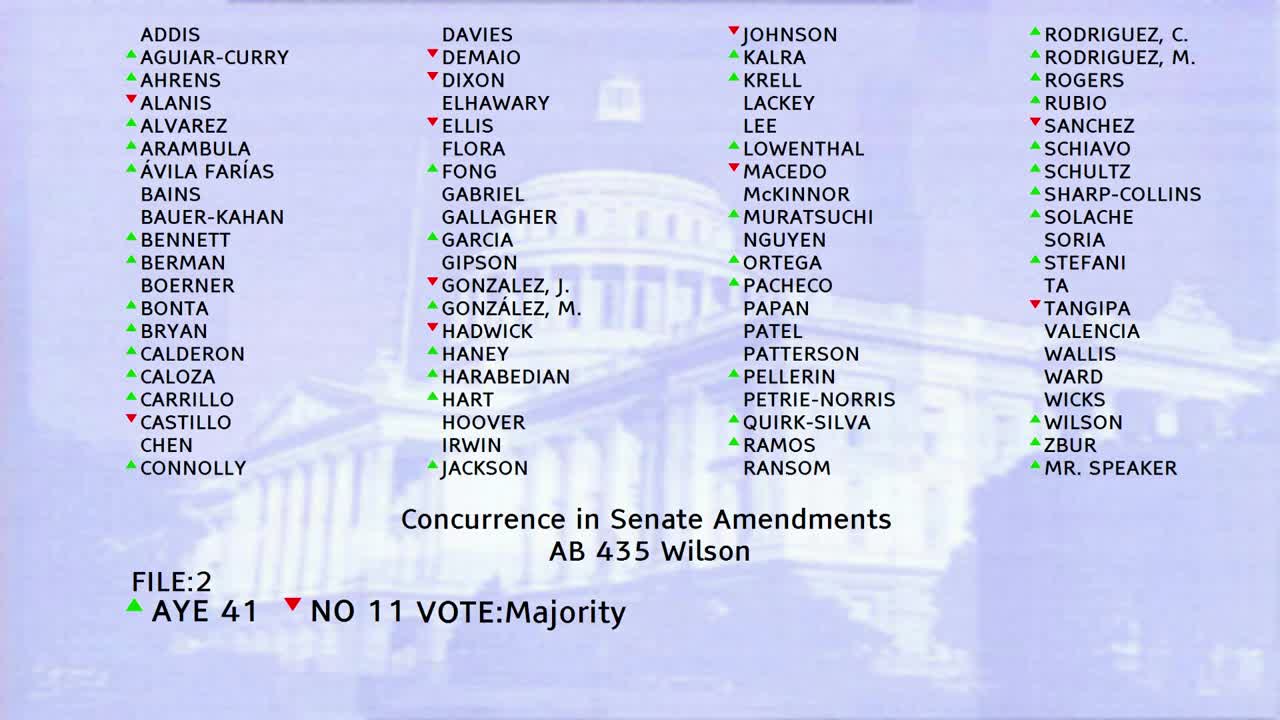 1MIN
Assembly Floor
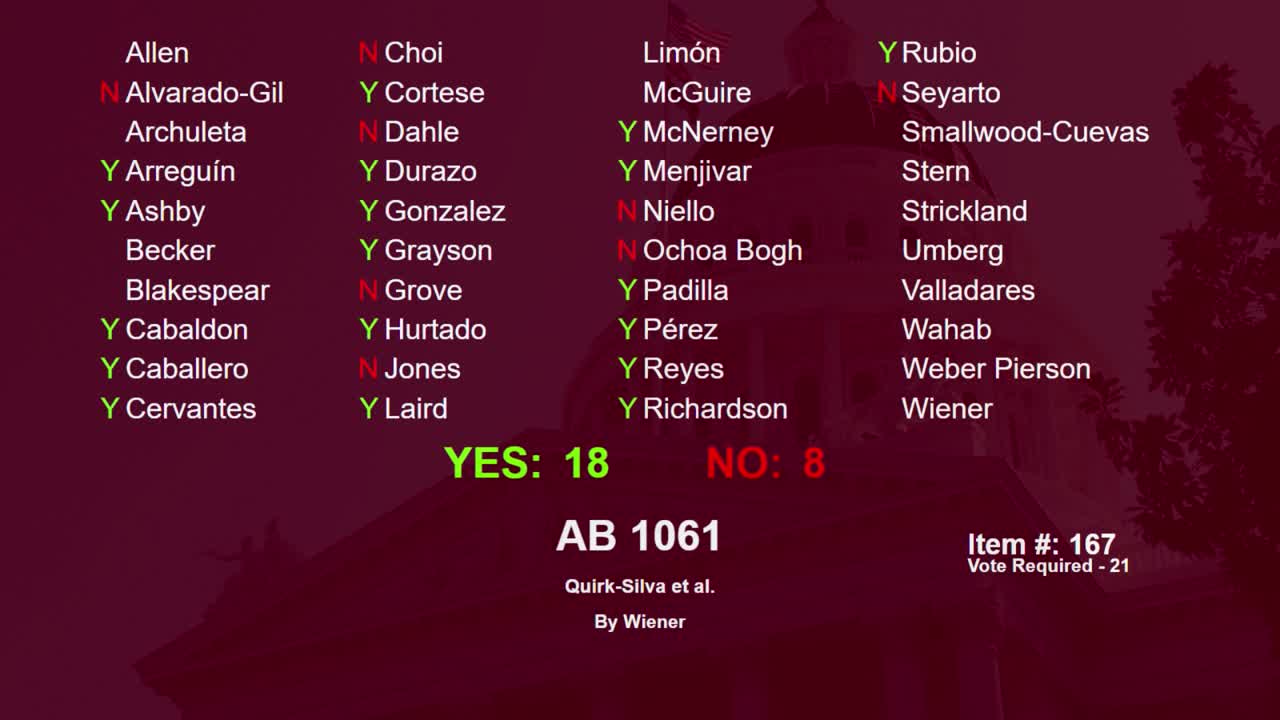 2MIN
Senate Floor
 47SEC
Senate Standing Committee on Appropriations
 4MIN
Senate Standing Committee on Health
 1MIN
Assembly Floor
 12MIN
Assembly Standing Committee on Health
Bill Author

Bill Co-Author(s):