AB 2260: Water: restoration management: small restoration use.
- Session Year: 2025-2026
- House: Assembly
- Latest Version Date: 2026-05-18
Current Status:
In Progress
(2026-08-13: In committee: Held under submission.)
Introduced
In Committee
Awaiting First Chamber Vote
Passed First Chamber
In Committee
Awaiting Second Chamber Vote
Passed Second Chamber
Enacted
What does this bill do?
The bill creates a new “small restoration use” registration so people or groups can divert or store limited amounts of water for native fish and wildlife habitat restoration projects. These small restoration registrations are treated like other small-use registrations — subject to renewal and loss-for-nonuse rules and board-set conditions — may require fees set by the State Water Resources Control Board, and the board must prioritize processing registrations paired with petitions that dedicate water to instream or wetland uses.
The summary is provided by generative AI which can make mistakes. For original language, please view the details in the table below.
(1)Existing law, the Water Rights Permitting Reform Act of 1988, authorizes any person to obtain a right to appropriate water for a small domestic, small irrigation, or livestock stockpond use, as defined, upon registering the use with the State Water Resources Control Board, as prescribed, payment of a registration fee, and application of the water to reasonable and beneficial use with due diligence.
This bill would extend the above-described ability to obtain a right to appropriate water to a small restoration use, as provided. The bill would define several terms for these purposes, including defining a small restoration use as a specified use of water for native fish and wildlife preservation and enhancement in connection with a project to restore, enhance, or provide habitat for native fish and wildlife, as provided. The bill would require the board to give priority to processing small restoration use registrations that are coupled with a petition for mandatory dedication to instream beneficial uses or wetlands habitat, as specified. The bill would require a person or entity who files a registration of appropriation for a small restoration use to pay a fee according to a fee schedule established by the board.
(2)Existing law requires renewal of registration of a small domestic, small irrigation, or livestock stockpond use pursuant to a specified process prior to the expiration of each 5-year period following completed registration. Existing law provides for the reversion of water rights to which a person is entitled when the person fails to beneficially use the water for a period of 5 years. Existing law requires the board to establish general conditions to which all appropriations of water for small domestic, small irrigation, or livestock stockpond use are subject, including, among others, that the appropriation is subject to prior rights and that all conditions lawfully required by the Department of Fish and Wildlife are conditions upon the appropriation. Existing law authorizes the board to establish those general conditions for some methods of diversion or categories of small irrigation use before establishing general conditions for other methods or categories others, as specified.
This bill would also apply the above-described these renewal, reversion, and condition-setting provisions to a small restoration use. use and make other conforming changes. The bill would exempt the adoption and revision of those general conditions for small restoration use from certain economic impact assessment requirements of the rulemaking provisions of the Administrative Procedure Act.
(1)Existing law, the Water Rights Permitting Reform Act of 1988, authorizes any person to obtain a right to appropriate water for a small domestic, small irrigation, or livestock stockpond use, as defined, upon registering the use with the State Water Resources Control Board, as prescribed, payment of a registration fee, and application of the water to reasonable and beneficial use with due diligence.
This bill would extend the above-described ability to obtain a right to appropriate water to a small restoration use, as provided. The bill would define several terms for these purposes, including defining a small restoration use as a specified use of water for fish and wildlife preservation and enhancement in connection with a project to restore, enhance, or provide habitat for native fish and wildlife, as provided. The bill would require the board to give priority to processing small restoration use registrations that are coupled with a petition for mandatory dedication to instream beneficial uses or wetlands habitat, as specified.
Existing(2)Existing law requires renewal of registration of a small domestic, small irrigation, or livestock pond stockpond use pursuant to a specified process prior to the expiration of each 5-year period following complete completed registration. Existing law authorizes the board to establish general conditions for some methods of diversion or categories of small irrigation use before establishing general conditions or for other methods or categories, as specified.
This bill would also apply the above-described provisions to a small restoration use.
(2)Existing law, the Restoration Management Permit Act, authorizes the Department of Fish and Wildlife to issue a restoration management permit to authorize take, possession, import, or export of any species or subspecies of fish, wildlife, or plant in association with a qualifying restoration project, as provided. Under existing law, if a qualifying restoration project includes the substantial diversion or obstruction of the natural flow of, or substantial change or use of any material from the bed, channel, or bank of, any river, stream, or lake, and the department determines the activity may substantially adversely affect an existing fish or wildlife resource, the department may authorize those activities through a restoration management permit. This bill would authorize the department to authorize the continued diversion and use of water through a restoration management permit as necessary to ensure the water management changes are maintained over time, if the substantial net benefit resulting from a qualifying restoration project will be obtained through changes to the diversion and use of water as compared to baseline conditions, as provided.(1)Existing law, the Water Rights Permitting Reform Act of 1988, authorizes any person to obtain a right to appropriate water for a small domestic, small irrigation, or livestock stockpond use, as defined, upon registering the use with the State Water Resources Control Board, as prescribed, payment of a registration fee, and application of the water to reasonable and beneficial use with due diligence.
This bill would extend the above-described ability to obtain a right to appropriate water to a small restoration use, as provided. The bill would define several terms for these purposes, including defining a small restoration use as a specified use of water for fish and wildlife preservation and enhancement in connection with a project to restore, enhance, or provide habitat for native fish and wildlife, as provided. The bill would require the board to give priority to processing small restoration use registrations that are coupled with a petition for mandatory dedication to instream beneficial uses or wetlands habitat, as specified.
Existing law requires renewal of registration of a small domestic, small irrigation, or livestock pond use pursuant to a specified process prior to the expiration of each 5-year period following complete registration. Existing law authorizes the board to establish general conditions for some methods of diversion or categories of small irrigation use before establishing general conditions or other methods or categories, as specified.
This bill would also apply the above-described provisions to a small restoration use.
(2)Existing law, the Restoration Management Permit Act, authorizes the Department of Fish and Wildlife to issue a restoration management permit to authorize take, possession, import, or export of any species or subspecies of fish, wildlife, or plant in association with a qualifying restoration project, as provided. Under existing law, if a qualifying restoration project includes the substantial diversion or obstruction of the natural flow of, or substantial change or use of any material from the bed, channel, or bank of, any river, stream, or lake, and the department determines the activity may substantially adversely affect an existing fish or wildlife resource, the department may authorize those activities through a restoration management permit.
This bill would authorize the department to authorize the continued diversion and use of water through a restoration management permit as necessary to ensure the water management changes are maintained over time, if the substantial net benefit resulting from a qualifying restoration project will be obtained through changes to the diversion and use of water as compared to baseline conditions, as provided.
(a)The Legislature finds and declares that it is in the public interest to provide a timely, efficient, and economic procedure for the acquisition of rights to appropriate water for a small domestic use, including incidental stock watering and irrigation uses, a small irrigation use, a small restoration use, and for a livestock stockpond subject to prior rights.
(b)As used in this article:
(1)Small domestic use means a domestic use, as that use is defined by board rule, or a use for aesthetic, fire protection, recreational, or fish and wildlife purposes that is associated with a dwelling or other facility for human occupation, that does not exceed direct diversion of 4,500 gallons per day or diversion to storage of 10 acre-feet per year.
(2)Small irrigation use means either of the following:
(A)An irrigation use, heat control use, or frost protection use, not to exceed diversion to storage of 20 acre-feet per year, including impoundment for incidental aesthetic, fire protection, recreational, or fish and wildlife purposes.
(B)An irrigation use not to exceed direct diversion of 42,000 gallons per day, up to a maximum of 20 acre-feet per year.
(3)Livestock stockpond means a water impoundment structure constructed for livestock watering use not to exceed direct diversion of 4,500 gallons per day, or diversion to storage of 10 acre-feet per year, as that use is defined by the board, and including impoundment for incidental aesthetic, fire protection, recreational, or fish and wildlife purposes.
(4)(A)Small restoration use means either of the following in connection with a project to restore, enhance, or provide habitat for native fish and wildlife:
(i)A use for native fish and wildlife preservation and enhancement not to exceed diversion to storage of 20 acre-feet per year, including, but not limited to, impoundment for incidental fire protection, recreational, or native fish and wildlife purposes.
(ii)A use for native fish and wildlife preservation and enhancement not to exceed direct diversion of 42,000 gallons per day, up to a maximum of 20 acre-feet per year.
(B)(i)For purposes of subparagraph (A), use for native fish and wildlife preservation and enhancement includes, but is not limited to, the use of water for a storage and forbearance project or the release of stored water to enhance streamflow for the benefit of native fish and wildlife.
(ii)For purposes of clause (i), storage and forbearance project is a project in which a legal user of water makes a binding commitment to reduce existing diversions for beneficial use under an existing right at times of deficient streamflow in exchange for a new right to divert water during times of higher streamflow to support the same level of existing beneficial use. uses under the existing right.
(iii)For purposes of clause (ii), a binding commitment to reduce existing diversions diversions under an existing right may be accomplished by an instream flow dedication pursuant to Section 1707, a forbearance agreement, or a condition or term of a permit or license. Compliance with the binding commitment to reduce existing diversions under an existing right shall be made a condition of any small restoration registration issued in connection with a storage and forbearance project.
SEC. 3.Section 1228.2 of the Water Code is amended to read:1228.2.(a)(1)Subject to subdivision (b), a person may obtain a right to appropriate water for a small domestic, small irrigation, small restoration, or livestock stockpond use upon first registering the use with the board and thereafter applying the water to reasonable and beneficial use with due diligence.
(2)With regard to an appropriation for small domestic use, a registration shall not be filed for a facility served by or used pursuant to a permit or license for domestic or municipal use, and not more than one small domestic use registration shall be in effect at any time for any facility. A small domestic use registration and a livestock stockpond use registration may be in effect for the same facility if the total combined water use covered by the registrations does not exceed 10 acre-feet per year.
(3)With regard to an appropriation for small irrigation or small restoration use, more than one registration may be in effect at any time for a registrant if the diversion or storage facilities subject to registration for a registrant do not exceed the ratio of one per 20 irrigated acres, and if the total water use on all acreage covered by the registrations, including any water use based on other rights, does not exceed 100 acre-feet per year.
(4)A small domestic use registration and a small irrigation use registration, or a livestock stockpond use registration and a small irrigation use registration, may be in effect for the same facility only if the total combined water use covered by the registrations does not exceed 20 acre-feet per year.
(5)With regard to an appropriation for livestock stockpond use, more than one registration may be in effect at any time for a registrant if stockponds subject to registration for that registrant do not exceed the ratio of one per 50 acres.
(6)With regard to an appropriation for small restoration use, more than one registration may be in effect at any time and at the same facility for a registrant if the total diversion or storage facilities subject to small restoration use registrations for a registrant do not exceed the ratio of one per 20 acres, and if the total water use on all acreage covered by the registrations, including any water use based on other rights, does not exceed 100 acre-feet per year.
(b)Initiation of rights to appropriate water pursuant to this article shall be subject to Article 1.3 (commencing with Section 1205), relating to fully appropriated stream systems. The board shall not accept a registration of water use that proposes as a source of water supply a stream system that has been unconditionally declared by the board to be fully appropriated pursuant to Section 1205, except that subdivision (b) of Section 1206, relating to conditional declarations of fully appropriated stream systems, shall apply to registration of water use pursuant to this article, and the board shall accept those registrations when consistent with the conditions specified in the declaration.
(c)The board shall annually prepare and post on its internet website information summarizing the location, nature, and amount of water appropriated pursuant to this article. The information shall include a description of the availability of unappropriated water in those stream systems that may become fully appropriated within the next reporting period.
(d)The board shall give priority to processing small restoration use registrations that are coupled with a petition for mandatory dedication to instream beneficial uses or wetlands habitat pursuant to Section 1707.
(e)If a registration is filed with a source of supply on a stream system that the most recent report submitted under subdivision (c) identifies as a stream system that may become fully appropriated within the next reporting period, the registration shall not take effect unless the board finds that unappropriated water is available for the appropriation proposed by the registration. If the board finds that unappropriated water is not available to supply the proposed appropriation, the board shall, following notice and hearing, determine whether that stream system should be declared fully appropriated pursuant to Article 1.3 (commencing with Section 1205).
SEC. 4.Section 1228.5 of the Water Code is amended to read:1228.5.(a)Registration of a small domestic, small irrigation, small restoration, or livestock stockpond use A registration pursuant to this article shall be renewed prior to the expiration of each five-year period following completed registration.
(b)Registrations for which all annual fees have been timely paid and all annual reports have been timely submitted at the expiration of the five-year registration shall be renewed by operation of law.
(c)The conditions established by the board pursuant to Section 1228.6 that are in effect at the time of renewal of registration shall supersede the conditions that were applicable to the original completed registration.
(d)A registration for which fees or water use reports remain outstanding at the expiration of the five-year registration period shall be revoked by operation of law.
SEC. 5.Section 1229 of the Water Code is amended to read:1229.(a)The board is not required to adopt general conditions for small irrigation use or small restoration use pursuant to subdivision (a) of Section 1228.6 until the board determines that funds are available for that purpose.
(b)A registration for small irrigation use or small restoration use pursuant to this article is not authorized until the board establishes general conditions for small irrigation use or small restoration use, respectively, pursuant to subdivision (a) of Section 1228.6 to protect instream beneficial uses.
(c)The board may establish general conditions for some methods of diversion or categories of small irrigation use and small restoration use before establishing general conditions for other methods or categories, in which case a registration for small irrigation use or small restoration use is authorized only for those methods or categories for which the board has established the general conditions for the protection of instream beneficial uses.
(d)The adoption and revision of general conditions for small restoration use pursuant to subdivision (a) of Section 1228.6 shall be exempt from the requirement to assess economic impacts pursuant to subdivision (b) of Section 11346.3 of the Government Code and from the requirement to prepare a standardized regulatory impact analysis pursuant to subdivision (c) of Section 11346.3 of the Government Code.
SEC. 6.Section 1241 of the Water Code is amended to read:1241.If the person entitled to the use of water fails to use beneficially all or any part of the water claimed by him or her, that person, for which a right of use has vested, for the purpose for which it was appropriated or adjudicated, for a period of five years, that unused water may revert to the public and shall, if reverted, be regarded as unappropriated public water. That reversion shall occur upon a finding by the board following notice to the permittee, licensee, or person holding a livestock stockpond certificate or small domestic use, small irrigation use, or livestock stockpond use a registration under this part and a public hearing if requested by the permittee, licensee, certificate holder, or registration holder.
SEC. 7.Section 1525 of the Water Code is amended to read:1525.(a)Each person or entity who holds a permit or license to appropriate water, and each lessor of water leased under Chapter 1.5 (commencing with Section 1020) of Part 1, shall pay an annual fee according to a fee schedule established by the board.
(b)Each person or entity who files any of the following shall pay a fee according to a fee schedule established by the board:
(1)An application for a permit to appropriate water.
(2)A registration of appropriation for a small domestic use, small irrigation use, or livestock stockpond use. pursuant to Article 2.7 (commencing with Section 1228) of Chapter 1.
(3)A petition for an extension of time within which to begin construction, to complete construction, or to apply the water to full beneficial use under a permit.
(4)A petition to change the point of diversion, place of use, or purpose of use, under a permit, license, or registration.
(5)A petition to change the conditions of a permit or license, requested by the permittee or licensee, that is not otherwise subject to paragraph (3) or (4).
(6)A petition to change the point of discharge, place of use, or purpose of use, of treated wastewater, requested pursuant to Section 1211.
(7)An application for approval of a water lease agreement.
(8)A request for release from priority pursuant to Section 10504.
(9)An application for an assignment of a state-filed application pursuant to Section 10504.
(10)A statement of water diversion and use pursuant to Part 5.1 (commencing with Section 5100) that reports that water was used for cannabis cultivation.
(c)(1)The board shall set the fee schedule authorized by this section so that the total amount of fees collected pursuant to this section equals that amount necessary to recover costs incurred in connection with the issuance, administration, review, monitoring, and enforcement of permits, licenses, certificates, and registrations to appropriate water, water leases, statements of water diversion and use for cannabis cultivation, and orders approving changes in point of discharge, place of use, or purpose of use of treated wastewater. The board may include, as recoverable costs, but is not limited to including, the costs incurred in reviewing applications, registrations, statements of water diversion and use for cannabis cultivation, petitions and requests, prescribing terms of permits, licenses, registrations, and change orders, enforcing and evaluating compliance with permits, licenses, certificates, registrations, change orders, and water leases, inspection, monitoring, planning, modeling, reviewing documents prepared for the purpose of regulating the diversion and use of water, applying and enforcing the prohibition set forth in Section 1052 against the unauthorized diversion or use of water subject to this division and the water diversion related provisions of Chapter 6 (commencing with Section 26060) of Division 10 of the Business and Professions Code, and the administrative costs incurred in connection with carrying out these actions.
(2)In setting the fee schedule for fees subject to subdivision (b) of Section 1433.2 and subdivision (b) of Section 1443.2, the board shall also include an amount estimated by the board, in consultation with the Department of Fish and Wildlife, necessary to recover costs incurred by the Department of Fish and Wildlife under Article 2 (commencing with Section 1433) of Chapter 6.5 and Article 2 (commencing with Section 1443) of Chapter 6.6.
(d)(1)The board shall adopt the schedule of fees authorized under this section as emergency regulations in accordance with Section 1530.
(2)For filings subject to subdivision (b), the schedule may provide for a single filing fee or for an initial filing fee followed by an annual fee, as appropriate to the type of filing involved, and may include supplemental fees for filings that have already been made but have not yet been acted upon by the board at the time the schedule of fees takes effect.
(3)The board shall set the amount of total revenue collected each year through the fees authorized by this section at an amount equal to the amounts appropriated by the Legislature for expenditure for support of water rights program activities from the Water Rights Fund established under Section 1550, taking into account the reserves in the Water Rights Fund. The board shall review and revise the fees each fiscal year as necessary to conform to the amounts appropriated. If the board determines that the revenue collected during the preceding year was greater than, or less than, the amounts appropriated, the board may further adjust the annual fees to compensate for the over or under collection of revenue.
(e)Annual fees imposed pursuant to this section for the 200304 fiscal year shall be assessed for the entire 200304 fiscal year.
SEC. 8.Section 5101 of the Water Code is amended to read:5101.(a)Each person who, after December 31, 1965, diverts water shall file with the board a statement of their diversion and use, as provided in subdivision (b), except that a statement is not required to be filed if the diversion is any of the following:
(1)From a spring that does not flow off the property on which it is located and from which the persons aggregate diversions do not exceed 25 acre-feet in any year.
(2)Covered by a registration for small domestic use, small irrigation use, or livestock stockpond use, or permit registration, permit, or license to appropriate water on file with the board.
(3)Included in a notice filed pursuant to Part 5 (commencing with Section 4999).
(4)Regulated by a watermaster appointed by the department and included in annual reports filed with a court or the board by the watermaster, which if the reports identify the persons who have diverted water and describe the general purposes and the place, the use, and the quantity of water that has been diverted from each source.
(5)Included in annual reports filed with a court or the board by a watermaster appointed by a court or pursuant to statute to administer a final judgment determining rights to water, which if the reports identify the persons who have diverted water and give the general place of use and the quantity of water that has been diverted from each source.
(6)For use in compliance with Article 2.5 (commencing with Section 1226) or Article 2.7 (commencing with Section 1228) of Chapter 1 of Part 2.
(7)A diversion that occurs before January 1, 2009, if any of the following applies:
(A)The diversion is from a spring that does not flow off the property on which it is located, and the persons aggregate diversions do not exceed 25 acre-feet in any year.
(B)The diversion is covered by an application to appropriate water on file with the board.
(C)The diversion is reported by the department in its hydrologic data bulletins.
(D)The diversion is included in the consumptive use data for the Delta lowlands published by the department in its hydrologic data bulletins.
(b)(1)For diversions after December 31, 1965, and before January 1, 2021, the statement shall be filed before July 1 of the year after the diversion.
(2)For diversions after December 31, 2020, and before October 1, 2021, the statement shall be filed before April 1, 2022.
(3)For diversions after September 30, 2021, the statement shall include diversions during the one-year period from October 1 of each year through September 30, inclusive, of the following year, and shall be filed before February 1 of the year after that one-year period.
(a)The Legislature finds and declares that it is in the public interest to provide a timely, efficient, and economic procedure for the acquisition of rights to appropriate water for a small domestic use, including incidental stock watering and irrigation uses, a small irrigation use, a small restoration use, and for a livestock stockpond subject to prior rights.
(b)As used in this article:
(1)Small domestic use means a domestic use, as that use is defined by board rule, or a use for aesthetic, fire protection, recreational, or fish and wildlife purposes that is associated with a dwelling or other facility for human occupation, that does not exceed direct diversion of 4,500 gallons per day or diversion to storage of 10 acre-feet per year.
(2)Small irrigation use means either of the following:
(A)An irrigation use, heat control use, or frost protection use, not to exceed diversion to storage of 20 acre-feet per year, including impoundment for incidental aesthetic, fire protection, recreational, or fish and wildlife purposes.
(B)An irrigation use not to exceed direct diversion of 42,000 gallons per day, up to a maximum of 20 acre-feet per year.
(3)Livestock stockpond means a water impoundment structure constructed for livestock watering use not to exceed direct diversion of 4,500 gallons per day, or diversion to storage of 10 acre-feet per year, as that use is defined by the board, and including impoundment for incidental aesthetic, fire protection, recreational, or fish and wildlife purposes.
(4)(A)Small restoration use means either of the following in connection with a project to restore, enhance, or provide habitat for native fish and wildlife:
(i)A use for fish and wildlife preservation and enhancement not to exceed diversion to storage of 20 acre-feet per year, including, but not limited to, impoundment for incidental fire protection, recreational, or fish and wildlife purposes.
(ii)A use for fish and wildlife preservation and enhancement not to exceed direct diversion of 42,000 gallons per day, up to a maximum of 20 acre-feet per year.
(B)(i)For purposes of subparagraph (A), use for fish and wildlife preservation and enhancement includes, but is not limited to, the use of water for a storage and forbearance project or the release of stored water to enhance streamflow for the benefit of fish and wildlife.
(ii)For purposes of clause (i), storage and forbearance project is a project in which a legal user of water makes a binding commitment to reduce existing diversions for beneficial use at times of deficient streamflow in exchange for a new right to divert water during times of higher streamflow to support the same level of existing beneficial use.
(iii)For purposes of clause (ii), a binding commitment to reduce existing diversions may be accomplished by an instream flow dedication pursuant to Section 1707, a forbearance agreement, or a condition or term of a permit or license. Compliance with the binding commitment to reduce existing diversions shall be made a condition of any small restoration registration issued in connection with a storage and forbearance project.
SEC. 3.Section 1228.2 of the Water Code is amended to read:1228.2.(a)(1)Subject to subdivision (b), a person may obtain a right to appropriate water for a small domestic, small irrigation, small restoration, or livestock stockpond use upon first registering the use with the board and thereafter applying the water to reasonable and beneficial use with due diligence.
(2)With regard to an appropriation for small domestic use, a registration shall not be filed for a facility served by or used pursuant to a permit or license for domestic or municipal use, and not more than one small domestic use registration shall be in effect at any time for any facility. A small domestic use registration and a livestock stockpond use registration may be in effect for the same facility if the total combined water use covered by the registrations does not exceed 10 acre-feet per year.
(3)With regard to an appropriation for small irrigation or small restoration use, more than one registration may be in effect at any time for a registrant if the diversion or storage facilities subject to registration for a registrant do not exceed the ratio of one per 20 irrigated acres, and if the total water use on all acreage covered by the registrations, including any water use based on other rights, does not exceed 100 acre-feet per year.
(4)A small domestic use registration and a small irrigation use registration, or a livestock stockpond use registration and a small irrigation use registration, may be in effect for the same facility only if the total combined water use covered by the registrations does not exceed 20 acre-feet per year.
(5)With regard to an appropriation for livestock stockpond use, more than one registration may be in effect at any time for a registrant if stockponds subject to registration for that registrant do not exceed the ratio of one per 50 acres.
(b)Initiation of rights to appropriate water pursuant to this article shall be subject to Article 1.3 (commencing with Section 1205), relating to fully appropriated stream systems. The board shall not accept a registration of water use that proposes as a source of water supply a stream system that has been unconditionally declared by the board to be fully appropriated pursuant to Section 1205, except that subdivision (b) of Section 1206, relating to conditional declarations of fully appropriated stream systems, shall apply to registration of water use pursuant to this article, and the board shall accept those registrations when consistent with the conditions specified in the declaration.
(c)The board shall annually prepare and post on its internet website information summarizing the location, nature, and amount of water appropriated pursuant to this article. The information shall include a description of the availability of unappropriated water in those stream systems that may become fully appropriated within the next reporting period.
(d)The board shall give priority to processing small restoration use registrations that are coupled with a petition for mandatory dedication to instream beneficial uses or wetlands habitat pursuant to Section 1707.
(e)If a registration is filed with a source of supply on a stream system that the most recent report submitted under subdivision (c) identifies as a stream system that may become fully appropriated within the next reporting period, the registration shall not take effect unless the board finds that unappropriated water is available for the appropriation proposed by the registration. If the board finds that unappropriated water is not available to supply the proposed appropriation, the board shall, following notice and hearing, determine whether that stream system should be declared fully appropriated pursuant to Article 1.3 (commencing with Section 1205).
SEC. 4.Section 1228.5 of the Water Code is amended to read:1228.5.(a)Registration of a small domestic, small irrigation, small restoration, or livestock stockpond use pursuant to this article shall be renewed prior to the expiration of each five-year period following completed registration.
(b)Registrations for which all annual fees have been timely paid and all annual reports have been timely submitted at the expiration of the five-year registration shall be renewed by operation of law.
(c)The conditions established by the board pursuant to Section 1228.6 that are in effect at the time of renewal of registration shall supersede the conditions that were applicable to the original completed registration.
(d)A registration for which fees or water use reports remain outstanding at the expiration of the five-year registration period shall be revoked by operation of law.
SEC. 5.Section 1229 of the Water Code is amended to read:1229.(a)The board is not required to adopt general conditions for small irrigation use pursuant to subdivision (a) of Section 1228.6 until the board determines that funds are available for that purpose.
(b)A registration for small irrigation use pursuant to this article is not authorized until the board establishes general conditions for small irrigation use pursuant to subdivision (a) of Section 1228.6 to protect instream beneficial uses.
(c)The board may establish general conditions for some methods of diversion or categories of small irrigation use and small restoration use before establishing general conditions for other methods or categories, in which case a registration for small irrigation use or small restoration use is authorized only for those methods or categories for which the board has established the general conditions for the protection of instream beneficial uses.
(a)The department may issue a restoration management permit to authorize take, possession, import, or export of any species or subspecies of fish, wildlife, or plant in association with a qualifying restoration project and to authorize any impacts to fish and wildlife resources as a result of activities otherwise subject to Section 1602, all pursuant to terms and conditions determined by the department.
(b)The department may authorize the take, possession, import, or export of any endangered species, threatened species, or candidate species designated pursuant to Chapter 1.5 (commencing with Section 2050) of Division 3 for management or propagation purposes, including scientific or educational purposes related to management or propagation, through a restoration management permit for a qualifying restoration project.
(c)The department may authorize the take, possession, import, or export of any fully protected bird, mammal, reptile, amphibian, or fish designated pursuant to Section 3511, 4700, 5050, or 5515 for management or propagation purposes, including scientific or educational purposes related to management or propagation, through a restoration management permit for a qualifying restoration project. The take, possession, import, or export of any fully protected bird, mammal, reptile, amphibian, or fish that is authorized through a restoration management permit for a qualifying restoration project shall not be subject to Section 3511, 4700, 5050, or 5515.
(d)The department may authorize the take, possession, import, or export of any plant species designated as rare pursuant to Chapter 10 (commencing with Section 1900) for management or propagation purposes, including scientific or educational purposes related to management or propagation, through a restoration management permit for a qualifying restoration project.
(e)The department may authorize the take, possession, import, or export of any fish, amphibian, reptile, mammal, bird, or the nests or eggs thereof, or any other form of plant or animal life not subject to subdivisions (b) through (d), inclusive, for management or propagation purposes, including scientific or educational purposes related to management or propagation, through a restoration management permit for a qualifying restoration project.
(f)(1)If a qualifying restoration project includes the substantial diversion or obstruction of the natural flow of, or substantial change or use of any material from the bed, channel, or bank of, any river, stream, or lake and the department determines the activity may substantially adversely affect an existing fish or wildlife resource, the department may authorize those activities through a restoration management permit. The department shall include reasonable measures necessary to protect that resource in the restoration management permit for the qualifying restoration project.
(2)If the substantial net benefit resulting from a qualifying restoration project will be obtained through changes to the diversion and use of water as compared to baseline conditions, the department may authorize the continued diversion and use of water through a restoration management permit as necessary to ensure the water management changes are maintained over time. Authorization under this paragraph may extend to any new diversions implemented as components of the qualifying restoration project, and also to any related diversions as necessary to secure the substantial net benefit of the project.
(3)A restoration management permit may not authorize the substantial diversion of any river, stream, or lake for a term of longer than five years. A permittee who intends to continue the substantial diversion of a river, stream, or lake after the expiration of a restoration management permit shall notify the department pursuant to Section 1602.
SEC. 2.Section 1228.1 of the Water Code is amended to read:1228.1.(a)The Legislature finds and declares that it is in the public interest to provide a timely, efficient, and economic procedure for the acquisition of rights to appropriate water for a small domestic use, including incidental stock watering and irrigation uses, a small irrigation use, a small restoration use, and for a livestock stockpond subject to prior rights.
(b)As used in this article:
(1)Small domestic use means a domestic use, as that use is defined by board rule, or a use for aesthetic, fire protection, recreational, or fish and wildlife purposes that is associated with a dwelling or other facility for human occupation, that does not exceed direct diversion of 4,500 gallons per day or diversion to storage of 10 acre-feet per year.
(2)Small irrigation use means either of the following:
(A)An irrigation use, heat control use, or frost protection use, not to exceed diversion to storage of 20 acre-feet per year, including impoundment for incidental aesthetic, fire protection, recreational, or fish and wildlife purposes.
(B)An irrigation use not to exceed direct diversion of 42,000 gallons per day, up to a maximum of 20 acre-feet per year.
(3)Livestock stockpond means a water impoundment structure constructed for livestock watering use not to exceed direct diversion of 4,500 gallons per day, or diversion to storage of 10 acre-feet per year, as that use is defined by the board, and including impoundment for incidental aesthetic, fire protection, recreational, or fish and wildlife purposes.
(4)(A)Small restoration use means either of the following in connection with a project to restore, enhance, or provide habitat for native fish and wildlife:
(i)A use for fish and wildlife preservation and enhancement not to exceed diversion to storage of 20 acre-feet per year, including, but not limited to, impoundment for incidental fire protection, recreational, or fish and wildlife purposes.
(ii)A use for fish and wildlife preservation and enhancement not to exceed direct diversion of 42,000 gallons per day, up to a maximum of 20 acre-feet per year.
(B)(i)For purposes of subparagraph (A), use for fish and wildlife preservation and enhancement includes, but is not limited to, the use of water for a storage and forbearance project or the release of stored water to enhance streamflow for the benefit of fish and wildlife.
(ii)For purposes of clause (i), storage and forbearance project is a project in which a legal user of water makes a binding commitment to reduce existing diversions for beneficial use at times of deficient streamflow in exchange for a new right to divert water during times of higher streamflow to support the same level of existing beneficial use.
(iii)For purposes of clause (ii), a binding commitment to reduce existing diversions may be accomplished by an instream flow dedication pursuant to Section 1707, a forbearance agreement, or a condition or term of a permit or license. Compliance with the binding commitment to reduce existing diversions shall be made a condition of any small restoration registration issued in connection with a storage and forbearance project.
SEC. 3.Section 1228.2 of the Water Code is amended to read:1228.2.(a)(1)Subject to subdivision (b), a person may obtain a right to appropriate water for a small domestic, small irrigation, small restoration, or livestock stockpond use upon first registering the use with the board and thereafter applying the water to reasonable and beneficial use with due diligence.
(2)With regard to an appropriation for small domestic use, a registration shall not be filed for a facility served by or used pursuant to a permit or license for domestic or municipal use, and not more than one small domestic use registration shall be in effect at any time for any facility. A small domestic use registration and a livestock stockpond use registration may be in effect for the same facility if the total combined water use covered by the registrations does not exceed 10 acre-feet per year.
(3)With regard to an appropriation for small irrigation or small restoration use, more than one registration may be in effect at any time for a registrant if the diversion or storage facilities subject to registration for a registrant do not exceed the ratio of one per 20 irrigated acres, and if the total water use on all acreage covered by the registrations, including any water use based on other rights, does not exceed 100 acre-feet per year.
(4)A small domestic use registration and a small irrigation use registration, or a livestock stockpond use registration and a small irrigation use registration, may be in effect for the same facility only if the total combined water use covered by the registrations does not exceed 20 acre-feet per year.
(5)With regard to an appropriation for livestock stockpond use, more than one registration may be in effect at any time for a registrant if stockponds subject to registration for that registrant do not exceed the ratio of one per 50 acres.
(b)Initiation of rights to appropriate water pursuant to this article shall be subject to Article 1.3 (commencing with Section 1205), relating to fully appropriated stream systems. The board shall not accept a registration of water use which that proposes as a source of water supply a stream system which that has been unconditionally declared by the board to be fully appropriated pursuant to Section 1205, except that subdivision (b) of Section 1206, relating to conditional declarations of fully appropriated stream systems, shall apply to registration of water use pursuant to this article, and the board shall accept those registrations where when consistent with the conditions specified in the declaration.
(c)The board shall annually prepare and post on its Internet Web site internet website information summarizing the location, nature, and amount of water appropriated pursuant to this article. The information shall include a description of the availability of unappropriated water in those stream systems which that may become fully appropriated within the next reporting period.
(d)The board shall give priority to processing small restoration use registrations that are coupled with a petition for mandatory dedication to instream beneficial uses or wetlands habitat pursuant to Section 1707.
(d)(e)If a registration is filed with a source of supply on a stream system that the most recent report submitted under subdivision (c) identifies as a stream system that may become fully appropriated within the next reporting period, the registration shall not take effect unless the board finds that unappropriated water is available for the appropriation proposed by the registration. If the board finds that unappropriated water is not available to supply the proposed appropriation, the board shall, following notice and hearing, determine whether that stream system should be declared fully appropriated pursuant to Article 1.3 (commencing with Section 1205).
SEC. 4.Section 1228.5 of the Water Code is amended to read:1228.5.(a)Registration of a small domestic, small irrigation, small restoration, or livestock stockpond use pursuant to this article shall be renewed prior to the expiration of each five-year period following completed registration.
(b)Registrations for which all annual fees have been timely paid and all annual reports have been timely submitted at the expiration of the five-year registration shall be renewed by operation of law.
(c)The conditions established by the board pursuant to Section 1228.6 that are in effect at the time of renewal of registration shall supersede the conditions that were applicable to the original completed registration.
(d)A registration for which fees or water use reports remain outstanding at the expiration of the five-year registration period shall be revoked by operation of law.
SEC. 5.Section 1229 of the Water Code is amended to read:1229.(a)The board is not required to adopt general conditions for small irrigation use pursuant to subdivision (a) of Section 1228.6 until the board determines that funds are available for that purpose.
(b)A registration for small irrigation use pursuant to this article is not authorized until the board establishes general conditions for small irrigation use pursuant to subdivision (a) of Section 1228.6 to protect instream beneficial uses.
(c)The board may establish general conditions for some methods of diversion or categories of small irrigation use and small restoration use before establishing general conditions for other methods or categories, in which case a registration for small irrigation use or small restoration use is authorized only for those methods or categories for which the board has established the general conditions for the protection of instream beneficial uses.
|
Date
|
Status
|
|---|---|
| Aug 13, 2026 | In committee: Held under submission. |
| Aug 3, 2026 | In committee: Referred to APPR. suspense file. |
| Jun 24, 2026 | From committee: Do pass and re-refer to Com. on APPR. with recommendation: To Consent Calendar. (Ayes 7. Noes 0.) (June 23). Re-referred to Com. on APPR. |
| Jun 10, 2026 | Referred to Com. on N.R. & W. |
| May 27, 2026 | In Senate. Read first time. To Com. on RLS. for assignment. |
| May 26, 2026 | Read third time. Passed. Ordered to the Senate. (Ayes 78. Noes 0.) |
| May 26, 2026 | Read third time. Passed. Ordered to the Senate. (Ayes 78. Noes 0. Page 5379.) |
| May 26, 2026 | Read third time. Passed. Ordered to the Senate. |
| May 19, 2026 | Read second time. Ordered to third reading. |
| May 18, 2026 | Read second time and amended. Ordered returned to second reading. |
| May 14, 2026 | From committee: Amend, and do pass as amended. (Ayes 11. Noes 0.) (May 14). |
| Apr 8, 2026 | In committee: Set, first hearing. Referred to APPR. suspense file. |
| Mar 24, 2026 | From committee: Do pass and re-refer to Com. on APPR. with recommendation: To Consent Calendar. (Ayes 12. Noes 0.) (March 24). Re-referred to Com. on APPR. |
| Mar 18, 2026 | Re-referred to Com. on W., P., & W. |
| Mar 17, 2026 | From committee chair, with author's amendments: Amend, and re-refer to Com. on W., P., & W. Read second time and amended. |
| Mar 9, 2026 | Referred to Com. on W., P., & W. |
| Feb 20, 2026 | From printer. May be heard in committee March 22. |
| Feb 19, 2026 | Read first time. To print. |
|
Date
|
Description
|
Location
|
Votes
|
|
|---|---|---|---|---|
| Aug 3, 2026 | Placed on suspense file | Senate Standing Committee on Appropriations |
Passed |
|
| Jun 23, 2026 | Do pass, but first be re-referred to the Committee on [Appropriations] with the recommendation: To Consent Calendar | Senate Standing Committee on Natural Resources and Water |
Passed |
|
| May 26, 2026 | AB 2260 Connolly Assembly Third Reading | Assembly Floor |
Passed |
|
| May 14, 2026 | Do pass as amended. | Assembly Standing Committee on Appropriations |
Passed |
|
| Mar 24, 2026 | Do pass and be re-referred to the Committee on [Appropriations] with recommendation: To Consent Calendar | Assembly Standing Committee on Water, Parks, and Wildlife |
Passed |
This list shows positions taken on this bill by organizations on the date displayed, which is linked to the original source.
Positions by individuals are not included.
|
Organization
|
Position
|
Date
|
|---|---|---|
| California Association Of Winegrape Growers | ** Support | |
| California Farm Bureau Federation | ** Support | |
| California Salmon And Steelhead Coalition | ** Support | |
| California Trout | ** Support | |
| California Waterfowl Association | ** Support | |
| Catholic Charities of Stockton | ** Support | |
| Center For Environmental Health | ** Support | |
| cleanearth4kids.org | ** Support | |
| Friends of the River | ** Support | |
| Grassland Water District | ** Support | |
| Northern California Water Association | ** Support | |
| Southern California Watershed Alliance | ** Support | |
| The California Salmon and Steelhead Coalition | ** Support | |
| The Nature Conservancy | ** Support | |
| Trout Unlimited | ** Support | |
| Wine Institute | ** Support |
SENATE COMMITTEE ON
Senator Sabrina Cervantes, Chair
2025 - 2026 Regular Session
AB 2260 (Connolly) - Water: restoration management: small restoration use
Version: | Policy Vote: |
Urgency: | Mandate: |
Hearing Date: | Consultant: |
Bill Summary:
This bill would create a “small restoration use” water right registration, which would allow up to 20 acre-feet (AF) of water per year to be diverted and stored for native fish and wildlife preservation and enhancement.
Fiscal Impact:
- The California Department of Fish and Wildlife (CDFW) estimates ongoing costs of $759,000 in the first year and $740,000 annually thereafter (General Fund) to review registration applications; perform iterative consultation with the applicant and agency staff; conduct site inspections when appropriate; analyze proposed bypass criteria, diversion infrastructure, and system-specific operations with respect to current hydrology, operations, and ecosystem conditions; carry out California Endangered Species Act (CESA) consultation and permitting associated with registrations; coordinate with various subject matter experts; develop mitigation measures to protect fish and wildlife resources; draft correspondence to the applicant and the State Water Board detailing any conditions on the registration; and track consultation and future registration renewal timelines.
- The State Water Board estimates costs of $500,000 annually (Water Rights Fund) over an initial two-to-three-year period to develop general conditions for small restoration use registrations, and one-time contracting costs of $1 million (General Fund) to develop the associated CEQA review documents. Upon adoption of the general conditions, the Board estimates up to $750,000 annually (Water Rights Fund) to process small restoration use registrations, with the potential to be reduced to $500,000 depending on demand. The registrations would generate an unknown amount of fee revenue, potentially in the thousands to low tens of thousands annually.
Background:
Water Rights Permitting Reform Act. Under current law, any person may obtain a right to appropriate water for a small domestic, small irrigation, or livestock stockpond use by registering the use with the State Water Resources Control Board (State Water Board) and then putting the water to reasonable and beneficial use, subject to certain conditions. “Small domestic use” is a direct diversion of 4,500 gallons/day or less or a diversion to storage of 10 acre-feet (AF) or less annually for domestic, aesthetic, fire protection, recreational, or fish and wildlife uses associated with a dwelling. “Small irrigation use” is a diversion to storage of 20 AF or less annually for irrigation, heat control, or frost protection uses or a direct diversion of 42,000 gallons/day or less or up to a maximum of 20 AF annually for irrigation use. “Livestock stock pond” use is a direct diversion of 4,500 gallons/day or less or diversion for storage of 10 AF or less annually to a water impoundment structure constructed for livestock watering. Incidental aesthetic, fire protection, recreational, and fish and wildlife uses are also permitted as part of livestock pond use.
These registrations last for a term of up to five years and can be renewed for additional five-year terms if the registrant meets conditions placed upon the registration, reports use, and pays fees. One of the required conditions is that the registration includes a certification that the registrant has contacted a representative of the California Department of Fish and Wildlife (CDFW) and has agreed to comply with conditions set forth by CDFW.
Current law also requires the State Water Board to establish general conditions to which all appropriations of water for small domestic, small irrigation, and livestock stockpond use are subject. The State Water Board adopted the general conditions for small irrigation use registrations on September 20, 2013 and for small domestic and livestock stockpond uses on January 27, 2014.
Proposed Law:
This bill would:
- Create an additional water right registration, “small restoration use,” for issuance by the State Water Board.
- Define “small restoration use” as either of the following uses of water in connection with a project to restore, enhance, or provide habitat for native fish and life:
- A use for native fish and wildlife preservation and enhancement not to exceed diversion to storage of 20 AF per year, as specified.
- A use for native fish and wildlife preservation and enhancement not to exceed direct diversion of 42,000 gallons per day, up to a maximum of 20 AF per year.
- Specify that “use for native fish and wildlife preservation and enhancement” includes, but is not limited to, the use of water for a storage and forbearance project or the release of stored water to enhance streamflow for the benefit of native fish and wildlife.
- Specify that “storage and forbearance project” is a project in which a legal user of water makes a binding commitment to reduce diversions under an existing right at times of deficient streamflow in exchange for a new right to divert water during times of higher streamflow to support the same level of existing beneficial uses under the existing right.
- Specify that a “binding commitment to reduce diversions under an existing right” may be caused by an instream flow dedication, as specified, a forbearance agreement, or a condition or term of a permit or license. Require that compliance with a binding commitment to reduce diversions under an existing right be made a condition of any small restoration registration issued in connection with a storage and forbearance project.
- Define “small restoration use” as either of the following uses of water in connection with a project to restore, enhance, or provide habitat for native fish and life:
- Authorize more than one registration for small restoration use be in effect at any time for a registrant if the diversion or storage facilities subject to the registration do not exceed the ratio of one per 20 irrigated acres, and if the total water use on all the acreage covered by the registrations, including any water use based on other rights, does not exceed 100 AF/year. This same authorization is provided for small irrigation use under existing law.
- Authorize more than one registration for small restoration use be in effect at any time and at the same facility for a registrant if the total diversion or storage facilities subject to the small restoration use registrations do not exceed the ratio of one per 20 acres, and if the total water use on all acreage covered by the registrations, including any water use based on other rights, does not exceed 100 AF/year.
- Subjects the initiation of rights to appropriate water for small restoration use to existing requirements regarding fully appropriated stream systems, which existing law also applies to small domestic use, small irrigation use, and livestock stockpond registrations.
- Require the State Water Board to give priority to processing small restoration use registrations that are coupled with a petition for mandatory dedication to instream beneficial uses or wetlands habitat, as specified.
- Apply existing registration renewal requirements for small domestic use, small irrigation use, and lilvestock stockpond registrations to small restoration use registrations.
- Not require the State Water Board to adopt conditions for small restoration use until funds are available and would provide that registration for small restoration use is not authorized until the State Water Board establishes general conditions to protect instream beneficial uses. Existing law applies also applied this to small irrigation use registrations.
- Authorize the State Water Board to establish general conditions for some methods of diversion or categories of small restoration use before establishing general conditions for other methods or categories, which in case small restoration use registration is authorized for those methods or categories. Existing law also applied this to small irrigation use registrations.
- Exempt the adoption and revision of general conditions for small restoration use from the requirement to assess economic impacts and to prepare a standardized regulatory impact analysis.
- Revert unused water back to the public and to be regarded as unappropriated public water if the person entitled to use the water fails to use all or part of the water beneficially for five years. Existing law also applies this reversion to small domestic use, small irrigation use, and livestock stockpond registrations.
- Require a person who holds a small restoration use permit to pay an annual fee, as established by the State Water Board. This fee also applies to small domestic use, small irrigation use, and livestock stockpond registrations.
- Exempt the person who diverts water pursuant to a small restoration use registration from having to file with the State Water Board a statement of their diversion and use. Existing law also exempts small domestic use, small irrigation use, and livestock stockpond registrations.
Related Legislation:
AB 717 (Aguiar-Curry, 2025) was similar to this bill and would have created a "small restoration use" registration that allows the use or diversion to storage of no more than 20 AF of water annually. The bill died in the Assembly Appropriations Committee.
AB 1024 (Aguiar-Curry, 2023) would have exempted water right registrations for small domestic use, small irrigation, or livestock stockpond in specified northern and central California counties from lake or streambed alteration agreement requirements. The bill died in this committee.
AB 1420 (Aguiar-Curry, 2017) was substantially similar to AB 1024 of 2023. The bill died in this committee.
AB 1704 (Dodd, 2016) would have required the State Water Board to adopt general conditions for small irrigation uses by January 1, 2018, as specified. The bill died in this committee.
AB 964 (Huffman, Chapter 579, Statutes of 2011) authorizes any person to obtain a right to appropriate water for a small irrigation use, as defined, upon registering the use with the State Water Board and applying the water to reasonable beneficial use.
-- END --
SENATE COMMITTEE ON NATURAL RESOURCES AND WATER
Senator Josh Becker, Chair
2025 - 2026 Regular
Bill No: AB Hearing Date: June 23, 2026
Author: | |||
Version: | Amended | ||
Urgency: | Fiscal: | ||
Consultant: | |||
Subject: Water: restoration management: small restoration use
SUMMARY
This bill would create a “small restoration use” water right registration, which would allow up to 20 acre-feet (AF) of water per year to be diverted and stored for native fish and wildlife preservation and enhancement.
BACKGROUND AND EXISTING LAW
Water Rights Permitting Reform Act. Under current law, any person may obtain a right to appropriate water for a small domestic, small irrigation, or livestock stockpond use by registering the use with the State Water Resources Control Board (State Water Board) and then putting the water to reasonable and beneficial use, subject to certain conditions. “Small domestic use” is a direct diversion of 4,500 gallons/day or less or a diversion to storage of 10 acre-feet (AF) or less annually for domestic, aesthetic, fire protection, recreational, or fish and wildlife uses associated with a dwelling. “Small irrigation use” is a diversion to storage of 20 AF or less annually for irrigation, heat control, or frost protection uses or a direct diversion of 42,000 gallons/day or less or up to a maximum of 20 AF annually for irrigation use. “Livestock stock pond” use is a direct diversion of 4,500 gallons/day or less or diversion for storage of 10 AF or less annually to a water impoundment structure constructed for livestock watering. Incidental aesthetic, fire protection, recreational, and fish and wildlife uses are also permitted as part of livestock pond use.
These registrations last for a term of up to five years and can be renewed for additional five-year terms if the registrant meets conditions placed upon the registration, reports use, and pays fees. One of the required conditions is that the registration includes a certification that the registrant has contacted a representative of the California Department of Fish and Wildlife (CDFW) and has agreed to comply with conditions set forth by CDFW.
Current law also requires the State Water Board to establish general conditions to which all appropriations of water for small domestic, small irrigation, and livestock stockpond use are subject. The State Water Board adopted the general conditions for small irrigation use registrations on September 20, 2013 and for small domestic and livestock stockpond uses on January 27, 2014.
Existing law, under the Water Rights Permitting Reform Act of 1988:
- Authorizes a person to obtain a right to appropriate water for a small domestic, small irrigation, or livestock stockpond use after registering the use with the State Water Board and applying the water to reasonable and beneficial use with due diligence (Water Code (WAT) §1228.2).
- Define “small domestic use” as a domestic use, as that use is defined by a State Water Board rule, or the use for aesthetic, fire protection, recreational, or fish and wildlife purposes that is associated with a dwelling or other facility for human consumption, that does not exceed direct diversion of 4,500 gallons per day or diversion to storage of 10 AF per year (WAT §1228.1(b)(1)).
- Defines “small irrigation use” as either:
- An irrigation use, heat control use, or frost protection use, not to exceed diversion to storage of 20 AF per year, or
- An irrigation use not to exceed direct diversion of 42,000 gallons per day, up to a maximum of 20 AF per year (WAT §1228.1(b)(2)).
- Defines “livestock stockpond” as a water impoundment structure constructed for livestock water use not to exceed direct diversion of 4,500 gallons per day, or diversion to storage of 10 AF per year, as that use is defined by the State water Board, and including impoundment for incidental aesthetic, fire protection, recreational, or fish and wildlife purposes (WAT §1228.1(b)(3)).
- Define “small domestic use” as a domestic use, as that use is defined by a State Water Board rule, or the use for aesthetic, fire protection, recreational, or fish and wildlife purposes that is associated with a dwelling or other facility for human consumption, that does not exceed direct diversion of 4,500 gallons per day or diversion to storage of 10 AF per year (WAT §1228.1(b)(1)).
- Requires the State Water Board to establish reasonable general conditions to which appropriations pursuant to the Act are subject except that the State Water Board is not required to adopt general conditions for small irrigation use until the State Water Board determines that funds are available for that purpose (WAT §§1228.6, 1229).
PROPOSED LAW
This bill would:
- Create an additional water right registration, “small restoration use,” for issuance by the State Water Board.
- Define “small restoration use” as either of the following uses of water in connection with a project to restore, enhance, or provide habitat for native fish and life:
- A use for native fish and wildlife preservation and enhancement not to exceed diversion to storage of 20 AF per year, as specified.
- A use for native fish and wildlife preservation and enhancement not to exceed direct diversion of 42,000 gallons per day, up to a maximum of 20 AF per year.
- Specify that “use for native fish and wildlife preservation and enhancement” includes, but is not limited to, the use of water for a storage and forbearance project or the release of stored water to enhance streamflow for the benefit of native fish and wildlife.
- Specify that “storage and forbearance project” is a project in which a legal user of water makes a binding commitment to reduce diversions under an existing right at times of deficient streamflow in exchange for a new right to divert water during times of higher streamflow to support the same level of existing beneficial uses under the existing right.
- Specify that a “binding commitment to reduce diversions under an existing right” may be caused by an instream flow dedication, as specified, a forbearance agreement, or a condition or term of a permit or license. Require that compliance with a binding commitment to reduce diversions under an existing right be made a condition of any small restoration registration issued in connection with a storage and forbearance project.
- Define “small restoration use” as either of the following uses of water in connection with a project to restore, enhance, or provide habitat for native fish and life:
- Authorize more than one registration for small restoration use be in effect at any time for a registrant if the diversion or storage facilities subject to the registration do not exceed the ratio of one per 20 irrigated acres, and if the total water use on all the acreage covered by the registrations, including any water use based on other rights, does not exceed 100 AF/year. This same authorization is provided for small irrigation use under existing law.
- Authorize more than one registration for small restoration use be in effect at any time and at the same facility for a registrant if the total diversion or storage facilities subject to the small restoration use registrations do not exceed the ratio of one per 20 acres, and if the total water use on all acreage covered by the registrations, including any water use based on other rights, does not exceed 100 AF/year.
- Subjects the initiation of rights to appropriate water for small restoration use to existing requirements regarding fully appropriated stream systems, which existing law also applies to small domestic use, small irrigation use, and livestock stockpond registrations.
- Require the State Water Board to give priority to processing small restoration use registrations that are coupled with a petition for mandatory dedication to instream beneficial uses or wetlands habitat, as specified.
- Apply existing registration renewal requirements for small domestic use, small irrigation use, and lilvestock stockpond registrations to small restoration use registrations.
- Not require the State Water Board to adopt conditions for small restoration use until funds are available and would provide that registration for small restoration use is not authorized until the State Water Board establishes general conditions to protect instream beneficial uses. Existing law applies also applied this to small irrigation use registrations.
- Authorize the State Water Board to establish general conditions for some methods of diversion or categories of small restoration use before establishing general conditions for other methods or categories, which in case small restoration use registration is authorized for those methods or categories. Existing law also applied this to small irrigation use registrations.
- Exempt the adoption and revision of general conditions for small restoration use from the requirement to assess economic impacts and to prepare a standardized regulatory impact analysis.
- Exempt the adoption and revision of general conditions for small restoration use from the requirement to assess economic impacts and to prepare a standardized regulatory impact analysis.
- Revert unused water back to the public and to be regarded as unappropriated public water if the person entitled to use the water fails to use all or part of the water beneficially for five years. Existing law also applies this reversion to small domestic use, small irrigation use, and livestock stockpond registrations.
- Require a person who holds a small restoration use permit to pay an annual fee, as established by the State Water Board. This fee also applies to small domestic use, small irrigation use, and livestock stockpond registrations.
- Exempt the person who diverts water pursuant to a small restoration use registration from having to file with the State Water Board a statement of their diversion and use. Existing law also exempts small domestic use, small irrigation use, and livestock stockpond registrations.
ARGUMENTS IN SUPPORT
According to the author, “Climate change is bringing a new, drier reality to California’s coastal watersheds. Ensuring enough water in these streams is critical to protecting California’s native fish and wildlife species, including the State’s endangered populations of native salmon and steelhead trout, and providing reliable water supplies to communities and tribal nations. AB 2260 would address these issues by expanding an existing pathway for obtaining water rights to include small restoration projects. By making this change, California will increase the pace of restoration projects that support healthy fish and wildlife populations, increase water supply certainty for communities, and improve drought resilience.
ARGUMENTS IN OPPOSITION
None received
COMMENTS
Builds upon existing processes. This bill would apply similar requirements to those that are already applied to small irrigation use registrations to small restoration use registrations.
Related legislation
AB 717 (Aguiar-Curry, 2025) was similar to this bill and would have created a “small restoration use” registration that allows the use or diversion to storage of no more than 20 AF of water annually. AB 717 was held in the Assembly Appropriations Committee.
AB 1024 (Aguiar-Curry, 2023) would have exempted water right registrations for small domestic use, small irrigation, or livestock stockpond in specified northern and central California counties from lake or streambed alteration agreement requirements. AB 1024 was held in the Senate Appropriations Committee.
AB 1420 (Aguiar-Curry, 2017) was substantially similar to AB 1024 of 2023. AB 1420 was held in the Senate Appropriations Committee.
AB 1704 (Dodd, 2016) would have required the State Water Board to adopt general conditions for small irrigation uses by January 1, 2018, as specified. AB 1704 was held in the Senate Appropriations Committee.
AB 964 (Huffman, Chapter 579, Statutes of 2011) authorizes any person to obtain a right to appropriate water for a small irrigation use, as defined, upon registering the use with the State Water Board and applying the water to reasonable beneficial use.
SUGGESTED AMENDMENTS: none
SUPPORT
California Trout (co-sponsor)
The Nature Conservancy (co-sponsor)
Trout Unlimited (co-sponsor)
California Association of Winegrape Growers
California Farm Bureau Federation
California Waterfowl Association
Catholic Charities of Stockton
Center for Environmental Health
Cleanearth4kids.org
Friends of the River
Grassland Water District
Northern California Water Association
Southern California Watershed Alliance
Wine Institute
OPPOSITION
None received
-- END --
ASSEMBLY THIRD READING
ATR Bill Id:AB 2260
Author:(Connolly)
As Amended Ver:May 18, 2026
Majority vote
SUMMARY
Creates a fourth water right registration, "small restoration use," that allows up to 20 acre-feet (AF) of water per year to be diverted and stored for fish and wildlife preservation and enhancement.
Major Provisions
- Creates an additional water right registration, "small restoration use," for issuance by the State Water Resources Control Board (State Water Board).
- Defines "small restoration use" as any of the following uses of water in connection with a habitat project:
- For native fish and wildlife preservation and enhancement not to exceed diversion to storage of 20 AF annually, including impoundment for incidental fire protection, recreational, or fish and wildlife purposes; and
- For native fish and wildlife preservation and enhancement not to exceed direct diversion of 42,000 gallons per day up to a maximum of 20 AF annually.
- Clarifies that "use for fish and wildlife preservation" includes the use of water for a storage and forbearance project or the release of stored water to enhance streamflow for the benefit of fish and wildlife.
- Defines "storage and forbearance project" for purposes of this bill as a project in which a legal water user makes a binding commitment to reduce existing diversions for beneficial use at times of deficient streamflow in exchange for a new right to divert water during times of higher streamflow to support the same level of existing beneficial use.
- Clarifies that for purposes of this bill a "binding commitment" may be accomplished by an instream flow dedication pursuant to Water Code Section 1707, a forbearance agreement, or a condition or term of a permit or license. Compliance with the binding commitment to reduce diversions under an existing right shall be made a condition of any small restoration registration issued in connection with a storage and forbearance project.
- Provides that the State Water Board shall prioritize processing small restoration use registrations that are coupled with a petition for mandatory dedication to instream beneficial uses or wetlands habitat pursuant to Water Code Section 1707.
- Requires a registration for small restoration use to be renewed prior to the expiration of the 5-year term of the registration.
- Permits the State Water Board to adopt general conditions for small restoration use registrations.
COMMENTS
Water right registrations have been offered by the State Water Board since 1989 and provide an expedited pathway for certain small projects(i.e., small domestic use, small irrigation use, and livestock stockponds) to acquire an appropriative water right. These registrations last for up to five years and can be renewed for additional five year terms if the registrant meets conditions placed upon the registration, reports their use, and pays fees. The maximum volume of water that can be diverted and stored under a registration is capped: 10 AF annually for small domestic use and livestock stockponds and 20 AF annually for small irrigation use.
According to the State Water Board, the process to apply for a water right registration proceeds as follows: "the State Water Board reviews the registration packet to ensure the submittal meets the criteria of the program. Once the review is complete, for small domestic use and livestock stockpond registrations, the State Water Board shares the registration with the Department of Fish and Wildlife (DFW) for an opportunity to develop special conditions, unless the special conditions or a waiver of conditions has already been received." For small irrigation use registrations, applicants must consult with DFW prior to submittal of a registration. After State Water Board review, the State Water Board may then issue a certificate of registration subject to any special conditions from DFW. In 2023, the State Water Board reported there were 1,004 small domestic registrations with a face value of 3,319 AF, 26 small irrigation registrations with a face value of 293 AF, and 363 livestock stockpond registrations with a face value of 1,767 AF that are active.
According to the Author
The author points out that streamflow is vital for California's native fish and wildlife species and notes that during drought or summertime the lack of sufficient streamflow can threaten species, particularly aquatic species such as steelhead and salmon. In order to address this deficiency, restoration practitioners have devised arrangements to ensure there is adequate streamflow for fish species. Implementing these types of restoration projects at scale is challenging, however, because they may require a water right and the process to acquire a new water right can take many years. The author argues this bill will address this barrier to restoration through the creation of a more expedited pathway, a small restoration use water right registration, that involves a relatively small amount of water. The author maintains "by making this change, California will increase the pace of restoration projects that support healthy fish and wildlife populations, increase water supply certainty for communities, and improve drought resilience.
Further, the author contends this bill supports the goals in the Governor's "California Salmon Strategy for a Hotter, Drier Future" that calls on the State Water Board and DFW to "design and implement an initiative focused on the North Coast – a region well-suited to harmonizing water resiliency, streamflows, and true salmon strongholds – by transitioning communities toward drought-resilient, water-efficient infrastructure such as water tanks, ponds, and off-stream storage and recharge that improve instream flow for salmon."
Arguments in Support
The California Salmon and Steelhead Coalition (Coalition) that consists of The Nature Conservancy, California Trout, and Trout Unlimited is the sponsor of this bill. The Coalition argues this bill will assist in making streamflow available for fish during the summer and periods of drought thereby improving the survival of fish and wildlife while also providing critical water supplies for communities, rural residents, and tribal nations. The Coalition asserts this bill will make it easier to do projects with water users that take water during wet periods and store it in ponds or tanks so that the water user can reduce diversions during the summer or periods of drought and leave water instream for fish. A barrier to doing more of these types of projects is the need to obtain a new water right, a process that can take years. The Coalition contends this bill will eliminate this barrier by "creating a new pathway for obtaining water rights for small restoration projects."
Arguments in Opposition
None on file.
FISCAL COMMENTS
According to the Assembly Appropriations Committee, this bill has the following fiscal impact:
- Limited-term costs of an unknown amount, likely in the low- to mid-hundreds of thousands of dollars, to the State Water Board (Water Rights Fund, General Fund) in staffing and contracting costs to develop general conditions for small restoration use registrations and develop environmental review documents (pursuant to the California Environmental Quality Act) related to the general conditions. Upon adoption of the general conditions, the State Water Board anticipates ongoing annual costs ranging from $500,000 to $750,000 (Water Rights Fund) for between two and three staff to process small restoration use registrations, depending on demand for the registrations. The State Water Board's ongoing costs may be recoverable via fees.
- DFW notes the creation of a new water right registration may increase the workload of its regional water right coordinators but that these costs are likely absorbable.
The Legislative Analyst's Office recently warned of General Fund structural deficits of around $35 billion per year in the 2027-28 fiscal year and ongoing.
VOTES
ASM WATER, PARKS, AND WILDLIFE: 12-0-1
YES: Papan, Jeff Gonzalez, Alanis, Alvarez, Bains, Bennett, Boerner, Caloza, Gallagher, Hart, Ward, Rogers
ABS, ABST OR NV: Ávila Farías
ASM APPROPRIATIONS: 11-0-4
YES: Wicks, Aguiar-Curry, Calderon, Caloza, Fong, Mark González, Krell, Pacheco, Pellerin, Sharp-Collins, Solache
ABS, ABST OR NV: Hoover, Dixon, Ta, Tangipa
UPDATED
VERSION: May 18, 2026
CONSULTANT: Pablo Garza / W., P., & W. / (916) 319-2096 FN: 0002788
Date of Hearing: April 8, 2026
ASSEMBLY COMMITTEE ON APPROPRIATIONS
Buffy Wicks, Chair
ABPCA Bill Id:AB 2260
Author:(Connolly) – As Amended Ver:March 17, 2026
Policy Committee: | Water, Parks and Wildlife | Vote: | 12 - 0 |
|
| ||
|
|
Urgency: No State Mandated Local Program: No Reimbursable: No
SUMMARY:
This bill creates a new water right registration for a “small restoration use.”
Specifically, this bill, among other things:
- Authorizes the State Water Resources Control Board (State Water Board) to issue a water right registration for a small restoration use and requires a registration for a small restoration use to be renewed prior to the expiration of each five-year period following completed registration.
- Defines “small restoration use” as either of the following in connection with a project to restore, enhance, or provide habitat for native fish and wildlife:
- A use for fish and wildlife preservation and enhancement (as defined) not to exceed diversion to storage of 20 acre-fee (AF) per year, including impoundment for incidental fire protection, recreational, or fish and wildlife purposes.
- A use for fish and wildlife preservation and enhancement not to exceed direct diversion of 42,000 gallons per day, up to a maximum of 20 AF per year.
- Requires the State Water Board to prioritize processing small restoration use registrations that are coupled with a petition for mandatory dedication to instream beneficial uses or wetlands habitat, as specified.
- Authorizes the State Water Board to establish general conditions for some methods of diversion or categories of small restoration use before establishing general conditions for other methods or categories, in which case a registration for small restoration use is authorized only for those methods or categories for which the State Water Board has established the general conditions for the protection of instream beneficial uses.
FISCAL EFFECT:
1) The State Water Board estimates $500,000 (Water Rights Fund) in annual costs for two to three years to hire two staff to develop general conditions for small restoration use registrations. In addition, the board anticipates one-time contracting costs of about $1 million (General Fund) to develop environmental review documents (pursuant to the California Environmental Quality Act) related to the general conditions. Upon adoption of the general conditions, the board anticipates ongoing annual costs ranging from $500,000 to $750,000 (Water Rights Fund) for between two and three staff to process small restoration use registrations, depending on demand for the registrations.
The State Water Board’s ongoing costs may be recoverable via fees. The board charges annual fees for water right registrations for a small domestic use, a small irrigation use, and a livestock stockpond use (Water Rights Fund) to recover costs incurred, among other things, in connection with the issuance, administration, review, monitoring, and enforcement of water right registrations. However, the committee notes it is not entirely clear if the bill as drafted authorizes the State Water Board to charge fees for the new water right registration created by this bill. The author may wish to consider amending Water Code section 1525(b) (2) to make it explicitly clear that the board has the authority to collect fees for small restoration uses and recover its costs for implementing this bill.
The Legislative Analyst’s Office recently warned of General Fund structural deficits of around $35 billion per year in the 2027-28 fiscal year and ongoing.
2) The California Department of Fish and Wildlife (CDFW) notes the creation of a new water right registration may increase the workload of its regional water right coordinators but that these costs are likely absorbable.
COMMENTS:
1) Purpose. The author argues this bill addresses a barrier to implementing restoration projects by creating an expedited pathway, a small restoration use water right registration, that involves a relatively small amount of water. The author maintains that by making this change, “California will increase the pace of restoration projects that support healthy fish and wildlife populations, increase water supply certainty for communities, and improve drought resilience.”
2) Background. The State Water Board's Division of Water Rights administers California's water right system, including water right registrations. Water right registrations provide an expedited pathway to acquisition of an appropriative water right for certain small projects – specifically small domestic use, small irrigation use, and livestock stockponds. These registrations last for a term of up to five years and may be renewed for additional five-year terms if the registrant meets conditions placed upon the registration, reports their use, and pays fees.
According to the State Water Board, the process to apply for a water right registration proceeds as follows. The State Water Board reviews the registration packet to ensure the submittal meets the criteria of the program. Once the review is complete, for a small domestic use or livestock stockpond registration, the State Water Board shares the registration with CDFW for an opportunity to develop special conditions, unless CDFW has already submitted special conditions or a waiver of conditions. For a small irrigation use registration, an applicant must consult with CDFW prior to submittal of a registration. After State Water Board review, the board may issue a certificate of registration subject to any special conditions from CDFW.
According to the Assembly Water, Parks, and Wildlife Committee analysis of this bill, in 2023, the State Water Board reported 1,004 small domestic use registrations, 26 small irrigation use registrations, and 363 livestock stockpond registrations.
This bill is sponsored by the California Salmon and Steelhead Coalition (The Nature Conservancy, California Trout, and Trout Unlimited). The coalition notes that streamflow is vital for California’s native fish and wildlife, including endangered salmon and steelhead, but climate change and widespread small water diversions are reducing flows in coastal watersheds, sometimes causing streams to run critically low or dry in the summer, threatening ecosystems and water supplies for communities and tribes.
To address this, conservation groups and water users are collaborating on projects that shift water diversions to the wet season by installing offstream storage (such as tanks or ponds), allowing users to store water when it is abundant and forgo summer diversions under binding agreements, thereby improving dry season streamflow. The coalition contends that although effective, these projects are slowed and made more costly by existing regulations requiring new appropriative water rights, a process not designed for restoration purposes and often taking years; this bill seeks to address this challenge by creating a streamlined water rights pathway specifically for small restoration projects.
3) Related Legislation. AB 717 (Aguiar-Curry) of the current legislative session was similar to this bill and created a new water right registration for a “small restoration use.” AB 717 was held on this committee’s suspense file.
Analysis Prepared by: Nikita Koraddi / APPR. / (916) 319-2081
Date of Hearing: March 24, 2026
ASSEMBLY COMMITTEE ON WATER, PARKS, AND WILDLIFE
Diane Papan, Chair
ABPCA Bill Id:AB 2260 (
Author:Connolly) – As Amended Ver:March 17, 2026
SUBJECT: Water: restoration management: small restoration use
SUMMARY: Creates a fourth water right registration, “small restoration use,” that allows up to 20 acre-feet (AF) of water per year to be diverted and stored for fish and wildlife preservation and enhancement. Specifically, this bill:
- Creates an additional water right registration, “small restoration use,” for issuance by the State Water Resources Control Board (State Water Board).
- Defines “small restoration use” as any of the following uses of water in connection with a habitat project:
- For fish and wildlife preservation and enhancement not to exceed diversion to storage of 20 AF annually, including impoundment for incidental fire protection, recreational, or fish and wildlife purposes; and
- For fish and wildlife preservation and enhancement not to exceed direct diversion of 42,000 gallons per day up to a maximum of 20 AF annually.
- Clarifies that “use for fish and wildlife preservation” includes the use of water for a storage and forbearance project or the release of stored water to enhance streamflow for the benefit of fish and wildlife.
- Defines “storage and forbearance project” for purposes of this bill as a project in which a legal water user makes a binding commitment to reduce existing diversions for beneficial use at times of deficient streamflow in exchange for a new right to divert water during times of higher streamflow to support the same level of existing beneficial use.
- Clarifies that for purposes of this bill a “binding commitment” may be accomplished by an instream flow dedication pursuant to Water Code § 1707, a forbearance agreement, or a condition or term of a permit or license. Compliance with the binding commitment to reduce existing diversions shall be made a condition of any small restoration registration issued in connection with a storage and forbearance project.
- Provides that the State Water Board shall prioritize processing small restoration use registrations that are coupled with a petition for mandatory dedication to instream beneficial uses or wetlands habitat pursuant to Water Code § 1707.
- Requires a registration for small restoration use to be renewed prior to the expiration of the five-year term of the registration.
- Permits the State Water Board to adopt general conditions for small restoration use registrations.
EXISTING LAW:
- Permits the State Water Board to issue water right registrations that permit an applicant to appropriate water for small domestic, small irrigation, or livestock stockpond uses if the applicant submits a complete registration, pays required fees, and meets other specified requirements (Water Code § 1228.1). Provides that a water right registration for small domestic, small irrigation, or livestock stockpond uses shall expire after five years unless renewed as specified (Water Code § 1228.4).
- Requires the State Water Board to establish general conditions for all water right registrations. These general conditions shall include that registrations are subject to prior rights, conditions lawfully required by the Department of Fish and Wildlife (DFW), and requirements that diversions be constructed and water be applied to beneficial use with due diligence (Water Code § 1228.6).
- Defines “small domestic use” as a direct diversion of 4,500 gallons/day or less or a diversion to storage of 10 AF or less annually for domestic, aesthetic, fire protection, recreational, or fish and wildlife uses associated with a dwelling (Water Code § 1228.1).
- Defines “small irrigation use” as a diversion to storage of 20 AF or less annually for irrigation, heat control, or frost protection uses or a direct diversion of not greater than 42,000 gallons/day or up to a maximum of 20 AF annually for irrigation use (Water Code § 1228.1).
- Defines “livestock stockpond” use as a direct diversion of no greater than 4,500 gallons/day or diversion for storage of no greater than 10 AF annually to a water impoundment structure constructed for livestock watering. Incidental aesthetic, fire protection, recreational, or fish and wildlife uses are permitted as part of livestock stockpond use (Water Code § 1228.1).
FISCAL EFFECT: Unknown. This bill is keyed fiscal.
COMMENTS:
- Purpose of this bill. The author points out that streamflow is vital for California’s native fish and wildlife species and notes that during drought or summertime the lack of sufficient streamflow can threaten species, particularly aquatic species such as steelhead and salmon. In order to address this deficiency, restoration practitioners have devised arrangements to ensure there is adequate streamflow for fish species. Implementing these types of restoration projects at scale is challenging, however, because they may require a water right and the process to acquire a new water right can take many years. The author argues this bill will address this barrier to restoration through the creation of a more expedited pathway, a small restoration use water right registration, that involves a relatively small amount of water. The author maintains “by making this change, California will increase the pace of restoration projects that support healthy fish and wildlife populations, increase water supply certainty for communities, and improve drought resilience.
The sponsors point to one of the recommendations in the California Natural Resources Agency’s report, “Cutting the Green Tape: Regulatory Efficiencies for a Resilient Environment,” that is part of the impetus for this bill:
The current [State Water Board] and DFW water rights permitting process creates significant inefficiencies and redundancies that result in lost opportunities and delayed benefits for aquatic resources. In its current form, the process to modify an existing water right for the purpose of protecting instream flows for native fisheries provides limited flexibility. It makes it challenging for [State Water Board] staff to allow water-rights holders to vary their usage— taking more water when it has a smaller impact on the stream so they can take less water at other, more critical times.
Further, the author contends this bill supports the goals in the Governor’s “California Salmon Strategy for a Hotter, Drier Future” that calls on the State Water Board and DFW to “design and implement an initiative focused on the North Coast – a region well-suited to harmonizing water resiliency, streamflows, and true salmon strongholds – by transitioning communities toward drought-resilient, water-efficient infrastructure such as water tanks, ponds, and off-stream storage and recharge that improve instream flow for salmon.”
- Background. Water right registrations have been offered by the State Water Board since 1989 and provide an expedited pathway to acquisition of an appropriative water right for certain small projects: small domestic use, small irrigation use, and livestock stockponds. These registrations last for up to five years and can be renewed for additional five-year terms if the registrant meets conditions placed upon the registration, reports their use, and pays fees. The maximum volume of water that can be diverted and stored under a registration is capped: 10 AF annually for small domestic use and livestock stockponds and 20 AF annually for small irrigation use.
According to the State Water Board, the process to apply for a water right registration proceeds as follows: “the State Water Board reviews the registration packet to ensure the submittal meets the criteria of the program. Once the review is complete, for small domestic use and livestock stockpond registrations, the State Water Board shares the registration with [DFW] for an opportunity to develop special conditions, unless the special conditions or a waiver of conditions has already been received.” For small irrigation use registrations, applicants must consult with DFW prior to submittal of a registration. After State Water Board review, the State Water Board may then issue a certificate of registration subject to any special conditions from DFW. In 2023, the State Water Board reported there were 1,004 small domestic registrations with a face value of 3,319 AF, 26 small irrigation registrations with a face value of 293 AF, and 363 livestock stockpond registrations with a face value of 1,767 AF that are active. - Recent amendment. This bill was recently amended to strike an amendment to Fish and Game Code § 1672 pertaining to restoration management permits because the proposed changes are unnecessary. DFW has sufficient existing authority under the restoration management permit statute to accomplish the goal of allowing the diversion of water for environmental purposes.
- Arguments in support. The California Salmon and Steelhead Coalition (Coalition) that consists of The Nature Conservancy, California Trout, and Trout Unlimited is the sponsor of this bill. The Coalition argues this bill will assist in making streamflow available for fish during the summer and periods of drought thereby improving the survival of fish and wildlife while also providing critical water supplies for communities, rural residents, and tribal nations. The Coalition asserts this bill will make it easier to do projects with water users that take water during wet periods and store it in ponds or tanks so that the water user can reduce diversions during the summer or periods of drought and leave water instream for fish. A barrier to doing more of these types of projects is the need to obtain a new water right, a process that can take years. The Coalition contends this bill will eliminate this barrier by “creating a new pathway for obtaining water rights for small restoration projects.”
- Related legislation. AB 717 (Aguiar-Curry) of 2025 was similar to this bill and would have created a “small restoration use” registration that allows the use or diversion to storage of no more than 20 AF of water annually. AB 717 was held in the Assembly Appropriations Committee.
AB 1024 (Aguiar-Curry) of 2023 would have exempted water right registrations for small domestic use, small irrigation, or livestock stockpond in specified northern and central California counties from lake or streambed alteration agreement requirements. AB 1024 was held in the Senate Appropriations Committee.
AB 1420 (Aguiar-Curry) of 2017 was substantially similar to AB 1024 of 2023. AB 1420 was held in the Senate Appropriations Committee.
AB 1704 (Dodd) of 2016 would have required the State Water Board to adopt general conditions for small irrigation uses by January 1, 2018, as specified. AB 1704 was held in the Senate Appropriations Committee.
AB 964 (Huffman), Chapter 579, Statutes of 2011, authorizes any person to obtain a right to appropriate water for a small irrigation use, as defined, upon registering the use with the State Water Board and applying the water to reasonable beneficial use.
REGISTERED SUPPORT / OPPOSITION:
Support
California Association of Winegrape Growers
California Farm Bureau Federation
California Trout
Catholic Charities of Stockton
Center for Environmental Health
Cleanearth4kids.org
Friends of the River
Northern California Water Association
Southern California Watershed Alliance
The Nature Conservancy
Trout Unlimited
Wine Institute
Opposition
None on file
Analysis Prepared by: Pablo Garza / W., P., & W. / (916) 319-2096
Discussed in Hearing
View Older Hearings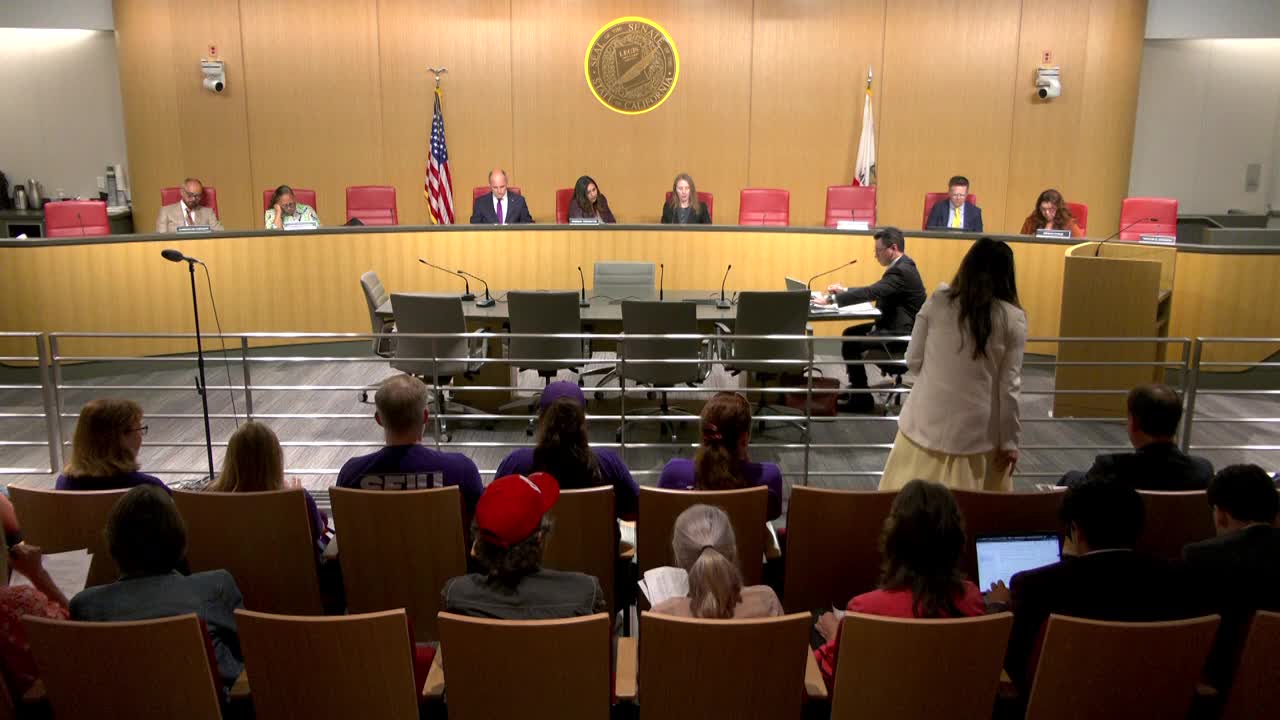
Bill Author

Bill Co-Author(s):