AB 2325: Teachers: bilingual teachers: Pathways to Bilingual Teaching Program.
- Session Year: 2025-2026
- House: Assembly
- Latest Version Date: 2026-06-15
Current Status:
In Progress
(2026-08-13: In committee: Held under submission.)
Introduced
In Committee
Awaiting First Chamber Vote
Passed First Chamber
In Committee
Awaiting Second Chamber Vote
Passed Second Chamber
Enacted
What does this bill do?
The bill creates a Pathways to Bilingual Teaching Program run by the state's teacher credentialing commission to award competitive grants (up to $600,000) to partnerships of school districts, community colleges, and four‑year colleges to create or expand routes that help bilingual candidates earn elementary, secondary, PK–3 early childhood, or special education teaching credentials with a bilingual authorization (permission to teach in two languages). Grants will prioritize districts with many English learners or rural and teacher‑shortage areas, and may pay for course design, recruitment, stipends, and student supports while requiring programs to report on candidate enrollment and completion.
The summary is provided by generative AI which can make mistakes. For original language, please view the details in the table below.
Existing law establishes a system of public elementary and secondary schools in this state and authorizes local educational agencies throughout the state to operate schools and provide instruction to pupils in kindergarten and grades 1 to 12, inclusive. Existing law establishes various programs for the recruitment of teachers. Existing law establishes the Bilingual Teacher Professional Development Program, administered by the State Department of Education in consultation with the Commission on Teacher Credentialing, for teachers seeking to provide instruction in bilingual and multilingual settings.
This bill, which would be operative upon appropriation by the Legislature, would establish the Pathways to Bilingual Teaching Program and would require the commission to develop and implement a program to award, on a competitive basis, grants of up to $600,000 to consortia of local educational agencies, community colleges, and agencies to form consortia with 4-year institutions of higher education education, or 4-year institutions of higher education and community colleges, to establish or expand pathways to bilingual teaching to enable bilingual pupils to earn a multiple subject, single subject, PK-3 early childhood education specialist, or education specialist teaching credential, with a bilingual authorization, as provided. The bill would require the commission to conduct outreach to eligible institutions to encourage applications and support institutions that need assistance in developing partnerships, as provided. The bill would require the commission to annually report to the appropriate fiscal and policy committees of the Legislature on any grants funded until funds are fully expended, as specified.
Existing law establishes a system of public elementary and secondary schools in this state and authorizes local educational agencies throughout the state to operate schools and provide instruction to pupils in kindergarten and grades 1 to 12, inclusive. Existing law establishes various programs for the recruitment of teachers. Existing law establishes the Bilingual Teacher Professional Development Program, administered by the State Department of Education in consultation with the Commission on Teacher Credentialing, for teachers seeking to provide instruction in bilingual and multilingual settings.
This bill, which would be operative upon appropriation by the Legislature, would establish the Pathways to Bilingual Teaching Program and would require the commission to develop and implement a program to award, on a competitive basis, grants of up to $600,000 to consortia of local educational agencies, community colleges, and 4-year institutions of higher education to establish or expand pathways to bilingual teaching to enable bilingual pupils to earn a multiple subject, single subject, or education specialist teaching credential, with a bilingual authorization, as provided. The bill would require the commission to conduct outreach to eligible institutions to encourage applications and support institutions that need assistance in developing partnerships, as provided. The bill would require the commission to annually report to the appropriate fiscal and policy committees of the Legislature on any grants funded until funds are fully expended, as specified.
This bill would require the department, in consultation with the commission, to establish an online database for purposes of connecting the preparation, credentialing, and long-term retention of teachers seeking to provide instruction in bilingual and multilingual settings and require the database to, among other things, track local educational agencies, as defined, capable of employing teachers seeking to provide instruction in bilingual and multilingual settings, as provided. The bill would state the Legislatures intent to build a statewide bilingual teacher pipeline for specified purposes, including, among other purposes, for purposes of using eligible grant programs to address the bilingual teacher shortage.Existing law establishes a system of public elementary and secondary schools in this state and authorizes local educational agencies throughout the state to operate schools and provide instruction to pupils in kindergarten and grades 1 to 12, inclusive. Existing law establishes various programs for the recruitment of teachers. Existing law establishes the Bilingual Teacher Professional Development Program, administered by the State Department of Education in consultation with the Commission on Teacher Credentialing, for teachers seeking to provide instruction in bilingual and multilingual settings.
This bill would require the department, in consultation with the commission, to establish an online database for purposes of connecting the preparation, credentialing, and long-term retention of teachers seeking to provide instruction in bilingual and multilingual settings and require the database to, among other things, track local educational agencies, as defined, capable of employing teachers seeking to provide instruction in bilingual and multilingual settings, as provided. The bill would state the Legislatures intent to build a statewide bilingual teacher pipeline for specified purposes, including, among other purposes, for purposes of using eligible grant programs to address the bilingual teacher shortage.
Existing law establishes the Bilingual Teacher Professional Development Program, administered by the State Department of Education in consultation with the Commission on Teacher Credentialing, for teachers seeking to provide instruction in bilingual and multilingual settings.Existing law establishes the University of California, administered by the Regents of the University of California, the California State University, administered by the Trustees of the California State University, and the California Community Colleges, administered by the Board of Governors of the California Community Colleges, as the 3 segments of public postsecondary education in the state.This bill would state the intent of the Legislature to enact subsequent legislation that would foster partnerships between school districts, county offices of education, charter schools, and the above-described segments of postsecondary education for the purpose of implementing integrated bilingual teacher credentialing pathways.Existing law establishes the Bilingual Teacher Professional Development Program, administered by the State Department of Education in consultation with the Commission on Teacher Credentialing, for teachers seeking to provide instruction in bilingual and multilingual settings.
Existing law establishes the University of California, administered by the Regents of the University of California, the California State University, administered by the Trustees of the California State University, and the California Community Colleges, administered by the Board of Governors of the California Community Colleges, as the 3 segments of public postsecondary education in the state.
This bill would state the intent of the Legislature to enact subsequent legislation that would foster partnerships between school districts, county offices of education, charter schools, and the above-described segments of postsecondary education for the purpose of implementing integrated bilingual teacher credentialing pathways.
(a)Subject to an appropriation pursuant to subdivision (j), there is hereby established the Pathways to Bilingual Teaching Program, to be administered by the commission, for the purpose of increasing the number of California teachers qualified to teach in bilingual settings.
(b)(1)The commission shall develop and implement a program to award, on a competitive basis, grants of up to six hundred thousand dollars ($600,000), which may be expended over five six years, to consortia of local educational agencies, community colleges, and agencies to form consortia with four-year institutions of higher education education, or four-year institutions of higher education and community colleges, for the purpose of establishing or expanding existing pathways to bilingual teaching to enable bilingual pupils candidates to earn a multiple subject, single subject, PK-3 early childhood education specialist, or education specialist credential credential, with a bilingual authorization.
(2)The commission shall give priority for grants to local educational agencies whose applications demonstrate a high need for teachers with a bilingual authorization by meeting one or both of the following:
(A)The local educational agency includes one or more local educational agencies with a high concentration of pupils who are English language learners.
(B)The local educational agency includes one or more local educational agencies located in a rural area or a geographic region experiencing an acute systemic shortage of teachers with a bilingual authorization, characterized by a significant gap between available teacher preparation programs and the needs of local pupils who are English language learners.
(2)(3)For purposes of this section, pathway to bilingual teaching means an articulated, guided sequence of secondary education, postsecondary education, and teacher preparation, including preparation to earn a bilingual authorization, leading to employment as a bilingual teacher.
(c)Under a grant pursuant to subdivision (e), a participant (d), a local educational agency shall develop and implement the following sequence a consortium through a partnership between local educational agencies, community colleges, and four-year institutions of higher education: with one or more four-year institutions of higher education, or one or more four-year institutions of higher education and one or more community colleges. The consortium shall do all of the following:
(1)Recruitment of Recruit bilingual candidates by local educational agencies for the pathway to bilingual teaching based on candidates interest in teaching, including, but not limited to, high school pupils with experience working in after school programs, participation in a career technical education pathway in education, and candidates proficiency in a language other than English, including, but not limited to, those or participation in future teacher clubs, and candidates who are likely to be eligible meet the eligibility criteria to receive the State Seal of Biliteracy.
(2)Partnership with a(2)Partner with at least one of the following:
(A)A community college or four-year institution of higher education to use dual enrollment, including early and middle college programs, to enable these candidates to earn part or all of their associates degrees prior to or bilingual authorization before graduation.
(3)Partnership with an(B)A four-year institution of higher education with an integrated program of professional preparation, as set forth in Section 44259.1, into which these candidates transfer and in which they earn their baccalaureate degrees and a multiple subject, single subject, PK-3 early childhood education specialist, or education specialist teaching credential, with a bilingual authorization.
(4)An(C)Enter into an agreement with one or more local educational agencies, including, but not limited to, local educational agencies enrolling candidates in the pathway, to hire qualified graduates of the pathway in bilingual teaching positions.
(d)The commission shall conduct outreach to eligible institutions to encourage applications and support institutions that need assistance in developing partnerships.(e)(d)Through the program, the commission shall award one-time grants to consortia through grants to local educational agencies pursuant to subdivision (b) to fund proposals to establish new or expand existing pathways to bilingual teaching. teaching, with the first year of the grant for planning purposes and the subsequent five years of the grant for implementation purposes. These funds may be expended for any proper purpose in support of this section, including, but not limited to, any of the following:
(1)To provide teacher, administrator, and faculty release time or stipends to design the pathway and obtain any necessary agreements to implement the pathway.
(2)To pay for the cost of any necessary professional preparation or certification of participating teachers.(3)(2)To create or redesign courses for candidates in a pathway to bilingual teaching.
(4)(3)To design appropriate recruitment, guidance, and support strategies for candidates participating in the pathway.
(f)(e)As a condition of the receipt of a grant, a consortium described in subdivision (b) shall provide to the commission program and outcome information for at least five years after receiving the grant. The information shall include program design and features, the number of graduates, candidates enrolled in the program, the number of candidates who have completed the program, the number and type of credentials and bilingual authorizations earned, the time taken to earn a degree and credential, employment by commitments made by local educational agencies in with the intent to offer employment of bilingual teaching positions, and any other information the commission may require for purposes of documenting the effect of the grant and identifying effective practices in program design and implementation. implementation, and, if applicable, home languages spoken by graduates, racial and ethnic backgrounds of graduates, and graduates who are or have ever been English language learners.
(g)(f)The commission shall require applicants for grants under this section to provide assurances of all of the following:
(1)A commitment to implement a planned pathway to bilingual teaching.
(2)A plan for recruitment and retention of candidates for the pathway to bilingual teaching. teaching for open positions.
(3)Coordination with existing sources of candidate support, such as the Golden State Teacher Grant Program established pursuant to Article 5.1 (commencing with Section 69617) of Chapter 2 of Part 42 of Division 5 of Title 3, and other forms of financial aid.
(4)Demonstrated commitment to develop or expand enrollment in, and access to, the pathway to bilingual teaching.
(5)A plan to sustain the pathway to bilingual teaching after funding provided under this section expires.
(h)The commission may use up to two hundred fifty thousand dollars ($250,000) of moneys appropriated for purposes of this section to administer the grants authorized by this section.(g)Nothing in this section precludes a consortium formed pursuant to this section from including multiple local educational agencies.
(i)(h)The commission shall annually report to the appropriate fiscal and policy committees of the Legislature on the progress grant recipients have made in developing and implementing pathways to bilingual teaching, including, when appropriate, the number of teachers who are enrolled in the pathways and the number of teachers who have completed the pathways and are employed in bilingual settings, settings as reported by local educational agencies, until funds are fully expended.
(j)(i)The requirements of this section are contingent upon the appropriation of funds for its purposes in the annual Budget Act or another statute. It is the intent of the Legislature to provide ten million dollars ($10,000,000) in one-time funding in the Budget Act or another statute for purposes of this section.
(a)Subject to an appropriation pursuant to subdivision (j), there is hereby established the Pathways to Bilingual Teaching Program, to be administered by the commission, for the purpose of increasing the number of California teachers qualified to teach in bilingual settings.
(b)(1)The commission shall develop and implement a program to award, on a competitive basis, grants of up to six hundred thousand dollars ($600,000), which may be expended over five years, to consortia of local educational agencies, community colleges, and four-year institutions of higher education for the purpose of establishing or expanding existing pathways to bilingual teaching to enable bilingual pupils to earn a multiple subject, single subject, or education specialist credential with a bilingual authorization.
(2)For purposes of this section, pathway to bilingual teaching means an articulated, guided sequence of secondary education, postsecondary education, and teacher preparation, including preparation to earn a bilingual authorization, leading to employment as a bilingual teacher.
(c)Under a grant pursuant to subdivision (e), a participant shall develop and implement the following sequence through a partnership between local educational agencies, community colleges, and four-year institutions of higher education:
(1)Recruitment of candidates by local educational agencies for the pathway to bilingual teaching based on candidates interest in teaching, including, but not limited to, participation in a career technical education pathway in education, and candidates proficiency in a language other than English, including, but not limited to, those candidates likely to be eligible to receive the State Seal of Biliteracy.
(2)Partnership with a community college to use dual enrollment, including early and middle college programs, to enable these candidates to earn part or all of their associates degrees prior to graduation.
(3)Partnership with an institution of higher education with an integrated program of professional preparation, as set forth in Section 44259.1, into which these candidates transfer and in which they earn their baccalaureate degrees and a multiple subject, single subject, or education specialist teaching credential, with a bilingual authorization.
(4)An agreement with one or more local educational agencies, including, but not limited to, local educational agencies enrolling candidates in the pathway, to hire qualified graduates of the pathway in bilingual teaching positions.
(d)The commission shall conduct outreach to eligible institutions to encourage applications and support institutions that need assistance in developing partnerships.
(e)Through the program, the commission shall award one-time grants to consortia through grants to local educational agencies pursuant to subdivision (b) to fund proposals to establish new or expand existing pathways to bilingual teaching. These funds may be expended for any proper purpose in support of this section, including, but not limited to, any of the following:
(1)To provide teacher, administrator, and faculty release time or stipends to design the pathway and obtain any necessary agreements to implement the pathway.
(2)To pay for the cost of any necessary professional preparation or certification of participating teachers.
(3)To create or redesign courses for candidates in a pathway to bilingual teaching.
(4)To design appropriate recruitment, guidance, and support strategies for candidates participating in the pathway.
(f)As a condition of the receipt of a grant, a consortium described in subdivision (b) shall provide to the commission program and outcome information for at least five years after receiving the grant. The information shall include program design and features, the number of graduates, the number and type of credentials and bilingual authorizations earned, the time taken to earn a degree and credential, employment by local educational agencies in bilingual teaching positions, and any other information the commission may require for purposes of documenting the effect of the grant and identifying effective practices in program design and implementation.
(g)The commission shall require applicants for grants under this section to provide assurances of all of the following:
(1)A commitment to implement a planned pathway to bilingual teaching.
(2)A plan for recruitment and retention of candidates for the pathway to bilingual teaching.
(3)Coordination with existing sources of candidate support, such as the Golden State Teacher Grant Program established pursuant to Article 5.1 (commencing with Section 69617) of Chapter 2 of Part 42 of Division 5 of Title 3, and other forms of financial aid.
(4)Demonstrated commitment to develop or expand enrollment in, and access to, the pathway to bilingual teaching.
(5)A plan to sustain the pathway to bilingual teaching after funding provided under this section expires.
(h)The commission may use up to two hundred fifty thousand dollars ($250,000) of moneys appropriated for purposes of this section to administer the grants authorized by this section.
(i)The commission shall annually report to the appropriate fiscal and policy committees of the Legislature on the progress grant recipients have made in developing and implementing pathways to bilingual teaching, including, when appropriate, the number of teachers who have completed the pathways and are employed in bilingual settings, until funds are fully expended.
(j)The requirements of this section are contingent upon the appropriation of funds for its purposes in the annual Budget Act or another statute. It is the intent of the Legislature to provide ten million dollars ($10,000,000) in one-time funding in the Budget Act or another statute for purposes of this section.
SECTION 1.Chapter 3.3 (commencing with Section 44700) is added to Part 25 of Division 3 of Title 2 of the Education Code, to read:3.3.Bilingual Clinical Placement Registry and Bilingual Teacher Pipeline44700.For purposes of this chapter, local educational agency means a school district, county office of education, or charter school.44701.(a)The department shall, in consultation with the Commission on Teacher Credentialing, establish an online database, to be known as the Bilingual Clinical Placement Registry, for the purpose of connecting the preparation, credentialing, and long-term retention of teachers seeking to provide instruction in bilingual and multilingual settings. The Bilingual Clinical Placement Registry shall do all of the following:(1)Track local educational agencies capable of employing teachers seeking to provide instruction in bilingual and multilingual settings.(2)Use relevant grants and initiatives data, including data from the Golden State Education and Training Grant Program and the California Longitudinal Teacher Integrated Data Education System.(3)Map teacher supply pipelines against the anticipated workforce needs of the state.(b)Information provided for purposes of implementing and maintaining the Bilingual Clinical Placement Registry shall be provided in a manner that is consistent with state and federal privacy laws.44702.It is the intent of the Legislature to build a statewide bilingual teacher pipeline for purposes of recruiting students who have received the State Seal of Biliteracy, strengthening partnerships between local educational agencies and their local community colleges and universities, and using eligible grant programs to address the bilingual teacher shortage.For purposes of this chapter, local educational agency means a school district, county office of education, or charter school.
44701.(a)The department shall, in consultation with the Commission on Teacher Credentialing, establish an online database, to be known as the Bilingual Clinical Placement Registry, for the purpose of connecting the preparation, credentialing, and long-term retention of teachers seeking to provide instruction in bilingual and multilingual settings. The Bilingual Clinical Placement Registry shall do all of the following:
(1)Track local educational agencies capable of employing teachers seeking to provide instruction in bilingual and multilingual settings.
(2)Use relevant grants and initiatives data, including data from the Golden State Education and Training Grant Program and the California Longitudinal Teacher Integrated Data Education System.
(3)Map teacher supply pipelines against the anticipated workforce needs of the state.
(b)Information provided for purposes of implementing and maintaining the Bilingual Clinical Placement Registry shall be provided in a manner that is consistent with state and federal privacy laws.
44702.It is the intent of the Legislature to build a statewide bilingual teacher pipeline for purposes of recruiting students who have received the State Seal of Biliteracy, strengthening partnerships between local educational agencies and their local community colleges and universities, and using eligible grant programs to address the bilingual teacher shortage.
SECTION 1.It is the intent of the Legislature to enact subsequent legislation that would foster partnerships between school districts, county offices of education, charter schools, the California Community Colleges, the California State University, and the University of California for the purpose of implementing integrated bilingual teacher credentialing pathways.It is the intent of the Legislature to enact subsequent legislation that would foster partnerships between school districts, county offices of education, charter schools, the California Community Colleges, the California State University, and the University of California for the purpose of implementing integrated bilingual teacher credentialing pathways.
|
Date
|
Status
|
|---|---|
| Aug 13, 2026 | In committee: Held under submission. |
| Aug 3, 2026 | In committee: Referred to APPR. suspense file. |
| Jun 25, 2026 | From committee: Do pass and re-refer to Com. on APPR. (Ayes 7. Noes 0.) (June 24). Re-referred to Com. on APPR. |
| Jun 15, 2026 | From committee chair, with author's amendments: Amend, and re-refer to committee. Read second time, amended, and re-referred to Com. on ED. |
| Jun 10, 2026 | Referred to Com. on ED. |
| May 27, 2026 | In Senate. Read first time. To Com. on RLS. for assignment. |
| May 26, 2026 | Read third time. Passed. Ordered to the Senate. (Ayes 78. Noes 0.) |
| May 26, 2026 | Read third time. Passed. Ordered to the Senate. (Ayes 78. Noes 0. Page 5313.) |
| May 26, 2026 | Read third time. Passed. Ordered to the Senate. |
| May 18, 2026 | Read second time. Ordered to third reading. |
| May 14, 2026 | From committee: Do pass. (Ayes 15. Noes 0.) (May 14). |
| May 6, 2026 | In committee: Set, first hearing. Referred to APPR. suspense file. |
| Apr 21, 2026 | Re-referred to Com. on APPR. |
| Apr 20, 2026 | Read second time and amended. |
| Apr 16, 2026 | From committee: Amend, and do pass as amended and re-refer to Com. on APPR. (Ayes 9. Noes 0.) (April 15). |
| Apr 2, 2026 | In committee: Hearing postponed by committee. |
| Mar 23, 2026 | Re-referred to Com. on ED. |
| Mar 19, 2026 | Referred to Com. on ED. |
| Mar 19, 2026 | From committee chair, with author's amendments: Amend, and re-refer to Com. on ED. Read second time and amended. |
| Feb 20, 2026 | From printer. May be heard in committee March 22. |
| Feb 19, 2026 | Read first time. To print. |
|
Date
|
Description
|
Location
|
Votes
|
|
|---|---|---|---|---|
| Aug 3, 2026 | Placed on suspense file | Senate Standing Committee on Appropriations |
Passed |
|
| Jun 24, 2026 | Do pass, but first be re-referred to the Committee on [Appropriations] | Senate Standing Committee on Education |
Passed |
|
| May 26, 2026 | AB 2325 Alvarez Assembly Third Reading | Assembly Floor |
Passed |
|
| May 14, 2026 | Do pass. | Assembly Standing Committee on Appropriations |
Passed |
|
| Apr 15, 2026 | Do pass as amended and be re-referred to the Committee on [Appropriations] | Assembly Standing Committee on Education |
Passed |
This list shows positions taken on this bill by organizations on the date displayed, which is linked to the original source.
Positions by individuals are not included.
|
Organization
|
Position
|
Date
|
|---|---|---|
| Alameda County Office Of Education | ** Support | |
| Association Of California School Administrators | ** Support | |
| Association of Mexican American Educators | ** Support | |
| California Association For Bilingual Education | ** Support | |
| California Charter Schools Association | ** Support | |
| California Federation Of Teachers | ** Support | |
| Californians Together | ** Support | |
| Early Edge California | ** Support | |
| EdTrust-West | ** Support | |
| Edvance College | ** Support | |
| Fresno Unified School District | ** Support | |
| Go Public Schools | ** Support | |
| Hispanas Organized for Political Equality | ** Support | |
| Internationals Network | ** Support | |
| Los Angeles County Office Of Education | ** Support | |
| Loyola Marymount University - The Center for Equity for English Learners | ** Support | |
| Partnership for Children & Youth | ** Support | |
| Public Advocates | ** Support | |
| San Diego Unified School District | ** Support | |
| Sobrato Early Academic Language | ** Support | |
| Teach for America | ** Support | |
| Teach Plus - California | ** Support | |
| Unidosus | ** Support | |
| Youth Leadership Institute | ** Support |
SENATE COMMITTEE ON
Senator Sabrina Cervantes, Chair
2025 - 2026 Regular Session
AB 2325 (Alvarez) - Teachers: bilingual teachers: Pathways to Bilingual Teaching Program
Version: | Policy Vote: |
Urgency: | Mandate: |
Hearing Date: | Consultant: |
Bill Summary:
This bill establishes the Pathways to Bilingual Teaching Program and requires the Commission on Teacher Credentialing (CTC) to award competitive grants to local educational agency (LEA)-led consortia to develop or expand articulated bilingual teacher preparation pathways.
Fiscal Impact:
The establishment of the program would be contingent upon an appropriation and create one-time Proposition 98 General Fund cost pressures of $10 million to fund the program. AB 126 (Committee on Budget, Chapter 65, Statutes of 2026), the education trailer bill, includes $10 million in one-time Proposition 98 General Fund for this purpose.
The CTC estimates General Fund costs of about $312,000 each year and 2.0 positions for the development, administration, technical assistance, oversight, and reporting responsibilities required to administer the new program.
Background:
Existing law authorizes school districts to establish bilingual and dual language immersion programs and requires schools to ensure students attain English proficiency.
Existing law establishes the Bilingual Teacher Professional Development Program, administered through the CTC, to increase the supply of bilingual teachers.
Existing law authorizes College and Career Access Pathways partnerships between school districts, county offices of education, charter schools, and community college districts to expand dual enrollment opportunities.
Proposed Law:
This bill establishes the Pathways to Bilingual Teaching Program, administered by the CTC, contingent upon a future appropriation. It requires the CTC to award competitive grants of up to $600,000, expendable over six years, to LEA-led consortia for the purpose of establishing or expanding bilingual teacher pathways.
This bill defines a “pathway to bilingual teaching” as an articulated sequence of secondary education, postsecondary education, and teacher preparation leading to employment as a bilingual teacher.
This bill requires grant recipients to form consortia with one or more four-year institutions of higher education, or with four-year institutions and community colleges. The bill prioritizes grant applications from consortia serving areas with high concentrations of English learners and/or rural or geographically underserved regions experiencing shortages of bilingual teachers.
This bill requires pathways to recruit bilingual candidates interested in teaching, including: students participating in education-related CTE pathways, students with experience in after-school programs, and students likely to qualify for the State Seal of Biliteracy.
This bill authorizes pathways to incorporate dual enrollment opportunities, including CCAP, Early College, and Middle College models, and requires pathways to include transfer opportunities to four-year institutions where candidates can earn a bachelor’s degree, teaching credential, and bilingual authorization. The bill also encourages participating LEAs to enter into agreements to hire pathway graduates into bilingual teaching positions.
This bill authorizes grant funds to be used for planning and implementation activities, including: faculty, teacher, and administrator release time; course development or redesign; recruitment activities; and student support and guidance services.
This bill requires grant recipients to report program and outcome data to the CTC, including enrollment, completion, credential attainment, bilingual authorization attainment, employment outcomes, and demographic information. It also requires applicants to demonstrate plans for recruitment, retention, sustainability, and coordination with existing teacher support programs such as the Golden State Teacher Grant Program.
This bill requires the CTC to annually report program outcomes to the Legislature until grant funds are fully expended.
This bill states legislative intent to appropriate $10 million in one-time funding for the program.
Staff Comments:
This bill establishes the Pathways to Bilingual Teaching Program, contingent upon a future appropriation, and requires CTC to award competitive grants of up to $600,000 to LEA-led consortia for the purpose of establishing or expanding bilingual teacher pathways. The funds would be expendable over a six-year period for planning and implementation activities such faculty, teacher, and administrator release time; course development or redesign; recruitment activities; and student support and guidance services. The bill includes legislative intent to appropriate $10 million in one-time funding for the program.
-- END --
SENATE COMMITTEE ON EDUCATION
Senator Sasha Renée Pérez, Chair
2025 - 2026 Regular
Bill No: Hearing Date: June 24, 2026
Author: | |||
Version: | June 15, 2026 | ||
Urgency: | Fiscal: | ||
Consultant: | |||
Subject:
SUMMARY
This bill establishes the Pathways to Bilingual Teaching Program, contingent upon an appropriation, and requires the Commission on Teacher Credentialing (CTC) to award competitive grants to local educational agency (LEA)-led consortia to develop or expand articulated pathways that recruit bilingual students and support them through high school, postsecondary education, teacher preparation, and ultimately employment as bilingual teachers.
BACKGROUND
Existing law:
- Authorizes school districts to establish bilingual and dual language immersion programs and requires schools to ensure students attain English proficiency.
- Establishes the Bilingual Teacher Professional Development Program, administered through the CTC, to increase the supply of bilingual teachers.
- Establishes the State Seal of Biliteracy to recognize graduates who demonstrate proficiency in one or more languages in addition to English.
- Authorizes College and Career Access Pathways (CCAP) partnerships between school districts, county offices of education, charter schools, and community college districts to expand dual enrollment opportunities.
- Establishes a competitive grant program for institutions of higher education to develop or expand integrated teacher preparation programs that allow candidates to earn a bachelor’s degree and teaching credential concurrently.
ANALYSIS
This bill:
- Establishes the Pathways to Bilingual Teaching Program, administered by the CTC, contingent upon a future appropriation.
- Requires the CTC to award competitive grants of up to $600,000, expendable over six years, to LEA-led consortia for the purpose of establishing or expanding bilingual teacher pathways.
- Defines a “pathway to bilingual teaching” as an articulated sequence of secondary education, postsecondary education, and teacher preparation leading to employment as a bilingual teacher.
- Requires grant recipients to form consortia with one or more four-year institutions of higher education, or with four-year institutions and community colleges.
- Prioritizes grant applications from consortia serving areas with high concentrations of English learners and/or rural or geographically underserved regions experiencing shortages of bilingual teachers.
- Requires pathways to recruit bilingual candidates interested in teaching, including students: (1) participating in education-related CTE pathways, (2) with experience in after-school programs, and (3) likely to qualify for the State Seal of Biliteracy.
- Authorizes pathways to incorporate dual enrollment opportunities, including CCAP, Early College, and Middle College models.
- Requires pathways to include transfer opportunities to four-year institutions where candidates can earn a bachelor’s degree, teaching credential, and bilingual authorization.
- Encourages participating LEAs to enter into agreements to hire pathway graduates into bilingual teaching positions.
- Authorizes grant funds to be used for planning and implementation activities, including: (1) faculty, teacher, and administrator release time, (2) course development or redesign, (3) recruitment activities, and (4) student support and guidance services.
- Requires grant recipients to report program and outcome data to the CTC, including enrollment, completion, credential attainment, bilingual authorization attainment, employment outcomes, and demographic information.
- Requires applicants to demonstrate plans for recruitment, retention, sustainability, and coordination with existing teacher support programs such as the Golden State Teacher Grant Program.
- Requires the CTC to annually report program outcomes to the Legislature until grant funds are fully expended.
- States legislative intent to appropriate $10 million in one-time funding for the program.
STAFF COMMENTS
- Need for the bill. According to the author, “California is uniquely positioned to leverage its linguistic diversity as a key asset. However, our education system has not fully supported this strength. AB 2325 creates the “Pathways to Bilingual Teaching” program to develop a pipeline of highly qualified bilingual teachers, so every student can succeed in a multilingual environment. By supporting high school recruitment, dual enrollment, integrated credentialing, and guaranteed employment, this bill removes barriers for multilingual students to become future bilingual teachers. It provides the resources, structure, and accountability needed to increase the number of qualified bilingual educators, foster more inclusive classrooms, and build a stronger, more equitable education system.”
- Building a teacher pipeline by connecting existing state initiatives. Rather than creating an entirely new teacher preparation model, this bill seeks to connect several existing state investments into a single educator workforce pipeline. The proposed pathway links high school recruitment efforts, the State Seal of Biliteracy, education-focused career technical education pathways, dual enrollment opportunities, integrated teacher preparation programs, and eventual employment by LEAs. In many respects, the bill functions less as a new teacher preparation program and more as a framework intended to align programs that already exist but often operate independently of one another.
The Committee may wish to consider whether creating stronger connections among existing programs could improve the effectiveness of prior state investments aimed at expanding bilingual education and teacher preparation, particularly if barriers to entry stem more from fragmentation than from the absence of available programs.
- Continued demand for bilingual teachers. California has made significant policy investments over the past decade to expand multilingual education. Proposition 58 restored local authority to establish bilingual education programs, the State Seal of Biliteracy has dramatically expanded participation in multilingual coursework, and the state has funded several initiatives intended to increase the number of teachers holding bilingual authorizations. Despite these efforts, concerns regarding the supply of bilingual teachers persist.
According to information cited in the Assembly policy committee analyses, over 500 bilingual teaching authorizations issued during the 2024-25 school year were issued through underprepared pathways, and bilingual teacher preparation capacity remains below long-term state goals. At the same time, demand for multilingual programs continues to grow as school districts expand dual language immersion and other bilingual offerings.
The bill reflects a policy judgment that increasing the number of bilingual teachers may require earlier recruitment of prospective educators, rather than focusing solely on candidates who have already entered teacher preparation programs.
- Leveraging California’s multilingual student population. A notable feature of the bill is its focus on recruiting bilingual pupils themselves into the teaching profession. California annually awards tens of thousands of State Seals of Biliteracy to students who demonstrate proficiency in multiple languages. Supporters argue that these students represent a largely untapped source of future bilingual teachers and that providing a structured pathway from high school through credential attainment could help address workforce shortages while creating opportunities for students to return to serve their local communities.
The Committee may wish to consider whether earlier and more intentional recruitment of multilingual students could provide a more sustainable approach to addressing bilingual teacher shortages than efforts focused exclusively on retraining or upskilling the existing educator workforce.
- Relationship to existing bilingual teacher workforce initiatives. The state currently supports several efforts intended to increase the number of teachers serving multilingual learners, including the Bilingual Teacher Professional Development Program, integrated teacher preparation grants, and targeted appropriations supporting bilingual teacher preparation in specific languages. This bill would add another grant-funded initiative to that portfolio.
The Committee may wish to consider how the proposed program complements existing state efforts and whether lessons learned from previously funded bilingual teacher workforce programs should inform the design, implementation, or evaluation of this new initiative. In particular, the bill’s emphasis on creating a seamless PK-12-to-career pipeline distinguishes it from many existing programs that focus primarily on candidates who have already entered higher education or the educator workforce.
- Budget action reflects legislative interest in the proposal. This bill is expressly contingent upon a future appropriation and states legislative intent to provide $10 million in one-time funding for grant awards. Since the bill’s introduction, however, the Senate and Assembly have included $25 million Proposition 98 General Fund in their two-party budget agreement for the Pathways to Bilingual Teaching Program. As a result, the proposal is no longer merely a conceptual framework awaiting future funding, but rather is positioned to receive a significant state investment if the final budget agreement is enacted.
SUPPORT
Californians Together (co-sponsor)
Early Edge California (co-sponsor)
Alameda County Office of Education
Association of California School Administrators
Association of Mexican American Educators
California Association for Bilingual Education
California Charter Schools Association
California Federation of Teachers
EdTrust-West
EDvance College
Fresno Unified School District
Go Public Schools
Hispanas Organized for Political Equality
Internationals Network
Los Angeles County Office of Education
Loyola Marymount University - the Center for Equity for English Learners
Partnership for Children & Youth
Public Advocates
San Diego Unified School District
Sobrato Early Academic Language
Teach for America
Teach Plus - California
UnidosUS
Youth Leadership Institute
OPPOSITION
None received
-- END --
ASSEMBLY THIRD READING
ATR Bill Id:AB 2325
Author:(Alvarez)
As Amended Ver:April 20, 2026
Majority vote
SUMMARY
Establishes the Pathways to Bilingual Teaching program, to be administered by the Commission on Teacher Credentialing (CTC) to award, on a competitive basis, grants to consortia of local educational agencies (LEAs), community colleges, and four-year institutions of higher education (IHEs) for the purpose of establishing or expanding existing pathways to bilingual teaching to enable bilingual students to earn a multiple or single subject, or education specialist credential with a bilingual authorization.
Major Provisions
- Establishes the Pathways to Bilingual Teaching program, to be administered by the Commission on Teacher Credentialing (CTC) to award, on a competitive basis, grants to consortia of local educational agencies (LEAs), community colleges, and four-year institutions of higher education (IHEs) for the purpose of establishing or expanding existing pathways to bilingual teaching to enable bilingual students to earn a multiple or single subject, or education specialist credential with a bilingual authorization.
- Establishes the Pathways to Bilingual Teaching program, to be administered by the CTC, for the purpose of increasing the number of California teachers qualified to teach in bilingual settings.
- Requires the CTC to develop and implement a program to award, on a competitive basis, grants of up to $600,000, to be expended over five years, to consortia of LEAs, community colleges, and four-year IHEs for the purpose of establishing or expanding existing pathways to bilingual teaching which enable bilingual students to earn a multiple or single subject, or education specialist credential, with a bilingual authorization.
- Defines a pathway to bilingual teaching as an articulated, guided sequence of secondary education, postsecondary education, and teacher preparation, including preparation to earn a bilingual authorization, leading to employment as a bilingual teacher.
- States that a pathway to bilingual teaching involves a partnership between LEAs, community colleges, and four-year IHEs to develop and implement the following sequence:
- Recruitment of students by LEAs as candidates for the pathway based on their interest in teaching, including participation in a career technical education (CTE) pathway in education, and their proficiency in a language other than English, including those likely to be eligible to receive the State Seal of Biliteracy (SSB);
- Partnership with a community college to use dual enrollment, including early and middle college programs, to enable these students to earn part or all of their associate’s degree prior to graduation;
- Partnership with an IHE with an integrated program of professional preparation into which these students transfer and in which they earn their baccalaureate degree and a multiple subject, single subject, or education specialist credential, with a bilingual authorization; and
- An agreement with one or more LEAs, including but not limited to LEAs enrolling students in the pathway, to hire qualified graduates of the pathway in bilingual teaching positions.
- Requires the CTC to conduct outreach to eligible institutions to encourage applications and support institutions that need assistance in developing partnerships.
- Requires the CTC to award one-time grants to consortia through grants to LEAs for proposals to establish new or expand existing pathways to bilingual teaching that support any proper purpose in support of the measure, as specified.
- Requires, as a condition of the receipt of a grant, a consortium to provide to the CTC program and outcome data for at least five years after receiving the grant, as specified.
- Requires the CTC to require applicants for grants to provide specified assurances.
- Authorizes the CTC to use up to $250,000 of funds appropriated for purposes of the act to administer the grants.
- Requires the CTC to annually report to the appropriate fiscal and policy committees of the Legislature on the progress of the program, as specified.
- Makes the requirements of this act contingent upon the appropriation of funds for its purposes in the annual Budget Act or another statute. States the intent of the Legislature to provide $10 million in one-time funding for this purpose.
COMMENTS
Bill aims to "stack" recent policies to create an efficient and robust pathway to bilingual teaching. This bill proposes to address the state's shortage of bilingual teachers by creating a program to provide grants to create articulated and guided pathways for high school students to become bilingual teachers. The grants would be made on a competitive basis to consortia of LEAs, community colleges, and four-year IHEs.
This bill proposes to "stack" several recent policies to create pathways to bilingual teaching:
- State Seal of Biliteracy: The SSB recognizes proficiency in two languages in the form of a seal affixed to students’ high school diplomas. In the 2024-25 school year nearly 76,000 students received the SSB.
- CTE Pathways in Education: The CTE Model Curriculum Standards adopted by the State Board of Education (SBE) in 2013, include a pathway in Education, Child Development, and Family Services sector. This bill does not create a new CTE pathway, but identifies students engaged in this CTE pathway as potential participants in the bilingual pathway.
- Dual enrollment: Dual enrollment allows high school students to take community college courses and earn credit toward their degree or a certificate. California has several forms of dual enrollment, including CCAPs, Early College and Middle College High Schools, and individual dual enrollment.
- Integrated teacher preparation programs: Integrated teacher preparation enables college students to complete their preparation to become a teacher while earning their baccalaureate degrees. AB 181 (Committee on Budget), Chapter 52, Statutes of 2022, created an incentive grant program to develop or expand integrated preparation programs, similar to the one proposed by this bill.
State Seal of Biliteracy recipients are a potential source of bilingual teachers. This bill proposes to create pathways for students to become bilingual teachers, by recruiting bilingual students, including those likely to be eligible to receive the SSB, into the pathways.
The SSB, established by AB 815 (Brownley), Chapter 618, Statutes of 2011, recognizes proficiency in two languages in the form of a seal affixed to students' high school diplomas. In the 2024-25 school year nearly 76,000 students received the SSB in over 70 languages. As the goal of bilingual and dual language immersion programs is to enable students to develop their home languages, and California students are estimated to speak over 100 languages, the Assembly may wish to consider that these students are a potential source of future bilingual teachers. Californians Together, sponsor of this bill, estimates that if only 5% of SSB recipients became teachers, the state's bilingual teaching shortage would be eliminated.
Shortage of bilingual authorized teachers. This bill proposes to support the development of pathways to bilingual teaching in order to increase the supply of bilingual teachers in California.
According to the CTC, in the 2024-25 year there were 2,302 documents authorizing bilingual teaching issued. Of those, 506 documents, or 22%, were issued to teachers who are considered underprepared because they have not yet obtained a bilingual authorization. Of those, there were 177 waivers, 277 teaching permits, and 52 university or district intern permits. As of April this year, EdJoin.com, a job listing website, listed 169 openings for bilingual certificated staff.
These data provide a limited picture of the shortage of bilingual teachers, because the availability of bilingual positions depends on LEAs' willingness to initiate DLI and other bilingual programs. LEAs are often hesitant to start such programs due to the shortage of qualified teachers.
A related constraint is the availability of bilingual teacher preparation programs. In the Global California 2030 report, published by the California Department of Education (CDE) in 2019, the CDE set a goal of 90 bilingual teacher preparation programs. According to the CTC, in 2024-25, there were 50 such programs. In recognition of these constraints, the state has established initiatives to increase the supply of teachers with bilingual authorizations in recent years, including through the Bilingual Teacher Professional Development Program, established by AB 99 (Committee on Budget), Chapter 15, Statutes of 2017, and an appropriation to the California State University (CSU) Asian Language Bilingual Teacher Education Program Consortium in the 2022-23 state budget.
According to the Author
The author states, "California is uniquely positioned to leverage its linguistic diversity as a key asset. However, our education system has not fully supported this strength. AB 2325 creates the "Pathways to Bilingual Teaching" program to develop a pipeline of highly qualified bilingual teachers, so every student can succeed in a multilingual environment. By supporting high school recruitment, dual enrollment, integrated credentialing, and guaranteed employment, this bill removes barriers for multilingual students to become future bilingual teachers. It provides the resources, structure, and accountability needed to increase the number of qualified bilingual educators, foster more inclusive classrooms, and build a stronger, more equitable education system."
Arguments in Support
Californians Together writes, "California serves one of the largest multilingual student populations in the country, yet the state continues to face a persistent shortage of qualified bilingual teachers.
Despite this need, the bilingual teacher workforce has not kept pace with demand. While California has more than doubled the number of bilingual authorizations issued over the last decade (from 617 in 2014-15 to 1,370 in 2023-24), there continues to be a significant mismatch between student language and bilingual teachers. According to a 2023 report from the California Budget and Policy Center, the student to bilingual teacher ratio in Spanish was 240 to 1, with significant gaps in all other languages. Global California 2030 projected the state would have 90 approved bilingual teacher preparation programs by 2025. Yet according to the California Commission on Teacher Credentialing, there are only 48.
AB 2325 provides a strategic investment in sustainable bilingual educator workforce development by supporting coordinated pathways that help multilingual students become bilingual teachers and meet the growing demand for multilingual instruction across California schools."
Arguments in Opposition
None on file
FISCAL COMMENTS
According to the Assembly Appropriations Committee, one-time Proposition 98 General Fund cost pressure of $10 million for the Legislature to appropriate funds to support the grant program established by this bill. The bill authorizes CTC to use up to $250,000 of funds appropriated to administer the grant program. However, according to CTC, costs associated with implementation of this bill would be approximately $315,000 General Fund ongoing annually.
VOTES
ASM EDUCATION: 9-0-0
YES: Patel, Hoover, Alvarez, Bonta, Castillo, Garcia, Lowenthal, Pellerin, Zbur
ASM APPROPRIATIONS: 15-0-0
YES: Wicks, Hoover, Aguiar-Curry, Calderon, Caloza, Dixon, Fong, Mark González, Krell, Pacheco, Pellerin, Sharp-Collins, Solache, Ta, Tangipa
UPDATED
VERSION: April 20, 2026
CONSULTANT: Tanya Lieberman / ED. / (916) 319-2087 FN: 0002724
Date of Hearing: May 6, 2026
ASSEMBLY COMMITTEE ON APPROPRIATIONS
Buffy Wicks, Chair
ABPCA Bill Id:AB 2325
Author:(Alvarez) – As Amended Ver:April 20, 2026
Policy Committee: | Education | Vote: | 9 - 0 |
|
| ||
|
|
Urgency: No State Mandated Local Program: No Reimbursable: No
SUMMARY:
This bill creates the Pathways to Bilingual Teaching Program, administered by the Commission on Teacher Credentialing (CTC), to increase the number of qualified bilingual teachers in California by awarding grants of up to $600,000 to consortia of local educational agencies (LEAs), community colleges, and four-year institutions of higher education to establish or expand bilingual teacher preparation pathways, contingent upon an appropriation by the Legislature.
FISCAL EFFECT:
One-time Proposition 98 General Fund cost pressure of $10 million for the Legislature to appropriate funds to support the grant program established by this bill. The bill authorizes CTC to use up to $250,000 of funds appropriated to administer the grant program. However, according to CTC, costs associated with implementation of this bill would be approximately $315,000 General Fund ongoing annually.
COMMENTS:
- Purpose. According to the author:
AB 2325 creates the "Pathways to Bilingual Teaching" program to develop a pipeline of highly qualified bilingual teachers, so every student can succeed in a multilingual environment. By supporting high school recruitment, dual enrollment, integrated credentialing, and guaranteed employment, this bill removes barriers for multilingual students to become future bilingual teachers. It provides the resources, structure, and accountability needed to increase the number of qualified bilingual educators, foster more inclusive classrooms, and build a stronger, more equitable education system.
- Background. DLI Programs. According to the CDE, DLI programs are language learning and academic instruction for native speakers of English and native speakers of another language. The goals of DLI programs are language proficiency and academic achievement in students’ first and second languages, and cross-cultural understanding. This program is typically found in kindergarten through grade eight, but may be offered through grade twelve.
High Demand for DLI Program Funding. AB 130 (Committee on Budget), Chapter 44, Statutes of 2021, appropriated $10 million for a DLI grant program, to award 25 one-time grants over a period of three fiscal years to eligible entities to expand or establish DLI programs.
According to the CDE, LEAs submitted over 300 letters of intent to apply, and the CDE received 160 applications. Funding was sufficient to support only 25 grants. The CDE cites as a barrier that some entities did not have enough native English speakers to develop DLI programs that call for a equal composition of native English speakers and native speakers of the target language. This is particularly true of LEAs with high populations of ELs.
- Related Legislation. AB 2332 (Mark Gonzalez), of the current legislative session, requires CDE to designate a DLI coordinator to provide guidance to LEAs regarding DLI program expansion. AB 2332 is pending hearing in this committee.
Analysis Prepared by: Aaron Heredia / APPR. / (916) 319-2081
Date of Hearing: April 15, 2026
ASSEMBLY COMMITTEE ON EDUCATION
Darshana R. Patel, Chair
ABPCA Bill Id:AB 2325 (
Author:Alvarez) – As Amended Ver:March 19, 2026
AS PROPOSED TO BE AMENDED
SUBJECT: Teachers: bilingual teachers: online database and pipeline
SUMMARY: Establishes the Pathways to Bilingual Teaching program, to be administered by the Commission on Teacher Credentialing (CTC) to award, on a competitive basis, grants to consortia of local educational agencies (LEAs), community colleges, and four-year institutions of higher education (IHEs) for the purpose of establishing or expanding existing pathways to bilingual teaching to enable bilingual students to earn a multiple or single subject, or education specialist credential with a bilingual authorization. Specifically, this bill:
- Establishes the Pathways to Bilingual Teaching program, to be administered by the CTC, for the purpose of increasing the number of California teachers qualified to teach in bilingual settings.
- Requires the CTC to develop and implement a program to award, on a competitive basis, grants of up to $600,000, to be expended over five years, to consortia of LEAs, community colleges, and four-year IHEs for the purpose of establishing or expanding existing pathways to bilingual teaching which enable bilingual students to earn a multiple or single subject, or education specialist credential, with a bilingual authorization.
- Defines a pathway to bilingual teaching as an articulated, guided sequence of secondary education, postsecondary education, and teacher preparation, including preparation to earn a bilingual authorization, leading to employment as a bilingual teacher.
- States that a pathway to bilingual teaching involves a partnership between LEAs, community colleges, and four-year IHEs to develop and implement the following sequence:
- Recruitment of students by LEAs as candidates for the pathway based on their interest in teaching, including participation in a career technical education (CTE) pathway in education, and their proficiency in a language other than English, including those likely to be eligible to receive the State Seal of Biliteracy (SSB);
- Partnership with a community college to use dual enrollment, including early and middle college programs, to enable these students to earn part or all of their associate’s degree prior to graduation;
- Partnership with an IHE with an integrated program of professional preparation into which these students transfer and in which they earn their baccalaureate degree and a multiple subject, single subject, or education specialist credential, with a bilingual authorization; and
- An agreement with one or more LEAs, including but not limited to LEAs enrolling students in the pathway, to hire qualified graduates of the pathway in bilingual teaching positions.
- Requires the CTC to conduct outreach to eligible institutions to encourage applications and support institutions that need assistance in developing partnerships.
- Requires the CTC to award one-time grants to consortia through grants to LEAs for proposals to establish new or expand existing pathways to bilingual teaching that support any proper purpose in support of the measure, including, but not limited to, any of the following:
- To provide teacher, administrator, and faculty release time or stipends to design the pathway and obtain any necessary agreements to implement it;
- To pay for the cost of any necessary professional preparation or certification of participating teachers;
- To create or redesign courses for students in a pathway to bilingual teaching; and
- To design appropriate recruitment, guidance, and support strategies for students participating in the pathway.
- Requires, as a condition of the receipt of a grant, a consortium to provide to the CTC program and outcome data for at least five years after receiving the grant. Requires this information to include:
- Program design and features;
- The number of graduates;
- The number and type of credentials and bilingual authorizations earned;
- The time taken to earn a degree and credential;
- Employment by LEAs in bilingual teaching positions, and
- Any other information the CTC may require for purposes of documenting the effect of the grant and identifying effective practices in program design and implementation.
- Requires the CTC to require applicants for grants to provide assurances of all of the following:
- A commitment to implement a planned pathway to bilingual teaching;
- A plan for recruitment and retention of candidates for the pathway to bilingual teaching;
- Coordination with existing sources of candidate support, such as the Golden State Teacher Grant Program and other forms of financial aid;
- Demonstrated commitment to develop or expand enrollment in, and access to, pathways to bilingual teaching; and
- A plan to sustain the pathway to bilingual teaching after funding provided under this section expires.
- Authorizes the CTC to use up to $250,000 of funds appropriated for purposes of the act to administer the grants.
- Requires the CTC to annually report to the appropriate fiscal and policy committees of the Legislature on the progress grant recipients have made in developing and implementing pathways to bilingual teaching, including, when appropriate, the number of teachers who have completed the pathways and are employed in bilingual settings, until funds are fully expended.
- Makes the requirements of this act contingent upon the appropriation of funds for its purposes in the annual Budget Act or another statute. States the intent of the Legislature to provide $10 million in one-time funding for this purpose.
EXISTING LAW:
- Through initiative statute, requires that public schools ensure that students obtain English language proficiency. Requires school districts to solicit parent and community input in developing language acquisition programs. Requires instruction to ensure English acquisition as rapidly and effectively as possible. Authorizes school districts to establish dual language immersion (DLI) programs for both native and non–native English speakers. (Education Code (EC) 305).
- Defines language acquisition programs to include DLI programs to mean programs that provide integrated language learning and academic instruction for native speakers of English and native speakers of another language, with the goals of high academic achievement, first and second language proficiency, and cross-cultural understanding. (EC 306)
- Establishes the Bilingual Teacher Professional Development Program, administered through the CTC, to ensure that California can meet the demand for bilingual teachers necessary for the implementation of dual language and other bilingual education programs. (EC 52201)
- Establishes the SSB , to recognize high school graduates who have attained a high level of proficiency in speaking, reading, and writing in one or more languages in addition to English. (EC 51460)
- Authorizes the governing board of a California Community College (CCC) district to enter into a College and Career Access Pathways (CCAP) partnership with the governing board of a school district, county office of education (COE) or the governing body of a charter school for the purpose of offering or expanding dual enrollment opportunities for students who may not already be college bound or who are underrepresented in higher education, with the goal of developing seamless pathways from high school to community college for CTE or preparation for transfer, improving high school graduation rates, or helping high school students achieve college and career readiness. (EC 76004)
- Requires the CTC to develop and implement a program to award, on a competitive basis, implementation or expansion grants of up to $500,000 each to regionally accredited IHEs for developing a new integrated program of professional preparation or establishing a new partnership with California community colleges to create four-year integrated programs of professional preparation. (EC 44259.1)
FISCAL EFFECT: Unknown
COMMENTS:
Need for the bill. The author states, “California is uniquely positioned to leverage its linguistic diversity as a key asset. However, our education system has not fully supported this strength. AB 2325 creates the "Pathways to Bilingual Teaching" program to develop a pipeline of highly qualified bilingual teachers, so every student can succeed in a multilingual environment. By supporting high school recruitment, dual enrollment, integrated credentialing, and guaranteed employment, this bill removes barriers for multilingual students to become future bilingual teachers. It provides the resources, structure, and accountability needed to increase the number of qualified bilingual educators, foster more inclusive classrooms, and build a stronger, more equitable education system.”
Bill aims to “stack” recent policies to create an efficient and robust pathway to bilingual teaching. This bill proposes to address the state’s shortage of bilingual teachers by creating a program to provide grants to create articulated and guided pathways for high school students to become bilingual teachers. The grants would be made on a competitive basis to consortia of LEAs, community colleges, and four-year IHEs.
This bill proposes to “stack” several recent policies to create pathways to bilingual teaching:
- State Seal of Biliteracy: The SSB recognizes proficiency in two languages in the form of a seal affixed to students’ high school diplomas. In the 2024-25 school year nearly 76,000 students received the SSB.
- CTE Pathways in Education: The CTE Model Curriculum Standards adopted by the State Board of Education (SBE) in 2013, include a pathway in Education, Child Development, and Family Services sector. This bill does not create a new CTE pathway, but identifies students engaged in this CTE pathway as potential participants in the bilingual pathway.
- Dual enrollment: Dual enrollment allows high school students to take community college courses and earn credit toward their degree or a certificate. California has several forms of dual enrollment, including CCAPs, Early College and Middle College High Schools, and individual dual enrollment.
- Integrated teacher preparation programs: Integrated teacher preparation enables college students to complete their preparation to become a teacher while earning their baccalaureate degrees. AB 181 (Committee on Budget), Chapter 52, Statutes of 2022, created an incentive grant program to develop or expand integrated preparation programs, similar to the one proposed by this bill.
The pathway supported by this bill would involve the following sequence, starting in high school:
State Seal of Biliteracy recipients are a potential source of bilingual teachers. This bill proposes to create pathways for students to become bilingual teachers, by recruiting bilingual students, including those likely to be eligible to receive the SSB, into the pathways.
The SSB, established by AB 815 (Brownley), Chapter 618, Statutes of 2011, recognizes proficiency in two languages in the form of a seal affixed to students’ high school diplomas. In the 2024-25 school year nearly 76,000 students received the SSB in over 70 languages. As the goal of bilingual and dual language immersion programs is to enable students to develop their home languages, and California students are estimated to speak over 100 languages, the Committee may wish to consider that these students are a potential source of future bilingual teachers. Californians Together, sponsor of this bill, estimates that if only 5% of SSB recipients became teachers, the state’s bilingual teaching shortage would be eliminated.
Shortage of bilingual authorized teachers. This bill proposes to support the development of pathways to bilingual teaching in order to increase the supply of bilingual teachers in California.
According to the CTC, in the 2024-25 year there were 2,302 documents authorizing bilingual teaching issued. Of those, 506 documents, or 22%, were issued to teachers who are considered underprepared because they have not yet obtained a bilingual authorization. Of those, there were 177 waivers, 277 teaching permits, and 52 university or district intern permits. As of April this year, EdJoin.com, a job listing website, listed 169 openings for bilingual certificated staff.
These data provide a limited picture of the shortage of bilingual teachers, because the availability of bilingual positions depends on LEAs’ willingness to initiate DLI and other bilingual programs. LEAs are often hesitant to start such programs due to the shortage of qualified teachers.
A related constraint is the availability of bilingual teacher preparation programs. In the Global California 2030 report, published by the California Department of Education (CDE) in 2019, the CDE set a goal of 90 bilingual teacher preparation programs. According to the CTC, in 2024-25, there were 50 such programs.
In recognition of these constraints, the state has established initiatives to increase the supply of teachers with bilingual authorizations in recent years, including through the Bilingual Teacher Professional Development Program, established by AB 99 (Committee on Budget), Chapter 15, Statutes of 2017, and an appropriation to the California State University (CSU) Asian Language Bilingual Teacher Education Program Consortium in the 2022-23 state budget.
Multiple policies promote biliteracy as a state goal. A number of state policies to promote biliteracy have been adopted in recent years. They include:
- The California English Learner Roadmap, adopted by the State Board of Education (SBE) in 2017, promotes an assets orientation toward primary language while students are also learning English, and that these assets are “valued and built upon in culturally responsive curriculum and instruction and in programs that support, wherever possible, the development of proficiency in multiple languages.”
- The Global California 2030 report, published by the CDE in 2019, set as a goal that by 2030, half of all K–12 students would be participating in programs leading to proficiency in two or more languages, either through a class, a program, or an experience, and by 2040, three out of four students would be proficient in two or more languages, earning them a SSB.
- The SSB recognizes proficiency in two languages in the form of a seal affixed to students’ high school diplomas.
- Proposition 58, passed by the voters in 2016, authorizes school districts to establish DLI programs for both native and non-native English speakers.
- The state has created and funded several programs aimed at increasing the number of DLI programs and increasing the number of teachers who hold bilingual authorizations.
Data shows growth in DLI programs and bilingual teacher supply since Proposition 58. According to the Learning Policy Institute (LPI, 2025), California school districts find it difficult to fill vacancies with fully prepared teachers authorized to teach in bilingual settings. There are signs, however, of improvement in bilingual teacher supply and in the number of bilingual programs. According to data provided by the CDE:
- The number of bilingual teacher preparation programs has grown from 30 in 2015-16 to 90 in 2024-25. The number of bilingual authorizations issued by the CTC has grown from 581 in 2015-16 to 1,500 in 2024-25;
- There were 1,036 DLI programs in California in the 2023-24 school year. Additionally, there were 148 developmental bilingual, 60 transitional bilingual, 110 one-way immersion, and 41 heritage or indigenous language programs. These programs were offered at 1,326 schools in 294 school districts. 30% of school districts offered one or more multilingual program;
- The number of DLI programs grew from 229 in 2010-11 to 1,036 in 2023-24. The number of multilingual programs grew from 229 in 2010-11 to 1,395 in 2023-24;
- Total enrollment of English learner (EL) students in all of these programs totaled 110,847 students, representing just over 10% of all ELs. Non-EL students enrolled in these programs are not included in these totals; and
- The number of students annually receiving the SSB has grown from 10,865 in 2012-13 to nearly 76,000 in 2024-25. Over half a million Seals have been issued since the program was established.
Demand has outpaced available funding for grants to develop DLI programs. AB 130 (Committee on Budget), Chapter 44, Statutes of 2021, appropriated $10 million for a DLI grant program, to award 25 one-time grants over a period of 3 fiscal years to eligible entities to expand or establish DLI programs.
According to the CDE, over 300 letters of intent to apply were submitted by LEAs, and the CDE received 160 applications. Funding was only sufficient to support 25 grants. The CDE cites as a barrier that some entities did not have enough native English speakers to develop DLI programs that call for a 50:50 composition of native English speakers and native speakers of the target language. This is particularly true of entities with high populations of ELs.
Arguments in support. Californians Together writes, “California serves one of the largest multilingual student populations in the country, yet the state continues to face a persistent shortage of qualified bilingual teachers.
Despite this need, the bilingual teacher workforce has not kept pace with demand. While California has more than doubled the number of bilingual authorizations issued over the last decade (from 617 in 2014-15 to 1,370 in 2023-24), there continues to be a significant mismatch between student language and bilingual teachers. According to a 2023 report from the California Budget and Policy Center, the student to bilingual teacher ratio in Spanish was 240 to 1, with significant gaps in all other languages. Global California 2030 projected the state would have 90 approved bilingual teacher preparation programs by 2025. Yet according to the California Commission on Teacher Credentialing, there are only 48.
California serves one of the largest multilingual student populations in the country, yet the state continues to face a persistent shortage of qualified bilingual teachers. Over 2.2 million TK-12th grade public school students speak a language other than English at home, including over one million English learners. In early childhood settings, 50 percent of preschool children come from a home where another language other than English is spoken. These multilingual children, from early childhood education to TK-12th grade, would benefit most from language-rich instruction that supports English development and home language retention.
While many students graduate from high schools with strong multilingual skills, including those who earn the State Seal of Biliteracy, there is no consistently structured and guided pathway that supports these students in becoming teachers, who often face fragmented systems across TK–12 education, community college, university preparation programs, and credentialing requirements. Without coordinated guidance, financial support, and aligned coursework, many promising candidates do not enter or complete the educator pipeline. Without targeted investment in coordinated bilingual teacher pathways, California risks continuing to face shortages that limit student access to multilingual programs and undermine efforts to expand educational equity and opportunity.
AB 2325 provides a strategic investment in sustainable bilingual educator workforce development by supporting coordinated pathways that help multilingual students become bilingual teachers and meet the growing demand for multilingual instruction across California schools.”
Related legislation. AB 2332 (Mark Gonzalez) of the 2025-26 Session would require the CDE to designate a DLI Coordinator by July 1, 2027, to provide coordination between LEAs to share resources and knowledge about DLI programs.
AB 2652 (Sharp-Collins) of the 2025-26 Session would allow a candidate for a single subject credential in World Languages, or for a bilingual authorization, to demonstrate competency in subject matter through successful completion of a language assessment maintained by the American Council on the Teaching of Foreign Languages, when an assessment in that language is not administered by the CTC.
AB 865 (Gonzalez) of the 2025-26 Session would have established the DLI Education Instructional Materials Grant Program for the purpose of providing additional supports to LEAs to increase available instructional materials in partner languages for DLI programs. This bill was held in the Assembly Appropriations Committee.
AB 1306 (Muratsuchi), Chapter 727, Statutes of 2025, authorizes the CTC to approve a teacher education program offered by an LEA for purposes of enabling candidates to earn a cross-cultural language and academic development certificate (CLAD) or a bilingual authorization certificate, including a California Teacher of English Learners (CTEL) program.
AB 2074 (Muratsuchi), Chapter 926, Statutes of 2024, requires the California CDE to develop a statewide implementation plan for the English Learner Roadmap Policy.
AB 154 (Committee on Budget), Chapter 43, Statutes of 2022, appropriated $5 million for the Asian Language Bilingual Teacher Education Program Consortium with the CSU, to increase the number of credentialed teachers with Asian language bilingual authorization.
SB 952 (Limon) of the 2021-22 Session would have revised and recasted a three-year competitive DLI grant program administered by the California CDE. This bill was held in the Assembly Appropriations Committee.
AB 2514 (Thurmond), Chapter 763, Statutes of 2018, establishes the Pathways to Success Grant Program, for the purpose of providing grants for the establishment and expansion of DLI programs, developmental bilingual programs for ELs, and early learning dual language learners programs.
AB 130 (Committee on Budget), Chapter 44, Statutes of 2021, appropriated $10 million for a DLI grant program, to award 25 one-time grants over a period of 3 fiscal years to eligible entities to expand or establish DLI programs.
AB 952 (Reyes) of the 2017-18 Session, as it passed this Committee, would have established the Bilingual Teacher Professional Development Program and requires the CDE to allocate grant funding for purposes of providing professional development services to specified teachers and paraprofessionals to provide instruction to ELs. This bill was vetoed by the Governor, who stated:
California recently provided funds to support teachers and paraprofessionals interested in becoming bilingual teachers. This past spring the Commission awarded one-time grants to higher education institutions that sought to create or improve four-year integrated teacher education programs, including for bilingual teachers. Before making additional investments on this matter, I believe it's wise to first assess the success of our current programs.
AB 99 (Committee on Budget), Chapter 15, Statutes of 2017, establishes the Bilingual Teacher Professional Development Program and requires the CDE to allocate grant funding for purposes of providing professional development services to specified teachers and paraprofessionals to provide instruction to ELs.
REGISTERED SUPPORT / OPPOSITION:
Support
None on this version of the bill
Opposition
None on file
Analysis Prepared by: Tanya Lieberman / ED. / (916) 319-2087
Discussed in Hearing
 2MIN
Senate Standing Committee on Appropriations
 11MIN
Senate Standing Committee on Education
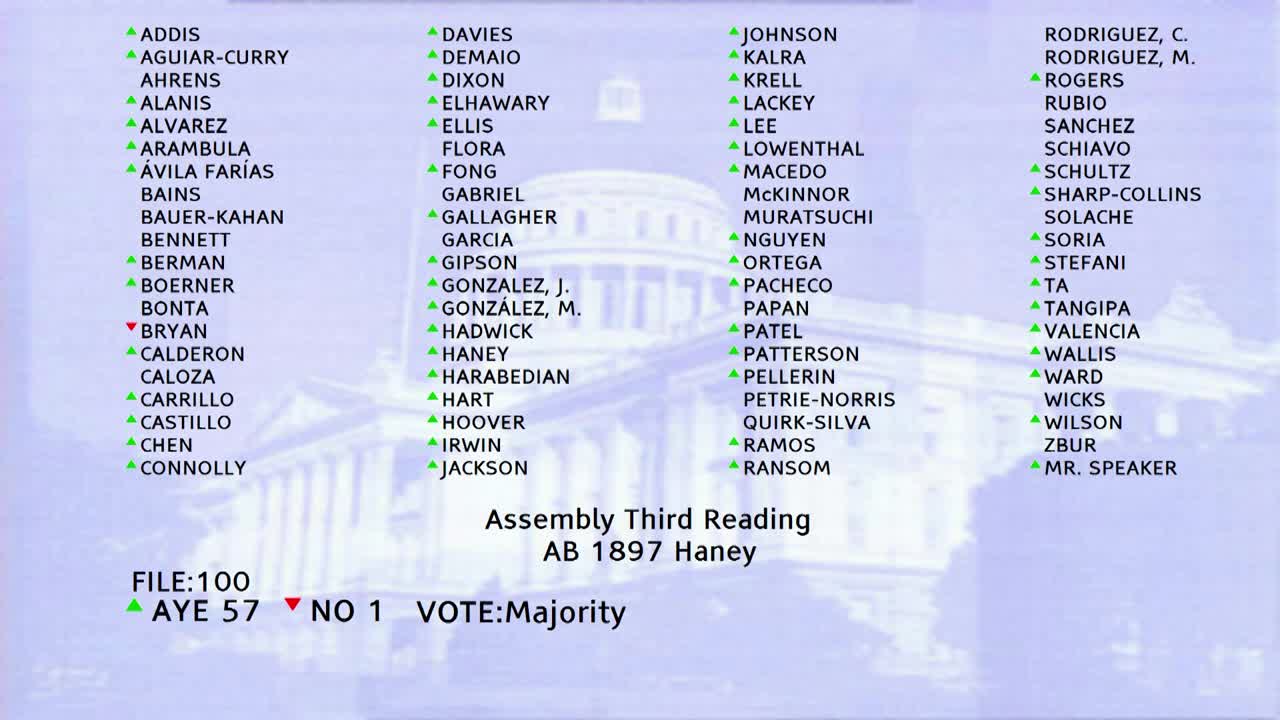 1MIN
Assembly Floor
 11MIN
Assembly Standing Committee on Education
Bill Author