AB 2332: Dual language immersion: Dual Language Immersion Coordinator.
- Session Year: 2025-2026
- House: Assembly
- Latest Version Date: 2026-09-27
Current Status:
Passed
(2026-09-27: Chaptered by Secretary of State - Chapter 598, Statutes of 2026.)
Introduced
In Committee
Awaiting First Chamber Vote
Passed First Chamber
In Committee
Awaiting Second Chamber Vote
Passed Second Chamber
Enacted
What does this bill do?
If the Legislature funds it, the State Department of Education must create a Dual Language Immersion Coordinator to help local education agencies (school districts, charter schools, county offices, and regional programs) start or expand dual language immersion programs and to share resources and best practices. The coordinator must also publish and maintain an online directory of active dual language programs listing the district and school sites, the non‑English language(s) used, the program model, and a contact for each program.
The summary is provided by generative AI which can make mistakes. For original language, please view the details in the table below.
Existing law appropriates $10,000,000 from the General Fund for the 202122 fiscal year to the Superintendent of Public Instruction to administer the Dual Language Immersion Grant Program for the purpose of expanding access to quality dual language learning and fostering languages that English learners bring to Californias education system. Under that program, the State Department of Education is required to award a minimum of 25 one-time Dual Language Immersion Grants over a period of 3 fiscal years of up to $380,000 per grant to an eligible entity to expand or establish dual language immersion programs.
This bill would require, upon appropriation by the Legislature, the department, on or before July 1, 2027, to establish a Dual Language Immersion Coordinator to provide coordination between local educational agencies, as defined, to share resources and knowledge on dual language immersion programs, as defined. The bill would require the Dual Language Immersion Coordinator to (1) act as the point of contact within the department for local educational agencies seeking to, among other things, establish new or expand existing dual language immersion programs, and (2) establish, publish, and maintain on the departments internet website, on or before January 1, 2028, a directory of operative dual language immersion programs, as specified. To the extent the bill would impose additional duties on local educational agencies relating to the establishment and maintenance of the directory, the bill would impose a state-mandated local program.
The California Constitution requires the state to reimburse local agencies and school districts for certain costs mandated by the state. Statutory provisions establish procedures for making that reimbursement.
This bill would provide that, if the Commission on State Mandates determines that the bill contains costs mandated by the state, reimbursement for those costs shall be made pursuant to the statutory provisions noted above.
Existing law appropriates $10,000,000 from the General Fund for the 202122 fiscal year to the Superintendent of Public Instruction to administer the Dual Language Immersion Grant Program for the purpose of expanding access to quality dual language learning and fostering languages that English learners bring to Californias education system. Under that program, the State Department of Education is required to award a minimum of 25 one-time Dual Language Immersion Grants over a period of 3 fiscal years of up to $380,000 per grant to an eligible entity to expand or establish dual language immersion programs.
This bill would require require, upon appropriation by the Legislature, the department, on or before July 1, 2027, to designate establish a Dual Language Immersion Coordinator to provide coordination between local educational agencies, as defined, to share resources and knowledge on dual language immersion programs, as defined. The bill would require the Dual Language Immersion Coordinator to (1) act as the point of contact within the department for local educational agencies seeking to, among other things, establish new or expand existing dual language immersion programs, and (2) establish, publish, and maintain on the departments internet website, on or before January 1, 2028, a directory of operative dual language immersion programs, as specified. To the extent the bill would impose additional duties on local educational agencies relating to the establishment and maintenance of the directory, the bill would impose a state-mandated local program.
The California Constitution requires the state to reimburse local agencies and school districts for certain costs mandated by the state. Statutory provisions establish procedures for making that reimbursement.
This bill would provide that, if the Commission on State Mandates determines that the bill contains costs mandated by the state, reimbursement for those costs shall be made pursuant to the statutory provisions noted above.
Existing law appropriates $10,000,000 from the General Fund for the 202122 fiscal year to the Superintendent of Public Instruction to administer the Dual Language Immersion Grant Program for the purpose of expanding access to quality dual language learning and fostering languages that English learners bring to Californias education system. Under that program, the State Department of Education is required to award a minimum of 25 one-time Dual Language Immersion Grants over a period of 3 fiscal years of up to $380,000 per grant to an eligible entity to expand or establish dual language immersion programs.
This bill would require the department, on or before July 1, 2027, to designate a Dual Language Immersion Coordinator to provide coordination between local educational agencies, as defined, to share resources and knowledge on dual language immersion programs, as defined. The bill would require the Dual Language Immersion Coordinator to (1) act as the point of contact within the department for local educational agencies seeking to, among other things, establish new or expand existing dual language immersion programs, and (2) establish, publish, and maintain on the departments internet website, on or before January 1, 2028, a directory of operative dual language immersion programs, as specified. To the extent the bill would impose additional duties on local educational agencies relating to the establishment and maintenance of the directory, the bill would impose a state-mandated local program.
The California Constitution requires the state to reimburse local agencies and school districts for certain costs mandated by the state. Statutory provisions establish procedures for making that reimbursement.
This bill would provide that, if the Commission on State Mandates determines that the bill contains costs mandated by the state, reimbursement for those costs shall be made pursuant to the statutory provisions noted above.
For purposes of this article, the following definitions apply:
(a)Dual language immersion program means a program that enrolls both English learners and native speakers of English and provides integrated language learning and academic instruction for native speakers of English and native speakers of another language, with the goals of high academic achievement, first and second language proficiency, and cross-cultural understanding.
(b)Local educational agency means a school district, charter school, county office of education, or regional occupational center or program operated by a joint powers authority or county office of education.
(c)Partner language means a language other than English that is used to provide instruction to pupils in a dual language immersion program.
52206.Upon appropriation by the Legislature, the department, on or before July 1, 2027, shall establish a Dual Language Immersion Coordinator to provide coordination between local educational agencies to share resources and knowledge on dual language immersion programs.
52207.The Dual Language Immersion Coordinator shall do all of the following:
(a)Act as the point of contact within the department for local educational agencies seeking to establish new or expand existing dual language immersion programs.
(b)Facilitate ongoing communication and collaboration between local educational agencies to share resources and best practices on dual language immersion programs.
(c)Establish, publish, and maintain on the departments internet website, on or before January 1, 2028, a directory of operative dual language immersion programs, which shall include all of the following:
(1)The local educational agency and schoolsites that have operative dual language immersion programs.
(2)The partner languages offered at each schoolsite, the program model, and a point of contact for the program.
SEC. 2.If the Commission on State Mandates determines that this act contains costs mandated by the state, reimbursement to local agencies and school districts for those costs shall be made pursuant to Part 7 (commencing with Section 17500) of Division 4 of Title 2 of the Government Code.
For purposes of this article, the following definitions apply:
(a)Dual language immersion program means a program that enrolls both English learners and native speakers of English and provides integrated language learning and academic instruction for native speakers of English and native speakers of another language, with the goals of high academic achievement, first and second language proficiency, and cross-cultural understanding.
(b)Local educational agency means a school district, charter school, county office of education, or regional occupational center or program operated by a joint powers authority or county office of education.
(c)Partner language means a language other than English that is used to provide instruction to pupils in a dual language immersion program.
52206.The Upon appropriation by the Legislature, the department, on or before July 1, 2027, shall designate establish a Dual Language Immersion Coordinator to provide coordination between local educational agencies to share resources and knowledge on dual language immersion programs.
52207.The Dual Language Immersion Coordinator shall do all of the following:
(a)Act as the point of contact within the department for local educational agencies seeking to establish new or expand existing dual language immersion programs.
(b)Facilitate ongoing communication and collaboration between local educational agencies to share resources and best practices on dual language immersion programs.
(c)Establish, publish, and maintain on the departments internet website, on or before January 1, 2028, a directory of operative dual language immersion programs, which shall include all of the following:
(1)The local educational agency and schoolsites that have operative dual language immersion programs.
(2)The partner languages offered at each schoolsite, the program model, and a point of contact for the program.
SEC. 2.If the Commission on State Mandates determines that this act contains costs mandated by the state, reimbursement to local agencies and school districts for those costs shall be made pursuant to Part 7 (commencing with Section 17500) of Division 4 of Title 2 of the Government Code.
For purposes of this article, the following definitions apply:
(a)Dual language immersion program means a program that enrolls both English learners and native speakers of English and provides integrated language learning and academic instruction for native speakers of English and native speakers of another language, with the goals of high academic achievement, first and second language proficiency, and cross-cultural understanding.
(b)Local educational agency means a school district, charter school, county office of education, or regional occupational center or program operated by a joint powers authority or county office of education.
(c)Partner language means a language other than English that is used to provide instruction to pupils in a dual language immersion program.
52206.The department, on or before July 1, 2027, shall designate a Dual Language Immersion Coordinator to provide coordination between local educational agencies to share resources and knowledge on dual language immersion programs.
52207.The Dual Language Immersion Coordinator shall do all of the following:
(a)Act as the point of contact within the department for local educational agencies seeking to establish new or expand existing dual language immersion programs.
(b)Facilitate ongoing communication and collaboration between local educational agencies to share resources and best practices on dual language immersion programs.
(c)Establish, publish, and maintain on the departments internet website, on or before January 1, 2028, a directory of operative dual language immersion programs, which shall include all of the following:
(1)The local educational agency and schoolsites that have operative dual language immersion programs.
(2)The partner languages offered at each schoolsite, the program model, and a point of contact for the program.
SEC. 2.If the Commission on State Mandates determines that this act contains costs mandated by the state, reimbursement to local agencies and school districts for those costs shall be made pursuant to Part 7 (commencing with Section 17500) of Division 4 of Title 2 of the Government Code.
REVISIONS: HeadingLine 3.|
Date
|
Status
|
|---|---|
| Sep 27, 2026 | Chaptered by Secretary of State - Chapter 598, Statutes of 2026. |
| Sep 27, 2026 | Approved by the Governor. |
| Sep 3, 2026 | Enrolled and presented to the Governor at 4 p.m. |
| Aug 26, 2026 | Senate amendments concurred in. To Engrossing and Enrolling. (Ayes 79. Noes 0.). |
| Aug 26, 2026 | Senate amendments concurred in. To Engrossing and Enrolling. (Ayes 79. Noes 0. Page 6583.). |
| Aug 25, 2026 | In Assembly. Concurrence in Senate amendments pending. |
| Aug 25, 2026 | Read third time. Passed. Ordered to the Assembly. (Ayes 39. Noes 0.). |
| Aug 17, 2026 | Read second time. Ordered to third reading. |
| Aug 13, 2026 | Read second time and amended. Ordered returned to second reading. |
| Aug 13, 2026 | From committee: Amend, and do pass as amended. (Ayes 7. Noes 0.) (August 13). |
| Aug 10, 2026 | In committee: Referred to APPR. suspense file. |
| Aug 3, 2026 | In committee: Hearing postponed by committee. |
| Jun 25, 2026 | From committee: Do pass and re-refer to Com. on APPR. with recommendation: To Consent Calendar. (Ayes 7. Noes 0.) (June 24). Re-referred to Com. on APPR. |
| May 27, 2026 | Referred to Com. on ED. |
| May 14, 2026 | In Senate. Read first time. To Com. on RLS. for assignment. |
| May 14, 2026 | Read third time. Passed. Ordered to the Senate. (Ayes 77. Noes 0.) |
| May 14, 2026 | Read third time. Passed. Ordered to the Senate. (Ayes 77. Noes 0. Page 5055.) |
| May 7, 2026 | Read second time. Ordered to Consent Calendar. |
| May 6, 2026 | From committee: Do pass. To Consent Calendar. (Ayes 14. Noes 0.) (May 6). |
| Mar 25, 2026 | From committee: Do pass and re-refer to Com. on APPR. with recommendation: To Consent Calendar. (Ayes 9. Noes 0.) (March 25). Re-referred to Com. on APPR. |
| Mar 25, 2026 | Coauthors revised. |
| Mar 9, 2026 | Referred to Com. on ED. |
| Feb 20, 2026 | From printer. May be heard in committee March 22. |
| Feb 19, 2026 | Read first time. To print. |
|
Date
|
Description
|
Location
|
Votes
|
|
|---|---|---|---|---|
| Aug 26, 2026 | AB 2332 Mark González Concurrence in Senate Amendments | Assembly Floor |
Passed |
|
| Aug 25, 2026 | Assembly 3rd Reading AB2332 Mark González et al. By Wahab | Senate Floor |
Passed |
|
| Aug 13, 2026 | Do pass as amended | Senate Standing Committee on Appropriations |
Passed |
|
| Aug 10, 2026 | Placed on suspense file | Senate Standing Committee on Appropriations |
Passed |
|
| Jun 24, 2026 | Do pass, but first be re-referred to the Committee on [Appropriations] with the recommendation: To Consent Calendar | Senate Standing Committee on Education |
Passed |
|
| May 14, 2026 | AB 2332 Mark González Consent Calendar Second Day Regular Session | Assembly Floor |
Passed |
|
| May 6, 2026 | Do pass. To Consent Calendar. | Assembly Standing Committee on Appropriations |
Passed |
|
| Mar 25, 2026 | Do pass and be re-referred to the Committee on [Appropriations] with recommendation: To Consent Calendar | Assembly Standing Committee on Education |
Passed |
This list shows positions taken on this bill by organizations on the date displayed, which is linked to the original source.
Positions by individuals are not included.
|
Organization
|
Position
|
Date
|
|---|---|---|
| AAPIs for Civic Empowerment | ** Support | |
| Alameda County Office Of Education | ** Support | |
| Alliance for A Better Community | ** Support | |
| Asian American Drug Abuse Program | ** Support | |
| Asian Americans Advancing Justice-southern California | ** Support | |
| Asian Americans Advancing Justice-Southern California (sponsor) | ** Support | |
| Association Of California School Administrators | ** Support | |
| BPSOS Center for Community Advancement | ** Support | |
| CA Healthy Nail Salon Collaborative | ** Support | |
| California Association For Bilingual Education | ** Support | |
| California Charter Schools Association | ** Support | |
| California Immigrant Policy Center | ** Support | |
| California Language Teachers' Association | ** Support | |
| California Language Teachers’ Association | ** Support | |
| California State PTA | ** Support | |
| Californians Together | ** Support | |
| Central American Resource Center of California | ** Support | |
| Chinatown Service Center | ** Support | |
| Early Edge California | ** Support | |
| First 5 La | ** Support | |
| Green Dot Public Schools | ** Support | |
| Koreatown Youth and Community Center | ** Support | |
| LEAD Filipino | ** Support | |
| South Asian Network | ** Support | |
| Southeast Asia Resource Action Center | ** Support | |
| Thai Community Development Center | ** Support | |
| Unidosus | ** Support |
CONCURRENCE IN SENATE AMENDMENTS
CSA1 Bill Id:AB 2332
Author:(Mark González, et al.)
As Amended Ver:August 13, 2026
Majority vote
SUMMARY
Requires the California Department of Education (CDE), upon an appropriation by the Legislature, to establish a Dual Language Immersion Coordinator by July 1, 2027, to provide coordination between local educational agencies (LEAs) to share resources and knowledge about dual language immersion (DLI) programs.
Senate Amendments
- Make the establishment of a Dual Language Immersion Coordinator subject to an appropriation by the Legislature.
- Add co-authors.
COMMENTS
Staffing at the CDE to support DLI programs. According to the CDE, the Multilingual Learners Division does not currently have a dedicated consultant to support DLI programs. If there were such a consultant, the CDE reports that they could develop resources to support DLI programs, provide technical assistance and coordination for DLI expansion, update guidance for the California Education for a Global Economy Initiative (Proposition 58, approved by voters in 2016), provide support for the State Seal of Biliteracy, and conduct surveys and develop a DLI landscape analysis.
CDE staffing is generally under the purview of the SPI, but the Legislature sometimes dictates specific functions. Generally speaking, the SPI is responsible for administering the CDE, and determining how its staffing is organized. Historically, the SPI has resisted efforts to dictate the staffing of specific functions in statute. Nevertheless, there are certain positions established through legislation, as this bill proposes. These positions and offices include:
- State school nurse consultant (EC 49420);
- American Indian Education Unit Manager (EC 33370);
- Office of School Based Health (EC 49418); and
- Computer science coordinator (not established in statute but position funded in the Budget Act)
Multiple policies promote biliteracy as a state goal. The goal of DLI programs is to help students achieve biliteracy. Several policies enacted or adopted in recent years support this goal. They include:
- The California English Learner Roadmap, adopted by the State Board of Education (SBE) in 2017, promotes an assets orientation toward primary language while students are also learning English, and that these assets are "valued and built upon in culturally responsive curriculum and instruction and in programs that support, wherever possible, the development of proficiency in multiple languages."
- The Global California 2030 report, published by the CDE in 2019, set as a goal that by 2030, half of all K–12 students would be participating in programs leading to proficiency in two or more languages, either through a class, a program, or an experience, and by 2040, three out of four students would be proficient in two or more languages, earning them a State Seal of Biliteracy
- The State Seal of Biliteracy, established by AB 815 (Brownley), Chapter 618, Statutes of 2011, recognizes proficiency in two languages in the form of a seal affixed to students’ high school diplomas.
- Proposition 58, passed by the voters in 2016, authorizes school districts to establish DLI programs for both native and non-native English speakers.
- The state has created and funded several programs aimed at increasing the number of DLI programs and increasing the number of teachers who hold bilingual authorizations.
According to the Author
"There is a clear and urgent need for Dual Language Immersion programs in California for both English learners and native English speakers who need genuine, fluent biliteracy. These programs cannot grow without support from the state. If we want our communities to put their trust in us, then we must show that we are willing to invest in what works. We must streamline these programs, rather than allowing bureaucracy to drain time and energy from our already overburdened educators. They are giving everything they have. It's time for the state to match that commitment.
AB 2332 will ensure that teachers have access to the resources and expertise they need to better serve our diverse student population, with over 70% of my district speaking a language other than English at home—including Spanish, Korean, Mandarin, Cantonese, and Japanese—this bill is a necessary step toward educational equity and multilingual proficiency."
Arguments in Support
Green Dot Public Schools writes, "California's bilingual education system is still rebuilding after decades of restrictive policies, including California Proposition 227, which limited bilingual programs until voters restored local flexibility through California Proposition 58. While interest in DLI programs has grown significantly, many districts and schools lack clear pathways to share resources, connect with existing programs, and develop sustainable program models.
AB 2332 would help address these gaps by providing the coordination necessary to connect programs, share best practices, and expand high-quality dual language immersion opportunities across California. By strengthening collaboration among local educational agencies, this bill will help more students develop bilingual and biliterate skills that support long-term academic and career success."
Arguments in Opposition
None on file.
FISCAL COMMENTS
According to the Senate Appropriations Committee, the bill's provisions would be contingent upon an appropriation resulting in General Fund cost pressure in the low hundreds of thousands of dollars each year. Specifically, the CDE estimates General Fund costs of $204,000 in the first year and $198,000 each year thereafter for 1.0 new position to comply with the bill's requirements and designate a Dual Language Immersion Coordinator.
VOTES:
ASM EDUCATION: 9-0-0
YES: Patel, Hoover, Alvarez, Bonta, Alanis, Garcia, Lowenthal, Pellerin, Zbur
ASM APPROPRIATIONS: 14-0-1
YES: Wicks, Hoover, Aguiar-Curry, Caloza, Dixon, Fong, Mark González, Krell, Pacheco, Pellerin, Sharp-Collins, Solache, Ta, Tangipa
ABS, ABST OR NV: Arambula
ASSEMBLY FLOOR: 77-0-3
YES: Addis, Aguiar-Curry, Ahrens, Alanis, Alvarez, Ávila Farías, Bains, Bauer-Kahan, Bennett, Berman, Boerner, Bonta, Bryan, Calderon, Caloza, Carrillo, Castillo, Chen, Connolly, Davies, DeMaio, Dixon, Elhawary, Ellis, Fong, Gabriel, Gallagher, Garcia, Gipson, Jeff Gonzalez, Mark González, Hadwick, Haney, Harabedian, Hart, Hoover, Irwin, Jackson, Johnson, Kalra, Krell, Lackey, Lee, Lowenthal, Macedo, McKinnor, Muratsuchi, Nguyen, Ortega, Pacheco, Papan, Patel, Patterson, Pellerin, Petrie-Norris, Quirk-Silva, Ramos, Ransom, Michelle Rodriguez, Rogers, Blanca Rubio, Sanchez, Schiavo, Schultz, Sharp-Collins, Solache, Soria, Stefani, Ta, Tangipa, Valencia, Wallis, Ward, Wicks, Wilson, Zbur, Rivas
ABS, ABST OR NV: Arambula, Flora, Celeste Rodriguez
UPDATED
VERSION: August 13, 2026
CONSULTANT: Tanya Lieberman / ED. / (916) 319-2087 FN: 0004156
SENATE RULES COMMITTEE Office of Senate Floor Analyses (916) 651-4171 | AB 2332 |
THIRD READING
Bill No: AB 2332
Author: Mark González (D), Quirk-Silva (D) and Solache (D), et al.
Amended: 8/13/26 in Senate
Vote: 21
SENATE EDUCATION COMMITTEE: 7-0, 6/24/26
AYES: Pérez, Ochoa Bogh, Cabaldon, Choi, Cortese, Gonzalez, Reyes
SENATE APPROPRIATIONS COMMITTEE: 7-0, 8/13/26
AYES: Cervantes, Seyarto, Cabaldon, Dahle, Grayson, Richardson, Wahab
ASSEMBLY FLOOR: 77-0, 5/14/26 (Consent) - See last page for vote
SUBJECT: Dual language immersion: Dual Language Immersion Coordinator
SOURCE: Asian Americans Advancing Justice-Southern California
DIGEST:
This bill requires the California Department of Education (CDE), upon appropriation and by July 1, 2027, to designate a Dual Language Immersion Coordinator for the purposes of providing coordination between local educational agencies (LEAs) to share resources and knowledge on dual language immersion programs.
ANALYSIS:
Existing law:
- Through initiative, requires that public schools ensure that students obtain English language proficiency. Requires school districts to solicit parent and community input in developing language acquisition programs. Requires instruction to ensure English acquisition as rapidly and effectively as possible. Authorizes school districts to establish dual language immersion programs for both native and non–native English speakers. (Education Code (EC) § 305)
- Defines language acquisition programs to include dual language immersion programs to mean programs that provide integrated language learning and academic instruction for native speakers of English and native speakers of another language, with the goals of high academic achievement, first and second language proficiency, and cross-cultural understanding. (EC § 306)
- Establishes the Pathways to Success Grant program with the goal of providing children in preschool, transitional kindergarten, kindergarten, and grades 1 to 12, inclusive, with dual language immersion programs, developmental bilingual programs for English learners, or early learning dual language learners programs that are consistent with adopted state policy of the English Learner Roadmap. (EC § 33440)
- Defines “dual language learner” for purposes of California State Preschool Programs (CSPPs), to mean children aged 0-5 whose first language is a language other than English or children who are developing two or more languages, one of which may be English. (EC § 8205)
- Requires the Superintendent of Public Instruction (SPI) to develop procedures for providers to identify and report data on dual language learners enrolled in the CSPP. (EC § 8241.5)
- Establishes the State Seal of Biliteracy, to recognize high school graduates who have attained a high level of proficiency in speaking, reading, and writing in one or more languages in addition to English. (EC § 51460)
This bill:
- Requires CDE, upon appropriation and by July 1, 2027, to designate a dual language immersion Coordinator to provide coordination between LEAs to share resources and knowledge on dual language immersion programs.
- Requires that the Dual Language Immersion Coordinator to do all of the following:
- Establish, publish, and maintain on the CDE’s website, by January 1, 2028, a directory of operative dual language immersion programs, which is to include:
- The LEA and schoolsites that have operative dual language immersion programs.
- The partner languages offered at each shoolsite, the program model, and a point of contact for the program.
- Defines various terms for the purposes of the bill, including:
- “Dual language immersion program” to mean a program that enrolls both English learners and native speakers of English and provides integrated language learning and academic instruction for native speakers of English and native speakers of another language, with the goals of high academic achievement, first and second language proficiency, and cross-cultural understanding.
- “Partner language” to mean a language other than English that is used to provide instruction to pupils in a dual language immersion program.
Comments
Need for the bill. According to the author, “There is a clear and urgent need for Dual Language Immersion programs in California for both English learners and native English speakers who need genuine, fluent biliteracy. These programs cannot grow without support from the state. If we want our communities to put their trust in us, then we must show that we are willing to invest in what works. We must streamline these programs, rather than allowing bureaucracy to drain time and energy from our already overburdened educators. They are giving everything they have. It’s time for the state to match that commitment.
“AB 2332 will ensure that teachers have access to the resources and expertise they need to better serve our diverse student population, with over 70% of my district speaking a language other than English at home—including Spanish, Korean, Mandarin, Cantonese, and Japanese—this bill is a necessary step toward educational equity and multilingual proficiency.”
Expansion of bilingual education following repeal of Proposition 227. In 1998, statewide voters passed Proposition 227, which restricted the use of bilingual instruction for English learners. It required English learners to be taught in English and restricted the use of bilingual programs. Under Proposition 227, public schools were required to provide English learners with one year of special, intensive English instruction before transitioning students into other English-only classes. The initiative permitted schools to provide classes in a language other than English under a parent initiated waiver process under certain conditions.
In 2016, Proposition 58, placed on the ballot by the state Legislature and approved by voters, removed restrictions to bilingual programs established under Prop. 227. Proposition 58 took effect in 2017. Schools are no longer required to teach English learners in English-only programs but can teach their English learners using a variety of programs, including dual language immersion. The removal of these restrictions contributed to the growth of dual language immersion programs throughout California and the state’s broader efforts to promote biliteracy.
What are dual language immersion programs? As described on CDE’s website on dual-language immersion, also referred to as two-way immersion, dual-language immersion is language learning and academic instruction for native speakers of English and native speakers of another language. The goals of dual-language immersion programs are language proficiency and academic achievement in students’ first and second languages, and cross-cultural understanding. Instruction is in both languages, typically starting with smaller proportions of instruction in English and gradually moving to half in each language. Multiple instructional models exist and are typically found in kindergarten through grade eight, but may be offered through grade twelve.
Establishes a statewide directory. According to the author, publicly available information regarding the number and location of dual language immersion programs is incomplete. The author notes that one national directory identifies approximately 320 California dual language immersion programs, while state estimates suggest more than 1,000 programs may be operating statewide. This bill requires CDE to designate a coordinator of dual immersion programs to facilitate information sharing among LEAs. In addition to facilitating communication and collaboration, this bill requires the coordinator to establish a directory of operative programs. A directory could assist in understanding program availability and language offerings.
Central point of contact. The California Language Teachers’ Association notes in their letter of support submitted to this Committee that while school districts are independently innovating dual language immersion programs spanning languages from Spanish and Mandarin to Hmong and Vietnamese, they currently lack the infrastructure to collaborate or share resources. This bill seeks to create a centralized point of contact to support collaboration in the sharing of resources and best practices on dual language immersion programs among LEAs and connect schools seeking to establish or improve dual language immersion programs with other existing programs. This bill requires CDE to designate a coordinator to implement the bill’s requirements. This bill is silent as to whether additional state support would be provided to CDE for this purpose, as such implementation would presumably be absorbed within CDE’s multilingual education efforts.
FISCAL EFFECT: Appropriation: No Fiscal Com.: Yes Local: Yes
According to the Senate Appropriations Committee analysis, this bill would have the following fiscal impact:
- The bill’s provisions would be contingent upon an appropriation resulting in General Fund cost pressure in the low hundreds of thousands of dollars each year. Specifically, the CDE estimates General Fund costs of $204,000 in the first year and $198,000 each year thereafter for 1.0 new position to comply with the bill’s requirements and designate a Dual Language Immersion Coordinator.
SUPPORT: (Verified 8/15/26)
Asian Americans Advancing Justice-Southern California (source)
AAPIs for Civic Empowerment
Alameda County Office of Education
Asian American Drug Abuse Program
Association of California School Administrators
BPSOS Center for Community Advancement
CA Healthy Nail Salon Collaborative
California Association for Bilingual Education
California Charter Schools Association
California Immigrant Policy Center
California Language Teachers’ Association
California State PTA
Californians Together
Central American Resource Center of California
Chinatown Service Center
Early Edge California
First 5 LA
Green DOT Public Schools California
Koreatown Youth and Community Center
South Asian Network
Southeast Asia Resource Action Center
Thai Community Development Center
UnidosUS
OPPOSITION: (Verified 8/15/26)
None received
ASSEMBLY FLOOR: 77-0, 5/14/26
AYES: Addis, Aguiar-Curry, Ahrens, Alanis, Alvarez, Ávila Farías, Bains, Bauer-Kahan, Bennett, Berman, Boerner, Bonta, Bryan, Calderon, Caloza, Carrillo, Castillo, Chen, Connolly, Davies, DeMaio, Dixon, Elhawary, Ellis, Fong, Gabriel, Gallagher, Garcia, Gipson, Jeff Gonzalez, Mark González, Hadwick, Haney, Harabedian, Hart, Hoover, Irwin, Jackson, Johnson, Kalra, Krell, Lackey, Lee, Lowenthal, Macedo, McKinnor, Muratsuchi, Nguyen, Ortega, Pacheco, Papan, Patel, Patterson, Pellerin, Petrie-Norris, Quirk-Silva, Ramos, Ransom, Michelle Rodriguez, Rogers, Blanca Rubio, Sanchez, Schiavo, Schultz, Sharp-Collins, Solache, Soria, Stefani, Ta, Tangipa, Valencia, Wallis, Ward, Wicks, Wilson, Zbur, Rivas
NO VOTE RECORDED: Arambula, Flora, Celeste Rodriguez
Prepared by: Olgalilia Ramirez / ED. / (916) 651-4105
8/17/26 10:03:13
**** END ****
SENATE COMMITTEE ON
Senator Sabrina Cervantes, Chair
2025 - 2026 Regular Session
AB 2332 (Mark González) - Dual language immersion: Dual Language Immersion Coordinator
Version: | Policy Vote: |
Urgency: | Mandate: |
Hearing Date: | Consultant: |
Bill Summary:
This bill requires the California Department of Education (CDE) to designate a Dual Language Immersion Coordinator to work with local educational agencies (LEAs) seeking to establish new or existing dual language immersion programs and facilitate collaboration among LEAs to share best practices.
*********** ANALYSIS ADDENDUM – SUSPENSE FILE ***********
The following information is revised to reflect amendments
adopted by the committee on August 10, 2026
Fiscal Impact:
The bill’s provisions would be contingent upon an appropriation resulting in General Fund cost pressure in the low hundreds of thousands of dollars each year. Specifically, the CDE estimates General Fund costs of $204,000 in the first year and $198,000 each year thereafter for 1.0 new position to comply with the bill’s requirements and designate a Dual Language Immersion Coordinator.
Author Amendments:
Make the bill’s provisions contingent upon an appropriation and add coauthors.
-- END --
SENATE COMMITTEE ON
Senator Sabrina Cervantes, Chair
2025 - 2026 Regular Session
AB 2332 (Mark González) - Dual language immersion: Dual Language Immersion Coordinator
Version: | Policy Vote: |
Urgency: | Mandate: |
Hearing Date: | Consultant: |
Bill Summary:
This bill requires the California Department of Education (CDE) to designate a Dual Language Immersion Coordinator to work with local educational agencies (LEAs) seeking to establish new or existing dual language immersion (DLI) programs and facilitate collaboration among LEAs to share best practices.
Fiscal Impact:
The CDE estimates General Fund costs of $204,000 in the first year and $198,000 each year thereafter for 1.0 new position to comply with the bill’s requirements and designate a Dual Language Immersion Coordinator.
Background:
Existing law defines language acquisition programs to include dual language immersion programs to mean programs that provide integrated language learning and academic instruction for native speakers of English and native speakers of another language, with the goals of high academic achievement, first and second language proficiency, and cross-cultural understanding.
Existing law establishes the Pathways to Success Grant Program with the goal of providing children in preschool, transitional kindergarten, kindergarten, and grades 1 to 12, inclusive, with dual language immersion programs, developmental bilingual programs for English learners, or early learning dual language learners programs that are consistent with adopted state policy of the English Learner Roadmap. The purpose of the program is to grow capacity for high-quality dual language learning by doing all of the following:
- Establishing dual language immersion programs or developmental bilingual programs for English learners for students in elementary and secondary schools;
- Establishing early learning dual language learner programs in California State Preschool Programs operated by school districts and charter schools;
- Expanding existing dual language immersion programs or developmental bilingual programs for English learners to new schoolsites; and
- Providing professional development modules to LEAs with evidence-based, demonstrated professional development techniques on how to design and implement new, or to expand existing, dual language immersion programs or developmental bilingual programs for English learners and early learning dual language learner programs.
Existing law requires that the application include a description of the high-quality curriculum and instruction to be provided by the specified programs, among other program elements, and that grant funds to be used for specified purposes, including training, professional development, recruitment of bilingual teachers and paraeducators, outreach, learning communities, and instructional coaches.
Proposed Law:
This bill requires CDE, by July 1, 2027, to designate a dual language immersion coordinator to provide coordination between LEAs to share resources and knowledge on dual language immersion programs.
This bill requires that the coordinator do the following: act as the point of contact within CDE for LEAs seeking to establish new or expand existing dual language immersion programs and facilitate ongoing communication and collaboration between LEAs to share resources and best practices on dual language immersion programs.
This bill requires the coordinator to establish, publish, and maintain on the CDE’s website, by January 1, 2028, a directory of operative dual language immersion programs, which is to include: the LEA and schoolsites that have operative dual language immersion programs and the partner languages offered at each shoolsite, the program model, and a point of contact for the program.
This bill defines “dual language immersion program” to mean a program that enrolls both English learners and native speakers of English and provides integrated language learning and academic instruction for native speakers of English and native speakers of another language, with the goals of high academic achievement, first and second language proficiency, and cross-cultural understanding. It also defines “partner language” to mean a language other than English that is used to provide instruction to pupils in a dual language immersion program.
Staff Comments:
Dual-language immersion is language learning and academic instruction for native speakers of English and native speakers of another language. The goals of dual-language immersion programs are language proficiency and academic achievement in students’ first and second languages, and cross-cultural understanding. This bill seeks to create a centralized point of contact to support collaboration in the sharing of resources and best practices on dual language immersion programs among LEAs and connect schools seeking to establish or improve dual language immersion programs with other existing programs. According to the author, “There is a clear and urgent need for Dual Language Immersion programs in California for both English learners and native English speakers who need genuine, fluent biliteracy. These programs cannot grow without support from the state. If we want our communities to put their trust in us, then we must show that we are willing to invest in what works. We must streamline these programs, rather than allowing bureaucracy to drain time and energy from our already overburdened educators. They are giving everything they have. It’s time for the state to match that commitment. AB 2332 will ensure that teachers have access to the resources and expertise they need to better serve our diverse student population, with over 70% of my district speaking a language other than English at home—including Spanish, Korean, Mandarin, Cantonese, and Japanese—this bill is a necessary step toward educational equity and multilingual proficiency.”
-- END --
SENATE COMMITTEE ON EDUCATION
Senator Sasha Renée Pérez, Chair
2025 - 2026 Regular
Bill No: Hearing Date: June 24, 2026
Author: | |||
Version: |
| ||
Urgency: | Fiscal: | ||
Consultant: | |||
Subject: .
SUMMARY
This bill requires the California Department of Education (CDE), by July 1, 2027, to designate a Dual Language Immersion Coordinator for the purposes of providing coordination between local educational agencies (LEAs) to share resources and knowledge on dual language immersion programs.
BACKGROUND
Existing law:
- Through initiative, requires that public schools ensure that students obtain English language proficiency. Requires school districts to solicit parent and community input in developing language acquisition programs. Requires instruction to ensure English acquisition as rapidly and effectively as possible. Authorizes school districts to establish dual language immersion programs for both native and non–native English speakers. (Education Code (EC) § 305)
- Defines language acquisition programs to include dual language immersion programs to mean programs that provide integrated language learning and academic instruction for native speakers of English and native speakers of another language, with the goals of high academic achievement, first and second language proficiency, and cross-cultural understanding. (EC § 306)
- Establishes the Pathways to Success Grant program with the goal of providing children in preschool, transitional kindergarten, kindergarten, and grades 1 to 12, inclusive, with dual language immersion programs, developmental bilingual programs for English learners, or early learning dual language learners programs that are consistent with adopted state policy of the English Learner Roadmap. (EC § 33440)
- States that the purpose of the Pathways to Success Grant Program is to grow capacity for high-quality dual language learning by doing all of the following:
- Establishing dual language immersion programs or developmental bilingual programs for English learners for students in elementary and secondary schools;
- Establishing early learning dual language learner programs in California State Preschool Programs (CSPPs) operated by school districts and charter schools;
- Expanding existing dual language immersion programs or developmental bilingual programs for English learners to new schoolsites; and
- Providing professional development modules to school districts, schools, county offices of education (COEs), or a consortium of these entities, with evidence-based, demonstrated professional development techniques on how to design and implement new, or to expand existing, dual language immersion programs or developmental bilingual programs for English learners and early learning dual language learner programs. (EC § 33441)
- Requires that the application include a description of the high-quality curriculum and instruction to be provided by the specified programs, among other program elements. (EC § 33445)
- Requires grant funds to be used for training, professional development, recruitment of bilingual teachers and paraeducators, outreach, learning communities, instructional coaches, and standards-based instructional materials in targeted languages, as specified. (EC § 33442)
- Requires, by June 20, 2025, the CDE to submit a report to the appropriate committees of the Legislature detailing, among other things, the successes, best practices, barriers or constraints, and outcomes of school districts and consortium programs that are grant recipients. (EC § 33446)
- Defines “dual language learner” for purposes of CSPPs, to mean children aged 0-5 whose first language is a language other than English or children who are developing two or more languages, one of which may be English. (EC § 8205)
- Requires the Superintendent of Public Instruction (SPI) to develop procedures for providers to identify and report data on dual language learners enrolled in the CSPP. (EC § 8241.5)
- Establishes the State Seal of Biliteracy, to recognize high school graduates who have attained a high level of proficiency in speaking, reading, and writing in one or more languages in addition to English. (EC § 51460)
ANALYSIS
This bill:
- Requires CDE, by July 1, 2027, to designate a dual language immersion Coordinator to provide coordination between LEAs to share resources and knowledge on dual language immersion programs.
- Requires that the Dual Language Immersion Coordinator to do all of the following:
- Act as the point of contact within CDE for LEAs seeking to establish new
or expand existing dual language immersion programs.
- Facilitate ongoing communication and collaboration between LEAs to
share resources and best practices on dual language immersion programs.
- Establish, publish, and maintain on the CDE’s website, by January 1, 2028, a directory of operative dual language immersion programs, which is to include:
- The LEA and schoolsites that have operative dual language immersion
programs.
- The partner languages offered at each shoolsite, the program model, and
a point of contact for the program.
- Defines various terms for the purposes of the bill, including:
- “Dual language immersion program” to mean a program that enrolls both
English learners and native speakers of English and provides integrated language learning and academic instruction for native speakers of English and native speakers of another language, with the goals of high academic achievement, first and second language proficiency, and cross-cultural understanding.
- “Partner language” to mean a language other than English that is used to
provide instruction to pupils in a dual language immersion program.
STAFF COMMENTS
- Need for the bill. According to the author, “There is a clear and urgent need for Dual Language Immersion programs in California for both English learners and native English speakers who need genuine, fluent biliteracy. These programs cannot grow without support from the state. If we want our communities to put their trust in us, then we must show that we are willing to invest in what works. We must streamline these programs, rather than allowing bureaucracy to drain time and energy from our already overburdened educators. They are giving everything they have. It’s time for the state to match that commitment.
“AB 2332 will ensure that teachers have access to the resources and expertise they need to better serve our diverse student population, with over 70% of my district speaking a language other than English at home—including Spanish, Korean, Mandarin, Cantonese, and Japanese—this bill is a necessary step toward educational equity and multilingual proficiency.”
- Expansion of bilingual education following repeal of Proposition 227. In 1998, statewide voters passed Proposition 227, which restricted the use of bilingual instruction for English learners. It required English learners to be taught in English and restricted the use of bilingual programs. Under Proposition 227, public schools were required to provide English learners with one year of special, intensive English instruction before transitioning students into other English-only classes. The initiative permitted schools to provide classes in a language other than English under a parent initiated waiver process under certain conditions.
In 2016, Proposition 58, placed on the ballot by the state Legislature and approved by voters, removed restrictions to bilingual programs established under Prop. 227. Proposition 58 took effect in 2017. Schools are no longer required to teach English learners in English-only programs but can teach their English learners using a variety of programs, including dual language immersion. The removal of these restrictions contributed to the growth of dual language immersion programs throughout California and the state’s broader efforts to promote biliteracy.
- What are dual language immersion programs? As described on CDE’s website on dual-language immersion, also referred to as two-way immersion, dual-language immersion is language learning and academic instruction for native speakers of English and native speakers of another language. The goals of dual-language immersion programs are language proficiency and academic achievement in students’ first and second languages, and cross-cultural understanding. Instruction is in both languages, typically starting with smaller proportions of instruction in English and gradually moving to half in each language. Multiple instructional models exist and are typically found in kindergarten through grade eight, but may be offered through grade twelve.
- Establishes a statewide directory. According to the author, publicly available information regarding the number and location of dual language immersion programs is incomplete. The author notes that one national directory identifies approximately 320 California dual language immersion programs, while state estimates suggest more than 1,000 programs may be operating statewide. This bill requires CDE to designate a coordinator of dual immersion programs to facilitate information sharing among LEAs. In addition to facilitating communication and collaboration, the bill requires the coordinator to establish a directory of operative programs. A directory could assist in understanding program availability and language offerings.
- Central point of contact. The California Language Teachers’ Association notes in their letter of support submitted to this Committee that while school districts are independently innovating dual language immersion programs spanning languages from Spanish and Mandarin to Hmong and Vietnamese, they currently lack the infrastructure to collaborate or share resources. This bill seeks to create a centralized point of contact to support collaboration in the sharing of resources and best practices on dual language immersion programs among LEAs and connect schools seeking to establish or improve dual language immersion programs with other existing programs. The bill requires CDE to designate a coordinator to implement the bill’s requirements. The bill is silent as to whether additional state support would be provided to CDE for this purpose, as such implementation would presumably be absorbed within CDE’s multilingual education efforts.
- Related legislation.
AB 2325 (Alvarez, 2026) would require the CDE, in consultation with the Commission on Teacher Credentialing (CTC), to establish an online Bilingual Clinical Placement Registry for the purpose of connecting the preparation, credentialing, and long-term retention of teachers seeking to provide instruction in bilingual and multilingual settings. AB 2325 is set for hearing in this Committee.
AB 865 (Mark Gonzalez, 2025) would have established the dual language immersion Education Instructional Materials Grant Program for the purpose of providing additional supports to LEAs to increase available instructional materials in partner languages for dual language immersion programs. This bill was held in the Assembly Appropriations Committee.
AB 2074 (Muratsuchi, Chapter 946, Statutes of 2024) requires the California CDE to develop a statewide implementation plan for the English Learner Roadmap Policy.
SB 154 (Skinner, Chapter 43, Statutes of 2022) appropriated $5 million for the Asian Language Bilingual Teacher Education Program Consortium with the California State University to increase the number of credentialed teachers with Asian language bilingual authorization.
SB 952 (Limon, 2022) would have revised and recasted a three-year competitive dual language immersion grant program administered by the CDE. SB 952 was held in the Assembly Appropriations Committee.
AB 2514 (Thurmond, Chapter 763, Statutes of 2018) establishes the Pathways to Success Grant Program, for the purpose of providing grants for the establishment and expansion of dual language immersion programs, developmental bilingual programs for English learners, and early learning dual language learners programs.
AB 130 (Committee on Budget, Chapter 44, Statutes of 2021) appropriated $10 million for a dual language immersion grant program to award 25 one-time grants over a period of 3 fiscal years to eligible entities to expand or establish dual language immersion programs.
AB 952 (Reyes, 2017) would have established the Bilingual Teacher Professional Development Program and would require the CDE to allocate grant funding for purposes of providing professional development services to specified teachers and paraprofessionals to provide instruction to English learners. This bill was vetoed by the Governor, who stated:
“California recently provided funds to support teachers and paraprofessionals interested in becoming bilingual teachers. This past spring the Commission awarded one-time grants to higher education institutions that sought to create or improve four-year integrated teacher education programs, including for bilingual teachers. Before making additional investments on this matter, I believe it’s wise to first assess the success of our current programs.”
AB 99 (Committee on Budget, Chapter 15, Statutes of 2017) establishes the Bilingual Teacher Professional Development Program and requires the CDE to allocate grant funding for purposes of providing professional development services to specified teachers and paraprofessionals to provide instruction to English learners.
SUPPORT
Asian Americans Advancing Justice-Southern California (sponsor)
AAPIs for Civic Empowerment
Alameda County Office of Education
Asian American Drug Abuse Program
Association of California School Administrators
BPSOS Center for Community Advancement
CA Healthy Nail Salon Collaborative
California Association for Bilingual Education
California Charter Schools Association
California Immigrant Policy Center
California Language Teachers' Association
Californians Together
Central American Resource Center of California
Chinatown Service Center
Early Edge California
First 5 LA
Green DOT Public Schools California
Koreatown Youth and Community Center
South Asian Network
Southeast Asia Resource Action Center
Thai Community Development Center
UnidosUS
OPPOSITION
None received
-- END --
Date of Hearing: May 6, 2026
ASSEMBLY COMMITTEE ON APPROPRIATIONS
Buffy Wicks, Chair
ABPCA Bill Id:AB 2332
Author:(Mark González) – As Introduced Ver:February 19, 2026
Policy Committee: | Education | Vote: | 9 - 0 |
|
| ||
|
|
Urgency: No State Mandated Local Program: Yes Reimbursable: Yes
SUMMARY:
This bill requires the California Department of Education (CDE) to, on or before July 1, 2027, designate a Dual Language Immersion Coordinator. The coordinator must work with local educational agencies (LEAs) seeking to establish new or existing dual language immersion (DLI) programs, facilitate collaboration among LEAs to share best practices, and establish, publish, and maintain a directory on the CDE’s internet website of operative DLI programs, on or before January 1, 2028.
FISCAL EFFECT:
Minor and absorbable costs to the CDE. Currently, the CDE maintains a language policy and leadership office and maintains several resources and guidance for LEAs regarding DLI programs on its website.
COMMENTS:
- Purpose. According to the California Association for Bilingual Education (CABE), writing in support of this bill:
AB 2332 would help remove barriers that currently limit the expansion of these programs by creating a centralized resource within the Department of Education to connect local educational agencies, share best practices, and maintain a statewide directory of dual language immersion programs. Moreover, policies that strengthen multilingual education align closely with California’s broader goals of expanding access to bilingual learning opportunities and implementing initiatives such as the English Learner Roadmap and the ELA/ELD Framework.
- Background.
DLI Programs. According to the CDE, DLI programs are language learning and academic instruction for native speakers of English and native speakers of another language. The goals of DLI programs are language proficiency and academic achievement in students’ first and second languages, and cross-cultural understanding. This program is typically found in kindergarten through grade eight, but may be offered through grade twelve.
High Demand for DLI Program Funding. AB 130 (Committee on Budget), Chapter 44, Statutes of 2021, appropriated $10 million for a DLI grant program, to award 25 one-time grants over a period of three fiscal years to eligible entities to expand or establish DLI programs.
According to the CDE, LEAs submitted over 300 letters of intent to apply, and the CDE received 160 applications. Funding was sufficient to support only 25 grants. The CDE cites as a barrier that some entities did not have enough native English speakers to develop DLI programs that call for a 50:50 composition of native English speakers and native speakers of the target language. This is particularly true of LEAs with high populations of English learners.
Analysis Prepared by: Aaron Heredia / APPR. / (916) 319-2081
Date of Hearing: March 25, 2026
ASSEMBLY COMMITTEE ON EDUCATION
Darshana R. Patel, Chair
ABPCA Bill Id:AB 2332 (
Author:Mark González) – As Introduced Ver:February 19, 2026
SUBJECT: Dual language immersion: Dual Language Immersion Coordinator
SUMMARY: Requires the California Department of Education (CDE) to designate a Dual Language Immersion Coordinator by July 1, 2027, to provide coordination between local educational agencies (LEAs) to share resources and knowledge about dual language immersion (DLI) programs. Specifically, this bill:
- Requires the CDE, on or before July 1, 2027, to designate a Dual Language Immersion Coordinator to provide coordination between LEAs to share resources and knowledge on DLI programs.
- Requires the Dual Language Immersion Coordinator to:
- Act as the point of contact within the CDE for LEAs seeking to establish new or expand existing DLI programs;
- Facilitate ongoing communication and collaboration between LEAs to share resources and best practices on DLI programs; and
- Establish, publish, and maintain on the CDE’s website, on or before January 1, 2028, a directory of operative DLI programs, which would include:
- The LEAs and schoolsites that have operative DLI programs; and
- The partner languages offered at each schoolsite, the program model, and a point of contact for the program.
- Defines, for purposes of the act, the following terms:
- “Dual language immersion program” means a program that enrolls both English learners (ELs) and native speakers of English and provides integrated language learning and academic instruction for native speakers of English and native speakers of another language, with the goals of high academic achievement, first and second language proficiency, and cross-cultural understanding;
- “Local educational agency” means a school district, charter school, county office of education (COE), or regional occupational center or program operated by a joint powers authority or COE; and
- “Partner language” means a language other than English that is used to provide instruction to pupils in a dual language immersion program.
EXISTING LAW:
- Through initiative statute, requires that public schools ensure that students obtain English language proficiency. Requires school districts to solicit parent and community input in developing language acquisition programs. Requires instruction to ensure English acquisition as rapidly and effectively as possible. Authorizes school districts to establish DLI programs for both native and non–native English speakers. (Education Code (EC) 305).
- Defines language acquisition programs to include DLI programs to mean programs that provide integrated language learning and academic instruction for native speakers of English and native speakers of another language, with the goals of high academic achievement, first and second language proficiency, and cross-cultural understanding. (EC 306)
- Establishes the Pathways to Success Grant program with the goal of providing children in preschool, transitional kindergarten, kindergarten, and grades 1 to 12, inclusive, with DLI programs, developmental bilingual programs for ELs, or early learning dual language learners programs that are consistent with adopted state policy of the English Learner (EL) Roadmap. (EC 33440)
- States that the purpose of the Pathways to Success Grant Program is to grow capacity for high-quality dual language learning by doing all of the following:
- Establishing DLI programs or developmental bilingual programs for ELs for students in elementary and secondary schools;
- Establishing early learning dual language learner (DLL) programs in California state preschools programs (CSPPs) operated by school districts and charter schools;
- Expanding existing DLI programs or developmental bilingual programs for ELs to new schoolsites; and
- Providing professional development modules to school districts, schools, county offices of education (COEs), or a consortium of these entities, with evidence-based, demonstrated professional development techniques on how to design and implement new, or to expand existing, DLI programs or developmental bilingual programs for ELs and early learning dual language learners programs. (EC 33441)
- Requires that the application include a description of the high-quality curriculum and instruction to be provided by the specified programs, among other program elements. (EC 33445)
- Requires grant funds to be used for training, professional development, recruitment of bilingual teachers and paraeducators, outreach, learning communities, instructional coaches and standards-based instructional materials in targeted languages, as specified. (EC 33442)
- Requires, by June 20, 2025, the CDE to submit a report to the appropriate committees of the Legislature detailing, among other things, the successes, best practices, barriers or constraints, and outcomes of school districts and consortium programs that are grant recipients. (EC 33446)
- Defines “dual language learner” for purposes of CSPPs, to mean children aged 0-5 whose first language is a language other than English or children who are developing two or more languages, one of which may be English. (EC 8205)
- Requires the Superintendent of Public Instruction (SPI) to develop procedures for providers to identify and report data on DLLs enrolled in the CSPP. (EC 8241.5)
- Establishes the State Seal of Biliteracy, to recognize high school graduates who have attained a high level of proficiency in speaking, reading, and writing in one or more languages in addition to English. (EC 51460)
FISCAL EFFECT: This bill has been keyed as a possible state mandated local program by the Office of Legislative Counsel.
COMMENTS:
Need for the bill. “There is a clear and urgent need for Dual Language Immersion programs in California for both English learners and native English speakers who need genuine, fluent biliteracy. These programs cannot grow without support from the state. If we want our communities to put their trust in us, then we must show that we are willing to invest in what works. We must streamline these programs, rather than allowing bureaucracy to drain time and energy from our already overburdened educators. They are giving everything they have. It’s time for the state to match that commitment.
AB 2332 will ensure that teachers have access to the resources and expertise they need to better serve our diverse student population, with over 70% of my district speaking a language other than English at home—including Spanish, Korean, Mandarin, Cantonese, and Japanese—this bill is a necessary step toward educational equity and multilingual proficiency.”
Staffing at the CDE to support DLI programs. According to the CDE, the Multilingual Learners Division does not currently have a dedicated consultant to support DLI programs. If there were such a consultant, the CDE reports that they could develop resources to support DLI programs, provide technical assistance and coordination for DLI expansion, update guidance for the California Education for a Global Economy Initiative (Proposition 58, approved by voters in 2016), provide support for the State Seal of Biliteracy, and conduct surveys and develop a DLI landscape analysis.
CDE staffing is generally under the purview of the SPI, but the Legislature sometimes dictates specific functions. Generally speaking, the SPI is responsible for administering the CDE, and determining how its staffing is organized. Historically, the SPI has resisted efforts to dictate the staffing of specific functions in statute. Nevertheless, there are certain positions established through legislation, as this bill proposes. These positions and offices include:
- State school nurse consultant (EC 49420);
- American Indian Education Unit Manager (EC 33370);
- Office of School Based Health (EC 49418); and
- Computer science coordinator (not established in statute but position funded in the Budget Act)
Multiple policies promote biliteracy as a state goal. The goal of DLI programs is to help students achieve biliteracy. Several policies enacted or adopted in recent years support this goal. They include:
- The California English Learner Roadmap, adopted by the State Board of Education (SBE) in 2017, promotes an assets orientation toward primary language while students are also learning English, and that these assets are “valued and built upon in culturally responsive curriculum and instruction and in programs that support, wherever possible, the development of proficiency in multiple languages.”
- The Global California 2030 report, published by the CDE in 2019, set as a goal that by 2030, half of all K–12 students would be participating in programs leading to proficiency in two or more languages, either through a class, a program, or an experience, and by 2040, three out of four students would be proficient in two or more languages, earning them a State Seal of Biliteracy.
- The State Seal of Biliteracy, established by AB 815 (Brownley), Chapter 618, Statutes of 2011, recognizes proficiency in two languages in the form of a seal affixed to students’ high school diplomas.
- Proposition 58, passed by the voters in 2016, authorizes school districts to establish DLI programs for both native and non-native English speakers.
- The state has created and funded several programs aimed at increasing the number of DLI programs and increasing the number of teachers who hold bilingual authorizations.
What are dual language immersion programs? This bill proposes to establish a DLI Coordinator at the CDE. According to the CDE, DLI programs are language learning and academic instruction for native speakers of English and native speakers of another language. The goals of DLI programs are language proficiency and academic achievement in students’ first and second languages, and cross-cultural understanding. These programs are typically offered in elementary schools, but may be offered through grade twelve.
According to the CDE, some DLI programs follow “50:50” or “90:10” models, which refer to the amount of time students study in the target language and English. In a 90:10 model, early instruction is nearly all in the target language, and decreases over time as English increases, until there is a 50:50 balance. A 50:50 model uses English and the target language for 50% of instructional time, throughout the duration of the program. The CDE notes that both models are effective but that the 90:10 model results in higher levels of bilingualism.
Two-way immersion programs are based on years of research from the language immersion models in Canada, designed for English speakers learning French. This model, in which English-speaking students are instructed in French for up to 100% of their day, shows that students perform as well as or better on tests of English than their English-speaking peers who have been instructed only in English.
Data shows steady and significant growth in DLI programs and bilingual teacher supply since Proposition 58. According to data provided by the CDE:
- There were 1,036 DLI programs in California in the 2023-24 school year. Additionally there were 148 developmental bilingual, 60 transitional bilingual, 110 one-way immersion, and 41 heritage or indigenous language programs. These programs were offered at 1,326 schools, in 294 school districts. 30% of school districts offered one or more multilingual program;
- The number of DLI programs grew from 229 in 2010-11 to 1,036 in 2023-24. The number of multilingual programs has grown from 229 in 2010-11 to 1,395 in 2023-24;
- Total enrollment of EL students in all of these programs totaled 110,847 students, representing just over 10% of all ELs. Non-EL students enrolled in these programs are not included in these totals;
- The number of bilingual teacher preparation programs has grown from 30 in 2015-16 to 90 in 2024-25. The number of bilingual authorizations issued by the Commission on Teacher Credentialing (CTC) has grown from 581 in 2015-16 to 1,500 in 2024-25; and
- The number of students receiving the State Seal of Biliteracy has grown from 10,865 in 2012-13 to 75,000 in 2024-25. Over half a million Seals have been issued since the program was established.
Demand has outpaced available funding for grants to develop DLI programs. AB 130 (Committee on Budget), Chapter 44, Statutes of 2021, appropriated $10 million for a DLI grant program, to award 25 one-time grants over a period of 3 fiscal years to eligible entities to expand or establish DLI programs.
According to the CDE, over 300 letters of intent to apply were submitted by LEAs, and the CDE received 160 applications. Funding was only sufficient to support 25 grants. The CDE cites as a barrier that some entities did not have enough native English speakers to develop DLI programs that call for a 50:50 composition of native English speakers and native speakers of the target language. This is particularly true of entities with high populations of ELs.
Research on dual language immersion programs. Research has demonstrated that DLI programs have positive outcomes for both ELs and native English speakers. The most commonly cited longitudinal studies, by Thomas and Collier, found that DLI programs, when implemented well, are the most effective language instruction method for ELs, and in fact are the only method that allows ELs to close the achievement gap between ELs and native English-speaking peers.
As illustrated by the Thomas and Collier’s chart on this page (displayed with permission of the authors), two-way DLI programs including English language development taught through academic content, had the most significant effects on the reading achievement of ELs, even exceeding the gap between them and their native English-speaking peers in some cases. These findings were aggregated from a series of longitudinal studies of well-implemented, “mature” programs.
Thomas and Collier’s findings also suggest that DLI programs can counteract the effect of low socioeconomic status among ELs and native English speakers, as ELs and African American students of low socioeconomic status participating in dual language programs score higher in reading in all grades than their comparison groups not enrolled in DLI classes.
In addition, research indicates that DLI programs benefit native English speakers, who develop skills in a new language, with no negative impact on their English skills. These students acquire intellectual, cognitive, and social-emotional advantages and enhance cross-cultural awareness.
This research also identifies key elements of a successful DLI program: district commitment, separation of the two languages for instruction, and minimum a of 50% of instruction in the non-English language.
Efforts to address the bilingual teacher shortage. One serious constraint on the expansion of dual language and bilingual programs is the supply of qualified teachers. According to the Learning Policy Institute, before the passage of Proposition 227, about 30% of ELs were served by bilingual programs. A decade later, the number of EL students served by bilingual programs decreased to just 5%.
In recognition of these constraints, the state has devoted significant resources to increasing the supply of teachers with bilingual authorizations in recent years, including through the establishment of the Bilingual Teacher Professional Development Program, established by AB 99 (Committee on Budget), Chapter 15, Statutes of 2017, and an appropriation to the California State University (CSU) Asian Language Bilingual Teacher Education Program Consortium in the 2022-23 state budget.
Arguments in support. Green Dot Public Schools writes, “California’s bilingual education system is still rebuilding after decades of restrictive policies, including California Proposition 227, which limited bilingual programs until voters restored local flexibility through California Proposition 58. While interest in DLI programs has grown significantly, many districts and schools lack clear pathways to share resources, connect with existing programs, and develop sustainable program models.
AB 2332 would help address these gaps by providing the coordination necessary to connect programs, share best practices, and expand high-quality dual language immersion opportunities across California. By strengthening collaboration among local educational agencies, this bill will help more students develop bilingual and biliterate skills that support long-term academic and career success.”
Related legislation. AB 2325 (Alvarez) of the 2025-26 Session would require the CDE, in consultation with the Commission on Teacher Credentialing (CTC), to establish an online Bilingual Clinical Placement Registry, for the purpose of connecting the preparation, credentialing, and long-term retention of teachers seeking to provide instruction in bilingual and multilingual settings.
AB 865 (Gonzalez) of the 2025-26 Session would have established the Dual Language Immersion Education Instructional Materials Grant Program for the purpose of providing additional supports to LEAs to increase available instructional materials in partner languages for DLI programs. This bill was held in the Assembly Appropriations Committee.
AB 2074 (Muratsuchi), Chapter 926, Statutes of 2024, requires the California CDE to develop a statewide implementation plan for the English Learner Roadmap Policy.
AB 154 (Committee on Budget), Chapter 43, Statutes of 2022, appropriated $5 million for the Asian Language Bilingual Teacher Education Program Consortium with the CSU, to increase the number of credentialed teachers with Asian language bilingual authorization.
SB 952 (Limon) of the 2021-22 Session would have revised and recasted a three-year competitive DLI grant program administered by the California CDE. This bill was held in the Assembly Appropriations Committee.
AB 2514 (Thurmond), Chapter 763, Statutes of 2018 establishes the Pathways to Success Grant Program, for the purpose of providing grants for the establishment and expansion of DLI programs, developmental bilingual programs for ELs, and early learning dual language learners programs.
AB 130 (Committee on Budget), Chapter 44, Statutes of 2021, appropriated $10 million for a DLI grant program, to award 25 one-time grants over a period of 3 fiscal years to eligible entities to expand or establish DLI programs.
AB 952 (Reyes) of the 2017-18 Session, as it passed this Committee, would have established the Bilingual Teacher Professional Development Program and requires the CDE to allocate grant funding for purposes of providing professional development services to specified teachers and paraprofessionals to provide instruction to ELs. This bill was vetoed by the Governor, who stated:
California recently provided funds to support teachers and paraprofessionals interested in becoming bilingual teachers. This past spring the Commission awarded one-time grants to higher education institutions that sought to create or improve four-year integrated teacher education programs, including for bilingual teachers. Before making additional investments on this matter, I believe it's wise to first assess the success of our current programs.
AB 99 (Committee on Budget), Chapter 15, Statutes of 2017, establishes the Bilingual Teacher Professional Development Program and requires the CDE to allocate grant funding for purposes of providing professional development services to specified teachers and paraprofessionals to provide instruction to ELs.
REGISTERED SUPPORT / OPPOSITION:
Support
Alameda County Office of Education
Alliance for a Better Community
Asian American Drug Abuse Program
Asian Americans Advancing Justice-southern California
California Healthy Nail Salon Collaborative
California Association for Bilingual Education
California Charter Schools Association
California Immigrant Policy Center
Californians Together
Chinatown Service Center
Green DOT Public Schools California
Lead Filipino
South Asian Network
Southeast Asia Resource Action Center
UnidosUS
Opposition
None on file
Analysis Prepared by: Tanya Lieberman / ED. / (916) 319-2087
Discussed in Hearing
View Older Hearings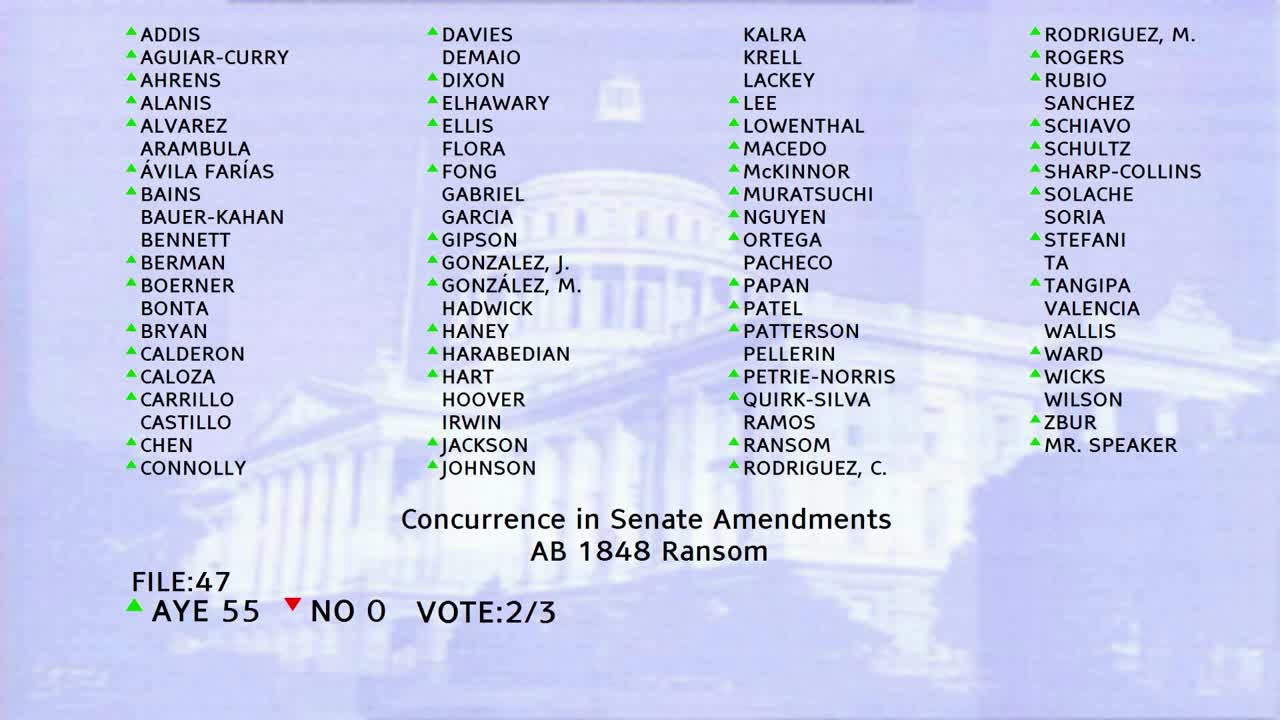
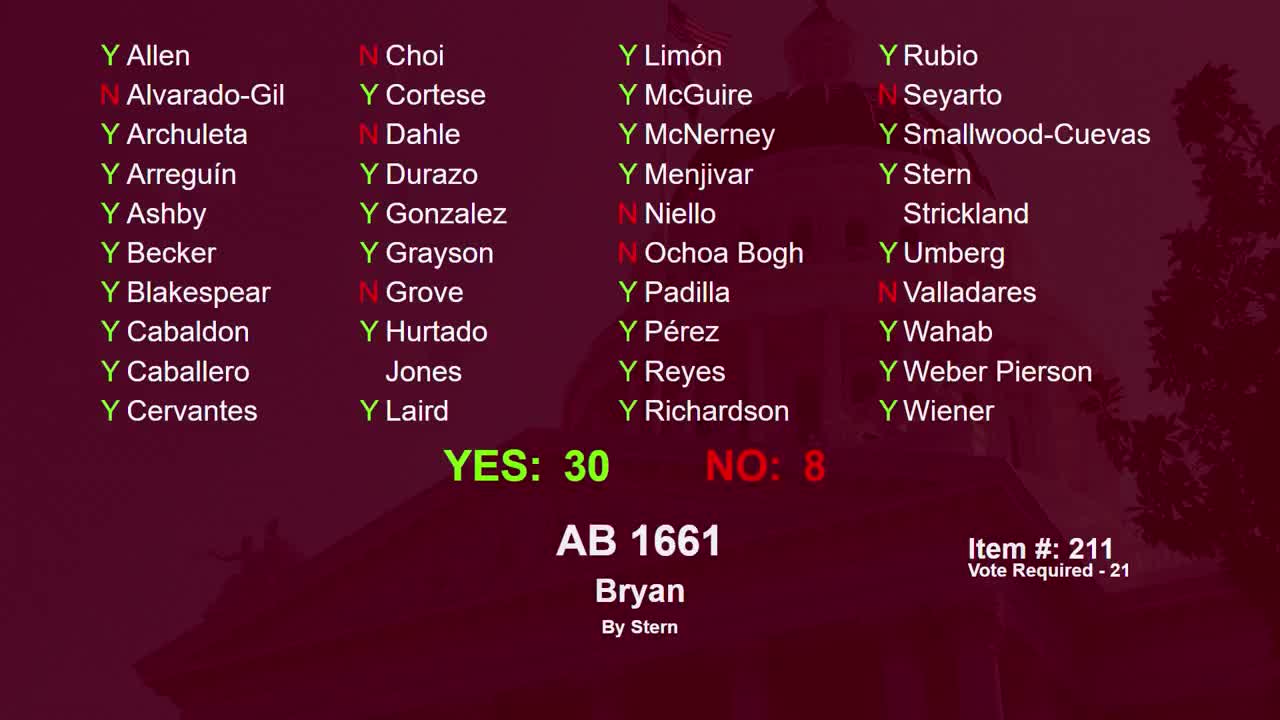

Bill Co-Author(s):