AB 2344: Animal abuse: forfeiture.
- Session Year: 2025-2026
- House: Assembly
- Latest Version Date: 2026-09-27
Current Status:
Passed
(2026-09-27: Chaptered by Secretary of State - Chapter 599, Statutes of 2026.)
Introduced
In Committee
Awaiting First Chamber Vote
Passed First Chamber
In Committee
Awaiting Second Chamber Vote
Passed Second Chamber
Enacted
Existing law authorizes a peace officer, humane society officer, or animal control officer to take possession of a stray or abandoned animal in specified circumstances, including when the animal is kept without proper care and attention, as specified. Existing law provides that if an animal is seized pursuant to those provisions or pursuant to a warrant, the owner is personally liable to the seizing agency for the cost of the seizure and care of the animal. Existing law deems the animal to then be abandoned by the owner under specified circumstances, including if the owner, within 14 days of notice of availability of the animal to be returned, fails to pay charges and take possession of the animal.
This bill would make those provisions apply to animals seized pursuant to any provision of California law.
Existing law prohibits various acts of abuse toward animals, including, among others, inflicting unnecessary cruelty or abusing an animal in any manner, including, but not limited to, maliciously and intentionally maiming, mutilating, torturing, or wounding an animal.This bill would, in a criminal case alleging a violation of specified animal abuse crimes, authorize specified entities to request that the prosecuting attorney file a petition requesting that, before final disposition, the court issue an order forfeiting the animal to the city, county, or seizing agency 30 days after a defendant fails to appear in court, as specified. The bill would additionally authorize those entities to request, and the court to issue, a forfeiture petition within 3 days after a defendant fails to appear in court a 2nd or subsequent time. The bill would additionally, if the defendant is granted diversion for those crimes, authorize the prosecution to request an order from the court that the defendant be prohibited from owning, possessing, caring for, or residing with animals of any kind throughout the period of diversion, as specified. By increasing duties on local prosecutors, this bill would impose a state-mandated local program.The California Constitution requires the state to reimburse local agencies and school districts for certain costs mandated by the state. Statutory provisions establish procedures for making that reimbursement.This bill would provide that, if the Commission on State Mandates determines that the bill contains costs mandated by the state, reimbursement for those costs shall be made pursuant to the statutory provisions noted above.Existing law prohibits various acts of abuse toward animals, including, among others, inflicting unnecessary cruelty or abusing an animal in any manner, including, but not limited to, maliciously and intentionally maiming, mutilating, torturing, or wounding an animal.
This bill would, in a criminal case alleging a violation of specified animal abuse crimes, authorize specified entities to request that the prosecuting attorney file a petition requesting that, before final disposition, the court issue an order forfeiting the animal to the city, county, or seizing agency 30 days after a defendant fails to appear in court, as specified. The bill would additionally authorize those entities to request, and the court to issue, a forfeiture petition within 3 days after a defendant fails to appear in court a 2nd or subsequent time. The bill would additionally, if the defendant is granted diversion for those crimes, authorize the prosecution to request an order from the court that the defendant be prohibited from owning, possessing, caring for, or residing with animals of any kind throughout the period of diversion, as specified. By increasing duties on local prosecutors, this bill would impose a state-mandated local program.
The California Constitution requires the state to reimburse local agencies and school districts for certain costs mandated by the state. Statutory provisions establish procedures for making that reimbursement.
This bill would provide that, if the Commission on State Mandates determines that the bill contains costs mandated by the state, reimbursement for those costs shall be made pursuant to the statutory provisions noted above.
Existing law prohibits various acts of abuse toward animals, including, among others, inflicting unnecessary cruelty or abusing an animal in any manner, including, but not limited to, maliciously and intentionally maiming, mutilating, torturing, or wounding an animal.
This bill would, in a criminal case alleging a violation of specified animal abuse crimes, authorize specified entities to request that the prosecuting attorney file a petition requesting that, before final disposition, the court issue an order forfeiting the animal to the city, county, or seizing agency 30 days after a defendant fails to appear in court, as specified. The bill would additionally, if the defendant is granted diversion for those crimes, authorize the prosecution to request an order from the court that the defendant be prohibited from owning, possessing, caring for, or residing with, with animals of any kind, kind throughout the period of diversion, as specified. By increasing duties on local prosecutors, this bill would impose a state-mandated local program.
The California Constitution requires the state to reimburse local agencies and school districts for certain costs mandated by the state. Statutory provisions establish procedures for making that reimbursement.
This bill would provide that, if the Commission on State Mandates determines that the bill contains costs mandated by the state, reimbursement for those costs shall be made pursuant to the statutory provisions noted above.
Existing law prohibits various acts of abuse toward animals, including, among others, inflicting unnecessary cruelty or abusing an animal in any manner, including, but not limited to, maliciously and intentionally maiming, mutilating, torturing, or wounding an animal.
This bill would, in a criminal case alleging a violation of specified animal abuse crimes, authorize specified entities to request that the prosecuting attorney file a petition requesting that, before final disposition, the court issue an order forfeiting the animal to the city, county, or seizing agency 30 days after a defendant fails to appear in court, as specified. The bill would additionally, if the defendant is granted diversion for those crimes, authorize the prosecution to request an order from the court that the defendant be prohibited from owning, possessing, caring for, or residing with, animals of any kind, as specified. By increasing duties on local prosecutors, this bill would impose a state-mandated local program.
The California Constitution requires the state to reimburse local agencies and school districts for certain costs mandated by the state. Statutory provisions establish procedures for making that reimbursement.
This bill would provide that, if the Commission on State Mandates determines that the bill contains costs mandated by the state, reimbursement for those costs shall be made pursuant to the statutory provisions noted above.
(1)Existing law requires persons convicted of arson and sex crimes to register with local law enforcement, as provided. The Department of Justice is required to make specified information about certain sex offenders available to the public via an internet website and to update that information on an ongoing basis.This bill would require any person over 18 years of age who is convicted of felony animal abuse, as defined, to register with the appropriate law enforcement agency, as provided, for a period of 10 years from the date of conviction. The bill would require that the registration consist of a signed written statement of specified information, including, but not limited to, legal name and aliases, date of birth, address or current location, name and address of employer, and the specific felony animal abuse conviction for which the person is required to register. The registration would also consist of a photograph of the person, a complete set of fingerprints, and a description of any tattoos, scars, or other distinguishing features on the persons body that would assist in identifying the person. The bill would require that, within 3 days after the registration, the registering law enforcement agency electronically forward the statement, fingerprints, and photograph of the registrant to the Department of Justice. By increasing duties on local law enforcement, this bill would impose a state-mandated local program.The bill would make any person required to register who violates any of those provisions guilty of a misdemeanor, and if the person willfully fails to register, they would be guilty of a misdemeanor punishable by not less than 90 days and not more than one year in a county jail. The bill would allow a person to be relieved of the duty to register only as specified.The bill, on or before January 1, 2028, would require the department to make available information concerning persons who are required to register as a result of felony animal abuse convictions to the public via an internet website, as specified. The department would be required to update the internet website on an ongoing basis. The name or address of the persons employer and the listed persons criminal history other than the specific crimes for which the person is required to register would be prohibited from being included on the internet website. The registration information that would be required to be published on the internet website would include, but not be limited to, their name and known aliases, a photograph, a physical description, including gender and race, date of birth, criminal history, the address at which the person resides or the county in which the person is registered as a transient, and any other information that the Department of Justice deems relevant. The bill would require that the department make a reasonable effort to provide notice to affected offenders that the department is required to make information about those people available to the public. A person would be removed from the internet website if they are relieved of the duty to register, as specified.The bill would also provide that any person who uses information disclosed pursuant to the internet website to commit a crime is punishable by a fine of not less than $10,000, nor more than $50,000. The bill would make it a misdemeanor for an offender who is required to register to enter the internet website, and would provide for civil liability for the misuse of the information from the internet website. Because this bill would create these and other new crimes as specified above, it would impose a state-mandated local program.This bill would require a person who has been convicted of a specified offense against an animal to, in addition to any other fine imposed, pay a penalty of $500 for a felony conviction. This bill would establish the Animal Protection Fund in the State Treasury and would require the moneys from the above fines be deposited into the fund, to be available, upon appropriation by the Legislature, for creating, administering, and updating the internet website as required by the bill, and to local governments for spay and neuter programs.(2)The California Constitution requires the state to reimburse local agencies and school districts for certain costs mandated by the state. Statutory provisions establish procedures for making that reimbursement.This bill would provide that with regard to certain mandates no reimbursement is required by this act for a specified reason.With regard to any other mandates, this bill would provide that, if the Commission on State Mandates determines that the bill contains costs so mandated by the state, reimbursement for those costs shall be made pursuant to the statutory provisions noted above.(1)Existing law requires persons convicted of arson and sex crimes to register with local law enforcement, as provided. The Department of Justice is required to make specified information about certain sex offenders available to the public via an internet website and to update that information on an ongoing basis.
This bill would require any person over 18 years of age who is convicted of felony animal abuse, as defined, to register with the appropriate law enforcement agency, as provided, for a period of 10 years from the date of conviction. The bill would require that the registration consist of a signed written statement of specified information, including, but not limited to, legal name and aliases, date of birth, address or current location, name and address of employer, and the specific felony animal abuse conviction for which the person is required to register. The registration would also consist of a photograph of the person, a complete set of fingerprints, and a description of any tattoos, scars, or other distinguishing features on the persons body that would assist in identifying the person. The bill would require that, within 3 days after the registration, the registering law enforcement agency electronically forward the statement, fingerprints, and photograph of the registrant to the Department of Justice. By increasing duties on local law enforcement, this bill would impose a state-mandated local program.
The bill would make any person required to register who violates any of those provisions guilty of a misdemeanor, and if the person willfully fails to register, they would be guilty of a misdemeanor punishable by not less than 90 days and not more than one year in a county jail. The bill would allow a person to be relieved of the duty to register only as specified.
The bill, on or before January 1, 2028, would require the department to make available information concerning persons who are required to register as a result of felony animal abuse convictions to the public via an internet website, as specified. The department would be required to update the internet website on an ongoing basis. The name or address of the persons employer and the listed persons criminal history other than the specific crimes for which the person is required to register would be prohibited from being included on the internet website. The registration information that would be required to be published on the internet website would include, but not be limited to, their name and known aliases, a photograph, a physical description, including gender and race, date of birth, criminal history, the address at which the person resides or the county in which the person is registered as a transient, and any other information that the Department of Justice deems relevant. The bill would require that the department make a reasonable effort to provide notice to affected offenders that the department is required to make information about those people available to the public. A person would be removed from the internet website if they are relieved of the duty to register, as specified.
The bill would also provide that any person who uses information disclosed pursuant to the internet website to commit a crime is punishable by a fine of not less than $10,000, nor more than $50,000. The bill would make it a misdemeanor for an offender who is required to register to enter the internet website, and would provide for civil liability for the misuse of the information from the internet website. Because this bill would create these and other new crimes as specified above, it would impose a state-mandated local program.
This bill would require a person who has been convicted of a specified offense against an animal to, in addition to any other fine imposed, pay a penalty of $500 for a felony conviction. This bill would establish the Animal Protection Fund in the State Treasury and would require the moneys from the above fines be deposited into the fund, to be available, upon appropriation by the Legislature, for creating, administering, and updating the internet website as required by the bill, and to local governments for spay and neuter programs.
(2)The California Constitution requires the state to reimburse local agencies and school districts for certain costs mandated by the state. Statutory provisions establish procedures for making that reimbursement.
This bill would provide that with regard to certain mandates no reimbursement is required by this act for a specified reason.
With regard to any other mandates, this bill would provide that, if the Commission on State Mandates determines that the bill contains costs so mandated by the state, reimbursement for those costs shall be made pursuant to the statutory provisions noted above.
Existing law establishes the Government Code and prescribes general provisions for purposes of its interpretation.This bill would make a nonsubstantive change to the provision naming the Government Code.Existing law establishes the Government Code and prescribes general provisions for purposes of its interpretation.
This bill would make a nonsubstantive change to the provision naming the Government Code.
(a)(1)Every owner, driver, or keeper of any animal who permits the animal to be in any building, enclosure, lane, street, square, or lot of any city, county, city and county, or judicial district without proper care and attention is guilty of a misdemeanor. Any peace officer, humane society officer, or animal control officer shall take possession of the stray or abandoned animal and shall provide care and treatment for the animal until the animal is deemed to be in suitable condition to be returned to the owner. When the officer has reasonable grounds to believe that very prompt action is required to protect the health or safety of the animal or the health or safety of others, the officer shall immediately seize the animal and comply with subdivision (f). In all other cases, the officer shall comply with the provisions of subdivision (g). The full cost of caring for and treating any animal properly seized under this subdivision or pursuant to a search warrant shall constitute a lien on the animal and the animal shall not be returned to its owner until the charges are paid, if the seizure is upheld pursuant to this section.
(2)Notwithstanding any other law, if an animal control officer or humane officer, when necessary to protect the health and safety of a wild, stray, or abandoned animal or the health and safety of others, seeks to administer a tranquilizer that contains a controlled substance, as defined in Division 10 (commencing with Section 11000) of the Health and Safety Code, to gain control of that animal, the officer may possess and administer that tranquilizer with direct or indirect supervision as determined by a licensed veterinarian, provided that the officer has met each of the following requirements:
(A)Has received training in the administration of tranquilizers from a licensed veterinarian. The training shall be approved by the California Veterinary Medical Board.
(B)Has successfully completed the firearms component of a course relating to the exercise of police powers, as set forth in Section 832.
(C)Is authorized by the officers agency or organization to possess and administer the tranquilizer in accordance with a policy established by the agency or organization and approved by the veterinarian who obtained the controlled substance.
(D)Has successfully completed the euthanasia training set forth in Section 2039 of Title 16 of the California Code of Regulations.
(E)Has completed a state and federal fingerprinting background check and does not have any drug- or alcohol-related convictions.
(b)Every sick, disabled, infirm, or crippled animal, except a dog or cat, that is abandoned in any city, county, city and county, or judicial district may be humanely euthanized by the officer if, after a reasonable search, no owner of the animal can be found. It shall be the duty of all peace officers, humane society officers, and animal control officers to cause the animal to be humanely euthanized or rehabilitated and placed in a suitable home on information that the animal is stray or abandoned. The officer may likewise take charge of any animal, including a dog or cat, that by reason of lameness, sickness, feebleness, or neglect, is unfit for the labor it is performing, or that in any other manner is being cruelly treated, and provide care and treatment for the animal until it is deemed to be in a suitable condition to be returned to the owner. When the officer has reasonable grounds to believe that very prompt action is required to protect the health or safety of an animal or the health or safety of others, the officer shall immediately seize the animal and comply with subdivision (f). In all other cases, the officer shall comply with subdivision (g). The full cost of caring for and treating any animal properly seized under this subdivision or pursuant to a search warrant shall constitute a lien on the animal and the animal shall not be returned to its owner until the charges are paid.
(c)(1)Any peace officer, humane society officer, or animal control officer shall convey all injured cats and dogs found without their owners in a public place directly to a veterinarian known by the officer to be a veterinarian who ordinarily treats dogs and cats for a determination of whether the animal shall be immediately and humanely euthanized or shall be hospitalized under proper care and given emergency treatment.
(2)If the owner does not redeem the animal within the locally prescribed waiting period, the veterinarian may personally perform euthanasia on the animal. If the animal is treated and recovers from its injuries, the veterinarian may keep the animal for purposes of adoption, provided the responsible animal control agency has first been contacted and has refused to take possession of the animal.
(3)Whenever any animal is transferred to a veterinarian in a clinic, such as an emergency clinic that is not in continuous operation, the veterinarian may, in turn, transfer the animal to an appropriate facility.
(4)If the veterinarian determines that the animal shall be hospitalized under proper care and given emergency treatment, the costs of any services that are provided pending the owners inquiry to the responsible agency, department, or society shall be paid from the dog license fees, fines, and fees for impounding dogs in the city, county, or city and county in which the animal was licensed or, if the animal is unlicensed, shall be paid by the jurisdiction in which the animal was found, subject to the provision that this cost be repaid by the animals owner. The full cost of caring for and treating any animal seized under this subdivision shall constitute a lien on the animal and the animal shall not be returned to the owner until the charges are paid. No veterinarian shall be criminally or civilly liable for any decision that the veterinarian makes or for services that the veterinarian provides pursuant to this subdivision.
(d)An animal control agency that takes possession of an animal pursuant to subdivision (c) shall keep records of the whereabouts of the animal from the time of possession to the end of the animals impoundment, and those records shall be available for inspection by the public upon request for three years after the date the animals impoundment ended.
(e)Notwithstanding any other provision of this section, any peace officer, humane society officer, or any animal control officer may, with the approval of the officers immediate superior, humanely euthanize any stray or abandoned animal in the field in any case where the animal is too severely injured to move or where a veterinarian is not available and it would be more humane to euthanize the animal.
(f)Whenever an officer authorized under this section seizes or impounds an animal based on a reasonable belief that prompt action is required to protect the health or safety of the animal or the health or safety of others, the officer shall, before the commencement of any criminal proceedings authorized by this section, provide the owner or keeper of the animal, if known or ascertainable after reasonable investigation, with the opportunity for a postseizure hearing to determine the validity of the seizure or impoundment, or both.
(1)The agency shall cause a notice to be affixed to a conspicuous place where the animal was situated or personally deliver a notice of the seizure or impoundment, or both, to the owner or keeper within 48 hours, excluding weekends and holidays. The notice shall include all of the following:
(A)The name, business address, and telephone number of the officer providing the notice.
(B)A description of the animal seized, including any identification upon the animal.
(C)The authority and purpose for the seizure or impoundment, including the time, place, and circumstances under which the animal was seized.
(D)A statement that, in order to receive a postseizure hearing, the owner or person authorized to keep the animal, or their agent, shall request the hearing by signing and returning an enclosed declaration of ownership or right to keep the animal to the agency providing the notice within 10 days, including weekends and holidays, of the date of the notice. The declaration may be returned by personal delivery or mail.
(E)A statement that the full cost of caring for and treating any animal properly seized under this section is a lien on the animal and that the animal shall not be returned to the owner until the charges are paid, and that failure to request or to attend a scheduled hearing shall result in liability for this cost.
(2)The postseizure hearing shall be conducted within 48 hours of the request, excluding weekends and holidays. The seizing agency may authorize its own officer or employee to conduct the hearing if the hearing officer is not the same person who directed the seizure or impoundment of the animal and is not junior in rank to that person. The agency may use the services of a hearing officer from outside the agency for the purposes of complying with this section.
(3)Failure of the owner or keeper, or of their agent, to request or to attend a scheduled hearing shall result in a forfeiture of any right to a postseizure hearing or right to challenge their liability for costs incurred.
(4)The agency, department, or society employing the person who directed the seizure shall be responsible for the costs incurred for caring and treating the animal, if it is determined in the postseizure hearing that the seizing officer did not have reasonable grounds to believe very prompt action, including seizure of the animal, was required to protect the health or safety of the animal or the health or safety of others. If it is determined the seizure was justified, the owner or keeper shall be personally liable to the seizing agency for the full cost of the seizure and care of the animal. The charges for the seizure and care of the animal shall be a lien on the animal. The animal shall not be returned to its owner until the charges are paid and the owner demonstrates to the satisfaction of the seizing agency or the hearing officer that the owner can and will provide the necessary care for the animal.
(g)Where the need for immediate seizure is not present and before the commencement of any criminal proceedings authorized by this section, the agency shall provide the owner or keeper of the animal, if known or ascertainable after reasonable investigation, with the opportunity for a hearing before any seizure or impoundment of the animal. The owner shall produce the animal at the time of the hearing unless, before the hearing, the owner has made arrangements with the agency to view the animal upon request of the agency, or unless the owner can provide verification that the animal was humanely euthanized. Any person who willfully fails to produce the animal or provide the verification is guilty of an infraction, punishable by a fine of not less than two hundred fifty dollars ($250) nor more than one thousand dollars ($1,000).
(1)The agency shall cause a notice to be affixed to a conspicuous place where the animal was situated or personally deliver a notice stating the grounds for believing the animal should be seized under subdivision (a) or (b). The notice shall include all of the following:
(A)The name, business address, and telephone number of the officer providing the notice.
(B)A description of the animal to be seized, including any identification upon the animal.
(C)The authority and purpose for the possible seizure or impoundment.
(D)A statement that, in order to receive a hearing before any seizure, the owner or person authorized to keep the animal, or their agent, shall request the hearing by signing and returning the enclosed declaration of ownership or right to keep the animal to the officer providing the notice within two days, excluding weekends and holidays, of the date of the notice.
(E)A statement that the cost of caring for and treating any animal properly seized under this section is a lien on the animal, that any animal seized shall not be returned to the owner until the charges are paid, and that failure to request or to attend a scheduled hearing shall result in a conclusive determination that the animal may properly be seized and that the owner shall be liable for the charges.
(2)The preseizure hearing shall be conducted within 48 hours, excluding weekends and holidays, after receipt of the request. The seizing agency may authorize its own officer or employee to conduct the hearing if the hearing officer is not the same person who requests the seizure or impoundment of the animal and is not junior in rank to that person. The agency may use the services of a hearing officer from outside the agency for the purposes of complying with this section.
(3)Failure of the owner or keeper, or their agent, to request or to attend a scheduled hearing shall result in a forfeiture of any right to a preseizure hearing or right to challenge their liability for costs incurred pursuant to this section.
(4)The hearing officer, after the hearing, may affirm or deny the owners or keepers right to custody of the animal and, if reasonable grounds are established, may order the seizure or impoundment of the animal for care and treatment.
(h)If any animal is properly seized under this section, pursuant to any other provision of California law, or pursuant to a search warrant, the owner or keeper shall be personally liable to the seizing agency for the cost of the seizure and care of the animal. Further, if the charges for the seizure or impoundment and any other charges permitted under this section are not paid within 14 days of the seizure, or if the owner, within 14 days of notice of availability of the animal to be returned, fails to pay charges permitted under this section and take possession of the animal, the animal shall be deemed to have been abandoned and may be humanely euthanized or otherwise properly disposed of by the seizing agency.
(i)If the animal requires veterinary care and the humane society or public agency is not assured, within 14 days of the seizure of the animal, that the owner will provide the necessary care, the animal shall not be returned to its owner and shall be deemed to have been abandoned and may be humanely euthanized or otherwise properly disposed of by the seizing agency. A veterinarian may humanely euthanize an impounded animal without regard to the prescribed holding period when it has been determined that the animal has incurred severe injuries or is incurably crippled. A veterinarian also may immediately humanely euthanize an impounded animal afflicted with a serious contagious disease unless the owner or the owners agent immediately authorizes treatment of the animal by a veterinarian at the expense of the owner or agent.
(j)No animal properly seized under this section or pursuant to a search warrant shall be returned to its owner until the owner can demonstrate to the satisfaction of the seizing agency or hearing officer that the owner can and will provide the necessary care for the animal.
(k)(1)In the case of cats and dogs, before the final disposition of any criminal charges, the seizing agency or prosecuting attorney may file a petition in a criminal action requesting that, before that final disposition, the court issue an order forfeiting the animal to the city, county, or seizing agency. The petitioner shall serve a true copy of the petition upon the defendant and the prosecuting attorney.
(2)Upon receipt of the petition, the court shall set a hearing on the petition. The hearing shall be conducted within 14 days after the filing of the petition, or as soon as practicable.
(3)The petitioner shall have the burden of establishing beyond a reasonable doubt that, even in the event of an acquittal of the criminal charges, the owner will not legally be permitted to retain the animal in question. If the court finds that the petitioner has met its burden, the court shall order the immediate forfeiture of the animal as sought by the petition.
(4)Nothing in this subdivision is intended to authorize a seizing agency or prosecuting attorney to file a petition to determine an owners ability to legally retain an animal pursuant to paragraph (3) of subdivision (l) if a petition has previously been filed pursuant to this subdivision.
(l)(1)Upon the conviction of a person charged with a violation of this section, or Section 597 or 597a, all animals lawfully seized and impounded with respect to the violation shall be adjudged by the court to be forfeited and shall thereupon be transferred to the impounding officer or appropriate public entity for proper adoption or other disposition. A person convicted of a violation of this section shall be personally liable to the seizing agency for all costs of impoundment from the time of seizure to the time of proper disposition. Upon conviction, the court shall order the convicted person to make payment to the appropriate public entity for the costs incurred in the housing, care, feeding, and treatment of the seized or impounded animals. Each person convicted in connection with a particular animal may be held jointly and severally liable for restitution for that particular animal. The payment shall be in addition to any other fine or sentence ordered by the court.
(2)The court may also order, as a condition of probation, that the convicted person be prohibited from owning, possessing, caring for, or residing with, animals of any kind, and require the convicted person to immediately deliver all animals in the convicted persons possession to a designated public entity for adoption or other lawful disposition or provide proof to the court that the person no longer has possession, care, or control of any animals. In the event of the acquittal or final discharge without conviction of the person charged, if the animal is still impounded, the animal has not been previously deemed abandoned pursuant to subdivision (h), the court has not ordered that the animal be forfeited pursuant to subdivision (k), the court shall, on demand, direct the release of seized or impounded animals to the defendant upon a showing of proof of ownership.
(3)Any questions regarding ownership shall be determined in a separate hearing by the court where the criminal case was finally adjudicated and the court shall hear testimony from any persons who may assist the court in determining ownership of the animal. If the owner is determined to be unknown or the owner is prohibited or unable to retain possession of the animals for any reason, the court shall order the animals to be released to the appropriate public entity for adoption or other lawful disposition. This section is not intended to cause the release of any animal, bird, reptile, amphibian, or fish seized or impounded pursuant to any other statute, ordinance, or municipal regulation. This section shall not prohibit the seizure or impoundment of animals as evidence as provided for under any other provision of law.
(m)It shall be the duty of all peace officers, humane society officers, and animal control officers to use all currently acceptable methods of identification, both electronic and otherwise, to determine the lawful owner or caretaker of any seized or impounded animal. It shall also be their duty to make reasonable efforts to notify the owner or caretaker of the whereabouts of the animal and any procedures available for the lawful recovery of the animal and, upon the owners and caretakers initiation of recovery procedures, retain custody of the animal for a reasonable period of time to allow for completion of the recovery process. Efforts to locate or contact the owner or caretaker and communications with persons claiming to be the owner or caretaker shall be recorded and maintained and be made available for public inspection.
(a)(1)Every owner, driver, or keeper of any animal who permits the animal to be in any building, enclosure, lane, street, square, or lot of any city, county, city and county, or judicial district without proper care and attention is guilty of a misdemeanor. Any peace officer, humane society officer, or animal control officer shall take possession of the stray or abandoned animal and shall provide care and treatment for the animal until the animal is deemed to be in suitable condition to be returned to the owner. When the officer has reasonable grounds to believe that very prompt action is required to protect the health or safety of the animal or the health or safety of others, the officer shall immediately seize the animal and comply with subdivision (f). In all other cases, the officer shall comply with the provisions of subdivision (g). The full cost of caring for and treating any animal properly seized under this subdivision or pursuant to a search warrant shall constitute a lien on the animal and the animal shall not be returned to its owner until the charges are paid, if the seizure is upheld pursuant to this section.
(2)Notwithstanding any other law, if an animal control officer or humane officer, when necessary to protect the health and safety of a wild, stray, or abandoned animal or the health and safety of others, seeks to administer a tranquilizer that contains a controlled substance, as defined in Division 10 (commencing with Section 11000) of the Health and Safety Code, to gain control of that animal, the officer may possess and administer that tranquilizer with direct or indirect supervision as determined by a licensed veterinarian, provided that the officer has met each of the following requirements:
(A)Has received training in the administration of tranquilizers from a licensed veterinarian. The training shall be approved by the California Veterinary Medical Board.
(B)Has successfully completed the firearms component of a course relating to the exercise of police powers, as set forth in Section 832.
(C)Is authorized by the officers agency or organization to possess and administer the tranquilizer in accordance with a policy established by the agency or organization and approved by the veterinarian who obtained the controlled substance.
(D)Has successfully completed the euthanasia training set forth in Section 2039 of Title 16 of the California Code of Regulations.
(E)Has completed a state and federal fingerprinting background check and does not have any drug- or alcohol-related convictions.
(b)Every sick, disabled, infirm, or crippled animal, except a dog or cat, that is abandoned in any city, county, city and county, or judicial district may be humanely euthanized by the officer if, after a reasonable search, no owner of the animal can be found. It shall be the duty of all peace officers, humane society officers, and animal control officers to cause the animal to be humanely euthanized or rehabilitated and placed in a suitable home on information that the animal is stray or abandoned. The officer may likewise take charge of any animal, including a dog or cat, that by reason of lameness, sickness, feebleness, or neglect, is unfit for the labor it is performing, or that in any other manner is being cruelly treated, and provide care and treatment for the animal until it is deemed to be in a suitable condition to be returned to the owner. When the officer has reasonable grounds to believe that very prompt action is required to protect the health or safety of an animal or the health or safety of others, the officer shall immediately seize the animal and comply with subdivision (f). In all other cases, the officer shall comply with subdivision (g). The full cost of caring for and treating any animal properly seized under this subdivision or pursuant to a search warrant shall constitute a lien on the animal and the animal shall not be returned to its owner until the charges are paid.
(c)(1)Any peace officer, humane society officer, or animal control officer shall convey all injured cats and dogs found without their owners in a public place directly to a veterinarian known by the officer to be a veterinarian who ordinarily treats dogs and cats for a determination of whether the animal shall be immediately and humanely euthanized or shall be hospitalized under proper care and given emergency treatment.
(2)If the owner does not redeem the animal within the locally prescribed waiting period, the veterinarian may personally perform euthanasia on the animal. If the animal is treated and recovers from its injuries, the veterinarian may keep the animal for purposes of adoption, provided the responsible animal control agency has first been contacted and has refused to take possession of the animal.
(3)Whenever any animal is transferred to a veterinarian in a clinic, such as an emergency clinic that is not in continuous operation, the veterinarian may, in turn, transfer the animal to an appropriate facility.
(4)If the veterinarian determines that the animal shall be hospitalized under proper care and given emergency treatment, the costs of any services that are provided pending the owners inquiry to the responsible agency, department, or society shall be paid from the dog license fees, fines, and fees for impounding dogs in the city, county, or city and county in which the animal was licensed or, if the animal is unlicensed, shall be paid by the jurisdiction in which the animal was found, subject to the provision that this cost be repaid by the animals owner. The full cost of caring for and treating any animal seized under this subdivision shall constitute a lien on the animal and the animal shall not be returned to the owner until the charges are paid. No veterinarian shall be criminally or civilly liable for any decision that the veterinarian makes or for services that the veterinarian provides pursuant to this subdivision.
(d)An animal control agency that takes possession of an animal pursuant to subdivision (c) shall keep records of the whereabouts of the animal from the time of possession to the end of the animals impoundment, and those records shall be available for inspection by the public upon request for three years after the date the animals impoundment ended.
(e)Notwithstanding any other provision of this section, any peace officer, humane society officer, or any animal control officer may, with the approval of the officers immediate superior, humanely euthanize any stray or abandoned animal in the field in any case where the animal is too severely injured to move or where a veterinarian is not available and it would be more humane to euthanize the animal.
(f)Whenever an officer authorized under this section seizes or impounds an animal based on a reasonable belief that prompt action is required to protect the health or safety of the animal or the health or safety of others, the officer shall, before the commencement of any criminal proceedings authorized by this section, provide the owner or keeper of the animal, if known or ascertainable after reasonable investigation, with the opportunity for a postseizure hearing to determine the validity of the seizure or impoundment, or both.
(1)The agency shall cause a notice to be affixed to a conspicuous place where the animal was situated or personally deliver a notice of the seizure or impoundment, or both, to the owner or keeper within 48 hours, excluding weekends and holidays. The notice shall include all of the following:
(A)The name, business address, and telephone number of the officer providing the notice.
(B)A description of the animal seized, including any identification upon the animal.
(C)The authority and purpose for the seizure or impoundment, including the time, place, and circumstances under which the animal was seized.
(D)A statement that, in order to receive a postseizure hearing, the owner or person authorized to keep the animal, or their agent, shall request the hearing by signing and returning an enclosed declaration of ownership or right to keep the animal to the agency providing the notice within 10 days, including weekends and holidays, of the date of the notice. The declaration may be returned by personal delivery or mail.
(E)A statement that the full cost of caring for and treating any animal properly seized under this section is a lien on the animal and that the animal shall not be returned to the owner until the charges are paid, and that failure to request or to attend a scheduled hearing shall result in liability for this cost.
(2)The postseizure hearing shall be conducted within 48 hours of the request, excluding weekends and holidays. The seizing agency may authorize its own officer or employee to conduct the hearing if the hearing officer is not the same person who directed the seizure or impoundment of the animal and is not junior in rank to that person. The agency may use the services of a hearing officer from outside the agency for the purposes of complying with this section.
(3)Failure of the owner or keeper, or of their agent, to request or to attend a scheduled hearing shall result in a forfeiture of any right to a postseizure hearing or right to challenge their liability for costs incurred.
(4)The agency, department, or society employing the person who directed the seizure shall be responsible for the costs incurred for caring and treating the animal, if it is determined in the postseizure hearing that the seizing officer did not have reasonable grounds to believe very prompt action, including seizure of the animal, was required to protect the health or safety of the animal or the health or safety of others. If it is determined the seizure was justified, the owner or keeper shall be personally liable to the seizing agency for the full cost of the seizure and care of the animal. The charges for the seizure and care of the animal shall be a lien on the animal. The animal shall not be returned to its owner until the charges are paid and the owner demonstrates to the satisfaction of the seizing agency or the hearing officer that the owner can and will provide the necessary care for the animal.
(g)Where the need for immediate seizure is not present and before the commencement of any criminal proceedings authorized by this section, the agency shall provide the owner or keeper of the animal, if known or ascertainable after reasonable investigation, with the opportunity for a hearing before any seizure or impoundment of the animal. The owner shall produce the animal at the time of the hearing unless, before the hearing, the owner has made arrangements with the agency to view the animal upon request of the agency, or unless the owner can provide verification that the animal was humanely euthanized. Any person who willfully fails to produce the animal or provide the verification is guilty of an infraction, punishable by a fine of not less than two hundred fifty dollars ($250) nor more than one thousand dollars ($1,000).
(1)The agency shall cause a notice to be affixed to a conspicuous place where the animal was situated or personally deliver a notice stating the grounds for believing the animal should be seized under subdivision (a) or (b). The notice shall include all of the following:
(A)The name, business address, and telephone number of the officer providing the notice.
(B)A description of the animal to be seized, including any identification upon the animal.
(C)The authority and purpose for the possible seizure or impoundment.
(D)A statement that, in order to receive a hearing before any seizure, the owner or person authorized to keep the animal, or their agent, shall request the hearing by signing and returning the enclosed declaration of ownership or right to keep the animal to the officer providing the notice within two days, excluding weekends and holidays, of the date of the notice.
(E)A statement that the cost of caring for and treating any animal properly seized under this section is a lien on the animal, that any animal seized shall not be returned to the owner until the charges are paid, and that failure to request or to attend a scheduled hearing shall result in a conclusive determination that the animal may properly be seized and that the owner shall be liable for the charges.
(2)The preseizure hearing shall be conducted within 48 hours, excluding weekends and holidays, after receipt of the request. The seizing agency may authorize its own officer or employee to conduct the hearing if the hearing officer is not the same person who requests the seizure or impoundment of the animal and is not junior in rank to that person. The agency may use the services of a hearing officer from outside the agency for the purposes of complying with this section.
(3)Failure of the owner or keeper, or their agent, to request or to attend a scheduled hearing shall result in a forfeiture of any right to a preseizure hearing or right to challenge their liability for costs incurred pursuant to this section.
(4)The hearing officer, after the hearing, may affirm or deny the owners or keepers right to custody of the animal and, if reasonable grounds are established, may order the seizure or impoundment of the animal for care and treatment.
(h)If any animal is properly seized under this section section, pursuant to any other provision of California law, or pursuant to a search warrant, the owner or keeper shall be personally liable to the seizing agency for the cost of the seizure and care of the animal. Further, if the charges for the seizure or impoundment and any other charges permitted under this section are not paid within 14 days of the seizure, or if the owner, within 14 days of notice of availability of the animal to be returned, fails to pay charges permitted under this section and take possession of the animal, the animal shall be deemed to have been abandoned and may be humanely euthanized or otherwise properly disposed of by the seizing agency.
(i)If the animal requires veterinary care and the humane society or public agency is not assured, within 14 days of the seizure of the animal, that the owner will provide the necessary care, the animal shall not be returned to its owner and shall be deemed to have been abandoned and may be humanely euthanized or otherwise properly disposed of by the seizing agency. A veterinarian may humanely euthanize an impounded animal without regard to the prescribed holding period when it has been determined that the animal has incurred severe injuries or is incurably crippled. A veterinarian also may immediately humanely euthanize an impounded animal afflicted with a serious contagious disease unless the owner or the owners agent immediately authorizes treatment of the animal by a veterinarian at the expense of the owner or agent.
(j)No animal properly seized under this section or pursuant to a search warrant shall be returned to its owner until the owner can demonstrate to the satisfaction of the seizing agency or hearing officer that the owner can and will provide the necessary care for the animal.
(k)(1)In the case of cats and dogs, before the final disposition of any criminal charges, the seizing agency or prosecuting attorney may file a petition in a criminal action requesting that, before that final disposition, the court issue an order forfeiting the animal to the city, county, or seizing agency. The petitioner shall serve a true copy of the petition upon the defendant and the prosecuting attorney.
(2)Upon receipt of the petition, the court shall set a hearing on the petition. The hearing shall be conducted within 14 days after the filing of the petition, or as soon as practicable.
(3)The petitioner shall have the burden of establishing beyond a reasonable doubt that, even in the event of an acquittal of the criminal charges, the owner will not legally be permitted to retain the animal in question. If the court finds that the petitioner has met its burden, the court shall order the immediate forfeiture of the animal as sought by the petition.
(4)Nothing in this subdivision is intended to authorize a seizing agency or prosecuting attorney to file a petition to determine an owners ability to legally retain an animal pursuant to paragraph (3) of subdivision (l) if a petition has previously been filed pursuant to this subdivision.
(l)(1)Upon the conviction of a person charged with a violation of this section, or Section 597 or 597a, all animals lawfully seized and impounded with respect to the violation shall be adjudged by the court to be forfeited and shall thereupon be transferred to the impounding officer or appropriate public entity for proper adoption or other disposition. A person convicted of a violation of this section shall be personally liable to the seizing agency for all costs of impoundment from the time of seizure to the time of proper disposition. Upon conviction, the court shall order the convicted person to make payment to the appropriate public entity for the costs incurred in the housing, care, feeding, and treatment of the seized or impounded animals. Each person convicted in connection with a particular animal may be held jointly and severally liable for restitution for that particular animal. The payment shall be in addition to any other fine or sentence ordered by the court.
(2)The court may also order, as a condition of probation, that the convicted person be prohibited from owning, possessing, caring for, or residing with, animals of any kind, and require the convicted person to immediately deliver all animals in the convicted persons possession to a designated public entity for adoption or other lawful disposition or provide proof to the court that the person no longer has possession, care, or control of any animals. In the event of the acquittal or final discharge without conviction of the person charged, if the animal is still impounded, the animal has not been previously deemed abandoned pursuant to subdivision (h), the court has not ordered that the animal be forfeited pursuant to subdivision (k), the court shall, on demand, direct the release of seized or impounded animals to the defendant upon a showing of proof of ownership.
(3)Any questions regarding ownership shall be determined in a separate hearing by the court where the criminal case was finally adjudicated and the court shall hear testimony from any persons who may assist the court in determining ownership of the animal. If the owner is determined to be unknown or the owner is prohibited or unable to retain possession of the animals for any reason, the court shall order the animals to be released to the appropriate public entity for adoption or other lawful disposition. This section is not intended to cause the release of any animal, bird, reptile, amphibian, or fish seized or impounded pursuant to any other statute, ordinance, or municipal regulation. This section shall not prohibit the seizure or impoundment of animals as evidence as provided for under any other provision of law.
(m)It shall be the duty of all peace officers, humane society officers, and animal control officers to use all currently acceptable methods of identification, both electronic and otherwise, to determine the lawful owner or caretaker of any seized or impounded animal. It shall also be their duty to make reasonable efforts to notify the owner or caretaker of the whereabouts of the animal and any procedures available for the lawful recovery of the animal and, upon the owners and caretakers initiation of recovery procedures, retain custody of the animal for a reasonable period of time to allow for completion of the recovery process. Efforts to locate or contact the owner or caretaker and communications with persons claiming to be the owner or caretaker shall be recorded and maintained and be made available for public inspection.
SECTION 1.Section 600.9 is added to the Penal Code, to read:600.9.(a)(1)In a criminal case alleging a violation of Section 286.5, 596, 597, 597a, 597b, 597h, 597j, 597s, 597.1, or 597.5, the animal control agency in possession of an animal seized or impounded by a peace officer, officer of a humane society, or officer of an animal shelter or animal regulation department of a public agency may request that the prosecuting attorney file a petition requesting that, before final disposition, the court issue an order forfeiting the animal to the city, county, or seizing agency 30 days after a defendant fails to appear in court in violation of Section 853.7, 1320, or 1320.5.(2)If a defendant fails to appear in court two or more times in a criminal case alleging a violation of Section 286.5, 596, 597, 597a, 597b, 597h, 597j, 597s, 597.1, or 597.5, in violation of Section 853.7, 1320, or 1320.5, the animal control agency in possession of an animal seized or impounded by a peace officer, officer of a humane society, or officer of an animal shelter or animal regulation department of a public agency may request that the prosecuting attorney file a petition requesting that, before final disposition of the underlying case, the court issue an order forfeiting the animal to the city, county, or seizing agency three days after a defendant fails to appear in court.(b)(1)The prosecuting attorney shall file the petition for forfeiture with the superior court of the county in which the defendant has been charged with the commission of any of the crimes listed in subdivision (a).(2)The prosecuting attorney shall make service of process on the defendant. If the notice cannot be served by registered mail or personal delivery, a notice described in paragraph (3) shall be published for at least three consecutive weeks on the internet website of the animal shelter in possession of the animal.(3)A notice, as required by paragraph (2), published on the internet website of the animal shelter in possession of the animal shall include, but not be limited to, the date the animal was seized or impounded, the location of the seizure or impoundment, and a brief description of the animal, and may include any activity log number or case number and a photograph of the animal. The notice shall not include the defendants name or identifying details. The seizing agency or prosecution shall provide the animal shelter in possession of the animal with any information necessary to comply with this section.(c)(1)The forfeiture proceeding shall be set for hearing in the superior court in which the underlying criminal offense will be tried.(2)The hearing shall be conducted within 14 days after the filing of the petition, or as soon as practicable.(3)If the defendant fails to file a claim of interest in the animal or to appear at the hearing, the court shall enter a response of denial on behalf of the defendant.(4)At the forfeiture hearing, the prosecuting attorney or seizing agency shall have the burden of establishing by a preponderance of the evidence that the defendant is not able to properly care for the animal. The court may take judicial notice of any prior testimony that occurred in a prior proceeding.(5)If the court finds that the petitioner has met its burden, the court shall order the immediate forfeiture of the animal as sought by the petition. If the court grants the petition, the animal shall be adjudged by the court to be forfeited and thereafter shall be transferred to the animal control agency or appropriate entity for proper adoption or other disposition.(6)No hearing shall be conducted pursuant to this section if, after notice of the hearing, the defendant appears in court for the underlying criminal case or is otherwise returned to custody.(d)The remedies provided in this section do not preclude the application of any other remedies, civil or criminal, including, but not limited to, those remedies provided in Section 597.1.(e)Nothing in this section is intended to preclude an animal control agency, with the consent of the prosecuting attorney, from transferring an animal that has been seized or impounded to an animal foster.SEC. 2.Section 600.10 is added to the Penal Code, to read:600.10.If a defendant charged with a violation of Section 286.5, 596, 597, 597a, 597b, 597h, 597j, 597s, 597.1, or 597.5 is granted diversion, the prosecution may request an order from the court that the defendant be prohibited from owning, possessing, caring for, or residing with animals of any kind throughout the period of diversion, and require the defendant to immediately deliver all animals in their possession to a designated public entity for adoption or other lawful disposition or provide proof to the court that the person no longer has possession, care, or control of any animals.SEC. 3.If the Commission on State Mandates determines that this act contains costs mandated by the state, reimbursement to local agencies and school districts for those costs shall be made pursuant to Part 7 (commencing with Section 17500) of Division 4 of Title 2 of the Government Code.(a)(1)In a criminal case alleging a violation of Section 286.5, 596, 597, 597a, 597b, 597h, 597j, 597s, 597.1, or 597.5, the animal control agency in possession of an animal seized or impounded by a peace officer, officer of a humane society, or officer of an animal shelter or animal regulation department of a public agency may request that the prosecuting attorney file a petition requesting that, before final disposition, the court issue an order forfeiting the animal to the city, county, or seizing agency 30 days after a defendant fails to appear in court in violation of Section 853.7, 1320, or 1320.5.
(2)If a defendant fails to appear in court two or more times in a criminal case alleging a violation of Section 286.5, 596, 597, 597a, 597b, 597h, 597j, 597s, 597.1, or 597.5, in violation of Section 853.7, 1320, or 1320.5, the animal control agency in possession of an animal seized or impounded by a peace officer, officer of a humane society, or officer of an animal shelter or animal regulation department of a public agency may request that the prosecuting attorney file a petition requesting that, before final disposition of the underlying case, the court issue an order forfeiting the animal to the city, county, or seizing agency three days after a defendant fails to appear in court.
(b)(1)The prosecuting attorney shall file the petition for forfeiture with the superior court of the county in which the defendant has been charged with the commission of any of the crimes listed in subdivision (a).
(2)The prosecuting attorney shall make service of process on the defendant. If the notice cannot be served by registered mail or personal delivery, a notice described in paragraph (3) shall be published for at least three consecutive weeks on the internet website of the animal shelter in possession of the animal.
(3)A notice, as required by paragraph (2), published on the internet website of the animal shelter in possession of the animal shall include, but not be limited to, the date the animal was seized or impounded, the location of the seizure or impoundment, and a brief description of the animal, and may include any activity log number or case number and a photograph of the animal. The notice shall not include the defendants name or identifying details. The seizing agency or prosecution shall provide the animal shelter in possession of the animal with any information necessary to comply with this section.
(c)(1)The forfeiture proceeding shall be set for hearing in the superior court in which the underlying criminal offense will be tried.
(2)The hearing shall be conducted within 14 days after the filing of the petition, or as soon as practicable.
(3)If the defendant fails to file a claim of interest in the animal or to appear at the hearing, the court shall enter a response of denial on behalf of the defendant.
(4)At the forfeiture hearing, the prosecuting attorney or seizing agency shall have the burden of establishing by a preponderance of the evidence that the defendant is not able to properly care for the animal. The court may take judicial notice of any prior testimony that occurred in a prior proceeding.
(5)If the court finds that the petitioner has met its burden, the court shall order the immediate forfeiture of the animal as sought by the petition. If the court grants the petition, the animal shall be adjudged by the court to be forfeited and thereafter shall be transferred to the animal control agency or appropriate entity for proper adoption or other disposition.
(6)No hearing shall be conducted pursuant to this section if, after notice of the hearing, the defendant appears in court for the underlying criminal case or is otherwise returned to custody.
(d)The remedies provided in this section do not preclude the application of any other remedies, civil or criminal, including, but not limited to, those remedies provided in Section 597.1.
(e)Nothing in this section is intended to preclude an animal control agency, with the consent of the prosecuting attorney, from transferring an animal that has been seized or impounded to an animal foster.
SEC. 2.Section 600.10 is added to the Penal Code, to read:600.10.If a defendant charged with a violation of Section 286.5, 596, 597, 597a, 597b, 597h, 597j, 597s, 597.1, or 597.5 is granted diversion, the prosecution may request an order from the court that the defendant be prohibited from owning, possessing, caring for, or residing with animals of any kind throughout the period of diversion, and require the defendant to immediately deliver all animals in their possession to a designated public entity for adoption or other lawful disposition or provide proof to the court that the person no longer has possession, care, or control of any animals.
SEC. 3.If the Commission on State Mandates determines that this act contains costs mandated by the state, reimbursement to local agencies and school districts for those costs shall be made pursuant to Part 7 (commencing with Section 17500) of Division 4 of Title 2 of the Government Code.
(a)(1)In a criminal case alleging a violation of Section 286.5, 596, 597, 597a, 597b, 597h, 597j, 597s, 597.1, or 597.5 597.5, the animal control agency in possession of an animal seized or impounded by a peace officer, officer of a humane society, or officer of an animal shelter or animal regulation department of a public agency may request that the prosecuting attorney file a petition requesting that, before final disposition, the court issue an order forfeiting the animal to the city, county, or seizing agency 30 days after a defendant fails to appear in court in violation of Section 853.7, 1320, or 1320.5.
(2)If a defendant fails to appear in court two or more times in a criminal case alleging a violation of Section 286.5, 596, 597, 597a, 597b, 597h, 597j, 597s, 597.1, or 597.5, in violation of Section 853.7, 1320, or 1320.5, the animal control agency in possession of an animal seized or impounded by a peace officer, officer of a humane society, or officer of an animal shelter or animal regulation department of a public agency may request that the prosecuting attorney file a petition requesting that, before final disposition of the underlying case, the court issue an order forfeiting the animal to the city, county, or seizing agency three days after a defendant fails to appear in court.
(b)(1)The prosecuting attorney shall file the petition for forfeiture with the superior court of the county in which the defendant has been charged with the commission of any of the crimes listed in subdivision (a).
(2)The prosecuting attorney shall make service of process on the defendant. If the notice cannot be served by registered mail or personal delivery, the notices a notice described in paragraph (3) shall be published for at least three consecutive weeks on the internet website of the animal shelter in possession of the animal.
(3)A notice, as required by paragraph (2), published on the internet website of the animal shelter in possession of the animal shall include, but not be limited to, the date the animal was seized or impounded, the location of the seizure or impoundment, and a brief description of the animal, and may include any activity log number or case number and a photograph of the animal. The notice shall not include the defendants name or identifying details.
(c)(1)The forfeiture proceeding shall be set for hearing in the superior court in which the underlying criminal offense will be tried.
(2)The hearing shall be conducted within 14 days after the filing of the petition, or as soon as practicable.
(3)If the defendant fails to file a claim of interest in the animal or to appear at the hearing, the court shall enter a response of denial on behalf of the defendant.
(4)At the forfeiture hearing, the animal control agency prosecuting attorney or seizing agency shall have the burden of establishing by a preponderance of the evidence that the defendant is not able to properly care for the animal. The court may take judicial notice of any prior testimony that occurred in a prior proceeding.
(5)If the court finds that the petitioner has met its burden, the court shall order the immediate forfeiture of the animal as sought by the petition. If the court grants the petition, the animal shall be adjudged by the court to be forfeited and thereafter shall be transferred to the animal control agency or appropriate entity for proper adoption or other disposition.
(6)No hearing shall be conducted pursuant to this section if, after notice of the hearing, the defendant appears in court for the underlying criminal case or is otherwise returned to custody.
(d)The remedies provided in this section do not preclude the application of any other remedies, civil or criminal, including, but not limited to, those remedies provided in Section 597.1.
(e)Nothing in this section is intended to preclude an animal control agency, with the consent of the prosecuting attorney, from transferring an animal that has been seized or impounded to an animal foster.
SEC. 2.Section 600.10 is added to the Penal Code, to read:600.10.If a defendant charged with a violation of Section 286.5, 596, 597, 597a, 597b, 597h, 597j, 597s, 597.1, or 597.5 is granted diversion, the prosecution may request an order from the court that the defendant be prohibited from owning, possessing, caring for, or residing with animals of any kind throughout the period of diversion, and require the defendant to immediately deliver all animals in their possession to a designated public entity for adoption or other lawful disposition or provide proof to the court that the person no longer has possession, care, or control of any animals.
SEC. 3.If the Commission on State Mandates determines that this act contains costs mandated by the state, reimbursement to local agencies and school districts for those costs shall be made pursuant to Part 7 (commencing with Section 17500) of Division 4 of Title 2 of the Government Code.
(a)In a criminal case alleging a violation of Section 286.5, 596, 597, 597a, 597b, 597h, 597j, 597s, 597.1, or 597.5 the animal control agency in possession of an animal seized or impounded by a peace officer, officer of a humane society, or officer of an animal shelter or animal regulation department of a public agency may request that the prosecuting attorney file a petition requesting that, before final disposition, the court issue an order forfeiting the animal to the city, county, or seizing agency 30 days after a defendant fails to appear in court in violation of Section 853.7, 1320, or 1320.5.
(b)(1)The prosecuting attorney shall file the petition for forfeiture with the superior court of the county in which the defendant has been charged with the commission of any of the crimes listed in subdivision (a).
(2)The prosecuting attorney shall make service of process on the defendant. If the notice cannot be served by registered mail or personal delivery, the notices shall be published for at least three consecutive weeks on the internet website of the animal shelter in possession of the animal.
(c)(1)The forfeiture proceeding shall be set for hearing in the superior court in which the underlying criminal offense will be tried.
(2)The hearing shall be conducted within 14 days after the filing of the petition, or as soon as practicable.
(3)If the defendant fails to file a claim of interest in the animal or to appear at the hearing, the court shall enter a response of denial on behalf of the defendant.
(4)At the forfeiture hearing, the animal control agency shall have the burden of establishing by a preponderance of the evidence that the defendant is not able to properly care for the animal. The court may take judicial notice of any prior testimony that occurred in a prior proceeding.
(5)If the court finds that the petitioner has met its burden, the court shall order the immediate forfeiture of the animal as sought by the petition. If the court grants the petition, the animal shall be adjudged by the court to be forfeited and thereafter shall be transferred to the animal control agency or appropriate entity for proper adoption or other disposition.
(d)If a defendant charged with a violation of Section 286.5, 596, 597, 597a, 597b, 597h, 597j, 597s, 597.1, or 597.5 is granted diversion, the prosecution may request an order from the court that the defendant be prohibited from owning, possessing, caring for, or residing with, animals of any kind, and require the defendant to immediately deliver all animals in their possession to a designated public entity for adoption or other lawful disposition or provide proof to the court that the person no longer has possession, care, or control of any animals.(d)The remedies provided in this section do not preclude the application of any other remedies, civil or criminal, including, but not limited to, those remedies provided in Section 597.1.
SEC. 2.Section 600.10 is added to the Penal Code, to read:600.10.If a defendant charged with a violation of Section 286.5, 596, 597, 597a, 597b, 597h, 597j, 597s, 597.1, or 597.5 is granted diversion, the prosecution may request an order from the court that the defendant be prohibited from owning, possessing, caring for, or residing with animals of any kind throughout the period of diversion, and require the defendant to immediately deliver all animals in their possession to a designated public entity for adoption or other lawful disposition or provide proof to the court that the person no longer has possession, care, or control of any animals.
SEC. 2.SEC. 3.If the Commission on State Mandates determines that this act contains costs mandated by the state, reimbursement to local agencies and school districts for those costs shall be made pursuant to Part 7 (commencing with Section 17500) of Division 4 of Title 2 of the Government Code.
(a)In a criminal case alleging a violation of Section 286.5, 596, 597, 597a, 597b, 597h, 597j, 597s, 597.1, or 597.5 the animal control agency in possession of an animal seized or impounded by a peace officer, officer of a humane society, or officer of an animal shelter or animal regulation department of a public agency may request that the prosecuting attorney file a petition requesting that, before final disposition, the court issue an order forfeiting the animal to the city, county, or seizing agency 30 days after a defendant fails to appear in court in violation of Section 853.7, 1320, or 1320.5.
(b)(1)The prosecuting attorney shall file the petition for forfeiture with the superior court of the county in which the defendant has been charged with the commission of any of the crimes listed in subdivision (a).
(2)The prosecuting attorney shall make service of process on the defendant. If the notice cannot be served by registered mail or personal delivery, the notices shall be published for at least three consecutive weeks on the internet website of the animal shelter in possession of the animal.
(c)(1)The forfeiture proceeding shall be set for hearing in the superior court in which the underlying criminal offense will be tried.
(2)The hearing shall be conducted within 14 days after the filing of the petition, or as soon as practicable.
(3)If the defendant fails to file a claim of interest in the animal or to appear at the hearing, the court shall enter a response of denial on behalf of the defendant.
(4)At the forfeiture hearing, the animal control agency shall have the burden of establishing by a preponderance of the evidence that the defendant is not able to properly care for the animal. The court may take judicial notice of any prior testimony that occurred in a prior proceeding.
(5)If the court finds that the petitioner has met its burden, the court shall order the immediate forfeiture of the animal as sought by the petition. If the court grants the petition, the animal shall be adjudged by the court to be forfeited and thereafter shall be transferred to the animal control agency or appropriate entity for proper adoption or other disposition.
(d)If a defendant charged with a violation of Section 286.5, 596, 597, 597a, 597b, 597h, 597j, 597s, 597.1, or 597.5 is granted diversion, the prosecution may request an order from the court that the defendant be prohibited from owning, possessing, caring for, or residing with, animals of any kind, and require the defendant to immediately deliver all animals in their possession to a designated public entity for adoption or other lawful disposition or provide proof to the court that the person no longer has possession, care, or control of any animals.
SEC. 2.If the Commission on State Mandates determines that this act contains costs mandated by the state, reimbursement to local agencies and school districts for those costs shall be made pursuant to Part 7 (commencing with Section 17500) of Division 4 of Title 2 of the Government Code.
SECTION 1.Section 600.9 is added to the Penal Code, to read:600.9.(a)As used in this section, animal abuse means a felony conviction of Section 597, 597b, 597.5, or 600, or a felony conviction for an attempt to commit one of those offenses, or a felony conviction for a comparable offense in another state.(b)(1)Every person, over 18 years of age, as described in paragraph (2), for the periods specified therein, shall, while residing in, or if the person has no residence, while located in, California, be required to, within 10 days of coming into this state, or changing the persons residence or location within any city, county, city and county, or campus wherein the person temporarily resides, or if the person has no residence, is located, in this state:(A)Register with the chief of police of the city where the person is residing, or if the person has no residence, where the person is located.(B)Register with the sheriff of the county where the person is residing, or if the person has no residence, where the person is located in an unincorporated area or city that has no police department.(C)In addition to subparagraph (A) or (B) above, register with the chief of police of a campus of the University of California, the California State University, or the California Community Colleges where the person is residing, or if the person has no residence, where the person is located upon the campus or any of its facilities.(2)Any person who is convicted in any court in this state of animal abuse shall be required to register, in accordance with the provisions of this section, for a period of 10 years, commencing from the date of conviction.(c)Any person required to register pursuant to this section who is discharged or paroled from a jail, prison, school, road camp, or other penal institution, where they were confined because of the commission of animal abuse, shall, prior to the discharge, parole, or release, be informed of their duty to register under this section by the official in charge of the place of confinement. The official shall require the person to read and sign the form as may be required by the Department of Justice, stating that the duty of the person to register under this section has been explained to them. The official in charge of the place of confinement shall obtain the address where the person expects to reside upon their discharge, parole, or release and shall report the address to the Department of Justice. The official in charge of the place of confinement shall give one copy of the form to the person, and shall, not later than 45 days prior to the scheduled release of the person, send one copy to the appropriate law enforcement agency having local jurisdiction where the person expects to reside upon their discharge, parole, or release, one copy to the prosecuting agency that prosecuted the person, and one copy to the Department of Justice. The official in charge of the place of confinement shall retain one copy. All forms shall be transmitted in time so as to be received by the local law enforcement agency and prosecuting agency 30 days prior to the discharge, parole, or release of the person.(d)Any person who is required to register pursuant to this section who is released on probation or discharged upon payment of a fine shall, prior to the release or discharge, be informed of their duty to register under this section by the probation department of the county in which they have been convicted, and the probation officer shall require the person to read and sign the form as may be required by the Department of Justice, stating that the duty of the person to register under this section has been explained to them. The probation officer shall obtain the address where the person expects to reside upon their release or discharge and shall report within three days the address to the Department of Justice. The probation officer shall give one copy of the form to the person, and shall send one copy to the appropriate law enforcement agency having local jurisdiction where the person expects to reside upon their discharge or release, and one copy to the Department of Justice. The probation officer shall also retain one copy.(e)(1)The registration shall consist of all of the following information:(A)A statement in writing signed by the person, giving all of the following information:(i)The legal name and any other names or aliases that the person is using or has used.(ii)Date of birth.(iii)The current address or location of the person.(iv)Name and address of employer.(v)Animal abuse offense for which the person was convicted.(vi)The date and place of the animal abuse offense conviction of the person.(vii)Any other information as may be required by the Department of Justice.(B)The complete set of fingerprints and a photograph of the person.(C)A description of any tattoos, scars, or other distinguishing features on the persons body that would assist in identifying the person.(2)Within three days after registration, the registering law enforcement agency shall electronically forward the statement, fingerprints, and photograph to the Department of Justice.(f)If any person required to register by this section changes their residence address, they shall inform, in writing within 10 days, the law enforcement agency with whom they last registered of their new address. The law enforcement agency shall, within three days after receipt of the information, electronically forward it to the Department of Justice. The Department of Justice shall forward appropriate registration data to the law enforcement agency having local jurisdiction of the new place of residence.(g)Any person required to register under this section who violates any of the provisions thereof is guilty of a misdemeanor. Any person who has been convicted of animal abuse who is required to register under this section who willfully violates any of the provisions thereof is guilty of a misdemeanor and shall be sentenced to serve a term of not less than 90 days nor more than one year in a county jail. In no event does the court have the power to absolve a person who willfully violates this section from the obligation of spending at least 90 days of confinement in a county jail and of completing probation of at least one year.(h)Certain of the information required by this section shall be open to inspection by the public, pursuant to Section 600.10, through the use of an internet website maintained by the Department of Justice, or by telephone or upon written request where practicable.(i)In any case in which a person who would be required to register pursuant to this section is to be temporarily sent outside the institution where they are confined on any assignment within a city or county, the local law enforcement agency having jurisdiction over the place or places where that assignment shall occur shall be notified within a reasonable time prior to removal from the institution. This subdivision shall not apply to any person temporarily released under guard from the institution where they are confined.(j)Nothing in this section shall be construed to conflict with Section 1203.4 concerning termination of probation and release from penalties and disabilities of probation.(k)A person required to register under this section may initiate a proceeding under Chapter 3.5 (commencing with Section 4852.01) of Title 6 of Part 3 and, upon obtaining a certificate of rehabilitation, shall be relieved of any further duty to register under this section. This certificate shall not relieve the petitioner of the duty to register under this section for any offense subject to this section of which they are convicted in the future.SEC. 2.Section 600.10 is added to the Penal Code, to read:600.10.(a)(1)On or before the dates specified in this section, the Department of Justice shall make available information concerning persons who are required to register pursuant to Section 600.9 to the public via an internet website as specified in this section. The department shall update the internet website on an ongoing basis. The name or address of the persons employer and the listed persons criminal history other than the specific crimes for which the person is required to register shall not be included on the internet website. The internet website shall be translated into languages other than English as determined by the department.(2)(A)On or before January 1, 2028, the Department of Justice shall make available to the public, via an internet website as specified in this section, as to any person described in subdivision (b), the following information:(i)The year of conviction of their most recent offense requiring registration pursuant to Section 600.9.(ii)The year they were released from incarceration for that offense.(iii)Whether they were subsequently incarcerated for any other felony, if that fact is reported to the department. If the department has no information about a subsequent incarceration for any felony, that fact shall be noted on the internet website.However, no year of conviction shall be made available to the public unless the department also is able to make available the corresponding year of release of incarceration for that offense, and the required notation regarding any subsequent felony.(B)(i)Any state facility that releases from incarceration a person who was incarcerated because of a crime for which they are required to register pursuant to Section 600.9 shall, within 30 days of release, provide the year of release for their most recent offense requiring registration to the Department of Justice in a manner and format approved by the department.(ii)Any state facility that releases a person who is required to register pursuant to Section 600.9 from incarceration whose incarceration was for a felony committed subsequent to the offense for which they are required to register shall, within 30 days of release, advise the Department of Justice of that fact.(b)On or before January 1, 2028, with respect to a person who has been convicted of the commission of any of the offenses listed in subdivision (a) of Section 600.9, the Department of Justice shall make available to the public via the internet website, the information included in the persons registration, including, but not limited to, their name and known aliases, a photograph, a physical description, including gender and race, date of birth, criminal history, the address at which the person resides or the city, county, or city and county in which the person is registered as a transient, and any other information that the Department of Justice deems relevant, but not the information excluded pursuant to subdivision (a).(c)The Department of Justice shall make a reasonable effort to provide notification to persons who have been convicted of the commission of an offense specified in subdivision (a) of Section 600.9, that on or before January 1, 2028, the department is required to make information about offenders available to the public via an internet website as specified in this section.(d)(1)A designated law enforcement entity may make available information concerning persons who are required to register pursuant to Section 600.9 to the public via an internet website as specified in paragraph (2).(2)The law enforcement entity may make available by way of an internet website the information described in subdivision (b) if it determines that the public disclosure of the information about a specific offender by way of the entitys internet website is necessary to ensure the public safety based upon information available to the entity concerning that specific offender.(3)The information that may be provided pursuant to this subdivision may include the information specified in subdivision (b).(4)For purposes of this section, designated law enforcement entity means the Department of Justice, every district attorney, the department, and every state or local agency expressly authorized by statute to investigate or prosecute law violators.(e)Notwithstanding Section 7921.505 of the Government Code, disclosure of information pursuant to this section is not a waiver of exemptions under Division 10 (commencing with Section 7920.000) of Title 1 of the Government Code and does not affect other statutory restrictions on disclosure in other situations.(f)The department shall also make the information on the internet website available by telephone and upon written request where practicable.(g)Any person who uses information disclosed pursuant to this section to commit a crime shall be subject to, in addition to any other penalty or fine imposed, a fine of not less than ten thousand dollars ($10,000) and not more than fifty thousand dollars ($50,000).(h)Any person who is required to register pursuant to Section 600.9 who enters an internet website established pursuant to this section shall be punished by a fine not exceeding one thousand dollars ($1,000), imprisonment in a county jail for a period not to exceed six months, or by both that fine and imprisonment.(i)(1)A person is authorized to use information disclosed pursuant to this section only to protect an animal at risk.(2)Except as authorized under paragraph (1) or any other provision of law, use of any information that is disclosed pursuant to this section for purposes relating to any of the following is prohibited:(A)Health insurance.(B)Insurance.(C)Loans.(D)Credit.(E)Employment.(F)Education, scholarships, or fellowships.(G)Housing or accommodations.(H)Benefits, privileges, or services provided by any business establishment.(3)This section shall not affect authorized access to, or use of, information pursuant to, among other provisions, Sections 11105 and 11105.3, Section 8808 of the Family Code, Section 14409.2 of the Financial Code, Sections 1522.01 and 1596.871 of the Health and Safety Code, and Section 432.7 of the Labor Code.(4)(A)Any use of information disclosed pursuant to this section for purposes other than those provided by paragraph (1) or in violation of paragraph (2) shall make the user liable for the actual damages, and any amount that may be determined by a jury or a court sitting without a jury, not exceeding three times the amount of actual damage, and not less than two hundred fifty dollars ($250), and attorneys fees, exemplary damages, or a civil penalty not exceeding twenty-five thousand dollars ($25,000).(B)Whenever there is reasonable cause to believe that any person or group of persons is engaged in a pattern or practice of misuse of the information available via an internet website established pursuant to this section in violation of paragraph (2), the Attorney General, any district attorney, or city attorney, or any person aggrieved by the misuse is authorized to bring a civil action in the appropriate court requesting preventive relief, including an application for a permanent or temporary injunction, restraining order, or other order against the person or group of persons responsible for the pattern or practice of misuse. The foregoing remedies shall be independent of any other remedies or procedures that may be available to an aggrieved party under other provisions of law, including Part 2 (commencing with Section 43) of Division 1 of the Civil Code.(j)The public notification provisions of this section are applicable to every person described in this section who is convicted on or after January 1, 2027.(k)A designated law enforcement entity and its employees shall be immune from liability for good faith conduct under this section.(l)Any person who is relieved of the duty to register pursuant to subdivision (k) of Section 600.9 shall be removed from the internet website.(m)The Attorney General, in collaboration with local law enforcement and others knowledgeable about animal abuse offenders, shall develop strategies to assist members of the public in understanding and using publicly available information about registered animal abuse offenders to further public safety. These strategies may include, but are not limited to, a hotline for community inquiries, neighborhood and business guidelines for how to respond to information posted on this internet website, and any other resource that promotes public education about these offenders.SEC. 3.Section 600.11 is added to the Penal Code, to read:600.11.(a)Any person convicted of an offense specified in subdivision (a) of Section 600.9 shall, in addition to any other penalty or fine imposed, be subject to a fine of five hundred dollars ($500) for each felony conviction.(b)Notwithstanding Section 1463.001, fines collected pursuant to subdivision (a) shall be deposited in the Animal Protection Fund, which is hereby created in the State Treasury. Moneys in the fund shall be available, upon appropriation by the Legislature, and shall be expended for the following purposes:(1)By the Department of Justice for creating, administering, and updating the internet website pursuant to Section 600.10.(2)By local governments for spay and neuter programs.(3)No more than 3 percent of the revenue deposited in the fund may be used for reimbursement of costs of administration, collection, enforcement, and auditing requirements associated with this section and Section 600.10.SEC. 4. No reimbursement is required by this act pursuant to Section 6 of Article XIIIB of the California Constitution for certain costs that may be incurred by a local agency or school district because, in that regard, this act creates a new crime or infraction, eliminates a crime or infraction, or changes the penalty for a crime or infraction, within the meaning of Section 17556 of the Government Code, or changes the definition of a crime within the meaning of Section 6 of Article XIIIB of the California Constitution.However, if the Commission on State Mandates determines that this act contains other costs mandated by the state, reimbursement to local agencies and school districts for those costs shall be made pursuant to Part 7 (commencing with Section 17500) of Division 4 of Title 2 of the Government Code.(a)As used in this section, animal abuse means a felony conviction of Section 597, 597b, 597.5, or 600, or a felony conviction for an attempt to commit one of those offenses, or a felony conviction for a comparable offense in another state.
(b)(1)Every person, over 18 years of age, as described in paragraph (2), for the periods specified therein, shall, while residing in, or if the person has no residence, while located in, California, be required to, within 10 days of coming into this state, or changing the persons residence or location within any city, county, city and county, or campus wherein the person temporarily resides, or if the person has no residence, is located, in this state:
(A)Register with the chief of police of the city where the person is residing, or if the person has no residence, where the person is located.
(B)Register with the sheriff of the county where the person is residing, or if the person has no residence, where the person is located in an unincorporated area or city that has no police department.
(C)In addition to subparagraph (A) or (B) above, register with the chief of police of a campus of the University of California, the California State University, or the California Community Colleges where the person is residing, or if the person has no residence, where the person is located upon the campus or any of its facilities.
(2)Any person who is convicted in any court in this state of animal abuse shall be required to register, in accordance with the provisions of this section, for a period of 10 years, commencing from the date of conviction.
(c)Any person required to register pursuant to this section who is discharged or paroled from a jail, prison, school, road camp, or other penal institution, where they were confined because of the commission of animal abuse, shall, prior to the discharge, parole, or release, be informed of their duty to register under this section by the official in charge of the place of confinement. The official shall require the person to read and sign the form as may be required by the Department of Justice, stating that the duty of the person to register under this section has been explained to them. The official in charge of the place of confinement shall obtain the address where the person expects to reside upon their discharge, parole, or release and shall report the address to the Department of Justice. The official in charge of the place of confinement shall give one copy of the form to the person, and shall, not later than 45 days prior to the scheduled release of the person, send one copy to the appropriate law enforcement agency having local jurisdiction where the person expects to reside upon their discharge, parole, or release, one copy to the prosecuting agency that prosecuted the person, and one copy to the Department of Justice. The official in charge of the place of confinement shall retain one copy. All forms shall be transmitted in time so as to be received by the local law enforcement agency and prosecuting agency 30 days prior to the discharge, parole, or release of the person.
(d)Any person who is required to register pursuant to this section who is released on probation or discharged upon payment of a fine shall, prior to the release or discharge, be informed of their duty to register under this section by the probation department of the county in which they have been convicted, and the probation officer shall require the person to read and sign the form as may be required by the Department of Justice, stating that the duty of the person to register under this section has been explained to them. The probation officer shall obtain the address where the person expects to reside upon their release or discharge and shall report within three days the address to the Department of Justice. The probation officer shall give one copy of the form to the person, and shall send one copy to the appropriate law enforcement agency having local jurisdiction where the person expects to reside upon their discharge or release, and one copy to the Department of Justice. The probation officer shall also retain one copy.
(e)(1)The registration shall consist of all of the following information:
(A)A statement in writing signed by the person, giving all of the following information:
(i)The legal name and any other names or aliases that the person is using or has used.
(ii)Date of birth.
(iii)The current address or location of the person.
(iv)Name and address of employer.
(v)Animal abuse offense for which the person was convicted.
(vi)The date and place of the animal abuse offense conviction of the person.
(vii)Any other information as may be required by the Department of Justice.
(B)The complete set of fingerprints and a photograph of the person.
(C)A description of any tattoos, scars, or other distinguishing features on the persons body that would assist in identifying the person.
(2)Within three days after registration, the registering law enforcement agency shall electronically forward the statement, fingerprints, and photograph to the Department of Justice.
(f)If any person required to register by this section changes their residence address, they shall inform, in writing within 10 days, the law enforcement agency with whom they last registered of their new address. The law enforcement agency shall, within three days after receipt of the information, electronically forward it to the Department of Justice. The Department of Justice shall forward appropriate registration data to the law enforcement agency having local jurisdiction of the new place of residence.
(g)Any person required to register under this section who violates any of the provisions thereof is guilty of a misdemeanor. Any person who has been convicted of animal abuse who is required to register under this section who willfully violates any of the provisions thereof is guilty of a misdemeanor and shall be sentenced to serve a term of not less than 90 days nor more than one year in a county jail. In no event does the court have the power to absolve a person who willfully violates this section from the obligation of spending at least 90 days of confinement in a county jail and of completing probation of at least one year.
(h)Certain of the information required by this section shall be open to inspection by the public, pursuant to Section 600.10, through the use of an internet website maintained by the Department of Justice, or by telephone or upon written request where practicable.
(i)In any case in which a person who would be required to register pursuant to this section is to be temporarily sent outside the institution where they are confined on any assignment within a city or county, the local law enforcement agency having jurisdiction over the place or places where that assignment shall occur shall be notified within a reasonable time prior to removal from the institution. This subdivision shall not apply to any person temporarily released under guard from the institution where they are confined.
(j)Nothing in this section shall be construed to conflict with Section 1203.4 concerning termination of probation and release from penalties and disabilities of probation.
(k)A person required to register under this section may initiate a proceeding under Chapter 3.5 (commencing with Section 4852.01) of Title 6 of Part 3 and, upon obtaining a certificate of rehabilitation, shall be relieved of any further duty to register under this section. This certificate shall not relieve the petitioner of the duty to register under this section for any offense subject to this section of which they are convicted in the future.
SEC. 2.Section 600.10 is added to the Penal Code, to read:600.10.(a)(1)On or before the dates specified in this section, the Department of Justice shall make available information concerning persons who are required to register pursuant to Section 600.9 to the public via an internet website as specified in this section. The department shall update the internet website on an ongoing basis. The name or address of the persons employer and the listed persons criminal history other than the specific crimes for which the person is required to register shall not be included on the internet website. The internet website shall be translated into languages other than English as determined by the department.
(2)(A)On or before January 1, 2028, the Department of Justice shall make available to the public, via an internet website as specified in this section, as to any person described in subdivision (b), the following information:
(i)The year of conviction of their most recent offense requiring registration pursuant to Section 600.9.
(ii)The year they were released from incarceration for that offense.
(iii)Whether they were subsequently incarcerated for any other felony, if that fact is reported to the department. If the department has no information about a subsequent incarceration for any felony, that fact shall be noted on the internet website.
However, no year of conviction shall be made available to the public unless the department also is able to make available the corresponding year of release of incarceration for that offense, and the required notation regarding any subsequent felony.
(B)(i)Any state facility that releases from incarceration a person who was incarcerated because of a crime for which they are required to register pursuant to Section 600.9 shall, within 30 days of release, provide the year of release for their most recent offense requiring registration to the Department of Justice in a manner and format approved by the department.
(ii)Any state facility that releases a person who is required to register pursuant to Section 600.9 from incarceration whose incarceration was for a felony committed subsequent to the offense for which they are required to register shall, within 30 days of release, advise the Department of Justice of that fact.
(b)On or before January 1, 2028, with respect to a person who has been convicted of the commission of any of the offenses listed in subdivision (a) of Section 600.9, the Department of Justice shall make available to the public via the internet website, the information included in the persons registration, including, but not limited to, their name and known aliases, a photograph, a physical description, including gender and race, date of birth, criminal history, the address at which the person resides or the city, county, or city and county in which the person is registered as a transient, and any other information that the Department of Justice deems relevant, but not the information excluded pursuant to subdivision (a).
(c)The Department of Justice shall make a reasonable effort to provide notification to persons who have been convicted of the commission of an offense specified in subdivision (a) of Section 600.9, that on or before January 1, 2028, the department is required to make information about offenders available to the public via an internet website as specified in this section.
(d)(1)A designated law enforcement entity may make available information concerning persons who are required to register pursuant to Section 600.9 to the public via an internet website as specified in paragraph (2).
(2)The law enforcement entity may make available by way of an internet website the information described in subdivision (b) if it determines that the public disclosure of the information about a specific offender by way of the entitys internet website is necessary to ensure the public safety based upon information available to the entity concerning that specific offender.
(3)The information that may be provided pursuant to this subdivision may include the information specified in subdivision (b).
(4)For purposes of this section, designated law enforcement entity means the Department of Justice, every district attorney, the department, and every state or local agency expressly authorized by statute to investigate or prosecute law violators.
(e)Notwithstanding Section 7921.505 of the Government Code, disclosure of information pursuant to this section is not a waiver of exemptions under Division 10 (commencing with Section 7920.000) of Title 1 of the Government Code and does not affect other statutory restrictions on disclosure in other situations.
(f)The department shall also make the information on the internet website available by telephone and upon written request where practicable.
(g)Any person who uses information disclosed pursuant to this section to commit a crime shall be subject to, in addition to any other penalty or fine imposed, a fine of not less than ten thousand dollars ($10,000) and not more than fifty thousand dollars ($50,000).
(h)Any person who is required to register pursuant to Section 600.9 who enters an internet website established pursuant to this section shall be punished by a fine not exceeding one thousand dollars ($1,000), imprisonment in a county jail for a period not to exceed six months, or by both that fine and imprisonment.
(i)(1)A person is authorized to use information disclosed pursuant to this section only to protect an animal at risk.
(2)Except as authorized under paragraph (1) or any other provision of law, use of any information that is disclosed pursuant to this section for purposes relating to any of the following is prohibited:
(A)Health insurance.
(B)Insurance.
(C)Loans.
(D)Credit.
(E)Employment.
(F)Education, scholarships, or fellowships.
(G)Housing or accommodations.
(H)Benefits, privileges, or services provided by any business establishment.
(3)This section shall not affect authorized access to, or use of, information pursuant to, among other provisions, Sections 11105 and 11105.3, Section 8808 of the Family Code, Section 14409.2 of the Financial Code, Sections 1522.01 and 1596.871 of the Health and Safety Code, and Section 432.7 of the Labor Code.
(4)(A)Any use of information disclosed pursuant to this section for purposes other than those provided by paragraph (1) or in violation of paragraph (2) shall make the user liable for the actual damages, and any amount that may be determined by a jury or a court sitting without a jury, not exceeding three times the amount of actual damage, and not less than two hundred fifty dollars ($250), and attorneys fees, exemplary damages, or a civil penalty not exceeding twenty-five thousand dollars ($25,000).
(B)Whenever there is reasonable cause to believe that any person or group of persons is engaged in a pattern or practice of misuse of the information available via an internet website established pursuant to this section in violation of paragraph (2), the Attorney General, any district attorney, or city attorney, or any person aggrieved by the misuse is authorized to bring a civil action in the appropriate court requesting preventive relief, including an application for a permanent or temporary injunction, restraining order, or other order against the person or group of persons responsible for the pattern or practice of misuse. The foregoing remedies shall be independent of any other remedies or procedures that may be available to an aggrieved party under other provisions of law, including Part 2 (commencing with Section 43) of Division 1 of the Civil Code.
(j)The public notification provisions of this section are applicable to every person described in this section who is convicted on or after January 1, 2027.
(k)A designated law enforcement entity and its employees shall be immune from liability for good faith conduct under this section.
(l)Any person who is relieved of the duty to register pursuant to subdivision (k) of Section 600.9 shall be removed from the internet website.
(m)The Attorney General, in collaboration with local law enforcement and others knowledgeable about animal abuse offenders, shall develop strategies to assist members of the public in understanding and using publicly available information about registered animal abuse offenders to further public safety. These strategies may include, but are not limited to, a hotline for community inquiries, neighborhood and business guidelines for how to respond to information posted on this internet website, and any other resource that promotes public education about these offenders.
SEC. 3.Section 600.11 is added to the Penal Code, to read:600.11.(a)Any person convicted of an offense specified in subdivision (a) of Section 600.9 shall, in addition to any other penalty or fine imposed, be subject to a fine of five hundred dollars ($500) for each felony conviction.
(b)Notwithstanding Section 1463.001, fines collected pursuant to subdivision (a) shall be deposited in the Animal Protection Fund, which is hereby created in the State Treasury. Moneys in the fund shall be available, upon appropriation by the Legislature, and shall be expended for the following purposes:
(1)By the Department of Justice for creating, administering, and updating the internet website pursuant to Section 600.10.
(2)By local governments for spay and neuter programs.
(3)No more than 3 percent of the revenue deposited in the fund may be used for reimbursement of costs of administration, collection, enforcement, and auditing requirements associated with this section and Section 600.10.
SEC. 4.No reimbursement is required by this act pursuant to Section 6 of Article XIIIB of the California Constitution for certain costs that may be incurred by a local agency or school district because, in that regard, this act creates a new crime or infraction, eliminates a crime or infraction, or changes the penalty for a crime or infraction, within the meaning of Section 17556 of the Government Code, or changes the definition of a crime within the meaning of Section 6 of Article XIIIB of the California Constitution.
However, if the Commission on State Mandates determines that this act contains other costs mandated by the state, reimbursement to local agencies and school districts for those costs shall be made pursuant to Part 7 (commencing with Section 17500) of Division 4 of Title 2 of the Government Code.
SECTION 1.Section 1 of the Government Code is amended to read:1.This act shall be known, and may be cited, as the Government Code.This act shall be known known, and may be cited, as the Government Code.
|
Date
|
Status
|
|---|---|
| Sep 27, 2026 | Chaptered by Secretary of State - Chapter 599, Statutes of 2026. |
| Sep 27, 2026 | Approved by the Governor. |
| Sep 15, 2026 | Enrolled and presented to the Governor at 3 p.m. |
| Aug 31, 2026 | Senate amendments concurred in. To Engrossing and Enrolling. (Ayes 79. Noes 0.). |
| Aug 31, 2026 | Senate amendments concurred in. To Engrossing and Enrolling. (Ayes 79. Noes 0. Page 6989.). |
| Aug 31, 2026 | Senate amendments concurred in. To Engrossing and Enrolling. |
| Aug 31, 2026 | From committee: That the Senate amendments be concurred in. (Ayes 8. Noes 0.) (August 30). |
| Aug 31, 2026 | Assembly Rule 63 suspended. (Page 6985.) |
| Aug 31, 2026 | Assembly Rule 63 suspended. |
| Aug 30, 2026 | Re-referred to Com. on PUB. S. pursuant to Assembly Rule 77.2. |
| Aug 30, 2026 | Joint Rule 62(a), file notice suspended. |
| Aug 30, 2026 | Joint Rule 62(a), file notice suspended. (Page 6844.) |
| Aug 28, 2026 | In Assembly. Concurrence in Senate amendments pending. |
| Aug 28, 2026 | Read third time. Passed. Ordered to the Assembly. (Ayes 40. Noes 0.). |
| Aug 24, 2026 | Read second time. Ordered to third reading. |
| Aug 21, 2026 | Read third time and amended. Ordered to second reading. |
| Aug 17, 2026 | Read second time. Ordered to third reading. |
| Aug 13, 2026 | Read second time and amended. Ordered returned to second reading. |
| Aug 13, 2026 | From committee: Amend, and do pass as amended. (Ayes 5. Noes 0.) (August 13). |
| Aug 3, 2026 | In committee: Referred to APPR. suspense file. |
| Jun 25, 2026 | Read second time and amended. Re-referred to Com. on APPR. |
| Jun 24, 2026 | From committee: Amend, and do pass as amended and re-refer to Com. on APPR. (Ayes 6. Noes 0.) (June 23). |
| Jun 11, 2026 | From committee chair, with author's amendments: Amend, and re-refer to committee. Read second time, amended, and re-referred to Com. on PUB. S. |
| Jun 10, 2026 | Referred to Com. on PUB. S. |
| May 27, 2026 | In Senate. Read first time. To Com. on RLS. for assignment. |
| May 26, 2026 | Read third time. Passed. Ordered to the Senate. (Ayes 78. Noes 0.) |
| May 26, 2026 | Read third time. Passed. Ordered to the Senate. (Ayes 78. Noes 0. Page 5315.) |
| May 26, 2026 | Read third time. Passed. Ordered to the Senate. |
| May 18, 2026 | Read second time. Ordered to third reading. |
| May 14, 2026 | Joint Rule 62(a), file notice suspended. |
| May 14, 2026 | From committee: Do pass. (Ayes 15. Noes 0.) (May 14). |
| May 14, 2026 | Joint Rule 62(a), file notice suspended. (Page 5030.) |
| May 13, 2026 | In committee: Set, first hearing. Referred to APPR. suspense file. |
| Apr 27, 2026 | Re-referred to Com. on APPR. |
| Apr 23, 2026 | Read second time and amended. |
| Apr 22, 2026 | From committee: Amend, and do pass as amended and re-refer to Com. on APPR. (Ayes 9. Noes 0.) (April 21). |
| Apr 14, 2026 | In committee: Set, first hearing. Hearing canceled at the request of author. |
| Mar 23, 2026 | Re-referred to Com. on PUB. S. |
| Mar 19, 2026 | Referred to Com. on PUB. S. |
| Mar 19, 2026 | From committee chair, with author's amendments: Amend, and re-refer to Com. on PUB. S. Read second time and amended. |
| Feb 20, 2026 | From printer. May be heard in committee March 22. |
| Feb 19, 2026 | Read first time. To print. |
|
Date
|
Description
|
Location
|
Votes
|
|
|---|---|---|---|---|
| Aug 31, 2026 | AB 2344 HANEY Concurrence in Senate Amendments | Assembly Floor |
Passed |
|
| Aug 30, 2026 | With recommendation: That Senate amendments be concurred in. | Assembly Standing Committee on Public Safety |
Passed |
|
| Aug 28, 2026 | Assembly 3rd Reading AB2344 Haney et al. By Arreguín | Senate Floor |
Passed |
|
| Aug 13, 2026 | Do pass as amended | Senate Standing Committee on Appropriations |
Passed |
|
| Aug 3, 2026 | Placed on suspense file | Senate Standing Committee on Appropriations |
Passed |
|
| Jun 23, 2026 | Do pass as amended, but first amend, and re-refer to the Committee on [Appropriations] | Senate Standing Committee on Public Safety |
Passed |
|
| May 26, 2026 | AB 2344 Haney Assembly Third Reading | Assembly Floor |
Passed |
|
| May 14, 2026 | Do pass. | Assembly Standing Committee on Appropriations |
Passed |
|
| Apr 21, 2026 | Do pass as amended and be re-referred to the Committee on [Appropriations] | Assembly Standing Committee on Public Safety |
Passed |
This list shows positions taken on this bill by organizations on the date displayed, which is linked to the original source.
Positions by individuals are not included.
|
Organization
|
Position
|
Date
|
|---|---|---|
| 8 Private Individuals | ** Support | |
| Aclu California Action | ** Against | |
| American Kennel Club, INC. | ** Against | |
| Angel's Furry Friends Rescue | ** Support | |
| Animal Legal Defense Fund | ** Support | |
| Animal Rescue Mission | ** Support | |
| Animal Rescuers for Change | ** Support | |
| ANIMAL WELLNESS ACTION | ** Support | |
| Berkeley Animal Rights Center | ** Support | |
| Better Together Forever | ** Support | |
| Born Again Animal Rescue and Adoption | ** Support | |
| California Animal Welfare Association | ** Against | |
| California Public Defenders Association | ** Against | |
| California State Association Of Counties | ** Against | |
| Californians United for a Responsible Budget | ** Against | |
| City Of Los Angeles | ** Support | |
| City of Seal Beach | ** Support | |
| Compassionate Bay | ** Support | |
| Concerned Citizens Animal Rescue | ** Support | |
| Eartheart | ** Support | |
| Feline Lucky Adventures | ** Support | |
| Fix Our Shelters | ** Support | |
| Giantmecha Syndicate | ** Support | |
| Greater Los Angeles Animal Spay Neuter Collaborative | ** Support | |
| Hugs and Kisses Animal Fund | ** Support | |
| In Defense of Animals | ** Support | |
| Initiate Justice | ** Against | |
| Jaimie Brianna's Legacy Fund | ** Support | |
| Jaimie Brianna’s Legacy Fund | ** Support | |
| Latino Alliance for Animal Care Foundation | ** Support | |
| League Of California Cities | ** Against | |
| Legal Services for Prisoners with Children | ** Against | |
| Lockwood Animal Rescue Center | ** Support | |
| Long Beach Spay and Neuter Foundation | ** Support | |
| Los Angeles County District Attorney's Office (co-source) | ** Support | |
| Los Angeles County District Attorney’s Office | ** Support | |
| Los Angeles Democrats for the Protection of Animals | ** Support | |
| Los Angeles Rabbit Foundation | ** Support | |
| Multiple Individuals | ** Support | |
| NY 4 Whale | ** Support | |
| NY 4 Whales | ** Support | |
| Peace Officers Research Association Of California | ** Support | |
| Pibbles N Kibbles Animal Rescue | ** Support | |
| Plant-based Advocates | ** Support | |
| Project Humanekind | ** Support | |
| Project Minnie | ** Support | |
| Rabbit Savior | ** Support | |
| Real Good Rescue | ** Support | |
| Rural County Representatives of California | ** Against | |
| Sagemodern | ** Support | |
| San Diego Humane Society | ** Support | |
| San Francisco Public Defender | ** Against | |
| Seeds 4 Change Now Animal Rescue | ** Support | |
| Seniors Citizens for Humane Education and Legislation | ** Support | |
| Social Compassion In Legislation | ** Support | |
| Social Compassion in Legislation (co-source) | ** Support | |
| Students Against Animal Cruelty Club - Hueneme High School | ** Support | |
| The Canine Condition | ** Support | |
| The Pet Loss Support Group | ** Support | |
| The Spayce Project | ** Support | |
| Underdog Heroes, INC. | ** Support | |
| Urban Counties of California | ** Against | |
| Women United for Animal Welfare | ** Support |
(Without Reference to File)
CONCURRENCE IN SENATE AMENDMENTS
CSA2 Bill Id:AB 2344
Author:(Haney)
As Amended Ver:August 21, 2026
Majority vote
SUMMARY
Original Committee of Reference: Assembly Public Safety
Updates animal seizure and forfeiture statute to state that properly seized animals, as specified, includes animals seized pursuant to any other provision of California law.
Senate Amendments
Current Committee Recommendation: Concur in Senate Amendments
Delete the previous version of the bill and update existing law to state where an animal is properly seized, as defined, including an animal seized pursuant to any other provision of California law, the owner or keeper shall be personally liable to the seizing agency for the cost of the seizure and care of the animal. Further, if the charges for the seizure or impoundment and any other charges permitted under this section are not paid within 14 days of the seizure, or if the owner, within 14 days of notice of availability of the animal to be returned, fails to pay charges permitted and take possession of the animal, the animal shall be deemed to have been abandoned and may be humanely euthanized or otherwise properly disposed of by the seizing agency.
COMMENTS
Effect of the Bill: Existing law, largely codified in Penal Code section 597.1, establishes procedures for forfeiture and the costs of care for seized animals in criminal cases. This area of the law created a defined procedure for cases where an owner does not pay costs of care for a seized animal or fails to retake ownership of a seized animal. Existing law, however, does not explicitly apply to animals seized outside the confines of the statute, like cases where warrantless seizures are employed. The amendments to AB 2344 clarify that existing law would apply to animals properly seized pursuant to any provision of California law, not just those defined in statute. Amendments to this bill also gut the remainder of the bill, which would have established a procedure for cases where a defendant fails to appear. Those types of cases are no longer covered by the amended bill.
According to the Author
According to the author, “Animals rescued from abuse should not be stuck in cages for months or even years just because a court case is dragging on. But that is exactly what can happen today. While cases remain open, rescued animals can be left in shelters or animal control facilities far longer than necessary, taking up limited space and resources that other animals also need. The longer they wait, the greater the risk of stress, illness, declining health, and lasting behavioral trauma.
“AB 2344 offers a simple fix. California already has a process that allows rescued animals to be permanently removed from an abusive owner before the underlying criminal case is resolved. This bill expands that process so it can be used in more animal abuse and neglect cases.
“That means rescued animals can move out of overcrowded shelters and into safe, stable homes sooner. AB 2344 protects animal welfare, eases pressure on shelters, and helps ensure animals rescued from abuse get the care and second chance they deserve.”
Arguments in Support
According to the San Diego Humane Society, “Current law establishes important procedures under Penal Code section 597.1 for determining responsibility for the cost of caring for seized animals and, when an owner does not pay those costs or reclaim an animal within the prescribed period, allowing the animal to be considered abandoned and made available for appropriate disposition. However, the statute does not clearly apply those provisions to every animal lawfully seized under California law.
“As amended, AB 2344 provides a focused and practical solution. The bill clarifies that the existing cost-of-care and abandonment provisions in Penal Code section 597.1 apply to animals properly seized pursuant to any provision of California law—not only to animals seized directly under section 597.1 or pursuant to a search warrant. Animals require the same care after a lawful seizure regardless of the particular legal authority under which that seizure occurred, and the agencies responsible for their care need a clear and consistent process for resolving their status.
“We especially appreciate your willingness to substantially revise the bill in response to stakeholder concerns. Earlier versions would have created a separate forfeiture process tied to a defendant’s failure to appear, imposing additional responsibilities on animal care agencies, prosecutors, and courts while potentially prolonging uncertainty for the animals
involved. The August 21 amendments eliminate that duplicative structure and instead address the underlying statutory gap through an established framework that agencies, courts, and animal owners already understand.
“This narrower approach will help prevent animals from remaining unnecessarily in shelters for the duration of lengthy criminal proceedings, reduce avoidable costs and capacity burdens on public and nonprofit animal care agencies, and allow animals whose ownership has been lawfully resolved to move more quickly toward appropriate placement.”
Arguments in Opposition
No longer applicable.
FISCAL COMMENTS
According to the Senate Committee on Appropriations, “Minor to moderate workload costs to district attorneys to file forfeiture petitions and serve process on defendants. Costs will depend on whether the duties imposed by this bill constitute a reimbursable state mandate, as determined by the Commission on State Mandates. (General Fund)
“Minor to moderate cost pressures on the courts to adjudicate new cases. An eight-hour court day costs approximately $10,500 based on the hourly rate of court personnel including at minimum the judge, clerk, bailiff, court reporter, jury administrator, administrative staff, and jury per-diems. While the courts are not funded on a workload basis, an increase in workload could result in delayed court services and would put pressure on the General Fund to fund additional staff and resources. The FY 2026-27 Budget appropriated $70 million General Fund for this purpose (Trial Court Trust Fund, General Fund).
“Unknown, potentially significant cost savings to the courts as a result of a more efficient animal disposition process and likely significant savings to animal control agencies from reduced sheltering costs. Whether animal control agency savings may partially or fully offset district attorney mandate claims would be determined by the Commission on State Mandates. (General Fund)”
VOTES
ASM PUBLIC SAFETY: 9-0-0
YES: Schultz, Alanis, Mark González, Haney, Harabedian, Lackey, Nguyen, Ramos, Sharp-Collins
ASM APPROPRIATIONS: 15-0-0
YES: Wicks, Hoover, Aguiar-Curry, Calderon, Caloza, Dixon, Fong, Mark González, Krell, Pacheco, Pellerin, Sharp-Collins, Solache, Ta, Tangipa
ASSEMBLY FLOOR: 78-0-2
YES: Addis, Aguiar-Curry, Ahrens, Alanis, Alvarez, Arambula, Ávila Farías, Bains, Bauer-Kahan, Bennett, Berman, Boerner, Bonta, Bryan, Calderon, Caloza, Carrillo, Castillo, Chen, Connolly, Davies, DeMaio, Dixon, Elhawary, Ellis, Flora, Fong, Gabriel, Gallagher, Garcia, Gipson, Jeff Gonzalez, Mark González, Hadwick, Haney, Harabedian, Hart, Hoover, Irwin, Jackson, Johnson, Kalra, Krell, Lackey, Lee, Lowenthal, Macedo, McKinnor, Nguyen, Ortega, Pacheco, Papan, Patel, Patterson, Pellerin, Petrie-Norris, Quirk-Silva, Ramos, Ransom, Michelle Rodriguez, Rogers, Blanca Rubio, Sanchez, Schiavo, Schultz, Sharp-Collins, Solache, Soria, Stefani, Ta, Tangipa, Valencia, Wallis, Ward, Wicks, Wilson, Zbur, Rivas
ABS, ABST OR NV: Muratsuchi, Celeste Rodriguez
SENATE FLOOR: 40-0-0
YES: Allen, Alvarado-Gil, Archuleta, Arreguín, Ashby, Becker, Blakespear, Cabaldon, Caballero, Cervantes, Choi, Cortese, Dahle, Durazo, Gonzalez, Grayson, Grove, Hurtado, Jones, Laird, Limón, McGuire, McNerney, Menjivar, Niello, Ochoa Bogh, Padilla, Pérez, Reyes, Richardson, Rubio, Seyarto, Smallwood-Cuevas, Stern, Strickland, Umberg, Valladares, Wahab, Weber Pierson, Wiener
ASM PUBLIC SAFETY: 8-0-1
YES: Schultz, Alanis, Mark González, Haney, Harabedian, Lackey, Nguyen, Ramos
ABS, ABST OR NV: Sharp-Collins
UPDATED
VERSION: August 21, 2026
CONSULTANT: Dustin Weber / PUB. S. / (916) 319-3744 FN: 0004490
SENATE RULES COMMITTEE Office of Senate Floor Analyses (916) 651-4171 | AB 2344 |
THIRD READING
Bill No: AB 2344
Author: Haney (D), et al.
Amended: 8/21/26 in Senate
Vote: 21
SENATE PUBLIC SAFETY COMMITTEE: 6-0, 6/23/26
AYES: Arreguín, Seyarto, Caballero, Cortese, Pérez, Wiener
SENATE APPROPRIATIONS COMMITTEE: 5-0, 8/13/26
AYES: Cervantes, Cabaldon, Grayson, Richardson, Wahab
NO VOTE RECORDED: Seyarto, Dahle
ASSEMBLY FLOOR: 78-0, 5/26/26 - See last page for vote
SUBJECT: Animal abuse: forfeiture
SOURCE: Los Angeles County District Attorney’s Office
Social Compassion in Legislation
DIGEST:
This bill 1) authorizes, in a criminal case alleging a violation of specified animal abuse crimes, specified entities to request that the prosecuting attorney file a petition requesting that, before final disposition, the court issue an order forfeiting the animal to the city, county, or seizing agency 30 days after a defendant fails to appear in court, as specified; 2) authorizes those entities to request, and the court to issue, a forfeiture petition within 3 days after a defendant fails to appear in court a 2nd or subsequent time; and 3) authorizes, if the defendant is granted diversion for those crimes, the prosecution to request an order from the court that the defendant be prohibited from owning, possessing, caring for, or residing with animals of any kind throughout the period of diversion, as specified.
Senate Floor Amendments of 8/21/26 strike the postseizure forfeiture petition process, outlined above, that included provisions for a defendant who failed to appear, and reposition the bill’s forfeiture petition process into existing code by expanding an existing forfeiture petition process, that applied only to some seized animals, to include any animal properly seized under any provision of California law.
ANALYSIS:
Existing law:
- States that every owner, driver, or keeper of any animal who permits the animal to be in any building, enclosure, lane, street, square, or lot of any city, county, city and county, or judicial district without proper care and attention is guilty of a misdemeanor. (Penal (Pen.) Code, § 597.1, subd. (a).)
- States that a peace officer, humane society officer, or animal control officer may take possession of a stray or abandoned animal, as specified, and that the full cost of caring for and treating any animal properly seized because it is injured, abandoned, stray, or seized under a search warrant, shall constitute a lien on the animal, and the animal shall not be returned to its owner until the charges are paid, as specified. (Pen. Code, § 597.1, subds. (a)-(d).)
- States that an authorized officer, as specified above, who seizes or impounds an animal under Penal Code section 597.1, based on a reasonable belief that prompt action is required to protect the health or safety of the animal or the health or safety of others, the officer shall, before the commencement of any criminal proceedings, provide the owner or keeper of the animal, if known or ascertainable after reasonable investigation, with the opportunity for a postseizure hearing to determine the validity of the seizure or impoundment, or both. (Pen. Code, § 597.1, subd. (f).)
- Establishes procedures for postseizure hearings when an officer seizes or impounds an animal based on a reasonable belief that prompt action is required, as specified, under Penal Code section 597.1. (Pen. Code, § 597.1, subd. (f)(1)-(4).)
- Requires that for any animal properly seized for misdemeanor neglect or pursuant to a search warrant, the owner or keeper shall be personally liable to the seizing agency for the cost of the seizure and care of the animal. (Pen. Code, § 597.1, subd. (h).)
- Requires that if the charges for the seizure or impoundment and any other charges permitted under this section are not paid within 14 days of the seizure, or if the owner, within 14 days of notice of availability of the animal to be returned, fails to pay charges permitted under this section and take possession of the animal, the animal shall be deemed to have been abandoned and may be humanely euthanized or otherwise properly disposed of by the seizing agency. (Pen. Code, § 597.1, subd. (h).)
- Provides that any person who impounds, or causes to be impounded in any animal shelter, any domestic animal, shall supply it during confinement with a sufficient quantity of food and water, and in default thereof, is guilty of a misdemeanor. (Pen. Code, § 597e.)
- States that the prosecuting agency in a criminal proceeding in which the defendant has been charged with the commission of any defined crimes may, in conjunction with the criminal proceeding, file a petition for forfeiture, as provided. (Pen. Code, § 598.1, subd. (a)(1).)
- Establishes procedures for forfeiture proceedings, as defined. (Pen. Code, § 598.1, subd. (c).)
This bill expands the current postseizure hearing procedure, that currently applies only to animals seized because of misdemeanor neglect and animals seized pursuant to a search warrant, so that it will now apply to any animal properly seized under any provision of California law.
Background
A seized animal may wind up being held at a shelter from various paths. Animals may end up in a shelter if they are lost or considered vicious. Stray or lost animals are held for a certain amount of time, with public notice or with notice to the known owner. (Food & Ag. Code, § 31107.) If an animal is considered vicious, while an animal control officer or law enforcement officer petitions a superior court to have a hearing for the vicious animal, which cities and counties may establish as administrative proceedings, the animal may be held at the shelter. (Food & Ag. Code, § 31621.) An animal may be seized if it is stray or abandoned. (Pen. Code, § 597.1.) It may be seized pursuant to a search warrant. (Ibid.) It may be seized if an officer sees it in immediate danger. (Pen. Code, § 597.1, subd. (f).)
If the need for immediate seizure is not present, and before criminal proceedings have commenced, an agency must offer a pre-seizure hearing to the owner of the animal where the owner can present evidence as to why the animal should not be seized. If the owner does not participate, the hearing officer may order that the animal be seized for its own protection. Rarely are seized animals returned if the owner is unable to pay for release.
If an animal is in immediate danger, a responding officer is required by law to seize it and provide care and treatment for it until the matter is later resolved through the legal process. Seized animals are retained under the authority of the court. Some seized animals, including those seized pursuant to a search warrant, can be released following an established postseizure hearing. However, for animals not seized pursuant a search warrant or as otherwise specified, seized animals remain on a court hold until the criminal case is resolved.
Seized animals on a court hold could be fostered or sent to rescues. However, because seized animals are evidence and chain of custody laws regarding animals are unclear, shelters are reticent to place animals in foster homes where the animal could potentially escape, jeopardizing the criminal case. Therefore, these animals are often held for months or even years, waiting for the case to resolve.
Because current law requires that if the charges for the seizure or impoundment and any other charges permitted under this section are not paid within 14 days of the seizure, or if the owner, within 14 days of notice of availability of the animal to be returned, fails to pay charges permitted under this section and take possession of the animal, the animal shall be deemed to have been abandoned and may be humanely euthanized or otherwise properly disposed of by the seizing agency, current law does not require an individual’s ability to pay be considered when forfeiting their ownership of their animal.
FISCAL EFFECT: Appropriation: No Fiscal Com.: Yes Local: No
According to the Senate Committee on Appropriations:
Minor to moderate workload costs to district attorneys to file forfeiture petitions and serve process on defendants. Costs will depend on whether the duties imposed by this bill constitute a reimbursable state mandate, as determined by the Commission on State Mandates. (General Fund)
Minor to moderate cost pressures on the courts to adjudicate new cases. An eight-hour court day costs approximately $10,500 based on the hourly rate of court personnel including at minimum the judge, clerk, bailiff, court reporter, jury administrator, administrative staff, and jury per-diems. While the courts are not funded on a workload basis, an increase in workload could result in delayed court services and would put pressure on the General Fund to fund additional staff and resources. The FY 2026-27 Budget appropriated $70 million General Fund for this purpose (Trial Court Trust Fund, General Fund).
Unknown, potentially significant cost savings to the courts as a result of a more efficient animal disposition process and likely significant savings to animal control agencies from reduced sheltering costs. Whether animal control agency savings may partially or fully offset district attorney mandate claims would be determined by the Commission on State Mandates. (General Fund)
SUPPORT: (Verified 8/21/2026)
Los Angeles County District Attorney’s Office (co-source)
Social Compassion in Legislation (co-source)
Angel's Furry Friends Rescue
Animal Legal Defense Fund
Animal Rescue Mission
Animal Rescuers for Change
Animal Wellness Action
Berkeley Animal Rights Center
Better Together Forever
Born Again Animal Rescue and Adoption
City of Los Angeles
City of Seal Beach
Compassionate Bay
Concerned Citizens Animal Rescue
Eartheart
Feline Lucky Adventures
Fix Our Shelters
Giantmecha Syndicate
Greater Los Angeles Animal Spay Neuter Collaborative
Hugs and Kisses Animal Fund
Jaimie Brianna's Legacy Fund
Latino Alliance for Animal Care Foundation
Lockwood Animal Rescue Center
Long Beach Spay and Neuter Foundation
Los Angeles Democrats for the Protection of Animals
Multiple Individuals
NY 4 Whales
Peace Officers Research Association of California
Pibbles N Kibbles Animal Rescue
Plant-Based Advocates
Project Minnie
Rabbit Savior
Real Good Rescue
Seeds 4 Change Now Animal Rescue
Seniors Citizens for Humane Education and Legislation
Students Against Animal Cruelty Club - Hueneme High School
The Canine Condition
The Pet Loss Support Group
The Spayce Project
Underdog Heroes, INC.
Women United for Animal Welfare
OPPOSITION: (Verified 8/21/2026)
Initiate Justice
ASSEMBLY FLOOR: 78-0, 5/26/26
AYES: Addis, Aguiar-Curry, Ahrens, Alanis, Alvarez, Arambula, Ávila Farías, Bains, Bauer-Kahan, Bennett, Berman, Boerner, Bonta, Bryan, Calderon, Caloza, Carrillo, Castillo, Chen, Connolly, Davies, DeMaio, Dixon, Elhawary, Ellis, Flora, Fong, Gabriel, Gallagher, Garcia, Gipson, Jeff Gonzalez, Mark González, Hadwick, Haney, Harabedian, Hart, Hoover, Irwin, Jackson, Johnson, Kalra, Krell, Lackey, Lee, Lowenthal, Macedo, McKinnor, Nguyen, Ortega, Pacheco, Papan, Patel, Patterson, Pellerin, Petrie-Norris, Quirk-Silva, Ramos, Ransom, Michelle Rodriguez, Rogers, Blanca Rubio, Sanchez, Schiavo, Schultz, Sharp-Collins, Solache, Soria, Stefani, Ta, Tangipa, Valencia, Wallis, Ward, Wicks, Wilson, Zbur, Rivas
NO VOTE RECORDED: Muratsuchi, Celeste Rodriguez
Prepared by: Natalia DaSilva Telles / PUB. S. /
8/24/26 10:56:34
**** END ****
SENATE RULES COMMITTEE Office of Senate Floor Analyses (916) 651-4171 | AB 2344 |
THIRD READING
Bill No: AB 2344
Author: Haney (D), et al.
Amended: 8/13/26 in Senate
Vote: 21
SENATE PUBLIC SAFETY COMMITTEE: 6-0, 6/23/26
AYES: Arreguín, Seyarto, Caballero, Cortese, Pérez, Wiener
SENATE APPROPRIATIONS COMMITTEE: 5-0, 8/13/26
AYES: Cervantes, Cabaldon, Grayson, Richardson, Wahab
NO VOTE RECORDED: Seyarto, Dahle
ASSEMBLY FLOOR: 78-0, 5/26/26 - See last page for vote
SUBJECT: Animal abuse: forfeiture
SOURCE: Los Angeles County District Attorney’s Office;
Social Compassion in Legislation
DIGEST:
This bill, in a criminal case alleging a violation of specified animal abuse crimes, authorizes specified entities to request that the prosecuting attorney file a petition requesting that, before final disposition, the court issue an order forfeiting the animal to the city, county, or seizing agency 30 days after a defendant fails to appear in court, as specified. This bill authorizes those entities to request, and the court to issue, a forfeiture petition within 3 days after a defendant fails to appear in court a 2nd or subsequent time. This bill, if the defendant is granted diversion for those crimes, authorizes the prosecution to request an order from the court that the defendant be prohibited from owning, possessing, caring for, or residing with animals of any kind throughout the period of diversion, as specified.
ANALYSIS:
Existing law:
- Requires, upon the conviction of a person charged with a defined animal cruelty violation, all animals lawfully seized and impounded with respect to the violation by a peace officer, officer of a humane society, or officer of an animal shelter or animal regulation department of a public agency be adjudged by the court to be forfeited. (Penal (Pen.) Code, § 597, subd. (g)(1).)
- States that a peace officer, humane society officer, or animal control officer may take possession of a stray or abandoned animal, as specified, and that the full cost of caring for and treating any animal properly seized because it is injured, abandoned, stray, or seized under a search warrant, shall constitute a lien on the animal, and the animal shall not be returned to its owner until the charges are paid, as specified. (Pen. Code, § 597.1, subds. (a)-(d).)
- States that an authorized officer, as specified above, who seizes or impounds an animal under Penal Code section 597.1, based on a reasonable belief that prompt action is required to protect the health or safety of the animal or the health or safety of others, the officer shall, before the commencement of any criminal proceedings, provide the owner or keeper of the animal, if known or ascertainable after reasonable investigation, with the opportunity for a postseizure hearing to determine the validity of the seizure or impoundment, or both. (Pen. Code, § 597.1, subd. (f).)
- Establishes procedures for postseizure hearings, in certain circumstances. (Pen. Code, § 597.1, subd. (f)(1)-(4).)
- Provides that any person who impounds, or causes to be impounded in any animal shelter, any domestic animal, shall supply it during confinement with a sufficient quantity of food and water, and in default thereof, is guilty of a misdemeanor. (Pen. Code, § 597e.)
- States that the prosecuting agency in a criminal proceeding in which the defendant has been charged with the commission of any defined crimes may, in conjunction with the criminal proceeding, file a petition for forfeiture, as provided. (Pen. Code, § 598.1, subd. (a)(1).)
- Establishes procedures for forfeiture proceedings, as defined. (Pen. Code, § 598.1, subd. (c).)
This bill:
- Provides that in a criminal case alleging violations of enumerated animal cruelty laws, the animal control agency in possession of an animal seized or impounded by a peace officer, officer of a humane society, or officer of an animal shelter or animal regulation department of a public agency may request that the prosecuting attorney file a petition requesting that, before final disposition, the court issue an order forfeiting the animal to the city, county, or seizing agency thirty days after a defendant fails to appear in court, as defined.
- Authorizes those entities to request, and the court to issue, a forfeiture petition within 3 days after a defendant fails to appear in court a 2nd or subsequent time.
- Requires the prosecuting attorney to file the petition for forfeiture with the superior court of the county in which the defendant has been charged with the commission of any of the defined crimes.
- Requires the prosecuting attorney to make service of process on the defendant. If the notice cannot be served by registered mail or personal delivery, the notices shall be published for at least three consecutive weeks on the website of the animal shelter in possession of the animal, as specified.
- Requires that the seizing agency or prosecution shall provide the animal shelter in possession of the animal with any information necessary to comply, as specified.
- Requires that no hearing be conducted pursuant to this section if, after notice of the hearing, the defendant appears in court for the underlying criminal case or is otherwise returned to custody.
- States that if the court finds that the petitioner has met its burden, the court shall order the immediate forfeiture of the animal as sought by the petition. If the court grants the petition the animal shall be deemed forfeited by the court and thereafter shall be transferred to an animal control agency or appropriate entity for proper adoption or other disposition.
- Provides that if a defendant charged with a violation of defined animal cruelty laws is granted diversion, the prosecution may request an order from the court that the defendant be prohibited from owning, possessing, caring for, or residing with, animals of any kind, and require the defendant to immediately deliver all animals in their possession to a designated public entity for adoption or other lawful disposition or provide proof to the court that the person no longer has possession, care, or control of any animals.
- Creates other procedural provisions.
Background
A seized animal may wind up being held at a shelter from various paths. For example, an animal may be seized if it is stray or abandoned. It may be seized pursuant to a search warrant. It may be seized if an officer sees it in immediate danger.
If the need for immediate seizure is not present, and before criminal proceedings have commenced, an agency must offer a pre-seizure hearing to the owner of the animal where the owner can present evidence as to why the animal should not be seized. If the owner does not participate, the hearing officer may order that the animal be seized for its own protection. Rarely are seized animals returned if the owner is unable to pay for release.
If an animal is in immediate danger, a responding officer is required by law to seize it and provide care and treatment for it until the matter is later resolved through the legal process. Seized animals are retained under the authority of the court. Some seized animals, including those seized pursuant to a search warrant, can be released following an established postseizure hearing. However, for animals not seized pursuant a search warrant or as otherwise specified, seized animals remain on a court hold until the criminal case is resolved.
Seized animals on a court hold could be fostered or sent to rescues. However, because the animals are evidence and chain of custody laws regarding animals are unclear, shelters are reticent to place animals in foster homes where the animal could potentially escape, jeopardizing the criminal case. Therefore, these animals are often held for months or even years, waiting for the case to resolve.
FISCAL EFFECT: Appropriation: No Fiscal Com.: Yes Local: Yes
According to the Senate Committee on Appropriations:
Minor to moderate workload costs to district attorneys to file forfeiture petitions and serve process on defendants. Costs will depend on whether the duties imposed by this bill constitute a reimbursable state mandate, as determined by the Commission on State Mandates. (General Fund)
Minor to moderate cost pressures on the courts to adjudicate new cases. An eight-hour court day costs approximately $10,500 based on the hourly rate of court personnel including at minimum the judge, clerk, bailiff, court reporter, jury administrator, administrative staff, and jury per-diems. While the courts are not funded on a workload basis, an increase in workload could result in delayed court services and would put pressure on the General Fund to fund additional staff and resources. The FY 2026-27 Budget appropriated $70 million General Fund for this purpose (Trial Court Trust Fund, General Fund).
Unknown, potentially significant cost savings to the courts as a result of a more efficient animal disposition process and likely significant savings to animal control agencies from reduced sheltering costs. Whether animal control agency savings may partially or fully offset district attorney mandate claims would be determined by the Commission on State Mandates. (General Fund)
SUPPORT: (Verified 8/13/26)
Los Angeles County District Attorney's Office (co-source)
Social Compassion in Legislation (co-source)
Angel's Furry Friends Rescue
Animal Rescue Mission
Animal Rescuers for Change
Animal Wellness Action
Berkeley Animal Rights Center
Better Together Forever
Born Again Animal Rescue and Adoption
City of Los Angeles
City of Seal Beach
Compassionate Bay
Concerned Citizens Animal Rescue
Eartheart
Feline Lucky Adventures
Fix Our Shelters
Giantmecha Syndicate
Greater Los Angeles Animal Spay Neuter Collaborative
Hugs and Kisses Animal Fund
Jaimie Brianna's Legacy Fund
Latino Alliance for Animal Care Foundation
Lockwood Animal Rescue Center
Long Beach Spay and Neuter Foundation
Los Angeles Democrats for the Protection of Animals
Multiple Individuals
NY 4 Whales
Peace Officers Research Association of California
Pibbles N Kibbles Animal Rescue
Plant-Based Advocates
Project Minnie
Rabbit Savior
Real Good Rescue
Seeds 4 Change Now Animal Rescue
Seniors Citizens for Humane Education and Legislation
Students Against Animal Cruelty Club - Hueneme High School
The Canine Condition
The Pet Loss Support Group
The Spayce Project
Underdog Heroes, INC.
Women United for Animal Welfare
OPPOSITION: (Verified 8/13/26)
California Animal Welfare Association
California State Association of Counties
Initiate Justice
League of California Cities
Rural County Representatives of California
Urban Counties of California
ASSEMBLY FLOOR: 78-0, 5/26/26
AYES: Addis, Aguiar-Curry, Ahrens, Alanis, Alvarez, Arambula, Ávila Farías, Bains, Bauer-Kahan, Bennett, Berman, Boerner, Bonta, Bryan, Calderon, Caloza, Carrillo, Castillo, Chen, Connolly, Davies, DeMaio, Dixon, Elhawary, Ellis, Flora, Fong, Gabriel, Gallagher, Garcia, Gipson, Jeff Gonzalez, Mark González, Hadwick, Haney, Harabedian, Hart, Hoover, Irwin, Jackson, Johnson, Kalra, Krell, Lackey, Lee, Lowenthal, Macedo, McKinnor, Nguyen, Ortega, Pacheco, Papan, Patel, Patterson, Pellerin, Petrie-Norris, Quirk-Silva, Ramos, Ransom, Michelle Rodriguez, Rogers, Blanca Rubio, Sanchez, Schiavo, Schultz, Sharp-Collins, Solache, Soria, Stefani, Ta, Tangipa, Valencia, Wallis, Ward, Wicks, Wilson, Zbur, Rivas
NO VOTE RECORDED: Muratsuchi, Celeste Rodriguez
Prepared by: Natalia DaSilva Telles / PUB. S. /
8/19/26 10:24:58
**** END ****
SENATE RULES COMMITTEE Office of Senate Floor Analyses (916) 651-4171 | AB 2344 |
THIRD READING
Bill No: AB 2344
Author: Haney (D), et al.
Amended: 8/13/26 in Senate
Vote: 21
SENATE PUBLIC SAFETY COMMITTEE: 6-0, 6/23/26
AYES: Arreguín, Seyarto, Caballero, Cortese, Pérez, Wiener
SENATE APPROPRIATIONS COMMITTEE: 5-0, 8/13/26
AYES: Cervantes, Cabaldon, Grayson, Richardson, Wahab
NO VOTE RECORDED: Seyarto, Dahle
ASSEMBLY FLOOR: 78-0, 5/26/26 - See last page for vote
SUBJECT: Animal abuse: forfeiture
SOURCE: Los Angeles County District Attorney’s Office;
Social Compassion in Legislation
DIGEST:
This bill, in a criminal case alleging a violation of specified animal abuse crimes, authorizes specified entities to request that the prosecuting attorney file a petition requesting that, before final disposition, the court issue an order forfeiting the animal to the city, county, or seizing agency 30 days after a defendant fails to appear in court, as specified. The bill authorizes those entities to request, and the court to issue, a forfeiture petition within 3 days after a defendant fails to appear in court a 2nd or subsequent time. The bill, if the defendant is granted diversion for those crimes, authorizes the prosecution to request an order from the court that the defendant be prohibited from owning, possessing, caring for, or residing with animals of any kind throughout the period of diversion, as specified.
ANALYSIS:
Existing law:
- Requires, upon the conviction of a person charged with a defined animal cruelty violation, all animals lawfully seized and impounded with respect to the violation by a peace officer, officer of a humane society, or officer of an animal shelter or animal regulation department of a public agency be adjudged by the court to be forfeited. (Penal (Pen.) Code, § 597, subd. (g)(1).)
- States that a peace officer, humane society officer, or animal control officer may take possession of a stray or abandoned animal, as specified, and that the full cost of caring for and treating any animal properly seized because it is injured, abandoned, stray, or seized under a search warrant, shall constitute a lien on the animal, and the animal shall not be returned to its owner until the charges are paid, as specified. (Pen. Code, § 597.1, subds. (a)-(d).)
- States that an authorized officer, as specified above, who seizes or impounds an animal under Penal Code section 597.1, based on a reasonable belief that prompt action is required to protect the health or safety of the animal or the health or safety of others, the officer shall, before the commencement of any criminal proceedings, provide the owner or keeper of the animal, if known or ascertainable after reasonable investigation, with the opportunity for a postseizure hearing to determine the validity of the seizure or impoundment, or both. (Pen. Code, § 597.1, subd. (f).)
- Establishes procedures for postseizure hearings, in certain circumstances. (Pen. Code, § 597.1, subd. (f)(1)-(4).)
- Provides that any person who impounds, or causes to be impounded in any animal shelter, any domestic animal, shall supply it during confinement with a sufficient quantity of food and water, and in default thereof, is guilty of a misdemeanor. (Pen. Code, § 597e.)
- States that the prosecuting agency in a criminal proceeding in which the defendant has been charged with the commission of any defined crimes may, in conjunction with the criminal proceeding, file a petition for forfeiture, as provided. (Pen. Code, § 598.1, subd. (a)(1).)
- Establishes procedures for forfeiture proceedings, as defined. (Pen. Code, § 598.1, subd. (c).)
This bill:
- Provides that in a criminal case alleging violations of enumerated animal cruelty laws, the animal control agency in possession of an animal seized or impounded by a peace officer, officer of a humane society, or officer of an animal shelter or animal regulation department of a public agency may request that the prosecuting attorney file a petition requesting that, before final disposition, the court issue an order forfeiting the animal to the city, county, or seizing agency thirty days after a defendant fails to appear in court, as defined.
- Authorizes those entities to request, and the court to issue, a forfeiture petition within 3 days after a defendant fails to appear in court a 2nd or subsequent time.
- Requires the prosecuting attorney to file the petition for forfeiture with the superior court of the county in which the defendant has been charged with the commission of any of the defined crimes.
- Requires the prosecuting attorney to make service of process on the defendant. If the notice cannot be served by registered mail or personal delivery, the notices shall be published for at least three consecutive weeks on the website of the animal shelter in possession of the animal, as specified.
- Requires that the seizing agency or prosecution shall provide the animal shelter in possession of the animal with any information necessary to comply, as specified.
- Requires that no hearing be conducted pursuant to this section if, after notice of the hearing, the defendant appears in court for the underlying criminal case or is otherwise returned to custody.
- States that if the court finds that the petitioner has met its burden, the court shall order the immediate forfeiture of the animal as sought by the petition. If the court grants the petition the animal shall be deemed forfeited by the court and thereafter shall be transferred to an animal control agency or appropriate entity for proper adoption or other disposition.
- Provides that if a defendant charged with a violation of defined animal cruelty laws is granted diversion, the prosecution may request an order from the court that the defendant be prohibited from owning, possessing, caring for, or residing with, animals of any kind, and require the defendant to immediately deliver all animals in their possession to a designated public entity for adoption or other lawful disposition or provide proof to the court that the person no longer has possession, care, or control of any animals.
- Creates other procedural provisions.
Background
A seized animal may wind up being held at a shelter from various paths. For example, an animal may be seized if it is stray or abandoned. It may be seized pursuant to a search warrant. It may be seized if an officer sees it in immediate danger.
If the need for immediate seizure is not present, and before criminal proceedings have commenced, an agency must offer a pre-seizure hearing to the owner of the animal where the owner can present evidence as to why the animal should not be seized. If the owner does not participate, the hearing officer may order that the animal be seized for its own protection. Rarely are seized animals returned if the owner is unable to pay for release.
If an animal is in immediate danger, a responding officer is required by law to seize it and provide care and treatment for it until the matter is later resolved through the legal process. Seized animals are retained under the authority of the court. Some seized animals, including those seized pursuant to a search warrant, can be released following an established postseizure hearing. However, for animals not seized pursuant a search warrant or as otherwise specified, seized animals remain on a court hold until the criminal case is resolved.
Seized animals on a court hold could be fostered or sent to rescues. However, because the animals are evidence and chain of custody laws regarding animals are unclear, shelters are reticent to place animals in foster homes where the animal could potentially escape, jeopardizing the criminal case. Therefore, these animals are often held for months or even years, waiting for the case to resolve.
FISCAL EFFECT: Appropriation: No Fiscal Com.: Yes Local: Yes
According to the Senate Committee on Appropriations:
Minor to moderate workload costs to district attorneys to file forfeiture petitions and serve process on defendants. Costs will depend on whether the duties imposed by this bill constitute a reimbursable state mandate, as determined by the Commission on State Mandates. (General Fund)
Minor to moderate cost pressures on the courts to adjudicate new cases. An eight-hour court day costs approximately $10,500 based on the hourly rate of court personnel including at minimum the judge, clerk, bailiff, court reporter, jury administrator, administrative staff, and jury per-diems. While the courts are not funded on a workload basis, an increase in workload could result in delayed court services and would put pressure on the General Fund to fund additional staff and resources. The FY 2026-27 Budget appropriated $70 million General Fund for this purpose (Trial Court Trust Fund, General Fund).
Unknown, potentially significant cost savings to the courts as a result of a more efficient animal disposition process and likely significant savings to animal control agencies from reduced sheltering costs. Whether animal control agency savings may partially or fully offset district attorney mandate claims would be determined by the Commission on State Mandates. (General Fund)
SUPPORT: (Verified 8/13/26)
Los Angeles County District Attorney's Office (co-source)
Social Compassion in Legislation (co-source)
Angel's Furry Friends Rescue
Animal Rescue Mission
Animal Rescuers for Change
Animal Wellness Action
Berkeley Animal Rights Center
Better Together Forever
Born Again Animal Rescue and Adoption
City of Los Angeles
City of Seal Beach
Compassionate Bay
Concerned Citizens Animal Rescue
Eartheart
Feline Lucky Adventures
Giantmecha Syndicate
Greater Los Angeles Animal Spay Neuter Collaborative
Hugs and Kisses Animal Fund
Jaimie Brianna's Legacy Fund
Latino Alliance for Animal Care Foundation
Lockwood Animal Rescue Center
Long Beach Spay and Neuter Foundation
Los Angeles Democrats for the Protection of Animals
NY 4 Whales
Peace Officers Research Association of California (PORAC)
Pibbles N Kibbles Animal Rescue
Plant-Based Advocates
Project Minnie
Rabbit Savior
Real Good Rescue
Seeds 4 Change Now Animal Rescue
Seniors Citizens for Humane Education and Legislation
Students Against Animal Cruelty Club - Hueneme High School
The Canine Condition
The Pet Loss Support Group
The Spayce Project
Underdog Heroes, INC.
Women United for Animal Welfare
Multiple Individuals
OPPOSITION: (Verified 8/13/26)
Initiate Justice
ASSEMBLY FLOOR: 78-0, 5/26/26
AYES: Addis, Aguiar-Curry, Ahrens, Alanis, Alvarez, Arambula, Ávila Farías, Bains, Bauer-Kahan, Bennett, Berman, Boerner, Bonta, Bryan, Calderon, Caloza, Carrillo, Castillo, Chen, Connolly, Davies, DeMaio, Dixon, Elhawary, Ellis, Flora, Fong, Gabriel, Gallagher, Garcia, Gipson, Jeff Gonzalez, Mark González, Hadwick, Haney, Harabedian, Hart, Hoover, Irwin, Jackson, Johnson, Kalra, Krell, Lackey, Lee, Lowenthal, Macedo, McKinnor, Nguyen, Ortega, Pacheco, Papan, Patel, Patterson, Pellerin, Petrie-Norris, Quirk-Silva, Ramos, Ransom, Michelle Rodriguez, Rogers, Blanca Rubio, Sanchez, Schiavo, Schultz, Sharp-Collins, Solache, Soria, Stefani, Ta, Tangipa, Valencia, Wallis, Ward, Wicks, Wilson, Zbur, Rivas
NO VOTE RECORDED: Muratsuchi, Celeste Rodriguez
Prepared by: Natalia DaSilva Telles / PUB. S. /
8/17/26 10:03:13
**** END ****
SENATE COMMITTEE ON
Senator Sabrina Cervantes, Chair
2025 - 2026 Regular Session
AB 2344 (Haney) - Animal abuse: forfeiture
Version: | Policy Vote: |
Urgency: | Mandate: |
Hearing Date: | Consultant: |
Bill Summary:
AB 2344 would establish procedures authorizing a court, in a criminal case, alleging animal cruelty offenses, to order forfeiture of an animal before final disposition of the case. By increasing duties on local prosecutors, this bill would impose a state mandated local program.
*********** ANALYSIS ADDENDUM – SUSPENSE FILE ***********
The following information is revised to reflect amendments
adopted by the committee on August 13, 2026
Fiscal Impact:
Minor to moderate workload costs to district attorneys to file forfeiture petitions and serve process on defendants. Costs will depend on whether the duties imposed by this bill constitute a reimbursable state mandate, as determined by the Commission on State Mandates. (General Fund)
Minor to moderate cost pressures on the courts to adjudicate new cases. An eight-hour court day costs approximately $10,500 based on the hourly rate of court personnel including at minimum the judge, clerk, bailiff, court reporter, jury administrator, administrative staff, and jury per-diems. While the courts are not funded on a workload basis, an increase in workload could result in delayed court services and would put pressure on the General Fund to fund additional staff and resources. The FY 2026-27 Budget appropriated $70 million General Fund for this purpose (Trial Court Trust Fund, General Fund).
Unknown, potentially significant cost savings to the courts as a result of a more efficient animal disposition process and likely significant savings to animal control agencies from reduced sheltering costs. Whether animal control agency savings may partially or fully offset district attorney mandate claims would be determined by the Commission on State Mandates. (General Fund)
Author Amendments:
Specify that the seizing agency or prosecution shall provide the animal shelter in possession of the animal with any information necessary to comply, as specified.
-- END --
SENATE COMMITTEE ON
Senator Sabrina Cervantes, Chair
2025 - 2026 Regular Session
AB 2344 (Haney) - Animal abuse: forfeiture
Version: | Policy Vote: |
Urgency: | Mandate: |
Hearing Date: | Consultant: |
Bill Summary:
AB 2344 would establish procedures authorizing a court, in a criminal case, alleging animal cruelty offenses, to order forfeiture of an animal before final disposition of the case. By increasing duties on local prosecutors, this bill would impose a state mandated local program.
Fiscal Impact:
Minor to moderate workload costs to district attorneys to file forfeiture petitions and serve process on defendants. Costs will depend on whether the duties imposed by this bill constitute a reimbursable state mandate, as determined by the Commission on State Mandates. (General Fund)
Minor to moderate cost pressures on the courts to adjudicate new cases. An eight-hour court day costs approximately $10,500 based on the hourly rate of court personnel including at minimum the judge, clerk, bailiff, court reporter, jury administrator, administrative staff, and jury per-diems. While the courts are not funded on a workload basis, an increase in workload could result in delayed court services and would put pressure on the General Fund to fund additional staff and resources. The FY 2026-27 Budget appropriated $70 million General Fund for this purpose (Trial Court Trust Fund, General Fund).
Unknown, potentially significant cost savings to the courts as a result of a more efficient animal disposition process and likely significant savings to animal control agencies from reduced sheltering costs. Whether animal control agency savings may partially or fully offset district attorney mandate claims would be determined by the Commission on State Mandates. (General Fund)
Background:
A seized animal may wind up being held at a shelter from various paths. If an animal is in immediate danger, a responding officer is required by law to seize them and provide care and treatment for them until the matter is later resolved through the legal process. If the need for immediate seizure is not present, and before criminal proceedings have commenced, an agency must offer a pre-seizure hearing to the owner of the animal where the owner can present evidence as to why the animal should not be seized. If the owner does not participate, the hearing officer may order that the animal be seized for its own protection. Rarely are seized animals returned if the owner is unable to pay for release.
Animals may be seized under a search warrant. Those animals are retained under the authority of the court. Seized animals on a court hold could be fostered or sent to rescues. However, because the animals are evidence and chain of custody laws regarding animals are unclear, shelters are reticent to place animals in foster homes where the animal could potentially escape, jeopardizing the criminal case. Therefore, these animals are often held for months or even years as the case is resolved.
Proposed Law:
This bill would require the following:
In a criminal case alleging animal cruelty, the animal control agency in possession of an animal seized or impounded may request that the prosecuting attorney file a petition requesting that, before final disposition, the court issue an order forfeiting the animal to the city, county, or seizing agency thirty days after a defendant fails to appear in court.
Require the prosecuting attorney to file the petition for forfeiture in the county in which the defendant has been charged with the commission of any of the crimes.
Require the prosecuting attorney to make service of process on the defendant. If the notice cannot be served by registered mail or personal delivery, the notices shall be published for three consecutive weeks on the website of the animal control agency.
Require the court to enter a response of denial on behalf of the defendant if the defendant fails to file a claim of interest in the animal or appear at the hearing.
At the forfeiture hearing the animal control agency shall have the burden of establishing by a preponderance of the evidence that the defendant is unable to care for the animal.
This bill states that if the court finds that the petitioner has met its burden, the court shall order the immediate forfeiture of the animal as sought by the petition. If the court grants the petition the animal shall be adjudged by the court to be forfeited and thereafter shall be transferred to the animal control agency or appropriate entity for proper adoption or other disposition.
This bill provides that if a defendant charged animal cruelty laws is granted diversion, the prosecution may request an order from the court that the defendant be prohibited from owning animals of any kind, and require the defendant to immediately deliver all animals in their possession to a public entity for adoption or provide proof to the court that the person no longer has possession, care, or control of any animals.
Staff Comments: Authorities in Los Angeles County seized more than 300 animals in one operation. Those animals must then be held and cared for. According to the Los Angeles County District Attorney’s Office, in Los Angeles County, it costs $105.80 a day to shelter a dog or cat. According to the Los Angeles County Department of Animal Care and Control, the average length of stay for an animal whose case dispositioned without a specified failure to appear was 94 days, which equates to approximately $10,000 per animal. For the animals being held that have not dispositioned, the average length of stay is 281 days, which is approximately $30,000 per animal.
Between approximately June 2024 and June 2026, the Los Angeles County District Attorney’s Office filed 303 animal abuse cases.
Proposed Author Amendments:
The author has a suspense file amendment, as follows: On page 3, line 16, after the period insert: The seizing agency or prosecution shall provide the animal shelter in possession of the animal with any information necessary to comply with this section.
SENATE COMMITTEE ON PUBLIC SAFETY
Senator Jesse Arreguín, Chair
2025 - 2026 Regular
Bill No: AB 2344 Hearing Date: June 23, 2026
Author: | Haney | ||
Version: | June 11, 2026 | ||
Urgency: | No | Fiscal: | Yes |
Consultant: | NDT | ||
Subject: Animal abuse: forfeiture
HISTORY
Source: Los Angeles County District Attorney’s Office; Social Compassion in Legislation
Prior Legislation: AB 631 (Lee), held in Senate Appropriations, 2025
AB 1482 (Castillo), held in Senate Appropriations, 2025
AB 2425 (Essayli), held in Senate Bus. & Prof., 2024
SB 921 (Roth), held in Senate Appropriations, 2024
SB 922 (Roth), held in Senate Public Safety, 2024
AB 829 (Waldron), Ch. 546, Stats. of 2023
AB 554 (Gabriel), moved to Inactive File, 2023
Support: Angel’s Furry Friends Rescue; Animal Rescue Mission; Animal Rescuers for Change; Animal Wellness Action; Berkeley Animal Rights Center; Better Together Forever; Born Again Animal Rescue and Adoption; Compassionate Bay; Concerned Citizens Animal Rescue; Eartheart; Feline Lucky Adventures;
Giantmecha Syndicate; Greater Los Angeles Animal Spay Neuter Collaborative; Hugs and Kisses Animal Fund; Jaimie Brianna’s Legacy Fund; Latino Alliance for Animal Care Foundation; Lockwood Animal Rescue Center; Long Beach Spay and Neuter Foundation; Los Angeles Democrats for the Protection of Animals; NY 4 Whale; Pibbles N Kibbles Animal Rescue; Plant-based Advocates; Project Minnie; Rabbit Savior; Real Good Rescue; Seeds 4 Change Now Animal Rescue; Seniors Citizens for Humane Education and Legislation; Students Against Animal Cruelty Club - Hueneme High School; The Canine Condition; The Pet Loss Support Group; The Spayce Project; Underdog Heroes; Women United for Animal Welfare; Over 950 individuals
Opposition: None known
Assembly Floor Vote: 78 - 0
PURPOSE
The purpose of this bill is to establish procedures authorizing a court, in a criminal case alleging specified animal cruelty offenses, to order forfeiture of a seized or impounded animal before final disposition of the criminal case, 30 days after the defendant fails to appear in court, and authorize the prosecution, where a defendant charged with specified animal cruelty offenses is granted diversion, to request a court order prohibiting the defendant from owning, possessing, caring for, or residing with animals.
Existing law provides that a person who has sexual contact with an animal is guilty of a misdemeanor, as specified. (Pen. Code, § 286.5, subd. (a).)
Existing law provides that a person who, without the consent of the owner willfully administers poison to another person’s animal, as specified, is guilty of a misdemeanor. (Pen. Code, § 596.)
Existing law provides that a person who maliciously and intentionally maims, mutilates, tortures, or wounds a living animal, or maliciously and intentionally kills an animal, is guilty of a crime punishable as an alternate misdemeanor-felony, or a fine of up to $20,000, or by both fine and imprisonment, except as provided. (Pen. Code, § 597, subd. (a).)
Existing law punishes a person who overdrives, overloads, drives when overloaded, overworks, tortures, torments, deprives of necessary sustenance, drink, or shelter, cruelly beats, mutilates, or cruelly kills an animal, or causes or procures an animal to be so overdriven, overloaded, driven when overloaded, overworked, tortured, tormented, deprived of necessary sustenance, drink, shelter, or to be cruelly beaten, mutilated, or cruelly killed, as specified, with an alternate felony/misdemeanor, or a fine of up to $20,000, or by both fine and imprisonment, except as provided. (Pen. Code, § 597, subd. (b).)
Existing law provides that whoever carries or causes to be carried in or upon any vehicle or otherwise any domestic animal in a cruel or inhuman manner, or knowingly and willfully authorizes or permits it to be subjected to unnecessary torture, suffering, or cruelty of any kind, is guilty of a misdemeanor. (Pen. Code, § 597a.)
Existing law provides that, for amusement or gain, owns, possesses, keeps, trains or causes a bull, bear, cock, or other animal, as specified, to fight with another animal or creature or human, is guilty of a misdemeanor or felony, as specified. (Pen. Code, § 597b; Pen. Code, § 597j.)
Existing law provides that any person who ties, attaches, or fastens any live animal to any machine or device propelled by any power for the purpose of causing that animal to be pursued by a dog or dogs is guilty of a misdemeanor. (Pen. Code, § 597h.)
Existing law provides that every person who willfully abandons any animal is guilty of a misdemeanor. (Pen. Code, § 597s.)
Existing law provides that every owner, driver, or keeper of any animal who permits the animal to be in any building, enclosure, lane, street, square, or lot of any city, county, city and county, or judicial district without proper care and attention is guilty of a misdemeanor. (Pen. Code, § 597.1, subd. (a)(1).)
Existing law provides that any person who does any of the following is guilty of a felony and is punishable by imprisonment for 16 months, or two or three years, or by a fine not to exceed $50,000, or by both that fine and imprisonment:
- Owns, possesses, keeps, or trains any dog, with the intent that the dog shall be engaged in an exhibition of fighting with another dog.
- For amusement or gain, causes any dog to fight with another dog, or causes any dogs to injure each other.
- Permits any defined prohibited conduct to be done on any premises under his or her charge or control, or aids or abets that act. (Pen. Code, § 597.5, subd. (a).)
Existing law requires, upon the conviction of a person charged with a defined animal cruelty violation, all animals lawfully seized and impounded with respect to the violation by a peace officer, officer of a humane society, or officer of an animal shelter or animal regulation department of a public agency be adjudged by the court to be forfeited. (Pen. Code, § 597, subd. (g)(1).)
Existing law states that an authorized officer, as specified, who seizes or impounds an animal based on a reasonable belief that prompt action is required to protect the health or safety of the animal or the health or safety of others, the officer shall, before the commencement of any criminal proceedings, provide the owner or keeper of the animal, if known or ascertainable after reasonable investigation, with the opportunity for a postseizure hearing to determine the validity of the seizure or impoundment, or both. (Pen. Code, § 597.1, subd. (f).)
Existing law establishes procedures for postseizure hearings, as defined. (Pen. Code, § 597.1, subd. (f)(1)-(4).)
Existing law prohibits any person convicted of defined animal cruelty crimes from owning, possessing, or caring for an animal for five or ten years. Existing law states that violators are guilty of a public offense, punishable by a fine of $1,000. (Pen. Code, § 597.9, subd. (a)-(b).)
Existing law provides that any person who impounds, or causes to be impounded in any animal shelter, any domestic animal, shall supply it during confinement with a sufficient quantity of good and wholesome food and water, and in default thereof, is guilty of a misdemeanor. (Pen. Code, § 597e.)
Existing law states that the prosecuting agency in a criminal proceeding in which the defendant has been charged with the commission of any defined crimes may, in conjunction with the criminal proceeding, file a petition for forfeiture, as provided. (Pen. Code, § 598.1, subd. (a)(1).)
Existing law establishes procedures for forfeiture proceedings, as defined. (Pen. Code, § 598.1, subd. (c).)
This bill provides that in a criminal case alleging violations of defined animal cruelty laws, the animal control agency in possession of an animal seized or impounded by a peace officer, officer of a humane society, or officer of an animal shelter or animal regulation department of a public agency may request that the prosecuting attorney file a petition requesting that, before final disposition, the court issue an order forfeiting the animal to the city, county, or seizing agency thirty days after a defendant fails to appear in court, as defined.
This bill requires the prosecuting attorney to file the petition for forfeiture with the superior court of the county in which the defendant has been charged with the commission of any of the defined crimes.
This bill requires the prosecuting attorney to make service of process on the defendant. If the notice cannot be served by registered mail or personal delivery, the notices shall be published for at least three consecutive weeks on the website of the animal shelter in possession of the animal.
This bill requires the forfeiture proceeding to be set for hearing in the superior court in which the underlying criminal offense will be tried.
This bill requires the forfeiture hearing to be conducted within 14 days after the filing of the petition, or as soon as practicable.
This bill requires the court to enter a response of denial on behalf of the defendant if the defendant fails to file a claim of interest in the animal or appear at the hearing.
This bill provides that at the forfeiture hearing the animal control agency shall have the burden of establishing by a preponderance of the evidence that the defendant is not able to properly care for the animal.
This bill authorizes the court, at the forfeiture hearing, to take judicial notice of any prior testimony that occurred in a prior proceeding.
This bill states that if the court finds that the petitioner has met its burden, the court shall order the immediate forfeiture of the animal as sought by the petition. If the court grants the petition the animal shall be adjudged by the court to be forfeited and thereafter shall be transferred to the animal control agency or appropriate entity for proper adoption or other disposition.
This bill provides that if a defendant charged with a violation of defined animal cruelty laws is granted diversion, the prosecution may request an order from the court that the defendant be prohibited from owning, possessing, caring for, or residing with, animals of any kind, and require the defendant to immediately deliver all animals in their possession to a designated public entity for adoption or other lawful disposition or provide proof to the court that the person no longer has possession, care, or control of any animals.
COMMENTS
- Need for This Bill
According to the author:
Animals rescued from abuse should not be stuck in cages for months or even years just because a court case is still dragging on. But that is exactly what happens now. While cases stay open, these animals are often left in shelters or animal control facilities far longer than necessary, taking up limited space and resources that other animals also need. The longer they are forced to wait, the greater the risk of stress, sickness, declining health, and lasting behavioral trauma.
AB 2344 offers a simple fix. It allows shelters to ask the court for permission to place abused animals with the right agency or into a safe adoptive home before the case is over. That means vulnerable animals can get out of overcrowded shelters and into stable, loving homes sooner. By cutting down these unnecessary delays, AB 2344 protects animal welfare, eases pressure on shelters, and helps make sure rescued animals get the care and second chance they deserve.
- Court-Held Animals
There are many ways that a seized animal may end up being held in the shelter.[1] Firstly, if an animal is in immediate danger, a responding officer is required by law to seize them and provide care and treatment for them until the matter is later resolved through the legal process. (Pen. Code, § 597.1.) If the need for immediate seizure is not present, and before criminal proceedings have commenced, an agency must offer a pre-seizure hearing to the owner of the animal where the owner can present evidence as to why the animal should not be seized. If the owner does not participate, the hearing officer may order that the animal be seized for its own protection.
In reality, seized animals are unlikely to be returned if the owner is unable to pay for its release. According to Los Angeles County Animal Care and Control:
If the hearing officer finds that the animals were properly seized, the costs of care are a lien on the animals and they will not be returned (if authorized to do so) until the owner has satisfied the lien within 14 days. If the animals are not authorized to be released, the owner must continue to pay the costs of their care until the matter is ultimately resolved, usually through criminal proceedings regarding animal cruelty and neglect charges. If the owner fails to pay the lien, the animals are determined to be forfeited to the seizing agency for adoption or other disposition. If the seizure is not upheld, the seizing agency is responsible for the animals’ costs of care.[2]
Separately, animals may end up in a shelter if they are lost or considered vicious. Stray or lost animals are held for a certain amount of time, with public notice or with notice to the known owner. (Food & Ag. Code, § 31107.) If an animal is considered vicious, while a animal control officer or law enforcement officer petitions a superior court to have a hearing for the vicious animal, which cities and counties may establish as administrative proceedings, the animal may be held at the shelter. (Food & Ag. Code, § 31621.)
Animals may also be seized under a search warrant. (Pen. Code, § 1524.) Those animals are retained under the authority of the court.[3] In theory, seized animals on a court hold could be fostered or sent to rescues. However, because the animals are evidence and chain of custody laws regarding animals are unclear, shelters are reticent to place animals in foster homes where the animal could potentially more easily escape, jeopardizing the criminal case. Therefore, these animals are often held for months or even years as the case resolves.[4]
Animals can often be seized in large numbers, sometimes all at once. Authorities in Los Angeles (LA) reported, in March 2026, seizing more than 300 animals in one operation.[5] Those animals must then be held and cared for. According to the LA County District Attorney’s office, in LA County it costs $105.80/day to shelter a dog or cat. This amount totals $2,962.40 per month and $35,548.80 per year. According to the LA County Department of Animal Care and Control, the average length of stay for an animal whose case dispositioned without a specified failure to appear was 94 days, which equates to approximately $10,000 per animal. For the animals being held that have not dispositioned, the average length of stay is 281 days, which is roughly $30,000 per animal. Government shelters, already overrun in both large urban counties and smaller rural communities, must grapple with this unpredictable but ever increase influx of animals.[6]
- Animal Welfare
Confined animal face reduced risks associated with long term stays in a kennel, like “kennel syndrome.” Kennel syndrome is a term used to describe the severe stress and behavioral changes a dog can experience from prolonged confinement in a kennel, often seen in animal shelters.[7] Kennel syndrome produces behaviors that a dog adapts in survival mode.[8] This means “dominant or aggressive dogs can turn sweet and submissive in order to get the food or shelter they need to survive, as well as a submissive dog may turn dominant in order to gain respect or shelter.” Other behavioral changes indicating the dog is experiencing severe stress are common, too.[9] Animals with behavioral issues are often harder to adopt out.
Animal shelters are also at increased risk of spreading infectious disease when they are overcrowded.[10]
- Similar Legislation
In Hawaii, shelters or humane societies that house animals seized from animal cruelty cases are allowed to petition the court for early forfeiture of the animal before the case concludes.[11] The forfeiture hearing takes place within 14 days after the petition is filed.
In Oregon, the county animal agency that the abused animal is held at, or the district attorney, is allowed to file a petition to the court requesting the forfeiture of the abused animal to the county or animal care agency prior to the final outcome of the criminal action charging a violation of animal abuse in the second degree, sexual assault of an animal, abandonment of the animal, involvement in animal fighting, dogfighting, or cockfighting. [12] Upon 14 days after filing the petition, the hearing shall be conducted.
In Tennessee, certain local shelters have reached agreements with their District Attorney’s Offices to place held animals in foster homes.[13]
- Effect of This Bill
This bill provides that in a criminal case alleging violations of defined animal cruelty laws, the animal control agency in possession of an animal seized or impounded by a peace officer, officer of a humane society, or officer of an animal shelter or animal regulation department of a public agency may request that the prosecuting attorney file a petition requesting that, before the criminal case resolves, the court issue an order forfeiting the animal to the city, county, or seizing agency thirty days after a defendant fails to appear in court, as defined. This bill requires the forfeiture hearing to be conducted within 14 days after the filing of the petition, or as soon as practicable. The court is required to enter a response of denial on behalf of the defendant if the defendant fails to file a claim of interest in the animal or appear at the hearing.
When the defendant willfully fails to appear, an argument could be made that they have constructively abandoned the animal. However, the Committee may wish to consider making more explicit in this bill how a defendant can pause these proceedings by presenting a good cause excuse for their failure to appear.
Should the defendant be unable to be given notice of this proceeding, this bill would establish specific procedures authorizing forfeiture, including providing notice on an internet website. The Committee may choose to consider providing guidance on what information should be included in the notice, so that affected defendants are not identifiable.
Because an offense listed in this bill makes it a misdemeanor for any owner of animals to permit the animal to be in any building or public space without proper care and attention, this bill may unduly impact unhoused or indigent individuals who have nowhere to keep their animals to protect them from harsh elements. (Pen. Code, § 597.1, subd. (a)(1).) The Committee may wish to consider if this offense should be removed from the bill. Practically, however, because seized animals require payment to retrieve, and because there is currently no mandated ability-to-pay process for retrieving seized animals, this bill may have a negligible effect on this issue.[14] Furthermore, the majority of court held animals in California are from neglect cases, so removing this offense could reduce the intended fiscal efficacy of this bill.
The Committee may wish to consider clarifying the evidentiary chain of custody issues that present with fostering animals so that this bill may meet its stated goal of removing as many animals as possible from crowded shelter spaces.
This bill provides that if a defendant charged with a violation of defined animal cruelty laws is granted diversion, the prosecution may request an order from the court that the defendant be prohibited from owning, possessing, caring for, or residing with, animals of any kind, and require the defendant to immediately deliver all animals in their possession to a designated public entity for adoption or other lawful disposition or provide proof to the court that the person no longer has possession, care, or control of any animals. This could lead to incarceration, as violation of a court order may be punished as criminal contempt. (Pen. Code, § 166.) Further, should, for example, a defendant be living in group living, it may be difficult for them to control whether or not they reside with an animal, as service animals of other residents would not be exempted from this provision, as written.
- Argument in Support
According to the Los Angeles County District Attorney’s Office, one of the bill’s co-sponsors:
There are animals (primarily dogs and cats) that are in the possession of animal control agencies because a defendant is charged with an animal cruelty or neglect case that are unnecessarily languishing in shelters because the defendant has willfully failed to appear (FTA) or has had criminal proceedings suspended pursuant to Penal Code Section 1368 (Mental Health Diversion).
When an animal is held longer than necessary by an animal control agency it is both bad public policy and bad fiscal policy.
In Los Angeles County it costs $105.80/day to shelter a dog or cat. This comes out to $740.60/week; $2,962.40/month; $35,548.80/year. When a defendant fails to appear in court this results in a significant burden on the public agency/non-profit that operates the shelter. In the case of public agencies this burden is ultimately borne by the taxpayer. This is especially troublesome when all levels of government in California are dealing with massive budget deficits.
According to the Los Angeles County Department of Animal Care and Control the average length of stay for an animal whose case resolved without a FTA/ 1368 was 94 days which equates to a cost of approximately $10,000 per animal. For the animals being held in which the defendant FTA, the average length of stay was 281 days which equates to approximately $30,000 per animal (and this number increases daily).
In addition to the unnecessary burden on shelter budgets, the unnecessary housing of animals in cruelty/neglect cases contributes to the overcrowding of our animal shelters. Shelters strive to operate at 75-80% capacity. Today our Los Angeles County shelters are operating well over 100% capacity. This overcapacity results in some animals being euthanized that could have been adopted and increases the risk of disease spread in overcrowded shelters.
Just like inmates who suffer mental breakdowns from being incarcerated, animals suffer mental breakdowns from being sheltered. These animals go "kennel crazy" and engage in self destructive behavior and repetitive behaviors that make it much more likely that they will have to be euthanized.
"Kennel crazy" is a term used to describe the severe stress and behavioral changes an animal can experience from prolonged confinement in a kennel, often seen in animal shelters. Symptoms include excessive barking, pacing, destructive behavior, anxiety, aggression, and compulsive actions like spinning or self-harm. The primary "cure" is to get the animal out of the stressful kennel environment and into a home with proper exercise and enrichment.
AB 2344 would help eliminate these problems by authorizing an animal control agency in possession of an animal seized or impounded in animal cruelty/neglect cases to petition the court to issue an order before the final case disposition to forfeit the animal to the city, county, or seizing agency.
AB 2344 also provides that if a defendant charged with a violation of defined animal cruelty laws is granted diversion, the prosecution may request an order from the court that the defendant be prohibited from owning, possessing, caring for, or residing with, animals of any kind, and require the defendant to immediately deliver all animals in their possession to a designated public entity for adoption or other lawful disposition or provide proof to the court that the person no longer has possession, care, or control of any animals.
AB 2344 will help save the lives of innocent animals that were victims of cruelty and neglect and  at the same time it will result in significant cost savings to both public and non-profit animal shelters.
-- END --
Los Angeles County Animal Care and Control (2025). How Animal Seizures Work Under the Law https://animalcare.lacounty.gov/news/how-animal-seizures-work-under-the-law/ ↑
Ibid. ↑
Ibid. ↑
ASPCA (2026) Position Statement on Protection of Animal Cruelty Victims https://www.aspca.org/about-us/aspca-policy-and-position-statements/position-statement-protection-animal-cruelty-victims ↑
NBC Los Angeles (March 2026) Shelter seeks adopters after LA County removes more than 300 animals https://www.nbclosangeles.com/news/local/shelters-seek-adopters-after-la-county-removes-more-than-300-animals/3864897/ ↑
Valley Humane (July 2025) Undervalued and Underfunded: The Quiet Crisis Facing Animal Shelters https://valleyhumane.org/blog/undervalued-and-underfunded-the-quiet-crisis-facing-animal-shelters/ ↑
Bound Angels (2009). Kennel Syndrome https://boundangels.org/wp-content/uploads/kennel_syndrome.pdf ↑
Ibid. ↑
Ibid. ↑
ASPCA (2026) Infection Control in the Shelter https://www.aspcapro.org/sites/default/files/shelterinfectioncontrol.pdf; Best Friends Network Partners (2026) Infections Disease Outbreak Response Playbook https://bestfriends.org/network/resources-tools/infectious-disease-outbreak-response-playbook ↑
Hawaii Revised Statutes § 711-1109.2. ↑
Oregon Statutes 167.347. ↑
Human Animal Support Services (Jan. 2024). Advocating for Court Case Animals https://www.humananimalsupportservices.org/blog/data-insight-advocating-for-court-case-animals/ ↑
Shelter directors sometimes waive fees for indigent individuals but, under current law, fee waiver remains discretionary. ↑
ASSEMBLY THIRD READING
ATR Bill Id:AB 2344
Author:(Haney)
As Amended Ver:April 23, 2026
Majority vote
SUMMARY
Provides procedures that authorize courts to require forfeiture of an animal under specified circumstances.
Major Provisions
- States that in a criminal case alleging violations of defined animal cruelty laws, the animal control agency in possession of an animal seized or impounded by a peace officer, officer of a humane society, or officer of an animal shelter or animal regulation department of a public agency may request that the prosecuting attorney file a petition requesting that, before final disposition, the court issue an order forfeiting the animal to the city, county, or seizing agency thirty days after a defendant fails to appear in court, as defined.
- Provides that the prosecuting attorney shall file the petition for forfeiture with the superior court of the county in which the defendant has been charged with the commission of any of the defined crimes.
- Establishes that the prosecuting attorney shall make service of process on the defendant. If the notice cannot be served by registered mail or personal delivery, the notices shall be published for at least three consecutive weeks on the website of the animal shelter in possession of the animal.
- Requires the forfeiture proceeding to be set for hearing in the superior court in which the underlying criminal offense will be tried.
- States that the forfeiture hearing shall be conducted within 14 days after the filing of the petition, or as soon as practicable.
- Establishes that if the defendant fails to file a claim of interest in the animal or appear at the hearing, the court shall enter a response of denial on behalf of the defendant.
- Provides that at the forfeiture hearing the animal control agency shall have the burden of establishing by a preponderance of the evidence that the defendant is not able to properly care for the animal. The court may take judicial notice of any prior testimony that occurred in a prior proceeding.
- States that if the court finds that the petitioner has met its burden, the court shall order the immediate forfeiture of the animal as sought by the petition. If the court grants the petition the animal shall be adjudged by the court to be forfeited and thereafter shall be transferred to the animal control agency or appropriate entity for proper adoption or other disposition.
- States that if a defendant charged with a violation of defined animal cruelty laws is granted diversion, the prosecution may request an order from the court that the defendant be prohibited from owning, possessing, caring for, or residing with, animals of any kind, and require the defendant to immediately deliver all animals in their possession to a designated public entity for adoption or other lawful disposition or provide proof to the court that the person no longer has possession, care, or control of any animals.
COMMENTS
According to the Author
According to the author, "Animals rescued from abuse should not be stuck in cages for months or even years just because a court case is still dragging on. But that is exactly what happens now. While cases stay open, these animals are often left in shelters or animal control facilities far longer than necessary, taking up limited space and resources that other animals also need. The longer they are forced to wait, the greater the risk of stress, sickness, declining health, and lasting behavioral trauma.
"AB 2344 offers a simple fix. It allows shelters to ask the court for permission to place abused animals with the right agency or into a safe adoptive home before the case is over. That means vulnerable animals can get out of overcrowded shelters and into stable, loving homes sooner. By cutting down these unnecessary delays, AB 2344 protects animal welfare, eases pressure on shelters, and helps make sure rescued animals get the care and second chance they deserve."
Arguments in Support
According to Angel's Furry Friends Rescue, "We write on behalf of the undersigned organizations to thank you for authoring AB 2344. We strongly support this important legislation, which would allow prosecuting attorneys to file a petition requesting court-ordered forfeiture of animal seized in animal abuse cases if the accused fails to appear in court. By doing so, this bill will allow these animals to be adopted before the disposition of the case, which can last months or even years.
"Animals rescued from abuse should not be forced to spend months or even years in shelter kennels simply because a court case is still pending, yet that is what often happens today. While cases drag on, these animals remain in shelters or animal control facilities far longer than necessary, taking up limited space and resources and face greater risks of stress, illness, declining health, and lasting behavioral trauma.
"In Los Angeles County, it costs about $105 a day to house just one animal. As more animals from cruelty cases remain in shelters for long periods, those costs continue to grow. Shelters are supposed to operate at about 75 to 80 percent capacity, but Los Angeles County shelters are currently operating at more than 100 percent capacity. That overcrowding means fewer resources and less care for every animal. In the worst cases, shelters may have to consider euthanasia simply to make room.
"Long shelter stays also harm the animals themselves. Research has found that animals kept in shelters for long periods are much more likely to develop severe stress and behavior problems, making them harder to adopt. Some dogs become "kennel crazy" after being confined for too long, leading to anxiety, aggression, and even self-destructive behavior.
"AB 2344 helps to alleviate this problem by giving prosecutors the option to petition the court to mandate forfeiture of these animals without waiting for the often lengthy and uncertain duration of a case. Animals involved in previous animal cruelty cases often come from a history of abuse and mistreatment. This bill will put an end to the delay in care, ensuring that vulnerable animals are able to be placed in safe, stable homes in a timely manner.
"For these reasons, we again thank you for authoring this important policy and respectfully urges your colleagues in the legislature to vote 'AYE' on AB 2344."
Arguments in Opposition
No longer applicable.
FISCAL COMMENTS
According to the Assembly Appropriations Committee:
- Workload costs (Trial Court Trust Fund, General Fund) of an unknown amount to the trial courts to hear pre-disposition forfeiture petitions within 14 days of filing. Although courts are not funded on the basis of workload, increased pressure on the Trial Court Trust Fund may create a need for increased funding for courts from the General Fund.
- Workload costs (local funds) to county district attorneys to file forfeiture petitions and serve process on defendants. County district attorney costs are not state-mandated local program costs absent a determination by the Commission on State Mandates.
- Workload costs (local funds) to local animal control agencies to request forfeiture petitions, publish notices on agency websites where service by registered mail or personal delivery is unsuccessful, attend hearings, and arrange adoption or other disposition of forfeited animals.
- Potential offsetting savings to local animal control agencies from reduced shelter-holding costs for animals seized in connection with criminal cases where the defendant has failed to appear. The Public Safety analysis cites Los Angeles County Department of Animal Care and Control figures indicating shelter costs of approximately $105.80 per animal per day, and reports that the average length of stay for an animal whose case has not been dispositioned is 281 days, equating to approximately $30,000 per animal. Magnitude depends on how often the forfeiture authority is invoked and varies by county.
VOTES
ASM PUBLIC SAFETY: 9-0-0
YES: Schultz, Alanis, Mark González, Haney, Harabedian, Lackey, Nguyen, Ramos, Sharp-Collins
ASM APPROPRIATIONS: 15-0-0
YES: Wicks, Hoover, Aguiar-Curry, Calderon, Caloza, Dixon, Fong, Mark González, Krell, Pacheco, Pellerin, Sharp-Collins, Solache, Ta, Tangipa
UPDATED
VERSION: April 23, 2026
CONSULTANT: Dustin Weber / PUB. S. / (916) 319-3744 FN: 0002867
Date of Hearing: May 13, 2026
ASSEMBLY COMMITTEE ON APPROPRIATIONS
Buffy Wicks, Chair
ABPCA Bill Id:AB 2344
Author:(Haney) – As Amended Ver:April 23, 2026
Policy Committee: | Public Safety | Vote: | 9 - 0 |
|
| ||
|
|
Urgency: No State Mandated Local Program: Yes Reimbursable: Yes
SUMMARY:
This bill establishes procedures authorizing a court, in a criminal case alleging specified animal cruelty offenses, to order forfeiture of a seized or impounded animal before final disposition of the criminal case, 30 days after the defendant fails to appear in court. The bill also authorizes the prosecution, where a defendant charged with specified animal cruelty offenses is granted diversion, to request a court order prohibiting the defendant from owning, possessing, caring for, or residing with animals.
Specifically, this bill:
- Authorizes the animal control agency in possession of a seized or impounded animal to request that the prosecuting attorney file a forfeiture petition if the defendant has failed to appear.
- Requires the forfeiture hearing to be conducted within 14 days after the filing of the petition, or as soon as practicable.
- Provides that the animal control agency has the burden of establishing by a preponderance of the evidence that the defendant is not able to properly care for the animal.
- Requires the court, if the petitioner meets its burden, to order immediate forfeiture and transfer of the animal to the animal control agency or appropriate entity for adoption or other disposition.
- Authorizes the prosecution, where a defendant is granted diversion, to request a court order prohibiting the defendant from owning, possessing, caring for, or residing with animals.
FISCAL EFFECT:
- Workload costs (Trial Court Trust Fund, General Fund) of an unknown amount to the trial courts to hear pre-disposition forfeiture petitions within 14 days of filing. Although courts are not funded on the basis of workload, increased pressure on the Trial Court Trust Fund may create a need for increased funding for courts from the General Fund.
- Workload costs (local funds) to county district attorneys to file forfeiture petitions and serve process on defendants. County district attorney costs are not state-mandated local program costs absent a determination by the Commission on State Mandates.
- Workload costs (local funds) to local animal control agencies to request forfeiture petitions, publish notices on agency websites where service by registered mail or personal delivery is unsuccessful, attend hearings, and arrange adoption or other disposition of forfeited animals.
- Potential offsetting savings to local animal control agencies from reduced shelter-holding costs for animals seized in connection with criminal cases where the defendant has failed to appear. The Public Safety analysis cites Los Angeles County Department of Animal Care and Control figures indicating shelter costs of approximately $105.80 per animal per day, and reports that the average length of stay for an animal whose case has not been dispositioned is 281 days, equating to approximately $30,000 per animal. Magnitude depends on how often the forfeiture authority is invoked and varies by county.
COMMENTS:
- Purpose. According to the author:
Animals rescued from abuse should not be stuck in cages for months or even years just because a court case is still dragging on… AB 2344 offers a simple fix. It allows shelters to ask the court for permission to place abused animals with the right agency or into a safe adoptive home before the case is over. That means vulnerable animals can get out of overcrowded shelters and into stable, loving homes sooner.
- Background. Existing law authorizes seizure and impoundment of animals based on a reasonable belief that prompt action is required to protect the health or safety of the animal or others, and establishes post-seizure hearing procedures. Existing law requires forfeiture of seized animals upon conviction for specified animal cruelty offenses. This bill establishes a new pre-disposition forfeiture pathway triggered by the defendant’s failure to appear in court, applicable to specified animal cruelty offenses.
The Public Safety Committee analysis cites figures from the Los Angeles County District Attorney’s office and the Los Angeles County Department of Animal Care and Control indicating that shelter costs are $105.80 per animal per day, that the average length of stay for an animal whose case has been dispositioned without a specified failure to appear is 94 days (approximately $10,000 per animal), and that the average length of stay for animals whose cases have not been dispositioned is 281 days (approximately $30,000 per animal). The analysis also discusses kennel syndrome — behavioral changes resulting from prolonged shelter confinement — as a non-fiscal consideration favoring earlier disposition.
Analysis Prepared by: Shiran Zohar / APPR. / (916) 319-2081
Date of Hearing:
Counsel: Dustin Weber
ASSEMBLY COMMITTEE ON
Nick Schultz, Chair
ABPCA Bill Id:
Author:() – As Ver:
As Proposed to be Amended in Committee
SUMMARY:
Provides procedures that authorize courts to require forfeiture of an animal under specified circumstances. Specifically, this bill:
- States that in a criminal case alleging violations of defined animal cruelty laws, the animal control agency in possession of an animal seized or impounded by a peace officer, officer of a humane society, or officer of an animal shelter or animal regulation department of a public agency may request that the prosecuting attorney file a petition requesting that, before final disposition, the court issue an order forfeiting the animal to the city, county, or seizing agency thirty days after a defendant fails to appear in court, as defined.
- Provides that the prosecuting attorney shall file the petition for forfeiture with the superior court of the county in which the defendant has been charged with the commission of any of the defined crimes.
- Establishes that the prosecuting attorney shall make service of process on the defendant. If the notice cannot be served by registered mail or personal delivery, the notices shall be published for at least three consecutive weeks on the website of the animal shelter in possession of the animal.
- Requires the forfeiture proceeding to be set for hearing in the superior court in which the underlying criminal offense will be tried.
- States that the forfeiture hearing shall be conducted within 14 days after the filing of the petition, or as soon as practicable.
- Establishes that if the defendant fails to file a claim of interest in the animal or appear at the hearing, the court shall enter a response of denial on behalf of the defendant.
- Provides that at the forfeiture hearing the animal control agency shall have the burden of establishing by a preponderance of the evidence that the defendant is not able to properly care for the animal. The court may take judicial notice of any prior testimony that occurred in a prior proceeding.
- States that if the court finds that the petitioner has met its burden, the court shall order the immediate forfeiture of the animal as sought by the petition. If the court grants the petition the animal shall be adjudged by the court to be forfeited and thereafter shall be transferred to the animal control agency or appropriate entity for proper adoption or other disposition.
- States that if a defendant charged with a violation of defined animal cruelty laws is granted diversion, the prosecution may request an order from the court that the defendant be prohibited from owning, possessing, caring for, or residing with, animals of any kind, and require the defendant to immediately deliver all animals in their possession to a designated public entity for adoption or other lawful disposition or provide proof to the court that the person no longer has possession, care, or control of any animals.
EXISTING LAW:
- States that a person who maliciously and intentionally maims, mutilates, tortures, or wounds a living animal, or maliciously and intentionally kills an animal, is guilty of a crime punishable as an alternate felony/misdemeanor, or a fine of up to $20,000, or by both fine and imprisonment, except as provided. (Pen. Code, § 597, subd. (a).)
- Punishes a person who overdrives, overloads, drives when overloaded, overworks, tortures, torments, deprives of necessary sustenance, drink, or shelter, cruelly beats, mutilates, or cruelly kills an animal, or causes or procures an animal to be so overdriven, overloaded, driven when overloaded, overworked, tortured, tormented, deprived of necessary sustenance, drink, shelter, or to be cruelly beaten, mutilated, or cruelly killed, as specified, with an alternate felony/misdemeanor, or a fine of up to $20,000, or by both fine and imprisonment, except as provided. (Pen. Code, § 597, subd. (b).)
- Requires, upon the conviction of a person charged with a defined animal cruelty violation, all animals lawfully seized and impounded with respect to the violation by a peace officer, officer of a humane society, or officer of an animal shelter or animal regulation department of a public agency be adjudged by the court to be forfeited. (Pen. Code, § 597, subd. (g)(1).)
- Provides that every owner, driver, or keeper of any animal who permits the animal to be in any building, enclosure, lane, street, square, or lot of any city, county, city and county, or judicial district without proper care and attention is guilty of a misdemeanor. (Pen. Code, § 597.1, subd. (a)(1).)
- States that an officer authorized under this section who seizes or impounds an animal based on a reasonable belief that prompt action is required to protect the health or safety of the animal or the health or safety of others, the officer shall, before the commencement of any criminal proceedings, provide the owner or keeper of the animal, if known or ascertainable after reasonable investigation, with the opportunity for a postseizure hearing to determine the validity of the seizure or impoundment, or both. (Pen. Code, § 597.1, subd. (f).)
- Establishes procedures for postseizure hearings, as defined. (Pen. Code, § 597.1, subd. (f)(1)-(4).)
- Establishes that it shall be unlawful for any person to willfully do either of the following:
- Sell or give away as part of a commercial transaction a live animal on any street, highway, public right-of-way, parking lot, carnival, or boardwalk.
- Display or offer for sale, or display or offer to give away as part of a commercial transaction, a live animal, if the act of selling or giving away the live animal is to occur on any street, highway, public right-of-way, parking lot, carnival, or boardwalk. (Pen. Code, § 597.4, subd. (a).)
- Provides that any person who does any of the following is guilty of a felony and is punishable by imprisonment for 16 months, or two or three years, or by a fine not to exceed $50,000, or by both that fine and imprisonment:
- Owns, possesses, keeps, or trains any dog, with the intent that the dog shall be engaged in an exhibition of fighting with another dog.
- For amusement or gain, causes any dog to fight with another dog, or causes any dogs to injure each other.
- Permits any defined prohibited conduct to be done on any premises under his or her charge or control, or aids or abets that act. (Pen. Code, § 597.5, subd. (a).)
- Prohibits any person convicted of defined animal cruelty crimes from owning, possessing, or caring for an animal for five or ten years. Violators are guilty of a public offense, punishable by a fine of $1,000. (Pen. Code, § 597.9, subd. (a)-(b).)
- States that whoever carries or causes to be carried in or upon any vehicle or otherwise any domestic animal in a cruel or inhuman manner, or knowingly and willfully authorizes or permits it to be subjected to unnecessary torture, suffering, or cruelty of any kind, is guilty of a misdemeanor. (Pen. Code, § 597a.)
- Provides that any person who impounds, or causes to be impounded in any animal shelter, any domestic animal, shall supply it during confinement with a sufficient quantity of good and wholesome food and water, and in default thereof, is guilty of a misdemeanor. (Pen. Code, § 597e.)
- States that the prosecuting agency in a criminal proceeding in which the defendant has been charged with the commission of any defined crimes may, in conjunction with the criminal proceeding, file a petition for forfeiture, as provided. (Pen. Code, § subd. (a)(1).)
- Establishes procedures for forfeiture proceedings, as defined. (Pen. Code, § subd. (c).)
- States that any person who willfully and maliciously and with no legal justification strikes, beats, kicks, cuts, stabs, shoots with a firearm, administers any poison or other harmful or stupefying substance to, or throws, hurls, or projects at, or places any rock, object, or other substance which is used in such a manner as to be capable of producing injury and likely to produce injury, on or in the path of, a horse being used by, or a dog under the supervision of, a peace officer in the discharge or attempted discharge of his or her duties, is guilty of a public offense. (Pen. Code, § 600, subd. (a).)
FISCAL EFFECT:
Unknown
COMMENTS:
- Author's Statement: None submitted.
- Effect of the Bill: AB 2344, as amended, would authorize an animal control agency in possession of an animal seized or impounded in animal cruelty or neglect cases to petition the court to issue an order before the final case disposition to forfeit the animal to the city, county, or seizing agency in defined situations. This bill would establish specific procedures authorizing forfeiture in these cases.
For example, the forfeiture hearing shall be conducted within 14 days after the filing of the petition, or as soon as practicable, and would be held in the same superior court where the underlying offense is tried. The petitioner would have the burden of establishing that, even in the event of an acquittal of the criminal charges, the owner would not be legally permitted to retain the animal in question. If the court finds that the petitioner has met its burden, the court shall order the immediate forfeiture of the animal as sought by the petition. While there does not appear to be a constitutional issue here, there may be some concern over whether this provision is necessary as it may create complications for incompetent defendants. AB 2339 would additionally establish that should the court grant the forfeiture petition, the animal shall be adjudged by the court to be forfeited and thereafter shall be transferred to the animal control agency or appropriate entity for proper adoption or other disposition.
There is precedent for these laws. Forfeiture and seizure hearings, under specific circumstances, already exist in the Penal Code. (See Pen. Codes, §§ 597.1-598.1.) A defendant who willfully fails to appear after being arrested for animal cruelty or neglect is made aware the animal has been taken to a shelter. (Ibid.) Additionally, when the defendant willfully fails to appear an argument could be made that this is a constructive abandonment.
This bill could help get animals out of shelters sooner and into foster situations where those animals should face reduced risks associated with long term confinement in a kennel, like “kennel syndrome.” Kennel syndrome is a term used to describe the severe stress and behavioral changes a dog can experience from prolonged confinement in a kennel, often seen in animal shelters.[1] Kennel syndrome produces behaviors that a dog adapts in survival mode.[2] This means “dominant or aggressive dogs can turn sweet and submissive in order to get the food or shelter they need to survive, as well as a submissive dog may turn dominant in order to gain respect or shelter.” Other behavioral changes indicating the dog is experiencing severe stress are common, too.[3]
According to the Los Angeles (LA) County District Attorney’s office, in LA County it costs $105.80/day to shelter a dog or cat. This amount totals $2,962.40 per month and $35,548.80 per year. According to the LA County Department of Animal Care and Control, the average length of stay for an animal whose case dispositioned without a specified failure to appear was 94 days, which equates to approximately $10,000 per animal. For the animals being held that have not dispositioned, the average length of stay is 281 days, which is roughly $30,000 per animal. This number is constantly increasing, as well.
- Argument in Support: No longer applicable.
- Argument in Opposition: No longer applicable.
- Prior Legislation:
- AB 631 (Lee), of the 2025-26 Legislative Session, would have required animal shelters, as defined, to collect and record the number of animals taken in, the source of intake, and the outcomes for all animals, as specified. AB 631 was held in the Senate Appropriations Committee.
- AB 1482 (Castillo), of the 2025-26 Legislative Session, would have required an animal shelter, as defined, to provide in a conspicuous location on its internet website or a third-party internet website a list of all animals that are available for adoption or that are being held pursuant to specified laws, except as provided. AB 1482 was held in the Assembly Appropriations Committee.
- AB 829 (Waldron), Chapter 546, Statutes of 2023, deleted the requirement that a defendant granted probation complete counseling and, instead, requires the court to order a defendant convicted of specified offenses against animals and granted probation to successfully complete counseling designed to evaluate and treat behavior or conduct disorders.
- AB 554 (Gabriel), of the 2023-24 Legislative Session, would have authorized a corporation, or humane officer thereof, proffering a complaint under existing law to bring it as a civil action to obtain specific or preventive injunctive relief to enforce laws relating to or affecting animal. AB 554 died on the Assembly Inactive File.
- AB 2425 (Essayli), of the 2023-24 Legislative Session, would have required an animal shelter, as defined, to provide in a conspicuous location on its internet website or a third-party internet website a list of all animals that are available for adoption or that are being held pursuant to specified laws, except as provided. AB 1482 was held in the Assembly Business & Professions Committee.
- SB 921 (Roth), of the 2023-24 Legislative Session, would have made it a crime to otherwise abuse or subject a living animal to needless suffering. SB 921 was held in the Senate Appropriations Committee.
- SB 922 (Roth), of the 2023-24 Legislative Session, would have increase fines for specified animal cruelty crimes to $500 for a first offense and $2,000 for a subsequent offense or if the animal suffers great bodily injury. SB 922 was held in the Senate Public Safety Committee.
- SB 1277 (Florez), of the 2009-10 Legislative Session, would have authorized DOJ to create a registry for people convicted of specified animal abuse offenses. SB 1277 died in the Senate Appropriations Committee.
REGISTERED SUPPORT / OPPOSITION:
Support
No longer applicable.
Opposition
No longer applicable.
Analysis Prepared by:
Cabral, R. Kennel Syndrome (2009) Bound Angels <https://boundangels.org/wp-content/uploads/kennel_syndrome.pdf> [as of Apr. 16, 2026]. ↑
Ibid. ↑
Ibid. ↑
Date of Hearing:
Counsel: Dustin Weber
ASSEMBLY COMMITTEE ON
Nick Schultz, Chair
ABPCA Bill Id:
Author:() – As Ver:
SUMMARY:
Creates an animal abuse registry that would require individuals convicted of defined crimes to register with the Department of Justice (DOJ) and makes failure to register, as specified, punishable as a misdemeanor. Specifically, this bill:
- Establishes that any person who is convicted in any court in this state of animal abuse shall be required to register, in accordance with the provisions of this section, for a period of 10 years, commencing from the date of conviction.
- States that every person, as defined, while residing or located in this state or within 10 days of coming to this state, shall:
- Register with the chief of police of the city where the person is residing, or if the person has no residence, where the person is located.
- Register with the sheriff of the county where the person is residing, or if the person has no residence, where the person is located in an unincorporated area or city that has no police department.
- Additionally, register with the chief of police of a campus of the University of California, the California State University, or the California Community Colleges where the person is residing, or if the person has no residence, where the person is located upon the campus or any of its facilities.
- Requires any person who must register, as specified, who is released from confinement because of the commission of animal abuse, to be informed of their duty to register by the official in charge of the place of confinement. All forms shall be transmitted in time so as to be received by the local law enforcement agency and prosecuting agency 30 days prior to the discharge, parole, or release of the person.
- Provides that the registration shall consist of a statement in writing signed by the person with all of the following information:
- The legal name and any other names or aliases that the person is using or has used.
- Date of birth.
- The current address or location of the person.
- Name and address of employer.
- Animal abuse offense for which the person was convicted.
- The date and place of the animal abuse offense conviction of the person.
- Any other information, as may be required by DOJ.
- The complete set of fingerprints and a photograph of the person.
- A description of any tattoos, scars, or other distinguishing features on the person’s body that would assist in identifying the person.
- Within three days after registration, the registering law enforcement agency shall electronically forward the statement, fingerprints, and photograph to DOJ.
- Establishes that if any person required to register changes their residence address, they shall inform, in writing within 10 days, the law enforcement agency with whom they last registered of their new address. The law enforcement agency shall, within three days after receipt of the information, electronically forward it to DOJ. DOJ shall forward appropriate registration data to the law enforcement agency having local jurisdiction of the new place of residence.
- States that any person required to register who violates any of these provisions is guilty of a misdemeanor. Any person who has been convicted of animal abuse who is required to register who willfully violates any of the provisions thereof is guilty of a misdemeanor and shall be sentenced to serve a term of not less than 90 days nor more than one year in a county jail. In no event does the court have the power to absolve a person who willfully violates this law from the obligation of spending at least 90 days of confinement in a county jail and of completing probation of at least one year.
- Provides that the information required for registration shall be open to inspection by the public through the use of an internet website maintained by DOJ, or by telephone or upon written request where practicable. DOJ shall update the internet website on an ongoing basis. The name or address of the person’s employer and the listed person’s criminal history other than the specific crimes for which the person is required to register shall not be included on the internet website. The internet website shall be translated into languages other than English as determined by DOJ.
- States that in any case in which a person who would be required to register is to be temporarily sent outside the institution where they are confined on any assignment within a city or county, the local law enforcement agency having jurisdiction over the place or places where that assignment shall occur shall be notified within a reasonable time prior to removal from the institution.
- Specifies that nothing shall be construed to conflict with requirements concerning termination of probation and release from penalties and disabilities of probation.
- States that a person required to register may initiate a rehabilitation proceeding under and, upon obtaining a certificate of rehabilitation, shall be relieved of any further duty to register under this section.
- Specifies that any state facility that releases from incarceration a person who was incarcerated because of a crime for which they are required to register shall, within 30 days of release, provide the year of release for their most recent offense requiring registration to DOJ.
- Provides that on or before January 1, 2028, DOJ shall make available to the public, via an internet website, as to any registered person, the following information:
- The year of conviction of their most recent offense requiring registration.
- The year they were released from incarceration for that offense.
- Whether they were subsequently incarcerated for any other felony, if that fact is reported to DOJ. If DOJ has no information about a subsequent incarceration for any felony, that fact shall be noted on the internet website.
- States that on or before January 1, 2028, with respect to a person who has been convicted of the commission of any of specified offenses, DOJ shall make available to the public via the internet website, the information included in the person’s registration, and any other information that DOJ deems relevant, but not the information excluded.
- Provides that a law enforcement entity may make available by way of an internet website specified information if it determines that the public disclosure of the information about a specific offender is necessary to ensure the public safety.
- Specifies that, notwithstanding specified laws, disclosure of information is not a waiver of exemptions and does not affect other statutory restrictions on disclosure in other situations.
- Punishes any person who uses information disclosed to commit a crime, in addition to any other penalty or fine imposed, a fine of not less than ten thousand dollars ($10,000) and not more than fifty thousand dollars ($50,000).
- Punishes any person who is required to register who enters an internet website established under this law by a fine not exceeding one thousand dollars ($1,000), imprisonment in a county jail for a period not to exceed six months, or by both that fine and imprisonment.
- Establishes that a person is authorized to use information disclosed under this law only to protect an animal at risk.
- Provides that use of any information that is disclosed pursuant to this section for purposes relating to any of the following is prohibited:
- Health insurance.
- Insurance.
- Loans.
- Credit.
- Employment.
- Education, scholarships, or fellowships.
- Housing or accommodations.
- Benefits, privileges, or services provided by any business establishment.
- States that defined prohibitions on registry information disclosure shall not affect authorized access to, or use of, information pursuant to other specified areas of law.
- States that the use of registry information disclosed for purposes other than those provided shall make the user liable for the specified damages and fees.
- Specifies that where there is reasonable cause to believe that any person or group of persons is engaged in a pattern or practice of misuse of the information available via an internet website established under this law, the Attorney General (AG), any district attorney, or city attorney, or any person aggrieved by the misuse is authorized to bring a civil action in the appropriate court requesting specified remedies.
- States that the public notification provisions are applicable to every person described who is convicted on or after January 1, 2027.
- Immunizes designated law enforcement entities and its employees from liability for good faith conduct.
- Removes from the established internet website any person who becomes relieved of the duty to register.
- States that the AG, in collaboration with local law enforcement and others knowledgeable about animal abuse offenders, shall develop strategies to assist members of the public in understanding and using publicly available information about registered animal abuse offenders to further public safety.
- States that any person convicted of a specified offense shall, in addition to any other penalty or fine imposed, be subject to a fine of five hundred dollars ($500) for each felony conviction.
- Establishes that fines collected shall be deposited in the Animal Protection Fund, which is hereby created in the State Treasury. Moneys in the fund shall be available, upon appropriation by the Legislature, and shall be expended for the following purposes:
- By DOJ for creating, administering, and updating the internet website.
- By local governments for spay and neuter programs.
- Limits to no more than three percent of the revenue deposited in the fund for use in the reimbursement of costs of administration, collection, enforcement, and auditing requirements of this law.
- Defines “animal abuse” as a felony conviction of specified laws or a felony conviction for an attempt to commit one of those offenses, or a felony conviction for a comparable offense in another state.
EXISTING LAW:
- States that a person who maliciously and intentionally maims, mutilates, tortures, or wounds a living animal, or maliciously and intentionally kills an animal, is guilty of a crime punishable as an alternate felony/misdemeanor, or a fine of up to $20,000, or by both fine and imprisonment, except as provided. (Pen. Code, § 597, subd. (a).)
- Punishes a person who overdrives, overloads, drives when overloaded, overworks, tortures, torments, deprives of necessary sustenance, drink, or shelter, cruelly beats, mutilates, or cruelly kills an animal, or causes or procures an animal to be so overdriven, overloaded, driven when overloaded, overworked, tortured, tormented, deprived of necessary sustenance, drink, shelter, or to be cruelly beaten, mutilated, or cruelly killed, as specified, with an alternate felony/misdemeanor, or a fine of up to $20,000, or by both fine and imprisonment, except as provided. (Pen. Code, § 597, subd. (b).)
- Requires, upon the conviction of a person charged with a defined animal cruelty violation, all animals lawfully seized and impounded with respect to the violation by a peace officer, officer of a humane society, or officer of an animal shelter or animal regulation department of a public agency be adjudged by the court to be forfeited. (Pen. Code, § 597, subd. (g)(1).)
- Provides that every owner, driver, or keeper of any animal who permits the animal to be in any building, enclosure, lane, street, square, or lot of any city, county, city and county, or judicial district without proper care and attention is guilty of a misdemeanor. (Pen. Code, § 597.1, subd. (a)(1).)
- Establishes that it shall be unlawful for any person to willfully do either of the following:
- Sell or give away as part of a commercial transaction a live animal on any street, highway, public right-of-way, parking lot, carnival, or boardwalk.
- Display or offer for sale, or display or offer to give away as part of a commercial transaction, a live animal, if the act of selling or giving away the live animal is to occur on any street, highway, public right-of-way, parking lot, carnival, or boardwalk. (Pen. Code, § 597.4, subd. (a).)
- Provides that any person who does any of the following is guilty of a felony and is punishable by imprisonment for 16 months, or two or three years, or by a fine not to exceed fifty thousand dollars ($50,000), or by both that fine and imprisonment:
- Owns, possesses, keeps, or trains any dog, with the intent that the dog shall be engaged in an exhibition of fighting with another dog.
- For amusement or gain, causes any dog to fight with another dog, or causes any dogs to injure each other.
- Permits any defined prohibited conduct to be done on any premises under his or her charge or control, or aids or abets that act. (Pen. Code, § 597.5, subd. (a).)
- Prohibits any person convicted of defined animal cruelty crimes from owning, possessing, or caring for an animal for five or ten years. Violators are guilty of a public offense, punishable by a fine of one thousand dollars ($1,000). (Pen. Code, § 597.9, subd. (a)-(b).)
- States that whoever carries or causes to be carried in or upon any vehicle or otherwise any domestic animal in a cruel or inhuman manner, or knowingly and willfully authorizes or permits it to be subjected to unnecessary torture, suffering, or cruelty of any kind, is guilty of a misdemeanor. (Pen. Code, § 597a.)
- Provides that any person who impounds, or causes to be impounded in any animal shelter, any domestic animal, shall supply it during confinement with a sufficient quantity of good and wholesome food and water, and in default thereof, is guilty of a misdemeanor. (Pen. Code, § 597e.)
- States that any person who willfully and maliciously and with no legal justification strikes, beats, kicks, cuts, stabs, shoots with a firearm, administers any poison or other harmful or stupefying substance to, or throws, hurls, or projects at, or places any rock, object, or other substance which is used in such a manner as to be capable of producing injury and likely to produce injury, on or in the path of, a horse being used by, or a dog under the supervision of, a peace officer in the discharge or attempted discharge of his or her duties, is guilty of a public offense. (Pen. Code, § 600, subd. (a).)
- Requires a sex offender to register for ten years, twenty years, or for a lifetime, depending on the offense. (Pen. Code, § 290, subds. (c)-(d).)
- States that the DOJ is required to make information about registered sex offenders available to the public via an Internet Web site, as specified. (Pen. Code, § 290.46.)
- Provides that DOJ is required to include on this web site a registrant's name and known aliases, a photograph, a physical description, including gender and race, date of birth, criminal history, any other information that DOJ deems relevant unless expressly excluded under the statute. Requires DOJ to include on its Internet Web site either the home address or zip code of residence of persons who are required to register as sex offenders based upon their registration offense (Pen. Code, §§ 290.46, subds. (b)(2)-(d)(2).)
- Requires people who are sex offender registrants to disclose this status to the licensee of a community care facility before becoming a client of that facility. (Health & Saf. Code, § 1522.01.)
- Requires each county to develop a procedure using existing systems for electronic data transmission to the DOJ. Law enforcement, court, or other appropriate agency personnel shall enter the data electronically and transmit the data to the California Law Enforcement Telecommunications System (CLETS). The court or its designee must transmit all data filed, with respect to protective orders, to law enforcement personnel within one business day by one of the following methods:
- Transmitting a physical copy of the order to a local law enforcement agency authorized to enter orders into CLETS; or,
- With the approval to DOJ, entering the order into CLETS directly. (Fam. Code, § 6380, subd. (a).)
- Requires all available information to be included, however, the inability to provide all categories of information shall not delay the entry of information available:
- Names of the protected persons;
- Date of issuance of the order;
- Duration or expiration date of the order;
- Terms and conditions of the protective order, including stay-away, no-contact, residency exclusion, custody, and visitation provisions of the order;
- Department or division number and the address of the court;
- Whether or not the order was served upon the respondent; and,
- Terms and conditions of any restrictions on the ownership or possession of firearms. (Fam. Code, § 6380, subd. (b)(1)-(8).)
FISCAL EFFECT:
Unknown
COMMENTS:
- Author's Statement: According to the author, “Over the last five years, California has recorded hundreds of cruelty-to-animals arrests statewide each year. California has laws against animal cruelty, but once a felony conviction is entered, there is still no simple statewide system to help shelters, rescues, law enforcement, and the public identify known abusers before another animal is placed at risk.
“Animals are completely dependent on us for care and protection, and when that trust is shattered through abuse, we have a moral obligation to act. By giving shelters, rescues, and the public a tool to prevent repeat cruelty, the registry will help protect vulnerable animals and ensure California leads with both compassion and common sense. AB 2344 closes a major accountability gap by creating a statewide animal abuse registry for adults convicted of felony animal cruelty.”
- Effect of the Bill: AB 2344 creates a mandatory registration system for individuals convicted of certain animal abuse crimes. The bill also establishes a designated fund to support administration of the registration program and other animal welfare programs.
According to the author, “Over the last five years, California has recorded hundreds of cruelty-to-animals arrests statewide each year. Once a felony conviction is entered, however, there is still no simple statewide system to help shelters, rescues, law enforcement, and the public identify known abusers before another animal is placed at risk. That leaves a major gap between punishment and prevention. A convicted abuser can move from one community to another, and there is no clear public tool to help stop repeat harm.”
Efforts to address animal cruelty are laudable. Animal cruelty is offensive to the standards of any reasonable person. It is unclear, however, whether establishing a registry is the best way to close the gap between punishment and prevention identified by the author. Part of the punishment in existing law for specified crimes against animals includes a ban on owning animals in the future. (Pen. Code, § 597.9.) The author presumably hopes to reinforce the effectiveness of this punishment by implementing an animal abuse registry that is available to the public. There is not much data available regarding the use and effectiveness of these registries, so it is not clear whether a registry will produce the desired outcomes.
Furthermore, it is uncertain how establishing a registry would contribute to the prevention of crime, at least of animal abuse crimes. A registry may be forward looking based on past conduct, but it is not difficult to speculate on ways the registry may not be effective. For example, what if a person’s information is incorrectly uploaded into the registry? The person who should be prevented from getting another animal may still be able to get a pet. What about cases where a convicted abuser is able to get pets in their home because their unregistered partners or loved ones are the ones adopting or purchasing the animals? The goals of the registry could be subverted in various ways.
A key element to these registries goes beyond just ensuring prevention of convicted abusers from acquiring another animal and additionally represents a sort of public shaming. While some may be comfortable with publicly shaming convicted animal abusers, there does not appear to be much evidence supporting a connection between public shaming and prevention of recidivating. If an identified goal of establishing this registry is prevention of crime, especially animal crimes, then the registry may not be the most effective means of achieving that goal.
Ensuring shelters, adoption agencies, and individuals or families, who are transferring ownership of a pet to another person, have tools to feel confident those pets will be going to a loving home is a notable public safety consideration. There is data showing a connection between people who abuse animals and people who abuse other people, particularly in relationships.[1] There is also evidence showing the same people who abuse animals involved in other crimes.[2] The connection is not always predictive though and the order between animal abuse and other crime can just as likely precede as well as proceed the other.[3] Importantly, research has found that behavior which is more predictable following animal abuse crimes, like hoarding, can be more effectively addressed by community-based long-term monitoring, rather than by special registration.[4]
The offenses for which people would have to register under this bill are arguably overbroad, as well. Certainly, creating mechanisms ensuring those who willfully abuse or torture animals do not get the opportunity to have another pet, but the provisions of AB 2344 require registration of those who may unintentionally cause harm to animals as well. Treating willful abusers of animals with the same registration requirement as someone who is unable to get back to their pets in time before some harm comes to the animal may be unfair and inconsistent with how the law generally differentiates punishment for different states of mind.
- Precedent for Animal Abuse Registries: Tennessee has established an animal abuse registry with a publicly available website.[5] A growing number of New York counties[6] have built their own animal abuse registries.[7] Yet, advocates say a patchwork of local laws isn't enough to keep convicted abusers from simply crossing a county line to obtain another pet.[8] While some jurisdictions have created animal abuse registries, data is not well developed on the effectiveness of these registries. Additionally, while there appears at one time to have been a national registry for people convicted of animal abuse with a publicly accessible database listing people convicted of abuse by country, state, type of animal, type of abuse and other factors, this website now instead focuses on providing the best care for your pet, information on endangered animals, and general knowledge about both certain domesticated and wild animals.[9]
A recent position statement taken by the American Society for the Prevention of Cruelty to Animals (ASPCA) notably expressed, at best, only lukewarm support for animal abuse registries while also raising significant concerns about registries.[10] In this statement, ASPCA wrote:
Although we appreciate that animal abuser registry proposals derive from a genuine motivation to take animal cruelty seriously, the ASPCA believes that this approach does little to protect animals or people and can have unintended consequences. Existing strategies, such as well-enforced no-contact orders, mandated psychological assessment and inclusion of pets in orders of protection, provide a response that is more effective in preventing harm to animals and people.[11]
ASPCA goes on to describe specific concerns associated with registry programs.[12] These concerns include that 1) Registries are expensive to institute and maintain, 2) Registries have limited reach and are rarely utilized, 3) Registries are limited in scope and do not offer real protections for potential victims of animal cruelty, 4) Registries may actually decrease the prosecution of serious animal cruelty cases, 5) Registries do not remove potential access to pets, 6) Registries can create a vigilante mentality in the public, 7) Registries can put additional burdens on animal sheltering organizations, and 8) Other registries like sex offender have not been shown to reduce recidivism of the registered offense.[13]
Given the concerns with these registries, it is questionable whether establishment of one in California will achieve the desired public safety objectives.
- Argument in Support: According to Fix Our Shelters, “AB 2344 establishes a long-overdue framework to address felony animal abuse through the creation of a statewide registration system and public-facing database. As outlined in the bill, individuals convicted of specified felony animal abuse offenses would be required to register with law enforcement for a defined period, with key identifying information maintained and, in part, made accessible to the public. This approach appropriately aligns with existing public safety models used for other serious offenses, recognizing the well-documented correlation between animal abuse and broader patterns of violence.
“From both a public safety and animal welfare perspective, this bill closes a critical gap. Currently, there is no consistent mechanism to track or monitor individuals convicted of serious animal cruelty offenses once they reenter communities. This lack of visibility creates risk, not only for animals, but for the public at large. AB 2344 introduces a structured, enforceable system that enables law enforcement agencies to maintain accountability while providing communities with tools to make informed decisions.
“This legislation is also critically important for animal shelters and rescue organizations, which operate on the front lines of placement. Every day, shelters and rescues adopt animals into homes with limited ability to fully screen adopters beyond available records. Without a centralized accountability mechanism, individuals with documented histories of felony animal abuse can and do re-enter the adoption pipeline undetected. AB 2344 provides a practical safeguard, allowing shelters and rescues to make more informed placement decisions, reduce the risk of re-victimization, and protect both animals and the integrity of adoption programs.
“The public safety rationale for this bill is equally compelling. The Federal Bureau of Investigation (FBI) has formally recognized animal cruelty as a distinct and trackable offense within its National Incident-Based Reporting System (NIBRS), reflecting extensive research demonstrating a strong correlation between animal abuse and interpersonal violence. Studies have consistently shown that individuals who commit acts of animal cruelty are statistically more likely to engage in violent crimes against humans, including domestic violence and other serious offenses. By creating a registry and structured tracking system, AB 2344 supports earlier identification of high-risk individuals and strengthens the broader public safety infrastructure.
“Importantly, the bill balances transparency with safeguards. It limits the scope of publicly available information, prohibits misuse of registry data, and establishes penalties for improper use. These provisions ensure that the registry serves its intended purpose—prevention and protection—without enabling harassment or collateral harm.
“AB 2344 also demonstrates thoughtful policy design through the creation of the Animal Protection Fund, directing penalty revenues toward both administration of the registry and critically needed spay and neuter programs. This reinvestment mechanism not only supports enforcement but also addresses upstream contributors to animal suffering and shelter system strain.
“From our work across jurisdictions, we have consistently observed that accountability mechanisms are essential to improving outcomes for animals and communities. Without them, patterns of abuse persist unchecked. AB 2344 provides a meaningful and enforceable tool to disrupt those patterns.
“For these reasons, Fix Our Shelters respectfully urges your “AYE” vote on AB 2344.”
- Argument in Opposition: According to the American Kennel Club, “The American Kennel Club (AKC) writes on behalf of our 470 California dog clubs and thousands of constituent dog owners in California to oppose Assembly Bill 2344 in its current form. AKC is a strong defender of policies that promote responsible pet ownership and protect the health and welfare of dogs. We unequivocally condemn deliberate animal cruelty and support vigorous enforcement of California’s existing animal protection laws. However, as currently constructed, AB 2344 would expose responsible dog owners and ordinary Californians to a severe, decade-long public registry for conduct that does not constitute the intentional, predatory abuse the bill’s sponsors seek to address.
“AB 2344 would mandate ten-year registry enrollment for any adult convicted of felony animal abuse, but its scope includes all of Penal Code Section 597—a statute considerably broader than the intentional, malicious conduct that public animal abuse registries are designed to deter. Subdivision (b) of Section 597 criminalizes a wide range of neglect-based conduct, including failing to provide an animal with proper food, drink, shelter, or protection from the weather, without requiring proof of malicious intent. Critically, Section 597 is a “wobbler” offense: a prosecutor has complete discretion to charge a neglect-based violation as either a misdemeanor or a felony. A felony conviction—even for an isolated, unintentional lapse in care—would trigger AB 2344’s mandatory registration requirement.
“The real-world effects of including honest mistakes will be severe. The AKC strongly believes all dog owners should act in a responsible manner and ensure the health and safety of their pets. However, a dog owner (say, for example, an elderly person) who inadvertently leaves a pet outside during an unexpected heat event, fails to refill a water bowl on one occasion, or whose animal suffers harm from an oversight rather than any intent to cause suffering could face a felony charge under Section 597(b). Under AB 2344, as written, that same individual—who may have no history of cruelty whatsoever—would be placed on a public registry alongside individuals convicted of deliberate torture, dogfighting, or malicious killing. This conflation is both inequitable and contrary to the bill’s stated protective purpose.
“The AKC respectfully urges the Committee, that should you desire to move forward with an animal abuse registry, to amend AB 2344 to limit registry eligibility to convictions under Penal Code Section 597(a)—which expressly requires proof that the defendant “maliciously and intentionally” maimed, mutilated, tortured, wounded, or killed an animal—and to other provisions involving inherently intentional conduct, such as the dogfighting statute at Section 597.5. This targeted scope would focus registry resources on the high-risk, intentional offenders the legislation envisions, while shielding responsible animal owners from disproportionate consequences for non-malicious conduct. The AKC also recommends that the bill include individualized judicial findings (with consultation of local animal control) of ongoing risk before mandatory registration is imposed and a clear process for early removal upon a showing of rehabilitation in cases of more minor, correctible offenses.
“The AKC appreciates the Committee’s attention to this issue and the genuine motivation behind AB 2344 to protect the welfare of animals. Thank you for reviewing and considering our position on this bill. Please do not hesitate to contact me to discuss further how we can work together to address your concerns and promote responsible pet ownership in California.”
- Related Legislation: AB 2701 (J. Gonzales) would require DOJ, upon an appropriation by the Legislature, to create a database for the purpose of storing and sharing information with local agencies and the court, regarding persons convicted of a registrable offense, as defined. AB 2701 failed passage in this committee.
- Prior Legislation:
- SB 717 (Richardson), of the 2025-26 Legislative Session, would have required maintenance of statewide and regional infrastructures and systems, as well as a statewide cancer reporting system. SB 717 was vetoed by the Governor.
- AB 1321 (Castillo), of the 2025-26 Legislative Session, would have required the Attorney General to establish, in consultation with specified groups, agencies, and organizations, an electronic database and support system, as specified, for the public to report and search for missing children, as specified. AB 1321 was held in this committee.
- SB 344 (Rubio), Chapter 867, Statutes of 2023, authorizes the sharing of information collected if the original disclosure is for research that requires researchers to participate in data sharing with specified entities, provided the disclosed data does not include individually identifiable data that could be reasonably used to identify or reidentify the data with an individual person.
- SB 362 (Becker), Chapter 709, Statutes of 2023, requires a data broker to register with, pay a registration fee to, and provide information to, the California Privacy Protection Agency instead of the Attorney General and would require the California Privacy Protection Agency to maintain an informational internet website.
- SB 1277 (Florez), of the 2009-10 Legislative Session, would have authorized DOJ to create a registry for people convicted of specified animal abuse offenses. SB 1277 died in the Senate Appropriations Committee.
- AB 416 (Block), of the 2009-10 Legislative Session, would have required a care provider, as defined, to report a substantiated case of abuse of a consumer by a direct service worker to the appropriate investigating agencies. AB 416 was held in the Assembly Appropriations Committee.
- AB 416 (Garcia), of the 2007-08 Legislative Session, would have required DOJ to make specified personal identifying information in the arson registry available to the public on its Internet Web site. AB 416 died in the Assembly Public Safety Committee.
- AB 488 (Parra), Chapter 745, Statutes of 2004, provides that public dissemination of sex offender information pursuant to “Megan’s Law” shall occur through an Internet web site operated by DOJ.
REGISTERED SUPPORT / OPPOSITION:
Support
Angel's Furry Friends Rescue
Animal Rescue Mission
Animal Rescuers for Change
Berkeley Animal Rights Center
Better Together Forever
Born Again Animal Rescue and Adoption
Concerned Citizens Animal Rescue
Eartheart
Feline Lucky Adventures
Fix Our Shelters
Giantmecha Syndicate
Greater Los Angeles Animal Spay Neuter Collaborative
Hugs and Kisses Animal Fund
In Defense of Animals
Jaimie Brianna's Legacy Fund
Latino Alliance for Animal Care Foundation
Lockwood Animal Rescue Center
Long Beach Spay and Neuter Foundation
Los Angeles County Democrats for the Protection of Animals
Los Angeles Rabbit Foundation
NY 4 Whales
Peace Officers Research Association of California (PORAC)
Pibbles N Kibbles Animal Rescue
Plant-based Advocates
Project Humanekind
Project Minnie
Rabbit Savior
Real Good Rescue
Sagemodern
Seeds 4 Change Now Animal Rescue
Seniors Citizens for Humane Education and Legislation
Social Compassion in Legislation
Students Against Animal Cruelty Club - Hueneme High School
The Canine Condition
The Pet Loss Support Group
The Spayce Project
Underdog Heroes, INC.
Women United for Animal Welfare (WUFAW)
8 Private Individuals
Oppose
ACLU California Action
American Kennel Club, INC.
California Public Defenders Association
Californians United for a Responsible Budget
Legal Services for Prisoners With Children
San Francisco Public Defender
Analysis Prepared by:
Position Statement on Animal Abuse Registries (2026) American Society for the Prevention of Cruelty to Animals <https://www.aspca.org/about-us/aspca-policy-and-position-statements/position-statement-animal-abuser-registries> [as of Apr. 8, 2026]. ↑
Ibid. ↑
Ibid. ↑
Arluke, A., et al. International Handbook on Animal Abuse Studies, at pp.117-29 [Animal Hoarding] (2017) <https://doi.org/10.1057/978-1-137-43183-7> [as of Apr. 8, 2026]. ↑
Tennessee Animal Abuse Registry. Tennessee Bureau of Investigation <https://www.tn.gov/tbi/tennessee-animal-abuse-registry.html> [as of Apr. 7, 2026]. ↑
Animal Abuse Registries by County in New York State. New York State Humane Association <https://www.nyshumane.org/animal-abuser-registries-nys/> [as of Apr. 7, 2026]. ↑
Ibid. ↑
Love, N. Bipartisan push for statewide animal abuse registry aims to close county gaps (Feb. 27, 2026) Spectrum Local News 1 <https://spectrumlocalnews.com/nys/central-ny/politics/2026/02/27/bipartisan-push-for-statewide-animal-abuse-registry-aims-to-close-county-gaps> [as of Apr. 7, 2026]. ↑
Pet Abuse (2026) <https://www.pet-abuse.com/> [as of Apr. 8, 2026]. ↑
Supra, note 1. ↑
Ibid. ↑
Ibid. ↑
Discussed in Hearing
 1MIN
Assembly Floor
 3MIN
Assembly Standing Committee on Public Safety
 2MIN
Senate Floor
 1MIN
Senate Standing Committee on Appropriations
 5MIN
Senate Standing Committee on Public Safety
 1MIN
Assembly Floor
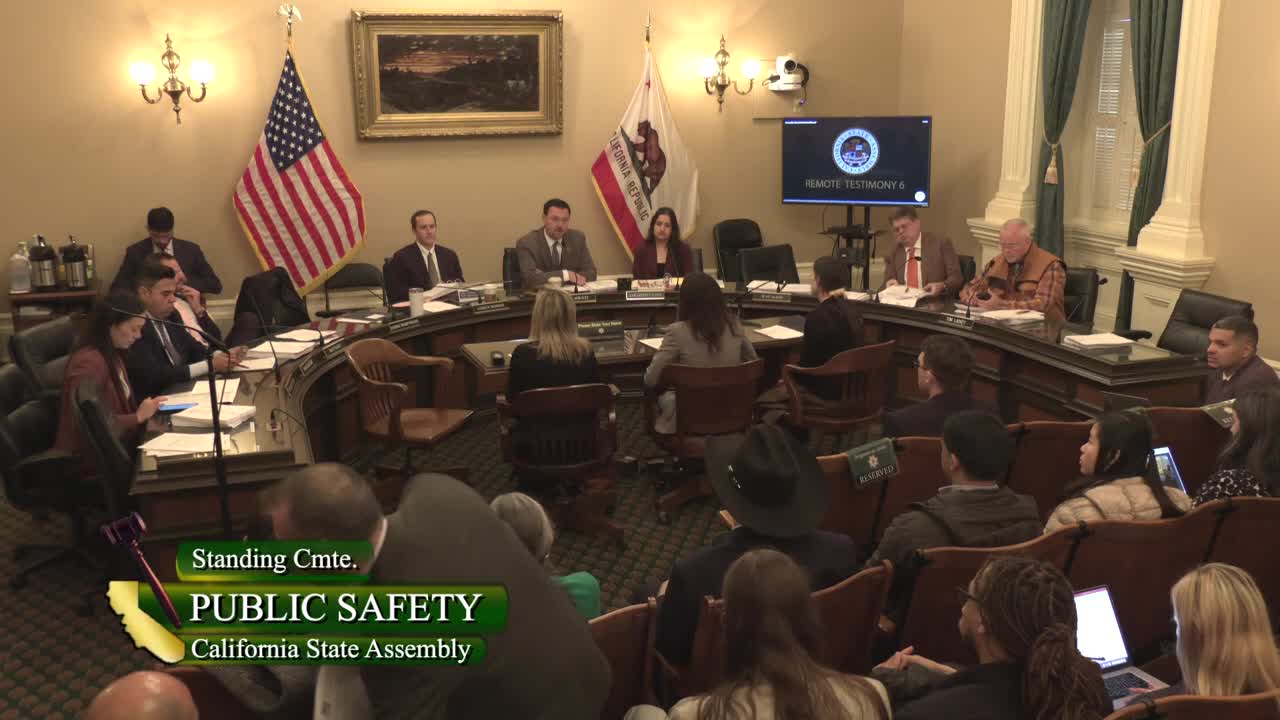 8MIN
Assembly Standing Committee on Public Safety
Bill Author