AB 2360: State agencies: governmental linguistics.
- Session Year: 2025-2026
- House: Assembly
- Latest Version Date: 2026-05-18
Current Status:
In Progress
(2026-08-13: In committee: Held under submission.)
Introduced
In Committee
Awaiting First Chamber Vote
Passed First Chamber
In Committee
Awaiting Second Chamber Vote
Passed Second Chamber
Enacted
Existing law requires each department, commission, office, or other administrative agency of state government to write each document, as defined, that it produces in plain, straightforward language, avoiding technical terms as much as possible, and using a coherent and easily readable style.
This bill would specify that the plain, straightforward language requirement applies to both digital and printed documents, instead require each state agency, as described above, to write each document it produces after January 1, 2027, either digitally or in print, in plain language, as specified, and would define plain language for purposes of that provision. The bill would require each authorize a state agency, as described above, to create, adopt, and post on its internet website a plain language policy that identifies how the state agency will incorporate or strengthen plain language writing and design use standards created by the Office of Data and Innovation that identify how a state agency incorporates plain language principles and practices. The bill would require the head of each state agency to, among other things, designate one or more senior officials within the state agency to oversee state agency implementation of these provisions.
Existing law requires each department, commission, office, or other administrative agency of state government to write each document, as defined, that it produces in plain, straightforward language, avoiding technical terms as much as possible, and using a coherent and easily readable style.
This bill would specify that the plain, straightforward language requirement applies to both digital and printed documents, and would define plain language for purposes of that provision. The bill would require each state agency, as described above, to create, adopt, and post on its internet website a plain language policy that identifies how the state agency will incorporate or strengthen plain language writing and design principles and practices. The bill would require the head of each state agency to, among other things, designate one or more senior officials within the state agency to oversee state agency implementation of these provisions.
(a)As used in this section, the following definitions apply:
(1)Plain language means language that is clear and easily understood by the intended audience, avoids unnecessary legal or technical jargon, and uses words, sentences, and structures that facilitate comprehension and accessibility for common literacy levels, including individuals with disabilities or limited English proficiency.
(2)State agency means each department, commission, office, or other administrative agency of state government.
(3)State agency document means any publicly available instruction, form, license, communication, regulation, manual, memorandum, or any other written communication that is necessary to carry out the state agencys responsibilities under the law.
(a)(b)Each state agency shall write each document that it produces, produces after January 1, 2027, either digitally or in print, in plain, straightforward plain language, avoiding technical terms as much as possible, and using a coherent and easily readable style.
(b)Each state agency shall create, adopt, and post on its internet website a plain language policy that identifies how the state agency will incorporate or strengthen plain language writing and design principles and practices.(c)To implement this section, a state agency may use standards created by the Office of Data and Innovation that identify how a state agency incorporates plain language principles and practices.
(c)(d)Within existing personnel and resources, the head of each state agency shall do all of the following:
(1)Designate one or more senior officials within the state agency to oversee state agency implementation of this section.
(2)Communicate the requirements of this section to the employees of the state agency.
(3)Establish a process for overseeing the ongoing compliance of the state agency with the requirements of this section.
(4)Within existing personnel resources, designate one or more state agency points of contact to receive and respond to public input, questions, comments, or suggestions on state agency implementation of this section, or on any state agency document that is not easily readable or in plain language.(d)As used in this section, the following definitions apply:(1)Plain language means language that is clear and easily understood by the intended audience, avoids unnecessary legal or technical jargon, and uses words, sentences, and structures that facilitate comprehension and accessibility for common literacy levels, including individuals with disabilities or limited English proficiency.(2)State agency means each department, commission, office, or other administrative agency of state government. (3)State agency document means any contract, form, license, announcement, regulation, manual, memorandum, or any other written communication that is necessary to carry out the state agencys responsibilities under the law.(a)Each department, commission, office, or other administrative agency of state government state agency shall write each document that it produces produces, either digitally or in print, in plain, straightforward language, avoiding technical terms as much as possible, and using a coherent and easily readable style.
(b)Each state agency shall create, adopt, and post on its internet website a plain language policy that identifies how the state agency will incorporate or strengthen plain language writing and design principles and practices.
(c)Within existing personnel and resources, the head of each state agency shall do all of the following:
(1)Designate one or more senior officials within the state agency to oversee state agency implementation of this section.
(2)Communicate the requirements of this section to the employees of the state agency.
(3)Establish a process for overseeing the ongoing compliance of the state agency with the requirements of this section.
(4)Within existing personnel resources, designate one or more state agency points of contact to receive and respond to public input, questions, comments, or suggestions on state agency implementation of this section, or on any state agency document that is not easily readable or in plain language.
(d)As used in this section, the following definitions apply:
(1)Plain language means language that is clear and easily understood by the intended audience, avoids unnecessary legal or technical jargon, and uses words, sentences, and structures that facilitate comprehension and accessibility for common literacy levels, including individuals with disabilities or limited English proficiency.
(2)State agency means each department, commission, office, or other administrative agency of state government.
(b)As used in this section, a state(3)State agency document means any contract, form, license, announcement, regulation, manual, memorandum, or any other written communication that is necessary to carry out the state agencys responsibilities under the law.
|
Date
|
Status
|
|---|---|
| Aug 13, 2026 | In committee: Held under submission. |
| Aug 3, 2026 | In committee: Referred to APPR. suspense file. |
| Jun 23, 2026 | From committee: Do pass and re-refer to Com. on APPR. with recommendation: To Consent Calendar. (Ayes 14. Noes 0.) (June 23). Re-referred to Com. on APPR. |
| Jun 10, 2026 | Referred to Com. on G.O. |
| May 27, 2026 | In Senate. Read first time. To Com. on RLS. for assignment. |
| May 26, 2026 | Read third time. Passed. Ordered to the Senate. |
| May 26, 2026 | Read third time. Passed. Ordered to the Senate. (Ayes 77. Noes 0. Page 5381.) |
| May 26, 2026 | Read third time. Passed. Ordered to the Senate. (Ayes 77. Noes 0.) |
| May 19, 2026 | Read second time. Ordered to third reading. |
| May 18, 2026 | Read second time and amended. Ordered returned to second reading. |
| May 14, 2026 | From committee: Amend, and do pass as amended. (Ayes 11. Noes 0.) (May 14). |
| Apr 22, 2026 | In committee: Set, first hearing. Referred to APPR. suspense file. |
| Apr 9, 2026 | From committee: Do pass and re-refer to Com. on APPR. with recommendation: To Consent Calendar. (Ayes 22. Noes 0.) (April 8). Re-referred to Com. on APPR. |
| Mar 9, 2026 | Referred to Com. on G.O. |
| Feb 20, 2026 | From printer. May be heard in committee March 22. |
| Feb 19, 2026 | Read first time. To print. |
|
Date
|
Description
|
Location
|
Votes
|
|
|---|---|---|---|---|
| Aug 3, 2026 | Placed on suspense file | Senate Standing Committee on Appropriations |
Passed |
|
| Jun 23, 2026 | Do pass, but first be re-referred to the Committee on [Appropriations] with the recommendation: To Consent Calendar | Senate Standing Committee on Governmental Organization |
Passed |
|
| May 26, 2026 | AB 2360 Arambula Assembly Third Reading | Assembly Floor |
Passed |
|
| May 14, 2026 | Do pass as amended. | Assembly Standing Committee on Appropriations |
Passed |
|
| Apr 8, 2026 | Do pass and be re-referred to the Committee on [Appropriations] with recommendation: To Consent Calendar | Assembly Standing Committee on Governmental Organization |
Passed |
This list shows positions taken on this bill by organizations on the date displayed, which is linked to the original source.
Positions by individuals are not included.
|
Organization
|
Position
|
Date
|
|---|---|---|
| Autism Speaks | ** Support | |
| California Respite Association | ** Support | |
| California State Council of Developmental Disabilities | ** Support | |
| California State Council on Developmental Disabilities (SCDD) | ** Support | |
| Manos Home Care | ** Support |
SENATE COMMITTEE ON
Senator Sabrina Cervantes, Chair
2025 - 2026 Regular Session
AB 2360 (Arambula) - State agencies: governmental linguistics
Version: | Policy Vote: |
Urgency: | Mandate: |
Hearing Date: | Consultant: |
Bill Summary:
AB 2360 requires state agencies to write all new public-facing documents in clear, plain language, as specified, and to establish internal oversight processes to ensure communications are easy for the public to understand, including people with disabilities or limited English proficiency.
Fiscal Impact:
- The Office of Data Innovation (ODI) estimates one-time IT costs of $250,000 to build a unified plain language tool to help agencies standardize their public-facing documents, and ongoing costs of approximately $400,000 for 3.0 permanent positions to maintain the tool (General Fund). This estimate assumes ODI will act as the lead agency for plain language compliance.
- Unknown, potentially significant costs for state agencies to comply with plain language requirements and establish internal oversight processes (General Fund and various special funds). Actual costs will range from absorbable to the mid- hundreds of thousands of dollars per entity, depending on the number and types of public-facing documents they have, whether they already utilize plain language best practices, and, if not, their ability to absorb any new administrative workload within existing resources. (See Staff Comments for additional detail.)
Background:
California law requires all state government departments and agencies to use plain, straightforward language in their public documents (such as contracts, forms, licenses, manuals, and regulations) to ensure they are coherent, accessible, and free of unnecessary technical jargon. To support this initiative, ODI established California’s statewide plain language equity standard and offers an online foundational course, “Introduction to Plain Language for the Public Sector,” to train state employees in effective government communication.
Complementing these clarity standards, the Dymally-Alatorre Bilingual Services Act of 1973 mandates that state and local agencies directly serving the public must employ a sufficient number of qualified bilingual personnel in public-contact positions under specified conditions. Furthermore, any agency serving a substantial number of non-English speaking constituents must translate all English-language materials explaining public services into the languages spoken by those communities.
Proposed Law:
- Requires each state agency to write each document that it produces after January 1, 2027, either digitally or in print, in plain language, avoiding technical terms as much as possible, and using a coherent and easily readable style.
- Provides that, to implement this bill, a state agency may use standards created by ODI that identify how a state agency incorporates plain language principles and practices.
- Requires the head of each state agency, within existing personnel and resources, to do all of the following:
- Designate one or more senior officials within the state agency to oversee state agency implementation of this bill.
- Communicate the requirements of this bill to the employees of the state agency.
- Establish a process for overseeing the ongoing compliance of the state agency with the requirements of this bill.
- Defines “plain language” to mean language that is clear and easily understood by the intended audience, avoids unnecessary legal or technical jargon, and uses words, sentences, and structures that facilitate comprehension and accessibility for common literacy levels, including individuals with disabilities or limited English proficiency.
- Defines “state agency” to mean each department, commission, office, or other administrative agency of state government.
- Defines “state agency document” to mean any publicly available instruction, form, license, communication, regulation, manual, memorandum, or any other written communication that is necessary to carry out the state agency’s responsibilities under the law.
Staff Comments:
The actual fiscal impact will vary significantly across state agencies based on each department's unique public-facing document volume and baseline practices. For comparison:
- The Commission for Behavioral Health estimates costs of $26,000 in Fiscal Year (FY) 2026-27 and $52,000 ongoing (Behavioral Health Services Fund).
- The California Environmental Protection Agency (CalEPA) estimates total ongoing costs of $322,000.
- The Department of Social Services (DSS) estimates costs of $591,000 in FY 2026-27 and $579,000 ongoing annually.
- The Department of Real Estate (DRE) estimates costs of $160,000 in FY 2026-27, $152,000 in FY 2027-28, and $77,000 ongoing annually (Real Estate Fund).
- The Office of Emergency Services (OES) estimates one-time costs of $350,000 (General Fund).
- The State Water Resources Control Board estimates ongoing costs of $500,000 (various special funds).
- The California Department of Corrections and Rehabilitation does not anticipate a significant fiscal impact, but notes concerns about meeting the plain language mandate for documents containing complex legal jargon.
- The California Department of Human Resources, Department of Transportation, Department of Insurance, Department of General Services, Department of Justice, Energy Commission, Department of State Hospitals, and Secretary of State anticipate any costs to be absorbable.
Staff notes that the fiscal impact to departments outlined above may ultimately be lower. Because ODI intends to serve as the lead compliance agency, the successful deployment of its centralized tool may generate statewide efficiencies, potentially negating the need for individual departments to independently contract for plain language software or revision services.
-- END --
SENATE COMMITTEE ON GOVERNMENTAL ORGANIZATION
Senator Susan Rubio
Chair
2025 - 2026 Regular
Bill No: Hearing Date: 6/23/2026
Author: | |||
Version: | Amended | ||
Urgency: | Fiscal: | ||
Consultant: | |||
SUBJECT:
DIGEST: This bill requires state agencies to write all new public-facing documents in clear, plain language, as specified, and to establish internal oversight processes to ensure communications are easy for the public to understand, including people with disabilities or limited English proficiency.
ANALYSIS:
Existing law:
- Requires each state department, commission, office, or other administrative agency of state government to write each document, as defined, that it produces in plain, straightforward language, avoiding technical terms as much as possible, and using a coherent and easily readable style.
- Defines a “state agency document” to mean any contract, form, license, announcement, regulation, manual, memorandum, or any other written communication that is necessary to carry out the agency’s responsibilities under the law.
This bill:
- Requires each state agency to write each document that it produces after January 1, 2027, either digitally or in print, in plain language, avoiding technical terms as much as possible, and using a coherent and easily readable style.
- Provides that to implement this bill, a state agency may use standards created by the Office of Data and Innovation that identify how a state agency incorporates plain language principles and practices.
- Requires the head of each state agency, within existing personnel and resources, to do all of the following:
- Designate one or more senior officials within the state agency to oversee state agency implementation of this bill.
- Communicate the requirements of this bill to the employees of the state agency.
- Establish a process for overseeing the ongoing compliance of the state agency with the requirements of this bill.
- Defines “plain language” to mean language that is clear and easily understood by the intended audience, avoids unnecessary legal or technical jargon, and uses words, sentences, and structures that facilitate comprehension and accessibility for common literacy levels, including individuals with disabilities or limited English proficiency.
- Defines “state agency” to mean each department, commission, office, or other administrative agency of state government.
- Defines “state agency document” to mean any publicly available instruction, form, license, communication, regulation, manual, memorandum, or any other written communication that is necessary to carry out the state agency’s responsibilities under the law.
Background
Author Statement. According to the author’s office, “plain language ensures that everyone, including those with cognitive disabilities, limited literacy, or language barriers, can easily find, understand, and use information to meet their needs. If it’s not accessible, it’s not acceptable. AB 2360 improves access and equity by ensuring state communications are clear, consistent, and written in plain language, so all Californians can better understand the laws that affect their lives and participate more fully in government.”
What problem does this bill solve? According to information provided by the author’s office, “[a]ll Californians deserve to understand the state laws written for them. AB 2360 will create greater accessibility and opportunity for more equitable participation in government by ensuring communications to the public are written in plain language.”
Language that is not plain can cause real harm for Californians trying to navigate state agencies and departments. Not understanding government documents is a significant form of administrative burden, directly leading to fewer people benefiting from the support services created to help them. There are currently almost 4 million Californians missing out on critical services, including:
- 1,540,000 uninsured Californians who are eligible for one of California’s public medical insurance plans, including Covered CA or Medi-Cal,
- 240,000 Californians eligible for social services through CalWORKS,
- 1,925,000 Californians for food assistance through CalFresh, and
- 168,000 Californians with severe disabilities not served by regional centers.
Research consistently shows that using plain language in government communication reduces inquiries, increases compliance, and lowers administrative costs. In Washington State, revising a Department of Revenue letter into plain language led to a 95% drop in hotline calls and generated an additional $5 million in revenue. Similarly, simplifying a U.S. Veterans Benefits contact letter increased the response rate from 35% to 55%, saving an estimated $8 million annually. Ensuring that state communications are clear and genuinely useful to the public is an essential step toward building a more efficient, accessible, and equitable government.
Dymally-Alatorre Bilingual Services Act and Plain Language Access. California law requires all state government departments and agencies to use plain and straightforward language in their written documents. This means avoiding technical terms when possible and ensuring that documents are coherent and easy to read. The law applies to various types of documents, including contracts, forms, licenses, announcements, regulations, manuals, and memos needed for the agency's duties.
The Office of Data and Innovation created California’s statewide plain language equity standard. ODI offers an online course for state employees titled “Introduction to Plain Language for the Public Sector.” This course provides a foundational overview of plain language and its role in effective government communication.
The Dymally-Alatorre Bilingual Services Act (Act) was signed into law in 1973, to eliminate language barriers that preclude people of our state, who either because they do not speak or write English or because their primary language is other than English, from having equal access to public services. This Act mandates that State and local agencies directly involved in the furnishing of information or the rendering of services to the public must in specifically prescribed situations employ a sufficient number of qualified bilingual persons in public contact positions to ensure the provision of information and services to the public in the language of the non-English speaking people.
The Act further mandates that every State and local agency that serves a substantial number of non-English speaking people, and provides materials in English explaining services, shall also provide the same type of materials in any non-English language spoken by a substantial number of the public served by the agency.
This bill requires state agencies to write all new public-facing documents in clear, plain language, as specified, beginning January 1, 2027, and to establish internal oversight processes to ensure communications are easy for the public to understand, including people with disabilities or limited English proficiency.
Prior/Related Legislation
AB 1242 (Nguyen, 2025) would have revised and expanded requirements under the state’s Dymally-Alatorre Bilingual Services Act and require the California Health and Human Services Agency to designate a Language Access Director. (Held in the Senate Appropriations Committee Suspense File)
AB 67 (Dymally, Chapter 259, Statutes of 2007) standardized and defined language in the Dymally-Alatorre Bilingual Services Act, clarified the State Personnel Boards
FISCAL EFFECT: Appropriation: Fiscal Com.: Local:
SUPPORT:
California State Council of Developmental Disabilities (Source)
Autism Speaks
California Respite Association
Manos Home Care
OPPOSITION:
None received
ARGUMENTS IN SUPPORT: In support of the bill, the California State Council on Developmental Disabilities writes, in part, “Californians deserve clear, accessible communication from their government. Yet many residents struggle to understand state forms, instructions, and program information. This lack of clarity limits access to essential services, reduce public trust, and creates inequitable barriers – particularly for individuals with cognitive disabilities, limited literacy, or those who speak a language other than English. Currently, only 27% of Californians believe the state is run for the benefit of all people, underscoring the need for more transparent and accessible communication.
Further, “[d]espite existing statutory requirements for ‘plain, straightforward language,” these standards are inconsistently applied. As a result, millions of eligible Californians are not receiving critical services. Administrative burdens – such as confusing language on forms – are a major factor. For example, nearly 4 million Californians are not accessing benefits they qualify for, including health coverage, food assistance, and disability services. In fact, 40% of individuals eligible for CalFresh but not enrolled cite paperwork as a barrier.”
ASSEMBLY THIRD READING
ATR Bill Id:AB 2360
Author:(Arambula)
As Amended Ver:May 18, 2026
Majority vote
SUMMARY
This bill expands existing requirements for a state agency to write in plain language and requires each state agency to create and implement a plain language policy.
Major Provisions
- Provides each state agency shall write each document that it produces after January 1, 2027, either digitally or in print, in plain language, avoiding technical terms as much as possible, and using a coherent and easily readable style.
- Provides to implement this measure, a state agency may use standards created by the Office of Data and Innovation that identify how a state agency incorporates plain language principles and practices.
- Provides within existing personnel and resources, the head of each state agency shall do all of the following:
- Designate one or more senior officials within the state agency to oversee state agency implementation of this measure.
- Communicate the requirements of this measure to the employees of the state agency.
- Establish a process for overseeing the ongoing compliance of the state agency with the requirements of this measure.
- Defines "Plain language" to mean language that is clear and easily understood by the intended audience, avoids unnecessary legal or technical jargon, and uses words, sentences, and structures that facilitate comprehension and accessibility for common literacy levels, including individuals with disabilities or limited English proficiency.
- Defines "State agency" to mean each department, commission, office, or other administrative agency of state government.
- Defines "State agency document" to mean any publicly available instruction, form, license, communication, regulation, manual, memorandum, or any other written communication that is necessary to carry out the state agency's responsibilities under the law.
COMMENTS
Background.
California law (Government Code Section 6219) requires all state government departments and agencies to use plain and straightforward language in their written documents. This means avoiding technical terms when possible and ensuring that documents are coherent and easy to read. The law applies to various types of documents, including contracts, forms, licenses, announcements, regulations, manuals, and memos needed for the agency's duties.
The Office of Data and Innovation (ODI) created California's statewide plain language equity standard. ODI offers an online course for state employees titled "Introduction to Plain Language for the Public Sector." This course provides a foundational overview of plain language and its role in effective government communication. Participants learn about:
- The principles of plain language
- The benefits of using plain language, including its impact on equity
- How to create products and services that align with California’s plain language standard
The course also includes hands-on opportunities for participants to practice writing in plain language.
This bill expands current law by requiring state agencies to do more than simply post a plain-language policy online. Beginning January 1, 2027, every state agency must ensure that all documents it produces, whether digital or printed, are written in plain language. This includes minimizing technical jargon, using clear and coherent wording, and presenting information in a way that is easy for the public to read and understand.
Dymally-Alatorre Bilingual Services Act. The Act (California Government Code Section 7290 et. Seq.) was signed into law in 1973, to eliminate language barriers that preclude people of our State, who either because they do not speak or write English or because their primary language is other than English, from having equal access to public services. This Act mandates that State and local agencies directly involved in the furnishing of information or the rendering of services to the public must in specifically prescribed situations employ a sufficient number of qualified bilingual persons in public contact positions to ensure the provision of information and services to the public in the language of the non-English speaking people.
The Act further mandates that every State and local agency that serves a substantial number of non-English speaking people, and provides materials in English explaining services, shall also provide the same type of materials in any non-English language spoken by a substantial number of the public served by the agency.
According to the Author
According to the author's office, "Plain language ensures that everyone, including those with cognitive disabilities, limited literacy, or language barriers, can easily find, understand, and use information to meet their needs. If it's not accessible, it’s not acceptable. AB 2360 improves access and equity by ensuring state communications are clear, consistent, and written in plain language, so all Californians can better understand the laws that affect their lives and participate more fully in government."
Arguments in Support
The California State Council on Developmental Disabilities (SCDD) writes, "Californians deserve clear, accessible communication from their government. Yet many residents struggle to understand state forms, instructions, and program information. This lack of clarity limits access to essential services, reduces public trust, and creates inequitable barriers – particularly for individuals with cognitive disabilities, limited literacy, or those who speak a language other than English. Plain language is not merely communications improvement—it is a matter of equity and access. When government information is clear, more Californians can participate fully in programs designed to support them. It also reduces administrative costs, increases compliance, and strengthens public trust."
Arguments in Opposition
None on file
FISCAL COMMENTS
According to the Assembly Committee on Appropriations, "Initial costs of an unknown, but potentially significant amount, in excess of $150,000, across state agencies to utilize plain language practices in newly produced documents (General Fund (GF) or special fund). The magnitude of costs depends on the existing processes each state agency already has to effectuate the state's existing plain language standard.
Additionally, cost pressures of an unknown, but likely significant amount, to each state agency to designate existing personnel to implement the plain language policy, including compliance efforts (GF or special fund).
Potential costs of an unknown amount to the Office of Data and Innovation (ODI) to develop additional tools to further support adoption of plain language principles and practices (GF)."
VOTES
ASM GOVERNMENTAL ORGANIZATION: 22-0-0
YES: Blanca Rubio, Davies, Alvarez, Berman, Bryan, Carrillo, Dixon, Fong, Gabriel, Gallagher, Gipson, Macedo, McKinnor, Nguyen, Pacheco, Ramos, Michelle Rodriguez, Solache, Soria, Ta, Valencia, Wallis
ASM APPROPRIATIONS: 11-0-4
YES: Wicks, Aguiar-Curry, Calderon, Caloza, Fong, Mark González, Krell, Pacheco, Pellerin, Sharp-Collins, Solache
ABS, ABST OR NV: Hoover, Dixon, Ta, Tangipa
UPDATED
VERSION: May 18, 2026
CONSULTANT: Eric Johnson / G.O. / (916) 319-2531 FN: 0003001
Date of Hearing: April 22, 2026
ASSEMBLY COMMITTEE ON APPROPRIATIONS
Buffy Wicks, Chair
ABPCA Bill Id:AB 2360
Author:(Arambula) – As Introduced Ver:February 19, 2026
Policy Committee: | Governmental Organization | Vote: | 22 - 0 |
|
| ||
|
|
Urgency: No State Mandated Local Program: No Reimbursable: No
SUMMARY:
This bill expands existing requirements for a state agency to write in plain language and requires each state agency to create and implement a plain language policy.
Specifically, this bill:
- Provides that the existing requirement for a state agency to write each document in plain, straightforward language applies to both digital and printed documents.
- Requires each state agency to create, adopt, and post online a plain language policy that identifies how the agency will incorporate or strengthen plain language writing and design principles and practices.
- Requires, within existing personnel and resources, the head of each state agency to take certain actions to implement the agency’s plain language policy, including establishing a process for overseeing ongoing compliance and designating points of contact within the agency to receive and respond to public input regarding implementation.
- Defines “plain language” to mean, among other things, language that uses words, sentences, and structures that facilitate comprehension and accessibility for common literacy levels, including individuals with disabilities or limited English proficiency.
FISCAL EFFECT:
- Initial costs of an unknown, but potentially significant amount, in excess of $150,000, across state agencies to create plain language policies, as well as ongoing costs of a less significant amount across state agencies to update the policies (General Fund (GF) or special fund). The magnitude of costs depends on the existing processes each state agency already has to effectuate the state’s existing plain language standard.
Additionally, cost pressures of an unknown, but likely significant amount, to each state agency to designate existing personnel to implement the plain language policy, including compliance and public relations efforts (GF or special fund).
For reference, the Air Resources Board (ARB) estimates one-time costs of approximately $300,000 for an external contract and annual costs of approximately $380,000 for an additional staff position and resources for plain language training and policy implementation specific to ARB’s technical and regulatory document development (Air Pollution Control Fund).
- Potential costs of an unknown amount to the Office of Data and Innovation (ODI) to develop additional tools to further support adoption of plain language principles and practices (GF). Although ODI is not assigned a specific role in this bill, ODI created the state’s existing plain language standard.
The Legislative Analyst’s Office recently warned of GF structural deficits of around $35 billion per year in the 2027-28 fiscal year and ongoing.
COMMENTS:
- Purpose. According to the author:
Plain language ensures that everyone, including those with cognitive disabilities, limited literacy, or language barriers, can easily find, understand, and use information to meet their needs. If it’s not accessible, it’s not acceptable. AB 2360 improves access and equity by ensuring state communications are clear, consistent, and written in plain language, so all Californians can better understand the laws that affect their lives and participate more fully in government.
This bill is sponsored by the State Council on Developmental Disabilities and supported by other disability services groups.
- Plain Language in State Government. Existing law requires each state agency to write each document the agency produces in plain, straightforward language that avoids technical terms as much as possible and uses a coherent, easily readable style. A covered document includes a contract, form, license, announcement, regulation, manual, memo, or any other written communication needed to execute the agency’s duties. In support of this standard, ODI offers an online course for state employees titled “Introduction to Plain Language for the Public Sector” that teaches: (a) the principles of plain language, (b) the benefits of using plain language, including its impact on equity, and (c) how to create products and services that align with the state’s plain language standard. This bill provides that the state’s existing standard applies to both digital and printed documents and requires each state agency to create and implement a plain language policy.
Analysis Prepared by: Irene Ho / APPR. / (916) 319-2081
Date of Hearing: April 8, 2026
ASSEMBLY COMMITTEE ON GOVERNMENTAL ORGANIZATION
Blanca Rubio, Chair
ABPCA Bill Id:AB 2360 (
Author:Arambula) – As Introduced Ver:February 19, 2026
SUBJECT: State agencies: governmental linguistics.
SUMMARY: Existing law requires each state agency to write each document, as defined, that it produces in plain, straightforward language, avoiding technical terms as much as possible, and using a coherent and easily readable style.
This bill would specify that the plain, straightforward language requirement applies to both digital and printed documents. The bill would require each state agency to create, adopt, and post on its internet website a plain language policy that identifies how the state agency will incorporate or strengthen plain language writing and design principles and practices. Specifically, this bill:
1) Provides each state agency shall write each document that it produces, either digitally or in print, in plain, straightforward language, avoiding technical terms as much as possible, and using a coherent and easily readable style.
2) Provides each state agency shall create, adopt, and post on its internet website a plain language policy that identifies how the state agency will incorporate or strengthen plain language writing and design principles and practices.
3) Provides within existing personnel and resources, the head of each state agency shall do all of the following:
- Designate one or more senior officials within the state agency to oversee state agency implementation of this measure.
- Communicate the requirements of this measure to the employees of the state agency.
- Establish a process for overseeing the ongoing compliance of the state agency with the requirements of this measure.
- Within existing personnel resources, designate one or more state agency points of contact to receive and respond to public input, questions, comments, or suggestions on state agency implementation of this measure, or on any state agency document that is not easily readable or in plain language.
4) States in relation to this measure, the following definitions apply:
- “Plain language” means language that is clear and easily understood by the intended audience, avoids unnecessary legal or technical jargon, and uses words, sentences, and structures that facilitate comprehension and accessibility for common literacy levels, including individuals with disabilities or limited English proficiency.
- “State agency” means each department, commission, office, or other administrative agency of state government.
- “State agency document” means any contract, form, license, announcement, regulation, manual, memorandum, or any other written communication that is necessary to carry out the state agency’s responsibilities under the law.
EXISTING LAW:
1) Requires each department, commission, office, or other administrative agency of state government to write each document, as defined, that it produces in plain, straightforward language, avoiding technical terms as much as possible, and using a coherent and easily readable style.
2) Defines a state agency document as any contract, form, license, announcement, regulation, manual, memorandum, or any other written communication that is necessary to carry out the agency’s responsibilities under the law.
3) Requires every state agency directly involved in the furnishing of information or the rendering of services to the public where contact is made with a substantial number of non-English-speaking people to employ a sufficient number of qualified bilingual persons in public contact positions to ensure provision of information and services to the public in the language of the non-English-speaking person, except as specified.
4) Requires every state agency that serves a substantial number of non-English-speaking people and provides materials in English explaining services to also provide the same type of materials in any non-English language spoken by a substantial number of the public served by the agency, as specified.
FISCAL EFFECT: This bill is keyed fiscal by Legislative Counsel.
COMMENTS:
Purpose of the bill. According to the author’s office, “Plain language ensures that everyone, including those with cognitive disabilities, limited literacy, or language barriers, can easily find, understand, and use information to meet their needs. If it’s not accessible, it’s not acceptable. AB 2360 improves access and equity by ensuring state communications are clear, consistent, and written in plain language, so all Californians can better understand the laws that affect their lives and participate more fully in government.”
What problem does this bill solve? According to information provided by the author’s office, “All Californians deserve to understand the state laws written for them. AB 2360 will create greater accessibility and opportunity for more equitable participation in government by ensuring communications to the public are written in plain language. [1] Language that is not plain can cause real harm for Californians trying to navigate state agencies and departments. Not understanding government documents is a significant form of administrative burden, directly leading to fewer people benefiting from the support services created to help them. There are currently almost 4 million Californians missing out on critical services, including:
|
Research consistently shows that using plain language in government communication reduces inquiries, increases compliance, and lowers administrative costs. In Washington State, revising a Department of Revenue letter into plain language led to a 95% drop in hotline calls and generated an additional $5 million in revenue. Similarly, simplifying a U.S. Veterans Benefits contact letter increased the response rate from 35% to 55%, saving an estimated $8 million annually. Ensuring that state communications are clear and genuinely useful to the public is an essential step toward building a more efficient, accessible, and equitable government. |
Background.
California law (Government Code § 6219) requires all state government departments and agencies to use plain and straightforward language in their written documents. This means avoiding technical terms when possible and ensuring that documents are coherent and easy to read. The law applies to various types of documents, including contracts, forms, licenses, announcements, regulations, manuals, and memos needed for the agency's duties.
The Office of Data and Innovation (ODI) created California’s statewide plain language equity standard. ODI offers an online course for state employees titled “Introduction to Plain Language for the Public Sector.” This course provides a foundational overview of plain language and its role in effective government communication. Participants learn about:
- The principles of plain language
- The benefits of using plain language, including its impact on equity
- How to create products and services that align with California’s plain language standard
The course also includes hands-on opportunities for participants to practice writing in plain language.
This bill expands on current law by stating that state agencies must go beyond simply posting a plain language policy online. The bill mandates several specific documentations and administrative actions to ensure these policies are active and accountable.
Dymally-Alatorre Bilingual Services Act. The Act (California Government Code Section 7290 et. Seq.) was signed into law in 1973, to eliminate language barriers that preclude people of our State, who either because they do not speak or write English or because their primary language is other than English, from having equal access to public services. This Act mandates that State and local agencies directly involved in the furnishing of information or the rendering of services to the public must in specifically prescribed situations employ a sufficient number of qualified bilingual persons in public contact positions to ensure the provision of information and services to the public in the language of the non-English speaking people.
The Act further mandates that every State and local agency that serves a substantial number of non-English speaking people, and provides materials in English explaining services, shall also provide the same type of materials in any non-English language spoken by a substantial number of the public served by the agency.
In support. The California State Council on Developmental Disabilities (SCDD) writes, “Californians deserve clear, accessible communication from their government. Yet many residents struggle to understand state forms, instructions, and program information. This lack of clarity limits access to essential services, reduces public trust, and creates inequitable barriers – particularly for individuals with cognitive disabilities, limited literacy, or those who speak a language other than English. Plain language is not merely communications improvement—it is a matter of equity and access. When government information is clear, more Californians can participate fully in programs designed to support them. It also reduces administrative costs, increases compliance, and strengthens public trust.”
Related legislation. AB 1242 (Nguyen) of 2025. Would revise and expand requirements under the state’s Dymally-Alatorre Bilingual Services Act and require the California Health and Human Services Agency to designate a Language Access Director. (Senate Committee on Appropriations – Held on Suspense File)
Prior legislation. SB 1078 (Min) of 2024. Would have established the Office of Language Access within the California Health and Human Services Agency. (Assembly Appropriations Committee - Held on the Suspense File)
AB 2639 (Fong) of 2012. This bill would have made technical, non-substantive changes to what qualifies as a state agency document. (Held at Desk)
AB 67 (Dymally), Chapter 259, Statutes of 2007. Standardized and defined language in the Dymally-Alatorre Bilingual Services Act, clarified the State Personnel Board's (SPB's) responsibility to establish bilingual fluency standard, and expands the SPB's ability to grant exemptions to the language survey and implementation plan.
SB 853 (Escutia), Chapter 713, Statutes of 2003. Required the Department of Managed Health Care to adopt, not later than January 1, 2006, regulations establishing standards and requirements to provide health care service plan enrollees with access to language assistance in obtaining health care services.
REGISTERED SUPPORT / OPPOSITION:
Support
California State Council on Developmental Disabilities
Autism Speaks
SCDD
Opposition
None on file
Analysis Prepared by: Eric Johnson / G.O. / (916) 319-2531
Harvard University. “Use Plain Language.” Accessibility.huit.harvard.edu, 2025, accessibility.huit.harvard.edu/use-plain-language. ↑
Dietz, M., Lucia, L., Kadiyala, S., Challenor, T., Rak, A., Chen, Y., Haile, M., Roby, D., & Kominski, G. (2023, March
22). California’s uninsured in 2024: Medi-Cal expands to all low-income adults, but half a million
undocumented Californians lack affordable coverage options. UC Berkeley Labor Center.
https://laborcenter.berkeley.edu/californias-uninsured-in-2024/ ↑
Anderson, R. (2021). Estimating the CalWORKs take-up rate. California Legislative Analyst’s Office.
https://lao.ca.gov/Publications/Report/4340 ↑
Anderson, R. (2022). The 2022-23 budget: California food assistance program. California Legislative Analyst’s
Office. https://lao.ca.gov/Publications/Report/4532 ↑
California State Council on Developmental Disabilities. (2024). How does the Council define developmental
disabilities? https://scdd.ca.gov/about/ ↑
Discussed in Hearing
View Older Hearings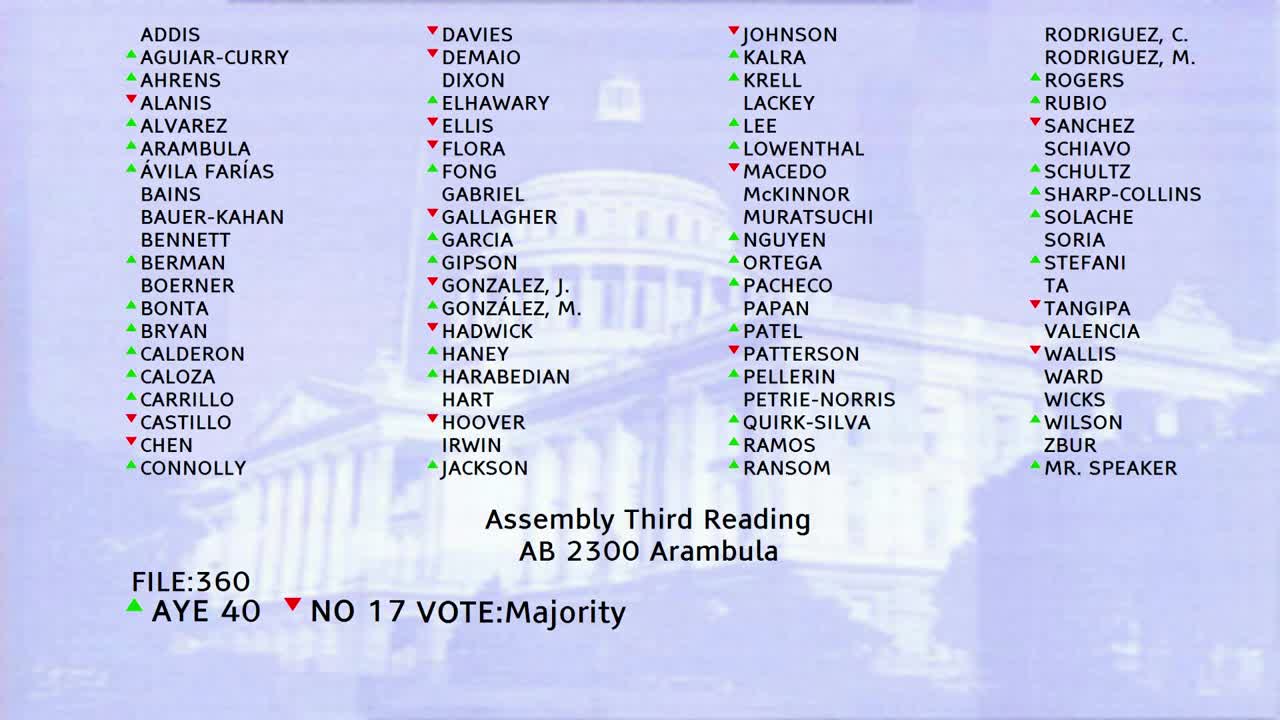
Bill Author

Bill Co-Author(s):