AB 2409: Digital assets: meme coins.
- Session Year: 2025-2026
- House: Assembly
- Latest Version Date: 2026-09-27
Current Status:
Passed
(2026-09-27: Chaptered by Secretary of State - Chapter 473, Statutes of 2026.)
Introduced
In Committee
Awaiting First Chamber Vote
Passed First Chamber
In Committee
Awaiting Second Chamber Vote
Passed Second Chamber
Enacted
What does this bill do?
The bill bars public officers and certain public employees from issuing “meme coins” — digital tokens whose value comes mainly from memes, celebrities, or online hype — and stops digital-asset platforms from selling meme coins offered by or partnered with federal, state, or local public officials to California residents for coins issued in 2027 or later. It allows the Attorney General or local prosecutors to sue to stop violations and to seek return of money gained from those sales.
The summary is provided by generative AI which can make mistakes. For original language, please view the details in the table below.
Existing law prohibits a state officer or employee from engaging in any employment, activity, or enterprise that is clearly inconsistent, incompatible, in conflict with, or inimical to their duties. Existing law also prohibits specified local agency officers or employees from engaging in any employment, activity, or enterprise for compensation that is inconsistent, incompatible, or in conflict with, or inimical to, their duties, as specified.
This bill would prohibit a public officer or public employee, as those terms are defined, from issuing a meme coin. The bill would prohibit a digital asset service provider, as defined, from listing for sale on behalf of, or for purchase by, a California resident a meme coin issued on or after January 1, 2027, that is offered by, or in partnership with, a federal public official or a state or local public officer.
This bill would authorize the Attorney General, a district attorney, city attorney, or county counsel to enforce these prohibitions by filing a civil action, as specified.
Existing law prohibits a state officer or employee from engaging in any employment, activity, or enterprise that is clearly inconsistent, incompatible, in conflict with, or inimical to their duties. Existing law also prohibits specified local agency officers or employees from engaging in any employment, activity, or enterprise for compensation that is inconsistent, incompatible, or in conflict with, or inimical to, their duties, as specified.
This bill would prohibit a public officer or public employee, as those terms are defined, from issuing a meme coin. The bill would prohibit a digital asset service provider, as defined, from listing for sale on behalf of, or for purchase by, a California resident a meme coin issued on or after January 1, 2027, that contains the likeness or image of a is offered by, or in partnership with, a federal public official or a state or local public officer.
This bill would authorize the Attorney General, a district attorney, city attorney, or county counsel to enforce these prohibitions by filing a civil action, as specified.
Existing law prohibits a state officer or employee from engaging in any employment, activity, or enterprise that is clearly inconsistent, incompatible, in conflict with, or inimical to their duties. Existing law also prohibits specified local agency officers or employees from engaging in any employment, activity, or enterprise for compensation that is inconsistent, incompatible, or in conflict with, or inimical to, their duties, as specified.
This bill would prohibit a public officer and specified public employees, or public employee, as those terms are defined, from issuing a meme coin. The bill would define public officer for purposes of these provisions to include a state or local elected or appointed officer, including a Member of the Legislature, or an elected or appointed member of a governmental board, commission, committee, or other body, including a governmental body that has only advisory powers. The bill would define public employee for these purposes to mean an employee of a state or a local government entity who has decisionmaking authority over bids and contracts for that entity. The bill would prohibit a digital asset service provider, as defined, from listing for sale on behalf of, or for purchase by, a California resident a meme coin issued on or after January 1, 2027, that contains the likeness or image of a federal public official or a state or local public officer.
This bill would also prohibit a business that operates a digital asset exchange from listing a meme coin for sale on behalf of, or for purchase by, a California resident if the meme coin contains the likeness or image of a federal public official or a state or local public officer.This bill would authorize the Attorney General General, a district attorney, city attorney, or county counsel to enforce these prohibitions by filing a civil action for injunctive relief and would authorize the Attorney General to include a claim for disgorgement. The bill would additionally authorize a district attorney, city attorney, or county counsel to enforce the above-described prohibition on businesses that operate a digital asset exchange. action, as specified.
Existing law prohibits a state officer or employee from engaging in any employment, activity, or enterprise that is clearly inconsistent, incompatible, in conflict with, or inimical to their duties. Existing law also prohibits specified local agency officers or employees from engaging in any employment, activity, or enterprise for compensation that is inconsistent, incompatible, or in conflict with, or inimical to, their duties, as specified.
This bill would prohibit a public officer and specified public employees, as those terms are defined, from issuing a meme coin. The bill would define public officer for purposes of these provisions to include a state or local elected or appointed officer, including a Member of the Legislature, or an elected or appointed member of a governmental board, commission, committee, or other body, including a governmental body that has only advisory powers. The bill would define public employee for these purposes to mean an employee of a state or a local government entity who has decisionmaking authority over bids and contracts for that entity.
This bill would also prohibit a business that operates a digital asset exchange from listing a meme coin for sale on behalf of, or for purchase by, a California resident if the meme coin contains the likeness or image of a federal public official or a state or local public officer.
This bill would require authorize the Attorney General to enforce these prohibitions by filing a civil action for injunctive relief and would authorize the Attorney General to include a claim for disgorgement. The bill would additionally authorize a district attorney, city attorney, or county counsel to enforce the above-described prohibition on businesses that operate a digital asset exchange.
Existing law prohibits a state officer or employee from engaging in any employment, activity, or enterprise that is clearly inconsistent, incompatible, in conflict with, or inimical to their duties. Existing law also prohibits specified local agency officers or employees from engaging in any employment, activity, or enterprise for compensation that is inconsistent, incompatible, or in conflict with, or inimical to, their duties, as specified.
This bill would prohibit a public officer and specified public employees, as those terms are defined, from issuing a meme coin. The bill would define public officer for purposes of these provisions to include a state or local elected or appointed officer, including a Member of the Legislature, or an elected or appointed member of a governmental board, commission, committee, or other body, including a governmental body that has only advisory powers. The bill would define public employee for these purposes to mean an employee of a state or a local government entity who has decisionmaking authority over bids and contracts for that entity.
This bill would also prohibit a business that operates a digital asset exchange from listing a meme coin for sale on behalf of, or for purchase by, a California resident if the meme coin contains the likeness or image of a federal public official or a state or local public officer.
This bill would require the Attorney General to enforce these prohibitions by filing a civil action for injunctive relief and would authorize the Attorney General to include a claim for disgorgement. The bill would additionally authorize a district attorney attorney, city attorney, or county counsel to enforce the above-described prohibition on businesses that operate a digital asset exchange.
Existing law prohibits a state officer or employee from engaging in any employment, activity, or enterprise that is clearly inconsistent, incompatible, in conflict with, or inimical to their duties. Existing law also prohibits specified local agency officers or employees from engaging in any employment, activity, or enterprise for compensation that is inconsistent, incompatible, or in conflict with, or inimical to, their duties, as specified.
This bill would prohibit a public officer or employee and specified public employees, as those terms are defined, from issuing a meme coin. The bill would define certain terms for purposes of this prohibition, including defining public officer public officer for purposes of these provisions to include a state or local elected or appointed officer, including a Member of the Legislature, or an elected or appointed member of a governmental board, commission, committee, or other body, including a governmental body that has only advisory powers. The bill would The bill would define public employee for these purposes to mean an employee of a state or a local government entity who has decisionmaking authority over bids and contracts for that entity.
This bill would also prohibit a business that operates a digital asset exchange from listing a meme coin for sale on behalf of, or for purchase by, a California resident if the meme coin contains the likeness or image of a federal public official or a state or local public officer.
This bill would require the Attorney General to enforce this prohibition these prohibitions by filing a civil action for injunctive relief and would authorize the Attorney General to include a claim for disgorgement. The bill would additionally authorize a district attorney to enforce the above-described prohibition on businesses that operate a digital asset exchange.
Existing law prohibits a state officer or employee from engaging in any employment, activity, or enterprise that is clearly inconsistent, incompatible, in conflict with, or inimical to their duties. Existing law also prohibits specified local agency officers or employees from engaging in any employment, activity, or enterprise for compensation that is inconsistent, incompatible, or in conflict with, or inimical to, their duties, as specified.
This bill would prohibit a public officer or employee from issuing a meme coin. The bill would define certain terms for purposes of this prohibition, including defining public officer to include a state or local elected or appointed officer, including a Member of the Legislature, or an elected or appointed member of a governmental board, commission, committee, or other body, including a governmental body that has only advisory powers. The bill would require the Attorney General to enforce this prohibition by filing a civil action for injunctive relief and would authorize the Attorney General to include a claim for disgorgement.
The Legislature finds and declares all of the following:
(a)Public officials must not use the authority entrusted to them for private financial gain.
(b)When public officials issue or promote financial instruments, it undermines public confidence in government, creates opportunities for conflicts of interest and pay-to-play arrangements, and risks exploitation and corrupt foreign influence.
(c)Public office is a public trust that must be exercised solely for the benefit of the people of California.
SEC. 2.Chapter 37 (commencing with Section 7599.210) is added to Division 7 of Title 1 of the Government Code, to read:37.Prohibited Digital Financial Transactions7599.210.For purposes of this chapter, the following definitions apply:
(a)Digital asset means a digital representation of value recorded on a cryptographically secured, distributed ledger, including a blockchain or similar technology, including, but not limited to, a digital financial asset, a stablecoin, or a token, including a fungible or nonfungible token.
(b)Digital asset service provider has the same meaning as set forth in Section 5901 of Title 12 of the United States Code.
(c)Digital financial asset has the same meaning as defined in paragraph (1) of subdivision (g) of Section 3102 of the Financial Code.
(d)Federal public official includes, but is not limited to, both of the following:
(1)A federal elected or appointed officer.
(2)An elected or appointed member of a federal governmental board, commission, committee, or other body, including a federal governmental body that has only advisory powers.
(e)Issue means to make available for public purchase, donation, or exchange of any value, whether promoted or not.
(f)Meme coin means a type of digital asset that is marketed or recognized primarily based on its association with internet memes, public figures, fictional characters, animal cultural phenomenon, current events, shared humor, celebrities, noteworthy people or events, or social trends, and whose value is derived primarily from public interest, speculation, or community engagement.
(g)Nonfungible token means a unique digital representation of an asset, an object, the rights of the holder, or any other item, whether tangible or not, that is built on an existing blockchain.
(h)Public employee means an employee of a state or a local government entity who has decisionmaking authority over bids and contracts for that entity.
(i)Public officer includes, but is not limited to, both of the following:
(1)A state or local elected or appointed officer, including a Member of the Legislature.
(2)An elected or appointed member of a governmental board, commission, committee, or other body, including a governmental body that has only advisory powers.
(j)Stablecoin has the same meaning as defined in paragraph (3) of subdivision (b) of Section 3601 of the Financial Code.
(k)Token means a digital representation of an asset, object, rights of the holder, or any other item, whether tangible or not, that is built on an existing blockchain.
7599.211.(a)A public officer or public employee shall not issue a meme coin.
(b)A digital asset service provider shall not list for sale on behalf of, or for purchase by, a California resident a meme coin issued on or after January 1, 2027, that is offered by, or in partnership with, a federal public official or a state or local public officer.
(c)(1)This section may be enforced through a civil action brought by the Attorney General for injunctive relief. The Attorney General may also include a claim for disgorgement and the court shall have jurisdiction to grant that relief.
(2)A district attorney, city attorney, or county counsel may bring a civil action to enforce subdivision (a) and shall have the same rights as an Attorney General to seek an injunction and include a claim for disgorgement.
The Legislature finds and declares all of the following:
(a)Public officials must not use the authority entrusted to them for private financial gain.
(b)When public officials issue or promote financial instruments, it undermines public confidence in government, creates opportunities for conflicts of interest and pay-to-play arrangements, and risks exploitation and corrupt foreign influence.
(c)Public office is a public trust that must be exercised solely for the benefit of the people of California.
SEC. 2.Chapter 37 (commencing with Section 7599.210) is added to Division 7 of Title 1 of the Government Code, to read:37.Prohibited Digital Financial Transactions7599.210.For purposes of this chapter, the following definitions apply:
(a)Digital asset means a digital representation of value recorded on a cryptographically secured, distributed ledger, including a blockchain or similar technology, including, but not limited to, a digital financial asset, a stablecoin, or a token, including a fungible or nonfungible token.
(b)Digital asset service provider has the same meaning as set forth in Section 5901 of Title 12 of the United States Code.
(c)Digital financial asset has the same meaning as defined in paragraph (1) of subdivision (g) of Section 3102 of the Financial Code.
(d)Federal public official includes, but is not limited to, both of the following:
(1)A federal elected or appointed officer.
(2)An elected or appointed member of a federal governmental board, commission, committee, or other body, including a federal governmental body that has only advisory powers.
(d)(e)Issue means to make available for public purchase, donation, or exchange of any value, whether promoted or not.
(e)(f)Meme coin means a type of digital asset inspired by that is marketed or recognized primarily based on its association with internet memes, public figures, fictional characters, animal cultural phenomenon, current events, shared humor, celebrities, noteworthy people or events, or social trends, for which the promoter seeks to attract an enthusiastic online community to purchase the meme coin and engage in its trading. and whose value is derived primarily from public interest, speculation, or community engagement.
(f)(g)Nonfungible token means a unique digital representation of an asset, an object, the rights of the holder, or any other item, whether tangible or not, that is built on an existing blockchain.
(g)(h)Public employee means an employee of a state or a local government entity who has decisionmaking authority over bids and contracts for that entity.
(h)(i)Public officer includes, but is not limited to, both of the following:
(1)A state or local elected or appointed officer, including a Member of the Legislature.
(2)An elected or appointed member of a governmental board, commission, committee, or other body, including a governmental body that has only advisory powers.
(i)(j)Stablecoin has the same meaning as defined in paragraph (3) of subdivision (b) of Section 3601 of the Financial Code.
(j)(k)Token means a digital representation of an asset, object, rights of the holder, or any other item, whether tangible or not, that is built on an existing blockchain.
7599.211.(a)A public officer or public employee shall not issue a meme coin.
(b)A digital asset service provider shall not list for sale on behalf of, or for purchase by, a California resident a meme coin issued on or after January 1, 2027, that is offered by, or in partnership with, a federal public official or a state or local public officer.
(c)(1)This section may be enforced through a civil action brought by the Attorney General for injunctive relief. The Attorney General may also include a claim for disgorgement and the court shall have jurisdiction to grant that relief.
(2)A district attorney, city attorney, or county counsel may bring a civil action to enforce subdivision (a) and shall have the same rights as an Attorney General to seek an injunction and include a claim for disgorgement.
The Legislature finds and declares all of the following:
(a)Public officials must not use the authority entrusted to them for private financial gain.
(b)When public officials issue or promote financial instruments, it undermines public confidence in government, creates opportunities for conflicts of interest and pay-to-play arrangements, and risks exploitation and corrupt foreign influence.
(c)Public office is a public trust that must be exercised solely for the benefit of the people of California.
SEC. 2.Chapter 37 (commencing with Section 7599.210) is added to Division 7 of Title 1 of the Government Code, to read:37.Prohibited Digital Financial Transactions7599.210.For purposes of this chapter, the following definitions apply:
(a)Digital asset means a digital representation of value recorded on a cryptographically secured, distributed ledger, including a blockchain or similar technology, including, but not limited to, a digital financial asset, a stablecoin, or a token, including a fungible or nonfungible token.
(b)Digital asset service provider has the same meaning as set forth in Section 5901 of Title 12 of the United States Code.
(c)Digital financial asset has the same meaning as defined in paragraph (1) of subdivision (g) of Section 3102 of the Financial Code.
(d)Issue means to make available for public purchase, donation, or exchange of any value, whether promoted or not.
(e)Meme coin means a type of digital asset inspired by internet memes, characters, current events, shared humor, celebrities, noteworthy people or events, or trends, for which the promoter seeks to attract an enthusiastic online community to purchase the meme coin and engage in its trading.
(f)Nonfungible token means a unique digital representation of an asset, an object, the rights of the holder, or any other item, whether tangible or not, that is built on an existing blockchain.
(g)Public employee means an employee of a state or a local government entity who has decisionmaking authority over bids and contracts for that entity.
(h)Public officer includes, but is not limited to, both of the following:
(1)A state or local elected or appointed officer, including a Member of the Legislature.
(2)An elected or appointed member of a governmental board, commission, committee, or other body, including a governmental body that has only advisory powers.
(i)Stablecoin has the same meaning as defined in paragraph (3) of subdivision (b) of Section 3601 of the Financial Code.
(j)Token means a digital representation of an asset, object, rights of the holder, or any other item, whether tangible or not, that is built on an existing blockchain.
7599.211.(a)A public officer or public employee shall not issue a meme coin.
(b)A digital asset service provider shall not list for sale on behalf of, or for purchase by, a California resident a meme coin issued on or after January 1, 2027, that contains the likeness or image of a is offered by, or in partnership with, a federal public official or a state or local public officer.
(c)(1)This section may be enforced through a civil action brought by the Attorney General for injunctive relief. The Attorney General may also include a claim for disgorgement and the court shall have jurisdiction to grant that relief.
(2)A district attorney, city attorney, or county counsel may bring a civil action to enforce subdivision (a) and shall have the same rights as an Attorney General to seek an injunction and include a claim for disgorgement.
The Legislature finds and declares all of the following:
(a)Public officials must not use the authority entrusted to them for private financial gain.
(b)When public officials issue or promote financial instruments, it undermines public confidence in government, creates opportunities for conflicts of interest and pay-to-play arrangements, and risks exploitation and corrupt foreign influence.
(c)Public office is a public trust that must be exercised solely for the benefit of the people of California.
SEC. 2.Chapter 37 (commencing with Section 7599.210) is added to Division 7 of Title 1 of the Government Code, to read:37.Prohibited Digital Financial Transactions7599.210.For purposes of this chapter, the following definitions apply:
(a)Digital asset means a digital representation of value recorded on a cryptographically secured, distributed ledger, including a blockchain or similar technology, including, but not limited to, a digital financial asset, a stablecoin, or a token, including a fungible or nonfungible token.
(b)Digital asset exchange means an online marketplace or platform where users can buy, sell, or swap digital assets.(b)Digital asset service provider has the same meaning as set forth in Section 5901 of Title 12 of the United States Code.
(c)Digital financial asset has the same meaning as defined in paragraph (1) of subdivision (g) of Section 3102 of the Financial Code.
(d)Issue means to make available for public purchase, donation, or exchange of any value, whether promoted or not.
(e)Meme coin means a type of digital asset inspired by internet memes, characters, current events, or trends, for which the promoter seeks to attract an enthusiastic online community to purchase the meme coin and engage in its trading.
(f)Nonfungible token means a unique digital representation of an asset, an object, the rights of the holder, or any other item, whether tangible or not, that is built on an existing blockchain.
(g)Public employee means an employee of a state or a local government entity who has decisionmaking authority over bids and contracts for that entity.
(h)Public officer includes, but is not limited to, both of the following:
(1)A state or local elected or appointed officer, including a Member of the Legislature.
(2)An elected or appointed member of a governmental board, commission, committee, or other body, including a governmental body that has only advisory powers.
(i)Stablecoin has the same meaning as defined in paragraph (3) of subdivision (b) of Section 3601 of the Financial Code.
(j)Token means a digital representation of an asset, object, rights of the holder, or any other item, whether tangible or not, that is built on an existing blockchain.
7599.211.(a)A public officer or public employee shall not issue a meme coin.
(b)A business that operates a digital asset exchange shall not list a meme coin for sale on behalf of, or for purchase by, a California resident if the meme coin contains the likeness or image of a federal public official or a state or local public officer.(b)A digital asset service provider shall not list for sale on behalf of, or for purchase by, a California resident a meme coin issued on or after January 1, 2027, that contains the likeness or image of a federal public official or a state or local public officer.
(c)(1)This section may be enforced through a civil action brought by the Attorney General for injunctive relief. The Attorney General may also include a claim for disgorgement and the court shall have jurisdiction to grant that relief.
(2)A district attorney, city attorney, or county counsel may also bring a civil action to enforce subdivision (a) and shall have the same rights as an Attorney General to seek an injunction and to include a claim for disgorgement.
The Legislature finds and declares all of the following:
(a)Public officials must not use the authority entrusted to them for private financial gain.
(b)When public officials issue or promote financial instruments, it undermines public confidence in government, creates opportunities for conflicts of interest and pay-to-play arrangements, and risks exploitation and corrupt foreign influence.
(c)Public office is a public trust that must be exercised solely for the benefit of the people of California.
SEC. 2.Chapter 37 (commencing with Section 7599.210) is added to Division 7 of Title 1 of the Government Code, to read:37.Prohibited Digital Financial Transactions7599.210.For purposes of this chapter, the following definitions apply:
(a)Digital asset means a digital representation of value recorded on a cryptographically secured, distributed ledger, including a blockchain or similar technology, including, but not limited to, a digital financial asset, a stablecoin, or a token, including a fungible or nonfungible token.
(b)Digital asset exchange means an online marketplace or platform where users can buy, sell, or swap digital assets.
(c)Digital financial asset has the same meaning as defined in paragraph (1) of subdivision (g) of Section 3102 of the Financial Code.
(d)Issue means to make available for public purchase, donation, or exchange of any value, whether promoted or not.
(e)Meme coin means a type of digital asset inspired by internet memes, characters, current events, or trends, for which the promoter seeks to attract an enthusiastic online community to purchase the meme coin and engage in its trading.
(f)Nonfungible token means a unique digital representation of an asset, an object, the rights of the holder, or any other item, whether tangible or not, that is built on an existing blockchain.
(g)Public employee means an employee of a state or a local government entity who has decisionmaking authority over bids and contracts for that entity.
(h)Public officer includes, but is not limited to, both of the following:
(1)A state or local elected or appointed officer, including a Member of the Legislature.
(2)An elected or appointed member of a governmental board, commission, committee, or other body, including a governmental body that has only advisory powers.
(i)Stablecoin has the same meaning as defined in paragraph (3) of subdivision (b) of Section 3601 of the Financial Code.
(j)Token means a digital representation of an asset, object, rights of the holder, or any other item, whether tangible or not, that is built on an existing blockchain.
7599.211.(a)A public officer or public employee shall not issue a meme coin.
(b)A business that operates a digital asset exchange shall not list a meme coin for sale on behalf of, or for purchase by, a California resident if the meme coin contains the likeness or image of a federal public official or a state or local public officer.
(c)(1)This section shall may be enforced through a civil action brought by the Attorney General for injunctive relief. The Attorney General may also include a claim for disgorgement and the court shall have jurisdiction to grant that relief.
(2)A district attorney, city attorney, or county counsel may also bring a civil action to enforce subdivision (a) and shall have the same rights as an Attorney General to seek an injunction and to include a claim for disgorgement.
The Legislature finds and declares all of the following:
(a)Public officials must not use the authority entrusted to them for private financial gain.
(b)When public officials issue or promote financial instruments, it undermines public confidence in government, creates opportunities for conflicts of interest and pay-to-play arrangements, and risks exploitation and corrupt foreign influence.
(c)Public office is a public trust that must be exercised solely for the benefit of the people of California.
SEC. 2.Chapter 37 (commencing with Section 7599.210) is added to Division 7 of Title 1 of the Government Code, to read:37.Prohibited digital financial transactions Digital Financial Transactions7599.210.For purposes of this chapter, the following definitions apply:
(a)Digital asset means a digital representation of value recorded on a cryptographically secured, distributed ledger, including a blockchain or similar technology, including, but not limited to, a digital financial asset, a stablecoin, or a token, including a fungible or nonfungible token.
(b)Digital asset exchange means an online marketplace or platform where users can buy, sell, or swap digital assets.
(c)Digital financial asset has the same meaning as defined in paragraph (1) of subdivision (g) of Section 3102 of the Financial Code.
(d)Issue means to make available for public purchase, donation, or exchange of any value, whether promoted or not.
(e)Meme coin means a type of digital asset inspired by internet memes, characters, current events, or trends, for which the promoter seeks to attract an enthusiastic online community to purchase the meme coin and engage in its trading.
(f)Nonfungible token means a unique digital representation of an asset, an object, the rights of the holder, or any other item, whether tangible or not, that is built on an existing blockchain.
(g)Public employee means an employee of a state or a local government entity who has decisionmaking authority over bids and contracts for that entity.
(h)Public officer includes, but is not limited to, both of the following:
(1)A state or local elected or appointed officer, including a Member of the Legislature.
(2)An elected or appointed member of a governmental board, commission, committee, or other body, including a governmental body that has only advisory powers.
(i)Stablecoin has the same meaning as defined in paragraph (3) of subdivision (b) of Section 3601 of the Financial Code.
(j)Token means a digital representation of an asset, object, rights of the holder, or any other item, whether tangible or not, that is built on an existing blockchain.
7599.211.(a)A public officer or public employee shall not issue a meme coin.
(b)A business that operates a digital asset exchange shall not list a meme coin for sale on behalf of, or for purchase by, a California resident if the meme coin contains the likeness or image of a federal public official or a state or local public officer.
(c)(1)This section shall be enforced through a civil action brought by the Attorney General for injunctive relief. The Attorney General may also include a claim for disgorgement and the court shall have jurisdiction to grant that relief.
(2)A district attorney attorney, city attorney, or county counsel may also bring a civil action to enforce subdivision (a) and shall have the same rights as an Attorney General to seek an injunction and to include a claim for disgorgement.
The Legislature finds and declares all of the following:
(a)Public officials must not use the authority entrusted to them for private financial gain.
(b)When public officials issue or promote financial instruments, it undermines public confidence in government, creates opportunities for conflicts of interest and pay-to-play arrangements, and risks exploitation and corrupt foreign influence.
(c)Public office is a public trust that must be exercised solely for the benefit of the people of California.
SEC. 2.Chapter 37 (commencing with Section 7599.210) is added to Division 7 of Title 1 of the Government Code, to read:37.Prohibited digital financial transactions7599.210.For purposes of this chapter, the following definitions apply:
(a)Digital asset means a digital representation of value recorded on a cryptographically secured, distributed ledger, including a blockchain or similar technology, including, but not limited to, a digital financial asset, a stablecoin, or a token, including a fungible or nonfungible token.
(b)Digital asset exchange means an online marketplace or platform where users can buy, sell, or swap digital assets.
(c)Digital financial asset has the same meaning as defined in paragraph (1) of subdivision (g) of Section 3102 of the Financial Code.
(d)Issue means to make available for public purchase, donation, or exchange of any value, whether promoted or not.
(e)Meme coin means a type of digital asset inspired by internet memes, characters, current events, or trends, for which the promoter seeks to attract an enthusiastic online community to purchase the meme coin and engage in its trading.
(f)Nonfungible token means a unique digital representation of an asset, an object, the rights of the holder, or any other item, whether tangible or not, that is built on an existing blockchain.
(g)Public employee means an employee of a state or a local government entity who has decisionmaking authority over bids and contracts for that entity.
(h)Public officer includes, but is not limited to, both of the following:
(1)A state or local elected or appointed officer, including a Member of the Legislature.
(2)An elected or appointed member of a governmental board, commission, committee, or other body, including a governmental body that has only advisory powers.
(i)Stablecoin has the same meaning as defined in paragraph (3) of subdivision (b) of Section 3601 of the Financial Code.
(j)Token means a digital representation of an asset, object, rights of the holder, or any other item, whether tangible or not, that is built on an existing blockchain.
7599.211.(a)A public officer or public employee shall not issue a meme coin.
(b)A business that operates a digital asset exchange shall not list a meme coin for sale on behalf of, or for purchase by, a California resident if the meme coin contains the likeness or image of a federal public official or a state or local public officer.
(c)(1)This section shall be enforced through a civil action brought by the Attorney General for injunctive relief. The Attorney General may also include a claim for disgorgement and the court shall have jurisdiction to grant that relief.
(2)A district attorney may also bring a civil action to enforce subdivision (a) and shall have the same rights as an Attorney General to seek an injunction and to include a claim for disgorgement.
SECTION 1.Section 1098.5 is added to the Government Code, to read:1098.5.(a)A public officer or employee shall not issue a meme coin.(b)This section shall be enforced through a civil action brought by the Attorney General for injunctive relief to require the immediate cessation of issuing a meme coin. The Attorney General may also include a claim for disgorgement and the court shall have jurisdiction to grant that relief.(c)For purposes of this section, the following definitions apply:(1)Digital asset means a digital representation of value recorded on a cryptographically secured, distributed ledger, including a blockchain, or similar technology, including, but not limited to, a digital financial asset, a stablecoin, or a token, including a fungible or nonfungible token.(2)Digital financial asset has the same meaning as defined in paragraph (1) of subdivision (g) of Section 3102 of the Financial Code.(3)Issue means to make available for public purchase, donation, or exchange of any value, whether promoted or not.(4)Meme coin means a type of digital asset inspired by internet memes, characters, current events, or trends for which the promoter seeks to attract an enthusiastic online community to purchase the meme coin and engage in its trading.(5)Nonfungible token means a unique digital representation of an asset, an object, the rights of the holder, or any other item whether tangible or not, that is built on an existing blockchain.(6)Public officer includes, but is not limited to, both of the following:(A)A state or local elected or appointed officer, including a Member of the Legislature.(B)An elected or appointed member of a governmental board, commission, committee, or other body, including a governmental body that has only advisory powers.(7)Stablecoin has the same meaning as defined in paragraph (3) of subdivision (b) of Section 3601 of the Financial Code.(8)Token means a digital representation of an asset, object, rights of the holder, or any other item whether tangible or not, that is built on an existing blockchain.(a)A public officer or employee shall not issue a meme coin.
(b)This section shall be enforced through a civil action brought by the Attorney General for injunctive relief to require the immediate cessation of issuing a meme coin. The Attorney General may also include a claim for disgorgement and the court shall have jurisdiction to grant that relief.
(c)For purposes of this section, the following definitions apply:
(1)Digital asset means a digital representation of value recorded on a cryptographically secured, distributed ledger, including a blockchain, or similar technology, including, but not limited to, a digital financial asset, a stablecoin, or a token, including a fungible or nonfungible token.
(2)Digital financial asset has the same meaning as defined in paragraph (1) of subdivision (g) of Section 3102 of the Financial Code.
(3)Issue means to make available for public purchase, donation, or exchange of any value, whether promoted or not.
(4)Meme coin means a type of digital asset inspired by internet memes, characters, current events, or trends for which the promoter seeks to attract an enthusiastic online community to purchase the meme coin and engage in its trading.
(5)Nonfungible token means a unique digital representation of an asset, an object, the rights of the holder, or any other item whether tangible or not, that is built on an existing blockchain.
(6)Public officer includes, but is not limited to, both of the following:
(A)A state or local elected or appointed officer, including a Member of the Legislature.
(B)An elected or appointed member of a governmental board, commission, committee, or other body, including a governmental body that has only advisory powers.
(7)Stablecoin has the same meaning as defined in paragraph (3) of subdivision (b) of Section 3601 of the Financial Code.
(8)Token means a digital representation of an asset, object, rights of the holder, or any other item whether tangible or not, that is built on an existing blockchain.
|
Date
|
Status
|
|---|---|
| Sep 27, 2026 | Chaptered by Secretary of State - Chapter 473, Statutes of 2026. |
| Sep 27, 2026 | Approved by the Governor. |
| Sep 3, 2026 | Enrolled and presented to the Governor at 4 p.m. |
| Aug 26, 2026 | Senate amendments concurred in. To Engrossing and Enrolling. (Ayes 78. Noes 0.). |
| Aug 26, 2026 | Senate amendments concurred in. To Engrossing and Enrolling. (Ayes 78. Noes 0. Page 6645.). |
| Aug 26, 2026 | In Assembly. Concurrence in Senate amendments pending. |
| Aug 26, 2026 | Read third time. Passed. Ordered to the Assembly. (Ayes 40. Noes 0.). |
| Aug 24, 2026 | Read second time. Ordered to third reading. |
| Aug 21, 2026 | Read third time and amended. Ordered to second reading. |
| Aug 4, 2026 | Read second time. Ordered to third reading. |
| Aug 3, 2026 | From committee: Be ordered to second reading pursuant to Senate Rule 28.8. |
| Jul 2, 2026 | Read second time and amended. Re-referred to Com. on APPR. |
| Jul 1, 2026 | From committee: Amend, and do pass as amended and re-refer to Com. on APPR. (Ayes 13. Noes 0.) (June 30). |
| Jun 18, 2026 | From committee chair, with author's amendments: Amend, and re-refer to committee. Read second time, amended, and re-referred to Com. on JUD. |
| Jun 10, 2026 | Referred to Com. on JUD. |
| May 28, 2026 | In Senate. Read first time. To Com. on RLS. for assignment. |
| May 27, 2026 | Read third time. Passed. Ordered to the Senate. (Ayes 77. Noes 0.) |
| May 27, 2026 | Read third time. Passed. Ordered to the Senate. (Ayes 77. Noes 0. Page 5483.) |
| May 27, 2026 | Read third time. Passed. Ordered to the Senate. |
| May 19, 2026 | Read second time. Ordered to third reading. |
| May 18, 2026 | Read second time and amended. Ordered returned to second reading. |
| May 14, 2026 | From committee: Amend, and do pass as amended. (Ayes 11. Noes 0.) (May 14). |
| May 6, 2026 | In committee: Set, first hearing. Referred to APPR. suspense file. |
| Apr 21, 2026 | From committee: Do pass and re-refer to Com. on APPR. (Ayes 9. Noes 0.) (April 20). Re-referred to Com. on APPR. |
| Apr 20, 2026 | Re-referred to Com. on B. & F. |
| Apr 16, 2026 | Read second time and amended. |
| Apr 15, 2026 | From committee: Amend, and do pass as amended and re-refer to Com. on B. & F. (Ayes 12. Noes 0.) (April 14). |
| Apr 9, 2026 | Re-referred to Com. on JUD. |
| Apr 8, 2026 | From committee chair, with author's amendments: Amend, and re-refer to Com. on JUD. Read second time and amended. |
| Mar 26, 2026 | Re-referred to Coms. on JUD. and B. & F. pursuant to Assembly Rule 96. |
| Mar 9, 2026 | Referred to Coms. on B. & F. and JUD. |
| Feb 21, 2026 | From printer. May be heard in committee March 23. |
| Feb 20, 2026 | Read first time. To print. |
|
Date
|
Description
|
Location
|
Votes
|
|
|---|---|---|---|---|
| Aug 26, 2026 | AB 2409 Valencia Concurrence in Senate Amendments | Assembly Floor |
Passed |
|
| Aug 26, 2026 | Assembly 3rd Reading AB2409 Valencia By McNerney | Senate Floor |
Passed |
|
| Jun 30, 2026 | Do pass as amended, but first amend, and re-refer to the Committee on [Appropriations] | Senate Standing Committee on Judiciary |
Passed |
|
| May 27, 2026 | AB 2409 Valencia Assembly Third Reading | Assembly Floor |
Passed |
|
| May 14, 2026 | Do pass as amended. | Assembly Standing Committee on Appropriations |
Passed |
|
| Apr 20, 2026 | Do pass and be re-referred to the Committee on [Appropriations] | Assembly Standing Committee on Banking and Finance |
Passed |
|
| Apr 14, 2026 | Do pass as amended and be re-referred to the Committee on [Banking and Finance] | Assembly Standing Committee on Judiciary |
Passed |
This list shows positions taken on this bill by organizations on the date displayed, which is linked to the original source.
Positions by individuals are not included.
|
Organization
|
Position
|
Date
|
|---|---|---|
| California Common Cause | ** Support | |
| Consumer Federal of California | ** Support |
CONCURRENCE IN SENATE AMENDMENTS
CSA1 Bill Id:AB 2409
Author:(Valencia)
As Amended Ver:August 21, 2026
Majority vote
SUMMARY
This bill prohibits state and local officials from issuing a meme coin, as defined, and prohibits a digital asset service provider from listing for sale on behalf of, or for purchase by, a California resident a meme coin issued on or after January 1, 2027, if the meme coin is offered by, or in partnership with, a federal public official or state or local official.
Senate Amendments
- Technical changes in definition of ″Digital Asset Provider″ (formerly ″Exchange″) to bring in parity with Federal legislation.
- Adds a definition for ″federal public official″ that are at minimum, both
- A federal elected or appointed officer.
- An elected or appointed member of a federal governmental board, commission, committee, or other body, including a federal governmental body that has only advisory powers.
- Changes the definition of ″meme coin″ to a type of digital asset that is marketed or recognized primarily based on its association with internet memes, public figures, fictional characters, animal cultural phenomenon, current events, shared humor, celebrities, noteworthy people or events, or social trends, and whose value is derived primarily from public interest, speculation, or community engagement.
- Specifies a forward-looking start date of January 1, 2027 and does not apply to existing meme coins.
COMMENTS
Background
Meme coins are a category of cryptocurrency. Unlike stablecoins, which are generally tied to the U.S. dollar or some other form of currency, which gives them a more relatively stable value, meme coins′ value stems from ″community engagement, online hype, and endorsements from public figures.″[1] Meme coins often stem from online jokes, memes or other viral content, DOGE being one of the most famous examples of a meme coin based on a virtual image of a dog.
Last year, the Securities and Exchange Commission (SEC) determined meme coins to be ″novelty digital assets″ and thus, not subject to regulatory oversight.[2]
Shortly after his inauguration last year, President Trump released his own meme coin, $TRUMP. Through the buying and selling of the coin, affiliate companies of the Trump organization ″have generated billions of dollars in sales.″[3]
2. Senate Amendments
The senate amendments are technical in nature. The definition of ″federal public official″ was added to narrow the field of applicable persons to the intended targets, those who could exploit their position to personally profit. The change to the definition of meme coin will help enforce the bill by removing language that is subjective or requires inference or intent. Finally, the explicit start date helps the digital asset exchanges implement the terms of the bill. Additionally, removing a listed meme coin that is contrary to this bill might actually increase its value creating the opposite intended effect. A forward-looking start date is more in line with the overall intention of the bill.
According to the Author
Digital assets have created new opportunities for innovation, but also new risks that California′s corruption laws were not built to address. The rapid growth of digital asset platforms has made it easier than ever to create meme coins, producing opportunities for bad actors to circumvent existing economic disclosure and conflict-of-interest laws. As these platforms grow, so does the risk that these technologies could be used to profit from or influence public decision-making. AB 2409 strengthens California′s anti-corruption standards for the digital age, ensuring that elected officials and public employees cannot issue digital financial assets to benefit personally from their positions. The bill is drafted broadly to cover both current technologies and future developments. The bill also authorizes the Attorney General to seek injunctive relief and require disgorgement of any funds generated in violation.
Arguments in Support
″AB 2409 addresses a significant and emerging gap in California′s ethics laws. While the Political Reform Act of 1974 (PRA) has evolved to require the disclosure of digital financial assets, existing law does not adequately address circumstances in which public officials themselves create, issue, or promote digital assets that capitalize on their public office or governmental position. As a result, California′s conflict-of-interest framework has not kept pace with rapidly evolving cryptocurrency markets.
The risks posed by these arrangements extend well beyond traditional financial disclosures. Digital assets associated with public officials create opportunities for self-dealing, conflicts of interest, and undisclosed influence. Unlike many traditional financial transactions, cryptocurrency transactions frequently occur through pseudonymous digital wallets, making it difficult to determine who is purchasing, holding, or trading an official′s digital asset. This creates opportunities for special interests, regulated entities, government contractors, and even foreign actors to provide financial benefits to public officials outside of traditional campaign finance and lobbying disclosure systems.
Recent events at the national level have demonstrated how digital assets can be leveraged to monetize political influence and public notoriety. These ventures often generate significant profits for insiders while exposing retail investors to substantial financial risk. When public officials engage in such activities, the public may reasonably question whether governmental decisions are being made in the public interest or influenced by the financial interests of digital asset holders.
AB 2409 appropriately addresses this concern through a clear prophylactic rule. Rather than relying solely on disclosure after the fact, the bill prohibits public officials from using their public office as the basis for personal cryptocurrency ventures. This approach is consistent with longstanding ethics principles that seek to prevent conflicts of interest before they arise rather than attempting to remedy them after public trust has been compromised.″— California Common Cause.
Arguments in Opposition
None Received. Last verified 8/24/2026.
FISCAL COMMENTS
The following are from the analysis of the Assembly Committee on Appropriations, amended April 16, 2026, as the most recently available fiscal analysis.
Possible costs to the Department of Justice (DOJ) of an unknown amount to the extent a violation of this bill′s prohibition occurs (General Fund (GF) or special fund). Actual costs will depend on whether a violation occurs that the AG must pursue, and, if so, the level of additional staffing DOJ needs to handle the related workload. If DOJ hires staff to handle enforcement actions required by this bill, DOJ would incur significant costs, likely in the low hundreds of thousands of dollars annually at a minimum. If DOJ does not pursue enforcement because no violations occur, DOJ would likely not incur any costs.
Ongoing cost pressures of an unknown amount to the courts in additional workload by requiring the AG to file a civil action to enforce the meme coin prohibition and authorizing public prosecution by local agencies (GF or Trial Court Trust Fund (TCTF)). It is unclear how many civil actions may be filed statewide and how much court time may be needed to resolve each case, but it generally costs approximately $1,000 to operate a courtroom for one hour. Although courts are not funded on the basis of workload, increased pressure on staff and the TCTF may create a demand for increased court funding from the GF. The state budget provides annual GF backfills to the TCTF to offset revenue reductions, totaling approximately $117.3 million in fiscal year 2025-26.
VOTES:
ASM JUDICIARY: 12-0-0
YES: Kalra, Macedo, Bauer-Kahan, Bryan, Connolly, Dixon, Harabedian, Pacheco, Papan, Sanchez, Stefani, Zbur
ASM BANKING AND FINANCE: 9-0-0
YES: Valencia, Chen, Dixon, Fong, Krell, Michelle Rodriguez, Blanca Rubio, Schiavo, Soria
ASM APPROPRIATIONS: 11-0-4
YES: Wicks, Aguiar-Curry, Calderon, Caloza, Fong, Mark González, Krell, Pacheco, Pellerin, Sharp-Collins, Solache
ABS, ABST OR NV: Hoover, Dixon, Ta, Tangipa
ASSEMBLY FLOOR: 77-0-3
YES: Addis, Aguiar-Curry, Ahrens, Alanis, Alvarez, Arambula, Ávila Farías, Bains, Bauer-Kahan, Bennett, Berman, Boerner, Bonta, Bryan, Calderon, Caloza, Carrillo, Castillo, Chen, Connolly, Davies, DeMaio, Dixon, Elhawary, Ellis, Flora, Fong, Gabriel, Garcia, Gipson, Jeff Gonzalez, Mark González, Hadwick, Haney, Harabedian, Hart, Hoover, Irwin, Jackson, Johnson, Kalra, Krell, Lackey, Lee, Lowenthal, Macedo, McKinnor, Muratsuchi, Nguyen, Ortega, Pacheco, Papan, Patel, Patterson, Pellerin, Petrie-Norris, Quirk-Silva, Ramos, Ransom, Michelle Rodriguez, Rogers, Blanca Rubio, Sanchez, Schiavo, Schultz, Sharp-Collins, Solache, Soria, Stefani, Ta, Valencia, Wallis, Ward, Wicks, Wilson, Zbur, Rivas
ABS, ABST OR NV: Gallagher, Celeste Rodriguez, Tangipa
UPDATED
VERSION: August 21, 2026
CONSULTANT: Desiree Nguyen Orth / B. & F. / (916) 319-3081 FN: 0004067
David Krause, Meme Coins and the Trump Effect: Deregulation, Speculation, and the Future of Political Cryptocurrencies (March 3, 2025) available at: https://ssrn.com/abstract=5162499. ↑
Matthew Goldstein, S.E.C. Declares Memecoins Are Not Subject to Oversight, N.Y. Times (Feb. 27, 2025) available at: https://www.nytimes.com/2025/02/27/business/sec-memecoins.html. ↑
Andrew Chow, Why Trump′s Meme Coins Have Alarmed Both Crypto Insiders and Legal Experts, TIME (Jan. 22, 2025) available at: https://time.com/7209169/trump-meme-coins-crypto/. ↑
SENATE RULES COMMITTEE Office of Senate Floor Analyses (916) 651-4171 | AB 2409 |
THIRD READING
Bill No: AB 2409
Author: Valencia (D)
Amended: 8/21/26 in Senate
Vote: 21
SENATE JUDICIARY COMMITTEE: 13-0, 6/30/26
AYES: Umberg, Niello, Allen, Ashby, Caballero, Durazo, Laird, Reyes, Stern, Valladares, Wahab, Weber Pierson, Wiener
SENATE APPROPRIATIONS COMMITTEE: Senate Rule 28.8
ASSEMBLY FLOOR: 77-0, 5/27/26 - See last page for vote
SUBJECT: Digital assets: meme coins
SOURCE: Author
DIGEST:
This bill prohibits state and local officials from issuing a meme coin, as defined, and prohibits a digital asset service provider from listing for sale on behalf of, or for purchase by, a California resident a meme coin issued on or after January 1, 2027, if the meme coin is offered by, or in partnership with, a federal public official or state or local official.
Senate Floor amendments of 8/21/26 define “federal public official” and modify the definition of “meme coin.”
ANALYSIS:
Existing law:
- Establishes the Digital Financial Assets Law (DFAL), which governs the digital financial asset business activity of a person doing business in California or doing business with Californians. (Financial (Fin.) Code, div. 1.25, §§ 3101 et seq.)
- Defines the following relevant terms within the DFAL:
- “Digital financial asset” means a digital representation of value that is used as a medium of exchange, unit of account, or store of value, and that is not legal tender, whether or not denominated in legal tender; and does not include specified rewards or affinity program transactions, digital representations of value issued on behalf of a publisher and used solely within an online gaming platform, or a security registered, or exempt from registration, with the United States Securities and Exchange Commission. (Fin. Code, § 3102(g).)
- “Stablecoin” means a digital financial asset that is pegged to the United States dollar or another national currency and is marketed in a manner that intends to establish a reasonable expectation or belief among the general public that the instrument will retain a nominal value that is so stable as to render the nominal value effectively fixed. (Fin. Code, § 3601.)
- Establishes the Political Reform Act of 1974, which requires, among other things, public officials to disclose assets and income which may be materially affected by their official actions, and requires that, in appropriate circumstances, an official should be disqualified from acting in order to avoid a conflict of interest. (Government (Gov.) Code, tit. 9, §§ 81000 et seq.)
- Requires, beginning January 1, 2027, statements of economic interest and conflict of interest codes under the Political Reform Act of 1974 to include disclosures of, and potential disqualification for conflicts of interest arising from, digital financial asset holdings. (AB 1029 (Valencia, Chapter 85, Statutes of 2025).)
This bill:
- Makes the following findings and declarations:
- Public officials must not use the authority entrusted to them for private financial gain.
- When public officials issue or promote financial instruments, it undermines public confidence in government, creates opportunities for conflicts of interest and pay-to-play arrangements, and risks exploitation and corrupt foreign influence.
- Public office is a public trust that must be exercised solely for the benefit of the people of California.
- Defines the following terms:
- “Digital asset” means a digital representation of value recorded on a cryptographically secured, distributed ledger, including a blockchain or similar technology, including, but not limited to, a digital financial asset, a stablecoin, or a token, including a fungible token or nonfungible token (NFT).
- “Digital asset exchange” means an online marketplace or platform where users can buy, sell, or swap digital assets.
- “Digital financial asset” has the same meaning as in the DFAL.
- “Federal public official” includes, but is not limited to, a federal elected or appointed officer, and an elected or appointed member of a federal governmental board, commission, committee, or other body, including a federal governmental body that has only advisory powers.
- “Issue” means to make available for public purchase, donation, or exchange of any value, whether promoted or not.
- “Meme coin” means a type of digital asset that is marketed or recognized primarily based on its association with internet memes, public figures, fictional characters, animal cultural phenomenon, current events, shared humor, celebrities, noteworthy people or events, or social trends, and whose value is derived primarily from public interest, speculation, or community engagement.
- “NFT” means a unique digital representation of an asset, an object, the rights of the holder, or any other item, whether tangible or not, that is built on an existing blockchain.
- “Public employee” means an employee of a state or local government entity who has decision-making authority over bids and contracts for that entity.
- “Public officer” includes a state or local elected or appointed officer, including a Member of the Legislature, and an elected or appointed member of a governmental board, commission, committee or other body, including a governmental body that has only advisory powers.
- “Stablecoin” has the same meaning as defined in the DFAL.
- “Token” means a digital representation of an asset, object, rights of the holder, or any other item, whether tangible or not, that is built on an existing blockchain.
- Prohibits a public official or employee from issuing a meme coin.
- Prohibits a business that operates a digital asset exchange from listing a meme coin for sale on behalf of, or for purchase by, a California resident if the meme coin is offered by, or in partnership with, a federal public official or a state or local public officer.
- Provides that 3) and 4) may be enforced through a civil action brought by the Attorney General, a district attorney, a city attorney, or county counsel for injunctive relief and disgorgement.
Comments
A meme coin is a form of digital asset, i.e., a store of value that exists only in electronic form. Meme coins are considered a form of, or adjacent to, cryptocurrencies, insofar as both meme coins and cryptocurrencies are usually denominated in currency-evoking terms (e.g., “coin”) and are traded on the same exchanges. The difference between a meme coin and cryptocurrency is philosophical: the issuers and backers of major cryptocurrencies intend for their digital assets to serve as a medium of exchange to compliment, or instead of, fiat currency, whereas meme coins are upfront about having no value other than hype value. This is, admittedly, a difference of distinction rather than degree: cryptocurrencies also have nothing backing them beyond the collective impression of the coin, and as a result remain susceptible to wild fluctuations in value. The hype-based nature of meme coins, however, makes them ideal for scammers who use artificial buzz to push up a meme coin’s value and sell their holdings right before the price collapses.
Just before his second inauguration, President Donald Trump, in partnership with a decentralized finance protocol in which his family has an ownership stake, issued his own meme coin. The coin initially soared in value, trading as high as $75 per coin, but the value has since tanked; the value spiked briefly when President Trump announced that he would attend a private dinner for the 220 persons with the largest shares of the coin and grant additional access to the higher owners among those 220 people. President Trump and his family make money every time his coin is traded, on top of whatever profits they have made from sales of the coin.
This bill is intended to prevent meme coins, and the conflicts of interest and appearance of corruption that follow, from eroding the public’s trust in the political system. To that end, this bill prevents a state or local public official from issuing a meme coin, as defined. Additionally, this bill prevents a digital asset service provider from listing for sale on behalf of, or for purchase by, a California resident a meme coin issued on or after January 1, 2027, that is offered by, or in partnership with, a federal public official or a state or local public officer.
FISCAL EFFECT: Appropriation: No Fiscal Com.: Yes Local: No
SUPPORT: (Verified 8/19/26)
California Common Cause
OPPOSITION: (Verified 8/19/26)
None received
ARGUMENTS IN SUPPORT: According to California Common Cause:
AB 2409 addresses a significant and emerging gap in California's ethics laws. While the Political Reform Act of 1974 (PRA) has evolved to require the disclosure of digital financial assets, existing law does not adequately address circumstances in which public officials themselves create, issue, or promote digital assets that capitalize on their public office or governmental position. As a result, California's conflict-of-interest framework has not kept pace with rapidly evolving cryptocurrency markets.
The risks posed by these arrangements extend well beyond traditional financial disclosures. Digital assets associated with public officials create opportunities for self-dealing, conflicts of interest, and undisclosed influence. Unlike many traditional financial transactions, cryptocurrency transactions frequently occur through pseudonymous digital wallets, making it difficult to determine who is purchasing, holding, or trading an official's digital asset. This creates opportunities for special interests, regulated entities, government contractors, and even foreign actors to provide financial benefits to public officials outside of traditional campaign finance and lobbying disclosure systems.
Recent events at the national level have demonstrated how digital assets can be leveraged to monetize political influence and public notoriety. These ventures often generate significant profits for insiders while exposing retail investors to substantial financial risk. When public officials engage in such activities, the public may reasonably question whether governmental decisions are being made in the public interest or influenced by the financial interests of digital asset holders.
AB 2409 appropriately addresses this concern through a clear prophylactic rule. Rather than relying solely on disclosure after the fact, the bill prohibits public officials from using their public office as the basis for personal cryptocurrency ventures. This approach is consistent with longstanding ethics principles that seek to prevent conflicts of interest before they arise rather than attempting to remedy them after public trust has been compromised.
ASSEMBLY FLOOR: 77-0, 5/27/26
AYES: Addis, Aguiar-Curry, Ahrens, Alanis, Alvarez, Arambula, Ávila Farías, Bains, Bauer-Kahan, Bennett, Berman, Boerner, Bonta, Bryan, Calderon, Caloza, Carrillo, Castillo, Chen, Connolly, Davies, DeMaio, Dixon, Elhawary, Ellis, Flora, Fong, Gabriel, Garcia, Gipson, Jeff Gonzalez, Mark González, Hadwick, Haney, Harabedian, Hart, Hoover, Irwin, Jackson, Johnson, Kalra, Krell, Lackey, Lee, Lowenthal, Macedo, McKinnor, Muratsuchi, Nguyen, Ortega, Pacheco, Papan, Patel, Patterson, Pellerin, Petrie-Norris, Quirk-Silva, Ramos, Ransom, Michelle Rodriguez, Rogers, Blanca Rubio, Sanchez, Schiavo, Schultz, Sharp-Collins, Solache, Soria, Stefani, Ta, Valencia, Wallis, Ward, Wicks, Wilson, Zbur, Rivas
NO VOTE RECORDED: Gallagher, Celeste Rodriguez, Tangipa
Prepared by: Allison Whitt Meredith / JUD. / (916) 651-4113
8/24/26 13:19:37
**** END ****
SENATE RULES COMMITTEE Office of Senate Floor Analyses (916) 651-4171 | AB 2409 |
THIRD READING
Bill No: AB 2409
Author: Valencia (D)
Amended: 7/2/26 in Senate
Vote: 21
SENATE JUDICIARY COMMITTEE: 13-0, 6/30/26
AYES: Umberg, Niello, Allen, Ashby, Caballero, Durazo, Laird, Reyes, Stern, Valladares, Wahab, Weber Pierson, Wiener
ASSEMBLY FLOOR: 77-0, 5/27/26 - See last page for vote
SUBJECT: Digital assets: meme coins
SOURCE: Author
DIGEST:
This bill prohibits state and local officials from issuing a meme coin, as defined, and prohibits a digital asset service provider from listing for sale on behalf of, or for purchase by, a California resident a meme coin issued on or after January 1, 2027, if the meme coin is offered by, or in partnership with, a federal public official or state or local official.
ANALYSIS:
Existing law:
- Establishes the Digital Financial Assets Law (DFAL), which governs the digital financial asset business activity of a person doing business in California or doing business with Californians. (Financial (Fin.) Code, div. 1.25, §§ 3101 et seq.)
- Defines the following relevant terms within the DFAL:
- “Digital financial asset” means a digital representation of value that is used as a medium of exchange, unit of account, or store of value, and that is not legal tender, whether or not denominated in legal tender; and does not include specified rewards or affinity program transactions, digital representations of value issued on behalf of a publisher and used solely within an online gaming platform, or a security registered, or exempt from registration, with the United States Securities and Exchange Commission. (Fin. Code, § 3102(g).)
- “Stablecoin” means a digital financial asset that is pegged to the United States dollar or another national currency and is marketed in a manner that intends to establish a reasonable expectation or belief among the general public that the instrument will retain a nominal value that is so stable as to render the nominal value effectively fixed. (Fin. Code, § 3601.)
- Establishes the Political Reform Act of 1974, which requires, among other things, public officials to disclose assets and income which may be materially affected by their official actions, and requires that, in appropriate circumstances, an official should be disqualified from acting in order to avoid a conflict of interest. (Government (Gov.) Code, tit. 9, §§ 81000 et seq.)
- Requires, beginning January 1, 2027, statements of economic interest and conflict of interest codes under the Political Reform Act of 1974 to include disclosures of, and potential disqualification for conflicts of interest arising from, digital financial asset holdings. (AB 1029 (Valencia, Chapter 85, Statutes of 2025).)
This bill:
- Makes the following findings and declarations:
- Public officials must not use the authority entrusted to them for private financial gain.
- When public officials issue or promote financial instruments, it undermines public confidence in government, creates opportunities for conflicts of interest and pay-to-play arrangements, and risks exploitation and corrupt foreign influence.
- Public office is a public trust that must be exercised solely for the benefit of the people of California.
- Defines the following terms:
- “Digital asset” means a digital representation of value recorded on a cryptographically secured, distributed ledger, including a blockchain or similar technology, including, but not limited to, a digital financial asset, a stablecoin, or a token, including a fungible token or nonfungible token (NFT).
- “Digital asset exchange” means an online marketplace or platform where users can buy, sell, or swap digital assets.
- “Digital financial asset” has the same meaning as in the DFAL.
- “Issue” means to make available for public purchase, donation, or exchange of any value, whether promoted or not.
- “Meme coin” means a type of digital asset inspired by internet memes, characters, current events, shared humor, celebrities, noteworthy people or events, or trends, for which the promoter seeks to attract an enthusiastic online community to purchase the meme coin and engage in its trading.
- “NFT” means a unique digital representation of an asset, an object, the rights of the holder, or any other item, whether tangible or not, that is built on an existing blockchain.
- “Public employee” means an employee of a state or local government entity who has decision-making authority over bids and contracts for that entity.
- “Public officer” includes a state or local elected or appointed officer, including a Member of the Legislature, and an elected or appointed member of a governmental board, commission, committee or other body, including a governmental body that has only advisory powers.
- “Stablecoin” has the same meaning as defined in the DFAL.
- “Token” means a digital representation of an asset, object, rights of the holder, or any other item, whether tangible or not, that is built on an existing blockchain.
- Prohibits a public official or employee from issuing a meme coin.
- Prohibits a business that operates a digital asset exchange from listing a meme coin for sale on behalf of, or for purchase by, a California resident if the meme coin is offered by, or in partnership with, a federal public official or a state or local public officer.
- Provides that 3) and 4) may be enforced through a civil action brought by the Attorney General, a district attorney, a city attorney, or county counsel for injunctive relief and disgorgement.
Comments
A meme coin is a form of digital asset, i.e., a store of value that exists only in electronic form. Meme coins are considered a form of, or adjacent to, cryptocurrencies, insofar as both meme coins and cryptocurrencies are usually denominated in currency-evoking terms (e.g., “coin”) and are traded on the same exchanges. The difference between a meme coin and cryptocurrency is philosophical: the issuers and backers of major cryptocurrencies intend for their digital assets to serve as a medium of exchange to compliment, or instead of, fiat currency, whereas meme coins are upfront about having no value other than hype value. This is, admittedly, a difference of distinction rather than degree: cryptocurrencies also have nothing backing them beyond the collective impression of the coin, and as a result remain susceptible to wild fluctuations in value. The hype-based nature of meme coins, however, makes them ideal for scammers who use artificial buzz to push up a meme coin’s value and sell their holdings right before the price collapses.
Just before his second inauguration, President Donald Trump, in partnership with a decentralized finance protocol in which his family has an ownership stake, issued his own meme coin. The coin initially soared in value, trading as high as $75 per coin, but the value has since tanked; the value spiked briefly when President Trump announced that he would attend a private dinner for the 220 persons with the largest shares of the coin and grant additional access to the higher owners among those 220 people. President Trump and his family make money every time his coin is traded, on top of whatever profits they have made from sales of the coin.
This bill is intended to prevent meme coins, and the conflicts of interest and appearance of corruption that follow, from eroding the public’s trust in the political system. To that end, this bill prevents a state or local public official from issuing a meme coin, as defined. Additionally, this bill prevents a digital asset service provider from listing for sale on behalf of, or for purchase by, a California resident a meme coin issued on or after January 1, 2027, that is offered by, or in partnership with, a federal public official or a state or local public officer.
FISCAL EFFECT: Appropriation: No Fiscal Com.: Yes Local: No
SUPPORT: (Verified 8/3/26)
California Common Cause
OPPOSITION: (Verified 8/3/26)
None received
ARGUMENTS IN SUPPORT: According to California Common Cause:
AB 2409 addresses a significant and emerging gap in California's ethics laws. While the Political Reform Act of 1974 (PRA) has evolved to require the disclosure of digital financial assets, existing law does not adequately address circumstances in which public officials themselves create, issue, or promote digital assets that capitalize on their public office or governmental position. As a result, California's conflict-of-interest framework has not kept pace with rapidly evolving cryptocurrency markets.
The risks posed by these arrangements extend well beyond traditional financial disclosures. Digital assets associated with public officials create opportunities for self-dealing, conflicts of interest, and undisclosed influence. Unlike many traditional financial transactions, cryptocurrency transactions frequently occur through pseudonymous digital wallets, making it difficult to determine who is purchasing, holding, or trading an official's digital asset. This creates opportunities for special interests, regulated entities, government contractors, and even foreign actors to provide financial benefits to public officials outside of traditional campaign finance and lobbying disclosure systems.
Recent events at the national level have demonstrated how digital assets can be leveraged to monetize political influence and public notoriety. These ventures often generate significant profits for insiders while exposing retail investors to substantial financial risk. When public officials engage in such activities, the public may reasonably question whether governmental decisions are being made in the public interest or influenced by the financial interests of digital asset holders.
AB 2409 appropriately addresses this concern through a clear prophylactic rule. Rather than relying solely on disclosure after the fact, the bill prohibits public officials from using their public office as the basis for personal cryptocurrency ventures. This approach is consistent with longstanding ethics principles that seek to prevent conflicts of interest before they arise rather than attempting to remedy them after public trust has been compromised.
ASSEMBLY FLOOR: 77-0, 5/27/26
AYES: Addis, Aguiar-Curry, Ahrens, Alanis, Alvarez, Arambula, Ávila Farías, Bains, Bauer-Kahan, Bennett, Berman, Boerner, Bonta, Bryan, Calderon, Caloza, Carrillo, Castillo, Chen, Connolly, Davies, DeMaio, Dixon, Elhawary, Ellis, Flora, Fong, Gabriel, Garcia, Gipson, Jeff Gonzalez, Mark González, Hadwick, Haney, Harabedian, Hart, Hoover, Irwin, Jackson, Johnson, Kalra, Krell, Lackey, Lee, Lowenthal, Macedo, McKinnor, Muratsuchi, Nguyen, Ortega, Pacheco, Papan, Patel, Patterson, Pellerin, Petrie-Norris, Quirk-Silva, Ramos, Ransom, Michelle Rodriguez, Rogers, Blanca Rubio, Sanchez, Schiavo, Schultz, Sharp-Collins, Solache, Soria, Stefani, Ta, Valencia, Wallis, Ward, Wicks, Wilson, Zbur, Rivas
NO VOTE RECORDED: Gallagher, Celeste Rodriguez, Tangipa
Prepared by: Allison Whitt Meredith / JUD. / (916) 651-4113
8/5/26 15:04:43
**** END ****
Senator Thomas Umberg, Chair
2025-2026 Regular Session
Bill No: AB 2409 (Author:Valencia)
Version: June 18, 2026
Hearing Date: June 30, 2026
Fiscal: Yes
Urgency: No
Consultant: AWM
SUBJECT
Digital assets: meme coins
DIGEST
This bill prohibits state and local officials from issuing a meme coin, as defined, and prohibits a digital asset service provider from listing for sale on behalf of, or for purchase by, a California resident a meme coin issued on or after January 1, 2027, if the meme coin contains the likeness or image of a federal public official or state or local official.
EXECUTIVE SUMMARY
A meme coin is a form of digital asset, i.e., a store of value that exists only in electronic form. Meme coins are considered a form of, or adjacent to, cryptocurrencies, insofar as both meme coins and cryptocurrencies are usually denominated in currency-evoking terms (e.g., “coin”) and are traded on the same exchanges. The difference between a meme coin and cryptocurrency is philosophical: the issuers and backers of major cryptocurrencies intend for their digital assets to serve as a medium of exchange to compliment, or instead of, fiat currency, whereas meme coins are upfront about having no value other than hype value. This is, admittedly, a difference of distinction rather than degree: cryptocurrencies also have nothing backing them beyond the collective impression of the coin, and as a result remain susceptible to wild fluctuations in value. The hype-based nature of meme coins, however, makes them ideal for scammers who use artificial buzz to push up a meme coin’s value and sell their holdings right before the price collapses.
Just before his second inauguration, President Donald Trump, in partnership with a decentralized finance protocol in which his family has an ownership stake, issued his own meme coin. The coin initially soared in value, trading as high as $75 per coin, but the value has since tanked; the value spiked briefly when President Trump announced that he would attend a private dinner for the 220 persons with the largest shares of the coin and grant additional access to the higher owners among those 220 people. President Trump and his family make money every time his coin is traded, on top of whatever profits they have made from sales of the coin.
This bill is intended to prevent meme coins, and the conflicts of interest and appearance of corruption that follow, from eroding the public’s trust in the political system. To that end, this bill prevents a state or local public official from issuing a meme coin, as defined. Additionally, this bill prevents a digital asset service provider from listing for sale on behalf of, or for purchase by, a California resident a meme coin issued on or after January 1, 2027, that contains the likeness or image of a federal public official or a state or local public officer. The author has agreed to minor amendments to clarify the definition of “meme coin” and the digital asset service provider restrictions.
This bill is sponsored by the author and is supported by California Common Cause. The Committee has not received timely opposition to this bill.
PROPOSED CHANGES TO THE LAW
Existing law:
- Establishes the Digital Financial Assets Law (DFAL), which governs the digital financial asset business activity of a person doing business in California or doing business with Californians. (Fin. Code, div. 1.25, §§ 3101 et seq.)
- Defines the following relevant terms within the DFAL:
- “Digital financial asset” means a digital representation of value that is used as a medium of exchange, unit of account, or store of value, and that is not legal tender, whether or not denominated in legal tender; and does not include specified rewards or affinity program transactions, digital representations of value issued on behalf of a publisher and used solely within an online gaming platform, or a security registered, or exempt from registration, with the United States Securities and Exchange Commission. (Fin. Code, § 3102(g).)
- “Stablecoin” means a digital financial asset that is pegged to the United States dollar or another national currency and is marketed in a manner that intends to establish a reasonable expectation or belief among the general public that the instrument will retain a nominal value that is so stable as to render the nominal value effectively fixed. (Fin. Code, § 3601.)
- Establishes the Political Reform Act of 1974, which requires, among other things, public officials to disclose assets and income which may be materially affected by their official actions, and requires that, in appropriate circumstances, an official should be disqualified from acting in order to avoid a conflict of interest. (Gov. Code, tit. 9, §§ 81000 et seq.)
- Requires, beginning January 1, 2027, statements of economic interest and conflict of interest codes under the Political Reform Act of 1974 to include disclosures of, and potential disqualification for conflicts of interest arising from, digital financial asset holdings. (AB 1029 (Valencia, Ch. 85, Stats. 2025).)
This bill:
- Makes the following findings and declarations:
- Public officials must not use the authority entrusted to them for private financial gain.
- When public officials issue or promote financial instruments, it undermines public confidence in government, creates opportunities for conflicts of interest and pay-to-play arrangements, and risks exploitation and corrupt foreign influence.
- Public office is a public trust that must be exercised solely for the benefit of the people of California.
- Defines the following terms:
- “Digital asset” means a digital representation of value recorded on a cryptographically secured, distributed ledger, including a blockchain or similar technology, including, but not limited to, a digital financial asset, a stablecoin, or a token, including a fungible token or nonfungible token (NFT).
- “Digital asset exchange” means an online marketplace or platform where users can buy, sell, or swap digital assets.
- “Digital financial asset” has the same meaning as in the DFAL.
- “Issue” means to make available for public purchase, donation, or exchange of any value, whether promoted or not.
- “Meme coin” means a type of digital asset inspired by internet memes, characters, current events, or trends, for which the promoter seeks to attract an enthusiastic online community to purchase the meme coin and engage in its trading.
- “NFT” means a unique digital representation of an asset, an object, the rights of the holder, or any other item, whether tangible or not, that is built on an existing blockchain.
- “Public employee” means an employee of a state or local government entity who has decisionmaking authority over bids and contracts for that entity.
- “Public officer” includes a state or local elected or appointed officer, including a Member of the Legislature, and an elected or appointed member of a governmental board, commission, committee or other body, including a governmental body that has only advisory powers.
- “Stablecoin” has the same meaning as defined in the DFAL.
- “Token” means a digital representation of an asset, object, rights of the holder, or any other item, whether tangible or not, that is built on an existing blockchain.
- Prohibits a public official or employee from issuing a meme coin.
- Prohibits a business that operates a digital asset exchange from listing a meme coin for sale on behalf of, or for purchase by, a California resident if the meme coin contains the likeness or image of a federal public official or a state or local public officer.
- Provides that 3) and 4) may be enforced through a civil action brought by the Attorney General, a district attorney, a city attorney, or county counsel for injunctive relief and disgorgement.
COMMENTS
- Author’s comment
According to the author:
Digital assets have created new opportunities for innovation, but also new risks that California's corruption laws were not built to address. The rapid growth of digital asset platforms has made it easier than ever to create meme coins, producing opportunities for bad actors to circumvent existing economic disclosure and conflict-of-interest laws. As these platforms grow, so does the risk that these technologies could be used to profit from or influence public decision-making. AB 2409 strengthens California's anti-corruption standards for the digital age, ensuring that elected officials and public employees cannot issue digital financial assets to personally benefit from their positions. The bill is drafted broadly to cover both current technologies and future developments. The bill also authorizes the Attorney General to seek injunctive relief and require disgorgement of any funds generated in violation.
2. Background on digital assets, digital financial assets, and meme coins
The term “digital assets” encompasses a broad range of electronic-only assets that can be understood to have value. Digital assets include assets styled in monetary terms—including cryptocurrencies—as well as unique assets such as NFTs.
A digital financial asset is, broadly speaking, a digital representation of value that is not issued or backed by a government or central bank. Unlike the dollar, cryptocurrency is not considered legal tender, but private parties may agree to its use to facilitate an economic exchange. Also unlike the dollar, there is no physical manifestation of a digital financial asset that can be possessed in the physical realm; it exists only virtually. Cryptocurrencies such as bitcoin are the classic example of digital financial assets; bitcoin’s biggest supporters are “decentralized finance,” or “defi,” proponents who believe people are better off conducting financial transactions without the intermediary of a bank or other third-party firm.
A meme coin is a digital financial asset characterized less by philosophical principles and more by ironic nihilism and raw avarice. Meme coins “were born when coins were created as a joke inspired by an internet meme or cartoonish animal faces.”[1] They’ve been described as a “novelty investment,”[2] which seems like an oxymoron, and as “a highly volatile type of crypto token that generally ha[s] no inherent value and trade[s] based on online fervor.”[3] Because meme coins, even more so than “established” cryptocurrencies, are backed by nothing more than vibes, meme coins are susceptible to massive fluctuations in value. The Securities and Exchange Commission has declined to regulate meme coins because they “lack [] utility, other than for entertainment or other non-functional purposes.”[4]
In the absence of oversight, meme coins are frequently used by sophisticated financial players and scam artists to profit from the misguided enthusiasm of the financially naïve.[5] For example, in “rug pull” and “pump and dump” schemes, the bad actor generates hype around a coin and sells before the market tanks (i.e., when everyone remembers they’re buying something inherently worthless); a “rug pull” is committed by the issuer, while “pump and dump” works for any actively traded meme coin. Third parties can also cause dramatic spikes and dives in a meme coin’s value just by talking about the coin. For example, Elon Musk is a superfan of the Dogecoin meme coin; his public statements about the coin can “send that market into fits of exubera[nce]” or cause it to tank, depending on his mood.[6]
Is every meme coin a scam? “According to David Gerard, author of Attack of the 50 Foot Blockchain: ‘Basically, literally, yes.’ ”[7] “Another way of defining a memecoin…is a cryptocurrency token that has an acknowledged inherent lack of value.”[8] “In other words, crypto is bullshit, but memecoins are consciously bullshit.”[9] The problem is, not everyone is in on the joke. “It’s printing your own made-up money. You print your own Monopoly money and then people buy it from you for fake money.”[10]
3. The $TRUMP affair
Although the author does not expressly call out President Donald Trump’s issuance of his own meme coin, it’s the elephant in the room.
Shortly before his second inauguration, President Trump announced the launch of a cryptocurrency token, denominated as “$TRUMP.”[11] The value of $TRUMP went from $7 to $75 per coin in two days, then dropped to around $40 two days later.[12] Melania Trump launched her own meme coin, $MELANIA, shortly after the launch of $TRUMP.[13]
In April 2025, President Trump agreed to attend a dinner with $TRUMP’s largest investors.[14] The public announcement promised that the top 220 $Trump buyers would get to attend a “gala dinner” with the president, “the top 25 would win access to a ‘Private V.I.P. Reception’ with Mr. Trump, as well as a White House tour,” and the top four buyers “would receive a Trump-branded timepiece.”[15] White House officials rejected the suggestion that there was any impropriety or appearance of corruption, noting that the dinner was “ ‘a private event’ that would take place during the president’s personal time.”[16] The winners spent an estimated combined $148 million on $TRUMP to gain personal time with the president.[17] The winners included foreign nationals and foreign companies.[18]
President Trump’s dinner-for-coins offer had at least three tangible outcomes. First, offering access in exchange for investment, predictably, increased the value of $TRUMP: the announcement “instigated a trading frenzy that, on paper, added hundreds of millions dollars to his net worth.”[19] Second, “the Trumps and their partners [took in] in more than $1.3 million in fees, taking a cut every time the coin changed hands.”[20] Third, previous $TRUMP purchasers were able take advantage of the surge in interest to sell their $TRUMP coins at a profit—for example, one buyer purchased $2.2 million in $TRUMP a couple of weeks before the contest started and flipped it while the contest was ongoing, for a profit of close to $1 million.[21] Many of the contest winners also offloaded their $TRUMP before the post-contest price crash—the contest rules looked at the value of a person’s holdings over a three-week period, not the value at the end of the contest period—which suggests they sold their artificially inflated $TRUMP coins to less-sophisticated buyers.[22]
In the spring of 2026, $TRUMP was down over 95 percent from its January 2025 high.[23] The president and his family have reportedly made over $280 million from $TRUMP and related trading fees.[24] One analyst claims that $TRUMP was an unprecedented crypto-based transfer of wealth, estimating that everyday investors spent about $4.3 billion on $TRUMP, $1.2 billion of which went to “wallets controlled by insiders.”[25] $MELANIA is the subject of a lawsuit alleging a pump-and-dump fraud; the First Lady is not named as a party, but it’s alleged that the $MELANIA issuers “used her and other familiar faces as ‘window dressing’ for their crimes.”[26]
4. This bill prohibits public employees and officials from issuing meme coins, and prohibits digital asset exchanges from listing meme coins containing the likeness or image of a federal public official or state or local public officer
In recognition of the erosion of public trust that occurs when public officials use their office for personal gain, this bill places restrictions on the issuance and exchange of meme coins issued by, or in connection with, public officials.
First, the bill prohibits a public employee or public officer from issuing a meme coin. A “public employee” is an employee of a state or local government who has decisionmaking authority over bids and contracts for that entity, and a “public officer” is a state or local elected or appointed officer, including a Member of the Legislature and an elected or appointed member of a governmental board, commission, committee, or other body, including a governmental body that has only advisory powers. This definition is intended to cover the persons who sit in a position of public trust with respect to policy decisions and/or the expenditure of public funds.
Second, the bill prohibits a digital asset service provider, as defined, from listing a meme coin for sale on behalf of, or for purchase by, a California resident, if the meme coin was issued before January 1, 2027, and contains the likeness or image of a federal public official or a state or local official. The provision for meme coins issued prior to January 1, 2027, is to ensure that persons who bought meme coins issued by public officials (e.g., $TRUMP) before this bill’s effective date do not get stuck with the coins in the event of a price spike that would let them regain some of their lost funds.
Both provisions are enforceable only through a civil action brought by the Attorney General, a district attorney, a city attorney, or county counsel, in which they may seek injunctive relief and disgorgement.
The author has agreed to amend two provisions of the bill for clarity and precision:
- Definition of “meme coin”: there is no uniform definition of “meme coin.” The MEME Act, discussed below, does not, despite its name, ever define “meme coin.” The definition in the bill broadly captures the spirit of meme coins, but may be too narrow to encompass all of the activities the author intends to capture. The author has, therefore, agreed to amend the bill to add “shared humor, celebrities, and noteworthy people or events” to the list of categories that can inspire a meme coin.
- “containing the likeness or image”: the bill prohibits digital asset service providers from engaging in specified conduct with respect to meme coins that “contain the likeness or image” of a federal public official or a state or local public officer. The bill’s definitions allow for the possibility that a meme coin could be issued in the form of an NFT, which does have a visual component, but the majority of meme coins do not have a physical existence which can contain anything. The author has, therefore, agreed to amend the bill to provide that a digital asset service provider cannot list a meme coin for sale on behalf of, or for purchase by, a Californian, if the meme coin was “offered by, or in partnership with, a federal public official or a state or local public officer.
4. The federal MEME Act
This bill is similar to the Modern Emoluments and Malfeasance Act, or the MEME Act, pending in the United States Congress.[27] The MEME Act would prohibit specified executive officers (including the President and Vice President), high-level uniformed servicemembers, and other officers or employees as determined by the Office of Government Ethics, as well as their children and spouses, from issuing, sponsoring, or promoting securities, futures, commodities, digital assets, and derivatives for pecuniary gain. The MEME Act was introduced in 2025 but appears to have stalled.
5. Constitutional issues
This bill’s direct prohibition on the conduct of state and local officials’ economic activity is unusual—most of California’s laws directed at avoiding the appearance of corruption as a result of financial interests require disclosure of those interests, rather than prohibiting specific types of conduct.[28] There is nothing to suggest, however, that the state cannot choose to prohibit this specific conduct in light of the risk to the public trust.
The United States Supreme Court has, in recent years, pulled back on the degree to which states can regulate political spending to reduce the appearance of corruption, under their theory that spending money is protected speech under the First Amendment to the United States Constitution.[29] The issuance of a meme coin, however, is conduct, not speech. Moreover, even the Court has recognized that regulations targeting quid pro quo corruption, which is “the notion of a direct exchange of an official act for money,”[30] justify restricting speech;[31] given that meme coins exist pretty much only to funnel cash to the issuer, it’s difficult to see how the state could not have a legitimate interest in preventing its political officials from profiting from scams.
With respect to the restrictions on digital asset service providers, the author has, as noted above, agreed to replace the language referring to meme coins that “contain the likeness or image” of a federal public official or state or local public officer with language referring to meme coins issued or launched by public officials. By focusing on conduct, rather than images associated with any particular meme coin, this amendment should strengthen the bill and avoid any First Amendment pitfalls.
6. Amendments
As noted above in Comment 3, the author has agreed to minor amendments to clarify and strengthen the bill. The amendments are set forth below, subject to any nonsubstantive changes the Office of Legislative Counsel may make.
Amendment 1
At page 3, in line 20, after “events,” insert “shared humor, celebrities, noteworthy people or events,”
Amendment 2
At page 4, delete line 9 after “2027,” and “image of” in line 10 and insert “offered by, or in partnership with,”
7. Arguments in support
According to California Common Cause:
AB 2409 addresses a significant and emerging gap in California's ethics laws. While the Political Reform Act of 1974 (PRA) has evolved to require the disclosure of digital financial assets, existing law does not adequately address circumstances in which public officials themselves create, issue, or promote digital assets that capitalize on their public office or governmental position. As a result, California's conflict-of-interest framework has not kept pace with rapidly evolving cryptocurrency markets.
The risks posed by these arrangements extend well beyond traditional financial disclosures. Digital assets associated with public officials create opportunities for self-dealing, conflicts of interest, and undisclosed influence. Unlike many traditional financial transactions, cryptocurrency transactions frequently occur through pseudonymous digital wallets, making it difficult to determine who is purchasing, holding, or trading an official's digital asset. This creates opportunities for special interests, regulated entities, government contractors, and even foreign actors to provide financial benefits to public officials outside of traditional campaign finance and lobbying disclosure systems.
Recent events at the national level have demonstrated how digital assets can be leveraged to monetize political influence and public notoriety. These ventures often generate significant profits for insiders while exposing retail investors to substantial financial risk. When public officials engage in such activities, the public may reasonably question whether governmental decisions are being made in the public interest or influenced by the financial interests of digital asset holders.
AB 2409 appropriately addresses this concern through a clear prophylactic rule. Rather than relying solely on disclosure after the fact, the bill prohibits public officials from using their public office as the basis for personal cryptocurrency ventures. This approach is consistent with longstanding ethics principles that seek to prevent conflicts of interest before they arise rather than attempting to remedy them after public trust has been compromised.
SUPPORT
California Common Cause
OPPOSITION
None received
RELATED LEGISLATION
Pending legislation: None known.
Prior legislation: AB 1029 (Valencia, Ch. 85, Stats. 2025) required, beginning January 1, 2027, the disclosure of digital financial assets under the Political Reform Act of 1974.
PRIOR VOTES:
Assembly Floor (Ayes 77, Noes 0)
Assembly Appropriations Committee (Ayes 11, Noes 0)
Assembly Banking and Finance Committee (Ayes 9, Noes 0)
Assembly Judiciary Committee (Ayes 12, Noes 0)
**************
Lipton, Trump Begins Selling New Crypto Token, Raising Ethical Concerns (Jan. 18, 2025) New York Times, available at https://www.nytimes.com/2025/01/18/us/politics/trump-meme-coin-crypto.html. All links in this analysis are current as of June 25, 2026. ↑
Lipton & Yaffe-Bellamy, Auction to Dine With Trump Creates Foreign Influence Opportunity (May 12, 2025) New York Times, available at https://www.nytimes.com/2025/05/12/us/politics/trump-crypto-coin-auction.html. ↑
Harty, ‘F--k this coin’: Trump set to attend memecoin conference after 96 percent wipeout (Apr. 23, 2026) Politico, https://www.politico.com/news/2026/04/23/crypto-traders-disenchanted-trump-memecoin-00888035. ↑
United States Securities and Exchange Commission, Staff Statement on Meme Coins (Feb. 27, 2025) https://www.sec.gov/newsroom/speeches-statements/staff-statement-meme-coins. ↑
E.g., Khalili, Crypto FOMO is Back. So Are the Scams (Apr. 15, 2024) WIRED, https://www.wired.com/story/cryptocurrency-scams-memecoins/; Shittu, Meme Coin Market Crash: $28 Billion Vanishes as Prices Plunge 40% to July Lows (Oct. 2025) cryptonews, https://cryptonews.com/news/meme-coin-market-crash-28-billion-vanishes-as-prices-plunge-40-to-july-lows/. ↑
Barber, When Musk Tweets About Crypto, It’s Eloncoin All the Way Down (May 17, 2021) WIRED, https://www.wired.com/story/elon-musk-dogecoin-bitcoin-tweets-prices/. Musk’s statements have also cause wild fluctuations in the value of more established cryptocurrencies, such as bitcoin, illustrating the nebulous distinction between meme coins and digital financial assets. (Ibid.) ↑
Shea, Is every memecoin just a scam? Experts on whether Andrew Tate and Trump are fleecing their followers (May 30, 2025) The Guardian, https://www.theguardian.com/technology/2025/may/30/is-memecoin-scam-crypto-trump. ↑
Ibid. (internal quotation marks omitted). ↑
Ibid. ↑
Ibid. (internal quotation marks omitted). ↑
Lipton, supra. ↑
Turk, From Dogecoin to $Trump: everything you need to know about the wild world of meme coins (Feb. 9, 2025) The Guardian, https://www.theguardian.com/technology/2025/feb/09/from-dogecoin-to-trump-everything-you-need-know-about-the-wild-world-of-meme-coins. ↑
Hoskins & Tidy, Melania Trump launches her own cryptocurrency (Jan. 20, 2025) BBC, https://www.bbc.com/news/articles/c98y47vrv2jo. ↑
Khalili, Trumps Quest for Crypto Riches Is a Constitutional Scandal Waiting to Happen (May 1, 2025) WIRED, https://www.wired.com/story/trumps-quest-for-crypto-riches-is-a-constitutional-scandal-waiting-to-happen/. ↑
Lipton & Yaffe-Bellany, Auction to Dine With Trump Creates Foreign Influence Opportunity (May 12, 2025) New York Times, available at https://www.nytimes.com/2025/05/12/us/politics/trump-crypto-coin-auction.html. ↑
Ibid. ↑
Conlin, Buyers of $TRUMP meme spent $148 million to win dinner with President Trump (May 12, 2025) Reuters, https://www.reuters.com/world/us/buyers-trump-meme-coin-pay-millions-win-dinner-with-president-trump-2025-05-12/. Other estimates put the total spending by the “winners” at $394 million. (Collier, Trump’s crypto dinner cost over $1 million per seat on average (May 21, 2025) NBC News, https://www.nbcnews.com/tech/crypto/trumps-crypto-dinner-cost-1-million-seat-average-rcna207802. ↑
Conlin, supra. ↑
Khalili, Trumps Quest for Crypto Riches Is a Constitutional Scandal Waiting to Happen, supra. ↑
Lipton & Yaffe-Bellany, supra. ↑
Lipton, Freedman, & Yaffe-Bellany, Some Bidders in Trump’s Contest Sold All Their Digital Coins but Still Won (May 12, 2025) New York Times, available at https://www.nytimes.com/2025/05/12/us/politics/trump-memecoin-winners.html. ↑
Ibid. ↑
Harty, supra. ↑
Belanger, Investors lost billions on Trump’s memecoin. Another gala won’t fix that (Apr. 22, 2026) ars technica, https://arstechnica.com/tech-policy/2026/04/investors-lost-billions-on-trumps-memecoin-another-gala-wont-fix-that/. ↑
Encila, Trump Memecoin Gala Leaves Crypto Battling Fresh Credibility Crisis (Apr. 28, 2026) NEWSBTC, https://www.newsbtc.com/altcoin/trump-memecoin-gala-leaves-crypto-battling-fresh-credibility-crisis/. ↑
Guardian staff and agency, Melania Trump’s meme coin architects accused of pump-and-dump fraud in lawsuit (Oct. 23, 2025) The Guardian, https://www.theguardian.com/us-news/2025/oct/23/melania-trump-cryptocurrency-lawsuit. ↑
See S.1620 (119th Cong., 1st Sess.); H.R. 1712 (119th Cong., 1st Sess.). ↑
E.g., Gov. Code, §§ 87202-87204. ↑
E.g., McCutcheon v. FEC (2014) 572 U.S. 185, 191-192. ↑
Id. at p. 192. ↑
FEC v. Cruz (2022) 596 U.S. 289, 305. ↑
ASSEMBLY THIRD READING
ATR Bill Id:AB 2409
Author:(Valencia)
As Amended Ver:May 18, 2026
Majority vote
SUMMARY
This bill prohibits a public officer and certain public employees from issuing a meme coin.
Major Provisions
Specifically, this bill
- Defines ″meme coin″ to mean a type of digital asset inspired by internet memes, characters, current events, or trends, for which the promoter seeks to attract an enthusiastic online community to purchase the meme coin and engage in its trading.
- Prohibits a public officer or employee from issuing a meme coin.
- Prohibits a business that operates a digital asset exchange from listing a meme coin for sale on behalf of, or for purchase by, a California resident if the meme coin contains the likeness or image of a federal public official or a state or local public officer.
- Authorizes the Attorney General to enforce through a civil action for injunctive relief. The Attorney General may also include a claim for disgorgement, and the court shall have jurisdiction to grant that relief.
- Allows for local enforcement by a district attorney, city attorney, or county counsel may also bring a civil action to enforce subdivision (a) and shall have the same rights as an Attorney General to seek an injunction and to include a claim for disgorgement.
COMMENTS
- Background
The most familiar class of digital financial assets is cryptocurrency, including Bitcoin, Ethereum, and stablecoins like Tether. These assets have no tangible form—they exist only as records on decentralized digital ledgers known as blockchains. Unlike U.S. dollars, which can be held physically or in bank accounts, cryptocurrencies are inherently digital and require an electronic interface for ownership, storage, and transfer.
Meme coins are a category of cryptocurrency. Unlike stablecoins, which are generally tied to the U.S. dollar or some other form of currency, which gives them a more relatively stable value, meme coins′ value stems from ″community engagement, online hype, and endorsements from public figures.″[1] Meme coins often stem from online jokes, memes or other viral content, DOGE being one of the most famous examples of a meme coin based on a virtual image of a dog.
Last year, the Securities and Exchange Commission (SEC) determined meme coins to be ″novelty digital assets″ and thus, not subject to regulatory oversight.[2]
Shortly after his inauguration last year, President Trump released his own meme coin, $TRUMP. Through the buying and selling of the coin, affiliate companies of the Trump organization ″have generated billions of dollars in sales.″[3]
According to the author: Regulating public officials′ involvement with meme coins is primarily needed to prevent high-level corruption, as these assets can be used as untraceable ″bribery funnels″ for foreign and domestic interests to gain political influence. For example, the $TRUMP coin, which saw nearly 800,000 retail investors lose $2 billion while early insiders profited, raised concerns about state-sanctioned ″pump and dump″ schemes. As well, in May 2025, 200 $TRUMP investors, both domestic and foreign, gained admission to a private party at the White House through a contest that awarded invitations to the top investors in Trump′s meme coin -- with at least some of the funds flowing directly into the Trump family′s coffers. Additionally, critics highlight that assets like the $LIBRA coin promoted by Argentine President Javier Milei demonstrate how officials can leverage their public platform to artificially inflate a coin′s value for personal gain before a ″rug pull″ leaves the public with the losses.
In response to these concerns, at the federal level, members of Congress introduced H.R. 1712, known as the Modern Emoluments and Malfeasance Enforcement (MEME) Act. The MEME Act would prohibit federal officials—including the President, Vice President, and members of Congress—from issuing, sponsoring, or promoting a cryptocurrency or meme coin for pecuniary gain, while in office.
- What this bill does
This bill prohibits a public officer or employee from issuing a meme coin. It also prohibits a business that operates a digital asset exchange from listing a meme coin for sale on behalf of, or for purchase by, a California resident if the meme coin contains the likeness or image of a federal public official or a state or local public officer. Enforcement of this bill is placed with state and local attorney generals, city attorneys, county counsel, and district attorneys.
- Recent Developments for Consideration
The author may wish to consider the limitations of the bill to meme coins. Days before his inauguration, the Trump family, along with others, founded World Liberty Financial (WLF), a self-described decentralized finance protocol. WLF does not sell Trump coin or meme coins, but rather, its own native governance token. As of late 2025, the platform generated $550 million in sales, with early investors able to trade only a portion of their holdings. On April 15, WLF released a new proposal that would prevent early investors from trading tokens – 80% of their holdings are currently locked by the firm – for two years, followed by an additional two-year vesting period, according to a statement posted on its governance forum.[4] According to the report, ″the new proposal comes amidst complaints from investors who say the company has frozen their funds while extracting hundreds of millions of dollars for itself. The Trump family has already made more than $1 billion from World Liberty, according to a Reuters analysis. Many early investors told Reuters they had been hoping for a payday, too.″
According to the Author
″Digital assets have created new opportunities for innovation, but also new risks that California′s corruption laws were not built to address. The rapid growth of digital asset platforms has made it easier than ever to create meme coins, producing opportunities for bad actors to circumvent existing economic disclosure and conflict-of-interest laws. As these platforms grow, so does the risk that these technologies could be used to profit from or influence public decision-making. AB 2409 strengthens California′s anti-corruption standards for the digital age, ensuring that elected officials and public employees cannot issue digital financial assets to personally benefit from their positions. The bill is drafted broadly to cover both current technologies and future developments. The bill also authorizes the Attorney General to seek injunctive relief and require disgorgement of any funds generated in violation.″
Arguments in Support
″Meme coins, much like other forms of cryptocurrency, are extremely volatile and unstable. They are often used to evade proper disclosure requirements and preserve anonymity. These
characteristics, combined with declining federal oversight and regulation of these digital
financial products, have increasingly led to a rise of public officials and those with ties to
political networks creating and developing their own meme coins. (Citations omitted) Last year, the country′s president hosted a private, invitation-only dinner for representatives from crypto companies and his top meme coin investors to discuss how the administration could help support the crypto industry and reduce stringent laws left behind by the previous administration aimed at regulating the industry and protecting consumers. (Citations omitted) The New York Times reports that many of the attendees went to the event to explicitly influence the president, reinforcing concerns that ″Mr. Trump′s coins have become a vehicle for investors, including many foreigners, to funnel money to his family,″ and creating the impression that investing in the president′s coin can buy you access. (Citations omitted) This blatant misuse of presidential powers to increase one′s fortune and skirt around corruption laws, has led to introductions of various federal legislation to curb this behavior and prohibit public officials from using or promoting these products.
As a leader in many respects, California has a duty to ensure that its state government and
leaders remain steadfast in serving and advocating for their constituents. AB 2409 is a step in the
right direction to ensure that corruption and pay-to-play arrangement have no place in
California′s government.″ Consumer Federal of California
Arguments in Opposition
None received. Last certified 5/14/2026
FISCAL COMMENTS
The following comment is from the analysis of the Assembly Appropriations Committee.
- Costs to the Department of Justice (DOJ) of an unknown, but likely absorbable, amount to the extent a violation of this bill′s prohibition occurs that the AG may pursue (General Fund (GF) or special fund).
- Ongoing cost pressures of an unknown amount to the courts in additional workload by authorizing public prosecution by the AG and local agencies (GF or Trial Court Trust Fund (TCTF)). It is unclear how many civil actions may be filed statewide and how much court time may be needed to resolve each case, but it generally costs approximately $1,000 to operate a courtroom for one hour. Although courts are not funded on the basis of workload, increased pressure on staff and the TCTF may create a demand for increased court funding from the GF. The state budget provides annual GF backfills to the TCTF to offset revenue reductions, totaling approximately $117.3 million in fiscal year 2025-26.
VOTES
ASM JUDICIARY: 12-0-0
YES: Kalra, Macedo, Bauer-Kahan, Bryan, Connolly, Dixon, Harabedian, Pacheco, Papan, Sanchez, Stefani, Zbur
ASM BANKING AND FINANCE: 9-0-0
YES: Valencia, Chen, Dixon, Fong, Krell, Michelle Rodriguez, Blanca Rubio, Schiavo, Soria
ASM APPROPRIATIONS: 11-0-4
YES: Wicks, Aguiar-Curry, Calderon, Caloza, Fong, Mark González, Krell, Pacheco, Pellerin, Sharp-Collins, Solache
ABS, ABST OR NV: Hoover, Dixon, Ta, Tangipa
UPDATED
VERSION: May 18, 2026
CONSULTANT: Desiree Nguyen Orth / B. & F. / (916) 319-3081 FN: 0002997
David Krause, Meme Coins and the Trump Effect: Deregulation, Speculation, and the Future of Political Cryptocurrencies (March 3, 2025) available at: https://ssrn.com/abstract=5162499. ↑
Matthew Goldstein, S.E.C. Declares Memecoins Are Not Subject to Oversight, N.Y. Times (Feb. 27, 2025) available at: https://www.nytimes.com/2025/02/27/business/sec-memecoins.html. ↑
Andrew Chow, Why Trump’s Meme Coins Have Alarmed Both Crypto Insiders and Legal Experts, TIME (Jan. 22, 2025) available at: https://time.com/7209169/trump-meme-coins-crypto/. ↑
https://www.reuters.com/legal/government/trump-backed-world-liberty-financials-early-investors-wont-be-able-fully-cash-2026-04-15/ ↑
Date of Hearing: May 6, 2026
ASSEMBLY COMMITTEE ON APPROPRIATIONS
Buffy Wicks, Chair
ABPCA Bill Id:AB 2409
Author:(Valencia) – As Amended Ver:April 16, 2026
Policy Committee: | Judiciary | Vote: | 12 - 0 |
Banking and Finance | 9 - 0 | ||
|
|
Urgency: No State Mandated Local Program: No Reimbursable: No
SUMMARY:
This bill prohibits a public officer and certain public employees from issuing a meme coin.
Specifically, this bill:
- Defines a public officer as a state or local elected or appointed officer, including a Member of the Legislature, or an elected or appointed member of a governmental board or similar body, including a governmental body with only advisory powers; defines a public employee as an employee of a state or local government entity with decision-making authority over the entity’s bids and contracts; and prohibits both from issuing a meme coin.
- Prohibits a business that operates a digital asset exchange from listing a meme coin that contains the likeness or image of a federal public official or a state or local public officer.
- Requires the Attorney General (AG) to enforce these prohibitions by filing a civil action for injunctive relief and authorizes the AG to include a claim for disgorgement, as well as authorizes a district attorney, city attorney, or county counsel to enforce these prohibitions with the same rights as the AG.
FISCAL EFFECT:
- Possible costs to the Department of Justice (DOJ) of an unknown amount to the extent a violation of this bill’s prohibition occurs (General Fund (GF) or special fund). Actual costs will depend on whether a violation occurs that the AG must pursue, and, if so, the level of additional staffing DOJ needs to handle the related workload. If DOJ hires staff to handle enforcement actions required by this bill, DOJ would incur significant costs, likely in the low hundreds of thousands of dollars annually at a minimum. If DOJ does not pursue enforcement because no violations occur, DOJ would likely not incur any costs.
- Ongoing cost pressures of an unknown amount to the courts in additional workload by requiring the AG to file a civil action to enforce the meme coin prohibition and authorizing public prosecution by local agencies (GF or Trial Court Trust Fund (TCTF)). It is unclear how many civil actions may be filed statewide and how much court time may be needed to resolve each case, but it generally costs approximately $1,000 to operate a courtroom for one hour. Although courts are not funded on the basis of workload, increased pressure on staff and the TCTF may create a demand for increased court funding from the GF. The state budget provides annual GF backfills to the TCTF to offset revenue reductions, totaling approximately $117.3 million in fiscal year 2025-26.
The Legislative Analyst’s Office recently warned of GF structural deficits of around $35 billion per year in the 2027-28 fiscal year and ongoing.
COMMENTS:
- Purpose. According to the author.:
Digital assets have created new opportunities for innovation, but also new risks that California’s corruption laws were not built to address. The rapid growth of digital asset platforms has made it easier than ever to create meme coins, producing opportunities for bad actors to circumvent existing economic disclosure and conflict-of-interest laws. As these platforms grow, so does the risk that these technologies could be used to profit from or influence public decision-making. AB 2409 strengthens California’s anti-corruption standards for the digital age, ensuring that elected officials and public employees cannot issue digital financial assets to personally benefit from their positions.
This bill is supported by California Common Cause and the Consumer Federation of California.
- Meme Coins. A digital financial asset (DFA), also referred to as “cryptocurrency” or “crypto,” is a digital representation of value that is not issued or backed by a government or central bank. Unlike the dollar, a DFA is not considered legal tender, but private parties may agree to use a DFA to facilitate an economic exchange. A meme coin is a type of DFA with the coin’s value stemming from community engagement, online hype, and endorsements from public figures. A meme coin often stems from online jokes, memes, or other viral content, such as Dogecoin.
Last year, the Securities and Exchange Commission determined meme coins to be “novelty digital assets” and thus, not subject to regulatory oversight. Federal legislation has been introduced to prohibit a federal official, including their spouse and children, from issuing, sponsoring, or promoting a cryptocurrency or meme coin for pecuniary gain. This bill prohibits a public officer or a public employee with decision-making authority over bids and contracts from issuing a meme coin and prohibits a digital asset exchange from listing a meme coin that contains the likeness or image of a federal public official or a state or local public officer, such as the meme coin released by President Trump ($TRUMP).
Analysis Prepared by: Irene Ho / APPR. / (916) 319-2081
Date of Hearing: April 20, 2026
ASSEMBLY COMMITTEE ON BANKING AND FINANCE
Avelino Valencia, Chair
ABPCA Bill Id:AB 2409 (
Author:Valencia) – As Amended Ver:April 16, 2026
SUBJECT: Digital assets: meme coins
SUMMARY: Specifically, this bill:
- Defines “meme coin” to mean a type of digital asset inspired by internet memes, characters, current events, or trends, for which the promoter seeks to attract an enthusiastic online community to purchase the meme coin and engage in its trading.
- Prohibits a public officer or employee from issuing a meme coin.
- Prohibits a business that operates a digital asset exchange from listing a meme coin for sale on behalf of, or for purchase by, a California resident if the meme coin contains the likeness or image of a federal public official or a state or local public officer.
- Allows for enforcement through a civil action brought by the Attorney General for injunctive relief. The Attorney General may also include a claim for disgorgement and the court shall have jurisdiction to grant that relief.
- Allows for local enforcement by a district attorney, city attorney, or county counsel may also bring a civil action to enforce subdivision (a) and shall have the same rights as an Attorney General to seek an injunction and to include a claim for disgorgement.
EXISTING LAW:
- Defines “digital financial asset business activity” to mean any of the following:
- Exchanging, transferring, or storing a digital financial asset or engaging in digital financial asset administration, whether directly or through an agreement with a digital financial asset control services vendor.
- Holding electronic precious metals or electronic certificates representing interests in precious metals on behalf of another person or issuing shares or electronic certificates representing interests in precious metals.
- Exchanging one or more digital representations of value used within one or more online games, game platforms, or family of games for either of the following:
- A digital financial asset offered by or on behalf of the same publisher from which the original digital representation of value was received.
- Legal tender or bank or credit union credit outside the online game, game platform, or family of games offered by or on behalf of the same publisher from which the original digital representation of value was received. Financial Code (Fin. Code) section 3102 (i).
- Requires persons conducting digital financial business activity to obtain a license as a covered person. Fin.Code section 3102.
- Adds, effective January 1, 2027, digital financial asset to the definition of “investment” under the Political Reform Act of 1974. Government Code (Gov.Code) section 82034.
- Requires public officials to file statements of economic interest when assuming office, each year in office, and when leaving office to disclose to the public their financial interests, including investments, interests in real property, and income. Gov.Code sections 87202-87204.
- Defines, for these purposes, investments as any financial interest in or security issued by a business entity worth $2,000 or more and owned by an official or family member of the official, provided the business entity operates or plans to operate within the jurisdiction of the officer. Gov.Code section 87206.
- Protects a person’s right to their name, voice, signature, photograph, and likeness. Civil Code Section 3344.
FISCAL EFFECT: Unknown. This bill is keyed Fiscal by Legislative Counsel
COMMENTS:
- Purpose
Statement from the Author
Digital assets have created new opportunities for innovation, but also new risks that California's corruption laws were not built to address. The rapid growth of digital asset platforms has made it easier than ever to create meme coins, producing opportunities for bad actors to circumvent existing economic disclosure and conflict-of-interest laws. As these platforms grow, so does the risk that these technologies could be used to profit from or influence public decision-making. AB 2409 strengthens California's anti-corruption standards for the digital age, ensuring that elected officials and public employees cannot issue digital financial assets to personally benefit from their positions. The bill is drafted broadly to cover both current technologies and future developments. The bill also authorizes the Attorney General to seek injunctive relief and require disgorgement of any funds generated in violation.
- Background
The most familiar class of digital financial assets is cryptocurrency, including Bitcoin, Ethereum, and stablecoins like Tether. These assets have no tangible form—they exist only as records on decentralized digital ledgers known as blockchains. Unlike U.S. dollars, which can be held physically or in bank accounts, cryptocurrencies are inherently digital and require an electronic interface for ownership, storage, and transfer.
Meme coins are a category of cryptocurrency. Unlike stablecoins, which are generally tied to the U.S. dollar or some other form of currency, which gives them a more relatively stable value, meme coins’ value stems from “community engagement, online hype, and endorsements from public figures.”[1] Meme coins often stem from online jokes, memes or other viral content, DOGE being one of the most famous examples of a meme coin based on a virtual image of a dog.
Last year, the Securities and Exchange Commission (SEC) determined meme coins to be “novelty digital assets” and thus, not subject to regulatory oversight.[2]
Shortly after his inauguration last year, President Trump released his own meme coin, $TRUMP. Through the buying and selling of the coin, affiliate companies of the Trump organization “have generated billions of dollars in sales.”[3]
According to the author: Regulating public officials' involvement with meme coins is primarily needed to prevent high-level corruption, as these assets can be used as untraceable "bribery funnels" for foreign and domestic interests to gain political influence. For example, the $TRUMP coin, which saw nearly 800,000 retail investors lose $2 billion while early insiders profited, raised concerns about state-sanctioned "pump and dump" schemes. As well, in May 2025, 200 $TRUMP investors, both domestic and foreign, gained admission to a private party at the White House through a contest that awarded invitations to the top investors in Trump's meme coin -- with at least some of the funds flowing directly into the Trump family's coffers. Additionally, critics highlight that assets like the $LIBRA coin promoted by Argentine President Javier Milei demonstrate how officials can leverage their public platform to artificially inflate a coin’s value for personal gain before a "rug pull" leaves the public with the losses.
In response to these concerns, at the federal level, members of Congress introduced H.R. 1712, known as the Modern Emoluments and Malfeasance Enforcement (MEME) Act. The MEME Act would prohibit federal officials—including the President, Vice President, and members of Congress—from issuing, sponsoring, or promoting a cryptocurrency or meme coin for pecuniary gain, while in office.
- What this bill does
This bill prohibits a public officer or employee from issuing a meme coin. It also prohibits a business that operates a digital asset exchange from listing a meme coin for sale on behalf of, or for purchase by, a California resident if the meme coin contains the likeness or image of a federal public official or a state or local public officer. Enforcement of this bill is placed with state and local attorney generals, city attorneys, county counsel, and district attorneys.
- Recent Developments for Consideration
The author may wish to consider the limitations of the bill to meme coins. Days before his inauguration, the Trump family, along with others, founded World Liberty Financial (WLF), a self-described decentralized finance protocol. WLF does not sell Trump coin or meme coins, but rather, its own native governance token. As of late 2025, the platform generated $550 million in sales, with early investors able to trade only a portion of their holdings. On April 15, WLF released a new proposal that would prevent early investors from trading tokens – 80% of their holdings are currently locked by the firm – for two years, followed by an additional two-year vesting period, according to a statement posted on its governance forum.[4] According to the report, “the new proposal comes amidst complaints from investors who say the company has frozen their funds while extracting hundreds of millions of dollars for itself. The Trump family has already made more than $1 billion from World Liberty, according to a Reuters analysis. Many early investors told Reuters they had been hoping for a payday, too.”
REGISTERED SUPPORT / OPPOSITION:
Support
Last verified 4/16/26
California Common CAUSE
Consumer Federation of California
Opposition
Last verified 4/16/26
None received
Analysis Prepared by: Desiree NguyenOrth / B. & F. / (916) 319-3081
David Krause, Meme Coins and the Trump Effect: Deregulation, Speculation, and the Future of Political Cryptocurrencies (March 3, 2025) available at: https://ssrn.com/abstract=5162499. ↑
Matthew Goldstein, S.E.C. Declares Memecoins Are Not Subject to Oversight, N.Y. Times (Feb. 27, 2025) available at: https://www.nytimes.com/2025/02/27/business/sec-memecoins.html. ↑
Andrew Chow, Why Trump’s Meme Coins Have Alarmed Both Crypto Insiders and Legal Experts, TIME (Jan. 22, 2025) available at: https://time.com/7209169/trump-meme-coins-crypto/. ↑
https://www.reuters.com/legal/government/trump-backed-world-liberty-financials-early-investors-wont-be-able-fully-cash-2026-04-15/ ↑
Date of Hearing: April 14, 2026
ASSEMBLY COMMITTEE ON JUDICIARY
Ash Kalra, Chair
ABPCA Bill Id:AB 2409
Author:Valencia – As Amended Ver:April 8, 2026
As Proposed to be Amended
SUBJECT: Digital assets: meme coins
KEY ISSUE: SHOULD PUBLIC OFFICIALS BE prohibited from issuing meme Coins for personal profit?
SYNOPSIS
The public loses faith in its government when political corruption and pay-to-play arrangements become the norm. Public office is a public trust and those that hold public office must not use their authority for private financial gain. With modern technology, long gone are the days of backroom dealing with briefcases of cash. In the digital age, payments can now all be done through the internet, anonymously, and with few methods of tracking. Cryptocurrencies have skyrocketed in popularity over the last several years, in part, because of the difficulty in tracing payments. Meme coins, specifically, can be used to avoid standard disclosures of financial interests. Preventing political corruption in the modern day will require effective regulation of these digital financial assets.
This bill seeks to prevent meme coins from corrupting public officials, and therefore undermining trust in government. The bill would prohibit public officials and public employees who have decision making authority over contracts and bids from creating a meme coin. Businesses that list meme coins would also be prohibited from listing any meme coins for sale to, or on behalf of, a California resident, if the meme coin contained the likeness or image of a federal, state, or local public officer.
This author sponsored bill has no reported support or opposition. As a result of a logistics-driven referral order swap should this bill be approved by this Committee it will be heard by the Committee on Banking and Finance.
SUMMARY: Prohibits public officers from issuing meme coins and prohibits the listing of meme coins with the likeness or image of public officials. Specifically, this bill:
- Prohibits a public officer or public employee from issuing a meme coin.
- Prohibits a business that operates a digital asset exchange from listing a meme coin on behalf of, or for purchase by, a California resident if the meme coin contains the likeness or image of a federal public official or a state or local public officer.
- Establishes enforcement of 1) and 2) by the Attorney General though seeking injunctive relief. The Attorney General may also include a claim for disgorgement.
- Grants the same enforcement rights in 3) to all local public prosecutors.
- Defines the following terms:
- “Digital asset” means a digital representation of value recorded on a cryptographically secured, distributed ledger, including a blockchain or similar technology, including, but not limited to, a digital financial asset, a stablecoin, or a token, including a fungible or nonfungible token;
- “Digital asset exchange” means an online marketplace or platform where users can buy, sell, or swap digital assets;
- “Issue” means to make available for public purchase, donation, or exchange of any value, whether promoted or not;
- “Meme coin” means a type of digital asset inspired by internet memes, characters, current events, or trends, for which the promoter seeks to attract an enthusiastic online community to purchase the meme coin and engage in its trading;
- “Nonfungible token” means a unique digital representation of an asset, an object, the rights of the holder, or any other item, whether tangible or not, that is built on an existing blockchain;
- “Public employee” means an employee of a state or a local government entity who has decision making authority over bids and contracts for that entity;
- “Public officer” includes, but is not limited to, both of the following:
- A state or local elected or appointed officer, including a Member of the Legislature;
- An elected or appointed member of a governmental board, commission, committee, or other body, including a governmental body that has only advisory powers;
- “Token” means a digital representation of an asset, object, rights of the holder, or any other item, whether tangible or not, that is built on an existing blockchain.
- Makes various findings and declarations.
EXISTING LAW:
- Defines “digital financial asset” as a digital representation of value that is used as a medium of exchange, unit of account, or store of value, and that is not legal tender, whether or not denominated in legal tender. (Financial Code Section 3102 (g).)
- Defines “stablecoin” as a digital financial asset that is pegged to the United States dollar or another national currency and is marketed in a manner that intends to establish a reasonable expectation or belief among the general public that the instrument will retain a nominal value that is so stable as to render the nominal value effectively fixed. (Financial Code Section 3601 (b)(3).)
- Adds, effective January 1, 2027, digital financial asset to the definition of “investment” under the Political Reform Act of 1974. (Government Code Section 82034.)
- Requires public officials to file statements of economic interest when assuming office, each year in office, and when leaving office to disclose to the public their financial interests, including investments, interests in real property, and income. (Government Code Sections 87202-87204.)
- Defines, for these purposes, investments as any financial interest in or security issued by a business entity worth $2,000 or more and owned by an official or family member of the official, provided the business entity operates or plans to operate within the jurisdiction of the officer. (Government Code Section 87206.)
- Protects a person’s right to their name, voice, signature, photograph, and likeness. (Civil Code Section 3344.)
FISCAL EFFECT: As currently in print this bill is keyed fiscal.
COMMENTS: The public loses faith in its government when political corruption and pay-to-play arrangements become the norm. Public office is a public trust and those that hold public office must not use their authority for private financial gain. With modern technology, long gone are the days of a backroom dealing with briefcases of cash. In the digital age, payments can now all be done through the internet, anonymously, and with few methods of tracking. Cryptocurrencies have skyrocketed in popularity over the last several years, in part, because of the difficulty in tracing payments. Meme coins, specifically, can be used to avoid standard disclosures of financial interests. Preventing political corruption in the modern day will require effective regulation of these digital financial assets. This bill seeks to prevent meme coins from corrupting public officials, and therefore undermining trust in government.
In support of the bill, the author writes:
Federal elected officials have used digital assets to profit from their image and likeness, skirting traditional self-enrichment schemes historically found in positions of power. This has inspired elected officials in California to consider using their platform for similar digital asset projects, despite just being a parody of a federal case. Creating a meme coin is one of the lowest barriers to entering the digital asset market, allowing the most novel users of technology to create one in minutes. This creates a massive vulnerability in the state’s efforts to regulate pay-to-play schemes, evaluate conflicts of interest, and thwart self-enrichment efforts.
Digital assets have created new opportunities for innovation, but also new risks that California's corruption laws were not built to address. The rapid growth of digital asset platforms has made it easier than ever to create meme coins, producing opportunities for bad actors to circumvent existing economic disclosure and conflict-of-interest laws. As these platforms grow, so does the risk that these technologies could be used to profit from or influence public decision-making. AB 2409 strengthens California's anti-corruption standards for the digital age, ensuring that elected officials and public employees cannot issue digital financial assets to personally benefit from their positions. The bill is drafted broadly to cover both current technologies and future developments. The bill also authorizes the Attorney General to seek injunctive relief and require disgorgement of any funds generated in violation.
Meme Coins. The most familiar class of digital financial assets is cryptocurrency, including Bitcoin, Ethereum, and stablecoins like Tether. These assets have no tangible form—they exist only as records on decentralized digital ledgers known as blockchains. Unlike U.S. dollars, which can be held physically or in bank accounts, cryptocurrencies are inherently digital and require an electronic interface for ownership, storage, and transfer.
Meme coins are a category of cryptocurrency. Unlike stablecoins, which are generally tied to the U.S. dollar or some other form of currency, which gives them a more relatively stable value, meme coins’ value stems from “community engagement, online hype, and endorsements from public figures.” (David Krause, Meme Coins and the Trump Effect: Deregulation, Speculation, and the Future of Political Cryptocurrencies (March 3, 2025) available at: https://ssrn.com/abstract=5162499.) Meme coins often stem from online jokes, memes or other viral content, DOGE being one of the most famous examples of a meme coin based on a virtual image of a dog.
Last year, the Securities and Exchange Commission (SEC) determined meme coins to be “novelty digital assets” and thus, not subject to regulatory oversight. (Matthew Goldstein, S.E.C. Declares Memecoins Are Not Subject to Oversight, N.Y. Times (Feb. 27, 2025) available at: https://www.nytimes.com/2025/02/27/business/sec-memecoins.html.)
Use by Political Figures. Shortly after his inauguration last year, President Trump released his own meme coin, TRUMP. Through the buying and selling of the coin, affiliate companies of the Trump organization “have generated billions of dollars in sales.” (Andrew Chow, Why Trump’s Meme Coins Have Alarmed Both Crypto Insiders and Legal Experts, TIME (Jan. 22, 2025) available at: https://time.com/7209169/trump-meme-coins-crypto/.) According to the author:
Regulating public officials' involvement with meme coins is primarily needed to prevent high-level corruption, as these assets can be used as untraceable "bribery funnels" for foreign and domestic interests to gain political influence. For example, the $TRUMP coin, which saw nearly 800,000 retail investors lose $2 billion while early insiders profited, raised concerns about state-sanctioned "pump and dump" schemes. Additionally, critics highlight that assets like the $LIBRA coin promoted by Argentine President Javier Milei demonstrate how officials can leverage their public platform to artificially inflate a coin’s value for personal gain before a "rug pull" leaves the public with the losses.
In response to these concerns, at the federal level, members of Congress introduced H.R. 1712, known as the Modern Emoluments and Malfeasance Enforcement (MEME) Act. The MEME Act would prohibit federal officials—including the President, Vice President, and members of Congress—from issuing, sponsoring, or promoting a cryptocurrency or meme coin for pecuniary gain, while in office.
This bill is similar to the MEME Act, in that it prohibits public officers from issuing their own meme coin. However, unlike the MEME Act, this bill also includes public employees in the prohibition. Specifically, public employees of state or local government entities who have decision making authority over bids and contracts. As the author has stated, the goal is to remove a potential opportunity for bribery of public officers and employees. In practice, what could happen is that a public employee could create their own meme coin. Then a bidding contractor, to influence the bid selection, could purchase the meme coin and do so anonymously (at least to the public), and thus increase the value of the coin for the public employee. All the potential bidder would then need to do is casually inform the public employee of the purchase. By prohibiting public employees from creating these meme coins, the opportunity for bribery and corruption is greatly reduced.
Another difference between the MEME Act and this bill is that the MEME Act also includes prohibitions for spouses and children of public officials. The bill’s author posits that since California public officials are less recognizable nationally, the scope of the prohibition could be limited to just public officers and employees.
Potential First Amendment Issue. The First Amendment provides that “Congress shall make no law respecting an establishment of religion, or prohibiting the free exercise thereof; or abridging the freedom of speech, or of the press; or the right of the people peaceably to assemble, and to petition the Government for a redress of grievances.” (U.S. Const., amend. I.) While commercial speech is a type of content-based restriction, and content-based restrictions ordinarily receive strict scrutiny analysis under the First Amendment, the U.S. Supreme Court has held that the First Amendment accords commercial speech lesser protection than other constitutionally guaranteed expression. This is in part because, unlike other varieties of speech, speech proposing a commercial transaction occurs in an area traditionally subject to governmental regulation. (Central Hudson Gas & Elec. Corp. v. Public Service Commission (1980) 447 U.S. 557, 562-63.) Meme coins are somewhat unique, however, as there is little to no government regulation. Ultimately, the First Amendment prohibits commercial speech against “unwarranted” governmental regulation.
The U.S. Supreme Court has articulated a four-prong test by which commercial speech regulations are evaluated for constitutionality. This test asks: (1) whether the expression concerns lawful activity and is not misleading; (2) whether the asserted governmental interest is substantial; (3) whether the regulation directly advances the governmental interest asserted; and (4) whether it is not more extensive than is necessary to achieve that interest. (Central Hudson Gas & Elec. Corp., supra, 447 U.S. at pp. 561-66.)
Here, on the first prong, the truthfulness and misleading nature of a meme coin that contains the likeness or image of a public official, is debatable. While the meme coins are often viewed as unserious, by depicting an elected official, it may give the impression to the buyer that this purchase is going to support their favorite elected official. Additionally, meme coins lack much inherent value and can mislead the purchaser that the meme coin has some level of official use, if a public official is associated with it. Lastly, if this meme coin was created without the consent of the public official, then it may be a violation of the state’s right of publicity. (Civil Code Section 3344.) Therefore, it is possible that a court could find that a meme coin with a public official’s image is not protected commercial speech under First Amendment jurisprudence and would withstand constitutional scrutiny. (See Central Hudson Gas & Elec. Corp., supra, 447 U.S. at p. 566 [neither deceptive speech nor speech that proposes an illegal transaction is protected by the First Amendment].)
On the second prong, the important government interests of this bill are reflected in the bill’s findings and declarations. California has a compelling interest in preventing conflicts of interest and pay-to-play arrangements. This potential of corruption and exploitation of public officials undermines public confidence in government.
On the third prong, by restricting the listing of meme coins with a public official’s likeness or image, this bill would directly advance its stated governmental interests to prevent public officials from using their authority for private financial gain and reduce the potential for exploitation and corruption in government.
As with most commercial speech regulations, the ultimate determination of constitutionality may hinge upon the fourth prong. Recent Supreme Court jurisprudence suggests that while the regulation chosen does not have to be the least restrictive alterative, it must use a means that is substantially related to the desired objective. (See e.g. Thompson v. Western States Med. Center (2002) 535 U.S. 357.) In this case, the bill targets the digital asset exchanges where meme coins are sold and specifically identifies that only meme coins with the image or likeness of a public official, bought or sold by a California resident, are subject to the regulation. Since so much of the cryptocurrency market is anonymous, it can be a challenge to regulate meme coins anywhere but digital exchanges. Since there is no restriction on any other type of meme coin, the bill seems substantially related to the achievement of its objective.
Proposed Amendments Enhance Enforcement. As now in print, this bill places enforcement power with the Attorney General and district attorneys. However, this language leaves out additional public prosecutors. In order to expand the enforcement provision, the author has asked to add city attorneys and county counsels into the bill language. To accomplish this, the author proposes to amend the bill as follows:
7599.211 (c)(2) A district attorney, a city attorney, or a county counsel may also bring a civil action to enforce subdivision (a) and shall have the same rights as an Attorney General to seek an injunction and to include a claim for disgorgement.
REGISTERED SUPPORT / OPPOSITION:
Support
None on file
Opposition
None on file
Analysis Prepared by: Griff Ryan-Roberts / JUD. / (916) 319-2334
Discussed in Hearing
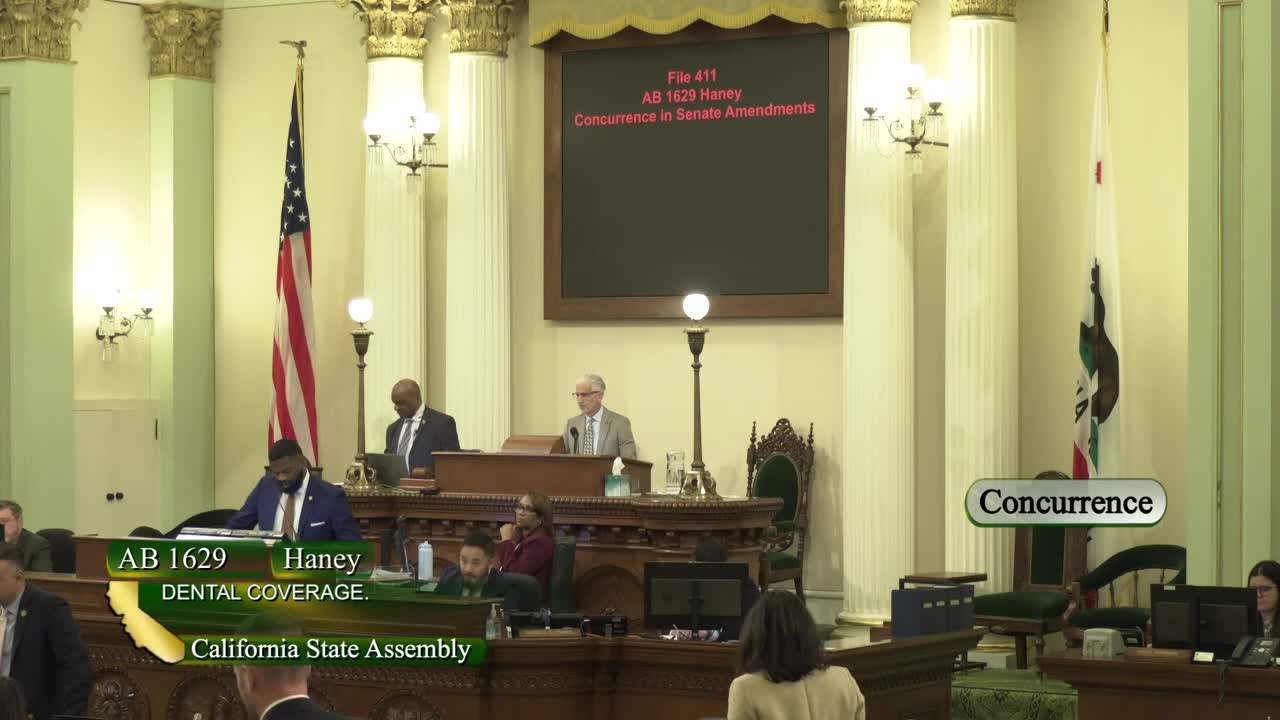 1MIN
Assembly Floor
 1MIN
Senate Floor
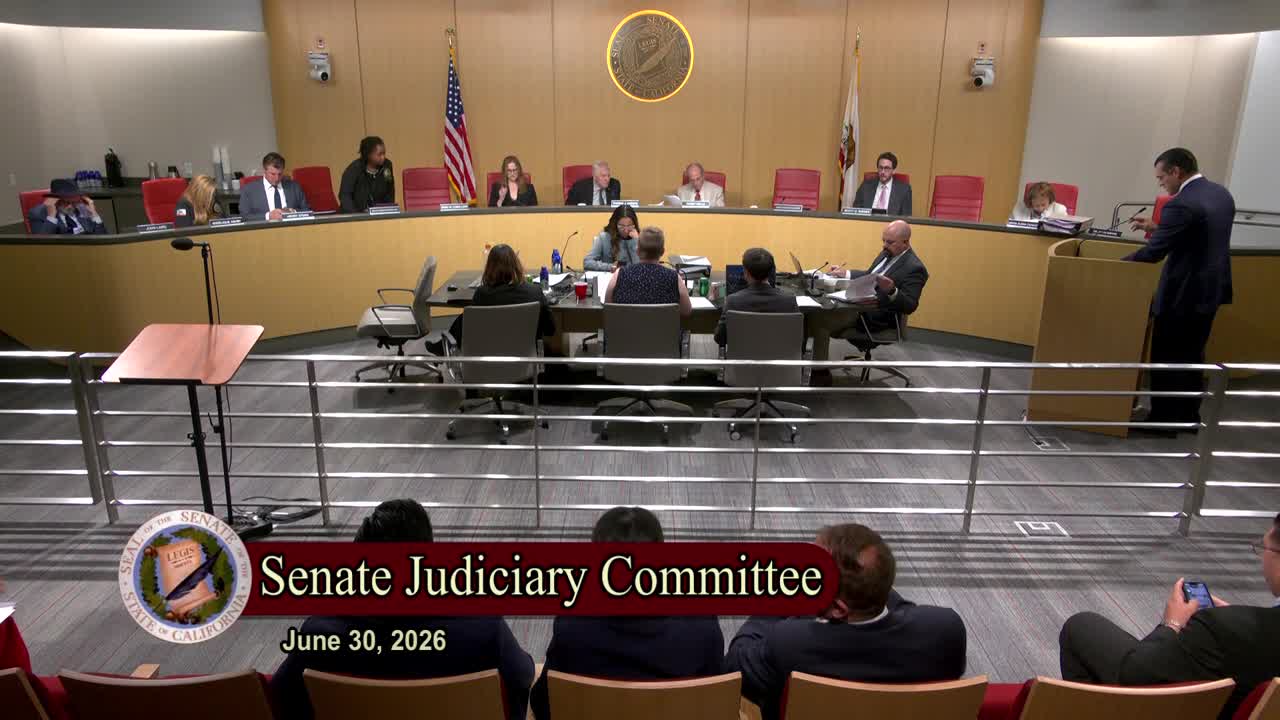 2MIN
Senate Standing Committee on Judiciary
 1MIN
Assembly Floor
 4MIN
Assembly Standing Committee on Banking and Finance
 5MIN
Assembly Standing Committee on Judiciary
Bill Author

Bill Co-Author(s):