AB 2434: Inmates: visitation.
- Session Year: 2025-2026
- House: Assembly
- Latest Version Date: 2026-09-30
Current Status:
Passed
(2026-09-30: Chaptered by Secretary of State - Chapter 941, Statutes of 2026.)
Introduced
In Committee
Awaiting First Chamber Vote
Passed First Chamber
In Committee
Awaiting Second Chamber Vote
Passed Second Chamber
Enacted
What does this bill do?
The bill requires every state prison to offer at least three days of in-person visiting each week, bars denying a visit to someone who traveled more than 170 miles (and hasn’t visited in 30 days) unless there is a documented security threat, and requires staff to let visitors fix minor problems and to notify people if visiting is canceled. It also prohibits most searches of visitors without their voluntary, informed, written consent or a court-issued warrant (a judge’s order), allows routine metal-detector screening, requires written notices and logs for intrusive searches, offers noncontact visits when appropriate, and protects children and people with medical or mobility devices.
The summary is provided by generative AI which can make mistakes. For original language, please view the details in the table below.
Existing law requires the Department of Corrections and Rehabilitation, when amending or adopting regulations that may impact the visitation of inmates, to recognize and consider the value of visiting as a means to improve prison safety, the important role of inmate visitation in maintaining connection with family and community, and the role of inmate visitation in preparing for successful release.
This bill would require each facility, as defined, to establish at least 3 days of visitation per week. The bill would require a facility, if it will not be open for visitation, to provide notice to the impacted population as soon as possible. The bill would authorize a facility to deny contact visits only for specified reasons, including, among others, possession of contraband or pending or sustained rules violations that result in a restricted housing unit term. The bill would require facility staff to take specified actions with regard to correctable issues with a visitation, including, among other things, allowing the visitor a reasonable opportunity to correct the issue and return to visiting up to one hour before the end of the visiting period. The bill would prohibit denial of visitation if a visitor has traveled more than 170 miles to attend a visit and has not visited within 30 days, unless there has been a finding of a credible and documented security threat.
The bill would prohibit a facility from searching visitors without their voluntary, informed, and written consent. The bill would authorize a facility to respond to refusal of that search only with denial of contact visiting for that day, and would require the facility to offer a noncontact visit on the same day, if space is available. The bill would authorize other restrictions and procedures for searches of visitors, as specified.
Existing law requires the Department of Corrections and Rehabilitation, when amending or adopting regulations that may impact the visitation of inmates, to recognize and consider the value of visiting as a means to improve prison safety, the important role of inmate visitation in maintaining connection with family and community, and the role of inmate visitation in preparing for successful release.
This bill would require each facility, as defined, to be open for visitation establish at least 3 days of visitation per week. The bill would prohibit a facility from denying, revoking, suspending, limiting, or interfering with visitation privileges for a disciplinary matter or rule violation unrelated to visitation. require a facility, if it will not be open for visitation, to provide notice to the impacted population as soon as possible. The bill would authorize a facility to deny contact visits only for specified reasons, including, among others, possession of contraband or pending or sustained rules violations that result in a restricted housing unit term. The bill would require facility staff to take specified actions with regard to correctable issues with a visitation, including, among other things, allowing the visitor a reasonable opportunity to correct the issue and return to visiting up to one hour before the end of the visiting period. The bill would prohibit denial of visitation if a visitor has traveled more than 100 170 miles to attend a visit, or visit and has not visited within 30 days, unless there has been a finding of a credible and documented security threat.
The bill would prohibit a facility from searching visitors without their voluntary, informed, and written consent. The bill would authorize a facility to respond to refusal of that search only with denial of contact visiting for that day, and would require the facility to offer a noncontact visit on the same day, if space is available. The bill would require authorize other restrictions and procedures for searches of visitors, as specified.
Existing law requires the Department of Corrections and Rehabilitation, when amending or adopting regulations that may impact the visitation of inmates, to recognize and consider the value of visiting as a means to improve prison safety, the important role of inmate visitation in maintaining connection with family and community, and the role of inmate visitation in preparing for successful release.
This bill would require each facility, as defined, to be open for visitation at least 3 days per week. The bill would prohibit a facility from denying visitation on the basis of specified characteristics or factors, including, among others, sex, race, and criminal history. The bill would require a facility to allow all visits with an incarcerated person to be contact visits unless the incarcerated person is housed in a restricted housing unit, as specified. The bill would prohibit a facility from denying, revoking, suspending, limiting, or interfering with visitation privileges for a disciplinary matter or rule violation unrelated to visitation. The bill would require facility staff to take specified actions with regard to correctable issues with a visitation, including, among other things, allowing the visitor a reasonable opportunity to correct the issue and return to visiting up to one hour before the end of the visiting period. The bill would prohibit denial of visitation if a visitor has traveled more than 100 miles to attend a visit, or has not visited within 30 days, unless there has been a finding of a credible and documented security threat.
The bill would prohibit a facility from searching visitors without their voluntary, informed, and written consent. The bill would authorize a facility to respond to refusal of that search only with denial of contact visiting for that day, and would require the facility to offer a noncontact visit on the same day, if space is available. The bill would require other restrictions and procedures for searches of visitors, as specified.
Existing law requires the Department of Corrections and Rehabilitation, when amending or adopting regulations that may impact the visitation of inmates, to recognize and consider the value of visiting as a means to improve prison safety, the important role of inmate visitation in maintaining connection with family and community, and the role of inmate visitation in preparing for successful release.
This bill would require each facility, as defined, to be open for visitation at least 3 days per week. The bill would prohibit a facility from denying visitation on the basis of specified characteristics or factors, including, among others, sex, race, and criminal history. The bill would require a facility to allow all visits with an incarcerated person to be contact visits unless the incarcerated person is housed in a restricted housing unit, as specified. The bill would prohibit a facility from denying, revoking, suspending, limiting, or interfering with visitation privileges for a disciplinary matter or rule violation unrelated to visitation. The bill would require facility staff to take specified actions with regard to correctable issues with a visitation, including, among other things, allowing the visitor a reasonable opportunity to correct the issue and return to visiting up to one hour before the end of the visiting period. The bill would prohibit denial of visitation if a visitor has traveled more than 100 miles to attend a visit, or has not visited within 30 days, unless there has been a finding of a credible and documented security threat.
The bill would prohibit a facility from searching visitors without their voluntary, informed, and written consent. The bill would authorize a facility to respond to refusal of that search only with denial of contact visiting for that day, and would require the facility to offer a noncontact visit on the same day. day, if space is available. The bill would require other restrictions and procedures for searches of visitors, as specified. The bill would require data regarding searches, alerts, and resulting denials to be collected and published annually by the department in aggregate form.
Existing law requires the Department of Corrections and Rehabilitation, when amending or adopting regulations that may impact the visitation of inmates, to recognize and consider the value of visiting as a means to improve prison safety, the important role of inmate visitation in maintaining connection with family and community, and the role of inmate visitation in preparing for successful release.
This bill would prohibit a facility, as defined, require each facility, as defined, to be open for visitation at least 3 days per week. The bill would prohibit a facility from denying visitation on the basis of specified characteristics or factors, including, among others, sex, race, and criminal history. The bill would require a facility to allow all visits with an incarcerated person to be contact visits unless the incarcerated person is housed in a restricted housing unit, as specified. The bill would prohibit a facility from denying, revoking, suspending, limiting, or interfering with visitation privileges for a disciplinary matter or rule violation unrelated to visitation. The bill would require facility staff to take specified actions with regard to correctable issues with a visitation, including, among other things, allowing the visitor a reasonable opportunity to correct the issue and return to visiting up to one hour before the end of the visiting period. The bill would, would prohibit denial of visitation if a visitor has traveled more than 100 miles to attend a visit, or has not visited within 30 days, require unless there has been a finding of a credible and documented security threat for the visit to be denied by the facility. threat.
The bill would prohibit a facility from searching visitors without their voluntary, informed, and written consent. The bill would authorize a facility to respond to refusal of that search only with denial of contact visiting for that day, and would require the facility to offer a noncontact visit on the same day. The bill would require other restrictions and procedures for searches of visitors, as specified. The bill would require data regarding searches, alerts, and resulting denials to be collected and published annually by the department in aggregate form.
Existing law requires the Department of Corrections and Rehabilitation, when amending or adopting regulations that may impact the visitation of inmates, to recognize and consider the value of visiting as a means to improve prison safety, the important role of inmate visitation in maintaining connection with family and community, and the role of inmate visitation in preparing for successful release.
This bill would prohibit a facility, as defined, from denying visitation on the basis of specified characteristics or factors, including, among others, sex, race, and criminal history. The bill would require a facility to allow all visits with an incarcerated person to be contact visits unless the incarcerated person is housed in a restricted housing unit, as specified. The bill would prohibit a facility from denying, revoking, suspending, limiting, or interfering with visitation privileges for a disciplinary matter or rule violation unrelated to visitation. The bill would require facility staff to take specified actions with regard to correctable issues with a visitation, including, among other things, allowing the visitor a reasonable opportunity to correct the issue and return to visiting up to one hour before the end of the visiting period. The bill would, if a visitor has traveled more than 100 miles to attend a visit, or has not visited within 30 days, require a credible and documented security threat for the visit to be denied by the facility.
The bill would prohibit a facility from searching visitors without their voluntary, informed, and written consent. The bill would authorize a facility to respond to refusal of that search only with denial of contact visiting for that day, and would require the facility to offer a noncontact visit on the same day. The bill would require other restrictions and procedures for searches of visitors, as specified. The bill would require data regarding searches, alerts, and resulting denials to be collected and published annually by the department in aggregate form.
Exiting law establishes the Elderly Parole Program for the purpose of reviewing the parole suitability of incarcerated people who are 50 years of age or older and who have served a minimum of 20 years of continuous incarceration, as defined, on their sentence.This bill would make a technical, nonsubstantive change to those provisions.Exiting law establishes the Elderly Parole Program for the purpose of reviewing the parole suitability of incarcerated people who are 50 years of age or older and who have served a minimum of 20 years of continuous incarceration, as defined, on their sentence.
This bill would make a technical, nonsubstantive change to those provisions.
This act shall be known, and may be cited, as the Visitor Protections and Safety Act.
SEC. 2.The Legislature finds and declares all of the following:
(a)Women, particularly Black women, are the primary visitors of incarcerated people. National research shows that 1 in 4 women and 1 in 2 Black women have a family member in prison.
(b)Essie Justice Groups Because Shes Powerful: The Political Isolation and Resistance of Women with Incarcerated Loved Ones, also underscored that the burden of maintaining family connections under these conditions falls overwhelmingly on women, who already face disproportionate economic, emotional, and caregiving responsibilities when their loved ones are incarcerated.
(c)Moreover, the report found that 70 percent of women are the primary support for at least one of their incarcerated loved ones; 55 percent of women see their loved ones only monthly or a few times a year, and over one-quarter never see their incarcerated loved one; and more than 80 percent of women listed at least one person, incarcerated or not, who depends on them for a basic need.
(d)Californias visitation rules are not set in statute and vary widely by facility. Title 15 regulations provide little procedural guidance and almost no enforceable rights for visitors. As a result, visitors routinely report experiencing seemingly arbitrary denials, last-minute cancellations after traveling long distances, humiliating searches, harassment by staff, and the absence of a meaningful appeals process.
(e)These harms are routinely justified under a broad and unchecked invocation of safety.
(f)Women visitors report being subjected to sexual harassment, degrading searches, intimidation, and retaliation for asserting basic dignity. Children are turned away without explanation. Families lose visits after driving hundreds of miles, often at great financial and emotional cost.
(g)Visitation is not a luxury. It is a public safety, dignity, gender justice, and family connection issue.
(h)The Legislature has repeatedly acknowledged the importance of in-person visitation but has not yet created a comprehensive statutory framework that protects visitors themselves. This act is designed to fill that gap.
SEC. 3.Section 6402.5 is added to the Penal Code, to read:6402.5.(a)For the purposes of this section, the following definitions apply:
(1)Credible security threat means specific, articulable, and documented facts that establish a reasonable belief that a visitor or incarcerated person presents an identifiable risk of introducing contraband, facilitating escape, or causing physical harm within the facility. A credible security threat shall be based on objective information, including reliable intelligence, direct observation, or verified evidence, and shall not be based solely on generalized safety concerns, institutional convenience, anonymous or uncorroborated allegations, personal characteristics, protected traits, prior criminal history unrelated to institutional or visitor safety or security, refusal to consent to a voluntary search, or the mere existence of a past rule violation unless the circumstances of that violation poses a safety or security risk to other visitors, incarcerated individuals, or institutional security.
(2)Facility means any institution operated by the Department of Corrections and Rehabilitation for the purposes of detention.
(3)Visit and visitation means an in-person visit conducted at a facility during established visiting hours.
(b)Each facility shall establish at least three days of visitation per week. If a facility will not be open for visitation, the facility shall provide notice to the impacted population as soon as possible.
(c)Incarcerated persons may only have contact visits restricted or denied based on the following:
(1)Possession of contraband while entering, inside, or exiting the visiting area.
(2)Sustained or pending rules violations for distribution of drugs within the last 24 months.
(3)Other pending or sustained serious rules violations that result in a restrictive housing unit term.
(4)Escaping or aiding an escape or attempting to commit these acts.
(5)Engaging in inappropriate sexual conduct during a visit. This does not include lawful sexual conduct during a family visit.
(6)Documented and individualized circumstances that contact visits would present a substantial risk to institutional or visiting room safety or security, or would be medically or clinically inappropriate due to the incarcerated persons current condition.
(7)As required under existing law.
(d)Any limitation imposed pursuant to subdivision (c) shall be reasonable under the identifiable circumstances and shall be reevaluated once those circumstances no longer exist. If space is available, the department shall offer individuals subject to visitation restrictions or denials noncontact visits to the greatest extent possible.
(e)A facility shall review any limitation, denial, or suspension of visitation imposed prior to January 1, 2027, at the incarcerated persons next annual classification review and modify it as necessary to conform to this section.
(f)(1)A facility shall not immediately deny visitors entry based on correctable issues. For purposes of this subdivision, a correctable issue means a circumstance that can reasonably be remedied by the visitor on the day of the visit without compromising facility safety or security, including any of the following:
(A)Dress code violations.
(B)An excess number of accompanying minors.
(C)Missing, incomplete, or incorrect documentation.
(D)Issues relating to allowable items described in subdivisions (b), (d), and (e) of Section 6405 that can reasonably be corrected before entry.
(E)Possession of an item that is not permitted under Section 6405, but that does not constitute a violation of law or department rules and can be removed, secured, or otherwise corrected before entry.
(2)If there is a correctable issue, staff shall do all of the following:
(A)Provide clear and specific guidance on how to remedy the issue.
(B)Allow the visitor a reasonable opportunity to correct the issue and return to visiting up to one hour before the end of the visiting period.
(C)Permit the visit to proceed once the issue is resolved.
(D)Offer a noncontact visit, if space is available, when appropriate.
(g)If a visit is denied on the day of visiting for a noncorrectable issue, the facility shall provide written documentation to the visitor on the same day stating:
(1)The specific reason for denial.
(2)The length of the denial and explaining how to appeal.
(3)Information regarding the right to appeal and how to appeal.
(h)A visit, whether in person or noncontact due to a reason in subdivision (c), may not be denied if a person has traveled more than 170 miles to attend a visit and has not visited within 30 days, unless there has been a finding of a credible and documented security threat.
SEC. 4.Section 6403 is added to the Penal Code, to read:6403.(a)For the purposes of this section, the following definitions apply:
(1)Assistive device means mobility aids designed to assist mobility and safety for individuals with disabilities, including, but not limited to, manual and electric wheelchairs, walkers, rollators, mobility scooters, canes, and crutches.
(2)Credible security threat means specific, articulable, and documented facts that establish a reasonable belief that a visitor or incarcerated person presents an identifiable risk of introducing contraband, facilitating escape, or causing physical harm within the facility. A credible security threat shall be based on objective information, including reliable intelligence, direct observation, or verified evidence, and shall not be based solely on generalized safety concerns, institutional convenience, anonymous or uncorroborated allegations, personal characteristics, protected traits, prior criminal history unrelated to institutional or visitor safety or security, refusal to consent to a voluntary search, or the mere existence of a past rule violation unless the circumstances of that violation poses a safety or security risk to other visitors or incarcerated individuals or institutional security.
(3)Facility means any institution operated by the Department of Corrections and Rehabilitation for the purposes of detention.
(4)Routine screening means a standardized, minimally intrusive inspection process applied uniformly to all visitors as a condition of entry, for the limited purpose of detecting weapons or contraband. Routine screening shall consist only of passage through a walk-through metal detector or hand-held metal detection wand, visual inspection of personal property, or screening by electronic detection equipment applied in the same manner to all visitors.
(5)Strip search, visual body cavity search, and physical body cavity search have the same meaning as defined in Section 4030.
(6)Visit and visitation mean an in-person visit conducted at a facility during established visiting hours.
(b)(1)A facility may subject any person coming onto the property to routine screening or a voluntary search to ensure facility security and prevent the introduction or removal of contraband.
(2)A facility shall not search visitors without their voluntary, informed, and written consent unless facility officials possess a court-issued warrant or the individual is lawfully detained pursuant to other law.
(3)A facility shall give visitors information regarding their right to refuse a voluntary search that is translated into the top five most commonly spoken languages in California according to the most recently completed census before providing their written consent to the search.
(4)A facility shall not forcibly search any visitor who does not consent to a search. If a person refuses a voluntary search pursuant to this subdivision, the facility may only deny contact visiting for that day. The facility may offer a noncontact visit on the same day, if space is available, unless there is an immediate and credible security threat, or deny the visit.
(5)A facility shall not punish refusal to consent to a search with suspension, termination, or future restriction of visitation privileges, nor shall the refusal to consent to a search be recorded as misconduct in any permanent record.
(6)For any visitor who is denied visitation or has visitation restricted due to failing a search or refusing to consent to a search at the time of that denial, the facility shall issue a written notice detailing what occurred, the date, time, who was present, and the underlying rationale given to the visitor for the denial or restriction.
(c)(1)A facility shall conduct all searches of visitors in a manner and to an extent that is reasonable under the totality of the identified circumstances and the legitimate safety and security concerns involved. Staff shall limit the scope, duration, and intrusiveness of the search to that which is reasonably capable of addressing the identified concern.
(2)Clothed body searches conducted by the facility shall consist of a visual inspection and use of a hand-held wand, and the facility shall prohibit physical contact by staff.
(3)A facility shall conduct unclothed body searches only after providing notice that the search is voluntary, obtaining the visitors written consent, and with reasonable suspicion that contraband is concealed on the body and no less intrusive means are available. The facility shall require written supervisory approval for unclothed searches documenting the specific facts supporting reasonable suspicion. They shall be conducted in a private setting by staff of the same gender as the visitor, with no physical contact. This subdivision does not apply if the facility has a court-issued warrant or placed the visitor under arrest.
(4)The facility shall not conduct physical body cavity searches without a court-issued warrant for the search.
(5)(A)Except as specified in subparagraph (B), the department shall not conduct strip searches, visual body cavity searches, or physical body cavity searches of visitors who are under 18 years of age.
(B)If the department has probable cause and obtains a warrant to search, the department may conduct strip searches of visitors who are under 18 years of age. If there is probable cause that the visitor is attempting to introduce contraband, unauthorized substances, or other unauthorized items into the institution, the department shall notify the visitor and their parent or guardian in writing, and the department shall receive written consent from the visitor and their parent or guardian prior to conducting the search. If probable cause exists but the visitor and their parent or guardian do not consent to the visitor being searched, the department may offer a noncontact visit, if space is available, or deny the visit.
(d)(1)If a visitor is subjected to a search exceeding the standard screening applied to all visitors, the facility shall provide written notice on the same day stating the specific reason for the search and the name and title of the approving official.
(2)The facility shall log all searches beyond routine screening in a manner accessible for review through the visitation appeals process.
(3)The facility shall make all written notices and documentation related to searches of visitors available in the five most common languages spoken in California according to the most recent census.
(e)(1)The facility shall permit all visitors who cannot clear a metal detector due to a medically implanted or prosthetic device to present written verification from a licensed health care provider describing the device and its location.
(2)The facility shall not require renewal of that verification for permanent devices unless there is a material change in the device.
(3)Visitors who use wheelchairs or assistive devices may transfer to a facility wheelchair while the device is inspected. If transfer is not feasible, and the visitor provides a doctors note, the facility may permit visitors to remain in their own wheelchair, or use the visitors assistive device while the wheelchair or assistive device is inspected using the least intrusive means available.
(4)The facility shall not punish failure to present documentation under this subdivision with permanent suspension of visitation, but the facility may require alternative screening measures or a noncontact visit for that day, if space is available.
(f)(1)The facility shall require that all searches be conducted professionally, respectfully, and without harassment, intimidation, or retaliatory intent.
(2)The facility shall prohibit retaliatory searches, searches based on personal characteristics unrelated to safety, and degrading or sexualized comments.
(3)The facility shall inform visitors of their right to file a complaint and shall prohibit retaliation for filing complaints.
This act shall be known, and may be cited, as the Visitor Protections and Safety Act.
SEC. 2.The Legislature finds and declares all of the following:
(a)Women, particularly Black women, are the primary visitors of incarcerated people. National research shows that 1 in 4 women and 1 in 2 Black women have a family member in prison.
(b)Essie Justice Groups Because Shes Powerful: The Political Isolation and Resistance of Women with Incarcerated Loved Ones, also underscored that the burden of maintaining family connections under these conditions falls overwhelmingly on women, who already face disproportionate economic, emotional, and caregiving responsibilities when their loved ones are incarcerated.
(c)Moreover, the report found that 70 percent of women are the primary support for at least one of their incarcerated loved ones; 55 percent of women see their loved ones only monthly or a few times a year, and over one-quarter never see their incarcerated loved one; and more than 80 percent of women listed at least one person, incarcerated or not, who depends on them for a basic need.
(d)Californias visitation rules are not set in statute and vary widely by facility. Title 15 regulations provide little procedural guidance and almost no enforceable rights for visitors. As a result, visitors routinely experience report experiencing seemingly arbitrary denials, last-minute cancellations after traveling long distances, humiliating searches, harassment by staff, and the absence of any a meaningful appeals process.
(e)These harms are routinely justified under a broad and unchecked invocation of safety.
(f)Women visitors report being subjected to sexual harassment, degrading searches, intimidation, and retaliation for asserting basic dignity. Children are turned away without explanation. Families lose visits after driving hundreds of miles, often at great financial and emotional cost.
(g)Visitation is not a luxury. It is a public safety, dignity, gender justice, and family connection issue.
(h)The Legislature has repeatedly acknowledged the importance of in-person visitation but has not yet created a comprehensive statutory framework that protects visitors themselves. This act is designed to fill that gap.
SEC. 3.Section 6402.5 is added to the Penal Code, to read:6402.5.(a)For the purposes of this section, the following definitions apply:
(1)Credible security threat means a specific, articulable, and documented facts that establish a reasonable belief that a visitor or incarcerated person presents an immediate and identifiable risk of introducing contraband, facilitating escape, or causing physical harm within the facility. A credible security threat shall be based on objective information, including reliable intelligence, direct observation, or verified evidence, and shall not be based solely on generalized safety concerns, institutional convenience, anonymous or uncorroborated allegations, personal characteristics, protected traits, prior criminal history unrelated to institutional or visitor safety or security, refusal to consent to a voluntary search, or the mere existence of a past rule violation unless the circumstances of that violation create poses a safety or security risk to other visitors or visitors, incarcerated individuals individuals, or institutional security.
(2)Facility means any institution operated by the Department of Corrections and Rehabilitation for the purposes of detention.
(3)Visit and visitation means an in-person visit conducted at a facility during established visiting hours.
(b)Each facility shall be open for visitation establish at least three days of visitation per week. If a facility will not be open for visitation, the facility shall provide notice to the impacted population as soon as possible.
(c)A facility shall not deny, revoke, suspend, limit, or interfere with visiting privileges for a disciplinary matter or rule violation unrelated to visitation.(c)Incarcerated persons may only have contact visits restricted or denied based on the following:
(1)Possession of contraband while entering, inside, or exiting the visiting area.
(2)Sustained or pending rules violations for distribution of drugs within the last 24 months.
(3)Other pending or sustained serious rules violations that result in a restrictive housing unit term.
(4)Escaping or aiding an escape or attempting to commit these acts.
(5)Engaging in inappropriate sexual conduct during a visit. This does not include lawful sexual conduct during a family visit.
(6)Documented and individualized circumstances that contact visits would present a substantial risk to institutional or visiting room safety or security, or would be medically or clinically inappropriate due to the incarcerated persons current condition.
(7)As required under existing law.
(d)Any limitation imposed pursuant to subdivision (c) shall be reasonable under the identifiable circumstances and shall be reevaluated once those circumstances no longer exist. If space is available, the department shall offer individuals subject to visitation restrictions or denials noncontact visits to the greatest extent possible.
(d)(e)A facility shall review any limitation, denial, or suspension of visitation imposed prior to January 1, 2027, at the incarcerated persons next annual classification review and modify it as necessary to conform to this section.
(e)(f)(1)A facility shall not immediately deny visitors entry based on correctable issues, including, but not limited to, dress code violations, excess number of accompanying minors, or missing documentation. For correctable issues, staff shall do all of the following: issues. For purposes of this subdivision, a correctable issue means a circumstance that can reasonably be remedied by the visitor on the day of the visit without compromising facility safety or security, including any of the following:
(A)Dress code violations.
(B)An excess number of accompanying minors.
(C)Missing, incomplete, or incorrect documentation.
(D)Issues relating to allowable items described in subdivisions (b), (d), and (e) of Section 6405 that can reasonably be corrected before entry.
(E)Possession of an item that is not permitted under Section 6405, but that does not constitute a violation of law or department rules and can be removed, secured, or otherwise corrected before entry.
(2)If there is a correctable issue, staff shall do all of the following:
(1)(A)Provide clear and specific guidance on how to remedy the issue in writing. issue.
(2)(B)Allow the visitor a reasonable opportunity to correct the issue and return to visiting up to one hour before the end of the visiting period.
(3)(C)Permit the visit to proceed once the issue is resolved.
(4)(D)Offer reasonable alternatives, including a noncontact visit, if space is available, when correction is not possible that day. appropriate.
(f)(g)If a visit is denied on the day of visiting for a noncorrectable issue, the facility shall provide written documentation to the visitor on the same day stating:
(1)The specific reason for denial.
(2)The length of the denial and explaining how to appeal.
(3)Information regarding the right to appeal and how to appeal.
(g)(h)A visit visit, whether in person or noncontact due to a reason in subdivision (c), may not be denied if a person has traveled more than 100 170 miles to attend a visit or and has not visited within 30 days, unless there has been a finding of a credible and documented security threat. The facility may not deny a visit under this subdivision for correctable issues described in subdivision (e).
SEC. 4.Section 6403 is added to the Penal Code, to read:6403.(a)For the purposes of this section, the following definitions apply:
(1)Assistive device means mobility aids designed to assist mobility and safety for individuals with disabilities, including, but not limited to, manual and electric wheelchairs, walkers, rollators, mobility scooters, canes, and crutches.
(2)Credible security threat means a specific, articulable, and documented facts that establish a reasonable belief that a visitor or incarcerated person presents an immediate and identifiable risk of introducing contraband, facilitating escape, or causing physical harm within the facility. A credible security threat shall be based on objective information, including reliable intelligence, direct observation, or verified evidence, and shall not be based solely on generalized safety concerns, institutional convenience, anonymous or uncorroborated allegations, personal characteristics, protected traits, prior criminal history unrelated to institutional or visitor safety or security, refusal to consent to a voluntary search, or the mere existence of a past rule violation unless the circumstances of that violation create poses a safety or security risk to other visitors or incarcerated individuals or institutional security.
(3)Facility means any institution operated by the Department of Corrections and Rehabilitation for the purposes of detention.
(4)Routine screening means a standardized, minimally intrusive inspection process applied uniformly to all visitors as a condition of entry, for the limited purpose of detecting weapons or contraband. Routine screening shall consist only of passage through a walk-through metal detector or hand-held metal detection wand, visual inspection of personal property, or screening by electronic detection equipment applied in the same manner to all visitors.
(5)Strip search, visual body cavity search, and physical body cavity search have the same meaning as defined in Section 4030.
(6)Visit and visitation means mean an in-person visit conducted at a facility during established visiting hours.
(b)(1)A facility may subject any person coming onto the property to routine screening or a voluntary search to ensure facility security and prevent the introduction or removal of contraband.
(2)A facility shall not search visitors without their voluntary, informed, and written consent unless facility officials possess a court-issued warrant or the individual is lawfully detained pursuant to other law.
(3)A facility shall give visitors information regarding their right to refuse a voluntary search that is translated into the top five most commonly spoken languages in California according to the most recently completed census before providing their written consent to the search.
(4)A facility shall not forcibly search any visitor who does not consent to a search. If a person refuses a voluntary search pursuant to this subdivision, the facility may only deny contact visiting for that day. The facility shall may offer a noncontact visit on the same day, if space is available, unless there is an immediate and credible security threat. threat, or deny the visit.
(5)A facility shall not punish refusal to consent to a search with suspension, termination, or future restriction of visitation privileges, nor shall the refusal to consent to a search be recorded as misconduct in any permanent record.
(6)For any visitor who is denied visitation or has visitation restricted due to failing a search or refusing to consent to a search shall, at the time of that denial, the facility shall issue a written notice detailing what occurred, the date, time, who was present, and the underlying rationale given to the visitor for the denial or restriction.
(c)(1)A facility shall conduct all searches in the least intrusive manner reasonably available and shall limit searches to what is strictly necessary to address the specific security concern. of visitors in a manner and to an extent that is reasonable under the totality of the identified circumstances and the legitimate safety and security concerns involved. Staff shall limit the scope, duration, and intrusiveness of the search to that which is reasonably capable of addressing the identified concern.
(2)Clothed body searches conducted by the facility shall consist of a visual inspection and use of a hand-held wand, and the facility shall prohibit physical contact by staff.
(3)A facility shall conduct unclothed body searches only after providing notice that the search is voluntary, obtaining the visitors written consent, and with reasonable suspicion that contraband is concealed on the body and no less intrusive means are available. The facility shall require written supervisory approval for unclothed searches documenting the specific facts supporting reasonable suspicion. They shall be conducted in a private setting by staff of the same gender as the visitor, with no physical contact. This subdivision does not apply if the facility has a court-issued warrant or placed the visitor under arrest.
(4)The facility shall not conduct strip searches, physical body cavity searches, and any search involving physical intrusion searches without a court-issued warrant for the search.
(5)(A)Except as specified in subparagraph (B), the department shall not conduct strip searches, visual body cavity searches, and or physical body cavity searches of visitors who are under 18 years of age.
(B)If the department has probable cause and obtains a warrant to search, the department may conduct strip searches of visitors who are under 18 years of age. If there is probable cause that the visitor is attempting to introduce contraband, unauthorized substances, or other unauthorized items into the institution, the department shall notify the visitor and their parent or guardian in writing, and the department shall receive written consent from the visitor and their parent or guardian prior to conducting the search. If probable cause exists but the visitor and their parent or guardian do not consent to the visitor being searched, the department may offer a noncontact visit, if space is available, or deny the visit.
(d)(1)If a visitor is subjected to a search exceeding the standard screening applied to all visitors, the facility shall provide written notice on the same day stating the specific reason for the search and the name and title of the approving official.
(2)The facility shall log all searches beyond routine screening in a manner accessible for review through the visitation appeals process.
(3)The facility shall make all written notices and documentation related to searches of visitors available in the five most common languages spoken in California according to the most recent census.
(e)(1)The facility shall permit all visitors who cannot clear a metal detector due to a medically implanted or prosthetic device to present written verification from a licensed health care provider describing the device and its location.
(2)The facility shall not require renewal of that verification for permanent devices unless there is a material change in the device.
(3)The facility shall not require visitors Visitors who use wheelchairs or assistive devices to may transfer to a facility wheelchair. The facility shall wheelchair while the device is inspected. If transfer is not feasible, and the visitor provides a doctors note, the facility may permit visitors to remain in their own wheelchair wheelchair, or use the visitors assistive device while the wheelchair or assistive device is inspected using the least intrusive means available.
(4)The facility shall not punish failure to present documentation under this subdivision with permanent suspension of visitation, but the facility may require alternative screening measures or a noncontact visit for that day, if space is available.
(f)(1)The facility shall require that all searches be conducted professionally, respectfully, and without harassment, intimidation, or retaliatory intent.
(2)The facility shall prohibit retaliatory searches, searches based on personal characteristics unrelated to safety, and degrading or sexualized comments.
(3)The facility shall inform visitors of their right to file a complaint and shall prohibit retaliation for filing complaints.
This act shall be known, and may be cited, as the Visitor Protections and Safety Act.
SEC. 2.The Legislature finds and declares all of the following:
(a)Women, particularly Black women, are the primary visitors of incarcerated people. National research shows that one 1 in 4 women and one 1 in 2 Black women have a family member in prison.
(b)Essie Justice Groups Because Shes Powerful: The Political Isolation and Resistance of Women with Incarcerated Loved Ones, also underscored that the burden of maintaining family connections under these conditions falls overwhelmingly on women, who already face disproportionate economic, emotional, and caregiving responsibilities when their loved ones are incarcerated.
(c)Moreover, the report found that 70% 70 percent of women are the primary support for at least one of their incarcerated loved ones; 55% 55 percent of women see their loved ones only monthly or a few times a year, and over one-quarter never see their incarcerated loved one; and more than 80% 80 percent of women listed at least one person, incarcerated or not, who depends on them for a basic need.
(d)Californias visitation rules are not set in statute and vary widely by facility. Title 15 regulations provide little procedural guidance and almost no enforceable rights for visitors. As a result, visitors routinely experience arbitrary denials, last-minute cancellations after traveling long distances, humiliating searches, harassment by staff, and the absence of any meaningful appeals process.
(e)These harms are routinely justified under a broad and unchecked invocation of safety. In practice, this has created an environment where facility staff wield extraordinary discretion with no guardrails, no transparency, and no accountability.
(f)Women visitors report being subjected to sexual harassment, degrading searches, intimidation, and retaliation for asserting basic dignity. Children are turned away without explanation. Families lose visits after driving hundreds of miles, often at great financial and emotional cost.
(g)Visitation is not a luxury. It is a public safety, dignity, gender justice, and family connection issue.
(h)The Legislature has repeatedly acknowledged the importance of in-person visitation but has not yet created a comprehensive statutory framework that protects visitors themselves. This act is designed to fill that gap.
SEC. 3.Section 6402.5 is added to the Penal Code, to read:6402.5.(a)For the purposes of this section, the following definitions apply:
(1)Credible security threat means a specific, articulable, and documented facts that establish a reasonable belief that a visitor or incarcerated person presents an immediate and identifiable risk of introducing contraband, facilitating escape, or causing physical harm within the facility. A credible security threat shall be based on objective information, including reliable intelligence, direct observation, or verified evidence, and shall not be based solely on generalized safety concerns, institutional convenience, anonymous or uncorroborated allegations, personal characteristics, protected traits, prior criminal history unrelated to institutional safety, or visitor safety or security, refusal to consent to a voluntary search, or the mere existence of a past rule violation. violation unless the circumstances of that violation create a safety or security risk to other visitors or incarcerated individuals or institutional security.
(2)Facility means any institution operated by the Department of Corrections and Rehabilitation for the purposes of detention.
(3)Visit and visitation means an in-person visit conducted at a facility during established visiting hours.
(b)Each facility shall be open for visitation at least three days per week.
(c)A facility shall not deny, revoke, limit, or interfere with visitation based on any of the following characteristics, whether actual or perceived, of a person in custody or a prospective visitor:(1)Sex.(2)Sexual orientation.(3)Race.(4)Age.(5)Nationality.(6)Political beliefs.(7)Religious beliefs and expression.(8)Criminal record.(9)Pending criminal or civil case.(10)Lack of family relationship.(11)Gender, including gender identity, self-image, appearance, behavior or expression.(12)Disability.(13)Hair color, texture, or protective hairstyles, including, but not limited to, tightly coiled, curly, wavy, or Afro-textured hair, braids, locs, twists, Bantu knots, cornrows, Afros, and other natural hair styling methods.(14)Body type, body size, weight, height, or other physical characteristics.(d)(1)A facility shall allow all visits with an incarcerated person to be contact visits unless the incarcerated person is housed in a restricted housing unit.(2)A facility may limit an incarcerated person housed in a restricted housing unit to noncontact visits only for the duration of that placement.(3)A facility shall restore contact visiting immediately upon the incarcerated persons return to a nonrestricted housing unit.(e)(c)A facility shall not deny, revoke, suspend, limit, or interfere with visiting privileges for a disciplinary matter or rule violation unrelated to visitation.
(f)(d)A facility shall review any limitation, denial, or suspension of visitation imposed prior to January 1, 2027, at the incarcerated persons next annual classification review and modify it as necessary to conform to this section.
(g)(e)A facility shall not immediately deny visitors entry based on correctable issues, including, but not limited to, dress code violations, excess number of accompanying minors, or missing documentation. For correctable issues, staff shall do all of the following:
(1)Provide clear and specific guidance on how to remedy the issue in writing.
(2)Allow the visitor a reasonable opportunity to correct the issue and return to visiting up to one hour before the end of the visiting period.
(3)Permit the visit to proceed once the issue is resolved.
(4)Offer reasonable alternatives, including a noncontact visit, if space is available, when correction is not possible that day.
(h)(f)If a visit is denied on the day of visiting for a noncorrectable issue, the facility shall provide written documentation to the visitor on the same day stating:
(1)The specific reason for denial.
(2)The length of the denial and explaining how to appeal.
(3)Information regarding the right to appeal and how to appeal.
(i)(g)A visit may not be denied if a person has traveled more than 100 miles to attend a visit or has not visited within 30 days, unless there has been a finding of a credible and documented security threat. The facility may not deny a visit under this subdivision for correctable issues described in subdivision (g). (e).
SEC. 4.Section 6403 is added to the Penal Code, to read:6403.(a)For the purposes of this section, the following definitions apply:
(1)Assistive device means mobility aids designed to assist mobility and safety for individuals with disabilities, including, but not limited to, manual and electric wheelchairs, walkers, rollators, mobility scooters, canes, and crutches.
(2)Credible security threat means a specific, articulable, and documented facts that establish a reasonable belief that a visitor or incarcerated person presents an immediate and identifiable risk of introducing contraband, facilitating escape, or causing physical harm within the facility. A credible security threat shall be based on objective information, including reliable intelligence, direct observation, or verified evidence, and shall not be based solely on generalized safety concerns, institutional convenience, anonymous or uncorroborated allegations, personal characteristics, protected traits, prior criminal history unrelated to institutional safety, or visitor safety or security, refusal to consent to a voluntary search, or the mere existence of a past rule violation. violation unless the circumstances of that violation create a safety or security risk to other visitors or incarcerated individuals or institutional security.
(3)Facility means any institution operated by the Department of Corrections and Rehabilitation for the purposes of detention.
(4)Routine screening means a standardized, minimally intrusive inspection process applied uniformly to all visitors as a condition of entry, for the limited purpose of detecting weapons or contraband. Routine screening shall consist only of passage through a walk-through metal detector or hand-held metal detection wand, visual inspection of personal property, or screening by electronic detection equipment applied in the same manner to all visitors.
(5)Strip search, visual body cavity search, and physical body cavity search have the same meaning as defined in Section 4030.
(6)Visit and visitation means an in-person visit conducted at a facility during established visiting hours.
(b)(1)A facility may subject any person coming onto the property to routine screening or a voluntary search to ensure facility security and prevent the introduction or removal of contraband.
(2)A facility shall not search visitors without their voluntary, informed, and written consent unless facility officials possess a court-issued warrant or the individual is lawfully detained pursuant to other law.
(3)A facility shall give visitors information regarding their right to refuse a voluntary search that is translated into the top five most commonly spoken languages in California according to the most recently completed census before providing their written consent to the search.
(4)A facility shall not forcibly search any visitor who does not consent to a search. If a person refuses a voluntary search pursuant to this subdivision, the facility may only deny contact visiting for that day. The facility shall offer a noncontact visit on the same day, if space is available, unless there is an immediate and credible security threat.
(5)A facility shall not punish refusal to consent to a search with suspension, termination, or future restriction of visitation privileges, nor shall the refusal to consent to a search be recorded as misconduct in any permanent record.
(6)For any visitor who is denied visitation or has visitation restricted due to failing a search or refusing to consent to a search shall, at the time of that denial, the facility shall issue a written notice detailing what occurred, the date, time, who was present, and the underlying rationale given to the visitor for the denial or restriction.
(c)(1)A facility shall conduct all searches in the least intrusive manner reasonably available and shall limit searches to what is strictly necessary to address the specific security concern.
(2)Clothed body searches conducted by the facility shall consist of a visual inspection and use of a hand-held wand, and the facility shall prohibit physical contact by staff.
(3)A facility shall conduct unclothed body searches only after providing notice that the search is voluntary, obtaining the visitors written consent, and with reasonable suspicion that contraband is concealed on the body and no less intrusive means are available. The facility shall require written supervisory approval for unclothed searches documenting the specific facts supporting reasonable suspicion. They shall be conducted in a private setting by staff of the same gender as the visitor, with no physical contact.
(4)The facility shall not conduct strip searches, body cavity searches, and any search involving physical intrusion without a court-issued warrant for the search.
(5)(A)Except as specified in subparagraph (B), the department shall not conduct strip searches, visual body cavity searches, and physical body cavity searches of visitors who are under 18 years of age.
(B)If the department has probable cause and obtains a warrant to search, the department may conduct strip searches of visitors who are under 18 years of age. If there is probable cause that the visitor is attempting to introduce contraband, unauthorized substances, or other unauthorized items into the institution, the department shall notify the visitor and their parent or guardian in writing, and the department shall receive written consent from the visitor and their parent or guardian prior to conducting the search. If probable cause exists but the visitor and their parent or guardian do not consent to the visitor being searched, the department may offer a noncontact visit, if space is available, or deny the visit.
(d)(1)If a visitor is subjected to a search exceeding the standard screening applied to all visitors, the facility shall provide written notice on the same day stating the specific reason for the search and the name and title of the approving official.
(2)The facility shall log all searches beyond routine screening in a manner accessible for review through the visitation appeals process.
(3)The facility shall make all written notices and documentation related to searches of visitors available in the five most common languages spoken in California according to the most recent census.
(e)(1)The facility shall permit all visitors who cannot clear a metal detector due to a medically implanted or prosthetic device to present written verification from a licensed health care provider describing the device and its location.
(2)The facility shall not require renewal of that verification for permanent devices unless there is a material change in the device.
(3)The facility shall not require visitors who use wheelchairs or assistive devices to transfer to a facility wheelchair. The facility shall permit visitors to remain in their own wheelchair while the device is inspected using the least intrusive means available.
(4)The facility shall not punish failure to present documentation under this subdivision with permanent suspension of visitation, but the facility may require alternative screening measures or a noncontact visit for that day, if space is available.
(f)(1)The facility shall require that all searches be conducted professionally, respectfully, and without harassment, intimidation, or retaliatory intent.
(2)The facility shall prohibit retaliatory searches, searches based on personal characteristics unrelated to safety, and degrading or sexualized comments.
(3)The facility shall inform visitors of their right to file a complaint and shall prohibit retaliation for filing complaints.
This act shall be known, and may be cited, as the Visitor Protections and Safety Act.
SEC. 2.The Legislature finds and declares all of the following:
(a)Women, particularly Black women, are the primary visitors of incarcerated people. National research shows that one in 4 women and one in 2 Black women have a family member in prison.
(b)Essie Justice Groups Because Shes Powerful: The Political Isolation and Resistance of Women with Incarcerated Loved Ones, also underscored that the burden of maintaining family connections under these conditions falls overwhelmingly on women, who already face disproportionate economic, emotional, and caregiving responsibilities when their loved ones are incarcerated.
(c)Moreover, the report found that 70% of women are the primary support for at least one of their incarcerated loved ones; 55% of women see their loved ones only monthly or a few times a year, and over one-quarter never see their incarcerated loved one; and more than 80% of women listed at least one person, incarcerated or not, who depends on them for a basic need.
(d)Californias visitation rules are not set in statute and vary widely by facility. Title 15 regulations provide little procedural guidance and almost no enforceable rights for visitors. As a result, visitors routinely experience arbitrary denials, last-minute cancellations after traveling long distances, humiliating searches, harassment by staff, and the absence of any meaningful appeals process.
(e)These harms are routinely justified under a broad and unchecked invocation of safety. In practice, this has created an environment where facility staff wield extraordinary discretion with no guardrails, no transparency, and no accountability.
(f)Women visitors report being subjected to sexual harassment, degrading searches, intimidation, and retaliation for asserting basic dignity. Children are turned away without explanation. Families lose visits after driving hundreds of miles, often at great financial and emotional cost.
(g)Visitation is not a luxury. It is a public safety, dignity, gender justice, and family connection issue.
(h)The Legislature has repeatedly acknowledged the importance of in-person visitation but has not yet created a comprehensive statutory framework that protects visitors themselves. This act is designed to fill that gap.
SEC. 3.Section 6402.5 is added to the Penal Code, to read:6402.5.(a)For the purposes of this section, the following definitions apply:
(1)Credible security threat means a specific, articulable, and documented facts that establish a reasonable belief that a visitor or incarcerated person presents an immediate and identifiable risk of introducing contraband, facilitating escape, or causing physical harm within the facility. A credible security threat shall be based on objective information, including reliable intelligence, direct observation, or verified evidence, and shall not be based solely on generalized safety concerns, institutional convenience, anonymous or uncorroborated allegations, personal characteristics, protected traits, prior criminal history unrelated to institutional safety, refusal to consent to a voluntary search, or the mere existence of a past rule violation.
(2)Facility means any institution operated by the Department of Corrections and Rehabilitation for the purposes of detention.
(3)Visit and visitation means an in-person visit conducted at a facility during established visiting hours.
(b)Each facility shall be open for visitation at least three days per week.
(c)A facility shall not deny, revoke, limit, or interfere with visitation based on any of the following characteristics, whether actual or perceived, of a person in custody or a prospective visitor:
(1)Sex.
(2)Sexual orientation.
(3)Race.
(4)Age.
(5)Nationality.
(6)Political beliefs.
(7)Religious beliefs and expression.
(8)Criminal record.
(9)Pending criminal or civil case.
(10)Lack of family relationship.
(11)Gender, including gender identity, self-image, appearance, behavior or expression.
(12)Disability.
(13)Hair color, texture, or protective hairstyles, including, but not limited to, tightly coiled, curly, wavy, or Afro-textured hair, braids, locs, twists, Bantu knots, cornrows, Afros, and other natural hair styling methods.
(14)Body type, body size, weight, height, or other physical characteristics.
(d)(1)A facility shall allow all visits with an incarcerated person to be contact visits unless the incarcerated person is housed in a restricted housing unit.
(2)A facility may limit an incarcerated person housed in a restricted housing unit to noncontact visits only for the duration of that placement.
(3)A facility shall restore contact visiting immediately upon the incarcerated persons return to a nonrestricted housing unit.
(e)A facility shall not deny, revoke, suspend, limit, or interfere with visiting privileges for a disciplinary matter or rule violation unrelated to visitation.
(f)A facility shall review any limitation, denial, or suspension of visitation imposed prior to January 1, 2027, at the incarcerated persons next annual classification review and modify it as necessary to conform to this section.
(g)A facility shall not deny visitors entry based on correctable issues, including, but not limited to, dress code violations, excess number of accompanying minors, or missing documentation. For correctable issues, staff shall do all of the following:
(1)Provide clear and specific guidance on how to remedy the issue in writing.
(2)Allow the visitor a reasonable opportunity to correct the issue and return to visiting up to one hour before the end of the visiting period.
(3)Permit the visit to proceed once the issue is resolved.
(4)Offer reasonable alternatives, including a noncontact visit, if space is available, when correction is not possible that day.
(h)If a visit is denied on the day of visiting for a noncorrectable issue, the facility shall provide written documentation to the visitor on the same day stating:
(1)The specific reason for denial.
(2)The length of the denial and explaining how to appeal.
(3)Information regarding the right to appeal and how to appeal.
(i)A visit may not be denied if a person has traveled more than 100 miles to attend a visit or has not visited within 30 days, unless there has been a finding of a credible and documented security threat. The facility may not deny a visit under this subdivision for correctable issues described in subdivision (g).
SEC. 4.Section 6403 is added to the Penal Code, to read:6403.(a)For the purposes of this section, the following definitions apply:
(1)Assistive device means mobility aids designed to assist mobility and safety for individuals with disabilities, including, but not limited to, manual and electric wheelchairs, walkers, rollators, mobility scooters, canes, and crutches.
(2)Credible security threat means a specific, articulable, and documented facts that establish a reasonable belief that a visitor or incarcerated person presents an immediate and identifiable risk of introducing contraband, facilitating escape, or causing physical harm within the facility. A credible security threat shall be based on objective information, including reliable intelligence, direct observation, or verified evidence, and shall not be based solely on generalized safety concerns, institutional convenience, anonymous or uncorroborated allegations, personal characteristics, protected traits, prior criminal history unrelated to institutional safety, refusal to consent to a voluntary search, or the mere existence of a past rule violation.
(3)Facility means any institution operated by the Department of Corrections and Rehabilitation for the purposes of detention.
(4)Routine screening means a standardized, minimally intrusive inspection process applied uniformly to all visitors as a condition of entry, for the limited purpose of detecting weapons or contraband. Routine screening shall consist only of passage through a walk-through metal detector or hand-held metal detection wand, visual inspection of personal property, or screening by electronic detection equipment applied in the same manner to all visitors.
(5)Strip search, visual body cavity search, and physical body cavity search have the same meaning as defined in Section 4030.
(6)Visit and visitation means an in-person visit conducted at a facility during established visiting hours.
(b)(1)A facility may subject any person coming onto the property to routine screening or a voluntary search to ensure facility security and prevent the introduction or removal of contraband.
(2)A facility shall not search visitors without their voluntary, informed, and written consent unless facility officials possess a court-issued warrant or the individual is lawfully detained pursuant to other law.
(3)A facility shall give visitors information regarding their right to refuse a voluntary search that is translated into the top five most commonly spoken languages in California according to the most recently completed census before providing their written consent to the search.
(4)A facility shall not forcibly search any visitor who does not consent to a search. If a person refuses a voluntary search pursuant to this subdivision, the facility may only deny contact visiting for that day. The facility shall offer a noncontact visit on the same day, if space is available, unless there is an immediate and credible security threat.
(5)A facility shall not punish refusal to consent to a search with suspension, termination, or future restriction of visitation privileges, nor shall the refusal to consent to a search be recorded as misconduct in any permanent record.
(6)For any visitor who is denied visitation or has visitation restricted due to failing a search or refusing to consent to a search shall, at the time of that denial, the facility shall issue a written notice detailing what occurred, the date, time, who was present, and the underlying rationale given to the visitor for the denial or restriction.
(c)(1)A facility shall conduct all searches in the least intrusive manner reasonably available and shall limit searches to what is strictly necessary to address the specific security concern.
(2)Clothed body searches conducted by the facility shall consist of a visual inspection and use of a hand-held wand, and the facility shall prohibit physical contact by staff.
(3)A facility shall conduct unclothed body searches only after providing notice that the search is voluntary, obtaining the visitors written consent, and with reasonable suspicion that contraband is concealed on the body and no less intrusive means are available. The facility shall require written supervisory approval for unclothed searches documenting the specific facts supporting reasonable suspicion. They shall be conducted in a private setting by staff of the same gender as the visitor, with no physical contact.
(4)The facility shall not conduct strip searches, body cavity searches, and any search involving physical intrusion without a court-issued warrant for the search.
(5)(A)Except as specified in subparagraph (B), the department shall not conduct strip searches, visual body cavity searches, and physical body cavity searches of visitors who are under 18 years of age.
(B)If the department has probable cause and obtains a warrant to search, the department may conduct strip searches of visitors who are under 18 years of age. If there is probable cause that the visitor is attempting to introduce contraband, unauthorized substances, or other unauthorized items into the institution, the department shall notify the visitor and their parent or guardian in writing, and the department shall receive written consent from the visitor and their parent or guardian prior to conducting the search. If probable cause exists but the visitor and their parent or guardian do not consent to the visitor being searched, the department may offer a noncontact visit, if feasible, space is available, or deny the visit.
(d)(1)If a visitor is subjected to a search exceeding the standard screening applied to all visitors, the facility shall provide written notice on the same day stating the specific reason for the search and the name and title of the approving official.
(2)The facility shall log all searches beyond routine screening in a manner accessible for review through the visitation appeals process.
(3)The department shall annually collect and publish data regarding searches, alerts, and resulting denials in aggregate form to ensure transparency and guard against discriminatory enforcement. (4)(3)The facility shall make all written notices and documentation related to searches of visitors available in the five most common languages spoken in California according to the most recent census.
(e)(1)The facility shall permit all visitors who cannot clear a metal detector due to a medically implanted or prosthetic device to present written verification from a licensed health care provider describing the device and its location.
(2)The facility shall not require renewal of that verification for permanent devices unless there is a material change in the device.
(3)The facility shall not require visitors who use wheelchairs or assistive devices to transfer to a facility wheelchair. The facility shall permit visitors to remain in their own wheelchair while the device is inspected using the least intrusive means available.
(4)The facility shall not punish failure to present documentation under this subdivision with permanent suspension of visitation, but the facility may require alternative screening measures or a noncontact visit for that day. day, if space is available.
(f)(1)The facility shall require that all searches be conducted professionally, respectfully, and without harassment, intimidation, or retaliatory intent.
(2)The facility shall prohibit retaliatory searches, searches based on personal characteristics unrelated to safety, and degrading or sexualized comments.
(3)The facility shall inform visitors of their right to file a complaint and shall prohibit retaliation for filing complaints.
This act shall be known, and may be cited, as the Visitor Protections and Safety Act.
SEC. 2.The Legislature finds and declares all of the following:
(a)Women, particularly Black women, are the primary visitors of incarcerated people. National research shows that one in 4 women and one in 2 Black women have a family member in prison.
(b)Essie Justice Groups Because Shes Powerful: The Political Isolation and Resistance of Women with Incarcerated Loved Ones, also underscored that the burden of maintaining family connections under these conditions falls overwhelmingly on women, who already face disproportionate economic, emotional, and caregiving responsibilities when their loved ones are incarcerated.
(c)Moreover, the report found that 70% of women are the primary support for at least one of their incarcerated loved ones; 55% of women see their loved ones only monthly or a few times a year, and over one-quarter never see their incarcerated loved one; and more than 80% of women listed at least one person, incarcerated or not, who depends on them for a basic need.
(d)Californias visitation rules are not set in statute and vary widely by facility. Title 15 regulations provide little procedural guidance and almost no enforceable rights for visitors. As a result, visitors routinely experience arbitrary denials, last-minute cancellations after traveling long distances, humiliating searches, harassment by staff, and the absence of any meaningful appeals process.
(e)These harms are routinely justified under a broad and unchecked invocation of safety. In practice, this has created an environment where facility staff wield extraordinary discretion with no guardrails, no transparency, and no accountability.
(f)Women visitors report being subjected to sexual harassment, degrading searches, intimidation, and retaliation for asserting basic dignity. Children are turned away without explanation. Families lose visits after driving hundreds of miles, often at great financial and emotional cost.
(g)Visitation is not a luxury. It is a public safety, dignity, gender justice, and family connection issue.
(h)The Legislature has repeatedly acknowledged the importance of in-person visitation but has not yet created a comprehensive statutory framework that protects visitors themselves. This act is designed to fill that gap.
SEC. 3.Section 6402.5 is added to the Penal Code, to read:6402.5.(a)For the purposes of this section, the following definitions apply:
(1)Credible security threat means a specific, articulable, and documented facts that establish a reasonable belief that a visitor or incarcerated person presents an immediate and identifiable risk of introducing contraband, facilitating escape, or causing physical harm within the facility. A credible security threat shall be based on objective information, including reliable intelligence, direct observation, or verified evidence, and shall not be based solely on generalized safety concerns, institutional convenience, anonymous or uncorroborated allegations, personal characteristics, protected traits, prior criminal history unrelated to institutional safety, refusal to consent to a voluntary search, or the mere existence of a past rule violation.
(2)Facility means any institution operated by the Department of Corrections and Rehabilitation for the purposes of detention.
(3)Visit and visitation means an in-person visit conducted at a facility during established visiting hours.
(b)Each facility shall be open for visitation at least three days per week.
(b)(c)A facility shall not deny, revoke, limit, or interfere with visitation based on any of the following characteristics, whether actual or perceived, of a person in custody or a prospective visitor:
(1)Sex.
(2)Sexual orientation.
(3)Race.
(4)Age.
(5)Nationality.
(6)Political beliefs.
(7)Religious beliefs and expression.
(8)Criminal record.
(9)Pending criminal or civil case.
(10)Lack of family relationship.
(11)Gender, including gender identity, self-image, appearance, behavior or expression.
(12)Disability.
(13)Hair color, texture, or protective hairstyles, including, but not limited to, tightly coiled, curly, wavy, or Afro-textured hair, braids, locs, twists, Bantu knots, cornrows, Afros, and other natural hair styling methods.
(14)Body type, body size, weight, height, or other physical characteristics.
(c)(d)(1)A facility shall allow all visits with an incarcerated person to be contact visits unless the incarcerated person is housed in a restricted housing unit.
(2)A facility may limit an incarcerated person housed in a restricted housing unit to noncontact visits only for the duration of that placement.
(3)A facility shall restore contact visiting immediately upon the incarcerated persons return to a nonrestricted housing unit.
(d)(e)A facility shall not deny, revoke, suspend, limit, or interfere with visiting privileges for a disciplinary matter or rule violation unrelated to visitation.
(e)(f)A facility shall review any limitation, denial, or suspension of visitation imposed prior to January 1, 2027, at the incarcerated persons next annual classification review and modify it as necessary to conform to this section.
(f)(g)A facility shall not deny visitors entry based on correctable issues, including, but not limited to, dress code violations, excess number of accompanying minors, or missing documentation. For correctable issues, staff shall do all of the following:
(1)Provide clear and specific guidance on how to remedy the issue in writing.
(2)Allow the visitor a reasonable opportunity to correct the issue and return to visiting up to one hour before the end of the visiting period.
(3)Permit the visit to proceed once the issue is resolved.
(4)Offer reasonable alternatives, including a noncontact visit, when correction is not possible that day.
(g)(h)If a visit is denied on the day of visiting for a noncorrectable issue, the facility shall provide written documentation to the visitor on the same day stating:
(1)The specific reason for denial.
(2)The length of the denial and explaining how to appeal.
(3)Information regarding the right to appeal and how to appeal.
(h)If a visitor has traveled more than 100 miles to attend a visit, or has not visited within 30 days, a facility may deny the visit only if there is a credible and documented security threat.(i)A visit may not be denied if a person has traveled more than 100 miles to attend a visit or has not visited within 30 days, unless there has been a finding of a credible and documented security threat. The facility may not deny a visit under this subdivision for correctable issues described in subdivision (f). (g).
SEC. 4.Section 6403 is added to the Penal Code, to read:6403.(a)For the purposes of this section, the following definitions apply:
(1)Assistive device means mobility aids designed to assist mobility and safety for individuals with disabilities, including, but not limited to, manual and electric wheelchairs, walkers, rollators, mobility scooters, canes, and crutches.
(2)Credible security threat means a specific, articulable, and documented facts that establish a reasonable belief that a visitor or incarcerated person presents an immediate and identifiable risk of introducing contraband, facilitating escape, or causing physical harm within the facility. A credible security threat shall be based on objective information, including reliable intelligence, direct observation, or verified evidence, and shall not be based solely on generalized safety concerns, institutional convenience, anonymous or uncorroborated allegations, personal characteristics, protected traits, prior criminal history unrelated to institutional safety, refusal to consent to a voluntary search, or the mere existence of a past rule violation.
(3)Facility means any institution operated by the Department of Corrections and Rehabilitation for the purposes of detention.
(4)Routine screening means a standardized, minimally intrusive inspection process applied uniformly to all visitors as a condition of entry, for the limited purpose of detecting weapons or contraband. Routine screening shall consist only of passage through a walk-through metal detector or hand-held metal detection wand, visual inspection of personal property, or screening by electronic detection equipment applied in the same manner to all visitors.
(5)Strip search, visual body cavity search, and physical body cavity search have the same meaning as defined in Section 4030.
(6)Visit and visitation means an in-person visit conducted at a facility during established visiting hours.
(b)(1)A facility may subject any person coming onto the property to routine screening or a voluntary search to ensure facility security and prevent the introduction or removal of contraband.
(2)A facility shall not search visitors without their voluntary, informed, and written consent unless facility officials possess a court-issued warrant or the individual is lawfully detained pursuant to other law.
(3)A facility shall give visitors information regarding their right to refuse a voluntary search that is translated into the top five most commonly spoken languages in California according to the most recently completed census before providing their written consent to the search.
(4)A facility shall not forcibly search any visitor who does not consent to a search. If a person refuses a voluntary search pursuant to this subdivision, the facility may only deny contact visiting for that day. The facility shall offer a noncontact visit on the same day, if space is available, unless there is an immediate and credible security threat.
(5)A facility shall not punish refusal to consent to a search with suspension, termination, or future restriction of visitation privileges, nor shall the refusal to consent to a search be recorded as misconduct in any permanent record.
(6)For any visitor who is denied visitation or has visitation restricted due to failing a search or refusing to consent to a search shall, at the time of that denial, the facility shall issue a written notice detailing what occurred, the date, time, who was present, and the underlying rationale given to the visitor for the denial or restriction.
(c)(1)A facility shall conduct all searches in the least intrusive manner reasonably available and shall limit searches to what is strictly necessary to address the specific security concern.
(2)Clothed body searches conducted by the facility shall consist of a visual inspection and use of a hand-held wand, and the facility shall prohibit physical contact by staff.
(3)A facility shall conduct unclothed body searches only after providing notice that the search is voluntary, obtaining the visitors written consent, and with reasonable suspicion that contraband is concealed on the body and no less intrusive means are available. The facility shall require written supervisory approval for unclothed searches documenting the specific facts supporting reasonable suspicion. They shall be conducted in a private setting by staff of the same gender as the visitor, with no physical contact.
(4)The facility shall not conduct strip searches, body cavity searches, and any search involving physical intrusion without a court-issued warrant for the search.
(5)(A)Except as specified in subparagraph (B), the department shall not conduct strip searches, visual body cavity searches, and physical body cavity searches of visitors who are under 18 years of age.
(B)If the department has probable cause and obtains a warrant to search, the department may conduct strip searches of visitors who are under 18 years of age. If there is probable cause that the visitor is attempting to introduce contraband, unauthorized substances, or other unauthorized items into the institution, the department shall notify the visitor and their parent or guardian in writing, and the department shall receive written consent from the visitor and their parent or guardian prior to conducting the search. If probable cause exists but the visitor and their parent or guardian do not consent to the visitor being searched, the department may offer a noncontact visit, if feasible, or deny the visit.
(d)(1)If a visitor is subjected to a search exceeding the standard screening applied to all visitors, the facility shall provide written notice on the same day stating the specific reason for the search and the name and title of the approving official.
(2)The facility shall log all searches beyond routine screening in a manner accessible for review through the visitation appeals process.
(3)The department shall annually collect and publish data regarding searches, alerts, and resulting denials in aggregate form to ensure transparency and guard against discriminatory enforcement.
(4)The facility shall make all written notices and documentation related to searches of visitors available in the five most common languages spoken in California according to the most recent census.
(e)(1)The facility shall permit all visitors who cannot clear a metal detector due to a medically implanted or prosthetic device to present written verification from a licensed health care provider describing the device and its location.
(2)The facility shall not require renewal of that verification for permanent devices unless there is a material change in the device.
(3)The facility shall not require visitors who use wheelchairs or assistive devices to transfer to a facility wheelchair. The facility shall permit visitors to remain in their own wheelchair while the device is inspected using the least intrusive means available.
(4)The facility shall not punish failure to present documentation under this subdivision with permanent suspension of visitation, but the facility may require alternative screening measures or a noncontact visit for that day.
(f)(1)The facility shall require that all searches be conducted professionally, respectfully, and without harassment, intimidation, or retaliatory intent.
(2)The facility shall prohibit retaliatory searches, searches based on personal characteristics unrelated to safety, and degrading or sexualized comments.
(3)The facility shall inform visitors of their right to file a complaint and shall prohibit retaliation for filing complaints.
REVISIONS: HeadingLine 2.This act shall be known, and may be cited, as the Visitor Protections and Safety Act.
SEC. 2.The Legislature finds and declares all of the following:
(a)Women, particularly Black women, are the primary visitors of incarcerated people. National research shows that one in 4 women and one in 2 Black women have a family member in prison.
(b)Essie Justice Groups Because Shes Powerful: The Political Isolation and Resistance of Women with Incarcerated Loved Ones, also underscored that the burden of maintaining family connections under these conditions falls overwhelmingly on women, who already face disproportionate economic, emotional, and caregiving responsibilities when their loved ones are incarcerated.
(c)Moreover, the report found that 70% of women are the primary support for at least one of their incarcerated loved ones; 55% of women see their loved ones only monthly or a few times a year, and over one-quarter never see their incarcerated loved one; and more than 80% of women listed at least one person, incarcerated or not, who depends on them for a basic need.
(d)Californias visitation rules are not set in statute and vary widely by facility. Title 15 regulations provide little procedural guidance and almost no enforceable rights for visitors. As a result, visitors routinely experience arbitrary denials, last-minute cancellations after traveling long distances, humiliating searches, harassment by staff, and the absence of any meaningful appeals process.
(e)These harms are routinely justified under a broad and unchecked invocation of safety. In practice, this has created an environment where facility staff wield extraordinary discretion with no guardrails, no transparency, and no accountability.
(f)Women visitors report being subjected to sexual harassment, degrading searches, intimidation, and retaliation for asserting basic dignity. Children are turned away without explanation. Families lose visits after driving hundreds of miles, often at great financial and emotional cost.
(g)Visitation is not a luxury. It is a public safety, dignity, gender justice, and family connection issue.
(h)The Legislature has repeatedly acknowledged the importance of in-person visitation but has not yet created a comprehensive statutory framework that protects visitors themselves. This act is designed to fill that gap.
SEC. 3.Section 6402.5 is added to the Penal Code, to read:6402.5.(a)For the purposes of this section, the following definitions apply:
(1)Credible security threat means a specific, articulable, and documented facts that establish a reasonable belief that a visitor or incarcerated person presents an immediate and identifiable risk of introducing contraband, facilitating escape, or causing physical harm within the facility. A credible security threat shall be based on objective information, including reliable intelligence, direct observation, or verified evidence, and shall not be based solely on generalized safety concerns, institutional convenience, anonymous or uncorroborated allegations, personal characteristics, protected traits, prior criminal history unrelated to institutional safety, refusal to consent to a voluntary search, or the mere existence of a past rule violation.
(2)Facility means any institution operated by the Department of Corrections and Rehabilitation for the purposes of detention.
(3)Visit and visitation means an in-person visit conducted at a facility during established visiting hours.
(b)A facility shall not deny, revoke, limit, or interfere with visitation based on any of the following characteristics, whether actual or perceived, of a person in custody or a prospective visitor:
(1)Sex.
(2)Sexual orientation.
(3)Race.
(4)Age.
(5)Nationality.
(6)Political beliefs.
(7)Religious beliefs and expression.
(8)Criminal record.
(9)Pending criminal or civil case.
(10)Lack of family relationship.
(11)Gender, including gender identity, self-image, appearance, behavior or expression.
(12)Disability.
(13)Hair color, texture, or protective hairstyles, including, but not limited to, tightly coiled, curly, wavy, or Afro-textured hair, braids, locs, twists, Bantu knots, cornrows, Afros, and other natural hair styling methods.
(14)Body type, body size, weight, height, or other physical characteristics.
(c)(1)A facility shall allow all visits with an incarcerated person to be contact visits unless the incarcerated person is housed in a restricted housing unit.
(2)A facility may limit an incarcerated person housed in a restricted housing unit to noncontact visits only for the duration of that placement.
(3)A facility shall restore contact visiting immediately upon the incarcerated persons return to a nonrestricted housing unit.
(d)A facility shall not deny, revoke, suspend, limit, or interfere with visiting privileges for a disciplinary matter or rule violation unrelated to visitation.
(e)A facility shall review any limitation, denial, or suspension of visitation imposed prior to January 1, 2027, at the incarcerated persons next annual classification review and modify it as necessary to conform to this section.
(f)A facility shall not deny visitors entry based on correctable issues, including, but not limited to, dress code violations, excess number of accompanying minors, or missing documentation. For correctable issues, staff shall do all of the following:
(1)Provide clear and specific guidance on how to remedy the issue in writing.
(2)Allow the visitor a reasonable opportunity to correct the issue and return to visiting up to one hour before the end of the visiting period.
(3)Permit the visit to proceed once the issue is resolved.
(4)Offer reasonable alternatives, including a noncontact visit, when correction is not possible that day.
(g)If a visit is denied on the day of visiting for a noncorrectable issue, the facility shall provide written documentation to the visitor on the same day stating:
(1)The specific reason for denial.
(2)The length of the denial and explaining how to appeal.
(3)Information regarding the right to appeal and how to appeal.
(h)If a visitor has traveled more than 100 miles to attend a visit, or has not visited within 30 days, a facility may deny the visit only if there is a credible and documented security threat. The facility may not deny a visit under this subdivision for correctable issues described in subdivision (f).
SEC. 4.Section 6403 is added to the Penal Code, to read:6403.(a)For the purposes of this section, the following definitions apply:
(1)Assistive device means mobility aids designed to assist mobility and safety for individuals with disabilities, including, but not limited to, manual and electric wheelchairs, walkers, rollators, mobility scooters, canes, and crutches.
(2)Credible security threat means a specific, articulable, and documented facts that establish a reasonable belief that a visitor or incarcerated person presents an immediate and identifiable risk of introducing contraband, facilitating escape, or causing physical harm within the facility. A credible security threat shall be based on objective information, including reliable intelligence, direct observation, or verified evidence, and shall not be based solely on generalized safety concerns, institutional convenience, anonymous or uncorroborated allegations, personal characteristics, protected traits, prior criminal history unrelated to institutional safety, refusal to consent to a voluntary search, or the mere existence of a past rule violation.
(3)Facility means any institution operated by the Department of Corrections and Rehabilitation for the purposes of detention.
(4)Routine screening means a standardized, minimally intrusive inspection process applied uniformly to all visitors as a condition of entry, for the limited purpose of detecting weapons or contraband. Routine screening shall consist only of passage through a walk-through metal detector or hand-held metal detection wand, visual inspection of personal property, or screening by electronic detection equipment applied in the same manner to all visitors.
(5)Strip search, visual body cavity search, and physical body cavity search have the same meaning as defined in Section 4030.
(6)Visit and visitation means an in-person visit conducted at a facility during established visiting hours.
(b)(1)A facility may subject any person coming onto the property to routine screening or a voluntary search to ensure facility security and prevent the introduction or removal of contraband.
(2)A facility shall not search visitors without their voluntary, informed, and written consent unless facility officials possess a court-issued warrant or the individual is lawfully detained pursuant to other law.
(3)A facility shall give visitors information regarding their right to refuse a voluntary search that is translated into the top five most commonly spoken languages in California according to the most recently completed census before providing their written consent to the search.
(4)A facility shall not forcibly search any visitor who does not consent to a search. If a person refuses a voluntary search pursuant to this subdivision, the facility may only deny contact visiting for that day. The facility shall offer a noncontact visit on the same day, if space is available, unless there is an immediate and credible security threat.
(5)A facility shall not punish refusal to consent to a search with suspension, termination, or future restriction of visitation privileges, nor shall the refusal to consent to a search be recorded as misconduct in any permanent record.
(6)For any visitor who is denied visitation or has visitation restricted due to failing a search or refusing to consent to a search shall, at the time of that denial, the facility shall issue a written notice detailing what occurred, the date, time, who was present, and the underlying rationale given to the visitor for the denial or restriction.
(c)(1)A facility shall conduct all searches in the least intrusive manner reasonably available and shall limit searches to what is strictly necessary to address the specific security concern.
(2)Clothed body searches conducted by the facility shall consist of a visual inspection and use of a hand-held wand, and the facility shall prohibit physical contact by staff.
(3)A facility shall conduct unclothed body searches only after providing notice that the search is voluntary, obtaining the visitors written consent, and with reasonable suspicion that contraband is concealed on the body and no less intrusive means are available. The facility shall require written supervisory approval for unclothed searches documenting the specific facts supporting reasonable suspicion. They shall be conducted in a private setting by staff of the same gender as the visitor, with no physical contact.
(4)The facility shall not conduct strip searches, body cavity searches, and any search involving physical intrusion without a court-issued warrant for the search.
(5)(A)Except as specified in subparagraph (B), the department shall not conduct strip searches, visual body cavity searches, and physical body cavity searches of visitors who are under 18 years of age.
(B)If the department has probable cause and obtains a warrant to search, the department may conduct strip searches of visitors who are under 18 years of age. If there is probable cause that the visitor is attempting to introduce contraband, unauthorized substances, or other unauthorized items into the institution, the department shall notify the visitor and their parent or guardian in writing, and the department shall receive written consent from the visitor and their parent or guardian prior to conducting the search. If probable cause exists but the visitor and their parent or guardian do not consent to the visitor being searched, the department may offer a noncontact visit, if feasible, or deny the visit.
(d)(1)If a visitor is subjected to a search exceeding the standard screening applied to all visitors, the facility shall provide written notice on the same day stating the specific reason for the search and the name and title of the approving official.
(2)The facility shall log all searches beyond routine screening in a manner accessible for review through the visitation appeals process.
(3)The department shall annually collect and publish data regarding searches, alerts, and resulting denials in aggregate form to ensure transparency and guard against discriminatory enforcement.
(4)The facility shall make all written notices and documentation related to searches of visitors available in the five most common languages spoken in California according to the most recent census.
(e)(1)The facility shall permit all visitors who cannot clear a metal detector due to a medically implanted or prosthetic device to present written verification from a licensed health care provider describing the device and its location.
(2)The facility shall not require renewal of that verification for permanent devices unless there is a material change in the device.
(3)The facility shall not require visitors who use wheelchairs or assistive devices to transfer to a facility wheelchair. The facility shall permit visitors to remain in their own wheelchair while the device is inspected using the least intrusive means available.
(4)The facility shall not punish failure to present documentation under this subdivision with permanent suspension of visitation, but the facility may require alternative screening measures or a noncontact visit for that day.
(f)(1)The facility shall require that all searches be conducted professionally, respectfully, and without harassment, intimidation, or retaliatory intent.
(2)The facility shall prohibit retaliatory searches, searches based on personal characteristics unrelated to safety, and degrading or sexualized comments.
(3)The facility shall inform visitors of their right to file a complaint and shall prohibit retaliation for filing complaints.
SECTION 1.Section 3055 of the Penal Code is amended to read:3055.(a)The Elderly Parole Program is hereby established, to be administered by the Board of Parole Hearings, for purposes of reviewing the parole suitability of an inmate who is 50 years of age or older and has served a minimum of 20 years of continuous incarceration on the inmates current sentence, serving either a determinate or indeterminate sentence.(b)(1)For purposes of this code, the term elderly parole eligible date means the date on which an inmate who qualifies as an elderly offender is eligible for release from prison.(2)For purposes of this section, incarceration means detention in a city or county jail, local juvenile facility, a mental health facility, a Division of Juvenile Justice facility, or a Department of Corrections and Rehabilitation facility.(c)When considering the release of an inmate specified by subdivision (a) pursuant to Section 3041, the board shall give special consideration to whether age, time served, and diminished physical condition, if any, have reduced the elderly inmates risk for future violence.(d)When scheduling a parole consideration hearing date pursuant to subdivision (b) of Section 3041.5 or when considering a request for an advance hearing pursuant to subdivision (d) of Section 3041.5, the board shall consider whether the inmate meets or will meet the criteria specified in subdivision (a).(e)An individual who is subject to this section shall meet with the board pursuant to subdivision (a) of Section 3041. If an inmate is found suitable for parole under the Elderly Parole Program, the board shall release the individual on parole as provided in Section 3041.(f)If parole is not granted, the board shall set the time for a subsequent elderly parole hearing in accordance with paragraph (3) of subdivision (b) of Section 3041.5. No subsequent elderly parole hearing shall be necessary if the offender is released pursuant to other statutory provisions prior to the date of the subsequent hearing.(g)This section does not apply to cases in which sentencing occurs pursuant to Section 1170.12, subdivisions (b) to (i), inclusive, of Section 667, or in cases which an individual was sentenced to life in prison without the possibility of parole or death.(h)This section does not apply if the person was convicted of first-degree murder if the victim was a peace officer, as defined in Section 830.1, 830.2, 830.3, 830.31, 830.32, 830.33, 830.34, 830.35, 830.36, 830.37, 830.4, 830.5, 830.6, 830.10, 830.11, or 830.12, who was killed while engaged in the performance of their duties, and the individual knew, or reasonably should have known, that the victim was a peace officer engaged in the performance of their duties, or the victim was a peace officer or a former peace officer under any of the above-enumerated sections, and was intentionally killed in retaliation for the performance of their official duties.(i)This section does not alter the rights of victims at parole hearings.(j)By December 31, 2022, the board shall complete all elderly parole hearings for individuals who were sentenced to determinate or indeterminate terms and who, on the effective date of the bill that added this subdivision, are or will be entitled to have their parole suitability considered at an elderly parole hearing before January 1, 2023.(a)The Elderly Parole Program is hereby established, to be administered by the Board of Parole Hearings, for purposes of reviewing the parole suitability of any an inmate who is 50 years of age or older and has served a minimum of 20 years of continuous incarceration on the inmates current sentence, serving either a determinate or indeterminate sentence.
(b)(1)For purposes of this code, the term elderly parole eligible date means the date on which an inmate who qualifies as an elderly offender is eligible for release from prison.
(2)For purposes of this section, incarceration means detention in a city or county jail, local juvenile facility, a mental health facility, a Division of Juvenile Justice facility, or a Department of Corrections and Rehabilitation facility.
(c)When considering the release of an inmate specified by subdivision (a) pursuant to Section 3041, the board shall give special consideration to whether age, time served, and diminished physical condition, if any, have reduced the elderly inmates risk for future violence.
(d)When scheduling a parole consideration hearing date pursuant to subdivision (b) of Section 3041.5 or when considering a request for an advance hearing pursuant to subdivision (d) of Section 3041.5, the board shall consider whether the inmate meets or will meet the criteria specified in subdivision (a).
(e)An individual who is subject to this section shall meet with the board pursuant to subdivision (a) of Section 3041. If an inmate is found suitable for parole under the Elderly Parole Program, the board shall release the individual on parole as provided in Section 3041.
(f)If parole is not granted, the board shall set the time for a subsequent elderly parole hearing in accordance with paragraph (3) of subdivision (b) of Section 3041.5. No subsequent elderly parole hearing shall be necessary if the offender is released pursuant to other statutory provisions prior to the date of the subsequent hearing.
(g)This section does not apply to cases in which sentencing occurs pursuant to Section 1170.12, subdivisions (b) to (i), inclusive, of Section 667, or in cases which an individual was sentenced to life in prison without the possibility of parole or death.
(h)This section does not apply if the person was convicted of first-degree murder if the victim was a peace officer, as defined in Section 830.1, 830.2, 830.3, 830.31, 830.32, 830.33, 830.34, 830.35, 830.36, 830.37, 830.4, 830.5, 830.6, 830.10, 830.11, or 830.12, who was killed while engaged in the performance of their duties, and the individual knew, or reasonably should have known, that the victim was a peace officer engaged in the performance of their duties, or the victim was a peace officer or a former peace officer under any of the above-enumerated sections, and was intentionally killed in retaliation for the performance of their official duties.
(i)This section does not alter the rights of victims at parole hearings.
(j)By December 31, 2022, the board shall complete all elderly parole hearings for individuals who were sentenced to determinate or indeterminate terms and who, on the effective date of the bill that added this subdivision, are or will be entitled to have their parole suitability considered at an elderly parole hearing before January 1, 2023.
|
Date
|
Status
|
|---|---|
| Sep 30, 2026 | Chaptered by Secretary of State - Chapter 941, Statutes of 2026. |
| Sep 30, 2026 | Approved by the Governor. |
| Sep 10, 2026 | Enrolled and presented to the Governor at 3 p.m. |
| Aug 30, 2026 | Senate amendments concurred in. To Engrossing and Enrolling. (Ayes 59. Noes 16.). |
| Aug 30, 2026 | Senate amendments concurred in. To Engrossing and Enrolling. (Ayes 59. Noes 16. Page 6921.). |
| Aug 30, 2026 | Senate amendments concurred in. To Engrossing and Enrolling. |
| Aug 30, 2026 | In Assembly. Concurrence in Senate amendments pending. |
| Aug 30, 2026 | Read third time. Passed. Ordered to the Assembly. (Ayes 30. Noes 9.). |
| Aug 24, 2026 | Read second time. Ordered to third reading. |
| Aug 20, 2026 | Read third time and amended. Ordered to second reading. |
| Aug 17, 2026 | Read second time. Ordered to third reading. |
| Aug 13, 2026 | Read second time and amended. Ordered returned to second reading. |
| Aug 13, 2026 | From committee: Amend, and do pass as amended. (Ayes 5. Noes 1.) (August 13). |
| Aug 3, 2026 | In committee: Referred to APPR. suspense file. |
| Jun 24, 2026 | From committee: Do pass and re-refer to Com. on APPR. (Ayes 5. Noes 0.) (June 23). Re-referred to Com. on APPR. |
| Jun 17, 2026 | In committee: Hearing postponed by committee. |
| Jun 10, 2026 | Referred to Com. on PUB. S. |
| May 27, 2026 | In Senate. Read first time. To Com. on RLS. for assignment. |
| May 26, 2026 | Read third time. Passed. Ordered to the Senate. (Ayes 58. Noes 16.) |
| May 26, 2026 | Read third time. Passed. Ordered to the Senate. (Ayes 58. Noes 16. Page 5383.) |
| May 26, 2026 | Read third time. Passed. Ordered to the Senate. |
| May 19, 2026 | Read second time. Ordered to third reading. |
| May 18, 2026 | Read second time and amended. Ordered returned to second reading. |
| May 14, 2026 | From committee: Amend, and do pass as amended. (Ayes 11. Noes 3.) (May 14). |
| May 6, 2026 | In committee: Set, first hearing. Referred to APPR. suspense file. |
| Apr 15, 2026 | From committee: Do pass and re-refer to Com. on APPR. (Ayes 8. Noes 1.) (April 14). Re-referred to Com. on APPR. |
| Apr 15, 2026 | Coauthors revised. |
| Apr 8, 2026 | Re-referred to Com. on PUB. S. |
| Apr 7, 2026 | In committee: Set, first hearing. Hearing canceled at the request of author. |
| Apr 7, 2026 | From committee chair, with author's amendments: Amend, and re-refer to Com. on PUB. S. Read second time and amended. |
| Mar 23, 2026 | Re-referred to Com. on PUB. S. |
| Mar 19, 2026 | Referred to Com. on PUB. S. |
| Mar 19, 2026 | From committee chair, with author's amendments: Amend, and re-refer to Com. on PUB. S. Read second time and amended. |
| Feb 21, 2026 | From printer. May be heard in committee March 23. |
| Feb 20, 2026 | Read first time. To print. |
|
Date
|
Description
|
Location
|
Votes
|
|
|---|---|---|---|---|
| Aug 30, 2026 | AB 2434 Bonta Concurrence in Senate Amendments | Assembly Floor |
Passed |
|
| Aug 30, 2026 | Assembly 3rd Reading AB2434 Bonta et al. By Caballero | Senate Floor |
Passed |
|
| Aug 13, 2026 | Do pass as amended | Senate Standing Committee on Appropriations |
Passed |
|
| Aug 3, 2026 | Placed on suspense file | Senate Standing Committee on Appropriations |
Passed |
|
| Jun 23, 2026 | Do pass, but first be re-referred to the Committee on [Appropriations] | Senate Standing Committee on Public Safety |
Passed |
|
| May 26, 2026 | AB 2434 Bonta Assembly Third Reading | Assembly Floor |
Passed |
|
| May 14, 2026 | Do pass as amended. | Assembly Standing Committee on Appropriations |
Passed |
|
| Apr 14, 2026 | Do pass and be re-referred to the Committee on [Appropriations] | Assembly Standing Committee on Public Safety |
Passed |
This list shows positions taken on this bill by organizations on the date displayed, which is linked to the original source.
Positions by individuals are not included.
|
Organization
|
Position
|
Date
|
|---|---|---|
| 13 Private Individuals | ** Support | |
| Access Reproductive Justice | ** Support | |
| Aclu California Action | ** Support | |
| All of Us or None | ** Support | |
| All Of Us Or None Orange County | ** Support | |
| Alliance for Boys and Men of Color | ** Support | |
| Anti Police-Terror Project | ** Support | |
| CA Legislative Women's Caucus | ** Support | |
| CA Legislative Women’s Caucus | ** Support | |
| California Coalition for Women Prisoners | ** Support | |
| California Public Defenders Association | ** Support | |
| Californians for Safety and Justice | ** Support | |
| Californians for Safety and Justice (CSJ) | ** Support | |
| Californians United for a Responsible Budget | ** Support | |
| Center on Juvenile and Criminal Justice | ** Support | |
| Communities United for Restorative Youth Justice | ** Support | |
| Community Coalition | ** Support | |
| Courage California | ** Support | |
| Crop Organization | ** Support | |
| CROP ORGANIZATION; THE | ** Support | |
| Defy Ventures | ** Support | |
| Ella Baker Center For Human Rights | ** Support | |
| Empowering Women Impacted by Incaration | ** Support | |
| Empowering Women Impacted by Incarceration | ** Support | |
| Essie Justice Group | ** Support | |
| Essie Justice Group (source) | ** Support | |
| Essie Justice Group (UNREG) | ** Support | |
| F.I.A.T.M Group | ** Support | |
| F.i.a.t.m. Group INC. | ** Support | |
| Fair Chance Project | ** Support | |
| Families Inspiring Reentry & Reunification 4 Everyone | ** Support | |
| Families Inspiring Reentry & Reunification 4 Everyone (FIR4E) | ** Support | |
| Felony Murder Elimination Project | ** Support | |
| Friends Committee On Legislation Of California | ** Support | |
| Glide | ** Support | |
| Grace Institute - End Child Poverty in Ca | ** Support | |
| Grace Institute-End Child Poverty in CA | ** Support | |
| Justice2jobs Coalition | ** Support | |
| LA Defensa | ** Support | |
| Legal Services for Prisoners with Children | ** Support | |
| Milpa Collective | ** Support | |
| Parenting for Liberation | ** Support | |
| Peace and Justice Law Center | ** Support | |
| Pillars of the Community | ** Support | |
| Prison Policy Initiative | ** Support | |
| Restore Oakland | ** Support | |
| Restore Oakland, Inc. | ** Support | |
| Restoring Hope California | ** Support | |
| Rubicon Programs | ** Support | |
| San Francisco Public Defender | ** Support | |
| San Quentin Skunkworks | ** Support | |
| Silicon Valley De-Bug | ** Support | |
| Sister Warriors Freedom Coalition | ** Support | |
| Smart Justice California | ** Support | |
| Starting Over | ** Support | |
| The Change Parallel Project | ** Support | |
| The Collective for Liberatory Lawyering | ** Support | |
| The Place4grace | ** Support | |
| The W. Haywood Burns Institute | ** Support | |
| Transgender, Gendervariant, Intersex Justice Project | ** Support | |
| Uncommon Law | ** Support | |
| Vera Institute Of Justice | ** Support | |
| We Got Us Now | ** Support |
CONCURRENCE IN SENATE AMENDMENTS
CSA1 Bill Id:AB 2434
Author:(Bonta)
As Amended Ver:August 20, 2026
Majority vote
SUMMARY
Requires California Department of Corrections and Rehabilitation (CDCR) facilities to provide an incarcerated person with contact visits unless the person is housed in restricted housing, and establishes limitations on a CDCR facility's ability to search visitors without their voluntary, informed, and written consent.
Senate Amendments
- Provides that, if a CDCR facility will not be open for visitation, the facility shall provide notice to the impacted population as soon as possible.
- Eliminate the provision prohibiting a CDCR facility from denying, revoking, limiting, or interfering with visitation based on specified characteristics.
- Provide that incarcerated persons may only have contact visits restricted or denied based on the following:
- Possession of contraband while entering, inside, or exiting the visiting area.
- Sustained or pending rules violations for distribution of drugs within the last 24 months.
- Other pending or sustained serious rules violations that result in a restrictive housing unit term.
- Escaping or aiding an escape or attempting to commit these acts.
- Engaging in inappropriate sexual conduct during a visit, not including lawful sexual conduct during a family visit.
- Documented and individualized circumstances that contact visits would present a substantial risk to institutional or visiting room safety or security, or would be medically or clinically inappropriate due to the incarcerated person’s current condition.
- As required under existing law.
- Provide that any limitation on visitation shall be reasonable under the identifiable circumstances and shall be reevaluated once those circumstances no longer exist.
- Provides that, if space is available, the department shall offer individuals subject to visitation restrictions or denials noncontact visits to the greatest extent possible.
- Provide that a "correctable issue" also includes issues relating to allowable items, as specified that can reasonably be corrected before entry or possession of an item that in not permitted, as specified, but that does not constitute a violation of law or department rules and can be removed, secured, or otherwise corrected before entry.
- Eliminate the prohibition on denying a visit for correctable issues if a person has traveled more than 170 miles to attend a visit and has not visited within 30 days.
- State that a CDCR facility shall conduct all searches of visitors in a manner and to an extent that is reasonable under the totality of the identified circumstances and the legitimate safety and security concerns involved.
- Provide that staff shall limit the scope, duration, and intrusiveness of the search to that which is reasonably capable of addressing the identified concern.
- Provide that limitations on unclothed body searches do not apply if the facility has a court-issued warrant or placed the visitor under arrest.
- Clarify that a "credible security threat" may be based on a past rule violation if the circumstances of that violation create a safety or security risk to other visitors or incarcerated individuals or institutional security.
- Eliminate the prohibition on requiring visitors who use wheelchairs or assistive devices to transfer to a facility wheelchair, instead providing that such visitors may do so while the device is inspected. If transfer is not feasible, and the visitor provides a doctor's note, the facility may permit visitors to remain in their own wheelchair or device while it is inspected by the least intrusive means available.
- Makes technical and conforming changes.
COMMENTS
As Passed by the Assembly:
This bill required California Department of Corrections and Rehabilitation (CDCR) facilities to provide an incarcerated person with contact visits unless the person is housed in restricted housing, and established limitations on a CDCR facility's ability to search visitors without their voluntary, informed, and written consent.
- Required each CDCR facility to be open for visitation at least three days per week.
- Prohibited a CDCR facility from denying, revoking, limiting, or interfering with visitation based on any of the following characteristics, whether actual or perceived, of a person in custody or a prospective visitor: sex; sexual orientation; race; age; nationality; political beliefs; religious beliefs and expression; criminal record; pending criminal or civil case; lack of family relationship; gender, including gender identity, self-image, appearance, behavior or expression; disability; hair color, texture, or protective hairstyles, including, but not limited to, tightly coiled, curly, wavy, or Afro-textured hair, braids, locs, twists, Bantu knots, cornrows, Afros, and other natural hair styling methods; or, body type, body size, weight, height, or other physical characteristics.
- Provided that a facility shall allow all visits with an incarcerated person to be contact visits unless the incarcerated person is housed in a restricted housing unit.
- Authorized a facility to limit an incarcerated person housed in a restricted housing unit to noncontact visits only for the duration of that placement.
- Required a facility to restore contact visits immediately upon the incarcerated person's return to a nonrestricted housing unit.
- Prohibited a facility from denying, revoking, suspending, limiting, or interfering with visiting privileges for a disciplinary matter or rule violation unrelated to visitation.
- Required a facility to review any limitation, denial, or suspension of visitation imposed prior to January 1, 2027, at the incarcerated person's next annual classification review and modify it as necessary to conform to the provisions of this bill.
- Prohibited a facility from denying visitors entry based on correctable issues, including, but not limited to, dress code violations, excess number of accompanying minors, or missing documentation. For correctable issues, staff should do all of the following:
- Provided clear and specific guidance on how to remedy the issue in writing;
- Allowed the visitor a reasonable opportunity to correct the issue and return to visiting up to one hour before the end of the visiting period;
- Permitted the visit to proceed once the issue is resolved; and,
- Offered reasonable alternatives, including a noncontact visit, if space is available, when correction is not possible that day.
- Required the facility, if a visit is denied on the day of visiting for a noncorrectable issue, to provide written documentation to the visitor on the same day stating:
- The specific reason for denial;
- The length of the denial and explaining how to appeal; and,
- Information regarding the right to appeal and how to appeal.
- Provided that a visit may not be denied if a person has traveled more than 100 miles to attend a visit or has not visited within 30 days, unless there has been a finding of a credible and documented security threat. The facility may not deny a visit under this provision for correctable issues, as described.
- Authorized a facility to subject any person coming onto the property to routine screening or a voluntary search to ensure facility security and prevent the introduction or removal of contraband.
- Prohibited a facility from searching visitors without their voluntary, informed, and written consent unless facility officials possess a court-issued warrant or the individual is lawfully detained pursuant to other law.
- Required a facility to give visitors information regarding their right to refuse a voluntary search that is translated into the top five most commonly spoken languages in California according to the most recently completed census before providing their written consent to the search.
- Prohibited a facility from forcibly searching any visitor who does not consent to a search. If a person refused a voluntary search, as specified, the facility may only deny contact visiting for that day. The facility should offer a noncontact visit on the same day, if space is available, unless there is an immediate and credible security threat.
- Prohibited a facility from punishing refusal to consent to a search with suspension, termination, or future restriction of visitation privileges, nor shall the refusal to consent to a search be recorded as misconduct in any permanent record.
- Required a facility, for any visitor who is denied visitation or has visitation restricted due to failing a search or refusing to consent to a search, at the time of that denial, to issue a written notice detailing what occurred, the date, time, who was present, and the underlying rationale given to the visitor for the denial or restriction.
- Required a facility to conduct all searches in the least intrusive manner reasonably available and to limit searches to what is strictly necessary to address the specific security concern.
- Provided that clothed body searches conducted by the facility should consist of a visual inspection and use of a hand-held wand, and the facility should prohibit physical contact by staff.
- Required a facility to conduct unclothed body searches only after providing notice that the search is voluntary, obtaining the visitor's written consent, and with reasonable suspicion that contraband is concealed on the body and no less intrusive means are available.
- Required the facility to require written supervisory approval for unclothed searches documenting the specific facts supporting reasonable suspicion. They should be conducted in a private setting by staff of the same gender as the visitor, with no physical contact.
- Prohibits the facility from conducting strip searches, body cavity searches, and any search involving physical intrusion without a court-issued warrant for the search.
- Prohibited CDCR, except as specified, from conducting strip searches, visual body cavity searches, and physical body cavity searches of visitors who are under 18 years of age.
- Authorized CDCR, if it has probable cause and obtains a warrant to search, to conduct strip searches of visitors who are under 18 years of age.
- Required CDCR, if there is probable cause that the visitor is attempting to introduce contraband, unauthorized substances, or other unauthorized items into the institution, to notify the visitor and their parent or guardian in writing, and required CDCR to receive written consent from the visitor and their parent or guardian prior to conducting the search.
- Authorized CDCR, if probable cause exists but the visitor and their parent or guardian do not consent to the visitor being searched, to offer a noncontact visit, if space is available, or deny the visit.
- Required the facility, if a visitor is subjected to a search exceeding the standard screening applied to all visitors, to provide written notice on the same day stating the specific reason for the search and the name and title of the approving official.
- Required the facility to log all searches beyond routine screening in a manner accessible for review through the visitation appeals process.
- Required the facility to make all written notices and documentation related to searches of visitors available in the five most common languages spoken in California according to the most recent census.
- Stated that the facility shall permit all visitors who cannot clear a metal detector due to a medically implanted or prosthetic device to present written verification from a licensed health care provider describing the device and its location.
- Prohibited the facility from requiring renewal of that verification for permanent devices unless there is a material change in the device.
- Prohibited the facility from requiring visitors who use wheelchairs or assistive devices to transfer to a facility wheelchair, and required the facility to permit visitors to remain in their own wheelchair while the device is inspected using the least intrusive means available.
- Prohibited the facility from punishing failure to present documentation under this provision with permanent suspension of visitation, but authorized the facility to require alternative screening measures or a noncontact visit for that day.
- Required the facility to require that all searches be conducted professionally, respectfully, and without harassment, intimidation, or retaliatory intent.
- Required the facility to prohibit retaliatory searches, searches based on personal characteristics unrelated to safety, and degrading or sexualized comments.
- Required the facility to inform visitors of their right to file a complaint and shall prohibit retaliation for filing complaints.
- Provided the following definitions:
- "Assistive device" means mobility aids designed to assist mobility and safety for individuals with disabilities, including, but not limited to, manual and electric wheelchairs, walkers, rollators, mobility scooters, canes, and crutches.
- "Credible security threat" means a specific, articulable, and documented facts that establish a reasonable belief that a visitor or incarcerated person presents an immediate and identifiable risk of introducing contraband, facilitating escape, or causing physical harm within the facility. A credible security threat shall be based on objective information, including reliable intelligence, direct observation, or verified evidence, and shall not be based solely on generalized safety concerns, institutional convenience, anonymous or uncorroborated allegations, personal characteristics, protected traits, prior criminal history unrelated to institutional safety, refusal to consent to a voluntary search, or the mere existence of a past rule violation.
- "Facility" means any institution operated by the Department of Corrections and Rehabilitation for the purposes of detention.
- "Routine screening" means a standardized, minimally intrusive inspection process applied uniformly to all visitors as a condition of entry, for the limited purpose of detecting weapons or contraband. Routine screening shall consist only of passage through a walk-through metal detector or hand-held metal detection wand, visual inspection of personal property, or screening by electronic detection equipment applied in the same manner to all visitors.
- "Strip search," "visual body cavity search," and "physical body cavity search" have the same meaning as defined in Section 4030.
- "Visit" and "visitation" means an in-person visit conducted at a facility during established visiting hours.
- Provided legislative findings and declarations.
According to the Author
"Women, particularly Black women, are the primary visitors of incarcerated people. One in four women in this country has a loved one who is incarcerated. For Black women, that number nearly doubles to one in two. Decades of research, including 18 studies, show unequivocally that visitation reduces recidivism, improves behavior while incarcerated, and helps people successfully return to their communities. Yet, 55% of women are only able to see their incarcerated loved one monthly or a few times a year. More than a quarter of these women never see their loved one at all. When women visit their loved one, they routinely experience last-minute cancellations after traveling hundreds of miles, humiliating searches, sexual harassment by staff, retaliation for requesting basic dignity, and facilities turning away their children without explanation. Visitors deserve to be treated with basic dignity; and when a visit is denied, they deserve to know why. By making visitation unnecessarily burdensome, California prevents family unification and rehabilitation, which undermines the state's goal of reduced incarceration and harms our public safety. A 2011 study found that among people who received visits while incarcerated, felony re-convictions decreased by 13%, and revocations for technical violations of parole decreased by 25% compared to those who did not receive visits. Every prison visit actively improves our public safety. [This bill] protects families, incarcerated people, visitors, and our communities."
Arguments in Support
According to the Essie Justice Group, a co-sponsor of this bill, "Across California prisons, visitation policies are inconsistently applied, poorly defined, and often enforced in ways that are unpredictable and punitive. Families frequently travel long distances, take time off work, and incur significant costs only to have visits shortened, denied, or disrupted based on vague rules or discretionary decisions by staff. There is little transparency or accountability when visits are limited or revoked, leaving families without meaningful recourse.
"These harms fall disproportionately on women and children. Women, particularly Black women, are the primary visitors of incarcerated people and often carry the financial and emotional burden of maintaining family connections. Many are caregivers, navigating work, childcare, and travel logistics in order to sustain relationships with their incarcerated loved ones. Children are especially impacted. Research shows that hundreds of thousands of children in California have an incarcerated parent, and visitation is one of the only ways to maintain critical parent-child bonds. When visits are denied, cut short, or made stressful and unpredictable, children experience confusion, anxiety, and harm. Our members—women with incarcerated loved ones—report facing sexual harassment, degrading searches, intimidation, and retaliation for asserting basic dignity during visits. Women go to great lengths to visit their incarcerated loved one only to be met with a harsh and demeaning process that punishes them for showing up for their incarcerated family members. The grave impacts of these actions are reflected in multiple member accounts.
"Women visiting incarcerated loved ones are routinely required to remove religious headwear, protective hairstyles, wigs, and hair extensions — often in full view of other visitors — just to gain entry. These invasive searches fall disproportionately on Black and brown women in our membership.
"Essie member K (pseudonym) describes waiting up to an hour on multiple occasions for a same-gender officer to inspect her hijab, time that comes directly out of her scheduled visit. On one occasion, she was left with only ten minutes to see her incarcerated loved one. Essie member M (pseudonym) was denied a visit due to the metal underwire in her bra: "being told [by facility staff], 'you have to do something with that bra, but we don't want those things on the floor,' after driving 600 miles and then not being allowed in—it makes me not want to visit."
"Visitation is an issue that underscores the ways women with incarcerated loved ones are directly harmed by mass incarceration. National research shows that 1 in 4 women, and 1 in 2 Black women, have a family member in prison.1 In listening to countless stories from our members on their experiences inside California prison visiting rooms, we requested Public Records Act data from CDCR State Prisons and found that between January 2014 and October 2025, five state facilities cancelled over 5,000 visits—women accounted for nearly 78% of all denied visits. Three Los Angeles County facilities recorded over 2 million visit cancellations during the same time frame.
"Instead of supporting stability and connection, the current system often creates additional trauma. Families are forced to navigate constantly shifting expectations, and even minor or unclear rule violations can result in terminated visits or future restrictions. This undermines the very purpose of visitation, which is to preserve family ties and support successful rehabilitation and reentry.
"AB 2434 addresses these issues by creating clearer statewide standards for visitation, limiting arbitrary denial or interference, and improving transparency and accountability in how visitation policies are implemented. By establishing consistent expectations and reducing discretionary enforcement, the bill ensures that families can engage in visits without fear of sudden disruption or punishment for unclear rules.
"Strengthening visitation is not just about dignity, it is about outcomes. Research consistently shows that maintaining family connections during incarceration reduces disciplinary issues and lowers recidivism, while improving long-term stability for both incarcerated individuals and their families. Ensuring meaningful access to visitation supports children, strengthens families, and promotes safer communities."
Arguments in Opposition
None submitted.
FISCAL COMMENTS
According to the Senate Appropriations Committee, "Costs, possibly in the millions of dollars annually, for staffing for expanded visiting hours, processing visitation re-applications, and managing the revised search process, as required by this bill. The California Department of Corrections and Rehabilitation (CDCR) also anticipates possible one-time costs for infrastructure improvements for some family visiting facilities. Additional significant, ongoing costs to CDCR to handle legal challenges arising from denial of visitation (General Fund)."
VOTES:
ASM PUBLIC SAFETY: 8-1-0
YES: Schultz, Alanis, Mark González, Haney, Harabedian, Nguyen, Ramos, Sharp-Collins
NO: Lackey
ASM APPROPRIATIONS: 11-3-1
YES: Wicks, Aguiar-Curry, Calderon, Caloza, Fong, Mark González, Krell, Pacheco, Pellerin, Sharp-Collins, Solache
NO: Hoover, Dixon, Ta
ABS, ABST OR NV: Tangipa
ASSEMBLY FLOOR: 58-16-6
YES: Addis, Aguiar-Curry, Ahrens, Alvarez, Arambula, Ávila Farías, Bains, Bauer-Kahan, Bennett, Berman, Boerner, Bonta, Bryan, Calderon, Caloza, Carrillo, Connolly, Elhawary, Fong, Gabriel, Garcia, Gipson, Mark González, Haney, Harabedian, Hart, Irwin, Jackson, Kalra, Krell, Lee, Lowenthal, McKinnor, Nguyen, Ortega, Pacheco, Papan, Patel, Pellerin, Petrie-Norris, Quirk-Silva, Ramos, Ransom, Michelle Rodriguez, Rogers, Blanca Rubio, Schiavo, Schultz, Sharp-Collins, Solache, Soria, Stefani, Valencia, Ward, Wicks, Wilson, Zbur, Rivas
NO: Castillo, Davies, DeMaio, Dixon, Ellis, Gallagher, Jeff Gonzalez, Hadwick, Hoover, Johnson, Lackey, Macedo, Patterson, Sanchez, Ta, Tangipa
ABS, ABST OR NV: Alanis, Chen, Flora, Muratsuchi, Celeste Rodriguez, Wallis
UPDATED
VERSION: August 20, 2026
CONSULTANT: Andrew Ironside / PUB. S. / (916) 319-3744 FN: 0004496
SENATE RULES COMMITTEE Office of Senate Floor Analyses (916) 651-4171 | AB 2434 |
THIRD READING
Bill No: AB 2434
Author: Bonta (D), et al.
Amended: 8/20/26 in Senate
Vote: 21
SENATE PUBLIC SAFETY COMMITTEE: 5-0, 6/23/26
AYES: Arreguín, Seyarto, Caballero, Cortese, Pérez
NO VOTE RECORDED: Wiener
SENATE APPROPRIATIONS COMMITTEE: 5-1, 8/13/26
AYES: Cervantes, Cabaldon, Grayson, Richardson, Wahab
NOES: Seyarto
NO VOTE RECORDED: Dahle
ASSEMBLY FLOOR: 58-16, 5/26/26 - See last page for vote
SUBJECT: Inmates: visitation
SOURCE: Essie Justice Group
DIGEST:
This bill 1) requires California Department of Corrections and Rehabilitation (CDCR) facilities to provide an incarcerated person with contact visits unless the person is housed in restricted housing; and 2) prohibits CDCR from denying visiting privileges for a disciplinary matter or rule violation unrelated to visitation; and establishes limitations on a CDCR facility’s ability to search visitors without their voluntary, informed, and written consent.
Senate Floor Amendments of 8/20/26:
- Alter the definition of a “credible security threat”;
- Require CDCR facilities to “establish” at least three days of visitation per week rather than “be open” for three days of visitation, and to provide notice whenever a facility will not be open for visitation;
- Delete the provision that prohibited a CDCR facility from denying or interfering with visiting privileges for a disciplinary matter or rule violation unrelated to visitation;
- Add a provision that provides specified rule violations for which visiting privileges may be limited, provided such limitations are reasonable under the circumstances;
- Define “correctable issue” to mean “a circumstance that can reasonably be remedied by the visitor on the day of the visit without compromising facility safety or security,” including specified examples;
- Clarify that when there is a correctable issue, staff must offer a noncontact visit, if space is available, when appropriate;
- Alter a provision of the bill such that a visit may not be denied if a person has traveled more than 170 miles to attend the visit and has not visited within 30 days, rather than if a person has traveled more than 100 miles or has not visited within 30 days;
- Clarify that if a person refuses a voluntary search, the facility may—rather than must—offer a noncontact visit on the same day if space is available, or may deny the visit;
- Delete the requirement that CDCR facilities conduct all searches in the least intrusive manner reasonably available and limit searches to what is strictly necessary to address the specific security concern;
- Insert a requirement that CDCR facilities must conduct all searches of visitors in a manner and to an extent that is reasonable under the totality of the identified circumstances and the legitimate safety and security concerns involved. Further, staff must limit the scope, duration, and intrusiveness of the search to that which is reasonably capable of addressing the identified concern;
- Clarify that the bill’s rules governing unclothed body searches do not apply if the facility has a court-issued warrant or has placed the visitor under arrest;
- Clarify that the facility may not conduct physical body cavity searches without a court-issued warrant for the search, while such warrants are not necessary for strip searches or any other searches involving physical intrusion;
- Delete the provision that states a facility may not require visitors who use wheelchairs or assistive devices to transfer to a facility wheelchair; and
- Add a provision that states that visitors who use wheelchairs or assistive devices may transfer to a facility wheelchair while the device is inspected, but if transfer is not feasible, and the visitor provides a doctor’s note, the facility may permit visitors to remain in their own wheelchair, or use the visitor’s assistive device, while the wheelchair or device is inspected using the least intrusive means available.
ANALYSIS:
Existing law:
- Provides that any amendments to existing regulations and any future regulations adopted by CDCR that may impact visitation of incarcerated persons shall do all of the following:
- Recognize and consider the value of visiting as a means to improve the safety of prisons for both staff and incarcerated persons;
- Recognize and consider the important role of incarcerated person visitation in establishing and maintaining a meaningful connection with family and community;
- Recognize and consider the important role of incarcerated person visitation in preparing an incarcerated person for successful release and rehabilitation. (Penal (Pen.) Code, § 6400, subds. (a)-(c).)
- Requires CDCR to develop policies related to the department’s contraband interdiction efforts for individuals entering CDCR detention facilities, including among others:
- Application to all individuals, including visitors;
- Use of methods to ensure that profiling is not practiced during random searches or searches of all individuals entering the prison at that time;
- Establishment of unpredictable, random search efforts and methods;
- All visitors attempting to enter a CDCR detention facility shall be informed that they may refuse to be searched by a passive alert dog; and
- All visitors attempting to enter a CDCR detention facility, who have a positive alert for contraband by an electronic drug detection device, a passive alert dog, or other technology, shall be informed of further potential search or visitation options. (Pen. Code, § 6404, subds. (a)-(e).)
- Requires CDCR, for an in-person visit, to allow a visitor with an infant or toddler to bring items related to the care of the child. (Pen. Code, § 6405, subd. (b).)
- Defines “strip search,” “physical body cavity search,” and “visual body cavity search” as follows:
- “Body cavity” means the stomach or rectal cavity of a person, and the vagina of a female person;
- “Physical body cavity search” means physical intrusion into a body cavity for the purpose of discovering any object concealed in the body cavity;
- “Strip search” means a search which requires a person to remove or arrange some or all of his or her clothing so as to permit a visual inspection of the underclothing, breasts, buttocks, or genitalia of such person; and
- “Visual body cavity search” means visual inspection of a body cavity. (Pen. Code, § 4030, subd. (c).)
This bill:
- Requires each CDCR facility to remain open for visitation at least three days per week.
- Prohibits a facility from denying, revoking, suspending, limiting, or interfering with visiting privileges for a disciplinary matter or rule violation unrelated to visitation.
- Prohibits a facility from immediately denying visitors entry based on correctable issues, including, but not limited to, dress code violations, excess number of accompanying minors, or missing documentation. Requires that for correctable issues, staff shall do all of the following: provide clear and specific guidance on how to remedy the issue; allow the visitor a reasonable opportunity to correct the issue and return to visiting up to one hour before the end of the visiting period; permit the visit to proceed once the issue is resolved; and offer reasonable alternatives, including a noncontact visit, if space is available, when correction is not possible that day.
- Requires the facility, if a visit is denied on the day of visiting for a non-correctable issue, to provide written documentation to the visitor on the same day stating: the specific reason for denial; the length of the denial and explaining how to appeal.
- Provides that a visit may not be denied if a person has traveled more than 100 miles to attend a visit or has not visited within 30 days, unless there has been a finding of a credible and documented security threat.
- Authorizes a facility to subject any person coming onto the property to routine screening or a voluntary search to ensure facility security and prevent the introduction or removal of contraband.
- Prohibits a facility from searching visitors without their voluntary, informed, and written consent unless facility officials possess a court-issued warrant or the individual is lawfully detained pursuant to other law. Prohibits the facility from conducting strip searches, body cavity searches, and any search involving physical intrusion without a court-issued warrant for the search.
- Requires a facility to give visitors information regarding their right to refuse a voluntary search before providing their written consent to the search. Prohibits a facility from forcibly searching any visitor who does not consent to a search. States that if a person refuses a voluntary search, as specified, the facility may only deny contact visiting for that day. States that the facility may offer a noncontact visit on the same day, if space is available, unless there is an immediate and credible security threat.
- Prohibits a facility from punishing refusal to consent to a search with suspension, termination, or future restriction of visitation privileges, nor shall the refusal to consent to a search be recorded as misconduct in any permanent record.
- Requires a facility, for any visitor who is denied visitation or has visitation restricted due to failing a search or refusing to consent to a search, at the time of that denial, to issue a written notice detailing what occurred, the date, time, who was present, and the underlying rationale given to the visitor for the denial or restriction.
- Requires a facility to conduct all searches in the least intrusive manner reasonably available and to limit searches to what is strictly necessary to address the specific security concern.
- Provides that clothed body searches conducted by the facility shall consist of a visual inspection and use of a hand-held wand, and the facility shall prohibit physical contact by staff.
- Requires a facility to conduct unclothed body searches only after providing notice that the search is voluntary, obtaining the visitor’s written consent, and with reasonable suspicion that contraband is concealed on the body and no less intrusive means are available. Requires the facility to require written supervisory approval for unclothed searches documenting the specific facts supporting reasonable suspicion.
- Prohibits CDCR from conducting strip searches, visual body cavity searches, and physical body cavity searches of visitors who are under 18 years of age, unless CDCR has probable cause and obtains a warrant to search. Requires CDCR, if there is probable cause that a minor visitor is attempting to introduce contraband, unauthorized substances, or other unauthorized items into the institution, to notify the visitor and their parent or guardian in writing, and requires CDCR to receive written consent from the visitor and their parent or guardian prior to conducting the search. Authorizes CDCR, if probable cause exists but the visitor and their parent or guardian do not consent to the visitor being searched, to offer a noncontact visit, if feasible, or to deny the visit.
- States that the facility shall permit all visitors who cannot clear a metal detector due to a medically implanted or prosthetic device to present written verification from a licensed health care provider describing the device and its location.
- Prohibits the facility from requiring renewal of that verification for permanent devices unless there is a material change in the device.
- Prohibits the facility from requiring visitors who use wheelchairs or assistive devices to transfer to a facility wheelchair and requires the facility to permit visitors to remain in their own wheelchair while the device is inspected using the least intrusive means available.
- Prohibits the facility from punishing failure to present documentation under this provision with permanent suspension of visitation but authorizes the facility to require alternative screening measures or a noncontact visit for that day.
- Requires the facility to require that all searches be conducted professionally, respectfully, and without harassment, intimidation, or retaliatory intent.
- Requires the facility to inform visitors of their right to file a complaint and prohibit retaliation for filing complaints.
- Defines “credible security threat” to mean specific, articulable, and documented facts that establish a reasonable belief that a visitor or incarcerated person presents an immediate and identifiable risk of introducing contraband, facilitating escape, or causing physical harm within the facility. A credible security threat shall be based on objective information, including reliable intelligence, direct observation, or verified evidence, and shall not be based solely on generalized safety concerns, institutional convenience, anonymous or uncorroborated allegations, personal characteristics, protected traits, prior criminal history unrelated to institutional or visitor safety or security, refusal to consent to a voluntary search, or the mere existence of a past rule violation unless the circumstances of that violation create a safety or security risk to other visitors or incarcerated individuals or institutional security.
- Defines “routine screening” to mean a standardized, minimally intrusive inspection process applied uniformly to all visitors as a condition of entry, for the limited purpose of detecting weapons or contraband. Routine screening shall consist only of passage through a walk-through metal detector or hand-held metal detection wand, visual inspection of personal property, or screening by electronic detection equipment applied in the same manner to all visitors.
Background
This bill substantially overhauls the rules governing prison visitation. This bill requires each CDCR facility to remain open for visitation at least three days per week. Further, a facility shall not deny, revoke, suspend, limit, or interfere with visiting privileges for a disciplinary matter or rule violation unrelated to visitation.
The bill prohibits a facility from immediately denying visitors entry based on a correctable issue, including, but not limited to, dress code violations, excess number of accompanying minors, or missing documentation. For correctable issues, CDCR staff must provide clear and specific guidance on how to remedy the issue; allow the visitor a reasonable opportunity to correct the issue and return to visiting up to one hour before the end of the visiting period; or offer a noncontact visit, if space is available, when appropriate. This bill requires the facility, if a visit is denied on the day of visiting for a non-correctable issue, to provide written documentation to the visitor on the same day stating the specific reason for denial; and the length of the denial and explaining how to appeal. A visit may not be denied if a person has traveled more than 100 miles to attend a visit or has not visited within 30 days, unless there has been a finding of a credible and documented security threat.
The bill further provides that a facility may subject any person coming onto the property to routine screening or a voluntary search to ensure facility security and prevent the introduction or removal of contraband. However, the bill prohibits a facility from searching visitors without their voluntary, informed, and written consent unless facility officials possess a court-issued warrant or the individual is lawfully detained pursuant to other law. Under the bill, a facility must conduct all searches in the least intrusive manner reasonably available and limit searches to what is strictly necessary to address the specific security concern.
The bill requires a facility to give visitors information regarding their right to refuse a voluntary search before providing their written consent to the search. The bill prohibits a facility from forcibly searching any visitor who does not consent to a search. If a person refuses a voluntary search, as specified, the facility may only deny contact visiting for that day. The facility may offer a noncontact visit on the same day, if space is available, unless there is an immediate and credible security threat.
The bill states that clothed body searches conducted by the facility must consist of a visual inspection and use of a hand-held wand, and the facility shall prohibit physical contact by staff. The bill further prohibits the facility from conducting strip searches, body cavity searches, and any search involving physical intrusion without a court-issued warrant for the search. The bill also prohibits strip searches, visual body cavity searches, and physical body cavity searches of visitors who are under 18 years of age unless the department has probable cause and obtains a warrant to search. It adds that, if there is probable cause that the minor visitor is attempting to introduce contraband, unauthorized substances, or other unauthorized items into the institution, CDCR must notify the visitor and their parent or guardian in writing, and the department shall receive written consent from the visitor and their parent or guardian prior to conducting the search.
The bill states that the facility must permit all visitors who cannot clear a metal detector due to a medically implanted or prosthetic device to present written verification from a licensed health care provider describing the device and its location. The facility may not require renewal of that verification for permanent devices unless there is a material change in the device. The facility may not require visitors who use wheelchairs or assistive devices to transfer to a facility wheelchair and the facility must permit visitors to remain in their own wheelchair while the device is inspected using the least intrusive means available. The facility is prohibited from punishing failure to present documentation under this provision with permanent suspension of visitation, but the facility may require alternative screening measures or a noncontact visit for that day.
FISCAL EFFECT: Appropriation: No Fiscal Com.: Yes Local: No
The Senate Appropriations Committee writes:
Costs, possibly in the millions of dollars annually, for staffing for expanded visiting hours, processing visitation re-applications, and managing the revised search process, as required by this bill. The California Department of Corrections and Rehabilitation (CDCR) also anticipates possible one-time costs for infrastructure improvements for some family visiting facilities. Additional significant, ongoing costs to CDCR to handle legal challenges arising from denial of visitation (General Fund).
SUPPORT: (Verified 8/12/26)
Essie Justice Group (source)
Access Reproductive Justice
ACLU California Action
All of Us or None
All of US or None Orange County
Alliance for Boys and Men of Color
Anti Police-terror Project
CA Legislative Women's Caucus
California Coalition for Women Prisoners
California Public Defenders Association
Californians for Safety and Justice
Californians United for a Responsible Budget
Center on Juvenile and Criminal Justice
Communities United for Restorative Youth Justice
Community Coalition
Courage California
Crop Organization; the
Defy Ventures
Ella Baker Center for Human Rights
Empowering Women Impacted by Incarceration
F.i.a.t.m. Group INC.
Fair Chance Project
Families Inspiring Reentry & Reunification 4 Everyone
Felony Murder Elimination Project
Friends Committee on Legislation of California
GLIDE
Grace Institute - End Child Poverty in CA
Justice2Jobs Coalition
La Defensa
Legal Services for Prisoners With Children
Milpa Collective
Parenting for Liberation
Peace and Justice Law Center
Pillars of the Community
Prison Policy Initiative
Restore Oakland, INC.
Restoring Hope California
Rubicon Programs
San Francisco Public Defender
San Quentin Skunkworks
Silicon Valley De-bug
Sister Warriors Freedom Coalition
Smart Justice California
Starting Over
The Change Parallel Project
The Collective for Liberatory Lawyering
The Place4Grace
The W. Haywood Burns Institute
Transgender, Gendervariant, Intersex Justice Project
UnCommon Law
Vera Institute of Justice
We Got Us Now
OPPOSITION: (Verified 8/12/26)
None received
ASSEMBLY FLOOR: 58-16, 5/26/26
AYES: Addis, Aguiar-Curry, Ahrens, Alvarez, Arambula, Ávila Farías, Bains, Bauer-Kahan, Bennett, Berman, Boerner, Bonta, Bryan, Calderon, Caloza, Carrillo, Connolly, Elhawary, Fong, Gabriel, Garcia, Gipson, Mark González, Haney, Harabedian, Hart, Irwin, Jackson, Kalra, Krell, Lee, Lowenthal, McKinnor, Nguyen, Ortega, Pacheco, Papan, Patel, Pellerin, Petrie-Norris, Quirk-Silva, Ramos, Ransom, Michelle Rodriguez, Rogers, Blanca Rubio, Schiavo, Schultz, Sharp-Collins, Solache, Soria, Stefani, Valencia, Ward, Wicks, Wilson, Zbur, Rivas
NOES: Castillo, Davies, DeMaio, Dixon, Ellis, Gallagher, Jeff Gonzalez, Hadwick, Hoover, Johnson, Lackey, Macedo, Patterson, Sanchez, Ta, Tangipa
NO VOTE RECORDED: Alanis, Chen, Flora, Muratsuchi, Celeste Rodriguez, Wallis
Prepared by: Marshal Lawler / PUB. S. /916-651-4118
8/24/26 13:35:32
**** END ****
SENATE RULES COMMITTEE Office of Senate Floor Analyses (916) 651-4171 | AB 2434 |
THIRD READING
Bill No: AB 2434
Author: Bonta (D), et al.
Amended: 8/13/26 in Senate
Vote: 21
SENATE PUBLIC SAFETY COMMITTEE: 5-0, 6/23/26
AYES: Arreguín, Seyarto, Caballero, Cortese, Pérez
NO VOTE RECORDED: Wiener
SENATE APPROPRIATIONS COMMITTEE: 5-1, 8/13/26
AYES: Cervantes, Cabaldon, Grayson, Richardson, Wahab
NOES: Seyarto
NO VOTE RECORDED: Dahle
ASSEMBLY FLOOR: 58-16, 5/26/26 - See last page for vote
SUBJECT: Inmates: visitation
SOURCE: Essie Justice Group
DIGEST:
This bill 1) requires California Department of Corrections and Rehabilitation (CDCR) facilities to provide an incarcerated person with contact visits unless the person is housed in restricted housing; 2) prohibits CDCR from denying visiting privileges for a disciplinary matter or rule violation unrelated to visitation; and 3) establishes limitations on a CDCR facility’s ability to search visitors without their voluntary, informed, and written consent.
ANALYSIS:
Existing law:
- Provides that any amendments to existing regulations and any future regulations adopted by CDCR that may impact visitation of incarcerated persons shall do all of the following:
- Recognize and consider the value of visiting as a means to improve the safety of prisons for both staff and incarcerated persons;
- Recognize and consider the important role of incarcerated person visitation in establishing and maintaining a meaningful connection with family and community;
- Recognize and consider the important role of incarcerated person visitation in preparing an incarcerated person for successful release and rehabilitation. (Penal (Pen.) Code, § 6400, subds. (a)-(c).)
- Requires CDCR to develop policies related to the department’s contraband interdiction efforts for individuals entering CDCR detention facilities, including among others:
- Application to all individuals, including visitors;
- Use of methods to ensure that profiling is not practiced during random searches or searches of all individuals entering the prison at that time;
- Establishment of unpredictable, random search efforts and methods;
- All visitors attempting to enter a CDCR detention facility shall be informed that they may refuse to be searched by a passive alert dog; and
- All visitors attempting to enter a CDCR detention facility, who have a positive alert for contraband by an electronic drug detection device, a passive alert dog, or other technology, shall be informed of further potential search or visitation options. (Pen. Code, § 6404, subds. (a)-(e).)
- Requires CDCR, for an in-person visit, to allow a visitor with an infant or toddler to bring items related to the care of the child. (Pen. Code, § 6405, subd. (b).)
- Defines “strip search,” “physical body cavity search,” and “visual body cavity search” as follows:
- “Body cavity” means the stomach or rectal cavity of a person, and the vagina of a female person;
- “Physical body cavity search” means physical intrusion into a body cavity for the purpose of discovering any object concealed in the body cavity;
- “Strip search” means a search which requires a person to remove or arrange some or all of his or her clothing so as to permit a visual inspection of the underclothing, breasts, buttocks, or genitalia of such person; and
- “Visual body cavity search” means visual inspection of a body cavity. (Pen. Code, § 4030, subd. (c).)
This bill:
- Requires each CDCR facility to remain open for visitation at least three days per week.
- Prohibits a facility from denying, revoking, suspending, limiting, or interfering with visiting privileges for a disciplinary matter or rule violation unrelated to visitation.
- Prohibits a facility from immediately denying visitors entry based on correctable issues, including, but not limited to, dress code violations, excess number of accompanying minors, or missing documentation. Requires that for correctable issues, staff shall do all of the following: provide clear and specific guidance on how to remedy the issue; allow the visitor a reasonable opportunity to correct the issue and return to visiting up to one hour before the end of the visiting period; permit the visit to proceed once the issue is resolved; and offer reasonable alternatives, including a noncontact visit, if space is available, when correction is not possible that day.
- Requires the facility, if a visit is denied on the day of visiting for a non-correctable issue, to provide written documentation to the visitor on the same day stating: the specific reason for denial; the length of the denial and explaining how to appeal.
- Provides that a visit may not be denied if a person has traveled more than 100 miles to attend a visit or has not visited within 30 days, unless there has been a finding of a credible and documented security threat.
- Authorizes a facility to subject any person coming onto the property to routine screening or a voluntary search to ensure facility security and prevent the introduction or removal of contraband.
- Prohibits a facility from searching visitors without their voluntary, informed, and written consent unless facility officials possess a court-issued warrant or the individual is lawfully detained pursuant to other law. Prohibits the facility from conducting strip searches, body cavity searches, and any search involving physical intrusion without a court-issued warrant for the search.
- Requires a facility to give visitors information regarding their right to refuse a voluntary search before providing their written consent to the search. Prohibits a facility from forcibly searching any visitor who does not consent to a search. States that if a person refuses a voluntary search, as specified, the facility may only deny contact visiting for that day. States that the facility may offer a noncontact visit on the same day, if space is available, unless there is an immediate and credible security threat.
- Prohibits a facility from punishing refusal to consent to a search with suspension, termination, or future restriction of visitation privileges, nor shall the refusal to consent to a search be recorded as misconduct in any permanent record.
- Requires a facility, for any visitor who is denied visitation or has visitation restricted due to failing a search or refusing to consent to a search, at the time of that denial, to issue a written notice detailing what occurred, the date, time, who was present, and the underlying rationale given to the visitor for the denial or restriction.
- Requires a facility to conduct all searches in the least intrusive manner reasonably available and to limit searches to what is strictly necessary to address the specific security concern.
- Provides that clothed body searches conducted by the facility shall consist of a visual inspection and use of a hand-held wand, and the facility shall prohibit physical contact by staff.
- Requires a facility to conduct unclothed body searches only after providing notice that the search is voluntary, obtaining the visitor’s written consent, and with reasonable suspicion that contraband is concealed on the body and no less intrusive means are available. Requires the facility to require written supervisory approval for unclothed searches documenting the specific facts supporting reasonable suspicion.
- Prohibits CDCR from conducting strip searches, visual body cavity searches, and physical body cavity searches of visitors who are under 18 years of age, unless CDCR has probable cause and obtains a warrant to search. Requires CDCR, if there is probable cause that a minor visitor is attempting to introduce contraband, unauthorized substances, or other unauthorized items into the institution, to notify the visitor and their parent or guardian in writing, and requires CDCR to receive written consent from the visitor and their parent or guardian prior to conducting the search. Authorizes CDCR, if probable cause exists but the visitor and their parent or guardian do not consent to the visitor being searched, to offer a noncontact visit, if feasible, or to deny the visit.
- States that the facility shall permit all visitors who cannot clear a metal detector due to a medically implanted or prosthetic device to present written verification from a licensed health care provider describing the device and its location.
- Prohibits the facility from requiring renewal of that verification for permanent devices unless there is a material change in the device.
- Prohibits the facility from requiring visitors who use wheelchairs or assistive devices to transfer to a facility wheelchair and requires the facility to permit visitors to remain in their own wheelchair while the device is inspected using the least intrusive means available.
- Prohibits the facility from punishing failure to present documentation under this provision with permanent suspension of visitation but authorizes the facility to require alternative screening measures or a noncontact visit for that day.
- Requires the facility to require that all searches be conducted professionally, respectfully, and without harassment, intimidation, or retaliatory intent.
- Requires the facility to inform visitors of their right to file a complaint and prohibit retaliation for filing complaints.
- Defines “credible security threat” to mean specific, articulable, and documented facts that establish a reasonable belief that a visitor or incarcerated person presents an immediate and identifiable risk of introducing contraband, facilitating escape, or causing physical harm within the facility. A credible security threat shall be based on objective information, including reliable intelligence, direct observation, or verified evidence, and shall not be based solely on generalized safety concerns, institutional convenience, anonymous or uncorroborated allegations, personal characteristics, protected traits, prior criminal history unrelated to institutional or visitor safety or security, refusal to consent to a voluntary search, or the mere existence of a past rule violation unless the circumstances of that violation create a safety or security risk to other visitors or incarcerated individuals or institutional security.
- Defines “routine screening” to mean a standardized, minimally intrusive inspection process applied uniformly to all visitors as a condition of entry, for the limited purpose of detecting weapons or contraband. Routine screening shall consist only of passage through a walk-through metal detector or hand-held metal detection wand, visual inspection of personal property, or screening by electronic detection equipment applied in the same manner to all visitors.
Background
This bill substantially overhauls the rules governing prison visitation. This bill requires each CDCR facility to remain open for visitation at least three days per week.
Further, a facility shall not deny, revoke, suspend, limit, or interfere with visiting privileges for a disciplinary matter or rule violation unrelated to visitation.
The bill prohibits a facility from immediately denying visitors entry based on a correctable issue, including, but not limited to, dress code violations, excess number of accompanying minors, or missing documentation. For correctable issues, CDCR staff must provide clear and specific guidance on how to remedy the issue; allow the visitor a reasonable opportunity to correct the issue and return to visiting up to one hour before the end of the visiting period; or offer a noncontact visit, if space is available, when appropriate. This bill requires the facility, if a visit is denied on the day of visiting for a non-correctable issue, to provide written documentation to the visitor on the same day stating the specific reason for denial; and the length of the denial and explaining how to appeal. A visit may not be denied if a person has traveled more than 100 miles to attend a visit or has not visited within 30 days, unless there has been a finding of a credible and documented security threat.
The bill further provides that a facility may subject any person coming onto the property to routine screening or a voluntary search to ensure facility security and prevent the introduction or removal of contraband. However, the bill prohibits a facility from searching visitors without their voluntary, informed, and written consent unless facility officials possess a court-issued warrant or the individual is lawfully detained pursuant to other law. Under the bill, a facility must conduct all searches in the least intrusive manner reasonably available and limit searches to what is strictly necessary to address the specific security concern.
The bill requires a facility to give visitors information regarding their right to refuse a voluntary search before providing their written consent to the search. The bill prohibits a facility from forcibly searching any visitor who does not consent to a search. If a person refuses a voluntary search, as specified, the facility may only deny contact visiting for that day. The facility may offer a noncontact visit on the same day, if space is available, unless there is an immediate and credible security threat.
The bill states that clothed body searches conducted by the facility must consist of a visual inspection and use of a hand-held wand, and the facility shall prohibit physical contact by staff. The bill further prohibits the facility from conducting strip searches, body cavity searches, and any search involving physical intrusion without a court-issued warrant for the search. The bill also prohibits strip searches, visual body cavity searches, and physical body cavity searches of visitors who are under 18 years of age unless the department has probable cause and obtains a warrant to search. It adds that, if there is probable cause that the minor visitor is attempting to introduce contraband, unauthorized substances, or other unauthorized items into the institution, CDCR must notify the visitor and their parent or guardian in writing, and the department shall receive written consent from the visitor and their parent or guardian prior to conducting the search.
The bill states that the facility must permit all visitors who cannot clear a metal detector due to a medically implanted or prosthetic device to present written verification from a licensed health care provider describing the device and its location. The facility may not require renewal of that verification for permanent devices unless there is a material change in the device. The facility may not require visitors who use wheelchairs or assistive devices to transfer to a facility wheelchair and the facility must permit visitors to remain in their own wheelchair while the device is inspected using the least intrusive means available. The facility is prohibited from punishing failure to present documentation under this provision with permanent suspension of visitation, but the facility may require alternative screening measures or a noncontact visit for that day.
FISCAL EFFECT: Appropriation: No Fiscal Com.: Yes Local: No
The Senate Appropriations Committee writes:
Costs, possibly in the millions of dollars annually, for staffing for expanded visiting hours, processing visitation re-applications, and managing the revised search process, as required by this bill. The California Department of Corrections and Rehabilitation (CDCR) also anticipates possible one-time costs for infrastructure improvements for some family visiting facilities. Additional significant, ongoing costs to CDCR to handle legal challenges arising from denial of visitation (General Fund).
SUPPORT: (Verified 8/12/26)
Essie Justice Group (source)
Access Reproductive Justice
ACLU California Action
All of Us or None
All of US or None Orange County
Alliance for Boys and Men of Color
Anti Police-terror Project
CA Legislative Women's Caucus
California Coalition for Women Prisoners
California Public Defenders Association
Californians for Safety and Justice
Californians United for a Responsible Budget
Center on Juvenile and Criminal Justice
Communities United for Restorative Youth Justice
Community Coalition
Courage California
Crop Organization; the
Defy Ventures
Ella Baker Center for Human Rights
Empowering Women Impacted by Incarceration
F.i.a.t.m. Group INC.
Fair Chance Project
Families Inspiring Reentry & Reunification 4 Everyone
Felony Murder Elimination Project
Friends Committee on Legislation of California
GLIDE
Grace Institute - End Child Poverty in CA
Justice2Jobs Coalition
La Defensa
Legal Services for Prisoners With Children
Milpa Collective
Parenting for Liberation
Peace and Justice Law Center
Pillars of the Community
Prison Policy Initiative
Restore Oakland, INC.
Restoring Hope California
Rubicon Programs
San Francisco Public Defender
San Quentin Skunkworks
Silicon Valley De-bug
Sister Warriors Freedom Coalition
Smart Justice California
Starting Over
The Change Parallel Project
The Collective for Liberatory Lawyering
The Place4Grace
The W. Haywood Burns Institute
Transgender, Gendervariant, Intersex Justice Project
UnCommon Law
Vera Institute of Justice
We Got Us Now
OPPOSITION: (Verified 8/12/26)
None received
ASSEMBLY FLOOR: 58-16, 5/26/26
AYES: Addis, Aguiar-Curry, Ahrens, Alvarez, Arambula, Ávila Farías, Bains, Bauer-Kahan, Bennett, Berman, Boerner, Bonta, Bryan, Calderon, Caloza, Carrillo, Connolly, Elhawary, Fong, Gabriel, Garcia, Gipson, Mark González, Haney, Harabedian, Hart, Irwin, Jackson, Kalra, Krell, Lee, Lowenthal, McKinnor, Nguyen, Ortega, Pacheco, Papan, Patel, Pellerin, Petrie-Norris, Quirk-Silva, Ramos, Ransom, Michelle Rodriguez, Rogers, Blanca Rubio, Schiavo, Schultz, Sharp-Collins, Solache, Soria, Stefani, Valencia, Ward, Wicks, Wilson, Zbur, Rivas
NOES: Castillo, Davies, DeMaio, Dixon, Ellis, Gallagher, Jeff Gonzalez, Hadwick, Hoover, Johnson, Lackey, Macedo, Patterson, Sanchez, Ta, Tangipa
NO VOTE RECORDED: Alanis, Chen, Flora, Muratsuchi, Celeste Rodriguez, Wallis
Prepared by: Marshal Lawler / PUB. S. /
8/17/26 10:03:09
**** END ****
SENATE COMMITTEE ON
Senator Sabrina Cervantes, Chair
2025 - 2026 Regular Session
AB 2434 (Bonta) - Inmates: visitation
Version: | Policy Vote: |
Urgency: | Mandate: |
Hearing Date: | Consultant: |
Bill Summary:
AB 2434 would prohibit a person sentenced to imprisonment in a state prison from being prevented from receiving personal visits
*********** ANALYSIS ADDENDUM – SUSPENSE FILE ***********
The following information is revised to reflect amendments
adopted by the committee on August 13, 2026
Fiscal Impact:
Costs, possibly in the millions of dollars annually, for staffing for expanded visiting hours, processing visitation re-applications, and managing the revised search process, as required by this bill. The California Department of Corrections and Rehabilitation (CDCR) also anticipates possible one-time costs for infrastructure improvements for some family visiting facilities. Additional significant, ongoing costs to CDCR to handle legal challenges arising from denial of visitation (General Fund).
Author Amendments:
Define “Credible security threat” as a specific, articulable, and documented facts that establish a reasonable belief that a visitor or incarcerated person presents an immediate and identifiable risk of introducing contraband, facilitating escape, or causing physical harm within the facility. A credible security threat shall be based on objective information, including reliable intelligence, direct observation, or verified evidence, and shall not be based solely on generalized safety concerns, institutional convenience, anonymous or uncorroborated allegations, personal characteristics, protected traits, prior criminal history unrelated to institutional or visitor safety or security, refusal to consent to a voluntary search, or the mere existence of a past rule violation unless the circumstances of that violation create a safety or security risk to other visitors or incarcerated individuals or institutional security.
Committee Amendments:
Delete the provision prohibiting a facility from denying, revoking, limiting, or interfering with visitation based on specified characteristics, whether actual or perceived, of a person in custody or a prospective visitor.
Delete the provision requiring a facility to allow all visits with an incarcerated person to be contact visits unless the incarcerated person is housed in a restricted housing unit.
Delete the provision allowing a facility to limit an incarcerated person housed in a restricted housing unit to noncontact visits only for the duration of that placement.
Delete the provision requiring a facility to restore contact visiting immediately upon the incarcerated person’s return to a nonrestricted housing unit.
-- END --
SENATE COMMITTEE ON
Senator Sabrina Cervantes, Chair
2025 - 2026 Regular Session
AB 2434 (Bonta) - Inmates: visitation
Version: | Policy Vote: |
Urgency: | Mandate: |
Hearing Date: | Consultant: |
Bill Summary:
AB 2434 would prohibit a person sentenced to imprisonment in a state prison from being prevented from receiving personal visits.
Fiscal Impact:
Costs, possibly in the millions of dollars annually, for staffing for expanded visiting hours, processing visitation re-applications, and managing the revised search process, as required by this bill. The California Department of Corrections and Rehabilitation (CDCR) also anticipates possible one-time costs for infrastructure improvements for some family visiting facilities. Additional significant, ongoing costs to CDCR to handle legal challenges arising from denial of visitation (General Fund).
Background:
Existing law requires CDCR regulations to recognize and consider the value of visiting as a means to improve the safety of prisons for both staff and incarcerated persons, and the important role of incarcerated person visitation in establishing and maintaining a meaningful connection with family and community.
CDCR facilities must provide at least 12 hours of visiting per week and requires regular visiting days to be consecutive and include Saturday and Sunday.
There generally are three types of visitation: in-person visits, in-person non-contact visits, and family visits. According to CDCR most incarcerated people in the general population may participate in an in-person visit. These visits allow the incarcerated person to sit together with their visitor(s) in a designated shared space, usually furnished with tables and chairs. In-person visits are limited to five visitors at a time and are not limited in duration except for normal visiting hours or terminations caused by overcrowding.
In-person non-contact visits are for incarcerated people in reception or in segregation. Non-contact visits occur with a glass partition between the incarcerated person and the visitor. The incarcerated person is escorted in handcuffs by staff. The handcuffs are removed only after the incarcerated person is secured to their side of the visiting booth. Non-contact visits are restricted to three visitors and are limited in time.
Family visits (overnight visitation) are visits where the incarcerated person and immediate family members are permitted to spend time in private facilities on prison grounds, for a duration of approximately 30 to 40 hours. Incarcerated persons sentenced to death, convicted for sex offenses, still in reception, or under disciplinary restrictions are not permitted to have family visits
Proposed Law:
- This bill proposes number changes to CDCR visitation policies and procedures, including:
- Prohibits a person sentenced to imprisonment in a state prison from being prevented from receiving personal visits, including, but not limited to, noncontact and family visits, unless necessary and narrowly tailored to further legitimate security and safety interests.
- Specifies conduct that could be deemed necessary and for legitimate security and safety interests if the conduct occurs within visiting areas during visiting hours or the conduct poses a clear and imminent risk of physical violence within visiting areas and during visiting hours.
- Prohibits CDCR from denying or restricting in-person contact and noncontact visits.
- Requires CDCR to provide at least 3 days of in-person visiting per week.
- Requires all infrastructure and areas initially erected for the purposes of providing family visits for incarcerated persons to be used only for the purpose of family visits.
- Prohibits CDCR from using strip searches, visual body cavity searches, and physical body searches of visitors under 18 years of age.
- Requires CDCR to maintain multiple methods by which to search visitors, including, but not limited to, metal detectors, body scanners, and other contactless screening methods.
- Authorizes CDCR to conduct a strip search of minors if the department has probable cause and obtains a warrant to search.
- Permits CDCR to offer a noncontact visit, if feasible, or deny the visit if the minor and their parent or guardian do not consent to the minor being searched.
- Requires CDCR to issue a written notice detailing the reason for denial or restriction, as specified, if a visitor is denied visitation or has visitation restricted. Prohibits a person sentenced to imprisonment in a state prison from being prevented from receiving personal visits, including, but not limited to, noncontact and family visits, unless necessary and narrowly tailored to further legitimate security and safety interests.
- Specifies conduct that could be deemed necessary and for legitimate security and safety interests if the conduct occurs within visiting areas during visiting hours or the conduct poses a clear and imminent risk of physical violence within visiting areas and during visiting hours.
- Prohibits CDCR from denying or restricting in-person contact and noncontact visits.
- Requires CDCR to provide at least 3 days of in-person visiting per week.
- Requires all infrastructure and areas initially erected for the purposes of providing family visits for incarcerated persons to be used only for the purpose of family visits.
- Prohibits CDCR from using strip searches, visual body cavity searches, and physical body searches of visitors under 18 years of age.
- Requires CDCR to maintain multiple methods by which to search visitors, including, but not limited to, metal detectors, body scanners, and other contactless screening methods.
- Authorizes CDCR to conduct a strip search of minors if the department has probable cause and obtains a warrant to search.
- Permits CDCR to offer a noncontact visit, if feasible, or deny the visit if the minor and their parent or guardian do not consent to the minor being searched.
- Requires CDCR to issue a written notice detailing the reason for denial or restriction, as specified, if a visitor is denied visitation or has visitation restricted.
Related Legislation:
- AB 2709 (Bonta) 2024 was substantially similar to this bill. AB 2709 was held on the committee’s suspense file.
SENATE COMMITTEE ON PUBLIC SAFETY
Senator Jesse Arreguín, Chair
2025 - 2026 Regular
Bill No: AB 2434 Hearing Date: June 23, 2026
Author: | Bonta | ||
Version: | May 18, 2026 | ||
Urgency: | No | Fiscal: | Yes |
Consultant: | ML | ||
Subject: Inmates: visitation
HISTORY
Source: Essie Justice Group
Prior Legislation: AB 2709 (Bonta), held in Senate Appropriations, 2024
AB 2740 (Waldron), Chap. 738, Stats. of 2024
AB 958 (Santiago), held in Senate Appropriations, 2023
AB 990 (Santiago), vetoed, 2021
SB 1008 (Becker), Ch. 827, Stats. of 2022
SB 1139 (Kamlager) Ch. 837, Stats. of 2022
AB 964 (Medina), held in Assembly Appropriations, 2019
SB 843 (Committee on Budget), Ch. 33, Stats. of 2016
SB 1157 (Mitchell), vetoed, 2016
SCR 20, Ch. 88, Stats. of 2009
AB 2133 (Goldberg), Ch. 238, Stats. of 2002,
Support: Access Reproductive Justice; ACLU California Action; All of Us or None; All of US or None Orange County; Alliance for Boys and Men of Color; Anti Police-terror Project; CA Legislative Women’s Caucus; California Coalition for Women Prisoners; California Public Defenders Association; Californians for Safety and Justice; Californians United for a Responsible Budget; Center on Juvenile and Criminal Justice; Communities United for Restorative Youth Justice; Community Coalition; Courage California; Crop Organization; Defy Ventures; Ella Baker Center for Human Rights; Empowering Women Impacted by Incarceration; Essie Justice Group; F.I.A.T.M. Group; Fair Chance Project; Families Inspiring Reentry & Reunification 4 Everyone; Felony Murder Elimination Project; Friends Committee on Legislation of California; GLIDE; Grace Institute-End Child Poverty in CA; Justice2Jobs Coalition; La Defensa; Legal Services for Prisoners With Children; MILPA Collective; Parenting for Liberation; Peace and Justice Law Center; Pillars of the Community; Prison Policy Initiative; Restore Oakland; Restoring Hope California; Rubicon Programs; San Francisco Public Defender; San Quentin Skunkworks; Silicon Valley De-bug; Sister Warriors Freedom Coalition; Smart Justice California; Starting Over; The Change Parallel Project; The Collective for Liberatory Lawyering; The Place4Grace; The W. Haywood Burns Institute; Transgender, Gendervariant, Intersex Justice Project; UnCommon Law; Vera Institute of Justice; We Got Us Now
Opposition: None known
Assembly Floor Vote: 58 - 16
PURPOSE
The purposes of this bill are to require California Department of Corrections and Rehabilitation (CDCR) facilities to provide an incarcerated person with contact visits unless the person is housed in restricted housing; to prohibit CDCR from denying visiting privileges for a disciplinary matter or rule violation unrelated to visitation; and to establish limitations on a CDCR facility’s ability to search visitors without their voluntary, informed, and written consent.
Existing law provides that any amendments to existing regulations and any future regulations adopted by CDCR that may impact visitation of incarcerated persons shall do all of the following:
- Recognize and consider the value of visiting as a means to improve the safety of prisons for both staff and incarcerated persons;
- Recognize and consider the important role of incarcerated person visitation in establishing and maintaining a meaningful connection with family and community;
- Recognize and consider the important role of incarcerated person visitation in preparing an incarcerated person for successful release and rehabilitation. (Pen. Code, § 6400, subds. (a)-(c).)
Existing law requires, at intake, every incarcerated person to be asked whom they want on their approved visitor list. (Pen. Code, § 6400.)
Existing law requires CDCR to develop policies related to the department’s contraband interdiction efforts for individuals entering CDCR detention facilities, including among others:
- Application to all individuals, including visitors;
- Use of methods to ensure that profiling is not practiced during random searches or searches of all individuals entering the prison at that time;
- Establishment of unpredictable, random search efforts and methods;
- All visitors attempting to enter a CDCR detention facility shall be informed that they may refuse to be searched by a passive alert dog; and
- All visitors attempting to enter a CDCR detention facility, who have a positive alert for contraband by an electronic drug detection device, a passive alert dog, or other technology, shall be informed of further potential search or visitation options. (Pen. Code, § 6404, subds. (a)-(e).)
Existing law provides that incarcerated persons shall not be prohibited from family visits based solely on the fact the incarcerated person was sentenced to life without the possibility of parole or was sentenced to life and is without a parole date established by the Board of Parole Hearings. (Pen. Code, § 6404.)
Existing law requires CDCR to expedite a family visitation application process for incarcerated pregnant persons in order to prevent delays for visitation for the incarcerated mother and newborn child following delivery. (Pen. Code, § 6404.5, subd. (a).)
Existing law requires CDCR, for an in-person visit, to allow a visitor with an infant or toddler to bring items related to the care of the child. (Pen. Code, § 6405, subd. (b).)
Existing law provides that whenever a person is sentenced to the state prison for violating a specified sex offense and the victim of the offense is a child under the age of 18 years, the court shall prohibit all visitation between the defendant and the child victim. (Pen. Code, § 1202.05.)
Existing law states that every person who, without the permission of the warden or other officer in charge of any state prison, or any jail, communicates with any prisoner or person detained therein, is guilty of a misdemeanor. (Pen. Code, § 4570.5.)
Existing law requires emergency in-person contact visits and video calls to be made available whenever an incarcerated person is hospitalized due to a serious or critical medical condition, including imminent danger of dying. Requires that when the incarcerated person is in imminent danger of dying, CDCR must allow up to four visitors at one time to visit the incarcerated person. (Pen. Code, § 6401, subd. (c).)
Existing law defines “strip search,” “physical body cavity search,” and “visual body cavity search” as follows:
- “Body cavity” means the stomach or rectal cavity of a person, and vagina of a female person;
- “Physical body cavity search” means physical intrusion into a body cavity for the purpose of discovering any object concealed in the body cavity;
- “Strip search” means a search which requires a person to remove or arrange some or all of his or her clothing so as to permit a visual inspection of the underclothing, breasts, buttocks, or genitalia of such person; and
- “Visual body cavity search” means visual inspection of a body cavity. (Pen. Code, § 4030, subd. (c).)
This bill requires each CDCR facility to be open for visitation at least three days per week.
This bill prohibits a CDCR facility from denying, revoking, limiting, or interfering with visitation based on any of the following characteristics, whether actual or perceived, of a person in custody or a prospective visitor: sex; sexual orientation; race; age; nationality; political beliefs; religious beliefs and expression; criminal record; pending criminal or civil case; lack of family relationship; gender, including gender identity, self-image, appearance, behavior or expression; disability; hair color, texture, or protective hairstyles, including, but not limited to, tightly coiled, curly, wavy, or Afro-textured hair, braids, locs, twists, Bantu knots, cornrows, Afros, and other natural hair styling methods; or, body type, body size, weight, height, or other physical characteristics.
This bill provides that a facility shall allow all visits with an incarcerated person to be contact visits unless the incarcerated person is housed in a restricted housing unit.
This bill authorizes a facility to limit an incarcerated person housed in a restricted housing unit to noncontact visits only for the duration of that placement.
This bill requires a facility to restore contact visits immediately upon the incarcerated person’s return to a nonrestricted housing unit.
This bill prohibits a facility from denying, revoking, suspending, limiting, or interfering with visiting privileges for a disciplinary matter or rule violation unrelated to visitation.
This bill requires a facility to review any limitation, denial, or suspension of visitation imposed prior to January 1, 2027, at the incarcerated person’s next annual classification review and modify it as necessary to conform to the provisions of this bill.
This bill prohibits a facility from denying visitors entry based on correctable issues, including, but not limited to, dress code violations, excess number of accompanying minors, or missing documentation. For correctable issues, staff shall do all of the following:
- Provide clear and specific guidance on how to remedy the issue in writing;
- Allow the visitor a reasonable opportunity to correct the issue and return to visiting up to one hour before the end of the visiting period;
- Permit the visit to proceed once the issue is resolved; and
- Offer reasonable alternatives, including a noncontact visit, when correction is not possible that day.
This bill requires the facility, if a visit is denied on the day of visiting for a noncorrectable issue, to provide written documentation to the visitor on the same day stating:
- The specific reason for denial;
- The length of the denial and explaining how to appeal; and
- Information regarding the right to appeal and how to appeal.
This bill provides that a visit may not be denied if a person has traveled more than 100 miles to attend a visit or has not visited within 30 days, unless there has been a finding of a credible and documented security threat. The facility may not deny a visit under this provision for correctable issues, as described.
This bill authorizes a facility to subject any person coming onto the property to routine screening or a voluntary search to ensure facility security and prevent the introduction or removal of contraband.
This bill prohibits a facility from searching visitors without their voluntary, informed, and written consent unless facility officials possess a court-issued warrant or the individual is lawfully detained pursuant to other law.
This bill requires a facility to give visitors information regarding their right to refuse a voluntary search that is translated into the top five most commonly spoken languages in California according to the most recently completed census before providing their written consent to the search.
This bill prohibits a facility from forcibly searching any visitor who does not consent to a search.
States that if a person refuses a voluntary search, as specified, the facility may only deny contact visiting for that day. Requires the facility to offer a noncontact visit on the same day, if space is available, unless there is an immediate and credible security threat.
This bill prohibits a facility from punishing refusal to consent to a search with suspension, termination, or future restriction of visitation privileges, nor shall the refusal to consent to a search be recorded as misconduct in any permanent record.
This bill requires a facility, for any visitor who is denied visitation or has visitation restricted due to failing a search or refusing to consent to a search, at the time of that denial, to issue a written notice detailing what occurred, the date, time, who was present, and the underlying rationale given to the visitor for the denial or restriction.
This bill requires a facility to conduct all searches in the least intrusive manner reasonably available and to limit searches to what is strictly necessary to address the specific security concern.
This bill provides that clothed body searches conducted by the facility shall consist of a visual inspection and use of a hand-held wand, and the facility shall prohibit physical contact by staff.
This bill requires a facility to conduct unclothed body searches only after providing notice that the search is voluntary, obtaining the visitor’s written consent, and with reasonable suspicion that contraband is concealed on the body and no less intrusive means are available.
This bill requires the facility to require written supervisory approval for unclothed searches documenting the specific facts supporting reasonable suspicion. They shall be conducted in a private setting by staff of the same gender as the visitor, with no physical contact.
This bill prohibits the facility from conducting strip searches, body cavity searches, and any search involving physical intrusion without a court-issued warrant for the search.
This bill prohibits CDCR, except as specified, from conducting strip searches, visual body cavity searches, and physical body cavity searches of visitors who are under 18 years of age.
This bill authorizes CDCR, if it has probable cause and obtains a warrant to search, to conduct strip searches of visitors who are under 18 years of age.
This bill requires CDCR, if there is probable cause that the visitor is attempting to introduce contraband, unauthorized substances, or other unauthorized items into the institution, to notify the visitor and their parent or guardian in writing, and requires CDCR to receive written consent from the visitor and their parent or guardian prior to conducting the search.
This bill authorizes CDCR, if probable cause exists but the visitor and their parent or guardian do not consent to the visitor being searched, to offer a noncontact visit, if feasible, or deny the visit.
This bill requires the facility, if a visitor is subjected to a search exceeding the standard screening applied to all visitors, to provide written notice on the same day stating the specific reason for the search and the name and title of the approving official.
This bill requires the facility to log all searches beyond routine screening in a manner accessible for review through the visitation appeals process.
This bill requires the facility to make all written notices and documentation related to searches of visitors available in the five most common languages spoken in California according to the most recent census.
This bill states that the facility shall permit all visitors who cannot clear a metal detector due to a medically implanted or prosthetic device to present written verification from a licensed health care provider describing the device and its location.
This bill prohibits the facility from requiring renewal of that verification for permanent devices unless there is a material change in the device.
This bill prohibits the facility from requiring visitors who use wheelchairs or assistive devices to transfer to a facility wheelchair, and requires the facility to permit visitors to remain in their own wheelchair while the device is inspected using the least intrusive means available.
This bill prohibits the facility from punishing failure to present documentation under this provision with permanent suspension of visitation, but authorizes the facility to require alternative screening measures or a noncontact visit for that day.
This bill requires the facility to require that all searches be conducted professionally, respectfully, and without harassment, intimidation, or retaliatory intent.
This bill requires the facility to prohibit retaliatory searches, searches based on personal characteristics unrelated to safety, and degrading or sexualized comments.
This bill requires the facility to inform visitors of their right to file a complaint and shall prohibit retaliation for filing complaints.
This bill provides the following definitions:
- “Assistive device” means mobility aids designed to assist mobility and safety for individuals with disabilities, including, but not limited to, manual and electric wheelchairs, walkers, rollators, mobility scooters, canes, and crutches.
- “Credible security threat” means a specific, articulable, and documented facts that establish a reasonable belief that a visitor or incarcerated person presents an immediate and identifiable risk of introducing contraband, facilitating escape, or causing physical harm within the facility. A credible security threat shall be based on objective information, including reliable intelligence, direct observation, or verified evidence, and shall not be based solely on generalized safety concerns, institutional convenience, anonymous or uncorroborated allegations, personal characteristics, protected traits, prior criminal history unrelated to institutional safety, refusal to consent to a voluntary search, or the mere existence of a past rule violation.
- “Facility” means any institution operated by the Department of Corrections and Rehabilitation for the purposes of detention.
- “Routine screening” means a standardized, minimally intrusive inspection process applied uniformly to all visitors as a condition of entry, for the limited purpose of detecting weapons or contraband. Routine screening shall consist only of passage through a walk-through metal detector or hand-held metal detection wand, visual inspection of personal property, or screening by electronic detection equipment applied in the same manner to all visitors.
- “Strip search,” “visual body cavity search,” and “physical body cavity search” have the same meaning as defined in Section 4030.
- “Visit” and “visitation” means an in-person visit conducted at a facility during established visiting hours.
This bill provides legislative findings and declarations.
COMMENTS
Need for This Bill
The author writes:
Women, particularly Black women, are the primary visitors of incarcerated people. 1 in 4 women in this country has a loved one who is incarcerated. For Black women, that number nearly doubles to 1 in 2. Decades of research, including 18 studies, show unequivocally that visitation reduces recidivism, improves behavior while incarcerated, and helps people successfully return to their communities. Yet, 55% of women are only able to see their incarcerated loved one monthly or a few times a year. More than a quarter of these women never see their loved one at all. When women visit their loved one, they routinely experience last-minute cancellations after traveling hundreds of miles, humiliating searches, sexual harassment by staff, retaliation for requesting basic dignity, and facilities turning away their children without explanation. Visitors deserve to be treated with basic dignity; and when a visit is denied, they deserve to know why. By making visitation unnecessarily burdensome, California prevents family unification and rehabilitation, which undermines the state’s goal of reduced incarceration and harms our public safety. A 2011 study found that among people who received visits while incarcerated, felony re-convictions decreased by 13 percent, and revocations for technical violations of parole decreased by 25 percent compared to those who did not receive visits. Every prison visit actively improves our public safety. AB 2434 protects families, incarcerated people, visitors, and our communities.
Benefits of Prison Visitation
The importance of visitation for incarcerated people and their families is well recognized. On its website, CDCR affirmatively states that visitation helps incarcerated people maintain family connection and community ties.[1] Existing law requires CDCR regulations to recognize and consider the value of visiting as a means to improve the safety of prisons for both staff and incarcerated persons, and the important role of incarcerated person visitation in establishing and maintaining a meaningful connection with family and community. (Pen. Code, § 6400, subds. (a), (b).) Existing law also recognizes the important role of incarcerated person visitation in preparing an incarcerated person for successful release and rehabilitation. (Pen. Code, § 6400, subds. (a), (b).)
Other provisions of law similarly suggest the state’s commitment to the above principles. For example, existing law provides that incarcerated persons shall not be prohibited from family visits based solely on the fact the incarcerated person was sentenced to life without the possibility of parole or was sentenced to life and is without a parole date established by the Board of Parole Hearings. (Pen. Code, § 6404.) It also requires CDCR to expedite a family visitation application process for incarcerated pregnant persons in order to prevent delays for visitation for the incarcerated mother and newborn child following delivery. (Pen. Code, § 6404.5, subd. (a).)
Decades of research have shown that in-person visitation is beneficial and reduces recidivism.[2] One study found that any visit reduced the risk of recidivism by 13 percent for felony reconvictions and 25 percent for technical violation revocations, which reflects the fact that visitation generally had a greater impact on revocations. The findings further showed that more frequent and recent visits were associated with a decreased risk of recidivism. A 1972 study on visitation that followed 843 people on parole from California prisons found that those who had no visitors during their incarceration were six times more likely to be reincarcerated than people with three or more visitors. Visitation is also correlated with adherence to prison rules. A 2019 study found that one additional visit per month would reduce misconduct by 14 percent. According to another study, misconduct tended to decrease in the three weeks before a visit. This may explain why more frequent visits lead to more consistent good behavior, better overall outcomes, and post-release success. Research has also found that visitation is linked to better mental health, including reduced depressive symptoms for incarcerated persons.[3]
Visitation at CDCR Facilities
General Visitation Policies
CDCR facilities must provide at least 12 hours of visiting per week. Regular visiting days must be consecutive and include Saturday and Sunday. CDCR facilities must make public the visiting schedules, including for regular visiting days, holiday visiting days, and visiting appointments. Existing regulations also require that, when a specified holiday occurs on a day not regularly scheduled for visiting, each facility must nevertheless provide the same number of hours of visiting on that day as for any regularly scheduled visiting day. (Cal. Code Regs., tit. 15, § 3172.2, subds. (a)-(c).)
There generally are three types of visitation—in-person visits, in-person non-contact visits, and family visits. According to CDCR, most incarcerated people in the general population may participate in an in-person visit. These visits allow the incarcerated person to sit together with their visitor or visitors in a designated shared space, usually furnished with tables and chairs. In-person visits are limited to five visitors at a time and are not limited in duration except for normal visiting hours or terminations caused by overcrowding.[4]
In-person non-contact visits are for incarcerated people in reception or in segregation. Non-contact visits occur with a glass partition between the incarcerated person and his/her visitors. The incarcerated person is escorted in handcuffs by staff to the visit. The handcuffs are removed only after the incarcerated person is secured in his/her side of the visiting booth. Non-contact visits are restricted to three visitors and are limited in time.[5]
Finally, family visits (or overnight visitation) are visits where the incarcerated person and members of their immediate family are permitted to spend time in private, apartment-like facilities on prison grounds, for a duration that lasts approximately 30 to 40 hours. Incarcerated persons sentenced to death, convicted for sex offenses, still in reception, or under disciplinary restrictions are not permitted to have family visits.[6]
CDCR must approve visitors before visitation can be scheduled. Existing law requires, at intake, every incarcerated person to be asked whom they want on their approved visitor list. (Pen. Code, § 6400, subd. (a)(1).) CDCR approval requires a potential visitor to fill out a visitor questionnaire, which asks applicants for a list of all criminal convictions and arrests, even if the applicant was never charged or convicted following arrest. CDCR conducts background checks for arrests and convictions of all visitors and will deny anybody who fails to disclose a prior arrest or conviction.[7] Once approved, an in-person visit at a CDCR facility can be scheduled. CDCR imposes restrictions on the day of visiting as well. Among other things, all adults must present identification when being processed to visit; children under 18 years old must be accompanied by an adult; visitors must comply with attire restrictions; and visitors may only bring a “strictly limited” set of items to the visit without prior approval.[8]
CDCR limits the amount of physical interaction between incarcerated people and their visitors. CDCR regulations provide that no bodily contact is permitted during visitation, except:
- Hand holding between an incarcerated person and their visitors,
- A brief embrace and/or kiss between an incarcerated person and their visitors at the beginning and end of each visit, and
- Incarcerated persons may hold their minor children and may hold children accompanied by an adult. (Cal. Code Regs., tit. 15, § 3175, subd. (b)-(g).)
CDCR regulations state that any person violating a law, rule or regulation while visiting shall be subject to warning, termination, suspension, and/or revocation of visitation privileges. (Cal. Code Regs., tit. 15, § 3176.1.) CDCR may also suspend the visitation privileges of an incarcerated person for up to six months for a rule violations. (Cal. Code Regs., tit. 15, § 3176.4.)
Search Policies
People visiting a CDCR facility are searched for contraband and to maintain facility security. Inspection may include a search of the visitor’s person, personal property, and vehicle(s) when there is reasonable suspicion to believe the visitor may be attempting to introduce contraband or unauthorized items or substances into, or out of, the institution or facility. (Cal. Code Regs., tit. 15, § 3173.2, subd. (a); see Pen. Code, § 6404, subds. (a)-(e).) All visitors must submit to metal detection device(s) and/or electronic drug detectors, and may have to submit to passive alert canine search. (Cal. Code Regs., tit. 15, § 3173.2, subd. (c).) Other searches include a hand-held wand inspection, a clothed body search, and unclothed body searches when there is a reasonable suspicion that the visitor may be carrying contraband. (Cal. Code Regs., tit. 15, § 3173.2, subd. (d)(5)-(7).) Additional screening will occur when an individual sets off the alarm of the metal detector, an individual is selected for additional screening, or an individual has provided documentation to substantiate a condition that precludes successful screening by metal detector. (Cal. Code Regs., tit. 15, § 3173.2, subd. (d)(2).) All requests for unclothed or clothed body searches must be documented in writing, and the person being searched must consent by signing a form. (Cal. Code Regs., tit. 15, § 3173.2, subd. (c)(3)(G).) A clothed body search may include touching sensitive areas of the body. (Cal. Code Regs., tit. 15, § 3173.2, subd. (d)(6).) An unclothed body search involves visual inspection of a person’s body and body cavities with all of their clothing removed and a thorough inspection of the person’s clothing for the purpose of detecting contraband. (Cal. Code Regs., tit. 15, § 3173.2, subd. (d)(7).) The visitor’s body will not be touched by staff during the unclothed body search. (Ibid.) In a visual body-cavity search, an individual must strip naked and expose their anal or genital areas for visual examination. Regulations require this procedure to be conducted only when there is a reasonable suspicion that the visitor may be carrying contraband and when no less intrusive means are available to conduct the search. (Ibid.)
Studies indicate that strip and body-cavity searches are highly invasive and can cause significant trauma. Strip searches and body cavity searches inflict severe psychological harm that constitutes “a cognizable physical and psychological injury,” rather than a merely abstract harm, sometimes forcing survivors “into treatment for suicidal depression” and triggering “memories of past sexual and physical abuse.”[9] The profound “trauma inflicted by prison strip-searches” can leave incarcerated women “so traumatized . . . that they refuse all visits, even from attorneys and their own children.”[10] The impact on youth is similar, as general observations and personal testaments highlight the profound trauma young people experience during these procedures.[11] Although “intended to locate hidden contraband, the practice is invasive, degrading, and can traumatize youth,” leading to “anxiety, depression, loss of concentration, sleep disturbances . . . shame, guilt, depression, and other lasting emotional scars.”[12] A CalMatters article documented the experience of one visitor, Renee Espinosa, who was required to undergo strip searches on three separate occasions to visit someone in prison. She described her experience:
She was asking me to spread my genitals wider. And I’m just like, ‘there’s nothing in there!’ How much wider do you need me to open? How much lower do you need me to bend? What else do you need me to do?[13]
Visitors who refuse to submit to an unclothed body search, where reasonable suspicion exists,
will have their visiting privileges denied for that day. (Cal. Code Regs., tit. 15, § 3176, subd.
(a)(3)(A).) Future visits may be conditioned upon the visitor’s willingness to submit to an
unclothed body search prior to being allowed to visit. (Ibid.) Regulations provide that such
searches may be repeated on subsequent visits for as long as institution or facility officials have
reasonable suspicion to believe the visitor may be attempting to introduce contraband or
unauthorized items into the institution or facility. (Ibid.)
Contraband and CDCR’s Drug Crisis
There is an ongoing drug crisis inside CDCR facilities, which is made possible by drug contraband being smuggled into CDCR facilities. According to CDCR, there were 89 drug overdose deaths in CDCR facilities in 2023.[14] The drug overdose death rate (93 overdose deaths per 100,000) was significantly higher in 2023 compared to the two previous highest years on record, 2019 and 2022. The rate of death from fentanyl overdose increased nearly 5-fold between 2019 and 2023. In 2023, the Inspector General performed an audit of CDCR’s drug interdiction efforts, and concluded that despite recognizing that electronic drug detection devices and canines are among the most effective resources to both deter and detect drugs, the department underuses both resources.[15] These resources, when employed, can likely reduce the need for invasive strip search practices to prevent drugs. Additionally, many documented instances of drugs being smuggled inside CDCR facilities are perpetrated by CDCR staff, not visitors, which suggests search policies should also focus on staff.[16]
Effect of This Bill
This bill substantially overhauls the rules governing prison visitation.
This bill requires each CDCR facility to be open for visitation at least three days per week. It also requires CDCR facilities to allow all visits with an incarcerated person to be contact visits unless the incarcerated person is housed in a restricted housing unit. This bill authorizes a facility to limit an incarcerated person housed in a restricted housing unit to noncontact visits only for the duration of that placement. A facility must restore contact visiting immediately upon the incarcerated person’s return to a nonrestricted housing unit.
This bill additionally prohibits a CDCR facility from denying, revoking, limiting, or interfering with visitation based on any of the following characteristics, whether actual or perceived, of a person in custody or a prospective visitor: sex; sexual orientation; race; age; nationality; political beliefs; religious beliefs and expression; criminal record; pending criminal or civil case; lack of family relationship; gender, including gender identity, self-image, appearance, behavior or expression; disability; hair color, texture, or protective hairstyles, including, but not limited to, tightly coiled, curly, wavy, or Afro-textured hair, braids, locs, twists, Bantu knots, cornrows, Afros, and other natural hair styling methods; or, body type, body size, weight, height, or other physical characteristics. This provision may raise some concern because it would prohibit interfering with visitation based on the criminal record or pending criminal case of an incarcerated person or visitor. There is existing law that prohibits a person convicted of a sex offense against a minor from visitation with their minor victim, and this provision could conflict with that law. The author and Committee may consider clarifying amendments that would allow CDCR to deny visitation to a person convicted of a sex offense against a minor from visiting with their minor victim.
Additionally, this bill prohibits a facility from denying, revoking, suspending, limiting, or interfering with visiting privileges for a disciplinary matter or rule violation unrelated to visitation. It prohibits a facility from denying visitors entry based on correctable issues, including, but not limited to, dress code violations, excess number of accompanying minors, or missing documentation. For correctable issues, CDCR staff must provide clear and specific guidance on how to remedy the issue in writing; allow the visitor a reasonable opportunity to correct the issue and return to visiting up to one hour before the end of the visiting period; permit the visit to proceed once the issue is resolved; and offer reasonable alternatives, including a noncontact visit, when correction is not possible that day. This bill requires the facility, if a visit is denied on the day of visiting for a non-correctable issue, to provide written documentation to the visitor on the same day stating the specific reason for denial; the length of the denial and explaining how to appeal; and information regarding the right to appeal and how to appeal. A visit may not be denied if a person has traveled more than 100 miles to attend a visit or has not visited within 30 days, unless there has been a finding of a credible and documented security threat. The facility may not deny a visit under this provision for correctable issues, as described.
The bill further provides that a facility may subject any person coming onto the property to routine screening—passage through a walk-through metal detector or hand-held metal detection wand, visual inspection of personal property, or screening by electronic detection equipment applied in the same manner to all visitors—or a voluntary search, to ensure facility security and prevent the introduction or removal of contraband. However, the bill prohibits a facility from searching visitors without their voluntary, informed, and written consent unless facility officials possess a court-issued warrant or the individual is lawfully detained pursuant to other law. Under the bill, a facility must conduct all searches in the least intrusive manner reasonably available and limit searches to what is strictly necessary to address the specific security concern. The facility must, if a visitor is subjected to a search exceeding the standard screening applied to all visitors, provide written notice on the same day stating the specific reason for the search and the name and title of the approving official. All searches must be conducted professionally, respectfully, and without harassment, intimidation, or retaliatory intent. Each facility must prohibit retaliatory searches, searches based on personal characteristics unrelated to safety, and degrading or sexualized comments. Further, each facility must inform visitors of their right to file a complaint and shall prohibit retaliation for filing complaints. The facility must log all searches beyond routine screening in a manner accessible for review through the visitation appeals process.
The bill states that clothed body searches conducted by the facility consist of a visual inspection and use of a hand-held wand, and the facility shall prohibit physical contact by staff. This provision may be construed to prohibit any contact search of a person’s pockets or physical manipulation of a person’s clothes to investigate for contraband. Given that such searches offer a less intrusive method than strip searches, there are likely circumstances where such searches may be desired. The author and Committee may, therefore, consider amendments that allow for contact clothed body searches, by a person of the same gender as the visitor, provided there is probable cause for the search and the person consents to the search.
The bill further prohibits strip searches, body cavity searches, and any search involving physical intrusion without a court-issued warrant for the search. This provision may not be practically feasible, as an institution likely cannot obtain a court-issued warrant within a reasonable time and still allow someone to conduct their visit that same day. The author and Committee may consider amending this provision to permit contact clothed body searches (but not strip searches or body cavity searches), by a person of the same gender as the visitor, provided there is probable cause for the search, documented in writing, and the facility obtains consent for the search. Similarly, dog detection may be considered a search “involving physical intrusion,” and it may not be practical to obtain a warrant to use dog detection methods. The author and Committee may consider similarly permitting such search methods, provided there is probable cause documented in writing and the facility obtains consent. The amendments may also state that if probable cause exists, but the visitor does not consent to the visitor being searched, CDCR may offer a noncontact visit, if feasible, or deny the visit.
The bill also prohibits strip searches, visual body cavity searches, and physical body cavity searches of visitors who are under 18 years of age unless the department has probable cause and obtains a warrant to search. It adds that, if there is probable cause that the minor visitor is attempting to introduce contraband, unauthorized substances, or other unauthorized items into the institution, CDCR must notify the visitor and their parent or guardian in writing, and the department shall receive written consent from the visitor and their parent or guardian prior to conducting the search. If probable cause exists but the visitor and their parent or guardian do not consent to the visitor being searched, CDCR may offer a noncontact visit, if feasible, or deny the visit.
The bill states that the facility must permit all visitors who cannot clear a metal detector due to a medically implanted or prosthetic device to present written verification from a licensed health care provider describing the device and its location. The facility may not require renewal of that verification for permanent devices unless there is a material change in the device. The facility
may not require visitors who use wheelchairs or assistive devices to transfer to a facility wheelchair, and the facility must permit visitors to remain in their own wheelchair while the device is inspected using the least intrusive means available. The facility is prohibited from punishing failure to present documentation under this provision with permanent suspension of visitation, but the facility may require alternative screening measures or a noncontact visit for that day.
This bill provides several definitions for terms used in the bill, including assistive device, credible security threat, routine screening, and physical body cavity search, among others.
- Argument in Support
Essie Justice Group, the bill’s sponsor, writes:
Across California prisons, visitation policies are inconsistently applied, poorly defined, and often enforced in ways that are unpredictable and punitive. Families frequently travel long distances, take time off work, and incur significant costs only to have visits shortened, denied, or disrupted based on vague rules or discretionary decisions by staff. There is little transparency or accountability when visits are limited or revoked, leaving families without meaningful recourse.
These harms fall disproportionately on women and children. Women, particularly Black women, are the primary visitors of incarcerated people and often carry the financial and emotional burden of maintaining family connections. Many are caregivers, navigating work, childcare, and travel logistics in order to sustain relationships with their incarcerated loved ones. Children are especially impacted. Research shows that hundreds of thousands of children in California have an incarcerated parent, and visitation is one of the only ways to maintain critical parent-child bonds. When visits are denied, cut short, or made stressful and unpredictable, children experience confusion, anxiety, and harm.
…
AB 2434 addresses these issues by creating clearer statewide standards for visitation, limiting arbitrary denial or interference, and improving transparency and accountability in how visitation policies are implemented. By establishing consistent expectations and reducing discretionary enforcement, the bill ensures that families can engage in visits without fear of sudden disruption or punishment for unclear rules.
Strengthening visitation is not just about dignity, it is about outcomes. Research consistently shows that maintaining family connections during incarceration reduces disciplinary issues and lowers recidivism, while improving long-term stability for both incarcerated individuals and their families. Ensuring meaningful access to visitation supports children, strengthens families, and promotes safer communities.
-- END --
Cal. Dept. of Corrections & Rehabilitation, CDCR Visitation Updates and Information <https://www.cdcr.ca.gov/visitors/> [as of Jun. 3, 2026]. ↑
Prison Policy Initiative, Research Roundup: The Positive Impacts of Family Contact for Incarcerated People and Their Families (Dec. 21, 2021) <https://www.prisonpolicy.org/blog/2021/12/21/family_contact/> (as of June 16, 2026). ↑
Ibid. ↑
CDCR, CDCR Visitation Updates and Information <https://www.cdcr.ca.gov/visitors/> [as of Jun. 3, 2026]. ↑
CDCR Visitation Updates and Information, supra. ↑
CDCR Visitation Updates and Information, supra. ↑
Cal. Dept. of Corrections & Rehabilitation, How to Get Approved to Visit an Incarcerated Person <https://www.cdcr.ca.gov/visitors/how-to-get-approved-to-visit-an-incarcerated-person/> [as of Jun. 3, 2026]. ↑
Cal. Dept. of Corrections & Rehabilitation, Prepare to Visit <https://www.cdcr.ca.gov/visitors/prepare-to-visit/> [as of Jun. 3, 2026] ↑
Babbar, The Fourth Amendment Stripped Bare: Substantiating Prisoners’ Reasonable Right to Bodily Privacy (2021) 115 Nw.U. L.Rev. 1737, 1740
<https://scholarlycommons.law.northwestern.edu/nulr/vol115/iss6/4/>. ↑
VanNatta, Conceptualizing and Stopping State Sexual Violence Against Incarcerated Women (2010) 37 Soc. Just. 27, 34 <https://www.jstor.org/stable/41336934>. ↑
Bath, Police Searches of People: A Review of PACE Powers (2022) Nat. Appropriate Adult Network, pp. 46–47 <https://www.appropriateadult.org.uk/phocadownload/Research/2022_Police_Searches.pdf>. ↑
Juvenile Law Center, Addressing Trauma: Eliminating Strip Searches (2017) p. 2.
<https://jlc.org/sites/default/files/attachments/2020-04/AddressingTrauma-EliminatingStripSearch%20March%202020.pdf>. ↑
Sosa, California Prisons Have a Drug Problem. A Strip Search Policy Takes Aim at Visitors (Aug. 8, 2023) CalMatters <https://calmatters.org/justice/2023/08/california-prison-strip-search/> [as of June 16, 2026]. ↑
California Correctional Health Care Services, ISUDT Annual Outcomes Report 2025 (2025) <https://cchcs.ca.gov/wp-content/uploads/sites/60/ISUDT-Annual-Outcomes-Report-2025.pdf> [as of June 16, 2026]. ↑
Office of the Inspector General, Audit of the Department of Corrections and Rehabilitation's Controlled Substances Contraband Interdiction Efforts (Jan. 2023) <https://www.oig.ca.gov/wp-content/uploads/2023/01/CDCR-Controlled-Substances-Contraband-Interdiction-Efforts-Audit.pdf> [as of June 16, 2026]. ↑
See United States Department of Justice, Former California State Correctional Lieutenant Arrested On Charges Of Smuggling Contraband Into Prison (Feb. 9, 2026) <https://www.justice.gov/usao-ndca/pr/former-california-state-correctional-lieutenant-arrested-charges-smuggling-contraband> [as of June 16, 2026]; California Department of Corrections and Rehabilitation, CDCR Arrests Correctional Sergeant Found with Contraband Inside Prison (May 1, 2024) <https://www.cdcr.ca.gov/news/2024/05/01/cdcr-arrests-correctional-sergeant-found-with-contraband-inside-prison/> [as of June 16, 2026]; Los Angeles County District Attorney’s Office, Correctional Officer, Suspected Drug Trafficker Charged With Smuggling Cocaine Into Los Angeles County (Apr. 17, 2026) <https://da.lacounty.gov/media/news/correctional-officer-suspected-drug-trafficker-charged-smuggling-cocaine-los-angeles> [as of June 16, 2026]. ↑
ASSEMBLY THIRD READING
ATR Bill Id:AB 2434
Author:(Bonta)
As Amended Ver:May 18, 2026
Majority vote
SUMMARY
Requires California Department of Corrections and Rehabilitation (CDCR) facilities to provide an incarcerated person with contact visits unless the person is housed in restricted housing, and establishes limitations on a CDCR facility's ability to search visitors without their voluntary, informed, and written consent.
Major Provisions
- Requires each CDCR facility to be open for visitation at least three days per week.
- Prohibits a CDCR facility from denying, revoking, limiting, or interfering with visitation based on any of the following characteristics, whether actual or perceived, of a person in custody or a prospective visitor: sex; sexual orientation; race; age; nationality; political beliefs; religious beliefs and expression; criminal record; pending criminal or civil case; lack of family relationship; gender, including gender identity, self-image, appearance, behavior or expression; disability; hair color, texture, or protective hairstyles, including, but not limited to, tightly coiled, curly, wavy, or Afro-textured hair, braids, locs, twists, Bantu knots, cornrows, Afros, and other natural hair styling methods; or, body type, body size, weight, height, or other physical characteristics.
- Provides that a facility shall allow all visits with an incarcerated person to be contact visits unless the incarcerated person is housed in a restricted housing unit.
- Authorizes a facility to limit an incarcerated person housed in a restricted housing unit to noncontact visits only for the duration of that placement.
- Requires a facility to restore contact visits immediately upon the incarcerated person's return to a nonrestricted housing unit.
- Prohibits a facility from denying, revoking, suspending, limiting, or interfering with visiting privileges for a disciplinary matter or rule violation unrelated to visitation.
- Requires a facility to review any limitation, denial, or suspension of visitation imposed prior to January 1, 2027, at the incarcerated person's next annual classification review and modify it as necessary to conform to the provisions of this bill.
- Prohibits a facility from denying visitors entry based on correctable issues, including, but not limited to, dress code violations, excess number of accompanying minors, or missing documentation. For correctable issues, staff shall do all of the following:
- Provide clear and specific guidance on how to remedy the issue in writing;
- Allow the visitor a reasonable opportunity to correct the issue and return to visiting up to one hour before the end of the visiting period;
- Permit the visit to proceed once the issue is resolved; and,
- Offer reasonable alternatives, including a noncontact visit, if space is available, when correction is not possible that day.
- Requires the facility, if a visit is denied on the day of visiting for a noncorrectable issue, to provide written documentation to the visitor on the same day stating:
- The specific reason for denial;
- The length of the denial and explaining how to appeal; and,
- Information regarding the right to appeal and how to appeal.
- Provides that a visit may not be denied if a person has traveled more than 100 miles to attend a visit or has not visited within 30 days, unless there has been a finding of a credible and documented security threat. The facility may not deny a visit under this provision for correctable issues, as described.
- Authorizes a facility to subject any person coming onto the property to routine screening or a voluntary search to ensure facility security and prevent the introduction or removal of contraband.
- Prohibits a facility from searching visitors without their voluntary, informed, and written consent unless facility officials possess a court-issued warrant or the individual is lawfully detained pursuant to other law.
- Requires a facility to give visitors information regarding their right to refuse a voluntary search that is translated into the top five most commonly spoken languages in California according to the most recently completed census before providing their written consent to the search.
- Prohibits a facility from forcibly searching any visitor who does not consent to a search. If a person refuses a voluntary search, as specified, the facility may only deny contact visiting for that day. The facility shall offer a noncontact visit on the same day, if space is available, unless there is an immediate and credible security threat.
- Prohibits a facility from punishing refusal to consent to a search with suspension, termination, or future restriction of visitation privileges, nor shall the refusal to consent to a search be recorded as misconduct in any permanent record.
- Requires a facility, for any visitor who is denied visitation or has visitation restricted due to failing a search or refusing to consent to a search, at the time of that denial, to issue a written notice detailing what occurred, the date, time, who was present, and the underlying rationale given to the visitor for the denial or restriction.
- Requires a facility to conduct all searches in the least intrusive manner reasonably available and to limit searches to what is strictly necessary to address the specific security concern.
- Provides that clothed body searches conducted by the facility shall consist of a visual inspection and use of a hand-held wand, and the facility shall prohibit physical contact by staff.
- Requires a facility to conduct unclothed body searches only after providing notice that the search is voluntary, obtaining the visitor's written consent, and with reasonable suspicion that contraband is concealed on the body and no less intrusive means are available.
- Requires the facility to require written supervisory approval for unclothed searches documenting the specific facts supporting reasonable suspicion. They shall be conducted in a private setting by staff of the same gender as the visitor, with no physical contact.
- Prohibits the facility from conducting strip searches, body cavity searches, and any search involving physical intrusion without a court-issued warrant for the search.
- Prohibits CDCR, except as specified, from conducting strip searches, visual body cavity searches, and physical body cavity searches of visitors who are under 18 years of age.
- Authorizes CDCR, if it has probable cause and obtains a warrant to search, to conduct strip searches of visitors who are under 18 years of age.
- Requires CDCR, if there is probable cause that the visitor is attempting to introduce contraband, unauthorized substances, or other unauthorized items into the institution, to notify the visitor and their parent or guardian in writing, and requires CDCR to receive written consent from the visitor and their parent or guardian prior to conducting the search.
- Authorizes CDCR, if probable cause exists but the visitor and their parent or guardian do not consent to the visitor being searched, to offer a noncontact visit, if space is available, or deny the visit.
- Requires the facility, if a visitor is subjected to a search exceeding the standard screening applied to all visitors, to provide written notice on the same day stating the specific reason for the search and the name and title of the approving official.
- Requires the facility to log all searches beyond routine screening in a manner accessible for review through the visitation appeals process.
- Requires the facility to make all written notices and documentation related to searches of visitors available in the five most common languages spoken in California according to the most recent census.
- States that the facility shall permit all visitors who cannot clear a metal detector due to a medically implanted or prosthetic device to present written verification from a licensed health care provider describing the device and its location.
- Prohibits the facility from requiring renewal of that verification for permanent devices unless there is a material change in the device.
- Prohibits the facility from requiring visitors who use wheelchairs or assistive devices to transfer to a facility wheelchair, and requires the facility to permit visitors to remain in their own wheelchair while the device is inspected using the least intrusive means available.
- Prohibits the facility from punishing failure to present documentation under this provision with permanent suspension of visitation, but authorizes the facility to require alternative screening measures or a noncontact visit for that day.
- Requires the facility to require that all searches be conducted professionally, respectfully, and without harassment, intimidation, or retaliatory intent.
- Requires the facility to prohibit retaliatory searches, searches based on personal characteristics unrelated to safety, and degrading or sexualized comments.
- Requires the facility to inform visitors of their right to file a complaint and shall prohibit retaliation for filing complaints.
- Provides the following definitions:
- "Assistive device" means mobility aids designed to assist mobility and safety for individuals with disabilities, including, but not limited to, manual and electric wheelchairs, walkers, rollators, mobility scooters, canes, and crutches.
- "Credible security threat" means a specific, articulable, and documented facts that establish a reasonable belief that a visitor or incarcerated person presents an immediate and identifiable risk of introducing contraband, facilitating escape, or causing physical harm within the facility. A credible security threat shall be based on objective information, including reliable intelligence, direct observation, or verified evidence, and shall not be based solely on generalized safety concerns, institutional convenience, anonymous or uncorroborated allegations, personal characteristics, protected traits, prior criminal history unrelated to institutional safety, refusal to consent to a voluntary search, or the mere existence of a past rule violation.
- "Facility" means any institution operated by the Department of Corrections and Rehabilitation for the purposes of detention.
- "Routine screening" means a standardized, minimally intrusive inspection process applied uniformly to all visitors as a condition of entry, for the limited purpose of detecting weapons or contraband. Routine screening shall consist only of passage through a walk-through metal detector or hand-held metal detection wand, visual inspection of personal property, or screening by electronic detection equipment applied in the same manner to all visitors.
- "Strip search," "visual body cavity search," and "physical body cavity search" have the same meaning as defined in Section 4030.
- "Visit" and "visitation" means an in-person visit conducted at a facility during established visiting hours.
- Provides legislative findings and declarations.
COMMENTS
According to the Author
"Women, particularly Black women, are the primary visitors of incarcerated people. One in four women in this country has a loved one who is incarcerated. For Black women, that number nearly doubles to one in two. Decades of research, including 18 studies, show unequivocally that visitation reduces recidivism, improves behavior while incarcerated, and helps people successfully return to their communities. Yet, 55% of women are only able to see their incarcerated loved one monthly or a few times a year. More than a quarter of these women never see their loved one at all. When women visit their loved one, they routinely experience last-minute cancellations after traveling hundreds of miles, humiliating searches, sexual harassment by staff, retaliation for requesting basic dignity, and facilities turning away their children without explanation. Visitors deserve to be treated with basic dignity; and when a visit is denied, they deserve to know why. By making visitation unnecessarily burdensome, California prevents family unification and rehabilitation, which undermines the state's goal of reduced incarceration and harms our public safety. A 2011 study found that among people who received visits while incarcerated, felony re-convictions decreased by 13%, and revocations for technical violations of parole decreased by 25% compared to those who did not receive visits. Every prison visit actively improves our public safety. [This bill] protects families, incarcerated people, visitors, and our communities."
Arguments in Support
According to the Essie Justice Group, a co-sponsor of this bill, "Across California prisons, visitation policies are inconsistently applied, poorly defined, and often enforced in ways that are unpredictable and punitive. Families frequently travel long distances, take time off work, and incur significant costs only to have visits shortened, denied, or disrupted based on vague rules or discretionary decisions by staff. There is little transparency or accountability when visits are limited or revoked, leaving families without meaningful recourse.
"These harms fall disproportionately on women and children. Women, particularly Black women, are the primary visitors of incarcerated people and often carry the financial and emotional burden of maintaining family connections. Many are caregivers, navigating work, childcare, and travel logistics in order to sustain relationships with their incarcerated loved ones. Children are especially impacted. Research shows that hundreds of thousands of children in California have an incarcerated parent, and visitation is one of the only ways to maintain critical parent-child bonds. When visits are denied, cut short, or made stressful and unpredictable, children experience confusion, anxiety, and harm. Our members—women with incarcerated loved ones—report facing sexual harassment, degrading searches, intimidation, and retaliation for asserting basic dignity during visits. Women go to great lengths to visit their incarcerated loved one only to be met with a harsh and demeaning process that punishes them for showing up for their incarcerated family members. The grave impacts of these actions are reflected in multiple member accounts.
"Women visiting incarcerated loved ones are routinely required to remove religious headwear, protective hairstyles, wigs, and hair extensions — often in full view of other visitors — just to gain entry. These invasive searches fall disproportionately on Black and brown women in our membership.
"Essie member K (pseudonym) describes waiting up to an hour on multiple occasions for a same-gender officer to inspect her hijab, time that comes directly out of her scheduled visit. On one occasion, she was left with only ten minutes to see her incarcerated loved one. Essie member M (pseudonym) was denied a visit due to the metal underwire in her bra: "being told [by facility staff], 'you have to do something with that bra, but we don't want those things on the floor,' after driving 600 miles and then not being allowed in—it makes me not want to visit."
"Visitation is an issue that underscores the ways women with incarcerated loved ones are directly harmed by mass incarceration. National research shows that 1 in 4 women, and 1 in 2 Black women, have a family member in prison.1 In listening to countless stories from our members on their experiences inside California prison visiting rooms, we requested Public Records Act data from CDCR State Prisons and found that between January 2014 and October 2025, five state facilities cancelled over 5,000 visits—women accounted for nearly 78% of all denied visits. Three Los Angeles County facilities recorded over 2 million visit cancellations during the same time frame.
"Instead of supporting stability and connection, the current system often creates additional trauma. Families are forced to navigate constantly shifting expectations, and even minor or unclear rule violations can result in terminated visits or future restrictions. This undermines the very purpose of visitation, which is to preserve family ties and support successful rehabilitation and reentry.
"AB 2434 addresses these issues by creating clearer statewide standards for visitation, limiting arbitrary denial or interference, and improving transparency and accountability in how visitation policies are implemented. By establishing consistent expectations and reducing discretionary enforcement, the bill ensures that families can engage in visits without fear of sudden disruption or punishment for unclear rules.
"Strengthening visitation is not just about dignity, it is about outcomes. Research consistently shows that maintaining family connections during incarceration reduces disciplinary issues and lowers recidivism, while improving long-term stability for both incarcerated individuals and their families. Ensuring meaningful access to visitation supports children, strengthens families, and promotes safer communities."
Arguments in Opposition
None submitted.
FISCAL COMMENTS
According to the Assembly Appropriations Committee:
- Ongoing costs of an unknown, but potentially significant amount, to CDCR (General Fund), potentially in the range of several million dollars, to implement the bill's visitation and search-related requirements. CDCR identifies the following cost drivers:
- Operational and staffing costs to support expanded contact visitation, narrower denial authority, and additional procedural steps prior to restricting visitation or conducting certain searches.
- Workload at headquarters and institution levels to implement expanded visitation access, same-day written notice and appeal processes, translation of specified notices, and annual data collection, reporting, and review of existing visitation limitations.
- Translation costs for the three languages beyond English and Spanish that CDCR currently provides.
- Data collection and reporting infrastructure to track and publish data regarding searches, alerts, and resulting denials, which CDCR indicates may require additional staffing and systems to support data collection, validation, and publication.
As noted below, many of these requirements exist in CDCR's current regulations.
- Unknown and potentially substantial costs to CDCR (General Fund) associated with increased appeals process workload, including processing same-day written notices, appeal-rights documentation, and additional layers of administrative review of denials and non-routine searches.
The Legislative Analyst's Office recently warned of General Fund structural deficits of around $35 billion per year beginning in the 2027-28 fiscal year.
VOTES
ASM PUBLIC SAFETY: 8-1-0
YES: Schultz, Alanis, Mark González, Haney, Harabedian, Nguyen, Ramos, Sharp-Collins
NO: Lackey
ASM APPROPRIATIONS: 11-3-1
YES: Wicks, Aguiar-Curry, Calderon, Caloza, Fong, Mark González, Krell, Pacheco, Pellerin, Sharp-Collins, Solache
NO: Hoover, Dixon, Ta
ABS, ABST OR NV: Tangipa
UPDATED
VERSION: May 18, 2026
CONSULTANT: Andrew Ironside / PUB. S. / (916) 319-3744 FN: 0002926
Date of Hearing: May 6, 2026
ASSEMBLY COMMITTEE ON APPROPRIATIONS
Buffy Wicks, Chair
ABPCA Bill Id:AB 2434
Author:(Bonta) – As Amended Ver:April 7, 2026
Policy Committee: | Public Safety | Vote: | 8 - 1 |
|
| ||
|
|
Urgency: No State Mandated Local Program: No Reimbursable: No
SUMMARY:
This bill, the Visitor Protections and Safety Act, establishes statutory standards governing visitation at California Department of Corrections and Rehabilitation (CDCR) facilities.
Specifically, this bill:
- Requires each CDCR facility to be open for visitation at least three days per week.
- Provides that all visits shall be contact visits unless the incarcerated person is housed in a restricted housing unit, and requires contact visiting to be restored immediately upon return to nonrestricted housing.
- Prohibits denial of visitation based on specified protected characteristics or for disciplinary matters or rule violations unrelated to visitation.
- Requires CDCR to review pre-2027 visitation limitations at the incarcerated person’s next annual classification review and modify them as necessary to conform to the bill.
- Requires same-day written documentation of denials and searches exceeding routine screening, including appeal-rights information, in the top five languages spoken in California.
- Requires written consent for any search beyond routine screening, supervisory approval and reasonable suspicion for unclothed body searches, and a court-issued warrant for strip searches, body cavity searches, and any search involving physical intrusion.
- Prohibits strip, visual body cavity, and physical body cavity searches of visitors under 18, except with probable cause, a warrant, and written notice to and consent of the visitor and parent or guardian.
- Requires CDCR to log searches beyond routine screening and to annually collect and publish aggregate data on searches, alerts, and resulting denials.
- Establishes accommodations for visitors with medically implanted or prosthetic devices and visitors using wheelchairs or assistive devices.
FISCAL EFFECT:
- Ongoing costs of an unknown, but potentially significant amount, to CDCR (General Fund), potentially in the range of several million dollars, to implement the bill’s visitation and search-related requirements. CDCR identifies the following cost drivers:
- Operational and staffing costs to support expanded contact visitation, narrower denial authority, and additional procedural steps prior to restricting visitation or conducting certain searches.
- Workload at headquarters and institution levels to implement expanded visitation access, same-day written notice and appeal processes, translation of specified notices, and annual data collection, reporting, and review of existing visitation limitations.
- Translation costs for the three languages beyond English and Spanish that CDCR currently provides.
- Data collection and reporting infrastructure to track and publish data regarding searches, alerts, and resulting denials, which CDCR indicates may require additional staffing and systems to support data collection, validation, and publication.
As noted below, many of these requirements exist in CDCR’s current regulations.
- Potentially substantial costs to CDCR (General Fund) to the extent it needs to construct or repurpose space to accommodate additional non-contact visiting areas to support alternative visits required under the bill. CDCR anticipates potential costs in codifying its existing three days per week in-person visitation policy without exception, particularly in the absence of flexibility for emergencies or staff training needs.
- Unknown and potentially substantial costs to CDCR (General Fund) associated with increased appeals process workload, including processing same-day written notices, appeal-rights documentation, and additional layers of administrative review of denials and non-routine searches.
The Legislative Analyst’s Office recently warned of General Fund structural deficits of around $35 billion per year beginning in the 2027-28 fiscal year.
COMMENTS:
- Purpose. According to the author:
Decades of research, including 18 studies, show unequivocally that visitation reduces recidivism, improves behavior while incarcerated, and helps people successfully return to their communities. […] By making visitation unnecessarily burdensome, California prevents family unification and rehabilitation, which undermines the state’s goal of reduced incarceration and harms our public safety.
- Background. Existing CDCR regulations and Penal Code Section 6400 require regulations affecting visitation to recognize the value of visitation for prison safety, family connection, and successful reentry. Under existing regulations, CDCR facilities must provide at least 12 hours of visiting per week on consecutive days including Saturday and Sunday. CDCR maintains three categories of visitation — in-person contact visits (the default for general-population incarcerated persons), in-person non-contact visits (used for incarcerated persons in reception, segregation, or other restricted statuses), and family or overnight visits — and applies search procedures including metal detection, electronic drug detection, passive alert canine search, hand-held wand inspection, clothed body search, and unclothed body search upon reasonable suspicion. Existing law and regulation prohibit forcible searches of visitors absent a warrant or lawful detention.
This bill establishes a statutory framework for visitation and visitor searches that codifies and extends portions of existing regulation, narrows the categories of incarcerated persons who may be limited to non-contact-only visitation to those in restricted housing units, prohibits visitation denial for disciplinary matters or rule violations unrelated to visitation — a category currently permitted under certain CDCR regulations. This bill also requires same-day written documentation of denials and non-routine searches, requires translation of notices into the top five languages spoken in California, and establishes annual aggregate data publication on searches, alerts, and denials.
- Related Legislation. AB 1645 (M. González), of the 2025-2026 Legislative Session, prohibits CDCR regulations from unreasonably restricting nonsexual physical contact between incarcerated persons and visitors during contact visits and is pending in this committee.
AB 1646 (Bryan), of the 2025-2026 Legislative Session, establishes parallel contact-visit rights for youth in juvenile facilities and is pending in this committee.
- Prior Legislation. AB 2709 (Bonta), of the 2023-2024 Legislative Session, would have prohibited persons sentenced to state prison or county jail for a felony offense from being denied personal visits and was held in Senate Appropriations.
AB 990 (Santiago), of the 2021-2022 Legislative Session, would have made personal visits a civil right for incarcerated persons and was vetoed by the Governor, citing the likelihood of extensive and costly litigation as a basis for the veto.
Analysis Prepared by: Shiran Zohar / APPR. / (916) 319-2081
Date of Hearing:
Chief Counsel: Andrew Ironside
ASSEMBLY COMMITTEE ON
Nick Schultz, Chair
ABPCA Bill Id:
Author:() – As Ver:
SUMMARY:
Requires California Department of Corrections and Rehabilitation (CDCR) facilities to provide an incarcerated person with contact visits unless the person is housed in restricted housing, and establishes limitations on a CDCR facility’s ability to search visitors without their voluntary, informed, and written consent. Specifically, this bill:
- Requires each CDCR facility to be open for visitation at least three days per week.
- Prohibits a CDCR facility from denying, revoking, limiting, or interfering with visitation based on any of the following characteristics, whether actual or perceived, of a person in custody or a prospective visitor: sex; sexual orientation; race; age; nationality; political beliefs; religious beliefs and expression; criminal record; pending criminal or civil case; lack of family relationship; gender, including gender identity, self-image, appearance, behavior or expression; disability; hair color, texture, or protective hairstyles, including, but not limited to, tightly coiled, curly, wavy, or Afro-textured hair, braids, locs, twists, Bantu knots, cornrows, Afros, and other natural hair styling methods; or, body type, body size, weight, height, or other physical characteristics.
- Provides that a facility shall allow all visits with an incarcerated person to be contact visits unless the incarcerated person is housed in a restricted housing unit.
- Authorizes a facility to limit an incarcerated person housed in a restricted housing unit to noncontact visits only for the duration of that placement.
- Requires a facility to restore contact visits immediately upon the incarcerated person’s return to a nonrestricted housing unit.
- Prohibits a facility from denying, revoking, suspending, limiting, or interfering with visiting privileges for a disciplinary matter or rule violation unrelated to visitation.
- Requires a facility to review any limitation, denial, or suspension of visitation imposed prior to January 1, 2027, at the incarcerated person’s next annual classification review and modify it as necessary to conform to the provisions of this bill.
- Prohibits a facility from denying visitors entry based on correctable issues, including, but not limited to, dress code violations, excess number of accompanying minors, or missing documentation. For correctable issues, staff shall do all of the following:
- Provide clear and specific guidance on how to remedy the issue in writing;
- Allow the visitor a reasonable opportunity to correct the issue and return to visiting up to one hour before the end of the visiting period;
- Permit the visit to proceed once the issue is resolved; and,
- Offer reasonable alternatives, including a noncontact visit, when correction is not possible that day.
- Provide clear and specific guidance on how to remedy the issue in writing;
- Requires the facility, if a visit is denied on the day of visiting for a noncorrectable issue, to provide written documentation to the visitor on the same day stating:
- The specific reason for denial;
- The length of the denial and explaining how to appeal; and,
- Information regarding the right to appeal and how to appeal.
- The specific reason for denial;
- Provides that a visit may not be denied if a person has traveled more than 100 miles to attend a visit or has not visited within 30 days, unless there has been a finding of a credible and documented security threat. The facility may not deny a visit under this provision for correctable issues, as described.
- Authorizes a facility to subject any person coming onto the property to routine screening or a voluntary search to ensure facility security and prevent the introduction or removal of contraband.
- Prohibits a facility from searching visitors without their voluntary, informed, and written consent unless facility officials possess a court-issued warrant or the individual is lawfully detained pursuant to other law.
- Requires a facility to give visitors information regarding their right to refuse a voluntary search that is translated into the top five most commonly spoken languages in California according to the most recently completed census before providing their written consent to the search.
- Prohibits a facility from forcibly searching any visitor who does not consent to a search. If a person refuses a voluntary search, as specified, the facility may only deny contact visiting for that day. The facility shall offer a noncontact visit on the same day, if space is available, unless there is an immediate and credible security threat.
- Prohibits a facility from punishing refusal to consent to a search with suspension, termination, or future restriction of visitation privileges, nor shall the refusal to consent to a search be recorded as misconduct in any permanent record.
- Requires a facility, for any visitor who is denied visitation or has visitation restricted due to failing a search or refusing to consent to a search, at the time of that denial, to issue a written notice detailing what occurred, the date, time, who was present, and the underlying rationale given to the visitor for the denial or restriction.
- Requires a facility to conduct all searches in the least intrusive manner reasonably available and to limit searches to what is strictly necessary to address the specific security concern.
- Provides that clothed body searches conducted by the facility shall consist of a visual inspection and use of a hand-held wand, and the facility shall prohibit physical contact by staff.
- Requires a facility to conduct unclothed body searches only after providing notice that the search is voluntary, obtaining the visitor’s written consent, and with reasonable suspicion that contraband is concealed on the body and no less intrusive means are available.
- Requires the facility to require written supervisory approval for unclothed searches documenting the specific facts supporting reasonable suspicion. They shall be conducted in a private setting by staff of the same gender as the visitor, with no physical contact.
- Prohibits the facility from conducting strip searches, body cavity searches, and any search involving physical intrusion without a court-issued warrant for the search.
- Prohibits CDCR, except as specified, from conducting strip searches, visual body cavity searches, and physical body cavity searches of visitors who are under 18 years of age.
- Authorizes CDCR, if it has probable cause and obtains a warrant to search, to conduct strip searches of visitors who are under 18 years of age.
- Requires CDCR, if there is probable cause that the visitor is attempting to introduce contraband, unauthorized substances, or other unauthorized items into the institution, to notify the visitor and their parent or guardian in writing, and requires CDCR to receive written consent from the visitor and their parent or guardian prior to conducting the search.
- Authorizes CDCR, if probable cause exists but the visitor and their parent or guardian do not consent to the visitor being searched, to offer a noncontact visit, if feasible, or deny the visit.
- Requires the facility, if a visitor is subjected to a search exceeding the standard screening applied to all visitors, to provide written notice on the same day stating the specific reason for the search and the name and title of the approving official.
- Requires the facility to log all searches beyond routine screening in a manner accessible for review through the visitation appeals process.
- Requires CDCR to annually collect and publish data regarding searches, alerts, and resulting denials in aggregate form to ensure transparency and guard against discriminatory enforcement.
- Requires the facility to make all written notices and documentation related to searches of visitors available in the five most common languages spoken in California according to the most recent census.
- States that the facility shall permit all visitors who cannot clear a metal detector due to a medically implanted or prosthetic device to present written verification from a licensed health care provider describing the device and its location.
- Prohibits the facility from requiring renewal of that verification for permanent devices unless there is a material change in the device.
- Prohibits the facility from requiring visitors who use wheelchairs or assistive devices to transfer to a facility wheelchair, and requires the facility to permit visitors to remain in their own wheelchair while the device is inspected using the least intrusive means available.
- Prohibits the facility from punishing failure to present documentation under this provision with permanent suspension of visitation, but authorizes the facility to require alternative screening measures or a noncontact visit for that day.
- Requires the facility to require that all searches be conducted professionally, respectfully, and without harassment, intimidation, or retaliatory intent.
- Requires the facility to prohibit retaliatory searches, searches based on personal characteristics unrelated to safety, and degrading or sexualized comments.
- Requires the facility to inform visitors of their right to file a complaint and shall prohibit retaliation for filing complaints.
- Provides the following definitions:
- “Assistive device” means mobility aids designed to assist mobility and safety for individuals with disabilities, including, but not limited to, manual and electric wheelchairs, walkers, rollators, mobility scooters, canes, and crutches.
- “Credible security threat” means a specific, articulable, and documented facts that establish a reasonable belief that a visitor or incarcerated person presents an immediate and identifiable risk of introducing contraband, facilitating escape, or causing physical harm within the facility. A credible security threat shall be based on objective information, including reliable intelligence, direct observation, or verified evidence, and shall not be based solely on generalized safety concerns, institutional convenience, anonymous or uncorroborated allegations, personal characteristics, protected traits, prior criminal history unrelated to institutional safety, refusal to consent to a voluntary search, or the mere existence of a past rule violation.
- “Facility” means any institution operated by the Department of Corrections and Rehabilitation for the purposes of detention.
- “Routine screening” means a standardized, minimally intrusive inspection process applied uniformly to all visitors as a condition of entry, for the limited purpose of detecting weapons or contraband. Routine screening shall consist only of passage through a walk-through metal detector or hand-held metal detection wand, visual inspection of personal property, or screening by electronic detection equipment applied in the same manner to all visitors.
- “Strip search,” “visual body cavity search,” and “physical body cavity search” have the same meaning as defined in Section 4030.
- “Visit” and “visitation” means an in-person visit conducted at a facility during established visiting hours.
- “Assistive device” means mobility aids designed to assist mobility and safety for individuals with disabilities, including, but not limited to, manual and electric wheelchairs, walkers, rollators, mobility scooters, canes, and crutches.
- Provides legislative findings and declarations.
EXISTING LAW:
- Provides that any amendments to existing regulations and any future regulations adopted by CDCR that may impact visitation of incarcerated persons shall do all of the following:
- Recognize and consider the value of visiting as a means to improve the safety of prisons for both staff and incarcerated persons;
- Recognize and consider the important role of incarcerated person visitation in establishing and maintaining a meaningful connection with family and community;
- Recognize and consider the important role of incarcerated person visitation in preparing an incarcerated person for successful release and rehabilitation. (Pen. Code, § 6400, subds. (a)-(c).)
- Recognize and consider the value of visiting as a means to improve the safety of prisons for both staff and incarcerated persons;
- Requires, at intake, every incarceration person to be asked whom they want on their approved visitor list. (Pen. Code, § 6400.)
- Requires CDCR to develop policies related to the department’s contraband interdiction efforts for individuals entering CDCR detention facilities, including among others:
- Application to all individuals, including visitors;
- Use of methods to ensure that profiling is not practiced during random searches or searches of all individuals entering the prison at that time;
- Establishment of unpredictable, random search efforts and methods;
- All visitors attempting to enter a CDCR detention facility shall be informed that they may refuse to be searched by a passive alert dog; and,
- All visitors attempting to enter a CDCR detention facility, who have a positive alert for contraband by an electronic drug detection device, a passive alert dog, or other technology, shall be informed of further potential search or visitation options. (Pen. Code, § 6404, subds (a)-(e).)
- Application to all individuals, including visitors;
- Provides that incarcerated persons shall not be prohibited from family visits based solely on the fact the incarcerated person was sentenced to life without the possibility of parole or was sentenced to life and is without a parole date established by the Board of Parole Hearings. (Pen. Code, § 6404.)
- Requires CDCR to expedite a family visitation application process for incarcerated pregnant persons in order to prevent delays for visitation for the incarcerated mother and newborn child following delivery. (Pen. Code, § 6404.5, subd. (a).)
- Requires CDCR, for an in-person visit, to all allow a visitor with an infant or toddler to bring items related to the care of the child. (Pen. Code, § 6405, subd. (b).)
- Provides that whenever a person is sentenced to the state prison for violating a specified sex offense and the victim of the offense is a child under the age of 18 years, the court shall prohibit all visitation between the defendant and the child victim. (Pen. Code, § 1202.05)
- States that every person who, without the permission of the warden or other officer in charge of any state prison, or any jail, communicates with any prisoner or person detained therein, is guilty of a misdemeanor. (Pen. Code, § 4570.5.)
- Requires emergency in-person contact visits and video calls to be made available whenever an incarcerated person is hospitalized due to a serious or critical medical condition, including imminent danger of dying. When the incarcerated person is in imminent danger of dying, CDCR must allow up to four visitors at one time to visit the incarcerated person. (Pen. Code, § 6401, subd. (c).)
- Defines “strip search,” “physical body cavity search,” and “visual body cavity search” as follows:
- “Body cavity” means the stomach or rectal cavity of a person, and vagina of a female person;
- “Physical body cavity search” means physical intrusion into a body cavity for the purpose of discovering any object concealed in the body cavity;
- “Strip search” means a search which requires a person to remove or arrange some or all of his or her clothing so as to permit a visual inspection of the underclothing, breasts, buttocks, or genitalia of such person; and,
- “Visual body cavity search” means visual inspection of a body cavity. (Pen. Code, § 4030, subd. (c).)
- “Body cavity” means the stomach or rectal cavity of a person, and vagina of a female person;
FISCAL EFFECT:
Unknown
COMMENTS:
- Author's Statement: According to the author, “Women, particularly Black women, are the primary visitors of incarcerated people. 1 in 4 women in this country has a loved one who is incarcerated. For Black women, that number nearly doubles to 1 in 2. Decades of research, including 18 studies, show unequivocally that visitation reduces recidivism, improves behavior while incarcerated, and helps people successfully return to their communities. Yet, 55% of women are only able to see their incarcerated loved one monthly or a few times a year. More than a quarter of these women never see their loved one at all. When women visit their loved one, they routinely experience last-minute cancellations after traveling hundreds of miles, humiliating searches, sexual harassment by staff, retaliation for requesting basic dignity, and facilities turning away their children without explanation. Visitors deserve to be treated with basic dignity; and when a visit is denied, they deserve to know why. By making visitation unnecessarily burdensome, California prevents family unification and rehabilitation, which undermines the state’s goal of reduced incarceration and harms our public safety. A 2011 study found that among people who received visits while incarcerated, felony re-convictions decreased by 13 percent, and revocations for technical violations of parole decreased by 25 percent compared to those who did not receive visits. Every prison visit actively improves our public safety. AB 2434 protects families, incarcerated people, visitors, and our communities.”
- Incarcerated Person Visitation and the Effect of the bill: The importance of visitation for incarcerated people and their families is well recognized. On its website, CDCR affirmatively states that visitation helps incarcerated people maintain family connection and community ties.[1] Existing law requires CDCR regulations to recognize and consider the value of visiting as a means to improve the safety of prisons for both staff and incarcerated persons, and the important role of incarcerated person visitation in establishing and maintaining a meaningful connection with family and community. (Pen. Code, § 6400, subds. (a) & (b).) Existing law also recognizes the important role of incarcerated person visitation in preparing an incarcerated person for successful release and rehabilitation. (Pen. Code, § 6400, subds. (a) & (b).)
Other provisions of law similarly suggest the state’s commitment to the above principles. For example, existing law provides that incarcerated persons shall not be prohibited from family visits based solely on the fact the incarcerated person was sentenced to life without the possibility of parole or was sentenced to life and is without a parole date established by the Board of Parole Hearings. (Pen. Code, § 6404.) It also requires CDCR to expedite a family visitation application process for incarcerated pregnant persons in order to prevent visitation delays for the incarcerated mother and newborn child following delivery. (Pen. Code, § 6404.5, subd. (a).)
CDCR facilities must provide at least 12 hours of visiting per week. Regular visiting days are required to be consecutive and include Saturday and Sunday. CDCR facilities must make public the visiting schedules, including regular visiting days, holiday visiting days, and visiting appointments. Existing regulations also require that, when a specified holiday occurs on a day not regularly scheduled for visiting, each facility must nevertheless provide the same number of hours of visiting on that day as for any regularly scheduled visiting day. (Cal. Code Regs., tit. 15, § 3172.2, subd. (a)-(c).)
There are generally three types of visitation—in-person visits, in-person non-contact visits, and family visits. According to CDCR: “Most incarcerated people in the general population may participate in an in-person visit. These visits allow the incarcerated person to sit together with their visitor(s) in a designated shared space, usually furnished with tables and chairs. In-person visits are limited to five visitors at a time and are not limited in duration except for normal visiting hours or terminations caused by overcrowding.”[2] In-person non-contact visits are for incarcerated people in reception or in segregation. “Non-contact visits occur with a glass partition between the incarcerated person and his/her visitors. The incarcerated person is escorted in handcuffs by staff to the visit. The handcuffs are removed only after the incarcerated person is secured in his/her side of the visiting booth… Non-contact visits are restricted to three visitors and are limited in time.”[3] Finally, family visits (or overnight visitation) are visits where the incarcerated person and members of their immediate family are permitted to spend time in private, apartment-like facilities on prison grounds, for a duration that lasts approximately 30 to 40 hours. Incarcerated persons sentenced to death, convicted for sex offenses, still in reception, or under disciplinary restrictions are not permitted to have family visits.[4]
CDCR must approve visitors before incarcerated person visitation can be scheduled. Existing law requires, at intake, every incarcerated person to be asked whom they want on their approved visitor list. (Pen. Code, § 6400, subd. (a)(1).) CDCR approval requires a potential visitor to fill out a visitor questionnaire, which asks applicants for a list of all criminal convictions and arrests, even if the applicant was never charged or convicted following arrest. CDCR conducts background checks for arrests and convictions of all visitors and will deny anybody who fails to disclose a prior arrest or conviction.[5] Once approved, an in-person visit at a CDCR facility can be scheduled.
CDCR imposes restrictions on the day of visiting as well. Among other things, all adults must present identification when being processed to visit; children under 18 years old must be accompanied by an adult; visitors must comply with attire restrictions; and visitors may only bring a “strictly limited” set of items to the visit without prior approval.[6] CDCR will also search people visiting a CDCR facility for contraband and to maintain facility security. Inspection may include a search of the visitor’s person, personal property and vehicle(s) when there is reasonable suspicion to believe the visitor may be attempting to introduce contraband or unauthorized items or substances into, or out of, the institution or facility. (Cal. Code Regs., tit. 15, § 3173.2, subd. (a); see Pen. Code, § 6404, subds (a)-(e).) All visitors must submit to metal detection device(s) and/or electronic drug detectors, and may have to submit to passive alert canine search. (Cal. Code Regs., tit. 15, § 3173.2, subd. (c).) Other searches include a hand-held wand inspection, a clothed body search, and unclothed body searches when there is a reasonable suspicion that the visitor may be carrying contraband. (Cal. Code Regs., tit. 15, § 3173.2, subd. (d)(5)-(7).)
During visits, CDCR limits the amount of physical interaction between incarcerated people and their visitors. CDCR regulations provide that no bodily contact is permitted during visitation, except hand holding between an incarcerated person and their visitors, a brief embrace and/or kiss between an incarcerated person and their visitors at the beginning and end of each visit, and incarcerated person may hold their minor children and may hold children accompanied by an adult. (Cal. Code Regs., tit. 15, § 3175, subd. (b)-(g).)
This bill, among other things, requires each CDCR facility to be open for visitation at least three days per week and prohibits a CDCR facility from denying, revoking, limiting, or interfering with visitation based specified characteristics. It further requires CDCR facilities to allow all visits with an incarcerated person to be contact visits unless the incarcerated person is housed in a restricted housing unit, authorizes a facility to limit an incarcerated person housed in a restricted housing unit to noncontact visits only for the duration of that placement. A facility must restore contact visiting immediately upon the incarcerated person’s return to a nonrestricted housing unit.
Additionally, this bill prohibits a facility from denying, revoking, suspending, limiting, or interfering with visiting privileges for a disciplinary matter or rule violation unrelated to visitation. It prohibits a facility from denying visitors entry based on correctable issues, including, but not limited to, dress code violations, excess number of accompanying minors, or missing documentation. For correctable issues, CDCR staff must provide clear and specific guidance on how to remedy the issue in writing; allow the visitor a reasonable opportunity to correct the issue and return to visiting up to one hour before the end of the visiting period; permit the visit to proceed once the issue is resolved; and, offer reasonable alternatives, including a noncontact visit, when correction is not possible that day. Finally, this bill requires the facility, if a visit is denied on the day of visiting for a noncorrectable issue, to provide written documentation to the visitor on the same day stating the specific reason for denial; the length of the denial and explaining how to appeal; and, information regarding the right to appeal and how to appeal.
- Positive Impacts of In-Person Visitation: Decades of research has shown that in-person visitation is beneficial, particularly when it comes to reducing recidivism. One study found that any visit reduced the risk of recidivism by 13 percent for felony reconvictions and 25 percent for technical violation revocations, which reflects the fact that visitation generally had a greater impact on revocations. The findings further showed that more frequent and recent visits were associated with a decreased risk of recidivism. A 1972 study on visitation that followed 843 people on parole from California prisons found that those who had no visitors during their incarceration were six times more likely to be reincarcerated than people with three or more visitors. Visitation is also correlated with adherence to prison rules. A 2019 study found that one additional visit per month would reduce misconduct by 14 percent. According to another study, misconduct tended to decrease in the three weeks before a visit. This may explain why more frequent visits lead to more consistent good behavior, better overall outcomes and post-release success. Research has also found that visitation is linked to better mental health, including reduced depressive symptoms for incarcerated persons.[7]
- Strip Searches: This bill would prohibit strip searches, body cavity searches, and any search involving physical intrusion without a court-issued warrant for the search. It also provides CDCR shall not conduct strip searches, visual body cavity searches, and physical body cavity searches of visitors who are under 18 years of age unless the department has probable cause and obtains a warrant to search. It adds that, if there is probable cause that the visitor is attempting to introduce contraband, unauthorized substances, or other unauthorized items into the institution, CDCR shall notify the visitor and their parent or guardian in writing, and the department shall receive written consent from the visitor and their parent or guardian prior to conducting the search. If probable cause exists but the visitor and their parent or guardian do not consent to the visitor being searched, CDCR may offer a noncontact visit, if feasible, or deny the visit.
An unclothed body search is a security procedure that involves visual inspection of a person's body and body cavities with all of the person’s clothing removed and a thorough inspection of the person's clothing for the purpose of detecting contraband. (Cal. Code Regs., tit. 15, § 3173.2, subd. (d)(7).) Existing regulations provide that a visitor’s body will not be touched by staff during the search. (Ibid.) This procedure may be conducted with the visitor's consent when there is a reasonable suspicion that the visitor is carrying contraband and when no less intrusive means are available to conduct the search. (Ibid.) Additional screening will occur when an individual sets off the alarm of the metal detector, an individual is selected for additional screening, or an individual has provided documentation to substantiate a condition that precludes successful screening by metal detector. (Cal. Code Regs., tit. 15, § 3173.2, subd. (d)(2).)
Under existing regulations, “Visitors who refuse to submit to an unclothed body search, where probable cause exists, shall have their visiting privileges denied for that day. Future visits may be conditioned upon the visitor's willingness to submit to an unclothed body search prior to being allowed to visit.” (Cal. Code Regs., tit. 15, § 3176, subd. (a)(3).) - Argument in Support: According to the Essie Justice Group, a co-sponsor of this bill, “Across California prisons, visitation policies are inconsistently applied, poorly defined, and often enforced in ways that are unpredictable and punitive. Families frequently travel long distances, take time off work, and incur significant costs only to have visits shortened, denied, or disrupted based on vague rules or discretionary decisions by staff. There is little transparency or accountability when visits are limited or revoked, leaving families without meaningful recourse.
“These harms fall disproportionately on women and children. Women, particularly Black women, are the primary visitors of incarcerated people and often carry the financial and emotional burden of maintaining family connections. Many are caregivers, navigating work, childcare, and travel logistics in order to sustain relationships with their incarcerated loved ones. Children are especially impacted. Research shows that hundreds of thousands of children in California have an incarcerated parent, and visitation is one of the only ways to maintain critical parent-child bonds. When visits are denied, cut short, or made stressful and unpredictable, children experience confusion, anxiety, and harm. Our members—women with incarcerated loved ones—report facing sexual harassment, degrading searches, intimidation, and retaliation for asserting basic dignity during visits. Women go to great lengths to visit their incarcerated loved one only to be met with a harsh and demeaning process that punishes them for showing up for their incarcerated family members. The grave impacts of these actions are reflected in multiple member accounts.
“Women visiting incarcerated loved ones are routinely required to remove religious headwear, protective hairstyles, wigs, and hair extensions — often in full view of other visitors — just to gain entry. These invasive searches fall disproportionately on Black and brown women in our membership.
“Essie member K (pseudonym) describes waiting up to an hour on multiple occasions for a same-gender officer to inspect her hijab, time that comes directly out of her scheduled visit. On one occasion, she was left with only ten minutes to see her incarcerated loved one. Essie member M (pseudonym) was denied a visit due to the metal underwire in her bra: “being told [by facility staff], ‘you have to do something with that bra, but we don't want those things on the floor,’ after driving 600 miles and then not being allowed in—it makes me not want to visit."
“Visitation is an issue that underscores the ways women with incarcerated loved ones are directly harmed by mass incarceration. National research shows that 1 in 4 women, and 1 in 2 Black women, have a family member in prison.1 In listening to countless stories from our members on their experiences inside California prison visiting rooms, we requested Public Records Act data from CDCR State Prisons and found that between January 2014 and October 2025, five state facilities cancelled over 5,000 visits—women accounted for nearly 78% of all denied visits. Three Los Angeles County facilities recorded over 2 million visit cancellations during the same time frame.
“Instead of supporting stability and connection, the current system often creates additional trauma. Families are forced to navigate constantly shifting expectations, and even minor or unclear rule violations can result in terminated visits or future restrictions. This undermines the very purpose of visitation, which is to preserve family ties and support successful rehabilitation and reentry.
“AB 2434 addresses these issues by creating clearer statewide standards for visitation, limiting arbitrary denial or interference, and improving transparency and accountability in how visitation policies are implemented. By establishing consistent expectations and reducing discretionary enforcement, the bill ensures that families can engage in visits without fear of sudden disruption or punishment for unclear rules.
“Strengthening visitation is not just about dignity, it is about outcomes. Research consistently shows that maintaining family connections during incarceration reduces disciplinary issues and lowers recidivism, while improving long-term stability for both incarcerated individuals and their families. Ensuring meaningful access to visitation supports children, strengthens families, and promotes safer communities.” - Argument in Opposition: None submitted
- Related Legislation:
- AB 1645 (M. González) would prohibit CDCR regulations from unreasonably restricting nonsexual physical contact between incarcerated persons and their visitors during contact visits. AB 1645 is pending a hearing in the Assembly Appropriations Committee.
- AB 1646 (Bryan) would provide that all youth confined in a juvenile facility have the right to engage in physical contact with visitors during in-person visits that a reasonable person would find nonsexual and appropriate under the circumstances. AB 1646 is pending a hearing in the Assembly Appropriations Committee.
- AB 1645 (M. González) would prohibit CDCR regulations from unreasonably restricting nonsexual physical contact between incarcerated persons and their visitors during contact visits. AB 1645 is pending a hearing in the Assembly Appropriations Committee.
- Prior Legislation:
- AB 2709 (Bonta), of the 2023-2024 Legislative Session, would have prohibited a sentenced to imprisonment in a state prison or in a county jail for a felony offense from being prevented from receiving personal visits. AB 2709 was held in suspense in the Senate Appropriations Committee.
- AB 2740 (Waldron), Chapter 738, Statutes of 2024, would have required CDCR, among other things, to expedite a family visitation application process for incarcerated pregnant persons in order to prevent delays for visitation for the incarcerated mother and newborn child following delivery and prohibit limiting family visitation for incarcerated mothers to see their newborn child.
- AB 958 (Santiago) of the 2023-2024 Legislative Session, was substantially similar to AB 990. AB 958 was held in Senate Appropriations Committee.
- AB 990 (Santiago), of the 2021-2022 Legislative Session, would have made personal visits a civil right for incarcerated people. AB 990 was vetoed.
- SB 1008 (Becker), Chapter 827, Statutes of 2022, requires CDCR to provide voice communication services to incarcerated persons free of charge.
- SB 1139 (Kamlager) Chapter 837, Statutes of 2022, requires, among other things, emergency in-person contact visits and video calls to be made available whenever an incarcerated person is hospitalized or moved to a medical unit within the facility and the incarcerated person is in a critical or more serious medical condition.
- AB 964 (Medina), of the 2019-2020 Legislative Session, would have required all local detention facilities to offer in-person visitation. AB 964 was held on the Assembly Appropriations suspense file.
- SB 843 (Committee on Budget), Chapter 33, Statutes of 2016, bars prohibiting incarcerated persons from family visits based solely on the fact that the incarcerated person is sentenced to life without the possibility of parole or is sentenced to life and is without a parole date.
- SB 1157 (Mitchell), of the 2015-2016 Legislative Session, would have prohibited local correctional facilities and juvenile facilities from replacing in-person visits with video or other types of electronic visitation. SB 1157 was vetoed.
- SCR 20, Chapter 88, Statutes of 2009, encourages correctional facilities to distribute the Children of Incarcerated Parents Bill of Rights to children of incarcerated parents, and to use the bill of rights as a framework for analysis and determination of procedures when making decisions about services for these children.
- AB 2133 (Goldberg), Chapter 238, Statutes of 2002, requires that any amendments to regulations adopted by CDCR which may impact the visitation of incarcerated persons recognize and consider the value of visitation as a means of increasing safety in prisons, maintaining family and community connections, and preparing inmates for successful release and rehabilitation.
- AB 2709 (Bonta), of the 2023-2024 Legislative Session, would have prohibited a sentenced to imprisonment in a state prison or in a county jail for a felony offense from being prevented from receiving personal visits. AB 2709 was held in suspense in the Senate Appropriations Committee.
REGISTERED SUPPORT / OPPOSITION:
Support
Access Reproductive Justice
ACLU California Action
All of US or None (HQ)
All of US or None Orange County
Anti Police-terror Project
California Coalition for Women Prisoners
California Public Defenders Association
Californians for Safety and Justice (CSJ)
Californians United for a Responsible Budget
Center on Juvenile and Criminal Justice
Communities United for Restorative Youth Justice (CURYJ)
Courage California
Crop Organization; the
Defy Ventures
Ella Baker Center for Human Rights
Empowering Women Impacted by Incarceration
Essie Justice Group (UNREG)
F.i.a.t.m. Group INC.
Fair Chance Project
Families Inspiring Reentry & Reunification 4 Everyone (FIR4E)
Felony Murder Elimination Project
Glide
Grace Institute - End Child Poverty in CA
Justice2jobs Coalition
LA Defensa
Legal Services for Prisoners With Children
Milpa Collective
Parenting for Liberation
Pillars of the Community
Prison Policy Initiative
Rubicon Programs
San Francisco Public Defender
San Quentin Skunkworks
Silicon Valley De-bug
Sister Warriors Freedom Coalition
Smart Justice California, a Project of Beyond Impact
Starting Over INC.
The Collective for Liberatory Lawyering
The W. Haywood Burns Institute
Transgender, Gendervariant, Intersex Justice Project
Vera Institute of Justice
13 Private Individuals
Opposition
None Submitted
Analysis Prepared by:
Ibid. ↑
https://www.cdcr.ca.gov/visitors/how-to-get-approved-to-visit-an-incarcerated-person/ ↑
Prison Policy Initative, Research Roundup: The Positive Impacts of Family Contact for Incarcerated People and Their Families (Dec. 21, 2021) <https://www.prisonpolicy.org/blog/2021/12/21/family_contact/> (as of Apr. 6, 2026). ↑
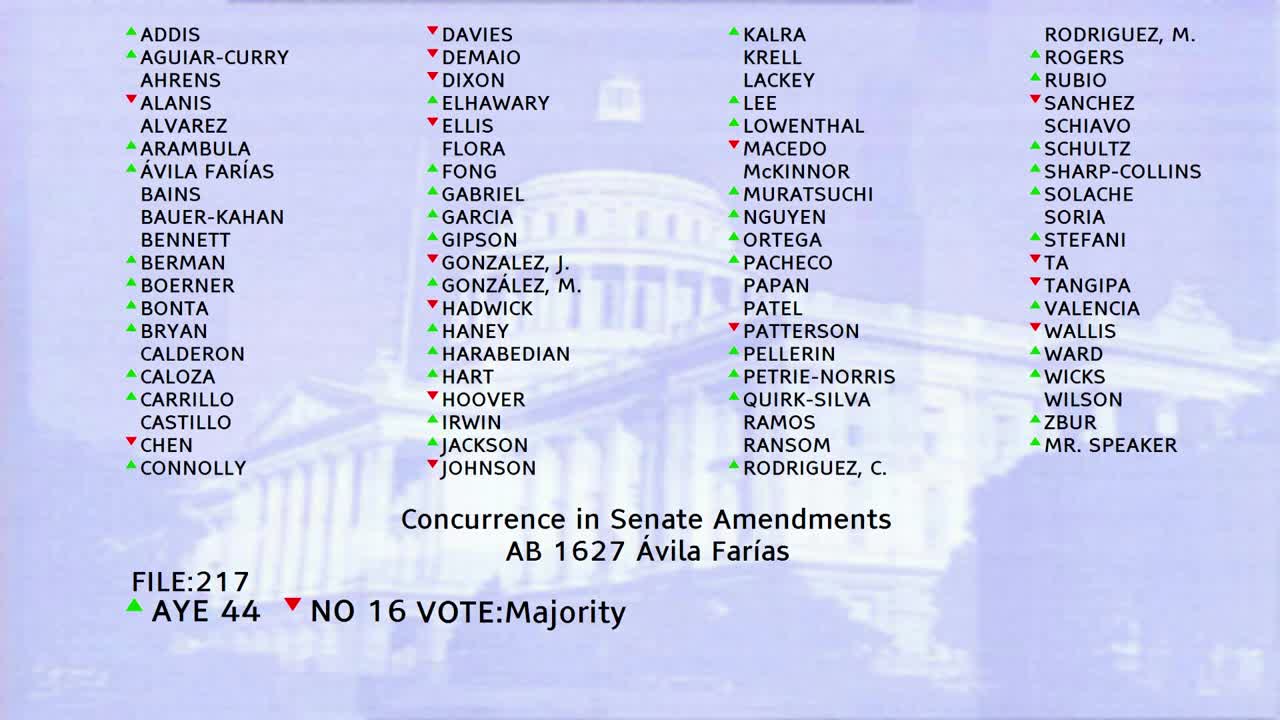
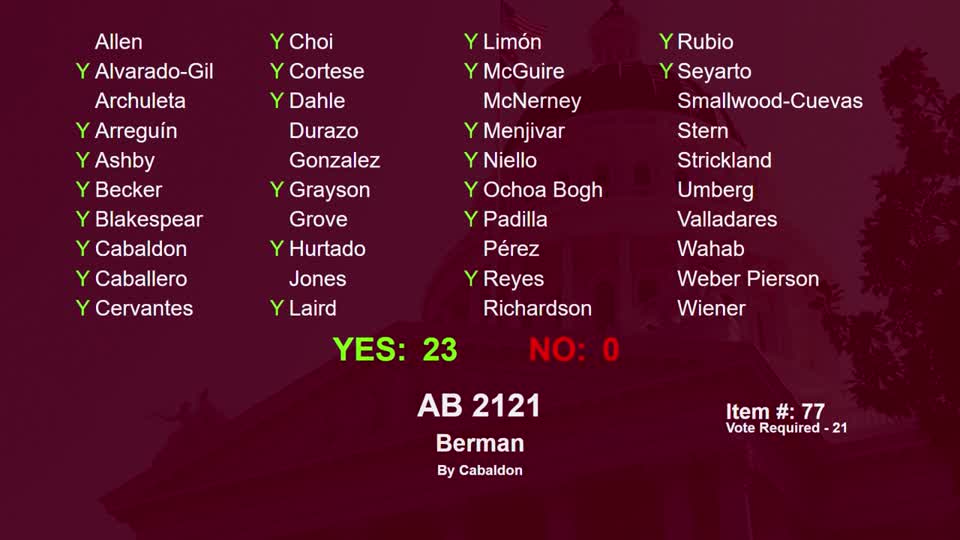
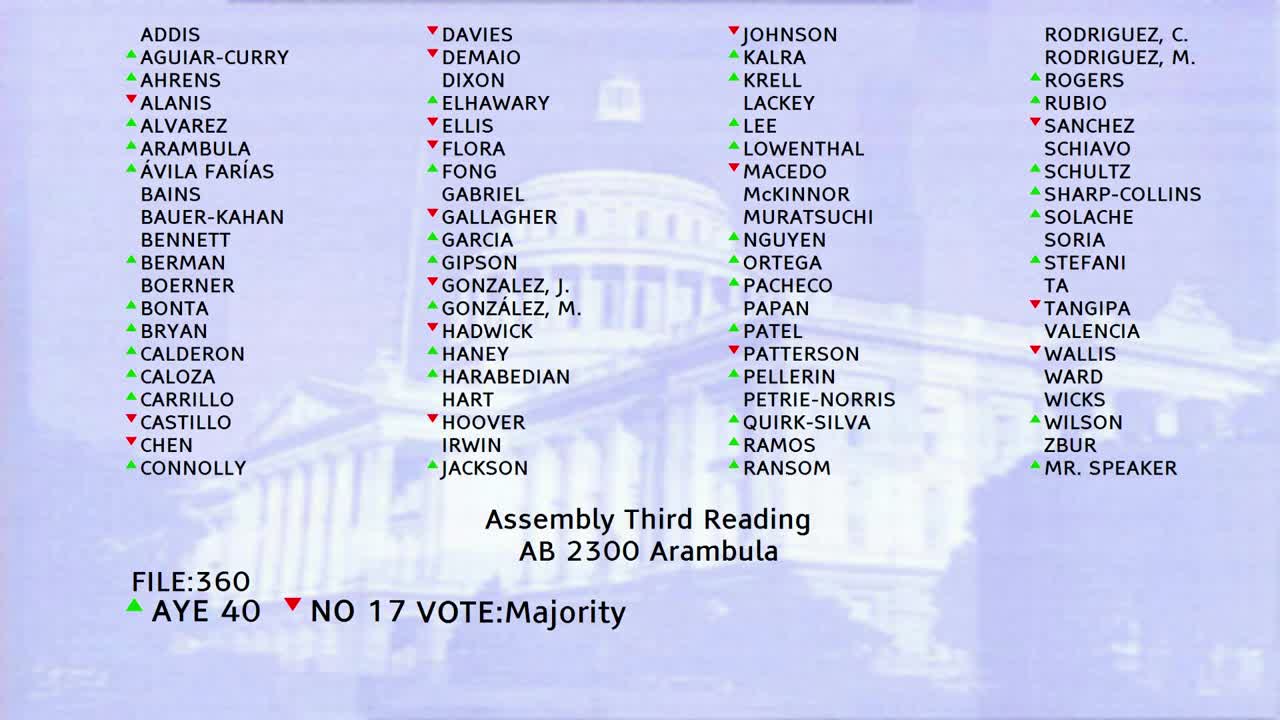
Bill Author