AB 2439: Common Interest Developments: governing documents: assessments.
- Session Year: 2025-2026
- House: Assembly
- Latest Version Date: 2026-09-02
Current Status:
Failed
(2026-09-20: Vetoed by Governor.)
Introduced
In Committee
Awaiting First Chamber Vote
Passed First Chamber
In Committee
Awaiting Second Chamber Vote
Passed Second Chamber
Enacted
Existing law, the Davis-Stirling Common Interest Development Act, governs the management and operation of common interest developments. Existing law limits the authority of the governing documents, as defined, to regulate the use of a members separate interest.
This bill would prohibit the governing documents from imposing restrictions on a members use of public streets, except as specified.
Existing law requires that a common interest development be managed by an association and requires that the association levy assessments to fulfill its obligations. Existing law provides that assessments of the association, late charges, reasonable costs of collection, attorneys fees, and interest, as specified, are a debt of a member at the time the assessment or other sums are levied. Existing law requires that an association provide a member making a payment a receipt, upon request, that indicates the date of payment and the person who received it and to provide a mailing address for overnight payment of assessments in the annual statement.
This bill would require the association to notify the members through individual notice by either electronic delivery or first-class mail, evidenced by a certificate of mailing, as specified, if the person or entity authorized to receive payment of assessments on behalf of the association changes, within 60 days of the change. The bill would require the association, if a member fails to make the next 2 consecutive assessment payments following the individual notice, to send a notice by certified mail with return receipt requested to that member, except as specified. The bill would require the association to maintain records confirming that individual notices were distributed.
Existing law provides that assessments, including the costs of collection, late charges, and interest, are a lien on the members separate interest when the association records a notice of delinquent assessment and follows a specified process, including providing the owner of record a specified notice, at least 30 days prior to recording a lien upon the separate interest. Existing law requires that an association that fails to comply with these procedures recommence the required notice process, prior to recording a lien, and bear the cost of recommencing the notice process.
The bill would make the association liable to the member for specified fees if the association fails to comply with these procedures. If the association fails to comply with these procedures, as specified, and the failure is the 3rd failure within a 5-year period, the bill would make the board liable to the member for a civil penalty of $1,000 and would require it to notify members by general notice of its failure to comply.
Existing law, the Davis-Stirling Common Interest Development Act, governs the management and operation of common interest developments. Existing law limits the authority of the governing documents, as defined, to regulate the use of a members separate interest.
This bill would prohibit the governing documents from imposing restrictions on a members use of public streets, except as specified.
Existing law requires that a common interest development be managed by an association and requires that the association levy assessments to fulfill its obligations. Existing law provides that assessments of the association, late charges, reasonable costs of collection, attorneys fees, and interest, as specified, are a debt of a member at the time the assessment or other sums are levied. Existing law requires that an association provide a member making a payment a receipt, upon request, that indicates the date of payment and the person who received it and to provide a mailing address for overnight payment of assessments in the annual statement.
This bill would require the association to notify the members through individual notice by either electronic delivery or first-class mail, evidenced by a certificate of mailing, as specified, if the person or entity authorized to receive payment of assessments on behalf of the association changes, within 60 days of the change. The bill would require the association, if a member fails to make the next 2 consecutive assessment payments following the individual notice, to send a notice by certified mail with return receipt requested to that member, except as specified. The bill would require the association to maintain records confirming that individual notices were distributed and to make reasonable effort to post a physical copy of the notice in the associations common areas. distributed.
Existing law provides that assessments, including the costs of collection, late charges, and interest, are a lien on the members separate interest when the association records a notice of delinquent assessment and follows a specified process, including providing the owner of record a specified notice, at least 30 days prior to recording a lien upon the separate interest. Existing law requires that an association that fails to comply with these procedures recommence the required notice process, prior to recording a lien, and bear the cost of recommencing the notice process.
The bill would make the association liable to the member for specified fees if the association fails to comply with these procedures. If the association fails to comply with these procedures procedures, as specified, and the failure is the 3rd failure within a 5-year period, the bill would make the board liable to the member for a civil penalty of $1,000 and would require it to notify members by general notice of its failure to comply.
Existing law, the Davis-Stirling Common Interest Development Act, governs the management and operation of common interest developments. Existing law limits the authority of the governing documents, as defined, to regulate the use of a members separate interest.
This bill would prohibit the governing documents from imposing restrictions on a members use of public roads, streets, except as specified.
Existing law requires that a common interest development be managed by an association and requires that the association levy assessments to fulfill its obligations. Existing law provides that assessments of the association, late charges, reasonable costs of collection, attorneys fees, and interest, as specified, are a debt of a member at the time the assessment or other sums are levied. Existing law requires that an association provide a member making a payment a receipt, upon request, that indicates the date of payment and the person who received it and to provide a mailing address for overnight payment of assessments in the annual statement.
This bill would require the association to notify the members through individual notice by either electronic delivery or first-class mail, evidenced by a certificate of mailing, as specified, if the person or entity authorized to receive payment of assessments on behalf of the association changes, within 60 days of the change. The bill would require the association to maintain records confirming that individual notices were distributed and to make reasonable effort to post a physical copy of the notice in the associations common areas.
Existing law provides that assessments, including the costs of collection, late charges, and interest, are a lien on the members separate interest when the association records a notice of delinquent assessment and follows a specified process, including providing the owner of record a specified notice, at least 30 days prior to recording a lien upon the separate interest. Existing law requires that an association that fails to comply with these procedures recommence the required notice process, prior to recording a lien, and bear the cost of recommencing the notice process.
The bill would make the association board liable to the member for specified costs and penalties, fees if the association fails to comply with these procedures. If the association fails to comply with these procedures and the failure is the 3rd failure within a 5-year period, the bill would make the board liable to the member for a civil penalty of $1,000 and require it to notify members by general notice of its failure to comply.
Existing law, the Davis-Stirling Common Interest Development Act, governs the management and operation of common interest developments. Existing law limits the authority of the governing documents, as defined, to regulate the use of a members separate interest.
This bill would prohibit the governing documents from imposing restrictions on a members use of public roads, except as specified.
Existing law requires that a common interest development be managed by an association and requires that the association levy assessments to fulfill its obligations. Existing law provides that assessments of the association, late charges, reasonable costs of collection, attorneys fees, and interest, as specified, are a debt of a member at the time the assessment or other sums are levied. Existing law requires that an association provide a member making a payment a receipt, upon request, that indicates the date of payment and the person who received it and to provide a mailing address for overnight payment of assessments in the annual statement.
This bill would require the association to notify the members by certified mail, return receipt requested, of a change of a person authorized to receive payment of assessments through individual notice by either electronic delivery or first-class mail, evidenced by a certificate of mailing, as specified, if the person or entity authorized to receive payment of assessments on behalf of the association changes, within 60 days of the change. The bill would require the association to maintain records confirming that individual notices were distributed and to make reasonable effort to post a physical copy of the notice in the associations common areas.
Existing law provides that assessments, including the costs of collection, late charges, and interest, are a lien on the members separate interest when the association records a notice of delinquent assessment and follows a specified process, including providing the owner of record a specified notice, at least 30 days prior to recording a lien upon the separate interest. Existing law requires that an association that fails to comply with these procedures recommence the required notice process, prior to recording a lien, and bear the cost of recommencing the notice process.
The bill would make the association board liable to the member for specified costs and penalties, if the association fails to comply with these procedures.
Existing law, the Davis-Stirling Common Interest Development Act, governs the management and operation of common interest developments. Existing law limits the authority of the governing documents, as defined, to regulate the use of a members separate interest.
This bill would prohibit the governing documents from imposing restrictions on a members use of public roads, except as specified.
Existing law requires that a common interest development be managed by an association and requires that the association levy assessments to fulfill its obligations. Existing law provides that assessments of the association, late charges, reasonable costs of collection, attorneys fees, and interest, as specified, are a debt of a member at the time the assessment or other sums are levied. Existing law requires that an association provide a member making a payment a receipt, upon request, that indicates the date of payment and the person who received it and to provide a mailing address for overnight payment of assessments in the annual statement.
This bill would require the association to notify the members by certified mail, return receipt requested, of a change of a person authorized to receive payment of assessments within 60 days of the change.
Existing law provides that assessments, including the costs of collection, late charges, and interest, are a lien on the members separate interest when the association records a notice of delinquent assessment and follows a specified process, including providing the owner of record a specified notice, at least 30 days prior to recording a lien upon the separate interest. Existing law requires that an association that fails to comply with these procedures recommence the required notice process, prior to recording a lien, and bear the cost of recommencing the notice process.
The bill would make the association board liable to the member for specified costs and penalties, if the association fails to comply with these procedures.
Existing law, the Davis-Stirling Common Interest Development Act, governs the management and operation of common interest developments by an association. Existing law authorizes interest to accrue on all sums imposed, including delinquent assessments, reasonable fees and costs of collection, and reasonable attorneys fees, at an annual interest rate not to exceed 12%, commencing 30 days after the assessment becomes due, unless a lesser rate is specified in the declaration. This bill would make a nonsubstantive change to those provisions.Existing law, the Davis-Stirling Common Interest Development Act, governs the management and operation of common interest developments by an association. Existing law authorizes interest to accrue on all sums imposed, including delinquent assessments, reasonable fees and costs of collection, and reasonable attorneys fees, at an annual interest rate not to exceed 12%, commencing 30 days after the assessment becomes due, unless a lesser rate is specified in the declaration.
This bill would make a nonsubstantive change to those provisions.
Except for restrictions to enforce public health and safety standards and requirements imposed by local authorities, the governing documents shall not impose restrictions on a members use of public streets.
SEC. 2.Section 5655 of the Civil Code is amended to read:5655.(a)Any payments made by the owner of a separate interest toward a debt described in subdivision (a) of Section 5650 shall first be applied to the assessments owed, and, only after the assessments owed are paid in full shall the payments be applied to the fees and costs of collection, attorneys fees, late charges, or interest.
(b)When an owner makes a payment, the owner may request a receipt and the association shall provide it. The receipt shall indicate the date of payment and the person who received it.
(c)The association shall provide a mailing address for overnight payment of assessments. The address shall be provided in the annual policy statement.
(d)If the person or entity authorized to receive payments of assessment on behalf of the association changes, the association shall notify members through individual notice by one of the following methods within 60 days of the change:
(1)Electronic delivery for any member who has opted into that method of delivery for receiving general notices from the association.
(2)First-class mail, evidenced by a certificate of mailing, for any member who has not opted into electronic delivery of notices from the association.
(e)(1)If a member fails to make the next two consecutive assessment payments following the individual notice required by subdivision (d), the association shall send a notice by certified mail with return receipt requested to that member.
(2)If the association sent the individual notice pursuant to subdivision (d), and the member affirmatively responded to the notice, then the association is not required to send a notice via certified mail with return receipt requested, pursuant to paragraph (1).
(f)The association shall maintain records confirming that individual notices were distributed pursuant to subdivisions (d) and (e) for five years. If a member requests proof that the association distributed a notice to the member, the association shall provide proof for the notice applicable to the requesting member at no charge.
(g)The association shall also provide general notice of the change of the person or entity authorized to receive assessment payment on behalf of the association by one or more of the methods described in paragraph (3) of subdivision (a) of Section 4045.
SEC. 3.Section 5690 of the Civil Code is amended to read:5690.(a)An association that fails to comply with the procedures set forth in this article shall, prior to recording a lien, recommence the required notice process. Any costs associated with recommencing the notice process shall be borne by the association and not by the owner of a separate interest.
(b)If an association fails to comply with the procedures set forth in this article, the association shall be liable to the owner of the separate interest for the reconveyance fee and any costs of the owner of the separate interest associated with the associations failure to comply with the procedures set forth in this article.
(c)(1)If the association fails to comply with the procedures set forth in subdivision (e) of Section 5655, and the failure is the third failure to comply with the procedures set forth in that subdivision within a five-year period, the board shall be liable to the owner of the separate interest for a civil penalty of one thousand dollars ($1,000).
(2)If a civil penalty is imposed pursuant to paragraph (1), the association shall notify members by general notice of the boards failure to comply with the procedures set forth in this article.
Except for restrictions to enforce public health and safety standards and requirements imposed by local authorities, the governing documents shall not impose restrictions on a members use of public streets.
SEC. 2.Section 5655 of the Civil Code is amended to read:5655.(a)Any payments made by the owner of a separate interest toward a debt described in subdivision (a) of Section 5650 shall first be applied to the assessments owed, and, only after the assessments owed are paid in full shall the payments be applied to the fees and costs of collection, attorneys fees, late charges, or interest.
(b)When an owner makes a payment, the owner may request a receipt and the association shall provide it. The receipt shall indicate the date of payment and the person who received it.
(c)The association shall provide a mailing address for overnight payment of assessments. The address shall be provided in the annual policy statement.
(d)If the person or entity authorized to receive payments of assessment on behalf of the association changes, the association shall notify members through individual notice by one of the following methods within 60 days of the change:
(1)Electronic delivery for any member who has opted into that method of delivery for receiving general notices from the association.
(2)First-class mail, evidenced by a certificate of mailing, for any member who has not opted into electronic delivery of notices from the association.
(e)(1)If after sending an individual notice pursuant to subdivision (d), a member has failed to pay two consecutive assessment payments, the association shall send a second notice by certified mail with return receipt requested.(e)(1)If a member fails to make the next two consecutive assessment payments following the individual notice required by subdivision (d), the association shall send a notice by certified mail with return receipt requested to that member.
(2)If the association sent the individual notice pursuant to paragraph (1) of subdivision (d), and the member affirmatively responded to the notice, then the association is not required to send a second notice via certified mail with return receipt requested, pursuant to paragraph (1) of this subdivision. (1).
(f)The association shall maintain records confirming that individual notices were distributed, distributed pursuant to subdivisions (d) and (e). (e) for five years. If a member requests proof of the delivery, that the association distributed a notice to the member, the association shall provide it at no charge to the member. proof for the notice applicable to the requesting member at no charge.
(g)An association shall also make a reasonable effort to post a physical copy of the notice distributed pursuant to subdivision (d) in the associations common areas.(g)The association shall also provide general notice of the change of the person or entity authorized to receive assessment payment on behalf of the association by one or more of the methods described in paragraph (3) of subdivision (a) of Section 4045.
SEC. 3.Section 5690 of the Civil Code is amended to read:5690.(a)An association that fails to comply with the procedures set forth in this article shall, prior to recording a lien, recommence the required notice process. Any costs associated with recommencing the notice process shall be borne by the association and not by the owner of a separate interest.
(b)If an association fails to comply with the procedures set forth in this article, the association shall be liable to the owner of the separate interest for the reconveyance fee and any costs of the owner of the separate interest associated with the associations failure to comply with the procedures set forth in this article.
(c)(1)If the association fails to comply with the procedures set forth in this article, subdivision (e) of Section 5655, and the failure is the third failure to comply with the procedures set forth in this article that subdivision within a five-year period, the board shall be liable to the owner of the separate interest for a civil penalty of one thousand dollars ($1,000).
(2)If a civil penalty is imposed pursuant to paragraph (1), the association shall notify members by general notice of the boards failure to comply with the procedures set forth in this article.
Except for restrictions to enforce public health and safety standards and requirements imposed by local authorities, the governing documents shall not impose restrictions on a members use of public roads. streets.
SEC. 2.Section 5655 of the Civil Code is amended to read:5655.(a)Any payments made by the owner of a separate interest toward a debt described in subdivision (a) of Section 5650 shall first be applied to the assessments owed, and, only after the assessments owed are paid in full shall the payments be applied to the fees and costs of collection, attorneys fees, late charges, or interest.
(b)When an owner makes a payment, the owner may request a receipt and the association shall provide it. The receipt shall indicate the date of payment and the person who received it.
(c)The association shall provide a mailing address for overnight payment of assessments. The address shall be provided in the annual policy statement.
(d)If the person or entity authorized to receive payments of assessment on behalf of the association changes, the association shall notify members through individual notice by one of the following methods within 60 days of the change:
(1)Electronic delivery for any member who has opted into that method of delivery for receiving general notices from the association.
(2)First-class mail, evidenced by a certificate of mailing, for any member who has not opted into electronic delivery of notices from the association.
(e)(1)If after sending an individual notice pursuant to subdivision (d), a member has failed to pay two consecutive assessment payments, the association shall send a second notice by certified mail with return receipt requested.
(2)If the association sent the individual notice pursuant to paragraph (1) of subdivision (d), and the member affirmatively responded to the notice, then the association is not required to send a second notice pursuant to paragraph (1) of this subdivision.
(f)The association shall maintain records confirming that individual notices were distributed, pursuant to subdivisions (d) and (e). If a member requests proof of the delivery, the association shall provide it at no charge to the member.
(g)An association shall also make a reasonable effort to post a physical copy of the notice distributed pursuant to subdivision (d) in the associations common areas.
SEC. 3.Section 5690 of the Civil Code is amended to read:5690.(a)An association that fails to comply with the procedures set forth in this article shall, prior to recording a lien, recommence the required notice process. Any costs associated with recommencing the notice process shall be borne by the association and not by the owner of a separate interest.
(b)If an association fails to comply with the procedures set forth in this article, the board association shall be liable to the owner of the separate interest for both of the following:
(1)The the reconveyance fee and any costs of the owner of the separate interest associated with the associations failure to comply with the procedures set forth in this article.
(2)A(c)(1)If the association fails to comply with the procedures set forth in this article, and the failure is the third failure to comply with the procedures set forth in this article within a five-year period, the board shall be liable to the owner of the separate interest for a civil penalty of one thousand dollars ($1,000).
(2)If a civil penalty is imposed pursuant to paragraph (1), the association shall notify members by general notice of the boards failure to comply with the procedures set forth in this article.
Except for restrictions to enforce public health and safety standards and requirements imposed by local authorities, the governing documents shall not impose restrictions on a members use of public roads.
SEC. 2.Section 5655 of the Civil Code is amended to read:5655.(a)Any payments made by the owner of a separate interest toward a debt described in subdivision (a) of Section 5650 shall first be applied to the assessments owed, and, only after the assessments owed are paid in full shall the payments be applied to the fees and costs of collection, attorneys fees, late charges, or interest.
(b)When an owner makes a payment, the owner may request a receipt and the association shall provide it. The receipt shall indicate the date of payment and the person who received it.
(c)The association shall provide a mailing address for overnight payment of assessments. The address shall be provided in the annual policy statement.
(d)The association shall notify the members by certified mail, return receipt requested, of a change of a person authorized to receive payment of assessments within 60 days of the change.(d)If the person or entity authorized to receive payments of assessment on behalf of the association changes, the association shall notify members through individual notice by one of the following methods within 60 days of the change:
(1)Electronic delivery for any member who has opted into that method of delivery for receiving general notices from the association.
(2)First-class mail, evidenced by a certificate of mailing, for any member who has not opted into electronic delivery of notices from the association.
(e)If after sending an individual notice pursuant to subdivision (d), a member has failed to pay two consecutive assessment payments, the association shall send a second notice by certified mail with return receipt requested.
(f)The association shall maintain records confirming that individual notices were distributed, pursuant to subdivisions (d) and (e). If a member requests proof of the delivery, the association shall provide it at no charge to the member.
(g)An association shall also make a reasonable effort to post a physical copy of the notice distributed pursuant to subdivision (d) in the associations common areas.
SEC. 3.Section 5690 of the Civil Code is amended to read:5690.(a)An association that fails to comply with the procedures set forth in this article shall, prior to recording a lien, recommence the required notice process. Any costs associated with recommencing the notice process shall be borne by the association and not by the owner of a separate interest.
(b)If an association fails to comply with the procedures set forth in this article, the board shall be liable to the owner of the separate interest for both of the following:
(1)The reconveyance fee and any costs of the owner of the separate interest associated with the associations failure to comply with the procedures set forth in this article.
(2)A civil penalty of one thousand dollars ($1,000).
Except for restrictions to enforce public health and safety standards and requirements imposed by local authorities, the governing documents shall not impose restrictions on a members use of public roads.
SEC. 2.Section 5655 of the Civil Code is amended to read:5655.(a)Any payments made by the owner of a separate interest toward a debt described in subdivision (a) of Section 5650 shall first be applied to the assessments owed, and, only after the assessments owed are paid in full shall the payments be applied to the fees and costs of collection, attorneys fees, late charges, or interest.
(b)When an owner makes a payment, the owner may request a receipt and the association shall provide it. The receipt shall indicate the date of payment and the person who received it.
(c)The association shall provide a mailing address for overnight payment of assessments. The address shall be provided in the annual policy statement.
(d)The association shall notify the members by certified mail, return receipt requested, of a change of a person authorized to receive payment of assessments within 60 days of the change.
SEC. 3.Section 5690 of the Civil Code is amended to read:5690.(a)An association that fails to comply with the procedures set forth in this article shall, prior to recording a lien, recommence the required notice process. Any costs associated with recommencing the notice process shall be borne by the association and not by the owner of a separate interest.
(b)If an association fails to comply with the procedures set forth in this article, the board shall be liable to the owner of the separate interest for both of the following:
(1)The reconveyance fee and any costs of the owner of the separate interest associated with the associations failure to comply with the procedures set forth in this article.
(2)A civil penalty of one thousand dollars ($1,000).
SECTION 1.Section 5650 of the Civil Code is amended to read:5650.(a)A regular or special assessment and any late charges, reasonable fees and costs of collection, reasonable attorneys fees, if any, and interest, if any, as determined in accordance with subdivision (b), shall be a debt of the owner of the separate interest at the time the assessment or other sums are levied.(b)Regular and special assessments levied pursuant to the governing documents are delinquent 15 days after they become due, unless the declaration provides a longer time period, in which case the longer time period shall apply. If an assessment is delinquent, the association may recover all of the following:(1)Reasonable costs incurred in collecting the delinquent assessment, including reasonable attorneys fees.(2)A late charge not exceeding 10 percent of the delinquent assessment or ten dollars ($10), whichever is greater, unless the declaration specifies a late charge in a smaller amount, in which case any late charge imposed shall not exceed the amount specified in the declaration.(3)Interest on all sums imposed pursuant to this section, including the delinquent assessments, reasonable fees and costs of collection, and reasonable attorneys fees, at an annual interest rate not to exceed 12 percent, commencing 30 days after the assessment becomes due, unless the declaration specifies the recovery of interest at a rate of a lesser amount, in which case the lesser rate of interest shall apply.(c)Associations are hereby exempted from interest-rate limitations imposed by Article XV of the California Constitution, subject to the limitations of this section. REVISIONS: HeadingLines 1 and 2.(a)A regular or special assessment and any late charges, reasonable fees and costs of collection, reasonable attorneys fees, if any, and interest, if any, as determined in accordance with subdivision (b), shall be a debt of the owner of the separate interest at the time the assessment or other sums are levied.
(b)Regular and special assessments levied pursuant to the governing documents are delinquent 15 days after they become due, unless the declaration provides a longer time period, in which case the longer time period shall apply. If an assessment is delinquent, the association may recover all of the following:
(1)Reasonable costs incurred in collecting the delinquent assessment, including reasonable attorneys fees.
(2)A late charge not exceeding 10 percent of the delinquent assessment or ten dollars ($10), whichever is greater, unless the declaration specifies a late charge in a smaller amount, in which case any late charge imposed shall not exceed the amount specified in the declaration.
(3)Interest on all sums imposed in accordance with pursuant to this section, including the delinquent assessments, reasonable fees and costs of collection, and reasonable attorneys fees, at an annual interest rate not to exceed 12 percent, commencing 30 days after the assessment becomes due, unless the declaration specifies the recovery of interest at a rate of a lesser amount, in which case the lesser rate of interest shall apply.
(c)Associations are hereby exempted from interest-rate limitations imposed by Article XV of the California Constitution, subject to the limitations of this section.
|
Date
|
Status
|
|---|---|
| Sep 20, 2026 | Vetoed by Governor. |
| Sep 8, 2026 | Enrolled and presented to the Governor at 3:30 p.m. |
| Aug 28, 2026 | Senate amendments concurred in. To Engrossing and Enrolling. (Ayes 76. Noes 0.). |
| Aug 28, 2026 | Senate amendments concurred in. To Engrossing and Enrolling. (Ayes 76. Noes 0. Page 6812.). |
| Aug 27, 2026 | In Assembly. Concurrence in Senate amendments pending. |
| Aug 27, 2026 | Read third time. Passed. Ordered to the Assembly. (Ayes 32. Noes 5.). |
| Aug 24, 2026 | Read second time. Ordered to third reading. |
| Aug 21, 2026 | Read third time and amended. Ordered to second reading. |
| Jun 29, 2026 | Read second time and amended. Ordered to third reading. |
| Jun 25, 2026 | From committee: Amend, and do pass as amended. (Ayes 10. Noes 0.) (June 23). |
| Jun 18, 2026 | Read second time and amended. Re-referred to Com. on JUD. |
| Jun 17, 2026 | From committee: Amend, and do pass as amended and re-refer to Com. on JUD. (Ayes 8. Noes 1.) (June 16). |
| May 13, 2026 | Referred to Coms. on HOUSING and JUD. |
| May 5, 2026 | In Senate. Read first time. To Com. on RLS. for assignment. |
| May 4, 2026 | Read third time. Passed. Ordered to the Senate. (Ayes 74. Noes 0.) |
| May 4, 2026 | Read third time. Passed. Ordered to the Senate. (Ayes 74. Noes 0. Page 4912.) |
| May 4, 2026 | Read third time. Passed. Ordered to the Senate. |
| Apr 29, 2026 | Read second time. Ordered to third reading. |
| Apr 28, 2026 | From committee: Do pass. (Ayes 12. Noes 0.) (April 28). |
| Apr 28, 2026 | Coauthors revised. |
| Apr 23, 2026 | From committee: Do pass and re-refer to Com. on JUD. (Ayes 12. Noes 0.) (April 22). Re-referred to Com. on JUD. |
| Mar 23, 2026 | Re-referred to Com. on H. & C.D. |
| Mar 19, 2026 | Referred to Coms. on H. & C.D. and JUD. |
| Mar 19, 2026 | From committee chair, with author's amendments: Amend, and re-refer to Com. on H. & C.D. Read second time and amended. |
| Feb 21, 2026 | From printer. May be heard in committee March 23. |
| Feb 20, 2026 | Read first time. To print. |
|
Date
|
Description
|
Location
|
Votes
|
|
|---|---|---|---|---|
| Aug 28, 2026 | AB 2439 Blanca Rubio Concurrence in Senate Amendments | Assembly Floor |
Passed |
|
| Aug 27, 2026 | Assembly 3rd Reading AB2439 Blanca Rubio et al. By Grayson | Senate Floor |
Passed |
|
| Jun 23, 2026 | Do pass as amended | Senate Standing Committee on Judiciary |
Passed |
|
| Jun 16, 2026 | Do pass as amended, but first amend, and re-refer to the Committee on [Judiciary] | Senate Standing Committee on Housing |
Passed |
|
| May 4, 2026 | AB 2439 Blanca Rubio Assembly Third Reading | Assembly Floor |
Passed |
|
| Apr 28, 2026 | Do pass. | Assembly Standing Committee on Judiciary |
Passed |
|
| Apr 22, 2026 | Do pass and be re-referred to the Committee on [Judiciary] | Assembly Standing Committee on Housing and Community Development |
Passed |
This list shows positions taken on this bill by organizations on the date displayed, which is linked to the original source.
Positions by individuals are not included.
|
Organization
|
Position
|
Date
|
|---|---|---|
| CAI-CLAC | ** Against | |
| California Association Of Community Managers | ** Against | |
| Community Associations Institute - California Legislative Action Committee | ** Against | |
| Community Associations Institute's California Legislative Action Committee | ** Against |
GOVERNOR'S VETO
GV Bill Id:AB 2439
Author:(Blanca Rubio and Lowenthal)
As Enrolled Ver:September 2, 2026
2/3 vote
SUMMARY
Amends the Davis-Stirling Common Interest Development Act (Act) by prohibiting a homeowners association (HOA) from restricting a member's use of public streets, requires delivery of notice to members if the person or entity authorized to receive payments of assessment on behalf of the HOA changes, as specified, and imposes liability on HOAs for failing to follow statutory delinquent lien procedures.
Senate Amendments:
- Specify an HOA must notify members through individual notice by either electronic delivery or first-class mail if the person or entity authorized to receive payments of assessment on behalf of the HOA changes.
- Require an HOA to send a notice by certified mail with return receipt if a member fails to make the next two consecutive assessment payments following the individual notice required in 1), unless the member affirmatively responded to the notice in 1).
- Require the HOA to maintain records confirming that individual notices were distributed pursuant to 1) and 2) for five years.
- Provide that if the HOA fails to comply with the procedures in 2), and the failure is the third failure to comply with the procedures in 2) within a five-year period, the board of an HOA shall be liable to the owner of the separate interest for a civil penalty of $1,000.
Governor’s Veto Message
This bill would generally prohibit homeowners associations from restricting a member's use of public streets, establish new notification requirements when the recipient of assessment payments changes, and expand liability for specified violations of assessment-collection procedures.
I support protecting homeowners from improper collection practices and ensuring they know where to make their assessment payments. However, this bill would make an association liable for "any costs" a homeowner incurs because the association failed to follow assessment-collection procedures. The bill neither defines nor limits those costs. This broad standard could create uncertainty, invite disputes and litigation, and impose costs on associations and their members disproportionate to the underlying violation.
The bill also makes the board liable for a $1,000 civil penalty when an association commits a third specified notice violation within five years. Existing law generally places this type of liability on the association. The bill does not explain how liability against "the board" would operate or how it would apply when board membership changes between violations. This uncertainty could discourage residents from volunteering to serve and make effective association governance more difficult.
In addition, the bill requires certificates of mailing and, in certain circumstances, certified mail with a return receipt. These prescriptive requirements could impose substantial administrative costs that would ultimately be passed on to homeowners.
COMMENTS
Common Interest Developments (CIDs): There are over 50,000 CIDs in the state that range in size from three to 27,000 units, with the average CID having 286 residents. CIDs make up roughly 4.7 million housing units, and 36% of Californians (over 14 million Californians) live in a CID. These rates are even higher for homeowners, with approximately 65% of homeowners living in a CID. CIDs include condominiums, community apartment projects, housing cooperatives, and planned unit developments. They are characterized by a separate ownership of dwelling space coupled with an undivided interest in a common property, restricted by covenants and conditions that limit the use of common area, and the separate ownership interests and the management of common property and enforcement of restrictions by an HOA. CIDs are governed by the Act as well as the governing documents of the association (Covenants, Conditions, and Restrictions, or CC&Rs), including bylaws, declaration, and operating rules.
Davis-Stirling Common Interest Development Act: The Act went into effect in 1986 and is the primary body of law governing CIDs in California. The Act provides the legal framework for the creation and management of HOAs, including rules related to governance, assessments, dispute resolution, maintenance responsibilities, and member rights. The law aims to balance the authority of HOAs with the rights of individual property owners, ensuring that communities are managed efficiently and fairly.
Over time, the Act has been amended to address the evolving needs of CIDs and to increase transparency, accountability, and consumer protections. Key provisions include requirements for open meetings, financial disclosures, election procedures, and architectural review processes. The Act also provides mechanisms for resolving disputes, including internal dispute resolution and alternative dispute resolution before certain legal actions can proceed. As CIDs continue to represent a significant portion of California's housing stock, the Act plays a critical role in shaping the living environment and governance of millions of residents across the state.
This Bill: This bill makes the following changes to the Act:
- Use of Public Roads. This bill expands the limits on what an HOA's governing documents may regulate by prohibiting restrictions on a homeowner's use of public streets serving the HOA, with a narrow exception for public health and safety requirements imposed by local authorities. For example, this provision could apply to common HOA rules governing activities such as on-street parking, including restrictions on overnight parking, or the parking of recreational vehicles on public streets.
- Assessment Mailing Address. This bill also adds new notice requirements related to the collection of assessments. Assessments are regular or special fees paid by members of the HOA to fund common area maintenance and other HOA obligations. This bill would require HOAs to inform members, via electronic delivery or first-class mail, of any change in the person authorized to receive the assessment payments for the HOA. Then, if a member fails to make the next two consecutive assessment payments after the individual notice is provided, this bill requires an HOA to send notice of the change via certified mail. While existing law already requires certain disclosures related to payment processing (such as providing a receipt upon the homeowner's request, and providing the address for overnight payments in the HOA's annual policy statement), this bill imposes a more formal and trackable notice requirement tied to changes in payment handling. In doing so, this bill may reduce confusion or disputes over where payments should be directed, especially in the instance when the address for payments changes after the annual policy statement is published.
- Lien Requirements. Lastly, this bill strengthens enforcement of existing lien procedures by imposing direct liability on the HOA's board if it fails to comply with required pre-lien notice requirements. Under current law, an HOA that fails to follow these procedures must restart the notice process at its own expense, but this bill goes further by requiring reimbursement of specified homeowner costs and imposing a $1,000 civil penalty. In doing so, this bill shifts the remedy for failing to follow these lien procedures from a procedural remedy to one that creates financial consequences for noncompliance.
According to the Author
"Families living in HOAs deserve fairness, transparency, and clear communication from their HOA Board. Yet too often, residents face inconsistent rule enforcement and are left unaware of critical financial actions affecting their property.
This bill addresses these issues by prohibiting HOAs from regulating parking on public streets except for public safety, requiring clear and verifiable notice of changes to payment systems, and establishing penalties when HOAs fail to comply with lien notification laws."
Arguments in Support
None on file.
Arguments in Opposition
According to the Community Associations Institute's California Legislative Action Committee, "Community associations play a critical role in managing shared property, enforcing governing documents, and ensuring compliance with applicable laws on behalf of their members. We appreciate the work of the committee to remove some of the costs and overly burdensome notice requirements currently in the bill. We remain very concerned about the personal liability the bill seeks to impose on volunteer board members. This approach is contrary to case law and current statute and needs to be removed."
FISCAL COMMENTS
None. This bill is keyed non-fiscal by the Legislative Counsel.
VOTES
ASM HOUSING AND COMMUNITY DEVELOPMENT: 12-0-0
YES: Haney, Patterson, Ávila Farías, Caloza, Garcia, Kalra, Lee, Quirk-Silva, Ta, Tangipa, Wicks, Wilson
ASM JUDICIARY: 12-0-0
YES: Kalra, Bauer-Kahan, Bryan, Connolly, Dixon, Harabedian, Johnson, Pacheco, Papan, Sanchez, Lee, Zbur
ASSEMBLY FLOOR: 74-0-6
YES: Addis, Aguiar-Curry, Ahrens, Alanis, Alvarez, Ávila Farías, Bains, Bauer-Kahan, Berman, Boerner, Bonta, Bryan, Calderon, Carrillo, Castillo, Connolly, Davies, DeMaio, Dixon, Elhawary, Ellis, Flora, Fong, Gabriel, Garcia, Gipson, Jeff Gonzalez, Mark González, Hadwick, Haney, Harabedian, Hoover, Irwin, Jackson, Johnson, Kalra, Krell, Lackey, Lee, Lowenthal, Macedo, McKinnor, Muratsuchi, Nguyen, Ortega, Pacheco, Papan, Patel, Patterson, Pellerin, Petrie-Norris, Quirk-Silva, Ramos, Ransom, Celeste Rodriguez, Michelle Rodriguez, Rogers, Blanca Rubio, Sanchez, Schiavo, Schultz, Sharp-Collins, Solache, Soria, Stefani, Ta, Tangipa, Valencia, Wallis, Ward, Wicks, Wilson, Zbur, Rivas
ABS, ABST OR NV: Arambula, Bennett, Caloza, Chen, Gallagher, Hart
SENATE FLOOR: 32-5-3
YES: Allen, Archuleta, Arreguín, Ashby, Becker, Blakespear, Cabaldon, Caballero, Cervantes, Cortese, Durazo, Gonzalez, Grayson, Hurtado, Jones, Laird, Limón, McGuire, McNerney, Menjivar, Padilla, Pérez, Reyes, Richardson, Rubio, Smallwood-Cuevas, Stern, Strickland, Umberg, Wahab, Weber Pierson, Wiener
NO: Alvarado-Gil, Grove, Niello, Ochoa Bogh, Seyarto
ABS, ABST OR NV: Choi, Dahle, Valladares
ASSEMBLY FLOOR: 76-0-3
YES: Addis, Aguiar-Curry, Ahrens, Alanis, Alvarez, Arambula, Ávila Farías, Bains, Bauer-Kahan, Bennett, Berman, Boerner, Bonta, Bryan, Calderon, Caloza, Carrillo, Castillo, Chen, Connolly, Davies, DeMaio, Dixon, Elhawary, Ellis, Flora, Fong, Gabriel, Garcia, Gipson, Jeff Gonzalez, Mark González, Hadwick, Haney, Harabedian, Hoover, Irwin, Jackson, Kalra, Krell, Lackey, Lee, Lowenthal, Macedo, Muratsuchi, Nguyen, Ortega, Pacheco, Papan, Patel, Patterson, Pellerin, Petrie-Norris, Quirk-Silva, Ramos, Ransom, Celeste Rodriguez, Michelle Rodriguez, Rogers, Blanca Rubio, Sanchez, Schiavo, Schultz, Sharp-Collins, Solache, Soria, Stefani, Ta, Tangipa, Valencia, Wallis, Ward, Wicks, Wilson, Zbur, Rivas
ABS, ABST OR NV: Hart, Johnson, McKinnor
UPDATED
VERSION: September 2, 2026
CONSULTANT: Juan Reyes / H. & C.D. / (916) 319-2085 FN: 0004594
SENATE RULES COMMITTEE Office of Senate Floor Analyses (916) 651-4171 | AB 2439 |
THIRD READING
Bill No: AB 2439
Author: Blanca Rubio (D) and Lowenthal (D), et al.
Amended: 8/21/26 in Senate
Vote: 21
SENATE HOUSING COMMITTEE: 8-1, 6/16/26
AYES: Arreguín, Cabaldon, Caballero, Cortese, Durazo, Gonzalez, Grayson, Padilla
NOES: Ochoa Bogh
NO VOTE RECORDED: Seyarto
SENATE JUDICIARY COMMITTEE: 10-0, 6/23/26
AYES: Umberg, Allen, Ashby, Caballero, Durazo, Laird, Reyes, Stern, Wahab, Weber Pierson
NO VOTE RECORDED: Niello, Valladares, Wiener
ASSEMBLY FLOOR: 74-0, 5/4/26 - See last page for vote
SUBJECT: Common Interest Developments: governing documents: assessments
SOURCE: Authors
DIGEST:
This bill 1) prohibits a homeowner’s association’s (HOA) governing documents from imposing restrictions on a member’s use of public streets, including parking; 2) requires an HOA to notify each member, as specified, of a change of person or entity authorized to receive payment of assessments within 60 days of the change; 3) requires an HOA to send a second notice, as specified, to any member who has missed two consecutive assessment payments, unless other conditions are met; and, 4) imposes civil liabilities, as specified, for violations of pre-lien notice requirements by the HOA board.
Senate floor amendments of 8/21/26 further clarify the responsibilities of an HOA regarding a change in receipt authorized to receive assessment payments, including notice requirements and maintenance of records.
ANALYSIS:
Existing law, pursuant to the Davis-Stirling Act (Act):
- Provides that regular and special assessments in an HOA, along with late charges, interest, reasonable collection costs, and attorney’s fees, constitute a debt of the homeowner in an HOA at the time they are levied.
- Authorizes HOAs to impose late charges and interest on delinquent assessments, subject to specified limits, including interest not to exceed 12% annually unless a lower rate is specified in the declaration.
- Requires HOAs to apply homeowner debt payments first to delinquent assessments owed to the HOA, and only after those are paid in full, to fees, collection costs, attorney’s fees, late charges, or interest.
- Requires HOAs to provide a receipt to the homeowner upon request for payments made, and to include a mailing address for overnight payment of assessments in the HOA’s annual policy statement.
- Requires HOAs to follow specified notice procedures prior to recording a lien for delinquent assessments and to recommence the notice process, at the HOA’s expense, if those procedures are not followed.
This bill:
- Prohibits HOA governing documents from imposing restrictions on a member’s use of public roads, including parking, except for restrictions to enforce public health and safety standards and requirements imposed by local authorities.
- Requires an HOA, when the person or entity authorized to receive payment of assessments on behalf of the HOA changes, to notify members through individual notice within 60 days, by either:
- Electronic delivery for any member who has opted into that method of delivery for receiving general notices from the HOA; or,
- First-class mail with a certificate of mail for any member who has not opted into the electronic delivery described in a).
- Specifies that, if a member fails to pay two consecutive assessment payments after the HOA has provided the notice described in 2), the HOA must send a second notice by certified mail with return receipt.
- Specifies that it is the responsibility of the HOA to maintain records confirming individual notices were distributed pursuant to 2) and 3), and that, if a member requests proof of delivery, the HOA must provide it at no charge to the member. The records shall be maintained by the HOA for five years.
- Specifies that, if an HOA fails to comply with 3) and places a lien on a separate interest, and it is the third failure to comply within a five-year period, the board shall be liable to the owner of the separate interest for:
- The reconveyance fee and any costs of the owner of the separate interest associated with the HOA’s failure to comply; and,
- A civil penalty of $1,000.
Background
HOAs. HOAs are the legal governing bodies of common interest developments (CIDs). These developments cover a variety of community arrangements, including apartment complexes, housing cooperatives, condominiums, and planned unit developments. In 1986, California enacted the Davis-Stirling Act, which outlines the requirements for CID and HOA governance, including assessments and other fees, maintenance responsibilities, and elections. There are over 50,000 HOAs throughout California, covering 36.3% of the state’s population. In L.A. County alone, there are over 16,500 HOAs.
Davis-Stirling Act. The Act went into effect in 1986 and is the primary state law governing CIDs and HOAs in California. The Act provides the legal framework for the creation and management of HOAs, including rules related to governance, assessments, dispute resolution, maintenance responsibilities, and member rights. The law aims to balance the authority of HOAs with the rights of individual property owners, ensuring that communities are managed efficiently and fairly. Over time, the Act has been amended to address the evolving needs of CIDs and HOAs, including increased transparency, accountability, and consumer protections. Key provisions of the Act include requirements for open meetings, financial disclosures, election procedures, and architectural review processes. The Act also provides mechanisms for resolving disputes, including internal dispute resolution and alternative dispute resolution before certain legal actions can proceed. As the majority of new housing construction in California is part of an HOA, the Act plays a critical role in shaping the environment and governance of these communities and the tens of millions of residents who reside in them.
Comments
- Author’s statement. “Families living in HOAs deserve fairness, transparency, and clear communication from their HOA Board. Yet too often, residents face inconsistent rule enforcement and are left unaware of critical financial actions affecting their property. This bill addresses these issues by prohibiting HOAs from regulating parking on public streets except for public safety, requiring clear and verifiable notice of changes to payment systems, and establishing penalties when HOAs fail to comply with lien notification laws. By increasing accountability and transparency, this measure protects homeowners from unfair practices and ensures they are properly informed about decisions that impact their homes and finances.”
- Assessing the situation. In an HOA, the owner(s) of each separate interest are expected to pay regular assessments to the association every year, often on a monthly basis, to cover essential operating expenses and other budgeted expenses, as determined by the board. The HOA is required to communicate who is responsible for collecting those payments—whether that’s the association itself, or a designated third-party management company. Under existing law, HOAs are required to provide a mailing address for overnight payment of assessments in the annual policy statement. If the entity, or the address of the entity, responsible for collecting those payments changes, the HOA should be notifying its members. If this notification does not occur, this can expose both the HOA and the member to harm, with an association not receiving funds essential to its operation, and a member becoming delinquent on payments. Delinquency can lead to fines and a lien on an owner’s property.
These concerns bore out in an example described by the author, where an association alleges it provided notice of the assessment recipient changing, but could not prove it. The author then missed their assessment payments, resulting in a lien on their separate interest, along with fines. This bill contains provisions to address those concerns, including more stringent requirements for the delivery of notices. This bill would require individual notice of the assessment recipient changing be sent out to each owner of a separate interest via their preferred delivery method, as specified. If after the individual notice is sent out, the owner of a separate interest misses two consecutive assessment payments, then the HOA shall send out a second individual notice by certified mail with return receipt. These measures are intended to balance improving transparency and keeping delivery costs incurred by the HOA reasonable.
- Consequences for consequential actions. Under existing law, an HOA is required to recommence the notice process, prior to recording a lien on a separate interest, if the HOA does not follow the requirements of the article. As noted above in Comment 2, however, an owner may not be aware of the lien. As such, this bill seeks to impose civil liabilities on any HOA board that violates pre-lien notice requirements, as specified, three or more times within a five-year period. It would do so by requiring a board to pay any reconveyance fee, owner fees, and a civil fine of $1,000 to any affected separate interest owner. Historically, HOAs have difficulty recruiting members to serve on the board. If a board/board member is now required to pay fines and face civil liabilities, that could worsen such recruitment efforts and affect the ability of an HOA to function. Further, this could potentially lead to complicated legal battles between an HOA board member and an HOA member. What happens if there is a dispute over whether the board member was acting in their official duties and should not be held personally liable; or whether every board member must now pay the fines versus just one, and how those fees might be split? The committee may wish to consider whether there are other ways to ensure greater accountability without the potential for these unintended consequences.
- Members’ use of public roads. A minor provision of this bill clarifies that an HOA may not impose restrictions on a member’s use of public roads, including parking, except for specified health and safety reasons. This arises out of a situation where the author was told she could not park on a public road, while visitors faced no restrictions for their parking on the same road. This would not change an HOA’s ability to regulate the use of roads managed by the association, including parking restrictions on such. Rather, this would ensure that HOAs are not exceeding their authority and regulating roads they do not have jurisdiction over, even if they are neighboring the community.
- Double-referral. This bill was also heard in the Senate Judiciary Committee on June 23, 2026, where it received a vote of 10-0.
Related/Prior Legislation
SB 1238 (Wahab, 2026) — would provide that a person or entity that facilitates specified activities, including reviewing association operating accounts, owes a duty of care that is prudent and provides the highest good faith effort to the association and its members. This bill is pending on the Assembly Floor.
FISCAL EFFECT: Appropriation: No Fiscal Com.: No Local: No
SUPPORT: (Verified 8/27/26)
None received.
OPPOSITION: (Verified 8/27/26)
CAI-CLAC
ARGUMENTS IN OPPOSITION: Those writing in opposition expressed concerns about the bill’s provisions subjecting HOA Boards to civil liability, including a set of fines, for specified violations. They argue that this could depress willingness to serve on the board and stifle HOA operations.
ASSEMBLY FLOOR: 74-0, 5/4/26
AYES: Addis, Aguiar-Curry, Ahrens, Alanis, Alvarez, Ávila Farías, Bains, Bauer-Kahan, Berman, Boerner, Bonta, Bryan, Calderon, Carrillo, Castillo, Connolly, Davies, DeMaio, Dixon, Elhawary, Ellis, Flora, Fong, Gabriel, Garcia, Gipson, Jeff Gonzalez, Mark González, Hadwick, Haney, Harabedian, Hoover, Irwin, Jackson, Johnson, Kalra, Krell, Lackey, Lee, Lowenthal, Macedo, McKinnor, Muratsuchi, Nguyen, Ortega, Pacheco, Papan, Patel, Patterson, Pellerin, Petrie-Norris, Quirk-Silva, Ramos, Ransom, Celeste Rodriguez, Michelle Rodriguez, Rogers, Blanca Rubio, Sanchez, Schiavo, Schultz, Sharp-Collins, Solache, Soria, Stefani, Ta, Tangipa, Valencia, Wallis, Ward, Wicks, Wilson, Zbur, Rivas
NO VOTE RECORDED: Arambula, Bennett, Caloza, Chen, Gallagher, Hart
Prepared by: Ryan Hardmeyer / HOUSING / (916) 651-4124
8/27/26 13:14:26
CONCURRENCE IN SENATE AMENDMENTS
CSA1 Bill Id:AB 2439
Author:(Blanca Rubio and Lowenthal)
As Amended Ver:August 21, 2026
Majority vote
SUMMARY
Amends the Davis-Stirling Common Interest Development Act (Act) by prohibiting a homeowners association (HOA) from restricting a member's use of public streets, requires delivery of notice to members if the person or entity authorized to receive payments of assessment on behalf of the HOA changes, as specified, and imposes liability on HOAs for failing to follow statutory delinquent lien procedures.
Senate Amendments
- Specify an HOA must notify members through individual notice by either electronic delivery or first-class mail if the person or entity authorized to receive payments of assessment on behalf of the HOA changes.
- Require an HOA to send a notice by certified mail with return receipt if a member fails to make the next two consecutive assessment payments following the individual notice required in 1), unless the member affirmatively responded to the notice in 1).
- Require the HOA to maintain records confirming that individual notices were distributed pursuant to 1) and 2) for five years.
- Provide that if the HOA fails to comply with the procedures in 2), and the failure is the third failure to comply with the procedures in 2) within a five-year period, the board of an HOA shall be liable to the owner of the separate interest for a civil penalty of $1,000.
COMMENTS
Common Interest Developments (CIDs): There are over 50,000 CIDs in the state that range in size from three to 27,000 units, with the average CID having 286 residents. CIDs make up roughly 4.7 million housing units, and 36% of Californians (over 14 million Californians) live in a CID. These rates are even higher for homeowners, with approximately 65% of homeowners living in a CID. CIDs include condominiums, community apartment projects, housing cooperatives, and planned unit developments. They are characterized by a separate ownership of dwelling space coupled with an undivided interest in a common property, restricted by covenants and conditions that limit the use of common area, and the separate ownership interests and the management of common property and enforcement of restrictions by an HOA. CIDs are governed by the Act as well as the governing documents of the association (Covenants, Conditions, and Restrictions, or CC&Rs), including bylaws, declaration, and operating rules.
Davis-Stirling Common Interest Development Act: The Act went into effect in 1986 and is the primary body of law governing CIDs in California. The Act provides the legal framework for the creation and management of HOAs, including rules related to governance, assessments, dispute resolution, maintenance responsibilities, and member rights. The law aims to balance the authority of HOAs with the rights of individual property owners, ensuring that communities are managed efficiently and fairly.
Over time, the Act has been amended to address the evolving needs of CIDs and to increase transparency, accountability, and consumer protections. Key provisions include requirements for open meetings, financial disclosures, election procedures, and architectural review processes. The Act also provides mechanisms for resolving disputes, including internal dispute resolution and alternative dispute resolution before certain legal actions can proceed. As CIDs continue to represent a significant portion of California's housing stock, the Act plays a critical role in shaping the living environment and governance of millions of residents across the state.
This Bill: This bill makes the following changes to the Act:
- Use of Public Roads. This bill expands the limits on what an HOA's governing documents may regulate by prohibiting restrictions on a homeowner's use of public streets serving the HOA, with a narrow exception for public health and safety requirements imposed by local authorities. For example, this provision could apply to common HOA rules governing activities such as on-street parking, including restrictions on overnight parking, or the parking of recreational vehicles on public streets.
- Assessment Mailing Address. This bill also adds new notice requirements related to the collection of assessments. Assessments are regular or special fees paid by members of the HOA to fund common area maintenance and other HOA obligations. This bill would require HOAs to inform members, via electronic delivery or first-class mail, of any change in the person authorized to receive the assessment payments for the HOA. Then, if a member fails to make the next two consecutive assessment payments after the individual notice is provided, this bill requires an HOA to send notice of the change via certified mail. While existing law already requires certain disclosures related to payment processing (such as providing a receipt upon the homeowner's request, and providing the address for overnight payments in the HOA's annual policy statement), this bill imposes a more formal and trackable notice requirement tied to changes in payment handling. In doing so, this bill may reduce confusion or disputes over where payments should be directed, especially in the instance when the address for payments changes after the annual policy statement is published.
- Lien Requirements. Lastly, this bill strengthens enforcement of existing lien procedures by imposing direct liability on the HOA's board if it fails to comply with required pre-lien notice requirements. Under current law, an HOA that fails to follow these procedures must restart the notice process at its own expense, but this bill goes further by requiring reimbursement of specified homeowner costs and imposing a $1,000 civil penalty. In doing so, this bill shifts the remedy for failing to follow these lien procedures from a procedural remedy to one that creates financial consequences for noncompliance
According to the Author
"Families living in HOAs deserve fairness, transparency, and clear communication from their HOA Board. Yet too often, residents face inconsistent rule enforcement and are left unaware of critical financial actions affecting their property.
This bill addresses these issues by prohibiting HOAs from regulating parking on public streets except for public safety, requiring clear and verifiable notice of changes to payment systems, and establishing penalties when HOAs fail to comply with lien notification laws."
Arguments in Support
None on file.
Arguments in Opposition
According to the Community Associations Institute's California Legislative Action Committee, "Community associations play a critical role in managing shared property, enforcing governing documents, and ensuring compliance with applicable laws on behalf of their members. We appreciate the work of the committee to remove some of the costs and overly burdensome notice requirements currently in the bill. We remain very concerned about the personal liability the bill seeks to impose on volunteer board members. This approach is contrary to case law and current statute and needs to be removed."
FISCAL COMMENTS
None. This bill is keyed- non-fiscal by the Legislative Counsel.
VOTES:
ASM HOUSING AND COMMUNITY DEVELOPMENT: 12-0-0
YES: Haney, Patterson, Ávila Farías, Caloza, Garcia, Kalra, Lee, Quirk-Silva, Ta, Tangipa, Wicks, Wilson
ASM JUDICIARY: 12-0-0
YES: Kalra, Bauer-Kahan, Bryan, Connolly, Dixon, Harabedian, Johnson, Pacheco, Papan, Sanchez, Lee, Zbur
ASSEMBLY FLOOR: 74-0-6
YES: Addis, Aguiar-Curry, Ahrens, Alanis, Alvarez, Ávila Farías, Bains, Bauer-Kahan, Berman, Boerner, Bonta, Bryan, Calderon, Carrillo, Castillo, Connolly, Davies, DeMaio, Dixon, Elhawary, Ellis, Flora, Fong, Gabriel, Garcia, Gipson, Jeff Gonzalez, Mark González, Hadwick, Haney, Harabedian, Hoover, Irwin, Jackson, Johnson, Kalra, Krell, Lackey, Lee, Lowenthal, Macedo, McKinnor, Muratsuchi, Nguyen, Ortega, Pacheco, Papan, Patel, Patterson, Pellerin, Petrie-Norris, Quirk-Silva, Ramos, Ransom, Celeste Rodriguez, Michelle Rodriguez, Rogers, Blanca Rubio, Sanchez, Schiavo, Schultz, Sharp-Collins, Solache, Soria, Stefani, Ta, Tangipa, Valencia, Wallis, Ward, Wicks, Wilson, Zbur, Rivas
ABS, ABST OR NV: Arambula, Bennett, Caloza, Chen, Gallagher, Hart
SENATE FLOOR: 32-5-3
YES: Allen, Archuleta, Arreguín, Ashby, Becker, Blakespear, Cabaldon, Caballero, Cervantes, Cortese, Durazo, Gonzalez, Grayson, Hurtado, Jones, Laird, Limón, McGuire, McNerney, Menjivar, Padilla, Pérez, Reyes, Richardson, Rubio, Smallwood-Cuevas, Stern, Strickland, Umberg, Wahab, Weber Pierson, Wiener
NO: Alvarado-Gil, Grove, Niello, Ochoa Bogh, Seyarto
ABS, ABST OR NV: Choi, Dahle, Valladares
UPDATED
VERSION: August 21, 2026
CONSULTANT: Juan Reyes / H. & C.D. / (916) 319-2085 FN: 0004422
SENATE RULES COMMITTEE Office of Senate Floor Analyses (916) 651-4171 | AB 2439 |
THIRD READING
Bill No: AB 2439
Author: Blanca Rubio (D) and Lowenthal (D), et al.
Amended: 8/21/26 in Senate
Vote: 21
SENATE HOUSING COMMITTEE: 8-1, 6/16/26
AYES: Arreguín, Cabaldon, Caballero, Cortese, Durazo, Gonzalez, Grayson, Padilla
NOES: Ochoa Bogh
NO VOTE RECORDED: Seyarto
SENATE JUDICIARY COMMITTEE: 10-0, 6/23/26
AYES: Umberg, Allen, Ashby, Caballero, Durazo, Laird, Reyes, Stern, Wahab, Weber Pierson
NO VOTE RECORDED: Niello, Valladares, Wiener
ASSEMBLY FLOOR: 74-0, 5/4/26 - See last page for vote
SUBJECT: Common Interest Developments: governing documents: assessments
SOURCE: Authors
DIGEST:
This bill 1) prohibits a homeowner’s association’s (HOA) governing documents from imposing restrictions on a member’s use of public streets, including parking; 2) requires an HOA to notify each member, as specified, of a change of person or entity authorized to receive payment of assessments within 60 days of the change; 3) requires an HOA to send a second notice, as specified, to any member who has missed two consecutive assessment payments, unless other conditions are met; and, 4) imposes civil liabilities, as specified, for violations of pre-lien notice requirements by the HOA board.
Senate floor amendments of 8/21/26 further clarify the responsibilities of an HOA regarding a change in receipt authorized to receive assessment payments, including notice requirements and maintenance of records.
ANALYSIS:
Existing law, pursuant to the Davis-Stirling Act (Act):
- Provides that regular and special assessments in an HOA, along with late charges, interest, reasonable collection costs, and attorney’s fees, constitute a debt of the homeowner in an HOA at the time they are levied.
- Authorizes HOAs to impose late charges and interest on delinquent assessments, subject to specified limits, including interest not to exceed 12% annually unless a lower rate is specified in the declaration.
- Requires HOAs to apply homeowner debt payments first to delinquent assessments owed to the HOA, and only after those are paid in full, to fees, collection costs, attorney’s fees, late charges, or interest.
- Requires HOAs to provide a receipt to the homeowner upon request for payments made, and to include a mailing address for overnight payment of assessments in the HOA’s annual policy statement.
- Requires HOAs to follow specified notice procedures prior to recording a lien for delinquent assessments and to recommence the notice process, at the HOA’s expense, if those procedures are not followed.
This bill:
- Prohibits HOA governing documents from imposing restrictions on a member’s use of public roads, including parking, except for restrictions to enforce public health and safety standards and requirements imposed by local authorities.
- Requires an HOA, when the person or entity authorized to receive payment of assessments on behalf of the HOA changes, to notify members through individual notice within 60 days, by either:
- Electronic delivery for any member who has opted into that method of delivery for receiving general notices from the HOA; or,
- First-class mail with a certificate of mail for any member who has not opted into the electronic delivery described in a).
- Specifies that, if a member fails to pay two consecutive assessment payments after the HOA has provided the notice described in 2), the HOA must send a second notice by certified mail with return receipt.
- Specifies that it is the responsibility of the HOA to maintain records confirming individual notices were distributed pursuant to 2) and 3), and that, if a member requests proof of delivery, the HOA must provide it at no charge to the member. The records shall be maintained by the HOA for five years.
- Specifies that, if an HOA fails to comply with 3) and places a lien on a separate interest, and it is the third failure to comply within a five-year period, the board shall be liable to the owner of the separate interest for:
- The reconveyance fee and any costs of the owner of the separate interest associated with the HOA’s failure to comply; and,
- A civil penalty of $1,000.
Background
HOAs. HOAs are the legal governing bodies of common interest developments (CIDs). These developments cover a variety of community arrangements, including apartment complexes, housing cooperatives, condominiums, and planned unit developments. In 1986, California enacted the Davis-Stirling Act, which outlines the requirements for CID and HOA governance, including assessments and other fees, maintenance responsibilities, and elections. There are over 50,000 HOAs throughout California, covering 36.3% of the state’s population. In L.A. County alone, there are over 16,500 HOAs.
Davis-Stirling Act. The Act went into effect in 1986 and is the primary state law governing CIDs and HOAs in California. The Act provides the legal framework for the creation and management of HOAs, including rules related to governance, assessments, dispute resolution, maintenance responsibilities, and member rights. The law aims to balance the authority of HOAs with the rights of individual property owners, ensuring that communities are managed efficiently and fairly. Over time, the Act has been amended to address the evolving needs of CIDs and HOAs, including increased transparency, accountability, and consumer protections. Key provisions of the Act include requirements for open meetings, financial disclosures, election procedures, and architectural review processes. The Act also provides mechanisms for resolving disputes, including internal dispute resolution and alternative dispute resolution before certain legal actions can proceed. As the majority of new housing construction in California is part of an HOA, the Act plays a critical role in shaping the environment and governance of these communities and the tens of millions of residents who reside in them.
Comments
- Author’s statement. “Families living in HOAs deserve fairness, transparency, and clear communication from their HOA Board. Yet too often, residents face inconsistent rule enforcement and are left unaware of critical financial actions affecting their property. This bill addresses these issues by prohibiting HOAs from regulating parking on public streets except for public safety, requiring clear and verifiable notice of changes to payment systems, and establishing penalties when HOAs fail to comply with lien notification laws. By increasing accountability and transparency, this measure protects homeowners from unfair practices and ensures they are properly informed about decisions that impact their homes and finances.”
- Assessing the situation. In an HOA, the owner(s) of each separate interest are expected to pay regular assessments to the association every year, often on a monthly basis, to cover essential operating expenses and other budgeted expenses, as determined by the board. The HOA is required to communicate who is responsible for collecting those payments—whether that’s the association itself, or a designated third-party management company. Under existing law, HOAs are required to provide a mailing address for overnight payment of assessments in the annual policy statement. If the entity, or the address of the entity, responsible for collecting those payments changes, the HOA should be notifying its members. If this notification does not occur, this can expose both the HOA and the member to harm, with an association not receiving funds essential to its operation, and a member becoming delinquent on payments. Delinquency can lead to fines and a lien on an owner’s property.
These concerns bore out in an example described by the author, where an association alleges it provided notice of the assessment recipient changing, but could not prove it. The author then missed their assessment payments, resulting in a lien on their separate interest, along with fines. This bill contains provisions to address those concerns, including more stringent requirements for the delivery of notices. This bill would require individual notice of the assessment recipient changing be sent out to each owner of a separate interest via their preferred delivery method, as specified. If after the individual notice is sent out, the owner of a separate interest misses two consecutive assessment payments, then the HOA shall send out a second individual notice by certified mail with return receipt. These measures are intended to balance improving transparency and keeping delivery costs incurred by the HOA reasonable.
- Consequences for consequential actions. Under existing law, an HOA is required to recommence the notice process, prior to recording a lien on a separate interest, if the HOA does not follow the requirements of the article. As noted above in Comment 2, however, an owner may not be aware of the lien. As such, this bill seeks to impose civil liabilities on any HOA board that violates pre-lien notice requirements, as specified, three or more times within a five-year period. It would do so by requiring a board to pay any reconveyance fee, owner fees, and a civil fine of $1,000 to any affected separate interest owner. Historically, HOAs have difficulty recruiting members to serve on the board. If a board/board member is now required to pay fines and face civil liabilities, that could worsen such recruitment efforts and affect the ability of an HOA to function. Further, this could potentially lead to complicated legal battles between an HOA board member and an HOA member. What happens if there is a dispute over whether the board member was acting in their official duties and should not be held personally liable; or whether every board member must now pay the fines versus just one, and how those fees might be split? The committee may wish to consider whether there are other ways to ensure greater accountability without the potential for these unintended consequences.
- Members’ use of public roads. A minor provision of this bill clarifies that an HOA may not impose restrictions on a member’s use of public roads, including parking, except for specified health and safety reasons. This arises out of a situation where the author was told she could not park on a public road, while visitors faced no restrictions for their parking on the same road. This would not change an HOA’s ability to regulate the use of roads managed by the association, including parking restrictions on such. Rather, this would ensure that HOAs are not exceeding their authority and regulating roads they do not have jurisdiction over, even if they are neighboring the community.
- Double-referral. This bill was also heard in the Senate Judiciary Committee on June 23, 2026, where it received a vote of 10-0.
Related/Prior Legislation
SB 1238 (Wahab, 2026) — would provide that a person or entity that facilitates specified activities, including reviewing association operating accounts, owes a duty of care that is prudent and provides the highest good faith effort to the association and its members. This bill is pending on the Assembly Floor.
FISCAL EFFECT: Appropriation: No Fiscal Com.: No Local: No
SUPPORT: (Verified 8/21/26)
None received.
OPPOSITION: (Verified 8/21/26)
California Association of Community Managers
CAI-CLAC
ARGUMENTS IN OPPOSITION: Those writing in opposition expressed concerns about the bill’s provisions subjecting HOA Boards to civil liability, including a set of fines, for specified violations. They argue that this could depress willingness to serve on the board and stifle HOA operations.
ASSEMBLY FLOOR: 74-0, 5/4/26
AYES: Addis, Aguiar-Curry, Ahrens, Alanis, Alvarez, Ávila Farías, Bains, Bauer-Kahan, Berman, Boerner, Bonta, Bryan, Calderon, Carrillo, Castillo, Connolly, Davies, DeMaio, Dixon, Elhawary, Ellis, Flora, Fong, Gabriel, Garcia, Gipson, Jeff Gonzalez, Mark González, Hadwick, Haney, Harabedian, Hoover, Irwin, Jackson, Johnson, Kalra, Krell, Lackey, Lee, Lowenthal, Macedo, McKinnor, Muratsuchi, Nguyen, Ortega, Pacheco, Papan, Patel, Patterson, Pellerin, Petrie-Norris, Quirk-Silva, Ramos, Ransom, Celeste Rodriguez, Michelle Rodriguez, Rogers, Blanca Rubio, Sanchez, Schiavo, Schultz, Sharp-Collins, Solache, Soria, Stefani, Ta, Tangipa, Valencia, Wallis, Ward, Wicks, Wilson, Zbur, Rivas
NO VOTE RECORDED: Arambula, Bennett, Caloza, Chen, Gallagher, Hart
Prepared by: Ryan Hardmeyer / HOUSING / (916) 651-4124
8/24/26 11:26:52
SENATE RULES COMMITTEE Office of Senate Floor Analyses (916) 651-4171 | AB 2439 |
THIRD READING
Bill No: AB 2439
Author: Blanca Rubio (D) and Lowenthal (D), et al.
Amended: 6/29/26 in Senate
Vote: 21
SENATE HOUSING COMMITTEE: 8-1, 6/16/26
AYES: Arreguín, Cabaldon, Caballero, Cortese, Durazo, Gonzalez, Grayson, Padilla
NOES: Ochoa Bogh
NO VOTE RECORDED: Seyarto
SENATE JUDICIARY COMMITTEE: 10-0, 6/23/26
AYES: Umberg, Allen, Ashby, Caballero, Durazo, Laird, Reyes, Stern, Wahab, Weber Pierson
NO VOTE RECORDED: Niello, Valladares, Wiener
ASSEMBLY FLOOR: 74-0, 5/4/26 - See last page for vote
SUBJECT: Common Interest Developments: governing documents: assessments
SOURCE: Authors
DIGEST:
This bill: 1) prohibits a homeowner’s association’s (HOA) governing documents from imposing restrictions on a member’s use of public roads, including parking; 2) requires an HOA to notify each member, as specified, of a change of entity authorized to receive payment of assessments within 60 days of the change; 3) requires an HOA to send a second notice, as specified, to any member who has missed two consecutive assessment payments; and, 4) imposes civil liabilities and fines for an HOA Board that violates specified provisions.
ANALYSIS:
Existing law, pursuant to the Davis-Stirling Act (Act):
- Provides that regular and special assessments in an HOA, along with late charges, interest, reasonable collection costs, and attorney’s fees, constitute a debt of the homeowner in an HOA at the time they are levied.
- Authorizes HOAs to impose late charges and interest on delinquent assessments, subject to specified limits, including interest not to exceed 12% annually unless a lower rate is specified in the declaration.
- Requires HOAs to apply homeowner debt payments first to delinquent assessments owed to the HOA, and only after those are paid in full, to fees, collection costs, attorney’s fees, late charges, or interest.
- Requires HOAs to provide a receipt to the homeowner upon request for payments made, and to include a mailing address for overnight payment of assessments in the HOA’s annual policy statement.
- Requires HOAs to follow specified notice procedures prior to recording a lien for delinquent assessments and to recommence the notice process, at the HOA’s expense, if those procedures are not followed.
This bill:
- Prohibits HOA governing documents from imposing restrictions on a member’s use of public roads, including parking, except for restrictions to enforce public health and safety standards and requirements imposed by local authorities.
- If the person or entity authorized to receive payments of assessment on behalf of the association changes, requires the HOA to notify members through individual notice by one of the following methods within 60 days of the change:
- Electronic delivery for any member who has opted into that method of delivery for receiving general notices from the association.
- First-class mail, evidenced by a certificate of mailing, for any member who has not opted into electronic delivery of notices from the association.
- If after sending an individual notice pursuant to 2), a member has failed to pay two consecutive assessment payments, requires the HOA to send a second notice by certified mail with return receipt requested.
- Requires the HOA to maintain records confirming that individual notices were distributed, pursuant to 2) and 3). If a member requests proof of the delivery, requires the HOA to provide it at no charge to the member.
- Requires the HOA to make a reasonable effort to post a physical copy of the notice distributed pursuant to 2) in the HOA’s common areas.
- Makes an HOA’s board liable to a homeowner for specified costs, including reconveyance fees and related expenses, and imposes a $1,000 civil penalty, if the association fails to comply with required lien procedures.
Background
HOAs. HOAs are the legal governing bodies of common interest developments (CIDs). These developments cover a variety of community arrangements, including apartment complexes, housing cooperatives, condominiums, and planned unit developments. In 1986, California enacted the Act, which outlines the requirements for CID and HOA governance, including assessments and other fees, maintenance responsibilities, and elections. There are over 50,000 HOAs throughout California, covering 36.3% of the state’s population. In L.A. County alone, there are over 16,500 HOAs.
Davis-Stirling Act. The Act went into effect in 1986 and is the primary state law governing CIDs and HOAs in California. The Act provides the legal framework for the creation and management of HOAs, including rules related to governance, assessments, dispute resolution, maintenance responsibilities, and member rights. The law aims to balance the authority of HOAs with the rights of individual property owners, ensuring that communities are managed efficiently and fairly. Over time, the Act has been amended to address the evolving needs of CIDs and HOAs, including increased transparency, accountability, and consumer protections. Key provisions of the Act include requirements for open meetings, financial disclosures, election procedures, and architectural review processes. The Act also provides mechanisms for resolving disputes, including internal dispute resolution and alternative dispute resolution before certain legal actions can proceed. As the majority of new housing construction in California is part of an HOA, the Act plays a critical role in shaping the environment and governance of these communities and the tens of millions of residents who reside in them.
Comments
Author’s statement. “Families living in HOAs deserve fairness, transparency, and clear communication from their HOA Board. Yet too often, residents face inconsistent rule enforcement and are left unaware of critical financial actions affecting their property. This bill addresses these issues by prohibiting HOAs from regulating parking on public streets except for public safety, requiring clear and verifiable notice of changes to payment systems, and establishing penalties when HOAs fail to comply with lien notification laws. By increasing accountability and transparency, this measure protects homeowners from unfair practices and ensures they are properly informed about decisions that impact their homes and finances.”
Assessing the situation. In an HOA, the owner(s) of each separate interest are expected to pay regular assessments to the association every year, often on a monthly basis, to cover essential operating expenses and other budgeted expenses, as determined by the board. The HOA is required to communicate who is responsible for collecting those payments—whether that’s the association itself, or a designated third-party management company. Under existing law, HOAs are required to provide a mailing address for overnight payment of assessments in the annual policy statement. If the entity, or the address of the entity, responsible for collecting those payments changes, the HOA should be notifying its members. If this notification does not occur, this can expose both the HOA and the member to harm, with an association not receiving funds essential to its operation, and a member becoming delinquent on payments. Delinquency can lead to fines and a lien on an owner’s property.
These concerns bore out in an example described by the author, where an association alleges it provided notice of the assessment recipient changing, but could not prove it. The author then missed their assessment payments, resulting in a lien on their separate interest, along with fines. This bill contains provisions to address those concerns, including more stringent requirements for the delivery of notices. This bill would require an HOA, if the person or entity authorized to receive payments of assessment on behalf of the association changes, to send an individual notice to each HOA member within 60 days. For members who have opted into electronic delivery for other general notices, they would receive this notice electronically. For those who haven’t opted in, they would receive this notice by first-class mail, evidenced by a certificate of mail. Additionally, if an HOA member has missed two consecutive assessment payments after the notice above was sent out, this bill would require the HOA to send a second notice by certified mail with return receipt. This bill would also require HOAs to make a reasonable effort to post a copy of the notice in the HOA’s common areas, and require HOAs to maintain a copy of notices distributed—to be provided at no charge to a member who requests it. These measures reflect an approach to balance transparency and cost-effectiveness.
Consequences for consequential actions. Under existing law, an HOA is required to recommence the notice process, prior to recording a lien on a separate interest, if the HOA does not follow the requirements of the article. As noted above in Comment 2, however, an owner may not be aware of the lien. As such, this bill seeks to impose financial liabilities on any HOA board that violates pre-lien notice requirements. It would do so by requiring a board to pay any reconveyance fee, owner fees, and a civil fine of $1,000 to any affected separate interest owner. HOAs have difficulty recruiting members to serve on the board. If a board/board member is now required to pay fines and face civil liabilities, that could worsen such recruitment efforts and affect the ability of an HOA to function. Further, this could potentially lead to complicated legal battles between an HOA board member and an HOA member. What happens if there is a dispute over whether the board member was acting in their official duties and should not be held personally liable; or whether every board member must now pay the fines versus just one, and how those fees might be split? It may be worth considering whether there are other ways to ensure greater accountability without the potential for these unintended consequences.
Members’ Use of Public Roads. A minor provision of this bill clarifies that an HOA may not impose restrictions on a member’s use of public roads, including parking, except for specified health and safety reasons. This arises out of a situation where the author was told she could not park on a public road, while visitors faced no restrictions for their parking on the same road. This would not change an HOA’s ability to regulate the use of roads managed by the association, including parking restrictions on such. Rather, this would ensure that HOAs are not exceeding their authority and regulating roads they do not have jurisdiction over, even if they are neighboring the community.
Double-referral. This bill is also referred to the Senate Judiciary Committee.
FISCAL EFFECT: Appropriation: No Fiscal Com.: No Local: No
SUPPORT: (Verified 6/25/26)
None received.
OPPOSITION: (Verified 6/25/26)
California Association of Community Managers (CACM)
CAI-CLAC
ARGUMENTS IN SUPPORT: The co-authors of this bill argue that its provisions will help ensure HOA members are not left in the dark when the entity authorized to receive assessment payments changes. They also argue that this bill will promote transparency and good governance in HOAs.
ARGUMENTS IN OPPOSITION: Those writing in opposition expressed concerns about the bill’s provisions subjecting HOA Boards to civil liability, including a set of fines, for specified violations. They argue that this could depress willingness to serve on the board and stifle HOA operations.
ASSEMBLY FLOOR: 74-0, 5/4/26
AYES: Addis, Aguiar-Curry, Ahrens, Alanis, Alvarez, Ávila Farías, Bains, Bauer-Kahan, Berman, Boerner, Bonta, Bryan, Calderon, Carrillo, Castillo, Connolly, Davies, DeMaio, Dixon, Elhawary, Ellis, Flora, Fong, Gabriel, Garcia, Gipson, Jeff Gonzalez, Mark González, Hadwick, Haney, Harabedian, Hoover, Irwin, Jackson, Johnson, Kalra, Krell, Lackey, Lee, Lowenthal, Macedo, McKinnor, Muratsuchi, Nguyen, Ortega, Pacheco, Papan, Patel, Patterson, Pellerin, Petrie-Norris, Quirk-Silva, Ramos, Ransom, Celeste Rodriguez, Michelle Rodriguez, Rogers, Blanca Rubio, Sanchez, Schiavo, Schultz, Sharp-Collins, Solache, Soria, Stefani, Ta, Tangipa, Valencia, Wallis, Ward, Wicks, Wilson, Zbur, Rivas
NO VOTE RECORDED: Arambula, Bennett, Caloza, Chen, Gallagher, Hart
Prepared by: Ryan Hardmeyer / HOUSING / (916) 651-4124
7/1/26 16:55:14
**** END ****
SENATE RULES COMMITTEE Office of Senate Floor Analyses (916) 651-4171 | AB 2439 |
THIRD READING
Bill No: AB 2439
Author: Blanca Rubio (D) and Lowenthal (D), et al.
Amended: 6/29/26 in Senate
Vote: 21
SENATE HOUSING COMMITTEE: 8-1, 6/16/26
AYES: Arreguín, Cabaldon, Caballero, Cortese, Durazo, Gonzalez, Grayson, Padilla
NOES: Ochoa Bogh
NO VOTE RECORDED: Seyarto
SENATE JUDICIARY COMMITTEE: 10-0, 6/23/26
AYES: Umberg, Allen, Ashby, Caballero, Durazo, Laird, Reyes, Stern, Wahab, Weber Pierson
NO VOTE RECORDED: Niello, Valladares, Wiener
ASSEMBLY FLOOR: 74-0, 5/4/26 - See last page for vote
SUBJECT: Common Interest Developments: governing documents: assessments
SOURCE: Authors
DIGEST:
This bill: 1) prohibits a homeowner’s association’s (HOA) governing documents from imposing restrictions on a member’s use of public streets, including parking; 2) requires an HOA to notify each member, as specified, of a change of entity authorized to receive payment of assessments within 60 days of the change; 3) requires an HOA to send a second notice, as specified, to any member who has missed two consecutive assessment payments; and, 4) imposes civil liabilities, as specified, for violations of pre-lien notice requirements.
ANALYSIS:
Existing law, pursuant to the Davis-Stirling Act (Act):
- Provides that regular and special assessments in an HOA, along with late charges, interest, reasonable collection costs, and attorney’s fees, constitute a debt of the homeowner in an HOA at the time they are levied.
- Authorizes HOAs to impose late charges and interest on delinquent assessments, subject to specified limits, including interest not to exceed 12% annually unless a lower rate is specified in the declaration.
- Requires HOAs to apply homeowner debt payments first to delinquent assessments owed to the HOA, and only after those are paid in full, to fees, collection costs, attorney’s fees, late charges, or interest.
- Requires HOAs to provide a receipt to the homeowner upon request for payments made, and to include a mailing address for overnight payment of assessments in the HOA’s annual policy statement.
- Requires HOAs to follow specified notice procedures prior to recording a lien for delinquent assessments and to recommence the notice process, at the HOA’s expense, if those procedures are not followed.
This bill:
- Prohibits HOA governing documents from imposing restrictions on a member’s use of public streets, including parking, except for restrictions to enforce public health and safety standards and requirements imposed by local authorities.
- Requires, if the person or entity authorized to receive payments of assessment on behalf of the association changes, the HOA to notify members through individual notice by one of the following methods within 60 days of the change:
- Electronic delivery for any member who has opted into that method of delivery for receiving general notices from the association.
- First-class mail, evidenced by a certificate of mailing, for any member who has not opted into electronic delivery of notices from the association.
- Requires the HOA to send a second notice by certified mail with return receipt requested if after sending an individual notice pursuant to 2), a member has failed to pay two consecutive assessment payments;
- This shall not apply if an HOA member has affirmatively responded to the notice pursuant to 2).
- Requires the HOA to maintain records confirming that individual notices were distributed, pursuant to 2) and 3). If a member requests proof of the delivery, requires the HOA to provide it at no charge to the member.
- Requires the HOA to make a reasonable effort to post a physical copy of the notice distributed pursuant to 2) in the HOA’s common areas.
- Holds an HOA liable to the owner of a separate interest for the reconveyance fee and any other costs incurred in association with the HOA’s failure to comply with the procedures set forth in this article.
- Requires that if an HOA fails to comply with the procedures set forth in this article, after the 3rd failure within a 5-year period, the HOA board shall be liable to the owner of the separate interest for a civil penalty of $1,000.
- Requires that if a civil penalty is imposed pursuant to 7), the HOA shall notify members by general notice of the board’s failure to comply.
Background
HOAs. HOAs are the legal governing bodies of common interest developments (CIDs). These developments cover a variety of community arrangements, including apartment complexes, housing cooperatives, condominiums, and planned unit developments. In 1986, California enacted the Davis-Stirling Act, which outlines the requirements for CID and HOA governance, including assessments and other fees, maintenance responsibilities, and elections. There are over 50,000 HOAs throughout California, covering 36.3% of the state’s population. In L.A. County alone, there are over 16,500 HOAs.
Davis-Stirling Act. The Act went into effect in 1986 and is the primary state law governing CIDs and HOAs in California. The Act provides the legal framework for the creation and management of HOAs, including rules related to governance, assessments, dispute resolution, maintenance responsibilities, and member rights. The law aims to balance the authority of HOAs with the rights of individual property owners, ensuring that communities are managed efficiently and fairly. Over time, the Act has been amended to address the evolving needs of CIDs and HOAs, including increased transparency, accountability, and consumer protections. Key provisions of the Act include requirements for open meetings, financial disclosures, election procedures, and architectural review processes. The Act also provides mechanisms for resolving disputes, including internal dispute resolution and alternative dispute resolution before certain legal actions can proceed. As the majority of new housing construction in California is part of an HOA, the Act plays a critical role in shaping the environment and governance of these communities and the tens of millions of residents who reside in them.
Comments
Author’s statement. “Families living in HOAs deserve fairness, transparency, and clear communication from their HOA Board. Yet too often, residents face inconsistent rule enforcement and are left unaware of critical financial actions affecting their property. This bill addresses these issues by prohibiting HOAs from regulating parking on public streets except for public safety, requiring clear and verifiable notice of changes to payment systems, and establishing penalties when HOAs fail to comply with lien notification laws. By increasing accountability and transparency, this measure protects homeowners from unfair practices and ensures they are properly informed about decisions that impact their homes and finances.”
Assessing the situation. In an HOA, the owner(s) of each separate interest are expected to pay regular assessments to the association every year, often on a monthly basis, to cover essential operating expenses and other budgeted expenses, as determined by the board. The HOA is required to communicate who is responsible for collecting those payments—whether that’s the association itself, or a designated third-party management company. Under existing law, HOAs are required to provide a mailing address for overnight payment of assessments in the annual policy statement. If the entity, or the address of the entity, responsible for collecting those payments changes, the HOA should be notifying its members. If this notification does not occur, this can expose both the HOA and the member to harm, with an association not receiving funds essential to its operation, and a member becoming delinquent on payments. Delinquency can lead to fines and a lien on an owner’s property.
These concerns bore out in an example described by the author, where an association alleges it provided notice of the assessment recipient changing, but could not prove it. The author then missed their assessment payments, resulting in a lien on their separate interest, along with fines. This bill contains provisions to address those concerns, including more stringent requirements for the delivery of notices. This bill would require an HOA, if the person or entity authorized to receive payments of assessment on behalf of the association changes, to send an individual notice to each HOA member within 60 days. For members who have opted into electronic delivery for other general notices, they would receive this notice electronically. For those who haven’t opted in, they would receive this notice by first-class mail, evidenced by a certificate of mail. Additionally, if an HOA member has missed two consecutive assessment payments after the notice above was sent out, this bill would require the HOA to send a second notice by certified mail with return receipt. This bill would also require HOAs to make a reasonable effort to post a copy of the notice in the HOA’s common areas, and require HOAs to maintain a copy of notices distributed—to be provided at no charge to a member who requests it. These measures reflect an approach to balance transparency and cost-effectiveness.
Consequences for consequential actions. Recognizing the consequential nature of placing a lien on a separate interest, this bill seeks to impose financial liabilities on any HOA that violates pre-lien notice requirements. If those requirements are not followed, this bill would hold an HOA liable to the owner of a separate interest for the reconveyance fee and any other associated fees. This bill would also impose, after an HOA’s third failure to comply with the procedures set forth in this article within a five-year period, a civil penalty of $1,000 on the board, owed to the owner of the separate interest. Additionally, it would require the HOA to notify members by general notice of the board’s failure to comply with the procedures set forth in this article. While imposing civil liabilities on the board could depress willingness to serve on the board, and could lead to legal complications between the board and members, giving the HOA a buffer of 3 violations could serve as a good-faith deterrent that promotes accountability without unduly stifling HOA operations.
Members’ Use of Public Streets. A minor provision of this bill clarifies that an HOA may not impose restrictions on a member’s use of public streets, including parking, except for specified health and safety reasons. This arises out of a situation where the author was told she could not park on a public street, while visitors faced no restrictions for their parking on the same street. This would not change an HOA’s ability to regulate the use of streets managed by the association, including parking restrictions on such. Rather, this would ensure that HOAs are not exceeding their authority and regulating streets they do not have jurisdiction over, even if they are neighboring the community.
Double-referral. This bill was heard in the Senate Judiciary Committee on June 23rd, 2026, and passed on a vote of 10-0.
FISCAL EFFECT: Appropriation: No Fiscal Com.: No Local: No
SUPPORT: (Verified 6/25/26)
None received.
OPPOSITION: (Verified 6/25/26)
California Association of Community Managers (CACM)
CAI-CLAC
ARGUMENTS IN SUPPORT: The co-authors of this bill argue that its provisions will help ensure HOA members are not left in the dark when the entity authorized to receive assessment payments changes. They also argue that this bill will promote transparency and good governance in HOAs.
ARGUMENTS IN OPPOSITION: Those writing in opposition expressed concerns about the bill’s provisions subjecting HOA Boards to civil liability, including a set of fines, for specified violations. They argue that this could depress willingness to serve on the board and stifle HOA operations.
ASSEMBLY FLOOR: 74-0, 5/4/26
AYES: Addis, Aguiar-Curry, Ahrens, Alanis, Alvarez, Ávila Farías, Bains, Bauer-Kahan, Berman, Boerner, Bonta, Bryan, Calderon, Carrillo, Castillo, Connolly, Davies, DeMaio, Dixon, Elhawary, Ellis, Flora, Fong, Gabriel, Garcia, Gipson, Jeff Gonzalez, Mark González, Hadwick, Haney, Harabedian, Hoover, Irwin, Jackson, Johnson, Kalra, Krell, Lackey, Lee, Lowenthal, Macedo, McKinnor, Muratsuchi, Nguyen, Ortega, Pacheco, Papan, Patel, Patterson, Pellerin, Petrie-Norris, Quirk-Silva, Ramos, Ransom, Celeste Rodriguez, Michelle Rodriguez, Rogers, Blanca Rubio, Sanchez, Schiavo, Schultz, Sharp-Collins, Solache, Soria, Stefani, Ta, Tangipa, Valencia, Wallis, Ward, Wicks, Wilson, Zbur, Rivas
NO VOTE RECORDED: Arambula, Bennett, Caloza, Chen, Gallagher, Hart
Prepared by: Ryan Hardmeyer / HOUSING / (916) 651-4124
6/29/26 16:13:18
Senator Thomas Umberg, Chair
2025-2026 Regular Session
Bill No: AB 2439 (Author:Blanca Rubio)
Version: June 18, 2026
Hearing Date: June 23, 2026
Fiscal: No
Urgency: No
Consultant: ID
SUBJECT
Common Interest Developments: governing documents: assessments
DIGEST
This bill prohibits the governing documents of a common interest development from imposing restrictions on a member’s use of public roads, requires the homeowners’ association to notify members of a change in the person or entity authorized to receive payment for assessments, and makes the board of the association liable for the reconveyance fee, costs, and a civil penalty of $1,000 when the association fails to comply with statutory provisions related to delinquent assessments, as specified.
EXECUTIVE SUMMARY
Common Interest Developments (CIDs) are self-governing housing developments comprised of individually-owned housing units and common space that all homeowners and residents of the CID can enjoy. CIDs are managed and governed by homeowner associations (HOAs), of which every owner within the CID is a member. The laws that regulate CIDs are encompassed in the Davis-Sterling Common Interest Development Act (Act) (Civ. Code §§ 4000 et seq.). An HOA’s board also can establish rules governing a broad variety of topics relating to the CID. Additionally, the board has the authority to set and collect regular, monthly assessments that members must pay in order to cover communal expenses. When a homeowner in the CID does not pay their assessments, the HOA board can impose late fees, and can ultimately impose a lien and foreclose on the individual’s property. However, it must provide the member a specified notice at least 30 days before imposing the lien. This bill prohibits the governing documents of a CID from imposing restrictions on a member’s use of public roads, requires the homeowners’ association to notify members of a change in the person or entity authorized to receive payment for assessments, and makes the board of the association liable for the reconveyance fee and related costs and a civil penalty of $1,000 when the association fails to comply with statutory provisions related to delinquent assessments.
AB 2439 is author-sponsored, and the Committee has received no timely letters of support. It is opposed by the California Association of Community Managers and the California Legislative Action Committee of the Community Associations Institute. It previously passed out of the Senate Housing Committee by a vote of 8 to 1.
PROPOSED CHANGES TO THE LAW
Existing law:
- Establishes the Davis-Stirling Common Interest Development Act (Act), providing rules and regulations governing the establishment and operation of residential common interest developments (CIDs) and the rights and responsibilities of a CID’s homeowner association (HOA) and its members. (Civ. Code §§ 4000 et seq.)
- Specifies that a CID is created whenever a separate interest coupled with an interest in a common area or membership in an association is conveyed, provided that a declaration, condominium plan, if any, and a final map or parcel map are recorded. (Civ. Code § 4200.)
- Defines, for the purposes of the Act, “governing documents” to mean the declaration and any other documents, such as bylaws, operating rules, articles of incorporation, or articles of association, which govern the operation of the CID or HOA. (Civ. Code § 4150.)
- Requires an HOA to levy regular and special assessments sufficient to perform its obligations under the governing documents and the Act, and prohibits an HOA from imposing or collecting an assessment or fee that exceeds the amount necessary to defray the costs for which the assessment or fee is levied. (Civ. Code § 5600.)
- Specifies that regular and special assessments are delinquent 15 days after they become due, unless the declaration provides longer, and permits the HOA to recover reasonable costs of collection, a late charge not to exceed 10 percent of the delinquent assessment, and interest for a delinquent assessment. (Civ. Code § 5650.)
- Specifies that any payments made by the owner of a separate interest toward such a debt must first be applied to the assessments owed, and after the assessments are paid in full, must be applied to any fees and other charges. Specifies that, when an owner makes a payment, the owner may request a receipt and the HOA must provide it. (Civ. Code § 5655.)
- Requires the HOA to notify the owner of record in writing by certified mail at least 30 days before recording a lien upon the owner’s separate interest for delinquent assessments, including of their rights and an itemized statement of charges owed, as specified. (Civ. Code § 5660.)
- Permits an HOA, 30 days after recording a lien for delinquent assessments, to enforce the lien by any manner permitted by law, including sale by the court or a foreclosure sale by a trustee. (Civ. Code § 5700.)
- Permits an owner who owes delinquent assessments to submit a written request to meet with the board to discuss a payment plan, and requires the HOA to provide the owners the standards for payment plans, if any. Requires the board to meet with the owner after such request within 45 days of the request if such request is mailed within 15 days of the notice of delinquent assessments. (Civ. Code § 5665.)
- Requires, prior to recording a lien for delinquent assessments, that the HOA offer the owner to participate in dispute resolution pursuant to the HOA’s required “meet and confer” program, and requires the HOA to participate in such dispute resolution if requested by the owner. (Civ. Code § 5670.)
- Specifies that the decision to record a lien for delinquent assessments shall be made only by the board and may not be delegated to an agent of the HOA, and requires the board to approve the lien by a majority vote of the directors in an open meeting. (Civ. Code § 5673.)
- Requires, if it is determined that a lien was recorded in error, the party who recorded the lien to, within 21 calendar days, record or cause to be recorded a lien release or notice of rescission and provide the owner with copy and a declaration that the lien filing or recording was in error, and requires the HOA to promptly reverse all late charges, fees, interest, attorney’s fees, costs of collect, and other specified costs in such case. (Civ. Code § 5685.)
- Specifies that an HOA that fails to comply with the procedures in the Act related to assessment payment and delinquency must, prior to recording a lien, recommence the required notice, and specifies that any costs associated with recommencing the notice process must be borne by the HOA and not the owner. (Civ. Code § 5690.)
This bill:
- Prohibits, except for restrictions to enforce public health and safety standards and requirements imposed by local authorities, an HOA’s governing documents from imposing restrictions on a member’s use of public roads.
- Requires the HOA, when the person or entity authorized to receive payment of assessments on behalf of the HOA changes, to notify members through individual notice within 60 days, by either:
- Electronic delivery for any member who has opted into that method of delivery for receiving general notices from the HOA; or
- Mail with a certificate of mail for any member who has not opted into electronic delivery of notices by the HOA.
- Specifies that, if a member fails to pay two consecutive assessment payments after the HOA has provided the notice described in (2), above, the HOA must send a second notice by certified mail with return receipt.
- Specifies that it is the responsibility of the HOA to maintain records confirming individual notices were distributed pursuant to (2) and (3), above, and that, if a member requests proof of delivery, the HOA must provide it at no charge to the member.
- Requires an HOA to make a reasonable effort to post a physical copy of the notice described in (2) in the HOA’s common areas.
- Specifies that, if an HOA fails to comply with any of the procedures required by the Act’s provisions related to delinquent assessments, the board shall be liable to the owner of the separate interest for:
- the reconveyance fee and any costs of the owner of the separate interest associated with the HOA’s failure to comply; and
- a civil penalty of $1,000.
COMMENTS
- Author’s statement
In support of the bill, the author states:
Families living in HOAs deserve fairness, transparency, and clear communication from their HOA Board. Yet too often, residents face inconsistent rule enforcement and are left unaware of critical financial actions affecting their property.
This bill addresses these issues by prohibiting HOAs from regulating parking on public streets except for public safety, requiring clear and verifiable notice of changes to payment systems, and establishing penalties when HOAs fail to comply with lien notification laws.
By increasing accountability and transparency, this measure protects homeowners from unfair practices and ensures they are properly informed about decisions that impact their homes and finances.
- Common interest developments
Common Interest Developments (CIDs) are self-governing housing developments comprised of individually-owned housing units and common space that all homeowners and residents of the CID can enjoy. Arrangements of CIDs can vary widely, from condominiums, townhouses, and detached single-family homes, to apartment-like high rises. They may be comprised of only a few housing units, or thousands. CIDs are commonly referred to as homeowner associations, or HOAs, for the body that provides for the CID’s self-governance. There are an estimated 51,700 CIDs in the state, housing an estimated 14,489,00 Californians.[1]
The laws that regulate CIDs are encompassed in the Davis-Sterling Common Interest Development Act (Civ. Code §§ 4000 et seq.). Many of the rules and structural elements of a CID are determined by the Declaration of Covenants, Conditions, and Restrictions (CC&Rs) that are filed with the county recorder when the CID is established by the developer. These CC&Rs are the guiding rules of the CID and outline the CID’s common area, the HOA’s responsibilities, the obligation of the HOA to collect assessments from homeowners to cover the HOA’s expenses, and a variety of other topics.
All homeowners in the CID are members of the HOA, which is often incorporated as a mutual benefit corporation upon the formation of the CID. The HOA manages the CID and maintains its common space. To do so, the HOA elects a board of directors (board), and passes bylaws outlining the governance rules of the HOA and its board of directors. An HOA’s board also can establish rules governing a broad variety of topics relating to the CID. For example, HOA rules may limit what can be placed on a homeowner’s balcony, place requirements upon vehicles kept within the CID, and specify what kinds of improvements or changes a homeowner is allowed to make on the exterior of their unit. The rules of the CID on individual homeowners can be enforced by individual homeowners through a lawsuit, or by discipline from the HOA. The CID’s CC&Rs, the HOA’s bylaws and operating rules, the HOA’s articles of incorporation, and any other documents that govern the HOA are considered the governing documents of the HOA. (Civ. Code § 4150.)
- HOAs may impose liens for delinquent HOA dues
Additionally, the board has the authority to set and collect regular, monthly assessments that members must pay in order to cover communal expenses. When a homeowner in the CID does not pay their assessments, the HOA board can impose fines or late fees, and can ultimately impose a lien and foreclose on the individual’s property. (Civ. Code §§ 5660, 5700.) If a homeowner does not pay any assessment within 15 days of their due date, the HOA may recover the reasonable costs of collecting the delinquent assessment, a late charge of no more than 10 percent of the assessment or 10 dollars, and interest. (Civ. Code § 5650.) Any payment of the homeowner must first be applied to the assessments owed before being applied to any fees or other charges, and the HOA is required to provide a mailing address for overnight payment of assessments and provide this address in the HOA’s annual policy statement. (Civ. Code § 5655.)
However, the Davis-Sterling Act includes a number of protections for homeowners facing foreclosure on delinquent assessments. Before an HOA can impose a lien on a homeowner’s property, it must first provide the homeowner with a specified written notice at least 30 days before recording the lien. (Civ. Code § 5660.) This notice must be provided by certified mail, and must provide an itemized statement of the charges owed as well as statements regarding the owner’s rights with regard to the delinquent assessments. A homeowner is permitted to request to meet with the board to discuss a payment plan, and if the owner does so within 15 days of the notice of lien, the board must meet with the homeowner within 45 days. (Civ. Code § 5665.) Moreover, before recording the lien, the HOA must offer the homeowner the opportunity to participate in a dispute resolution process, and must participate in such dispute resolution if the homeowner requests. (Civ. Code § 5670.)
If a homeowner pays off the amount in the notice of delinquent assessment, the HOA must record a lien release or notice of rescission within 21 days of that payment. (Civ. Code § 5685.) The HOA must provide the homeowner a copy of this notice or a notice that the delinquent assessment has been satisfied. If the HOA determines that the lien was recorded in error, it must record a lien release or notice of rescission within 21 days and reverse all late charges, fees, interest, attorney’s fees, costs of collection, or costs relating to the erroneous notice and its recordation.
Lasty, if the HOA fails to comply with these and any of the other rules regarding delinquent assessments, it must resend the required notice prior to recording the lien, at the HOA’s expense. (Civ. Code § 5690.)
- AB 2439 proposes to provide HOA members more protections
According to the author, residents of HOAs often face inconsistent rule enforcement or are not properly notified of critical financial actions regarding their property, one such inconsistency being that the method by which the HOA accepts assessments has changed. To provide better transparency and communication from an HOA, AB 2439 proposes a number of changes to the Davis-Sterling Act.
First, it prohibits an HOA’s governing documents from imposing any restrictions on a member’s use of public roads, except for restrictions to enforce public health and safety standards and requirements imposed by local authorities. The author reports that this change is in response to a recent incident where an HOA inconsistently applied rules regarding street parking upon a homeowner who temporarily moved their car to the street in front of their home.
AB 2439 also provides more protections for homeowners regarding regular assessments. It requires HOAs to notify members by individual notice within 60 days of a change in the person or entity authorized to receive payment of assessments on by the behalf of the HOA. This change is responsive to a particular recent incident cited by the author, in which an HOA changed its payment processing vendor without properly notifying homeowners, resulting in members missing payments and incurring late payment penalties. In this particular case, the HOA also imposed a lien upon the homeowner’s property without proper notice to the homeowner.
Lastly, AB 2439 provides greater penalties to an HOA for failing to comply with these various requirements regarding delinquent HOA dues. It specifies that, if an HOA fails to comply with the procedures regarding collecting assessments and liens, the HOA board is liable to the homeowner of the separate interest for the reconveyance fee and any costs the homeowner incurred due to the HOA’s failure to comply with these procedures, as well as a civil penalty of $1,000. These provisions, the author argues, will act as a greater deterrent for HOA boards to not adhering to the law. This deterrence is important because of the significant impact that liens and delinquent assessments can have upon the homeowner’s finances and their property. Because the board is the body that ultimately approves the lien, AB 2439 would impose the liability upon the board itself, rather than the HOA.
- Amendments
The author has agreed to amendments that: make technical amendments to Section 1; specify that an HOA does not need to provide the second notice after two consecutive missed payments when they provide the initial notice by electronic means, and the member affirmatively responds to the notice; make the board liable for the civil penalty for failure to comply with the delinquent assessment provisions only when the failure is the third failure by the association within five years; and require, for this civil penalty, that the HOA provide members with general notice of its failure to comply. A full mock-up of these amendments is attached at the end of this analysis.
- Arguments in opposition
The California Association of Community Managers (CACM), which oppose AB 2439:
Given the difficulty associations have in getting homeowners to serve on the board, we also have concerns with imposing a $1,000 civil penalty on the board if an association fails to send the notice. The Legislature has passed numerous laws to address the lack of voter engagement in board elections. The penalties in AB 2439 will exacerbate the problem.
The California Legislative Action Committee of the Community Associations Institute also opposes AB 2439, stating:
While we appreciate the intent of AB 2439, the bill as currently drafted raises concerns related to implementation, due process, and the potential for unintended financial impacts on associations and homeowners. In particular, the bill may impose new requirements and penalties without sufficient flexibility or clarity, creating administrative burdens, increasing costs ultimately borne by homeowners, and exposing associations to liability despite good-faith efforts to comply.
To address these concerns, we respectfully request amendments for additional notice to ensure time and clarity for compliance, and to remove or limit penalties, particularly where an association is acting in good faith.
CACM’s concerns related to how AB 2439 might discourage members to run for the HOA board are not new. It is commonly stated that it is difficult to get HOA members to run for the board, for one reason or another. HOA board positions are volunteer positions, and ones that undoubtedly come with significant obligations. In fact, HOA boards already have some risk of liability, as they owe members a fiduciary duty of loyalty and care.[2] These duties ensure that the HOA board acts in the best interests of the HOA and its members, and helps members of the HOA hold board members accountable if they fail to properly operate the HOA or have a conflict of interest. However, board members have some protection from claims of a breach of the duty of care in many cases because of the “business judgement rule,” which presumes that directors’ decisions are based on sound business judgement.[3] Moreover, HOAs are required to carry insurance to cover individual officers and directors. (Civ. Code §§ 5800, 5806.) While AB 2439 imposes penalties upon individual board members, any such penalties would likely be covered by the HOA’s insurance policy, and thus individual board members likely would not ultimately pay the penalty themselves.
SUPPORT
None received
OPPOSITION
California Association of Community Managers
Community Associations Institute – California Legislative Action Committee
RELATED LEGISLATION
Pending Legislation:
SB 1238 (Wahab, 2026) provides that a person or entity that facilitates specified activities for the HOA, including reviewing HOA operating accounts, owes a duty of care to the HOA and its members. SB 1238 is currently pending before the Assembly Housing and Community Development Department.
SB 1007 (Menjivar, 2026) prohibits an HOA from increasing a regular assessment by more than eight percent without the approval of the majority of a quorum of members. SB 1007 is currently pending before the Assembly Housing and Community Development Department.
AB 2579 (Petrie-Norris, 2026) exempts from the $100 limitation on monetary penalties that an HOA can charge a member for violating the governing documents a specified list of violations developed by the Department of Real Estate, and requires that the list be of violations that pose heightened risks to health, safety, or the integrity of the HOA, as specified. AB 2579 is currently pending on the floor of the Assembly.
Prior Legislation:
AB 1412 (Choi, Ch. 278, Stats. 2017) extended the limitation on personal liability for a volunteer officer or director of the HOA to one of an HOA that is mixed use, as specified.
AB 805 (Torres, Ch. 180, Stats. 2012) comprehensively reorganized and recodified the Davis-Sterling Common Interest Development Act into its current code sections and Civil Code sections 4000 et seq., and made a number of substantive changes to the Act, including by broadening the requirement that the HOA file a notice of release of a lien recorded in error.
(Sterling, Ch. 874, Stats. 1985) established the Davis-Sterling Common Interest Development Act.
PRIOR VOTES:
Senate Housing Committee (Ayes 8, Noes 1)
Assembly Floor (Ayes 74, Noes 0)
Assembly Judiciary Committee (Ayes 12, Noes 0)
Assembly Housing and Community Development Committee (Ayes 12, Noes 0)
**************
Amended Mock-up for 2025-2026 AB-2439 (Blanca Rubio (A) , Lowenthal (A))
(Amendments may be subject to technical amendments required by Legislative Counsel)
Mock-up based on Version Number 97 - Amended Senate 6/18/26
The people of the State of California do enact as follows:
SECTION 1. Section 4755 is added to the Civil Code, to read:
4755. Except for restrictions to enforce public health and safety standards and requirements imposed by local authorities, the governing documents shall not impose restrictions on a member’s use of public streetspublic roads.
SEC. 2. Section 5655 of the Civil Code is amended to read:
5655. (a) Any payments made by the owner of a separate interest toward a debt described in subdivision (a) of Section 5650 shall first be applied to the assessments owed, and, only after the assessments owed are paid in full shall the payments be applied to the fees and costs of collection, attorney’s fees, late charges, or interest.
(b) When an owner makes a payment, the owner may request a receipt and the association shall provide it. The receipt shall indicate the date of payment and the person who received it.
(c) The association shall provide a mailing address for overnight payment of assessments. The address shall be provided in the annual policy statement.
(d) If the person or entity authorized to receive payments of assessment on behalf of the association changes, the association shall notify members through individual notice by one of the following methods within 60 days of the change:
(1) Electronic delivery for any member who has opted into that method of delivery for receiving general notices from the association.
(2) First-class mail, evidenced by a certificate of mailing, for any member who has not opted into electronic delivery of notices from the association.
(e)(1) If after sending an individual notice pursuant to subdivision (d), a member has failed to pay two consecutive assessment payments, the association shall send a second notice by certified mail with return receipt requested.
(2) If an association sends the notice required pursuant to paragraph (1) of subdivision (d), and the member affirmatively responds to the notice, the second notice pursuant to this paragraph is not required.
(f) The association shall maintain records confirming that individual notices were distributed, pursuant to subdivisions (d) and (e). If a member requests proof of the delivery, the association shall provide it at no charge to the member.
(g) An association shall also make a reasonable effort to post a physical copy of the notice distributed pursuant to subdivision (d) in the association’s common areas.
SEC. 3. Section 5690 of the Civil Code is amended to read:
5690. (a) An association that fails to comply with the procedures set forth in this article shall, prior to recording a lien, recommence the required notice process. Any costs associated with recommencing the notice process shall be borne by the association and not by the owner of a separate interest.
(b) If an association fails to comply with the procedures set forth in this article, the association the board shall be liable to the owner of the separate interest for the both of the following:
(1) The reconveyance fee and any costs of the owner of the separate interest associated with the association’s failure to comply with the procedures set forth in this article.
(2) (c)(1) If the association fails to comply with the procedures set forth in this article, and the failure is the third failure to comply with the procedures set forth in this article within a five-year period, the board shall be liable to the owner of the separate interest for a A civil penalty of one thousand dollars ($1,000).
(2) If a civil penalty is imposed pursuant to paragraph (1) of this subdivision, the association must provide a notice to members by general notice that notifies members of the board’s failure to comply with the procedures set forth in this article.
Foundation for Community Association Research, Community Association Fact Book 2025: 2025 U.S. National and State Statistical Review (2025). ↑
Francis T. V. Village Green Owners Ass’n (1986) 42 Cal. 3d 490). ↑
Ritter & Ritter, Inc. Pension & Profit Plan v. The Churchill Condominium Assn. (2008) 16 Cal. App. 4th 103, 123. ↑
SENATE COMMITTEE ON HOUSING
Senator Jesse Arreguín, Chair
2025 - 2026 Regular
Bill No: AB 2439 Hearing Date: 6/16/2026
Author: | Blanca Rubio | ||
Version: | 3/19/2026 Amended | ||
Urgency: | No | Fiscal: | No |
Consultant: | Ryan Hardmeyer | ||
SUBJECT: Common Interest Developments: governing documents: assessments
DIGEST: This bill: 1) prohibits a homeowner’s association’s (HOA) governing documents from imposing restrictions on a member’s use of public roads, including parking; and 2) requires an HOA to notify each member, by certified mail with return receipt, of a change of entity authorized to receive payment of assessments within 60 days of the change.
ANALYSIS:
Existing law, pursuant to the Davis-Stirling Act (Act):
- Provides that regular and special assessments in an HOA, along with late charges, interest, reasonable collection costs, and attorney’s fees, constitute a debt of the homeowner in an HOA at the time they are levied.
- Authorizes HOAs to impose late charges and interest on delinquent assessments, subject to specified limits, including interest not to exceed 12% annually unless a lower rate is specified in the declaration.
- Requires HOAs to apply homeowner debt payments first to delinquent assessments owed to the HOA, and only after those are paid in full, to fees, collection costs, attorney’s fees, late charges, or interest.
- Requires HOAs to provide a receipt to the homeowner upon request for payments made, and to include a mailing address for overnight payment of assessments in the HOA’s annual policy statement.
- Requires HOAs to follow specified notice procedures prior to recording a lien for delinquent assessments and to recommence the notice process, at the HOA’s expense, if those procedures are not followed.
This bill:
- Prohibits HOA governing documents from imposing restrictions on a member’s use of public roads, including parking, except for restrictions to enforce public health and safety standards and requirements imposed by local authorities.
- Requires an HOA to notify association members by certified mail, return receipt requested, of a change of a person authorized to receive payment of assessments within 60 days of the change.
- Makes an HOA’s board liable to a homeowner for specified costs, including reconveyance fees and related expenses, and imposes a $1,000 civil penalty, if the association fails to comply with required lien procedures.
Background
HOAs. HOAs are the legal governing bodies of common interest developments (CIDs). These developments cover a variety of community arrangements, including apartment complexes, housing cooperatives, condominiums, and planned unit developments. In 1986, California enacted the Davis-Stirling Act, which outlines the requirements for CID and HOA governance, including assessments and other fees, maintenance responsibilities, and elections. There are over 50,000 HOAs throughout California, covering 36.3% of the state’s population. In L.A. County alone, there are over 16,500 HOAs.
Davis-Stirling Act. The Act went into effect in 1986 and is the primary state law governing CIDs and HOAs in California. The Act provides the legal framework for the creation and management of HOAs, including rules related to governance, assessments, dispute resolution, maintenance responsibilities, and member rights. The law aims to balance the authority of HOAs with the rights of individual property owners, ensuring that communities are managed efficiently and fairly. Over time, the Act has been amended to address the evolving needs of CIDs and HOAs, including increased transparency, accountability, and consumer protections. Key provisions of the Act include requirements for open meetings, financial disclosures, election procedures, and architectural review processes. The Act also provides mechanisms for resolving disputes, including internal dispute resolution and alternative dispute resolution before certain legal actions can proceed. As the majority of new housing construction in California is part of an HOA, the Act plays a critical role in shaping the environment and governance of these communities and the tens of millions of residents who reside in them.
Comments
- Author’s statement. “Families living in HOAs deserve fairness, transparency, and clear communication from their HOA Board. Yet too often, residents face inconsistent rule enforcement and are left unaware of critical financial actions affecting their property. This bill addresses these issues by prohibiting HOAs from regulating parking on public streets except for public safety, requiring clear and verifiable notice of changes to payment systems, and establishing penalties when HOAs fail to comply with lien notification laws. By increasing accountability and transparency, this measure protects homeowners from unfair practices and ensures they are properly informed about decisions that impact their homes and finances.”
- Assessing the situation. In an HOA, the owner(s) of each separate interest are expected to pay regular assessments to the association every year, often on a monthly basis, to cover essential operating expenses and other budgeted expenses, as determined by the board. The HOA is required to communicate who is responsible for collecting those payments—whether that’s the association itself, or a designated third-party management company. Under existing law, HOAs are required to provide a mailing address for overnight payment of assessments in the annual policy statement. If the entity, or the address of the entity, responsible for collecting those payments changes, the HOA should be notifying its members. If this notification does not occur, this can expose both the HOA and the member to harm, with an association not receiving funds essential to its operation, and a member becoming delinquent on payments. Delinquency can lead to fines and a lien on an owner’s property.
These concerns bore out in an example described by the author, where an association alleges it provided notice of the assessment recipient changing, but could not prove it. The author then missed their assessment payments, resulting in a lien on their separate interest, along with fines. This bill contains provisions to address those concerns, including more stringent requirements for the delivery of notices. This bill would require any notice of the assessment recipient changing be sent out by certified mail with return receipt. The goal is to provide proof that an HOA sent out the notice. Each HOA member would have to sign for it, which seeks to ensure the owners have notice of the change. Certified mail with return receipt for one piece of mail is approximately $10. If this were to be required of all associations, this could have a huge fiscal impact on HOAs with larger memberships. As with any cost required for an HOA to incur, this would ultimately be passed onto the members, which means these measures could also make living in an HOA more expensive. While this provision could increase transparency, the author has agreed to amendments to require the following framework for these notices being sent out, in an attempt to reduce costs and procedural burdens while creating greater awareness of assessment recipients changing:
- For the first notice of the assessment recipient changing, the HOA shall deliver the notice by one of the following methods:
- Electronic delivery, for any HOA member who has opted into such delivery method for general notices.
- Mail with a certificate of mail, for any HOA member who has not opted into electronic delivery.
- If after the first notice is sent out, a member has missed two consecutive assessment payments, the HOA shall deliver a second notice by certified mail with return receipt to the member.
- The association shall also make a reasonable effort to post a physical copy of the notice in the association’s common areas.
- Consequences for consequential actions. Under existing law, an HOA is required to recommence the notice process, prior to recording a lien on a separate interest, if the HOA does not follow the requirements of the article. As noted above in Comment 2, however, an owner may not be aware of the lien. As such, this bill seeks to impose financial liabilities on any HOA board that violates pre-lien notice requirements. It would do so by requiring a board to pay any reconveyance fee, owner fees, and a civil fine of $1,000 to any affected separate interest owner. HOAs have difficulty recruiting members to serve on the board. If a board/board member is now required to pay fines and face civil liabilities, that could worsen such recruitment efforts and affect the ability of an HOA to function. Further, this could potentially lead to complicated legal battles between an HOA board member and an HOA member. What happens if there is a dispute over whether the board member was acting in their official duties and should not be held personally liable; or whether every board member must now pay the fines versus just one, and how those fees might be split? The committee may wish to consider whether there are other ways to ensure greater accountability without the potential for these unintended consequences.
- Members’ Use of Public Roads. A minor provision of this bill clarifies that an HOA may not impose restrictions on a member’s use of public roads, including parking, except for specified health and safety reasons. This arises out of a situation where the author was told she could not park on a public road, while visitors faced no restrictions for their parking on the same road. This would not change an HOA’s ability to regulate the use of roads managed by the association, including parking restrictions on such. Rather, this would ensure that HOAs are not exceeding their authority and regulating roads they do not have jurisdiction over, even if they are neighboring the community.
- Opposition. The California Association of Community Managers (CACM) expressed opposition to the bill’s requirement that when the entity authorized to receive assessment payments on behalf of the HOA changes, a notice must be sent out to each member by certified mail with return receipt. Their primary concern is that this method of mail would be costly and onerous. Certified mail with return receipt would cost the HOA approximately $9-10 per mailing. CACM also raised concern over the bill’s imposition of fees on the HOA board when notice requirements are not followed and a lien is placed on a separate interest. They warn that imposing fees on the board, rather than the association, could lead to depressed willingness for members to serve on the board. The Community Associations Institute (CAI) expressed opposition to the notice requirements on the basis of cost and implementation concerns. They suggest giving an HOA more flexibility with additional notices and ability to demonstrate good faith intent prior to fees and liabilities.
- Double-referral. This bill is also referred to the Senate Judiciary Committee.
Related/Prior Legislation
SB 1238 (Wahab, 2026) — would provide that a person or entity that facilitates specified activities, including reviewing association operating accounts, owes a duty of care that is prudent and provides the highest good faith effort to the association and its members. This bill is pending in the Assembly Housing and Community Development Committee.
FISCAL EFFECT: Appropriation: Fiscal Com.: Local:
POSITIONS: (Communicated to the committee before noon on Wednesday,
June 10th, 2026.)
SUPPORT:
None received.
OPPOSITION:
California Association of Community Managers (CACM)
CAI-CLAC
-- END --
ASSEMBLY THIRD READING
ATR Bill Id:AB 2439
Author:(Blanca Rubio and Lowenthal)
As Amended Ver:March 19, 2026
Majority vote
SUMMARY
Amends the Davis-Stirling Act (Act) to prohibit homeowners associations (HOAs) from restricting members' use of public roads, require certified notice of changes to assessment payment recipients, and impose liability on HOAs for failing to follow statutory delinquent assessment lien procedures.
Major Provisions
- Prohibits an HOA's governing documents from restricting a member's use of public roads, except as necessary to enforce public health and safety standards or requirements imposed by a local authority.
- Requires HOAs to notify members by certified mail, return receipt requested, within 60 days of any change to the person authorized to receive HOA assessment payments.
- Makes an HOA's board liable to a homeowner for specified costs, including reconveyance fees and related expenses, and imposes a $1,000 civil penalty if the association fails to comply with required lien procedures.
COMMENTS
Common Interest Developments: There are over 50,000 CIDs in the state that range in size from three to 27,000 units, with the average CID having 286 residents. CIDs make up roughly 4.7 million housing units, and 36% of Californians (over 14 million Californians) live in a CID. These rates are even higher for homeowners, with approximately 65% of homeowners living in a CID. CIDs include condominiums, community apartment projects, housing cooperatives, and planned unit developments. They are characterized by a separate ownership of dwelling space coupled with an undivided interest in a common property, restricted by covenants and conditions that limit the use of common area, and the separate ownership interests and the management of common property and enforcement of restrictions by an HOA. CIDs are governed by the Davis-Stirling Common Interest Development Act (the Act) as well as the governing documents of the association (Covenants, Conditions, and Restrictions, or CC&Rs), including bylaws, declaration, and operating rules.
Davis-Stirling Common Interest Development Act: The Act went into effect in 1986 and is the primary body of law governing CIDs in California. The Act provides the legal framework for the creation and management of HOAs, including rules related to governance, assessments, dispute resolution, maintenance responsibilities, and member rights. The law aims to balance the authority of HOAs with the rights of individual property owners, ensuring that communities are managed efficiently and fairly.
Over time, the Act has been amended to address the evolving needs of CIDs and to increase transparency, accountability, and consumer protections. Key provisions include requirements for open meetings, financial disclosures, election procedures, and architectural review processes. The Act also provides mechanisms for resolving disputes, including internal dispute resolution and alternative dispute resolution before certain legal actions can proceed. As CIDs continue to represent a significant portion of California's housing stock, the Act plays a critical role in shaping the living environment and governance of millions of residents across the state.
This Bill: This bill makes the following changes to the Act:
- Use of Public Roads. This bill expands the limits on what an HOA's governing documents may regulate by prohibiting restrictions on a homeowner's use of public roads serving the HOA, with a narrow exception for public health and safety requirements imposed by local authorities. For example, this provision could apply to common HOA rules governing activities such as on-street parking, including restrictions on overnight parking, or the parking of recreational vehicles on public streets.
- Assessment Mailing Address. This bill also adds new notice requirements related to the collection of assessments. Assessments are regular or special fees paid by members of the HOA to fund common area maintenance and other HOA obligations. This bill would require HOAs to inform members, via certified mail, of any change in the person authorized to receive the assessment payments for the HOA. While existing law already requires certain disclosures related to payment processing (such as providing a receipt upon the homeowner's request, and providing the address for overnight payments in the HOA's annual policy statement), this bill imposes a more formal and trackable notice requirement tied to changes in payment handling. In doing so, this bill may reduce confusion or disputes over where payments should be directed, especially in the instance when the address for payments changes after the annual policy statement is published. On the other hand, it may increase costs to the HOA as sending certified mail can cost approximately $9 per unit, according to opponents of this provision.
- Lien Requirements. Lastly, this bill strengthens enforcement of existing lien procedures by imposing direct liability on the HOA's board if it fails to comply with required pre-lien notice requirements. Under current law, an HOA that fails to follow these procedures must restart the notice process at its own expense, but this bill goes further by requiring reimbursement of specified homeowner costs and imposing a $1,000 civil penalty. In doing so, this bill shifts the remedy for failing to follow these lien procedures from a procedural remedy to one that creates financial consequences for noncompliance.
According to the Author
"Families living in HOAs deserve fairness, transparency, and clear communication from their HOA Board. Yet too often, residents face inconsistent rule enforcement and are left unaware of critical financial actions affecting their property.
This bill addresses these issues by prohibiting HOAs from regulating parking on public streets except for public safety, requiring clear and verifiable notice of changes to payment systems, and establishing penalties when HOAs fail to comply with lien notification laws."
Arguments in Support
None on file.
Arguments in Opposition
The California Association of Community Managers writes in an oppose unless amended position: "Homeowner associations are funded by homeowner assessments. All costs are paid for by homeowners. We agree that members should be notified whenever there is a change in where they send their assessments. However, requiring the notice be sent by certified mail, return receipt requested, will result in an unnecessary cost to homeowners. Certified mail costs, on average, $9.00 per unit. In a large association, this could be a hit to association budgets in the thousands. The certified mail requirement may also be counterproductive, as homeowners routinely refuse to sign for certified mail. We request that the bill be amended to remove the requirement that the notice be sent by certified mail."
FISCAL COMMENTS
VOTES
ASM HOUSING AND COMMUNITY DEVELOPMENT: 12-0-0
YES: Haney, Patterson, Ávila Farías, Caloza, Garcia, Kalra, Lee, Quirk-Silva, Ta, Tangipa, Wicks, Wilson
ASM JUDICIARY: 12-0-0
YES: Kalra, Bauer-Kahan, Bryan, Connolly, Dixon, Harabedian, Johnson, Pacheco, Papan, Sanchez, Lee, Zbur
UPDATED
VERSION: March 19, 2026
CONSULTANT: Dori Ganetsos / H. & C.D. / (916) 319-2085 FN: 0002438
Date of Hearing: April 28, 2026
ASSEMBLY COMMITTEE ON JUDICIARY
Ash Kalra, Chair
ABPCA Bill Id:AB 2439
Author:(Blanca Rubio) – As Amended Ver:March 19, 2026
SUBJECT: Common Interest Developments: governing documents: assessments
KEY ISSUES:
- Should homeowner associations be prohibited from restricting a member’s use of public roadways?
- Should homeowner association boards be held liable for a failure to follow the statutorily prescribed procedures for imposing a lien on the separate property interest of an association member?
SYNOPSIS
Homeowner associations serve as the governing structure for homeowners living within a common interest development. The elected board of a homeowner association serves as the association’s governing body, setting the assessments charged to homeowners to pay for association upkeep and establishing rules governing common areas of the association. Seeking to ensure that the community operates peacefully, the association board is empowered to fine residents who violate these rules and assess significant late fees and interest on missed assessments.
The author of this bill contends that several associations within her district are abusing these powers and violating the existing law. To that end, this bill makes three changes to the laws governing homeowner associations. First, the bill prohibits an association from adopting rules limiting members’ access to public roadways. Secondly, the bill requires an association to improve the notices transmitted to homeowners when the association changes the procedures for remitting assessments to the association. Finally, the bill imposes civil liability on an association board that fails to follow the existing law’s procedures for imposing liens on resident’s property.
This author sponsored measure is aimed at addressing the concerns of her constituents related to their homeowner associations. This bill is opposed by the California Association of Community Managers and the Community Associations Institute - California Legislative Action Committee who contend that several of the bill’s provisions are costly and onerous or will deter people from running for association boards. This bill was previously approved by the Committee on Housing and Community Development unanimously.
SUMMARY: Prohibits a homeowner association from restricting a member’s use of public roads and imposes penalties on homeowner associations that fail to follow the laws related to the imposition of liens on member’s property. Specifically, this bill:
- Prohibits a homeowner association, unless necessary to enforce public health and safety standards and requirements imposed by local authorities, from imposing restrictions on a member’s use of public roads.
- Requires a homeowner association to notify the members by certified mail, return receipt requested, of a change of a person authorized to receive payment of assessments within 60 days of the change.
- Provides that if a homeowner association fails to comply with the existing law’s requirements for the imposition of a lien on the separate property interest of a member the board of the association is liable for the following:
- The reconveyance fee and any costs of the owner of the separate interest associated with the association’s failure to comply with the procedures set forth in law; and
- A civil penalty of one thousand dollars ($1,000).
EXISTING LAW:
- Establishes the Davis-Stirling Common Interest Development Act and provides for the rules and regulations governing the operation of a residential common interest development and the respective rights and duties of the homeowner association and its members. (Civil Code Section 4000 et seq.)
- Provides that a regular or special assessment and any late charges, reasonable fees and costs of collection, reasonable attorney’s fees, if any, and interest, if any, are a debt of the owner of the separate interest at the time the assessment or other sums are levied. (Civil Code Section 5650.)
- Provides that regular and special assessments levied pursuant to the governing documents are delinquent 15 days after they become due, unless the declaration provides a longer time period, in which case the longer time period applies. (Civil Code Section 5650 (b).)
- Authorizes the board of a homeowner association to record a lien upon the separate property interest of an association member so long as the board transmits to the member, at least 30 days prior to recording the lien, the following:
- A general description of the collection and lien enforcement procedures of the association and the method of calculation of the amount, a statement that the owner of the separate interest has the right to inspect the association records, as specified;
- An itemized statement of the charges owed by the owner, including items on the statement which indicate the amount of any delinquent assessments, the fees and reasonable costs of collection, reasonable attorney’s fees, any late charges, and interest, if any;
- A statement that the owner is not liable to pay the charges, interest, and costs of collection, if it is determined that the assessment was paid on time to the association;
- The right to request a meeting with the board;
- The right to dispute the assessment debt by submitting a written request for dispute resolution to the association pursuant to the association’s “meet and confer” program; and
- The right to request alternative dispute resolution with a neutral third party before the association may initiate foreclosure against the owner’s separate interest, except that binding arbitration is not available if the association intends to initiate a judicial foreclosure. (Civil Code Section 5660.)
- Provides that if a homeowner association fails to follow the existing law’s procedures for recording a lien on a member’s separate interest, the association must recommence the process in its entirety before recording the lien and bear all costs associated with the recommenced process. (Civil Code Section 5690.)
- Specifies that a homeowner association cannot do any of the following:
- Prohibit a member from displaying the flag of the United States by a member on or in the member’s separate interest or within the member’s exclusive use common area (Civil Code Section 4705);
- Prohibit a member from displaying one or more religious items on the entry door or entry door frame of the member’s separate interest (Civil Code Section 4706);
- Prohibit a member from posting or displaying of noncommercial signs, posters, flags, or banners on or in a member’s separate interest, except as required for the protection of public health or safety or if the posting or display would violate a local, state, or federal law (Civil Code Section 4710);
- Prohibit the owner of a separate interest within a common interest development from keeping at least one pet within the common interest development, as specified (Civil Code Section 4715);
- Mandating a member install or repair a roof in a manner that is in violation of the Health and Safety Code or specified regulations promulgated by the Department of Forestry and Fire Protection (Civil Code Section 4720);
- Prohibit or restrict a member from installing or using a video or television antenna, including a satellite dish, as specified (Civil Code Section 4725);
- Arbitrarily or unreasonably restrict a member’s ability to market the owner’s interest in a common interest development (Civil Code Section 4730); and
- Enforce certain landscape watering or property washing requirements during a declared drought. (Civil Code Section 4735 & 4736.)
FISCAL EFFECT: As currently in print this bill is keyed non-fiscal.
COMMENTS: Homeowner associations govern common interest developments, and generally exist to manage the day-to-day affairs of the association’s finances and maintain common areas within the development. To carry out these duties, the association’s board is permitted to assess fees from members of the association to pay for upkeep of the common areas and to adopt rules governing the affairs of the association. Should a resident fail to pay their assessments or ignore valid fines, the association may impose a lien on the member’s property. To ensure due process, the existing law imposes specific requirements on an association board seeking to impose a lien on a member’s property. The author of this measure contends that, too often, boards ignore the existing law and their own rules. Accordingly, this bill makes several statutory revisions to the laws governing homeowner associations seeking to protect association residents from arbitrary and capricious board actions. In support of this bill the author states:
Families living in HOAs deserve fairness, transparency, and clear communication from their HOA Board. Yet too often, residents face inconsistent rule enforcement and are left unaware of critical financial actions affecting their property.
This bill addresses these issues by prohibiting HOAs from regulating parking on public streets except for public safety, requiring clear and verifiable notice of changes to payment systems, and establishing penalties when HOAs fail to comply with lien notification laws.
By increasing accountability and transparency, this measure protects homeowners from unfair practices and ensures they are properly informed about decisions that impact their homes and finances.
Background on homeowner association governance. There are approximately 50,000 common interest developments in California. They vary in size and structure, but generally are characterized by the following: (1) separate ownership of individual residential units coupled with an undivided interest in common property; (2) CC&Rs that limit the use of both separate interests and common property; and (3) management of common property and enforcement of restrictions by a homeowner association.
Governance of these developments and the homeowner associations that make up their governing bodies is regulated under the Davis-Stirling Act (Civil Code Section 1350 et seq.), which sets forth general rules governing common interest developments. Beyond the overarching state law, each individual association is also subject to specific rules and regulations set forth by the association’s “governing documents." These governing documents include the recorded declaration and any other documents, such as bylaws, operating rules of the association, or articles of incorporation that govern the operation of the association. Homeowner associations are governed by volunteer boards of directors who are elected by the members of the association and who are responsible for interpreting the governing documents and state law.
In order to maintain the common areas of the association, existing law enables association boards to adopt rules and regulations for the community, as well as to impose financial assessments on residents to pay for the upkeep of the association’s common areas. The assessments, generally, are determined based on regular surveys conducted by the association’s management company to determine the financial needs of the association. As it relates to rules adopted by the association, these rules typically include requirements that properties be maintained, that exterior construction be conducted in accordance with association guidelines, and that activities occurring within common areas adhere to various codes of conduct so as not to disturb neighbors. While many homeowner associations adopt a live-and-let-live approach to governance, only cracking down on neighbors who disturb the peace or damage the common areas, the author contends that others adopt draconian rules and regulations governing nearly every aspect of a resident’s life. The author also notes that many of these rules can be applied inconsistently and enforcement is often targeted at those that are the subject of neighborhood disputes.
The author further notes that consistency in both the collection of assessments and the enforcement of rules is critical as a failure to pay an association can result in liens being placed on a homeowner association member’s property. Seeking to address some of the concerns raised by the author’s constituents related to homeowner associations, the author is proposing three modest changes to the existing law to be discussed in specific detail below.
This bill would prohibit a homeowner association from restricting a member’s access to public roads. The first issue this measure seeks to address is homeowner associations that seek to police their member’s access to public roadways. The author notes that constituents have complained that several associations are issuing violations when members park their vehicles on the public streets outside of their homes, contending these spaces should be used by visitors only. The author, rightfully, argues it may be impossible for an association to truly know who is a visitor and who is a resident. The author also notes that the necessities of life often require a person to park in front of their home and not inside of a garage from time-to-time. Indeed, an association seeking to police the use of public roadways seems to provide an open invitation for conflict.
Accordingly, this bill would ban a homeowner association from adopting or enforcing parking rules that limit a member’s access to public roadways unless such a rule was necessary for health and safety (i.e. no parking in front of a fire hydrant or in an area designated for persons with disabilities.) The author contends that parking restrictions are far more appropriately enforced by local governments and sworn law enforcement than homeowner associations.
This bill requires the homeowner association to properly notice residents when management changes and assessments are required to be remitted to a new entity. To assist the volunteers who serve on the board of homeowner associations, many associations hire management companies to oversee the day-to-day affairs of the association. In addition to offering advice to the board, managing contracts for the association, and assisting in elections, one of the most critical roles played by association management companies is to collect the monthly assessments that fund the association. Recognizing that the timely collection of assessments from association members is critical to maintaining the financial integrity of the association, the existing law permits a homeowner association board to rapidly impose late payments and interest on delinquent association members. However, should an association change management companies or adopt a new means of collecting assessments, one can easily see how confusion can abound.
To ensure that homeowners are not unnecessarily charged late fees and interest for assessments that were tendered incorrectly, this bill would require a homeowner association to notify their members by certified mail, return receipt requested, of a change of a person authorized to receive payment of assessments within 60 days of the change. The author notes that this will ensure that an association is properly apprising members of changes and that the association has proof that a member received such a notice should a dispute arise.
These provisions are opposed by both the California Association of Community Managers and the Community Associations Institute - California Legislative Action Committee. The representatives of the homeowner association boards and management companies contend that the requirement for obtaining a return receipt request presents an archaic and costly burden on associations. The author counters homeowners must be given adequate notice of changes to the existing assessment payment procedures in light of the significant penalties that can accrue should a payment be missed. While the Committee encourages the author and opposition to study the array of certified mailing options offered by the United States Postal Service to determine if an agreeable form of mailing can be reached, given the expenses that missed payments pose to homeowners, the extra costs to the association seem reasonable.
This bill requires homeowner associations boards to be accountable for following the existing law related to the imposition of liens on a member’s property. The final aspect of the measure focuses on the imposition of liens on a homeowner association member’s property for failing to pay the association required assessments. Recognizing the need to maintain association finances, the existing law authorizes a board to quickly impose a lien on a member’s property. However, seeking to provide homeowners some modicum of due process, the existing law does require meaningful notices to homeowners and provides them the right to contest the lien. The author of this measure notes that several constituents have complained that homeowner association boards are ignoring the notice and hearing requirements and are swiftly placing liens on property.
Although conceding that most homeowner association board members rely on advice from association management companies and the manager’s legal counsel, the author notes that elected board members owe a fiduciary duty to the association to follow the law. Accordingly, this bill would make the association board liable for civil penalties of $1,000 and specified cost recovery, should a homeowner association board impose a lien in violation of the procedures specified in existing law.
Again, the California Association of Community Managers and the Community Associations Institute - California Legislative Action Committee oppose these provisions. The opposition contends that it is already difficult to get homeowners to volunteer to serve on boards and the imposition of liability will only serve to further deter volunteer service. While the statements in support of several other homeowner association measures currently pending before the Committee indicate that a $1,000 may not deter some people from gleefully volunteering to police the conduct of their neighbors, this point is well taken. However, as noted above, homeowner association board members have a fiduciary duty to follow the law, and the $1,000 penalty is not entirely unreasonable should a person unlawfully impose a lien on their neighbor. Nonetheless, recognizing that association managers are the most likely culprit should a lien be improperly imposed, the author may wish to consider an amendment permitting board members to demand indemnification from association managers should civil liability be imposed for a failure to impose a lien in a lawful manner.
ARGUMENTS IN OPPOSITION: As noted, this bill is opposed by California Association of Community Managers and the Community Associations Institute - California Legislative Action Committee. In opposition, the California Association of Community Managers writes:
Homeowner associations are funded by homeowner assessments. All costs are paid for by homeowners. We agree that members should be notified whenever there is a change in where they send their assessments. However, requiring the notice be sent by certified mail, return receipt requested, will result in an unnecessary cost to homeowners. Certified mail costs, on average, $9.00 per unit. In a large association, this could be a hit to association budgets in the thousands. The certified mail requirement may also be counterproductive, as homeowners routinely refuse to sign for certified mail. We request that the bill be amended to remove the requirement that the notice be sent by certified mail.
Given the difficulty associations have in getting homeowners to serve on the board, we also have concerns with imposing a $1,000 civil penalty on the board if an association fails to send the notice. The Legislature has passed numerous laws to address the lack of voter engagement in board elections. The penalties in AB 2439 will exacerbate the problem.
REGISTERED SUPPORT / OPPOSITION:
Support
None on file
Opposition
California Association of Community Managers
Community Associations Institute - California Legislative Action Committee
Analysis Prepared by: Nicholas Liedtke / JUD. / (916) 319-2334
Date of Hearing: April 22, 2026
ASSEMBLY COMMITTEE ON HOUSING AND COMMUNITY DEVELOPMENT
Matt Haney, Chair
ABPCA Bill Id:AB 2439 (
Author:Blanca Rubio) – As Amended Ver:March 19, 2026
SUBJECT: Common Interest Developments: governing documents: assessments
SUMMARY: Amends the Davis-Stirling Act (Act) to prohibit homeowners associations (HOAs) from restricting members’ use of public roads, require certified notice of changes to assessment payment recipients, and impose liability on HOAs for failing to follow statutory delinquent assessment lien procedures. Specifically, this bill:
- Prohibits an HOA’s governing documents from restricting a member’s use of public roads, except as necessary to enforce public health and safety standards or requirements imposed by a local authority.
- Requires HOAs to notify members by certified mail, return receipt requested, within 60 days of any change to the person authorized to receive HOA assessment payments.
- Makes an HOA’s board liable to a homeowner for specified costs, including reconveyance fees and related expenses, and imposes a $1,000 civil penalty if the association fails to comply with required lien procedures.
EXISTING LAW:
- Provides that regular and special assessments, along with late charges, interest, reasonable collection costs, and attorney’s fees, constitute a debt of the homeowner in an HOA at the time they are levied. (Civil Code (CIV) Section 5650)
- Authorizes HOAs to impose late charges and interest on delinquent assessments, subject to specified limits, including interest not to exceed 12% annually unless a lower rate is specified in the declaration. (CIV 5650)
- Requires HOAs to apply homeowner debt payments first to delinquent assessments owed to the HOA, and only after those are paid in full, to fees, collection costs, attorney’s fees, late charges, or interest. (CIV 5655)
- Requires HOAs to provide a receipt to the homeowner upon request for payments made, and to include a mailing address for overnight payment of assessments in the HOA’s annual policy statement. (CIV 5655)
- Requires HOAs to follow specified notice procedures prior to recording a lien for delinquent assessments and to recommence the notice process, at the HOA’s expense, if those procedures are not followed. (Civil Code 5690)
FISCAL EFFECT: Unknown.
COMMENTS:
Author’s Statement: According to the author, “Families living in HOAs deserve fairness, transparency, and clear communication from their HOA Board. Yet too often, residents face inconsistent rule enforcement and are left unaware of critical financial actions affecting their property.
This bill addresses these issues by prohibiting HOAs from regulating parking on public streets except for public safety, requiring clear and verifiable notice of changes to payment systems, and establishing penalties when HOAs fail to comply with lien notification laws.”
Common Interest Developments: There are over 50,000 CIDs in the state that range in size from three to 27,000 units, with the average CID having 286 residents. CIDs make up roughly 4.7 million housing units, and 36% of Californians (over 14 million Californians) live in a CID. These rates are even higher for homeowners, with approximately 65% of homeowners living in a CID. CIDs include condominiums, community apartment projects, housing cooperatives, and planned unit developments. They are characterized by a separate ownership of dwelling space coupled with an undivided interest in a common property, restricted by covenants and conditions that limit the use of common area, and the separate ownership interests and the management of common property and enforcement of restrictions by an HOA. CIDs are governed by the Davis-Stirling Common Interest Development Act (the Act) as well as the governing documents of the association (Covenants, Conditions, and Restrictions, or CC&Rs), including bylaws, declaration, and operating rules.
Davis-Stirling Common Interest Development Act: The Davis-Stirling Act (Act) went into effect in 1986 and is the primary body of law governing CIDs in California. The Act provides the legal framework for the creation and management of HOAs, including rules related to governance, assessments, dispute resolution, maintenance responsibilities, and member rights. The law aims to balance the authority of HOAs with the rights of individual property owners, ensuring that communities are managed efficiently and fairly.
Over time, the Act has been amended to address the evolving needs of CIDs and to increase transparency, accountability, and consumer protections. Key provisions include requirements for open meetings, financial disclosures, election procedures, and architectural review processes. The Act also provides mechanisms for resolving disputes, including internal dispute resolution and alternative dispute resolution before certain legal actions can proceed. As CIDs continue to represent a significant portion of California’s housing stock, the Act plays a critical role in shaping the living environment and governance of millions of residents across the state.
This Bill: This bill makes the following changes to the Act:
- Use of Public Roads. This bill expands the limits on what an HOA’s governing documents may regulate by prohibiting restrictions on a homeowner’s use of public roads serving the HOA, with a narrow exception for public health and safety requirements imposed by local authorities. For example, this provision could apply to common HOA rules governing activities such as on-street parking, including restrictions on overnight parking, or the parking of recreational vehicles on public streets.
- Assessment Mailing Address. This bill also adds new notice requirements related to the collection of assessments. Assessments are regular or special fees paid by members of the HOA to fund common area maintenance and other HOA obligations. This bill would require HOAs to inform members, via certified mail, of any change in the person authorized to receive the assessment payments for the HOA. While existing law already requires certain disclosures related to payment processing (such as providing a receipt upon the homeowner’s request, and providing the address for overnight payments in the HOA’s annual policy statement), this bill imposes a more formal and trackable notice requirement tied to changes in payment handling. In doing so, this bill may reduce confusion or disputes over where payments should be directed, especially in the instance when the address for payments changes after the annual policy statement is published. On the other hand, it may increase costs to the HOA as sending certified mail can cost approximately $9 per unit, according to opponents of this provision.
- Lien Requirements. Lastly, this bill strengthens enforcement of existing lien procedures by imposing direct liability on the HOA’s board if it fails to comply with required pre-lien notice requirements. Under current law, an HOA that fails to follow these procedures must restart the notice process at its own expense, but this bill goes further by requiring reimbursement of specified homeowner costs and imposing a $1,000 civil penalty. In doing so, this bill shifts the remedy for failing to follow these lien procedures from a procedural remedy to one that creates financial consequences for noncompliance.
Arguments in Support: None on file.
Arguments in Opposition: The California Association of Community Managers writes in an oppose unless amended position: Homeowner associations are funded by homeowner assessments. All costs are paid for by homeowners. We agree that members should be notified whenever there is a change in where they send their assessments. However, requiring the notice be sent by certified mail, return receipt requested, will result in an unnecessary cost to homeowners. Certified mail costs, on average, $9.00 per unit. In a large association, this could be a hit to association budgets in the thousands. The certified mail requirement may also be counterproductive, as homeowners routinely refuse to sign for certified mail. We request that the bill be amended to remove the requirement that the notice be sent by certified mail.”
Double-Referred: This bill was also referred to the Committee on Judiciary, where it will be heard should it pass out of this Committee.
REGISTERED SUPPORT / OPPOSITION:
Support
Opposition
California Association of Community Managers (oppose unless amended)
Analysis Prepared by: Dori Ganetsos / H. & C.D. / (916) 319-2085
Discussed in Hearing
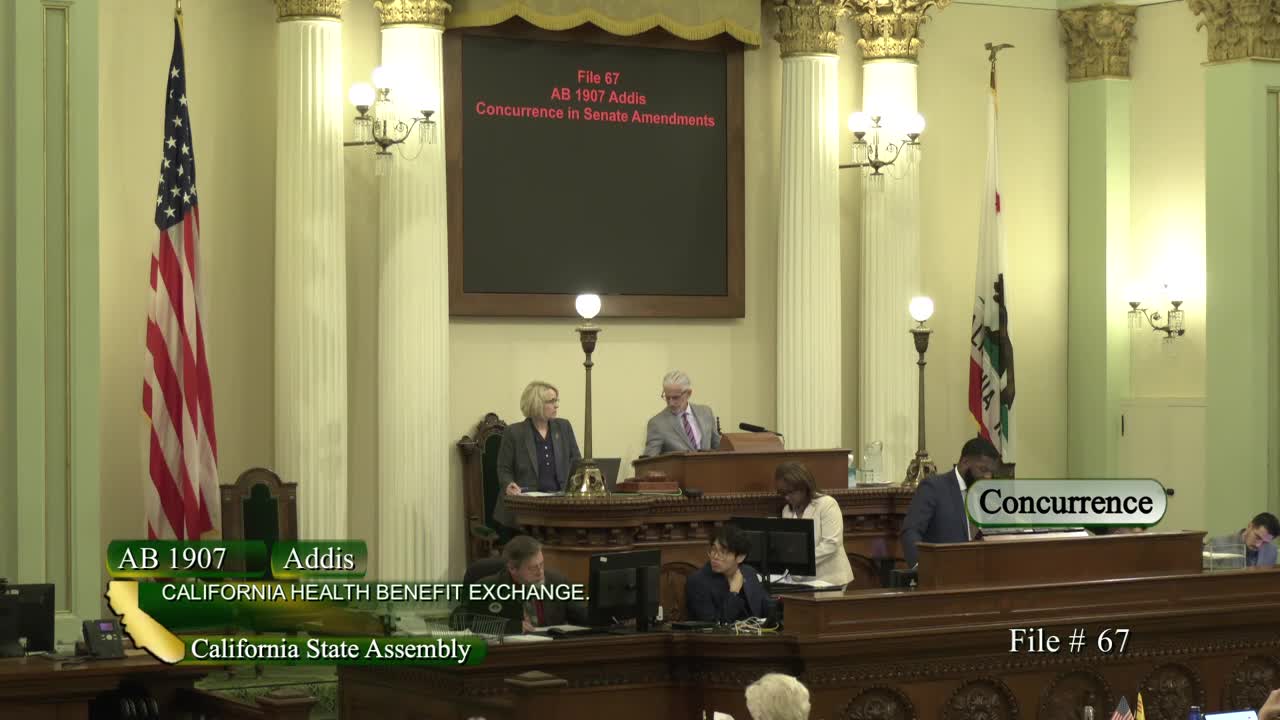 1MIN
Assembly Floor
 2MIN
Senate Floor
 5MIN
Senate Standing Committee on Judiciary
 23MIN
Senate Standing Committee on Housing
 1MIN
Assembly Floor
 19MIN
Assembly Standing Committee on Judiciary
 15MIN



