AB 2497: Physical therapists.
- Session Year: 2025-2026
- House: Assembly
- Latest Version Date: 2026-05-22
Current Status:
Failed
(2026-05-28: Read third time. Refused passage. (Ayes 26. Noes 19.).)
Introduced
In Committee
Awaiting First Chamber Vote
Passed First Chamber
In Committee
Awaiting Second Chamber Vote
Passed Second Chamber
Enacted
What does this bill do?
This bill changes what counts as physical therapy and who may call services “physical therapy,” affecting licensed physical therapists, physical therapist assistants, patients, and businesses; only services provided by or under the direction of a licensed physical therapist may be called physical therapy. It expands practice to focus on movement-system evaluation and treatment, adds use of electrode needles to assess the nerves, muscles, and bones, allows a physical therapist to supervise up to three assistants, permits patients to see a physical therapist without a referral while requiring PTs to refer cases beyond their training, and allows certain doctoral PTs to use the initials DSc.
The summary is provided by generative AI which can make mistakes. For original language, please view the details in the table below.
Existing law, the Physical Therapy Practice Act, establishes the Physical Therapy Board of California to license and regulate physical therapists and the practice of physical therapy. A violation of the act is a crime. Existing law defines the terms physical therapist, physical therapist assistant, and physical therapy and sets forth the scope of practice of a physical therapist. Existing law authorizes only a licensed physical therapist to use the title physical therapist or the letters P.T. or any other words, letters, or figures indicating that the person is a licensed physical therapist. Existing law requires the board to define those doctoral degrees that are in a related health science for specified provisions of the Physical Therapy Practice Act. Existing law authorizes a licensed physical therapist who has received a doctoral degree in physical therapy or, after the adoption of the above-described definition by the board, a doctoral degree in a related health science to, among other things, use the initials DPT, PhD, or EdD, as applicable, in a written communication following the licensees name. Existing regulations define a physical therapy related health science for the purpose of the above-described authorization to include, among other things, biology, biomechanics, and exercise physiology.
This bill, among other changes to the act, would redefine physical therapy, physical therapist, and physical therapist assistant for purposes of the act, as specified. The bill would, among other things, prohibit the use of any words, abbreviation, or insignia implying that physical therapy is provided unless those services are provided by or under the direction of a licensed physical therapist. The bill would delete the requirement on the board to define the doctoral degrees that are in a related health science described above and would update those provisions to, instead, specify that the doctoral degrees in a related health science are those specified by the board in regulation. The bill would additionally authorize a licensed physical therapist who has received a doctoral degree in physical therapy or a related health science to use the initials DSc, as applicable, following the licensees name.
This bill would delete existing requirements for the performance of tissue penetration by a physical therapist and instead would include within the practice of physical therapy the use of electrode needles to perform tissue penetration for the purpose of evaluating and interpreting performance of the neuromusculoskeletal system.
Existing law prohibits a physical therapist from supervising more than 2 physical therapist assistants at one time and establishes conditions for the initiation of services by a physical therapist directly, including providing a specified notice, orally and in writing, to a patient that is signed by the patient.
This bill would increase the number of physical therapist assistants a physical therapist is authorized to supervise from 2 to 3. The bill would require a physical therapist to refer a patient to a physician and surgeon or other appropriately licensed health care provider when the situation or condition of the patient is beyond the scope of the education and training of the physical therapist. The bill would repeal the notice and other requirements for the provision of direct physical therapy treatment services.
Because the bill would expand the scope of a crime, the bill would impose a state-mandated local program.
The California Constitution requires the state to reimburse local agencies and school districts for certain costs mandated by the state. Statutory provisions establish procedures for making that reimbursement.
This bill would provide that no reimbursement is required by this act for a specified reason.
Existing law, the Physical Therapy Practice Act, establishes the Physical Therapy Board of California to license and regulate physical therapists and the practice of physical therapy. A violation of the act is a crime. Existing law defines the terms physical therapist, physical therapist assistant, and physical therapy and sets forth the scope of practice of a physical therapist. Existing law authorizes only a licensed physical therapist to use the title physical therapist or the letters P.T. or any other words, letters, or figures indicating that the person is a licensed physical therapist. Existing law requires the board to define those doctoral degrees that are in a related health science for specified provisions of the Physical Therapy Practice Act. Existing law authorizes a licensed physical therapist who has received a doctoral degree in physical therapy or, after the adoption of the above-described definition by the board, a doctoral degree in a related health science to, among other things, use the initials DPT, PhD, or EdD, as applicable, in a written communication following the licensees name. Existing regulations define a physical therapy related health science for the purpose of the above-described authorization to include, among other things, biology, biomechanics, and exercise physiology.
This bill, among other changes to the act, would redefine physical therapy, physical therapist, and physical therapist assistant for purposes of the act, as specified. The bill would, among other things, prohibit the use of any words, abbreviation, or insignia implying that physical therapy is provided unless those services are provided by or under the direction of a licensed physical therapist. The bill would delete the requirement on the board to define the doctoral degrees that are in a related health science described above and would update those provisions to, instead, specify that the doctoral degrees in a related health science are those specified by the board in regulation.
(2)Existing law establishes the Department of Consumer Affairs under the direction of the Director of Consumer Affairs. Existing law requires, among other entities, every regulatory board and bureau to submit to the director its method for ensuring that every licensing examination administered by or pursuant to contract with the board is subject to periodic evaluation, as specified. Existing law authorizes that evaluation to be conducted by, among others, the Office of Professional Examination Services within the department.This bill would require the board to request the office to review and validate the most recent Federation of State Boards of Physical Therapy occupational analyses of specified physical therapists functions. If an occupational analysis of those functions has not been performed, the bill would require the board to request the office to perform the analysis. The bill would require the board, together with the office, to assess the alignment of the competencies taught in the Commission on Accreditation in Physical Therapy Education accreditation standards and tested in the National Physical Therapy Examination with the analyses described above. The bill would require the board to promulgate certain regulations upon the completion of the assessment described above, as specified.(3)Existing law establishes conditions for the initiation of services by a physical therapist directly, including providing a specified notice, orally and in writing, to a patient that is signed by the patient.This bill would, on the operative date of the above-described regulations, would delete existing requirements for the performance of tissue penetration by a physical therapist and instead would include within the practice of physical therapy the use of electrode needles and solid filiform needles to perform tissue penetration for the purpose of evaluating, interpreting, and treating evaluating and interpreting performance of the neuromusculoskeletal system. The bill would authorize a physical therapist to perform and interpret musculoskeletal ultrasound imaging and refer a patient for imaging studies. The
Existing law prohibits a physical therapist from supervising more than 2 physical therapist assistants at one time and establishes conditions for the initiation of services by a physical therapist directly, including providing a specified notice, orally and in writing, to a patient that is signed by the patient.
This bill would increase the number of physical therapist assistants a physical therapist is authorized to supervise from 2 to 3. The bill would require a physical therapist to refer a patient to a physician and surgeon or other appropriately licensed health care provider when the situation or condition of the patient is beyond the scope of the education and training of the physical therapist. The bill would repeal the notice and other requirements for the provision of direct physical therapy treatment services.
Because the bill would expand the scope of a crime, the bill would impose a state-mandated local program.
(4)The CaliforniaThe California Constitution requires the state to reimburse local agencies and school districts for certain costs mandated by the state. Statutory provisions establish procedures for making that reimbursement.
This bill would provide that no reimbursement is required by this act for a specified reason.
(1)Existing law, the Physical Therapy Practice Act, establishes the Physical Therapy Board of California to license and regulate physical therapists and the practice of physical therapy. A violation of the act is a crime. Existing law defines the terms physical therapist, physical therapist assistant, and physical therapy and sets forth the scope of practice of a physical therapist. Existing law authorizes only a licensed physical therapist to use the title physical therapist or the letters P.T. or any other words, letters, or figures indicating that the person is a licensed physical therapist. Existing law requires the board to define those doctoral degrees that are in a related health science for specified provisions of the Physical Therapy Practice Act. Existing law authorizes a licensed physical therapist who has received a doctoral degree in physical therapy or, after the adoption of the above-described definition by the board, a doctoral degree in a related health science to, among other things, use the initials DPT, PhD, or EdD, as applicable, in a written communication following the licensees name. Existing regulations define a physical therapy related health science for the purpose of the above-described authorization to include, among other things, biology, biomechanics, and exercise physiology.
This bill, among other changes to the act, would redefine physical therapy, physical therapist, and physical therapist assistant for purposes of the act, as specified. The bill would, among other things, prohibit the use of any words, abbreviation, or insignia implying that physical therapy is provided unless those services are provided by or under the direction of a licensed physical therapist. The bill would delete the requirement on the board to define the doctoral degrees that are in a related health science described above and would update those provisions to, instead, specify that the doctoral degrees in a related health science are those specified by the board in regulation.
(2)Existing law establishes the Department of Consumer Affairs under the direction of the Director of Consumer Affairs. Existing law requires, among other entities, every regulatory board and bureau to submit to the director its method for ensuring that every licensing examination administered by or pursuant to contract with the board is subject to periodic evaluation, as specified. Existing law authorizes that evaluation to be conducted by, among others, the Office of Professional Examination Services within the department.
This bill would require the board to request the office to review and validate the most recent Federation of State Boards of Physical Therapy occupational analyses of specified physical therapists functions. If an occupational analysis of those functions has not been performed, the bill would require the board to request the office to perform the analysis. The bill would require the board, together with the office, to assess the alignment of the competencies taught in the Commission on Accreditation in Physical Therapy Education accreditation standards and tested in the National Physical Therapy Examination with the analyses described above. The bill would require the board to promulgate certain regulations upon the completion of the assessment described above, as specified.
Existing(3)Existing law establishes conditions for the initiation of services by a physical therapist directly, including providing a specified notice, orally and in writing, to a patient that is signed by the patient.
This bill would would, on the operative date of the above-described regulations, delete existing requirements for the performance of tissue penetration by a physical therapist and instead would include within the practice of physical therapy the use of electrode needles and solid filiform needles to perform tissue penetration for the purpose of evaluating, interpreting, and treating the neuromusculoskeletal system. The bill would authorize a physical therapist to perform and interpret musculoskeletal ultrasound imaging and refer a patient for imaging studies. The bill would increase the number of physical therapist assistants a physical therapist is authorized to supervise from 2 to 3. The bill would require a physical therapist to refer a patient to a physician and surgeon or other appropriately licensed health care provider when the situation or condition of the patient is beyond the scope of the education and training of the physical therapist. The bill would repeal the notice and other requirements for the provision of direct physical therapy treatment services.
Because the bill would expand the scope of a crime, the bill would impose a state-mandated local program.
The(4)The California Constitution requires the state to reimburse local agencies and school districts for certain costs mandated by the state. Statutory provisions establish procedures for making that reimbursement.
This bill would provide that no reimbursement is required by this act for a specified reason.
Existing law, the Physical Therapy Practice Act, establishes the Physical Therapy Board of California to license and regulate physical therapists and the practice of physical therapy. A violation of the act is a crime. Existing law defines the terms physical therapist, physical therapist assistant, and physical therapy and sets forth the scope of practice of a physical therapist. Existing law authorizes only a licensed physical therapist to use the title physical therapist or the letters P.T. or any other words, letters, or figures indicating that the person is a licensed physical therapist. Existing law establishes conditions for the initiation of services by a physical therapist directly, including providing a specified notice, orally and in writing, to a patient that is signed by the patient. requires the board to define those doctoral degrees that are in a related health science for specified provisions of the Physical Therapy Practice Act. Existing law authorizes a licensed physical therapist who has received a doctoral degree in physical therapy or, after the adoption of the above-described definition by the board, a doctoral degree in a related health science to, among other things, use the initials DPT, PhD, or EdD, as applicable, in a written communication following the licensees name. Existing regulations define a physical therapy related health science for the purpose of the above-described authorization to include, among other things, biology, biomechanics, and exercise physiology.
This bill, among other changes to the act, would redefine physical therapy, physical therapist, and physical therapist assistant for purposes of the act, as specified. The bill would, among other things, prohibit the use of any words, abbreviation, or insignia implying that physical therapy is provided unless those services are provided by or under the direction of a licensed physical therapist. The The bill would delete the requirement on the board to define the doctoral degrees that are in a related health science described above and would update those provisions to, instead, specify that the doctoral degrees in a related health science are those specified by the board in regulation.
Existing law establishes conditions for the initiation of services by a physical therapist directly, including providing a specified notice, orally and in writing, to a patient that is signed by the patient.
This bill would delete existing requirements for the performance of tissue penetration by a physical therapist and instead would include within the practice of physical therapy the use of electrode needles and solid filiform needles to perform tissue penetration for the purpose of evaluating, interpreting, and treating the neuromusculoskeletal system. The bill would authorize a physical therapist to perform and interpret musculoskeletal ultrasound imaging and refer a patient for imaging studies. The bill would increase the number of physical therapist assistants a physical therapist is authorized to supervise from 2 to 3. The bill would repeal the notice and other requirements for the provision of direct physical therapy treatment services.
Because the bill would expand the scope of a crime, the bill would impose a state-mandated local program.
The California Constitution requires the state to reimburse local agencies and school districts for certain costs mandated by the state. Statutory provisions establish procedures for making that reimbursement.
This bill would provide that no reimbursement is required by this act for a specified reason.
Existing law, the Physical Therapy Practice Act, establishes the Physical Therapy Board of California to license and regulate physical therapists and the practice of physical therapy. A violation of the act is a crime. Existing law defines the terms physical therapist, physical therapist assistant, and physical therapy and sets forth the scope of practice of a physical therapist. Existing law authorizes only a licensed physical therapist to use the initials DPT only if certain requirements are satisfied. the title physical therapist or the letters P.T. or any other words, letters, or figures indicating that the person is a licensed physical therapist. Existing law establishes conditions for the initiation of services by a physical therapist directly, including providing a specified notice, orally and in writing, to a patient that is signed by the patient. Existing law prohibits a physical therapist from prescribing medications.
This bill, among other changes to the act, would redefine physical therapy, physical therapist, and physical therapist assistant for purposes of the act, as specified. The bill would authorize any person holding a license as a physical therapist to use the title doctor of physical therapy or the letters D.P.T. The bill would revise the scope of practice of a physical therapist to include the authority to prescribe nonopioid analgesic and nonsteroidal anti-inflammatory medications and would require the board to adopt regulations implementing that provision after meeting and conferring with the Medical Board of California and the California State Board of Pharmacy to specify those medications. would, among other things, prohibit the use of any words, abbreviation, or insignia implying that physical therapy is provided unless those services are provided by or under the direction of a licensed physical therapist. The bill would delete existing requirements for the performance of tissue penetration by a physical therapist and instead would include within the practice of physical therapy the performance of use of electrode needles and solid filiform needles to perform tissue penetration for the purpose of evaluating, interpreting, and treating the neuromuscular neuromusculoskeletal system. The bill would authorize a physical therapist to perform and interpret musculoskeletal ultrasound imaging and refer a patient for imaging studies. The bill would increase the number of physical therapist assistants a physical therapist is authorized to supervise from 2 to 3. The bill would repeal the notice and other requirements for the provision of direct physical therapy treatment services.
Because the bill would expand the scope of a crime, the bill would impose a state-mandated local program.
The California Constitution requires the state to reimburse local agencies and school districts for certain costs mandated by the state. Statutory provisions establish procedures for making that reimbursement.
This bill would provide that no reimbursement is required by this act for a specified reason.
Existing law, the Physical Therapy Practice Act, establishes the Physical Therapy Board of California to license and regulate physical therapists and the practice of physical therapy. Existing law defines the terms physical therapist, physical therapist assistant, and physical therapy and sets forth the scope of practice of a physical therapist. Existing law authorizes a licensed physical therapist to use the initials DPT only if certain requirements are satisfied. Existing law establishes conditions for the initiation of services by a physical therapist directly, including providing a specified notice, orally and in writing, to a patient that is signed by the patient. Existing law prohibits a physical therapist from prescribing medications.
This bill, among other changes to the act, would redefine physical therapy, physical therapist, and physical therapist assistant for purposes of the act, as specified. The bill would authorize any person holding a license as a physical therapist to use the title doctor of physical therapy or the letters D.P.T. The bill would revise the scope of practice of a physical therapist to include the authority to prescribe nonopioid analgesic and nonsteroidal anti-inflammatory medications and would require the board to adopt regulations implementing that provision after meeting and conferring with the Medical Board of California and the California State Board of Pharmacy to specify those medications. The bill would delete existing requirements for the performance of tissue penetration by a physical therapist and instead would include within the practice of physical therapy the performance of tissue penetration for the purpose of evaluating, interpreting, and treating the neuromuscular system. The bill would authorize a physical therapist to perform and interpret musculoskeletal ultrasound imaging and refer a patient for imaging studies. The bill would increase the number of physical therapist assistants a physical therapist is authorized to supervise from 2 to 3. The bill would repeal the notice and other requirements for the provision of direct physical therapy treatment services.
Existing law, the State Bar Act, provides for the licensure and regulation of attorneys by the State Bar of California (State Bar), a public corporation governed by a board of trustees. Existing law permits the State Bar to collect revenue not to exceed the actual cost of specified pilot programs to fund disciplinary diversion programs. Existing law requires the State Bar to transmit a report on the diversion programs to the Legislature by April 1, 2027, as provided.This bill would make a nonsubstantive change to those provisions.Existing law, the State Bar Act, provides for the licensure and regulation of attorneys by the State Bar of California (State Bar), a public corporation governed by a board of trustees. Existing law permits the State Bar to collect revenue not to exceed the actual cost of specified pilot programs to fund disciplinary diversion programs. Existing law requires the State Bar to transmit a report on the diversion programs to the Legislature by April 1, 2027, as provided.
This bill would make a nonsubstantive change to those provisions.
For the purpose of this chapter, the following terms shall have the following meanings, unless otherwise specified:
(a)Board means the Physical Therapy Board of California.
(b)Movement system means the collection of all bodily systems that interact to move the body or its parts.
(c)Physical therapist or physiotherapist means a health care professional who is licensed pursuant to this chapter to practice physical therapy on a person. A physical therapist is part of the primary care team who works in a variety of settings to help improve function of the movement system.
(d)Physical therapist assistant or physical therapy assistant means a person who is licensed pursuant to this chapter to assist a physical therapist in the provision of physical therapy.
(e)Physical therapist technician and physical therapy aide, as described in Section 2630.4, shall be deemed identical and interchangeable terms.
(f)Physical therapy or physiotherapy means services specified in Section 2620 that are provided as follows:
(1)By or under the direction and supervision of a physical therapist.
(2)To assess and facilitate motion, force, energy, and motor control through the use of the physical, chemical, and other properties of heat, light, water, electricity, sound, massage, movement, and active, passive, and resistive exercise to maximize health, well-being, function, and community participation across the diversity of age, sex, gender, culture, environment, and psychosocial and socioeconomic status.
(3)For prevention, habilitation, rehabilitation, promotion of health and well-being of bodily and mental conditions, disease or movement-based impairments, activity limitations, and participation restrictions.
SEC. 2.Section 2620 of the Business and Professions Code is repealed.SEC. 3.Section 2620 is added to the Business and Professions Code, to read:2620.(a)The practice of physical therapy includes all of the following services:
(1)Examination and evaluation evaluation, using clinically appropriate methods, of the movement system and the systems relation to health-related and disabling conditions, including a review of systems and medication regimen to identify developmental, mechanical, physiological, and biopsychosocial impairments of the movement system, participation restrictions, or other conditions to determine diagnosis of conditions of the movement system, prognosis, and intervention, and assess outcomes.
(2)The design, implementation, and modification of interventions to alleviate impairments, functional limitations, and participation restrictions related to the movement system or other health-related conditions.
(3)Furnishing, ordering, fabrication, and application of assistive, adaptive, orthotic, prosthetic, protective, and supportive devices and equipment consistent with subdivision (b) of Section 4023, subdivision (g) of Section 4059, and subdivision (d) of Section 4059.5.
(b)Physical therapy interventions techniques and procedures may include, but are not limited to, therapeutic exercise; gait training; functional training; self-care; training in self-care and in-home, community, or work integration or reintegration; manual therapy, including soft tissue mobilization, mobilization and joint mobilization or manipulation, and intramuscular manual therapy; manipulation; therapeutic massage; lymphatic drainage; neuromuscular reeducation; blood flow restriction; pulmonary management and airway clearance; integumentary protection and active repair; biophysical agents or modalities, including electrical, sound, light, mechanical, electromagnetic, or thermal; movement system counseling and education; nutritional education and counseling; and pain and stress management.
(1)Prevention or reduction of risk of injury, impairment, functional limitation, and disability, including the promotion and maintenance of fitness, health, and wellness.
(2)Administration, consultation, education, and research.
(3)Referring for other indicated services and tests for consultation with other providers, decisionmaking, and patient management.
SEC. 4.Section 2620.1 of the Business and Professions Code is repealed.SEC. 5.Section 2620.1 is added to the Business and Professions Code, to read:2620.1.(a)Nothing in this chapter shall be construed to require a referral or prior authorization for a patient to directly access physical therapist services.
(b)A physical therapist shall refer a patient to a physician and surgeon or other appropriately licensed health care provider when the situation or condition of the patient is beyond the scope of the education and training of the physical therapist.
SEC. 6.Section 2620.5 of the Business and Professions Code is repealed.SEC. 7.Section 2620.5 is added to the Business and Professions Code, to read:2620.5.The practice of physical therapy includes the use of electrode needles to perform tissue penetration for the purpose of evaluating and interpreting performance of the neuromusculoskeletal system.
SEC. 8.Section 2622 of the Business and Professions Code is amended to read:2622.(a)A physical therapist shall be responsible for managing all aspects of the care of each patient as set forth in regulations promulgated by the board.
(b)A physical therapist shall not supervise more than three physical therapist assistants at one time to assist the physical therapist in their practice of physical therapy.
(c)A physical therapist may utilize the services of one aide engaged in patient-related tasks to aid the physical therapist in their practice of physical therapy.
SEC. 9.Section 2633 of the Business and Professions Code is amended to read:2633.(a)A person holding a license as a physical therapist issued by the board may use the title physical therapist or the letters P.T., the title doctor of physical therapy or, subject to subdivision (b), the letters D.P.T., or any other words, letters, or figures that indicate that the person using them is a licensed physical therapist. No other person shall be designated or use the term licensed or registered physical therapist, licensed or registered physiotherapist, licensed or registered physical therapy technician, or the letters P.T., D.P.T., L.P.T., or R.P.T., or any other words, abbreviation, or insignia implying that physical therapy is provided unless those services are provided by or under the direction of a licensed physical therapist. A person or business shall not advertise or otherwise promote a person as being a physical therapist or physiotherapist unless the individual is a licensed physical therapist. A person or business that offers, provides, or bills any person for services shall not characterize those services as physical therapy unless the person performing the service is a licensed physical therapist.
(b)A licensed physical therapist who has received a doctoral degree in physical therapy or, subject to subdivision (d), a doctoral degree in a related health science, may do the following:
(1)In a written communication, use the initials DPT, PhD, DSc, or EdD, as applicable, following the licensees name.
(2)In a written communication, use the title Doctor or the abbreviation Dr. preceding the licensees name, if the licensees name is immediately followed by an unabbreviated specification of the applicable doctoral degree held by the licensee.
(3)In a spoken communication while engaged in the practice of physical therapy, use the title doctor preceding the persons name, if the speaker specifies that they are a physical therapist.
(c)A doctoral degree described in subdivision (b) shall be granted by an institution accredited by the Western Association of Schools and Colleges or by an accrediting agency recognized by the National Commission on Accrediting or the United States Department of Education that the board determines is equivalent to the Western Association of Schools and Colleges.
(d)For purposes of subdivision (b), the doctoral degrees that are in a related health science shall be those specified by the board in regulation.
SEC. 10.Section 2689 of the Business and Professions Code is repealed.SEC. 11.No reimbursement is required by this act pursuant to Section 6 of Article XIIIB of the California Constitution because the only costs that may be incurred by a local agency or school district will be incurred because this act creates a new crime or infraction, eliminates a crime or infraction, or changes the penalty for a crime or infraction, within the meaning of Section 17556 of the Government Code, or changes the definition of a crime within the meaning of Section 6 of Article XIIIB of the California Constitution.
For the purpose of this chapter, the following terms shall have the following meanings, unless otherwise specified:
(a)Board means the Physical Therapy Board of California.
(b)Movement system means the collection of all bodily systems that interact to move the body or its parts.
(c)Physical therapist or physiotherapist means a health care professional who is licensed pursuant to this chapter to practice physical therapy on a person. A physical therapist is part of the primary care team who works in a variety of settings to help improve function of the movement system.
(d)Physical therapist assistant or physical therapy assistant means a person who is licensed pursuant to this chapter to assist a physical therapist in the provision of physical therapy.
(e)Physical therapist technician and physical therapy aide, as described in Section 2630.4, shall be deemed identical and interchangeable terms.
(f)Physical therapy or physiotherapy means services specified in Section 2620 that are provided as follows:
(1)By or under the direction and supervision of a physical therapist.
(2)To facilitate motion, force, energy, and motor control through the use of the physical, chemical, and other properties of heat, light, water, electricity, sound, massage, movement, and active, passive, and resistive exercise to maximize health, well-being, function, and community participation across the diversity of age, sex, gender, culture, environment, and psychosocial and socioeconomic status.
(3)For prevention, habilitation, rehabilitation, promotion of health and well-being of bodily and mental conditions, disease or movement-based impairments, activity limitations, and participation restrictions.
SEC. 2.Section 2620 of the Business and Professions Code is repealed.SEC. 3.Section 2620 is added to the Business and Professions Code, to read:2620.(a)The practice of physical therapy includes all of the following services:
(1)Examination and evaluation of the movement system and the systems relation to health-related and disabling conditions, including a review of systems and medication regimen to identify developmental, mechanical, physiological, and biopsychosocial impairments of the movement system, participation restrictions, or other conditions to determine diagnosis of conditions of the movement system, prognosis, and intervention, and assess outcomes.
(2)The design, implementation, and modification of interventions to alleviate impairments, functional limitations, and participation restrictions related to the movement system or other health-related conditions.
(3)Furnishing, ordering, fabrication, and application of assistive, adaptive, orthotic, prosthetic, protective, and supportive devices and equipment consistent with subdivision (b) of Section 4023, subdivision (g) of Section 4059, and subdivision (d) of Section 4059.5.
(b)Physical therapy interventions may include, but are not limited to, therapeutic exercise; gait training; functional training; self-care; in-home, community, or work integration or reintegration; manual therapy, including soft tissue mobilization, joint mobilization or manipulation, and intramuscular manual therapy; therapeutic massage; lymphatic drainage; neuromuscular reeducation; blood flow restriction; pulmonary management and airway clearance; integumentary protection and active repair; biophysical agents or modalities, including electrical, sound, light, mechanical, electromagnetic, or thermal; movement system counseling and education; nutritional education and counseling; and pain and stress management.
(1)Prevention or reduction of risk of injury, impairment, functional limitation, and disability, including the promotion and maintenance of fitness, health, and wellness.
(2)Administration, consultation, education, and research.
(3)Referring for other indicated services and tests for consultation with other providers, decisionmaking, and patient management.
SEC. 4.Section 2620.1 of the Business and Professions Code is repealed.SEC. 5.Section 2620.1 is added to the Business and Professions Code, to read:2620.1.(a)Nothing in this chapter shall be construed to require a referral or prior authorization for a patient to directly access physical therapist services.
(b)A physical therapist shall refer a patient to a physician and surgeon or other appropriately licensed health care provider when the situation or condition of the patient is beyond the scope of the education and training of the physical therapist.
SEC. 6.Section 2620.4 is added to the Business and Professions Code, to read:2620.4.(a)The board shall request the departments Office of Professional Examination Services to review and validate the most recent Federation of State Boards of Physical Therapy occupational analyses of physical therapists performing the functions specified in Section 2620.6. If the Federation of State Boards of Physical Therapy has not performed an occupational analysis on the functions, the board shall request the office to perform the analysis.(b)By January 1, 2029, the board, together with the Office of Professional Examination Services, shall assess the alignment of the competencies taught in the Commission on Accreditation in Physical Therapy Education accreditation standards and tested in the National Physical Therapy Examination with the occupational analyses reviewed and validated or performed under subdivision (a).(c)Upon completion of the assessment specified in subdivision (b), the board shall promulgate regulations that do both of the following:(1)Identify the scope of the services authorized under Section 2620.6 that fall within the aligned competencies identified by subdivision (b).(2)If the assessment performed according to subdivision (b) identifies additional competencies necessary to perform the services specified in Section 2620.6, specify the training and education required to obtain the competencies.SEC. 7.Section 2620.5 of the Business and Professions Code is amended to read:2620.5.A physical therapist may, upon specified authorization of a physician and surgeon, perform tissue penetration for the purpose of evaluating neuromuscular performance as a part of the practice of physical therapy, as defined in Section 2620, provided the physical therapist is certified by the board to perform the tissue penetration and evaluation and provided the physical therapist does not develop or make diagnostic or prognostic interpretations of the data obtained. Any physical therapist who develops or makes a diagnostic or prognostic interpretation of this data is in violation of the Medical Practice Act (Chapter 5 (commencing with Section 2000) of Division 2), and may be subject to all of the sanctions and penalties set forth in that act.The board, after meeting and conferring with the Division of Licensing of the Medical Board of California, shall do all of the following:(a)Adopt standards and procedures for tissue penetration for the purpose of evaluating neuromuscular performance by certified physical therapists.(b)Establish standards for physical therapists to perform tissue penetration for the purpose of evaluating neuromuscular performance.(c)Certify physical therapists meeting standards established by the board pursuant to this section.(d)This section shall remain in effect only until the board has promulgated regulations pursuant to subdivision (c) of Section 2620.4 and, as of the operative date of those regulations, is repealed.SEC. 6.Section 2620.5 of the Business and Professions Code is repealed.2620.5.A physical therapist may, upon specified authorization of a physician and surgeon, perform tissue penetration for the purpose of evaluating neuromuscular performance as a part of the practice of physical therapy, as defined in Section 2620, provided the physical therapist is certified by the board to perform the tissue penetration and evaluation and provided the physical therapist does not develop or make diagnostic or prognostic interpretations of the data obtained. Any physical therapist who develops or makes a diagnostic or prognostic interpretation of this data is in violation of the Medical Practice Act (Chapter 5 (commencing with Section 2000) of Division 2), and may be subject to all of the sanctions and penalties set forth in that act.The board, after meeting and conferring with the Division of Licensing of the Medical Board of California, shall do all of the following:(a)Adopt standards and procedures for tissue penetration for the purpose of evaluating neuromuscular performance by certified physical therapists.(b)Establish standards for physical therapists to perform tissue penetration for the purpose of evaluating neuromuscular performance.(c)Certify physical therapists meeting standards established by the board pursuant to this section.SEC. 8.Section 2620.6 is added to the Business and Professions Code, to read:2620.6.(a)TheSEC. 7.Section 2620.5 is added to the Business and Professions Code, to read:2620.5.The practice of physical therapy includes the use of electrode needles and solid filiform needles to perform tissue penetration for the purpose of evaluating and interpreting performance and treating of the neuromusculoskeletal system.
(b)This section shall not be construed to authorize the practice of the art and science of acupuncture, as described in Section 4926 and as taught in acupuncture schools under Section 4927.5.(c)This section shall become operative upon the operative date of the regulations promulgated pursuant to subdivision (c) of Section 2620.4.SEC. 9.SEC. 8.Section 2622 of the Business and Professions Code is amended to read:2622.(a)A physical therapist shall be responsible for managing all aspects of the care of each patient as set forth in regulations promulgated by the board.
(b)A physical therapist shall not supervise more than three physical therapist assistants at one time to assist the physical therapist in their practice of physical therapy.
(c)A physical therapist may utilize the services of one aide engaged in patient-related tasks to aid the physical therapist in their practice of physical therapy.
SEC. 10.SEC. 9.Section 2633 of the Business and Professions Code is amended to read:2633.(a)A person holding a license as a physical therapist issued by the board may use the title physical therapist or the letters P.T., the title doctor of physical therapy or, subject to subdivision (b), the letters D.P.T., or any other words, letters, or figures that indicate that the person using them is a licensed physical therapist. No other person shall be designated or use the term licensed or registered physical therapist, licensed or registered physiotherapist, licensed or registered physical therapy technician, or the letters P.T., D.P.T., L.P.T., or R.P.T., or any other words, abbreviation, or insignia implying that physical therapy is provided unless those services are provided by or under the direction of a licensed physical therapist. A person or business shall not advertise or otherwise promote a person as being a physical therapist or physiotherapist unless the individual is a licensed physical therapist. A person or business that offers, provides, or bills any person for services shall not characterize those services as physical therapy unless the person performing the service is a licensed physical therapist.
(b)A licensed physical therapist who has received a doctoral degree in physical therapy or, subject to subdivision (d), a doctoral degree in a related health science, may do the following:
(1)In a written communication, use the initials DPT, PhD, or EdD, as applicable, following the licensees name.
(2)In a written communication, use the title Doctor or the abbreviation Dr. preceding the licensees name, if the licensees name is immediately followed by an unabbreviated specification of the applicable doctoral degree held by the licensee.
(3)In a spoken communication while engaged in the practice of physical therapy, use the title doctor preceding the persons name, if the speaker specifies that they are a physical therapist.
(c)A doctoral degree described in subdivision (b) shall be granted by an institution accredited by the Western Association of Schools and Colleges or by an accrediting agency recognized by the National Commission on Accrediting or the United States Department of Education that the board determines is equivalent to the Western Association of Schools and Colleges.
(d)For purposes of subdivision (b), the doctoral degrees that are in a related health science shall be those specified by the board in regulation.
SEC. 11.SEC. 10.Section 2689 of the Business and Professions Code is repealed.SEC. 12.SEC. 11.No reimbursement is required by this act pursuant to Section 6 of Article XIIIB of the California Constitution because the only costs that may be incurred by a local agency or school district will be incurred because this act creates a new crime or infraction, eliminates a crime or infraction, or changes the penalty for a crime or infraction, within the meaning of Section 17556 of the Government Code, or changes the definition of a crime within the meaning of Section 6 of Article XIIIB of the California Constitution.
For the purpose of this chapter, the following terms shall have the following meanings, unless otherwise specified:
(a)Board means the Physical Therapy Board of California.
(b)Movement system means the collection of all bodily systems that interact to move the body or its parts.
(c)Physical therapist or physiotherapist means a health care professional who is licensed pursuant to this chapter to practice physical therapy on a person. A physical therapist is part of the primary care team who works in a variety of settings to help improve function of the movement system.
(d)Physical therapist assistant or physical therapy assistant means a person who is licensed pursuant to this chapter to assist a physical therapist in the provision of physical therapy.
(e)Physical therapist technician and physical therapy aide, as described in Section 2630.4, shall be deemed identical and interchangeable terms.
(f)Physical therapy or physiotherapy means services specified in Section 2620 that are provided by as follows:
(1)By or under the direction and supervision of a physical therapist to therapist.
(2)To facilitate motion, force, energy, and motor control through the use of the physical, chemical, and other properties of heat, light, water, electricity, sound, massage, movement, and active, passive, and resistive exercise to maximize health, well-being, function, and community participation across the diversity of age, sex, gender, culture, environment, and psychosocial and socioeconomic status.
(3)For prevention, habilitation, rehabilitation, promotion of health and well-being of bodily and mental conditions, disease or movement-based impairments, activity limitations, and participation restrictions.
SEC. 2.Section 2620 of the Business and Professions Code is repealed.SEC. 3.Section 2620 is added to the Business and Professions Code, to read:2620.(a)Physical therapy services are provided for prevention, habilitation, rehabilitation, promotion of health and well-being of bodily and mental conditions, disease or movement-based impairments, activity limitations, and participation restrictions. Nothing in this chapter shall be construed to require a referral or prior authorization for a patient to directly access physical therapist services.(b)Physical 2620.(a)The practice of physical therapy services include: includes all of the following services:
(1)Examination and evaluation of the movement system and the systems relation to health-related and disabling conditions, including a review of systems and medication regimen to identify developmental, mechanical, physiological, and biopsychosocial impairments of the movement system, participation restrictions, or other conditions to determine diagnosis of conditions of the movement system, prognosis, and intervention, and assess outcomes.
(2)The design, implementation, and modification of interventions to alleviate impairments, functional limitations, and participation restrictions related to the movement system or other health-related conditions.
(3)Furnishing, ordering, fabrication, and application of assistive, adaptive, orthotic, prosthetic, protective, and supportive devices and equipment consistent with subdivision (b) of Section 4023, subdivision (g) of Section 4059, and subdivision (d) of Section 4059.5.
(c)(b)Physical therapy interventions may include, but are not limited to, therapeutic exercise; gait training; functional training; self-care; in-home, community, or work integration or reintegration; manual therapy, including soft tissue mobilization, joint mobilization or manipulation, and intramuscular manual therapy; therapeutic massage; lymphatic drainage; neuromuscular reeducation; blood flow restriction; pulmonary management and airway clearance; integumentary protection and active repair; biophysical agents or modalities, including electrical, sound, light, mechanical, electromagnetic, or thermal; movement system counseling and education; nutritional education and counseling; and pain and stress management.
(1)Prevention or reduction of risk of injury, impairment, functional limitation, and disability, including the promotion and maintenance of fitness, health, and wellness.
(2)Administration, consultation, education, and research.
(3)Referring for other indicated services and tests for consultation with other providers, decisionmaking, and patient management.
SEC. 4.Section 2620.1 of the Business and Professions Code is repealed.SEC. 5.Section 2620.5 of the Business and Professions Code is repealed.SEC. 5.Section 2620.1 is added to the Business and Professions Code, to read:2620.1.(a)Nothing in this chapter shall be construed to require a referral or prior authorization for a patient to directly access physical therapist services.
(b)A physical therapist shall refer a patient to a physician and surgeon or other appropriately licensed health care provider when the situation or condition of the patient is beyond the scope of the education and training of the physical therapist.
SEC. 6.Section 2620.4 is added to the Business and Professions Code, to read:2620.4.(a)The board shall request the departments Office of Professional Examination Services to review and validate the most recent Federation of State Boards of Physical Therapy occupational analyses of physical therapists performing the functions specified in Section 2620.6. If the Federation of State Boards of Physical Therapy has not performed an occupational analysis on the functions, the board shall request the office to perform the analysis.
(b)By January 1, 2029, the board, together with the Office of Professional Examination Services, shall assess the alignment of the competencies taught in the Commission on Accreditation in Physical Therapy Education accreditation standards and tested in the National Physical Therapy Examination with the occupational analyses reviewed and validated or performed under subdivision (a).
(c)Upon completion of the assessment specified in subdivision (b), the board shall promulgate regulations that do both of the following:
(1)Identify the scope of the services authorized under Section 2620.6 that fall within the aligned competencies identified by subdivision (b).
(2)If the assessment performed according to subdivision (b) identifies additional competencies necessary to perform the services specified in Section 2620.6, specify the training and education required to obtain the competencies.
SEC. 7.Section 2620.5 of the Business and Professions Code is amended to read:2620.5.A physical therapist may, upon specified authorization of a physician and surgeon, perform tissue penetration for the purpose of evaluating neuromuscular performance as a part of the practice of physical therapy, as defined in Section 2620, provided the physical therapist is certified by the board to perform the tissue penetration and evaluation and provided the physical therapist does not develop or make diagnostic or prognostic interpretations of the data obtained. Any physical therapist who develops or makes a diagnostic or prognostic interpretation of this data is in violation of the Medical Practice Act (Chapter 5 (commencing with Section 2000) of Division 2), and may be subject to all of the sanctions and penalties set forth in that act.
The board, after meeting and conferring with the Division of Licensing of the Medical Board of California, shall do all of the following:
(a)Adopt standards and procedures for tissue penetration for the purpose of evaluating neuromuscular performance by certified physical therapists.
(b)Establish standards for physical therapists to perform tissue penetration for the purpose of evaluating neuromuscular performance.
(c)Certify physical therapists meeting standards established by the board pursuant to this section.
(d)This section shall remain in effect only until the board has promulgated regulations pursuant to subdivision (c) of Section 2620.4 and, as of the operative date of those regulations, is repealed.
SEC. 6.Section 2620.5 is added to the Business and Professions Code, to read:2620.5.SEC. 8.Section 2620.6 is added to the Business and Professions Code, to read:2620.6.(a)The practice of physical therapy includes the use of electrode needles and solid filiform needles to perform tissue penetration for the purpose of evaluating and interpreting performance and treating the neuromusculoskeletal system.
(b)This section shall not be construed to authorize the practice of the art and science of acupuncture, as described in Section 4926 and as taught in acupuncture schools under Section 4927.5.
(c)This section shall become operative upon the operative date of the regulations promulgated pursuant to subdivision (c) of Section 2620.4.
SEC. 7.Section 2620.6 is added to the Business and Professions Code, to read:2620.6.A physical therapist may perform and interpret musculoskeletal ultrasound imaging. A physical therapist may also order or refer a patient for imaging and studies that are performed and interpreted by other licensed health care professionals.SEC. 8.SEC. 9.Section 2622 of the Business and Professions Code is amended to read:2622.(a)A physical therapist shall be responsible for managing all aspects of the care of each patient as set forth in regulations promulgated by the board.
(b)A physical therapist shall not supervise more than three physical therapist assistants at one time to assist the physical therapist in their practice of physical therapy.
(c)A physical therapist may utilize the services of one aide engaged in patient-related tasks to aid the physical therapist in their practice of physical therapy.
SEC. 9.SEC. 10.Section 2633 of the Business and Professions Code is amended to read:2633.(a)A person holding a license as a physical therapist issued by the board may use the title physical therapist or the letters P.T., the title doctor of physical therapy or, subject to subdivision (b), the letters D.P.T., or any other words, letters, or figures that indicate that the person using them is a licensed physical therapist. No other person shall be designated or use the term licensed or registered physical therapist, licensed or registered physiotherapist, licensed or registered physical therapy technician, or the letters P.T., D.P.T., L.P.T., or R.P.T., or any other words, abbreviation, or insignia implying that physical therapy is provided unless those services are provided by or under the direction of a licensed physical therapist. A person or business shall not advertise or otherwise promote a person as being a physical therapist or physiotherapist unless the individual is a licensed physical therapist. A person or business that offers, provides, or bills any person for services shall not characterize those services as physical therapy unless the person performing the service is a licensed physical therapist.
(b)A licensed physical therapist who has received a doctoral degree in physical therapy or, subject to subdivision (d), a doctoral degree in a related health science, may do the following:
(1)In a written communication, use the initials DPT, PhD, or EdD, as applicable, following the licensees name.
(2)In a written communication, use the title Doctor or the abbreviation Dr. preceding the licensees name, if the licensees name is immediately followed by an unabbreviated specification of the applicable doctoral degree held by the licensee.
(3)In a spoken communication while engaged in the practice of physical therapy, use the title doctor preceding the persons name, if the speaker specifies that they are a physical therapist.
(c)A doctoral degree described in subdivision (b) shall be granted by an institution accredited by the Western Association of Schools and Colleges or by an accrediting agency recognized by the National Commission on Accrediting or the United States Department of Education that the board determines is equivalent to the Western Association of Schools and Colleges.
(d)For purposes of subdivision (b), the doctoral degrees that are in a related health science shall be those specified by the board in regulation.
SEC. 10.SEC. 11.Section 2689 of the Business and Professions Code is repealed.SEC. 11.SEC. 12.No reimbursement is required by this act pursuant to Section 6 of Article XIIIB of the California Constitution because the only costs that may be incurred by a local agency or school district will be incurred because this act creates a new crime or infraction, eliminates a crime or infraction, or changes the penalty for a crime or infraction, within the meaning of Section 17556 of the Government Code, or changes the definition of a crime within the meaning of Section 6 of Article XIIIB of the California Constitution.
For the purpose of this chapter, the following terms shall have the following meanings, unless otherwise specified:
(a)Board means the Physical Therapy Board of California.
(b)Movement system means the collection of all bodily systems that interact to move the body or its parts.
(c)Physical therapist or physiotherapist means a health care professional who is licensed pursuant to this chapter to practice physical therapy. therapy on a person. A physical therapist is part of the primary care team who works in a variety of settings to help improve function of the movement system.
(d)Physical therapist assistant or physician physical therapy assistant means a person who is licensed pursuant to this chapter to assist a physical therapist in the provision of physical therapy.
(e)Physical therapist technician and physical therapy aide, as described in Section 2630.4, shall be deemed identical and interchangeable terms.
(f)Physical therapy or physiotherapy means services provided by or under the direction and supervision of a physical therapist to facilitate motion, force, energy, and motor control to maximize health, well-being, function, and community participation across the diversity of age, sex, gender, culture, environment, and psychosocial and socieconomic socioeconomic status.
SEC. 2.Section 2620 of the Business and Professions Code is repealed.SEC. 3.Section 2620 is added to the Business and Professions Code, to read:2620.(a)Physical therapy services are provided for prevention, habilitation, rehabilitation, promotion of health and well-being of bodily and mental conditions, disease or movement-based impairments, activity limitations, and participation restrictions. Nothing in this chapter shall be construed to require a referral or prior authorization for a patient to directly access physical therapist services.
(b)Physical therapy services include:
(1)Examination and evaluation of the movement system and the systems relation to health-related and disabling conditions, including a review of systems and medication regimen to identify developmental, mechanical, physiological, and biopsychosocial impairments of the movement system, participation restrictions, or other conditions to determine diagnosis of conditions of the movement system, prognosis, and intervention, and assess outcomes.
(2)The design, implementation, and modification of interventions to alleviate impairments, functional limitations, and participation restrictions related to the movement system or other health-related conditions.
(3)Furnishing, ordering, fabrication, and application of assistive, adaptive, orthotic, prosthetic, protective, and supportive devices and equipment consistent with subdivision (b) of Section 4023, subdivision (g) of Section 4059, and subdivision (d) of Section 4059.5.
(c)Physical therapy interventions may include, but are not limited to, therapeutic exercise; gait training; functional training; self-care; in-home, community, or work integration or reintegration; manual therapy, including soft tissue mobilization, joint mobilization or manipulation, and intramuscular manual therapy; therapeutic massage; lymphatic drainage; neuromuscular reeducation; blood flow restriction; pulmonary management and airway clearance; integumentary protection and active repair; biophysical agents or modalities, including electrical, sound, light, mechanical, electromagnetic, or thermal; movement system counseling and education; nutritional education and counseling; and pain and stress management.
(1)Prevention or reduction of risk of injury, impairment, functional limitation, and disability, including the promotion and maintenance of fitness, health, and wellness.
(2)Administration, consultation, education, and research.
(3)Referring for other indicated services and tests for consultation with other providers, decisionmaking, and patient management.
SEC. 4.Section 2620.1 of the Business and Professions Code is repealed.SEC. 5.Section 2620.5 of the Business and Professions Code is repealed.SEC. 6.Section 2620.5 is added to the Business and Professions Code, to read:2620.5.(a)The practice of physical therapy includes the use of electrode needles and solid filiform needles to perform tissue penetration for the purpose of evaluating and interpreting performance and treating the neuromusculoskeletal system.
(b)This section shall not be construed to authorize the practice of the art and science of acupuncture, as described in Section 4926 and as taught in acupuncture schools under Section 4927.5.
SEC. 7.Section 2620.6 is added to the Business and Professions Code, to read:2620.6.A physical therapist may perform and interpret musculoskeletal ultrasound imaging. A physical therapist may also order or refer a patient for imaging and studies that are performed and interpreted by other licensed health care professionals.
SEC. 8.Section 2622 of the Business and Professions Code is amended to read:2622.(a)A physical therapist shall be responsible for managing all aspects of the care of each patient as set forth in regulations promulgated by the board.
(b)A physical therapist shall not supervise more than three physical therapist assistants at one time to assist the physical therapist in their practice of physical therapy.
(c)A physical therapist may utilize the services of one aide engaged in patient-related tasks to aid the physical therapist in their practice of physical therapy.
SEC. 9.Section 2633 of the Business and Professions Code is amended to read:2633.(a)A person holding a license as a physical therapist issued by the board may use the title physical therapist or the letters P.T., the title doctor of physical therapy or or, subject to subdivision (b), the letters D.P.T., or any other words, letters, or figures that indicate that the person using them is a licensed physical therapist. No other person shall be designated or use the term licensed or registered physical therapist, licensed or registered physiotherapist, licensed or registered physical therapy technician, or the letters P.T., D.P.T., L.P.T., or R.P.T., or any other words, abbreviation, or insignia implying that physical therapy is provided unless those services are provided by or under the direction of a licensed physical therapist. A person or business shall not advertise or otherwise promote a person as being a physical therapist or physiotherapist unless the individual is a licensed physical therapist. A person or business that offers, provides, or bills any person for services shall not characterize those services as physical therapy unless the person performing the service is a licensed physical therapist.
(b)A licensed physical therapist who has received a doctoral degree in physical therapy (DPT) or, after adoption of the regulations described in subdivision (d), subject to subdivision (d), a doctoral degree in a related health science, may do the following:
(1)In a written communication, use the initials DPT, PhD, or EdD, as applicable, following the licensees name.
(2)In a written communication, use the title Doctor or the abbreviation Dr. preceding the licensees name, if the licensees name is immediately followed by an unabbreviated specification of the applicable doctoral degree held by the licensee.
(3)In a spoken communication while engaged in the practice of physical therapy, use the title doctor preceding the persons name, if the speaker specifies that they are a physical therapist.
(c)A doctoral degree described in subdivision (b) shall be granted by an institution accredited by the Western Association of Schools and Colleges or by an accrediting agency recognized by the National Commission on Accrediting or the United States Department of Education that the board determines is equivalent to the Western Association of Schools and Colleges.
(d)The board shall define, by regulation, For purposes of subdivision (b), the doctoral degrees that are in a related health science for purposes of subdivision (b). shall be those specified by the board in regulation.
SEC. 10.Section 2689 of the Business and Professions Code is repealed.SEC. 11.No reimbursement is required by this act pursuant to Section 6 of Article XIIIB of the California Constitution because the only costs that may be incurred by a local agency or school district will be incurred because this act creates a new crime or infraction, eliminates a crime or infraction, or changes the penalty for a crime or infraction, within the meaning of Section 17556 of the Government Code, or changes the definition of a crime within the meaning of Section 6 of Article XIIIB of the California Constitution.
For the purpose of this chapter, the following terms shall have the following meanings, unless otherwise specified:
(a)Board means the Physical Therapy Board of California.
(b)Movement system means the collection of all bodily systems that interact to move the body or its parts.
(b)(c)Physical therapist or physiotherapist means a health care professional who is licensed pursuant to this chapter to practice physical therapy. The term physiotherapist shall be synonymous with physical therapist pursuant to this chapter. A physical therapist is part of the primary care team who works in a variety of settings to help improve function of the movement system. The movement system is the collection of all bodily systems that interact to move the body or its parts. As movement specialists, physical therapists facilitate motion, force, energy, and motor control to maximize health, well-being, function, and community participation across the diversity of age, sex, gender, culture, environment, psychosocial and socioeconomic statuses.
(c)
(d)Physical therapist assistant or physician therapy assistant means a person who is licensed pursuant to this chapter to assist a physical therapist in the provision of physical therapy. Physical therapy assistant and physical therapist assistant shall be deemed identical and interchangeable terms.
(d)
(e)Physical therapist technician and physical therapy aide, as described in Section 2630.4, shall be deemed identical and interchangeable terms.
(e)Physiotherapy shall be synonymous with physical therapy.(f)Physical therapy or physiotherapy means services provided by or under the direction and supervision of a physical therapist to facilitate motion, force, energy, and motor control to maximize health, well-being, function, and community participation across the diversity of age, sex, gender, culture, environment, and psychosocial and socieconomic status.
SEC. 2.Section 2620 of the Business and Professions Code is repealed.SEC. 3.Section 2620 is added to the Business and Professions Code, to read:2620.(a)Physical therapy means services provided by or under the direction and supervision of a physical therapist who is licensed pursuant to this act. Physical therapy services are provided for prevention, habilitation, rehabilitation, promotion of health and well-being of bodily and mental conditions, disease or movement-based impairments, activity limitations, and participation restrictions. Nothing in this chapter shall be construed to require a referral or prior authorization for a patient to directly access physical therapist services.
(b)Physical therapy services include:
(1)Examination and evaluation of the movement system, system and the systems relation to health-related and disabling conditions, including a review of systems and medication regimen to identify developmental, mechanical, physiological, and biopsychosocial impairments of the movement system, participation restrictions, or other conditions to determine diagnosis, diagnosis of conditions of the movement system, prognosis, and intervention, and assess outcomes.
(2)The design, implementation, and modification of interventions to alleviate impairments, functional limitations, and participation restrictions related to the movement system or other health-related conditions.
(3)Furnishing, ordering, fabrication, and application of assistive, adaptive, orthotic, prosthetic, protective, and supportive devices and equipment consistent with subdivision (b) of Section 4023, subdivision (g) of Section 4059, and subdivision (d) of Section 4059.5.
(c)Physical therapy interventions may include, but are not limited to, therapeutic exercise; gait training; functional training; self-care; in-home, community, or work integration or reintegration; manual therapy, including soft tissue mobilization, joint mobilization or manipulation, and intramuscular manual therapy; therapeutic massage; lymphatic drainage; neuromuscular reeducation; blood flow restriction; pulmonary management and airway clearance techniques; prescription and application of clearance; integumentary protection and active repair techniques; repair; biophysical agents or modalities, including electrical, sound, light, mechanical, electromagnetic, or thermal; movement system counseling and education; nutritional education and counseling; and pain and stress management; and prescription and fabrication of assistive, adaptive, orthotic, prosthetic, protective, and supportive devices and equipment. management.
(1)Prevention or reduction of risk of injury, impairment, functional limitation, and disability, including the promotion and maintenance of fitness, health, and wellness.
(2)Administration, consultation, education, and research.
(3)Referring for other indicated services and tests for consultation with other providers, decisionmaking, and patient management.
SEC. 4.Section 2620.1 of the Business and Professions Code is repealed.SEC. 5.Section 2620.3 of the Business and Professions Code is amended to read:2620.3.A physical therapist licensed pursuant to this chapter may prescribe, store, and administer topical medications as part of the practice of physical therapy as defined in Section 2620 if they comply with regulations duly adopted by the board pursuant to this section and the Administrative Procedure Act. The board shall adopt regulations implementing this section after meeting and conferring with the Medical Board of California and the California State Board of Pharmacy specifying those topical medications applicable to the practice of physical therapy and protocols for their use. Nothing in this section shall be construed to authorize a physical therapist to prescribe opioids.SEC. 6.Section 2620.4 is added to the Business and Professions Code, to read:2620.4.(a)A physical therapist may prescribe nonopioid analgesic and nonsteroidal anti-inflammatory medications as part of the practice of physical therapy if they comply with regulations adopted by the board pursuant to this section and the Administrative Procedure Act (Chapter 3.5 (commencing with Section 11340) of Part 1 of Division 3 of Title 2 of the Government Code).(b)The board shall adopt regulations to implement this section after meeting and conferring with the Medical Board of California and the California State Board of Pharmacy specifying those medications applicable to the practice of physical therapy and protocols for their use.(c)Nothing in this section shall be construed to authorize a physical therapist to prescribe opioids.SEC. 7.SEC. 5.Section 2620.5 of the Business and Professions Code is repealed.SEC. 8.SEC. 6.Section 2620.5 is added to the Business and Professions Code, to read:2620.5.(a)The practice of physical therapy includes the performance of use of electrode needles and solid filiform needles to perform tissue penetration for the purpose of evaluating and interpreting performance and treating the neuromuscular neuromusculoskeletal system.
(b)This section shall not be construed to authorize the practice of the art and science of acupuncture, as described in Section 4926 and as taught in acupuncture schools under Section 4927.5.
SEC. 9.SEC. 7.Section 2620.6 is added to the Business and Professions Code, to read:2620.6.A physical therapist may perform and interpret musculoskeletal ultrasound imaging. A physical therapist may also order or refer a patient for imaging and studies that are performed and interpreted by other licensed health care professionals.
SEC. 10.SEC. 8.Section 2622 of the Business and Professions Code is amended to read:2622.(a)A physical therapist shall be responsible for managing all aspects of the care of each patient as set forth in regulations promulgated by the board.
(b)A physical therapist shall not supervise more than three physical therapist assistants at one time to assist the physical therapist in their practice of physical therapy.
(c)A physical therapist may utilize the services of one aide engaged in patient-related tasks to aid the physical therapist in their practice of physical therapy.
SEC. 11.SEC. 9.Section 2633 of the Business and Professions Code is amended to read:2633.(a)A person holding a license as a physical therapist issued by the board may use the title physical therapist or the letters P.T., the title doctor of physical therapy or the letters D.P.T. D.P.T., or any other words, letters, or figures that indicate that the person using same them is a licensed physical therapist. No other person shall be designated or use the term licensed or registered physical therapist, licensed or registered physiotherapist, licensed or registered physical therapy technician, or the letters D.P.T., L.P.T., or R.P.T., or P.T., or any other words, abbreviation, or insignia implying that physical therapy is provided unless those services are provided by or under the direction of a licensed physical therapist. A person or business shall not advertise or otherwise promote a person as being a physical therapist or physiotherapist unless the individual is a licensed physical therapist. A person or business that offers, provides, or bills any person for services shall not characterize those services as physical therapy unless the person performing the service is a licensed physical therapist.
(b)A licensed physical therapist who has received a doctoral degree in physical therapy (DPT) or, after adoption of the regulations described in subdivision (d), a doctoral degree in a related health science, may do the following:
(1)In a written communication, use the initials DPT, PhD, or EdD, as applicable, following the licensees name.
(2)In a written communication, use the title Doctor or the abbreviation Dr. preceding the licensees name, if the licensees name is immediately followed by an unabbreviated specification of the applicable doctoral degree held by the licensee.
(3)In a spoken communication while engaged in the practice of physical therapy, use the title doctor preceding the persons name, if the speaker specifies that they are a physical therapist.
(c)A doctoral degree described in subdivision (b) shall be granted by an institution accredited by the Western Association of Schools and Colleges or by an accrediting agency recognized by the National Commission on Accrediting or the United States Department of Education that the board determines is equivalent to the Western Association of Schools and Colleges.
(d)The board shall define, by regulation, the doctoral degrees that are in a related health science for purposes of subdivision (b).
SEC. 12.SEC. 10.Section 2689 of the Business and Professions Code is repealed.SEC. 11.No reimbursement is required by this act pursuant to Section 6 of Article XIIIB of the California Constitution because the only costs that may be incurred by a local agency or school district will be incurred because this act creates a new crime or infraction, eliminates a crime or infraction, or changes the penalty for a crime or infraction, within the meaning of Section 17556 of the Government Code, or changes the definition of a crime within the meaning of Section 6 of Article XIIIB of the California Constitution.
For the purpose of this chapter, the following terms shall have the following meanings, unless otherwise specified:
(a)Board means the Physical Therapy Board of California.
(b)Physical therapist means a person who is licensed pursuant to this chapter to practice physical therapy.(b)Physical therapist means a health care professional who is licensed pursuant to this chapter to practice physical therapy. The term physiotherapist shall be synonymous with physical therapist pursuant to this chapter. A physical therapist is part of the primary care team who works in a variety of settings to help improve function of the movement system. The movement system is the collection of all bodily systems that interact to move the body or its parts. As movement specialists, physical therapists facilitate motion, force, energy, and motor control to maximize health, well-being, function, and community participation across the diversity of age, sex, gender, culture, environment, psychosocial and socioeconomic statuses.
(c)Physical therapist assistant means a person who is licensed pursuant to this chapter to assist in the provision of physical therapy under the supervision of a licensed physical therapist. a physical therapist in the provision of physical therapy. Physical therapy assistant and physical therapist assistant shall be deemed identical and interchangeable terms.
(d)Physical therapist technician and physical therapy aide, as described in Section 2630.4, shall be deemed identical and interchangeable terms.
(e)Physiotherapy shall be synonymous with physical therapy.
SEC. 2.Section 2620 of the Business and Professions Code is repealed.2620.(a)Physical therapy means the art and science of physical or corrective rehabilitation or of physical or corrective treatment of any bodily or mental condition of any person by the use of the physical, chemical, and other properties of heat, light, water, electricity, sound, massage, and active, passive, and resistive exercise, and shall include physical therapy evaluation, treatment planning, instruction and consultative services. The practice of physical therapy includes the promotion and maintenance of physical fitness to enhance the bodily movement related health and wellness of individuals through the use of physical therapy interventions. The use of roentgen rays and radioactive materials, for diagnostic and therapeutic purposes, and the use of electricity for surgical purposes, including cauterization, are not authorized under the term physical therapy as used in this chapter, and a license issued pursuant to this chapter does not authorize the diagnosis of disease.(b)Nothing in this section shall be construed to restrict or prohibit other healing arts practitioners licensed or registered under this division from practice within the scope of their license or registration.SEC. 3.Section 2620 is added to the Business and Professions Code, to read:2620.(a)Physical therapy means services provided by or under the direction and supervision of a physical therapist who is licensed pursuant to this act. Physical therapy services are provided for prevention, habilitation, rehabilitation, promotion of health and well-being of bodily and mental conditions, disease or movement-based impairments, activity limitations, and participation restrictions. Nothing in this chapter shall be construed to require a referral or prior authorization for a patient to directly access physical therapist services.
(b)Physical therapy services include:
(1)Examination and evaluation of the movement system, the systems relation to health-related and disabling conditions, including a review of systems and medication regimen to identify developmental, mechanical, physiological, and biopsychosocial impairments of the movement system, participation restrictions, or other conditions to determine diagnosis, prognosis, intervention, and assess outcomes.
(2)The design, implementation, and modification of interventions to alleviate impairments, functional limitations, and participation restrictions related to the movement system or other health-related conditions.
(c)Physical therapy interventions may include, but are not limited to, therapeutic exercise; gait training; functional training; self-care; in-home, community, or work integration or reintegration; manual therapy, including soft tissue mobilization, joint mobilization or manipulation, and intramuscular manual therapy; therapeutic massage; lymphatic drainage; neuromuscular reeducation; blood flow restriction; pulmonary management and airway clearance techniques; prescription and application of integumentary protection and active repair techniques; biophysical agents or modalities, including electrical, sound, light, mechanical, electromagnetic, or thermal; counseling and education; nutritional education and counseling; pain and stress management; and prescription and fabrication of assistive, adaptive, orthotic, prosthetic, protective, and supportive devices and equipment.
(1)Prevention or reduction of risk of injury, impairment, functional limitation, and disability, including the promotion and maintenance of fitness, health, and wellness.
(2)Administration, consultation, education, and research.
(3)Referring for other indicated services and tests for consultation with other providers, decisionmaking, and patient management.
SEC. 4.Section 2620.1 of the Business and Professions Code is repealed.2620.1.(a)In addition to receiving those services authorized by Section 2620, a person may initiate physical therapy treatment directly from a licensed physical therapist if the treatment is within the scope of practice of physical therapists, as defined in Section 2620, and all of the following conditions are met:(1)If, at any time, the physical therapist has reason to believe that the patient has signs or symptoms of a condition that requires treatment beyond the scope of practice of a physical therapist or the patient is not progressing toward documented treatment goals as demonstrated by objective, measurable, or functional improvement, the physical therapist shall refer the patient to a person holding a physician and surgeons certificate issued by the Medical Board of California or by the Osteopathic Medical Board of California or to a person licensed to practice dentistry, podiatric medicine, or chiropractic.(2)The physical therapist shall comply with Section 2633, and shall disclose to the patient any financial interest they have in treating the patient and, if working in a physical therapy corporation, shall comply with Article 6 (commencing with Section 650) of Chapter 1.(3)With the patients written authorization, the physical therapist shall notify the patients physician and surgeon, if any, that the physical therapist is treating the patient.(4)The physical therapist shall not continue treating the patient beyond 45 calendar days or 12 visits, whichever occurs first, without receiving, from a person holding a physician and surgeons certificate from the Medical Board of California or the Osteopathic Medical Board of California or from a person holding a certificate to practice podiatric medicine from the Podiatric Medical Board of California and acting within their scope of practice, a dated signature on the physical therapists plan of care indicating approval of the physical therapists plan of care. Approval of the physical therapists plan of care shall include an in-person or telehealth patient examination and evaluation of the patients condition, as determined by the physician and surgeon or podiatrist, and, if indicated, testing by the physician and surgeon or podiatrist.(b)The conditions in paragraph (4) of subdivision (a) do not apply to a physical therapist under either of the following circumstances:(1)When the physical therapist is only providing wellness physical therapy services to a patient as described in subdivision (a) of Section 2620.(2)Pursuant to Section 56363 of the Education Code or Section 7572 of the Government Code, when the physical therapist is providing physical therapy services as part of an individualized family service plan or an individualized education plan pursuant to the federal Individuals with Disabilities Education Act (20 U.S.C. Sec. 1400 et seq.) and the individual receiving those services does not have a medical diagnosis.(c)(1)This section does not expand or modify the scope of practice for physical therapists set forth in Section 2620, including the prohibition on a physical therapist diagnosing a disease.(2)This section does not restrict or alter the scope of practice of any other health care professional.(d)Nothing in this section shall be construed to require a health care service plan, insurer, workers compensation insurance plan, employer, or state program to provide coverage for direct access to treatment by a physical therapist.(e)When a person initiates physical therapy treatment services directly, pursuant to this section, the physical therapist shall not perform physical therapy treatment services without first providing the following notice to the patient, orally and in writing, in at least 14-point type and signed by the patient:Direct Physical Therapy Treatment ServicesYou are receiving direct physical therapy treatment services from an individual who is a physical therapist licensed by the Physical Therapy Board of California.Under California law, you may continue to receive direct physical therapy treatment services for a period of up to 45 calendar days or 12 visits, whichever occurs first, after which time a physical therapist may continue providing you with physical therapy treatment services only after receiving, from a person holding a physician and surgeons certificate issued by the Medical Board of California or by the Osteopathic Medical Board of California, or from a person holding a certificate to practice podiatric medicine from the Podiatric Medical Board of California and acting within their scope of practice, a dated signature on the physical therapists plan of care indicating approval of the physical therapists plan of care and that an in-person or telehealth patient examination and evaluation was conducted by the physician and surgeon or podiatrist.Patients Signature/DateSEC. 5.Section 2620.3 of the Business and Professions Code is amended to read:2620.3.A physical therapist licensed pursuant to this chapter may apply prescribe, store, and administer topical medications as part of the practice of physical therapy as defined in Section 2620 if he or she complies they comply with regulations duly adopted by the board pursuant to this section and the Administrative Procedure Act. The board shall adopt regulations implementing this section after meeting and conferring with the Medical Board of California and the California State Board of Pharmacy specifying those topical medications applicable to the practice of physical therapy and protocols for their use. Nothing in this section shall be construed to authorize a physical therapist to prescribe medications. opioids.
SEC. 6.Section 2620.4 is added to the Business and Professions Code, to read:2620.4.(a)A physical therapist may prescribe nonopioid analgesic and nonsteroidal anti-inflammatory medications as part of the practice of physical therapy if they comply with regulations adopted by the board pursuant to this section and the Administrative Procedure Act (Chapter 3.5 (commencing with Section 11340) of Part 1 of Division 3 of Title 2 of the Government Code).
(b)The board shall adopt regulations to implement this section after meeting and conferring with the Medical Board of California and the California State Board of Pharmacy specifying those medications applicable to the practice of physical therapy and protocols for their use.
(c)Nothing in this section shall be construed to authorize a physical therapist to prescribe opioids.
SEC. 7.Section 2620.5 of the Business and Professions Code is repealed.2620.5.A physical therapist may, upon specified authorization of a physician and surgeon, perform tissue penetration for the purpose of evaluating neuromuscular performance as a part of the practice of physical therapy, as defined in Section 2620, provided the physical therapist is certified by the board to perform the tissue penetration and evaluation and provided the physical therapist does not develop or make diagnostic or prognostic interpretations of the data obtained. Any physical therapist who develops or makes a diagnostic or prognostic interpretation of this data is in violation of the Medical Practice Act (Chapter 5 (commencing with Section 2000) of Division 2), and may be subject to all of the sanctions and penalties set forth in that act.The board, after meeting and conferring with the Division of Licensing of the Medical Board of California, shall do all of the following:(a)Adopt standards and procedures for tissue penetration for the purpose of evaluating neuromuscular performance by certified physical therapists.(b)Establish standards for physical therapists to perform tissue penetration for the purpose of evaluating neuromuscular performance.(c)Certify physical therapists meeting standards established by the board pursuant to this section.SEC. 8.Section 2620.5 is added to the Business and Professions Code, to read:2620.5.The practice of physical therapy includes the performance of tissue penetration for the purpose of evaluating and interpreting performance and treating the neuromuscular system.
SEC. 9.Section 2620.6 is added to the Business and Professions Code, to read:2620.6.A physical therapist may perform and interpret musculoskeletal ultrasound imaging. A physical therapist may also order or refer a patient for imaging and studies that are performed and interpreted by other licensed health care professionals.
SEC. 10.Section 2622 of the Business and Professions Code is amended to read:2622.(a)A physical therapist shall be responsible for managing all aspects of the care of each patient as set forth in regulations promulgated by the board.
(b)A physical therapist shall not supervise more than two three physical therapist assistants at one time to assist the physical therapist in his or her their practice of physical therapy.
(c)A physical therapist may utilize the services of one aide engaged in patient-related tasks to aid the physical therapist in his or her their practice of physical therapy.
SEC. 11.Section 2633 of the Business and Professions Code is amended to read:2633.(a)A person holding a license as a physical therapist issued by the board may use the title physical therapist or the letters P.T. doctor of physical therapy or the letters D.P.T. or any other words, letters, or figures that indicate that the person using same is a licensed physical therapist. No other person shall be so designated or shall use the term licensed or registered physical therapist, licensed or registered physiotherapist, licensed or registered physical therapy technician, or the letters D.P.T., L.P.T., R.P.T., or P.T.. P.T., or any other words, abbreviation, or insignia implying that physical therapy is provided unless those services are provided by or under the direction of a licensed physical therapist. A person or business shall not advertise or otherwise promote a person as being a physical therapist or physiotherapist unless the individual is a licensed physical therapist. A person or business that offers, provides, or bills any person for services shall not characterize those services as physical therapy unless the person performing the service is a licensed physical therapist.
(b)A licensed physical therapist who has received a doctoral degree in physical therapy (DPT) or, after adoption of the regulations described in subdivision (d), a doctoral degree in a related health science may do the following:(1)In a written communication, use the initials DPT, PhD, or EdD, as applicable, following the licensees name.(2)In a written communication, use the title Doctor or the abbreviation Dr. preceding the licensees name, if the licensees name is immediately followed by an unabbreviated specification of the applicable doctoral degree held by the licensee.(3)In a spoken communication while engaged in the practice of physical therapy, use the title doctor preceding the persons name, if the speaker specifies that he or she is a physical therapist.(c)A doctoral degree described in subdivision (b) shall be granted by an institution accredited by the Western Association of Schools and Colleges or by an accrediting agency recognized by the National Commission on Accrediting or the United States Department of Education that the board determines is equivalent to the Western Association of Schools and Colleges.(d)The board shall define, by regulation, the doctoral degrees that are in a related health science for purposes of subdivision (b).SEC. 12.Section 2689 of the Business and Professions Code is repealed.2689.(a)The board may establish by regulation suitable application and renewal fees of not more than two hundred dollars ($200), for persons certified to perform electromyographical testing pursuant to Section 2620.5, based upon the cost of operating the certification program. The application fee shall be paid by the applicant at the time the application is filed and the renewal fee shall be paid as provided in Section 2644.(b)The board shall charge an examination and reexamination fee of five hundred dollars ($500) to applicants who are examined and who have been found to otherwise meet the boards standards for certification.SECTION 1.Section 6140.14 of the Business and Professions Code is amended to read:6140.14.(a)In addition to the fee collected pursuant to Sections 6140 and 6141, the State Bar may collect revenue not to exceed the actual cost of the pilot programs to fund the disciplinary diversion programs, as described in the report to the Legislature submitted pursuant to Section 6145.1, as follows:(1)A fee not to exceed five dollars and fifty cents ($5.50) annually from each individual active licensee.(2)A fee not to exceed one dollar and twenty-five cents ($1.25) from each individual inactive licensee.(b)On or before April 1, 2027, the State Bar shall transmit to the Legislature a report detailing all of the following:(1)The number of attorneys referred to the diversion program.(2)The number of complaints resulting in a referral to the diversion program.(3)The rate of reoffending by attorneys referred to the diversion program.(4)The total reduction in caseload for the Office of Chief Trial Counsel resulting from the pilot disciplinary diversion program.(c)This section shall remain in effect only until January 1, 2029, and as of that date is repealed.(a)In addition to the fee collected pursuant to Sections 6140 and 6141, the State Bar may collect revenue not to exceed the actual cost of the pilot programs to fund the disciplinary diversion programs, as described in the report to the Legislature submitted pursuant to Section 6145.1, as follows:
(1)A fee not to exceed five dollars and fifty cents ($5.50) annually from each individual active licensee.
(2)A fee not to exceed one dollar and twenty-five cents ($1.25) from each individual inactive licensee.
(b)On or before April 1, 2027, the State Bar shall transmit to the Legislature a report detailing all of the following:
(1)The number of attorneys referred to the diversion program.
(2)The number of complaints resulting in a referral to the diversion program.
(3)The rate of reoffending by attorneys referred to the diversion program.
(4)The total reduction in caseload for the Office of Chief Trial Counsel resulting from the pilot disciplinary diversion program.
(c)This section shall remain in effect only until January 1, 2029, and as of that date is repealed.
|
Date
|
Status
|
|---|---|
| May 28, 2026 | Read third time. Refused passage. (Ayes 26. Noes 19.). |
| May 28, 2026 | Read third time. Refused passage. (Ayes 26. Noes 19. Page 5549.). |
| May 22, 2026 | Read third time and amended. Ordered to third reading. (Page 5274.) |
| May 22, 2026 | Read third time and amended. Ordered to third reading. |
| May 19, 2026 | Read second time. Ordered to third reading. |
| May 18, 2026 | Read second time and amended. Ordered returned to second reading. |
| May 14, 2026 | From committee: Amend, and do pass as amended. (Ayes 10. Noes 2.) (May 14). |
| May 6, 2026 | In committee: Set, first hearing. Referred to APPR. suspense file. |
| Apr 23, 2026 | Re-referred to Com. on APPR. |
| Apr 22, 2026 | Read second time and amended. |
| Apr 21, 2026 | Re-referred to Com. on B. & P. |
| Apr 21, 2026 | From committee: Amend, and do pass as amended and re-refer to Com. on APPR. (Ayes 10. Noes 8.) (April 21). |
| Apr 20, 2026 | From committee chair, with author's amendments: Amend, and re-refer to Com. on B. & P. Read second time and amended. |
| Apr 16, 2026 | Re-referred to Com. on B. & P. |
| Apr 15, 2026 | From committee chair, with author's amendments: Amend, and re-refer to Com. on B. & P. Read second time and amended. |
| Mar 23, 2026 | Re-referred to Com. on B. & P. |
| Mar 19, 2026 | Referred to Com. on B. & P. |
| Mar 19, 2026 | From committee chair, with author's amendments: Amend, and re-refer to Com. on B. & P. Read second time and amended. |
| Feb 21, 2026 | From printer. May be heard in committee March 23. |
| Feb 20, 2026 | Read first time. To print. |
|
Date
|
Description
|
Location
|
Votes
|
|
|---|---|---|---|---|
| May 28, 2026 | AB 2497 Johnson Assembly Third Reading | Assembly Floor |
Failed |
|
| May 14, 2026 | Do pass as amended. | Assembly Standing Committee on Appropriations |
Passed |
|
| Apr 21, 2026 | Do pass as amended and be re-referred to the Committee on [Appropriations] | Assembly Standing Committee on Business and Professions |
Passed |
This list shows positions taken on this bill by organizations on the date displayed, which is linked to the original source.
Positions by individuals are not included.
|
Organization
|
Position
|
Date
|
|---|---|---|
| Academy of Chinese Culture and Health Sciences | ** Against | |
| Alhambra Medical University | ** Against | |
| Alhambra Medical University Alumni Association | ** Against | |
| American Association of Chinese Medicine and Acupuncture | ** Against | |
| Association of Korean Asian Medicine and Acupuncture of America | ** Against | |
| California Academy Of Family Physicians | ** Against | |
| California Acupuncture Coalition | ** Against | |
| California Medical Association | ** Against | |
| California Neurology Society | ** Against | |
| California Orthopedic Association | ** Against | |
| California Physical Therapy Association | ** Support | |
| California Radiological Society | ** Against | |
| California Society Of Anesthesiologists | ** Against | |
| California Society Of Dermatology & Dermatologic Surgery | ** Against | |
| CALIFORNIA UNIVERSITY - SILICON VALLEY | ** Against | |
| Christian O.M Acupuncture Association America | ** Against | |
| Dongguk University Los Angeles | ** Against | |
| Five Branches University | ** Against | |
| Golden State University Acupuncture School | ** Against | |
| Japanese Acupuncture Association of California | ** Against | |
| North East Medical Services | ** Against | |
| Osteopathic Physicians And Surgeons Of California | ** Against | |
| Psychiatric Physicians Alliance of California | ** Against | |
| UNITED ACUPUNCTURE ASSOCIATION | ** Against | |
| Whitewater University of California | ** Against | |
| Yo San University of Traditional Chinese Medicine | ** Against |
ASSEMBLY THIRD READING
ATR Bill Id:AB 2497
Author:(Johnson)
As Amended Ver:May 22, 2026
Majority vote
SUMMARY
Makes various changes to the practice of physical therapy under the Physical Therapy Practice Act, including: authorizing physical therapists (PTs) to diagnose conditions of the movement system, removing the 45-day, two-visit limitation on directly accessing PT services, increasing the number of physical therapist assistants (PTAs) a PT can supervise from two to three, repealing the requirement for electromyographical certification, and expanding, revising, and recasting definitions under the act.
Major Provisions
- Define "movement system" to mean the collection of all bodily systems that interact to move the body or its parts.
- Redefine "physical therapist" and "physiotherapist" to mean a health care professional who is licensed to practice physical therapy on a person and is part of the primary care team who works in a variety of settings to help improve function of the movement system.
- Redefine "physical therapy" and "physiotherapy" to mean services specified under the Physical Therapy Practice Act that are provided as follows:
- By or under the direction and supervision of a PT.
- To facilitate motion, force, energy, and motor control through the use of the physical, chemical, and other properties of heat, light, water, electricity, sound, massage, movement, and active, passive, and resistive exercise to maximize health, well-being, function, and community participation across the diversity of age, sex, gender, culture, environment, and psychosocial and socioeconomic status.
- For prevention, habilitation, rehabilitation, promotion of health and well-being of bodily and mental conditions, disease or movement-based impairments, activity limitations, and participation restrictions.
- Expand the practice of physical therapy to include the following services:
- Examination and evaluation of the movement system and the system's relation to health-related and disabling conditions, including a review of systems and medication regimen to identify developmental, mechanical, physiological, and biopsychosocial impairments of the movement system, participation restrictions, or other conditions to determine diagnosis of conditions of the movement system, prognosis, and intervention, and assess outcomes.
- The design, implementation, and modification of interventions to alleviate impairments, functional limitations, and participation restrictions related to the movement system or other health-related conditions.
- Furnishing, ordering, fabrication, and application of assistive, adaptive, orthotic, prosthetic, protective, and supportive devices and equipment consistent with the Pharmacy Law.
- Specify that physical therapy techniques and procedures include, but are not limited to: therapeutic exercise; gait training; functional training; self-care; in-home, community, or work integration or reintegration; manual therapy, including soft tissue mobilization joint mobilization or manipulation; therapeutic massage; lymphatic drainage; neuromuscular reeducation; blood flow restriction; pulmonary management and airway clearance; integumentary protection and active repair; biophysical agents or modalities, including electrical, sound, light, mechanical, electromagnetic, or thermal; movement system counseling and education; nutritional education and counseling; pain and stress management; prevention or reduction of risk of injury, impairment, functional limitation, and disability, including the promotion and maintenance of fitness, health, and wellness; administration, consultation, education, and research; referring for other indicated services and tests for consultation with other providers, decision making, and patient management.
- Delete the 45-day or 12-visit restriction on directly accessing a PT without physician or podiatrist approval of the treatment plan and the associated disclosures, limitations, and interpretation and construction provisions.
- Specify that nothing in the Physical Therapy Practice Act may be construed to require a referral or prior authorization for a patient to directly access PT services.
- Require a PT to refer a patient to a physician and surgeon or other appropriately licensed health care provider when the situation or condition of the patient is beyond the scope of the education and training of the PT.
- Replace the existing authority to perform tissue penetration for electromyographical testing with the authority, when authorized by a physician and certified by the Physical Therapy Board of California (PTBC), with the general authority to use electrode needles to perform tissue penetration for the purpose of evaluating and interpreting performance of the neuromusculoskeletal system.
- Delete provisions relating to the electromyographical testing certification program, including application, renewal, and fee provisions.
- Make various technical, conforming, or nonsubstantive changes.
COMMENTS
Background. PTs are licensed health care providers who specialize in the movement system of the human body. Within the PT profession, the movement system is described as the combination of cardiovascular, pulmonary, endocrine, integumentary, nervous, and musculoskeletal systems interacting to move the body.
PTs evaluate and assess patient pain, mobility, function, and other aspects of the movement system to develop a treatment plan and recommend or apply interventions, such as therapeutic exercise or other specifically dosed movements. PTs also utilize adjunctive modalities, such as heat, electrical stimulation, or ultrasound to facilitate healing.
PTs work in a wide range of settings, from organized health systems to private clinics. Physical therapy is commonly prescribed for rehabilitation after surgery, recovery from trauma, management of chronic conditions that affect the movement system.
PT Scope of Practice. The PT license authorizes the practice of physical therapy, which is defined as:
the art and science of physical or corrective rehabilitation or of physical or corrective treatment of any bodily or mental condition of any person by the use of the physical, chemical, and other properties of heat, light, water, electricity, sound, massage, and active, passive, and resistive exercise, and shall include physical therapy evaluation, treatment planning, instruction and consultative services.[1]
The practice of physical therapy is further defined to include "the promotion and maintenance of physical fitness to enhance the bodily movement related health and wellness of individuals through the use of physical therapy interventions."[2] According to the sponsor, this bill is intended to "modernize" this scope to reflect advancements in the profession and in other states.
Physical Therapy Practice Act "Modernization." The last major legislative overhaul of the Physical Therapy Practice Act was in 2013, which updated terminology, reorganized the structure of the act, and made general code clean-up. The last significant expansion of the scope of practice of physical therapy was "direct access" in 2013. Direct access is the term used to describe the authority for a PT to see patients for a limited amount of time without the patient having to first obtain a physician or podiatry diagnosis or referral—the patient could directly access the PT. While minor updates have been made to that authority, such as the availability of telehealth visits for ongoing treatment approvals, there have been no changes to the services PTs can provide. Arguably the last actual scope change was the addition of physical fitness and related health and wellness interventions in 2004.
Authority to Diagnose. The Physical Therapy Practice Act expressly prohibits a PT from “diagnosing disease.”[3] A 1982 Attorney General opinion opined that PTs could not treat a condition if there was no diagnosis to confirm what was being treated.[4] As a result, before the current 45-day/12-visit restriction on direct access was established in 2013, patients were required to obtain a medical diagnosis from a physician before seeing a PT.
However, even with direct access, the prohibition against diagnosis means the PT scope is limited to physical therapy evaluation of disfunction up to the point of a medical diagnosis. In other states such as Colorado, Arizona, Utah, Maryland, Massachusetts, North Dakota, and Oregon, the PT can, within the physical therapy scope of practice, make a diagnosis for the patient to use within the medical system.
This bill would authorize PTs to diagnose conditions of the movement system, but not disease, which addresses the diagnosis limitation identified by the AG.
According to the Author
The Physical Therapy Practice Act dates back to the 1950s. Very few alterations have been made to it, despite progression in the profession, in moving from a requirement of a Bachelor's Degree to a Master's Degree to today's standard, which calls for all to come from an education and training program ending in a Doctorate in Physical Therapy (DPT). [This bill] moves the profession forward in California in a way that benefits patients in the state, is representative of the education and training they receive to practice, and brings California more in line with what Physical Therapists are able to provide in patient care in other states.
Arguments in Support
The California Physical Therapy Association (sponsor) writes in support:
[This bill] clarifies and modernizes the scope of physical therapy practice, explicitly recognizing physical therapists as movement system experts who evaluate, diagnose movement impairments, and design interventions accordingly. In complex neurological cases, physical therapists are often the providers most consistently monitoring functional changes. Enabling us to fully practice at the top of our license improves care coordination, reduces duplication of services, and allows physicians to focus on medical management while therapists manage rehabilitation.
Improving timely access to care
Patients with neurological injuries and other disabling conditions are especially sensitive to delays in care. Research consistently shows that early rehabilitation improves functional outcomes, reduces long-term disability, and lowers overall healthcare costs. Patients often require timely, coordinated, and highly specialized care to optimize recovery, prevent complications, and maintain independence. [This bill] represents a critical step toward improving access, efficiency, and quality of care for these vulnerable populations and for all Californians seeking physical therapy services.
[This bill] strengthens direct access by removing outdated administrative barriers, allowing patients to receive physical therapy services more efficiently without unnecessary delays. For patients recovering from stroke or spinal cord injury, even small delays can mean the difference between regaining independence and requiring lifelong assistance.
Use of modern diagnostic tools to improve outcomes
The bill authorizes physical therapists to perform and interpret musculoskeletal ultrasound imaging and to refer patients for imaging when appropriate. For patients with neurological and musculoskeletal complications (such as spasticity, tendon injuries, or joint instability), timely imaging can significantly improve diagnostic accuracy and treatment planning. This reduces unnecessary delays, lowers costs associated with redundant referrals, and accelerates recovery. It is also a skill taught in all physical therapy programs today and allowed in practice in 22 states. While not prohibited in California, this will clarify that physical therapists can order medically necessary imaging that will help in the evaluation and treatment process of each patient.
Supporting the rehabilitation workforce and patient access
[This bill] modestly increases the number of physical therapist assistants a therapist may supervise, improving clinic efficiency and expanding access to care. Given the growing demand for rehabilitation services, driven by an aging population and increased survival from serious injuries, this change helps ensure more patients receive needed care without compromising quality or safety.
Comprehensive, patient-centered care
The bill reinforces that physical therapy includes prevention, rehabilitation, and health promotion across the lifespan, addressing impairments, activity limitations, and participation restrictions. For patients with stroke, traumatic brain injury, or spinal cord injury, recovery is not just about physical function. It is about returning to family, work, and community. [This bill] supports this broader, patient-centered model of care.
Recognition of current skills
Our practice act originated in the 1950s and has had relative few updates since. The changes in [this bill] update the act to recognize important treatment techniques recognized by many, if not most, other states. An example of this is the specific technique of “dry needling.” This technique is recognized for use by physical therapists in 47 states, with only California, Hawaii, and New York physical therapists prohibited from using it. Additionally, as the attached letter from the largest malpractice insurer of physical therapists states, it has resulted in ZERO increase to liability of physical therapists, including NO premium increases related to use of this skill for the profession.
Arguments in Opposition
A coalition of acupuncture groups, including the California Acupuncture Coalition, the American Association of Chinese Medicine and Acupuncture, and numerous others write in opposition:
We are specifically opposed to the language that adds Section 2620.5 to the Business and Professions Code allowing physical therapists to practice acupuncture without any additional training.
Physical therapists typically refer to the practice of acupuncture as dry needling, which is not a new or separate therapy. While acupuncture is a traditional Eastern Asian medicinal technique, studies have found that the practices are essentially the same. In 1983, a study by Dr. Janet Travell showed that 92% of dry needling trigger points overlap with acupuncture points. A 2009 study concluded that a 91% correlation between trigger point pain referral patterns and acupuncture meridians demonstrates that they are the same physiological phenomenon. To pretend otherwise is misleading to patients and dangerous to public health.
Acupuncturists in California are required to have a three to four-year master’s degree, a total of 3,000 hours with 950 hours of clinical training in order to practice in the State. The proposed addition to the Business and Professions Code would bypass these safeguards entirely. The bill, as currently written, adds no additional education requirements for physical therapists in order to practice acupuncture.
California has deliberately established rigorous standards for acupuncture to protect patient safety. Licensed acupuncturists complete thousands of hours of didactic and clinical education in anatomy, sterile technique, point location, differential diagnosis, and complication management. The proposed bill would permit physical therapists to perform the same invasive procedure with dramatically less specialized training, effectively bypassing the safeguards the Legislature has put in place.
A coalition of physician groups that includes the California Academy of Family Physicians, the California Medical Association, the California Neurology Society, the California Orthopedic Association, the California Radiological Society, the California Society of Anesthesiologists, the California Society of Dermatology & Dermatologic Surgery, and the Psychiatric Physicians Alliance of California writes in opposition to the March 19, 2026, version of this bill, which still contained the prescription provisions discussed in the letter but have since been removed:
While we deeply value the contributions of all members of the health care team, we are concerned that this bill moves beyond appropriate team-based care and risks compromising patient safety and quality of care.
This bill would extensively expand the scope of practice for PTs, without any additional education or residency level training. This bill would allow PTs to be considered a primary care provider and removes any requirement for a referral from a physician or any other health care provider for PT services. Additionally, this bill would give PTs expansive prescriptive authority for oral and topical medications, excluding opioids. PTs would also be authorized to provide extensive imaging services including ordering x-rays and performing ultrasounds without any physician involvement. Lastly, this bill would allow PTs to perform dry needling without the required training or certification, creating a major patient safety issue.
Due to the issues listed above this bill will lead to fragmentation of patient care, over ordering of medical tests and services, an increase in emergency room visits, and most importantly undermining the physician-led care model. All of these issues will disproportionately impact our most vulnerable communities.
Physicians undergo extensive education and training, including four years of medical school and a minimum of three to seven years of residency training, amounting to over 10,000 hours of supervised clinical experience. This preparation is essential to developing the diagnostic acumen and clinical judgment required to manage complex and undifferentiated patient conditions. Expanding independent scope of practice to PTs with significantly fewer clinical training hours creates a two-tiered system of care and increases the risk of misdiagnosis, delayed treatment, and inappropriate management.
Health care delivery is increasingly complex. Patients often present with multiple comorbidities, atypical symptoms, and evolving conditions that require comprehensive medical oversight. The collaborative, physician-led team model ensures that patients benefit from the full expertise of each provider while maintaining a clear standard of accountability. [This bill] undermines this model by promoting unsupervised practice rather than strengthening coordinated care.
Additionally, there is insufficient evidence that scope expansions meaningfully improve access to care in underserved areas. Workforce shortages are driven by geographic, economic, and infrastructure challenges—not solely by provider type. Policies that invest in physician workforce development, incentivize practice in underserved communities, and expand team-based care models are more effective and safer solutions.
Patient safety must remain the Legislature’s highest priority. Scope of practice decisions should be guided by education, training, and evidence—not by workforce substitution.
FISCAL COMMENTS
According to the Assembly Appropriations Committee:
- Costs to the PT Board of an unknown amount, likely less than $150,000 per year, to conduct investigations, update regulations, and provide information to licensees (Physical Therapy Fund).
- Additional, absorbable costs of $5,000 to the Office of Information Services to retire specialty modifiers and specialty transactions from the information systems.
VOTES
ASM BUSINESS AND PROFESSIONS: 10-8-1
YES: Berman, Johnson, Addis, Alanis, Chen, Elhawary, Hadwick, Hart, Lowenthal, Macedo
NO: Ahrens, Bains, Bauer-Kahan, Caloza, Haney, Irwin, Jackson, Nguyen
ABS, ABST OR NV: Pellerin
ASM APPROPRIATIONS: 10-2-3
YES: Wicks, Hoover, Aguiar-Curry, Calderon, Dixon, Mark González, Krell, Pacheco, Solache, Tangipa
NO: Caloza, Fong
ABS, ABST OR NV: Pellerin, Sharp-Collins, Ta
UPDATED
VERSION: May 22, 2026
CONSULTANT: Vincent Chee / B. & P. / (916) 319-3301 FN: 0003111
ASSEMBLY THIRD READING
ATR Bill Id:AB 2497
Author:(Johnson)
As Amended Ver:May 22, 2026
Majority vote
SUMMARY
Makes various changes to the practice of physical therapy under the Physical Therapy Practice Act, including: authorizing physical therapists (PTs) to diagnose conditions of the movement system, removing the 45-day, two-visit limitation on directly accessing PT services, increasing the number of physical therapist assistants (PTAs) a PT can supervise from two to three, repealing the requirement for electromyographical certification, and expanding, revising, and recasting definitions under the act.
Major Provisions
- Define "movement system" to mean the collection of all bodily systems that interact to move the body or its parts.
- Redefine "physical therapist" and "physiotherapist" to mean a health care professional who is licensed to practice physical therapy on a person and is part of the primary care team who works in a variety of settings to help improve function of the movement system.
- Redefine "physical therapy" and "physiotherapy" to mean services specified under the Physical Therapy Practice Act that are provided as follows:
- By or under the direction and supervision of a PT.
- To facilitate motion, force, energy, and motor control through the use of the physical, chemical, and other properties of heat, light, water, electricity, sound, massage, movement, and active, passive, and resistive exercise to maximize health, well-being, function, and community participation across the diversity of age, sex, gender, culture, environment, and psychosocial and socioeconomic status.
- For prevention, habilitation, rehabilitation, promotion of health and well-being of bodily and mental conditions, disease or movement-based impairments, activity limitations, and participation restrictions.
- Expand the practice of physical therapy to include the following services:
- Examination and evaluation of the movement system and the system's relation to health-related and disabling conditions, including a review of systems and medication regimen to identify developmental, mechanical, physiological, and biopsychosocial impairments of the movement system, participation restrictions, or other conditions to determine diagnosis of conditions of the movement system, prognosis, and intervention, and assess outcomes.
- The design, implementation, and modification of interventions to alleviate impairments, functional limitations, and participation restrictions related to the movement system or other health-related conditions.
- Furnishing, ordering, fabrication, and application of assistive, adaptive, orthotic, prosthetic, protective, and supportive devices and equipment consistent with the Pharmacy Law.
- Specify that physical therapy techniques and procedures include, but are not limited to: therapeutic exercise; gait training; functional training; self-care; in-home, community, or work integration or reintegration; manual therapy, including soft tissue mobilization joint mobilization or manipulation; therapeutic massage; lymphatic drainage; neuromuscular reeducation; blood flow restriction; pulmonary management and airway clearance; integumentary protection and active repair; biophysical agents or modalities, including electrical, sound, light, mechanical, electromagnetic, or thermal; movement system counseling and education; nutritional education and counseling; pain and stress management; prevention or reduction of risk of injury, impairment, functional limitation, and disability, including the promotion and maintenance of fitness, health, and wellness; administration, consultation, education, and research; referring for other indicated services and tests for consultation with other providers, decision making, and patient management.
- Delete the 45-day or 12-visit restriction on directly accessing a PT without physician or podiatrist approval of the treatment plan and the associated disclosures, limitations, and interpretation and construction provisions.
- Specify that nothing in the Physical Therapy Practice Act may be construed to require a referral or prior authorization for a patient to directly access PT services.
- Require a PT to refer a patient to a physician and surgeon or other appropriately licensed health care provider when the situation or condition of the patient is beyond the scope of the education and training of the PT.
- Replace the existing authority to perform tissue penetration for electromyographical testing with the authority, when authorized by a physician and certified by the Physical Therapy Board of California (PTBC), with the general authority to use electrode needles to perform tissue penetration for the purpose of evaluating and interpreting performance of the neuromusculoskeletal system.
- Delete provisions relating to the electromyographical testing certification program, including application, renewal, and fee provisions.
- Make various technical, conforming, or nonsubstantive changes.
COMMENTS
Background. PTs are licensed health care providers who specialize in the movement system of the human body. Within the PT profession, the movement system is described as the combination of cardiovascular, pulmonary, endocrine, integumentary, nervous, and musculoskeletal systems interacting to move the body.
PTs evaluate and assess patient pain, mobility, function, and other aspects of the movement system to develop a treatment plan and recommend or apply interventions, such as therapeutic exercise or other specifically dosed movements. PTs also utilize adjunctive modalities, such as heat, electrical stimulation, or ultrasound to facilitate healing.
PTs work in a wide range of settings, from organized health systems to private clinics. Physical therapy is commonly prescribed for rehabilitation after surgery, recovery from trauma, management of chronic conditions that affect the movement system.
PT Scope of Practice. The PT license authorizes the practice of physical therapy, which is defined as:
the art and science of physical or corrective rehabilitation or of physical or corrective treatment of any bodily or mental condition of any person by the use of the physical, chemical, and other properties of heat, light, water, electricity, sound, massage, and active, passive, and resistive exercise, and shall include physical therapy evaluation, treatment planning, instruction and consultative services.[1]
The practice of physical therapy is further defined to include "the promotion and maintenance of physical fitness to enhance the bodily movement related health and wellness of individuals through the use of physical therapy interventions."[2] According to the sponsor, this bill is intended to "modernize" this scope to reflect advancements in the profession and in other states.
Physical Therapy Practice Act "Modernization." The last major legislative overhaul of the Physical Therapy Practice Act was in 2013, which updated terminology, reorganized the structure of the act, and made general code clean-up. The last significant expansion of the scope of practice of physical therapy was "direct access" in 2013. Direct access is the term used to describe the authority for a PT to see patients for a limited amount of time without the patient having to first obtain a physician or podiatry diagnosis or referral—the patient could directly access the PT. While minor updates have been made to that authority, such as the availability of telehealth visits for ongoing treatment approvals, there have been no changes to the services PTs can provide. Arguably the last actual scope change was the addition of physical fitness and related health and wellness interventions in 2004.
Authority to Diagnose. The Physical Therapy Practice Act expressly prohibits a PT from “diagnosing disease.”[3] A 1982 Attorney General opinion opined that PTs could not treat a condition if there was no diagnosis to confirm what was being treated.[4] As a result, before the current 45-day/12-visit restriction on direct access was established in 2013, patients were required to obtain a medical diagnosis from a physician before seeing a PT.
However, even with direct access, the prohibition against diagnosis means the PT scope is limited to physical therapy evaluation of disfunction up to the point of a medical diagnosis. In other states such as Colorado, Arizona, Utah, Maryland, Massachusetts, North Dakota, and Oregon, the PT can, within the physical therapy scope of practice, make a diagnosis for the patient to use within the medical system.
This bill would authorize PTs to diagnose conditions of the movement system, but not disease, which addresses the diagnosis limitation identified by the AG.
According to the Author
The Physical Therapy Practice Act dates back to the 1950s. Very few alterations have been made to it, despite progression in the profession, in moving from a requirement of a Bachelor's Degree to a Master's Degree to today's standard, which calls for all to come from an education and training program ending in a Doctorate in Physical Therapy (DPT). [This bill] moves the profession forward in California in a way that benefits patients in the state, is representative of the education and training they receive to practice, and brings California more in line with what Physical Therapists are able to provide in patient care in other states.
Arguments in Support
The California Physical Therapy Association (sponsor) writes in support:
[This bill] clarifies and modernizes the scope of physical therapy practice, explicitly recognizing physical therapists as movement system experts who evaluate, diagnose movement impairments, and design interventions accordingly. In complex neurological cases, physical therapists are often the providers most consistently monitoring functional changes. Enabling us to fully practice at the top of our license improves care coordination, reduces duplication of services, and allows physicians to focus on medical management while therapists manage rehabilitation.
Improving timely access to care
Patients with neurological injuries and other disabling conditions are especially sensitive to delays in care. Research consistently shows that early rehabilitation improves functional outcomes, reduces long-term disability, and lowers overall healthcare costs. Patients often require timely, coordinated, and highly specialized care to optimize recovery, prevent complications, and maintain independence. [This bill] represents a critical step toward improving access, efficiency, and quality of care for these vulnerable populations and for all Californians seeking physical therapy services.
[This bill] strengthens direct access by removing outdated administrative barriers, allowing patients to receive physical therapy services more efficiently without unnecessary delays. For patients recovering from stroke or spinal cord injury, even small delays can mean the difference between regaining independence and requiring lifelong assistance.
Use of modern diagnostic tools to improve outcomes
The bill authorizes physical therapists to perform and interpret musculoskeletal ultrasound imaging and to refer patients for imaging when appropriate. For patients with neurological and musculoskeletal complications (such as spasticity, tendon injuries, or joint instability), timely imaging can significantly improve diagnostic accuracy and treatment planning. This reduces unnecessary delays, lowers costs associated with redundant referrals, and accelerates recovery. It is also a skill taught in all physical therapy programs today and allowed in practice in 22 states. While not prohibited in California, this will clarify that physical therapists can order medically necessary imaging that will help in the evaluation and treatment process of each patient.
Supporting the rehabilitation workforce and patient access
[This bill] modestly increases the number of physical therapist assistants a therapist may supervise, improving clinic efficiency and expanding access to care. Given the growing demand for rehabilitation services, driven by an aging population and increased survival from serious injuries, this change helps ensure more patients receive needed care without compromising quality or safety.
Comprehensive, patient-centered care
The bill reinforces that physical therapy includes prevention, rehabilitation, and health promotion across the lifespan, addressing impairments, activity limitations, and participation restrictions. For patients with stroke, traumatic brain injury, or spinal cord injury, recovery is not just about physical function. It is about returning to family, work, and community. [This bill] supports this broader, patient-centered model of care.
Recognition of current skills
Our practice act originated in the 1950s and has had relative few updates since. The changes in [this bill] update the act to recognize important treatment techniques recognized by many, if not most, other states. An example of this is the specific technique of “dry needling.” This technique is recognized for use by physical therapists in 47 states, with only California, Hawaii, and New York physical therapists prohibited from using it. Additionally, as the attached letter from the largest malpractice insurer of physical therapists states, it has resulted in ZERO increase to liability of physical therapists, including NO premium increases related to use of this skill for the profession.
Arguments in Opposition
A coalition of acupuncture groups, including the California Acupuncture Coalition, the American Association of Chinese Medicine and Acupuncture, and numerous others write in opposition:
We are specifically opposed to the language that adds Section 2620.5 to the Business and Professions Code allowing physical therapists to practice acupuncture without any additional training.
Physical therapists typically refer to the practice of acupuncture as dry needling, which is not a new or separate therapy. While acupuncture is a traditional Eastern Asian medicinal technique, studies have found that the practices are essentially the same. In 1983, a study by Dr. Janet Travell showed that 92% of dry needling trigger points overlap with acupuncture points. A 2009 study concluded that a 91% correlation between trigger point pain referral patterns and acupuncture meridians demonstrates that they are the same physiological phenomenon. To pretend otherwise is misleading to patients and dangerous to public health.
Acupuncturists in California are required to have a three to four-year master’s degree, a total of 3,000 hours with 950 hours of clinical training in order to practice in the State. The proposed addition to the Business and Professions Code would bypass these safeguards entirely. The bill, as currently written, adds no additional education requirements for physical therapists in order to practice acupuncture.
California has deliberately established rigorous standards for acupuncture to protect patient safety. Licensed acupuncturists complete thousands of hours of didactic and clinical education in anatomy, sterile technique, point location, differential diagnosis, and complication management. The proposed bill would permit physical therapists to perform the same invasive procedure with dramatically less specialized training, effectively bypassing the safeguards the Legislature has put in place.
A coalition of physician groups that includes the California Academy of Family Physicians, the California Medical Association, the California Neurology Society, the California Orthopedic Association, the California Radiological Society, the California Society of Anesthesiologists, the California Society of Dermatology & Dermatologic Surgery, and the Psychiatric Physicians Alliance of California writes in opposition to the March 19, 2026, version of this bill, which still contained the prescription provisions discussed in the letter but have since been removed:
While we deeply value the contributions of all members of the health care team, we are concerned that this bill moves beyond appropriate team-based care and risks compromising patient safety and quality of care.
This bill would extensively expand the scope of practice for PTs, without any additional education or residency level training. This bill would allow PTs to be considered a primary care provider and removes any requirement for a referral from a physician or any other health care provider for PT services. Additionally, this bill would give PTs expansive prescriptive authority for oral and topical medications, excluding opioids. PTs would also be authorized to provide extensive imaging services including ordering x-rays and performing ultrasounds without any physician involvement. Lastly, this bill would allow PTs to perform dry needling without the required training or certification, creating a major patient safety issue.
Due to the issues listed above this bill will lead to fragmentation of patient care, over ordering of medical tests and services, an increase in emergency room visits, and most importantly undermining the physician-led care model. All of these issues will disproportionately impact our most vulnerable communities.
Physicians undergo extensive education and training, including four years of medical school and a minimum of three to seven years of residency training, amounting to over 10,000 hours of supervised clinical experience. This preparation is essential to developing the diagnostic acumen and clinical judgment required to manage complex and undifferentiated patient conditions. Expanding independent scope of practice to PTs with significantly fewer clinical training hours creates a two-tiered system of care and increases the risk of misdiagnosis, delayed treatment, and inappropriate management.
Health care delivery is increasingly complex. Patients often present with multiple comorbidities, atypical symptoms, and evolving conditions that require comprehensive medical oversight. The collaborative, physician-led team model ensures that patients benefit from the full expertise of each provider while maintaining a clear standard of accountability. [This bill] undermines this model by promoting unsupervised practice rather than strengthening coordinated care.
Additionally, there is insufficient evidence that scope expansions meaningfully improve access to care in underserved areas. Workforce shortages are driven by geographic, economic, and infrastructure challenges—not solely by provider type. Policies that invest in physician workforce development, incentivize practice in underserved communities, and expand team-based care models are more effective and safer solutions.
Patient safety must remain the Legislature’s highest priority. Scope of practice decisions should be guided by education, training, and evidence—not by workforce substitution.
FISCAL COMMENTS
According to the Assembly Appropriations Committee:
- The PT Board estimates the need for a permanent analyst to conduct investigations, an additional two-year limited-term analyst to promulgate regulatory packages, and consulting with the Office of Professional Examination Services (OPES) in 2026-27 and other expert consultants in 2027-28 and ongoing, for total costs of $211,000 in 2026-27, $369,000 in 2027-28, and $193,000 in 2028-29 and ongoing (Physical Therapy Fund).
- Additional, absorbable costs of $5,000 to the Office of Information Services to retire specialty modifiers and specialty transactions from the information systems.
VOTES
ASM BUSINESS AND PROFESSIONS: 10-8-1
YES: Berman, Johnson, Addis, Alanis, Chen, Elhawary, Hadwick, Hart, Lowenthal, Macedo
NO: Ahrens, Bains, Bauer-Kahan, Caloza, Haney, Irwin, Jackson, Nguyen
ABS, ABST OR NV: Pellerin
ASM APPROPRIATIONS: 10-2-3
YES: Wicks, Hoover, Aguiar-Curry, Calderon, Dixon, Mark González, Krell, Pacheco, Solache, Tangipa
NO: Caloza, Fong
ABS, ABST OR NV: Pellerin, Sharp-Collins, Ta
UPDATED
VERSION: May 22, 2026
CONSULTANT: Vincent Chee / B. & P. / (916) 319-3301 FN: 0003111
ASSEMBLY THIRD READING
ATR Bill Id:AB 2497
Author:(Johnson)
As Amended Ver:May 18, 2026
Majority vote
SUMMARY
Makes various changes to the practice of physical therapy under the Physical Therapy Practice Act, including: authorizing physical therapists (PTs) to diagnose conditions of the movement system, removing the 45-day, two-visit limitation on directly accessing PT services, increasing the number of physical therapist assistants (PTAs) a PT can supervise from two to three, repealing the requirement for electromyographical certification, and expanding, revising, and recasting definitions under the act.
Major Provisions
- Defines "movement system" to mean the collection of all bodily systems that interact to move the body or its parts.
- Redefines "physical therapist" and "physiotherapist" to mean a health care professional who is licensed to practice physical therapy on a person and is part of the primary care team who works in a variety of settings to help improve function of the movement system.
- Redefines "physical therapy" and "physiotherapy" to mean services specified under the Physical Therapy Practice Act that are provided as follows:
- By or under the direction and supervision of a PT.
- To facilitate motion, force, energy, and motor control through the use of the physical, chemical, and other properties of heat, light, water, electricity, sound, massage, movement, and active, passive, and resistive exercise to maximize health, well-being, function, and community participation across the diversity of age, sex, gender, culture, environment, and psychosocial and socioeconomic status.
- For prevention, habilitation, rehabilitation, promotion of health and well-being of bodily and mental conditions, disease or movement-based impairments, activity limitations, and participation restrictions.
- Expands the practice of physical therapy to include the following services:
- Examination and evaluation of the movement system and the system's relation to health-related and disabling conditions, including a review of systems and medication regimen to identify developmental, mechanical, physiological, and biopsychosocial impairments of the movement system, participation restrictions, or other conditions to determine diagnosis of conditions of the movement system, prognosis, and intervention, and assess outcomes.
- The design, implementation, and modification of interventions to alleviate impairments, functional limitations, and participation restrictions related to the movement system or other health-related conditions.
- Furnishing, ordering, fabrication, and application of assistive, adaptive, orthotic, prosthetic, protective, and supportive devices and equipment consistent with the Pharmacy Law.
- Specifies that physical therapy interventions include, but are not limited to: therapeutic exercise; gait training; functional training; self-care; in-home, community, or work integration or reintegration; manual therapy, including soft tissue mobilization, joint mobilization or manipulation, and intramuscular manual therapy; therapeutic massage; lymphatic drainage; neuromuscular reeducation; blood flow restriction; pulmonary management and airway clearance; integumentary protection and active repair; biophysical agents or modalities, including electrical, sound, light, mechanical, electromagnetic, or thermal; movement system counseling and education; nutritional education and counseling; pain and stress management; prevention or reduction of risk of injury, impairment, functional limitation, and disability, including the promotion and maintenance of fitness, health, and wellness; administration, consultation, education, and research; referring for other indicated services and tests for consultation with other providers, decision making, and patient management.
- Deletes the 45-day or 12-visit restriction on directly accessing a PT without physician or podiatrist approval of the treatment plan and the associated disclosures, limitations, and interpretation and construction provisions.
- Specifies that nothing in the Physical Therapy Practice Act may be construed to require a referral or prior authorization for a patient to directly access PT services.
- Requires a PT to refer a patient to a physician and surgeon or other appropriately licensed health care provider when the situation or condition of the patient is beyond the scope of the education and training of the PT.
- Replaces the existing authority to perform tissue penetration for electromyographical testing with the authority, when authorized by a physician and certified by the PTBC, with the general authority to use electrode needles to perform tissue penetration for the purpose of evaluating and interpreting performance of the neuromusculoskeletal system.
- Deletes provisions relating to the electromyographical testing certification program, including application, renewal, and fee provisions.
- Makes various technical, conforming, or nonsubstantive changes.
COMMENTS
Background. PTs are licensed health care providers who specialize in the movement system of the human body. Within the PT profession, the movement system is described as the combination of cardiovascular, pulmonary, endocrine, integumentary, nervous, and musculoskeletal systems interacting to move the body.
PTs evaluate and assess patient pain, mobility, function, and other aspects of the movement system to develop a treatment plan and recommend or apply interventions, such as therapeutic exercise or other specifically dosed movements. PTs also utilize adjunctive modalities, such as heat, electrical stimulation, or ultrasound to facilitate healing.
PTs work in a wide range of settings, from organized health systems to private clinics. Physical therapy is commonly prescribed for rehabilitation after surgery, recovery from trauma, management of chronic conditions that affect the movement system.
PT Statutory Scope of Practice. The PT license authorizes the practice of physical therapy, which is defined as:
the art and science of physical or corrective rehabilitation or of physical or corrective treatment of any bodily or mental condition of any person by the use of the physical, chemical, and other properties of heat, light, water, electricity, sound, massage, and active, passive, and resistive exercise, and shall include physical therapy evaluation, treatment planning, instruction and consultative services.[1]
The practice of physical therapy is further defined to include "the promotion and maintenance of physical fitness to enhance the bodily movement related health and wellness of individuals through the use of physical therapy interventions."[2] According to the sponsor, this bill is intended to "modernize" this scope to reflect advancements in the profession and in other states.
Physical Therapy Practice Act "Modernization." The last major legislative overhaul of the Physical Therapy Practice Act was in 2013, which updated terminology, reorganized the structure of the act, and made general code clean-up. The last significant expansion of the scope of practice of physical therapy was "direct access" in 2013. Direct access is the term used to describe the authority for a PT to see patients for a limited amount of time without the patient having to first obtain a physician or podiatry diagnosis or referral—the patient could directly access the PT. While minor updates have been made to that authority, such as the availability of telehealth visits for ongoing treatment approvals, there have been no changes to the services PTs can provide. Arguably the last actual scope change was the addition of physical fitness and related health and wellness interventions in 2004.
According to the Author
The Physical Therapy Practice Act dates back to the 1950s. Very few alterations have been made to it, despite progression in the profession in moving from a requirement of a Bachelor's Degree to a Master's Degree to today's standard, which calls for all to come from an education and training program ending in a Doctorate in Physical Therapy (DPT). [This bill] moves the profession forward in California in a way that benefits patients in the state, is representative of the education and training they receive to practice, and brings California more in line with what Physical Therapists are able to provide in patient care in other states.
Arguments in Support
The California Physical Therapy Association (CPTA) (sponsor) writes:
[This bill] clarifies and modernizes the scope of physical therapy practice, explicitly recognizing physical therapists as movement system experts who evaluate, diagnose movement impairments, and design interventions accordingly. In complex neurological cases, physical therapists are often the providers most consistently monitoring functional changes. Enabling us to fully practice at the top of our license improves care coordination, reduces duplication of services, and allows physicians to focus on medical management while therapists manage rehabilitation.
[…]
Improving timely access to care
Two studies support the notion that unrestricted direct access to physical therapy reduces cost. A 2012 study of the referral of patients for lower back pain to physical therapy showed that total medical costs were $2736.23 lower for patients receiving early physical therapy for lower back pain (within 14 days of onset) versus delayed physical therapy (early PT $1810.67, late PT $3661.78). In addition, a 1997 study compared the use and cost in direct access versus physician referral episodes of physical therapy showed that direct access episodes were shorter, encompassed fewer numbers of services, and were less costly than physical therapy episodes initiated by a physician ($1,004 versus $2,236). Aside from fiscal reasons, CPTA supports [this bill] because unrestricted direct access to physical therapist services would help streamline health care delivery in California.
Patients with neurological injuries and other disabling conditions are especially sensitive to delays in care. Research consistently shows that early rehabilitation improves functional outcomes, reduces long-term disability, and lowers overall healthcare costs. Patients often require timely, coordinated, and highly specialized care to optimize recovery, prevent complications, and maintain independence. [This bill] represents a critical step toward improving access, efficiency, and quality of care for these vulnerable populations and for all Californians seeking physical therapy services.
[This bill] strengthens direct access by removing outdated administrative barriers, allowing patients to receive physical therapy services more efficiently without unnecessary delays. For patients recovering from stroke or spinal cord injury, even small delays can mean the difference between regaining independence and requiring lifelong assistance.
Supporting the rehabilitation workforce and patient access
[This bill] modestly increases the number of physical therapist assistants a therapist may supervise, improving clinic efficiency and expanding access to care. Given the growing demand for rehabilitation services, driven by an aging population and increased survival from serious injuries, this change helps ensure more patients receive needed care without compromising quality or safety.
Comprehensive, patient-centered care
The bill reinforces that physical therapy includes prevention, rehabilitation, and health promotion across the lifespan, addressing impairments, activity limitations, and participation restrictions. For patients with stroke, traumatic brain injury, or spinal cord injury, recovery is not just about physical function. It is about returning to family, work, and community. [This bill] supports this broader, patient-centered model of care.
Arguments in Opposition
A coalition of acupuncture groups, including the California Acupuncture Coalition, the American Association of Chinese Medicine and Acupuncture, and numerous others write in opposition to the bill before it was amended on May 18, 2026, to remove dry needling:
We are specifically opposed to the language that adds Section 2620.5 to the Business and Professions Code allowing physical therapists to practice acupuncture without any additional training.
Physical therapists typically refer to the practice of acupuncture as dry needling, which is not a new or separate therapy. While acupuncture is a traditional Eastern Asian medicinal technique, studies have found that the practices are essentially the same. In 1983, a study by Dr. Janet Travell showed that 92% of dry needling trigger points overlap with acupuncture points. A 2009 study concluded that a 91% correlation between trigger point pain referral patterns and acupuncture meridians demonstrates that they are the same physiological phenomenon. To pretend otherwise is misleading to patients and dangerous to public health.
Acupuncturists in California are required to have a three to four-year master's degree, a total of 3,000 hours with 950 hours of clinical training in order to practice in the State. The proposed addition to the Business and Professions Code would bypass these safeguards entirely. The bill, as currently written, adds no additional education requirements for physical therapists in order to practice acupuncture.
California has deliberately established rigorous standards for acupuncture to protect patient safety. Licensed acupuncturists complete thousands of hours of didactic and clinical education in anatomy, sterile technique, point location, differential diagnosis, and complication management. The proposed bill would permit physical therapists to perform the same invasive procedure with dramatically less specialized training, effectively bypassing the safeguards the Legislature has put in place.
A coalition of physician groups that includes the California Academy of Family Physicians, the California Medical Association, the California Neurology Society, the California Orthopaedic Association, the California Radiological Society, the California Society of Anesthesiologists, the California Society of Dermatology & Dermatologic Surgery, and the Psychiatric Physicians Alliance of California writes in opposition to the March 19, 2026, version of this bill, which still contained the prescription and imaging provisions discussed in the letter but have since been removed:
While we deeply value the contributions of all members of the health care team, we are concerned that this bill moves beyond appropriate team-based care and risks compromising patient safety and quality of care.
This bill would extensively expand the scope of practice for PTs, without any additional education or residency level training. This bill would allow PTs to be considered a primary care provider and removes any requirement for a referral from a physician or any other health care provider for PT services. Additionally, this bill would give PTs expansive prescriptive authority for oral and topical medications, excluding opioids. PTs would also be authorized to provide extensive imaging services including ordering x-rays and performing ultrasounds without any physician involvement. Lastly, this bill would allow PTs to perform dry needling without the required training or certification, creating a major patient safety issue.
Due to the issues listed above this bill will lead to fragmentation of patient care, over ordering of medical tests and services, an increase in emergency room visits, and most importantly undermining the physician-led care model. All of these issues will disproportionately impact our most vulnerable communities.
Physicians undergo extensive education and training, including four years of medical school and a minimum of three to seven years of residency training, amounting to over 10,000 hours of supervised clinical experience. This preparation is essential to developing the diagnostic acumen and clinical judgment required to manage complex and undifferentiated patient conditions. Expanding independent scope of practice to PTs with significantly fewer clinical training hours creates a two-tiered system of care and increases the risk of misdiagnosis, delayed treatment, and inappropriate management.
Health care delivery is increasingly complex. Patients often present with multiple comorbidities, atypical symptoms, and evolving conditions that require comprehensive medical oversight. The collaborative, physician-led team model ensures that patients benefit from the full expertise of each provider while maintaining a clear standard of accountability. [This bill] undermines this model by promoting unsupervised practice rather than strengthening coordinated care.
Additionally, there is insufficient evidence that scope expansions meaningfully improve access to care in underserved areas. Workforce shortages are driven by geographic, economic, and infrastructure challenges—not solely by provider type. Policies that invest in physician workforce development, incentivize practice in underserved communities, and expand team-based care models are more effective and safer solutions.
Patient safety must remain the Legislature's highest priority. Scope of practice decisions should be guided by education, training, and evidence—not by workforce substitution.
FISCAL COMMENTS
According to the Assembly Appropriations Committee:
- The PT Board estimates the need for a permanent analyst to conduct investigations, an additional 2-year limited-term analyst to promulgate regulatory packages, and consulting with OPES in 2026-27 and other expert consultants in 2027-28 and ongoing, for total costs of $211,000 in 2026-27, $369,000 in 2027-28, and $193,000 in 2028-29 and ongoing (Physical Therapy Fund).
- Additional, absorbable costs of $5,000 to the Office of Information Services to retire specialty modifiers and specialty transactions from the information systems.
VOTES
ASM BUSINESS AND PROFESSIONS: 10-8-1
YES: Berman, Johnson, Addis, Alanis, Chen, Elhawary, Hadwick, Hart, Lowenthal, Macedo
NO: Ahrens, Bains, Bauer-Kahan, Caloza, Haney, Irwin, Jackson, Nguyen
ABS, ABST OR NV: Pellerin
ASM APPROPRIATIONS: 10-2-3
YES: Wicks, Hoover, Aguiar-Curry, Calderon, Dixon, Mark González, Krell, Pacheco, Solache, Tangipa
NO: Caloza, Fong
ABS, ABST OR NV: Pellerin, Sharp-Collins, Ta
UPDATED
VERSION: May 18, 2026
CONSULTANT: Vincent Chee / B. & P. / (916) 319-3301 FN: 0003068
Date of Hearing: May 6, 2026
ASSEMBLY COMMITTEE ON APPROPRIATIONS
Buffy Wicks, Chair
ABPCA Bill Id:AB 2497
Author:(Johnson) – As Amended Ver:April 22, 2026
Policy Committee: | Business and Professions | Vote: | 10 - 8 |
|
| ||
|
|
Urgency: No State Mandated Local Program: Yes Reimbursable: No
SUMMARY:
This bill makes various changes to the Physical Therapy Practice Act. The bill revises and recasts definitions relating to the practice of physical therapy (PT), deletes the 45-day, 12-visit limitation on direct access to PT services, increases the number of physical therapist assistants (PTAs) a PT may supervise from two to three, requires a PT to refer a patient to a physician or other licensed health care provider as specified, authorizes a PT to penetrate tissue using electrode and solid filiform needles to evaluate and treat the neuromusculoskeletal system (“dry needling”), and requires the PT Board to request the Office of Professional Examination Services (OPES) review specified occupational analyses of the use of electrode and solid filiform needles.
Specifically, this bill:
- Defines “movement system” to mean the collection of all bodily systems that interact to move the body or its parts.
- Redefines “physical therapist” and “physiotherapist” to mean a health care professional who is licensed to practice physical therapy on a person and is part of the primary care team who works in a variety of settings to help improve function of the movement system.
- Redefines “physical therapy” or “physiotherapy” to mean services provided by or under the direction and supervision of a PT to facilitate motion, force, energy, and motor control to maximize health, well-being, function, and community participation across the diversity of age, sex, gender, culture, environment, psychosocial and socioeconomic status, for prevention, habilitation, rehabilitation, promotion of health and well-being of bodily and mental conditions, disease or movement-based impairments, activity limitations, and participation restrictions.
- Provides that the practice of physical therapy includes the following specified services:
- Examination and evaluation of the movement system and the system’s relation to health-related and disabling conditions, including a review of systems and medication regimen to identify developmental, mechanical, physiological, and biopsychosocial impairments of the movement system, participation restrictions, or other conditions to determine diagnosis of conditions of the movement system, prognosis, and intervention, and assess outcomes.
- The design, implementation, and modification of interventions to alleviate impairments, functional limitations, and participation restrictions related to the movement system or other health-related conditions.
- Furnishing, ordering, fabrication, and application of assistive, adaptive, orthotic, prosthetic, protective, and supportive devices and equipment consistent with the Pharmacy Law.
- Includes within the term “physical therapy interventions”: therapeutic exercise; gait training; functional training; self-care; in-home, community, or work integration or reintegration; manual therapy, including soft tissue mobilization, joint mobilization or manipulation, and intramuscular manual therapy; therapeutic massage; lymphatic drainage; neuromuscular reeducation; blood flow restriction; pulmonary management and airway clearance; integumentary protection and active repair; biophysical agents or modalities, including electrical, sound, light, mechanical, electromagnetic, or thermal; movement system counseling and education; nutritional education and counseling; and pain and stress management, and additionally includes:
- Prevention or reduction of risk of injury, impairment, functional limitation, and disability, including the promotion and maintenance of fitness, health, and wellness.
- Administration, consultation, education, and research.
- Referring for other indicated services and tests for consultation with other providers, decisionmaking, and patient management.
- Deletes the 45-day or 12-visit restriction on directly accessing a PT without physician or podiatrist approval of the treatment plan and the associated disclosures, limitations, and interpretation and construction provisions.
- Specifies that nothing in the Physical Therapy Practice Act may be construed to require a referral or prior authorization for a patient to directly access PT services.
- Requires a PT to refer a patient to a physician or other appropriately licensed health care provider when the situation or condition of the patient is beyond the PT’s scope of education and training.
- Requires the PT Board to request the Office of Professional Examination Services review and validate the most recent Federation of State Boards of Physical Therapy occupational analyses of physical therapists performing the functions specified in Section 2620.6 (use of electrode needles and solid filiform needles). If the Federation of State Boards of Physical Therapy has not performed an occupational analysis on the functions, the board must request the office to perform the analysis.
- Requires the PT Board, with the Office of Professional Examination Services, to assess the alignment of the competencies taught in the Commission on Accreditation in Physical Therapy Education accreditation standards and tested in the National Physical Therapy Examination with the occupational analyses of the use of needles specified in item 9), above.
- Requires the PT Board, upon completion of the assessment specified in item 10), above, to promulgate regulations that identify the scope of the services authorized under Section 2620.6 that fall within the aligned competencies identified under item 10), above, and specify the training and education requirements to obtain competencies, if needed.
- Provides that the practice of physical therapy includes the use of electrode needles and solid filiform needles to perform tissue penetration for the purpose of evaluating and interpreting performance and treating the neuromusculoskeletal system. Clarifies that this statute does not authorize the practice of acupuncture.
- Increases from two, to three, the number of physical therapist assistants (PTAs) a PT may supervise.
- Deletes remaining provisions and requirements associated with the electromyographical testing certification program, including application, renewal, and fee provisions.
- Makes various technical, conforming, or other nonsubstantive changes.
FISCAL EFFECT:
The PT Board estimates the need for a permanent analyst to conduct investigations, an additional 2-year limited-term analyst to promulgate regulatory packages, and consulting with OPES in 2026-27 and other expert consultants in 2027-28 and ongoing, for total costs of $211,000 in 2026-27, $369,000 in 2027-28, and $193,000 in 2028-29 and ongoing (Physical Therapy Fund).
Additional, absorbable costs of $5,000 to the Office of Information Services to retire specialty modifiers and specialty transactions from the information systems.
COMMENTS:
Purpose. This bill is sponsored by the California Physical Therapy Association. According to the author:
The Physical Therapy Practice Act dates back to the 1950s. Very few alterations have been made to it, despite progression in the profession in moving from a requirement of a Bachelor’s Degree to a Master’s Degree to today’s standard, which calls for all to come from an education and training program ending in a Doctorate in Physical Therapy (DPT). [This bill] moves the profession forward in California in a way that benefits patients in the state, is representative of the education and training they receive to practice, and brings California more in line with what Physical Therapists are able to provide in patient care in other states.
Analysis Prepared by: Allegra Kim / APPR. / (916) 319-2081
Date of Hearing:
ASSEMBLY COMMITTEE ON BUSINESS AND PROFESSIONS
Marc Berman, Chair
ABPCA Bill Id:AB 2497
Author:Johnson – As Amended Ver:April 20, 2026
SUBJECT: Physical therapists.
SUMMARY: Authorizes physical therapists (PTs) to diagnose conditions of the movement system, deletes the 45-day, 12-visit limitation on direct access of PT services, authorizes PTs to order imaging and studies for interpretation by other licensed health care professionals, clarifies that PTs may perform and interpret musculoskeletal ultrasound imaging, authorizes PTs to penetrate tissue using electrode and solid filiform needles to evaluate and treat the musculoskeletal system, increases the number of physical therapist assistants (PTAs) a PT can supervise from two to three, deletes the requirement for electromyographical certification, and revises and recasts the definitions relating to the practice of physical therapy.
EXISTING LAW:
- Regulates the practice of medicine under the Medical Practice Act and establishes the Medical Board of California (MBC) to administer and enforce the act. (Business and Professions Code (BPC) §§ 2000-2529.6)
- Makes it a crime for any person who practices or attempts to practice, or who advertises or holds themselves out as practicing, any system or mode of treating the sick or afflicted in this state, or who diagnoses, treats, operates for, or prescribes for any ailment, blemish, deformity, disease, disfigurement, disorder, injury, or other physical or mental condition of any person, without a physician’s and surgeon’s license or other authorized license. (BPC § 2052(a))
- Regulates the practice of physical therapy under the Physical Therapy Practice Act and establishes the PTBC to administer and enforce the act. (BPC §§ 2600-2696)
- Specifies the following aspects of the practice of physical therapy:
- Defines “physical therapy” as the art and science of physical or corrective rehabilitation or of physical or corrective treatment of any bodily or mental condition of any person by the use of the physical, chemical, and other properties of heat, light, water, electricity, sound, massage, and active, passive, and resistive exercise and includes evaluation, treatment planning, instruction and consultative services.
- Includes within the practice of physical therapy the promotion and maintenance of physical fitness to enhance the bodily movement related health and wellness of individuals through the use of physical therapy interventions.
- Excludes from the practice of physical therapy the use of roentgen rays and radioactive materials for diagnostic and therapeutic purposes, the use of electricity for surgical purposes, including cauterization, and the diagnosis of disease. (BPC § 2620(a))
- Authorizes a person to access physical therapy treatment directly with a PT for 45 calendar days or 12 visits, whichever occurs first, after which the patient must obtain physician or podiatrist signed and dated approval on the PT’s plan of care, as specified. (BPC § 2620.1)
- Authorizes a PT to perform tissue penetration for the purpose of evaluating neuromuscular performance if: (1) specifically authorized by a physician and surgeon, (2) certified by the PTBC to do so, and (3) the PT does not develop or make diagnostic or prognostic interpretations of the data obtained. (BPC § 2620.5)
- Prohibits a PT from supervising more than two PTAs at one time. (BPC § 2622(b))
- Authorizes a PT who has received a doctoral degree in physical therapy or a doctoral degree in a related health science, as specified, to use the title “doctor” in combination with (1) the appropriate degree initials in written communication or (2) spoken specification that they are a PT. (BPC § 2633)
- Regulates the practice of pharmacy under the Pharmacy Law and establishes the California State Board of Pharmacy to administer and enforce the act. (BPC §§ 4000-4427.8)
- Defines “device” as any instrument, apparatus, machine, implant, in vitro reagent, or contrivance, including its components, parts, products, or the byproducts of a device, and accessories that are used or intended for (1) use in the diagnosis, cure, mitigation, treatment, or prevention of disease in a human or any other animal or (2) to affect the structure or any function of the body of a human or any other animal, excluding contact lenses, or any prosthetic or orthopedic device that does not require a prescription. (BPC § 4023)
- Defines “dangerous device” as any device unsafe for self-use in humans or animals, and includes (1) any device that bears the statement: “Caution: federal law restricts this device to sale by or on the order of a ____,” “Rx only,” or words of similar import, the blank to be filled in with the designation of the practitioner licensed to use or order use of the device and (2) any other drug or device that by federal or state law can be lawfully dispensed only on prescription or authorized furnishing. (BPC § 4022)
- Prohibits a person from furnishing any dangerous device, except upon the prescription of a physician, dentist, podiatrist, optometrist, veterinarian, or naturopathic doctor, as specified. (BPC § 4059(a))
- Exempts the following from the prohibition against furnishing of dangerous device without a prescription:
- The furnishing of any dangerous device by a manufacturer, wholesaler, or pharmacy to a PT acting within the PT scope of practice under sales and purchase records that correctly provide the date the device is provided, the names and addresses of the supplier and the buyer, a description of the device, and the quantity supplied. (BPC § 4059(b))
- The furnishing of electroneuromyographic needle electrodes or hypodermic needles used for the purpose of placing wire electrodes for kinesiological electromyographic testing to PTs who are certified by the PTBC to perform tissue penetration, as specified. (BPC § 4059(f))
- Prohibits a PT from dispensing or furnishing a dangerous device without a prescription of a physician, dentist, podiatrist, optometrist, or veterinarian. (BPC § 4059(g))
- Authorizes ordering of a dangerous drug or dangerous by, and providing to, to a manufacturer, physician, dentist, podiatrist, optometrist, veterinarian, naturopathic doctor, laboratory, or a PT, as specified. (BPC § 4059.5)
- Regulates the practice of acupuncture under the Acupuncture Licensure Act and establishes the Acupuncture Board to administer and enforce the act. (BPC §§ 4925-4979)
- Defines “acupuncture” as the stimulation of a certain point or points on or near the surface of the body by the insertion of needles to prevent or modify the perception of pain or to normalize physiological functions, including pain control for the treatment of certain diseases or dysfunctions of the body, and includes the techniques of electroacupuncture, cupping, and moxibustion. (BPC § 4924(d))
- Makes it a misdemeanor for any person, other than a physician and surgeon, a dentist, or a podiatrist, who is not licensed as an acupuncture but is licensed to practice another healing art, who practices acupuncture involving the application of a needle to the human body, performs any acupuncture technique or method involving the application of a needle to the human body, or directs, manages, or supervises another person in performing acupuncture involving the application of a needle to the human body. (BPC § 4935(b))
THIS BILL:
- Defines “movement system” to mean the collection of all bodily systems that interact to move the body or its parts.
- Redefines “physical therapist” and “physiotherapist” to mean a health care professional who is licensed to practice physical therapy on a person and is part of the primary care team who works in a variety of settings to help improve function of the movement system.
- Redefines “physical therapy” to mean services provided by or under the direction and supervision of a PT to facilitate motion, force, energy, and motor control to maximize health, well-being, function, and community participation across the diversity of age, sex, gender, culture, environment, psychosocial and socioeconomic status.
- Revises the practice of physical therapy to describe physical therapy services as being provided for prevention, habilitation, rehabilitation, promotion of health and well-being of bodily and mental conditions, disease or movement-based impairments, activity limitations, and participation restrictions.
- Specifies that physical therapy services are provided for prevention, habilitation, rehabilitation, promotion of health and well-being of bodily and mental conditions, disease or movement-based impairments, activity limitations, and participation restrictions.
- Includes within the term “physical therapy services”:
- Examination and evaluation of the movement system and the system’s relation to health-related and disabling conditions, including a review of systems and medication regimen to identify developmental, mechanical, physiological, and biopsychosocial impairments of the movement system, participation restrictions, or other conditions to determine diagnosis of conditions of the movement system, prognosis, and intervention, and assess outcomes.
- The design, implementation, and modification of interventions to alleviate impairments, functional limitations, and participation restrictions related to the movement system or other health-related conditions.
- Furnishing, ordering, fabrication, and application of assistive, adaptive, orthotic, prosthetic, protective, and supportive devices and equipment consistent with the Pharmacy Law.
- Includes within the term “physical therapy interventions”: therapeutic exercise; gait training; functional training; self-care; in-home, community, or work integration or reintegration; manual therapy, including soft tissue mobilization, joint mobilization or manipulation, and intramuscular manual therapy; therapeutic massage; lymphatic drainage; neuromuscular reeducation; blood flow restriction; pulmonary management and airway clearance; integumentary protection and active repair; biophysical agents or modalities, including electrical, sound, light, mechanical, electromagnetic, or thermal; movement system counseling and education; nutritional education and counseling; and pain and stress management, and additionally includes:
- Prevention or reduction of risk of injury, impairment, functional limitation, and disability, including the promotion and maintenance of fitness, health, and wellness.
- Administration, consultation, education, and research.
- Referring for other indicated services and tests for consultation with other providers, decisionmaking, and patient management.
- Deletes the 45-day or 12-visit restriction on directly accessing a PT without physician or podiatrist approval of the treatment plan and the associated disclosures, limitations, and interpretation and construction provisions.
- Specifies that nothing in the Physical Therapy Practice Act may be construed to require a referral or prior authorization for a patient to directly access PT services.
- Replaces the existing authority to perform tissue penetration for electromyographical testing with the authority, when authorized by a physician and certified by the PTBC, with the general authority to use of electrode needles and solid filiform needles to perform tissue penetration for the purpose of evaluating and interpreting performance and treating the neuromusculoskeletal system.
- Specifies that the use of needles does not authorize the practice of the art and science of acupuncture as described in the Acupuncture Licensure Act.
- Deletes remaining provisions and requirements associated with the electromyographical testing certification program, including application, renewal, and fee provisions.
- Authorizes a PT to perform and interpret musculoskeletal ultrasound imaging.
- Authorizes a PT to order or refer a patient for imaging and studies that are performed and interpreted by other licensed health care professionals.
- Makes various technical, conforming, or other nonsubstantive changes.
FISCAL EFFECT: Unknown; this bill is keyed fiscal by the Legislative Counsel.
COMMENTS:
Purpose. This bill is sponsored by the California Physical Therapy Association. According to the author:
The Physical Therapy Practice Act dates back to the 1950s. Very few alterations have been made to it, despite progression in the profession in moving from a requirement of a Bachelor’s Degree to a Master’s Degree to today’s standard, which calls for all to come from an education and training program ending in a Doctorate in Physical Therapy (DPT). [This bill] moves the profession forward in California in a way that benefits patients in the state, is representative of the education and training they receive to practice, and brings California more in line with what Physical Therapists are able to provide in patient care in other states.
Background. PTs are licensed health care providers who specialize in the movement system of the human body. Within the PT profession, the movement system is described as the combination of cardiovascular, pulmonary, endocrine, integumentary, nervous, and musculoskeletal systems interacting to move the body.[1]
PTs evaluate and assess patient pain, mobility, function, and other aspects of the movement system to develop a treatment plan and recommend or apply interventions, such as therapeutic exercise or other specifically dosed movements. PTs also utilize adjunctive modalities, such as heat, electrical stimulation, or ultrasound to facilitate healing.
PTs work in a wide range of settings, from organized health systems to private clinics. Physical therapy is commonly prescribed for rehabilitation after surgery, recovery from trauma, management of chronic conditions that affect the movement system.
PT Statutory Scope of Practice. The PT license authorizes the practice of physical therapy, which is defined as:
the art and science of physical or corrective rehabilitation or of physical or corrective treatment of any bodily or mental condition of any person by the use of the physical, chemical, and other properties of heat, light, water, electricity, sound, massage, and active, passive, and resistive exercise, and shall include physical therapy evaluation, treatment planning, instruction and consultative services.[2]
The practice of physical therapy is further defined to include “the promotion and maintenance of physical fitness to enhance the bodily movement related health and wellness of individuals through the use of physical therapy interventions.”[3] According to the sponsor, this bill is intended to “modernize” this scope to reflect advancements in the profession and in other states.
Physical Therapy Practice Act “Modernization.” The last major legislative overhaul of the Physical Therapy Practice Act was in 2013, which updated terminology, reorganized the structure of the act, and made general code clean-up. The last significant expansion of the scope of practice of physical therapy was “direct access” in 2013. Direct access is the term used to describe the authority for a PT to see patients for a limited amount of time without the patient having to first obtain a physician or podiatry diagnosis or referral—the patient could directly access the PT. While minor updates have been made to that authority, such as the availability of telehealth visits for ongoing treatment approvals, there have been no changes to the services PTs can provide. Arguably the last actual scope change was the addition of physical fitness and related health and wellness interventions in 2004.
Current Related Legislation. AB 2774 (Committee on Business and Professions) is the sunset review bill for the PTBC. AB 2774 is pending in this committee.
Prior Related Legislation. SB 1438 (Roth), Chapter 509, Statutes of 2022, was a prior sunset bill for the PTBC, which codified a DCA waiver authorizing telehealth examinations for continuing physical therapy treatment initiated directly with a PT.
SB 198 (Lieu), Chapter 389, Statutes of 2013, was the most recent legislative overhaul of the Physical Therapy Practice Act.
SB 1485 (Burton), Chapter 117, Statutes of 2004, added physical fitness and related health and wellness interventions to the PT scope of practice.
ARGUMENTS IN SUPPORT:
The California Physical Therapy Association (sponsor) writes in support:
[This bill] clarifies and modernizes the scope of physical therapy practice, explicitly recognizing physical therapists as movement system experts who evaluate, diagnose movement impairments, and design interventions accordingly. In complex neurological cases, physical therapists are often the providers most consistently monitoring functional changes. Enabling us to fully practice at the top of our license improves care coordination, reduces duplication of services, and allows physicians to focus on medical management while therapists manage rehabilitation.
Improving timely access to care
Patients with neurological injuries and other disabling conditions are especially sensitive to delays in care. Research consistently shows that early rehabilitation improves functional outcomes, reduces long-term disability, and lowers overall healthcare costs. Patients often require timely, coordinated, and highly specialized care to optimize recovery, prevent complications, and maintain independence. [This bill] represents a critical step toward improving access, efficiency, and quality of care for these vulnerable populations and for all Californians seeking physical therapy services.
[This bill] strengthens direct access by removing outdated administrative barriers, allowing patients to receive physical therapy services more efficiently without unnecessary delays. For patients recovering from stroke or spinal cord injury, even small delays can mean the difference between regaining independence and requiring lifelong assistance.
Use of modern diagnostic tools to improve outcomes
The bill authorizes physical therapists to perform and interpret musculoskeletal ultrasound imaging and to refer patients for imaging when appropriate. For patients with neurological and musculoskeletal complications (such as spasticity, tendon injuries, or joint instability), timely imaging can significantly improve diagnostic accuracy and treatment planning. This reduces unnecessary delays, lowers costs associated with redundant referrals, and accelerates recovery. It is also a skill taught in all physical therapy programs today and allowed in practice in 22 states. While not prohibited in California, this will clarify that physical therapists can order medically necessary imaging that will help in the evaluation and treatment process of each patient.
Supporting the rehabilitation workforce and patient access
[This bill] modestly increases the number of physical therapist assistants a therapist may supervise, improving clinic efficiency and expanding access to care. Given the growing demand for rehabilitation services, driven by an aging population and increased survival from serious injuries, this change helps ensure more patients receive needed care without compromising quality or safety.
Comprehensive, patient-centered care
The bill reinforces that physical therapy includes prevention, rehabilitation, and health promotion across the lifespan, addressing impairments, activity limitations, and participation restrictions. For patients with stroke, traumatic brain injury, or spinal cord injury, recovery is not just about physical function. It is about returning to family, work, and community. [This bill] supports this broader, patient-centered model of care.
Recognition of current skills
Our practice act originated in the 1950s and has had relative few updates since. The changes in [this bill] update the act to recognize important treatment techniques recognized by many, if not most, other states. An example of this is the specific technique of “dry needling.” This technique is recognized for use by physical therapists in 47 states, with only California, Hawaii, and New York physical therapists prohibited from using it. Additionally, as the attached letter from the largest malpractice insurer of physical therapists states, it has resulted in ZERO increase to liability of physical therapists, including NO premium increases related to use of this skill for the profession.
ARGUMENTS IN OPPOSITION:
A coalition of acupuncture groups, including the California Acupuncture Coalition, the American Association of Chinese Medicine and Acupuncture, and numerous others write in opposition:
We are specifically opposed to the language that adds Section 2620.5 to the Business and Professions Code allowing physical therapists to practice acupuncture without any additional training.
Physical therapists typically refer to the practice of acupuncture as dry needling, which is not a new or separate therapy. While acupuncture is a traditional Eastern Asian medicinal technique, studies have found that the practices are essentially the same. In 1983, a study by Dr. Janet Travell showed that 92% of dry needling trigger points overlap with acupuncture points. A 2009 study concluded that a 91% correlation between trigger point pain referral patterns and acupuncture meridians demonstrates that they are the same physiological phenomenon. To pretend otherwise is misleading to patients and dangerous to public health.
Acupuncturists in California are required to have a three to four-year master’s degree, a total of 3,000 hours with 950 hours of clinical training in order to practice in the State. The proposed addition to the Business and Professions Code would bypass these safeguards entirely. The bill, as currently written, adds no additional education requirements for physical therapists in order to practice acupuncture.
California has deliberately established rigorous standards for acupuncture to protect patient safety. Licensed acupuncturists complete thousands of hours of didactic and clinical education in anatomy, sterile technique, point location, differential diagnosis, and complication management. The proposed bill would permit physical therapists to perform the same invasive procedure with dramatically less specialized training, effectively bypassing the safeguards the Legislature has put in place.
A coalition of physician groups that includes the California Academy of Family Physicians, the California Medical Association, the California Neurology Society, the California Orthopaedic Association, the California Radiological Society, the California Society of Anesthesiologists, the California Society of Dermatology & Dermatologic Surgery, and the Psychiatric Physicians Alliance of California writes in opposition to the March 19, 2026, version of this bill, which still contained the prescription provisions discussed in the letter but have since been removed:
While we deeply value the contributions of all members of the health care team, we are concerned that this bill moves beyond appropriate team-based care and risks compromising patient safety and quality of care.
This bill would extensively expand the scope of practice for PTs, without any additional education or residency level training. This bill would allow PTs to be considered a primary care provider and removes any requirement for a referral from a physician or any other health care provider for PT services. Additionally, this bill would give PTs expansive prescriptive authority for oral and topical medications, excluding opioids. PTs would also be authorized to provide extensive imaging services including ordering x-rays and performing ultrasounds without any physician involvement. Lastly, this bill would allow PTs to perform dry needling without the required training or certification, creating a major patient safety issue.
Due to the issues listed above this bill will lead to fragmentation of patient care, over ordering of medical tests and services, an increase in emergency room visits, and most importantly undermining the physician-led care model. All of these issues will disproportionately impact our most vulnerable communities.
Physicians undergo extensive education and training, including four years of medical school and a minimum of three to seven years of residency training, amounting to over 10,000 hours of supervised clinical experience. This preparation is essential to developing the diagnostic acumen and clinical judgment required to manage complex and undifferentiated patient conditions. Expanding independent scope of practice to PTs with significantly fewer clinical training hours creates a two-tiered system of care and increases the risk of misdiagnosis, delayed treatment, and inappropriate management.
Health care delivery is increasingly complex. Patients often present with multiple comorbidities, atypical symptoms, and evolving conditions that require comprehensive medical oversight. The collaborative, physician-led team model ensures that patients benefit from the full expertise of each provider while maintaining a clear standard of accountability. [This bill] undermines this model by promoting unsupervised practice rather than strengthening coordinated care.
Additionally, there is insufficient evidence that scope expansions meaningfully improve access to care in underserved areas. Workforce shortages are driven by geographic, economic, and infrastructure challenges—not solely by provider type. Policies that invest in physician workforce development, incentivize practice in underserved communities, and expand team-based care models are more effective and safer solutions.
Patient safety must remain the Legislature’s highest priority. Scope of practice decisions should be guided by education, training, and evidence—not by workforce substitution.
POLICY ISSUES FOR CONSIDERATION:
- Expanded Role as Primary Care or First-Contact Providers. The opposition raises concerns around the premature elevation of PTs to primary care providers. While this bill adds to the definition of PTs that they are “part of the primary care team,” it does not directly classify them as primary care providers. Primary care providers are generally understood to mean providers with training in a broad spectrum of preventive, diagnostic, and treatment services.
As movement specialists, PTs are not typically trained to treat systemic disease or conditions. However, with the direct access authority under this bill, PTs may be able to perform basic triage and serve as a primary contact or initial point of entry into the primary care system.
Looking at other states, PTs are not widely being classified as primary care providers. However, there is one case. In 2025, Utah passed a law that expands the definition of "primary care" under its state insurance code to include PTs.[4] This change requires health insurers to permit patients to select a PT as their primary care provider for purposes of optimum coverage requirements. However, the law makes it clear that this does not authorize the PT to practice beyond the PT scope of practice under their practice act.
- Authority to Diagnose Disease within PT Scope. The Physical Therapy Practice Act expressly prohibits a PT from “diagnosing disease.”[5] A 1982 Attorney General opinion opined that PTs could not treat a condition if there was no diagnosis to confirm what was being treated.[6] As a result, before the restricted direct access established in 2013, patients were required to obtain a diagnosis from a physician before seeing a PT.
However, even with direct access, the prohibition against diagnosis means the PT scope is limited to physical therapy evaluation of disfunction up to the point of a medical diagnosis. In other states such as Colorado, Arizona, Utah, Maryland, Massachusetts, North Dakota, and Oregon, the PT can, within the physical therapy scope of practice, make a diagnosis for the patient to use within the medical system.
This bill would authorize PTs to diagnose conditions of the movement system, avoiding the diagnosing limitation identified by the AG. It would still not authorize diagnosis of disease.
- Unrestricted Direct Access. The Physical Therapy Practice Act allows a patient to see a PT without seeing a physician or podiatrist for 12 visits or 45 days, whichever comes first. The historic rationale for the restriction was that PTs lacked the training to identify conditions that may be contributing to the need for PT services, particularly over long periods of time, necessitating a physician or podiatrist review of the treatment plan.
Currently, 21 states do not put these types of limits on directly accessing a PT.[7] This bill would remove that restriction.
- Ordering and Interpreting Diagnostic Imaging. The Physical Therapy Practice Act prohibits PTs from using “roentgen rays and radioactive materials, for diagnostic and therapeutic purposes.” As a result, PTs cannot perform or interpret advanced imaging that involve radiation, although the practice act is silent on “referring” for imaging, so long as the PT does not interpret the image. The act also authorizes the use of sound, which can be interpreted to include ultrasound. This bill would explicitly authorize performing and interpreting ultrasound, as well as ordering and referring for other types of imaging.
In 2025, North Dakota authorized PTs to order advanced imaging, such as MRIs.[8] Other states authorize ordering imaging as well but in varying degrees.[9]
- Dry Needling. In physical therapy, dry needling is the use of needles to stimulate or affect underlying tissue for pain and other physical ailments.[10] In California, the Acupuncture Practice Act prohibits “the insertion of needles to prevent or modify the perception of pain or to normalize physiological functions, including pain control for the treatment of certain diseases or dysfunctions of the body” unless expressly authorized elsewhere. This bill would grant that authorization.
The majority of states allow some form of dry needling.[11] The FSBPT’s 2024 competency analysis found that, while 117 out of the 133 (88%) dry needling knowledge requirements are included in entry-level PT education:
The remaining knowledge requirements (n = 16) are specific to dry needling and are acquired and developed through advanced or specialized training (e.g., dry needling course, residency program). As noted in the 2015 and 2020 dry needling reports, the dry needling-specific knowledge is predominantly related to the needling technique (e.g., needle selection and placement, identification of contraindications, emergency preparedness, and response).[12]
IMPLEMENTATION ISSUES:
- PTBC Sunset Review Comments. The changes being made under this bill were discussed as part of the PTBC’s March 10, 2026, sunset review hearing. In the PTBC’s April 9, 2026, responses to the issues raised in the hearing background paper, it wrote:
The PTBC appreciates the Committees’ invitation to provide feedback on the proposed Physical Therapy Practice Act (Act) modernization. Through ongoing engagement with the California Physical Therapy Association (CPTA), the PTBC has been aware of the possibility of future updates to the Act, and this Background Paper provided additional context.
Given the number of significant changes, staff is still in the process of assessing the full impact. Staff is seeing several programmatic and fiscal implications, as well as potential consumer protection concerns, which will be addressed in the PTBC’s bill analysis and shared with the Committees upon completion. However, the PTBC has not yet had the opportunity to formally discuss the proposal.
At this time, the PTBC is scheduled to review and discuss pending legislation at its June 2026 meeting. The outcome of the PTBC’s discussion will be shared with the Committees following the meeting.
If this bill passes this committee, the author and sponsor may wish to work with the PTBC and its staff and discuss any implementation issues or concerns that may need to be addressed.
AMENDMENTS:
- Technical and clarifying changes to definitions. To further clarify the definitions of physical therapy and physical therapy services, maintain existing modalities such as sound within the existing PT scope, and clarify the inclusion of movement based modalities, amend the bill as follows:
On page 3 of the bill:
(f) “Physical therapy” or “physiotherapy” means services provided by specified in Section 2620 that are provided as follows:
(1) By or under the direction and supervision of a physical therapist. therapist to
(2) To facilitate motion, force, energy, and motor control through the use of the physical, chemical, and other properties of heat, light, water, electricity, sound, massage, movement, and active, passive, and resistive exercise to maximize health, well-being, function, and community participation across the diversity of age, sex, gender, culture, environment, and psychosocial and socieconomic socioeconomic status.
(3) For prevention, habilitation, rehabilitation, promotion of health and well-being of bodily and mental conditions, disease or movement-based impairments, activity limitations, and participation restrictions.
On page 4 of the bill:
2620. (a) The practice of physical therapy includes the following services: Physical therapy services are provided for prevention, habilitation, rehabilitation, promotion of health and well-being of bodily and mental conditions, disease or movement-based impairments, activity limitations, and participation restrictions. Nothing in this chapter shall be construed to require a referral or prior authorization for a patient to directly access physical therapist services.
(b) Physical therapy services include:
(1) Examination and evaluation of the movement system and the system’s relation to health-related and disabling conditions, including a review of systems and medication regimen to identify developmental, mechanical, physiological, and biopsychosocial impairments of the movement system, participation restrictions, or other conditions to determine diagnosis of conditions of the movement system, prognosis, and intervention, and assess outcomes.
[No changes to the rest of section 2620]
- Referral Requirements. To clarify that, consistent with the current standard of care, PTs must refer out when a patient presents with any situation or condition that is beyond the scope of the PT, amend the bill as follows:
On page 5, insert:
2620.1. (a) Nothing in this chapter shall be construed to require a referral or prior authorization for a patient to directly access physical therapist services.
(b) A physical therapist shall refer a patient to a physician and surgeon or other appropriately licensed health care provider when the situation or condition of the patient is beyond the scope of the education and training of the physical therapist.
- Dry Needling Training Gap. To address the gap in training related to dry needling identified by the FSBPT, amend the bill to require the DCA’s Office of Professional Examination Services to review the PT competencies and require the PTBC to promulgate regulations requiring the necessary training, as follows:
On page 5, insert:
2620.4 (a) The board shall request the department’s Office of Professional Examination Services to review and validate the most recent Federation of State Boards of Physical Therapy occupational analyses of physical therapists performing the functions specified in Section 2620.6. If the federation has not performed an occupational analysis on the functions, the board shall request the office to perform the analysis.
(b) By January 1, 2029, the board, together with the Office of Professional Examination Services, shall assess the alignment of the competencies taught in the Commission on Accreditation in Physical Therapy Education accreditation standards and tested in the National Physical Therapy Examination with the occupational analyses reviewed and validated or performed under subdivision (a).
(c) Upon the completion of the assessment specified in subdivision (b), the board shall promulgate regulations that do both of the following:
(1) Identify the scope of the services authorized under Section 2620.6 that fall within the aligned competencies identified under subdivision (b).
(2) If the assessment performed according to subdivision (b) identifies additional competencies necessary to perform the services specified in subdivision, specify the training and education required to obtain the competencies.
SEC. 5. Section 2620.5 of the Business and Professions Code is repealed. amended to read:
2620.5. A physical therapist may, upon specified authorization of a physician and surgeon, perform tissue penetration for the purpose of evaluating neuromuscular performance as a part of the practice of physical therapy, as defined in Section 2620, provided the physical therapist is certified by the board to perform the tissue penetration and evaluation and provided the physical therapist does not develop or make diagnostic or prognostic interpretations of the data obtained. Any physical therapist who develops or makes a diagnostic or prognostic interpretation of this data is in violation of the Medical Practice Act (Chapter 5 (commencing with Section 2000) of Division 2), and may be subject to all of the sanctions and penalties set forth in that act.
The board, after meeting and conferring with the Division of Licensing of the Medical Board of California, shall do all of the following:
(a) Adopt standards and procedures for tissue penetration for the purpose of evaluating neuromuscular performance by certified physical therapists.
(b) Establish standards for physical therapists to perform tissue penetration for the purpose of evaluating neuromuscular performance.
(c) Certify physical therapists meeting standards established by the board pursuant to this section.
(d) This section shall remain in effect only until the board has promulgated regulations pursuant to subdivision (c) of Section 2620.4.
SEC. 6. Section 2620.5 2620.6 is added to the Business and Professions Code, to read:
2620.5. 2620.6. (a) The practice of physical therapy includes the use of electrode needles and solid filiform needles to perform tissue penetration for the purpose of evaluating and interpreting performance and treating the neuromusculoskeletal system.
(b) This section shall not be construed to authorize the practice of the art and science of acupuncture, as described in Section 4926 and as taught in acupuncture schools under Section 4927.5.
(c) This section shall become operative upon the promulgation of regulations pursuant to subdivision (c) of Section 2620.4.
- Imaging. To reserve discussion of imaging for another legislative session, strike section 7 of the bill.
SEC. 7. Section 2620.6 is added to the Business and Professions Code, to read:
2620.6. A physical therapist may perform and interpret musculoskeletal ultrasound imaging. A physical therapist may also order or refer a patient for imaging and studies that are performed and interpreted by other licensed health care professionals.
REGISTERED SUPPORT:
California Physical Therapy Association (sponsor)
hundreds of individuals
REGISTERED OPPOSITION:
Academy of Chinese Culture and Health Sciences
Alhambra Medical University Alumni Association
Alhambra Medical University
American Association of Chinese Medicine and Acupuncture
Association of Korean Asian Medicine and Acupuncture of America
California Academy of Family Physicians
California Acupuncture Coalition
California Medical Association
California Neurology Society
California Orthopaedic Association
California Radiological Society
California Society of Anesthesiologists
California Society of Dermatology & Dermatologic Surgery
California University - Silicon Valley
Christian O.M Acupuncture Association America
Dongguk University Los Angeles
Five Branches University
Golden State University Acupuncture School
Japanese Acupuncture Association of California
North East Medical Services
Osteopathic Physicians and Surgeons of California
Psychiatric Physicians Alliance of California
United Acupuncture Association
Whitewater University of California
Yo San University of Traditional Chinese Medicine
hundreds of individuals
Analysis Prepared by: Vincent Chee / B. & P. / (916) 319-3301
American Physical Therapy Association, Physical Therapist Practice and the Movement System: An American Physical Therapy Association White Paper (American Physical Therapy Association, 2015), 2, https://www.apta.org/contentassets/fadbcf0476484eba9b790c9567435817/movement-system-white-paper.pdf. ↑
BPC § 2620. ↑
Id. ↑
S.B. 196, 2025 Gen. Sess. (Utah 2025). ↑
BPC § 2620. ↑
65 Ops.Cal.Atty.Gen. 21 (1982). ↑
American Physical Therapy Association (APTA), State of Direct Access to Physical Therapist Services (July 2025). ↑
North Dakota Century Code § 43-26.1-11.1. ↑
Federation of State Boards of Physical Therapy (FSBPT), Review of Jurisdiction and Language Regarding Physical Therapists and Imaging (2024). ↑
FSBPT, Dry Needling Competency Update: Report Memo 2024 (July 2024), at 3. ↑
APTA, State Laws and Regulations Governing Dry Needling Performed by Physical Therapists in the U.S. (Jul. 2024). ↑
FSBPT, Dry Needling Competency Update (2024), at 6. ↑
Discussed in Hearing
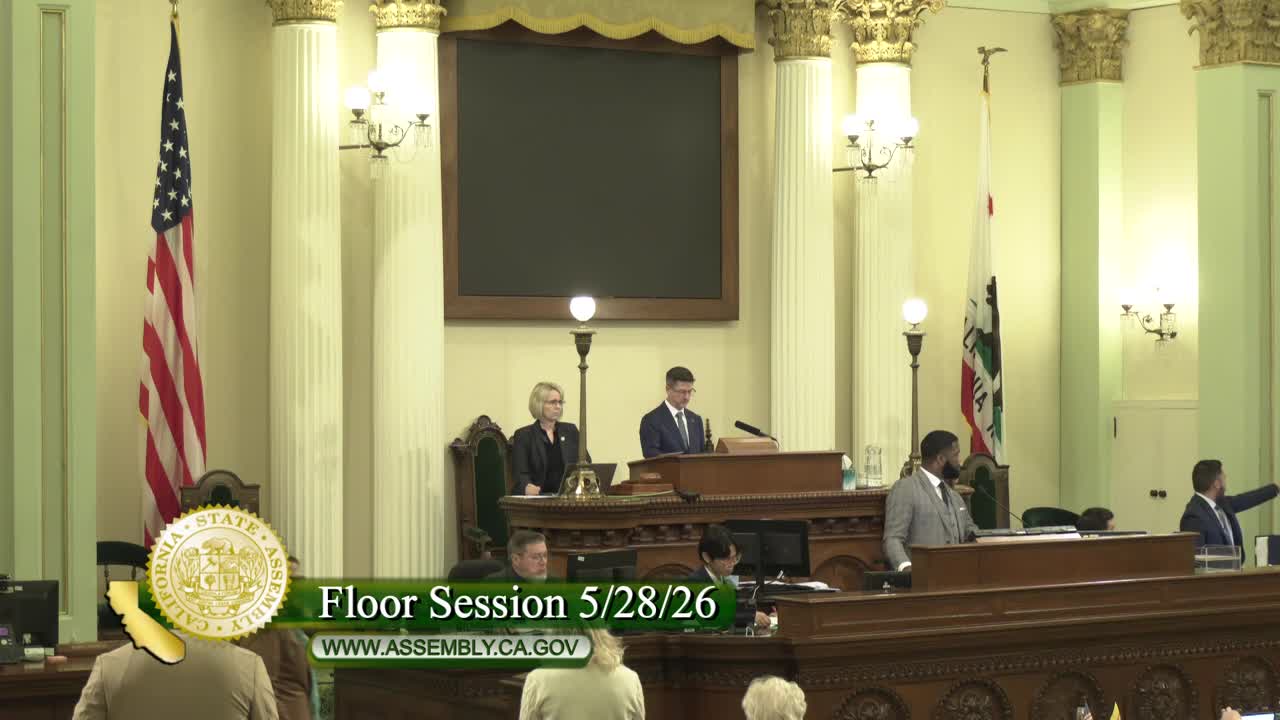 10MIN
Assembly Floor
 1H
Assembly Standing Committee on Business and Professions
Bill Author

Bill Co-Author(s):