AB 2683: Crimes: child endangerment.
- Session Year: 2025-2026
- House: Assembly
- Latest Version Date: 2026-04-20
Current Status:
In Progress
(2026-05-14: In committee: Held under submission.)
Introduced
In Committee
Awaiting First Chamber Vote
Passed First Chamber
In Committee
Awaiting Second Chamber Vote
Passed Second Chamber
Enacted
What does this bill do?
This bill makes any adult who asks or recruits a minor to commit a felony guilty of child endangerment — meaning they can be charged for putting the child in danger — and adds an extra consecutive state prison term of 2, 4, or 6 years. It also updates penalties for child endangerment and, for the most serious cases, requires a 48‑month minimum probation, protective orders, at least one year of abuser treatment, and possible drug testing.
The summary is provided by generative AI which can make mistakes. For original language, please view the details in the table below.
Existing law makes it unlawful, under circumstances or conditions likely to produce great bodily harm or death, to willfully cause or permit a child to suffer, or to inflict thereon unjustifiable physical pain or mental suffering, or, having the care or custody of a child, to willfully cause or permit the person or health of that child to be injured, or to willfully cause or permit that child to be placed in a situation where their person or health may be endangered and a violation of these provisions punishable as a misdemeanor or felony.
This bill would make any adult who solicits or recruits a minor to commit a felony guilty of child endangerment pursuant to the provisions above and would, in addition and consecutive to any other punishment, make a violation punishable as a sentence enhancement in the state prison for 2, 4, or 6 years. By creating a new crime, the bill would impose a state-mandated local program.
Existing law defines murder as the unlawful killing of a human being, or a fetus, except as specified, with malice aforethought. Existing law punishes a person guilty of first-degree murder by death, imprisonment in the state prison for life without the possibility of parole, or imprisonment in the state prison for a term of 25 years to life, and of 2nd-degree murder by imprisonment in the state prison for a term of 15 years to life. Existing law requires a person who personally uses a firearm to commit, among other certain specified felonies, murder to be punished by an additional and consecutive term of imprisonment in the state prison for 25 years to life if the person discharged the firearm and proximately caused great bodily injury or death.This bill would impose a sentence enchantment for murder, consisting of an additional and consecutive term of imprisonment in the state prison of an unspecified period of time, if the murder victim is a minor and the murder occurred in a location where at least one other minor was present. The bill would make the enhancement extend the date of parole eligibility for a person who has been given an indeterminate sentence. By creating a new sentence enhancement, the bill would impose a state-mandated local program.The California Constitution requires the state to reimburse local agencies and school districts for certain costs mandated by the state. Statutory provisions establish procedures for making that reimbursement.
This bill would provide that no reimbursement is required by this act for a specified reason.
Existing law makes it unlawful, under circumstances or conditions likely to produce great bodily harm or death, to willfully cause or permit a child to suffer, or to inflict thereon unjustifiable physical pain or mental suffering, or, having the care or custody of a child, to willfully cause or permit the person or health of that child to be injured, or to willfully cause or permit that child to be placed in a situation where their person or health may be endangered and a violation of these provisions punishable as a misdemeanor or felony.
This bill would make any adult who solicits or recruits a minor to commit a felony guilty of child endangerment pursuant to the provisions above and would, in addition and consecutive to any other punishment, make a violation punishable as a sentence enhancement in the state prison for 2, 4, or 6 years. By creating a new crime, the bill would impose a state-mandated local program.
Existing law defines murder as the unlawful killing of a human being, or a fetus, except as specified, with malice aforethought. Existing law punishes a person guilty of first-degree murder by death, imprisonment in the state prison for life without the possibility of parole, or imprisonment in the state prison for a term of 25 years to life, and of 2nd-degree murder by imprisonment in the state prison for a term of 15 years to life. Existing law requires a person who personally uses a firearm to commit, among other certain specified felonies, murder to be punished by an additional and consecutive term of imprisonment in the state prison for 25 years to life if the person discharged the firearm and proximately caused great bodily injury or death.
This bill would impose a sentence enchantment for murder, consisting of an additional and consecutive term of imprisonment in the state prison of an unspecified period of time, if the murder victim is a minor and the murder occurred in a location where at least one other minor was present. The bill would make the enhancement extend the date of parole eligibility for a person who has been given an indeterminate sentence. By creating a new sentence enhancement, the bill would impose a state-mandated local program.
The California Constitution requires the state to reimburse local agencies and school districts for certain costs mandated by the state. Statutory provisions establish procedures for making that reimbursement.
This bill would provide that no reimbursement is required by this act for a specified reason.
Existing law, the Child Abuse and Neglect Reporting Act, provides that the intent and purpose of the act is to protect children from abuse and neglect, and requires all persons participating in the investigation of suspected child abuse or neglect to consider the needs of the child victim.This bill would state the intent of the Legislature to enact legislation to address the criminal exploitation of minors and endangering of children.Existing law, the Child Abuse and Neglect Reporting Act, provides that the intent and purpose of the act is to protect children from abuse and neglect, and requires all persons participating in the investigation of suspected child abuse or neglect to consider the needs of the child victim.
This bill would state the intent of the Legislature to enact legislation to address the criminal exploitation of minors and endangering of children.
(a)Any person who, under circumstances or conditions likely to produce great bodily harm or death, willfully causes or permits any child to suffer, or inflicts thereon unjustifiable physical pain or mental suffering, or having the care or custody of any child, willfully causes or permits the person or health of that child to be injured, or willfully causes or permits that child to be placed in a situation where their person or health is endangered, shall be punished by imprisonment in a county jail not exceeding one year, or in the state prison for two, four, or six years.
(b)Any person who, under circumstances or conditions other than those likely to produce great bodily harm or death, willfully causes or permits any child to suffer, or inflicts thereon unjustifiable physical pain or mental suffering, or having the care or custody of any child, willfully causes or permits the person or health of that child to be injured, or willfully causes or permits that child to be placed in a situation where their person or health may be endangered, is guilty of a misdemeanor.
(c)If a person is convicted of violating this section and probation is granted, the court shall require the following minimum conditions of probation:
(1)A mandatory minimum period of probation of 48 months.
(2)A criminal court protective order protecting the victim from further acts of violence or threats, and, if appropriate, residence exclusion or stay-away conditions.
(3)(A)Successful completion of no less than one year of a child abusers treatment counseling program approved by the probation department. The defendant shall be ordered to begin participation in the program immediately upon the grant of probation. The counseling program shall meet the criteria specified in Section 273.1. The defendant shall produce documentation of program enrollment to the court within 30 days of enrollment, along with quarterly progress reports.
(B)The terms of probation for offenders shall not be lifted until all reasonable fees due to the counseling program have been paid in full, but in no case shall probation be extended beyond the term provided in subdivision (a) of Section 1203.1. If the court finds that the defendant does not have the ability to pay the fees based on the defendants changed circumstances, the court may reduce or waive the fees.
(4)If the offense was committed while the defendant was under the influence of drugs or alcohol, the defendant shall abstain from the use of drugs or alcohol during the period of probation and shall be subject to random drug testing by their probation officer.
(5)The court may waive any of the above minimum conditions of probation upon a finding that the condition would not be in the best interests of justice. The court shall state on the record its reasons for any waiver.
(d)Any adult who solicits or recruits a minor to commit a felony is guilty of child endangerment pursuant to subdivision (a) and shall, in addition and consecutive to any other punishment, be punished by an additional term in the state prison for two, four, or six years.
SEC. 2.Section 12022.56 is added to the Penal Code, to read:12022.56.Notwithstanding any other law, a person who, in the commission of murder pursuant to Section 187, murders a victim who is a minor in a location where at least one other minor was present, shall be punished by an additional and consecutive term of imprisonment in the state prison for ____ years. The enhancement shall extend the date of parole eligibility for a person who has been given an indeterminate sentence.SEC. 3.SEC. 2.No reimbursement is required by this act pursuant to Section 6 of Article XIIIB of the California Constitution because the only costs that may be incurred by a local agency or school district will be incurred because this act creates a new crime or infraction, eliminates a crime or infraction, or changes the penalty for a crime or infraction, within the meaning of Section 17556 of the Government Code, or changes the definition of a crime within the meaning of Section 6 of Article XIIIB of the California Constitution.
(a)Any person who, under circumstances or conditions likely to produce great bodily harm or death, willfully causes or permits any child to suffer, or inflicts thereon unjustifiable physical pain or mental suffering, or having the care or custody of any child, willfully causes or permits the person or health of that child to be injured, or willfully causes or permits that child to be placed in a situation where his or her their person or health is endangered, shall be punished by imprisonment in a county jail not exceeding one year, or in the state prison for two, four, or six years.
(b)Any person who, under circumstances or conditions other than those likely to produce great bodily harm or death, willfully causes or permits any child to suffer, or inflicts thereon unjustifiable physical pain or mental suffering, or having the care or custody of any child, willfully causes or permits the person or health of that child to be injured, or willfully causes or permits that child to be placed in a situation where his or her their person or health may be endangered, is guilty of a misdemeanor.
(c)If a person is convicted of violating this section and probation is granted, the court shall require the following minimum conditions of probation:
(1)A mandatory minimum period of probation of 48 months.
(2)A criminal court protective order protecting the victim from further acts of violence or threats, and, if appropriate, residence exclusion or stay-away conditions.
(3)(A)Successful completion of no less than one year of a child abusers treatment counseling program approved by the probation department. The defendant shall be ordered to begin participation in the program immediately upon the grant of probation. The counseling program shall meet the criteria specified in Section 273.1. The defendant shall produce documentation of program enrollment to the court within 30 days of enrollment, along with quarterly progress reports.
(B)The terms of probation for offenders shall not be lifted until all reasonable fees due to the counseling program have been paid in full, but in no case shall probation be extended beyond the term provided in subdivision (a) of Section 1203.1. If the court finds that the defendant does not have the ability to pay the fees based on the defendants changed circumstances, the court may reduce or waive the fees.
(4)If the offense was committed while the defendant was under the influence of drugs or alcohol, the defendant shall abstain from the use of drugs or alcohol during the period of probation and shall be subject to random drug testing by his or her their probation officer.
(5)The court may waive any of the above minimum conditions of probation upon a finding that the condition would not be in the best interests of justice. The court shall state on the record its reasons for any waiver.
(d)Any adult who solicits or recruits a minor to commit a felony is guilty of child endangerment pursuant to subdivision (a) and shall, in addition and consecutive to any other punishment, be punished by an additional term in the state prison for two, four, or six years.
SEC. 2.Section 12022.56 is added to the Penal Code, to read:12022.56.Notwithstanding any other law, a person who, in the commission of murder pursuant to Section 187, murders a victim who is a minor in a location where at least one other minor was present, shall be punished by an additional and consecutive term of imprisonment in the state prison for ____ years. The enhancement shall extend the date of parole eligibility for a person who has been given an indeterminate sentence.
SEC. 3.No reimbursement is required by this act pursuant to Section 6 of Article XIIIB of the California Constitution because the only costs that may be incurred by a local agency or school district will be incurred because this act creates a new crime or infraction, eliminates a crime or infraction, or changes the penalty for a crime or infraction, within the meaning of Section 17556 of the Government Code, or changes the definition of a crime within the meaning of Section 6 of Article XIIIB of the California Constitution.
SECTION 1.It is the intent of the Legislature to enact legislation to address the criminal exploitation of minors and endangering of children.It is the intent of the Legislature to enact legislation to address the criminal exploitation of minors and endangering of children.
|
Date
|
Status
|
|---|---|
| May 14, 2026 | In committee: Held under submission. |
| May 6, 2026 | In committee: Set, first hearing. Referred to APPR. suspense file. |
| Apr 21, 2026 | Re-referred to Com. on APPR. |
| Apr 20, 2026 | Read second time and amended. |
| Apr 16, 2026 | From committee: Amend, and do pass as amended and re-refer to Com. on APPR. (Ayes 9. Noes 0.) (April 14). |
| Mar 23, 2026 | Re-referred to Com. on PUB. S. |
| Mar 19, 2026 | From committee chair, with author's amendments: Amend, and re-refer to Com. on PUB. S. Read second time and amended. |
| Mar 19, 2026 | Referred to Com. on PUB. S. |
| Feb 21, 2026 | From printer. May be heard in committee March 23. |
| Feb 20, 2026 | Read first time. To print. |
|
Date
|
Description
|
Location
|
Votes
|
|
|---|---|---|---|---|
| Apr 14, 2026 | Do pass as amended and be re-referred to the Committee on [Appropriations] | Assembly Standing Committee on Public Safety |
Passed |
This list shows positions taken on this bill by organizations on the date displayed, which is linked to the original source.
Positions by individuals are not included.
|
Organization
|
Position
|
Date
|
|---|---|---|
| Aclu California Action | ** Against | |
| California Coalition for Women Prisoners | ** Against | |
| California Police Chiefs Association | ** Support | |
| California Public Defenders Association | ** Against | |
| Californians United for a Responsible Budget | ** Against | |
| Ella Baker Center For Human Rights | ** Against | |
| Initiate Justice | ** Against | |
| San Francisco Public Defender | ** Against |
Date of Hearing: May 6, 2026
ASSEMBLY COMMITTEE ON APPROPRIATIONS
Buffy Wicks, Chair
ABPCA Bill Id:AB 2683
Author:(Ransom) – As Amended Ver:April 20, 2026
Policy Committee: | Public Safety | Vote: | 9 - 0 |
|
| ||
|
|
Urgency: No State Mandated Local Program: Yes Reimbursable: No
SUMMARY:
This bill provides that any adult who solicits or recruits a minor to commit a felony is guilty of child endangerment under Penal Code Section 273a(a), and shall, in addition and consecutive to any other punishment, be punished by an additional term in state prison of two, four, or six years.
FISCAL EFFECT:
- Unknown but potentially significant ongoing costs (General Fund) to the California Department of Corrections and Rehabilitation (CDCR) for additional incarceration time resulting from the new offense in this bill. CDCR reports approximately 453 admissions to state prison in the current year for violations of existing Section 273a; the population subject to this bill is unknown, but would consist of adults charged with soliciting or recruiting a minor to commit a felony, which is a fact pattern not generally captured by existing Section 273a. The LAO estimates that CDCR’s average annual per capita cost of incarceration was approximately $127,800 in 2025-26, and the marginal cost of incarcerating an additional person — when the change in population does not require activating or deactivating facilities — is approximately $21,500 per person per year. As an illustrative figure, 100 additional convictions at the middle term of four years would represent roughly $8.6 million in marginal incarceration costs over the term, with significantly higher costs to the extent that population growth necessitates additional staffing or facility capacity.
- Unknown but potentially minor costs to courts (Trial Court Trust Fund) for additional charging, plea, and sentencing proceedings on new charges arising under the bill.
The Legislative Analyst’s Office has identified a General Fund structural deficit of approximately $35 billion annually beginning in 2027-28.
COMMENTS:
- Purpose. According to the author:
Across California, about 8 percent of youth report gang involvement, and those most often targeted are young people in low income communities, including Black and Latino youth, as well as foster and homeless youth. Cities like Stockton continue to see high levels of gang activity, with organized groups responsible for violent crimes, highlighting the real and ongoing risks to children. Current law does not clearly address this conduct for what it is: child endangerment, despite many of these young people being pressured, coerced, or manipulated rather than having acted on their own.
- Background. Existing law makes it a felony for any person, under conditions likely to produce great bodily harm or death, to willfully cause or permit a child to suffer unjustifiable physical pain or mental suffering, or to place the child in a situation where the child’s person or health is endangered. Felony child endangerment is punishable by two, four, or six years in state prison. The existing statute has generally been interpreted to require evidence of direct injury to or endangerment of a specific child. This bill creates a new subsection of Penal Code Section 273a defining a stand-alone form of child endangerment — solicitation or recruitment of a minor to commit a felony — punishable by an additional and consecutive term of two, four, or six years. As the policy committee analysis notes, an adult who recruits a minor to commit a felony may already be liable as a party to the underlying crime under Penal Code Section 31, including under aiding and abetting principles or, in cases involving children under 14, as a principal who has caused the child to commit the crime by threats, command, or coercion. This bill would establish a separate, independent basis for additional punishment regardless of the recruiter’s status as a party to the underlying felony.
- Support and Opposition. The California Police Chiefs Association supports the bill, arguing that organized criminal groups deliberately recruit minors to insulate adult organizers from accountability and that the bill closes a gap in the existing legal framework. Opposition includes the California Coalition for Women Prisoners, the California Public Defenders Association, the ACLU California Action, the San Francisco Public Defender, and others, who argue that California already has more than 100 sentence enhancements, that evidence indicates increased sentence length does not deter crime more effectively than the certainty of punishment, and that each additional year of incarceration carries substantial costs to the state.
Analysis Prepared by: Shiran Zohar / APPR. / (916) 319-2081
Date of Hearing:
Counsel: Mary Kennedy
ASSEMBLY COMMITTEE ON PUBLIC SAFETY
Nick Schultz, Chair
ABPCA Bill Id:AB 2683
Author:(Ransom) – As Amended Ver:March 19, 2026
As proposed to be amended in Committee
SUMMARY: Makes any adult who solicits or recruits a minor to commit a felony guilty of child endangerment, and imposes a sentence enhancement for murder, if the murder victim is a minor and the murder occurred in a location where at least one other minor was present. Specifically, this bill:
- Provides that any adult who solicits or recruits a minor to commit a felony guilty of child endangerment and makes a violation punishable as a sentence enhancement in the state prison for 2, 4, or 6 years.
- Imposes a sentence enhancement for murder, consisting of an additional and consecutive term of imprisonment in the state prison of an unspecified period of time, if the murder victim is a minor and the murder occurred in a location where at least one minor was present.
EXISTING LAW:
- Provides that any person, who under circumstances or conditions likely to produce great bodily harm or death, willfully causes or permits any child to suffer, or inflicts thereon unjustifiable physical pain or mental suffering, or having the care or custody of any child, willfully causes or permits the person or health of that child to be injured, or willfully cause or permits that child to be placed in a situation where his or her person or health is endangered , shall be punished by imprisonment in a county jail not exceeding one year, or in the state prison for two, four, or six years. (Pen. Code, § 273a, subd. (a))
- Provides any person who, under circumstances or conditions other than those likely to produce great bodily harm or death, willfully causes or permits any child to suffer, or inflicts thereon unjustifiable physical pain or mental suffering or having the care or custody of any child, willfully causes or permits the person or health of that child to be injured, or willfully cause or permits that child to be placed in a situation where his or her person or health may be endangered is guilty of a misdemeanor. (Pen. Code, § 273a, subd. (b))
- Provides that a person granted probation in a child endangerment case must have certain minimum conditions that include a criminal protective order and a child abuser’s treatment counseling program. (Pen. Code, § 273a, subd. (c))
- Defines murder as the unlawful killing of a human being, or a fetus, with malice aforethought. (Pen. Code, § 187)
- Provides that malice may be express or implied. It is express when there is manifested a deliberate intention unlawfully to take away the life of a fellow creature. It is implied, when no considerable provocations appears, or when the circumstances attending the killing show an abandoned and malignant heart. (Pen. Code, § 188)
- Provides that all murder that is perpetrated by means of a destructive device or explosive, a weapon of mass destruction, knowing use of ammunition designed primarily to penetrate metal or armor, poison, lying in wait, torture, or by any other kind of willful, deliberate, and premeditated killing, or that is committed in the perpetration of, or attempt to perpetrate, arson, rape, carjacking, robbery, burglary, mayhem, kidnapping, train wrecking, or any specified sex offense, or murder that is perpetrated by means of discharging a firearm from a motor vehicle, intentionally at another person outside of the vehicle with the intent to inflict death, is murder of the first degree. All other kinds of murder are of the second degree. (Pen. Code, §189)
- Provides that every person guilty of murder in the first degree shall be punished by death, imprisonment in the state prison for life without the possibility of parole, if a special circumstance exists, or imprisonment in the state prison for a term of 25 to life. Every person guilty of second degree shall be punished by imprisonment by imprisonment in the state prison for 15 years to life. (Pen. Code, § 190)
- Provides for the types of murder that are eligible for the death penalty or life without the possibility of parole and included in that list is if the defendant. In the current proceeding, has been convicted of more than one offense of murder in the first or second degree. (Pen. Code, §190.2, subd. (a)(3))
FISCAL EFFECT: Unknown
COMMENTS:
- According to the author: According to the author, “AB 2683 protects our most vulnerable population: our youth. The bill recognizes that when minors are used to commit crimes, it is a form of child endangerment. Across California, about 8 percent of youth report gang involvement, and those most often targeted are young people in low income communities, including Black and Latino youth, as well as foster and homeless youth. Cities like Stockton continue to see high levels of gang activity, with organized groups responsible for violent crimes, highlighting the real and ongoing risks to children. Current law does not clearly address this conduct for what it is: child endangerment, despite many of these young people being pressured, coerced, or manipulated rather than having acted on their own. AB 2683 makes clear that endangering and exploiting minors in criminal activity must be treated as child endangerment and that adults who recruit or use youth in felony crimes will be held accountable. By focusing on the individuals who recruit and use minors to commit felony crimes, AB 2683 helps shift the response away from punishing youth and toward holding the right people accountable.”
- New type of child endangerment: Child endangerment makes it a felony for any person to cause a child to suffer physical or mental suffering or having the care or custody of a child puts the child in a situation where their person or health is endangered. The author’s concern is that the child endangerment provisions do not apply to a situation where an adult gang member or other adult recruits a juvenile to carry out crimes or bring them into ongoing criminal activity.
According to a report by the US Department of Justice Office of Justice Programs, about eight percent of youth in California report gang involvement, one of the highest rates in the country.[1]
According to background from the author, “In cities like Stockton, gang activity remains a documented public safety concern. Law enforcement operations have identified organized groups responsible for violent crimes, including shootings and homicides, showing the scale and structure of these groups. Local conditions such as higher poverty rates, large youth populations, and existing gang presence also increase the likelihood of youth recruitment and involvement.”
The existing child endangerment statute requires evidence of direct injury. This bill would create a new subsection of the child endangerment state providing for a felony for any adult who solicits or recruits a minor to commit a felony. The penalty for this offense would be 2, 4, or 6 years, the same penalty for the existing felony.
It is possible that under some circumstances, an adult may be liable as a party to a crime if they recruit a minor to commit a felony under an aiding and abetting statute if it is found that, even if they are not present, they have “advised and encouraged its commission,” the minor is under 14 years old, or they have caused the person to commit a crime, by threats, menaces, command, or coercion. (Pen. Code, § 31) This child endangerment section would be in addition to any charges as an accessory a person may face.
- Enhancement on Murder: In November of 2025 there was a shooting at a banquet hall in Stockton that resulted in a 21-year-old, two 9-year-olds and a 14-year-old being killed and 17 in total being struck by gunfire, including other children. The event was a party for a 2-year-old.[2] As of the date of the drafting of this analysis, no one has been charged with the offense, but news articles indicate arrests could happen soon.
This bill would create an additional enhancement, the period which has not yet been specified, when a person, in the commission of a murder, murders a minor victim in a location where minors are likely to be present. And this additional enhancement will extend the date of parole eligibility.
This bill could arguably apply to the murder of any minor who is somewhere children are allowed, but even if the intent is to apply to a situation like the incident in Stockton, it is not clear what an enhancement of any length would add to a person who could be facing death, life without parole, or multiple life sentences. Other enhancements, such as gang and gun enhancements, already exist that could extend a life sentence if they are appropriate.
- Argument in Support: According to the California Police Chiefs Association, “Under current law, California has established strong policies to protect children from abuse and exploitation; however, as criminal organizations continue to evolve, there is a growing and deeply concerning trend of gangs and organized criminal enterprises deliberately recruiting and exploiting minors to commit crimes on their behalf. These individuals are often targeted precisely because of their age, as gang leaders understand that juveniles are subject to significantly reduced consequences under the law. In recent federal prosecutions in California, authorities have documented cases where violent criminal organizations, including cartel-affiliated groups, recruited teenagers to carry out shootings and attempted murders, knowing they would face fewer legal consequences than adult offenders.
“From a law enforcement perspective, this dynamic presents a serious and growing public safety challenge. Gangs routinely use minors to carry out a range of criminal activity, including theft, robbery, drug trafficking, and acts of violence, while insulating higher-level organizers from accountability. In many cases, younger gang members are expected to commit violent acts as a way to prove loyalty or gain status within the organization. This practice not only places those minors in direct danger, but also allows adult offenders to manipulate and exploit them as tools to further criminal activity. Law enforcement agencies across California have also reported increases in violent juvenile crime tied to gang activity, underscoring the need for stronger tools to address this issue.
“This exploitation is particularly troubling because it creates a cycle in which minors are both victims and instruments of criminal conduct. Organized gangs benefit from the perception that juvenile offenders will receive minimal consequences, effectively using children as a shield against prosecution. As a result, individuals directing and facilitating these crimes are able to distance themselves from direct involvement while continuing to pose a significant threat to communities.
“AB 2683 represents an important step in addressing this issue by focusing accountability on those who exploit minors for criminal purposes. By strengthening the legal framework surrounding the use of children in criminal activity, this measure helps ensure that individuals who recruit, direct, or coerce minors into committing crimes are held responsible for that conduct. This approach is critical to disrupting criminal organizations that rely on this tactic and to protecting vulnerable youth from being drawn into cycles of violence and exploitation.
“From a broader public safety perspective, AB 2683 reinforces the principle that children should be protected—not used as instruments of crime. It supports law enforcement’s ability to intervene earlier, hold the appropriate individuals accountable, and reduce the incentives for criminal organizations to target minors. In doing so, it advances both public safety and the long-term well-being of at-risk youth.”
- Argument in Opposition: According to the California Coalition for Women Prisoners, “There are more than 100 unique sentencing enhancements throughout California’s Penal Code, with eight enhancements accounting for roughly 80% of the sentence years added since 2015. Given the pervasiveness of sentence enhancements throughout our Penal Code, there is no compelling evidence that more enhancements improve public safety in any way.
“This proposal undermines a great amount of study and evidence surrounding the efficacy behind longer criminal sentencing and its impact on crime deterrence. Evidence indicates that applying longer criminal sentences has failed to deter crime. The federal Department of Justice shared a paper discouraging increasing existing punishments. Other studies support this evidence, finding that the severity of punishment does not generally have an increased effect on deterrence. Rather, studies have concluded that certainty of punishment — that someone will be punished for a particular crime — has a greater deterrence effect than the severity of the punishment itself. Increasing criminal penalties of existing crimes will incur an additional $133,100 cost per person incarcerated each additional year they are sentenced.
“We must pursue a data-driven approach to reforming the criminal legal system to make California safer, and the data is clear — enhancements do not improve public safety or effectively deter someone from committing crime.”
REGISTERED SUPPORT / OPPOSITION:
Support
California Police Chiefs Association
Opposition
ACLU California Action
California Coalition for Women Prisoners
California Public Defenders Association
Californians United for a Responsible Budget
Ella Baker Center for Human Rights
Initiate Justice
San Francisco Public Defender
Analysis Prepared by:
Mary Kennedy / PUB. S. / (916) 319-3744
Discussed in Hearing
 23MIN
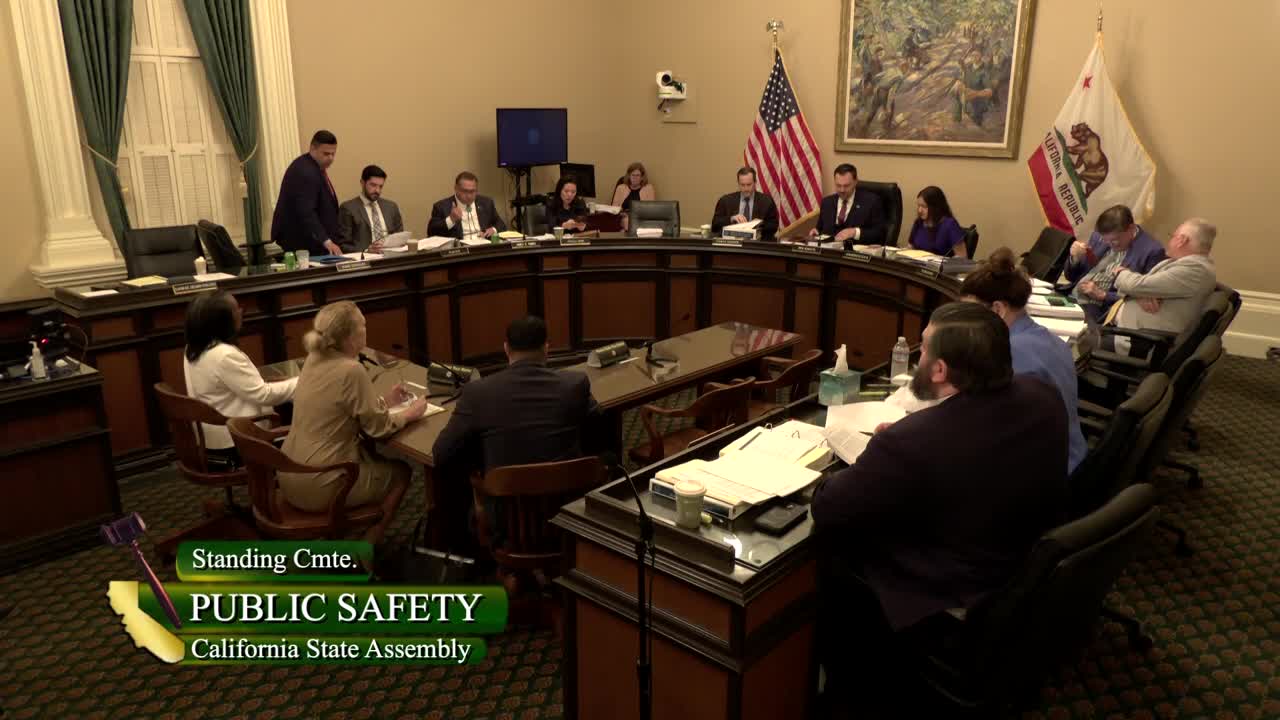
Assembly Standing Committee on Public Safety
Bill Author

Bill Co-Author(s):
