AB 2698: Juveniles: diversion.
- Session Year: 2025-2026
- House: Assembly
- Latest Version Date: 2026-03-17
Current Status:
In Progress
(2026-05-14: In committee: Held under submission.)
Introduced
In Committee
Awaiting First Chamber Vote
Passed First Chamber
In Committee
Awaiting Second Chamber Vote
Passed Second Chamber
Enacted
What does this bill do?
The bill creates a state-funded youth court diversion pilot for first-time misdemeanor juvenile offenders (age 17 and under), letting eligible youths appear before a jury of trained high-school volunteers instead of formal juvenile court proceedings. Eligible offenses include petty theft, vandalism, battery (with victim consent), and certain drug possessions; student juries trained by prosecutors and public defenders and overseen by a judge may only pick a disposition (not find guilt), such as 10–40 hours of community service or youth‑court duty, and may add curfews, school monitoring, counseling, an essay, or an apology; counties must report completions and 6‑month recidivism.
The summary is provided by generative AI which can make mistakes. For original language, please view the details in the table below.
Existing law creates the Office of Youth and Community Restoration within the California Health and Human Services Agency to promote trauma-responsive, culturally informed services for youth involved in the juvenile justice system, as specified. Existing law grants the office the responsibility and authority to report on youth outcomes, identify policy recommendations, identify and disseminate best practices, and provide technical assistance to develop and expand local youth diversion opportunities.
Existing law subjects a minor between 12 and 17 years of age, inclusive, who violates any federal, state, or local law or ordinance, and a minor under 12 years of age who is alleged to have committed specified serious offenses, to the jurisdiction of the juvenile court, which may adjudge the minor to be a ward of the court. Under existing law, juvenile court proceedings to declare a minor a ward of the court are commenced by the filing of a petition, as specified. Existing law authorizes a probation officer who concludes that a minor is within the jurisdiction of the juvenile court or would come within the jurisdiction of the court if a petition was filed, in lieu of filing a petition to declare a minor a ward of the court or requesting that a petition be filed by the prosecuting attorney, to declare a minor a ward of the court, as specified, to refer the minor to services provided by a health agency, community-based organization, local educational agency, an appropriate nonlaw enforcement agency, or the probation department.
This bill would authorize, until January 1, 2030, the Office of Youth and Community Restoration to establish a grant program to create a youth court diversion pilot program. The bill would authorize the office, upon appropriation by the Legislature, to award 6 one-time grants to 6 counties to establish a youth diversion program for first-time misdemeanor juvenile offenders. The bill would specify the criteria for a juvenile to participate in the pilot program, including, among other things, the types of offenses for which a juvenile may participate in the pilot program. The bill would require that juveniles participating in the program appear before a jury composed of high school student volunteers who have been trained and mentored by attorneys from the district attorney and public defenders offices. The bill would require the student volunteers to determine a disposition, as specified, and would prohibit the student jury from making a determination of guilt or innocence. The bill would specify the minimum requirements for youth court diversion proceedings pursuant to these provisions. The bill would also require participating counties to annually provide a report to the office regarding the juveniles who have completed the program.
Under existing law, carjacking is the felonious taking of a motor vehicle in the possession of another from their person or immediate presence, or from the person or immediate presence of a passenger, against their will, and with intent either to permanently or temporarily deprive the person in possession of their possession, accomplished by means of force or fear. Carjacking is punishable by imprisonment in state prison for 3, 5, or 9 years.This bill would increase the punishment to 4, 6, or 10 years.Under existing law, carjacking is the felonious taking of a motor vehicle in the possession of another from their person or immediate presence, or from the person or immediate presence of a passenger, against their will, and with intent either to permanently or temporarily deprive the person in possession of their possession, accomplished by means of force or fear. Carjacking is punishable by imprisonment in state prison for 3, 5, or 9 years.
This bill would increase the punishment to 4, 6, or 10 years.
(a)The Office of Youth and Community Restoration shall establish a grant program to create a youth court diversion pilot program throughout the state. Six one-time grants shall be made, upon appropriation by the Legislature, to two counties in northern California, two counties in the central California, and two counties in southern California.
(b)Grant moneys shall be used by counties to establish a three-year pilot program in which local police departments partner with district attorney offices, courts, and local school districts to enact a youth diversion program for first-time misdemeanor juvenile offenders.
(c)Juvenile offender may participate in the youth diversion pilot program if they meet all of the following requirements:
(1)The offense is the juveniles first offense.
(2)The juvenile is 17 years of age or younger.
(3)The juvenile committed any of the following offenses:
(A)Petty theft.
(B)Vandalism.
(C)Battery. In the case of battery, the victim of the offense shall agree to the juveniles participation in the youth diversion program.
(D)Possession of drug paraphernalia.
(E)Possession of marijuana.
(F)Possession of a controlled substance.
(d)Juveniles participating in the program shall appear before a jury of their peers that is composed of volunteers from their local high school. Student volunteers shall participate as the prosecutor and defense attorney for the purposes of this pilot program. The student volunteers shall be trained and mentored by an attorney from the district attorneys office and the public defenders office. The court shall oversee the proceedings.
(e)A county electing to participate in the program shall impose, at a minimum, all of the following requirements for youth diversion proceedings conducted pursuant to this section:
(1)No cellular phones are permitted in the courtroom.
(2)The last name of the juvenile shall not be disclosed.
(3)A student volunteer who knows the juvenile shall be removed from the diversion proceedings.
(4)The student jury shall only determine a disposition and shall not make a determination of guilt or innocence.
(5)The student jury shall select one of the following dispositions:
(A)Community service, with a minimum of 10 hours and a maximum of 40 hours.
(B)Youth court jury duty, with a minimum of one time and a maximum of three times.
(6)The student jury may impose any of the following in addition to the disposition selected pursuant to paragraph (5):
(A)A curfew of 7 p.m., 8 p.m., or 9 p.m.
(B)Grade or attendance monitoring by the probation department.
(C)Counseling or management services offered through school, health, or other community-based services.
(D)Completion of a life plan essay.
(E)Completion of an apology letter ranging from one to three pages in length.
(f)Participating counties shall annually report the number of juveniles who have completed the diversion program and the recidivism rate of juveniles who participated in the program. In determining the recidivism rate, the participating county shall complete a check for recidivism for each participating juvenile at six months after their completion of the diversion program.
742.02.This article shall remain in effect only until January 1, 2030, and as of that date is repealed.
SECTION 1.Section 215 of the Penal Code is amended to read:215.(a)Carjacking is the felonious taking of a motor vehicle in the possession of another, from their person or immediate presence, or from the person or immediate presence of a passenger of the motor vehicle, against their will and with the intent to either permanently or temporarily deprive the person in possession of the motor vehicle of their possession, accomplished by means of force or fear.(b)Carjacking is punishable by imprisonment in the state prison for a term of 4, 6, or 10 years.(c)This section shall not be construed to supersede or affect Section 211. A person may be charged with a violation of this section and Section 211. However, no defendant may be punished under this section and Section 211 for the same act which constitutes a violation of both this section and Section 211.(a)Carjacking is the felonious taking of a motor vehicle in the possession of another, from his or her their person or immediate presence, or from the person or immediate presence of a passenger of the motor vehicle, against his or her their will and with the intent to either permanently or temporarily deprive the person in possession of the motor vehicle of his or her their possession, accomplished by means of force or fear.
(b)Carjacking is punishable by imprisonment in the state prison for a term of three, five, or nine 4, 6, or 10 years.
(c)This section shall not be construed to supersede or affect Section 211. A person may be charged with a violation of this section and Section 211. However, no defendant may be punished under this section and Section 211 for the same act which constitutes a violation of both this section and Section 211.
|
Date
|
Status
|
|---|---|
| May 14, 2026 | In committee: Held under submission. |
| May 6, 2026 | In committee: Set, first hearing. Referred to APPR. suspense file. |
| Apr 8, 2026 | From committee: Do pass and re-refer to Com. on APPR. (Ayes 8. Noes 0.) (April 7). Re-referred to Com. on APPR. |
| Mar 18, 2026 | Re-referred to Com. on PUB. S. |
| Mar 17, 2026 | From committee chair, with author's amendments: Amend, and re-refer to Com. on PUB. S. Read second time and amended. |
| Mar 16, 2026 | Referred to Com. on PUB. S. |
| Feb 21, 2026 | From printer. May be heard in committee March 23. |
| Feb 20, 2026 | Read first time. To print. |
|
Date
|
Description
|
Location
|
Votes
|
|
|---|---|---|---|---|
| Apr 7, 2026 | Do pass and be re-referred to the Committee on [Appropriations] | Assembly Standing Committee on Public Safety |
Passed |
This list shows positions taken on this bill by organizations on the date displayed, which is linked to the original source.
Positions by individuals are not included.
|
Organization
|
Position
|
Date
|
|---|---|---|
| Aclu California Action | ** Against | |
| All of US or None (HQ) | ** Against | |
| Alliance for Boys and Men of Color | ** Against | |
| California Alliance for Youth and Community Justice | ** Against | |
| California Coalition for Women Prisoners | ** Against | |
| California Public Defenders Association | ** Against | |
| California United for a Responsible Budget (CURB) | ** Against | |
| Californians for Safety and Justice (CSJ) | ** Against | |
| Center on Juvenile and Criminal Justice | ** Against | |
| Centinela Youth Services | ** Against | |
| Communities United for Restorative Youth Justice (CURYJ) | ** Against | |
| Community Agency For Resources Advocacy And Services | ** Against | |
| Ella Baker Center For Human Rights | ** Against | |
| Fresh Lifelines for Youth (FLY) | ** Against | |
| Haywood Burns Institute | ** Against | |
| Hoops 4 Justice | ** Against | |
| Initiate Justice | ** Against | |
| Justice2jobs Coalition Sacramento | ** Against | |
| LA Defensa | ** Against | |
| Legal Services for Prisoners with Children | ** Against | |
| Live Free USA | ** Against | |
| Loyola Law School's Youth Justice Education Clinic | ** Against | |
| Milpa (motivating Individual Leadership for Public Advancement) | ** Against | |
| Santa Cruz Barrios Unidos | ** Against | |
| Sister Warriors Freedom Coalition | ** Against | |
| The California Youth Justice Project | ** Against | |
| The Collective for Liberatory Lawyering | ** Against | |
| The Collective Healing and Transformation Project | ** Against | |
| Underground Grit | ** Against | |
| Urban Peace Movement | ** Against | |
| Youngsters for Change | ** Against | |
| Youth Forward | ** Against |
Date of Hearing: May 6, 2026
ASSEMBLY COMMITTEE ON APPROPRIATIONS
Buffy Wicks, Chair
ABPCA Bill Id:AB 2698
Author:(Ellis) – As Amended Ver:March 17, 2026
Policy Committee: | Public Safety | Vote: | 8 - 0 |
|
| ||
|
|
Urgency: No State Mandated Local Program: No Reimbursable: No
SUMMARY:
This bill authorizes the Office of Youth and Community Restoration (OYCR), upon appropriation by the Legislature, to administer a youth court diversion pilot grant program in six counties for first-time misdemeanor juvenile offenders, in which local police departments partner with district attorney offices, courts, and local school districts to enact a youth diversion program for first-time misdemeanor juvenile offenders.
- Requires participating counties to annually report participation rates and recidivism rates of program participants.
- Sunsets the pilot on January 1, 2030.
FISCAL EFFECT:
Ongoing costs (General Fund, or some other unidentified fund) to OYCR, possibly in the low millions of dollars, to administer a youth court diversion pilot grant program in six counties. OYCR anticipates needing four full-time positions to conduct contract management, technical assistance, and evaluation to administer and provide participating counties with three-year youth court diversion pilot program grants. These positions include a supervisor, two analyst positions, and a research data specialist, who would oversee the procurement, disbursement, and implementation of OYCR’s youth court diversion pilot program grant. The bill does not specify a per-grant amount or total funding level. Comparable OYCR grant programs — such as the Ending Girls’ Incarceration in California Action Network — provide grants ranging from $125,000 to $250,000 per site annually. At that order of magnitude, six three-year pilot grants could total approximately $2.25 million to $4.5 million.
The Legislative Analyst’s Office recently warned of General Fund structural deficits of around $35 billion per year beginning in the 2027-28 fiscal year.
Regardless of costs, consistent with Appropriations Committee rules and practice, this bill is eligible for placement on the suspense file because it has the primary purpose of creating a pilot program.
COMMENTS:
- Purpose. According to the author:
Youth court diversion programs have been a proven alternative to the traditional court proceedings for first-time juvenile offenders. These programs see police departments partner with local high schools, district attorney offices, and courts to create a system for juveniles to go before a jury of their peers, holding first-time offenders accountable while also giving them opportunities for rehabilitation. While these programs have been proven successes, many counties and cities lack adequate funding to enact their own program. AB 2698 would authorize the Office of Youth and Community Restoration to establish a grant program for six counties in California to create a youth court diversion pilot program. This bill would ensure that first-time juvenile offenders are held accountable, while also fostering rehabilitation and civic engagement.
- Background. Youth courts — also known as peer courts or teen courts — are an alternative to formal juvenile court adjudication for young, nonviolent, first-time offenders. Participation is voluntary, and the juvenile typically waives formal court hearings in favor of a peer-driven process. Following a guilty plea or admission of wrongdoing, the juvenile appears before a jury of peers, which imposes a disposition (such as community service or additional youth court service). Successful completion generally results in the case being closed without a formal juvenile record. Youth courts are not available in every county and operate under varying models. Welfare and Institutions Code Section 654 already authorizes probation officers, with the consent of the minor and the minor’s parent or guardian, to refer a minor to diversion services in lieu of filing a juvenile petition. AB 1005 (Ashby, Chapter 179, Statutes of 2024) expressly added youth, peer, and teen courts — including those operated by community-based organizations, tribal courts, and other entities — to the list of authorized Section 654 referral destinations. This bill would fund a specific model of youth court diversion through a new pilot grant program, rather than expand the underlying legal authority to divert.
This bill specifies numerous program-design elements — including the exact menu of dispositions (community service of 10 to 40 hours, or youth court jury duty one to three times), permitted additional sanctions (curfews of 7, 8, or 9 p.m.; specified essay and apology-letter requirements), courtroom logistics (no cell phones, last names not disclosed), and eligibility criteria. The Public Safety Committee analysis notes that this specificity may not match the operational practices of existing youth court programs in other counties, which may use broader disposition menus, different eligibility criteria, or different logistical practices. The committee analysis notes that the bill is modeled after the Bakersfield Police Department’s youth peer court program. AB 2698 has no formal support.
The bill is opposed by a coalition of more than 30 juvenile justice reform, civil rights, and community-based organizations, led by the Center on Juvenile and Criminal Justice, who argue that diversion programs led by law enforcement, prosecutors, and probation partners risk net-widening — drawing more youth into justice system involvement rather than diverting them from it — and that standardized sanctions (curfews, monitoring, essays, service hours) are less effective than individualized, trauma-informed, community-based responses. The Public Safety Committee analysis further identifies several implementation questions the bill does not address, including: which county agency or entity is responsible for applying and accepting the grant, whether board of supervisors’ approval is required, how cases are referred to the program, whether criminal proceedings remain pending during youth court proceedings, the level of court oversight contemplated, and probation’s role in monitoring. The bill is also silent on whether OYCR must report the aggregated results of the pilot to the Legislature, which would be typical for a time-limited grant program of this kind.
Analysis Prepared by: Shiran Zohar / APPR. / (916) 319-2081
Date of Hearing:
Deputy Chief Counsel: Stella Choe
ASSEMBLY COMMITTEE ON PUBLIC SAFETY
Nick Schultz, Chair
ABPCA Bill Id:AB 2698
Author:(Ellis) – As Amended Ver:March 17, 2026
SUMMARY:
Authorizes the Office of Youth and Community Restoration (OYCR) to establish a grant program to create a youth court diversion pilot program. Specifically, this bill:
- States that OYCR shall, upon appropriation by the Legislature, provide six one-time grants to two counties in northern California, two counties in central California, and two counties in southern California to create a youth court diversion pilot program.
- Requires grant moneys to be used by counties to establish a three-year pilot program in which local police departments partner with district attorney offices, courts, and local school districts to enact a youth diversion program for first-time misdemeanor juvenile offenders.
- Makes juvenile offenders who meet all of the following requirements eligible for the program:
- The offense is the juvenile’s first offense;
- The juvenile is 17 or younger; and,
- The juvenile committed any of the following offenses:
- Petty theft.
- Vandalism.
- Battery, if the victim of the offense agrees to the juvenile’s participation in the diversion program.
- Possession of drug paraphernalia.
- Possession of marijuana.
- Possession of a controlled substance.
- States that juveniles participating in the program shall appear before a jury of their peers that is composed of volunteers from their local high school and that the court shall oversee the proceedings.
- Requires student volunteers to participate as the prosecutor and defense attorney and to be trained and mentored by an attorney from the district attorney’s office and public defender’s office.
- Requires a county electing to participate in the program to impose, at a minimum, all of the following requirements for youth diversion proceedings:
- No cellular phones are permitted in the courtroom;
- The last name of the juvenile shall not be disclosed;
- A student volunteer who knows the juvenile shall be removed from the diversion proceedings;
- The student jury shall only determine a disposition and shall not make a determination of guilt or innocence;
- The student jury shall select one of the following dispositions: community service with a minimum of 10 hours and a maximum of 40 hours, or youth court jury duty, with a minimum of one time and a maximum of three times.
- Additionally authorizes the student jury to impose any of the following in addition to the disposition:
- A curfew of 7 p.m., 8 p.m., or 9 p.m.;
- Grand or attendance monitoring by the probation department;
- Counseling or management services offered through school, health, or other community-based services;
- Completion of a life plan essay; or,
- Completion of an apology letter ranging from one to three pages in length.
- States that participating counties shall annually report the number of juveniles who have completed the diversion program and the recidivism rate of juveniles who participated in the program. In determining the recidivism rate, the participating county shall complete a check for recidivism for each participating juvenile at six months after their completion of the diversion program.
- Contains a sunset date of January 1, 2030.
EXISTING LAW:
- Provides that in any case in which a probation officer, after investigation, concludes that a minor is within the jurisdiction of the juvenile court or would come within the jurisdiction of the court if a petition were filed to declare a minor a ward of the court, the probation officer may, in lieu of a petition and with consent of the minor and the minor’s parent or guardian, refer the minor to services provided by a health agency, community based organization, local educational agency, an appropriate non-law-enforcement agency, or the probation department. (Welf. & Inst. Code, § 654, subd. (a).)
- Specifies that if the services are provided by the probation department, the probation officer may delineate specific programs of supervision for the minor, not to exceed six months, and attempt thereby to adjust the situation that brings the minor within the jurisdiction of the court. This section does not prevent the probation officer from requesting the prosecuting attorney to file a petition at any time within the six-month period or a 90-day period thereafter. (Ibid.)
- Requires the program of supervision to encourage the parents or guardians of the minor to participate with the minor in counseling or education programs, including, but not limited to, parent education and parenting programs operated by community colleges, school districts, or other appropriate agencies designated by the court, as described. (Welf. & Inst. Code, § 654, subd. (c).)
- States that a probation officer with consent of the minor and the minor’s parent or guardian may provide the following services in lieu of filing a petition:
- Maintain and operate sheltered-care facilities, or contract with private or public agencies to provide these services. The placement shall be limited to a maximum of 90 days.
Counseling services shall be extended to the sheltered minor and the minor’s family during this period of diversion services. Referrals for sheltered-care diversion may be made by the minor, the minor’s family, schools, any law enforcement agency, or any other private or public social service agency.
- Maintain and operate crisis resolution homes, or contract with private or public agencies offering these services. The placement should be limited to 20 days during which period individual and family counseling shall be extended to the minor and the minor’s family. Failure to resolve the crisis within the 20-day period may result in the minor’s referral to a sheltered-care facility for a period not to exceed 90 days. Referrals shall be accepted from the minor, the minor’s family, schools, law enforcement, or any other private or public social service agency.
- Maintain and operate counseling and educational centers, or contract with community-based organizations or public agencies to provide vocational training or skills, counseling and mental health resources, educational supports, and arts, recreation, and other youth development services. These services may be provided separately or in conjunction with crisis resolution homes to be operated by the probation officer. The probation officer shall be authorized to make referrals to those organizations when available.
- Refer an offense to a youth, peer, or teen court established and maintained by the probation officer or by a community-based organization, Indian tribe, tribal court, or private or public agency, to implement restorative justice practices designed to enable peer youth jurors to hear cases and make dispositions for offenses committed by youths. Such referral offenses may include, but are not limited to, infractions or misdemeanors specified in Education Code section 48900, or for any other violation the probation officer may determine appropriate for referral. (Welf. & Inst. Code, § 654, subd. (d).)
- States that at the conclusion of the program of supervision undertaken pursuant to this section, the probation officer shall prepare and maintain a follow up report of the actual program measures taken. (Welf. & Inst. Code, § 654.)
- Prohibits a student from being suspended from school or recommended for expulsion, unless the superintendent of the school district, or the principal of the school, determines that the student has committed any of the following offenses:
- Causing, attempting to cause, or threatening to cause physical injury to another person, or willfully using force or violence upon another person, except in self-defense;
- Possessing, selling, or otherwise furnishing a firearm, knife, explosive, or other dangerous object, unless the student had obtained prior written permission to possess the item;
- Unlawfully possessing, using, selling, or otherwise furnishing a controlled substance;
- Unlawfully offering, arranging, or negotiating to sell a controlled substance, alcoholic beverage, or an intoxicant of any kind;
- Committing or attempting to commit robbery or extortion;
- Causing or attempting to cause damage to school property or private property;
- Stealing or attempting to steal school property or private property;
- Possessing or using tobacco, or products containing tobacco or nicotine products;
- Committing an obscene act or engaging in habitual profanity or vulgarity;
- Unlawfully possessing or unlawfully offering, arranging or negotiating to sell drug paraphernalia;
- Disrupting school activities or otherwise willfully defying the authority of supervisors, teachers, administrators, school officials or other school personnel engaged in the performance of their duties. This subdivision does not apply to a student enrolled in kindergarten through grade 5; or to a student enrolled in grades 6 to 8 until July 1, 2025; and does not allow a student enrolled in grades kindergarten through 12th grade to be recommended for expulsion on this basis.
- Knowingly receiving stolen school property or private property;
- Possessing an imitation firearm;
- Committing or attempting to commit a sexual assault or sexual battery;
- Harassing, threatening, or intimidating a student who is a complaining witness or a witness in a school disciplinary proceeding in order to prevent the student from being a witness or retaliating against that student for being a witness, or both;
- Unlawfully offering, arranging to sell, or negotiating to sell the prescription drug Soma;
- Engaging in or attempting to engage in hazing;
- Engaging in the act of bullying, including bullying committed by means of an electronic act;
- Committing sexual harassment (grades 4 through 12 only);
- Causing or attempting to cause, threatening to cause, or participating in, an act of hate violence (grades 4 through 12 only);
- Engaging in harassment, threats, or intimidation against school district personnel or students that have the effect of disrupting classwork, creating substantial disorder, and invading the rights of either school personnel or students by creating an intimidating or hostile educational environment (grades 4 through 12 only); and,
- Making a terroristic threat against school officials, school property, or both. (Ed. Code, § 48900.)
- Provides that it is the intent of the Legislature that the Multi-Tiered System of Supports, which includes restorative justice practices, trauma-informed practices, social and emotional learning, and school wide positive behavior interventions and support, be used to help pupils gain critical social and emotional skills, receive support to help transform trauma-related responses, understand the impact of their actions, and develop meaningful methods for repairing harm to the school community. (Ed. Code, § 48900, subd. (w)(2).)
FISCAL EFFECT:
Unknown
COMMENTS:
- Author's Statement: According to the author, “Youth court diversion programs have been a proven alternative to the traditional court proceedings for first-time juvenile offenders. These programs see police departments partner with local high schools, district attorney offices, and courts to create a system for juveniles to go before a jury of their peers, holding first-time offenders accountable while also giving them opportunities for rehabilitation. While these programs have been proven successes, many counties and cities lack adequate funding to enact their own program. AB 2698 would authorize the Office of Youth and Community Restoration to establish a grant program for six counties in California to create a youth court diversion pilot program. This bill would ensure that first-time juvenile offenders are held accountable, while also fostering rehabilitation and civic engagement.”
- Youth Peer Courts: Youth courts, also known as peer courts, teen courts, and student courts, were first established in the state in the 1980s. According to the Judicial Branch of California’s website, “Youth court, also known as peer court or teen court, is an alternative to the traditional juvenile justice system for young, nonviolent, first-time offenders. While youth court is under the supervision of a judge, it is youth-focused and youth-driven. The juvenile offender is given the option to waive any court hearings and to voluntarily participate in youth court in place of more formal handling of their case by a traditional juvenile court. In most youth courts, the youth must admit wrongdoing or plead guilty or no contest to be eligible.”[1]
Youth courts are not available in every county and existing youth courts operate using different models and requirements. Generally, youth court participants are referred by their school, probation, or law enforcement. The youth and their parent or guardian are given detailed information of what to expect from the process. The youth attends their court hearing and after the case is heard the youth is given a sentence or disposition by a jury of their peers. Once the youth completes their sanctions within the applicable time, the case would be closed and stay off their record. If they do not complete the sentence, the case may be sent back to the entity that referred the case.
This bill would require OYCR, upon appropriation by the Legislature, to provide one-time grants to six counties to create a youth court diversion program in their county. It is unclear from the bill’s language which county agency or entity is responsible for opting into the program or whether a vote is needed by the board of supervisors in order to participate. The program is to sunset on January 1, 2030. The counties are to provide information on youths’ successful participation and recidivism rates to OYCR. The bill is silent on whether OYCR is to publish a report containing this data or otherwise provide this data to the Legislature.
- Implementation Questions: According to background information provided by the author’s office, the pilot program created by this bill is modeled after a youth peer court program operated by the Bakersfield Police Department. The goal of this bill is not necessarily to create new youth peer court programs but to fund the programs that may already be in existence.
Because the bill is modeled after an existing program, the specificity that is provided in the language may not work for other counties that use different models. For example, some other youth peer court programs may wish to use a wider range of dispositions than is specified in this bill. Or some may wish to include other crimes or apply to any person who is still in high school even if they are older than 17 years. The other programs may also believe that having access to a cell phone during the proceedings, even if only by the student volunteers acting as prosecutor and defense attorney, would be a useful tool.
While the bill is very specific on certain aspects of the program, it is silent on several logistical issues such as how a case would be referred to the program, whether criminal proceedings are pending during the youth court proceedings, the level of the court’s oversight over the proceedings, probation’s role in monitoring the youth, among other implementation questions.
The author may wish to remove some of the more specific program requirements to allow for more variance in programs that would qualify for funding and may additionally need to provide more details on the role of county agencies in its implementation, if any. Opponents of the bill express concerns that diversion programs led by law enforcement, prosecutors, and probation partners risk further criminalization and would rather shift decision-making authority to trusted community-based providers and restorative processes that are better aligned with trauma-informed practice. They also argue that individualized, culturally responsive sanctions produce better results than standardized sanctions such as the ones specified by this bill.
- Argument in Support: None submitted
- Argument in Opposition: According to the Center on Juvenile and Criminal Justice, who is opposed unless amended, “Our concern with AB 2698, as currently structured, is that it centers diversion within court-supervised programs led by law enforcement, prosecutors, and probation partners, which risks reproducing adversarial system dynamics rather than shifting decision-making authority to trusted community-based providers and restorative processes that are better aligned with trauma-informed practice. It also relies on standardized sanctions (e.g., curfews, monitoring, essays, and service hours) instead of individualized, culturally responsive healing-centered supports and voluntary restorative engagement with harmed parties and community members—approaches that California has increasingly prioritized as best practice in youth diversion This framework reinforces system-centric approaches that are not aligned with current research on positive youth development. Evidence suggests that system-centered models are less effective—in terms of youth outcomes, public safety, and cost—than pre-arrest diversion programs that are community-based, trauma-informed, and culturally responsive.
“Notably, the offenses covered by the bill are low-level. Routing these cases through formal court processes and introducing probation oversight risks unnecessary system involvement and net-widening— drawing more youth into the justice system rather than diverting them from it. The inappropriate expansion of probation supervision for low-level behaviors has, in some instances, been the subject of litigation. Moreover, the utilization of youth court models has been reported to be counterproductive and harmful to youth who are subjected to those proceedings, as they reinforce stigma and are not equipped to address the root of any maladaptive behavior. Additionally, the bill does not sufficiently center community-based providers or incorporate the full range of restorative, healing-centered diversion models that have demonstrated effectiveness in supporting youth and families.
“Community-based alternatives not only improve youth outcomes and public safety, but are also more cost-effective than formal system involvement. Diversion reduces the need for prosecutors, judges, and probation resources, resulting in meaningful cost savings to the state. A meta-analysis by the Washington State Institute for Public Policy found that simple “warn and release” diversion approaches can yield net benefits of up to $10,000 per participant. These benefits reflect savings to taxpayers, reduced recidivism, and improved long-term economic outcomes for youth due to fewer disruptions in youth development,
education, and employment pathways. This evidence underscores that diversion is a sound investment for jurisdictions with limited resources.
“Moreover, trauma-informed and healing-centered practices help prevent further harm to youth who have already experienced adversity. Investments in front-end services—such as education, employment, and mental health support—reduce the likelihood of system involvement. Policies should prioritize closing service gaps and strengthening community capacity to address the underlying stressors that contribute to youth behavior. Stronger, more resilient communities not only keep youth out of the justice system but also promote healthier and more productive futures.”
- Related Legislation:
- AB 2582 (Schultz) would require a person who commits prostitution with intent to receive compensation, money, or anything of value from another person to, for a first or second violation of those provisions, be offered a diversion program, if a program for which the defendant is eligible is available. AB 2582 is pending a hearing in the Assembly Appropriations Committee.
- AB 2217 (Zbur) would reauthorize, upon appropriation by the Legislature, law enforcement assisted prebooking diversion for specified offenses. AB 2217 is pending a hearing in the Assembly Appropriations Committee.
- AB 1231 (Elhawary) would authorize a court to exercise its discretion to grant pretrial diversion for felony offenses, except as specified. AB 1231 is pending vote on the Assembly Floor.
- Prior Legislation:
- AB 1005 (Ashby), Chapter 179, Statutes of 2024, authorized a probation officer, with the consent of the minor and the minor’s parent, to refer an offense to youth court for certain offenses.
- AB 2267 (Jones-Sawyer), of the 2023-2024 Legislative Session, would have reestablished the Youth Reinvestment Grant Program, to be administered by OYCR, for the purpose of implementing a mixed-delivery system of trauma-informed health and development diversion programs for youth, as specified. The bill would have created the Youth Reinvestment Fund to be used, upon appropriation by the Legislature, by the office for the purposes of the program and would have required applicants for the program to be nongovernmental agencies or tribal governments, as specified. AB 2267 was held in the Assembly Appropriations Suspense File.
- SB 823 (Committee on Budget and Fiscal Review), Chapter 337, Statutes of 2020, among other things created OYCR within the California Health and Human Services Agency and tasked OYCR with responsibility for (1) developing a report on youth outcomes; (2) identifying policy recommendations for improved outcomes and integrated programs and services to best support delinquent youth; (3) identifying and disseminating best practices to help inform rehabilitative and restorative youth practices, including education, diversion, re-entry, religious and victims’ services; and (4) providing technical assistance as requested to develop and expand local youth diversion opportunities to meet the varied needs of the delinquent youth population, including but not limited to sex offender, substance abuse, and mental health treatment.
REGISTERED SUPPORT / OPPOSITION:
Support
None submitted
Opposition
ACLU California Action
All of US or None (HQ)
Alliance for Boys and Men of Color
California Alliance for Youth and Community Justice
California Coalition for Women Prisoners
California Public Defenders Association
California United for a Responsible Budget (CURB)
Californians for Safety and Justice (CSJ)
Center on Juvenile and Criminal Justice
Centinela Youth Services
Communities United for Restorative Youth Justice (CURYJ)
Community Agency for Resources Advocacy and Services
Ella Baker Center for Human Rights
Fresh Lifelines for Youth (FLY)
Haywood Burns Institute
Hoops 4 Justice
Initiate Justice
Justice2jobs Coalition Sacramento
LA Defensa
Legal Services for Prisoners With Children
Live Free USA
Loyola Law School's Youth Justice Education Clinic
Milpa (motivating Individual Leadership for Public Advancement)
Santa Cruz Barrios Unidos
Sister Warriors Freedom Coalition
The California Youth Justice Project
The Collective for Liberatory Lawyering
The Collective Healing and Transformation Project
Underground Grit
Urban Peace Movement
Youngsters for Change
Youth Forward
Analysis Prepared by:
Stella Choe / PUB. S. / (916) 319-3744
https://courts.ca.gov/programs-initiatives/collaborative-justice-courts/juvenile-collaborative-courts/peeryouth-courts-overview ↑
Discussed in Hearing
 24MIN
Assembly Standing Committee on Public Safety
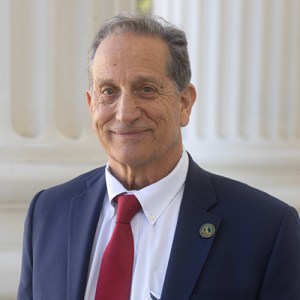
Bill Author
Bill Co-Author(s):