AB 2775: Chiropractic Act.
- Session Year: 2025-2026
- House: Assembly
- Latest Version Date: 2026-09-14
Current Status:
Passed
(2026-09-15: Chaptered by Secretary of State - Chapter 220, Statutes of 2026.)
Introduced
In Committee
Awaiting First Chamber Vote
Passed First Chamber
In Committee
Awaiting Second Chamber Vote
Passed Second Chamber
Enacted
Existing law, the Chiropractic Act, enacted by an initiative measure, provides for the licensure and regulation of chiropractors in this state by the State Board of Chiropractic Examiners. Existing law subjects the powers and duties of the board to review by the appropriate policy committees of the Legislature as if the act was scheduled to be repealed as of January 1, 2027.
This bill would instead subject the powers and duties of the board to that review as if that act were scheduled to be repealed on January 1, 2031.
Existing law requires the board to annually compile a complete directory of all licensees within the state. Existing law requires that the board distribute one copy of the directory without charge to each licensee.
This bill would require the board to distribute a copy of the directory electronically to each licensee and remove the requirement that the distribution be without charge. The bill would require the board to distribute a copy of the directory to a licensee by mail, if the licensee requests distribution by mail, but would prohibit the board from charging the licensee the costs of publication and distribution.
Existing law requires a board within the Department of Consumer Affairs to issue a temporary license to practice a profession or vocation to an applicant who, among other things, holds a license to practice the profession or vocation in another state and is married to, or in a domestic partnership or other legal union with, an active duty member of the Armed Forces of the United States, as specified.
This bill would authorize the State Board of Chiropractic Examiners, by regulation, to create a system for the issuance of a temporary license to practice chiropractic to an applicant who does not qualify for a temporary license pursuant to the above-described provision that would authorize an unlicensed person to practice chiropractic. The bill would authorize the board to charge application, issuance, and replacement license fees, not to exceed the limits for a license to practice chiropractic.
Existing law establishes a schedule of 22 different fees necessary to carry out the responsibilities required by the Chiropractic Initiative Act and the Chiropractic Act and authorizes the board to adopt lower fees by regulation. Existing law directs the deposit of these funds into the State Board of Chiropractic Examiners Fund, a continuously appropriated fund.
This bill, for most of those fees, would revise the amount of the fee and would authorize the board to increase the amount of the fee to a specified maximum amount. The bill would specify that, if the board adopts lower fees by regulation, it shall be in an amount sufficient to support the functions of the board in the administration of its duties, as specified. The bill would require the board to set penalty fees for the delinquent renewal of a satellite office certificate, certificate of registration of a chiropractic corporation, or continuing education provider status. The bill would authorize the board to establish by regulation a system for the issuance and renewal of a chiropractic facility permit, including application, renewal, and replacement permit fees, in an amount sufficient to cover the reasonable regulatory costs to the board to administer the permit system. By authorizing new fees for deposit into a continuously appropriated fund, the bill would make an appropriation.
Existing provisions of the Chiropractic Initiative Act authorize the board to refuse to grant, suspend, or revoke a license to practice chiropractic, place the licensee upon probation, or issue a reprimand, for violation of the rules and regulations adopted by the board in accordance with the act or for any cause specified in the act, in accordance with specified statutory proceedings.
This bill would authorize the board to automatically revoke a license to practice chiropractic under specified circumstances, including if the licensee has been convicted in any court in or outside the state for specified offenses. The bill would also authorize the board to automatically suspend a license to practice chiropractic following a conviction of a serious felony, as defined.
Existing law authorizes a board within the Department of Consumer Affairs to deny a license based on formal discipline by a licensing board in or outside of California and that is substantially related to the qualifications, functions, or duties of the business or profession for which the application is made. Existing law generally limits this authorization to formal discipline that occurred within 7 years preceding the date of application. Existing law creates an exception to that 7-year limitation if the formal discipline was based on conduct that would have constituted an act of sexual abuse, misconduct, or relations with a patient, or sexual exploitation, as specified, if committed in this state by a licensed physician and surgeon.
This bill would create a similar exception to that 7-year limitation for conduct that would have constituted an act of sexual abuse, misconduct, or relations with a patient, as specified, if committed in this state by a licensed chiropractor.
This bill would state the intent of the Legislature to work with stakeholders to examine licensed chiropractors holding specialized certification who provide chiropractic care to animal patients and evaluate opportunities to expand access to qualified animal chiropractic care while ensuring appropriate consumer and animal protections are in place.
This bill would make other technical and nonsubstantive changes.
Existing law, the Chiropractic Act, enacted by an initiative measure, provides for the licensure and regulation of chiropractors in this state by the State Board of Chiropractic Examiners. Existing law subjects the powers and duties of the board to review by the appropriate policy committees of the Legislature as if the act was scheduled to be repealed as of January 1, 2027.
This bill would instead subject the powers and duties of the board to that review as if that act were scheduled to be repealed on January 1, 2031.
Existing law requires the board to annually compile a complete directory of all licensees within the state. Existing law requires that the board distribute one copy of the directory without charge to each licensee.
This bill would require the board to distribute a copy of the directory electronically to each licensee and remove the requirement that the distribution be without charge. The bill would require the board to distribute a copy of the directory to a licensee by mail, if the licensee requests distribution by mail, but would prohibit the board from charging the licensee the costs of publication and distribution.
Existing law requires a board within the Department of Consumer Affairs to issue a temporary license to practice a profession or vocation to an applicant who, among other things, holds a license to practice the profession or vocation in another state and is married to, or in a domestic partnership or other legal union with, an active duty member of the Armed Forces of the United States, as specified.
This bill would authorize the State Board of Chiropractic Examiners, by regulation, to create a system for the issuance of a temporary license to practice chiropractic to an applicant who does not qualify for a temporary license pursuant to the above-described provision that would authorize an unlicensed person to practice chiropractic. The bill would authorize the board to charge application, issuance, and replacement license fees, not to exceed the limits for a license to practice chiropractic.
Existing law establishes a schedule of 22 different fees necessary to carry out the responsibilities required by the Chiropractic Initiative Act and the Chiropractic Act and authorizes the board to adopt lower fees by regulation. Existing law includes, among other authorized fees, fees to apply for, renew, or replace a satellite office certificate fee. Existing law directs the deposit of these funds into the State Board of Chiropractic Examiners Fund, a continuously appropriated fund.
This bill bill, for most of those fees, would revise the amount of the fee and would authorize the board to increase the amount of the fee to a specified maximum amount. The bill would specify that, if the board adopts lower fees by regulation, it shall be in an amount sufficient to support the functions of the board in the administration of its duties, as specified. The bill would require the board to set penalty fees for the delinquent renewal of a satellite office certificate, certificate of registration of a chiropractic corporation, or continuing education provider status. The bill would authorize the board to establish by regulation a system for the issuance and renewal of a chiropractic facility permit, including application, renewal, and replacement permit fees, in an amount sufficient to cover the reasonable regulatory costs to the board to administer the permit system. By authorizing new fees for deposit into a continuously appropriated fund, the bill would make an appropriation.
Existing provisions of the Chiropractic Initiative Act authorize the board to refuse to grant, suspend, or revoke a license to practice chiropractic, place the licensee upon probation, or issue a reprimand, for violation of the rules and regulations adopted by the board in accordance with the act or for any cause specified in the act, in accordance with specified statutory proceedings.
This bill would authorize the board to automatically revoke a license to practice chiropractic under specified circumstances, including if the licensee has been convicted in any court in or outside the state for specified offenses. The bill would also authorize the board to automatically suspend a license to practice chiropractic following a conviction of a serious felony, as defined.
Existing law authorizes a board within the Department of Consumer Affairs to deny a license based on formal discipline by a licensing board in or outside of California and that is substantially related to the qualifications, functions, or duties of the business or profession for which the application is made. Existing law generally limits this authorization to formal discipline that occurred within 7 years preceding the date of application. Existing law creates an exception to that 7-year limitation if the formal discipline was based on conduct that would have constituted an act of sexual abuse, misconduct, or relations with a patient, or sexual exploitation, as specified, if committed in this state by a licensed physician and surgeon.
This bill would create a similar exception to that 7-year limitation for conduct that would have constituted an act of sexual abuse, misconduct, or relations with a patient, as specified, if committed in this state by a licensed chiropractor.
This bill would state the intent of the Legislature to work with stakeholders to examine licensed chiropractors holding specialized certification who provide chiropractic care to animal patients and evaluate opportunities to expand access to qualified animal chiropractic care while ensuring appropriate consumer and animal protections are in place.
This bill would make other technical and nonsubstantive changes.
Existing law, the Chiropractic Act, enacted by an initiative measure, provides for the licensure and regulation of chiropractors in this state by the State Board of Chiropractic Examiners. Existing law subjects the powers and duties of the board to review by the appropriate policy committees of the Legislature as if the act was scheduled to be repealed as of January 1, 2027.
This bill would instead subject the powers and duties of the board to that review as if that act were scheduled to be repealed on January 1, 2031.
Existing law requires the board to annually compile a complete directory of all licensees within the state. Existing law requires that the board distribute one copy of the directory without charge to each licensee.
This bill would require the board to distribute a copy of the directory electronically to each licensee and remove the requirement that the distribution be without charge. The bill would require the board to distribute a copy of the directory to a licensee by mail, if the licensee requests distribution by mail, but would prohibit the board from charging the licensee the costs of publication and distribution.
Existing law establishes a schedule of fees necessary to carry out the responsibilities required by the Chiropractic Initiative Act and the Chiropractic Act and authorizes the board to adopt lower fees by regulation. Existing law includes, among other authorized fees, fees to apply for, renew, or replace a satellite office certificate fee. Existing law directs the deposit of these funds into the State Board of Chiropractic Examiners Fund, a continuously appropriated fund.
This bill would specify that, if the board adopts lower fees by regulation, it shall be in an amount sufficient to support the functions of the board in the administration of its duties, as specified. The bill would require the board to set penalty fees for the delinquent renewal of a satellite office certificate, certificate of registration of a chiropractic corporation, or continuing education provider status. The bill would authorize the board to establish by regulation a system for the issuance and renewal of a chiropractic facility permit, including application, renewal, and replacement permit fees, in an amount sufficient to cover the reasonable regulatory costs to the board to administer the permit system. By authorizing new fees for deposit into a continuously appropriated fund, the bill would make an appropriation.
Existing provisions of the Chiropractic Initiative Act authorize the board to refuse to grant, suspend, or revoke a license to practice chiropractic, place the licensee upon probation, or issue a reprimand, for violation of the rules and regulations adopted by the board in accordance with the act or for any cause specified in the act, in accordance with specified statutory proceedings.
This bill would authorize the board to automatically revoke a license to practice chiropractic under specified circumstances, including if the licensee has been convicted in any court in or outside the state for specified offenses. The bill would also authorize the board to automatically suspend a license to practice chiropractic following a conviction of a serious felony, as defined.
Existing law authorizes a board within the Department of Consumer Affairs to deny a license based on formal discipline by a licensing board in or outside of California and that is substantially related to the qualifications, functions, or duties of the business or profession for which the application is made. Existing law generally limits this authorization to formal discipline that occurred within 7 years preceding the date of application. Existing law creates an exception to that 7-year limitation if the formal discipline was based on conduct that would have constituted an act of sexual abuse, misconduct, or relations with a patient, or sexual exploitation, as specified, if committed in this state by a licensed physician and surgeon.
This bill would create a similar exception to that 7-year limitation for conduct that would have constituted an act of sexual abuse, misconduct, or relations with a patient, as specified, if committed in this state by a licensed chiropractor.
This bill would state the intent of the Legislature to work with stakeholders to examine licensed chiropractors holding specialized certification who provide chiropractic care to animal patients and evaluate opportunities to expand access to qualified animal chiropractic care while ensuring appropriate consumer and animal protections are in place.
This bill would make other technical and nonsubstantive changes.
Existing law, the Chiropractic Act, enacted by an initiative measure, provides for the licensure and regulation of chiropractors in this state by the State Board of Chiropractic Examiners. Existing law subjects the powers and duties of the board to review by the appropriate policy committees of the Legislature. Existing Legislature as if the act was scheduled to be repealed as of January 1, 2027.
This bill would instead subject the powers and duties of the board to that review as if that act were scheduled to be repealed on January 1, 2031.
Existing law requires the board to annually compile a complete directory of all licensees within the state. Existing law requires that the board distribute one copy of the directory without charge to each licensee.
This bill would declare the intent of the Legislature to evaluate the State Board of Chiropractic Examiners through the joint legislative sunset review oversight process and subsequently effectuate any recommendations through that process.This bill would require the board to distribute a copy of the directory electronically to each licensee and remove the requirement that the distribution be without charge. The bill would require the board to distribute a copy of the directory to a licensee by mail, if the licensee requests distribution by mail, but would prohibit the board from charging the licensee the costs of publication and distribution.
Existing law establishes a schedule of fees necessary to carry out the responsibilities required by the Chiropractic Initiative Act and the Chiropractic Act and authorizes the board to adopt lower fees by regulation. Existing law includes, among other authorized fees, fees to apply for, renew, or replace a satellite office certificate fee. Existing law directs the deposit of these funds into the State Board of Chiropractic Examiners Fund, a continuously appropriated fund.
This bill would specify that, if the board adopts lower fees by regulation, it shall be in an amount sufficient to support the functions of the board in the administration of its duties, as specified. The bill would require the board to set penalty fees for the delinquent renewal of a satellite office certificate, certificate of registration of a chiropractic corporation, or continuing education provider status. The bill would authorize the board to establish by regulation a system for the issuance and renewal of a chiropractic facility permit, including application, renewal, and replacement permit fees, in an amount sufficient to cover the reasonable regulatory costs to the board to administer the permit system. By authorizing new fees for deposit into a continuously appropriated fund, the bill would make an appropriation.
Existing provisions of the Chiropractic Initiative Act authorize the board to refuse to grant, suspend, or revoke a license to practice chiropractic, place the licensee upon probation, or issue a reprimand, for violation of the rules and regulations adopted by the board in accordance with the act or for any cause specified in the act, in accordance with specified statutory proceedings.
This bill would authorize the board to automatically revoke a license to practice chiropractic under specified circumstances, including if the licensee has been convicted in any court in or outside the state for specified offenses. The bill would also authorize the board to automatically suspend a license to practice chiropractic following a conviction of a serious felony, as defined.
Existing law authorizes a board within the Department of Consumer Affairs to deny a license based on formal discipline by a licensing board in or outside of California and that is substantially related to the qualifications, functions, or duties of the business or profession for which the application is made. Existing law generally limits this authorization to formal discipline that occurred within 7 years preceding the date of application. Existing law creates an exception to that 7-year limitation if the formal discipline was based on conduct that would have constituted an act of sexual abuse, misconduct, or relations with a patient, or sexual exploitation, as specified, if committed in this state by a licensed physician and surgeon.
This bill would create a similar exception to that 7-year limitation for conduct that would have constituted an act of sexual abuse, misconduct, or relations with a patient, as specified, if committed in this state by a licensed chiropractor.
This bill would make other changes of a nonsubstantive nature. technical and nonsubstantive changes.
Existing law, the Chiropractic Act, enacted by an initiative measure, provides for the licensure and regulation of chiropractors in this state by the State Board of Chiropractic Examiners. Existing law subjects the powers and duties of the board to review by the appropriate policy committees of the Legislature. Existing law requires the board to annually compile a complete directory of all licensees within the state. Existing law requires that the board distribute one copy of the directory without charge to each licensee.
This bill would declare the intent of the Legislature to evaluate the State Board of Chiropractic Examiners through the joint legislative sunset review oversight process and subsequently effectuate any recommendations through that process.
This bill would require the board to distribute a copy of the directory electronically to each licensee and remove the requirement that the distribution be without charge. The bill would require the board to distribute a copy of the directory to a licensee by mail, if the licensee requests distribution by mail, but would prohibit the board from charging the licensee the costs of publication and distribution.
This bill would make other changes of a nonsubstantive nature.
It is the intent of the Legislature to work with stakeholders to examine licensed chiropractors holding specialized certification who provide chiropractic care to animal patients and evaluate opportunities to expand access to qualified animal chiropractic care while ensuring appropriate consumer and animal protections are in place.
SEC. 2.Section 480 of the Business and Professions Code is amended to read:480.(a)Notwithstanding any other provision of this code, a board may deny a license regulated by this code on the grounds that the applicant has been convicted of a crime or has been subject to formal discipline only if either of the following conditions are met:
(1)The applicant has been convicted of a crime within the preceding seven years from the date of application that is substantially related to the qualifications, functions, or duties of the business or profession for which the application is made, regardless of whether the applicant was incarcerated for that crime, or the applicant has been convicted of a crime that is substantially related to the qualifications, functions, or duties of the business or profession for which the application is made and for which the applicant is presently incarcerated or for which the applicant was released from incarceration within the preceding seven years from the date of application. However, the preceding seven-year limitation shall not apply in either of the following situations:
(A)The applicant was convicted of a serious felony, as defined in Section 1192.7 of the Penal Code, or a crime for which registration is required pursuant to paragraph (2) or (3) of subdivision (d) of Section 290 of the Penal Code.
(B)The applicant was convicted of a financial crime currently classified as a felony that is directly and adversely related to the fiduciary qualifications, functions, or duties of the business or profession for which the application is made, pursuant to regulations adopted by the board, and for which the applicant is seeking licensure under any of the following:
(i)Chapter 6 (commencing with Section 6500) of Division 3.
(ii)Chapter 9 (commencing with Section 7000) of Division 3.
(iii)Chapter 11.3 (commencing with Section 7512) of Division 3.
(iv)Licensure as a funeral director or cemetery manager under Chapter 12 (commencing with Section 7600) of Division 3.
(v)Division 4 (commencing with Section 10000).
(2)The applicant has been subjected to formal discipline by a licensing board in or outside California within the preceding seven years from the date of application based on professional misconduct that would have been cause for discipline before the board for which the present application is made and that is substantially related to the qualifications, functions, or duties of the business or profession for which the present application is made. However, prior disciplinary action by a licensing board within the preceding seven years shall not be the basis for denial of a license if the basis for that disciplinary action was a conviction that has been dismissed pursuant to Section 1203.4, 1203.4a, 1203.41, 1203.42, or 1203.425 of the Penal Code or a comparable dismissal or expungement. Formal discipline that occurred earlier than seven years preceding the date of application may be grounds for denial of a license only if the formal discipline was for either of the following:
(A)Conduct that, if committed in this state by a physician and surgeon licensed pursuant to Chapter 5 (commencing with Section 2000) of Division 2, would have constituted an act of sexual abuse, misconduct, or relations with a patient pursuant to Section 726 or sexual exploitation as defined in subdivision (a) of Section 729.
(B)Conduct that, if committed in this state by a chiropractor licensed pursuant to the Chiropractic Initiative Act, would have constituted an act of sexual abuse, misconduct, or relations with a patient pursuant to Section 726.
(b)Notwithstanding any other provision of this code, a person shall not be denied a license on the basis that the person has been convicted of a crime, or on the basis of acts underlying a conviction for a crime, if that person has obtained a certificate of rehabilitation under Chapter 3.5 (commencing with Section 4852.01) of Title 6 of Part 3 of the Penal Code, has been granted clemency or a pardon by a state or federal executive, or has made a showing of rehabilitation pursuant to Section 482.
(c)Notwithstanding any other provision of this code, a person shall not be denied a license on the basis of any conviction, or on the basis of the acts underlying the conviction, that has been dismissed pursuant to Section 1203.4, 1203.4a, 1203.41, 1203.42, or 1203.425 of the Penal Code, or a comparable dismissal or expungement. An applicant who has a conviction that has been dismissed pursuant to Section 1203.4, 1203.4a, 1203.41, or 1203.42 of the Penal Code shall provide proof of the dismissal if it is not reflected on the report furnished by the Department of Justice.
(d)Notwithstanding any other provision of this code, a board shall not deny a license on the basis of an arrest that resulted in a disposition other than a conviction, including an arrest that resulted in an infraction, citation, or a juvenile adjudication.
(e)A board may deny a license regulated by this code on the grounds that the applicant knowingly made a false statement of fact that is required to be revealed in the application for the license. A board shall not deny a license based solely on an applicants failure to disclose a fact that would not have been cause for denial of the license had it been disclosed.
(f)A board shall follow the following procedures in requesting or acting on an applicants criminal history information:
(1)A board issuing a license pursuant to Chapter 3 (commencing with Section 5500), Chapter 3.5 (commencing with Section 5615), Chapter 10 (commencing with Section 7301), Chapter 20 (commencing with Section 9800), or Chapter 20.3 (commencing with Section 9880) of Division 3, or Chapter 3 (commencing with Section 19000) or Chapter 3.1 (commencing with Section 19225) of Division 8 may require applicants for licensure under those chapters to disclose criminal conviction history on an application for licensure.
(2)Except as provided in paragraph (1), a board shall not require an applicant for licensure to disclose any information or documentation regarding the applicants criminal history. However, a board may request mitigating information from an applicant regarding the applicants criminal history for purposes of determining substantial relation or demonstrating evidence of rehabilitation, provided that the applicant is informed that disclosure is voluntary and that the applicants decision not to disclose any information shall not be a factor in a boards decision to grant or deny an application for licensure.
(3)If a board decides to deny an application for licensure based solely or in part on the applicants conviction history, the board shall notify the applicant in writing of all of the following:
(A)The denial or disqualification of licensure.
(B)Any existing procedure the board has for the applicant to challenge the decision or to request reconsideration.
(C)That the applicant has the right to appeal the boards decision.
(D)The processes for the applicant to request a copy of the applicants complete conviction history and question the accuracy or completeness of the record pursuant to Sections 11122 to 11127 of the Penal Code.
(g)(1)For a minimum of three years, each board under this code shall retain application forms and other documents submitted by an applicant, any notice provided to an applicant, all other communications received from and provided to an applicant, and criminal history reports of an applicant.
(2)Each board under this code shall retain the number of applications received for each license and the number of applications requiring inquiries regarding criminal history. In addition, each licensing authority shall retain all of the following information:
(A)The number of applicants with a criminal record who received notice of denial or disqualification of licensure.
(B)The number of applicants with a criminal record who provided evidence of mitigation or rehabilitation.
(C)The number of applicants with a criminal record who appealed any denial or disqualification of licensure.
(D)The final disposition and demographic information, consisting of voluntarily provided information on race or gender, of any applicant described in subparagraph (A), (B), or (C).
(3)(A)Each board under this code shall annually make available to the public through the boards internet website and through a report submitted to the appropriate policy committees of the Legislature deidentified information collected pursuant to this subdivision. Each board shall ensure confidentiality of the individual applicants.
(B)A report pursuant to subparagraph (A) shall be submitted in compliance with Section 9795 of the Government Code.
(h)Conviction as used in this section shall have the same meaning as defined in Section 7.5.
(i)This section does not in any way modify or otherwise affect the existing authority of the following entities in regard to licensure:
(1)The State Athletic Commission.
(2)The Bureau for Private Postsecondary Education.
(3)The California Horse Racing Board.
SEC. 3.Section 1000 of the Business and Professions Code is amended to read:1000.(a)The law governing practitioners of chiropractic is found in an initiative act entitled An act prescribing the terms upon which licenses may be issued to practitioners of chiropractic, creating the State Board of Chiropractic Examiners and declaring its powers and duties, prescribing penalties for violation hereof, and repealing all acts and parts of acts inconsistent herewith, adopted by the electors November 7, 1992, which may be cited as the Chiropractic Initiative Act.
(b)The State Board of Chiropractic Examiners is within the Department of Consumer Affairs.
(c)Notwithstanding any other law, the powers and duties of the State Board of Chiropractic Examiners, as set forth in this article and under the Chiropractic Initiative Act shall be subject to review by the appropriate policy committees of the Legislature. The review shall be performed as if this chapter were scheduled to be repealed as of January 1, 2031.
SEC. 4.Section 1001 of the Business and Professions Code is amended to read:1001.In each year, the State Board of Chiropractic Examiners shall compile and may thereafter publish and sell a complete directory of all persons within the state who hold unforfeited and unrevoked certificates to practice chiropractic, and whose certificate in any manner authorizes the treatment of human beings for diseases, injuries, deformities, or any other physical or mental conditions.
The directory shall contain:
(a)The following information concerning each such person:
(1)The name, address, telephone number, and email of such person.
(2)The names and symbols indicating their title.
(3)The school, attendance at which qualified them for examination or admission to practice.
(4)The date of the issuance of their certificate.
(b)The annual report of the board for the prior year.
(c)Information relating to other laws of this state and the United States which the board determines to be of interest to persons licensed to practice chiropractic.
(d)Copies of opinions of the Attorney General relating to the practice of chiropractic.
(e)A copy of the provisions of this chapter and a copy of the act cited in Section 1000.
The board may require the persons designated in this section to furnish such information as it may deem necessary to enable it to compile the directory. Every person so designated shall report immediately each and every change of residence or contact information, giving both their old and new address or contact information, as applicable.
The directory shall be evidence of the right of the persons named in it to practice unless their certificate to practice chiropractic has been canceled, suspended, or revoked. The board may collect from each person who voluntarily subscribes to or purchases a copy of the directory the cost of publication and distribution thereof, except that one copy of the directory shall be distributed electronically to each certificate holder of the board. If a certificate holder requests distribution by mail, the board shall distribute one copy of the directory to a certificate holder by mail, but the board shall not charge the certificate holder for the cost of publication and distribution.
SEC. 5.Section 1006.5 of the Business and Professions Code is amended to read:1006.5.(a)Notwithstanding any other law, the amount of regulatory fees necessary to carry out the responsibilities required by the Chiropractic Initiative Act and this chapter are, unless a lower fee is adopted by the board by regulation, fixed in the following schedule:
(1)The fee to apply for a license to practice chiropractic shall be two hundred five dollars ($205) and may be increased to an amount not to exceed two hundred eighty dollars ($280).
(2)The fee for issuance of an initial license to practice chiropractic shall be one hundred sixty dollars ($160) and may be increased to an amount not to exceed two hundred fifteen dollars ($215).
(3)The fee to renew an active or inactive license to practice chiropractic shall be four hundred dollars ($400) and may be increased to an amount not to exceed six hundred fifty dollars ($650).
(4)The fee to apply for approval as a continuing education provider shall be three hundred thirty-five dollars ($335) and may be increased to an amount not to exceed four hundred fifty dollars ($450).
(5)The fee to renew as a continuing education provider shall be two hundred eighty-five dollars ($285) and may be increased to an amount not to exceed three hundred eighty-five dollars ($385).
(6)The fee to apply for approval of a continuing education course shall be thirty-five dollars ($35) per hour of instruction and may be increased to an amount not to exceed sixty dollars ($60) per hour of instruction.
(7)The fee to apply for a satellite office certificate shall be eighty dollars ($80) and may be increased to an amount not to exceed one hundred ten dollars ($110).
(8)The fee to renew a satellite office certificate shall be sixty dollars ($60) and may be increased to an amount not to exceed eighty-five dollars ($85).
(9)The fee to apply for a license to practice chiropractic pursuant to Section 9 of the Chiropractic Initiative Act shall be equal to the application fee specified in paragraph (1) unless a lower fee is adopted by the board by regulation.
(10)The fee to apply for a certificate of registration of a chiropractic corporation shall be one hundred ninety-five dollars ($195) and may be increased to an amount not to exceed two hundred sixty-five dollars ($265).
(11)The fee to renew a certificate of registration of a chiropractic corporation shall be seventy-five dollars ($75) and may be increased to an amount not to exceed one hundred five dollars ($105).
(12)The fee to file a chiropractic corporation special report shall be one hundred fifteen dollars ($115) and may be increased to an amount not to exceed one hundred fifty-five dollars ($155).
(13)The fee to apply for approval as a referral service shall be three hundred twenty dollars ($320) and may be increased to an amount not to exceed four hundred thirty dollars ($430).
(14)The fee for an endorsed verification of licensure shall be seventy-five dollars ($75) and may be increased to an amount not to exceed one hundred five dollars ($105).
(15)The fee for replacement of a lost or destroyed license to practice chiropractic shall be seventy dollars ($70) and may be increased to an amount not to exceed ninety-five dollars ($95).
(16)The fee for replacement of a satellite office certificate shall be seventy dollars ($70) and may be increased to an amount not to exceed ninety-five dollars ($95).
(17)The fee for replacement of a certificate of registration of a chiropractic corporation shall be seventy dollars ($70) and may be increased to an amount not to exceed ninety-five dollars ($95).
(18)The fee to restore a forfeited or canceled license to practice chiropractic shall be double the annual renewal fee specified in paragraph (3).
(19)The fee to apply for approval to serve as a preceptor shall be seventy-five dollars ($75) and may be increased to an amount not to exceed one hundred five dollars ($105).
(20)The penalty fees for the delinquent renewal of a satellite office certificate, certificate of registration of a chiropractic corporation, or continuing education provider status shall be set by the board in accordance with Section 163.5.
(21)The fee to petition for reinstatement of a revoked or surrendered license shall be four thousand one hundred eighty-five dollars ($4,185).
(22)The fee to petition for early termination of probation shall be three thousand one hundred ninety-five dollars ($3,195).
(23)The fee to petition for reduction of penalty shall be three thousand one hundred ninety-five dollars ($3,195).
(b)If a lower fee than the minimum specified in subdivision (a) is adopted by the board by regulation, it shall be an amount sufficient to support the functions of the board in the administration of the Chiropractic Initiative Act and this chapter.
(c)The board may establish, by regulation, a system for the issuance and renewal of a chiropractic facility permit. The board may charge application, renewal, and replacement permit fees in an amount sufficient to cover the reasonable regulatory cost to the board to administer this permit system and not to exceed the limits specified for a satellite office certificate in paragraphs (7), (8), (16), and (20) of subdivision (a).
(d)The board may establish, by regulation, a system for the issuance of a temporary license to practice chiropractic to an applicant who does not qualify for a temporary license pursuant to Section 115.6. The board may charge application, issuance, and replacement license fees in an amount sufficient to cover the reasonable regulatory cost to the board to administer this temporary license system and not to exceed the limits specified for a license to practice chiropractic in paragraphs (1), (2), and (15) of subdivision (a).
SEC. 6.Section 1008 is added to the Business and Professions Code, to read:1008.(a)Except as otherwise provided in subdivision (b), the board or its designee may automatically revoke a license to practice chiropractic under any of the following circumstances:
(1)The licensee has been convicted in any court in or outside of this state of any offense that, if committed or attempted in this state, based on the elements of the convicted offense, would have been punishable as one or more of the offenses described in subdivision (c) of Section 290 of the Penal Code.
(2)The licensee is required to register as a sex offender pursuant to the provisions of Section 290 of the Penal Code.
(3)The licensee has been convicted of any offense that is subject to the mandatory 10-year license revocation period specified in subdivision (b) of Section 1003.
(b)This section shall not apply to a person who is required to register as a sex offender pursuant to Section 290 of the Penal Code solely because of a misdemeanor conviction under Section 314 of the Penal Code.
(c)The licensee may request a hearing within 30 days of the automatic revocation order. The proceeding shall be conducted in accordance with the Administrative Procedure Act (Chapter 3.5 (commencing with Section 11340) of Part 1 of Division 3 of Title 2 of the Government Code).
(d)A plea or verdict of guilty or a conviction after a plea of nolo contendere is deemed to be a conviction within the meaning of this section. The record of conviction shall be conclusive evidence of the fact that the conviction occurred.
(e)If the related conviction of the licensee is overturned on appeal, the revocation ordered pursuant to this section shall automatically cease. The licensee shall provide the board with certified court records or other satisfactory proof establishing that the conviction has been overturned, and the board shall not be required to take action to restore the license until such proof is received. Nothing in this subdivision shall prohibit the board from pursuing disciplinary action against the licensee based on any cause other than the overturned conviction, including, but not limited to, the underlying conduct alleged in the criminal case.
SEC. 7.Section 1009 is added to the Business and Professions Code, to read:1009.(a)The board or its designee may automatically suspend a license to practice chiropractic following a conviction of a serious felony, as defined in Section 1192.7 of the Penal Code, by a licensee.
(b)The suspension may remain in effect until the time for appeal has elapsed if no appeal has been taken, or until judgment of conviction has been affirmed on appeal, or has otherwise become final, and until the further order of the board.
(c)The licensee may request a hearing within 30 days of the automatic suspension order. The proceeding shall be conducted in accordance with the Administrative Procedure Act (Chapter 3.5 (commencing with Section 11340) of Part 1 of Division 3 of Title 2 of the Government Code).
(d)If the related conviction of the licensee is overturned on appeal, any suspension order issued pursuant to this section shall be rescinded by the board. The licensee shall provide the board with certified court records or other satisfactory proof establishing that the conviction has been overturned, and the board shall not be required to take action to restore the license until such proof is received. Nothing in this subdivision shall prohibit the board from pursuing disciplinary action against the licensee based on any cause other than the overturned conviction, including, but not limited to, the underlying conduct alleged in the criminal case.
SEC. 8.Section 1056 of the Business and Professions Code is amended to read:1056.The income of a chiropractic corporation attributable to professional services rendered while a shareholder is a disqualified person (as defined in the Professional Corporation Act) shall not in any manner accrue to the benefit of the shareholder or their shares in the chiropractic corporation.
It is the intent of the Legislature to work with stakeholders to examine licensed chiropractors holding specialized certification who provide chiropractic care to animal patients and evaluate opportunities to expand access to qualified animal chiropractic care while ensuring appropriate consumer and animal protections are in place.
SEC. 2.Section 480 of the Business and Professions Code is amended to read:480.(a)Notwithstanding any other provision of this code, a board may deny a license regulated by this code on the grounds that the applicant has been convicted of a crime or has been subject to formal discipline only if either of the following conditions are met:
(1)The applicant has been convicted of a crime within the preceding seven years from the date of application that is substantially related to the qualifications, functions, or duties of the business or profession for which the application is made, regardless of whether the applicant was incarcerated for that crime, or the applicant has been convicted of a crime that is substantially related to the qualifications, functions, or duties of the business or profession for which the application is made and for which the applicant is presently incarcerated or for which the applicant was released from incarceration within the preceding seven years from the date of application. However, the preceding seven-year limitation shall not apply in either of the following situations:
(A)The applicant was convicted of a serious felony, as defined in Section 1192.7 of the Penal Code Code, or a crime for which registration is required pursuant to paragraph (2) or (3) of subdivision (d) of Section 290 of the Penal Code.
(B)The applicant was convicted of a financial crime currently classified as a felony that is directly and adversely related to the fiduciary qualifications, functions, or duties of the business or profession for which the application is made, pursuant to regulations adopted by the board, and for which the applicant is seeking licensure under any of the following:
(i)Chapter 6 (commencing with Section 6500) of Division 3.
(ii)Chapter 9 (commencing with Section 7000) of Division 3.
(iii)Chapter 11.3 (commencing with Section 7512) of Division 3.
(iv)Licensure as a funeral director or cemetery manager under Chapter 12 (commencing with Section 7600) of Division 3.
(v)Division 4 (commencing with Section 10000).
(2)The applicant has been subjected to formal discipline by a licensing board in or outside California within the preceding seven years from the date of application based on professional misconduct that would have been cause for discipline before the board for which the present application is made and that is substantially related to the qualifications, functions, or duties of the business or profession for which the present application is made. However, prior disciplinary action by a licensing board within the preceding seven years shall not be the basis for denial of a license if the basis for that disciplinary action was a conviction that has been dismissed pursuant to Section 1203.4, 1203.4a, 1203.41, 1203.42, or 1203.425 of the Penal Code or a comparable dismissal or expungement. Formal discipline that occurred earlier than seven years preceding the date of application may be grounds for denial of a license only if the formal discipline was for either of the following:
(A)Conduct that, if committed in this state by a physician and surgeon licensed pursuant to Chapter 5 (commencing with Section 2000) of Division 2, would have constituted an act of sexual abuse, misconduct, or relations with a patient pursuant to Section 726 or sexual exploitation as defined in subdivision (a) of Section 729.
(B)Conduct that, if committed in this state by a chiropractor licensed pursuant to the Chiropractic Initiative Act, would have constituted an act of sexual abuse, misconduct, or relations with a patient pursuant to Section 726.
(b)Notwithstanding any other provision of this code, a person shall not be denied a license on the basis that the person has been convicted of a crime, or on the basis of acts underlying a conviction for a crime, if that person has obtained a certificate of rehabilitation under Chapter 3.5 (commencing with Section 4852.01) of Title 6 of Part 3 of the Penal Code, has been granted clemency or a pardon by a state or federal executive, or has made a showing of rehabilitation pursuant to Section 482.
(c)Notwithstanding any other provision of this code, a person shall not be denied a license on the basis of any conviction, or on the basis of the acts underlying the conviction, that has been dismissed pursuant to Section 1203.4, 1203.4a, 1203.41, 1203.42, or 1203.425 of the Penal Code, or a comparable dismissal or expungement. An applicant who has a conviction that has been dismissed pursuant to Section 1203.4, 1203.4a, 1203.41, or 1203.42 of the Penal Code shall provide proof of the dismissal if it is not reflected on the report furnished by the Department of Justice.
(d)Notwithstanding any other provision of this code, a board shall not deny a license on the basis of an arrest that resulted in a disposition other than a conviction, including an arrest that resulted in an infraction, citation, or a juvenile adjudication.
(e)A board may deny a license regulated by this code on the grounds that the applicant knowingly made a false statement of fact that is required to be revealed in the application for the license. A board shall not deny a license based solely on an applicants failure to disclose a fact that would not have been cause for denial of the license had it been disclosed.
(f)A board shall follow the following procedures in requesting or acting on an applicants criminal history information:
(1)A board issuing a license pursuant to Chapter 3 (commencing with Section 5500), Chapter 3.5 (commencing with Section 5615), Chapter 10 (commencing with Section 7301), Chapter 20 (commencing with Section 9800), or Chapter 20.3 (commencing with Section 9880) of Division 3, or Chapter 3 (commencing with Section 19000) or Chapter 3.1 (commencing with Section 19225) of Division 8 may require applicants for licensure under those chapters to disclose criminal conviction history on an application for licensure.
(2)Except as provided in paragraph (1), a board shall not require an applicant for licensure to disclose any information or documentation regarding the applicants criminal history. However, a board may request mitigating information from an applicant regarding the applicants criminal history for purposes of determining substantial relation or demonstrating evidence of rehabilitation, provided that the applicant is informed that disclosure is voluntary and that the applicants decision not to disclose any information shall not be a factor in a boards decision to grant or deny an application for licensure.
(3)If a board decides to deny an application for licensure based solely or in part on the applicants conviction history, the board shall notify the applicant in writing of all of the following:
(A)The denial or disqualification of licensure.
(B)Any existing procedure the board has for the applicant to challenge the decision or to request reconsideration.
(C)That the applicant has the right to appeal the boards decision.
(D)The processes for the applicant to request a copy of the applicants complete conviction history and question the accuracy or completeness of the record pursuant to Sections 11122 to 11127 of the Penal Code.
(g)(1)For a minimum of three years, each board under this code shall retain application forms and other documents submitted by an applicant, any notice provided to an applicant, all other communications received from and provided to an applicant, and criminal history reports of an applicant.
(2)Each board under this code shall retain the number of applications received for each license and the number of applications requiring inquiries regarding criminal history. In addition, each licensing authority shall retain all of the following information:
(A)The number of applicants with a criminal record who received notice of denial or disqualification of licensure.
(B)The number of applicants with a criminal record who provided evidence of mitigation or rehabilitation.
(C)The number of applicants with a criminal record who appealed any denial or disqualification of licensure.
(D)The final disposition and demographic information, consisting of voluntarily provided information on race or gender, of any applicant described in subparagraph (A), (B), or (C).
(3)(A)Each board under this code shall annually make available to the public through the boards internet website and through a report submitted to the appropriate policy committees of the Legislature deidentified information collected pursuant to this subdivision. Each board shall ensure confidentiality of the individual applicants.
(B)A report pursuant to subparagraph (A) shall be submitted in compliance with Section 9795 of the Government Code.
(h)Conviction as used in this section shall have the same meaning as defined in Section 7.5.
(i)This section does not in any way modify or otherwise affect the existing authority of the following entities in regard to licensure:
(1)The State Athletic Commission.
(2)The Bureau for Private Postsecondary Education.
(3)The California Horse Racing Board.
SEC. 3.Section 1000 of the Business and Professions Code is amended to read:1000.(a)The law governing practitioners of chiropractic is found in an initiative act entitled An act prescribing the terms upon which licenses may be issued to practitioners of chiropractic, creating the State Board of Chiropractic Examiners and declaring its powers and duties, prescribing penalties for violation hereof, and repealing all acts and parts of acts inconsistent herewith, adopted by the electors November 7, 1992, which may be cited as the Chiropractic Initiative Act.
(b)The State Board of Chiropractic Examiners is within the Department of Consumer Affairs.
(c)Notwithstanding any other law, the powers and duties of the State Board of Chiropractic Examiners, as set forth in this article and under the Chiropractic Initiative Act shall be subject to review by the appropriate policy committees of the Legislature. The review shall be performed as if this chapter were scheduled to be repealed as of January 1, 2031.
SEC. 4.Section 1001 of the Business and Professions Code is amended to read:1001.In each year, the State Board of Chiropractic Examiners shall compile and may thereafter publish and sell a complete directory of all persons within the state who hold unforfeited and unrevoked certificates to practice chiropractic, and whose certificate in any manner authorizes the treatment of human beings for diseases, injuries, deformities, or any other physical or mental conditions.
The directory shall contain:
(a)The following information concerning each such person:
(1)The name, address, telephone number, and email of such person.
(2)The names and symbols indicating their title.
(3)The school, attendance at which qualified them for examination or admission to practice.
(4)The date of the issuance of their certificate.
(b)The annual report of the board for the prior year.
(c)Information relating to other laws of this state and the United States which the board determines to be of interest to persons licensed to practice chiropractic.
(d)Copies of opinions of the Attorney General relating to the practice of chiropractic.
(e)A copy of the provisions of this chapter and a copy of the act cited in Section 1000.
The board may require the persons designated in this section to furnish such information as it may deem necessary to enable it to compile the directory. Every person so designated shall report immediately each and every change of residence or contact information, giving both their old and new address or contact information, as applicable.
The directory shall be evidence of the right of the persons named in it to practice unless their certificate to practice chiropractic has been canceled, suspended, or revoked. The board may collect from each person who voluntarily subscribes to or purchases a copy of the directory the cost of publication and distribution thereof, except that one copy of the directory shall be distributed electronically to each certificate holder of the board. If a certificate holder requests distribution by mail, the board shall distribute one copy of the directory to a certificate holder by mail, but the board shall not charge the certificate holder for the cost of publication and distribution.
SEC. 5.Section 1006.5 of the Business and Professions Code is amended to read:1006.5.(a)Notwithstanding any other law, the amount of regulatory fees necessary to carry out the responsibilities required by the Chiropractic Initiative Act and this chapter are, unless a lower fee is adopted by the board by regulation, fixed in the following schedule:
(1)The fee to apply for a license to practice chiropractic shall be two hundred five dollars ($205) and may be increased to an amount not to exceed two hundred eighty dollars ($280).
(2)The fee for issuance of an initial license to practice chiropractic shall be one hundred sixty dollars ($160) and may be increased to an amount not to exceed two hundred fifteen dollars ($215).
(3)The fee to renew an active or inactive license to practice chiropractic shall be four hundred dollars ($400) and may be increased to an amount not to exceed six hundred fifty dollars ($650).
(4)The fee to apply for approval as a continuing education provider shall be three hundred thirty-five dollars ($335) and may be increased to an amount not to exceed four hundred fifty dollars ($450).
(5)The fee to renew as a continuing education provider shall be two hundred eighty-five dollars ($285) and may be increased to an amount not to exceed three hundred eighty-five dollars ($385).
(6)The fee to apply for approval of a continuing education course shall be thirty-five dollars ($35) per hour of instruction and may be increased to an amount not to exceed sixty dollars ($60) per hour of instruction.
(7)The fee to apply for a satellite office certificate shall be eighty dollars ($80) and may be increased to an amount not to exceed one hundred ten dollars ($110).
(8)The fee to renew a satellite office certificate shall be sixty dollars ($60) and may be increased to an amount not to exceed eighty-five dollars ($85).
(9)The fee to apply for a license to practice chiropractic pursuant to Section 9 of the Chiropractic Initiative Act shall be equal to the application fee specified in paragraph (1) unless a lower fee is adopted by the board by regulation.
(10)The fee to apply for a certificate of registration of a chiropractic corporation shall be one hundred ninety-five dollars ($195) and may be increased to an amount not to exceed two hundred sixty-five dollars ($265).
(11)The fee to renew a certificate of registration of a chiropractic corporation shall be seventy-five dollars ($75) and may be increased to an amount not to exceed one hundred five dollars ($105).
(12)The fee to file a chiropractic corporation special report shall be one hundred fifteen dollars ($115) and may be increased to an amount not to exceed one hundred fifty-five dollars ($155).
(13)The fee to apply for approval as a referral service shall be three hundred twenty dollars ($320) and may be increased to an amount not to exceed four hundred thirty dollars ($430).
(14)The fee for an endorsed verification of licensure shall be seventy-five dollars ($75) and may be increased to an amount not to exceed one hundred five dollars ($105).
(15)The fee for replacement of a lost or destroyed license to practice chiropractic shall be seventy dollars ($70) and may be increased to an amount not to exceed ninety-five dollars ($95).
(16)The fee for replacement of a satellite office certificate shall be seventy dollars ($70) and may be increased to an amount not to exceed ninety-five dollars ($95).
(17)The fee for replacement of a certificate of registration of a chiropractic corporation shall be seventy dollars ($70) and may be increased to an amount not to exceed ninety-five dollars ($95).
(18)The fee to restore a forfeited or canceled license to practice chiropractic shall be double the annual renewal fee specified in paragraph (3).
(19)The fee to apply for approval to serve as a preceptor shall be seventy-five dollars ($75) and may be increased to an amount not to exceed one hundred five dollars ($105).
(20)The penalty fees for the delinquent renewal of a satellite office certificate, certificate of registration of a chiropractic corporation, or continuing education provider status shall be set by the board in accordance with Section 163.5.
(21)The fee to petition for reinstatement of a revoked or surrendered license shall be four thousand one hundred eighty-five dollars ($4,185).
(22)The fee to petition for early termination of probation shall be three thousand one hundred ninety-five dollars ($3,195).
(23)The fee to petition for reduction of penalty shall be three thousand one hundred ninety-five dollars ($3,195).
(b)If a lower fee than the minimum specified in subdivision (a) is adopted by the board by regulation, it shall be an amount sufficient to support the functions of the board in the administration of the Chiropractic Initiative Act and this chapter.
(c)The board may establish, by regulation, a system for the issuance and renewal of a chiropractic facility permit. The board may charge application, renewal, and replacement permit fees in an amount sufficient to cover the reasonable regulatory cost to the board to administer this permit system and not to exceed the limits specified for a satellite office certificate in paragraphs (7), (8), (16), and (20) of subdivision (a).
(d)The board may establish, by regulation, a system for the issuance of a temporary license to practice chiropractic to an applicant who does not qualify for a temporary license pursuant to Section 115.6. The board may charge application, issuance, and replacement license fees in an amount sufficient to cover the reasonable regulatory cost to the board to administer this temporary license system and not to exceed the limits specified for a license to practice chiropractic in paragraphs (1), (2), and (15) of subdivision (a).
SEC. 6.Section 1008 is added to the Business and Professions Code, to read:1008.(a)Except as otherwise provided in subdivision (b), the board or its designee may automatically revoke a license to practice chiropractic under any of the following circumstances:
(1)The licensee has been convicted in any court in or outside of this state of any offense that, if committed or attempted in this state, based on the elements of the convicted offense, would have been punishable as one or more of the offenses described in subdivision (c) of Section 290 of the Penal Code.
(2)The licensee is required to register as a sex offender pursuant to the provisions of Section 290 of the Penal Code.
(3)The licensee has been convicted of any offense that is subject to the mandatory 10-year license revocation period specified in subdivision (b) of Section 1003.
(b)This section shall not apply to a person who is required to register as a sex offender pursuant to Section 290 of the Penal Code solely because of a misdemeanor conviction under Section 314 of the Penal Code.
(c)The licensee may request a hearing within 30 days of the automatic revocation order. The proceeding shall be conducted in accordance with the Administrative Procedure Act (Chapter 3.5 (commencing with Section 11340) of Part 1 of Division 3 of Title 2 of the Government Code).
(d)A plea or verdict of guilty or a conviction after a plea of nolo contendere is deemed to be a conviction within the meaning of this section. The record of conviction shall be conclusive evidence of the fact that the conviction occurred.
(e)If the related conviction of the licensee is overturned on appeal, the revocation ordered pursuant to this section shall automatically cease. The licensee shall provide the board with certified court records or other satisfactory proof establishing that the conviction has been overturned, and the board shall not be required to take action to restore the license until such proof is received. Nothing in this subdivision shall prohibit the board from pursuing disciplinary action against the licensee based on any cause other than the overturned conviction, including, but not limited to, the underlying conduct alleged in the criminal case.
SEC. 7.Section 1009 is added to the Business and Professions Code, to read:1009.(a)The board or its designee may automatically suspend a license to practice chiropractic following a conviction of a serious felony, as defined in Section 1192.7 of the Penal Code, by a licensee.
(b)The suspension may remain in effect until the time for appeal has elapsed if no appeal has been taken, or until judgment of conviction has been affirmed on appeal, or has otherwise become final, and until the further order of the board.
(c)The licensee may request a hearing within 30 days of the automatic suspension order. The proceeding shall be conducted in accordance with the Administrative Procedure Act (Chapter 3.5 (commencing with Section 11340) of Part 1 of Division 3 of Title 2 of the Government Code).
(d)If the related conviction of the licensee is overturned on appeal, any suspension order issued pursuant to this section shall be rescinded by the board. The licensee shall provide the board with certified court records or other satisfactory proof establishing that the conviction has been overturned, and the board shall not be required to take action to restore the license until such proof is received. Nothing in this subdivision shall prohibit the board from pursuing disciplinary action against the licensee based on any cause other than the overturned conviction, including, but not limited to, the underlying conduct alleged in the criminal case.
SEC. 8.Section 1056 of the Business and Professions Code is amended to read:1056.The income of a chiropractic corporation attributable to professional services rendered while a shareholder is a disqualified person (as defined in the Professional Corporation Act) shall not in any manner accrue to the benefit of the shareholder or their shares in the chiropractic corporation.
It is the intent of the Legislature to work with stakeholders to examine licensed chiropractors holding specialized certification who provide chiropractic care to animal patients and evaluate opportunities to expand access to qualified animal chiropractic care while ensuring appropriate consumer and animal protections are in place.
SEC. 2.Section 480 of the Business and Professions Code is amended to read:480.(a)Notwithstanding any other provision of this code, a board may deny a license regulated by this code on the grounds that the applicant has been convicted of a crime or has been subject to formal discipline only if either of the following conditions are met:
(1)The applicant has been convicted of a crime within the preceding seven years from the date of application that is substantially related to the qualifications, functions, or duties of the business or profession for which the application is made, regardless of whether the applicant was incarcerated for that crime, or the applicant has been convicted of a crime that is substantially related to the qualifications, functions, or duties of the business or profession for which the application is made and for which the applicant is presently incarcerated or for which the applicant was released from incarceration within the preceding seven years from the date of application. However, the preceding seven-year limitation shall not apply in either of the following situations:
(A)The applicant was convicted of a serious felony, as defined in Section 1192.7 of the Penal Code or a crime for which registration is required pursuant to paragraph (2) or (3) of subdivision (d) of Section 290 of the Penal Code.
(B)The applicant was convicted of a financial crime currently classified as a felony that is directly and adversely related to the fiduciary qualifications, functions, or duties of the business or profession for which the application is made, pursuant to regulations adopted by the board, and for which the applicant is seeking licensure under any of the following:
(i)Chapter 6 (commencing with Section 6500) of Division 3.
(ii)Chapter 9 (commencing with Section 7000) of Division 3.
(iii)Chapter 11.3 (commencing with Section 7512) of Division 3.
(iv)Licensure as a funeral director or cemetery manager under Chapter 12 (commencing with Section 7600) of Division 3.
(v)Division 4 (commencing with Section 10000).
(2)The applicant has been subjected to formal discipline by a licensing board in or outside California within the preceding seven years from the date of application based on professional misconduct that would have been cause for discipline before the board for which the present application is made and that is substantially related to the qualifications, functions, or duties of the business or profession for which the present application is made. However, prior disciplinary action by a licensing board within the preceding seven years shall not be the basis for denial of a license if the basis for that disciplinary action was a conviction that has been dismissed pursuant to Section 1203.4, 1203.4a, 1203.41, 1203.42, or 1203.425 of the Penal Code or a comparable dismissal or expungement. Formal discipline that occurred earlier than seven years preceding the date of application may be grounds for denial of a license only if the formal discipline was for either of the following:
(A)Conduct that, if committed in this state by a physician and surgeon licensed pursuant to Chapter 5 (commencing with Section 2000) of Division 2, would have constituted an act of sexual abuse, misconduct, or relations with a patient pursuant to Section 726 or sexual exploitation as defined in subdivision (a) of Section 729.
(B)Conduct that, if committed in this state by a chiropractor licensed pursuant to the Chiropractic Initiative Act, would have constituted an act of sexual abuse, misconduct, or relations with a patient pursuant to Section 726.
(b)Notwithstanding any other provision of this code, a person shall not be denied a license on the basis that the person has been convicted of a crime, or on the basis of acts underlying a conviction for a crime, if that person has obtained a certificate of rehabilitation under Chapter 3.5 (commencing with Section 4852.01) of Title 6 of Part 3 of the Penal Code, has been granted clemency or a pardon by a state or federal executive, or has made a showing of rehabilitation pursuant to Section 482.
(c)Notwithstanding any other provision of this code, a person shall not be denied a license on the basis of any conviction, or on the basis of the acts underlying the conviction, that has been dismissed pursuant to Section 1203.4, 1203.4a, 1203.41, 1203.42, or 1203.425 of the Penal Code, or a comparable dismissal or expungement. An applicant who has a conviction that has been dismissed pursuant to Section 1203.4, 1203.4a, 1203.41, or 1203.42 of the Penal Code shall provide proof of the dismissal if it is not reflected on the report furnished by the Department of Justice.
(d)Notwithstanding any other provision of this code, a board shall not deny a license on the basis of an arrest that resulted in a disposition other than a conviction, including an arrest that resulted in an infraction, citation, or a juvenile adjudication.
(e)A board may deny a license regulated by this code on the ground grounds that the applicant knowingly made a false statement of fact that is required to be revealed in the application for the license. A board shall not deny a license based solely on an applicants failure to disclose a fact that would not have been cause for denial of the license had it been disclosed.
(f)A board shall follow the following procedures in requesting or acting on an applicants criminal history information:
(1)A board issuing a license pursuant to Chapter 3 (commencing with Section 5500), Chapter 3.5 (commencing with Section 5615), Chapter 10 (commencing with Section 7301), Chapter 20 (commencing with Section 9800), or Chapter 20.3 (commencing with Section 9880) of Division 3, or Chapter 3 (commencing with Section 19000) or Chapter 3.1 (commencing with Section 19225) of Division 8 may require applicants for licensure under those chapters to disclose criminal conviction history on an application for licensure.
(2)Except as provided in paragraph (1), a board shall not require an applicant for licensure to disclose any information or documentation regarding the applicants criminal history. However, a board may request mitigating information from an applicant regarding the applicants criminal history for purposes of determining substantial relation or demonstrating evidence of rehabilitation, provided that the applicant is informed that disclosure is voluntary and that the applicants decision not to disclose any information shall not be a factor in a boards decision to grant or deny an application for licensure.
(3)If a board decides to deny an application for licensure based solely or in part on the applicants conviction history, the board shall notify the applicant in writing of all of the following:
(A)The denial or disqualification of licensure.
(B)Any existing procedure the board has for the applicant to challenge the decision or to request reconsideration.
(C)That the applicant has the right to appeal the boards decision.
(D)The processes for the applicant to request a copy of the applicants complete conviction history and question the accuracy or completeness of the record pursuant to Sections 11122 to 11127 of the Penal Code.
(g)(1)For a minimum of three years, each board under this code shall retain application forms and other documents submitted by an applicant, any notice provided to an applicant, all other communications received from and provided to an applicant, and criminal history reports of an applicant.
(2)Each board under this code shall retain the number of applications received for each license and the number of applications requiring inquiries regarding criminal history. In addition, each licensing authority shall retain all of the following information:
(A)The number of applicants with a criminal record who received notice of denial or disqualification of licensure.
(B)The number of applicants with a criminal record who provided evidence of mitigation or rehabilitation.
(C)The number of applicants with a criminal record who appealed any denial or disqualification of licensure.
(D)The final disposition and demographic information, consisting of voluntarily provided information on race or gender, of any applicant described in subparagraph (A), (B), or (C).
(3)(A)Each board under this code shall annually make available to the public through the boards internet website and through a report submitted to the appropriate policy committees of the Legislature deidentified information collected pursuant to this subdivision. Each board shall ensure confidentiality of the individual applicants.
(B)A report pursuant to subparagraph (A) shall be submitted in compliance with Section 9795 of the Government Code.
(h)Conviction as used in this section shall have the same meaning as defined in Section 7.5.
(i)This section does not in any way modify or otherwise affect the existing authority of the following entities in regard to licensure:
(1)The State Athletic Commission.
(2)The Bureau for Private Postsecondary Education.
(3)The California Horse Racing Board.
SEC. 3.Section 1000 of the Business and Professions Code is amended to read:1000.(a)The law governing practitioners of chiropractic is found in an initiative act entitled An act prescribing the terms upon which licenses may be issued to practitioners of chiropractic, creating the State Board of Chiropractic Examiners and declaring its powers and duties, prescribing penalties for violation hereof, and repealing all acts and parts of acts inconsistent herewith, adopted by the electors November 7, 1992, which may be cited as the Chiropractic Initiative Act.
(b)The State Board of Chiropractic Examiners is within the Department of Consumer Affairs.
(c)Notwithstanding any other law, the powers and duties of the State Board of Chiropractic Examiners, as set forth in this article and under the Chiropractic Initiative Act shall be subject to review by the appropriate policy committees of the Legislature. The review shall be performed as if this chapter were scheduled to be repealed as of January 1, 2031.
SEC. 4.Section 1001 of the Business and Professions Code is amended to read:1001.In each year, the State Board of Chiropractic Examiners shall compile and may thereafter publish and sell a complete directory of all persons within the state who hold unforfeited and unrevoked certificates to practice chiropractic, and whose certificate in any manner authorizes the treatment of human beings for diseases, injuries, deformities, or any other physical or mental conditions.
The directory shall contain:
(a)The following information concerning each such person:
(1)The name, address, telephone number, and email of such person.
(2)The names and symbols indicating their title.
(3)The school, attendance at which qualified them for examination or admission to practice.
(4)The date of the issuance of their certificate.
(b)The annual report of the board for the prior year.
(c)Information relating to other laws of this state and the United States which the board determines to be of interest to persons licensed to practice chiropractic.
(d)Copies of opinions of the Attorney General relating to the practice of chiropractic.
(e)A copy of the provisions of this chapter and a copy of the act cited in Section 1000.
The board may require the persons designated in this section to furnish such information as it may deem necessary to enable it to compile the directory. Every person so designated shall report immediately each and every change of residence or contact information, giving both their old and new address or contact information, as applicable.
The directory shall be evidence of the right of the persons named in it to practice unless their certificate to practice chiropractic has been canceled, suspended, or revoked. The board may collect from each person who voluntarily subscribes to or purchases a copy of the directory the cost of publication and distribution thereof, except that one copy of the directory shall be distributed electronically to each certificate holder of the board. If a certificate holder requests distribution by mail, the board shall distribute one copy of the directory to a certificate holder by mail, but the board shall not charge the certificate holder for the cost of publication and distribution.
SEC. 5.Section 1006.5 of the Business and Professions Code is amended to read:1006.5.(a)Notwithstanding any other law, the amount of regulatory fees necessary to carry out the responsibilities required by the Chiropractic Initiative Act and this chapter are, unless a lower fee is adopted by the board by regulation, fixed in the following schedule:
(1)Fee The fee to apply for a license to practice chiropractic: three hundred forty-five dollars ($345). chiropractic shall be two hundred five dollars ($205) and may be increased to an amount not to exceed two hundred eighty dollars ($280).
(2)Fee The fee for issuance of an initial license to practice chiropractic: one hundred thirty-seven dollars ($137). chiropractic shall be one hundred sixty dollars ($160) and may be increased to an amount not to exceed two hundred fifteen dollars ($215).
(3)The fee to renew an active or inactive license to practice chiropractic shall be three hundred thirty-six dollars ($336) and may be increased to not more than five hundred dollars ($500) and, if a lower fee is fixed by the board, shall be an amount sufficient to support the functions of the board in the administration of the Chiropractic Initiative Act and this chapter. four hundred dollars ($400) and may be increased to an amount not to exceed six hundred fifty dollars ($650).
(4)Fee The fee to apply for approval as a continuing education provider: two hundred ninety-one dollars ($291). provider shall be three hundred thirty-five dollars ($335) and may be increased to an amount not to exceed four hundred fifty dollars ($450).
(5)Biennial The fee to renew as a continuing education provider renewal fee: one hundred eighteen dollars ($118). shall be two hundred eighty-five dollars ($285) and may be increased to an amount not to exceed three hundred eighty-five dollars ($385).
(6)Fee The fee to apply for approval of a continuing education course: one hundred sixteen dollars ($116) per hour of instruction. course shall be thirty-five dollars ($35) per hour of instruction and may be increased to an amount not to exceed sixty dollars ($60) per hour of instruction.
(7)Fee The fee to apply for a satellite office certificate: sixty-nine dollars ($69). certificate shall be eighty dollars ($80) and may be increased to an amount not to exceed one hundred ten dollars ($110).
(8)Fee The fee to renew a satellite office certificate: fifty dollars ($50). certificate shall be sixty dollars ($60) and may be increased to an amount not to exceed eighty-five dollars ($85).
(9)Fee The fee to apply for a license to practice chiropractic pursuant to Section 9 of the Chiropractic Initiative Act: two hundred eighty-three dollars ($283). Act shall be equal to the application fee specified in paragraph (1) unless a lower fee is adopted by the board by regulation.
(10)Fee The fee to apply for a certificate of registration of a chiropractic corporation: one hundred seventy-one dollars ($171). corporation shall be one hundred ninety-five dollars ($195) and may be increased to an amount not to exceed two hundred sixty-five dollars ($265).
(11)Fee The fee to renew a certificate of registration of a chiropractic corporation: sixty-two dollars ($62). corporation shall be seventy-five dollars ($75) and may be increased to an amount not to exceed one hundred five dollars ($105).
(12)Fee The fee to file a chiropractic corporation special report: ninety-eight dollars ($98). report shall be one hundred fifteen dollars ($115) and may be increased to an amount not to exceed one hundred fifty-five dollars ($155).
(13)Fee The fee to apply for approval as a referral service: two hundred seventy-nine dollars ($279). service shall be three hundred twenty dollars ($320) and may be increased to an amount not to exceed four hundred thirty dollars ($430).
(14)Fee The fee for an endorsed verification of licensure: eighty-three dollars ($83). licensure shall be seventy-five dollars ($75) and may be increased to an amount not to exceed one hundred five dollars ($105).
(15)Fee The fee for replacement of a lost or destroyed license: seventy-one dollars ($71). license to practice chiropractic shall be seventy dollars ($70) and may be increased to an amount not to exceed ninety-five dollars ($95).
(16)Fee The fee for replacement of a satellite office certificate: seventy-one dollars ($71). certificate shall be seventy dollars ($70) and may be increased to an amount not to exceed ninety-five dollars ($95).
(17)Fee The fee for replacement of a certificate of registration of a chiropractic corporation: seventy dollars ($70). corporation shall be seventy dollars ($70) and may be increased to an amount not to exceed ninety-five dollars ($95).
(18)Fee The fee to restore a forfeited or canceled license to practice chiropractic: chiropractic shall be double the annual renewal fee specified in subdivision (c). paragraph (3).
(19)Fee The fee to apply for approval to serve as a preceptor: seventy-two dollars ($72). preceptor shall be seventy-five dollars ($75) and may be increased to an amount not to exceed one hundred five dollars ($105).
(20)The penalty fees for the delinquent renewal of a satellite office certificate, certificate of registration of a chiropractic corporation, or continuing education provider status shall be set by the board in accordance with Section 163.5.
(20)Fee(21)The fee to petition for reinstatement of a revoked license: or surrendered license shall be four thousand one hundred eighty-five dollars ($4,185).
(21)Fee(22)The fee to petition for early termination of probation: probation shall be three thousand one hundred ninety-five dollars ($3,195).
(22)Fee(23)The fee to petition for reduction of penalty: penalty shall be three thousand one hundred ninety-five dollars ($3,195).
(23)The penalty fees for the delinquent renewal of a satellite office certificate, certificate of registration of a chiropractic corporation, or continuing education provider status shall be set by the board in accordance with Section 163.5.(b)If a lower fee than the minimum specified in subdivision (a) is adopted by the board by regulation, it shall be an amount sufficient to support the functions of the board in the administration of the Chiropractic Initiative Act and this chapter.
(c)The board may establish, by regulation, a system for the issuance and renewal of a chiropractic facility permit. The board may charge application, renewal, and replacement permit fees in an amount sufficient to cover the reasonable regulatory cost to the board to administer this permit system and not to exceed the limits specified for a satellite office certificate in paragraphs (7), (8), (16), and (23) (20) of subdivision (a).
(d)The board may establish, by regulation, a system for the issuance of a temporary license to practice chiropractic to an applicant who does not qualify for a temporary license pursuant to Section 115.6. The board may charge application, issuance, and replacement license fees in an amount sufficient to cover the reasonable regulatory cost to the board to administer this temporary license system and not to exceed the limits specified for a license to practice chiropractic in paragraphs (1), (2), and (15) of subdivision (a).
SEC. 6.Section 1008 is added to the Business and Professions Code, to read:1008.(a)Except as otherwise provided in subdivision (b), the board or its designee may automatically revoke a license to practice chiropractic under either any of the following circumstances:
(1)The licensee has been convicted in any court in or outside of this state of any offense that, if committed or attempted in this state, based on the elements of the convicted offense, would have been punishable as one or more of the offenses described in subdivision (c) of Section 290 of the Penal Code.
(2)The licensee is required to register as a sex offender pursuant to the provisions of Section 290 of the Penal Code.
(3)The licensee has been convicted of any offense that is subject to the mandatory 10-year license revocation period specified in subdivision (b) of Section 1003.
(b)This section shall not apply to a person who is required to register as a sex offender pursuant to Section 290 of the Penal Code solely because of a misdemeanor conviction under Section 314 of the Penal Code.
(c)The licensee may request a hearing within 30 days of the automatic revocation order. The proceeding shall be conducted in accordance with the Administrative Procedure Act (Chapter 3.5 (commencing with Section 11340) of Part 1 of Division 3 of Title 2 of the Government Code).
(d)A plea or verdict of guilty or a conviction after a plea of nolo contendere is deemed to be a conviction within the meaning of this section. The record of conviction shall be conclusive evidence of the fact that the conviction occurred.
(e)If the related conviction of the licensee is overturned on appeal, the revocation ordered pursuant to this section shall automatically cease. The licensee shall provide the board with certified court records or other satisfactory proof establishing that the conviction has been overturned, and the board shall not be required to take action to restore the license until such proof is received. Nothing in this subdivision shall prohibit the board from pursuing disciplinary action against the licensee based on any cause other than the overturned conviction, including, but not limited to, the underlying conduct alleged in the criminal case.
SEC. 7.Section 1009 is added to the Business and Professions Code, to read:1009.(a)The board or its designee may automatically suspend a license to practice chiropractic following a conviction of a serious felony, as defined in Section 1192.7 of the Penal Code, by a licensee.
(b)The suspension may remain in effect until the time for appeal has elapsed if no appeal has been taken, or until judgment of conviction has been affirmed on appeal, or has otherwise become final, and until the further order of the board.
(c)The licensee may request a hearing within 30 days of the automatic suspension order. The proceeding shall be conducted in accordance with the Administrative Procedure Act (Chapter 3.5 (commencing with Section 11340) of Part 1 of Division 3 of Title 2 of the Government Code).
(d)If the related conviction of the licensee is overturned on appeal, any suspension order issued pursuant to this section shall be rescinded by the board. The licensee shall provide the board with certified court records or other satisfactory proof establishing that the conviction has been overturned, and the board shall not be required to take action to restore the license until such proof is received. Nothing in this subdivision shall prohibit the board from pursuing disciplinary action against the licensee based on any cause other than the overturned conviction, including, but not limited to, the underlying conduct alleged in the criminal case.
SEC. 8.Section 1056 of the Business and Professions Code is amended to read:1056.The income of a chiropractic corporation attributable to professional services rendered while a shareholder is a disqualified person (as defined in the Professional Corporation Act) shall not in any manner accrue to the benefit of the shareholder or their shares in the chiropractic corporation.
It is the intent of the Legislature to work with stakeholders to examine licensed chiropractors holding specialized certification who provide chiropractic care to animal patients and evaluate opportunities to expand access to qualified animal chiropractic care while ensuring appropriate consumer and animal protections are in place.
SECTION 1.SEC. 2.Section 480 of the Business and Professions Code is amended to read:480.(a)Notwithstanding any other provision of this code, a board may deny a license regulated by this code on the grounds that the applicant has been convicted of a crime or has been subject to formal discipline only if either of the following conditions are met:
(1)The applicant has been convicted of a crime within the preceding seven years from the date of application that is substantially related to the qualifications, functions, or duties of the business or profession for which the application is made, regardless of whether the applicant was incarcerated for that crime, or the applicant has been convicted of a crime that is substantially related to the qualifications, functions, or duties of the business or profession for which the application is made and for which the applicant is presently incarcerated or for which the applicant was released from incarceration within the preceding seven years from the date of application. However, the preceding seven-year limitation shall not apply in either of the following situations:
(A)The applicant was convicted of a serious felony, as defined in Section 1192.7 of the Penal Code or a crime for which registration is required pursuant to paragraph (2) or (3) of subdivision (d) of Section 290 of the Penal Code.
(B)The applicant was convicted of a financial crime currently classified as a felony that is directly and adversely related to the fiduciary qualifications, functions, or duties of the business or profession for which the application is made, pursuant to regulations adopted by the board, and for which the applicant is seeking licensure under any of the following:
(i)Chapter 6 (commencing with Section 6500) of Division 3.
(ii)Chapter 9 (commencing with Section 7000) of Division 3.
(iii)Chapter 11.3 (commencing with Section 7512) of Division 3.
(iv)Licensure as a funeral director or cemetery manager under Chapter 12 (commencing with Section 7600) of Division 3.
(v)Division 4 (commencing with Section 10000).
(2)The applicant has been subjected to formal discipline by a licensing board in or outside California within the preceding seven years from the date of application based on professional misconduct that would have been cause for discipline before the board for which the present application is made and that is substantially related to the qualifications, functions, or duties of the business or profession for which the present application is made. However, prior disciplinary action by a licensing board within the preceding seven years shall not be the basis for denial of a license if the basis for that disciplinary action was a conviction that has been dismissed pursuant to Section 1203.4, 1203.4a, 1203.41, 1203.42, or 1203.425 of the Penal Code or a comparable dismissal or expungement. Formal discipline that occurred earlier than seven years preceding the date of application may be grounds for denial of a license only if the formal discipline was for either of the following:
(A)Conduct that, if committed in this state by a physician and surgeon licensed pursuant to Chapter 5 (commencing with Section 2000) of Division 2, would have constituted an act of sexual abuse, misconduct, or relations with a patient pursuant to Section 726 or sexual exploitation as defined in subdivision (a) of Section 729.
(B)Conduct that, if committed in this state by a chiropractor licensed pursuant to the Chiropractic Initiative Act, would have constituted an act of sexual abuse, misconduct, or relations with a patient pursuant to Section 726.
(b)Notwithstanding any other provision of this code, a person shall not be denied a license on the basis that the person has been convicted of a crime, or on the basis of acts underlying a conviction for a crime, if that person has obtained a certificate of rehabilitation under Chapter 3.5 (commencing with Section 4852.01) of Title 6 of Part 3 of the Penal Code, has been granted clemency or a pardon by a state or federal executive, or has made a showing of rehabilitation pursuant to Section 482.
(c)Notwithstanding any other provision of this code, a person shall not be denied a license on the basis of any conviction, or on the basis of the acts underlying the conviction, that has been dismissed pursuant to Section 1203.4, 1203.4a, 1203.41, 1203.42, or 1203.425 of the Penal Code, or a comparable dismissal or expungement. An applicant who has a conviction that has been dismissed pursuant to Section 1203.4, 1203.4a, 1203.41, or 1203.42 of the Penal Code shall provide proof of the dismissal if it is not reflected on the report furnished by the Department of Justice.
(d)Notwithstanding any other provision of this code, a board shall not deny a license on the basis of an arrest that resulted in a disposition other than a conviction, including an arrest that resulted in an infraction, citation, or a juvenile adjudication.
(e)A board may deny a license regulated by this code on the ground that the applicant knowingly made a false statement of fact that is required to be revealed in the application for the license. A board shall not deny a license based solely on an applicants failure to disclose a fact that would not have been cause for denial of the license had it been disclosed.
(f)A board shall follow the following procedures in requesting or acting on an applicants criminal history information:
(1)A board issuing a license pursuant to Chapter 3 (commencing with Section 5500), Chapter 3.5 (commencing with Section 5615), Chapter 10 (commencing with Section 7301), Chapter 20 (commencing with Section 9800), or Chapter 20.3 (commencing with Section 9880), 9880) of Division 3, or Chapter 3 (commencing with Section 19000) or Chapter 3.1 (commencing with Section 19225) of Division 8 may require applicants for licensure under those chapters to disclose criminal conviction history on an application for licensure.
(2)Except as provided in paragraph (1), a board shall not require an applicant for licensure to disclose any information or documentation regarding the applicants criminal history. However, a board may request mitigating information from an applicant regarding the applicants criminal history for purposes of determining substantial relation or demonstrating evidence of rehabilitation, provided that the applicant is informed that disclosure is voluntary and that the applicants decision not to disclose any information shall not be a factor in a boards decision to grant or deny an application for licensure.
(3)If a board decides to deny an application for licensure based solely or in part on the applicants conviction history, the board shall notify the applicant in writing of all of the following:
(A)The denial or disqualification of licensure.
(B)Any existing procedure the board has for the applicant to challenge the decision or to request reconsideration.
(C)That the applicant has the right to appeal the boards decision.
(D)The processes for the applicant to request a copy of the applicants complete conviction history and question the accuracy or completeness of the record pursuant to Sections 11122 to 11127 of the Penal Code.
(g)(1)For a minimum of three years, each board under this code shall retain application forms and other documents submitted by an applicant, any notice provided to an applicant, all other communications received from and provided to an applicant, and criminal history reports of an applicant.
(2)Each board under this code shall retain the number of applications received for each license and the number of applications requiring inquiries regarding criminal history. In addition, each licensing authority shall retain all of the following information:
(A)The number of applicants with a criminal record who received notice of denial or disqualification of licensure.
(B)The number of applicants with a criminal record who provided evidence of mitigation or rehabilitation.
(C)The number of applicants with a criminal record who appealed any denial or disqualification of licensure.
(D)The final disposition and demographic information, consisting of voluntarily provided information on race or gender, of any applicant described in subparagraph (A), (B), or (C).
(3)(A)Each board under this code shall annually make available to the public through the boards internet website and through a report submitted to the appropriate policy committees of the Legislature deidentified information collected pursuant to this subdivision. Each board shall ensure confidentiality of the individual applicants.
(B)A report pursuant to subparagraph (A) shall be submitted in compliance with Section 9795 of the Government Code.
(h)Conviction as used in this section shall have the same meaning as defined in Section 7.5.
(i)This section does not in any way modify or otherwise affect the existing authority of the following entities in regard to licensure:
(1)The State Athletic Commission.
(2)The Bureau for Private Postsecondary Education.
(3)The California Horse Racing Board.
SEC. 2.SEC. 3.Section 1000 of the Business and Professions Code is amended to read:1000.(a)The law governing practitioners of chiropractic is found in an initiative act entitled An act prescribing the terms upon which licenses may be issued to practitioners of chiropractic, creating the State Board of Chiropractic Examiners and declaring its powers and duties, prescribing penalties for violation hereof, and repealing all acts and parts of acts inconsistent herewith, adopted by the electors November 7, 1992, which may be cited as the Chiropractic Initiative Act.
(b)The State Board of Chiropractic Examiners is within the Department of Consumer Affairs.
(c)Notwithstanding any other law, the powers and duties of the State Board of Chiropractic Examiners, as set forth in this article and under the Chiropractic Initiative Act shall be subject to review by the appropriate policy committees of the Legislature. The review shall be performed as if this chapter were scheduled to be repealed as of January 1, 2031.
SEC. 3.SEC. 4.Section 1001 of the Business and Professions Code is amended to read:1001.In each year, the State Board of Chiropractic Examiners shall compile and may thereafter publish and sell a complete directory of all persons within the state who hold unforfeited and unrevoked certificates to practice chiropractic, and whose certificate in any manner authorizes the treatment of human beings for diseases, injuries, deformities, or any other physical or mental conditions.
The directory shall contain:
(a)The following information concerning each such person:
(1)The name, address, telephone number, and email of such person.
(2)The names and symbols indicating their title.
(3)The school, attendance at which qualified them for examination or admission to practice.
(4)The date of the issuance of their certificate.
(b)The annual report of the board for the prior year.
(c)Information relating to other laws of this state and the United States which the board determines to be of interest to persons licensed to practice chiropractic.
(d)Copies of opinions of the Attorney General relating to the practice of chiropractic.
(e)A copy of the provisions of this chapter and a copy of the act cited in Section 1000.
The board may require the persons designated in this section to furnish such information as it may deem necessary to enable it to compile the directory. Every person so designated shall report immediately each and every change of residence or contact information, giving both their old and new address or contact information, as applicable.
The directory shall be evidence of the right of the persons named in it to practice unless their certificate to practice chiropractic has been canceled, suspended, or revoked. The board may collect from each person who voluntarily subscribes to or purchases a copy of the directory the cost of publication and distribution thereof, except that one copy of the directory shall be distributed electronically to each certificate holder of the board. If a certificate holder requests distribution by mail, the board shall distribute one copy of the directory to a certificate holder by mail, but the board shall not charge the certificate holder for the cost of publication and distribution.
SEC. 4.SEC. 5.Section 1006.5 of the Business and Professions Code is amended to read:1006.5.(a)Notwithstanding any other law, the amount of regulatory fees necessary to carry out the responsibilities required by the Chiropractic Initiative Act and this chapter are, unless a lower fee is adopted by the board by regulation, fixed in the following schedule:
(1)Fee to apply for a license to practice chiropractic: three hundred forty-five dollars ($345).
(2)Fee for initial license to practice chiropractic: one hundred thirty-seven dollars ($137).
(3)The fee to renew an active or inactive license to practice chiropractic shall be three hundred thirty-six dollars ($336) and may be increased to not more than five hundred dollars ($500) and, if a lower fee is fixed by the board, shall be an amount sufficient to support the functions of the board in the administration of the Chiropractic Initiative Act and this chapter.
(4)Fee to apply for approval as a continuing education provider: two hundred ninety-one dollars ($291).
(5)Biennial continuing education provider renewal fee: one hundred eighteen dollars ($118).
(6)Fee to apply for approval of a continuing education course: one hundred sixteen dollars ($116) per hour of instruction.
(7)Fee to apply for a satellite office certificate: sixty-nine dollars ($69).
(8)Fee to renew a satellite office certificate: fifty dollars ($50).
(9)Fee to apply for a license to practice chiropractic pursuant to Section 9 of the Chiropractic Initiative Act: two hundred eighty-three dollars ($283).
(10)Fee to apply for a certificate of registration of a chiropractic corporation: one hundred seventy-one dollars ($171).
(11)Fee to renew a certificate of registration of a chiropractic corporation: sixty-two dollars ($62).
(12)Fee to file a chiropractic corporation special report: ninety-eight dollars ($98).
(13)Fee to apply for approval as a referral service: two hundred seventy-nine dollars ($279).
(14)Fee for an endorsed verification of licensure: eighty-three dollars ($83).
(15)Fee for replacement of a lost or destroyed license: seventy-one dollars ($71).
(16)Fee for replacement of a satellite office certificate: seventy-one dollars ($71).
(17)Fee for replacement of a certificate of registration of a chiropractic corporation: seventy dollars ($70).
(18)Fee to restore a forfeited or canceled license to practice chiropractic: double the annual renewal fee specified in subdivision (c).
(19)Fee to apply for approval to serve as a preceptor: seventy-two dollars ($72).
(20)Fee to petition for reinstatement of a revoked license: four thousand one hundred eighty-five dollars ($4,185).
(21)Fee to petition for early termination of probation: three thousand one hundred ninety-five dollars ($3,195).
(22)Fee to petition for reduction of penalty: three thousand one hundred ninety-five dollars ($3,195).
(23)The penalty fees for the delinquent renewal of a satellite office certificate, certificate of registration of a chiropractic corporation, or continuing education provider status shall be set by the board in accordance with Section 163.5.
(b)If a lower fee than the minimum specified in subdivision (a) is adopted by the board by regulation, it shall be an amount sufficient to support the functions of the board in the administration of the Chiropractic Initiative Act and this chapter.
(c)The board may establish, by regulation, a system for the issuance and renewal of a chiropractic facility permit. The board may charge application, renewal, and replacement permit fees in an amount sufficient to cover the reasonable regulatory cost to the board to administer this permit system and not to exceed the limits specified for a satellite office certificate in paragraphs (7), (8), (16), and (23) of subdivision (a).
SEC. 5.SEC. 6.Section 1008 is added to the Business and Professions Code, to read:1008.(a)Except as otherwise provided in subdivision (b), the board or its designee may automatically revoke a license to practice chiropractic under either of the following circumstances:
(1)The licensee has been convicted in any court in or outside of this state of any offense that, if committed or attempted in this state, based on the elements of the convicted offense, would have been punishable as one or more of the offenses described in subdivision (c) of Section 290 of the Penal Code.
(2)The licensee is required to register as a sex offender pursuant to the provisions of Section 290 of the Penal Code.
(b)This section shall not apply to a person who is required to register as a sex offender pursuant to Section 290 of the Penal Code solely because of a misdemeanor conviction under Section 314 of the Penal Code.
(c)The licensee may request a hearing within 30 days of the automatic revocation order. The proceeding shall be conducted in accordance with the Administrative Procedure Act (Chapter 3.5 (commencing with Section 11340) of Part 1 of Division 3 of Title 2 of the Government Code).
(d)A plea or verdict of guilty or a conviction after a plea of nolo contendere is deemed to be a conviction within the meaning of this section. The record of conviction shall be conclusive evidence of the fact that the conviction occurred.
(e)If the related conviction of the licensee is overturned on appeal, the revocation ordered pursuant to this section shall automatically cease. The licensee shall provide the board with certified court records or other satisfactory proof establishing that the conviction has been overturned, and the board shall not be required to take action to restore the license until such proof is received. Nothing in this subdivision shall prohibit the board from pursuing disciplinary action against the licensee based on any cause other than the overturned conviction, including, but not limited to, the underlying conduct alleged in the criminal case.
SEC. 6.SEC. 7.Section 1009 is added to the Business and Professions Code, to read:1009.(a)The board or its designee may automatically suspend a license to practice chiropractic following a conviction of a serious felony, as defined in Section 1192.7 of the Penal Code, by a licensee.
(b)The suspension may remain in effect until the time for appeal has elapsed if no appeal has been taken, or until judgment of conviction has been affirmed on appeal, or has otherwise become final, and until the further order of the board.
(c)The licensee may request a hearing within 30 days of the automatic suspension order. The proceeding shall be conducted in accordance with the Administrative Procedure Act (Chapter 3.5 (commencing with Section 11340) of Part 1 of Division 3 of Title 2 of the Government Code).
(d)If the related conviction of the licensee is overturned on appeal, any suspension order issued pursuant to this section shall be rescinded by the board. The licensee shall provide the board with certified court records or other satisfactory proof establishing that the conviction has been overturned, and the board shall not be required to take action to restore the license until such proof is received. Nothing in this subdivision shall prohibit the board from pursuing disciplinary action against the licensee based on any cause other than the overturned conviction, including, but not limited to, the underlying conduct alleged in the criminal case.
SEC. 7.SEC. 8.Section 1056 of the Business and Professions Code is amended to read:1056.The income of a chiropractic corporation attributable to professional services rendered while a shareholder is a disqualified person (as defined in the Professional Corporation Act) shall not in any manner accrue to the benefit of the shareholder or their shares in the chiropractic corporation.
(a)Notwithstanding any other provision of this code, a board may deny a license regulated by this code on the grounds that the applicant has been convicted of a crime or has been subject to formal discipline only if either of the following conditions are met:
(1)The applicant has been convicted of a crime within the preceding seven years from the date of application that is substantially related to the qualifications, functions, or duties of the business or profession for which the application is made, regardless of whether the applicant was incarcerated for that crime, or the applicant has been convicted of a crime that is substantially related to the qualifications, functions, or duties of the business or profession for which the application is made and for which the applicant is presently incarcerated or for which the applicant was released from incarceration within the preceding seven years from the date of application. However, the preceding seven-year limitation shall not apply in either of the following situations:
(A)The applicant was convicted of a serious felony, as defined in Section 1192.7 of the Penal Code or a crime for which registration is required pursuant to paragraph (2) or (3) of subdivision (d) of Section 290 of the Penal Code.
(B)The applicant was convicted of a financial crime currently classified as a felony that is directly and adversely related to the fiduciary qualifications, functions, or duties of the business or profession for which the application is made, pursuant to regulations adopted by the board, and for which the applicant is seeking licensure under any of the following:
(i)Chapter 6 (commencing with Section 6500) of Division 3.
(ii)Chapter 9 (commencing with Section 7000) of Division 3.
(iii)Chapter 11.3 (commencing with Section 7512) of Division 3.
(iv)Licensure as a funeral director or cemetery manager under Chapter 12 (commencing with Section 7600) of Division 3.
(v)Division 4 (commencing with Section 10000).
(2)The applicant has been subjected to formal discipline by a licensing board in or outside California within the preceding seven years from the date of application based on professional misconduct that would have been cause for discipline before the board for which the present application is made and that is substantially related to the qualifications, functions, or duties of the business or profession for which the present application is made. However, prior disciplinary action by a licensing board within the preceding seven years shall not be the basis for denial of a license if the basis for that disciplinary action was a conviction that has been dismissed pursuant to Section 1203.4, 1203.4a, 1203.41, 1203.42, or 1203.425 of the Penal Code or a comparable dismissal or expungement. Formal discipline that occurred earlier than seven years preceding the date of application may be grounds for denial of a license only if the formal discipline was for conduct either of the following:
(A)Conduct that, if committed in this state by a physician and surgeon licensed pursuant to Chapter 5 (commencing with Section 2000) of Division 2, would have constituted an act of sexual abuse, misconduct, or relations with a patient pursuant to Section 726 or sexual exploitation as defined in subdivision (a) of Section 729.
(B)Conduct that, if committed in this state by a chiropractor licensed pursuant to the Chiropractic Initiative Act, would have constituted an act of sexual abuse, misconduct, or relations with a patient pursuant to Section 726.
(b)Notwithstanding any other provision of this code, a person shall not be denied a license on the basis that the person has been convicted of a crime, or on the basis of acts underlying a conviction for a crime, if that person has obtained a certificate of rehabilitation under Chapter 3.5 (commencing with Section 4852.01) of Title 6 of Part 3 of the Penal Code, has been granted clemency or a pardon by a state or federal executive, or has made a showing of rehabilitation pursuant to Section 482.
(c)Notwithstanding any other provision of this code, a person shall not be denied a license on the basis of any conviction, or on the basis of the acts underlying the conviction, that has been dismissed pursuant to Section 1203.4, 1203.4a, 1203.41, 1203.42, or 1203.425 of the Penal Code, or a comparable dismissal or expungement. An applicant who has a conviction that has been dismissed pursuant to Section 1203.4, 1203.4a, 1203.41, or 1203.42 of the Penal Code shall provide proof of the dismissal if it is not reflected on the report furnished by the Department of Justice.
(d)Notwithstanding any other provision of this code, a board shall not deny a license on the basis of an arrest that resulted in a disposition other than a conviction, including an arrest that resulted in an infraction, citation, or a juvenile adjudication.
(e)A board may deny a license regulated by this code on the ground that the applicant knowingly made a false statement of fact that is required to be revealed in the application for the license. A board shall not deny a license based solely on an applicants failure to disclose a fact that would not have been cause for denial of the license had it been disclosed.
(f)A board shall follow the following procedures in requesting or acting on an applicants criminal history information:
(1)A board issuing a license pursuant to Chapter 3 (commencing with Section 5500), Chapter 3.5 (commencing with Section 5615), Chapter 10 (commencing with Section 7301), Chapter 20 (commencing with Section 9800), or Chapter 20.3 (commencing with Section 9880), of Division 3, or Chapter 3 (commencing with Section 19000) or Chapter 3.1 (commencing with Section 19225) of Division 8 may require applicants for licensure under those chapters to disclose criminal conviction history on an application for licensure.
(2)Except as provided in paragraph (1), a board shall not require an applicant for licensure to disclose any information or documentation regarding the applicants criminal history. However, a board may request mitigating information from an applicant regarding the applicants criminal history for purposes of determining substantial relation or demonstrating evidence of rehabilitation, provided that the applicant is informed that disclosure is voluntary and that the applicants decision not to disclose any information shall not be a factor in a boards decision to grant or deny an application for licensure.
(3)If a board decides to deny an application for licensure based solely or in part on the applicants conviction history, the board shall notify the applicant in writing of all of the following:
(A)The denial or disqualification of licensure.
(B)Any existing procedure the board has for the applicant to challenge the decision or to request reconsideration.
(C)That the applicant has the right to appeal the boards decision.
(D)The processes for the applicant to request a copy of the applicants complete conviction history and question the accuracy or completeness of the record pursuant to Sections 11122 to 11127 of the Penal Code.
(g)(1)For a minimum of three years, each board under this code shall retain application forms and other documents submitted by an applicant, any notice provided to an applicant, all other communications received from and provided to an applicant, and criminal history reports of an applicant.
(2)Each board under this code shall retain the number of applications received for each license and the number of applications requiring inquiries regarding criminal history. In addition, each licensing authority shall retain all of the following information:
(A)The number of applicants with a criminal record who received notice of denial or disqualification of licensure.
(B)The number of applicants with a criminal record who provided evidence of mitigation or rehabilitation.
(C)The number of applicants with a criminal record who appealed any denial or disqualification of licensure.
(D)The final disposition and demographic information, consisting of voluntarily provided information on race or gender, of any applicant described in subparagraph (A), (B), or (C).
(3)(A)Each board under this code shall annually make available to the public through the boards internet website and through a report submitted to the appropriate policy committees of the Legislature deidentified information collected pursuant to this subdivision. Each board shall ensure confidentiality of the individual applicants.
(B)A report pursuant to subparagraph (A) shall be submitted in compliance with Section 9795 of the Government Code.
(h)Conviction as used in this section shall have the same meaning as defined in Section 7.5.
(i)This section does not in any way modify or otherwise affect the existing authority of the following entities in regard to licensure:
(1)The State Athletic Commission.
(2)The Bureau for Private Postsecondary Education.
(3)The California Horse Racing Board.
SEC. 2.Section 1000 of the Business and Professions Code is amended to read:1000.(a)The law governing practitioners of chiropractic is found in an initiative act entitled An act prescribing the terms upon which licenses may be issued to practitioners of chiropractic, creating the State Board of Chiropractic Examiners and declaring its powers and duties, prescribing penalties for violation hereof, and repealing all acts and parts of acts inconsistent herewith, adopted by the electors November 7, 1922. 1992, which may be cited as the Chiropractic Initiative Act.
(b)The State Board of Chiropractic Examiners is within the Department of Consumer Affairs.
(c)Notwithstanding any other law, the powers and duties of the State Board of Chiropractic Examiners, as set forth in this article and under the act creating the board, Chiropractic Initiative Act shall be subject to review by the appropriate policy committees of the Legislature. The review shall be performed as if this chapter were scheduled to be repealed as of January 1, 2027. 2031.
SEC. 2.SEC. 3.Section 1001 of the Business and Professions Code is amended to read:1001.In each year, the State Board of Chiropractic Examiners shall compile and may thereafter publish and sell a complete directory of all persons within the state who hold unforfeited and unrevoked certificates to practice chiropractic, and whose certificate in any manner authorizes the treatment of human beings for diseases, injuries, deformities, or any other physical or mental conditions.
The directory shall contain:
(a)The following information concerning each such person:
(1)The name, address, telephone number, and email of such person.
(2)The names and symbols indicating their title.
(3)The school, attendance at which qualified them for examination or admission to practice.
(4)The date of the issuance of their certificate.
(b)The annual report of the board for the prior year.
(c)Information relating to other laws of this state and the United States which the board determines to be of interest to persons licensed to practice chiropractic.
(d)Copies of opinions of the Attorney General relating to the practice of chiropractic.
(e)A copy of the provisions of this chapter and a copy of the act cited in Section 1000.
The board may require the persons designated in this section to furnish such information as it may deem necessary to enable it to compile the directory. Every person so designated shall report immediately each and every change of residence or contact information, giving both their old and new address or contact information, as applicable.
The directory shall be evidence of the right of the persons named in it to practice unless their certificate to practice chiropractic has been canceled, suspended, or revoked. The board may collect from each person who voluntarily subscribes to or purchases a copy of the directory the cost of publication and distribution thereof, except that one copy of the directory shall be distributed electronically to each certificate holder of the board. If a certificate holder requests distribution by mail, the board shall distribute one copy of the directory to a certificate holder by mail, but the board shall not charge the certificate holder for the cost of publication and distribution.
SEC. 4.Section 1006.5 of the Business and Professions Code is amended to read:1006.5.(a)Notwithstanding any other law, the amount of regulatory fees necessary to carry out the responsibilities required by the Chiropractic Initiative Act and this chapter are, unless a lower fee is adopted by the board by regulation, fixed in the following schedule:
(a)(1)Fee to apply for a license to practice chiropractic: three hundred forty-five dollars ($345).
(b)(2)Fee for initial license to practice chiropractic: one hundred thirty-seven dollars ($137).
(c)(3)The fee to renew an active or inactive license to practice chiropractic shall be three hundred thirty-six dollars ($336) and may be increased to not more than five hundred dollars ($500) and, if a lower fee is fixed by the board, shall be an amount sufficient to support the functions of the board in the administration of the Chiropractic Initiative Act and this chapter.
(d)(4)Fee to apply for approval as a continuing education provider: two hundred ninety-one dollars ($291).
(e)(5)Biennial continuing education provider renewal fee: one hundred eighteen dollars ($118).
(f)(6)Fee to apply for approval of a continuing education course: one hundred sixteen dollars ($116) per hour of instruction.
(g)(7)Fee to apply for a satellite office certificate: sixty-nine dollars ($69).
(h)(8)Fee to renew a satellite office certificate: fifty dollars ($50).
(i)(9)Fee to apply for a license to practice chiropractic pursuant to Section 9 of the Chiropractic Initiative Act: two hundred eighty-three dollars ($283).
(j)(10)Fee to apply for a certificate of registration of a chiropractic corporation: one hundred seventy-one dollars ($171).
(k)(11)Fee to renew a certificate of registration of a chiropractic corporation: sixty-two dollars ($62).
(l)(12)Fee to file a chiropractic corporation special report: ninety-eight dollars ($98).
(m)(13)Fee to apply for approval as a referral service: two hundred seventy-nine dollars ($279).
(n)(14)Fee for an endorsed verification of licensure: eighty-three dollars ($83).
(o)(15)Fee for replacement of a lost or destroyed license: seventy-one dollars ($71).
(p)(16)Fee for replacement of a satellite office certificate: seventy-one dollars ($71).
(q)(17)Fee for replacement of a certificate of registration of a chiropractic corporation: seventy dollars ($70).
(r)(18)Fee to restore a forfeited or canceled license to practice chiropractic: double the annual renewal fee specified in subdivision (c).
(s)(19)Fee to apply for approval to serve as a preceptor: seventy-two dollars ($72).
(t)(20)Fee to petition for reinstatement of a revoked license: four thousand one hundred eighty-five dollars ($4,185).
(u)(21)Fee to petition for early termination of probation: three thousand one hundred ninety-five dollars ($3,195).
(v)(22)Fee to petition for reduction of penalty: three thousand one hundred ninety-five dollars ($3,195).
(23)The penalty fees for the delinquent renewal of a satellite office certificate, certificate of registration of a chiropractic corporation, or continuing education provider status shall be set by the board in accordance with Section 163.5.
(b)If a lower fee than the minimum specified in subdivision (a) is adopted by the board by regulation, it shall be an amount sufficient to support the functions of the board in the administration of the Chiropractic Initiative Act and this chapter.
(c)The board may establish, by regulation, a system for the issuance and renewal of a chiropractic facility permit. The board may charge application, renewal, and replacement permit fees in an amount sufficient to cover the reasonable regulatory cost to the board to administer this permit system and not to exceed the limits specified for a satellite office certificate in paragraphs (7), (8), (16), and (23) of subdivision (a).
SEC. 5.Section 1008 is added to the Business and Professions Code, to read:1008.(a)Except as otherwise provided in subdivision (b), the board or its designee may automatically revoke a license to practice chiropractic under either of the following circumstances:
(1)The licensee has been convicted in any court in or outside of this state of any offense that, if committed or attempted in this state, based on the elements of the convicted offense, would have been punishable as one or more of the offenses described in subdivision (c) of Section 290 of the Penal Code.
(2)The licensee is required to register as a sex offender pursuant to the provisions of Section 290 of the Penal Code.
(b)This section shall not apply to a person who is required to register as a sex offender pursuant to Section 290 of the Penal Code solely because of a misdemeanor conviction under Section 314 of the Penal Code.
(c)The licensee may request a hearing within 30 days of the automatic revocation order. The proceeding shall be conducted in accordance with the Administrative Procedure Act (Chapter 3.5 (commencing with Section 11340) of Part 1 of Division 3 of Title 2 of the Government Code).
(d)A plea or verdict of guilty or a conviction after a plea of nolo contendere is deemed to be a conviction within the meaning of this section. The record of conviction shall be conclusive evidence of the fact that the conviction occurred.
(e)If the related conviction of the licensee is overturned on appeal, the revocation ordered pursuant to this section shall automatically cease. The licensee shall provide the board with certified court records or other satisfactory proof establishing that the conviction has been overturned, and the board shall not be required to take action to restore the license until such proof is received. Nothing in this subdivision shall prohibit the board from pursuing disciplinary action against the licensee based on any cause other than the overturned conviction, including, but not limited to, the underlying conduct alleged in the criminal case.
SEC. 6.Section 1009 is added to the Business and Professions Code, to read:1009.(a)The board or its designee may automatically suspend a license to practice chiropractic following a conviction of a serious felony, as defined in Section 1192.7 of the Penal Code, by a licensee.
(b)The suspension may remain in effect until the time for appeal has elapsed if no appeal has been taken, or until judgment of conviction has been affirmed on appeal, or has otherwise become final, and until the further order of the board.
(c)The licensee may request a hearing within 30 days of the automatic suspension order. The proceeding shall be conducted in accordance with the Administrative Procedure Act (Chapter 3.5 (commencing with Section 11340) of Part 1 of Division 3 of Title 2 of the Government Code).
(d)If the related conviction of the licensee is overturned on appeal, any suspension order issued pursuant to this section shall be rescinded by the board. The licensee shall provide the board with certified court records or other satisfactory proof establishing that the conviction has been overturned, and the board shall not be required to take action to restore the license until such proof is received. Nothing in this subdivision shall prohibit the board from pursuing disciplinary action against the licensee based on any cause other than the overturned conviction, including, but not limited to, the underlying conduct alleged in the criminal case.
SEC. 3.SEC. 7.Section 1056 of the Business and Professions Code is amended to read:1056.The income of a chiropractic corporation attributable to professional services rendered while a shareholder is a disqualified person (as defined in the Professional Corporation Act) shall not in any manner accrue to the benefit of the shareholder or their shares in the chiropractic corporation.
It is the intent of the Legislature to evaluate the State Board of Chiropractic Examiners through the joint legislative sunset review oversight process and to subsequently effectuate any recommendations through that process.
SEC. 2.Section 1001 of the Business and Professions Code is amended to read:1001.In each year, the State Board of Chiropractic Examiners shall compile and may thereafter publish and sell a complete directory of all persons within the state who hold unforfeited and unrevoked certificates to practice chiropractic, and whose certificate in any manner authorizes the treatment of human beings for diseases, injuries, deformities, or any other physical or mental conditions.
The directory shall contain:
(a)The following information concerning each such person:
(1)The name, address, telephone number, and email of such person.
(2)The names and symbols indicating their title.
(3)The school, attendance at which qualified them for examination or admission to practice.
(4)The date of the issuance of their certificate.
(b)The annual report of the board for the prior year.
(c)Information relating to other laws of this state and the United States which the board determines to be of interest to persons licensed to practice chiropractic.
(d)Copies of opinions of the Attorney General relating to the practice of chiropractic.
(e)A copy of the provisions of this chapter and a copy of the act cited in Section 1000.
The board may require the persons designated in this section to furnish such information as it may deem necessary to enable it to compile the directory. Every person so designated shall report immediately each and every change of residence or contact information, giving both their old and new address or contact information, as applicable.
The directory shall be evidence of the right of the persons named in it to practice unless their certificate to practice chiropractic has been canceled, suspended, or revoked. The board may collect from each person who voluntarily subscribes to or purchases a copy of the directory the cost of publication and distribution thereof, except that one copy of the directory shall be distributed without charge electronically to each certificate holder of the board. If a certificate holder requests distribution by mail, the board shall distribute one copy of the directory to a certificate holder by mail, but the board shall not charge the certificate holder for the cost of publication and distribution.
SEC. 3.Section 1056 of the Business and Professions Code is amended to read:1056.The income of a chiropractic corporation attributable to professional services rendered while a shareholder is a disqualified person (as defined in the Professional Corporation Act) shall not in any manner accrue to the benefit of such the shareholder or his their shares in the chiropractic corporation.
|
Date
|
Status
|
|---|---|
| Sep 15, 2026 | Chaptered by Secretary of State - Chapter 220, Statutes of 2026. |
| Sep 14, 2026 | Chaptered by Secretary of State - Chapter 220, Statutes of 2026. |
| Sep 15, 2026 | Approved by the Governor. |
| Sep 14, 2026 | Approved by the Governor. |
| Sep 3, 2026 | Enrolled and presented to the Governor at 4 p.m. |
| Aug 26, 2026 | Senate amendments concurred in. To Engrossing and Enrolling. (Ayes 78. Noes 0.). |
| Aug 26, 2026 | Senate amendments concurred in. To Engrossing and Enrolling. (Ayes 78. Noes 0. Page 6592.). |
| Aug 25, 2026 | In Assembly. Concurrence in Senate amendments pending. |
| Aug 25, 2026 | Read third time. Passed. Ordered to the Assembly. (Ayes 38. Noes 0.). |
| Aug 25, 2026 | Read third time. Passed. Ordered to the Assembly. (Ayes 40. Noes 0. Page 5776.). |
| Aug 20, 2026 | Read second time. Ordered to third reading. |
| Aug 19, 2026 | Read third time and amended. Ordered to second reading. |
| Aug 13, 2026 | Read second time. Ordered to third reading. |
| Aug 13, 2026 | From committee: Do pass. (Ayes 7. Noes 0.) (August 13). |
| Aug 3, 2026 | In committee: Referred to APPR. suspense file. |
| Jun 30, 2026 | Read second time and amended. Re-referred to Com. on APPR. |
| Jun 29, 2026 | From committee: Amend, and do pass as amended and re-refer to Com. on APPR. (Ayes 10. Noes 0.) (June 29). |
| Jun 3, 2026 | Referred to Com. on B. P. & E.D. |
| May 27, 2026 | In Senate. Read first time. To Com. on RLS. for assignment. |
| May 26, 2026 | Read third time. Passed. Ordered to the Senate. (Ayes 76. Noes 0.) |
| May 26, 2026 | Read third time. Passed. Ordered to the Senate. (Ayes 76. Noes 0. Page 5348.) |
| May 26, 2026 | Read third time. Passed. Ordered to the Senate. |
| May 18, 2026 | Read third time and amended. Ordered to third reading. (Page 5143.) |
| May 18, 2026 | Read third time and amended. Ordered to third reading. |
| May 18, 2026 | Read second time. Ordered to third reading. |
| May 14, 2026 | Joint Rule 62(a), file notice suspended. |
| May 14, 2026 | From committee: Do pass. (Ayes 14. Noes 0.) (May 14). |
| May 14, 2026 | Joint Rule 62(a), file notice suspended. (Page 5030.) |
| May 13, 2026 | In committee: Set, first hearing. Referred to APPR. suspense file. |
| May 6, 2026 | In committee: Hearing postponed by committee. |
| Apr 23, 2026 | Re-referred to Com. on APPR. |
| Apr 22, 2026 | Read second time and amended. |
| Apr 21, 2026 | From committee: Amend, and do pass as amended and re-refer to Com. on APPR. (Ayes 18. Noes 0.) (April 21). |
| Mar 16, 2026 | Referred to Com. on B. & P. |
| Feb 24, 2026 | From printer. May be heard in committee March 26. |
| Feb 23, 2026 | Read first time. To print. |
|
Date
|
Description
|
Location
|
Votes
|
|
|---|---|---|---|---|
| Aug 26, 2026 | AB 2775 Berman Concurrence in Senate Amendments | Assembly Floor |
Passed |
|
| Aug 25, 2026 | Assembly 3rd Reading AB2775 Berman By Wahab | Senate Floor |
Passed |
|
| Aug 13, 2026 | Do pass | Senate Standing Committee on Appropriations |
Passed |
|
| Aug 3, 2026 | Placed on suspense file | Senate Standing Committee on Appropriations |
Passed |
|
| Jun 29, 2026 | Do pass as amended, but first amend, and re-refer to the Committee on [Appropriations] | Senate Standing Committee on Business, Professions and Economic Development |
Passed |
|
| May 26, 2026 | AB 2775 Business and Professions Assembly Third Reading By BERMAN | Assembly Floor |
Passed |
|
| May 14, 2026 | Do pass. | Assembly Standing Committee on Appropriations |
Passed |
|
| Apr 21, 2026 | Do pass as amended and be re-referred to the Committee on [Appropriations] | Assembly Standing Committee on Business and Professions |
Passed |
This list shows positions taken on this bill by organizations on the date displayed, which is linked to the original source.
Positions by individuals are not included.
|
Organization
|
Position
|
Date
|
|---|---|---|
| American Veterinary Medical Association | ** Against | |
| Board of Chiropractic Examiners | ** Support | |
| California Chiropractic Association | ** Support | |
| California Chiropractic Association (CalChiro) | ** Support | |
| California Veterinary Medical Association | ** Against | |
| Sacramento Valley Veterinary Medical Association | ** Against | |
| Southern California Veterinary Medical Association | ** Against |
CONCURRENCE IN SENATE AMENDMENTS
CSA1 Bill Id:AB 2775
Author:(Berman)
As Amended Ver:August 19, 2026
Majority vote
SUMMARY
Schedules the next sunset review of the Board of Chiropractic Examiners (BCE) to occur in four years and makes other changes in response to issues raised during the BCE′s sunset review oversight process.
Senate Amendments
- Increase various fees and their statutory caps.
- Authorize the BCE to establish a system for issuing a temporary license.
- Authorize the BCE to automatically revoke the license of a licensee convicted of specified insurance fraud offenses.
COMMENTS
Background. The BCE′s purpose is to protect Californians from both licensed and unlicensed individuals who engage in the fraudulent, negligent, or incompetent practice of chiropractic. Chiropractic is a healthcare discipline that emphasizes the body′s ability to heal itself. The practice focuses on the interaction between the vertebral column and the nervous system and that relationship′s impact on overall health. The primary treatment procedure is the chiropractic adjustment or spinal manipulative therapy, but other manual therapies are also utilized. Chiropractic also emphasizes lifestyle interventions like nutrition or exercise counseling.
The licensed practitioners of chiropractic are DCs. In alignment with the foundations of their practice, DCs are authorized to manipulate and adjust the spinal column and other joints of the human body and manipulate the related muscle and connective tissue during the course of those manipulations and adjustments. DCs may also use all necessary mechanical, hygienic and sanitary measures incident to the care of the human body during the course of chiropractic manipulations or adjustments.
The BCE was responsible for regulating approximately 10,700 DC licensees at the end of Fiscal Year (FY) 2024-25. In addition to licensing individual licensees, the BCE oversees 106 providers of chiropractic continuing education and 20 chiropractic programs throughout the United States and Canada. The BCE′s mission statement, as stated in its 2026 Sunset Review Report, is: ″to protect the health, welfare, and safety of the public through licensure, education, engagement, and enforcement in chiropractic care.″
Sunset Review. The BCE is currently under sunset review. As part of that review, committee staff publish background papers that identify outstanding issues related to the entity being reviewed. This bill addresses some of the identified issues while others remain in active discussion. The most recent statues of the issues are discussed further in the policy committee analysis.
According to the Author
Each year, the Assembly Committee on Business and Professions and the Senate Committee on Business, Professions and Economic Development hold joint sunset review oversight hearings to review the licensing boards under the Department of Consumer Affairs (DCA). The DCA boards are responsible for protecting consumers and the public and regulating the professionals they license. The sunset review process provides an opportunity for the Legislature, DCA, boards, and interested parties and stakeholders to discuss the performance of the boards and make recommendations for improvements.
Each board subject to review has an enacting statute that has a repeal date, which means each board requires an extension before the repeal date. This bill is one of the ″sunset″ bills that are intended to extend the repeal date of the boards undergoing sunset review, as well as include the recommendations from the sunset review oversight hearings. While the BCE cannot be repealed by the Legislature because it is established by initiative, this bill would extend the statutory review date.
This year, there are five sunset review bills authored by the Assembly Committee on Business and Professions and five sunset review bills authored by the Chair of the Senate Business, Professions and Economic Development Committee.
Arguments in Support
The BCE writes in support:
This bill significantly strengthens consumer protection by authorizing the Board to automatically revoke a license to practice chiropractic when a licensee has been convicted of a sex offense and to automatically suspend a license following a conviction of a serious felony. This bill also removes the seven-year limitation on denying a license to an applicant based on prior formal discipline when that discipline was based on conduct that would have constituted an act of sexual abuse, misconduct, or relations with a patient, if committed in this state by a licensed chiropractor.
Chiropractic is a hands-on profession that requires direct physical contact between the doctor and the patient during nearly every treatment session. Primary chiropractic interventions such as spinal and extremity manipulation and soft tissue therapies necessitate close proximity and physical touch. An estimated 66 percent of licensees primarily practice as sole practitioners, further underscoring the need for strong consumer protection in cases involving sex offenses, serious felonies, or sexual misconduct.
Further, while the Board has found that the licensing reforms originally enacted by AB 2138 (Chiu, Chapter 995, Statutes of 2018), which were intended to reduce barriers to licensure for individuals with a criminal history, have been effective in streamlining the Board’s background review process and providing opportunities for licensure, existing law prevents the Board from considering any formal discipline against an applicant that occurred more than seven years before the date of their application. As a result, without legislative action, applicants previously disciplined for acts of sexual abuse or misconduct can eventually qualify for licensure without any safeguards in place, such as a probationary license with appropriate conditions. This bill closes this consumer protection gap by allowing the Board to instead focus on the applicant’s demonstration of rehabilitation, regardless of the age of the prior discipline, when determining their present fitness to practice chiropractic.
Importantly, the bill also authorizes the Board to establish, by regulation, a system for the issuance and renewal of a chiropractic facility permit. Shifting to a chiropractic facility permit and phasing out the use of satellite certificates would improve the accuracy and accessibility of information available to the public by enabling the Board to link each practice location with its business name and all associated licensees. It would also significantly ease the administrative burden on licensees and the Board by eliminating duplicative filings and reducing the overall number of secondary registrations by about 48 percent.
Arguments in Opposition
None on file
FISCAL COMMENTS
According to the Senate Appropriations Committee:
- The 2026-27 Budget provides approximately $5.19 million (State Board of Chiropractic Examiners Fund) and 18.4 positions to support the continued operation of the Board’s licensing and enforcement activities
- The Board estimates annual revenue increases of $235,000 in Fiscal Year (FY) 2026-27, and $432,000 in FY 2027-28 and ongoing, resulting from the statutory minimum fee increase proposed by the bill. Any future changes to these fee amounts will require formal regulatory action. Additionally, the Board anticipates annual cost savings of $20,000 in Attorney General costs due the proposed automatic license revocation authority.
- The Office of Information Services estimates absorbable costs of approximately $23,000 to complete necessary IT updates.
VOTES:
ASM BUSINESS AND PROFESSIONS: 18-0-1
YES: Berman, Johnson, Addis, Ahrens, Alanis, Bains, Bauer-Kahan, Chen, Elhawary, Hadwick, Haney, Hart, Irwin, Jackson, Lowenthal, Macedo, Nguyen, Pellerin
ABS, ABST OR NV: Caloza
ASM APPROPRIATIONS: 14-0-1
YES: Wicks, Hoover, Aguiar-Curry, Calderon, Caloza, Dixon, Fong, Mark González, Krell, Pacheco, Pellerin, Sharp-Collins, Solache, Tangipa
ABS, ABST OR NV: Ta
ASSEMBLY FLOOR: 76-0-4
YES: Addis, Aguiar-Curry, Ahrens, Alanis, Alvarez, Arambula, Ávila Farías, Bains, Bauer-Kahan, Bennett, Berman, Boerner, Bonta, Bryan, Calderon, Caloza, Carrillo, Castillo, Chen, Connolly, Davies, DeMaio, Dixon, Elhawary, Ellis, Flora, Fong, Gabriel, Gallagher, Garcia, Gipson, Jeff Gonzalez, Mark González, Hadwick, Haney, Harabedian, Hart, Hoover, Irwin, Jackson, Johnson, Kalra, Krell, Lackey, Lee, Lowenthal, Macedo, McKinnor, Nguyen, Ortega, Pacheco, Papan, Patel, Patterson, Pellerin, Petrie-Norris, Quirk-Silva, Ramos, Ransom, Michelle Rodriguez, Rogers, Blanca Rubio, Schiavo, Schultz, Sharp-Collins, Solache, Soria, Stefani, Tangipa, Valencia, Wallis, Ward, Wicks, Wilson, Zbur, Rivas
ABS, ABST OR NV: Muratsuchi, Celeste Rodriguez, Sanchez, Ta
UPDATED
VERSION: August 19, 2026
CONSULTANT: Vincent Chee / B. & P. / (916) 319-3301 FN: 0004176
SENATE RULES COMMITTEE Office of Senate Floor Analyses (916) 651-4171 | AB 2775 |
THIRD READING
Bill No: AB 2775
Author: Committee on Business and Professions
Amended: 8/19/26 in Senate
Vote: 21
SENATE BUS., PROF. & ECON. DEV. COMMITTEE: 10-0, 6/29/26
AYES: Wahab, Choi, Archuleta, Arreguín, Caballero, Grayson, Menjivar, Smallwood-Cuevas, Strickland, Umberg
NO VOTE RECORDED: Niello
SENATE APPROPRIATIONS COMMITTEE: 7-0, 8/13/26
AYES: Cervantes, Seyarto, Cabaldon, Dahle, Grayson, Richardson, Wahab
ASSEMBLY FLOOR: 76-0, 5/26/26 - See last page for vote
SUBJECT: Chiropractic Act
SOURCE: Author
DIGEST:
This bill 1) extends the operations of the Board of Chiropractic Examiners (BCE) for four years until January 1, 2031; and 2) makes additional technical changes, statutory improvements, and policy reforms in response to issues raised during the BCE’s sunset review oversight process.
Senate Floor Amendments of 8/19/26 replace the Committee on Business and Professions as Author with Assemblymember Berman.
ANALYSIS:
Existing law regulates the practice of chiropractic and establishes the BCE to administer and enforce the relevant laws and licensing requirements. (Business and Professions Code (BPC) §§ 1000-1058; Initiative Act entitled “An act prescribing the terms upon which licenses may be issued to practitioners of chiropractic, creating the State Board of Chiropractic Examiners and declaring its powers and duties, prescribing penalties for violation hereof, and repealing all acts and parts of acts inconsistent herewith,” adopted by the electors November 7, 1922 (Chiropractic Initiative Act)) Requires the BCE to be reviewed as if the laws regulating the practice of chiropractic were scheduled to be repealed on January 1, 2027. (Business and Professions Code (BPC) § 1000(c))
This bill:
- States Legislative intent to work with stakeholders to examine licensed chiropractors holding specialized certification who provide chiropractic care to animal patients and evaluate opportunities to expand access to qualified animal chiropractic care while ensuring appropriate consumer and animal protections are in place.
- Authorizes the BCE to deny a license for conduct that, if committed in this state by a California-licensed physician or chiropractor, would constitute an act of sexual abuse, misconduct, or relations with a patient, as specified.
- Requires BCE to distribute a licensee directory electronically, or, if requested, by mail and free of charge for the cost of the publication and distribution.
- Requires the BCE to set penalty fees for the delinquent renewal of a satellite office certificate, certificate of registration of a chiropractic corporation, or continuing education provider status in accordance with existing law.
- Authorizes the BCE to establish, by regulation, a system for the issuance and renewal of a chiropractic facility permit and charge fees to cover the reasonable regulatory cost to administer this chiropractic facility permit system.
- Authorizes the BCE to automatically revoke a chiropractic license if the licensee is required to register as a sex offender or has been convicted of any offense that, if committed or attempted in this state, would have required the licensee to register as a sex offender, except as specified.
- Authorizes the BCE to automatically suspend a chiropractic license following a conviction of a serious felony, as defined.
- Updates BCE fees.
Background
Oversight Hearings and Sunset Review of Licensing Boards and Programs. In March 2026, the Senate Business, Professions and Economic Development Committee and the Assembly Committee on Business and Professions (Committees) began their comprehensive sunset review oversight of 10 regulatory entities including the BCE. The Committees conducted three oversight hearings. This bill and the accompanying sunset bills are intended to implement legislative changes as recommended by the staff of the Committees, and which are reflected in the Background Papers prepared by the Committee staff for each agency and program reviewed this year. The bill enacts technical changes, statutory improvements, and policy reforms in response to issues raised during the Board’s sunset review oversight process.
Background on the BCE. The BCE’s purpose is to protect Californians from both licensed and unlicensed individuals who engage in the fraudulent, negligent, or incompetent practice of chiropractic. Chiropractic is a healthcare discipline that emphasizes the body’s ability to heal itself. The practice focuses on the interaction between the vertebral column and the nervous system and that relationship’s impact on overall health. The primary treatment procedure is the chiropractic adjustment or spinal manipulative therapy, but other manual therapies are also utilized. Chiropractic also emphasizes lifestyle interventions like nutrition or exercise counseling. Doctors of Chiropractic (DCs) are authorized to manipulate and adjust the spinal column and other joints of the human body and manipulate the related muscle and connective tissue during the course of those manipulations and adjustments. DCs may also use all necessary mechanical, hygienic and sanitary measures incident to the care of the human body during the course of chiropractic manipulations or adjustments. The BCE was responsible for regulating approximately 10,700 DC licensees at the end of Fiscal Year (FY) 2024-25. In addition to licensing individual licensees, the BCE oversees 106 providers of chiropractic continuing education and 20 chiropractic programs throughout the United States and Canada.
BCE Budget. According to the BCE, for the past 2 years, its expenditures have outpaced its revenues. Despite the BCE’s two recent fee increases in 2018 and 2022, the BCE states that its budget is still structurally imbalanced. The BCE’s 2026 fiscal data shows a decline in fund reserves for FY 2024/25 and projects further declines for FY 2025/26 and FY 26/27. Additionally, the board has projected that without a fee increase, the fund will become insolvent by the end of FY 2027/28. The BCE’s fund reserve, (in months of reserve funding) was: 10.1 for FY 2023/24; 4.7 for FY 24/25; and 2.4 for FY 25/26. The BCE has proposed a new increase in fees as part of the 2026 sunset review process, stating that an adjustment to the fee schedule could help avoid further depletion of the BCE’s reserve funds and possible insolvency. This bill updates the BCE’s revenue and supports solvency.
Patient Protections. The BCE currently lacks statutory authority to deny licensure to applicants who have been convicted of a crime or subjected to discipline by another licensing board, under certain circumstances. The BCE asserts that it should be granted the authority to deny licensure to an applicant if they were subject to professional discipline for sexual misconduct that occurred at least 7 years prior to the date of application with the BCE, because sexual misconduct and abuse are serious ethical violations that should be evaluated during the licensure process, no matter when they occurred. This bill authorizes the BCE to consider an applicant’s history of formal discipline, based on sexual abuse or misconduct, by other licensing boards which occurred at least 7 years prior to the date of application for licensure by the BCE.
Currently, the BCE does not have the authority to automatically suspend a license in cases where a licensee has been convicted of a serious felony. Some professional licensing boards in California have similar requirements to those requested by the BCE. The bill authorizes BCE to automatically revoke a chiropractic license if the licensee is required to register as a sex offender or has been convicted of any offense that, if committed or attempted in this state, would have required the licensee to register as a sex offender, except as specified and authorizes the BCE to automatically suspend a chiropractic license following a conviction of a serious felony, as defined. The bill adds additional authority for action if a DC engaged in insurance fraud.
Comments
The California Chiropractic Association (CalChiro) expresses its support for this bill, “provided it includes statutory language establishing a framework for animal chiropractic…We support the Committee’s effort to provide clarity for consumers and professionals by incorporating animal chiropractic provisions into the Chiropractic Act. Locating this language within the Chiropractic Act ensures that chiropractors remain regulated by the Board that already licenses, oversees, and disciplines the profession, strengthening oversight and consumer protection. CalChiro respectfully requests clarification that any registration with the California Veterinary Medical Board is intended for notification and transparency purposes only. Other states, including Ohio, maintain public listings of animal chiropractic providers through their chiropractic boards, which has proven to be an effective and accessible model for both consumers and regulators.”
CalChiro notes that “The proposed framework applies only to highly trained, certified, and insured animal chiropractic professionals who receive education and training in collaboration with veterinary professionals on the safe application of animal chiropractic care.” The organization suggests updates to the number of hours of direct supervision that would be required in order for a DC to practice on animals and believes that an alternative to a practice agreement between a DC and veterinarian should be explored. CalChiro also believes that requiring a separate facility for animal chiropractic and human chiropractic services will limit access and premises should be shared for both clients.
The California Veterinary Medical Association (CVMA), Southern California Veterinary Medical Association, Sacramento Valley Veterinary Medical Association, and American Veterinary Medical Association are opposed to allowing DCs to expand their practice to work on animals without veterinary supervision, as expressed in opposition to efforts this year to amend the Chiropractic Act to allow DCs with specified certification to practice on animals. The organizations note that the process that resulted in existing MSM regulations was open and fair, and welcomed all stakeholders to present information to help the California Veterinary Medicine Board (CVMB) craft a regulation that best served the interests of animals and consumers alike. The resulting regulation clearly delineated the responsibilities of both the supervising veterinarian and the chiropractor in delivering MSM services to animal patients and continues to safeguard animal welfare by providing a straightforward roadmap for veterinarians and chiropractors to follow relative to the use of MSM on animals. They note that allowing chiropractors to work on animals without veterinary supervision poses a threat to both animal welfare and consumer protection. According to the organizations, “there are approximately eight certification programs in the United States that offer animal-centric training to chiropractors and do so via online self-study and/or a few weekend classes (except for a couple of programs that are live/in-person.) Because the core education of chiropractors is focused on a very specific facet of human medicine, the certifications offered in animal chiropractic do not give chiropractors the necessary education or experience needed to safely manage animal patients without veterinary supervision.”
The organizations note that “Hundreds of California veterinarians possess animal chiropractic certification, which—when coupled with their Doctorate in Veterinary Medicine—provides consumers with comprehensive chiropractic care in addition to traditional veterinary services.” They also cite existing pathways for chiropractors to also work on animals provided that they do so under veterinary supervision. “In the case of a registered veterinary premises, the veterinarian must be in the building when the chiropractor is seeing patients. In the case of a “range setting,” the veterinarian must be in the general vicinity when the chiropractor is seeing patients. These scenarios provide for patient safety and consumer supervision that adequately protects California’s consumers and animals.”
CVMA is opposed to scope expansion that allows human health practitioners to work on animals without adequate supervision by a California licensed veterinarian, noting that unsupervised work is dangerous for both the animal and consumer and that this undermines the veterinary medical degree itself, as well as the professional standards of good veterinary medicine by assuming that anyone can practice on animals if they take only limited additional coursework.
BCE believes chiropractors performing animal chiropractic should be registered and regulated by BCE rather than the CVMB since animal chiropractic is a complementary and alternative therapy, distinct from traditional veterinary medicine and not included in standard veterinary education. BCE believes that because it already regulates chiropractors’ education, training, and professional conduct, it is the appropriate entity to oversee this area of practice by chiropractors while collaborating with VMB on animal-specific practice standards, safety protocols, and veterinary-chiropractor coordination of care, an approach that BCE believes avoids placing one profession in the position of setting and enforcing standards for another. BCE notes that chiropractors routinely coordinate care with primary care physicians and specialists when treating human patients, and similar collaboration is expected in animal care.
FISCAL EFFECT: Appropriation: Yes Fiscal Com.: Yes Local: No
According to the Senate Committee on Appropriations, the 2026-27 Budget provides approximately $5.19 million and 18.4 positions to support the continued operation of the Board’s licensing and enforcement activities The Board estimates annual revenue increases of $235,000 in Fiscal Year (FY) 2026-27, and $432,000 in FY 2027-28 and ongoing, resulting from the statutory minimum fee increase proposed by the bill. Any future changes to these fee amounts will require formal regulatory action. Additionally, the Board anticipates annual cost savings of $20,000 in Attorney General costs due the proposed automatic license revocation authority. The Office of Information Services estimates absorbable costs of approximately $23,000 to complete necessary IT updates.
SUPPORT: (Verified 8/19/26)
Board of Chiropractic Examiners
OPPOSITION: (Verified 8/19/26)
None received
ARGUMENTS IN SUPPORT: BCE writes that “This bill significantly strengthens consumer protection by authorizing the Board to automatically revoke a license to practice chiropractic when a licensee has been convicted of a sex offense and to automatically suspend a license following a conviction of a serious felony. This bill also removes the seven-year limitation on denying a license to an applicant based on prior formal discipline when that discipline was based on conduct that would have constituted an act of sexual abuse, misconduct, or relations with a patient, if committed in this state by a licensed chiropractor. Chiropractic is a hands-on profession that requires direct physical contact between the doctor and the patient during nearly every treatment session. Primary chiropractic interventions such as spinal and extremity manipulation and soft tissue therapies necessitate close proximity and physical touch. An estimated 66 percent of licensees primarily practice as sole practitioners, further underscoring the need for strong consumer protection in cases involving sex offenses, serious felonies, or sexual misconduct. Further, while the Board has found that the licensing reforms originally enacted by AB 2138 (Chiu, Chapter 995, Statutes of 2018), which were intended to reduce barriers to licensure for individuals with a criminal history, have been effective in streamlining the Board’s background review process and providing opportunities for licensure, existing law prevents the Board from considering any formal discipline against an applicant that occurred more than seven years before the date of their application. As a result, without legislative action, applicants previously disciplined for acts of sexual abuse or misconduct can eventually qualify for licensure without any safeguards in place, such as a probationary license with appropriate conditions. This bill closes this consumer protection gap by allowing the Board to instead focus on the applicant’s demonstration of rehabilitation, regardless of the age of the prior discipline, when determining their present fitness to practice chiropractic.
ASSEMBLY FLOOR: 76-0, 5/26/26
AYES: Addis, Aguiar-Curry, Ahrens, Alanis, Alvarez, Arambula, Ávila Farías, Bains, Bauer-Kahan, Bennett, Berman, Boerner, Bonta, Bryan, Calderon, Caloza, Carrillo, Castillo, Chen, Connolly, Davies, DeMaio, Dixon, Elhawary, Ellis, Flora, Fong, Gabriel, Gallagher, Garcia, Gipson, Jeff Gonzalez, Mark González, Hadwick, Haney, Harabedian, Hart, Hoover, Irwin, Jackson, Johnson, Kalra, Krell, Lackey, Lee, Lowenthal, Macedo, McKinnor, Nguyen, Ortega, Pacheco, Papan, Patel, Patterson, Pellerin, Petrie-Norris, Quirk-Silva, Ramos, Ransom, Michelle Rodriguez, Rogers, Blanca Rubio, Schiavo, Schultz, Sharp-
Collins, Solache, Soria, Stefani, Tangipa, Valencia, Wallis, Ward, Wicks, Wilson, Zbur, Rivas
NO VOTE RECORDED: Muratsuchi, Celeste Rodriguez, Sanchez, Ta
Prepared by: Sarah Mason / B., P. & E.D. /916-651-4104
8/20/26 10:27:56
**** END ****
SENATE RULES COMMITTEE Office of Senate Floor Analyses (916) 651-4171 | AB 2775 |
THIRD READING
Bill No: AB 2775
Author: Committee on Business and Professions
Amended: 6/30/26 in Senate
Vote: 21
SENATE BUS., PROF. & ECON. DEV. COMMITTEE: 10-0, 6/29/26
AYES: Wahab, Choi, Archuleta, Arreguín, Caballero, Grayson, Menjivar, Smallwood-Cuevas, Strickland, Umberg
NO VOTE RECORDED: Niello
SENATE APPROPRIATIONS COMMITTEE: 7-0, 8/13/26
AYES: Cervantes, Seyarto, Cabaldon, Dahle, Grayson, Richardson, Wahab
ASSEMBLY FLOOR: 76-0, 5/26/26 - See last page for vote
SUBJECT: Chiropractic Act
SOURCE: Author
DIGEST:
This bill extends the operations of the Board of Chiropractic Examiners (BCE) for four years until January 1, 2031, and makes additional technical changes, statutory improvements, and policy reforms in response to issues raised during the BCE’s sunset review oversight process.
ANALYSIS:
Existing law:
- Regulates the practice of chiropractic and establishes the BCE to administer and enforce the relevant laws and licensing requirements. (Business and Professions Code (BPC) §§ 1000-1058; Initiative Act entitled “An act prescribing the terms upon which licenses may be issued to practitioners of chiropractic, creating the State Board of Chiropractic Examiners and declaring its powers and duties, prescribing penalties for violation hereof, and repealing all acts and parts of acts inconsistent herewith,” adopted by the electors November 7, 1922 (Chiropractic Initiative Act)).
- Requires the BCE to be reviewed as if the laws regulating the practice of chiropractic were scheduled to be repealed on January 1, 2027. (BPC § 1000(c))
This bill:
- States Legislative intent to work with stakeholders to examine licensed chiropractors holding specialized certification who provide chiropractic care to animal patients and evaluate opportunities to expand access to qualified animal chiropractic care while ensuring appropriate consumer and animal protections are in place.
- Authorizes the BCE to deny a license for conduct that, if committed in this state by a California-licensed physician or chiropractor, would constitute an act of sexual abuse, misconduct, or relations with a patient, as specified.
- Requires BCE to distribute a licensee directory electronically, or, if requested, by mail and free of charge for the cost of the publication and distribution.
- Requires the BCE to set penalty fees for the delinquent renewal of a satellite office certificate, certificate of registration of a chiropractic corporation, or continuing education provider status in accordance with existing law.
- Authorizes the BCE to establish, by regulation, a system for the issuance and renewal of a chiropractic facility permit and charge fees to cover the reasonable regulatory cost to administer this chiropractic facility permit system.
- Authorizes the BCE to automatically revoke a chiropractic license if the licensee is required to register as a sex offender or has been convicted of any offense that, if committed or attempted in this state, would have required the licensee to register as a sex offender, except as specified.
- Authorizes the BCE to automatically suspend a chiropractic license following a conviction of a serious felony, as defined.
- Updates BCE fees.
Background
Oversight Hearings and Sunset Review of Licensing Boards and Programs. In March 2026, the Senate Business, Professions and Economic Development Committee and the Assembly Committee on Business and Professions (Committees) began their comprehensive sunset review oversight of 10 regulatory entities including the BCE. The Committees conducted three oversight hearings. This bill and the accompanying sunset bills are intended to implement legislative changes as recommended by the staff of the Committees, and which are reflected in the Background Papers prepared by the Committee staff for each agency and program reviewed this year. The bill enacts technical changes, statutory improvements, and policy reforms in response to issues raised during the Board’s sunset review oversight process.
Background on the BCE. The BCE’s purpose is to protect Californians from both licensed and unlicensed individuals who engage in the fraudulent, negligent, or incompetent practice of chiropractic. Chiropractic is a healthcare discipline that emphasizes the body’s ability to heal itself. The practice focuses on the interaction between the vertebral column and the nervous system and that relationship’s impact on overall health. The primary treatment procedure is the chiropractic adjustment or spinal manipulative therapy, but other manual therapies are also utilized. Chiropractic also emphasizes lifestyle interventions like nutrition or exercise counseling. Doctors of Chiropractic (DCs) are authorized to manipulate and adjust the spinal column and other joints of the human body and manipulate the related muscle and connective tissue during the course of those manipulations and adjustments. DCs may also use all necessary mechanical, hygienic and sanitary measures incident to the care of the human body during the course of chiropractic manipulations or adjustments. The BCE was responsible for regulating approximately 10,700 DC licensees at the end of Fiscal Year (FY) 2024-25. In addition to licensing individual licensees, the BCE oversees 106 providers of chiropractic continuing education and 20 chiropractic programs throughout the United States and Canada.
BCE Budget. According to the BCE, for the past 2 years, its expenditures have outpaced its revenues. Despite the BCE’s two recent fee increases in 2018 and 2022, the BCE states that its budget is still structurally imbalanced. The BCE’s 2026 fiscal data shows a decline in fund reserves for FY 2024/25 and projects further declines for FY 2025/26 and FY 26/27. Additionally, the board has projected that without a fee increase, the fund will become insolvent by the end of FY 2027/28. The BCE’s fund reserve, (in months of reserve funding) was: 10.1 for FY 2023/24; 4.7 for FY 24/25; and 2.4 for FY 25/26. The BCE has proposed a new increase in fees as part of the 2026 sunset review process, stating that an adjustment to the fee schedule could help avoid further depletion of the BCE’s reserve funds and possible insolvency. This bill updates the BCE’s revenue and supports solvency.
Patient Protections. The BCE currently lacks statutory authority to deny licensure to applicants who have been convicted of a crime or subjected to discipline by another licensing board, under certain circumstances. The BCE asserts that it should be granted the authority to deny licensure to an applicant if they were subject to professional discipline for sexual misconduct that occurred at least 7 years prior to the date of application with the BCE, because sexual misconduct and abuse are serious ethical violations that should be evaluated during the licensure process, no matter when they occurred. This bill authorizes the BCE to consider an applicant’s history of formal discipline, based on sexual abuse or misconduct, by other licensing boards which occurred at least 7 years prior to the date of application for licensure by the BCE.
Currently, the BCE does not have the authority to automatically suspend a license in cases where a licensee has been convicted of a serious felony. Some professional licensing boards in California have similar requirements to those requested by the BCE. The bill authorizes BCE to automatically revoke a chiropractic license if the licensee is required to register as a sex offender or has been convicted of any offense that, if committed or attempted in this state, would have required the licensee to register as a sex offender, except as specified and authorizes the BCE to automatically suspend a chiropractic license following a conviction of a serious felony, as defined. The bill adds additional authority for action if a DC engaged in insurance fraud.
Comments
The California Chiropractic Association (CalChiro) expresses its support for this bill, “provided it includes statutory language establishing a framework for animal chiropractic…We support the Committee’s effort to provide clarity for consumers and professionals by incorporating animal chiropractic provisions into the Chiropractic Act. Locating this language within the Chiropractic Act ensures that chiropractors remain regulated by the Board that already licenses, oversees, and disciplines the profession, strengthening oversight and consumer protection. CalChiro respectfully requests clarification that any registration with the California Veterinary Medical Board is intended for notification and transparency purposes only. Other states, including Ohio, maintain public listings of animal chiropractic providers through their chiropractic boards, which has proven to be an effective and accessible model for both consumers and regulators.”
CalChiro notes that “The proposed framework applies only to highly trained, certified, and insured animal chiropractic professionals who receive education and training in collaboration with veterinary professionals on the safe application of animal chiropractic care.” The organization suggests updates to the number of hours of direct supervision that would be required in order for a DC to practice on animals and believes that an alternative to a practice agreement between a DC and veterinarian should be explored. CalChiro also believes that requiring a separate facility for animal chiropractic and human chiropractic services will limit access and premises should be shared for both clients.
The California Veterinary Medical Association (CVMA), Southern California Veterinary Medical Association, Sacramento Valley Veterinary Medical Association, and American Veterinary Medical Association are opposed to allowing DCs to expand their practice to work on animals without veterinary supervision, as expressed in opposition to efforts this year to amend the Chiropractic Act to allow DCs with specified certification to practice on animals. The organizations note that the process that resulted in existing MSM regulations was open and fair, and welcomed all stakeholders to present information to help the CVMB craft a regulation that best served the interests of animals and consumers alike. The resulting regulation clearly delineated the responsibilities of both the supervising veterinarian and the chiropractor in delivering MSM services to animal patients and continues to safeguard animal welfare by providing a straightforward roadmap for veterinarians and chiropractors to follow relative to the use of MSM on animals. They note that allowing chiropractors to work on animals without veterinary supervision poses a threat to both animal welfare and consumer protection. According to the organizations, “there are approximately eight certification programs in the United States that offer animal-centric training to chiropractors and do so via online self-study and/or a few weekend classes (except for a couple of programs that are live/in-person.) Because the core education of chiropractors is focused on a very specific facet of human medicine, the certifications offered in animal chiropractic do not give chiropractors the necessary education or experience needed to safely manage animal patients without veterinary supervision.”
The organizations note that “Hundreds of California veterinarians possess animal chiropractic certification, which—when coupled with their Doctorate in Veterinary Medicine—provides consumers with comprehensive chiropractic care in addition to traditional veterinary services.” They also cite existing pathways for chiropractors to also work on animals provided that they do so under veterinary supervision. “In the case of a registered veterinary premises, the veterinarian must be in the building when the chiropractor is seeing patients. In the case of a “range setting,” the veterinarian must be in the general vicinity when the chiropractor is seeing patients. These scenarios provide for patient safety and consumer supervision that adequately protects California’s consumers and animals.” CVMA is opposed to scope expansion that allows human health practitioners to work on animals without adequate supervision by a California licensed veterinarian, noting that unsupervised work is dangerous for both the animal and consumer and that this undermines the veterinary medical degree itself, as well as the professional standards of good veterinary medicine by assuming that anyone can practice on animals if they take only limited additional coursework.
BCE believes chiropractors performing animal chiropractic should be registered and regulated by BCE rather than the CVMB since animal chiropractic is a complementary and alternative therapy, distinct from traditional veterinary medicine and not included in standard veterinary education. BCE believes that because it already regulates chiropractors’ education, training, and professional conduct, it is the appropriate entity to oversee this area of practice by chiropractors while collaborating with VMB on animal-specific practice standards, safety protocols, and veterinary-chiropractor coordination of care, an approach that BCE believes avoids placing one profession in the position of setting and enforcing standards for another. BCE notes that chiropractors routinely coordinate care with primary care physicians and specialists when treating human patients, and similar collaboration is expected in animal care.”
FISCAL EFFECT: Appropriation: Yes Fiscal Com.: Yes Local: No
According to the Senate Committee on Appropriations, the 2026-27 Budget provides approximately $5.19 million and 18.4 positions to support the continued operation of the Board’s licensing and enforcement activities The Board estimates annual revenue increases of $235,000 in Fiscal Year (FY) 2026-27, and $432,000 in FY 2027-28 and ongoing, resulting from the statutory minimum fee increase proposed by the bill. Any future changes to these fee amounts will require formal regulatory action. Additionally, the Board anticipates annual cost savings of $20,000 in Attorney General costs due the proposed automatic license revocation authority. The Office of Information Services estimates absorbable costs of approximately $23,000 to complete necessary IT updates.
SUPPORT: (Verified 8/14/26)
Board of Chiropractic Examiners
OPPOSITION: (Verified 8/14/26)
None received
ARGUMENTS IN SUPPORT: BCE writes that “This bill significantly strengthens consumer protection by authorizing the Board to automatically revoke a license to practice chiropractic when a licensee has been convicted of a sex offense and to automatically suspend a license following a conviction of a serious felony. This bill also removes the seven-year limitation on denying a license to an applicant based on prior formal discipline when that discipline was based on conduct that would have constituted an act of sexual abuse, misconduct, or relations with a patient, if committed in this state by a licensed chiropractor. Chiropractic is a hands-on profession that requires direct physical contact between the doctor and the patient during nearly every treatment session. Primary chiropractic interventions such as spinal and extremity manipulation and soft tissue therapies necessitate close proximity and physical touch. An estimated 66 percent of licensees primarily practice as sole practitioners, further underscoring the need for strong consumer protection in cases involving sex offenses, serious felonies, or sexual misconduct. Further, while the Board has found that the licensing reforms originally enacted by AB 2138 (Chiu, Chapter 995, Statutes of 2018), which were intended to reduce barriers to licensure for individuals with a criminal history, have been effective in streamlining the Board’s background review process and providing opportunities for licensure, existing law prevents the Board from considering any formal discipline against an applicant that occurred more than seven years before the date of their application. As a result, without legislative action, applicants previously disciplined for acts of sexual abuse or misconduct can eventually qualify for licensure without any safeguards in place, such as a probationary license with appropriate conditions. This bill closes this consumer protection gap by allowing the Board to instead focus on the applicant’s demonstration of rehabilitation, regardless of the age of the prior discipline, when determining their present fitness to practice chiropractic.
ASSEMBLY FLOOR: 76-0, 5/26/26
AYES: Addis, Aguiar-Curry, Ahrens, Alanis, Alvarez, Arambula, Ávila Farías, Bains, Bauer-Kahan, Bennett, Berman, Boerner, Bonta, Bryan, Calderon, Caloza, Carrillo, Castillo, Chen, Connolly, Davies, DeMaio, Dixon, Elhawary, Ellis, Flora, Fong, Gabriel, Gallagher, Garcia, Gipson, Jeff Gonzalez, Mark González, Hadwick, Haney, Harabedian, Hart, Hoover, Irwin, Jackson, Johnson, Kalra, Krell, Lackey, Lee, Lowenthal, Macedo, McKinnor, Nguyen, Ortega, Pacheco, Papan, Patel, Patterson, Pellerin, Petrie-Norris, Quirk-Silva, Ramos,
Ransom, Michelle Rodriguez, Rogers, Blanca Rubio, Schiavo, Schultz, Sharp-Collins, Solache, Soria, Stefani, Tangipa, Valencia, Wallis, Ward, Wicks, Wilson, Zbur, Rivas
NO VOTE RECORDED: Muratsuchi, Celeste Rodriguez, Sanchez, Ta
Prepared by: Sarah Mason / B., P. & E.D. /
8/14/26 15:11:10
**** END ****
SENATE COMMITTEE ON
Senator Sabrina Cervantes, Chair
2025 - 2026 Regular Session
AB 2775 (Committee on Business and Professions) - Chiropractic Act
Version: | Policy Vote: |
Urgency: | Mandate: |
Hearing Date: | Consultant: |
Bill Summary:
AB 2775 is the sunset bill for the Board of Chiropractic Examiners and makes various changes recommended during the joint sunset review of the Board.
Fiscal Impact:
The 2026-27 Budget provides approximately $5.19 million (State Board of Chiropractic Examiners Fund) and 18.4 positions to support the continued operation of the Board’s licensing and enforcement activities
The Board estimates annual revenue increases of $235,000 in Fiscal Year (FY) 2026-27, and $432,000 in FY 2027-28 and ongoing, resulting from the statutory minimum fee increase proposed by the bill. Any future changes to these fee amounts will require formal regulatory action. Additionally, the Board anticipates annual cost savings of $20,000 in Attorney General costs due the proposed automatic license revocation authority.
The Office of Information Services estimates absorbable costs of approximately $23,000 to complete necessary IT updates.
Background:
In March 2026, the Senate Business, Professions and Economic Development Committee and the Assembly Committee on Business and Professions (Committees) began their comprehensive sunset review oversight of 10 regulatory entities, including the Board. The Committees conducted three oversight hearings. This bill and the accompanying sunset bills are intended to implement legislative changes as recommended by staff of the Committees, and which are reflected in the Background Papers prepared by Committee staff for each agency and program reviewed this year.
Proposed Law:
- States Legislative intent to work with stakeholders to examine licensed chiropractors holding specialized certification who provide chiropractic care to animal patients and evaluate opportunities to expand access to qualified animal chiropractic care while ensuring appropriate consumer and animal protections are in place.
- Authorizes the Board to deny a license for conduct that, if committed in this state by a California-licensed physician or chiropractor, would constitute an act of sexual abuse, misconduct, or relations with a patient, as specified.
- Requires the Board to distribute a licensee directory electronically, or, if requested, by mail and free of charge for the cost of the publication and distribution.
- Requires the Board to set penalty fees for the delinquent renewal of a satellite office certificate, certificate of registration of a chiropractic corporation, or continuing education provider status in accordance with existing law.
- Authorizes the Board to establish, by regulation, a system for issuing and renewing chiropractic facility permits and temporary licenses, and to charge fees to cover the associated administrative costs
- Authorizes the Board to automatically revoke a chiropractic license if the licensee:
- Has been convicted of any offense in or outside of this state that, if committed or attempted in this state, would have required the licensee to register as a sex offender, except as specified.
- Is required to register as a sex offender.
- Has been convicted of any offense that is subject to the mandatory 10-year license revocation period.
- Authorizes the Board to automatically suspend a chiropractic license following a conviction of a serious felony, as defined.
- Extends the Board’s legislative oversight review date to January 1, 2031.
Related Legislation:
SB 1302 (Wahab, 2026) is the sunset bill for the Board of Registered Nursing. SB 1302 is pending in Assembly Appropriations Committee.
SB 1303 (Wahab, 2026) is the California Board of Naturopathic Medicine sunset bill. SB 1303 is pending in Assembly Appropriations Committee.
SB 1304 (Wahab, 2026) is the Board of Respiratory Care sunset bill. SB 1304 is pending in Assembly Appropriations Committee.
SB 1363 (Wahab, 2026) is the State Board of Barbering and Cosmetology sunset bill. SB 1363 is pending in Assembly Appropriations Committee.
SB 1368 (Wahab, 2026) is the Speech-Language Pathologists and Audiologists and Hearing Aid Dispensers Board sunset bill. SB 1368 is pending in Assembly Appropriations Committee.
AB 2771 (Committee on Business and Professions, 2026) is the Bureau for Private Postsecondary Education sunset bill. AB 2771 is pending in this committee.
AB 2772 (Committee on Business and Professions, 2026) is California Council for Interior Design Certification sunset bill. AB 2771 is pending in this committee.
AB 2773 (Committee on Business and Professions, 2026) is the California Board of Occupational Therapy sunset bill. AB 2773 is pending in this committee.
AB 2774 (Committee on Business and Professions, 2026) is the Physical Therapy Board of California sunset bill. AB 2774 is pending in this committee.
-- END --
SENATE COMMITTEE ON
BUSINESS, PROFESSIONS AND ECONOMIC DEVELOPMENT
Senator Aisha Wahab, Chair
2025 - 2026 Regular
Bill No: Hearing Date: June 29, 2026
Author: | |||
Version: |
| ||
Urgency: | Fiscal: | ||
Consultant: | |||
Subject:
SUMMARY:
Extends the operations of the Board of Chiropractic Examiners (BCE) for four years until January 1, 2031, and makes additional technical changes, statutory improvements, and policy reforms in response to issues raised during the BCE’s sunset review oversight process.
Existing law:
- Regulates the practice of chiropractic and establishes the BCE to administer and enforce the relevant laws and licensing requirements. (Business and Professions Code (BPC) §§ 1000-1058; Initiative Act entitled “An act prescribing the terms upon which licenses may be issued to practitioners of chiropractic, creating the State Board of Chiropractic Examiners and declaring its powers and duties, prescribing penalties for violation hereof, and repealing all acts and parts of acts inconsistent herewith,” adopted by the electors November 7, 1922 (Chiropractic Initiative Act))
- Requires the BCE to be reviewed as if the laws regulating the practice of chiropractic were scheduled to be repealed on January 1, 2027. (BPC § 1000(c))
- Requires the BCE to submit a report to the appropriate fiscal and policy committees of the legislature that contains an update on the status of the BCE’s license structure and whether the BCE needs to consider plans for restructuring its license fees. (BPC § 1006)
- Establishes the types of licensing fees which the BCE is permitted to assess and the specified amounts. (BPC § 1006.5)
- Permits state licensing boards to deny licensure to an applicant who has been subjected to formal discipline by another licensing board within the 7 years preceding the date of application, for conduct which would have been cause for discipline by the by board to which the application made, and which is substantially related to the qualifications, functions, or duties of the business or profession for which the application is made. (BPC § 480(a))
- Permits the Medical Board of California (MBC) to deny licensure to an applicant who has been subject to formal discipline by another licensing board at least 7 years preceding the application, if the disciplinary action was based on conduct which would have constituted sexual abuse, sexual misconduct, relations with a patient, or sexual exploitation. (BPC § 480(a)(2))
- Specifies that it is unprofessional conduct and grounds for disciplinary action for a healthcare professional to knowingly present any false or fraudulent claim for the payment of a loss under a contract of insurance or knowingly prepare make or subscribe any writing, with intent to prepare or use the same. (BPC § 810(a))
- Requires the BCE to revoke the license of any licensee, for a period of ten years, upon a second conviction for insurance fraud; specifies that after expiration of the ten-year period, a licensee can apply for license reinstatement. (BPC § 1003(b))
- Requires the BCE and other boards to automatically revoke a license in cases where a licensee has been convicted of two insurance fraud convictions related to worker’s compensation insurance or Medi-Cal. (BPC § 810(c)(2))
- Requires the MBC to automatically revoke a license when a licensee has been convicted of a sex offense which requires registration as a sex offender. (BPC § 2232; Penal Code (PEN) § 290)
- Requires the MBC to automatically suspend a license when a licensee has been convicted of a serious felony, as defined. (BPC § 2232.5(b)(3); Penal Code (PEN) § 1192.7)
- Establishes the procedures for interim suspension order hearings for California licensing boards. (BPC § 494)
- States that in criminal proceedings against a licensee, the BCE and other boards may voluntarily appear to furnish pertinent information, make recommendations regarding specific conditions of probation, or provide any other assistance necessary to promote the interests of justice and protect the interests of the public, or may be ordered by the court to do so, if the crime charged is substantially related to the qualifications, functions, or duties of a licensee (PEN § 23)
- Prohibits the practice veterinary medicine or any branch thereof, unless such person holds a valid, unexpired, and unrevoked license from the California Veterinary Medicine Board (CVMB). (BPC § 4825)
- States that a person practices veterinary medicine or a branch thereof when the do any of the following: represents themself as engaged in the practice of veterinary medicine or any of its branches; diagnoses or prescribes a drug, or treatment for the prevention, cure, or relief of an animal ailment; administers a treatment or medicine for the prevention, cure, or relief of an animal ailment; performs a surgical or dental operation upon an animal; performs a tendonectomy, onychectomy, or any type of claw removal on a feline; performs any manual procedure for the diagnosis of pregnancy, sterility, or infertility upon livestock or Equidae; collects blood from an animal for the purpose of transferring or selling the blood to a licensed veterinarian at a registered premise; or uses any words, letters or titles as to induce the belief that the person using them was engaged in the practice of veterinary medicine. (BPC § 4826)
- Requires the VMB to adopt regulations delineating animal health care tasks and an appropriate degree of supervision required for those tasks that may be performed solely by a registered veterinary technician (RVT) or licensed veterinarian. (BPC § 4836(a))
- Defines “musculoskeletal manipulation (MSM)” as the system of application of mechanical forces applied manually through the hands or through any mechanical device to enhance physical performance, prevent, cure, or relieve impaired or altered function of related components of the musculoskeletal system of animals; specifies that the performance of MSM upon animals constitutes the practice of veterinary medicine; and authorizes DCs to perform MSM under the direct supervision of a veterinarian, as specified. (California Code of Regulations, (CCR) tit. 16, § 2038)
This bill:
- States Legislative intent to work with stakeholders to examine licensed chiropractors holding specialized certification who provide chiropractic care to animal patients and evaluate opportunities to expand access to qualified animal chiropractic care while ensuring appropriate consumer and animal protections are in place.
- Authorizes the BCE to deny a license for conduct that, if committed in this state by a California-licensed physician or chiropractor, would constitute an act of sexual abuse, misconduct, or relations with a patient, as specified.
- Requires BCE to distribute a licensee directory electronically, or, if requested, by mail and free of charge for the cost of the publication and distribution.
- Requires the BCE to set penalty fees for the delinquent renewal of a satellite office certificate, certificate of registration of a chiropractic corporation, or continuing education provider status in accordance with existing law.
- Authorizes the BCE to establish, by regulation, a system for the issuance and renewal of a chiropractic facility permit and charge fees to cover the reasonable regulatory cost to administer this chiropractic facility permit system.
- Authorizes the BCE to automatically revoke a chiropractic license if the licensee is required to register as a sex offender or has been convicted of any offense that, if committed or attempted in this state, would have required the licensee to register as a sex offender, except as specified.
- Authorizes the BCE to automatically suspend a chiropractic license following a conviction of a serious felony, as defined.
FISCAL EFFECT:
This bill is keyed fiscal by Legislative Counsel. According to the Assembly Committee on Appropriations, the bill will result in annual costs of approximately $7 million to extend the operation of the BCE.
COMMENTS:
- Purpose. This bill is the sunset review vehicle for the Bureau for Private Postsecondary Education, authored by the Assembly Committee on Business and Professions. The bill extends the Bureau’s sunset date and enacts technical changes, statutory improvements, and policy reforms in response to issues raised during the Bureau’s sunset review oversight process.
- Oversight Hearings and Sunset Review of Licensing Boards and Programs. In March 2026, the Senate Business, Professions and Economic Development Committee and the Assembly Committee on Business and Professions (Committees) began their comprehensive sunset review oversight of 10 regulatory entities including the BCE. The Committees conducted three oversight hearings. This bill and the accompanying sunset bills are intended to implement legislative changes as recommended by the staff of the Committees, and which are reflected in the Background Papers prepared by the Committee staff for each agency and program reviewed this year.
- Background on the BCE. The BCE’s purpose is to protect Californians from both licensed and unlicensed individuals who engage in the fraudulent, negligent, or incompetent practice of chiropractic. Chiropractic is a healthcare discipline that emphasizes the body’s ability to heal itself. The practice focuses on the interaction between the vertebral column and the nervous system and that relationship’s impact on overall health. The primary treatment procedure is the chiropractic adjustment or spinal manipulative therapy, but other manual therapies are also utilized. Chiropractic also emphasizes lifestyle interventions like nutrition or exercise counseling.
The licensed practitioners of chiropractic are DCs. In alignment with the foundations of their practice, DCs are authorized to manipulate and adjust the spinal column and other joints of the human body and manipulate the related muscle and connective tissue during the course of those manipulations and adjustments. DCs may also use all necessary mechanical, hygienic and sanitary measures incident to the care of the human body during the course of chiropractic manipulations or adjustments.
The BCE was responsible for regulating approximately 10,700 DC licensees at the end of Fiscal Year (FY) 2024-25. In addition to licensing individual licensees, the BCE oversees 106 providers of chiropractic continuing education and 20 chiropractic programs throughout the United States and Canada. The BCE’s mission statement, as stated in its 2026 Sunset Review Report, is: “to protect the health, welfare, and safety of the public through licensure, education, engagement, and enforcement in chiropractic care.” The BCE was last reviewed in 2021, and its last Sunset Review Report was completed in 2022.
- Sunset Review Oversight of BCE. The following are select issues pertaining to the BPPE along with background information concerning the particular issue.
- Budget and Fund Condition
Background. According to the BCE, for the past 2 years, its expenditures have outpaced its revenues. This issue of the BCE’s imbalanced budget was previously raised by the BCE when it requested a fee increase during its 2022 sunset review.
Over the past 8 years, the BCE’s fees have been statutorily increased twice. In 2018, the legislature increased the annual renewal fee for a DC license—the BCE’s primary source of revenue from $300 to $313 and established fixed fee amounts for other services provided by the BCE. This fee increase went into effect on January 1, 2019. Most recently, following the BCE’s last sunset review in 2022, the legislature increased the DC license renewal fee from $313 to $336, set a new statutory cap of $500 for DC license renewal fees, and adjusted other fixed fee amounts based on the findings and recommendations of a 2021 fee study.
Despite the BCE’s two recent fee increases in 2018 and 2022, the BCE states that its budget is still structurally imbalanced. The BCE’s 2026 fiscal data shows a decline in fund reserves for FY 2024/25 and projects further declines for FY 2025/26 and FY 26/27. Additionally, the board has projected that without a fee increase, the fund will become insolvent by the end of FY 2027/28. The BCE’s fund reserve, (in months of reserve funding) was: 10.1 for FY 2023/24; 4.7 for FY 24/25; and 2.4 for FY 25/26. The BCE has proposed a new increase in fees as part of the 2026 sunset review process, stating that an adjustment to the fee schedule could help avoid further depletion of the BCE’s reserve funds and possible insolvency.
This bill will be amended to update the BCE’s revenue and support solvency.
- Fee Authority for Chiropractic Facility Permit
Background. The BCE states that the satellite certificate program has several limitations which could be remedied by phasing out the satellite certificate and replacing it with a chiropractic facility permit.
The BCE has proposed the chiropractic facility permit as a replacement for the satellite certificate. The chiropractic facility permit is a location-based permit for fixed places of practice, which would include the business name and physical address of the practice, as well as the name and license number of each DC associated with the facility. According to the BCE, if created and implemented, the chiropractic facility permit would essentially phase out the satellite certificate, except in the case of sole practitioners, who maintain multiple office locations.
This bill authorizes the BCE to promulgate regulations to establish a chiropractic facility permit program and assess associated fees.
- Denial of Licensure for Formal Discipline Involving Sexual Abuse or Misconduct.
Background. The BCE currently lacks statutory authority to deny licensure to applicants who have been convicted of a crime or subjected to discipline by another licensing board, under certain circumstances. The BCE asserts that it should be granted the authority to deny licensure to an applicant if they were subject to professional discipline for sexual misconduct that occurred at least 7 years prior to the date of application with the BCE, because sexual misconduct and abuse are serious ethical violations that should be evaluated during the licensure process, no matter when they occurred. The BCE’s request is not unprecedented because the MBC already has the authority to deny licensure for applicants who were formally disciplined by another licensing board at least 7 years prior to the date of application for licensure by the MBC.
This bill authorizes the BCE to consider an applicant’s history of formal discipline, based on sexual abuse or misconduct, by other licensing boards which occurred at least 7 years prior to the date of application for licensure by the BCE.
- Enforcement Program Enhancements and Automatic License Suspension for Conviction of Serious Felony
Background. According to the BCE, the board has developed proposals for several changes to its enforcement program during the 2026 sunset review period. These proposed changes are aimed at increasing the efficiency of the BCE’s internal processes and the strength of its consumer protection functions. In order to effectuate these proposed changes, the BCE has requested several amendments to the BPC.
Currently, the BCE does not have the authority to automatically suspend a license in cases where a licensee has been convicted of a serious felony, which is defined as a felony that represents an immediate and significant threat to public safety. Some professional licensing boards in California have similar requirements to those requested by the BCE. The California State Bar requires automatic license suspension when an attorney is convicted of a crime of moral turpitude. This suspension is enforced by the Supreme Court of California, which in its discretion may, decline to impose or set aside the suspension. Additionally, the MBC is required to automatically suspend a license in cases where a licensee is convicted of a serious felony. The amendments requested by the BCE are similar in content and drafting to the regulations which apply to the MBC on this topic.
The bill authorizes BCE to automatically revoke a chiropractic license if the licensee is required to register as a sex offender or has been convicted of any offense that, if committed or attempted in this state, would have required the licensee to register as a sex offender, except as specified and authorizes the BCE to automatically suspend a chiropractic license following a conviction of a serious felony, as defined. The bill will also be amended to add additional authority for action if a DC engaged in insurance fraud.
Background. DCs in California can currently serve animal patients pursuant to regulations adopted decades ago by the CVMB. Over the last few decades, the role of licensed healthcare providers who seek to adapt their training and education for use along the veterinary care continuum has been under consideration by BCE and the Legislature. Throughout this time, the topic has been contemplated via legislative efforts, raised in staff background papers and in hearings during the sunset review oversight process for the CVMB and other licensing boards, and discussed at regulatory board meetings.
The Veterinary Act authorizes veterinarians to provide animal chiropractic because a veterinarian’s license is a plenary license, meaning it grants a veterinarian authority to practice any aspect of veterinary medicine that the veterinarian is competent to provide. While a veterinarian may choose to specialize in a practice area such as surgery, pathology, or rehabilitation, or treat a subset of animal populations like equine and large animals, the veterinary license does not require the attainment of any specialty license to practice within the full scope of veterinary medicine. Licensed veterinarians may also acquire additional certifications focusing on treatment modalities such as animal chiropractic care. On the other hand, there is no lawful avenue for veterinarians to practice on or treat human conditions based on any additional certifications specific to veterinarians.
Like the Chiropractic Act, the BCE’s regulations do not contemplate the use of chiropractic on animals, specifically limiting the DC scope to “the human body.” However, since 1998, the CVMB’s regulations have specifically authorized DCs to provide musculoskeletal manipulation (MSM) services to animal patients under the direct supervision of, and within the licensed veterinary premises of, a veterinarian who authorizes that treatment or care. The regulations define MSM as:
“… the system of application of mechanical forces applied manually through the hands or through any mechanical device to enhance physical performance, prevent, cure, or relieve impaired or altered function of related components of the musculoskeletal system of animals. MSM when performed upon animals constitutes the practice of veterinary medicine.”
This regulation authorizes licensed DCs to perform MSM on animals while working under the direct supervision of a veterinarian with the following protocol:
- The supervising veterinarian must complete the following, prior to authorizing a DC to complete an initial examination or perform treatment:
Examine the animal patient;
Have sufficient knowledge to make a diagnosis of the animal’s medical condition;
Assume responsibility for making clinical judgments regarding the animal’s health and need for medical treatment, including a determination that MSM will not be harmful to the animal patient;
Discuss with the owner or their authorized representative a course of treatment, and be readily available or have made arrangements for follow-up evaluation in the event of adverse reactions or failure of the treatment regimen; and
Obtain a signed acknowledgement from the owner or their authorized representative that MSM is considered to be an alternative (nonstandard) veterinary therapy.
- After the DC has completed an initial examination or treatment, the doctor of chiropractic must consult with the supervising veterinarian to confirm that MSM is appropriate and to coordinate complementary treatment.
- At the time a DC is performing MSM, the supervising veterinarian must be on the premises in an animal hospital setting or in the general vicinity of the treatment area in a range setting.
- The supervising veterinarian must ensure that accurate and complete records of MSM treatments are maintained in the animal patient’s veterinary medical record.
DCs who fail to comply with the provisions of the regulations are considered to be engaged in the unlicensed practice of veterinary medicine and are subject to a citation and fine by CVMB or criminal prosecution. However, outside of the enforcement actions, the total number of DCs who provide MSM treatments to animal patients is unknown because they are not required to report to either the BCE or the CVMB.
BCE reports that there are 41 California DCs who currently possess active certification in animal chiropractic.
The issue of non-veterinarian practices adapted for use on animals has been brought up in the context of other professions, and the tension typically focuses on the level of supervision required of the non-veterinarian. One proposed framework designed to settle that tension attempts to split the difference by strengthening the front-end requirements and allowing the supervising veterinarian to determine the level of supervision. This provider-extender framework is loosely based on the physician-physician assistant delegation model. In that model, the supervising provider determines what services and under what circumstances the supervised provider is authorized to provide.
The following are key components of that model:
- Define the practice.
- Require the relevant human healthcare license and standardized education, training, and continuing education in the adapted animal practice.
- Require veterinarian-determined supervision. If no determination is made, the default direct supervision.
- Consideration of animal-specific differences.
- Delineate the disciplinary roles of the CVMB and the relevant board of the adapted practice. Specifically, the CVMB maintains primary jurisdiction over veterinary practices and the original board maintains secondary and cross-cutting jurisdiction.
- Require the adapted practitioner to register with the CVMB.
- Require the supervising veterinarian to examine the animal and establish a veterinarian-client-patient relationship.
- Require standard consumer disclosures.
- Establish premises, safety protocol, and inspection requirements.
- Clarify that the liability for services lies with the treating provider.
- Protect titles as necessary.
- Authorize fees.
The bill should be amended on a future date to incorporate a framework to recognize licensed DCs who wish to further practice animal chiropractic.
The California Chiropractic Association (CalChiro) expresses its support for this bill, “provided it includes statutory language establishing a framework for animal chiropractic…We support the Committee’s effort to provide clarity for consumers and professionals by incorporating animal chiropractic provisions into the Chiropractic Act. Locating this language within the Chiropractic Act ensures that chiropractors remain regulated by the Board that already licenses, oversees, and disciplines the profession, strengthening oversight and consumer protection. CalChiro respectfully requests clarification that any registration with the California Veterinary Medical Board is intended for notification and transparency purposes only. Other states, including Ohio, maintain public listings of animal chiropractic providers through their chiropractic boards, which has proven to be an effective and accessible model for both consumers and regulators.”
CalChiro notes that “The proposed framework applies only to highly trained, certified, and insured animal chiropractic professionals who receive education and training in collaboration with veterinary professionals on the safe application of animal chiropractic care.” The organization suggests updates to the number of hours of direct supervision that would be required in order for a DC to practice on animals and believes that an alternative to a practice agreement between a DC and veterinarian should be explored. CalChiro also believes that requiring a separate facility for animal chiropractic and human chiropractic services will limit access and premises should be shared for both clients.
The California Veterinary Medical Association (CVMA), Southern California Veterinary Medical Association, Sacramento Valley Veterinary Medical Association, and American Veterinary Medical Association are opposed to allowing DCs to expand their practice to work on animals without veterinary supervision, as expressed in opposition to efforts this year to amend the Chiropractic Act to allow DCs with specified certification to practice on animals. The organizations note that the process that resulted in existing MSM regulations was open and fair, and welcomed all stakeholders to present information to help the CVMB craft a regulation that best served the interests of animals and consumers alike. The resulting regulation clearly delineated the responsibilities of both the supervising veterinarian and the chiropractor in delivering MSM services to animal patients and continues to safeguard animal welfare by providing a straightforward roadmap for veterinarians and chiropractors to follow relative to the use of MSM on animals. They note that allowing chiropractors to work on animals without veterinary supervision poses a threat to both animal welfare and consumer protection. According to the organizations, “there are approximately eight certification programs in the United States that offer animal-centric training to chiropractors and do so via online self-study and/or a few weekend classes (except for a couple of programs that are live/in-person.) Because the core education of chiropractors is focused on a very specific facet of human medicine, the certifications offered in animal chiropractic do not give chiropractors the necessary education or experience needed to safely manage animal patients without veterinary supervision.”
The organizations note that “Hundreds of California veterinarians possess animal chiropractic certification, which—when coupled with their Doctorate in Veterinary Medicine—provides consumers with comprehensive chiropractic care in addition to traditional veterinary services.” They also cite existing pathways for chiropractors to also work on animals provided that they do so under veterinary supervision. “In the case of a registered veterinary premises, the veterinarian must be in the building when the chiropractor is seeing patients. In the case of a “range setting,” the veterinarian must be in the general vicinity when the chiropractor is seeing patients. These scenarios provide for patient safety and consumer supervision that adequately protects California’s consumers and animals.”
CVMA is opposed to scope expansion that allows human health practitioners to work on animals without adequate supervision by a California licensed veterinarian, noting that unsupervised work is dangerous for both the animal and consumer and that this undermines the veterinary medical degree itself, as well as the professional standards of good veterinary medicine by assuming that anyone can practice on animals if they take only limited additional coursework.
BCE believes chiropractors performing animal chiropractic should be registered and regulated by BCE rather than the CVMB since animal chiropractic is a complementary and alternative therapy, distinct from traditional veterinary medicine and not included in standard veterinary education. BCE believes that because it already regulates chiropractors’ education, training, and professional conduct, it is the appropriate entity to oversee this area of practice by chiropractors while collaborating with VMB on animal-specific practice standards, safety protocols, and veterinary-chiropractor coordination of care, an approach that BCE believes avoids placing one profession in the position of setting and enforcing standards for another. BCE notes that chiropractors routinely coordinate care with primary care physicians and specialists when treating human patients, and similar collaboration is expected in animal care.”
- Arguments in Support. BCE supports this bill, writing that “This bill significantly strengthens consumer protection by authorizing the Board to automatically revoke a license to practice chiropractic when a licensee has been convicted of a sex offense and to automatically suspend a license following a conviction of a serious felony. This bill also removes the seven-year limitation on denying a license to an applicant based on prior formal discipline when that discipline was based on conduct that would have constituted an act of sexual abuse, misconduct, or relations with a patient, if committed in this state by a licensed chiropractor. Chiropractic is a hands-on profession that requires direct physical contact between the doctor and the patient during nearly every treatment session. Primary chiropractic interventions such as spinal and extremity manipulation and soft tissue therapies necessitate close proximity and physical touch. An estimated 66 percent of licensees primarily practice as sole practitioners, further underscoring the need for strong consumer protection in cases involving sex offenses, serious felonies, or sexual misconduct. Further, while the Board has found that the licensing reforms originally enacted by AB 2138 (Chiu, Chapter 995, Statutes of 2018), which were intended to reduce barriers to licensure for individuals with a criminal history, have been effective in streamlining the Board’s background review process and providing opportunities for licensure, existing law prevents the Board from considering any formal discipline against an applicant that occurred more than seven years before the date of their application. As a result, without legislative action, applicants previously disciplined for acts of sexual abuse or misconduct can eventually qualify for licensure without any safeguards in place, such as a probationary license with appropriate conditions. This bill closes this consumer protection gap by allowing the Board to instead focus on the applicant’s demonstration of rehabilitation, regardless of the age of the prior discipline, when determining their present fitness to practice chiropractic.
SUPPORT AND OPPOSITION:
Support:
Board of Chiropractic Examiners
Opposition:
None received
-- END --
ASSEMBLY THIRD READING
ATR Bill Id:AB 2775
Author:(Committee on Business and Professions)
As Amended Ver:April 22, 2026
Majority vote
SUMMARY
Schedules the next sunset review of the Board of Chiropractic Examiners (BCE) to occur in four years and makes other changes in response to issues raised during the PTBC's sunset review oversight process.
Major Provisions
- Authorizes the BCE to deny a license for conduct that, if committed in this state by a California-licensed physician or chiropractor, would constitute an act of sexual abuse, misconduct, or relations with a patient, as specified.
- Requires BCE to distribute a directory electronically, or, if requested, by mail and free of charge for the cost of the publication and distribution.
- Requires the BCE to set penalty fees for the delinquent renewal of a satellite office certificate, certificate of registration of a chiropractic corporation, or continuing education provider status in accordance with existing law.
- Authorizes the BCE to establish, by regulation, a system for the issuance and renewal of a chiropractic facility permit and charge fees to cover the reasonable regulatory cost to administer this permit system.
- Authorizes the BCE to automatically revoke a chiropractic license if the licensee is required to register as a sex offender or has been convicted of any offense that, if committed or attempted in this state, would have required the licensee to register as a sex offender, except as specified.
- Authorizes the BCE to automatically revoke a chiropractic license following a conviction of a serious felony, as defined.
COMMENTS
Background. The BCE's purpose is to protect Californians from both licensed and unlicensed individuals who engage in the fraudulent, negligent, or incompetent practice of chiropractic. Chiropractic is a healthcare discipline that emphasizes the body's ability to heal itself. The practice focuses on the interaction between the vertebral column and the nervous system and that relationship's impact on overall health. The primary treatment procedure is the chiropractic adjustment or spinal manipulative therapy, but other manual therapies are also utilized. Chiropractic also emphasizes lifestyle interventions like nutrition or exercise counseling.
The licensed practitioners of chiropractic are DCs. In alignment with the foundations of their practice, DCs are authorized to manipulate and adjust the spinal column and other joints of the human body and manipulate the related muscle and connective tissue during the course of those manipulations and adjustments. DCs may also use all necessary mechanical, hygienic and sanitary measures incident to the care of the human body during the course of chiropractic manipulations or adjustments.
The BCE was responsible for regulating approximately 10,700 DC licensees at the end of Fiscal Year (FY) 2024-25. In addition to licensing individual licensees, the BCE oversees 106 providers of chiropractic continuing education and 20 chiropractic programs throughout the United States and Canada. The BCE's mission statement, as stated in its 2026 Sunset Review Report, is: "to protect the health, welfare, and safety of the public through licensure, education, engagement, and enforcement in chiropractic care."
Sunset Review. The BCE is currently under sunset review. As part of that review, committee staff publish background papers that identify outstanding issues related to the entity being reviewed. This bill addresses some of the identified issues while others remain in active discussion. The most recent statues of the issues are discussed further in the policy committee analysis.
According to the Author
Each year, the Assembly Committee on Business and Professions and the Senate Committee on Business, Professions and Economic Development hold joint sunset review oversight hearings to review the licensing boards under the Department of Consumer Affairs (DCA). The DCA boards are responsible for protecting consumers and the public and regulating the professionals they license. The sunset review process provides an opportunity for the Legislature, DCA, boards, and interested parties and stakeholders to discuss the performance of the boards and make recommendations for improvements.
Each board subject to review has an enacting statute that has a repeal date, which means each board requires an extension before the repeal date. This bill is one of the "sunset" bills that are intended to extend the repeal date of the boards undergoing sunset review, as well as include the recommendations from the sunset review oversight hearings. While the BCE cannot be repealed by the Legislature because it is established by initiative, this bill would extend the statutory review date.
This year, there are five sunset review bills authored by the Assembly Committee on Business and Professions and five sunset review bills authored by the Chair of the Senate Business, Professions and Economic Development Committee.
Arguments in Support
None on file
Arguments in Opposition
None on file
FISCAL COMMENTS
According to the Assembly Appropriations Committee, annual costs of approximately $7 million to extend the operation of the Board (State Board of Chiropractic Examiners Fund).
VOTES
ASM BUSINESS AND PROFESSIONS: 18-0-1
YES: Berman, Johnson, Addis, Ahrens, Alanis, Bains, Bauer-Kahan, Chen, Elhawary, Hadwick, Haney, Hart, Irwin, Jackson, Lowenthal, Macedo, Nguyen, Pellerin
ABS, ABST OR NV: Caloza
ASM APPROPRIATIONS: 14-0-1
YES: Wicks, Hoover, Aguiar-Curry, Calderon, Caloza, Dixon, Fong, Mark González, Krell, Pacheco, Pellerin, Sharp-Collins, Solache, Tangipa
ABS, ABST OR NV: Ta
UPDATED
VERSION: April 22, 2026
CONSULTANT: Vincent Chee / B. & P. / Connor Urschel / B. & P. / (916) 319-3301 FN: 0002964
ASSEMBLY THIRD READING
ATR Bill Id:AB 2775
Author:(Committee on Business and Professions)
As Amended Ver:May 18, 2026
Majority vote
SUMMARY
Schedules the next sunset review of the Board of Chiropractic Examiners (BCE) to occur in four years and makes other changes in response to issues raised during the PTBC′s sunset review oversight process.
Major Provisions
- Authorizes the BCE to deny a license for conduct that, if committed in this state by a California-licensed physician or chiropractor, would constitute an act of sexual abuse, misconduct, or relations with a patient, as specified.
- Requires BCE to distribute a directory electronically, or, if requested, by mail and free of charge for the cost of the publication and distribution.
- Requires the BCE to set penalty fees for the delinquent renewal of a satellite office certificate, certificate of registration of a chiropractic corporation, or continuing education provider status in accordance with existing law.
- Authorizes the BCE to establish, by regulation, a system for the issuance and renewal of a chiropractic facility permit and charge fees to cover the reasonable regulatory cost to administer this permit system.
- Authorizes the BCE to automatically revoke a chiropractic license if the licensee is required to register as a sex offender or has been convicted of any offense that, if committed or attempted in this state, would have required the licensee to register as a sex offender, except as specified.
- Authorizes the BCE to automatically revoke a chiropractic license following a conviction of a serious felony, as defined.
- Includes legislative intent.
COMMENTS
Background. The BCE′s purpose is to protect Californians from both licensed and unlicensed individuals who engage in the fraudulent, negligent, or incompetent practice of chiropractic. Chiropractic is a healthcare discipline that emphasizes the body′s ability to heal itself. The practice focuses on the interaction between the vertebral column and the nervous system and that relationship′s impact on overall health. The primary treatment procedure is the chiropractic adjustment or spinal manipulative therapy, but other manual therapies are also utilized. Chiropractic also emphasizes lifestyle interventions like nutrition or exercise counseling.
The licensed practitioners of chiropractic are DCs. In alignment with the foundations of their practice, DCs are authorized to manipulate and adjust the spinal column and other joints of the human body and manipulate the related muscle and connective tissue during the course of those manipulations and adjustments. DCs may also use all necessary mechanical, hygienic and sanitary measures incident to the care of the human body during the course of chiropractic manipulations or adjustments.
The BCE was responsible for regulating approximately 10,700 DC licensees at the end of Fiscal Year (FY) 2024-25. In addition to licensing individual licensees, the BCE oversees 106 providers of chiropractic continuing education and 20 chiropractic programs throughout the United States and Canada. The BCE′s mission statement, as stated in its 2026 Sunset Review Report, is: ″to protect the health, welfare, and safety of the public through licensure, education, engagement, and enforcement in chiropractic care.″
Sunset Review. The BCE is currently under sunset review. As part of that review, committee staff publish background papers that identify outstanding issues related to the entity being reviewed. This bill addresses some of the identified issues while others remain in active discussion. The most recent statues of the issues are discussed further in the policy committee analysis.
According to the Author
Each year, the Assembly Committee on Business and Professions and the Senate Committee on Business, Professions and Economic Development hold joint sunset review oversight hearings to review the licensing boards under the Department of Consumer Affairs (DCA). The DCA boards are responsible for protecting consumers and the public and regulating the professionals they license. The sunset review process provides an opportunity for the Legislature, DCA, boards, and interested parties and stakeholders to discuss the performance of the boards and make recommendations for improvements.
Each board subject to review has an enacting statute that has a repeal date, which means each board requires an extension before the repeal date. This bill is one of the ″sunset″ bills that are intended to extend the repeal date of the boards undergoing sunset review, as well as include the recommendations from the sunset review oversight hearings. While the BCE cannot be repealed by the Legislature because it is established by initiative, this bill would extend the statutory review date.
This year, there are five sunset review bills authored by the Assembly Committee on Business and Professions and five sunset review bills authored by the Chair of the Senate Business, Professions and Economic Development Committee.
Arguments in Support
None on file
Arguments in Opposition
None on file
FISCAL COMMENTS
According to the Assembly Appropriations Committee, annual costs of approximately $7 million to extend the operation of the Board (State Board of Chiropractic Examiners Fund).
VOTES
ASM BUSINESS AND PROFESSIONS: 18-0-1
YES: Berman, Johnson, Addis, Ahrens, Alanis, Bains, Bauer-Kahan, Chen, Elhawary, Hadwick, Haney, Hart, Irwin, Jackson, Lowenthal, Macedo, Nguyen, Pellerin
ABS, ABST OR NV: Caloza
ASM APPROPRIATIONS: 14-0-1
YES: Wicks, Hoover, Aguiar-Curry, Calderon, Caloza, Dixon, Fong, Mark González, Krell, Pacheco, Pellerin, Sharp-Collins, Solache, Tangipa
ABS, ABST OR NV: Ta
UPDATED
VERSION: May 18, 2026
CONSULTANT: Vincent Chee / B. & P. / (916) 319-3301 FN: 0003058
Date of Hearing: May 13, 2026
ASSEMBLY COMMITTEE ON APPROPRIATIONS
Buffy Wicks, Chair
ABPCA Bill Id:AB 2775
Author:(Committee on Business and Professions) – As Amended Ver:April 22, 2026
Policy Committee: | Business and Professions | Vote: | 18 - 0 |
|
| ||
|
|
Urgency: No State Mandated Local Program: No Reimbursable: No
SUMMARY:
This bill extends the sunset of the State Board of Chiropractic Examiners (BCE), from January 1, 2027, to January 1, 2031.
Specifically, the major provisions of this bill include the following:
- Authorizes the BCE to deny a license for conduct that, if committed in this state by a California-licensed physician or chiropractor, would constitute an act of sexual abuse, misconduct, or relations with a patient, as specified.
- Requires BCE to distribute a directory electronically, or, if requested, by mail and free of charge for the cost of the publication and distribution.
- Requires the BCE to set penalty fees for the delinquent renewal of a satellite office certificate, certificate of registration of a chiropractic corporation, or continuing education provider status in accordance with existing law.
- Authorizes the BCE to establish, by regulation, a system for the issuance and renewal of a chiropractic facility permit and charge fees to cover the reasonable regulatory cost to administer this permit system.
- Authorizes the BCE to automatically revoke a chiropractic license if the licensee is required to register as a sex offender or has been convicted of any offense that, if committed or attempted in this state, would have required the licensee to register as a sex offender, except as specified.
- Authorizes the BCE to automatically revoke a chiropractic license following a conviction of a serious felony, as defined.
FISCAL EFFECT:
Annual costs of approximately $7 million to extend the operation of the Board (State Board of Chiropractic Examiners Fund).
COMMENTS:
- Purpose. Each year, the Assembly Committee on Business and Professions and the Senate Committee on Business, Professions and Economic Development hold joint sunset review oversight hearings to review the licensing boards under the Department of Consumer Affairs (DCA). The DCA boards are responsible for protecting consumers and the public and regulating the professionals they license. The sunset review process provides an opportunity for the Legislature, DCA, boards, and interested parties and stakeholders to discuss the performance of the boards and make recommendations for improvements.
Each board subject to review has an enacting statute that has a repeal date, which means each board requires an extension before the repeal date. This bill is one of the sunset bills that extend the repeal date of the boards undergoing sunset review and include recommendations from the sunset review oversight hearings. While the BCE cannot be repealed by the Legislature because it was established by initiative, this bill extends the statutory review date.
- Background. The BCE’s purpose is to protect Californians from both licensed and unlicensed individuals who engage in the fraudulent, negligent, or incompetent practice of chiropractic. Chiropractic is a healthcare discipline that emphasizes the body’s ability to heal itself. The practice focuses on the interaction between the spine and the nervous system and that relationship’s impact on overall health. The primary treatment procedure is the chiropractic adjustment or spinal manipulative therapy, but other manual therapies are also used. Chiropractic also emphasizes lifestyle interventions like nutrition or exercise counseling.
Licensed practitioners of chiropractic are doctors of chiropractic, or DCs. DCs are authorized to manipulate and adjust the spine and other joints of the human body and manipulate the related muscle and connective tissue during those manipulations and adjustments. DCs may also use all necessary mechanical, hygienic and sanitary measures incident to the care of the human body during chiropractic manipulations or adjustments.
The BCE was responsible for regulating approximately 10,700 DC individual licensees at the end of fiscal year (FY) 2024-25. In addition to licensing individual licensees, the BCE oversees 106 providers of chiropractic continuing education and 20 chiropractic programs throughout the United States and Canada. The BCE’s mission statement, as stated in its 2026 Sunset Review Report, is: “to protect the health, welfare, and safety of the public through licensure, education, engagement, and enforcement in chiropractic care.” The BCE was last reviewed in 2021, and its last Sunset Review Report was completed in 2022.
Analysis Prepared by: Allegra Kim / APPR. / (916) 319-2081
Date of Hearing:
ASSEMBLY COMMITTEE ON BUSINESS AND PROFESSIONS
Marc Berman, Chair
ABPCA Bill Id:AB 2775
Author:(Committee on Business and Professions) – As Introduced Ver:February 23, 2026
SUBJECT: State Board of Chiropractic Examiners: chiropractic corporations.
SUMMARY: States the intent of the legislature to evaluate the Board of Chiropractic Examiners (BCE) through the joint sunset review process and requires the BCE to distribute its annual directory to every licensed doctor of chiropractic (DC) rather than by mail, as specified.
EXISTING LAW:
- Regulates the practice of chiropractic and establishes the BCE to administer and enforce the relevant laws and licensing requirements. (Business and Professions Code (BPC) §§ 1000-1058; Initiative Act entitled “An act prescribing the terms upon which licenses may be issued to practitioners of chiropractic, creating the State Board of Chiropractic Examiners and declaring its powers and duties, prescribing penalties for violation hereof, and repealing all acts and parts of acts inconsistent herewith,” adopted by the electors November 7, 1922 (Chiropractic Initiative Act))
- Requires the BCE to be reviewed as if the laws regulating the practice of chiropractic were scheduled to be repealed on January 1, 2027. (BPC § 1000(c))
- Requires the BCE to submit a report to the appropriate fiscal and policy committees of the legislature that contains an update on the status of the BCE’s license structure and whether the BCE needs to consider plans for restructuring its license fees. (BPC § 1006)
- Establishes the types of licensing fees which the BCE is permitted to assess and the specified amounts. (BPC § 1006.5)
- Permits state licensing boards to deny licensure to an applicant who has been subjected to formal discipline by another licensing board within the 7 years preceding the date of application, for conduct which would have been cause for discipline by the by board to which the application made, and which is substantially related to the qualifications, functions, or duties of the business or profession for which the application is made. (BPC § 480(a))
- Permits the Medical Board of California (MBC) to deny licensure to an applicant who has been subject to formal discipline by another licensing board at least 7 years preceding the application, if the disciplinary action was based on conduct which would have constituted sexual abuse, sexual misconduct, relations with a patient, or sexual exploitation. (BPC § 480(a)(2))
- Specifies that it is unprofessional conduct and grounds for disciplinary action for a healthcare professional to knowingly present any false or fraudulent claim for the payment of a loss under a contract of insurance or knowingly prepare make or subscribe any writing, with intent to prepare or use the same. (BPC § 810(a))
- Requires the BCE to revoke the license of any licensee, for a period of ten years, upon a second conviction for insurance fraud; specifies that after expiration of the ten-year period, a licensee can apply for license reinstatement. (BPC § 1003(b))
- Requires the BCE and other boards to automatically revoke a license in cases where a licensee has been convicted of two insurance fraud convictions related to worker’s compensation insurance or Medi-Cal. (BPC § 810(c)(2))
- Requires the MBC to automatically revoke a license when a licensee has been convicted of a sex offense which requires registration as a sex offender. (BPC § 2232; Penal Code (PEN) § 290)
- Requires the MBC to automatically suspend a license when a licensee has been convicted of a serious felony, as defined. (BPC § 2232.5(b)(3); PEN § 1192.7)
- Establishes the procedures for interim suspension order hearings for California licensing boards. (BPC § 494)
- States that in criminal proceedings against a licensee, the BCE and other boards may voluntarily appear to furnish pertinent information, make recommendations regarding specific conditions of probation, or provide any other assistance necessary to promote the interests of justice and protect the interests of the public, or may be ordered by the court to do so, if the crime charged is substantially related to the qualifications, functions, or duties of a licensee (PEN § 23)
- Prohibits the practice veterinary medicine or any branch thereof, unless such person holds a valid, unexpired, and unrevoked license from the California Veterinary Medicine Board (CVMB). (BPC § 4825)
- States that a person practices veterinary medicine or a branch thereof when the do any of the following: represents themself as engaged in the practice of veterinary medicine or any of its branches; diagnoses or prescribes a drug, or treatment for the prevention, cure, or relief of an animal ailment; administers a treatment or medicine for the prevention, cure, or relief of an animal ailment; performs a surgical or dental operation upon an animal; performs a tendonectomy, onychectomy, or any type of claw removal on a feline; performs any manual procedure for the diagnosis of pregnancy, sterility, or infertility upon livestock or Equidae; collects blood from an animal for the purpose of transferring or selling the blood to a licensed veterinarian at a registered premise; or uses any words, letters or titles as to induce the belief that the person using them was engaged in the practice of veterinary medicine. (BPC § 4826)
- Requires the VMB to adopt regulations delineating animal health care tasks and an appropriate degree of supervision required for those tasks that may be performed solely by a registered veterinary technician (RVT) or licensed veterinarian. (BPC § 4836(a))
- Defines “musculoskeletal manipulation (MSM)” as the system of application of mechanical forces applied manually through the hands or through any mechanical device to enhance physical performance, prevent, cure, or relieve impaired or altered function of related components of the musculoskeletal system of animals; specifies that the performance of MSM upon animals constitutes the practice of veterinary medicine; and authorizes DCs to perform MSM under the direct supervision of a veterinarian, as specified. (California Code of Regulations, (CCR) tit. 16, § 2038)
FISCAL EFFECT: Unknown; this bill is keyed fiscal by the Legislative Counsel.
COMMENTS:
Purpose. Each year, the Assembly Committee on Business and Professions and the Senate Committee on Business, Professions and Economic Development hold joint sunset review oversight hearings to review the licensing boards under the Department of Consumer Affairs (DCA). The DCA boards are responsible for protecting consumers and the public and regulating the professionals they license. The sunset review process provides an opportunity for the Legislature, DCA, boards, and interested parties and stakeholders to discuss the performance of the boards and make recommendations for improvements.
Each board subject to review has an enacting statute that has a repeal date, which means each board requires an extension before the repeal date. This bill is one of the "sunset" bills that are intended to extend the repeal date of the boards undergoing sunset review, as well as include the recommendations from the sunset review oversight hearings. While the BCE cannot be repealed by the Legislature because it is established by initiative, this bill would extend the statutory review date.
This year, there are five sunset review bills authored by the Assembly Committee on Business and Professions and five sunset review bills authored by the Chair of the Senate Business, Professions and Economic Development Committee.
Background. The BCE’s purpose is to protect Californians from both licensed and unlicensed individuals who engage in the fraudulent, negligent, or incompetent practice of chiropractic. Chiropractic is a healthcare discipline that emphasizes the body’s ability to heal itself. The practice focuses on the interaction between the vertebral column and the nervous system and that relationship’s impact on overall health. The primary treatment procedure is the chiropractic adjustment or spinal manipulative therapy, but other manual therapies are also utilized. Chiropractic also emphasizes lifestyle interventions like nutrition or exercise counseling.
The licensed practitioners of chiropractic are DCs. In alignment with the foundations of their practice, DCs are authorized to manipulate and adjust the spinal column and other joints of the human body and manipulate the related muscle and connective tissue during the course of those manipulations and adjustments. DCs may also use all necessary mechanical, hygienic and sanitary measures incident to the care of the human body during the course of chiropractic manipulations or adjustments.
The BCE was responsible for regulating approximately 10,700 DC licensees at the end of Fiscal Year (FY) 2024-25. In addition to licensing individual licensees, the BCE oversees 106 providers of chiropractic continuing education and 20 chiropractic programs throughout the United States and Canada. The BCE’s mission statement, as stated in its 2026 Sunset Review Report, is: “to protect the health, welfare, and safety of the public through licensure, education, engagement, and enforcement in chiropractic care.” The BCE was last reviewed in 2021, and its last Sunset Review Report was completed in 2022.
Current Related Legislation. AB 2771 (Business and Professions) is the sunset review vehicle for the California Board of Private Postsecondary Education (BPPE). AB 2771 is pending in this committee.
AB 2772 (Business and Professions) is the sunset review vehicle for the California Council for Interior Design Certification (CCIDC). AB 2772 is pending in this committee.
AB 2773 (Business and Professions) is the sunset review vehicle for the California Board of Occupational Therapy (CBOT). AB 2773 is pending in this committee.
AB 2774 (Business and Professions) is the sunset review vehicle for the Physical Therapy Board of California (PTBC). AB 2774 is pending in this committee.
SB 1302 (Wahab) is the sunset review vehicle for the California Board of Registered Nursing (BRN). SB 1302 is pending in the Senate.
SB 1303 (Wahab) is the sunset review vehicle for the California Board of Naturopathic Medicine (CBNM). SB 1303 is pending in the Senate.
SB 1304 (Wahab) is the sunset review vehicle for the California Respiratory Care Board (RCB). SB 1304 is pending in the Senate.
SB 1363 (Wahab) is the sunset review vehicle for the California Board of Barbering and Cosmetology (BBC). SB 1363 is pending in the Senate.
SB 1368 (Wahab) is the sunset review vehicle for the California Speech-Language Pathology & Audiology & Hearing Aid Dispensers Board (SLPAHADB). SB 1368 is pending in the Senate.
Prior Related Legislation. AB 1434 (Committee on Business and Professions), Chapter 623, Statutes of 2022, was the previous sunset bill for the BCE.
AB 1706 (Committee on Business and Professions), Chapter 454, Statutes of 2017, was a previous sunset bill for the BCE, the Speech-Language Pathology Audiology and Hearing Aid Dispensers Board, Physical Therapy Board of California, and California Board of Occupational Therapy.
SUNSET ISSUES FOR CONSIDERATION:
In preparation for the sunset hearings, committee staff publish background papers that identify outstanding issues relating to the entity being reviewed. The background paper is available on the Committee’s website: https://abp.assembly.ca.gov/jointsunsethearings. The BCE provided formal responses to the issues and recommendations on April 17th, including recommended statutory revisions. While all of the issues identified in the background paper remain available for discussion, the following are currently being addressed in this bill or otherwise actively discussed:
- Issue #1: Budget and Fund Condition. The BCE budget is funded primarily through the collection of licensing and other regulatory fees.[1] If the BCE’s fee schedule, and the revenue it generates from the fees it collects, is out of alignment with its operating costs, its budget will be structurally imbalanced. If the BCE’s budget is structurally imbalanced, the BCE will begin to deplete its reverse funds. According to the BCE, for the past 2 years, its expenditures have outpaced its revenues. This issue of the BCE’s imbalanced budget was previously raised by the BCE when it requested a fee increase during its 2022 sunset review.
Over the past 8 years, the BCE’s fees have been statutorily increased twice. In 2018, the legislature increased the annual renewal fee for a DC license—the BCE’s primary source of revenue from $300 to $313 and established fixed fee amounts for other services provided by the BCE. This fee increase went into effect on January 1, 2019.[2]
Most recently, following the BCE’s last sunset review in 2022, the legislature increased the DC license renewal fee from $313 to $336, set a new statutory cap of $500 for DC license renewal fees, and adjusted other fixed fee amounts based on the findings and recommendations of a 2021 fee study.[3]
In 2022, the BCE stated that it determined this previous fee study and subsequent fee increase failed to account for a number of expenses incurred by the BCE, including: the personnel costs associated with restaffing vacant positions within the BCE; repayment of a 2.68 million dollar loan from the Bureau of Automotive Repair; the price of the Business Modernization IT Project; or the increase in legal fees for services provided by the state Attorney General’s Office. These expenditures largely fall under the categories of operating and enforcement costs.
During FY 2021/22 to 2024/25 the BCE’s reserve fund balance increased by 0.6 months. The BCE states that the fund increased due to staff vacancies, and fluctuations in enforcement costs. However, according to the BCE, because these vacant positions have started to be restaffed, and enforcement costs have been on the rise since FY 2023/24, the fund’s recent trend towards insolvency will continue if fees remain at their current level. Without an increase in revenue, BCE is projected to have a 2.4-month reserve balance at the end of FY 2025/26 and a 2.3-month reserve balance by the end of FY 2026/27.
Despite the BCE’s two recent fee increases in 2018 and 2022, the BCE states that its budget is still structurally imbalanced. The BCE’s 2026 fiscal data shows a decline in fund reserves for FY 2024/25 and projects further declines for FY 2025/26 and FY 26/27.[4] Additionally, the board has projected that without a fee increase, the fund will become insolvent by the end of FY 2027/28. The BCE’s fund reserve, (in months of reserve funding) was: 10.1 for FY 2023/24; 4.7 for FY 24/25; and 2.4 for FY 25/26. The BCE has proposed a new increase in fees as part of the 2026 sunset review process, stating that an adjustment to the fee schedule could help avoid further depletion of the BCE’s reserve funds and possible insolvency.
Staff Recommendation from Background Paper: The BCE should continue to update the committees about whether the BCE believes it is necessary to raise fees for licensees in order to ensure the long-term stability of the BCE’s fund.
Board Response:
The board believes it is necessary to revise the statutory fee schedule specified in BPC section 1006.5 as part of this current sunset review. Although the Legislature authorized fee increases in both 2018 and 2022, the board continues to face a structural imbalance between its revenues and expenditures due to limitations of the existing fee structure. Without corrective action, fund insolvency is anticipated in fiscal year 2028–29.
Prior fee adjustments relied on point-in-time cost estimates and did not account for long-term expenditure growth. As a result, these recent fee increases provided temporary relief but did not address the underlying issues with the board’s fee structure. Additionally, nearly all of the board’s licensing and regulatory fees, excluding the DC renewal and restoration fees, are at their statutory maximums, limiting the board’s ability to respond to rising costs through the regulatory process.
To ensure long-term fiscal stability, the board conducted an internal analysis using projected 2026–27 costs as a baseline for a 10-year expenditure model. Based on these findings, the board is proposing to update the minimum baseline fee amounts based on 2026–27 costs and creating new statutory maximums to account for 10 years of growth for all fee types. Establishing these new fee ranges will allow the board to make incremental, data-driven fee changes through regulation and minimize the need for future statutory increases.
The board is also requesting statutory fee authority to support two new license types: a chiropractic facility permit, as discussed further under issue #2, and a temporary chiropractic license. In response to issue #6 from the board’s 2022 sunset review, the board has developed a temporary licensure pathway modeled after the temporary practice provisions currently available to military spouses and domestic partners. This pathway is intended to facilitate timely entry into California practice while maintaining strong public protection safeguards. The proposed temporary license would include practice limitations and a patient notification requirement. Although the board initially planned to use existing fee authority to implement this new pathway, after further analysis, the board determined that explicit fee authority in BPC section 1006.5 is required to create this new license type.
Sunset Recommendation: Amendment 1 on page 20 would authorize the proposed fees for the issuance, renewal and replacement of the chiropractic facility permit. This amendment would also authorize the board to adopt fee amounts which are lower than the minimum amounts contained in the BCE’s fee schedule if those amounts are sufficient to support the functions of the board.
The BCE submitted its board approved responses to the sunset questionnaire on April 17th and additional time is needed to review the remaining proposals under this issue.
- Issue #2: Fee Authority for Chiropractic Facility Permit. The BCE currently requires licensees to obtain satellite certificates for every additional practice location that they operate, beyond their primary location of record. The purpose of the satellite certificate is to ensure that the BCE has up to date information about where licensees are providing chiropractic services. The BCE states that the satellite certificate program has several limitations which could be remedied by phasing out the satellite certificate and replacing it with a chiropractic facility permit.
The first limitation of the satellite certificate is that it contains the physical address of a satellite practice, but not the name of the practice. According to the BCE, the satellite certificate’s omission of the satellite practice’s name makes it difficult for the BCE to quickly identify practice locations and prevents the public from being able to search for chiropractic practices through the BCE’s online information system. Additionally, the BCE states that the satellite certificate creates costly administrative burdens for large corporations, which need a satellite certificate for each licensee at each practice location that they operate. Satellite certificates also only allow for one licensee per certificate, which creates problems in situations where two or more licensees are practicing at the same location.
The BCE has proposed the chiropractic facility permit as a replacement for the satellite certificate. The chiropractic facility permit is a location-based permit for fixed places of practice, which would include the business name and physical address of the practice, as well as the name and license number of each DC associated with the facility. According to the BCE, if created and implemented, the chiropractic facility permit would essentially phase out the satellite certificate, except in the case of sole practitioners, who maintain multiple office locations.
Staff Recommendation from Background Paper: The BCE should continue working with the legislature on a proposal to grant the BCE statutory authority to codify fees for chiropractic facility permit issuance and renewal.
Board Response:
The board agrees with this recommendation and looks forward to working with the Committees on this issue.”
Based on an analysis of the current licensee population, there are 7,045 active satellite certificates with 3,695 distinct practice locations. Of these, 2,548 locations are associated with one licensee, while 1,147 addresses are associated with multiple licensees.
Shifting to a chiropractic facility permit and phasing out the use of satellite certificates would improve the accuracy and accessibility of information available to the public by enabling the board to link each practice location with its business name and all associated licensees. It would also significantly ease the administrative burden on licensees and the board by eliminating duplicative filings and reducing the overall number of secondary registrations by about 48 percent to 3,700 certificates or permits.
For these reasons, the board respectfully requests the inclusion of statutory authority to establish, by regulation, a system for the issuance and renewal of a chiropractic facility permit, including authority to charge application, renewal, and replacement permit fees sufficient to cover the reasonable regulatory cost to the board of administering this new permit system and not to exceed the costs associated with satellite certificates.
Sunset Recommendation: Amendment 2 on page 21 would authorize the BCE to promulgate regulations to establish a chiropractic facility permit program and assess associated fees.
- Issue #9: Denial of Licensure for Formal Discipline Involving Sexual Abuse or Misconduct. The BCE currently lacks statutory authority to deny licensure to applicants who have been convicted of a crime or subjected to discipline by another licensing board, under certain circumstances. Under existing law, the BCE can deny licensure to an applicant who was subjected to formal discipline by another licensing board within 7 years of application for licensure by the BCE if the discipline was based on a violation that would be the basis for discipline by the BCE and the conduct which the discipline was based on was substantially related to the qualifications, functions, or duties of a BCE licensee.[5]
The BCE asserts that it should be granted the authority to deny licensure to an applicant if they were subject to professional discipline for sexual misconduct that occurred at least 7 years prior to the date of application with the BCE, because sexual misconduct and abuse are serious ethical violations that should be evaluated during the licensure process, no matter when they occurred. The BCE’s request is not unprecedented because the MBC already has the authority to deny licensure for applicants who were formally disciplined by another licensing board at least 7 years prior to the date of application for licensure by the MBC.[6]
Staff Recommendation from Background Paper: The BCE should continue to work with the committees on a proposal for legislation to change BPC section 480(a)(2).
Board Response:
As outlined during the board’s testimony at the March 10, 2026 hearing, the board has found that the licensing reforms enacted by AB 2138 (Chiu, Chapter 995, Statutes of 2018), which were intended to reduce barriers to licensure for individuals with prior criminal convictions, have been effective in streamlining the board’s background review process while preserving its authority to address recent convictions and professional discipline that are substantially related to the practice of chiropractic.
However, during this sunset review period, the board denied two applications for licensure based on prior discipline involving acts of sexual abuse or misconduct with a patient. The board is concerned that BPC section 480, subdivision (a)(2) prevents the board from considering any formal discipline that occurred more than seven years before the date of the application. Without legislative action, applicants previously disciplined for sexual abuse or misconduct will eventually qualify for licensure without any requirement to demonstrate rehabilitation, and without any safeguards in place, such as a probationary license with appropriate conditions, because the current law only considers the amount of time since the discipline occurred.
The board evaluated the changes made by AB 1636 (Alikah Weber, Chapter 453, Statutes of 2022), which granted an exception to the seven-year limitation in BPC section 480, subdivision (a)(2) for applicants for physician and surgeon licensure when the prior discipline was for conduct that, if committed in this state by a physician and surgeon, would have constituted an act of sexual abuse, misconduct, or relations with a patient pursuant to BPC section 726 or sexual exploitation as defined in BPC section 729, subdivision (a).
The board believes this same standard should apply to DCs, who, like physicians and surgeons, are licensed as primary-contact, portal-of-entry providers. Based on a representative sample of DCs from the board’s most recent OA,[7] an estimated 66 percent of licensees primarily practice as sole practitioners, further underscoring the need for strong consumer protection in cases involving prior discipline for sexual abuse or misconduct.
A history of sexual abuse or misconduct is not a minor lapse in judgment but a profound violation of the doctor–patient relationship and an abuse of professional authority. The passage of seven years does not adequately ensure that an applicant is presently fit to practice chiropractic safely and ethically. In such cases, the board’s focus is on the applicant’s demonstration of rehabilitation—an active and measurable process reflecting accountability, behavioral change, and professional growth—regardless of the age of the prior discipline, when determining their present fitness to practice.
For these reasons, the board has developed a narrowly tailored proposal to include DCs in the exception to the seven‑year limitation in BPC section 480, subdivision (a)(2) when the prior discipline was for conduct that would have constituted an act of sexual abuse, sexual misconduct, or sexual relations with a patient under BPC section 726.
Sunset Recommendation: Amendment 3 on pages 21-22 would authorize the BCE to consider an applicant’s history of formal discipline, based on sexual abuse or misconduct, by other licensing boards which occurred at least 7 years prior to the date of application for licensure by the BCE.
- Issue #10: Enforcement Program Enhancement. According to the BCE, the board has developed proposals for several changes to its enforcement program during the 2026 sunset review period. These proposed changes are aimed at increasing the efficiency of the BCE’s internal processes and the strength of its consumer protection functions. In order to effectuate these proposed changes, the BCE has requested several amendments to the BPC. These proposed changes and corresponding requests for legislative amendments to the BPC include:
Second Insurance Fraud Conviction. Under existing law, the BPC has the authority to discipline licensees for insurance fraud in the following circumstances. For the BCE and other boards, insurance fraud is considered grounds for disciplinary action, including license suspension and revocation, regardless of whether a licensee is convicted on a felony or not.[8] Additionally, the BCE shall revoke a license for a period of 10 years upon a licensee’s conviction of their second insurance fraud-based felony.[9] However, to enforce a license revocation under either of these sections, the BCE must initiate and complete the standard disciplinary process. This process requires the BCE to file an accusation, schedule an administrative hearing, and complete the hearing process before it can enforce a mandatory license revocation.
The BCE can automatically revoke a license in cases where a licensee has been convicted of two insurance fraud offenses that are connected to worker’s compensation insurance or Medi-Cal.[10] This section applies to the BCE, the Dental Board of California, the MBC, the California Board of Psychology, the California Board of Optometry, the California State Board of Pharmacy, and the Osteopathic Medical Board of California. Although the BCE, and other state licensing boards currently have the authority to take disciplinary action against licensees for insurance fraud offenses, in the circumstances mentioned above, no licensing boards currently have the authority to automatically revoke the license of a licensee who has been convicted of two insurance fraud-based felonies which are not connected to Medi-Cal or workers compensation insurance.
Sex Offense Conviction. Currently, the BCE does not have the authority to automatically revoke a license in cases where a licensee has been convicted of a felony which requires registration as a sex offender.
Under existing law, when a licensee is convicted of a crime that requires registration as a sex offender, the BCE must initiate and complete the standard disciplinary process. This process requires the BCE to file an accusation, schedule an administrative hearing, and complete the hearing process before it can enforce a mandatory license revocation. This process can take up to two years in some cases, and during this period, a licensee is allowed to continue practicing. The BCE has stated that its inability to automatically revoke licenses in cases of sex offense convictions prevents the board from fulfilling its consumer protection mandate and puts the public at risk of serious harm.
The authority requested here, by the BCE, is not unprecedented for other licensing boards. The MBC must revoke a license in cases where a licensee has been required to register as a sex offender.[11] This section also states that MBC licensees who have had their license revoked pursuant to this section can request a formal hearing on the matter. This section also states that in cases where a licensee’s conviction is overturned on appeal, the revocation order shall automatically cease.
Staff Recommendation from Background Paper: The BCE should continue to work with the committees on analyses of and proposals for the statutory amendments described above.
Board Response:
As outlined above, the board is seeking four targeted enhancements to its enforcement authority. The board believes these changes will better protect consumers of chiropractic care, improve patient safety, maintain public trust in the board’s oversight of the chiropractic profession, and significantly reduce timeframes and legal fees for imposing discipline and interim protection measures.
During the last reporting period, the board had seven cases involving licensees who were subject to the mandatory minimum 10-year license revocation period specified in BPC section 1003 due to a second conviction of insurance fraud. Despite the fact that the law already prescribes a mandatory penalty and removal from practice for these convictions, the board lacks any statutory authority to automatically impose that revocation. As a result, on average, it took the board 617 days to impose a minimum 10-year license revocation or surrender from the conviction date, at an average cost to the board of $9,175 in legal fees per case. Granting the board the authority to automatically impose the 10-year license revocation under these circumstances would allow for administrative efficiency and significantly reduce the time and expense involved in carrying out these penalties.
The board also had eight cases involving licensees who were convicted of serious sex offenses, including sexual battery, sexual penetration by means of fraudulent representation of professional purpose, aggravated sexual assault of a child, and possession of child pornography, many of which were committed in the course of chiropractic practice. In these cases, it took an average of 324 days for the board to impose a license revocation or surrender following conviction of these egregious crimes, and one case remains pending. Providing automatic revocation authority upon conviction of a sex offense would allow the board to immediately remove the licensee from practice and improve patient safety.
Sunset Recommendation: Due to time constraints, the proposal regarding the authority for automatic revocation for insurance fraud is still under review. Amendment 4 on pages 22-3 would authorize the BCE to automatically revoke the license of a licensee who has been convicted of a qualifying sex offense.
- Issue #10(b): Automatic License Suspension for Conviction of Serious Felony. Currently, the BCE does not have the authority to automatically suspend a license in cases where a licensee has been convicted of a serious felony, which is defined as a felony that represents an immediate and significant threat to public safety.
Under existing law, when a licensee is convicted of a serious felony, the BCE must initiate and complete the standard disciplinary process. This process requires the BCE to file an accusation, schedule an administrative hearing, and complete the hearing process before it can enforce a mandatory license revocation. This process can take up to two years in some cases, and during this period, a licensee is allowed to continue practicing. The BCE has stated that its inability to automatically revoke licenses in cases of sex offense convictions prevents the board from fulfilling its consumer protection mandate and puts the public at risk of serious harm.
Some professional licensing boards in California have similar requirements to those requested by the BCE. The California State Bar requires automatic license suspension when an attorney is convicted of a crime of moral turpitude.[12] This suspension is enforced by the Supreme Court of California, which in its discretion may, decline to impose or set aside the suspension. Additionally, the MBC is required to automatically suspend a license in cases where a licensee is convicted of a serious felony.[13] The amendments requested by the BCE are similar in content and drafting to the regulations which apply to the MBC on this topic.[14]
Staff Recommendation from Background Paper: The BCE should continue to work with the committees on analyses of and proposals for the statutory amendments described above.
Board Response:
During the last reporting period, the board had one case involving a 2024 conviction of attempted murder and aggravated mayhem, two serious felonies. As a result of the current criminal appeal and administrative disciplinary processes, that case remains pending with an expected disciplinary decision in summer 2026.
To close this gap in the disciplinary process and eliminate the need for costly interim actions, the board respectfully requests that the Committees consider granting the following automatic license suspension authority in the board’s sunset bill[.]
Sunset Recommendation: Amendment 4 on page 22-23 would also permit the BCE to automatically suspend the license of a licensee who has been convicted of a serious felony.
- Issue #10(c): Automatic Imposition of Chaperone Requirement for Pending Criminal or Administrative Proceedings Involving Sex Offense or Sexual Misconduct. Currently the BCE does not have the authority to automatically impose chaperone requirements for pending criminal or administrative proceedings involving sex offenses or sexual misconduct.
Under existing law, the BCE must obtain an interim suspension order (ISO) to impose a chaperone requirement on a licensee during disciplinary proceedings.[15] The typical ISO process requires the BCE to: file a petition with an administrative law judge which demonstrates that a licensee violated the BPC or committed a crime, and that permitting them to continue practicing without restriction would endanger the public health, safety, or welfare; provide notice to the licensee prior to the hearing; attend the hearing and present the case for the ISO to the administrative law judge; and if the ISO is granted, file an accusation against the licensee within 15 days of the issuance of the ISO.
There are no state licensing boards which currently have the authority to automatically impose a chaperone requirement for pending sex offense proceedings. BPC § 494 applies to all California licensing boards, and exempting the BCE from its requirements would mark an unprecedented departure from existing law.
Staff Recommendation from Background Paper: The BCE should continue to work with the committees on analyses of and proposals for the statutory amendments described above.
Board Response:
As detailed above, the existing methods for pursuing interim practice restrictions through ISOs or court-ordered practice restrictions under PEN § 23 are often difficult to pursue in cases involving criminal or administrative proceedings related to a sex offense or sexual misconduct. These existing processes can jeopardize the outcome of criminal prosecutions and administrative cases, retraumatize victims, and produce inconsistent outcomes that leave patients unprotected.
To provide a consistent layer of public protection in all pending criminal or administrative proceedings involving sex offenses or sexual misconduct, the board is seeking statutory authority to automatically impose a chaperone requirement when a licensee has been criminally charged with a sex offense or when the board has filed an accusation against a licensee alleging sexual abuse, misconduct, or relations with a patient in violation of BPC section 726.
Of the board’s 31 pending administrative cases where accusations have been filed, 14 of those cases, or approximately 45 percent, involve sexual misconduct allegations that would qualify for this automatic chaperone provision. As noted above, approximately two-thirds of California DCs practice as sole practitioners, so this authority is essential to providing consistent protection during these pending proceedings.
Sunset Recommendation: The BCE submitted its responses to the sunset questionnaire on April 17th. Due to time constraints, committee staff were not able to fully analyze this issue. As a result, further discussion on this topic is recommended. These discussions will allow the BCE and the committee to further develop these proposed amendments and discuss their potential impact with stakeholders.
- Issue #12: Animal Chiropractic. Over the last few decades, the role of licensed healthcare providers who seek to adapt their training and education for use along the veterinary care continuum has been under consideration by BCE and the Legislature. Throughout this time, the topic has been contemplated via legislative efforts, raised in staff background papers and in hearings during the sunset review oversight process for the CVMB and other licensing boards, and discussed at regulatory board meetings.
California Laws Regarding DCs Providing Animal Chiropractic. Currently, there are no statutes that specifically address animal chiropractic or other practices adapted for use in veterinary medicine. The Chiropractic Initiative Act is silent on the use of chiropractic on animal patients,[16] while the Veterinary Medicine Practice Act outright prohibits the practice of any aspect of veterinary medicine unless provided by a licensed veterinarian, a registered veterinary technician (RVT), or an unlicensed veterinary assistant under supervision.[17]
The Veterinary Act authorizes veterinarians to provide animal chiropractic because a veterinarian’s license is a plenary license, meaning it grants a veterinarian authority to practice any aspect of veterinary medicine that the veterinarian is competent to provide. While a veterinarian may choose to specialize in a practice area such as surgery, pathology, or rehabilitation, or treat a subset of animal populations like equine and large animals, the veterinary license does not require the attainment of any specialty license to practice within the full scope of veterinary medicine. Licensed veterinarians may also acquire additional certifications focusing on treatment modalities such as animal chiropractic care. On the other hand, there is no lawful avenue for veterinarians to practice on or treat human conditions based on any additional certifications specific to veterinarians.
The Veterinary Act does provide a handful of exemptions to the licensure requirement, such as for owners of animals, gratuitous care, or animal shelters. However, none are applicable to DCs providing animal chiropractic in a healthcare business setting.
Like the Chiropractic Act, the BCE’s regulations do not contemplate the use of chiropractic on animals, specifically limiting the DC scope to “the human body.” However, since 1998, the CVMB’s regulations have specifically authorized DCs to provide musculoskeletal manipulation (MSM) services to animal patients under the direct supervision of, and within the licensed veterinary premises of, a veterinarian who authorizes that treatment or care.[18]
The regulations define MSM as:
“… the system of application of mechanical forces applied manually through the hands or through any mechanical device to enhance physical performance, prevent, cure, or relieve impaired or altered function of related components of the musculoskeletal system of animals. MSM when performed upon animals constitutes the practice of veterinary medicine.”[19]
This regulation authorizes licensed DCs to perform MSM on animals while working under the direct supervision of a veterinarian with the following protocol:
- The supervising veterinarian must complete the following, prior to authorizing a DC to complete an initial examination or perform treatment:
- Examine the animal patient;
- Have sufficient knowledge to make a diagnosis of the animal’s medical condition;
- Assume responsibility for making clinical judgments regarding the animal’s health and need for medical treatment, including a determination that MSM will not be harmful to the animal patient;
- Discuss with the owner or their authorized representative a course of treatment, and be readily available or have made arrangements for follow-up evaluation in the event of adverse reactions or failure of the treatment regimen; and
- Obtain a signed acknowledgement from the owner or their authorized representative that MSM is considered to be an alternative (nonstandard) veterinary therapy.
- After the DC has completed an initial examination or treatment, the doctor of chiropractic must consult with the supervising veterinarian to confirm that MSM is appropriate and to coordinate complementary treatment.
- At the time a DC is performing MSM, the supervising veterinarian must be on the premises in an animal hospital setting or in the general vicinity of the treatment area in a range setting.
- The supervising veterinarian must ensure that accurate and complete records of MSM treatments are maintained in the animal patient’s veterinary medical record.
DCs who fail to comply with the provisions of the regulations are considered to be engaged in the unlicensed practice of veterinary medicine and are subject to a citation and fine by CVMB or criminal prosecution. However, outside of the enforcement actions, the total number of DCs who provide MSM treatments to animal patients is unknown because they are not required to report to either the BCE or the CVMB.
Animal Chiropractic in Other States. The adapted practices of licensed human healthcare professionals in animal care is regulated in varying degrees by other states as well:
- Direct Access
- Arkansas exempts DCs certified by the American Veterinary Chiropractic Association (AVCA), or its equivalent, from the Veterinary Medical Practice Act and may perform animal chiropractic.
- Colorado authorizes unsupervised chiropractic on fully awake dogs and equids if the DC registers with the chiropractic board, completes a 210-hour educational program with a proficiency evaluation, complete a one-hour jurisprudence course on notification requirements for identification of contagious, infectious, and zoonotic diseases and an eight-hour course that covers recognition of early indicators and clinical signs of specified diseases in dog and equid patients, and complete 20 hours of CE per licensing period on the diagnosis and treatment of animals, including a two-hour course on contagious, infectious, and zoonotic diseases in Colorado and in other locations that might affect the licensee’s animal patients. A DC who is not registered under may only perform animal chiropractic under the direct, on-premises supervision of a licensed veterinarian. Additionally, a licensee who provides animal chiropractic diagnosis and treatment in the same facility where human patients are treated must maintain a separate, noncarpeted room for the purpose of adjusting animals and cannot use the same table and equipment for animals and human patients.
- New Hampshire passed in 2025 a bill similar to a previously vetoed bill exempting DCs completing a nationally recognized animal chiropractic program from veterinary licensure.
- Ohio authorizes a DC who is certified by the AVCA, the International Veterinary Chiropractic Association (IVCA), or the College of Animal Chiropractors (CoAC) and registered with the chiropractic board as an “animal chiropractic practitioner” to practice animal chiropractic or represent themselves as an animal chiropractic practitioner. A DC who is not registered may only assist a veterinarian as an “allied medical support individual” under their direct supervision.
- Oklahoma authorizes a DC to engage in the independent practice of animal chiropractic if certified by the chiropractic board. The DC may provide chiropractic treatment to an animal without being certified in animal chiropractic if the animal has been referred to the licensee in writing by a veterinarian. To be eligible for certification, a licensee must complete at least 210 hours of education and training in animal chiropractic diagnosis and treatment and at least 20 hours of AVCA CE per three-year licensing period.
- Tennessee exempts animal chiropractic from the definition of veterinary medicine if the DC meets the chiropractic board educational standards, which includes AVCA or similar certification.
- Utah exempts DCs who have been certified by the AVCA, or another substantially equivalent course, from the Veterinary Practice Act.
- Conditional Access
- Minnesota authorizes a DC to perform animal chiropractic if registered with the chiropractic board and upon a formal referral from the animal’s veterinarian.
- Nebraska has one of the most comprehensive regulatory schemes for translational practice. It requires DCs as well as other similarly situated professions, such as physical therapists and acupuncturists, to meet specified education, training, and assessment requirements and obtain an animal therapist license. The owner of the animal must also present a prior letter of referral from a veterinarian that includes a veterinary medical diagnosis and evaluation within the preceding 90 days before the licensed animal therapist can treat the animal. Additionally, the licensed animal therapist must provide monthly reports to the referring veterinarian.
- Oregon authorizes animal chiropractic upon a formal referral or clearance from a veterinarian prior to treatment.
- Kentucky in 2025, like Nebraska, created a multi-disciplinary "allied animal health professional" license under the veterinary board that authorizes animal chiropractic and other adapted practices. For DCs, this requires AVCA or IVCA certification and that the DC communicates their clinical findings to the patient's veterinarian within three days.
- Supervised Access
- Alabama treats DCs as an unlicensed veterinary assistant; veterinarians must establish veterinarian-client-patient-relationship and directly supervise.
- Alaska treats DCs as an unlicensed veterinary assistant; veterinarians must establish veterinarian-client-patient-relationship and directly supervise.
- Georgia treats DCs as an unlicensed veterinary assistant; veterinarian must be on premises and assume liability.
- Illinois provides no independent scope, manipulation is regulated under direct supervision under the veterinary practice act.
- Indiana uses a delegation and direct, onsite supervision model.
- Louisiana treats DCs as a veterinary assistant; veterinarian must establish veterinarian-client-patient-relationship and directly supervise.
- New Mexico requires the physical presence and oversight of a licensed veterinarian.
- Pennsylvania does not recognize animal chiropractic, must occur under veterinary delegation.
- South Carolina treats DCs as a veterinary assistant; a veterinarian must establish veterinarian-client-patient-relationship and directly supervise.
- Texas authorizes DC to provide “alternative therapy”, but veterinarian must establish veterinarian-client-patient-relationship.
- No Authority
- New York actively prohibits DCs from practicing on animals. A veterinarian cannot delegate to or supervise a DC.
Current Issues. The issue of non-veterinarian practices adapted for use on animals has been brought up in the context of other professions, and the tension typically focuses on the level of supervision required of the non-veterinarian. One proposed framework designed to settle that tension attempts to split the difference by strengthening the front-end requirements and allowing the supervising veterinarian to determine the level of supervision. This provider-extender framework is loosely based on the physician-physician assistant delegation model. In that model, the supervising provider determines what services and under what circumstances the supervised provider is authorized to provide.
The following are key components of that model:
- Define the practice.
- Require the relevant human healthcare license and standardized education, training, and continuing education in the adapted animal practice.
- Require veterinarian-determined supervision. If no determination is made, the default direct supervision.
- Consideration of animal-specific differences.
- Delineate the disciplinary roles of the CVMB and the relevant board of the adapted practice. Specifically, the CVMB maintains primary jurisdiction over veterinary practices and the original board maintains secondary and cross-cutting jurisdiction.
- Require the adapted practitioner to register with the CVMB.
- Require the supervising veterinarian to examine the animal and establish a veterinarian-client-patient relationship.
- Require standard consumer disclosures.
- Establish premises, safety protocol, and inspection requirements.
- Clarify that the liability for services lies with the treating provider.
- Protect titles as necessary.
- Authorize fees.
Staff Recommendation from Background Paper: The BCE should advise the committees on the number of licensees who may provide services to animal patients with or without advanced certification. The BCE should advise the committees on its enforcement authority of DCs for unprofessional conduct on an animal patient. The BCE should advise the committees on the limits, if any, in the practice act to authorize the treatment of animal patients.
Board Response:
“The board has identified 41 California DCs who currently possess active certification in animal chiropractic. Of these DCs, 28 are certified through AVCA, 10 are certified through IVCA, and three are certified through both organizations.
According to the National Board of Chiropractic Examiners’ Practice Analysis of Chiropractic 2025, approximately six percent of DCs report treating animals on a daily, weekly, or monthly basis. Assuming this percentage is reasonably representative of California licensees, the board estimates approximately 500 to 600 California DCs currently provide some level of service to animal patients.
Existing law provides the board with broad authority to regulate and enforce the conduct of its licensees. Although complaints or disciplinary matters involving animal patients are very rare, the board can address such issues through its existing enforcement authority and regulations regarding unprofessional conduct, gross negligence, incompetence, the scope of practice, informed consent, record keeping, and false advertising.
As described above, the Chiropractic Initiative Act is silent on the practice of chiropractic involving animal patients, and the board’s chiropractic scope of practice regulation, CCR, title 16, section 302, specifically refers to the “human body.” The board recognizes that animal chiropractic is a distinct complementary and alternative therapy, separate from traditional veterinary medicine. The board is committed to working collaboratively with the committees and the Veterinary Medical Board on a regulatory framework that best serves animal patients.”
Sunset Recommendation: The BCE submitted its responses to the sunset questionnaire on April 17th. Due to time constraints, committee staff were not able to fully analyze this issue. Additionally, there is still significant stakeholder disagreement on this issue. As a result, further discussion on this topic is recommended.
- Issue #14: Sunset Review Extension. The BCE is currently set to be reviewed as if it were scheduled to be repealed on January 1, 2027. The committees conducted an oversight hearing of the BCE in March of 2026.
Staff Recommendation from Background Paper: The BCE’s regulation of chiropractic should be continued and reviewed again on a future date to be determined.
Board Response:“The board agrees with the recommendation and thanks the committees and their staff for this review.”
Sunset Recommendation: Amendment 5 on page 24 would extend the BCE oversight review date. Accordingly, this bill will require the BCE to be subject to policy committee review by January 1, 2031.
AMENDMENTS:
- Issue #1: Budget and Fund Condition. To change the fee amounts for satellite certificate penalties and authorize the BCE to lower fee amounts at its discretion, amend the bill as follows:
On page 3, after line 11, insert:
1006.5. (a) Notwithstanding any other law, the amount of regulatory fees necessary to carry out the responsibilities required by the Chiropractic Initiative Act and this chapter are, unless a lower fee is adopted by the board by regulation, fixed in the following schedule:
(a) (1) Fee to apply for a license to practice chiropractic: three hundred forty-five dollars ($345).
(b) (2) Fee for initial license to practice chiropractic: one hundred thirty-seven dollars ($137).
(c) (3) The fee to renew an active or inactive license to practice chiropractic shall be three hundred thirty-six dollars ($336) and may be increased to not more than five hundred dollars ($500) and, if a lower fee is fixed by the board, shall be an amount sufficient to support the functions of the board in the administration of the Chiropractic Initiative Act and this chapter.
(d) (4) Fee to apply for approval as a continuing education provider: two hundred ninety-one dollars ($291).
(e) (5) Biennial continuing education provider renewal fee: one hundred eighteen dollars ($118).
(f) (6) Fee to apply for approval of a continuing education course: one hundred sixteen dollars ($116) per hour of instruction.
(g) (7) Fee to apply for a satellite office certificate: sixty-nine dollars ($69).
(h) (8) Fee to renew a satellite office certificate: fifty dollars ($50).
(i) (9) Fee to apply for a license to practice chiropractic pursuant to Section 9 of the Chiropractic Initiative Act: two hundred eighty-three dollars ($283).
(j) (10) Fee to apply for a certificate of registration of a chiropractic corporation: one hundred seventy-one dollars ($171).
(k) (11) Fee to renew a certificate of registration of a chiropractic corporation: sixty-two dollars ($62).
(l) (12) Fee to file a chiropractic corporation special report: ninety-eight dollars ($98).
(m) (13) Fee to apply for approval as a referral service: two hundred seventy-nine dollars ($279).
(n) (14) Fee for an endorsed verification of licensure: eighty-three dollars ($83).
(o) (15) Fee for replacement of a lost or destroyed license: seventy-one dollars ($71).
(p) (16) Fee for replacement of a satellite office certificate: seventy-one dollars ($71).
(q) (17) Fee for replacement of a certificate of registration of a chiropractic corporation: seventy dollars ($70).
(r) (18) Fee to restore a forfeited or canceled license to practice chiropractic: double the annual renewal fee specified in subdivision (c).
(s) (19) Fee to apply for approval to serve as a preceptor: seventy-two dollars ($72).
(20) The penalty fees for the delinquent renewal of a satellite office certificate, certificate of registration of a chiropractic corporation, or continuing education provider status shall be set by the board in accordance with section 163.5 of the Business and Professions Code
(t) (21) Fee to petition for reinstatement of a revoked license: four thousand one hundred eighty-five dollars ($4,185).
(u) (22) Fee to petition for early termination of probation: three thousand one hundred ninety-five dollars ($3,195).
(v) (23) Fee to petition for reduction of penalty: three thousand one hundred ninety-five dollars ($3,195).
(b) If a lower fee than the minimum specified in subdivision (a) is adopted by the board by regulation, it shall be an amount sufficient to support the functions of the board in the administration of the Chiropractic Initiative Act and this chapter.
- Issue #2: Fee Authority for Chiropractic Facility Permit. To grant the BCE authority to promulgate regulations and assess fees connected to the chiropractic facility permit, amend the bill as follows:
On page 3, after subdivision (b) of the previous amendment:
(c) The board may establish, by regulation, a system for the issuance and renewal of a chiropractic facility permit. The board may charge application, renewal, and replacement permit fees in an amount sufficient to cover the reasonable regulatory cost to the board to administer this permit system and not to exceed the limits specified for a satellite office certificate in subdivision (a)(7), (8), (16), and (20).
- Issue #9: Denial of Licensure for Formal Discipline Involving Sexual Abuse or Misconduct. To permit the BCE to deny licensure to applicants who have been formally disciplined by another licensing board, the discipline was based on sexual misconduct or abuse, and the discipline occurred at least 7 years before the application to the BCE, amend the bill as follows:
On page 2, lines 1-4:
SECTION 1. It is the intent of the Legislature to evaluate the State Board of Chiropractic Examiners through the joint legislative sunset review oversight process and to subsequently effectuate any recommendations through that process. Section 480 of the Business and Professions Code is amended to read:
480. (a) Notwithstanding any other provision of this code, a board may deny a license regulated by this code on the grounds that the applicant has been convicted of a crime or has been subject to formal discipline only if either of the following conditions are met:
[No changes to paragraph (1)]
(2) The applicant has been subjected to formal discipline by a licensing board in or outside California within the preceding seven years from the date of application based on professional misconduct that would have been cause for discipline before the board for which the present application is made and that is substantially related to the qualifications, functions, or duties of the business or profession for which the present application is made. However, prior disciplinary action by a licensing board within the preceding seven years shall not be the basis for denial of a license if the basis for that disciplinary action was a conviction that has been dismissed pursuant to Section 1203.4, 1203.4a, 1203.41, 1203.42, or 1203.425 of the Penal Code or a comparable dismissal or expungement. Formal discipline that occurred earlier than seven years preceding the date of application may be grounds for denial of a license only if the formal discipline was for conduct that, if committed in this state by a physician and surgeon licensed pursuant to Chapter 5 (commencing with Section 2000) of Division 2, that would have constituted an act of sexual abuse, misconduct, or relations with a patient pursuant to Section 726 or sexual exploitation as defined in subdivision (a) of Section 729. 729, as applicable, if committed in this state by any of the following:
(A) A physician and surgeon licensed pursuant to Chapter 5 (commencing with Section 2000) of Division 2.
(B) A chiropractor licensed pursuant to the Chiropractic Initiative Act and Chapter 2 (commencing with Section 1000) of Division 2.
[No changes to the rest of § 480]
- Issue #10: Enforcement Program Enhancement. To authorize the BCE to automatically suspend and revoke licenses under certain circumstances, amend the bill as follows:
On page 3, after line 11, insert:
1008. (a) Except as otherwise provided in subdivision (b), the board or its designee may automatically revoke a license to practice chiropractic under either of the following circumstances:
(1) The licensee has been convicted in any court in or outside of this state of any offense that, if committed or attempted in this state, based on the elements of the convicted offense, would have been punishable as one or more of the offenses described in subdivision (c) of Section 290 of the Penal Code.
(2) The licensee is required to register as a sex offender pursuant to the provisions of Section 290 of the Penal Code.
(b) This section shall not apply to a person who is required to register as a sex offender pursuant to Section 290 of the Penal Code solely because of a misdemeanor conviction under Section 314 of the Penal Code.
(c) The licensee may request a hearing within 30 days of the automatic revocation order. The proceeding shall be conducted in accordance with the Administrative Procedure Act (Chapter 5 (commencing with Section 11500) of Part 1 of Division 3 of Title 2 of the Government Code).
(d) A plea or verdict of guilty or a conviction after a plea of nolo contendere is deemed to be a conviction within the meaning of this section. The record of conviction shall be conclusive evidence of the fact that the conviction occurred.
(e) If the related conviction of the licensee is overturned on appeal, the revocation ordered pursuant to this section shall automatically cease. The licensee shall provide the board with certified court records or other satisfactory proof establishing that the conviction has been overturned, and the board shall not be required to take action to restore the license until such proof is received. Nothing in this subdivision shall prohibit the board from pursuing disciplinary action against the licensee based on any cause other than the overturned conviction, including, but not limited to, the underlying conduct alleged in the criminal case.
1009. (a) The board or its designee may automatically suspend a license to practice chiropractic following a conviction of a serious felony, as defined in Section 1192.7 of the Penal Code, by a licensee.
(b) The suspension may remain in effect until the time for appeal has elapsed if no appeal has been taken, or until judgment of conviction has been affirmed on appeal, or has otherwise become final, and until the further order of the board.
(c) The licensee may request a hearing within 30 days of the automatic suspension order. The proceeding shall be conducted in accordance with the Administrative Procedure Act (Chapter 5 (commencing with Section 11500) of Part 1 of Division 3 of Title 2 of the Government Code).
(d) If the related conviction of the licensee is overturned on appeal, any suspension order issued pursuant to this section shall be rescinded by the board. The licensee shall provide the board with certified court records or other satisfactory proof establishing that the conviction has been overturned, and the board shall not be required to take action to restore the license until such proof is received. Nothing in this subdivision shall prohibit the board from pursuing disciplinary action against the licensee based on any cause other than the overturned conviction, including, but not limited to, the underlying conduct alleged in the criminal case.
- Issue #14: Legislative Oversight Review Extension for the BCE. To extend the review period for the BCE by four years, and to clarify references to the Chiropractic Initiative Act, amend the bill as follows:
On page 2, between lines 4 and 5:
1000. (a) The law governing practitioners of chiropractic is found in an initiative act entitled “An act prescribing the terms upon which licenses may be issued to practitioners of chiropractic, creating the State Board of Chiropractic Examiners and declaring its powers and duties, prescribing penalties for violation hereof, and repealing all acts and parts of acts inconsistent herewith,” adopted by the electors November 7, 1922. 1922, which may be cited as the Chiropractic Initiative Act.
(b) The State Board of Chiropractic Examiners is within the Department of Consumer Affairs.
(c) Notwithstanding any other law, the powers and duties of the State Board of Chiropractic Examiners, as set forth in this article and under the act creating the board, shall be subject to review by the appropriate policy committees of the Legislature. The review shall be performed as if this chapter were scheduled to be repealed as of January 1, 2027. 2031.
REGISTERED SUPPORT:
There is no support on file.
REGISTERED OPPOSITION:
There is no opposition on file.
Analysis Prepared by: Connor Urschel / Vince Chee / B. & P. / (916) 319-3301
For detailed budget and fee data, see BCE, Sunset Review Report 2026, at 24–25. ↑
SB 1480 (Hill) Chapter 571, Statutes of 2018. ↑
SB 1434 (Roth) Chapter 623, Statutes of 2022. ↑
BCE, Sunset Review Report 2026, at 10. ↑
BPC § 480(a). ↑
BPC § 480(a). ↑
BCE, Sunset Review Report 2026, at Attachment C1. ↑
BPC § 810(a). ↑
BPC § 1003. ↑
BPC § 810. ↑
BPC § 2232. ↑
BPC § 6102. ↑
BPC § 2232.5(b)(3). ↑
See BPC § 2232.5(b). ↑
BPC § 494. ↑
Chiropractic Act § 7; see also People v. Fowler (1938) 32 Cal.App.2d Supp. 737, 746–747. ↑
BPC §§ 4825, 4826, 4836. ↑
Title 16, California Code of Regulations, § 2038. ↑
Ibid. ↑
Discussed in Hearing
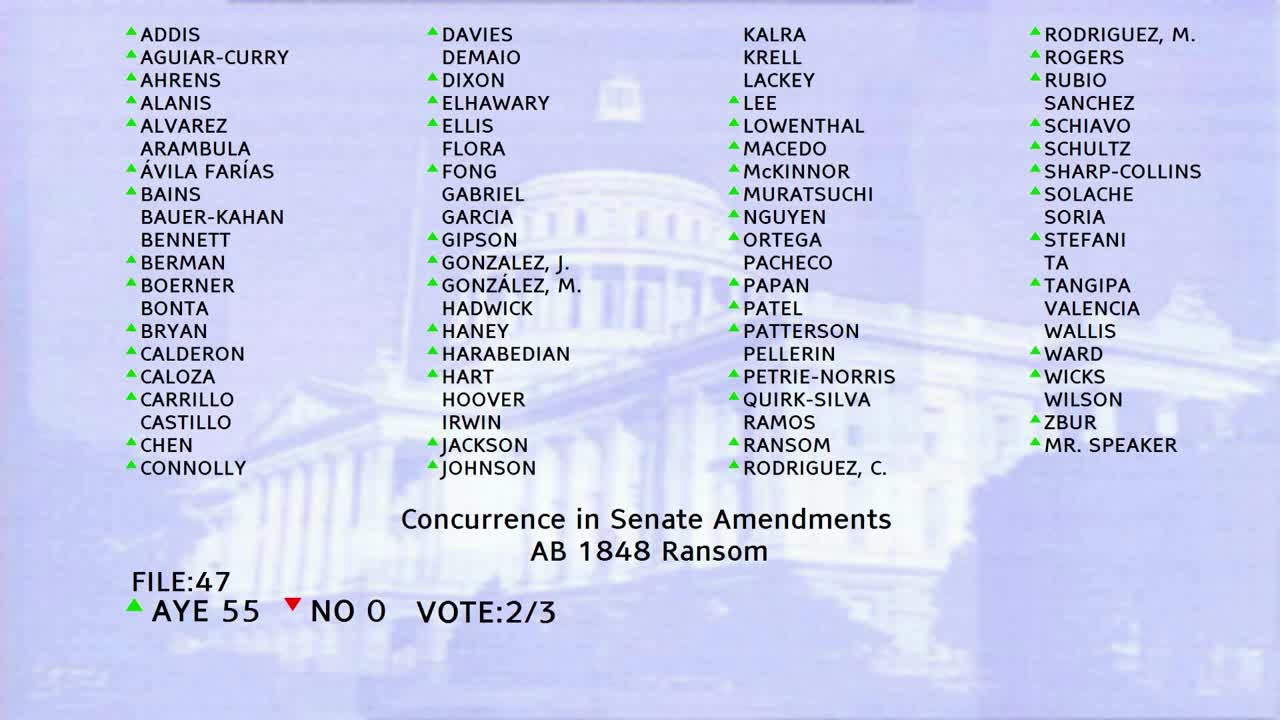 1MIN
Assembly Floor
 1MIN
Senate Floor
 4MIN
Senate Standing Committee on Business, Professions and Economic Development
 56SEC
Assembly Floor
 1MIN
Assembly Standing Committee on Business and Professions
Bill Author

Bill Co-Author(s):