AB 28: Solid waste landfills: subsurface temperatures.
- Session Year: 2025-2026
- House: Assembly
- Latest Version Date: 2026-09-20
Current Status:
Passed
(2026-09-20: Chaptered by Secretary of State - Chapter 356, Statutes of 2026.)
Introduced
In Committee
Awaiting First Chamber Vote
Passed First Chamber
In Committee
Awaiting Second Chamber Vote
Passed Second Chamber
Enacted
(1)The California Integrated Waste Management Act of 1989, administered by the Department of Resources Recycling and Recovery (CalRecycle), generally regulates the disposal, management, and recycling of solid waste, as defined. The act authorizes CalRecycle to certify a local enforcement agency and requires CalRecycle and certified local enforcement agencies to perform specified functions with regard to the regulation of solid waste management, including issuing and enforcing solid waste facility permits. The act prohibits a person from operating a solid waste facility without a solid waste facilities permit, as provided.
The California Global Warming Solutions Act of 2006 charges the State Air Resources Board with monitoring and regulating sources of emissions of greenhouse gases that cause global warming in order to reduce emission of greenhouse gases. The act requires the state board to adopt rules and regulations to achieve the maximum technologically feasible and cost-effective greenhouse gas emissions reductions, as provided.
This bill would require the owner or operator of a solid waste landfill, as defined, to, among other things, notify the Department of Resources Recycling and Recovery if a subsurface elevated temperature event occurs. The bill would define subsurface elevated temperature event to mean an event where subsurface gas or waste temperatures at a solid waste landfill persistently exceed 131 degrees Fahrenheit over a substantial area and meets other performance criteria, as determined by the department. The bill would authorize the department to require the owner or operator of a solid waste landfill experiencing a subsurface elevated temperature event to create a corrective action plan that includes, but is not limited to, a cost assessment for fully implementing the corrective action plan. The bill would authorize the department or a local enforcement agency to impose an administrative civil penalty of $100,000 per day for failing to comply with these requirements, as provided. The bill would require all penalties collected to be deposited into the Landfill Subsurface Fire Mitigation Community Fund, which the bill would create in the State Treasury. The bill would continuously appropriate moneys in the fund to the California Alternative Energy and Advanced Transportation Financing Authority, to be paid to counties in which a subsurface elevated temperature event occurred to mitigate harm to a person or community affected by a subsurface elevated temperature event and to be paid to the authority for its costs of implementation. The bill would require the authority to develop guidelines for dispersing these funds, as specified. The bill would authorize the department to become the enforcement agency for a solid waste landfill experiencing a subsurface elevated temperature event, as specified.
This bill would authorize the Secretary for Environmental Protection to select and coordinate a multiagency coordination group to investigate and provide recommendations on how to achieve resolution of a subsurface elevated temperature event, as specified. The bill would require a local health department to initiate community health needs assessments to identify and collect information regarding the effects of a subsurface elevated temperature event on an affected community and to share the findings, as provided. By requiring a local health department and a local air pollution control district to perform additional duties, the bill would impose a state-mandated local program. The bill would, upon request by a multiagency coordination group, require the owner or operator of a solid waste landfill that experiences a subsurface elevated temperature event to implement an air monitoring and sampling plan, as specified. The bill would require the owner and operator of a solid waste landfill that experiences a subsurface elevated temperature event to reimburse the members of a multiagency coordination group and the local health department for all reasonable and necessary expenses incurred, as specified. The bill would authorize the department to adopt regulations to implement and enforce them as emergency regulations, as specified.
(2)This bill would declare its provisions to be severable.
(3)The California Constitution requires the state to reimburse local agencies and school districts for certain costs mandated by the state. Statutory provisions establish procedures for making that reimbursement.
This bill would provide that no reimbursement is required by this act for a specified reason.
(1)The California Integrated Waste Management Act of 1989, administered by the Department of Resources Recycling and Recovery (CalRecycle), generally regulates the disposal, management, and recycling of solid waste, as defined. The act authorizes CalRecycle to certify a local enforcement agency and requires CalRecycle and certified local enforcement agencies to perform specified functions with regard to the regulation of solid waste management, including issuing and enforcing solid waste facility permits. The act prohibits a person from operating a solid waste facility without a solid waste facilities permit, as provided.
The California Global Warming Solutions Act of 2006 charges the State Air Resources Board with monitoring and regulating sources of emissions of greenhouse gases that cause global warming in order to reduce emission of greenhouse gases. The act requires the state board to adopt rules and regulations to achieve the maximum technologically feasible and cost-effective greenhouse gas emissions reductions, as provided.
This bill would require the owner or operator of a solid waste landfill, as defined, to, among other things, notify the Department of Resources Recycling and Recovery if a subsurface elevated temperature event occurs. The bill would define subsurface elevated temperature event to mean an event where subsurface gas or waste temperatures at a solid waste landfill persistently exceed 131 degrees Fahrenheit over a substantial area and meets other performance criteria, as determined by the department. The bill would authorize the department to require the owner or operator of a solid waste landfill experiencing a subsurface elevated temperature event to create a corrective action plan that includes, but is not limited to, a cost assessment for fully implementing the corrective action plan. The bill would authorize the department or a local enforcement agency to impose an administrative civil penalty of $100,000 per day for failing to comply with these requirements, as provided. The bill would require all penalties collected to be deposited into the Landfill Subsurface Fire Mitigation Community Fund, which the bill would create in the State Treasury. The bill would continuously appropriate moneys in the fund to the California Alternative Energy and Advanced Transportation Financing Authority, to be paid to counties in which a subsurface elevated temperature event occurred, occurred to mitigate harm to a person or community affected by a subsurface elevated temperature event. event and to be paid to the authority for its costs of implementation. The bill would require the authority to develop guidelines for dispersing these funds, as specified. The bill would authorize the department to become the enforcement agency for a solid waste landfill experiencing a subsurface elevated temperature event, as specified.
This bill would authorize the Secretary for Environmental Protection to select and coordinate a multiagency coordination group to investigate and provide recommendations on how to achieve resolution of a subsurface elevated temperature event, as specified. The bill would require a local health department to initiate community health needs assessments to identify and collect information regarding the effects of a subsurface elevated temperature event on an affected community and to share the findings, as provided. By requiring a local health department and a local air pollution control district to perform additional duties, the bill would impose a state-mandated local program. The bill would, upon request by a multiagency coordination group, require the owner or operator of a solid waste landfill that experiences a subsurface elevated temperature event to implement an air monitoring and sampling plan, as specified. The bill would require the owner and operator of a solid waste landfill that experiences a subsurface elevated temperature event to reimburse the members of a multiagency coordination group and the local health department for all reasonable and necessary expenses incurred, as specified. The bill would authorize the department to adopt regulations to implement and enforce them as emergency regulations, as specified.
(2)This bill would declare its provisions to be severable.
(3)The California Constitution requires the state to reimburse local agencies and school districts for certain costs mandated by the state. Statutory provisions establish procedures for making that reimbursement.
This bill would provide that no reimbursement is required by this act for a specified reason.
(1)The California Integrated Waste Management Act of 1989, administered by the Department of Resources Recycling and Recovery (CalRecycle), generally regulates the disposal, management, and recycling of solid waste, as defined. The act authorizes CalRecycle to certify a local enforcement agency and requires CalRecycle and certified local enforcement agencies to perform specified functions with regard to the regulation of solid waste management, including issuing and enforcing solid waste facility permits. The act prohibits a person from operating a solid waste facility without a solid waste facilities permit, as provided.
The California Global Warming Solutions Act of 2006 charges the State Air Resources Board with monitoring and regulating sources of emissions of greenhouse gases that cause global warming in order to reduce emission of greenhouse gases. The act requires the state board to adopt rules and regulations to achieve the maximum technologically feasible and cost-effective greenhouse gas emissions reductions, as provided.
This bill would require the owner or operator of a solid waste landfill landfill, as defined, to, among other things, notify the Department of Resources Recycling and Recovery if a subsurface elevated temperature event occurs. The bill would define subsurface elevated temperature event to mean an event where subsurface gas or waste temperatures at a solid waste landfill persistently exceed 131 degrees Fahrenheit over a substantial area, area and meets other performance criteria, as determined by the department. The bill would authorize the department to require the owner or operator of a solid waste landfill experiencing a subsurface elevated temperature event to create a corrective action plan that includes, but is not limited to, a cost assessment for fully implementing the corrective action plan. The bill would authorize the department or a local enforcement agency to impose an administrative civil penalty of $100,000 per day for failing to comply with these requirements. requirements, as provided. The bill would require all penalties collected to be deposited into the Landfill Subsurface Fire Mitigation Community Fund, which the bill would create in the State Treasury. The bill would continuously appropriate moneys in the fund to the department California Alternative Energy and Advanced Transportation Financing Authority, to be paid to counties in which a subsurface elevated temperature event occurred, to mitigate harm to a person or community affected by a subsurface elevated temperature event. The bill would require the authority to develop guidelines for dispersing these funds, as specified. The bill would authorize the department to become the enforcement agency for a solid waste landfill experiencing a subsurface elevated temperature event, as specified.
This bill would authorize the Secretary for Environmental Protection to select and coordinate a multiagency coordination group to investigate and provide recommendations on how to achieve resolution of a subsurface elevated temperature event, as specified. The bill would require a local county public health department to conduct initiate community health needs assessments to identify and collect information regarding the effects of a subsurface elevated temperature event on an affected community, community and to share the findings, as provided. By requiring a local county public health department and a local air pollution control district to perform additional duties, the bill would impose a state-mandated local program. The bill would, upon request by a multiagency coordination group, require the owner or operator of a solid waste landfill that experiences a subsurface elevated temperature event to implement an air monitoring and sampling plan, as specified. The bill would require the owner and operator of a solid waste landfill that experiences a subsurface elevated temperature event to reimburse the members of a multiagency coordination group and the local health department for all reasonable and necessary expenses incurred, as specified. The bill would require authorize the department to adopt regulations to implement and enforce these provisions them as emergency regulations, as specified.
(2)This bill would declare its provisions to be severable.
(3)The California Constitution requires the state to reimburse local agencies and school districts for certain costs mandated by the state. Statutory provisions establish procedures for making that reimbursement.
This bill would provide that no reimbursement is required by this act for a specified reason.
(1)The California Integrated Waste Management Act of 1989, administered by the Department of Resources Recycling and Recovery (CalRecycle), generally regulates the disposal, management, and recycling of solid waste, as defined. The act authorizes CalRecycle to certify a local enforcement agency and requires CalRecycle and certified local enforcement agencies to perform specified functions with regard to the regulation of solid waste management, including issuing and enforcing solid waste facility permits. The act prohibits a person from operating a solid waste facility without a solid waste facilities permit, as provided.
The California Global Warming Solutions Act of 2006 charges the State Air Resources Board with monitoring and regulating sources of emissions of greenhouse gases that cause global warming in order to reduce emission of greenhouse gases. The act requires the state board to adopt rules and regulations to achieve the maximum technologically feasible and cost-effective greenhouse gas emissions reductions, as provided.
This bill would require the state board to amend its regulations on methane emissions from a municipal solid waste landfill (MSW landfill) to establish requirements for the monitoring of landfill gas temperature. The bill would require the operator of an MSW landfill to monitor landfill gas temperature in accordance with those regulations. If the gas temperature is 131 degrees Fahrenheit or higher for longer than 3 consecutive monthly monitoring periods covering 60 consecutive days, and if other criteria established by CalRecycle are met or exceeded, the bill would require the operator of the MSW landfill to take specified actions, including, but not limited to, filing a corrective action plan for review by the local enforcement agency, as defined, and the department. If the gas temperature is 146 degrees Fahrenheit or higher for longer than 3 consecutive monthly monitoring periods covering 60 consecutive days, and if other criteria established by CalRecycle are met or exceeded, the bill would require additional actions, including, but not limited to, the operator of the MSW landfill submitting corrective action plans to a multiagency coordination group, established by the California Environmental Protection Agency (CalEPA), as specified. If the gas temperature is 170 degrees Fahrenheit or higher for longer than 3 consecutive monthly monitoring periods covering 60 consecutive days, and if other criteria established by CalRecycle are met or exceeded, the bill would require additional actions, as specified. The bill would require CalRecycle to establish the other criteria by emergency regulation.If an operator of an MSW landfill fails to provide notice of a sustained gas temperature by the specified due date, the bill would authorize CalRecycle or a local enforcement agency to impose a penalty of $10,000 per day. The bill would require CalRecycle or a local enforcement agency to impose a penalty not to exceed $1,000,000 for each week that the gas temperature is 170 degrees Fahrenheit or higher for longer than 3 consecutive monthly monitoring periods covering 60 consecutive days, if specified criteria are met or exceeded. The bill would require all penalties to be deposited into the Landfill Subsurface Fire Mitigation Account, which the bill would create, to be used upon appropriation by the Legislature to mitigate harm to a person or community adversely affected by a solid waste landfill with a gas temperature of 131 degrees Fahrenheit or higher for longer than 3 consecutive monthly monitoring periods covering 60 consecutive days. The bill would require any permit suspended pursuant to these provisions to be reinstated when, among others, gas temperature decreases to below 131 degrees Fahrenheit for 3 consecutive monthly monitoring periods covering 60 consecutive days or longer, as specified.This bill would make an operator of an MSW landfill liable to CalRecycle and the local enforcement agency for their costs, as specified. The bill would exempt from the Administrative Procedure Act specified requirements that the bill authorizes CalRecycle to impose on the operator of an MSW landfill. By creating new duties for a local enforcement agency, the bill would impose a state-mandated local program.Existing federal regulations require the owner of an MSW landfill with a gas collection and control system to operate each interior wellhead in the collection system with a landfill gas temperature less than 131 degrees Fahrenheit, unless the federal Environmental Protection Agency approves a higher operating temperature, as provided.This bill would require an operator of an MSW landfill to provide notice to the local enforcement agency, CalRecycle, and any other state agency designated by CalEPA regarding a request for a higher operating temperature, as specified.This bill would require the owner or operator of a solid waste landfill to, among other things, notify the Department of Resources Recycling and Recovery if a subsurface elevated temperature event occurs. The bill would define subsurface elevated temperature event to mean an event where subsurface gas or waste temperatures at a solid waste landfill persistently exceed 131 degrees Fahrenheit over a substantial area, as determined by the department. The bill would authorize the department to require the owner or operator of a solid waste landfill experiencing a subsurface elevated temperature event to create a corrective action plan that includes, but is not limited to, a cost assessment for fully implementing the corrective action plan. The bill would authorize the department or a local enforcement agency to impose an administrative civil penalty of $100,000 per day for failing to comply with these requirements. The bill would require all penalties collected to be deposited into the Landfill Subsurface Fire Mitigation Community Fund, which the bill would create in the State Treasury. The bill would continuously appropriate moneys in the fund to the department to mitigate harm to a person or community affected by a subsurface elevated temperature event. The bill would authorize the department to become the enforcement agency for a solid waste landfill experiencing a subsurface elevated temperature event, as specified.
This bill would authorize the Secretary for Environmental Protection to select and coordinate a multiagency coordination group to investigate and provide recommendations on how to achieve resolution of a subsurface elevated temperature event, as specified. The bill would require a local county public health department to conduct community health needs assessments to identify and collect information regarding the effects of a subsurface elevated temperature event on an affected community, as provided. By requiring a local county public health department and a local air pollution control district to perform additional duties, the bill would impose a state-mandated local program. The bill would, upon request by a multiagency coordination group, require the owner or operator of a solid waste landfill that experiences a subsurface elevated temperature event to implement an air monitoring and sampling plan, as specified. The bill would require the owner and operator of a solid waste landfill that experiences a subsurface elevated temperature event to reimburse a multiagency coordination group for all reasonable and necessary expenses incurred, as specified. The bill would require the department to adopt regulations to implement and enforce these provisions as emergency regulations, as specified.
(2)This bill would declare its provisions to be severable.
(3)The California Constitution requires the state to reimburse local agencies and school districts for certain costs mandated by the state. Statutory provisions establish procedures for making that reimbursement.This bill would provide that, if the Commission on State Mandates determines that the bill contains costs mandated by the state, reimbursement for those costs shall be made pursuant to the statutory provisions noted above.(3)The California Constitution requires the state to reimburse local agencies and school districts for certain costs mandated by the state. Statutory provisions establish procedures for making that reimbursement.
This bill would provide that no reimbursement is required by this act for a specified reason.
(1)The California Integrated Waste Management Act of 1989, administered by the Department of Resources Recycling and Recovery (CalRecycle), generally regulates the disposal, management, and recycling of solid waste, as defined. The act authorizes CalRecycle to certify a local enforcement agency and requires CalRecycle and certified local enforcement agencies to perform specified functions with regard to the regulation of solid waste management, including issuing and enforcing solid waste facility permits. The act prohibits a person from operating a solid waste facility without a solid waste facilities permit, as provided.
The California Global Warming Solutions Act of 2006 charges the State Air Resources Board with monitoring and regulating sources of emissions of greenhouse gases that cause global warming in order to reduce emission of greenhouse gases. The act requires the state board to adopt rules and regulations to achieve the maximum technologically feasible and cost-effective greenhouse gas emissions reductions, as provided.
This bill would require the state board to amend its regulations on methane emissions from a municipal solid waste landfill (MSW landfill) to establish requirements for the monitoring of landfill gas temperature. The bill would require the operator of an MSW landfill to monitor landfill gas temperature in accordance with those regulations. If the gas temperature is 131 degrees Fahrenheit or higher for longer than 2 3 consecutive monthly monitoring periods covering 60 consecutive days, and if other criteria established by CalRecycle are met, met or exceeded, the bill would require the operator of the MSW landfill to take specified actions, including, but not limited to, working collaboratively with CalRecycle and the local enforcement agency, as defined, to develop and implement filing a corrective action plan. plan for review by the local enforcement agency, as defined, and the department. If the gas temperature is 146 degrees Fahrenheit or higher for longer than 2 3 consecutive monthly monitoring periods covering 60 consecutive days, and if other criteria established by CalRecycle are met, met or exceeded, the bill would require additional actions, including, but not limited to, the California Environmental Protection Agency (CalEPA) forming operator of the MSW landfill submitting corrective action plans to a multiagency coordination group to collaborate with the operator of the MSW landfill to develop and implement another corrective action plan, group, established by the California Environmental Protection Agency (CalEPA), as specified. If the gas temperature is 162 170 degrees Fahrenheit or higher for longer than 2 3 consecutive monthly monitoring periods covering 60 consecutive days, and if other criteria established by CalRecycle are met, met or exceeded, the bill would require additional actions, as specified. The bill would require CalRecycle to establish the other criteria by emergency regulation.
If an operator of an MSW landfill fails to provide notice of a sustained gas temperature by the specified due date, the bill would authorize CalRecycle or a local enforcement agency to impose a penalty of $10,000 per day. The bill would require CalRecycle or a local enforcement agency to impose a penalty not to exceed $1,000,000 for each week that the gas temperature is 162 170 degrees Fahrenheit or higher for longer than 2 3 consecutive monthly monitoring periods covering 60 consecutive days, if specified criteria are met. met or exceeded. The bill would require all penalties to be deposited into the Landfill Subsurface Fire Mitigation Account, which the bill would create, to be used upon appropriation by the Legislature to mitigate harm to a person or community adversely affected by a solid waste landfill with a gas temperature of 131 degrees Fahrenheit or higher for longer than 2 3 consecutive monthly monitoring periods covering 60 consecutive days. The bill would require any permit suspended pursuant to these provisions to be reinstated when, among others, gas temperature decreases to below 131 degrees Fahrenheit for 3 consecutive monthly monitoring periods covering 60 consecutive days or longer, as specified.
This bill would make an operator of an MSW landfill liable to CalRecycle and the local enforcement agency for their costs, as specified. The bill would exempt from the Administrative Procedure Act specified requirements that the bill authorizes CalRecycle to impose on the operator of an MSW landfill. By creating new duties for a local enforcement agency, the bill would impose a state-mandated local program.
Existing federal regulations require the owner of an MSW landfill with a gas collection and control system to operate each interior wellhead in the collection system with a landfill gas temperature less than 131 degrees Fahrenheit, unless the federal Environmental Protection Agency approves a higher operating temperature, as provided.
This bill would require an operator of an MSW landfill to provide notice to the local enforcement agency, CalRecycle, and any other state agency designated by CalEPA regarding a request for a higher operating temperature, as specified.
(2)This bill would declare its provisions to be severable.
(3)The California Constitution requires the state to reimburse local agencies and school districts for certain costs mandated by the state. Statutory provisions establish procedures for making that reimbursement.
This bill would provide that, if the Commission on State Mandates determines that the bill contains costs mandated by the state, reimbursement for those costs shall be made pursuant to the statutory provisions noted above.
(1)The California Integrated Waste Management Act of 1989, administered by the Department of Resources Recycling and Recovery (CalRecycle), generally regulates the disposal, management, and recycling of solid waste, as defined. The act authorizes CalRecycle to certify a local enforcement agency and requires CalRecycle and certified local enforcement agencies to perform specified functions with regard to the regulation of solid waste management, including issuing and enforcing solid waste facility permits. The act prohibits a person from operating a solid waste facility without a solid waste facilities permit, as provided.
The California Global Warming Solutions Act of 2006 charges the State Air Resources Board with monitoring and regulating sources of emissions of greenhouse gases that cause global warming in order to reduce emission of greenhouse gases. The act requires the state board to adopt rules and regulations to achieve the maximum technologically feasible and cost-effective greenhouse gas emissions reductions, as provided.
This bill would require the state board to amend its regulations on methane emissions from a municipal solid waste landfill (MSW landfill) to establish requirements for the monitoring of landfill gas temperature. The bill would require the operator of an MSW landfill to monitor landfill gas temperature in accordance with those regulations. If the gas temperature is 131 degrees Fahrenheit or higher for longer than 2 consecutive monthly monitoring periods covering 60 consecutive days, and if other criteria established by CalRecycle are met, the bill would require the operator of the MSW landfill to take specified actions, including, but not limited to, working collaboratively with CalRecycle and the local enforcement agency agency, as defined, to develop and implement a corrective action plan. If the gas temperature is 146 degrees Fahrenheit or higher for longer than 2 consecutive monthly monitoring periods covering 60 consecutive days, and if other criteria established by CalRecycle are met, the bill would require additional actions, including, but not limited to, the California Environmental Protection Agency (CalEPA) forming a multiagency coordination group to collaborate with the operator of the MSW landfill to develop and implement another corrective action plan, as specified. If the gas temperature is 162 degrees Fahrenheit or higher for longer than 2 consecutive monthly monitoring periods covering 60 consecutive days, and if other criteria established by CalRecycle are met, the bill would require additional actions, as specified. The bill would require CalRecycle to establish the other criteria by emergency regulation.
If an operator of an MSW landfill fails to provide notice of a sustained gas temperature by the specified due date, the bill would require authorize CalRecycle or a local enforcement agency to impose a penalty not to exceed of $10,000 per day. The bill would require CalRecycle or a local enforcement agency to impose a penalty not to exceed $1,000,000 for each week that the gas temperature is 162 degrees Fahrenheit or higher for longer than 2 consecutive monthly monitoring periods covering 60 consecutive days, if specified criteria are met. The bill would require all penalties to be deposited into the Landfill Subsurface Fire Mitigation Account, which the bill would create, to be used upon appropriation by the Legislature to mitigate harm to a person or community adversely affected by a solid waste landfill with a gas temperature of 131 degrees Fahrenheit or higher for longer than 2 consecutive monthly monitoring periods covering 60 consecutive days. The bill would require any permit suspended pursuant to these provisions to be reinstated when, among others, gas temperature decreases to below 131 degrees Fahrenheit for 3 consecutive monthly monitoring periods covering 60 consecutive days or longer, as specified.
This bill would make an operator of an MSW landfill liable to CalRecycle and the local enforcement agency for their costs, as specified. The bill would exempt from the Administrative Procedure Act specified requirements that the bill authorizes CalRecycle to impose on the operator of an MSW landfill. By creating new duties for a local enforcement agency, the bill would impose a state-mandated local program.
Existing federal regulations require the owner of an MSW landfill with a gas collection and control system to operate each interior wellhead in the collection system with a landfill gas temperature less than 131 degrees Fahrenheit, unless the federal Environmental Protection Agency approves a higher operating temperature, as provided.
This bill would require an operator of an MSW landfill to provide notice to the local enforcement agency and a agency, CalRecycle, and any other state agency designated by CalEPA regarding a request for a higher operating temperature, as specified.
(2)This bill would declare its provisions to be severable.
(2)(3)The California Constitution requires the state to reimburse local agencies and school districts for certain costs mandated by the state. Statutory provisions establish procedures for making that reimbursement.
This bill would provide that, if the Commission on State Mandates determines that the bill contains costs mandated by the state, reimbursement for those costs shall be made pursuant to the statutory provisions noted above.
(1)The California Integrated Waste Management Act of 1989, administered by the Department of Resources Recycling and Recovery, Recovery (CalRecycle), generally regulates the disposal, management, and recycling of solid waste, as defined. The act authorizes the department CalRecycle to certify a local enforcement agency and requires the department CalRecycle and certified local enforcement agencies to perform specified functions with regard to the regulation of solid waste management, including issuing and enforcing solid waste facility permits. The act prohibits a person from operating a solid waste facility without a solid waste facilities permit, as provided.
The California Global Warming Solutions Act of 2006 charges the State Air Resources Board with monitoring and regulating sources of emissions of greenhouse gases that cause global warming in order to reduce emission of greenhouse gases. The act requires the state board to adopt rules and regulations to achieve the maximum technologically feasible and cost-effective greenhouse gas emissions reductions, as provided.
Pursuant to that authority, the state board adopted regulations governing methane emissions from solid waste landfills. The regulations require an owner or operator of those landfills to install and operate a gas collection and control system that is routed to a gas control device, as provided. The regulations define gas control device to mean a device used to dispose of or treat collected landfill gas, including, but not limited to, an enclosed flare. The regulations require a flare to be equipped and be monitored with continuous recording temperature sensors.This bill would require the state board to amend its regulations on methane emissions from a municipal solid waste landfill (MSW landfill) to establish requirements for the monitoring of landfill gas temperature. The bill would require the operator of an MSW landfill to monitor landfill gas temperature in accordance with those regulations. If the gas temperature is 131 degrees Fahrenheit or higher for longer than 60 2 consecutive monthly monitoring periods covering 60 consecutive days, this and if other criteria established by CalRecycle are met, the bill would require the operator of the MSW landfill to take specified actions, including filing including, but not limited to, working collaboratively with CalRecycle and the local enforcement agency to develop and implement a corrective action plan. If the gas temperature is 146 degrees Fahrenheit or higher for longer than 60 2 consecutive monthly monitoring periods covering 60 consecutive days, the bill would require additional actions, including, but not limited to, the Department of Resources Recycling and Recovery forming and leading California Environmental Protection Agency (CalEPA) forming a multiagency coordination group to investigate the subsurface elevated landfill gas temperature and provide advice on how to resolve it and the inclusion of that advice in a corrective action plan by the operator or the local enforcement agency, as specified. By requiring a local enforcement agency to perform additional duties, the bill would impose a state-mandated local program. collaborate with the operator of the MSW landfill to develop and implement another corrective action plan, as specified. If the gas temperature is 162 degrees Fahrenheit or higher for longer than 60 2 consecutive monthly monitoring periods covering 60 consecutive days, the bill would require additional actions, including, but not limited to, the issuance of a corrective action order. The bill would make it a crime to provide a false certification that a violation subject to a corrective action order is corrected. By expanding the scope of a crime, the bill would impose a state-mandated local program. as specified.
If an operator of a solid waste landfill an MSW landfill fails to incorporate the multiagency coordination group advice into a corrective action plan or fails to provide notice of a sustained gas temperature by the specified due date, the bill would require the department CalRecycle or a local enforcement agency to impose a penalty not to exceed $10,000 per day. The bill would require the department CalRecycle or a local enforcement agency to impose a penalty not to exceed $1,000,000 for each week that the gas temperature is 162 degrees Fahrenheit or higher for longer than 60 2 consecutive monthly monitoring periods covering 60 consecutive days, if specified criteria are met. The bill would require all penalties to be deposited into the Landfill Subsurface Fire Mitigation Account, which the bill would create, to be used upon appropriation by the Legislature to mitigate harm to a person or community adversely affected by a solid waste landfill with a gas temperature of 131 degrees Fahrenheit or higher for longer than 60 2 consecutive monthly monitoring periods covering 60 consecutive days. The bill would require any permit suspended pursuant to these provisions to be reinstated when, among others, gas temperature decreases to below 131 degrees Fahrenheit for 60 3 consecutive monthly monitoring periods covering 60 consecutive days or longer. longer, as specified.
This bill would require make an operator of a solid waste an MSW landfill to reimburse public entities liable to CalRecycle and the local enforcement agency for their costs, as specified. The bill would exempt from the Administrative Procedure Act specified requirements that the bill authorizes CalRecycle to impose on the operator of an MSW landfill. By creating new duties for a local enforcement agency, the bill would impose a state-mandated local program.
(2)The California Constitution requires the state to reimburse local agencies and school districts for certain costs mandated by the state. Statutory provisions establish procedures for making that reimbursement.This bill would provide that with regard to certain mandates no reimbursement is required by this act for a specified reason.With regard to any other mandates, this bill would provide that, if the Commission on State Mandates determines that the bill contains costs so mandated by the state, reimbursement for those costs shall be made pursuant to the statutory provisions noted above.Existing federal regulations require the owner of an MSW landfill with a gas collection and control system to operate each interior wellhead in the collection system with a landfill gas temperature less than 131 degrees Fahrenheit, unless the federal Environmental Protection Agency approves a higher operating temperature, as provided.
This bill would require an operator of an MSW landfill to provide notice to the local enforcement agency and a state agency designated by CalEPA regarding a request for a higher operating temperature, as specified.
(2)The California Constitution requires the state to reimburse local agencies and school districts for certain costs mandated by the state. Statutory provisions establish procedures for making that reimbursement.
This bill would provide that, if the Commission on State Mandates determines that the bill contains costs mandated by the state, reimbursement for those costs shall be made pursuant to the statutory provisions noted above.
(1)The California Integrated Waste Management Act of 1989, administered by the Department of Resources Recycling and Recovery, generally regulates the disposal, management, and recycling of solid waste, as defined. The act authorizes the department to certify a local enforcement agency and requires the department and certified local enforcement agencies to perform specified functions with regard to the regulation of solid waste management, including issuing and enforcing solid waste facility permits. The act prohibits a person from operating a solid waste facility without a solid waste facilities permit, as provided.
(1)TheThe California Global Warming Solutions Act of 2006 charges the State Air Resources Board with monitoring and regulating sources of emissions of greenhouse gases that cause global warming in order to reduce emission of greenhouse gases. The act requires the state board to adopt rules and regulations to achieve the maximum technologically feasible and cost-effective greenhouse gas emissions reductions, as provided.
Pursuant to that authority, the state board adopted regulations governing methane emissions from solid waste landfills. The regulations require an owner or operator of those landfills to install and operate a gas collection and control system that is routed to a gas control device, as provided. The regulations define gas control device to mean a device used to dispose of or treat collected landfill gas, including, but not limited to, an enclosed flare. The regulations require a flare to be equipped and be monitored with continuous recording temperature sensors.
The California Integrated Waste Management Act of 1989, administered by the Department of Resources Recycling and Recovery, generally regulates the disposal, management, and recycling of solid waste, as defined. The act authorizes the department to certify a local enforcement agency and requires the department and certified local enforcement agencies to perform specified functions with regard to the regulation of solid waste management, including issuing and enforcing solid waste facility permits. The act prohibits a person from operating a solid waste facility without a solid waste facilities permit, as provided.This bill would require an operator of a solid waste landfill to continuously monitor temperature sensors on flares for landfill gas temperature and to provide temperature sensor data on its internet website and to its local enforcement agency, as specified. IfIf the gas temperature is 131 degrees Fahrenheit or higher for longer than 60 days, the this bill would require the operator of the landfill to take specified actions, including filing a corrective action plan, and would require the local enforcement agency and the county to provide specified notifications. plan. If the gas temperature is 146 degrees Fahrenheit or higher for longer than 60 days, the bill would require additional actions, including, but not limited to, the Department of Resources Recycling and Recovery forming and leading a multiagency coordination group to investigate the sustained subsurface elevated landfill gas temperature and provide advice on how to resolve it. it and the inclusion of that advice in a corrective action plan by the operator or the local enforcement agency, as specified. By requiring a local enforcement agency to perform additional duties, the bill would impose a state-mandated local program. If the gas temperature is 162 degrees Fahrenheit or higher for longer than 60 days, the bill would require additional actions, including, but not limited to, the suspension or revocation of permits required to operate the landfill. By requiring local entities to perform additional duties, the bill would impose a state-mandated local program. issuance of a corrective action order. The bill would make it a crime to provide a false certification that a violation subject to a corrective action order is corrected. By expanding the scope of a crime, the bill would impose a state-mandated local program.
If an operator of a solid waste landfill fails to provide incorporate the multiagency coordination group advice into a corrective action plan or fails to provide notice of a sustained gas temperature by the specified due date, the bill would require the department or a local enforcement agency to impose a penalty not to exceed $10,000 per day and would authorize the suspension or revocation of permits required to operate the landfill. day. The bill would require the department or local enforcement agency to impose a penalty not to exceed $1,000,000 for each week that gas temperature is 162 degrees Fahrenheit or higher for longer than 60 days. days, if specified criteria are met. The bill would require all penalties to be deposited into the Landfill Subsurface Fire Mitigation Account, which the bill would create, to be used upon appropriation by the Legislature to mitigate harm to a person or community adversely affected by a solid waste landfill with a gas temperature of 131 degrees Fahrenheit or higher for longer than 60 days. The bill would require any permit suspended or revoked pursuant to these provisions to be reinstated when, among others, gas temperature decreases to below 131 degrees Fahrenheit for 60 days or longer.
This bill would require an operator of a solid waste landfill to reimburse public entities for their costs, as specified.
(2)The California Constitution requires the state to reimburse local agencies and school districts for certain costs mandated by the state. Statutory provisions establish procedures for making that reimbursement.This bill would provide that no reimbursement is required by this act for a specified reason.(2)The California Constitution requires the state to reimburse local agencies and school districts for certain costs mandated by the state. Statutory provisions establish procedures for making that reimbursement.
This bill would provide that with regard to certain mandates no reimbursement is required by this act for a specified reason.
With regard to any other mandates, this bill would provide that, if the Commission on State Mandates determines that the bill contains costs so mandated by the state, reimbursement for those costs shall be made pursuant to the statutory provisions noted above.
(1)The California Global Warming Solutions Act of 2006 charges the State Air Resources Board with monitoring and regulating sources of emissions of greenhouse gases that cause global warming in order to reduce emission of greenhouse gases. The act requires the state board to adopt rules and regulations to achieve the maximum technologically feasible and cost-effective greenhouse gas emissions reductions, as provided.
Pursuant to that authority, the state board adopted regulations governing methane emissions from solid waste landfills. The regulations require an owner or operator of those landfills to install and operate a gas collection and control system that is routed to a gas control device, as provided. The regulations define gas control device to mean a device used to dispose of or treat collected landfill gas, including, but not limited to, an enclosed flare. The regulations require a flare to be equipped with continuous recording temperature sensors.
The California Integrated Waste Management Act of 1989, administered by the Department of Resources Recycling and Recovery, generally regulates the disposal, management, and recycling of solid waste, as defined. The act authorizes the department to certify a local enforcement agency and requires the department and certified local enforcement agencies to perform specified functions with regard to the regulation of solid waste management, including issuing and enforcing solid waste facility permits. The act prohibits a person from operating a solid waste facility without a solid waste facilities permit, as provided.
This bill would require an operator of a solid waste landfill to continuously monitor temperature sensors on flares for landfill gas temperature and to provide temperature sensor data on its internet website and to its local enforcement agency, as specified. If the gas temperature is 131 degrees Fahrenheit or higher for longer than 60 days, the bill would require the operator of the landfill to take specified actions, including filing a corrective action plan, and would require the local enforcement agency and the county to provide specified notifications. If the gas temperature is 146 degrees Fahrenheit or higher for longer than 60 days, the bill would require additional actions, including, but not limited to, the Department of Resources Recycling and Recovery forming and leading a multiagency coordination group to investigate the sustained gas temperature and provide advice on how to resolve it. If the gas temperature is 162 degrees Fahrenheit or higher for longer than 60 days, the bill would require additional actions, including, but not limited to, the suspension or revocation of permits required to operate the landfill. By requiring local entities to perform additional duties, the bill would impose a state-mandated local program.
If an operator of a solid waste landfill fails to provide a corrective plan or fails to provide notice of a sustained gas temperature by the specified due date, the bill would require the department or a local enforcement agency to impose a penalty not to exceed $10,000 per day and would authorize the suspension or revocation of permits required to operate the landfill. The bill would require the department or local enforcement agency to impose a penalty not to exceed $1,000,000 for each week that gas temperature is 162 degrees Fahrenheit or higher for longer than 60 days. The bill would require all penalties to be deposited into the Landfill Subsurface Fire Mitigation Account, which the bill would create, to be used upon appropriation by the Legislature to mitigate harm to a person or community adversely affected by a solid waste landfill with a gas temperature of 131 degrees Fahrenheit or higher for longer than 60 days. The bill would require any permit suspended or revoked pursuant to these provisions to be reinstated when, among others, gas temperature decreases to below 131 degrees Fahrenheit for 60 days or longer.
This bill would require an operator of a solid waste landfill to reimburse public entities for their costs, as specified.
(2)The California Constitution requires the state to reimburse local agencies and school districts for certain costs mandated by the state. Statutory provisions establish procedures for making that reimbursement.
This bill would provide that no reimbursement is required by this act for a specified reason.
Existing law establishes the Office of Emergency Services, the director of which is charged with overseeing the administration of disaster assistance under the California Disaster Assistance Act. Existing law creates the Disaster Assistance Fund as a special fund in the State Treasury and makes continuous appropriations to effect the purposes of that act. Existing law authorizes the director to allocate funds to state and local agencies, as provided.This bill would express the intent of the Legislature to enact subsequent legislation that would appropriate sufficient funds to cover the temporary and permanent relocation costs of those individuals and families impacted by the Chiquita Canyon Landfill disaster, as provided, and would also make related findings and declarations.Existing law establishes the Office of Emergency Services, the director of which is charged with overseeing the administration of disaster assistance under the California Disaster Assistance Act. Existing law creates the Disaster Assistance Fund as a special fund in the State Treasury and makes continuous appropriations to effect the purposes of that act. Existing law authorizes the director to allocate funds to state and local agencies, as provided.
This bill would express the intent of the Legislature to enact subsequent legislation that would appropriate sufficient funds to cover the temporary and permanent relocation costs of those individuals and families impacted by the Chiquita Canyon Landfill disaster, as provided, and would also make related findings and declarations.
(a)The Legislature finds and declares all of the following:
(1)The Chiquita Canyon Landfill, a 639-acre facility in Castaic, is currently experiencing a subsurface elevated temperature event that has created significant and continuing public health, environmental, and safety impacts for nearby communities.
(2)A known subsurface elevated temperature event since 2022, the subsurface smoldering event has now grown to approximately 100 acres and has resulted in the release of noxious and poisonous gases, the generation of toxic leachate, and runoff affecting surrounding neighborhoods and the local environment within a five-mile radius or more. Many residents report suffering symptoms such as nosebleeds, migraines, difficulty breathing, vertigo, high blood pressure, and more.
(3)Despite substantial expenditures on mitigation efforts and coordinated responses by multiple local, state, and federal agencies, the subsurface event is expected to continue for many more years, resulting in the prolonged release of hazardous compounds such as benzene, a known carcinogen, and acrolein, a chemical used as a nerve agent in past world wars.
(4)Neighboring residents have had significant impacts to their health, some to the point of being disabled, unable to work, losing their businesses, and even losing their homes. This disaster is devaluing homes for families trying to sell their homes and leave the community, and threatens the health of anyone moving in. The subsurface elevated temperature event is causing significant financial harm beyond the physical and health impacts, threatening to eliminate the lifetime investments families made in their homes, undoing retirement security, and upending the financial stability of the community.
(5)Many families continue to face uncertainty regarding their health and safety, and some medical professionals have advised affected residents to temporarily or permanently relocate to reduce potential exposure. However, many impacted individuals lack the financial resources necessary to relocate.
(b)Therefore, it is the intent of the Legislature to enact all of the following:
(1)Authorize the Department of Resources Recycling and Recovery to require a corrective action plan in order to mitigate a subsurface elevated temperature event and impose penalties of up to $100,000 per day to landfill operators that do not follow the requirements of the corrective action plan.
(2)Authorize the Secretary of the California Environmental Protection Agency to create a multiagency coordination group to address a landfills subsurface elevated temperature event.
(3)Create a Landfill Subsurface Fire Mitigation Community Fund to deposit penalties into and appropriate funds to mitigate harm to people and communities impacted by a subsurface elevated temperature event.
SEC. 2.Section 43031 is added to the Public Resources Code, to read:43031.(a)For purposes of this section, all of the following definitions apply:
(1)Local enforcement agency means the enforcement agency, as defined by Section 40130, that had jurisdiction over a solid waste landfill at the time a subsurface elevated temperature event was discovered.
(2)Solid waste landfill has the same meaning as in Section 40195.1, except that solid waste landfill does not include any of the following:
(A)A landfill that receives only hazardous waste.
(B)A landfill that contains only construction and demolition wastes, inert wastes, or nondecomposable wastes.
(C)A landfill with fewer than four hundred fifty thousand tons of waste-in-place.
(3)Subsurface elevated temperature event means an event where subsurface gas or waste temperatures at a solid waste landfill persistently exceed 131 degrees Fahrenheit over a substantial area and meets other performance criteria, as determined by the department.
(b)If a subsurface elevated temperature event occurs, the owner or operator of the solid waste landfill shall do all of the following:
(1)Notify the department, state water board, State Air Resources Board, local enforcement agency, local air pollution control district, local health department, State Department of Public Health, and the appropriate regional water quality control board.
(2)Provide subsurface gas and waste temperature data to the department, state water board, State Air Resources Board, local air pollution control district, Department of Toxic Substances Control, and the appropriate regional water quality control board when requested by the department.
(3)Notwithstanding Section 40055, take action that the department deems necessary to mitigate and resolve the subsurface elevated temperature event, including, but not limited to, creating a corrective action plan. If a corrective action plan is required under Section 95469 of Title 17 of the California Code of Regulations, then the plan adopted by the department shall not conflict with that corrective action plan.
(c)If the department requires a corrective action plan, the department may require the owner or operator of the solid waste landfill to do one or more of the following:
(1)Complete a cost assessment for fully implementing the corrective action plan, including, but not limited to, the costs for cleanup, abatement, other remedial actions, and for reimbursing the multiagency coordination group pursuant to subdivision (g) of Section 43031.2.
(2)Provide, in a form and manner determined by the department, evidence of financial ability sufficient to address costs to implement the corrective action plan. This requirement is in addition to existing financial assurance requirements established under Chapter 6 (commencing with Section 22200) of Subdivision 1 of Division 2 of Title 27 of the California Code of Regulations.
(3)Pursuant to the regulation adopted pursuant to Section 43509, revise the closure and postclosure maintenance plan to account for additional costs resulting from the subsurface elevated temperature event.
(d)If the owner and operator of a solid waste landfill cannot sufficiently cover the cost to manage and implement a corrective action plan, including the cost to make reimbursement pursuant to subdivision (g) of Section 43031.2, the Attorney General may, if warranted, pursue an action against the parent company of the owner and operator of the solid waste landfill. This subdivision does not create a cause of action or liability.
(e)(1)If the department finds that a solid waste landfill within the jurisdiction of a local enforcement agency is experiencing a subsurface elevated temperature event, the department may, at its sole discretion, become the enforcement agency for all or part of the solid waste landfill.
(2)If the department becomes the enforcement agency pursuant to paragraph (1), the department shall return the solid waste facility to the jurisdiction of the local enforcement agency upon the departments finding that the subsurface elevated temperature event has been satisfactorily mitigated or resolved. The department has the sole discretion to return the solid waste facility to the jurisdiction of the local enforcement agency before the subsurface elevated temperature event has been satisfactorily mitigated or resolved.
(3)If the department becomes the enforcement agency pursuant to paragraph (1), the department may recover its reasonable and necessary costs for being the enforcement agency from the owner or operator of the solid waste facility that experienced the subsurface elevated temperature event, in a manner determined by the department.
(f)(1)In addition to any other remedies provided by law, the department or local enforcement agency may impose an administrative civil penalty of up to one hundred thousand dollars ($100,000) per day for failing to comply with subdivision (b) or (c) or any regulation adopted pursuant to this section. No penalty shall accrue before the 31st day after the department issues a notice of violation.
(2)All penalties collected pursuant to this section shall be deposited into the Landfill Subsurface Fire Mitigation Community Fund, which is hereby created in the State Treasury. Notwithstanding Section 13340 of the Government Code, moneys in the Landfill Subsurface Fire Mitigation Community Fund are continuously appropriated, without regard to fiscal year, to the California Alternative Energy and Advanced Transportation Financing Authority for both of the following:
(A)To be paid to counties in which a subsurface elevated temperature event occurred to mitigate harm to a person or community adversely affected by a subsurface elevated temperature event.
(B)To pay the costs incurred by the California Alternative Energy and Advanced Transportation Financing Authority in performing the duties required by this subdivision.
(3)The California Alternative Energy and Advanced Transportation Financing Authority shall develop guidelines for dispersing funds in the Landfill Subsurface Fire Mitigation Community Fund for compensation for loss, damages, expenses, relocation, suffering, loss in real property value, closing costs with respect to real property, including realtor commissions, or inconvenience, including access to real property, resulting from a subsurface elevated temperature event. These guidelines shall not be subject to the requirements of Chapter 3.5 (commencing with Section 11340) of Part 1 of Division 3 of Title 2 of the Government Code.
(g)(1)The department may adopt regulations to implement and enforce this section and Section 43031.2.
(2)Regulations adopted pursuant to this chapter shall be adopted in accordance with Chapter 3.5 (commencing with Section 11340) of Part 1 of Division 3 of Title 2 of the Government Code. For purposes of that chapter, including Section 11349.6 of the Government Code, the adoption of these regulations is an emergency and shall be considered by the Office of Administrative Law as necessary for the immediate preservation of the public peace, health, safety, and general welfare. Notwithstanding Chapter 3.5 (commencing with Section 11340) of Part 1 of Division 3 of Title 2 of the Government Code, any emergency regulations adopted by the department pursuant to this section shall be filed with the Office of Administrative Law and shall remain in effect for a period of two years or until revised by the department, whichever occurs sooner.
(h)The department shall provide regular multiagency coordination group updates to affected communities, as defined in Section 43031.2, on the status of leachate activity from a subsurface elevated temperature event.
(i)Part 5 (commencing with Section 45000) does not apply to this section and Section 43031.2.
(j)Any hearing, including a hearing for imposition of administrative penalties, under this section or Section 43031.2, shall be conducted pursuant to the procedural requirements in Sections 44308 and 44310. When the department is the enforcement agency, the hearing shall be held before the Director of Resources Recycling and Recovery.
SEC. 3.Section 43031.2 is added to the Public Resources Code, to read:43031.2.(a)For purposes of this section, the following definitions apply:
(1)Affected community means a community affected by subsurface elevated temperature event.
(2)Health assessment means an assessment informed by the Community Assessment for Public Health Emergency Response (CASPER) Toolkit, established by the federal Centers for Disease Control and Prevention, as it existed on January 1, 2026.
(3)Multiagency coordination group means a group of agencies, including, but not limited to, the California Environmental Protection Agency and its boards, departments, and offices, the State Department of Public Health, the relevant local air quality management district, local health department, and local enforcement agency, as defined by Section 43031, and the United States Environmental Protection Agency.
(4)Subsurface elevated temperature event has the same meaning as in Section 43031.
(b)The Secretary for Environmental Protection may select and coordinate a multiagency coordination group to investigate and provide recommendations on how to achieve resolution of a subsurface elevated temperature event.
(c)If the multiagency coordination group recommends a health assessment in response to a subsurface elevated temperature event, the owner or operator of the solid waste landfill shall provide funding to the local health department for this purpose, covering all reasonable and necessary anticipated expenses.
(d)(1)Within 60 calendar days of receiving recommendations, the local health department shall initiate a health assessment to identify and collect information regarding the effects of the subsurface elevated temperature event on the affected community.
(2)The local health department shall post the findings of any health assessment associated with the subsurface elevated temperature event on its internet website.
(3)The State Department of Public Health shall provide technical assistance, as necessary, to the local health department, to effectuate a health assessment.
(e)(1)Upon the request of the multiagency coordination group, the local health department shall initiate subsequent health assessments to identify and collect updated information regarding the effects of a subsurface elevated temperature event on the affected community under the following conditions:
(A)No sooner than two years following the most recent health assessment.
(B)While the subsurface elevated temperature event still occurs.
(2)The local health department shall post the findings of a community health needs assessment associated with the subsurface elevated temperature event on its internet website.
(3)The local health department shall also report the findings of the health assessment to its county board of supervisors or city council in a public meeting, and the affected community shall have the opportunity to provide public comment on the findings in at least one public meeting.
(f)Upon request of the multiagency coordination group, the owner or operator of the solid waste landfill experiencing the subsurface elevated temperature event shall do all of the following:
(1)Submit an air monitoring and sampling plan to the multiagency coordination group and the local air district within 30 days of the request that includes the onsite and offsite monitoring and sampling to be conducted.
(2)Within 30 days of a request by the local air pollution control district or the multiagency coordination group, revise and resubmit the air monitoring and sampling.
(3)No later than 30 days after the submittal of the air monitoring and sampling plan or any requested revisions thereto, begin implementation of the air monitoring and sampling plan. The multiagency coordination group or the local air pollution control district may grant an extension in writing.
(4)The owner or operator of the solid waste landfill experiencing the subsurface elevated temperature event shall post any local health assessment conducted by the local health department on their internet website.
(5)In addition to any other remedies provided by law, the department or local enforcement agency may impose an administrative civil penalty of up to one hundred thousand dollars ($100,000) per day for failing to comply with this section or any regulation adopted pursuant to this section. All penalties collected pursuant to this paragraph shall be deposited into the Landfill Subsurface Fire Mitigation Community Fund.
(g)The owner and operator of a solid waste landfill that experiences a subsurface elevated temperature event shall reimburse members of the multiagency coordination group and the local health department for all reasonable and necessary costs incurred pursuant to this section. Reimbursement shall be on a monthly basis and shall include the hourly staffing and overhead rates incurred by the participating agencies. Reimbursement shall be made directly to the entity that incurred the costs.
SEC. 4.The provisions of this act are severable. If any provision of this act or its application is held invalid, that invalidity shall not affect other provisions or applications that can be given effect without the invalid provision or application.
SEC. 5.No reimbursement is required by this act pursuant to Section 6 of Article XIIIB of the California Constitution because a local agency or school district has the authority to levy service charges, fees, or assessments sufficient to pay for the program or level of service mandated by this act, within the meaning of Section 17556 of the Government Code.
(a)The Legislature finds and declares all of the following:
(1)The Chiquita Canyon Landfill, a 639-acre facility in Castaic, is currently experiencing a subsurface elevated temperature event that has created significant and continuing public health, environmental, and safety impacts for nearby communities.
(2)A known subsurface elevated temperature event since 2022, the subsurface smoldering event has now grown to approximately 100 acres and has resulted in the release of noxious and poisonous gases, the generation of toxic leachate, and runoff affecting surrounding neighborhoods and the local environment within a five-mile radius or more. Many residents report suffering symptoms such as nosebleeds, migraines, difficulty breathing, vertigo, high blood pressure, and more.
(3)Despite substantial expenditures on mitigation efforts and coordinated responses by multiple local, state, and federal agencies, the subsurface event is expected to continue for many more years, resulting in the prolonged release of hazardous compounds such as benzene, a known carcinogen, and acrolein, a chemical used as a nerve agent in past world wars.
(4)Neighboring residents have had significant impacts to their health, some to the point of being disabled, unable to work, losing their businesses, and even losing their homes. This disaster is devaluing homes for families trying to sell their homes and leave the community, and threatens the health of anyone moving in. The subsurface elevated temperature event is causing significant financial harm beyond the physical and health impacts, threatening to eliminate the lifetime investments families made in their homes, undoing retirement security, and upending the financial stability of the community.
(5)Many families continue to face uncertainty regarding their health and safety, and some medical professionals have advised affected residents to temporarily or permanently relocate to reduce potential exposure. However, many impacted individuals lack the financial resources necessary to relocate.
(b)Therefore, it is the intent of the Legislature to enact all of the following:
(1)Authorize the Department of Resources Recycling and Recovery to require a corrective action plan in order to mitigate a subsurface elevated temperature event and impose penalties of up to $100,000 per day to landfill operators that do not follow the requirements of the corrective action plan.
(2)Authorize the Secretary of the California Environmental Protection Agency to create a multiagency coordination group to address a landfills subsurface elevated temperature event.
(3)Create a Landfill Subsurface Fire Mitigation Community Fund to deposit penalties into and appropriate funds to mitigate harm to people and communities impacted by a subsurface elevated temperature event.
SEC. 2.Section 43031 is added to the Public Resources Code, to read:43031.(a)For purposes of this section, all of the following definitions apply:
(1)Local enforcement agency means the enforcement agency, as defined by Section 40130, that had jurisdiction over a solid waste landfill at the time a subsurface elevated temperature event was discovered.
(2)Solid waste landfill has the same meaning as in Section 40195.1, except that solid waste landfill does not include any of the following:
(A)A landfill that receives only hazardous waste.
(B)A landfill that contains only construction and demolition wastes, inert wastes, or nondecomposable wastes.
(C)A landfill with fewer than four hundred fifty thousand tons of waste-in-place.
(3)Subsurface elevated temperature event means an event where subsurface gas or waste temperatures at a solid waste landfill persistently exceed 131 degrees Fahrenheit over a substantial area and meets other performance criteria, as determined by the department.
(b)If a subsurface elevated temperature event occurs, the owner or operator of the solid waste landfill shall do all of the following:
(1)Notify the department, state water board, State Air Resources Board, local enforcement agency, local air pollution control district, local health department, State Department of Public Health, and the appropriate regional water quality control board.
(2)Provide subsurface gas and waste temperature data to the department, state water board, State Air Resources Board, local air pollution control district, Department of Toxic Substances Control, and the appropriate regional water quality control board when requested by the department.
(3)Notwithstanding Section 40055, take action that the department deems necessary to mitigate and resolve the subsurface elevated temperature event, including, but not limited to, creating a corrective action plan. If a corrective action plan is required under Section 95469 of Title 17 of the California Code of Regulations, then the plan adopted by the department shall not conflict with that corrective action plan.
(c)If the department requires a corrective action plan, the department may require the owner or operator of the solid waste landfill to do one or more of the following:
(1)Complete a cost assessment for fully implementing the corrective action plan, including, but not limited to, the costs for cleanup, abatement, other remedial actions, and for reimbursing the multiagency coordination group pursuant to subdivision (g) of Section 43031.2.
(2)Provide, in a form and manner determined by the department, evidence of financial ability sufficient to address costs to implement the corrective action plan. This requirement is in addition to existing financial assurance requirements established under Chapter 6 (commencing with Section 22200) of Subdivision 1 of Division 2 of Title 27 of the California Code of Regulations.
(3)Pursuant to the regulation adopted pursuant to Section 43509, revise the closure and postclosure maintenance plan to account for additional costs resulting from the subsurface elevated temperature event.
(d)If the owner and operator of a solid waste landfill cannot sufficiently cover the cost to manage and implement a corrective action plan, including the cost to make reimbursement pursuant to subdivision (g) of Section 43031.2, the Attorney General may, if warranted, pursue an action against the parent company of the owner and operator of the solid waste landfill. This subdivision does not create a cause of action or liability.
(e)(1)If the department finds that a solid waste landfill within the jurisdiction of a local enforcement agency is experiencing a subsurface elevated temperature event, the department may, at its sole discretion, become the enforcement agency for all or part of the solid waste landfill.
(2)If the department becomes the enforcement agency pursuant to paragraph (1), the department shall return the solid waste facility to the jurisdiction of the local enforcement agency upon the departments finding that the subsurface elevated temperature event has been satisfactorily mitigated or resolved. The department has the sole discretion to return the solid waste facility to the jurisdiction of the local enforcement agency before the subsurface elevated temperature event has been satisfactorily mitigated or resolved.
(3)If the department becomes the enforcement agency pursuant to paragraph (1), the department may recover its reasonable and necessary costs for being the enforcement agency from the owner or operator of the solid waste facility that experienced the subsurface elevated temperature event, in a manner determined by the department.
(f)(1)In addition to any other remedies provided by law, the department or local enforcement agency may impose an administrative civil penalty of up to one hundred thousand dollars ($100,000) per day for failing to comply with subdivision (b) or (c) or any regulation adopted pursuant to this section. No penalty shall accrue before the 31st day after the department issues a notice of violation.
(2)All penalties collected pursuant to this section shall be deposited into the Landfill Subsurface Fire Mitigation Community Fund, which is hereby created in the State Treasury. Notwithstanding Section 13340 of the Government Code, moneys in the Landfill Subsurface Fire Mitigation Community Fund are continuously appropriated, without regard to fiscal year, to the California Alternative Energy and Advanced Transportation Financing Authority, to Authority for both of the following:
(A)To be paid to counties in which a subsurface elevated temperature event occurred to mitigate harm to a person or community adversely affected by a subsurface elevated temperature event. The
(B)To pay the costs incurred by the California Alternative Energy and Advanced Transportation Financing Authority in performing the duties required by this subdivision.
(3)The California Alternative Energy and Advanced Transportation Financing Authority shall develop guidelines for dispersing these funds in the Landfill Subsurface Fire Mitigation Community Fund for compensation for loss, damages, expenses, relocation, suffering, loss in real property value, closing costs with respect to real property, including realtor commissions, or inconvenience, including access to real property, resulting from a subsurface elevated temperature event. These guidelines shall not be subject to the requirements of Chapter 3.5 (commencing with Section 11340) of Part 1 of Division 3 of Title 2 of the Government Code.
(g)(1)The department may adopt regulations to implement and enforce this section and Section 43031.2.
(2)Regulations adopted pursuant to this chapter shall be adopted in accordance with Chapter 3.5 (commencing with Section 11340) of Part 1 of Division 3 of Title 2 of the Government Code. For purposes of that chapter, including Section 11349.6 of the Government Code, the adoption of these regulations is an emergency and shall be considered by the Office of Administrative Law as necessary for the immediate preservation of the public peace, health, safety, and general welfare. Notwithstanding Chapter 3.5 (commencing with Section 11340) of Part 1 of Division 3 of Title 2 of the Government Code, any emergency regulations adopted by the department pursuant to this section shall be filed with the Office of Administrative Law and shall remain in effect for a period of two years or until revised by the department, whichever occurs sooner.
(h)The department shall provide regular multiagency coordination group updates to affected communities, as defined in Section 43031.2, on the status of leachate activity from a subsurface elevated temperature event.
(i)Part 5 (commencing with Section 45000) does not apply to this section and Section 43031.2.
(j)Any hearing, including a hearing for imposition of administrative penalties, under this section or Section 43031.2, shall be conducted pursuant to the procedural requirements in Sections 44308 and 44310. When the department is the enforcement agency, the hearing shall be held before the Director of Resources Recycling and Recovery.
SEC. 3.Section 43031.2 is added to the Public Resources Code, to read:43031.2.(a)For purposes of this section, the following definitions apply:
(1)Affected community means a community affected by subsurface elevated temperature event.
(2)Health assessment means an assessment informed by the Community Assessment for Public Health Emergency Response (CASPER) Toolkit, established by the federal Centers for Disease Control and Prevention, as it existed on January 1, 2026.
(3)Multiagency coordination group means a group of agencies, including, but not limited to, the California Environmental Protection Agency and its boards, departments, and offices, the State Department of Public Health, the relevant local air quality management district, local health department, and local enforcement agency, as defined by Section 43031, and the United States Environmental Protection Agency.
(4)Subsurface elevated temperature event has the same meaning as in Section 43031.
(b)The Secretary for Environmental Protection may select and coordinate a multiagency coordination group to investigate and provide recommendations on how to achieve resolution of a subsurface elevated temperature event.
(c)If the multiagency coordination group recommends a health assessment in response to a subsurface elevated temperature event, the owner or operator of the solid waste landfill shall provide funding to the local health department for this purpose, covering all reasonable and necessary anticipated expenses.
(d)(1)Within 60 calendar days of receiving recommendations, the local health department shall initiate a health assessment to identify and collect information regarding the effects of the subsurface elevated temperature event on the affected community.
(2)The local health department shall post the findings of any health assessment associated with the subsurface elevated temperature event on its internet website.
(3)The State Department of Public Health shall provide technical assistance, as necessary, to the local health department, to effectuate a health assessment.
(e)(1)Upon the request of the multiagency coordination group, the local health department shall initiate subsequent health assessments to identify and collect updated information regarding the effects of a subsurface elevated temperature event on the affected community under the following conditions:
(A)No sooner than two years following the most recent health assessment.
(B)While the subsurface elevated temperature event still occurs.
(2)The local health department shall post the findings of a community health needs assessment associated with the subsurface elevated temperature event on its internet website.
(3)The local health department shall also report the findings of the health assessment to its county board of supervisors or city council in a public meeting, and the affected community shall have the opportunity to provide public comment on the findings in at least one public meeting.
(f)Upon request of the multiagency coordination group, the owner or operator of the solid waste landfill experiencing the subsurface elevated temperature event shall do all of the following:
(1)Submit an air monitoring and sampling plan to the multiagency coordination group and the local air district within 30 days of the request that includes the onsite and offsite monitoring and sampling to be conducted.
(2)Within 30 days of a request by the local air pollution control district or the multiagency coordination group, revise and resubmit the air monitoring and sampling.
(3)No later than 30 days after the submittal of the air monitoring and sampling plan or any requested revisions thereto, begin implementation of the air monitoring and sampling plan. The multiagency coordination group or the local air pollution control district may grant an extension in writing.
(4)The owner or operator of the solid waste landfill experiencing the subsurface elevated temperature event shall post any local health assessment conducted by the local health department on their internet website.
(5)In addition to any other remedies provided by law, the department or local enforcement agency may impose an administrative civil penalty of up to one hundred thousand dollars ($100,000) per day for failing to comply with this section or any regulation adopted pursuant to this section. All penalties collected pursuant to this paragraph shall be deposited into the Landfill Subsurface Fire Mitigation Community Fund.
(g)The owner and operator of a solid waste landfill that experiences a subsurface elevated temperature event shall reimburse members of the multiagency coordination group and the local health department for all reasonable and necessary costs incurred pursuant to this section. Reimbursement shall be on a monthly basis and shall include the hourly staffing and overhead rates incurred by the participating agencies. Reimbursement shall be made directly to the entity that incurred the costs.
SEC. 4.The provisions of this act are severable. If any provision of this act or its application is held invalid, that invalidity shall not affect other provisions or applications that can be given effect without the invalid provision or application.
SEC. 5.No reimbursement is required by this act pursuant to Section 6 of Article XIIIB of the California Constitution because a local agency or school district has the authority to levy service charges, fees, or assessments sufficient to pay for the program or level of service mandated by this act, within the meaning of Section 17556 of the Government Code.
(a)The Legislature finds and declares all of the following:
(1)The Chiquita Canyon Landfill, a 639-acre facility in Castaic, is currently experiencing a subsurface elevated temperature event that has created significant and continuing public health, environmental, and safety impacts for nearby communities.
(2)A known subsurface elevated temperature event since 2022, the subsurface smoldering event has now grown to approximately 100 acres and has resulted in the release of noxious and poisonous gases, the generation of toxic leachate, and runoff affecting surrounding neighborhoods and the local environment within a five-mile radius or more. Many residents report suffering symptoms such as nosebleeds, migraines, difficulty breathing, vertigo, high blood pressure, and more.
(3)Despite substantial expenditures on mitigation efforts and coordinated responses by multiple local, state, and federal agencies, the subsurface event is expected to continue for many more years, resulting in the prolonged release of hazardous compounds such as benzene, a known carcinogen, and acrolein, a chemical used as a nerve agent in past world wars.
(4)Neighboring residents have had significant impacts to their health, some to the point of being disabled, unable to work, losing their businesses, and even losing their homes. This disaster is devaluing homes for families trying to sell their homes and leave the community, and threatens the health of anyone moving in. The subsurface elevated temperature event is causing significant financial harm beyond the physical and health impacts, threatening to eliminate the lifetime investments families made in their homes, undoing retirement security, and upending the financial stability of the community.
(5)Many families continue to face uncertainty regarding their health and safety, and some medical professionals have advised affected residents to temporarily or permanently relocate to reduce potential exposure. However, many impacted individuals lack the financial resources necessary to relocate.
(b)Therefore, it is the intent of the Legislature to enact all of the following:
(1)Authorize the Department of Resources Recycling and Recovery to require a corrective action plan in order to mitigate a subsurface elevated temperature event and impose penalties of up to $100,000 per day to landfill operators that do not follow the requirements of the corrective action plan.
(2)Authorize the Secretary of the California Environmental Protection Agency to create a multiagency coordination group to address a landfills subsurface elevated temperature event.
(3)Create a Landfill Subsurface Fire Mitigation Community Fund to deposit penalties into and appropriate funds to mitigate harm to people and communities impacted by a subsurface elevated temperature event.
SECTION 1.SEC. 2.Section 43031 is added to the Public Resources Code, to read:43031.(a)For purposes of this section, both all of the following definitions apply:
(1)Local enforcement agency means the enforcement agency, as defined by Section 40130, that had jurisdiction over a solid waste landfill at the time a subsurface elevated temperature event was discovered.
(2)Solid waste landfill has the same meaning as in Section 40195.1, except that solid waste landfill does not include any of the following:
(A)A landfill that receives only hazardous waste.
(B)A landfill that contains only construction and demolition wastes, inert wastes, or nondecomposable wastes.
(C)A landfill with fewer than four hundred fifty thousand tons of waste-in-place.
(2)(3)Subsurface elevated temperature event means an event where subsurface gas or waste temperatures at a solid waste landfill persistently exceed 131 degrees Fahrenheit over a substantial area, area and meets other performance criteria, as determined by the department.
(b)If a subsurface elevated temperature event occurs, the owner or operator of the solid waste landfill shall do all of the following:
(1)Notify the department, state water board, State Air Resources Board, local enforcement agency, local air pollution control district, local health department, State Department of Public Health, and the appropriate regional water quality control board.
(2)Provide subsurface gas and waste temperature data to the department, state water board, State Air Resources Board, local air pollution control district, Department of Toxic Substances Control, and the appropriate regional water quality control board when requested by the department.
(3)Notwithstanding Section 40055, take any action that the department deems necessary to mitigate and resolve the subsurface elevated temperature event, including, but not limited to, creating a corrective action plan. If a corrective action plan is required under Section 95469 of Title 17 of the California Code of Regulations, then the plan adopted by the department shall not conflict with that corrective action plan.
(c)If the department requires a corrective action plan, the department may require the owner or operator of the solid waste landfill shall do all to do one or more of the following:
(1)Complete a cost assessment for fully implementing the corrective action plan, including, but not limited to, the costs for cleanup, abatement, other remedial actions, and for reimbursing the multiagency coordination group pursuant to subdivision (f) (g) of Section 43031.2.
(2)Provide, in a form and manner determined by the department, evidence of financial ability sufficient to address costs to implement the corrective action plan. This requirement is in addition to existing financial assurance requirements established under Chapter 6 (commencing with Section 22200) of Subdivision 1 of Division 2 of Title 27 of the California Code of Regulations.
(3)Pursuant to the regulation adopted pursuant to Section 43509, revise the closure and postclosure maintenance plan to account for additional costs resulting from the subsurface elevated temperature event.
(d)If the owner and operator of a solid waste landfill cannot sufficiently cover the cost to manage and implement a corrective action plan, including the cost to make reimbursement pursuant to subdivision (f) (g) of Section 43031.2, the Attorney General may, if warranted, pursue an action against the parent company of the owner and operator of the solid waste landfill. This subdivision does not create a cause of action or liability.
(e)(1)If the department finds that a solid waste landfill within the jurisdiction of a local enforcement agency is experiencing a subsurface elevated temperature event, the department may, at its sole discretion, become the enforcement agency for all or part of the solid waste landfill.
(2)If the department becomes the enforcement agency pursuant to paragraph (1), the department shall return the solid waste facility to the jurisdiction of the local enforcement agency upon the departments finding that the subsurface elevated temperature event has been satisfactorily mitigated or resolved. The department has the sole discretion to return the solid waste facility to the jurisdiction of the local enforcement agency before the subsurface elevated temperature event has been satisfactorily mitigated or resolved.
(3)If the department becomes the enforcement agency pursuant to paragraph (1), the department may recover its reasonable and necessary costs for being the enforcement agency from the owner or operator of the solid waste facility that experienced the subsurface elevated temperature event, in a manner determined by the department.
(f)(1)In addition to any other remedies provided by law, the department or local enforcement agency may impose an administrative civil penalty of up to one hundred thousand dollars ($100,000) per day for failing to comply with subdivision (b) or (c) or any regulation adopted pursuant to this section. No penalty shall accrue before the 31st day after the department issues a notice of violation.
(2)All penalties collected pursuant to this section shall be deposited into the Landfill Subsurface Fire Mitigation Community Fund, which is hereby created in the State Treasury. Notwithstanding Section 13340 of the Government Code, moneys in the Landfill Subsurface Fire Mitigation Community Fund are continuously appropriated, without regard to fiscal year, to the department California Alternative Energy and Advanced Transportation Financing Authority, to be paid to counties in which a subsurface elevated temperature event occurred to mitigate harm to a person or community adversely affected by a subsurface elevated temperature event. The California Alternative Energy and Advanced Transportation Financing Authority shall develop guidelines for dispersing these funds for compensation for loss, damages, expenses, relocation, suffering, loss in real property value, closing costs with respect to real property, including realtor commissions, or inconvenience, including access to real property, resulting from a subsurface elevated temperature event. These guidelines shall not be subject to the requirements of Chapter 3.5 (commencing with Section 11340) of Part 1 of Division 3 of Title 2 of the Government Code.(g)(1)The department shall may adopt regulations to implement and enforce this section and Section 43031.2.
(2)Regulations adopted pursuant to this chapter shall be adopted in accordance with Chapter 3.5 (commencing with Section 11340) of Part 1 of Division 3 of Title 2 of the Government Code. For purposes of that chapter, including Section 11349.6 of the Government Code, the adoption of these regulations is an emergency and shall be considered by the Office of Administrative Law as necessary for the immediate preservation of the public peace, health, safety, and general welfare. Notwithstanding Chapter 3.5 (commencing with Section 11340) of Part 1 of Division 3 of Title 2 of the Government Code, any emergency regulations adopted by the department pursuant to this section shall be filed with the Office of Administrative Law and shall remain in effect for a period of two years or until revised by the department, whichever occurs sooner.
(h)The department shall provide regular multiagency coordination group updates to affected communities, as defined in Section 43031.2, on the status of leachate activity from a subsurface elevated temperature event.
(i)Part 5 (commencing with Section 45000) does not apply to this section and Section 43031.2.
(j)Any hearing, including a hearing for imposition of administrative penalties, under this section or Section 43031.2, shall be conducted pursuant to the procedural requirements in Sections 44308 and 44310. When the department is the enforcement agency, the hearing shall be held before the Director of Resources Recycling and Recovery.
SEC. 2.SEC. 3.Section 43031.2 is added to the Public Resources Code, to read:43031.2.(a)For purposes of this section, the following definitions apply:
(1)Affected community means a community affected by subsurface elevated temperature event.
(2)Health assessment means an assessment informed by the Community Assessment for Public Health Emergency Response (CASPER) Toolkit, established by the federal Centers for Disease Control and Prevention, as it existed on January 1, 2026.
(3)Multiagency coordination group means a group of agencies, including, but not limited to, the California Environmental Protection Agency and its boards, departments, and offices, the State Department of Public Health, the relevant local air quality management district, local public health office, health department, and local enforcement agency, as defined by Section 43031, and the United States Environmental Protection Agency.
(4)Subsurface elevated temperature event has the same meaning as in Section 43031.
(b)The Secretary for Environmental Protection may select and coordinate a multiagency coordination group to investigate and provide recommendations on how to achieve resolution of a subsurface elevated temperature event.
(c)If the multiagency coordination group recommends a health assessment in response to a subsurface elevated temperature event, the owner or operator of the solid waste landfill shall provide funding to the local health department for this purpose, covering all reasonable and necessary anticipated expenses.
(c)(d)(1)Within 60 calendar days of receiving recommendations from a multiagency coordination group, recommendations, the local county public health department shall conduct an initial community health needs assessment using the initiate a health assessment to identify and collect information regarding the effects of the subsurface elevated temperature event on the affected community and post this information on its internet website. The owner or operator of the solid waste landfill experiencing the subsurface elevated temperature event shall also post this information on its internet website. community.
(2)The local health department shall post the findings of any health assessment associated with the subsurface elevated temperature event on its internet website.
(3)The State Department of Public Health shall provide technical assistance, as necessary, to the local health department, to effectuate a health assessment.
(d)(e)(1)Upon the request of the multiagency coordination group, the local county public health department shall initiate subsequent community health needs assessments to identify and collect updated information regarding the effects of a subsurface elevated temperature event on the affected community. The community under the following conditions:
(A)No sooner than two years following the most recent health assessment.
(B)While the subsurface elevated temperature event still occurs.
(2)The local county public health department shall post the findings of a community health needs assessment associated with the subsurface elevated temperature event on its internet website.
(2)The local county public health department shall hold at least two public hearings in the affected communities to discuss the findings of the community health needs assessment and how to mitigate impacts.(3)The local health department shall also report the findings of the health assessment to its county board of supervisors or city council in a public meeting, and the affected community shall have the opportunity to provide public comment on the findings in at least one public meeting.
(e)(f)Upon request of the multiagency coordination group, the owner or operator of the solid waste landfill experiencing the subsurface elevated temperature event shall do all of the following:
(1)Submit an air monitoring and sampling plan to the multiagency coordination group and the local air district within 30 days of the request that includes the onsite and offsite monitoring and sampling to be conducted.
(2)Within 30 days of a request by the local air pollution control district or the multiagency coordination group, revise and resubmit the air monitoring and sampling.
(3)No later than 30 days after the submittal of the air monitoring and sampling plan or any requested revisions thereto, begin implementation of the air monitoring and sampling plan. The multiagency coordination group or the local air pollution control district may grant an extension in writing.
(4)The owner or operator of the solid waste landfill experiencing the subsurface elevated temperature event shall post any local health assessment conducted by the local health department on their internet website.
(4)(5)In addition to any other remedies provided by law, the department or local enforcement agency may impose an administrative civil penalty of up to one hundred thousand dollars ($100,000) per day for failing to comply with this section or any regulation adopted pursuant to this section. All penalties collected pursuant to this paragraph shall be deposited into the Landfill Subsurface Fire Mitigation Community Fund.
(f)(g)The owner and operator of a solid waste landfill that experiences a subsurface elevated temperature event shall reimburse members of the multiagency coordination group and the local health department for all reasonable and necessary costs incurred pursuant to this section. Reimbursement shall be on a monthly basis and shall include the hourly staffing and overhead rates incurred by the participating agencies. Reimbursement shall be made directly to the entity that incurred the costs.
SEC. 3.SEC. 4.The provisions of this act are severable. If any provision of this act or its application is held invalid, that invalidity shall not affect other provisions or applications that can be given effect without the invalid provision or application.
SEC. 4.SEC. 5.No reimbursement is required by this act pursuant to Section 6 of Article XIIIB of the California Constitution because a local agency or school district has the authority to levy service charges, fees, or assessments sufficient to pay for the program or level of service mandated by this act, within the meaning of Section 17556 of the Government Code.
(a)For purposes of this section, both of the following definitions apply:
(1)Local enforcement agency means the enforcement agency, as defined by Section 40130, that had jurisdiction over a solid waste landfill at the time a subsurface elevated temperature event was discovered.
(2)Subsurface elevated temperature event means an event where subsurface gas or waste temperatures at a solid waste landfill persistently exceed 131 degrees Fahrenheit over a substantial area, as determined by the department.
(b)If a subsurface elevated temperature event occurs, the owner or operator of the solid waste landfill shall do all of the following:
(1)Notify the department, state water board, State Air Resources Board, local enforcement agency, local air pollution control district, local health department, State Department of Public Health, and the appropriate regional water quality control board.
(2)Provide subsurface gas and waste temperature data to the department, state water board, State Air Resources Board, local air pollution control district, Department of Toxic Substances Control, and the appropriate regional water quality control board when requested by the department.
(3)Notwithstanding Section 40055, take any action that the department deems necessary to mitigate and resolve the subsurface elevated temperature event, including, but not limited to, creating a corrective action plan.
(c)If the department requires a corrective action plan, the owner or operator of the solid waste landfill shall do all of the following:
(1)Complete a cost assessment for fully implementing the corrective action plan, including, but not limited to, the costs for cleanup, abatement, other remedial actions, and for reimbursing the multiagency coordination group pursuant to subdivision (f) of Section 43031.2.
(2)Provide, in a form and manner determined by the department, evidence of financial ability sufficient to address costs to implement the corrective action plan. This requirement is in addition to existing financial assurance requirements established under Chapter 6 (commencing with Section 22200) of Subdivision 1 of Division 2 of Title 27 of the California Code of Regulations.
(3)Pursuant to the regulation adopted pursuant to Section 43509, revise the closure and postclosure maintenance plan to account for additional costs resulting from the subsurface elevated temperature event.
(d)If the owner and operator of a solid waste landfill cannot sufficiently cover the cost to manage and implement a corrective action plan, including the cost to make reimbursement pursuant to subdivision (f) of Section 43031.2, the Attorney General may, if warranted, pursue an action against the parent company of the owner and operator of the solid waste landfill. This subdivision does not create a cause of action or liability.
(e)(1)If the department finds that a solid waste landfill within the jurisdiction of a local enforcement agency is experiencing a subsurface elevated temperature event, the department may, at its sole discretion, become the enforcement agency for all or part of the solid waste landfill.
(2)If the department becomes the enforcement agency pursuant to paragraph (1), the department shall return the solid waste facility to the jurisdiction of the local enforcement agency upon the departments finding that the subsurface elevated temperature event has been satisfactorily mitigated or resolved. The department has the sole discretion to return the solid waste facility to the jurisdiction of the local enforcement agency before the subsurface elevated temperature event has been satisfactorily mitigated or resolved.
(3)If the department becomes the enforcement agency pursuant to paragraph (1), the department may recover its reasonable and necessary costs for being the enforcement agency from the owner or operator of the solid waste facility that experienced the subsurface elevated temperature event, in a manner determined by the department.
(f)(1)In addition to any other remedies provided by law, the department or local enforcement agency may impose an administrative civil penalty of up to one hundred thousand dollars ($100,000) per day for failing to comply with subdivision (b) or (c) or any regulation adopted pursuant to this section.
(2)All penalties collected pursuant to this section shall be deposited into the Landfill Subsurface Fire Mitigation Community Fund, which is hereby created in the State Treasury. Notwithstanding Section 13340 of the Government Code, moneys in the Landfill Subsurface Fire Mitigation Community Fund are continuously appropriated, without regard to fiscal year, to the department to mitigate harm to a person or community adversely affected by a subsurface elevated temperature event.
(g)(1)The department shall adopt regulations to implement and enforce this section and Section 43031.2.
(2)Regulations adopted pursuant to this chapter shall be adopted in accordance with Chapter 3.5 (commencing with Section 11340) of Part 1 of Division 3 of Title 2 of the Government Code. For purposes of that chapter, including Section 11349.6 of the Government Code, the adoption of these regulations is an emergency and shall be considered by the Office of Administrative Law as necessary for the immediate preservation of the public peace, health, safety, and general welfare. Notwithstanding Chapter 3.5 (commencing with Section 11340) of Part 1 of Division 3 of Title 2 of the Government Code, any emergency regulations adopted by the department pursuant to this section shall be filed with the Office of Administrative Law and shall remain in effect for a period of two years or until revised by the department, whichever occurs sooner.
(h)The department shall provide regular updates to affected communities, as defined in Section 43031.2, on the status of leachate activity from a subsurface elevated temperature event.
(i)Part 5 (commencing with Section 45000) does not apply to this section and Section 43031.2.
(j)Any hearing, including a hearing for imposition of administrative penalties, shall be conducted pursuant to the procedural requirements in Sections 44308 and 44310. When the department is the enforcement agency, the hearing shall be held before the Director of Resources Recycling and Recovery.
SEC. 2.Section 43031.2 is added to the Public Resources Code, to read:43031.2.(a)For purposes of this section, the following definitions apply:
(1)Affected community means a community affected by subsurface elevated temperature event.
(2)Health assessment means the Community Assessment for Public Health Emergency Response Toolkit, established by the federal Centers for Disease Control and Prevention, as it existed on January 1, 2026.
(3)Multiagency coordination group means a group of agencies, including, but not limited to, the California Environmental Protection Agency and its boards, departments, and offices, the relevant local air quality management district, local public health office, and local enforcement agency, as defined by Section 43031, and the United States Environmental Protection Agency.
(4)Subsurface elevated temperature event has the same meaning as in Section 43031.
(b)The Secretary for Environmental Protection may select and coordinate a multiagency coordination group to investigate and provide recommendations on how to achieve resolution of a subsurface elevated temperature event.
(c)Within 60 calendar days of receiving recommendations from a multiagency coordination group, the local county public health department shall conduct an initial community health needs assessment using the health assessment to identify and collect information regarding the effects of the subsurface elevated temperature event on the affected community and post this information on its internet website. The owner or operator of the solid waste landfill experiencing the subsurface elevated temperature event shall also post this information on its internet website.
(d)(1)Upon the request of the multiagency coordination group, the local county public health department shall initiate subsequent community health needs assessments to identify and collect updated information regarding the effects of a subsurface elevated temperature event on the affected community. The local county public health department shall post the findings of a community health needs assessment on its internet website.
(2)The local county public health department shall hold at least two public hearings in the affected communities to discuss the findings of the community health needs assessment and how to mitigate impacts.
(e)Upon request of the multiagency coordination group, the owner or operator of the solid waste landfill experiencing the subsurface elevated temperature event shall do all of the following:
(1)Submit an air monitoring and sampling plan to the multiagency coordination group and the local air district within 30 days of the request that includes the onsite and offsite monitoring and sampling to be conducted.
(2)Within 30 days of a request by the local air pollution control district or the multiagency coordination group, revise and resubmit the air monitoring and sampling.
(3)No later than 30 days after the submittal of the air monitoring and sampling plan or any requested revisions thereto, begin implementation of the air monitoring and sampling plan. The multiagency coordination group or the local air pollution control district may grant an extension in writing.
(4)In addition to any other remedies provided by law, the department or local enforcement agency may impose an administrative civil penalty of up to one hundred thousand dollars ($100,000) per day for failing to comply with this section or any regulation adopted pursuant to this section. All penalties collected pursuant to this paragraph shall be deposited into the Landfill Subsurface Fire Mitigation Community Fund.
(f)The owner and operator of a solid waste landfill that experiences a subsurface elevated temperature event shall reimburse the multiagency coordination group for all reasonable and necessary costs incurred pursuant to this section. Reimbursement shall be on a monthly basis and shall include the hourly staffing and overhead rates incurred by the participating agencies. Reimbursement shall be made directly to the entity that incurred the costs.
SEC. 2.SEC. 3.The provisions of this act are severable. If any provision of this act or its application is held invalid, that invalidity shall not affect other provisions or applications that can be given effect without the invalid provision or application.
SEC. 3.If the Commission on State Mandates determines that this act contains costs mandated by the state, reimbursement to local agencies and school districts for those costs shall be made pursuant to Part 7 (commencing with Section 17500) of Division 4 of Title 2 of the Government Code.SEC. 4.No reimbursement is required by this act pursuant to Section 6 of Article XIIIB of the California Constitution because a local agency or school district has the authority to levy service charges, fees, or assessments sufficient to pay for the program or level of service mandated by this act, within the meaning of Section 17556 of the Government Code.
(a)For purposes of this section, the following definitions apply:
(1)CalEPA means the California Environmental Protection Agency.
(2)Gas temperature is the temperature of underground landfill gas measured at a wellhead.
(3)Landfill gas has the same meaning as provided in Section 95475 of Title 17 of the California Code of Regulations.
(4)Local enforcement agency means an enforcement agency, as defined by Section 40130, that has been certified by the department for purposes of this section.
(5)MSW landfill means a municipal solid waste landfill subject to either the performance standards described in Section 60.755 of Title 40 of the Code of Federal Regulations or the national emission standards for hazardous air pollutants described in Subpart AAAA (commencing with Section 63.1930) of Part 63 of Title 40 of the Code of Federal Regulations, as those regulations existed on January 1, 2025.
(6)Multiagency coordination group means a group of agencies selected and coordinated by CalEPA to investigate a subsurface elevated temperature event and provide advice on how to achieve resolution.
(7)Operator has the same meaning as provided in Section 95475 of Title 17 of the California Code of Regulations.
(8)Resolution means all of the following have occurred:
(A)A subsurface elevated temperature event occurs, followed by gas temperature decreasing to below 131 degrees Fahrenheit for three or more consecutive monthly monitoring periods covering 60 consecutive days, so that a subsurface elevated temperature event no longer exists.
(B)The operator of the MSW landfill provides notice to residents within four miles of the MSW landfill to inform them of the gas temperature decrease. decrease and that the MSW landfill no longer meets the criteria established by the department pursuant to subdivision (c), (d), or (e), as applicable.
(C)The local enforcement agency and the department have provided agency, in consultation and agreement with the department, provides written consent to the operator of resolution.
(9)Subsurface elevated temperature event means an elevated landfill gas temperature that persists for two three or more consecutive monthly monitoring periods covering 60 consecutive days, as described in subdivision (c), (d), or (e).
(b)The operator of a MSW landfill shall monitor landfill gas temperature in accordance with regulations adopted by the State Air Resources Board, as described in subdivision (j).
(c)If the gas temperature is 131 degrees Fahrenheit or higher for two three consecutive monthly monitoring periods covering 60 consecutive days, and if other criteria established by the department are met, met or exceeded, including, but not limited to, the gas and liquid threshold levels permitted in the landfill and the number of wellheads exceeding these limits over a particular geographic area, then all of the following shall be done:
(1)Within 48 hours, the operator shall notify the local enforcement agency and the department of the subsurface elevated temperature event.
(2)Within 14 days, the operator shall file with the local enforcement agency and the department both the actions it has taken in response to the subsurface elevated temperature event and the root cause analysis prepared pursuant to Section 60.36f of Title 40 of the Code of Federal Regulations.
(3)Within 21 days, the local enforcement agency and the department shall engage with the operator to work towards resolution. The local enforcement agency and the department shall inspect the MSW landfill and independently landfill, assess the nature and extent of the subsurface elevated temperature event. event, and provide technical support to the local enforcement agency.
(4)Within 30 days, and on a monthly basis thereafter until resolution, the operator shall, for each temperature monitor wellhead at the MSW landfill that met or exceeded the temperature and other requirements described in this subdivision, report the weekly temperature to the local enforcement agency and the department.
(5)Within 45 days, the operator, local enforcement agency, and department shall collaboratively develop and begin implementation of a corrective action plan. operator shall file a corrective action plan for review by the local enforcement agency and the department.
(d)In addition to the requirements in subdivision (c), if the gas temperature is 146 degrees Fahrenheit or higher for two three consecutive monthly monitoring periods covering 60 consecutive days, and if other criteria established by the department are met, met or exceeded, including, but not limited to, the gas and liquid threshold levels permitted in the landfill and the number of wellheads exceeding these limits over a particular geographic area, then all of the following shall be done:
(1)Within 48 hours, the operator shall notify the local enforcement agency and the department of the subsurface elevated temperature event.
(2)Within nine days, the local enforcement agency and the department shall engage with the operator to work towards resolution. The local enforcement agency and the department shall inspect the MSW landfill and independently assess the nature and extent of the subsurface elevated temperature event and try to determine why actions taken pursuant to subdivision (c) did not achieve resolution.
(3)Within 30 days, and on a monthly basis thereafter until resolution, the operator shall, for each temperature monitor wellhead at the MSW landfill that met or exceeded the temperature and other requirements described in this subdivision, post the weekly temperature on its internet website.
(4)Within 45 days, the operator and shall submit to the multiagency coordination group formed by CalEPA shall collaboratively develop and begin implementation of a any corrective action plan plans that have been developed to achieve resolution.
(5)The multiagency coordination group shall continue to monitor the situation and advise until resolution.
(6)After the formation of the multiagency coordination group, CalEPA shall develop a fact sheet specific to the subsurface elevated temperature event. event and include information from the assessment developed pursuant to paragraph (7). The operator shall send residents located within two four miles of the MSW landfill a notice regarding the sustained elevated gas temperature event that includes the fact sheet developed by CalEPA. The operator shall send monthly updates, including, but not limited to, the sustained elevated gas temperature, the actions the operator has taken to address the sustained elevated gas temperature, and other relevant information to residents located within four miles of the MSW landfill, until resolution. The local enforcement agency or department may require the operator to provide the notice and update to residents beyond four miles from the MSW landfill.
(7)The Office of Environmental Health Hazard Assessment shall, as quickly as possible, use the Community Assessment for Public Health Emergency Response Toolkit, established by the federal Centers for Disease Control and Prevention to provide information regarding the effects of a the subsurface elevated temperature event on a community, and post this information on its internet website. The operator shall also post this information on its internet website.
(e)In addition to the requirements in subdivisions (c) and (d), if the gas temperature is 162 170 degrees Fahrenheit or higher for two three consecutive monthly monitoring periods covering 60 consecutive days, and if other criteria established by the department are met, met or exceeded, including, but not limited to, the gas and liquid threshold levels permitted in the landfill and the number of wellheads exceeding these limits over a particular geographic area, then all of the following shall be done:
(1)Within 48 hours, the operator shall notify the local enforcement agency and the department of the subsurface elevated temperature event.
(2)Within nine days, the local enforcement agency and the department shall engage with the operator to work towards resolution. The local enforcement agency and the department shall inspect the MSW landfill and independently assess the nature and extent of the subsurface elevated temperature event and try to determine why actions taken pursuant to subdivisions (c) and (d) did not achieve resolution.
(3)Within 45 days, the operator and the multiagency coordination group shall collaboratively develop and begin implementation of meet to review a corrective action plan to achieve resolution.
(f)If the gas temperature is 162 170 degrees Fahrenheit or higher for two three consecutive monthly monitoring periods covering 60 consecutive days, then any of the following may be done:
(1)Within 14 days, if the local enforcement agency or the department determines that the subsurface elevated temperature event poses an imminent and substantial risk to the public health, safety, or environment of the surrounding community, the local enforcement agency or the department may suspend the operators permits to operate the portion of the MSW landfill affected by the subsurface elevated temperature event until it the department determines that the imminent threat or substantial risk is resolved.
(2)If the local enforcement agency has been designated to proclaim a local emergency pursuant to Section 8630 of the Government Code, it may proclaim a local emergency. If the local enforcement agency has not been designated to proclaim a local emergency, it may request a local emergency be proclaimed by the appropriate city, county, or city and county pursuant to Section 8630 of the Government Code. Nothing in this paragraph shall be construed to limit the authority of the governing body of a city, county, city and county, or an official designated by ordinance adopted by that governing body to proclaim a local emergency.
(3)The local enforcement agency department may request the Governor to proclaim a state of emergency.
(g)A local enforcement agency shall maintain constant communication with the department to ensure there is the operator of the MSW landfill has implemented a corrective action plan in place for the subsurface elevated temperature event.
(h)(1)In addition to any other remedies provided by law, the department or local enforcement agency may impose an administrative civil penalty of ten thousand dollars ($10,000) per day for failing to comply with any of the following:
(A)Paragraph (1), (2), or (4) of subdivision (c).
(B)Paragraph (1) or (3) of subdivision (d).
(C)Paragraph (1) of subdivision (e).
(2)The department or local enforcement agency shall impose a penalty not to exceed one million dollars ($1,000,000) for each week that a subsurface elevated temperature event described in subdivision (e) persists if the department determines that the subsurface elevated temperature event poses an immediate and substantial risk to the public health, safety, or environment of the surrounding community and that the operators gross negligence has caused either of the following:
(A)The subsurface elevated temperature event.
(B)A failure to achieve resolution of the subsurface elevated temperature event.
(3)All penalties collected pursuant to this section shall be deposited into the Landfill Subsurface Fire Mitigation Account, which is hereby created. Upon appropriation by the Legislature, moneys in the Landfill Subsurface Fire Mitigation Account shall be available for expenditure by the department to mitigate harm to a person or community adversely affected by a subsurface temperature event. The department shall prioritize use of penalty moneys to a person or community adversely affected by a subsurface temperature event at the MSW landfill for which the penalty was imposed.
(4)Part 5 (commencing with Section 45000) does not apply to this section.
(i)(1)The department and local enforcement agency shall comply with Article 2 (commencing with section 44305) of Chapter 4 when suspending a permit pursuant to this section.
(2)A permit suspended pursuant to this section shall be reinstated upon resolution, subject to additional operating conditions imposed by the department.
(j)The State Air Resources Board shall establish mandatory requirements for the monitoring of landfill gas temperature as part of its regulations on methane emissions from municipal solid waste landfills (Subarticle 6 (commencing with Section 95460) of Article 4 of Subchapter 10 of Chapter 1 of Division 3 of Title 17 of the California Code of Regulations) to identify and mitigate subsurface elevated temperature events. consistent with this section.
(k)On or before July 1, 2027, the department shall establish minimum guidelines to identify and manage subsurface elevated temperature events and minimum standards for a corrective action plan. When developing these guidelines and standards, the department shall coordinate with the State Air Resources Board to ensure consistency with its regulations adopted pursuant to paragraph (j) and consider existing federal, state, and local standards, recommendations, and guidance, and may consider information provided by stakeholders with expertise in the operation and management of solid waste facilities and the management of subsurface temperature events.
(l)An operator is liable to the local enforcement agency and the department for the actual and reasonable costs they incur pursuant to this section.
(m)(1)Within 48 hours of making a request pursuant to subdivision (c) of Section 60.34f of Title 40 of the Code of Federal Regulations to establish a higher operating temperature value at a particular well, the operator shall notify the local enforcement agency, the department, and any other state agency designated by CalEPA. The notice shall include a copy of the request. The operator shall also provide notice of approval or denial of the request, including any conditions attached to an approval, within five days of receipt of the approval or denial.
(2)On or before July 1, 2026, an operator that made a request prior to January 1, 2026, pursuant to subdivision (c) of Section 60.34f of Title 40 of the Code of Federal Regulations to establish a higher operating temperature value at a particular well and had that request approved shall provide a copy of the request and the notice of approval, including any condition attached to the approval, to the local enforcement agency, the department, and any other state agency designated by CalEPA.
(3)The local enforcement agency and the department shall post on their internet websites a request and notice of approval or denial of the request, including any conditions attached to an approval, provided to the local enforcement agency or the department pursuant to this subdivision.
(n)The department shall adopt emergency regulations in accordance with Chapter 3.5 (commencing with Section 11340) of Part 1 of Division 3 of Title 2 of the Government Code for the establishment of criteria for purposes of subdivisions (c), (d), and (e).(o)No rule, policy, or standard of general application issued by the department for either of the following purposes shall be subject to the requirements of Chapter 3.5 (commencing with Section 11340) of Part 1 of Division 3 of Title 2 of the Government Code:(1)The development and implementation of a corrective action plan for purposes of paragraph (5) of subdivision (c), paragraph (4) of subdivision (d), or paragraph (3) of subdivision (e). (2)The imposition of additional operating requirements on a reinstated permit for purposes of paragraph (2) of subdivision (i).SEC. 2.The provisions of this act are severable. If any provision of this act or its application is held invalid, that invalidity shall not affect other provisions or applications that can be given effect without the invalid provision or application.
SEC. 3.If the Commission on State Mandates determines that this act contains costs mandated by the state, reimbursement to local agencies and school districts for those costs shall be made pursuant to Part 7 (commencing with Section 17500) of Division 4 of Title 2 of the Government Code.
(a)For purposes of this section, the following definitions apply:
(1)CalEPA means the California Environmental Protection Agency.
(2)Gas temperature is the temperature of underground landfill gas as reported by a temperature sensor located measured at a wellhead.
(3)Landfill gas has the same meaning as provided in Section 95475 of Title 17 of the California Code of Regulations.
(4)Local enforcement agency means an enforcement agency, as defined by Section 40130, that has been certified by the department for purposes of this section.
(4)(5)MSW landfill means a municipal solid waste landfill, as defined by Section 95475 of Title 17 of the California Code of Regulations. landfill subject to either the performance standards described in Section 60.755 of Title 40 of the Code of Federal Regulations or the national emission standards for hazardous air pollutants described in Subpart AAAA (commencing with Section 63.1930) of Part 63 of Title 40 of the Code of Federal Regulations, as those regulations existed on January 1, 2025.
(5)(6)Multiagency coordination group means a group of agencies selected and coordinated by CalEPA to investigate a subsurface elevated temperature event and provide advice on how to achieve resolution.
(6)(7)Operator has the same meaning as provided in Section 95475 of Title 17 of the California Code of Regulations.
(7)(8)Resolution means both all of the following have occurred:
(A)A subsurface elevated temperature event occurs, followed by gas temperature decreasing to below 131 degrees Fahrenheit for three or more consecutive monthly monitoring periods covering 60 days or longer, days, so that a subsurface elevated temperature event no longer exists.
(B)The operator of the MSW landfill provides notice to residents within four miles of the MSW landfill to inform them of the gas temperature decrease.
(C)The local enforcement agency and the department have provided written consent to the operator of resolution.
(8)(9)Subsurface elevated temperature event means an elevated landfill gas temperature that persists for two or more consecutive monthly monitoring periods covering 60 consecutive days, as described in subdivision (c), (d), or (e).
(9)Temperature sensor means a sensor that accurately measures the temperature of a facility.(b)The operator of a MSW landfill shall monitor landfill gas temperature in accordance with regulations adopted by the State Air Resources Board, as described in subdivision (j).
(c)If the gas temperature is 131 degrees Fahrenheit or higher for two consecutive monthly monitoring periods covering 60 consecutive days, and if other criteria established by the department are met, including including, but not limited to, the gas and moisture liquid threshold levels permitted in the landfill and the number of wellheads exceeding these limits over a particular geographic area, then all of the following shall be done:
(1)Within 48 hours, the operator shall notify the local enforcement agency and the department of the subsurface elevated temperature event.
(2)Within 14 days, the operator shall file with the local enforcement agency and the department both the actions it has taken in response to the subsurface elevated temperature event and the root cause analysis prepared pursuant to Section 60.36f of Title 40 of the Code of Federal Regulations.
(3)Within 21 days, the local enforcement agency and the department shall engage with the operator to work towards resolution. The local enforcement agency and the department shall inspect the MSW landfill and independently assess the nature and extent of the subsurface elevated temperature event.
(4)Within 30 days, and on a monthly basis thereafter, thereafter until resolution, the operator shall report the average weekly temperatures recorded by shall, for each temperature monitor at the MSW landfill that met the temperature and other requirements described in this subdivision, report the weekly temperature to the local enforcement agency and the department.
(5)Within 45 days, the operator, local enforcement agency, and department shall collaboratively develop and begin implementation of a corrective action plan.
(d)In addition to the requirements in subdivision (c), if the gas temperature is 146 degrees Fahrenheit or higher for two consecutive monthly monitoring periods covering 60 consecutive days, and if other criteria established by the department are met, including, but not limited to, the gas and liquid threshold levels permitted in the landfill and the number of wellheads exceeding these limits over a particular geographic area, then all of the following shall be done:
(1)Within 48 hours, the operator shall notify the local enforcement agency and the department of the subsurface elevated temperature event.
(2)Within nine days, the local enforcement agency and the department shall engage with the operator to work towards resolution. The local enforcement agency and the department shall inspect the MSW landfill and independently assess the nature and extent of the subsurface elevated temperature event and try to determine why actions taken pursuant to subdivision (c) did not achieve resolution.
(3)Within 30 days, and on a monthly basis thereafter, the operator shall post on its internet website the data described in paragraph (4) of subdivision (c). thereafter until resolution, the operator shall, for each temperature monitor at the MSW landfill that met the temperature and other requirements described in this subdivision, post the weekly temperature on its internet website.
(4)Within 45 days, the operator and the multiagency coordination group formed by CalEPA shall collaboratively develop and begin implementation of a corrective action plan to achieve resolution.
(5)The multiagency coordination group shall continue to monitor the situation and advise until resolution.
(6)After the formation of the multiagency coordination group, CalEPA shall develop a fact sheet specific to the subsurface elevated temperature event. The operator shall send residents located within two miles of the MSW landfill a notice regarding the sustained elevated gas temperature event that includes the fact sheet developed by CalEPA. The operator shall send monthly updates, including, but not limited to, the sustained elevated gas temperature, the actions the operator has taken to address the sustained elevated gas temperature, and other relevant information to residents located within two four miles of the MSW landfill, until resolution.
(7)The Office of Environmental Health Hazard Assessment shall, as quickly as possible, use the Community Assessment for Public Health Emergency Response Toolkit, established by the federal Centers for Disease Control and Prevention to provide information regarding the effects of a subsurface elevated temperature event on a community, and post this information on its internet website. The operator shall also post this information on its internet website.
(e)In addition to the requirements in subdivisions (c) and (d), if the gas temperature is 162 degrees Fahrenheit or higher for two consecutive monthly monitoring periods covering 60 consecutive days, and if other criteria established by the department are met, including, but not limited to, the gas and liquid threshold levels permitted in the landfill and the number of wellheads exceeding these limits over a particular geographic area, then all of the following shall be done:
(1)Within 48 hours, the operator shall notify the local enforcement agency and the department of the subsurface elevated temperature event.
(2)Within nine days, the local enforcement agency and the department shall engage with the operator to work towards resolution. The local enforcement agency and the department shall inspect the MSW landfill and independently assess the nature and extent of the subsurface elevated temperature event and try to determine why actions taken pursuant to subdivisions (c) and (d) did not achieve resolution.
(3)Within 45 days, the operator and the multiagency coordination group shall collaboratively develop and begin implementation of a corrective action plan to achieve resolution.
(f)If the gas temperature is 162 degrees Fahrenheit or higher for two consecutive monthly monitoring periods covering 60 consecutive days, then both any of the following may be done:
(1)Within 14 days, if the local enforcement agency or the department determines that the subsurface elevated temperature event poses an imminent and substantial risk to the public health, safety, or environment of the surrounding community, the local enforcement agency or the department may suspend the operators permits to operate the portion of the MSW landfill affected by the subsurface elevated temperature event until it determines that the imminent threat or substantial risk is resolved.
(2)If the local enforcement agency has been designated to proclaim a local emergency pursuant to Section 8630 of the Government Code, it may proclaim a local emergency. If the local enforcement agency has not been designated to proclaim a local emergency, it may request a local emergency be proclaimed by the appropriate city, county, or city and county pursuant to Section 8630 of the Government Code.
(3)The local enforcement agency may request the Governor to proclaim a state of emergency.
(g)A local enforcement agency shall maintain constant communication with the department to ensure there is a corrective action plan in place for the subsurface elevated temperature event.
(h)(1)In addition to any other remedies provided by law, the department or local enforcement agency shall may impose an administrative civil penalty not to exceed of ten thousand dollars ($10,000) per day for failing to comply with any of the following:
(A)Paragraph (1), (2), or (4) of subdivision (c).
(B)Paragraph (1) or (3) of subdivision (d).
(C)Paragraph (1) of subdivision (e).
(2)The department or local enforcement agency shall impose a penalty not to exceed one million dollars ($1,000,000) for each week that a subsurface elevated temperature event described in subdivision (e) persists if the department determines that the subsurface elevated event poses an immediate and substantial risk to the public health, safety, or environment of the surrounding community and that the operators gross negligence has caused either of the following:
(A)The subsurface elevated temperature event.
(B)A failure to achieve resolution of the subsurface elevated temperature event.
(3)All penalties collected pursuant to this section shall be deposited into the Landfill Subsurface Fire Mitigation Account, which is hereby created. Upon appropriation by the Legislature, moneys in the Landfill Subsurface Fire Mitigation Account shall be available for expenditure by the department to mitigate harm to a person or community adversely affected by a subsurface temperature event. The department shall prioritize use of penalty moneys to a person or community adversely affected by a subsurface temperature event at the MSW landfill for which the penalty was imposed.
(4)Part 5 (commencing with Section 45000) does not apply to this section.
(i)(1)The department and local enforcement agency shall comply with Article 2 (commencing with section 44305) of Chapter 4 when suspending a permit pursuant to this section.
(2)A permit suspended pursuant to this section shall be reinstated upon resolution, subject to additional operating conditions imposed by the department.
(j)The State Air Resources Board shall establish mandatory requirements for the monitoring of landfill gas temperature as part of its regulations on methane emissions from municipal solid waste landfills (Subarticle 6 (commencing with Section 95460) of Article 4 of Subchapter 10 of Chapter 1 of Division 3 of Title 17 of the California Code of Regulations) to identify and mitigate subsurface elevated temperature events.
(k)On or before January July 1, 2027, CalEPA the department shall establish minimum guidelines to identify and manage subsurface elevated temperature events and minimum standards for a corrective action plan. When developing these guidelines and standards, CalEPA the department shall consider existing federal, state, and local standards, recommendations, and guidance, and may consider information provided by stakeholders with expertise in the operation and management of solid waste facilities and the management of subsurface temperature events.
(l)An operator is liable to the local enforcement agency and the department for the actual and reasonable costs they incur pursuant to this section.
(m)(1)Within 48 hours of making a request pursuant to subdivision (c) of Section 60.34f of Title 40 of the Code of Federal Regulations to establish a higher operating temperature value at a particular well, the operator shall notify the local enforcement agency and a agency, the department, and any other state agency designated by CalEPA. The notice shall include a copy of the request. The operator shall also provide notice of approval or denial of the request, including any conditions attached to an approval, within five days of receipt of the approval or denial.
(n)No rule, policy, or standard of general application issued by the department for any of the following purposes shall be subject to the requirements of Chapter 3.5 (commencing with Section 11340) of Part 1 of Division 3 of Title 2 of the Government Code:(2)On or before July 1, 2026, an operator that made a request prior to January 1, 2026, pursuant to subdivision (c) of Section 60.34f of Title 40 of the Code of Federal Regulations to establish a higher operating temperature value at a particular well and had that request approved shall provide a copy of the request and the notice of approval, including any condition attached to the approval, to the local enforcement agency, the department, and any other state agency designated by CalEPA.
(3)The local enforcement agency and the department shall post on their internet websites a request and notice of approval or denial of the request, including any conditions attached to an approval, provided to the local enforcement agency or the department pursuant to this subdivision.
(1)The(n)The department shall adopt emergency regulations in accordance with Chapter 3.5 (commencing with Section 11340) of Part 1 of Division 3 of Title 2 of the Government Code for the establishment of criteria for purposes of subdivision (c). subdivisions (c), (d), and (e).
(o)No rule, policy, or standard of general application issued by the department for either of the following purposes shall be subject to the requirements of Chapter 3.5 (commencing with Section 11340) of Part 1 of Division 3 of Title 2 of the Government Code:
(2)(1)The development and implementation of a corrective action plan for purposes of paragraph (5) of subdivision (c), paragraph (4) of subdivision (d), or paragraph (3) of subdivision (e).
(3)(2)The imposition of additional operating requirements on a reinstated permit for purposes of paragraph (2) of subdivision (i).
SEC. 2.The provisions of this act are severable. If any provision of this act or its application is held invalid, that invalidity shall not affect other provisions or applications that can be given effect without the invalid provision or application.
SEC. 2.SEC. 3.If the Commission on State Mandates determines that this act contains costs mandated by the state, reimbursement to local agencies and school districts for those costs shall be made pursuant to Part 7 (commencing with Section 17500) of Division 4 of Title 2 of the Government Code.
(a)For purposes of this section, the following definitions apply:
(1)CalEPA means the California Environmental Protection Agency.
(1)(2)Gas temperature is the temperature of underground landfill gas as reported by a temperature sensor. sensor located at a wellhead.
(2)(3)Landfill gas has the same meaning as provided in Section 95475 of Title 17 of the California Code of Regulations.
(3)(4)MSW landfill means a municipal solid waste landfill, as defined by Section 95475 of Title 17 of the California Code of Regulations.
(5)Multiagency coordination group means a group of agencies selected and coordinated by CalEPA to investigate a subsurface elevated temperature event and provide advice on how to achieve resolution.
(4)(6)Operator has the same meaning as provided in Section 95475 of Title 17 of the California Code of Regulations.
(5)(7)Resolution means all both of the following have occurred:
(A)A subsurface elevated temperature event occurs, followed by gas temperature decreasing to below 131 degrees Fahrenheit for three or more consecutive monthly monitoring periods covering 60 days or longer, so that a subsurface elevated temperature event no longer exists.
(B)For a subsurface elevated temperature event described in subdivision (d) or (e), the multiagency coordination group described in paragraph (3) of subdivision (d) completes its monitoring of the event.(C)(B)The operator of the MSW landfill provides notice to residents surrounding within four miles of the MSW landfill to inform them of the gas temperature decrease.
(6)(8)Subsurface elevated temperature event means an elevated landfill gas temperature that persists for longer than 60 two or more consecutive monthly monitoring periods covering 60 consecutive days, as described in subdivision (c), (d), or (e).
(7)(9)Temperature sensor means a continuous recording temperature sensor on a flare, as required by subparagraph (A) of paragraph (2) of subdivision (b) of Section 95464 of Title 17 of the California Code of Regulations. sensor that accurately measures the temperature of a facility.
(b)The operator of a MSW landfill shall monitor landfill gas temperature in accordance with regulations adopted by the State Air Resources Board, as described in subdivision (i). (j).
(c)If the gas temperature is 131 degrees Fahrenheit or higher for longer than 60 days, two consecutive monthly monitoring periods covering 60 consecutive days, and if other criteria established by the department are met, including but not limited to, the gas and moisture threshold levels permitted in the landfill and the number of wellheads exceeding these limits over a particular geographic area, then all of the following shall be done:
(1)Within 48 hours, the operator shall notify the local enforcement agency and the department of the subsurface elevated temperature event.
(2)Within 14 days, the operator shall file with the local enforcement agency and the department both the actions it has taken in response to the subsurface elevated temperature event and the root cause analysis prepared pursuant to Section 60.36f of Title 40 of the Code of Federal Regulations.
(3)Within 21 days, the local enforcement agency and the department shall engage with the operator to work towards resolution. The local enforcement agency and the department shall inspect the MSW landfill and independently assess the nature and extent of the subsurface elevated temperature event.
(3)(4)Within 30 days, and on a monthly basis thereafter, the operator shall report the average weekly temperatures recorded by each temperature monitor at the MSW landfill to the local enforcement agency. agency and the department.
(4)(5)Within 45 days, the operator shall file a corrective action plan with the local enforcement agency and the department. operator, local enforcement agency, and department shall collaboratively develop and begin implementation of a corrective action plan.
(d)In addition to the requirements in subdivision (c), if the gas temperature is 146 degrees Fahrenheit or higher for longer than 60 two consecutive monthly monitoring periods covering 60 consecutive days, all of the following shall be done:
(1)Within 48 hours, the operator shall notify the local enforcement agency and the department of the subsurface elevated temperature event.
(2)Within nine days, the local enforcement agency and the department shall engage with the operator to work towards resolution. The local enforcement agency and the department shall inspect the MSW landfill and independently assess the nature and extent of the subsurface elevated temperature event and try to determine why actions taken pursuant to subdivision (c) did not achieve resolution.
(2)(3)Within 30 days, and on a monthly basis thereafter, the operator shall post on its internet website the data described in paragraph (3) (4) of subdivision (c).
(3)Within 90 days, a multiagency coordination group shall conduct and conclude an investigation into the subsurface elevated temperature event and provide advice on how to achieve resolution. A state agency shall provide any resources required by the multiagency coordination group to complete its investigation and to achieve resolution. The department shall form and lead the multiagency coordination group comprising all of the following:(A)The California Environmental Protection Agency.(B)The California regional water quality control board with jurisdiction over the MSW landfill.(C)The department.(D)The Department of Toxic Substances Control.(E)The local enforcement agency.(F)The State Air Resources Board.(G)The State Department of Public Health.(H)The United States Environmental Protection Agency.(4)The operator shall incorporate the advice provided by the multiagency coordination group into its corrective action plan and take corrective action as advised by the multiagency coordination groups investigation described in paragraph (3). The operator shall then submit a revised corrective action plan to the local enforcement agency and the department. If the local enforcement agency determines that the revised corrective action plan does not comply with the minimum standards adopted by the multiagency working group and the advice provided by the multiagency coordination group, the local enforcement agency shall amend the revised corrective action plan to incorporate the minimum standards and advice. If the operator does not fully implement the corrective action plan, as revised and amended, or comply with any timelines in the corrective action plan, as revised and amended, the operator shall be subject to penalties pursuant to subdivision (g).(4)Within 45 days, the operator and the multiagency coordination group formed by CalEPA shall collaboratively develop and begin implementation of a corrective action plan to achieve resolution.
(5)The multiagency coordination group shall continue to monitor the situation and advise until resolution.
(6)The After the formation of the multiagency coordination group, CalEPA shall develop a fact sheet specific to the subsurface elevated temperature event. The operator shall send residents located within two miles of the MSW landfill a notice regarding the sustained elevated gas temperature. The notice shall include a United States Environmental Protection Agency fact sheet on elevated gas temperature. temperature event that includes the fact sheet developed by CalEPA. The operator shall send monthly updates, including, but not limited to, the sustained elevated gas temperature, the actions the operator has taken to address the sustained elevated gas temperature, and other relevant information to residents located within two miles of the MSW landfill, until resolution.
(7)The Office of Environmental Health Hazard Assessment shall conduct a community health impact study to identify potential health risks to the surrounding community consistent with shall, as quickly as possible, use the Community Assessment for Public Health Emergency Response Toolkit, established by the federal Centers for Disease Control and Prevention. Prevention to provide information regarding the effects of a subsurface elevated temperature event on a community, and post this information on its internet website.
(e)In addition to the requirements in subdivisions (c) and (d), if the gas temperature is 162 degrees Fahrenheit or higher for longer than 60 two consecutive monthly monitoring periods covering 60 consecutive days, then all of the following shall be done:
(1)Within 48 hours, the operator shall notify the local enforcement agency and the department of the subsurface elevated temperature event.
(2)If the local enforcement agency has been designated to proclaim a local emergency pursuant to Section 8630 of the Government Code, it may proclaim a local emergency. If the local enforcement agency has not been designated to proclaim a local emergency, it may request a local emergency be proclaimed by the appropriate city, county, or city and county pursuant to Section 8630 of the Government Code.(3)(A)Within 14 days, the local enforcement agency or the department shall issue a corrective action order to the operator consistent with the requirements of Article 1 (commencing with Section 45000) of Chapter 1 of Part 5.(B)Failure to comply with a corrective action order shall result in penalties pursuant to Article 3 (commencing with Section 45010) of Chapter 1 of Part 5.(2)Within nine days, the local enforcement agency and the department shall engage with the operator to work towards resolution. The local enforcement agency and the department shall inspect the MSW landfill and independently assess the nature and extent of the subsurface elevated temperature event and try to determine why actions taken pursuant to subdivisions (c) and (d) did not achieve resolution.
(3)Within 45 days, the operator and the multiagency coordination group shall collaboratively develop and begin implementation of a corrective action plan to achieve resolution.
(f)If the gas temperature is 162 degrees Fahrenheit or higher for two consecutive monthly monitoring periods covering 60 consecutive days, then both of the following may be done:
(4)(1)Within 14 days, if the local enforcement agency or the department determines that the subsurface elevated temperature event poses an imminent and substantial risk to the public health, safety, or environment of the surrounding community, the local enforcement agency or the department may suspend the operators permits to operate the portion of the MSW landfill affected by the subsurface elevated temperature event until it determines that the imminent threat or substantial risk is resolved.
(2)If the local enforcement agency has been designated to proclaim a local emergency pursuant to Section 8630 of the Government Code, it may proclaim a local emergency. If the local enforcement agency has not been designated to proclaim a local emergency, it may request a local emergency be proclaimed by the appropriate city, county, or city and county pursuant to Section 8630 of the Government Code.
(f)(g)A local enforcement agency shall maintain constant communication with the department to ensure there is a corrective action plan in place for the subsurface elevated temperature event.
(g)(h)(1)In addition to any other remedies provided by law, the department or local enforcement agency shall impose an administrative civil penalty not to exceed ten thousand dollars ($10,000) per day for failing to comply with any of the following:
(A)Paragraph (1), (2), or (3) (4) of subdivision (c).
(B)Paragraph (1), (2), or (4) (1) or (3) of subdivision (d).
(C)Paragraph (1) of subdivision (e).
(2)The department or local enforcement agency shall impose a penalty not to exceed one million dollars ($1,000,000) for each week that a subsurface elevated temperature event described in subdivision (e) persists if the department determines that the subsurface elevated event poses an immediate and substantial risk to the public health, safety, or environment of the surrounding community and that the operators gross negligence has caused either of the following:
(A)The subsurface elevated temperature event.
(B)A failure to achieve resolution of the subsurface elevated temperature event.
(3)All penalties collected pursuant to this section shall be deposited into the Landfill Subsurface Fire Mitigation Account, which is hereby created. Upon appropriation by the Legislature, moneys in the Landfill Subsurface Fire Mitigation Account shall be available for expenditure by the department to mitigate harm to a person or community adversely affected by a subsurface temperature event. The department shall prioritize use of penalty moneys to a person or community adversely affected by a subsurface temperature event at the MSW landfill for which the penalty was imposed.
(4)Except as provided in paragraph (3) of subdivision (e), Part 5 (commencing with Section 45000) does not apply to this section.
(h)(i)(1)The department and local enforcement agency shall comply with Article 2 (commencing with section 44305) of Chapter 4 when suspending a permit pursuant to this section.
(2)A permit suspended pursuant to this section shall be reinstated upon resolution. resolution, subject to additional operating conditions imposed by the department.
(i)(j)The State Air Resources Board shall establish mandatory requirements for the monitoring of landfill gas temperature as part of its regulations on methane emissions from municipal solid waste landfills (Subarticle 6 (commencing with Section 95460) of Article 4 of Subchapter 10 of Chapter 1 of Division 3 of Title 17 of the California Code of Regulations) to identify and mitigate subsurface elevated temperature events.
(j)On or before January 1, 2027, the multiagency working group shall establish guidelines for the identification and management of subsurface elevated temperature events and minimum standards for a corrective action plan. When developing the guidelines and minimum standards, the multiagency working group shall consider federal and other state standards, recommendations, and guidance and information provided by stakeholders with expertise in the operation and management of solid waste facilities and the management of subsurface elevated temperature events.(k)On or before January 1, 2027, CalEPA shall establish minimum guidelines to identify and manage subsurface elevated temperature events and minimum standards for a corrective action plan. When developing these guidelines and standards, CalEPA shall consider existing federal, state, and local standards, recommendations, and guidance, and may consider information provided by stakeholders with expertise in the operation and management of solid waste facilities and the management of subsurface temperature events.
(k)(l)An operator shall reimburse each of the following is liable to the local enforcement agency and the department for the actual and reasonable costs they incur pursuant to this section: section.
(1)The department.(2)A local enforcement agency.(3)A county.(4)Any other state or local agency.(m)Within 48 hours of making a request pursuant to subdivision (c) of Section 60.34f of Title 40 of the Code of Federal Regulations to establish a higher operating temperature value at a particular well, the operator shall notify the local enforcement agency and a state agency designated by CalEPA. The notice shall include a copy of the request. The operator shall also provide notice of approval or denial of the request, including any conditions attached to an approval, within five days of receipt of the approval or denial.
(n)No rule, policy, or standard of general application issued by the department for any of the following purposes shall be subject to the requirements of Chapter 3.5 (commencing with Section 11340) of Part 1 of Division 3 of Title 2 of the Government Code:
(1)The establishment of criteria for purposes of subdivision (c).
(2)The development and implementation of a corrective action plan for purposes of paragraph (5) of subdivision (c), paragraph (4) of subdivision (d), or paragraph (3) of subdivision (e).
(3)The imposition of additional operating requirements on a reinstated permit for purposes of paragraph (2) of subdivision (i).
SEC. 2.No reimbursement is required by this act pursuant to Section 6 of Article XIIIB of the California Constitution for certain costs that may be incurred by a local agency or school district because, in that regard, this act creates a new crime or infraction, eliminates a crime or infraction, or changes the penalty for a crime or infraction, within the meaning of Section 17556 of the Government Code, or changes the definition of a crime within the meaning of Section 6 of Article XIIIB of the California Constitution.However, if the Commission on State Mandates determines that this act contains other costs mandated by the state, reimbursement to local agencies and school districts for those costs shall be made pursuant to Part 7 (commencing with Section 17500) of Division 4 of Title 2 of the Government Code.SEC. 2.If the Commission on State Mandates determines that this act contains costs mandated by the state, reimbursement to local agencies and school districts for those costs shall be made pursuant to Part 7 (commencing with Section 17500) of Division 4 of Title 2 of the Government Code.
(a)For purposes of this section, the following definitions apply:
(1)Gas temperature is the temperature of underground landfill gas as reported by a temperature sensor.
(2)Landfill gas has the same meaning as provided in Section 95475 of Title 17 of the California Code of Regulations.
(3)MSW landfill means a municipal solid waste landfill, as defined by Section 95475 of Title 17 of the California Code of Regulations.
(4)Operator has the same meaning as provided in Section 95475 of Title 17 of the California Code of Regulations.
(5)Resolution means all of the following have occurred:
(A)An event described in subdivision (c), (d), or (e) A subsurface elevated temperature event occurs, followed by gas temperature decreasing to below 131 degrees Fahrenheit for 60 days or longer, so that an event described in subdivision (c) a subsurface elevated temperature event no longer exists.
(B)For an event a subsurface elevated temperature event described in subdivision (d) or (e), the multiagency coordination group described in paragraph (3) of subdivision (d) completes its investigation. monitoring of the event.
(C)The operator of the MSW landfill provides notice to residents surrounding the MSW landfill to inform them of the gas temperature decrease.
(6)Subsurface elevated temperature event means an elevated landfill gas temperature that persists for longer than 60 days, as described in subdivision (c), (d), or (e).
(6)(7)Temperature sensor means a continuous recording temperature sensor on a flare, as required by subparagraph (A) of paragraph (2) of subdivision (b) of Section 95464 of Title 17 of the California Code of Regulations.
(b)The operator of a MSW landfill shall do all of the following: monitor landfill gas temperature in accordance with regulations adopted by the State Air Resources Board, as described in subdivision (i).
(1)Continuously monitor a temperature sensor for gas temperature.(2)On a monthly basis, provide to the local enforcement agency gas temperature data for each temperature sensor for the prior month.(3)Post the data described in paragraph (2) on its internet website on the same day the operator provides the data to the local enforcement agency.(c)If the gas temperature is 131 degrees Fahrenheit or higher for longer than 60 days, then all of the following shall be done:
(1)Within 48 hours, the operator shall notify the local enforcement agency of the sustained gas temperature. and the department of the subsurface elevated temperature event.
(2)Within 14 days, the operator shall file with the local enforcement agency and the department both the actions it has taken in response to the sustained gas temperature and its investigation plan. subsurface elevated temperature event and the root cause analysis prepared pursuant to Section 60.36f of Title 40 of the Code of Federal Regulations.
(3)Within 14 days of notice to the local enforcement agency from the operator, both of the following shall be done:(A)The local enforcement agency shall alert the department of the sustained gas temperature and shall provide the operators investigation report to the department.(B)The county shall send to residents a notice regarding the sustained gas temperature. The notice shall include a United States Environmental Protection Agency fact sheet on elevated gas temperature. The county shall send monthly updates to residents surrounding the MSW landfill until resolution.(3)Within 30 days, and on a monthly basis thereafter, the operator shall report the average weekly temperatures recorded by each temperature monitor at the MSW landfill to the local enforcement agency.
(4)(A)Within 45 days, the operator shall file a corrective action plan with the local enforcement agency. agency and the department.
(B)Within 14 days of receipt of the corrective action plan, the local enforcement agency shall send the corrective action plan to the department.(d)In addition to the requirements in subdivision (c), if the gas temperature is 146 degrees Fahrenheit or higher for longer than 60 days, all of the following shall be done:
(1)Within 48 hours, the operator shall notify the local enforcement agency of the sustained gas temperature. and the department of the subsurface elevated temperature event.
(2)Within seven days, the operator shall notify the department of the sustained gas temperature.(2)Within 30 days, and on a monthly basis thereafter, the operator shall post on its internet website the data described in paragraph (3) of subdivision (c).
(3)Within 90 days, a multiagency coordination group shall conduct and conclude an investigation into the sustained gas temperature subsurface elevated temperature event and provide advice on how to achieve resolution. A state agency shall provide any resources required by the multiagency coordination group to complete its investigation and to achieve resolution. The department shall form and lead the multiagency coordination group comprising all of the following:
(A)The California Environmental Protection Agency.
(B)The California regional water quality control board with jurisdiction over the MSW landfill.
(C)The department.
(D)The Department of Toxic Substances Control.
(E)The local enforcement agency.
(F)The State Air Resources Board.
(G)The State Department of Public Health.
(H)The United States Environmental Protection Agency.
(4)The operator shall incorporate the advice provided by the multiagency coordination group into its corrective action plan and take corrective action as advised by the multiagency coordination groups investigation described in paragraph (3). The operator shall then submit a revised corrective action plan to the local enforcement agency and the department. If the local enforcement agency determines that the revised corrective action plan does not comply with the minimum standards adopted by the multiagency working group and the advice provided by the multiagency coordination group, the local enforcement agency shall amend the revised corrective action plan to incorporate the minimum standards and advice. If the operator does not meet deadlines provided in the multiagency coordination groups advice, then the local enforcement agency may suspend or revoke the operators permits to operate the MSW landfill. fully implement the corrective action plan, as revised and amended, or comply with any timelines in the corrective action plan, as revised and amended, the operator shall be subject to penalties pursuant to subdivision (g).
(5)The multiagency coordination group shall continue to monitor the situation and advise until resolution.
(6)The operator shall send residents located within two miles of the MSW landfill a notice regarding the sustained elevated gas temperature. The notice shall include a United States Environmental Protection Agency fact sheet on elevated gas temperature. The operator shall send monthly updates, including, but not limited to, the sustained elevated gas temperature, the actions the operator has taken to address the sustained elevated gas temperature, and other relevant information to residents located within two miles of the MSW landfill, until resolution.
(7)The Office of Environmental Health Hazard Assessment shall conduct a community health impact study to identify potential health risks to the surrounding community consistent with the Community Assessment for Public Health Emergency Response Toolkit, established by the federal Centers for Disease Control and Prevention.
(e)In addition to the requirements in subdivisions (c) and (d), if the gas temperature is 162 degrees Fahrenheit or higher for longer than 60 days, then all of the following shall be done:
(1)Within 48 hours, the operator shall notify the local enforcement agency of the sustained gas temperature. and the department of the subsurface elevated temperature event.
(2)If the local enforcement agency has been designated to proclaim a local emergency pursuant to Section 8630 of the Government Code, it shall may proclaim a local emergency. If the local enforcement agency has not been designated to proclaim a local emergency, it shall may request a local emergency be proclaimed by the appropriate city, county, or city and county pursuant to Section 8630 of the Government Code.
(3)(A)Within 14 days, the local enforcement agency or the department shall issue a corrective action order to the operator consistent with the requirements of Article 1 (commencing with Section 45000) of Chapter 1 of Part 5.
(B)Failure to comply with a corrective action order shall result in penalties pursuant to Article 3 (commencing with Section 45010) of Chapter 1 of Part 5.
(3)(4)Within 14 days, if the local enforcement agency or the department determines that the subsurface elevated temperature event poses an imminent and substantial risk to the public health, safety, or environment of the surrounding community, the local enforcement agency or the department shall may suspend or revoke the operators permits to operate the MSW landfill. landfill until it determines that the imminent threat or substantial risk is resolved.
(f)A local enforcement agency shall maintain constant communication with the department to ensure there is a prepared corrective action plan in place for the sustained gas temperatures described in subdivisions (c), (d), and (e). subsurface elevated temperature event.
(g)(1)The In addition to any other remedies provided by law, the department or local enforcement agency may suspend or revoke the operators permit to operate the MSW landfill and shall impose a an administrative civil penalty not to exceed ten thousand dollars ($10,000) per day for failing to comply with any of the following:
(A)Paragraph (1) or (2) (1), (2), or (3) of subdivision (c).
(B)Subparagraph (A) of paragraph (4) of subdivision (c).(C)(B)Paragraph (1) or (2) (1), (2), or (4) of subdivision (d).
(D)(C)Paragraph (1) of subdivision (e).
(2)The department or local enforcement agency shall impose a penalty not to exceed one million dollars ($1,000,000) for each week that a sustained gas temperature described in subdivision (e) exists. subsurface elevated temperature event described in subdivision (e) persists if the department determines that the subsurface elevated event poses an immediate and substantial risk to the public health, safety, or environment of the surrounding community and that the operators gross negligence has caused either of the following:
(A)The subsurface elevated temperature event.
(B)A failure to achieve resolution of the subsurface elevated temperature event.
(3)All penalties collected pursuant to this section shall be deposited into the Landfill Subsurface Fire Mitigation Account, which is hereby created. Upon appropriation by the Legislature, moneys in the Landfill Subsurface Fire Mitigation Account shall be available for expenditure by the department to mitigate harm to a person or community adversely affected by an event described in subdivision (c), (d), or (e). a subsurface temperature event. The department shall prioritize use of penalty moneys to a person or community adversely affected by an event a subsurface temperature event at the MSW landfill for which the penalty was imposed.
(4)Part Except as provided in paragraph (3) of subdivision (e), Part 5 (commencing with Section 45000) does not apply to this section.
(h)(1)The department and local enforcement agency shall comply with Article 2 (commencing with section 44305) of Chapter 4 when suspending or revoking a permit pursuant to this section.
(2)A permit suspended or revoked pursuant to this section shall be reinstated upon resolution.
(i)The State Air Resources Board shall establish mandatory requirements for the monitoring of landfill gas temperature as part of its regulations on methane emissions from municipal solid waste landfills (Subarticle 6 (commencing with Section 95460) of Article 4 of Subchapter 10 of Chapter 1 of Division 3 of Title 17 of the California Code of Regulations) to identify and mitigate subsurface elevated temperature events.
(j)On or before January 1, 2027, the multiagency working group shall establish guidelines for the identification and management of subsurface elevated temperature events and minimum standards for a corrective action plan. When developing the guidelines and minimum standards, the multiagency working group shall consider federal and other state standards, recommendations, and guidance and information provided by stakeholders with expertise in the operation and management of solid waste facilities and the management of subsurface elevated temperature events.
(i)(k)An operator shall reimburse each of the following for the actual and reasonable costs they incur pursuant to this section:
(1)The department.
(2)A local enforcement agency.
(3)A county.
(4)Any other state or local agency.
SEC. 2.No reimbursement is required by this act pursuant to Section 6 of Article XIIIB of the California Constitution because a local agency or school district has the authority to levy service charges, fees, or assessments sufficient to pay for the program or level of service mandated by this act, within the meaning of Section 17556 of the Government Code.SEC. 2.No reimbursement is required by this act pursuant to Section 6 of Article XIIIB of the California Constitution for certain costs that may be incurred by a local agency or school district because, in that regard, this act creates a new crime or infraction, eliminates a crime or infraction, or changes the penalty for a crime or infraction, within the meaning of Section 17556 of the Government Code, or changes the definition of a crime within the meaning of Section 6 of Article XIIIB of the California Constitution.
However, if the Commission on State Mandates determines that this act contains other costs mandated by the state, reimbursement to local agencies and school districts for those costs shall be made pursuant to Part 7 (commencing with Section 17500) of Division 4 of Title 2 of the Government Code.
(a)For purposes of this section, the following definitions apply:
(1)Gas temperature is the temperature of underground landfill gas as reported by a temperature sensor.
(2)Landfill gas has the same meaning as provided in Section 95475 of Title 17 of the California Code of Regulations.
(3)MSW landfill means a municipal solid waste landfill, as defined by Section 95475 of Title 17 of the California Code of Regulations.
(4)Operator has the same meaning as provided in Section 95475 of Title 17 of the California Code of Regulations.
(5)Resolution means all of the following have occurred:
(A)An event described in subdivision (c), (d), or (e) occurs, followed by gas temperature decreasing to below 131 degrees Fahrenheit for 60 days or longer, so that an event described in subdivision (c) no longer exists.
(B)For an event described in subdivision (d) or (e), the multiagency coordination group described in paragraph (3) of subdivision (d) completes its investigation.
(C)The operator of the MSW landfill provides notice to residents surrounding the MSW landfill to inform them of the gas temperature decrease.
(6)Temperature sensor means a continuous recording temperature sensor on a flare, as required by subparagraph (A) of paragraph (2) of subdivision (b) of Section 95464 of Title 17 of the California Code of Regulations.
(b)The operator of a MSW landfill shall do all of the following:
(1)Continuously monitor a temperature sensor for gas temperature.
(2)On a monthly basis, provide to the local enforcement agency gas temperature data for each temperature sensor for the prior month.
(3)Post the data described in paragraph (2) on its internet website on the same day the operator provides the data to the local enforcement agency.
(c)If the gas temperature is 131 degrees Fahrenheit or higher for longer than 60 days, then all of the following shall be done:
(1)Within 48 hours, the operator shall notify the local enforcement agency of the sustained gas temperature.
(2)Within 14 days, the operator shall file with the local enforcement agency both the actions it has taken in response to the sustained gas temperature and its investigation plan.
(3)Within 14 days of notice to the local enforcement agency from the operator, both of the following shall be done:
(A)The local enforcement agency shall alert the department of the sustained gas temperature and shall provide the operators investigation report to the department.
(B)The county shall send to residents a notice regarding the sustained gas temperature. The notice shall include a United States Environmental Protection Agency fact sheet on elevated gas temperature. The county shall send monthly updates to residents surrounding the MSW landfill until resolution.
(4)(A)Within 45 days, the operator shall file a corrective action plan with the local enforcement agency.
(B)Within 14 days of receipt of the corrective action plan, the local enforcement agency shall send the corrective action plan to the department.
(d)In addition to the requirements in subdivision (c), if the gas temperature is 146 degrees Fahrenheit or higher for longer than 60 days, all of the following shall be done:
(1)Within 48 hours, the operator shall notify the local enforcement agency of the sustained gas temperature.
(2)Within seven days, the operator shall notify the department of the sustained gas temperature.
(3)Within 90 days, a multiagency coordination group shall conduct and conclude an investigation into the sustained gas temperature and provide advice on how to achieve resolution. A state agency shall provide any resources required by the multiagency coordination group to complete its investigation and to achieve resolution. The department shall form and lead the multiagency coordination group comprising all of the following:
(A)The California Environmental Protection Agency.
(B)The California regional water quality control board with jurisdiction over the MSW landfill.
(C)The department.
(D)The Department of Toxic Substances Control.
(E)The local enforcement agency.
(F)The State Air Resources Board.
(G)The State Department of Public Health.
(H)The United States Environmental Protection Agency.
(4)The operator shall take corrective action as advised by the multiagency coordination groups investigation described in paragraph (3). If the operator does not meet deadlines provided in the multiagency coordination groups advice, then the local enforcement agency may suspend or revoke the operators permits to operate the MSW landfill.
(5)The multiagency coordination group shall continue to monitor the situation and advise until resolution.
(e)In addition to the requirements in subdivisions (c) and (d), if the gas temperature is 162 degrees Fahrenheit or higher for longer than 60 days, then all of the following shall be done:
(1)Within 48 hours, the operator shall notify the local enforcement agency of the sustained gas temperature.
(2)If the local enforcement agency has been designated to proclaim a local emergency pursuant to Section 8630 of the Government Code, it shall proclaim a local emergency. If the local enforcement agency has not been designated to proclaim a local emergency, it shall request a local emergency be proclaimed by the appropriate city, county, or city and county pursuant to Section 8630 of the Government Code.
(3)Within 14 days, the local enforcement agency or the department shall suspend or revoke the operators permits to operate the MSW landfill.
(f)A local enforcement agency shall maintain constant communication with the department to ensure there is a prepared plan in place for the sustained gas temperatures described in subdivisions (c), (d), and (e).
(g)(1)The department or local enforcement agency may suspend or revoke the operators permit to operate the MSW landfill and shall impose a penalty not to exceed ten thousand dollars ($10,000) per day for failing to comply with any of the following:
(A)Paragraph (1) or (2) of subdivision (c).
(B)Subparagraph (A) of paragraph (4) of subdivision (c).
(C)Paragraph (1) or (2) of subdivision (d).
(D)Paragraph (1) of subdivision (e).
(2)The department or local enforcement agency shall impose a penalty not to exceed one million dollars ($1,000,000) for each week that a sustained gas temperature described in subdivision (e) exists.
(3)All penalties collected pursuant to this section shall be deposited into the Landfill Subsurface Fire Mitigation Account, which is hereby created. Upon appropriation by the Legislature, moneys in the Landfill Subsurface Fire Mitigation Account shall be available for expenditure by the department to mitigate harm to a person or community adversely affected by an event described in subdivision (c), (d), or (e). The department shall prioritize use of penalty moneys to a person or community adversely affected by an event at the MSW landfill for which the penalty was imposed.
(4)Part 5 (commencing with Section 45000) does not apply to this section.
(h)(1)The department and local enforcement agency shall comply with Article 2 (commencing with section 44305) of Chapter 4 when suspending or revoking a permit pursuant to this section.
(2)A permit suspended or revoked pursuant to this section shall be reinstated upon resolution.
(i)An operator shall reimburse each of the following for the actual and reasonable costs they incur pursuant to this section:
(1)The department.
(2)A local enforcement agency.
(3)A county.
(4)Any other state or local agency.
SEC. 2.No reimbursement is required by this act pursuant to Section 6 of Article XIIIB of the California Constitution because a local agency or school district has the authority to levy service charges, fees, or assessments sufficient to pay for the program or level of service mandated by this act, within the meaning of Section 17556 of the Government Code.
SECTION 1.(a)The Legislature finds and declares all of the following:(1)There are ongoing and continuous health and safety impacts to the communities adjacent to the Chiquita Canyon Landfill.(2)Since 2022, there has been an underground smoldering event in a closed portion of the Chiquita Canyon Landfill. This event has resulted in airborne emissions, as well as leachate and runoff that has entered the surrounding ecosystem and neighborhoods.(3)It is now clear that, despite millions of dollars spent on mitigation and a multiagency response, the chemical fire will likely be burning for many years. Toxic chemicals, such as benzene, will poison the air and the individuals who reside in this area for years, thereby placing the public and environment at an unacceptable risk.(4)The adjacent community is also in crisis, with widespread reports of daily and long-term health symptoms and illness. Doctors are informing their patients who are residents of this area that they must remove themselves from this toxic area to protect the health of their families. Currently, residents are left without resources to support relocation efforts.(b)Therefore, it is the intent of the Legislature to enact subsequent legislation to do both of the following:(1)To appropriate sufficient funds to cover the temporary and permanent relocation costs of those individuals and families impacted by the Chiquita Canyon Landfill disaster.(2)To appropriate $____ million for the express purpose of moving residents impacted by the Chiquita Canyon Landfill disaster away from this hazardous zone until unsafe conditions have been totally and permanently remediated.(a)The Legislature finds and declares all of the following:
(1)There are ongoing and continuous health and safety impacts to the communities adjacent to the Chiquita Canyon Landfill.
(2)Since 2022, there has been an underground smoldering event in a closed portion of the Chiquita Canyon Landfill. This event has resulted in airborne emissions, as well as leachate and runoff that has entered the surrounding ecosystem and neighborhoods.
(3)It is now clear that, despite millions of dollars spent on mitigation and a multiagency response, the chemical fire will likely be burning for many years. Toxic chemicals, such as benzene, will poison the air and the individuals who reside in this area for years, thereby placing the public and environment at an unacceptable risk.
(4)The adjacent community is also in crisis, with widespread reports of daily and long-term health symptoms and illness. Doctors are informing their patients who are residents of this area that they must remove themselves from this toxic area to protect the health of their families. Currently, residents are left without resources to support relocation efforts.
(b)Therefore, it is the intent of the Legislature to enact subsequent legislation to do both of the following:
(1)To appropriate sufficient funds to cover the temporary and permanent relocation costs of those individuals and families impacted by the Chiquita Canyon Landfill disaster.
(2)To appropriate $____ million for the express purpose of moving residents impacted by the Chiquita Canyon Landfill disaster away from this hazardous zone until unsafe conditions have been totally and permanently remediated.
|
Date
|
Status
|
|---|---|
| Sep 20, 2026 | Chaptered by Secretary of State - Chapter 356, Statutes of 2026. |
| Sep 20, 2026 | Approved by the Governor. |
| Sep 14, 2026 | Enrolled and presented to the Governor at 1:30 p.m. |
| Aug 31, 2026 | Senate amendments concurred in. To Engrossing and Enrolling. (Ayes 61. Noes 13.). |
| Aug 31, 2026 | Senate amendments concurred in. To Engrossing and Enrolling. (Ayes 61. Noes 13. Page 7015.). |
| Aug 31, 2026 | Senate amendments concurred in. To Engrossing and Enrolling. |
| Aug 30, 2026 | In Assembly. Concurrence in Senate amendments pending. |
| Aug 30, 2026 | Read third time. Passed. Ordered to the Assembly. (Ayes 31. Noes 3.). |
| Aug 28, 2026 | Read second time. Ordered to third reading. |
| Aug 27, 2026 | Read third time and amended. Ordered to second reading. |
| Aug 27, 2026 | Ordered to third reading. |
| Aug 27, 2026 | Action rescinded whereby the bill was read third time, passed, and to Assembly. |
| Aug 26, 2026 | In Senate. Held at Desk. |
| Aug 26, 2026 | Ordered to the Senate. |
| Aug 25, 2026 | In Assembly. Concurrence in Senate amendments pending. |
| Aug 25, 2026 | Read third time. Passed. Ordered to the Assembly. (Ayes 32. Noes 3. Page 5789.). |
| Aug 25, 2026 | Read third time. Passed. Ordered to the Assembly. (Ayes 31. Noes 3.). |
| Aug 24, 2026 | Read second time. Ordered to third reading. |
| Aug 21, 2026 | Read third time and amended. Ordered to second reading. |
| Aug 4, 2026 | From committee: That the measure be returned to Senate Floor for consideration. (Ayes 5. Noes 1.) (August 3) |
| Jul 2, 2026 | From committee: Pursuant to Senate Rule 29.10 that the measure be re-referred to Com. on APPR. pursuant to Joint Rule 10.5. (Ayes 6. Noes 0.) (July 1). |
| Jun 15, 2026 | Re-referred to Com. on E.Q. |
| Jun 15, 2026 | Read second time. Ordered to third reading. |
| Jun 15, 2026 | Re-referred to Com. on RLS. pursuant to Senate Rule 29.10(b). |
| Jun 11, 2026 | Ordered to second reading. |
| Jun 11, 2026 | Read second time and amended. Ordered returned to second reading. |
| Jun 11, 2026 | From inactive file. |
| Sep 8, 2025 | Ordered to inactive file at the request of Senator Blakespear. |
| Sep 4, 2025 | Read second time. Ordered to third reading. |
| Sep 3, 2025 | Read third time and amended. Ordered to second reading. |
| Aug 29, 2025 | Read second time. Ordered to third reading. |
| Aug 29, 2025 | From committee: Do pass. (Ayes 5. Noes 2.) (August 29). |
| Aug 18, 2025 | In committee: Referred to suspense file. |
| Jul 18, 2025 | Read second time and amended. Re-referred to Com. on APPR. |
| Jul 18, 2025 | From committee: Amend, and do pass as amended and re-refer to Com. on APPR. (Ayes 7. Noes 0.) (July 16). |
| Jul 3, 2025 | From committee chair, with author's amendments: Amend, and re-refer to committee. Read second time, amended, and re-referred to Com. on E.Q. |
| Jun 27, 2025 | In committee: Set, first hearing. Hearing canceled at the request of author. |
| Jun 11, 2025 | Referred to Com. on E.Q. |
| May 29, 2025 | In Senate. Read first time. To Com. on RLS. for assignment. |
| May 29, 2025 | Read third time. Passed. Ordered to the Senate. (Ayes 56. Noes 9. Page 1775.) |
| May 27, 2025 | Read second time. Ordered to third reading. |
| May 23, 2025 | From committee: Do pass. (Ayes 11. Noes 3.) (May 23). |
| May 14, 2025 | In committee: Set, first hearing. Referred to suspense file. |
| May 7, 2025 | Re-referred to Com. on APPR. |
| May 6, 2025 | Read second time and amended. |
| May 5, 2025 | From committee: Amend, and do pass as amended and re-refer to Com. on APPR. (Ayes 11. Noes 3.) (April 28). |
| Mar 25, 2025 | Re-referred to Com. on NAT. RES. |
| Mar 24, 2025 | Referred to Com. on NAT. RES. |
| Mar 24, 2025 | From committee chair, with author's amendments: Amend, and re-refer to Com. on NAT. RES. Read second time and amended. |
| Dec 3, 2024 | From printer. May be heard in committee January 2. |
| Dec 2, 2024 | Read first time. To print. |
|
Date
|
Description
|
Location
|
Votes
|
|
|---|---|---|---|---|
| Aug 31, 2026 | AB 28 Schiavo Concurrence in Senate Amendments | Assembly Floor |
Passed |
|
| Aug 30, 2026 | Assembly 3rd Reading AB28 Schiavo et al. By Blakespear | Senate Floor |
Passed |
|
| Aug 25, 2026 | Assembly 3rd Reading AB28 Schiavo et al. By Blakespear | Senate Floor |
Passed |
|
| Aug 3, 2026 | That the measure be returned to Senate Floor for consideration. Ordered to third reading. | Senate Standing Committee on Appropriations |
Passed |
|
| Jul 1, 2026 | Pursuant to Senate Rule 29.10, that the measure be re-referred to the Committee on Appropriations pursuant to Joint Rule 10.5 | Senate Standing Committee on Environmental Quality |
Passed |
|
| Aug 29, 2025 | Do pass | Senate Standing Committee on Appropriations |
Passed |
|
| Aug 18, 2025 | Placed on suspense file | Senate Standing Committee on Appropriations |
Passed |
|
| Jul 16, 2025 | Do pass as amended, but first amend, and re-refer to the Committee on [Appropriations] | Senate Standing Committee on Environmental Quality |
Passed |
|
| May 29, 2025 | AB 28 Schiavo Assembly Third Reading | Assembly Floor |
Passed |
|
| May 23, 2025 | Do pass. | Assembly Standing Committee on Appropriations |
Passed |
|
| Apr 28, 2025 | Do pass as amended and be re-referred to the Committee on [Appropriations] | Assembly Standing Committee on Natural Resources |
Passed |
This list shows positions taken on this bill by organizations on the date displayed, which is linked to the original source.
Positions by individuals are not included.
|
Organization
|
Position
|
Date
|
|---|---|---|
| 1heartcares of LA Jolla, San Diego, Del Mar, Oceanside and LA Mesa. | ** Against | |
| 350 Bay Area Action | ** Support | |
| 350 Conejo / San Fernando Valley | ** Support | |
| 350 Humboldt | ** Support | |
| 350 Sacramento | ** Support | |
| AAA Global Trading INC | ** Against | |
| Apex Diesel Repair | ** Against | |
| Bluezone Health Solutions | ** Against | |
| Breast Cancer Prevention Partners | ** Support | |
| California Comminuties Against Toxics | ** Support | |
| California Communities Against Toxics | ** Support | |
| California Council For Environmental & Economic Balance (Cceeb) | ** Against | |
| California Environmental Voters | ** Support | |
| California League of United Latin American Citizens | ** Support | |
| California League of United Latin American Citizens (ca Lulac) | ** Support | |
| Californians Against Waste | ** Support | |
| Center For Environmental Health | ** Support | |
| Central California Environmental Justic Network | ** Support | |
| Central California Environmental Justic Network (CCEJN) | ** Support | |
| Central California Environmental Justice Network | ** Support | |
| Citizens for Chiquita Canyon Closure | ** Support | |
| Clean Water Action | ** Support | |
| cleanearth4kids.org | ** Support | |
| Clever Investor, INC. | ** Against | |
| Climate Action California | ** Support | |
| Climate Reality Project, Orange County | ** Support | |
| Climate Reality Project, San Fernando Valley | ** Support | |
| Coalition For Clean Air | ** Support | |
| Cofacc | ** Against | |
| County of Los Angeles Board of Supervisors | ** Support | |
| Del Mar Dog Rescue | ** Against | |
| Elder's Climate Action Norcal | ** Support | |
| Elders Climate Action Socal Chapter | ** Support | |
| Facts Families Advocating for Chemical and Toxics Safety | ** Support | |
| Facts: Families Advocating for Chemical & Toxics Safety | ** Support | |
| Filipino American Chamber of Commerce of Cerritos | ** Against | |
| Filipino American Chamber of Commerce of Cerritos (FAC3) | ** Against | |
| Filipino American Chamber of Commerce of Greater San Diego | ** Against | |
| First Finance Lending INC | ** Against | |
| Fix Auto Poway | ** Against | |
| Friends Committee On Legislation Of California | ** Support | |
| Full Circle Future | ** Support | |
| Glendale Environmental Coalition | ** Support | |
| Green Policy Initiative | ** Support | |
| Greenaction for Health and Environmental Justice | ** Support | |
| Jesse Miranda Center for Hispanic Leadership | ** Against | |
| Kern County | ** Against | |
| Mapleview Bnm LLC | ** Against | |
| Marshall Bnm LLC | ** Against | |
| Mena Cc INC | ** Against | |
| Mena Cc Inc. | ** Against | |
| Middle Eastern and North American Chamber of Commerce & Clever Community Development, Inc. | ** Against | |
| Mike's Holdings LLC | ** Against | |
| Mothers Out Front | ** Support | |
| Mothers Out Front Marin | ** Support | |
| Mothers Out Front Silicon Valley | ** Support | |
| New Beginnings CDC | ** Against | |
| Newcomers Support and Development | ** Against | |
| Norcal Elder Climate Action | ** Support | |
| Northern California Elders Climate Action | ** Support | |
| ORANGE; COUNTY OF | ** Against | |
| Placer Earth Care Action | ** Support | |
| Recology | ** Against | |
| Republic Services | ** Against | |
| Resource Recovery Coalition Of California | ** Against | |
| Robin Hilton Land and Tree Company, Inc. | ** Against | |
| Rural County Representatives of California (RCRC) | ** Against | |
| Saban - South Asian Biz America Network | ** Against | |
| Salon2000 by Je Gems | ** Against | |
| San Francisco Baykeeper | ** Support | |
| Santa Cruz Climate Action Network | ** Support | |
| Sd Business Solutions, INC | ** Against | |
| SD Business Solutions, Inc. | ** Against | |
| Sierra Club | ** Support | |
| SoCal Elders Climate Action | ** Support | |
| Swana California Chapters Legislative Task Force | ** Against | |
| Sweetwater Bnm LLC | ** Against | |
| The Climate Reality Project Orange County Chapter | ** Support | |
| The Climate Reality Project South Central Coast | ** Support | |
| The Climate Reality Project, Bay Area Chapter | ** Support | |
| The Climate Reality Project, California State Coalition | ** Support | |
| The Climate Reality Project, Los Angeles Chapter | ** Support | |
| The Climate Reality Project, Riverside County Chapter | ** Support | |
| The Climate Reality Project, Sacramento Chapter | ** Support | |
| The Climate Reality Project, San Fernando Valley CA Chapter | ** Support | |
| The Climate Reality Project, South Central Coast | ** Support | |
| Time in Destiny | ** Against | |
| Val Verde Civic Association | ** Support | |
| Valley Improvement Projects | ** Support | |
| Waste Connections, Inc. | ** Against | |
| Wm | ** Against | |
| Wm (waste Management) | ** Against |
CONCURRENCE IN SENATE AMENDMENTS
CSA1 Bill Id:AB 28
Author:(Schiavo)
As Amended Ver:August 27, 2026
2/3 vote
SUMMARY
Establishes a protocol for the Department of Resources Recycling and Recovery (CalRecycle) to require a corrective action plan in the event of a subsurface elevated temperature event (SET) at a landfill. Authorizes the Secretary of the California Environmental Protection Agency (CalEPA) to establish a multiagency coordination group to investigate and provide recommendations for addressing landfill SETs. Authorizes CalRecycle to impose penalties of up to $100,000 per day for specified violations.
Senate Amendments
- Revise the definitions in the bill, including deleting numerous definitions and revising the definition of "subsurface elevated temperature event."
- Require the owner or operator of a landfill to notify specified entities in the event of an SET.
- Require the owner or operator to take any action required by CalRecycle to resolve the SET, including creating a corrective action plan.
- Require the owner or operator to provide evidence of sufficient financial ability to cover the costs of the corrective action plan and revise the owner or operator's postclosure maintenance plan to account for the additional costs associated with the SET.
- If the owner or operator cannot cover the cost of managing and implementing a corrective action plan, authorize the Attorney General to pursue an action against the parent company of the owner and operator of the landfill, as specified.
- Authorize CalRecycle to, at its sole discretion, become the enforcement agency for all or part of a solid waste landfill that is experiencing a SET.
- Authorize CalRecycle to assess administrative civil penalties of up to $100,000 per day for failing to comply with specified requirements, including implementing a corrective action plan. Specify that penalties begin accruing after the 31st day following the notice of violation. Direct penalty funds to counties adversely affected by a SET.
- Authorizes CalEPA to select and coordinate a multiagency coordination group to investigate and provide recommendations for how to resolve a SET.
- Require a local county public health department to conduct an initial community health needs assessment, as specified, within 60 days of receiving a recommendation from the multiagency coordination group. Requires the owner or operator of the landfill to provide funding for the assessment.
- Authorize CalRecycle or a local enforcement agency to impose an administrative civil penalty of up to $100,000 per day for failing to submit or implement an air monitoring and sampling plan, as specified.
COMMENTS
Landfill fires. Landfill fires occur with some regularity; however, most fires, if managed properly, are resolved fairly quickly with little to no impact to surrounding communities. There are two types of fires that occur in landfills, surface fires and SETs. Surface fires typically occur when a landfill inadvertently accepts flammable waste that ignites on the landfill surface. The risk and frequency of these fires has increased as products containing lithium ion batteries have become more common. Surface fires are generally identified and responded to quickly by landfill operators and are relatively easy to put out by moving the burning material to a safe area, applying a cover material, like soil, to suffocate the fire, or using foam or water to extinguish the fire.
In contrast, SETs, also referred to as subsurface landfill fires or subsurface elevated temperature events, occur deep within a landfill, often without producing visible flames or smoke, making them difficult to identify quickly. Unlike surface fires, these events are exothermic chemical reactions that occur when waste is heated by biological decomposition and chemical oxidation. This reaction can result in emissions of toxic and/or flammable gases, such as volatile organic compounds (VOCs), polycyclic aromatic hydrocarbons, polychlorinated dibenzodioxins, polychlorinated dibenzofurans, methane, hydrogen, ammonia, carbon monoxide (CO), acetylene, benzene, and others. Some signs of an SET occurring are rapid settling, smoke, odors, changes in landfill gas composition, changes in landfill gas pressure, combustion residue in gas wells, excessive liquid generation, and increased temperatures in landfill gas wells. Once an SET starts, the event can spread within the landfill, especially if the SET has exposure to air, moisture, and voids within the waste material.
Proper landfill design and operations minimize the risks of an SET occurring, and the severity of an SET should one occur, but uncertainty exists about why some landfills experience SETs. Oxygen management (i.e., minimizing air intrusion into the landfill), effective waste acceptance protocols and screening, liquid management (i.e., minimizing liquids in the landfill), and effective landfill gas controls can all reduce the risks of SETs. Identifying and monitoring elevated landfill temperatures are important to catch SETs early. According to the USEPA, normal landfill temperatures are between 90-131 degrees Fahrenheit, temperatures from 131 to 145 degrees may suggest heat-generating chemical reactions may exist, above 145 degrees methane generation slows, and above 165 degrees biological activity begins to cease, which may trigger an SET. Once an SET is identified, temperatures can be monitored by additional wells for this purpose. However, temperature monitoring alone may not catch all SET events, and not all SET events pose a threat to the environment or surrounding communities.
Federal regulations (40 Code of Federal Regulations 60.34(f)) require landfill operators to operate a landfill gas collection system for each area, cell, or group of cells. The regulation requires the owner or operator to operate landfill gas wellheads with a landfill gas temperature below 131 degrees; however, the regulation authorizes an owner or operator to establish a higher operating temperature at a particular well, if the operator demonstrates, including supporting data, that the elevated parameter neither causes fires nor significantly inhibits anaerobic decomposition by killing methanogens to the administering agency.
Controlling an SET requires operators to take quick and appropriate action using a combination of factors. Prompt response can limit the movement of the SET within the landfill. However, the state lacks clear requirements for the identification and management of SETs.
Regulation of landfill emissions. The Air Resources Board (ARB) implemented the landfill methane rule (LMR) to monitor and reduce methane emissions from landfills in 2010. The LMR requires owners and operators of certain landfills to install and operate gas collection and control systems, monitor surface methane concentration and other performance parameters, repair emission exceedances and other performance issues, source test, keep records of these actions and data, and report certain information to ARB or the air districts. In November of last year, ARB updated the LMR to includes specific processes for monitoring, reporting, and dealing with SETs at landfills. The regulation establishes a tiered response framework for elevated subsurface temperatures at landfill gas collection wells, triggered at two critical thresholds: 131°F (55°C) and 145°F (62.8°C). These requirements apply to interior wellheads and are designed to detect and prevent subsurface fires. The new provisions include a shorter timeline by which landfill operators must respond to a leak and new monitoring requirements for landfills with and without gas collection and control systems. The state will also begin requiring operators to respond to detected leaks via third-party technology verified by ARB — including the California Satellite Methane Project. Under the LMR, air districts may voluntarily enter into memoranda of understanding with ARB to implement and enforce the regulation and to assess fees to cover costs. Currently, 22 of the 35 local air districts are implementing and enforcing the LMR.
In addition to ARB, federal, state, and local agencies all play a role in regulating landfills including but not limited to:
- Local air districts in California play a lead role in regulating stationary sources of air pollution, including issuing permits for landfill Gas Collection and Control System (GCCS). Local air districts regulate enclosed flares and other landfill gas combustion devices used to destroy methane and co-pollutants, and respond to nuisance and odor complaints
- CalRecycle regulates solid waste handling, processing, and disposal activities to protect public health and safety and the environment by supporting solid waste local enforcement agencies.
- The State Water Resources Control Board and their nine Regional Water Quality Control Boards regulate discharges to land that could impact surface water and groundwater quality, including regulatory and permitting requirements for landfills.
- The Department of Toxic Substances Control regulates facilities for disposal of hazardous waste.
- U.S. EPA regulates emissions of volatile organic compounds from landfills through requirements similar to those in the LMR.
Chiquita Canyon. Chiquita Canyon Landfill is operated by Chiquita Canyon LLC, which is a subsidiary of Waste Connections, Inc. The landfill, located in Castaic, California, is approximately 640 acres total, with 400 acres permitted for solid waste disposal. The facility includes two closed areas, Primary Canyon, which covers 55 acres and operated from 1970 to 1987, and Canyon B, which covers 15 acres and operated from 1987 to 1988. The active operating area is known as Main Canyon, and spans approximately 212 acres. The facility also includes a permitted 114 acre expansion, East Canyon. The landfill accepted nearly one-quarter of Los Angeles County's solid waste prior to this year.
Since at least May 2022, the landfill has been experiencing elevated landfill gas temperatures and emissions indicative of an SET. The SET, located deep in an inactive area of the landfill, has grown significantly in size since it was first identified. The SET has impacted nearby residents. Since it was discovered, the SET has generated more than 27,000 complaints to the South Coast Air Quality Management District (SCAQMD). The SET has also produced additional quantities of liquid waste (leachate) that must be removed from the reaction area. The leachate being collected from the SET contains high levels of benzene, a chemical that poses risk to public health and the environment. The SET is causing substantial impacts to the neighboring communities, with residents living as close as 1,000 feet from the SET's border.
Regulatory responses. Regulatory agency responses to the SET did not begin in earnest until late 2023, when odor complaints associated with the SET increased. In November 2023, local, state, and federal agencies formed a Multi-Agency Critical Action Team (MCAT), led by USEPA, to coordinate investigations and enforcement, and to ensure compliance with state and federal requirements. The MCAT is comprised of the California Environmental Protection Agency (CalEPA), CalRecycle, DTSC, ARB, the Los Angeles Regional Board, SCAQMD, and the Los Angeles County Department of Public Works. The Office of Environmental Health Hazard Assessment (OEHHA) has also provided support to the MCAT by identifying potential health risks and providing technical expertise. The establishment of the MCAT has resulted in better coordination between oversight entities and the issuance of a Stipulated Order of Abatement by SCAQMD to address odor issues and a Unilateral Administrative Order by USEPA to require the operator to comply with the law and to properly manage, treat, and dispose of hazardous waste and take steps to mitigate odors. In February 2024, USEPA, CalEPA, and Los Angeles County additionally established a Response Multi-Agency Coordination Group to monitor and advise the operator on the ongoing response to the SET. The LEA, DTSC, the Regional Board, and USEPA have issued various violations and penalties related to the SET. For example, on April 1, 2025, DTSC issued an additional Summary of Violations for failure to minimize the possibility of release of hazardous waste or hazardous waste constituents and failure to comply with land disposal restriction requirements. Under this order, the operator faces fines of up to $70,000 per day unless it takes "prompt corrective measures.
Last year, CalRecycle issued the Review of the Soil Reaction Break/Barrier Plan for the Chiquita Canyon Landfill SET Event. As noted above, an SET can be caused by "overpulling" a gas collection system to address emissions or odors. This action inadvertently triggers a vacuum in adjacent landfill gas wells, creating a spike in temperature or oxygen levels, leading to an SET. According to CalRecycle's review of the Chiquita Canyon Landfill SET, "This is precisely what [the operator's] industry expert recommended in his November 2024 [Environmental Research & Education Foundation]-sponsored presentation. CalRecycle staff agree that the pressure in the landfill should be reduced, but not at the risk of initiating a new shallow SET Event by exceeding the oxygen threshold of two percent or requesting a temperature higher operating value."
According to CalRecycle's findings, a partial list of issues caused by the SET include: significant emissions and odors that have impacted the community of Val Verde and surrounding areas from 2023 to 2025; the interim cover has experienced significant damage from settlement, leachate outbreaks, slope instability, and fissures; leachate contains hazardous levels of benzene; temperatures have reached the maximum detectable limit of 250 degrees Fahrenheit in some wells; nine wellhead temperature have exceeded 200 degrees Fahrenheit and 83 have exceeded 170 degrees Fahrenheit since 2023; two slope instability incidents have occurred on the west slope; carbon monoxide levels have exceeded 1,500 ppmv, hydrogen above 2%, and elevated volatile organic compound levels in the reaction and boundary areas; accelerated settlement continues to be documented by the operator; and temperatures exceeding 140 degrees Fahrenheit have affected the service life of a portion of the liner.
Based on its findings, CalRecycle staff determined that:
- The operator's barrier plan will not contain or control the reaction. There is no proposed barrier to prevent the reaction from consuming the entire facility.
- The reaction area is expanding, and the current containment strategy has failed.
- More than one independent SETs are developing due to the current gas collection and control system operations.
- The expansion of the SET into an additional cell must be prevented.
Chiquita Canyon, Limited Liability Company (LLC). Waste Connections, the owner and operator of the facility, via the Chiquita Canyon, LLC, prepared a report, State of the Landfill: Summary of the Efforts to Mitigate the Elevated Temperature Landfill Event at the Chiquita Canyon Landfill, as of October 2024, the operator installed over 41 acres of geosynthetic cover over the reaction area to reduce the volume of fugitive gas emissions; installed more than 110 dewatering pumps to remove leachate and the corresponding heat; installed more 220 vertical dual extraction wells to reduce pressures and remove gas and heat; and, evaluated data on a monthly basis to look for evidence of reaction spread to other cells or modules within the landfill.
According to Waste Connections, the facility's community relief program was initiated in March 2024 to assist with offsetting costs associated with odor mitigation for those living in communities surrounding the landfill, including temporary relocation, home hardening, and increased utility bills. The program is expected to total over $25 million, including providing nearly 1,800 air filters to the community, including filters for the Castaic Union School District. The community relief program has also installed an air monitoring station at the Castaic Middle School, resulting in costs of approximately $330,000 per year.
According to the Author
The Chiquita Canyon Landfill has been smoldering and releasing toxic gas into communities within Assembly District 40 for over four years and is the largest on-going public health and environmental emergency in Los Angeles. Current regulations and statutes are woefully inadequate to prevent and address this disaster. Assembly Bill 28 will take it a step further by ensuring landfills continually monitor their facilities for increased temperatures, require landfills to be transparent with surrounding communities, and outline progressive enforcement actions that local and state agencies must take if landfill operators fail to successfully implement a corrective action plan.
Arguments in Support
A coalition of supporters state:
AB 28 fills a dangerous regulatory gap. While California Air Resources Board's Landfill Methane Regulation requires monitoring and control of surface-level landfill gas emissions, it does not address subsurface heating or the smoldering chemical reactions that often precede the release of toxic gases. These underground reactions (if left unchecked) can lead to conditions like those at Chiquita Canyon, where elevated temperatures have triggered widespread emissions of hazardous pollutants and unmanageable volumes of toxic leachate.
Arguments in Opposition
Kern County writes in opposition:
In this climate, when counties are already carrying extraordinary fiscal burdens and absorbing ongoing state and federal cost shifts, AB 28 represents yet another instance of the state creating complex, high‑stakes obligations and leaving counties to "figure it out" without resources, clarity, or meaningful partnership. Kern County supports thoughtful, effective, and science‑based measures to address SET events. However, AB 28, as drafted, imposes unfunded mandates, unclear standards, disproportionate penalties, open‑ended fiscal liabilities, and operational risks on counties and landfill operators.
FISCAL COMMENTS
- CalEPA estimates ongoing costs of about $572,000 annually (General Fund) to implement the provisions of this bill including participation in a multiagency coordination group established to investigate, monitor, and advise on subsurface elevated temperature events (SETs); provision of analysis and technical expertise; and service as a liaison with agencies, departments, and the public.
- CalRecycle estimates one-time costs of $3 million spread over three years and ongoing costs of approximately $2.64 million annually (Integrated Waste Management Fund) to develop methodologies to evaluate community impacts, develop specialized expertise necessary to mitigate harm to a person or community affected by a SET, develop and implement regulations, provide enforcement support, coordinate with affected communities, provide support and technical assistance to local enforcement agencies, participate in the multiagency coordination group, and oversee the expenditure of mitigation funds, among other things.
- The State Water Resources Control Board (SWRCB) estimates ongoing costs of $750,000 annually (Waste Discharge Permit Fund) to participate in the multiagency coordination group, assist in investigations, and provide recommendations to achieve resolutions for SET at existing landfills, among other things.
- The California Air Resources Board (CARB) estimates ongoing costs of $940,000 annually (Cost of Implementation Account) to participate in the multiagency coordination group, provide technical analysis of subsurface gas and waste temperature data, provide technical expertise, consult on air monitoring analysis, serve as a community liaison, and provide support, among other things.
- The Office of Environmental Health Hazards Assessment (OEHHA) estimates ongoing costs of $324,000 annually (General Fund) to implement the additional tasks associated with the multiagency coordination group and to design and carry out additional community science investigations as needed.
- The Department of Toxic Substances Control (DTSC) anticipates its costs would be minor and absorbable.
- The above costs may be at least partially offset by reimbursements made by the owners and operators of landfills that experience SETs (Landfill Subsurface Fire Mitigation Community Fund).
- To the extent that CalRecycle imposes and collects the penalty of up to $100,000 per day on landfill operators that do not follow the requirements of the corrective action plan or recommendations of the MCG, unknown but potentially significant penalty revenues (Landfill Subsurface Fire Mitigation Community Fund).
VOTES:
ASM NATURAL RESOURCES: 11-3-0
YES: Bryan, Connolly, Ellis, Garcia, Haney, Kalra, Muratsuchi, Pellerin, Schultz, Wicks, Zbur
NO: Alanis, Flora, Hoover
ASM APPROPRIATIONS: 11-3-1
YES: Wicks, Arambula, Calderon, Caloza, Elhawary, Fong, Mark González, Hart, Pacheco, Pellerin, Solache
NO: Dixon, Ta, Tangipa
ABS, ABST OR NV: Sanchez
ASSEMBLY FLOOR: 56-9-14
YES: Addis, Aguiar-Curry, Ahrens, Arambula, Ávila Farías, Bains, Bauer-Kahan, Bennett, Berman, Boerner, Bonta, Calderon, Caloza, Carrillo, Connolly, Davies, Elhawary, Ellis, Fong, Gabriel, Garcia, Gipson, Mark González, Haney, Harabedian, Hart, Irwin, Jackson, Kalra, Krell, Lee, Lowenthal, McKinnor, Muratsuchi, Ortega, Pacheco, Papan, Patel, Pellerin, Petrie-Norris, Quirk-Silva, Ramos, Ransom, Celeste Rodriguez, Michelle Rodriguez, Rogers, Blanca Rubio, Schiavo, Schultz, Soria, Stefani, Valencia, Wicks, Wilson, Zbur, Rivas
NO: Castillo, DeMaio, Hadwick, Hoover, Macedo, Patterson, Sanchez, Ta, Wallis
ABS, ABST OR NV: Alanis, Alvarez, Bryan, Chen, Dixon, Flora, Gallagher, Jeff Gonzalez, Lackey, Nguyen, Sharp-Collins, Solache, Tangipa, Ward
SENATE FLOOR: 32-3-5
YES: Allen, Alvarado-Gil, Archuleta, Arreguín, Ashby, Becker, Blakespear, Cabaldon, Caballero, Cervantes, Cortese, Durazo, Gonzalez, Grayson, Hurtado, Laird, Limón, McGuire, McNerney, Menjivar, Padilla, Pérez, Reyes, Richardson, Rubio, Smallwood-Cuevas, Stern, Umberg, Valladares, Wahab, Weber Pierson, Wiener
NO: Choi, Niello, Seyarto
ABS, ABST OR NV: Dahle, Grove, Jones, Ochoa Bogh, Strickland
UPDATED
VERSION: June 11, 2026
CONSULTANT: Elizabeth MacMillan / NAT. RES. / (916) 319-2092 FN: 0004403
SENATE RULES COMMITTEE Office of Senate Floor Analyses (916) 651-4171 | AB 28 |
THIRD READING
Bill No: AB 28
Author: Schiavo (D), et al.
Amended: 8/27/26 in Senate
Vote: 27
SENATE ENVIRONMENTAL QUALITY COMMITTEE: 6-0, 7/1/26
AYES: Blakespear, Valladares, Allen, Gonzalez, Hurtado, Menjivar
NO VOTE RECORDED: Dahle
SENATE APPROPRIATIONS COMMITTEE: 5-1, 8/3/26
AYES: Cervantes, Cabaldon, Grayson, Richardson, Wahab
NOES: Seyarto
NO VOTE RECORDED: Dahle
SUBJECT: Solid waste landfills: subsurface temperatures
SOURCE: Author
DIGEST:
This bill establishes a protocol for the Department of Resources Recycling and Recovery (CalRecycle) to require a corrective action plan in the event of a subsurface elevated temperature event at a landfill. The bill also authorizes the Secretary of the California Environmental Protection Agency (CalEPA) to establish a multiagency coordination group (MCG) to investigate and provide recommendations for addressing a landfill’s subsurface elevated temperature event, and specifies that CalRecycle may impose a penalty of up to $100,000 per day to landfill operators that do not follow the requirements of the corrective action plan or recommendations of the MCG, among other provisions.
Senate Floor Amendments of 8/27/2026 specify that the costs incurred by CAEFTA for administering the Landfill Subsurface Fire Mitigation community fund will be covered by penalties that go into the fund.
ANALYSIS:
Existing law:
- Requires CalRecycle to adopt certification requirements for local enforcement agencies (LEAs) that cover the permitting, inspection, and enforcement of regulations at solid waste facilities, as well as inspection and enforcement of litter, odor, and nuisance regulations (Public Resources Code (PRC) §43200).
- Authorizes a city or county to declare a local emergency, giving them full power to provide mutual aid to any affected area. Under a locally declared emergency, state agencies can provide mutual aid, personnel, equipment, and other available resources (Government Code (GC) §8630-8634).
- Requires, under Section 60.36f of Title 40 of the Code of Federal Regulations, municipal solid waste (MSW) landfills to install gas collection and control systems to comply with various federal regulations on landfill emissions.
This bill:
- Requires that landfill operators take certain actions in the case of a subsurface elevated temperature event, including:
- Notify the department, state water board, State Air Resources Board, local enforcement agency, local air pollution control district, local health department, State Department of Public Health, and the appropriate regional water quality control board;
- Provide subsurface gas and waste temperature data to those agencies;
- Take any action that CalRecycle deems necessary to mitigate and resolve the subsurface elevated temperature event, including, but not limited to, creating a corrective action plan.
- Specifies requirements for the owner or operator of the solid waste landfill to meet if they are required to have a corrective action plan, including:
- Complete a cost assessment for implementing the corrective action plan and for reimbursing the multiagency coordination group, and furnish evidence of financial ability to implement the corrective action plan;
- Revise the closure and postclosure maintenance plan to account for additional costs resulting from the subsurface elevated temperature event;
- Specifies that if the owner and operator of a solid waste landfill cannot sufficiently cover the cost to manage and implement a corrective action plan, the Attorney General may, if warranted, pursue an action against the parent company of the owner and operator of the solid waste landfill.
- Authorizes CalRecycle to become the enforcement agency for all or part of the solid waste landfill, and to recover its reasonable and necessary costs for being the enforcement agency.
- Specifies that CalRecycle will adopt regulations to implement the reporting and corrective action plan requirements of the bill and that CalRecycle will provide regular updates to the affected communities on the subsurface elevated temperature event.
- Authorizes The Secretary for Environmental Protection to coordinate a multiagency coordination group (MCG) to investigate and provide recommendations on how to achieve resolution of a subsurface elevated temperature event. The owner and operator of a solid waste landfill that experiences a subsurface elevated temperature event shall reimburse the multiagency coordination group for all reasonable and necessary costs.
- Requires that within 60 days of the MCG developing recommendations, the county public health department shall conduct an initial community health needs assessment and the owner or operator of the solid waste landfill shall post that information on its internet website. Specifies that the MCG can request subsequent community health needs assessments, and the local health department shall also report the findings of the health assessment to its county board of supervisors or city council in a public meeting, and the affected community shall have the opportunity to provide public comment on the findings in at least one public meeting.
- Requires the owner or operator of the solid waste landfill to submit or revise and submit an air monitoring and sampling plan to the MCG and the local air district within 30 days of MCG requesting the plan, and begin implementing the plan 30 days after submitting it.
- Authorizes CalRecycle or local enforcement agencies to impose an administrative civil penalty up to of $100,000 per day for failing to meet the conditions of a corrective action plan as described above in (1) and (2).
- Specifies that the penalties will be deposited into a new Landfill Subsurface Fire Mitigation Community Fund at the State Treasury, and the California Alternative Energy and Advanced Transportation Financing Authority shall develop guidelines for dispersing these funds and disperse them to people and communities impacted by a subsurface elevated temperature event.
- Defines “Subsurface elevated temperature event” to mean an event where subsurface gas or waste temperatures at a solid waste landfill persistently exceeds 131°F over a substantial area among other criteria.
- Specifies that “solid waste landfill” does not include:
- A landfill that receives only hazardous waste.
- A landfill that contains only construction and demolition wastes, inert wastes, or nondecomposable wastes.
- A landfill with fewer than four hundred fifty thousand tons of waste-in-place.
Background
Landfill Fires. According to CalRecycle, California currently has 299 operating and closed landfills. While surface fires at landfills are relatively common, large-scale subsurface fires of the type addressed by this legislation have been rare; CalRecycle has documented only 3–4 such incidents over the past 20–30 years. Landfill fires can be on the surface or subsurface, and can be grouped into two categories.
Subsurface Elevated Temperature (SET) Fires. SETs generally occur at shallower depths in a landfill and result from excessive oxygen infiltration, which accelerates microbial activity and elevates internal temperatures. Indicators include rapid landfill settlement, smoke or smoldering odors emanating from the landfill or gas extraction system, and thermal damage to gas collection wells (e.g., melting or collapse).
Elevated Temperature Landfill (ETLF) Fires. ETLFs typically occur at greater depths and are initiated by exothermic chemical reactions triggered by heat generated during biological decomposition. Characteristic indicators include elevated moisture content (produced by chemical reactions), increased oxygen, carbon dioxide, and dihydrogen concentrations, elevated gas pressure and flow rates, and altered leachate chemistry.
Landfill Monitoring 101. Municipal Solid Waste landfill monitoring requirements are set by federal regulations established by the U.S. EPA, and the frequency of the monitoring depends largely on what is being monitored. Generally speaking, the following requirements apply to most large-scale landfills that are actively accepting waste:
Monthly Monitoring. Wellheads at landfills using gas collection and control systems (GCCS) must conduct monthly monitoring of items such as temperature, oxygen, nitrogen, methane and pressure levels.
Landfill covers are inspected monthly to identify and repair issues such as exposed waste, leachate breakouts, and erosion gullies.
Quarterly Monitoring. Surface emissions monitoring (SEM) is done quarterly to ensure methane emissions are kept below a certain level and to assess how effectively the GCCS is working.
Components containing landfill gas under pressure must be monitored for leaks.
Groundwater elevations are typically measured to determine groundwater gradient and direction.
Chemical analysis of groundwater samples may also be required, especially if certain constituents are detected at elevated levels.
Weekly Monitoring. The overall integrity of a landfill site, including the cover material, drainage structures, potential erosion areas, and leachate piping and storage facilities, is often inspected weekly.
Pursuant to Federal Law in 40 CFR 60.34(f), landfill operators are required to operate gas collection systems for each area, cell, or group of cells. Landfill gas wellheads must generally maintain temperatures below 131°F. Operators may request a waiver to operate at higher temperatures if they can demonstrate that the elevated temperature will not result in fire initiation or significantly impair anaerobic decomposition by killing methanogenic organisms. Such waivers require U.S. EPA approval.
Landfill design and operational practices influence subsurface fire risk, severity, and duration. The U.S. EPA provides general guidance correlating internal landfill temperatures with operational status:
90–131°F: Normal operating range
131–145°F: Potential presence of exothermic chemical reactions
Above 145°F: Inhibition of methane generation
Above 165°F: Cessation of biological activity; elevated fire risk
While temperature is an important characteristic indicating the presence of a landfill fire, temperature alone is not a definitive indicator of an active or imminent subsurface fire. Additional diagnostic parameters include the carbon dioxide-to-methane ratio, hydrogen concentration, rate of landfill settlement, and excess leachate generation.
The Chiquita Canyon Landfill Fire. The Chiquita Canyon Landfill is a 639-acre facility located in Castaic, an unincorporated community of approximately 19,000 residents in northern Los Angeles County. Approximately 400 acres were permitted for solid waste disposal; prior to closure in December 2024, the facility received nearly 25% of Los Angeles County's municipal solid waste. Since at least May 2022—a period exceeding four years—a subsurface fire has been active at Chiquita Canyon. The fire originated in a deep, inactive portion of the landfill and has since expanded to an estimated footprint of more than 90 acres. The incident has generated over 27,000 complaints to the South Coast Air Quality Management District (SCAQMD) and has produced substantial volumes of leachate containing elevated benzene concentrations, posing risks to public health and the environment.
Regulation of landfill emissions. The California Air Resources Board (CARB) implemented the landfill methane rule (LMR) to monitor and reduce methane emissions from landfills, in 2010. LMR requires owners and operators of certain landfills to install and operate gas collection and control systems, monitor surface methane concentration and other performance parameters, repair emission exceedances and other performance issues, source test, keep records of these actions and data, and report certain information to CARB or the air districts. LMR allows air districts to voluntarily enter into memoranda of understanding with CARB to implement and enforce the regulation and to assess fees to cover costs. Currently, 22 of the 35 local air districts are implementing and enforcing LMR.
In addition to CARB, federal, State, and local agencies all play a role in regulating landfills including but not limited to:
- Local air districts in California play a lead role in regulating stationary sources of air pollution, including issuing permits for landfill GCCS. Local air districts regulate enclosed flares and other landfill gas combustion devices used to destroy methane and co-pollutants, and respond to nuisance and odor complaints
- CalRecycle regulates solid waste handling, processing, and disposal activities to protect public health and safety and the environment by supporting solid waste local enforcement agencies.
- The State Water Resources Control Board and their nine Regional Water Quality Control Boards (collectively, the Water Boards) regulate discharges to land that could impact surface water and groundwater quality, including regulatory and permitting requirements for landfills.
- The Department of Toxic Substances Control regulates facilities for disposal of hazardous waste.
- U.S. EPA regulates emissions of volatile organic compounds from landfills through requirements similar to those in the LMR.
Comments
Purpose of Bill. According to the author, “The Chiquita Canyon Landfill has been smoldering and releasing toxic gas into communities within Assembly District 40 for over four years and is the largest on-going public health and environmental emergency in Los Angeles. Current regulations and statutes are woefully inadequate to prevent and address this disaster. Assembly Bill 28 will take it a step further by ensuring landfills continually monitor their facilities for increased temperatures, require landfills to be transparent with surrounding communities, and outline progressive enforcement actions that local and state agencies must take if landfill operators fail to successfully implement a corrective action plan.”
Updates to response to SETs since 2025. In November 2025, the CARB board voted to update the State’s landfill methane rule for the first time in 15 years. This update includes specific processes for monitoring, reporting, and dealing with elevated subsurface temperature events at landfills. The regulation establishes a tiered response framework for elevated subsurface temperatures at landfill gas collection wells, triggered at two critical thresholds: 131°F (55°C) and 145°F (62.8°C). These requirements apply to interior wellheads and are designed to detect and prevent subsurface fires. The new provisions include a shorter timeline by which landfill operators must respond to a leak, and new monitoring requirements for landfills with and without gas collection and control systems. The state will also begin requiring operators to respond to detected leaks via third-party technology verified by CARB — including the agency’s own California Satellite Methane Project.
FISCAL EFFECT: Appropriation: Yes Fiscal Com.: Yes Local: Yes
CalEPA estimates ongoing costs of about $572,000 annually (General Fund) to implement the provisions of this bill including participation in a multiagency coordination group established to investigate, monitor, and advise on subsurface elevated temperature events (SETs); provision of analysis and technical expertise; and service as a liaison with agencies, departments, and the public.
CalRecycle estimates one-time costs of $3 million spread over 3 years and ongoing costs of approximately $2.64 million annually (Integrated Waste Management Fund) to develop methodologies to evaluate community impacts, develop specialized expertise necessary to mitigate harm to a person or community affected by a SET, develop and implement regulations, provide enforcement support, coordinate with affected communities, provide support and technical assistance to local enforcement agencies, participate in the multiagency coordination group, and oversee the expenditure of mitigation funds, among other things.
The State Water Resources Control Board (SWRCB) estimates ongoing costs of $750,000 annually (Waste Discharge Permit Fund) to participate in the multiagency coordination group, assist in investigations, and provide recommendations to achieve resolutions for SET at existing landfills, among other things.
The California Air Resources Board (CARB) estimates ongoing costs of $940,000 annually (Cost of Implementation Account) to participate in the multiagency coordination group, provide technical analysis of subsurface gas and waste temperature data, provide technical expertise, consult on air monitoring analysis, serve as a community liaison, and provide support, among other things.
The Office of Environmental Health Hazards Assessment (OEHHA) estimates ongoing costs of $324,000 annually (General Fund) to implement the additional tasks associated with the multiagency coordination group and to design and carry out additional community science investigations as needed.
SUPPORT: (Verified 8/27/2026)
350 Bay Area Action
350 Conejo / San Fernando Valley
350 Humboldt
350 Sacramento
Breast Cancer Prevention Partners
California Comminuties Against Toxics
California Environmental Voters
California League of United Latin American Citizens (ca Lulac)
Californians Against Waste
Center for Environmental Health
Central California Environmental Justic Network
Central California Environmental Justice Network
Citizens for Chiquita Canyon Closure
Clean Water Action
Cleanearth4kids.org
Climate Action California
Climate Reality Project, Orange County
Climate Reality Project, San Fernando Valley
Coalition for Clean Air
County of Los Angeles Board of Supervisors
Elder's Climate Action Norcal
Elders Climate Action Socal Chapter
Facts Families Advocating for Chemical and Toxics Safety
Facts: Families Advocating for Chemical & Toxics Safety
Friends Committee on Legislation of California
Full Circle Future
Glendale Environmental Coalition
Green Policy Initiative
Greenaction for Health and Environmental Justice
Mothers Out Front
Mothers Out Front Marin
Mothers Out Front Silicon Valley
Northern California Elders Climate Action
Placer Earth Care Action
San Francisco Baykeeper
Santa Cruz Climate Action Network
Sierra Club
Socal Elders Climate Action
The Climate Reality Project Orange County Chapter
The Climate Reality Project South Central Coast
The Climate Reality Project, Bay Area Chapter
The Climate Reality Project, California State Coalition
The Climate Reality Project, Los Angeles Chapter
The Climate Reality Project, Riverside County Chapter
The Climate Reality Project, Sacramento Chapter
The Climate Reality Project, San Fernando Valley CA Chapter
Val Verde Civic Association
Valley Improvement Projects
OPPOSITION: (Verified 8/27/2026)
1heartcares of LA Jolla, San Diego, Del Mar, Oceanside and LA Mesa.
AAA Global Trading INC
Apex Diesel Repair
Bluezone Health Solutions
Clever Investor, INC.
Cofacc
County of Kern
Del Mar Dog Rescue
Filipino American Chamber of Commerce of Cerritos
Filipino American Chamber of Commerce of Greater San Diego
First Finance Lending INC
Fix Auto Poway
Jesse Miranda Center for Hispanic Leadership
Mapleview Bnm LLC
Marshall Bnm LLC
Mena Cc INC
Middle Eastern and North American Chamber of Commerce & Clever Community Development, INC.
Mike's Holdings LLC
New Beginnings CDC
Newcomers Support and Development
Orange; County of
Resource Recovery Coalition of California
Robin Hilton Land and Tree Company, INC.
Saban - South Asian Biz America Network
Salon2000 by Je Gems
Sd Business Solutions, INC
Sweetwater Bnm LLC
Time in Destiny
Swana California Chapters Legislative Task Force
Waste Connections, INC.
Wm (waste Management)
ASSEMBLY FLOOR: 56-9, 5/29/25
AYES: Addis, Aguiar-Curry, Ahrens, Arambula, Ávila Farías, Bains, Bauer-Kahan, Bennett, Berman, Boerner, Bonta, Calderon, Caloza, Carrillo, Connolly, Davies, Elhawary, Ellis, Fong, Gabriel, Garcia, Gipson, Mark González, Haney, Harabedian, Hart, Irwin, Jackson, Kalra, Krell, Lee, Lowenthal, McKinnor, Muratsuchi, Ortega, Pacheco, Papan, Patel, Pellerin, Petrie-Norris, Quirk-Silva, Ramos, Ransom, Celeste Rodriguez, Michelle Rodriguez, Rogers, Blanca Rubio, Schiavo, Schultz, Soria, Stefani, Valencia, Wicks, Wilson, Zbur, Rivas
NOES: Castillo, DeMaio, Hadwick, Hoover, Macedo, Patterson, Sanchez, Ta, Wallis
NO VOTE RECORDED: Alanis, Alvarez, Bryan, Chen, Dixon, Flora, Gallagher, Jeff Gonzalez, Lackey, Nguyen, Sharp-Collins, Solache, Tangipa, Ward
Prepared by: Brynn Cook / E.Q. / (916) 651-4108
8/28/26 11:28:45
**** END ****
CONCURRENCE IN SENATE AMENDMENTS
CSA1 Bill Id:AB 28
Author:(Schiavo)
As Amended Ver:August 21, 2026
2/3 vote
SUMMARY
Establishes a protocol for the Department of Resources Recycling and Recovery (CalRecycle) to require a corrective action plan in the event of a subsurface elevated temperature event (SET) at a landfill. Authorizes the Secretary of the California Environmental Protection Agency (CalEPA) to establish a multiagency coordination group to investigate and provide recommendations for addressing landfill SETs. Authorizes CalRecycle to impose penalties of up to $100,000 per day for specified violations.
Senate Amendments
- Revise the definitions in the bill, including deleting numerous definitions and revising the definition of "subsurface elevated temperature event."
- Require the owner or operator of a landfill to notify specified entities in the event of an SET.
- Require the owner or operator to take any action required by CalRecycle to resolve the SET, including creating a corrective action plan.
- Require the owner or operator to provide evidence of sufficient financial ability to cover the costs of the corrective action plan and revise the owner or operator's postclosure maintenance plan to account for the additional costs associated with the SET.
- If the owner or operator cannot cover the cost of managing and implementing a corrective action plan, authorize the Attorney General to pursue an action against the parent company of the owner and operator of the landfill, as specified.
- Authorize CalRecycle to, at its sole discretion, become the enforcement agency for all or part of a solid waste landfill that is experiencing a SET.
- Authorize CalRecycle to assess administrative civil penalties of up to $100,000 per day for failing to comply with specified requirements, including implementing a corrective action plan. Specify that penalties begin accruing after the 31st day following the notice of violation. Direct penalty funds to counties adversely affected by a SET.
- Authorizes CalEPA to select and coordinate a multiagency coordination group to investigate and provide recommendations for how to resolve a SET.
- Require a local county public health department to conduct an initial community health needs assessment, as specified, within 60 days of receiving a recommendation from the multiagency coordination group. Require the owner or operator of the landfill to provide funding for the assessment.
- Authorize CalRecycle or a local enforcement agency to impose an administrative civil penalty of up to $100,000 per day for failing to submit or implement an air monitoring and sampling plan, as specified.
COMMENTS
Landfill fires. Landfill fires occur with some regularity; however, most fires, if managed properly, are resolved fairly quickly with little to no impact to surrounding communities. There are two types of fires that occur in landfills, surface fires and SETs. Surface fires typically occur when a landfill inadvertently accepts flammable waste that ignites on the landfill surface. The risk and frequency of these fires has increased as products containing lithium ion batteries have become more common. Surface fires are generally identified and responded to quickly by landfill operators and are relatively easy to put out by moving the burning material to a safe area, applying a cover material, like soil, to suffocate the fire, or using foam or water to extinguish the fire.
In contrast, SETs, also referred to as subsurface landfill fires or subsurface elevated temperature events, occur deep within a landfill, often without producing visible flames or smoke, making them difficult to identify quickly. Unlike surface fires, these events are exothermic chemical reactions that occur when waste is heated by biological decomposition and chemical oxidation. This reaction can result in emissions of toxic and/or flammable gases, such as volatile organic compounds (VOCs), polycyclic aromatic hydrocarbons, polychlorinated dibenzodioxins, polychlorinated dibenzofurans, methane, hydrogen, ammonia, carbon monoxide (CO), acetylene, benzene, and others. Some signs of an SET occurring are rapid settling, smoke, odors, changes in landfill gas composition, changes in landfill gas pressure, combustion residue in gas wells, excessive liquid generation, and increased temperatures in landfill gas wells. Once an SET starts, the event can spread within the landfill, especially if the SET has exposure to air, moisture, and voids within the waste material.
Proper landfill design and operations minimize the risks of an SET occurring, and the severity of an SET should one occur, but uncertainty exists about why some landfills experience SETs. Oxygen management (i.e., minimizing air intrusion into the landfill), effective waste acceptance protocols and screening, liquid management (i.e., minimizing liquids in the landfill), and effective landfill gas controls can all reduce the risks of SETs. Identifying and monitoring elevated landfill temperatures are important to catch SETs early. According to the United States Environmental Protection Agency (USEPA), normal landfill temperatures are between 90-131 degrees Fahrenheit, temperatures from 131 to 145 degrees may suggest heat-generating chemical reactions may exist, above 145 degrees methane generation slows, and above 165 degrees biological activity begins to cease, which may trigger an SET. Once an SET is identified, temperatures can be monitored by additional wells for this purpose. However, temperature monitoring alone may not catch all SET events, and not all SET events pose a threat to the environment or surrounding communities.
Federal regulations (40 Code of Federal Regulations 60.34(f)) require landfill operators to operate a landfill gas collection system for each area, cell, or group of cells. The regulation requires the owner or operator to operate landfill gas wellheads with a landfill gas temperature below 131 degrees; however, the regulation authorizes an owner or operator to establish a higher operating temperature at a particular well, if the operator demonstrates, including supporting data, that the elevated parameter neither causes fires nor significantly inhibits anaerobic decomposition by killing methanogens to the administering agency.
Controlling an SET requires operators to take quick and appropriate action using a combination of factors. Prompt response can limit the movement of the SET within the landfill. However, the state lacks clear requirements for the identification and management of SETs.
Regulation of landfill emissions. The Air Resources Board (ARB) implemented the landfill methane rule (LMR) to monitor and reduce methane emissions from landfills in 2010. The LMR requires owners and operators of certain landfills to install and operate gas collection and control systems, monitor surface methane concentration and other performance parameters, repair emission exceedances and other performance issues, source test, keep records of these actions and data, and report certain information to ARB or the air districts. In November of last year, ARB updated the LMR to includes specific processes for monitoring, reporting, and dealing with SETs at landfills. The regulation establishes a tiered response framework for elevated subsurface temperatures at landfill gas collection wells, triggered at two critical thresholds: 131°F (55°C) and 145°F (62.8°C). These requirements apply to interior wellheads and are designed to detect and prevent subsurface fires. The new provisions include a shorter timeline by which landfill operators must respond to a leak and new monitoring requirements for landfills with and without gas collection and control systems. The state will also begin requiring operators to respond to detected leaks via third-party technology verified by ARB — including the California Satellite Methane Project. Under the LMR, air districts may voluntarily enter into memoranda of understanding with ARB to implement and enforce the regulation and to assess fees to cover costs. Currently, 22 of the 35 local air districts are implementing and enforcing the LMR.
In addition to ARB, federal, state, and local agencies all play a role in regulating landfills including but not limited to:
- Local air districts in California play a lead role in regulating stationary sources of air pollution, including issuing permits for landfill Gas Collection and Control System (GCCS). Local air districts regulate enclosed flares and other landfill gas combustion devices used to destroy methane and co-pollutants, and respond to nuisance and odor complaints
- CalRecycle regulates solid waste handling, processing, and disposal activities to protect public health and safety and the environment by supporting solid waste local enforcement agencies.
- The State Water Resources Control Board and their nine Regional Water Quality Control Boards regulate discharges to land that could impact surface water and groundwater quality, including regulatory and permitting requirements for landfills.
- The Department of Toxic Substances Control regulates facilities for disposal of hazardous waste.
- U.S. EPA regulates emissions of volatile organic compounds from landfills through requirements similar to those in the LMR.
Chiquita Canyon. Chiquita Canyon Landfill is operated by Chiquita Canyon LLC, which is a subsidiary of Waste Connections, Inc. The landfill, located in Castaic, California, is approximately 640 acres total, with 400 acres permitted for solid waste disposal. The facility includes two closed areas, Primary Canyon, which covers 55 acres and operated from 1970 to 1987, and Canyon B, which covers 15 acres and operated from 1987 to 1988. The active operating area is known as Main Canyon, and spans approximately 212 acres. The facility also includes a permitted 114 acre expansion, East Canyon. The landfill accepted nearly one-quarter of Los Angeles County's solid waste prior to this year.
Since at least May 2022, the landfill has been experiencing elevated landfill gas temperatures and emissions indicative of an SET. The SET, located deep in an inactive area of the landfill, has grown significantly in size since it was first identified. The SET has impacted nearby residents. Since it was discovered, the SET has generated more than 27,000 complaints to the South Coast Air Quality Management District (SCAQMD). The SET has also produced additional quantities of liquid waste (leachate) that must be removed from the reaction area. The leachate being collected from the SET contains high levels of benzene, a chemical that poses risk to public health and the environment. The SET is causing substantial impacts to the neighboring communities, with residents living as close as 1,000 feet from the SET's border.
Regulatory responses. Regulatory agency responses to the SET did not begin in earnest until late 2023, when odor complaints associated with the SET increased. In November 2023, local, state, and federal agencies formed a Multi-Agency Critical Action Team (MCAT), led by USEPA, to coordinate investigations and enforcement, and to ensure compliance with state and federal requirements. The MCAT is comprised of the California Environmental Protection Agency (CalEPA), CalRecycle, DTSC, ARB, the Los Angeles Regional Board, SCAQMD, and the Los Angeles County Department of Public Works. The Office of Environmental Health Hazard Assessment (OEHHA) has also provided support to the MCAT by identifying potential health risks and providing technical expertise. The establishment of the MCAT has resulted in better coordination between oversight entities and the issuance of a Stipulated Order of Abatement by SCAQMD to address odor issues and a Unilateral Administrative Order by USEPA to require the operator to comply with the law and to properly manage, treat, and dispose of hazardous waste and take steps to mitigate odors. In February 2024, USEPA, CalEPA, and Los Angeles County additionally established a Response Multi-Agency Coordination Group to monitor and advise the operator on the ongoing response to the SET. The LEA, DTSC, the Regional Board, and USEPA have issued various violations and penalties related to the SET. For example, on April 1, 2025, DTSC issued an additional Summary of Violations for failure to minimize the possibility of release of hazardous waste or hazardous waste constituents and failure to comply with land disposal restriction requirements. Under this order, the operator faces fines of up to $70,000 per day unless it takes "prompt corrective measures.
Last year, CalRecycle issued the Review of the Soil Reaction Break/Barrier Plan for the Chiquita Canyon Landfill SET Event. As noted above, an SET can be caused by "overpulling" a gas collection system to address emissions or odors. This action inadvertently triggers a vacuum in adjacent landfill gas wells, creating a spike in temperature or oxygen levels, leading to an SET. According to CalRecycle's review of the Chiquita Canyon Landfill SET, "This is precisely what [the operator's] industry expert recommended in his November 2024 [Environmental Research & Education Foundation]-sponsored presentation. CalRecycle staff agree that the pressure in the landfill should be reduced, but not at the risk of initiating a new shallow SET Event by exceeding the oxygen threshold of 2% or requesting a temperature higher operating value."
According to CalRecycle's findings, a partial list of issues caused by the SET include: significant emissions and odors that have impacted the community of Val Verde and surrounding areas from 2023 to 2025; the interim cover has experienced significant damage from settlement, leachate outbreaks, slope instability, and fissures; leachate contains hazardous levels of benzene; temperatures have reached the maximum detectable limit of 250 degrees Fahrenheit in some wells; nine wellhead temperature have exceeded 200 degrees Fahrenheit and 83 have exceeded 170 degrees Fahrenheit since 2023; two slope instability incidents have occurred on the west slope; carbon monoxide levels have exceded 1,500 ppmv, hydrogen above 2%, and elevated volatile organic compound levels in the reaction and boundary areas; accelerated settlement continues to be documented by the operator; and temperatures exceeding 140 degrees Fahrenheit have affected the service life of a portion of the liner.
Based on its findings, CalRecycle staff determined that:
- The operator's barrier plan will not contain or control the reaction. There is no proposed barrier to prevent the reaction from consuming the entire facility.
- The reaction area is expanding, and the current containment strategy has failed.
- More than one independent SETs are developing due to the current gas collection and control system operations.
- The expansion of the SET into an additional cell must be prevented.
Chiquita Canyon, LLC. Waste Connections, the owner and operator of the facility, via the Chiquita Canyon, LLC, prepared a report, State of the Landfill: Summary of the Efforts to Mitigate the Elevated Temperature Landfill Event at the Chiquita Canyon Landfill, as of October 2024, the operator installed over 41 acres of geosynthetic cover over the reaction area to reduce the volume of fugitive gas emissions; installed more than 110 dewatering pumps to remove leachate and the corresponding heat; installed more 220 vertical dual extraction wells to reduce pressures and remove gas and heat; and, evaluated data on a monthly basis to look for evidence of reaction spread to other cells or modules within the landfill.
According to Waste Connections, the facility's community relief program was initiated in March 2024 to assist with offsetting costs associated with odor mitigation for those living in communities surrounding the landfill, including temporary relocation, home hardening, and increased utility bills. The program is expected to total over $25 million, including providing nearly 1,800 air filters to the community, including filters for the Castaic Union School District. The community relief program has also installed an air monitoring station at the Castaic Middle School, resulting in costs of approximately $330,000 per year.
According to the Author
The Chiquita Canyon Landfill has been smoldering and releasing toxic gas into communities within Assembly District 40 for over four years and is the largest on-going public health and environmental emergency in Los Angeles. Current regulations and statutes are woefully inadequate to prevent and address this disaster. Assembly Bill 28 will take it a step further by ensuring landfills continually monitor their facilities for increased temperatures, require landfills to be transparent with surrounding communities, and outline progressive enforcement actions that local and state agencies must take if landfill operators fail to successfully implement a corrective action plan.
Arguments in Support
A coalition of supporters state:
AB 28 fills a dangerous regulatory gap. While California Air Resources Board's Landfill Methane Regulation requires monitoring and control of surface-level landfill gas emissions, it does not address subsurface heating or the smoldering chemical reactions that often precede the release of toxic gases. These underground reactions (if left unchecked) can lead to conditions like those at Chiquita Canyon, where elevated temperatures have triggered widespread emissions of hazardous pollutants and unmanageable volumes of toxic leachate.
Arguments in Opposition
Kern County writes in opposition:
In this climate, when counties are already carrying extraordinary fiscal burdens and absorbing ongoing state and federal cost shifts, AB 28 represents yet another instance of the state creating complex, high‑stakes obligations and leaving counties to "figure it out" without resources, clarity, or meaningful partnership. Kern County supports thoughtful, effective, and science‑based measures to address SET events. However, AB 28, as drafted, imposes unfunded mandates, unclear standards, disproportionate penalties, open‑ended fiscal liabilities, and operational risks on counties and landfill operators.
FISCAL COMMENTS
- CalEPA estimates ongoing costs of about $572,000 annually (General Fund) to implement the provisions of this bill including participation in a multiagency coordination group established to investigate, monitor, and advise on subsurface elevated temperature events (SETs); provision of analysis and technical expertise; and service as a liaison with agencies, departments, and the public.
- CalRecycle estimates one-time costs of $3 million spread over 3 years and ongoing costs of approximately $2.64 million annually (Integrated Waste Management Fund) to develop methodologies to evaluate community impacts, develop specialized expertise necessary to mitigate harm to a person or community affected by a SET, develop and implement regulations, provide enforcement support, coordinate with affected communities, provide support and technical assistance to local enforcement agencies, participate in the multiagency coordination group, and oversee the expenditure of mitigation funds, among other things.
- The State Water Resources Control Board (SWRCB) estimates ongoing costs of $750,000 annually (Waste Discharge Permit Fund) to participate in the multiagency coordination group, assist in investigations, and provide recommendations to achieve resolutions for SET at existing landfills, among other things.
- The California Air Resources Board (CARB) estimates ongoing costs of $940,000 annually (Cost of Implementation Account) to participate in the multiagency coordination group, provide technical analysis of subsurface gas and waste temperature data, provide technical expertise, consult on air monitoring analysis, serve as a community liaison, and provide support, among other things.
- The Office of Environmental Health Hazards Assessment (OEHHA) estimates ongoing costs of $324,000 annually (General Fund) to implement the additional tasks associated with the multiagency coordination group and to design and carry out additional community science investigations as needed.
- The Department of Toxic Substances Control (DTSC) anticipates its costs would be minor and absorbable.
- The above costs may be at least partially offset by reimbursements made by the owners and operators of landfills that experience SETs (Landfill Subsurface Fire Mitigation Community Fund).
- To the extent that CalRecycle imposes and collects the penalty of up to $100,000 per day on landfill operators that do not follow the requirements of the corrective action plan or recommendations of the MCG, unknown but potentially significant penalty revenues (Landfill Subsurface Fire Mitigation Community Fund).
VOTES:
ASM NATURAL RESOURCES: 11-3-0
YES: Bryan, Connolly, Ellis, Garcia, Haney, Kalra, Muratsuchi, Pellerin, Schultz, Wicks, Zbur
NO: Alanis, Flora, Hoover
ASM APPROPRIATIONS: 11-3-1
YES: Wicks, Arambula, Calderon, Caloza, Elhawary, Fong, Mark González, Hart, Pacheco, Pellerin, Solache
NO: Dixon, Ta, Tangipa
ABS, ABST OR NV: Sanchez
ASSEMBLY FLOOR: 56-9-14
YES: Addis, Aguiar-Curry, Ahrens, Arambula, Ávila Farías, Bains, Bauer-Kahan, Bennett, Berman, Boerner, Bonta, Calderon, Caloza, Carrillo, Connolly, Davies, Elhawary, Ellis, Fong, Gabriel, Garcia, Gipson, Mark González, Haney, Harabedian, Hart, Irwin, Jackson, Kalra, Krell, Lee, Lowenthal, McKinnor, Muratsuchi, Ortega, Pacheco, Papan, Patel, Pellerin, Petrie-Norris, Quirk-Silva, Ramos, Ransom, Celeste Rodriguez, Michelle Rodriguez, Rogers, Blanca Rubio, Schiavo, Schultz, Soria, Stefani, Valencia, Wicks, Wilson, Zbur, Rivas
NO: Castillo, DeMaio, Hadwick, Hoover, Macedo, Patterson, Sanchez, Ta, Wallis
ABS, ABST OR NV: Alanis, Alvarez, Bryan, Chen, Dixon, Flora, Gallagher, Jeff Gonzalez, Lackey, Nguyen, Sharp-Collins, Solache, Tangipa, Ward
UPDATED
VERSION: August 21, 2026
CONSULTANT: Elizabeth MacMillan / NAT. RES. /(916) 319-2092 FN: 0004177
SENATE RULES COMMITTEE Office of Senate Floor Analyses (916) 651-4171 | AB 28 |
THIRD READING
Bill No: AB 28
Author: Schiavo (D), et al.
Amended: 8/21/26 in Senate
Vote: 27
SENATE ENVIRONMENTAL QUALITY COMMITTEE: 7-0, 7/16/25
AYES: Blakespear, Valladares, Gonzalez, Hurtado, Menjivar, Padilla, Pérez
NO VOTE RECORDED: Dahle
SENATE APPROPRIATIONS COMMITTEE: 5-2, 8/29/25
AYES: Caballero, Cabaldon, Grayson, Richardson, Wahab
NOES: Seyarto, Dahle
SENATE ENVIRONMENTAL QUALITY COMMITTEE: 6-0, 7/1/26
AYES: Blakespear, Valladares, Allen, Gonzalez, Hurtado, Menjivar
NO VOTE RECORDED: Dahle
SENATE APPROPRIATIONS COMMITTEE: 5-1, 8/3/26
AYES: Cervantes, Cabaldon, Grayson, Richardson, Wahab
NOES: Seyarto
NO VOTE RECORDED: Dahle
ASSEMBLY FLOOR: 56-9, 5/29/25 - See last page for vote
SUBJECT: Solid waste landfills: subsurface temperatures
SOURCE: Author
DIGEST:
This bill establishes a protocol for the Department of Resources Recycling and Recovery (CalRecycle) to require a corrective action plan in the event of a subsurface elevated temperature event at a landfill. The bill also authorizes the Secretary of the California Environmental Protection Agency (CalEPA) to establish a multiagency coordination group (MCG) to investigate and provide recommendations for addressing a landfill’s subsurface elevated temperature event, and specifies that CalRecycle may impose a penalty of up to $100,000 per day to landfill operators that do not follow the requirements of the corrective action plan or recommendations of the MCG, among other provisions.
Senate Floor Amendments of 8/21/2026 specify that certain solid waste landfills are not under the purview of the requirements established in AB 28, specify that other criteria alongside elevated temperature will be considered in determining whether or not a SET has occurred for purposes of this bill, and tasks the California Alternative Energy and Advanced Transportation Financing Authority, not CalRecycle, with allocating funds from the Landfill Subsurface Fire Mitigation Community Fund to impacted individuals and communities, among other minor changes.
ANALYSIS:
Existing law:
- Requires CalRecycle to adopt certification requirements for local enforcement agencies (LEAs) that cover the permitting, inspection, and enforcement of regulations at solid waste facilities, as well as inspection and enforcement of litter, odor, and nuisance regulations (Public Resources Code [PRC] §43200).
- Authorizes a city or county to declare a local emergency, giving them full power to provide mutual aid to any affected area. Under a locally declared emergency, state agencies can provide mutual aid, personnel, equipment, and other available resources (Government Code (GC) §8630-8634).
- Requires, under Section 60.36f of Title 40 of the Code of Federal Regulations, municipal solid waste (MSW) landfills to install gas collection and control systems to comply with various federal regulations on landfill emissions.
This bill:
- Requires that landfill operators take certain actions in the case of a subsurface elevated temperature event, including:
- Notify the department, state water board, State Air Resources Board, local enforcement agency, local air pollution control district, local health department, State Department of Public Health, and the appropriate regional water quality control board;
- Provide subsurface gas and waste temperature data to those agencies;
- Take any action that CalRecycle deems necessary to mitigate and resolve the subsurface elevated temperature event, including, but not limited to, creating a corrective action plan.
- Specifies requirements for the owner or operator of the solid waste landfill to meet if they are required to have a corrective action plan, including:
- Complete a cost assessment for implementing the corrective action plan and for reimbursing the multiagency coordination group, and furnish evidence of financial ability to implement the corrective action plan;
- Revise the closure and postclosure maintenance plan to account for additional costs resulting from the subsurface elevated temperature event;
- Specifies that if the owner and operator of a solid waste landfill cannot sufficiently cover the cost to manage and implement a corrective action plan, the Attorney General may, if warranted, pursue an action against the parent company of the owner and operator of the solid waste landfill.
- Authorizes CalRecycle to become the enforcement agency for all or part of the solid waste landfill, and to recover its reasonable and necessary costs for being the enforcement agency.
- Specifies that CalRecycle will adopt regulations to implement the reporting and corrective action plan requirements of the bill and that CalRecycle will provide regular updates to the affected communities on the subsurface elevated temperature event.
- Authorizes The Secretary for Environmental Protection to coordinate a multiagency coordination group (MCG) to investigate and provide recommendations on how to achieve resolution of a subsurface elevated temperature event. The owner and operator of a solid waste landfill that experiences a subsurface elevated temperature event shall reimburse the multiagency coordination group for all reasonable and necessary costs.
- Requires that within 60 days of the MCG developing recommendations, the county public health department shall conduct an initial community health needs assessment and the owner or operator of the solid waste landfill shall post that information on its internet website. Specifies that the MCG can request subsequent community health needs assessments, and the local health department shall also report the findings of the health assessment to its county board of supervisors or city council in a public meeting, and the affected community shall have the opportunity to provide public comment on the findings in at least one public meeting.
- Requires the owner or operator of the solid waste landfill to submit or revise and submit an air monitoring and sampling plan to the MCG and the local air district within 30 days of MCG requesting the plan, and begin implementing the plan 30 days after submitting it.
- Authorizes CalRecycle or local enforcement agencies to impose an administrative civil penalty up to of $100,000 per day for failing to meet the conditions of a corrective action plan as described above in (1) and (2).
- Specifies that the penalties will be deposited into a new Landfill Subsurface Fire Mitigation Community Fund at the State Treasury, and the California Alternative Energy and Advanced Transportation Financing Authority shall develop guidelines for dispersing these funds and disperse them to people and communities impacted by a subsurface elevated temperature event.
- Defines “Subsurface elevated temperature event” to mean an event where subsurface gas or waste temperatures at a solid waste landfill persistently exceeds 131°F over a substantial area among other criteria.
- Specifies that “solid waste landfill” does not include:
- A landfill that receives only hazardous waste.
- A landfill that contains only construction and demolition wastes, inert wastes, or nondecomposable wastes.
- A landfill with fewer than four hundred fifty thousand tons of waste-in-place.
Background
Landfill Fires. According to CalRecycle, California currently has 299 operating and closed landfills. While surface fires at landfills are relatively common, large-scale subsurface fires of the type addressed by this legislation have been rare; CalRecycle has documented only 3–4 such incidents over the past 20–30 years. Landfill fires can be on the surface or subsurface, and can be grouped into two categories.
Subsurface Elevated Temperature (SET) Fires. SETs generally occur at shallower depths in a landfill and result from excessive oxygen infiltration, which accelerates microbial activity and elevates internal temperatures. Indicators include rapid landfill settlement, smoke or smoldering odors emanating from the landfill or gas extraction system, and thermal damage to gas collection wells (e.g., melting or collapse).
Elevated Temperature Landfill (ETLF) Fires. ETLFs typically occur at greater depths and are initiated by exothermic chemical reactions triggered by heat generated during biological decomposition. Characteristic indicators include elevated moisture content (produced by chemical reactions), increased oxygen, carbon dioxide, and dihydrogen concentrations, elevated gas pressure and flow rates, and altered leachate chemistry.
Landfill Monitoring 101. Municipal Solid Waste landfill monitoring requirements are set by federal regulations established by the United State Environmental Protection Agency (U.S. EPA), and the frequency of the monitoring depends largely on what is being monitored. Generally speaking, the following requirements apply to most large-scale landfills that are actively accepting waste:
Monthly Monitoring
Wellheads at landfills using gas collection and control systems (GCCS) must conduct monthly monitoring of items such as temperature, oxygen, nitrogen, methane and pressure levels.
Landfill covers are inspected monthly to identify and repair issues such as exposed waste, leachate breakouts, and erosion gullies.
Quarterly Monitoring
Surface emissions monitoring (SEM) is done quarterly to ensure methane emissions are kept below a certain level and to assess how effectively the GCCS is working.
Components containing landfill gas under pressure must be monitored for leaks.
Groundwater elevations are typically measured to determine groundwater gradient and direction.
Chemical analysis of groundwater samples may also be required, especially if certain constituents are detected at elevated levels.
Weekly Monitoring
The overall integrity of a landfill site, including the cover material, drainage structures, potential erosion areas, and leachate piping and storage facilities, is often inspected weekly.
Pursuant to Federal Law in 40 CFR 60.34(f), landfill operators are required to operate gas collection systems for each area, cell, or group of cells. Landfill gas wellheads must generally maintain temperatures below 131°F. Operators may request a waiver to operate at higher temperatures if they can demonstrate that the elevated temperature will not result in fire initiation or significantly impair anaerobic decomposition by killing methanogenic organisms. Such waivers require U.S. EPA approval.
Landfill design and operational practices influence subsurface fire risk, severity, and duration. The U.S. EPA provides general guidance correlating internal landfill temperatures with operational status:
90–131°F: Normal operating range
131–145°F: Potential presence of exothermic chemical reactions
Above 145°F: Inhibition of methane generation
Above 165°F: Cessation of biological activity; elevated fire risk
While temperature is an important characteristic indicating the presence of a landfill fire, temperature alone is not a definitive indicator of an active or imminent subsurface fire. Additional diagnostic parameters include the carbon dioxide-to-methane ratio, hydrogen concentration, rate of landfill settlement, and excess leachate generation.
The Chiquita Canyon Landfill Fire. The Chiquita Canyon Landfill is a 639-acre facility located in Castaic, an unincorporated community of approximately 19,000 residents in northern Los Angeles County. Approximately 400 acres were permitted for solid waste disposal; prior to closure in December 2024, the facility received nearly 25% of Los Angeles County's municipal solid waste. Since at least May 2022—a period exceeding four years—a subsurface fire has been active at Chiquita Canyon. The fire originated in a deep, inactive portion of the landfill and has since expanded to an estimated footprint of more than 90 acres. The incident has generated over 27,000 complaints to the South Coast Air Quality Management District (SCAQMD) and has produced substantial volumes of leachate containing elevated benzene concentrations, posing risks to public health and the environment.
Regulation of landfill emissions. California Air Resources Board (CARB) implemented the landfill methane rule (LMR) to monitor and reduce methane emissions from landfills, in 2010. LMR requires owners and operators of certain landfills to install and operate gas collection and control systems, monitor surface methane concentration and other performance parameters, repair emission exceedances and other performance issues, source test, keep records of these actions and data, and report certain information to CARB or the air districts. LMR allows air districts to voluntarily enter into memoranda of understanding with CARB to implement and enforce the regulation and to assess fees to cover costs. Currently, 22 of the 35 local air districts are implementing and enforcing LMR.
In addition to CARB, federal, State, and local agencies all play a role in regulating landfills including but not limited to:
- Local air districts in California play a lead role in regulating stationary sources of air pollution, including issuing permits for landfill GCCS. Local air districts regulate enclosed flares and other landfill gas combustion devices used to destroy methane and co-pollutants, and respond to nuisance and odor complaints
- CalRecycle regulates solid waste handling, processing, and disposal activities to protect public health and safety and the environment by supporting solid waste local enforcement agencies.
- The State Water Resources Control Board and their nine Regional Water Quality Control Boards (collectively, the Water Boards) regulate discharges to land that could impact surface water and groundwater quality, including regulatory and permitting requirements for landfills.
- The Department of Toxic Substances Control regulates facilities for disposal of hazardous waste.
- U.S. EPA regulates emissions of volatile organic compounds from landfills through requirements similar to those in the LMR.
Comments
- Purpose of Bill. According to the author, “The Chiquita Canyon Landfill has been smoldering and releasing toxic gas into communities within Assembly District 40 for over four years and is the largest on-going public health and environmental emergency in Los Angeles. Current regulations and statutes are woefully inadequate to prevent and address this disaster. Assembly Bill 28 will take it a step further by ensuring landfills continually monitor their facilities for increased temperatures, require landfills to be transparent with surrounding communities, and outline progressive enforcement actions that local and state agencies must take if landfill operators fail to successfully implement a corrective action plan.”
- Updates to response to SETs since 2025. In November 2025, the CARB board voted to update the State’s landfill methane rule for the first time in 15 years. This update includes specific processes for monitoring, reporting, and dealing with elevated subsurface temperature events at landfills. The regulation establishes a tiered response framework for elevated subsurface temperatures at landfill gas collection wells, triggered at two critical thresholds: 131°F (55°C) and 145°F (62.8°C). These requirements apply to interior wellheads and are designed to detect and prevent subsurface fires. The new provisions include a shorter timeline by which landfill operators must respond to a leak, and new monitoring requirements for landfills with and without gas collection and control systems. The state will also begin requiring operators to respond to detected leaks via third-party technology verified by CARB — including the agency’s own California Satellite Methane Project.
FISCAL EFFECT: Appropriation: Yes Fiscal Com.: Yes Local: Yes
CalEPA estimates ongoing costs of about $572,000 annually (General Fund) to implement the provisions of this bill including participation in a multiagency coordination group established to investigate, monitor, and advise on subsurface elevated temperature events (SETs); provision of analysis and technical expertise; and service as a liaison with agencies, departments, and the public.
CalRecycle estimates one-time costs of $3 million spread over 3 years and ongoing costs of approximately $2.64 million annually (Integrated Waste Management Fund) to develop methodologies to evaluate community impacts, develop specialized expertise necessary to mitigate harm to a person or community affected by a SET, develop and implement regulations, provide enforcement support, coordinate with affected communities, provide support and technical assistance to local enforcement agencies, participate in the multiagency coordination group, and oversee the expenditure of mitigation funds, among other things.
The State Water Resources Control Board (SWRCB) estimates ongoing costs of $750,000 annually (Waste Discharge Permit Fund) to participate in the multiagency coordination group, assist in investigations, and provide recommendations to achieve resolutions for SET at existing landfills, among other things.
The California Air Resources Board (CARB) estimates ongoing costs of $940,000 annually (Cost of Implementation Account) to participate in the multiagency coordination group, provide technical analysis of subsurface gas and waste temperature data, provide technical expertise, consult on air monitoring analysis, serve as a community liaison, and provide support, among other things.
The Office of Environmental Health Hazards Assessment (OEHHA) estimates ongoing costs of $324,000 annually (General Fund) to implement the additional tasks associated with the multiagency coordination group and to design and carry out additional community science investigations as needed.
SUPPORT: (Verified 8/23/26)
350 Bay Area Action
350 Conejo / San Fernando Valley
350 Humboldt
350 Sacramento
Breast Cancer Prevention Partners
California Comminuties Against Toxics
California Environmental Voters
California League of United Latin American Citizens (ca Lulac)
Californians Against Waste
Center for Environmental Health
Central California Environmental Justic Network (CCEJN)
Central California Environmental Justice Network
Citizens for Chiquita Canyon Closure
Clean Water Action
Cleanearth4kids.org
Climate Action California
Climate Reality Project, Orange County
Climate Reality Project, San Fernando Valley
Coalition for Clean Air
County of Los Angeles Board of Supervisors
Elder's Climate Action Norcal
Elders Climate Action Socal Chapter
Facts Families Advocating for Chemical and Toxics Safety
Facts: Families Advocating for Chemical & Toxics Safety
Friends Committee on Legislation of California
Full Circle Future
Glendale Environmental Coalition
Green Policy Initiative
Greenaction for Health and Environmental Justice
Mothers Out Front
Mothers Out Front Marin
Mothers Out Front Silicon Valley
Northern California Elders Climate Action
Placer Earth Care Action (PECA)
San Francisco Baykeeper
Santa Cruz Climate Action Network
Sierra Club
Socal Elders Climate Action
The Climate Reality Project Orange County Chapter
The Climate Reality Project South Central Coast
The Climate Reality Project, Bay Area Chapter
The Climate Reality Project, California State Coalition
The Climate Reality Project, Los Angeles Chapter
The Climate Reality Project, Riverside County Chapter
The Climate Reality Project, Sacramento Chapter
The Climate Reality Project, San Fernando Valley CA Chapter
Val Verde Civic Association
Valley Improvement Projects
OPPOSITION: (Verified 8/23/26)
1heartcares of LA Jolla, San Diego, Del Mar, Oceanside and LA Mesa.
AAA Global Trading INC
Apex Diesel Repair
Bluezone Health Solutions
Clever Investor, INC.
Cofacc
County of Kern
Del Mar Dog Rescue
Filipino American Chamber of Commerce of Cerritos (FAC3)
Filipino American Chamber of Commerce of Greater San Diego
First Finance Lending INC
Fix Auto Poway
Jesse Miranda Center for Hispanic Leadership
Mapleview Bnm LLC
Marshall Bnm LLC
Mena Cc INC
Middle Eastern and North American Chamber of Commerce & Clever Community Development, INC.
Mike's Holdings LLC
New Beginnings CDC
Newcomers Support and Development
Orange; County of
Republic Services
Resource Recovery Coalition of California
Robin Hilton Land and Tree Company, INC.
Saban - South Asian Biz America Network
Salon2000 by Je Gems
Sd Business Solutions, INC
Sweetwater Bnm LLC
Time in Destiny
California Council for Environmental & Economic Balance (CCEEB)
Recology
Rural County Representatives of California (RCRC)
Swana California Chapters Legislative Task Force
Waste Connections, INC.
ASSEMBLY FLOOR: 56-9, 5/29/25
AYES: Addis, Aguiar-Curry, Ahrens, Arambula, Ávila Farías, Bains, Bauer-Kahan, Bennett, Berman, Boerner, Bonta, Calderon, Caloza, Carrillo, Connolly, Davies, Elhawary, Ellis, Fong, Gabriel, Garcia, Gipson, Mark González, Haney, Harabedian, Hart, Irwin, Jackson, Kalra, Krell, Lee, Lowenthal, McKinnor, Muratsuchi, Ortega, Pacheco, Papan, Patel, Pellerin, Petrie-Norris, Quirk-Silva, Ramos, Ransom, Celeste Rodriguez, Michelle Rodriguez, Rogers, Blanca Rubio, Schiavo, Schultz, Soria, Stefani, Valencia, Wicks, Wilson, Zbur, Rivas
NOES: Castillo, DeMaio, Hadwick, Hoover, Macedo, Patterson, Sanchez, Ta, Wallis
NO VOTE RECORDED: Alanis, Alvarez, Bryan, Chen, Dixon, Flora, Gallagher, Jeff Gonzalez, Lackey, Nguyen, Sharp-Collins, Solache, Tangipa, Ward
Prepared by: Brynn Cook / E.Q. / (916) 651-4108
8/24/26 12:02:50
**** END ****
SENATE RULES COMMITTEE Office of Senate Floor Analyses (916) 651-4171 | AB 28 |
THIRD READING
Bill No: AB 28
Author: Schiavo (D), et al.
Amended: 6/11/26 in Senate
Vote: 27
SENATE ENVIRONMENTAL QUALITY COMMITTEE: 7-0, 7/16/25
AYES: Blakespear, Valladares, Gonzalez, Hurtado, Menjivar, Padilla, Pérez
NO VOTE RECORDED: Dahle
SENATE APPROPRIATIONS COMMITTEE: 5-2, 8/29/25
AYES: Caballero, Cabaldon, Grayson, Richardson, Wahab
NOES: Seyarto, Dahle
SENATE ENVIRONMENTAL QUALITY COMMITTEE: 6-0, 7/1/26
AYES: Blakespear, Valladares, Allen, Gonzalez, Hurtado, Menjivar
NO VOTE RECORDED: Dahle
SENATE APPROPRIATIONS COMMITTEE: 5-1, 8/3/26
AYES: Cervantes, Cabaldon, Grayson, Richardson, Wahab
NOES: Seyarto
NO VOTE RECORDED: Dahle
ASSEMBLY FLOOR: 56-9, 5/29/25 - See last page for vote
SUBJECT: Solid waste landfills: subsurface temperatures
SOURCE: Author
DIGEST:
This bill 1) establishes a protocol for CalRecycle to require a corrective action plan in the event of a subsurface elevated temperature event at a landfill, and 2) authorizes the Secretary of the California Environmental Protection Agency (CalEPA) to establish a multiagency coordination group (MCG) to investigate and provide recommendations for addressing a landfill’s subsurface elevated temperature event, and specifies that CalRecycle may impose a penalty of up to $100,000 per day to landfill operators that do not follow the requirements of the corrective action plan or recommendations of the MCG, among other provisions.
ANALYSIS:
Existing law:
- Gives local and regional authorities the primary responsibility for controlling stationary source air pollution and establishes 35 air pollution control districts in the state (Health & Safety Code (HSC) §40000 et seq.).
- Establishes requirements for handling and disposing of solid waste, as well as the permitting and operation of solid waste facilities (Public Resources Code (PRC) §43000 et seq.).
- Requires the Department of Resources Recycling and Recovery (CalRecycle) to adopt certification requirements for local enforcement agencies (LEAs) that cover the permitting, inspection, and enforcement of regulations at solid waste facilities, as well as inspection and enforcement of litter, odor, and nuisance regulations (PRC §43200).
- Authorizes a city or county to declare a local emergency, giving them full power to provide mutual aid to any affected area. Under a locally declared emergency, state agencies can provide mutual aid, personnel, equipment, and other available resources (Government Code (GC) §8630-8634).
- Requires, under Section 60.36f of Title 40 of the Code of Federal Regulations, municipal solid waste (MSW) landfills to install gas collection and control systems to comply with various federal regulations on landfill emissions.
This bill:
- Requires that landfill operators take certain actions in the case of a subsurface elevated temperature event, including:
- Notify the department, state water board, State Air Resources Board, local enforcement agency, local air pollution control district, local health department, State Department of Public Health, and the appropriate regional water quality control board;
- Provide subsurface gas and waste temperature data to those agencies;
- Take any action that CalRecycle deems necessary to mitigate and resolve the subsurface elevated temperature event, including, but not limited to, creating a corrective action plan.
- Specifies requirements for the owner or operator of the solid waste landfill to meet if they are required to have a corrective action plan, including:
- Complete a cost assessment for implementing the corrective action plan and for reimbursing the multiagency coordination group, and furnish evidence of financial ability to implement the corrective action plan;
- Revise the closure and postclosure maintenance plan to account for additional costs resulting from the subsurface elevated temperature event;
- Specifies that if the owner and operator of a solid waste landfill cannot sufficiently cover the cost to manage and implement a corrective action plan, the Attorney General may, if warranted, pursue an action against the parent company of the owner and operator of the solid waste landfill.
- Authorizes CalRecycle to become the enforcement agency for all or part of the solid waste landfill, and to recover its reasonable and necessary costs for being the enforcement agency.
- Specifies that CalRecycle will adopt regulations to implement the reporting and corrective action plan requirements of the bill and that CalRecycle will provide regular updates to the affected communities on the subsurface elevated temperature event.
- Authorizes The Secretary for Environmental Protection to coordinate a multiagency coordination group (MCG) to investigate and provide recommendations on how to achieve resolution of a subsurface elevated temperature event. The owner and operator of a solid waste landfill that experiences a subsurface elevated temperature event shall reimburse the multiagency coordination group for all reasonable and necessary costs.
- Requires that within 60 days of the MCG developing recommendations, the county public health department shall conduct an initial community health needs assessment and the owner or operator of the solid waste landfill shall post that information on its internet website. Specifies that the MCG can request subsequent community health needs assessments, and the local county public health department shall hold at least two public hearings in the affected communities to discuss the findings of the health needs assessment.
- Requires the owner or operator of the solid waste landfill to submit or revise and submit an air monitoring and sampling plan to the MCG and the local air district within 30 days of MCG requesting the plan, and begin implementing the plan 30 days after submitting it.
- Authorizes CalRecycle or local enforcement agencies to impose an administrative civil penalty up to of $100,000 per day for failing to contact agencies or meet the conduct of a corrective action plan as described above in (1) and (2).
- Specifies that the penalties will be deposited into a new Landfill Subsurface Fire Mitigation Community Fund at the State Treasury, and CalRecycle will continuously appropriate the funds to mitigate harm to people and communities impacted by a subsurface elevated temperature event.
- Defines “Subsurface elevated temperature event” to mean an event where subsurface gas or waste temperatures at a solid waste landfill persistently exceeds 131°F over a substantial area, as determined by CalRecycle.
Background
Landfill Construction. Landfill construction is governed by a comprehensive regulatory framework encompassing federal, state, and local statutes administered by multiple agencies. Site development requires the installation of engineered infrastructure systems, including, at minimum:
- Gas monitoring and extraction wells
- Lateral piping for gas conveyance
- Groundwater monitoring and extraction wells
- Instrumentation for continuous or periodic measurement of temperature, gas concentration and composition, and moisture content
Design specifications—including well spacing, monitoring device selection, and monitoring frequency—are determined by site-specific factors such as landfill footprint, depth, operational age, and active or closed status.
Landfill Fires. According to CalRecycle, California currently has 299 operating and closed landfills. While surface fires at landfills are relatively common, large-scale subsurface fires of the type addressed by this legislation have been rare; CalRecycle has documented only 3–4 such incidents over the past 20–30 years. No federal or state agency maintains comprehensive statistics on landfill fire occurrences. Landfill fires are classified into two primary categories:
Surface Fires. Surface fires typically result from the inadvertent acceptance of flammable materials, which ignites at or near the landfill surface. These events are characterized by visible flames and are generally detected and suppressed rapidly.
Subsurface Fires. Subsurface fires do not produce visible flames but involve sustained combustion analogous to smoldering charcoal, continuing as long as fuel remains available. There are two types of subsurface fire:
Subsurface Elevated Temperature (SET) Fires. SETs generally occur at shallower depths in a landfill and result from excessive oxygen infiltration, which accelerates microbial activity and elevates internal temperatures. Indicators include rapid landfill settlement, smoke or smoldering odors emanating from the landfill or gas extraction system, and thermal damage to gas collection wells (e.g., melting or collapse).
Elevated Temperature Landfill (ETLF) Fires. ETLFs typically occur at greater depths and are initiated by exothermic chemical reactions triggered by heat generated during biological decomposition. Characteristic indicators include elevated moisture content (produced by chemical reactions), increased oxygen, carbon dioxide, and dihydrogen concentrations, elevated gas pressure and flow rates, and altered leachate chemistry.
Once initiated, both SET and ETLF fires can propagate through the landfill mass, sustained by oxygen and waste, while remaining undetectable by visual observation.
Landfill Monitoring 101. Municipal Solid Waste landfill monitoring requirements are set by federal regulations established by the U.S. EPA, and the frequency of the monitoring depends largely on what is being monitored. Generally speaking, the following requirements apply to most large-scale landfills that are actively accepting waste:
Monthly Monitoring. Wellheads at landfills using gas collection and control systems (GCCS) must conduct monthly monitoring of items such as temperature, oxygen, nitrogen, methane and pressure levels. Landfill covers are inspected monthly to identify and repair issues such as exposed waste, leachate breakouts, and erosion gullies.
Quarterly Monitoring
- Surface emissions monitoring (SEM) is done quarterly to ensure methane emissions are kept below a certain level and to assess how effectively the GCCS is working.
- Components containing landfill gas under pressure must be monitored for leaks.
- Groundwater elevations are typically measured to determine groundwater gradient and direction.
- Chemical analysis of groundwater samples may also be required, especially if certain constituents are detected at elevated levels.
Weekly Monitoring. The overall integrity of a landfill site, including the cover material, drainage structures, potential erosion areas, and leachate piping and storage facilities, is often inspected weekly.
Pursuant to Federal Law in 40 CFR 60.34(f), landfill operators are required to operate gas collection systems for each area, cell, or group of cells. Landfill gas wellheads must generally maintain temperatures below 131°F. Operators may request a waiver to operate at higher temperatures if they can demonstrate that the elevated temperature will not result in fire initiation or significantly impair anaerobic decomposition by killing methanogenic organisms. Such waivers require U.S. EPA approval.
Landfill design and operational practices influence subsurface fire risk, severity, and duration. The U.S. EPA provides general guidance correlating internal landfill temperatures with operational status:
90–131°F: Normal operating range
131–145°F: Potential presence of exothermic chemical reactions
Above 145°F: Inhibition of methane generation
Above 165°F: Cessation of biological activity; elevated fire risk
While temperature is an important characteristic indicating the presence of a landfill fire, temperature alone is not a definitive indicator of an active or imminent subsurface fire. Additional diagnostic parameters include the carbon dioxide-to-methane ratio, hydrogen concentration, rate of landfill settlement, and excess leachate generation.
How to prevent or stop a landfill fire? Containing and putting out a subsurface landfill fire is challenging for a number of reasons. To begin with, it is impossible to see where the fire is and where it is spreading. Some of the steps landfill operators can take are:
- Installing more gas extraction wells to remove heat-generating gases and reduce pressure buildup;
- Removing the liquid from landfills, which will help to reduce heat;
- Removing oxygen;
- Installing geomembrane covers to prevent oxygen from entering the landfill; and/or
- Creating physical barrier – such as digging into the landfill and pouring in concrete – to cut off the fire’s access to fuel.
The Chiquita Canyon Landfill Fire. The Chiquita Canyon Landfill is a 639-acre facility located in Castaic, an unincorporated community of approximately 19,000 residents in northern Los Angeles County. Approximately 400 acres were permitted for solid waste disposal; prior to closure in December 2024, the facility received nearly 25% of Los Angeles County's municipal solid waste. Since at least May 2022—a period exceeding four years—a subsurface fire has been active at Chiquita Canyon. The fire originated in a deep, inactive portion of the landfill and has since expanded to an estimated footprint of more than 90 acres. The incident has generated over 27,000 complaints to the South Coast Air Quality Management District (SCAQMD) and has produced substantial volumes of leachate containing elevated benzene concentrations, posing risks to public health and the environment.
Regulation of landfill emissions. CARB implemented the landfill methane rule (LMR) to monitor and reduce methane emissions from landfills, in 2010. LMR requires owners and operators of certain landfills to install and operate gas collection and control systems, monitor surface methane concentration and other performance parameters, repair emission exceedances and other performance issues, source test, keep records of these actions and data, and report certain information to CARB or the air districts. LMR allows air districts to voluntarily enter into memoranda of understanding with CARB to implement and enforce the regulation and to assess fees to cover costs. Currently, 22 of the 35 local air districts are implementing and enforcing LMR.
In addition to CARB, federal, State, and local agencies all play a role in regulating landfills including but not limited to:
- Local air districts in California play a lead role in regulating stationary sources of air pollution, including issuing permits for landfill GCCS. Local air districts regulate enclosed flares and other landfill gas combustion devices used to destroy methane and co-pollutants, and respond to nuisance and odor complaints
- CalRecycle regulates solid waste handling, processing, and disposal activities to protect public health and safety and the environment by supporting solid waste local enforcement agencies.
- The State Water Resources Control Board and their nine Regional Water Quality Control Boards (collectively, the Water Boards) regulate discharges to land that could impact surface water and groundwater quality, including regulatory and permitting requirements for landfills.
- The Department of Toxic Substances Control regulates facilities for disposal of hazardous waste.
- U.S. EPA regulates emissions of volatile organic compounds from landfills through requirements similar to those in the LMR.
Comments
- Purpose of Bill. According to the author, “The Chiquita Canyon Landfill has been smoldering and releasing toxic gas into communities within Assembly District 40 for over four years and is the largest on-going public health and environmental emergency in Los Angeles. Current regulations and statutes are woefully inadequate to prevent and address this disaster. Assembly Bill 28 will take it a step further by ensuring landfills continually monitor their facilities for increased temperatures, require landfills to be transparent with surrounding communities, and outline progressive enforcement actions that local and state agencies must take if landfill operators fail to successfully implement a corrective action plan.”
- What has changed in the world since AB 28 left committee? In November 2025, the CARB board voted to update the State’s landfill methane rule for the first time in 15 years. This update includes specific processes for monitoring, reporting, and dealing with elevated subsurface temperature events at landfills. The regulation establishes a tiered response framework for elevated subsurface temperatures at landfill gas collection wells, triggered at two critical thresholds: 131°F (55°C) and 145°F (62.8°C). These requirements apply to interior wellheads and are designed to detect and prevent subsurface fires. The new provisions include a shorter timeline by which landfill operators must respond to a leak, and new monitoring requirements for landfills with and without gas collection and control systems. The state will also begin requiring operators to respond to detected leaks via third-party technology verified by CARB — including the agency’s own California Satellite Methane Project.
Related/Prior Legislation
AB 27 (Shiavo, 2025) would have provided a personal and a corporate income tax exemption for any payments a person or a company received as compensation related to the Chiquita Canyon Landfill fire. The bill was held in the Senate Appropriations committee.
FISCAL EFFECT: Appropriation: Yes Fiscal Com.: Yes Local: Yes
CalEPA estimates ongoing costs of about $572,000 annually (General Fund) to implement the provisions of this bill including participation in a multiagency coordination group established to investigate, monitor, and advise on subsurface elevated temperature events (SETs); provision of analysis and technical expertise; and service as a liaison with agencies, departments, and the public.
CalRecycle estimates one-time costs of $3 million spread over 3 years and ongoing costs of approximately $2.64 million annually (Integrated Waste Management Fund) to develop methodologies to evaluate community impacts, develop specialized expertise necessary to mitigate harm to a person or community affected by a SET, develop and implement regulations, provide enforcement support, coordinate with affected communities, provide support and technical assistance to local enforcement agencies, participate in the multiagency coordination group, and oversee the expenditure of mitigation funds, among other things.
The State Water Resources Control Board (SWRCB) estimates ongoing costs of $750,000 annually (Waste Discharge Permit Fund) to participate in the multiagency coordination group, assist in investigations, and provide recommendations to achieve resolutions for SET at existing landfills, among other things.
The California Air Resources Board (CARB) estimates ongoing costs of $940,000 annually (Cost of Implementation Account) to participate in the multiagency coordination group, provide technical analysis of subsurface gas and waste temperature data, provide technical expertise, consult on air monitoring analysis, serve as a community liaison, and provide support, among other things.
The Office of Environmental Health Hazards Assessment (OEHHA) estimates ongoing costs of $324,000 annually (General Fund) to implement the additional tasks associated with the multiagency coordination group and to design and carry out additional community science investigations as needed.
The Department of Toxic Substances Control (DTSC) anticipates its costs would be minor and absorbable.
The above costs may be at least partially offset by reimbursements made by the owners and operators of landfills that experience SETs (Landfill Subsurface Fire Mitigation Community Fund).
To the extent that CalRecycle imposes and collects the penalty of up to $100,000 per day on landfill operators that do not follow the requirements of the corrective action plan or recommendations of the MCG, unknown but potentially significant penalty revenues (Landfill Subsurface Fire Mitigation Community Fund).
SUPPORT: (Verified 8/4/2026)
350 Bay Area Action
350 Conejo / San Fernando Valley
350 Humboldt
350 Sacramento
Breast Cancer Prevention Partners
California Comminuties Against Toxics
California Environmental Voters
California League of United Latin American Citizens
Californians Against Waste
Center for Environmental Health
Central California Environmental Justic Network
Central California Environmental Justice Network
Citizens for Chiquita Canyon Closure
Clean Water Action
Cleanearth4kids.org
Climate Action California
Climate Reality Project, Orange County
Climate Reality Project, San Fernando Valley
Coalition for Clean Air
County of Los Angeles Board of Supervisors
Elder's Climate Action Norcal
Elders Climate Action Socal Chapter
Facts Families Advocating for Chemical and Toxics Safety
Facts: Families Advocating for Chemical & Toxics Safety
Friends Committee on Legislation of California
Full Circle Future
Glendale Environmental Coalition
Green Policy Initiative
Greenaction for Health and Environmental Justice
Mothers Out Front
Mothers Out Front Marin
Mothers Out Front Silicon Valley
Northern California Elders Climate Action
Placer Earth Care Action
San Francisco Baykeeper
Santa Cruz Climate Action Network
Socal Elders Climate Action
The Climate Reality Project Orange County Chapter
The Climate Reality Project South Central Coast
The Climate Reality Project, Bay Area Chapter
The Climate Reality Project, California State Coalition
The Climate Reality Project, Los Angeles Chapter
The Climate Reality Project, Riverside County Chapter
The Climate Reality Project, Sacramento Chapter
The Climate Reality Project, San Fernando Valley CA Chapter
Val Verde Civic Association
Valley Improvement Projects
OPPOSITION: (Verified 8/19/26)
1heartcares of LA Jolla, San Diego, Del Mar, Oceanside and LA Mesa.
AAA Global Trading INC
Apex Diesel Repair
Bluezone Health Solutions
Clever Investor, INC.
Cofacc
County of Kern
Del Mar Dog Rescue
Filipino American Chamber of Commerce of Cerritos (FAC3)
Filipino American Chamber of Commerce of Greater San Diego
First Finance Lending INC
Fix Auto Poway
Jesse Miranda Center for Hispanic Leadership
Mapleview Bnm LLC
Marshall Bnm LLC
Mena Cc INC
Middle Eastern and North American Chamber of Commerce & Clever Community Development, INC.
Mike's Holdings LLC
New Beginnings CDC
Newcomers Support and Development
Orange; County of
Republic Services
Resource Recovery Coalition of California
Robin Hilton Land and Tree Company, INC.
Saban - South Asian Biz America Network
Salon2000 by Je Gems
Sd Business Solutions, INC
Sweetwater Bnm LLC
Time in Destiny
OPPOSITION: (Verified 8/19/2026)
California Council for Environmental & Economic Balance
Recology
Rural County Representatives of California (RCRC)
Swana California Chapters Legislative Task Force
Waste Connections, INC.
ASSEMBLY FLOOR: 56-9, 5/29/25
AYES: Addis, Aguiar-Curry, Ahrens, Arambula, Ávila Farías, Bains, Bauer-Kahan, Bennett, Berman, Boerner, Bonta, Calderon, Caloza, Carrillo, Connolly, Davies, Elhawary, Ellis, Fong, Gabriel, Garcia, Gipson, Mark González, Haney, Harabedian, Hart, Irwin, Jackson, Kalra, Krell, Lee, Lowenthal, McKinnor, Muratsuchi, Ortega, Pacheco, Papan, Patel, Pellerin, Petrie-Norris, Quirk-Silva, Ramos, Ransom, Celeste Rodriguez, Michelle Rodriguez, Rogers, Blanca Rubio, Schiavo, Schultz, Soria, Stefani, Valencia, Wicks, Wilson, Zbur, Rivas
NOES: Castillo, DeMaio, Hadwick, Hoover, Macedo, Patterson, Sanchez, Ta, Wallis
NO VOTE RECORDED: Alanis, Alvarez, Bryan, Chen, Dixon, Flora, Gallagher, Jeff Gonzalez, Lackey, Nguyen, Sharp-Collins, Solache, Tangipa, Ward
Prepared by: Brynn Cook / E.Q. / (916) 651-4108
8/19/26 10:28:03
SENATE RULES COMMITTEE Office of Senate Floor Analyses (916) 651-4171 | AB 28 |
THIRD READING
Bill No: AB 28
Author: Schiavo (D), et al.
Amended: 6/11/26 in Senate
Vote: 27
SENATE ENVIRONMENTAL QUALITY COMMITTEE: 7-0, 7/16/25
AYES: Blakespear, Valladares, Gonzalez, Hurtado, Menjivar, Padilla, Pérez
NO VOTE RECORDED: Dahle
SENATE APPROPRIATIONS COMMITTEE: 5-2, 8/29/25
AYES: Caballero, Cabaldon, Grayson, Richardson, Wahab
NOES: Seyarto, Dahle
SENATE ENVIRONMENTAL QUALITY COMMITTEE: 6-0, 7/1/26
AYES: Blakespear, Valladares, Allen, Gonzalez, Hurtado, Menjivar
NO VOTE RECORDED: Dahle
SENATE APPROPRIATIONS COMMITTEE: 5-1, 8/3/26
AYES: Cervantes, Cabaldon, Grayson, Richardson, Wahab
NOES: Seyarto
NO VOTE RECORDED: Dahle
ASSEMBLY FLOOR: 56-9, 5/29/25 - See last page for vote
SUBJECT: Solid waste landfills: subsurface temperatures
SOURCE: Author
DIGEST:
This bill 1) establishes a protocol for CalRecycle to require a corrective action plan in the event of a subsurface elevated temperature event at a landfill, and 2) authorizes the Secretary of the California Environmental Protection Agency (CalEPA) to establish a multiagency coordination group (MCG) to investigate and provide recommendations for addressing a landfill’s subsurface elevated temperature event, and specifies that CalRecycle may impose a penalty of up to $100,000 per day to landfill operators that do not follow the requirements of the corrective action plan or recommendations of the MCG, among other provisions.
ANALYSIS:
Existing law:
- Gives local and regional authorities the primary responsibility for controlling stationary source air pollution and establishes 35 air pollution control districts in the state (Health & Safety Code (HSC) §40000 et seq.).
- Establishes requirements for handling and disposing of solid waste, as well as the permitting and operation of solid waste facilities (Public Resources Code (PRC) §43000 et seq.).
- Requires the Department of Resources Recycling and Recovery (CalRecycle) to adopt certification requirements for local enforcement agencies (LEAs) that cover the permitting, inspection, and enforcement of regulations at solid waste facilities, as well as inspection and enforcement of litter, odor, and nuisance regulations (PRC §43200).
- Authorizes a city or county to declare a local emergency, giving them full power to provide mutual aid to any affected area. Under a locally declared emergency, state agencies can provide mutual aid, personnel, equipment, and other available resources (Government Code (GC) §8630-8634).
- Requires, under Section 60.36f of Title 40 of the Code of Federal Regulations, municipal solid waste (MSW) landfills to install gas collection and control systems to comply with various federal regulations on landfill emissions.
This bill:
- Requires that landfill operators take certain actions in the case of a subsurface elevated temperature event, including:
- Notify the department, state water board, State Air Resources Board, local enforcement agency, local air pollution control district, local health department, State Department of Public Health, and the appropriate regional water quality control board;
- Provide subsurface gas and waste temperature data to those agencies;
- Take any action that CalRecycle deems necessary to mitigate and resolve the subsurface elevated temperature event, including, but not limited to, creating a corrective action plan.
- Specifies requirements for the owner or operator of the solid waste landfill to meet if they are required to have a corrective action plan, including:
- Complete a cost assessment for implementing the corrective action plan and for reimbursing the multiagency coordination group, and furnish evidence of financial ability to implement the corrective action plan;
- Revise the closure and postclosure maintenance plan to account for additional costs resulting from the subsurface elevated temperature event;
- Specifies that if the owner and operator of a solid waste landfill cannot sufficiently cover the cost to manage and implement a corrective action plan, the Attorney General may, if warranted, pursue an action against the parent company of the owner and operator of the solid waste landfill.
- Authorizes CalRecycle to become the enforcement agency for all or part of the solid waste landfill, and to recover its reasonable and necessary costs for being the enforcement agency.
- Specifies that CalRecycle will adopt regulations to implement the reporting and corrective action plan requirements of the bill and that CalRecycle will provide regular updates to the affected communities on the subsurface elevated temperature event.
- Authorizes The Secretary for Environmental Protection to coordinate a multiagency coordination group (MCG) to investigate and provide recommendations on how to achieve resolution of a subsurface elevated temperature event. The owner and operator of a solid waste landfill that experiences a subsurface elevated temperature event shall reimburse the multiagency coordination group for all reasonable and necessary costs.
- Requires that within 60 days of the MCG developing recommendations, the county public health department shall conduct an initial community health needs assessment and the owner or operator of the solid waste landfill shall post that information on its internet website. Specifies that the MCG can request subsequent community health needs assessments, and the local county public health department shall hold at least two public hearings in the affected communities to discuss the findings of the health needs assessment.
- Requires the owner or operator of the solid waste landfill to submit or revise and submit an air monitoring and sampling plan to the MCG and the local air district within 30 days of MCG requesting the plan, and begin implementing the plan 30 days after submitting it.
- Authorizes CalRecycle or local enforcement agencies to impose an administrative civil penalty up to of $100,000 per day for failing to contact agencies or meet the conduct of a corrective action plan as described above in (1) and (2).
- Specifies that the penalties will be deposited into a new Landfill Subsurface Fire Mitigation Community Fund at the State Treasury, and CalRecycle will continuously appropriate the funds to mitigate harm to people and communities impacted by a subsurface elevated temperature event.
- Defines “Subsurface elevated temperature event” to mean an event where subsurface gas or waste temperatures at a solid waste landfill persistently exceeds 131°F over a substantial area, as determined by CalRecycle.
Background
Landfill Construction. Landfill construction is governed by a comprehensive regulatory framework encompassing federal, state, and local statutes administered by multiple agencies. Site development requires the installation of engineered infrastructure systems, including, at minimum:
- Gas monitoring and extraction wells
- Lateral piping for gas conveyance
- Groundwater monitoring and extraction wells
- Instrumentation for continuous or periodic measurement of temperature, gas concentration and composition, and moisture content
Design specifications—including well spacing, monitoring device selection, and monitoring frequency—are determined by site-specific factors such as landfill footprint, depth, operational age, and active or closed status.
Landfill Fires. According to CalRecycle, California currently has 299 operating and closed landfills. While surface fires at landfills are relatively common, large-scale subsurface fires of the type addressed by this legislation have been rare; CalRecycle has documented only 3–4 such incidents over the past 20–30 years. No federal or state agency maintains comprehensive statistics on landfill fire occurrences. Landfill fires are classified into two primary categories:
Surface Fires. Surface fires typically result from the inadvertent acceptance of flammable materials, which ignites at or near the landfill surface. These events are characterized by visible flames and are generally detected and suppressed rapidly.
Subsurface Fires. Subsurface fires do not produce visible flames but involve sustained combustion analogous to smoldering charcoal, continuing as long as fuel remains available. There are two types of subsurface fire:
Subsurface Elevated Temperature (SET) Fires. SETs generally occur at shallower depths in a landfill and result from excessive oxygen infiltration, which accelerates microbial activity and elevates internal temperatures. Indicators include rapid landfill settlement, smoke or smoldering odors emanating from the landfill or gas extraction system, and thermal damage to gas collection wells (e.g., melting or collapse).
Elevated Temperature Landfill (ETLF) Fires. ETLFs typically occur at greater depths and are initiated by exothermic chemical reactions triggered by heat generated during biological decomposition. Characteristic indicators include elevated moisture content (produced by chemical reactions), increased oxygen, carbon dioxide, and dihydrogen concentrations, elevated gas pressure and flow rates, and altered leachate chemistry.
Once initiated, both SET and ETLF fires can propagate through the landfill mass, sustained by oxygen and waste, while remaining undetectable by visual observation.
Landfill Monitoring 101. Municipal Solid Waste landfill monitoring requirements are set by federal regulations established by the U.S. EPA, and the frequency of the monitoring depends largely on what is being monitored. Generally speaking, the following requirements apply to most large-scale landfills that are actively accepting waste:
Monthly Monitoring. Wellheads at landfills using gas collection and control systems (GCCS) must conduct monthly monitoring of items such as temperature, oxygen, nitrogen, methane and pressure levels. Landfill covers are inspected monthly to identify and repair issues such as exposed waste, leachate breakouts, and erosion gullies.
Quarterly Monitoring
- Surface emissions monitoring (SEM) is done quarterly to ensure methane emissions are kept below a certain level and to assess how effectively the GCCS is working.
- Components containing landfill gas under pressure must be monitored for leaks.
- Groundwater elevations are typically measured to determine groundwater gradient and direction.
- Chemical analysis of groundwater samples may also be required, especially if certain constituents are detected at elevated levels.
Weekly Monitoring. The overall integrity of a landfill site, including the cover material, drainage structures, potential erosion areas, and leachate piping and storage facilities, is often inspected weekly.
Pursuant to Federal Law in 40 CFR 60.34(f), landfill operators are required to operate gas collection systems for each area, cell, or group of cells. Landfill gas wellheads must generally maintain temperatures below 131°F. Operators may request a waiver to operate at higher temperatures if they can demonstrate that the elevated temperature will not result in fire initiation or significantly impair anaerobic decomposition by killing methanogenic organisms. Such waivers require U.S. EPA approval.
Landfill design and operational practices influence subsurface fire risk, severity, and duration. The U.S. EPA provides general guidance correlating internal landfill temperatures with operational status:
90–131°F: Normal operating range
131–145°F: Potential presence of exothermic chemical reactions
Above 145°F: Inhibition of methane generation
Above 165°F: Cessation of biological activity; elevated fire risk
While temperature is an important characteristic indicating the presence of a landfill fire, temperature alone is not a definitive indicator of an active or imminent subsurface fire. Additional diagnostic parameters include the carbon dioxide-to-methane ratio, hydrogen concentration, rate of landfill settlement, and excess leachate generation.
How to prevent or stop a landfill fire? Containing and putting out a subsurface landfill fire is challenging for a number of reasons. To begin with, it is impossible to see where the fire is and where it is spreading. Some of the steps landfill operators can take are:
- Installing more gas extraction wells to remove heat-generating gases and reduce pressure buildup;
- Removing the liquid from landfills, which will help to reduce heat;
- Removing oxygen;
- Installing geomembrane covers to prevent oxygen from entering the landfill; and/or
- Creating physical barrier – such as digging into the landfill and pouring in concrete – to cut off the fire’s access to fuel.
The Chiquita Canyon Landfill Fire. The Chiquita Canyon Landfill is a 639-acre facility located in Castaic, an unincorporated community of approximately 19,000 residents in northern Los Angeles County. Approximately 400 acres were permitted for solid waste disposal; prior to closure in December 2024, the facility received nearly 25% of Los Angeles County's municipal solid waste. Since at least May 2022—a period exceeding four years—a subsurface fire has been active at Chiquita Canyon. The fire originated in a deep, inactive portion of the landfill and has since expanded to an estimated footprint of more than 90 acres. The incident has generated over 27,000 complaints to the South Coast Air Quality Management District (SCAQMD) and has produced substantial volumes of leachate containing elevated benzene concentrations, posing risks to public health and the environment.
Regulation of landfill emissions. CARB implemented the landfill methane rule (LMR) to monitor and reduce methane emissions from landfills, in 2010. LMR requires owners and operators of certain landfills to install and operate gas collection and control systems, monitor surface methane concentration and other performance parameters, repair emission exceedances and other performance issues, source test, keep records of these actions and data, and report certain information to CARB or the air districts. LMR allows air districts to voluntarily enter into memoranda of understanding with CARB to implement and enforce the regulation and to assess fees to cover costs. Currently, 22 of the 35 local air districts are implementing and enforcing LMR.
In addition to CARB, federal, State, and local agencies all play a role in regulating landfills including but not limited to:
- Local air districts in California play a lead role in regulating stationary sources of air pollution, including issuing permits for landfill GCCS. Local air districts regulate enclosed flares and other landfill gas combustion devices used to destroy methane and co-pollutants, and respond to nuisance and odor complaints
- CalRecycle regulates solid waste handling, processing, and disposal activities to protect public health and safety and the environment by supporting solid waste local enforcement agencies.
- The State Water Resources Control Board and their nine Regional Water Quality Control Boards (collectively, the Water Boards) regulate discharges to land that could impact surface water and groundwater quality, including regulatory and permitting requirements for landfills.
- The Department of Toxic Substances Control regulates facilities for disposal of hazardous waste.
- U.S. EPA regulates emissions of volatile organic compounds from landfills through requirements similar to those in the LMR.
Comments
- Purpose of Bill. According to the author, “The Chiquita Canyon Landfill has been smoldering and releasing toxic gas into communities within Assembly District 40 for over four years and is the largest on-going public health and environmental emergency in Los Angeles. Current regulations and statutes are woefully inadequate to prevent and address this disaster. Assembly Bill 28 will take it a step further by ensuring landfills continually monitor their facilities for increased temperatures, require landfills to be transparent with surrounding communities, and outline progressive enforcement actions that local and state agencies must take if landfill operators fail to successfully implement a corrective action plan.”
- What has changed in the world since AB 28 left committee? In November 2025, the CARB board voted to update the State’s landfill methane rule for the first time in 15 years. This update includes specific processes for monitoring, reporting, and dealing with elevated subsurface temperature events at landfills. The regulation establishes a tiered response framework for elevated subsurface temperatures at landfill gas collection wells, triggered at two critical thresholds: 131°F (55°C) and 145°F (62.8°C). These requirements apply to interior wellheads and are designed to detect and prevent subsurface fires. The new provisions include a shorter timeline by which landfill operators must respond to a leak, and new monitoring requirements for landfills with and without gas collection and control systems. The state will also begin requiring operators to respond to detected leaks via third-party technology verified by CARB — including the agency’s own California Satellite Methane Project.
Related/Prior Legislation
AB 27 (Shiavo, 2025) would have provided a personal and a corporate income tax exemption for any payments a person or a company received as compensation related to the Chiquita Canyon Landfill fire. The bill was held in the Senate Appropriations committee.
FISCAL EFFECT: Appropriation: Yes Fiscal Com.: Yes Local: Yes
CalEPA estimates ongoing costs of about $572,000 annually (General Fund) to implement the provisions of this bill including participation in a multiagency coordination group established to investigate, monitor, and advise on subsurface elevated temperature events (SETs); provision of analysis and technical expertise; and service as a liaison with agencies, departments, and the public.
CalRecycle estimates one-time costs of $3 million spread over 3 years and ongoing costs of approximately $2.64 million annually (Integrated Waste Management Fund) to develop methodologies to evaluate community impacts, develop specialized expertise necessary to mitigate harm to a person or community affected by a SET, develop and implement regulations, provide enforcement support, coordinate with affected communities, provide support and technical assistance to local enforcement agencies, participate in the multiagency coordination group, and oversee the expenditure of mitigation funds, among other things.
The State Water Resources Control Board (SWRCB) estimates ongoing costs of $750,000 annually (Waste Discharge Permit Fund) to participate in the multiagency coordination group, assist in investigations, and provide recommendations to achieve resolutions for SET at existing landfills, among other things.
The California Air Resources Board (CARB) estimates ongoing costs of $940,000 annually (Cost of Implementation Account) to participate in the multiagency coordination group, provide technical analysis of subsurface gas and waste temperature data, provide technical expertise, consult on air monitoring analysis, serve as a community liaison, and provide support, among other things.
The Office of Environmental Health Hazards Assessment (OEHHA) estimates ongoing costs of $324,000 annually (General Fund) to implement the additional tasks associated with the multiagency coordination group and to design and carry out additional community science investigations as needed.
The Department of Toxic Substances Control (DTSC) anticipates its costs would be minor and absorbable.
The above costs may be at least partially offset by reimbursements made by the owners and operators of landfills that experience SETs (Landfill Subsurface Fire Mitigation Community Fund).
To the extent that CalRecycle imposes and collects the penalty of up to $100,000 per day on landfill operators that do not follow the requirements of the corrective action plan or recommendations of the MCG, unknown but potentially significant penalty revenues (Landfill Subsurface Fire Mitigation Community Fund).
SUPPORT: (Verified 8/4/2026)
350 Bay Area Action
350 Conejo / San Fernando Valley
350 Humboldt
350 Sacramento
Breast Cancer Prevention Partners
California Comminuties Against Toxics
California Environmental Voters
California League of United Latin American Citizens
Californians Against Waste
Center for Environmental Health
Central California Environmental Justic Network
Central California Environmental Justice Network
Citizens for Chiquita Canyon Closure
Clean Water Action
Cleanearth4kids.org
Climate Action California
Climate Reality Project, Orange County
Climate Reality Project, San Fernando Valley
Coalition for Clean Air
County of Los Angeles Board of Supervisors
Elder's Climate Action Norcal
Elders Climate Action Socal Chapter
Facts Families Advocating for Chemical and Toxics Safety
Facts: Families Advocating for Chemical & Toxics Safety
Friends Committee on Legislation of California
Full Circle Future
Glendale Environmental Coalition
Green Policy Initiative
Greenaction for Health and Environmental Justice
Mothers Out Front
Mothers Out Front Marin
Mothers Out Front Silicon Valley
Northern California Elders Climate Action
Placer Earth Care Action
San Francisco Baykeeper
Santa Cruz Climate Action Network
Socal Elders Climate Action
The Climate Reality Project Orange County Chapter
The Climate Reality Project South Central Coast
The Climate Reality Project, Bay Area Chapter
The Climate Reality Project, California State Coalition
The Climate Reality Project, Los Angeles Chapter
The Climate Reality Project, Riverside County Chapter
The Climate Reality Project, Sacramento Chapter
The Climate Reality Project, San Fernando Valley CA Chapter
Val Verde Civic Association
Valley Improvement Projects
OPPOSITION: (Verified 8/4/26)
1heartcares of LA Jolla, San Diego, Del Mar, Oceanside and LA Mesa.
AAA Global Trading INC
Apex Diesel Repair
Bluezone Health Solutions
Clever Investor, INC.
Cofacc
County of Kern
Del Mar Dog Rescue
Filipino American Chamber of Commerce of Cerritos (FAC3)
Filipino American Chamber of Commerce of Greater San Diego
First Finance Lending INC
Fix Auto Poway
Jesse Miranda Center for Hispanic Leadership
Mapleview Bnm LLC
Marshall Bnm LLC
Mena Cc INC
Middle Eastern and North American Chamber of Commerce & Clever Community Development, INC.
Mike's Holdings LLC
New Beginnings CDC
Newcomers Support and Development
Orange; County of
Republic Services
Resource Recovery Coalition of California
Robin Hilton Land and Tree Company, INC.
Saban - South Asian Biz America Network
Salon2000 by Je Gems
Sd Business Solutions, INC
Sweetwater Bnm LLC
Time in Destiny
OPPOSITION: (Verified 8/4/2026)
California Council for Environmental & Economic Balance
Recology
Rural County Representatives of California (RCRC)
Swana California Chapters Legislative Task Force
Waste Connections, INC.
Wm (waste Management)
ASSEMBLY FLOOR: 56-9, 5/29/25
AYES: Addis, Aguiar-Curry, Ahrens, Arambula, Ávila Farías, Bains, Bauer-Kahan, Bennett, Berman, Boerner, Bonta, Calderon, Caloza, Carrillo, Connolly, Davies, Elhawary, Ellis, Fong, Gabriel, Garcia, Gipson, Mark González, Haney, Harabedian, Hart, Irwin, Jackson, Kalra, Krell, Lee, Lowenthal, McKinnor, Muratsuchi, Ortega, Pacheco, Papan, Patel, Pellerin, Petrie-Norris, Quirk-Silva, Ramos, Ransom, Celeste Rodriguez, Michelle Rodriguez, Rogers, Blanca Rubio, Schiavo, Schultz, Soria, Stefani, Valencia, Wicks, Wilson, Zbur, Rivas
NOES: Castillo, DeMaio, Hadwick, Hoover, Macedo, Patterson, Sanchez, Ta, Wallis
NO VOTE RECORDED: Alanis, Alvarez, Bryan, Chen, Dixon, Flora, Gallagher, Jeff Gonzalez, Lackey, Nguyen, Sharp-Collins, Solache, Tangipa, Ward
Prepared by: Brynn Cook / E.Q. / (916) 651-4108
8/5/26 17:02:46
SENATE COMMITTEE ON
Senator Sabrina Cervantes, Chair
2025 - 2026 Regular Session
AB 28 (Schiavo) - Solid waste landfills: subsurface temperatures
Version: | Policy Vote: |
Urgency: | Mandate: |
Hearing Date: | Consultant: |
This bill meets the criteria for referral to the Suspense File. However, it was referred to the Committee pursuant to Senate Rule 29.10 (b), which only provides the option to (1) hold the bill, or (2) return the bill as approved by the Committee to the Senate floor.
Bill Summary:
This bill would establish a protocol for the Department of Resources Recycling and Recovery (CalRecycle) to require a corrective action plan in the event of a subsurface elevated temperature event at a landfill. It would also authorize the Secretary of the California Environmental Protection Agency (CalEPA) to establish a multiagency coordination group (MCG) to investigate and provide recommendations for addressing a landfill’s subsurface elevated temperature event, and specify that CalRecycle may impose a penalty of up to $100,000 per day to landfill operators that do not follow the requirements of the corrective action plan or recommendations of the MCG, among other provisions.
Fiscal Impact:
- CalEPA estimates ongoing costs of about $572,000 annually (General Fund) to implement the provisions of this bill including participation in a multiagency coordination group established to investigate, monitor, and advise on subsurface elevated temperature events (SETs); provision of analysis and technical expertise; and service as a liaison with agencies, departments, and the public.
- CalRecycle estimates one-time costs of $3 million spread over 3 years and ongoing costs of approximately $2.64 million annually (Integrated Waste Management Fund) to develop methodologies to evaluate community impacts, develop specialized expertise necessary to mitigate harm to a person or community affected by a SET, develop and implement regulations, provide enforcement support, coordinate with affected communities, provide support and technical assistance to local enforcement agencies, participate in the multiagency coordination group, and oversee the expenditure of mitigation funds, among other things.
- The State Water Resources Control Board (SWRCB) estimates ongoing costs of $750,000 annually (Waste Discharge Permit Fund) to participate in the multiagency coordination group, assist in investigations, and provide recommendations to achieve resolutions for SET at existing landfills, among other things.
- The California Air Resources Board (CARB) estimates ongoing costs of $940,000 annually (Cost of Implementation Account) to participate in the multiagency coordination group, provide technical analysis of subsurface gas and waste temperature data, provide technical expertise, consult on air monitoring analysis, serve as a community liaison, and provide support, among other things.
- The Office of Environmental Health Hazards Assessment (OEHHA) estimates ongoing costs of $324,000 annually (General Fund) to implement the additional tasks associated with the multiagency coordination group and to design and carry out additional community science investigations as needed.
- The Department of Toxic Substances Control (DTSC) anticipates its costs would be minor and absorbable.
- The above costs may be at least partially offset by reimbursements made by the owners and operators of landfills that experience SETs (Landfill Subsurface Fire Mitigation Community Fund).
- To the extent that CalRecycle imposes and collects the penalty of up to $100,000 per day on landfill operators that do not follow the requirements of the corrective action plan or recommendations of the MCG, unknown but potentially significant penalty revenues (Landfill Subsurface Fire Mitigation Community Fund).
Background:
According to CalRecycle, California currently has 299 operating and closed landfills. While surface fires at landfills are relatively common, large-scale subsurface fires of the type addressed by this legislation have been rare; CalRecycle has documented only 3–4 such incidents over the past 20–30 years. No federal or state agency maintains comprehensive statistics on landfill fire occurrences.
Containing and putting out a subsurface landfill fire is challenging for a number of reasons. To begin with, it is impossible to see where the fire is and where it is spreading. Some of the steps landfill operators can take are:
- Installing more gas extraction wells to remove heat-generating gases and reduce pressure buildup;
- Removing the liquid from landfills, which will help to reduce heat;
- Removing oxygen;
- Installing geomembrane covers to prevent oxygen from entering the landfill; and/or
- Creating physical barrier – such as digging into the landfill and pouring in concrete – to cut off the fire’s access to fuel.
The Chiquita Canyon Landfill Fire. The Chiquita Canyon Landfill is a 639-acre facility located in Castaic, an unincorporated community of approximately 19,000 residents in northern Los Angeles County. Approximately 400 acres were permitted for solid waste disposal; prior to closure in December 2024, the facility received nearly 25% of Los Angeles County's municipal solid waste. Since at least May 2022—a period exceeding four years—a subsurface fire has been active at Chiquita Canyon. The fire originated in a deep, inactive portion of the landfill and has since expanded to an estimated footprint of more than 90 acres. The incident has generated over 27,000 complaints to the South Coast Air Quality Management District (SCAQMD) and has produced substantial volumes of leachate containing elevated benzene concentrations, posing risks to public health and the environment.
Regulation of landfill emissions. CARB implemented the landfill methane rule (LMR) to monitor and reduce methane emissions from landfills, in 2010. LMR requires owners and operators of certain landfills to install and operate gas collection and control systems, monitor surface methane concentration and other performance parameters, repair emission exceedances and other performance issues, source test, keep records of these actions and data, and report certain information to CARB or the air districts. LMR allows air districts to voluntarily enter into memoranda of understanding with CARB to implement and enforce the regulation and to assess fees to cover costs. Currently, 22 of the 35 local air districts are implementing and enforcing LMR.
In addition to CARB, federal, State, and local agencies all play a role in regulating landfills including but not limited to:
- Local air districts in California play a lead role in regulating stationary sources of air pollution, including issuing permits for landfill GCCS. Local air districts regulate enclosed flares and other landfill gas combustion devices used to destroy methane and co-pollutants, and respond to nuisance and odor complaints
- CalRecycle regulates solid waste handling, processing, and disposal activities to protect public health and safety and the environment by supporting solid waste local enforcement agencies.
- The State Water Resources Control Board and their nine Regional Water Quality Control Boards (collectively, the Water Boards) regulate discharges to land that could impact surface water and groundwater quality, including regulatory and permitting requirements for landfills.
- The Department of Toxic Substances Control regulates facilities for disposal of hazardous waste.
- U.S. EPA regulates emissions of volatile organic compounds from landfills through requirements similar to those in the LMR.
Proposed Law:
This bill would:
- Require that landfill operators take certain actions in the case of a subsurface elevated temperature event, including:
- Notify the department, state water board, State Air Resources Board, local enforcement agency, local air pollution control district, local health department, State Department of Public Health, and the appropriate regional water quality control board;
- Provide subsurface gas and waste temperature data to those agencies;
- Take any action that CalRecycle deems necessary to mitigate and resolve the subsurface elevated temperature event, including, but not limited to, creating a corrective action plan.
- Specify requirements for the owner or operator of the solid waste landfill to meet if they are required to have a corrective action plan, including:
- Complete a cost assessment for implementing the corrective action plan and for reimbursing the multiagency coordination group, and furnish evidence of financial ability to implement the corrective action plan;
- Revise the closure and postclosure maintenance plan to account for additional costs resulting from the subsurface elevated temperature event;
- Specify that if the owner and operator of a solid waste landfill cannot sufficiently cover the cost to manage and implement a corrective action plan, the Attorney General may, if warranted, pursue an action against the parent company of the owner and operator of the solid waste landfill.
- Authorize CalRecycle to become the enforcement agency for all or part of the solid waste landfill, and to recover its reasonable and necessary costs for being the enforcement agency.
- Specify that CalRecycle will adopt regulations to implement the reporting and corrective action plan requirements of the bill and that CalRecycle will provide regular updates to the affected communities on the subsurface elevated temperature event.
- Authorize CalEPA to coordinate a MCG to investigate and provide recommendations on how to achieve resolution of a subsurface elevated temperature event. Require the owner and operator of a solid waste landfill that experiences a subsurface elevated temperature event to reimburse the MCG for all reasonable and necessary costs.
- Require that within 60 days of the MCG developing recommendations, the county public health department shall conduct an initial community health needs assessment and the owner or operator of the solid waste landfill shall post that information on its internet website. Specify that the MCG can request subsequent community health needs assessments, and the local county public health department shall hold at least two public hearings in the affected communities to discuss the findings of the health needs assessment.
- Require the owner or operator of the solid waste landfill to submit or revise and submit an air monitoring and sampling plan to the MCG and the local air district within 30 days of MCG requesting the plan, and begin implementing the plan 30 days after submitting it.
- Authorize CalRecycle or local enforcement agencies to impose an administrative civil penalty up to of $100,000 per day for failing to contact agencies or meet the conduct a corrective action plan as described above in (1) and (2).
- Specify that the penalties will be deposited into a new Landfill Subsurface Fire Mitigation Community Fund at the State Treasury, and CalRecycle will continuously appropriate the funds to mitigate harm to people and communities impacted by a subsurface elevated temperature event.
- Define “Subsurface elevated temperature event” to mean an event where subsurface gas or waste temperatures at a solid waste landfill persistently exceed 131 degrees Fahrenheit over a substantial area, as determined by CalRecycle.
Related Legislation:
AB 27 (Shiavo, 2025) would have provided a personal and a corporate income tax exemption for any payments a person or a company received as compensation related to the Chiquita Canyon Landfill fire.
Staff Comments:
Earlier versions of AB 28 provided more prescriptive identification of what constituted an elevated subsurface temperature event and what should be done at temperatures exceeding 131F vs. 146F. This version of AB 28 would instead defer to CalRecycle to identify SETs, defining SET events as temperatures over 131F over some area for some time, with the specifics identified by CalRecycle.
This version of AB 28 would also increase the administrative civil penalty that CalRecycle or local enforcement can levy against non-compliant landfill operators from $10,000 to a staggering $100,000 per day. Those penalties would go through CalRecycle to directly mitigate harm to people and communities impacted by a subsurface elevated temperature event.
-- END --
SENATE COMMITTEE ON ENVIRONMENTAL QUALITY
Senator Blakespear, Chair
2025 - 2026 Regular
Bill No: AB 28
Author: | Schiavo | ||
Version: | 9/3/2025 | Hearing Date: | 7/1/2026 |
Urgency: | No | Fiscal: | Yes |
Consultant: | Brynn Cook | ||
SUBJECT: Solid waste landfills: subsurface temperatures
DIGEST: This bill establishes a protocol for CalRecycle to require a corrective action plan in the event of a subsurface elevated temperature event at a landfill. The bill also authorizes the Secretary of the California Environmental Protection Agency (CalEPA) to establish a multiagency coordination group (MCG) to investigate and provide recommendations for addressing a landfill’s subsurface elevated temperature event, and specifies that CalRecycle may impose a penalty of up to $100,000 per day to landfill operators that do not follow the requirements of the corrective action plan or recommendations of the MCG, among other provisions.
ANALYSIS:
Existing law:
- Gives local and regional authorities the primary responsibility for controlling stationary source air pollution and establishes 35 air pollution control districts in the state (Health & Safety Code (HSC) §40000 et seq.).
- Establishes requirements for handling and disposing of solid waste, as well as the permitting and operation of solid waste facilities (Public Resources Code (PRC) §43000 et seq.).
- Requires the Department of Resources Recycling and Recovery (CalRecycle) to adopt certification requirements for local enforcement agencies (LEAs) that cover the permitting, inspection, and enforcement of regulations at solid waste facilities, as well as inspection and enforcement of litter, odor, and nuisance regulations (PRC §43200).
- Authorizes a city or county to declare a local emergency, giving them full power to provide mutual aid to any affected area. Under a locally declared emergency, state agencies can provide mutual aid, personnel, equipment, and other available resources (Government Code (GC) §8630-8634).
- Requires, under Section 60.36f of Title 40 of the Code of Federal Regulations, municipal solid waste (MSW) landfills to install gas collection and control systems to comply with various federal regulations on landfill emissions.
This bill:
- Requires that landfill operators take certain actions in the case of a subsurface elevated temperature event, including:
- Notify the department, state water board, State Air Resources Board, local enforcement agency, local air pollution control district, local health department, State Department of Public Health, and the appropriate regional water quality control board;
- Provide subsurface gas and waste temperature data to those agencies;
- Take any action that CalRecycle deems necessary to mitigate and resolve the subsurface elevated temperature event, including, but not limited to, creating a corrective action plan.
- Specifies requirements for the owner or operator of the solid waste landfill to meet if they are required to have a corrective action plan, including:
- Complete a cost assessment for implementing the corrective action plan and for reimbursing the multiagency coordination group, and furnish evidence of financial ability to implement the corrective action plan;
- Revise the closure and postclosure maintenance plan to account for additional costs resulting from the subsurface elevated temperature event;
- Specifies that if the owner and operator of a solid waste landfill cannot sufficiently cover the cost to manage and implement a corrective action plan, the Attorney General may, if warranted, pursue an action against the parent company of the owner and operator of the solid waste landfill.
- Authorizes CalRecycle to become the enforcement agency for all or part of the solid waste landfill, and to recover its reasonable and necessary costs for being the enforcement agency.
- Specifies that CalRecycle will adopt regulations to implement the reporting and corrective action plan requirements of the bill and that CalRecycle will provide regular updates to the affected communities on the subsurface elevated temperature event.
- Authorizes The Secretary for Environmental Protection to coordinate a multiagency coordination group (MCG) to investigate and provide recommendations on how to achieve resolution of a subsurface elevated temperature event. The owner and operator of a solid waste landfill that experiences a subsurface elevated temperature event shall reimburse the multiagency coordination group for all reasonable and necessary costs.
- Requires that within 60 days of the MCG developing recommendations, the county public health department shall conduct an initial community health needs assessment and the owner or operator of the solid waste landfill shall post that information on its internet website. Specifies that the MCG can request subsequent community health needs assessments, and the local county public health department shall hold at least two public hearings in the affected communities to discuss the findings of the health needs assessment.
- Requires the owner or operator of the solid waste landfill to submit or revise and submit an air monitoring and sampling plan to the MCG and the local air district within 30 days of MCG requesting the plan, and begin implementing the plan 30 days after submitting it.
- Authorizes CalRecycle or local enforcement agencies to impose an administrative civil penalty up to of $100,000 per day for failing to contact agencies or meet the conduct a corrective action plan as described above in (1) and (2).
- Specifies that the penalties will be deposited into a new Landfill Subsurface Fire Mitigation Community Fund at the State Treasury, and CalRecycle will continuously appropriate the funds to mitigate harm to people and communities impacted by a subsurface elevated temperature event.
- Defines “Subsurface elevated temperature event” to mean an event where subsurface gas or waste temperatures at a solid waste landfill persistently exceed 131 degrees Fahrenheit over a substantial area, as determined by CalRecycle.
Background
- Landfill Construction. Landfill construction is governed by a comprehensive regulatory framework encompassing federal, state, and local statutes administered by multiple agencies. Site development requires the installation of engineered infrastructure systems, including, at minimum:
- Gas monitoring and extraction wells
- Lateral piping for gas conveyance
- Groundwater monitoring and extraction wells
- Instrumentation for continuous or periodic measurement of temperature, gas concentration and composition, and moisture content
Design specifications—including well spacing, monitoring device selection, and monitoring frequency—are determined by site-specific factors such as landfill footprint, depth, operational age, and active or closed status.
- Landfill Fires. According to CalRecycle, California currently has 299 operating and closed landfills. While surface fires at landfills are relatively common, large-scale subsurface fires of the type addressed by this legislation have been rare; CalRecycle has documented only 3–4 such incidents over the past 20–30 years. No federal or state agency maintains comprehensive statistics on landfill fire occurrences landfill fires are classified into two primary categories:
Surface Fires. Surface fires typically result from the inadvertent acceptance of flammable materials, which ignites at or near the landfill surface. These events are characterized by visible flames and are generally detected and suppressed rapidly.
Subsurface Fires. Subsurface fires do not produce visible flames but involve sustained combustion analogous to smoldering charcoal, continuing as long as fuel remains available. There are two types of subsurface fire:
- Subsurface Elevated Temperature (SET) Fires. SETs generally occur at shallower depths in a landfill and result from excessive oxygen infiltration, which accelerates microbial activity and elevates internal temperatures. Indicators include rapid landfill settlement, smoke or smoldering odors emanating from the landfill or gas extraction system, and thermal damage to gas collection wells (e.g., melting or collapse).
- Elevated Temperature Landfill (ETLF) Fires. ETLFs typically occur at greater depths and are initiated by exothermic chemical reactions triggered by heat generated during biological decomposition. Characteristic indicators include elevated moisture content (produced by chemical reactions), increased oxygen, carbon dioxide, and dihydrogen concentrations, elevated gas pressure and flow rates, and altered leachate chemistry.
Once initiated, both SET and ETLF fires can propagate through the landfill mass, sustained by oxygen and waste, while remaining undetectable by visual observation.
3) Landfill Monitoring 101. Municipal Solid Waste landfill monitoring requirements are set by federal regulations established by the U.S. EPA, and the frequency of the monitoring depends largely on what is being monitored. Generally speaking, the following requirements apply to most large-scale landfills that are actively accepting waste:
Monthly Monitoring
- Wellheads at landfills using gas collection and control systems (GCCS) must conduct monthly monitoring of items such as temperature, oxygen, nitrogen, methane and pressure levels.
- Landfill covers are inspected monthly to identify and repair issues such as exposed waste, leachate breakouts, and erosion gullies.
Quarterly Monitoring
- Surface emissions monitoring (SEM) is done quarterly to ensure methane emissions are kept below a certain level and to assess how effectively the GCCS is working.
- Components containing landfill gas under pressure must be monitored for leaks.
- Groundwater elevations are typically measured to determine groundwater gradient and direction.
- Chemical analysis of groundwater samples may also be required, especially if certain constituents are detected at elevated levels.
Weekly Monitoring
- The overall integrity of a landfill site, including the cover material, drainage structures, potential erosion areas, and leachate piping and storage facilities, is often inspected weekly.
Pursuant to Federal Law in 40 CFR 60.34(f), landfill operators are required to operate gas collection systems for each area, cell, or group of cells. Landfill gas wellheads must generally maintain temperatures below 131°F. Operators may request a waiver to operate at higher temperatures if they can demonstrate that the elevated temperature will not result in fire initiation or significantly impair anaerobic decomposition by killing methanogenic organisms. Such waivers require U.S. EPA approval.
Landfill design and operational practices influence subsurface fire risk, severity, and duration. The U.S. EPA provides general guidance correlating internal landfill temperatures with operational status:
- 90–131°F: Normal operating range
- 131–145°F: Potential presence of exothermic chemical reactions
- Above 145°F: Inhibition of methane generation
- Above 165°F: Cessation of biological activity; elevated fire risk
While temperature is an important characteristic indicating the presence of a landfill fire, temperature alone is not a definitive indicator of an active or imminent subsurface fire. Additional diagnostic parameters include the carbon dioxide-to-methane ratio, hydrogen concentration, rate of landfill settlement, and excess leachate generation.
5) How to prevent or stop a landfill fire? Containing and putting out a subsurface landfill fire is challenging for a number of reasons. To begin with, it is impossible to see where the fire is and where it is spreading. Some of the steps landfill operators can take are:
- Installing more gas extraction wells to remove heat-generating gases and reduce pressure buildup;
- Removing the liquid from landfills, which will help to reduce heat;
- Removing oxygen;
- Installing geomembrane covers to prevent oxygen from entering the landfill; and/or
- Creating physical barrier – such as digging into the landfill and pouring in concrete – to cut off the fire’s access to fuel.
- The Chiquita Canyon Landfill Fire. The Chiquita Canyon Landfill is a 639-acre facility located in Castaic, an unincorporated community of approximately 19,000 residents in northern Los Angeles County. Approximately 400 acres were permitted for solid waste disposal; prior to closure in December 2024, the facility received nearly 25% of Los Angeles County's municipal solid waste. Since at least May 2022—a period exceeding four years—a subsurface fire has been active at Chiquita Canyon. The fire originated in a deep, inactive portion of the landfill and has since expanded to an estimated footprint of more than 90 acres. The incident has generated over 27,000 complaints to the South Coast Air Quality Management District (SCAQMD) and has produced substantial volumes of leachate containing elevated benzene concentrations, posing risks to public health and the environment.
- Regulation of landfill emissions. CARB implemented the landfill methane rule (LMR) to monitor and reduce methane emissions from landfills, in 2010. LMR requires owners and operators of certain landfills to install and operate gas collection and control systems, monitor surface methane concentration and other performance parameters, repair emission exceedances and other performance issues, source test, keep records of these actions and data, and report certain information to CARB or the air districts. LMR allows air districts to voluntarily enter into memoranda of understanding with CARB to implement and enforce the regulation and to assess fees to cover costs. Currently, 22 of the 35 local air districts are implementing and enforcing LMR.
In addition to CARB, federal, State, and local agencies all play a role in regulating landfills including but not limited to:
- Local air districts in California play a lead role in regulating stationary sources of air pollution, including issuing permits for landfill GCCS. Local air districts regulate enclosed flares and other landfill gas combustion devices used to destroy methane and co-pollutants, and respond to nuisance and odor complaints
- CalRecycle regulates solid waste handling, processing, and disposal activities to protect public health and safety and the environment by supporting solid waste local enforcement agencies.
- The State Water Resources Control Board and their nine Regional Water Quality Control Boards (collectively, the Water Boards) regulate discharges to land that could impact surface water and groundwater quality, including regulatory and permitting requirements for landfills.
- The Department of Toxic Substances Control regulates facilities for disposal of hazardous waste.
- U.S. EPA regulates emissions of volatile organic compounds from landfills through requirements similar to those in the LMR.
Comments
- Purpose of Bill. According to the author, “The Chiquita Canyon Landfill has been smoldering and releasing toxic gas into communities within Assembly District 40 for over four years and is the largest on going public health and environmental emergency in Los Angeles. Current regulations and statutes are woefully inadequate to prevent and address this disaster. Assembly Bill 28 will take it a step further by ensuring landfills continually monitor their facilities for increased temperatures, require landfills to be transparent with surrounding communities, and outline progressive enforcement actions that local and state agencies must take if landfill operators fail to successfully implement a corrective action plan.”
- What has changed in the world since AB 28 left committee? In November 2025, the CARB board voted to update the State’s landfill methane rule for the first time in 15 years. This update includes specific processes for monitoring, reporting, and dealing with elevated subsurface temperature events at landfills. The regulation establishes a tiered response framework for elevated subsurface temperatures at landfill gas collection wells, triggered at two critical thresholds: 131°F (55°C) and 145°F (62.8°C). These requirements apply to interior wellheads and are designed to detect and prevent subsurface fires. The new provisions include a shorter timeline by which landfill operators must respond to a leak, and new monitoring requirements for landfills with and without gas collection and control systems. The state will also begin requiring operators to respond to detected leaks via third-party technology verified by CARB — including the agency’s own California Satellite Methane Project.
- What has changed in the bill since AB 28 left committee? Earlier versions of AB 28 provided more prescriptive identification of what constituted an elevated subsurface temperature event and what should be done at temperatures exceeding 131F vs. 146F. AB 28 instead defers to CalRecycle to identify SETs, defining SET events as temperatures over 131F over some area for some time, with the specifics identified by CalRecycle.
AB 28 also increases the administrative civil penalty that CalRecycle or local enforcement can levy against non-compliant landfill operators from $10,000 to a staggering $100,000 per day. Those penalties go through CalRecycle to directly mitigate harm to people and communities impacted by a subsurface elevated temperature event.
Related/Prior Legislation
AB 27 (Shiavo, 2025) would have provided a personal and a corporate income tax exemption for any payments a person or a company received as compensation related to the Chiquita Canyon Landfill fire. This bill was held in the Senate Appropriations committee.
SOURCE:
Author
SUPPORT:
350 Bay Area Action
350 Conejo / San Fernando Valley
350 Humboldt
350 Sacramento
Breast Cancer Prevention Partners
California Comminuties Against Toxics
California Environmental Voters
California League of United Latin American Citizens (ca Lulac)
Californians Against Waste
Center for Environmental Health
Central California Environmental Justic Network (CCEJN)
Central California Environmental Justice Network
Citizens for Chiquita Canyon Closure
Clean Water Action
Cleanearth4kids.org
Climate Action California
Climate Reality Project, Orange County
Climate Reality Project, San Fernando Valley
Coalition for Clean Air
County of Los Angeles Board of Supervisors
Elder's Climate Action Norcal
Elders Climate Action Socal Chapter
Facts Families Advocating for Chemical and Toxics Safety
Facts: Families Advocating for Chemical & Toxics Safety
Friends Committee on Legislation of California
Full Circle Future
Glendale Environmental Coalition
Green Policy Initiative
Greenaction for Health and Environmental Justice
Mothers Out Front
Mothers Out Front Marin
Mothers Out Front Silicon Valley
Northern California Elders Climate Action
Placer Earth Care Action (PECA)
San Francisco Baykeeper
Santa Cruz Climate Action Network
Socal Elders Climate Action
The Climate Reality Project Orange County Chapter
The Climate Reality Project South Central Coast
The Climate Reality Project, Bay Area Chapter
The Climate Reality Project, California State Coalition
The Climate Reality Project, Los Angeles Chapter
The Climate Reality Project, Riverside County Chapter
The Climate Reality Project, Sacramento Chapter
The Climate Reality Project, San Fernando Valley CA Chapter
Val Verde Civic Association
Valley Improvement Projects
OPPOSITION:
1heartcares of LA Jolla, San Diego, Del Mar, Oceanside and LA Mesa.
AAA Global Trading INC
Apex Diesel Repair
Bluezone Health Solutions
Clever Investor, INC.
Cofacc
County of Kern
Del Mar Dog Rescue
Filipino American Chamber of Commerce of Cerritos (FAC3)
Filipino American Chamber of Commerce of Greater San Diego
First Finance Lending INC
Fix Auto Poway
Jesse Miranda Center for Hispanic Leadership
Mapleview Bnm LLC
Marshall Bnm LLC
Mena Cc INC
Middle Eastern and North American Chamber of Commerce & Clever Community Development, INC.
Mike's Holdings LLC
New Beginnings CDC
Newcomers Support and Development
Orange; County of
Republic Services
Resource Recovery Coalition of California
Robin Hilton Land and Tree Company, INC.
Saban - South Asian Biz America Network
Salon2000 by Je Gems
Sd Business Solutions, INC
Sweetwater Bnm LLC
Time in Destiny
California Council for Environmental & Economic Balance (CCEEB)
Recology
Rural County Representatives of California (RCRC)
Swana California Chapters Legislative Task Force
Waste Connections, INC.
Wm (waste Management)
-- END --
SENATE RULES COMMITTEE Office of Senate Floor Analyses (916) 651-1520 Fax: (916) 327-4478 | AB 28 |
THIRD READING
Bill No: AB 28
Author: Schiavo (D), et al.
Amended: 9/3/25 in Senate
Vote: 21
SENATE ENVIRONMENTAL QUALITY COMMITTEE: 7-0, 7/16/25
AYES: Blakespear, Valladares, Gonzalez, Hurtado, Menjivar, Padilla, Pérez
NO VOTE RECORDED: Dahle
SENATE APPROPRIATIONS COMMITTEE: 5-2, 8/29/25
AYES: Caballero, Cabaldon, Grayson, Richardson, Wahab
NOES: Seyarto, Dahle
ASSEMBLY FLOOR: 56-9, 5/29/25 - See last page for vote
SUBJECT: Solid waste landfills: subsurface temperatures
SOURCE: Author
DIGEST:
This bill establishes a series of reporting requirements for municipal solid waste landfill operators should the landfill exceed certain limits the Department of Resources Recycling and Recovery must establish. State and local entities are required to take certain actions under the bill and landfill operators who do not adhere to the law will face certain penalties.
ANALYSIS:
Existing law:
1) Gives local and regional authorities the primary responsibility for controlling stationary source air pollution and establishes 35 air pollution control districts in the state (Health & Safety Code (HSC) §40000 et seq.).
2) Establishes requirements for handling and disposing of solid waste, as well as the permitting and operation of solid waste facilities (Public Resources Code (PRC) §43000 et seq.).
3) Requires the Department of Resources Recycling and Recovery (CalRecycle) to adopt certification requirements for local enforcement agencies (LEAs) that cover the permitting, inspection, and enforcement of regulations at solid waste facilities, as well as inspection and enforcement of litter, odor, and nuisance regulations (PRC §43200).
4) Authorizes a city or county to declare a local emergency, giving them full power to provide mutual aid to any affected area. Under a locally declared emergency, state agencies can provide mutual aid, personnel, equipment, and other available resources (Government Code (GC) §8630-8634).
5) Requires, under Section 60.36f of Title 40 of the Code of Federal Regulations, municipal solid waste (MSW) landfills to install gas collection and control systems to comply with various federal regulations on landfill emissions.
This bill:
1) Defines a number of terms, including “Gas temperature”, “Multiagency coordination group” (MACG), “Subsurface elevated temperature (SET) event”, and “Resolution”.
2) Requires the operator of a MSW landfill to monitor landfill gas temperatures in accordance with regulations adopted by the California Air Resources Board (CARB).
3) Requires the MSW landfill operator to, if the gas temperature is 131 degrees Fahrenheit or higher for two consecutive monthly monitoring periods, take specified actions to notify the LEA and CalRecycle about, report on, and take certain steps to resolve the issue.
4) Requires the MSW landfill operator to, if the gas temperature is 146 degrees Fahrenheit or higher and if other criteria established by CalRecycle are met or exceeded for three consecutive monthly monitoring periods, do all of the above as well as take additional steps regarding reporting and resolving the issue.
5) Requires the MACG to continue to monitor the situation.
6) Requires the California Environmental Protection Agency (CalEPA), after the MACG is formed, to develop a fact sheet specific to the SET event and have the landfill operator send it (and updates) to residents within four miles of the landfill. Allows CalEPA and the LEA to require operators to send the fact sheet to people beyond the four-mile radius.
7) Requires the Office of Environmental Health Hazard Assessment (OEHHA) to, as quickly as possible, use the Community Assessment for Public Health Emergency Response (CASPER) Toolkit, established by the federal Centers for Disease Control and Prevention (CDC) to provide information regarding the effects of the SET event on the community.
8) Requires, if the gas temperature is 170 degrees Fahrenheit or higher and if the other criteria set by CalRecycle are met or exceeded for longer than three consecutive monthly monitoring periods do all of the above, as well as further additional steps to engage the operator, inspect the landfill, and develop and begin implementing a corrective action plan.
9) Requires, if the gas temperature is 170 degrees Fahrenheit or higher and if the other criteria set by CalRecycle are met or exceeded for three consecutive monthly monitoring periods covering 60 consecutive days, then provides the LEA and/or CalRecycle with greater abilities to suspend the operator’s permit or take steps to proclaim a state of emergency.
11) Permits, in addition to any other remedies provided by law, the LEA or CalRecycle to impose an administrative civil penalty of $10,000 per day for cases where an MSW landfill operator fails to fulfil certain duties.
12) Requires the LEA or CalRecycle to impose a penalty of up to $1 million for each week of an SET event where the gas temperature is 170 degrees Fahrenheit or higher and the other criteria set by CalRecycle has been met or exceeded for longer than 60 consecutive days, if and only if CalRecycle makes certain determinations.
13) Requires all penalties collected under this bill to be deposited into the Landfill Subsurface Fire Mitigation Account.
14) Requires a permit suspended pursuant to this bill to be reinstated – subject to additional operating conditions imposed by CalRecycle – once an issue has been resolved.
15) Requires CARB to create mandatory requirements for landfill gas temperature monitoring as part of its regulations on methane emissions from MSW landfills to help identify and mitigate SET events.
16) Requires CalRecycle to – by July 1, 2027 – establish minimum guidelines to identify and manage SET events and set minimum standards for a corrective action plan.
17) Makes the MSW landfill operator liable for any costs incurred by the LEA and CalRecycle.
For a more complete description of the provisions of this bill, see the Senate Environmental Quality Committee analysis.
Background
Landfill Construction 101. When a landfill is built, it’s not simply a matter of finding a large open area where waste can be dumped. Rather, there is a labyrinth of state and federal laws and regulations involving multiple federal, state and local agencies. For the purpose of this bill, it may be useful to know that landfill construction involves – at a minimum – a series of gas monitoring and extraction wells; lateral pipes to remove gas; water monitoring and removal wells; devices to monitor temperatures, gas levels and composition, water content, and more.
After being built, landfills must adhere to monitoring requirements. MSW landfill monitoring requirements are set by federal regulations established by the U.S. EPA and the frequency of the monitoring depends largely on what is being monitored.
Landfill Fires 101. According to CalRecycle, there are 299 operating and closed landfills in California. Certain types of landfill fires are not uncommon. While no federal or state agency tracks the number of landfill fires, reported large subsurface landfill fires of the type this bill attempts to address have been relatively rare in California – CalRecycle only knows of 3-4 in the past 20-30 years.
There are generally two types of fires that happen in landfills – surface fires and subsurface fires. Subsurface fires fall into one of two categories – SET fires and elevated temperature landfill (ETLF) fires. While the language in AB 28 only refers to SET fires, its requirements will apply to all subsurface fires and events.
A SET fire generally happens much shallower in the landfill than an ETLF and is generally driven by access to too much oxygen, which makes the bacteria in the landfill more active and raises the temperature inside the landfill. An ETLF fire generally occurs much deeper within a landfill and generally stems from chemical reactions triggered when waste is heated by biological decomposition. Once a SET or an ETLF fires starts, it can spread within the landfill – using oxygen and waste fed by more and more oxygen and waste – to spread further and further, all while remaining hidden from the naked eye.
The Chiquita Canyon Landfill Fire. The 640-acre Chiquita Canyon Landfill is located in Castaic – an unincorporated community of about 19,000 people in northern Los Angeles County – about six miles west of Six Flags Magic Mountain near Interstate 5.
The facility – which had about 400 acres permitted for solid waste disposal – accepted nearly 25% of Los Angeles County’s solid waste prior to closing in December 2024.
Since at least May 2022 – for more than three years now – a subsurface fire has been burning at Chiquita Canyon. The fire, located deep in an inactive area of the landfill, has grown significantly – it’s now estimated at more than 90 acres – since first being identified and has had a direct and substantial impact on people living and working in the surrounding community. Experts estimate it will be years – not weeks or months – before the fire burns itself out and it may devour the entire landfill in the process.
The fire has generated more than 27,000 complaints to the South Coast Air Quality Management District and has produced a great deal of liquid waste (leachate) containing high levels of benzene, a chemical that poses risk to public health and the environment.
For a more complete background of AB 28, see the Senate Environmental Quality Committee analysis.
Comments
Purpose of this bill. According to the author, “The Chiquita Canyon Landfill has been smoldering and releasing toxic gas into communities within Assembly District 40 for over three years and is the largest on going public health and environmental emergency in Los Angeles. Current regulations and statutes are woefully inadequate to prevent and address this disaster. Assembly Bill 28 will take it a step further by ensuring landfills continually monitor their facilities for increased temperatures, require landfills to be transparent with surrounding communities, and outline progressive enforcement actions that local and state agencies must take if landfill operators fail to successfully implement a corrective action plan.”
Adapting the Response to Chiquita Canyon to Prevent Potential Future Subsurface Landfill Fires. It is difficult to overstate the level of suffering the residents of communities surrounding the Chiquita Canyon Landfill have endured since the landfill fire broke out more than three years ago – and there does not appear to be any end in sight.
Whether the responses from federal, state, and local governments have been quick enough and thorough enough is the subject of much debate. This bill takes many of the things government agencies did in response to the Chiquita Canyon Landfill fire and turns them into mandatory actions state and local governments must take in the hopes of preventing – and if necessary, responding to – subsurface landfill fires.
Putting Someone In Charge To Prevent Subsurface Landfill Fires From Occurring. One of the issues when it comes to landfills is there are a number of federal, state, regional, and local entities that can apply various regulations and issue permits, but arguably no one entity is truly in charge.
Under this bill, CalEPA is required to form a MACG once a landfill reports it has experienced landfill temperatures of 146 degrees Fahrenheit or higher – and other benchmarks set by CalRecycle has been met or exceeded – for three consecutive monthly monitoring periods covering 60 consecutive days. It is then in charge of deciding what state and local agencies should be a part of the MACG, and those participating entities are likely to vary from incident to incident.
Requiring One Entity To Lead Preventative Activity Sooner. Whether a single entity should be in charge of this issue beginning at the landfill permitting stage is a question perhaps for another bill and another day.
This bill requires a landfill operator to begin reporting information to CalRecycle and an LEA when the landfill temperature is at or above 131 degrees Fahrenheit – the level at which the U.S. EPA says suggests heat-generating chemical reactions may exist – and other benchmarks to be established by CalRecycle have been met for three consecutive monthly monitoring periods covering 60 consecutive days. This bill then requires CalRecycle and the LEA to engage with the landfill operator within 21 days to examine the nature and extent of the landfill fire and work to resolve it.
FISCAL EFFECT: Appropriation: No Fiscal Com.: Yes Local: Yes
According to the Senate Appropriations Committee analysis:
- CalRecycle estimates ongoing costs beginning of $514,000 annually (Integrated Waste Management Act Fund) for two positions to inspect, assess, and analyze landfills and to provide all necessary legal assistance, including rulemaking and issuing corrective action orders;
- CARB estimates ongoing costs of about $610,000 annually (Cost of Implementation Account) to update regulations, provide technical expertise and analysis, and support development guidelines, among other things;
- The Department of Justice estimates unquantifiable but potentially significant ongoing costs (Legal Services Revolving Fund) related to client representation and enforcement work arising from this bill.
- OEHHA estimates ongoing annual costs of approximately $459,000 for two positions and $250,000 (General Fund) in contracting costs to implement the additional risk communication mandates and community survey requirements in this bill. OEHHA estimates additional and variable costs of an unknown but potentially significant amount to conduct a community health needs assessment using the CASPER toolkit to identify effects of the SET event on the surrounding community as necessary.
- The State Water Resources Control Board anticipates ongoing annual costs of approximately $750,000. This includes $250,000 for the Los Angeles Regional Water Quality Control Board, and $250,000 for the Santa Ana Regional Water Quality Control Board, for anticipated participation in the MACG to develop the corrective action plans for SET events at the Chiquita Canyon Landfill and the El Sobrante Landfill respectively, and any other potentially impacted landfills in the future.
SUPPORT: (Verified 9/3/25)
Breast Cancer Prevention Partners
California Communities Against Toxics
California Environmental Voters
Californians Against Waste
Central California Environmental Justice Network
Citizens for Chiquita Canyon Closure
Climate Action California
Climate Reality Project, Bay Area
Climate Reality Project, California State Coalition
Climate Reality Project, Los Angeles
Climate Reality Project, Orange County
Climate Reality Project, Riverside County
Climate Reality Project, Sacramento
Climate Reality Project, San Fernando Valley
Climate Reality Project, South Central Coast
Coalition for Clean Air
County of Los Angeles Board of Supervisors
Facts Families Advocating for Chemical and Toxics Safety
Green Policy Initiative
Greenaction for Health and Environmental Justice
Northern California Elders Climate Action
San Francisco Baykeeper
Santa Cruz Climate Action Network
Socal Elders Climate Action
Valley Improvement Projects
2 Individuals
OPPOSITION: (Verified 9/3/25)
1heartcares of LA Jolla, San Diego, Del Mar, Oceanside and LA Mesa
AAA Global Trading INC
Apex Diesel Repair
Bluezone Health Solutions
California Council for Environmental & Economic Balance
Clever Investor, Inc.
Cofacc
Del Mar Dog Rescue
Filipino American Chamber of Commerce of Cerritos
Filipino American Chamber of Commerce of Greater San Diego
First Finance Lending Inc.
Fix Auto Poway
Jesse Miranda Center for Hispanic Leadership
Mapleview Bnm LLC
Marshall Bnm LLC
Mena Cc Inc.
Middle Eastern and North American Chamber of Commerce & Clever Community Development, Inc.
Mike's Holdings LLC
New Beginnings CDC
Newcomers Support and Development
Orange County
Republic Services
Resource Recovery Coalition of California
Robin Hilton Land and Tree Company, Inc.
Rural County Representatives of California
SABAN - South Asian Biz America Network
Salon2000 by Je Gems
SD Business Solutions, Inc.
SWANA California Chapters Legislative Task Force
Sweetwater Bnm LLC
Time in Destiny
Waste Connections, Inc.
Waste Management
ASSEMBLY FLOOR: 56-9, 5/29/25
AYES: Addis, Aguiar-Curry, Ahrens, Arambula, Ávila Farías, Bains, Bauer-Kahan, Bennett, Berman, Boerner, Bonta, Calderon, Caloza, Carrillo, Connolly, Davies, Elhawary, Ellis, Fong, Gabriel, Garcia, Gipson, Mark González, Haney, Harabedian, Hart, Irwin, Jackson, Kalra, Krell, Lee, Lowenthal, McKinnor, Muratsuchi, Ortega, Pacheco, Papan, Patel, Pellerin, Petrie-Norris, Quirk-Silva, Ramos, Ransom, Celeste Rodriguez, Michelle Rodriguez, Rogers, Blanca Rubio, Schiavo, Schultz, Soria, Stefani, Valencia, Wicks, Wilson, Zbur, Rivas
NOES: Castillo, DeMaio, Hadwick, Hoover, Macedo, Patterson, Sanchez, Ta, Wallis
NO VOTE RECORDED: Alanis, Alvarez, Bryan, Chen, Dixon, Flora, Gallagher, Jeff Gonzalez, Lackey, Nguyen, Sharp-Collins, Solache, Tangipa, Ward
Prepared by: Evan Goldberg / E.Q. / (916) 651-4108
9/6/25 10:24:23
SENATE RULES COMMITTEE Office of Senate Floor Analyses (916) 651-1520 Fax: (916) 327-4478 | AB 28 |
THIRD READING
Bill No: AB 28
Author: Schiavo (D), et al.
Amended: 7/18/25 in Senate
Vote: 21
SENATE ENVIRONMENTAL QUALITY COMMITTEE: 7-0, 7/16/25
AYES: Blakespear, Valladares, Gonzalez, Hurtado, Menjivar, Padilla, Pérez
NO VOTE RECORDED: Dahle
SENATE APPROPRIATIONS COMMITTEE: 5-2, 8/29/25
AYES: Caballero, Cabaldon, Grayson, Richardson, Wahab
NOES: Seyarto, Dahle
ASSEMBLY FLOOR: 56-9, 5/29/25 - See last page for vote
SUBJECT: Solid waste landfills: subsurface temperatures
SOURCE: Author
DIGEST:
This bill establishes a series of reporting requirements for municipal solid waste landfill operators should the landfill exceed certain limits the bill requires the Department of Resources Recycling and Recovery to establish. State and local entities are required to take certain actions under the bill and landfill operators who do not adhere to the law will face certain penalties.
ANALYSIS:
Existing law:
1) Gives local and regional authorities the primary responsibility for controlling stationary source air pollution and establishes 35 air pollution control districts in the state (Health & Safety Code (HSC) §40000 et seq.).
2) Establishes requirements for handling and disposing of solid waste, as well as the permitting and operation of solid waste facilities (Public Resources Code (PRC) §43000 et seq.).
3) Requires the Department of Resources Recycling and Recovery (CalRecycle) to adopt certification requirements for local enforcement agencies (LEAs) that cover the permitting, inspection, and enforcement of regulations at solid waste facilities, as well as inspection and enforcement of litter, odor, and nuisance regulations (PRC §43200).
4) Authorizes a city or county to declare a local emergency, giving them full power to provide mutual aid to any affected area. Under a locally declared emergency, state agencies can provide mutual aid, personnel, equipment, and other available resources (Government Code (GC) §8630-8634).
5) Requires, under Section 60.36f of Title 40 of the Code of Federal Regulations, municipal solid waste (MSW) landfills to install gas collection and control systems to comply with various federal regulations on landfill emissions.
This bill:
1) Defines a number of terms, including “Gas temperature”, “Multiagency coordination group” (MACG), “Subsurface elevated temperature (SET) event”, and “Resolution”.
2) Requires the operator of a MSW landfill to monitor landfill gas temperatures in accordance with regulations adopted by the California Air Resources Board (CARB).
3) Requires the MSW landfill operator to, if the gas temperature is 131 degrees Fahrenheit or higher for two consecutive monthly monitoring periods, take specified actions to notify the LEA and CalRecycle about, report on, and take certain steps to resolve the issue.
4) Requires the MSW landfill operator to, if the gas temperature is 146 degrees Fahrenheit or higher and if other criteria established by CalRecycle are met or exceeded for two consecutive monthly monitoring periods, do all of the above as well as take additional steps regarding reporting and resolving the issue.
5) Requires the MACG to continue to monitor the situation and provide advice.
6) Requires the California Environmental Protection Agency (CalEPA), after the MACG is formed, to develop a fact sheet specific to the SET event and have the landfill operator send it (and updates) to residents within four miles of the landfill.
7) Requires the Office of Environmental Health Hazard Assessment (OEHHA) to, as quickly as possible, use the Community Assessment for Public Health Emergency Response (CASPER) Toolkit, established by the federal Centers for Disease Control and Prevention (CDC) to provide information regarding the effects of the SET event on the community.
8) Requires, if the gas temperature is 162 degrees Fahrenheit or higher and if the other criteria set by CalRecycle are met or exceeded for longer than two consecutive monthly monitoring periods do all of the above, as well as further additional steps to engage the operator, inspect the landfill, and develop and begin implementing a corrective action plan.
9) If the gas temperature is 162 degrees Fahrenheit or higher and if the other criteria set by CalRecycle are met or exceeded for two consecutive monthly monitoring periods covering 60 consecutive days, then provides the LEA and/or CalRecycle with greater abilities to suspend the operator’s permit or take steps to proclaim a state of emergency.
11) Permits, in addition to any other remedies provided by law, the LEA or CalRecycle to impose an administrative civil penalty of $10,000 per day for cases where an MSW landfill operator fails to fulfil certain duties.
12) Requires the LEA or CalRecycle to impose a penalty of up to $1 million for each week of an SET event where the gas temperature is 162 degrees Fahrenheit or higher and the other criteria set by CalRecycle has been met or exceeded for longer than 60 days, if and only if CalRecycle makes certain determinations.
13) Requires all penalties collected under this bill to be deposited into the Landfill Subsurface Fire Mitigation Account.
14) Requires a permit suspended pursuant to this bill to be reinstated – subject to additional operating conditions imposed by CalRecycle – once an issue has been resolved.
15) Requires CARB to create mandatory requirements for landfill gas temperature monitoring as part of its regulations on methane emissions from MSW landfills to help identify and mitigate SET events.
16) Requires CalRecycle to – by July 1, 2027 – establish minimum guidelines to identify and manage SET events and set minimum standards for a corrective action plan.
17) Makes the MSW landfill operator liable for any costs incurred by the LEA and CalRecycle.
For a more complete description of the provisions of this bill, see the Senate Environmental Quality Committee analysis.
Background
Landfill Construction 101. When a landfill is built, it is not simply a matter of finding a large open area where waste can be dumped. Rather, there is a labyrinth of state and federal laws and regulations involving multiple federal, state and local agencies. For the purpose of this bill, it may be useful to know that landfill construction involves – at a minimum – a series of: Gas monitoring and extraction wells; Lateral pipes to remove gas; Water monitoring and removal wells; and Devices for monitoring temperatures, gas levels and composition, water content, and more.
Once constructed, landfills must meet monitoring requirements. MSW landfill monitoring requirements are set by federal regulations established by the U.S. EPA and the frequency of the monitoring depends largely on what is being monitored.
Landfill Fires 101. According to CalRecycle, there are 299 operating and closed landfills in California. Certain types of landfill fires are not uncommon. While no federal or state agency tracks the number of landfill fires, reported large subsurface landfill fires of the type this bill attempts to address have been relatively rare in California – CalRecycle only knows of 3-4 in the past 20-30 years.
There are generally two types of fires that happen in landfills – surface fires and subsurface fires. Subsurface fires fall into one of two categories – subsurface elevated temperature (SET) fires and elevated temperature landfill (ETLF) fires. While the language in AB 28 only refers to SET fires, its requirements will apply to all subsurface fires and events.
A SET fire generally happens much shallower in the landfill than an ETLF and is generally driven by access to too much oxygen, which makes the bacteria in the landfill more active and raises the temperature inside the landfill. An ETLF fire generally occurs much deeper within a landfill and generally stems from chemical reactions triggered when waste is heated by biological decomposition. Once a SET or an ETLF fires starts, it can spread within the landfill – using oxygen and waste fed by more and more oxygen and waste – to spread further and further, all while remaining hidden from the naked eye.
The Chiquita Canyon Landfill Fire. The 640-acre Chiquita Canyon Landfill is located in Castaic – an unincorporated community of about 19,000 people in northern Los Angeles County – about six miles west of Six Flags Magic Mountain near Interstate 5.
The facility – which had about 400 acres permitted for solid waste disposal – accepted nearly 25% of Los Angeles County’s solid waste prior to closing in December 2024.
Since at least May 2022 – for more than three years now – a subsurface fire has been burning at Chiquita Canyon. The fire, located deep in an inactive area of the landfill, has grown significantly – it’s now estimated at more than 90 acres – since first being identified and has had a direct and substantial impact on people living and working in the surrounding community. Experts estimate it will be years – not weeks or months – before the fire burns itself out and it may devour the entire landfill in the process.
The fire has generated more than 27,000 complaints to the South Coast Air Quality Management District (SCAQMD) and has produced a great deal of liquid waste (leachate) containing high levels of benzene, a chemical that poses risk to public health and the environment.
For a more complete background of AB 28, see the Senate Environmental Quality Committee analysis.
Comments
Purpose of Bill. According to the author, “The Chiquita Canyon Landfill has been smoldering and releasing toxic gas into communities within Assembly District 40 for over three years and is the largest on going public health and environmental emergency in Los Angeles. Current regulations and statutes are woefully inadequate to prevent and address this disaster. Assembly Bill 28 will take it a step further by ensuring landfills continually monitor their facilities for increased temperatures, require landfills to be transparent with surrounding communities, and outline progressive enforcement actions that local and state agencies must take if landfill operators fail to successfully implement a corrective action plan.”
Adapting the Response to Chiquita Canyon to Prevent Potential Future Subsurface Landfill Fires. It is difficult to overstate the level of suffering the residents of communities surrounding the Chiquita Canyon Landfill have endured since the landfill fire broke out more than three years ago – and there does not appear to be any end in sight.
Whether the responses from federal, state, and local governments have been quick enough and thorough enough is the subject of much debate. This bill takes many of the things government agencies did in response to the Chiquita Canyon Landfill fire and turns them into mandatory actions state and local governments must take in the hopes of preventing – and if necessary, responding to – subsurface landfill fires.
Putting Someone In Charge To Prevent Subsurface Landfill Fires From Occurring. One of the issues when it comes to landfills is there are a number of federal, state, regional, and local entities that can apply various regulations and issue permits, but arguably no one entity is truly in charge.
Under this bill, CalEPA is required to form a MACG once a landfill reports it has experienced landfill temperatures of 146 degrees Fahrenheit or higher – and other benchmarks set by CalRecycle has been met or exceeded – for two consecutive monthly monitoring periods covering 60 consecutive days. It is then in charge of deciding what state and local agencies should be a part of the MACG, and those participating entities are likely to vary from incident to incident.
Requiring One Entity To Lead Preventative Activity Sooner. Whether a single entity should be in charge of this issue beginning at the landfill permitting stage is a question perhaps for another bill and another day.
This bill requires a landfill operator to begin reporting information to CalRecycle and an LEA when the landfill temperature is at or above 131 degrees Fahrenheit – the level at which the U.S. EPA says suggests heat-generating chemical reactions may exist – and other benchmarks to be established by CalRecycle have been met for two consecutive monthly monitoring periods covering 60 consecutive days. This bill then requires CalRecycle and the LEA to engage with the landfill operator within 21 days to examine the nature and extent of the landfill fire and work to resolve it.
FISCAL EFFECT: Appropriation: No Fiscal Com.: Yes Local: Yes
According to the Senate Appropriations Committee analysis:
- CalRecycle estimates ongoing costs beginning of $514,000 annually (Integrated Waste Management Act Fund) for two positions to inspect, assess, and analyze landfills and to provide all necessary legal assistance, including rulemaking and issuing corrective action orders;
- CARB estimates ongoing costs of about $610,000 annually (Cost of Implementation Account) to update regulations, provide technical expertise and analysis, and support development guidelines, among other things;
- The Department of Justice estimates unquantifiable but potentially significant ongoing costs (Legal Services Revolving Fund) related to client representation and enforcement work arising from this bill.
- OEHHA estimates ongoing annual costs of approximately $459,000 for two positions and $250,000 (General Fund) in contracting costs to implement the additional risk communication mandates and community survey requirements in this bill. OEHHA estimates additional and variable costs of an unknown but potentially significant amount to conduct a community health needs assessment using the CASPER toolkit to identify effects of the SET event on the surrounding community as necessary.
- The State Water Resources Control Board anticipates ongoing annual costs of approximately $750,000. This includes $250,000 for the Los Angeles Regional Water Quality Control Board, and $250,000 for the Santa Ana Regional Water Quality Control Board, for anticipated participation in the MACG to develop the corrective action plans for SET events at the Chiquita Canyon Landfill and the El Sobrante Landfill respectively, and any other potentially impacted landfills in the future.
SUPPORT: (Verified 8/30/25)
Breast Cancer Prevention Partners
California Communities Against Toxics
California Environmental Voters
Californians Against Waste
Central California Environmental Justice Network
Citizens for Chiquita Canyon Closure
Climate Action California
Climate Reality Project, Bay Area
Climate Reality Project, California State Coalition
Climate Reality Project, Los Angeles
Climate Reality Project, Orange County
Climate Reality Project, Riverside County
Climate Reality Project, Sacramento
Climate Reality Project, San Fernando Valley
Climate Reality Project, South Central Coast
Coalition for Clean Air
County of Los Angeles Board of Supervisors
Facts Families Advocating for Chemical and Toxics Safety
Green Policy Initiative
Greenaction for Health and Environmental Justice
Northern California Elders Climate Action
San Francisco Baykeeper
Santa Cruz Climate Action Network
Socal Elders Climate Action
Valley Improvement Projects
2 Individuals
OPPOSITION: (Verified 8/30/25)
1heartcares of LA Jolla, San Diego, Del Mar, Oceanside and LA Mesa
AAA Global Trading INC
Apex Diesel Repair
Bluezone Health Solutions
California Council for Environmental & Economic Balance
Clever Investor, Inc.
Cofacc
Del Mar Dog Rescue
Filipino American Chamber of Commerce of Cerritos
Filipino American Chamber of Commerce of Greater San Diego
First Finance Lending Inc.
Fix Auto Poway
Jesse Miranda Center for Hispanic Leadership
Mapleview Bnm LLC
Marshall Bnm LLC
Mena Cc Inc.
Middle Eastern and North American Chamber of Commerce & Clever Community Development, Inc.
Mike's Holdings LLC
New Beginnings CDC
Newcomers Support and Development
Orange County
Republic Services
Resource Recovery Coalition of California
Robin Hilton Land and Tree Company, Inc.
Rural County Representatives of California
SABAN - South Asian Biz America Network
Salon2000 by Je Gems
SD Business Solutions, Inc.
SWANA California Chapters Legislative Task Force
Sweetwater Bnm LLC
Time in Destiny
Waste Connections, Inc.
Waste Management
ASSEMBLY FLOOR: 56-9, 5/29/25
AYES: Addis, Aguiar-Curry, Ahrens, Arambula, Ávila Farías, Bains, Bauer-Kahan, Bennett, Berman, Boerner, Bonta, Calderon, Caloza, Carrillo, Connolly, Davies, Elhawary, Ellis, Fong, Gabriel, Garcia, Gipson, Mark González, Haney, Harabedian, Hart, Irwin, Jackson, Kalra, Krell, Lee, Lowenthal, McKinnor, Muratsuchi, Ortega, Pacheco, Papan, Patel, Pellerin, Petrie-Norris, Quirk-Silva, Ramos, Ransom, Celeste Rodriguez, Michelle Rodriguez, Rogers, Blanca Rubio, Schiavo, Schultz, Soria, Stefani, Valencia, Wicks, Wilson, Zbur, Rivas
NOES: Castillo, DeMaio, Hadwick, Hoover, Macedo, Patterson, Sanchez, Ta, Wallis
NO VOTE RECORDED: Alanis, Alvarez, Bryan, Chen, Dixon, Flora, Gallagher, Jeff Gonzalez, Lackey, Nguyen, Sharp-Collins, Solache, Tangipa, Ward
Prepared by: Evan Goldberg / E.Q. / (916) 651-4108
8/30/25 18:56:02
SENATE COMMITTEE ON APPROPRIATIONS
Senator Anna Caballero, Chair
2025 - 2026 Regular Session
AB 28 (Schiavo) - Solid waste landfills: subsurface temperatures
Version: July 18, 2025 | Policy Vote: E.Q. 7 - 0 |
Urgency: No | Mandate: Yes |
Hearing Date: August 18, 2025 | Consultant: Ashley Ames |
Bill Summary:
This bill would establish a series of reporting requirements for municipal solid waste landfill operators should the landfill exceed certain limits that the bill would require the Department of Resources Recycling and Recovery (CalRecycle) to establish. State and local entities would be required to take certain actions under the bill and landfill operators who do not adhere to the law would face certain penalties.
Fiscal Impact:
- CalRecycle estimates ongoing costs beginning of $514,000 annually (Integrated Waste Management Act Fund) for two positions to inspect, assess, and analyze landfills and to provide all necessary legal assistance, including rulemaking and issuing corrective action orders.
- The California Air Resources Board (CARB) estimates ongoing costs of about $610,000 annually (Cost of Implementation Account) to update regulations, provide technical expertise and analysis, and support development guidelines, among other things.
- The Department of Justice (DOJ) estimates unquantifiable but potentially significant ongoing costs (Legal Services Revolving Fund) related to client representation and enforcement work arising from this bill.
- The Office of Health Hazard Assessment (OEHHA) estimates ongoing annual costs of approximately $459,000 for two positions and $250,000 (General Fund) in contracting costs to implement the additional risk communication mandates and community survey requirements in the bill. OEHHA estimates additional and variable costs of an unknown but potentially significant amount to conduct a community health needs assessment using the CASPER toolkit to identify effects of the subsurface elevated temperature event on the surrounding community as necessary.
- The State Water Resources Control Board (State Water Board) anticipates ongoing annual costs of approximately $750,000. This includes $250,000 for the Los Angeles Regional Water Quality Control Board, and $250,000 for the Santa Ana Regional Water Quality Control Board, for anticipated participation in the multiagency coordination group (MCG) to develop the corrective action plans (CAP) for subsurface elevated temperature events (SET) to respond to the SETs at the Chiquita Canyon Landfill and the El Sobrante Landfill respectively, and any other potentially impacted landfills in the future.
Background:
Landfill Construction 101. When a landfill is built, it’s not simply a matter of finding a large open area where waste can be dumped. Rather, there is a labyrinth of state and federal laws and regulations involving multiple federal, state and local agencies.
For the purpose of this bill, it may be useful to know that landfill construction involves – at a minimum – a series of:
- Gas monitoring and extraction wells;
- Lateral pipes to remove gas;
- Water monitoring and removal wells;
- Devices for monitoring temperatures, gas levels and composition, water content, and more.
The number of monitoring and extraction wells, how far apart they are, what devices are used to conduct the monitoring, how frequently wells are monitored, and many other items will vary based on how large a landfill is, how deep it is, how old it is, and whether it is still accepting waste.
Landfill Fires 101. According to CalRecycle, there are 299 operating and closed landfills in California. While most people never hear about landfill fires in the same way they hear about wildfires, certain types of landfill fires aren’t uncommon. While no federal or state agency tracks the number of landfill fires, reported large subsurface landfill fires of the type this bill attempts to address have been relatively rare in California – CalRecycle only knows of 3-4 in the past 20-30 years.
There are generally two types of fires that happen in landfills – surface fires and subsurface fires.
Surface fires typically occur when a landfill inadvertently accepts flammable waste that ignites on the landfill’s surface. These fires tend to be accompanied by flames and because they are easier to spot, they generally can be quickly identified and put out.
The term “subsurface fire” is a bit of a misnomer in the sense these events aren’t accompanied by the flames most people think of when they hear or read the term “fire.” However, similar to the “fire” associated with charcoal briquettes in a barbeque that will continue to burn until the briquettes are gone, a subsurface landfill fire will continue to burn as long as it has access to fuel.
Subsurface fires fall into one of two categories – subsurface elevated temperature (SET) fires and elevated temperature landfill (ETLF) fires. While the language in AB 28 only refers to SET fires, its requirements will apply to all subsurface fires and events.
An SET fire generally happens much shallower^ in the landfill than an ETLF and is generally driven by access to too much oxygen, which makes the bacteria in the landfill more active and raises the temperature inside the landfill. Other characteristics of SET fires include substantial settling of the landfill over a short period of time, smoke or smoldering odors coming from the landfill or its gas extraction system, and the melting or collapsing of gas collection wells.
An ETLF fire generally occurs much deeper^ within a landfill and generally stems from chemical reactions triggered when waste is heated by biological decomposition. ETLF fires tend to be characterized by a high water content produced by the chemical reactions, elevated oxygen, carbon dioxide, and dihydrogen levels, increases in both the pressure and flow of the gases, and a change in the makeup of the water coming from the landfill.
Once an SET or an ETLF fires starts, it can spread within the landfill – using oxygen and waste fed by more and more oxygen and waste – to spread further and further, all while remaining hidden from the naked eye.
Landfill Monitoring 101. MSW landfill monitoring requirements are set by federal regulations established by the U.S. EPA and the frequency of the monitoring depends largely on what is being monitored.
.
Proposed Law:
This bill would:
- Define terms.
- Require the operator of a MSW landfill to monitor landfill gas temperatures in accordance with regulations adopted by CARB.
- Require the operator of an MSW landfill to monitor landfill gas temperature in accordance with those regulations.
- If the gas temperature is 131 degrees Fahrenheit or higher for longer than 2 consecutive monthly monitoring periods covering 60 consecutive days, and if other criteria established by CalRecycle are met, the bill would require the operator of the MSW landfill to take specified actions, including, but not limited to, working collaboratively with CalRecycle and the local enforcement agency, as defined, to develop and implement a corrective action plan.
- If the gas temperature is 146 degrees Fahrenheit or higher for longer than 2 consecutive monthly monitoring periods covering 60 consecutive days, and if other criteria established by CalRecycle are met, the bill would require additional actions, including, but not limited to, the CalEPA forming a multiagency coordination group (MACG) to collaborate with the operator of the MSW landfill to develop and implement another corrective action plan, as specified.
- If the gas temperature is 162 degrees Fahrenheit or higher for longer than 2 consecutive monthly monitoring periods covering 60 consecutive days, and if other criteria established by CalRecycle are met, the bill would require additional actions, as specified. The bill would require CalRecycle to establish the other criteria by emergency regulation.
- Require the Office of Environmental Health Hazard Assessment (OEHHA) to, as quickly as possible, use the Community Assessment for Public Health Emergency Response (CASPER) Toolkit, established by the federal Centers for Disease Control and Prevention (CDC) to provide information regarding the effects of the SET event on the community, and post this information on its internet website.
- Authorize, in addition to any other remedies provided by law, the LEA or CalRecycle to impose an administrative civil penalty of $10,000 per day for cases where an MSW landfill operator fails to provide notice of a sustained gas temperature by the specified due date.
- Require CalRecycle or a local enforcement agency to impose a penalty not to exceed $1,000,000 for each week that the gas temperature is 162 degrees Fahrenheit or higher for longer than 2 consecutive monthly monitoring periods covering 60 consecutive days, if specified criteria are met.
- Require all penalties to be deposited into the Landfill Subsurface Fire Mitigation Account, which the bill would create, to be used upon appropriation by the Legislature to mitigate harm to a person or community adversely affected by a solid waste landfill with a gas temperature of 131 degrees Fahrenheit or higher for longer than 2 consecutive monthly monitoring periods covering 60 consecutive days.
- Require any permit suspended pursuant to these provisions to be reinstated when, among others, gas temperature decreases to below 131 degrees Fahrenheit for 3 consecutive monthly monitoring periods covering 60 consecutive days or longer, as specified.
- Make an operator of an MSW landfill liable to CalRecycle and the local enforcement agency for their costs, as specified.
- Exempt from the Administrative Procedure Act specified requirements that the bill authorizes CalRecycle to impose on the operator of an MSW landfill.
- By creating new duties for a local enforcement agency, the bill would impose a state-mandated local program.
- Require CARB to create mandatory requirements for landfill gas temperature monitoring as part of its regulations on methane emissions from MSW landfills to help identify and mitigate SET events.
- Require CalEPA to – by January 1, 2027 – establish minimum guidelines to identify and manage SET events and set minimum standards for a corrective action plan. When developing these guidelines and standards, CalEPA must consider federal, state, and local standards, recommendations, and guidance, and may consider information provided by stakeholders with expertise in operating and managing solid waste facilities and SET events.
- Make the MSW landfill operator liable for any costs incurred by the LEA and CalRecycle.
- Within 48 hours of asking for federal approval to establish a higher operating temperature value at a particular well, the landfill operator must notify the LEA and a state agency designated by CalEPA. The notice must include a copy of the request and the landfill operator must also provide notice of approval or denial of the request, including any conditions attached to an approval, within five days of receiving any approval or denial from the federal agency.
- Exempt from the state’s Administrative Procedures Act (APA):
- The criteria CalRecycle must develop requiring a landfill operator to notify the LEA and CalRecycle that an SET as defined by this bill is occurring;
- The development of any corrective action plan; and
- The development of any additional operating requirements CalRecycle may impose when reinstating a suspended landfill operating permit.
Related Legislation:
AB 27 (Shiavo) provides a personal and a corporate income tax exemption for any payments a person or a company received as compensation related to the Chiquita Canyon Landfill fire.
-- END --
SENATE COMMITTEE ON ENVIRONMENTAL QUALITY
Senator Blakespear, Chair
2025 - 2026 Regular
Bill No: AB 28
Author: | Schiavo | ||
Version: | 7/3/2025 | Hearing Date: | 7/16/2025 |
Urgency: | No | Fiscal: | Yes |
Consultant: | Evan Goldberg | ||
SUBJECT: Solid waste landfills: subsurface temperatures.
DIGEST: Establishes a series of reporting requirements for municipal solid waste landfill operators should the landfill exceed certain limits the bill requires the Department of Resources Recycling and Recovery to establish. State and local entities are required to take certain actions under the bill and landfill operators who do not adhere to the law will face certain penalties.
ANALYSIS:
Existing law:
- Gives local and regional authorities the primary responsibility for controlling stationary source air pollution and establishes 35 air pollution control districts in the state (Health & Safety Code (HSC) §40000 et seq.).
- Establishes requirements for handling and disposing of solid waste, as well as the permitting and operation of solid waste facilities (Public Resources Code (PRC) §43000 et seq.).
- Requires the Department of Resources Recycling and Recovery (CalRecycle) to adopt certification requirements for local enforcement agencies (LEAs) that cover the permitting, inspection, and enforcement of regulations at solid waste facilities, as well as inspection and enforcement of litter, odor, and nuisance regulations (PRC §43200).
- Authorizes a city or county to declare a local emergency, giving them full power to provide mutual aid to any affected area. Under a locally-declared emergency, state agencies can provide mutual aid, personnel, equipment, and other available resources (Government Code (GC) §8630-8634).
Existing federal regulation:
1) Requires, under Section 60.36f of Title 40 of the Code of Federal Regulations, municipal solid waste (MSW) landfills to install gas collection and control systems to comply with various federal regulations on landfill emissions.
This bill:
- Creates a number of definitions, including:
- “Gas temperature” is the temperature of underground landfill gas as reported by a temperature sensor located at a wellhead.
- “Multiagency coordination group” (MACG) means a group of agencies selected and coordinated by the California Environmental Protection Agency (CalEPA) to investigate a subsurface elevated temperature event and provide advice on how to resolve it.
- “Subsurface elevated temperature (SET) event” means an elevated landfill gas temperature above 131 degrees Fahrenheit that persists for two or more consecutive monthly monitoring periods covering 60 consecutive days.
- “Resolution” means both of the following have occurred:
- After a SET event occurs, the gas temperature drops below 131 degrees Fahrenheit and stays under that level for three consecutive monthly monitoring periods covering 60 days or longer; and
- The operator of the MSW landfill informs residents within four miles of the MSW landfill of the temperature decrease.
- “Temperature sensor” means a sensor that accurately measures the temperature of a facility.
- Requires the operator of a MSW landfill to monitor landfill gas temperatures in accordance with regulations adopted by the California Air Resources Board (CARB).
- Requires the MSW landfill operator to, if the gas temperature is 131 degrees Fahrenheit or higher for two consecutive monthly monitoring periods covering 60 consecutive days, and if other criteria established by CalRecycle are met including, but not limited to, the gas and moisture threshold levels permitted in the landfill and the number of wellheads exceeding these limits over a particular geographic area:
- Notify the LEA and CalRecycle about the SET event within 48 hours;
- File with the LEA and CalRecycle both the actions it has taken in response to the SET event and the root cause analysis prepared pursuant to Section 60.36f of Title 40 of the Code of Federal Regulations within 14 days;
- Work with the LEA and CalRecycle to resolve the issue within 21 days. The LEA and CalRecycle must inspect the MSW landfill and independently assess the nature and extent of the SET event within 21 days;
- Report the average weekly temperatures recorded by each temperature monitor at the MSW landfill to the LEA within 30 days and then on a monthly basis going forward; and
- Work with the LEA and CalRecycle to collaboratively develop and implement a corrective action plan within 45 days.
- Requires the MSW landfill operator to, if the gas temperature is 146 degrees Fahrenheit or higher for two consecutive monthly monitoring periods covering 60 consecutive days:
- Notify the LEA and CalRecycle within 48 hours;
- Do everything listed in (3) above;
- Within 9 days, engage with the LEA and CalRecycle to work towards resolution. The LEA and CalRecycle must inspect the MSW landfill and independently assess the SET event to determine why earlier actions did not resolve the issue;
- Post on its internet website the average weekly temperatures recorded by each temperature monitor at the MSW within 30 days and then on a monthly basis going forward; and
- Within 45 days, work with the MACG formed by CalEPA to collaboratively develop and begin implementing a corrective action plan to resolve the issue.
- Requires the MACG to continue to monitor the situation and provide advice.
- Requires CalEPA, after the MACG is formed, to develop a fact sheet specific to the SET event and have the landfill operator send it to residents within two miles of the landfill. The operator must send monthly updates to the residents describing, at a minimum, the sustained elevated gas temperature, what the MSW landfill operator has done to address the issue, and “other relevant information” until the issue has been resolved.
- Requires the Office of Environmental Health Hazard Assessment (OEHHA) to, as quickly as possible, use the Community Assessment for Public Health Emergency Response (CASPER) Toolkit, established by the federal Centers for Disease Control and Prevention (CDC) to provide information regarding the effects of the SET event on the community, and post this information on its internet website.
- Requires, if the gas temperature is 162 degrees Fahrenheit or higher for longer than two consecutive monthly monitoring periods covering 60 consecutive days, then in addition to (3), (4), (5), (6) and (7):
a) The MSW landfill operator must notify the LEA and CalRecycle within 48 hours of the SET event;
b) The LEA and CalRecycle must engage with the operator to work towards resolving the issue within 9 days. The LEA and CalRecycle must inspect the MSW landfill and independently assess the nature and extent of the SET event and why earlier actions did not revolve the issue; and
c) Within 45 days, the operator and the MACG must collaboratively develop and begin implementing a corrective action plan to resolve the issue.
9) If the gas temperature is 162 degrees Fahrenheit or higher for two consecutive monthly monitoring periods covering 60 consecutive days, then:
a) If the LEA or CalRecycle determine the SET event poses an imminent and substantial risk to the public health, safety, or environment of the surrounding community, the LEA or CalRecycle may suspend the operator’s permit to operate the portion of the MSW landfill affected by the SET event; and
b) If the LEA is permitted to proclaim a local emergency pursuant to Government Code §8630, it may proclaim a local emergency. If the LEA has not been designated to proclaim a local emergency, it may ask the appropriate city, county, or city and county to proclaim an emergency.
10) Requires an LEA to maintain constant communication with the CalRecycle to ensure there is a corrective action plan in place for any SET event.
11) Requires, in addition to any other remedies provided by law, the LEA or CalRecycle to impose an administrative civil penalty not to exceed $10,000 per day for cases where an MSW landfill operator fails to:
- Notify an LEA and CalRecycle of an SET event within 48 hours after the 60-day clocks in (3), (4), and (8) above have run;
- Report to the LEA the average weekly temperatures recorded by each temperature monitor at the MSW landfill within 30 days and every month thereafter; and
- Post on its internet website the average weekly temperatures recorded by each temperature monitor at the MSW landfill within 30 days and every month thereafter.
12) Requires the LEA or CalRecycle to impose a penalty of up to $1 million for each week of an SET event where the gas temperature is 162 degrees Fahrenheit or higher for longer than 60 days. This can only be imposed if CalRecycle determines:
- The event poses an immediate and substantial risk to the public health, safety, or environment of the surrounding community; and
- The operator’s gross negligence either caused the SET event itself or a failure to resolve the SET event.
13) Requires all penalties collected under this bill to be deposited into the Landfill Subsurface Fire Mitigation Account, which the bill creates. Upon appropriation by the Legislature, the money can be spent to mitigate harm to a person or a community adversely affected by an SET event and must be prioritized to help people affected by the MSW landfill where the incident occurred.
14) Requires a permit suspended pursuant to this bill to be reinstated – subject to additional operating conditions imposed by CalRecycle – once an issue has been resolved.
15) Requires CARB to create mandatory requirements for landfill gas temperature monitoring as part of its regulations on methane emissions from MSW landfills to help identify and mitigate SET events.
16) Requires CalEPA to – by January 1, 2027 – establish minimum guidelines to identify and manage SET events and set minimum standards for a corrective action plan. When developing these guidelines and standards, CalEPA must consider federal, state, and local standards, recommendations, and guidance, and may consider information provided by stakeholders with expertise in operating and managing solid waste facilities and SET events.
17) Makes the MSW landfill operator liable for any costs incurred by the LEA and CalRecycle.
18) Within 48 hours of asking for federal approval to establish a higher operating temperature value at a particular well, the landfill operator must notify the LEA and a state agency designated by CalEPA. The notice must include a copy of the request and the landfill operator must also provide notice of approval or denial of the request, including any conditions attached to an approval, within five days of receiving any approval or denial from the federal agency.
19) Exempts from the state’s Administrative Procedures Act (APA):
a) The criteria CalRecycle must develop requiring a landfill operator to notify the LEA and CalRecycle that an SET as defined by this bill is occurring;
b) The development of any corrective action plan; and
c) The development of any additional operating requirements CalRecycle may impose when reinstating a suspended landfill operating permit.
Background
- Landfill Construction 101. When a landfill is built, it’s not simply a matter of finding a large open area where waste can be dumped. Rather, there is a labyrinth of state and federal laws and regulations involving multiple federal, state and local agencies.
For the purpose of this bill, it may be useful to know that landfill construction involves – at a minimum – a series of:
- Gas monitoring and extraction wells;
- Lateral pipes to remove gas;
- Water monitoring and removal wells;
- Devices for monitoring temperatures, gas levels and composition, water content, and more.
The number of monitoring and extraction wells, how far apart they are, what devices are used to conduct the monitoring, how frequently wells are monitored, and many other items will vary based on how large a landfill is, how deep it is, how old it is, and whether it is still accepting waste.
- Landfill Fires 101. According to CalRecycle, there are 299 operating and closed landfills in California. While most people never hear about landfill fires in the same way they hear about wildfires, certain types of landfill fires aren’t uncommon. While no federal or state agency tracks the number of landfill fires, reported large subsurface landfill fires of the type this bill attempts to address have been relatively rare in California – CalRecycle only knows of 3-4 in the past 20-30 years.
There are generally two types of fires that happen in landfills – surface fires and subsurface fires.
Surface fires typically occur when a landfill inadvertently accepts flammable waste that ignites on the landfill’s surface. These fires tend to be accompanied by flames and because they are easier to spot, they generally can be quickly identified and put out.
The term “subsurface fire” is a bit of a misnomer in the sense these events aren’t accompanied by the flames most people think of when they hear or read the term “fire.” However, similar to the “fire” associated with charcoal briquettes in a barbeque that will continue to burn until the briquettes are gone, a subsurface landfill fire will continue to burn as long as it has access to fuel.
Subsurface fires fall into one of two categories – subsurface elevated temperature (SET) fires and elevated temperature landfill (ETLF) fires. While the language in AB 28 only refers to SET fires, its requirements will apply to all subsurface fires and events.
An SET fire generally happens much shallower^ in the landfill than an ETLF and is generally driven by access to too much oxygen, which makes the bacteria in the landfill more active and raises the temperature inside the landfill. Other characteristics of SET fires include substantial settling of the landfill over a short period of time, smoke or smoldering odors coming from the landfill or its gas extraction system, and the melting or collapsing of gas collection wells.
An ETLF fire generally occurs much deeper^ within a landfill and generally stems from chemical reactions triggered when waste is heated by biological decomposition. ETLF fires tend to be characterized by a high water content produced by the chemical reactions, elevated oxygen, carbon dioxide, and dihydrogen levels, increases in both the pressure and flow of the gases, and a change in the makeup of the water coming from the landfill.
Once an SET or an ETLF fires starts, it can spread within the landfill – using oxygen and waste fed by more and more oxygen and waste – to spread further and further, all while remaining hidden from the naked eye.
^ How “shallow” is shallow and how “deep” is deep depends on a number of different factors. Generally, landfills range from 100 feet to 500 feet deep, so in a landfill that’s 400-500 feet deep, an ETLF fire is likely to be at least 250-300 feet below the surface and anything less than that is likely considered “shallow,” meaning it is more likely to be an SET fire. What distinguishes an SET from an ETLF is more about the chemical reactions taking place and less about how deep it is in the landfill.
3) Landfill Monitoring 101. MSW landfill monitoring requirements are set by federal regulations established by the U.S. EPA and the frequency of the monitoring depends largely on what is being monitored. Generally speaking, the following requirements apply to most large-scale landfills that are actively accepting waste:
Monthly Monitoring
- Wellheads at landfills using gas collection and control systems (GCCS) must conduct monthly monitoring of items such as temperature, oxygen, nitrogen, methane and pressure levels.
- Landfill covers are inspected monthly to identify and repair issues such as exposed waste, leachate breakouts, and erosion gullies.
Quarterly Monitoring
- Surface emissions monitoring (SEM) is done quarterly to ensure methane emissions are kept below a certain level and to assess how effectively the GCCS is working.
- Components containing landfill gas under pressure must be monitored for leaks.
- Groundwater elevations are typically measured to determine groundwater gradient and direction.
- Chemical analysis of groundwater samples may also be required, especially if certain constituents are detected at elevated levels.
Weekly Monitoring
- The overall integrity of a landfill site, including the cover material, drainage structures, potential erosion areas, and leachate piping and storage facilities, is often inspected weekly.
4) Temperature Monitoring Is Important, But High Temperatures Alone Aren’t Necessarily Indicative Of A Fire. How a landfill is designed and managed plays a role in whether a subsurface landfill fire can occur, and how bad it may be, and how long it may last.
The U.S. EPA has laid out some general guidance about what may be happening inside a landfill when the temperature is at a certain level:
- Normal landfill temperatures are between 90-131 degrees Fahrenheit;
- Temperatures from 131 to 145 degrees suggest heat-generating chemical reactions may exist;
- Temperatures above 145 degrees generally will slow methane generation; and
- Temperatures above 165 degrees are generally when biological activity begins to cease, which may trigger a landfill fire.
However, a landfill’s temperature is not the sole indicator that a landfill fire is occurring or is eminent. Other items – such as the ratio of carbon dioxide to methane, hydrogen levels, the amount of settlement occurring at the landfill, and whether the landfill is producing excess liquid – all play a role in helping determine whether a subsurface landfill fire is underway or may be on the horizon.
5) What Could A Landfill Operator Do If It Fears A Subsurface Fire Is Eminent Or Happening? Containing and putting out a subsurface landfill fire is challenging for a number of reasons, the main one being it’s impossible to see where it’s burning and where it’s heading. Some of the steps landfill operators can take are:
- Installing more gas extraction wells to remove heat-generating gases and reduce pressure buildup;
- Removing the liquid from landfills, which will help to reduce heat;
- Removing oxygen;
- Installing geomembrane covers to prevent oxygen from entering the landfill; and/or
- Creating physical barrier – such as digging into the landfill and pouring in concrete – to cut off the fire’s access to fuel.
6) Some Federal Requirements Affecting Landfills. Federal regulations (40 Code of Federal Regulations 60.34(f)) require landfill operators to operate a gas collection system for each area, cell, or group of cells.
Landfill gas wellheads must generally work to keep landfill gas temperatures below 131 degrees, but the regulation authorizes a landfill operator to set a higher operating temperature at a particular well if they can show the higher temperature won’t lead to a fire or significantly inhibit anaerobic decomposition by killing methanogens. These waiver requests must be approved by the U.S. EPA.
7) The Chiquita Canyon Landfill Fire. The 640-acre Chiquita Canyon Landfill is located in Castaic – an unincorporated community of about 19,000 people in northern Los Angeles County – about six miles west of Six Flags Magic Mountain near Interstate 5.
The facility – which had about 400 acres permitted for solid waste disposal – accepted nearly 25% of Los Angeles County's solid waste prior to closing in December 2024.
Since at least May 2022 – for more than three years now – a subsurface fire has been burning at Chiquita Canyon. The fire, located deep in an inactive area of the landfill, has grown significantly – it’s now estimated at more than 90 acres – since first being identified and has had a direct and substantial impact on people living and working in the surrounding community.
The fire has generated more than 27,000 complaints to the South Coast Air Quality Management District (SCAQMD) and has produced a great deal of liquid waste (leachate) containing high levels of benzene, a chemical that poses risk to public health and the environment.
8) What Have State & Local Governments Been Doing? Regulatory agency responses to the fire picked up following a spike in complaints about odors coming from the landfill in late 2023. That November, local, state, and federal agencies formed a Multi-Agency Critical Action Team (MCAT), led by the U.S. EPA, to coordinate investigations and enforcement. The MCAT is comprised of CalEPA, CalRecycle, the Department of Toxic Substances Control (DTSC), CARB, the Los Angeles Regional Water Board, SCAQMD, and the Los Angeles County Department of Public Works. OEHHA has provided support to the MCAT by identifying potential health risks associated with the fire and providing technical expertise.
Using the MCAT has resulted in better coordination between oversight entities and led the SCAQMD to issue a “stipulated order of abatement” to address odor issues and the U.S. EPA to issue a “unilateral administrative order” requiring the landfill operator to comply with the law.
In February 2024, U.S. EPA, CalEPA, and Los Angeles County set up a second entity – the Response Multi-Agency Coordination Group – to monitor the fire and advise the landfill operator on the ongoing response to it. The LEA, DTSC, the regional board, and the U.S. EPA have issued various violations and penalties related to the fire.
In June 2024, the U.S. EPA cited the landfill company for violating various regulations intended to safeguard human health. The company is facing potential civil penalties of up to $59,114 for each day of violation.
The SCAQMD and other state regulators have issued dozens of violation notices. Last November, the SCAQMD ordered the landfill’s owner to create a webpage that includes real-time air monitoring of smelly or potentially harmful pollutants, including hydrogen sulfide, methane, dimethyl sulfide and volatile organic compounds.
On April 1, 2025, DTSC imposed a fine of up to $70,000 per day on the landfill operator for failing to minimize the possibility of hazardous waste releases and failing to comply with land disposal restriction requirements.
9) CalRecycle’s Review. According to CalRecycle's review of the Chiquita Canyon Landfill fire, a partial list of issues caused by the fire include:
- Significant emissions and odors that have impacted the community of Val Verde and surrounding areas from 2023 to 2025;
- The interim cover (over the landfill) has experienced significant damage from settlement, leachate outbreaks, slope instability, and fissures;
- The leachate contains hazardous levels of benzene;
- Temperatures have reached the maximum detectable limit of 250 degrees Fahrenheit in some wells;
- Nine wellhead temperature have exceeded 200 degrees Fahrenheit and 83 have exceeded 170 degrees Fahrenheit since 2023;
- Two slope instability incidents have occurred on the west slope;
- Carbon monoxide levels have exceeded 1,500 parts per million by volume (ppmv); and
- Temperatures exceeding 140 degrees Fahrenheit have affected the service life of a portion of the landfill’s liner.
10) CalRecycle’s Determinations. Based on its findings, CalRecycle staff concluded:
- The landfill operator’s barrier plan will not contain or control the reaction and there is no proposed barrier to prevent the fire from consuming the entire facility;
- The fire is expanding, and the current containment strategy has failed;
- More than one independent fire is developing due to the current gas collection and control system operations; and
- The expansion of the fire into an additional cell must be prevented.
11) Chiquita Canyon, LLC. Waste Connections, which owns and operates the Chiquita Canyon Landfill, prepared its own report, stating that as of October 2024, the landfill operator has:
- Installed over 41 acres of geosynthetic cover over the reaction area to reduce the volume of fugitive gas emissions;
- Installed more than 110 dewatering pumps to remove leachate and the corresponding heat;
- Installed more 220 vertical dual extraction wells to reduce pressures and remove gas and heat; and
- Evaluated data on a monthly basis to see if the fire spread to other cells or modules within the landfill.
12) Community Outreach. According to Waste Connections, it began a community relief program in March 2024 to help people in communities near the landfill offset costs associated with odor mitigation. Those costs – which are expected to total $25 million – included funding for:
- Temporary relocation;
- Home hardening;
- Increased utility bills;
- Providing nearly 1,800 air filters to the community, including filters for the Castaic Union School District; and
- An air monitoring station at Castaic Middle School at an annual cost of approximately $330,000.
13) Chiquita Canyon Isn’t The Only Subsurface Landfill Fire Happening Now. The El Sobrante Landfill in Riverside County has been experiencing its own landfill fire that may have been burning since 2018.
About four acres of the permitted landfill’s 468-acre footprint are affected by the event and beginning in 2024, 64 pumps were installed to remove water and bring down the temperature inside the landfill. Approximately 25.5 million gallons of water have been removed over the past 17 months.
According to an article in the Los Angeles Times, temperatures inside the El Sobrante Landfill were over 200 degrees Fahrenheit at one point last August.
Beyond Chiquita Canyon and El Sobrante, it is worth noting there may be at least eight other landfill sites experiencing elevated temperatures.
The Fire Information for Resource Management System (FIRMs), which compiles satellite temperature data from the National Aeronautics and Space Administration (NASA), has identified eight landfill sites in Southern California where the temperatures are over 125 degrees Fahrenheit – which could mean temperatures inside the subsurface of the landfill are even higher.
14) JLAC Audit. On June 18, 2025, the Joint Legislative Audit Committee (JLAC) approved a request from Assemblymember Schiavo on a 7-0 vote to direct the California State Auditor to conduct an audit of the Los Angeles County Department of Public Health’s response to the Chiquita Canyon Landfill fire.
The State Auditor estimates the audit will cost $449,350 and take 2,365 hours to complete. There is no estimated completion date for the audit, though absent unique or unusual circumstances, most audits are generally completed within a year.
Comments
- Purpose of Bill. According to the author, “The Chiquita Canyon Landfill has been smoldering and releasing toxic gas into communities within Assembly District 40 for over three years and is the largest on going public health and environmental emergency in Los Angeles. Current regulations and statutes are woefully inadequate to prevent and address this disaster. Assembly Bill 28 will take it a step further by ensuring landfills continually monitor their facilities for increased temperatures, require landfills to be transparent with surrounding communities, and outline progressive enforcement actions that local and state agencies must take if landfill operators fail to successfully implement a corrective action plan.”
- Adapting The Response To Chiquita Canyon To Prevent Potential Future Subsurface Landfill Fires. It is difficult to overstate the level of suffering the residents of communities surrounding the Chiquita Canyon Landfill have endured since the landfill fire broke out more than three years ago – and there doesn’t appear to be any end in sight.
Whether the responses from federal, state, and local governments have been quick enough and thorough enough is the subject of much debate. What is not the subject of debate is this bill will have no impact on the Chiquita Canyon situation. Rather – as discussed in more detail below – this bill takes many of the things government agencies did in response to the Chiquita Canyon Landfill fire and turns them into mandatory actions state and local governments must take in the hopes of preventing – and if necessary, responding to – subsurface landfill fires.
Whether these actions are necessary, appropriate, workable, and implementable is the central question posed by this bill.
3) Putting Someone In Charge To Prevent Subsurface Landfill Fires From Occurring. One of the issues when it comes to landfills is there are a number of federal, state, regional, and local entities that can apply various regulations and issue permits, but arguably no one entity is truly in charge.
Under this bill, CalEPA is required to form a MACG once a landfill reports it has experienced landfill temperatures of 146 degrees Fahrenheit or higher for two consecutive monthly monitoring periods covering 60 consecutive days. It is then in charge of deciding what state and local agencies should be a part of the MACG, and those participating entities are likely to vary from incident to incident.
4) Requiring One Entity To Lead Preventative Activity Sooner. Whether a single entity should be in charge of this issue beginning at the landfill permitting stage is a question perhaps for another bill and another day.
This bill requires a landfill operator to begin reporting information to CalRecycle and an LEA when the landfill temperature is at or above 131 degrees Fahrenheit – the level at which the U.S. EPA says suggests heat-generating chemical reactions may exist – and other benchmarks to be established by CalRecycle have been met for two consecutive monthly monitoring periods covering 60 consecutive days. The bill then requires CalRecycle and the LEA to engage with the landfill operator within 21 days to examine the nature and extent of the landfill fire and work to resolve it.
5) Current Monitoring Requirements vs. The Bill’s Monitoring Requirements. As noted in the “Background” section, wellheads at landfills using gas collection and control systems (GCCS) are already monitored monthly where information on temperature, oxygen content, nitrogen content, pressure levels, and more is collected.
AB 28 requires if the temperature is at 131 degrees Fahrenheit or higher at X number of wellheads (the number to be established by CalRecycle) and other criteria (oxygen content levels, pressure levels, etc.) set by CalRecycle occur for two monthly monitoring periods covering 60 days, the event must be reported to the LEA and CalRecyle.
After that, one of the requirements of this bill is the landfill operator must begin reporting the “average weekly temperatures recorded by each temperature monitor” to CalRecycle and the LEA. Given that the criteria established by CalRecycle may only be exceeded at a small percentage of a landfill’s wellheads, the author and committee may wish to consider applying the weekly temperature reporting requirement only to those affected wellheads and to delete the term “average” to ensure the raw data is reported.
The weekly reporting requirement also exists should the temperature in the landfill continue to rise and hit the 146 and 162 degrees Fahrenheit levels delineated in the bill and making the change noted above will also apply the change to these higher levels as well.
6) Multi-Agency Coordination Group. Following the Chiquita Canyon Landfill fire, the U.S. EPA formed and led a Multi-Agency Critical Action Team (MCAT) that consisted of four state agencies and three regional or local agencies.
This bill requires CalEPA to form a similar multi-agency coordination group (MACG) after every subsurface landfill fire where the gas temperature in the landfill is at 146 degrees Fahrenheit or higher for two consecutive monthly monitoring periods covering 60 consecutive days or longer and other criteria established by CalRecycle has been met.
7) OEHHA Study. The bill requires the Office of Environmental Health Hazard Assessment (OEHHA), in a subsurface landfill fire where the criteria noted in (6) above has been met, to use the Community Assessment for Public Health Emergency Response (CASPER) Toolkit established by the federal Centers for Disease Control and Prevention (CDC) to identify potential health risks to the surrounding community.
According to information on its website, CASPER is an epidemiologic technique designed to provide household based information about a community quickly and at a relatively low cost. The CASPER toolkit is designed to help local, state, regional, or federal offices conduct a rapid needs assessment to determine the health status, basic needs, or knowledge, attitudes, and practices of a community so other organizations can provide people with the assistance they need.
The bill requires OEHHA to post the results of the CASPER review on its website. The author and committee may also wish to consider requiring the landfill operator to post the results of the CASPER review on its website.
8) Penalties & Reimbursements. The bill sets up a fine structure and requires any money collected from landfill operators to be deposited into the Landfill Subsurface Fire Mitigation Account created by the bill. That money could be spent – upon appropriation by the Legislature – by CalRecycle to help people impacted by a subsurface landfill fire.
Beyond the fines a landfill operator faces – up to $10,000 a day for some violations, up to $1 million a week for violations where it’s been determined the landfill fire was caused by operator’s gross negligence – the bill makes a landfill operator liable for the “actual and reasonable costs” CalRecycle and the LEA incur in enforcing this law.
While not unheard of, it is certainly not common practice to make private entities liable for the costs government entities incur as a part of carrying out their duties.
9) Temperature Waivers. As noted in the “Background” section, the U.S. EPA requires landfill temperatures to generally be kept at no more than 131 degrees. However, U.S. EPA can issue waivers to allow a landfill operator to set a higher operating temperature.
The state certainly cannot preclude the U.S. EPA from issuing such waivers. However, to increase transparency and provide valuable information to California regulators, this bill requires landfill operators to (a) report to a state entity designated by CalEPA and the local LEA any time it requests a waiver from the U.S. EPA; (b) report if and when it receives the waiver or is denied a waiver; and (c) report any conditions attached to the waiver. While this requirement would apply to any requests made after the bill, if signed into law, takes effect, it would not provide any information about waivers that have been previously granted. As such, the author and committee may wish to consider amending the bill to require landfill operators to provide information on temperature waivers they have previously requested and received. Furthermore, the author and committee may wish to consider requiring CalEPA and the LEA to post this information on their websites.
10) What About Landfills Where No Monitoring Is Required? As noted in the “Background” section, the U.S. EPA sets the monitoring requirements for landfills under the New Source Performance Standards (40 CFR Part 60 Subpart WWW) or the National Emission Standards for Hazardous Air Pollutants (40 CFR Part 63 Subpart AAAA) – more affectionately known as the NSPS and NESHAP standards.
Under the NSPS and NESHAP standards, certain landfill facilities are exempt from the federal monitoring requirements:
- Facilities with less than 1.75 million tons of waste on site*;
- Facilities that have been closed for 15 or more years; and
- Facilities that have had their gas collection and monitoring systems removed or where federal authorities have verified gas is no longer being produced.
* For a sense of scale, the Chiquita Canyon Landfill has a permitted capacity of 60 million tons of waste and typically accepted about 2 million tons of waste a year before closing. The El Sobrante Landfill has a permitted capacity of 109 million tons of waste and took in about 3.2 million tons of waste in 2023 alone. The Sunshine Canyon Landfill, which accepts about 33% of the daily waste in Los Angeles County, takes in about 2.5 million tons of waste each year.
Given these facilities are exempt from the NSPS and NESHAP requirements to conduct any type of weekly, monthly, or quarterly monitoring and, in many cases, have had their gas collection and wellhead monitoring systems removed, the author and committee may wish to consider exempting these facilities from the provisions of AB 28.
11) Administrative Procedures Act Exemptions. When a state agency such as CalRecycle proposes regulations or guidelines, it must go through the state’s Administrative Procedures Act (APA) process and have those regulations approved by the Office of Administrative Law. The core reasons for this process are to ensure the public has the opportunity to review and provide input on all proposed regulations and that the regulations adhere to the law.
How long the APA process takes varies in part based on the complexity of the regulatory proposal and how contentious it may be, but it is safe to say the process will take a minimum of three months.
This bill exempts three items from the APA:
- The criteria CalRecycle must develop to require a landfill operator to notify the LEA and CalRecycle that an SET as defined by this bill is occurring;
- The development of any corrective action plan; and
- The development of any additional operating requirements CalRecycle may impose when reinstating a suspended permit to a landfill operator.
While the exemptions (b) and (c) may be warranted given the need for CalRecycle to act quickly in a situation-specific event, the author and committee may wish to consider deleting the APA exemption in (a) to ensure the pubic and the MSW landfill operators have the opportunity to weigh in on any proposed regulations or criteria. At the same time, the author and committee may wish to direct CalRecycle to use the state’s emergency regulatory process to adopt this criteria as quickly as possible while still providing for public input.
12) Technically Speaking. There are a number of technical changes and clarifications the author and committee may wish to consider making:
a) The bill defines “resolution” of an event to mean when a landfill’s temperature drops below a certain level and the community has been notified. However, there is no requirement for a state or local entity to declare those events have occurred and an event has truly been resolved in the eyes of the state. The author and committee may wish to consider directing CalRecycle to determine when “resolution” has occurred following an event and to effectively give the “all clear” signal to the community and the landfill operator.
b) Rather than have CalEPA establish minimum guidelines to identify and manage landfill fires and set minimum standards for corrective action plans, the author and committee may wish to consider assigning this task to CalRecycle.
c) The bill restates a provision of existing law allowing an LEA to ask the appropriate city, county, or city and county to declare a local emergency. The author and committee may wish to consider adding to that list the ability of an LEA to ask the state to declare an emergency.
d) The bill requires a landfill operator to notify the LEA and an agency designated by CalEPA when it requests, receives, or is denied a request to exceed the minimum temperature levels at a landfill. The author and committee may wish to consider requiring CalRecycle to be notified as well.
e) The bill requires the landfill operator to mail certain information to residents within two miles of a facility when an SET is triggered, but then to mail certain information to residents within four miles of a facility when an incident has been resolved. The author and committee may wish to consider making these two notification requirements consistent at four miles.
f) The bill defines “gas temperature” as the landfill temperature “reported by a temperature sensor located at a wellhead.” However, not all landfills use “temperature sensors” – many rely on people to go out with handheld monitoring equipment to take readings. As such, the author and committee may wish to consider re-defining “gas temperature” to mean the temperature of the gas measured at the wellhead. The author and committee may also then wish to consider adopting a conforming amendment to strike the definition of “temperature sensor.”
g) The bill requires landfill operators to post wellhead temperature readings on their website at certain times. The author and committee may wish to consider removing this posting requirement once an event has achieved “resolution.”
h) At various places in the bill, the measure requires CalRecycle and the LEA to take certain actions. Given that not every area of the state has an LEA, the author and committee may wish to consider stating that “CalRecycle or an LEA that has been certified by CalRecycle” should take certain actions.
i) Given this bill has many provisions, the author and committee may wish to consider adding a severability clause to ensure that if one portion of the measure – should it be signed into law – is ruled to be invalid, then the entire bill will not be invalidated.
j) The bill requires – in addition to any other remedies available under the law – CalRecycle and the LEA to impose an administrative civil penalty not to exceed $10,000 per day for certain violations. The author and committee may wish to consider making this optional, rather than mandatory, and to replace “not to exceed” with “of” to make the only penalty option in this section a flat $10,000 per day instead of “not to exceed” $10,000 per day.
k) Three other technical changes the author and committee may wish to consider making would be to:
- Move the date by which CalRecycle must establish its minimum guidelines for identifying subsurface events and developing correction action plans from January 1, 2027, to July 1, 2027;
- Strike “or longer” so an event can achieve resolution when certain thresholds have been hit over three consecutive monitoring periods covering 60 days and the community notification has occurred; and
- Change “moisture levels” to “liquid levels” as one of the criteria CalRecycle may consider when developing its standards for when a landfill operator will be required to begin reporting an elevated temperature event.
13) Amendments. Staff recommends the author and committee adopt the bolded amendments in Comments 5, 7, 9, 10, 11, and 12.
Related/Prior Legislation
AB 27 (Shiavo) provides a personal and a corporate income tax exemption for any payments a person or a company received as compensation related to the Chiquita Canyon Landfill fire. This bill was approved by the Senate Revenue & Taxation Committee on a 5-0 vote and the Senate Human Services Committee on a 5-0 vote. AB 27 is now pending in the Senate Appropriations Committee.
Prior Actions
Assembly Natural Resources Committee: 11-3
Assembly Appropriations Committee: 11-3
Assembly Floor: 56-9
SOURCE:
Author
SUPPORT:
Breast Cancer Prevention Partners
California Comminuties Against Toxics
California Environmental Voters
Californians Against Waste
Central California Environmental Justice Network
Citizens for Chiquita Canyon Closure
Climate Action California
Climate Reality Project, Orange County
Coalition for Clean Air
County of Los Angeles Board of Supervisors
Facts Families Advocating for Chemical and Toxics Safety
Green Policy Initiative
Greenaction for Health and Environmental Justice
Northern California Elders Climate Action
San Francisco Baykeeper
Santa Cruz Climate Action Network
Socal Elders Climate Action
The Climate Reality Project Orange County Chapter
The Climate Reality Project South Central Coast
The Climate Reality Project, Bay Area Chapter
The Climate Reality Project, California State Coalition
The Climate Reality Project, Los Angeles Chapter
The Climate Reality Project, Riverside County Chapter
The Climate Reality Project, Sacramento Chapter
The Climate Reality Project, San Fernando Valley CA Chapter
Valley Improvement Projects
2 Individuals
OPPOSITION:
1heartcares of LA Jolla, San Diego, Del Mar, Oceanside and LA Mesa.
AAA Global Trading INC
Apex Diesel Repair
Bluezone Health Solutions
California Council for Environmental & Economic Balance (CCEEB)
Clever Investor, INC.
Cofacc
Del Mar Dog Rescue
Filipino American Chamber of Commerce of Cerritos (FAC3)
Filipino American Chamber of Commerce of Greater San Diego
First Finance Lending INC
Fix Auto Poway
Jesse Miranda Center for Hispanic Leadership
Mapleview Bnm LLC
Marshall Bnm LLC
Mena Cc INC
Middle Eastern and North American Chamber of Commerce & Clever Community Development, Inc.
Mike's Holdings LLC
New Beginnings CDC
Newcomers Support and Development
Orange County
Republic Services
Resource Recovery Coalition of California
Robin Hilton Land and Tree Company, Inc.
Rural County Representatives of California (RCRC)
Saban - South Asian Biz America Network
Salon2000 by Je Gems
SD Business Solutions, Inc.
Swana California Chapters Legislative Task Force
Sweetwater Bnm LLC
Time in Destiny
Waste Connections, Inc.
WM (Waste Management)
-- END --
ASSEMBLY THIRD READING
ATR Bill Id:AB 28
Author:(Schiavo)
As Amended Ver:May 6, 2025
Majority vote
SUMMARY
Requires landfill operators to take specified actions to identify and mitigate subsurface elevated temperature events (SETs) at solid waste landfills, and establishes requirements and enforcement authority for local enforcement agencies (LEAs) and various state agencies related to SETs.
Major Provisions
- Requires operators of a municipal solid waste landfills to monitor landfill gas temperature in accordance with specified regulations adopted by the Air Resources Board (ARB), and requires ARB to establish mandatory requirements for the monitoring of landfill gas temperature as part of its landfill methane regulation, as specified.
2) Requires a landfill operator, if the gas temperature is 131 degrees Fahrenheit or higher for longer than 60 days, to take specified actions, including filing a corrective action plan. Requires additional actions if the gas temperature is 146 degrees Fahrenheit or higher for longer than 60 days, including that the Department of Resources Recycling and Recovery (CalRecycle) form and lead a multiagency coordination group (MCG) to investigate the SET and to provide advice on how to resolve it. Requires inclusion of this advice in a corrective action plan by the operator or local enforcement agency, as specified. Requires state agencies to provide resources required by the MCG, as specified.
3) Subjects an operator who does not fully implement the corrective action plan to specified penalties. Requires the MCG to continue to monitor the situation and provide advice until resolution, as defined. Requires the Office of Environmental Health Hazard Assessment (OEHHA) to conduct a community health impact study, as specified.
5) Requires and authorizes additional actions if the gas temperature is 162 degrees Fahrenheit or higher for longer than 60 days, including the issuance of a corrective action order. Provides that failure to comply with a corrective action order shall result in specified penalties. Authorizes the LEA or CalRecycle to suspend a landfill operator's permits to operate the MSW landfill under specified circumstances.
6) Requires the LEA or CalRecycle to impose administrative penalties, as specified. Requires all penalties collected pursuant to this bill be deposited into the Landfill Subsurface Fire Mitigation Account, which this bill creates. Provides that moneys in the account are available for expenditure by CalRecycle to mitigate SET-related harm, as specified.
7) Requires the MCG, by January 1, 2027, to establish guidelines for the identification and management of SETs and minimum standards for a corrective action plan, as specified.
8) Requires a landfill operator to reimburse CalRecycle, an LEA, a county, and any other state or local agency for the actual and reasonable costs they incur pursuant to this bill.
COMMENTS
Landfill fires. Landfill fires occur with some regularity; however, most fires, if managed properly, are resolved fairly quickly with little to no impact to surrounding communities. There are two types of fires that occur in landfills, surface fires and SETs. Surface fires typically occur when a landfill inadvertently accepts flammable waste that ignites on the landfill surface. The risk and frequency of these fires has increased as products containing lithium ion batteries have become more common. Surface fires are generally identified and responded to quickly by landfill operators and are relatively easy to put out by moving the burning material to a safe area, applying a cover material, like soil, to suffocate the fire, or using foam or water to extinguish the fire.
In contrast, SETs, also referred to as subsurface landfill fires or subsurface elevated temperature events, occur deep within a landfill, often without producing visible flames or smoke, making them difficult to identify quickly. Unlike surface fires, these events are exothermic chemical reactions that occur when waste is heated by biological decomposition and chemical oxidation. This reaction can result in emissions of toxic and/or flammable gases, such as volatile organic compounds (VOCs), polycyclic aromatic hydrocarbons, polychlorinated dibenzodioxins, polychlorinated dibenzofurans, methane, hydrogen, ammonia, carbon monoxide (CO), acetylene, benzene, and others. Some signs of an SET occurring are rapid settling, smoke, odors, changes in landfill gas composition, changes in landfill gas pressure, combustion residue in gas wells, excessive liquid generation, and increased temperatures in landfill gas wells. Once an SET starts, the event can spread within the landfill, especially if the SET has exposure to air, moisture, and voids within the waste material.
Proper landfill design and operations minimize the risks of an SET occurring, and the severity of an SET should one occur, but uncertainty exists about why some landfills experience SETs. Oxygen management (i.e., minimizing air intrusion into the landfill), effective waste acceptance protocols and screening, liquid management (i.e., minimizing liquids in the landfill), and effective landfill gas controls can all reduce the risks of SETs. Identifying and monitoring elevated landfill temperatures are important to catch SETs early. According to the USEPA, normal landfill temperatures are between 90-131 degrees Fahrenheit, temperatures from 131 to 145 degrees may suggest heat-generating chemical reactions may exist, above 145 degrees methane generation slows, and above 165 degrees biological activity begins to cease, which may trigger an SET. Once an SET is identified, temperatures can be monitored by additional wells for this purpose. However, temperature monitoring alone may not catch all SET events, and not all SET events pose a threat to the environment or surrounding communities.
Federal regulations (40 Code of Federal Regulations 60.34(f)) require landfill operators to operate a landfill gas collection system for each area, cell, or group of cells. The regulation requires the owner or operator to operate landfill gas wellheads with a landfill gas temperature below 131 degrees; however, the regulation authorizes an owner or operator to establish a higher operating temperature at a particular well, if the operator demonstrates, including supporting data, that the elevated parameter neither causes fires nor significantly inhibits anaerobic decomposition by killing methanogens to the administering agency.
Controlling an SET requires operators to take quick and appropriate action using a combination of factors. Prompt response can limit the movement of the SET within the landfill. However, the state lacks clear requirements for the identification and management of SETs.
Chiquita Canyon. Chiquita Canyon Landfill is operated by Chiquita Canyon LLC, which is a subsidiary of Waste Connections, Inc. The landfill, located in Castaic, California, is approximately 640 acres total, with 400 acres permitted for solid waste disposal. The facility includes two closed areas, Primary Canyon, which covers 55 acres and operated from 1970 to 1987, and Canyon B, which covers 15 acres and operated from 1987 to 1988. The active operating area is known as Main Canyon, and spans approximately 212 acres. The facility also includes a permitted 114 acre expansion, East Canyon. The landfill accepted nearly one-quarter of Los Angeles County's solid waste prior to this year.
Since at least May 2022, the landfill has been experiencing elevated landfill gas temperatures and emissions indicative of an SET. The SET, located deep in an inactive area of the landfill, has grown significantly in size since it was first identified. The SET has impacted nearby residents. Since it was discovered, the SET has generated more than 27,000 complaints to the South Coast Air Quality Management District (SCAQMD). The SET has also produced additional quantities of liquid waste (leachate) that must be removed from the reaction area. The leachate being collected from the SET contains high levels of benzene, a chemical that poses risk to public health and the environment. The SET is causing substantial impacts to the neighboring communities, with residents living as close as 1,000 feet from the SET's border.
Regulatory responses. Regulatory agency responses to the SET did not begin in earnest until late 2023, when odor complaints associated with the SET increased. In November 2023, local, state, and federal agencies formed a Multi-Agency Critical Action Team (MCAT), led by USEPA, to coordinate investigations and enforcement, and to ensure compliance with state and federal requirements. The MCAT is comprised of the California Environmental Protection Agency (CalEPA), CalRecycle, DTSC, ARB, the Los Angeles Regional Board, SCAQMD, and the Los Angeles County Department of Public Works. The Office of Environmental Health Hazard Assessment (OEHHA) has also provided support to the MCAT by identifying potential health risks and providing technical expertise. The establishment of the MCAT has resulted in better coordination between oversight entities and the issuance of a Stipulated Order of Abatement by SCAQMD to address odor issues and a Unilateral Administrative Order by USEPA to require the operator to comply with the law and to properly manage, treat, and dispose of hazardous waste and take steps to mitigate odors. In February 2024, USEPA, CalEPA, and Los Angeles County additionally established a Response Multi-Agency Coordination Group to monitor and advise the operator on the ongoing response to the SET. The LEA, DTSC, the Regional Board, and USEPA have issued various violations and penalties related to the SET. For example, on April 1, 2025, DTSC issued an additional Summary of Violations for failure to minimize the possibility of release of hazardous waste or hazardous waste constituents and failure to comply with land disposal restriction requirements. Under this order, the operator faces fines of up to $70,000 per day unless it takes "prompt corrective measures.
Last month, CalRecycle issued the Review of the Soil Reaction Break/Barrier Plan for the Chiquita Canyon Landfill SET Event. As noted above, an SET can be caused by "overpulling" a gas collection system to address emissions or odors. This action inadvertently triggers a vacuum in adjacent landfill gas wells, creating a spike in temperature or oxygen levels, leading to an SET. According to CalRecycle's review of the Chiquita Canyon Landfill SET, "This is precisely what [the operator's] industry expert recommended in his November 2024 [Environmental Research & Education Foundation]-sponsored presentation. CalRecycle staff agree that the pressure in the landfill should be reduced, but not at the risk of initiating a new shallow SET Event by exceeding the oxygen threshold of two percent or requesting a temperature higher operating value."
According to CalRecycle's findings, a partial list of issues caused by the SET include: significant emissions and odors that have impacted the community of Val Verde and surrounding areas from 2023 to 2025; the interim cover has experienced significant damage from settlement, leachate outbreaks, slope instability, and fissures; leachate contains hazardous levels of benzene; temperatures have reached the maximum detectable limit of 250 degrees Fahrenheit in some wells; nine wellhead temperature have exceeded 200 degrees Fahrenheit and 83 have exceeded 170 degrees Fahrenheit since 2023; two slope instability incidents have occurred on the west slope; carbon monoxide levels have exceded 1,500 ppmv, hydrogen above 2%, and elevated volatile organic compound levels in the reaction and boundary areas; accelerated settlement continues to be documented by the operator; and temperatures exceeding 140 degrees Fahrenheit have affected the service life of a portion of the liner.
Based on its findings, CalRecycle staff determined that:
- The operator's barrier plan will not contain or control the reaction. There is no proposed barrier to prevent the reaction from consuming the entire facility.
- The reaction area is expanding, and the current containment strategy has failed.
- More than one independent SETs are developing due to the current gas collection and control system operations.
- The expansion of the SET into an additional cell must be prevented.
Chiquita Canyon, LLC. Waste Connections, the owner and operator of the facility, via the Chiquita Canyon, LLC, prepared a report, State of the Landfill: Summary of the Efforts to Mitigate the Elevated Temperature Landfill Event at the Chiquita Canyon Landfill, as of October 2024, the operator installed over 41 acres of geosynthetic cover over the reaction area to reduce the volume of fugitive gas emissions; installed more than 110 dewatering pumps to remove leachate and the corresponding heat; installed more 220 vertical dual extraction wells to reduce pressures and remove gas and heat; and, evaluated data on a monthly basis to look for evidence of reaction spread to other cells or modules within the landfill.
According to Waste Connections, the facility's community relief program was initiated in March 2024 to assist with offsetting costs associated with odor mitigation for those living in communities surrounding the landfill, including temporary relocation, home hardening, and increased utility bills. The program is expected to total over $25 million, including providing nearly 1,800 air filters to the community, including filters for the Castaic Union School District. The community relief program has also installed an air monitoring station at the Castaic Middle School, resulting in costs of approximately $330,000 per year.
According to the Author
The Chiquita Canyon Landfill has been smoldering and releasing toxic gas into communities within Assembly District 40 for over two years and is the largest ongoing public health and environmental emergency in Los Angeles. Current regulations and statutes are woefully inadequate to prevent and address this disaster.
Assembly Bill 28 will take it a step further by ensuring landfills continually monitor their facilities for increased temperatures, require landfills to be transparent with surrounding communities, and outline progressive enforcement actions that local and state agencies must take if landfill operators fail to successfully implement a corrective action plan.
Arguments in Support
A coalition of supporters write, "AB 28 complements existing methane rules by establishing a clear framework for continuous flare temperature monitoring, triggers for escalating corrective actions, multi-agency response coordination, public transparency, and meaningful enforcement through penalties and permit consequences. These tools are essential for identifying, reporting, and responding to these early warning signs before they escalate into full-scale public health and environmental crises."
Arguments in Opposition
Writing in opposition, Republic Services states, "While we appreciate the author's attempt to address an extremely unfortunate issue occurring in her district, this bill will create duplicative and unclear regulatory criteria that are not applicable to the issues at hand. We recommend utilizing the existing regulatory framework and encourage the wide array of regulators that oversee landfills to address this issue."
FISCAL COMMENTS
According to the Assembly Appropriations Committee, the boards, departments, and offices (BDOs) under the California Environmental Protection Agency (CalEPA) will incur costs of an unknown but significant amount, likely in the low hundreds of thousands of dollars per entity, to implement the requirements of this bill. Specifically:
- CalEPA estimates annual ongoing costs of approximately $572,000 (General Fund) for two positions to implement the provisions of this bill, including for its participation in the MCG and to provide analysis and technical expertise. CalEPA contends it would coordinate and provide advice on consistent, effective, coordinated, and appropriate corrective actions across its BDOs and MCG participants.
- CalRecycle estimates costs of approximately $818,000 for four positions in fiscal (FY) 2026-27 and annual costs of $960,000 in FY 2027-28 and ongoing for five positions to, among other duties, participate in the MCG, provide technical assistance to LEAs, assist with temperature data collection, and provide counsel on enforcement responsibilities, proclamation of local emergencies, and penalties,. Absent a General Fund appropriation, costs would borne by the Integrated Waste Management Account, which CalRecycle notes cannot support additional expenditures at this time.
- The State Water Resources Control Board (SWRCB) estimates ongoing annual costs of approximately $1 million (Waste Discharge Permit Fund). This includes three positions at the Regional Water Quality Control Boards (regional water boards) to participate in the MCG and one position at the State Water Board to support the regional water boards' and CalEPA's participation in MCGs. Costs to regional water boards may potentially increase based on the number and location of SETs. SWRCB contends its costs may potentially increase should the bill's parameters also apply to inactive or closed landfills.
- OEHHA estimates ongoing annual costs of approximately $459,000 for two positions and $250,000 (General Fund) in contracting costs to implement the additional risk communication mandates and community survey requirements in the bill. OEHHA estimates additional and variable costs of an unknown but potentially significant amount to conduct a community health impact study to identify potential health risks to the surrounding community as necessary.
- The Department of Toxic Substances Control estimates ongoing annual costs of approximately $215,000 (General Fund) to implement the provisions of this bill and provide technical assistance and oversight regarding the proper hazardous waste disposal, release prevention, and potential enforcement actions following a SET, and for its participation in the MCG. Should there be an increase in SET events at landfills across the state, thereby triggering the formation of more than one MCG, DTSC anticipates it may need require additional resources.
- ARB estimates ongoing annual costs of approximately $610,000 (Cost of Implementation Account) for 2.6 positions to update its landfill methane regulation; provide technical analysis of wellhead monitoring parameters; provide technical expertise on appropriate corrective actions related to gas collection and control systems and mitigation measures to achieve compliance with methane control regulations; participate in the MCG; and other tasks.
- Ongoing annual costs of an unknown amount, likely in the low hundreds of thousands of dollars, for the Department of Public Health to participate in the MCG (General Fund or special fund).
- The Department of Justice (DOJ) anticipates costs of an unknown but potentially significant amount (Legal Services Revolving Fund). The Natural Resources Law Section within DOJ's Public Rights Division anticipates the potential for increased referrals from client agencies relating to client representation, litigation, and enforcement work arising from this bill.
- By requiring an LEA to perform various additional duties, this bill imposes a state-mandated local program. These costs are potentially reimbursable by the state, subject to a determination by the Commission on State Mandates (General Fund).
The aforementioned costs may be offset to the extent landfill operators reimburse state and local agencies as required by the bill.
- Cost pressures (Trial Court Trust Fund, General Fund) of an unknown amount to the courts to adjudicate enforcement actions authorized by this bill. Actual costs will depend on the number of cases filed and the amount of court time needed to resolve each case. It generally costs approximately $1,000 to operate a courtroom for one hour. Although courts are not funded on the basis of workload, increased pressure on the Trial Court Trust Fund may create a demand for increased funding for courts from the General Fund. The fiscal year 2024-25 state budget provides $37.3 million ongoing General Fund to backfill declining revenue to the Trial Court Trust Fund.
- Penalty revenue of an unknown amount (Landfill Subsurface Fire Mitigation Account). As noted earlier, moneys in the account would be available for expenditure by CalRecycle to mitigate harm to a person or community adversely affected by a SET.
VOTES
ASM NATURAL RESOURCES: 11-3-0
YES: Bryan, Connolly, Ellis, Garcia, Haney, Kalra, Muratsuchi, Pellerin, Schultz, Wicks, Zbur
NO: Alanis, Flora, Hoover
ASM APPROPRIATIONS: 11-3-1
YES: Wicks, Arambula, Calderon, Caloza, Elhawary, Fong, Mark González, Hart, Pacheco, Pellerin, Solache
NO: Dixon, Ta, Tangipa
ABS, ABST OR NV: Sanchez
UPDATED
VERSION: May 6, 2025
CONSULTANT: Elizabeth MacMillan / NAT. RES. / (916) 319-2092 FN: 0000566
Date of Hearing: May 14, 2025
ASSEMBLY COMMITTEE ON APPROPRIATIONS
Buffy Wicks, Chair
ABPCA Bill Id:AB 28
Author:(Schiavo) – As Amended Ver:May 6, 2025
Policy Committee: | Natural Resources | Vote: | 11 - 3 |
|
| ||
|
|
Urgency: No State Mandated Local Program: Yes Reimbursable: Yes
SUMMARY:
This bill requires a landfill operator to take specified actions to identify and mitigate a subsurface elevated temperature events (SET) at a solid waste landfill, and establishes requirements and enforcement authorities for local enforcement agencies (LEAs) and various state agencies related to SETs.
Specifically, this bill, among other things:
1) Requires the operator of a municipal solid waste (MSW) landfill to monitor landfill gas temperature in accordance with specified regulations adopted by the Air Resources Board (ARB), and requires ARB to establish mandatory requirements for the monitoring of landfill gas temperature as part of its landfill methane regulation, as specified.
2) Requires a landfill operator, if the gas temperature is 131 degrees Fahrenheit or higher for longer than 60 days, to take specified actions, including filing a corrective action plan. Requires additional actions if the gas temperature is 146 degrees Fahrenheit or higher for longer than 60 days, including that the Department of Resources Recycling and Recovery (CalRecycle) form and lead a multiagency coordination group (MCG) to investigate the SET and to provide advice on how to resolve it. Requires inclusion of this advice in a corrective action plan by the operator or local enforcement agency, as specified. Requires a state agency to provide any resources required by the MCG, as specified.
3) Subjects an operator who does not fully implement the corrective action plan to specified penalties. Requires the MCG to continue to monitor the situation and provide advice until resolution, as defined. Requires the Office of Environmental Health Hazard Assessment (OEHHA) to conduct a community health impact study, as specified.
5) Requires and authorizes additional actions if the gas temperature is 162 degrees Fahrenheit or higher for longer than 60 days, including the issuance of a corrective action order. Provides that failure to comply with a corrective action order shall result in specified penalties. Authorizes the LEA or CalRecycle to suspend the landfill operator’s permits to operate the MSW landfill under specified circumstances.
6) Requires the LEA or CalRecycle to impose administrative penalties, as specified. Requires all penalties collected pursuant to this bill be deposited into the Landfill Subsurface Fire Mitigation Account, which this bill creates. Provides that moneys in the account are available for expenditure by CalRecycle to mitigate SET-related harm, as specified.
7) Requires the MCG, by January 1, 2027, to establish guidelines for the identification and management of SETs and minimum standards for a corrective action plan, as specified.
8) Requires a landfill operator to reimburse CalRecycle, an LEA, a county, and any other state or local agency for the actual and reasonable costs they incur pursuant to this bill.
FISCAL EFFECT:
1) The boards, departments, and offices (BDOs) under the California Environmental Protection Agency (CalEPA) will incur costs of an unknown but significant amount, likely in the low hundreds of thousands of dollars per entity, to implement the requirements of this bill.
a) CalEPA estimates annual ongoing costs of approximately $572,000 (General Fund) for two positions to implement the provisions of this bill, including for its participation in the MCG and to provide analysis and technical expertise. CalEPA contends it would coordinate and provide advice on consistent, effective, coordinated, and appropriate corrective actions across its BDOs and MCG participants.
b) CalRecycle estimates costs of approximately $818,000 for four positions in fiscal (FY) 2026-27 and annual costs of $960,000 in FY 2027-28 and ongoing for five positions to, among other duties, participate in the MCG, provide technical assistance to LEAs, assist with temperature data collection, and provide counsel on enforcement responsibilities, proclamation of local emergencies, and penalties,. Absent a General Fund appropriation, costs would borne by the Integrated Waste Management Account, which CalRecycle notes cannot support additional expenditures at this time.
c) The State Water Resources Control Board (State Water Board) estimates ongoing annual costs of approximately $1 million (Waste Discharge Permit Fund). This includes three positions at the Regional Water Quality Control Boards (regional water boards) to participate in the MCG and one position at the State Water Board to support the regional water boards’ and CalEPA’s participation in MCGs. Costs to regional water boards may potentially increase based on the number and location of SETs. The State Water Board contends its costs may potentially increase should the bill’s parameters also apply to inactive or closed landfills.
d) OEHHA estimates ongoing annual costs of approximately $459,000 for two positions and $250,000 (General Fund) in contracting costs to implement the additional risk communication mandates and community survey requirements in the bill. OEHHA estimates additional and variable costs of an unknown but potentially significant amount to conduct a community health impact study to identify potential health risks to the surrounding community as necessary.
e) The Department of Toxic Substances Control estimates ongoing annual costs of approximately $215,000 (General Fund) to implement the provisions of this bill and provide technical assistance and oversight regarding the proper hazardous waste disposal, release prevention, and potential enforcement actions following a SET, and for the department’s participation in the MCG. Should there be an increase in SET events at landfills across the state, thereby triggering the formation of more than one MCG, DTSC anticipates it may need require additional resources.
f) ARB estimates ongoing annual costs of approximately $610,000 (Cost of Implementation Account) for 2.6 positions to update its landfill methane regulation; provide technical analysis of wellhead monitoring parameters; provide technical expertise on appropriate corrective actions related to gas collection and control systems and mitigation measures to achieve compliance with methane control regulations; participate in the MCG; and other tasks.
2) Ongoing annual costs of an unknown amount, likely in the low hundreds of thousands of dollars, for the Department of Public Health to participate in the MCG (General Fund or special fund).
3) The Department of Justice (DOJ) anticipates costs of an unknown but potentially significant amount (Legal Services Revolving Fund). The Natural Resources Law Section within DOJ’s Public Rights Division anticipates the potential for increased referrals from client agencies relating to client representation, litigation, and enforcement work arising from this bill.
4) By requiring an LEA to perform various additional duties, this bill imposes a state-mandated local program. These costs are potentially reimbursable by the state, subject to a determination by the Commission on State Mandates (General Fund).
The aforementioned costs may be offset to the extent landfill operators reimburse state and local agencies as required by the bill.
5) Cost pressures (Trial Court Trust Fund, General Fund) of an unknown amount to the courts to adjudicate enforcement actions authorized by this bill. Actual costs will depend on the number of cases filed and the amount of court time needed to resolve each case. It generally costs approximately $1,000 to operate a courtroom for one hour. Although courts are not funded on the basis of workload, increased pressure on the Trial Court Trust Fund may create a demand for increased funding for courts from the General Fund. The fiscal year 2024-25 state budget provides $37.3 million ongoing General Fund to backfill declining revenue to the Trial Court Trust Fund.
6) Penalty revenue of an unknown amount (Landfill Subsurface Fire Mitigation Account). As noted earlier, moneys in the account would be available for expenditure by CalRecycle to mitigate harm to a person or community adversely affected by a SET.
COMMENTS:
1) Purpose. According to the author:
The Chiquita Canyon Landfill has been smoldering and releasing toxic gas into communities within Assembly District 40 for over two years and is the largest ongoing public health and environmental emergency in Los Angeles. Current regulations and statutes are woefully inadequate to prevent and address this disaster.
Assembly Bill 28 will take it a step further by ensuring landfills continually monitor their facilities for increased temperatures, require landfills to be transparent with surrounding communities, and outline progressive enforcement actions that local and state agencies must take if landfill operators fail to successfully implement a corrective action plan.
2) Background. There are two types of fires that occur in landfills – surface fires and SETs. A Surface fire typically occurs when a landfill inadvertently accepts flammable waste that ignites on the landfill surface. Surface fires are generally identified and responded to quickly by landfill operators and are relatively easy to put out. In contrast, a SET occurs deep within a landfill, often without producing visible flames or smoke, making it difficult to identify quickly and often resulting in emissions of toxic and flammable gases.
CalRecycle directs landfill operators to notify the LEA, CalRecycle, and the local fire department for small SETs, but does not provide clear guidance on when, or which, other agencies should be notified. While CalRecycle does have a guidance document for landfill fires available on its website, it does not provide clear guidance for an operator, or the public, on how to effectively identify and respond to a SET.
Chiquita Canyon Landfill (CCL) SET. The 639-acre CCL, located in Castaic, California, has garnered thousands of complaints from nearby residents about noxious odors and leachate (which has been found to contain benzene, a dangerous chemical) and prompted state and local regulatory agencies to issue over 100 notices of violation. The source of the complaints is a SET at the landfill that began in May 2022 that has grown in size and impact. In November 2023, local, state, and federal agencies formed a Multi-Agency Critical Action Team (MCAT) to coordinate investigations and enforcement efforts. The MCAT is similar in composition to the MCG proposed by this bill. In April 2025, DTSC issued an Imminent and Substantial Endangerment Order to CCL and its affiliated and parent companies, requiring the landfill to undertake a number of corrective measures or face penalties of up to $70,000 per day.
Writing in support of this bill, a coalition of organizations argues that the CCL disaster is a “stark example of what can go wrong at these facilities without proper regulations, accountability, and sufficient protections for the environment and nearby communities.” The coalition writes:
AB 28 complements existing methane rules by establishing a clear framework for continuous flare temperature monitoring, triggers for escalating corrective actions, multi-agency response coordination, public transparency, and meaningful enforcement through penalties and permit consequences.
Among other organizations opposed to the bill, the Rural County Representatives of California notes that while it supports the author’s “overarching objective of preventing another Chiquita Canyon,” it is concerned this bill could mislead residents about the safety of their local landfills, “is overly punitive, has unrealistic timeframes to address elevated temperature events, and fails to recognize that elevated temperatures do not always correlate with adverse health impacts.”
Analysis Prepared by: Nikita Koraddi / APPR. / (916) 319-2081
Date of Hearing: April 28, 2025
ASSEMBLY COMMITTEE ON NATURAL RESOURCES
Isaac G. Bryan, Chair
ABPCA Bill Id:AB 28 (
Author:Schiavo) – As Amended Ver:March 24, 2025
SUBJECT: Solid waste landfills: subsurface temperatures
SUMMARY: Requires landfill operators to take specified measures to identify and mitigate subsurface elevated temperature events (SETs) at solid waste landfills. Establishes requirements and expands enforcement authority for various agencies relating to the identification and mitigation of SETs.
EXISTING LAW:
- Requires the Air Resources Board (ARB), pursuant to California Global Warming Solutions Act of 2006 [AB 32 (Núñez), Chapter 488, Statutes of 2006], to:
- Adopt a statewide greenhouse gas (GHG) emissions limit equivalent to 40% below 1990 levels by 2030 and to 85% below 1990 levels by 2045.
- Authorizes ARB to adopt a regulation that establishes a system of market-based declining annual aggregate emission limits for sources or categories of sources that emit GHG emissions, applicable until December 31, 2030. Under this authority, ARB adopted a cap and trade regulation that applies to large industrial facilities and electricity generators emitting more than 25,000 metric tons of carbon dioxide equivalent per year, as well as distributors of fuels, including gasoline, diesel, and natural gas.
- Requires any reduction of GHG emissions used for compliance purposes to be real, permanent, quantifiable, verifiable, enforceable, and additional. (Health & Safety (HSC) Code 38500 et seq.)
- Requires ARB, pursuant to SB 1383 (Lara), Chapter 395, Statutes of 2016, to develop a comprehensive Strategy to reduce the emissions of short-lived climate pollutants (SLCP) to achieve a 40% reduction in methane emissions, 40% reduction in hydrofluorocarbon gases, and 50% reduction in anthropogenic black carbon below 2013 levels by 2030. Pursuant to the Strategy, requires the state to reduce the disposal of organic waste by 40% from the 2014 level by 2020 and 75% by 2025 to help achieve the state’s methane reduction goal. (HSC 39730-39730.5)
- Specifies that local and regional authorities have the primary responsibility for control of air pollution from all sources, except motor vehicle emissions and establishes responsibilities and provides for the establishment of county, unified, and regional air pollution control districts. (HSC 40000 et seq.)
- Establishes requirements for the handling and disposal of solid waste and the permitting and operation of solid waste facilities. (Public Resources Code (PRC) 43000 et seq.)
- Requires the Department of Resources Recycling and Recovery (CalRecycle) to adopt certification requirements for local enforcement agencies (LEAs) that cover the permitting, inspection, and enforcement of regulations at solid waste facilities and inspection and enforcement of litter, odor, and nuisance regulations at solid waste landfills. (PRC 43200)
- Authorizes the governing body of a city or county to declare a local emergency, which grants authority to local governments to have full power to provide mutual aid to any affected area in accordance with local ordinances, resolutions, emergency plans, or agreements therefor. Under a local emergency, authorizes state agencies to provide mutual aid, including personnel, equipment, and other available resources. (Government Code (GC) 8630-8634)
THIS BILL:
- Defines terms used in the bill, including:
- “Gas temperature” to mean the temperature of underground landfill gas as reported by a temperature sensor;
- “Resolution” to mean all of the following have occurred:
- An event of elevated temperature, as specified, occurs, followed by gas temperature decreasing to below 131 degrees Fahrenheit for 60 days or longer;
- For an elevated temperature event, as specified, the multiagency coordination group (multiagency group) completes its investigation; and,
- The operator of the landfill provides notice to residents surrounding the landfill to inform them of the gas temperature decrease.
- “Temperature sensor” means a continuous recording temperature sensor on a flare, as specified.
- Requires the operator of a landfill to:
- Continuously monitor a temperature sensor for gas temperature;
- On a monthly basis, provide gas temperature data to the LEA for each sensor for the prior month; and,
- Post the data on its website on the same day it is reported to the LEA.
- If the gas temperature exceeds 131 degrees for longer than 60 days, requires that:
- Within 48 hours, the operator notify the LEA;
- Within 14 days, the operator file with the LEA the actions it has taken in response to the elevated temperature and its investigation plan;
- Within 14 days of the notice to the LEA:
- Requires the LEA to alert CalRecycle of the elevated temperature and provide the operator’s investigation plan to the department;
- Requires the county to send residents a notice regarding the elevated temperature, including the United States Environmental Protection Agency (USEPA) fact sheet on elevated gas temperature. Requires the county to send monthly updates to residents surrounding the landfill until resolution.
- Within 45 days, requires the operator to file a corrective action plan with the LEA, which the LEA shall provide to CalRecycle within 14 days of receipt.
- If the gas temperature exceeds 146 degrees for longer than 60 days, requires that:
- Within 48 hours, the operator notify the LEA;
- Within seven days, the operator notify CalRecycle;
- Within 90 days, a multiagency group shall conduct and conclude an investigation into the sustained gas temperature and provide advice on how to achieve resolution. Requires “a state agency” to provide any resources required by the multiagency group to complete its investigation and to achieve resolution. Requires CalRecycle to form and lead the multiagency group, consisting of:
- The California Environmental Protection Agency (CalEPA);
- The California regional water quality control board (regional board) with jurisdiction over the landfill;
- CalRecycle;
- The Department of Toxic Substances Control (DTSC);
- The LEA;
- ARB;
- The State Department of Public Health (DPH); and,
- USEPA.
- The operator take corrective action as advised by the multiagency group’s investigation. If the operator does not meet the deadlines provided in the multiagency group’s advice, authorizes the LEA to suspend or revoke the operator’s solid waste facilities permit (SWFP).
- The multiagency group monitor the situation and advise until resolution.
- If the gas temperature exceeds 162 degrees for longer than 60 days, requires that:
- Within 48 hours, the operator notify the LEA.
- The LEA to proclaim a local emergency if the LEA has been designated to proclaim a local emergency pursuant to GC 8630. If not designated, requires the LEA to request a local emergency be proclaimed by the appropriate city, county, or city and county.
- Within 14 days, the LEA and CalRecycle suspend or revoke the operator’s SWFP.
- Requires LEAs to maintain constant communication with CalRecycle to ensure there is a prepared plan in place for the sustained elevated temperature.
- Authorizes CalRecycle or an LEA to suspend or revoke an operators SWFP and requires CalRecycle or an LEA to impost a penalty not to exceed $10,000 per day for failing to comply with the requirements of the bill.
- Requires CalRecycle or an LEA to impose a penalty not to exceed $1 million for each week that a sustained gas temperature above 162 degrees exists.
- Requires all penalties collected to be deposited into the Landfill Subsurface Fire Mitigation Account (Account), which is created by the bill. Specifies that moneys in the Account shall be available for expenditure by CalRecycle to mitigate harm to a person or community adversely affected by an elevated temperature event. Requires CalRecycle to prioritize the use of funds to a person or community adversely affected by an event at the landfill for which the penalty was imposed.
- Specifies that the general enforcement provisions of the Integrated Waste Management Act (IWMA) do not apply to the bill.
- Requires an LEA to comply with specified procedures governing the suspension or revocation of a SWFP. Specifies that suspended or revoked permits shall be reinstated upon resolution.
- Requires an operator to reimburse CalRecycle, an LEA, a county, and any other state or local agency the actual and reasonable costs they incur pursuant to the bill.
FISCAL EFFECT: Unknown
COMMENTS:
- Landfill fires. Landfill fires occur with some regularity; however, most fires, if managed properly, are resolved fairly quickly with little to no impact to surrounding communities. There are two types of fires that occur in landfills, surface fires and SETs. Surface fires typically occur when a landfill inadvertently accepts flammable waste that ignites on the landfill surface. The risk and frequency of these fires has increased as products containing lithium ion batteries have become more common. Surface fires are generally identified and responded to quickly by landfill operators and are relatively easy to put out by moving the burning material to a safe area, applying a cover material, like soil, to suffocate the fire, or using foam or water to extinguish the fire.
In contrast, SETs, also referred to as subsurface landfill fires or subsurface elevated temperature events, occur deep within a landfill, often without producing visible flames or smoke, making them difficult to identify quickly. Unlike surface fires, these events are exothermic chemical reactions that occur when waste is heated by biological decomposition and chemical oxidation. According to CalRecycle:
A SET Event can result from a combination of reactions. For example, reactive industrial waste (e.g., aluminum dross, baghouse dust, salt cake, fly ash, incinerator ash, or other metal oxide waste) can generate sufficient heat to pyrolyze or ignite surrounding municipal solid waste and cause high gas pressures at temperatures exceeding 212°F (100°C). A SET Event can also be caused by aggressively overpulling a gas collection and control system (GCCS) to address emissions and/or odors. This "doom loop" occurs when the operator attempts to correct one adverse condition by increasing the vacuum in the adjacent wells, which causes negative events (i.e., a spike in temperature or oxygen levels) in the surrounding gas wells, leading to further deterioration.
This reaction can result in emissions of toxic and/or flammable gases, such as volatile organic compounds (VOCs), polycyclic aromatic hydrocarbons, polychlorinated dibenzodioxins, polychlorinated dibenzofurans, methane, hydrogen, ammonia, carbon monoxide (CO), acetylene, benzene, and others. Some signs of an SET occurring are rapid settling, smoke, odors, changes in landfill gas composition, changes in landfill gas pressure, combustion residue in gas wells, excessive liquid generation, and increased temperatures in landfill gas wells. Once an SET starts, the event can spread within the landfill, especially if the SET has exposure to air, moisture, and voids within the waste material.
Proper landfill design and operations minimize the risks of an SET occurring, and the severity of an SET should one occur, but uncertainty exists about why some landfills experience SETs. Oxygen management (i.e., minimizing air intrusion into the landfill), effective waste acceptance protocols and screening, liquid management (i.e., minimizing liquids in the landfill), and effective landfill gas controls can all reduce the risks of SETs.
Identifying and monitoring elevated landfill temperatures are important to catch SETs early. This can be accomplished by monitoring landfill gas wellhead temperatures, monitoring the chemical composition of landfill gas and leachate, or, in some cases, infrared photography. According to the USEPA, normal landfill temperatures are between 90-131 degrees Fahrenheit, temperatures from 131 to 145 degrees may suggest heat-generating chemical reactions may exist, above 145 degrees methane generation slows, and above 165 degrees biological activity begins to cease, which may trigger an SET. Once an SET is identified, temperatures can be monitored by additional wells for this purpose. However, temperature monitoring alone may not catch all SET events, and not all SET events pose a threat to the environment or surrounding communities.
Federal regulations (40 Code of Federal Regulations 60.34(f)) requires landfill operators to operate a landfill gas collection system for each area, cell, or group of cells. The regulation requires the owner or operator to operate landfill gas wellheads with a landfill gas temperature below 131 degrees; however, the regulation authorizes an owner or operator to establish a higher operating temperature at a particular well, if the operator demonstrates, including supporting data, that the elevated parameter neither causes fires nor significantly inhibits anaerobic decomposition by killing methanogens to the administering agency.
Controlling an SET requires operators to take quick and appropriate action using a combination of factors. Prompt response can limit the movement of the SET within the landfill. According to CalRecycle, those actions can include:
- Closing or adjusting landfill gas extraction wells and adjusting or tuning the surrounding wells and landfill gas collection system to prevent oxygen intrusion from exceeding two percent;
- Placing at least 24 inches of appropriate cover material over the area, extending 100 feet beyond the impacted area;
- Aggressively initiating and conducting a root cause analysis, including at least three downhole thermocouple assessment arrays and observing drill tailings for unknown industrial wastes;
- Collecting downhole well temperatures every ten vertical feet in areas with elevated temperatures;
- Collecting analytical samples of landfill gas in the area with elevated temperatures;
- Replacing polyvinyl chloride wells with materials that can withstand higher temperatures, such as chlorinated polyvinyl chloride or steel;
- Monitoring and responding to slope instability or changes; and,
- Considering constructing isolation or barrier walls between disposal units.
The USEPA suggests the following strategies to mitigate an SET:
- Apply geomembrane covers;
- Add additional gas extraction wells;
- Excavate gaps in waste mass; and,
- Install and operate closed-loop heat exchangers.
CalRecycle directs operators to notify the LEA, CalRecycle, and the local fire department for small SETs, but does not provide clear guidance on when, or which, other agencies should be notified. CalRecycle states, “depending on site-specific factors, or other mandates, may require the landfill operator or site owner to notify other entities, including the local air quality management district, the [USEPA], the California Office of Emergency Services, the local hazardous materials management program, and neighbors.”
While CalRecycle does have a guidance document for landfill fires available on its website, the information it provides is high-level and somewhat basic. It does not provide clear guidance for an operator, or the public, on how to effectively identify and respond to an SET.
- Chiquita Canyon Landfill. Chiquita Canyon Landfill is operated by Chiquita Canyon LLC, which is a subsidiary of Waste Connections, Inc. The landfill, located in Castaic, California, is approximately 640 acres total, with 400 acres permitted for solid waste disposal. The facility includes two closed areas, Primary Canyon, which covers 55 acres and operated from 1970 to 1987, and Canyon B, which covers 15 acres and operated from 1987 to 1988. The active operating area is known as Main Canyon, and spans approximately 212 acres. The facility also includes a permitted 114 acre expansion, East Canyon. The landfill has been an important component of Southern California’s solid waste infrastructure, taking nearly one-quarter of Los Angeles County’s solid waste prior until this year.
- Chiquita Canyon Landfill SET. In May 2022, the landfill has been experiencing elevated landfill gas temperatures and emissions indicative of an SET. The SET, located deep in an inactive area of the landfill, has grown significantly in size since it was first identified. The SET has impacted nearby residents. Since it was discovered, the SET has generated more than 27,000 complaints to the South Coast Air Quality Management District (SCAQMD). The SET has also produced additional quantities of liquid waste (i.e., leachate) that must be removed from the reaction area. The leachate being collected from the SET contains high levels of benzene, a chemical that poses risk to public health and the environment. The SET is causing substantial impacts to the neighboring communities, with residents living as close as 1,000 feet from the SET’s border.
- Regulatory responses. Regulatory agency responses to the SET did not begin in earnest until late 2023, when odor complaints associated with the SET increased. In November 2023, local, state, and federal agencies formed a Multi-Agency Critical Action Team (MCAT), led by USEPA, to coordinate investigations and enforcement, and to ensure compliance with state and federal requirements. The MCAT is comprised of the California Environmental Protection Agency (CalEPA), CalRecycle, DTSC, ARB, the Los Angeles Regional Board, SCAQMD, and the Los Angeles County Department of Public Works. The Office of Environmental Health Hazard Assessment (OEHHA) has also provided support to the MCAT by identifying potential health risks and providing technical expertise. The establishment of the MCAT has resulted in better coordination between oversight entities and the issuance of a Stipulated Order of Abatement by SCAQMD to address odor issues and a Unilateral Administrative Order by USEPA to require the operator to comply with the law and to properly manage, treat, and dispose of hazardous waste and take steps to mitigate odors. In February 2024, USEPA, CalEPA, and Los Angeles County additionally established a Response Multi-Agency Coordination Group to monitor and advise the operator on the ongoing response to the SET.
In November 2023, the LEA required the operator to apply additional cover, perform a slope stability analysis, install temperature monitoring probes, and develop a plan to construct a reaction break. After reaching a determination that violations were continuing to occur, CalRecycle placed the Chiquita Canyon Landfill on the Inventory of Solid Waste Facilities that Violate State Minimum Standards in May, 2024. The LEA also issued violations for inadequate site maintenance and gas monitoring and control.
In February 2024, DTSC issued a Summary of Violations for five citations for improper hazardous waste management. The following month, DTSC issued a Summary of Violation to an offsite disposal facility for accepting hazardous waste from the landfill without necessary permits. On April 1, 2025, DTSC issued an additional Summary of Violations for failure to minimize the possibility of release of hazardous waste or hazardous waste constituents and failure to comply with land disposal restriction requirements. Under this order, the operator faces fines of up to $70,000 per day unless it takes “prompt corrective measures.”
In late 2023, the Regional Board issued its first Notice of Violation to the operator for failure to adequately manage the leachate generated by the SET. In March 2024, the Regional Board issued an investigative order requiring the operator to submit specified reports and perform additional monitoring and reporting. Additionally, it required the operator to install additional groundwater monitoring wells and conduct sampling of all discharges into the sediment basin. The Regional Board issued a Notice of Violation to the facility on March 28, 2024, for failing to comply with its industrial stormwater permit. The following month, the Regional Board issued an additional Notice of Violation after identifying unauthorized discharges into a local waterway that flows into the Santa Clara River. Again, in June 2024, the Regional Board issued a Notice of Violation for failing to submit the required technical reports and monitoring data required by the Notice issued in March. On September 25, 2024, the Regional Board denied the operators request to dispose of waste into a specified landfill cell.
In February 2024, the USEPA issued a Unilateral Administrative Order, which required the operator to take immediate steps to protect human health and the environment, mitigate off-site community impacts caused by noxious odors and hazardous waste, and to contain and reduce the SET. SCAQMD, as the administrator for federal regulatory requirements, issued a Stipulated Abatement Order that directed the operator to address issues relating to the facility’s leachate collection system and other conditions causing increased emissions and odors. In June 2024, USEPA issued a Finding of Violation to the operator under the federal Clean Air Act. USEPA found that the operator, has, and continues to, violate the New Source Performance Standards and the National Emissions Standards for Hazardous Air Pollutants for municipal solid waste landfills, as well as conditions of the facility’s Title V permit. According to the finding, the operator “failed to operate air pollution and control equipment in a manner consistent with good air pollution control policies, failed to correct landfill gas temperatures inside and outside the reaction area, and failed to adequately monitor landfill gas temperatures.”
Last month, CalRecycle issued the Review of the Soil Reaction Break/Barrier Plan for the Chiquita Canyon Landfill SET Event. As noted above, an SET can be caused by “overpulling” a gas collection system to address emissions or odors. This action inadvertently triggers a vacuum in adjacent landfill gas wells, creating a spike in temperature or oxygen levels, leading to an SET. According to CalRecycle’s review of the Chiquita Canyon Landfill SET, “This is precisely what [the operator’s] industry expert recommended in his November 2024 [Environmental Research & Education Foundation]-sponsored presentation. CalRecycle staff agree that the pressure in the landfill should be reduced, but not at the risk of initiating a new shallow SET Event by exceeding the oxygen threshold of two percent or requesting a temperature higher operating value.”
According to CalRecycle’s findings, a partial list of issues caused by the SET include:
- Significant emissions and odors that have impacted the community of Val Verde and surrounding areas from 2023 to 2025. According to the SCAQMD, the operator has received a total of 1,493 complaints and 16 Notices of Violations in 2025.
- The interim cover has experienced significant damage from settlement, leachate outbreaks, slope instability, and fissures.
- Leachate being extracted at a rate of 228,624 gallons per day.
- Several leachate outbreaks and releases.
- Leachate contains hazardous levels of benzene.
- 13 gas wells have observed geysering of leachate.
- Wellhead and downwell temperature differentials have been severe. Two wells have observed differentials over 100°F, and six had readings over 40°F.
- Temperatures have reached the maximum detectable limit of 250°F in some wells.
- Nine wellhead temperature have exceeded 200°F and 83 have exceeded 170°F since 2023.
- Multiple landfill gas wells have been replaced due to integrity issues resulting from temperatures exceeding 140°F.
- Two slope instability incidents have occurred on the west slope.
- The facility is experiencing a decrease in methane production in the reaction area and along the boundary, with many gas wells now operating at less than 15%.
- The facility is observing carbon monoxide above 1,500 ppmv, hydrogen above 2%, and elevated volatile organic compound levels in the reaction and boundary areas.
- New Source Performance Standards reporting data has increased significantly from July 2023 to December 2024. Wells with oxygen levels above 5% increased by 55%, temperatures exceeding 131°F increased by 41%, and positive pressure at the wellhead rose by 33%.
- Accelerated settlement continues to be documented by the operator.
- Temperatures exceeding 140°F have affected the service life of a portion of the liner.
Based on these findings, CalRecycle staff determined that:
- The operator’s barrier plan will not contain or control the reaction. There is no proposed barrier to prevent the reaction from consuming the entire facility.
- The reaction area is expanding, and the current containment strategy has failed.
- More than one independent SETs are developing due to the current gas collection and control system operations.
- While the removal of leachate and pressurized gas is critical, it is not a satisfactory containment method.
- The expansion of the SET into an additional cell must be prevented.
- Chiquita Canyon, LLC. Waste Connections, the owner and operator of the facility, via the Chiquita Canyon, LLC, prepared a report, State of the Landfill: Summary of the Efforts to Mitigate the Elevated Temperature Landfill Event at the Chiquita Canyon Landfill, as of October 2024, the operator installed over 41 acres of geosynthetic cover over the reaction area to reduce the volume of fugitive gas emissions; installed more than 110 dewatering pumps to remove leachate and the corresponding heat; installed more 220 vertical dual extraction wells to reduce pressures and remove gas and heat; and, evaluated data on a monthly basis to look for evidence of reaction spread to other cells or modules within the landfill.
According to Waste Connections, the facility’s community relief program was initiated in March 2024 to assist with offsetting costs associated with odor mitigation for those living in communities surrounding the landfill, including temporary relocation, home hardening, and increased utility bills. The program is expected to total over $25 million, including providing nearly 1,800 air filters to the community, including filters for the Castaic Union School District. The community relief program has also installed an air monitoring station at the Castaic Middle School, resulting in costs of approximately $330,000 per year. According to the State of the Landfill report:
Chiquita is doing everything it can to mitigate any impacts of the reaction. Chiquita’s actions include installing over 220 vertical dual extraction landfill gas wells since December 6, 2023, and equipping many of them with dewatering pumps, allowing Chiquita to remove hot gas and liquids from the Landfill. Chiquita is destroying certain compounds (e.g., hydrogen and methane) in the gas removed from the Landfill by converting them to a harmless compound (i.e., carbon dioxide) in its landfill gas flares or thermal oxidizer (which is similar to a flare). Chiquita is managing the liquids by piping them from the Landfill, using granular activated carbon treatment systems to treat them as needed, and transporting them off-site for disposal at appropriate liquid waste disposal facilities. Chiquita is also constructing a geosynthetic cover over portions of the reaction area. Chiquita expects that this additional cover will reduce potential odors in the shorter term. Chiquta spends millions of dollars each month on engineers, contractors, and equipment to mitigate any potential impacts of the reaction and looks forward to continuing to collaborate with its regulators on the continued management of the Landfill, specifically the reaction area.
- Author’s statement:
The Chiquita Canyon Landfill has been smoldering and releasing toxic gas into communities within Assembly District 40 for over two years and is the largest ongoing public health and environmental emergency in Los Angeles. Current regulations and statutes are woefully inadequate to prevent and address this disaster. Assembly Bill 28 will take it a step further by ensuring landfills continually monitor their facilities for increased temperatures, require landfills to be transparent with surrounding communities, and outline progressive enforcement actions that local and state agencies must take if landfill operators fail to successfully implement a corrective action plan.
- Suggested amendments:
- In order to ensure that the operators and regulators are able to identify and respond to SETs quickly, the committee may wish to amend the bill to require ARB to adopt landfill temperature monitoring standards as part of its current revision to the Landfill Methane Regulations.
- In order to ensure that the state has clear guidance on identifying and responding to SETs, the committee may wish to amend the bill to require the multiagency working group to develop guidelines for the identification and management of SETs, including developing minimum standards for corrective action plans.
- The committee may wish to amend the bill to revise the temperature reporting requirements to ensure that the information is provided in a manner that is useful and understandable.
- The committee may wish to amend the bill to replace the current requirement for the county to notify residents of an elevated temperature when the temperature exceeds 131 degrees for more than 60 day with a requirement for the operator to notify the community when the temperature exceeds 146 degrees for more than 60 days.
- The committee may wish to amend the bill to require that a corrective action plan incorporate the recommendations of the multiagency working group.
- In order to better understand the potential public health impacts of an SET, the committee may wish to amend the bill to require the Office of Environmental Health Hazard Assessment to conduct a health study consistent with the Community Health Assessment for Public Health Emergency Response Toolkit, established by the Centers for Disease Control and Prevention.
- In order to ensure that LEAs are able to adequately respond to SETs, the committee may wish to amend the bill to authorize LEAs or CalRecycle to issue a corrective action orders.
- In order to ensure that excessive penalties are not applied to operators, the committee may wish to amend the bill to clarify that the $1 million per week penalty may be imposed if the SET is caused by an operator’s gross negligence resulting in an imminent and substantial risk to public health, safety, or the environment of the community.
- The committee may wish to amend the bill to make a number of technical and clarifying amendments.
REGISTERED SUPPORT / OPPOSITION:
Support
Breast Cancer Prevention Partners
California Communities Against Toxics
California Environmental Voters
Californians Against Waste
Central California Environmental Justice Network
Citizens for Chiquita Canyon Closure
Climate Action California
Climate Reality Project, Orange County Chapter
Coalition for Clean Air
Greenaction for Health and Environmental Justice
NorCal Elder Climate Action
San Francisco Baykeeper
Santa Cruz Climate Action Network
SoCal Elders Climate Action
Opposition
California Council for Environmental & Economic Balance
Republic Services - Western Region
Resource Recovery Coalition of California
Rural County Representatives of California
Waste Management
Analysis Prepared by: Elizabeth MacMillan / NAT. RES. /
Date of Hearing: April 28, 2025
ASSEMBLY COMMITTEE ON NATURAL RESOURCES
Isaac G. Bryan, Chair
ABPCA Bill Id:AB 28 (
Author:Schiavo) – As Amended Ver:March 24, 2025
SUBJECT: Solid waste landfills: subsurface temperatures
SUMMARY: Requires landfill operators to take specified measures to identify and mitigate subsurface elevated temperature events (SETs) at solid waste landfills. Establishes requirements and expands enforcement authority for various agencies relating to the identification and mitigation of SETs.
EXISTING LAW:
- Requires the Air Resources Board (ARB), pursuant to California Global Warming Solutions Act of 2006 [AB 32 (Núñez), Chapter 488, Statutes of 2006], to:
- Adopt a statewide greenhouse gas (GHG) emissions limit equivalent to 40% below 1990 levels by 2030 and to 85% below 1990 levels by 2045.
- Authorizes ARB to adopt a regulation that establishes a system of market-based declining annual aggregate emission limits for sources or categories of sources that emit GHG emissions, applicable until December 31, 2030. Under this authority, ARB adopted a cap and trade regulation that applies to large industrial facilities and electricity generators emitting more than 25,000 metric tons of carbon dioxide equivalent per year, as well as distributors of fuels, including gasoline, diesel, and natural gas.
- Requires any reduction of GHG emissions used for compliance purposes to be real, permanent, quantifiable, verifiable, enforceable, and additional. (Health & Safety (HSC) Code 38500 et seq.)
- Requires ARB, pursuant to SB 1383 (Lara), Chapter 395, Statutes of 2016, to develop a comprehensive Strategy to reduce the emissions of short-lived climate pollutants (SLCP) to achieve a 40% reduction in methane emissions, 40% reduction in hydrofluorocarbon gases, and 50% reduction in anthropogenic black carbon below 2013 levels by 2030. Pursuant to the Strategy, requires the state to reduce the disposal of organic waste by 40% from the 2014 level by 2020 and 75% by 2025 to help achieve the state’s methane reduction goal. (HSC 39730-39730.5)
- Specifies that local and regional authorities have the primary responsibility for control of air pollution from all sources, except motor vehicle emissions and establishes responsibilities and provides for the establishment of county, unified, and regional air pollution control districts. (HSC 40000 et seq.)
- Establishes requirements for the handling and disposal of solid waste and the permitting and operation of solid waste facilities. (Public Resources Code (PRC) 43000 et seq.)
- Requires the Department of Resources Recycling and Recovery (CalRecycle) to adopt certification requirements for local enforcement agencies (LEAs) that cover the permitting, inspection, and enforcement of regulations at solid waste facilities and inspection and enforcement of litter, odor, and nuisance regulations at solid waste landfills. (PRC 43200)
- Authorizes the governing body of a city or county to declare a local emergency, which grants authority to local governments to have full power to provide mutual aid to any affected area in accordance with local ordinances, resolutions, emergency plans, or agreements therefor. Under a local emergency, authorizes state agencies to provide mutual aid, including personnel, equipment, and other available resources. (Government Code (GC) 8630-8634)
THIS BILL:
- Defines terms used in the bill, including:
- “Gas temperature” to mean the temperature of underground landfill gas as reported by a temperature sensor;
- “Resolution” to mean all of the following have occurred:
- An event of elevated temperature, as specified, occurs, followed by gas temperature decreasing to below 131 degrees Fahrenheit for 60 days or longer;
- For an elevated temperature event, as specified, the multiagency coordination group (multiagency group) completes its investigation; and,
- The operator of the landfill provides notice to residents surrounding the landfill to inform them of the gas temperature decrease.
- “Temperature sensor” means a continuous recording temperature sensor on a flare, as specified.
- Requires the operator of a landfill to:
- Continuously monitor a temperature sensor for gas temperature;
- On a monthly basis, provide gas temperature data to the LEA for each sensor for the prior month; and,
- Post the data on its website on the same day it is reported to the LEA.
- If the gas temperature exceeds 131 degrees for longer than 60 days, requires that:
- Within 48 hours, the operator notify the LEA;
- Within 14 days, the operator file with the LEA the actions it has taken in response to the elevated temperature and its investigation plan;
- Within 14 days of the notice to the LEA:
- Requires the LEA to alert CalRecycle of the elevated temperature and provide the operator’s investigation plan to the department;
- Requires the county to send residents a notice regarding the elevated temperature, including the United States Environmental Protection Agency (USEPA) fact sheet on elevated gas temperature. Requires the county to send monthly updates to residents surrounding the landfill until resolution.
- Within 45 days, requires the operator to file a corrective action plan with the LEA, which the LEA shall provide to CalRecycle within 14 days of receipt.
- If the gas temperature exceeds 146 degrees for longer than 60 days, requires that:
- Within 48 hours, the operator notify the LEA;
- Within seven days, the operator notify CalRecycle;
- Within 90 days, a multiagency group shall conduct and conclude an investigation into the sustained gas temperature and provide advice on how to achieve resolution. Requires “a state agency” to provide any resources required by the multiagency group to complete its investigation and to achieve resolution. Requires CalRecycle to form and lead the multiagency group, consisting of:
- The California Environmental Protection Agency (CalEPA);
- The California regional water quality control board (regional board) with jurisdiction over the landfill;
- CalRecycle;
- The Department of Toxic Substances Control (DTSC);
- The LEA;
- ARB;
- The State Department of Public Health (DPH); and,
- USEPA.
- The operator take corrective action as advised by the multiagency group’s investigation. If the operator does not meet the deadlines provided in the multiagency group’s advice, authorizes the LEA to suspend or revoke the operator’s solid waste facilities permit (SWFP).
- The multiagency group monitor the situation and advise until resolution.
- If the gas temperature exceeds 162 degrees for longer than 60 days, requires that:
- Within 48 hours, the operator notify the LEA.
- The LEA to proclaim a local emergency if the LEA has been designated to proclaim a local emergency pursuant to GC 8630. If not designated, requires the LEA to request a local emergency be proclaimed by the appropriate city, county, or city and county.
- Within 14 days, the LEA and CalRecycle suspend or revoke the operator’s SWFP.
- Requires LEAs to maintain constant communication with CalRecycle to ensure there is a prepared plan in place for the sustained elevated temperature.
- Authorizes CalRecycle or an LEA to suspend or revoke an operators SWFP and requires CalRecycle or an LEA to impost a penalty not to exceed $10,000 per day for failing to comply with the requirements of the bill.
- Requires CalRecycle or an LEA to impose a penalty not to exceed $1 million for each week that a sustained gas temperature above 162 degrees exists.
- Requires all penalties collected to be deposited into the Landfill Subsurface Fire Mitigation Account (Account), which is created by the bill. Specifies that moneys in the Account shall be available for expenditure by CalRecycle to mitigate harm to a person or community adversely affected by an elevated temperature event. Requires CalRecycle to prioritize the use of funds to a person or community adversely affected by an event at the landfill for which the penalty was imposed.
- Specifies that the general enforcement provisions of the Integrated Waste Management Act (IWMA) do not apply to the bill.
- Requires an LEA to comply with specified procedures governing the suspension or revocation of a SWFP. Specifies that suspended or revoked permits shall be reinstated upon resolution.
- Requires an operator to reimburse CalRecycle, an LEA, a county, and any other state or local agency the actual and reasonable costs they incur pursuant to the bill.
FISCAL EFFECT: Unknown
COMMENTS:
- Landfill fires. Landfill fires occur with some regularity; however, most fires, if managed properly, are resolved fairly quickly with little to no impact to surrounding communities. There are two types of fires that occur in landfills, surface fires and SETs. Surface fires typically occur when a landfill inadvertently accepts flammable waste that ignites on the landfill surface. The risk and frequency of these fires has increased as products containing lithium ion batteries have become more common. Surface fires are generally identified and responded to quickly by landfill operators and are relatively easy to put out by moving the burning material to a safe area, applying a cover material, like soil, to suffocate the fire, or using foam or water to extinguish the fire.
In contrast, SETs, also referred to as subsurface landfill fires or subsurface elevated temperature events, occur deep within a landfill, often without producing visible flames or smoke, making them difficult to identify quickly. Unlike surface fires, these events are exothermic chemical reactions that occur when waste is heated by biological decomposition and chemical oxidation. According to CalRecycle:
A SET Event can result from a combination of reactions. For example, reactive industrial waste (e.g., aluminum dross, baghouse dust, salt cake, fly ash, incinerator ash, or other metal oxide waste) can generate sufficient heat to pyrolyze or ignite surrounding municipal solid waste and cause high gas pressures at temperatures exceeding 212°F (100°C). A SET Event can also be caused by aggressively overpulling a gas collection and control system (GCCS) to address emissions and/or odors. This "doom loop" occurs when the operator attempts to correct one adverse condition by increasing the vacuum in the adjacent wells, which causes negative events (i.e., a spike in temperature or oxygen levels) in the surrounding gas wells, leading to further deterioration.
This reaction can result in emissions of toxic and/or flammable gases, such as volatile organic compounds (VOCs), polycyclic aromatic hydrocarbons, polychlorinated dibenzodioxins, polychlorinated dibenzofurans, methane, hydrogen, ammonia, carbon monoxide (CO), acetylene, benzene, and others. Some signs of an SET occurring are rapid settling, smoke, odors, changes in landfill gas composition, changes in landfill gas pressure, combustion residue in gas wells, excessive liquid generation, and increased temperatures in landfill gas wells. Once an SET starts, the event can spread within the landfill, especially if the SET has exposure to air, moisture, and voids within the waste material.
Proper landfill design and operations minimize the risks of an SET occurring, and the severity of an SET should one occur, but uncertainty exists about why some landfills experience SETs. Oxygen management (i.e., minimizing air intrusion into the landfill), effective waste acceptance protocols and screening, liquid management (i.e., minimizing liquids in the landfill), and effective landfill gas controls can all reduce the risks of SETs.
Identifying and monitoring elevated landfill temperatures are important to identify and monitor an SET. This can be accomplished by monitoring landfill gas wellhead temperatures, monitoring the chemical composition of landfill gas and leachate, or, in some cases, infrared photography. According to the USEPA, normal landfill temperatures are between 90-131 degrees Fahrenheit, temperatures from 131 to 145 degrees may suggest heat-generating chemical reactions may exist, above 145 degrees methane generation slows, and above 165 degrees biological activity begins to cease, which may trigger an SET. Once an SET is identified, temperatures can be monitored by additional wells for this purpose. However, temperature monitoring alone may not catch all SET events, and not all SET events pose a threat to the environment or surrounding communities.
Federal regulations (40 Code of Federal Regulations 60.34(f)) requires landfill operators to operate a landfill gas collection system for each area, cell, or group of cells. The regulation requires the owner or operator to operate landfill gas wellheads with a landfill gas temperature below 131 degrees; however, the regulation authorizes an owner or operator to establish a higher operating temperature at a particular well, if the operator demonstrates, including supporting data, that the elevated parameter neither causes fires nor significantly inhibits anaerobic decomposition by killing methanogens to the administering agency.
Controlling an SET requires operators to take quick and appropriate action using a combination of factors. Prompt response can limit the movement of the SET within the landfill. According to CalRecycle, those actions can include:
- Closing or adjusting landfill gas extraction wells and adjusting or tuning the surrounding wells and landfill gas collection system to prevent oxygen intrusion from exceeding two percent;
- Placing at least 24 inches of appropriate cover material over the area, extending 100 feet beyond the impacted area;
- Aggressively initiating and conducting a root cause analysis, including at least three downhole thermocouple assessment arrays and observing drill tailings for unknown industrial wastes;
- Collecting downhole well temperatures every ten vertical feet in areas with elevated temperatures;
- Collecting analytical samples of landfill gas in the area with elevated temperatures;
- Replacing polyvinyl chloride wells with materials that can withstand higher temperatures, such as chlorinated polyvinyl chloride or steel;
- Monitoring and responding to slope instability or changes; and,
- Considering constructing isolation or barrier walls between disposal units.
The USEPA suggests the following strategies to mitigate an SET:
- Apply geomembrane covers;
- Add additional gas extraction wells;
- Excavate gaps in waste mass; and,
- Install and operate closed-loop heat exchangers.
CalRecycle directs operators to notify the LEA, CalRecycle, and the local fire department for small SETs, but does not provide clear guidance on when, or which, other agencies should be notified. CalRecycle states, “depending on site-specific factors, or other mandates, may require the landfill operator or site owner to notify other entities, including the local air quality management district, the [USEPA], the California Office of Emergency Services, the local hazardous materials management program, and neighbors.”
While CalRecycle does have a guidance document for landfill fires available on its website, the information it provides is high-level and somewhat basic. It does not provide clear guidance for an operator, or the public, on how to effectively identify and respond to an SET.
- Chiquita Canyon Landfill. Chiquita Canyon Landfill is operated by Chiquita Canyon LLC, which is a subsidiary of Waste Connections, Inc. The landfill, located in Castaic, California, is approximately 640 acres total, with 400 acres permitted for solid waste disposal. The facility includes two closed areas, Primary Canyon, which covers 55 acres and operated from 1970 to 1987, and Canyon B, which covers 15 acres and operated from 1987 to 1988. The active operating area is known as Main Canyon, and spans approximately 212 acres. The facility also includes a permitted 114 acre expansion, East Canyon. The landfill has been an important component of Southern California’s solid waste infrastructure, taking nearly one-quarter of Los Angeles County’s solid waste prior until this year.
- Chiquita Canyon Landfill SET. In May 2022, the landfill has been experiencing elevated landfill gas temperatures and emissions indicative of an SET. The SET, located deep in an inactive area of the landfill, has grown significantly in size since it was first identified. The SET has impacted nearby residents. Since it was discovered, the SET has generated more than 27,000 complaints to the South Coast Air Quality Management District (SCAQMD). The SET has also produced additional quantities of liquid waste (i.e., leachate) that must be removed from the reaction area. The leachate being collected from the SET contains high levels of benzene, a chemical that poses risk to public health and the environment. The SET is causing substantial impacts to the neighboring communities, with residents living as close as 1,000 feet from the SET’s border.
- Regulatory responses. Regulatory agency responses to the SET did not begin in earnest until late 2023, when odor complaints associated with the SET increased. In November 2023, local, state, and federal agencies formed a Multi-Agency Critical Action Team (MCAT), led by USEPA, to coordinate investigations and enforcement, and to ensure compliance with state and federal requirements. The MCAT is comprised of the California Environmental Protection Agency (CalEPA), CalRecycle, DTSC, ARB, the Los Angeles Regional Board, SCAQMD, and the Los Angeles County Department of Public Works. The Office of Environmental Health Hazard Assessment (OEHHA) has also provided support to the MCAT by identifying potential health risks and providing technical expertise. The establishment of the MCAT has resulted in better coordination between oversight entities and the issuance of a Stipulated Order of Abatement by SCAQMD to address odor issues and a Unilateral Administrative Order by USEPA to require the operator to comply with the law and to properly manage, treat, and dispose of hazardous waste and take steps to mitigate odors. In February 2024, USEPA, CalEPA, and Los Angeles County additionally established a Response Multi-Agency Coordination Group to monitor and advise the operator on the ongoing response to the SET.
In November 2023, the LEA required the operator to apply additional cover, perform a slope stability analysis, install temperature monitoring probes, and develop a plan to construct a reaction break. After reaching a determination that violations were continuing to occur, CalRecycle placed the Chiquita Canyon Landfill on the Inventory of Solid Waste Facilities that Violate State Minimum Standards in May, 2024. The LEA also issued violations for inadequate site maintenance and gas monitoring and control.
In February 2024, DTSC issued a Summary of Violations for five citations for improper hazardous waste management. The following month, DTSC issued a Summary of Violation to an offsite disposal facility for accepting hazardous waste from the landfill without necessary permits. On April 1, 2025, DTSC issued an additional Summary of Violations for failure to minimize the possibility of release of hazardous waste or hazardous waste constituents and failure to comply with land disposal restriction requirements. Under this order, the operator faces fines of up to $70,000 per day unless it takes “prompt corrective measures.”
In late 2023, the Regional Board issued its first Notice of Violation to the operator for failure to adequately manage the leachate generated by the SET. In March 2024, the Regional Board issued an investigative order requiring the operator to submit specified reports and perform additional monitoring and reporting. Additionally, it required the operator to install additional groundwater monitoring wells and conduct sampling of all discharges into the sediment basin. The Regional Board issued a Notice of Violation to the facility on March 28, 2024, for failing to comply with its industrial stormwater permit. The following month, the Regional Board issued an additional Notice of Violation after identifying unauthorized discharges into a local waterway that flows into the Santa Clara River. Again, in June 2024, the Regional Board issued a Notice of Violation for failing to submit the required technical reports and monitoring data required by the Notice issued in March. On September 25, 2024, the Regional Board denied the operators request to dispose of waste into a specified landfill cell.
In February 2024, the USEPA issued a Unilateral Administrative Order, which required the operator to take immediate steps to protect human health and the environment, mitigate off-site community impacts caused by noxious odors and hazardous waste, and to contain and reduce the SET. SCAQMD, as the administrator for federal regulatory requirements, issued a Stipulated Abatement Order that directed the operator to address issues relating to the facility’s leachate collection system and other conditions causing increased emissions and odors. In June 2024, USEPA issued a Finding of Violation to the operator under the federal Clean Air Act. USEPA found that the operator, has, and continues to, violate the New Source Performance Standards and the National Emissions Standards for Hazardous Air Pollutants for municipal solid waste landfills, as well as conditions of the facility’s Title V permit. According to the finding, the operator “failed to operate air pollution and control equipment in a manner consistent with good air pollution control policies, failed to correct landfill gas temperatures inside and outside the reaction area, and failed to adequately monitor landfill gas temperatures.”
Last month, CalRecycle issued the Review of the Soil Reaction Break/Barrier Plan for the Chiquita Canyon Landfill SET Event. As noted above, an SET can be caused by “overpulling” a gas collection system to address emissions or odors. This action inadvertently triggers a vacuum in adjacent landfill gas wells, creating a spike in temperature or oxygen levels, leading to an SET. According to CalRecycle’s review of the Chiquita Canyon Landfill SET, “This is precisely what [the operator’s] industry expert recommended in his November 2024 [Environmental Research & Education Foundation]-sponsored presentation. CalRecycle staff agree that the pressure in the landfill should be reduced, but not at the risk of initiating a new shallow SET Event by exceeding the oxygen threshold of two percent or requesting a temperature higher operating value.”
According to CalRecycle’s findings, a partial list of issues caused by the SET include:
- Significant emissions and odors that have impacted the community of Val Verde and surrounding areas from 2023 to 2025. According to the SCAQMD, the operator has received a total of 1,493 complaints and 16 Notices of Violations in 2025.
- The interim cover has experienced significant damage from settlement, leachate outbreaks, slope instability, and fissures.
- Leachate being extracted at a rate of 228,624 gallons per day.
- Several leachate outbreaks and releases.
- Leachate contains hazardous levels of benzene.
- 13 gas wells have observed geysering of leachate.
- Wellhead and downwell temperature differentials have been severe. Two wells have observed differentials over 100°F, and six had readings over 40°F.
- Temperatures have reached the maximum detectable limit of 250°F in some wells.
- Nine wellhead temperature have exceeded 200°F and 83 have exceeded 170°F since 2023.
- Multiple landfill gas wells have been replaced due to integrity issues resulting from temperatures exceeding 140°F.
- Two slope instability incidents have occurred on the west slope.
- The facility is experiencing a decrease in methane production in the reaction area and along the boundary, with many gas wells now operating at less than 15%.
- The facility is observing carbon monoxide above 1,500 ppmv, hydrogen above 2%, and elevated volatile organic compound levels in the reaction and boundary areas.
- New Source Performance Standards reporting data has increased significantly from July 2023 to December 2024. Wells with oxygen levels above 5% increased by 55%, temperatures exceeding 131°F increased by 41%, and positive pressure at the wellhead rose by 33%.
- Accelerated settlement continues to be documented by the operator.
- Temperatures exceeding 140°F have affected the service life of a portion of the liner.
Based on these findings, CalRecycle staff determined that:
- The operator’s barrier plan will not contain or control the reaction. There is no proposed barrier to prevent the reaction from consuming the entire facility.
- The reaction area is expanding, and the current containment strategy has failed.
- More than one independent SETs are developing due to the current gas collection and control system operations.
- While the removal of leachate and pressurized gas is critical, it is not a satisfactory containment method.
- The expansion of the SET into an additional cell must be prevented.
- Chiquita Canyon, LLC. Waste Connections, the owner and operator of the facility, via the Chiquita Canyon, LLC, prepared a report, State of the Landfill: Summary of the Efforts to Mitigate the Elevated Temperature Landfill Event at the Chiquita Canyon Landfill, as of October 2024, the operator installed over 41 acres of geosynthetic cover over the reaction area to reduce the volume of fugitive gas emissions; installed more than 110 dewatering pumps to remove leachate and the corresponding heat; installed more 220 vertical dual extraction wells to reduce pressures and remove gas and heat; and, evaluated data on a monthly basis to look for evidence of reaction spread to other cells or modules within the landfill.
The facility’s community relief program has provided nearly 1,800 air filters to the community, including filters for the Castaic Union School District. The community relief program has also installed an air monitoring station at the Castaic Middle School, resulting in costs of approximately $330,000 per year. According to the State of the Landfill report:
Chiquita is doing everything it can to mitigate any impacts of the reaction. Chiquita’s actions include installing over 220 vertical dual extraction landfill gas wells since December 6, 2023, and equipping many of them with dewatering pumps, allowing Chiquita to remove hot gas and liquids from the Landfill. Chiquita is destroying certain compounds (e.g., hydrogen and methane) in the gas removed from the Landfill by converting them to a harmless compound (i.e., carbon dioxide) in its landfill gas flares or thermal oxidizer (which is similar to a flare). Chiquita is managing the liquids by piping them from the Landfill, using granular activated carbon treatment systems to treat them as needed, and transporting them off-site for disposal at appropriate liquid waste disposal facilities. Chiquita is also constructing a geosynthetic cover over portions of the reaction area. Chiquita expects that this additional cover will reduce potential odors in the shorter term. Chiquta spends millions of dollars each month on engineers, contractors, and equipment to mitigate any potential impacts of the reaction and looks forward to continuing to collaborate with its regulators on the continued management of the Landfill, specifically the reaction area.
- Author’s statement:
The Chiquita Canyon Landfill has been smoldering and releasing toxic gas into communities within Assembly District 40 for over two years and is the largest ongoing public health and environmental emergency in Los Angeles. Current regulations and statutes are woefully inadequate to prevent and address this disaster. Assembly Bill 28 will take it a step further by ensuring landfills continually monitor their facilities for increased temperatures, require landfills to be transparent with surrounding communities, and outline progressive enforcement actions that local and state agencies must take if landfill operators fail to successfully implement a corrective action plan.
- Suggested amendments:
- In order to ensure that the operators and regulators are able to identify and respond to SETs quickly, the committee may wish to amend the bill to require ARB to adopt landfill temperature monitoring standards as part of its current revision to the Landfill Methane Regulations.
- In order to ensure that the state has clear guidance on identifying and responding to SETs, the committee may wish to amend the bill to require the multiagency working group to develop guidelines for the identification and management of SETs, including developing minimum standards for corrective action plans.
- The committee may wish to amend the bill to revise the temperature reporting requirements to ensure that the information is provided in a manner that is useful and understandable.
- The committee may wish to amend the bill to replace the current requirement for the county to notify residents of an elevated temperature when the temperature exceeds 131 degrees for more than 60 day with a requirement for the operator to notify the community when the temperature exceeds 146 degrees for more than 60 days.
- The committee may wish to amend the bill to require that a corrective action plan incorporate the recommendations of the multiagency working group.
- In order to better understand the potential public health impacts of an SET, the committee may wish to amend the bill to require the Office of Environmental Health Hazard Assessment to conduct a health study consistent with the Community Health Assessment for Public Health Emergency Response Toolkit, established by the Centers for Disease Control and Prevention.
- In order to ensure that LEAs are able to adequately respond to SETs, the committee may wish to amend the bill to authorize LEAs or CalRecycle to issue a corrective action orders.
- In order to ensure that excessive penalties are not applied to operators, the committee may wish to amend the bill to clarify that the $1 million per week penalty may be imposed if the SET is caused by an operator’s gross negligence resulting in an imminent and substantial risk to public health, safety, or the environment of the community.
- The committee may wish to amend the bill to make a number of technical and clarifying amendments.
REGISTERED SUPPORT / OPPOSITION:
Support
Breast Cancer Prevention Partners
California Communities Against Toxics
California Environmental Voters
Californians Against Waste
Central California Environmental Justice Network
Citizens for Chiquita Canyon Closure
Climate Action California
Climate Reality Project, Orange County Chapter
Coalition for Clean Air
Greenaction for Health and Environmental Justice
NorCal Elder Climate Action
San Francisco Baykeeper
Santa Cruz Climate Action Network
SoCal Elders Climate Action
Opposition
California Council for Environmental & Economic Balance
Republic Services - Western Region
Resource Recovery Coalition of California
Rural County Representatives of California
Waste Management
Analysis Prepared by: Elizabeth MacMillan / NAT. RES. /
Discussed in Hearing
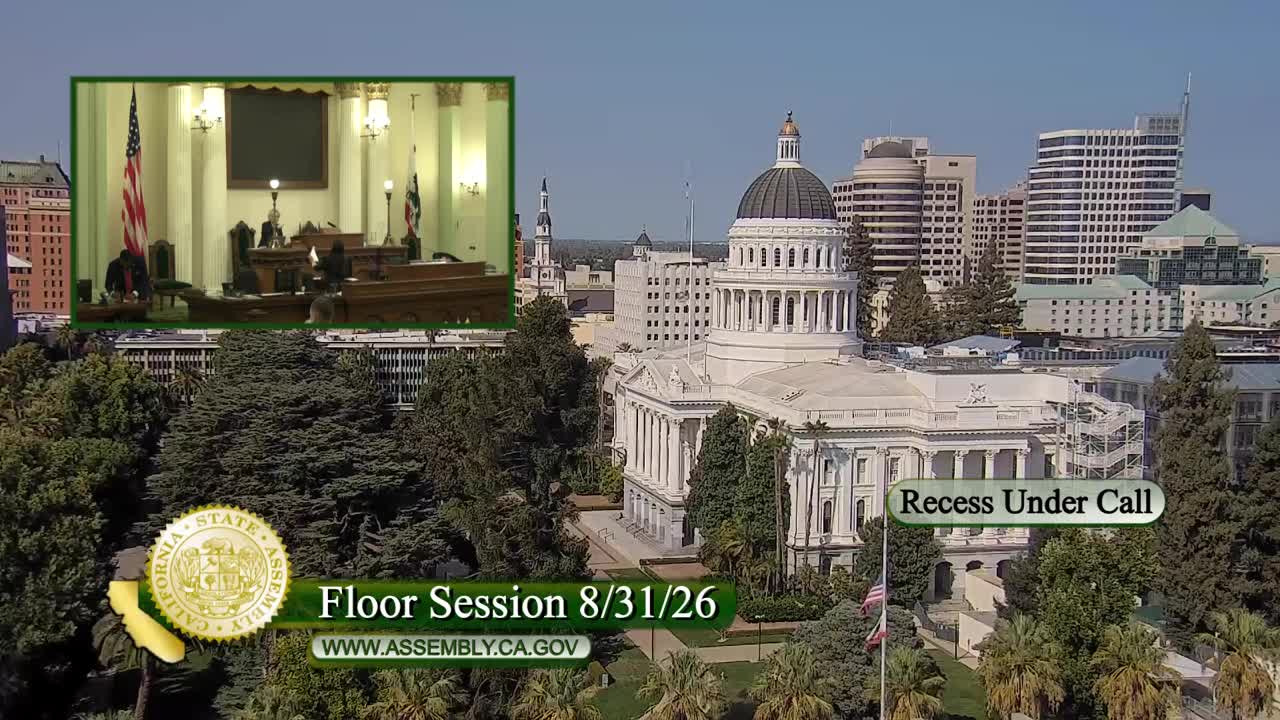 10MIN
Assembly Floor
 2MIN
Senate Floor
 3MIN
Senate Floor
 11MIN
Senate Standing Committee on Appropriations
 41MIN
Senate Standing Committee on Environmental Quality
 33SEC
Senate Standing Committee on Appropriations
 56MIN
Senate Standing Committee on Environmental Quality
 4MIN
Assembly Floor
Bill Author