AB 282: Elections: seizure of election materials.
- Session Year: 2025-2026
- House: Assembly
- Latest Version Date: 2026-09-19
Current Status:
Passed
(2026-09-19: Chaptered by Secretary of State - Chapter 330, Statutes of 2026.)
Introduced
In Committee
Awaiting First Chamber Vote
Passed First Chamber
In Committee
Awaiting Second Chamber Vote
Passed Second Chamber
Enacted
What does this bill do?
The bill makes it a felony (a serious crime) for anyone to seize, cause, or assist in seizing ballots, election records, or certified voting technology before election results are certified, and it also makes supervisors or officials criminally liable if they direct others to do so. Seizing is punishable by 16 months, 2, or 3 years in prison, while ordering others to seize carries penalties of 2, 3, or 4 years; “seize” is defined as removing materials from the custody of authorized elections officials.
The summary is provided by generative AI which can make mistakes. For original language, please view the details in the table below.
Under existing law, a county elections official is required to prepare a certified statement of the results of an election and submit it to the county board of supervisors within 30 days of the election.
This bill would make it a felony, punishable by imprisonment for 16 months or 2 or 3 years, to seize or cause or assist in the seizure of ballots, election records, or certified voting technology before election results are certified by the elections official. The bill would also make it a felony punishable by imprisonment for 2, 3, or 4 years for any person with authority to direct another person subject to their supervision or authority to seize ballots, election records, or certified voting technology before election results are certified. By creating new crimes, this bill would impose a state-mandated local program.
The California Constitution requires the state to reimburse local agencies and school districts for certain costs mandated by the state. Statutory provisions establish procedures for making that reimbursement.
This bill would provide that no reimbursement is required by this act for a specified reason.
This bill would declare that it is to take effect immediately as an urgency statute.
Existing law, the California Fair Employment and Housing Act (FEHA) makes unlawful various practices connected to obtaining and financing housing accommodations, among other things, if those practices discriminate based on source of income. FEHA requires the Civil Rights Department to enforce specific provisions of the act, including the provision described above.This bill would provide that the establishment by a public agency or a similar entity, as specified, of policies or preferences in favor of an applicant or tenant who qualifies for or participates in federal, state, or local housing subsidy programs, as specified, does not constitute discrimination based on source of income for purposes of the above-described provisions of FEHA.Existing law, the California Fair Employment and Housing Act (FEHA) makes unlawful various practices connected to obtaining and financing housing accommodations, among other things, if those practices discriminate based on source of income. FEHA requires the Civil Rights Department to enforce specific provisions of the act, including the provision described above.
This bill would provide that establishing the establishment by a public agency or a similar entity, as specified, of policies or preferences in favor of an applicant or tenant who qualifies for or participates in federal, state, or local housing subsidy programs, as specified, does not constitute discrimination based on source of income for purposes of the above-described provisions of FEHA.
Existing law, the California Fair Employment and Housing Act (FEHA) makes unlawful various practices connected to obtaining and financing housing accommodations, among other things, if those practices discriminate based on source of income. FEHA requires the Civil Rights Department to enforce specific provisions of the act, including the provision described above.
This bill would provide that prioritization of applicants for tenancy who qualify for or receive rental assistance, establishing policies or preferences in favor of an applicant or tenant who qualifies for or participates in federal, state, or local housing subsidy programs, as specified, does not constitute discrimination based on source of income for purposes of the above-described provisions of FEHA.
Existing law, the California Fair Employment and Housing Act (FEHA) makes unlawful various practices connected to obtaining and financing housing accommodations, among other things, if those practices discriminate based on source of income. FEHA requires the Civil Rights Department to enforce specific provisions of the act, including the provision described above.
This bill would provide that prioritization of applicants for tenancy who qualify for or receive rental assistance, as specified, does not constitute discrimination based on source of income for purposes of the above-described provisions of FEHA.
The Legislature finds and declares all of the following:
(a)Voting is a fundamental right and the cornerstone of our democracy. Voting is an essential and a foundational form of American civic engagement that ensures that the people have a voice in the policies that govern their lives and that their government is accountable to them.
(b)Given the sanctity of the franchise, Californias policy is to make it as easy for every eligible voter to exercise their franchise as possible and to ensure that every valid ballot is counted, while establishing appropriate safeguards to uphold the integrity of our elections.
(c)California law establishes strict chain of custody and preservation requirements for ballots and ballot materials, ensuring that the process for counting votes is carefully documented and all ballots and ballot materials are preserved for a prescribed period of time. In fact, California law expressly contemplates procedures for the appropriate handling and preservation of ballots and ballot materials, subject to court supervision, in the event of a criminal investigation in which those materials are relevant.
(d)Improper handling of ballots by unauthorized individuals or seizure of ballots from the custody of elections officials prior to the certification of the vote risks undermining the integrity of an election and potentially preventing lawfully cast ballots from being counted.
(e)California has a strong sovereign interest in maintaining the integrity of ballots and ballot materials, particularly during the period prior to certification of election results, to ensure all lawfully cast ballots are counted and the integrity of its elections is maintained.
(f)The threats from the current federal Administration to interfere in state-administered elections raise nonspeculative concerns.
(g)There exists the potential motivation for the federal Administration or others aligned with the Administration to interfere in Californias ability to count every lawfully cast ballot and timely certify results.
(h)In light of Californias strict chain of custody, documentation, and retention laws related to ballots and ballot materials, which ensures any evidence of alleged wrongdoing tied to the ballots or ballot materials themselves is preserved and appropriately supervised by a court, there is no legitimate law enforcement reason to seek to seize ballots, ballot materials, and equipment needed to process and tabulate ballots except to interfere in the lawful completion of counting lawfully cast ballots and certifying the results of the election.
(i)California therefore has a compelling need to exercise its sovereign authority and police powers to further strengthen state criminal laws to deter actions that would interfere with the processing and tabulation of ballots, and hold accountable any individuals who attempt to interfere in the counting and certification of results of the November 2026 election or future elections by seizing ballots before the results are certified pursuant to state law.
SEC. 2.Section 18579 is added to the Elections Code, immediately following Section 18578, to read:18579.(a)Notwithstanding any other law, any person who seizes or causes or assists in the seizure of ballots, election records, or certified voting technology or any portion thereof, before election results are certified pursuant to Section 15372, is guilty of a felony, punishable by imprisonment pursuant to subdivision (h) of Section 1170 of the Penal Code for 16 months or 2 or 3 years.
(b)Any person with authority who directs one or more other persons subject to their supervision or authority to engage in the conduct prohibited by subdivision (a) shall be guilty of a felony, punishable by imprisonment pursuant to subdivision (h) of Section 1170 of the Penal Code for two, three, or four years.
(c)For purposes of this section, the following definitions apply:
(1)Seize and seizure mean the removal from the custody and control of authorized elections officials, as specified in subdivision (d) of Section 15551, except as provided by Sections 15553 and 19230.
(2)Certified voting technology has the same meaning as defined in Section 17600.
(3)Election record means any document or record that is or will be subject to the preservation requirements in Section 17300 to Section 17306, inclusive.
SEC. 3.If any provision of this act, or the application of any such provision to any person or circumstances, shall be held invalid, the remainder of this act to the extent it can be given effect, or the application of such provision to persons or circumstances other than those as to which it is held invalid, shall not be affected thereby, and to this end the provisions of this act are severable.
SEC. 4.No reimbursement is required by this act pursuant to Section 6 of Article XIIIB of the California Constitution because the only costs that may be incurred by a local agency or school district will be incurred because this act creates a new crime or infraction, eliminates a crime or infraction, or changes the penalty for a crime or infraction, within the meaning of Section 17556 of the Government Code, or changes the definition of a crime within the meaning of Section 6 of Article XIIIB of the California Constitution.
SEC. 5.This act is an urgency statute necessary for the immediate preservation of the public peace, health, or safety within the meaning of Article IV of the California Constitution and shall go into immediate effect. The facts constituting the necessity are:
In order for the important election security protections in this act to apply to the statewide general election occurring on November 3, 2026, it is necessary that this act take effect immediately.
SECTION 1.Section 12955 of the Government Code is amended to read:12955.It shall be unlawful:(a)For the owner of any housing accommodation to discriminate against or harass any person because of the race, color, religion, sex, gender, gender identity, gender expression, sexual orientation, marital status, national origin, ancestry, familial status, source of income, disability, veteran or military status, or genetic information of that person.(b)For the owner of any housing accommodation to make or to cause to be made any written or oral inquiry concerning the race, color, religion, sex, gender, gender identity, gender expression, sexual orientation, marital status, national origin, ancestry, familial status, disability, veteran or military status, or genetic information of any person seeking to purchase, rent, or lease any housing accommodation.(c)For any person to make, print, or publish, or cause to be made, printed, or published any notice, statement, or advertisement, with respect to the sale or rental of a housing accommodation that indicates any preference, limitation, or discrimination based on race, color, religion, sex, gender, gender identity, gender expression, sexual orientation, marital status, national origin, ancestry, familial status, source of income, disability, veteran or military status, or genetic information or an intention to make that preference, limitation, or discrimination.(d)For any person subject to the provisions of Section 51 of the Civil Code, as that section applies to housing accommodations, to discriminate against any person on the basis of sex, gender, gender identity, gender expression, sexual orientation, color, race, religion, ancestry, national origin, familial status, marital status, disability, genetic information, source of income, veteran or military status, or on any other basis prohibited by that section. Selection preferences based on age, imposed in connection with a federally approved housing program, do not constitute age discrimination in housing.(e)For any person, bank, mortgage company, or other financial institution that provides financial assistance for the purchase, refinance, organization, or construction of any housing accommodation to discriminate against any person or group of persons because of the race, color, religion, sex, gender, gender identity, gender expression, sexual orientation, marital status, national origin, ancestry, familial status, source of income, disability, veteran or military status, or genetic information in the terms, conditions, or privileges relating to the obtaining or use of that financial assistance.(f)For any owner of housing accommodations to harass, evict, or otherwise discriminate against any person in the sale or rental of housing accommodations when the owners dominant purpose is retaliation against a person who has opposed practices unlawful under this section, informed law enforcement agencies of practices believed unlawful under this section, has testified or assisted in any proceeding under this part, or has aided or encouraged a person to exercise or enjoy the rights secured by this part. Nothing herein is intended to cause or permit the delay of an unlawful detainer action.(g)For any person to aid, abet, incite, compel, or coerce the doing of any of the acts or practices declared unlawful in this section, or to attempt to do so.(h)For any person, for profit, to induce any person to sell or rent any dwelling by representations regarding the entry or prospective entry into the neighborhood of a person or persons of a particular race, color, religion, sex, gender, gender identity, gender expression, sexual orientation, marital status, ancestry, disability, genetic information, source of income, familial status, veteran or military status, or national origin.(i)(1)For any person or other organization or entity whose business involves real estate-related transactions to discriminate against any person in making available a transaction, or in the terms and conditions of a transaction, because of race, color, religion, sex, gender, gender identity, gender expression, sexual orientation, marital status, national origin, ancestry, source of income, familial status, disability, veteran or military status, or genetic information.(2)For any person or other entity whose business includes performing appraisals, as defined in subdivision (b) of Section 11302 of the Business and Professions Code, of residential real property to discriminate against any person in making available those services, or in the performance of those services, because of race, color, religion, sex, gender, gender identity, gender expression, sexual orientation, familial status, source of income, disability, genetic information, veteran or military status, or national origin.(j)To deny a person access to, or membership or participation in, a multiple listing service, real estate brokerage organization, or other service because of race, color, religion, sex, gender, gender identity, gender expression, sexual orientation, marital status, ancestry, disability, genetic information, familial status, source of income, veteran or military status, or national origin.(k)To otherwise make unavailable or deny a dwelling based on discrimination because of race, color, religion, sex, gender, gender identity, gender expression, sexual orientation, familial status, source of income, disability, genetic information, veteran or military status, or national origin.(l)To discriminate through public or private land use practices, decisions, and authorizations because of race, color, religion, sex, gender, gender identity, gender expression, sexual orientation, familial status, marital status, disability, genetic information, national origin, source of income, veteran or military status, or ancestry. Discrimination includes, but is not limited to, restrictive covenants, zoning laws, denials of use permits, and other actions authorized under the Planning and Zoning Law (Title 7 (commencing with Section 65000)), that make housing opportunities unavailable.Discrimination under this subdivision also includes the existence of a restrictive covenant, regardless of whether accompanied by a statement that the restrictive covenant is repealed or void.(m)As used in this section, race, color, religion, sex, gender, gender identity, gender expression, sexual orientation, marital status, national origin, ancestry, familial status, source of income, disability, veteran or military status, or genetic information, includes a perception that the person has any of those characteristics or that the person is associated with a person who has, or is perceived to have, any of those characteristics.(n)To use a financial or income standard in the rental of housing that fails to account for the aggregate income of persons residing together or proposing to reside together on the same basis as the aggregate income of married persons residing together or proposing to reside together.(o)(1)In instances in which there is a government rent subsidy, to do either of the following:(A)Use a financial or income standard in assessing eligibility for the rental of housing that is not based on the portion of the rent to be paid by the tenant.(B)(i)Use a persons credit history as part of the application process for a rental accommodation without offering the applicant the option, at the applicants discretion, of providing lawful, verifiable alternative evidence of the applicants reasonable ability to pay the portion of the rent to be paid by the tenant, including, but not limited to, government benefit payments, pay records, and bank statements.(ii)If the applicant elects to provide lawful, verifiable alternative evidence of the applicants reasonable ability to pay pursuant to clause (i), the housing provider shall do both of the following:(I)Provide the applicant reasonable time to respond with that alternative evidence.(II)Reasonably consider that alternative evidence in lieu of the persons credit history in determining whether to offer the rental accommodation to the applicant.(2)This subdivision does not limit the ability of the owner of a housing accommodation to request information or documentation to verify employment, to request landlord references, or to verify the identity of a person.(p)(1)For the purposes of this section, source of income means lawful, verifiable income paid directly to a tenant, or to a representative of a tenant, or paid to a housing owner or landlord on behalf of a tenant, including federal, state, or local public assistance, and federal, state, or local housing subsidies, including, but not limited to, federal housing assistance vouchers issued under Section 8 of the United States Housing Act of 1937 (42 U.S.C. Sec. 1437f). Source of income includes a federal Department of Housing and Urban Development Veterans Affairs Supportive Housing voucher. For the purposes of this section, a housing owner or landlord is not considered a representative of a tenant unless the source of income is a federal Department of Housing and Urban Development Veterans Affairs Supportive Housing voucher.(2)For the purposes of this section, it shall not constitute discrimination based on source of income to do either of the following:(A)Make a written or oral inquiry concerning the level or source of income.(B)For a local jurisdiction, public housing authority or affiliate, public agency, or limited or general partnership in which a public housing authority is a partner, to establish policies or preferences in favor of an applicant or tenant who qualifies for or participates in federal, state, or local housing subsidy programs, including, but not limited to, federal housing assistance vouchers issued under Section 8 of the United States Housing Act of 1937 (42 U.S.C. Sec. 1437f).It shall be unlawful:
(a)For the owner of any housing accommodation to discriminate against or harass any person because of the race, color, religion, sex, gender, gender identity, gender expression, sexual orientation, marital status, national origin, ancestry, familial status, source of income, disability, veteran or military status, or genetic information of that person.
(b)For the owner of any housing accommodation to make or to cause to be made any written or oral inquiry concerning the race, color, religion, sex, gender, gender identity, gender expression, sexual orientation, marital status, national origin, ancestry, familial status, disability, veteran or military status, or genetic information of any person seeking to purchase, rent, or lease any housing accommodation.
(c)For any person to make, print, or publish, or cause to be made, printed, or published any notice, statement, or advertisement, with respect to the sale or rental of a housing accommodation that indicates any preference, limitation, or discrimination based on race, color, religion, sex, gender, gender identity, gender expression, sexual orientation, marital status, national origin, ancestry, familial status, source of income, disability, veteran or military status, or genetic information or an intention to make that preference, limitation, or discrimination.
(d)For any person subject to the provisions of Section 51 of the Civil Code, as that section applies to housing accommodations, to discriminate against any person on the basis of sex, gender, gender identity, gender expression, sexual orientation, color, race, religion, ancestry, national origin, familial status, marital status, disability, genetic information, source of income, veteran or military status, or on any other basis prohibited by that section. Selection preferences based on age, imposed in connection with a federally approved housing program, do not constitute age discrimination in housing.
(e)For any person, bank, mortgage company, or other financial institution that provides financial assistance for the purchase, refinance, organization, or construction of any housing accommodation to discriminate against any person or group of persons because of the race, color, religion, sex, gender, gender identity, gender expression, sexual orientation, marital status, national origin, ancestry, familial status, source of income, disability, veteran or military status, or genetic information in the terms, conditions, or privileges relating to the obtaining or use of that financial assistance.
(f)For any owner of housing accommodations to harass, evict, or otherwise discriminate against any person in the sale or rental of housing accommodations when the owners dominant purpose is retaliation against a person who has opposed practices unlawful under this section, informed law enforcement agencies of practices believed unlawful under this section, has testified or assisted in any proceeding under this part, or has aided or encouraged a person to exercise or enjoy the rights secured by this part. Nothing herein is intended to cause or permit the delay of an unlawful detainer action.
(g)For any person to aid, abet, incite, compel, or coerce the doing of any of the acts or practices declared unlawful in this section, or to attempt to do so.
(h)For any person, for profit, to induce any person to sell or rent any dwelling by representations regarding the entry or prospective entry into the neighborhood of a person or persons of a particular race, color, religion, sex, gender, gender identity, gender expression, sexual orientation, marital status, ancestry, disability, genetic information, source of income, familial status, veteran or military status, or national origin.
(i)(1)For any person or other organization or entity whose business involves real estate-related transactions to discriminate against any person in making available a transaction, or in the terms and conditions of a transaction, because of race, color, religion, sex, gender, gender identity, gender expression, sexual orientation, marital status, national origin, ancestry, source of income, familial status, disability, veteran or military status, or genetic information.
(2)For any person or other entity whose business includes performing appraisals, as defined in subdivision (b) of Section 11302 of the Business and Professions Code, of residential real property to discriminate against any person in making available those services, or in the performance of those services, because of race, color, religion, sex, gender, gender identity, gender expression, sexual orientation, familial status, source of income, disability, genetic information, veteran or military status, or national origin.
(j)To deny a person access to, or membership or participation in, a multiple listing service, real estate brokerage organization, or other service because of race, color, religion, sex, gender, gender identity, gender expression, sexual orientation, marital status, ancestry, disability, genetic information, familial status, source of income, veteran or military status, or national origin.
(k)To otherwise make unavailable or deny a dwelling based on discrimination because of race, color, religion, sex, gender, gender identity, gender expression, sexual orientation, familial status, source of income, disability, genetic information, veteran or military status, or national origin.
(l)To discriminate through public or private land use practices, decisions, and authorizations because of race, color, religion, sex, gender, gender identity, gender expression, sexual orientation, familial status, marital status, disability, genetic information, national origin, source of income, veteran or military status, or ancestry. Discrimination includes, but is not limited to, restrictive covenants, zoning laws, denials of use permits, and other actions authorized under the Planning and Zoning Law (Title 7 (commencing with Section 65000)), that make housing opportunities unavailable.
Discrimination under this subdivision also includes the existence of a restrictive covenant, regardless of whether accompanied by a statement that the restrictive covenant is repealed or void.
(m)As used in this section, race, color, religion, sex, gender, gender identity, gender expression, sexual orientation, marital status, national origin, ancestry, familial status, source of income, disability, veteran or military status, or genetic information, includes a perception that the person has any of those characteristics or that the person is associated with a person who has, or is perceived to have, any of those characteristics.
(n)To use a financial or income standard in the rental of housing that fails to account for the aggregate income of persons residing together or proposing to reside together on the same basis as the aggregate income of married persons residing together or proposing to reside together.
(o)(1)In instances in which there is a government rent subsidy, to do either of the following:
(A)Use a financial or income standard in assessing eligibility for the rental of housing that is not based on the portion of the rent to be paid by the tenant.
(B)(i)Use a persons credit history as part of the application process for a rental accommodation without offering the applicant the option, at the applicants discretion, of providing lawful, verifiable alternative evidence of the applicants reasonable ability to pay the portion of the rent to be paid by the tenant, including, but not limited to, government benefit payments, pay records, and bank statements.
(ii)If the applicant elects to provide lawful, verifiable alternative evidence of the applicants reasonable ability to pay pursuant to clause (i), the housing provider shall do both of the following:
(I)Provide the applicant reasonable time to respond with that alternative evidence.
(II)Reasonably consider that alternative evidence in lieu of the persons credit history in determining whether to offer the rental accommodation to the applicant.
(2)This subdivision does not limit the ability of the owner of a housing accommodation to request information or documentation to verify employment, to request landlord references, or to verify the identity of a person.
(p)(1)For the purposes of this section, source of income means lawful, verifiable income paid directly to a tenant, or to a representative of a tenant, or paid to a housing owner or landlord on behalf of a tenant, including federal, state, or local public assistance, and federal, state, or local housing subsidies, including, but not limited to, federal housing assistance vouchers issued under Section 8 of the United States Housing Act of 1937 (42 U.S.C. Sec. 1437f). Source of income includes a federal Department of Housing and Urban Development Veterans Affairs Supportive Housing voucher. For the purposes of this section, a housing owner or landlord is not considered a representative of a tenant unless the source of income is a federal Department of Housing and Urban Development Veterans Affairs Supportive Housing voucher.
(2)For the purposes of this section, it shall not constitute discrimination based on source of income to do either of the following:
(A)Make a written or oral inquiry concerning the level or source of income.
(B)Establish For a local jurisdiction, public housing authority or affiliate, public agency, or limited or general partnership in which a public housing authority is a partner, to establish policies or preferences in favor of an applicant or tenant who qualifies for or participates in federal, state, or local housing subsidy programs, including, but not limited to, federal housing assistance vouchers issued under Section 8 of the United States Housing Act of 1937 (42 U.S.C. Sec. 1437f).
It shall be unlawful:
(a)For the owner of any housing accommodation to discriminate against or harass any person because of the race, color, religion, sex, gender, gender identity, gender expression, sexual orientation, marital status, national origin, ancestry, familial status, source of income, disability, veteran or military status, or genetic information of that person.
(b)For the owner of any housing accommodation to make or to cause to be made any written or oral inquiry concerning the race, color, religion, sex, gender, gender identity, gender expression, sexual orientation, marital status, national origin, ancestry, familial status, disability, veteran or military status, or genetic information of any person seeking to purchase, rent, or lease any housing accommodation.
(c)For any person to make, print, or publish, or cause to be made, printed, or published any notice, statement, or advertisement, with respect to the sale or rental of a housing accommodation that indicates any preference, limitation, or discrimination based on race, color, religion, sex, gender, gender identity, gender expression, sexual orientation, marital status, national origin, ancestry, familial status, source of income, disability, veteran or military status, or genetic information or an intention to make that preference, limitation, or discrimination.
(d)For any person subject to the provisions of Section 51 of the Civil Code, as that section applies to housing accommodations, to discriminate against any person on the basis of sex, gender, gender identity, gender expression, sexual orientation, color, race, religion, ancestry, national origin, familial status, marital status, disability, genetic information, source of income, veteran or military status, or on any other basis prohibited by that section. Selection preferences based on age, imposed in connection with a federally approved housing program, do not constitute age discrimination in housing.
(e)For any person, bank, mortgage company, or other financial institution that provides financial assistance for the purchase, refinance, organization, or construction of any housing accommodation to discriminate against any person or group of persons because of the race, color, religion, sex, gender, gender identity, gender expression, sexual orientation, marital status, national origin, ancestry, familial status, source of income, disability, veteran or military status, or genetic information in the terms, conditions, or privileges relating to the obtaining or use of that financial assistance.
(f)For any owner of housing accommodations to harass, evict, or otherwise discriminate against any person in the sale or rental of housing accommodations when the owners dominant purpose is retaliation against a person who has opposed practices unlawful under this section, informed law enforcement agencies of practices believed unlawful under this section, has testified or assisted in any proceeding under this part, or has aided or encouraged a person to exercise or enjoy the rights secured by this part. Nothing herein is intended to cause or permit the delay of an unlawful detainer action.
(g)For any person to aid, abet, incite, compel, or coerce the doing of any of the acts or practices declared unlawful in this section, or to attempt to do so.
(h)For any person, for profit, to induce any person to sell or rent any dwelling by representations regarding the entry or prospective entry into the neighborhood of a person or persons of a particular race, color, religion, sex, gender, gender identity, gender expression, sexual orientation, marital status, ancestry, disability, genetic information, source of income, familial status, veteran or military status, or national origin.
(i)(1)For any person or other organization or entity whose business involves real estate-related transactions to discriminate against any person in making available a transaction, or in the terms and conditions of a transaction, because of race, color, religion, sex, gender, gender identity, gender expression, sexual orientation, marital status, national origin, ancestry, source of income, familial status, disability, veteran or military status, or genetic information.
(2)For any person or other entity whose business includes performing appraisals, as defined in subdivision (b) of Section 11302 of the Business and Professions Code, of residential real property to discriminate against any person in making available those services, or in the performance of those services, because of race, color, religion, sex, gender, gender identity, gender expression, sexual orientation, familial status, source of income, disability, genetic information, veteran or military status, or national origin.
(j)To deny a person access to, or membership or participation in, a multiple listing service, real estate brokerage organization, or other service because of race, color, religion, sex, gender, gender identity, gender expression, sexual orientation, marital status, ancestry, disability, genetic information, familial status, source of income, veteran or military status, or national origin.
(k)To otherwise make unavailable or deny a dwelling based on discrimination because of race, color, religion, sex, gender, gender identity, gender expression, sexual orientation, familial status, source of income, disability, genetic information, veteran or military status, or national origin.
(l)To discriminate through public or private land use practices, decisions, and authorizations because of race, color, religion, sex, gender, gender identity, gender expression, sexual orientation, familial status, marital status, disability, genetic information, national origin, source of income, veteran or military status, or ancestry. Discrimination includes, but is not limited to, restrictive covenants, zoning laws, denials of use permits, and other actions authorized under the Planning and Zoning Law (Title 7 (commencing with Section 65000)), that make housing opportunities unavailable.
Discrimination under this subdivision also includes the existence of a restrictive covenant, regardless of whether accompanied by a statement that the restrictive covenant is repealed or void.
(m)As used in this section, race, color, religion, sex, gender, gender identity, gender expression, sexual orientation, marital status, national origin, ancestry, familial status, source of income, disability, veteran or military status, or genetic information, includes a perception that the person has any of those characteristics or that the person is associated with a person who has, or is perceived to have, any of those characteristics.
(n)To use a financial or income standard in the rental of housing that fails to account for the aggregate income of persons residing together or proposing to reside together on the same basis as the aggregate income of married persons residing together or proposing to reside together.
(o)(1)In instances in which there is a government rent subsidy, to do either of the following:
(A)Use a financial or income standard in assessing eligibility for the rental of housing that is not based on the portion of the rent to be paid by the tenant.
(B)(i)Use a persons credit history as part of the application process for a rental accommodation without offering the applicant the option, at the applicants discretion, of providing lawful, verifiable alternative evidence of the applicants reasonable ability to pay the portion of the rent to be paid by the tenant, including, but not limited to, government benefit payments, pay records, and bank statements.
(ii)If the applicant elects to provide lawful, verifiable alternative evidence of the applicants reasonable ability to pay pursuant to clause (i), the housing provider shall do both of the following:
(I)Provide the applicant reasonable time to respond with that alternative evidence.
(II)Reasonably consider that alternative evidence in lieu of the persons credit history in determining whether to offer the rental accommodation to the applicant.
(2)This subdivision does not limit the ability of the owner of a housing accommodation to request information or documentation to verify employment, to request landlord references, or to verify the identity of a person.
(p)(1)For the purposes of this section, source of income means lawful, verifiable income paid directly to a tenant, or to a representative of a tenant, or paid to a housing owner or landlord on behalf of a tenant, including federal, state, or local public assistance, and federal, state, or local housing subsidies, including, but not limited to, federal housing assistance vouchers issued under Section 8 of the United States Housing Act of 1937 (42 U.S.C. Sec. 1437f). Source of income includes a federal Department of Housing and Urban Development Veterans Affairs Supportive Housing voucher. For the purposes of this section, a housing owner or landlord is not considered a representative of a tenant unless the source of income is a federal Department of Housing and Urban Development Veterans Affairs Supportive Housing voucher.
(2)For the purposes of this section, it shall not constitute discrimination based on source of income to do either of the following:
(A)Make a written or oral inquiry concerning the level or source of income.
(B)Prioritize applicants for tenancy who qualify for or participate in government-sponsored rental assistance or subsidy programs, vouchers, or certificate systems.(B)Establish policies or preferences in favor of an applicant or tenant who qualifies for or participates in federal, state, or local housing subsidy programs, including, but not limited to, federal housing assistance vouchers issued under Section 8 of the United States Housing Act of 1937 (42 U.S.C. Sec. 1437f).
It shall be unlawful:
(a)For the owner of any housing accommodation to discriminate against or harass any person because of the race, color, religion, sex, gender, gender identity, gender expression, sexual orientation, marital status, national origin, ancestry, familial status, source of income, disability, veteran or military status, or genetic information of that person.
(b)For the owner of any housing accommodation to make or to cause to be made any written or oral inquiry concerning the race, color, religion, sex, gender, gender identity, gender expression, sexual orientation, marital status, national origin, ancestry, familial status, disability, veteran or military status, or genetic information of any person seeking to purchase, rent, or lease any housing accommodation.
(c)For any person to make, print, or publish, or cause to be made, printed, or published any notice, statement, or advertisement, with respect to the sale or rental of a housing accommodation that indicates any preference, limitation, or discrimination based on race, color, religion, sex, gender, gender identity, gender expression, sexual orientation, marital status, national origin, ancestry, familial status, source of income, disability, veteran or military status, or genetic information or an intention to make that preference, limitation, or discrimination.
(d)For any person subject to the provisions of Section 51 of the Civil Code, as that section applies to housing accommodations, to discriminate against any person on the basis of sex, gender, gender identity, gender expression, sexual orientation, color, race, religion, ancestry, national origin, familial status, marital status, disability, genetic information, source of income, veteran or military status, or on any other basis prohibited by that section. Selection preferences based on age, imposed in connection with a federally approved housing program, do not constitute age discrimination in housing.
(e)For any person, bank, mortgage company, or other financial institution that provides financial assistance for the purchase, refinance, organization, or construction of any housing accommodation to discriminate against any person or group of persons because of the race, color, religion, sex, gender, gender identity, gender expression, sexual orientation, marital status, national origin, ancestry, familial status, source of income, disability, veteran or military status, or genetic information in the terms, conditions, or privileges relating to the obtaining or use of that financial assistance.
(f)For any owner of housing accommodations to harass, evict, or otherwise discriminate against any person in the sale or rental of housing accommodations when the owners dominant purpose is retaliation against a person who has opposed practices unlawful under this section, informed law enforcement agencies of practices believed unlawful under this section, has testified or assisted in any proceeding under this part, or has aided or encouraged a person to exercise or enjoy the rights secured by this part. Nothing herein is intended to cause or permit the delay of an unlawful detainer action.
(g)For any person to aid, abet, incite, compel, or coerce the doing of any of the acts or practices declared unlawful in this section, or to attempt to do so.
(h)For any person, for profit, to induce any person to sell or rent any dwelling by representations regarding the entry or prospective entry into the neighborhood of a person or persons of a particular race, color, religion, sex, gender, gender identity, gender expression, sexual orientation, marital status, ancestry, disability, genetic information, source of income, familial status, veteran or military status, or national origin.
(i)(1)For any person or other organization or entity whose business involves real estate-related transactions to discriminate against any person in making available a transaction, or in the terms and conditions of a transaction, because of race, color, religion, sex, gender, gender identity, gender expression, sexual orientation, marital status, national origin, ancestry, source of income, familial status, disability, veteran or military status, or genetic information.
(2)For any person or other entity whose business includes performing appraisals, as defined in subdivision (b) of Section 11302 of the Business and Professions Code, of residential real property to discriminate against any person in making available those services, or in the performance of those services, because of race, color, religion, sex, gender, gender identity, gender expression, sexual orientation, familial status, source of income, disability, genetic information, veteran or military status, or national origin.
(j)To deny a person access to, or membership or participation in, a multiple listing service, real estate brokerage organization, or other service because of race, color, religion, sex, gender, gender identity, gender expression, sexual orientation, marital status, ancestry, disability, genetic information, familial status, source of income, veteran or military status, or national origin.
(k)To otherwise make unavailable or deny a dwelling based on discrimination because of race, color, religion, sex, gender, gender identity, gender expression, sexual orientation, familial status, source of income, disability, genetic information, veteran or military status, or national origin.
(l)To discriminate through public or private land use practices, decisions, and authorizations because of race, color, religion, sex, gender, gender identity, gender expression, sexual orientation, familial status, marital status, disability, genetic information, national origin, source of income, veteran or military status, or ancestry. Discrimination includes, but is not limited to, restrictive covenants, zoning laws, denials of use permits, and other actions authorized under the Planning and Zoning Law (Title 7 (commencing with Section 65000)), that make housing opportunities unavailable.
Discrimination under this subdivision also includes the existence of a restrictive covenant, regardless of whether accompanied by a statement that the restrictive covenant is repealed or void.
(m)As used in this section, race, color, religion, sex, gender, gender identity, gender expression, sexual orientation, marital status, national origin, ancestry, familial status, source of income, disability, veteran or military status, or genetic information, includes a perception that the person has any of those characteristics or that the person is associated with a person who has, or is perceived to have, any of those characteristics.
(n)To use a financial or income standard in the rental of housing that fails to account for the aggregate income of persons residing together or proposing to reside together on the same basis as the aggregate income of married persons residing together or proposing to reside together.
(o)(1)In instances in which there is a government rent subsidy, to do either of the following:
(A)Use a financial or income standard in assessing eligibility for the rental of housing that is not based on the portion of the rent to be paid by the tenant.
(B)(i)Use a persons credit history as part of the application process for a rental accommodation without offering the applicant the option, at the applicants discretion, of providing lawful, verifiable alternative evidence of the applicants reasonable ability to pay the portion of the rent to be paid by the tenant, including, but not limited to, government benefit payments, pay records, and bank statements.
(ii)If the applicant elects to provide lawful, verifiable alternative evidence of the applicants reasonable ability to pay pursuant to clause (i), the housing provider shall do both of the following:
(I)Provide the applicant reasonable time to respond with that alternative evidence.
(II)Reasonably consider that alternative evidence in lieu of the persons credit history in determining whether to offer the rental accommodation to the applicant.
(2)This subdivision does not limit the ability of the owner of a housing accommodation to request information or documentation to verify employment, to request landlord references, or to verify the identity of a person.
(p)(1)For the purposes of this section, source of income means lawful, verifiable income paid directly to a tenant, or to a representative of a tenant, or paid to a housing owner or landlord on behalf of a tenant, including federal, state, or local public assistance, and federal, state, or local housing subsidies, including, but not limited to, federal housing assistance vouchers issued under Section 8 of the United States Housing Act of 1937 (42 U.S.C. Sec. 1437f). Source of income includes a federal Department of Housing and Urban Development Veterans Affairs Supportive Housing voucher. For the purposes of this section, a housing owner or landlord is not considered a representative of a tenant unless the source of income is a federal Department of Housing and Urban Development Veterans Affairs Supportive Housing voucher.
(2)For the purposes of this section, it shall not constitute discrimination based on source of income to make do either of the following:
(A)Make a written or oral inquiry concerning the level or source of income.
(B)Prioritize applicants for tenancy who qualify for or participate in government-sponsored rental assistance or subsidy programs, vouchers, or certificate systems.
REVISIONS: HeadingLine 3.|
Date
|
Status
|
|---|---|
| Sep 19, 2026 | Chaptered by Secretary of State - Chapter 330, Statutes of 2026. |
| Sep 19, 2026 | Approved by the Governor. |
| Sep 9, 2026 | Enrolled and presented to the Governor at 1 p.m. |
| Aug 30, 2026 | Urgency clause adopted. Senate amendments concurred in. To Engrossing and Enrolling. (Ayes 59. Noes 18.). |
| Aug 30, 2026 | Urgency clause adopted. Senate amendments concurred in. To Engrossing and Enrolling. (Ayes 59. Noes 18. Page 6899.). |
| Aug 30, 2026 | Urgency clause adopted. Senate amendments concurred in. To Engrossing and Enrolling. |
| Aug 30, 2026 | From committee: That the Senate amendments be concurred in. (Ayes 9. Noes 1.) (August 30). |
| Aug 30, 2026 | From committee: That the Senate amendments be concurred in, but first be re-referred to Com. on APPR. (Ayes 6. Noes 2.) (August 30). Re-referred to Com. on APPR. |
| Aug 30, 2026 | Assembly Rule 56 suspended. |
| Aug 30, 2026 | (Pending re-refer to Com. on APPR.) |
| Aug 30, 2026 | Assembly Rule 56 suspended. (Page 6844.) |
| Aug 30, 2026 | Joint Rule 62(a), file notice suspended. |
| Aug 30, 2026 | Joint Rule 62(a), file notice suspended. (Page 6844.) |
| Aug 28, 2026 | From committee: That the Senate amendments be concurred in, but first be re-referred to Com. on PUB. S. (Ayes 6. Noes 2.) (August 28). Re-referred to Com. on PUB. S. |
| Aug 28, 2026 | Re-referred to Coms. on ELECTIONS, PUB. S., and APPR. |
| Aug 28, 2026 | Pursuant to Assembly Rule 77.2: |
| Aug 28, 2026 | Joint Rule 62(a), file notice suspended. (Page 6793.) |
| Aug 28, 2026 | Joint Rule 62(a), file notice suspended. |
| Aug 28, 2026 | In Assembly. Concurrence in Senate amendments pending. |
| Aug 28, 2026 | Read third time. Urgency clause adopted. Passed. Ordered to the Assembly. (Ayes 29. Noes 10.). |
| Aug 27, 2026 | Read second time. Ordered to third reading. |
| Aug 27, 2026 | From committee: Do pass. (Ayes 4. Noes 2.) (August 27). |
| Aug 27, 2026 | (Ayes 28. Noes 10.) |
| Aug 26, 2026 | From committee: Do pass and re-refer to Com. on APPR. (Ayes 4. Noes 1.) (August 26). Re-referred to Com. on APPR. |
| Aug 26, 2026 | From committee: Do pass and re-refer to Com. on E. & C.A. (Ayes 5. Noes 1.) (August 26). Re-referred to Com. on E. & C.A. |
| Aug 24, 2026 | Read second time. Ordered to third reading. |
| Aug 24, 2026 | Re-referred to Coms. on PUB. S. and E. & C.A. |
| Aug 24, 2026 | Re-referred to Com. on RLS. pursuant to Senate Rule 29.10 (c). |
| Aug 24, 2026 | Joint Rules 61 and 62(a) suspended. (Ayes 30. Noes 9.) |
| Aug 21, 2026 | Read second time and amended. Ordered returned to second reading. |
| Aug 21, 2026 | Ordered to second reading. |
| Aug 21, 2026 | From inactive file. |
| Sep 8, 2025 | Ordered to inactive file at the request of Senator Gonzalez. |
| Aug 20, 2025 | Read second time. Ordered to third reading. |
| Aug 19, 2025 | From committee: Be ordered to second reading pursuant to Senate Rule 28.8. |
| Jul 17, 2025 | Read second time and amended. Re-referred to Com. on APPR. |
| Jul 16, 2025 | From committee: Amend, and do pass as amended and re-refer to Com. on APPR. (Ayes 11. Noes 1.) (July 15). |
| May 21, 2025 | Referred to Com. on JUD. |
| May 8, 2025 | In Senate. Read first time. To Com. on RLS. for assignment. |
| May 8, 2025 | Read third time. Passed. Ordered to the Senate. (Ayes 53. Noes 13. Page 1476.) |
| Apr 24, 2025 | Read second time. Ordered to third reading. |
| Apr 23, 2025 | From committee: Do pass. (Ayes 11. Noes 4.) (April 23). |
| Apr 21, 2025 | Re-referred to Com. on APPR. |
| Apr 10, 2025 | Read second time and amended. |
| Apr 9, 2025 | From committee: Amend, and do pass as amended and re-refer to Com. on APPR. (Ayes 9. Noes 3.) (April 8). |
| Mar 26, 2025 | From committee: Do pass and re-refer to Com. on JUD. (Ayes 8. Noes 2.) (March 26). Re-referred to Com. on JUD. |
| Mar 26, 2025 | Coauthors revised. |
| Feb 18, 2025 | Referred to Coms. on H. & C.D. and JUD. |
| Jan 23, 2025 | From printer. May be heard in committee February 22. |
| Jan 22, 2025 | Read first time. To print. |
|
Date
|
Description
|
Location
|
Votes
|
|
|---|---|---|---|---|
| Aug 30, 2026 | AB 282 Pellerin Concurrence - Urgency Added | Assembly Floor |
Passed |
|
| Aug 30, 2026 | With recommendation: That Senate amendments be concurred in. | Assembly Standing Committee on Appropriations |
Passed |
|
| Aug 30, 2026 | With recommendation: That Senate amendments be concurred in, but first be re-referred to Com. on [Appropriations] | Assembly Standing Committee on Public Safety |
Passed |
|
| Aug 28, 2026 | Assembly 3rd Reading AB282 Pellerin By Wahab Urgency Clause | Senate Floor |
Passed |
|
| Aug 28, 2026 | With recommendation: That Senate amendments be concurred in, but first be re-referred to Com. on [Public Safety] | Assembly Standing Committee on Elections |
Passed |
|
| Aug 27, 2026 | Do pass | Senate Standing Committee on Appropriations |
Passed |
|
| Aug 26, 2026 | Do pass, but first be re-referred to the Committee on [Elections and Constitutional Amendments] | Senate Standing Committee on Public Safety |
Passed |
|
| Aug 26, 2026 | Do pass, but first be re-referred to the Committee on [Appropriations] | Senate Standing Committee on Elections and Constitutional Amendments |
Passed |
|
| Jul 15, 2025 | Do pass as amended, but first amend, and re-refer to the Committee on [Appropriations] | Senate Standing Committee on Judiciary |
Passed |
|
| May 8, 2025 | AB 282 Pellerin Assembly Third Reading | Assembly Floor |
Passed |
|
| Apr 23, 2025 | Do pass. | Assembly Standing Committee on Appropriations |
Passed |
|
| Apr 8, 2025 | Do pass as amended and be re-referred to the Committee on [Appropriations] | Assembly Standing Committee on Judiciary |
Passed |
|
| Mar 26, 2025 | Do pass and be re-referred to the Committee on [Judiciary] | Assembly Standing Committee on Housing and Community Development |
Passed |
This list shows positions taken on this bill by organizations on the date displayed, which is linked to the original source.
Positions by individuals are not included.
|
Organization
|
Position
|
Date
|
|---|---|---|
| AARP | ** Support | |
| Abundant Housing LA | ** Support | |
| Aids Healthcare Foundation | ** Support | |
| American Legion Department of California | ** Support | |
| AMVETS Department of California | ** Support | |
| Association Of Regional Center Agencies | ** Support | |
| California Alliance For Retired Americans | ** Support | |
| California Association Of Housing Authorities | ** Support | |
| California Federation of Labor Unions, Afl-cio | ** Support | |
| California Housing Partnership | ** Support | |
| California Rural Legal Assistance Foundation, Inc. | ** Support | |
| California School Employees Association | ** Support | |
| California State Commanders Veterans Council | ** Support | |
| City of Alameda | ** Support | |
| County of Santa Clara | ** Support | |
| East Bay Housing Organizations | ** Support | |
| Governor Gavin Newsom | ** Support | |
| Housing Authority of The City of San Luis Obispo | ** Support | |
| Housing Authority of the County of San Mateo | ** Support | |
| Housing Authority of the County of Santa Cruz | ** Support | |
| Housing Authority of the County of Santa Cruz (source) | ** Support | |
| Housing California | ** Support | |
| LeadingAge California | ** Support | |
| LINC Housing | ** Support | |
| MidPen Housing Corporation | ** Support | |
| Military Officers Association of America-California Council of Chapters | ** Support | |
| National Housing Law Project | ** Support | |
| Orange County Board of Supervisors | ** Support | |
| Public Interest Law Project | ** Support | |
| Resources for Community Development | ** Support | |
| Riverside County Sheriff Chad Bianco | ** Against | |
| Riverside County Sheriff’s Office | ** Against | |
| San Diego Housing Commission | ** Against | |
| SEIU California | ** Support | |
| Sheriff Chad Bianco, Riverside County | ** Against | |
| Southern California Association of Nonprofit Housing | ** Support | |
| Southern California Rental Housing Association | ** Against | |
| United Domestic Workers/AFSCME Local 3930 | ** Support | |
| United Domestic Workers/American Federation of State, County, and Municipal Workers Local 3930 | ** Support | |
| Vietnam Veterans of America California State Council | ** Support |
Date of Hearing: August 30, 2026
ASSEMBLY COMMITTEE ON APPROPRIATIONS
Buffy Wicks, Chair
ABPCA Bill Id:AB 282
Author:(Pellerin) – As Amended Ver:August 21, 2026
Policy Committee: | Housing and Community Development | Vote: | Vote not relevant |
Elections | 6 - 2 | ||
Public Safety |
Urgency: Yes State Mandated Local Program: Yes Reimbursable: No
SUMMARY:
This bill makes it a felony to seize ballots, election records, or certified voting technology before election results are certified.
Specifically, this bill:
- Makes it a felony, punishable by imprisonment for 16 months or two or three years, to seize or cause or assist in the seizure of ballots, election records, or certified voting technology before election results are certified.
- Makes it a felony, punishable by imprisonment for two, three, or four years, for a person with authority to direct another person to seize ballots, election records, or certified voting technology before election results are certified.
FISCAL EFFECT:
- Ongoing cost pressures of an unknown amount to the courts in additional workload by creating two new felonies, for which a defendant is entitled to no-cost legal representation and a jury trial (General Fund (GF) or Trial Court Trust Fund (TCTF)). It is unclear how many prosecutions may commence statewide and how much court time may be needed to resolve each case, but it generally costs approximately $1,000 to operate a courtroom for one hour. Although courts are not funded on the basis of workload, increased pressure on staff and the TCTF may create a demand for increased court funding from the GF. The state budget provides annual GF backfills to the TCTF to offset revenue reductions, totaling approximately $117.3 million in fiscal year 2025-26.
- Potential incarceration costs of an unknown amount, likely to the counties instead of the state, to the extent prosecutions of the crimes created by this bill result in imprisonment (local funds, GF cost pressures). Actual incarceration costs will depend on the number of convictions and the length and location of each county jail sentence. The average annual cost to incarcerate one person in county jail is approximately $29,000, with higher costs in larger counties. Although county incarceration costs are generally not considered reimbursable state mandates pursuant to Proposition 30 (2012), overcrowding in county jails creates GF cost pressures because the state has historically granted new funding to counties to offset overcrowding resulting from 2011 public safety realignment.
A defendant with specified prior felony convictions may be incarcerated in state prison instead of county jail, resulting in potential significant costs to the Department of Corrections and Rehabilitation (GF). The Legislative Analyst’s Office estimates the average annual cost to incarcerate one person in state prison in $133,000.
COMMENTS:
- Purpose. According to the author:
Earlier this year, the Riverside County Sheriff seized ballots and other election materials from the Riverside County Registrar of Voters, raising serious concerns about the security of election materials and the integrity of California’s election processes.
Our elections depend on the security and integrity of ballots and election materials throughout the entire election process. AB 282 makes clear that interfering with those materials before an election is certified is a serious offense with serious consequences.
- Seizure of Ballots in Riverside County. In February 2026, the Riverside County Sheriff’s Department applied to the Riverside County Superior Court for a search warrant authorizing a search of the Riverside County Registrar of Voters office and the seizure of all ballots from the November 2025 statewide special election. In March 2026, AG Rob Bonta filed a petition in the California Court of Appeal, Fourth Appellate District, Division Two, seeking an immediate stay on the sheriff’s investigation and warrant. The Court of Appeal denied the requested relief, concluding that the AG should have first sought relief in the Riverside County Superior Court. The AG subsequently petitioned the California Supreme Court for relief, which granted review, ordered a pause in the investigation, and directed all seized materials be preserved. Separately, in March, four registered voters in Riverside County petitioned the California Supreme Court seeking an order directing the sheriff to return all seized election materials and ballots and prohibit any tallying, counting, or handling of ballots by personnel other than elections staff and under procedures not provided for in the Elections Code. On August 24, 2026, the California Supreme Court heard oral arguments in both cases, with decisions expected in the coming weeks.
In light of this event and others around the country where elections officials were presented with court orders to turn over election materials, recent legislative efforts have focused on preserving election materials and equipment after election results have been certified. As noted in the Assembly Elections Committee’s analysis of this bill, “This bill seeks to further strengthen these protections by ensuring that there are no gaps in existing law that would allow ballots, election materials, and voting equipment to be seized while votes are being cast or counted.” This bill makes it a felony to seize ballots, election records, or certified voting technology before election results are certified. This bill also makes it a felony for a person to assist with such seizures or direct another person to engage in such prohibited conduct.
- Support and Opposition. This bill is supported by a coalition of labor organizations, which argue, “We stand with the legislature in creating new protections against illegal interference with ballots and safeguards to block any efforts to undermine confidence in free and fair elections – whether they stem from the Trump Administration, local offices, or other bad actors.”
This bill is opposed by the Riverside County Sheriff’s Office, which argues this bill “goes substantially beyond protection election materials from unlawful interference” and “may prevent law enforcement from securing evidence of a crime even after an independent judicial officer has found probable cause and issued a lawful search warrant.” A coalition of civil rights groups also expresses concerns regarding this bill’s creation of new crimes and unintended consequences.
- Related Legislation. SB 73 (Cervantes), Chapter 10, Statutes of 2026, makes it a crime for a person to knowingly take a package containing voted ballots from the custody of the elections official, among other provisions.
SB 1418 (Cervantes) expands the list of elections-related items protected from destruction or seizure by SB 73 and other existing laws. SB 1418 has been ordered to engrossing and enrolling.
SB 259 (Wahab) makes it a crime to interfere with a ballot’s delivery to a voter or return to the local elections official. SB 259 is pending concurrence in Assembly amendments.
Analysis Prepared by: Irene Ho / APPR. / (916) 319-2081
CONCURRENCE IN SENATE AMENDMENTS
CSA2 Bill Id:AB 282
Author:(Pellerin)
As Amended Ver:August 21, 2026
2/3 vote. Urgency
SUMMARY
Original Committee of Reference: Assembly Housing and Community Development
Makes it a felony to seize or cause or assist in the seizure of ballots, election records, or certified voting technology before election results are certified by the elections official and for any person with authority to direct another person subject to their supervision or authority to seize ballots, election records, or certified voting technology before election results are certified.
Senate Amendments
Current Committee Recommendation: Concur in Senate Amendments
- Provides that, notwithstanding any other law, any person who seizes or causes or assists in the seizure of ballots, election records, or certified voting technology or any portion thereof, before election results are certified, as specified, is guilty of a felony, punishable by imprisonment in county jail for 16 months, two years, or three years.
- States that any person with authority who directs one or more other persons subject to their supervision or authority to engage in the conduct prohibited under (1) above shall be guilty of a felony, punishable by imprisonment in county jail for two, three, or four years.
- Defines "seize" and "seizure" to mean the removal from the custody and control of authorized elections officials, as specified.
- Define "certified voting technology" has the same definition as in existing law, as provided above.
- Define "election record" means any document or record that is or will be subject to specified preservation requirements in existing law.
- Includes a severability clause.
- Includes an urgency clause.
- Includes legislative findings and declarations.
COMMENTS
Effect of This Bill
In addition to addressing actions by governmental actors within California, AB 282 seeks to pre-emptively address potential attempts by federal actors to interfere in California elections. Specifically, the bill's findings and declarations state that "the threats from the current federal Administration to interfere in state-administered elections raise nonspeculative concerns," and "there exists the potential motivation for the federal Administration or others aligned with the Administration to interfere in California's ability to count every lawfully cast ballot and timely certify results." Federal interference in state administration of elections is growing more common and extensive.[1] The federal government's network of election protection divisions across various agencies has been significantly dismantled.[2] States are confronting the reality of administering a midterm election where the federal government is no longer a partner and ally of states to ensure free and fair elections, but an adversary and antagonist that amplifies the purveyors of online conspiracy theories in favor of retaining career specialists in election security.[3]
AB 282 creates two felonies related to the seizure of ballots and election materials. The first prohibits any person from seizing or causing or assisting in the seizure of ballots, election records, or certified voting technology or any portion thereof, before election results are certified, a violation of which is punishable by imprisonment in county jail for a period of 16 months, two years, or three years. The second felony prohibits any person with authority from directing one or more persons subject to their supervision or authority to engage in the aforementioned conduct, punishable by a higher penalty of two, three, or four years in county jail. The bill defines "seize" and "seizure" to mean the removal from the custody and control of authorized elections officials, except as specified.
Our Elections Code already prohibits a broad array of conduct. However, while the Elections Code contains a multitude of crimes related to the administration of and interference with elections and elections materials, there is no existing law that directly proscribes the conduct criminalized by this bill. Existing law makes it a felony to tamper or interfere with the correct operation of, or break the chain of custody of certified voting technology, as well as to "carry away" or destroy ballots and other elections materials. (Elec. Code, Sections 18564, 18568.) Depending on the specific conduct at issue, a seizure could technically involve "tampering," "interference," "destruction," or a "carrying away," as prohibited by those statutes. While those statutes appear focused on altering or damaging elections materials, the felonies in this bill are more concerned with removal of ballot and election materials from the lawful custody of an elections official, regardless of whether those materials suffer any damage or alteration. Moreover, the crimes proposed by this bill seek to impose a heightened level of supervisory liability for individuals that direct others to engage in the proscribed conduct, whereas existing penalties do not generally make this supervisor/subordinate distinction.
According to the Author
According to the author, "Earlier this year, the Riverside County Sheriff seized ballots and other election materials from the Riverside County Registrar of Voters, raising serious concerns about the security of election materials and the integrity of California's election processes.
"Our elections depend on the security and integrity of ballots and election materials throughout the entire election process. AB 282 makes clear that interfering with those materials before an election is certified is a serious offense with serious consequences. This bill will make it a felony to seize, cause, or assist in the seizure of ballots, election records, or certified voting technology before election results are certified by the elections official.
"With increasing threats to the integrity of our state-administered elections, California must ensure that every lawfully cast vote can be counted and that the will of the voters is respected."
Arguments in Support
According to the United Domestic Workers/American Federation of State, County, and Municipal Workers Local 3930, "This bill would prevent any attempt to seize ballots, election records, and certified voting technology before our election results are certified.
"Recent federal actions have significantly undermined our elections process. Our nation's highest office holders, including the Trump Administration and their allies, also seek to further falsehoods to sow doubt in our nation's elections, discourage voting, and encourage interference in the certification of election results. While we would hope our nation would never be home to such brazen activities to undermine democracy, just this year, in California and Georgia, conspiracy theorists seeking to undermine long-ago certified election results seized and attempted to seize ballots and election records. These growing threats highlight why California must act now to strengthen California law ahead of this year's elections.
"We stand with the legislature in creating new protections against illegal federal interference with ballots and safeguards to block any efforts to undermine confidence in free and fair elections — whether they stem from the Trump Administration, local offices, or other bad actors. Building on prior election safeguarding bills, SB 259 (Wahab), and AB 282 (Pellerin), of the current legislative session, an "Election Protection" legislative package builds on lessons learned from recent actions and threats to interfere with election administration — ensuring California has the strongest legal protections and the greatest confidence in our election systems. Through actions of this Legislature, California can lead the nation in responding to threats to our democracy and ensure that all lawful votes are counted.
"For these reasons, we support SB 282 (Pellerin) and respectfully request your 'Aye' vote."
Arguments in Opposition
According to Riverside County Sheriff Chad Bianco, "As amended, AB 282 would add Elections Code section 18579 and, 'notwithstanding any other law,' make it a felony for any person to seize, cause, or assist in the seizure of specified election materials before certification of the election. A person with authority who directs a subordinate to conduct such a seizure could face two, three, or four years of imprisonment. While the bill incorporates limited exceptions for certain records and certified voting technology under Elections Code sections 15553 and 19230, it contains no comparable general exception allowing law enforcement to seize ballots or other covered election records pursuant to a search warrant issued upon probable cause.
"A search warrant is not unilateral action by law enforcement. Before property may be seized pursuant to a warrant, investigators must establish probable cause under oath or affirmation and persuade a neutral and detached judicial officer that the seizure is legally justified.
"AB 282 would effectively remove that independent judicial safeguard from the equation for significant categories of election evidence during the pre-certification period. Even where investigators present credible evidence of ballot tampering, unlawful handling of ballots, falsification of election records, destruction or concealment of evidence, or another election-related crime, a magistrate would be unable to authorize removal of covered ballots or records from the elections official's custody without potentially exposing the officers executing the warrant, and supervisors directing its execution, to felony prosecution.
"The Legislature should not create felony exposure for a peace officer who acts pursuant to a facially valid warrant issued by an independent court. If there are concerns regarding chain of custody or interference with the canvass, those concerns can be addressed through conditions imposed by the issuing court, including use of a special master, limits on the scope of the seizure, preservation protocols, sealing requirements, forensic imaging, or other procedures tailored to the facts of the investigation.
"A categorical prohibition eliminates that judicial discretion regardless of the strength of the evidence or the seriousness of the alleged crime.
"The period before certification is not necessarily a period in which criminal allegations can simply wait. A credible allegation involving the handling, collection, counting, alteration, concealment, or destruction of election materials may arise while the canvass is occurring. In some circumstances, the allegation itself could involve a person or entity with access to, or responsibility for, the evidence at issue.
"Under those circumstances, requiring law enforcement to leave potentially critical evidence exclusively within the existing chain of custody until certification can undermine, rather than enhance, the integrity of a criminal investigation.
"Probable cause does not disappear merely because an election has not yet been certified. Nor is the date of certification necessarily related to the need to preserve evidence. Courts routinely balance the government's legitimate evidentiary needs against competing privacy, operational, and constitutional interests when deciding whether to issue a warrant and what restrictions should accompany it. AB 282 removes that case-specific judicial determination and replaces it with an absolute legislative rule.
"The bill's legislative finding that there is effectively no legitimate law-enforcement reason to seize these materials before certification is particularly concerning. Whether evidence must be seized in a particular investigation should depend upon the facts presented under oath to a neutral magistrate, not a categorical assumption that no legitimate circumstance could ever exist.
"AB 282 also comes only months after the Legislature enacted SB 73 (Cervantes) Chapter 10, which became law on May 27, 2026. SB 73 substantially revised the statutory framework governing law-enforcement interaction with election materials.
"AB 282 now adds a felony provision, applies it before certification to a broader category of materials, increases punishment for supervisory personnel, and begins with the sweeping phrase 'Notwithstanding any other law.'"
"Rather than allowing SB 73 to be interpreted and implemented, AB 282 creates another overlapping criminal statute while substantial questions concerning the interaction between the Elections Code, the Penal Code search-warrant statutes, and judicial authority are already before the California Supreme Court.
"The nonspecific language of AB 282 also raises a separate mens rea concern. The bill does not expressly require that the prohibited seizure be committed 'knowingly,' 'willfully,' or with any corrupt purpose. California law generally requires a culpable mental state even where a criminal statute is silent, but officers and supervisors should not be forced to litigate after the fact what mental state applies to a newly created felony carrying a potential four-year prison term. At a minimum, any such statute should expressly protect good-faith reliance on a facially valid judicial warrant.
"AB 282 is premature because the California Supreme Court is presently considering the underlying legal issues in two cases arising from Riverside County."
FISCAL COMMENTS
According to the Senate Appropriations Committee, "Unknown, potentially significant costs (local funds, General Fund) to the counties to incarcerate people for the crimes created by this bill. The average annual cost to incarcerate one person in jail varies by county. Actual incarceration costs to counties would depend on the number of convictions and the length of each sentence. Generally, county incarceration costs are not reimbursable state mandates pursuant to Proposition 30 (2012).
"Unknown, potentially significant costs (General Fund) to the Department of Corrections and Rehabilitation (CDCR) to incarcerate people for the crimes created by this bill. While most individuals incarcerated under this bill will serve their sentences in county jail, this bill specifies that violations are punishable "pursuant to subdivision (h) of Section 1170." Under subdivision (h) of Section 1170 of the Penal Code, if the defendant has specified prior felony convictions, the sentence for a felony shall be served in the state prison. The Legislative Analyst's Office (LAO) estimates the average annual cost to incarcerate one person in state prison is $133,000."
VOTES
ASM HOUSING AND COMMUNITY DEVELOPMENT: 8-2-1
YES: Haney, Ávila Farías, Caloza, Kalra, Lee, Quirk-Silva, Wicks, Wilson
NO: Patterson, Ta
ABS, ABST OR NV: Gallagher
ASM JUDICIARY: 9-3-0
YES: Kalra, Wicks, Bryan, Connolly, Harabedian, Pacheco, Papan, Stefani, Zbur
NO: Dixon, Sanchez, Tangipa
ASM APPROPRIATIONS: 11-4-0
YES: Wicks, Arambula, Calderon, Caloza, Elhawary, Fong, Mark González, Hart, Pacheco, Pellerin, Solache
NO: Sanchez, Dixon, Ta, Tangipa
ASSEMBLY FLOOR: 53-13-13
YES: Addis, Aguiar-Curry, Ahrens, Alvarez, Ávila Farías, Bauer-Kahan, Bennett, Berman, Bonta, Bryan, Calderon, Caloza, Carrillo, Connolly, Elhawary, Fong, Gabriel, Garcia, Gipson, Mark González, Haney, Harabedian, Hart, Jackson, Kalra, Krell, Lee, Lowenthal, McKinnor, Muratsuchi, Nguyen, Ortega, Pacheco, Papan, Patel, Pellerin, Quirk-Silva, Ramos, Ransom, Michelle Rodriguez, Rogers, Schiavo, Schultz, Sharp-Collins, Solache, Soria, Stefani, Valencia, Ward, Wicks, Wilson, Zbur, Rivas
NO: Castillo, Davies, DeMaio, Dixon, Gallagher, Hadwick, Hoover, Lackey, Macedo, Patterson, Sanchez, Tangipa, Wallis
ABS, ABST OR NV: Alanis, Arambula, Bains, Boerner, Chen, Ellis, Flora, Jeff Gonzalez, Irwin, Petrie-Norris, Celeste Rodriguez, Blanca Rubio, Ta
ASM ELECTIONS: 6-2-0
YES: Pellerin, Bennett, Berman, Elhawary, Solache, Stefani
NO: Johnson, Ellis
SENATE FLOOR: 29-10-1
YES: Allen, Archuleta, Arreguín, Ashby, Becker, Blakespear, Cabaldon, Caballero, Cervantes, Cortese, Durazo, Gonzalez, Grayson, Hurtado, Laird, Limón, McGuire, McNerney, Menjivar, Padilla, Pérez, Reyes, Richardson, Smallwood-Cuevas, Stern, Umberg, Wahab, Weber Pierson, Wiener
NO: Alvarado-Gil, Choi, Dahle, Grove, Jones, Niello, Ochoa Bogh, Seyarto, Strickland, Valladares
ABS, ABST OR NV: Rubio
ASM APPROPRIATIONS: 9-1-5
YES: Wicks, Arambula, Calderon, Caloza, Mark González, Krell, Pacheco, Pellerin, Solache
NO: Ta
ABS, ABST OR NV: Hoover, Dixon, Fong, Sharp-Collins, Tangipa
ASM PUBLIC SAFETY: 6-2-1
YES: Schultz, Mark González, Haney, Harabedian, Nguyen, Ramos
NO: Alanis, Lackey
ABS, ABST OR NV: Sharp-Collins
UPDATED
VERSION: August 21, 2026
CONSULTANT: Dustin Weber / PUB. S. / (916) 319-3744 FN: 0004485
Clark, D.B. & Fifield, J. Inside Trump's Effort to "Take Over" the Midterm Elections (Apr. 13, 2026) ProPublica < https://www.propublica.org/article/trump-midterm-elections-takeover> [as of Aug. 26, 2026]. ↑
Ibid. ↑
Ibid. ↑
Date of Hearing: August 28, 2026
ASSEMBLY COMMITTEE ON ELECTIONS
Gail Pellerin, Chair
ABPCA Bill Id:AB 282 (
Author:Pellerin) – As Amended Ver:August 21, 2026
CONCURRENCE IN SENATE AMENDMENTS
SUBJECT: Elections: seizure of election materials.
SUMMARY: Makes it a felony to seize ballots, election records, or voting technology before election results are certified, or to order someone under one’s authority to do so.
The Senate amendments delete the Assembly-approved version of the bill, and instead:
- Make it a felony, punishable by imprisonment for 16 months or 2 or 3 years, for a person to seize or cause or assist in the seizure of ballots, election records, or certified voting technology or any portion thereof.
- Make it a felony, punishable by imprisonment for two, three, or four years, for a person with authority to direct one or more other persons subject to their supervision or authority to engage in the conduct described in 1) above.
- Define “seize” and “seizure,” for the purpose of this bill, as removal from the custody and control of authorized elections officials, except as specified.
- Define “election record,” for the purpose of this bill, as any document or record subject to specified preservation requirements in the Elections Code.
- Add findings and declarations and a severability clause. Add an urgency clause, allowing this bill to take effect immediately.
EXISTING LAW:
- Prohibits packages containing voted ballots from an election from being destroyed if an election contest or criminal prosecution related to those ballots is ongoing. Prohibits packages of voted ballots from an election from being taken from the custody of the elections official. (Elections Code §§15550-15551)
- Requires the elections official to preserve all rosters or combined rosters and voter lists from an election until five years after the date of the election. Permits the elections official to destroy those materials after that five-year period. (Elections Code §17300)
- Requires the elections official to keep the ballots, paper cast vote records, and ballot identification envelopes from an election in packages that remain unopened and unaltered for 22 months from the date of the election in case of a federal election (any election that includes candidates for one or more of the following offices: President, Vice President, United States (US) Senator, or US Representative), and for six months for any other election. Requires the elections official to destroy or recycle these items at the end of the retention period unless an election contest or criminal prosecution, as specified, commences during that period. Requires the packages to otherwise remain unopened until the items are destroyed or recycled. (Elections Code §§17301, 17302)
- Requires the elections official to keep any tally sheets used for manually tallying ballots, lists of challenged voters, and lists of assisted voters from an election in packages for 22 months from the date of a federal election and for six months from the date of any election that is not a federal election. Permits the elections official to destroy or recycle the packages at the end of the retention period unless an election contest or criminal prosecution is commenced during that period. Permits voters to inspect the contents of the packages, as specified. (Elections Code §§17303, 17304)
- Defines “certified voting technology” for the purpose of specified provisions of the Elections Code, to mean any certified voting technologies certified by the Secretary of State (SOS), including voting systems, ballot on demand printing systems, electronic poll book systems, or adjudication systems, and the hardware, firmware, software, proprietary intellectual property they contain, any components, and any products they generate, including ballots, ballot images, reports, logs, cast vote records, or electronic data. (Elections Code §17600)
- Prohibits any person from permitting an agent of a law enforcement agency to access, disrupt, modify, or take possession of rosters, combined rosters, voter lists, or certified voting technology unless authorized by a court order or to investigate a violation of state law prohibiting fraudulent voting, as specified. (Elections Code §§15553, 19230)
- Makes it a felony for a person to tamper with voting devices, or to interfere with the secrecy of election equipment source codes, including knowingly breaking the chain of custody to certified voting technology without authorization. (Elections Code §18564)
- Permits the SOS, the Attorney General (AG), or a county elections official to bring a civil action against any person who tampers with voting technology, as specified. (Elections Code §18564.5)
FISCAL EFFECT: According to the Senate Appropriations Committee:
- Unknown, potentially significant costs (local funds, General Fund) to the counties to incarcerate people for the crimes created by this bill. The average annual cost to incarcerate one person in jail varies by county. Actual incarceration costs to counties would depend on the number of convictions and the length of each sentence. Generally, county incarceration costs are not reimbursable state mandates pursuant to Proposition 30 (2012).
- Unknown, potentially significant costs (General Fund) to the Department of Corrections and Rehabilitation (CDCR) to incarcerate people for the crimes created by this bill. While most individuals incarcerated under this bill will serve their sentences in county jail, this bill specifies that violations are punishable “pursuant to subdivision (h) of Section 1170.” Under subdivision (h) of Section 1170 of the Penal Code, if the defendant has specified prior felony convictions, the sentence for a felony shall be served in the state prison. The Legislative Analyst’s Office (LAO) estimates the average annual cost to incarcerate one person in state prison is $133,000.
COMMENTS:
- Prior Assembly Consideration of This Bill: As approved by the Assembly last year, this bill would have created an exemption in source of income discrimination law to allow a housing owner or landlord to establish policies or preferences in favor of an applicant or tenant who qualifies for or participates in federal, state, or local housing subsidy programs. Subsequent to the Assembly's approval, this bill was amended in the Senate to delete the Assembly-approved provisions and to add the current provisions, which were approved by the Senate by a vote of 29-10 on August 28, 2026. Accordingly, this bill has been re-referred to this committee for further consideration pursuant to Assembly Rule 77.2.
- Purpose of the Bill: According to the author:
Earlier this year, the Riverside County Sheriff seized ballots and other election materials from the Riverside County Registrar of Voters, raising serious concerns about the security of election materials and the integrity of California’s election processes.
Our elections depend on the security and integrity of ballots and election materials throughout the entire election process. AB 282 makes clear that interfering with those materials before an election is certified is a serious offense with serious consequences. This bill will make it a felony to seize, cause, or assist in the seizure of ballots, election records, or certified voting technology before election results are certified by the elections official.
With increasing threats to the integrity of our state-administered elections, California must ensure that every lawfully cast vote can be counted and that the will of the voters is respected.
- Seizure of Ballots in Riverside County: In February, the Riverside County Sheriff’s Department applied to the Superior Court for a search warrant authorizing a search of the Riverside County Registrar of Voters’ office and the seizure of all ballots from the November 2025 statewide special election.
The affidavit supporting the warrant stated that a local election watchdog group had conducted an audit and concluded that the number of ballots cast differed from the official total reported by the Registrar of Voters by nearly 46,000 ballots. However, the affidavit does not indicate that the Sheriff’s Department contacted the Registrar’s office to seek a response or took any other steps to attempt to substantiate these allegations. It also does not identify any specific individual suspected of wrongdoing or any particular crime believed to have been committed.
Instead, just three days after receiving an email from the watchdog group alleging discrepancies, the Sheriff’s Department sought a warrant to seize the ballots “in order to prove or disprove any criminal conduct.” This request was made even though the department acknowledged that the Registrar of Voters was scheduled to present information addressing the alleged discrepancies to the Board of Supervisors the following day. At that presentation, the Registrar disputed the watchdog group’s figures, stating that the difference between ballots cast and ballots counted, based on official results, was 103 ballots.
The Sheriff’s Department later obtained two additional search warrants: one to seize additional election materials (beyond ballots) and another to appoint a special master to oversee the department’s counting of ballots. By the time the third warrant was requested, the department had already opened boxes of ballots and had begun counting them, despite state laws generally requiring ballots to remain sealed and in the custody of the elections official during the retention period.
In March, Attorney General Rob Bonta filed a petition in Appellate Court seeking an immediate stay of the Sheriff’s investigation and the warrant appointing a special master. The AG’s office expressed “grave concerns about the legal sufficiency” of the search warrants and stated that it had directed the Sheriff’s Department to pause its investigation while the state reviewed the matter and determined next steps. According to the petition, the Sheriff indicated he would comply. That, however, did not occur and the Sheriff continued to take actions related to the investigation, including obtaining the third warrant without notifying the AG.
The Appellate Court denied the requested relief, concluding that the AG should have first sought relief in the Riverside County Superior Court. The AG subsequently petitioned the California Supreme Court for relief. In April, the Supreme Court granted review, ordered a pause in the investigation into the November 2025 statewide special election, and directed that all seized materials be preserved.
Separately, in March, four registered voters in Riverside County petitioned the California Supreme Court seeking an order directing the Sheriff to return all seized election materials and ballots to the Registrar of Voters and to prohibit any tallying, counting, or handling of ballots by personnel other than elections staff and under procedures not provided for in the Election Code. The Supreme Court also took that case, and indicated that it would consider both cases on an expedited basis. On August 24, 2026, the Supreme Court heard oral argument in both cases. Decisions are expected in those cases in the coming weeks.
Regardless of the current procedural posture, the fact that the Sheriff’s Department obtained a warrant and seized ballots and other election materials without identifying a specific crime or suspect raises significant concerns about the security and chain of custody of election materials. Ballots and other materials from the 2025 statewide special election are no longer in the county elections official’s custody but instead are held by the Sheriff’s Department.
- Federal Demands for Election Records and Access to Equipment: There have been various reports that the US Department of Justice (DOJ) has requested election records or access to voting equipment in various states. According to the Brennan Center for Justice, last year, the federal administration sought access to voting equipment in Colorado, Missouri, and Minnesota.
In January, the Federal Bureau of Investigation (FBI) raided election offices in Fulton County, Georgia and seized more than 600 boxes of ballots and other election materials from the 2020 election pursuant to a search warrant. In addition to physical ballots from the 2020 general election, the warrant sought tabulator tapes for every voting machine and ballot images that were created from ballot scanning from the 2020 General Election in Fulton County. Additionally, the warrant targeted voter rolls from the 2020 General Election including lists of voters who were issued and returned absentee ballots or who participated in advanced voting or election day voting. In February, Fulton County officials filed an emergency motion in federal court seeking the return of the election records seized by the FBI, and in April, a federal judge ordered the US DOJ to turn over key details behind its seizure of 2020 election records in Fulton County, Georgia. The case is pending.
Additionally, in April, the New York Times reported that the US DOJ sent a letter to the chief elections officer in Wayne County, Michigan requesting election records—including ballots—from the November 2024 federal election.
- Protections Against Election Interference and Related Legislation: California law has long included robust protections against election interference, and the Legislature has strengthened these protections in recent years in response to escalating hostility and contentious discourse surrounding elections.
Earlier this year, the Legislature enacted and Governor Newsom signed SB 73 (Cervantes), Chapter 10, Statutes of 2026, which was urgency legislation to restrict law enforcement agencies and officers from engaging in specified conduct related to elections, and to enact protections against the seizure of election materials. Among other provisions, SB 73 made it a crime for a person to knowingly take a package containing voted ballots from the custody of the elections official, and prohibited a person to permit a law enforcement agency to take possession of specified election materials or certified voting technology unless authorized by a court order or to investigate a violation of state law prohibiting fraudulent voting.
AB 1664 (Jackson) of the current Legislative session, which was approved by the Legislature and is awaiting action by the Governor, requires local agencies and elections officials to notify the SOS and AG immediately after becoming aware of any warrant, subpoena, or active law enforcement investigation pertaining to election records or voting systems. AB 1664 contains an urgency clause and will take effect immediately upon enactment.
SB 1418 (Cervantes) of the current Legislative session, which was approved by the Legislature and is awaiting action by the Governor, makes it a crime to take specified election materials or voting technology from the custody of elections officials.
All three of these bills were developed, in part, in response to the seizure of ballots and other election materials in Riverside County described above. While those three bills collectively provide important protections against the seizure of ballots, election materials, and voting equipment, they are drafted largely in the context of state laws related to the preservation of election materials and equipment after election results have been certified. This bill seeks to further strengthen these protections by ensuring that there are no gaps in existing law that would allow ballots, election materials, and voting equipment to be seized while votes are being cast or counted.
SB 259 (Wahab) of the current Legislative session, which was approved by this committee by a 6-2 vote on August 25, 2026, makes it a felony for a person with authority to direct a person subject to their supervision or authority to interfere with the delivery of a vote by mail (VBM) ballot, and makes it a misdemeanor for a person who has charge of a VBM ballot to interfere with its delivery to a voter. - Arguments in Support: In support of this bill, SEIU California writes:
SEIU CA is committed to safeguarding elections. Sadly, our nation’s highest office holders, including the Trump Administration and their allies, seek to further falsehoods to sow doubt in our nation’s elections, discourage voting, and encourage interference in the certification of election results. While we would hope our nation would never be home to such brazen activities to undermine democracy, just this year, in California and Georgia, conspiracy theorists seeking to undermine long-ago certified election results seized and attempted to seize ballots and election records. These growing threats highlight why California must act now to strengthen California law ahead of this year's elections.
- Arguments in Opposition: In opposition to this bill, the Riverside County Sheriff’s Office writes:
AB 282 goes substantially beyond protecting election materials from unlawful interference. It creates felony criminal liability that may prevent law enforcement from securing evidence of a crime even after an independent judicial officer has found probably cause and issued a lawful search warrant…
Protecting ballots from unlawful interference and preserving the ability to investigate criminal conduct are not mutually exclusive objectives. A neutral magistrate and the search-warrant process provide the appropriate mechanism for balancing those interests. AB 282, as currently written, removes that safeguard and replaces it with a categorical felony prohibition.
- Double Referral: This bill has also been referred to the Assembly Public Safety Committee. If approved by this committee, it will be re-referred to the Public Safety Committee.
This analysis focuses on policy issues within the jurisdiction of the Assembly Elections Committee.
REGISTERED SUPPORT / OPPOSITION:
Support
California Federation of Labor Unions, AFL-CIO
California School Employees Association
SEIU California
United Domestic Workers/AFSCME Local 3930
Opposition
Riverside County Sheriff’s Office
Analysis Prepared by: Ethan Jones / ELECTIONS / (916) 319-2094
SENATE RULES COMMITTEE Office of Senate Floor Analyses (916) 651-4171 | AB 282 |
THIRD READING
Bill No: AB 282
Author: Pellerin (D)
Amended: 8/21/26 in Senate
SENATE PUBLIC SAFETY COMMITTEE: 5-1, 8/26/26
AYES: Arreguín, Caballero, Cortese, Pérez, Wiener
NOES: Seyarto
SENATE ELECTIONS & C.A. COMMITTEE: 4-1, 8/26/26
AYES: Wiener, Allen, Cervantes, Umberg
NOES: Choi
SENATE APPROPRIATIONS COMMITTEE: 4-2, 8/27/26
AYES: Cervantes, Cabaldon, Grayson, Wahab
NOES: Seyarto, Dahle
ASSEMBLY FLOOR: 53-13, 5/8/25 - See last page for vote
SUBJECT: Elections: seizure of election materials
SOURCE: Governor Gavin Newsom
DIGEST:
This bill makes it a felony 1) to seize or cause or assist in the seizure of ballots, election records, or certified voting technology before election results are certified by the elections official and 2) for any person with authority to direct another person subject to their supervision or authority to seize ballots, election records, or certified voting technology before election results are certified.
ANALYSIS:
Existing law:
- Requires every active registered voter to receive a vote by mail (VBM) ballot for any election and prescribes procedures to have that vote processed and counted. (Elections (Elec.) Code, §§ 3000.5, 3017, 3019.)
- Requires the processing of VBM ballot return envelopes and the processing and counting of VBM ballots to be open to the public, as specified. (Elec. Code, § 15104, subd. (a).)
- Provides that after ballots are counted and sealed, the elections official may not open any ballots nor permit any ballots to be opened except as specified, or in the event of a recount. (Elec. Code, § 15370.)
- Provides that the elections official shall prepare a certified statement of the results of the election and submit it to the governing body within 30 days of the election or, in the case of school district, community college district, county board of education, or special district elections conducted on the first Tuesday after the first Monday in November of odd-numbered years, no later than the last Monday before the last Friday of that month, and shall post the certified statement of the results of the election on the official’s internet website, as specified. (Elec. Code, § 15372.)
- Provides that the records and supplies of the election when received by the elections official shall be disposed of in the manner set forth in the Elections Code. (Elec. Code, § 15550.)
- Requires, if a contest or criminal prosecution has commenced before the date fixed for its destruction, the package containing the voted ballots must be subject to the order of the court in which the contest or criminal prosecution is pending, and prohibits the package from being destroyed until after final determination of the contest or prosecution. (Elec. Code, § 15551.)
- Provides in the case of a congressional election contest, the elections official shall hold the ballots of the congressional district in custody subject to the inspection of any committee of the House of Representatives having in charge the investigation of the contest, until the final determination of the contest by the House of Representatives. (Elec. Code, § 15551.)
- Provides in the case of a contest in the State Legislature, the elections official shall hold the ballots of the Senate Assembly district in custody subject to the inspection of any committee of the Senate or Assembly having in charge the investigation of the contest until the final determination of the contest of the final adjournment of the session of the Legislature in which the contest is filed, whichever is later. (Elec. Code, § 15551.)
- Prohibits the package or its contents from being taken from the custody of the elections official. (Elec. Code, § 15551.)
- Prohibits any individual from permitting an agent of a law enforcement agency to access, disrupt, modify, or take possession of rosters, combined rosters, or voter lists unless authorized by a court order or to investigate a specific violation of voter fraud. This provision does not prohibit an individual, in accordance with a written agreement between the elections official conducting the election and a law enforcement agency to permit agents of that agency to provide logistical, transportation, or security support during the voting period, on election day, or during the canvass of the vote. (Elec. Code, § 15553.)
- Makes it a felony for a public official to knowingly violate provisions of the Elections Code relating to the corruption of the voting process, and thereby aid in the illegal casting or attempting to cast a vote, or to connive to nullify any provision of the Election Code relating to corruption of the voting process so that fraud may be perpetrated, punishable by imprisonment in state prison for 16 months, or two or three years, and lifelong disqualification from holding office. (Elec. Code, § 18501.)
- Prohibits a person from intimidating, threatening, coercing, or attempting to intimidate or coerce any other person for any of the following: 1) voting or attempting to vote; 2) urging or aiding any person to vote or attempt to vote, whether as part of official election administration activity or otherwise; 3) exercising any powers or duties to administer elections, including counting votes, canvassing and certifying an election; or 4) that other person’s status as a past or present participant in the administration of elections, enforceable in a suit at law. (Elec. Code, §§ 18581, subd. (a), 18582, subd. (a).)
- Makes it a felony, punishable by imprisonment in county jail for two, three or four years for any person, before or during an election, to:
- Tamper with, interfere with, or attempt to interfere with, the correct operation of, or willfully damage in order to prevent the use of, any voting machine, voting device, voting system, vote tabulating device, or ballot tally software program source codes.
- Interfere or attempt to interfere with the secrecy of voting or ballot tally software program source codes, as specified.
- Knowingly, and without authorization, make or have in the person’s possession credentials, passwords, or access keys to a voting machine that has been adopted and will be used in elections in this state.
- Willfully substitute or attempt to substitute forged or counterfeit ballot tally software program source codes. (Elec. Code, § 18564.)
- Authorizes the Secretary of State, Attorney General, and any local elections official in the county in which the act occurs, to bring a civil action for up to $50,000 for each act and for injunctive relief, if appropriate, against an individual, business, or other legal entity that commits specified acts, including tampering, interfering, or attempting to interfere with the correction operation of, or willfully damaging to prevent the use of, any voting machine, voting device, voting system, vote tabulation device, or ballot tally software, before, during, or after an election. (Elec. Code, § 18564.5, subd. (a)(1).)
- Provides that any person having charge of a completed vote by mail ballot who willfully interferes or causes interference with its return to the local elections official having jurisdiction over the election is guilty of a misdemeanor punishable by imprisonment in the county jail not exceeding six months, by a fine not exceeding ten thousand dollars ($10,000), or by both the fine and imprisonment. (Elec. Code, § 18577.)
- Makes it a felony, punishable as specified, for a person to take specified action with regard to ballots, including aiding in wrongfully placing any ballots in the ballot container or in taking any therefrom, removing any unvoted ballots from the polling place before the completion of the ballot count, and knowingly taking a package containing voted ballots or its contents from the custody of an elections official, as specified. (Elec. Code, § 18658.)
- Provides that an individual shall not allow an agent of a law enforcement agency to access, disrupt, modify, or take possession of certified voting technology or a potion thereof unless authorized by a court order, as specified. (Elec Code, § 19230.)
- Provides that election officials shall preserve specified documents related to elections such as voting lists, ballots, identification envelopes for specified periods of time. (Elec. Code, §§ 17300-17304.)
- Defines “certified voting technology” means any certified voting technologies certified by the Secretary of State, including voting systems, ballot on demand printing systems, electronic poll book systems, or adjudication systems, and the hardware, firmware, software, proprietary intellectual property they contain, any components, and any products they generate, including ballots, ballot images, reports, logs, cast vote records, or electronic data. (Elec. Code, § 17600, subd. (b).)
- Defines “chain of custody” for the purposes of existing law regarding the preservation of electronic data, as a process used to track the movement and control of certified voting technology through its lifecycle by documenting each person and organization who handles certified voting technology, the date and time it was collected or transferred, and the purpose of the transfer. A break in the chain of custody refers to a period during which control of the certified voting technology is uncertain and during which actions taken on the certified voting technology are unaccounted for or unconfirmed. (Elec. Code, § 17600, subd. (c).)
This bill:
- Provides that, notwithstanding any other law, any person who seizes or causes or assists in the seizure of ballots, election records, or certified voting technology or any portion thereof, before election results are certified, as specified, is guilty of a felony, punishable by imprisonment in county jail for 16 months, 2 years, or 3 years.
- Provides that any person with authority who directs one or more other persons subject to their supervision or authority to engage in the conduct prohibited under (1) above shall be guilty of a felony, punishable by imprisonment in county jail for two, three or four years
- Defines the following terms as follows:
- “Seize” and “seizure” mean the removal from the custody and control of authorized elections officials, as specified.
- “Certified voting technology” has the same definition as in existing law, as provided above.
- “Election record” means any document or record that is or will be subject to specified preservation requirements in existing law.
- Includes a severability clause.
- Includes an urgency clause.
- Includes several legislative findings and declarations.
Background
On February 26, 2026, Riverside County Sheriff Chad Bianco executed a search warrant at the offices of the Riverside County Registrar of Voters and seized roughly 1,000 boxes of ballot materials – including over 650,000 ballots – related to the November 2025 special election. Notably, this was just over two months from the date that the election was certified – December 12, 2025. Affidavits on which the search warrant was based alleged that a local election watchdog group had conducted an audit of ballots cast in the election and concluded that the number of ballots cast differed from the official total reported by the Registrar of Voters by nearly 46,000 ballots. (Sabalow, Ryan, et. al. “We went to court to unseal the warrants behind Sheriff Chad Bianco’s ballot seizures. What they reveal.” Cal Matters. 9 April 2026. https://calmatters.org/politics/2026/04/chad-bianco-election-warrants/). The watchdog group, the Riverside Election Integrity Team (REIT), claims to have conducted their own audit, but some voters rights groups have argued that if such an audit was conducted, it was conducted outside the confines and process set forth by the California Elections Code. (“Petition for writ of mandate and/or other extraordinary relief and request for expedited review; memorandum of points and authorities.” Filed by UCLA Voting Rights Project on March 26, 2026, in the California Supreme Court. https://vrp.ucla.edu/wp-content/uploads/2026/03/Cervantes-v.-Bianco-Stamped-Copy.pdf). The Riverside County Registrar of Voters, Art Tinoco, also rejected REIT’s claims, telling county supervisors on February 10 that REIT did not understand the data on which they were basing their claims. (See Sabalow, supra).
Within weeks of the ballot seizure, two legal challenges had been filed, the first by a group of Riverside voters accusing Bianco of violating state election laws that require the ballots to remain in the custody of elections officials, and the other by Attorney General Rob Bonta, alleging similar statutory violations and that Sheriff Biano unlawfully disregarded the Attorney General’s authority in refusing to halt his seizure operation. (“Petition for review and emergency stay or equivalent interim relief requested.” Filed by Attorney General in the California Supreme Court, 27 March 2026, https://www.democracydocket.com/wp-content/uploads/2026/03/2026-03-27-Petition-for-review-and-emergency-stay-or-equivalent-interim-relief-requested.pdf). In response, on April 8, the California Supreme Court ordered Sheriff Bianco to halt his investigation into the November special election and ordered all parties to preserve all items seized in the case, “to permit further consideration of this petition for review.” (California Supreme Court halts GOP sheriff's voter fraud investigation.” NBC News. 8 April 2026. https://www.nbcnews.com/politics/elections/california-supreme-court-halts-gop-sheriffs-voter-fraud-investigation-rcna267299). That same day, the search warrants supporting the seizure of ballots were unsealed by the Riverside County Superior Court, and it was revealed that they relied almost exclusively on REIT’s shaky claims, and did not identify a specific scenario or person who carried out a specific instance of voter fraud. (Court releases secret warrants that Riverside sheriff used to seize over 650,000 ballots.” Los Angeles Times. 8 April 2026. https://www.latimes.com/california/story/2026-04-08/court-to-unseal-warrants-riverside-sheriff-used-to-seize-ballots). The cases were argued before the California Supreme Court on August 24, 2026.
In January 2026, the Federal Bureau of Investigation (FBI) raided election offices in Fulton County, Georgia and seized more than 600 boxes of ballots and other election materials from the 2020 election pursuant to a search warrant. In addition to physical ballots from the 2020 general election, the warrant sought tabulator tapes for every voting machine and ballot images that were created from ballot scanning from the 2020 General Election in Fulton County. Additionally, the warrant targeted voter rolls from the 2020 General Election including lists of voters who were issued and returned absentee ballots or who participated in advanced voting or election day voting. In February, Fulton County officials filed an emergency motion in federal court seeking the return of the election records seized by the FBI, and in April, a federal judge ordered the US DOJ to turn over key details behind its seizure of 2020 election records in Fulton County, Georgia. (“Trump DOJ must reveal details on Fulton County ballot seizure, judge orders.” Democracy Docket. 30 April, 2026. https://www.democracydocket.com/news-alerts/trump-doj-must-reveal-details-on-fulton-county-ballot-seizure-judge-orders/).
On August 24, 2026, the United States Supreme Court issued an emergency order stating that President Trump could proceed with implementing an executive order directing the United States Postal Service to assist in deciding which voters should receive mail-in ballots, and directing the Department of Homeland Security to create lists of U.S. citizens who are eligible to vote. The majority stated that the states that had challenged the president’s order, including California, could not demonstrate that they were sufficiently harmed by voting rules that had not yet taken effect, while the dissent, consisting of the Court’s three liberal justices, opined that the decision “needlessly injects chaos and uncertainty into the upcoming midterm elections.” Complicating this decision is a separate injunction by the same lower court preventing the postal service from implementing some parts of the executive order. (“Supreme Court Allows Trump Plan to Restrict Mail-In Voting, for Now.” New York Times. 24 August, 2026. https://www.nytimes.com/2026/08/24/us/politics/supreme-court-trump-mail-ballots.html).
Comments
According to the author, “Earlier this year, the Riverside County Sheriff seized ballots and other election materials from the Riverside County Registrar of Voters, raising serious concerns about the security of election materials and the integrity of California’s election processes. Our elections depend on the security and integrity of ballots and election materials throughout the entire election process. AB 282 makes clear that interfering with those materials before an election is certified is a serious offense with serious consequences. This bill will make it a felony to seize, cause, or assist in the seizure of ballots, election records, or certified voting technology before election results are certified by the elections official. With increasing threats to the integrity of our state-administered elections, California must ensure that every lawfully cast vote can be counted and that the will of the voters is respected.”
In addition to actions by governmental actors within California, the bill seeks to pre-emptively address potential attempts by federal actors to interfere in California elections. Specifically, the bill’s findings and declarations state that “the threats from the current federal Administration to interfere in state-administered elections raise nonspeculative concerns,” and “there exists the potential motivation for the federal Administration or others aligned with the Administration to interfere in California’s ability to count every lawfully cast ballot and timely certify results.”
Accordingly this bill creates two felonies related to the seizure of ballots and election materials. The first of these prohibits any person from seizing or causing or assisting in the seizure of ballots, election records, or certified voting technology or any portion thereof, before election results are certified, a violation of which is punishable by imprisonment in county jail for a period of 16 months, 2 years, or 3 years. The second felony prohibits any person with authority from directing one or more persons subject to their supervision or authority to engage in the aforementioned conduct, punishable by a higher penalty of 2, 3, or 4 years is county jail. The bill defines “seize” and “seizure” to mean the removal from the custody and control of authorized elections officials, except as specified.
Although the Elections Code sets forth a multitude of crimes related to the administration of and interference with elections and elections materials, there is no existing law that directly proscribes the conduct criminalized by this bill. That is, existing law makes it a felony to tamper or interfere with the correct operation of, or break the chain of custody of certified voting technology, as well as to “carry away” or destroy ballots and other elections materials. (Elec. Code, §§ 18564, 18568.) Depending on the specific conduct at issue, a seizure could technically involve “tampering,” “interference,” “destruction,” or a “carrying away,” as prohibited by those statutes, but not necessarily. While those statutes appear focused on the alteration or damaging of elections materials, the felonies in this bill are more concerned with removal of ballot and election materials from the lawful custody of an elections official, regardless of whether those materials suffer any damage or alteration. Moreover, the crimes proposed by this bill seek to impose a heightened level of supervisory liability for individuals that direct others to engaged in the proscribed conduct, whereas existing penalties do not generally make this supervisor/subordinate distinction.
Related/Prior Legislation
SB 259 (Wahab) makes it a misdemeanor for any person having charge of a vote by mail ballot to interfere, as defined, with a ballot’s delivery to a voter, and makes it a felony for a person with authority to direct one or more persons subject to their supervision or authority to interfere with a ballot’s return to the local elections official or delivery to a voter.
AB 1664 (Jackson) requires local officials to provide written notice to the Secretary of State and the Attorney General one day after becoming aware of legal efforts to search or seize specified voting records and technology.
FISCAL EFFECT: Appropriation: No Fiscal Com.: Yes Local: Yes
According to the Senate Appropriations Committee:
Unknown, potentially significant costs (local funds, General Fund) to the counties to incarcerate people for the crimes created by this bill. The average annual cost to incarcerate one person in jail varies by county. Actual incarceration costs to counties would depend on the number of convictions and the length of each sentence. Generally, county incarceration costs are not reimbursable state mandates pursuant to Proposition 30 (2012).
Unknown, potentially significant costs (General Fund) to the Department of Corrections and Rehabilitation (CDCR) to incarcerate people for the crimes created by this bill. While most individuals incarcerated under this bill will serve their sentences in county jail, this bill specifies that violations are punishable “pursuant to subdivision (h) of Section 1170.” Under subdivision (h) of Section 1170 of the Penal Code, if the defendant has specified prior felony convictions, the sentence for a felony shall be served in the state prison. The Legislative Analyst’s Office (LAO) estimates the average annual cost to incarcerate one person in state prison is $133,000.
SUPPORT: (Verified 8/25/26)
Governor Gavin Newsom (Source)
California Federation of Labor Unions
SEIU California
United Domestic Workers/AFSCME Local 3930
OPPOSITION: (Verified 8/25/26)
Riverside County Sheriff’s Office
ASSEMBLY FLOOR: 53-13, 5/8/25
AYES: Addis, Aguiar-Curry, Ahrens, Alvarez, Ávila Farías, Bauer-Kahan, Bennett, Berman, Bonta, Bryan, Calderon, Caloza, Carrillo, Connolly, Elhawary, Fong, Gabriel, Garcia, Gipson, Mark González, Haney, Harabedian, Hart, Jackson, Kalra, Krell, Lee, Lowenthal, McKinnor, Muratsuchi, Nguyen, Ortega, Pacheco, Papan, Patel, Pellerin, Quirk-Silva, Ramos, Ransom, Michelle Rodriguez, Rogers, Schiavo, Schultz, Sharp-Collins, Solache, Soria, Stefani, Valencia, Ward, Wicks, Wilson, Zbur, Rivas
NOES: Castillo, Davies, DeMaio, Dixon, Gallagher, Hadwick, Hoover, Lackey, Macedo, Patterson, Sanchez, Tangipa, Wallis
NO VOTE RECORDED: Alanis, Arambula, Bains, Boerner, Chen, Ellis, Flora, Jeff Gonzalez, Irwin, Petrie-Norris, Celeste Rodriguez, Blanca Rubio, Ta
Prepared by: Alex Barnett / PUB. S. /916-651-4118
8/27/26 10:58:50
**** END ****
SENATE COMMITTEE ON
Senator Sabrina Cervantes, Chair
2025 - 2026 Regular Session
AB 282 (Pellerin) - Elections: seizure of election materials
Version: | Policy Vote: |
Urgency: | Mandate: |
Hearing Date: | Consultant: |
Bill Summary:
AB 282 would make it a felony (1) for any person to seize ballots, election records, or voting technology from the custody of elections officials before the certification of an election, and (2) for any person with authority who directs other people under their supervision to seize ballots, election records, or voting technology.
Fiscal Impact:
- Unknown, potentially significant costs (local funds, General Fund) to the counties to incarcerate people for the crimes created by this bill. The average annual cost to incarcerate one person in jail varies by county. Actual incarceration costs to counties would depend on the number of convictions and the length of each sentence. Generally, county incarceration costs are not reimbursable state mandates pursuant to Proposition 30 (2012).
- Unknown, potentially significant costs (General Fund) to the Department of Corrections and Rehabilitation (CDCR) to incarcerate people for the crimes created by this bill. While most individuals incarcerated under this bill will serve their sentences in county jail, this bill specifies that violations are punishable “pursuant to subdivision (h) of Section 1170.” Under subdivision (h) of Section 1170 of the Penal Code, if the defendant has specified prior felony convictions, the sentence for a felony shall be served in the state prison. The Legislative Analyst’s Office (LAO) estimates the average annual cost to incarcerate one person in state prison is $133,000.
Background:
In early 2026, a local election watchdog organization raised questions regarding a reported discrepancy between the number of ballots cast in the November 2025 statewide special election and the total reported by the Riverside County Registrar of Voters (ROV). The organization estimated a difference of nearly 46,000 ballots. The ROV subsequently disputed those figures, reporting that the difference between ballots cast and ballots counted, based on official election results, was 103 ballots.
Following the concerns raised, the Riverside County Sheriff’s Department sought and obtained a Superior Court warrant on February 9, 2026, authorizing the seizure of ballots for purposes of investigating whether criminal conduct had occurred. On February 26, the Sheriff’s Department seized approximately 1,000 boxes of ballots and related election materials. The department subsequently obtained two additional warrants, including one authorizing the seizure of additional election materials and another providing for the appointment of a special master to oversee the counting of the ballots.
During the investigation, the Attorney General (AG) issued multiple directives to the Riverside County Sheriff to preserve the seized ballots and pause further investigative activity. The Attorney General also raised legal questions regarding whether the warrants were supported by probable cause and whether the magistrate had been provided with all material evidence required by law.
On April 8, 2026, the California Supreme Court ordered the Riverside County Sheriff to halt the investigation into alleged fraud related to the November 2025 special election and to preserve all seized materials. The Supreme Court indicated that it would consider the matter on an expedited basis. Proceedings remain ongoing.
Proposed Law:
This bill, among other things, would do the following:
- Provide that any person who seizes or causes or assists in the seizure of ballots (as defined), election records (as defined), or certified voting technology (as defined) or any portion thereof, before election results are certified, is guilty of a felony and subject to specified penalties.
- Provide that any person with authority who directs one or more other people subject to their supervision or authority to engage in the seizure of ballots, election records, or certified voting technology or any portion thereof, before election results are certified is guilty of a felony and subject to specified penalties.
Related Legislation:
- SB 73 (Cervantes, Chapter 10, Statutes of 2026), which took effect on May 27, 2026, restricted law enforcement agencies and officers from interfering or engaging in specific conduct related to elections. The measure required the AG to provide guidance for county election officials regarding how to respond to requests for access by law enforcement agencies for election-related materials and locations. The bill also prohibited a peace officer from interfering in any manner with the administration of any election in this state, including the seizure of specified voter data and voting technology, unless certain conditions are met.
- SB 259 (Wahab) would make it a misdemeanor for any person in charge of a vote by mail ballot to interfere with its delivery to a voter. The bill also would make it a felony for any person with authority to direct other people under their supervision to interfere in either the delivery or return of a vote by mail ballot. The bill is currently pending on the Assembly Floor.
- AB 1664 (Jackson) would require a local agency, political subdivision, or elections official to provide written notice to the Secretary of State and the (AG) no later than one calendar day after becoming aware of any warrant, subpoena, or active law enforcement investigation pertaining to the search, seizure, or retention of any election records or certified voting technology. The bill is currently pending on the Senate Floor.
Staff Comments: Any local government costs resulting from the mandate in this measure are not state-reimbursable because the mandate only involves the definition of a crime or the penalty for conviction of a crime.
-- END --
SENATE COMMITTEE ON
ELECTIONS AND CONSTITUTIONAL AMENDMENTS
Senator Scott Wiener, Chair
2025 - 2026 Regular
Bill No: Hearing Date: 8/26/26
Author: | |||
Version: |
| ||
Urgency: | Fiscal: | ||
Consultant: | |||
Subject:
DIGEST
This bill makes it a felony for any person to seize ballots, election records, or voting technology before the certification of an election from the custody of the elections official. The bill also makes it a felony for any person with authority who directs other people under their supervision to seize ballots, election records, or voting technology.
ANALYSIS
- Provides for the certification of voting systems as well as the chain of custody and preservation of ballots and other election-related materials.
- Requires the package containing the voted ballots be subject to the order of the court in which the contest or criminal prosecution is pending and must not be destroyed until after final determination of the contest or criminal prosecution if a contest or any such criminal prosecution has been commenced before the date fixed for the ballot's destruction.
- In the case of a congressional election contest, the elections official must hold the ballots of that congressional district in custody subject to the inspection of any committee of the House of Representatives in charge of the investigation of the contest, until the final determination of the contest by the House of Representatives.
- In the case of a contest in the State Legislature, the elections official must hold the ballots of the Senate or Assembly district in custody subject to the inspection of any committee of the Senate or Assembly in charge of the investigation of the contest until the final determination of the contest or the final adjournment of the session of the Legislature in which the contest is filed, whichever is the later.
- In no event shall the package or its contents be taken from the custody of the elections official.
- Provides that in no event shall any individual permit an agent of a law enforcement agency to access, disrupt, modify, or take possession of rosters, combined rosters, or voter lists, unless authorized by a court order or to investigate a specific violation of voter fraud. This provision does not prohibit an individual, in accordance with a written agreement between the elections official conducting the election and a law enforcement agency, to permit agents of that agency to provide logistical, transportation, or security support during the voting period, on election day, or during the canvass of the vote.
- Provides that any person is guilty of a felony, punishable by imprisonment for two, three, or four years who, before or during an election for:
- Tampering with, interfering with, or attempting to interfere with, the correct operation of, or willfully damaging in order to prevent the use of, any voting machine, voting device, voting system, vote tabulating device, or ballot tally software program source codes.
- Interfering or attempting to interfere with the secrecy of voting or ballot tally software program source codes.
- Knowingly, and without authorization, making or having in the person’s possession credentials, passwords, or access keys to a voting machine that has been adopted and will be used in elections in this state.
- Willfully substituting or attempting to substitute forged or counterfeit ballot tally software program source codes.
- Permits the Secretary of State (SOS), Attorney General (AG), and any local elections official in the county in which the act occurs, to bring a civil action against an individual, business, or other legal entity that commits any of the following acts before, during, or after an election:
- Tampering, interfering, or attempting to interfere with the correct operation of, or willfully damaging in order to prevent the use of, any voting machine, voting device, voting system, vote tabulating device, or ballot tally software.
- Interfering or attempting to interfere with the secrecy of voting or interfering or attempting to interfere with ballot tally software program source codes.
- Knowingly, and without authorization, gaining access to or providing another person or persons with access to a voting machine, as specified.
- Willfully substituting or attempting to substitute forged, counterfeit, or malicious ballot tally software program source codes.
- Knowingly, and without authorization, inserting or causing the insertion of uncertified hardware, software, or firmware, for whatever purpose, into any voting machine, voting device, voting system, vote tabulating device, or ballot tally software.
- Failing to notify the SOS prior to any change in hardware, software, or firmware to a voting machine, voting device, voting system, or vote tabulating device, certified or conditionally certified for use in this state.
- Taking a package containing the voted ballots or its contents from the custody of the elections official.
- Provides that any person having charge of a completed vote by mail ballot who willfully interferes or causes interference with its return to the local elections official having jurisdiction over the election is guilty of a misdemeanor punishable by imprisonment in the county jail not exceeding six months, by a fine not exceeding $10,000, or by both the fine and imprisonment.
- Makes every person guilty of a felony, and on conviction and punishable by imprisonment for two, three, or four years, who acts as an election officer without first having been appointed and qualified. A person is also guilty of a felony if they perform or discharge any of the duties of an election officer in regard to the handling, counting, or canvassing of any ballots.
This bill:
- Provides, notwithstanding any other law, any person who seizes, causes, or assists in the seizure of ballots, election records, or certified voting technology or any portion thereof, before election results are certified is guilty of a felony and subject to specified penalties.
- Provides that any person with authority who directs one or more other people subject to their supervision or authority to engage in the seizure of ballots, election records, or certified voting technology or any portion thereof, before election results are certified is guilty of a felony and subject to specified penalties.
- Defines "seize” and “seizure” as the removal from the custody and control of authorized election officials unless certain conditions are met.
- Defines “certified voting technology” as any voting technologies certified by the SOS. This includes voting systems, ballot on demand printing systems, electronic poll book systems, or adjudication systems, and the hardware, firmware, software, proprietary intellectual property they contain, any components, and any products they generate, including ballots, ballot images, reports, logs, cast vote records, or electronic data.
- Defines “election record” as any document or record subject to the preservation requirements of the Elections Code.
- Contains legislative findings and declarations, a severability clause, and an urgency clause to take immediate effect.
BACKGROUND
Riverside County. In early 2026, a local election watchdog group raised concerns that the number of ballots cast in the November 2025 statewide special election differed from the official total reported by the Riverside County Registrar of Voters (ROV) by nearly 46,000 ballots. Taking these concerns into consideration, the Riverside County Sheriff’s Department applied to the Superior Court and sought a warrant to seize the ballots “in order to prove or disprove any criminal conduct.” The court issued a judicial warrant on February 9, 2026.
At a presentation to the Riverside County Board of Supervisors on February 10, 2026, the ROV addressed the alleged discrepancies and disputed the watchdog group’s figures. The ROV noted the difference between ballots cast and ballots counted, based on official results, was 103 ballots.
On February 26, 2026, the Sheriff’s Department seized about 1,000 boxes of ballots and ballot materials.
The Sheriff’s Department also obtained two additional search warrants: one to seize additional election materials (beyond ballots) and another to appoint a special master to oversee the Sheriff Department’s counting of ballots.
As this process unfolded, the AG issued multiple letters directing the Riverside County Sheriff to preserve all seized ballots and pause further action. The AG further questioned whether the warrants were supported by probable cause and whether the Riverside County Sheriff’s Department presented the magistrate with all the material evidence required by law.
On April 8, 2026, the California Supreme Court ordered the Riverside County Sheriff to halt his investigation into alleged fraud in the November 2025 special election and preserve all seized items. Proceedings remain ongoing, and the California Supreme Court indicated that this matter will be considered on an expedited basis.
Related Legislation. SB 73 (Cervantes), Chapter 10, Statutes of 2026, which took effect on May 27, 2026, restricted law enforcement agencies and officers from interfering or engaging in specific conduct related to elections. Among other provisions, the measure required the AG to provide guidance for county election officials and managers of election sites regarding how to respond to requests for access by law enforcement agencies for election-related materials and locations. The bill also prohibited a peace officer from interfering in any manner with the administration of any election in this state, including the seizure of specified voter data and voting technology, unless certain conditions are met.
AB 1664 (Jackson) of 2026 is related to SB 73 and would require a local agency, political subdivision, or elections official to provide notice to the SOS and the AG immediately, but no later than one calendar day, after becoming aware of any warrant, subpoena, or active law enforcement investigation pertaining to the search, seizure, or retention of any election records or certified voting technology.
Both these bills stem from SB 851 (Cervantes), Chapter 238, Statutes of 2025, which, among other provisions, expanded the prohibition for a person in possession of a firearm or any uniformed peace officer, private guard, or security personnel or any person who is wearing a uniform of a peace officer, guard, or security personnel, to be stationed in the immediate vicinity of, or posted at, a polling location to include an officer or agent of a federal law enforcement agency, unless certain conditions are met. The author sought to “ensure that federal agents are treated the same way as state and local law enforcement so that it is a crime to hire or arrange for law enforcement to be posted at or near a voting location or county registrar’s office without authorization.”
COMMENTS
- Author’s Statement. Earlier this year, the Riverside County Sheriff seized ballots and other election materials from the Riverside County Registrar of Voters, raising serious concerns about the security of election materials and the integrity of California’s election processes.
Our elections depend on the security and integrity of ballots and election materials throughout the entire election process. This bill makes clear that interfering with those materials before an election is certified is a serious offense with serious consequences. This bill also makes it a felony to seize, cause, or assist in the seizure of ballots, election records, or certified voting technology before election results are certified by the elections official.
With increasing threats to the integrity of our state-administered elections, California must ensure that every lawfully cast vote can be counted and that the will of the voters is respected.
- Need for the Bill. This bill builds upon legislation from this legislative session to address interference in California’s elections. According to the author, this legislation seeks to prevent future improper handling of ballots by unauthorized individuals, or seizure of ballots from the custody of elections officials, prior to the certification of the vote. According to a news release from the bill’s sponsor, Governor Newsom noted that this bill and SB 259 (Wahab) of 2026 “builds on lessons learned from recent actions and threats to interfere with election administration” and ensures “California has the strongest legal protections in the nation to safeguard every lawful vote.”
- Argument in Support. In a letter supporting this bill, SEIU CA states the following:
SEIU CA is committed to safeguarding elections. Sadly, our nation’s highest office holders, including the Trump Administration and their allies, seek to further falsehoods to sow doubt in our nation’s elections, discourage voting, and encourage interference in the certification of election results. While we would hope our nation would never be home to such brazen activities to undermine democracy, just this year, in California and Georgia, conspiracy theorists seeking to undermine long-ago certified election results seized and attempted to seize ballots and election records. These growing threats highlight why California must act now to strengthen California law ahead of this year's elections.
- Argument in Opposition. In a letter opposing this bill, Riverside County Sheriff Chad Bianco states the following:
…AB 282 goes substantially beyond protecting election materials from unlawful interference. It creates felony criminal liability that may prevent law enforcement from securing evidence of a crime even after an independent judicial officer has found probably cause and issued a lawful search warrant.
[…]
Protecting ballots from unlawful interference and preserving the ability to investigate criminal conduct are not mutually exclusive objectives. A neutral magistrate and the search-warrant process provide the appropriate mechanism for balancing those interests. [This bill], as currently written, removes that safeguard and replaces it with a categorical felony prohibition.
- Double Referral. In addition to being heard by this committee, this bill is being heard by the Committee on Public Safety.
RELATED/PRIOR LEGISLATION
SB 73 (Cervantes), Chapter 10, Statutes of 2026, restricts law enforcement agencies and officers from engaging in specified conduct related to elections.
SB 259 (Wahab) of 2026 makes it a misdemeanor for any person in charge of a vote by mail ballot to interfere with its delivery to a voter. The bill also makes it a felony for any person with authority to direct other people under their supervision to interfere in either the delivery or return of a vote by mail ballot.
SB 884 (Umberg) of 2026 extends the time vote by mail drop off locations are open and modifies the type and range of prohibited activities near a polling location for elections held or proclaimed in 2026, 2027, 2028, and 2029.
SB 1418 (Cervantes) of 2026 makes it a crime to take specified election materials or voting technology from the custody of election officials and expands the types of materials required for preservation if an election contest or criminal proceeding is ongoing.
AB 1664 (Jackson) of 2026 requires a local agency, political subdivision, or elections official to provide written notice to the SOS and the AG no later than one calendar day after becoming aware of any warrant, subpoena, or active law enforcement investigation pertaining to the search, seizure, or retention of any election records or certified voting technology.
SB 851 (Cervantes), Chapter 238, Statutes of 2025, among other provisions, required state agencies and local governments to provide written notice to the AG and the SOS within three court days after the agency or jurisdiction files or is served with a court action that contains a claim relating to elections arising under federal law.
PRIOR ACTION
Prior voters are not relevant.
POSITIONS
Sponsor: Governor Gavin Newsom
Support: SEIU California
Oppose: Sheriff Chad Bianco, Riverside County
-- END --
SENATE COMMITTEE ON PUBLIC SAFETY
Senator Jesse Arreguín, Chair
2025 - 2026 Regular
Bill No: AB 282 Hearing Date: August 26, 2026
Author: | Pellerin | ||
Version: | August 21, 2026 | ||
Urgency: | Yes | Fiscal: | Yes |
Consultant: | AB | ||
Subject: Elections: seizure of election materials
HISTORY
Source: Governor Gavin Newsom
Prior Legislation: SB 73 (Cervantes), Ch. 10, Stats. of 2026
SB 851 (Cervantes, Ch. 238, Stats. of 2025
AB 2642 (Berman), Ch. 533, Stats. of 2024
SB 485 (Becker), Ch. 611, Stats. of 2023
SB 35 (Umberg), Ch. 318, Stats. of 2021
Support: SEIU California
Opposition: Riverside County Sheriff’s Office
Assembly Floor Vote: Not relevant
PURPOSE
The purpose of this bill is to make it a felony: 1) to seize or cause or assist in the seizure of ballots, election records, or certified voting technology before election results are certified by the elections official; and 2) for any person with authority to direct another person subject to their supervision or authority to seize ballots, election records, or certified voting technology before election results are certified.
Existing law requires every active registered voter to receive a vote by mail (VBM) ballot for any election and prescribes procedures to have that vote processed and counted. (Elec. Code, §§ 3000.5, 3017, 3019.)
Existing law provides that after ballots are counted and sealed, the elections official may not open any ballots nor permit any ballots to be opened except as specified, or in the event of a recount. (Elec. Code, § 15370.)
Existing law provides that the elections official shall prepare a certified statement of the results of the election and submit it to the governing body within 30 days of the election or, in the case of school district, community college district, county board of education, or special district elections conducted on the first Tuesday after the first Monday in November of odd-numbered years, no later than the last Monday before the last Friday of that month, and shall post the certified statement of the results of the election on the official’s internet website, as specified. (Elec. Code, § 15372.)
Existing law provides that the records and supplies of the election when received by the elections official shall be disposed of in the manner set forth in the Elections Code. (Elec. Code, § 15550.)
Existing law requires, if a contest or criminal prosecution has commenced before the date fixed for its destruction, the package containing the voted ballots must be subject to the order of the court in which the contest or criminal prosecution is pending, and prohibits the package from being destroyed until after final determination of the contest or prosecution. (Elec. Code, § 15551.)
Existing law provides in the case of a congressional election contest, the elections official shall hold the ballots of the congressional district in custody subject to the inspection of any committee of the House of Representatives having in charge the investigation of the contest, until the final determination of the contest by the House of Representatives. (Elec. Code, § 15551.)
Existing law provides in the case of a contest in the State Legislature, the elections official shall hold the ballots of the Senate Assembly district in custody subject to the inspection of any committee of the Senate or Assembly having in charge the investigation of the contest until the final determination of the contest of the final adjournment of the session of the Legislature in which the contest is filed, whichever is later. (Elec. Code, § 15551.)
Existing law prohibits the package or its contents from being taken from the custody of the elections official. (Elec. Code, § 15551.)
Existing law prohibits any individual from permitting an agent of a law enforcement agency to access, disrupt, modify, or take possession of rosters, combined rosters, or voter lists unless authorized by a court order or to investigate a specific violation of voter fraud. This provision does not prohibit an individual, in accordance with a written agreement between the elections official conducting the election and a law enforcement agency to permit agents of that agency to provide logistical, transportation, or security support during the voting period, on election day, or during the canvass of the vote. (Elec. Code, § 15553.)
Existing law makes it a felony for a public official to knowingly violate provisions of the Elections Code relating to the corruption of the voting process, and thereby aid in the illegal casting or attempting to cast a vote, or to connive to nullify any provision of the Election Code relating to corruption of the voting process so that fraud may be perpetrated, punishable by imprisonment in state prison for 16 months, or two or three years, and lifelong disqualification from holding office. (Elec. Code, § 18501.)
Existing law prohibits a person from intimidating, threatening, coercing, or attempting to intimidate or coerce any other person for any of the following: 1) voting or attempting to vote; 2) urging or aiding any person to vote or attempt to vote, whether as part of official election administration activity or otherwise; 3) exercising any powers or duties to administer elections, including counting votes, canvassing and certifying an election; or 4) that other person’s status as a past or present participant in the administration of elections, enforceable in a suit at law. (Elec. Code, §§ 18581, subd. (a), 18582, subd. (a).)
Existing law makes it a felony, punishable by imprisonment in county jail for two, three or four years for any person, before or during an election, to:
- Tamper with, interfere with, or attempt to interfere with, the correct operation of, or willfully damage in order to prevent the use of, any voting machine, voting device, voting system, vote tabulating device, or ballot tally software program source codes.
- Interfere or attempt to interfere with the secrecy of voting or ballot tally software program source codes, as specified.
- Knowingly, and without authorization, make or have in the person’s possession credentials, passwords, or access keys to a voting machine that has been adopted and will be used in elections in this state
- Willfully substitute or attempt to substitute forged or counterfeit ballot tally software program source codes. (Elec. Code, § 18564.)
Existing law authorizes the Secretary of State, Attorney General, and any local elections official in the county in which the act occurs, to bring a civil action for up to $50,000 for each act and for injunctive relief, if appropriate, against an individual, business, or other legal entity that commits specified acts, including tampering, interfering, or attempting to interfere with the correction operation of, or willfully damaging to prevent the use of, any voting machine, voting device, voting system, vote tabulation device, or ballot tally software, before, during, or after an election. (Elec. Code, § 18564.5, subd. (a)(1).)
Existing law provides that any person having charge of a completed vote by mail ballot who willfully interferes or causes interference with its return to the local elections official having jurisdiction over the election is guilty of a misdemeanor punishable by imprisonment in the county jail not exceeding six months, by a fine not exceeding ten thousand dollars ($10,000), or by both the fine and imprisonment. (Elec. Code, § 18577)
Existing law makes it a felony, punishable as specified, for a person to take specified action with regard to ballots, including aiding in wrongfully placing any ballots in the ballot container or in taking any therefrom, removing any unvoted ballots from the polling place before the completion of the ballot count, and knowingly taking a package containing voted ballots or its contents from the custody of an elections official, as specified. (Elec. Code, § 18658).
Existing law provides that an individual shall not allow an agent of a law enforcement agency to access, disrupt, modify, or take possession of certified voting technology or a potion thereof unless authorized by a court order, as specified. (Elec. Code, § 19230.)
Existing law provides that election officials shall preserve specified documents related to elections such as voting lists, ballots, identification envelopes for specified periods of time. (Elec. Code, §§ 17300-17304.)
Existing law defines “certified voting technology” means any certified voting technologies certified by the Secretary of State, including voting systems, ballot on demand printing systems, electronic poll book systems, or adjudication systems, and the hardware, firmware, software, proprietary intellectual property they contain, any components, and any products they generate, including ballots, ballot images, reports, logs, cast vote records, or electronic data. (Elec. Code, § 17600, subd. (b).)
Existing law defines “chain of custody” for the purposes of existing law regarding the preservation of electronic data, as a process used to track the movement and control of certified voting technology through its lifecycle by documenting each person and organization who handles certified voting technology, the date and time it was collected or transferred, and the purpose of the transfer. A break in the chain of custody refers to a period during which control of the certified voting technology is uncertain and during which actions taken on the certified voting technology are unaccounted for or unconfirmed. (Elec. Code, § 17600, subd. (c).)
This bill provides that, notwithstanding any other law, any person who seizes or causes or assists in the seizure of ballots, election records, or certified voting technology or any portion thereof, before election results are certified, as specified, is guilty of a felony, punishable by imprisonment in county jail for 16 months, 2 years, or 3 years.
This bill provides that any person with authority who directs one or more other persons subject to their supervision or authority to engage in the conduct prohibited under (1) above shall be guilty of a felony, punishable by imprisonment in county jail for two, three or four years
This bill defines the following terms as follows:
- “Seize” and “seizure” mean the removal from the custody and control of authorized elections officials, as specified.
- “Certified voting technology” has the same definition as in existing law, as provided above.
- “Election record” means any document or record that is or will be subject to specified preservation requirements in existing law.
This bill includes a severability clause.
This bill includes an urgency clause.
This bill includes several legislative findings and declarations.
COMMENTS
- Need for This Bill
According to the author:
Earlier this year, the Riverside County Sheriff seized ballots and other election materials from the Riverside County Registrar of Voters, raising serious concerns about the security of election materials and the integrity of California’s election processes. Our elections depend on the security and integrity of ballots and election materials throughout the entire election process. AB 282 makes clear that interfering with those materials before an election is certified is a serious offense with serious consequences. This bill will make it a felony to seize, cause, or assist in the seizure of ballots, election records, or certified voting technology before election results are certified by the elections official. With increasing threats to the integrity of our state-administered elections, California must ensure that every lawfully cast vote can be counted and that the will of the voters is respected.
- Background - Riverside County Ballot Seizure and Federal Action
On February 26, 2026, Riverside County Sheriff Chad Bianco executed a search warrant at the offices of the Riverside County Registrar of Voters and seized roughly 1,000 boxes of ballot materials – including over 650,000 ballots – related to the November 2025 special election.[1] Notably, this was just over two months from the date that the election was certified – December 12, 2025. Affidavits on which the search warrant was based alleged that a local election watchdog group had conducted an audit of ballots cast in the election and concluded that the number of ballots cast differed from the official total reported by the Registrar of Voters by nearly 46,000 ballots.[2] The watchdog group, the Riverside Election Integrity Team (REIT), claims to have conducted their own audit, but some voters rights groups have argued that if such an audit was conducted, it was conducted outside the confines and process set forth by the California Elections Code.[3] The Riverside County Registrar of Voters, Art Tinoco, also rejected REIT’s claims, telling county supervisors on February 10 that REIT did not understand the data on which they were basing their claims.[4]
Within weeks of the ballot seizure, two legal challenges had been filed, the first by a group of Riverside voters accusing Bianco of violating state election laws that require the ballots to remain in the custody of elections officials, and the other by Attorney General Rob Bonta, alleging similar statutory violations and that Sheriff Biano unlawfully disregarded the Attorney General’s authority in refusing to halt his seizure operation.[5] In response, on April 8, the California Supreme Court ordered Sheriff Bianco to halt his investigation into the November special election and ordered all parties to preserve all items seized in the case, “to permit further consideration of this petition for review.”[6] That same day, the search warrants supporting the seizure of ballots were unsealed by the Riverside County Superior Court, and it was revealed that they relied almost exclusively on REIT’s shaky claims, and did not identify a specific scenario or person who carried out a specific instance of voter fraud.[7] The cases were argued before the California Supreme Court on August 24, 2026.
In January 2026, the Federal Bureau of Investigation (FBI) raided election offices in Fulton County, Georgia and seized more than 600 boxes of ballots and other election materials from the 2020 election pursuant to a search warrant. In addition to physical ballots from the 2020 general election, the warrant sought tabulator tapes for every voting machine and ballot images that were created from ballot scanning from the 2020 General Election in Fulton County. Additionally, the warrant targeted voter rolls from the 2020 General Election including lists of voters who were issued and returned absentee ballots or who participated in advanced voting or election day voting. In February, Fulton County officials filed an emergency motion in federal court seeking the return of the election records seized by the FBI, and in April, a federal judge ordered the US DOJ to turn over key details behind its seizure of 2020 election records in Fulton County, Georgia.[8]
On August 24, 2026, the U.S. Supreme Court issued an emergency order stating that President Trump could proceed with implementing an executive order directing the U.S. Postal Service to assist in deciding which voters should receive mail-in ballots, and directing the Department of Homeland Security to create lists of U.S. citizens who are eligible to vote. The majority stated that the states that had challenged the president’s order, including California, could not demonstrate that they were sufficiently harmed by voting rules that had not yet taken effect, while the dissent, consisting of the Court’s three liberal justices, opined that the decision “needlessly injects chaos and uncertainty into the upcoming midterm elections.” Complicating this decision is a separate injunction by the same lower court preventing the postal service from implementing some parts of the executive order.[9] According to recent reporting by the New York Times:
The quiet attempt to restructure the leadership of the Postal Service comes as the president and his allies are trying to transform the 251-year-old agency into a central player in their quest to overhaul the nation’s elections. Last year, Mr. Trump took an unusually active role directing the board of governors to select the current postmaster general, David Steiner. And the president has imposed a highly partisan agenda on a historically apolitical institution: restricting mail voting, a practice more heavily used by Democrats than Republicans, which Mr. Trump has publicly acknowledged would benefit his party.[10]
- Effect of This Bill
In addition to addressing actions by governmental actors within California, as referenced in comment 1, the bill seeks to pre-emptively address potential attempts by federal actors to interfere in California elections. Specifically, the bill’s findings and declarations state that “the threats from the current federal Administration to interfere in state-administered elections raise nonspeculative concerns,” and “there exists the potential motivation for the federal Administration or others aligned with the Administration to interfere in California’s ability to count every lawfully cast ballot and timely certify results.”
Accordingly, this bill creates two felonies related to the seizure of ballots and election materials. The first of these prohibits any person from seizing or causing or assisting in the seizure of ballots, election records, or certified voting technology or any portion thereof, before election results are certified, a violation of which is punishable by imprisonment in county jail for a period of 16 months, 2 years, or 3 years. The second felony prohibits any person with authority from directing one or more persons subject to their supervision or authority to engage in the aforementioned conduct, punishable by a higher penalty of 2, 3, or 4 years is county jail. The bill defines “seize” and “seizure” to mean the removal from the custody and control of authorized elections officials, except as specified.
Although the Elections Code sets forth a multitude of crimes related to the administration of and interference with elections and elections materials, there is no existing law that directly proscribes the conduct criminalized by this bill. That is, existing law makes it a felony to tamper or interfere with the correct operation of, or break the chain of custody of certified voting technology, as well as to “carry away” or destroy ballots and other elections materials. (Elec. Code, §§ 18564, 18568.) Depending on the specific conduct at issue, a seizure could technically involve “tampering,” “interference,” “destruction,” or a “carrying away,” as prohibited by those statutes, but not necessarily. While those statutes appear focused on the alteration or damaging of elections materials, the felonies in this bill are more concerned with removal of ballot and election materials from the lawful custody of an elections official, regardless of whether those materials suffer any damage or alteration. Moreover, the crimes proposed by this bill seek to impose a heightened level of supervisory liability for individuals that direct others to engaged in the proscribed conduct, whereas existing penalties do not generally make this supervisor/subordinate distinction.
However, certain provisions of the bill raise certain questions that the Committee may wish to consider. Critically, the bill makes it a felony for any person to “assist in the seizure of ballots,” though it is unclear exactly what the term “assisting” includes. Is a bystander who opens a door for a law enforcement officer entering a polling place or ballot center “assisting” the seizure of ballots? Additionally, as mentioned above, the bill provides that “any person with authority who directs one or more others persons subject to their supervision or authority to engage” in the proscribed seizure of ballots, election records, or certified voting technology is guilty of a felony. In this context, it is unclear what is meant by the term “with authority” – is it a person with the authority to effect a seizure, such as a law enforcement official or prosecutor, or is this intended to apply to anyone who supervises subordinates? If the latter, this provision could apply to conduct that is not intended to be criminal, or even intended to be a serious attempt at seizing election materials. For instance, a grocery store manager joking with a subordinate that the subordinate should run across the street to a polling place and take a box of ballots is conduct that could be covered by the bill. While potentially inappropriate, should such behavior be criminalized?
- Related Legislation
SB 259 (Wahab) makes it a misdemeanor for any person having charge of a vote by mail ballot to interfere, as defined, with a ballot’s delivery to a voter, and makes it a felony for a person with authority to direct one or more persons subject to their supervision or authority to interfere with a ballot’s return to the local elections official or delivery to a voter. At the time this analysis was finalized, SB 259 was pending on the Assembly Floor. AB 1664 (Jackson) requires local officials to provide written notice to the Secretary of State and the Attorney General one day after becoming aware of legal efforts to search or seize specified voting records and technology. AB 1664 was pending on the Senate Floor at the time this analysis was finalized.
SB 884 (Umberg), among other things, would prohibit a federal, state, or local law enforcement officer shall not arresting any person within 200 feet of a polling place on election day during the time in which the polling place is open, except for a crime related to disrupting the operation of the polling place, a violent or serious felony, as defined, or larceny; and provides that this provision does not provide legal amnesty for any crime within the buffer zone on election day. SB 884 has been ordered to third reading in the Assembly.
- Argument in Support
According to SEIU California:
Sadly, our nation’s highest office holders, including the Trump Administration and their allies, seek to further falsehoods to sow doubt in our nation’s elections, discourage voting, and encourage interference in the certification of election results. While we would hope our nation would never be home to such brazen activities to undermine democracy, just this year, in California and Georgia, conspiracy theorists seeking to undermine long-ago certified election results seized and attempted to seize ballots and election records. These growing threats
highlight why California must act now to strengthen California law ahead of this year's elections.
We stand with the legislature in creating new protections against illegal interference with ballots and safeguards to block any efforts to undermine confidence in free and fair elections — whether they stem from the Trump Administration, local offices, or other bad actors. Building on prior election safeguarding bills, SB 259 (Wahab) and AB 282 (Pellerin), an “Election Protection” legislative package builds on lessons learned from recent actions and threats to interfere with election administration — ensuring California has the strongest legal protections and the greatest confidence in our election systems.
Specifically, this bill creates two new felonies to deter the most repulsive acts that
threaten our safe and fair elections – that which might prevent the state from certifying our election results. Under AB 282 it is a felony, punishable by imprisonment, to seize, cause, or assist in the seizure of election records, ballots or certified voting technology before election results are certified. It is also a felony for a person of authority to direct another person under their supervision or authority to do these acts too. Through actions of this Legislature, California can lead the nation in responding to threats to our democracy and ensure that all lawful votes are counted.
- Argument in Opposition
According to Riverside County Sheriff Chad Bianco:
A search warrant is not unilateral action by law enforcement. Before property may be seized pursuant to a warrant, investigators must establish probable cause under oath or affirmation and persuade a neutral and detached judicial officer that the seizure is legally justified. AB 282 would effectively remove that independent judicial safeguard from the equation for significant categories of election evidence during the pre-certification period. Even where investigators present credible evidence of ballot tampering, unlawful handling of ballots, falsification of election records, destruction or concealment of evidence, or another election-related crime, a magistrate would be unable to authorize removal of covered ballots or records from the elections official's custody without potentially exposing the officers executing the warrant, and supervisors directing its execution, to felony prosecution.
The Legislature should not create felony exposure for a peace officer who acts pursuant to a facially valid warrant issued by an independent court. If there are concerns regarding chain of custody or interference with the canvass, those concerns can be addressed through conditions imposed by the issuing court, including use of a special master, limits on the scope of the seizure, preservation protocols, sealing requirements, forensic imaging, or other procedures tailored to the facts of the investigation. A categorical prohibition eliminates that judicial discretion regardless of the strength of the evidence or the seriousness of the alleged crime.
The period before certification is not necessarily a period in which criminal allegations can simply wait. A credible allegation involving the handling, collection, counting, alteration, concealment, or destruction of election materials may arise while the canvass is occurring. In some circumstances, the allegation itself could involve a person or entity with access to, or responsibility for, the evidence at issue. Under those circumstances, requiring law enforcement to leave potentially critical evidence exclusively within the existing chain of custody until certification can undermine, rather than enhance, the integrity of a criminal investigation.
Probable cause does not disappear merely because an election has not yet been certified. Nor is the date of certification necessarily related to the need to preserve evidence. Courts routinely balance the government's legitimate evidentiary needs against competing privacy, operational, and constitutional interests when deciding whether to issue a warrant and what restrictions should accompany it. AB 282 removes that case-specific judicial determination and replaces it with an absolute legislative rule.
The bill's legislative finding that there is effectively no legitimate law-enforcement reason to seize these materials before certification is particularly concerning. Whether evidence must be seized in a particular investigation should depend upon the facts presented under oath to a neutral magistrate, not a categorical assumption that no legitimate circumstance could ever exist. […]
-- END --
That election asked voters to weigh in on only a single ballot proposition, Prop 50, which proposed to redraw California’s congressional districts. ↑
Sabalow, Ryan, et. al. “We went to court to unseal the warrants behind Sheriff Chad Bianco’s ballot seizures. What they reveal.” Cal Matters. 9 April 2026. https://calmatters.org/politics/2026/04/chad-bianco-election-warrants/ ↑
“Petition for writ of mandate and/or other extraordinary relief and request for expedited review; memorandum of points and authorities.” Filed by UCLA Voting Rights Project on March 26, 2026, in the California Supreme Court. https://vrp.ucla.edu/wp-content/uploads/2026/03/Cervantes-v.-Bianco-Stamped-Copy.pdf ↑
See Sabalow, supra. ↑
“Petition for review and emergency stay or equivalent interim relief requested.” Filed by Attorney General in the California Supreme Court, 27 March 2026, https://www.democracydocket.com/wp-content/uploads/2026/03/2026-03-27-Petition-for-review-and-emergency-stay-or-equivalent-interim-relief-requested.pdf ; See petition cited in fn. 3, supra, for lawsuit filed by voter group. ↑
“California Supreme Court halts GOP sheriff's voter fraud investigation.” NBC News. 8 April 2026. https://www.nbcnews.com/politics/elections/california-supreme-court-halts-gop-sheriffs-voter-fraud-investigation-rcna267299 ↑
Court releases secret warrants that Riverside sheriff used to seize over 650,000 ballots.” Los Angeles Times. 8 April 2026. https://www.latimes.com/california/story/2026-04-08/court-to-unseal-warrants-riverside-sheriff-used-to-seize-ballots ↑
“Trump DOJ must reveal details on Fulton County ballot seizure, judge orders.” Democracy Docket. 30 April, 2026. https://www.democracydocket.com/news-alerts/trump-doj-must-reveal-details-on-fulton-county-ballot-seizure-judge-orders/ ↑
“Supreme Court Allows Trump Plan to Restrict Mail-In Voting, for Now.” New York Times. 24 August, 2026. https://www.nytimes.com/2026/08/24/us/politics/supreme-court-trump-mail-ballots.html ↑
“Trump Quietly Asserts Control Over Postal Service Amid Plans to Overhaul Voting.” New York Times. 24 August 2026. https://www.nytimes.com/2026/08/24/us/politics/mail-voting-supreme-court-postal-service-trump.html?searchResultPosition=8 ↑
SENATE RULES COMMITTEE Office of Senate Floor Analyses (916) 651-1520 Fax: (916) 327-4478 | AB 282 |
THIRD READING
Bill No: AB 282
Author: Pellerin (D), et al.
Amended: 7/17/25 in Senate
Vote: 21
SENATE JUDICIARY COMMITTEE: 11-1, 7/15/25
AYES: Umberg, Allen, Arreguín, Ashby, Caballero, Durazo, Laird, Stern, Wahab, Weber Pierson, Wiener
NOES: Niello
NO VOTE RECORDED: Valladares
SENATE APPROPRIATIONS COMMITTEE: Senate Rule 28.8
ASSEMBLY FLOOR: 53-13, 5/8/25 - See last page for vote
SUBJECT: Discrimination: housing: source of income
SOURCE: Housing Authority of the County of Santa Cruz
DIGEST:
This bill exempts from the prohibition against discrimination on the basis of source of income in the provision of housing accommodations, for specified public housing providers or their affiliates, policies or preferences that favor an applicant for housing or a tenant who qualifies for or participates in federal, state, or local housing subsidy programs.
ANALYSIS:
Existing law:
- Prohibits the owner of any housing accommodation from discriminating against, or harassing, any person because of the race, color, religion, sex, gender, gender identity, gender expression, sexual orientation, marital status, national origin, ancestry, familial status, source of income, disability, veteran or military status, or genetic information of that person. (Government (Gov.) Code § 12955(a).)
- Prohibits an owner of any housing accommodation to make or cause to be made any written or oral inquiry concerning the race, color, religion, sex, gender, gender identity, gender expression, sexual orientation, marital status, national origin, ancestry, familial status, disability, veteran or military status, or genetic information of any person seeking to purchase, rent, or lease any housing accommodation. (Gov. Code § 12955(b).)
- Makes it unlawful to print or publish any notice, statement, or advertisement for the sale or rental of housing that indicates any preference or limitation, or an intention to make that preference, limitation, or discrimination, based on race, color, religion, sex, gender, gender identity, gender expression, sexual orientation, marital status, national origin, ancestry, familial status, source of income, disability, veteran or military status, or genetic information. (Gov. Code § 12955(c).)
- Prohibits the owner of housing accommodations to retaliate against any person in the sale or rental of housing accommodations by harassment, eviction, or discrimination because the person has opposed the unlawful practices described above, has informed law enforcement agencies of practices believed to be unlawful, testified or assisted in any proceeding, or has aided or encouraged a person to exercise or enjoy the rights secured by the above provisions. (Gov. Code § 12955(f).)
- Prohibits making unavailable or denying a dwelling based on discrimination due to an person’s race, color, religion, sex, gender, gender identity, gender expression, sexual orientation, familial status, source of income, disability, genetic information, veteran or military status, or national origin. (Gov. Code § 12955(k).)
- Makes it unlawful, in instances where there is a government rent subsidy, to do the following:
- Use a financial or income standard in assessing eligibility for the rental of housing that is not based on the portion of the rent to be paid by the tenant; or
- Use a person’s credit history as part of the application process for a rental accommodation without offering the applicant the option, at the applicant’s discretion, of providing lawful, verifiable alternative evidence of the applicant’s reasonable ability to pay the portion of the rent to be paid by the tenant, including, but not limited to, government benefit payments, pay records, and bank statements. (Gov. Code § 12955(o).)
- Specifies that the prohibitions in (5) do not limit the ability of the owner of a housing accommodation to request information or documentation to verify employment, to request landlord references, or to verify the identity of a person. (Gov. Code § 12955 (o).)
- Defines “source of income,” for purposes of the above, to mean lawful, verifiable income paid directly to a tenant, or to a representative of a tenant, or paid to a housing owner or landlord on behalf of a tenant, including any local, state, or federal housing subsidies, as specified. (Gov. Code § 12955(p)(1).)
- Provides, that for purposes of the above, it shall not constitute discrimination based on source of income to make a written or oral inquiry concerning the level or source of income. (Gov. Code § 12955(p)(2).)
This bill specifies that it shall not constitute discrimination on the basis of source of income for a local jurisdiction, public housing authority or affiliate, public agency, or a limited or general partnership in which a public housing authority is a partner, to establish policies or preferences in favor of an applicant or tenant who qualifies for or participates in federal, state, or local housing subsidy programs, including, but not limited to, federal housing assistance vouchers issued under Section 8 of the federal Housing Act of 1937.
FISCAL EFFECT: Appropriation: No Fiscal Com.: Yes Local: No
SUPPORT: (Verified 8/19/25)
Housing Authority of the County of Santa Cruz (source)
Abundant Housing LA
AARP
Aids Healthcare Foundation
American Legion Department of California
AMVETS Department of California
Association of Regional Center Agencies
California Alliance for Retired Americans
California Association of Housing Authorities
California Housing Partnership
California State Commanders Veterans Council
City of Alameda
County of Santa Clara
East Bay Housing Organizations
Housing California
LeadingAge California
Linc Housing
MidPen Housing Corporation
Military Officers Association of America-California Council of Chapters
Orange County Board of Supervisors
Resources for Community Development
Southern California Association of Nonprofit Housing
Vietnam Veterans of America California State Council
OPPOSITION: (Verified 8/19/25)
None received
ARGUMENTS IN SUPPORT:
According to the Housing Authority of the County of Santa Cruz, which is the source of AB 282:
In California, housing discrimination based on source of income has been prohibited for many years. Until recently, this definition excluded rental assistance and other housing subsidy payments, such as Housing Choice Vouchers, meaning that housing providers were legally permitted to refuse to rent to participants of the programs.
In 2019, SB 329 was passed, which revised the definition of “source of income” to include housing subsidies, thereby prohibiting discrimination based on participation in such a program. This legislation was passed with the explicit intent to create more housing opportunities and make it easier for participants of rental assistance programs to secure a place to call home. While SB 329 succeeds at preventing discrimination against rental assistance participants, the operative language was written in such a way that unintentionally prohibited housing providers from establishing a preference for renting to participants in rental assistance programs.
As a result, this limits the extent to which housing providers can expand housing opportunities for low-income individuals and families participating in rental assistance programs, which is counter to the original intent of the legislation. While the proposed legislation would assist low-income families in utilizing their rental assistance and finding an available unit, it could also assist housing providers. In addition to housing authorities and non-profits whose mission is to exclusively serve low-income families, private market owners could use a preference for rental assistance recipients to receive market rate rates while meeting their inclusionary requirements to rent a certain percentage of units to low-income families, thereby potentially promoting the financial viability of
those projects.
In summary, AB 282 would increase housing opportunities and mobility for low income families, would assist housing authorities in fully utilizing federally funded rental assistance vouchers, and could also improve the viability of affordable and market rate housing developments.
ARGUMENTS IN OPPOSITION:
ASSEMBLY FLOOR: 53-13, 5/8/25
AYES: Addis, Aguiar-Curry, Ahrens, Alvarez, Ávila Farías, Bauer-Kahan, Bennett, Berman, Bonta, Bryan, Calderon, Caloza, Carrillo, Connolly, Elhawary, Fong, Gabriel, Garcia, Gipson, Mark González, Haney, Harabedian, Hart, Jackson, Kalra, Krell, Lee, Lowenthal, McKinnor, Muratsuchi, Nguyen, Ortega, Pacheco, Papan, Patel, Pellerin, Quirk-Silva, Ramos, Ransom, Michelle Rodriguez, Rogers, Schiavo, Schultz, Sharp-Collins, Solache, Soria, Stefani, Valencia, Ward, Wicks, Wilson, Zbur, Rivas
NOES: Castillo, Davies, DeMaio, Dixon, Gallagher, Hadwick, Hoover, Lackey, Macedo, Patterson, Sanchez, Tangipa, Wallis
NO VOTE RECORDED: Alanis, Arambula, Bains, Boerner, Chen, Ellis, Flora, Jeff Gonzalez, Irwin, Petrie-Norris, Celeste Rodriguez, Blanca Rubio, Ta
Prepared by: Ian Dougherty / JUD. / (916) 651-4113
8/20/25 23:06:52
**** END ****
Senator Thomas Umberg, Chair
2025-2026 Regular Session
Bill No: AB 282 (Author:Pellerin)
Version: April 10, 2025
Hearing Date: July 15, 2025
Fiscal: Yes
Urgency: No
Consultant: ID
SUBJECT
Discrimination: housing: source of income
DIGEST
This bill exempts from the prohibition against discrimination on the basis of source of income in the provision of housing accommodations policies or preferences that favor an applicant for housing or a tenant who qualifies for or participates in federal, state, or local housing subsidy programs.
EXECUTIVE SUMMARY
California’s anti-discrimination law, the Fair Employment and Housing Act (FEHA), prohibits discrimination in housing accommodations on the basis of race, color, religion, sex, gender, gender identity or expression, sexual orientation, marital status, national origin, ancestry, familial status, disability, veteran or military status, genetic information, or source of income. In 2019, the Legislature passed SB 329 (Mitchell, Ch. 600, Stats. 2019) to clarify that source of income includes “verifiable income paid directly to a tenant or to a representative of a tenant, or paid to a housing owner or landlord on behalf of the tenant, including federal, state, or local public assistance” or housing subsidies. To allow housing providers to create preferences for those who receive housing subsidies like federal housing vouchers, AB 282 would exempt from the prohibition against housing discrimination on the basis of source of income any policies or preferences in favor of an applicant or tenant who qualifies for or receives a federal, state, or local housing subsidy program.
AB 282 is sponsored by the Housing Authority of the County of Santa Cruz, and is supported by the AARP, a number of housing organizations and agencies, and a number of cities. It is opposed by the San Diego Housing Commission.
PROPOSED CHANGES TO THE LAW
Existing law:
- Prohibits the owner of any housing accommodation from discriminating against, or harassing, any person because of the race, color, religion, sex, gender, gender identity, gender expression, sexual orientation, marital status, national origin, ancestry, familial status, source of income, disability, veteran or military status, or genetic information of that person. (Gov. Code § 12955(a).)
- Prohibits an owner of any housing accommodation to make or cause to be made any written or oral inquiry concerning the race, color, religion, sex, gender, gender identity, gender expression, sexual orientation, marital status, national origin, ancestry, familial status, disability, veteran or military status, or genetic information of any person seeking to purchase, rent, or lease any housing accommodation. (Gov. Code § 12955(b).)
- Makes it unlawful to print or publish any notice, statement, or advertisement for the sale or rental of housing that indicates any preference or limitation, or an intention to make that preference, limitation, or discrimination, based on race, color, religion, sex, gender, gender identity, gender expression, sexual orientation, marital status, national origin, ancestry, familial status, source of income, disability, veteran or military status, or genetic information. (Gov. Code § 12955(c).)
- Prohibits the owner of housing accommodations to retaliate against any person in the sale or rental of housing accommodations by harassment, eviction, or discrimination because the person has opposed the unlawful practices described above, has informed law enforcement agencies of practices believed to be unlawful, testified or assisted in any proceeding, or has aided or encouraged a person to exercise or enjoy the rights secured by the above provisions. (Gov. Code § 12955(f).)
- Prohibits making unavailable or denying a dwelling based on discrimination due to an person’s race, color, religion, sex, gender, gender identity, gender expression, sexual orientation, familial status, source of income, disability, genetic information, veteran or military status, or national origin. (Gov. Code § 12955(k).)
- Makes it unlawful, in instances where there is a government rent subsidy, to do the following:
- use a financial or income standard in assessing eligibility for the rental of housing that is not based on the portion of the rent to be paid by the tenant; or
- use a person’s credit history as part of the application process for a rental accommodation without offering the applicant the option, at the applicant’s discretion, of providing lawful, verifiable alternative evidence of the applicant’s reasonable ability to pay the portion of the rent to be paid by the tenant, including, but not limited to, government benefit payments, pay records, and bank statements. (Gov. Code § 12955(o).)
- Specifies that the prohibitions in (5) do not limit the ability of the owner of a housing accommodation to request information or documentation to verify employment, to request landlord references, or to verify the identity of a person. (Gov. Code § 12955 (o).)
- Defines “source of income,” for purposes of the above, to mean lawful, verifiable income paid directly to a tenant, or to a representative of a tenant, or paid to a housing owner or landlord on behalf of a tenant, including any local, state, or federal housing subsidies, as specified. (Gov. Code § 12955(p)(1).)
- Provides, that for purposes of the above, it shall not constitute discrimination based on source of income to make a written or oral inquiry concerning the level or source of income. (Gov. Code § 12955(p)(2).)
This bill specifies that it shall not constitute discrimination on the basis of source of income to establish policies or preferences in favor of an applicant or tenant who qualifies for or participates in federal, state, or local housing subsidy programs, including, but not limited to, federal housing assistance vouchers issued under Section 8 of the federal Housing Act of 1937.
COMMENTS
- Author’s statement
According to the author:
The Housing Choice Voucher (HCV) Program is a vital tool for low-income families seeking stable housing, yet many continue to face barriers in the private rental market. This includes blatant refusal from some landlords to rent units to tenants with a voucher. While landmark legislation in 2019 sought to eliminate discrimination based on source of income, it unintentionally prohibited preferences that could benefit voucher holders. AB 282 seeks to clarify the law by allowing housing providers to prioritize tenants with rental assistance, expanding housing opportunities for low-income families.
- The Fair Employment and Housing Act and anti-discrimination law in housing
California’s anti-discrimination law, the Fair Employment and Housing Act (FEHA), prohibits discrimination in housing accommodations on the basis of race, color, religion, sex, gender, gender identity or expression, sexual orientation, marital status, national origin, ancestry, familial status, disability, veteran or military status, genetic information, or source of income. (Gov. Code § 12955.) Under FEHA, a provider of housing may not deny housing to someone based on discrimination under these protected characteristics. (Gov. Code § 12955(k).) This prohibition against discrimination also includes prohibitions on making any written or oral inquiry concerning a potential homebuyer or renter’s identity with regards to the protected characteristics, and prohibitions on making or publishing a notice, statement, or advertisement regarding the sale or rental of housing that indicates a preference on any of the protected characteristics. (Gov. Code § 12955(b)-(c).) Additionally, an owner of housing may not harass, evict, or otherwise discriminate against a person in the renting of housing as retaliation against the person for asserting these anti-discrimination protections. (Gov. Code § 12955(f).)
As mentioned, this prohibition against discrimination in housing includes discrimination on the basis of “source of income.” Inquiring about a person’s level or source of income is not considered discrimination on the basis of source of income. (Gov. Code § 12955(p)(2).) Prior to 2020, source of income was defined as income “paid directly to the tenant or paid to a representative of a tenant.” (Gov. Code § 12955(p)(pre-2020).) In 2019, the Legislature passed SB 329 (Mitchell, Ch. 600, Stats. 2019) to clarify that source of income includes “verifiable income paid directly to a tenant or to a representative of a tenant, or paid to a housing owner or landlord on behalf of the tenant, including federal, state, or local public assistance” or housing subsidies. (Gov. Code § 12955(p)(1).) This change was meant to ensure that landlords could not discriminate against tenants or potential tenants on the basis that the tenants were receiving federal housing assistance (housing vouchers), or any other type of assistance. Prior to the passage of SB 329, the definition of source of income had been interpreted by the courts to exclude housing assistance, as that assistance was often not paid to the tenant, but rather directly to the landlord. Historically, recipients of housing vouchers and rental assistance have experienced considerable discrimination and difficulty finding housing.
- AB 282 would exclude from housing discrimination any preferences for recipients of housing assistance
AB 282 amends FEHA to specify that it does not constitute discrimination on the basis of source of income to establish policies or preferences in favor of an applicant who qualifies for, or participates in federal, state, or local housing subsidy programs, including, but not limited to, federal housing assistance vouchers issued under Section 8 of the federal Housing Act of 1937.
Housing vouchers under Section 8 of the Housing Act of 1937 have specific requirements, and there is a limited availability of such vouchers. To be eligible, housing applicants must meet certain requirements: they must meet certain family income requirements for their household size and their area; the head of the household must have a valid social security number; applicants must be a U.S. citizen or hold a certain immigration status; and applicants must not have committed certain crimes. While income level and thus level of need is one eligibility requirement, it is not the only one. Thus, any law that provides preferences to those who receive housing vouchers may risk disadvantaging or making housing harder for those who do not meet the eligibility requirements for housing vouchers, even if they are sufficiently low-income and have a need for affordable housing. The general concept of anti-discrimination laws is that two groups of individuals differentiated by an important or immutable characteristic should be treated the same. When the state decides to prioritize one group over another, the concept of anti-discrimination is frustrated. By permitting discrimination on the basis of whether someone has a housing voucher, AB 282 would be permitting the prioritization of a low-income individual who qualifies for a voucher over a low-income individual who does not qualify for one reason or another. While ensuring that housing voucher recipients can obtain housing and combating the historic discrimination that housing voucher recipients face are both important goals, any laws that change or lessen the state’s anti-discrimination laws should be carefully considered for their potential unintended consequences.
- Amendments
The author and opposition have agreed to amendments that will address opposition concerns to the bill. A mock-up of the amendments is attached at the end of this analysis.
- Arguments in support
According to the California Housing Partnership, which supports AB 282:
The enactment of source of income discrimination protections was intended to ensure that all property owners accept Housing Choice Vouchers and similar subsidies. It was not intended to prevent owners from marketing to and prioritizing voucher and subsidy holders. Prioritizing Housing Choice Vouchers and other rental subsidies can help owners finance critical affordable housing and should be explicitly allowed. AB 282 provides that helpful clarification.
- Arguments in opposition
According to the San Diego Housing Commission, which is opposed to AB 282:
The San Diego Housing Commission (SDHC) is concerned about potential unintended consequences of new language introduced in Assembly Bill 282 (AB 282), which proposes amendments to California’s Fair Employment and Housing Act (FEHA) that allows landlords to establish preference policies for recipients of rental assistance. Instead of expanding housing opportunities, this language opens the door for landlords to further discriminate against low-income households that are not participants in the very limited federal, state, or local rental assistance programs and would reduce the number of deed-restricted units made available exclusively for unassisted low-income households.
While we fully support the goal of ensuring housing equity for all Californians, we also have concerns that certain elements of AB 282 raise legal and operational concerns due to their potential misalignment with the federal Fair Housing Act (FHA), and federal regulatory frameworks administered by the U.S. Department of Housing and Urban Development (HUD), creating a substantial risk of legal challenges under the Supremacy Clause of the U.S. Constitution (U.S. Const., art. VI, cl. 2).
In California, housing discrimination based on source of income has been prohibited for many years. Until recently, this definition excluded rental assistance and other housing subsidy payments, such as Housing Choice Vouchers, which meant that housing providers were legally permitted to refuse to rent to participants of the programs.
In 2019, Senate Bill 329 (SB 329) was passed, revising the definition of “source of income” to include housing subsidies and thereby prohibiting discrimination based on participation in such a program. SDHC was proud to support SB 329, which passed with the explicit intent to create more housing opportunities and make it easier for participants of rental assistance programs to secure a place to call home.
While well-intentioned, we are concerned the bill’s approach may create tension with the FHA’s goal of ensuring neutral treatment of all lawful sources of income. By formally permitting preferential treatment for subsidized tenants, AB 282 arguably disadvantages other low-income individuals without such assistance, raising questions about whether the law creates unequal access to housing opportunities based on subsidy status. SDHC provides nearly 17,000 households with ongoing monthly rental subsidy; however, more than 71,000 households are on our rental assistance waiting list, which continues to grow.
With the lack of certainty regarding appropriations for federal voucher programs, we are also concerned that any changes to federal voucher policies could potentially add further risk or uncertainty to an already unclear fiscal and regulatory environment.
In conclusion, while AB 282 seeks to address critical housing inequities, we urge the Legislature to carefully consider its potential to create legal uncertainty for landlords and public agencies due to its divergence from federal standards. We respectfully recommend that the bill be revised to avoid potential preemption conflicts, clarify enforcement mechanisms, and ensure that tenant protections are both equitable and consistent with existing legal frameworks.
SUPPORT
Housing Authority of the County of Santa Cruz (sponsor)
AARP
Aids Healthcare Foundation
Association of Regional Center Agencies
California Alliance for Retired Americans
California Housing Partnership
City of Alameda
County of Santa Clara
East Bay Housing Organizations
Housing California
LeadingAge California
Linc Housing
Orange; County of
Resources for Community Development
Southern California Association of Nonprofit Housing
OPPOSITION
San Diego Housing Commission
RELATED LEGISLATION
Pending Legislation: AB 474 (Ward, 2025) among other things, expands an exception to the prohibition on discrimination in refusing to rent or lease a portion of an owner-occupied single-family house to include when up to two tenants are living within the household. AB 474 is currently pending before the Senate Appropriations Committee.
Prior Legislation:
SB 329 (Mitchell, Ch. 600, Stats. 2019) defined “source of income” for the purposes of anti-discrimination law in housing accommodations as “verifiable income paid directly to a tenant or to a representative of a tenant, or paid to a housing owner or landlord on behalf of a tenant, including federal, state, or local public assistance and housing subsidies, and specified that, for the purposes of those provisions, a housing owner or landlord is not considered a representative of the tenant.
AB 1660 (Alejo, Ch. 452, Stats. 2014) specified that discrimination on the basis of national origin includes discrimination on the basis of a specified California driver’s license that may indicate the individual’s immigration status.
PRIOR VOTES:
Assembly Floor (Ayes 53, Noes 13)
Assembly Appropriations Committee (Ayes 11, Noes 4)
Assembly Judiciary Committee (Ayes 9, Noes 3)
Assembly Housing and Community Development Committee (Ayes 8, Noes 2)
**************
Mock-up of Amendments for AB-282 (Pellerin (A))
(Amendments may be subject to technical corrections by Legislative Counsel)
The people of the State of California do enact as follows:
SECTION 1. Section 12955 of the Government Code is amended to read:
12955. It shall be unlawful:
(a) For the owner of any housing accommodation to discriminate against or harass any person because of the race, color, religion, sex, gender, gender identity, gender expression, sexual orientation, marital status, national origin, ancestry, familial status, source of income, disability, veteran or military status, or genetic information of that person.
(b) For the owner of any housing accommodation to make or to cause to be made any written or oral inquiry concerning the race, color, religion, sex, gender, gender identity, gender expression, sexual orientation, marital status, national origin, ancestry, familial status, disability, veteran or military status, or genetic information of any person seeking to purchase, rent, or lease any housing accommodation.
(c) For any person to make, print, or publish, or cause to be made, printed, or published any notice, statement, or advertisement, with respect to the sale or rental of a housing accommodation that indicates any preference, limitation, or discrimination based on race, color, religion, sex, gender, gender identity, gender expression, sexual orientation, marital status, national origin, ancestry, familial status, source of income, disability, veteran or military status, or genetic information or an intention to make that preference, limitation, or discrimination.
(d) For any person subject to the provisions of Section 51 of the Civil Code, as that section applies to housing accommodations, to discriminate against any person on the basis of sex, gender, gender identity, gender expression, sexual orientation, color, race, religion, ancestry, national origin, familial status, marital status, disability, genetic information, source of income, veteran or military status, or on any other basis prohibited by that section. Selection preferences based on age, imposed in connection with a federally approved housing program, do not constitute age discrimination in housing.
(e) For any person, bank, mortgage company, or other financial institution that provides financial assistance for the purchase, refinance, organization, or construction of any housing accommodation to discriminate against any person or group of persons because of the race, color, religion, sex, gender, gender identity, gender expression, sexual orientation, marital status, national origin, ancestry, familial status, source of income, disability, veteran or military status, or genetic information in the terms, conditions, or privileges relating to the obtaining or use of that financial assistance.
(f) For any owner of housing accommodations to harass, evict, or otherwise discriminate against any person in the sale or rental of housing accommodations when the owner’s dominant purpose is retaliation against a person who has opposed practices unlawful under this section, informed law enforcement agencies of practices believed unlawful under this section, has testified or assisted in any proceeding under this part, or has aided or encouraged a person to exercise or enjoy the rights secured by this part. Nothing herein is intended to cause or permit the delay of an unlawful detainer action.
(g) For any person to aid, abet, incite, compel, or coerce the doing of any of the acts or practices declared unlawful in this section, or to attempt to do so.
(h) For any person, for profit, to induce any person to sell or rent any dwelling by representations regarding the entry or prospective entry into the neighborhood of a person or persons of a particular race, color, religion, sex, gender, gender identity, gender expression, sexual orientation, marital status, ancestry, disability, genetic information, source of income, familial status, veteran or military status, or national origin.
(i) (1) For any person or other organization or entity whose business involves real estate-related transactions to discriminate against any person in making available a transaction, or in the terms and conditions of a transaction, because of race, color, religion, sex, gender, gender identity, gender expression, sexual orientation, marital status, national origin, ancestry, source of income, familial status, disability, veteran or military status, or genetic information.
(2) For any person or other entity whose business includes performing appraisals, as defined in subdivision (b) of Section 11302 of the Business and Professions Code, of residential real property to discriminate against any person in making available those services, or in the performance of those services, because of race, color, religion, sex, gender, gender identity, gender expression, sexual orientation, familial status, source of income, disability, genetic information, veteran or military status, or national origin.
(j) To deny a person access to, or membership or participation in, a multiple listing service, real estate brokerage organization, or other service because of race, color, religion, sex, gender, gender identity, gender expression, sexual orientation, marital status, ancestry, disability, genetic information, familial status, source of income, veteran or military status, or national origin.
(k) To otherwise make unavailable or deny a dwelling based on discrimination because of race, color, religion, sex, gender, gender identity, gender expression, sexual orientation, familial status, source of income, disability, genetic information, veteran or military status, or national origin.
(l) To discriminate through public or private land use practices, decisions, and authorizations because of race, color, religion, sex, gender, gender identity, gender expression, sexual orientation, familial status, marital status, disability, genetic information, national origin, source of income, veteran or military status, or ancestry. Discrimination includes, but is not limited to, restrictive covenants, zoning laws, denials of use permits, and other actions authorized under the Planning and Zoning Law (Title 7 (commencing with Section 65000)), that make housing opportunities unavailable.
Discrimination under this subdivision also includes the existence of a restrictive covenant, regardless of whether accompanied by a statement that the restrictive covenant is repealed or void.
(m) As used in this section, “race, color, religion, sex, gender, gender identity, gender expression, sexual orientation, marital status, national origin, ancestry, familial status, source of income, disability, veteran or military status, or genetic information,” includes a perception that the person has any of those characteristics or that the person is associated with a person who has, or is perceived to have, any of those characteristics.
(n) To use a financial or income standard in the rental of housing that fails to account for the aggregate income of persons residing together or proposing to reside together on the same basis as the aggregate income of married persons residing together or proposing to reside together.
(o) (1) In instances in which there is a government rent subsidy, to do either of the following:
(A) Use a financial or income standard in assessing eligibility for the rental of housing that is not based on the portion of the rent to be paid by the tenant.
(B) (i) Use a person’s credit history as part of the application process for a rental accommodation without offering the applicant the option, at the applicant’s discretion, of providing lawful, verifiable alternative evidence of the applicant’s reasonable ability to pay the portion of the rent to be paid by the tenant, including, but not limited to, government benefit payments, pay records, and bank statements.
(ii) If the applicant elects to provide lawful, verifiable alternative evidence of the applicant’s reasonable ability to pay pursuant to clause (i), the housing provider shall do both of the following:
(I) Provide the applicant reasonable time to respond with that alternative evidence.
(II) Reasonably consider that alternative evidence in lieu of the person’s credit history in determining whether to offer the rental accommodation to the applicant.
(2) This subdivision does not limit the ability of the owner of a housing accommodation to request information or documentation to verify employment, to request landlord references, or to verify the identity of a person.
(p) (1) For the purposes of this section, “source of income” means lawful, verifiable income paid directly to a tenant, or to a representative of a tenant, or paid to a housing owner or landlord on behalf of a tenant, including federal, state, or local public assistance, and federal, state, or local housing subsidies, including, but not limited to, federal housing assistance vouchers issued under Section 8 of the United States Housing Act of 1937 (42 U.S.C. Sec. 1437f). “Source of income” includes a federal Department of Housing and Urban Development Veterans Affairs Supportive Housing voucher. For the purposes of this section, a housing owner or landlord is not considered a representative of a tenant unless the source of income is a federal Department of Housing and Urban Development Veterans Affairs Supportive Housing voucher.
(2) For the purposes of this section, it shall not constitute discrimination based on source of income to do either of the following:
(A) Make a written or oral inquiry concerning the level or source of income.
(B) For a local jurisdiction, public housing authority or affiliate, public agency or limited or general partnership in which a public housing authority is a partner, to establish Establish policies or preferences in favor of an applicant or tenant who qualifies for or participates in federal, state, or local housing subsidy programs, including, but not limited to, federal housing assistance vouchers issued under Section 8 of the United States Housing Act of 1937 (42 U.S.C. Sec. 1437f).
ASSEMBLY THIRD READING
ATR Bill Id:AB 282
Author:(Pellerin)
As Amended Ver:April 10, 2025
Majority vote
SUMMARY
Creates an exemption in source of income discrimination law to allow a housing owner or landlord to establish policies or preferences in favor of an applicant or tenant who qualifies for or participates in federal, state, or local housing subsidy programs, including, but not limited to, federal housing assistance vouchers issued under Section 8 of the United States Housing Act of 1937.
Major Provisions
COMMENTS
California′s Housing Crisis: California is in the midst of a housing crisis. Over two-thirds of low-income renters are paying more than 30% of their income toward housing, a ″rent burden″ that means they have to sacrifice other essentials such as food, transportation, and health care. In 2024, over 185,000 Californians experienced homelessness on a given night. The crisis is driven in large part by the lack of affordable rental housing for lower income people. According to the California Housing Partnership′s (CHP′s) Housing Need Dashboard, in the current market, over 2 million extremely low-income and very low-income renter households are competing for roughly 750,000 available and affordable rental units in the state. Over three-quarters of the state′s extremely low-income households and over half of the state′s very low-income households are severely rent burdened, paying more than 50% of their income toward rent each month. CHP estimates that the state needs an additional 1.28 million housing units affordable to very low-income Californians to eliminate the shortfall.
PHAs and the Voucher System: The HCV program is the largest rental assistance program in the country, first established in 1974 under Section 8 of the United States Housing Act of 1937. More than 5 million people in over 2 million low-income households use vouchers nationwide, including 307,800 California households as of January 2022. A key feature of the HCV program is that the program relies on private landlords to accept voucher recipients as tenants. Because the amount of funding provided for the HCV program is limited, far more low-income people qualify for a voucher than actually receive one – and even fewer of those who receive one can successfully find a landlord in the private market willing to accept the voucher. While the voucher generally covers the portion of the tenant′s rent that exceeds 30% of their income, payment standards for metro areas determine how much rent beyond 30% the HCV is allowed to cover and in some cases tenants may end up paying more than 30% of their income if they cannot find an available affordable unit. The payment standards are based on fair market rents that the US Department of Housing and Urban Development (HUD) calculates each year for middle-range housing units in an area.
The HCV program is administered by public housing authorities (PHAs), which are independent public entities created by state law and almost entirely funded by the federal government. Some PHAs also own and develop affordable and mixed-income housing. In addition to administering ″tenant-based″ HCVs and specialty vouchers like HUD-VASH, PHAs can also choose to ″project-base vouchers″ or dedicate up to 20% (in some cases up to 30%) of their vouchers to specific units in an affordable or supportive housing development.
Due to the mismatch between the number of eligible low-income households and the amount of HCVs available in each region, most PHAs require applicants to join a voucher waitlist, which is intended to filter people into the program as vouchers become available. Because the HCV program is so impacted and there is such a lack of affordable housing in the state, many people wait years on a voucher waitlist, and some PHAs have had their waitlists closed for years and only open them for extremely brief periods of time due to overwhelming demand.
Source of Income Discrimination: Vouchers should be a lifeline for families who finally receive them after months or years on a waitlist – but California′s voucher recipients face significant barriers to using their vouchers because they have trouble competing in the state′s competitive rental housing market. Once a tenant receives a voucher, they have a limited amount of time to secure a rental unit, typically between 60 to 120 days with limited extensions.
Though California adopted a prohibition on housing discrimination based on source of income in 2019 via SB 329 (Mitchell), Chapter 600, this protection only prohibits a housing provider from refusing to rent or taking other adverse actions against an individual due to the fact that they have a government subsidy. It continues to be very challenging for voucher holders to secure rental housing, particularly if they have a low credit score or no credit history. Additionally, while source of income protections prohibit housing providers from using a financial or income standard based on something other than a tenant′s share of rent, there is no proportional weighting of other tenancy qualification criteria.
This bill would clarify that it is permissible for an owner or landlord to establish a policy or preference favoring applicants or tenants who qualify for or participate in rental assistance or housing subsidy programs, vouchers, or certificate systems, like HCVs or HUD-VASH vouchers. While the cosponsors of the bill are PHAs who likely seek to utilize this authority to help direct and prioritize voucher holders toward units owned and operated by the PHAs and free up more PBVs, the bill broadly authorizes this practice for any owner or landlord (if they so choose). The author and sponsors also point out that the State of Delaware recently amended their source of income discrimination law to allow landlords to reserve rental units for voucher holders (see Del. Code tit. 6 Section 4607(k)).
According to the Author
″The Housing Choice Voucher (HCV) Program is a vital tool for low-income families seeking stable housing, yet many continue to face barriers in the private rental market. This includes blatant refusal from some landlords to rent units to tenants with a voucher. While landmark legislation in 2019 sought to eliminate discrimination based on source of income, it unintentionally prohibited preferences that could benefit voucher holders. AB 282 seeks to clarify the law by allowing housing providers to prioritize tenants with rental assistance, expanding housing opportunities for low-income families.″
Arguments in Support
According to the Housing Authority of the County of Santa Cruz, the bill′s cosponsor, ″In 2019, SB 329 was passed, which revised the definition of ′source of income′ to include housing subsidies, thereby prohibiting discrimination based on participation in such a program. This legislation was passed with the explicit intent to create more housing opportunities and make it easier for participants of rental assistance programs to secure a place to call home. While SB 329 succeeds at preventing discrimination against rental assistance participants, the operative language was written in such a way that unintentionally prohibited housing providers from establishing a preference for renting to participants in rental assistance programs. As a result, this limits the extent to which housing providers can expand housing opportunities for low-income individuals and families participating in rental assistance programs, which is counter to the original intent of the legislation. While the proposed legislation would assist low-income families in utilizing their rental assistance and finding an available unit, it could also assist housing providers. In addition to housing authorities and non-profits whose mission is to exclusively serve low-income families, private market owners could use a preference for rental assistance recipients to receive market rate rates while meeting their inclusionary requirements to rent a certain percentage of units to low-income families, thereby potentially promoting the financial viability of those projects.″
Arguments in Opposition
According to the Southern California Rental Housing Association, ″California must remain committed to policies that ensure equity and inclusivity in housing practices. While supporting government-assisted tenants is important, it should not come at the expense of other groups who also face significant barriers to securing housing. AB 282 could lead to unintended consequences that erode fair housing principles and exacerbate disparities in housing access. I urge you and your colleagues in the California State Assembly to reconsider this legislation and explore alternative solutions that strengthen housing access for all Californians without creating preferential treatment based on income sources.″
FISCAL COMMENTS
According to the Assembly committee on Appropriations: The Civil Rights Department (CRD), which has enforcement authority under FEHA, does not anticipate this bill will result in a significant increase in complaints filed with the department and, therefore, estimates costs to be minor and absorbable.
CRD notes, however, if the bill does result in a significant increase, CRD would require additional program staff and administrative resources. Further, CRD may require additional resources if this bill is one of several bills that each by itself would be minor and absorbable, but cumulatively would increase CRD′s workload.
VOTES
ASM HOUSING AND COMMUNITY DEVELOPMENT: 8-2-1
YES: Haney, Ávila Farías, Caloza, Kalra, Lee, Quirk-Silva, Wicks, Wilson
NO: Patterson, Ta
ABS, ABST OR NV: Gallagher
ASM JUDICIARY: 9-3-0
YES: Kalra, Wicks, Bryan, Connolly, Harabedian, Pacheco, Papan, Stefani, Zbur
NO: Dixon, Sanchez, Tangipa
ASM APPROPRIATIONS: 11-4-0
YES: Wicks, Arambula, Calderon, Caloza, Elhawary, Fong, Mark González, Hart, Pacheco, Pellerin, Solache
NO: Sanchez, Dixon, Ta, Tangipa
UPDATED
VERSION: April 10, 2025
CONSULTANT: Nicole Restmeyer / H. & C.D. / (916) 319-2085 FN: 0000282
Date of Hearing: April 23, 2025
ASSEMBLY COMMITTEE ON APPROPRIATIONS
Buffy Wicks, Chair
ABPCA Bill Id:AB 282
Author:(Pellerin) – As Amended Ver:April 10, 2025
Policy Committee: | Housing and Community Development | Vote: | 8 - 2 |
Judiciary | 9 - 3 | ||
|
|
Urgency: No State Mandated Local Program: No Reimbursable: No
SUMMARY:
This bill provides that it does not constitute “source of income” discrimination under the housing provisions of the Fair Employment and Housing Act (FEHA) for a landlord to establish policies or preferences in favor of an applicant or tenant that qualifies or participates in federal, state, or local housing subsidy programs, including, but not limited to, federal housing assistance vouchers issued under Section 8 of the United States Housing Act of 1937.
FISCAL EFFECT:
The Civil Rights Department (CRD), which has enforcement authority under FEHA, does not anticipate this bill will result in a significant increase in complaints filed with the department and, therefore, estimates costs to be minor and absorbable.
CRD notes, however, if the bill does result in a significant increase, CRD would require additional program staff and administrative resources. Further, CRD may require additional resources if this bill is one of several bills that each by itself would be minor and absorbable, but cumulatively would increase CRD’s workload.
COMMENTS:
- Purpose. According to the author:
The Housing Choice Voucher Program is a vital tool for low-income families seeking stable housing, yet many continue to face barriers in the private rental market. This includes blatant refusal from some landlords to rent units to tenants with a voucher. While landmark legislation in 2019 sought to eliminate discrimination based on source of income, it unintentionally prohibited preferences that could benefit voucher holders. [This bill] seeks to clarify the law by allowing housing providers to prioritize tenants with rental assistance, expanding housing opportunities for low-income families.
- Background. FEHA prohibits discrimination in employment and housing on the basis of several protected characteristics, including a person’s “source of income.” Although a landlord may require evidence that an applicant has a particular amount of income – to ensure their ability to pay rent – the landlord may not discriminate as to the source of that income. More recently, SB 329 (Mitchell), Chapter 600, Statutes of 2019, amended the definition of “source of income” to expressly include government rental subsidies, including Housing Choice Vouchers (formerly known as “Section 8” vouchers). FEHA requires CRD to enforce specific provisions of FEHA, including discrimination based on “source of income.”
According to the Assembly Committee on Judiciary’s analysis, SB 329 was enacted in response to studies showing that some landlords, for a variety of reasons, refused to rent to voucher holders, and sometimes even advertised as much. SB 329 sought to prevent discrimination against applicants who relied on housing subsidies by clearly providing that “source of income” discrimination included refusing to rent to voucher holders, solely because they relied upon vouchers. However, in expressly defining “source of income” to include rent subsidies, SB 329 may have unintentionally created a presumption that, just as a landlord could not refuse to rent to a person solely because that person depended upon vouchers, a landlord could not discriminate in favor of a voucher holder without violating the source-of-income provisions under FEHA.
This bill amends the definition of “discrimination” to clarify that while FEHA prohibits using “source of income” to discriminate against an applicant or tenant, it does not prohibit a landlord from establishing policies and preferences that favor an applicant or tenant who qualifies for or participates in federal, state, or local housing programs, including Housing Choice Vouchers.
- Arguments in Support. This bill is supported by a variety of low-income housing advocates. The Housing Authority of the County of Santa Cruz, cosponsor of the bill, asserts SB 329 unintentionally prohibited housing providers from establishing a preference for renting to participants in rental assistance programs. They state this prohibition “limits the extent to which housing providers can expand housing opportunities for low-income renters participating in rental assistance programs, which is counter to the original intent of [SB 329].
- Arguments in Opposition. This bill is opposed by the Southern California Rental Housing Association, who expresses concern this bill creates preferential treatment based on income sources, thus creating housing access for government-assisted tenants at the expense of other groups who also face significant barriers to securing housing. They assert this bill “could lead to unintended consequences that erode fair housing principles and exacerbate disparities in housing access.”
Analysis Prepared by: Jennifer Swenson / APPR. / (916) 319-2081
Date of Hearing: April 8, 2025
ASSEMBLY COMMITTEE ON JUDICIARY
Ash Kalra, Chair
ABPCA Bill Id:AB 282
Author:(Pellerin) – As Introduced Ver:January 22, 2025
As Proposed to be Amended
SUBJECT: Discrimination: housing: source of income
KEY ISSUE: notwithstanding a state law that prohibits housing discrimination based upon an applicant’s “source of Income,” should a landlord be permitted to establish a policy that favors rental applicants who qualify for a government-based rental assistance program?
SYNOPSIS
The Fair Employment and Housing Act (FEHA) prohibits discrimination in housing on the basis of certain protected characteristics, including a person’s “source of income.” Originally, FEHA prohibited discrimination on the basis of race and religion, but over the years, the list of protected characteristics expanded to include several other factors, including sex, disability, gender identity, sexual orientation, marital status, and immigration status, among others. SB 1098 (Chap. 590, Stats. 1999) added “source of income” as a protected characteristic and, more recently, SB 329 (Chap. 600, Stats. 2019) amended the definition of “source of income” to expressly include government rental subsidies, including Housing Choice Vouchers (formerly known as “Section 8” vouchers). While SB 329 sought to prevent discrimination against applicants who relied on housing subsidies, the bill before the Committee would permit discrimination in favor of subsidy recipients. Specifically, this bill would provide that it does not constitute housing “discrimination” under FEHA for a landlord to establish policies or preferences in favor of an applicant or tenant who qualifies for or participates in federal, state, or local housing programs, including Housing Choice Vouchers under Section 8 of the United States Housing Act of 1937.
The bill recently passed out the Assembly Housing Committee on an 8-2 vote, with one member not voting. The bill is sponsored by the Santa Cruz County Housing Authority and supported by several other tenant and affordable housing advocates. The bill is opposed by the Southern California Rental Housing Association. The author will take a clarifying amendment in this Committee. The amendment is reflected in the summary below and discussed in the analysis.
SUMMARY: Provides that it shall not constitute “source of income” discrimination under the housing provisions of the Fair Employment and Housing Act (FEHA) for a landlord to establish policies or preferences in favor of an applicant or tenant that qualifies or participates in federal, state, or local housing subsidy programs, including, but not limited to, federal housing assistance vouchers issued under Section 8 of the United States Housing Act of 1937.
EXISTING LAW:
- Prohibits the owner of any housing accommodation from discriminating against, or harassing, any person because of the race, color, religion, sex, gender, gender identity, gender expression, sexual orientation, marital status, national origin, ancestry, familial status, source of income, disability, veteran or military status, or genetic information of that person. (Government Code Section 12955 (a); subsequent references are to this Code unless otherwise specified.)
- Makes it unlawful to print or publish any notice, statement, or advertisement for the sale or rental of housing that indicates any preference or limitation based on race, color, religion, sex, gender, gender identity, gender expression, sexual orientation, marital status, national origin, ancestry, familial status, source of income, disability, veteran or military status, or genetic information or an intention to make that preference, limitation, or discrimination. (Section 12955 (c).)
- Prohibits the owner of housing accommodations to retaliate against any person in the sale or rental of housing accommodations because the person has opposed the unlawful practices described above, has informed law enforcement agencies of practices believed to be unlawful, testified or assisted in any proceeding, or has aided or encouraged a person to exercise or enjoy the rights secured by the above provisions. (Section 12955 (f).)
- Makes it unlawful, in instances where there is a government rent subsidy, to do the following:
- Use a financial or income standard in assessing eligibility for the rental of housing that is not based on the portion of the rent to be paid by the tenant.
- Use a person’s credit history as part of the application process for a rental accommodation without offering the applicant the option, at the applicant’s discretion, of providing lawful, verifiable alternative evidence of the applicant’s reasonable ability to pay the portion of the rent to be paid by the tenant, including, but not limited to, government benefit payments, pay records, and bank statements.
- Specifies that the prohibitions above do not limit the ability of the owner of a housing accommodation to request information or documentation to verify employment, to request landlord references, or to verify the identity of a person. (Section 12955 (o).)
- Provides, that for purposes of the above, it shall not constitute discrimination based on source of income to make a written or oral inquiry concerning the level or source of income. (Section 12955 (b) and (p)(2).)
- Defines “source of income” for purposes of the above to mean lawful, verifiable income paid directly to a tenant, or to a representative of a tenant, or paid to a housing owner or landlord on behalf of a tenant, including any local, state, or federal housing subsidies, as specified.
- Authorizes housing assistance payments under federal law for the purpose of aiding low-income families in obtaining a decent place to live and of promoting economically mixed housing. (42 U.S.C. Section 1437f (a).)
FISCAL EFFECT: As currently in print this bill is keyed fiscal.
COMMENTS: According to the author, “the Housing Choice Voucher Program is a vital tool for low-income families seeking stable housing, yet many continue to face barriers in the private rental market. This includes blatant refusal from some landlords to rent units to tenants with a voucher. While landmark legislation in 2019 sought to eliminate discrimination based on source of income, it unintentionally prohibited preferences that could benefit voucher holders. AB 282 seeks to clarify the law by allowing housing providers to prioritize tenants with rental assistance, expanding housing opportunities for low-income families.”
Specifically, this bill will amend the definition of “discrimination” under existing law to clarify that while FEHA prohibits using “source of income” to discriminate against an applicant or tenant, it does not prohibit a landlord from establishing policies and preferences that favor an applicant or tenant who qualifies for federal, state, or local housing programs, including Housing Choice Vouchers under Section 8 of the United States Housing Act of 1937.
State “source of income” discrimination laws and federal housing subsidies. The Fair Employment and Housing Act (FEHA) prohibits discrimination in employment and housing on the basis of several demographic and related traits, usually known as “protected characteristics.” Originally, these laws prohibited discrimination on the basis of race and religion, but over the years the list of protected characteristics has expanded to include a number of other factors, such as sex, disability, gender identity, sexual orientation, marital status, and immigration status, among others. SB 1098 (Chap. 590, Stats. 1999) added “source of income” as a protected characteristic. Although a landlord can require evidence that an applicant has a particular amount of income – to ensure their ability to pay rent – the landlord cannot discriminate as to the source of that income. What constitutes “income” for these purposes was a subject of litigation in the first decade of the 21st century, especially when it came to payments made through the federal Housing Choice Voucher program, formerly known as the “Section 8” program. Since the 1970s, this program has provided assistance to eligible low-income families by giving subsidies to landlords who rent apartments to them (42 U.S.C. Section 1437f).
Prior to 2020, FEHA defined “source of income” to mean “income paid directly to the tenant or paid to a representative of a tenant.” (Government Code Section 12955 (p), as worded until 2020.) Most appellate courts held that Housing Choice Vouchers were not “income,” but simply an “indication of eligibility.” No money was ever paid, directly or indirectly, to the tenant; rather, HUD made payments to a local public housing agency (PHA) which in turn issued vouchers to qualified persons. The PHA paid money to landlords who accepted the vouchers and complied with other program requirements. Even if one assumed that the PHA was a “representative of the tenant” under the then-existing FEHA definition, this did not convert the transfer of federal funds from one agency to another into a tenant’s “income.” (See e.g. Sabi v Donald Sterling, et.al. (2010) 183 Cal. App. 4th 916, 934-935.) Because the appellate court decisions were based on the definition of “source of income” in FEHA, the Legislature was free to amend the law to define “income” in a way that included federal subsidies, which it did in SB 329 (Chap. 600, Stats. 2019). Specifically, SB 329 amended the definition of “source of income” to mean “verifiable income paid directly to a tenant or to a representative of a tenant, or paid to a housing owner or landlord on behalf of a tenant, including federal, state, or local public assistance, and federal, state, or local housing subsidies, including, but not limited to, federal housing assistance vouchers issued under Section 8 of the United States Housing Act of 1937 (42 U.S.C. Sec. 1437f).
Another issue litigated in the early 21st century concerned whether state laws that expressly defined “source of income” to include federal Housing Choice Vouchers were preempted by federal law, which had never required landlords to accept housing vouchers. Landlord groups challenged the state laws on the grounds that they effectively compelled landlords to accept the vouchers even though, under federal law, participation in the program was meant to be voluntary. However, the courts have consistently rejected this claim. For example, Maryland’s high court held that, in the absence of express or field preemption, a state law that prohibited discriminating against federal housing vouchers did not conflict with federal law. The Court found that the state law did not “frustrate the purpose” of federal law, the usual requirement for conflict preemption. Even if federal law did not require landlords to participate, it did not follow that the “purpose” of the federal law was to protect a landlord’s right not to participate. The purpose, as clearly evidenced in statements of legislative intent, was to assist states in making decent housing more accessible to low-income persons. A state law requiring landlords to participate – by prohibiting source of income discrimination – clearly furthered, rather than frustrated, the federal law’s primary purpose. The U.S. Supreme Court’s refusal to grant certiorari let the decision stand. (Montgomery County v. Glenmont Hills Assocs. (2007) 402 Md. 250, cert. den. (2008) 553 U.S. 1102.) Even if the U.S. Supreme Court’s refusal to grant certiorari did not indicate agreement with the preemption question, an unchallenged ruling by a California appellate court upheld a San Francisco ordinance requiring landlords to accept federal Housing Choice Vouchers. (City and County of San Francisco v. Post (2018) 22 Cal.App.5th 121.) While the court rulings questioning whether vouchers constituted “income” under FEHA prompted the Legislature to enact SB 329, the rulings that state laws requiring landlords to accept federal vouchers were not preempted removed any constitutional obstacle to SB 329.
SB 329 was enacted in response to studies showing that some landlords, for a variety of reasons, refused to rent to voucher holders, and sometimes even advertised as much. In some instances, this reluctance stemmed from stereotypes about tenants who qualified for vouchers. In other instances, the reluctance reflected concerns about “burdensome” requirements that accompanied participation in the program. In either case, a person who needed affordable housing had difficulty finding it, even when they qualified for rental assistance that would have allowed them to pay the rent. SB 329 sought to correct this problem by clearly providing that “source of income” discrimination included refusing to rent to voucher holders, solely because they relied upon vouchers. However, in expressly defining “source of income” to include rent subsidies, SB 329 may have unintentionally created a presumption that, just as a landlord could not refuse to rent to a person solely because that person depended upon vouchers, a landlord could not discriminate in favor of a voucher holder without violating the source of income provisions under FEHA. The bill now before the Committee corrects that problem. It will allow landlords who might prefer the greater certainty of payment that a subsidy affords to favor applicants and tenants that qualify for the subsidy.
Interaction with legislation regulating rental application “screening fees.” Last year’s AB 2493 (Chap. 966, Stats. 2024), by the same author as the present bill, authorized landlords to charge application screening fees only if they adopted a “screening process,” including a requirement that “the first applicant who meets the landlord’s established screening criteria is approved for tenancy.” (Civil Code Section 1950.6 (c)(2)(A)(ii).) Under this bill, a landlord could presumably have “established screening criteria” that included a preference for applicants who qualify for rental assistance programs. AB 2493 also required landlords who charge a screening fee to inform the applicant of their screening criteria, in writing, together with the application form. (Civil Code Section 1950.6 (c)(2)(A)(i).) Thus, a landlord who has a policy of preferring voucher holders would need to inform the applicant of this fact in writing, attached to or along with the rental application. If the screening criteria includes a preference for housing voucher holders, then the landlord, consistent with AB 2493, would be required to offer the unit to the first voucher holder that meets the screening criteria.
Other states. According to a 2024 online report by the U.S. Department of Housing and Urban Development (HUD) and other sources, about half all states prohibit “source of income” discrimination in their state housing laws. Sixteen of those states, including California, define “source of income” to expressly include housing vouchers. There are also over 100 local jurisdictions throughout the nation that, by local ordinance, recognize “source of income” discrimination. (HUD, “Source of Income Protections for Housing Choice Voucher Holders,” at https://www.hud.gov/helping-americans/housing-choice-vouchers-income-protect. See also the list maintained by the Poverty and Race Research Action Council, last updated in January of 2025, at https://www.prrac/pdf/Appendix B.) At least one other state, Delaware, recently adopted legislation to expressly provide that a preference for tenants receiving a subsidy does not constitute source of income discrimination. Indeed, beginning January 1, 2026, not only will Delaware allow landlords to prefer tenants participating in a rental assistance program, it will allow them to reserve units exclusively for tenants who qualify for such programs. (Delaware Code Title 6 Section 4607(k).)
Changed opposition concerns may be overstated. While a number of landlord and property owner associations opposed SB 329, this bill is only opposed (at the time of this writing) by the Southern California Rental Housing Association (SCRHA). While opposition to SB 329 claimed that the bill inappropriately forced landlords to participate in a “burdensome” federal program that federal law made voluntary, SCRHA’s opposition to the present bill focuses on the alleged unfairness to rental applicants who do not qualify for assistance programs and the creation of a two-tiered rental market. SCRHA believes that this bill could “inadvertently lead to systemic exclusion or marginalization of tenants who do not rely on such programs, but who are equally in need of housing.” SCRHA also claims that the bill could lead to a two-tiered housing system that promotes “housing segregation, as certain demographic groups may disproportionately participate in such programs.” However, it is difficult to know if the bill will have these consequences given that we do not yet know how many landlords will avail themselves of the opportunity to adopt policies that favor applicants who qualify for rental assistance. If the programs are as onerous and burdensome as the opponents of SB 329 claimed, then presumably very few landlords will start granting a preference to voucher holders.
Proposed author’s amendment. The bill in print would permit a landlord to “prioritize” applicants or tenants who participate in government-subsidized rental assistance programs, including the federal Housing Choice Vouchers. Because the meaning of “prioritize” is not entirely clear, the author will amend the bill in this Committee to permit a landlord to “establish policies or preferences in favor of” applicants or tenants who qualify for such programs.
Specifically:
- On page 6, line 1, amend subparagraph (B) to read:
(B) Establish policies or preferences in favor of an applicant or tenant that qualifies or participates in federal, state, or local housing subsidy programs, including, but not limited to, federal housing assistance vouchers issued under Section 8 of the United States Housing Act of 1937.
ARGUMENTS IN SUPPORT: The Housing Authority of Santa Cruz County, the sponsor of this bill, writes in support:
In California, housing discrimination based on source of income has been prohibited for many years. Until recently, this definition excluded rental assistance and other housing subsidy payments, such as Housing Choice Vouchers, meaning that housing providers were legally permitted to refuse to rent to participants of the programs.
In 2019, SB 329 was passed, which revised the definition of “source of income” to include housing subsidies, thereby prohibiting discrimination based on participation in such a program. This legislation was passed with the explicit intent to create more housing opportunities and make it easier for participants of rental assistance programs to secure a place to call home. While SB 329 succeeds at preventing discrimination against rental assistance participants, the operative language was written in such a way that unintentionally prohibited housing providers from establishing a preference for renting to participants in rental assistance programs.
As a result, this limits the extent to which housing providers can expand housing opportunities for low-income individuals and families participating in rental assistance programs, which is counter to the original intent of the legislation.
ARGUMENTS IN OPPOSITION: The Southern California Rental Housing Association (SCRHA) opposes this bill because it “introduces concerning implications for fair housing practices and tenant rights in California.” SCRHA argues that FEHA already prohibits discrimination based on source of income, ensuring that tenants are not unfairly excluded from housing opportunities due to their reliance on government assistance. “However,” SCRHA writes, “AB 282 takes a step further by explicitly allowing housing providers to prioritize applicants who qualify for [government assistance.] “This prioritization system,” SCRHA contends, “could inadvertently lead to systemic exclusion or marginalization of tenants who do not rely on such programs, but who are equally in need of housing.” In addition to discriminating against persons who need housing but do not receive housing assistance, SCRHA claims that the bill could lead to a two-tiered housing system that promotes “housing segregation, as certain demographic groups may disproportionately participate in such programs.”
REGISTERED SUPPORT / OPPOSITION:
Support
Housing Authority of the County of Santa Cruz (sponsor)
AARP
California Association of Housing Authorities
California Housing Partnership Corporation
California Rural Legal Assistance Foundation, INC.
Housing Authority of the City of San Luis Obispo
Housing Authority of the County of San Mateo
Leading Age California
MidPen Housing Corporation
National Housing Law Project
Public Interest Law Project
Opposition
Southern California Rental Housing Association
Analysis Prepared by: Tom Clark / JUD. / (916) 319-2334
Date of Hearing: March 26, 2025
ASSEMBLY COMMITTEE ON HOUSING AND COMMUNITY DEVELOPMENT
Matt Haney, Chair
ABPCA Bill Id:AB 282 (
Author:Pellerin) – As Introduced Ver:January 22, 2025
SUBJECT: Discrimination: housing: source of income
SUMMARY: Creates an exemption in source of income discrimination law to allow a housing owner or landlord to prioritize applicants for tenancy who qualify for or participate in government-sponsored rental assistance or subsidy programs, vouchers, or certificate systems.
EXISTING LAW:
- Declares it unlawful for the owner of any housing accommodation to discriminate against or harass any person because of the race, color, religion, sex, gender, gender identity, gender expression, sexual orientation, marital status, national origin, ancestry, familial status, source of income, disability, veteran or military status, or genetic information of that person. (Government Code (GOV) 12955(a))
- Declares it unlawful for any person to make, print, or publish, or cause to be made, printed, or published any notice, statement, or advertisement, with respect to the sale or rental of a housing accommodation that indicates any preference, limitation, or discrimination based on race, color, religion, sex, gender, gender identity, gender expression, sexual orientation, marital status, national origin, ancestry, familial status, source of income, disability, veteran or military status, or genetic information or an intention to make that preference, limitation, or discrimination. (GOV 12955(c))
- Declares it unlawful, in instances in which there is a government rent subsidy, to do either of the following:
- Use a financial or income standard in assessing eligibility for the rental of housing that is not based on the portion of the rent to be paid by the tenant; and
- Use a person’s credit history as part of the application process for a rental accommodation without offering the applicant the option, at their discretion, to provide lawful, verifiable alternative evidence of the applicant’s reasonable ability to pay the portion of rent to be paid by the tenant, as specified. (GOV 12955(o))
- Defines “source of income” to mean lawful, verifiable income paid directly to a tenant, or to a representative of a tenant, or paid to a housing owner or landlord on behalf of a tenant, including federal, state, or local public assistance, and federal, state, or local housing subsidies, including, but not limited to, federal housing assistance vouchers, as specified. (GOV 12955(p)(1))
- Clarifies that it shall not constitute discrimination based on source of income to make a written or oral inquiry concerning the level or source of income. (GOV 12955(p)(2))
FISCAL EFFECT: Unknown.
COMMENTS:
Author’s Statement: According to the author, “The Housing Choice Voucher (HCV) Program is a vital tool for low-income families seeking stable housing, yet many continue to face barriers in the private rental market. This includes blatant refusal from some landlords to rent units to tenants with a voucher. While landmark legislation in 2019 sought to eliminate discrimination based on source of income, it unintentionally prohibited preferences that could benefit voucher holders. AB 282 seeks to clarify the law by allowing housing providers to prioritize tenants with rental assistance, expanding housing opportunities for low-income families.”
California’s Housing Crisis: California is in the midst of a housing crisis. Over two-thirds of low-income renters are paying more than 30% of their income toward housing, a “rent burden” that means they have to sacrifice other essentials such as food, transportation, and health care. In 2024, over 185,000 Californians experienced homelessness on a given night. The crisis is driven in large part by the lack of affordable rental housing for lower income people. According to the California Housing Partnership’s (CHP’s) Housing Need Dashboard, in the current market, over 2 million extremely low-income and very low-income renter households are competing for roughly 750,000 available and affordable rental units in the state. Over three-quarters of the state’s extremely low-income households and over half of the state’s very low-income households are severely rent burdened, paying more than 50% of their income toward rent each month. CHP estimates that the state needs an additional 1.28 million housing units affordable to very low-income Californians to eliminate the shortfall.
PHAs and the Voucher System: The HCV program is the largest rental assistance program in the country, first established in 1974 under Section 8 of the United States Housing Act of 1937. More than 5 million people in over 2 million low-income households use vouchers nationwide, including 307,800 California households as of January 2022. A key feature of the HCV program is that the program relies on private landlords to accept voucher recipients as tenants. Because the amount of funding provided for the HCV program is limited, far more low-income people qualify for a voucher than actually receive one – and even fewer of those who receive one can successfully find a landlord in the private market willing to accept the voucher. While the voucher generally covers the portion of the tenant’s rent that exceeds 30% of their income, payment standards for metro areas determine how much rent beyond 30% the HCV is allowed to cover and in some cases tenants may end up paying more than 30% of their income if they cannot find an available affordable unit. The payment standards are based on fair market rents that the US Department of Housing and Urban Development (HUD) calculates each year for middle-range housing units in an area.
The HCV program is administered by public housing authorities (PHAs), which are independent public entities created by state law and almost entirely funded by the federal government. Some PHAs also own and develop affordable and mixed-income housing. In addition to administering “tenant-based” HCVs and specialty vouchers like HUD-VASH, PHAs can also choose to “project-base vouchers” or dedicate up to 20% (in some cases up to 30%) of their vouchers to specific units in an affordable or supportive housing development.
Due to the mismatch between the number of eligible low-income households and the amount of HCVs available in each region, most PHAs require applicants to join a voucher waitlist, which is intended to filter people into the program as vouchers become available. Because the HCV program is so impacted and there is such a lack of affordable housing in the state, many people wait years on a voucher waitlist, and some PHAs have had their waitlists closed for years and only open them for extremely brief periods of time due to overwhelming demand.
Source of Income Discrimination: Vouchers should be a lifeline for families who finally receive them after months or years on a waitlist – but California’s voucher recipients face significant barriers to using their vouchers because they have trouble competing in the state’s competitive rental housing market. Once a tenant receives a voucher, they have a limited amount of time to secure a rental unit, typically between 60 to 120 days with limited extensions.
Though California adopted a prohibition on housing discrimination based on source of income in 2019 via SB 329 (Mitchell), Chapter 600, this protection only prohibits a housing provider from refusing to rent or taking other adverse actions against an individual due to the fact that they have a government subsidy. It continues to be very challenging for voucher holders to secure rental housing, particularly if they have a low credit score or no credit history. Additionally, while source of income protections prohibit housing providers from using a financial or income standard based on something other than a tenant’s share of rent, there is no proportional weighting of other tenancy qualification criteria.
This bill would clarify that it is permissible for an owner or landlord to prioritize applicants for tenancy who qualify for or participate in government-sponsored rental assistance or subsidy programs, vouchers, or certificate systems, like HCVs or HUD-VASH vouchers. While the cosponsors of the bill are PHAs who likely seek to utilize this authority to help direct and prioritize voucher holders toward units owned and operated by the PHAs and free up more PBVs, the bill broadly authorizes this practice for any owner or landlord (if they so choose). The author and sponsors also point out that the State of Delaware recently amended their source of income discrimination law to allow landlords to reserve rental units for voucher holders (see Del. Code tit. 6 §4607(k)).
Arguments in Support: According to the Housing Authority of the County of Santa Cruz, the bill’s cosponsor, “In 2019, SB 329 was passed, which revised the definition of ‘source of income’ to include housing subsidies, thereby prohibiting discrimination based on participation in such a program. This legislation was passed with the explicit intent to create more housing opportunities and make it easier for participants of rental assistance programs to secure a place to call home. While SB 329 succeeds at preventing discrimination against rental assistance participants, the operative language was written in such a way that unintentionally prohibited housing providers from establishing a preference for renting to participants in rental assistance programs. As a result, this limits the extent to which housing providers can expand housing opportunities for low-income individuals and families participating in rental assistance programs, which is counter to the original intent of the legislation. While the proposed legislation would assist low-income families in utilizing their rental assistance and finding an available unit, it could also assist housing providers. In addition to housing authorities and non-profits whose mission is to exclusively serve low-income families, private market owners could use a preference for rental assistance recipients to receive market rate rates while meeting their inclusionary requirements to rent a certain percentage of units to low-income families, thereby potentially promoting the financial viability of those projects.”
Arguments in Opposition: According to the Southern California Rental Housing Association, “California must remain committed to policies that ensure equity and inclusivity in housing practices. While supporting government-assisted tenants is important, it should not come at the expense of other groups who also face significant barriers to securing housing. AB 282 could lead to unintended consequences that erode fair housing principles and exacerbate disparities in housing access. I urge you and your colleagues in the California State Assembly to reconsider this legislation and explore alternative solutions that strengthen housing access for all Californians without creating preferential treatment based on income sources.”
Related Legislation:
AB 653 (Reyes), Chapter 672, Statutes of 2024: Required all PHAs to report their monthly housing voucher leasing success rates, current payment standards, average inspection wait times for initial lease-up, and voucher search times to the Department of Housing and Community Development (HCD) and required HCD to convene a group of PHAs to discuss the factors that impact success rates and recommendations for state and local intervention, with a report to be published by July 1, 2026.
SB 267 (Eggman), Chapter 776, Statutes of 2023: Prohibited a landlord, in instances involving a government rent subsidy, from using credit history as part of the rental housing application process unless the landlord offers the applicant the option to provide lawful, verifiable alternative evidence of reasonable ability to pay the portion of the rent to be paid by the tenant, including, but not limited to, government benefit payments, pay records, and bank statements.
AB 2203 (L. Rivas) of 2022 would have prohibited a property owner from requiring a consumer credit report as part of the application process for a rental housing accommodation in instances where there is a government rent subsidy. This bill died pending a vote on the Assembly Floor.
SB 329 (Mitchell), Chapter 600, Statutes of 2019: Expanded the existing prohibition on discrimination in housing based on source of income to include income from public assistance and housing subsidies, including the HCV and other voucher programs.
Double Referred: This bill was also referred to the Assembly Committee on Judiciary where it will be heard should it pass out of this committee.
REGISTERED SUPPORT / OPPOSITION:
Support
Housing Authority of The County of Santa Cruz (Sponsor)
California Association of Housing Authorities (Co-Sponsor)
AARP
California Housing Partnership Corporation
California Rural Legal Assistance Foundation
Housing Authority of the City of San Luis Obispo
Housing Authority of the County of San Mateo
LeadingAge California
MidPen Housing Corporation
National Housing Law Project
Public Interest Law Project
Opposition
Southern California Rental Housing Association
Analysis Prepared by: Nicole Restmeyer / H. & C.D. / (916) 319-2085
Discussed in Hearing
 3MIN
Assembly Standing Committee on Public Safety
 4MIN
Assembly Standing Committee on Appropriations
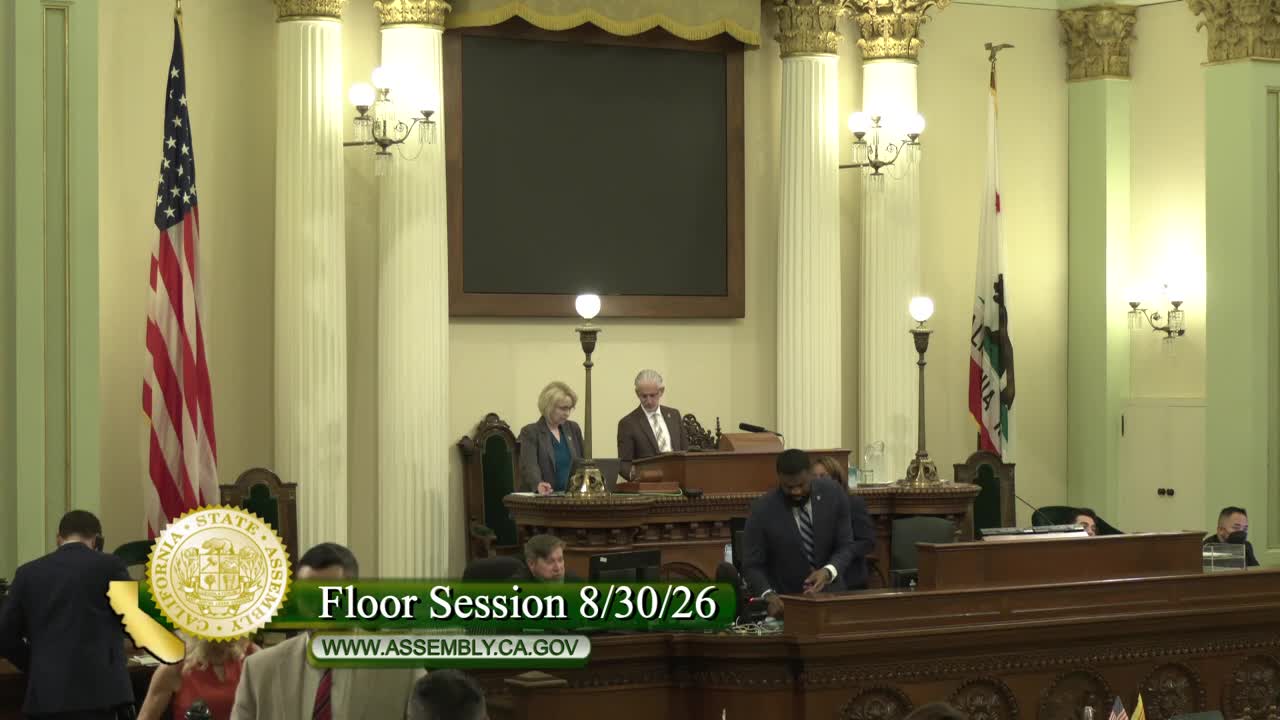 3MIN
Assembly Floor
 2MIN
Assembly Standing Committee on Elections
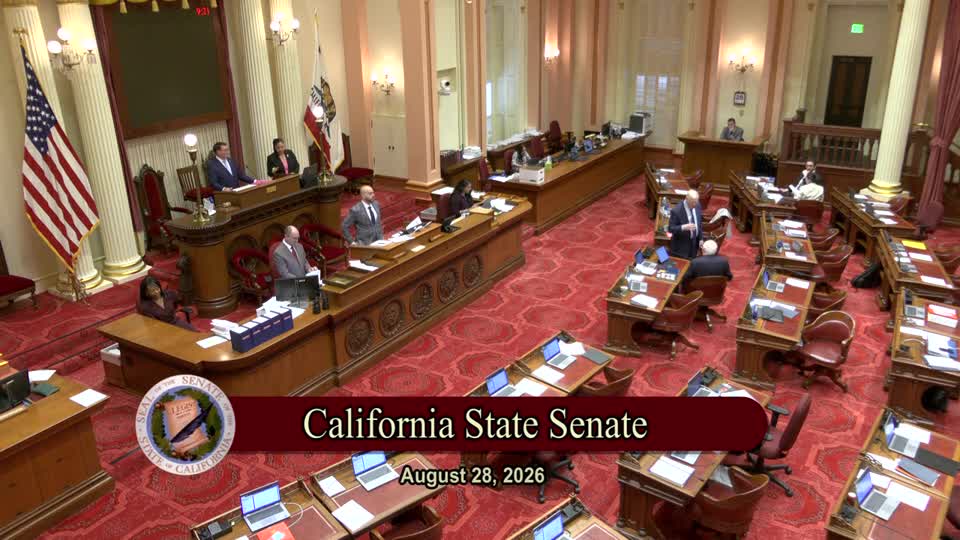 4MIN
Senate Floor
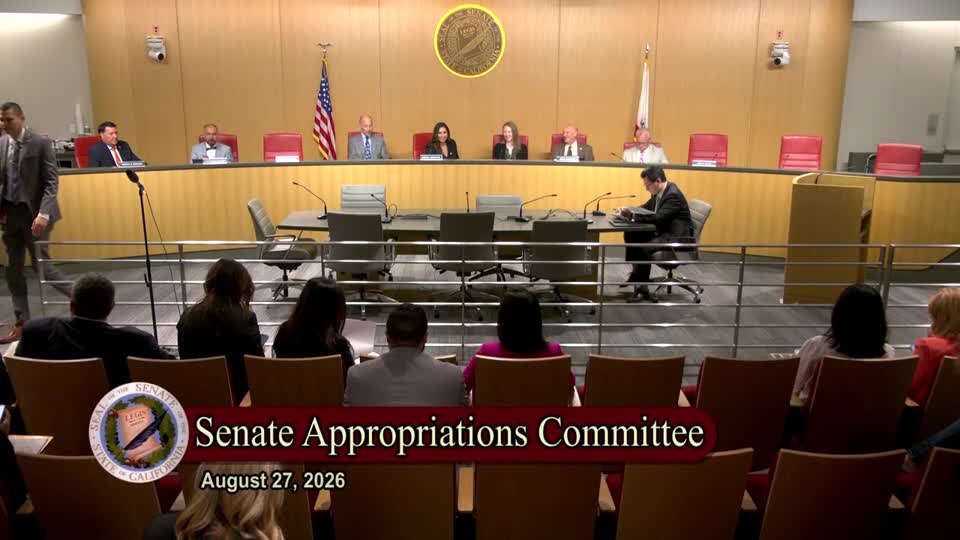 1MIN
Senate Standing Committee on Appropriations
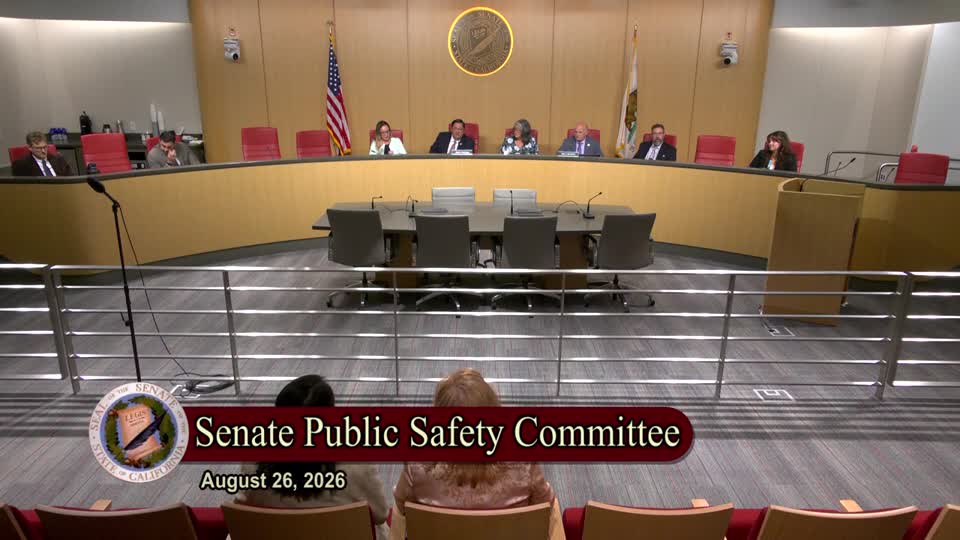 11MIN
Senate Standing Committee on Public Safety
 18MIN
Senate Standing Committee on Elections and Constitutional Amendments
Bill Author