AB 296: Career technical education: sale of equipment: registry.
- Session Year: 2025-2026
- House: Assembly
- Latest Version Date: 2026-01-05
Current Status:
Failed
(2026-02-02: From committee: Filed with the Chief Clerk pursuant to Joint Rule 56.)
Introduced
In Committee
Awaiting First Chamber Vote
Passed First Chamber
In Committee
Awaiting Second Chamber Vote
Passed Second Chamber
Enacted
What does this bill do?
The bill requires the State Department of Education to create and run an online registry where schools can list career technical education equipment they want to sell; it covers school districts, county offices of education, and charter schools. Only a school employee may post items, items must be offered first to other local educational agencies, and listings must stay on the site at least three months unless another local agency buys them.
The summary is provided by generative AI which can make mistakes. For original language, please view the details in the table below.
Existing law provides funding for career technical education programs, including through, among others, the California Career Technical Education Incentive Grant Program, the Strong Workforce Program, and a K12 component of the Strong Workforce Program, with the purpose of creating, maintaining, supporting, encouraging, strengthening, and expanding the delivery of career technical education programs in the state, as provided.
This bill would require the State Department of Education to develop and maintain a registry of career technical education equipment that is listed for sale and to make the registry accessible to school districts, county offices of education, and charter schools via an internet website. The bill would authorize a local educational agency that intends to offer for sale any career technical education equipment to list the equipment in the registry established by the department. The bill would require the equipment listed in the registry to be offered for sale to other local educational agencies and maintained in the registry for a period of no less than 3 months unless the equipment is purchased by a local educational agency. The bill would repeal these provisions on January 1, 2032.
Existing law provides for the establishment of apprenticeship programs in various trades, to be approved by the Chief of the Division of Apprenticeship Standards within the Department of Industrial Relations in any trade in the state or in a city or trade area whenever the apprentice training needs justify the establishment. Existing law requires a school district or school to notify each apprenticeship program in the same county as the school district or school of a career or college fair it is planning to hold, as specified. Existing law provides that the Legislature encourages school districts and schools to host apprenticeship fair events, as provided.This bill would authorize a school district or school to notify an apprenticeship program in a county that borders the county in which the school district or school operates if no apprenticeship program operates in the same county as the school district or school. The bill would also delete the above-specified provision regarding the Legislatures encouragement to school districts and schools and would, instead, require a school district or school to host at least one apprenticeship fair event during each school year, as specified. By creating new requirements of schools and school districts, this bill would establish a state-mandated local program.Existing law requires a pupil to complete designated coursework while in grades 9 to 12, inclusive, in order to receive a diploma of graduation from high school. Existing law authorizes a governing board of a school district to adopt other prescribed coursework requirements. This bill would require, if the governing board of a school district requires the completion of community service hours as a requirement for graduation from high school, a school district to provide a pupil with one hour of credit towards the required community service hours for attendance at a college fair, career fair, or apprenticeship fair. The California Constitution requires the state to reimburse local agencies and school districts for certain costs mandated by the state. Statutory provisions establish procedures for making that reimbursement.This bill would provide that, if the Commission on State Mandates determines that the bill contains costs mandated by the state, reimbursement for those costs shall be made pursuant to the statutory provisions noted above.Existing law provides for the establishment of apprenticeship programs in various trades, to be approved by the Chief of the Division of Apprenticeship Standards within the Department of Industrial Relations in any trade in the state or in a city or trade area whenever the apprentice training needs justify the establishment. Existing law requires a school district or school to notify each apprenticeship program in the same county as the school district or school of a career or college fair it is planning to hold, as specified. Existing law provides that the Legislature encourages school districts and schools to host apprenticeship fair events, as provided.
This bill would authorize a school district or school to notify an apprenticeship program in a county that borders the county in which the school district or school operates if no apprenticeship program operates in the same county as the school district or school. The bill would also delete the above-specified provision regarding the Legislatures encouragement to school districts and schools and would, instead, require school districts and schools a school district or school to host at least one apprenticeship fair event during each school year, as specified. By creating new requirements of schools and school districts, this bill would establish a state-mandated local program.
Existing law requires a pupil to complete designated coursework while in grades 9 to 12, inclusive, in order to receive a diploma of graduation from high school. Existing law authorizes a governing board of a school district to adopt other prescribed coursework requirements.
This bill would require, if the governing board of a school district requires the completion of community service hours as a requirement for graduation from high school, a school district to provide a pupil with one hour of credit towards the required community service hours for attendance at a college fair, career fair, or apprenticeship fair.
The California Constitution requires the state to reimburse local agencies and school districts for certain costs mandated by the state. Statutory provisions establish procedures for making that reimbursement.
This bill would provide that, if the Commission on State Mandates determines that the bill contains costs mandated by the state, reimbursement for those costs shall be made pursuant to the statutory provisions noted above.
Existing law provides for the establishment of apprenticeship programs in various trades, to be approved by the Chief of the Division of Apprenticeship Standards within the Department of Industrial Relations in any trade in the state or in a city or trade area whenever the apprentice training needs justify the establishment. Existing law requires a school district or school to notify each apprenticeship program in the same county as the school district or school of a career or college fair it is planning to hold, as specified. Existing law provides that the Legislature encourages school districts and schools to host apprenticeship fair events, as provided.
This bill would delete the above-specified provision regarding the Legislatures encouragement to school districts and schools and would, instead, require school districts and schools to host at least one apprenticeship fair event during each school year, as specified. By creating new requirements of schools and school districts, this bill would establish a state-mandated local program.
Existing law requires a pupil to complete designated coursework while in grades 9 to 12, inclusive, in order to receive a diploma of graduation from high school. Existing law authorizes a governing board of a school district to adopt other prescribed coursework requirements.
This bill would require, if the governing board of a school district requires the completion of community service hours as a requirement for graduation from high school, a school district to provide a pupil with one hour of credit towards the required community service hours for attendance at a college fair, career fair, or apprenticeship fair.
The California Constitution requires the state to reimburse local agencies and school districts for certain costs mandated by the state. Statutory provisions establish procedures for making that reimbursement.
This bill would provide that, if the Commission on State Mandates determines that the bill contains costs mandated by the state, reimbursement for those costs shall be made pursuant to the statutory provisions noted above.
(a)The department shall develop and maintain a registry of career technical education equipment that is listed for sale pursuant to subdivision (b) and shall make the registry accessible to local educational agencies via an internet website.
(b)(1)A local educational agency that intends to offer for sale any career technical education equipment, including, but not limited to, power tools, table saws, simulators, medical equipment, drafting equipment, or auto diagnostic tools and vehicles, may list the equipment in the registry established by the department pursuant to subdivision (a). Only an employee of a local educational agency may list equipment for sale on the registry.
(2)Equipment listed pursuant to paragraph (1) shall be offered for sale to other local educational agencies and maintained in the registry for a period of no less than three months unless the equipment is purchased by a local educational agency.
(c)For purposes of this section, local educational agency means a school district, county office of education, or charter school.
52470.9.This article shall remain in effect only until January 1, 2032, and as of that date is repealed.
SECTION 1.Section 3074.2 of the Labor Code is amended to read:3074.2.(a)For the purposes of this section:(1)Career fair means an event where multiple private businesses, government agencies, university representatives, or career technical school representatives are invited by a school or school district to present career options or career technical education options for students.(2)College fair means an event where multiple college or university representatives are invited by a school or school district to present college options to students.(3)School means public schools, including, but not limited to, charter schools and alternative schools.(b)(1)A school district or school that is planning to hold a college or career fair shall notify each apprenticeship program in the same county as the school district or school of the college or career fair. If no apprenticeship program operates in the same county, the school district or school may notify an apprenticeship program in any county that shares a geographic border with the county where the school district or school is located. In determining the county location of an apprenticeship program, the school district or school shall rely on the database of approved apprenticeship programs published by the Division of Apprenticeship Standards on its internet website.(2)The notification shall include both of the following:(A)The planned date and time of the college fair or career fair.(B)The planned location of the college fair or career fair.(3)Notice shall be delivered before the planned date of the college or career fair either by first-class mail or by electronic mail pursuant to the contact information contained in the database of approved apprenticeship programs published by the Division of Apprenticeship Standards on its internet website.(c)(1)At least once during each school year, a school district or school shall host an apprenticeship fair event, in the style of college and career fair events, that is focused on local apprenticeship programs and career technical education opportunities.(2)The school district or school shall notify each apprenticeship program in the county of the school district or school about the apprenticeship fair using the requirements set forth in subdivision (b).(d)If the governing board of a school district requires the completion of community service hours as a requirement for graduation, the school district shall allow a student who attends a college fair, career fair, or apprenticeship fair the equivalent of one hour towards the community service hourly requirements per year. SEC. 2.If the Commission on State Mandates determines that this act contains costs mandated by the state, reimbursement to local agencies and school districts for those costs shall be made pursuant to Part 7 (commencing with Section 17500) of Division 4 of Title 2 of the Government Code.(a)For the purposes of this section:
(1)Career fair means an event where multiple private businesses, government agencies, university representatives, or career technical school representatives are invited by a school or school district to present career options or career technical education options for students.
(2)College fair means an event where multiple college or university representatives are invited by a school or school district to present college options to students.
(3)School means public schools, including, but not limited to, charter schools and alternative schools.
(b)(1)A school district or school that is planning to hold a college or career fair shall notify each apprenticeship program in the same county as the school district or school of the college or career fair. If no apprenticeship program operates in the same county, the school district or school may notify an apprenticeship program in any county that shares a geographic border with the county where the school district or school is located. In determining the county location of an apprenticeship program, the school district or school shall rely on the database of approved apprenticeship programs published by the Division of Apprenticeship Standards on its internet website.
(2)The notification shall include both of the following:
(A)The planned date and time of the college fair or career fair.
(B)The planned location of the college fair or career fair.
(3)Notice shall be delivered before the planned date of the college or career fair either by first-class mail or by electronic mail pursuant to the contact information contained in the database of approved apprenticeship programs published by the Division of Apprenticeship Standards on its internet website.
(c)(1)At least once during each school year, a school districts and schools district or school shall host an apprenticeship fair event, in the style of college and career fair events, that is focused on local apprenticeship programs and career technical education opportunities.
(2)The school district or school shall notify each apprenticeship program in the county of the school district or school about the apprenticeship fair using the requirements set forth in subdivision (b).
(d)If the governing board of a school district requires the completion of community service hours as a requirement for graduation, the school district shall allow a student who attends a college fair, career fair, or apprenticeship fair the equivalent of one hour towards the community service hourly requirements per year.
SEC. 2.If the Commission on State Mandates determines that this act contains costs mandated by the state, reimbursement to local agencies and school districts for those costs shall be made pursuant to Part 7 (commencing with Section 17500) of Division 4 of Title 2 of the Government Code.
(a)For the purposes of this section:
(1)Career fair means an event where multiple private businesses, government agencies, university representatives, or career technical school representatives are invited by a school or school district to present career options or career technical education options for students.
(2)College fair means an event where multiple college or university representatives are invited by a school or school district to present college options to students.
(3)School means public schools, including, but not limited to, charter schools and alternative schools.
(b)(1)A school district or school that is planning to hold a college or career fair shall notify each apprenticeship program in the same county as the school district or school of the college or career fair. In determining the county location of an apprenticeship program, the school district or school shall rely on the database of approved apprenticeship programs published by the Division of Apprenticeship Standards on its internet website.
(2)The notification shall include both of the following:
(A)The planned date and time of the college fair or career fair.
(B)The planned location of the college fair or career fair.
(3)Notice shall be delivered before the planned date of the college or career fair either by first-class mail or by electronic mail pursuant to the contact information contained in the database of approved apprenticeship programs published by the Division of Apprenticeship Standards on its internet website.
(c)School districts and schools are encouraged by the Legislature to host (1)At least once during each school year, school districts and schools shall host an apprenticeship fair events, event, in the style of college and career fair events that are events, that is focused on local apprenticeship programs and career technical education opportunities.
(2)The school district or school shall notify each apprenticeship program in the county of the school district or school about the apprenticeship fair using the requirements set forth in subdivision (b).
(d)If the governing board of a school district requires the completion of community service hours as a requirement for graduation, the school district shall allow a student who attends a college fair, career fair, or apprenticeship fair the equivalent of one hour towards the community service hourly requirements per year.
SEC. 2.If the Commission on State Mandates determines that this act contains costs mandated by the state, reimbursement to local agencies and school districts for those costs shall be made pursuant to Part 7 (commencing with Section 17500) of Division 4 of Title 2 of the Government Code.
|
Date
|
Status
|
|---|---|
| Feb 2, 2026 | From committee: Filed with the Chief Clerk pursuant to Joint Rule 56. |
| Jan 31, 2026 | Died pursuant to Art. IV, Sec. 10(c) of the Constitution. |
| Jan 22, 2026 | In committee: Held under submission. |
| Jan 22, 2026 | In committee: Set, first hearing. Referred to suspense file. |
| Jan 8, 2026 | From committee: Do pass and re-refer to Com. on APPR. (Ayes 8. Noes 0.) (January 7). Re-referred to Com. on APPR. |
| Jan 6, 2026 | Re-referred to Com. on ED. |
| Jan 5, 2026 | From committee chair, with author's amendments: Amend, and re-refer to Com. on ED. Read second time and amended. |
| Apr 3, 2025 | From committee: Do pass and re-refer to Com. on ED. (Ayes 5. Noes 2.) (April 2). Re-referred to Com. on ED. |
| Mar 26, 2025 | Re-referred to Com. on L. & E. |
| Mar 25, 2025 | From committee chair, with author's amendments: Amend, and re-refer to Com. on L. & E. Read second time and amended. |
| Mar 13, 2025 | In committee: Set, first hearing. Hearing canceled at the request of author. |
| Feb 10, 2025 | Referred to Coms. on L. & E. and ED. |
| Jan 24, 2025 | From printer. May be heard in committee February 23. |
| Jan 23, 2025 | Read first time. To print. |
|
Date
|
Description
|
Location
|
Votes
|
|
|---|---|---|---|---|
| Jan 7, 2026 | Do pass and be re-referred to the Committee on [Appropriations] | Assembly Standing Committee on Education |
Passed |
|
| Apr 2, 2025 | Do pass and be re-referred to the Committee on [Education] | Assembly Standing Committee on Labor and Employment |
Passed |
This list shows positions taken on this bill by organizations on the date displayed, which is linked to the original source.
Positions by individuals are not included.
|
Organization
|
Position
|
Date
|
|---|---|---|
| Associated General Contractors, California Chapters | ** Support | |
| Associated General Contractors-San Diego Chapter | ** Support | |
| Association Of California School Administrators | ** Against | |
| California Chamber Of Commerce | ** Support | |
| California Legislative Conference Of Plumbing, Heating & Piping Industry | ** Support | |
| California State Association Of Electrical Workers | ** Support | |
| California State Pipe Trades Council | ** Support | |
| National Electrical Contractors Association | ** Support | |
| Northern California Allied Trades | ** Support | |
| Southern California Glass Management Association | ** Support | |
| United Contractors | ** Support | |
| Wall and Ceiling Alliance | ** Support | |
| Western Electrical Contractors Association | ** Support | |
| Western States Council Sheet Metal, Air, Rail And Transportation | ** Support | |
| Western Wall And Ceiling Contractors Association | ** Support |
Date of Hearing: January 22, 2026
ASSEMBLY COMMITTEE ON APPROPRIATIONS
Buffy Wicks, Chair
ABPCA Bill Id:AB 296
Author:(Davies) – As Amended Ver:January 5, 2026
Policy Committee: | Labor and Employment | Vote: | 5 - 2 |
Education | 8 - 0 | ||
|
|
Urgency: No State Mandated Local Program: No Reimbursable: No
SUMMARY:
This bill requires the California Department of Education (CDE) to develop and maintain, until January 1, 2032, a registry of career technical education (CTE) equipment listed for sale accessible to local educational agencies (LEAs) via an internet website and authorizes an LEA to list CTE equipment for sale on the registry.
FISCAL EFFECT:
Ongoing General Fund costs to the CDE of approximately $307,000 for two additional staff and approximately one-time General Fund costs of $500,000 in additional information technology costs to develop and maintain the registry.
COMMENTS:
According to the author’s office, the bill provides an opportunity for an LEA to procure CTE equipment at a potentially cheaper price than what is otherwise available on the general market, allowing the LEA to make the most of limited resources and still offer high quality CTE programs to students with the appropriate tools and equipment.
CTE programs provide students with hands-on learning opportunities to acquire workplace competencies and real-world skills immediately applicable as members of the workforce. Such programs typically educate students either through a very technically specific industry-oriented approach, or a mix of academic and technical learning approaches, with either approach often requiring industry-specific tools or equipment.
Aside from general requirements regarding sale of surplus property, such as proper documentation and selling equipment at market value, current law allows LEAs to sell surplus property to a wide range of entities, including state or federal government agencies, any county, city and county, city or special district, or any other school district. Therefore, while current law allows an LEA to sell equipment to other governmental agencies, including other LEAs, this bill may reduce the ability for LEAs to dispose of equipment by limiting the registry to only other LEAs.
Analysis Prepared by: Aaron Heredia / APPR. / (916) 319-2081
Date of Hearing: January 7, 2026
ASSEMBLY COMMITTEE ON EDUCATION
Al Muratsuchi, Chair
ABPCA Bill Id:AB 296 (
Author:Davies) – As Amended Ver:January 5, 2026
[This bill was double referred to the Committee on Labor and Employment, and was heard by that Committee in a previous form.]
SUBJECT: Career technical education: sale of equipment: registry
SUMMARY: Requires the California Department of Education (CDE) to develop and maintain, until January 1, 2032, a registry of career technical education (CTE) equipment that is listed for sale by local educational agencies (LEAs), and authorizes LEAs to list any CTE equipment they wish to sell to another LEA on this registry. Specifically, this bill:
- Requires the CDE to develop and maintain a registry of CTE equipment that is listed for sale by LEAs and to make the registry website accessible to LEAs via a website.
- Authorizes an LEA that intends to offer for sale any CTE equipment to list the equipment in the registry established by the CDE.
- Requires that the listing of equipment on the registry be limited to employees of an LEA.
- Identifies the CTE equipment that may be listed, but is not limited to, power tools, table saws, simulators, medical equipment, drafting equipment, or auto diagnostic tools and vehicles.
- Requires the equipment listed on the registry be offered for sale to other LEAs and maintained in the registry for a minimum of three months unless the equipment is purchased by an LEA.
- Defines an LEA as a school district, county office of education (COE), or charter school, for purposes of this section.
- Repeals these provisions as of January 1, 2032.
EXISTING LAW:
- Establishes the Career Technical Education Incentive Grant (CTEIG) Program as a state education, economic, and workforce development initiative with the goal of providing students in kindergarten through 12th grade with the knowledge and skills necessary to transition to employment and postsecondary education. (Education Code (EC) 53070)
- Gives positive consideration to applicants to the CTEIG Program who make significant investment in CTE infrastructure, equipment, and facilities. (EC 53075)
- Authorizes the K-12 component of the Strong Workforce Program (SWP) to create, support, or expand high-quality CTE programs at the K-12 level that are aligned with the workforce development efforts occurring through the SWP, and authorizes, commencing with the 2018-19 fiscal year, and subject to an annual appropriation, $150 million to be apportioned annually by the California Community College Chancellor’s Office (CCCCO) to local consortia. (EC 88827)
- Gives positive consideration to applicants to the K-12 SWP who make significant investments in CTE infrastructure, equipment, and facilities. (EC 88830)
- The CTE Facilities Program provides funding to qualifying LEAs for the purpose of constructing new facilities or reconfiguring existing facilities, including purchasing equipment with an average useful life expectancy of at least 10 years, to enhance educational opportunities for students in high schools to provide them with the skills and knowledge necessary for high-demand technical careers. (EC 17078.72)
- Authorizes the governing board of a school district which operates an agricultural CTE program to apply to the Superintendent of Public Instruction (SPI) for an incentive grant for the purpose of purchasing or leasing agricultural CTE equipment. (EC 52460)
- Defines “agricultural CTE equipment” as any nonsalary item of expenditure, including but not limited to, capital outlay, for approved agricultural CTE programs. (EC 52461.5)
- Requires a school district to request disposition instructions from the relevant federal awarding agency if equipment to be disposed of was purchased with federal funds and the terms and conditions of the award required this, and if the equipment has a current, per-unit, fair market value greater than $5,000. (Title 2, Federal Code of Regulations, Section 200.313 (e))
- Authorizes the governing board of any school district to sell any personal property or school supplies belonging to the district to the federal government or its agencies, to the state, to any county, city and county, city or special district, or to any other school district or any agency eligible, and the governing board of another school district may purchase the property, for an amount equal to the cost plus the estimated cost of purchasing, storing, and handling the property, without advertisement for or receipt of bids or compliance with any other provisions of code. (EC 17540, 40 U.S.C. Sec. 484(j)(3))
FISCAL EFFECT: Unknown
COMMENTS: Need for the bill. According to the author “Career technical education (CTE) courses and apprenticeships have the opportunity to offer students of every background the chance for a steady and stable job in a number of growing fields. Many of these experiences lead to well-paying careers. California should be at the forefront when it comes to recruiting and teaching students about local opportunities located near them. AB 296 is a common-sense measure to ensure that our local education agencies have the ability to equip themselves with any equipment or tools they need to begin teaching students in CTE courses by fostering a collaborative online registry that allows agencies to see what equipment is able to be purchased, sometimes at a cheaper price than on the general market.”
Defining Career Technical Education. CTE prepares students for the world of work by introducing them to workplace competencies and makes academic content accessible by providing it in a hands-on context. Along the way, students develop career-relevant, real-world 21st Century skills.
CTE is a program of study that involves a multiyear sequence of courses that integrates core academic knowledge with technical and occupational knowledge to provide students with a pathway to postsecondary education and careers. CTE programs in California are organized into 15 industry sectors, covering 58 pathways that identify the knowledge and skills students need. Partnerships are usually developed between high schools, businesses, and postsecondary schools, providing pathways to employment and associate, Bachelor’s, and advanced degrees.
CTE courses and pathways may be offered in comprehensive high schools with CTE programs, as well as through regional CTE programs or centers operated by joint powers authorities (JPAs) or county offices of education (COEs). Some CTE programs are blended with academic programs in what is known as a “linked learning model.” Community colleges and technical institutes also offer CTE at the postsecondary level.
Disposing of surplus equipment. As noted above, equipment purchased with federal funds may require disposition instruction from the relevant federal agency. State law authorizes a school district to sell any personal property or school supplies belonging to the district to the federal government or its agencies, to the state, to any county, city and county, city or special district, or to any other school district or any agency eligible under the federal surplus property law, and the governing board of another school district may purchase the property, for an amount equal to the cost plus the estimated cost of purchasing, storing, and handling the property, without advertisement for or receipt of bids or compliance with any other provisions of Education Code.
In addition, the current California K-12 audit guide requires that auditors verify that all equipment removed from the listed asset accounts is adequately documented, including the date of removal, reason for removal, and disposition. In addition, the audit guide requires auditors to verify that all equipment sale proceeds during the audit period are sold at market value and properly recorded.
State surplus property available online. The Department of General Services (DGS) operates a website including an auction to dispose of surplus state items. Individuals or organizations interested in purchasing items are required to register as an official bidder online and agree to specified terms and conditions.
The Committee may wish to consider whether the establishment of such a registry, as proposed, would limit the ability of LEAs to dispose of equipment as it limits the sale of equipment listed on the registry to other LEAs. Current law permits the sale of certain equipment, proposed to be disposed of, to other governmental agencies, including federal, state, or local agencies.
REGISTERED SUPPORT / OPPOSITION:
Support
Associated General Contractors, California Chapters
Opposition
None on file
Analysis Prepared by: Debbie Look / ED. / (916) 319-2087
Date of Hearing: April 2, 2025
ASSEMBLY COMMITTEE ON LABOR AND EMPLOYMENT
Liz Ortega, Chair
ABPCA Bill Id:AB 296 (
Author:Davies) – As Amended Ver:March 25, 2025
SUBJECT: Apprenticeship fairs
SUMMARY: Requires school districts or schools to host an apprenticeship fair event at least once during each school year, as specified, and authorizes a governing board of a school district that requires community service hours for high school graduation to allocate an hour of community service credit to a pupil who attends a college fair, career fair, or apprenticeship fair. Specifically, this bill:
EXISTING LAW:
- Establishes the Division of Apprenticeship Standards (DAS) within the Department of Industrial Relations, led by a Chief who is responsible for, among other things, fostering, promoting, and developing the welfare of the apprentice and industry, improving the working conditions of apprentices, and advancing their opportunities for profitable employment, and gathering and promptly disseminating information through apprenticeship and training information centers. (Labor Code §3073)
- Requires a school district or school that is planning to hold a college or career fair to notify each apprenticeship program in the same county as the school district or school of the college or career fair.
- To determine the county location of an apprenticeship program, the school district or school shall rely on the database of approved apprenticeship programs published by the DAS on its internet website. (Labor Code §3074.2(b)(1))
- Requires the notice to include the planned date, time, and location of the college fair or career fair. (Labor Code §3074.2(b)(2))
- States that the notice shall be delivered before the planned date of the college or career fair either by first-class mail or by electronic mail pursuant to the contact information contained in the DAS database of approved apprenticeship programs. (Labor Code §3074.2(b)(3))
- Provides that school districts and schools are encouraged by the Legislature to host apprenticeship fair events, in the style of college and career fair events that are focused on local apprenticeship programs and career technical education opportunities. (Labor Code §3074.2(c))
- Defines “school” to mean public schools, including, but not limited to, charter schools and alternative schools. (Labor Code §3074.2(a)(3))
FISCAL EFFECT: Unknown
COMMENTS: Note: This bill is double-referred to the Assembly Education Committee upon passage out of this Committee.
California currently has over 97,000 active registered apprentices with 129 new registrations just last month.[1] The top industries with active apprentices are firefighting, carpentry, and electrical.[2] In terms of demographics, 90 percent of active registered apprentices are men and 56 percent are Hispanic.[3]
In recent years, the earn-to-learn or apprenticeship model has seen much expansion whether by state investments to encourage its application to non-traditional industries or to promote participation by particular demographics such as women, youth, and those with employment barriers. Notably, in his first year of office, Governor Newsom pledged to create half a million apprenticeships by 2029. In August 2023, he signed Executive Order N-11-23 on career education, allocating $200 million for California Youth Apprenticeships and the Apprenticeship Innovation Fund[4] to establish pre-apprenticeship and apprenticeship opportunities accessible to learners from high school age to older adults. Similarly, in February of this year, the state announced $68 million in funding to support on-the-job training both at the apprenticeship and pre-apprenticeship level. Sixteen million dollars were earmarked for youth apprenticeships targeting what is known as “opportunity youth--young people who are disconnected from school and work. Many have faced challenges such as involvement in foster care, child welfare, and the juvenile justice system.”[5]
According to the author, “Apprenticeships have the opportunity to offer students of every background the chance for a steady and stable job in a number of growing fields. Many of these experiences lead to well-paying careers. California should be at the forefront when it comes to recruiting and teaching students about local opportunities located near them. AB 296 is a common-sense measure to ensure our schools are providing information to our students about apprenticeship opportunities available to them and providing credit to help encourage them to attend these informative events.”
The author further states that the bill promotes equity solutions because “Apprenticeships provide valuable education experiences to men and women of all ages and backgrounds. Ensuring students form every walk of life have an option to learn about them helps promote equity in the workplace and community.”
Arguments in Support
The Western Electrical Contractors Association is in support and states, “Apprenticeships are a competitive alternative to a college degree. They offer an earn-and-learn model that can prepare a young person for a career in construction, firefighting, or other fields. A standalone apprenticeship fair can help youth make sound career choices and this legislation will be helpful to parents or guardians and their students as they prepare for the future.”
Arguments in Opposition
The Association of California School Administrators is opposed and states, “Instead of integrating efforts, AB 296 perpetuates a siloed approach by mandating all schools to host a fair, regardless of grade level, since elementary schools are included in the mandate, or the ability of certain schools and districts to access county apprenticeships, a difficult task for some rural areas. Lastly, the onus of AB 296 is solely on schools when a successful event is also contingent on industry partner participation and buy-in.”
Prior Legislation
AB 2179 (Davies) Chapter 62, Statutes of 2024, requires a school district, as part of its annual notification process, to provide information on local apprenticeship and preapprenticeship programs to the parents or guardians of pupils in grades 11 and 12.
AB 643 (Ramos) Chapter 324, Statutes of 2021 requires a school district or school that is planning to hold a college or career fair to notify each apprenticeship program in the same county as the school district or school of the college or career fair. In determining the county location of an apprenticeship program, the school district or school shall rely on the database of approved apprenticeship programs published by the DAS on its internet website.
AB 1558 (Ramos) of 2019 was identical to AB 643 and was vetoed by Governor Newsom.
REGISTERED SUPPORT / OPPOSITION:
Support
Associated General Contractors of California
Associated General Contractors-San Diego Chapter
California Chamber of Commerce
California Legislative Conference of Plumbing, Heating & Piping Industry
California State Association of Electrical Workers
California State Pipe Trades Council
National Electrical Contractors Association
Northern California Allied Trades
Southern California Glass Management Association
United Contractors
Wall and Ceiling Alliance
Western Electrical Contractors Association
Western States Council Sheet Metal, Air, Rail and Transportation
Western Wall and Ceiling Contractors Association
Oppose
Association of California School Administrators
Analysis Prepared by: Megan Lane / L. & E. /
Ibid. ↑
Ibid. ↑
The Apprenticeship Innovation Fund focuses on sustaining and scaling registered apprenticeship programs in industries beyond traditional apprenticeships in the building and fire trades. These apprenticeship sectors include healthcare, advanced manufacturing, technology, education, and many more sectors. See Apprenticeship Innovation Funding. ↑
See $68 million in funding to boost apprenticeship programs, create new jobs, and fill labor shortages | California Department of Industrial Relations. ↑
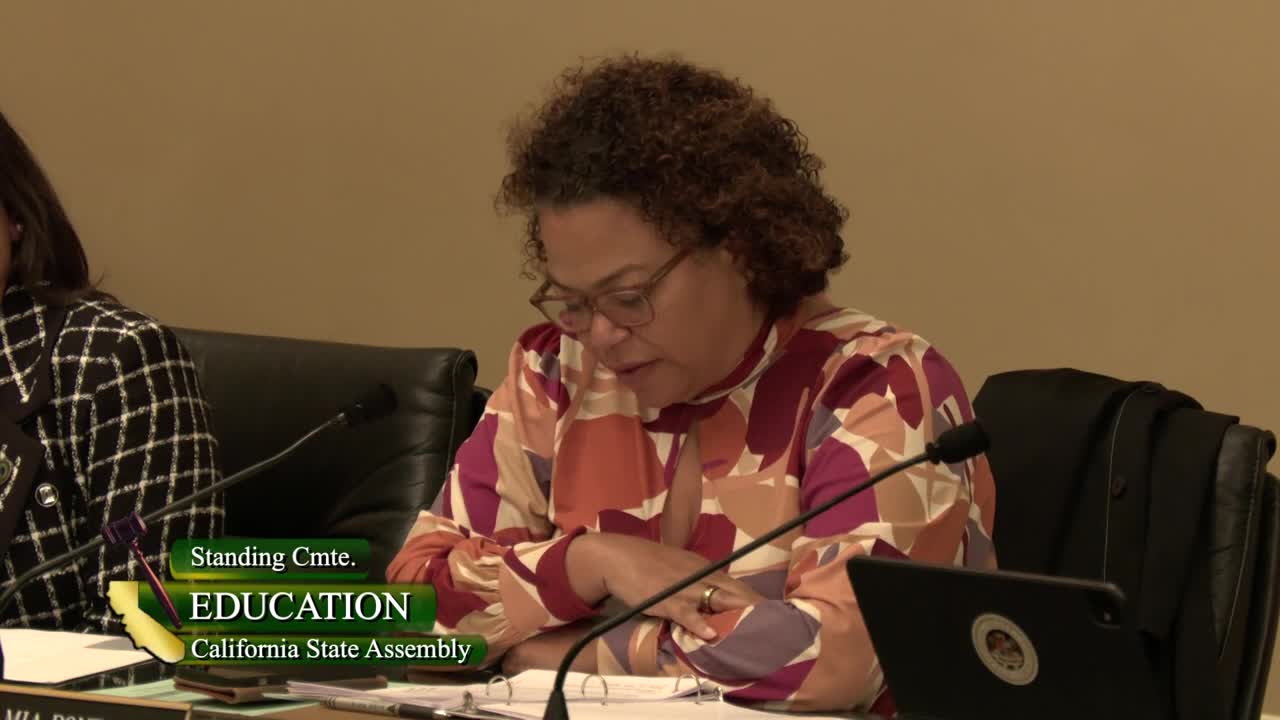
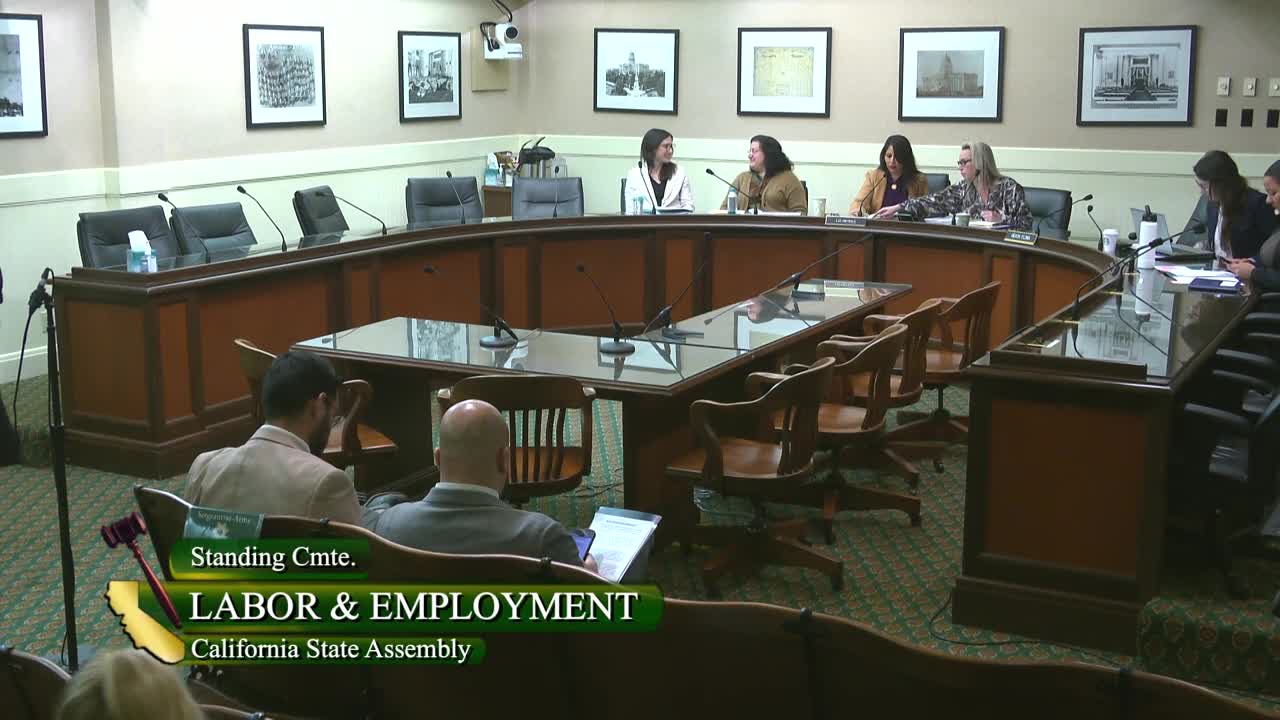
Discussed in Hearing
 6MIN
Assembly Standing Committee on Education
 9MIN
Assembly Standing Committee on Labor and Employment
Bill Author

Bill Co-Author(s):