AB 30: State Air Resources Board: gasoline specifications: ethanol blends.
- Session Year: 2025-2026
- House: Assembly
- Latest Version Date: 2025-10-02
Current Status:
Passed
(2025-10-02: Chaptered by Secretary of State - Chapter 247, Statutes of 2025.)
Introduced
In Committee
Awaiting First Chamber Vote
Passed First Chamber
In Committee
Awaiting Second Chamber Vote
Passed Second Chamber
Enacted
Existing law requires the State Air Resources Board to adopt and implement motor vehicle fuel specifications for the control of air contaminants and sources of air pollution. Existing law prohibits the state board from adopting any regulation that establishes a specification for motor vehicle fuel unless that regulation, and a multimedia evaluation conducted by affected agencies and coordinated by the state board, are reviewed by the California Environmental Policy Council.
This bill would, notwithstanding that prohibition, authorize blends of gasoline containing 10.5% to 15% ethanol by volume to be sold in the state for use as a transportation fuel until (1) the California Environmental Policy Council completes its review of those blends and (2) the state board either adopts a regulation establishing a specification for those blends or posts an assessment on its internet website demonstrating that it is not possible for a regulation establishing a specification for those blends to meet specified requirements.
This bill would declare that it is to take effect immediately as an urgency statute.
Existing law requires the State Air Resources Board to adopt and implement motor vehicle fuel specifications for the control of air contaminants and sources of air pollution under specified circumstances. pollution. Existing law prohibits the state board from adopting any regulation that establishes a specification for motor vehicle fuel unless that regulation, and a multimedia evaluation conducted by affected agencies and coordinated by the state board, are reviewed by the California Environmental Policy Council.
This bill would require the state board to complete a rulemaking on or before July 1, 2025, to adopt specifications for blends of gasoline containing 10.5% to 15% ethanol by volume for use as a transportation fuel. If the state board does not complete the rulemaking on or before that date, the bill would require that blends of gasoline containing 10.5% to 15% ethanol by volume be treated as approved by the state board and would authorize them to be sold in the state as a transportation fuel. would, notwithstanding that prohibition, authorize blends of gasoline containing 10.5% to 15% ethanol by volume to be sold in the state for use as a transportation fuel until (1) the California Environmental Policy Council completes its review of those blends and (2) the state board either adopts a regulation establishing a specification for those blends or posts an assessment on its internet website demonstrating that it is not possible for a regulation establishing a specification for those blends to meet specified requirements.
This bill would declare that it is to take effect immediately as an urgency statute.
Existing law requires the State Air Resources Board to adopt and implement motor vehicle fuel specifications for the control of air contaminants and sources of air pollution under specified circumstances.
This bill would require the state board to complete a rulemaking on or before July 1, 2025, to adopt specifications for blends of gasoline containing 10.5% to 15% ethanol by volume for use as a transportation fuel. If the state board does not complete the rulemaking on or before that date, the bill would require that blends of gasoline containing 10.5% to 15% ethanol by volume be treated as approved by the state board and would authorize them to be sold in the state as a transportation fuel.
This bill would declare that it is to take effect immediately as an urgency statute.
Existing law requires the State Air Resources Board to adopt and implement motor vehicle fuel specifications for the control of air contaminants and sources of air pollution under specified circumstances.
This bill would require the state board to complete a rulemaking on or before July 1, 2025, to adopt specifications for blends of gasoline containing 10.5% to 15% ethanol by volume for use as a transportation fuel. If the state board does not complete the rulemaking on or before that date, the bill would require that blends of gasoline containing 10.5% to 15% ethanol by volume be treated as approved by the state board and would authorize them to be sold in the state as transportation fuel.
This bill would declare that it is to take effect immediately as an urgency statute.
(a)Notwithstanding Section 43830.8, blends of gasoline containing 10.5 percent to 15 percent ethanol by volume may be sold in the state for use as a transportation fuel until both of the following occur:
(1)The California Environmental Policy Council completes its review and publicly posts its findings of the multimedia evaluation for blends of gasoline containing 10.5 percent to 15 percent ethanol by volume required pursuant to Section 43830.8.
(2)The state board does either of the following:
(A)Adopts a regulation establishing a specification for blends of gasoline containing 10.5 percent to 15 percent ethanol by volume.
(B)Posts an assessment on its internet website demonstrating that it is not possible for a proposed regulation establishing a specification for blends of gasoline containing 10.5 percent to 15 percent ethanol by volume to meet the requirements of subdivision (f) of Section 43830.8.
(b)This section shall not be construed to limit the authority of the state board to adopt and enforce transportation fuel specifications for other fuels, or for blends of gasoline containing 10.5 percent to 15 percent ethanol by volume after the state board takes action pursuant to subparagraph (A) or (B) of paragraph (2) of subdivision (a).
SEC. 2.This act is an urgency statute necessary for the immediate preservation of the public peace, health, or safety within the meaning of Article IV of the California Constitution and shall go into immediate effect. The facts constituting the necessity are:
In order to develop solutions to help reduce the price of gasoline in California as soon as possible, it is necessary that this act take effect immediately.
(a)The state board shall complete a rulemaking on or before July 1, 2025, to adopt specifications for blends of gasoline containing 10.5 percent to 15 percent ethanol by volume for use as a transportation fuel.
(b)If the state board does not complete the rulemaking on or before July 1, 2025, blends of gasoline containing 10.5 percent to 15 percent ethanol by volume shall be treated as approved by the state board and may be sold in the state for use as a transportation fuel.
SEC. 2.This act is an urgency statute necessary for the immediate preservation of the public peace, health, or safety within the meaning of Article IV of the California Constitution and shall go into immediate effect. The facts constituting the necessity are:
In order to develop solutions to help reduce the price of gasoline as soon as possible, it is necessary that this act take effect immediately.
|
Date
|
Status
|
|---|---|
| Oct 2, 2025 | Chaptered by Secretary of State - Chapter 247, Statutes of 2025. |
| Oct 2, 2025 | Approved by the Governor. |
| Sep 9, 2025 | Enrolled and presented to the Governor at 3 p.m. |
| Sep 3, 2025 | In Assembly. Ordered to Engrossing and Enrolling. |
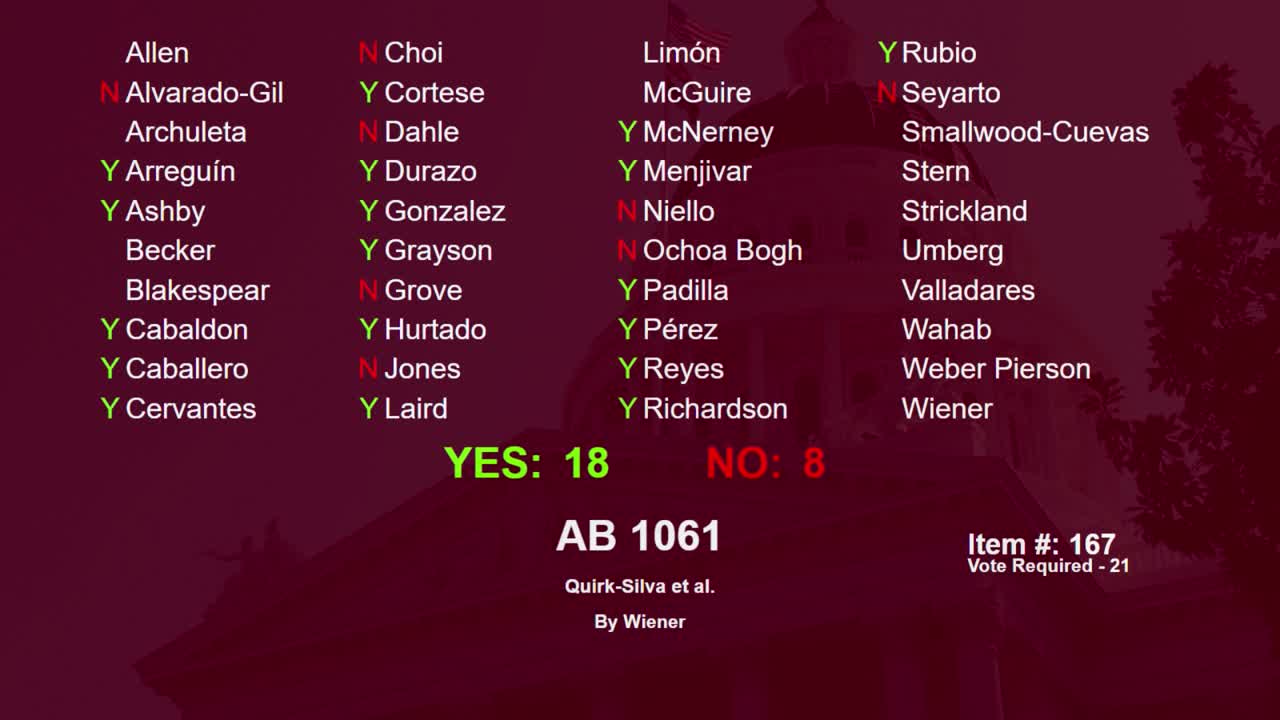
| Sep 3, 2025 | Read third time. Urgency clause adopted. Passed. Ordered to the Assembly. (Ayes 40. Noes 0. Page 2440.). |
| Aug 29, 2025 | Read second time. Ordered to third reading. |
| Aug 29, 2025 | From committee: Do pass. (Ayes 7. Noes 0.) (August 29). |
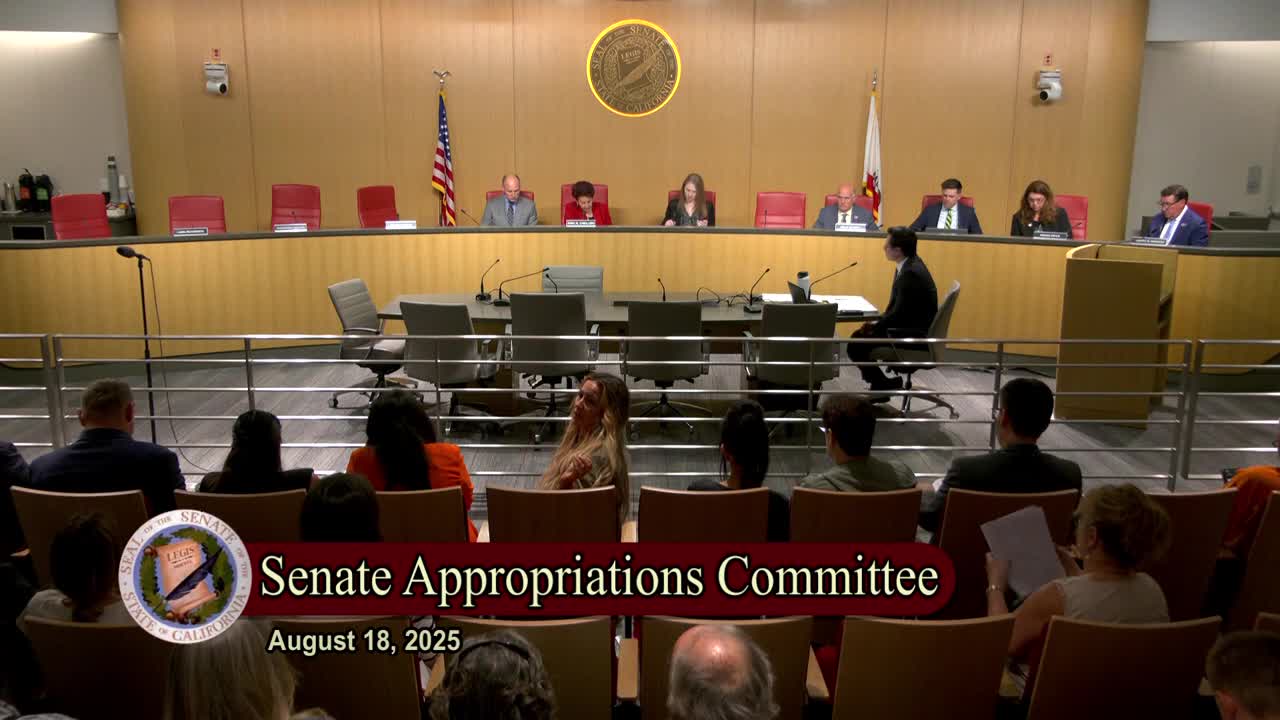
| Aug 18, 2025 | In committee: Referred to suspense file. |
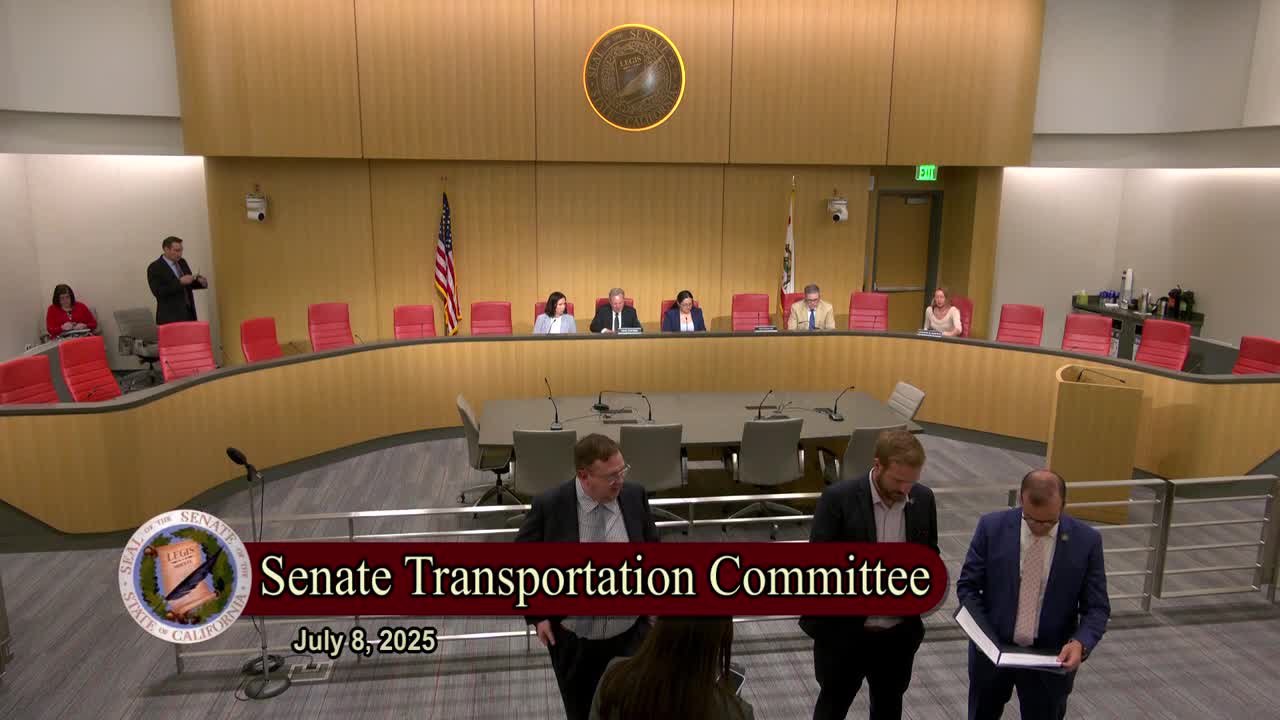
| Jul 9, 2025 | From committee: Do pass and re-refer to Com. on APPR. (Ayes 15. Noes 0.) (July 8). Re-referred to Com. on APPR. |
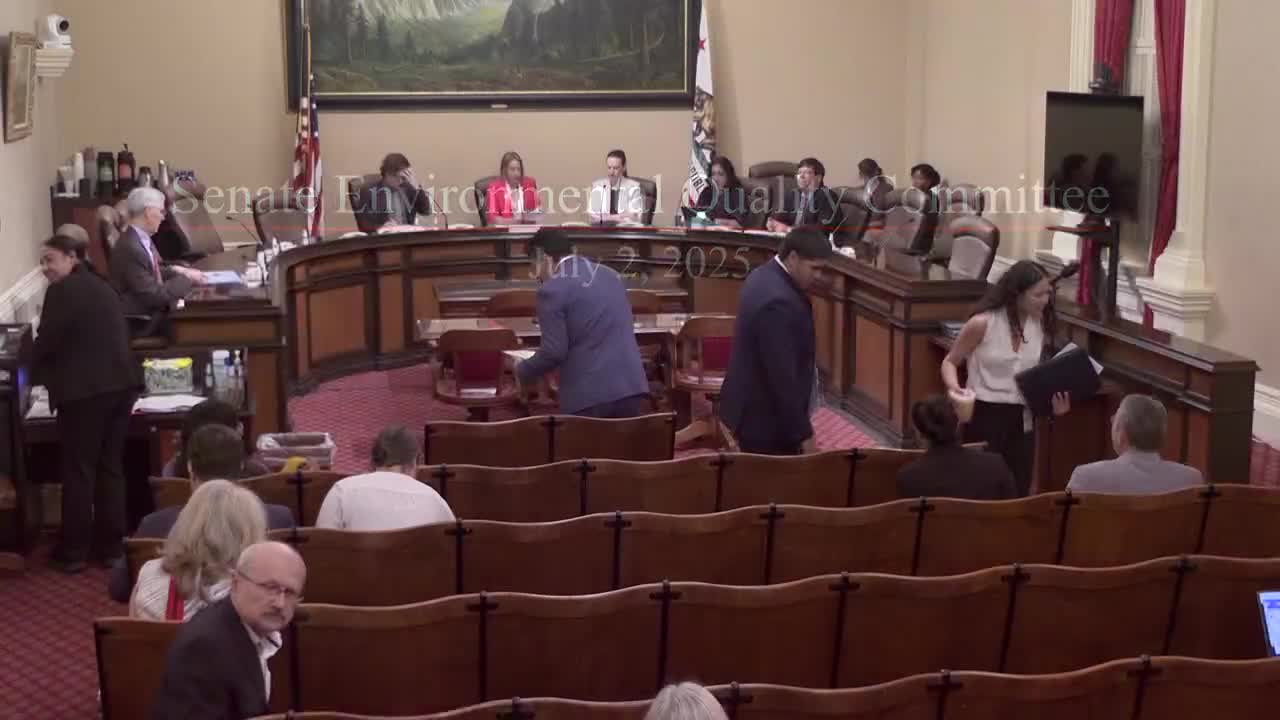
| Jul 2, 2025 | From committee: Do pass and re-refer to Com. on TRANS. (Ayes 8. Noes 0.) (July 2). Re-referred to Com. on TRANS. |
| Jun 18, 2025 | Referred to Coms. on E.Q. and TRANS. |
| Jun 5, 2025 | In Senate. Read first time. To Com. on RLS. for assignment. |
| Jun 4, 2025 | Read third time. Urgency clause adopted. Passed. Ordered to the Senate. (Ayes 77. Noes 0. Page 2073.). |
| May 27, 2025 | Read second time. Ordered to third reading. |
| May 23, 2025 | From committee: Do pass. (Ayes 13. Noes 0.) (May 23). |
| Apr 9, 2025 | In committee: Set, first hearing. Referred to APPR. suspense file. |
| Mar 27, 2025 | Re-referred to Com. on APPR. |
| Mar 26, 2025 | Read second time and amended. |
| Mar 25, 2025 | From committee: Amend, and do pass as amended and re-refer to Com. on APPR. (Ayes 12. Noes 0.) (March 24). |
| Mar 5, 2025 | Re-referred to Com. on NAT. RES. |
| Mar 4, 2025 | From committee chair, with author's amendments: Amend, and re-refer to Com. on NAT. RES. Read second time and amended. |
| Feb 18, 2025 | Referred to Com. on NAT. RES. |
| Dec 3, 2024 | From printer. May be heard in committee January 2. |
| Dec 2, 2024 | Read first time. To print. |
|
Date
|
Description
|
Location
|
Votes
|
|
|---|---|---|---|---|
| Sep 3, 2025 | Assembly 3rd Reading AB30 Alvarez et al. By Richardson Urgency Clause | Senate Floor |
Passed |
|
| Aug 29, 2025 | Do pass | Senate Standing Committee on Appropriations |
Passed |
|
| Aug 18, 2025 | Placed on suspense file | Senate Standing Committee on Appropriations |
Passed |
|
| Jul 8, 2025 | Do pass, but first be re-referred to the Committee on [Appropriations] | Senate Standing Committee on Transportation |
Passed |
|
| Jul 2, 2025 | Do pass, but first be re-referred to the Committee on [Transportation] | Senate Standing Committee on Environmental Quality |
Passed |
|
| Jun 4, 2025 | AB 30 Alvarez Third Reading Urgency | Assembly Floor |
Passed |
|
| May 23, 2025 | Do pass. | Assembly Standing Committee on Appropriations |
Passed |
|
| Mar 24, 2025 | Do pass as amended and be re-referred to the Committee on [Appropriations] | Assembly Standing Committee on Natural Resources |
Passed |
This list shows positions taken on this bill by organizations on the date displayed, which is linked to the original source.
Positions by individuals are not included.
|
Organization
|
Position
|
Date
|
|---|---|---|
| 350 Bay Area Action | ** Against | |
| ABATE of California | ** Against | |
| Association of the U.S. Army - Southern California | ** Support | |
| Biotechnology Innovation Organization | ** Support | |
| California Association of County Veteran Services Officers | ** Support | |
| California Chamber Of Commerce | ** Support | |
| California Council of Chapters of Military Officers Association of America | ** Support | |
| California Delivery Association | ** Support | |
| California Enlisted Association of the National Guard of the United States | ** Support | |
| California Farm Bureau Federation | ** Support | |
| California Fuels And Convenience Alliance | ** Support | |
| California League of United Latin American Citizens | ** Support | |
| CalPACE | ** Support | |
| Democrats of Rossmoor | ** Against | |
| Department of California Marine Corps League | ** Support | |
| Greater Sacramento Urban League | ** Support | |
| Growth Energy | ** Support | |
| Marine Corps League, Department of California | ** Support | |
| Meals on Wheels Marin | ** Support | |
| Military Officers Association Of America, California Council Of Chapters | ** Support | |
| Motorcycle Industry Council | ** Against | |
| Multicultural Business Alliance | ** Support | |
| National Federation Of Independent Business | ** Support | |
| Poet | ** Support | |
| Recreational Boaters Of California | ** Against | |
| Renewable Fuels Association | ** Support | |
| San Diego Regional Chamber Of Commerce | ** Support | |
| SanDiego350 | ** Against | |
| Sustainable Rossmoor | ** Against |
SENATE RULES COMMITTEE Office of Senate Floor Analyses (916) 651-1520 Fax: (916) 327-4478 | AB 30 |
THIRD READING
Bill No: AB 30
Author: Alvarez (D) and Flora (R), et al.
Amended: 3/26/25 in Assembly
Vote: 27 - Urgency
SENATE ENVIRONMENTAL QUALITY COMMITTEE: 8-0, 7/2/25
AYES: Blakespear, Valladares, Dahle, Gonzalez, Hurtado, Menjivar, Padilla, Pérez
SENATE TRANSPORTATION COMMITTEE: 15-0, 7/8/25
AYES: Cortese, Strickland, Archuleta, Arreguín, Blakespear, Cervantes, Dahle, Gonzalez, Grayson, Limón, Menjivar, Richardson, Seyarto, Umberg, Valladares
SENATE APPROPRIATIONS COMMITTEE: 7-0, 8/29/25
AYES: Caballero, Seyarto, Cabaldon, Dahle, Grayson, Richardson, Wahab
ASSEMBLY FLOOR: 77-0, 6/4/25 - See last page for vote
SUBJECT: State Air Resources Board: gasoline specifications: ethanol blends
SOURCE: Author
DIGEST:
This bill would allow for the sale of blends of gasoline containing 10.5% to 15% ethanol by volume (E15) in the state for use as a transportation fuel until the California Environmental Policy Council (CEPC) and the Air Resources Board (CARB) take specified actions.
ANALYSIS:
This bill immediately allows gasoline with up to 15% ethanol by volume (E15) to be sold in California, unless certain conditions are met by the California Environmental Policy Council (CEPC) and the California Air Resources Board (CARB). Completes the multimedia evaluation and the California Air Resources Board either adopts a regulation for E15 or finds that it is not possible to use E15 in California without an adverse impact.
ANALYSIS:
Existing law:
- Establishes CARB as the air pollution control agency in California and requires CARB, among other things, to control emissions from a wide array of mobile sources and implement the Federal Clean Air Act (FCAA). (Health and Safety Code (HSC) 39500 et seq.)
- Requires CARB to adopt and implement technologically feasible emission standards for new motor vehicles to, among other things, ensure compliance with state air quality laws and the FCAA, and prohibit vehicles that do not comply with those emissions standards from being certified for use in the state. (HSC 43100 et seq.)
- Requires CARB to adopt motor vehicle fuel specification requirements for the control of air contaminants and air pollution where it is necessary, cost effective, and technologically feasible to do so. (HSC 43013).
- Creates the California Environmental Policy Council (CEPC), consisting of the leaders of seven specified state entities: the Environmental Protection Agency, the Department of Pesticide Regulation, the Department of Toxic Substances Control, CARB, the State Water Resources Control Board, the Office of Environmental Health Hazard Assessment, and the Integrated Waste Management Board. (Public Resources Code 71017).
- Prevents CARB from adopting any regulations setting specifications for motor vehicle fuels unless that regulation, and a multimedia evaluation of any significant adverse impacts on public health or the environment, have been reviewed by the CEPC, as specified. (HSC 43830.8).
This bill:
- Immediately allows the sale of E15 in California.
- Allows CARB to supplant the immediate sale of E15 with a full E15 regulation.
- Allows CARB to prohibit the sale of E15 in California by posting an assessment on its website demonstrating it is not possible to do E15 in California without an adverse impact.
- States that this does not limit CARB’s authority to adopt and enforce certain transportation fuel specifications.
Background
Ethanol in gasoline. Gasoline is a fuel made from crude oil and other petroleum liquids. Gasoline is mainly used in vehicle engines. Petroleum refineries and blending facilities produce finished motor gasoline for retail sale at gasoline fueling stations.
Petroleum refineries mostly produce gasoline blending components called gasoline blendstocks, which require blending with other liquids to make finished motor gasoline. In California, the blendstock used is called California Reformulated Gasoline Blendstock for Oxygenate Blending (CARBOB). Until CARBOB has oxygenates (including but not limited to ethanol) and other components added, it is not finished gasoline which can be used in a vehicle.
Most of the finished motor gasoline now sold in the United States contains about 10% fuel ethanol by volume (E10). Ethanol is added to gasoline mainly to meet the requirements of the Renewable Fuel Standard, which is intended to reduce greenhouse gas emissions and the amount of oil that the United States imports from other countries.
Ethanol has a lower energy density than gasoline, so adding it to CARBOB results in a finished gasoline that can provide slightly less energy to a vehicle (i.e. that vehicle will likely not be able to drive as many miles on a full tank of E15 versus E10). However, ethanol is also less expensive than CARBOB, so adding it can lower the cost of that tank. There are other considerations (such as the impact on other air pollutants from evaporation or combustion, or more system-wide impacts on CARBOB and ethanol supply and demand) that must be made to determine the overall pros and cons of using E15 in California.
Allowing E15 in California. Existing law requires CARB to undertake specific actions prior to adopting motor fuel specifications. For example, ARB must conduct certain analyses, including an evaluation of the environmental impacts of the proposed policy change known as a “multimedia evaluation.” ARB reports that a multimedia evaluation includes three main steps (referred to as tiers) that generally involve the following activities: (1) Tier I: summarizing existing research and identifying knowledge gaps, (2) Tier II: conducting experiments to fill the identified knowledge gaps, and (3) Tier III: preparing a final report summarizing the existing and new research and providing findings and conclusions. According to ARB, completing a multimedia evaluation typically takes two to five years. Statute further requires that the multimedia evaluation be approved by the CEPC.
CARB indicates that it initiated a multimedia evaluation for E15 in 2018 and finalized the Tier I analysis in 2020 and the Tier II analysis in 2022. Tier III has not been completed. Once complete, CARB will use the multimedia evaluation process to determine whether to move forward with developing a regulation to authorize the use of E15 in California.
In October 2024, Governor Newsom sent a letter directing CARB to expedite its actions related to E15. In that letter, the Governor also indicated that the administration “welcomes a partnership” with the Legislature in 2025 to consider necessary statutory changes and funding that would further expedite CARB’s consideration of authorizing the use of E15 in California. In response to the Governor’s directive, CARB indicates a goal of completing its work, and required peer review, and delivering the multimedia evaluation to the CEPC by mid-2025. The Administration has proposed a budget change proposal (BCP) to support CARB’s expedited work on E15 ($2.3 million for 10 staff). CARB estimates CEPC approval and completion of the multimedia evaluation process sometime in 2026, assuming it gets the additional staff requested.
Considering E15 in California. As part of a suite of solutions considered to address fuel prices and supply in the state as California shifts away from fossil fuels, the California Energy Commission (CEC) evaluated switching from E10 to E15 as part of the Transportation Fuels Assessment. The Assessment stated that switching to E15 had the upsides of likely lowering the price of California fuel; having fewer environmental harms than E10 with a 1% loss of fuel economy; the fact that E15 is already sold in 31 states; and that the U.S. currently exports more ethanol than California would be able to use in switching to E15. The report’s cons were that refineries might rebalance production and cause E15 to be less cost-saving over time, the potential for an increase in ethanol prices concomitant with increased demand, and notably that additional analysis is necessary to understand the pollution impacts of E15 and that adopting E15 fuel specifications through proper regulatory processes could take years.
Comments
Purpose of Bill. According to the author, “As our state continues its transition toward a cleaner, more sustainable energy future, we must embrace practical solutions that reduce emissions and lower fuel costs for California drivers. Approving access to E15 gasoline – a blend of 15% ethanol and 85% gasoline—is a step in that direction. E15 is a proven, cleaner-burning fuel that has been used safely across the country for over a decade. As of January 1, 2025, California is currently the only state in the nation that has not yet approved the sale of E15.
ARB began studying E15 in 2018 and has completed multimedia studies that demonstrate the fuel blend’s benefits for public health and the environment. ARB’s draft E15 report is complete and has been held internally since June 2022. Despite multiple legislative and executive branch signals to propel E15, ARB has not yet taken formal steps to circulate its study findings and draft report or initiate an E15 regulation. AB 30 resolves bureaucratic inaction by requiring ARB to complete an E15 regulation by July 1, 2025 – a deadline identified through consensus discussions during last year’s special session committee hearings on E15.
A study by UC Berkeley and the U.S. Naval Academy estimates that adopting E15 could lower gasoline prices by 20 cents per gallon, saving California drivers $2.7 billion annually. Approving E15 for sale in our state would provide immediate financial relief to consumers while ensuring California keeps pace with the rest of the country in offering more affordable and cleaner fuel options. The Governor’s January state budget proposal includes $2.3 million for E15 rule adoption and implementation, and AB 30 includes an urgency clause so it can take effect immediately upon the Governor’s signature.”
Who’s picking up the tab? Changing California’s finished gasoline blend from E10 to E15 has minor impacts in some regards (e.g. a reduction of 1-3% fuel economy, per the Transportation Fuels Assessment, for a slightly cheaper fuel in greater supply), uncertain impacts in others (e.g. long-term market and air pollution impacts), and significant in some (e.g. a marked increase in demand for ethanol in California).
Increasing demand for ethanol in California would have uncertain but notable impacts across agriculture and beyond. According to 2023 U.S. Department of Agriculture data, roughly 40% of all the corn grown in the United States is used to produce ethanol or fuel.[1] Increasing the demand for ethanol in the largest state from 10% to 15% would be expected to increase that number further. It is unclear what second-order impacts to land use, agricultural operations, or competing products would result from moving to E15 in California. To the extent that the Legislature wishes to use all options available to address high fuel prices at the gasoline pump, switching from E10 to E15 is expected to make modest reductions to drivers’ overall spending on gasoline (although the number varies by source). However, to the extent that the Legislature wishes to consider the indirect impacts of using an even greater share of the nation’s food supply and agricultural land for ethanol production, the switch to E15 should not be considered a silver bullet without any downside.
Given the clear direction from the Governor, CARB’s request for staffing and resources to promulgate E15 regulations, and the broad support this bill has received to date, it seems the state’s current priorities are more in line with pursuing every option to reduce fuel prices. By immediately allowing the sale of E15 in California, AB 30 would advance those priorities promptly, without waiting for CARB to fully understand the pollution impacts of doing so.
FISCAL EFFECT: Appropriation: No Fiscal Com.: Yes Local: No
According to the Senate Appropriations Committee:
- CARB estimates ongoing costs of $2.3 million annually (Air Pollution Control Fund [APCF]) and 10 positions to complete formal rulemaking, implement ongoing E15 and Low-Carbon Fuel Standard programs, and perform evaporative emission tests and other technical and administrative support workload.
- The California Department of Food and Agriculture (CDFA) Division of Measurement Standards estimates one-time $845,000 Department of Food and Agriculture Fund in 2025-26 and $60,000 in 2026-27 and annually thereafter to purchase new equipment to sample and test E15 and cover ongoing overhead, supplies, and equipment maintenance costs. To support the estimated ongoing costs, CDFA notes that it would likely need to increase the Motor Oil Fee, the revenues from which are deposited in the Department of Food and Agriculture Fund. The Motor Oil Fee is set in statute at five cents per gallon of motor oil produced or imported into California; this fee does not apply to motor oil exported for sale outside of California. In 2023-24, CDFA collected $4.3 million in fee revenues from motor oil sales.
SUPPORT: (Verified 8/29/2025)
Association of the U.S. Army - Southern California
Biotechnology Innovation Organization
California Association of County Veteran Services Officers
California Chamber of Commerce
California Delivery Association
California Enlisted Association of the National Guard of the United States
California Farm Bureau Federation
California Fuels and Convenience Alliance
California League of United Latin American Citizens
Calpace
Department of California Marine Corps League
Greater Sacramento Urban League
Growth Energy
Meals on Wheels Marin
Military Officers Association of America, California Council of Chapters
Multicultural Business Alliance
National Federation of Independent Business
Poet
Renewable Fuels Association
San Diego Regional Chamber of Commerce
OPPOSITION: (Verified 8/29/2025)
Motorcycle Industry Council
Recreational Boaters of California
ASSEMBLY FLOOR: 77-0, 6/4/25
AYES: Aguiar-Curry, Ahrens, Alanis, Alvarez, Arambula, Ávila Farías, Bains, Bauer-Kahan, Bennett, Berman, Boerner, Bonta, Bryan, Calderon, Caloza, Carrillo, Castillo, Chen, Connolly, Davies, DeMaio, Dixon, Elhawary, Ellis, Flora, Fong, Gabriel, Gallagher, Garcia, Gipson, Jeff Gonzalez, Mark González, Hadwick, Haney, Harabedian, Hart, Hoover, Irwin, Jackson, Kalra, Krell, Lackey, Lee, Lowenthal, Macedo, McKinnor, Muratsuchi, Nguyen, Ortega, Pacheco, Papan, Patel, Patterson, Petrie-Norris, Quirk-Silva, Ramos, Ransom, Celeste Rodriguez, Michelle Rodriguez, Rogers, Blanca Rubio, Sanchez, Schiavo, Schultz, Sharp-Collins, Solache, Soria, Stefani, Ta, Tangipa, Valencia, Wallis, Ward, Wicks, Wilson, Zbur, Rivas
NO VOTE RECORDED: Addis, Pellerin
Prepared by: Heather Walters / E.Q. / (916) 651-4108
8/29/25 20:24:08
**** END ****
Global Demand for Fuel Ethanol Through 2030 https://www.ers.usda.gov/publications/pub-details?pubid=105761 ↑
SENATE COMMITTEE ON
Senator Anna Caballero, Chair
2025 - 2026 Regular Session
AB 30 (Alvarez) - State Air Resources Board: gasoline specifications: ethanol blends
Version: | Policy Vote: |
Urgency: | Mandate: |
Hearing Date: | Consultant: |
Bill Summary:
This bill would allow for the sale of blends of gasoline containing 10.5% to 15% ethanol by volume (E15) in the state for use as a transportation fuel until the California Environmental Policy Council (CEPC) and the Air Resources Board (CARB) take specified actions
Fiscal Impact:
- CARB estimates ongoing costs of $2.3 million annually (Air Pollution Control Fund [APCF]) and 10 positions to complete formal rulemaking, implement ongoing E15 and Low-Carbon Fuel Standard programs, and perform evaporative emission tests and other technical and administrative support workload.
- The California Department of Food and Agriculture (CDFA) Division of Measurement Standards estimates one-time $845,000 Department of Food and Agriculture Fund in 2025-26 and $60,000 in 2026-27 and annually thereafter to purchase new equipment to sample and test E15 and cover ongoing overhead, supplies, and equipment maintenance costs. To support the estimated ongoing costs, CDFA notes that it would likely need to increase the Motor Oil Fee, the revenues from which are deposited in the Department of Food and Agriculture Fund. The Motor Oil Fee is set in statute at five cents per gallon of motor oil produced or imported into California; this fee does not apply to motor oil exported for sale outside of California. In 2023-24, CDFA collected $4.3 million in fee revenues from motor oil sales.
Background:
Per current law, ARB may not adopt any regulation that establishes a specification for motor vehicle fuel until that regulation, and an MME conducted by affected agencies and coordinated by ARB, are reviewed by CEPC. ARB reports that an MME includes three main steps (referred to as tiers) that generally involve the following activities: Tier I – summarizing existing research and identifying knowledge gaps; Tier II – conducting experiments to fill the identified knowledge gaps; and Tier III – preparing a final report summarizing the existing and new research and providing findings and conclusions. According to ARB, completing an MME typically takes two to five years.
ARB initiated an MME for E15 in 2018, finalized the Tier I analysis in 2020, and posted the Tier II report on March 27, 2025. Once the Tier III analysis is complete, ARB will use the MME process to determine whether to move forward with developing a regulation to authorize the use of E15 in California.
In October 2024, Governor Newsom sent a letter directing ARB to expedite its actions related to E15. In that letter, the Governor also indicated that the administration “welcomes a partnership” with the Legislature in 2025 to consider necessary statutory changes and funding that would further expedite ARB’s consideration of authorizing the use of E15 in California. In response to the Governor’s directive, ARB intends to complete its work, and the required peer review, and deliver the MME to the CEPC by fall 2025. ARB estimates CEPC approval and completion of the MME process sometime in 2026, assuming it receives the additional staff requested in its BCP. ARB notes that while it has redirected staff from previous assignments to prioritize the completion of the MME, it requires permanent staff to complete the rulemaking process necessary to evaluate and authorize E15 for use in California and conduct the subsequent implementation of the regulatory changes that come with additional volumes of ethanol being used in California. ARB notes that if resources are approved, previously redirected staff can return to their formerly assigned activities and to implementation of other existing fuels regulations.
Proposed Law:
This bill would allow for the sale of blends of gasoline containing 10.5% to 15% ethanol by volume (E15) in the state for use as a transportation fuel until the California Environmental Policy Council (CEPC) and the Air Resources Board (ARB) take specified actions.
Specifically, this bill would, among other things:
1) Allow for the sale of E15 in the state for use as a transportation fuel until both of the following occur:
a) CEPC completes its review and publicly posts its findings of the multimedia evaluation (MME) for E15 required pursuant to existing law.
b) ARB does either of the following: adopts a regulation establishing a specification for E15 or posts an assessment on its website demonstrating it is not possible for a proposed regulation establishing a specification for E15, as specified.
2) Provide that this bill shall not be construed to limit the authority of ARB to adopt and enforce transportation fuel specifications for other fuels, or for E15 after ARB takes action pursuant to the authority this bill provides to it, as described in item “1,” above.
Related Legislation:
ABX2 9 (Petrie-Norris of 2024) – Amongst other provisions, required CARB to complete its multimedia evaluation of gasoline containing up to 15% ethanol by July 1, 2025. This bill was not referred out of the Senate Rules Committee.
Staff Comments:
The 2025 Budget includes $2.3 million APCF and 10 permanent positions in 2025-26 and ongoing to carry out the same workload described above. CARB notes that although it received resources in the 2025 Budget Act for this program, those will not be available until the completed multimedia evaluation of E11-E15 gasoline-ethanol blends is submitted for consideration to the California Environmental Policy Council (CEPC), pursuant to the 2025 Budget Act
-- END --
ASSEMBLY THIRD READING
ATR Bill Id:AB 30
Author:(Alvarez and Flora)
As Amended Ver:March 26, 2025
2/3 vote. Urgency
SUMMARY
This bill allows for the sale of blends of gasoline containing 10.5% to 15% ethanol by volume (E15) in the state for use as a transportation fuel until the California Environmental Policy Council (CEPC) and the Air Resources Board (ARB) take specified actions.
Major Provisions
- Allows for the sale of E15 in the state for use as a transportation fuel until both of the following occur:
- CEPC completes its review and publicly posts its findings of the multimedia evaluation for E15 required pursuant to existing law.
- ARB does either of the following: adopts a regulation establishing a specification for E15 or posts an assessment on its website demonstrating it is not possible for a proposed regulation establishing a specification for E15, as specified.
- Provides that this bill shall not be construed to limit the authority of ARB to adopt and enforce transportation fuel specifications for other fuels, or for E15 after ARB takes action pursuant to the authority this bill provides.
COMMENTS
Existing law requires ARB to undertake specific actions prior to adopting motor fuel specifications. For example, ARB must conduct certain analyses, including an evaluation of the environmental impacts of the proposed policy change known as a ″multimedia evaluation.″ ARB reports that a multimedia evaluation includes three main steps (referred to as tiers) that generally involve the following activities: (1)Tier I: summarizing existing research and identifying knowledge gaps, (2)Tier II: conducting experiments to fill the identified knowledge gaps, and (3)Tier III: preparing a final report summarizing the existing and new research and providing findings and conclusions. According to ARB, completing a multimedia evaluation typically takes two to five years. Statute further requires that the multimedia evaluation be approved by the CEPC.
ARB indicates that it initiated a multimedia evaluation for E15 in 2018 and finalized the Tier I analysis in 2020. Tier II and Tier III have not been completed, but ARB anticipates finishing these remaining steps by summer 2025. Once complete, ARB will use the multimedia evaluation process to determine whether to move forward with developing a regulation to authorize the use of E15 in California.
In October 2024, Governor Newsom sent a letter directing ARB to expedite its actions related to E15. In that letter, the Governor also indicated that the administration ″welcomes a partnership″ with the Legislature in 2025 to consider necessary statutory changes and funding that would further expedite ARB′s consideration of authorizing the use of E15 in California. In response to the Governor′s directive, ARB indicates a goal of completing its work, and required peer review, and delivering the multimedia evaluation to the CEPC by mid-2025. The Administration has proposed a budget change proposal (BCP) to support ARB′s expedited work on E15 ($2.3 million for 10 staff). ARB estimates CEPC approval and completion of the multimedia evaluation process sometime in 2026, assuming it gets the additional staff requested.
Incompatibility with older light-duty vehicles, motorcycles, and various heavy-duty and non-road engine types complicates the broad use of E15 and may counteract expected economic benefits. According to a recent analysis from the Legislative Analyst′s Office:
California statute provides authority for ARB to issue regulations for motor vehicle fuel specifications, among other areas. Under this authority, ARB has established regulations that authorize the use of up to 10% ethanol in gasoline (a blend known as E10). ARB reports that virtually all gasoline currently sold in California is E10.
Starting in 2010, U.S. EPA has issued various waivers for the adoption of up to 15% ethanol in gasoline (known as E15) for 2001 and newer conventional vehicles. (The use of E15 is not authorized for older vehicles, motorcycles, lawnmowers and other types of off-road equipment, delivery trucks, or other types of heavy-duty vehicles.) Since the adoption of those waivers, all other states besides California have authorized the sale of E15. However, according to the U.S. Department of Energy, E15 only is available at roughly 3,000 gas stations across 31 states (roughly 2 percent of gas stations that sell fuel to the public), and E10 continues to be the standard blend nationwide.
Under U.S. EPA guidelines and waivers, E15 can be used in flexible-fuel vehicles and model year 2001 and newer cars, light-duty trucks, and medium-duty passenger vehicles (SUVs).
E15 cannot be used in:
- Model year 2000 and older cars, light-duty trucks, and medium-duty passenger vehicles.
- On-highway and non-road motorcycles;
- Vehicles with heavy-duty engines, such as school buses, transit buses, and delivery trucks;
- Non-road vehicles, such as boats and snowmobiles;
- Engines in non-road equipment, such as lawnmowers and chain saws.
Some vehicle/engine manufacturers identify allowable fuels in their warranty programs and the use of other fuels, potentially E15, runs the risk of nullifying the vehicle warranty.
U.S. EPA′s Misfueling Mitigation Rule requires companies to submit a Misfueling Mitigation Plan (MMP) for approval prior to selling E15. These plans must include measures that the fuel producer will take to reduce the potential of misfueling vehicles that cannot use E15. Companies cannot introduce E15 into commerce until a MMP has been approved and implemented.
According to the Author
As our state continues its transition toward a cleaner, more sustainable energy future, we must embrace practical solutions that reduce emissions and lower fuel costs for California drivers. Approving access to E15 gasoline – a blend of 15% ethanol and 85% gasoline—is a step in that direction. E15 is a proven, cleaner-burning fuel that has been used safely across the country for over a decade. As of January 1, 2025, California is currently the only state in the nation that has not yet approved the sale of E15.
ARB began studying E15 in 2018 and has completed multimedia studies that demonstrate the fuel blend′s benefits for public health and the environment. ARB′s draft E15 report is complete and has been held internally since June 2022. Despite multiple legislative and executive branch signals to propel E15, ARB has not yet taken formal steps to circulate its study findings and draft report or initiate an E15 regulation. AB 30 resolves bureaucratic inaction by requiring ARB to complete an E15 regulation by July 1, 2025 – a deadline identified through consensus discussions during last year′s special session committee hearings on E15.
A study by UC Berkeley and the U.S. Naval Academy estimates that adopting E15 could lower gasoline prices by 20 cents per gallon, saving California drivers $2.7 billion annually. Approving E15 for sale in our state would provide immediate financial relief to consumers while ensuring California keeps pace with the rest of the country in offering more affordable and cleaner fuel options. The Governor′s January state budget proposal includes $2.3 million for E15 rule adoption and implementation, and AB 30 includes an urgency clause so it can take effect immediately upon the Governor′s signature.
Arguments in Support
According to the Renewable Fuels Association, California is the only state that has yet to approve E15 despite clear evidence of its economic and environmental benefits. AB 30 provides a well-reasoned, science-backed pathway to enable California consumers and businesses to access a cleaner, more affordable fuel option.
Arguments in Opposition
350 Bay Area Action, among others, contends that ethanol, when examined for its full lifecycle, is highly polluting: ″Ethanol is 50% less energy efficient than gasoline; it′s necessary to buy 5% more of E15 blends to travel the same distance as E10 blends. This makes claims of a price reduction at the pump misleading.″
Organizations representing motorcycle, off-highway vehicle, and marine engine manufacturers oppose this bill unless amended to require consumer labels regarding the incompatibility of E15 with the engines they manufacture.
FISCAL COMMENTS
According to the Assembly Appropriations Committee, ARB will incur one-time and ongoing costs of an unknown but significant amount, likely in the low millions of dollars, to implement this bill.
As part of a budget change proposal (BCP) for fiscal year (FY) 2025-26, the administration requests $2.3 million in ongoing funding (Air Pollution Control Account) for 10 permanent positions to support ARB′s expedited work on E15. ARB notes a similar fiscal estimate for this bill. Should ARB receive the requested funding as part of the FY 2025-26 budget, its costs to implement this bill would be absorbable within those resources.
ARB contends the 10 permanent positions across various divisions are necessary to undertake all activities required to authorize and enable E15 use in California, following the statutorily established CEPC review process. Resources will not be authorized until ARB provides the MME – see below for more details – and results of the peer review for the MME to the CEPC for its consideration. With the requested resources, ARB intends to complete updates to fuel regulations to authorize the use of E15, including all related technical analyses; address increased participation in existing programs such as the Low Carbon Fuel Standard resulting from increased E15 production and use; conduct emissions and air quality modeling to assess the potential impacts of increased E15 use, both for the rulemaking process and ongoing for state and regional air quality plans and programs; conduct ongoing environmental monitoring and enforcement activities that will increase with increased ethanol usage to ensure the proper production, distribution, and use of E15 fuel; and provide the legal, management, and administrative support needed for all activities.
VOTES
ASM NATURAL RESOURCES: 12-0-2
YES: Bryan, Alanis, Connolly, Davies, Flora, Garcia, Haney, Sanchez, Kalra, Muratsuchi, Schultz, Zbur
ABS, ABST OR NV: Pellerin, Wicks
ASM APPROPRIATIONS: 13-0-2
YES: Wicks, Arambula, Calderon, Caloza, Dixon, Elhawary, Fong, Mark González, Hart, Pacheco, Solache, Ta, Tangipa
ABS, ABST OR NV: Sanchez, Pellerin
UPDATED
VERSION: March 26, 2025
CONSULTANT: Lawrence Lingbloom / NAT. RES. / (916) 319-2092 FN: 0000766
Date of Hearing: April 9, 2025
ASSEMBLY COMMITTEE ON APPROPRIATIONS
Buffy Wicks, Chair
ABPCA Bill Id:AB 30
Author:(Alvarez) – As Amended Ver:March 26, 2025
Policy Committee: | Natural Resources | Vote: | 12 - 0 |
|
| ||
|
|
Urgency: Yes State Mandated Local Program: No Reimbursable: No
SUMMARY:
This bill allows for the sale of blends of gasoline containing 10.5% to 15% ethanol by volume (E15) in the state for use as a transportation fuel until the California Environmental Policy Council (CEPC) and the Air Resources Board (ARB) take specified actions.
Specifically, this bill, among other things:
1) Allows for the sale of E15 in the state for use as a transportation fuel until both of the following occur:
a) CEPC completes its review and publicly posts its findings of the multimedia evaluation (MME) for E15 required pursuant to existing law.
b) ARB does either of the following: adopts a regulation establishing a specification for E15 or posts an assessment on its website demonstrating it is not possible for a proposed regulation establishing a specification for E15, as specified.
2) Provides that this bill shall not be construed to limit the authority of ARB to adopt and enforce transportation fuel specifications for other fuels, or for E15 after ARB takes action pursuant to the authority this bill provides to it, as described in item “1,” above.
FISCAL EFFECT:
ARB will incur one-time and ongoing costs of an unknown but significant amount, likely in the low millions of dollars, to implement this bill.
As part of a budget change proposal (BCP) for fiscal year (FY) 2025-26, the administration requests $2.3 million in ongoing funding (Air Pollution Control Account) for 10 permanent positions to support ARB’s expedited work on E15. ARB notes a similar fiscal estimate for this bill. Should ARB receive the requested funding as part of the FY 2025-26 budget, its costs to implement this bill would be absorbable within those resources.
ARB contends the 10 permanent positions across various divisions are necessary to undertake all activities required to authorize and enable E15 use in California, following the statutorily established CEPC review process. Resources will not be authorized until ARB provides the MME – see below for more details – and results of the peer review for the MME to the CEPC for its consideration. With the requested resources, ARB intends to complete updates to fuel regulations to authorize the use of E15, including all related technical analyses; address increased participation in existing programs such as the Low Carbon Fuel Standard resulting from increased E15 production and use; conduct emissions and air quality modeling to assess the potential impacts of increased E15 use, both for the rulemaking process and ongoing for state and regional air quality plans and programs; conduct ongoing environmental monitoring and enforcement activities that will increase with increased ethanol usage to ensure the proper production, distribution, and use of E15 fuel; and provide the legal, management, and administrative support needed for all activities.
COMMENTS:
1) Purpose. According to the author:
A study by UC Berkeley and the U.S. Naval Academy estimates that adopting E15 could lower gasoline prices by 20 cents per gallon, saving California drivers $2.7 billion annually. Approving E15 for sale in our state would provide immediate financial relief to consumers while ensuring California keeps pace with the rest of the country in offering more affordable and cleaner fuel options.
2) Background. Per current law, ARB may not adopt any regulation that establishes a specification for motor vehicle fuel until that regulation, and an MME conducted by affected agencies and coordinated by ARB, are reviewed by CEPC. ARB reports that an MME includes three main steps (referred to as tiers) that generally involve the following activities: Tier I – summarizing existing research and identifying knowledge gaps; Tier II – conducting experiments to fill the identified knowledge gaps; and Tier III – preparing a final report summarizing the existing and new research and providing findings and conclusions. According to ARB, completing an MME typically takes two to five years.
ARB initiated an MME for E15 in 2018, finalized the Tier I analysis in 2020, and posted the Tier II report on March 27, 2025. Once the Tier III analysis is complete, ARB will use the MME process to determine whether to move forward with developing a regulation to authorize the use of E15 in California.
In October 2024, Governor Newsom sent a letter directing ARB to expedite its actions related to E15. In that letter, the Governor also indicated that the administration “welcomes a partnership” with the Legislature in 2025 to consider necessary statutory changes and funding that would further expedite ARB’s consideration of authorizing the use of E15 in California. In response to the Governor’s directive, ARB intends to complete its work, and the required peer review, and deliver the MME to the CEPC by fall 2025. ARB estimates CEPC approval and completion of the MME process sometime in 2026, assuming it receives the additional staff requested in its BCP. ARB notes that while it has redirected staff from previous assignments to prioritize the completion of the MME, it requires permanent staff to complete the rulemaking process necessary to evaluate and authorize E15 for use in California and conduct the subsequent implementation of the regulatory changes that come with additional volumes of ethanol being used in California. ARB notes that if resources are approved, previously redirected staff can return to their formerly assigned activities and to implementation of other existing fuels regulations.
3) Support and Opposition. Among others in support, the Renewable Fuels Association (RFA) contends that E15 is “currently approved and available in 49 states, with over 140 billion miles driven nationwide without adverse vehicle performance issues.” According to RFA, studies indicate that widespread adoption of E15 in California could result in fuel savings of 20 cents per gallon, translating to $2.7 billion annually in consumer savings, as well as in reductions in greenhouse gas emissions and air pollution.
The recreational boating industry is opposed to the bill unless it is amended, primarily because the engines in motorized recreational vessels require E10 fuel. The U.S. Environmental Protection Agency prohibits the use of E15 in recreational vessel engines because E15 ruins these vehicles’ engines and voids the manufacturers’ warranties. The industry contends that this bill will reduce the availability of E10 gasoline and increase its price, and that requirements in other states to require labeling at the pump have not been an effective solution.
Separately, 350 Bay Area Action, among others, is opposed to the bill and contends that ethanol, when examined for its full lifecycle, is highly polluting: “Ethanol is 50% less energy efficient than gasoline; it’s necessary to buy 5% more of E15 blends to travel the same distance as E10 blends. This makes claims of a price reduction at the pump misleading.”
Analysis Prepared by: Nikita Koraddi / APPR. / (916) 319-2081
Date of Hearing: March 24, 2025
ASSEMBLY COMMITTEE ON NATURAL RESOURCES
Isaac G. Bryan, Chair
ABPCA Bill Id:AB 30 (
Author:Alvarez) – As Amended Ver:March 4, 2025
SUBJECT: State Air Resources Board: gasoline specifications: ethanol blends
SUMMARY: Authorizes the use of blends of gasoline containing up to 15% ethanol by volume (E15) without regard to existing review and rulemaking requirements if the Air Resources Board (ARB) does not complete a rulemaking adopting specifications for E15 by July 1, 2025.
EXISTING LAW:
- Establishes ARB as the air pollution control agency in California and requires ARB, among other things, to control emissions from a wide array of mobile sources and implement the Federal Clean Air Act (FCAA). (Health and Safety Code (HSC) 39500 et seq.)
- Requires ARB to adopt and implement technologically feasible emission standards for new motor vehicles to, among other things, ensure compliance with state air quality laws and the FCAA, and prohibit vehicles that do not comply with those emissions standards from being certified for use in the state. (HSC 43100 et seq.)
- Requires ARB to adopt motor vehicle fuel specification requirements for the control of air contaminants and air pollution where it is necessary, cost effective, and technologically feasible to do so. (HSC 43013).
- Creates the California Environmental Policy Council (CEPC), consisting of the leaders of seven specified state entities: the Environmental Protection Agency, the Department of Pesticide Regulation, the Department of Toxic Substances Control, ARB, the State Water Resources Control Board, the Office of Environmental Health Hazard Assessment, and the Integrated Waste Management Board. (Public Resources Code 71017).
- Prevents ARB from adopting any regulations setting specifications for motor vehicle fuels unless that regulation, and a multimedia evaluation of any significant adverse impacts on public health or the environment, have been reviewed by the CEPC, as specified. (HSC 43830.8).
THIS BILL requires ARB to complete a rulemaking on or before July 1, 2025 to adopt specifications for E15 for use as a transportation fuel, and, if ARB does not meet this deadline, provides that E15 shall be treated as approved by ARB and may be sold in the state for use as a transportation fuel.
FISCAL EFFECT: Unknown
COMMENTS:
- Background. Existing law requires ARB to undertake specific actions prior to adopting motor fuel specifications. For example, ARB must conduct certain analyses, including an evaluation of the environmental impacts of the proposed policy change known as a “multimedia evaluation.” ARB reports that a multimedia evaluation includes three main steps (referred to as tiers) that generally involve the following activities: (1) Tier I: summarizing existing research and identifying knowledge gaps, (2) Tier II: conducting experiments to fill the identified knowledge gaps, and (3) Tier III: preparing a final report summarizing the existing and new research and providing findings and conclusions. According to ARB, completing a multimedia evaluation typically takes two to five years. Statute further requires that the multimedia evaluation be approved by the CEPC.
ARB indicates that it initiated a multimedia evaluation for E15 in 2018 and finalized the Tier I analysis in 2020. Tier II and Tier III have not been completed, but ARB anticipates finishing these remaining steps by summer 2025. Once complete, ARB will use the multimedia evaluation process to determine whether to move forward with developing a regulation to authorize the use of E15 in California.
In October 2024, Governor Newsom sent a letter directing ARB to expedite its actions related to E15. In that letter, the Governor also indicated that the administration “welcomes a partnership” with the Legislature in 2025 to consider necessary statutory changes and funding that would further expedite ARB’s consideration of authorizing the use of E15 in California. In response to the Governor’s directive, ARB indicates a goal of completing its work, and required peer review, and delivering the multimedia evaluation to the CEPC by mid-2025. The Administration has proposed a budget change proposal (BCP) to support ARB’s expedited work on E15 ($2.3 million for 10 staff). ARB estimates CEPC approval and completion of the multimedia evaluation process sometime in 2026, assuming it gets the additional staff requested.
- Author’s statement:
As our state continues its transition toward a cleaner, more sustainable energy future, we must embrace practical solutions that reduce emissions and lower fuel costs for California drivers. Approving access to E15 gasoline – a blend of 15% ethanol and 85% gasoline—is a step in that direction. E15 is a proven, cleaner-burning fuel that has been used safely across the country for over a decade. As of January 1, 2025, California is currently the only state in the nation that has not yet approved the sale of E15.
ARB began studying E15 in 2018 and has completed multimedia studies that demonstrate the fuel blend’s benefits for public health and the environment. ARB’s draft E15 report is complete and has been held internally since June 2022. Despite multiple legislative and executive branch signals to propel E15, ARB has not yet taken formal steps to circulate its study findings and draft report or initiate an E15 regulation. AB 30 resolves bureaucratic inaction by requiring ARB to complete an E15 regulation by July 1, 2025 – a deadline identified through consensus discussions during last year’s special session committee hearings on E15.
A study by UC Berkeley and the U.S. Naval Academy estimates that adopting E15 could lower gasoline prices by 20 cents per gallon, saving California drivers $2.7 billion annually. Approving E15 for sale in our state would provide immediate financial relief to consumers while ensuring California keeps pace with the rest of the country in offering more affordable and cleaner fuel options. The Governor’s January state budget proposal includes $2.3 million for E15 rule adoption and implementation, and AB 30 includes an urgency clause so it can take effect immediately upon the Governor’s signature.
- Incompatibility with older light-duty vehicles, motorcycles, and various heavy-duty and non-road engine types complicates the broad use of E15 and may counteract expected economic benefits.
According to a recent analysis from the Legislative Analyst’s Office:
California statute provides authority for ARB to issue regulations for motor vehicle fuel specifications, among other areas. Under this authority, ARB has established regulations that authorize the use of up to 10% ethanol in gasoline (a blend known as E10). ARB reports that virtually all gasoline currently sold in California is E10.
Starting in 2010, U.S. EPA has issued various waivers for the adoption of up to 15% ethanol in gasoline (known as E15) for 2001 and newer conventional vehicles. (The use of E15 is not authorized for older vehicles, motorcycles, lawnmowers and other types of off-road equipment, delivery trucks, or other types of heavy-duty vehicles.) Since the adoption of those waivers, all other states besides California have authorized the sale of E15. However, according to the U.S. Department of Energy, E15 only is available at roughly 3,000 gas stations across 31 states (roughly 2 percent of gas stations that sell fuel to the public), and E10 continues to be the standard blend nationwide.
Under U.S. EPA guidelines and waivers, E15 can be used in flexible-fuel vehicles and model year 2001 and newer cars, light-duty trucks, and medium-duty passenger vehicles (SUVs).
E15 cannot be used in:
- Model year 2000 and older cars, light-duty trucks, and medium-duty passenger vehicles.
- On-highway and non-road motorcycles;
- Vehicles with heavy-duty engines, such as school buses, transit buses, and delivery trucks;
- Non-road vehicles, such as boats and snowmobiles;
- Engines in non-road equipment, such as lawnmowers and chain saws.
Some vehicle/engine manufacturers identify allowable fuels in their warranty programs and the use of other fuels, potentially E15, runs the risk of nullifying the vehicle warranty.
U.S. EPA’s Misfueling Mitigation Rule requires companies to submit a Misfueling Mitigation Plan (MMP) for approval prior to selling E15. These plans must include measures that the fuel producer will take to reduce the potential of misfueling vehicles that cannot use E15. Companies cannot introduce E15 into commerce until a MMP has been approved and implemented.
- Bill presents an unachievable deadline, followed by permanent loss of regulatory authority for ARB. This bill requires ARB to complete a rulemaking by July 1, 100 days from today’s hearing. This is clearly infeasible, regardless of staffing or prioritization. The consequence, as of July 2, is that E15 must be treated as approved by ARB, and may be sold in the state for use as a transportation fuel, indefinitely and without regard to the results of the multimedia evaluation or the normal rulemaking process.
However, the Legislature could authorize the sale of E15 upon enactment of this bill, pending the completion of the multimedia evaluation and fuel specification rulemaking, without casting aside the multimedia evaluation and permanently revoking ARB’s authority to set specifications for gasoline blends in the 10.5-15% ethanol range.
To achieve this, the author and the committee may wish to consider the following alternative to Section 1:
43013.7. (a) Notwithstanding Section 43830.8, blends of gasoline containing 10.5 percent to 15 percent ethanol by volume may be sold in the state for use as a transportation fuel until both of the following occur:
(1) The California Environmental Policy Council completes its review and publicly posts its findings of the multimedia evaluation for blends of gasoline containing 10.5 percent to 15 percent ethanol by volume required pursuant to Section 43830.8.
(2) The state board does either of the following:
(A) Adopts a regulation establishing a specification for blends of gasoline containing 10.5 percent to 15 percent ethanol by volume.
(B) Posts an assessment on its internet website demonstrating that it is not possible for a proposed regulation establishing a specification for blends of gasoline containing 10.5 percent to 15 percent ethanol by volume to meet the requirements of subdivision (f) of Section 43830.8.
(b) This section shall not be construed to limit the authority of the state board to adopt and enforce transportation fuel specifications for other fuels, or for blends of gasoline containing 10.5 percent to 15 percent ethanol by volume after the state board takes action pursuant to subparagraph (A) or (B) of paragraph (2) of subdivision (a).
REGISTERED SUPPORT / OPPOSITION:
Support
Association of the U.S. Army - Southern California
California Council of Chapters, Military Officers Association of America
California Enlisted Association of the National Guard of the United States
California Farm Bureau Federation
California League of United Latin American Citizens
Marine Corps League, Department of California
Multicultural Business Alliance
Renewable Fuels Association
Opposition
350 Bay Area Action
ABATE of California
Democrats of Rossmoor
National Marine Manufacturers Association (unless amended)
Recreational Boaters of California (unless amended)
SanDiego350
Sustainable Rossmoor
Analysis Prepared by: Lawrence Lingbloom / NAT. RES. /
Discussed in Hearing
 2MIN
Senate Floor
 1MIN
Senate Standing Committee on Appropriations
 7MIN
Senate Standing Committee on Transportation
 6MIN
Senate Standing Committee on Environmental Quality
 4MIN
Assembly Floor
 19MIN