AB 301: Planning and zoning: housing development projects: postentitlement phase permits: state agencies.
- Session Year: 2025-2026
- House: Assembly
- Latest Version Date: 2025-10-10
Current Status:
Passed
(2025-10-10: Chaptered by Secretary of State - Chapter 488, Statutes of 2025.)
Introduced
In Committee
Awaiting First Chamber Vote
Passed First Chamber
In Committee
Awaiting Second Chamber Vote
Passed Second Chamber
Enacted
Existing law relating to housing development approval requires a local agency to compile a list of information needed to approve or deny a postentitlement phase permit, to post an example of a complete, approved application and an example of a complete set of postentitlement phase permits for at least 5 types of housing development projects in the jurisdiction, as specified, and to make those items available to all applicants for these permits no later than January 1, 2024. Existing law establishes time limits for completing reviews regarding whether an application for a postentitlement phase permit is complete and compliant and consequences for a local agency that fails to meet that timeline, as provided. Existing law defines postentitlement phase permit to, among other things, include a range of permits issued by a local agency.
This bill would require a state agency to comply with the above-described provisions relating to postentitlement phase permits applicable to a local agency. The bill would require a state agency to make the information list, as described above, and the above-described examples of a complete, approved application and a complete set of postentitlement phase permits available on the agencys internet website by January 1, 2026. The bill would deem a postentitlement phase permit approved, and all related reviews complete, if a state agency fails to meet the time limits for review of an application for that permit. The bill would revise the definition of postentitlement phase permit for purposes of these provisions to, among other things, include permits issued by a state agency and any postentitlement review by a state agency that is necessary to begin construction of a development that is intended to be at least 2/3 residential, excluding certain discretionary and ministerial permits and reviews and subject to specified exceptions, and would define the term state agency for these purposes.
This bill would declare that it is to take effect immediately as an urgency statute.
Existing law relating to housing development approval requires a local agency to compile a list of information needed to approve or deny a postentitlement phase permit, to post an example of a complete, approved application and an example of a complete set of postentitlement phase permits for at least 5 types of housing development projects in the jurisdiction, as specified, and to make those items available to all applicants for these permits no later than January 1, 2024. Existing law establishes time limits for completing reviews regarding whether an application for a postentitlement phase permit is complete and compliant and consequences for a local agency that fails to meet that timeline, as provided. Existing law defines postentitlement phase permit to, among other things, include a range of permits issued by a local agency.
This bill would require a state agency to comply with the above-described provisions relating to postentitlement phase permits applicable to a local agency. The bill would require a state agency to make the information list, as described above, and the above-described examples of a complete, approved application and a complete set of postentitlement phase permits available on the agencys internet website by January 1, 2026. The bill would deem a postentitlement phase permit approved, and all related reviews complete, if a state agency fails to meet the time limits for review of an application for that permit. The bill would revise the definition of postentitlement phase permit for purposes of these provisions to, among other things, include permits issued by a state agency and any postentitlement review by a state agency associated with a housing development proposal, that is necessary to begin construction of a development that is intended to be at least 2/3 residential, excluding certain discretionary and ministerial permits and reviews and subject to specified exceptions, and would define the term state agency for these purposes.
This bill would declare that it is to take effect immediately as an urgency statute.
Existing law relating to housing development approval requires a local agency to compile a list of information needed to approve or deny a postentitlement phase permit, to post an example of a complete, approved application and an example of a complete set of postentitlement phase permits for at least 5 types of housing development projects in the jurisdiction, as specified, and to make those items available to all applicants for these permits no later than January 1, 2024. Existing law establishes time limits for completing reviews regarding whether an application for a postentitlement phase permit is complete and compliant and consequences for a local agency that fails to meet that timeline, as provided. Existing law defines postentitlement phase permit to to, among other things, include a range of permits issued by a local agency.
This bill would require a state department agency to comply with the above-described provisions relating to postentitlement phase permits applicable to a local agency. The bill would require a state department agency to make the information list, as described above, and the above-described examples of a complete, approved application and a complete set of postentitlement phase permits available on the departments agencys internet website by January 1, 2026. The bill would deem a postentitlement phase permit approved, and all related reviews complete, if a state department agency fails to meet the time limits for review of an application for that permit. The bill would revise the definition of postentitlement phase permit for purposes of these provisions to to, among other things, include permits issued by a state department agency and any postentitlement review by a state department agency associated with a housing development proposal, and would define the term state department agency for these purposes.
This bill would declare that it is to take effect immediately as an urgency statute.
Existing law relating to housing development approval requires a local agency to compile a list of information needed to approve or deny a postentitlement phase permit, to post an example of a complete, approved application and an example of a complete set of postentitlement phase permits for at least 5 types of housing development projects in the jurisdiction, as specified, and to make those items available to all applicants for these permits no later than January 1, 2024. Existing law establishes time limits for completing reviews regarding whether an application for a postentitlement phase permit is complete and compliant and consequences for a local agency that fails to meet that timeline, as provided. Existing law defines postentitlement phase permit to include a range of permits issued by a local agency.
This bill would require a state department to comply with the above-described provisions relating to postentitlement phase permits applicable to a local agency. The bill would require a state department to make the information list, as described above, and the above-described examples of a complete, approved application and a complete set of postentitlement phase permits available on the departments internet website by January 1, 2026. The bill would deem a postentitlement phase permit approved, and all related reviews complete, if a state department fails to meet the time limits for review of an application for that permit. The bill would revise the definition of postentitlement phase permit for purposes of these provisions to include permits issued by a state department and any postentitlement review by a state department associated with a housing development proposal, and would define the term state department for these purposes.
This bill would declare that it is to take effect immediately as an urgency statute.
Existing law relating to housing development approval requires a local agency to compile a list of information needed to approve or deny a postentitlement phase permit, to post an example of a complete, approved application and an example of a complete set of postentitlement phase permits for at least 5 types of housing development projects in the jurisdiction, as specified, and to make those items available to all applicants for these permits no later than January 1, 2024. Existing law establishes time limits for completing reviews regarding whether an application for a postentitlement phase permit is complete and compliant and consequences for a local agency that fails to meet that timeline, as provided. Existing law defines postentitlement phase permit to include a range of permits issued by a local agency.
This bill would require a state department to comply with the above-described provisions relating to postentitlement phase permits applicable to a local agency. The bill would deem a postentitlement phase permit approved, and all related reviews complete, if a state department fails to meet the time limits for review of an application for that permit. The bill would revise the definition of postentitlement phase permit for purposes of these provisions to include permits issued by a state department and any postentitlement review by a state department associated with a housing development proposal, and would define the term state department for these purposes.
This bill would declare that it is to take effect immediately as an urgency statute.
(a)(1)A local agency or state agency shall compile one or more lists that shall specify in detail the information that will be required from any applicant for a postentitlement phase permit. The local agency or state agency may revise the lists of information required from an applicant. Any revised list shall not apply to any permit pending review.
(2)A local agency or state agency shall post an example of a complete, approved application and an example of a complete set of postentitlement phase permits. A local agency shall post examples for at least five types of housing development projects in the jurisdiction, including, but not limited to, accessory dwelling unit, duplex, multifamily, mixed use, and townhome.
(3)(A)A local agency shall make the items required by paragraphs (1) and (2) available on the agencys internet website no later than January 1, 2024.
(B)A state agency shall make the items required by paragraphs (1) and (2) available on the agencys internet website no later than January 1, 2026.
(b)(1)(A)A local agency or state agency shall determine whether an application for a postentitlement phase permit is complete and provide written notice of this determination to the applicant not later than 15 business days after the local agency or state agency received the application.
(B)If the local agency or state agency determines an application is incomplete, the local agency or state agency shall provide the applicant with a list of incomplete items and a description of how the application can be made complete. The list shall be limited to incomplete items that are included on the lists required by paragraph (1) of subdivision (a). The list and description shall be provided with the written notice required by subparagraph (A).
(2)(A)After receiving a notice that the application was incomplete, an applicant may cure and address the items that are deemed to be incomplete by the local agency or state agency.
(B)In the review of an application submitted pursuant to subparagraph (A), the local agency or state agency shall not require the application to include an item that was not included in the list required by subparagraph (B) of paragraph (1).
(C)If an applicant submits an application pursuant to subparagraph (A), the local agency or state agency shall determine whether the additional application has remedied all incomplete items listed in the determination issued pursuant to subparagraph (B) of paragraph (1). This additional application is subject to the timelines and requirements specified in subparagraph (A) of paragraph (1).
(3)If a local agency or state agency does not make a timely determination as required by paragraph (1) or (2) and the application or resubmitted application states that it is for a postentitlement phase permit, the application or resubmitted application shall be deemed to be complete for the purposes of this chapter.
(c)(1)(A)For housing development projects with 25 units or fewer, a local agency or state agency shall complete the review and do either of the following:
(i)If the local agency or state agency determines that the complete application is not compliant with the permit standards, return in writing a full set of comments to the applicant with a comprehensive request for revisions.
(ii)If the local agency or state agency determines that the complete application is compliant with the permit standards, return the approved permit application on each postentitlement phase permit requested.
(B)The local agency or state agency shall immediately transmit that determination to the applicant by electronic mail and, if applicable, by posting the response on its internet website in the manner prescribed in subdivision (b) of Section 65913.3.5 not later than 30 business days after the local agency or state agency determines that an application for a postentitlement phase permit is complete pursuant to subdivision (b).
(2)(A)For housing development projects with 26 units or more, a local agency or state agency shall complete the review and do either of the following:
(i)If the local agency or state agency determines that the complete application is not compliant with the permit standards, return in writing a full set of comments to the applicant with a comprehensive request for revisions.
(ii)If the local agency or state agency determines that the complete application is compliant with the permit standards, return the approved permit application on each postentitlement phase permit requested.
(B)The local agency or state agency shall immediately transmit that determination to the applicant by electronic mail and, if applicable, by posting the response on its internet website in the manner prescribed in subdivision (b) of Section 65913.3.5 not later than 60 business days after the local agency or state agency determines that an application for a postentitlement phase permit is complete pursuant to subdivision (b).
(3)Once a local agency or state agency determines that a postentitlement phase permit is compliant with applicable permit standards pursuant to paragraph (1) or (2), the local agency or state agency shall not subject the postentitlement phase permit to any appeals or additional hearing requirements.
(4)(A)The time limits in this subdivision shall not apply if the local agency or state agency makes written findings within the time limits specified in paragraph (1) or (2) based on substantial evidence in the record that the proposed postentitlement phase permit might have a specific, adverse impact on public health or safety and that additional time is necessary to process the application.
(B)For the purposes of this paragraph, specific, adverse impact means a significant, quantifiable, direct, and unavoidable impact, based on objective, identified, and written public health or safety standards, policies, or conditions as they existed on the date the application was deemed complete.
(5)If the local agency or state agency requires review of the application by an outside entity, the time limits in this subdivision shall be tolled until the outside entity completes the review and returns the application to the local agency or state agency, at which point the local agency or state agency shall complete the review within the time remaining under the time limit, provided that the local agency or state agency notifies the applicant within three business days by electronic mail and, if applicable, by posting the notification on its internet website in the manner prescribed in subdivision (b) of Section 65913.3.5 of the tolling and resumption of the time limit.
(d)(1)If a local agency or state agency finds that a complete application is noncompliant, the local agency or state agency shall provide the applicant with a list of items that are noncompliant and a description of how the application can be remedied by the applicant within the time limits specified in subdivision (c).
(2)The local agency or state agency shall provide the list and description authorized by paragraph (1) when it transmits its determination to the applicant as required by subdivision (c).
(3)If a local agency or state agency denies a postentitlement phase permit application based on a determination that the application is noncompliant, the applicant may attempt to remedy the application.
(4)If an applicant submits an application pursuant to paragraph (3), the additional application is subject to the timelines of a new application as specified in subdivision (c).
(e)(1)If a postentitlement phase permit is determined to be incomplete under subdivision (b) or denied or determined to be noncompliant under subdivision (c) or (d), the local agency or state agency shall provide a process for the applicant to appeal that decision in writing to the governing body of the agency or, if there is no governing body, to the director of the agency, as provided by that agency. A city or county shall provide that the right of appeal is to the governing body or, at their option, the planning commission, or both.
(2)(A)With respect to a postentitlement phase permit concerning housing development projects with 25 units or fewer, a local agency or state agency on the appeal shall provide a final written determination by not later than 60 business days after receipt of the applicants written appeal. The fact that an appeal is permitted to both the planning commission and to the governing body of a local agency does not extend the 60-business-day period.
(B)With respect to a postentitlement phase permit concerning housing development projects with 26 units or more, a local agency or state agency on the appeal shall provide a final written determination by not later than 90 business days after receipt of the applicants written appeal. The fact that an appeal is permitted to both the planning commission and to the governing body of a local agency does not extend the 90-business-day period.
(f)If a local agency fails to meet the time limits in this section, it shall be in violation of Section 65589.5.
(g)If a state agency fails to meet the time limits in this section, the permit shall be deemed approved and any related reviews shall be deemed complete.
(h)This section does not place limitations on the amount of feedback that a local agency or state agency may provide or revisions that a local agency or state agency may request of an applicant.
(i)For residential or residential mixed-use developments that are subject to the requirements set forth in Section 65913.4, the provisions of paragraph (2) of subdivision (h) of Section 65913.4 shall apply. Permits for these developments that are subject to paragraph (2) of subdivision (h) of Section 65913.4 shall not be in conflict with the requirements of this section. The local agency or state agency shall comply with both sets of standards.
(j)This section does not preclude an applicant and a local agency or state agency from mutually agreeing to an extension of any time limit provided by this section. However, a local agency or state agency shall not require an agreement as a condition of accepting the application for, or processing of, a postentitlement phase permit, unless the agreement is obtained for the purpose of permitting concurrent processing of related approvals or an environmental review on the same housing development project.
(k)For purposes of this section, the following definitions apply:
(1)Housing development project has the same meaning as in paragraph (3) of subdivision (b) of Section 65905.5.
(2)Local agency means any county, city, or city and county.
(3)(A)Postentitlement phase permit includes all of the following:
(i)All nondiscretionary permits and reviews that are required or issued by the local agency after the entitlement process has been completed to begin construction of a development that is intended to be at least two-thirds residential, excluding discretionary and ministerial planning permits, entitlements, and other permits and reviews that are covered under Chapter 4.5 (commencing with Section 65920). A postentitlement phase permit includes, but is not limited to, all of the following:
(I)Building permits, and all interdepartmental reviews required for the issuance of a building permit.
(II)Permits for minor or standard offsite improvements.
(III)Permits for demolition.
(IV)Permits for minor or standard excavation and grading.
(ii)All building permits and other permits issued under the California Building Standards Code (Title 24 of the California Code of Regulations) or any applicable local building code for the construction, demolition, or alteration of buildings, whether discretionary or nondiscretionary.
(iii)(I)Except as provided in subclause (II), any postentitlement review by a state agency that is necessary to begin construction of a development that is intended to be at least two-thirds residential, excluding discretionary and ministerial planning permits, entitlements, and other permits and reviews that are covered under Chapter 4.5 (commencing with Section 65920).
(II)Notwithstanding subclause (I), a postentitlement phase permit does not include either of the following:
(ia)A permit issued by a state agency acting pursuant to delegated federal permitting or enforcement authority under the federal Clean Water Act (33 U.S.C. Sec. 1251 et seq.) or the federal Safe Drinking Water Act (42 U.S.C. Sec. 300f et seq.).
(ib)A permit authorizing discharges of waste to waters of the state.
(B)A local agency or state agency may identify a threshold for determining whether a permit constitutes a minor or standard permit for the purposes of this paragraph, which shall be supported by written findings. A local agency that identifies a threshold pursuant to this subparagraph shall adopt the threshold by ordinance.
(C)A postentitlement phase permit does not include a permit required and issued by the California Coastal Commission, a special district, or a utility that is not owned and operated by a local agency.
(4)State agency has the same meaning as that term is defined in Section 11000.
SEC. 2.This act is an urgency statute necessary for the immediate preservation of the public peace, health, or safety within the meaning of Article IV of the California Constitution and shall go into immediate effect. The facts constituting the necessity are:
To avert economic and social harm as a result of natural disasters and the severe lack of affordable housing in the state, it is necessary that this act take effect immediately.
(a)(1)A local agency or state agency shall compile one or more lists that shall specify in detail the information that will be required from any applicant for a postentitlement phase permit. The local agency or state agency may revise the lists of information required from an applicant. Any revised list shall not apply to any permit pending review.
(2)A local agency or state agency shall post an example of a complete, approved application and an example of a complete set of postentitlement phase permits. A local agency shall post examples for at least five types of housing development projects in the jurisdiction, including, but not limited to, accessory dwelling unit, duplex, multifamily, mixed use, and townhome.
(3)(A)A local agency shall make the items required by paragraphs (1) and (2) available on the agencys internet website no later than January 1, 2024.
(B)A state agency shall make the items required by paragraphs (1) and (2) available on the agencys internet website no later than January 1, 2026.
(b)(1)(A)A local agency or state agency shall determine whether an application for a postentitlement phase permit is complete and provide written notice of this determination to the applicant not later than 15 business days after the local agency or state agency received the application.
(B)If the local agency or state agency determines an application is incomplete, the local agency or state agency shall provide the applicant with a list of incomplete items and a description of how the application can be made complete. The list shall be limited to incomplete items that are included on the lists required by paragraph (1) of subdivision (a). The list and description shall be provided with the written notice required by subparagraph (A).
(2)(A)After receiving a notice that the application was incomplete, an applicant may cure and address the items that are deemed to be incomplete by the local agency or state agency.
(B)In the review of an application submitted pursuant to subparagraph (A), the local agency or state agency shall not require the application to include an item that was not included in the list required by subparagraph (B) of paragraph (1).
(C)If an applicant submits an application pursuant to subparagraph (A), the local agency or state agency shall determine whether the additional application has remedied all incomplete items listed in the determination issued pursuant to subparagraph (B) of paragraph (1). This additional application is subject to the timelines and requirements specified in subparagraph (A) of paragraph (1).
(3)If a local agency or state agency does not make a timely determination as required by paragraph (1) or (2) and the application or resubmitted application states that it is for a postentitlement phase permit, the application or resubmitted application shall be deemed to be complete for the purposes of this chapter.
(c)(1)(A)For housing development projects with 25 units or fewer, a local agency or state agency shall complete the review and do either of the following:
(i)If the local agency or state agency determines that the complete application is not compliant with the permit standards, return in writing a full set of comments to the applicant with a comprehensive request for revisions.
(ii)If the local agency or state agency determines that the complete application is compliant with the permit standards, return the approved permit application on each postentitlement phase permit requested.
(B)The local agency or state agency shall immediately transmit that determination to the applicant by electronic mail and, if applicable, by posting the response on its internet website in the manner prescribed in subdivision (b) of Section 65913.3.5 not later than 30 business days after the local agency or state agency determines that an application for a postentitlement phase permit is complete pursuant to subdivision (b).
(2)(A)For housing development projects with 26 units or more, a local agency or state agency shall complete the review and do either of the following:
(i)If the local agency or state agency determines that the complete application is not compliant with the permit standards, return in writing a full set of comments to the applicant with a comprehensive request for revisions.
(ii)If the local agency or state agency determines that the complete application is compliant with the permit standards, return the approved permit application on each postentitlement phase permit requested.
(B)The local agency or state agency shall immediately transmit that determination to the applicant by electronic mail and, if applicable, by posting the response on its internet website in the manner prescribed in subdivision (b) of Section 65913.3.5 not later than 60 business days after the local agency or state agency determines that an application for a postentitlement phase permit is complete pursuant to subdivision (b).
(3)Once a local agency or state agency determines that a postentitlement phase permit is compliant with applicable permit standards pursuant to paragraph (1) or (2), the local agency or state agency shall not subject the postentitlement phase permit to any appeals or additional hearing requirements.
(4)(A)The time limits in this subdivision shall not apply if the local agency or state agency makes written findings within the time limits specified in paragraph (1) or (2) based on substantial evidence in the record that the proposed postentitlement phase permit might have a specific, adverse impact on public health or safety and that additional time is necessary to process the application.
(B)For the purposes of this paragraph, specific, adverse impact means a significant, quantifiable, direct, and unavoidable impact, based on objective, identified, and written public health or safety standards, policies, or conditions as they existed on the date the application was deemed complete.
(5)If the local agency or state agency requires review of the application by an outside entity, the time limits in this subdivision shall be tolled until the outside entity completes the review and returns the application to the local agency or state agency, at which point the local agency or state agency shall complete the review within the time remaining under the time limit, provided that the local agency or state agency notifies the applicant within three business days by electronic mail and, if applicable, by posting the notification on its internet website in the manner prescribed in subdivision (b) of Section 65913.3.5 of the tolling and resumption of the time limit.
(d)(1)If a local agency or state agency finds that a complete application is noncompliant, the local agency or state agency shall provide the applicant with a list of items that are noncompliant and a description of how the application can be remedied by the applicant within the time limits specified in subdivision (c).
(2)The local agency or state agency shall provide the list and description authorized by paragraph (1) when it transmits its determination to the applicant as required by subdivision (c).
(3)If a local agency or state agency denies a postentitlement phase permit application based on a determination that the application is noncompliant, the applicant may attempt to remedy the application.
(4)If an applicant submits an application pursuant to paragraph (3), the additional application is subject to the timelines of a new application as specified in subdivision (c).
(e)(1)If a postentitlement phase permit is determined to be incomplete under subdivision (b) or denied or determined to be noncompliant under subdivision (c) or (d), the local agency or state agency shall provide a process for the applicant to appeal that decision in writing to the governing body of the agency or, if there is no governing body, to the director of the agency, as provided by that agency. A city or county shall provide that the right of appeal is to the governing body or, at their option, the planning commission, or both.
(2)(A)With respect to a postentitlement phase permit concerning housing development projects with 25 units or fewer, a local agency or state agency on the appeal shall provide a final written determination by not later than 60 business days after receipt of the applicants written appeal. The fact that an appeal is permitted to both the planning commission and to the governing body of a local agency does not extend the 60-business-day period.
(B)With respect to a postentitlement phase permit concerning housing development projects with 26 units or more, a local agency or state agency on the appeal shall provide a final written determination by not later than 90 business days after receipt of the applicants written appeal. The fact that an appeal is permitted to both the planning commission and to the governing body of a local agency does not extend the 90-business-day period.
(f)If a local agency fails to meet the time limits in this section, it shall be in violation of Section 65589.5.
(g)If a state agency fails to meet the time limits in this section, the permit shall be deemed approved and any related reviews shall be deemed complete.
(h)This section does not place limitations on the amount of feedback that a local agency or state agency may provide or revisions that a local agency or state agency may request of an applicant.
(i)For residential or residential mixed-use developments that are subject to the requirements set forth in Section 65913.4, the provisions of paragraph (2) of subdivision (h) of Section 65913.4 shall apply. Permits for these developments that are subject to paragraph (2) of subdivision (h) of Section 65913.4 shall not be in conflict with the requirements of this section. The local agency or state agency shall comply with both sets of standards.
(j)This section does not preclude an applicant and a local agency or state agency from mutually agreeing to an extension of any time limit provided by this section. However, a local agency or state agency shall not require an agreement as a condition of accepting the application for, or processing of, a postentitlement phase permit, unless the agreement is obtained for the purpose of permitting concurrent processing of related approvals or an environmental review on the same housing development project.
(k)For purposes of this section, the following definitions apply:
(1)Housing development project has the same meaning as in paragraph (3) of subdivision (b) of Section 65905.5.
(2)Local agency means any county, city, or city and county.
(3)(A)Postentitlement phase permit includes all of the following:
(i)All nondiscretionary permits and reviews that are required or issued by the local agency or state agency after the entitlement process has been completed to begin construction of a development that is intended to be at least two-thirds residential, excluding discretionary and ministerial planning permits, entitlements, and other permits and reviews that are covered under Chapter 4.5 (commencing with Section 65920). A postentitlement phase permit includes, but is not limited to, all of the following:
(I)Building permits, and all interdepartmental reviews required for the issuance of a building permit.
(II)Permits for minor or standard offsite improvements.
(III)Permits for demolition.
(IV)Permits for minor or standard excavation and grading.
(ii)All building permits and other permits issued under the California Building Standards Code (Title 24 of the California Code of Regulations) or any applicable local building code for the construction, demolition, or alteration of buildings, whether discretionary or nondiscretionary.
(iii)Any (I)Except as provided in subclause (II), any postentitlement review by a state agency associated with a housing development proposal. that is necessary to begin construction of a development that is intended to be at least two-thirds residential, excluding discretionary and ministerial planning permits, entitlements, and other permits and reviews that are covered under Chapter 4.5 (commencing with Section 65920).
(II)Notwithstanding subclause (I), a postentitlement phase permit does not include either of the following:
(ia)A permit issued by a state agency acting pursuant to delegated federal permitting or enforcement authority under the federal Clean Water Act (33 U.S.C. Sec. 1251 et seq.) or the federal Safe Drinking Water Act (42 U.S.C. Sec. 300f et seq.).
(ib)A permit authorizing discharges of waste to waters of the state.
(B)A local agency or state agency may identify a threshold for determining whether a permit constitutes a minor or standard permit for the purposes of this paragraph, which shall be supported by written findings. A local agency that identifies a threshold pursuant to this subparagraph shall adopt the threshold by ordinance.
(C)A postentitlement phase permit does not include a permit required and issued by the California Coastal Commission, a special district, or a utility that is not owned and operated by a local agency.
(4)State agency has the same meaning as that term is defined in Section 11000.
SEC. 2.This act is an urgency statute necessary for the immediate preservation of the public peace, health, or safety within the meaning of Article IV of the California Constitution and shall go into immediate effect. The facts constituting the necessity are:
To avert economic and social harm as a result of natural disasters and the severe lack of affordable housing in the state, it is necessary that this act take effect immediately.
(a)(1)A local agency or state department agency shall compile one or more lists that shall specify in detail the information that will be required from any applicant for a postentitlement phase permit. The local agency or state department agency may revise the lists of information required from an applicant. Any revised list shall not apply to any permit pending review.
(2)A local agency or state department agency shall post an example of a complete, approved application and an example of a complete set of postentitlement phase permits. A local agency shall post examples for at least five types of housing development projects in the jurisdiction, including, but not limited to, accessory dwelling unit, duplex, multifamily, mixed use, and townhome.
(3)(A)A local agency shall make the items required by paragraphs (1) and (2) available on the agencys internet website no later than January 1, 2024.
(B)A state department agency shall make the items required by paragraphs (1) and (2) available on the departments agencys internet website no later than January 1, 2026.
(b)(1)(A)A local agency or state department agency shall determine whether an application for a postentitlement phase permit is complete and provide written notice of this determination to the applicant not later than 15 business days after the local agency or state department agency received the application.
(B)If the local agency or state department agency determines an application is incomplete, the local agency or state department agency shall provide the applicant with a list of incomplete items and a description of how the application can be made complete. The list shall be limited to incomplete items that are included on the lists required by paragraph (1) of subdivision (a). The list and description shall be provided with the written notice required by subparagraph (A).
(2)(A)After receiving a notice that the application was incomplete, an applicant may cure and address the items that are deemed to be incomplete by the local agency or state department. agency.
(B)In the review of an application submitted pursuant to subparagraph (A), the local agency or state department agency shall not require the application to include an item that was not included in the list required by subparagraph (B) of paragraph (1).
(C)If an applicant submits an application pursuant to subparagraph (A), the local agency or state department agency shall determine whether the additional application has remedied all incomplete items listed in the determination issued pursuant to subparagraph (B) of paragraph (1). This additional application is subject to the timelines and requirements specified in subparagraph (A) of paragraph (1).
(3)If a local agency or state department agency does not make a timely determination as required by paragraph (1) or (2) and the application or resubmitted application states that it is for a postentitlement phase permit, the application or resubmitted application shall be deemed to be complete for the purposes of this chapter.
(c)(1)(A)For housing development projects with 25 units or fewer, a local agency or state department agency shall complete the review and do either of the following:
(i)If the local agency or state department agency determines that the complete application is not compliant with the permit standards, return in writing a full set of comments to the applicant with a comprehensive request for revisions.
(ii)If the local agency or state department agency determines that the complete application is compliant with the permit standards, return the approved permit application on each postentitlement phase permit requested.
(B)The local agency or state department agency shall immediately transmit that determination to the applicant by electronic mail and, if applicable, by posting the response on its internet website in the manner prescribed in subdivision (b) of Section 65913.3.5 not later than 30 business days after the local agency or state department agency determines that an application for a postentitlement phase permit is complete pursuant to subdivision (b).
(2)(A)For housing development projects with 26 units or more, a local agency or state department agency shall complete the review and do either of the following:
(i)If the local agency or state department agency determines that the complete application is not compliant with the permit standards, return in writing a full set of comments to the applicant with a comprehensive request for revisions.
(ii)If the local agency or state department agency determines that the complete application is compliant with the permit standards, return the approved permit application on each postentitlement phase permit requested.
(B)The local agency or state department agency shall immediately transmit that determination to the applicant by electronic mail and, if applicable, by posting the response on its internet website in the manner prescribed in subdivision (b) of Section 65913.3.5 not later than 60 business days after the local agency or state department agency determines that an application for a postentitlement phase permit is complete pursuant to subdivision (b).
(3)Once a local agency or state department agency determines that a postentitlement permit is compliant with applicable permit standards pursuant to paragraph (1) or (2) (2), the local agency or state department agency shall not subject the postentitlement phase permit to any appeals or additional hearing requirements.
(4)(A)The time limits in this subdivision shall not apply if the local agency or state department agency makes written findings within the time limits specified in paragraph (1) or (2) based on substantial evidence in the record that the proposed postentitlement phase permit might have a specific, adverse impact on public health or safety and that additional time is necessary to process the application.
(B)For the purposes of this paragraph, specific, adverse impact means a significant, quantifiable, direct, and unavoidable impact, based on objective, identified, and written public health or safety standards, policies, or conditions as they existed on the date the application was deemed complete.
(5)If the local agency or state department agency requires review of the application by an outside entity, the time limits in this subdivision shall be tolled until the outside entity completes the review and returns the application to the local agency or state department, agency, at which point the local agency or state department agency shall complete the review within the time remaining under the time limit, provided that the local agency or state department agency notifies the applicant within three business days by electronic mail and, if applicable, by posting the notification on its internet website in the manner prescribed in subdivision (b) of Section 65913.3.5 of the tolling and resumption of the time limit.
(d)(1)If a local agency or state department agency finds that a complete application is noncompliant, the local agency or state department agency shall provide the applicant with a list of items that are noncompliant and a description of how the application can be remedied by the applicant within the time limits specified in subdivision (c).
(2)The local agency or state department agency shall provide the list and description authorized by paragraph (1) when it transmits its determination to the applicant as required by subdivision (c).
(3)If a local agency or state department agency denies a postentitlement phase permit application based on a determination that the application is noncompliant, the applicant may attempt to remedy the application.
(4)If an applicant submits an application pursuant to paragraph (3), the additional application is subject to the timelines of a new application as specified in subdivision (c).
(e)(1)If a postentitlement phase permit is determined to be incomplete under subdivision (b) or denied or determined to be noncompliant under subdivision (c) or (d), the local agency or state department agency shall provide a process for the applicant to appeal that decision in writing to the governing body of the agency or, if there is no governing body, to the director of the agency, or to the director of the department, as provided by that agency or department. agency. A city or county shall provide that the right of appeal is to the governing body or, at their option, the planning commission, or both.
(2)(A)With respect to a postentitlement phase permit concerning housing development projects with 25 units or fewer, a local agency or state department agency on the appeal shall provide a final written determination by not later than 60 business days after receipt of the applicants written appeal. The fact that an appeal is permitted to both the planning commission and to the governing body of a local agency does not extend the 60-business-day period.
(B)With respect to a postentitlement phase permit concerning housing development projects with 26 units or more, a local agency or state department agency on the appeal shall provide a final written determination by not later than 90 business days after receipt of the applicants written appeal. The fact that an appeal is permitted to both the planning commission and to the governing body of a local agency does not extend the 90-business-day period.
(f)If a local agency fails to meet the time limits in this section, it shall be in violation of Section 65589.5.
(g)If a state department agency fails to meet the time limits in this section, the permit shall be deemed approved and any related reviews shall be deemed complete.
(h)This section does not place limitations on the amount of feedback that a local agency or state department agency may provide or revisions that a local agency or state department agency may request of an applicant.
(i)For residential or residential mixed-use developments that are subject to the requirements set forth in Section 65913.4, the provisions of paragraph (2) of subdivision (h) of Section 65913.4 shall apply. Permits for these developments that are subject to paragraph (2) of subdivision (h) of Section 65913.4 shall not be in conflict with the requirements of this section. The local agency or state department agency shall comply with both sets of standards.
(j)This section does not preclude an applicant and a local agency or state department agency from mutually agreeing to an extension of any time limit provided by this section. However, a local agency or state department agency shall not require an agreement as a condition of accepting the application for, or processing of, a postentitlement phase permit, unless the agreement is obtained for the purpose of permitting concurrent processing of related approvals or an environmental review on the same housing development project.
(k)For purposes of this section, the following definitions apply:
(1)Housing development project has the same meaning as in paragraph (3) of subdivision (b) of Section 65905.5.
(2)Local agency means any county, city, or city and county.
(3)(A)Postentitlement phase permit includes all of the following:
(i)All nondiscretionary permits and reviews that are required or issued by the local agency or state department agency after the entitlement process has been completed to begin construction of a development that is intended to be at least two-thirds residential, excluding discretionary and ministerial planning permits, entitlements, and other permits and reviews that are covered under Chapter 4.5 (commencing with Section 65920). A postentitlement phase permit includes, but is not limited to, all of the following:
(I)Building permits, and all interdepartmental review reviews required for the issuance of a building permit.
(II)Permits for minor or standard off-site offsite improvements.
(III)Permits for demolition.
(IV)Permits for minor or standard excavation and grading.
(ii)All building permits and other permits issued under the California Building Standards Code (Title 24 of the California Code of Regulations) or any applicable local building code for the construction, demolition, or alteration of buildings, whether discretionary or nondiscretionary.
(iii)Any postentitlement review by a state department agency associated with a housing development proposal.
(B)A local agency or state department agency may identify by ordinance a threshold for determining whether a permit constitutes a minor or standard permit for the purposes of this paragraph, which shall be supported by written findings adopted by the jurisdiction. findings. A local agency that identifies a threshold pursuant to this subparagraph shall adopt the threshold by ordinance.
(C)A postentitlement phase permit does not include a permit required and issued by the California Coastal Commission, a special district, or a utility that is not owned and operated by a local agency, or any other entity that is not a city, county, or city and county. agency.
(4)State department means any department of the state involved in governmental reviews or approvals associated with a housing development project. agency has the same meaning as that term is defined in Section 11000.
SEC. 2.This act is an urgency statute necessary for the immediate preservation of the public peace, health, or safety within the meaning of Article IV of the California Constitution and shall go into immediate effect. The facts constituting the necessity are:
To avert economic and social harm as a result of natural disasters and the severe lack of affordable housing in the state, it is necessary that this act take effect immediately.
(a)(1)A local agency or state department shall compile one or more lists that shall specify in detail the information that will be required from any applicant for a postentitlement phase permit. The local agency or state department may revise the lists of information required from an applicant. Any revised list shall not apply to any permit pending review.
(2)A local agency or state department shall post an example of a complete, approved application and an example of a complete set of postentitlement phase permits permits. A local agency shall post examples for at least five types of housing development projects in the jurisdiction, including, but not limited to, accessory dwelling unit, duplex, multifamily, mixed use, and townhome.
(3)(A)A local agency or state department shall make the items required by paragraphs (1) and (2) available on the agencys or departments internet website no later than January 1, 2024.
(B)A state department shall make the items required by paragraphs (1) and (2) available on the departments internet website no later than January 1, 2026.
(b)(1)(A)A local agency or state department shall determine whether an application for a postentitlement phase permit is complete and provide written notice of this determination to the applicant not later than 15 business days after the local agency or state department received the application.
(B)If the local agency or state department determines an application is incomplete, the local agency or state department shall provide the applicant with a list of incomplete items and a description of how the application can be made complete. The list shall be limited to incomplete items that are included on the lists required by paragraph (1) of subdivision (a). The list and description shall be provided with the written notice required by subparagraph (A).
(2)(A)After receiving a notice that the application was incomplete, an applicant may cure and address the items that are deemed to be incomplete by the local agency or state department.
(B)In the review of an application submitted pursuant to subparagraph (A), the local agency or state department shall not require the application to include an item that was not included in the list required by subparagraph (B) of paragraph (1).
(C)If an applicant submits an application pursuant to subparagraph (A), the local agency or state department shall determine whether the additional application has remedied all incomplete items listed in the determination issued pursuant to subparagraph (B) of paragraph (1). This additional application is subject to the timelines and requirements specified in subparagraph (A) of paragraph (1).
(3)If a local agency or state department does not make a timely determination as required by paragraph (1) or (2) and the application or resubmitted application states that it is for a postentitlement phase permit, the application or resubmitted application shall be deemed to be complete for the purposes of this chapter.
(c)(1)(A)For housing development projects with 25 units or fewer, a local agency or state department shall complete the review and do either of the following:
(i)If the local agency or state department determines that the complete application is not compliant with the permit standards, return in writing a full set of comments to the applicant with a comprehensive request for revisions.
(ii)If the local agency or state department determines that the complete application is compliant with the permit standards, return the approved permit application on each postentitlement phase permit requested.
(B)The local agency or state department shall immediately transmit that determination to the applicant by electronic mail and, if applicable, by posting the response on its internet website in the manner prescribed in subdivision (b) of Section 65913.3.5 not later than 30 business days after the local agency or state department determines that an application for a postentitlement phase permit is complete pursuant to subdivision (b).
(2)(A)For housing development projects with 26 units or more, a local agency or state department shall complete the review and do either of the following:
(i)If the local agency or state department determines that the complete application is not compliant with the permit standards, return in writing a full set of comments to the applicant with a comprehensive request for revisions.
(ii)If the local agency or state department determines that the complete application is compliant with the permit standards, return the approved permit application on each postentitlement phase permit requested.
(B)The local agency or state department shall immediately transmit that determination to the applicant by electronic mail and, if applicable, by posting the response on its internet website in the manner prescribed in subdivision (b) of Section 65913.3.5 not later than 60 business days after the local agency or state department determines that an application for a postentitlement phase permit is complete pursuant to subdivision (b).
(3)Once a local agency or state department determines that a postentitlement permit is compliant with applicable permit standards pursuant to paragraph (1) or (2) the local agency or state department shall not subject the postentitlement phase permit to any appeals or additional hearing requirements.
(4)(A)The time limits in this subdivision shall not apply if the local agency or state department makes written findings within the time limits specified in paragraph (1) or (2) based on substantial evidence in the record that the proposed postentitlement phase permit might have a specific, adverse impact on public health or safety and that additional time is necessary to process the application.
(B)For the purposes of this paragraph, specific, adverse impact means a significant, quantifiable, direct, and unavoidable impact, based on objective, identified, and written public health or safety standards, policies, or conditions as they existed on the date the application was deemed complete.
(5)If the local agency or state department requires review of the application by an outside entity, the time limits in this subdivision shall be tolled until the outside entity completes the review and returns the application to the local agency or state department, at which point the local agency or state department shall complete the review within the time remaining under the time limit, provided that the local agency or state department notifies the applicant within three business days by electronic mail and, if applicable, by posting the notification on its internet website in the manner prescribed in subdivision (b) of Section 65913.3.5 of the tolling and resumption of the time limit.
(d)(1)If a local agency or state department finds that a complete application is noncompliant, the local agency or state department shall provide the applicant with a list of items that are noncompliant and a description of how the application can be remedied by the applicant within the time limits specified in subdivision (c).
(2)The local agency or state department shall provide the list and description authorized by paragraph (1) when it transmits its determination to the applicant as required by subdivision (c).
(3)If a local agency or state department denies a postentitlement phase permit application based on a determination that the application is noncompliant, the applicant may attempt to remedy the application.
(4)If an applicant submits an application pursuant to paragraph (3), the additional application is subject to the timelines of a new application as specified in subdivision (c).
(e)(1)If a postentitlement phase permit is determined to be incomplete under subdivision (b) or denied or determined to be noncompliant under subdivision (c) or (d), the local agency or state department shall provide a process for the applicant to appeal that decision in writing to the governing body of the agency or, if there is no governing body, to the director of the agency, or to the director of the department, as provided by that agency or department. A city or county shall provide that the right of appeal is to the governing body or, at their option, the planning commission, or both.
(2)(A)With respect to a postentitlement phase permit concerning housing development projects with 25 units or fewer, a local agency or state department on the appeal shall provide a final written determination by not later than 60 business days after receipt of the applicants written appeal. The fact that an appeal is permitted to both the planning commission and to the governing body of a local agency does not extend the 60-business-day period.
(B)With respect to a postentitlement phase permit concerning housing development projects with 26 units or more, a local agency or state department on the appeal shall provide a final written determination by not later than 90 business days after receipt of the applicants written appeal. The fact that an appeal is permitted to both the planning commission and to the governing body of a local agency does not extend the 90-business-day period.
(f)If a local agency fails to meet the time limits in this section, it shall be in violation of Section 65589.5.
(g)If a state department fails to meet the time limits in this section, the permit shall be deemed approved and any related reviews shall be deemed complete.
(h)This section does not place limitations on the amount of feedback that a local agency or state department may provide or revisions that a local agency or state department may request of an applicant.
(i)For residential or residential mixed-use developments that are subject to the requirements set forth in Section 65913.4, the provisions of paragraph (2) of subdivision (h) of Section 65913.4 shall apply. Permits for these developments that are subject to paragraph (2) of subdivision (h) of Section 65913.4 shall not be in conflict with the requirements of this section. The local agency or state department shall comply with both sets of standards.
(j)This section does not preclude an applicant and a local agency or state department from mutually agreeing to an extension of any time limit provided by this section. However, a local agency or state department shall not require an agreement as a condition of accepting the application for, or processing of, a postentitlement phase permit, unless the agreement is obtained for the purpose of permitting concurrent processing of related approvals or an environmental review on the same housing development project.
(k)For purposes of this section, the following definitions apply:
(1)Housing development project has the same meaning as in paragraph (3) of subdivision (b) of Section 65905.5.
(2)Local agency means any county, city, or city and county.
(3)(A)Postentitlement phase permit includes all of the following:
(i)All nondiscretionary permits and reviews that are required or issued by the local agency or state department after the entitlement process has been completed to begin construction of a development that is intended to be at least two-thirds residential, excluding discretionary and ministerial planning permits, entitlements, and other permits and reviews that are covered under Chapter 4.5 (commencing with Section 65920). A postentitlement phase permit includes, but is not limited to, all of the following:
(I)Building permits, and all interdepartmental review required for the issuance of a building permit.
(II)Permits for minor or standard off-site improvements.
(III)Permits for demolition.
(IV)Permits for minor or standard excavation and grading.
(ii)All building permits and other permits issued under the California Building Standards Code (Title 24 of the California Code of Regulations) or any applicable local building code for the construction, demolition, or alteration of buildings, whether discretionary or nondiscretionary.
(iii)Any postentitlement review by a state department associated with a housing development proposal.
(B)A local agency or state department may identify by ordinance a threshold for determining whether a permit constitutes a minor or standard permit for the purposes of this paragraph, which shall be supported by written findings adopted by the jurisdiction.
(C)A postentitlement phase permit does not include a permit required and issued by the California Coastal Commission, a special district, a utility that is not owned and operated by a local agency, or any other entity that is not a city, county, or city and county.
(4)State department means any department of the state involved in governmental reviews or approvals associated with a housing development project.
SEC. 2.This act is an urgency statute necessary for the immediate preservation of the public peace, health, or safety within the meaning of Article IV of the California Constitution and shall go into immediate effect. The facts constituting the necessity are:
To avert economic and social harm as a result of natural disasters and the severe lack of affordable housing in the state. state, it is necessary that this act take effect immediately.
(a)(1)A local agency or state department shall compile one or more lists that shall specify in detail the information that will be required from any applicant for a postentitlement phase permit. The local agency or state department may revise the lists of information required from an applicant. Any revised list shall not apply to any permit pending review.
(2)A local agency or state department shall post an example of a complete, approved application and an example of a complete set of postentitlement phase permits for at least five types of housing development projects in the jurisdiction, including, but not limited to, accessory dwelling unit, duplex, multifamily, mixed use, and townhome.
(3)A local agency or state department shall make the items required by paragraphs (1) and (2) available on the agencys or departments internet website no later than January 1, 2024.
(b)(1)(A)A local agency or state department shall determine whether an application for a postentitlement phase permit is complete and provide written notice of this determination to the applicant not later than 15 business days after the local agency or state department received the application.
(B)If the local agency or state department determines an application is incomplete, the local agency or state department shall provide the applicant with a list of incomplete items and a description of how the application can be made complete. The list shall be limited to incomplete items that are included on the lists required by paragraph (1) of subdivision (a). The list and description shall be provided with the written notice required by subparagraph (A).
(2)(A)After receiving a notice that the application was incomplete, an applicant may cure and address the items that are deemed to be incomplete by the local agency or state department.
(B)In the review of an application submitted pursuant to subparagraph (A), the local agency or state department shall not require the application to include an item that was not included in the list required by subparagraph (B) of paragraph (1).
(C)If an applicant submits an application pursuant to subparagraph (A), the local agency or state department shall determine whether the additional application has remedied all incomplete items listed in the determination issued pursuant to subparagraph (B) of paragraph (1). This additional application is subject to the timelines and requirements specified in subparagraph (A) of paragraph (1).
(3)If a local agency or state department does not make a timely determination as required by paragraph (1) or (2) and the application or resubmitted application states that it is for a postentitlement phase permit, the application or resubmitted application shall be deemed to be complete for the purposes of this chapter.
(c)(1)(A)For housing development projects with 25 units or fewer, a local agency or state department shall complete the review and do either of the following:
(i)If the local agency or state department determines that the complete application is not compliant with the permit standards, return in writing a full set of comments to the applicant with a comprehensive request for revisions.
(ii)If the local agency or state department determines that the complete application is compliant with the permit standards, return the approved permit application on each postentitlement phase permit requested.
(B)The local agency or state department shall immediately transmit that determination to the applicant by electronic mail and, if applicable, by posting the response on its internet website in the manner prescribed in subdivision (b) of Section 65913.3.5 not later than 30 business days after the local agency or state department determines that an application for a postentitlement phase permit is complete pursuant to subdivision (b).
(2)(A)For housing development projects with 26 units or more, a local agency or state department shall complete the review and do either of the following:
(i)If the local agency or state department determines that the complete application is not compliant with the permit standards, return in writing a full set of comments to the applicant with a comprehensive request for revisions.
(ii)If the local agency or state department determines that the complete application is compliant with the permit standards, return the approved permit application on each postentitlement phase permit requested.
(B)The local agency or state department shall immediately transmit that determination to the applicant by electronic mail and, if applicable, by posting the response on its internet website in the manner prescribed in subdivision (b) of Section 65913.3.5 not later than 60 business days after the local agency or state department determines that an application for a postentitlement phase permit is complete pursuant to subdivision (b).
(3)Once a local agency or state department determines that a postentitlement permit is compliant with applicable permit standards pursuant to paragraph (1) or (2) the local agency or state department shall not subject the postentitlement phase permit to any appeals or additional hearing requirements.
(4)(A)The time limits in this subdivision shall not apply if the local agency or state department makes written findings within the time limits specified in paragraph (1) or (2) based on substantial evidence in the record that the proposed postentitlement phase permit might have a specific, adverse impact on public health or safety and that additional time is necessary to process the application.
(B)For the purposes of this paragraph, specific, adverse impact means a significant, quantifiable, direct, and unavoidable impact, based on objective, identified, and written public health or safety standards, policies, or conditions as they existed on the date the application was deemed complete.
(5)If the local agency or state department requires review of the application by an outside entity, the time limits in this subdivision shall be tolled until the outside entity completes the review and returns the application to the local agency, agency or state department, at which point the local agency or state department shall complete the review within the time remaining under the time limit, provided that the local agency or state department notifies the applicant within three business days by electronic mail and, if applicable, by posting the notification on its internet website in the manner prescribed in subdivision (b) of Section 65913.3.5 of the tolling and resumption of the time limit.
(d)(1)If a local agency or state department finds that a complete application is noncompliant, the local agency or state department shall provide the applicant with a list of items that are noncompliant and a description of how the application can be remedied by the applicant within the time limits specified in subdivision (c).
(2)The local agency or state department shall provide the list and description authorized by paragraph (1) when it transmits its determination to the applicant as required by subdivision (c).
(3)If a local agency or state department denies a postentitlement phase permit application based on a determination that the application is noncompliant, the applicant may attempt to remedy the application.
(4)If an applicant submits an application pursuant to paragraph (3), the additional application is subject to the timelines of a new application as specified in subdivision (c).
(e)(1)If a postentitlement phase permit is determined to be incomplete under subdivision (b) or denied or determined to be noncompliant under subdivision (c) or (d), the local agency or state department shall provide a process for the applicant to appeal that decision in writing to the governing body of the agency or, if there is no governing body, to the director of the agency, or to the director of the department, as provided by that agency. agency or department. A city or county shall provide that the right of appeal is to the governing body or, at their option, the planning commission, or both.
(2)(A)With respect to a postentitlement phase permit concerning housing development projects with 25 units or fewer, a local agency or state department on the appeal shall provide a final written determination by not later than 60 business days after receipt of the applicants written appeal. The fact that an appeal is permitted to both the planning commission and to the governing body of a local agency does not extend the 60-business-day period.
(B)With respect to a postentitlement phase permit concerning housing development projects with 26 units or more, a local agency or state department on the appeal shall provide a final written determination by not later than 90 business days after receipt of the applicants written appeal. The fact that an appeal is permitted to both the planning commission and to the governing body of a local agency does not extend the 90-business-day period.
(f)If a local agency fails to meet the time limits in this section, it shall be in violation of Section 65589.5.
(g)If a state department fails to meet the time limits in this section, the permit shall be deemed approved and any related reviews shall be deemed complete.
(g)(h)This section does not place limitations on the amount of feedback that a local agency or state department may provide or revisions that a local agency or state department may request of an applicant.
(h)(i)For residential or residential mixed-use developments that are subject to the requirements set forth in Section 65913.4, the provisions of paragraph (2) of subdivision (h) of Section 65913.4 shall apply. Permits for these developments that are subject to paragraph (2) of subdivision (h) of Section 65913.4 shall not be in conflict with the requirements of this section. The local agency or state department shall comply with both sets of standards.
(i)(j)This section does not preclude an applicant and a local agency or state department from mutually agreeing to an extension of any time limit provided by this section. However, a local agency or state department shall not require an agreement as a condition of accepting the application for, or processing of, a postentitlement phase permit, unless the agreement is obtained for the purpose of permitting concurrent processing of related approvals or an environmental review on the same housing development project.
(j)(k)For purposes of this section, the following definitions apply:
(1)Housing development project has the same meaning as in paragraph (3) of subdivision (b) of Section 65905.5.
(2)Local agency means any county, city, or city and county.
(3)(A)Postentitlement phase permit includes both all of the following:
(i)All nondiscretionary permits and reviews that are required or issued by the local agency or state department after the entitlement process has been completed to begin construction of a development that is intended to be at least two-thirds residential, excluding discretionary and ministerial planning permits, entitlements, and other permits and reviews that are covered under Chapter 4.5 (commencing with Section 65920). A postentitlement phase permit includes, but is not limited to, all of the following:
(I)Building permits, and all interdepartmental review required for the issuance of a building permit.
(II)Permits for minor or standard off-site improvements.
(III)Permits for demolition.
(IV)Permits for minor or standard excavation and grading.
(ii)All building permits and other permits issued under the California Building Standards Code (Title 24 of the California Code of Regulations) or any applicable local building code for the construction, demolition, or alteration of buildings, whether discretionary or nondiscretionary.
(iii)Any postentitlement review by a state department associated with a housing development proposal.
(B)A local agency or state department may identify by ordinance a threshold for determining whether a permit constitutes a minor or standard permit for the purposes of this paragraph, which shall be supported by written findings adopted by the jurisdiction.
(C)A postentitlement phase permit does not include a permit required and issued by the California Coastal Commission, a special district, a utility that is not owned and operated by a local agency, or any other entity that is not a city, county, or city and county.
(4)State department means any department of the state involved in governmental reviews or approvals associated with a housing development project.
SEC. 2.This act is an urgency statute necessary for the immediate preservation of the public peace, health, or safety within the meaning of Article IV of the California Constitution and shall go into immediate effect. The facts constituting the necessity are:
To avert economic and social harm as a result of natural disasters and the severe lack of affordable housing in the state.
|
Date
|
Status
|
|---|---|
| Oct 10, 2025 | Chaptered by Secretary of State - Chapter 488, Statutes of 2025. |
| Oct 10, 2025 | Approved by the Governor. |
| Sep 24, 2025 | Enrolled and presented to the Governor at 3 p.m. |
| Sep 12, 2025 | Senate amendments concurred in. To Engrossing and Enrolling. (Ayes 78. Noes 0. Page 3371.). |
| Sep 12, 2025 | In Assembly. Concurrence in Senate amendments pending. |
| Sep 11, 2025 | Read third time. Urgency clause adopted. Passed. Ordered to the Assembly. (Ayes 40. Noes 0. Page 2917.). |
| Aug 19, 2025 | Read second time. Ordered to third reading. |
| Jul 17, 2025 | Read third time and amended. Ordered to second reading. |
| Jul 8, 2025 | Read second time. Ordered to third reading. |
| Jul 7, 2025 | From committee: Be ordered to second reading pursuant to Senate Rule 28.8. |
| Jun 19, 2025 | Read second time and amended. Re-referred to Com. on APPR. |
| Jun 18, 2025 | From committee: Amend, and do pass as amended and re-refer to Com. on APPR. (Ayes 8. Noes 0.) (June 17). |
| May 7, 2025 | Referred to Com. on HOUSING. |
| Apr 2, 2025 | In Senate. Read first time. To Com. on RLS. for assignment. |
| Apr 1, 2025 | Read third time. Urgency clause adopted. Passed. Ordered to the Senate. (Ayes 76. Noes 0. Page 953.). |
| Mar 20, 2025 | Read second time. Ordered to third reading. |
| Mar 19, 2025 | In committee: Set, first hearing. Referred to APPR. suspense file. |
| Mar 19, 2025 | From committee: Do pass. (Ayes 15. Noes 0.) (March 19). |
| Mar 12, 2025 | From committee: Do pass and re-refer to Com. on APPR. (Ayes 11. Noes 0.) (March 12). Re-referred to Com. on APPR. |
| Mar 5, 2025 | Re-referred to Com. on H. & C.D. |
| Mar 4, 2025 | From committee chair, with author's amendments: Amend, and re-refer to Com. on H. & C.D. Read second time and amended. |
| Feb 18, 2025 | Referred to Com. on H. & C.D. |
| Jan 24, 2025 | From printer. May be heard in committee February 23. |
| Jan 23, 2025 | Read first time. To print. |
|
Date
|
Description
|
Location
|
Votes
|
|
|---|---|---|---|---|
| Sep 12, 2025 | AB 301 Schiavo Concurrence in Senate Amendments | Assembly Floor |
Passed |
|
| Sep 11, 2025 | Assembly 3rd Reading AB301 Schiavo et al. By Grayson Urgency Clause | Senate Floor |
Passed |
|
| Jun 17, 2025 | Do pass as amended, but first amend, and re-refer to the Committee on [Appropriations] | Senate Standing Committee on Housing |
Passed |
|
| Apr 1, 2025 | AB 301 Schiavo Third Reading Urgency | Assembly Floor |
Passed |
|
| Mar 19, 2025 | Do pass. | Assembly Standing Committee on Appropriations |
Passed |
|
| Mar 12, 2025 | Do pass and be re-referred to the Committee on [Appropriations] | Assembly Standing Committee on Housing and Community Development |
Passed |
This list shows positions taken on this bill by organizations on the date displayed, which is linked to the original source.
Positions by individuals are not included.
|
Organization
|
Position
|
Date
|
|---|---|---|
| AARP | ** Support | |
| Abundant Housing LA | ** Support | |
| Associated General Contractors, California Chapters | ** Support | |
| Bay Area Council | ** Support | |
| California Apartment Association | ** Support | |
| California Building Industry Association | ** Support | |
| California Council For Affordable Housing | ** Support | |
| California Home Building Alliance | ** Support | |
| California Housing Partnership | ** Support | |
| California YIMBY | ** Support | |
| Circulate San Diego | ** Support | |
| City of Alameda | ** Support | |
| County of Los Angeles Board of Supervisors | ** Support | |
| East Bay Leadership Council | ** Support | |
| Fieldstead And Company, Inc. | ** Support | |
| Habitat For Humanity California | ** Support | |
| Housing Action Coalition | ** Support | |
| Housing California | ** Support | |
| Long Beach Area Chamber of Commerce | ** Support | |
| MidPen Housing Corporation | ** Support | |
| Monterey Bay Economic Partnership | ** Support | |
| San Diego Housing Commission | ** Support | |
| SPUR | ** Support | |
| Supportive Housing Alliance | ** Support |
CONCURRENCE IN SENATE AMENDMENTS
CSA1 Bill Id:AB 301
Author:(Schiavo and Rivas)
As Amended Ver:July 17, 2025
2/3 vote. Urgency
SUMMARY
Establishes specific timeframes for all state departments involved in postentitlement reviews and approvals for housing developments.
Senate Amendments
Amendments made in the Senate:
- Exclude permits related to drinking water that are issued under federally delegated authority, and waste discharge permits from the state agency permits subject to the bill.
- Change ″state department″ to ″state agency.″
COMMENTS
Palisades and Eaton Fires and Rebuilding: On January 7, 2025, two devastating wildfires, the Palisades Fire and Eaton Fire, both ignited in Los Angeles County. The Palisades Fire began in the Santa Monica Mountains, rapidly spreading across over 23,000 acres and destroying over 6,800 structures, primarily in the Pacific Palisades community of the City of Los Angeles.[1] The Eaton Fire ignited in Eaton Canyon near Altadena, burning more than 14,000 acres, destroying over 9,400 structures.[2] Both fires were fully contained by January 31, 2025. In total, more than 16,000 homes and other structures were destroyed.[3]
This bill may help Los Angeles rebuild more quickly, and address its ongoing housing affordability crisis, by addressing state permitting requirements and processing timelines that may unduly impede efforts to rebuild properties or facilities destroyed by the Palisades and Eaton fires. It would, however, go further by requiring all state agencies involved in the housing approvals process to adhere to strict review timeframes for all housing development throughout the state, not just for the rebuilding of damaged and destroyed properties in Los Angeles County. This broader scope would not just help with immediate rebuilding efforts, it may also help to reduce barriers to housing development statewide moving forward. Expedited permitting timelines and increased certainty would help to alleviate the housing crisis.
The Housing Approvals Process – Local Postentitlement Phase: Once a project receives entitlement, or approval, from the local planning department, it must obtain postentitlement permits. These include building, demolition, and grading permits issued by the local agency – typically the local building department. Postentitlement permits are related to the physical construction of the development proposal before construction can begin. At the postentitlement stage, plans are reviewed by local agencies for consistency with State Housing Law, which provides requirements and procedures for uniform statewide code enforcement to protect the health, safety, and general welfare of the public and occupants of housing and accessory buildings. AB 2234 (Rivas), Chapter 651, Statutes of 2022, placed time limits on various stages of the postentitlement review process. Under AB 2234, agencies must: determine application completeness within 15 business days of receipt, approve or deny postentitlement permits within 30-60 business days, depending on project size; and provide developers have a clear process to amend applications and appeal denials or incomplete determinations. If a local government violates the timelines in AB 2234, it is a violation of the Housing Accountability Act (HAA).
State Involvement in Housing Approvals: While local governments are primarily responsible for approving housing developments within their jurisdiction, various state agencies may also play a role, depending on the project scope and location. For example, the Department of Toxic Substances Control (DTSC) reviews housing projects for potential hazardous materials, requiring site cleanup and mitigation plans. The California Department of Transportation (CalTrans) assesses development proposals that impact state highways, reviewing traffic impact analyses, access modifications, and right-of-way needs to ensure housing developments do not create congestion or safety hazards. Approvals and reviews by these agencies, among others, can affect project timelines, costs, and feasibility, particularly for large-scale or infill housing near major transportation corridors. Without clear and enforceable timelines for all state permitting and reviewing bodies, housing development proposals will continue to stall in the permitting pipeline, undermining efforts to expedite permitting at the local level and decreasing predictability for housing development proposals.
This bill would apply the same timeframes and processes established in AB 2234 to any state agencies that are involved in the housing approvals process, addressing a key governmental constraint. The bill excludes permits related to drinking water that are issued under federally delegated authority, and waste discharge permits from the state agency permits subject to the bill. Speeding up housing approvals as proposed in this bill reduces costs by minimizing delays that increase financing, labor, and material expenses. Faster approvals also create more certainty for developers, encouraging investment and increasing housing supply, which helps stabilize prices. Under AB 301, state agencies would have to comply with the following timeframes:
- Fifteen business days to conduct a completeness check;
- Thirty business days to review projects with 25 units or less; and
- Sixty business days to review projects with greater than 25 units.
Failure of a state agency to meet the timeframes outlined in this bill would result in the postentitlement permit being ″deemed approved,″ or the review of the state agency being ″deemed complete.″ This bill contains an urgency clause, so its provisions would become effective immediately in response to the dire affordability and homelessness crisis.
According to the Author
″AB 301 is an exciting step forward in ensuring that state agencies move with the same urgency as local governments to address the housing shortage. By applying firm review deadlines to all state-level approvals, this bill would cut unnecessary delays and help get housing projects off the ground faster. With streamlined processes and increased predictability, California can take a big step toward meeting its housing needs, making homes more accessible and affordable for residents across the state.″
Arguments in Support
Members of the California Home Building Alliance write in support: ″This bill would reduce governmental constraints to housing development and ensure that the state acts with the same urgency as local governments when it comes to reviewing and approving much-needed housing projects.″
Arguments in Opposition
None on file.
FISCAL COMMENTS
According to the Assembly Committee on Appropriations:
- The California Department of Transportation (Caltrans) similarly indicates it has not yet evaluated the full impact of this bill, but concludes this bill ″could potentially require additional resources to ensure that review target timelines are met.″
- The Department of Toxic Substances Control (DTSC) anticipates little impact to the types of projects it reviews, but to the extent the bill puts increased pressure on staff for more timely reviews, DTSC estimates costs to be minor and absorbable.
- The Department of Housing and Community Development (HCD) anticipates any costs to be minor and absorbable.
- The Department of General Services (DGS) indicates it is unlikely this bill will affect projects it reviews and approves.
VOTES:
ASM HOUSING AND COMMUNITY DEVELOPMENT: 11-0-1
YES: Haney, Patterson, Ávila Farías, Caloza, Gallagher, Kalra, Lee, Quirk-Silva, Ta, Wicks, Wilson
ABS, ABST OR NV: Gabriel
ASM APPROPRIATIONS: 15-0-0
YES: Wicks, Sanchez, Arambula, Calderon, Caloza, Dixon, Elhawary, Fong, Mark González, Hadwick, Hart, Pacheco, Pellerin, Solache, Ta
ASSEMBLY FLOOR: 76-0-4
YES: Addis, Aguiar-Curry, Ahrens, Alanis, Arambula, Ávila Farías, Bains, Bauer-Kahan, Bennett, Berman, Bonta, Bryan, Calderon, Caloza, Carrillo, Castillo, Chen, Connolly, DeMaio, Dixon, Elhawary, Ellis, Essayli, Flora, Fong, Gabriel, Gallagher, Garcia, Gipson, Jeff Gonzalez, Mark González, Hadwick, Haney, Harabedian, Hart, Hoover, Irwin, Jackson, Kalra, Krell, Lackey, Lee, Lowenthal, Macedo, McKinnor, Muratsuchi, Nguyen, Ortega, Pacheco, Papan, Patel, Patterson, Pellerin, Petrie-Norris, Quirk-Silva, Ramos, Ransom, Celeste Rodriguez, Michelle Rodriguez, Rogers, Blanca Rubio, Sanchez, Schiavo, Schultz, Sharp-Collins, Solache, Soria, Stefani, Ta, Tangipa, Valencia, Wallis, Ward, Wilson, Zbur, Rivas
ABS, ABST OR NV: Alvarez, Boerner, Davies, Wicks
UPDATED
VERSION: July 17, 2025
CONSULTANT: Dori Ganetsos / H. & C.D. / (916) 319-2085 FN: 0001995
SENATE RULES COMMITTEE Office of Senate Floor Analyses (916) 651-1520 Fax: (916) 327-4478 | AB 301 |
THIRD READING
Bill No: AB 301
Author: Schiavo (D) and Rivas (D), et al.
Amended: 7/17/25 in Senate
Vote: 27 - Urgency
SENATE HOUSING COMMITTEE: 8-0, 6/17/25
AYES: Wahab, Seyarto, Arreguín, Caballero, Cortese, Durazo, Grayson, Ochoa Bogh
NO VOTE RECORDED: Cabaldon, Gonzalez, Padilla
SENATE APPROPRIATIONS COMMITTEE: Senate Rule 28.8
ASSEMBLY FLOOR: 76-0, 4/1/25 - See last page for vote
SUBJECT: Planning and zoning: housing development projects: postentitlement phase permits: state agencies
SOURCE: Author
DIGEST:
This bill establishes specific timeframes for state agencies involved in postentitlement reviews and approvals for housing developments.
Senate Floor Amendments of 7/17/2025 exclude permits related to drinking water that are issued under federally delegated authority, and waste discharge permits from the state agency permits subject to the bill.
ANALYSIS:
Existing Law:
- Defines “postentitlement phase permit” as follows:
- All nondiscretionary permits required by a local agency after the entitlement process to begin construction of a development that is intended to be at least two-thirds residential, excluding specified planning permits, entitlements, and other permits. These permits include, but are not limited to, all of the following:
- Building permits, and all inter-departmental review required for the issuance of a building permit;
- Permits for minor or standard off-site improvements;
- Permits for demolition; and,
- Permits for minor or standard excavation and grading.
- Allows a local agency to identify by ordinance a threshold for determining whether a permit constitutes a “minor” or “standard” permit if supported by written findings; and,
- Excludes a permit required and issued by the California Coastal Commission (Commission), a special district, or a utility that is not owned and operated by a local agency, or any other entity that is not a city or county.
- All nondiscretionary permits required by a local agency after the entitlement process to begin construction of a development that is intended to be at least two-thirds residential, excluding specified planning permits, entitlements, and other permits. These permits include, but are not limited to, all of the following:
- Requires a local agency to determine whether an application for a postentitlement phase permit is complete and provide written notice of this determination to the applicant within 15 business days after the local agency received the application, as follows:
- If the local agency determines an application is incomplete, the local agency must provide the applicant with a list of incomplete items and a description of how the application can be made complete, but the local agency can’t request new information that wasn’t on the original list of needed information;
- After receiving a notice that the application was incomplete, an applicant may cure and address the items that are deemed to be incomplete by the local agency. Upon receipt of a corrected application, the local agency must notify the applicant whether the additional application has remedied all incomplete items within 15 business days; and,
- If a local agency does not meet the timelines required for determining an application complete, and the application or resubmitted application states that it is for a postentitlement phase permit.
- Specifies a process for approving postentitlement permits, as follows:
- Requires local agencies to complete review, either return in writing a full set of comments to the applicant with a comprehensive request for revisions or return the approved permit application, and electronically notify the applicant of its determination within:
- Thirty business days of the application being complete for housing development projects with 25 units or fewer; or,
- Sixty business days of the application being complete for housing development projects with 26 units or more.
- Provides that these time limits do not apply if the local agency makes written findings within the applicable time limit that the proposed postentitlement phase permit might have a specific, adverse impact, as defined, on public health or safety and that additional time is necessary to process the application;
- Tolls the time limits for approval if the local agency requires review of the application by an outside entity, as specified;
- If a local agency finds that a complete application is noncompliant, the local agency must provide the applicant with a list of items that are noncompliant and a description of how the application can be remedied by the applicant within the applicable time limit, as provided, and must allow the applicant to correct the application.
- Requires local agencies to complete review, either return in writing a full set of comments to the applicant with a comprehensive request for revisions or return the approved permit application, and electronically notify the applicant of its determination within:
This bill:
- Extends the requirements that local agencies must comply with regarding the review and approval of postentitlement phase permits for a housing development project to state agencies, as specified.
- Declares that this bill is urgency measure necessary for the immediate preservation of the public peace, health, or safety, as specified, and therefore it is necessary that the bill take effect immediately.
Background
The Permit Streamlining Act (PSA). The PSA requires public agencies (both state and local agencies) to act fairly and promptly on applications for development proposals, including housing developments. Under the PSA, public agencies have 30 days to determine whether applications for development projects are complete and request additional information; failure to act results in an application being “deemed complete.” The PSA applies to the discretionary approval phase of a development review process; this is the phase where the agency, in its discretion, decides whether it approves of the concept outlined in the development proposal.
Postentitlement permits. A development proposal that is approved and entitled is still required to obtain approval for a range of non-discretionary permits. This includes building permits and other permits related to the physical construction of the development proposal. The timelines established in the PSA do not apply to these non-discretionary permits. The postentitlement phase of the review process typically involves the review of permits that are objective in nature. Generally, once an agency invests the time and effort to approve and entitle a development proposal, there is an incentive for the agency to process the postentitlement permits in a timely fashion.
In order to expedite this stage of the development approval process, AB 2234 (Robert Rivas, Chapter 651, Statutes of 2022), required local agencies (but not public agencies) to process post entitlement phase permits within 30 days for small housing development projects and 60 days for large housing development projects.
Comments
Author’s Statement. “AB 301 is an exciting step forward in ensuring that state agencies move with the same urgency as local governments to address the housing shortage. By applying firm review deadlines to all state-level approvals, this bill would cut unnecessary delays and help get housing projects off the ground faster. With streamlined processes and increased predictability, California can take a big step toward meeting its housing needs, making homes more accessible and affordable for residents across the state.”
Timelines for postentitlement permits. AB 2234 (Rivas, Chapter 651, Statutes of 2022) requires cities and counties to process non-discretionary permits in an expedited manner. First, the city or county must determine whether an application is complete, and notify the applicant within 15 days after receiving the application. If the local agency determines an application is incomplete, the local agency must provide the applicant with a list of incomplete items and a description of how the application can be made complete. After receiving a notice the application was incomplete, an applicant may cure and address the items that are deemed to be incomplete by the local agency. Upon receipt of a corrected application, the local agency must notify the applicant within 15 business days whether the additional application has remedied all incomplete items. If a local agency does not meet the timelines required for determining whether an application is complete, and the application or resubmitted application is deemed complete.
Cities and counties must then complete a review of the application within 30 days for projects with 25 units or less, and 60 days for projects 26 units or more, to determine if the complete application is compliant with the postentitlement permit requirements. Local agencies can extend the timeline if they make a finding the permit might have a specific, adverse impact on public health or safety, within the applicable time limit. Finally, local agencies must also establish an appeals process. If an applicant appeals, the local agency must make a final determination within specified timelines.
This bill will extend the requirements that local agencies must comply with when they receive and review a postentitlement phase permit application to state agencies involved in in governmental reviews or approvals associated with a housing development project.
FISCAL EFFECT: Appropriation: No Fiscal Com.: Yes Local: No
SUPPORT: (Verified 8/18/2025)
AARP |
Abundant Housing LA |
Associated General Contractors, California Chapters |
Bay Area Council |
California Apartment Association |
California Building Industry Association |
California Council for Affordable Housing |
California Housing Partnership |
California Yimby |
Circulate San Diego |
City of Alameda |
County of Los Angeles Board of Supervisors |
Fieldstead and Company, INC. |
Habitat for Humanity California |
Housing Action Coalition |
Housing California |
Long Beach Area Chamber of Commerce |
Midpen Housing Corporation |
Monterey Bay Economic Partnership |
San Diego Housing Commission |
Spur |
Supportive Housing Alliance |
OPPOSITION: (Verified 8/18/2025)
None received
ASSEMBLY FLOOR: 76-0, 4/1/25
AYES: Addis, Aguiar-Curry, Ahrens, Alanis, Arambula, Ávila Farías, Bains, Bauer-Kahan, Bennett, Berman, Bonta, Bryan, Calderon, Caloza, Carrillo, Castillo, Chen, Connolly, DeMaio, Dixon, Elhawary, Ellis, Essayli, Flora, Fong, Gabriel, Gallagher, Garcia, Gipson, Jeff Gonzalez, Mark González, Hadwick, Haney, Harabedian, Hart, Hoover, Irwin, Jackson, Kalra, Krell, Lackey, Lee, Lowenthal, Macedo, McKinnor, Muratsuchi, Nguyen, Ortega, Pacheco, Papan, Patel, Patterson, Pellerin, Petrie-Norris, Quirk-Silva, Ramos, Ransom, Celeste Rodriguez, Michelle Rodriguez, Rogers, Blanca Rubio, Sanchez, Schiavo, Schultz, Sharp-Collins, Solache, Soria, Stefani, Ta, Tangipa, Valencia, Wallis, Ward, Wilson, Zbur, Rivas
NO VOTE RECORDED: Alvarez, Boerner, Davies, Wicks
Prepared by: Hank Brady / HOUSING / (916) 651-4124
8/22/25 15:59:34
**** END ****
SENATE RULES COMMITTEE Office of Senate Floor Analyses (916) 651-1520 Fax: (916) 327-4478 | AB 301 |
THIRD READING
Bill No: AB 301
Author: Schiavo (D) and Rivas (D), et al.
Amended: 6/19/25 in Senate
Vote: 27 - Urgency
SENATE HOUSING COMMITTEE: 8-0, 6/17/25
AYES: Wahab, Seyarto, Arreguín, Caballero, Cortese, Durazo, Grayson, Ochoa Bogh
NO VOTE RECORDED: Cabaldon, Gonzalez, Padilla
SENATE APPROPRIATIONS COMMITTEE: Senate Rule 28.8
ASSEMBLY FLOOR: 76-0, 4/1/25 - See last page for vote
SUBJECT: Planning and zoning: housing development projects: postentitlement phase permits: state agencies
SOURCE: Author
DIGEST:
This bill establishes specific timeframes for state agencies involved in postentitlement reviews and approvals for housing developments
ANALYSIS:
Existing State Law:
- Defines “postentitlement phase permit” as follows:
- All nondiscretionary permits required by a local agency after the entitlement process to begin construction of a development that is intended to be at least two-thirds residential, excluding specified planning permits, entitlements, and other permits. These permits include, but are not limited to, all of the following:
- Building permits, and all inter-departmental review required for the issuance of a building permit;
- Permits for minor or standard off-site improvements;
- Permits for demolition; and,
- Permits for minor or standard excavation and grading.
- Allows a local agency to identify by ordinance a threshold for determining whether a permit constitutes a “minor” or “standard” permit if supported by written findings; and,
- Excludes a permit required and issued by the California Coastal Commission (Commission), a special district, or a utility that is not owned and operated by a local agency, or any other entity that is not a city or county.
- All nondiscretionary permits required by a local agency after the entitlement process to begin construction of a development that is intended to be at least two-thirds residential, excluding specified planning permits, entitlements, and other permits. These permits include, but are not limited to, all of the following:
- Requires a local agency to determine whether an application for a postentitlement phase permit is complete and provide written notice of this determination to the applicant within 15 business days after the local agency received the application, as follows:
- If the local agency determines an application is incomplete, the local agency must provide the applicant with a list of incomplete items and a description of how the application can be made complete, but the local agency can’t request new information that wasn’t on the original list of needed information;
- After receiving a notice that the application was incomplete, an applicant may cure and address the items that are deemed to be incomplete by the local agency. Upon receipt of a corrected application, the local agency must notify the applicant whether the additional application has remedied all incomplete items within 15 business days; and,
- If a local agency does not meet the timelines required for determining an application complete, and the application or resubmitted application states that it is for a postentitlement phase permit.
- Specifies a process for approving postentitlement permits, as follows:
- Requires local agencies to complete review, either return in writing a full set of comments to the applicant with a comprehensive request for revisions or return the approved permit application, and electronically notify the applicant of its determination within:
- Thirty business days of the application being complete for housing development projects with 25 units or fewer; or,
- Sixty business days of the application being complete for housing development projects with 26 units or more.
- Provides that these time limits do not apply if the local agency makes written findings within the applicable time limit that the proposed postentitlement phase permit might have a specific, adverse impact, as defined, on public health or safety and that additional time is necessary to process the application;
- Tolls the time limits for approval if the local agency requires review of the application by an outside entity, as specified;
- If a local agency finds that a complete application is noncompliant, the local agency must provide the applicant with a list of items that are noncompliant and a description of how the application can be remedied by the applicant within the applicable time limit, as provided, and must allow the applicant to correct the application.
- Requires local agencies to complete review, either return in writing a full set of comments to the applicant with a comprehensive request for revisions or return the approved permit application, and electronically notify the applicant of its determination within:
This bill:
- Extends the requirements that local agencies must comply with regarding the review and approval of postentitlement phase permits for a housing development project to state agencies.
- Declares that the bill is urgency measure necessary for the immediate preservation of the public peace, health, or safety, as specified, and therefore it is necessary that the bill take effect immediately.
Background
The Permit Streamlining Act (PSA). The PSA requires public agencies (both state and local agencies) to act fairly and promptly on applications for development proposals, including housing developments. Under the PSA, public agencies have 30 days to determine whether applications for development projects are complete and request additional information; failure to act results in an application being “deemed complete.” The PSA applies to the discretionary approval phase of a development review process; this is the phase where the agency, in its discretion, decides whether it approves of the concept outlined in the development proposal.
Postentitlement permits. A development proposal that is approved and entitled is still required to obtain approval for a range of non-discretionary permits. This includes building permits and other permits related to the physical construction of the development proposal. The timelines established in the PSA do not apply to these non-discretionary permits. The postentitlement phase of the review process typically involves the review of permits that are objective in nature. Generally, once an agency invests the time and effort to approve and entitle a development proposal, there is an incentive for the agency to process the postentitlement permits in a timely fashion.
In order to expedite this stage of the development approval process, AB 2234 (Robert Rivas, Chapter 651, Statutes of 2022), required local agencies (but not public agencies) to process post entitlement phase permits within 30 days for small housing development projects and 60 days for large housing development projects.
Comments
Author’s Statement. “AB 301 is an exciting step forward in ensuring that state agencies move with the same urgency as local governments to address the housing shortage. By applying firm review deadlines to all state-level approvals, this bill would cut unnecessary delays and help get housing projects off the ground faster. With streamlined processes and increased predictability, California can take a big step toward meeting its housing needs, making homes more accessible and affordable for residents across the state.”
Timelines for postentitlement permits. AB 2234 (Rivas, Chapter 651, Statutes of 2022) requires cities and counties to process non-discretionary permits in an expedited manner. First, the city or county must determine whether an application is complete, and notify the applicant within 15 days after receiving the application. If the local agency determines an application is incomplete, the local agency must provide the applicant with a list of incomplete items and a description of how the application can be made complete. After receiving a notice the application was incomplete, an applicant may cure and address the items that are deemed to be incomplete by the local agency. Upon receipt of a corrected application, the local agency must notify the applicant within 15 business days whether the additional application has remedied all incomplete items. If a local agency does not meet the timelines required for determining whether an application is complete, and the application or resubmitted application is deemed complete.
Cities and counties must then complete a review of the application within 30 days for projects with 25 units or less, and 60 days for projects 26 units or more, to determine if the complete application is compliant with the postentitlement permit requirements. Local agencies can extend the timeline if they make a finding the permit might have a specific, adverse impact on public health or safety, within the applicable time limit. Finally, local agencies must also establish an appeals process. If an applicant appeals, the local agency must make a final determination within specified timelines.
This bill will extend the requirements that local agencies must comply with when they receive and review a postentitlement phase permit application to state agencies involved in in governmental reviews or approvals associated with a housing development project.
FISCAL EFFECT: Appropriation: No Fiscal Com.: Yes Local: No
SUPPORT: (Verified 7/8/25)
AARP
Abundant Housing LA
Bay Area Council
California Apartment Association
California Building Industry Association
California Housing Partnership
California Yimby
Circulate San Diego
City of Alameda
County of Los Angeles Board of Supervisors
Fieldstead and Company, INC.
Habitat for Humanity California
Housing Action Coalition
Housing California
Long Beach Area Chamber of Commerce
Midpen Housing Corporation
Monterey Bay Economic Partnership
San Diego Housing Commission
SPUR
Supportive Housing Alliance
OPPOSITION: (Verified 7/8/25)
None received
ARGUMENTS IN SUPPORT: The Bay Area Council writes in support, “We support AB 301 since it would ensure that all state agencies involved in post- entitlement housing development reviews will be subject to the timelines contained in AB 2234 (R. Rivas). Failure to complete any state-level reviews or issue permits within those statutory timelines would result in the permit being deemed approved, or the review period being deemed complete.”
ARGUMENTS IN OPPOSITION: None received
ASSEMBLY FLOOR: 76-0, 4/1/25
AYES: Addis, Aguiar-Curry, Ahrens, Alanis, Arambula, Ávila Farías, Bains, Bauer-Kahan, Bennett, Berman, Bonta, Bryan, Calderon, Caloza, Carrillo, Castillo, Chen, Connolly, DeMaio, Dixon, Elhawary, Ellis, Essayli, Flora, Fong, Gabriel, Gallagher, Garcia, Gipson, Jeff Gonzalez, Mark González, Hadwick, Haney, Harabedian, Hart, Hoover, Irwin, Jackson, Kalra, Krell, Lackey, Lee, Lowenthal, Macedo, McKinnor, Muratsuchi, Nguyen, Ortega, Pacheco, Papan, Patel, Patterson, Pellerin, Petrie-Norris, Quirk-Silva, Ramos, Ransom, Celeste Rodriguez, Michelle Rodriguez, Rogers, Blanca Rubio, Sanchez, Schiavo, Schultz, Sharp-Collins, Solache, Soria, Stefani, Ta, Tangipa, Valencia, Wallis, Ward, Wilson, Zbur, Rivas
NO VOTE RECORDED: Alvarez, Boerner, Davies, Wicks
Prepared by: Hank Brady / HOUSING / (916) 651-4124
7/8/25 16:38:46
**** END ****
SENATE COMMITTEE ON HOUSING
Senator Aisha Wahab, Chair
2025 - 2026 Regular
Bill No: AB 301 Hearing Date: 6/17/2025
Author: | Schiavo | ||
Version: | 3/4/2025 Amended | ||
Urgency: | Yes | Fiscal: | Yes |
Consultant: | Hank Brady | ||
SUBJECT: Planning and zoning: housing development projects: postentitlement phase permits: state departments.
DIGEST: This bill establishes specific timeframes for state departments involved in postentitlement reviews and approvals for housing developments.
ANALYSIS:
Existing law:
- Defines “postentitlement phase permit” as follows:
- All nondiscretionary permits required by a local agency after the entitlement process to begin construction of a development that is intended to be at least two-thirds residential, excluding specified planning permits, entitlements, and other permits. These permits include, but are not limited to, all of the following:
- Building permits, and all inter-departmental review required for the issuance of a building permit;
- Permits for minor or standard off-site improvements;
- Permits for demolition; and,
- Permits for minor or standard excavation and grading.
- Allows a local agency to identify by ordinance a threshold for determining whether a permit constitutes a “minor” or “standard” permit if supported by written findings; and,
- Excludes a permit required and issued by the California Coastal Commission (Commission), a special district, or a utility that is not owned and operated by a local agency, or any other entity that is not a city or county.
- All nondiscretionary permits required by a local agency after the entitlement process to begin construction of a development that is intended to be at least two-thirds residential, excluding specified planning permits, entitlements, and other permits. These permits include, but are not limited to, all of the following:
- Requires a local agency, defined to include a city or county, to compile one or more lists of information that will be required from any applicant for a postentitlement phase permit.
- Allows the local agency to revise the lists specified in (2), however, any revised list cannot apply to any permit pending review.
- Requires a local agency to also post an example of a complete, approved application and an example of a complete set of postentitlement phase permits for at least five types of housing development projects in the jurisdiction, as specified. Requires the lists and example permits to be posted on the city or county’s website by January 1, 2024.
- Requires a local agency to determine whether an application for a postentitlement phase permit is complete and provide written notice of this determination to the applicant within 15 business days after the local agency received the application, as follows:
- If the local agency determines an application is incomplete, the local agency must provide the applicant with a list of incomplete items and a description of how the application can be made complete, but the local agency can’t request new information that wasn’t on the original list of needed information;
- After receiving a notice that the application was incomplete, an applicant may cure and address the items that are deemed to be incomplete by the local agency. Upon receipt of a corrected application, the local agency must notify the applicant whether the additional application has remedied all incomplete items within 15 business days; and,
- If a local agency does not meet the timelines required for determining an application complete, and the application or resubmitted application states that it is for a postentitlement phase permit.
- Specifies a process for approving postentitlement permits, as follows:
- Requires local agencies to complete review, either return in writing a full set of comments to the applicant with a comprehensive request for revisions or return the approved permit application, and electronically notify the applicant of its determination within:
- Thirty business days of the application being complete for housing development projects with 25 units or fewer; or,
- Sixty business days of the application being complete for housing development projects with 26 units or more.
- Provides that these time limits do not apply if the local agency makes written findings within the applicable time limit that the proposed postentitlement phase permit might have a specific, adverse impact, as defined, on public health or safety and that additional time is necessary to process the application;
- Tolls the time limits for approval if the local agency requires review of the application by an outside entity, as specified;
- If a local agency finds that a complete application is noncompliant, the local agency must provide the applicant with a list of items that are noncompliant and a description of how the application can be remedied by the applicant within the applicable time limit, as provided, and must allow the applicant to correct the application; and,
- Requires local agencies to establish an appeals process. If an applicant appeals, the local agency must make a final determination within:
- Sixty business days of the appeal for a project of 25 units or fewer; or,
- Ninety business days of the appeal for a project of 26 units or more.
- Requires local agencies to complete review, either return in writing a full set of comments to the applicant with a comprehensive request for revisions or return the approved permit application, and electronically notify the applicant of its determination within:
- Provides that failure to meet the time limits specified above constitutes a violation of the Housing Accountability Act (HAA).
- Allows extension of any of the time limits specified above upon mutual agreement by the local government and the applicant. However, a local agency cannot require as a condition of submitting the application that the applicant waive the time limits in this bill, with an exception for environmental review associated with the project.
This bill:
- Extends the requirements that local agencies must comply with regarding the review and approval of postentitlement phase permits for a housing development project to state departments.
- Defines “state department” as any department of the state involved in governmental reviews or approvals associated with a housing development project.
- Declares that the bill is urgency measure necessary for the immediate preservation of the public peace, health, or safety, as specified, and therefore it is necessary that the bill take effect immediately.
Background
The Permit Streamlining Act (PSA). The PSA requires public agencies (both state and local agencies) to act fairly and promptly on applications for development proposals, including housing developments. Under the PSA, public agencies have 30 days to determine whether applications for development projects are complete and request additional information; failure to act results in an application being “deemed complete.” The PSA applies to the discretionary approval phase of a development review process; this is the phase where the agency, in its discretion, decides whether it approves of the concept outlined in the development proposal.
Postentitlement permits. A development proposal that is approved and entitled is still required to obtain approval for a range of non-discretionary permits. This includes building permits and other permits related to the physical construction of the development proposal. The timelines established in the PSA do not apply to these non-discretionary permits. The postentitlement phase of the review process typically involves the review of permits that are objective in nature. Generally, once an agency invests the time and effort to approve and entitle a development proposal, there is an incentive for the agency to process the postentitlement permits in a timely fashion.
In order to expedite this stage of the development approval process, AB 2234 (Robert Rivas, Chapter 651, Statutes of 2022), required local agencies (but not public agencies) to process post entitlement phase permits within 30 days for small housing development projects and 60 days for large housing development projects.
Comments
- Author’s Statement. “AB 301 is an exciting step forward in ensuring that state agencies move with the same urgency as local governments to address the housing shortage. By applying firm review deadlines to all state-level approvals, this bill would cut unnecessary delays and help get housing projects off the ground faster. With streamlined processes and increased predictability, California can take a big step toward meeting its housing needs, making homes more accessible and affordable for residents across the state.”
- Timelines for postentitlement permits. AB 2234 (Rivas, Chapter 651, Statutes of 2022) requires cities and counties to process non-discretionary permits in an expedited manner. First, the city or county must determine whether an application is complete, and notify the applicant within 15 days after receiving the application. If the local agency determines an application is incomplete, the local agency must provide the applicant with a list of incomplete items and a description of how the application can be made complete. After receiving a notice the application was incomplete, an applicant may cure and address the items that are deemed to be incomplete by the local agency. Upon receipt of a corrected application, the local agency must notify the applicant within 15 business days whether the additional application has remedied all incomplete items. If a local agency does not meet the timelines required for determining whether an application is complete, and the application or resubmitted application is deemed complete.
Cities and counties must then complete a review of the application within 30 days for projects with 25 units or less, and 60 days for projects 26 units or more, to determine if the complete application is compliant with the postentitlement permit requirements. Local agencies can extend the timeline if they make a finding the permit might have a specific, adverse impact on public health or safety, within the applicable time limit. Finally, local agencies must also establish an appeals process. If an applicant appeals, the local agency must make a final determination within specified timelines.
This bill will extend the requirements that local agencies must comply with when they receive and review a postentitlement phase permit application to any department of the state involved in governmental reviews or approvals associated with a housing development project.
- Clarification needed. There are several terms and definitions in the bill that would benefit from clarification:
- The bill extends postentitlement phase permit processing requirements to a narrow set of state entities. Specifically the bill’s provisions appear to only apply to state departments. This may exclude entities such as state boards and commissions. If the author’s intent is to expand postentitlement phase permit processing requirements to state entities, the Committee may wish to clarify that the bill applies to a “state agency” as defined in Section 11000 of the Government Code.
- Postentitlement phase permit. The bill extends the operative requirements for processing postentitlement phase permits to state departments. However, the definition of postenittlement phase permits explicitly provides that “A postenitlement phase permit does not include a permit required and issued by… any other entity that is not a city, county or a city and county.” Requiring state departments to abide by postentitlement phase permit requirements will not have any practical effect if the definition postentitlement phase permits continues to exclude permits issued by state departments. The Committee may wish to clarify that postentitlement phase permits are not limited to permits issued by cities and counties.
- Erroneous references. Postentitlement phase permit law allows local agencies to identify by ordinance a threshold for determining whether a permit is a minor or standard permit. This bill adds state department to this part of the law. State departments do not adopt ordinances. The Committee may wish to clarify that the ordinance adoption requirement is only applicable to local agencies.
Related/Prior Legislation
AB 2234 (Rivas, Chapter 651, Statutes of 2022) — established timeframes for the review of postentitlement permits conducted by local governments.
FISCAL EFFECT: Appropriation: Fiscal Com.: Local:
POSITIONS: (Communicated to the committee before 9:00 AM on Thursday, June 12, 2025.)
SUPPORT:
AARP
Abundant Housing LA
Bay Area Council
California Apartment Association
California Building Industry Association
California Housing Partnership
California YIMBY
Circulate San Diego
County of Los Angeles Board of Supervisors
Fieldstead and Company, INC.
Habitat for Humanity California
Housing Action Coalition
Housing California
Long Beach Area Chamber of Commerce
Midpen Housing Corporation
Monterey Bay Economic Partnership
San Diego Housing Commission
SPUR
OPPOSITION:
None received.
-- END --
ASSEMBLY THIRD READING
ATR Bill Id:AB 301
Author:(Schiavo and Rivas)
As Amended Ver:March 4, 2025
2/3 vote. Urgency
SUMMARY
Establishes specific timeframes for all state departments involved in postentitlement reviews and approvals for housing developments.
Major Provisions
- Extends the same timelines and provisions involved in postentitlement phase permits for housing developments, that apply to local governments, to state departments, as follows:
- Adds any postentitlement review by a state department associated with a housing development proposal to the definition of "postentitlement phase permit;"
- Defines a "state department" as any department of the state involved in governmental reviews or approvals associated with a housing development project;
- Requires a state department to compile one or more lists of information that will be required from any applicant for a postentitlement phase permit. The state department may revise the lists but any revised list cannot apply to any permit pending review;
- Requires a state department to post an example of a complete, approved application and an example of a complete set of postentitlement phase permits;
- Requires the lists and example permits in 1)c) and 1)d) to be posted on the state department’s website by January 1, 2026;
- Requires a state department to determine whether an application for a postentitlement phase permit is complete and provide written notice of this determination to the applicant within 15 business days after the state department received the application;
- Provides that if the state department determines an application is incomplete, the state department must provide the applicant with a list of incomplete items and a description of how the application can be made complete. The state department cannot request new information that was not on the original list of required information;
- Provides that, after receiving a notice that the application was incomplete, an applicant may cure and address the items that are deemed to be incomplete by the state department. Upon receipt of a corrected application, the state department must notify the applicant whether the additional application has remedied all incomplete items within 15 business days;
- Provides that if a state department does not meet the timelines required for determining an application complete, and the application or resubmitted application states that it is for a post-entitlement phase permit, the application is deemed complete;
- Requires state departments to complete the permit review and electronically notify the applicant of its determination within 30 business days of the application being complete for housing development projects with 25 units or fewer; or 60 business days of the application being complete for housing development projects with 26 units or more.
- Provides that the time limits in (j) do not apply if the state department makes written findings within the applicable time limit that the proposed postentitlement phase permit might have a specific, adverse impact, as defined, based on substantial evidence, on public health or safety and that additional time is necessary to process the application;
- Prohibits a state department from subjecting the postentitlement phase permits to any appeals or additional hearing requirements once it is deemed compliant with all applicable permitting standards;
- Provides that if a state department finds that a complete application is defective or deficient, it must provide the applicant with a list of items that are defective or deficient and a description of how the application can be remedied by the applicant within the applicable time limit, but must provide the list and description when it transmits its determination to the applicant. If a state department denies a postentitlement phase permit application based on a defect or deficiency, the applicant may attempt to remedy the defect or deficiency, and that additional application is subject to the timelines of a new application;
- Requires a state department to also provide an applicant whose permit is determined to be incomplete or denied an appeals process. If an applicant appeals, the state department must make a final determination within 60 business days of the appeal for a project of 25 units or fewer; or 90 business days of the appeal for a project of 26 units or more.
- Provides that failure to meet the time limits in this bill by the state department will result in the postentitlement permit to be deemed approved and any related reviews shall be deemed complete;
- Provides that there is no limit to the amount of feedback that a state department may provide or revisions that they may request; and
- Allows an applicant and a state department to mutually agree to an extension of any time limit provided in the bill, however, the state department cannot require the applicant to agree to an extension.
- Includes an urgency clause.
COMMENTS
Palisades and Eaton Fires and Rebuilding: On January 7, 2025, two devastating wildfires, the Palisades Fire and Eaton Fire, both ignited in Los Angeles County. The Palisades Fire began in the Santa Monica Mountains, rapidly spreading across over 23,000 acres and destroying over 6,800 structures, primarily in the Pacific Palisades community of the City of Los Angeles.[1] The Eaton Fire ignited in Eaton Canyon near Altadena, burning more than 14,000 acres, destroying over 9,400 structures.[2] Both fires were fully contained by January 31, 2025. In total, more than 16,000 homes and other structures were destroyed.[3]
This bill may help Los Angeles rebuild more quickly, and address its ongoing housing affordability crisis, by addressing state permitting requirements and processing timelines that may unduly impede efforts to rebuild properties or facilities destroyed by the Palisades and Eaton fires. It would, however, go further by requiring all state departments involved in the housing approvals process to adhere to strict review timeframes for all housing development throughout the state, not just for the rebuilding of damaged and destroyed properties in Los Angeles County. This broader scope would not just help with immediate rebuilding efforts, it may also help to reduce barriers to housing development statewide moving forward. Expedited permitting timelines and increased certainty would help to alleviate the housing crisis.
The Housing Approvals Process – Local Postentitlement Phase: Once a project receives entitlement, or approval, from the local planning department, it must obtain postentitlement permits. These include building, demolition, and grading permits issued by the local agency – typically the local building department. Postentitlement permits are related to the physical construction of the development proposal before construction can begin. At the postentitlement stage, plans are reviewed by local agencies for consistency with State Housing Law, which provides requirements and procedures for uniform statewide code enforcement to protect the health, safety, and general welfare of the public and occupants of housing and accessory buildings. AB 2234 (Rivas), Chapter 651, Statutes of 2022, placed time limits on various stages of the postentitlement review process. Under AB 2234, agencies must: determine application completeness within 15 business days of receipt, approve or deny postentitlement permits within 30-60 business days, depending on project size; and provide developers have a clear process to amend applications and appeal denials or incomplete determinations. If a local government violates the timelines in AB 2234, it is a violation of the Housing Accountability Act (HAA).
State Involvement in Housing Approvals: While local governments are primarily responsible for approving housing developments within their jurisdiction, various state departments may also play a role, depending on the project scope and location. For example, the Department of Toxic Substances Control (DTSC) reviews housing projects for potential hazardous materials, requiring site cleanup and mitigation plans. The California Department of Transportation (CalTrans) assesses development proposals that impact state highways, reviewing traffic impact analyses, access modifications, and right-of-way needs to ensure housing developments do not create congestion or safety hazards. Approvals and reviews by these departments, among others, can affect project timelines, costs, and feasibility, particularly for large-scale or infill housing near major transportation corridors. Without clear and enforceable timelines for all state permitting and reviewing bodies, housing development proposals will continue to stall in the permitting pipeline, undermining efforts to expedite permitting at the local level and decreasing predictability for housing development proposals.
This bill would apply the same timeframes and processes established in AB 2234 to any state departments that are involved in the housing approvals process, addressing a key governmental constraint. Speeding up housing approvals as proposed in this bill reduces costs by minimizing delays that increase financing, labor, and material expenses. Faster approvals also create more certainty for developers, encouraging investment and increasing housing supply, which helps stabilize prices. Under AB 301, state departments would have to comply with the following timeframes:
- Fifteen business days to conduct a completeness check;
- Thirty business days to review projects with 25 units or less; and
- Sixty business days to review projects with greater than 25 units.
Failure of a state department to meet the timeframes outlined in this bill would result in the postentitlement permit being "deemed approved," or the review of the state department being "deemed complete." This bill contains an urgency clause, so its provisions would become effective immediately in response to the dire affordability and homelessness crisis.
According to the Author
"AB 301 is an exciting step forward in ensuring that state agencies move with the same urgency as local governments to address the housing shortage. By applying firm review deadlines to all state-level approvals, this bill would cut unnecessary delays and help get housing projects off the ground faster. With streamlined processes and increased predictability, California can take a big step toward meeting its housing needs, making homes more accessible and affordable for residents across the state."
Arguments in Support
Members of the California Home Building Alliance write in support: "This bill would reduce governmental constraints to housing development and ensure that the state acts with the same urgency as local governments when it comes to reviewing and approving much-needed housing projects."
Arguments in Opposition
None on file.
FISCAL COMMENTS
According to the Assembly committee on Appropriations:
- The California Department of Transportation (Caltrans) similarly indicates it has not yet evaluated the full impact of this bill, but concludes this bill "could potentially require additional resources to ensure that review target timelines are met."
- The Department of Toxic Substances Control (DTSC) anticipates little impact to the types of projects it reviews, but to the extent the bill puts increased pressure on staff for more timely reviews, DTSC estimates costs to be minor and absorbable.
- The Department of Housing and Community Development (HCD) anticipates any costs to be minor and absorbable.
- The Department of General Services (DGS) indicates it is unlikely this bill will affect projects it reviews and approves.
VOTES
ASM HOUSING AND COMMUNITY DEVELOPMENT: 11-0-1
YES: Haney, Patterson, Ávila Farías, Caloza, Gallagher, Kalra, Lee, Quirk-Silva, Ta, Wicks, Wilson
ABS, ABST OR NV: Gabriel
ASM APPROPRIATIONS: 15-0-0
YES: Wicks, Sanchez, Arambula, Calderon, Caloza, Dixon, Elhawary, Fong, Mark González, Hadwick, Hart, Pacheco, Pellerin, Solache, Ta
UPDATED
VERSION: March 4, 2025
CONSULTANT: Dori Ganetsos / H. & C.D. / (916) 319-2085 FN: 0000168
Date of Hearing: March 19, 2025
ASSEMBLY COMMITTEE ON APPROPRIATIONS
Buffy Wicks, Chair
ABPCA Bill Id:AB 301
Author:(Schiavo and Rivas) – As Amended Ver:March 4, 2025
Policy Committee: | Housing and Community Development | Vote: | 11 - 0 |
|
| ||
|
|
Urgency: Yes State Mandated Local Program: No Reimbursable: No
SUMMARY:
This bill requires state departments involved in the review and approval of post-entitlement housing development permits to adhere to the time limits that apply to local agencies.
Specifically, this bill applies the following provisions to each state department involved in the post-entitlement housing review and approval process:
- Requires a state department to determine whether an application for a post-entitlement phase permit is complete and to provide written notice of this determination to the applicant within 15 business days after the state department received the application.
- If a state department determines an application is incomplete, requires the state department to (a) provide the applicant with a list of incomplete items and a description of how the application can be made complete, (b) allow the applicant to cure and address the items deemed to be incomplete, and (c) notify the applicant whether the additional application has remedied all incomplete items within 15 business days of receipt of the corrected application.
- Requires an application be deemed complete if a state department does not meet the timelines required for determining an application complete.
- Requires a state department to complete the permit review and electronically notify the applicant of its determination within 30 business days of the application being complete for housing development projects with 25 units or fewer, or within 60 business days for housing development projects with 26 units or more, with limited exceptions.
- Requires a state department to provide an appeals process to an applicant whose permit is determined to be incomplete or denied. If an applicant appeals, the state department must make a final determination within 60 business days of the appeal for a project of 25 units or fewer, or within 90 business days of the appeal for a project of 26 units or more.
- Requires a post-entitlement permit be deemed approved and any related reviews deemed complete if the state department fails to meet the time limits in this bill.
- Allows an applicant and a state department to mutually agree to an extension of any time limit, however, a state department may not require the applicant to agree to an extension.
- Requires a state department to compile one or more lists of information required from any applicant for a post-entitlement phase permit and to post an example of a complete, approved application and an example of a complete set of post-entitlement phase permits on the state department’s website by January 1, 2026.
FISCAL EFFECT:
- The California Department of Transportation (Caltrans) similarly indicates it has not yet evaluated the full impact of this bill, but concludes this bill “could potentially require additional resources to ensure that review target timelines are met.”
- The Department of Toxic Substances Control (DTSC) anticipates little impact to the types of projects it reviews, but to the extent the bill puts increased pressure on staff for more timely reviews, DTSC estimates costs to be minor and absorbable.
- The Department of Housing and Community Development (HCD) anticipates any costs to be minor and absorbable.
- The Department of General Services (DGS) indicates it is unlikely this bill will affect projects it reviews and approves.
COMMENTS:
- Purpose. The author seeks to streamline the post-entitlement permitting process for housing developments by imposing uniform time limits and review procedures on state departments. According to the author:
By applying firm review deadlines to all state-level approvals, this bill would cut unnecessary delays and help get housing projects off the ground faster. With streamlined processes and increased predictability, California can take a big step toward meeting its housing needs, making homes more accessible and affordable for residents across the state.
This bill is supported by the American Planning Association, California Chapter (APA, California), the California Home Building Alliance (HBA), AARP, and others. There is no registered opposition.
- Background.
Post-entitlement Permit Process. Once a housing project receives entitlement (approval) from the local planning department, the developer must obtain a range of nondiscretionary permits, referred to as post-entitlement permits, to complete the work to construct the building. These permits can include building permits and other permits for: demolition; grading; excavation; electrical, plumbing, or mechanical work; encroachment in the public right-of-way; roofing; water and sewer connections, or septic systems; fire sprinklers; and home occupations. During the post-entitlement stage, housing project plans are reviewed for consistency with state housing law, which provides requirements and procedures to protect the health, safety, and general welfare of the public and occupants of housing and accessory buildings. Plans are checked for consistency with the state building codes, fire codes, energy codes, and green building standards.
Local governments are primarily responsible for approving housing developments within their respective jurisdictions, but various state departments may also play a role, depending on a project’s scope and location. For example, DTSC reviews housing projects for potential hazardous materials, requiring site cleanup and mitigation plans. Caltrans assesses development proposals that impact state highways, reviewing traffic impact analyses, access modifications, and right-of-way needs to ensure housing developments do not create congestion or safety hazards.
Existing Time Limits. Existing law, established by AB 2234 (Rivas), Chapter 651, Statutes of 2022, established time limits local agencies must follow to determine post-entitlement phase permit application completeness (15 days) and to then approve or deny post-entitlement permits (30 or 60 days from receipt of a complete application, as applicable). If a local agency fails to meet these time limits, it is considered a violation of the Housing Accountability Act (HAA). HCD has enforcement authority over the HAA and may initiate enforcement reviews based on various sources, including applicant complaints. State departments involved in housing approvals are not subject to these requirements.
This bill applies the local agency time limits and processes established in AB 2234 to any state department involved in the post-entitlement phase of the housing approval process. Failure of a state department to complete a state-level review or issue a permit within these timelines results in the permit being deemed approved, or the review period being deemed complete. Although the California Coastal Commission (Commission) likely falls under the definition of “state department” as added by this bill, under existing law, post-entitlement phase permits do not include a permit required and issued by the Commission for purposes of local agency timelines.
Los Angeles Wildfires and Executive Orders (EOs). On January 7, 2025, two wildfires, the Palisades Fire and Eaton Fire, ignited in Los Angeles County. Together, these fires destroyed over 16,000 structures, including over 13,000 housing units. The destruction of homes caused by these wildfires exacerbated the housing shortage in Los Angeles County and statewide. In response to the Palisades and Eaton fires, Governor Newsom issued several EOs in January and February of 2025 intended to help the Los Angeles region rebuild permanent housing quickly. Many of the actions authorized by the EOs seek to expedite the housing approval process, and remove permitting barriers at the state and local levels in areas impacted by the fires.
- Related Legislation. AB 253 (Ward, Quirk-Silva, and Rivas), of this legislative session, allows an applicant for a small-scale residential building permit to hire a private licensed professional to conduct plan-checking services if the local agency does not perform these functions within 30 days of receiving an application. AB 253 is pending with this committee.
Analysis Prepared by: Jennifer Swenson / APPR. / (916) 319-2081
Date of Hearing: March 12, 2025
ASSEMBLY COMMITTEE ON HOUSING AND COMMUNITY DEVELOPMENT
Matt Haney, Chair
ABPCA Bill Id:AB 301 (
Author:Schiavo) – As Amended Ver:March 4, 2025
SUBJECT: Planning and zoning: housing development projects: postentitlement phase permits: state departments
SUMMARY: Establishes specific timeframes for all state departments involved in postentitlement reviews and approvals for housing developments. Specifically, this bill:
- Extends the same timelines and provisions involved in postentitlement phase permits for housing developments, that apply to local governments, to state departments, as follows:
- Adds any postentitlement review by a state department associated with a housing development proposal to the definition of “postentitlement phase permit;”
- Defines a “state department” as any department of the state involved in governmental reviews or approvals associated with a housing development project;
- Requires a state department to compile one or more lists of information that will be required from any applicant for a postentitlement phase permit. The state department may revise the lists but any revised list cannot apply to any permit pending review;
- Requires a state department to post an example of a complete, approved application and an example of a complete set of postentitlement phase permits;
- Requires the lists and example permits in 1)c) and 1)d) to be posted on the state department’s website by January 1, 2026;
- Requires a state department to determine whether an application for a postentitlement phase permit is complete and provide written notice of this determination to the applicant within 15 business days after the state department received the application;
- Provides that if the state department determines an application is incomplete, the state department must provide the applicant with a list of incomplete items and a description of how the application can be made complete. The state department cannot request new information that was not on the original list of required information;
- Provides that, after receiving a notice that the application was incomplete, an applicant may cure and address the items that are deemed to be incomplete by the state department. Upon receipt of a corrected application, the state department must notify the applicant whether the additional application has remedied all incomplete items within 15 business days;
- Provides that if a state department does not meet the timelines required for determining an application complete, and the application or resubmitted application states that it is for a post-entitlement phase permit, the application is deemed complete;
- Requires state departments to complete the permit review and electronically notify the applicant of its determination within:
- Thirty business days of the application being complete for housing development projects with 25 units or fewer; or
- Sixty business days of the application being complete for housing development projects with 26 units or more.
- Provides that the time limits in (j) do not apply if the state department makes written findings within the applicable time limit that the proposed postentitlement phase permit might have a specific, adverse impact, as defined, based on substantial evidence, on public health or safety and that additional time is necessary to process the application;
- Prohibits a state department from subjecting the postentitlement phase permits to any appeals or additional hearing requirements once it is deemed compliant with all applicable permitting standards;
- Provides that if a state department finds that a complete application is defective or deficient, it must provide the applicant with a list of items that are defective or deficient and a description of how the application can be remedied by the applicant within the applicable time limit, but must provide the list and description when it transmits its determination to the applicant. If a state department denies a postentitlement phase permit application based on a defect or deficiency, the applicant may attempt to remedy the defect or deficiency, and that additional application is subject to the timelines of a new application;
- Requires a state department to also provide an applicant whose permit is determined to be incomplete or denied an appeals process. If an applicant appeals, the state department must make a final determination within:
- 60 business days of the appeal for a project of 25 units or fewer; or
- 90 business days of the appeal for a project of 26 units or more.
- Provides that failure to meet the time limits in this bill by the state department will result in the postentitlement permit to be deemed approved and any related reviews shall be deemed complete;
- Provides that there is no limit to the amount of feedback that a state department may provide or revisions that they may request; and
- Allows an applicant and a state department to mutually agree to an extension of any time limit provided in the bill, however, the state department cannot require the applicant to agree to an extension.
- Includes an urgency clause.
EXISTING LAW:
- Defines “postentitlement phase permit” as follows:
- All nondiscretionary permits required by a local agency after the entitlement process to begin construction of a development that is intended to be at least two-thirds residential, excluding specified planning permits, entitlements, and other permits. These permits include, but are not limited to, all of the following:
- Building permits, and all inter-departmental review required for the issuance of a building permit;
- Permits for minor or standard off-site improvements;
- Permits for demolition; and
- Permits for minor or standard excavation and grading.
- Allows a local agency to identify by ordinance a threshold for determining whether a permit constitutes a “minor” or “standard” permit if supported by written findings; and
- Excludes a permit required and issued by the California Coastal Commission (Commission), a special district, or a utility that is not owned and operated by a local agency, or any other entity that is not a city or county. (Government Code (GC) 65589.5)
- All nondiscretionary permits required by a local agency after the entitlement process to begin construction of a development that is intended to be at least two-thirds residential, excluding specified planning permits, entitlements, and other permits. These permits include, but are not limited to, all of the following:
- Requires a local agency, defined to include a city or county, to compile one or more lists of information that will be required from any applicant for a postentitlement phase permit. (GC 65589.5)
- Allows the local agency to revise the lists specified in (2), however, any revised list cannot apply to any permit pending review. (GC 65589.5)
- Requires a local agency to also post an example of a complete, approved application and an example of a complete set of postentitlement phase permits for at least five types of housing development projects in the jurisdiction, as specified. Requires the lists and example permits to be posted on the city or county’s website by January 1, 2024. (GC 65589.5)
- Requires a local agency to determine whether an application for a postentitlement phase permit is complete and provide written notice of this determination to the applicant within 15 business days after the local agency received the application, as follows:
- If the local agency determines an application is incomplete, the local agency must provide the applicant with a list of incomplete items and a description of how the application can be made complete, but the local agency can’t request new information that wasn’t on the original list of needed information;
- After receiving a notice that the application was incomplete, an applicant may cure and address the items that are deemed to be incomplete by the local agency. Upon receipt of a corrected application, the local agency must notify the applicant whether the additional application has remedied all incomplete items within 15 business days; and
- If a local agency does not meet the timelines required for determining an application complete, and the application or resubmitted application states that it is for a postentitlement phase permit. (GC 65589.5)
- Specifies a process for approving postentitlement permits, as follows:
- Requires local agencies to complete review, either return in writing a full set of comments to the applicant with a comprehensive request for revisions or return the approved permit application, and electronically notify the applicant of its determination within:
- Thirty business days of the application being complete for housing development projects with 25 units or fewer; or
- Sixty business days of the application being complete for housing development projects with 26 units or more.
- Provides that these time limits do not apply if the local agency makes written findings within the applicable time limit that the proposed postentitlement phase permit might have a specific, adverse impact, as defined, on public health or safety and that additional time is necessary to process the application;
- Tolls the time limits for approval if the local agency requires review of the application by an outside entity, as specified;
- If a local agency finds that a complete application is noncompliant, the local agency must provide the applicant with a list of items that are noncompliant and a description of how the application can be remedied by the applicant within the applicable time limit, as provided, and must allow the applicant to correct the application;
- Requires local agencies to establish an appeals process. If an applicant appeals, the local agency must make a final determination within:
- Sixty business days of the appeal for a project of 25 units or fewer; or
- Ninety business days of the appeal for a project of 26 units or more. (GC 65589.5)
- Requires local agencies to complete review, either return in writing a full set of comments to the applicant with a comprehensive request for revisions or return the approved permit application, and electronically notify the applicant of its determination within:
- Provides that failure to meet the time limits in this bill constitute a violation of the Housing Accountability Act (HAA). (GC 65589.5)
- Allows extension of any of the time limits upon mutual agreement by the local government and the applicant. However, a local agency cannot require as a condition of submitting the application that the applicant waive the time limits in this bill, with an exception for environmental review associated with the project. (GC 65589.5)
- Allows a local agency to provide any amount of feedback to, or request any amount of revisions from, an applicant. (GC 65589.5)
- Requires local agencies provide an option for postentitlement phase permits to be applied for, completed, and retrieved by the applicant on its internet website, as follows:
- A local agency located in a county with a population of 1,100,000 or greater, or a local agency with a population of 75,000 or greater in any county, as determined by the 2020 census, must comply no later than January 1, 2024. However, a local agency may extend the time period described in that paragraph by up to two years if the legislative body of the local agency does both of the following by January 1, 2024:
- Makes a written finding that adopting an online permitting system by January 1, 2024, would require substantial increases in permitting fees; and
- Has initiated a procurement process for the purpose of complying with the requirement.
- The following local agencies must comply no later than January 1, 2028:
- A local agency with a population of fewer than 75,000 located in a county with a total population of less than 1,100,000, as determined by the 2020 census;
- A county with a population in the unincorporated area of fewer than 75,000, as determined by the 2020 census; and
- These local agencies extend the above time period by up to an additional five years if the legislative body of the local agency makes a written finding that adopting an online permitting system on or before January 1, 2028, would require substantial increases in permitting fees.
- Specifies additional requirements for the online permitting process; and
- Excludes counties with populations of fewer than 250,000 as of January 1, 2019, and all cities within those counties. (GC 65589.5)
- A local agency located in a county with a population of 1,100,000 or greater, or a local agency with a population of 75,000 or greater in any county, as determined by the 2020 census, must comply no later than January 1, 2024. However, a local agency may extend the time period described in that paragraph by up to two years if the legislative body of the local agency does both of the following by January 1, 2024:
- Makes conforming changes to the HAA and findings and declarations to support its purposes. (GC 65589.5)
FISCAL EFFECT: Unknown.
COMMENTS:
Author’s Statement: According to the Author, “AB 301 is an exciting step forward in ensuring that state agencies move with the same urgency as local governments to address the housing shortage. By applying firm review deadlines to all state-level approvals, this bill would cut unnecessary delays and help get housing projects off the ground faster. With streamlined processes and increased predictability, California can take a big step toward meeting its housing needs, making homes more accessible and affordable for residents across the state.”
State and Local Housing Needs and Affordability: According to the Department of Housing and Community Development (HCD), California’s housing crisis is a half-century in the making. [1] After decades of underproduction, supply is far behind need and housing and rental costs are soaring. As a result, millions of Californians must make hard decisions about paying for housing at the expense of food, health care, child care, and transportation, directly impacting the quality of life in the state. One in three households in the state doesn’t earn enough money to meet their basic needs. In 2024, over 187,000 Californians experienced homelessness on a given night.[2]
To meet this housing need, HCD determined that California must plan for more than 2.5 million new homes, and no less than one million of those homes must be affordable to lower-income households, in the 6th Regional Housing Needs Allocation (RHNA). By contrast, housing production in the past decade has been under 100,000 units per year – including less than 10,000 units of affordable housing per year.[3] To keep pace with demand, Los Angeles County was tasked with building over 812,000 new homes by 2029. The destruction of homes caused by the Palisades and Eaton fires only exacerbated this housing shortage at the state, regional, and local level.
This bill would address a key governmental constraint to housing production by expediting any reviews or approvals required by state departments in the housing development process. Speeding up housing approvals as proposed in this bill reduces costs by minimizing delays that increase financing, labor, and material expenses. Faster approvals also create more certainty for developers, encouraging investment and increasing housing supply, which helps stabilize prices. Increasing the supply and availability of housing available at all income levels ultimately lowers housing costs and helps to promote a more affordable California.
Palisades and Eaton Fires: On January 7, 2025, two devastating wildfires, the Palisades Fire and Eaton Fire, both ignited in Los Angeles County. The Palisades Fire began in the Santa Monica Mountains, rapidly spreading across over 23,000 acres and destroying over 6,800 structures, primarily in the Pacific Palisades community of the City of Los Angeles.[4] The Eaton Fire ignited in Eaton Canyon near Altadena, burning more than 14,000 acres, destroying over 9,400 structures.[5] Both fires were fully contained by January 31, 2025. Of the more than 16,000 homes and other structures destroyed, the vast majority were located in what is referred to as the wildland-urban interface, or WUI.[6] The WUI is where human development meets or mixes with the undeveloped natural environment or wildlands.[7]
Executive Orders: In response to the Palisades and Eaton fires, Governor Newsom issued four executive orders in January and February 2025 intended to help the Los Angeles region rebuild permanent housing quickly. Many of the actions in the executive orders are directly related to expediting the housing approvals process, and removing permitting barriers at the state and local levels. These include:
- Suspending the California Environmental Quality Act (CEQA) review and California Coastal Act permitting requirements for the reconstruction of damaged or destroyed properties for the following:
- Primary structures that are in substantially the same location as, and do not exceed 110% of the footprint and height of, the original primary structures that existed immediately before the emergency;
- Accessory structures that are in substantially the same location as, and do not exceed 100% of the footprint and height of, the original accessory structures that previously existed;
- New accessory dwelling units (ADUs) on a residential property on which a primary residence was substantially destroyed, but only to the extent that such ADUs are built at least 10 feet from a canyon bluff or 25 feet from a coastal bluff; and,
- Supportive infrastructure that is necessary to construct and install all of the above structures.
- Suspending the provisions of the California Coastal Act requiring coastal development permits for the establishment, repair, or operation of a mobilehome park or special occupancy park, as well as the replacement, installation, or repair of one or more mobilehomes, manufactured homes, or recreational vehicles on privately-owned land.
- Extending from one year to three years the time that a person has to start work on a building permit issued for a project to repair, restore, demolish, or replace a structure or facility in LA County that was substantially damaged or destroyed in the disasters.
- Extending all coastal development permits issued under the California Coastal Act for an additional 3 years for projects involving properties or facilities that were damaged or destroyed.
- Requiring HCD, the Office of Land Use and Climate Innovation, OES, and the Department of General Services (DGS) to provide the Governor with a report identifying other state permitting requirements that may unduly impede efforts to rebuild properties or facilities destroyed that should be considered for suspension, and to update that report every 60 days.
- Requiring HCD to coordinate with local governments to identify and recommend procedures, including but not limited to exploring the use of pre-approved plans and waivers of certain permitting requirements, to establish rapid permitting and approval processes to expedite the reconstruction or replacement of residential properties destroyed or damaged by fire.
- Prohibiting the Commission from taking any action that interferes with the executive order related to California Coastal Act permitting.
- Committing to collaborating with the Legislature to identify and propose statutory amendments that durably address barriers impeding rapid rebuilding efforts in the areas affected by this emergency.
This bill would help to further the objectives of Governor Newsom’s Executive Orders related to rebuilding by addressing state permitting requirements and processing timelines that may unduly impede efforts to rebuild properties or facilities destroyed by the Palisades and Eaton fires. It would, however, go further than the mandates of the existing Executive Orders and actions by requiring all state departments involved in the housing approvals process to adhere to strict review timeframes for all housing development throughout the state, not just for the rebuilding of damaged and destroyed properties in Los Angeles County. This broader scope would not just help with immediate rebuilding efforts, it may also help to reduce barriers to housing development statewide moving forward. Expedited permitting, review, and approval timelines and increased certainty would help to alleviate the housing crisis and proactively bolster the housing supply.
The Housing Approvals Process – Entitlement Phase: The process to gain approval to build new housing in California is often arduous, unpredictable, and expensive. Under the California Constitution, cities and counties have broad authority, known as the police power, to regulate land use in the interest of public health, safety, and welfare. Local governments enforce this authority through an entitlement process, which includes both discretionary and ministerial approvals. Gaining “entitlement” is essentially a local government’s confirmation that a housing project conforms with all applicable local zoning regulations and design standards.
Navigating through the various stages of housing entitlement requires developers to invest time and resources early in the development process. To address this, the Legislature has enacted various laws to streamline, expedite, and standardize approvals, particularly for projects meeting objective standards. One such law is the Permit Streamlining Act (PSA), which mandates strict deadlines for local agencies to approve or deny projects at the entitlement stage to minimize bureaucratic delays. In addition to these overarching statutes, the Legislature has also enacted more targeted laws that apply streamlined approval processes to specific housing types or circumstances.
The Housing Approvals Process – Local Postentitlement Phase: Once a project receives entitlement, or approval, from the local planning department, it must obtain postentitlement permits. These include building, demolition, and grading permits issued by the local agency – typically the local building department. Postentitlement permits are related to the physical construction of the development proposal before construction can begin. At the postentitlement stage, plans are reviewed by local agencies for consistency with State Housing Law, which provides requirements and procedures for uniform statewide code enforcement to protect the health, safety, and general welfare of the public and occupants of housing and accessory buildings. Among other things, State Housing Law delegates responsibility to state administrative agencies for the adoption of building standards, applies state building codes uniformly, and directs local agencies’ administration of code enforcement. During the postentitlement stage, development proposals are checked for consistency with the Building Code, Fire Code, Energy Code, and green building standards.
AB 2234 (Rivas), Chapter 651, Statutes of 2022, extends key provisions of the PSA to postentitlement permitting by establishing:
- Deemed Complete Timeframe: Agencies must determine application completeness within 15 business days of receipt;
- Substantive Review Timeframe: Agencies must approve or deny postentitlement permits within 30-60 business days, depending on project size; and
- Revision and Appeal Process: Developers have a clear process to amend applications and appeal denials or incomplete determinations.
If a local government violates the timelines stipulated in AB 2234, it is considered a violation of the HAA. HCD has enforcement authority over the HAA, among other state housing laws. HCD initiates enforcement reviews based on various sources, including stakeholder complaints. If there is suspected violation of a housing law such as the HAA, the process typically begins with discussions with the local government for HCD to better understand the issue. If further action is needed, HCD may issue a letter of inquiry, technical assistance, or corrective action, usually allowing 30 days for a response. Depending on the outcome, HCD may acknowledge compliance, issue a violation notice, or revoke housing element certification. If the issue remains unresolved, HCD may escalate the matter to the California Attorney General, who may take legal action, including potentially imposing fines or other penalties.
HCD identifies lengthy permit processing timelines and procedures as a governmental constraint to housing development. In HCD’s San Francisco Housing Policy and Practice Review, the department found that procedural complexities associated with housing entitlement and permitting are “not only a barrier to entry to new development professionals pursuing [housing] projects,” but it may also cause developers to exit housing markets with complex permitting ecosystems and pursue developments in neighboring jurisdictions with less complex procedural requirements instead.[8] Based on self-reported Annual Progress Report (APR) data, postentitlement permits for multifamily housing with five or more units issued in 2023 took, on average, 377 days to gain approval.[9] That is after these same projects underwent a 323 day entitlement process.[10] This lengthy pathway to approval indicates that this law may not be working as intended.
State Involvement in Housing Approvals: While local governments are primarily responsible for approving housing developments within their jurisdiction, various state departments may also play a role, depending on the project scope and location. For example, the Department of Toxic Substances Control (DTSC) reviews housing projects for potential hazardous materials, requiring site cleanup and mitigation plans. The California Department of Transportation (CalTrans) assesses development proposals that impact state highways, reviewing traffic impact analyses, access modifications, and right-of-way needs to ensure housing developments do not create congestion or safety hazards. Approvals and reviews by these departments, among others, can affect project timelines, costs, and feasibility, particularly for large-scale or infill housing near major transportation corridors. Without clear and enforceable timelines for all state permitting and reviewing bodies, housing development proposals will continue to stall in the permitting pipeline, undermining efforts to expedite permitting at the local level and decreasing predictability for housing development proposals.
This bill would apply the same timeframes and processes established in AB 2234 to any state departments that are involved in the housing approvals process. This bill would apply to all nondiscretionary permits and reviews that are required or issued by a state department for a housing development proposal. Under AB 301, state departments would have to comply with the following timeframes:
- Fifteen business days to conduct a completeness check;
- Thirty business days to review projects with 25 units or less; and
- Sixty business days to review projects with greater than 25 units.
Failure for a state department to meet the timeframes outlined in this bill would result in the postentitlement permit being “deemed approved,” or the review of the state department being “deemed complete.” This bill contains an urgency clause, so its provisions would become effective immediately in response to the dire affordability and homelessness crisis.
Arguments in Support: Members of the California Home Building Alliance write in support: “We support AB 301 since it would ensure that all state agencies involved in post-entitlement housing development reviews will be subject to the timelines contained in AB 2234 (R. Rivas).
Failure to complete any state-level reviews or issue permits within those statutory timelines would result in the permit being deemed approved, or the review period being deemed complete.
This bill would reduce governmental constraints to housing development and ensure that the state acts with the same urgency as local governments when it comes to reviewing and approving much-needed housing projects. Expediting state-level reviews and approvals will better equip California to address its severe housing deficit.”
Arguments in Opposition: None on file.
Related Legislation:
AB 2234 (Rivas), Chapter 651, Statutes of 2022, established the same timeframes as proposed in this bill for the review of postentitlement permits conducted by local governments.
REGISTERED SUPPORT / OPPOSITION:
Support
AARP
Abundant Housing Los Angeles
California Apartment Association
California Building Industry Association
California YIMBY
East Bay Leadership Council
Housing Action Coalition
Monterey Bay Economic Partnership
San Diego Housing Commission
SPUR
Opposition
None on file.
Analysis Prepared by: Dori Ganetsos / H. & C.D. / (916) 319-2085
California Department of Housing and Community Development, A Home for Every Californian: 2022 Statewide Housing Plan. March 2022, https://storymaps.arcgis.com/stories/94729ab1648d43b1811c1698a748c136 ↑
U.S. Department of Housing and Urban Development, Point in Time Counts. https://www.huduser.gov/portal/datasets/ahar/2023-ahar-part-1-pit-estimates-of-homelessness-in-the-us.html ↑
https://www.hcd.ca.gov/policy-research/housing-challenges.shtml ↑
https://www.latimes.com/california/live/la-fire-updates-floods-mud-rain-closures-laguna-eaton-palisades ↑
IBID. ↑
https://calmatters.org/environment/wildfires/2025/01/la-county-fires-wildland-urban-interface/ ↑
IBID. ↑
HCD San Francisco Policy & Practice Review, Page 13. Published October 2023. Accessed from: https://www.hcd.ca.gov/policy-and-research/plans-and-reports ↑
https://www.hcd.ca.gov/planning-and-community-development/housing-element-implementation-and-apr-dashboard ↑
IBID. ↑
Discussed in Hearing
 1MIN
Assembly Floor
 2MIN
Senate Floor
 4MIN
Assembly Standing Committee on Public Employment and Retirement
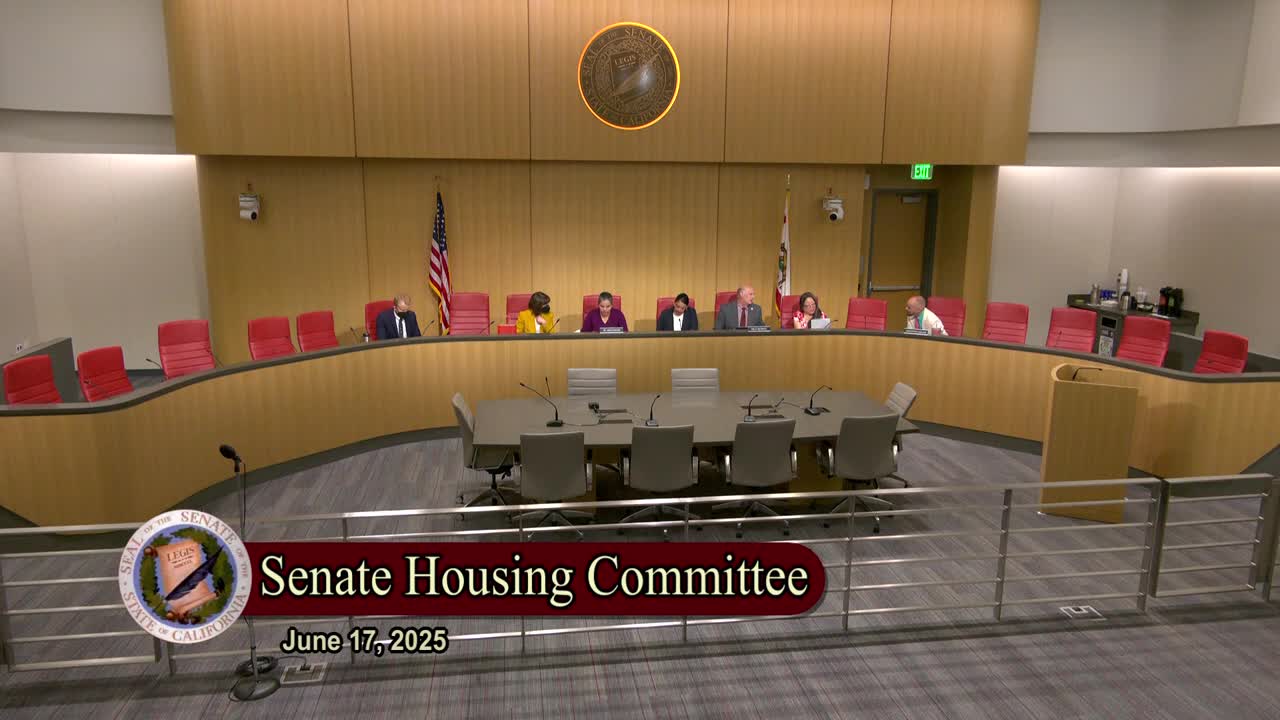 12MIN
Senate Standing Committee on Housing
 4MIN
Senate Standing Committee on Labor, Public Employment and Retirement
 3MIN
Assembly Floor
 4MIN
Assembly Standing Committee on Appropriations
 9MIN