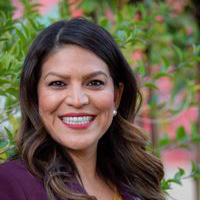
AB 32: Tribal judges.
- Session Year: 2025-2026
- House: Assembly
- Latest Version Date: 2024-12-02
Current Status:
Failed
(2026-02-02: From committee: Filed with the Chief Clerk pursuant to Joint Rule 56.)
Introduced
In Committee
Awaiting First Chamber Vote
Passed First Chamber
In Committee
Awaiting Second Chamber Vote
Passed Second Chamber
Enacted
Existing law makes it a crime for a person to assault, among other people, a judge of any local, state, or federal court of record in retaliation for or to prevent the performance of their official duties, as specified. Existing law requires a county elections official to, upon application by a public safety officer, make confidential that officers residence address, telephone number, and email address appearing on the affidavit of voter registration, as specified. Existing law requires, upon request of specified persons, including an active or retired judge, that the persons home address that appears in a record of the Department of Motor Vehicles be made confidential.
This bill would additionally make it a crime for a person to assault a judge or former judge of a tribal court in retaliation for or to prevent the performance of their official duties, as specified. The bill would clarify that a tribal judge of a federally recognized California Indian tribe can request to make their records confidential pursuant to the above-described provisions. By expanding the scope of an existing crime, this bill would impose a state-mandated local program.
Existing constitutional provisions require that a statute that limits the right of access to the meetings of public bodies or the writings of public officials and agencies be adopted with findings demonstrating the interest protected by the limitation and the need for protecting that interest.
This bill would make legislative findings to that effect.
The California Constitution requires the state to reimburse local agencies and school districts for certain costs mandated by the state. Statutory provisions establish procedures for making that reimbursement.
This bill would provide that no reimbursement is required by this act for a specified reason.
(a)If authorized by the county board of supervisors, a county elections official shall, upon application of a public safety officer, make confidential that officers residence address, telephone number, and email address appearing on the affidavit of registration, in accordance with the terms and conditions of this section.
(b)The application by the public safety officer shall contain a statement, signed under penalty of perjury, that the person is a public safety officer as defined in subdivision (f) and that a life-threatening circumstance exists to the officer or a member of the officers family. The application shall be a public record.
(c)The confidentiality granted pursuant to subdivision (a) shall terminate no more than two years after commencement, as determined by the county elections official. The officer may submit a new application for confidentiality pursuant to subdivision (a), and the new request may be granted for an additional period of not more than two years.
(d)Any person granted confidential voter status under subdivision (a) shall:
(1)Provide a valid mailing address and be considered a vote by mail voter for all subsequent elections or until the county elections official is notified otherwise by the Secretary of State or in writing by the voter. A voter requesting termination of vote by mail status thereby consents to placement of the voters residence address, telephone number, and email address in the roster of voters.
(2)The elections official, in producing any list, roster, or index, shall exclude voters with a confidential voter status.
(3)Within 60 days of moving to a new county, if available in the new county, apply for confidential voter status pursuant to subdivision (a). The elections official of the new county, upon notice of the confidential voter moving into the county, shall do all of the following:
(A)Contact the confidential voter and provide information regarding the application for confidential voter status in the new county.
(B)Honor the confidential voter status from the former county for 60 days from the date of notice.
(C)Pursuant to paragraph (2), exclude the confidential voter in any list, roster, or index during the 60-day period.
(D)Remove the confidential voter status if the new voter has not obtained or cannot obtain confidential voter status pursuant to this section in the new county during the 60-day period.
(e)No action in negligence may be maintained against any government entity or officer or employee thereof as a result of the disclosure of the information that is the subject of this section unless by a showing of gross negligence or willfulness.
(f)A public safety officer has the same meaning as defined in subdivision (a), (d), (e), (f), or (j) of Section 7920.535 of the Government Code. A public safety officer also includes a tribal judge of a federally recognized California Indian tribe.
SEC. 2.Section 217.1 of the Penal Code is amended to read:217.1.(a)Except as provided in subdivision (b), every person who commits any assault upon the President or Vice President of the United States, the Governor of any state or territory, any justice, judge, or former judge of any local, state, tribal, or federal court of record, any commissioner, referee, or other subordinate judicial officer of any court of record, the secretary or director of any executive agency or department of the United States or any state or territory, or any other official of the United States or any state or territory holding elective office, any mayor, city council member, county supervisor, sheriff, district attorney, prosecutor or assistant prosecutor of any local, state, or federal prosecutors office, a former prosecutor or assistant prosecutor of any local, state, or federal prosecutors office, public defender or assistant public defender of any local, state, or federal public defenders office, a former public defender or assistant public defender of any local, state, or federal public defenders office, the chief of police of any municipal police department, any peace officer, any juror in any local, state, or federal court of record, or the immediate family of any of these officials, in retaliation for or to prevent the performance of the victims official duties, shall be punished by imprisonment in the county jail not exceeding one year or by imprisonment pursuant to subdivision (h) of Section 1170.
(b)Notwithstanding subdivision (a), every person who attempts to commit murder against any person listed in subdivision (a) in retaliation for or to prevent the performance of the victims official duties, shall be confined in the state prison for a term of 15 years to life. The provisions of Article 2.5 (commencing with Section 2930) of Chapter 7 of Title 1 of Part 3 shall apply to reduce any minimum term of 15 years in a state prison imposed pursuant to this section, but that person shall not otherwise be released on parole prior to that time.
(c)For the purposes of this section, the following words have the following meanings:
(1)Immediate family means spouse, child, stepchild, brother, stepbrother, sister, stepsister, mother, stepmother, father, or stepfather.
(2)Peace officer means any person specified in subdivision (a) of Section 830.1 or Section 830.5.
SEC. 3.Section 1808.4 of the Vehicle Code is amended to read:1808.4.(a)For all of the following persons, the persons home address that appears in a record of the department is confidential if the person requests the confidentiality of that information:
(1)Attorney General.
(2)State Public Defender.
(3)A Member of the Legislature.
(4)An active or retired judge or court commissioner. commissioner, including a tribal judge of a federally recognized California Indian tribe.
(5)A district attorney.
(6)A public defender.
(7)An attorney employed by the Department of Justice, the office of the State Public Defender, or a county office of the district attorney or public defender.
(8)A city attorney, city prosecutor, or an attorney who submits verification from their public employer that the attorney represents the city in matters that routinely place the attorney in personal contact with persons under investigation for, charged with, or convicted of, committing criminal acts, if that attorney is employed by a city attorney or city prosecutor.
(9)A nonsworn police dispatcher.
(10)A child abuse investigator or social worker, working in child protective services within a social services department.
(11)An active or retired peace officer, as defined in Chapter 4.5 (commencing with Section 830) of Title 3 of Part 2 of the Penal Code.
(12)An employee of the Department of Corrections and Rehabilitation, Division of Juvenile Facilities, or the Prison Industry Authority specified in Sections 20403 and 20405 of the Government Code.
(13)A nonsworn employee of a city police department, a county sheriffs office, the Department of the California Highway Patrol, a federal, state, or local detention facility, or a local juvenile hall, camp, ranch, or home, who submits agency verification that, in the normal course of the employees employment, the employee controls or supervises inmates or is required to have a prisoner in the employees care or custody.
(14)A county counsel assigned to child abuse cases.
(15)An investigator employed by the Department of Justice, a county district attorney, or a county public defender.
(16)A member of a city council.
(17)A member of a board of supervisors.
(18)A federal prosecutor, criminal investigator, or National Park Service Ranger working in this state.
(19)An active or retired city enforcement officer engaged in the enforcement of the Vehicle Code or municipal parking ordinances.
(20)An employee of a trial court.
(21)A psychiatric social worker employed by a county.
(22)A police or sheriff department employee designated by the chief of police of the department or the sheriff of the county as being in a sensitive position. A designation pursuant to this paragraph shall, for purposes of this section, remain in effect for three years subject to additional designations that, for purposes of this section, shall remain in effect for additional three-year periods.
(23)A state employee in one of the following classifications:
(A)Licensing-Registration Examiner, Department of Motor Vehicles.
(B)Motor Carrier Specialist I, Department of the California Highway Patrol.
(C)Museum Security Officer and Supervising Museum Security Officer.
(D)Licensing Program Analyst, State Department of Social Services.
(24)(A)The spouse or child of a person listed in paragraphs (1) to (23), inclusive, regardless of the spouses or childs place of residence.
(B)The surviving spouse or child of a peace officer, as defined in Chapter 4.5 (commencing with Section 830) of Title 3 of Part 2 of the Penal Code, if the peace officer died in the line of duty.
(C)The surviving spouse or child of a judge or court commissioner, if the judge or court commissioner died in the performance of their duties.
(D)(i)Subparagraphs (A), (B), and (C) do not apply if the person listed in those subparagraphs was convicted of a crime and is on active parole or probation.
(ii)For requests made on or after January 1, 2011, the person requesting confidentiality for their spouse or child listed in subparagraph (A), (B), or (C) shall declare, at the time of the request for confidentiality, whether the spouse or child has been convicted of a crime and is on active parole or probation.
(iii)Neither the listed persons employer nor the department shall be required to verify, or be responsible for verifying, that a person listed in subparagraph (A), (B), or (C) was convicted of a crime and is on active parole or probation.
(E)(i)The department shall discontinue holding a home address confidential pursuant to this subdivision for a person specified in subparagraph (A), (B), or (C) who is the child or spouse of a person described in paragraph (4), (9), (11), (13), or (22) if the child or spouse is convicted of a felony in this state or is convicted of an offense in another jurisdiction that, if committed in California, would be a felony.
(ii)The department shall comply with this subparagraph upon receiving notice of a disqualifying conviction from the agency that employs or formerly employed the parent or spouse of the convicted person, or as soon as the department otherwise becomes aware of the disqualifying conviction.
(b)The confidential home address of a person listed in subdivision (a) shall not be disclosed, except to any of the following:
(1)A court.
(2)A law enforcement agency.
(3)The State Board of Equalization.
(4)An attorney in a civil or criminal action that demonstrates to a court the need for the home address, if the disclosure is made pursuant to a subpoena.
(5)A governmental agency to which, under any law, information is required to be furnished from records maintained by the department.
(c)(1)A record of the department containing a confidential home address shall be open to public inspection, as provided in Section 1808, if the address is completely obliterated or otherwise removed from the record.
(2)Following termination of office or employment, a confidential home address shall be withheld from public inspection for three years, unless the termination is the result of conviction of a criminal offense or a request to remove confidentiality protections has been made by an employing agency pursuant to paragraph (6). If the termination or separation is the result of the filing of a criminal complaint, a confidential home address shall be withheld from public inspection during the time in which the terminated individual may file an appeal from termination, while an appeal from termination is ongoing, and until the appeal process is exhausted, after which confidentiality shall be at the discretion of the employing agency if the termination or separation is upheld. Upon reinstatement to an office or employment, the protections of this section are available.
(3)With respect to a retired peace officer, the peace officers home address shall be withheld from public inspection permanently upon request of confidentiality at the time the information would otherwise be opened. The home address of the surviving spouse or child listed in subparagraph (B) of paragraph (24) of subdivision (a) shall be withheld from public inspection for three years following the death of the peace officer.
(4)The department shall inform a person who requests a confidential home address what agency the individual whose address was requested is employed by or the court at which the judge or court commissioner presides.
(5)With respect to a retired judge or court commissioner, the retired judge or court commissioners home address shall be withheld from public inspection permanently upon request of confidentiality at the time the information would otherwise be opened. The home address of the surviving spouse or child listed in subparagraph (C) of paragraph (24) of subdivision (a) shall be withheld from public inspection for three years following the death of the judge or court commissioner.
(6)Following a termination of employment, the terminated individuals employing agency may request that the department remove the confidentiality protections of this section for the terminated individual if no appeal to the termination is filed or if the termination or separation is upheld. The employing agency shall certify in its request to the department that no appeal to the termination has been filed or that the termination or separation has been upheld. If the terminated individual files an appeal from termination, the individuals confidential home address shall be withheld from public inspection while the appeal from termination is ongoing and until the appeal process is exhausted. The department shall comply with a request made pursuant to this paragraph within 45 days of receipt. This paragraph shall not apply to terminations of employment resulting from the filing of a criminal complaint.
(d)A violation of subdivision (a) by the disclosure of the confidential home address of a peace officer, as specified in paragraph (11) of subdivision (a), a nonsworn employee of the city police department or county sheriffs office, a judge or court commissioner, as specified in paragraph (4) of subdivision (a), or the spouses or children of these persons, including, but not limited to, the surviving spouse or child listed in subparagraph (B) or (C) of paragraph (24) of subdivision (a), that results in bodily injury to the peace officer, employee of the city police department or county sheriffs office, judge or court commissioner, or the spouses or children of these persons is a felony.
SEC. 4.The Legislature finds and declares that Sections 1 and 3 of this act, which amend Section 2166.7 of the Elections Code and Section 1808.4 of the Vehicle Code, impose a limitation on the publics right of access to the meetings of public bodies or the writings of public officials and agencies within the meaning of Section 3 of Article I of the California Constitution. Pursuant to that constitutional provision, the Legislature makes the following findings to demonstrate the interest protected by this limitation and the need for protecting that interest:
Threats to, and attacks on, public officials, including judges, based on their official duties have been increasing. Individuals serving as judges on tribal courts have experienced similar threats to their personal safety. In order to extend to tribal judges the same level of protection as afforded to judges of courts of California, it is necessary to limit access to the personal information of tribal judges.
SEC. 5.No reimbursement is required by this act pursuant to Section 6 of Article XIIIB of the California Constitution because the only costs that may be incurred by a local agency or school district will be incurred because this act creates a new crime or infraction, eliminates a crime or infraction, or changes the penalty for a crime or infraction, within the meaning of Section 17556 of the Government Code, or changes the definition of a crime within the meaning of Section 6 of Article XIIIB of the California Constitution.
REVISIONS: HeadingLine 2.|
Date
|
Status
|
|---|---|
| Feb 2, 2026 | From committee: Filed with the Chief Clerk pursuant to Joint Rule 56. |
| Jan 31, 2026 | Died pursuant to Art. IV, Sec. 10(c) of the Constitution. |
| May 23, 2025 | Coauthors revised. |
| May 23, 2025 | In committee: Held under submission. |
| Apr 9, 2025 | In committee: Set, first hearing. Referred to APPR. suspense file. |
| Mar 25, 2025 | From committee: Do pass and re-refer to Com. on APPR. with recommendation: To Consent Calendar. (Ayes 16. Noes 0.) (March 24). Re-referred to Com. on APPR. |
| Mar 4, 2025 | From committee: Do pass and re-refer to Com. on TRANS. with recommendation: To Consent Calendar. (Ayes 9. Noes 0.) (March 4). Re-referred to Com. on TRANS. |
| Feb 3, 2025 | Referred to Coms. on PUB. S. and TRANS. |
| Dec 3, 2024 | From printer. May be heard in committee January 2. |
| Dec 2, 2024 | Read first time. To print. |
|
Date
|
Description
|
Location
|
Votes
|
|
|---|---|---|---|---|
| Mar 24, 2025 | Do pass and be re-referred to the Committee on [Appropriations] with recommendation: To Consent Calendar | Assembly Standing Committee on Transportation |
Passed |
|
| Mar 4, 2025 | Do pass and be re-referred to the Committee on [Transportation] with recommendation: To Consent Calendar | Assembly Standing Committee on Public Safety |
Passed |
This list shows positions taken on this bill by organizations on the date displayed, which is linked to the original source.
Positions by individuals are not included.
|
Organization
|
Position
|
Date
|
|---|---|---|
| California District Attorneys Association | ** Support | |
| California Indian Legal Services | ** Support | |
| California State Sheriffs' Association | ** Support | |
| California Tribal Business Alliance | ** Support | |
| Habematolel Pomo Of Upper Lake | ** Support | |
| Judicial Council of California | ** Support | |
| Northern California Tribal Chairmen'S Association | ** Support |
Date of Hearing: April 9, 2025
ASSEMBLY COMMITTEE ON APPROPRIATIONS
Buffy Wicks, Chair
ABPCA Bill Id:AB 32
Author:(Soria) – As Introduced Ver:December 2, 2024
Policy Committee: | Public Safety | Vote: | 9 - 0 |
Transportation | 16 - 0 | ||
|
|
Urgency: No State Mandated Local Program: Yes Reimbursable: Yes
SUMMARY:
This bill allows a tribal judge to request the confidentiality of specified personal information that appears on the judge’s affidavit of voter registration and in Department of Motor Vehicles (DMV) records. The bill also expands the existing crimes of assaulting or attempting to murder an official in retaliation for or to prevent the performance of the official’s duties to include assaulting or attempting to murder a tribal judge.
FISCAL EFFECT:
- One-time costs (Motor Vehicle Account (MVA)) to DMV to enroll participating tribal judges in its confidentiality program, possibly in the tens of thousands of dollars. Actual costs will depend on the number of newly eligible individuals who choose to participate in the confidentiality program and amount of workload to DMV to enroll each individual in the program. Ongoing costs are likely minor and absorbable. According to the Legislative Analyst’s Office (LAO), the MVA—the main funding source for the DMV—is expected to fully exhaust its reserves and become insolvent in fiscal year 2025‑26. The LAO further warns that the MVA, absent corrective action, such as revenue increases or spending reductions, will experience a negative fund balance of $1.4 billion in fiscal year 2028‑29.
- Costs (local funds, General Fund) of an unknown amount to county elections offices to, upon request of tribal judges, make confidential the judges’ residence address, telephone number, and email address on their affidavits of voter registration. Actual costs will depend on the number of requests and how long it takes to fulfill each request. General Fund costs will depend on whether the Commission on State Mandates determines these duties are a reimbursable state mandate.
- Costs (local funds, General Fund) of an unknown but potentially significant amount to the counties and the California Department of Corrections and Rehabilitations to incarcerate people convicted of assaulting or attempting to murder a tribal judge. This bill significantly increases the maximum punishment for each of these offenses. Actual incarceration costs will depend on the number of convictions and the length of each sentence. The average annual cost to incarcerate one person in county jail is approximately $29,000. The LAO estimates the average annual cost to incarcerate one person in state prison is $133,000. Although county incarceration costs are generally not considered reimbursable state mandates pursuant to Proposition 30 (2012), overcrowding in county jails creates cost pressure on the General Fund because the state has historically granted new funding to counties to offset overcrowding resulting from 2011 public safety realignment.
COMMENTS:
- Purpose. According to the author:
Like local and state counterparts, tribal courts oversee a slew of legal cases that can touch upon very sensitive information. Misdemeanor cases, custody battles, and child support cases risk the chance of emotions becoming heightened and leading to threats and assaults on tribal judges. As the rates of court-targeted acts of violence increase at the state and federal level, California must bring to parity the same protections given to local, state, and federal judges to their counterparts servicing tribal courts across the state.
- Background. DMV Confidentiality. Under existing law, every DMV record of a person’s home address is deemed confidential. Generally, it is not possible to legally obtain any person’s home address from the DMV. This blanket confidentiality notwithstanding, statute also explicitly requires the DMV, upon request, to maintain the confidentiality of the home addresses of individuals who work in certain designated professions. Today, there are more than 20 such designated professions, including the Attorney General, the state public defender, members of the Legislature, judges, district attorneys, public defenders, peace officers, social workers, police dispatchers, and local elected officials. This bill adds tribal judges to the list of designated professions, allowing a tribal judge to request the DMV maintain the confidentiality of the judge’s home address.
Voter Registration Confidentiality. Existing law allows an authorized county elections official to make confidential certain personal information on a public safety officer’s affidavit of registration to vote, upon request by the public safety officer. When requesting confidentiality, the public safety officer must sign a statement under penalty of perjury attesting a life-threatening circumstance exists to the officer or a member of their family. Once granted, the information is made confidential for up to two years, at which point the public safety officer may again request confidentiality. This bill specifies that for these purposes, a “public safety officer” includes a tribal judge.
Crimes Against Officials. Under existing law, simple assault is a misdemeanor punishable by up to six months in county jail. Attempted murder is a felony punishable by five, seven, or nine years in prison, or by 7.5 years to life in prison, depending on the severity of the conduct. A person who commits either of these offenses against a tribal judge is currently subject to these penalties. However, there are separate Penal Code sections that more harshly punish an assault on or attempt to murder a public official in retaliation for or to prevent the performance of that official’s duties. Assault on a public official is punishable as a misdemeanor by up to one year in county jail, or as a felony by 16 months, two years, or three years in jail. If a defendant has certain prior convictions, they may be sentenced to a prison term. Attempted murder of a public official is a felony punishable by a prison term of 15 years to life. This bill adds tribal judges to the existing statutes for assault or attempted murder of a public official, significantly increasing the maximum punishment provided in existing law for this conduct.
Research shows that lengthy criminal sentences, which are costly to state and local governments, do not effectively deter crime. In general, the certainty that someone will be punished for an offense plays a larger role in deterring their criminal activity, rather than the length of their potential punishment.
- Prior Legislation. AB 2281 (Soria), of the 2023-24 Legislative Session, was substantially the same as this bill. It was held on the Senate Appropriations Committee’s suspense file.
Analysis Prepared by: Annika Carlson / APPR. / (916) 319-2081
Date of Hearing: March 24, 2025
ASSEMBLY COMMITTEE ON TRANSPORTATION
Lori D. Wilson, Chair
ABPCA Bill Id:AB 32 (
Author:Soria) – As Introduced Ver:December 2, 2024
SUBJECT: Tribal judges
SUMMARY: Makes it a felony for the Department of Motor Vehicles (DMV) to disclose a tribal judge’s confidential home address if that disclosure results in physical injury. Specifically, this bill:
- Adds tribal judges of federally recognized California Indian tribes (referred to as “tribal judges” below) to the list of “public safety officer[s]” authorized to request the confidentiality of their residence address, telephone number, and email address appearing on their affidavit of voter registration.
- Adds tribal judges to the list of public officials authorized to request the confidentiality of their home addresses appearing in the DMV records.
- Adds tribal judges to the list of public officials for whom it is a criminal offense to assault or to attempt to commit murder, in retaliation for, or to prevent the performance of that official’s official duties.
EXISTING LAW:
- Lists 23 classes of persons, primarily in law enforcement fields, plus their spouses and children that may request that DMV keep their home addresses confidential. The home addresses of these persons may only be disclosed to a court; a law enforcement agency; the State Board of Equalization (BOE); an attorney in a civil or criminal action who demonstrates to a court the need for the home address, if the disclosure is made pursuant to a subpoena; and any governmental agency legally required to be furnished the information. (Vehicle Code Section [VEH] 1804.4)
- Makes confidential the home addresses of all individuals contained within DMV records. These provisions similarly allow for disclosure to courts, law enforcement agencies, and other governmental agencies, but also allow for limited disclosure to financial institutions, insurance companies, attorneys, vehicle manufacturers, and persons doing statistical research. (VEH 1808.21)
- Grants DMV the authority to suppress all records for at least one year for persons who are under threat of death or bodily injury. Under these circumstances, the entire record, including the address, is rendered inaccessible. (VEH 1804.21)
- Makes the willful, unauthorized disclosure of any DMV record to any person, or the use of false representation to obtain information from DMV for a purpose other than one stated a misdemeanor, punishable by a fine not exceeding $5,000 or by imprisonment in the county jail not exceeding one year, or by both fine and imprisonment. (VEH 1808.45)
- Makes the disclosure of the confidential home address of a peace officer, a nonsworn employee of the city police department, or a county sheriff’s office, a judge or court commissioner, or the spouses or children of these persons that results in bodily injury a felony. (VEH 1808.4)
FISCAL EFFECT: Unknown
COMMENTS: Until 1989, DMV records were considered public records unless state law specifically made them confidential, as was the case for the addresses of peace officers and certain other officials thought to be at risk. Because home addresses were not considered confidential, any person who gave a reason that DMV deemed legitimate and could present to DMV a person's driver's license number or license plate number and obtain that individual’s home address.
In 1989, actress Rebecca Schaeffer was stalked and killed. The murderer obtained her address from a private investigation agency doing business in Arizona. The private investigation agency acquired her address through a subcontractor agent in California, who obtained it from DMV. In response, the Legislature enacted AB 1779 (Roos), Chapter 1213, Statutes of 1989 which made all home addresses in DMV records confidential, with limited exceptions.
AB 1779 left in place existing confidentiality provisions that applied only to peace officers and certain other officials. The list of those to whom the pre-AB 1779 confidentiality provisions apply, generally referred to as the Confidential Records Program (CRP), now includes 23 classes of persons. DMV is not aware of any instances since the implementation of AB 1779 where confidential home address information has been used for physical harm or for violent criminal purposes.
According to the author, "Like local and state counterparts, tribal courts oversee a slew of legal cases that can touch upon very sensitive information. Misdemeanor cases, custody battles, and child support cases risk the chance of emotions becoming heightened and leading to threats and assaults on tribal judges. As the rates of court-targeted acts of violence increase at the state and federal level, California must bring to parity the same protections given to local, state, and federal judges to their counterparts servicing tribal courts across the state.”
According to California Indian Legal Services, writing in support of this bill, “AB 32 grants a Tribal Court Judge of a federally recognized California Indian tribe the right to have their residence address, telephone number, and email address appearing on the affidavit of voter registration maintained confidential, under certain conditions. The bill will also grant a Tribal Court Judge of a federally recognized Indian tribe the right to request that the Department of Motor Vehicles maintain as confidential their home address. Because the bill would limit the access of the public to certain personal information of Tribal Court Judges, the bill meets the constitutionally mandated legislative finding by showing the interest protected by the limitation and the need for protecting that interest. Finally, the bill would make a person who commits an assault on a judge or former judge of a Tribal Court of record, in retaliation for or to prevent the performance of their official duties, punishable by imprisonment.”
Committee concerns: Given that DMV records are universally confidential, with limited exceptions, and that DMV is not aware of any instances since the implementation of AB 1779 in which DMV home address information has been used for physical harm or for violent criminal purposes, the need for this bill is unclear.
While it may appear that the CRP provides a greater level of confidentiality than is available to the general public, functionally the level of confidentiality is the same. People seeking confidential information about others generally do not look to DMV records for personal data since those records are carefully protected and the same information is much more easily obtainable via the internet and social media.
A 2009 investigative article from Jennifer Muir at the Orange County Register found another use for individuals protected under the CRP: evading tickets. The article found:
- Vehicles with protected license plates can run through dozens of intersections controlled by red light cameras and breeze along the 91 toll lanes with impunity.
- Parking citations issued to vehicles with protected plates are often dismissed because the process necessary to pierce the shield is too cumbersome.
- Some patrol officers let drivers with protected plates off with a warning because the plates signal that the drivers are “one of their own” or related to someone who is.
The Register found through a public records request of the Orange County Transportation Authority that there were 14,535 unpaid trips on toll facilities in the county by motorists with confidential plates over a five year period.
Further, adding tribal judges to the CRP will add require DMV to make changes to its IT system and result in increased programing costs. . According to the Legislative Analyst Office (LAO), the Motor Vehicle Account (MVA), the primary funding source for DMV, is expected to fully exhaust its reserves and become insolvent in 2025-26. The LAO recommends the Legislature should consider MVA cost pressures when evaluating new proposals. LAO argues that “Until a plan is put in place to address MVA’s structural deficit, we recommend the Legislature set a high bar for considering approval of any proposals that create additional MVA cost pressures and accelerate the risk of insolvency.”
In the Governor’s proposed 2025-2026 budget, the Governor warned that “Given the projected fiscal constraints in the MVA by 2025-26, the Administration will continue to prioritize fiscal discipline and will set a high bar for any new workload or initiatives beyond the DMV’s existing operational priorities. By focusing on core operational priorities, the DMV will focus on serving Californians while navigating the MVA’s fiscal constraints.”
Previous legislation: Over the past 12 years, there have been a number of bills proposing to expand the list of those eligible to apply for the CRP, only one of which was chaptered. Another bill extending the length of time of a profession already on the list was also chaptered. These bills include:
AB 2322 (Daly) Chapter 914, Statutes of 2018, requires DMV, upon request, to make a retired judge or court commissioner’s home address confidential for the rest of his or her life and for any surviving spouse or child for three years following the death of the judge or court commissioner.
AB 2687 (Bocanegra), Chapter 273, Statutes of 2014, added Licensing Program Analysts with the Department of Social Services to the list.
AB 2281 (Soria) of 2024 was substantially similar to this bill. That bill was held in Senate Appropriations Committee.
AB 980 (Kalra) of 2019, would have required the Department of Motor Vehicles (DMV), upon request, to make an adult abuse investigator or social worker, public guardian, public conservator, or public administrator’s home address confidential. That bill was held in the Assembly Appropriations committee suspense file.
SB 1093 (Jackson) of 2017, would have added adult abuse investigators or social workers to the list of persons who can request their home address be held confidential by the DMV. SB 1093 was held in the Senate Appropriations Committee on the suspense file.
SB 101 (Nielsen) of 2021, SB 362 (Galgiani) of 2017, SB 1131 (Galgiani) of 2016 and SB 372 (Galgiani) of 2015: These bills would have added Department of Insurance investigators, code enforcement officers, and parking control officers to the list of categories for which the (DMV) must hold home addresses confidential. These bills were held on the Senate Appropriations Committee suspense file.
AB 3017 (Acosta) of 2017, would have added air marshals to the list of persons who can request that their home address be held confidential by the DMV. AB 3017 was amended on the Senate floor into a substantially different bill and died.
AB 222 (Achadjian) of 2015, would have added certain employees of the Department of State Hospitals (DSH) and the California Department of Corrections and Rehabilitation (CDCR) to the list of persons who can request that their home address be held confidential by the DMV.
AB 222 was held on the Senate Appropriations Committee suspense file.
SB 767 (Lieu) of 2014, would have added code enforcement officers and would have required eligible persons requesting confidentiality for their spouse or child to disclose whether the spouse or child had been convicted of a crime and or was on mandatory supervision or post release community supervision at the time of the request for confidentiality. SB 767 was referred to this committee but was not heard at the request of the author.
AB 1270 (Eggman) of 2013, would have added code enforcement officers and their spouses and children. AB 1270 was held in the Assembly Appropriations Committee on the suspense file.
AB 923 (Swanson) of 2009, would have added Board of Equalization members, code enforcement officers, and certain veterinarians. AB 923 was held in the Assembly Appropriations Committee on the suspense file.
AB 592 (Lowenthal) of 2009, would have added BOE staff who are designated to exercise limited peace officer authority and duties. AB 592 was held in the Assembly Appropriations Committee on the suspense file.
AB 1958 (Swanson) of 2008, would have added firefighters, code enforcement officers, and certain veterinarians. AB 1958 was held in the Assembly Appropriations Committee on the suspense file.
AB 1311 (Berryhill) of 2007, would have added community service and public service officers employed by police departments. AB 1311 was referred to this committee but was not heard at the request of the author.
AB 1706 (Strickland) of 2005, would have added fraud investigators, park rangers, emergency dispatchers, and DMV employees who test new drivers. AB 1706 was referred to this committee but was not heard at the request of the author.
AB 2012 (Chu) of 2004, would have added court-appointed attorneys, their investigators, and social workers assigned to child abuse cases. These provisions were eventually amended out of the bill.
AB 130 (Campbell) of 2003 and AB 246 (Cox) of 2003, both bills would have added members of Congress. Both bills were referred to this committee but neither was heard.
REGISTERED SUPPORT / OPPOSITION:
Support
California District Attorneys Association
California Indian Legal Services
California State Sheriffs' Association
California Tribal Business Alliance
Habematolel Pomo of Upper Lake
Judicial Council of California
Northern California Tribal Chairmen’s Association
Opposition
No opposition on file
Analysis Prepared by: David Sforza / TRANS. / (916) 319-2093
Date of Hearing: March 4, 2025
Counsel: Dustin Weber
ASSEMBLY COMMITTEE ON
Nick Schultz, Chair
ABPCA Bill Id:
Author:() – As Ver:
SUMMARY: Increases penalties for assault and attempted murder against a tribal judge in retaliation for, or to prevent, the performance of their official duties. Specifically, this bill:
- Increases the punishment for assault of an active or retired tribal judge in retaliation for, or to prevent, the performance of their official duties from a misdemeanor, punishable by up to one year in county jail, to a wobbler punishable by imprisonment either by up to one year in county jail or by 16 months, two years, or three years.
- Increases the punishment for attempted murder of an active or retired tribal judge in retaliation for, or to prevent, the performance of their official duties to 15 years to life.
- Authorizes active and retired tribal judges of federally recognized California Indian tribes to request confidentiality of their residence address, telephone number, and email address appearing on their voter registration application.
- Authorizes active and retired tribal judges of federally recognized California Indian tribes to request confidentiality of their home address in DMV records.
- Makes findings and declarations.
EXISTING STATE LAW:
- Defines “assault” as an unlawful attempt, coupled with a present ability, to commit a violent injury on the person of another. (Pen. Code, § 240.)
- Makes simple assault punishable by a fine not exceeding $1,000, or by imprisonment in county jail not exceeding six months, or by both the fine and imprisonment. (Pen. Code, § 241, subd. (a).)
- Punishes assault by means of force likely to produce great bodily injury with imprisonment in the state prison for two, three, or four years, or in a county jail for not less than six months and not exceeding one year, or by a fine not exceeding $10,000, or by both the fine and imprisonment. (Pen. Code, § 245, subd. (a)(4).)
- Prohibits assault in retaliation for or to prevent the performance of official duties of an active or retired local, state, or federal judge. (Pen. Code, § 217.1, subd. (a).)
- Defines murder as the unlawful killing of a human being with malice aforethought. (Pen. Code, § 187.)
- Punishes attempted murder that is willful, deliberate, and premeditated with imprisonment in state prison for life with the possibility of parole. (Pen. Code, § 664, subd. (a).)
- Punishes any other attempted murder by imprisonment in state prison for 5, 7 or 9 years, unless otherwise specified. (Pen. Code, § 664, subd. (a).)
- Makes attempted murder of a justice, judge, or former judge of any local, state, or federal court, or other subordinate judicial officer of any court, in retaliation for or to prevent the performance of their official duties, punishable by 15 years to life in state prison. (Pen. Code, § 217.1, subd. (b).)
- Authorizes county elections officials, upon application of a public safety officer, as defined, who states that a life-threatening circumstance exists to the officer or a member of their family, to make confidential that officer’s residence address, telephone number, and email address appearing on their affidavit of voter registration. (Elec. Code, § 2166.7, subds. (a) & (b).)
- Provides that any residence address in any record of the DMV is confidential and shall not be disclosed to any person, except a specified government or law enforcement agency. (Veh. Code, § 1808.21, subd. (a).)
- Authorizes specified public safety officials, as defined, including active or retired judges or court commissioners, to request their home address where it appears in DMV records be made confidential. (Veh. Code, § 1808.4, subd. (a)(4).)
- Requires the home addresses of retired judges and court commissioners to be permanently withheld from public inspection, if confidentiality is requested, and the home addresses of specified surviving spouses and children to be withheld from public inspection for three years following the death of the judge or court commissioner. (Veh. Code, § 1808.4, subd. (c)(5).)
- Provides that the disclosure of a confidential home address of a judge or court commissioner that results in bodily injury to that judge, court commissioner, or their spouse or children, is a felony. (Veh. Code, § 1808.4, subd. (d.).)
FISCAL EFFECT:
Unknown
COMMENTS:
- Author's Statement: According to the author, “Like local and state counterparts, tribal courts oversee a slew of legal cases that can touch upon very sensitive information. Misdemeanor cases, custody battles, and child support cases risk the chance of emotions becoming heightened and leading to threats and assaults on tribal judges. As the rates of court-targeted acts of violence increase at the state and federal level, California must bring to parity the same protections given to local, state, and federal judges to their counterparts servicing tribal courts across the state.”
- Increased Penalties for Crimes against Tribal Judges: This bill would include tribal judges in the categories of public officials where enhanced penalties are available for the commission of certain crimes against those public officials in retaliation for or preventing them from performing their official duties.
It is already a crime for a person to assault or attempt to murder a tribal judge. (Pen. Code, §§ 240, 187, 664). Under California law, simple assault is punishable by a fine up to $1,000, imprisonment up to six months in county jail, or both. (Pen. Code, § 241, subd. (a).) Attempted murder that is willful, premeditated, and deliberate is punishable by life in prison with possibility of parole. (Pen. Code, §§ 187,664.) Unless otherwise specified, any other attempted murder is punishable by 5, 7, or 9 years in state prison. Given California has the same power to prosecute crimes committed “by or against Indians in Indian country” as it does throughout the State (18 U.S.C. § 1162), a person who assaults or attempts murder on a tribal judge already faces significant criminal punishment.
This bill would make the assault of a tribal judge, in retaliation for, or to prevent, the performance of the judge’s duties, punishable by imprisonment in county jail for no more than one year. It would also provide for a 15 years to life sentence for attempted murder of a tribal judge under the same circumstances. Like their judicial counterparts, this would roughly double the punishment currently available for an assault or attempted murder conviction against a tribal judge.
- Judges Facing Increased Threats: Data from various sources shows threats against judges and judicial officers increasing for more than 50 years. The Center for Judicial and Executive Security found the rate of threats and violent incidents against judicial officers has increased every decade between 1970 and 2010.[1] Threats to federal judges have risen every year since 2019.[2]
Unfortunately, violent incidence data specific to tribal courts and judges is not currently available. According to the National Center for State Courts, however, tribal courts face similar security and safety threats as local and state courts.[3] Like their state court colleagues, tribal judges also face threats of “bodily harm, witness intimidation, nonverbal threatening communications in courtrooms, and random acts of violence outside of the courthouse.”[4]
- Authorization for Confidentiality: This bill would grant tribal judges the same protections as state and federal judges by authorizing tribal judges to request the confidentiality of their home address appearing in DMV records and of their home address, telephone number, and email address in voter registration applications.
Even with these changes implemented, it is unlikely this bill will have a significant impact on the confidentiality of residence information in the DMV records of tribal judges. With few exceptions, residential addresses in DMV records are confidential. (Veh. Code, § 1808.21, subd. (a).) The committee has not been provided with any evidence showing violent crimes committed following the acquisition of residence information in DMV records.
There is a similarly slim likelihood of violent crimes following the acquisition of personally identifying information in voter registration affidavits. Existing law authorizes any person filing a voter registration affidavit to request their information be kept confidential. (Elec. Code, § 2166, subd. (a).) To secure this confidentiality, the applicant must, upon order of a superior court, show good cause that life-threatening circumstances exist to the person or their household. (Ibid.) Existing law also permits certain public safety officials to go through the confidentiality application process with a county elections official. (Elec. Code, § 2166.7, subd. (a).) This bill would make this additional option to obtain confidentiality available to tribal judges by defining tribal judges as public safety officials and public safety officers.
Ultimately, whether this bill will enhance tribal judge safety is unclear, even if makes it easier for tribal judges to secure the confidentiality of their information in DMV and voter registration records.
- Impact of Increased Penalties on Criminal Deterrence: It is unclear whether increasing penalties in these cases will have a deterrent effect.
There is reliable evidence showing that increased penalties generally fail to deter criminal behavior.[5] Data shows greater deterrent effects as the likelihood of being caught and the perception that one will get caught rises for criminal behavior.[6] In contrast, the act of punishment and the length of punishment largely do not increase deterrence.[7]
This bill would increase the length of punishment for certain crimes committed against tribal judges. California law already authorizes these punishments for federal and state judges. Making the same penalties available for crimes against tribal judges adds consistency to this set of laws, but it is questionable whether this consistency will actually deter people from committing these crimes.
- Additional Comments: The author may wish to consider some modifications to the statutory language to enhance clarity.
The proposed amendment to Vehicle Code section 1808.4, subdivision (a)(4), currently states, “For all of the following persons, the person’s home address that appears in a record of the department is confidential if the person requests the confidentiality of that information: [a]n active or retired judge or court commissioner, including a tribal judge of a federally recognized California Indian tribe.” This change appears to make clear that the list of public safety officials who can request confidentiality. However, subdivisions (c)(4) and (5) of the same section do not explicitly include tribal judges in the statutory language. While the California Supreme Court has stated, “the various parts of a statutory enactment must be harmonized by considering the particular clause or section in the context of the statutory framework as a whole” (People v. Medina (2007) 41 Cal.4th 685, 696), courts are not always consistent in how and when this rule is applied.
Therefore, the author may wish to consider adding the words “or tribal judge” after each mention of “court commissioner” in the above-referenced code sections to enhance clarity across the statutory scheme.
- Arguments in Support:
- According to the Habematolel Pomo of Upper Lake (HPUL), “California's Tribal judges preside over cases that involve decisions over the custody rights of parents, domestic violence restraining orders, and other matters that are highly contested and emotionally fraught. AB 32 recognizes the safety and security vulnerabilities associated with the role and takes action by providing Tribal judges the same protections that their local, state, and federal counterparts can access to guard their and their families’ personal information. When considering the disparity in available security measures that some Tribal courtrooms have access to, it becomes especially apparent how necessary this bill is to protect Tribal judges across California and uphold their right to operate their own judicial systems.”
- According to the California District Attorneys’ Association (CDAA), “Tribal judges preside over cases that often involve sensitive and high-stakes matters, including criminal, family, and civil disputes. Like their counterparts in state and federal courts, they are vulnerable to threats and violence from individuals seeking to undermine the judicial process. However, current law does not provide the same level of protection for tribal court judges as it does for state and federal judges. AB 32 appropriately addresses this gap by extending these crucial protections to judges of federally recognized California Indian tribes.”
- Argument in Opposition: None submitted.
- Related Legislation: AB 31 (Ramos), would establish a pilot program granting peace officer authority to certain tribal police officers on Indian lands and elsewhere in the state under specified circumstances. AB 31 is scheduled to be heard today in this committee.
- Prior Legislation:
- AB 2281 (Soria), of the 2023-2024 Legislative Session, was nearly identical to this bill. AB 2281 was held in the Senate Appropriations Committee.
- SB 101 (Nielsen), of the 2021-2022 Legislative Session, would have added code enforcement and parking control officers, as well as their spouses and children, to the list of persons who may request an additional level of confidentiality from the DMV. SB 101 was held in the Senate Appropriations Committee.
- AB 980 (Kalra), of the 2019-2020 Legislative Session, would have made confidential a person’s home address in the records of the DMV if the person is a county public guardian, county public conservator, or county public administrator or a staff member of such offices. AB 980 was held in the Assembly Appropriations Committee.
- AB 2322 (Daly), Chapter 914, Statutes of 2018, required the DMV, upon request, to make a retired judge or court commissioner's home address confidential for the rest of their life and for any surviving spouse or child for three years following the death of the judge or court commissioner.
REGISTERED SUPPORT / OPPOSITION:
Support
California District Attorneys Association
California Indian Legal Services
California State Sheriffs' Association
Habematolel Pomo of Upper Lake
Judicial Council of California
Opposition
None submitted
Analysis Prepared by:
Court Security: Final Report of the Court Emergency Response and Security Task Force (Nov. 30, 2012) Judicial Council of California <https://courts.ca.gov/sites/default/files/courts/default/2024-12/jc-20121214-itemt.pdf> [as of Feb. 25, 2025]. ↑
Legare, Threats to federal judges have risen every year since 2019 CBS News (Feb. 14, 2024) <https://www.cbsnews.com/news/threats-to-federal-judges-have-risen-every-year-since-2019/> [as of Feb. 25, 2025]. ↑
Status of Court Security in State Courts – A National Perspective (June 2013) National Center for State Courts, <https://ncsc.contentdm.oclc.org/digital/collection/facilities/id/184> [as of Feb. 25, 2025]. ↑
Ibid. ↑
Five Things About Deterrence (May 2016) National Institute of Justice <https://www.ojp.gov/pdffiles1/nij/247350.pdf> [as of Feb. 25, 2025]. ↑
Ibid. ↑
Ibid. ↑
Bill Author