AB 355: Crimes: extortion.
- Session Year: 2025-2026
- House: Assembly
- Latest Version Date: 2025-01-30
Current Status:
Failed
(2026-02-02: From committee: Filed with the Chief Clerk pursuant to Joint Rule 56.)
Introduced
In Committee
Awaiting First Chamber Vote
Passed First Chamber
In Committee
Awaiting Second Chamber Vote
Passed Second Chamber
Enacted
What does this bill do?
This bill expands California’s extortion law to say that threatening to post, distribute, or create AI-generated images or videos of another person can cause fear that counts as extortion. That means using threats about AI images or videos to force someone to give money, property, or do something for you could be prosecuted as extortion (using threats to get money or actions).
The summary is provided by generative AI which can make mistakes. For original language, please view the details in the table below.
Existing law defines extortion as the obtaining of property from another, with consent, or the obtaining of an official act of a public officer, induced by a wrongful use of force or fear, or under color of official right. Existing law further provides that fear sufficient to constitute extortion may be induced by certain threats, including a threat to accuse the threatened individual, or the individuals relative or family, of a crime.
This bill would provide that a threat to post, distribute, or create AI-generated images or videos of another may also induce fear sufficient to constitute extortion. By expanding the crime of extortion, this bill would impose a state-mandated local program.
The California Constitution requires the state to reimburse local agencies and school districts for certain costs mandated by the state. Statutory provisions establish procedures for making that reimbursement.
This bill would provide that no reimbursement is required by this act for a specified reason.
Fear, such as will constitute extortion, Fear that constitutes extortion may be induced by a threat of any of the following:
1.(a)To do an unlawful injury to the person or property of the individual threatened or of a third person.
2.(b)To accuse the individual threatened, or a relative of his the individual, or her, or a member of his or her their family, of a crime.
3.(c)To expose, or to impute to him, her, the individual threatened, a relative of the individual, or them a member of their family, a deformity, disgrace, or crime.
4.(d)To expose a secret affecting him, her, the individual threatened, a relative of the individual, or them. a member of their family.
5.(e)To report his, her, the individual threatened, a relative of the individual, or a member of the individuals family, of their immigration status or suspected immigration status.
(f)To post, distribute, or create AI-generated images or videos of another.
SEC. 2.No reimbursement is required by this act pursuant to Section 6 of Article XIIIB of the California Constitution because the only costs that may be incurred by a local agency or school district will be incurred because this act creates a new crime or infraction, eliminates a crime or infraction, or changes the penalty for a crime or infraction, within the meaning of Section 17556 of the Government Code, or changes the definition of a crime within the meaning of Section 6 of Article XIIIB of the California Constitution.
|
Date
|
Status
|
|---|---|
| Feb 2, 2026 | From committee: Filed with the Chief Clerk pursuant to Joint Rule 56. |
| Jan 31, 2026 | Died pursuant to Art. IV, Sec. 10(c) of the Constitution. |
| May 23, 2025 | In committee: Held under submission. |
| Apr 9, 2025 | In committee: Set, first hearing. Referred to APPR. suspense file. |
| Mar 4, 2025 | From committee: Do pass and re-refer to Com. on APPR. (Ayes 9. Noes 0.) (March 4). Re-referred to Com. on APPR. |
| Feb 18, 2025 | Referred to Com. on PUB. S. |
| Jan 31, 2025 | From printer. May be heard in committee March 2. |
| Jan 30, 2025 | Read first time. To print. |
|
Date
|
Description
|
Location
|
Votes
|
|
|---|---|---|---|---|
| Mar 4, 2025 | Do pass and be re-referred to the Committee on [Appropriations] | Assembly Standing Committee on Public Safety |
Passed |
This list shows positions taken on this bill by organizations on the date displayed, which is linked to the original source.
Positions by individuals are not included.
|
Organization
|
Position
|
Date
|
|---|---|---|
| Aclu California Action | ** Against | |
| Arcadia Police Officers' Association | ** Support | |
| Brea Police Association | ** Support | |
| Burbank Police Officers' Association | ** Support | |
| California Association of School Police Chiefs | ** Support | |
| California Attorneys For Criminal Justice | ** Against | |
| California Civil Liberties Advocacy | ** Support | |
| California Coalition of School Safety Professionals | ** Support | |
| California District Attorneys Association | ** Support | |
| California Narcotic Officers' Association | ** Support | |
| California Public Defenders Association | ** Against | |
| California Reserve Peace Officers Association | ** Support | |
| Californians United for a Responsible Budget | ** Against | |
| CLAREMONT POLICE OFFICERS ASSOCIATION | ** Support | |
| Culver City Police Officers' Association | ** Support | |
| Ella Baker Center For Human Rights | ** Against | |
| Fullerton Police Officers' Association | ** Support | |
| Initiate Justice | ** Against | |
| LA Defensa | ** Against | |
| Los Angeles School Police Management Association | ** Support | |
| los angeles school police officers association | ** Support | |
| Murrieta Police Officers' Association | ** Support | |
| Newport Beach Police Association | ** Support | |
| Orange County Sheriff's Department | ** Support | |
| Palos Verdes Police Officers Association | ** Support | |
| Peace Officers Research Association Of California | ** Support | |
| Placer County Deputy Sheriffs' Assocation | ** Support | |
| Pomona Police Officers' Association | ** Support | |
| RIVERSIDE POLICE OFFICERS ASSOCIATION | ** Support | |
| Riverside Sheriffs' Association | ** Support | |
| San Francisco Public Defender | ** Against | |
| Santa Ana Police Officers Association | ** Support | |
| Smart Justice California, a project of Tides Advocacy | ** Against |
Date of Hearing: April 9, 2025
ASSEMBLY COMMITTEE ON APPROPRIATIONS
Buffy Wicks, Chair
ABPCA Bill Id:AB 355
Author:(Sanchez) – As Introduced Ver:January 30, 2025
Policy Committee: | Public Safety | Vote: | 9 - 0 |
|
| ||
|
|
Urgency: No State Mandated Local Program: Yes Reimbursable: No
SUMMARY:
This bill expands the crime of extortion to include fear based on a threat to post, distribute, or create videos generated by artificial intelligence (AI).
FISCAL EFFECT:
- Cost pressures (Trial Court Trust Fund, General Fund) of an unknown but potentially significant amount to the courts to adjudicate violations of the crime expanded by this bill. A defendant charged with a misdemeanor or felony is entitled to no-cost legal representation and a jury trial. Actual court costs will depend on the number of AI-related extortion cases filed and the amount of time it takes to adjudicate each case. Although courts are not funded on the basis of workload, increased pressure on the Trial Court Trust Fund may create a demand for increased funding for courts from the General Fund. The fiscal year 2024-25 state budget provides $37.3 million ongoing General Fund to backfill declining revenue to the Trial Court Trust Fund.
- Costs (local funds, General Fund) of an unknown but potentially significant amount to the counties and the Department of Corrections and Rehabilitation to incarcerate people convicted of AI-related extortion. Actual incarceration costs will depend on the number of convictions, the length of each sentence, and whether each sentence must be served in county jail or state prison. The average annual cost to incarcerate one person in county jail is approximately $29,000. The Legislative Analyst’s Office (LAO) estimates the average annual cost to incarcerate one person in state prison is $133,000. Although county incarceration costs are generally not considered reimbursable state mandates pursuant to Proposition 30 (2012), overcrowding in county jails creates cost pressure on the General Fund because the state has historically granted new funding to counties to offset overcrowding resulting from 2011 public safety realignment.
COMMENTS:
- Purpose. According to the author:
In 2023, the FBI issued an alert to warn the public of the growing use of AI by malicious actors to create manipulative images and videos for the purpose of ensnaring victims in sextortion schemes. While California law does prohibit sextortion generally, it does not specifically prohibit extortion with AI-generated material. This loophole makes it harder for prosecutors and law enforcement to successfully convict criminals and address this growing issue.
- Background. Under existing law, a person may be convicted of extortion if they obtain something of value from a victim induced by wrongful use of force or fear. The Penal Code specifies that in this context, fear may be caused by a threat to injure the victim or their family, to accuse the victim of a crime, to expose the victim’s secret, or to disgrace the victim publicly. In other words, if a person obtains property from a victim by threatening the victim such that the victim fears harm to their reputation, the person may be convicted of extortion. Misdemeanor extortion is punishable by up to six months in county jail. Felony extortion is punishable by 16 months, two years, or three years in county jail, or, if the defendant has certain prior convictions, a term in state prison.
This bill expands the definition of fear for the purposes of extortion to include fear that may be induced by a threat to post, distribute, or create AI-generated images of a person. As noted in the analysis of this bill by the Assembly Committee on Public Safety, a threat to post an AI-generated image is likely already covered under the existing extortion statute. Nevertheless, if, as its author intends, this bill makes it easier for prosecutors to obtain extortion convictions for AI-related threats, the bill will result in cost pressures to the courts and increased incarceration costs.
- Prior Legislation. AB 1872 (Sanchez), of the 2023-2024 Legislative Session, was identical to this bill. AB 1872 was held on this committee’s suspense file.
Analysis Prepared by: Annika Carlson / APPR. / (916) 319-2081
Date of Hearing:
Counsel: Kimberly Horiuchi
ASSEMBLY COMMITTEE ON PUBLIC SAFETY
Nick Schultz, Chair
ABPCA Bill Id:AB 355
Author:(Sanchez) – As Introduced Ver:January 30, 2025
SUMMARY:
Expands the definition of “fear” in the extortion statute to include any threat to post, distribute, or create AI-generated images or videos of another.
EXISTING LAW:
- States fear, such that it constitutes extortion, may be induced by a threat of any of the following:
- To do an unlawful injury to the person or property of the individual threatened or of a third person.
- To accuse the individual threatened, or a relative of his or her, or a member of his or her family, of a crime.
- To expose, or to impute to him, her, or them a deformity, disgrace, or crime.
- To expose a secret affecting him, her, or them.
- To report his, her, or their immigration status or suspected immigration status. (Pen. Code, § 519, subd. (1)-(5).)
- To do an unlawful injury to the person or property of the individual threatened or of a third person.
- Provides that every person who extorts property or other consideration from another, under circumstances not amounting to robbery or carjacking, by means of force or threat, as specified, shall be punished by imprisonment in county jail for a term of two, three, or four years. (Pen. Code, § 520.)
- Defines extortion as the obtaining of property or other consideration from another, with their consent, or the obtaining of an official act of a public officer, induced by a wrongful use of force or fear, or under color of official right. (Pen. Code, § 518, subd. (a).)
- Defines consideration as anything of value, including sexual exploitation of a child, or an image of an intimate body part, as specified. (Pen. Code, § 518, subd. (b).)
- States it is not extortion if a person under 18 years of age obtains consideration for an image of sexual conduct or an image of an intimate body part. (Pen. Code, § 518, subd. (c).)
- Provides that every person who commits any extortion under color of official right, in cases for which a different punishment is not prescribed in the Penal Code, is guilty of a misdemeanor. (Pen. Code, § 521.)
- States that except in cases where a different punishment is prescribed by any law of this state, every offense declared to be a misdemeanor is punishable by imprisonment in the county jail not exceeding six months, or by fine not exceeding one thousand dollars ($1,000), or by both. (Pen. Code, § 19.)
- States that every person who attempts, by means of any threat, such as is specified in existing provisions of law relating to threats sufficient to constitute extortion, to extort money or other property from another is punishable by imprisonment in the county jail not longer than one year or in the state prison or by fine not exceeding ten thousand dollars ($10,000), or by both such fine and imprisonment. (Pen. Code, § 524.)
FISCAL EFFECT:
Unknown
COMMENTS:
- Author's Statement: According to the author, "The development of artificial intelligence is moving at a record pace and so are the dangers it poses to our most vulnerable populations. To help equip our prosecutors with the tools they need to crack down on criminals targeting these people, I introduced AB 355, which will clarify that extortion by means of threat to post, distribute, or create AI-generated images or videos is considered a criminal act.
“Currently, California law defines extortion as the obtaining of property from another, even with consent, through the wrongful use of force, fear, or certain threats. Of particular concern for vulnerable populations, especially minors, are “sextortion” cases involving AI-generated images. “Sextortion” involves coercing victims into providing sexually explicit photos or videos of themselves, then threatening to share them publicly or with the victim's family and friends. The key motivators for this are typically a desire for more illicit content, financial gain, or to bully and harass others. For example malicious actors have used manipulated photos or videos with the purpose of extorting victims for ransom or to gain compliance for sending actual nude photos.
“As of January 2024, the FBI has publicly identified the uptick in sextortion cases as a “growing threat targeting minors.” Based on recent victim reporting, the malicious actors typically demanded:
- Payment through with [sic] threats to share the images or videos with family members or social media friends if funds were not received.
- The victim send real sexually-themed images or videos.
“These crimes can result in victims harming themselves or even committing suicide. From October 2021 to March 2023, the FBI and Homeland Security Investigations received over 13,000 reports of online financial sextortion of minors. The sextortion involved at least 12,600 victims—primarily boys—and led to at least 20 suicides.
“In 2023, the FBI issued an alert to warn the public of the growing use of AI by malicious actors to create manipulative images and videos for the purpose of ensnaring victims in sextortion schemes. While California law does prohibit sextortion generally, it does not specifically prohibit extortion with AI-generated material. This loophole makes it harder for prosecutors and law enforcement to successfully convict criminals and address this growing issue.”
- AI Defined: AI is the simulation of human intelligence processes by machines, especially computer systems. Specific applications of AI include expert systems, natural language processing, speech recognition, and machine vision. According to TechTarget, an aggregate site for AI in enterprise:
“In general, AI systems work by ingesting large amounts of labeled training data, analyzing the data for correlations and patterns, and using these patterns to make predictions about future states. In this way, a chatbot that is fed examples of text can learn to generate lifelike exchanges with people, or an image recognition tool can learn to identify and describe objects in images by reviewing millions of examples. New, rapidly improving generative AI techniques can create realistic text, images, music and other media.”
Learning: This aspect of AI programming focuses on acquiring data and creating rules for how to turn it into actionable information. The rules, which are called algorithms, provide computing devices with step-by-step instructions for how to complete a specific task.
Reasoning: This aspect of AI programming focuses on choosing the right algorithm to reach a desired outcome.
Self-correction: This aspect of AI programming is designed to continually fine-tune algorithms and ensure they provide the most accurate results possible.
Creativity: This aspect of AI uses neural networks, rules-based systems, statistical methods and other AI techniques to generate new images, new text, new music and new ideas.
AI, machine learning and deep learning are common terms in enterprise IT and sometimes used interchangeably, especially by companies in their marketing materials. But there are distinctions. The term AI, coined in the 1950s, refers to the simulation of human intelligence by machines. It covers an ever-changing set of capabilities as new technologies are developed. Technologies that come under the umbrella of AI include machine learning and deep learning. Machine learning enables software applications to become more accurate at predicting outcomes without being explicitly programmed to do so. Machine learning algorithms use historical data as input to predict new output values. This approach became vastly more effective with the rise of large data sets to train on. Deep learning, a subset of machine learning, is based on our understanding of how the brain is structured. Deep learning's use of artificial neural network structure is the underpinning of recent advances in AI, including self-driving cars and ChatGPT.” (TechTarget, “A Guide to Artificial Intelligence in the Enterprise.”)[1]
- Extortion: The crime of extortion requires a showing that a person obtained something of value from another with consent but induced by a wrongful use of force or fear. (Pen. Code, § 518; CALCRIM No. 1830 [use of fear or force requires proving a defendant threatened to unlawfully injure or use force against another person or a third person or the property of another.].) Fear, as defined by the crime of extortion, means to induce by a threat of exposing the person to “a deformity, disgrace, or crime” or by threat of exposing a secret affecting another. (People v. Goodman (1958) 159 Cal.App.2d 54, 61 [force or fear must be the controlling cause.].)
Threatening to expose a secret or in any way threatening to harm a person’s reputation in order to receive something of value from the other person is considered extortion. For instance, threats to expose photos or images of another person engaged in sexually explicit conduct in exchange for something of value is extortion. The secret must affect the threatened person in some way so unfavorable to their reputation or other interest that they would probably pay out money or property to avoid threatened exposure. (People v. Peniston (1966) 242 Cal.App.2d 719, 722.) In the Peniston case, the defendant possessed partially nude studio photographs of the complaining witness, and told her that unless she gave him money he would take them to her family. The court upheld an extortion conviction. (Id. at pp. 722-723.)
Recently, in People v. Bollaert (2016) 248 Cal.App.4th 699, 725-726, the Court of Appeal upheld an extortion conviction based on the defendant’s conduct of obtaining and displaying nude photographs and private information on a website, while taking payments from victims on another website to remove the contents. The court reasoned that the defendant committed extortion based on threatening to expose a secret because the photographs were secret to anyone who had not viewed defendant's website. (Id.)
The U.S. Attorney’s Office for the Central District of California defines “sextortion” as “a type of extortion or blackmail of a victim who is usually asked for a nude image. The perpetrator typically threatens to publicly release a nude image unless a victim performs a sexual act or complies with other demands.”
For example, in U.S. v Abrahams (C.D. Cal 2014) No. SA 13-422M, the defendant took control of victims’ email accounts, social media accounts, and their computers – which allowed him to remotely turn on web cameras and take pictures of them naked. The defendant used the nude photos to threaten the women to publicly post the compromising photos to the victims’ social media accounts – unless they either sent more nude photos or videos, or engaged in a Skype session with him and complied with his demands. Based on this conduct, the defendant was convicted of one count of computer hacking and three counts of extortion and was sentenced to five years in federal prison. (See Press Release, “Glendale man who admitted hacking into hundreds of computers in ‘sextortion’ case sentenced to five years in federal prison,” U.S. District Attorney’s Office for the Central District (December 9, 2013).)
This bill expands the definition of “fear” in the extortion statute to specify that AI generated content may also be sufficient to induce fear such that the elements of extortion may be proven. Given that the existing definition of “fear” in Penal Code section 519 is very broad, it already criminalizes threats of exposure or the imputation of reputational harm in exchange for something of value. That likely includes AI-generated content.
- Argument in Support: According to the California District Attorneys Association, “Under existing law, extortion is defined as the obtaining of property or an official act through force, fear, or under color of official right. The bill appropriately expands the definition of fear sufficient to constitute extortion to include threats to create, post, or distribute AI-generated images or videos. This update is necessary to address the evolving landscape of digital crimes, where deepfakes and other AI-generated content can be weaponized to manipulate, coerce, and intimidate individuals.
“By ensuring that threats involving AI-generated content are covered under extortion laws, AB 355 provides a critical tool to prosecutors in holding bad actors accountable while protecting individuals from this emerging form of exploitation. As technology advances, so must our legal frameworks to safeguard Californians from new and evolving threats.”
- Argument in Opposition: According to the California Public Defenders Association, “Under existing law, the crime of extortion, is “the obtaining of property or other consideration from another, with his or her consent, or the obtaining of an official act of a public officer, induced by a wrongful use of force or fear, or under color of official right.” (Penal Code section 518.) A threat to do any of the following is sufficient to generate fear – injure the person or their property, accuse them of a crime, expose “a deformity, disgrace or crime”, expose a secret, or report their immigration status. (Penal Code section 519.)
“AB 355 proposes to amend Penal Code section 519 to include in the definition of fear the threat “to post, distribute, or create AI-generated images or videos of another.” Additionally, the bill would extend the ambit of the existing sections to all relatives.
“While CPDA is sympathetic to the concern over the potential abuse of AI to harass and intimidate individuals, AB 355 is a misguided effort to address this problem.
“AB 355 is unnecessary and redundant since the statute already covers a genuine and understandable fear of injury to person or property or the kind of disgrace or shame caused by accusing someone of a crime, exposing a secret or reporting their immigration status, The courts have not imposed a mechanical test as to how the threat will be conveyed or generated. It can be done by whispering in someone’s ear or having a town crier in the village square. There is no reason to believe that California courts are unable to deal with the threat of posting an AI generated video on social media.
“AB 355 would violate due process by amending the statute to proscribe vaguely defined conduct, including the mere creation of an AI image regardless of its content. The failure to narrowly tailor the amendment to clearly harassing or threatening behavior could result in absurd results.
“For example, a threat to create and post an AI image of an overweight individual sloppily eating a bowl of pasta could be sufficient under AB 355’s broad language. Would threatening to generate a video of an individual with no rhythm dancing qualify as a threat? With the broad and vague language that AB 355 proposes the possibilities are endless.
“AB 355’s failure to specify what kind of “AI- generated images or videos of another” not only renders it vague and overbroad but would lead to inconsistent results. Prosecutors, juries, and judges would struggle to charge, interpret, and apply the statue. In one jurisdiction, one image might constitute a threat while in another jurisdiction, the same image would be viewed as harmless.
“By failing to properly define and give notice of the prohibited conduct, AB 355 undermines fundamental principles of due process. AB 355 is unnecessary, vaguely drafted and violates due process rights and would undermine the community’s faith in the criminal legal system.”
- Related Legislation: SB 276 (Weiner), would permit the City and County of San Francisco to issue a permit to sell items on public property if they are able to demonstrate that they obtained merchandise lawfully and not through theft or extortion. SB 276 is pending hearing in the Senate Local Government Committee.
- Prior Legislation:
- AB 1872 (Sanchez), of the 2023-2024 Legislative Session, was identical to this bill. AB 1872 was held on the Assembly Appropriations Committee suspense file.
- SB 500 (Leyva), Chapter 518, Statutes of 2019, expands the crime of extortion to include not only the obtaining of property, but also the obtaining of other consideration, including sexual conduct or images of intimate body parts.
- AB 1872 (Sanchez), of the 2023-2024 Legislative Session, was identical to this bill. AB 1872 was held on the Assembly Appropriations Committee suspense file.
REGISTERED SUPPORT / OPPOSITION:
Support
Arcadia Police Officers' Association
Brea Police Association
Burbank Police Officers' Association
California Association of School Police Chiefs
California Civil Liberties Advocacy
California Coalition of School Safety Professionals
California District Attorneys Association
California Narcotic Officers' Association
California Reserve Peace Officers Association
Claremont Police Officers Association
Culver City Police Officers' Association
Fullerton Police Officers' Association
Los Angeles School Police Management Association
Los Angeles School Police Officers Association
Murrieta Police Officers' Association
Newport Beach Police Association
Orange County Sheriff's Department
Palos Verdes Police Officers Association
Peace Officers Research Association of California (PORAC)
Placer County Deputy Sheriffs' Assocation
Pomona Police Officers' Association
Riverside Police Officers Association
Riverside Sheriffs' Association
Santa Ana Police Officers Association
Oppose
ACLU California Action
California Attorneys for Criminal Justice
California Public Defenders Association (CPDA)
Californians United for A Responsible Budget
Ella Baker Center for Human Rights
Initiate Justice
LA Defensa
San Francisco Public Defender
Smart Justice California, a Project of Tides Advocacy
Analysis Prepared by:
Kimberly Horiuchi / PUB. S. / (916) 319-3744
Located at https://www.techtarget.com/searchenterpriseai/definition/AI-Artificial-Intelligence [last visited February 19, 2025.] It is not clear whether AI currently has the authority to access internet images without those images being identified as “training material” by the person developing the AI. If AI-generated material may be developed by releasing the technology onto the web, it is unknown as whether child pornography could be gathered from illegal websites where the person requesting the AI material does not access the materials directly. From a legal standpoint, that would make dissemination of child pornography much more difficult to prosecute because the district attorney could have to prove the content requestor knew, or even should have known, the AI program would gather child pornography from an illegal website. ↑
Discussed in Hearing
 15MIN
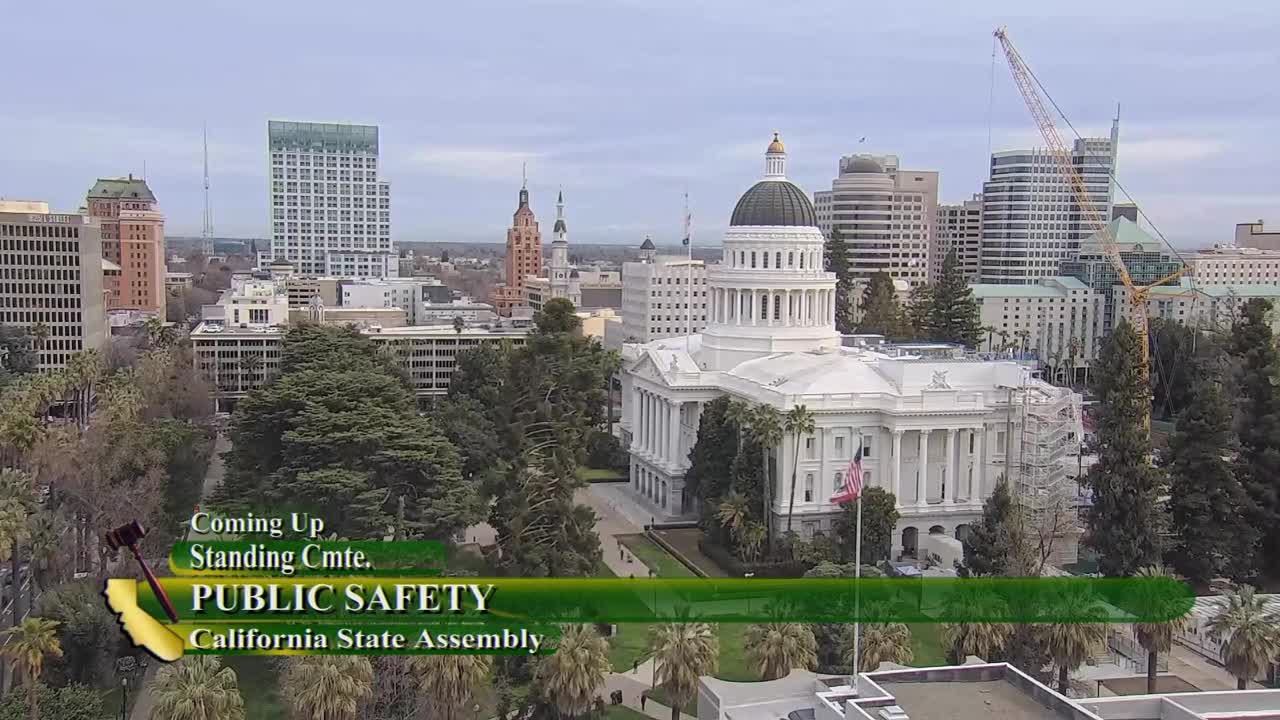
Assembly Standing Committee on Public Safety
Bill Author

Bill Co-Author(s):