AB 42: CalWORKs: CalFresh: eligibility: income and resource exclusions.
- Session Year: 2025-2026
- House: Assembly
- Latest Version Date: 2025-10-07
Current Status:
Passed
(2025-10-07: Chaptered by Secretary of State - Chapter 430, Statutes of 2025.)
Introduced
In Committee
Awaiting First Chamber Vote
Passed First Chamber
In Committee
Awaiting Second Chamber Vote
Passed Second Chamber
Enacted
What does this bill do?
The bill exempts grants, awards, scholarships, loans, and fellowships received by a person in a CalWORKs household for attending college from being counted as income and, for 12 months, from being counted as a resource when calculating CalWORKs cash aid. It also directs the state, where federal rules allow, to not count those same education funds as income when figuring CalFresh (food stamp) benefits; cash gifts from friends or relatives are not exempt.
The summary is provided by generative AI which can make mistakes. For original language, please view the details in the table below.
Existing federal law provides for allocation of federal funds to eligible states through the federal Temporary Assistance for Needy Families (TANF) block grant program. Existing state law provides for the California Work Opportunity and Responsibility to Kids (CalWORKs) program under which, through a combination of state and county funds and federal funds received through the TANF program, each county provides cash assistance and other benefits to qualified low-income families. Under existing law, certain types of payments received by recipients of aid under the CalWORKs program, including, among others, an award or scholarship provided by a public or private entity to, or on behalf of, a dependent child are exempt from consideration as income for purposes of determining eligibility and aid amount.
Existing federal law provides for the Supplemental Nutrition Assistance Program (SNAP), known in California as CalFresh, under which supplemental nutrition assistance benefits allocated to the state by the federal government are distributed to eligible individuals by each county. Existing law requires the eligibility of households to be determined to the extent permitted by federal law. Existing federal regulation provides states with the option to exclude, for purposes of calculating a households income under SNAP, any type of income that the state excludes when determining eligibility or benefits for TANF cash assistance or certain medical assistance.
This bill would exempt any grant, award, scholarship, loan, or fellowship benefit that is provided to any assistance unit member for the purpose of attending an institution of higher education, except as specified, from consideration as income for purposes of determining CalWORKs and CalFresh eligibility or grant amounts, and would also exempt those funds as resources for purposes of determining CalWORKs eligibility or grant amounts. The bill would also require, to the extent permitted by federal law, regulation, or guidance, or a waiver thereof, the State Department of Social Services to exercise a federal option to exclude, for purposes of calculating a households income under CalFresh, any type of income that the department excludes when determining eligibility or benefits for CalWORKs and certain medical assistance. This bill would require the department to implement these provisions through an all-county letter or similar instruction until regulations are adopted. By expanding the scope of eligibility for CalWORKs and CalFresh, the bill would impose a state-mandated local program.
Existing law continuously appropriates moneys from the General Fund to defray a portion of county costs under the CalWORKs program.
This bill would provide that the continuous appropriation would not be made for purposes of implementing the bill.
The California Constitution requires the state to reimburse local agencies and school districts for certain costs mandated by the state. Statutory provisions establish procedures for making that reimbursement.
This bill would provide that, if the Commission on State Mandates determines that the bill contains costs mandated by the state, reimbursement for those costs shall be made pursuant to the statutory provisions noted above.
Existing federal law provides for allocation of federal funds to eligible states through the federal Temporary Assistance for Needy Families (TANF) block grant program. Existing state law provides for the California Work Opportunity and Responsibility to Kids (CalWORKs) program under which, through a combination of state and county funds and federal funds received through the TANF program, each county provides cash assistance and other benefits to qualified low-income families. Under existing law, certain types of payments received by recipients of aid under the CalWORKs program, including, among others, an award or scholarship provided by a public or private entity to, or on behalf of, a dependent child are exempt from consideration as income for purposes of determining eligibility and aid amount.
Existing federal law provides for the Supplemental Nutrition Assistance Program (SNAP), known in California as CalFresh, under which supplemental nutrition assistance benefits allocated to the state by the federal government are distributed to eligible individuals by each county. Existing law requires the eligibility of households to be determined to the extent permitted by federal law. Existing federal regulation provides states with the option to exclude, for purposes of calculating a households income under SNAP, any type of income that the state excludes when determining eligibility or benefits for TANF cash assistance or certain medical assistance.
This bill would exempt any grant, award, scholarship, loan, or fellowship benefit that is provided to any assistance unit member for educational purposes and that is not administered by the United States Department of Education the purpose of attending an institution of higher education, except as specified, from consideration as income for purposes of determining CalWORKs and CalFresh eligibility or grant amounts, and would also exempt those funds as resources for purposes of determining CalWORKs eligibility or grant amounts. The bill would also require, to the extent permitted by federal law, regulation, or guidance, or a waiver thereof, the State Department of Social Services to exercise a federal option to exclude, for purposes of calculating a households income under CalFresh, any type of income that the department excludes when determining eligibility or benefits for CalWORKs. CalWORKs and certain medical assistance. This bill would require the department to implement these provisions through an all-county letter or similar instruction until regulations are adopted. By expanding the scope of eligibility for CalWORKs and CalFresh, the bill would impose a state-mandated local program.
Existing law continuously appropriates moneys from the General Fund to defray a portion of county costs under the CalWORKs program.
This bill would provide that the continuous appropriation would not be made for purposes of implementing the bill.
The California Constitution requires the state to reimburse local agencies and school districts for certain costs mandated by the state. Statutory provisions establish procedures for making that reimbursement.
This bill would provide that, if the Commission on State Mandates determines that the bill contains costs mandated by the state, reimbursement for those costs shall be made pursuant to the statutory provisions noted above.
Existing federal law provides for allocation of federal funds to eligible states through the federal Temporary Assistance for Needy Families (TANF) block grant program. Existing state law provides for the California Work Opportunity and Responsibility to Kids (CalWORKs) program under which, through a combination of state and county funds and federal funds received through the TANF program, each county provides cash assistance and other benefits to qualified low-income families. Under existing law, certain types of payments received by recipients of aid under the CalWORKs program, including, among others, an award or scholarship provided by a public or private entity to, or on behalf of, a dependent child are exempt from consideration as income for purposes of determining eligibility and aid amount.
Existing federal law provides for the Supplemental Nutrition Assistance Program (SNAP), known in California as CalFresh, under which supplemental nutrition assistance benefits allocated to the state by the federal government are distributed to eligible individuals by each county. Existing law requires the eligibility of households to be determined to the extent permitted by federal law. Existing federal regulation provides states with the option to exclude, for purposes of calculating a households income under SNAP, any type of income that the state excludes when determining eligibility or benefits for TANF cash assistance.
This bill would exempt any grant, award, scholarship, loan, or fellowship benefit that is provided to any assistance unit member for educational purposes and that is not administered by the United States Department of Education from consideration as income for purposes of determining CalWORKs and CalFresh eligibility or grant amounts, and would also exempt those funds as resources for purposes of determining CalWORKs eligibility or grant amounts. The bill would also require, to the extent permitted by federal law, regulation, or guidance, or a waiver thereof, the State Department of Social Services to exercise a federal option to exclude, for purposes of calculating a households income under CalFresh, any type of income that the department excludes when determining eligibility or benefits for CalWORKs. This bill would require the department to implement these provisions through an all-county letter or similar instruction until regulations are adopted. By expanding the scope of eligibility for CalWORKs and CalFresh, the bill would impose a state-mandated local program.
Existing law continuously appropriates moneys from the General Fund to defray a portion of county costs under the CalWORKs program.
This bill would provide that the continuous appropriation would not be made for purposes of implementing the bill.
The California Constitution requires the state to reimburse local agencies and school districts for certain costs mandated by the state. Statutory provisions establish procedures for making that reimbursement.
This bill would provide that, if the Commission on State Mandates determines that the bill contains costs mandated by the state, reimbursement for those costs shall be made pursuant to the statutory provisions noted above.
Existing state sales and use tax laws impose a tax on retailers measured by the gross receipts from the sale of tangible personal property sold at retail in this state or on the storage, use, or other consumption in this state of tangible personal property purchased from a retailer for storage, use, or other consumption in this state. The Sales and Use Tax Law provides various exemptions from those taxes. This bill, on or after January 1, 2026, and before January 1, 2031, would exempt the gross receipts from the sale in this state of, and the storage, use, or other consumption in this state of, baby wipes and child car seats, as defined. Existing law requires any bill authorizing a new tax expenditure to contain, among other things, specific goals that the tax expenditure will achieve, detailed performance indicators, and data collection requirements. This bill would include additional information required for any bill authorizing a new tax expenditure. The Bradley-Burns Uniform Local Sales and Use Tax Law authorizes counties and cities to impose local sales and use taxes in conformity with the Sales and Use Tax Law, and existing laws authorize districts, as specified, to impose transactions and use taxes in accordance with the Transactions and Use Tax Law, which generally conforms to the Sales and Use Tax Law. Amendments to the Sales and Use Tax Law are automatically incorporated into the local tax laws.This bill would specify that this exemption does not apply to local sales and use taxes or transactions and use taxes. Existing law requires the state to reimburse counties and cities for revenue losses caused by the enactment of sales and use tax exemptions.This bill would provide that, notwithstanding Section 2230 of the Revenue and Taxation Code, no appropriation is made and the state shall not reimburse any local agencies for sales and use tax revenues lost by them pursuant to this bill. This bill would take effect immediately as a tax levy.Existing state sales and use tax laws impose a tax on retailers measured by the gross receipts from the sale of tangible personal property sold at retail in this state or on the storage, use, or other consumption in this state of tangible personal property purchased from a retailer for storage, use, or other consumption in this state. The Sales and Use Tax Law provides various exemptions from those taxes.
This bill, on or after January 1, 2026, and before January 1, 2031, would exempt the gross receipts from the sale in this state of, and the storage, use, or other consumption in this state of, baby wipes and child car seats, as defined.
Existing law requires any bill authorizing a new tax expenditure to contain, among other things, specific goals that the tax expenditure will achieve, detailed performance indicators, and data collection requirements.
This bill would include additional information required for any bill authorizing a new tax expenditure.
The Bradley-Burns Uniform Local Sales and Use Tax Law authorizes counties and cities to impose local sales and use taxes in conformity with the Sales and Use Tax Law, and existing laws authorize districts, as specified, to impose transactions and use taxes in accordance with the Transactions and Use Tax Law, which generally conforms to the Sales and Use Tax Law. Amendments to the Sales and Use Tax Law are automatically incorporated into the local tax laws.
This bill would specify that this exemption does not apply to local sales and use taxes or transactions and use taxes.
Existing law requires the state to reimburse counties and cities for revenue losses caused by the enactment of sales and use tax exemptions.
This bill would provide that, notwithstanding Section 2230 of the Revenue and Taxation Code, no appropriation is made and the state shall not reimburse any local agencies for sales and use tax revenues lost by them pursuant to this bill.
This bill would take effect immediately as a tax levy.
For purposes of Chapter 2 (commencing with Section 11200) and Chapter 10 (commencing with Section 18900) of Part 6, and notwithstanding any other law, and to the extent permitted by federal law, any grant, award, scholarship, loan, or fellowship benefit provided to any assistance unit member for the purpose of attending an institution of higher education, excluding cash payments made directly by friends or relatives, shall be exempt from consideration as income for purposes of determining eligibility for benefits or calculating grant amounts pursuant to Chapter 2 (commencing with Section 11200). The funds described in this subdivision shall also be exempt as resources for purposes of determining eligibility for benefits or calculating grant amounts pursuant to Chapter 2 (commencing with Section 11200) for 12 months following the receipt of the funds.
SEC. 2.Section 18901.09 is added to the Welfare and Institutions Code, to read:18901.09.To the extent permitted by federal law, regulation, or guidance, or a waiver thereof, the department shall exercise the option provided in Section 273.9(c)(19) of Title 7 of the Code of Federal Regulations to exclude, for purposes of calculating a households income under CalFresh, any type of income that the department excludes when determining eligibility or benefits for cash assistance provided with federal Temporary Assistance for Needy Families (TANF) funds and medical assistance under Section 1931 of the federal Social Security Act (42 U.S.C. Sec. 1396u-1).
SEC. 3.Notwithstanding the rulemaking provisions of the Administrative Procedure Act (Chapter 3.5 (commencing with Section 11340) of Part 1 of Division 3 of Title 2 of the Government Code), the State Department of Social Services shall implement this act through an all-county letter or similar instruction on or before March 1, 2026, until regulations are adopted.
SEC. 4.No appropriation pursuant to Section 15200 of the Welfare and Institutions Code shall be made for purposes of implementing this act.
SEC. 5.If the Commission on State Mandates determines that this act contains costs mandated by the state, reimbursement to local agencies and school districts for those costs shall be made pursuant to Part 7 (commencing with Section 17500) of Division 4 of Title 2 of the Government Code.
For purposes of Chapter 2 (commencing with Section 11200) and Chapter 10 (commencing with Section 18900) of Part 6, and notwithstanding any other law, and to the extent permitted by federal law, any grant, award, scholarship, loan, or fellowship benefit provided to any assistance unit member for educational purposes, not administered by the United States Department of Education, the purpose of attending an institution of higher education, excluding cash payments made directly by friends or relatives, shall be exempt from consideration as income for purposes of determining eligibility for benefits or calculating grant amounts pursuant to Chapter 2 (commencing with Section 11200). The funds described in this subdivision shall also be exempt as resources for purposes of determining eligibility for benefits or calculating grant amounts pursuant to Chapter 2 (commencing with Section 11200) for 12 months following the receipt of the funds.
SEC. 2.Section 18901.09 is added to the Welfare and Institutions Code, to read:18901.09.To the extent permitted by federal law, regulation, or guidance, or a waiver thereof, the department shall exercise the option provided in Section 273.9(c)(19) of Title 7 of the Code of Federal Regulations to exclude, for purposes of calculating a households income under CalFresh, any type of income that the department excludes when determining eligibility or benefits for cash assistance provided with federal Temporary Assistance for Needy Families (TANF) funds. funds and medical assistance under Section 1931 of the federal Social Security Act (42 U.S.C. Sec. 1396u-1).
SEC. 3.Notwithstanding the rulemaking provisions of the Administrative Procedure Act (Chapter 3.5 (commencing with Section 11340) of Part 1 of Division 3 of Title 2 of the Government Code), the State Department of Social Services shall implement this act through an all-county letter or similar instruction on or before March 1, 2026, until regulations are adopted.
SEC. 4.No appropriation pursuant to Section 15200 of the Welfare and Institutions Code shall be made for purposes of implementing this act.
SEC. 5.If the Commission on State Mandates determines that this act contains costs mandated by the state, reimbursement to local agencies and school districts for those costs shall be made pursuant to Part 7 (commencing with Section 17500) of Division 4 of Title 2 of the Government Code.
For purposes of Chapter 2 (commencing with Section 11200) and Chapter 10 (commencing with Section 18900) of Part 6, and notwithstanding any other law, any grant, award, scholarship, loan, or fellowship benefit provided to any assistance unit member for educational purposes, not administered by the United States Department of Education, shall be exempt from consideration as income for purposes of determining eligibility for benefits or calculating grant amounts pursuant to Chapter 2 (commencing with Section 11200). The funds described in this subdivision shall also be exempt as resources for purposes of determining eligibility for benefits or calculating grant amounts pursuant to Chapter 2 (commencing with Section 11200) for 12 months following the receipt of the funds.
SEC. 2.Section 18901.09 is added to the Welfare and Institutions Code, to read:18901.09.To the extent permitted by federal law, regulation, or guidance, or a waiver thereof, the department shall exercise the option provided in Section 273.9(c)(19) of Title 7 of the Code of Federal Regulations to exclude, for purposes of calculating a households income under CalFresh, any type of income that the department excludes when determining eligibility or benefits for cash assistance provided with federal Temporary Assistance for Needy Families (TANF) funds.
SEC. 3.Notwithstanding the rulemaking provisions of the Administrative Procedure Act (Chapter 3.5 (commencing with Section 11340) of Part 1 of Division 3 of Title 2 of the Government Code), the State Department of Social Services shall implement this act through an all-county letter or similar instruction on or before March 1, 2026, until regulations are adopted.
SEC. 4.No appropriation pursuant to Section 15200 of the Welfare and Institutions Code shall be made for purposes of implementing this act.
SEC. 5.If the Commission on State Mandates determines that this act contains costs mandated by the state, reimbursement to local agencies and school districts for those costs shall be made pursuant to Part 7 (commencing with Section 17500) of Division 4 of Title 2 of the Government Code.
SECTION 1.Section 6367.1 is added to the Revenue and Taxation Code, to read:6367.1.(a)On or after January 1, 2026, there are exempted from the taxes imposed by this part, the gross receipts from the sale in this state of, and the storage, use, or other consumption in this state of, baby wipes and child car seats.(b)For purposes of this section, all of the following definitions apply:(1)Baby wipes means therapeutic or preventative wipes marketed primarily for use on the skin of children.(2)Child car seat means a child restraint device or booster seat that meets the National Highway Traffic Safety Administration standard for child restraint systems under Section 571.213 of Title 49 of the Code of Federal Regulations.(c)Notwithstanding any provision of the Bradley-Burns Uniform Local Sales and Use Tax Law (Part 1.5 (commencing with Section 7200)) or the Transactions and Use Tax Law (Part 1.6 (commencing with Section 7251)), the exemption established by this section does not apply with respect to any tax levied by a county, city, or district pursuant to, or in accordance with, either of those laws.(d)For the purposes of complying with Section 41, the Legislature finds and declares all of the following:(1)The specific goal, purpose, and objective that the exemption will achieve is to reduce the financial burden of providing necessary health and safety supplies for children.(2)Detailed performance indicators measure whether the exemption meets the goal, purpose, and objective described in paragraph (1) are the following:(A)The number of taxpayers exempting the gross receipts from the sale in this state of, and the storage, use, or other consumption in this state of, baby wipes and child car seats.(B)The total dollar amount of moneys exempted under this section.(C)The total number of qualified buyers in each tax bracket for whom a taxpayer claimed an exemption under this section.(3)On or before March 1, 2027, and annually thereafter, the California Department of Tax and Fee Administration shall analyze the performance indicators in paragraph (2) to the extent information is available, and shall report its findings, in compliance with Section 9795 of the Government Code, to the Legislature.(e)This section shall remain in effect only until January 1, 2031, and as of that date is repealed.SEC. 2.Notwithstanding Section 2230 of the Revenue and Taxation Code, no appropriation is made by this act and the state shall not reimburse any local agency for any sales and use tax revenues lost by it under this act.SEC. 3.This act provides for a tax levy within the meaning of Article IV of the California Constitution and shall go into immediate effect.(a)On or after January 1, 2026, there are exempted from the taxes imposed by this part, the gross receipts from the sale in this state of, and the storage, use, or other consumption in this state of, baby wipes and child car seats.
(b)For purposes of this section, all of the following definitions apply:
(1)Baby wipes means therapeutic or preventative wipes marketed primarily for use on the skin of children.
(2)Child car seat means a child restraint device or booster seat that meets the National Highway Traffic Safety Administration standard for child restraint systems under Section 571.213 of Title 49 of the Code of Federal Regulations.
(c)Notwithstanding any provision of the Bradley-Burns Uniform Local Sales and Use Tax Law (Part 1.5 (commencing with Section 7200)) or the Transactions and Use Tax Law (Part 1.6 (commencing with Section 7251)), the exemption established by this section does not apply with respect to any tax levied by a county, city, or district pursuant to, or in accordance with, either of those laws.
(d)For the purposes of complying with Section 41, the Legislature finds and declares all of the following:
(1)The specific goal, purpose, and objective that the exemption will achieve is to reduce the financial burden of providing necessary health and safety supplies for children.
(2)Detailed performance indicators measure whether the exemption meets the goal, purpose, and objective described in paragraph (1) are the following:
(A)The number of taxpayers exempting the gross receipts from the sale in this state of, and the storage, use, or other consumption in this state of, baby wipes and child car seats.
(B)The total dollar amount of moneys exempted under this section.
(C)The total number of qualified buyers in each tax bracket for whom a taxpayer claimed an exemption under this section.
(3)On or before March 1, 2027, and annually thereafter, the California Department of Tax and Fee Administration shall analyze the performance indicators in paragraph (2) to the extent information is available, and shall report its findings, in compliance with Section 9795 of the Government Code, to the Legislature.
(e)This section shall remain in effect only until January 1, 2031, and as of that date is repealed.
SEC. 2.Notwithstanding Section 2230 of the Revenue and Taxation Code, no appropriation is made by this act and the state shall not reimburse any local agency for any sales and use tax revenues lost by it under this act.
SEC. 3.This act provides for a tax levy within the meaning of Article IV of the California Constitution and shall go into immediate effect.
|
Date
|
Status
|
|---|---|
| Oct 7, 2025 | Chaptered by Secretary of State - Chapter 430, Statutes of 2025. |
| Oct 7, 2025 | Approved by the Governor. |
| Sep 15, 2025 | Enrolled and presented to the Governor at 4:30 p.m. |
| Sep 8, 2025 | Senate amendments concurred in. To Engrossing and Enrolling. (Ayes 79. Noes 0. Page 3022.). |
| Sep 4, 2025 | In Assembly. Concurrence in Senate amendments pending. |
| Sep 4, 2025 | Read third time. Passed. Ordered to the Assembly. (Ayes 39. Noes 0. Page 2520.). |
| Sep 2, 2025 | Ordered to special consent calendar. |
| Aug 29, 2025 | Read second time. Ordered to third reading. |
| Aug 29, 2025 | From committee: Do pass. (Ayes 7. Noes 0.) (August 29). |
| Jul 14, 2025 | In committee: Referred to APPR. suspense file. |
| Jul 1, 2025 | From committee: Do pass and re-refer to Com. on APPR. with recommendation: To Consent Calendar. (Ayes 5. Noes 0.) (June 30). Re-referred to Com. on APPR. |
| Jun 23, 2025 | From committee chair, with author's amendments: Amend, and re-refer to committee. Read second time, amended, and re-referred to Com. on HUMAN S. |
| Jun 18, 2025 | Referred to Com. on HUMAN S. |
| Jun 4, 2025 | In Senate. Read first time. To Com. on RLS. for assignment. |
| Jun 3, 2025 | Read third time. Passed. Ordered to the Senate. (Ayes 79. Noes 0. Page 1965.) |
| May 27, 2025 | Read second time. Ordered to third reading. |
| May 23, 2025 | From committee: Do pass. (Ayes 14. Noes 0.) (May 23). |
| Apr 9, 2025 | In committee: Set, first hearing. Referred to APPR. suspense file. |
| Mar 26, 2025 | From committee: Do pass and re-refer to Com. on APPR. (Ayes 7. Noes 0.) (March 25). Re-referred to Com. on APPR. |
| Feb 27, 2025 | Re-referred to Com. on HUM. S. pursuant to Assembly Rule 96. |
| Feb 25, 2025 | Re-referred to Com. on REV. & TAX. |
| Feb 24, 2025 | From committee chair, with author's amendments: Amend, and re-refer to Com. on REV. & TAX. Read second time and amended. |
| Feb 3, 2025 | Referred to Com. on REV. & TAX. |
| Dec 3, 2024 | From printer. May be heard in committee January 2. |
| Dec 2, 2024 | Read first time. To print. |
|
Date
|
Description
|
Location
|
Votes
|
|
|---|---|---|---|---|
| Sep 8, 2025 | AB 42 Bryan Concurrence in Senate Amendments | Assembly Floor |
Passed |
|
| Sep 4, 2025 | Special Consent AB42 Bryan | Senate Floor |
Passed |
|
| Aug 29, 2025 | Do pass | Senate Standing Committee on Appropriations |
Passed |
|
| Jul 14, 2025 | Placed on suspense file | Senate Standing Committee on Appropriations |
Passed |
|
| Jun 30, 2025 | Do pass, but first be re-referred to the Committee on [Appropriations] with the recommendation: To Consent Calendar | Senate Standing Committee on Human Services |
Passed |
|
| Jun 3, 2025 | AB 42 Bryan Assembly Third Reading | Assembly Floor |
Passed |
|
| May 23, 2025 | Do pass. | Assembly Standing Committee on Appropriations |
Passed |
|
| Mar 25, 2025 | Do pass and be re-referred to the Committee on [Appropriations] | Assembly Standing Committee on Human Services |
Passed |
This list shows positions taken on this bill by organizations on the date displayed, which is linked to the original source.
Positions by individuals are not included.
|
Organization
|
Position
|
Date
|
|---|---|---|
| CA Edge Coalition | ** Support | |
| California Association Of Food Banks | ** Support | |
| California Community Colleges, Chancellor's Office | ** Support | |
| California Family Resource Association | ** Support | |
| California Student Aid Commission | ** Support | |
| CFT- a Union of Educators & Classified Professionals, Aft, Afl-cio | ** Support | |
| CHILD ABUSE PREVENTION CENTER AND ITS AFFILIATES SAFE KIDS CALIFORNIA, PREVENT CHILD ABUSE CALIFORNIA AND THE CALIFORNIA FAMILY RESOURCE ASSOCIATION; THE | ** Support | |
| Child Care Law Center | ** Support | |
| Children Now | ** Support | |
| cleanearth4kids.org | ** Support | |
| Coalition of California Welfare Rights Organizations | ** Support | |
| County Of San Diego | ** Support | |
| East Bay Community Law Center | ** Support | |
| faculty association of california's community colleges | ** Support | |
| Health Net And Its Affiliated Companies | ** Support | |
| Hispanas Organized for Political Equality | ** Support | |
| Legal Aid Foundation of Los Angeles | ** Support | |
| NASW California | ** Support | |
| NextGen California | ** Support | |
| Southern California College Attainment Network | ** Support | |
| uAspire | ** Support | |
| University Of California Student Association | ** Support | |
| Western Center on Law & Poverty (source) | ** Support |
CONCURRENCE IN SENATE AMENDMENTS
CSA1 Bill Id:AB 42
Author:(Bryan)
As Amended Ver:June 23, 2025
Majority vote
SUMMARY
Exempts higher education financial aid benefits, excluding cash payments made by friends or relatives, from income consideration when determining benefit eligibility. Requires the California Department of Social Services (CDSS), to the extent permitted by federal law, to also exclude Medicaid assistance when aligning CalFresh income calculations with California Work Opportunity and Responsibility to Kids (CalWORKs)-funded cash assistance rules.
Senate Amendments
- Clarify that financial aid benefits are exempt from income consideration for the purpose of attending an institution of higher education, excluding cash payments made directly by friends and relatives, and to the extent permitted by federal law.
- Exclude Medicaid assistance when aligning CalFresh income calculations with CalWORKs-funded cash assistance rules.
COMMENTS
CalFresh. SNAP (Supplemental Nutrition Assistance Program; formerly known as the Food Stamp Program) is the largest federal food safety-net program that serves as the first line of defense against hunger and food insecurity for low-income households. In California, SNAP funds are administered through the CalFresh program. Overseen by CDSS and administered locally by county human services departments, CalFresh serves a large and diverse caseload, with substantial shares comprising low-income working families with children, elderly and disabled people, and very low-income individuals with substantial barriers to employment. Participants use electronic benefit transfer cards to purchase eligible food items such as fruits and vegetables, meat, dairy products, and seeds and plants that produce food at authorized retailers, including grocery stores, supermarkets, and farmers' markets. Individuals can complete the CalFresh application online, over the phone, in-person at their county CalFresh office, or through the mail.
CalFresh Student Eligibility & Participation Rates. The federal student eligibility rule, enacted in 1977, restricts part-time and full-time students in higher education from accessing SNAP benefits. To be considered a "student" under CalFresh, an individual must be between 18 and 49 years of age; physically and mentally fit for employment; and, enrolled at least half time at an institution of higher education. Eligible institutions include business, trade, technical, or vocation schools, junior, community, two-year, or four-year universities, and graduate school.
Over time, federal flexibilities have expanded access to ensure that more food-insecure students have access to the public benefit. There are several determining factors that can exempt a student from the eligibility rule; however, many eligible low-income students still do not enroll. The California Policy Lab shows that participation rates among community college students have declined from 35% in 2011-12 to about 25% in 2021, while University of California (UC) student participation increased from 5% in 2012 to levels comparable with community colleges, likely due to expanded campus support programs.
Research shows that CalFresh significantly reduces students' financial burdens. A 2025 Public Policy Institute of California report found that CalFresh reduces out-of-pocket college costs by about 50% for UC and CSU students living on campus and by 24% for CCC students living off campus. CalFresh enrollment is particularly high among low-income students receiving financial aid, especially Pell Grant recipients. In 2019, the average per-person monthly benefit for CCC students participating in CalFresh was $123 per month and for UC students, it was $161 per month. This translates to roughly $1,500-$2,000 a year that participating students can use to pay for food.
CalWORKs is the state's primary cash assistance program, implementing the federal Temporary Assistance for Needy Families (TANF) program to provide eligible low-income families with cash grants and supportive services, including job training, education, and mental health counseling or substance use treatment, among other things. Parents, unless deemed exempt or otherwise not required to participate, are required to participate in a WTW plan, which includes activities such as on-the-job training; public or private sector subsidized or unsubsidized employment; community service; secondary school, adult basic education and vocational education and training when the education is needed for the recipient to become employed; domestic violence services if they are necessary to obtain or retain employment; and a number of other activities necessary to assist a recipient in obtaining unsubsidized employment.
Grant amounts are adjusted for family size, income level, and region, with high-cost counties receiving about 5% more than recipients in lower-cost counties. In 2024-25, a family of three with no other income receives $925 per month in a high-cost county, and $878 per month in a lower-cost county, with an average grant across all recipients estimated at $1,001. About 361,800 families are projected to receive CalWORKs benefits in fiscal year 2025-26.
According to the Public Policy Institute of California October 2020 report Supporting Student Parents in Community College CalWORKs Program, CalWORKs students have higher course success rates, full-time enrollment, and degree completion than those not enrolled in college CalWORKs programs. Eligibility remains concentrated among families with high poverty rates, with nearly all children in households earning $20,000 or less qualifying.
Current Income Exclusions for Students. California excludes certain types of income when determining CalFresh eligibility under the CalFresh Manual of Policy and Procedures. These exclusions include, but are not limited to, specified tax refunds or credits, a portion of disability-based unearned income, and student earned income if the child is under 19 years of age and meets specified eligibility requirements. As of December 1, 2021, all student loans and grants excluded under CalWORKs must also be excluded for CalFresh, as clarified in CDSS All County Letter No. 21-137. To qualify for exemption, these funds must be used for educational expenses.
The following types of educational assistance are excluded when determining CalFresh benefits: Title IV funds and Bureau of Indian Affairs educational assistance; grants administered by the Federal Secretary of Education; loans or grants administered by: community college extended opportunity services; the California Student Aid Commission; or, colleges accredited by the Western Association of Schools and Colleges; needs-based grants for undergraduate students; awards and scholarships for dependent children; grants whose proceeds are not available to the student to meet current needs; loans with a written repayment agreement; and, other educational assistance used for allowable educational expenses.
This bill exempts educational grants, scholarships, loans, and fellowships, excluding cash payments made by friends or relatives, from being counted as income for CalWORKs and CalFresh eligibility and benefit calculations. It also requires CDSS to align CalFresh income exclusions with TANF rules, where federally allowable, and requires implementation by March 1, 2026, without additional state funding.
According to the Author
“Despite banning colleges from practicing scholarship displacement, the state still punishes CalWORKs and CalFresh recipients by reducing their state assistance if they earn any merit-based grants and scholarships. CalWORKs students must balance their academic pursuits with providing for their child(ren). By counting merit-based educational funding against their cash aid, the state forces low-income student parents to choose between two vital forms of assistance, neither of which is enough to support both the student and their child(ren). [This bill] will stop the practice of punishing low-income student parents who work hard to qualify for merit-based scholarships and grants.”
Arguments in Support
According to the County of San Diego, “California’s eligibility policies currently count merit-based educational funding against a student’s eligibility for public benefits, forcing low-income student parents to choose between two vital forms of assistance, neither of which is enough to support both the student and their child(ren). [This bill] would halt the practice of penalizing low-income student parents who qualify for merit-based scholarships and grants and would help more low-income San Diego students and families qualify for or maintain CalFresh and CalWORKs benefits.”
Arguments in Opposition
No opposition on file.
FISCAL COMMENTS
According to the Senate Appropriations Committee on July 14, 2025: The California Department of Social Services (CDSS) estimates the following:
- Local assistance costs of $57,100 ($28,000 General Fund and $29,100 federal funds) in the first year of implementation and $131,000 ($66,600 General Fund and $64,400 federal funds) ongoing thereafter for CalFresh/California Food Assistance Program (CFAP) administration and CFAP benefits.
- Local assistance costs of $22,900 (General Fund) in the first year of implementation and $67,200 (General Fund) ongoing thereafter for CalWORKs benefits and administration.
- One-time General Fund costs of $350,750 for automation.
- Costs to counties for administration would be potentially reimbursable by the state, subject to a determination by the Commission on State Mandates.
VOTES:
ASM HUMAN SERVICES: 7-0-0
YES: Lee, Castillo, Calderon, Elhawary, Essayli, Jackson, Celeste Rodriguez
ASM APPROPRIATIONS: 14-0-1
YES: Wicks, Arambula, Calderon, Caloza, Dixon, Elhawary, Fong, Mark González, Hart, Pacheco, Pellerin, Solache, Ta, Tangipa
ABS, ABST OR NV: Sanchez
ASSEMBLY FLOOR: 79-0-0
YES: Addis, Aguiar-Curry, Ahrens, Alanis, Alvarez, Arambula, Ávila Farías, Bains, Bauer-Kahan, Bennett, Berman, Boerner, Bonta, Bryan, Calderon, Caloza, Carrillo, Castillo, Chen, Connolly, Davies, DeMaio, Dixon, Elhawary, Ellis, Flora, Fong, Gabriel, Gallagher, Garcia, Gipson, Jeff Gonzalez, Mark González, Hadwick, Haney, Harabedian, Hart, Hoover, Irwin, Jackson, Kalra, Krell, Lackey, Lee, Lowenthal, Macedo, McKinnor, Muratsuchi, Nguyen, Ortega, Pacheco, Papan, Patel, Patterson, Pellerin, Petrie-Norris, Quirk-Silva, Ramos, Ransom, Celeste Rodriguez, Michelle Rodriguez, Rogers, Blanca Rubio, Sanchez, Schiavo, Schultz, Sharp-Collins, Solache, Soria, Stefani, Ta, Tangipa, Valencia, Wallis, Ward, Wicks, Wilson, Zbur, Rivas
SENATE FLOOR: 39-0-1
YES: Allen, Alvarado-Gil, Archuleta, Arreguín, Ashby, Becker, Blakespear, Cabaldon, Caballero, Cervantes, Choi, Cortese, Dahle, Durazo, Gonzalez, Grayson, Grove, Hurtado, Jones, Laird, Limón, McGuire, McNerney, Menjivar, Niello, Ochoa Bogh, Padilla, Pérez, Richardson, Rubio, Seyarto, Smallwood-Cuevas, Stern, Strickland, Umberg, Valladares, Wahab, Weber Pierson, Wiener
ABS, ABST OR NV: Reyes
UPDATED
VERSION: June 23, 2025
CONSULTANT: Bri-Ann Hernández-Mengual / HUM. S. / (916) 319-2089 FN: 0001697
SENATE RULES COMMITTEE Office of Senate Floor Analyses (916) 651-1520 Fax: (916) 327-4478 | AB 42 |
THIRD READING
Bill No: AB 42
Author: Bryan (D)
Amended: 6/23/25 in Senate
Vote: 21
SENATE HUMAN SERVICES COMMITTEE: 5-0, 6/30/25
AYES: Arreguín, Ochoa Bogh, Becker, Limón, Pérez
SENATE APPROPRIATIONS COMMITTEE: 7-0, 8/29/25
AYES: Caballero, Seyarto, Cabaldon, Dahle, Grayson, Richardson, Wahab
ASSEMBLY FLOOR: 79-0, 6/3/25 - See last page for vote
SUBJECT: CalWORKs: CalFresh: eligibility: income and resource exclusions
SOURCE: Western Center on Law & Poverty
DIGEST:
This bill prohibits any grant, award, scholarship, loan, or fellowship benefit for the purpose of attending an institution of higher education, provided to a CalFresh or CalWORKs beneficiary from being considered income or resource for purposes of determining benefit eligibility or awards, to the extent allowed by federal law.
ANALYSIS:
Existing Law:
- Establishes the federal Temporary Assistance for Needy Families (TANF) program, which provides block grants to states to develop and implement their own state welfare-to-work programs designed to provide cash assistance and other supports and services to low-income families. (42 United States Code (USC) § 601 et seq.)
- Establishes under federal law the Supplemental Nutrition Assistance Program (SNAP) to promote the general welfare and to safeguard the health and wellbeing of the nation’s population by raising the levels of nutrition among low-income households. (7 USC § 2011 et seq.)
- Deems, in federal regulations, an individual who is enrolled at least half-time in an institution of higher education as ineligible for participation in SNAP, unless the individual qualifies for an exemption, as specified. (7 Code of Federal Regulations (CFR) § 273.5(a))
- States that SNAP shall be limited to households whose income limits their access to nutritious foods and defines what is considered income for the purposes of SNAP eligibility. (7 CFR § 273.9(a) and (b))
- Allows state agencies to adopt a policy that says any types of income that the State agency excludes when determining eligibility or benefits for TANF cash assistance as defined by 45 CFR 260.31(a)(1) and (a)(2), or medical assistance under Section 1931 of the Social Security Act. The State agency must exclude for SNAP purposes the same amount of income it excludes for TANF or Medicaid purposes.(7 CFR Section 273.9(c)(19))
- Establishes the CalWORKS program to provide cash assistance and other social services for low-income families through the federal TANF program. Under CalWORKs, each county provides assistance through a combination of state, county, and federal TANF funds. (Welfare and Institutions Code (WIC) § 11200 et seq.)
- Establishes income, asset, and real property limits used to determine eligibility for the CalWORKs program, and CalWORKs grant amounts, based on family size and county of residence. (WIC §§11150 to 11160; 11450 et seq.)
- Exempts the following from being considered as income for purposes of CalWORKS eligibility:
- Income that is received too infrequently to be reasonably anticipated.
- Income from a college work study program.
- An award or scholarship provided by a public or private entity to or on behalf of a dependent child based on the child’s academic or extracurricular achievement or participation in a scholastic, educational, or extracurricular competition. (WIC § 11157(b))
- Requires families to be grouped into assistance units for purposes of determining eligibility under this chapter, and for computing the amount of aid payment in CalWORKs (WIC § 111450.16)
- Establishes CalFresh as California’s implementation of the federal SNAP program. (WIC § 18900)
- Requires CDSS to post on its internet website instructions, for county human services agencies, that maximize CalFresh eligibility and minimize the burden for applicants and recipients to verify exemptions to the CalFresh student eligibility rule. Further requires the instructions provided include specific guidance for processing applications, reporting, and recertification for all of the following:
- Students who participate in at least one of the programs identified, as provided, because they offer a program component that is equivalents to a CalFresh Employment and Training program component.
- Students who are approved and anticipate participating in state or federal work-study.
- Students who meet the qualification for an exemption, as provided, or are receiving tribal Temporary Aid to Needy Families or CalWORKs benefits.
- Students who are employed 20 hours a week or more on a reasonable anticipated monthly average, with instructions for allowing self-certification of employment and number of hours worked.
- Students with children, as provided.
- Students enrolled in a CalFresh Employment and Training program.
- Students who do not intend to register during the next normal school term.
- Students enrolled in a Workforce Innovation and Opportunity Act funded program, Job Opportunities and Basic Skills program, or programs under the Trade Act of 1974.
- Students who are physically or mentally unfit, pursuant to federal law.
- Students who are participating in a program of career and technical education, as defined, designed to be completed in not more than four years at an institution of higher education, as defined. (WIC § 18901.11(c))
This Bill:
- Prohibits any grant, award, scholarship, loan, or fellowship benefit provided to any member of a CalWORKs or CalFresh assistance unit for the purpose of attending an institution of higher education, excluding cash payments made directly by friends or relatives from being considered as income for purposes of determining eligibility for benefits or calculating grant amounts, to the extent allowed by federal law.
- Prohibits any grant, award, scholarship, loan, or fellowship benefit, not administered by the United States Department of Education, from being considered a resource for determining eligibility for benefits or calculating grant amounts for CalWORKs for 12 months after it is received.
- Requires CDSS to, to the extent permitted by federal law, regulation, or guidance, or a waiver, allow any type of income that CDSS excludes when determining eligibility or benefits for cash assistance provided with for CalWORKs and medical assistance under Section 1931 of the federal Social Security Act to also be excluded for purposes of calculating a household’s income under CalFresh.
- Notwithstanding the rulemaking procedures of the Administrative Procedures Act, requires CDSS to implement this section through an all-county letter on or before March 1, 2026, until regulations are adopted.
- Clarifies that no appropriation should be made to implement this bill pursuant to WIC Section 15200.
Comments
According to the author, “despite banning colleges from practicing scholarship displacement, the state still punishes CalWORKs and CalFresh recipients by reducing their state assistance if they earn any merit-based grants and scholarships. CalWORKs students must balance their academic pursuits with providing for their child(ren). By counting merit-based educational funding against their cash aid, the state forces low-income student parents to choose between two vital forms of assistance, neither of which is enough to support both the student and their child(ren). AB 42 will stop the practice of punishing low-income student parents who work hard to qualify for merit-based scholarships and grants.”
Food Insecurity Among College Students. There is growing evidence of the negative impact hunger has on student participation and student wellbeing, making students less likely to perform well in college and potentially forcing them to dropout. A February 2015 study commissioned by California State University found that between 12 and 24 percent of students on California State University campuses were food insecure. The study found that barriers to food services include a lack of knowledge about available services, lack of a method for identifying food insecure students, and a lack of knowledge on behalf of the staff and/or faculty about food-insecure students. A study released in 2014 by California State University found that more than half of students (59 percent) were food insecure at some point during the previous year. The study also found that good academic performance was inversely associated with food insecurity.
CalFresh College Student Exceptions. The federal government prohibits a college student that attends school at least half time from receiving SNAP benefits. There are a number of exceptions to that rule. Students may qualify for CalFresh if they meet certain criteria and fall within both of the following parameters of the federal definition of student. Individuals must be between the ages 18 and 49 and physically and mentally “fit” for employment (individuals who are unable to work because of a disability are exempt from the student requirements). Students must be enrolled at least half-time in regular curriculum at an “institution of higher education” in which the regular curriculum meets the standard requirements for graduation or certification in a particular field of study. Individuals classified as students become eligible for CalFresh if they meet one of the following requirements (1) employed 20 hours a week, on average; (2) participating in federal or state work study; (3) full-time student with a child under age 12; (4) part-time student with a child under age six (5) part-time student with a child between ages six and 12 for whom adequate care is not available; (6) receiving CalWORKs; (7) enrolled in a CalFresh employment and training program, or other state or local job training programs that USDA will accept (8) does not intend to register for the next normal school term.
CalWORKs. As the state’s largest anti-poverty program, CalWORKs provides temporary cash assistance aimed at moving children out of poverty and helping qualified low income families meet their basic needs, such as rent, clothing, utility bills, food and other items needed to ensure children are cared for at home and safely remain with their families. In addition to cash assistance, adult CalWORKs recipients are provided education, employment and training services designed to help remove barriers to work and promote self-sufficiency. These services are typically outlined in a Welfare-To-Work plan. CDSS is the designated state agency responsible for program supervision at the state level, and counties are responsible for administering the program at the local level.
Students enrolled in California Community Colleges and in CalWORKs can benefit from programs specifically designed for CalWORKs beneficiaries that are funded by Proposition 98 and TANF block grant funds. The programs provide a range of services: case management and coordination, work-study, child care, job development, and other direct student supports.[1] According to the Public Policy Institute of California, “CalWORKs students are more likely to enroll full-time, successfully complete their coursework, and persist to the next term—all important factors related to college completion—when they are receiving additional services through a college CalWORKs program.”[2]
CalWORKS and CalFresh Income Exemptions. Under current law, certain types of income are considered exempt in the CalWORKs program, which means they are not counted when calculating a person’s program eligibility for the program and cash benefit amount they receive. CalWORKS and CalFresh participants are not required to submit verification for their excluded income by state law, but counties can monitor and request verification as necessary. The only type of income that requires verification is gross nonexempt income and any income that is questionable. All income exemptions allowable for CalFresh are allowable for CalWORKS as well, however there are exemptions that are allowed for CalWORKS that do not apply to CalFresh. For example, income from Guaranteed Income programs are exempt under CalWORKS but if the program uses government funds to fund the income stipends, it cannot be exempt from CalFresh eligibility determinations due to federal prohibitions.
This bill would expand the types of financial awards given for educational purposes exempt from CalFresh and CalWORKs eligibility to include loans and fellowships, unless it is prohibited by federal law. It also requires CDSS to pursue whatever waiver or guidance is necessary to exclude all income exempt from consideration for CalWORKs determinations to also be exempt from CalFresh determinations.
Related/Prior Legislation
AB 320 (Bennett, 2025) prohibits compensation received for being a pupil member of a county board of education or school district board from being considered as income or assets when determining eligibility and benefit amount for any means-tested program and any scholarships for public colleges and universities. AB 320 is pending on the Senate Floor.
AB 1357 (Rodriguez, 2025) prohibits guaranteed income payments from being considered as income or an asset for the purposes of determining eligibility or award for means-tested programs, including CalWORKS. AB 1357 was held on the Senate Appropriations Committee Suspense file.
AB 274 (Bryan, 2023) was similar to this bill and it exempt any fellowship benefit that is not received monthly, and any grant, award, scholarship, or loan, that is provided to any assistance unit member from consideration as income or resources for purposes of determining CalWORKs eligibility or grant amounts. It also requires CDSS to exclude, for purposes of calculating a household’s income under CalFresh, any type of income that the department excludes when determining eligibility or benefits for CalWORKs. AB 274 was vetoed.
AB 288 (Calderon, Chapter 925, Statutes of 2022) created the he California Ban on Scholarship Displacement Act of 2021, which prohibits each public and private institution of higher education in the state that receives, or benefits from, state-funded financial assistance, or that enrolls students who receive state-funded student financial assistance, from reducing certain students’ institution-based gift aid offer below their financial need, except as specified.
AB 807 (Bauer-Kahan, Chapter 440, Statutes of 2019) exempted certain income, including certain scholarships and income for work on the decennial census, from being counted as income for purposes of determining CalWORKs eligibility and benefit amounts.
FISCAL EFFECT: Appropriation: No Fiscal Com.: Yes Local: Yes
According to the Senate Appropriations Committee, Unknown ongoing General Fund costs, likely minor, for increased program benefits or scholarships.
Unknown one-time General Fund costs for automation system changes. The California Department of Social Services estimates one-time General Fund costs of $58,000 for automation related to programs under its jurisdiction.
Unknown potential costs to counties for administration related to program eligibility/benefit determinations. Cost to counties would be potentially reimbursable by the state, subject to a determination by the Commission on State Mandates.
SUPPORT: (Verified 8/29/25)
Western Center on Law & Poverty (source)
CA Edge Coalition
California Association of Food Banks
California Community Colleges, Chancellor's Office
California Family Resource Association
California Student Aid Commission
Cft- a Union of Educators & Classified Professionals, Aft, Afl-cio
Child Abuse Prevention Center and its Affiliates Safe Kids California, Prevent Child Abuse California and the California Family Resource Association; the
Children Now
Cleanearth4kids.org
Coalition of California Welfare Rights Organizations
East Bay Community Law Center
Faculty Association of California's Community Colleges
Health Net and its Affiliated Companies
Hispanas Organized for Political Equality
Nextgen California
San Diego; County of
Southern California College Attainment Network
Uaspire
University of California Student Association
OPPOSITION: (Verified 8/29/25)
None received
ASSEMBLY FLOOR: 79-0, 6/3/25
AYES: Addis, Aguiar-Curry, Ahrens, Alanis, Alvarez, Arambula, Ávila Farías, Bains, Bauer-Kahan, Bennett, Berman, Boerner, Bonta, Bryan, Calderon, Caloza, Carrillo, Castillo, Chen, Connolly, Davies, DeMaio, Dixon, Elhawary, Ellis, Flora, Fong, Gabriel, Gallagher, Garcia, Gipson, Jeff Gonzalez, Mark González, Hadwick, Haney, Harabedian, Hart, Hoover, Irwin, Jackson, Kalra, Krell, Lackey, Lee, Lowenthal, Macedo, McKinnor, Muratsuchi, Nguyen, Ortega, Pacheco, Papan, Patel, Patterson, Pellerin, Petrie-Norris, Quirk-Silva, Ramos, Ransom, Celeste Rodriguez, Michelle Rodriguez, Rogers, Blanca Rubio, Sanchez, Schiavo, Schultz, Sharp-Collins, Solache, Soria, Stefani, Ta, Tangipa, Valencia, Wallis, Ward, Wicks, Wilson, Zbur, Rivas
Prepared by: Naima Ford Antal / HUMAN S. / (916) 651-1524
8/29/25 20:55:24
**** END ****
SENATE COMMITTEE ON
Senator Anna Caballero, Chair
2025 - 2026 Regular Session
AB 42 (Bryan) - CalWORKs: CalFresh: eligibility: income and resource exclusions
Version: | Policy Vote: |
Urgency: | Mandate: |
Hearing Date: | Consultant: |
Bill Summary:
AB 42 would exempt a grant, award, scholarship, loan, or fellowship benefit provided for the purpose of attending an institution of higher education, from consideration as income for purposes of determining eligibility or grant amounts under the California Work Opportunity and Responsibility to Kids (CalWORKs) program.
Fiscal Impact:
- The California Department of Social Services (CDSS) estimates the following:
- Local assistance costs of $57,100 ($28,000 General Fund and $29,100 federal funds) in the first year of implementation and $131,000 ($66,600 General Fund and $64,400 federal funds) ongoing thereafter for CalFresh/California Food Assistance Program (CFAP) administration and CFAP benefits.
- Local assistance costs of $22,900 (General Fund) in the first year of implementation and $67,200 (General Fund) ongoing thereafter for CalWORKs benefits and administration.
- One-time General Fund costs of $350,750 for automation.
- Costs to counties for administration would be potentially reimbursable by the state, subject to a determination by the Commission on State Mandates.
Background:
The CalWORKs program provides temporary cash assistance aimed at moving children out of poverty and helping qualified low-income families meet their basic needs such as rent, clothing, utility bills, food, and other items needed to ensure children are cared for at home and safely remain with their families. In addition to cash assistance, adult CalWORKs recipients participate in welfare-to-work activities and are provided education and employment and training services designed to help remove barriers to work and promote self-sufficiency. CalWORKs is funded through a combination of state and county funds and federal funds received through the federal Temporary Assistance for Needy Families (TANF) program.
Current law exempts the following from consideration as income and/or resources for purposes of determining eligibility and/or aid amount under the CalWORKs program, as specified:
- Income that is received too infrequently to be reasonably anticipated, as exempted in federal Supplemental Nutrition Assistance Program regulations;
- Income from college work-study programs;
- An award or scholarship provided by a public or private entity to or on behalf of a dependent child;
- Income or stipends paid by the U.S. Census Bureau, a governmental entity, or a non-profit organization for temporary work related to the decennial census;
- Federal pandemic unemployment compensation, as specified;
- Guaranteed income payments;
- Funds deposited and investment returns accrued in a California Hope, Opportunity, Perseverance, and Empowerment (HOPE) trust account.
Existing federal law provides for the Supplemental Nutrition Assistance Program (SNAP), known in California as CalFresh. Federal SNAP regulations provide states with the option to exclude, for purposes of calculating a household’s income under SNAP, any type of income that the state excludes when determining eligibility or benefits for TANF cash assistance or certain federal Medicaid assistance. California also provides state-funded food benefits through the CFAP for noncitizens who do not qualify for federally-funded CalFresh benefits.
Proposed Law:
Specific provisions of the bill would:
- Exempt any grant, award, scholarship, loan, or fellowship benefit provided to any assistance unit member for the purpose of attending an institution of higher education, excluding cash payments made directly by friends or relatives, from consideration as income for purposes of determining eligibility for benefits or calculating grant amounts for CalWORKs and from being counted as resources for purposes of determining eligibility for benefits or calculating grant amounts for CalWORKS for 12 months following the receipt of the funds.
- Require CDSS to exercise the option provided in federal regulations, as specified, to exclude, for purposes of calculating a household’s income under CalFresh, any type of income that the department excludes when determining eligibility or benefits for cash assistance provided with federal TANF funds and certain federal Medicaid assistance, as specified.
Related Legislation:
AB 320 (Bennett) would prohibit any compensation awarded to a pupil member of a county board of education or school district governing board from being considered as income or assets when determining eligibility and benefit amount for any means-tested program, and any scholarships for public colleges and universities. The bill is scheduled to be heard on July 14, 2025 in this committee.
AB 1357 (Celeste Rodriguez) would prohibit guaranteed income payments from being considered income or resources for purposes of determining eligibility for benefits, or the amount of benefits, under any means-tested program, as specified. The bill is scheduled to be heard on July 14, 2025 in this committee.
AB 274 (Bryan, 2023) was similar to this bill. The bill was vetoed by the Governor.
-- END --
SENATE COMMITTEE ON HUMAN SERVICES
Senator Arreguín, Chair
2025 - 2026 Regular
Bill No: | AB 42 | ||
Author: | Bryan | ||
Version: | June 23, 2025 | Hearing Date: | June 30, 2025 |
Urgency: | No | Fiscal: | Yes |
Consultant: | Naima Ford Antal | ||
Subject: CalWORKs: CalFresh: eligibility: income and resource exclusions
SUMMARY
This bill prohibits any grant, award, scholarship, loan, or fellowship benefit for the purpose of attending an institution of higher education, provided to a CalFresh or CalWORKs beneficiary from being considered income or resource for purposes of determining benefit eligibility or awards, to the extent allowed by federal law.
ABSTRACT
Existing Law:
- Establishes the federal Temporary Assistance for Needy Families (TANF) program, which provides block grants to states to develop and implement their own state welfare-to-work programs designed to provide cash assistance and other supports and services to low-income families. (42 USC 601 et seq.)
- Establishes under federal law the Supplemental Nutrition Assistance Program (SNAP) to promote the general welfare and to safeguard the health and wellbeing of the nation’s population by raising the levels of nutrition among low-income households. (7 USC 2011 et seq.)
- Deems, in federal regulations, an individual who is enrolled at least half-time in an institution of higher education as ineligible for participation in SNAP, unless the individual qualifies for an exemption, as specified. (7 CFR 273.5(a))
- States that SNAP shall be limited to households whose income limits their access to nutritious foods and defines what is considered income for the purposes of SNAP eligibility. (7 CFR 273.9(a) and (b))
- Allows state agencies to adopt a policy that says any types of income that the State agency excludes when determining eligibility or benefits for TANF cash assistance as defined by 45 CFR 260.31(a)(1) and (a)(2), or medical assistance under Section 1931 of the Social Security Act. The State agency must exclude for SNAP purposes the same amount of income it excludes for TANF or Medicaid purposes.(7 CFR Section 273.9(c)(19))
- Establishes the CalWORKS program to provide cash assistance and other social services for low-income families through the federal TANF program. Under CalWORKs, each county provides assistance through a combination of state, county, and federal TANF funds. (Welfare and Institutions Code (WIC) 11200 et seq.)
- Establishes income, asset, and real property limits used to determine eligibility for the CalWORKs program, and CalWORKs grant amounts, based on family size and county of residence. (WIC 11150 to 11160; 11450 et seq.)
- Exempts the following from being considered as income for purposes of CalWORKS eligibility:
- Income that is received too infrequently to be reasonably anticipated.
- Income from a college work study program.
- An award or scholarship provided by a public or private entity to or on behalf of a dependent child based on the child’s academic or extracurricular achievement or participation in a scholastic, educational, or extracurricular competition. (WIC 11157(b))
- Requires families to be grouped into assistance units for purposes of determining eligibility under this chapter, and for computing the amount of aid payment in CalWORKs (WIC 111450.16)
- Establishes CalFresh as California’s implementation of the federal SNAP program. (WIC 18900)
- Requires CDSS to post on its internet website instructions, for county human services agencies, that maximize CalFresh eligibility and minimize the burden for applicants and recipients to verify exemptions to the CalFresh student eligibility rule. Further requires the instructions provided include specific guidance for processing applications, reporting, and recertification for all of the following:
- Students who participate in at least one of the programs identified, as provided, because they offer a program component that is equivalents to a CalFresh Employment and Training program component.
- Students who are approved and anticipate participating in state or federal work-study.
- Students who meet the qualification for an exemption, as provided, or are receiving tribal Temporary Aid to Needy Families or CalWORKs benefits.
- Students who are employed 20 hours a week or more on a reasonable anticipated monthly average, with instructions for allowing self-certification of employment and number of hours worked.
- Students with children, as provided.
- Students enrolled in a CalFresh Employment and Training program.
- Students who do not intend to register during the next normal school term.
- Students enrolled in a Workforce Innovation and Opportunity Act funded program, Job Opportunities and Basic Skills program, or programs under the Trade Act of 1974.
- Students who are physically or mentally unfit, pursuant to federal law.
- Students who are participating in a program of career and technical education, as defined, designed to be completed in not more than four years at an institution of higher education, as defined. (WIC 18901.11(c))
This Bill:
- Prohibits any grant, award, scholarship, loan, or fellowship benefit provided to any member of a CalWORKs or CalFresh assistance unit for the purpose of attending an institution of higher education, excluding cash payments made directly by friends or relatives from being considered as income for purposes of determining eligibility for benefits or calculating grant amounts, to the extent allowed by federal law.
- Prohibits any grant, award, scholarship, loan, or fellowship benefit, not administered by the United States Department of Education, from being considered a resource for determining eligibility for benefits or calculating grant amounts for CalWORKs for 12 months after it is received.
- Requires CDSS to, to the extent permitted by federal law, regulation, or guidance, or a waiver, allow any type of income that CDSS excludes when determining eligibility or benefits for cash assistance provided with for CalWORKs and medical assistance under Section 1931 of the federal Social Security Act to also be excluded for purposes of calculating a household’s income under CalFresh.
- Notwithstanding the rulemaking procedures of the Administrative Procedures Act, requires CDSS to implement this section through an all-county letter on or before March 1, 2026, until regulations are adopted.
- Clarifies that no appropriation should be made to implement this bill pursuant to WIC Section 15200.
FISCAL IMPACT
According to the Assembly Appropriations Committee:
“This bill will likely result in ongoing state costs in the low- to mid-hundreds of thousands of dollars annually for increased benefit amounts and administration and one-time costs for automation changes. These costs are estimated as follows:
- CDSS anticipates ongoing General Fund (GF) costs in the low- to mid-hundreds of thousands of dollars annually to provide increased CalWORKs benefits due to changes in eligibility and grant amounts.
- CDSS anticipates ongoing GF benefits costs of less than $50,000 annually due to an increase in CalFresh and the California Food Assistance Program (CFAP) caseloads.
- Potential increase in administrative costs dependent on the increase in the number of CalWORKs and CalFresh cases pursuant to the new exemptions. CDSS anticipates ongoing state administrative costs to be to be minor and absorbable. County administrative costs are unknown and potentially reimbursable by the state subject to a determination by the Commission on State Mandates, should the county choose to submit a claim.
- One-time GF automation costs, potentially in the low-hundreds of thousands of dollars, for necessary changes to the California Statewide Automated Welfare System (CalSAWS). CDSS has yet to determine this cost.”
BACKGROUND AND DISCUSSION
Purpose of the Bill:
According to the author, “despite banning colleges from practicing scholarship displacement, the state still punishes CalWORKs and CalFresh recipients by reducing their state assistance if they earn any merit-based grants and scholarships. CalWORKs students must balance their academic pursuits with providing for their child(ren). By counting merit-based educational funding against their cash aid, the state forces low-income student parents to choose between two vital forms of assistance, neither of which is enough to support both the student and their child(ren). AB 42 will stop the practice of punishing low-income student parents who work hard to qualify for merit-based scholarships and grants.”
Food Insecurity Among College Students
There is growing evidence of the negative impact hunger has on student participation and student wellbeing, making students less likely to perform well in college and potentially forcing them to dropout. A February 2015 study commissioned by California State University found that between 12 and 24 percent of students on California State University campuses were food insecure. The study found that barriers to food services include a lack of knowledge about available services, lack of a method for identifying food insecure students, and a lack of knowledge on behalf of the staff and/or faculty about food-insecure students. A study released in 2014 by California State University found that more than half of students (59 percent) were food insecure at some point during the previous year. The study also found that good academic performance was inversely associated with food insecurity.
In a recent survey of University of California students, 19 percent indicated they had “very low” food security. An additional 23 percent were characterized as having “low” food security. Nearly one-third of food insecure students said they had difficulty studying because of hunger. About one-fourth said they had to choose between paying for food or educational and housing expenses. Students without consistent access to quality food reported lower GPAs.
A recent survey of students at six California college campuses found that 50 percent of the students they surveyed experienced food insecurity and 28 percent skipped meals. They also found half of the students that knew about CalFresh believed they were ineligible for it or did not know how to apply. It also found the rates of self-reported food insecurity was higher at community colleges than four year institutions. Those who report being food insecure are also more likely to be former foster youth, first generation college students or disabled, further exacerbating disparities.
AB 1930 (Skinner, Chapter 729, Statutes of 2014) required CDSS to collaborate with the Office of the Chancellor of the California Community Colleges; Offices of the Chancellor of the California State University; University of California Chancellors’ Offices; the California Workforce Development Board; county human services agencies; and advocates for students and clients to verify all of the exceptions that would help students access CalFresh benefits. The bill led to the creation of the Student Eligibility Workgroup that created a number of documents about the student exemptions. AB 214 (Weber, Chapter 134, Statutes of 2017) required agencies to notify students of their eligibility.
CalFresh College Student Exceptions
The federal government prohibits a college student that attends school at least half time from receiving SNAP benefits. There are a number of exceptions to that rule. Students may qualify for CalFresh if they meet certain criteria and fall within both of the following parameters of the federal definition of student. Individuals must be between the ages 18 and 49 and physically and mentally “fit” for employment (individuals who are unable to work because of a disability are exempt from the student requirements). Students must be enrolled at least half-time in regular curriculum at an “institution of higher education” in which the regular curriculum meets the standard requirements for graduation or certification in a particular field of study. Individuals classified as students become eligible for CalFresh if they meet one of the following requirements:
- Employed 20 hours a week, on average
- Participate in federal or state work study
- Full-time student with a child under age 12
- Part-time student with a child under age six
- Part-time student with a child between ages six and 12 for whom adequate care is not available
- Receive CalWORKs
- Enrolled in a CalFresh employment and training program, or other state or local job training programs that USDA will accept
- Do not intend to register for the next normal school term 7 (Note: No state regulation implements this federal requirement.)
CalWORKs
As the state’s largest anti-poverty program, CalWORKs provides temporary cash assistance aimed at moving children out of poverty and helping qualified low income families meet their basic needs, such as rent, clothing, utility bills, food and other items needed to ensure children are cared for at home and safely remain with their families. In addition to cash assistance, adult CalWORKs recipients are provided education, employment and training services designed to help remove barriers to work and promote self-sufficiency. These services are typically outlined in a Welfare-To-Work plan. CDSS is the designated state agency responsible for program supervision at the state level, and counties are responsible for administering the program at the local level.
Students enrolled in California Community Colleges and in CalWORKs can benefit from programs specifically designed for CalWORKs beneficiaries that are funded by Proposition 98 and TANF block grant funds. The programs provide a range of services: case management and coordination, work-study, child care, job development, and other direct student supports.[1] According to the Public Policy Institute of California, “CalWORKs students are more likely to enroll full-time, successfully complete their coursework, and persist to the next term—all important factors related to college completion—when they are receiving additional services through a college CalWORKs program.”[2]
CalWORKS and CalFresh Income Exemptions
Under current law, certain types of income are considered exempt in the CalWORKs program, which means they are not counted when calculating a person’s program eligibility for the program and cash benefit amount they receive. Exempt income includes:
- Income that is received too infrequently to be reasonably anticipated
- Income from college work-study programs
- An award or scholarship provided by a public or private entity to or on behalf of a dependent child
- Federal pandemic unemployment compensation
- Income or stipends paid by the United States Census Bureau, a governmental entity, or a nonprofit organization for temporary work related to improving participation in the decennial census that is earned in the year preceding a decennial census and during the year of the decennial census.
- Income from Guaranteed Income programs
CalWORKS and CalFresh participants are not required to submit verification for their excluded income by state law, but counties can monitor and request verification as necessary. The only type of income that requires verification is gross nonexempt income and any income that is questionable. All income exemptions allowable for CalFresh are allowable for CalWORKS as well, however there are exemptions that are allowed for CalWORKS that do not apply to CalFresh. For example, income from Guaranteed Income programs are exempt under CalWORKS but if the program uses government funds to fund the income stipends, it cannot be exempt from CalFresh eligibility determinations due to federal prohibitions.
This bill would expand the types of financial awards given for educational purposes exempt from CalFresh and CalWORKs eligibility to include loans and fellowships, unless it is prohibited by federal law. It also requires CDSS to pursue whatever waiver or guidance is necessary to exclude all income exempt from consideration for CalWORKs determinations to also be exempt from CalFresh determinations.
Related/Prior Legislation:
AB 320 (Bennett, 2025) prohibit compensation received for being a pupil member of a county board of education or school district board from being considered as income or assets when determining eligibility and benefit amount for any means-tested program and any scholarships for public colleges and universities. AB 320 is pending in the Senate Education Committee.
AB 1357 (Rodriguez, 2025) prohibits guaranteed income payments from being considered as income or an asset for the purposes of determining eligibility or award for means-tested programs, including CalWORKS. AB 1357 is pending in this committee.
AB 274 (Bryan, 2023) was similar to this bill and it exempt any fellowship benefit that is not received monthly, and any grant, award, scholarship, or loan, that is provided to any assistance unit member from consideration as income or resources for purposes of determining CalWORKs eligibility or grant amounts. It also requires CDSS to exclude, for purposes of calculating a household’s income under CalFresh, any type of income that the department excludes when determining eligibility or benefits for CalWORKs. AB 274 was vetoed.
AB 372 (Nguyen, 2023) excludes income from apprenticeship or pre-apprenticeship programs for the purposes of determining CalWORKs eligibility. AB 372 was vetoed by the Governor.
AB 288 (Calderon, Chapter 925, Statutes of 2022) created the he California Ban on Scholarship Displacement Act of 2021, which prohibits each public and private institution of higher education in the state that receives, or benefits from, state-funded financial assistance, or that enrolls students who receive state-funded student financial assistance, from reducing certain students’ institution-based gift aid offer below their financial need, except as specified.
AB 1004 (Calderon, Chapter 99, Statutes of 2021) deleted requirements that, in order to be exempt from being considered income under the CalWORKs program, income or stipends related to the decennial census must be earned on the year of or year prior to a census, so that all such income or stipends may be exempted, regardless of when it is earned.
AB 81 (Ting, Chapter 5, Statutes of 2021) implemented statutory provisions related to the budget to allow the State to align state programs requirements to align with COVID-19 federal relief provisions, including the exemption of federal pandemic unemployment compensation from eligibility and grant determination for the CalWORKs program.
AB 807 (Bauer-Kahan, Chapter 440, Statutes of 2019) exempted certain income, including certain scholarships and income for work on the decennial census, from being counted as income for purposes of determining CalWORKs eligibility and benefit amounts.
COMMENTS
California’s safety net is comprised of three main programs: CalFresh, Medi-Cal and CalWORKs. Under current law, various nonrecurring lump-sum payments are excluded from a household’s income for determining eligibility for CalFresh, CalWORKs and Medi-Cal, including Social Security disability, retirement benefits, survivor benefits, income tax refunds, and insurance settlement payments. This bill adds grants, awards, scholarships, loans, or fellowship benefit for education as exempt from consideration as income. This bill is similar to AB 274 (2023) which was vetoed by the Governor. The veto messages raised concerns about the costs created by the bill and that the newly exempted income is not limited to educational purposes. This bill has similar language but does limit exempted income to that used for the purpose of attending an institution of higher education. If a student whose family is receiving benefits from CalFresh or CalWORKs receives a financial assistance for their academic success, they should be able to benefit from both. This bill could prevent a student from needing to choose between losing a scholarship or life sustaining financial assistance.
PRIOR VOTES
| |
Assembly Floor: | 79 - 0 |
Assembly Appropriations Committee: | 14 - 0 |
Assembly Human Services Committee: | 7 - 0 |
POSITIONS
Support:
Coalition of California Welfare Rights Organizations (Sponsor)
Western Center on Law & Poverty (CoSponsor)
California Association of Food Banks
California Community Colleges, Chancellor's Office
CA Edge Coalition
California Family Resource Association
California Student Aid Commission
Cft- a Union of Educators & Classified Professionals, Aft, Afl-cio
Child Abuse Prevention Center and its Affiliates Safe Kids California, Prevent Child Abuse California and the California Family Resource Association; the
Children Now
East Bay Community Law Center
Faculty Association of California's Community Colleges
Nextgen California
Oppose:
None Received
-- END --
ASSEMBLY THIRD READING
ATR Bill Id:AB 42
Author:(Bryan)
As Amended Ver:February 24, 2025
Majority vote
SUMMARY
Exempts specified private student aid from income considerations when determining eligibility for California Work Opportunity and Responsibility to Kids (CalWORKs) and CalFresh.
Major Provisions
- Exempts, notwithstanding any other law, any grant, award, scholarship, loan, or fellowship benefit provided to any assistance unit member for educational purposes, not administered by the United States (U.S.) Department of Education, from consideration as income and resources for purposes of determining eligibility for CalWORKs benefits or calculating grant amounts.
- Requires the California Department of Social Services (CDSS), to the extent permitted by federal law, regulation, or guidance, or a waiver thereof, to exercise the option in federal regulations to exclude, for purposes of calculating a household's CalFresh income, any type of income that CDSS excludes when determining eligibility or benefits for cash assistance provided with Temporary Assistance for Needy Families (TANF) funds.
- Requires CDSS, notwithstanding the rulemaking provisions of the Administrative Procedure Act, to implement this act through an All County Letter or similar instruction on or before March 1, 2026, until regulations are adopted.
- Clarifies that no appropriation, pursuant to 7) below in state law, will be made for purposes of implementing these provisions.
COMMENTS
CalFresh. SNAP (formerly known as the Food Stamp Program) is the largest federal food safety-net program that serves as the first line of defense against hunger and food insecurity for low-income households. In California, SNAP funds are administered through the CalFresh program. Overseen by CDSS and administered locally by county human services departments, CalFresh serves a large and diverse caseload, with substantial shares comprising low-income working families with children, elderly and disabled people, and very low-income individuals with substantial barriers to employment. Participants use electronic benefit transfer cards to purchase eligible food items such as fruits and vegetables, meat, dairy products, and seeds and plants that produce food at authorized retailers, including grocery stores, supermarkets, and farmers' markets. Individuals can complete the CalFresh application online, over the phone, in-person at their county CalFresh office, or through the mail.
CalFresh Student Eligibility & Participation Rates. The federal student eligibility rule, enacted in 1977, restricts part-time and full-time students in higher education from accessing SNAP benefits. To be considered a "student" under CalFresh, an individual must be between 18 and 49 years of age; physically and mentally fit for employment; and, enrolled at least half time at an institution of higher education. Eligible institutions include business, trade, technical, or vocation schools, junior, community, two-year, or four-year universities, and graduate school.
Over time, federal flexibilities have expanded access to ensure that more food-insecure students have access to the public benefit. There are several determining factors that can exempt a student from the eligibility rule; however, many eligible low-income students still do not enroll. The California Policy Lab shows that participation rates among community college students have declined from 35% in 2011-12 to about 25% in 2021, while University of California (UC) student participation increased from 5% in 2012 to levels comparable with community colleges, likely due to expanded campus support programs.
Research shows that CalFresh significantly reduces students' financial burdens. A 2025 Public Policy Institute of California report found that CalFresh reduces out-of-pocket college costs by about 50% for UC and CSU students living on campus and by 24% for CCC students living off campus. CalFresh enrollment is particularly high among low-income students receiving financial aid, especially Pell Grant recipients. In 2019, the average per-person monthly benefit for CCC students participating in CalFresh was $123 per month and for UC students, it was $161 per month. This translates to roughly $1,500-$2,000 a year that participating students can use to pay for food.
CalWORKs is the state's primary cash assistance program, implementing the federal TANF program to provide eligible low-income families with cash grants and supportive services, including job training, education, and mental health counseling or substance use treatment, among other things. Parents, unless deemed exempt or otherwise not required to participate, are required to participate in a WTW plan, which includes activities such as on-the-job training; public or private sector subsidized or unsubsidized employment; community service; secondary school, adult basic education and vocational education and training when the education is needed for the recipient to become employed; domestic violence services if they are necessary to obtain or retain employment; and a number of other activities necessary to assist a recipient in obtaining unsubsidized employment.
Grant amounts are adjusted for family size, income level, and region, with high-cost counties receiving about 5% more than recipients in lower-cost counties. In 2024-25, a family of three with no other income receives $925 per month in a high-cost county, and $878 per month in a lower-cost county, with an average grant across all recipients estimated at $1,001. About 361,800 families are projected to receive CalWORKs benefits in fiscal year 2025-26.
According to the Public Policy Institute of California October 2020 report Supporting Student Parents in Community College CalWORKs Program, CalWORKs students have higher course success rates, full-time enrollment, and degree completion than those not enrolled in college CalWORKs programs. Eligibility remains concentrated among families with high poverty rates, with nearly all children in households earning $20,000 or less qualifying.
Current Income Exclusions for Students. California excludes certain types of income when determining CalFresh eligibility under the CalFresh Manual of Policy and Procedures. These exclusions include, but are not limited to, specified tax refunds or credits, a portion of disability-based unearned income, and student earned income if the child is under 19 years of age and meets specified eligibility requirements. As of December 1, 2021, all student loans and grants excluded under CalWORKs must also be excluded for CalFresh, as clarified in CDSS All County Letter No. 21-137. To qualify for exemption, these funds must be used for educational expenses.
The following types of educational assistance are excluded when determining CalFresh benefits: Title IV funds and Bureau of Indian Affairs educational assistance; grants administered by the Federal Secretary of Education; loans or grants administered by: community college extended opportunity services; the California Student Aid Commission; or, colleges accredited by the Western Association of Schools and Colleges; needs-based grants for undergraduate students; awards and scholarships for dependent children; grants whose proceeds are not available to the student to meet current needs; loans with a written repayment agreement; and, other educational assistance used for allowable educational expenses.
This bill exempts non-federal educational grants, scholarships, loans, and fellowships from being counted as income for CalWORKs and CalFresh eligibility and benefit calculations. It also requires CDSS to align CalFresh income exclusions with TANF rules, where federally allowable, and requires implementation by March 1, 2026, without additional state funding.
According to the Author
Despite banning colleges from practicing scholarship displacement, the state still punishes CalWORKs and CalFresh recipients by reducing their state assistance if they earn any merit-based grants and scholarships. CalWORKs students must balance their academic pursuits with providing for their child(ren). By counting merit-based educational funding against their cash aid, the state forces low-income student parents to choose between two vital forms of assistance, neither of which is enough to support both the student and their child(ren). [This bill] will stop the practice of punishing low-income student parents who work hard to qualify for merit-based scholarships and grants."
Arguments in Support
According to the California Association of Food Banks, "Despite banning colleges from practicing scholarship displacement, the state still punishes CalWORKs and CalFresh recipients by reducing their state assistance if they earn any merit-based grants and scholarships. CalWORKs students must balance their academic pursuits with providing for their child. They face the additional barrier of completing their credentials within 24 months; after this period, they are required to work 20 hours or more a week to continue receiving cash aid from the state. By counting merit-based educational funding against their cash aid, the state forces low-income student parents to choose between two vital forms of assistance, neither of which is enough to support both the student and their dependent(s). AB 42 will exempt all student grants, loans, fellowships, or scholarships as a form of income for the purposes of CalWORKs and CalFresh eligibility."
Arguments in Opposition
None on file.
FISCAL COMMENTS
According to the Assembly Appropriations Committee on April 9, 2025, this bill will likely result in ongoing state costs in the low- to mid-hundreds of thousands of dollars annually for increased benefit amounts and administration and one-time costs for automation changes. These costs are estimated as follows:
- CDSS anticipates ongoing General Fund (GF) costs in the low- to mid-hundreds of thousands of dollars annually to provide increased CalWORKs benefits due to changes in eligibility and grant amounts.
- CDSS anticipates ongoing GF benefits costs of less than $50,000 annually due to an increase in CalFresh and the California Food Assistance Program (CFAP) caseloads.
- Potential increase in administrative costs dependent on the increase in the number of CalWORKs and CalFresh cases pursuant to the new exemptions. CDSS anticipates ongoing state administrative costs to be to be minor and absorbable. County administrative costs are unknown and potentially reimbursable by the state subject to a determination by the Commission on State Mandates, should the county choose to submit a claim.
- One-time GF automation costs, potentially in the low-hundreds of thousands of dollars, for necessary changes to the California Statewide Automated Welfare System (CalSAWS). CDSS has yet to determine this cost.
VOTES
ASM HUMAN SERVICES: 7-0-0
YES: Lee, Castillo, Calderon, Elhawary, Essayli, Jackson, Celeste Rodriguez
ASM APPROPRIATIONS: 14-0-1
YES: Wicks, Arambula, Calderon, Caloza, Dixon, Elhawary, Fong, Mark González, Hart, Pacheco, Pellerin, Solache, Ta, Tangipa
ABS, ABST OR NV: Sanchez
UPDATED
VERSION: February 24, 2025
CONSULTANT: Bri-Ann Hernández-Mengual / HUM. S. / (916) 319-2089 FN: 0000818
Date of Hearing: April 9, 2025
ASSEMBLY COMMITTEE ON APPROPRIATIONS
Buffy Wicks, Chair
ABPCA Bill Id:AB 42
Author:(Bryan) – As Amended Ver:February 24, 2025
Policy Committee: | Human Services | Vote: | 7 - 0 |
|
| ||
|
|
Urgency: No State Mandated Local Program: Yes Reimbursable: Yes
SUMMARY:
This bill exempts additional types of educational grants and scholarships as income when determining eligibility for the California Work Opportunity and Responsibility to Kids (CalWORKs) and CalFresh programs. This bill also requires the California Department of Social Services (CDSS) to exclude from CalFresh eligibility calculations of any type of income excluded under CalWORKs.
Specifically, this bill:
- Exempts any grant, award, scholarship, loan, or fellowship benefit provided to any assistance unit member for educational purposes, and not administered by the United States Department of Education (US DOE), from being considered as income (and as resources in the case of CalWORKs) for purposes of determining eligibility for CalWORKs and CalFresh benefits or calculating grant amounts.
- Requires CDSS to exercise a federal option to exclude, for the purposes of calculating a household’s income under CalFresh, any type of income CDSS excludes when determining eligibility or benefit amounts for CalWORKs.
FISCAL EFFECT:
This bill will likely result in ongoing state costs in the low- to mid-hundreds of thousands of dollars annually for increased benefit amounts and administration and one-time costs for automation changes. These costs are estimated as follows:
- CDSS anticipates ongoing General Fund (GF) costs in the low- to mid-hundreds of thousands of dollars annually to provide increased CalWORKs benefits due to changes in eligibility and grant amounts.
- CDSS anticipates ongoing GF benefits costs of less than $50,000 annually due to an increase in CalFresh and the California Food Assistance Program (CFAP) caseloads.
- Potential increase in administrative costs dependent on the increase in the number of CalWORKs and CalFresh cases pursuant to the new exemptions. CDSS anticipates ongoing state administrative costs to be to be minor and absorbable. County administrative costs are unknown and potentially reimbursable by the state subject to a determination by the Commission on State Mandates, should the county choose to submit a claim.
- One-time GF automation costs, potentially in the low-hundreds of thousands of dollars, for necessary changes to the California Statewide Automated Welfare System (CalSAWS). CDSS has yet to determine this cost.
COMMENTS:
- Purpose. The author seeks to expand student access to CalWORKs and CalFresh by exempting additional types of student financial aid from income calculations when determining eligibility.
- CalWORKs and CalFresh Income Exemptions. The CalWORKs program provides eligible low-income families with cash grants and supportive services aimed at helping them secure education, training, and employment. Existing law exempts certain types of income when determining CalWORKs grant eligibility and aid amounts, including income received too infrequently, income from college work-study programs, federal pandemic unemployment compensation, income or a stipend paid by the United States Census Bureau or qualified others for certain temporary work related to the decennial census, as well as an award or scholarship provided by a public or private entity to, or on behalf of, a dependent child.
The CalFresh program is California’s version of the federal Supplemental Nutrition Assistance Program (SNAP), which provides monthly food assistance to qualifying low‑income households. CalFresh benefits are federally funded and income eligibility standards and benefit levels are established by the federal government. California allows for a number of CalWORKs income exclusions to be applied when determining CalFresh eligibility. Beginning December 1, 2021, all student loans and grants excluded for CalWORKs eligibility determination must also be excluded for CalFresh purposes. CDSS released guidance clarifying that a student loan or grant must be used for educational expenses to be considered exempt.
This bill additionally excludes from the income calculation used to determine CalWORKs and CalFresh eligibility and grant amounts any non-federal grant, award, scholarship, loan, or fellowship benefit provided to any assistance unit member for educational purposes.
Existing federal regulation provides states with the option to exclude, for purposes of calculating a household’s income under CalFresh, any type of income the state excludes when determining eligibility or benefits for TANF (CalWORKs) cash assistance. This bill requires CDSS to exercise this option.
- Prior Legislation. AB 274 (Bryan), of the 2023-24 Legislative Session, was similar to this bill, but was vetoed by Governor Newsom. The Governor’s veto message stated, in part:
I appreciate the author's intent to support low-income individuals participating in educational programs. However, this bill does not limit the benefits identified to those used for educational purposes, which is out of compliance with federal laws. Further, this bill would result in ongoing costs in the millions of dollars annually, which should be considered in the budget process.
To address the Governor’s concerns, this bill explicitly limits its provisions to financial aid used for educational purposes and not administered by the US DOE.
Analysis Prepared by: Jennifer Swenson / APPR. / (916) 319-2081
Date of Hearing: March 25, 2025
ASSEMBLY COMMITTEE ON HUMAN SERVICES
Alex Lee, Chair
ABPCA Bill Id:AB 42 (
Author:Bryan) – As Amended Ver:February 24, 2025
SUBJECT: CalWORKs: CalFresh: eligibility: income and resource exclusions
SUMMARY: Exempts specified private student aid from income considerations when determining eligibility for California Work Opportunity and Responsibility to Kids (CalWORKs) and CalFresh. Specifically, this bill:
- Exempts, notwithstanding any other law, any grant, award, scholarship, loan, or fellowship benefit provided to any assistance unit member for educational purposes, not administered by the United States (U.S.) Department of Education, from consideration as income and resources for purposes of determining eligibility for CalWORKs benefits or calculating grant amounts.
- Requires the California Department of Social Services (CDSS), to the extent permitted by federal law, regulation, or guidance, or a waiver thereof, to exercise the option in federal regulations to exclude, for purposes of calculating a household’s CalFresh income, any type of income that CDSS excludes when determining eligibility or benefits for cash assistance provided with Temporary Assistance for Needy Families (TANF) funds.
- Requires CDSS, notwithstanding the rulemaking provisions of the Administrative Procedure Act, to implement this act through an All County Letter or similar instruction on or before March 1, 2026, until regulations are adopted.
- Clarifies that no appropriation, pursuant to 7) below in state law, will be made for purposes of implementing these provisions.
EXISTING LAW:
State law:
- Establishes the CalWORKs program, which provides cash assistance and other social services for low-income families through TANF. Under CalWORKs, each county provides assistance through a combination of state, county, and federal TANF funds. [Welfare and Institutions Code (WIC) § 11120 et seq.]
- Establishes income, asset, and real property limits used to determine eligibility for the CalWORKs program, and CalWORKs grant amounts, based on family size and county of residence. (WIC § 11150–11160; WIC § 11450 et seq.)
- Exempts the following from consideration as income for purposes of public social services, including the CalWORKs programs, as specified:
- Income that is received too infrequently to be reasonably anticipated, as exempted in federal Supplemental Nutrition Assistance Program (SNAP) regulations;
- Income from college work-study programs;
- An award or scholarship provided by a public or private entity to or on behalf of a dependent child;
- Income or stipend paid by the U.S. Census Bureau, a governmental entity, or a nonprofit organization for temporary work related to the decennial census; and,
- Any federal pandemic unemployment compensation, so long as the federal pandemic unemployment compensation is exempt as income for purposes of establishing eligibility for the CalFresh program. (WIC § 11157(b-d))
- Provides that if an applicant for, or recipient of, CalWORKs benefits receives one or more educational loans or grants, for purposes of determining availability of income, that person’s educational expenses shall not be applied to any educational loans or grants which, under federal or state law, are totally exempt from consideration as income for purposes of determining eligibility for CalWORKs benefits. (WIC § 11250.8)
- Requires all individuals over 16 years of age, unless they are otherwise exempt, to participate in welfare-to-work (WTW) activities as a condition of eligibility for CalWORKs. (WIC § 11320.3)
- Establishes the CalFresh program to administer the provision of federal SNAP benefits to families and individuals meeting certain criteria, as specified. (WIC § 18900 et seq.)
- Outlines the allocation of funds from the State Treasury to counties related to the care and support of needy children, pregnant mothers, and children eligible for public assistance. (WIC § 152000)
Federal law:
- Permits individual states to exclude types of income that the state does not consider when determining eligibility for TANF or Medicaid to determine SNAP eligibility in a state operations plan. (7 Code of Federal Regulations [CFR] § 273.9(c)(19))
- Prohibits states from excluding the following from income calculations:
- Wages or salaries;
- Gross income from a self-employment enterprise;
- Benefits under Title I, II, IV, X, XIV or XVI of the Social Security Act, including Supplemental Security Income benefits, TANF benefits, and foster care and adoption payments from a government source;
- Regular payments from a government source. Payments or allowances a household receives from an intermediary that are funded from a government source are considered payments from a government source;
- Worker's compensation;
- Child support payments, support or alimony payments made to the household from a non-household member;
- Annuities, pensions, retirement benefits;
- Disability benefits or old age or survivor benefits; and,
- Monies withdrawn or dividends received by a household from trust funds considered to be excludable resources under 7 CFR § 273.8(e)(8).
- Provides eligibility requirements and exemptions for students under the CalFresh program. (7 CFR § 273.5 et seq.)
- Establishes under federal law SNAP pursuant to the Food Stamp Act of 1964. [7 United States Code (U.S.C.) § 2011 et seq.]
- Establishes the federal TANF program, which provides block grants to states to develop and implement their own state WTW programs designed to provide cash assistance and other supports and services to low-income families. (42 U.S.C. § 601 et seq.)
FISCAL EFFECT: Unknown, this bill has not been analyzed by a fiscal committee.
COMMENTS: CalFresh. SNAP (formerly known as the Food Stamp Program) is the largest federal food safety-net program that serves as the first line of defense against hunger and food insecurity for low-income households. In California, SNAP funds are administered through the CalFresh program. Overseen by CDSS and administered locally by county human services departments, CalFresh serves a large and diverse caseload, with substantial shares comprising low-income working families with children, elderly and disabled people, and very low-income individuals with substantial barriers to employment. Participants use electronic benefit transfer cards to purchase eligible food items such as fruits and vegetables, meat, dairy products, and seeds and plants that produce food at authorized retailers, including grocery stores, supermarkets, and farmers’ markets. Individuals can complete the CalFresh application online, over the phone, in-person at their county CalFresh office, or through the mail.
The U.S. Department of Agriculture establishes the gross and net income requirements for CalFresh eligibility, limiting California’s flexibility in setting its own criteria. If a family passes the gross income test, the net income test is computed, and the amount is determined by deducting certain income from a household’s gross income. Currently, the maximum allowable gross income is 200% of the federal poverty level, although households with elderly members or members with disabilities are not subject to gross income criteria. Effective October 1, 2024, through September 30, 2025, the maximum annual gross income for a household size of three is $33,576. Certain incomes, such as in-kind benefits, employer-provided housing, and vendor payments, among others, are exempt when calculating eligibility.
CalFresh plays a critical role in reducing poverty and food insecurity in California. In early 2023, participation in CalFresh helped keep approximately 1.1 million Californians out of poverty. Research also shows that SNAP reduces overall food insecurity by about 20% and reduces food insecurity among children by approximately 33%. Despite its improved outcomes, eligibility criteria differ for students, who must meet specific additional requirements to qualify for CalFresh benefits.
CalFresh Student Eligibility & Participation Rates. The federal student eligibility rule, enacted in 1977, restricts part-time and full-time students in higher education from accessing SNAP benefits. To be considered a “student” under CalFresh, an individual must be between 18 and 49 years of age; physically and mentally fit for employment; and, enrolled at least half time at an institution of higher education. Eligible institutions include business, trade, technical, or vocation schools, junior, community, two-year, or four-year universities, and graduate school.
Over time, federal flexibilities have expanded access to ensure that more food-insecure students have access to the public benefit. There are several determining factors that can exempt a student from the eligibility rule, including, but not limited to, students who are:
- Younger than 18 or older than 49 years of age;
- Physically or mentally unfit for employment;
- Receiving TANF (CalWORKs in California);
- Enrolled due to participation in the federal Job Opportunities and Basic Skills program or its successor program;
- Working at least 20 hours per week and be paid for that employment; or, if self-employed, be employed for a minimum of 20 hours per week with an income that is at least equal to the federal minimum wage multiplied by 20 hours;
- Participating in an on-the-job training program;
- Caring for a dependent household member under six years of age;
- Caring for a dependent household member between six and 12 years of age when CDSS has determined that adequate childcare is unavailable to enable the student to attend class and comply with work requirements;
- A single parent enrolled full-time and caring for a dependent child under 12 years of age;
- Assigned to, or placed in, an institution of higher education through or in compliance with certain federal programs, including an employment and training program for low-income households that is operated by a state or local government where one or more of the components of such a program is at least equivalent to an acceptable employment and training program component;
- Eligible for state or federally financed work-study during the school year; or,
- Expected to receive zero financial contribution from their family for the academic year.
Using allowed federal flexibility, the state has taken steps to improve student access to CalFresh by removing the asset tests, eliminating the finger-imaging requirement, and coordinating with other social services.
Despite these efforts, many eligible low-income students do not enroll. Figure 4 below by the California Policy Lab shows that participation rates among community college students have declined from 35% in 2011-12 to about 25% in 2021, while University of California (UC) student participation increased from 5% in 2012 to levels comparable with community colleges, likely due to expanded campus support programs.
Barriers to student participation in CalFresh include:
- Lack of Awareness. Many students are unaware of their eligibility or unfamiliar with the benefits offered by CalFresh;
- Stigma. Some may avoid applying due to the perception of receiving public assistance;
- Complex Application Process. The application process can be complex and difficult to navigate, requiring individuals to submit documents, complete interviews, and meet reporting requirements. This can deter a student from applying or result in incomplete applications;
- Language Barriers. Non-English speakers may struggle due to limited access to translated materials or multilingual staff, limiting their ability to complete the application process; and,
- Fear of Losing Benefits. Some immigrant or mixed-status families may fear losing access to other public benefits, such as Medi-Cal or housing assistance, if they apply for CalFresh, despite state policies protecting immigrant households.
To address these barriers, the Legislature has authored policies to increase student enrollment in CalFresh, including increased county-campus collaboration [AB 1326 (Arambula), Chapter 570, Statutes of 2021]; requiring colleges to provide CalFresh information in orientation [AB 543 (Davies), Chapter 561, Statutes of 2021]; creating a uniform eligibility notification template
[SB 20 (Dodd), Chapter 167, Statutes of 2022]; funding basic needs centers at community colleges [AB 128 (Ting), Chapter 21, Statutes of 2021]; expanding the list of qualifying “local programs to increase employability” [AB 396 (Gabriel), Chapter 461, Statues of 2021]; and, expanding basic needs centers to more California Community Colleges (CCCs), California State Universities (CSUs), and UCs [AB 2033 (Reyes), Chapter 913, Statutes of 2024].
Research shows that CalFresh significantly reduces students’ financial burdens. A 2025 Public Policy Institute of California report found that CalFresh reduces out-of-pocket college costs by about 50% for UC and CSU students living on campus and by 24% for CCC students living off campus. CalFresh enrollment is particularly high among low-income students receiving financial aid, especially Pell Grant recipients. In 2019, the average per-person monthly benefit for CCC students participating in CalFresh was $123 per month and for UC students, it was $161 per month. This translates to roughly $1,500-$2,000 a year that participating students can use to pay for food.
CalWORKs is the state’s primary cash assistance program, implementing the federal TANF program to provide eligible low-income families with cash grants and supportive services, including job training, education, and mental health counseling or substance use treatment, among other things. Parents, unless deemed exempt or otherwise not required to participate, are required to participate in a WTW plan, which includes activities such as on-the-job training; public or private sector subsidized or unsubsidized employment; community service; secondary school, adult basic education and vocational education and training when the education is needed for the recipient to become employed; domestic violence services if they are necessary to obtain or retain employment; and a number of other activities necessary to assist a recipient in obtaining unsubsidized employment.
Grant amounts are adjusted for family size, income level, and region, with high-cost counties receiving about 5% more than recipients in lower-cost counties. In 2024-25, a family of three with no other income receives $925 per month in a high-cost county, and $878 per month in a lower-cost county, with an average grant across all recipients estimated at $1,001. About 361,800 families are projected to receive CalWORKs benefits in fiscal year 2025-26.
According to the Public Policy Institute of California October 2020 report Supporting Student Parents in Community College CalWORKs Program, CalWORKs students have higher course success rates, full-time enrollment, and degree completion than those not enrolled in college CalWORKs programs. Eligibility remains concentrated among families with high poverty rates, with nearly all children in households earning $20,000 or less qualifying.
Current Income Exclusions for Students. California excludes certain types of income when determining CalFresh eligibility under the CalFresh Manual of Policy and Procedures. These exclusions include, but are not limited to, specified tax refunds or credits, a portion of disability-based unearned income, and student earned income if the child is under 19 years of age and meets specified eligibility requirements. As of December 1, 2021, all student loans and grants excluded under CalWORKs must also be excluded for CalFresh, as clarified in CDSS All County Letter No. 21-137. To qualify for exemption, these funds must be used for educational expenses. The following types of educational assistance are excluded when determining CalFresh benefits:
- Title IV funds and Bureau of Indian Affairs educational assistance;
- Grants administered by the Federal Secretary of Education;
- Loans or grants administered by:
- Community college extended opportunity services;
- The California Student Aid Commission; or,
- Colleges accredited by the Western Association of Schools and Colleges.
- Needs-based grants for undergraduate students;
- Awards and scholarships for dependent children;
- Grants whose proceeds are not available to the student to meet current needs;
- Loans with a written repayment agreement; and,
- Other educational assistance used for allowable educational expenses.
This bill exempts non-federal educational grants, scholarships, loans, and fellowships from being counted as income for CalWORKs and CalFresh eligibility and benefit calculations. It also requires CDSS to align CalFresh income exclusions with TANF rules, where federally allowable, and requires implementation by March 1, 2026, without additional state funding.
Governor’s Veto Message. This bill is substantially similar to AB 274 (Bryan) of 2023, which was vetoed by Governor Newsom. The Governor’s veto message stated:
“This bill would exempt any grant, award, scholarship, loan, or fellowship benefit received from consideration as income for purposes of determining eligibility for California Work Opportunity and Responsibility to Kids (CalWORKs) and CalFresh.
“I appreciate the author's intent to support low-income individuals participating in educational programs. However, this bill does not limit the benefits identified to those used for educational purposes, which is out of compliance with federal laws. Further, this bill would result in ongoing costs in the millions of dollars annually, which should be considered in the budget process.
“In partnership with the Legislature this year, my Administration has enacted a balanced budget that avoids deep program cuts to vital services and protected investments in education, health care, climate, public safety, housing, and social service programs that millions of Californians rely on. It is important to remain disciplined when considering bills with significant fiscal implications that are not included in the budget, such as this measure.”
In order to address Governor Newsom’s concerns stated above, the Author of this bill explicitly limited the specified financial aid to those used for educational purposes and not administered by the U.S. Department of Education.
Author’s Statement: According to the Author, “Despite banning colleges from practicing scholarship displacement, the state still punishes CalWORKs and CalFresh recipients by reducing their state assistance if they earn any merit-based grants and scholarships. CalWORKs students must balance their academic pursuits with providing for their child(ren). By counting merit-based educational funding against their cash aid, the state forces low-income student parents to choose between two vital forms of assistance, neither of which is enough to support both the student and their child(ren). [This bill] will stop the practice of punishing low-income student parents who work hard to qualify for merit-based scholarships and grants.”
Equity Implications: The provisions of this bill seek to expand access to CalWORKs and CalFresh by exempting certain types of student financial aid from income calculations when determining eligibility. CalFresh primarily serves the state’s lowest income individuals, with participation rates disproportionately higher among Black/African American, Hispanic/Latino/Chicano, and American Indian/Alaska Native students. Similarly, a Legislative Analyst's Office report found that Black parents are more likely than white or Asian parents to be eligible for and participate in CalWORKs due to higher poverty rates.
Food insecurity is a major issue among students, with a January 2025 UCLA study finding that 44% of higher education students experience food insecurity – far exceeding the 13% rate among U.S. households. UC data shows that students facing food or housing insecurity have lower GPAs and graduation rates, with disparities even greater among first-generation, LGBTQ+, underrepresented ethnic minority, and community college transfer students. Grants, scholarships, loans and fellowships are intended to support academic success; however, counting them as income can exclude students who still need CalFresh assistance.
RELATED AND PRIOR LEGISLAITON:
AB 274 (Bryan) of 2023, see comments above.
AB 372 (Nguyen) of 2023, would have excluded specified income from apprenticeship or pre-apprenticeship programs for the purposes of determining CalWORKs eligibility. AB 372 was vetoed by Governor Newsom.
AB 288 (Calderon), Chapter 925, Statutes of 2022, prohibits, commencing with the 2022-23 academic year, an institution of higher education from reducing the student’s institutional financial aid offer or award as a result of private scholarship awards received by that student unless certain conditions are met.
AB 1004 (Calderon), Chapter 99, Statutes of 2021, deleted requirements that, in order to be exempt from being considered income under the CalWORKs program, income or stipends related to the decennial census must be earned on the year of or year prior to a census, so that all such income or stipends may be exempted, regardless of when it is earned, and made those changes effective immediately.
AB 807 (Bauer-Kahan), Chapter 440, Statutes of 2019, exempted certain income, including certain scholarships and income for work on the decennial census, from being counted as income for purposes of determining CalWORKs eligibility and benefit amounts
REGISTERED SUPPORT / OPPOSITION:
Support
Coalition of California Welfare Rights Organizations (Co-Sponsor)
uAspire (Co-Sponsor)
Western Center on Law & Poverty (Co-Sponsor)
California Association of Food Banks
California Family Resource Association
CFT- a Union of Educators & Classified Professionals, AFT, AFL-CIO
Child Abuse Prevention Center and Its Affiliates Safe Kids California, Prevent Child Abuse California and The California Family Resource Association
Child Care Law Center
Faculty Association of California Community Colleges
Legal Aid Foundation of Los Angeles
NASW California
Opposition
None on file.
Analysis Prepared by: Bri-Ann Hernández-Mengual / HUM. S. / (916) 319-2089
Discussed in Hearing
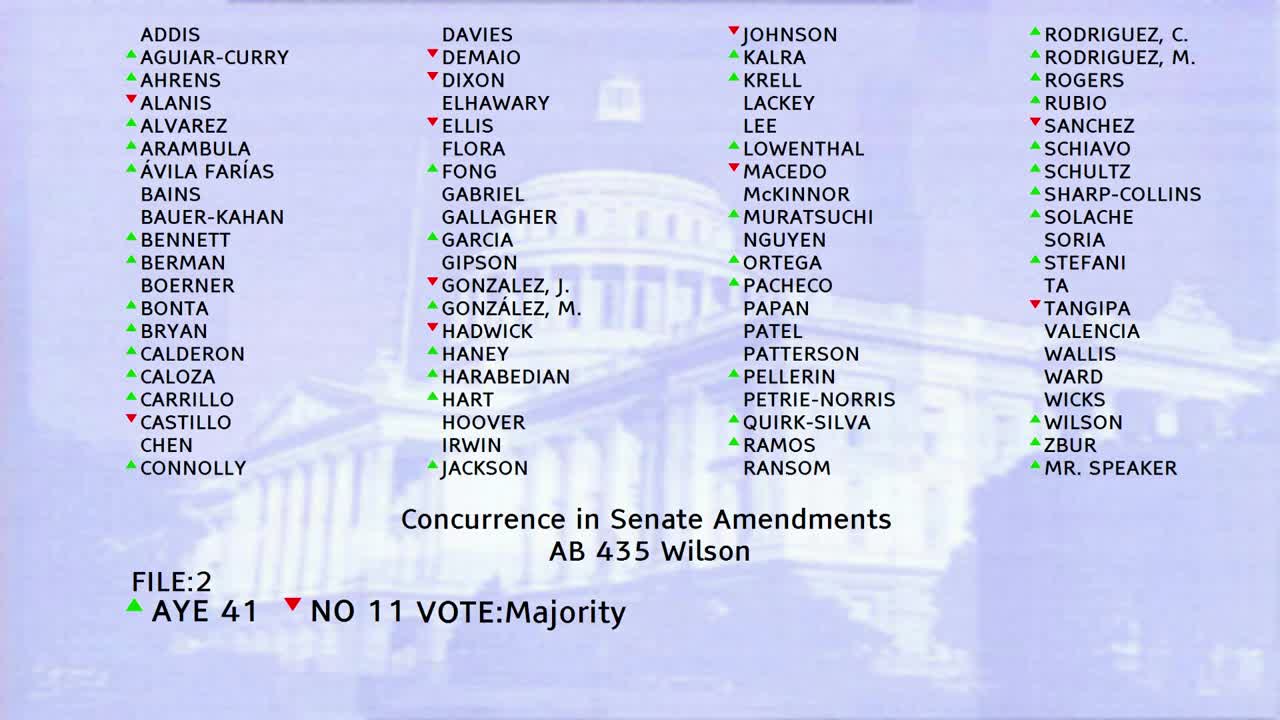 1MIN
Assembly Floor
 1MIN
Assembly Floor
 10MIN
Assembly Standing Committee on Human Services
Bill Author

Bill Co-Author(s):