AB 448: California Health Facilities Financing Authority Act: nondesignated hospitals: loan repayment.
- Session Year: 2025-2026
- House: Assembly
- Latest Version Date: 2025-04-21
Current Status:
Failed
(2026-02-02: From committee: Filed with the Chief Clerk pursuant to Joint Rule 56.)
Introduced
In Committee
Awaiting First Chamber Vote
Passed First Chamber
In Committee
Awaiting Second Chamber Vote
Passed Second Chamber
Enacted
What does this bill do?
The bill changes repayment terms for certain public hospitals that received cash‑flow loans from the California Health Facilities Financing Authority under the 2022 budget program (nondesignated public hospitals not affiliated with county health systems). Those hospitals must begin monthly payments 36 months after the loan date and fully repay the loan within 60 months, with payments amortized over the term at 0% interest and no prepayment penalty.
The summary is provided by generative AI which can make mistakes. For original language, please view the details in the table below.
Under existing law, the California Health Facilities Financing Authority Act (act) authorizes the California Health Facilities Financing Authority to, among other things, make loans from the continuously appropriated California Health Facilities Financing Authority Fund to participating health institutions, as defined, for financing or refinancing the acquisition, construction, or remodeling of health facilities. Under the act, the authority is authorized to issue revenue bonds to provide the funds for achieving these purposes. Existing law appropriates $40,000,000 to provide cashflow loans to nondesignated public hospitals, as needed, due to the financial impacts of the COVID-19 public health emergency. Existing law requires the nondesignated public hospitals participating in this loan program to repay and discharge the loan within 24 months of the date of the loan.
This bill would extend the repayment requirements for nondesignated public hospitals participating in the loan program that had received a loan approval from, and entered into a loan and security agreement with, the authority by requiring those hospitals to begin monthly repayments on the loan 32 months after the date of the loan, and discharge the loan within 60 months of the date of the loan, as prescribed. The bill would require the monthly payments to be amortized over the term of the loan, at 0% interest. By removing restrictions limiting the expenditure of moneys appropriated for purposes of these loans, the bill would make an appropriation.
Existing law, the California Community Care Facilities Act, provides for the licensure and regulation of community care and residential facilities, including short-term residential therapeutic programs, by the State Department of Social Services. A violation of the act is a misdemeanor. Existing law defines short-term residential therapeutic program as a residential facility licensed by the department and operated by any public agency or private organization that provides an integrated program of specialized and intensive care and supervision, services and supports, treatment, and short-term, 24-hour care and supervision to children, including foster children. Existing law requires a short-term residential therapeutic program to follow the requirements applicable to group homes, and to have national accreditation from an entity identified by the department pursuant to a specified process. Existing law requires a short-term residential therapeutic program to prepare and maintain a current, written plan of operation including, among other things, a statement of purposes and goals and a detailed program statement. This bill additionally would require a short-term residential therapeutic program to ensure that at least one parent, or a legal guardian, will be residing at single, physical address within the state for the duration of the childs or youths treatment. The bill also would require the short-term residential therapeutic program to ensure that a child or youth residing in the program facility is at all times able to make confidential telephone calls to their parent or legal guardian, as specified, and has access at all times to appropriate footwear that is suitable to be worn outdoors. The bill would require the short-term residential therapeutic program to post these requirements on its internet website. The bill would subject the short-term residential therapeutic program to civil penalties for violating those requirements, or license suspension or revocation if the violation causes harm to a childs or youths health or safety. The bill would require the department to adopt regulations to implement, interpret, or make specific the bills requirements. Because a violation of the bills requirements by a short-term residential therapeutic program would be a crime, the bill would impose a state-mandated local program.The California Constitution requires the state to reimburse local agencies and school districts for certain costs mandated by the state. Statutory provisions establish procedures for making that reimbursement.This bill would provide that no reimbursement is required by this act for a specified reason.Existing law, the California Community Care Facilities Act, provides for the licensure and regulation of community care and residential facilities, including short-term residential therapeutic programs, by the State Department of Social Services. A violation of the act is a misdemeanor. Existing law defines short-term residential therapeutic program as a residential facility licensed by the department and operated by any public agency or private organization that provides an integrated program of specialized and intensive care and supervision, services and supports, treatment, and short-term, 24-hour care and supervision to children, including foster children. Existing law requires a short-term residential therapeutic program to follow the requirements applicable to group homes, and to have national accreditation from an entity identified by the department pursuant to a specified process. Existing law requires a short-term residential therapeutic program to prepare and maintain a current, written plan of operation including, among other things, a statement of purposes and goals and a detailed program statement.
This bill additionally would require a short-term residential therapeutic program to ensure that at least one parent, or a legal guardian, will be residing at single, physical address within the state for the duration of the childs or youths treatment. The bill also would require the short-term residential therapeutic program to ensure that a child or youth residing in the program facility is at all times able to make confidential telephone calls to their parent or legal guardian, as specified, and has access at all times to appropriate footwear that is suitable to be worn outdoors. The bill would require the short-term residential therapeutic program to post these requirements on its internet website. The bill would subject the short-term residential therapeutic program to civil penalties for violating those requirements, or license suspension or revocation if the violation causes harm to a childs or youths health or safety. The bill would require the department to adopt regulations to implement, interpret, or make specific the bills requirements. Because a violation of the bills requirements by a short-term residential therapeutic program would be a crime, the bill would impose a state-mandated local program.
The California Constitution requires the state to reimburse local agencies and school districts for certain costs mandated by the state. Statutory provisions establish procedures for making that reimbursement.
This bill would provide that no reimbursement is required by this act for a specified reason.
The following definitions apply for purposes of this section:
(a)Authority means the California Health Facilities Financing Authority.
(b)Nondesignated public hospital means a public hospital as that term is defined in subdivision (l) of Section 14165.55 of the Welfare and Institutions Code, excluding those affiliated with county health systems.
129401.(a)The authority shall extend the repayment period as described in subdivision (b) for nondesignated public hospitals participating in the loan program authorized under Provision (1) of Item 0977-101-0001 of Section 2.00 of the Budget Act of 2022 (Chapter 45 of the Statutes of 2022) that had received a loan approval from, and entered into a loan and security agreement with, the authority, and that the authority has determined were unable to repay their loan by the time required under the loan and security agreement.
(b)Notwithstanding Provision (1)(e) of Item 0977-101-0001 of Section 2.00 of the Budget Act of 2022 (Chapter 45 of the Statutes of 2022) and any other law to the contrary, a nondesignated public hospital participating in the loan program described in subdivision (a) that had received a loan approval from, and entered into a loan and security agreement with, the authority shall be required to begin monthly repayments on the loan 36 months after the date of that loan, and shall discharge the loan within 60 months of the date of that loan. The monthly payments shall be amortized over the term of the loan, at 0 percent interest. There shall be no prepayment penalty.
(c)Except as provided in subdivision (b), this section shall not be construed to amend or otherwise affect the requirements of, or the authorities conferred to implement, the loan program pursuant to Provision (1) of Item 0977-101-0001 of Section 2.00 of the Budget Act of 2022 (Chapter 45 of the Statutes of 2022).
SECTION 1.Section 1562.015 is added to the Health and Safety Code, to read:1562.015.(a)In addition to the requirements of Section 1562.01, a short-term residential therapeutic program shall do all of the following:(1)Prior to accepting a child or youth for treatment, ensure that at least one parent, or a legal guardian, will be residing at single, physical address within the state for the duration of the childs or youths treatment.(2)Ensure that a child or youth residing in the program facility is at all times able to make confidential telephone calls to their parent or legal guardian. This requirement is subject to waiver by the department, the short-term residential therapeutic program, or the parent or guardian.(3)Ensure that a child or youth residing in the program facility has access at all times to appropriate footwear that is suitable to be worn outdoors.(b)The short-term residential therapeutic program shall prominently post the requirements described in subdivision (a) on its internet website.(c)A short-term residential therapeutic program that violates the requirements described in subdivision (a) shall be subject to civil penalties in an amount not to exceed ____ dollars ($____) per violation per day. The total civil penalty shall not exceed ____ dollars ($____). If a violation causes harm to a childs or youths health or safety, the department may also suspend or revoke the short-term residential therapeutic programs license.(d)The department shall adopt regulations necessary to implement, interpret, or make specific the requirements of this section.SEC. 2.No reimbursement is required by this act pursuant to Section 6 of Article XIIIB of the California Constitution because the only costs that may be incurred by a local agency or school district will be incurred because this act creates a new crime or infraction, eliminates a crime or infraction, or changes the penalty for a crime or infraction, within the meaning of Section 17556 of the Government Code, or changes the definition of a crime within the meaning of Section 6 of Article XIIIB of the California Constitution.(a)In addition to the requirements of Section 1562.01, a short-term residential therapeutic program shall do all of the following:
(1)Prior to accepting a child or youth for treatment, ensure that at least one parent, or a legal guardian, will be residing at single, physical address within the state for the duration of the childs or youths treatment.
(2)Ensure that a child or youth residing in the program facility is at all times able to make confidential telephone calls to their parent or legal guardian. This requirement is subject to waiver by the department, the short-term residential therapeutic program, or the parent or guardian.
(3)Ensure that a child or youth residing in the program facility has access at all times to appropriate footwear that is suitable to be worn outdoors.
(b)The short-term residential therapeutic program shall prominently post the requirements described in subdivision (a) on its internet website.
(c)A short-term residential therapeutic program that violates the requirements described in subdivision (a) shall be subject to civil penalties in an amount not to exceed ____ dollars ($____) per violation per day. The total civil penalty shall not exceed ____ dollars ($____). If a violation causes harm to a childs or youths health or safety, the department may also suspend or revoke the short-term residential therapeutic programs license.
(d)The department shall adopt regulations necessary to implement, interpret, or make specific the requirements of this section.
SEC. 2.No reimbursement is required by this act pursuant to Section 6 of Article XIIIB of the California Constitution because the only costs that may be incurred by a local agency or school district will be incurred because this act creates a new crime or infraction, eliminates a crime or infraction, or changes the penalty for a crime or infraction, within the meaning of Section 17556 of the Government Code, or changes the definition of a crime within the meaning of Section 6 of Article XIIIB of the California Constitution.
|
Date
|
Status
|
|---|---|
| Feb 2, 2026 | From committee: Filed with the Chief Clerk pursuant to Joint Rule 56. |
| Jan 31, 2026 | Died pursuant to Art. IV, Sec. 10(c) of the Constitution. |
| Apr 30, 2025 | From committee: Do pass and re-refer to Com. on APPR. (Ayes 16. Noes 0.) (April 29). Re-referred to Com. on APPR. |
| Apr 24, 2025 | Re-referred to Com. on HEALTH. pursuant to Assembly Rule 96. |
| Apr 22, 2025 | Re-referred to Com. on HUM. S. |
| Apr 21, 2025 | From committee chair, with author's amendments: Amend, and re-refer to Com. on HUM. S. Read second time and amended. |
| Mar 11, 2025 | In committee: Hearing postponed by committee. |
| Feb 18, 2025 | Referred to Coms. on HUM. S. and JUD. |
| Feb 7, 2025 | From printer. May be heard in committee March 9. |
| Feb 6, 2025 | Read first time. To print. |
|
Date
|
Description
|
Location
|
Votes
|
|
|---|---|---|---|---|
| Apr 29, 2025 | Do pass and be re-referred to the Committee on [Appropriations] | Assembly Standing Committee on Health |
Passed |
This list shows positions taken on this bill by organizations on the date displayed, which is linked to the original source.
Positions by individuals are not included.
|
Organization
|
Position
|
Date
|
|---|---|---|
| El Centro Regional Medical Center | ** Support | |
| University of California | ** Support |
Date of Hearing: April 29, 2025
ASSEMBLY COMMITTEE ON HEALTH
Mia Bonta, Chair
ABPCA Bill Id:AB 448
Author:(Patel) – As Amended Ver:April 21, 2025
SUBJECT: California Health Facilities Financing Authority Act: nondesignated hospitals: loan repayment.
SUMMARY: Requires the California Health Facilities Financing Authority (CHFFA) to extend the repayment period for nondesignated public hospitals (NDPHs) participating in a bridge loan program authorized under the Budget Act of 2022 which CHFFA has determined are unable to repay their loan within the time required. Delays the repayment timeframe by requiring the NDPHs to begin monthly repayments on the loan 36 months after the date of that loan, and requires the NDPH to discharge the loan within 60 months of the date of that loan, instead of the NDPH being required to repay and discharge the loan within 24 months of the date of the loan as required in the Budget Act of 2022. Specifically, this bill:
- Requires CHFFA to extend the repayment period for NDPHs participating in the loan program authorized under the Budget Act of 2022 (AB 178 [Ting], Chapter 45, Statutes of 2022) that had received a loan approval from and entered into a loan and security agreement with CHFFA, and that CHFFA has determined are unable to repay their loan within the time required under the loan and security agreement.
- Requires an NPDH that had received a loan approval from, and entered into a loan and security agreement with CHFFA, to begin monthly repayments on the loan 36 months after the date of that loan, and requires the NDPH to discharge the loan within 60 months of the date of that loan. Requires the monthly payments to be amortized over the term of the loan, at 0% interest, and prohibits any prepayment penalty.
- Prohibits this bill from being construed to amend or otherwise affect the requirements of, or the authorities conferred to implement, the loan program.
EXISTING LAW:
- Establishes CHFFA within the office of the State Treasurer to be the State's vehicle for providing financial assistance to public and non-profit health care providers through loans, grants, and tax-exempt bonds. [Government Code (GOV) § 15430 et seq.]
- Appropriates, pursuant to the Budget Act of 2022, $65 million for CHFFA to provide cash flow loans not to exceed $40 million to NDPHs, as needed, due to the financial impacts of the COVID-19 public health emergency. [AB 178 (Ting), Chapter 45, Statutes of 2022, Section 47, which amends Item 0977-101-0001 of Section 2.00 of the Budget Act of 2022]
- Permits CHFFA, of the funds appropriated, to allocate an amount not to exceed 1% of each hospital’s loan. Permits the Department of Finance to transfer up to $400,000 to administer the loans, and requires any transferred funds to be available for encumbrance or expenditure until June 30, 2025. [Ibid.]
- Requires CHFFA, pursuant to AB 178, to determine, in consultation with NDPHs, the application process, eligibility criteria, and methodology for distribution of the loans. [Ibid.]
- Requires NDPHs to repay and discharge the loan within 24 months of the date of the loan. [Ibid.]
- Requires security for the cash flow loans to be Medi-Cal reimbursements due to these NDPHs from the Department of Health Care Services (DHCS). Caps CHFFA’s recoupment of these cash flow loans from exceeding 20% of the NDPHs’ respective Medi-Cal check write payments until the loan amount has been satisfied. [Ibid.]
- Defines a NPPHs as a public hospital, excluding those affiliated with county health systems (county and University of California hospitals are known as “designated public hospitals”). [Ibid.]
FISCAL EFFECT: Unknown. This bill has not yet been analyzed by a fiscal committee.
COMMENTS:
- PURPOSE OF THIS BILL. According to the author, health care districts are essential pillars of California's health care system, providing accessible, culturally competent, and affordable care, especially to underserved and vulnerable communities. In San Diego County, public health care districts represent a critical public investment designed to ensure democratic accountability and responsiveness to local health needs.
However, the current instability and financial distress facing the Palomar Healthcare District—a cornerstone of health care for nearly 850,000 residents—threatens access to essential health care services. The closure of the Fallbrook Regional Healthcare District's hospital has already created a health care desert, underscoring the potential consequences of inaction. Without proactive collaboration, oversight, and strategic solutions, the viability of these crucial public health services in North San Diego County is at risk.
- BACKGROUND.
- CHFFA “Bridge” loans. During the pandemic, district and municipal hospitals (referred to in law as “NDPHs”) were struggling with staffing shortages, supply shortages, and increased expenses. DHCS also transitioned its Medi-Cal managed care program from a Fiscal Year to Calendar Year, and this impacted the timing of Medi-Cal supplemental payment programs, delaying over a $100 million of payments. The District Hospital Leadership Forum (DHLF), which represents district hospitals on financing and reimbursement issues, advocated for the establishment of two $40 million loan programs. The first bridge loan program was established through budget bill language in a follow-up bill to the Budget Act of 2021 in SB 170 (Skinner), Chapter 240, Statutes of 2021). The second bridge loan program was appropriated through the Budget Act of 2022.
These loan programs were administered by CHFFA to “bridge” some of the cash flow gap for those hospitals most in need. These interest free loans had a two-year repayment term as it was expected that hospitals would exit the pandemic and return to a better fiscal situation. The funding for the first round of loans was provided in two separate amounts ($17.7 million and $22.1 million). Payments on the first round of loans from the 2021 follow-up budget bill appropriation were repaid and are not affected by the provisions of this bill.
The $40 million loans from the Budget Act of 2022 went to eight NDPHs and Palomar Health, which has two district hospitals. The second bride loans to two of the NDPHs and the loan to Palomar Health have not been repaid, which is the issue addressed by this bill. El Centro Regional Medical Center had an approved bridge loan amount approved of $5.6 million, with a loan due date of December 16, 2024, Palomar Health (a health care district which has two NDPHs, one in Poway and another in Escondido) had an approved bridge loan amount of $8.6 million with a loan due date of December 20, 2025, and Palo Verde Hospital had an approved bridge loan amount of $600,000, with a loan due date of December 16, 2024.
The BBL establishing the bridge loan program requires security for the cash flow loans to be Medi-Cal reimbursements due to these NDPHs from DHCS. This means amounts owed to repay the loan would be deducted from the check writes that Medi-Cal reimburses these hospitals for services they provide in the fee-for-service (FFS) component of the Medi-Cal program (separate from the services paid by Medi-Cal managed care plans). These security amounts are capped at 20% of the NDPHs’ respective Medi-Cal check write payments until the loans amount have been satisfied.
CHFFA indicates Palo Verde Hospital is in default, and CHFFA is recouping the loan amounts from Medi-Cal payments, but to-date, it has only recouped $16,000. CHFFA indicates full recoupment will take many years. CHFFA indicates the other hospital and Palomar Health hospitals have outstanding debt owed to other entities, and if CHFFA issues a letter of default on the unpaid bridge loans, it could potentially trigger actions by other debt-holders of these two hospitals. CHFFA staff indicate if it were to do a margin call on the other loans, it would put the affected hospital and Palomar Health in a precarious financial situation with other holders of the affected hospitals’ debt.
- AFFECTED HOSPITALS. El Centro Regional Medical Center has 161 licensed beds and a basic emergency department and is located in El Centro in Imperial County. Eight-eight percent of its inpatient revenue and 87.1% of its outpatient revenue was from Medicare and Medi-Cal (managed care and FFS) from July 1, 2022 to June 30, 2023 per HCAI data. Palomar Health in San Diego County has two NDPHs. Palomar Medical Center in Escondido has 292 licensed beds and is a trauma center with a basic emergency department. Seventy-nine percent of its inpatient revenue and 71% of its outpatient revenue were from Medicare and Medi-Cal (managed care and FFS) from July 1, 2022 to June 30, 2023 per HCAI data. Palomar Medical Center in Poway has 236 licensed beds, and a basic emergency department, and 80.2% of its inpatient revenue and 64% of its outpatient revenue was from Medicare and Medi-Cal (managed care and FFS) from July 1, 2022 to June 30, 2023 per HCAI data.
Palo Verde Hospital has 25 licensed beds and a standby emergency department and is located in Blythe in Riverside County. Eighty-four percent of its inpatient revenue and 82.1% of its outpatient revenue were from Medicare and Medi-Cal (managed care and FFS) from July 1, 2021 to June 30, 2022 per HCAI data.
Press coverage of Palomar Health report the district announced in December 2024 it was laying off about 2% of its 4,200 employees, Palomar Health has borrowed from two other San Diego health systems, Palomar Health suffered a $165 million operating loss in fiscal year 2024, the ratings agency Moody’s downgraded Palomar Health’s revenue rating to “Caa1” from “B2” after previous downgrades in 2024, and Palomar Health has asked its lenders not to enforce borrowing terms that could push the provider into bankruptcy.
- SUPPORT. El Centro Regional Medical Center (ECRMC) writes in support that this bill would ensure its doors remain open and it can continue to serve Imperial County, which has one of the lowest incomes and highest unemployment rates of all of California’s counties. ECRMC writes that, since February 2023, when UC San Diego began operating and managing ECRMC, it has worked tirelessly to revitalize its organization, and it remains committed to working with the City of El Centro, UC San Diego Health and the newly-formed Imperial Valley Health Care District (IVHD) to continue its shared mission of delivering high-quality and affordable health care closer to home for Imperial Valley residents. ECRMC states that if this bill does not pass, two major impacts will occur. First, ECRMC will not meet its required 45 days of cash on hand, which may trigger a default and cause an increase in the assessed interest rate on its bond up to 5% or an additional $1.6 million annually. Second, ECRMC’s days of cash on hand may become less than $5 million, which may delay ECRMC’s merger into IVHD as part of the implementation of AB 918 (Garcia), Chapter 549, Statutes of 2024. That legislation combined Pioneers Memorial Healthcare District and Heffernan Memorial Healthcare District and required the initial board of directors of IVHD to enter into negotiations with the ECRMC to decide the terms of the acquisition of the hospital as part of one large countywide health care district (IVHD). ECRMC states the other two districts merged last year and both the City Council of El Centro and IVHD voted to approve the term sheet for the merger in early March 2025 but health care in Imperial Valley is fragile and will not be sustainable until AB 918 is fully implemented, which it hopes to occur by the end of 2025.
- CONCERNS. The Service Employees International Union California State Council (SEIU) writes expressing concerns with the current version of this bill. SEIU states that, while it appreciates the author’s goal of preserving access to care and providing funding flexibility, it has concerns with the language in print and its failure to meet the standards of public dollars. SEIU states that CHFFA loan programs are carefully designed to balance efficiency, transparency, and guardrails to ensure appropriate use of state funds. SEIU states it is concerned that the nearly automatic extensions created by this bill lack essential guardrails and transparency, and thereby limit the ability of CHFFA and other stakeholders, including labor, to effectively engage NDPHs around compliance with the terms of their loans. SEIU requests that the bill moving forward includes additional guardrails to protect these dollars and further the state’s goal of access to quality care.
- RELATED LEGISLATION. AB 356 (Patel) would require the Department of Health Care Access and Information (HCAI) to convene a working group to study and make recommendations regarding the provision of health care services in the northern San Diego region. Require that the working group include representatives of certain health care entities and members of the San Diego delegation of the Legislature, and to issue a report to the Legislature, on or before June 1, 2026, with its findings and recommendations. Sunsets these provisions on June 1, 2030. AB 356 is scheduled for hearing in the Assembly Health Committee on April 29, 2025.
- PREVIOUS LEGISLATION.
- AB 2098 (Garcia) of 2024 would have extended the repayment period for specified bridge loans for district hospitals, made through CHFFA under authorization and funding from the 2022 Budget Act and which were required to be repaid within two years of the date of the loan, to instead require hospitals to make monthly payments within 24 months of the date of the loan, and for the loan to be repaid within 72 months of the date of the loan. AB 2098 was vetoed by Governor Newsom, who stated that while he supported efforts to ensure loan repayment requirements are feasible, this bill would advantage one subset of hospital loans above others that did not receive such an extension. The Governor stated extending the timeline for repayment will affect our budget structure in the out years, and would be better discussed as a part of the annual budget process.
- AB 918 (Garcia), Chapter 549, Statutes of 2023 created the IVHD to provide healthcare services across Imperial County, and gave the district various powers and responsibilities, and dissolved the Pioneers and Heffernan Memorial Healthcare Districts. Required the initial board of directors of IVHD to enter negotiations with the ECRMC to decide the terms of the acquisition of the hospital, and upon reviewing the financial feasibility studies conducted by the Imperial County LAFCO and Kaufman Hall and confirming the financial viability of integrating the ECRMC into IVHD, the initial board of directors of IVHD to determine the terms of the acquisition of ECRMC. If the initial board of directors chooses to acquire the ECRMC, existing law requires ECRMC to be acquired with all of its assets and liabilities.
- AB 2271 (Ortega) of 2024 would have required HCAI to approve, subject to review and approval by the Department of Finance, the forgiveness of the $17.65 million loan awarded to St. Rose Hospital in Hayward from the Distressed Hospital Loan Program. AB 2271 was vetoed by Governor Newsom. In his veto message, the Governor stated that while he appreciated the author's effort to support Alameda Health System's potential acquisition of St. Rose Hospital in her community, this bill would circumvent the loan forgiveness application process in existing law to secure full forgiveness for one hospital through statute, and this unfairly advantages St. Rose and sets a precedent for the remaining 15 hospitals that received loans.
- AB 2637 (Schiavo) would have required CHFFA to establish financial eligibility standards for working capital loans by studying the creditworthiness of a participating health institution, together with the amount of pledged revenues, debt service coverage, and basic security; and, prohibit a participating health institution that is determined by CHFFA to be in financial distress from being deemed financially eligible for working capital loans. AB 2637 was vetoed by Governor Newsom. In his veto message, the Governor stated that while he supported support efforts to ensure loan repayment requirements are feasible, this bill would result in an open-ended timeframe without any required end date that loans must be repaid. Extending the timeline for the recoupment of CHFFA loans would be better discussed as a part of the annual budget process.
- LEGISLATIVE POLICY AND BUDGET PROCESS TIMING. Because the bridge loans from the Budget Act of 2022 were due in December 2024 and January 2025, AB 2098 (Garcia) of 2024 was seen as the last opportunity for a longer repayment schedule for the affected entities that received bridge loan funding. Any additional legislation similar to AB 2098 would have required a bill to be passed on an urgency basis and signed into law in January 2025 when the Legislature re-convened. Even then, for five of the nine loan recipients, the bridge loan due date would have passed as the loans were due in December 2024, and the loan due dates for the other four bridge loans with due dates in January 2025 were January 3, 18, 20 and 27, 2025.
Because this policy bill will likely follow the normal policy and fiscal timeframes, the soonest this bill would likely become law would be September or October 2025 (the Governor has until October 12, 2025 to sign or veto bills). An alternative and likely faster way to address the repayment timeframe would be through the legislative budget process and the inclusion of the contents of this bill in a budget trailer bill or by BBL (the two bridge loan programs were established via BBL). This change would then take effect upon enactment of the annual budget act, which is likely to occur in late June 2025 or early July 2025, assuming an on-time budget. The author has written to the Assembly Budget Committee seeking flexibility in repayment of the state loan. Making this change via a policy bill would delay the financial relief to the hospital for each week payments are deducted from payments made to affected hospitals from Medi-Cal’s weekly FFS payment, if CHFFA were to begin withholding from the other affected hospitals’ Medi-Cal FFS payments in the absence of legislative action to extend the repayment period.
REGISTERED SUPPORT / OPPOSITION:
Support
El Centro Regional Medical Center
University of California
Opposition
None on file
Analysis Prepared by: Scott Bain / HEALTH / (916) 319-2097
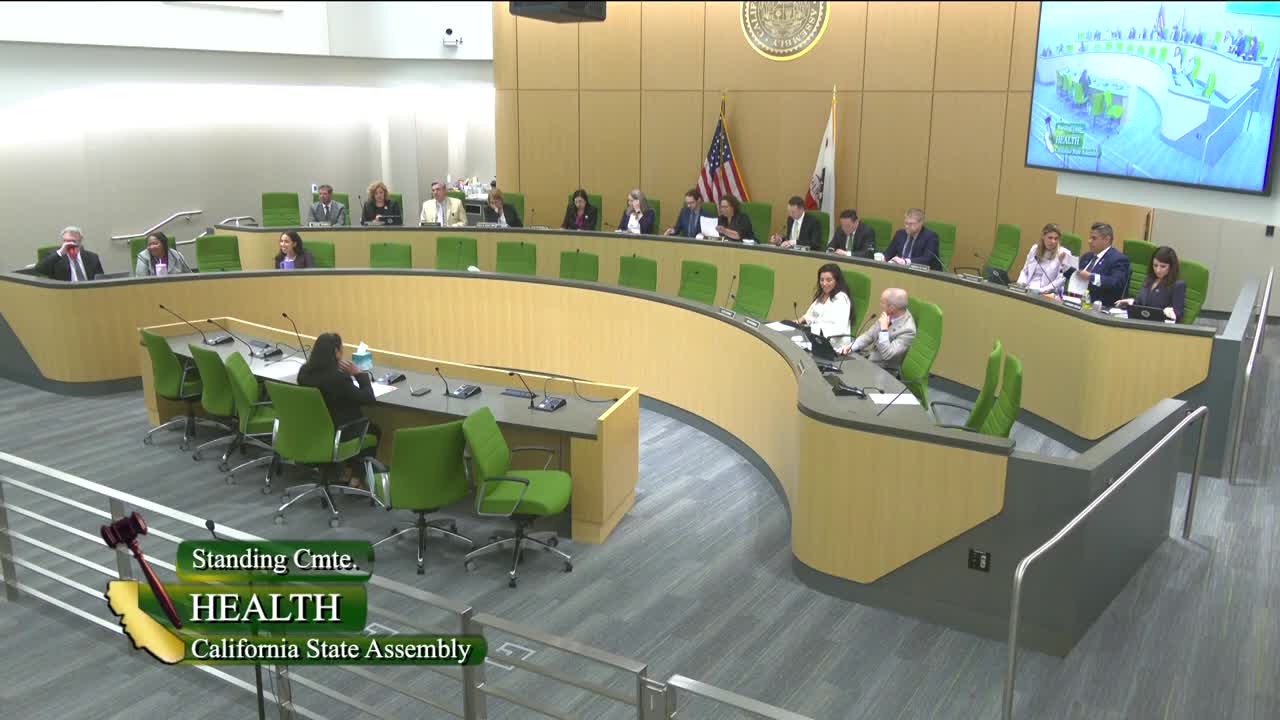
Bill Author