AB 486: Crimes: burglary tools.
- Session Year: 2025-2026
- House: Assembly
- Latest Version Date: 2025-10-06
Current Status:
Passed
(2025-10-06: Chaptered by Secretary of State - Chapter 367, Statutes of 2025.)
Introduced
In Committee
Awaiting First Chamber Vote
Passed First Chamber
In Committee
Awaiting Second Chamber Vote
Passed Second Chamber
Enacted
Existing law makes it a misdemeanor to have specified tools or other items, with the intent to feloniously break or enter into a building or other specified place. Existing law makes it a misdemeanor to make, alter, or repair specified instruments if the person knows or has reason to believe the instrument is intended to be used in the commission of a misdemeanor or felony.
This bill would add key programming devices, key duplicating devices, and signal extenders, as defined, to the list of instruments that are an element of the above offenses. By expanding the scope of an existing crime, this bill would impose a state-mandated local program.
The California Constitution requires the state to reimburse local agencies and school districts for certain costs mandated by the state. Statutory provisions establish procedures for making that reimbursement.
This bill would provide that no reimbursement is required by this act for a specified reason.
Existing law prohibits a person from engaging in, aiding, or abetting a motor vehicle speed contest on a highway or in an offstreet parking facility. Upon conviction, existing law punishes the person by imprisonment in a county jail for between 24 hours and 90 days, inclusive, by a fine between $355 and $1,000, inclusive, or by both that fine and imprisonment, except as specified. If the vehicle used in the violation was registered to the person who violated the prohibition, existing law also authorizes the impounding of the persons vehicle for between 1 and 30 days. Existing law prohibits a person from engaging in, aiding, or abetting a motor vehicle exhibition of speed on a highway or in an offstreet parking facility. Upon conviction, existing law punishes the person by imprisonment in a county jail for not more than 90 days, by a fine of not more than $500, or by both that fine and imprisonment. Existing law, commencing July 1, 2025, authorizes the court to order the privilege to operate a motor vehicle suspended for 90 days to 6 months and restrict the persons operation of a motor vehicle for the purposes of the persons employment if the violation of the prohibition on engaging in, aiding, or abetting a motor vehicle exhibition of speed on a highway or in an offstreet parking facility occurred as part of a sideshow, as defined.This bill would clarify that, for purposes of those prohibitions, a person who organizes, facilitates, or instigates a sideshow may be charged with aiding or abetting a motor vehicle speed contest or a motor vehicle exhibition of speed even if they are not physically present at the scene of the sideshow, as specified. By expanding the prohibition on aiding or abetting to include an individual who aids or abets, but is not physically present at the scene of, a sideshow, this bill would impose a state-mandated local program.The California Constitution requires the state to reimburse local agencies and school districts for certain costs mandated by the state. Statutory provisions establish procedures for making that reimbursement.This bill would provide that no reimbursement is required by this act for a specified reason.Existing law prohibits a person from engaging in, aiding, or abetting a motor vehicle speed contest on a highway or in an offstreet parking facility. Upon conviction, existing law punishes the person by imprisonment in a county jail for between 24 hours and 90 days, inclusive, by a fine between $355 and $1,000, inclusive, or by both that fine and imprisonment, except as specified. If the vehicle used in the violation was registered to the person who violated the prohibition, existing law also authorizes the impounding of the persons vehicle for between 1 and 30 days. Existing law prohibits a person from engaging in, aiding, or abetting a motor vehicle exhibition of speed on a highway or in an offstreet parking facility. Upon conviction, existing law punishes the person by imprisonment in a county jail for not more than 90 days, by a fine of not more than $500, or by both that fine and imprisonment. Existing law, commencing July 1, 2025, authorizes the court to order the privilege to operate a motor vehicle suspended for 90 days to 6 months and restrict the persons operation of a motor vehicle for the purposes of the persons employment if the violation of the prohibition on engaging in, aiding, or abetting a motor vehicle exhibition of speed on a highway or in an offstreet parking facility occurred as part of a sideshow, as defined.
This bill would clarify that, for purposes of those prohibitions, a person who organizes, facilitates, encourages, promotes, or instigates a sideshow may be charged with aiding or abetting a motor vehicle speed contest or a motor vehicle exhibition of speed even if they are not physically present at the scene of the sideshow, as specified. By expanding the prohibition on aiding or abetting to include an individual who aids or abets, but is not physically present at the scene of, a sideshow, this bill would impose a state-mandated local program.
The California Constitution requires the state to reimburse local agencies and school districts for certain costs mandated by the state. Statutory provisions establish procedures for making that reimbursement.
This bill would provide that no reimbursement is required by this act for a specified reason.
Existing law prohibits a person from engaging in, aiding, or abetting a motor vehicle speed contest on a highway or in an offstreet parking facility. Upon conviction, existing law punishes the person by imprisonment in a county jail for between 24 hours and 90 days, inclusive, by a fine between $355 and $1,000, inclusive, or by both that fine and imprisonment, except as specified. If the vehicle used in the violation was registered to the person who violated the prohibition, existing law also authorizes the impounding of the persons vehicle for between 1 and 30 days. Existing law prohibits a person from engaging in, aiding, or abetting a motor vehicle exhibition of speed on a highway or in an offstreet parking facility. Upon conviction, existing law punishes the person by imprisonment in a county jail for not more than 90 days, by a fine of not more than $500, or by both that fine and imprisonment. Existing law, commencing July 1, 2025, authorizes the court to order the privilege to operate a motor vehicle suspended for 90 days to 6 months and restrict the persons operation of a motor vehicle for the purposes of the persons employment if the violation of the prohibition on engaging in, aiding, or abetting a motor vehicle exhibition of speed on a highway or in an offstreet parking facility occurred as part of a sideshow, as defined.
This bill would clarify that, for purposes of those prohibitions, aiding or abetting includes, but is not limited to, organizing, facilitating, encouraging, promoting, or instigating a violation as part of a sideshow. The bill would also specify that physical presence at the scene of a sideshow is not required to aid or abet. a person who organizes, facilitates, encourages, promotes, or instigates a sideshow may be charged with aiding or abetting a motor vehicle speed contest or a motor vehicle exhibition of speed even if they are not physically present at the scene of the sideshow, as specified. By expanding the prohibition on aiding or abetting to include an individual who aids or abets, but is not physically present at the scene of, a sideshow, this bill would impose a state-mandated local program.
The California Constitution requires the state to reimburse local agencies and school districts for certain costs mandated by the state. Statutory provisions establish procedures for making that reimbursement.
This bill would provide that no reimbursement is required by this act for a specified reason.
Existing law prohibits a person from engaging in, aiding, or abetting a motor vehicle speed contest on a highway or in an offstreet parking facility. Upon conviction, existing law punishes the person by imprisonment in a county jail for between 24 hours and 90 days, inclusive, by a fine between $355 and $1,000, inclusive, or by both that fine and imprisonment, except as specified. If the vehicle used in the violation was registered to the person who violated the prohibition, existing law also authorizes the impounding of the persons vehicle for between 1 and 30 days. Existing law prohibits a person from engaging in, aiding, or abetting a motor vehicle exhibition of speed on a highway or in an offstreet parking facility. Upon conviction, existing law punishes the person by imprisonment in a county jail for not more than 90 days, by a fine of not more than $500, or by both that fine and imprisonment. Existing law, commencing July 1, 2025, authorizes the court to order the privilege to operate a motor vehicle suspended for 90 days to 6 months and restrict the persons operation of a motor vehicle for the purposes of the persons employment if the violation of the prohibition on engaging in, aiding, or abetting a motor vehicle exhibition of speed on a highway or in an offstreet parking facility occurred as part of a sideshow, as defined.
This bill would clarify that, for purposes of those prohibitions, aiding or abetting includes, but is not limited to, organizing, facilitating, encouraging, promoting, or instigating a violation as part of a sideshow. The bill would also specify that physical presence at the scene of a sideshow is not required to aid or abet. By expanding the prohibition on aiding or abetting to include an individual who aids or abets, but is not physically present at the scene of, a sideshow, this bill would impose a state-mandated local program.
The California Constitution requires the state to reimburse local agencies and school districts for certain costs mandated by the state. Statutory provisions establish procedures for making that reimbursement.
This bill would provide that no reimbursement is required by this act for a specified reason.
(a)A person who possesses a picklock, crow, keybit, crowbar, screwdriver, vise grip pliers, water-pump pliers, slidehammer, slim jim, tension bar, lock pick gun, tubular lock pick, bump key, floor-safe door puller, master key, ceramic or porcelain spark plug chips or pieces, key programming device or key duplicating device, signal extender, or other instrument or tool with the intent to feloniously break or enter into any building, railroad car, aircraft, or vessel, trailer coach, or vehicle as defined in the Vehicle Code, or who knowingly makes or alters, or attempts to make or alter, a key or other instrument named above so that it will fit or open the lock of a building, railroad car, aircraft, vessel, trailer coach, or vehicle as defined in the Vehicle Code, without being requested to do so by a person having the right to open the same, or who makes, alters, or repairs any instrument or thing, knowing or having reason to believe that it is intended to be used in the commission of a misdemeanor or felony, is guilty of a misdemeanor. Any of the structures mentioned in Section 459 shall be deemed to be a building within the meaning of this section.
(b)For the purposes of this section, the following terms have the following meanings:
(1)Key programming device or key duplicating device means any device with the capability to access a vehicles onboard computer to allow additional keys to be made, delete keys, or remotely start the vehicle without the use of any key. A key duplicating device also includes any device with the ability to capture a key code or signal in order to remotely access a vehicle.
(2)Signal extender means a key fob amplifier or other device that extends the signal range of a keyless entry car fob to send a coded signal to a receiver in a vehicle to lock, unlock, access a vehicle, start the engine, or interact with other remote commands associated to the vehicles onboard computer.
SEC. 2.No reimbursement is required by this act pursuant to Section 6 of Article XIIIB of the California Constitution because the only costs that may be incurred by a local agency or school district will be incurred because this act creates a new crime or infraction, eliminates a crime or infraction, or changes the penalty for a crime or infraction, within the meaning of Section 17556 of the Government Code, or changes the definition of a crime within the meaning of Section 6 of Article XIIIB of the California Constitution.
Every (a)A person having upon him or her in his or her possession who possesses a picklock, crow, keybit, crowbar, screwdriver, vise grip pliers, water-pump pliers, slidehammer, slim jim, tension bar, lock pick gun, tubular lock pick, bump key, floor-safe door puller, master key, ceramic or porcelain spark plug chips or pieces, key programming device or key duplicating device, signal extender, or other instrument or tool with intent feloniously to the intent to feloniously break or enter into any building, railroad car, aircraft, or vessel, trailer coach, or vehicle as defined in the Vehicle Code, or who shall knowingly make makes or alter, alters, or shall attempt attempts to make or alter, any a key or other instrument named above so that the same it will fit or open the lock of a building, railroad car, aircraft, vessel, trailer coach, or vehicle as defined in the Vehicle Code, without being requested to do so by some a person having the right to open the same, or who shall make, alter, makes, alters, or repair repairs any instrument or thing, knowing or having reason to believe that it is intended to be used in committing the commission of a misdemeanor or felony, is guilty of a misdemeanor. Any of the structures mentioned in Section 459 shall be deemed to be a building within the meaning of this section.
(b)For the purposes of this section, the following terms have the following meanings:
(1)Key programming device or key duplicating device means any device with the capability to access a vehicles onboard computer to allow additional keys to be made, delete keys, or remotely start the vehicle without the use of any key. A key duplicating device also includes any device with the ability to capture a key code or signal in order to remotely access a vehicle.
(2)Signal extender means a key fob amplifier or other device that extends the signal range of a keyless entry car fob to send a coded signal to a receiver in a vehicle to lock, unlock, access a vehicle, start the engine, or interact with other remote commands associated to the vehicles onboard computer.
SEC. 2.No reimbursement is required by this act pursuant to Section 6 of Article XIIIB of the California Constitution because the only costs that may be incurred by a local agency or school district will be incurred because this act creates a new crime or infraction, eliminates a crime or infraction, or changes the penalty for a crime or infraction, within the meaning of Section 17556 of the Government Code, or changes the definition of a crime within the meaning of Section 6 of Article XIIIB of the California Constitution.
SECTION 1.Section 23109 of the Vehicle Code is amended to read:23109.(a)A person shall not engage in a motor vehicle speed contest on a highway or in an offstreet parking facility. As used in this section, a motor vehicle speed contest includes a motor vehicle race against another vehicle, a clock, or other timing device. For purposes of this section, an event in which the time to cover a prescribed route of more than 20 miles is measured, but in which the vehicle does not exceed the speed limit, is not a speed contest.(b)A person shall not aid or abet in a motor vehicle speed contest on a highway or in an offstreet parking facility.(c)A person shall not engage in a motor vehicle exhibition of speed on a highway or in an offstreet parking facility, and a person shall not aid or abet in a motor vehicle exhibition of speed on a highway or in an offstreet parking facility.(d)A person shall not, for the purpose of facilitating or aiding or as an incident to a motor vehicle speed contest or exhibition upon a highway or in an offstreet parking facility, in any manner obstruct or place a barricade or obstruction or assist or participate in placing a barricade or obstruction upon a highway or in an offstreet parking facility.(e)(1)A person convicted of a violation of subdivision (a) shall be punished by imprisonment in a county jail for not less than 24 hours nor more than 90 days or by a fine of not less than three hundred fifty-five dollars ($355) nor more than one thousand dollars ($1,000), or by both that fine and imprisonment. That person shall also be required to perform 40 hours of community service. The court may order the privilege to operate a motor vehicle suspended for 90 days to six months, as provided in paragraph (8) of subdivision (a) of Section 13352. The persons privilege to operate a motor vehicle may be restricted for 90 days to six months to necessary travel to and from that persons place of employment and, if driving a motor vehicle is necessary to perform the duties of the persons employment, restricted to driving in that persons scope of employment. This subdivision does not interfere with the courts power to grant probation in a suitable case.(2)If a person is convicted of a violation of subdivision (a) and that violation proximately causes bodily injury to a person other than the driver, the person convicted shall be punished by imprisonment in a county jail for not less than 30 days nor more than six months or by a fine of not less than five hundred dollars ($500) nor more than one thousand dollars ($1,000), or by both that fine and imprisonment.(f)(1)If a person is convicted of a violation of subdivision (a) for an offense that occurred within five years of the date of a prior offense that resulted in a conviction of a violation of subdivision (a), that person shall be punished by imprisonment in a county jail for not less than four days nor more than six months and by a fine of not less than five hundred dollars ($500) nor more than one thousand dollars ($1,000).(2)If the perpetration of the most recent offense within the five-year period described in paragraph (1) proximately causes bodily injury to a person other than the driver, a person convicted of that second violation shall be imprisoned in a county jail for not less than 30 days nor more than six months and by a fine of not less than five hundred dollars ($500) nor more than one thousand dollars ($1,000).(3)If the perpetration of the most recent offense within the five-year period described in paragraph (1) proximately causes serious bodily injury, as defined in paragraph (4) of subdivision (f) of Section 243 of the Penal Code, to a person other than the driver, a person convicted of that second violation shall be imprisoned in the state prison, or in a county jail for not less than 30 days nor more than one year, and by a fine of not less than five hundred dollars ($500) nor more than one thousand dollars ($1,000).(4)The court shall order the privilege to operate a motor vehicle of a person convicted under paragraph (1), (2), or (3) suspended for a period of six months, as provided in paragraph (9) of subdivision (a) of Section 13352. In lieu of the suspension, the persons privilege to operate a motor vehicle may be restricted for six months to necessary travel to and from that persons place of employment and, if driving a motor vehicle is necessary to perform the duties of the persons employment, restricted to driving in that persons scope of employment.(5)This subdivision does not interfere with the courts power to grant probation in a suitable case.(g)If the court grants probation to a person subject to punishment under subdivision (f), in addition to subdivision (f) and any other terms and conditions imposed by the court, which may include a fine, the court shall impose as a condition of probation that the person be confined in a county jail for not less than 48 hours nor more than six months. The court shall order the persons privilege to operate a motor vehicle to be suspended for a period of six months, as provided in paragraph (9) of subdivision (a) of Section 13352 or restricted pursuant to subdivision (f).(h)If a person is convicted of a violation of subdivision (a) and the vehicle used in the violation is registered to that person, the vehicle may be impounded at the registered owners expense for not less than 1 day nor more than 30 days.(i)(1)A person who violates subdivision (b), (c), or (d) shall upon conviction of that violation be punished by imprisonment in a county jail for not more than 90 days, by a fine of not more than five hundred dollars ($500), or by both that fine and imprisonment.(2)(A)(i)Commencing July 1, 2025, the court may order the privilege to operate a motor vehicle suspended for 90 days to six months for a person who violates subdivision (c), as provided in subparagraph (B) of paragraph (8) of subdivision (a) of Section 13352, only if the violation occurred as part of a sideshow.(ii)For purposes of this section, sideshow is defined as an event in which two or more persons block or impede traffic on a highway or in an offstreet parking facility for the purpose of performing motor vehicle stunts, motor vehicle speed contests, motor vehicle exhibitions of speed, or reckless driving, for spectators. A sideshow is also known as a street takeover.(B)A persons privilege to operate a motor vehicle may be restricted for 90 days to six months to necessary travel to and from that persons place of employment and, if driving a motor vehicle is necessary to perform the duties of the persons employment, restricted to driving in that persons scope of employment.(C)If the court is considering suspending or restricting the privilege to operate a motor vehicle pursuant to this paragraph, the court shall also consider whether a medical, personal, or family hardship exists that requires a person to have a drivers license for such limited purpose as the court deems necessary to address the hardship. This subdivision does not interfere with the courts power to grant probation in a suitable case.(j)If a persons privilege to operate a motor vehicle is restricted by a court pursuant to this section, the court shall clearly mark the restriction and the dates of the restriction on that persons drivers license and promptly notify the Department of Motor Vehicles of the terms of the restriction in a manner prescribed by the department. The Department of Motor Vehicles shall place that restriction in the persons records in the Department of Motor Vehicles and enter the restriction on a license subsequently issued by the Department of Motor Vehicles to that person during the period of the restriction.(k)The court may order that a person convicted under this section, who is to be punished by imprisonment in a county jail, be imprisoned on days other than days of regular employment of the person, as determined by the court.(l)For purposes of this section, offstreet parking facility has the same meaning as in subdivision (c) of Section 12500.(m)A person who organizes, facilitates, or instigates a sideshow may be charged with aiding or abetting a motor vehicle speed contest or a motor vehicle exhibition of speed under subdivisions (b) and (c), even if they are not physically present at the scene of the sideshow. This subdivision does not abrogate or otherwise modify the legal elements that must be proven to find an individual guilty of aiding and abetting a crime as established in the California Supreme Courts decision in People v. Beeman (1984) 35 Cal.3d 547.(n)This section shall be known and may be cited as the Louis Friend Memorial Act.SEC. 2.No reimbursement is required by this act pursuant to Section 6 of Article XIIIB of the California Constitution because the only costs that may be incurred by a local agency or school district will be incurred because this act creates a new crime or infraction, eliminates a crime or infraction, or changes the penalty for a crime or infraction, within the meaning of Section 17556 of the Government Code, or changes the definition of a crime within the meaning of Section 6 of Article XIIIB of the California Constitution.(a)A person shall not engage in a motor vehicle speed contest on a highway or in an offstreet parking facility. As used in this section, a motor vehicle speed contest includes a motor vehicle race against another vehicle, a clock, or other timing device. For purposes of this section, an event in which the time to cover a prescribed route of more than 20 miles is measured, but in which the vehicle does not exceed the speed limit, is not a speed contest.
(b)A person shall not aid or abet in a motor vehicle speed contest on a highway or in an offstreet parking facility.
(c)A person shall not engage in a motor vehicle exhibition of speed on a highway or in an offstreet parking facility, and a person shall not aid or abet in a motor vehicle exhibition of speed on a highway or in an offstreet parking facility.
(d)A person shall not, for the purpose of facilitating or aiding or as an incident to a motor vehicle speed contest or exhibition upon a highway or in an offstreet parking facility, in any manner obstruct or place a barricade or obstruction or assist or participate in placing a barricade or obstruction upon a highway or in an offstreet parking facility.
(e)(1)A person convicted of a violation of subdivision (a) shall be punished by imprisonment in a county jail for not less than 24 hours nor more than 90 days or by a fine of not less than three hundred fifty-five dollars ($355) nor more than one thousand dollars ($1,000), or by both that fine and imprisonment. That person shall also be required to perform 40 hours of community service. The court may order the privilege to operate a motor vehicle suspended for 90 days to six months, as provided in paragraph (8) of subdivision (a) of Section 13352. The persons privilege to operate a motor vehicle may be restricted for 90 days to six months to necessary travel to and from that persons place of employment and, if driving a motor vehicle is necessary to perform the duties of the persons employment, restricted to driving in that persons scope of employment. This subdivision does not interfere with the courts power to grant probation in a suitable case.
(2)If a person is convicted of a violation of subdivision (a) and that violation proximately causes bodily injury to a person other than the driver, the person convicted shall be punished by imprisonment in a county jail for not less than 30 days nor more than six months or by a fine of not less than five hundred dollars ($500) nor more than one thousand dollars ($1,000), or by both that fine and imprisonment.
(f)(1)If a person is convicted of a violation of subdivision (a) for an offense that occurred within five years of the date of a prior offense that resulted in a conviction of a violation of subdivision (a), that person shall be punished by imprisonment in a county jail for not less than four days nor more than six months and by a fine of not less than five hundred dollars ($500) nor more than one thousand dollars ($1,000).
(2)If the perpetration of the most recent offense within the five-year period described in paragraph (1) proximately causes bodily injury to a person other than the driver, a person convicted of that second violation shall be imprisoned in a county jail for not less than 30 days nor more than six months and by a fine of not less than five hundred dollars ($500) nor more than one thousand dollars ($1,000).
(3)If the perpetration of the most recent offense within the five-year period described in paragraph (1) proximately causes serious bodily injury, as defined in paragraph (4) of subdivision (f) of Section 243 of the Penal Code, to a person other than the driver, a person convicted of that second violation shall be imprisoned in the state prison, or in a county jail for not less than 30 days nor more than one year, and by a fine of not less than five hundred dollars ($500) nor more than one thousand dollars ($1,000).
(4)The court shall order the privilege to operate a motor vehicle of a person convicted under paragraph (1), (2), or (3) suspended for a period of six months, as provided in paragraph (9) of subdivision (a) of Section 13352. In lieu of the suspension, the persons privilege to operate a motor vehicle may be restricted for six months to necessary travel to and from that persons place of employment and, if driving a motor vehicle is necessary to perform the duties of the persons employment, restricted to driving in that persons scope of employment.
(5)This subdivision does not interfere with the courts power to grant probation in a suitable case.
(g)If the court grants probation to a person subject to punishment under subdivision (f), in addition to subdivision (f) and any other terms and conditions imposed by the court, which may include a fine, the court shall impose as a condition of probation that the person be confined in a county jail for not less than 48 hours nor more than six months. The court shall order the persons privilege to operate a motor vehicle to be suspended for a period of six months, as provided in paragraph (9) of subdivision (a) of Section 13352 or restricted pursuant to subdivision (f).
(h)If a person is convicted of a violation of subdivision (a) and the vehicle used in the violation is registered to that person, the vehicle may be impounded at the registered owners expense for not less than 1 day nor more than 30 days.
(i)(1)A person who violates subdivision (b), (c), or (d) shall upon conviction of that violation be punished by imprisonment in a county jail for not more than 90 days, by a fine of not more than five hundred dollars ($500), or by both that fine and imprisonment.
(2)(A)(i)Commencing July 1, 2025, the court may order the privilege to operate a motor vehicle suspended for 90 days to six months for a person who violates subdivision (c), as provided in subparagraph (B) of paragraph (8) of subdivision (a) of Section 13352, only if the violation occurred as part of a sideshow.
(ii)For purposes of this section, sideshow is defined as an event in which two or more persons block or impede traffic on a highway or in an offstreet parking facility for the purpose of performing motor vehicle stunts, motor vehicle speed contests, motor vehicle exhibitions of speed, or reckless driving, for spectators. A sideshow is also known as a street takeover.
(B)A persons privilege to operate a motor vehicle may be restricted for 90 days to six months to necessary travel to and from that persons place of employment and, if driving a motor vehicle is necessary to perform the duties of the persons employment, restricted to driving in that persons scope of employment.
(C)If the court is considering suspending or restricting the privilege to operate a motor vehicle pursuant to this paragraph, the court shall also consider whether a medical, personal, or family hardship exists that requires a person to have a drivers license for such limited purpose as the court deems necessary to address the hardship. This subdivision does not interfere with the courts power to grant probation in a suitable case.
(j)If a persons privilege to operate a motor vehicle is restricted by a court pursuant to this section, the court shall clearly mark the restriction and the dates of the restriction on that persons drivers license and promptly notify the Department of Motor Vehicles of the terms of the restriction in a manner prescribed by the department. The Department of Motor Vehicles shall place that restriction in the persons records in the Department of Motor Vehicles and enter the restriction on a license subsequently issued by the Department of Motor Vehicles to that person during the period of the restriction.
(k)The court may order that a person convicted under this section, who is to be punished by imprisonment in a county jail, be imprisoned on days other than days of regular employment of the person, as determined by the court.
(l)For purposes of this section, offstreet parking facility has the same meaning as in subdivision (c) of Section 12500.
(m)A person who organizes, facilitates, encourages, promotes, or instigates a sideshow may be charged with aiding or abetting a motor vehicle speed contest or a motor vehicle exhibition of speed under subdivisions (b) and (c), even if they are not physically present at the scene of the sideshow. This subdivision does not abrogate or otherwise modify the legal elements that must be proven to find an individual guilty of aiding and abetting a crime as established in the California Supreme Courts decision in People v. Beeman (1984) 35 Cal. 3d Cal.3d 547.
(n)This section shall be known and may be cited as the Louis Friend Memorial Act.
SEC. 2.No reimbursement is required by this act pursuant to Section 6 of Article XIIIB of the California Constitution because the only costs that may be incurred by a local agency or school district will be incurred because this act creates a new crime or infraction, eliminates a crime or infraction, or changes the penalty for a crime or infraction, within the meaning of Section 17556 of the Government Code, or changes the definition of a crime within the meaning of Section 6 of Article XIIIB of the California Constitution.
(a)A person shall not engage in a motor vehicle speed contest on a highway or in an offstreet parking facility. As used in this section, a motor vehicle speed contest includes a motor vehicle race against another vehicle, a clock, or other timing device. For purposes of this section, an event in which the time to cover a prescribed route of more than 20 miles is measured, but in which the vehicle does not exceed the speed limit, is not a speed contest.
(b)A person shall not aid or abet in a motor vehicle speed contest on a highway or in an offstreet parking facility.
(c)A person shall not engage in a motor vehicle exhibition of speed on a highway or in an offstreet parking facility, and a person shall not aid or abet in a motor vehicle exhibition of speed on a highway or in an offstreet parking facility.
(d)A person shall not, for the purpose of facilitating or aiding or as an incident to a motor vehicle speed contest or exhibition upon a highway or in an offstreet parking facility, in any manner obstruct or place a barricade or obstruction or assist or participate in placing a barricade or obstruction upon a highway or in an offstreet parking facility.
(e)(1)A person convicted of a violation of subdivision (a) shall be punished by imprisonment in a county jail for not less than 24 hours nor more than 90 days or by a fine of not less than three hundred fifty-five dollars ($355) nor more than one thousand dollars ($1,000), or by both that fine and imprisonment. That person shall also be required to perform 40 hours of community service. The court may order the privilege to operate a motor vehicle suspended for 90 days to six months, as provided in paragraph (8) of subdivision (a) of Section 13352. The persons privilege to operate a motor vehicle may be restricted for 90 days to six months to necessary travel to and from that persons place of employment and, if driving a motor vehicle is necessary to perform the duties of the persons employment, restricted to driving in that persons scope of employment. This subdivision does not interfere with the courts power to grant probation in a suitable case.
(2)If a person is convicted of a violation of subdivision (a) and that violation proximately causes bodily injury to a person other than the driver, the person convicted shall be punished by imprisonment in a county jail for not less than 30 days nor more than six months or by a fine of not less than five hundred dollars ($500) nor more than one thousand dollars ($1,000), or by both that fine and imprisonment.
(f)(1)If a person is convicted of a violation of subdivision (a) for an offense that occurred within five years of the date of a prior offense that resulted in a conviction of a violation of subdivision (a), that person shall be punished by imprisonment in a county jail for not less than four days nor more than six months and by a fine of not less than five hundred dollars ($500) nor more than one thousand dollars ($1,000).
(2)If the perpetration of the most recent offense within the five-year period described in paragraph (1) proximately causes bodily injury to a person other than the driver, a person convicted of that second violation shall be imprisoned in a county jail for not less than 30 days nor more than six months and by a fine of not less than five hundred dollars ($500) nor more than one thousand dollars ($1,000).
(3)If the perpetration of the most recent offense within the five-year period described in paragraph (1) proximately causes serious bodily injury, as defined in paragraph (4) of subdivision (f) of Section 243 of the Penal Code, to a person other than the driver, a person convicted of that second violation shall be imprisoned in the state prison, or in a county jail for not less than 30 days nor more than one year, and by a fine of not less than five hundred dollars ($500) nor more than one thousand dollars ($1,000).
(4)The court shall order the privilege to operate a motor vehicle of a person convicted under paragraph (1), (2), or (3) suspended for a period of six months, as provided in paragraph (9) of subdivision (a) of Section 13352. In lieu of the suspension, the persons privilege to operate a motor vehicle may be restricted for six months to necessary travel to and from that persons place of employment and, if driving a motor vehicle is necessary to perform the duties of the persons employment, restricted to driving in that persons scope of employment.
(5)This subdivision does not interfere with the courts power to grant probation in a suitable case.
(g)If the court grants probation to a person subject to punishment under subdivision (f), in addition to subdivision (f) and any other terms and conditions imposed by the court, which may include a fine, the court shall impose as a condition of probation that the person be confined in a county jail for not less than 48 hours nor more than six months. The court shall order the persons privilege to operate a motor vehicle to be suspended for a period of six months, as provided in paragraph (9) of subdivision (a) of Section 13352 or restricted pursuant to subdivision (f).
(h)If a person is convicted of a violation of subdivision (a) and the vehicle used in the violation is registered to that person, the vehicle may be impounded at the registered owners expense for not less than 1 day nor more than 30 days.
(i)(1)A person who violates subdivision (b), (c), or (d) shall upon conviction of that violation be punished by imprisonment in a county jail for not more than 90 days, by a fine of not more than five hundred dollars ($500), or by both that fine and imprisonment.
(2)(A)(i)Commencing July 1, 2025, the court may order the privilege to operate a motor vehicle suspended for 90 days to six months for a person who violates subdivision (c), as provided in subparagraph (B) of paragraph (8) of subdivision (a) of Section 13352, only if the violation occurred as part of a sideshow.
(ii)For purposes of this section, sideshow is defined as an event in which two or more persons block or impede traffic on a highway or in an offstreet parking facility for the purpose of performing motor vehicle stunts, motor vehicle speed contests, motor vehicle exhibitions of speed, or reckless driving, for spectators. A sideshow is also known as a street takeover.
(B)A persons privilege to operate a motor vehicle may be restricted for 90 days to six months to necessary travel to and from that persons place of employment and, if driving a motor vehicle is necessary to perform the duties of the persons employment, restricted to driving in that persons scope of employment.
(C)If the court is considering suspending or restricting the privilege to operate a motor vehicle pursuant to this paragraph, the court shall also consider whether a medical, personal, or family hardship exists that requires a person to have a drivers license for such limited purpose as the court deems necessary to address the hardship. This subdivision does not interfere with the courts power to grant probation in a suitable case.
(j)If a persons privilege to operate a motor vehicle is restricted by a court pursuant to this section, the court shall clearly mark the restriction and the dates of the restriction on that persons drivers license and promptly notify the Department of Motor Vehicles of the terms of the restriction in a manner prescribed by the department. The Department of Motor Vehicles shall place that restriction in the persons records in the Department of Motor Vehicles and enter the restriction on a license subsequently issued by the Department of Motor Vehicles to that person during the period of the restriction.
(k)The court may order that a person convicted under this section, who is to be punished by imprisonment in a county jail, be imprisoned on days other than days of regular employment of the person, as determined by the court.
(l)For purposes of this section, offstreet parking facility has the same meaning as in subdivision (c) of Section 12500.
(m)For purposes of subdivisions (b) and (c), aid or abet includes, but is not limited to, organizing, facilitating, encouraging, promoting, or instigating a violation as part of a sideshow. Physical presence at the scene of a sideshow is not required to aid or abet.(m)A person who organizes, facilitates, encourages, promotes, or instigates a sideshow may be charged with aiding or abetting a motor vehicle speed contest or a motor vehicle exhibition of speed under subdivisions (b) and (c), even if they are not physically present at the scene of the sideshow. This subdivision does not abrogate or otherwise modify the legal elements that must be proven to find an individual guilty of aiding and abetting a crime as established in the California Supreme Courts decision in People v. Beeman (1984) 35 Cal. 3d 547.
(n)This section shall be known and may be cited as the Louis Friend Memorial Act.
SEC. 2.No reimbursement is required by this act pursuant to Section 6 of Article XIIIB of the California Constitution because the only costs that may be incurred by a local agency or school district will be incurred because this act creates a new crime or infraction, eliminates a crime or infraction, or changes the penalty for a crime or infraction, within the meaning of Section 17556 of the Government Code, or changes the definition of a crime within the meaning of Section 6 of Article XIIIB of the California Constitution.
(a)A person shall not engage in a motor vehicle speed contest on a highway or in an offstreet parking facility. As used in this section, a motor vehicle speed contest includes a motor vehicle race against another vehicle, a clock, or other timing device. For purposes of this section, an event in which the time to cover a prescribed route of more than 20 miles is measured, but in which the vehicle does not exceed the speed limit, is not a speed contest.
(b)A person shall not aid or abet in a motor vehicle speed contest on a highway or in an offstreet parking facility.
(c)A person shall not engage in a motor vehicle exhibition of speed on a highway or in an offstreet parking facility, and a person shall not aid or abet in a motor vehicle exhibition of speed on a highway or in an offstreet parking facility.
(d)A person shall not, for the purpose of facilitating or aiding or as an incident to a motor vehicle speed contest or exhibition upon a highway or in an offstreet parking facility, in any manner obstruct or place a barricade or obstruction or assist or participate in placing a barricade or obstruction upon a highway or in an offstreet parking facility.
(e)(1)A person convicted of a violation of subdivision (a) shall be punished by imprisonment in a county jail for not less than 24 hours nor more than 90 days or by a fine of not less than three hundred fifty-five dollars ($355) nor more than one thousand dollars ($1,000), or by both that fine and imprisonment. That person shall also be required to perform 40 hours of community service. The court may order the privilege to operate a motor vehicle suspended for 90 days to six months, as provided in paragraph (8) of subdivision (a) of Section 13352. The persons privilege to operate a motor vehicle may be restricted for 90 days to six months to necessary travel to and from that persons place of employment and, if driving a motor vehicle is necessary to perform the duties of the persons employment, restricted to driving in that persons scope of employment. This subdivision does not interfere with the courts power to grant probation in a suitable case.
(2)If a person is convicted of a violation of subdivision (a) and that violation proximately causes bodily injury to a person other than the driver, the person convicted shall be punished by imprisonment in a county jail for not less than 30 days nor more than six months or by a fine of not less than five hundred dollars ($500) nor more than one thousand dollars ($1,000), or by both that fine and imprisonment.
(f)(1)If a person is convicted of a violation of subdivision (a) for an offense that occurred within five years of the date of a prior offense that resulted in a conviction of a violation of subdivision (a), that person shall be punished by imprisonment in a county jail for not less than four days nor more than six months and by a fine of not less than five hundred dollars ($500) nor more than one thousand dollars ($1,000).
(2)If the perpetration of the most recent offense within the five-year period described in paragraph (1) proximately causes bodily injury to a person other than the driver, a person convicted of that second violation shall be imprisoned in a county jail for not less than 30 days nor more than six months and by a fine of not less than five hundred dollars ($500) nor more than one thousand dollars ($1,000).
(3)If the perpetration of the most recent offense within the five-year period described in paragraph (1) proximately causes serious bodily injury, as defined in paragraph (4) of subdivision (f) of Section 243 of the Penal Code, to a person other than the driver, a person convicted of that second violation shall be imprisoned in the state prison, or in a county jail for not less than 30 days nor more than one year, and by a fine of not less than five hundred dollars ($500) nor more than one thousand dollars ($1,000).
(4)The court shall order the privilege to operate a motor vehicle of a person convicted under paragraph (1), (2), or (3) suspended for a period of six months, as provided in paragraph (9) of subdivision (a) of Section 13352. In lieu of the suspension, the persons privilege to operate a motor vehicle may be restricted for six months to necessary travel to and from that persons place of employment and, if driving a motor vehicle is necessary to perform the duties of the persons employment, restricted to driving in that persons scope of employment.
(5)This subdivision does not interfere with the courts power to grant probation in a suitable case.
(g)If the court grants probation to a person subject to punishment under subdivision (f), in addition to subdivision (f) and any other terms and conditions imposed by the court, which may include a fine, the court shall impose as a condition of probation that the person be confined in a county jail for not less than 48 hours nor more than six months. The court shall order the persons privilege to operate a motor vehicle to be suspended for a period of six months, as provided in paragraph (9) of subdivision (a) of Section 13352 or restricted pursuant to subdivision (f).
(h)If a person is convicted of a violation of subdivision (a) and the vehicle used in the violation is registered to that person, the vehicle may be impounded at the registered owners expense for not less than 1 day nor more than 30 days.
(i)(1)A person who violates subdivision (b), (c), or (d) shall upon conviction of that violation be punished by imprisonment in a county jail for not more than 90 days, by a fine of not more than five hundred dollars ($500), or by both that fine and imprisonment.
(2)(A)(i)Commencing July 1, 2025, the court may order the privilege to operate a motor vehicle suspended for 90 days to six months for a person who violates subdivision (c), as provided in subparagraph (B) of paragraph (8) of subdivision (a) of Section 13352, only if the violation occurred as part of a sideshow.
(ii)For purposes of this section, sideshow is defined as an event in which two or more persons block or impede traffic on a highway or in an offstreet parking facility for the purpose of performing motor vehicle stunts, motor vehicle speed contests, motor vehicle exhibitions of speed, or reckless driving, for spectators. A sideshow is also known as a street takeover.
(B)A persons privilege to operate a motor vehicle may be restricted for 90 days to six months to necessary travel to and from that persons place of employment and, if driving a motor vehicle is necessary to perform the duties of the persons employment, restricted to driving in that persons scope of employment.
(C)If the court is considering suspending or restricting the privilege to operate a motor vehicle pursuant to this paragraph, the court shall also consider whether a medical, personal, or family hardship exists that requires a person to have a drivers license for such limited purpose as the court deems necessary to address the hardship. This subdivision does not interfere with the courts power to grant probation in a suitable case.
(j)If a persons privilege to operate a motor vehicle is restricted by a court pursuant to this section, the court shall clearly mark the restriction and the dates of the restriction on that persons drivers license and promptly notify the Department of Motor Vehicles of the terms of the restriction in a manner prescribed by the department. The Department of Motor Vehicles shall place that restriction in the persons records in the Department of Motor Vehicles and enter the restriction on a license subsequently issued by the Department of Motor Vehicles to that person during the period of the restriction.
(k)The court may order that a person convicted under this section, who is to be punished by imprisonment in a county jail, be imprisoned on days other than days of regular employment of the person, as determined by the court.
(l)For purposes of this section, offstreet parking facility has the same meaning as in subdivision (c) of Section 12500.
(m)For purposes of subdivisions (b) and (c), aid or abet includes, but is not limited to, organizing, facilitating, encouraging, promoting, or instigating a violation as part of a sideshow. Physical presence at the scene of a sideshow is not required to aid or abet.
(m)(n)This section shall be known and may be cited as the Louis Friend Memorial Act.
SEC. 2.No reimbursement is required by this act pursuant to Section 6 of Article XIIIB of the California Constitution because the only costs that may be incurred by a local agency or school district will be incurred because this act creates a new crime or infraction, eliminates a crime or infraction, or changes the penalty for a crime or infraction, within the meaning of Section 17556 of the Government Code, or changes the definition of a crime within the meaning of Section 6 of Article XIIIB of the California Constitution.
|
Date
|
Status
|
|---|---|
| Oct 6, 2025 | Chaptered by Secretary of State - Chapter 367, Statutes of 2025. |
| Oct 6, 2025 | Approved by the Governor. |
| Sep 24, 2025 | Enrolled and presented to the Governor at 3 p.m. |
| Sep 13, 2025 | Senate amendments concurred in. To Engrossing and Enrolling. (Ayes 67. Noes 0. Page 3505.). |
| Sep 13, 2025 | Joint Rules 61(a)(14) and 51(a)(4) suspended. (Ayes 59. Noes 20. Page 3413.) |
| Sep 12, 2025 | From committee: That the Senate amendments be concurred in. (Ayes 9. Noes 0.) (September 12). |
| Sep 11, 2025 | Joint Rule 62(a), file notice suspended. (Page 3319.) |
| Sep 4, 2025 | Re-referred to Com. on PUB. S. pursuant to Assembly Rule 77.2. |
| Sep 4, 2025 | In Assembly. Concurrence in Senate amendments pending. |
| Sep 4, 2025 | Read third time. Passed. Ordered to the Assembly. (Ayes 39. Noes 0. Page 2521.). |
| Sep 2, 2025 | Ordered to special consent calendar. |
| Aug 29, 2025 | Read second time. Ordered to third reading. |
| Aug 29, 2025 | From committee: Do pass. (Ayes 7. Noes 0.) (August 29). |
| Aug 18, 2025 | In committee: Referred to suspense file. |
| Jul 8, 2025 | From committee: Do pass and re-refer to Com. on APPR. (Ayes 6. Noes 0.) (July 8). Re-referred to Com. on APPR. |
| Jun 19, 2025 | Withdrawn from committee. |
| Jun 19, 2025 | Re-referred to Com. on PUB. S. |
| Jun 18, 2025 | Referred to Coms. on TRANS. and PUB. S. |
| Jun 18, 2025 | From committee chair, with author's amendments: Amend, and re-refer to committee. Read second time, amended, and re-referred to Com. on TRANS. |
| Jun 5, 2025 | In Senate. Read first time. To Com. on RLS. for assignment. |
| Jun 4, 2025 | Read third time. Passed. Ordered to the Senate. (Ayes 73. Noes 0. Page 2078.) |
| May 27, 2025 | Read second time. Ordered to third reading. |
| May 23, 2025 | Read second time and amended. Ordered returned to second reading. |
| May 23, 2025 | From committee: Amend, and do pass as amended. (Ayes 11. Noes 0.) (May 23). |
| May 23, 2025 | Assembly Rule 63 suspended. (Ayes 51. Noes 16. Page 1644.) |
| Apr 9, 2025 | In committee: Set, first hearing. Referred to APPR. suspense file. |
| Mar 28, 2025 | Re-referred to Com. on APPR. |
| Mar 27, 2025 | Read second time and amended. |
| Mar 26, 2025 | From committee: Amend, and do pass as amended and re-refer to Com. on APPR. (Ayes 9. Noes 0.) (March 25). |
| Feb 24, 2025 | Referred to Com. on PUB. S. |
| Feb 11, 2025 | From printer. May be heard in committee March 13. |
| Feb 10, 2025 | Read first time. To print. |
|
Date
|
Description
|
Location
|
Votes
|
|
|---|---|---|---|---|
| Sep 13, 2025 | AB 486 Lackey Concurrence in Senate Amendments | Assembly Floor |
Passed |
|
| Sep 12, 2025 | With recommendation: That Senate amendments be concurred in. | Assembly Standing Committee on Public Safety |
Passed |
|
| Sep 4, 2025 | Special Consent AB486 Lackey | Senate Floor |
Passed |
|
| Aug 29, 2025 | Do pass | Senate Standing Committee on Appropriations |
Passed |
|
| Aug 18, 2025 | Placed on suspense file | Senate Standing Committee on Appropriations |
Passed |
|
| Jul 8, 2025 | Do pass, but first be re-referred to the Committee on [Appropriations] | Senate Standing Committee on Public Safety |
Passed |
|
| Jun 4, 2025 | AB 486 Lackey Assembly Third Reading | Assembly Floor |
Passed |
|
| May 23, 2025 | Do pass as amended. | Assembly Standing Committee on Appropriations |
Passed |
|
| Mar 25, 2025 | Do pass as amended and be re-referred to the Committee on [Appropriations] | Assembly Standing Committee on Public Safety |
Passed |
This list shows positions taken on this bill by organizations on the date displayed, which is linked to the original source.
Positions by individuals are not included.
|
Organization
|
Position
|
Date
|
|---|---|---|
| Aclu California Action | ** Against | |
| Arcadia Police Officers' Association | ** Support | |
| Brea Police Association | ** Support | |
| Burbank Police Officers' Association | ** Support | |
| California Association Of Highway Patrolmen | ** Support | |
| California Association of School Police Chiefs | ** Support | |
| California Attorneys For Criminal Justice | ** Against | |
| California Coalition of School Safety Professionals | ** Support | |
| California District Attorneys Association | ** Support | |
| California Narcotic Officers' Association | ** Support | |
| California Police Chiefs Association | ** Support | |
| California Reserve Peace Officers Association | ** Support | |
| California State Sheriffs' Association | ** Support | |
| Californians United for a Responsible Budget | ** Against | |
| City of Los Alamitos | ** Support | |
| City of Thousand Oaks | ** Support | |
| CLAREMONT POLICE OFFICERS ASSOCIATION | ** Support | |
| Corona Police Officers Association | ** Support | |
| Culver City Police Officers' Association | ** Support | |
| Ella Baker Center For Human Rights | ** Against | |
| Felony Murder Elimination Project | ** Against | |
| Fullerton Police Officers' Association | ** Support | |
| Initiate Justice | ** Against | |
| Justice2jobs Coalition | ** Against | |
| Los Angeles County Sheriff'S Department | ** Support | |
| Los Angeles School Police Management Association | ** Support | |
| los angeles school police officers association | ** Support | |
| Murrieta Police Officers' Association | ** Support | |
| Newport Beach Police Association | ** Support | |
| Palos Verdes Police Officers Association | ** Support | |
| Peace Officers Research Association Of California | ** Support | |
| PLACER COUNTY DEPUTY SHERIFFS ASSOCIATION | ** Support | |
| Pomona Police Officers' Association | ** Support | |
| RIVERSIDE POLICE OFFICERS ASSOCIATION | ** Support | |
| Riverside Sheriffs' Association | ** Support | |
| Santa Ana Police Officers Association | ** Support | |
| Universidad Popular | ** Against |
CONCURRENCE IN SENATE AMENDMENTS
CSA2 Bill Id:AB 486
Author:(Lackey)
As Amended Ver:June 18, 2025
Majority vote
SUMMARY
Original Committee of Reference: Assembly Public Safety
Makes it a misdemeanor to possess a key programming device, key duplicating device, or signal extender with the intent to feloniously break or enter into any building, aircraft, vessel, or vehicle, as specified.
Senate Amendments
Current Committee Recommendation: To Concur in
Delete the prior contents of the bill and replace it with the following:
- Adds key programming devices, key duplicating devices, and signal extenders to the list of tools for which it is a misdemeanor, punishable, by up to six months in county jail or up to a $1,000 fine, or both, to: 1) possess such tools with intent to feloniously break or enter into any building, railroad car, aircraft, vessel, trailer coach, or vehicle; or 2) knowingly make, alter, or attempt to make or alter such tools so that they will fit or open the lock of such a structure or vehicle without being requested to do so by a person with a right to open the lock of such a structure or vehicle.
- Defines the following terms:
- ″Key programming device″ or ″key duplicating device″ means any device with the capability to access a vehicle′s onboard computer to allow additional keys to be made, delete keys, or remotely start the vehicle without the use of any key. A key duplicating device also includes any device with the ability to capture a key code or signal in order to remotely access a vehicle.
- ″Signal extender″ means a key fob amplifier or other device that extends the signal range of a keyless entry car fob to send a coded signal to a receiver in a vehicle to lock, unlock, access a vehicle, start the engine, or interact with other remote commands associated to the vehicle′s onboard computer.
COMMENTS
As passed by the Assembly, this bill: Clarified that a person who organizes a sideshow may be charged with aiding or abetting a speed contest or exhibition of speed, even if they are not physically present at the scene of the sideshow.
Major Provisions
- Specified that a person who organizes, facilitates, or instigates a side show may be charged with aiding or abetting a motor vehicle speed contest or a motor vehicle exhibition of speed, as specified, even if they are not physically present at the scene of the sideshow.
- Clarified that this bill does not abrogate or otherwise modify the legal elements that must be proven to find an individual guilty of aiding and abetting a crime as established in the California Supreme Court′s decision in People v. Beeman (1984) 35 Cal.3d 547.
According to the Author
″Criminals are using advanced key programming devices to steal vehicles in seconds - fueling crime and putting the public at risk. AB 486 updates California law to treat these devices as burglary tools when possessed without a lawful purpose, giving law enforcement a critical tool to combat rising auto theft. This bill updates our laws to keep pace with this evolving threat, and takes additional steps to keep Californians safe.″
Arguments in Support
According to the California State Sheriffs′ Association, ″Existing law makes the possession of specific instruments or tools with the intent to break into any building, railroad car, vessel, or vehicle a misdemeanor. Unfortunately, current statutes are dated and do not contemplate modern cars with smart entry technologies, which are easy targets for hackers. As automobiles are becoming increasingly remote, thieves have created several techniques to hack the keyless entry system.
″This legislative proposal recognizes the advancement of wireless technologies that have developed drastically over the last few decades, offering the public the convenience of using keyless go systems. AB 486 offers a necessary clarification in existing statute to safeguard properties and ensure criminals who take advantage of these useful tools and use them nefariously are held accountable.″
Arguments in Opposition
According to Initiate Justice, ″AB 486 adds to a problematic portion of the Penal Code. The bill adds to the Penal Code Section 466′s list of ″burglary tools″ which can land someone a misdemeanor conviction for possessing the tool with criminal intent – a list that includes ″screwdriver[s]″. No law should criminalize possession based solely on what police or prosecutors believe is happening in the owner′s mind. Moreover, no person should face criminal liability for their thoughts alone.
″AB 486 is unnecessary to address the threat of carjacking. It is important to note that even if the entirety of PC 466 was removed, police would still have a tool to prevent carjackings. Namely, where an individual had criminal intent and made an act toward the commission of burglary or theft, they could be prosecuted for the crime of attempted burglary or attempted theft. Unlike PC 466, California′s attempt laws provide prosecutors with a tool that doesn′t rely solely on prosecutors′ attempts to read a person′s mind.
″Expanding the PC 466 list will invite biased policing. Much like the rest of the PC 466 list, key programming devices, key duplicating devices, and signal extenders are often possessed by innocent actors, such as car mechanics and locksmiths. While PC 466′s criminal intent standard might preclude some innocent actors from being convicted under AB 486, the intent standard does not prevent police from arresting and searching innocent actors. AB 486 invites police to harass car mechanics and locksmiths. Given general trends in policing, this would likely disproportionately affect people of color and less wealthy Californians.″
FISCAL COMMENTS
According to the Senate Appropriations Committee:
- Unknown, potentially significant costs to the state funded trial court system (Trial Court Trust Fund, General Fund) to adjudicate the crimes created by this bill. Defendants are constitutionally guaranteed certain rights during criminal proceedings, including the right to a jury trial and the right to counsel (at public expense if the defendants are unable to afford the costs of representation). Increasing penalties leads to lengthier and more complex court proceedings with attendant workload and resource costs to the court. The fiscal impact of this bill to the courts will depend on many unknowns, including the numbers of people charged with an offense and the factors unique to each case. An eight-hour court day costs approximately $10,500 in staff in workload. This is a conservative estimate, based on the hourly rate of court personnel including at minimum the judge, clerk, bailiff, court reporter, jury administrator, administrative staff, and jury per-diems. If court days exceed 10, costs to the trial courts could reach hundreds of thousands of dollars. While the courts are not funded on a workload basis, an increase in workload could result in delayed court services and would put pressure on the General Fund to fund additional staff and resources and to increase the amount appropriated to backfill for trial court operations.
- Unknown, potentially significant costs (local funds, General Fund) to the counties to incarcerate people for the crime created by this bill. The average annual cost to incarcerate one person in county jail varies by county, but likely ranges from $70,000 to $90,000 per year. For example, in 2021, Los Angeles County budgeted $1.3 billion for jail spending, including $89,580 per incarcerated person. Actual incarceration costs to counties will depend on the number of convictions and the length of each sentence. Generally, county incarceration costs are not reimbursable state mandates pursuant to Proposition 30 (2012).
VOTES
ASM PUBLIC SAFETY: 9-0-0
YES: Schultz, Alanis, Mark González, Haney, Harabedian, Lackey, Nguyen, Ramos, Sharp-Collins
ASM APPROPRIATIONS: 11-0-4
YES: Wicks, Arambula, Calderon, Caloza, Elhawary, Fong, Mark González, Hart, Pacheco, Pellerin, Solache
ABS, ABST OR NV: Sanchez, Dixon, Ta, Tangipa
ASSEMBLY FLOOR: 73-0-6
YES: Addis, Aguiar-Curry, Ahrens, Alanis, Alvarez, Arambula, Ávila Farías, Bains, Bauer-Kahan, Bennett, Berman, Boerner, Bonta, Calderon, Carrillo, Castillo, Chen, Connolly, Davies, DeMaio, Dixon, Elhawary, Ellis, Flora, Fong, Gabriel, Gallagher, Garcia, Gipson, Jeff Gonzalez, Mark González, Hadwick, Haney, Harabedian, Hart, Hoover, Irwin, Jackson, Kalra, Krell, Lackey, Lowenthal, Macedo, McKinnor, Muratsuchi, Nguyen, Pacheco, Papan, Patel, Patterson, Pellerin, Petrie-Norris, Quirk-Silva, Ramos, Ransom, Michelle Rodriguez, Rogers, Blanca Rubio, Sanchez, Schiavo, Schultz, Sharp-Collins, Solache, Soria, Stefani, Ta, Tangipa, Valencia, Wallis, Ward, Wicks, Wilson, Rivas
ABS, ABST OR NV: Bryan, Caloza, Lee, Ortega, Celeste Rodriguez, Zbur
SENATE FLOOR: 39-0-1
YES: Allen, Alvarado-Gil, Archuleta, Arreguín, Ashby, Becker, Blakespear, Cabaldon, Caballero, Cervantes, Choi, Cortese, Dahle, Durazo, Gonzalez, Grayson, Grove, Hurtado, Jones, Laird, Limón, McGuire, McNerney, Menjivar, Niello, Ochoa Bogh, Padilla, Pérez, Richardson, Rubio, Seyarto, Smallwood-Cuevas, Stern, Strickland, Umberg, Valladares, Wahab, Weber Pierson, Wiener
ABS, ABST OR NV: Reyes
UPDATED
VERSION: June 18, 2025
CONSULTANT: Ilan Zur / PUB. S. / (916) 319-3744 FN: 0002096
CONCURRENCE IN SENATE AMENDMENTS
CSA1 Bill Id:AB 486
Author:(Lackey)
As Amended Ver:June 18, 2025
Majority vote
SUMMARY
Makes it a misdemeanor to possess a key programming device, key duplicating device, or signal extender with the intent to feloniously break or enter into any building, aircraft, vessel, or vehicle, as specified.
Senate Amendments
- Delete the prior contents of the bill and replace it with the following:
- Adds key programming devices, key duplicating devices, and signal extenders to the list of tools for which it is a misdemeanor, punishable, by up to six months in county jail or up to a $1,000 fine, or both, to: 1) possess such tools with intent to feloniously break or enter into any building, railroad car, aircraft, vessel, trailer coach, or vehicle; or 2) knowingly make, alter, or attempt to make or alter such tools so that they will fit or open the lock of such a structure or vehicle without being requested to do so by a person with a right to open the lock of such a structure or vehicle.
- Defines the following terms:
- ″Key programming device″ or ″key duplicating device″ means any device with the capability to access a vehicle′s onboard computer to allow additional keys to be made, delete keys, or remotely start the vehicle without the use of any key. A key duplicating device also includes any device with the ability to capture a key code or signal in order to remotely access a vehicle.
- ″Signal extender″ means a key fob amplifier or other device that extends the signal range of a keyless entry car fob to send a coded signal to a receiver in a vehicle to lock, unlock, access a vehicle, start the engine, or interact with other remote commands associated to the vehicle′s onboard computer.
COMMENTS
As passed by the Assembly: This bill clarified that a person who organizes a sideshow may be charged with aiding or abetting a speed contest or exhibition of speed, even if they are not physically present at the scene of the sideshow.
Major Provisions
- Specified that a person who organizes, facilitates, or instigates a side show may be charged with aiding or abetting a motor vehicle speed contest or a motor vehicle exhibition of speed, as specified, even if they are not physically present at the scene of the sideshow.
- Clarified that this bill does not abrogate or otherwise modify the legal elements that must be proven to find an individual guilty of aiding and abetting a crime as established in the California Supreme Court′s decision in People v. Beeman (1984) 35 Cal.3d 547.
According to the Author
″Criminals are using advanced key programming devices to steal vehicles in seconds - fueling crime and putting the public at risk. AB 486 updates California law to treat these devices as burglary tools when possessed without a lawful purpose, giving law enforcement a critical tool to combat rising auto theft. This bill updates our laws to keep pace with this evolving threat, and takes additional steps to keep Californians safe.″
Arguments in Support
According to the California State Sheriffs′ Association, ″Existing law makes the possession of specific instruments or tools with the intent to break into any building, railroad car, vessel, or vehicle a misdemeanor. Unfortunately, current statutes are dated and do not contemplate modern cars with smart entry technologies, which are easy targets for hackers. As automobiles are becoming increasingly remote, thieves have created several techniques to hack the keyless entry system.
″This legislative proposal recognizes the advancement of wireless technologies that have developed drastically over the last few decades, offering the public the convenience of using keyless go systems. AB 486 offers a necessary clarification in existing statute to safeguard properties and ensure criminals who take advantage of these useful tools and use them nefariously are held accountable.″
Arguments in Opposition
According to Initiate Justice, ″AB 486 adds to a problematic portion of the Penal Code. The bill adds to the Penal Code Section 466′s list of ″burglary tools″ which can land someone a misdemeanor conviction for possessing the tool with criminal intent – a list that includes ″screwdriver[s]″. No law should criminalize possession based solely on what police or prosecutors believe is happening in the owner′s mind. Moreover, no person should face criminal liability for their thoughts alone.
″AB 486 is unnecessary to address the threat of carjacking. It is important to note that even if the entirety of PC 466 was removed, police would still have a tool to prevent carjackings. Namely, where an individual had criminal intent and made an act toward the commission of burglary or theft, they could be prosecuted for the crime of attempted burglary or attempted theft. Unlike PC 466, California′s attempt laws provide prosecutors with a tool that doesn′t rely solely on prosecutors′ attempts to read a person′s mind.
″Expanding the PC 466 list will invite biased policing. Much like the rest of the PC 466 list, key programming devices, key duplicating devices, and signal extenders are often possessed by innocent actors, such as car mechanics and locksmiths. While PC 466′s criminal intent standard might preclude some innocent actors from being convicted under AB 486, the intent standard does not prevent police from arresting and searching innocent actors. AB 486 invites police to harass car mechanics and locksmiths. Given general trends in policing, this would likely disproportionately affect people of color and less wealthy Californians.″
FISCAL COMMENTS
According to the Senate Appropriations Committee:
- Unknown, potentially significant costs to the state funded trial court system (Trial Court Trust Fund, General Fund) to adjudicate the crimes created by this bill. Defendants are constitutionally guaranteed certain rights during criminal proceedings, including the right to a jury trial and the right to counsel (at public expense if the defendants are unable to afford the costs of representation). Increasing penalties leads to lengthier and more complex court proceedings with attendant workload and resource costs to the court. The fiscal impact of this bill to the courts will depend on many unknowns, including the numbers of people charged with an offense and the factors unique to each case. An eight-hour court day costs approximately $10,500 in staff in workload. This is a conservative estimate, based on the hourly rate of court personnel including at minimum the judge, clerk, bailiff, court reporter, jury administrator, administrative staff, and jury per-diems. If court days exceed 10, costs to the trial courts could reach hundreds of thousands of dollars. While the courts are not funded on a workload basis, an increase in workload could result in delayed court services and would put pressure on the General Fund to fund additional staff and resources and to increase the amount appropriated to backfill for trial court operations.
- Unknown, potentially significant costs (local funds, General Fund) to the counties to incarcerate people for the crime created by this bill. The average annual cost to incarcerate one person in county jail varies by county, but likely ranges from $70,000 to $90,000 per year. For example, in 2021, Los Angeles County budgeted $1.3 billion for jail spending, including $89,580 per incarcerated person. Actual incarceration costs to counties will depend on the number of convictions and the length of each sentence. Generally, county incarceration costs are not reimbursable state mandates pursuant to Proposition 30 (2012).
VOTES:
ASM PUBLIC SAFETY: 9-0-0
YES: Schultz, Alanis, Mark González, Haney, Harabedian, Lackey, Nguyen, Ramos, Sharp-Collins
ASM APPROPRIATIONS: 11-0-4
YES: Wicks, Arambula, Calderon, Caloza, Elhawary, Fong, Mark González, Hart, Pacheco, Pellerin, Solache
ABS, ABST OR NV: Sanchez, Dixon, Ta, Tangipa
ASSEMBLY FLOOR: 73-0-6
YES: Addis, Aguiar-Curry, Ahrens, Alanis, Alvarez, Arambula, Ávila Farías, Bains, Bauer‑Kahan, Bennett, Berman, Boerner, Bonta, Calderon, Carrillo, Castillo, Chen, Connolly, Davies, DeMaio, Dixon, Elhawary, Ellis, Flora, Fong, Gabriel, Gallagher, Garcia, Gipson, Jeff Gonzalez, Mark González, Hadwick, Haney, Harabedian, Hart, Hoover, Irwin, Jackson, Kalra, Krell, Lackey, Lowenthal, Macedo, McKinnor, Muratsuchi, Nguyen, Pacheco, Papan, Patel, Patterson, Pellerin, Petrie-Norris, Quirk-Silva, Ramos, Ransom, Michelle Rodriguez, Rogers, Blanca Rubio, Sanchez, Schiavo, Schultz, Sharp-Collins, Solache, Soria, Stefani, Ta, Tangipa, Valencia, Wallis, Ward, Wicks, Wilson, Rivas
ABS, ABST OR NV: Bryan, Caloza, Lee, Ortega, Celeste Rodriguez, Zbur
SENATE FLOOR: 39-0-1
YES: Allen, Alvarado-Gil, Archuleta, Arreguín, Ashby, Becker, Blakespear, Cabaldon, Caballero, Cervantes, Choi, Cortese, Dahle, Durazo, Gonzalez, Grayson, Grove, Hurtado, Jones, Laird, Limón, McGuire, McNerney, Menjivar, Niello, Ochoa Bogh, Padilla, Pérez, Richardson, Rubio, Seyarto, Smallwood-Cuevas, Stern, Strickland, Umberg, Valladares, Wahab, Weber Pierson, Wiener
ABS, ABST OR NV: Reyes
UPDATED
VERSION: June 18, 2025
CONSULTANT: Ilan Zur / PUB. S. / (916) 319-3744 FN: 0001687
SENATE RULES COMMITTEE Office of Senate Floor Analyses (916) 651-1520 Fax: (916) 327-4478 | AB 486 |
THIRD READING
Bill No: AB 486
Author: Lackey (R)
Amended: 6/18/25 in Senate
Vote: 21
SENATE PUBLIC SAFETY COMMITTEE: 6-0, 7/8/25
AYES: Arreguín, Seyarto, Caballero, Gonzalez, Pérez, Wiener
SENATE APPROPRIATIONS COMMITTEE: 7-0, 8/29/25
AYES: Caballero, Seyarto, Cabaldon, Dahle, Grayson, Richardson, Wahab
ASSEMBLY FLOOR: 73-0, 6/4/25 - See last page for vote
SUBJECT: Crimes: burglary tools
SOURCE: Author
DIGEST:
This bill makes possession of a key programming device, key duplicating device, and signal extender with the intent to commit burglary a misdemeanor punishable by up to six months in the county jail, a fine not to exceed $1,000, or both.
ANALYSIS:
Existing law:
- Makes the possession of a picklock, crow, keybit, crowbar, screwdriver, vise grip pliers, water-pump pliers, slidehammer, slim jim, tension bar, lock pick gun, tubular lock pick, bump key, floor-safe door puller, master key, ceramic or porcelain spark plug chips or pieces, or other instrument or tool with the intent to break into any building, railroad car, vessel, or vehicle a misdemeanor punishable by up to six months in county jail; a fine not to exceed $1,000; or both. (Penal (Pen.) Code, §§ 19 & 466.)
- Makes the possession of a key, tool, instrument, explosive, or device, or a drawing, print, or mold of a key, tool, instrument, explosive, or device designed to open, break into, tamper with, or damage a coin-operated machine with the intent to commit theft from such machine punishable by up to one year in county jail; by a fine of not more than $1,000; or by both. (Pen. Code, § 466.3.)
- Provides that every person who, with the intent to use it in the commission of an unlawful act, possesses a motor vehicle master key, or a motor vehicle wheel lock master key is guilty of a misdemeanor punishable by up to six months in county jail; a fine not to exceed $1,000; or both. (Pen. Code, §§ 19 & 466.5, subdivision (a).)
- Provides that every person who, with the intent to use it in the commission of an unlawful act, possesses a motor vehicle key with knowledge that the key was made without the consent of either the registered or legal owner is guilty of a misdemeanor punishable by up to six months in county jail; a fine not to exceed $1,000; or both. (Pen. Code, §§ 19 & 466.7.)
- Provides that every person who enters any house, room, apartment, tenement, shop, warehouse, store, mill, barn, stable, outhouse or other building, tent, vessel, floating home, railroad car, locked or sealed cargo container, whether or not mounted on a vehicle, trailer coach, any house car, inhabited camper, vehicle, when the doors are locked, aircraft, or mine or any underground portion thereof, with intent to commit theft or any felony is guilty of burglary. (Pen. Code, § 459.)
- Provides that burglary of an inhabited dwelling house is burglary of the first degree punishable by up to two, four, or six years in state prison, and all other burglaries are of the second degree punishable as an alternate misdemeanor by up to one year in the county jail/felony for 16 months, two years, or three years in the county jail. (Pen. Code, §§ 460 & 461.)
This bill:
- Expands the list of burglar tools to include key programming devices, key duplicating devices, and signal extenders.
- Defines “key programming device” or “key duplicating device” as any device with the capability to access a vehicle’s onboard computer to allow additional keys to be made, delete keys, or remotely start the vehicle without the use of any key. A key duplicating device also includes any device with the ability to capture a key code or signal in order to remotely access a vehicle.
- Defines “signal extender” as a key fob amplifier or other device that extends the signal range of a keyless entry car fob to send a coded signal to a receiver in a vehicle to lock, unlock, access a vehicle, start the engine, or interact with other remote commands associated to the vehicle’s onboard computer.
Comments
Key Cloner and Signal Amplification Car Thefts. Most newer cars are enabled with keyless or remote ignition. The fob has a signal that is transmitted to the vehicle computer system to allow the owner to start the car with the push of a button or enter without inserting a physical key. The owner can unlock or start their car by having their key fob near it.
According to Southern California police, “The added convenience of being able to start a vehicle without actually being in it is complicated by new advancements in technology being employed by thieves to steal newer cars, according to authorities. Thieves typically take advantage of keyless entry systems by using an aftermarket device – normally about the size of a cell phone or small tablet – to remotely scan for a key fob signal and quickly create a cloned key.” (https://ktla.com/news/consumer-business/southern-california-police-warning-residents-of-increase-in-key-cloner-car-thefts/ [as of June 23, 2025].) According to the police, “Similar devices can plug in underneath a car’s dashboard and download the vehicle’s information, which can then be programmed into a blank key fob by thieves.” (Ibid.; see also https://www.cbsnews.com/losangeles/news/police-warn-residents-about-rise-in-key-cloner-car-thefts-in-san-fernando-valley/ [as of June 23, 2025] [police warning residents of a rise is “key cloner” car thefts in the San Fernando Valley, where thieves have been using electronic devices to replicate key fobs].)
Additionally, when the car is parked outside your home, someone can come with a relay device and waive it outside. If the fob is inside the home, they will be able to pick up the signal. The relay device is able to amplify the key fob distance even when it is a thousand feet away. A second device held close to the vehicle receives the signal from the fob and another person is able to unlock and take the vehicle. (https://gpsleaders.com/signal-amplification-relays-to-steal-cars/ [as of June 23, 2025].)
This bill expands the list of burglar tools in current law to include key programming devices, key duplicating devices, and signal extenders.
FISCAL EFFECT: Appropriation: No Fiscal Com.: Yes Local: Yes
According to the Senate Appropriations Committee:
Fiscal Impact:
- Unknown, potentially significant costs to the state funded trial court system (Trial Court Trust Fund, General Fund) to adjudicate the crimes created by this bill. Defendants are constitutionally guaranteed certain rights during criminal proceedings, including the right to a jury trial and the right to counsel (at public expense if the defendants are unable to afford the costs of representation). Increasing penalties leads to lengthier and more complex court proceedings with attendant workload and resource costs to the court. The fiscal impact of this bill to the courts will depend on many unknowns, including the numbers of people charged with an offense and the factors unique to each case. An eight-hour court day costs approximately $10,500 in staff in workload. This is a conservative estimate, based on the hourly rate of court personnel including at minimum the judge, clerk, bailiff, court reporter, jury administrator, administrative staff, and jury per-diems. If court days exceed 10, costs to the trial courts could reach hundreds of thousands of dollars. While the courts are not funded on a workload basis, an increase in workload could result in delayed court services and would put pressure on the General Fund to fund additional staff and resources and to increase the amount appropriated to backfill for trial court operations.
- Unknown, potentially significant costs (local funds, General Fund) to the counties to incarcerate people for the crime created by this bill. The average annual cost to incarcerate one person in county jail varies by county, but likely ranges from $70,000 to $90,000 per year. For example, in 2021, Los Angeles County budgeted $1.3 billion for jail spending, including $89,580 per incarcerated person. Actual incarceration costs to counties will depend on the number of convictions and the length of each sentence. Generally, county incarceration costs are not reimbursable state mandates pursuant to Proposition 30 (2012).
SUPPORT: (Verified 8/29/25)
Arcadia Police Officers' Association |
Brea Police Association |
Burbank Police Officers' Association |
California Association of School Police Chiefs |
California Coalition of School Safety Professionals |
California District Attorneys Association |
California Narcotic Officers' Association |
California Police Chiefs Association |
California Reserve Peace Officers Association |
California State Sheriffs' Association |
City of Los Alamitos |
City of Thousand Oaks |
Claremont Police Officers Association |
Corona Police Officers Association |
Culver City Police Officers' Association |
Fullerton Police Officers' Association |
Los Angeles County Sheriff's Department |
Los Angeles School Police Management Association |
Los Angeles School Police Officers Association |
Murrieta Police Officers' Association |
Newport Beach Police Association |
Palos Verdes Police Officers Association |
Peace Officers Research Association of California |
Placer County Deputy Sheriffs' Association |
Pomona Police Officers' Association |
Riverside Police Officers Association |
Riverside Sheriffs' Association |
OPPOSITION: (Verified 8/29/25)
ACLU California Action
Californians United for a Responsible Budget
Felony Murder Elimination Project
Initiate Justice
Initiate Justice Action
Universidad Popular
ARGUMENTS IN SUPPORT:
According to the California State Sheriffs’ Association:
Existing law makes the possession of specific instruments or tools with the intent to break into any building, railroad car, vessel, or vehicle a misdemeanor. Unfortunately, current statutes are dated and do not contemplate modern cars with smart entry technologies, which are easy targets for hackers. As automobiles are becoming increasingly remote, thieves have created several techniques to hack the keyless entry system.
This legislative proposal recognizes the advancement of wireless technologies that have developed drastically over the last few decades, offering the public the convenience of using keyless go systems. AB 486 offers a necessary clarification in existing statute to safeguard properties and ensure criminals who take advantage of these useful tools and use them nefariously are held accountable.
ARGUMENTS IN OPPOSITION:
According to Initiate Justice:
AB 486 adds to a problematic portion of the Penal Code (PC). The bill adds to the Penal Code Section 466’s list of “burglary tools” which can land someone a misdemeanor conviction for possessing the tool with criminal intent – a list that includes “screwdriver[s]”. No law should criminalize possession based solely on what police or prosecutors believe is happening in the owner’s mind. Moreover, no person should face criminal liability for their thoughts alone.
AB 486 is unnecessary to address the threat of carjacking. It is important to note that even if the entirety of PC 466 was removed, police would still have a tool to prevent carjackings. Namely, where an individual had criminal intent and made an act toward the commission of burglary or theft, they could be prosecuted for the crime of attempted burglary or attempted theft. Unlike PC 466, California’s attempt laws provide prosecutors with a tool that doesn’t rely solely on prosecutors’ attempts to read a person’s mind.
Expanding the PC 466 list will invite biased policing. Much like the rest of the PC 466 list, key programming devices, key duplicating devices, and signal extenders are often possessed by innocent actors, such as car mechanics and locksmiths. While PC 466’s criminal intent standard might preclude some innocent actors from being convicted under AB 486, the intent standard does not prevent police from arresting and searching innocent actors. AB 486 invites police to harass car mechanics and locksmiths. Given general trends in policing, this would likely disproportionately affect people of color and less wealthy Californians.
ASSEMBLY FLOOR: 73-0, 6/4/25
AYES: Addis, Aguiar-Curry, Ahrens, Alanis, Alvarez, Arambula, Ávila Farías, Bains, Bauer-Kahan, Bennett, Berman, Boerner, Bonta, Calderon, Carrillo, Castillo, Chen, Connolly, Davies, DeMaio, Dixon, Elhawary, Ellis, Flora, Fong, Gabriel, Gallagher, Garcia, Gipson, Jeff Gonzalez, Mark González, Hadwick, Haney, Harabedian, Hart, Hoover, Irwin, Jackson, Kalra, Krell, Lackey, Lowenthal, Macedo, McKinnor, Muratsuchi, Nguyen, Pacheco, Papan, Patel, Patterson, Pellerin, Petrie-Norris, Quirk-Silva, Ramos, Ransom, Michelle Rodriguez, Rogers, Blanca Rubio, Sanchez, Schiavo, Schultz, Sharp-Collins, Solache, Soria, Stefani, Ta, Tangipa, Valencia, Wallis, Ward, Wicks, Wilson, Rivas
NO VOTE RECORDED: Bryan, Caloza, Lee, Ortega, Celeste Rodriguez, Zbur
Prepared by: Cheryl Anderson / PUB. S. /
8/29/25 20:38:57
**** END ****
SENATE COMMITTEE ON APPROPRIATIONS
Senator Anna Caballero, Chair
2025 - 2026 Regular Session
AB 486 (Lackey) - Crimes: burglary tools
Version: June 18, 2025 | Policy Vote: PUB. S. 6 - 0 |
Urgency: No | Mandate: Yes |
Hearing Date: August 18, 2025 | Consultant: Liah Burnley |
Bill Summary:
AB 486 makes possession of a key programming device, a key duplicating device, and a signal extender with the intent to commit burglary a misdemeanor.
Fiscal Impact:
- Unknown, potentially significant costs to the state funded trial court system (Trial Court Trust Fund, General Fund) to adjudicate the crimes created by this bill. Defendants are constitutionally guaranteed certain rights during criminal proceedings, including the right to a jury trial and the right to counsel (at public expense if the defendants are unable to afford the costs of representation). Increasing penalties leads to lengthier and more complex court proceedings with attendant workload and resource costs to the court. The fiscal impact of this bill to the courts will depend on many unknowns, including the numbers of people charged with an offense and the factors unique to each case. An eight-hour court day costs approximately $10,500 in staff in workload. This is a conservative estimate, based on the hourly rate of court personnel including at minimum the judge, clerk, bailiff, court reporter, jury administrator, administrative staff, and jury per-diems. If court days exceed 10, costs to the trial courts could reach hundreds of thousands of dollars. While the courts are not funded on a workload basis, an increase in workload could result in delayed court services and would put pressure on the General Fund to fund additional staff and resources and to increase the amount appropriated to backfill for trial court operations.
- Unknown, potentially significant costs (local funds, General Fund) to the counties to incarcerate people for the crime created by this bill. The average annual cost to incarcerate one person in county jail varies by county, but likely ranges from $70,000 to $90,000 per year. For example, in 2021, Los Angeles County budgeted $1.3 billion for jail spending, including $89,580 per incarcerated person. Actual incarceration costs to counties will depend on the number of convictions and the length of each sentence. Generally, county incarceration costs are not reimbursable state mandates pursuant to Proposition 30 (2012).
Background:
According to the author: “Criminals are using advanced key programming devices to steal vehicles in seconds - fueling crime and putting the public at risk. AB 486 updates California law to treat these devices as burglary tools when possessed without a lawful purpose, giving law enforcement a critical tool to combat rising auto theft. This bill updates our laws to keep pace with this evolving threat, and takes additional steps to keep Californians safe.”
Opponents of this bill argue that it is unnecessary, contending: “AB 486 adds to a problematic portion of the Penal Code. The bill adds to the Penal Code Section 466’s list of “burglary tools” which can land someone a misdemeanor conviction for possessing the tool with criminal intent – a list that includes “screwdriver[s]”. No law should criminalize possession based solely on what police or prosecutors believe is happening in the owner’s mind. Moreover, no person should face criminal liability for their thoughts alone.”
Proposed Law:
- Makes it a misdemeanor to possess a key programming device or key duplicating device, signal extender with the intent to feloniously break or enter into any building or vehicle, or to knowingly make or alter such an instrument, knowing or having reason to believe that it is intended to be used in the commission of a misdemeanor or felony.
- Defines the following:
- “Key programming device” or “key duplicating device” as any device with the capability to access a vehicle’s onboard computer to allow additional keys to be made, delete keys, or remotely start the vehicle without the use of any key. A key duplicating device also includes any device with the ability to capture a key code or signal in order to remotely access a vehicle; and,
- “Signal extender” as a key fob amplifier or other device that extends the signal range of a keyless entry car fob to send a coded signal to a receiver in a vehicle to lock, unlock, access a vehicle, start the engine, or interact with other remote commands associated to the vehicle’s onboard computer.
-- END --
ASSEMBLY THIRD READING
ATR Bill Id:AB 486
Author:(Lackey)
As Amended Ver:March 23, 2025
Majority vote
SUMMARY
Clarifies that a person who organizes a sideshow may be charged with aiding or abetting a speed contest or exhibition of speed, even if they are not physically present at the scene of the sideshow.
Major Provisions
- Specifies that a person who organizes, facilitates, or instigates a side show may be charged with aiding or abetting a motor vehicle speed contest or a motor vehicle exhibition of speed, as specified, even if they are not physically present at the scene of the sideshow.
- Clarifies that this bill does not abrogate or otherwise modify the legal elements that must be proven to find an individual guilty of aiding and abetting a crime as established in the California Supreme Court′s decision in People v. Beeman (1984) 35 Cal.3d 547.
COMMENTS
According to the Author
"Sideshows are a growing threat in California, yet existing penalties largely target participants rather than the true instigators: the organizers. AB 486 aims to put an end to this by tackling the root of these street takeovers and hold organizers and promoters accountable."
Arguments in Support
According to the County of Sacramento, "Sacramento County has seen an increase in sideshow activities. There are many cases of drivers striking people in crowds resulting in serious injuries and fatalities. For example, in Sacramento County, a sideshow driver ran over a college student, which resulted in a serious brain injury and coma. The County values the safety of drivers and community members and supports efforts such as this to deter individuals from engaging in these activities. This bill clearly holds sideshow organizers and promoters accountable."
Arguments in Opposition
According to California Attorneys for Criminal Justice, "The amendment of section 23109 in AB 486 is either unnecessary and duplicative of existing law, or unnecessarily expands the scope of criminal liability for many Californians. California law not only punishes individuals who perpetrate crimes, but also those individuals who, with knowledge and intentional, help or assist the perpetrator who commits the offense – in the language of the statutes, one who ′aids and abets′ the commission of a crime. A person who aids and abets another in the commission of a crime is punished as harshly as the person who directly commits the offense.
"Plainly, there are many circumstances where an individual may assist the perpetrator who commits the crime but who is not under California law, and should not be, held criminally liable for an offense. For example, a mother loans her car to her son who said he wanted to run some errands, and the mother knows the son is going to a jewelry store. In fact, the son uses the car to drive to, and escape from, his robbery of that jewelry store. Giving the son the car surely ′assisted′ the son committing the crime, but it would be cruel and unreasonable to charge the mother with robbery. Or, a father lets his son use his computer, ostensibly to assist him to complete job applications. In fact, the son uses the computer to view child pornography, or to entice underage youth in engage in sex, or to set-up a plan to scam older adults of their savings. Here, too, punishing the father would be unjust and unreasonable.
"The California Supreme Court long ago recognized that merely aiding another to commit a crime was insufficient to establish criminal liability. As the Court explained more than 40 years ago in People v. Beeman (1984) 35 Cal.3d 547, the law does not punish one whose conduct merely aided or encouraged another to commit a crime. ′Sound law, embodied in a long line of California decisions, requires proof that an aider and abettor rendered aid with an intent or purpose of either committing, or of encouraging or facilitating commission of, the target offense.′ (35 Cal.3d at 551.) The Court went on to hold ′[i]f the jury were instructed that the law conclusively presumes the intention of the accused solely from his or her voluntary acts, it would effectively eliminate intent as an ingredient of the offense and would conflict with the overriding presumption of innocence with which the law endows the accused and which extends to every element of the crime.′ (35 Cal.3d at 559, quoting Sandstrom v. Montana (1979) 442 U.S. 510, 522 [internal quotation marks deleted].) All seven Justices agreed that an individual cannot be convicted for aiding and abetting another in the commission of a crime unless the individual ′acting with (1) knowledge of the unlawful purpose of the perpetrator; and (2) the intent or purpose of committing, encouraging, or facilitating the commission of the offense, (3) by act or advice aids, promotes, encourages or instigates, the commission of the crime.′ (35 Cal.3d at 561.)
"The Court′s reasoning led to the standard jury instructions defining when a person has ′aided and abetted′ the perpetrator of a crime sufficient to be criminally liable. CALCRIM 401 informs jurors that a defendant aids and abets the charged crime only if, inter alia, 1) the defendant ′knew the perpetrator intended to commit the crime;′ 2) ′Before or during the commission of the crime, the defendant intended to aid and abet the perpetrator in committing the crime;′ AND 3) ′The defendant′s words or conduct did in fact aid and abet the perpetrator′s commission of the crime.′
"This bill, AB 486, subdivision (m), would change the law to provide ′For purposes of subdivisions (b) and (c), "aid or abet" includes, but is not limited to, organizing, facilitating, encouraging, promoting, or instigating a violation as part of a sideshow. Physical presence at the scene of a sideshow is not required to aid or abet.′ [Emphasis added.]
"AB 486 may intend to merely reaffirm the standards in People v. Beamon and CALCRIM 401. If so, the bill is completely unnecessary, and will merely cloud the enforcement of Vehicle Code Section 23109.
"However, more likely, because of the ′not limited to language,′ AB 486 would undermine the safeguards mandated by the Supreme Court in People v. Beamon and the numerous Court of Appeal decisions that have followed for more than 40 years. AB 486 can be construed to provide the prosecution need not show a defendant knew of the perpetrator′s criminal intent, need not show that before the commission of the crime, the defendant intended to assist in the commission of that crime, nor even that the defendant in fact aided the perpetrator. Rather, while the prosecutor may show the defendant, for example, organized or instigated the charged crime, ′aids and abets′ is not limited to the reiteration of words in subdivision (m). Rather, any of the enumerated actions and any other action or inaction may result in conviction, as the defendant′s misconduct is not "limited to" the enumerated conducts. No longer would a prosecutor have to prove that a person knew of the perpetrator′s intended crime, and intended to affirmatively assist in the commission of that crime and did in fact help the perpetrator commit the planned crime. AB 486 would repudiate the analysis and holding of the seven Justices in Beamon.
"The consequences of a conviction of a criminal offense are substantial and may haunt the defendant for the rest of his/her life. Bad judgment or inattention to the misconduct of another should not trigger a conviction. Beamon carefully laid out the preconditions for the conviction of one who ′aids and abets′ another, and there is no evidence that supports a major change in those standards."
FISCAL COMMENTS
According to the Assembly Appropriations Committee:
1) Cost pressures (Trial Court Trust Fund, General Fund) of an unknown but potentially significant amount to the courts to adjudicate violations of the misdemeanor affected by this bill. A defendant charged with a misdemeanor is entitled to a jury trial and, if the defendant is indigent, legal representation provided by the government. Actual court costs will depend on the number of violations and the amount of court time needed to adjudicate each case. Although courts are not funded on the basis of workload, increased pressure on the Trial Court Trust Fund may create a demand for increased funding for courts from the General Fund. The fiscal year 2024-25 state budget provides $37.3 million ongoing General Fund to backfill declining revenue to the Trial Court Trust Fund.
2) Non-reimbursable costs to the counties to incarcerate people convicted of aiding and abetting a sideshow. Actual incarceration costs will depend on the number of convictions and the length of each sentence. The average annual cost to incarcerate one person in county jail is approximately $29,000. Although county incarceration costs are generally not considered reimbursable state mandates pursuant to Proposition 30 (2012), overcrowding in county jails creates cost pressure on the General Fund because the state has historically granted new funding to counties to offset overcrowding resulting from 2011 public safety realignment.
VOTES
ASM PUBLIC SAFETY: 9-0-0
YES: Schultz, Alanis, Mark González, Haney, Harabedian, Lackey, Nguyen, Ramos, Sharp-Collins
ASM APPROPRIATIONS: 11-0-4
YES: Wicks, Arambula, Calderon, Caloza, Elhawary, Fong, Mark González, Hart, Pacheco, Pellerin, Solache
ABS, ABST OR NV: Sanchez, Dixon, Ta, Tangipa
UPDATED
VERSION: March 23, 2025
CONSULTANT: Ilan Zur / PUB. S. / (916) 319-3744 FN: 0000769
Date of Hearing: April 9, 2025
ASSEMBLY COMMITTEE ON APPROPRIATIONS
Buffy Wicks, Chair
ABPCA Bill Id:AB 486
Author:(Lackey) – As Amended Ver:March 27, 2025
Policy Committee: | Public Safety | Vote: | 9 - 0 |
|
| ||
|
|
Urgency: No State Mandated Local Program: Yes Reimbursable: No
SUMMARY:
This bill specifies that a person who organizes, facilitates, encourages, promotes, or instigates a sideshow may be charged with aiding or abetting a speed contest even if they are not physically present at the scene of the sideshow.
FISCAL EFFECT:
- Cost pressures (Trial Court Trust Fund, General Fund) of an unknown but potentially significant amount to the courts to adjudicate violations of the misdemeanor affected by this bill. A defendant charged with a misdemeanor is entitled to a jury trial and, if the defendant is indigent, legal representation provided by the government. Actual court costs will depend on the number of violations and the amount of court time needed to adjudicate each case. Although courts are not funded on the basis of workload, increased pressure on the Trial Court Trust Fund may create a demand for increased funding for courts from the General Fund. The fiscal year 2024-25 state budget provides $37.3 million ongoing General Fund to backfill declining revenue to the Trial Court Trust Fund.
- Non-reimbursable costs to the counties to incarcerate people convicted of aiding and abetting a sideshow. Actual incarceration costs will depend on the number of convictions and the length of each sentence. The average annual cost to incarcerate one person in county jail is approximately $29,000. Although county incarceration costs are generally not considered reimbursable state mandates pursuant to Proposition 30 (2012), overcrowding in county jails creates cost pressure on the General Fund because the state has historically granted new funding to counties to offset overcrowding resulting from 2011 public safety realignment.
COMMENTS:
- Purpose. According to the author:
Sideshows are a growing threat in California, yet existing penalties largely target participants rather than the true instigators: the organizers. AB 486 aims to put an end to this by tackling the root of these street takeovers and hold organizers and promoters accountable.
- Background. Aiding or abetting a speed contest or exhibition of speed is a misdemeanor punishable by up to 90 days in county jail, a fine, or both. Under existing case law, a person generally does not need to be physically present at the scene of a crime to be convicted of aiding and abetting the crime.
This bill makes explicit in statute that a person who is not present at a sideshow may be convicted of aiding and abetting a speed contest or motor vehicle exhibition for organizing, facilitating, encouraging, promoting, or instigating the sideshow. The bill is arguably clarifying of existing law, but according to the law enforcement associations that support the bill, this change will ensure that a person who organizes and promotes sideshows online can be held accountable even if the person is not present at the sideshow. To the extent this bill makes it easier to charge and convict defendants of this misdemeanor, the bill will result in cost pressures to the courts to adjudicate related cases and to the counties for incarceration in jail.
Analysis Prepared by: Annika Carlson / APPR. / (916) 319-2081
Date of Hearing:
Counsel: Ilan Zur
ASSEMBLY COMMITTEE ON PUBLIC SAFETY
Nick Schultz, Chair
ABPCA Bill Id:AB 486
Author:(Lackey) – As Introduced Ver:February 10, 2025
As Proposed To Be Amended in Committee
SUMMARY:
Provides that a person who organizes a sideshow may be charged with aiding or abetting a speed contest or exhibition of speed, even if they are not physically present at the scene of the sideshow. Specifically, this bill:
- Provides that a person who organizes, facilitates, encourages, promotes, or instigates a side show may be charged with aiding or abetting a motor vehicle speed contest or a motor vehicle exhibition of speed, as specified, even if they are not physically present at the scene of the sideshow.
- Clarifies that this bill does not abrogate or otherwise modify the legal elements that must be proven to find an individual guilty of aiding and abetting a crime as established in the California Supreme Court’s decision in People v. Beeman (1984) 35 Cal.3d 547.
EXISTING LAW:
- Prohibits a person from engaging in a motor vehicle speed contest or motor vehicle exhibition of speed on a highway or in an off-street parking facility, or aiding and abetting such a contest or speed exhibition. (Veh. Code, § 23109, subds. (a)-(c).)
- Defines a “motor vehicle speed contest” as a motor vehicle race against another vehicle, a clock, or other timing device. (Veh. Code, § 23109, subd. (a).)
- Provides that a person who aids or abets a motor vehicle speed contest or exhibition of speed shall be punished by up to 90 days in county jail, a fine of up to $500, or both. (Veh. Code, § 23109, subd. (i)(1).)
- Provides that, for purposes arrested for aiding or abetting a speed contest or exhibition of speed, as specified, whether the person will be taken into custody or released and given a notice to appear, is at the discretion of the arresting officer. (Veh. Code, § 40303.)
- Provides that person shall not, for the purpose of facilitating or aiding or as an incident to a motor vehicle speed contest or exhibition upon a highway or in an off-street parking facility, in any manner obstruct or place a barricade or obstruction or assist or participate in placing a barricade or obstruction upon a highway or in an off-street parking facility. (Veh. Code, § 23109, subd. (d).)
- A “sideshow” is an event in which two or more persons block or impede traffic on a highway or in an offstreet parking facility for the purpose of performing motor vehicle stunts, motor vehicle speed contests, motor vehicle exhibitions of speed, or reckless driving, for spectators, and provides that a sideshow is also known as a street takeover. (Veh. Code, § 23109, subd. (i)(2)(A)(ii).)
- Authorizes a court to order the privilege to operate a motor vehicle suspended for 90 days to six months for a person who engages in, or aids or abets a motor vehicle exhibition of speed, only if the violation occurred as part of a sideshow. (Veh. Code, § 23109, subd. (i)(2)(A)(i).)
- Allows a peace officer to immediately arrest and take into custody a person engaged in a motor vehicle contest, reckless driving, as specified, and an exhibition of speed on a highway or an off-street parking facility, and to remove and impound the vehicle used in the offense for up to 30 days. However, this does not apply to aiding or abetting an exhibition of speed on any highway or in an off-street parking facility (Veh. Code, § 23109.2, subd. (a)(2)(D).)
- Authorizes a peace officer to impound a vehicle without taking the driver into custody for obstructing or placing a barricade upon a highway, or an off-street parking facility, for the purpose of facilitating or aiding a speed contest or exhibition of speed. (Veh. Code, § 23109.3).
- Provides that any person concerned in the commission of a crime, whether it be felony or misdemeanor, and whether they directly commit the act constituting the offense, or aid and abet in its commission, or, have advised and encouraged its commission, or who, by threats, menaces, command, or coercion, compel another to commit any crime, are principals in any crime so committed, and are punished the same as the person who directly commits the crime. (Pen. Code, § 31.)
- Defines the following terms:
- An “off-street parking facility” is any off-street facility held open for use by the public for parking vehicles and includes any publicly owned facilities for off-street parking, and privately owned facilities for off-street parking where no fee is charged for the privilege to park and which are held open for the common public use of retail customers. (Veh. Code, § 23109, subd. (l).)
- A “highway” is a way or place of whatever nature, publicly maintained and open to the public for vehicular travel. Highway includes street. (Veh. Code, § 360.)
FISCAL EFFECT:
Unknown
COMMENTS:
- Author's Statement: According to the author, "Sideshows are a growing threat in California, yet existing penalties largely target participants rather than the true instigators: the organizers. AB 486 aims to put an end to this by tackling the root of these street takeovers and hold organizers and promoters accountable.”
- Aiding and Abetting a Crime: Aiding and abetting, sometimes referred to as accomplice liability, allows prosecutors to charge persons that contribute towards the commission of a crime as if they committed the crime itself, even if they did not perpetrate the offense directly.[1] A person who aids and abets a crime is punished the same as a person who directly commits a crime. (Pen. Code, § 31)
Courts have outlined what constitutes aiding and abetting at length. Prosecutors, in order to convict a person for aiding and abetting a crime, must prove four elements: 1) the perpetrator committed the crime; 2) the defendant knew that the perpetrator intended to commit the crime; 3) before or during the commission of the crime, the defendant intended to aid and abet the perpetrator in committing the crime; and 4) defendant’s words or conduct did in fact aid and abet the perpetrator’s commission of the crime. (CALCRIM No. 401 (2025).) As stated by the California Supreme Court, “a person aids and abets the commission of a crime when [they], acting with [] knowledge of the unlawful purpose of the perpetrator, [] the intent or purpose of committing, encouraging, or facilitating the commission of the offense, and [] by act or advice aid, promote, encourage, or instigate the commission of the crime.” (People v. Beeman (1984) 35 Cal.3d 547, 561).
The requirement that the person did in fact aid or abet the crime simply means that the person must have actually participated in the offense. (People v. Malotte (1956) 46 Cal.2d 59, 65.). For example, this includes acts that make an independent contribution to the commission of the crime, or make it more probable that the crime will be completed. (People v. Flores (1969) 269 Cal.App.2d 666, 669.) Aiding and abetting does not necessarily require physical presence at the scene of the crime, although it is a factor that a court will consider in determining if a person aided and abetted a crime. (People v. Bohmer (1975) 46 Cal.App.3d 185, 199.)
In addition to being equally responsible for a perpetrator’s intended criminal activity, aiders and abettors can additionally be held responsible for the natural, reasonable, or probable consequences of an offense they aided in committing or encouraged with the intent to further the offense. (People v. Francisco (1994) 22 Cal.App.4th 1180, 1190–1191.) The applicable test under this doctrine is if a reasonable person in their position would have or should have known that the offense was a reasonably foreseeable consequence of the act they aided and abetted. (Id. at p. 1190.)
- Effect of this Bill: Existing law punishes those who aid and abet speed contests and exhibitions of speed. (Veh. Code, §§ 23109, subds. (b), (c), (d) & (i)(1); 40000.15.) Sideshows are events that facilitate speed contests or exhibitions. Specifically, a sideshow is defined as two or more persons blocking or impeding traffic on specified property for the specific purpose of performing crimes such speed contests or exhibitions of speed, for spectators. (Veh. Code, § 23109, subd. (i)(2)(A)(ii).) Aiding and abetting speed contests and exhibitions of speed are misdemeanors, punishable by imprisonment in a county jail for not more than 90 days, by a fine up to $500, or by both. (Veh. Code, § 23109, subd. (i)(1).)
While aiders and abettors are generally punished the same as the perpetrator of the crime, aiders and abettors of speed contest and exhibitions of speed have greater due process protections than perpetrators of the crime. For example, peace officers can immediately arrest and impound the vehicle of a person engaged in a speed contest, but this impoundment authority does not apply to a person aiding and abetting such a contest. That said, if a person aiding and abetting a speed contest goes so far as to obstruct or place a barricade upon specified property for the purpose of facilitating a speed contest, then a peace officer can impound that vehicle without taking the driver into custody. Additionally, a court may order the privilege to operate a motor vehicle suspended for 90 days to six months for a person who engages in a motor vehicle exhibition of speed or aids or abets an exhibition of speed, if the violation occurred as part of a sideshow. (Veh. Code, § 23109, subd. (i) (2).)
Here, AB 486 does two things. First, in an effort to ensure that persons who organize sideshows through social media and online communications can be held accountable for aiding and abetting a speed contest, it provides that a person who organizes, facilitates, encourages, promotes, or instigates a side show may be charged with aiding or abetting a motor vehicle speed contest or a motor vehicle exhibition of speed as specified, even if they are not physically present at the scene of the side show. Under existing law, aiding and abetting does not necessarily require that a person be present when the crime is committed. (People v. Bohmer (1975) 46 Cal.App.3d 185, 199.) However, it is a factor that courts rely on when determining if a defendant actually participated in the crime and should be considered to have aided or abetted the crime. (People v. Flores (1969) 269 Cal.App.2d 666, 669.) Here, AB 486 reasonably seeks to clarify that a person who organizes, through online communications, the blocking of traffic for the purpose of performing an unlawful speed contest can be prosecuted as an aider and abettor of a speed contest or exhibition, even if they are not ultimately present when the speed contest occurs.
Second, to ensure this proposed change is consistent with the elements that must be proven to prosecute a person for aiding and abetting generally, as provided in long-standing case law, AB 486 specifies that it does not abrogate or otherwise modify the legal elements that must be proven to find an individual guilty of aiding and abetting a crime as established in the California Supreme Court’s decision in People v. Beeman (1984) 35 Cal.3d 547. This is an important clarification, as irrespective of whether an organizer is physically present at the scene of the crime, prosecutors must still prove all elements of aiding and abetting in order to successfully prosecute a person for aiding and abetting a speed contest. (CALCRIM No. 401 (2025).)
To successfully prosecute a person for aiding and abetting speed contest prosecutors must prove: 1) the crime was committed; 2) the defendant had knowledge of the perpetrators criminal intent; 3) the defendant intended to aid and abet the crime; and 4) the defendant’s words or conduct did in fact aid and abet the crime. (People v. Beeman (1984) 35 Cal. 3d 547, 561); CALCRIM No. 401 (2025).) Here, AB 486 adds the term “organizing” to the types of conduct that aiding and abetting may include. In sum, this clarifies that if a person organizes, through online communications, the blocking of traffic for the purpose of performing an unlawful speed contest, and that sideshow and associated speed contest takes place, that person can be prosecuted as an aider and abettor.
- Argument in Support: According to the California District Attorneys Association, “AB 486, which would clarify that aiding or abetting a motor vehicle speed contest or an exhibition of speed includes, but is not limited to, organizing, facilitating, encouraging, promoting, or instigating those violations as part of a sideshow or street takeover, irrespective of whether the offender is physically present at the scene.
“Despite recent legislative enactments and increased enforcement efforts, street takeovers and sideshows continue to be an ongoing nuisance for law enforcement and residents across the state. These events, often organized through the use of social media, involve dozens to hundreds of drivers and spectators blocking off major intersections and streets to showcase vehicle stunts. Not only is this activity disruptive, it is extremely dangerous and far too often results in a fatality. This lawless environment also attracts a growing criminal element – one in which spectators are armed with firearms and in possession of illicit drugs.
“The individuals who organize, promote, and encourage these events frequently elude law enforcement and, if caught, are rarely held accountable due to the ambiguity surrounding existing aiding or abetting liability related to street takeovers and sideshows. By clarifying that aiding or abetting a motor vehicle speed contest, in violation of VC § 23109(b), or an exhibition of speed, in violation of VC § 23109(c), as part of a sideshow or street takeover is prohibited, AB 486 will strengthen law enforcement’s ability to apprehend and hold accountable those who organize, promote and encourage these dangerous events.”
- Argument in Opposition: According to California Attorneys for Criminal Justice, “The amendment of section 23109 in AB 486 is either unnecessary and duplicative of existing law, or unnecessarily expands the scope of criminal liability for many Californians. California law not only punishes individuals who perpetrate crimes, but also those individuals who, with knowledge and intentional, help or assist the perpetrator who commits the offense – in the language of the statutes, one who ‘aids and abets’ the commission of a crime. A person who aids and abets another in the commission of a crime is punished as harshly as the person who directly commits the offense.
“Plainly, there are many circumstances where an individual may assist the perpetrator who commits the crime but who is not under California law, and should not be, held criminally liable for an offense. For example, a mother loans her car to her son who said he wanted to run some errands, and the mother knows the son is going to a jewelry store. In fact, the son uses the car to drive to, and escape from, his robbery of that jewelry store. Giving the son the car surely ‘assisted’ the son committing the crime, but it would be cruel and unreasonable to charge the mother with robbery. Or, a father lets his son use his computer, ostensibly to assist him to complete job applications. In fact, the son uses the computer to view child pornography, or to entice underage youth in engage in sex, or to set-up a plan to scam older adults of their savings. Here, too, punishing the father would be unjust and unreasonable.
“The California Supreme Court long ago recognized that merely aiding another to commit a crime was insufficient to establish criminal liability. As the Court explained more than 40 years ago in People v. Beeman (1984) 35 Cal.3d 547, the law does not punish one whose conduct merely aided or encouraged another to commit a crime. ‘Sound law, embodied in a long line of California decisions, requires proof that an aider and abettor rendered aid with an intent or purpose of either committing, or of encouraging or facilitating commission of, the target offense.’ (35 Cal.3d at 551.) The Court went on to hold ‘[i]f the jury were instructed that the law conclusively presumes the intention of the accused solely from his or her voluntary acts, it would effectively eliminate intent as an ingredient of the offense and would conflict with the overriding presumption of innocence with which the law endows the accused and which extends to every element of the crime.’ (35 Cal.3d at 559, quoting Sandstrom v. Montana (1979) 442 U.S. 510, 522 [internal quotation marks deleted].) All seven Justices agreed that an individual cannot be convicted for aiding and abetting another in the commission of a crime unless the individual ‘acting with (1) knowledge of the unlawful purpose of the perpetrator; and (2) the intent or purpose of committing, encouraging, or facilitating the commission of the offense, (3) by act or advice aids, promotes, encourages or instigates, the commission of the crime.’ (35 Cal.3d at 561.)
“The Court’s reasoning led to the standard jury instructions defining when a person has ‘aided and abetted’ the perpetrator of a crime sufficient to be criminally liable. CALCRIM 401 informs jurors that a defendant aids and abets the charged crime only if, inter alia, 1) the defendant ‘knew the perpetrator intended to commit the crime;’ 2) ‘Before or during the commission of the crime, the defendant intended to aid and abet the perpetrator in committing the crime;’ AND 3) ‘The defendant’s words or conduct did in fact aid and abet the perpetrator’s commission of the crime.’
“This bill, AB 486, subdivision (m), would change the law to provide ‘For purposes of subdivisions (b) and (c), “aid or abet” includes, but is not limited to, organizing, facilitating, encouraging, promoting, or instigating a violation as part of a sideshow. Physical presence at the scene of a sideshow is not required to aid or abet.’ [Emphasis added.]
“AB 486 may intend to merely reaffirm the standards in People v. Beamon and CALCRIM 401. If so, the bill is completely unnecessary, and will merely cloud the enforcement of Vehicle Code § 23109.
“However, more likely, because of the ‘not limited to language,’ AB 486 would undermine the safeguards mandated by the Supreme Court in People v. Beamon and the numerous Court of Appeal decisions that have followed for more than 40 years. AB 486 can be construed to provide the prosecution need not show a defendant knew of the perpetrator’s criminal intent, need not show that before the commission of the crime, the defendant intended to assist in the commission of that crime, nor even that the defendant in fact aided the perpetrator. Rather, while the prosecutor may show the defendant, for example, organized or instigated the charged crime, ‘aids and abets’ is not limited to the reiteration of words in subdivision (m). Rather, any of the enumerated actions and any other action or inaction may result in conviction, as the defendant’s misconduct is not “limited to” the enumerated conducts. No longer would a prosecutor have to prove that a person knew of the perpetrator’s intended crime, and intended to affirmatively assist in the commission of that crime and did in fact help the perpetrator commit the planned crime. AB 486 would repudiate the analysis and holding of the seven Justices in Beamon.
“The consequences of a conviction of a criminal offense are substantial and may haunt the defendant for the rest of his/her life. Bad judgment or inattention to the misconduct of another should not trigger a conviction. Beamon carefully laid out the preconditions for the conviction of one who ‘aids and abets’ another, and there is no evidence that supports a major change in those standards.”
- Related Legislation: AB 1168 (Solache), would provide that a motor vehicle speed contest includes a motor vehicle race against another vehicle, a clock, or other timing device. AB 1168 is pending referral.
- Prior Legislation:
- AB 1978 (Sanchez), Chapter 501, Statutes of 2024, authorized a peace officer to impound a vehicle without taking the driver into custody for obstructing or placing a barricade upon a highway, or an off-street parking facility for the purpose of facilitating or aiding a speed contest or exhibition of speed.
- AB 2186 (Wallis), Chapter 502, Statutes of 2024, authorized a peace officer to remove and seize a motor vehicle used in an exhibition of speed in an off-street parking facility for no more than 30 days and provides that a peace officer may not remove and seize a vehicle of a person who aided and abetted a person engaged in an exhibition of speed.
- AB 2807 (Villapudua), Chapter 503, Statutes of 2024, clarified that vehicle sideshows are also known as street takeovers.
- AB 74 (Muratsuchi), of the 2023-2024 Legislative Session, would have provided that a vehicle used in a sideshow or street takeover is a public nuisance which may be subject to forfeiture. AB 74 failed passage in Assembly Transportation Committee.
- AB 822 (Alanis), of the 2023-2024 Legislative Session, would have included engaging in a motor vehicle speed contest or an exhibition of speed as offenses for which a peace officer may impound a vehicle pursuant to a court warrant. The hearing was cancelled at the request of the author in this committee.
- AB 2546 (Nazarian), of the 2022-2023 Legislative Session, would have expanded the definition of a sideshow to include other public places open to vehicle traffic and private property. AB 2546 failed passage in Senate Public Safety Committee.
- AB 2000 (Gabriel), Chapter 436, Statutes of 2022, made it a crime for a person to engage in a motor vehicle speed contest in an offstreet parking facility or an exhibition of speed in an offstreet parking facility, or to aid or abet therein.
- AB 3 (Fong), Chapter 611, Statutes of 2021, permitted, but does not require, a court to suspend a person's driver's license for a period of 90 days to six months, if they are convicted of engaging in, or aiding and abetting, a motor vehicle exhibition of speed.
- AB 1407 (Friedman), of the 2019-2020 Legislative Session, would have required a vehicle that is determined to have been involved in a speed contest to be impounded for 30 days, as specified. AB 1407 was vetoed.
- AB 2876 (Jones-Sawyer), Chapter 592, Statutes of 2018, clarified that the protections against unreasonable seizures provided by the Fourth Amendment of the U.S. Constitution apply even when a vehicle is removed pursuant to an authorizing statute.
REGISTERED SUPPORT / OPPOSITION:
Support
Arcadia Police Officers' Association
Brea Police Association
Burbank Police Officers' Association
California Association of Highway Patrolmen
California Association of School Police Chiefs
California Coalition of School Safety Professionals
California District Attorneys Association
California Narcotic Officers' Association
California Police Chiefs Association
California Reserve Peace Officers Association
California State Sheriffs' Association
Claremont Police Officers Association
Culver City Police Officers' Association
Fullerton Police Officers' Association
Los Angeles County Sheriff's Department
Los Angeles School Police Management Association
Los Angeles School Police Officers Association
Murrieta Police Officers' Association
Newport Beach Police Association
Palos Verdes Police Officers Association
Placer County Deputy Sheriffs' Association
Pomona Police Officers' Association
Riverside Police Officers Association
Riverside Sheriffs' Association
Santa Ana Police Officers Association
Oppose
California Attorneys for Criminal Justice
Californians United for A Responsible Budget
Ella Baker Center for Human Rights
Initiate Justice
Justice2jobs Coalition
Analysis Prepared by:
Ilan Zur / PUB. S. / (916) 319-3744
See Pen. Code, § 31 (providing “all persons concerned in the commission of a crime, whether it be felony or misdemeanor, and whether they directly commit the act constituting the offense, or aid and abet in its commission, or, not being present, have advised and encouraged its commission… are principals in any crime committed.” (emphasis added) ↑
Discussed in Hearing
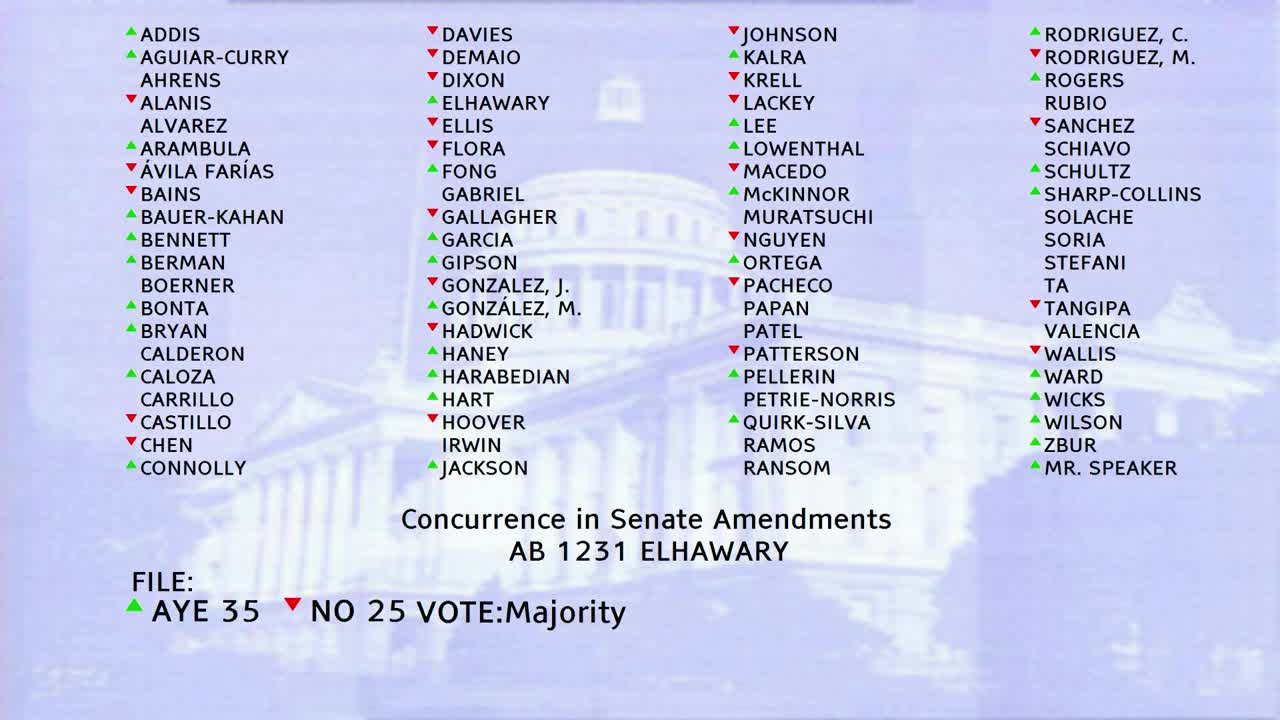 37SEC
Assembly Floor
 4MIN
Assembly Standing Committee on Public Safety
 34SEC
Senate Standing Committee on Appropriations
 11MIN
Senate Standing Committee on Public Safety
 1MIN
Assembly Floor
 6MIN
Assembly Standing Committee on Public Safety
Bill Author

Bill Co-Author(s):