AB 677: Pupil records and health: pupils experiencing homelessness: directory information and reporting.
- Session Year: 2025-2026
- House: Assembly
- Latest Version Date: 2025-10-01
Current Status:
Passed
(2025-10-01: Chaptered by Secretary of State - Chapter 163, Statutes of 2025.)
Introduced
In Committee
Awaiting First Chamber Vote
Passed First Chamber
In Committee
Awaiting Second Chamber Vote
Passed Second Chamber
Enacted
What does this bill do?
The bill lets schools share directory information (for example, name or address) of students identified as homeless with nonprofit eye‑exam providers or to arrange school‑hosted oral health assessments. That information may be used only to set up those exams, can be withheld if a parent or eligible student gives written notice refusing the physical exam, and schools should, when possible, use alternate ways (not mail) to notify parents or caregivers of homeless students about any eye or dental problems found.
The summary is provided by generative AI which can make mistakes. For original language, please view the details in the table below.
Existing law authorizes a school district or county office of education to develop a schoolsite-based oral health assessment program. Existing law authorizes school districts, county offices of education, and charter schools to enter into a memorandum of understanding with a nonprofit eye examination provider to provide eye examinations to pupils at any schoolsite within the local educational agency.
Existing law authorizes school districts to release pupil directory information, as specified, and defines directory information as one or more prescribed items, including, among others, a pupils name, address, telephone number, and date of birth. Existing law prohibits the release of directory information of a pupil identified as a homeless child or youth, as defined, unless a parent or eligible pupil has given written consent that the information may be released.
This bill, notwithstanding the above provision, would authorize the disclosure of directory information of a pupil identified as a homeless child or youth, as defined, to facilitate an eye examination or an oral health assessment, as described above, unless the parent or a pupil who has been accorded parental rights, as provided, has provided written notice to the school that they do not consent to the physical examination, as specified. The bill would require directory information disclosed pursuant to this authorization to be disclosed only for the purpose of facilitating an eye examination or an oral health assessment, as provided. The bill would provide that reports made to a parent, legal guardian, or caregiver of a pupil experiencing homelessness about a pupil defect identified from an eye examination or an oral health assessment, as described above, should be made by alternative communication channels rather than mail, when possible.
Existing law authorizes a school district or county office of education to develop a schoolsite-based oral health assessment program. Existing law authorizes school districts, county offices of education, and charter schools to enter into a memorandum of understanding with a nonprofit eye examination provider to provide eye examinations to pupils at any schoolsite within the local educational agency.
Existing law authorizes school districts to release pupil directory information, as specified, and defines directory information as one or more prescribed items, including, among others, a pupils name, address, telephone number, and date of birth. Existing law prohibits the release of directory information of a pupil identified as a homeless child or youth, as defined, unless a parent or eligible pupil has given written consent that the information may be released.
This bill, notwithstanding the above provision, would authorize the disclosure of directory information of a pupil identified as a homeless child or youth, as defined, to facilitate an eye examination, as provided, examination or an oral health assessment, as provided, described above, unless the parent or a pupil who has been accorded parental rights, as provided, has provided written notice to the school that they do not consent to the physical examination, as specified. The bill would require directory information disclosed pursuant to this authorization to be disclosed only for the purpose of facilitating an examination, as provided, eye examination or an oral health assessment, as provided. The bill would provide that reports made to a parent, legal guardian, or caregiver of a pupil experiencing homelessness about a pupil defect identified from an eye examination, as provided, examination or an oral health assessment, as provided, described above, should be made by alternative communication channels rather than mail, when possible.
Existing law authorizes school districts to release pupil directory information, as specified, and defines directory information as one or more prescribed items, including, among others, a pupils name, address, telephone number, and date of birth. Existing law prohibits the release of directory information of a pupil identified as a homeless child or youth, as defined, unless a parent or eligible pupil has given written consent that the information may be released.
This bill, notwithstanding the above provision, would authorize the disclosure of directory information of a pupil identified as a homeless child or youth, as defined, to facilitate an eye examination, as provided, or an oral health assessment, as provided, unless the parent or a pupil who has been accorded parental rights, as provided, has provided written notice to the school that they do not consent to the physical examination, as specified. The bill would require directory information disclosed pursuant to this authorization to be disclosed only for the purpose of facilitating an examination, as provided, or an oral health assessment, as provided. The bill would provide that reports made to a parent, legal guardian, or caregiver of a pupil experiencing homelessness about a pupil defect identified from an eye examination, as provided, or an oral health assessment, as provided, should be made by alternative communication channels rather than mail, when possible.
Existing law authorizes school districts to release pupil directory information, as specified, and defines directory information as one or more prescribed items, including, among others, a pupils name, address, telephone number, and date of birth. Existing law prohibits the release of directory information of a pupil identified as a homeless child or youth, as defined, unless a parent or eligible pupil has given written consent that the information may be released.
This bill, notwithstanding the above provision, would authorize the disclosure of directory information of a pupil identified as a homeless child or youth, as defined, to facilitate an eye examination, as provided, or an oral health assessment, as provided, unless the parent or a pupil who has been accorded parental rights, as provided, has provided written notice to the school that they do not consent to the physical examination, as specified.
(a)School districts shall adopt a policy identifying those categories of directory information as defined in subdivision (c) of Section 49061 that may be released. The school district shall determine which individuals, officials, or organizations may receive directory information. However, no information may be released to a private profitmaking entity other than employers, prospective employers, and representatives of the news media, including, but not limited to, newspapers, magazines, and radio and television stations. The names and addresses of pupils enrolled in grade 12 or who have terminated enrollment before graduation may be provided to a private school or college operating under Chapter 8 (commencing with Section 94800) of Part 59 of Division 10 of Title 3 or its authorized representative. However, no such private school or college shall use that information for other than purposes directly related to the academic or professional goals of the institution, and a violation of this provision is a misdemeanor, punishable by a fine of not to exceed two thousand five hundred dollars ($2,500). In addition, the privilege of the private school or college to receive the information shall be suspended for a period of two years from the time of discovery of the misuse of the information. Any school district may limit or deny the release of specific categories of directory information to any public or private nonprofit organization based upon a determination of the best interests of pupils.
(b)Directory information may be released according to local policy as to any pupil or former pupil. However, notice shall be given at least on an annual basis of the categories of information that the school district plans to release and of the recipients. Directory information shall not be released regarding a pupil if a parent of that pupil has notified the school district that the information shall not be released.
(c)(1)Directory information shall not be released regarding a pupil identified as a homeless child or youth, as defined in paragraph (2) of Section 725 of the federal McKinney-Vento Homeless Assistance Act (42 U.S.C. Sec. 11434a(2)), unless a parent, or pupil accorded parental rights, as identified in the federal Family Educational Rights and Privacy Act (20 U.S.C. Sec. 1232g), has provided written consent that directory information may be released.
(2)(A)Notwithstanding paragraph (1), directory information of a pupil identified as a homeless child or youth, as defined in paragraph (2) of Section 725 of the federal McKinney-Vento Homeless Assistance Act (42 U.S.C. Sec. 11434a(2)) may be disclosed, as authorized by school district policy in accordance with subdivision (a), to facilitate an eye examination by a nonprofit eye examination provider authorized by Section 49455.5, or a free oral health assessment hosted by schools as authorized by Section 49452.8, unless the parent or pupil accorded parental rights, as identified in the federal Family Educational Rights and Privacy Act (20 U.S.C. Sec. 1232g), has provided written notice to the school that they do not consent to the physical examination pursuant to Section 49451, subdivision (b) of, or subparagraph (C) of paragraph (2) of subdivision (d) of, Section 49452.8, or subdivision (f) of Section 49455.
(B)Directory information disclosed pursuant to subparagraph (A) shall only be disclosed for the purpose of facilitating an eye examination by a nonprofit eye examination provider authorized by Section 49455.5, or a free oral health assessment hosted by schools as authorized by Section 49452.8.
SEC. 2.Section 49452.8 of the Education Code is amended to read:49452.8.(a)(1)A pupil, while enrolled in kindergarten in a public school, or while enrolled in first grade in a public school if the pupil was not previously enrolled in kindergarten in a public school, no later than May 31 of the school year, shall present proof of having received an oral health assessment by a licensed dentist, or other licensed or registered dental health professional operating within the professionals scope of practice, that was performed no earlier than 12 months before the date of the initial enrollment of the pupil.
(2)For purposes of this section, kindergarten includes both transitional kindergarten and kindergarten. The proof described in subdivision (a) shall be required only once during a two-year kindergarten program.
(b)The parent or legal guardian of a pupil may be excused from complying with subdivision (a) by indicating on the form described in subdivision (d) that the oral health assessment could not be completed because of one or more of the reasons provided in subparagraphs (A) to (C), inclusive, of paragraph (2) of subdivision (d).
(c)A public school shall notify the parent or legal guardian of a pupil described in subdivision (a) concerning the assessment requirement. The notification, at a minimum, shall consist of a letter that includes all of the following:
(1)An explanation of the administrative requirements of this section.
(2)Information on the importance of primary teeth.
(3)Information on the importance of oral health to overall health and to learning.
(4)A toll-free telephone number to request an application for Medi-Cal or other government-subsidized health insurance programs.
(5)Contact information for county public health departments.
(6)A statement of privacy applicable under state and federal laws and regulations.
(d)In order to ensure uniform data collection, the department, in consultation with the state dental director and interested persons, shall develop, revise as necessary, and make available on the internet website of the department, a standardized notification form as specified in subdivision (c) that shall be used by each school district. The standardized form shall include all of the following:
(1)A section to be used by the licensed dentist or other licensed or registered dental health professional performing the assessment to record information that is consistent with the information collected on the oral health assessment form developed by the Association of State and Territorial Dental Directors.
(2)A section in which the parent or legal guardian of a pupil can indicate the reason why an assessment could not be completed by marking the box next to the appropriate reason. The reasons for not completing an assessment shall include all of the following:
(A)Completion of an assessment poses an undue financial burden on the parent or legal guardian.
(B)Lack of access by the parent or legal guardian to a licensed dentist or other licensed or registered dental health professional.
(C)The parent or legal guardian does not consent to an assessment.
(3)(A)A section stating that, if a school or school district hosts a free oral health assessment event at which licensed dentists or other licensed or registered dental health professionals perform schoolsite assessments of pupils enrolled in the school, a pupil shall be given an oral health assessment unless the parent or legal guardian of the pupil has opted out of the schoolsite assessment pursuant to subparagraph (B).
(B)A section in which the parent or legal guardian of a pupil can indicate that the parent or legal guardian does not consent to the pupil receiving the oral health assessment described in subparagraph (A). A failure to opt out of the pupil oral health assessment pursuant to this subparagraph shall not be deemed to be consent for dental treatment of any kind.
(C)A section informing the parent or legal guardian that a pupil shall not receive dental treatment of any kind as part of the schoolsite assessment described in subparagraph (A) unless the pupils parent or legal guardian has provided informed consent for the treatment.
(e)Upon receiving completed assessments, all school districts, by July 1 of each year, shall submit a report to a system designated by the state dental director for the collection of those reports or the county office of education of the county in which the school district is located, or both. The report shall include all of the following:
(1)The total number of pupils in the school district, by school, who are subject to the requirement to present proof of having received an oral health assessment pursuant to subdivision (a).
(2)The total number of pupils described in paragraph (1) who present proof of an assessment.
(3)The total number of pupils described in paragraph (1) who could not complete an assessment due to financial burden.
(4)The total number of pupils described in paragraph (1) who could not complete an assessment due to lack of access to a licensed dentist or other licensed or registered dental health professional.
(5)The total number of pupils described in paragraph (1) who could not complete an assessment because their parents or legal guardians did not consent to their child receiving the assessment.
(6)The total number of pupils described in paragraph (1) who are assessed and found to have had caries experience.
(7)The total number of pupils described in paragraph (1) who are assessed and found to have untreated decay.
(8)The total number of pupils described in paragraph (1) who did not return either the assessment form or the waiver request to the school.
(f)All school districts that have fulfilled the report requirement described in subdivision (e) by submitting a report to the county office of education and all county offices of education are encouraged to submit the report described in subdivision (e) to a system designated by the state dental director for the collection of those reports.
(g)Each county office of education shall maintain the data described in subdivision (e) in a manner that allows the county office of education to release it upon request.
(h)This section does not prohibit any of the following:
(1)County offices of education from sharing aggregate data collected pursuant to this section with other governmental agencies, philanthropic organizations, or other nonprofit organizations for the purpose of data analysis.
(2)Use of assessment data that is compliant with the federal Health Insurance Portability and Accountability Act of 1996 (Public Law 104-191) for purposes of conducting research and analysis on the oral health status of public school pupils in California.
(i)(1)This section does not preclude a school district or county office of education from developing a schoolsite-based oral health assessment program to meet the requirements of this section.
(2)If a school district or county office of education hosts an oral health assessment program, reports made to a parent, legal guardian, or caregiver of a pupil experiencing homelessness about a pupil defect identified from this oral health assessment should be made by alternative communication channels rather than mail, when possible.
(j)The Office of Oral Health of the Chronic Disease Control Branch of the State Department of Public Health shall conduct or provide for the conducting of periodic evaluations of the requirements imposed by this section. The Office of Oral Health may receive private funds and contract with the University of California to fulfill the duties described in this subdivision.
(k)Funds appropriated in the annual Budget Act for the activities required by this section shall first be used to offset reimbursement provided to local educational agencies pursuant to Part 7 (commencing with Section 17500) of Division 4 of Title 2 of the Government Code for state-mandated costs imposed by this section.
SEC. 3.Section 49455.5 of the Education Code is amended to read:49455.5.(a)A local educational agency maintaining kindergarten or any of grades 1 to 12, inclusive, may enter into a memorandum of understanding with a nonprofit eye examination provider to provide eye examinations to pupils at any schoolsite within the local educational agency. Eye examinations provided under this section shall be supplemental to, and shall not replace, the vision screenings provided pursuant to Section 49455, and shall be noninvasive and provided exclusively for the purpose of providing eyeglasses. Examination providers providing eye examinations pursuant to this section shall provide reports to parents and guardians consistent with Section 49456.
(b)(1)Before an eye examination is provided at a schoolsite pursuant to subdivision (a), the local educational agency shall have a memorandum of understanding in place with a nonprofit eye examination provider, including, but not limited to, a nonprofit mobile eye examination provider, and the school shall notify parents and guardians of the upcoming provision of eye examinations at the schoolsite. Notification shall include a form on which a parent or guardian may indicate that they do not consent to an eye examination being provided, pursuant to subdivision (a), to their child. The parent or guardian may opt out of their child receiving an eye examination, pursuant to subdivision (a), by submitting the completed form to the school before an eye examination is provided at the schoolsite. Except as provided in clause (ii) of subparagraph (D) of paragraph (3) of subdivision (d), a parent or guardian who submits a written statement in accordance with Section 49451 is deemed to have opted out of their child receiving an eye examination pursuant to subdivision (a).
(2)No later than March 1, 2023, the department shall develop and post on appropriate department internet websites a model opt-out form for purposes of paragraph (1).
(c)(1)Notwithstanding any other law and subject to paragraph (3), participating licensed health care professionals, including independent contractors of those professionals, shall have immunity from civil and criminal liability, and shall not be subject to disciplinary action by a licensing board, for providing services that are authorized by this section without parent or guardian consent pursuant to this section or Section 49091.12.
(2)Notwithstanding any other law and subject to paragraph (3), participating local educational agencies shall have immunity from civil and criminal liability for providing services that are authorized by this section without parent or guardian consent pursuant to this section or Section 49091.12.
(3)This subdivision does not affect any of the following:
(A)A persons liability for damages caused by an act or omission that constitutes gross negligence or willful or wanton misconduct.
(B)A persons culpability for an act that constitutes a crime and is not specifically authorized by this section.
(C)The ability of a licensing board to take disciplinary action against a licensed health care professional for an act not specifically authorized by this section.
(D)(i)The ability of a parent or guardian, having control or charge of a pupil enrolled in the school, to file an annual written statement pursuant to Section 49451, stating that they do not consent to a physical examination of their child, thereby exempting the pupil from any physical examination, including, but not limited to, the eye examination authorized in this section.
(ii)Notwithstanding the filing of a written statement exempting a child from any physical examination in accordance with Section 49451, a parent or guardian having control or charge of any child enrolled in the school may consent to an eye examination authorized in this section by means of executing a written consent to the examination, a copy of which shall be provided to the parent or guardian and the school.
(d)Eye examination providers providing eye examinations to pupils at a school pursuant to this section are subject to, and shall comply with, Section 51520.
(e)Any nonprofit eye examination provider, participating licensed health care professional, including independent contractors of these professionals, or other entity providing services under this section shall comply with the requirements of Section 45125.1 before interacting with any pupils.
(f)Reports made to a parent, legal guardian, or caregiver of a pupil experiencing homelessness about a pupil defect identified from an eye examination facilitated by a nonprofit eye examination provider pursuant to this section should be made by alternative communication channels rather than mail, when possible.
(g)For purposes of this section, the following definitions apply:
(1)Local educational agency means a school district, county office of education, or charter school.
(2)Nonprofit mobile eye examination provider means a nonprofit owner and operator of a mobile optometric office, as defined in subdivision (a) of Section 3070.2 of the Business and Professions Code.
(a)School districts shall adopt a policy identifying those categories of directory information as defined in subdivision (c) of Section 49061 that may be released. The school district shall determine which individuals, officials, or organizations may receive directory information. However, no information may be released to a private profitmaking entity other than employers, prospective employers, and representatives of the news media, including, but not limited to, newspapers, magazines, and radio and television stations. The names and addresses of pupils enrolled in grade 12 or who have terminated enrollment before graduation may be provided to a private school or college operating under Chapter 8 (commencing with Section 94800) of Part 59 of Division 10 of Title 3 or its authorized representative. However, no such private school or college shall use that information for other than purposes directly related to the academic or professional goals of the institution, and a violation of this provision is a misdemeanor, punishable by a fine of not to exceed two thousand five hundred dollars ($2,500). In addition, the privilege of the private school or college to receive the information shall be suspended for a period of two years from the time of discovery of the misuse of the information. Any school district may limit or deny the release of specific categories of directory information to any public or private nonprofit organization based upon a determination of the best interests of pupils.
(b)Directory information may be released according to local policy as to any pupil or former pupil. However, notice shall be given at least on an annual basis of the categories of information that the school district plans to release and of the recipients. Directory information shall not be released regarding a pupil if a parent of that pupil has notified the school district that the information shall not be released.
(c)(1)Directory information shall not be released regarding a pupil identified as a homeless child or youth, as defined in paragraph (2) of Section 725 of the federal McKinney-Vento Homeless Assistance Act (42 U.S.C. Sec. 11434a(2)), unless a parent, or pupil accorded parental rights, as identified in the federal Family Educational Rights and Privacy Act (20 U.S.C. Sec. 1232g), has provided written consent that directory information may be released.
(2)(A)Notwithstanding paragraph (1), directory information of a pupil identified as a homeless child or youth, as defined in paragraph (2) of Section 725 of the federal McKinney-Vento Homeless Assistance Act (42 U.S.C. Sec. 11434a(2)) may be disclosed disclosed, as authorized by school district policy in accordance with subdivision (a), to facilitate an eye examination by a nonprofit eye examination provider authorized by Section 49455.5, or a free oral health assessment hosted by schools as authorized by Section 49452.8, unless the parent or pupil accorded parental rights, as identified in the federal Family Educational Rights and Privacy Act (20 U.S.C. Sec. 1232g), has provided written notice to the school that they do not consent to the physical examination pursuant to Section 49451, subdivision (b) of, or subparagraph (C) of paragraph (2) of subdivision (d) of, Section 49452.8, or subdivision (f) of Section 49455.
(B)Directory information disclosed pursuant to subparagraph (A) shall only be disclosed for the purpose of facilitating an eye examination by a nonprofit eye examination provider authorized by Section 49455.5, or a free oral health assessment hosted by schools as authorized by Section 49452.8.
(C)Reports made to a parent, legal guardian, or caregiver of a pupil experiencing homelessness about a pupil defect identified from an eye examination facilitated by a nonprofit eye examination provider authorized by Section 49455.5, or a free oral health assessment hosted by schools as authorized by Section 49452.8, should be made by alternative communication channels rather than mail, when possible.SEC. 2.Section 49452.8 of the Education Code is amended to read:49452.8.(a)(1)A pupil, while enrolled in kindergarten in a public school, or while enrolled in first grade in a public school if the pupil was not previously enrolled in kindergarten in a public school, no later than May 31 of the school year, shall present proof of having received an oral health assessment by a licensed dentist, or other licensed or registered dental health professional operating within the professionals scope of practice, that was performed no earlier than 12 months before the date of the initial enrollment of the pupil.
(2)For purposes of this section, kindergarten includes both transitional kindergarten and kindergarten. The proof described in subdivision (a) shall be required only once during a two-year kindergarten program.
(b)The parent or legal guardian of a pupil may be excused from complying with subdivision (a) by indicating on the form described in subdivision (d) that the oral health assessment could not be completed because of one or more of the reasons provided in subparagraphs (A) to (C), inclusive, of paragraph (2) of subdivision (d).
(c)A public school shall notify the parent or legal guardian of a pupil described in subdivision (a) concerning the assessment requirement. The notification, at a minimum, shall consist of a letter that includes all of the following:
(1)An explanation of the administrative requirements of this section.
(2)Information on the importance of primary teeth.
(3)Information on the importance of oral health to overall health and to learning.
(4)A toll-free telephone number to request an application for Medi-Cal or other government-subsidized health insurance programs.
(5)Contact information for county public health departments.
(6)A statement of privacy applicable under state and federal laws and regulations.
(d)In order to ensure uniform data collection, the department, in consultation with the state dental director and interested persons, shall develop, revise as necessary, and make available on the internet website of the department, a standardized notification form as specified in subdivision (c) that shall be used by each school district. The standardized form shall include all of the following:
(1)A section to be used by the licensed dentist or other licensed or registered dental health professional performing the assessment to record information that is consistent with the information collected on the oral health assessment form developed by the Association of State and Territorial Dental Directors.
(2)A section in which the parent or legal guardian of a pupil can indicate the reason why an assessment could not be completed by marking the box next to the appropriate reason. The reasons for not completing an assessment shall include all of the following:
(A)Completion of an assessment poses an undue financial burden on the parent or legal guardian.
(B)Lack of access by the parent or legal guardian to a licensed dentist or other licensed or registered dental health professional.
(C)The parent or legal guardian does not consent to an assessment.
(3)(A)A section stating that, if a school or school district hosts a free oral health assessment event at which licensed dentists or other licensed or registered dental health professionals perform schoolsite assessments of pupils enrolled in the school, a pupil shall be given an oral health assessment unless the parent or legal guardian of the pupil has opted out of the schoolsite assessment pursuant to subparagraph (B).
(B)A section in which the parent or legal guardian of a pupil can indicate that the parent or legal guardian does not consent to the pupil receiving the oral health assessment described in subparagraph (A). A failure to opt out of the pupil oral health assessment pursuant to this subparagraph shall not be deemed to be consent for dental treatment of any kind.
(C)A section informing the parent or legal guardian that a pupil shall not receive dental treatment of any kind as part of the schoolsite assessment described in subparagraph (A) unless the pupils parent or legal guardian has provided informed consent for the treatment.
(e)Upon receiving completed assessments, all school districts, by July 1 of each year, shall submit a report to a system designated by the state dental director for the collection of those reports or the county office of education of the county in which the school district is located, or both. The report shall include all of the following:
(1)The total number of pupils in the school district, by school, who are subject to the requirement to present proof of having received an oral health assessment pursuant to subdivision (a).
(2)The total number of pupils described in paragraph (1) who present proof of an assessment.
(3)The total number of pupils described in paragraph (1) who could not complete an assessment due to financial burden.
(4)The total number of pupils described in paragraph (1) who could not complete an assessment due to lack of access to a licensed dentist or other licensed or registered dental health professional.
(5)The total number of pupils described in paragraph (1) who could not complete an assessment because their parents or legal guardians did not consent to their child receiving the assessment.
(6)The total number of pupils described in paragraph (1) who are assessed and found to have had caries experience.
(7)The total number of pupils described in paragraph (1) who are assessed and found to have untreated decay.
(8)The total number of pupils described in paragraph (1) who did not return either the assessment form or the waiver request to the school.
(f)All school districts that have fulfilled the report requirement described in subdivision (e) by submitting a report to the county office of education and all county offices of education are encouraged to submit the report described in subdivision (e) to a system designated by the state dental director for the collection of those reports.
(g)Each county office of education shall maintain the data described in subdivision (e) in a manner that allows the county office of education to release it upon request.
(h)This section does not prohibit any of the following:
(1)County offices of education from sharing aggregate data collected pursuant to this section with other governmental agencies, philanthropic organizations, or other nonprofit organizations for the purpose of data analysis.
(2)Use of assessment data that is compliant with the federal Health Insurance Portability and Accountability Act of 1996 (Public Law 104-191) for purposes of conducting research and analysis on the oral health status of public school pupils in California.
(i)(1)This section does not preclude a school district or county office of education from developing a schoolsite-based oral health assessment program to meet the requirements of this section.
(2)If a school district or county office of education hosts an oral health assessment program, reports made to a parent, legal guardian, or caregiver of a pupil experiencing homelessness about a pupil defect identified from this oral health assessment should be made by alternative communication channels rather than mail, when possible.
(j)The Office of Oral Health of the Chronic Disease Control Branch of the State Department of Public Health shall conduct or provide for the conducting of periodic evaluations of the requirements imposed by this section. The Office of Oral Health may receive private funds and contract with the University of California to fulfill the duties described in this subdivision.
(k)Funds appropriated in the annual Budget Act for the activities required by this section shall first be used to offset reimbursement provided to local educational agencies pursuant to Part 7 (commencing with Section 17500) of Division 4 of Title 2 of the Government Code for state-mandated costs imposed by this section.
SEC. 3.Section 49455.5 of the Education Code is amended to read:49455.5.(a)A local educational agency maintaining kindergarten or any of grades 1 to 12, inclusive, may enter into a memorandum of understanding with a nonprofit eye examination provider to provide eye examinations to pupils at any schoolsite within the local educational agency. Eye examinations provided under this section shall be supplemental to, and shall not replace, the vision screenings provided pursuant to Section 49455, and shall be noninvasive and provided exclusively for the purpose of providing eyeglasses. Examination providers providing eye examinations pursuant to this section shall provide reports to parents and guardians consistent with Section 49456.
(b)(1)Before an eye examination is provided at a schoolsite pursuant to subdivision (a), the local educational agency shall have a memorandum of understanding in place with a nonprofit eye examination provider, including, but not limited to, a nonprofit mobile eye examination provider, and the school shall notify parents and guardians of the upcoming provision of eye examinations at the schoolsite. Notification shall include a form on which a parent or guardian may indicate that they do not consent to an eye examination being provided, pursuant to subdivision (a), to their child. The parent or guardian may opt out of their child receiving an eye examination, pursuant to subdivision (a), by submitting the completed form to the school before an eye examination is provided at the schoolsite. Except as provided in clause (ii) of subparagraph (D) of paragraph (3) of subdivision (d), a parent or guardian who submits a written statement in accordance with Section 49451 is deemed to have opted out of their child receiving an eye examination pursuant to subdivision (a).
(2)No later than March 1, 2023, the department shall develop and post on appropriate department internet websites a model opt-out form for purposes of paragraph (1).
(c)(1)Notwithstanding any other law and subject to paragraph (3), participating licensed health care professionals, including independent contractors of those professionals, shall have immunity from civil and criminal liability, and shall not be subject to disciplinary action by a licensing board, for providing services that are authorized by this section without parent or guardian consent pursuant to this section or Section 49091.12.
(2)Notwithstanding any other law and subject to paragraph (3), participating local educational agencies shall have immunity from civil and criminal liability for providing services that are authorized by this section without parent or guardian consent pursuant to this section or Section 49091.12.
(3)This subdivision does not affect any of the following:
(A)A persons liability for damages caused by an act or omission that constitutes gross negligence or willful or wanton misconduct.
(B)A persons culpability for an act that constitutes a crime and is not specifically authorized by this section.
(C)The ability of a licensing board to take disciplinary action against a licensed health care professional for an act not specifically authorized by this section.
(D)(i)The ability of a parent or guardian, having control or charge of a pupil enrolled in the school, to file an annual written statement pursuant to Section 49451, stating that they do not consent to a physical examination of their child, thereby exempting the pupil from any physical examination, including, but not limited to, the eye examination authorized in this section.
(ii)Notwithstanding the filing of a written statement exempting a child from any physical examination in accordance with Section 49451, a parent or guardian having control or charge of any child enrolled in the school may consent to an eye examination authorized in this section by means of executing a written consent to the examination, a copy of which shall be provided to the parent or guardian and the school.
(d)Eye examination providers providing eye examinations to pupils at a school pursuant to this section are subject to, and shall comply with, Section 51520.
(e)Any nonprofit eye examination provider, participating licensed health care professional, including independent contractors of these professionals, or other entity providing services under this section shall comply with the requirements of Section 45125.1 before interacting with any pupils.
(f)Reports made to a parent, legal guardian, or caregiver of a pupil experiencing homelessness about a pupil defect identified from an eye examination facilitated by a nonprofit eye examination provider pursuant to this section should be made by alternative communication channels rather than mail, when possible.
(f)(g)For purposes of this section, the following definitions apply:
(1)Local educational agency means a school district, county office of education, or charter school.
(2)Nonprofit mobile eye examination provider means a nonprofit owner and operator of a mobile optometric office, as defined in subdivision (a) of Section 3070.2 of the Business and Professions Code.
(a)School districts shall adopt a policy identifying those categories of directory information as defined in subdivision (c) of Section 49061 that may be released. The school district shall determine which individuals, officials, or organizations may receive directory information. However, no information may be released to a private profitmaking entity other than employers, prospective employers, and representatives of the news media, including, but not limited to, newspapers, magazines, and radio and television stations. The names and addresses of pupils enrolled in grade 12 or who have terminated enrollment before graduation may be provided to a private school or college operating under Chapter 8 (commencing with Section 94800) of Part 59 of Division 10 of Title 3 or its authorized representative. However, no such private school or college shall use that information for other than purposes directly related to the academic or professional goals of the institution, and a violation of this provision is a misdemeanor, punishable by a fine of not to exceed two thousand five hundred dollars ($2,500). In addition, the privilege of the private school or college to receive the information shall be suspended for a period of two years from the time of discovery of the misuse of the information. Any school district may limit or deny the release of specific categories of directory information to any public or private nonprofit organization based upon a determination of the best interests of pupils.
(b)Directory information may be released according to local policy as to any pupil or former pupil. However, notice shall be given at least on an annual basis of the categories of information that the school district plans to release and of the recipients. Directory information shall not be released regarding a pupil if a parent of that pupil has notified the school district that the information shall not be released.
(c)(1)Directory information shall not be released regarding a pupil identified as a homeless child or youth, as defined in paragraph (2) of Section 725 of the federal McKinney-Vento Homeless Assistance Act (42 U.S.C. Sec. 11434a(2)), unless a parent, or pupil accorded parental rights, as identified in the federal Family Educational Rights and Privacy Act (20 U.S.C. Sec. 1232g), has provided written consent that directory information may be released.
(2)(A)Notwithstanding paragraph (1), directory information of a pupil identified as a homeless child or youth, as defined in paragraph (2) of Section 725 of the federal McKinney-Vento Homeless Assistance Act (42 U.S.C. Sec. 11434a(2)) may be disclosed to facilitate an eye examination by a nonprofit eye examination provider authorized by Section 49455.5, or a free oral health assessment hosted by schools as authorized by Section 49452.8, unless the parent or pupil accorded parental rights, as identified in the federal Family Educational Rights and Privacy Act (20 U.S.C. Sec. 1232g), has provided written notice to the school that they do not consent to the physical examination pursuant to Section 49451, subdivision (b) of, or subparagraph (C) of paragraph (2) of subdivision (d) of, Section 49452.8, or subdivision (f) of Section 49455.
(B)Directory information disclosed pursuant to subparagraph (A) shall only be disclosed for the purpose of facilitating an eye examination by a nonprofit eye examination provider authorized by Section 49455.5, or a free oral health assessment hosted by schools as authorized by Section 49452.8.
(C)Reports made to a parent, legal guardian, or caregiver of a pupil experiencing homelessness about a pupil defect identified from an eye examination facilitated by a nonprofit eye examination provider authorized by Section 49455.5, or a free oral health assessment hosted by schools as authorized by Section 49452.8, should be made by alternative communication channels rather than mail, when possible.
(a)School districts shall adopt a policy identifying those categories of directory information as defined in subdivision (c) of Section 49061 that may be released. The school district shall determine which individuals, officials, or organizations may receive directory information. However, no information may be released to a private profitmaking entity other than employers, prospective employers, and representatives of the news media, including, but not limited to, newspapers, magazines, and radio and television stations. The names and addresses of pupils enrolled in grade 12 or who have terminated enrollment before graduation may be provided to a private school or college operating under Chapter 8 (commencing with Section 94800) of Part 59 of Division 10 of Title 3 or its authorized representative. However, no such private school or college shall use that information for other than purposes directly related to the academic or professional goals of the institution, and a violation of this provision is a misdemeanor, punishable by a fine of not to exceed two thousand five hundred dollars ($2,500). In addition, the privilege of the private school or college to receive the information shall be suspended for a period of two years from the time of discovery of the misuse of the information. Any school district may limit or deny the release of specific categories of directory information to any public or private nonprofit organization based upon a determination of the best interests of pupils.
(b)Directory information may be released according to local policy as to any pupil or former pupil. However, notice shall be given at least on an annual basis of the categories of information that the school district plans to release and of the recipients. Directory information shall not be released regarding a pupil if a parent of that pupil has notified the school district that the information shall not be released.
(c)(1)Directory information shall not be released regarding a pupil identified as a homeless child or youth, as defined in paragraph (2) of Section 725 of the federal McKinney-Vento Homeless Assistance Act (42 U.S.C. Sec. 11434a(2)), unless a parent, or pupil accorded parental rights, as identified in the federal Family Educational Rights and Privacy Act (20 U.S.C. Sec. 1232g), has provided written consent that directory information may be released.
(2)Notwithstanding paragraph (1), directory information of a pupil identified as a homeless child or youth, as defined in paragraph (2) of Section 725 of the federal McKinney-Vento Homeless Assistance Act (42 U.S.C. Sec. 11434a(2)) may be disclosed to facilitate an eye examination by a nonprofit eye examination provider authorized by Section 49455.5, or a free oral health assessment hosted by schools as authorized by Section 49452.8, unless the parent or pupil accorded parental rights, as identified in the federal Family Educational Rights and Privacy Act (20 U.S.C. Sec. 1232g), has provided written notice to the school that they do not consent to the physical examination pursuant to Section 49451, subdivision (b) of, or subparagraph (C) of paragraph (2) of subdivision (d) of, Section 49452.8, or subdivision (f) of Section 49455.
|
Date
|
Status
|
|---|---|
| Oct 1, 2025 | Chaptered by Secretary of State - Chapter 163, Statutes of 2025. |
| Oct 1, 2025 | Approved by the Governor. |
| Sep 16, 2025 | Enrolled and presented to the Governor at 2 p.m. |
| Sep 9, 2025 | Senate amendments concurred in. To Engrossing and Enrolling. (Ayes 80. Noes 0. Page 3108.). |
| Sep 8, 2025 | In Assembly. Concurrence in Senate amendments pending. |
| Sep 8, 2025 | Read third time. Passed. Ordered to the Assembly. (Ayes 39. Noes 0. Page 2624.). |
| Sep 4, 2025 | Read second time. Ordered to third reading. |
| Sep 3, 2025 | Read third time and amended. Ordered to second reading. |
| Jun 30, 2025 | Ordered to third reading. |
| Jun 30, 2025 | From Consent Calendar. |
| Jun 26, 2025 | Read second time. Ordered to Consent Calendar. |
| Jun 25, 2025 | From committee: Do pass. To Consent Calendar. (Ayes 12. Noes 0.) (June 24). |
| Jun 12, 2025 | Read second time and amended. Re-referred to Com. on JUD. |
| Jun 11, 2025 | From committee: Amend, and do pass as amended and re-refer to Com. on JUD. with recommendation: To Consent Calendar. (Ayes 6. Noes 0.) (June 11). |
| May 7, 2025 | Referred to Coms. on ED. and JUD. |
| Apr 10, 2025 | In Senate. Read first time. To Com. on RLS. for assignment. |
| Apr 10, 2025 | Read third time. Passed. Ordered to the Senate. (Ayes 74. Noes 0. Page 1115.) |
| Mar 28, 2025 | Read second time. Ordered to third reading. |
| Mar 27, 2025 | From committee: Do pass. (Ayes 9. Noes 0.) (March 26). |
| Mar 3, 2025 | Referred to Com. on ED. |
| Feb 15, 2025 | From printer. May be heard in committee March 17. |
| Feb 14, 2025 | Read first time. To print. |
|
Date
|
Description
|
Location
|
Votes
|
|
|---|---|---|---|---|
| Sep 9, 2025 | AB 677 Bryan Concurrence in Senate Amendments | Assembly Floor |
Passed |
|
| Sep 8, 2025 | Assembly 3rd Reading AB677 Bryan et al. By Durazo | Senate Floor |
Passed |
|
| Jun 24, 2025 | Do pass and be ordered to the Consent Calendar | Senate Standing Committee on Judiciary |
Passed |
|
| Jun 11, 2025 | Do pass as amended, but first amend, and re-refer to the Committee on [Judiciary] with the recommendation: To Consent Calendar | Senate Standing Committee on Education |
Passed |
|
| Apr 10, 2025 | AB 677 Bryan Assembly Third Reading | Assembly Floor |
Passed |
|
| Mar 26, 2025 | Do pass. | Assembly Standing Committee on Education |
Passed |
This list shows positions taken on this bill by organizations on the date displayed, which is linked to the original source.
Positions by individuals are not included.
|
Organization
|
Position
|
Date
|
|---|---|---|
| Alameda County Office Of Education | ** Support | |
| American Academy Of Pediatrics, California | ** Support | |
| Association Of California School Administrators | ** Support | |
| California Association of Student Councils | ** Support | |
| California Coalition For Youth | ** Support | |
| California County Superintendents | ** Support | |
| California Dental Association | ** Support | |
| California School Boards Association | ** Support | |
| Health Net And Its Affiliated Companies | ** Support | |
| Los Angeles Unified School District | ** Support | |
| Office of the Riverside County Superintendent of Schools | ** Support | |
| Santa Clara County School Boards Association | ** Support | |
| The Los Angeles Trust for Childrens Health | ** Support |
CONCURRENCE IN SENATE AMENDMENTS
CSA1 Bill Id:AB 677
Author:(Bryan)
As Amended Ver:September 3, 2025
Majority vote
SUMMARY
Authorizes directory information of a student identified as a homeless child or youth to be disclosed to facilitate an eye examination by a nonprofit eye examination provider or a free oral health assessment hosted by schools, unless the parent or student accorded parental rights has provided written notice to the school that they do not consent to the physical examination.
Senate Amendments
- Requires that directory information only be disclosed for the purpose of facilitating an eye examination or a free oral health assessment, as specified.
- Encourages reports made to a parent, guardian, or caregiver of a pupil experiencing homelessness about a defect identified from an eye examination or oral health assessment to be made by alternative communication channels, rather than by mail, when possible.
COMMENTS
How many California students experience homelessness? California schools identify homeless students using the definition of homeless students in the federal McKinney-Vento Act, which defines "homeless children and youths" as:
- Children and youth who are sharing the housing of other persons due to loss of housing, economic hardship, or a similar reason;
- Children and youth who may be living in motels, hotels, trailer parks, or shelters;
- Children and youth who have a primary nighttime residence that is a public or private place not designed for, or ordinarily used as, a regular sleeping accommodation for human beings;
- Children and youth who are living in cars, parks, public spaces, abandoned buildings, substandard housing, bus or train stations, or similar settings; and
- Migratory children who qualify as homeless because they are children who are living in similar circumstances as those listed above.
According to the CDE, there were 210,907 California public school students who met the federal definition of homelessness on census day for the 2024 school year, representing 3.6% of the total California public school student population. Unhoused youth in California are disproportionately from minority backgrounds, as CDE data from the 2020-21 school year identifies that 74% of the unhoused youth were of Hispanic or Latinx descent and 7% were of African American descent.
According to a 2020 report by the University of California Los Angeles (UCLA) Center for Transformation of Schools titled State of Crisis: Dismantling Student Homelessness in California, African American and Latino students are disproportionately represented among students experiencing homelessness. As of 2020, over 17% of the students experiencing homelessness in the United States (U.S.) resided in California. (Federal Data Summary, Education for Homeless Children and Youth, 2020)
According to the Author
"AB 677 will increase access to on-campus vision and dental screenings for unhoused students by exempting these youth—solely for the purpose of these screenings—from requirements that prohibit the sharing of their directory information. This information is necessary for these screenings to be conducted by providers; however, due to current restrictions in statute, it cannot be released without written parental consent, which is often difficult to obtain in the case of unhoused students. This leads to the underutilization of on-campus vision and dental screenings amongst these vulnerable youth. AB 677 removes a barrier that will allow unhoused students to access the essential vision and dental screenings they need and deserve."
Arguments in Support
According to the Los Angeles Unified School District, "Under current law, students are required to have dental screening before enrolling in kindergarten or first grade, and vision screening upon enrollment and in grades two, five, and eight. Public schools are permitted to contract with nonprofit service providers to provide these screenings at no cost and at school sites. Current law requires that an LEA receive affirmative consent (opt in) from the parent/guardian of an unhoused child to allow the LEA to include the child in school wide dental and vision screenings. In contrast, housed students may receive the screening without additional action by the parent. In the cases where affirmative consent is not obtained, unhoused students cannot participate in screenings alongside their peers, widening health disparities for this vulnerable population.
Unhoused families remain one of the most challenging groups for LEAs to contact. At Los Angeles Unified, only about 1% of unhoused families return the opt-in form for vision screening services. For dental screening services, it's only about 4%. The end result is that the vast majority of our most vulnerable students are missing out on critical services that could greatly benefit the child's life and future health outcomes. AB 677 amends Education Code to allow unhoused students the same access to critical health screenings as other students, while maintaining parental right to opt out if desired."
Arguments in Opposition
None on file.
FISCAL COMMENTS
This bill has been keyed non-fiscal by the Office of Legislative Counsel.
VOTES:
ASM EDUCATION: 9-0-0
YES: Muratsuchi, Hoover, Addis, Alvarez, Bonta, Castillo, Garcia, Lowenthal, Patel
ASSEMBLY FLOOR: 74-0-5
YES: Addis, Aguiar-Curry, Ahrens, Alanis, Alvarez, Arambula, Ávila Farías, Bains, Bennett, Berman, Boerner, Bonta, Bryan, Caloza, Carrillo, Castillo, Connolly, Davies, DeMaio, Dixon, Elhawary, Ellis, Flora, Fong, Gabriel, Gallagher, Garcia, Gipson, Jeff Gonzalez, Mark González, Hadwick, Haney, Harabedian, Hart, Hoover, Irwin, Jackson, Kalra, Krell, Lackey, Lee, Lowenthal, Macedo, McKinnor, Muratsuchi, Nguyen, Ortega, Pacheco, Papan, Patel, Patterson, Pellerin, Quirk-Silva, Ramos, Ransom, Michelle Rodriguez, Rogers, Blanca Rubio, Sanchez, Schiavo, Schultz, Sharp-Collins, Solache, Soria, Stefani, Ta, Tangipa, Valencia, Wallis, Ward, Wicks, Wilson, Zbur, Rivas
ABS, ABST OR NV: Bauer-Kahan, Calderon, Chen, Petrie-Norris, Celeste Rodriguez
UPDATED
VERSION: September 3, 2025
CONSULTANT: Debbie Look / ED. / (916) 319-2087 FN: 0001895
SENATE RULES COMMITTEE Office of Senate Floor Analyses (916) 651-1520 Fax: (916) 327-4478 | AB 677 |
THIRD READING
Bill No: AB 677
Author: Bryan (D), et al.
Amended: 9/3/25 in Senate
Vote: 21
SENATE EDUCATION COMMITTEE: 6-0, 6/11/25
AYES: Pérez, Ochoa Bogh, Cabaldon, Choi, Cortese, Laird
NO VOTE RECORDED: Gonzalez
SENATE JUDICIARY COMMITTEE: 12-0, 6/24/25
AYES: Umberg, Niello, Allen, Arreguín, Ashby, Caballero, Durazo, Laird, Stern, Wahab, Weber Pierson, Wiener
NO VOTE RECORDED: Valladares
ASSEMBLY FLOOR: 74-0, 4/10/25 - See last page for vote
SUBJECT: Pupil records and health: pupils experiencing homelessness: directory information and reporting
SOURCE: Los Angeles Unified School District
DIGEST:
This bill authorizes directory information of a student identified as a homeless child or youth to be disclosed to facilitate an eye examination by a nonprofit eye examination provider or a free oral health assessment hosted by schools, unless the parent or student accorded parental rights has provided written notice to the school that they do not consent to the physical examination.
Senate Floor Amendments of 9/3/25 (1) clarify that the disclosure of the directory information of a homeless student is authorized by school district policy pursuant to existing law; (2) move the provision relating to reporting via alternative communication channels to parents of homeless students about a defect identified from an eye examination to the area of the Education Code that is specific to eye exams; and, (3) add similar language about reporting via alternative communication channels to parents of homeless students about a defect identified from an oral health assessment to the area of the Education Code that is specific to oral health assessments.
ANALYSIS:
Existing law:
- Prohibits, pursuant to the federal Family Educational Rights and Privacy Act (FERPA), federal funds from being provided to any educational agency or institution which has a policy or practice of permitting the release of a student’s educational records to any individual, agency, or organization without the written consent of the student’s parents. FERPA exempts from the general parental consent requirement certain kinds of disclosures, including disclosures to state and local officials for the purposes of conducting truancy proceedings, a criminal investigation, auditing or evaluating an educational program, or in relation to the application for financial aid. (United States Code, Title 20, Section 1232g and Code of Federal Regulations, Title 34, Sections 99.31)
- Prohibits a school district from permitting access to student records to a person without parental consent or under judicial order, with some exceptions. (Education Code (EC) § 49076)
- Requires school districts to permit access to records relevant to the legitimate educational interests of specified requesters, including:
- School officials and employees of the districts, members of a school attendance review board and any volunteer aide (as specified), provided that the person has a legitimate educational interest to inspect a record.
- Officials and employees of other public schools or school systems where the student intends to or is directed to enroll.
- Other federal, state and local officials as specified.
- Parents of a student 18 years of age or older who is a dependent.
- A student 16 years of age or older or having completed the 10th grade who requests access.
- A district attorney, judge or probation officer, in relation to truancy proceedings.
- A district attorney’s office for consideration against a parent for failure to comply with compulsory education laws.
- A probation officer, district attorney, or counsel of record for a minor, in relation to a criminal investigation or in regard to declaring a person a ward of the court or involving a violation of a condition of probation.
- A county placing agency when acting as an authorized representative of a state or local educational agency.
- A student 14 years of age or older who meets specified criteria.
- An individual who completes specified items of the Caregiver’s Authorization Affidavit and signs the affidavit for the purpose of enrolling a minor in school.
- An agency caseworker or other representative of a state or local child welfare agency, or tribal organization, that has legal responsibility, in accordance with state or tribal law, for the care and protection of the student.
- A foster family agency with jurisdiction over a currently enrolled or former student, a short-term residential treatment program staff responsible for the education or case management of a student, and a caregiver who has direct responsibility for the care of the student, including a certified or licensed foster parent, an approved relative or nonrelated extended family member, or a resource family. (EC § 49076)
- School officials and employees of the districts, members of a school attendance review board and any volunteer aide (as specified), provided that the person has a legitimate educational interest to inspect a record.
- Authorizes school districts to release information from student records to the following:
- Appropriate persons in connection with an emergency if the information is necessary to protect the health or safety of a student or other person.
- Agencies or organizations in connection with the application of a student for, or receipt of, financial aid.
- The county elections official for the identification of students who are eligible to register to vote.
- Accrediting associations in order to carry out accrediting functions.
- Organizations conducting studies on behalf of educational agencies or institutions for the purpose of developing, validating or administering predictive tests, administering student aid programs, and improving instruction.
- Officials and employees of private schools or school systems where the student is enrolled or intends to enroll.
- A contractor or consultant with a legitimate educational interest who has a formal written agreement or contract with the school district regarding the provision of outsourced institutional services or functions by the contractor or consultant. (EC § 49076)
- Appropriate persons in connection with an emergency if the information is necessary to protect the health or safety of a student or other person.
- Requires school districts to adopt a policy identifying categories of directory information that may be released, and authorizes directory information to be released according to the local policy. School districts are required to provide notice at least annually of the categories of information that the school plans to release and of the recipients. The release of directory information is prohibited if the parent has notified the school district that the information is not to be released. Further, the release of directory information regarding a student identified as homeless is prohibited unless a parent or student with parental rights has provided written consent that directory information may be released. (EC § 49073)
- Defines “directory information” as one or more of the following: student’s name, address, telephone number, date of birth, email address, major field of study, participation in officially recognized activities and sports, weight and height of members of athletics teams, dates of attendance, degrees and awards received, and the most recent previous public or private school attended by the student. (EC § 49061)
This bill:
- Authorizes directory information of a student identified as a homeless child or youth to be disclosed to facilitate an eye examination by a nonprofit eye examination provider or a free oral health assessment hosted by schools, unless the parent or student accorded parental rights has provided written notice to the school that they do not consent to the physical examination.
- Requires that directory information disclosed pursuant to # 1 only be disclosed for the purpose of facilitating an eye examination by a nonprofit eye examination provider, or a free oral health assessment hosted by schools.
- Provides that reports made to a parent, legal guardian, or caregiver of a student experiencing homelessness about a student defect identified from an eye examination facilitated by a nonprofit eye examination provider, or a free oral health assessment hosted by schools, should be made by alternative communication channels rather than mail, when possible.
Comments
- Need for this bill. According to the author, “AB 677 will increase access to on-campus vision and dental screenings for unhoused students by exempting these youth—solely for the purpose of these screenings—from requirements that prohibit the sharing of their directory information. This information is necessary for these screenings to be conducted by providers; however, due to current restrictions in statute, it cannot be released without written parental consent, which is often difficult to obtain in the case of unhoused students. This leads to the underutilization of on-campus vision and dental screenings amongst these vulnerable youth. AB 677 removes a barrier that will allow unhoused students to access the essential vision and dental screenings they need and deserve.”
- Opt-in vs. opt-out. Existing law prohibits the release of directory information if a parent has notified the school district that the information is not to be released (opt-out), and also prohibits the release of directory information regarding a student identified as homeless unless a parent or student with parental rights has provided written consent that directory information may be released (opt-in).
This bill authorizes the release of directory information regarding a student identified as homeless specifically for the purposes of facilitating an eye exam or oral health assessment unless the parent has provided written notice to the school that they do not consent to the physical exam (opt-out). This bill aligns opt-out policies for both housed and unhoused students regarding the release of directory information for the purposes of conducting vision and dental screenings. - Vision screening and oral health assessment currently required for school enrollment. Existing law requires a parent or guardian of a first-grade student, within the first 90 days of the school year, to provide a certificate, signed by a medical professional, documenting that the child has received a health check-up within the last 18 months (Health and Safety Code § 124085). The health examination required for school entry includes a vision screening, completed by the child’s regular healthcare provider. The parent or guardian may submit a signed waiver stating they are unwilling or unable to obtain a health screening for the child. School districts are required to exclude children from school for up to five days, if the parent has not provided the health documentation or waiver. In the case of students experiencing homelessness, a school is required to immediately enroll the student even if they do not have required documents such as required health records, pursuant to both federal and state law.
Existing law requires a student to provide proof of having received an oral health assessment by a dental health professional within the 12 months prior to initial enrollment (EC § 49452.8). Parents or guardians may be excused from this requirement if the dental assessment could not be completed due to an undue financial burden, lack of access to a dentist, or if the parent does not consent to such an assessment. Existing law requires that homeless students be immediately enrolled regardless of whether they have required health records.
FISCAL EFFECT: Appropriation: No Fiscal Com.: No Local: No
SUPPORT: (Verified 9/3/25)
Los Angeles Unified School District (Source)
Alameda County Office of Education
American Academy of Pediatrics, California
Association of California School Administrators
California Coalition for Youth
California County Superintendents
California Dental Association
California School Boards Association
Health Net and its Affiliated Companies
Office of the Riverside County Superintendent of Schools
Santa Clara County School Boards Association
The Los Angeles Trust for Children’s Health
OPPOSITION: (Verified 9/3/25)
None received
ASSEMBLY FLOOR: 74-0, 4/10/25
AYES: Addis, Aguiar-Curry, Ahrens, Alanis, Alvarez, Arambula, Ávila Farías, Bains, Bennett, Berman, Boerner, Bonta, Bryan, Caloza, Carrillo, Castillo, Connolly, Davies, DeMaio, Dixon, Elhawary, Ellis, Flora, Fong, Gabriel, Gallagher, Garcia, Gipson, Jeff Gonzalez, Mark González, Hadwick, Haney, Harabedian, Hart, Hoover, Irwin, Jackson, Kalra, Krell, Lackey, Lee, Lowenthal, Macedo, McKinnor, Muratsuchi, Nguyen, Ortega, Pacheco, Papan, Patel, Patterson, Pellerin, Quirk-Silva, Ramos, Ransom, Michelle Rodriguez, Rogers, Blanca Rubio, Sanchez, Schiavo, Schultz, Sharp-Collins, Solache, Soria, Stefani, Ta, Tangipa, Valencia, Wallis, Ward, Wicks, Wilson, Zbur, Rivas
NO VOTE RECORDED: Bauer-Kahan, Calderon, Chen, Petrie-Norris, Celeste Rodriguez
Prepared by: Lynn Lorber / ED. / (916) 651-4105
9/6/25 10:30:10
**** END ****
SENATE RULES COMMITTEE Office of Senate Floor Analyses (916) 651-1520 Fax: (916) 327-4478 | AB 677 |
CONSENT
Bill No: AB 677
Author: Bryan (D), et al.
Amended: 6/12/25 in Senate
Vote: 21
SENATE EDUCATION COMMITTEE: 6-0, 6/11/25
AYES: Pérez, Ochoa Bogh, Cabaldon, Choi, Cortese, Laird
NO VOTE RECORDED: Gonzalez
SENATE JUDICIARY COMMITTEE: 12-0, 6/24/25
AYES: Umberg, Niello, Allen, Arreguín, Ashby, Caballero, Durazo, Laird, Stern, Wahab, Weber Pierson, Wiener
NO VOTE RECORDED: Valladares
ASSEMBLY FLOOR: 74-0, 4/10/25 - See last page for vote
SUBJECT: Pupil records: directory information and reporting
SOURCE: Los Angeles Unified School District
DIGEST:
This bill authorizes directory information of a student identified as a homeless child or youth to be disclosed to facilitate an eye examination by a nonprofit eye examination provider or a free oral health assessment hosted by schools, unless the parent or student accorded parental rights has provided written notice to the school that they do not consent to the physical examination.
ANALYSIS:
Existing law:
- Prohibits, pursuant to the federal Family Educational Rights and Privacy Act (FERPA), federal funds from being provided to any educational agency or institution which has a policy or practice of permitting the release of a student’s educational records to any individual, agency, or organization without the written consent of the student’s parents. FERPA exempts from the general parental consent requirement certain kinds of disclosures, including disclosures to state and local officials for the purposes of conducting truancy proceedings, a criminal investigation, auditing or evaluating an educational program, or in relation to the application for financial aid. (United States Code, Title 20, Section 1232g and Code of Federal Regulations, Title 34, Sections 99.31)
- Prohibits a school district from permitting access to student records to a person without parental consent or under judicial order, with some exceptions. (Education Code (EC) § 49076)
- Requires school districts to permit access to records relevant to the legitimate educational interests of specified requesters, including:
- School officials and employees of the districts, members of a school attendance review board and any volunteer aide (as specified), provided that the person has a legitimate educational interest to inspect a record.
- Officials and employees of other public schools or school systems where the student intends to or is directed to enroll.
- Other federal, state and local officials as specified.
- Parents of a student 18 years of age or older who is a dependent.
- A student 16 years of age or older or having completed the 10th grade who requests access.
- A district attorney, judge or probation officer, in relation to truancy proceedings.
- A district attorney’s office for consideration against a parent for failure to comply with compulsory education laws.
- A probation officer, district attorney, or counsel of record for a minor, in relation to a criminal investigation or in regard to declaring a person a ward of the court or involving a violation of a condition of probation.
- A county placing agency when acting as an authorized representative of a state or local educational agency.
- A student 14 years of age or older who meets specified criteria.
- An individual who completes specified items of the Caregiver’s Authorization Affidavit and signs the affidavit for the purpose of enrolling a minor in school.
- An agency caseworker or other representative of a state or local child welfare agency, or tribal organization, that has legal responsibility, in accordance with state or tribal law, for the care and protection of the student.
- A foster family agency with jurisdiction over a currently enrolled or former student, a short-term residential treatment program staff responsible for the education or case management of a student, and a caregiver who has direct responsibility for the care of the student, including a certified or licensed foster parent, an approved relative or nonrelated extended family member, or a resource family. (EC § 49076)
- School officials and employees of the districts, members of a school attendance review board and any volunteer aide (as specified), provided that the person has a legitimate educational interest to inspect a record.
- Authorizes school districts to release information from student records to the following:
- Appropriate persons in connection with an emergency if the information is necessary to protect the health or safety of a student or other person.
- Agencies or organizations in connection with the application of a student for, or receipt of, financial aid.
- The county elections official for the identification of students who are eligible to register to vote.
- Accrediting associations in order to carry out accrediting functions.
- Organizations conducting studies on behalf of educational agencies or institutions for the purpose of developing, validating or administering predictive tests, administering student aid programs, and improving instruction.
- Officials and employees of private schools or school systems where the student is enrolled or intends to enroll.
- A contractor or consultant with a legitimate educational interest who has a formal written agreement or contract with the school district regarding the provision of outsourced institutional services or functions by the contractor or consultant. (EC § 49076)
- Appropriate persons in connection with an emergency if the information is necessary to protect the health or safety of a student or other person.
- Requires school districts to adopt a policy identifying categories of directory information that may be released, and authorizes directory information to be released according to the local policy. School districts are required to provide notice at least annually of the categories of information that the school plans to release and of the recipients. The release of directory information is prohibited if the parent has notified the school district that the information is not to be released. Further, the release of directory information regarding a student identified as homeless is prohibited unless a parent or student with parental rights has provided written consent that directory information may be released. (EC § 49073)
- Defines “directory information” as one or more of the following: student’s name, address, telephone number, date of birth, email address, major field of study, participation in officially recognized activities and sports, weight and height of members of athletics teams, dates of attendance, degrees and awards received, and the most recent previous public or private school attended by the student. (EC § 49061)
This bill:
- Authorizes directory information of a student identified as a homeless child or youth to be disclosed to facilitate an eye examination by a nonprofit eye examination provider or a free oral health assessment hosted by schools, unless the parent or student accorded parental rights has provided written notice to the school that they do not consent to the physical examination.
- Requires that directory information disclosed pursuant to # 1 only be disclosed for the purpose of facilitating an eye examination by a nonprofit eye examination provider, or a free oral health assessment hosted by schools.
- Provides that reports made to a parent, legal guardian, or caregiver of a student experiencing homelessness about a student defect identified from an eye examination facilitated by a nonprofit eye examination provider, or a free oral health assessment hosted by schools, should be made by alternative communication channels rather than mail, when possible.
Comments
- Need for this bill. According to the author, “AB 677 will increase access to on-campus vision and dental screenings for unhoused students by exempting these youth—solely for the purpose of these screenings—from requirements that prohibit the sharing of their directory information. This information is necessary for these screenings to be conducted by providers; however, due to current restrictions in statute, it cannot be released without written parental consent, which is often difficult to obtain in the case of unhoused students. This leads to the underutilization of on-campus vision and dental screenings amongst these vulnerable youth. AB 677 removes a barrier that will allow unhoused students to access the essential vision and dental screenings they need and deserve.”
- Opt-in vs. opt-out. Existing law prohibits the release of directory information if a parent has notified the school district that the information is not to be released (opt-out), and also prohibits the release of directory information regarding a student identified as homeless unless a parent or student with parental rights has provided written consent that directory information may be released (opt-in).
This bill authorizes the release of directory information regarding a student identified as homeless specifically for the purposes of facilitating an eye exam or oral health assessment unless the parent has provided written notice to the school that they do not consent to the physical exam (opt-out). This bill aligns opt-out policies for both housed and unhoused students regarding the release of directory information for the purposes of conducting vision and dental screenings. - Vision screening and oral health assessment currently required for school enrollment. Existing law requires a parent or guardian of a first-grade student, within the first 90 days of the school year, to provide a certificate, signed by a medical professional, documenting that the child has received a health check-up within the last 18 months (Health and Safety Code § 124085). The health examination required for school entry includes a vision screening, completed by the child’s regular healthcare provider. The parent or guardian may submit a signed waiver stating they are unwilling or unable to obtain a health screening for the child. School districts are required to exclude children from school for up to five days, if the parent has not provided the health documentation or waiver. In the case of students experiencing homelessness, a school is required to immediately enroll the student even if they do not have required documents such as required health records, pursuant to both federal and state law.
Existing law requires a student to provide proof of having received an oral health assessment by a dental health professional within the 12 months prior to initial enrollment (EC § 49452.8). Parents or guardians may be excused from this requirement if the dental assessment could not be completed due to an undue financial burden, lack of access to a dentist, or if the parent does not consent to such an assessment. Existing law requires that homeless students be immediately enrolled regardless of whether they have required health records.
FISCAL EFFECT: Appropriation: No Fiscal Com.: No Local: No
SUPPORT: (Verified 6/25/25)
Los Angeles Unified School District (Source)
Alameda County Office of Education
American Academy of Pediatrics, California
Association of California School Administrators
California Coalition for Youth
California County Superintendents
California Dental Association
California School Boards Association
Health Net and its Affiliated Companies
Office of the Riverside County Superintendent of Schools
Santa Clara County School Boards Association
The Los Angeles Trust for Children’s Health
OPPOSITION: (Verified 6/25/25)
None received
ASSEMBLY FLOOR: 74-0, 4/10/25
AYES: Addis, Aguiar-Curry, Ahrens, Alanis, Alvarez, Arambula, Ávila Farías, Bains, Bennett, Berman, Boerner, Bonta, Bryan, Caloza, Carrillo, Castillo, Connolly, Davies, DeMaio, Dixon, Elhawary, Ellis, Flora, Fong, Gabriel, Gallagher, Garcia, Gipson, Jeff Gonzalez, Mark González, Hadwick, Haney, Harabedian, Hart, Hoover, Irwin, Jackson, Kalra, Krell, Lackey, Lee, Lowenthal, Macedo, McKinnor, Muratsuchi, Nguyen, Ortega, Pacheco, Papan, Patel, Patterson, Pellerin, Quirk-Silva, Ramos, Ransom, Michelle Rodriguez, Rogers, Blanca Rubio, Sanchez, Schiavo, Schultz, Sharp-Collins, Solache, Soria, Stefani, Ta, Tangipa, Valencia, Wallis, Ward, Wicks, Wilson, Zbur, Rivas
NO VOTE RECORDED: Bauer-Kahan, Calderon, Chen, Petrie-Norris, Celeste Rodriguez
Prepared by: Lynn Lorber / ED. / (916) 651-4105
6/27/25 15:57:29
**** END ****
Senator Thomas Umberg, Chair
2025-2026 Regular Session
Bill No: AB 677 (Author:Bryan)
Version: June 12, 2025
Hearing Date: June 24, 2025
Fiscal: No
Urgency: No
Consultant: AWM
SUBJECT
Pupil records: directory information
DIGEST
This bill authorizes directory information of a student identified as a homeless child or youth to be disclosed to facilitate an eye examination by a nonprofit eye examination provider or a free oral health assessment hosted by their school, unless the parent or student accorded parental rights has provided written notice to the school that they do not consent to the examination.
EXECUTIVE SUMMARY
Under current law, California has a two-pronged approach to the privacy of students’ directory information—information relating to the pupil but separate from their academic performance, such as their name, address, phone number, and email address. With respect to housed students, the school district may release their directory information unless their parents have specifically notified the district that the information should not be released, i.e., opted out of disclosure. With respect to unhoused students, however, the school district may not release their directory information unless their parents, or the student if they have been accorded parental rights, specifically opt into disclosure. This opt-in requirement was put in place to protect unhoused students’ privacy and protect their temporary housing arrangements. As a result, however, schools are unable to pass unhoused students’ information on to providers of free eye examinations and oral health assessments provided by schools.
This bill is intended to allow unhoused students to more easily access free eye exams and oral health assessments by creating a narrow exception to the opt-in requirement for sharing directory information. Specifically, the bill permits a school to share an unhoused student’s directory information with authorized eye examination and oral health assessment providers performing examinations at the school for the purpose of conducting the examination or assessment unless the parent, or the student if they have been afforded parental rights, opts out. The bill is clear that the information can be shared only for the purposes of the examination or assessment, and requires any reports from the examination or assessment to be transmitted by means other than mail, if possible, to protect the student’s temporary housing arrangements.
This bill is sponsored by the Los Angeles Unified School District and is supported by the American Academy of Pediatrics, the Association of California School Administrators, the California Coalition for Youth, California County Superintendents, Health Net, the Riverside County Superintendent of Schools, the Santa Clara County School Boards Association, and The Los Angeles Trust for Children’s Health. The Committee has not received timely opposition to this bill. The Senate Education Committee passed this bill with a vote of 6-0.
PROPOSED CHANGES TO THE LAW
Existing law:
- Defines the following relevant terms:
- “Parent” means a pupil’s natural parent, an adopted parent, or a legal guardian; however if the parents are divorced or legally separated, specified rights are granted only to a parent having legal custody of the pupil, and if the pupil has attained 18 years of age, the permissions or consent required of, and the rights accorded to, the parent or guardian of the pupil are required of, and accorded to, the pupil.
- “Directory information” means one or more of the following items: the pupil’s name, address, telephone number, date of birth, email address, major field of study, participation in officially recognized activities and sports, weight and height of members of athletic teams, dates of attendance, degrees and awards received, and the most recent previous public or private school attended by the pupil.
- “School district” means any school district maintaining any kindergarten or any of grades 1 to 12, inclusive, any public school providing instruction in any kindergarten or any of grades 1 to 12, inclusive, the office of the county superintendent of schools, or any special school operated by the State Department of Education. (Ed. Code, § 49061.)
- Requires a school to adopt a policy identifying the categories of directory information that may be released.
- The school district shall determine which individuals, officials, or organizations may receive directory information.
- No information may be released to a private profitmaking entity other than employers, prospective employers, and representatives of the news media, including, but not limited to, newspapers, magazines, and radio and television stations.
- The names and addresses of pupils enrolled in grade 12 or who have terminated enrollment before graduation may be provided to a private school or college or its authorized representative; the recipient school shall not use that information for purposes other than purposes directly related to its academic or professional goals, with a violation of this provision punishable as a misdemeanor and possible loss of the privilege to receive information.
- Any school district may limit or deny the release of specific categories of directory information to any public or probate nonprofit organization based upon a determination of the best interests of pupils. (Ed. Code, § 49073(a).)
- Provides that pupil directory information may be released according to local policy as to any pupil or former pupil; however, notice shall be given at least on an annual basis of the categories of information that the school district plans to release and of the recipients, and the directory information of a pupil shall not be released if the pupil’s parent notifies the school that the information shall not be released. (Ed. Code, § 49073(b).)
- Provides, notwithstanding 3), that directory information shall not be released regarding a pupil identified as a homeless child or youth, as defined, unless a parent, or a pupil accorded parental rights, as defined, has provided written consent that directory information may be released. (Ed. Code, § 49073(c).)
This bill:
- Permits directory information of a pupil identified as a homeless child or youth to be disclosed to facilitate an eye examination by a nonprofit eye examination provider or free oral health assessment hosted by schools, as authorized by statute, unless the parent or pupil accorded parental rights has provided written notice to the school that they do not consent to the physical examination.
- Provides that information disclosed pursuant to 1) shall be disclosed only for the purpose of facilitating an eye examination by a nonprofit eye examination provider or free oral health examination hosted by schools, as authorized by statute.
- Provides that reports made to a parent, legal guardian, or caregiver of a pupil experiencing homelessness about a pupil defect identified in an eye examination or free oral health assessment should be made by alternative communication channels rather than mail, when possible.
COMMENTS
- Author’s comment
According to the author:
AB 677 will increase access to on-campus vision and dental screenings for unhoused students by exempting these youth—solely for the purpose of these screenings—from requirements that prohibit the sharing of their directory information. This information is necessary for these screenings to be conducted by providers; however, due to current restrictions in statute, it cannot be released without written parental consent, which is often difficult to obtain in the case of unhoused students. This leads to the underutilization of on-campus vision and dental screenings amongst these vulnerable youth. AB 677 removes a barrier that will allow unhoused students to access the essential vision and dental screenings they need and deserve.
2. Unhoused students’ directory information can be released only on an opt-in basis, which protects the students’ privacy but makes it more difficult for them to access free health screenings
Under current law, California has a two-pronged approach to the privacy of students’ directory information—information relating to the pupil but separate from their academic performance, such as their name, address, phone number, and email address. With respect to housed students, the school district may release their directory information unless their parents have specifically notified the district that the information should not be released, i.e., opted out of disclosure.[1] With respect to unhoused students, however, the school district may not release their directory information unless their parents, or the student if they have been accorded parental rights, specifically opt into disclosure.[2]
As the California Coalition for Youth notes, the opt-in requirement for the disclosure of unhoused students’ directory information was put in place in AB 1068 (Bloom, Ch. 713, Stats. 2013) to protect unhoused students:
AB 1068 was intended to focus on the most common living situation for homeless youth, which is where they are temporarily living with friends by couch surfing. An unfortunate consequence of this arrangement is that it is often in violation of the host’s leasing agreement or local zoning codes. Previously, schools had contacted the landlord or outside agency with information on where a youth in staying, and inadvertently, resulted in the eviction of both the host and the homeless youth. AB 1068 was intended to prevent this unfortunate scenario by preventing schools from calling with directory information unless the school has written consent to do so.
As the author and sponsor note, however, AB 1068’s absolute opt-in requirement also prevents a school district from sharing unhoused students’ basic information with oral and vision health providers who are providing screenings at the school, which prevents these students from receiving health screenings that they may not be able to obtain otherwise.
3. This bill permits an unhoused student’s directory information to be disclosed to facilitate an eye examination or oral health assessment provided by the school, as specified, unless the parent specifically opts out of the disclosure
This bill creates a narrow exception to the requirement that a parent of an unhoused student, or an unhoused student who has been accorded parental rights, opt into the disclosure of their directory information for purposes of allowing these students to obtain eye and oral health assessments provided by the school. Specifically, the bill permits directory information of unhoused students to be disclosed to facilitate an eye examination provided by a nonprofit eye examination provider, or a free oral health assessment hosted by the school, as authorized by statute, unless the parent or student accorded parental rights notifies the school that they do not want that information shared.
For purposes of this Committee’s jurisdiction, the question is whether this bill adequately protects unhoused students’ privacy. The bill is clear that the students’ information may be disclosed only to facilitate the specified health screenings, so it does not appear that the bill puts additional information at risk of disclosure. Additionally, the author took amendments in the Senate Education Committee, suggested by the California Coalition for Youth, which emphasize that directory information can be disclosed only for the purposes of the specified health assessments, and which require any reports following the assessments to be transmitted via channels other than mail; these amendments are intended to further ensure student privacy and avoid the delivery of mail from resulting in an eviction or the student otherwise losing their place to sleep. With the amendments, it appears that this bill adequately balances the interests of unhoused students’ health and their unique privacy needs.
4. Arguments in support
According to the Los Angeles Unified School District:
Under current law, students are required to have dental screening before enrolling in kindergarten or first grade, and vision screening upon enrollment and in grades two, five, and eight. Public schools are permitted to contract with nonprofit service providers to provide these screenings at no cost and at school sites. Current law requires that a local educational agency (LEA) receive affirmative consent (opt in) from the parent/guardian of an unhoused child to allow the LEA to include the child in school wide dental and vision screenings. In contrast, housed students may receive the screening without additional action by the parent. In the cases where affirmative consent is not obtained, unhoused students cannot participate in screenings alongside their peers, widening health disparities for this vulnerable population.
Unhoused families remain one of the most challenging groups for LEAs to contact. The end result is that the vast majority of our most vulnerable students are missing out on critical services that could greatly benefit the child’s life and future health outcomes. AB 677 amends Education Code to allow unhoused students the same access to critical health screenings as other students, while maintaining parental right to opt out if desired.
SUPPORT
Los Angeles Unified School District (sponsor)
American Academy of Pediatrics
Association of California School Administrators
California Coalition for Youth
California County Superintendents
Health Net
Riverside County Superintendent of Schools
Santa Clara County School Boards Association
The Los Angeles Trust for Children’s Health
OPPOSITION
None received
RELATED LEGISLATION
Pending legislation: None known.
Prior legislation:
SB 457 (Menjivar, Ch. 152, Stats. 2023) clarified that clarified that minors aged 15 and older and living separate and apart from their parents or guardians can give consent to vision care without obtaining the consent of their parent or guardian.
AB 2329 (Carrillo, Ch. 911, Stats. 2022) authorized a local educational agency, as defined, to enter into a memorandum of understanding with a nonprofit eye examination provider, including, but not limited to, a nonprofit mobile eye examination provider, as defined, to provide noninvasive eye examinations consisting of providing eyeglasses to pupils at any schoolsite within the local educational agency; the nonprofit eye examination provider may examine pupils unless their parent affirmatively opted out of the examination.
AB 27 (Luz Rivas, Ch. 27, Stats. 2021) required a local educational agency to ensure that each school within the agency identifies all homeless children and youths and unaccompanied youths, as defined, enrolled at the school, and to post on its website information relating to its liaisons for homeless children and youths and unaccompanied youths, subject to existing pupil data privacy requirements.
AB 1068 (Bloom, Ch. 713, Stats. 2013) established the opt-in requirement for the release of homeless pupils’ directory information.
PRIOR VOTES:
Senate Education Committee (Ayes 6, Noes 0)
Assembly Floor (Ayes 74, Noes 0)
Assembly Education Committee (Ayes 9, Noes 0)
**************
SENATE COMMITTEE ON EDUCATION
Senator Sasha Renée Pérez, Chair
2025 - 2026 Regular
Bill No: AB 677 Hearing Date: June 11, 2025
Author: | |||
Version: | February 14, 2025 | ||
Urgency: | No | Fiscal: | No |
Consultant: | Lynn Lorber | ||
Subject: Pupil records: directory information.
NOTE: This bill has been referred to the Committees on Education and Judiciary. A “do pass” motion should include referral to the Committee on Judiciary.
SUMMARY
This bill authorizes directory information of a student identified as a homeless child or youth to be disclosed to facilitate an eye examination by a nonprofit eye examination provider or a free oral health assessment hosted by schools, unless the parent or student accorded parental rights has provided written notice to the school that they do not consent to the physical examination.
BACKGROUND
Existing law:
- Prohibits, pursuant to the federal Family Educational Rights and Privacy Act (FERPA), federal funds from being provided to any educational agency or institution which has a policy or practice of permitting the release of a student’s educational records to any individual, agency, or organization without the written consent of the student’s parents. FERPA exempts from the general parental consent requirement certain kinds of disclosures, including disclosures to state and local officials for the purposes of conducting truancy proceedings, a criminal investigation, auditing or evaluating an educational program, or in relation to the application for financial aid. (United States Code, Title 20, Section 1232g and Code of Federal Regulations, Title 34, Sections 99.31)
- Prohibits a school district from permitting access to student records to a person without parental consent or under judicial order, with some exceptions. (Education Code (EC) § 49076)
- School districts are required to permit access to records relevant to the legitimate educational interests of specified requesters, including:
- School officials and employees of the districts, members of a school attendance review board and any volunteer aide (as specified), provided that the person has a legitimate educational interest to inspect a record.
- Officials and employees of other public schools or school systems where the student intends to or is directed to enroll.
- Other federal, state and local officials as specified.
- Parents of a student 18 years of age or older who is a dependent.
- A student 16 years of age or older or having completed the 10th grade who requests access.
- A district attorney, judge or probation officer, in relation to truancy proceedings.
- A district attorney’s office for consideration against a parent for failure to comply with compulsory education laws.
- A probation officer, district attorney, or counsel of record for a minor, in relation to a criminal investigation or in regard to declaring a person a ward of the court or involving a violation of a condition of probation.
- A county placing agency when acting as an authorized representative of a state or local educational agency.
- A student 14 years of age or older who meets specified criteria.
- An individual who completes specified items of the Caregiver’s Authorization Affidavit and signs the affidavit for the purpose of enrolling a minor in school.
- An agency caseworker or other representative of a state or local child welfare agency, or tribal organization, that has legal responsibility, in accordance with state or tribal law, for the care and protection of the student.
- A foster family agency with jurisdiction over a currently enrolled or former student, a short-term residential treatment program staff responsible for the education or case management of a student, and a caregiver who has direct responsibility for the care of the student, including a certified or licensed foster parent, an approved relative or nonrelated extended family member, or a resource family. (EC § 49076)
- School officials and employees of the districts, members of a school attendance review board and any volunteer aide (as specified), provided that the person has a legitimate educational interest to inspect a record.
- School districts are authorized to release information from student records to the following:
- Appropriate persons in connection with an emergency if the information is necessary to protect the health or safety of a student or other person.
- Agencies or organizations in connection with the application of a student for, or receipt of, financial aid.
- The county elections official for the identification of students who are eligible to register to vote.
- Accrediting associations in order to carry out accrediting functions.
- Organizations conducting studies on behalf of educational agencies or institutions for the purpose of developing, validating or administering predictive tests, administering student aid programs, and improving instruction.
- Officials and employees of private schools or school systems where the student is enrolled or intends to enroll.
- A contractor or consultant with a legitimate educational interest who has a formal written agreement or contract with the school district regarding the provision of outsourced institutional services or functions by the contractor or consultant. (EC § 49076)
- Appropriate persons in connection with an emergency if the information is necessary to protect the health or safety of a student or other person.
- Requires school districts to adopt a policy identifying categories of directory information that may be released, and authorizes directory information to be released according to the local policy. School districts are required to provide notice at least annually of the categories of information that the school plans to release and of the recipients. The release of directory information is prohibited if the parent has notified the school district that the information is not to be released. Further, the release of directory information regarding a student identified as homeless is prohibited unless a parent or student with parental rights has provided written consent that directory information may be released. (EC § 49073)
- Defines “directory information” as one or more of the following: student’s name, address, telephone number, date of birth, email address, major field of study, participation in officially recognized activities and sports, weight and height of members of athletics teams, dates of attendance, degrees and awards received, and the most recent previous public or private school attended by the student. (EC § 49061)
ANALYSIS
This bill authorizes directory information of a student identified as a homeless child or youth to be disclosed to facilitate an eye examination by a nonprofit eye examination provider or a free oral health assessment hosted by schools, unless the parent or student accorded parental rights has provided written notice to the school that they do not consent to the physical examination.
STAFF COMMENTS
- Need for the bill. According to the author, “AB 677 will increase access to on-campus vision and dental screenings for unhoused students by exempting these youth—solely for the purpose of these screenings—from requirements that prohibit the sharing of their directory information. This information is necessary for these screenings to be conducted by providers; however, due to current restrictions in statute, it cannot be released without written parental consent, which is often difficult to obtain in the case of unhoused students. This leads to the underutilization of on-campus vision and dental screenings amongst these vulnerable youth. AB 677 removes a barrier that will allow unhoused students to access the essential vision and dental screenings they need and deserve.”
- Opt-in vs. opt-out. Existing law prohibits the release of directory information if a parent has notified the school district that the information is not to be released (opt-out), and also prohibits the release of directory information regarding a student identified as homeless unless a parent or student with parental rights has provided written consent that directory information may be released (opt-in).
This bill authorizes the release of directory information regarding a student identified as homeless specifically for the purposes of facilitating an eye exam or oral health assessment unless the parent has provided written notice to the school that they do not consent to the physical exam (opt-out). This bill aligns opt-out policies for both housed and unhoused students regarding the release of directory information for the purposes of conducting vision and dental screenings. - Author’s amendments. The author would like to amend this bill to (1) require the recipient of data to ensure the data is only used for the authorized purpose; and, (2) provide that, for families experiencing homelessness, reports of a defect identified in the vision and dental screening should be made by alternative communication channels rather than mail whenever possible.
- Vision screening and oral health assessment currently required for school enrollment. Existing law requires a parent or guardian of a first-grade student, within the first 90 days of the school year, to provide a certificate, signed by a medical professional, documenting that the child has received a health check-up within the last 18 months (Health and Safety Code § 124085). The health examination required for school entry includes a vision screening, completed by the child’s regular healthcare provider. The parent or guardian may submit a signed waiver stating they are unwilling or unable to obtain a health screening for the child. School districts are required to exclude children from school for up to five days, if the parent has not provided the health documentation or waiver. In the case of students experiencing homelessness, a school is required to immediately enroll the student even if they do not have required documents such as required health records, pursuant to both federal and state law.
Existing law requires a student to provide proof of having received an oral health assessment by a dental health professional within the 12 months prior to initial enrollment (EC § 49452.8). Parents or guardians may be excused from this requirement if the dental assessment could not be completed due to an undue financial burden, lack of access to a dentist, or if the parent does not consent to such an assessment. Existing law requires that homeless students be immediately enrolled regardless of whether they have required health records.
SUPPORT
Los Angeles Unified School District (Sponsor)
Alameda County Office of Education
American Academy of Pediatrics, California
Association of California School Administrators
California County Superintendents
California Dental Association
Health Net and its Affiliated Companies
Office of the Riverside County Superintendent of Schools
Santa Clara County School Boards Association
OPPOSITION
None received
-- END --
ASSEMBLY THIRD READING
ATR Bill Id:AB 677
Author:(Bryan)
As Introduced Ver:February 14, 2025
Majority vote
SUMMARY
Authorizes the disclosure of directory information of a homeless student to facilitate eye examinations or oral health assessments at schoolsites. Specifically, this bill:
- Authorizes the disclosure of directory information of a student defined as a homeless child or youth to facilitate an eye examination by a nonprofit eye examination provider, or a free oral health assessment hosted by a school, unless the parent or person holding parental rights has provided written notice to the school that they do not consent to the examinations, thereby creating opt-out processes rather than an opt-in for these families.
Major Provisions
- Authorizes the disclosure of directory information of a student defined as a homeless child or youth to facilitate an eye examination by a nonprofit eye examination provider, or a free oral health assessment hosted by a school, unless the parent or person holding parental rights has provided written notice to the school that they do not consent to the examinations, thereby creating opt-out processes rather than an opt-in for these families.
COMMENTS
How many California students experience homelessness? California schools identify homeless students using the definition of homeless students in the federal McKinney-Vento Act. According to the CDE, there were 210,907 California public school students who met the federal definition of homelessness on census day for the 2024 school year, representing 3.6% of the total California public school student population. Unhoused youth in California are disproportionately from minority backgrounds, as CDE data from the 2020-21 school year identifies that 74% of the unhoused youth were of Hispanic or Latinx descent and 7% were of African American descent.
Importance of vision in school success. The American Optometric Association notes that good vision is key to a student's success in school. Children with visual skill deficits may avoid reading, experience lower levels of comprehension, or suffer from fatigue, discomfort, and a shorter attention span. Research has linked better vision with improved academic performance. (Ambrosino, 2023)
Schools may host vision screenings. California schools are authorized to work with nonprofit eye examination organizations to provide eye examinations to students at a schoolsite for the purpose of providing eyeglasses to those needing them. Research supports the efficacy of school-based vision screenings in facilitating early diagnosis and treatment, and decreasing the impact that any untreated condition may have on visual development, as well as the educational and social progress of the children. Approximately 25% of children between the ages of six and 18 years have been found to need corrective lenses to address refractive errors. Vision screening is also considered a cost-effective method to identify children in need of further evaluation by an eye care professional. (Ambrosino, 2023)
Importance of dental health in children. The American Academy of Pediatrics (AAP) recommends dental screening as soon as teeth erupt and every year, or more, for young children through age six. Tooth decay remains one of the most common chronic, yet preventable childhood conditions. A prior Surgeon General, Vivek Murphy, noted that while advances have been made, underserved and vulnerable populations continue to suffer from the effects of poor oral health at disproportionate rates. (Como, 2019). For example, one study found that 25% of African American adolescents between the ages of 13-15 years old had untreated dental caries versus 9% for Caucasian youth. Left untreated, tooth decay can lead to many difficulties including eating, sleeping, and learning. Every year, thousands of children miss school due to dental problems, contributing to chronic absenteeism and lost average daily attendance funding for schools. One study estimated that, as a result of oral health problems, children miss upwards of 10 million school days across the U.S. (Como, 2019)
According to the Author
According to the author, "AB 677 will increase access to on-campus vision and dental screenings for unhoused students by exempting these youth—solely for the purpose of these screenings—from requirements that prohibit the sharing of their directory information. This information is necessary for these screenings to be conducted by providers; however, due to current restrictions in statute, it cannot be released without written parental consent, which is often difficult to obtain in the case of unhoused students. This leads to the underutilization of on-campus vision and dental screenings amongst these vulnerable youth. AB 677 removes a barrier that will allow unhoused students to access the essential vision and dental screenings they need and deserve."
The author's office also notes that current law requires that parents be notified in writing if a defect is found during a schoolsite physical examination, making the availability of the directory information essential for on-campus vision and dental screenings."
Arguments in Support
According to the Los Angeles Unified School District, "Under current law, students are required to have dental screening before enrolling in kindergarten or first grade, and vision screening upon enrollment and in grades two, five, and eight. Public schools are permitted to contract with nonprofit service providers to provide these screenings at no cost and at school sites. Current law requires that an LEA receive affirmative consent (opt in) from the parent/guardian of an unhoused child to allow the LEA to include the child in school wide dental and vision screenings. In contrast, housed students may receive the screening without additional action by the parent. In the cases where affirmative consent is not obtained, unhoused students cannot participate in screenings alongside their peers, widening health disparities for this vulnerable population.
Unhoused families remain one of the most challenging groups for LEAs to contact. At Los Angeles Unified, only about 1% of unhoused families return the opt-in form for vision screening services. For dental screening services, it's only about 4%. The end result is that the vast majority of our most vulnerable students are missing out on critical services that could greatly benefit the child's life and future health outcomes. AB 677 amends Education Code to allow unhoused students the same access to critical health screenings as other students, while maintaining parental right to opt out if desired."
Arguments in Opposition
None on file
FISCAL COMMENTS
This bill has been keyed non-fiscal by the Office of Legislative Counsel.
VOTES
ASM EDUCATION: 9-0-0
YES: Muratsuchi, Hoover, Addis, Alvarez, Bonta, Castillo, Garcia, Lowenthal, Patel
UPDATED
VERSION: February 14, 2025
CONSULTANT: Debbie Look / ED. / (916) 319-2087 FN: 0000194
Date of Hearing: March 26, 2025
ASSEMBLY COMMITTEE ON EDUCATION
Al Muratsuchi, Chair
ABPCA Bill Id:AB 677 (
Author:Bryan) – As Introduced Ver:February 14, 2025
SUBJECT: Pupil records: directory information
SUMMARY: Authorizes the disclosure of directory information of a homeless student to facilitate eye examinations or oral health assessments at schoolsites. Specifically, this bill:
- Authorizes the disclosure of directory information of a student defined as a homeless child or youth to facilitate an eye examination by a nonprofit eye examination provider, or a free oral health assessment hosted by a school, unless the parent or person holding parental rights has provided written notice to the school that they do not consent to the examinations, thereby creating opt-out processes rather than an opt-in for these families.
EXISTING LAW:
- Federal law defines, in the McKinney-Vento Act, “homeless children and youths” as individuals who lack a fixed, regular, and adequate nighttime residence, and includes:
- Children who are sharing the housing of others due to economic hardship, are living in motels, hotels, trailer parks, or campgrounds due to the lack of alternative accommodations, are living in emergency or transitional shelters, or are abandoned in hospitals;
- Children who have a primary nighttime residence not designed or ordinarily used for sleeping;
- Children who are living in cars, parks, public spaces, abandoned buildings, substandard housing, bus or train stations, or similar settings; and
- Migratory children who are living in the circumstances described above. (United States Code (USC) Title 42 Section 11434(a))
- Prohibits the release of directory information for a student identified as a homeless child or youth as defined in the McKinney-Vento Homeless Assistance Act unless a parent or a student accorded parental rights has provided written consent regarding the release of that information. (Education Code (EC) 49073 and USC Title 20 Section 1232g)
- Defines “directory information” as one or more of the following items: pupil’s name, address, telephone number, date of birth, email address, major field of study, participation in officially recognized activities and sports, weight and height of members of athletic teams, dates of attendance, degrees and awards received, and the most recent previous public or private school attended by the pupil. (EC 49061)
- Authorizes a parent or guardian of a pupil enrolled in public schools to file an annual statement in writing stating that they will not consent to a physical examination of their child, and requires that the child be exempt from any physical examination. (EC 49451)
- Requires a pupil’s vision to be appraised by the school nurse or other authorized person during the kindergarten year or upon first enrollment or entry in a California school district of a pupil at an elementary school, and in grades 2, 5, and 8. (EC 49455)
- Exempts a pupil from the vision appraisal if the parents or guardian provides a statement in writing that they adhere to the faith or teachings of any well-recognized religious sect, denomination, or organization and in accordance with its creed, tenets, or principles depend for healing upon prayer in the practice of their religion; and
- Requires the California Department of Education (CDE) to adopt guidelines on vision screening, including training requirements and a method of testing for near vision.
- Authorizes a local educational agency (LEA) to enter into a memorandum of understanding (MOU) with a nonprofit eye examination provider to provide eye examinations to students at a schoolsite within the LEA. Requires such examinations to be supplemental to the vision screenings required in (3) above and be noninvasive and provided exclusively for the purpose of providing eyeglasses. Requires that the school notify parents and guardians of the upcoming provision of eye examinations and of the opportunity to opt out of their child receiving an eye examination in writing. (EC 49455.5)
- Requires a pupil, while enrolled in kindergarten in a public school, or while enrolled in first grade in a public school, to present proof, by May 31 of the school year, of having received an oral health assessment by a licensed dentist, or other licensed or registered dental health professional, that was performed no earlier than 12 months before the date of the initial enrollment of the pupil. (EC 49452.8)
- Allows a parent or legal guardian of a pupil to be excused from the requirement in 1) above, if the oral health assessment could not be completed for the following reasons: completion of an assessment poses undue financial burden; lack of access to a licensed dentist or other licensed or registered dental health professional; or the parent or legal guardian does not consent to an assessment. (EC 49452.8)
- Requires the governing board of any school district to provide for the testing of the sight and hearing of each pupil enrolled in the schools of the district. Requires that the test be adequate in nature and shall be given only by duly qualified supervisors of health employed by the district; or by certificated employees of the district or of the county superintendent of schools who possess the qualifications prescribed by the Commission for Teacher Preparation and Licensing; or by contract with an agency duly authorized to perform those services by the county superintendent of schools of the county in which the district is located, under guidelines established by the State Board of Education; or accredited schools or colleges of optometry, osteopathic medicine, or medicine. (EC 49452 and California Code of Regulations (CCR) Title 5, Section 591)
- Requires a parent or guardian to provide, within 90 days of entrance into the first grade, a certificate signed by a health professional, documenting that the child has received the appropriate health screening and evaluation services (including vision screening) within the previous 18 months, unless the parent or guardian signs a waiver indicating they do not want or are unable to obtain the health screening. (Health and Safety Code (HSC) 124085)
- Requires the governing board of a school district to exclude from school, for not more than five days, any first grade pupil who has not provided a signed health certificate or waiver on or before the 90th day after the pupil’s entrance into first grade. (HSC 124105)
FISCAL EFFECT: Unknown
COMMENTS:
Need for the bill. According to the author, “AB 677 will increase access to on-campus vision and dental screenings for unhoused students by exempting these youth—solely for the purpose of these screenings—from requirements that prohibit the sharing of their directory information. This information is necessary for these screenings to be conducted by providers; however, due to current restrictions in statute, it cannot be released without written parental consent, which is often difficult to obtain in the case of unhoused students. This leads to the underutilization of on-campus vision and dental screenings amongst these vulnerable youth. AB 677 removes a barrier that will allow unhoused students to access the essential vision and dental screenings they need and deserve.”
The author’s office also notes that current law requires that parents be notified in writing if a defect is found during a schoolsite physical examination, making the availability of the directory information essential for on-campus vision and dental screenings.
How many California students experience homelessness? California schools identify homeless students using the definition of homeless students in the federal McKinney-Vento Act, which defines “homeless children and youths” as:
- Children and youth who are sharing the housing of other persons due to loss of housing, economic hardship, or a similar reason;
- Children and youth who may be living in motels, hotels, trailer parks, or shelters;
- Children and youth who have a primary nighttime residence that is a public or private place not designed for, or ordinarily used as, a regular sleeping accommodation for human beings;
- Children and youth who are living in cars, parks, public spaces, abandoned buildings, substandard housing, bus or train stations, or similar settings; and
- Migratory children who qualify as homeless because they are children who are living in similar circumstances as those listed above.
According to the CDE, there were 210,907 California public school students who met the federal definition of homelessness on census day for the 2024 school year, representing 3.6% of the total California public school student population. Unhoused youth in California are disproportionately from minority backgrounds, as CDE data from the 2020-21 school year identifies that 74% of the unhoused youth were of Hispanic or Latinx descent and 7% were of African American descent.
- According to a 2020 report by the University of California Los Angeles (UCLA) Center for Transformation of Schools titled State of Crisis: Dismantling Student Homelessness in California, African American and Latino students are disproportionately represented among students experiencing homelessness. As of 2020, over 17% of the students experiencing homelessness in the United States (U.S.) resided in California. (Federal Data Summary, Education for Homeless Children and Youth, 2020)
Importance of vision in school success. The American Optometric Association notes that good vision is key to a student’s success in school. Reading, writing, computer work, and viewing material on classroom screens or chalkboards are some of the visual tasks students perform daily. As children progress in school, demands on their visual abilities increase as the size of print in their schoolbooks becomes smaller and they are required to spend more time on homework. Children with visual skill deficits may avoid reading, experience lower levels of comprehension, or suffer from fatigue, discomfort, and a shorter attention span. Research has linked better vision with improved academic performance. (Ambrosino, 2023)
Prevalence of visual disorders in U.S. children. A 2016 report, Children’s Vision and Eye Health: A Snapshot of Current National Issues, produced by the National Center for Children’s Vision and Eye Health, included the following statistics on eye disorders among children between 5 and 17 years of age:
- 9% have myopia or nearsightedness, which results in defective vision of distant objects. This varies by race/ethnicity with Asian (19%) and Hispanic (13%) children having significantly higher rates of myopia;
- 13% have hyperopia, or farsightedness, which results in defective vision of near objects. Again, this varies by race/ethnicity, with the greatest prevalence among Non-Hispanic White (20%) children; and
- Between 15 to 28% have astigmatism, an irregularity in the shape of the cornea or lens that causes blurry vision at all distances if not corrected.
It has been reported that 25% of children between the ages of 6 and 18 years need corrective lenses to address refractive errors. The provision of eyeglasses to correct refractive errors has been shown to have a positive impact on students’ academic performance. (Ambrosino, 2023)
Vision screening currently required for school entry. Current law requires a parent or guardian of a first-grade student, within the first 90 days of the school year, to provide a certificate, signed by a medical professional, documenting that the child has received a health check-up within the last 18 months. This required health examination for school entry includes a vision screening, completed by the child’s regular healthcare provider. The parent or guardian may submit a signed waiver stating they are unwilling or unable to obtain a health screening for the child. School districts are required to exclude children from school for up to five days, if the parent has not provided the health documentation or waiver.
In the case of students experiencing homelessness, a school is required to immediately enroll the student even if they do not have required documents such as required health records, pursuant to both federal and state law.
Schools may host vision screenings. California schools are authorized to work with nonprofit eye examination organizations to provide eye examinations to students at a schoolsite for the purpose of providing eyeglasses to those needing them. Research supports the efficacy of school-based vision screenings in facilitating early diagnosis and treatment, and decreasing the impact that any untreated condition may have on visual development, as well as the educational and social progress of the children. Approximately 25% of children between the ages of 6 and 18 years have been found to need corrective lenses to address refractive errors. Vision screening is also considered a cost-effective method to identify children in need of further evaluation by an eye care professional. (Ambrosino, 2023)
Importance of dental health in children. The American Academy of Pediatrics (AAP) recommends dental screening as soon as teeth erupt and every year, or more, for young children through age 6. AAP recommends pediatricians assess whether the child has a dental home beginning at 6 months of age. If no dental home is identified, pediatricians are advised to perform a risk assessment and refer to a dental home. The American Dental Association defines dental caries as both the disease process and the lesion (noncavitated or cavitated) that is formed as a result of the disease process and which can culminate in localized destruction of hard dental tissues.
Tooth decay remains one of the most common chronic, yet preventable childhood conditions. A prior Surgeon General, Vivek Murphy, noted that while advances have been made, underserved and vulnerable populations continue to suffer from the effects of poor oral health at disproportionate rates. (Como, 2019). For example, one study found that 25% of African American adolescents between the ages of 13-15 years old had untreated dental caries versus 9% for Caucasian youth. Left untreated, tooth decay can lead to many difficulties including eating, sleeping, and learning. Every year, thousands of children miss school due to dental problems, contributing to chronic absenteeism and lost average daily attendance funding for schools. One study estimated that, as a result of oral health problems, children miss upwards of 10 million school days across the U.S. (Como, 2019)
High levels of tooth decay among California schoolchildren. In 2018-2019, the California Department of Public Health (CDPH) conducted an assessment of tooth decay in third-grade children across the state. This was the first statewide assessment of tooth decay in children since 2004- 2005. By the third grade, 61% have experienced tooth decay and 22% have untreated tooth decay. The prevalence of tooth decay and untreated decay was lower in 2018-2019 compared to the mid-2000s. Additionally, 37% more children are benefiting from dental sealants, an eight-percentage point increase from the mid-2000s. Among California children, improvements in oral health are evident in tooth decay and application of sealants. However, California third graders have a substantially higher proportion of tooth decay compared to the national median of 53% among states.
Disparities among dental health outcomes. CDPH notes that while it is encouraging to observe improvements in tooth decay, untreated decay, and dental sealant prevalence, significant disparities still exist. Latinx children had the highest prevalence of tooth decay, with more than 72% having experienced some form of tooth decay compared to 40% of white children. African American children had the highest prevalence of untreated decay at 25.8%, which is almost twice the rate of white children at 13.7%. Socioeconomically disadvantaged children had almost twice the rate of tooth decay and untreated tooth decay, compared to children who were not socioeconomically disadvantaged (tooth decay 72.3% vs. 40.5%; untreated tooth decay 26% vs. 13.2%). Children from families whose parents’ primary language is Spanish were more likely to have experienced tooth decay (77.9% vs. 52.2% for English language) or to have untreated decay (26.3% vs. 18.4% for English language). These disparities highlight the need for advancing oral health equity and addressing social determinants of oral health.
In California, the disparity in oral health between lower- and higher-income children is among the worst in the nation. In addition, California children with public insurance are more likely to have oral health problems not only when compared with those with private insurance but also when compared with those who are uninsured; this may be due to the state's low reimbursement rates for providers, along with other barriers to accessing care (Schor, 2014).
Dental assessments required for school entry. Current law requires a student to provide proof of having received an oral health assessment by a dental health professional within the 12 months prior to initial enrollment. Parents or guardians may be excused from this requirement if the dental assessment could not be completed due to an undue financial burden, lack of access to a dentist, or if the parent does not consent to such an assessment. As noted earlier, homeless students must be immediately enrolled regardless of whether they have required health records.
Current law authorizes schools to host free oral health assessment events at which dental professionals perform schoolsite oral health assessments of students enrolled at the school, unless the parent or guardian has opted out of the assessment.
Arguments in support. According to the Los Angeles Unified School District, “Under current law, students are required to have dental screening before enrolling in kindergarten or first grade, and vision screening upon enrollment and in grades two, five, and eight. Public schools are permitted to contract with nonprofit service providers to provide these screenings at no cost and at school sites. Current law requires that an LEA receive affirmative consent (opt in) from the parent/guardian of an unhoused child to allow the LEA to include the child in school wide dental and vision screenings. In contrast, housed students may receive the screening without additional action by the parent. In the cases where affirmative consent is not obtained, unhoused students cannot participate in screenings alongside their peers, widening health disparities for this vulnerable population.
Unhoused families remain one of the most challenging groups for LEAs to contact. At Los Angeles Unified, only about 1% of unhoused families return the opt-in form for vision screening services. For dental screening services, it’s only about 4%. The end result is that the vast majority of our most vulnerable students are missing out on critical services that could greatly benefit the child’s life and future health outcomes. AB 677 amends Education Code to allow unhoused students the same access to critical health screenings as other students, while maintaining parental right to opt out if desired.”
Related legislation. AB 2630 (Bonta) Chapter 838, Statutes of 2024, expands the definition of “kindergarten” to include transitional kindergarten (TK) and requires proof of a student’s oral health assessment upon first enrollment only once during a two-year kindergarten program.
AB 2329 (Carrillo) Chapter 911, Statutes of 2022, authorizes an LEA to enter into a memorandum of understanding (MOU) with a nonprofit eye examination provider to provide eye examinations and eyeglasses to pupils at a schoolsite; requires schools to notify parents of the eye examinations and provide the opportunity for them to opt out, and provides civil and criminal liability for eye examination providers and LEAs.
SB 379 (Atkins) Chapter 772, Statutes of 2017, modifies oral health assessment requirements for pupils in public schools, including authorizing schools or school districts who host a free oral health assessment to provide an oral health assessment unless the parent or legal guardian opts out.
AB 408 (Quirk-Silva), Chapter 904, Statutes of 2022, requires LEAs to establish homeless education program policies consistent with federal law, requires homeless education liaisons to offer training to specified school staff, and requires the CDE to develop a risk-based monitoring plan for homeless education requirements.
AB 27 (Luz Rivas), Chapter 394, Statues of 2021, requires LEAs and charter schools to ensure that each school identifies all enrolled homeless and unaccompanied students through a housing questionnaire.
SB 400 (Jones), Chapter 400, Statues of 2021, requires a liaison for homeless children and youth of an LEA to ensure identification of homeless children and youth.
SB 379 (Atkins) Chapter 772, Statutes of 2017, modifies the current oral health assessment requirement for pupils in public school, including: 1) authorizing schools that offer schoolsite-based oral health assessments to use a passive consent process; 2) adding requirements to reports submitted by school districts; and, 3) encouraging all school districts to report to a system designated by the state Dental Director for collection of the required reports.
AB 2904 (Carrillo) of the 2017-18 Session would have authorized the governing board of a school district to enter into an MOU with a nonprofit mobile vision care services provider to provide vision care services to pupils at the schoolsite of a public school that are supplemental to required vision screenings. This bill was placed on the inactive file in the Senate.
AB 1110 (Burke) of the 2017-18 Session would have required parents to provide results of an eye and vision examination upon a pupil’s first enrollment in elementary school, prohibit a school district from denying admission to a pupil if the parent failed to provide the examination results, and authorized vision screening for those pupils who had not received such an examination, by the school nurse or other authorized individual. This bill was held in the Assembly Appropriations Committee.
SB 402 (Mitchell) of the 2015-16 Session would have required a pupil’s vision to be examined by a physician, optometrist, or ophthalmologist, and required the pupil’s parent or guardian to provide the results of the examination to the pupil’s school. This bill would have prohibited a school from denying admission to a pupil or taking any other adverse action against a pupil if his or her parent or guardian failed to provide the results of the examination. If the results of the examination were not provided to the school, this bill would have required a pupil’s vision to instead be appraised pursuant to existing law. This bill was held in the Senate Appropriations Committee
SB 870 (Senate Budget and Fiscal Review Committee) Chapter 40, Statutes of 2014, authorized a pilot program in Los Angeles County no sooner than January 1, 2015, and concluding December 31, 2017, to expand pediatric vision examinations and services through the use of mobile vision providers.
SB 1172 (Steinberg) Chapter 925, Statutes of 2014, deletes the existing vision screening requirements, and instead requires, during the kindergarten year or upon first enrollment or entry in a California school district of a pupil at an elementary school, and in grades 2, 5, and 8, the pupil’s vision to be appraised by the school nurse or other authorized person.
AB 1840 (Campos) Chapter 803, Statutes of 2014, clarifies that a child’s vision is permitted to be appraised by using an eye chart or any scientifically validated photoscreening test. Requires photoscreening tests to be performed, under an agreement with, or the supervision of, an optometrist or ophthalmologist, by the school nurse or a trained individual who meets requirements established by the CDE.
SB 430 (Wright) of the 2013-14 Session would have required a pupil to receive a vision examination from a physician, optometrist, or ophthalmologist, and requires that screening to include a test for binocular function, refraction, and eye health. SB 430 was held in the Assembly Health Committee.
AB 1068 (Bloom) Chapter 713, Statutes of 2013, prohibits the release of directory information for homeless pupils, and requires schools to permit access to pupil records to a pupil who is at least 14 years old, homeless and unaccompanied.
REGISTERED SUPPORT / OPPOSITION:
Support
Los Angeles Unified School District (Sponsor)
Alameda County Office of Education
Association of California School Administrators
California Association of Student Councils
California County Superintendents
California Dental Association
Opposition
None on file
Analysis Prepared by: Debbie Look / ED. / (916) 319-2087
Discussed in Hearing
 56SEC
Assembly Floor
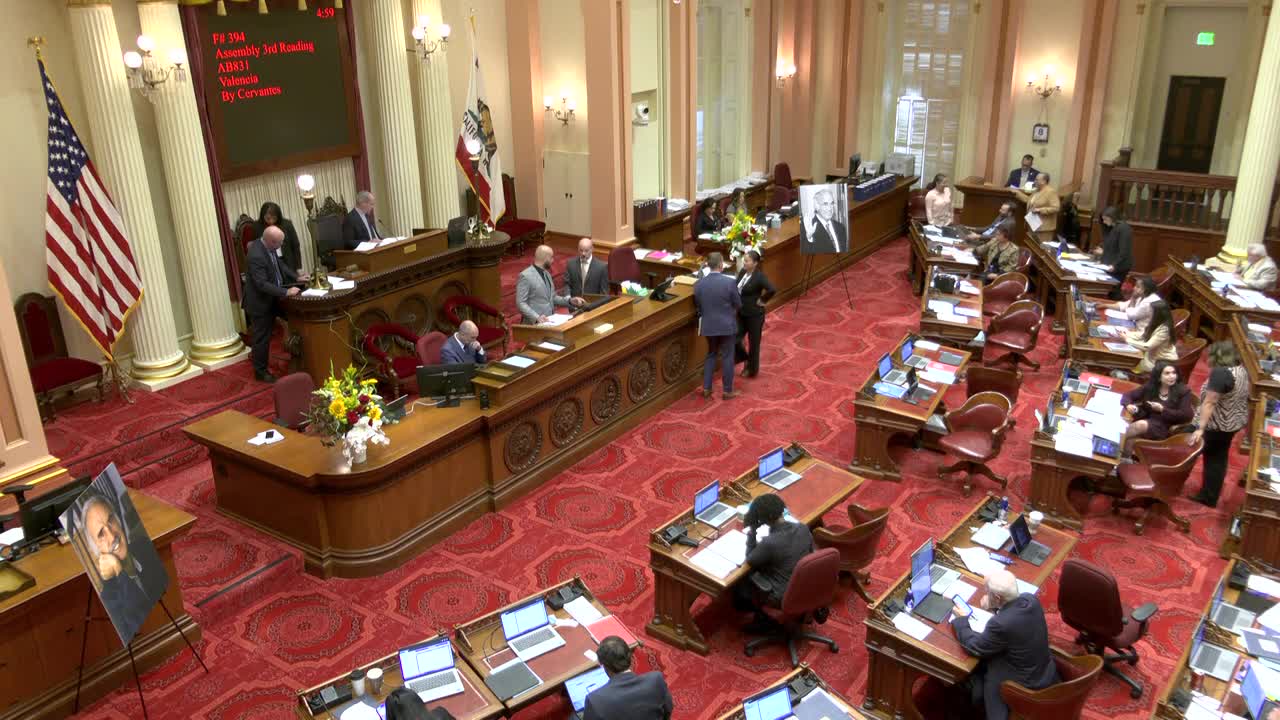 2MIN
Senate Floor
 1MIN
Assembly Floor
 11MIN
Assembly Standing Committee on Education
Bill Author

Bill Co-Author(s):