AB 690: Criminal procedure: indigent defense compensation.
- Session Year: 2025-2026
- House: Assembly
- Latest Version Date: 2026-09-20
Current Status:
Passed
(2026-09-20: Chaptered by Secretary of State - Chapter 359, Statutes of 2026.)
Introduced
In Committee
Awaiting First Chamber Vote
Passed First Chamber
In Committee
Awaiting Second Chamber Vote
Passed Second Chamber
Enacted
Existing law grants a defendant the right to counsel in a noncapital case, and requires a defendant to be represented by counsel in a capital case. Existing law requires specified assigned counsel to receive a reasonable sum for compensation and for necessary expenses, as determined by the court, to be paid out of the general fund of the county.
This bill would, commencing with contracts or memoranda of understanding for indigent defense services entered into after January 1, 2028, revise the process and require a county or court, when contracting for the provision or administration of indigent defense services, to include certain elements in the contract or other agreement for indigent services, as specified. The bill would prohibit a county or court from entering into flat fee contracts, as defined, or per case compensation contracts in cases involving the death penalty or the potential sentence of life without the possibility of parole. The bill would require the structure of the contract for indigent defense services to ensure that attorneys have the resources and time necessary to provide competent legal representation. The bill would require counties that contract with a private entity or law firm to provide indigent defense services to provide all those contracts to the Office of the State Public Defender every 2 years.
The bill would make related findings and declarations.
Existing law grants a defendant the right to counsel in a noncapital case, and requires a defendant to be represented by counsel in a capital case. Existing law requires specified assigned counsel to receive a reasonable sum for compensation and for necessary expenses, as determined by the court, to be paid out of the general fund of the county.
This bill would, commencing with contracts or memoranda of understanding for indigent defense services entered into after January 1, 2027, 2028, revise the process and require a county or court, when contracting for the provision or administration of indigent defense services, to include certain elements in the contract or other agreement for indigent services, including requirements for compliance with the Office of the State Public Defenders California Standards for Contract and Panel Defense Systems. The bill would specify that, in the absence of a contract for indigent defense services, an agreement for the services shall meet the Office of the State Public Defenders California Standards for Contract and Panel Defense Systems, as specified. services, as specified. The bill would prohibit a county or court from entering into flat fee contracts, as defined, or per case compensation contracts. contracts in cases involving the death penalty or the potential sentence of life without the possibility of parole. The bill would require the structure of the contract for indigent defense services to ensure that attorneys have the resources and time necessary to provide competent legal representation. The bill would require counties that contract with a private entity or law firm to manage and provide indigent defense services to provide all those contracts to the Office of the State Public Defender every 2 years. The bill would require counties to ensure that all contracts provide for an hourly rate or the hourly rate equivalent anticipated under the contract, as specified.
The bill would make related findings and declarations.
Existing law grants a defendant the right to counsel in a noncapital case, and requires a defendant to be represented by counsel in a capital case. Existing law requires specified assigned counsel to receive a reasonable sum for compensation and for necessary expenses, as determined by the court, to be paid out of the general fund of the county.
This bill would, commencing with contracts for indigent defense services entered into after January 1, 2027, revise the process and require a county or court, when contracting for the provision or administration of indigent defense services, to include certain elements in the contract or other agreement for indigent services, including requirements for compliance with the Office of the State Public Defenders standards for contract systems. California Standards for Contract and Panel Defense Systems. The bill would specify that, in the absence of a contract for indigent defense services, an agreement for the services shall meet the Office of the State Public Defenders California Standards for Contract and Panel Defense Systems, as specified. The bill would prohibit a county or court from entering into flat fee contracts, as defined, or per case compensation contracts. The bill would require the structure of the contract for indigent defense services to ensure that attorneys have the resources and time necessary to provide competent legal representation. The bill would require counties that contract with a private entity or law firm to manage and provide indigent defense services to provide all those contracts to the Office of the State Public Defender every 2 years. The bill would require counties to ensure that all contracts provide for an hourly rate or the hourly rate equivalent anticipated under the contract, as specified. By increasing duties on local officials, the bill would impose a state-mandated local program.
The bill would make related findings and declarations.
The California Constitution requires the state to reimburse local agencies and school districts for certain costs mandated by the state. Statutory provisions establish procedures for making that reimbursement.This bill would provide that, if the Commission on State Mandates determines that the bill contains costs mandated by the state, reimbursement for those costs shall be made pursuant to the statutory provisions noted above.Existing law grants a defendant the right to counsel in a noncapital case, and requires a defendant to be represented by counsel in a capital case. Existing law requires specified assigned counsel to receive a reasonable sum for compensation and for necessary expenses, as determined by the court, to be paid out of the general fund of the county.
This bill would, commencing with contracts for indigent defense services entered into after January 1, 2027, revise the process and require a county or court, when contracting for indigent defense services, to include certain elements in the contract or other agreement for indigent services, including requirements for compliance with the Office of the State Public Defenders standards for contract systems. The bill would prohibit a county or court from entering into flat fee contracts, as defined, or per case compensation contracts. The bill would require the structure of the contract for indigent defense services to ensure that attorneys have the resources and time necessary to provide competent legal representation. The bill would require counties to provide all contracts to the Office of the State Public Defender every 2 years. The bill would require counties to ensure that all contracts provide for an hourly rate or the hourly rate equivalent anticipated under the contract, as specified. By increasing duties on local officials, the bill would impose a state-mandated local program.
The bill would make related findings and declarations.
The California Constitution requires the state to reimburse local agencies and school districts for certain costs mandated by the state. Statutory provisions establish procedures for making that reimbursement.
This bill would provide that, if the Commission on State Mandates determines that the bill contains costs mandated by the state, reimbursement for those costs shall be made pursuant to the statutory provisions noted above.
Existing law grants a defendant the right to counsel in a noncapital case, and requires a defendant to be represented by counsel in a capital case. Existing law requires specified assigned counsel to receive a reasonable sum for compensation and for necessary expenses, as determined by the court, to be paid out of the general fund of the county.
This bill would, commencing with contracts for indigent defense services entered into after January 1, 2027, revise the process and require a county or court, when contracting for indigent defense services, to include certain elements in the contract for indigent services, including requirements for compliance with the Office of the State Public Defenders standards for contract systems. The bill would prohibit a county or court from entering into flat fee contracts, as defined, or per case compensation contracts. The bill would require the structure of the contract for indigent defense services to ensure that attorneys have the resources and time necessary to provide competent legal representation. The bill would require counties to provide all contracts to the Office of the State Public Defender every 2 years. The bill would require counties to ensure that all contracts provide for an hourly rate or the hourly rate equivalent anticipated under the contract, as specified. By increasing duties on local officials, the bill would impose a state-mandated local program.
The bill would make related findings and declarations.
The California Constitution requires the state to reimburse local agencies and school districts for certain costs mandated by the state. Statutory provisions establish procedures for making that reimbursement.
This bill would provide that, if the Commission on State Mandates determines that the bill contains costs mandated by the state, reimbursement for those costs shall be made pursuant to the statutory provisions noted above.
Existing law requires that any offense declared to be a misdemeanor for which no punishment is specified is punishable by imprisonment in the county jail not to exceed 6 months, by a fine not to exceed $1,000, or by both that fine and imprisonment. This bill would decrease the amount of the fine to $500.Existing law requires that any offense declared to be a misdemeanor for which no punishment is specified is punishable by imprisonment in the county jail not to exceed 6 months, by a fine not to exceed $1,000, or by both that fine and imprisonment.
This bill would decrease the amount of the fine to $500.
(a)The Legislature finds and declares that the constitutional guarantee of free and effective assistance of counsel to indigent people facing criminal charges is threatened where counties and attorneys enter into flat fee agreements. Experts and policymakers around the country have condemned flat fee contracts for legal services because they undermine effective representation for the client by creating a financial conflict of interest for attorneys when the more the attorney works, the lower their hourly rate. These types of arrangements have been outlawed in several states including Idaho, Michigan, Nevada, South Dakota, and Washington. Indigent defense counsel in California already labor under high caseloads, sometimes as high as 1,000 cases or more each year, exacerbating the financial conflict of interest.
(b)It is the intent of the Legislature to ensure that all Californians have access to effective assistance of counsel, regardless of wealth or income, geographic location, or type of indigent defense system. It is further the intent of the Legislature to provide a mechanism for counties to structure their indigent defense systems in a manner that encourages vigorous representation, pays attorneys a fair wage for work completed, and requires that if contracts are used, they have the structure and support to ensure the promise of constitutionally effective representation.
SEC. 2.Section 987.2 of the Penal Code is amended to read:987.2.(a)In any case in which a person, including a person who is a minor, desires but is unable to employ counsel, and in which counsel is assigned in the superior court to represent the person in a criminal trial, proceeding, or appeal, the following assigned counsel shall receive a reasonable sum for compensation and for necessary expenses, the amount of which shall be determined by the court, to be paid out of the general fund of the county:
(1)In a county or city and county in which there is no public defender.
(2)In a county of the first, second, or third class where there is no contract for criminal defense services between the county and one or more responsible attorneys.
(3)In a case in which the court finds that, because of a conflict of interest or other reasons, the public defender has properly refused.
(4)In a county of the first, second, or third class where attorneys contracted by the county are unable to represent the person accused.
(b)The sum provided for in subdivision (a) may be determined by contract between the court and one or more responsible attorneys after consultation with the board of supervisors, which shall be within the amount of funds allocated by the board of supervisors for the cost of assigned counsel in those cases. A contract entered into pursuant to these provisions shall meet the requirements of Section 987.7. In the absence of a contract, any other agreement pursuant to these provisions shall meet the requirements of Section 987.7.
(c)In counties that utilize an assigned private counsel system as either the primary method of public defense or as the method of appointing counsel in cases where the public defender is unavailable, the county, the courts, or the local county bar association working with the courts are encouraged to do all of the following:
(1)Establish panels that shall be open to members of the State Bar of California.
(2)Categorize attorneys for panel placement on the basis of experience.
(3)Refer cases to panel members on a rotational basis within the level of experience of each panel, except that a judge may exclude an individual attorney from appointment to an individual case for good cause.
(4)Seek to educate those panel members through an approved training program.
(d)In a county of the first, second, or third class, the court shall first utilize the services of the public defender to provide criminal defense services for indigent defendants. In the event that the public defender is unavailable and the county and the courts have contracted with one or more responsible attorneys or with a panel of attorneys to provide criminal defense services for indigent defendants, the court shall utilize the services of the county-contracted attorneys prior to assigning any other private counsel. Nothing in this subdivision shall be construed to require the appointment of counsel in any case in which the counsel has a conflict of interest. In the interest of justice, a court may depart from that portion of the procedure requiring appointment of a county-contracted attorney after making a finding of good cause and stating the reasons therefor on the record.
(e)In a county of the first, second, or third class, the court shall first utilize the services of the public defender to provide criminal defense services for indigent defendants. In the event that the public defender is unavailable and the county has created a second public defender and contracted with one or more responsible attorneys or with a panel of attorneys to provide criminal defense services for indigent defendants, and if the quality of representation provided by the second public defender is comparable to the quality of representation provided by the public defender, the court shall next utilize the services of the second public defender and then the services of the county-contracted attorneys prior to assigning any other private counsel. Nothing in this subdivision shall be construed to require the appointment of counsel in any case in which the counsel has a conflict of interest. In the interest of justice, a court may depart from that portion of the procedure requiring appointment of the second public defender or a county-contracted attorney after making a finding of good cause and stating the reasons therefor on the record.
(f)In any case in which counsel is assigned as provided in subdivision (a), that counsel appointed by the court and any court-appointed licensed private investigator shall have the same rights and privileges to information as the public defender and the public defender investigator. It is the intent of the Legislature in enacting this subdivision to equalize any disparity that exists between the ability of private, court-appointed counsel and investigators, and public defenders and public defender investigators, to represent their clients. This subdivision is not intended to grant to private investigators access to any confidential Department of Motor Vehicles information not otherwise available to them. This subdivision is not intended to extend to private investigators the right to issue subpoenas.
(g)Notwithstanding any other provision of this section, where an indigent defendant is first charged in one county and establishes an attorney-client relationship with the public defender, defense services contract attorney, or private attorney, and where the defendant is then charged with an offense in a second or subsequent county, the court in the second or subsequent county may appoint the same counsel as was appointed in the first county to represent the defendant when all of the following conditions are met:
(1)The offense charged in the second or subsequent county would be joinable for trial with the offense charged in the first if it took place in the same county, or involves evidence which would be cross-admissible.
(2)The court finds that the interests of justice and economy will be best served by unitary representation.
(3)Counsel appointed in the first county consents to the appointment.
(h)The county may recover costs of public defender services under Chapter 6 (commencing with Section 4750) of Title 5 of Part 3 for any case subject to Section 4750.
(i)Counsel shall be appointed to represent, in a misdemeanor case, a person who desires but is unable to employ counsel, when it appears that the appointment is necessary to provide an adequate and effective defense for the defendant. Appointment of counsel in an infraction case is governed by Section 19.6.
(j)As used in this section, county of the first, second, or third class means the county of the first class, county of the second class, and county of the third class as provided by Sections 28020, 28022, 28023, and 28024 of the Government Code.
(k)This section shall become operative on July 1, 2021.
SEC. 3.Section 987.7 is added to the Penal Code, to read:987.7.(a)(1)A contract or memorandum of understanding between a county or court and a law firm, individual attorney, or other legal entity for the provision or administration of indigent defense services shall comply with all of the following:
(A)The county or court shall consider all of the following when preparing a contract or memorandum of understanding for indigent defense services:
(i)The California Standards for Contract and Panel Defense Systems.
(ii)The full workload and professional responsibilities of the attorney or firm, including time for work in other cases in addition to work performed pursuant to the indigent defense services contract.
(iii)The National Public Defense Workload Study by the RAND Corporation published in 2023, or any later workload study identified by the Office of the State Public Defender and agreed upon by the California Public Defenders Association and California Attorneys for Criminal Justice.
(B)Attorneys shall comply with ethical rules of representation, including, but not limited to, Rule 1.4 of the State Bar Rules of Professional Conduct, and shall make reasonable efforts to meet with their clients outside of court appearances. If requested by the administrator, the attorney shall provide a list of cases in which the attorney did not meet with the client outside of court proceedings.
(C)If the contract is with a private entity or law firm to manage indigent defense services for that county, a provision requiring the contractor to maintain an internet website with contact information, including working telephone number and email, for all attorneys providing indigent defense services through that entity. Attorneys shall have a working telephone number that accepts jail and prison calls and a functional voicemail available for confidential client use.
(D)The contract amount and structure shall ensure that attorneys have the resources and time necessary to consult with clients, assess discovery, conduct fact investigations, file motions, and perform any other relevant tasks to ensure competent legal representation.
(E)All contracts shall identify the amount of funds allocated for attorneys fees and separately specify the amount of any allocation for any case-related defense services, including, but not limited to, investigators, social workers, and immigration counsel. These ancillary service funds shall be separate and in addition to funds allocated for attorney compensation, and there shall not be a penalty for contracted attorneys accessing those funds. Attorneys shall not be expected nor required to use funds allocated for attorney work to pay for case-related defense services.
(2)(A)A county or court shall not enter into flat fee or per case compensation contracts for the administration or provision of indigent defense services for any cases in which special circumstances are charged pursuant to Section 190.2, or any other cases with charges carrying a potential sentence of death or life without the possibility parole.
(B)For the purposes of this paragraph, flat fee means a compensation structure that provides a fixed dollar amount for each case, or for an unlimited number of cases, without regard to the actual time and resources required to provide competent and zealous representation in each case.
(3)The contract shall include a provision that affords the contractor a process to seek a modification of the contract amount if the number of cases handled or the costs of providing competent legal representation, consistent with this section and all other relevant law, exceed the amount reasonably contemplated by the parties at the beginning of the contract period.
(b)Counties that contract with a private entity or law firm to provide indigent defense services for that county shall provide these contracts for indigent defense services to the Office of the State Public Defender every two years, beginning on January 1, 2028.
(c)The requirements of this section shall be included in any request for proposals for indigent defense services published by any county or court in California on or after January 1, 2028.
(d)The provisions of this section shall apply to any memorandum of understanding contract, contract amendment, or contract extension for the provision or administration of indigent defense services entered into or elected by any county or court in California on or after January 1, 2028.
(e)This section shall become operative on January 1, 2028.
(a)The Legislature finds and declares that the constitutional guarantee of free and effective assistance of counsel to indigent people facing criminal charges is threatened where counties and attorneys enter into flat fee agreements. Experts and policymakers around the country have condemned flat fee contracts for legal services because they undermine effective representation for the client by creating a financial conflict of interest for attorneys when the more the attorney works, the lower their hourly rate. These types of arrangements have been outlawed in several states including Idaho, Michigan, Nevada, South Dakota, and Washington. Indigent defense counsel in California already labor under high caseloads, sometimes as high as 1,000 cases or more each year, exacerbating the financial conflict of interest.
(b)It is the intent of the Legislature to ensure that all Californians have access to effective assistance of counsel, regardless of wealth or income, geographic location, or type of indigent defense system. It is further the intent of the Legislature to provide a mechanism for counties to structure their indigent defense systems in a manner that encourages vigorous representation, pays attorneys a fair wage for work completed, and requires that if contracts are used, they have the structure and support to ensure the promise of constitutionally effective representation.
SEC. 2.Section 987.2 of the Penal Code is amended to read:987.2.(a)In any case in which a person, including a person who is a minor, desires but is unable to employ counsel, and in which counsel is assigned in the superior court to represent the person in a criminal trial, proceeding, or appeal, the following assigned counsel shall receive a reasonable sum for compensation and for necessary expenses, the amount of which shall be determined by the court, to be paid out of the general fund of the county:
(1)In a county or city and county in which there is no public defender.
(2)In a county of the first, second, or third class where there is no contract for criminal defense services between the county and one or more responsible attorneys.
(3)In a case in which the court finds that, because of a conflict of interest or other reasons, the public defender has properly refused.
(4)In a county of the first, second, or third class where attorneys contracted by the county are unable to represent the person accused.
(b)The sum provided for in subdivision (a) may be determined by contract between the court and one or more responsible attorneys after consultation with the board of supervisors, which shall be within the amount of funds allocated by the board of supervisors for the cost of assigned counsel in those cases. A contract entered into pursuant to these provisions shall meet the requirements of Section 987.7. In the absence of a contract, any other agreement pursuant to these provisions shall meet the requirements of Section 987.7.
(c)In counties that utilize an assigned private counsel system as either the primary method of public defense or as the method of appointing counsel in cases where the public defender is unavailable, the county, the courts, or the local county bar association working with the courts are encouraged to do all of the following:
(1)Establish panels that shall be open to members of the State Bar of California.
(2)Categorize attorneys for panel placement on the basis of experience.
(3)Refer cases to panel members on a rotational basis within the level of experience of each panel, except that a judge may exclude an individual attorney from appointment to an individual case for good cause.
(4)Seek to educate those panel members through an approved training program.
(d)In a county of the first, second, or third class, the court shall first utilize the services of the public defender to provide criminal defense services for indigent defendants. In the event that the public defender is unavailable and the county and the courts have contracted with one or more responsible attorneys or with a panel of attorneys to provide criminal defense services for indigent defendants, the court shall utilize the services of the county-contracted attorneys prior to assigning any other private counsel. Nothing in this subdivision shall be construed to require the appointment of counsel in any case in which the counsel has a conflict of interest. In the interest of justice, a court may depart from that portion of the procedure requiring appointment of a county-contracted attorney after making a finding of good cause and stating the reasons therefor on the record.
(e)In a county of the first, second, or third class, the court shall first utilize the services of the public defender to provide criminal defense services for indigent defendants. In the event that the public defender is unavailable and the county has created a second public defender and contracted with one or more responsible attorneys or with a panel of attorneys to provide criminal defense services for indigent defendants, and if the quality of representation provided by the second public defender is comparable to the quality of representation provided by the public defender, the court shall next utilize the services of the second public defender and then the services of the county-contracted attorneys prior to assigning any other private counsel. Nothing in this subdivision shall be construed to require the appointment of counsel in any case in which the counsel has a conflict of interest. In the interest of justice, a court may depart from that portion of the procedure requiring appointment of the second public defender or a county-contracted attorney after making a finding of good cause and stating the reasons therefor on the record.
(f)In any case in which counsel is assigned as provided in subdivision (a), that counsel appointed by the court and any court-appointed licensed private investigator shall have the same rights and privileges to information as the public defender and the public defender investigator. It is the intent of the Legislature in enacting this subdivision to equalize any disparity that exists between the ability of private, court-appointed counsel and investigators, and public defenders and public defender investigators, to represent their clients. This subdivision is not intended to grant to private investigators access to any confidential Department of Motor Vehicles information not otherwise available to them. This subdivision is not intended to extend to private investigators the right to issue subpoenas.
(g)Notwithstanding any other provision of this section, where an indigent defendant is first charged in one county and establishes an attorney-client relationship with the public defender, defense services contract attorney, or private attorney, and where the defendant is then charged with an offense in a second or subsequent county, the court in the second or subsequent county may appoint the same counsel as was appointed in the first county to represent the defendant when all of the following conditions are met:
(1)The offense charged in the second or subsequent county would be joinable for trial with the offense charged in the first if it took place in the same county, or involves evidence which would be cross-admissible.
(2)The court finds that the interests of justice and economy will be best served by unitary representation.
(3)Counsel appointed in the first county consents to the appointment.
(h)The county may recover costs of public defender services under Chapter 6 (commencing with Section 4750) of Title 5 of Part 3 for any case subject to Section 4750.
(i)Counsel shall be appointed to represent, in a misdemeanor case, a person who desires but is unable to employ counsel, when it appears that the appointment is necessary to provide an adequate and effective defense for the defendant. Appointment of counsel in an infraction case is governed by Section 19.6.
(j)As used in this section, county of the first, second, or third class means the county of the first class, county of the second class, and county of the third class as provided by Sections 28020, 28022, 28023, and 28024 of the Government Code.
(k)This section shall become operative on July 1, 2021.
SEC. 3.Section 987.7 is added to the Penal Code, to read:987.7.(a)(1)A contract or memorandum of understanding between a county or court and a law firm, individual attorney, or other legal entity for the provision or administration of indigent defense services shall use the following procedure: comply with all of the following:
(1)A final contract and solicitation or agreement for the contracting of indigent defense services, including a request for proposals, a request for qualifications for indigent defense services contracts, or another policy for the contracting of indigent defense services, shall require all of the following:(A)Requirements for compliance with the Office of the State Public Defenders California Standards for Contract and Panel Defense Systems.(B)When determining the scope of work and number of cases to be handled, the county or court shall take into consideration, among other factors, both of the following:(i)The National Public Defense Workload Study by the RAND Corporation published in 2023, or a later workload study identified by the Office of the State Public Defender and agreed upon by the California Public Defenders Association and California Attorneys for Criminal Justice.(ii)The percentage of the attorney or firm time for work in other cases in addition to work performed pursuant to the indigent defense services contract.(A)The county or court shall consider all of the following when preparing a contract or memorandum of understanding for indigent defense services:
(i)The California Standards for Contract and Panel Defense Systems.
(ii)The full workload and professional responsibilities of the attorney or firm, including time for work in other cases in addition to work performed pursuant to the indigent defense services contract.
(iii)The National Public Defense Workload Study by the RAND Corporation published in 2023, or any later workload study identified by the Office of the State Public Defender and agreed upon by the California Public Defenders Association and California Attorneys for Criminal Justice.
(B)Attorneys shall comply with ethical rules of representation, including, but not limited to, Rule 1.4 of the State Bar Rules of Professional Conduct, and shall make reasonable efforts to meet with their clients outside of court appearances. If requested by the administrator, the attorney shall provide a list of cases in which the attorney did not meet with the client outside of court proceedings.
(C)If the contract is with a private entity or law firm to manage indigent defense services for that county, a provision requiring the contractor to maintain an internet website with contact information, including working telephone number and email, for all attorneys providing indigent defense services through that entity. Attorneys shall have a working telephone number that accepts jail and prison calls and a functional voicemail available for confidential client use.
(C)(D)The contract amount and structure shall ensure that attorneys have the resources and time necessary to consult with clients, assess discovery, conduct fact investigations, file motions, and perform any other relevant tasks to ensure competent legal representation.
(D)(E)All contracts shall provide a separate allocation of funds for identify the amount of funds allocated for attorneys fees and separately specify the amount of any allocation for any case-related defense services, including, but not limited to, investigators, social workers, and immigration counsel. These ancillary service funds shall be separate and in addition to funds allocated for attorney compensation, and there shall not be a penalty for contracted attorneys accessing those funds. Attorneys shall not be expected nor required to use funds allocated for attorney work to pay for case-related defense services.
(2)(A)A county or court shall not enter into flat fee or per case compensation contracts for the administration or provision of indigent defense services. services for any cases in which special circumstances are charged pursuant to Section 190.2, or any other cases with charges carrying a potential sentence of death or life without the possibility parole.
(B)For the purposes of this paragraph, flat fee means a compensation structure that provides a fixed dollar amount for each case, or for an unlimited number of cases, without regard to the actual time and resources required to provide competent and zealous representation in each case.
(3)Contract amounts shall account for all costs related to the provision of indigent legal services, including, but not limited to, immigration support, paralegals and case support services, social workers, mitigation specialists, experts, and investigators. (4)(3)The contract shall include a provision that affords the contractor a process to seek a modification of the contract amount if the number of cases handled or the costs of providing a modern criminal defense practice competent legal representation, consistent with this section and all other relevant law, exceed the amount reasonably contemplated by the parties at the beginning of the contract period.
(b)A request for proposals pursuant to paragraph (1) of subdivision (a) shall be disqualified from consideration if it does not meet all of the requirements of subdivision (a). (c)(b)Counties that contract with a private entity or law firm to manage and provide indigent defense services for that county shall provide these contracts for indigent defense services to the Office of the State Public Defender every two years, beginning on January 1, 2027. If the contract does not provide for an hourly rate, the county shall provide to the Office of the State Public Defender the hourly rate equivalent anticipated under the contract. 2028.
(c)The requirements of this section shall be included in any request for proposals for indigent defense services published by any county or court in California on or after January 1, 2028.
(d)The provisions of this section shall apply to any memorandum of agreement, understanding contract, contract amendment, or contract extension for the provision or administration of indigent defense services entered into or elected by any county or court in California on or after January 1, 2027. 2028.
(e)This section shall become operative on January 1, 2027. 2028.
(a)The Legislature finds and declares that the constitutional guarantee of free and effective assistance of counsel to indigent people facing criminal charges is threatened where counties and attorneys enter into flat fee agreements. Experts and policymakers around the country have condemned flat fee contracts for legal services because they undermine effective representation for the client by creating a financial conflict of interest for attorneys when the more the attorney works, the lower their hourly rate. These types of arrangements have been outlawed in several states, states including Idaho, Michigan, Nevada, South Dakota, and Washington. Indigent defense counsel in California already labor under high caseloads, sometimes as high as 1,000 cases or more each year, exacerbating the financial conflict of interest.
(b)It is the intent of the Legislature to ensure that all Californians have access to effective assistance of counsel, regardless of wealth or income, geographic location, or type of indigent defense system. It is further the intent of the Legislature to provide a mechanism for counties to structure their indigent defense systems in a manner that encourages vigorous representation, pays attorneys a fair wage for work completed, and requires that if contracts are used, they have the structure and support to ensure the promise of constitutionally effective representation.
SEC. 2.Section 987.2 of the Penal Code is amended to read:987.2.(a)In any case in which a person, including a person who is a minor, desires but is unable to employ counsel, and in which counsel is assigned in the superior court to represent the person in a criminal trial, proceeding, or appeal, the following assigned counsel shall receive a reasonable sum for compensation and for necessary expenses, the amount of which shall be determined by the court, to be paid out of the general fund of the county:
(1)In a county or city and county in which there is no public defender.
(2)In a county of the first, second, or third class where there is no contract for criminal defense services between the county and one or more responsible attorneys.
(3)In a case in which the court finds that, because of a conflict of interest or other reasons, the public defender has properly refused.
(4)In a county of the first, second, or third class where attorneys contracted by the county are unable to represent the person accused.
(b)The sum provided for in subdivision (a) may be determined by contract between the court and one or more responsible attorneys after consultation with the board of supervisors, which shall be within the amount of funds allocated by the board of supervisors for the cost of assigned counsel in those cases. A contract entered into pursuant to these provisions shall meet the requirements of Section 987.7. In the absence of a contract, any other agreement pursuant to these provisions shall meet the requirements of Section 987.7.
(c)In counties that utilize an assigned private counsel system as either the primary method of public defense or as the method of appointing counsel in cases where the public defender is unavailable, the county, the courts, or the local county bar association working with the courts are encouraged to do all of the following:
(1)Establish panels that shall be open to members of the State Bar of California.
(2)Categorize attorneys for panel placement on the basis of experience.
(3)Refer cases to panel members on a rotational basis within the level of experience of each panel, except that a judge may exclude an individual attorney from appointment to an individual case for good cause.
(4)Seek to educate those panel members through an approved training program.
(d)In a county of the first, second, or third class, the court shall first utilize the services of the public defender to provide criminal defense services for indigent defendants. In the event that the public defender is unavailable and the county and the courts have contracted with one or more responsible attorneys or with a panel of attorneys to provide criminal defense services for indigent defendants, the court shall utilize the services of the county-contracted attorneys prior to assigning any other private counsel. Nothing in this subdivision shall be construed to require the appointment of counsel in any case in which the counsel has a conflict of interest. In the interest of justice, a court may depart from that portion of the procedure requiring appointment of a county-contracted attorney after making a finding of good cause and stating the reasons therefor on the record.
(e)In a county of the first, second, or third class, the court shall first utilize the services of the public defender to provide criminal defense services for indigent defendants. In the event that the public defender is unavailable and the county has created a second public defender and contracted with one or more responsible attorneys or with a panel of attorneys to provide criminal defense services for indigent defendants, and if the quality of representation provided by the second public defender is comparable to the quality of representation provided by the public defender, the court shall next utilize the services of the second public defender and then the services of the county-contracted attorneys prior to assigning any other private counsel. Nothing in this subdivision shall be construed to require the appointment of counsel in any case in which the counsel has a conflict of interest. In the interest of justice, a court may depart from that portion of the procedure requiring appointment of the second public defender or a county-contracted attorney after making a finding of good cause and stating the reasons therefor on the record.
(f)In any case in which counsel is assigned as provided in subdivision (a), that counsel appointed by the court and any court-appointed licensed private investigator shall have the same rights and privileges to information as the public defender and the public defender investigator. It is the intent of the Legislature in enacting this subdivision to equalize any disparity that exists between the ability of private, court-appointed counsel and investigators, and public defenders and public defender investigators, to represent their clients. This subdivision is not intended to grant to private investigators access to any confidential Department of Motor Vehicles information not otherwise available to them. This subdivision is not intended to extend to private investigators the right to issue subpoenas.
(g)Notwithstanding any other provision of this section, where an indigent defendant is first charged in one county and establishes an attorney-client relationship with the public defender, defense services contract attorney, or private attorney, and where the defendant is then charged with an offense in a second or subsequent county, the court in the second or subsequent county may appoint the same counsel as was appointed in the first county to represent the defendant when all of the following conditions are met:
(1)The offense charged in the second or subsequent county would be joinable for trial with the offense charged in the first if it took place in the same county, or involves evidence which would be cross-admissible.
(2)The court finds that the interests of justice and economy will be best served by unitary representation.
(3)Counsel appointed in the first county consents to the appointment.
(h)The county may recover costs of public defender services under Chapter 6 (commencing with Section 4750) of Title 5 of Part 3 for any case subject to Section 4750.
(i)Counsel shall be appointed to represent, in a misdemeanor case, a person who desires but is unable to employ counsel, when it appears that the appointment is necessary to provide an adequate and effective defense for the defendant. Appointment of counsel in an infraction case is governed by Section 19.6.
(j)As used in this section, county of the first, second, or third class means the county of the first class, county of the second class, and county of the third class as provided by Sections 28020, 28022, 28023, and 28024 of the Government Code.
(k)This section shall become operative on July 1, 2021.
SEC. 3.Section 987.7 is added to the Penal Code, to read:987.7.(a)A contract between a county or court and a law firm, individual attorney, or other legal entity for the provision or administration of indigent defense services shall use the following procedure:
(1)A final contract and solicitation or agreement for the contracting of indigent defense services, including a request for proposals, a request for qualifications for indigent defense services contracts, or other another policy for the contracting of indigent defense services services, shall require proposals and all final contracts to include all of the following:
(A)Requirements for compliance with the Office of the State Public Defenders standards for contract systems. California Standards for Contract and Panel Defense Systems.
(B)Explicit language demonstrating a direct relationship between the contract amount and the total number of cases to be handled during the contract period. The number of cases handled over the contract period shall be informed by caseload limits defined in the National Public Defense Workload Study by the RAND Corporation published in 2023, or a later workload study. When determining the scope of work and number of cases to be handled, the county or court shall take into consideration the percentage of the attorney or firm time for work in other cases in addition to work performed pursuant to the indigent defense services contract.(B)When determining the scope of work and number of cases to be handled, the county or court shall take into consideration, among other factors, both of the following:
(i)The National Public Defense Workload Study by the RAND Corporation published in 2023, or a later workload study identified by the Office of the State Public Defender and agreed upon by the California Public Defenders Association and California Attorneys for Criminal Justice.
(ii)The percentage of the attorney or firm time for work in other cases in addition to work performed pursuant to the indigent defense services contract.
(C)The contract amount and structure shall ensure that attorneys have the resources and time necessary to consult with clients, assess discovery, conduct fact investigations, file motions, and perform any other relevant tasks to ensure competent legal representation.
(D)All contracts shall provide a separate allocation of funds for case-related defense services, including, but not limited to, investigators, social workers, and immigration counsel. These ancillary service funds shall be separate and in addition to funds allocated for attorney compensation, and there shall not be a penalty for contracted attorneys accessing those funds.
(2)(A)A county or court shall not enter into flat fee or per case compensation contracts. contracts for the administration or provision of indigent defense services.
(B)For the purposes of this paragraph, flat fee means a compensation structure that provides a fixed dollar amount for each case, or for an unlimited number of cases, without regard to the actual time and resources required to provide competent and zealous representation in each case.
(3)Contract amounts shall account for all dimensions of modern criminal defense practice, including, but not limited to, the costs of technology, support staff, and ancillary legal services, costs related to the provision of indigent legal services, including, but not limited to, immigration support, paralegals, paralegals and case support services, social workers, mitigation specialists, experts, and investigators.
(4)The contract shall include a provision that affords the contractor a process to seek a modification of the contract amount if the number of cases handled or the costs of providing a modern criminal defense practice exceed the amount contemplated at the beginning of the contract period.
(b)A request for proposals pursuant to paragraph (1) of subdivision (a) shall be disqualified from consideration if it does not meet all of the requirements of subdivision (a).
(c)Counties that contract with a private entity or law firm to manage and provide indigent defense services for that county shall provide all these contracts for indigent defense services to the Office of the State Public Defender every two years, beginning on January 1, 2027. If the contract does not provide for an hourly rate, the county shall provide to the Office of the State Public Defender the hourly rate equivalent anticipated under the contract.
(d)The provisions of this section shall apply to any memorandum of agreement, contract, contract amendment, or contract extension for the provision or administration of indigent defense services entered into or elected by any county or court in California on or after January 1, 2027.
(e)This section shall become operative on January 1, 2027.
SEC. 4.If the Commission on State Mandates determines that this act contains costs mandated by the state, reimbursement to local agencies and school districts for those costs shall be made pursuant to Part 7 (commencing with Section 17500) of Division 4 of Title 2 of the Government Code.(a)The Legislature finds and declares that the constitutional guarantee of free and effective assistance of counsel to indigent people facing criminal charges is threatened where counties and attorneys enter into flat fee agreements. Experts and policymakers around the country have condemned flat fee contracts for legal services because they undermine effective representation for the client by creating a financial conflict of interest for attorneys when the more the attorney works, the lower their hourly rate. These types of arrangements have been outlawed in several states, including Idaho, Michigan, Nevada, South Dakota, and Washington. Indigent defense counsel in California already labor under high caseloads, sometimes as high as 1,000 cases or more each year, exacerbating the financial conflict of interest.
(b)It is the intent of the Legislature to ensure that all Californians have access to effective assistance of counsel, regardless of wealth or income, geographic location, or type of indigent defense system. It is further the intent of the Legislature to provide a mechanism for counties to structure their indigent defense systems in a manner that encourages vigorous representation, pays attorneys a fair wage for work completed, and requires that if contracts are used, they have the structure and support to ensure the promise of constitutionally effective representation.
SEC. 2.Section 987.2 of the Penal Code is amended to read:987.2.(a)In any case in which a person, including a person who is a minor, desires but is unable to employ counsel, and in which counsel is assigned in the superior court to represent the person in a criminal trial, proceeding, or appeal, the following assigned counsel shall receive a reasonable sum for compensation and for necessary expenses, the amount of which shall be determined by the court, to be paid out of the general fund of the county:
(1)In a county or city and county in which there is no public defender.
(2)In a county of the first, second, or third class where there is no contract for criminal defense services between the county and one or more responsible attorneys.
(3)In a case in which the court finds that, because of a conflict of interest or other reasons, the public defender has properly refused.
(4)In a county of the first, second, or third class where attorneys contracted by the county are unable to represent the person accused.
(b)The sum provided for in subdivision (a) may be determined by contract between the court and one or more responsible attorneys after consultation with the board of supervisors, which shall be within the amount of funds allocated by the board of supervisors for the cost of assigned counsel in those cases. A contract entered into pursuant to these provisions shall meet the requirements of Section 987.7. In the absence of a contract, any other agreement pursuant to these provisions shall meet the requirements of Section 987.7.
(c)In counties that utilize an assigned private counsel system as either the primary method of public defense or as the method of appointing counsel in cases where the public defender is unavailable, the county, the courts, or the local county bar association working with the courts are encouraged to do all of the following:
(1)Establish panels that shall be open to members of the State Bar of California.
(2)Categorize attorneys for panel placement on the basis of experience.
(3)Refer cases to panel members on a rotational basis within the level of experience of each panel, except that a judge may exclude an individual attorney from appointment to an individual case for good cause.
(4)Seek to educate those panel members through an approved training program.
(d)In a county of the first, second, or third class, the court shall first utilize the services of the public defender to provide criminal defense services for indigent defendants. In the event that the public defender is unavailable and the county and the courts have contracted with one or more responsible attorneys or with a panel of attorneys to provide criminal defense services for indigent defendants, the court shall utilize the services of the county-contracted attorneys prior to assigning any other private counsel. Nothing in this subdivision shall be construed to require the appointment of counsel in any case in which the counsel has a conflict of interest. In the interest of justice, a court may depart from that portion of the procedure requiring appointment of a county-contracted attorney after making a finding of good cause and stating the reasons therefor on the record.
(e)In a county of the first, second, or third class, the court shall first utilize the services of the public defender to provide criminal defense services for indigent defendants. In the event that the public defender is unavailable and the county has created a second public defender and contracted with one or more responsible attorneys or with a panel of attorneys to provide criminal defense services for indigent defendants, and if the quality of representation provided by the second public defender is comparable to the quality of representation provided by the public defender, the court shall next utilize the services of the second public defender and then the services of the county-contracted attorneys prior to assigning any other private counsel. Nothing in this subdivision shall be construed to require the appointment of counsel in any case in which the counsel has a conflict of interest. In the interest of justice, a court may depart from that portion of the procedure requiring appointment of the second public defender or a county-contracted attorney after making a finding of good cause and stating the reasons therefor on the record.
(f)In any case in which counsel is assigned as provided in subdivision (a), that counsel appointed by the court and any court-appointed licensed private investigator shall have the same rights and privileges to information as the public defender and the public defender investigator. It is the intent of the Legislature in enacting this subdivision to equalize any disparity that exists between the ability of private, court-appointed counsel and investigators, and public defenders and public defender investigators, to represent their clients. This subdivision is not intended to grant to private investigators access to any confidential Department of Motor Vehicles information not otherwise available to them. This subdivision is not intended to extend to private investigators the right to issue subpoenas.
(g)Notwithstanding any other provision of this section, where an indigent defendant is first charged in one county and establishes an attorney-client relationship with the public defender, defense services contract attorney, or private attorney, and where the defendant is then charged with an offense in a second or subsequent county, the court in the second or subsequent county may appoint the same counsel as was appointed in the first county to represent the defendant when all of the following conditions are met:
(1)The offense charged in the second or subsequent county would be joinable for trial with the offense charged in the first if it took place in the same county, or involves evidence which would be cross-admissible.
(2)The court finds that the interests of justice and economy will be best served by unitary representation.
(3)Counsel appointed in the first county consents to the appointment.
(h)The county may recover costs of public defender services under Chapter 6 (commencing with Section 4750) of Title 5 of Part 3 for any case subject to Section 4750.
(i)Counsel shall be appointed to represent, in a misdemeanor case, a person who desires but is unable to employ counsel, when it appears that the appointment is necessary to provide an adequate and effective defense for the defendant. Appointment of counsel in an infraction case is governed by Section 19.6.
(j)As used in this section, county of the first, second, or third class means the county of the first class, county of the second class, and county of the third class as provided by Sections 28020, 28022, 28023, and 28024 of the Government Code.
(k)This section shall become operative on July 1, 2021.
SEC. 3.Section 987.7 is added to the Penal Code, to read:987.7.(a)A contract between a county or court and a law firm, individual attorney, or other legal entity for the provision of indigent defense services shall use the following procedure:
(1)A request for proposals, request for qualifications for indigent defense services contracts, or other policy for the contracting of indigent defense services shall require proposals and all final contracts to include all of the following:
(A)Requirements for compliance with the Office of the State Public Defenders standards for contract systems.
(B)Explicit language demonstrating a direct relationship between the contract amount and the total number of cases to be handled during the contract period. The number of cases handled over the contract period shall be informed by caseload limits defined in the National Public Defense Workload Study by the RAND Corporation published in 2023, or a later workload study. When determining the scope of work and number of cases to be handled, the county or court shall take into consideration the percentage of the attorney or firm time for work in other cases in addition to work performed pursuant to the indigent defense services contract.
(C)The contract amount and structure shall ensure that attorneys have the resources and time necessary to consult with clients, assess discovery, conduct fact investigations, file motions, and perform any other relevant tasks to ensure competent legal representation.
(D)All contracts shall provide a separate allocation of funds for case-related defense services, including, but not limited to, investigators, social workers, and immigration counsel. These ancillary service funds shall be separate and in addition to funds allocated for attorney compensation, and there shall not be a penalty for contracted attorneys accessing those funds.
(2)(A)A county or court shall not enter into flat fee or per case compensation contracts.
(B)For the purposes of this paragraph, flat fee means a compensation structure that provides a fixed dollar amount for each case, or a fixed dollar amount for a specific period of time, for an unlimited number of cases, without regard to the actual time and resources required to provide competent and zealous representation in each case.
(3)Contract amounts shall account for all dimensions of modern criminal defense practice, including, but not limited to, the costs of technology, support staff, and ancillary legal services, including, but not limited to, immigration support, paralegals, social workers, mitigation specialists, experts, and investigators.
(4)The contract shall include a provision that affords the contractor a process to seek a modification of the contract amount if the number of cases handled or the costs of providing a modern criminal defense practice exceed the amount contemplated at the beginning of the contract period.
(b)A request for proposals pursuant to paragraph (1) of subdivision (a) shall be disqualified from consideration if it does not meet all of the requirements of subdivision (a).
(c)Counties shall provide all contracts for indigent defense services to the Office of the State Public Defender every two years, beginning on January 1, 2027. If the contract does not provide for an hourly rate, the county shall provide to the Office of the State Public Defender the hourly rate equivalent anticipated under the contract.
(d)The provisions of this section shall apply to any memorandum of agreement, contract, contract amendment, or contract extension for the provision of indigent defense services entered into or elected by any county or court in California on or after January 1, 2027.
(e)This section shall become operative on January 1, 2027.
SEC. 4.If the Commission on State Mandates determines that this act contains costs mandated by the state, reimbursement to local agencies and school districts for those costs shall be made pursuant to Part 7 (commencing with Section 17500) of Division 4 of Title 2 of the Government Code.
(a)The Legislature finds and declares that the constitutional guarantee of free and effective assistance of counsel to indigent people facing criminal charges is threatened where counties and attorneys enter into flat fee agreements. Experts and policymakers around the country have condemned flat fee contracts for legal services because they undermine effective representation for the client by creating a financial conflict of interest for attorneys when the more the attorney works, the lower their hourly rate. These types of arrangements have been outlawed in several states, including Idaho, Michigan, Nevada, South Dakota, and Washington. Indigent defense counsel in California already labor under high caseloads, sometimes as high as 1,000 cases or more each year, exacerbating the financial conflict of interest.
(b)It is the intent of the Legislature to ensure that all Californians have access to effective assistance of counsel, regardless of wealth or income, geographic location, or type of indigent defense system. It is further the intent of the Legislature to provide a mechanism for counties to structure their indigent defense systems in a manner that encourages vigorous representation, pays attorneys a fair wage for work completed, and requires that if contracts are used, they have the structure and support to ensure the promise of constitutionally effective representation.
SEC. 2.Section 987.2 of the Penal Code is amended to read:987.2.(a)In any case in which a person, including a person who is a minor, desires but is unable to employ counsel, and in which counsel is assigned in the superior court to represent the person in a criminal trial, proceeding, or appeal, the following assigned counsel shall receive a reasonable sum for compensation and for necessary expenses, the amount of which shall be determined by the court, to be paid out of the general fund of the county:
(1)In a county or city and county in which there is no public defender.
(2)In a county of the first, second, or third class where there is no contract for criminal defense services between the county and one or more responsible attorneys.
(3)In a case in which the court finds that, because of a conflict of interest or other reasons, the public defender has properly refused.
(4)In a county of the first, second, or third class where attorneys contracted by the county are unable to represent the person accused.
(b)The sum provided for in subdivision (a) may be determined by contract between the court and one or more responsible attorneys after consultation with the board of supervisors as to the total amount of compensation and expenses to be paid, supervisors, which shall be within the amount of funds allocated by the board of supervisors for the cost of assigned counsel in those cases. A contract entered into pursuant to these provisions shall meet the requirements of Section 987.7.
(c)In counties that utilize an assigned private counsel system as either the primary method of public defense or as the method of appointing counsel in cases where the public defender is unavailable, the county, the courts, or the local county bar association working with the courts are encouraged to do all of the following:
(1)Establish panels that shall be open to members of the State Bar of California.
(2)Categorize attorneys for panel placement on the basis of experience.
(3)Refer cases to panel members on a rotational basis within the level of experience of each panel, except that a judge may exclude an individual attorney from appointment to an individual case for good cause.
(4)Seek to educate those panel members through an approved training program.
(d)In a county of the first, second, or third class, the court shall first utilize the services of the public defender to provide criminal defense services for indigent defendants. In the event that the public defender is unavailable and the county and the courts have contracted with one or more responsible attorneys or with a panel of attorneys to provide criminal defense services for indigent defendants, the court shall utilize the services of the county-contracted attorneys prior to assigning any other private counsel. Nothing in this subdivision shall be construed to require the appointment of counsel in any case in which the counsel has a conflict of interest. In the interest of justice, a court may depart from that portion of the procedure requiring appointment of a county-contracted attorney after making a finding of good cause and stating the reasons therefor on the record.
(e)In a county of the first, second, or third class, the court shall first utilize the services of the public defender to provide criminal defense services for indigent defendants. In the event that the public defender is unavailable and the county has created a second public defender and contracted with one or more responsible attorneys or with a panel of attorneys to provide criminal defense services for indigent defendants, and if the quality of representation provided by the second public defender is comparable to the quality of representation provided by the public defender, the court shall next utilize the services of the second public defender and then the services of the county-contracted attorneys prior to assigning any other private counsel. Nothing in this subdivision shall be construed to require the appointment of counsel in any case in which the counsel has a conflict of interest. In the interest of justice, a court may depart from that portion of the procedure requiring appointment of the second public defender or a county-contracted attorney after making a finding of good cause and stating the reasons therefor on the record.
(f)In any case in which counsel is assigned as provided in subdivision (a), that counsel appointed by the court and any court-appointed licensed private investigator shall have the same rights and privileges to information as the public defender and the public defender investigator. It is the intent of the Legislature in enacting this subdivision to equalize any disparity that exists between the ability of private, court-appointed counsel and investigators, and public defenders and public defender investigators, to represent their clients. This subdivision is not intended to grant to private investigators access to any confidential Department of Motor Vehicles information not otherwise available to them. This subdivision is not intended to extend to private investigators the right to issue subpoenas.
(g)Notwithstanding any other provision of this section, where an indigent defendant is first charged in one county and establishes an attorney-client relationship with the public defender, defense services contract attorney, or private attorney, and where the defendant is then charged with an offense in a second or subsequent county, the court in the second or subsequent county may appoint the same counsel as was appointed in the first county to represent the defendant when all of the following conditions are met:
(1)The offense charged in the second or subsequent county would be joinable for trial with the offense charged in the first if it took place in the same county, or involves evidence which would be cross-admissible.
(2)The court finds that the interests of justice and economy will be best served by unitary representation.
(3)Counsel appointed in the first county consents to the appointment.
(h)The county may recover costs of public defender services under Chapter 6 (commencing with Section 4750) of Title 5 of Part 3 for any case subject to Section 4750.
(i)Counsel shall be appointed to represent, in a misdemeanor case, a person who desires but is unable to employ counsel, when it appears that the appointment is necessary to provide an adequate and effective defense for the defendant. Appointment of counsel in an infraction case is governed by Section 19.6.
(j)As used in this section, county of the first, second, or third class means the county of the first class, county of the second class, and county of the third class as provided by Sections 28020, 28022, 28023, and 28024 of the Government Code.
(k)This section shall become operative on July 1, 2021.
SEC. 3.Section 987.7 is added to the Penal Code, to read:987.7.(a)A contract between a county or court and a law firm, individual attorney, or other legal entity for the provision of indigent defense services shall use the following procedure:
(1)A request for proposals, request for qualifications for indigent defense services contracts, or other policy for the contracting of indigent defense services shall require proposals and all final contracts to include all of the following:
(A)Requirements for compliance with the Office of the State Public Defenders standards for contract systems.
(B)Explicit language demonstrating a direct relationship between the contract amount and the total number of cases to be handled during the contract period. The number of cases handled over the contract period shall be informed by caseload limits defined in the National Public Defense Workload Study by the RAND Corporation published in 2023, or a later workload study. When determining the scope of work and number of cases to be handled, the county or court shall take into consideration the percentage of the attorney or firm time for work in other cases in addition to work performed pursuant to the indigent defense services contract.
(C)The contract amount and structure shall ensure that attorneys have the resources and time necessary to consult with clients, assess discovery, conduct fact investigations, file motions, and perform any other relevant tasks to ensure competent legal representation.
(D)All contracts shall provide a separate allocation of funds for case-related defense services, including, but not limited to, investigators, social workers, and immigration counsel. These ancillary service funds shall be separate and in addition to funds allocated for attorney compensation, and there shall not be a penalty for contracted attorneys accessing those funds.
(2)(A)A county or court shall not enter into flat fee or per case compensation contracts.
(B)For the purposes of this paragraph, flat fee means a compensation structure that provides a fixed dollar amount for each case, or a fixed dollar amount for a specific period of time, without regard to the actual time and resources required to provide competent and zealous representation in each case.
(3)Contract amounts shall account for all dimensions of modern criminal defense practice, including, but not limited to, the costs of technology, support staff, and ancillary legal services, including, but not limited to, immigration support, paralegals, social workers, mitigation specialists, experts, and investigators.
(4)The contract shall include a provision that affords the contractor a process to seek a modification of the contract amount if the number of cases handled or the costs of providing a modern criminal defense practice exceed the amount contemplated at the beginning of the contract period.
(b)A request for proposals pursuant to paragraph (1) of subdivision (a) shall be disqualified from consideration if it does not meet all of the requirements of subdivision (a).
(c)Counties shall provide all contracts for indigent defense services to the Office of the State Public Defender every two years, beginning on January 1, 2027. If the contract does not provide for an hourly rate, the county shall provide to the Office of the State Public Defender the hourly rate equivalent anticipated under the contract.
(d)The provisions of this section shall apply to any memorandum of agreement, contract, contract amendment, or contract extension for the provision of indigent defense services entered into or elected by any county or court in California on or after January 1, 2027.
(e)This section shall become operative on January 1, 2027.
SEC. 4.If the Commission on State Mandates determines that this act contains costs mandated by the state, reimbursement to local agencies and school districts for those costs shall be made pursuant to Part 7 (commencing with Section 17500) of Division 4 of Title 2 of the Government Code.
SECTION 1.Section 19 of the Penal Code is amended to read:19.Except in cases where a different punishment is prescribed by any law of this state, every offense declared to be a misdemeanor is punishable by imprisonment in the county jail not exceeding six months, or by fine not exceeding five hundred dollars ($500), or by both that imprisonment and fine.Except in cases where a different punishment is prescribed by any law of this state, every offense declared to be a misdemeanor is punishable by imprisonment in the county jail not exceeding six months, or by fine not exceeding one thousand five hundred dollars ($1,000) ($500), or by both. both that imprisonment and fine.
|
Date
|
Status
|
|---|---|
| Sep 20, 2026 | Chaptered by Secretary of State - Chapter 359, Statutes of 2026. |
| Sep 20, 2026 | Approved by the Governor. |
| Sep 8, 2026 | Enrolled and presented to the Governor at 3:30 p.m. |
| Aug 28, 2026 | Senate amendments concurred in. To Engrossing and Enrolling. (Ayes 59. Noes 11.). |
| Aug 28, 2026 | Senate amendments concurred in. To Engrossing and Enrolling. (Ayes 59. Noes 11. Page 6802.). |
| Aug 27, 2026 | In Assembly. Concurrence in Senate amendments pending. |
| Aug 27, 2026 | Read third time. Passed. Ordered to the Assembly. (Ayes 29. Noes 11.). |
| Aug 17, 2026 | Read second time. Ordered to third reading. |
| Aug 13, 2026 | Read second time and amended. Ordered returned to second reading. |
| Aug 13, 2026 | From committee: Amend, and do pass as amended. (Ayes 5. Noes 2.) (August 13). |
| Aug 29, 2025 | In committee: Held under submission. |
| Jul 14, 2025 | In committee: Referred to APPR. suspense file. |
| Jul 1, 2025 | In committee: Set, first hearing. Hearing canceled at the request of author. |
| Jun 24, 2025 | From committee: Do pass and re-refer to Com. on APPR. (Ayes 4. Noes 1.) (June 24). Re-referred to Com. on APPR. |
| Jun 11, 2025 | Referred to Com. on PUB. S. |
| Jun 3, 2025 | In Senate. Read first time. To Com. on RLS. for assignment. |
| Jun 2, 2025 | Read third time. Passed. Ordered to the Senate. (Ayes 64. Noes 9. Page 1905.) |
| May 27, 2025 | Read second time. Ordered to third reading. |
| May 23, 2025 | Read second time and amended. Ordered returned to second reading. |
| May 23, 2025 | From committee: Amend, and do pass as amended. (Ayes 12. Noes 2.) (May 23). |
| May 23, 2025 | Assembly Rule 63 suspended. (Ayes 51. Noes 16. Page 1644.) |
| Apr 23, 2025 | In committee: Set, first hearing. Referred to suspense file. |
| Mar 28, 2025 | Re-referred to Com. on APPR. |
| Mar 27, 2025 | Read second time and amended. |
| Mar 26, 2025 | From committee: Amend, and do pass as amended and re-refer to Com. on APPR. (Ayes 9. Noes 0.) (March 25). |
| Mar 19, 2025 | Re-referred to Com. on PUB. S. |
| Mar 18, 2025 | From committee chair, with author's amendments: Amend, and re-refer to Com. on PUB. S. Read second time and amended. |
| Mar 3, 2025 | Referred to Com. on PUB. S. |
| Feb 15, 2025 | From printer. May be heard in committee March 17. |
| Feb 14, 2025 | Read first time. To print. |
|
Date
|
Description
|
Location
|
Votes
|
|
|---|---|---|---|---|
| Aug 28, 2026 | AB 690 Schultz Concurrence in Senate Amendments | Assembly Floor |
Passed |
|
| Aug 27, 2026 | Assembly 3rd Reading AB690 Schultz By Cervantes | Senate Floor |
Passed |
|
| Aug 13, 2026 | Do pass as amended | Senate Standing Committee on Appropriations |
Passed |
|
| Jul 14, 2025 | Placed on suspense file | Senate Standing Committee on Appropriations |
Passed |
|
| Jun 24, 2025 | Do pass, but first be re-referred to the Committee on [Appropriations] | Senate Standing Committee on Public Safety |
Passed |
|
| Jun 2, 2025 | AB 690 Schultz Assembly Third Reading | Assembly Floor |
Passed |
|
| May 23, 2025 | Do pass as amended. | Assembly Standing Committee on Appropriations |
Passed |
|
| Mar 25, 2025 | Do pass as amended and be re-referred to the Committee on [Appropriations] | Assembly Standing Committee on Public Safety |
Passed |
This list shows positions taken on this bill by organizations on the date displayed, which is linked to the original source.
Positions by individuals are not included.
|
Organization
|
Position
|
Date
|
|---|---|---|
| Aclu California Action | ** Support | |
| Asian Law Alliance | ** Support | |
| California Alliance for Youth and Community Justice | ** Support | |
| California Attorneys For Criminal Justice | ** Support | |
| California Innocence Coalition | ** Support | |
| California Public Defenders Association | ** Support | |
| California State Association Of Counties | ** Against | |
| Californians for Safety and Justice | ** Support | |
| Californians United for a Responsible Budget | ** Support | |
| Communities United for Restorative Youth Justice | ** Support | |
| Community Agency For Resources Advocacy And Services | ** Support | |
| County of Butte | ** Against | |
| Courage California | ** Support | |
| Death Penalty Focus | ** Support | |
| Drug Policy Alliance | ** Support | |
| Ella Baker Center For Human Rights | ** Support | |
| Empowering Women Impacted by Incarceration | ** Support | |
| Fair Chance Project | ** Support | |
| Felony Murder Elimination Project | ** Support | |
| Fresno County Board of Supervisors | ** Against | |
| Friends Committee On Legislation Of California | ** Support | |
| Full Picture Justice | ** Support | |
| Initiate Justice | ** Support | |
| Initiate Justice Action | ** Support | |
| Justice2jobs Coalition | ** Support | |
| Kings County Board of Supervisors | ** Against | |
| LA Defensa | ** Support | |
| Local 148 La County Public Defenders Union | ** Support | |
| National Association of Criminal Defense Lawyers | ** Support | |
| No longer applicable. | ** Against | |
| Pacific Juvenile Defender Center | ** Support | |
| Peace and Justice Law Center | ** Support | |
| Players Coalition | ** Support | |
| Reuniting Families Contra Costa | ** Support | |
| Rubicon Programs | ** Support | |
| Rural County Representatives of California | ** Against | |
| San Francisco Public Defender | ** Support | |
| Silicon Valley De-Bug | ** Support | |
| Sister Warriors Freedom Coalition | ** Support | |
| Smart Justice | ** Support | |
| Starting Over | ** Support | |
| Starting Over Strong | ** Support | |
| The W. Haywood Burns Institute | ** Support | |
| Uncommon Law | ** Support | |
| Urban Counties of California | ** Against | |
| Vera Institute Of Justice | ** Support | |
| Wren Collective | ** Support |
CONCURRENCE IN SENATE AMENDMENTS
CSA1 Bill Id:AB 690
Author:(Schultz)
As Amended Ver:August 13, 2026
Majority vote
SUMMARY
Establishes new requirements for indigent legal defense service agreements.
Senate Amendments
- Require memoranda of understanding (MOUs) between a county or court and indigent legal defense service providers to comply with specified requirements.
- Provide, rather than meeting specified requirements, that a county or court shall consider when preparing a contract or memorandum of understanding for indigent defense services specified criteria, including the full workload and professional responsibilities of the attorney or firm, including time for work in other cases in addition to work performed pursuant to the indigent defense services contract.
- Require attorneys to comply with ethical rules of representation, as defined, and to make reasonable efforts to meet with their clients outside of court appearances. If requested by the administrator, the attorney shall provide a list of cases in which the attorney did not meet with the client outside of court proceedings.
- Provide that, if the contract is with a private entity or law firm to manage indigent defense services for that county, a provision requiring the contractor to maintain an internet website with contact information, including working telephone number and email, for all attorneys providing indigent defense services through that entity.
- Require attorneys shall have a working telephone number that accepts jail and prison calls and a functional voicemail available for confidential client use.
- Clarify that all contracts shall identify the amount of funds allocated for attorney′s fees and separately specify the amount of any allocation for any case-related defense services.
- Provide that attorneys shall not be expected nor required to use funds allocated for attorney work to pay for case-related defense services.
- Limit provision to state that a county or court shall not enter into flat fee or per case compensation contracts for the administration or provision of indigent defense services for any cases in which special circumstances are charged, as defined, or any other cases with charges carrying a potential sentence of death or life without the possibility parole.
- Modify provision to state that contracts shall include a provision that affords the contractor a process of seeking a modification of the contract amount if the number of cases handled or the costs of providing competent legal representation, consistent with this bill and all other relevant law, exceeds the amount reasonably contemplated by the parties at the beginning of the contract period.
- State that the bill′s requirements, as specified, shall be included in any request for proposals for indigent defense services published by any county or court in California on or after January 1, 2028.
- Updates operative date of bill to January 1, 2028.
- Make technical and conforming changes.
COMMENTS
As Passed by the Assembly, this bill: Established new requirements for indigent legal defense service agreements.
Major Provision
- Required a contract, beginning on January 1, 2027, between a county or court and a law firm, individual attorney, or other legal entity for the provision or administration of indigent defense services use the following procedure:
- A final contract and solicitation or agreement for the contracting of indigent defense services, including a request for proposals, a request for qualifications for indigent defense services contracts, or another policy for the contracting of indigent defense services shall require all of the following:
- Requirements for compliance with the Office of the State Public Defender′s (OSPD) California Standards for Contract and Panel Defense Systems.
- When determining the scope of work and number of cases to be handled, the county or court shall take into consideration the percentage of the attorney or firm time for work in other cases in addition to work performed pursuant to the indigent defense services contract, and the National Public Defense Workload Study by the RAND Corporation published in 2023, or a later workload study identified by the OSPD and agreed upon by the California Public Defenders Association and the California Attorneys for Criminal Justice.
- The contract amount and structure shall ensure that attorneys have the resources and time necessary to consult with clients, assess discovery, conduct fact investigations, file motions, and perform any relevant tasks to ensure competent legal representation.
- All contracts shall provide a separate allocation of funds for case-related defense services, including, but not limited to, investigators, social workers, and immigration counsel. These ancillary service funds shall be separate and in addition to funds allocated for attorney compensation, and there shall not be a penalty for contracted attorneys accessing those funds.
- A county or court shall not enter into flat fee or per case compensation contracts for the administration or provision of indigent defense services. Provides that ″flat fee″ means a compensation structure that provides a fixed dollar amount for each case, or for an unlimited number of cases, without regard to the actual time and resources required to provide competent and zealous representation in each case.
- Contract amounts shall account for all costs related to the provision of indigent legal services, including but not limited to immigration support, paralegals, social workers, mitigation specialists, experts, and investigators.
- The contract shall include a provision that affords the contractor a process to seek a modification of the contract amount if the number of cases handled or the costs of providing a modern criminal defense practice exceed the amount contemplated at the beginning of the contract period.
- Provides that a request for proposals shall be disqualified from consideration if it does not meet all of the defined requirements.
- A final contract and solicitation or agreement for the contracting of indigent defense services, including a request for proposals, a request for qualifications for indigent defense services contracts, or another policy for the contracting of indigent defense services shall require all of the following:
- Required counties that contract with a private entity or law firm to manage and provide indigent defense services for that county to provide these contracts to the OSPD every two years, beginning on January 1, 2027.
- Provided that the above provisions apply to any memorandum of agreement, contract, contract amendment, or contract extension for the provision or administration of indigent defense services entered into or elected by any county or court in California on or after January 1, 2027.
- Provided that the above provisions apply to any agreement entered into between a court and attorneys for the purpose of representing indigent defendants.
- Made legislative declarations and findings.
According to the Author
″Many California counties use flat-fee compensation models for indigent defense contracts, paying their attorneys a predetermined amount to take an unrestricted number of cases over a set period of time. Since attorneys are paid a flat rate regardless of the amount of time or work allocated to a case, attorneys are encouraged to prioritize efficiency and cost-effectiveness over their client′s interests. These compensation models create ethical issues for attorneys and contribute to unjust outcomes for clients with a disproportionate impact on lower income people, people of color, and noncitizens.
″Studies show that attorneys working under flat-fee contract systems rush to dispense with cases quickly, prior to performing necessary investigation or research. Many states have banned flat-fee compensation models and courts in other jurisdictions have found that the economic conflict of interest can create an inference of inadequate representation. The lack of any standard for indigent defense contracts results in a statewide system with disparate outcomes and a lack of transparency or accountability.
″California does not currently provide any guidance related to these contracts, leading to wide variation in the quality of legal representation. AB 690 creates standards for contracts for indigent defense services to ensure that all Californians receive equal access to quality legal services.″
Arguments in Support
According to Californians for Safety and Justice, ″Currently 24 out of 58 counties in California do not have a public defender office and instead rely on contracted attorneys to provide all public defense representation. In addition, nearly all California counties rely on contracted attorneys when the public defender cannot take the case. California does not currently provide any guidance related to these contracts, leading to wide variation in the quality of legal representation. Further, many California counties use flat-fee compensation models for indigent defense contracts, paying their attorneys a predetermined amount to take an unrestricted number of cases over a set period of time. Since attorneys are paid a flat rate regardless of the amount of time or work allocated to a case, attorneys are encouraged to prioritize efficiency and cost-effectiveness over their client′s interests. These compensation models create ethical issues for attorneys and contribute to unjust outcomes for clients with a disproportionate impact on lower income people, people of color, and noncitizens.
″Studies show that attorneys working under flat-fee contract systems rush to dispense with cases quickly, prior to performing necessary investigation or research. Many states have banned flat-fee compensation models. Some courts, in other jurisdictions, have found that flat-fee contracts create economic conflicts of interest and thus can be presumed to lead to inadequate representation. California still lacks such standards for indigent defense contracts, resulting in a statewide system with disparate outcomes and a lack of transparency or accountability.
″AB 690 will improve Californians′ access to justice by prohibiting the use of flat-fee compensation models and by providing standards for indigent defense contracts.″
Arguments in Opposition
According to the Kings County Board of Supervisors, ″Kings County views AB 690 as imposing undue burdens on local governments, creating implementation and cost burdens on county governments that do not come with state funding appropriations. Furthermore, AB 690 limits local control and reduces flexibility in serving county residents.
″In the last two decades, California Counties have absorbed many responsibilities previously managed by the State. A series of realignments and massive pivots on public safety policy have created an enormous new set of responsibilities and financial commitments across the service spectrum – from juvenile justice to health care. Counties are doing more, and as much as they can with the resources they have.
″One tool to manage costs is to contract with legal firms to provide legal services for a pre-negotiated price. This has afforded counties important cost-control tools. AB 690 eliminates counties from contracting to do so, and creates an obligation on behalf of the County to pay for indigent defense on an hourly basis. This reduces the ability of all counties to manage costs and resources in a responsible way.
″The County does not dispute that the accused have a right to legal counsel and the right to a fair trial. The concern is that the prohibition on how a county contracts for those services is not accompanied by funding in the budget to offset county costs. There is not an alternative funding source available for counties to call upon to provide indigent defense.″
FISCAL COMMENTS
According to the Senate Appropriations Committee, ″Costs (local funds, General Fund) of an unknown but potentially significant amount to counties affected by the contracting requirements in this bill. Counties with contracts that already comply will likely not incur any costs. However, counties with non-complying contracts may incur potentially significant workload costs to ensure new contracts meet the bill′s requirements. General Fund costs will depend on whether each of the duties imposed by this bill constitute a reimbursable state mandate, as determined by the Commission on State Mandates.
″Unknown, potentially minor and absorbable costs to Judicial Council (Trial Court Trust Fund, General Fund) to ensure contracts comply with this bill′s requirements. The Judicial Council notes that the courts are responsible for providing indigent defense counsel at the appellate level. While the courts may be involved in the decision at the trial court level of who is provided an indigent defense counsel contract, it is ultimately the counties who enter into the contract and pay for this service. The Judicial Council does not anticipate this bill to impact the appellate contracts as they already meet the requirements of the bill. At the trial court level, some rural courts have noted concerns about the ability to contract with qualified attorneys under these new provisions and flagged general concerns about the references to the RAND study and the Office of the State Public Defender (OSPD) standards being overly broad. While the trial courts′ budgets will not be directly impacted by these changes, there may be some operational and workload aspects as courts work with their county partners to approve and enter into these contracts.
″Minor and absorbable costs (General Fund) to the OSPD. OSPD does not anticipate this bill to have a meaningful fiscal impact on its operations. OSPD reports that collecting contracts on a biannual basis can be absorbed by current staff. If an evaluation of the contracts to determine whether flat fees were utilized, that could also be conducted on a biannual basis with current staffing levels. The only anticipated costs would be minor increases to data storage and online publication costs that are unlikely to be realized prior to 2029.″
VOTES:
ASM PUBLIC SAFETY: 9-0-0
YES: Schultz, Alanis, Mark González, Haney, Harabedian, Lackey, Nguyen, Ramos, Sharp-Collins
ASM APPROPRIATIONS: 12-2-1
YES: Wicks, Arambula, Calderon, Caloza, Elhawary, Fong, Mark González, Hart, Pacheco, Pellerin, Solache, Ta
NO: Dixon, Tangipa
ABS, ABST OR NV: Sanchez
ASSEMBLY FLOOR: 64-9-6
YES: Addis, Aguiar-Curry, Ahrens, Alanis, Alvarez, Arambula, Ávila Farías, Bains, Bauer-Kahan, Bennett, Berman, Boerner, Bonta, Bryan, Calderon, Caloza, Carrillo, Connolly, Elhawary, Fong, Gabriel, Garcia, Gipson, Mark González, Haney, Harabedian, Hart, Irwin, Jackson, Kalra, Krell, Lackey, Lee, Lowenthal, McKinnor, Muratsuchi, Nguyen, Ortega, Pacheco, Papan, Patel, Pellerin, Petrie-Norris, Quirk-Silva, Ramos, Ransom, Celeste Rodriguez, Michelle Rodriguez, Rogers, Blanca Rubio, Schiavo, Schultz, Sharp-Collins, Solache, Soria, Stefani, Ta, Valencia, Wallis, Ward, Wicks, Wilson, Zbur, Rivas
NO: Davies, DeMaio, Dixon, Ellis, Gallagher, Hadwick, Macedo, Patterson, Tangipa
ABS, ABST OR NV: Castillo, Chen, Flora, Jeff Gonzalez, Hoover, Sanchez
UPDATED
VERSION: August 13, 2026
CONSULTANT: Dustin Weber / PUB. S. / (916) 319-3744 FN: 0004409
SENATE RULES COMMITTEE Office of Senate Floor Analyses (916) 651-1520 Fax: (916) 327-4478 | AB 690 |
THIRD READING
Bill No: AB 690
Author: Schultz (D)
Amended: 8/13/26 in Senate
Vote: 21
SENATE PUBLIC SAFETY COMMITTEE: 4-1, 6/24/25
AYES: Arreguín, Gonzalez, Pérez, Wiener
NOES: Seyarto
NO VOTE RECORDED: Caballero
SENATE APPROPRIATIONS COMMITTEE: 5-2, 8/13/26
AYES: Cervantes, Cabaldon, Grayson, Richardson, Wahab
NOES: Seyarto, Dahle
ASSEMBLY FLOOR: 64-9, 6/2/25 - See last page for vote
SUBJECT: Criminal procedure: indigent defense compensation
SOURCE: California Attorneys for Criminal Justice; California Public Defenders Association; Silicon Valley De-Bug; Smart Justice
DIGEST:
This bill, beginning January 1, 2028, establishes requirements for contracts or other memorandum of understanding for indigent services between a county or court and a law firm, and prohibits a county or court from entering into a flat fee or per case compensation contract for indigent defense services for any case in which a special circumstances murder is charged, or any other cases with charges carrying a potential sentence of death or life without the possibility of parole.
ANALYSIS:
Existing law:
- States that a defendant in a criminal case has the right to, among other things, the assistance of counsel for their defense and to be personally present with counsel. (California Constitution (Cal. Const.), art. I, § 15; U.S. Const., Amend. VI.)
- Provides that any case in which a person desires but is unable to employ counsel, and in which counsel is assigned in the superior court to represent the person in a criminal trial, proceeding, or appeal, the following assigned counsel shall receive a reasonable sum for compensation and for necessary expenses, in an amount determined by the court, to be paid out of the general fund of the county:
- In a county or city and county in which there is no public defender;
- In a county of the first, second, or third class where there is no contract for criminal defense services between the county and one or more responsible attorneys;
- In a case in which the court finds that, because of a conflict of interest or other reasons, the public defender has properly refused; and,
- In a county of the first, second, or third class where attorneys contracted by the county are unable to represent the person accused. (Penal (Pen.) Code, § 987.2, subd. (a).)
- Allows the sum of compensation to be paid to assigned counsel to be determined by a contract between the court and one or more responsible attorneys after consultation with the board of supervisors as to the total amount of compensation and expenses to be paid. Provides that the amount of compensation awarded be within the amount of funds allocated by the board of supervisors for the cost of assigned counsel in those cases. (Pen. Code, § 987.2, subd. (b).)
- Provides that whenever a court-appointed attorney is entitled to reasonable compensation and necessary expenses, the judge of the court shall consider the following factors, no one of which alone shall be controlling:
- Customary fee in the community for similar services rendered by privately retained counsel to a non-indigent client;
- The time and labor required to be spent by the attorney;
- The difficulty of the defense;
- The novelty or uncertainty of the law upon which the decision depended;
- The degree of professional ability, skill, and experience called for and exercised in the performance of the services; and,
- The professional character, qualification, and standing of the attorney. (Pen. Code, § 987.3.)
- Encourages counties that utilize an assigned private counsel system to do all of the following:
- Establish panels that shall be open to members of the State Bar of California;
- Categorize attorneys for panel placement on the basis of experience;
- Refer cases to panel members on a rotational basis within the level of experience of each panel, except as specified; and,
- Seek to educate those panel members through an approved training program. (Pen. Code, § 987.2, subds. (c).)
- Provides that in specified counties, the court shall first utilize the services of the public defender to provide criminal defense services for indigent defendants. In the event that the public defender is unavailable and the county and the courts have contracted with one or more responsible attorneys or with a panel of attorneys to provide criminal defense services for indigent defendants, the court shall utilize the services of the county-contracted attorneys prior to assigning any other private counsel. (Pen. Code, § 987.2, subd. (d).)
- Provides that in the specified counties, if the public defender is unavailable and the county has created a second public defender and contracted with one or more responsible attorneys or with a panel of attorneys to provide criminal defense services for indigent defendants, and if the quality of representation provided by the second public defender is comparable to the quality of representation provided by the public defender, the court shall next utilize the services of the second public defender and then the services of the county-contracted attorneys prior to assigning any other private counsel. (Pen. Code, § 987.2, subd. (e).)
- Requires counsel be appointed in a misdemeanor case, if a person desires but is unable to employ counsel, and it appears that the appointment is necessary to provide an adequate and effective defense for the defendant. (Pen. Code, § 987.2, subd. (i).)
- Provides that in capital cases or cases with indigent defendants, counsel may request the court for funds for the specific payment of investigators, experts, and others for the preparation or presentation of the defense. (Pen. Code, § 987.9, subd. (a).)
- States that in assigning defense counsel in felony cases, whether it is the public defender or private counsel, the court shall only assign counsel who represents, on the record, that they will be ready to proceed with the preliminary hearing or trial within the time periods prescribed for these hearings, except in unusual cases, as specified. (Pen. Code, § 987.05.)
This bill:
- Requires, as of January 1, 2027, a contract or memorandum of understanding between a county or court and a law firm, individual attorney, or other legal entity for the provision or administration of indigent defense services to comply with the following:
- The county or court must consider the following when preparing a contract or memorandum of understanding for indigent defense services:
- California Standards for Contract and Panel Defense Systems.
- The full workload and professional responsibilities of the attorney or firm, including time for work in other cases in addition to work performed pursuant to the indigent services contract.
- The National Public Defense Workload Study by the RAND Corporation published in 2023, or a later workload study identified by the Office of the State Public Defender (OSPD) and agreed upon by the California Public Defenders Association and California Attorneys for Criminal Justice.
- Requires attorneys to comply with ethical rules of representation and make reasonable efforts to meet with their clients outside of court appearances.
- Requires, if the contract is with a private entity or law firm to manage indigent defense services, there must be a provision requiring the contractor to maintain a website with contact information, as specified. Requires attorneys to have a phone number that accepts jail and prison calls and a functional voicemail.
- Requires the contract amount and structure to ensure that attorneys have the resources and time necessary to consult with clients, assess discovery, conduct fact investigations, file motions, and perform any other relevant tasks to ensure competent legal representation.
- Requires all contracts to identify the amount of funds allocated for attorney’s fees and separately specify the amount of any allocation for any case-related defense services, including, but not limited to, investigators, social workers, and immigration counsel. Requires these ancillary service funds to be separate and in addition to funds allocated for attorney compensation, and states there is not a penalty for contracted attorneys accessing those funds.
- Prohibits a county or court from entering into flat fee or per case compensation contracts for the administration or provision of indigent defense services for any case in which a special circumstances murder is charged, or any other cases with charges carrying a potential sentence of death or life without the possibility of parole. Specifies that “flat fee” means a compensation structure that provides a fixed dollar amount for each case, or for an unlimited number of cases, without regard to the actual time and resources required to provide competent and zealous representation in each case.
- Requires the contract to include a provision that affords the contractor a process to seek a modification of the contract amount if the number of cases handled or the costs of providing competent legal representation exceed the amount reasonably contemplated at the beginning of the contract period.
- Requires that counties that contract with a private entity or law firm to provide indigent defense services for that county shall provide these contracts for indigent defense services to the OSPD every two years, beginning on January 1, 2028.
- Makes these provisions applicable to any memorandum of understanding, contract, contract amendment, or contract extension for the provision or administration of indigent defense services entered into or elected by any county or court in California on or after January 1, 2028.
Background
The U.S. and California constitutions provide every criminal defendant a right to legal representation, regardless of their ability to pay for an attorney. (Cal. Const. art. I, § 15; U.S. Const., Amend. VI.) In California, there is no statewide governance of how indigent defense services are provided. Instead, each county has established its own system for providing attorneys to indigent defendants. (https://www.ppic.org/blog/californias-leading-role-in-providing-criminal-defense-to-the-poor/.) According to a 2023 report by the OSPD, 33 counties use a county public defender’s office as the primary way to provide indigent defense services, meaning the attorneys representing most indigent defendants are county employees. Twenty-one counties use a contract model, meaning the county has a contract with a law firm or with individual attorneys who are paid by the county to represent criminal defendants. Most counties contract for some level of services, including for “conflict counsel” – attorneys who can represent a defendant when a conflict of interest prevents another attorney from providing representation. There are currently no statewide standards for contracts for indigent defense services.
This bill establishes uniform requirements for contracts for indigent defense services. This bill requires each county to submit its contracts to OSPD but does not provide OSPD with direct oversight over the contracts. Perhaps most significantly, the bill prohibits a county or court from entering into a flat fee contract for indigent defense services for any case in which a special circumstances murder is charged, or any other cases with charges carrying a potential sentence of death or life without the possibility of parole.
By banning flat fee contracts and revising the process and requirements when contracting for or otherwise entering into agreements for indigent defense services, this bill is directed at providing better compensation for these services, and, as a result, better representation for indigent defendants.
FISAL EFFECT: Appropriation: No Fiscal Com.: Yes Local: No
According to the Senate Appropriations Committee:
Costs (local funds, General Fund) of an unknown but potentially significant amount to counties affected by the contracting requirements in this bill. Counties with contracts that already comply will likely not incur any costs. However, counties with non-complying contracts may incur potentially significant workload costs to ensure new contracts meet the bill’s requirements. General Fund costs will depend on whether each of the duties imposed by this bill constitute a reimbursable state mandate, as determined by the Commission on State Mandates.
Unknown, potentially minor and absorbable costs to Judicial Council (Trial Court Trust Fund, General Fund) to ensure contracts comply with this bill’s requirements. The Judicial Council notes that the courts are responsible for providing indigent defense counsel at the appellate level. While the courts may be involved in the decision at the trial court level of who is provided an indigent defense counsel contract, it is ultimately the counties who enter into the contract and pay for this service. The Judicial Council does not anticipate this bill to impact the appellate contracts as they already meet the requirements of the bill. At the trial court level, some rural courts have noted concerns about the ability to contract with qualified attorneys under these new provisions and flagged general concerns about the references to the RAND study and the Office of the State Public Defender (OSPD) standards being overly broad. While the trial courts’ budgets will not be directly impacted by these changes, there may be some operational and workload aspects as courts work with their county partners to approve and enter into these contracts.
Minor and absorbable costs (General Fund) to the OSPD. OSPD does not anticipate this bill to have a meaningful fiscal impact on its operations. OSPD reports that collecting contracts on a biannual basis can be absorbed by current staff. If an evaluation of the contracts to determine whether flat fees were utilized, that could also be conducted on a biannual basis with current staffing levels. The only anticipated costs would be minor increases to data storage and online publication costs that are unlikely to be realized prior to 2029.
SUPPORT: (Verified 8/13/25)
California Attorneys for Criminal Justice (co-source)
California Public Defenders Association (co-source)
Smart Justice (co-source)
Silicon Valley De-Bug (co-source)
ACLU California Action
California Alliance for Youth and Community Justice
California Innocence Coalition
Communities United for Restorative Youth Justice
Courage California
Death Penalty Focus
Drug Policy Alliance
Ella Baker Center for Human Rights
Empowering Women Impacted by Incarceration
Fair Chance Project
Friends Committee on Legislation of California
Full Picture Justice
Initiate Justice
Initiate Justice Action
Justice2Jobs Coalition
La Defensa
Local 148 LA County Public Defenders Union
National Association of Criminal Defense Lawyers
Peace and Justice Law Center
Players Coalition
Reuniting Families Contra Costa
Rubicon Programs
San Francisco Public Defender
Sister Warriors Freedom Coalition
Starting Over
Starting Over Strong
The W. Haywood Burns Institute
Uncommon Law
Vera Institute of Justice
Wren Collective
OPPOSITION: (Verified 8/13/25)
California State Association of Counties
County of Butte
Fresno County Board of Supervisors
Kings County Board of Supervisors
Rural County Representatives of California
Urban Counties of California
ASSEMBLY FLOOR: 64-9, 6/2/25
AYES: Addis, Aguiar-Curry, Ahrens, Alanis, Alvarez, Arambula, Ávila Farías, Bains, Bauer-Kahan, Bennett, Berman, Boerner, Bonta, Bryan, Calderon, Caloza, Carrillo, Connolly, Elhawary, Fong, Gabriel, Garcia, Gipson, Mark González, Haney, Harabedian, Hart, Irwin, Jackson, Kalra, Krell, Lackey, Lee, Lowenthal, McKinnor, Muratsuchi, Nguyen, Ortega, Pacheco, Papan, Patel, Pellerin, Petrie-Norris, Quirk-Silva, Ramos, Ransom, Celeste Rodriguez, Michelle Rodriguez, Rogers, Blanca Rubio, Schiavo, Schultz, Sharp-Collins, Solache, Soria, Stefani, Ta, Valencia, Wallis, Ward, Wicks, Wilson, Zbur, Rivas
NOES: Davies, DeMaio, Dixon, Ellis, Gallagher, Hadwick, Macedo, Patterson, Tangipa
NO VOTE RECORDED: Castillo, Chen, Flora, Jeff Gonzalez, Hoover, Sanchez
Prepared by: Alex Barnett / Public Safety / (916)651-4118
8/17/26 10:54:40
**** END ****
SENATE COMMITTEE ON
Senator Sabrina Cervantes, Chair
2025 - 2026 Regular Session
AB 690 (Schultz) - Criminal procedure: indigent defense compensation
Version: | Policy Vote: |
Urgency: | Mandate: |
Hearing Date: | Consultant: |
Bill Summary:
AB 690 establishes new requirements for indigent legal defense service agreements.
*********** ANALYSIS ADDENDUM – SUSPENSE FILE ***********
The following information is revised to reflect amendments
adopted by the committee on August 13, 2026
Fiscal Impact:
Costs (local funds, General Fund) of an unknown but potentially significant amount to counties affected by the contracting requirements in this bill. Counties with contracts that already comply will likely not incur any costs. However, counties with non-complying contracts may incur potentially significant workload costs to ensure new contracts meet the bill’s requirements. General Fund costs will depend on whether each of the duties imposed by this bill constitute a reimbursable state mandate, as determined by the Commission on State Mandates.
Unknown, potentially minor and absorbable costs to Judicial Council (Trial Court Trust Fund, General Fund) to ensure contracts comply with this bill’s requirements. The Judicial Council notes that the courts are responsible for providing indigent defense counsel at the appellate level. While the courts may be involved in the decision at the trial court level of who is provided an indigent defense counsel contract, it is ultimately the counties who enter into the contract and pay for this service. The Judicial Council does not anticipate this bill to impact the appellate contracts as they already meet the requirements of the bill. At the trial court level, some rural courts have noted concerns about the ability to contract with qualified attorneys under these new provisions and flagged general concerns about the references to the RAND study and the Office of the State Public Defender (OSPD) standards being overly broad. While the trial courts’ budgets will not be directly impacted by these changes, there may be some operational and workload aspects as courts work with their county partners to approve and enter into these contracts.
Minor and absorbable costs (General Fund) to the OSPD. OSPD does not anticipate this bill to have a meaningful fiscal impact on its operations. OSPD reports that collecting contracts on a biannual basis can be absorbed by current staff. If an evaluation of the contracts to determine whether flat fees were utilized, that could also be conducted on a biannual basis with current staffing levels. The only anticipated costs would be minor increases to data storage and online publication costs that are unlikely to be realized prior to 2029.
Author Amendments:
- Prohibit a county or court from entering into flat fee contracts, as defined, or per case compensation contracts in cases involving the death penalty or the potential sentence of life without the possibility of parole.
- Delete the requirement that counties ensure that all contracts provide for an hourly rate, as specified.
- Add a commencement date of January 1, 2028.
- The county or court shall consider all of the following when preparing a contract or memorandum of understanding for indigent defense services:
- The California Standards for Contract and Panel Defense Systems.
- The full workload and professional responsibilities of the attorney or firm, including time for work in other cases in addition to work performed pursuant to the indigent defense services contract.
- The National Public Defense Workload Study by the RAND Corporation published in 2023, or any later workload study identified by the Office of the State Public Defender and agreed upon by the California Public Defenders Association and California Attorneys for Criminal Justice.
- Attorneys shall comply with ethical rules of representation, including, but not limited to, Rule 1.4 of the State Bar Rules of Professional Conduct, and shall make reasonable efforts to meet with their clients outside of court appearances. If requested by the administrator, the attorney shall provide a list of cases in which the attorney did not meet with the client outside of court proceedings.
- If the contract is with a private entity or law firm to manage indigent defense services for that county, a provision requiring the contractor to maintain an internet website with contact information, including working telephone number and email, for all attorneys providing indigent defense services through that entity. Attorneys shall have a working telephone number that accepts jail and prison calls and a functionalvoicemail available for confidential client use.
-- END --
SENATE COMMITTEE ON
Senator Anna Caballero, Chair
2025 - 2026 Regular Session
AB 690 (Schultz) - Criminal procedure: indigent defense compensation
Version: | Policy Vote: |
Urgency: | Mandate: |
Hearing Date: | Consultant: |
Bill Summary:
AB 690 establishes new requirements for indigent legal defense service agreements.
Fiscal Impact:
- Costs (local funds, General Fund) of an unknown but potentially significant amount to counties affected by the contracting requirements in this bill. Counties with contracts that already comply will likely not incur any costs. However, counties with non-complying contracts may incur potentially significant workload costs to ensure new contracts meet the bill’s requirements. General Fund costs will depend on whether each of the duties imposed by this bill constitute a reimbursable state mandate, as determined by the Commission on State Mandates.
- Unknown, potentially minor and absorbable costs to Judicial Council (Trial Court Trust Fund, General Fund) to ensure contracts comply with this bill’s requirements. The Judicial Council notes that the courts are responsible for providing indigent defense counsel at the appellate level. While the courts may be involved in the decision at the trial court level of who is provided an indigent defense counsel contract, it is ultimately the counties who enter into the contract and pay for this service. The Judicial Council does not anticipate this bill to impact the appellate contracts as they already meet the requirements of the bill. At the trial court level, some rural courts have noted concerns about the ability to contract with qualified attorneys under these new provisions and flagged general concerns about the references to the RAND study and the Office of the State Public Defender (OSPD) standards being overly broad. While the trial courts’ budgets will not be directly impacted by these changes, there may be some operational and workload aspects as courts work with their county partners to approve and enter into these contracts.
- Minor and absorbable costs (General Fund) to the OSPD. OSPD does not anticipate this bill to have a meaningful fiscal impact on its operations. OSPD reports that collecting contracts on a biannual basis can be absorbed by current staff. If an evaluation of the contracts to determine whether flat fees were utilized, that could also be conducted on a biannual basis with current staffing levels. The only anticipated costs would be minor increases to data storage and online publication costs that are unlikely to be realized prior to 2029.
Background:
In a unanimous decision, the Supreme Court established that the Fourteenth Amendment creates a right for criminal defendants who cannot pay for their own lawyers to have the state appoint attorneys on their behalf. Gideon v. Wainwright (1963) 372 U.S. 335. Gideon holds that the right to counsel is “fundamental and essential to fair trials” in the United States and indigent defendants cannot be assured of a fair trial unless attorneys are provided by the government. The Supreme Court further noted that even an intelligent and educated person would be in danger of conviction due to a lack of skill and knowledge for adequately preparing a defense to establish innocence. Effective defense counsel is necessary to ensure a defendant has a fair trial against government-funded and trained prosecutors—irrespective of their income level.
California is in the midst of a public defense crisis.[1] California is one of four states does not provide statewide defense funding and oversight, leaving the matter to the counties. Every county in California is responsible for determining how it funds and administers trial-level indigent defense services. Fresno County and the State of California were recently sued on the grounds that public defenders do not receive resources necessary to represent their clients and that the county’s public defense system fails to comply with minimal constitutional and statutory requirements.[2] To settle the lawsuit, in 2020, the state expanded the scope of the OSPD, which had previously handled death penalty appeals, to include support and training for county-based public defender systems. The Governor committed $10 million in one-time grants to the effort, and that money has since run out.
The majority of California’s 58 counties rely on institutional public defender’s offices for their primary defense, and will be unaffected by this bill. Other counties use contract systems that already meet the requirements of the bill. 24 counties have opted for flat-fee contracts with for-profit private attorneys or law firms to represent people accused of crimes.[3]
Flat-fee contracts give private attorneys a predetermined lump sum to handle all or a set proportion of a county’s cases without regard to actual time, complexity, or cost. Frequently, those same attorneys also represent paying clients. This system creates an inherent conflict where lawyers have a financial incentive to spend as little time on each appointed case as possible, freeing up time for private casework that they can bill.
Supporters of this bill note that eliminating flat-fee contracts may improve representation which will offset the costs of this bill. There could be potential cost savings to counties and the state to the extent that there are less appeals, wrongful convictions, and fewer county jail and state prison sentences. Research indicates that flat-fee contracts are associated with suboptimal legal outcomes that lead to higher rates of incarceration and longer sentences and therefore heightened costs to counties. A study in juvenile court in Los Angeles found that public defenders were far more likely than contract attorneys to request pretrial release.[4] Other studies that reveal higher rates of pretrial detention for contract attorneys.[5] People represented by contract lawyers are more likely to be convicted for more serious offenses and serve more time in prison than those represented by public defenders.[6] Counties without institutional public defender’s offices have some of the state’s highest incarceration rates.[7] OSPD found that correlating flat-fee contract systems with higher rates of per-capita prison commitments.[8]
Indeed, research demonstrates that flat-fee contracts are connected to worse representation and higher incarceration rates and have been criticized for decades. The State Bar of California called for their abolition 35 years ago.[9] The California Supreme Court overturned a conviction based on the conflict of interest created by a flat-fee contract between the county of Madera and a public defender.[10] In 2006, the State Bar of California published guidelines that call for the abolition of flat fees for indigent defense.[11] The American Bar Association’s standards say that flat-fee contracts “have conspicuously failed to provide quality representation” and should not be used.[12] The U.S. Department of Justice warned about contract systems, in particular the use of low-bid, flat-fee contracts in California.[13]
It is noteworthy that many counties and cities contract with private attorneys and law firms for city attorney and county counsel services—and many of these contacts are paid on an hourly basis for legal services.
Proposed Law:
- Requires a contract, beginning on January 1, 2027, between a county or court and a law firm, individual attorney, or other legal entity for the provision or administration of indigent defense services use the following procedure:
- A final contract and solicitation or agreement for the contracting of indigent defense services, including a request for proposals, a request for qualifications for indigent defense services contracts, or another policy for the contracting of indigent defense services shall require all of the following:
- Requirements for compliance with the OSPD’s California Standards for Contract and Panel Defense Systems;
- When determining the scope of work and number of cases to be handled, the county or court shall take into consideration the percentage of the attorney or firm time for work in other cases in addition to work performed pursuant to the indigent defense services contract, and the National Public Defense Workload Study by the RAND Corporation published in 2023, or a later workload study identified by the OSPD and agreed upon by the California Public Defenders Association and the California Attorneys for Criminal Justice;
- The contract amount and structure shall ensure that attorneys have the resources and time necessary to consult with clients, assess discovery, conduct fact investigations, file motions, and perform any relevant tasks to ensure competent legal representation; and,
- All contracts shall provide a separate allocation of funds for case-related defense services, including, but not limited to, investigators, social workers, and immigration counsel. These ancillary service funds shall be separate and in addition to funds allocated for attorney compensation, and there shall not be a penalty for contracted attorneys accessing those funds;
- A county or court shall not enter into flat fee or per case compensation contracts for the administration or provision of indigent defense services. A "flat fee" means a compensation structure that provides a fixed dollar amount for each case, or for an unlimited number of cases, without regard to the actual time and resources required to provide competent and zealous representation in each case;
- Contract amounts shall account for all costs related to the provision of indigent legal services, including but not limited to immigration support, paralegals, social workers, mitigation specialists, experts, and investigators;
- The contract shall include a provision that affords the contractor a process to seek a modification of the contract amount if the number of cases handled or the costs of providing a modern criminal defense practice exceed the amount contemplated at the beginning of the contract period; and,
- A request for proposals shall be disqualified from consideration if it does not meet all of the defined requirements.
- A final contract and solicitation or agreement for the contracting of indigent defense services, including a request for proposals, a request for qualifications for indigent defense services contracts, or another policy for the contracting of indigent defense services shall require all of the following:
- Requires counties that contract with a private entity or law firm to manage and provide indigent defense services for that county to provide these contracts to the OSPD every two years, beginning on January 1, 2027.
- Provides that the above provisions apply to any memorandum of agreement, contract, contract amendment, or contract extension for the provision or administration of indigent defense services entered into or elected by any county or court in California on or after January 1, 2027.
- Provides that the above provisions apply to any agreement entered into between a court and attorneys for the purpose of representing indigent defendants.
-- END --
CalMatters. California Is Failing To Provide A Vital Safeguard Against Wrongful Convictions. (June 5, 2025) [finding that poor people accused of crimes, who account for at least 80% of criminal defendants are routinely convicted in California without anyone investigating the charges against them]. ↑
Philips v. State of California, Complaint available at: https://www.aclu.org/cases/phillips-v-state-california#legal-documents
↑According to OSPD, these counties include: Alpine, Amador, Butte, Calaveras, Colusa, Del Norte, Glenn, Inyo, Kings, Lake, Lassen, Madera, Mariposa, Modoc, Mono, Placer, Plumas, San Benito, San Luis Obispo, Sierra, Sutter, Tehama, Trinity, Yuba Counties. San Mateo County uses a “managed assigned counsel” system administered by the local bar association.
↑Warren Institute on Law and Social Policy, Los Angeles County Juvenile Indigent Defense System, UC Berkeley School of Law, at 16 (Mar. 2016). ↑
Gius, Mark, The Determinants of Pretrial Detention with a public defender or private attorney, Justice Policy Journal (fall 2018); see also Virginia Criminal Sentencing Commission, Virginia Pretrial Data Project: Preliminary Findings from Recent Research, p.16; and, Miriam S. Gohara et al., The Disparate Impact of an Under-funded, Patchwork Indigent Defense System on Mississippi’s African Americans: The Civil Rights Case for Establishing a Statewide, Fully Funded Public Defender System, 49 How. L.J. 81, n.7, 88-89, 94-95 (2005).
↑Michael A. Roach, Indigent Defense Counsel, Attorney Quality, and Defendant Outcomes, 16 Am. L. & Econ. Rev. 2, 32 (2014); Thomas H. Cohen, Who’s Better at Defending Criminals? Does Type of Defense Attorney Matter in Terms of Producing Favorable Case Outcomes (2011). Andrew J. Lee, Flat Fee Compensation, Lawyer Incentives, and Case Outcomes in Indigent Criminal Defense, at n.5 (2021).
↑OSPD, California’s 58 Public Defense Systems. Available at: https://www.ospd.ca.gov/wp-content/uploads/2024/05/Californias-58-Public-Defense-Systems-Accessible.pdf
↑OSPD, Data and Research: Public Defense Services Design & Funding. Available at: https://www.ospd.ca.gov/data-and-research-public-defense-services-design-and-funding/
↑The State Bar of California, Guidelines on Indigent Defense Services Delivery Systems, at 19 (1990).
↑People v. Barboza (1981) 29 Cal. 3d 375.
↑The State Bar of California, Guidelines on Indigent Defense Services Delivery Systems, at 24, 33 (2006).
↑American Bar Association, Ten Principles of a Public Defense Delivery System, at 3, 6 (Aug. 2023) citing Wilbur v. Mt. Vernon, No. C11-1100RSL, U.S.D.C. D. Wash., at 15 (Dec. 4, 2013) [district court finding that a flat fee contract “left the defenders compensated at such a paltry level that even a brief meeting at the outset of the representation would likely make the venture unprofitable.”].
↑Dep’t of Justice, Off. of Just. Programs, Bureau of Just. Assistance, Contracting for Indigent Defense Services: A Special Report, (Apr. 2000) [pointing to one example where three lawyers were expected to cover more than 5,000 cases in a year [over 11 times the existing national standards for felony cases], by “‘spend[ing] as little time as possible’ on each case”.].
↑
SENATE COMMITTEE ON PUBLIC SAFETY
Senator Jesse Arreguín, Chair
2025 - 2026 Regular
Bill No: AB 690 Hearing Date: June 24, 2025
Author: | Schultz | ||
Version: | May 23, 2025 | ||
Urgency: | No | Fiscal: | Yes |
Consultant: | CA | ||
Subject: Criminal procedure: indigent defense compensation.
HISTORY
Source: Author
Prior Legislation: AB 2521 (Waldron), Ch. 153, Stats. of 2024
AB 1209 (Jones-Sawyer), held in Assembly Appropriations, 2024
AB 625 (Arambula), Ch. 583, Stats. of 2021
Support: Silicon Valley De-bug (Co-Sponsor); ACLU California Action; California Alliance for Youth and Community Justice; California Attorneys for Criminal Justice; California Innocence Coalition; California Public Defenders Association; Communities United for Restorative Youth Justice; Courage California; Death Penalty Focus; Drug Policy Alliance; Ella Baker Center for Human Rights; Empowering Women Impacted by Incarceration; Fair Chance Project; Friends Committee on Legislation of California; Initiate Justice; Initiate Justice Action; Justice2jobs Coalition; LA Defensa; Local 148 LA County Public Defenders Union; National Association of Criminal Defense Lawyers; Players Coalition; Reuniting Families Contra Costa; Rubicon Programs; San Francisco Public Defender; Sister Warriors Freedom Coalition; Smart Justice California; Starting Over INC.; Starting Over Strong; The W. Haywood Burns Institute; Uncommon Law; Vera Institute of Justice; Wren Collective
Opposition: California State Association of Counties; County of Fresno; Fresno County Board of Supervisors; Rural County Representatives of California; Urban Counties of California
Assembly Floor Vote: 64 - 9
PURPOSE
The purpose of this bill is to prohibit a county or court from entering into a flat fee or per case compensation contract for indigent defense services beginning January 1, 2027, and to establish new requirements for contracts or other agreements for indigent services.
Existing law states that a defendant in a criminal case has the right to, among other things, the assistance of counsel for their defense and to be personally present with counsel. (Cal. Const. Art. I, § 15; U.S. Const., Amend. VI.)
Existing law provides that any case in which a person desires but is unable to employ counsel, and in which counsel is assigned in the superior court to represent the person in a criminal trial, proceeding, or appeal, the following assigned counsel shall receive a reasonable sum for compensation and for necessary expenses, in an amount determined by the court, to be paid out of the general fund of the county:
- In a county or city and county in which there is no public defender;
- In a county of the first, second, or third class where there is no contract for criminal defense services between the county and one or more responsible attorneys;
- In a case in which the court finds that, because of a conflict of interest or other reasons, the public defender has properly refused; and,
- In a county of the first, second, or third class where attorneys contracted by the county are unable to represent the person accused. (Pen. Code, § 987.2, subd. (a).)
Existing law allows the sum of compensation to be paid to assigned counsel to be determined by a contract between the court and one or more responsible attorneys after consultation with the board of supervisors as to the total amount of compensation and expenses to be paid. Provides that the amount of compensation awarded be within the amount of funds allocated by the board of supervisors for the cost of assigned counsel in those cases. (Pen. Code, § 987.2, subd. (b).)
Existing law provides that whenever a court-appointed attorney is entitled to reasonable compensation and necessary expenses, the judge of the court shall consider the following factors, no one of which alone shall be controlling:
- Customary fee in the community for similar services rendered by privately retained counsel to a non-indigent client.
- The time and labor required to be spent by the attorney;
- The difficulty of the defense;
- The novelty or uncertainty of the law upon which the decision depended;
- The degree of professional ability, skill, and experience called for and exercised in the performance of the services; and,
- The professional character, qualification, and standing of the attorney. (Pen. Code, §987.3.)
Existing law encourages counties that utilize an assigned private counsel system to do all of the following:
- Establish panels that shall be open to members of the State Bar of California;
- Categorize attorneys for panel placement on the basis of experience;
- Refer cases to panel members on a rotational basis within the level of experience of each panel, except as specified; and,
- Seek to educate those panel members through an approved training program. (Pen. Code, § 987.2, subds. (c).)
Existing law provides that in specified counties, the court shall first utilize the services of the public defender to provide criminal defense services for indigent defendants. In the event that the public defender is unavailable and the county and the courts have contracted with one or more responsible attorneys or with a panel of attorneys to provide criminal defense services for indigent defendants, the court shall utilize the services of the county-contracted attorneys prior to assigning any other private counsel. (Pen. Code, § 987.2, subd. (d).)
Existing law provides that in the specified counties, if the public defender is unavailable and the county has created a second public defender and contracted with one or more responsible attorneys or with a panel of attorneys to provide criminal defense services for indigent defendants, and if the quality of representation provided by the second public defender is comparable to the quality of representation provided by the public defender, the court shall next utilize the services of the second public defender and then the services of the county-contracted attorneys prior to assigning any other private counsel. (Pen. Code, § 987.2, subd. (e).)
Existing law requires counsel be appointed in a misdemeanor case, if a person desires but is unable to employ counsel, and it appears that the appointment is necessary to provide an adequate and effective defense for the defendant. (Pen. Code, § 987.2, subd. (i).)
Existing law provides that in capital cases or cases with indigent defendants, counsel may request the court for funds for the specific payment of investigators, experts, and others for the preparation or presentation of the defense. (Pen. Code, § 987.9, subd. (a).)
Existing law states that in assigning defense counsel in felony cases, whether it is the public defender or private counsel, the court shall only assign counsel who represents, on the record, that they will be ready to proceed with the preliminary hearing or trial within the time periods prescribed for these hearings, except in unusual cases, as specified. (Pen. Code, § 987.05.)
This bill requires, as of January 1, 2027, a contract or other agreement between a county or court and a law firm, individual attorney, or other legal entity for the provision or administration of indigent defense services to use the following procedure:
- A final contract and solicitation or agreement for the contracting of indigent defense services, including a request for proposals, a request for qualifications for indigent defense services contracts, or another policy for the contracting of indigent defense services, shall require all of the following:
- Requirements for compliance with the Office of the State Public Defender’s California Standards for Contract and Panel Defense Systems; and,
- When determining the scope of work and number of cases to be handled, the county or court shall take into consideration, among other factors, the National Public Defense Workload Study by the RAND Corporation published in 2023, or a later workload study identified by the Office of the State Public Defender and agreed upon by the California Public Defenders Association and California Attorneys for Criminal Justice, and, the percentage of the attorney or firm time for work in other cases in addition to work performed pursuant to the indigent defense services contract;
- The contract amount and structure shall ensure that attorneys have the resources and time necessary to consult with clients, assess discovery, conduct fact investigations, file motions, and perform any other relevant tasks to ensure competent legal representation; and,
- All contracts shall provide a separate allocation of funds for case-related defense services, including, but not limited to, investigators, social workers, and immigration counsel. These ancillary service funds shall be separate and in addition to funds allocated for attorney compensation, and there shall not be a penalty for contracted attorneys accessing those funds;
- A county or court shall not enter into flat fee or per case compensation contracts for the administration or provision of indigent defense services. “Flat fee” means a compensation structure that provides a fixed dollar amount for each case, or for an unlimited number of cases, without regard to the actual time and resources required to provide competent and zealous representation in each case;
- Contract amounts shall account for all costs related to the provision of indigent legal services, including, but not limited to, immigration support, paralegals and case support services, social workers, mitigation specialists, experts, and investigators;
- The contract shall include a provision that affords the contractor a process to seek a modification of the contract amount if the number of cases handled or the costs of providing a modern criminal defense practice exceed the amount contemplated at the beginning of the contract period; and,
- A request for proposals shall be disqualified from consideration if it does not meet all of the defined requirements.
This bill provides that counties that contract with a private entity or law firm to manage and provide indigent defense services for that county shall provide these contracts for indigent defense services to the Office of the State Public Defender every two years, beginning on January 1, 2027. If the contract does not provide for an hourly rate, the county shall provide to the Office of the State Public Defender the hourly rate equivalent anticipated under the contract.
This bill makes these provisions applicable to any memorandum of agreement, contract, contract amendment, or contract extension for the provision or administration of indigent defense services entered into or elected by any county or court in California on or after January 1, 2027.
COMMENTS
- Need for This Bill
According to the author:
Today, almost every county in California employs a contract system for providing indigent defense services and the vast majority of those contracts use a flat-fee compensation model. Flat-fee contracts for legal services have long been condemned by experts and policymakers because they create a financial conflict of interest for the attorneys-the more the attorney works, the lower their hourly rate. The flat-fee compensation scheme disincentivizes work on behalf of the client and is responsible for higher rates of wrongful convictions and inappropriately long jail and prison sentences. Flat fee contracts disproportionately impact communities of color, increase overall costs to the justice system and reduce public safety.
AB 690 will improve Californians’ access to justice by prohibiting the use of flat-fee compensation models and by providing standards for indigent defense contracts. It also has the potential to save counties money. Research indicates that flat-fee contractors perform worse than public defenders; those suboptimal outcomes lead to higher rates of incarceration and longer sentences and therefore heightened costs to counties. Eliminating flat-fee contracts will more than offset the modest costs of implementing the bill. Lastly, removing an inherent financial conflict of interest from indigent defense contract systems has a significant equity impact because it helps address systemic disparities in the criminal justice system. Approximately 80% of all defendants in the criminal justice system rely on public defenders and as of 2024, almost 30% of criminal and juvenile delinquency cases are handled by contract systems in California.
- Background
The U.S. and California constitutions provide every criminal defendant a right to legal representation, regardless of their ability to pay for an attorney. (Cal. Const. Art. I, § 15; U.S. Const., Amend. VI.) In California, there is no statewide governance of how indigent defense services are provided. Instead, each county has established its own system for providing attorneys to indigent defendants. (https://www.ppic.org/blog/californias-leading-role-in-providing-criminal-defense-to-the-poor/ [as of June 10, 2025].) According to a 2023 report by the Office of the State Public Defender (OSPD), 33 counties use a county public defender’s office as the primary way to provide indigent defense services, meaning the attorneys representing most indigent defendants are county employees. Twenty-one counties use a contract model, meaning the county has a contract with a law firm or with individual attorneys who are paid by the county to represent criminal defendants. Most counties contract for some level of services, including for “conflict counsel” – attorneys who can represent a defendant when a conflict of interest prevents another attorney from providing representation. (file:///C:/Users/anderscr/Downloads/California-Indigent-Defense-Snapshot-2023_Accessible.pdf [as of June 10, 2025].) There are currently no statewide standards for contracts for indigent defense services.
This bill establishes uniform requirements for contracts for indigent defense services. The bill requires each county to submit its contracts to OSPD but does not provide OSPD with direct oversight over the contracts. Perhaps most significantly, the bill prohibits a county or court from entering into a flat fee contract for indigent defense services. As summarized in a 2025 report by the Wren Collective, ACLU, ACLU of Northern California, ACLU of Southern California, and UC Berkeley Law Criminal Law and Justice Center
In California, flat-fee contracts for private, for-profit lawyers are typically structured as a lump sum paid monthly or annually to each individual or firm, no matter how much time they spend on a case, or how many cases they are assigned…These contracts suffer from other significant and predictable problems. They contain virtually no limits on caseloads for individual attorneys, nor do they require systems to monitor attorney workloads. They often fail to provide funding for necessary legal support services such as investigation and social work. There is hardly any independent oversight of attorneys functioning in these systems, and attorneys often receive no supervision from more experienced lawyers, despite handling cases where their clients’ lives hang in the balance.
(https://www.wrencollective.org/_files/ugd/8fe8f0_71aac7e039fd4ee695ec6c8736cd1b72.pdf [as of June 10, 2025].) The report notes empirical studies have consistently shown that flat-fee contractors perform worse than full-time public defenders. In recent years, other states have moved toward banning flat fee contracts. (Ibid.)
By banning flat fee contracts and revising the process and requirements when contracting for or otherwise entering into agreements for indigent defense services, this bill is directed at providing better compensation for these services, and, as a result, better representation for indigent defendants.
- California Standards for Contract and Panel Defense Systems
The OSPD, though not an enforcement agency, is statutorily required to provide training and technical assistance to indigent defense systems. (Govt. Code, § 15420.) “In February 2025, OSPD released California Standards for Contract and Panel Defense Systems, a set of statewide principles developed through an 18-month research and collaboration project beginning with a live event, California Indigent Defense Summit. These guidelines combine national best practices with input from panel, contract, and county leaders across California and are designed to ensure quality representation, strengthen accountability, and help counties align with constitutional and ethical obligations. The implementation guide was concurrently released to provide county administrators and panel leaders with practical advice and best practices from across the country.” (https://www.ospd.ca.gov/what-we-do/indigent-defense-improvement-division/capacity-building/#:~:text=In%20February%202025%2C%20OSPD%20released%20California%20Standards%20for,with%20a%20live%20event%2C%20California%20Indigent%20Defense%20Summit. [as of June 10, 2025].)
This bill, commencing with contracts or agreements for indigent defense services entered into after January 1, 2027, revises the process and requires a county or court, when contracting for or entering into an agreement for these services, to include certain elements in the contract or other agreement, including required compliance with the Office of the State Public Defender’s California Standards for Contract and Panel Defense Systems.
- Related Legislation
SB 610 (Perez) would revise the definition of “legal aid organization” to specify that it means a nonprofit organization that provides civil legal services for indigent persons without charge. SB 610 is pending referral in the Assembly. - Argument in Support
According to Silicon Valley De-Bug, a co-sponsor of this bill:
In California, there are about ten counties practice participatory defense. Because of this network, we are able to support families from all over California and learn the intricacies of each county and how vastly different their representation is for indigent defendants. For example, as we were supporting our families in San Mateo County, we learned that the Private Defender contract system uses a flat fee contract model for certain stages of representation, and without state standards. The lack of consistent state standards put our communities at a disadvantage in receiving the same quality of representation that other counties were providing. Similar anecdotes have been shared by families that had their cases in smaller, more rural communities that also used a contract system. In fact, eight of the ten counties with the highest incarceration rates in the state rely on flat fee contracts, including every county in the top five. While the bill title infers the purpose is around compensation of indigent providers, ultimately it is about protecting the rights of all indigent community members.
Currently 24 out of 58 counties in California do not have a public defender office and instead rely on contracted attorneys to provide all public defense representation.[1] In addition, nearly all California counties rely on contracted attorneys when the public defender cannot take the case. California does not currently provide any guidance related to these contracts, leading to wide variation in the quality of legal representation.
Further, many California counties use flat fee compensation models for indigent defense contracts, paying their attorneys a predetermined amount to take an unrestricted number of cases over a set period of time. Since attorneys are paid a flat rate regardless of the amount of time or work allocated to a case, attorneys are encouraged to prioritize efficiency and cost-effectiveness over their client’s interests. These compensation models create ethical issues for attorneys and contribute to unjust outcomes for clients with a disproportionate impact on lower income people, people of color, and noncitizens.
Some of the families that we have directly worked with over the years that have had their cases in counties, such as Madera County, have expressed lack of communication and advocacy from their attorneys. One of the families, who was a DACA recipient, informed their defense attorney that they wanted to seek immigration-friendly plea so that his DACA eligibility wouldn’t be jeopardized. The attorney told him that there were no lesser charges that they could negotiate with the DA. We’re unsure if the defense attorney made the request or not to the DA’s office but this family ended up losing their DACA due to the conviction. Another example is of a family who ended up receiving an LWOP sentence due to the lack of preperation [sic] and interest from the defense attorney in Madera County. Luckily, thirteen years later under the felony murder reform law, he was able to get relief and return to his community.
Studies show that attorneys working under flat fee contract systems rush to dispense with cases quickly, prior to performing necessary investigation or research.[2] Many states have banned flat-fee compensation models. Some courts, in other jurisdictions, have found that flat-fee contracts create economic conflicts of interest and thus can be presumed to lead to inadequate representation. California still lacks such standards for indigent defense contracts, resulting in a statewide system with disparate outcomes and a lack of transparency or accountability.
AB 690 will improve Californians’ access to justice by prohibiting the use of flat fee compensation models and by providing standards for indigent defense contracts.
The bill will:
● Require that proposed and final indigent defense contracts comply with the
Office of the State Public Defender’s standards for contract/panel systems.
● Require explicit language demonstrating a direct relationship between the
contract amount and the number of cases.
● Require that indigent defense contracts are structured to ensure attorneys
receive the compensation, resources, and support necessary to provide each
individual client the effective representation our Constitution mandates.
- Argument in Opposition
According to the Fresno County Board of Supervisors:
While we acknowledge the importance of ensuring adequate representation for indigent defendants, we believe this bill introduces several problematic provisions that will negatively impact local governments and potentially hinder the provision of effective legal services. The mandate for standardized contract elements through the Office of the State Public Defender, while aiming for consistency, risks implementation complexities due to California's diverse counties, potential bureaucratic expansion, and increased costs. The prohibition of flat-fee and per-case compensation, meant to incentivize thorough representation, may lead to higher overall costs, budgeting difficulties, and potential abuse of hourly billing.
AB 690's requirement for adequate resources and time for attorneys faces challenges in defining and enforcing subjective standards and will likely increase costs. Implementing an hourly rate system raises concerns about setting appropriate rates, monitoring billing, and addressing regional cost variations. Additionally, increased state oversight may result in bureaucratic growth, approval delays, and increased state funding needs. The state-mandated local program and its associated reimbursement process could lead to disputes over reimbursable costs, strain the state budget, and cause reimbursement delays, creating financial burdens for local governments. We urge you to reconsider AB 690 and work with counties to develop alternative solutions that address the legitimate concerns about indigent defense services without imposing undue financial and administrative burdens
-- END –
Office of the State Public Defender, Indigent Defense Improvement Division, California’s 58 Public Defense Systems, Californias-58-Public-Defense-Systems-Accessible.pdf.
↑Laurence A. Benner, The Presumption of Guilt: Systemic Factors that Contribute to Ineffective Assistance of Counsel in California, 45 Cal. W. L. Rev. 263, at 301–02 (2009). Yamashiro et al., Kids, Counsel and Costs: An Empirical Study of Indigent Defense Services in the Los Angeles Juvenile Delinquency Courts, 49 Crim. L. Bull. 1351, 1351–77 (2013). Michael A. Roach, Indigent Defense Counsel, Attorney Quality, and Defendant Outcomes, 16 Am. L. & Econ. Rev. 2, 32 (2014) Eve B. Primus, The Problematic Structure of Indigent Defense Delivery, 122 Mich. L. Rev. 205, 223 (2023) ↑
ASSEMBLY THIRD READING
ATR Bill Id:AB 690
Author:(Schultz)
As Amended Ver:May 23, 2025
Majority vote
SUMMARY
Establishes new requirements for indigent legal defense service agreements.
Major Provisions
1) Requires a contract, beginning on January 1, 2027, between a county or court and a law firm, individual attorney, or other legal entity for the provision or administration of indigent defense services use the following procedure:
- A final contract and solicitation or agreement for the contracting of indigent defense services, including a request for proposals, a request for qualifications for indigent defense services contracts, or another policy for the contracting of indigent defense services shall require all of the following:
- Requirements for compliance with the Office of the State Public Defender’s (OSPD) California Standards for Contract and Panel Defense Systems.
- When determining the scope of work and number of cases to be handled, the county or court shall take into consideration the percentage of the attorney or firm time for work in other cases in addition to work performed pursuant to the indigent defense services contract, and the National Public Defense Workload Study by the RAND Corporation published in 2023, or a later workload study identified by the OSPD and agreed upon by the California Public Defenders Association and the California Attorneys for Criminal Justice.
- The contract amount and structure shall ensure that attorneys have the resources and time necessary to consult with clients, assess discovery, conduct fact investigations, file motions, and perform any relevant tasks to ensure competent legal representation.
- All contracts shall provide a separate allocation of funds for case-related defense services, including, but not limited to, investigators, social workers, and immigration counsel. These ancillary service funds shall be separate and in addition to funds allocated for attorney compensation, and there shall not be a penalty for contracted attorneys accessing those funds.
- A county or court shall not enter into flat fee or per case compensation contractts for the administration or provision of indigent defense services. Provides that "flat fee" means a compensation structure that provides a fixed dollar amount for each case, or for an unlimited number of cases, without regard to the actual time and resources required to provide competent and zealous representation in each case.
- Contract amounts shall account for all costs related to the provision of indigent legal services, including but not limited to immigration support, paralegals, social workers, mitigation specialists, experts, and investigators.
- The contract shall include a provision that affords the contractor a process to seek a modification of the contract amount if the number of cases handled or the costs of providing a modern criminal defense practice exceed the amount contemplated at the beginning of the contract period.
- Provides that a request for proposals shall be disqualified from consideration if it does not meet all of the defined requirements.
- A final contract and solicitation or agreement for the contracting of indigent defense services, including a request for proposals, a request for qualifications for indigent defense services contracts, or another policy for the contracting of indigent defense services shall require all of the following:
- Requires counties that contract with a private entity or law firm to manage and provide indigent defense services for that county to provide these contracts to the OSPD every two years, beginning on January 1, 2027.
- Provides that the above provisions apply to any memorandum of agreement, contract, contract amendment, or contract extension for the provision or administration of indigent defense services entered into or elected by any county or court in California on or after January 1, 2027.
- Provides that the above provisions apply to any agreement entered into between a court and attorneys for the purpose of representing indigent defendants.
- Makes legislative declarations and findings.
COMMENTS
According to the Author
"Many California counties use flat-fee compensation models for indigent defense contracts, paying their attorneys a predetermined amount to take an unrestricted number of cases over a set period of time. Since attorneys are paid a flat rate regardless of the amount of time or work allocated to a case, attorneys are encouraged to prioritize efficiency and cost-effectiveness over their client's interests. These compensation models create ethical issues for attorneys and contribute to unjust outcomes for clients with a disproportionate impact on lower income people, people of color, and noncitizens.
"Studies show that attorneys working under flat-fee contract systems rush to dispense with cases quickly, prior to performing necessary investigation or research. Many states have banned flat-fee compensation models and courts in other jurisdictions have found that the economic conflict of interest can create an inference of inadequate representation. The lack of any standard for indigent defense contracts results in a statewide system with disparate outcomes and a lack of transparency or accountability.
"California does not currently provide any guidance related to these contracts, leading to wide variation in the quality of legal representation. AB 690 creates standards for contracts for indigent defense services to ensure that all Californians receive equal access to quality legal services."
Arguments in Support
According to Californians for Safety and Justice, "Currently 24 out of 58 counties in California do not have a public defender office and instead rely on contracted attorneys to provide all public defense representation. In addition, nearly all California counties rely on contracted attorneys when the public defender cannot take the case. California does not currently provide any guidance related to these contracts, leading to wide variation in the quality of legal representation. Further, many California counties use flat-fee compensation models for indigent defense contracts, paying their attorneys a predetermined amount to take an unrestricted number of cases over a set period of time. Since attorneys are paid a flat rate regardless of the amount of time or work allocated to a case, attorneys are encouraged to prioritize efficiency and cost-effectiveness over their client's interests. These compensation models create ethical issues for attorneys and contribute to unjust outcomes for clients with a disproportionate impact on lower income people, people of color, and noncitizens.
"Studies show that attorneys working under flat-fee contract systems rush to dispense with cases quickly, prior to performing necessary investigation or research. Many states have banned flat-fee compensation models. Some courts, in other jurisdictions, have found that flat-fee contracts create economic conflicts of interest and thus can be presumed to lead to inadequate representation. California still lacks such standards for indigent defense contracts, resulting in a statewide system with disparate outcomes and a lack of transparency or accountability.
"AB 690 will improve Californians' access to justice by prohibiting the use of flat-fee compensation models and by providing standards for indigent defense contracts.”
Arguments in Opposition
According to the Kings County Board of Supervisors, "Kings County views AB 690 as imposing undue burdens on local governments, creating implementation and cost burdens on county governments that do not come with state funding appropriations. Furthermore, AB 690 limits local control and reduces flexibility in serving county residents.
"In the last two decades, California Counties have absorbed many responsibilities previously managed by the State. A series of realignments and massive pivots on public safety policy have created an enormous new set of responsibilities and financial commitments across the service spectrum – from juvenile justice to health care. Counties are doing more, and as much as they can with the resources they have.
"One tool to manage costs is to contract with legal firms to provide legal services for a pre-negotiated price. This has afforded counties important cost-control tools. AB 690 eliminates counties from contracting to do so, and creates an obligation on behalf of the County to pay for indigent defense on an hourly basis. This reduces the ability of all counties to manage costs and resources in a responsible way.
"The County does not dispute that the accused have a right to legal counsel and the right to a fair trial. The concern is that the prohibition on how a county contracts for those services is not accompanied by funding in the budget to offset county costs. There is not an alternative funding source available for counties to call upon to provide indigent defense."
FISCAL COMMENTS
According to the Assembly Appropriations Committee:
- Costs (local funds, General Fund) of an unknown but potentially significant amount to counties affected by the bill's contracting requirements. A county with contracts that already comply with this bill's requirements will likely not incur any costs from the bill. However, each county with non-complying contracts will incur potentially significant workload costs to ensure new contracts meet the bill's requirements. Additionally, each county that must update its contracts will likely face higher costs for services under the new contracts, though it is unclear whether those contracting costs would be eligible for state reimbursement. Costs to provide contracts to OSPD every two years are likely absorbable. General Fund costs will depend on whether each of the duties imposed by this bill constitute a reimbursable state mandate, as determined by the Commission on State Mandates.
- Likely minor and absorbable costs to Judicial Council.
- Likely minor and absorbable costs to OSPD to receive county contracts every two years.
VOTES
ASM PUBLIC SAFETY: 9-0-0
YES: Schultz, Alanis, Mark González, Haney, Harabedian, Lackey, Nguyen, Ramos, Sharp‑Collins
ASM APPROPRIATIONS: 12-2-1
YES: Wicks, Arambula, Calderon, Caloza, Elhawary, Fong, Mark González, Hart, Pacheco, Pellerin, Solache, Ta
NO: Dixon, Tangipa
ABS, ABST OR NV: Sanchez
UPDATED
VERSION: May 23, 2025
CONSULTANT: Dustin Weber / PUB. S. / (916) 319-3744 FN: 0000827
ASSEMBLY THIRD READING
ATR Bill Id:AB 690
Author:(Schultz)
As Amended Ver:May 23, 2025
Majority vote
SUMMARY
Establishes new requirements for indigent legal defense service agreements.
Major Provisions
1) Requires a contract, beginning on January 1, 2027, between a county or court and a law firm, individual attorney, or other legal entity for the provision or administration of indigent defense services use the following procedure:
- A final contract and solicitation or agreement for the contracting of indigent defense services, including a request for proposals, a request for qualifications for indigent defense services contracts, or another policy for the contracting of indigent defense services shall require all of the following:
- Requirements for compliance with the Office of the State Public Defender’s (OSPD) California Standards for Contract and Panel Defense Systems.
- When determining the scope of work and number of cases to be handled, the county or court shall take into consideration the percentage of the attorney or firm time for work in other cases in addition to work performed pursuant to the indigent defense services contract, and the National Public Defense Workload Study by the RAND Corporation published in 2023, or a later workload study identified by the OSPD and agreed upon by the California Public Defenders Association and the California Attorneys for Criminal Justice.
- The contract amount and structure shall ensure that attorneys have the resources and time necessary to consult with clients, assess discovery, conduct fact investigations, file motions, and perform any relevant tasks to ensure competent legal representation.
- All contracts shall provide a separate allocation of funds for case-related defense services, including, but not limited to, investigators, social workers, and immigration counsel. These ancillary service funds shall be separate and in addition to funds allocated for attorney compensation, and there shall not be a penalty for contracted attorneys accessing those funds.
- A county or court shall not enter into flat fee or per case compensation contractts for the administration or provision of indigent defense services. Provides that "flat fee" means a compensation structure that provides a fixed dollar amount for each case, or for an unlimited number of cases, without regard to the actual time and resources required to provide competent and zealous representation in each case.
- Contract amounts shall account for all costs related to the provision of indigent legal services, including but not limited to immigration support, paralegals, social workers, mitigation specialists, experts, and investigators.
- The contract shall include a provision that affords the contractor a process to seek a modification of the contract amount if the number of cases handled or the costs of providing a modern criminal defense practice exceed the amount contemplated at the beginning of the contract period.
- Provides that a request for proposals shall be disqualified from consideration if it does not meet all of the defined requirements.
- A final contract and solicitation or agreement for the contracting of indigent defense services, including a request for proposals, a request for qualifications for indigent defense services contracts, or another policy for the contracting of indigent defense services shall require all of the following:
- Requires counties that contract with a private entity or law firm to manage and provide indigent defense services for that county to provide these contracts to the OSPD every two years, beginning on January 1, 2027.
- Provides that the above provisions apply to any memorandum of agreement, contract, contract amendment, or contract extension for the provision or administration of indigent defense services entered into or elected by any county or court in California on or after January 1, 2027.
- Provides that the above provisions apply to any agreement entered into between a court and attorneys for the purpose of representing indigent defendants.
- Makes legislative declarations and findings.
COMMENTS
According to the Author
"Many California counties use flat-fee compensation models for indigent defense contracts, paying their attorneys a predetermined amount to take an unrestricted number of cases over a set period of time. Since attorneys are paid a flat rate regardless of the amount of time or work allocated to a case, attorneys are encouraged to prioritize efficiency and cost-effectiveness over their client's interests. These compensation models create ethical issues for attorneys and contribute to unjust outcomes for clients with a disproportionate impact on lower income people, people of color, and noncitizens.
"Studies show that attorneys working under flat-fee contract systems rush to dispense with cases quickly, prior to performing necessary investigation or research. Many states have banned flat-fee compensation models and courts in other jurisdictions have found that the economic conflict of interest can create an inference of inadequate representation. The lack of any standard for indigent defense contracts results in a statewide system with disparate outcomes and a lack of transparency or accountability.
"California does not currently provide any guidance related to these contracts, leading to wide variation in the quality of legal representation. AB 690 creates standards for contracts for indigent defense services to ensure that all Californians receive equal access to quality legal services."
Arguments in Support
According to Californians for Safety and Justice, "Currently 24 out of 58 counties in California do not have a public defender office and instead rely on contracted attorneys to provide all public defense representation. In addition, nearly all California counties rely on contracted attorneys when the public defender cannot take the case. California does not currently provide any guidance related to these contracts, leading to wide variation in the quality of legal representation. Further, many California counties use flat-fee compensation models for indigent defense contracts, paying their attorneys a predetermined amount to take an unrestricted number of cases over a set period of time. Since attorneys are paid a flat rate regardless of the amount of time or work allocated to a case, attorneys are encouraged to prioritize efficiency and cost-effectiveness over their client's interests. These compensation models create ethical issues for attorneys and contribute to unjust outcomes for clients with a disproportionate impact on lower income people, people of color, and noncitizens.
"Studies show that attorneys working under flat-fee contract systems rush to dispense with cases quickly, prior to performing necessary investigation or research. Many states have banned flat-fee compensation models. Some courts, in other jurisdictions, have found that flat-fee contracts create economic conflicts of interest and thus can be presumed to lead to inadequate representation. California still lacks such standards for indigent defense contracts, resulting in a statewide system with disparate outcomes and a lack of transparency or accountability.
"AB 690 will improve Californians' access to justice by prohibiting the use of flat-fee compensation models and by providing standards for indigent defense contracts.”
Arguments in Opposition
According to the California District Attorneys Association (CDAA), "This bill seeks state regulation of caseloads and compensation for some indigent defenders but not all, will create a two-tiered system which benefits indigent defense contractors and risks harming public defenders, district attorneys and public safety, and mandates a one size-fits-all regulatory scheme in every county in the state, requiring individual counties to pay the cost.
"For indigent defense contractors only, the bill directs caseload limits defined in the National Public Defense Workload Study published in 2023. In this study, 33 criminal defense attorneys met for one day in Williamsburg, Virginia, and arrived at public defense caseload standards based on case type. For example, a public defender handling only misdemeanor DUIs should receive no more than an average of 2.1 cases per week, with no other assigned work. A public defender handling only low level felonies ("theft, larceny, burglary, simple assault") should receive no more than 1.1 cases per week, with no other assigned work. These caseloads are ridiculously low, and we doubt exist anywhere in the state.
"We think it is a bad idea to reduce caseloads for indigent defense contractors while leaving caseloads for public defenders and district attorneys at higher levels. And it is also a bad idea to regulate their compensation based on caseloads while ignoring the relative compensation of public defenders and district attorneys. This approach will create basic inequities among county criminal justice partners and will lead to an exodus from the disfavored offices to join the ranks of those favored by the bill."
FISCAL COMMENTS
According to the Assembly Appropriations Committee:
- Costs (local funds, General Fund) of an unknown but potentially significant amount to counties affected by the bill's contracting requirements. A county with contracts that already comply with this bill's requirements will likely not incur any costs from the bill. However, each county with non-complying contracts will incur potentially significant workload costs to ensure new contracts meet the bill's requirements. Additionally, each county that must update its contracts will likely face higher costs for services under the new contracts, though it is unclear whether those contracting costs would be eligible for state reimbursement. Costs to provide contracts to OSPD every two years are likely absorbable. General Fund costs will depend on whether each of the duties imposed by this bill constitute a reimbursable state mandate, as determined by the Commission on State Mandates.
- Likely minor and absorbable costs to Judicial Council.
- Likely minor and absorbable costs to OSPD to receive county contracts every two years.
VOTES
ASM PUBLIC SAFETY: 9-0-0
YES: Schultz, Alanis, Mark González, Haney, Harabedian, Lackey, Nguyen, Ramos, Sharp‑Collins
ASM APPROPRIATIONS: 12-2-1
YES: Wicks, Arambula, Calderon, Caloza, Elhawary, Fong, Mark González, Hart, Pacheco, Pellerin, Solache, Ta
NO: Dixon, Tangipa
ABS, ABST OR NV: Sanchez
UPDATED
VERSION: May 23, 2025
CONSULTANT: Dustin Weber / PUB. S. / (916) 319-3744 FN: 0000827
Date of Hearing: April 23, 2025
ASSEMBLY COMMITTEE ON APPROPRIATIONS
Buffy Wicks, Chair
ABPCA Bill Id:AB 690
Author:(Schultz) – As Amended Ver:March 27, 2025
Policy Committee: | Public Safety | Vote: | 9 - 0 |
|
| ||
|
|
Urgency: No State Mandated Local Program: Yes Reimbursable: Yes
SUMMARY:
This bill prohibits a county or court from entering into a flat fee or per case compensation contract for provision of indigent defense services, and establishes new requirements for indigent defense contracts.
Specifically, this bill applies to each contract between a county or court and a law firm, individual attorney, or other legal entity for providing legal defense services to indigent criminal defendants. Among other provisions, each such contract must:
- Include requirements for compliance with the Office of the State Public Defender’s (OSPD) standards for contract systems.
- Include explicit language demonstrating a direct relationship between the contract amount and the total number of cases to be handled during the contract period, with the caseload informed by a recent workload study.
- Ensure attorneys have the resources and time necessary to consult with clients, assess discovery, conduct fact investigations, file motions, and perform any other relevant tasks to ensure competent legal representation.
4) Provide a separate allocation of funds for case-related defense services, as specified.
The bill’s requirements apply to any memorandum of agreement, contract, contract amendment, or contract extension for the provision of indigent defense services entered into or elected by any county or court on or after January 1, 2027. The bill requires each county to provide all contracts for indigent defense services to OSPD every two years, along with information about the contract’s anticipated hourly rate.
FISCAL EFFECT:
- Costs (local funds, General Fund) of an unknown but potentially significant amount to counties affected by the bill’s contracting requirements. As described in more detail below, different counties have different systems for providing indigent defense services. A county with contracts that already comply with this bill’s requirements will likely not incur any costs from the bill. However, each county with non-complying contracts will incur potentially significant workload costs to ensure new contracts meet the bill’s requirements. Additionally, each county that must update its contracts will likely face higher costs for services under the new contracts, though it is unclear whether those contracting costs would be eligible for state reimbursement. Costs to provide contracts to OSPD every two years are likely absorbable. General Fund costs will depend on whether each of the duties imposed by this bill constitute a reimbursable state mandate, as determined by the Commission on State Mandates.
- Minor and absorbable costs to Judicial Council. Judicial Council is responsible for appellate indigent legal defense service agreements but reports it does not use any flat-fee or per-case compensation rates, and anticipates only minor operational impacts to ensure contracts comply with the bill’s requirements.
- Minor and absorbable costs to OSPD to receive county contracts every two years.
COMMENTS:
- Purpose. According to the author:
Studies show that attorneys working under flat-fee contract systems rush to dispense with cases quickly, prior to performing necessary investigation or research. Many states have banned flat-fee compensation models and courts in other jurisdictions have found that the economic conflict of interest can create an inference of inadequate representation. The lack of any standard for indigent defense contracts results in a statewide system with disparate outcomes and a lack of transparency or accountability…AB 690 creates standards for contracts for indigent defense services to ensure that all Californians receive equal access to quality legal services.
- Background. The U.S. and California constitutions provide every criminal defendant a right to legal representation, regardless of their ability to pay for an attorney. In California, there is no statewide governance of how indigent defense services are provided. Instead, each county has established its own system for providing attorneys to indigent defendants. According to a 2023 report by OSPD, 33 counties use a county public defender’s office as the primary way to provide indigent defense services, meaning the attorneys representing most indigent defendants are county employees. 21 counties use a contract model, meaning the county has a contract with a law firm or with individual attorneys who are paid by the county to represent criminal defendants. Most counties contract for some level of services, including for “conflict counsel” – attorneys who can represent a defendant when a conflict of interest prevents another attorney from providing representation. There are currently no statewide standards for contracts for indigent defense services.
This bill establishes uniform requirements for contracts for indigent defense services. The bill requires each county to submit its contracts to OSPD but does not provide OSPD with direct oversight over the contracts. Perhaps most significantly, the bill prohibits a county or court from entering into a flat fee contract for indigent defense services. As summarized in a 2025 report by the Wren Collective, ACLU, ACLU of Northern California, ACLU of Southern California, and UC Berkeley Law Criminal Law and Justice Center:
In California, flat-fee contracts for private, for-profit lawyers are typically structured as a lump sum paid monthly or annually to each individual or firm, no matter how much time they spend on a case, or how many cases they are assigned…These contracts suffer from other significant and predictable problems. They contain virtually no limits on caseloads for individual attorneys, nor do they require systems to monitor attorney workloads. They often fail to provide funding for necessary legal support services such as investigation and social work. There is hardly any independent oversight of attorneys functioning in these systems, and attorneys often receive no supervision from more experienced lawyers, despite handling cases where their clients’ lives hang in the balance.
The report notes that in recent years, other states have moved toward banning flat fee contracts. In California, counties – especially rural counties – struggle with attracting enough attorneys to provide these constitutionally mandated legal services. The changes required by this bill will likely result in better compensation for provision of public defense services, and, as a result, better representation for indigent defendants. But the bill will also result in significant costs to the counties and, in some circumstances, may make it more challenging for the counties to meet their indigent defense obligations.
Analysis Prepared by: Annika Carlson / APPR. / (916) 319-2081
Date of Hearing: March 25, 2025
Counsel: Dustin Weber
ASSEMBLY COMMITTEE ON
Nick Schultz, Chair
ABPCA Bill Id:
Author:() – As Ver:
As Proposed to be Amended in Committee
SUMMARY:
Establishes new requirements for indigent legal defense service agreements. Specifically, this bill:
- Requires any agreement, beginning on January 1, 2027, between a county or court and a law firm, individual attorney, or other legal entity for the provision of indigent defense services use the following procedure:
- A request for proposals, request for qualifications for indigent defense services contracts, or other policy for the contracting of indigent defense services shall require proposals and all final contracts to include all of the following:
- Requirements for compliance with the Office of the State Public Defender’s (OSPD) standards for contract systems.
- Explicit language demonstrating a direct relationship between the contract amount and the total number of cases to be handled during the contract period. The number of cases handled over the contract period shall be informed by caseload limits defined in the National Public Defense Workload Study by the RAND Corporation published in 2023, or a later workload study identified by the OSPD. When determining the scope of work and number of cases to be handled, the county or court shall take into consideration the percentage of the attorney or firm time for work in other cases in addition to work performed pursuant to the indigent defense services contract.
- The contract amount and structure shall ensure that attorneys have the resources and time necessary to consult with clients, assess discovery, conduct fact investigations, file motions, and perform any relevant tasks to ensure competent legal representation.
- All contracts shall provide a separate allocation of funds for case-related defense services, including, but not limited to, investigators, social workers, and immigration counsel. These ancillary service funds shall be separate and in addition to funds allocated for attorney compensation, and there shall not be a penalty for contracted attorneys accessing those funds.
- A county or court shall not enter into flat fee or per case compensation contracts, as defined, with the definition not to include hourly rate contracts.
- Contract amounts shall account for all dimensions of modern criminal defense practice, including, but not limited to, the costs of technology, support staff, and ancillary legal services, including, but not limited to, immigration support, paralegals, social workers, mitigation specialists, experts, and investigators.
- The contract shall include a provision that affords the contractor a process to seek a modification of the contract amount if the number of cases handled or the costs of providing a modern criminal defense practice exceed the amount contemplated at the beginning of the contract period.
- Provides that a request for proposals shall be disqualified from consideration if it does not meet all of the defined requirements.
- A request for proposals, request for qualifications for indigent defense services contracts, or other policy for the contracting of indigent defense services shall require proposals and all final contracts to include all of the following:
- Requires counties to provide all contracts for indigent defense services to the OSPD every two years, beginning on January 1, 2027.
- Provides that the above provisions apply to any memorandum of agreement, contract, contract amendment, or contract extension for the provision of indigent defense services entered into or elected by any county or court in California on or after January 1, 2027.
- Provides that the above provisions apply to any agreement entered into between a court and attorneys for the purpose of representing indigent defendants.
- Makes legislative declarations and findings.
EXISTING FEDRAL LAW: Secures to defendants in criminal prosecutions the right to a speedy and public trial, by an impartial jury of the state and district wherein the crime shall have been committed . . . and to be informed of the nature and cause of the accusation; to be confronted with the witnesses against him; to have compulsory process for obtaining witnesses in his favor, and to have the assistance of counsel for his defense. (U.S. Const., 6th Amend.)
EXISTING STATE LAW:
- Secures to defendants in criminal causes the right to a speedy public trial, to compel attendance of witnesses in the defendant’s behalf, to have the assistance of counsel for the defendant’s defense, to be personally present with counsel, and to be confronted with the witnesses against the defendant. (Cal. Const., art. I, § 15.)
- Provides that reasonable compensation and necessary expenses be paid to assigned counsel for indigent persons to be paid out of the county general fund, the amount of which shall be determined by the court. (Pen. Code, § 987.2, subd. (a).)
- Allows for the sum of compensation to be paid to assigned counsel to be determined by a contract between the court, one or more responsible attorneys, and following consultation with the board of supervisors, provided that the amount of compensation awarded is within the amount of funds allocated by the board of supervisors for the cost of assigned counsel in those cases. (Pen. Code, § 987.2, subd. (b).)
- Encourages counties that utilize an assigned private counsel system to do all of the following: Establish panels that shall be open to members of the State Bar of California, categorize attorneys for panel placement on the basis of experience, refer cases to panel members on a rotational basis within the level of experience of each panel, and seek to educate those panel members through an approved training program. (Pen. Code, § 987.2, subds. (c)(1)-(4).)
- Provides that in certain counties where the public defender is unavailable and the county and the courts have contracted with one or more responsible attorneys or with a panel of attorneys to provide criminal defense services for indigent defendants, the court shall utilize the services of the county-contracted attorneys prior to assigning any other private counsel. (Pen. Code, § 987.2, subd. (d).)
- Provides that in certain counties where the public defender is unavailable and the county has created a second public defender and contracted with one or more responsible attorneys or with a panel of attorneys to provide criminal defense services for indigent defendants, the court shall next utilize the services of the second public defender and then the services of the county-contracted attorneys prior to assigning any other private counsel. (Pen. Code, § 987.2, subd. (e).)
- States that in cases where counsel is assigned, counsel appointed by the court and any court-appointed licensed private investigator shall have the same rights and privileges to information as the public defender and the public defender investigator. (Pen Code, § 987.2, subd. (f).)
- Establishes that a court-appointed attorney is entitled to reasonable compensation and necessary expenses considering various factors, as defined. (Pen. Code, § 987.13.)
- Mandates counsel be appointed to represent, in a misdemeanor case, a person who desires but is unable to employ counsel, when it appears that the appointment is necessary to provide an adequate and effective defense for the defendant. (Pen. Code, § 987.2, subd. (i).)
- Provides that in capital cases or cases with indigent defendants, counsel may request the court for funds for the specific payment of investigators, experts, and others for the preparation or presentation of the defense. (Pen. Code, § 987.9, subd. (a).)
- States that in assigning defense counsel in felony cases, whether it is the public defender or private counsel, the court shall only assign counsel who represents, on the record, that they will be ready to proceed with the preliminary hearing or trial. (Pen. Code, § 987.05.)
FISCAL EFFECT:
Unknown
COMMENTS:
- Author's Statement: According to the author, “Many California counties use flat-fee compensation models for indigent defense contracts, paying their attorneys a predetermined amount to take an unrestricted number of cases over a set period of time. Since attorneys are paid a flat rate regardless of the amount of time or work allocated to a case, attorneys are encouraged to prioritize efficiency and cost-effectiveness over their client’s interests. These compensation models create ethical issues for attorneys and contribute to unjust outcomes for clients with a disproportionate impact on lower income people, people of color, and noncitizens.
“Studies show that attorneys working under flat-fee contract systems rush to dispense with cases quickly, prior to performing necessary investigation or research. Many states have banned flat-fee compensation models and courts in other jurisdictions have found that the economic conflict of interest can create an inference of inadequate representation. The lack of any standard for indigent defense contracts results in a statewide system with disparate outcomes and a lack of transparency or accountability.
“California does not currently provide any guidance related to these contracts, leading to wide variation in the quality of legal representation. AB 690 creates standards for contracts for indigent defense services to ensure that all Californians receive equal access to quality legal services.”
- Effect of the Bill: This bill would update the procedures that those contracting for indigent legal defense services would be required to follow.
The right to counsel has a tradition of expansion and support in our country as evidenced by numerous court decisions, its inclusion in the Bill of Rights (U.S. Const., 6th Amend.), and its adherence in difficult times by a prominent attorney, John Adams, who stated, “no [one] in a free country should be denied the right to counsel and a fair trial.”[1] The U.S. Supreme Court, in an important 20th century case, wrote, “In our adversary system of justice, any person haled into court, who is too poor to hire a lawyer, cannot be assured a fair trial unless counsel is provided for him. This seems to us to be an obvious truth.” (Gideon v. Wainwright (1963) 372 U.S. 335, 344.) This bill could add another layer of protection atop this right.
This bill establishes a Request for Proposals (RFP) or similar process for soliciting indigent defense service contracts. Final contracts resulting from the RFP process would have to be compliant with the Office of State Public Defender’s (OSPD) standards for contracts, show a direct relationship between the contract amount and number of cases to be handled, include components that ensure competent legal services will be provided, and maintain a separate account for case-related services that counsel can access without penalty. A report by the State Bar highlighted many of the issues implicated in this ball, including workload standards, relative parity in resource availability for cases, and the importance of hourly compensation being on par with prosecuting agencies.[2] This bill should serve as an effort to address some of the documented inefficiencies in the area of indigent defense services.
This bill would also ban flat fee and per case compensation contracts. It would additionally require a mechanism for assigned counsel to request modification of the contract where the case expectations have changed. The bill mandates that counties submit all of their indigent defense service contracts to OSPD every two years as well. One study noted that regulation of indigent defense contracts could be an important step in improving indigent defense services.[3] By providing restrictions and mandates on indigent defense service contracts, this bill could support improvements in the quality of indigent defense.
- Committee Amendments: Under the amended proposal, clarifying language is included to state that any agreement for assigned counsel is subject to the new contracting requirements and defining flat fee contracts more clearly as not to include hourly rate contracts.
- Argument in Support: According to Californians for Safety and Justice, “Currently 24 out of 58 counties in California do not have a public defender office and instead rely on contracted attorneys to provide all public defense representation. In addition, nearly all California counties rely on contracted attorneys when the public defender cannot take the case. California does not currently provide any guidance related to these contracts, leading to wide variation in the quality of legal representation. Further, many California counties use flat-fee compensation models for indigent defense contracts, paying their attorneys a predetermined amount to take an unrestricted number of cases over a set period of time. Since attorneys are paid a flat rate regardless of the amount of time or work allocated to a case, attorneys are encouraged to prioritize efficiency and cost-effectiveness over their client’s interests. These compensation models create ethical issues for attorneys and contribute to unjust outcomes for clients with a disproportionate impact on lower income people, people of color, and noncitizens.
“Studies show that attorneys working under flat-fee contract systems rush to dispense with cases quickly, prior to performing necessary investigation or research. Many states have banned flat-fee compensation models. Some courts, in other jurisdictions, have found that flat-fee contracts create economic conflicts of interest and thus can be presumed to lead to inadequate representation. California still lacks such standards for indigent defense contracts, resulting in a statewide system with disparate outcomes and a lack of transparency or accountability.
“AB 690 will improve Californians’ access to justice by prohibiting the use of flat-fee compensation models and by providing standards for indigent defense contracts.
- Related Legislation: SB 610 (Perez) would revise the definition of “legal aid organization” to specify that it means a nonprofit organization that provides civil legal services for indigent persons without charge. SB 610 is pending hearing in the Senate Judiciary Committee.
- Prior Legislation:
- AB 2521 (Waldron), Chapter 153, Statutes of 2024, authorizes the prosecuting agency to access otherwise confidential documents relating to an indigent defendant requesting the court for funds for the preparation or presentation of the defense when the defendant raises certain issues on appeal.
- AB 1209 (Jones-Sawyer), of the 2023-24 Legislative Session, would have established a presumption that a person detained, when representation begins, is unable to financially employ counsel and is eligible for indigent defense services. The bill also would have required the court to ensure detained persons are advised of their right to counsel, advised of the importance of counsel, and expanded the prohibition against accepting pleas for misdemeanors unless the person was advised of their right to counsel and they freely waived that right. AB 1209 was held in suspense the Assembly Appropriations Committee.
- AB 625 (Arambula), Chapter 583, Statutes of 2021, requires the State Public Defender, in consultation with the California Public Defenders Association and other subject matter experts, to undertake a study to assess appropriate workloads for public defenders and indigent defense attorneys and submit a report with their findings and recommendations to the Legislature no later than January 1, 2024.
REGISTERED SUPPORT / OPPOSITION:
Support
Asian Law Alliance
California Public Defenders Association (CPDA)
Californians for Safety and Justice
Californians United for A Responsible Budget
Communities United for Restorative Youth Justice (CURYJ)
Community Agency for Resources, Advocacy and Services
Courage California
Ella Baker Center for Human Rights
Felony Murder Elimination Project
Initiate Justice
Justice2jobs Coalition
LA Defensa
Local 148 LA County Public Defenders Union
Pacific Juvenile Defender Center
Rubicon Programs
San Francisco Public Defender
Silicon Valley De-bug
Sister Warriors Freedom Coalition
Smart Justice California, a Project of Tides Advocacy
The W. Haywood Burns Institute
Oppose
No longer applicable.
Analysis Prepared by:
McCollough, John Adams (2002) at p. 66. ↑
Guidelines on Indigent Defense Services Delivery Systems (2006) State Bar of California <https://www.calbar.ca.gov/Portals/0/documents/ethics/Indigent_Defense_Guidelines_2006.pdf> at pp. 30-32 [as of Mar. 20, 2025]. ↑
Benner, The Presumption of Guilt: Systemic Factors that Contribute to Ineffective Assistance of Counsel in California, (2009) California Western Law Review at p. 347 (May 7, 2009). <https://papers.ssrn.com/sol3/papers.cfm?abstract_id=1475478> [as of Mar. 20, 2025]. ↑
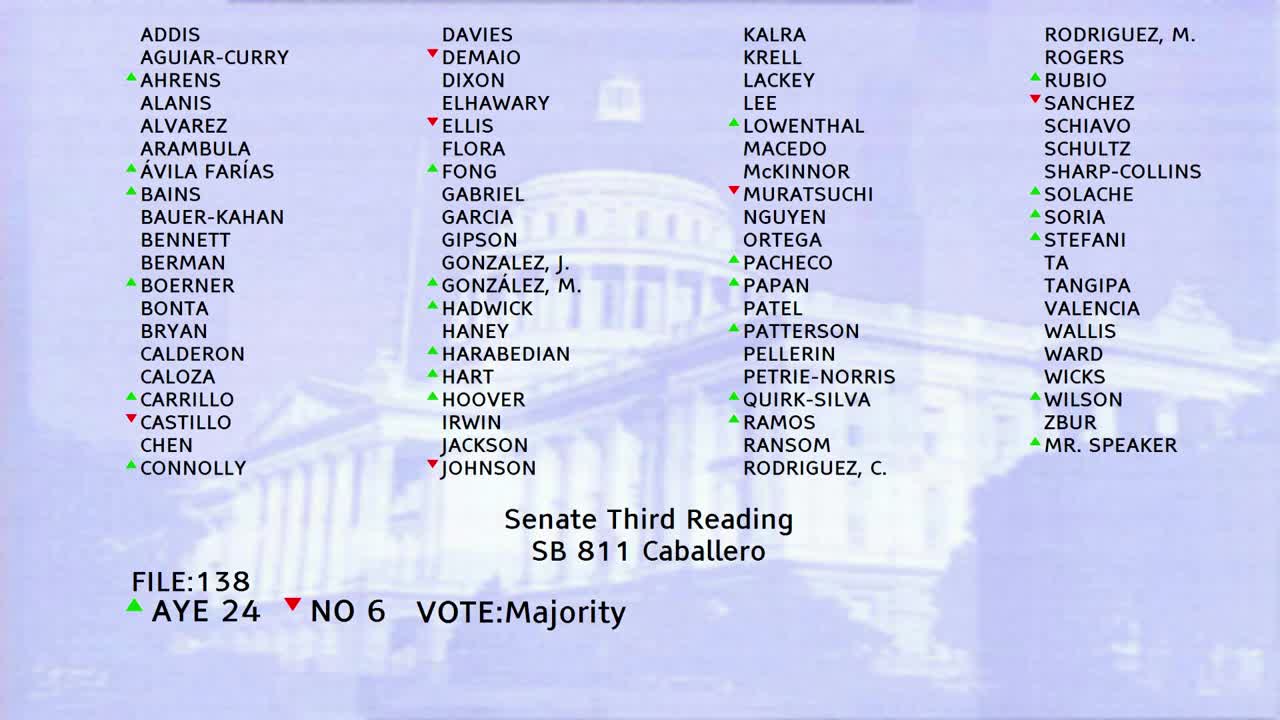
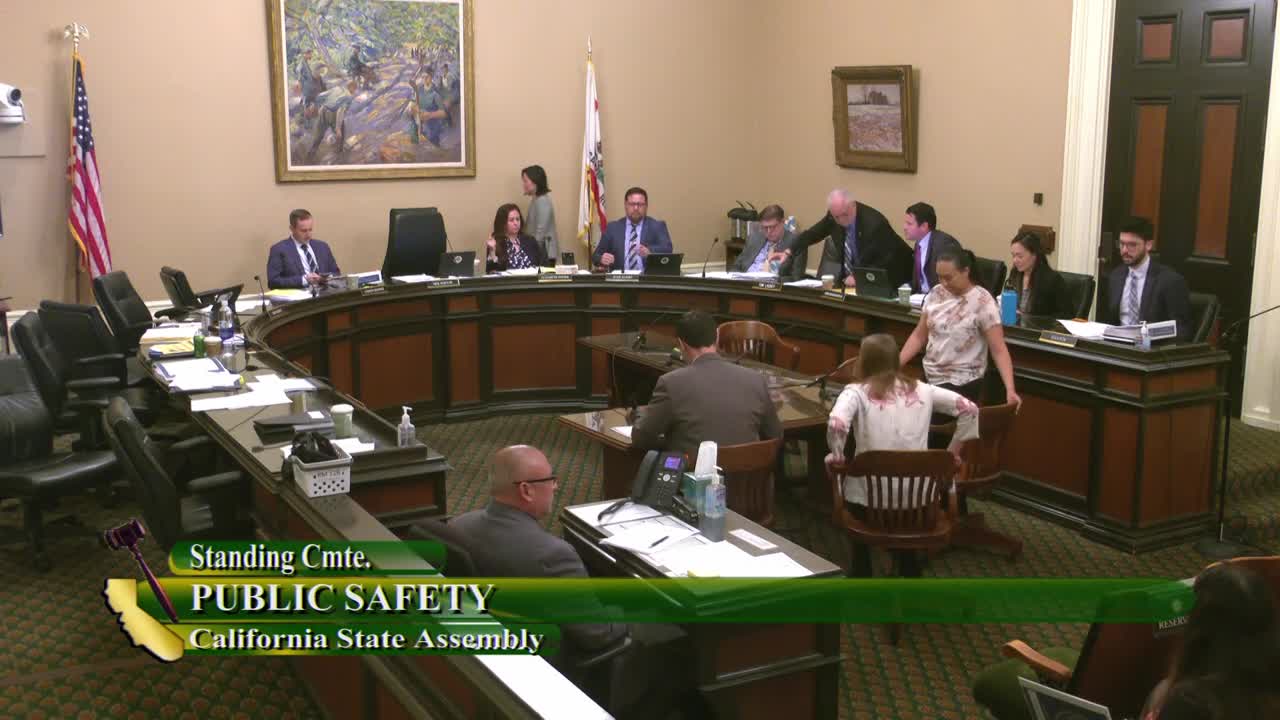
Bill Author

Bill Co-Author(s):