AB 794: California Safe Drinking Water Act: emergency regulations.
- Session Year: 2025-2026
- House: Assembly
- Latest Version Date: 2025-04-10
Current Status:
Failed
(2026-02-02: Died on inactive file.)
Introduced
In Committee
Awaiting First Chamber Vote
Passed First Chamber
In Committee
Awaiting Second Chamber Vote
Passed Second Chamber
Enacted
Existing law, the California Safe Drinking Water Act (state act), requires the State Water Resources Control Board to administer provisions relating to the regulation of drinking water to protect public health. The state boards duties include, but are not limited to, enforcing the federal Safe Drinking Water Act (federal act) and adopting and enforcing regulations. Existing law authorizes the state board to adopt as an emergency regulation, a regulation that is not more stringent than, and is not materially different in substance and effect than, the requirements of a regulation promulgated under the federal act, with a specified exception.
This bill would provide that the authority of the state board to adopt an emergency regulation pursuant to these provisions includes the authority to adopt requirements of a specified federal regulation that was in effect on January 19, 2025, regardless of whether the requirements were repealed or amended to be less stringent. The bill would prohibit an emergency regulation adopted pursuant to these provisions from implementing less stringent drinking water standards, as provided, and would authorize the regulation to include monitoring requirements that are more stringent than the requirements of the federal regulation. The bill would prohibit maximum contaminant levels and compliance dates for maximum contaminant levels adopted as part of an emergency regulation from being more stringent than the maximum contaminant levels and compliance dates of a regulation promulgated pursuant to the federal act. The bill would require, on or before January 1, December 31, 2026, the state board to adopt an emergency regulation and to initiate a primary drinking water standard for perfluoroalkyl and polyfluoroalkyl substances, as provided. The bill would make other changes to proceedings initiated upon the adoption of an emergency regulation to establish a public health goal and primary drinking water standards, as specified.
Existing law, the California Safe Drinking Water Act (state act), requires the State Water Resources Control Board to administer provisions relating to the regulation of drinking water to protect public health. The state boards duties include, but are not limited to, enforcing the federal Safe Drinking Water Act (federal act) and adopting and enforcing regulations. Existing law authorizes the state board to adopt as an emergency regulation, a regulation that is not more stringent than, and is not materially different in substance and effect than, the requirements of a regulation promulgated under the federal act, with a specified exception.
This bill would provide that the authority of the state board to adopt an emergency regulation pursuant to these provisions includes the authority to adopt requirements of a specified federal regulation that was in effect on January 19, 2025, regardless of whether the requirements were repealed or amended to be less stringent. The bill would prohibit an emergency regulation adopted pursuant to these provisions from implementing less stringent drinking water standards, as provided, and would authorize the regulation to include requirements that are more stringent than the requirements of the federal regulation. The bill would require, on or before January 1, 2026, the state board to adopt an emergency regulation and to initiate a primary drinking water standard for perfluoroalkyl and polyfluoroalkyl substances, as provided. The bill would make other changes to proceedings initiated upon the adoption of an emergency regulation to establish a public health goal and primary drinking water standards, as specified.
(a)The state board may adopt as an emergency regulation, regulation a regulation that is not more stringent than, and is not materially different in substance and effect than, than the requirements of a regulation promulgated pursuant to the federal Safe Drinking Water Act (42 U.S.C. Sec. 300f et seq.).
(b)The authority of the state board to adopt an emergency regulation under this section includes the authority to adopt requirements of a federal regulation promulgated pursuant to the federal Safe Drinking Water Act that is in effect when the state board adopts the emergency regulation and authority to adopt requirements of a federal regulation that was in effect on January 19, 2025, regardless of whether the requirements were repealed or amended to be less stringent.
(c)An emergency regulation adopted pursuant to this section shall not implement less stringent drinking water standards than the requirements of a federal regulation that was in effect on January 19, 2025, and may include 2025. Maximum contaminant levels and compliance dates for those maximum contaminant levels adopted as part of an emergency regulation shall not be more stringent than the maximum contaminant levels and compliance dates of a regulation promulgated pursuant to the federal Safe Drinking Water Act. The emergency regulation may include monitoring requirements that are more stringent than the requirements of the federal regulation to the extent those more stringent requirements are not materially different in substance and effect from the requirements of this chapter or regulations implementing this chapter.
(d)The adoption of a regulation pursuant to this section is an emergency and shall be considered by the Office of Administrative Law as necessary for the immediate preservation of the public peace, health, safety, and general welfare for purposes of Sections 11346.1 and 11349.6 of the Government Code. Notwithstanding Chapter 3.5 (commencing with Section 11340) of Part 1 of Division 3 of Title 2 of the Government Code, an emergency regulation adopted by the state board pursuant to this section is hereby exempted from the requirement that it to describe facts showing the need for immediate action and is not subject to review by the Office of Administrative Law and shall remain in effect until revised by the state board or the implementation of a primary drinking water standard.
(e)The adoption of an emergency regulation pursuant to this section is a Class 8 action, within the meaning of Section 15308 of Title 14 of the California Code of Regulations.
(f)Upon the adoption of an emergency regulation pursuant to subdivision (b), the Office of Environmental Health Hazard Assessment shall initiate proceedings to establish a public health goal pursuant to subdivision (c) of Section 116365 for any contaminant included in the emergency regulation that does not have a public health goal.
(g)Upon the adoption of an emergency regulation pursuant to subdivision (b), the state board shall initiate proceedings to establish primary drinking water standards pursuant to subdivision (a) of Section 116365 for all the contaminants included in the emergency regulation that have a public health goal pursuant to subdivision (c) of Section 116365. If a contaminant included in the emergency regulation does not have a public health goal, then the state board shall initiate proceedings to establish a primary drinking water standard as soon as a public health goal is established for the contaminant under paragraph (f).
(h)On or before January 1, December 31, 2026, the state board shall adopt an emergency regulation and shall initiate a primary drinking water standard for the perfluoroalkyl and polyfluoroalkyl substances covered by page 32532 in Number 82 of Volume 89 of the Federal Register in a manner that is consistent with this chapter. The timeline to comply with the emergency regulation shall align with the federal regulation cited above.
(a)The state board may adopt as an emergency regulation, a regulation that is not more stringent than, and is not materially different in substance and effect than, the requirements of a regulation promulgated pursuant to the federal Safe Drinking Water Act (42 U.S.C. Sec. 300f et seq.).
(b)The authority of the state board to adopt an emergency regulation under this section includes the authority to adopt requirements of a federal regulation promulgated pursuant to the federal Safe Drinking Water Act that is in effect when the state board adopts the emergency regulation and authority to adopt requirements of a federal regulation that was in effect on January 19, 2025, regardless of whether the requirements were repealed or amended to be less stringent.
(c)An emergency regulation adopted pursuant to this section shall not implement less stringent drinking water standards than the requirements of a federal regulation that was in effect on January 19, 2025, and may include requirements that are more stringent than the requirements of the federal regulation to the extent those more stringent requirements are not materially different in substance and effect from the requirements of this chapter or regulations implementing this chapter.
(d)The adoption of a regulation pursuant to this section is an emergency and shall be considered by the Office of Administrative Law as necessary for the immediate preservation of the public peace, health, safety, and general welfare for purposes of Sections 11346.1 and 11349.6 of the Government Code. Notwithstanding Chapter 3.5 (commencing with Section 11340) of Part 1 of Division 3 of Title 2 of the Government Code, an emergency regulation adopted by the state board pursuant to this section is hereby exempted from the requirement that it describe facts showing the need for immediate action and is not subject to review by the Office of Administrative Law and shall remain in effect until revised by the state board or the implementation of a primary drinking water standard.
(e)The adoption of an emergency regulation pursuant to this section is a Class 8 action, within the meaning of Section 15308 of Title 14 of the California Code of Regulations.
(f)Upon the adoption of an emergency regulation pursuant to subdivision (b), the Office of Environmental Health Hazard Assessment shall initiate proceedings to establish a public health goal pursuant to subdivision (c) of Section 116365 for any contaminant included in the emergency regulation that does not have a public health goal.
(g)Upon the adoption of an emergency regulation pursuant to subdivision (b), the state board shall initiate proceedings to establish primary drinking water standards pursuant to subdivision (a) of Section 116365 for all the contaminants included in the emergency regulation that have a public health goal pursuant to subdivision (c) of Section 116365. If a contaminant included in the emergency regulation does not have a public health goal, then the state board shall initiate proceedings to establish a primary drinking water standard as soon as a public health goal is established for the contaminant under paragraph (f).
(h)On or before January 1, 2026, the state board shall adopt an emergency regulation and shall initiate a primary drinking water standard for the perfluoroalkyl and polyfluoroalkyl substances covered by page 32532 in Number 82 of Volume 89 of the Federal Register in a manner that is consistent with this chapter.
|
Date
|
Status
|
|---|---|
| Feb 2, 2026 | Died on inactive file. |
| Jun 12, 2025 | Ordered to inactive file at the request of Assembly Member Gabriel. |
| May 27, 2025 | Read second time. Ordered to third reading. |
| May 23, 2025 | From committee: Do pass. (Ayes 11. Noes 3.) (May 23). |
| Apr 23, 2025 | In committee: Set, first hearing. Referred to suspense file. |
| Apr 21, 2025 | Re-referred to Com. on APPR. |
| Apr 10, 2025 | Read second time and amended. |
| Apr 9, 2025 | From committee: Amend, and do pass as amended and re-refer to Com. on APPR. (Ayes 5. Noes 2.) (April 8). |
| Mar 3, 2025 | Referred to Com. on E.S & T.M. |
| Feb 19, 2025 | From printer. May be heard in committee March 21. |
| Feb 18, 2025 | Read first time. To print. |
|
Date
|
Description
|
Location
|
Votes
|
|
|---|---|---|---|---|
| May 23, 2025 | Do pass. | Assembly Standing Committee on Appropriations |
Passed |
|
| Apr 8, 2025 | Do pass as amended and be re-referred to the Committee on [Appropriations] | Assembly Standing Committee on Environmental Safety and Toxic Materials |
Passed |
This list shows positions taken on this bill by organizations on the date displayed, which is linked to the original source.
Positions by individuals are not included.
ASSEMBLY THIRD READING
ATR Bill Id:AB 794
Author:(Gabriel)
As Amended Ver:April 10, 2025
Majority vote
SUMMARY
Requires, on or before January 1, 2026, the State Water Resources Control Board (State Water Board) to adopt an emergency regulation and initiate a primary drinking water standard for the perfluoroalkyl and polyfluoroalkyl substances (PFAS) covered by a specified page number and volume of the Federal Register in a manner that is consistent with existing law.
Major Provisions
N/A
COMMENTS
Human right to water: Through enactment of AB 685 (Eng), Chapter 524, Statutes of 2012, California became the first state with a Human Right to Water law. AB 685 establishes a state policy that every human being has the right to safe, clean, affordable, and accessible water adequate for human consumption, cooking, and sanitation. Water supply issues; contaminants; costs of treatment and distribution systems; climate change; the number and nature of small public water systems, especially in disadvantaged communities; and many other factors continue to challenge progress in implementing the Human Right to Water.
Perfluoroalkyl and polyfluoroalkyl substances (PFAS): PFAS are synthetic, highly fluorinated substances that have been widely used in industrial and consumer applications for their heat, water, and lipid resistance properties for more than seven decades. In consumer products, PFAS are used in carpets, furniture fabrics, apparel, paper packaging for food, non-stick cookware, personal care products, and other products designed to be waterproof; grease, heat, water and stain resistant; or, non-stick. Commercial applications span many sectors of the economy, including aerospace, automotive, building and construction, pharmaceuticals, medical devices, paints, electronics, semiconductors, energy, oil and gas exploration, first responder safety, firefighting foams, and health care. During production, use, and disposal, PFAS can migrate into the soil, water, and air. Some PFAS are volatile, and can be carried long distances through the air, leading to contamination of soils and groundwater far from the emission source. Researchers have found PFAS in indoor and outdoor environments, plants, soil, food, drinking water, wildlife, companion animals, production animals, and humans at locations across the nation and around the globe. PFAS are extremely persistent and degrade very slowly over time, which has resulted in their accumulation in the environment since the onset of their production in the late 1940s. Currently, nearly 15,000 PFAS chemicals are included in the chemicals database CompTox, which is maintained by the United States Environmental Protection Agency (US EPA).
Exposure to PFAS: The main route of exposure to PFAS is through ingestion of contaminated food or liquid (accounting for up to half of total exposure), contact with consumer products, and inhalation and ingestion of contaminated indoor air and dust. Food can become contaminated with PFAS through soil and water used to grow the food, food packaging containing PFAS, and equipment that uses PFAS during processing. Some foods, such as fish, meat, eggs, and leafy vegetables, may contain PFAS due to bioaccumulation and crop uptake. Studies have shown that PFAS can transfer from pregnant mothers to their fetuses via the placenta during gestation, as well from nursing mothers to their infants via breastfeeding. Dermal exposure is also possible when people touch products treated with PFAS, such as carpets or clothing. Young children may be exposed to higher levels of PFAS than adults because they ingest more dust containing PFAS and mouth PFAS-treated consumer products. Workers, such as carpet installers, carpet cleaners, firefighters, and workers in furniture, furnishings, outdoor clothing, and carpet stores, may also experience above average PFAS exposure levels.
Exposure to PFAS in drinking water is an escalating concern due to the persistence of PFAS chemicals in the environment and their tendency to accumulate in groundwater. Groundwater PFAS contamination typically has been associated with industrial facilities where these chemicals were manufactured or are used in other products, and in airfields where the chemicals have been used for firefighting. PFAS chemicals can also enter the environment and drinking water through composting, landfilling, recycling, and incineration of products containing PFAS. The State Water Board indicates that the four major sources of PFAS in drinking water in California are fire training/fire response sites, industrial sites, landfills, and wastewater treatment plants/biosolids. The State Water Board notes that because of their presence and persistence in many drinking water supplies, PFAS remain a serious source of exposure decades after their release into the environment.
California’s general approach to regulating water quality: In California, the state manages contaminants with negative health implications using a regulatory process that typically begins with the development of a public health goal (PHG) and ends with the establishment, implementation, and enforcement of a primary maximum contaminant level (MCL). A PHG is the concentration of a contaminant in drinking water that is estimated to pose no significant health risk to individuals consuming the water on a daily basis over a lifetime. The Office of Environmental Health Hazard Assessment (OEHHA) scientists perform extensive reviews of the available literature on a drinking water contaminant to set PHGs based on the most sensitive health effects. The final PHG values then serve as guideposts to the State Water Board in setting a primary MCL. A drinking water contaminant’s MCL must be established at a level as close to its PHG as is technologically and economically feasible. While primary MCLs place emphasis on public health, they must also account for factors such as detectability, treatability, and cost of treatment. Once the State Water Board establishes an MCL through the regulatory process, public water systems must meet it within the prescribed compliance period, though the State Water Board is not required to provide such a compliance period upon adoption of an MCL.
Recently adopted federal MCLs for PFAS compounds: On April 10, 2024, the US EPA announced its final "National Primary Drinking Water Regulation" for six PFAS, establishing legally enforceable MCLs. The PFAS compounds that are now subject to regulation as drinking water contaminants under the US EPA's MCLs are PFOA, PFOS, PFHxS, PFNA, and HFPO-DA (commonly known as GenX). The regulation will require public water systems to monitor for these PFAS, notify the public of the levels of these PFAS, and reduce the levels of these PFAS in drinking water if they exceed the standards.
The timeline for rule implementation provided by US EPA is as follows:
- Within three years of rule promulgation (2024 - 2027):
- Initial monitoring must be complete
- Starting three years following rule promulgation (2027 - 2029):
- Results of initial monitoring must be included in Consumer Confidence Reports (i.e., Annual Water Quality Report)
- Regular monitoring for compliance must begin, and results of compliance monitoring must be included in Consumer Confidence Reports
- Public notification for monitoring and testing violations
- Starting five years following rule promulgation (starting 2029):
- Comply with all MCLs
- Public notification for MCL violations
On April 5, 2024, OEHHA adopted PHGs for two PFAS: PFOA and PFOS. As of the writing of this analysis, the State Water Board had not yet initiated a regulatory process to develop MCLs based on these PHGs.
The policy question: Should the legislature grant the State Water Board authority to adopt drinking water standards through emergency regulation authority? Existing law, AB 1531 (ESTM) Committee, Chapter 673, Statues of 2015, authorizes the State Water Board to adopt an emergency regulation that is not more stringent than the requirements of a federal regulation under the federal Safe Drinking Water Act, except for a regulation that establishes an MCL for primary or secondary drinking water standards.
This bill: This bill requires the State Water Board to adopt, via an emergency regulation, the federal drinking water standard for PFAS that the US EPA adopted in 2024.
A delay in PFAS regulation in drinking water: If this bill were not enacted and the federal PFAS MCLs were delayed, weakened, or altogether removed by the federal Administration, movement towards regulating these PFAS chemicals, at levels at least as stringent as the current federal standards, would require the state to take action via its own regulatory process. As described above, OEHHA would need to complete PHGs, followed by the adoption of MCLs by the State Water Board. Of the six PFAS compounds regulated under the federal MCLs, OEHHA has only adopted PHGs for two of them. The State Water Board could move ahead with MCLs for these two PFAS compounds, a process that could take at least a year or two. For the other four PFAS compounds currently covered under the federal MCLs, OEHHA would need to begin and complete PHGs, at which point the State Water Board could then adopt MCLs. In sum, should the federal MCLs "disappear," it could be years before there are state MCLs on all six of these PFAS. In the meantime, the well-documented negative human health and environmental impacts of PFAS—which the Legislature has worked to address through multiple enacted laws banning or restricting PFAS in various consumer products—will likely continue to compound.
According to the Author
"Californians shouldn’t have to worry that their drinking water has been contaminated by toxic forever chemicals linked to deadly cancers and other serious health harms. Parents shouldn’t have to worry that the water coming out of the tap will harm them or their kids. Californians deserve to feel confident that their drinking water is free from toxic chemicals."
Arguments in Support
According to a coalition of environmental, public health, and community based organizations,
"The diverse organizations signed onto this letter deeply understand that clean, safe drinking water is both necessary to life and a human right. For that reason, we are pleased to express our strong support for AB 794 (Gabriel), which will ensure that Californians are protected from dangerous per- and polyfluoroalkyl substances (PFAS) in their drinking water regardless of actions or policy changes at the federal level. Specifically the bill directs the State Water Resources Control Board (SWRCB) to adopt on or before January 1, 2026, emergency regulations for PFAS in drinking water that mirror the federal regulations in place on January 19, 2025. The bill then directs the SWRCB and Office of Environmental Health Hazard Assessment (OEHHA) to ensure that PFAS are ultimately reviewed with state public health assessments and regulated in drinking water at the most protective level possible.
AB 794’s purpose is to protect Californians from PFAS given the assaults on environmental regulations at the federal level. The U.S. Environmental Protection Agency (EPA) has determined that there are no safe levels of PFOA and PFOS in drinking water (two of the most common PFAS found in water) and that other PFAS health levels are extremely low at 10 parts per trillion (ppt). As a result, EPA set enforceable federal limits, known as maximum contaminant levels (MCLs), for six PFAS in drinking water in 2024 which reflect the significant danger these chemicals pose to the public. This is good news because unlike eleven other states California has yet to regulate these chemicals in drinking water despite rigorous monitoring and study."
Arguments in Opposition
According to the California Municipal Utilities Association,
"AB 794 seeks to strike an important limitation in Health and Safety Code section 11635.03 which specifically states that regulations that establish a maximum contaminant level (MCL) are not to be adopted through emergency regulation authority. That section is replaced by AB 794’s proposal to give the State Water Board authority to adopt federal regulations as state standards through emergency regulations regardless of whether those requirements were repealed or amended to be less stringent. This authority is not limited only to PFAS but is broadly applicable to any constituent with a federal standard. The bill also allows the emergency regulation to implement drinking water standards that are more stringent than the requirements of the federal regulation. The bill further states that emergency regulation authority in this section bypasses the Office of Administrative Law review and environmental review under the California Environmental Quality Act (CEQA). Lastly, the bill requires that the State Water Board adopt the emergency regulation and initiate a primary drinking water standard for PFAS by January 1, 2026."
FISCAL COMMENTS
According to the Assembly Appropriations Committee, enactment of this bill could lead to absorbable costs for the State Water Board to adopt emergency regulations and develop MCLs for PFAS, and approximately $196,000 for three years for OEHHA to implement the requirements of this bill.
VOTES
ASM ENVIRONMENTAL SAFETY AND TOXIC MATERIALS: 5-2-0
YES: Connolly, Hart, Lee, McKinnor, Papan
NO: Hadwick, Castillo
ASM APPROPRIATIONS: 11-3-1
YES: Wicks, Arambula, Calderon, Caloza, Elhawary, Fong, Mark González, Hart, Pacheco, Pellerin, Solache
NO: Dixon, Ta, Tangipa
ABS, ABST OR NV: Sanchez
UPDATED
VERSION: April 10, 2025
CONSULTANT: Josh Tooker / E.S. & T.M. / (916) 319-3965 FN: 0000498
Date of Hearing: April 23, 2025
ASSEMBLY COMMITTEE ON APPROPRIATIONS
Buffy Wicks, Chair
ABPCA Bill Id:AB 794
Author:(Gabriel) – As Amended Ver:April 10, 2025
Policy Committee: | Environmental Safety and Toxic Materials | Vote: | 5 - 2 |
|
| ||
|
|
Urgency: No State Mandated Local Program: No Reimbursable: No
SUMMARY:
This bill requires the State Water Resources Control Board (State Water Board), by January 1, 2026, to adopt an emergency regulation and initiate a primary drinking water standard for the perfluoroalkyl and polyfluoroalkyl substances (PFAS) covered by a specified federal regulation.
Specifically, this bill, among other things:
1) Authorizes the State Water Board to adopt as an emergency regulation, as defined, a regulation that is not materially different in substance and effect than the requirements of a regulation promulgated pursuant to the federal Safe Drinking Water Act (SDWA).
2) Provides that the authority of the State Water Board to adopt an emergency regulation under this bill includes the authority to adopt requirements of a federal regulation promulgated pursuant to the federal SDWA that is in effect when the State Water Board adopts the emergency regulation, and the authority to adopt requirements of a federal regulation that was in effect on January 19, 2025, regardless of whether the requirements were repealed or amended to be less stringent.
3) Provides that (a) an emergency regulation adopted pursuant to this bill shall not implement less stringent drinking water standards than the requirements of a federal regulation that was in effect on January 19, 2025, (b) maximum contaminant levels (MCLs) and compliance dates for those MCLs adopted as part of an emergency regulation shall not be more stringent than the MCL and compliance dates of a regulation promulgated pursuant to the federal SDWA, and (c) the emergency regulation may include monitoring requirements that are more stringent than the requirements of the federal regulation to the extent those more stringent requirements are not materially different in substance and effect from the requirements of existing state law or regulations.
5) Requires the Office of Environmental Health Hazard Assessment (OEHHA), upon the adoption of an emergency regulation pursuant to this bill, to initiate proceedings to establish a public health goal (PHG) for any contaminant included in the emergency regulation that does not have a PHG.
6) Requires the State Water Board (a), upon the adoption of an emergency regulation pursuant to this bill, to initiate proceedings to establish primary drinking water standards for each of the contaminants included in the emergency regulation that has a PHG, and (b) if a contaminant included in the emergency regulation does not have a PHG, to initiate proceedings to establish a primary drinking water standard as soon as OEHHA establishes a PHG for the contaminant.
7) Requires, by January 1, 2026, the State Water Board to adopt an emergency regulation and initiate a primary drinking water standard for PFAS covered by page 32532 in Number 82 of Volume 89 of the Federal Register in a manner that is consistent with existing law. Provides that the timeline to comply with the emergency regulation must align with the federal regulation.
FISCAL EFFECT:
1) The State Water Board will likely incur costs to adopt emergency regulations and develop MCLs for PFAS (Safe Drinking Water Account). However, the board contends these costs are absorbable. The board has regulatory development staff who most recently worked on developing an MCL for hexavalent chromium who can implement the requirements of this bill. The State Water Board further notes that the process for developing emergency regulations is shorter and less complex than the standard rulemaking process, in part, because of the exemption from the provisions of the California Environmental Quality Act. Finally, the board reports it has already identified the development of MCLs for PFAS as a priority and has the necessary resources in place to perform this work.
2) OEHHA will incur General Fund costs in the hundreds of thousands of dollars annually for the duration of the development of the required PHGs. OEHHA estimates General Fund costs of at least $196,000 annually for one limited-term position for at least three years to implement the requirements of the bill, with the potential for increased workload depending on the number of PFAS chemical compounds it would need to assess to develop the PHGs. It took OEHHA four years to develop PHGs for PFOA and PFOS at a cost of approximately $462,000 annually (for 2.25 positions).
3) The Department of Justice (DOJ) anticipates costs of an unknown but potentially significant amount (Legal Services Revolving Fund). DOJ’s Natural Resources Law Section anticipates increased referrals from its client, the State Water Board, relating to client representation and litigation arising from this bill.
COMMENTS:
1) Purpose. According to the author:
Californians shouldn’t have to worry that their drinking water has been contaminated by toxic forever chemicals linked to deadly cancers and other serious health harms. Parents shouldn’t have to worry that the water coming out of the tap will harm them or their kids. Californians deserve to feel confident that their drinking water is free from toxic chemicals.
2) Background. PFAS are a ubiquitous class of more than 9,000 synthetic chemicals that are linked to a variety of health harms, such as cancer, endocrine disruption, developmental and reproductive toxicity, and immune dysregulation. These chemicals are harmful at extremely low doses; contaminate the air, soil, drinking water, plants, and wildlife during production, use and, disposal; and are extremely persistent in the environment. Water testing required by the State Water Board has found that 138 water systems serving 11.8 million Californians have PFAS levels exceeding current federal limits.
On April 10, 2024, the U.S. Environmental Protection Agency (U.S. EPA) announced its final "National Primary Drinking Water Regulation" for six PFAS, establishing legally enforceable MCLs. The regulation requires public water systems to monitor for these PFAS, notify the public of the levels of these PFAS, and reduce the levels of these PFAS in drinking water if they exceed the standards. On April 5, 2024, OEHHA adopted PHGs for two PFAS: PFOA and PFOS. As of the writing of this analysis, the State Water Board had not yet initiated a regulatory process to develop MCLs based on these PHGs.
Supporters of this bill contend that under the federal rules, the state may establish standards more protective than those established by U.S. EPA, but that this is a lengthy process, “and the process to protect Californians from PFAS exposure in drinking water could be delayed even further if the new Administration weakens or rescinds the federal MCLs.” The coalition argues that “in addition to the anti-regulation culture now prevalent in Washington, lawsuits to overturn the MCLs have been filed by associations representing the chemical and manufacturing industries and some water providers, putting those federal limits at risk.” To preempt this scenario, this bill directs the State Water Board to – in the short-term – adopt emergency regulations for PFAS in drinking water that mirror the federal regulations in place on January 19, 2025. The bill then directs the State Water Board and OEHHA “to ensure that PFAS are ultimately reviewed with state public health assessments and regulated in drinking water at the most protective level possible.”
Several organizations have oppose and oppose-unless-amended positions on the bill. For example, the California Municipal Utilities Association and Community Water Systems Alliance contend that the water providers these organizations represent have invested millions of dollars in PFAS treatment, demonstrating significant investment in meeting the recently adopted federal PFAS drinking water standards. The groups write:
Establishing authority for the State Water Board to adopt emergency regulations for MCLs would set an extremely troubling precedent. MCLs are complex and need sufficient science, data, and resources to be properly set. The State Water Board is also required to analyze feasibility and economic impacts when setting MCLs. Further, there is an embedded public process when primary drinking water standards are adopted through regulatory authority. Due process is diminished by the emergency regulation process.
Analysis Prepared by: Nikita Koraddi / APPR. / (916) 319-2081
Discussed in Hearing
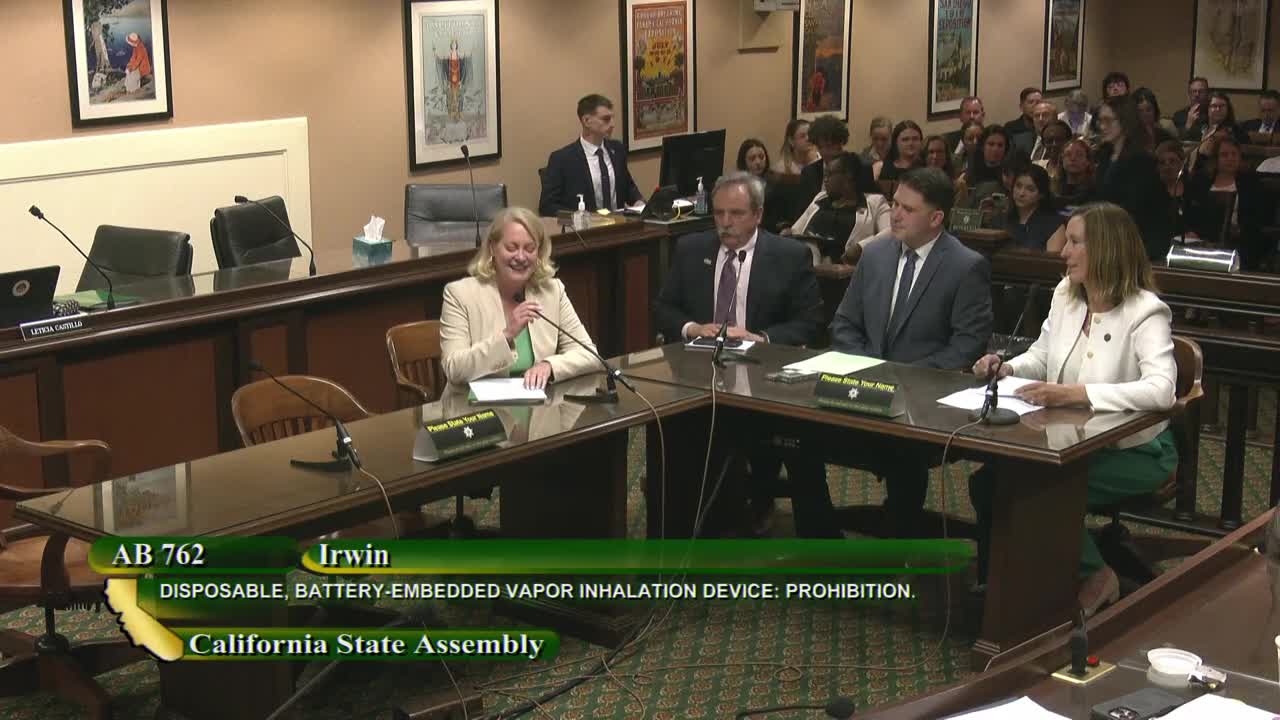 30MIN
Assembly Standing Committee on Environmental Safety and Toxic Materials
Bill Author

Bill Co-Author(s):