AB 81: Veterans: mental health.
- Session Year: 2025-2026
- House: Assembly
- Latest Version Date: 2025-09-08
Current Status:
Failed
(2026-01-22: Consideration of Governor's veto stricken from file.)
Introduced
In Committee
Awaiting First Chamber Vote
Passed First Chamber
In Committee
Awaiting Second Chamber Vote
Passed Second Chamber
Enacted
What does this bill do?
The bill requires the California Department of Veterans Affairs to fund an academic study of mental health among women veterans in California. The study must examine demographics, stressors and risk factors, treatments and barriers to care, suicide rates, and other relevant information, and the department must report the findings and recommendations to the Legislature.
The summary is provided by generative AI which can make mistakes. For original language, please view the details in the table below.
Existing law establishes the Department of Veterans Affairs. The department, among other services, provides veterans and their dependents and survivors with assistance in processing service-related disability claims, assistance in obtaining affordable housing, and information about health ailments associated with military service.
This bill would require the department to establish a program to fund, upon appropriation by the Legislature, an academic study of mental health among women veterans in California, as specified. The bill would require the department to submit a report that summarizes the findings and recommendations of the study to the Legislature no later than June 30, 2029. The bill would repeal these provisions on January 1, 2030.
(a)Upon appropriation by the Legislature, the department shall establish a program to fund an academic study of mental health among women veterans in California, to include demographics and an analysis of the stressors, risk factors, treatment modalities, barriers to access, suicide rate, and other information deemed relevant.
(b)The department shall prepare and submit a report to the Legislature, no later than June 30, 2029, that summarizes the findings and recommendations of the study pursuant to subdivision (a). The report shall be submitted in compliance with Section 9795 of the Government Code.
(c)This section shall remain in effect only until January 1, 2030, and as of that date is repealed.
REVISIONS: HeadingLine 2.|
Date
|
Status
|
|---|---|
| Jan 22, 2026 | Consideration of Governor's veto stricken from file. |
| Oct 11, 2025 | Consideration of Governor's veto pending. |
| Oct 11, 2025 | Vetoed by Governor. |
| Sep 11, 2025 | Enrolled and presented to the Governor at 4 p.m. |
| Sep 4, 2025 | In Assembly. Ordered to Engrossing and Enrolling. |
| Sep 4, 2025 | Read third time. Passed. Ordered to the Assembly. (Ayes 39. Noes 0. Page 2520.). |
| Sep 2, 2025 | Ordered to special consent calendar. |
| Aug 29, 2025 | Read second time. Ordered to third reading. |
| Aug 29, 2025 | From committee: Do pass. (Ayes 7. Noes 0.) (August 29). |
| Aug 18, 2025 | In committee: Referred to suspense file. |
| Jul 15, 2025 | From committee: Do pass and re-refer to Com. on APPR. with recommendation: To Consent Calendar. (Ayes 5. Noes 0.) (July 14). Re-referred to Com. on APPR. |
| Jun 18, 2025 | Referred to Com. on M. & V.A. |
| Jun 5, 2025 | In Senate. Read first time. To Com. on RLS. for assignment. |
| Jun 4, 2025 | Read third time. Passed. Ordered to the Senate. (Ayes 78. Noes 0. Page 2054.) |
| May 27, 2025 | Read second time. Ordered to third reading. |
| May 23, 2025 | From committee: Do pass. (Ayes 14. Noes 0.) (May 23). |
| Apr 23, 2025 | In committee: Set, first hearing. Referred to suspense file. |
| Apr 9, 2025 | From committee: Do pass and re-refer to Com. on APPR. (Ayes 7. Noes 0.) (April 8). Re-referred to Com. on APPR. |
| Apr 9, 2025 | Coauthors revised. |
| Feb 3, 2025 | Referred to Com. on M. & V.A. |
| Jan 6, 2025 | Read first time. |
| Dec 20, 2024 | From printer. May be heard in committee January 19. |
| Dec 19, 2024 | Introduced. To print. |
|
Date
|
Description
|
Location
|
Votes
|
|
|---|---|---|---|---|
| Sep 4, 2025 | Special Consent AB81 Ta et al. By Grove | Senate Floor |
Passed |
|
| Aug 29, 2025 | Do pass | Senate Standing Committee on Appropriations |
Passed |
|
| Aug 18, 2025 | Placed on suspense file | Senate Standing Committee on Appropriations |
Passed |
|
| Jul 14, 2025 | Do pass, but first be re-referred to the Committee on [Appropriations] with the recommendation: To Consent Calendar | Senate Standing Committee on Military and Veterans Affairs |
Passed |
|
| Jun 4, 2025 | AB 81 Ta Assembly Third Reading | Assembly Floor |
Passed |
|
| May 23, 2025 | Do pass. | Assembly Standing Committee on Appropriations |
Passed |
|
| Apr 8, 2025 | Do pass and be re-referred to the Committee on [Appropriations] | Assembly Standing Committee on Military and Veterans Affairs |
Passed |
This list shows positions taken on this bill by organizations on the date displayed, which is linked to the original source.
Positions by individuals are not included.
|
Organization
|
Position
|
Date
|
|---|---|---|
| American Legion-Department of California | ** Support | |
| AMVETS Department of California | ** Support | |
| California Association Of County Veterans Service Officers | ** Support | |
| California State Commanders State Council | ** Support | |
| County of Orange | ** Support | |
| Military Officers Association of America-California Council of Chapters | ** Support | |
| San Diego Regional Chamber Of Commerce | ** Support | |
| Vietnam Veterans of America-California State Council | ** Support |
GOVERNOR′S VETO
GV Bill Id:AB 81
Author:(Ta)
As Enrolled Ver:September 8, 2025
2/3 vote
SUMMARY
Would have required the California Department of Veterans Affairs (CalVet) to establish a program to fund, upon appropriation of the Legislature, an academic study of mental health among women veterans in California, and to submit a report to the Legislature no later than July 31, 2029.
Governor′s Veto Message
This bill would require the California Department of Veterans Affairs to establish a program to fund an academic study of mental health among women veterans in California and, by June 30, 2029, submit a report to the Legislature summarizing the findings and recommendations.
I support the author′s goal of furthering research into the mental health of women veterans in our state, but this bill would lead to significant fiscal costs outside of the budget. When I vetoed a similar measure last year, I encouraged the author to secure funding for this measure within the annual budget process.
In partnership with the Legislature this year, my Administration has enacted a balanced budget that recognizes the challenging fiscal landscape our state faces while maintaining our commitment to working families and our most vulnerable communities. With significant fiscal pressures and the federal government′s hostile economic policies, it is vital that we remain disciplined when considering bills with significant fiscal implications that are not included in the budget, such as this measure.
COMMENTS
According to the U.S. Department of Veterans Affairs (VA), as of fiscal year (FY) 2023, approximately 155,620 women veterans lived in California. The number of women serving in the military has grown. As more women transition from service member to veteran, the proportion of women veterans also increases. Between FYs 2000 and 2023, the percentage of women veterans rose from 6.3% to 11.3% of the total veteran population in the U.S. The VA projects that by 2043, women will make up 17.2% of all living veterans. Currently, women make up about 30% of all new VA patients.
- Women Veteran Population. When the draft ended in 1973, women represented just 2% of the enlisted forces and 8% of the officer corps. Today, those numbers are 17.7% and 19%, respectively, a significant increase over the past half century. According to the Department of Defense′s 2023 Demographics Report, the percentage of women serving in uniform has increased slightly from 17.5% in 2022 to 17.7% in 2023. In 2023, women comprised 17.7% of the active-duty force, totaling 225,119 members; and 21.9% of the National Guard and reserves at 167,762 members. The year before, women comprised 17.3% of the active-duty force and 21.4% of the Guard and reserve. Women who served in the U.S. Armed Forces have unique needs. They are more likely to be primary caregivers for spouses, children, and parents and more likely to have gender specific health needs. They are younger and more diverse than their male counterparts.
Women veterans experience additional barriers to receiving and utilizing benefits and services. In California, many women do not self-identify as veterans and thus do not utilize benefits or participate in veterans′ events, comprising only 5% of the customer population served by County Veteran Services Offices in 2013, according to CalVet, despite making up 11% of the overall population of California veterans. Additionally, women veterans have higher rates of physical/mental health problems, such as Military Sexual Trauma (MST), alcohol abuse, and drug abuse, than male veterans. They are more likely to die by suicide.
- 2024 CalVet Women Veterans Survey. On January 23, 2024, CalVet, the California Research Bureau, and the VetFund Foundation launched a women veterans survey (survey). The survey closed on June 11, 2024, with 3,822 individuals responding, of which 2,716 were qualified responses after removing those who did not identify as women or had no branch of service. Over one-third of respondents reported mixed experiences with specific Veterans Health Administration (VHA) hospitals or clinics, vet centers, and overall medical care. The second most common theme, mentioned by roughly a quarter of respondents, was the support they received or the ongoing need for assistance securing specific benefits. Respondents reported challenges navigating the VA system, including difficulties in filing disability claims, finding competent mental health providers, or locating knowledgeable advocates. The main points highlighted were the importance of effective outreach to recognize women veterans, addressing the stigma linked to benefits access, and enhancing training for staff on the specific medical and behavioral health needs of women veterans to encourage them to engage more with available services. Among the women veterans surveyed, more than 50% reported having mental and physical service-connected disabling conditions that affect their quality of life, increased reporting of adverse health conditions across the board, and 10% of respondents self-reported experiencing suicidal ideation. A total of 32.3% reported experiencing homelessness or housing instability at some point in their life, 11% reported feeling ignored or having a poor experience when seeking assistance, and only 13% reported receiving assistance from either veteran or civilian community-based organizations. When asked if they had symptoms and/or a diagnosis of mental health issues, 69.8% responded yes, 25.6% answered no, and 4.6% were unsure. When asked what their mental health issues related to, the responses were: 63.9% sexual assault during service; 63.5% combat-related events, 52% noncombat-related events, 28.1% physical assault during service, 16.5% other service-related events, and 34.7% nonservice-related events. Most respondents link their behavioral health issues to their service experience and more than one cause. A total of 51.7% reported experiencing sexual assault during their service, 65.5% did not seek treatment for their experiences, and 68.3% of respondents did not report their sexual assault experiences. Only 4.2% who reported the incident expressed satisfaction with the resolution, and 27.5% reported the sexual assault but found the resolution unsatisfactory. Many respondents reported that one or multiple incidents have resulted in lifelong trauma, often manifesting as Post-Traumatic Stress Disorder (PTSD), and the majority of those who reported the incident experienced retaliation, up to and including physical violence and being discharged from the military.
- Women Veteran Suicide. VA researchers found the rate of suicide to be higher among women who reported having experienced MST, sexual assault, or sexual harassment during military service than among those who did not report experiencing MST. Between 2005 and 2015, women Veterans ages 35-54 had higher suicide rates than those in other age groups. After adjusting for age differences, the suicide rate among women veterans in 2015 was 2.0 times higher than the rate among non-veteran women. According to the 2024 National Veteran Suicide Prevention Annual Report, in 2022, there were 271 suicides among female Veterans (80 fewer than in 2021). From 2001 to 2022, age-adjusted suicide rates rose 24% for female veterans with recent VHA use and 55.2% for female veterans without recent VHA use. Among female recent veteran VHA users in 2022, the suicide rate was 75% higher for those with positive screens for MST than for those with negative screens.
- Unique Challenges for Women Veterans. Women soldiers face challenges that routinely place them at risk for victimization and isolation while deployed. Additionally, reintegrating into civilian communities is particularly challenging for female veterans, as they frequently encounter services that are predominantly designed for men due to historical and societal factors. Although women have served in the U.S. military since the Revolutionary War, it wasn′t until 1988 that the VA began offering female veterans medical and mental health services. Women veterans frequently feel invisible in the civilian world, with their contributions and experiences often overlooked or underappreciated. Women comprise the fastest-growing population in both the military and the veteran community. While they are consistently and impressively breaking down barriers, women veterans still experience unique challenges and gaps in transition, care, and employment, particularly during their transition to civilian life and employment. Women′s achievements are being erased from government websites, photos, and history, which many feel is diminishing their historical significance. Women veterans from the Civil War, World War II, the Korean War, and the Vietnam War are not exempt from the Defense Department′s sweep of diversity, equity, and inclusion (DEI) efforts within the U.S. military. Recent reports indicate that Arlington National Cemetery has removed educational materials and content about the history of female service members from its website, effectively erasing their contributions and stories. Retired Chief Master Sgt. of the Air Force JoAnne Bass, who was the first woman to hold the highest enlisted rank in any U.S. military service, made a point on her social media pages. ″For some, this might seem like just a policy decision. For those of us who have fought, bled, and led in this uniform, it is personal,″ she wrote. ″When you strip away the recognition of those who have given so much, you send a clear message: Your service and sacrifice are appreciated, but not enough to be remembered.″
According to the Author
This bill provides a much-needed picture of the mental health challenges facing California′s women veterans. This bill directs CalVet to conduct an academic study of mental health among women veterans in California. This study would include an analysis of mental health stressors, risk factors, suicide rates, treatment modalities, barriers to care, and other relevant information. Given California′s rapidly growing population of women veterans, this bill ensures that, instead of only identifying concerning statistics, the state is researching and remedying the root causes driving mental health challenges facing women veterans, and would facilitate an understanding of why women veterans utilize veterans′ services at a lower rate than men.
Arguments in Support
This bill is sponsored by veteran organizations, including the American Legion-Department of California and AMVETS Department of California, and supported by the California State Commanders State Council, the Military Officers Association of America-California Council of Chapters, and the Vietnam Veterans of America-California State Council. Supporters state that despite their growing presence, women veterans remain underserved and underrepresented and face unique mental health challenges. They point out that the suicide rate for veteran women is 14.8 per 100,000, compared to 7.6 per 100,000 for nonveteran women, meaning that the rate for female veterans is nearly double (1.95 times) that of their nonveteran counterparts. In addition to these troubling suicide statistics, studies continue to show that approximately 12% of women veterans suffer from PTSD—nearly twice the rate of their male counterparts—and they also face higher rates of depression and underutilization of state benefits. Proponents claim that this bill takes a proactive approach to tackle the concerning issues affecting women veterans′ mental health by pinpointing root causes and offering practical suggestions to enhance access to mental health services, support networks, and resources to curb PTSD, depression, and suicide.
Arguments in Opposition
There is no known opposition.
FISCAL COMMENTS
According to the Senate Appropriations Committee, CalVet estimates one-time General Fund costs of $500,000 to contract with an academic entity since it lacks in-house expertise to perform the study. CalVet also estimates General Fund costs of approximately $240,000 in the first year, $220,000 in the second year, and $100,000 in the third year for two limited-term staff to create, award, and oversee the contract and submit the legislative report. This bill′s provisions would have been subject to an appropriation.
VOTES
ASM MILITARY AND VETERANS AFFAIRS: 7-0-1
YES: Schiavo, Davies, Ávila Farías, Jeff Gonzalez, Michelle Rodriguez, Sharp-Collins, Valencia
ABS, ABST OR NV: Carrillo
ASM APPROPRIATIONS: 14-0-1
YES: Wicks, Arambula, Calderon, Caloza, Dixon, Elhawary, Fong, Mark González, Hart, Pacheco, Pellerin, Solache, Ta, Tangipa
ABS, ABST OR NV: Sanchez
ASSEMBLY FLOOR: 78-0-1
YES: Addis, Aguiar-Curry, Ahrens, Alanis, Alvarez, Arambula, Ávila Farías, Bains, Bauer-Kahan, Bennett, Berman, Boerner, Bonta, Bryan, Calderon, Caloza, Carrillo, Castillo, Chen, Connolly, Davies, DeMaio, Dixon, Elhawary, Ellis, Flora, Fong, Gabriel, Gallagher, Garcia, Gipson, Jeff Gonzalez, Mark González, Hadwick, Haney, Harabedian, Hart, Hoover, Irwin, Jackson, Kalra, Krell, Lackey, Lowenthal, Macedo, McKinnor, Muratsuchi, Nguyen, Ortega, Pacheco, Papan, Patel, Patterson, Pellerin, Petrie-Norris, Quirk-Silva, Ramos, Ransom, Celeste Rodriguez, Michelle Rodriguez, Rogers, Blanca Rubio, Sanchez, Schiavo, Schultz, Sharp-Collins, Solache, Soria, Stefani, Ta, Tangipa, Valencia, Wallis, Ward, Wicks, Wilson, Zbur, Rivas
ABS, ABST OR NV: Lee
SENATE FLOOR: 39-0-1
YES: Allen, Alvarado-Gil, Archuleta, Arreguín, Ashby, Becker, Blakespear, Cabaldon, Caballero, Cervantes, Choi, Cortese, Dahle, Durazo, Gonzalez, Grayson, Grove, Hurtado, Jones, Laird, Limón, McGuire, McNerney, Menjivar, Niello, Ochoa Bogh, Padilla, Pérez, Richardson, Rubio, Seyarto, Smallwood-Cuevas, Stern, Strickland, Umberg, Valladares, Wahab, Weber Pierson, Wiener
ABS, ABST OR NV: Reyes
UPDATED
VERSION: September 8, 2025
CONSULTANT: Patty Patten / M. & V.A. / (916) 319-3550 FN: 0002164
SENATE RULES COMMITTEE Office of Senate Floor Analyses (916) 651-1520 Fax: (916) 327-4478 | AB 81 |
THIRD READING
Bill No: AB 81
Author: Ta (R), et al.
Introduced: 12/19/24
Vote: 21
SENATE MILITARY & VETERANS COMMITTEE: 5-0, 7/14/25
AYES: Archuleta, Grove, McNerney, Menjivar, Umberg
SENATE APPROPRIATIONS COMMITTEE: 7-0, 8/29/25
AYES: Caballero, Seyarto, Cabaldon, Dahle, Grayson, Richardson, Wahab
ASSEMBLY FLOOR: 78-0, 6/4/25 - See last page for vote
SUBJECT: Veterans: mental health
SOURCE: Author
DIGEST:
This bill requires the California Department of Veterans Affairs (CalVet) to establish a program to fund, upon appropriation by the Legislature, an academic study of mental health among women veterans in California, and requires CalVet to submit a report that summarizes the findings and recommendations of the study to the Legislature no later than June 30, 2029.
ANALYSIS:
Existing law establishes CalVet to, among other services, provide veterans and their dependents and survivors with assistance in processing service-related disability claims, assistance in obtaining affordable housing, and information about health ailments associated with military service.
This bill CalVet to establish a program to fund, upon appropriation, an academic study of mental health among women veterans in California and submit a report on the study’s findings to the Legislature by June 30, 2029.
Background
On January 23, 2024, CalVet, the California Research Bureau, and the VetFund Foundation launched women veterans’ survey. The survey closed on June 11, 2024, with 3,822 individuals responding, of which 2,716 were qualified responses after removing those who did not identify as women or had no branch of service. Over one-third of respondents reported mixed experiences with specific Veterans Health Administration hospitals or clinics, vet centers, and overall medical care. The second most common theme, mentioned by roughly a quarter of respondents, was the support they received or the ongoing need for assistance securing specific benefits. Respondents reported challenges navigating the VA system, including difficulties in filing disability claims, finding competent mental health providers, or locating knowledgeable advocates.
FISCAL EFFECT: Appropriation: No Fiscal Com.: Yes Local: No
CalVet estimates one-time General Fund cost to CalVet of $500,000 to contract with an academic entity since it lacks in-house expertise to perform the study. CalVet also estimates General Fund costs of approximately $240,000 in the first year. $220,000 in the second year, and $100,000 in the third year for two limited-term staff to create, award, and oversee the contract and submit the legislative report. The Bill’s provisions would be subject to an appropriation.
SUPPORT: (Verified 8/29/2025)
American Legion, Department of California
AMVETs, Department of California
California Association of County Veterans Service Officers
California State Commanders Veterans Council
County of Orange
Military Officers Association of America, California Council of Chapters
San Diego Regional Chamber of Commerce
Vietnam Veterans of America, California State Council
OPPOSITION:
None received
ARGUMENTS IN SUPPORT:
According to the author: AB 81 would provide a much-needed picture of the mental health challenges facing California’s women veterans. This important and uncontroversial legislation would direct the California Department of Veterans Affairs to conduct an academic study of mental health among women veterans in California. This study would include an analysis of mental health stressors, risk factors, suicide rates, treatment modalities, barriers to care, and other relevant information. Given California’s rapidly growing population of women veterans, this legislation would ensure that, instead of only identifying concerning statistics, the state is researching and remedying the root causes driving mental health challenges facing women veterans.
ASSEMBLY FLOOR: 78-0, 6/4/25
AYES: Addis, Aguiar-Curry, Ahrens, Alanis, Alvarez, Arambula, Ávila Farías, Bains, Bauer-Kahan, Bennett, Berman, Boerner, Bonta, Bryan, Calderon, Caloza, Carrillo, Castillo, Chen, Connolly, Davies, DeMaio, Dixon, Elhawary, Ellis, Flora, Fong, Gabriel, Gallagher, Garcia, Gipson, Jeff Gonzalez, Mark González, Hadwick, Haney, Harabedian, Hart, Hoover, Irwin, Jackson, Kalra, Krell, Lackey, Lowenthal, Macedo, McKinnor, Muratsuchi, Nguyen, Ortega, Pacheco, Papan, Patel, Patterson, Pellerin, Petrie-Norris, Quirk-Silva, Ramos, Ransom, Celeste Rodriguez, Michelle Rodriguez, Rogers, Blanca Rubio, Sanchez, Schiavo, Schultz, Sharp-Collins, Solache, Soria, Stefani, Ta, Tangipa, Valencia, Wallis, Ward, Wicks, Wilson, Zbur, Rivas
NO VOTE RECORDED: Lee
Prepared by: Bill Herms / M.&V.A. / (916) 651-1503
8/29/25 20:27:44
**** END ****
SENATE COMMITTEE ON
Senator Anna Caballero, Chair
2025 - 2026 Regular Session
AB 81 (Ta) - Veterans: mental health
Version: | Policy Vote: |
Urgency: | Mandate: |
Hearing Date: | Consultant: |
Bill Summary:
This bill requires the California Department of Veterans Affairs (CalVet) to establish a program to fund, upon appropriation, an academic study of mental health among women veterans in California and submit a report on the study’s findings to the Legislature by June 30, 2029.
Fiscal Impact:
CalVet estimates one-time General Fund costs of $500,000 to contract with an academic entity since it lacks in-house expertise to perform the study. CalVet also estimates General Fund costs of approximately $240,000 in the first year, $220,000 in the second year, and $100,000 in the third year for two limited-term staff to create, award, and oversee the contract and submit the legislative report. The bill’s provisions would be subject to an appropriation.
Background:
According to the U.S. Department of Veterans Affairs, as of 2019, there were approximately 142,000 women veterans living in California. The number of women veterans is growing rapidly. Between 2005 and 2017, the population of women veterans increased by 6.5%. According to the U.S. Department of Veterans Affairs, women are the fastest-growing population of service members and veterans and, according to the Veterans Health Administration, they account for 30 percent of new patients.
Women who served in the U.S. Armed Forces have unique needs. They are more likely to be primary caregivers for spouses, children, and parents. They are more likely to have gender specific health needs. They are younger and more diverse than their male counterparts. Women veterans also experience additional barriers to receiving and utilizing benefits and services. In California, many women do not self-identify as veterans and thus do not utilize benefits or participate in veterans events, comprising only 5% of the customer population served by County Veteran Services Offices in 2013, according to CalVet, despite making up 11 percent of the overall population of California veterans. Additionally, women veterans have higher rates of physical/mental health problems, such as Military Sexual Trauma, alcohol abuse, and drug abuse, than male veterans, and are more likely to die by suicide.
Proposed Law:
This bill requires CalVet to establish a program to fund, upon appropriation, an academic study of mental health among women veterans in California. Requires the study to include demographics and an analysis of the stressors, risk factors, treatment modalities, barriers to access, suicide rate, and other information deemed relevant.
This bill requires CalVet to prepare and submit a summary report of the findings and recommendations of the study to the Legislature by June 30, 2029.
Related Legislation:
AB 718 (Ta, 2023) was substantially similar to this bill and vetoed by the Governor with the following message:
“This bill would require, upon appropriation, the California Department of Veterans Affairs (CalVet) to establish a program to fund an academic study of mental health among women veterans in California and to submit a report summarizing the findings and recommendations of the study to the Legislature no later than July 31, 2025.
While I am supportive of the author's goal of advancing research on mental health among women veterans in the state, approving this measure would presume funding in next year's budget cycle, and the timeline established by this bill would not provide CalVet adequate time to provide a substantive report. I encourage the author to work to secure the necessary funding for this study within the annual budget process.
In partnership with the Legislature this year, my Administration has enacted a balanced budget that avoids deep program cuts to vital services and protected investments in education, health care, climate, public safety, housing, and social service programs that millions of Californians rely on. It is important to remain disciplined when considering bills with significant fiscal implications that are not included in the budget, such as this measure.”
AB 1692 (Voepel, 2022) was substantially similar to this bill and would have required CalVet to establish a program to fund an academic study of mental health among women veterans in California and prepare and submit a report on the study to the Legislature. AB 1692 was vetoed by the Governor.
Staff Comments:
Women comprise the fastest-growing population in both the military and the veteran community. However, women veterans experience unique challenges and gaps in transition, care, and employment, particularly during their transition to civilian life and employment. According to the author, “AB 81 would provide a much-needed picture of the mental health challenges facing California’s women veterans. This important and uncontroversial legislation would direct the California Department of Veterans Affairs to conduct an academic study of mental health among women veterans in California. This study would include an analysis of mental health stressors, risk factors, suicide rates, treatment modalities, barriers to care, and other relevant information. Given California’s rapidly growing population of women veterans, this legislation would ensure that, instead of only identifying concerning statistics, the state is researching and remedying the root causes driving mental health challenges facing women veterans.”
-- END --
SENATE COMMITTEE ON MILITARY AND VETERANS AFFAIRS
Senator Bob Archuleta, Chair
2025 - 2026 Regular
Bill No: AB 81 Hearing Date: 7/14/2025
Author: | Ta | ||
Version: | 12/19/24 Introduced | ||
Urgency: | No | Fiscal: | Yes |
Consultant: | Jenny Callison | ||
Subject: Veterans: mental health
DESCRIPTION
Summary:
Requires the California Department of Veterans Affairs (CalVet) to establish a program to fund, upon appropriation by the Legislature, an academic study of mental health among women veterans in California, and requires CalVet to submit a report that summarizes the findings and recommendations of the study to the Legislature no later than June 30, 2029.
Existing law:
Establishes CalVet to, among other services, provide veterans and their dependents and survivors with assistance in processing service-related disability claims, assistance in obtaining affordable housing, and information about health ailments associated with military service.
BACKGROUND
Women who served in the United States Armed Forces have unique needs. They are more likely to be primary caregivers for spouses, children, and parents and more likely to have gender specific health needs. They are younger and more diverse than their male counterparts. Women veterans experience unique barriers to receiving and utilizing benefits and services. Women veterans have higher rates of physical/mental health problems, such as Military Sexual Trauma (MST), alcohol abuse, and drug abuse, than male veterans.
On January 23, 2024, CalVet, the California Research Bureau, and the VetFund Foundation launched women veterans’ survey. The survey closed on June 11, 2024, with 3,822 individuals responding, of which 2,716 were qualified responses after removing those who did not identify as women or had no branch of service. Over one-third of respondents reported mixed experiences with specific Veterans Health Administration (VHA) hospitals or clinics, vet centers, and overall medical care. The second most common theme, mentioned by roughly a quarter of respondents, was the support they received or the ongoing need for assistance securing specific benefits. Respondents reported challenges navigating the VA system, including difficulties in filing disability claims, finding competent mental health providers, or locating knowledgeable advocates.
Among the women veterans surveyed, more than 50% reported having mental and physical service-connected disabling conditions that affect their quality of life, increased reporting of adverse health conditions across the board, and 10% of respondents self-reported experiencing suicidal ideation. In California, many women do not self-identify as veterans and thus do not utilize benefits, participate in veterans events, or fill out surveys to help complete this data.
The suicide rate among women veterans in 2015 was 2.0 times higher than the rate among non-veteran women, after adjusting for age differences. According to the 2024 National Veteran Suicide Prevention Annual Report, in 2022, there were 271 suicides among female Veterans (80 fewer than in 2021). From 2001 to 2022, age-adjusted suicide rates rose 24% for female veterans with recent VHA use and 55.2% for female veterans without recent VHA use.
The suicide rate is higher among women who reported having experienced MST, sexual assault, or sexual harassment during military service than among those who did not report experiencing MST. Among female recent veteran VHA users in 2022, the suicide rate was 75% higher for those with positive screens for MST than for those with negative screens.
COMMENT
Women comprise the fastest-growing population in both the military and the veteran community. Women veterans experience unique challenges and gaps in transition, care, and employment, particularly during their transition to civilian life and employment.
According to the author: AB 81 would provide a much-needed picture of the mental health challenges facing California’s women veterans. This important and uncontroversial legislation would direct the California Department of Veterans Affairs to conduct an academic study of mental health among women veterans in California. This study would include an analysis of mental health stressors, risk factors, suicide rates, treatment modalities, barriers to care, and other relevant information. Given California’s rapidly growing population of women veterans, this legislation would ensure that, instead of only identifying concerning statistics, the state is researching and remedying the root causes driving mental health challenges facing women veterans.
POSITIONS
Sponsor: Author.
Support: American Legion, Department of California
AMVETs, Department of California
California Association of County Veterans Service Officers
California State Commanders Veterans Council
County of Orange
Military Officers Association of America, California Council of Chapters
San Diego Regional Chamber of Commerce
Vietnam Veterans of America, California State Council
Oppose: None on File.
-- END --
ASSEMBLY THIRD READING
ATR Bill Id:AB 81
Author:(Ta)
As Introduced Ver:December 19, 2024
Majority vote
SUMMARY
Requires the California Department of Veterans Affairs (CalVet) to establish a program to fund, upon appropriation of the Legislature, an academic study of mental health among women veterans in California, and to submit a report to the Legislature no later than July 31, 2029.
Major Provisions
COMMENTS
According to the U.S. Department of Veterans Affairs (VA), as of fiscal year (FY) 2023, approximately 155,620 women veterans lived in California. The number of women serving in the military has grown. As more women transition from service member to veteran, the proportion of women veterans also increases. Between FYs 2000 and 2023, the percentage of women veterans rose from 6.3% to 11.3% of the total veteran population in the U.S. The VA projects that by 2043, women will make up 17.2% of all living veterans. Currently, women make up about 30% of all new VA patients.
- Women Veteran Population. When the draft ended in 1973, women represented just 2% of the enlisted forces and 8% of the officer corps. Today, those numbers are 17.7% and 19%, respectively, a significant increase over the past half century. According to the Department of Defense″s 2023 Demographics Report, the percentage of women serving in uniform has increased slightly from 17.5% in 2022 to 17.7% in 2023. In 2023, women comprised 17.7% of the active-duty force, totaling 225,119 members; and 21.9% of the National Guard and reserves at 167,762 members. The year before, women comprised 17.3% of the active-duty force and 21.4% of the Guard and reserve. Women who served in the U.S. Armed Forces have unique needs. They are more likely to be primary caregivers for spouses, children, and parents and more likely to have gender specific health needs. They are younger and more diverse than their male counterparts.
Women veterans experience additional barriers to receiving and utilizing benefits and services. In California, many women do not self-identify as veterans and thus do not utilize benefits or participate in veterans″ events, comprising only 5% of the customer population served by County Veteran Services Offices in 2013, according to CalVet, despite making up 11% of the overall population of California veterans. Additionally, women veterans have higher rates of physical/mental health problems, such as Military Sexual Trauma (MST), alcohol abuse, and drug abuse, than male veterans. They are more likely to die by suicide.
- 2024 CalVet Women Veterans Survey. On January 23, 2024, CalVet, the California Research Bureau, and the VetFund Foundation launched a women veterans survey (survey). The survey closed on June 11, 2024, with 3,822 individuals responding, of which 2,716 were qualified responses after removing those who did not identify as women or had no branch of service. Over one-third of respondents reported mixed experiences with specific Veterans Health Administration (VHA) hospitals or clinics, vet centers, and overall medical care. The second most common theme, mentioned by roughly a quarter of respondents, was the support they received or the ongoing need for assistance securing specific benefits. Respondents reported challenges navigating the VA system, including difficulties in filing disability claims, finding competent mental health providers, or locating knowledgeable advocates. The main points highlighted were the importance of effective outreach to recognize women veterans, addressing the stigma linked to benefits access, and enhancing training for staff on the specific medical and behavioral health needs of women veterans to encourage them to engage more with available services. Among the women veterans surveyed, more than 50% reported having mental and physical service-connected disabling conditions that affect their quality of life, increased reporting of adverse health conditions across the board, and 10% of respondents self-reported experiencing suicidal ideation. A total of 32.3% reported experiencing homelessness or housing instability at some point in their life, 11% reported feeling ignored or having a poor experience when seeking assistance, and only 13% reported receiving assistance from either veteran or civilian community-based organizations. When asked if they had symptoms and/or a diagnosis of mental health issues, 69.8% responded yes, 25.6% answered no, and 4.6% were unsure. When asked what their mental health issues related to, the responses were: 63.9% sexual assault during service; 63.5% combat-related events, 52% noncombat-related events, 28.1% physical assault during service, 16.5% other service-related events, and 34.7% nonservice-related events. Most respondents link their behavioral health issues to their service experience and more than one cause. A total of 51.7% reported experiencing sexual assault during their service, 65.5% did not seek treatment for their experiences, and 68.3% of respondents did not report their sexual assault experiences. Only 4.2% who reported the incident expressed satisfaction with the resolution, and 27.5% reported the sexual assault but found the resolution unsatisfactory. Many respondents reported that one or multiple incidents have resulted in lifelong trauma, often manifesting as Post-Traumatic Stress Disorder (PTSD), and the majority of those who reported the incident experienced retaliation, up to and including physical violence and being discharged from the military.
- Women Veteran Suicide. VA researchers found the rate of suicide to be higher among women who reported having experienced MST, sexual assault, or sexual harassment during military service than among those who did not report experiencing MST. Between 2005 and 2015, women Veterans ages 35-54 had higher suicide rates than those in other age groups. After adjusting for age differences, the suicide rate among women veterans in 2015 was 2.0 times higher than the rate among non-veteran women. According to the 2024 National Veteran Suicide Prevention Annual Report, in 2022, there were 271 suicides among female Veterans (80 fewer than in 2021). From 2001 to 2022, age-adjusted suicide rates rose 24% for female veterans with recent VHA use and 55.2% for female veterans without recent VHA use. Among female recent veteran VHA users in 2022, the suicide rate was 75% higher for those with positive screens for MST than for those with negative screens.
- Unique Challenges for Women Veterans. Women soldiers face challenges that routinely place them at risk for victimization and isolation while deployed. Additionally, reintegrating into civilian communities is particularly challenging for female veterans, as they frequently encounter services that are predominantly designed for men due to historical and societal factors. Although women have served in the U.S. military since the Revolutionary War, it wasn't until 1988 that the VA began offering female veterans medical and mental health services. Women veterans frequently feel invisible in the civilian world, with their contributions and experiences often overlooked or underappreciated. Women comprise the fastest-growing population in both the military and the veteran community. While they are consistently and impressively breaking down barriers, women veterans still experience unique challenges and gaps in transition, care, and employment, particularly during their transition to civilian life and employment. Women's achievements are being erased from government websites, photos, and history, which many feel is diminishing their historical significance. Women veterans from the Civil War, World War II, the Korean War, and the Vietnam War are not exempt from the Defense Department's sweep of diversity, equity, and inclusion (DEI) efforts within the U.S. military. Recent reports indicate that Arlington National Cemetery has removed educational materials and content about the history of female service members from its website, effectively erasing their contributions and stories. Retired Chief Master Sgt. of the Air Force JoAnne Bass, who was the first woman to hold the highest enlisted rank in any U.S. military service, made a point on her social media pages. "For some, this might seem like just a policy decision. For those of us who have fought, bled, and led in this uniform, it is personal," she wrote. "When you strip away the recognition of those who have given so much, you send a clear message: Your service and sacrifice are appreciated, but not enough to be remembered."
According to the Author
This bill provides a much-needed picture of the mental health challenges facing California's women veterans. This bill directs CalVet to conduct an academic study of mental health among women veterans in California. This study would include an analysis of mental health stressors, risk factors, suicide rates, treatment modalities, barriers to care, and other relevant information. Given California's rapidly growing population of women veterans, this bill ensures that, instead of only identifying concerning statistics, the state is researching and remedying the root causes driving mental health challenges facing women veterans, and would facilitate an understanding of why women veterans utilize veterans″ services at a lower rate than men.
Arguments in Support
This bill is sponsored by veteran organizations, including the American Legion-Department of California and AMVETS Department of California, and supported by the California State Commanders State Council, the Military Officers Association of America-California Council of Chapters, and the Vietnam Veterans of America-California State Council. Supporters state that despite their growing presence, women veterans remain underserved and underrepresented and face unique mental health challenges. They point out that the suicide rate for veteran women is 14.8 per 100,000, compared to 7.6 per 100,000 for nonveteran women, meaning that the rate for female veterans is nearly double (1.95 times) that of their nonveteran counterparts. In addition to these troubling suicide statistics, studies continue to show that approximately 12% of women veterans suffer from PTSD—nearly twice the rate of their male counterparts—and they also face higher rates of depression and underutilization of state benefits. Proponents claim that this bill takes a proactive approach to tackle the concerning issues affecting women veterans″ mental health by pinpointing root causes and offering practical suggestions to enhance access to mental health services, support networks, and resources to curb PTSD, depression, and suicide.
Arguments in Opposition
There is no known opposition.
FISCAL COMMENTS
According to the Assembly Appropriations Committee, CalVet indicates it lacks in-house expertise for the study required by this bill and would likely contract with an academic entity. Accordingly, upon appropriation by the Legislature, CalVet estimates the following costs:
- One-time General Fund (GF) costs of approximately $500,000 to fund the academic study.
- One-time GF costs of approximately $240,000 in the first year and $220,000 in the second year, and $100,000 in the third year for two limited-term staff to create, award, and oversee the contract and to submit a report to the Legislature by July 30,2029.
VOTES
ASM MILITARY AND VETERANS AFFAIRS: 7-0-1
YES: Schiavo, Davies, Ávila Farías, Jeff Gonzalez, Michelle Rodriguez, Sharp-Collins, Valencia
ABS, ABST OR NV: Carrillo
ASM APPROPRIATIONS: 14-0-1
YES: Wicks, Arambula, Calderon, Caloza, Dixon, Elhawary, Fong, Mark González, Hart, Pacheco, Pellerin, Solache, Ta, Tangipa
ABS, ABST OR NV: Sanchez
UPDATED
VERSION: December 19, 2024
CONSULTANT: Patty Patten / M. & V.A. / (916) 319-3550 FN: 0000586
Date of Hearing: April 23, 2025
ASSEMBLY COMMITTEE ON APPROPRIATIONS
Buffy Wicks, Chair
ABPCA Bill Id:AB 81
Author:(Ta) – As Introduced Ver:December 19, 2024
Policy Committee: | Military and Veterans Affairs | Vote: | 7 - 0 |
|
| ||
|
|
Urgency: No State Mandated Local Program: No Reimbursable: No
SUMMARY:
This bill requires the California Department of Veterans Affairs (CalVet), upon appropriation by the Legislature, to establish a program to fund an academic study of mental health among women veterans in California and to submit a report to the Legislature by July 31, 2029.
Specifically, this bill:
- Requires CalVet to:
- Establish a program, upon appropriation by the Legislature, to fund an academic study of mental health among women veterans in California, to include demographics and an analysis of the stressors, risk factors, treatment modalities, barriers to access, suicide rate and other information deemed relevant.
- Prepare and submit a report to the Legislature by June 30, 2029, summarizing the findings and recommendations of the study.
- Repeals these provisions on January 1, 2030.
FISCAL EFFECT:
CalVet indicates it lacks in-house expertise for the study required by this bill and would likely contract with an academic entity. Accordingly, upon appropriation by the Legislature, CalVet estimates the following costs:
- One-time General Fund (GF) costs of approximately $500,000 to fund the academic study.
- One-time GF costs of approximately $240,000 in the first year and $220,000 in the second year, and $100,000 in the third year for two limited-term staff to create, award, and oversee the contract and to submit a report to the Legislature by July 30,2029.
COMMENTS:
- Purpose. According to the author:
[This bill] would provide a much-needed picture of the mental health challenges facing California’s women veterans. Given California’s rapidly growing population of women veterans, this legislation would ensure that, instead of only identifying concerning statistics, the state is researching and remedying the root causes driving mental health challenges facing women veterans, and would facilitate an understanding of why women veterans utilize veterans’ services at a lower rate than men.
This bill is supported by numerous veteran organizations, as well as the San Diego Regional Chamber of Commerce. There is no registered opposition.
- Background. Women Veterans. According to the U.S. Department of Veterans Affairs (VA), as of 2023, there were approximately 155,620 women veterans living in California. Between 2005 and 2017, the women veteran population in California increased by 6.5%. Estimates indicate women veterans will comprise up to 15% of the veteran population in California by 2034. According to VA, women are the fastest-growing population of service members and veterans and, according to the Veterans Health Administration, they account for 30% of new patients. Data show that women veterans utilize veterans’ services at a much lower rate than their male counterparts. Additionally, women veterans have higher rates of physical and mental health problems, such as Military Sexual Trauma (MST), alcohol abuse, and drug abuse, than do male veterans, and are more likely to die by suicide.
California Veterans Health Initiative (CVHI) Budget Allocation. The 2021-22 state budget included $50 million to establish the California Veterans Health Initiative (CVHI) to provide a comprehensive, coordinated approach to addressing veteran suicide, including $40 million specifically to expand and support the network of veteran-specific mental health services throughout the state, $5 million to provide education and outreach regarding veteran mental health and suicide, and $5 million for a multidisciplinary team of professionals and stakeholders to identify, collect, analyze, and assess veteran mental health and suicide data, coordinate a statewide assessment of veteran’s mental health, and provide recommendations on future prevention, intervention, and post-intervention strategies.
In April 2024, CalVet announced the availability of up to $38 million in competitive grants to provide access to mental healthcare for California’s veterans and their families. Under this initiative, the CVHI Mental Health Support Grant Program (MHSGP), grants support grantees throughout a three-year period with incremental sustainment goals each year. In late 2024, the CVHI awarded grants totaling nearly $33 million to nine organizations statewide for this purpose.
This bill establishes a program to fund an academic study on the mental health of women veterans. Although the CVHI and associated grants are not specific to the mental health of women veterans, there is likely some overlap and duplication of effort.
- Prior Legislation. AB 718 (Ta), of the 2023-24 Legislative Session, was substantially similar to this bill, but provided a shorter timeframe for the study. AB 718 was vetoed by the Governor, who was concerned the bill’s timeline was inadequate and the costs of the bill were not provided for in the state budget.
Analysis Prepared by: Jennifer Swenson / APPR. / (916) 319-2081
Date of Hearing: April 8, 2025
ASSEMBLY COMMITTEE ON MILITARY AND VETERANS AFFAIRS
Pilar Schiavo, Chair
ABPCA Bill Id:AB 81 (
Author:Ta) – As Introduced Ver:December 19, 2024
SUBJECT: Veterans: mental health.
SUMMARY: Requires the California Department of Veterans Affairs (CalVet) to establish a program to fund, upon appropriation of the Legislature, an academic study of mental health among women veterans in California, and to submit a report to the Legislature no later than July 31, 2029. Specifically, this bill:
- Requires CalVet to:
- Establish a program, upon appropriation of the Legislature, to conduct an academic study on the mental health of women veterans in California, examining demographics, stressors, risk factors, treatment options, access barriers, suicide rates, and other pertinent information.
- Prepare and submit a report to the Legislature summarizing the study's findings and recommendations by June 30, 2029.
- Makes the provisions of this bill effective until January 1, 2030, and as of that date is repealed.
EXISTING LAW:
- Permits CalVet to assist every veteran of the United States (U.S.) and the dependent or survivor of every veteran of the U.S. in presenting and pursuing the claim as the veteran, dependent, or survivor may have against the U.S. arising out of military service and in establishing the veteran’s, dependent’s, or survivor’s right to any privilege, preference, care, or compensation provided for by the federal or state laws. (Military and Veterans Affairs Code (MVC) § 699.5)
- Permits CalVet to cooperate and, with the approval of the Department of Finance, contract with any veterans service organization, and pursuant to the contract to compensate the organization for services within the scope of this section rendered by it to any veteran or dependent or survivor of a veteran. (MVC § 699.5)
- Requires that such a contract in 2) above will not be made unless CalVet determines that, owing to the confidential relationships involved and the necessity of operating through agencies that the veterans, dependents, or survivors involved will feel to be sympathetic toward their problems, the services cannot satisfactorily be rendered otherwise than through the agency of the veterans organization and that the best interests of the veterans, dependents, or survivors involved will be served if the contract is made. (MVC § 699.5)
- Requires the Department of Health Care Services, in consultation with Behavioral Health Services Oversight and Accountability Commission to establish priorities for the use of prevention and early intervention funds. These priorities include, among others, culturally competent and linguistically appropriate prevention and intervention for underserved cultural populations. (Welfare and Institutions Code (WIC) § 5840.7)
- Defines underserved cultural populations as those who are unlikely to seek help from providers of traditional mental health and substance use disorder services because of stigma, lack of knowledge, or other barriers, including members of ethnically and racially diverse communities, members of the LGBTQ+ communities, victims of domestic violence and sexual abuse, and veterans, across their lifespans. (WIC § 5840.6)
FISCAL EFFECT: This bill has not been analyzed by a fiscal committee.
COMMENTS:
- PURPOSE OF THIS BILL. According to the author, this bill provides a much-needed picture of the mental health challenges facing California’s women veterans. This bill directs CalVet to conduct an academic study of mental health among women veterans in California. This study would include an analysis of mental health stressors, risk factors, suicide rates, treatment modalities, barriers to care, and other relevant information. Given California’s rapidly growing population of women veterans, this bill ensures that, instead of only identifying concerning statistics, the state is researching and remedying the root causes driving mental health challenges facing women veterans, and would facilitate an understanding of why women veterans utilize veterans’ services at a lower rate than men.
- BACKGROUND. According to the U.S. Department of Veterans Affairs (VA), as of fiscal year (FY) 2023, there were approximately 155,620 women veterans living in California. The number of women serving in the military has grown. As more women make the transition from service member to veteran, the proportion of women veterans also increases over time. Between FYs 2000 and 2023, the total percentage of women veterans increased from 6.3% to 11.3% of the total veteran population in the U.S. The VA projects that by 2043, women will make up 17.2% of all living veterans. Currently, women make up about 30% of all new VA patients.
- Women Veteran Population. When the draft ended in 1973, women represented just 2% of the enlisted forces and 8% of the officer corps. Today, those numbers are 17.7% and 19%, respectively, a significant increase over the past half century. According to the Department of Defense’s 2023 Demographics Report, the percentage of women serving in uniform has increased slightly from 17.5% in 2022 to 17.7% in 2023. In 2023, women made up 17.7% of the active-duty force, totaling 225,119 members; and 21.9% of the National Guard and reserves at 167,762 members. The year before, women made up 17.3% of the active-duty force and 21.4% of the Guard and reserve. Women who served in the U.S. Armed Forces have unique needs. They are more likely to be primary caregivers for spouses, children, and parents and more likely to have gender specific health needs. They are younger and more diverse than their male counterparts.
Women veterans experience additional barriers to receiving and utilizing benefits and services. In California, many women do not self-identify as veterans and thus do not utilize benefits or participate in veterans' events, comprising only 5% of the customer population served by County Veteran Services Offices in 2013, according to CalVet, despite making up 11% of the overall population of California veterans. Additionally, women veterans have higher rates of physical/mental health problems, such as Military Sexual Trauma (MST), alcohol abuse, and drug abuse, than male veterans, and are more likely to die by suicide. - 2024 CalVet Women Veterans Survey. On January 23, 2024 CalVet, the California Research Bureau, and the VetFund Foundation launched a women veterans survey (survey). The survey closed on June 11, 2024 with 3,822 individuals responding, of which 2,716 were qualified responses after removing those not identifying as women or had no branch of service. More than one-third of respondents reported mixed experiences with specific Veterans Health Administration (VHA) hospitals or clinics, vet centers, and overall medical care. The second most common theme, mentioned by roughly a quarter of respondents, was the support they received or the ongoing need for assistance in securing specific benefits. Respondents reported challenges navigating the VA system, including difficulties in filing disability claims, finding competent mental health providers, or locating knowledgeable advocates. The main points highlighted were the importance of effective outreach to recognize women veterans, addressing the stigma linked to benefits access, and enhancing training for staff on the specific medical and behavioral health needs of women veterans to encourage them to engage more with available services. Among the women veterans surveyed, more than 50% reported having mental and physical service-connected disabling conditions that affect the quality of life, increased reporting of adverse health conditions across the board, and 10% of respondents self-reported experiencing suicidal ideation. A total of 32.3% reported experiencing homelessness or housing instability at some point in their life, 11% feeling ignored or having a poor experience when seeking assistance, and only 13% reported receiving assistance from either veteran or civilian community-based organizations. When asked if they had symptoms and/or a diagnosis of mental health issues, 69.8% responded yes, 25.6% responded no, and 4.6% were unsure. When asked what their mental health issues related to, the responses were: 63.9% sexual assault during service; 63.5% combat-related events, 52% noncombat-related events, 28.1% physical assault during service, 16.5% other service-related events, and 34.7% nonservice-related events. The majority of respondents link their behavioral health issues to their service experience and more than one cause. A total of 51.7% reported experiencing sexual assault during their service, 65.5% did not seek treatment for their experiences, and 68.3% of respondents did not report their sexual assault experiences. Only 4.2% who reported the incident expressed satisfaction with the resolution, and 27.5% reported the sexual assault but found the resolution unsatisfactory. Many respondents reported that one or multiple incidents have resulted in lifelong trauma, often manifesting as PTSD, and the majority of those who reported the incident experienced retaliation, up to and including physical violence and being discharged from the military.
- Women Veteran Suicide. VA researchers found the rate of suicide to be higher among women who reported having experienced MST, sexual assault, or sexual harassment during military service than among those who did not report experiencing MST. Between 2005 and 2015, women Veterans ages 35-54 had higher suicide rates than those in other age groups. After adjusting for age differences, the suicide rate among women veterans in 2015 was 2.0 times higher than the rate among non-veteran women. According to the 2024 National Veteran Suicide Prevention Annual Report, in 2022, there were 271 suicides among female Veterans (80 fewer than in 2021). From 2001 to 2022, age-adjusted suicide rates rose 24% for female veterans with recent VHA use and 55.2% for female veterans without recent VHA use. Among female recent veteran VHA users in 2022, the suicide rate was 75% higher for those with positive screens for MST than for those with negative screens.
- Unique Challenges for Women Veterans. Women soldiers face challenges that routinely place them at risk for victimization and isolation while deployed. Additionally, reintegrating into civilian communities is particularly challenging for female veterans, as they frequently encounter services that are predominantly designed for men due to historical and societal factors. Although women have served in the U.S. military since the Revolutionary War, it wasn’t until 1988 that the VA began offering female veterans medical and mental health services. Women veterans frequently feel invisible in the civilian world, with their contributions and experiences often overlooked or underappreciated. Women comprise the fastest-growing population in both the military and the veteran community. While they are consistently and impressively breaking down barriers, women veterans still experience unique challenges and gaps in transition, care, and employment, particularly during their transition to civilian life and employment. Women’s achievements are being erased from government websites, photos, and history, which many feel is diminishing their historical significance. Women veterans from the Civil War, World War II, the Korean War, and the Vietnam War are not exempt from the Defense Department's sweep of diversity, equity, and inclusion (DEI) efforts within the U.S. military. Recent reports indicate that Arlington National Cemetery has removed educational materials and content about the history of female service members from its website, effectively erasing their contributions and stories. Retired Chief Master Sgt. of the Air Force JoAnne Bass, who was the first woman to hold the highest enlisted rank in any U.S. military service, made a point on her social media pages. “For some, this might seem like just a policy decision. For those of us who have fought, bled, and led in this uniform, it is personal,” she wrote. “When you strip away the recognition of those who have given so much, you send a clear message: Your service and sacrifice are appreciated, but not enough to be remembered.”
- Women Veteran Population. When the draft ended in 1973, women represented just 2% of the enlisted forces and 8% of the officer corps. Today, those numbers are 17.7% and 19%, respectively, a significant increase over the past half century. According to the Department of Defense’s 2023 Demographics Report, the percentage of women serving in uniform has increased slightly from 17.5% in 2022 to 17.7% in 2023. In 2023, women made up 17.7% of the active-duty force, totaling 225,119 members; and 21.9% of the National Guard and reserves at 167,762 members. The year before, women made up 17.3% of the active-duty force and 21.4% of the Guard and reserve. Women who served in the U.S. Armed Forces have unique needs. They are more likely to be primary caregivers for spouses, children, and parents and more likely to have gender specific health needs. They are younger and more diverse than their male counterparts.
- SUPPORT. This bill is sponsored by veteran organizations including, American Legion-Department of California and AMVETS Department of California and supported by California State Commanders State Council, Military Officers Association of America-California Council of Chapters, and the Vietnam Veterans of America-California State Council. Supporters state despite their growing presence, women veterans remain underserved and underrepresented and face unique mental health challenges. They point out that the suicide rate for veteran women is 14.8 per 100,000, compared to 7.6 per 100,000 for nonveteran women—meaning that the rate for female veterans is nearly double (1.95 times) that of their nonveteran counterparts. In addition to these troubling suicide statistics, studies continue to show that approximately 12% of women veterans suffer from PTSD—nearly twice the rate of their male counterparts—and they also face higher rates of depression and underutilization of state benefits. Proponents claim that this bill takes a proactive approach to tackle the concerning issues affecting women veterans' mental health by pinpointing root causes and offering practical suggestions to enhance access to mental health services, support networks, and resources to curb PTSD, depression, and suicide.
- PREVIOUS LEGISLATION.
- AB 718 (Ta) of 2023 was substantially similar to this bill and would have required CalVet to establish a program to fund, upon appropriation by the Legislature, an academic study of mental health among women veterans in California, and to submit a report to the Legislature no later than July 31, 2025. AB 718 was vetoed by the Governor, who in his veto message said, in part, “While I am supportive of the author's goal of advancing research on mental health among women veterans in the state, approving this measure would presume funding in next year's budget cycle, and the timeline established by this bill would not provide CalVet adequate time to provide a substantive report. I encourage the author to work to secure the necessary funding for this study within the annual budget process.”
- AB 1692 (Voepel) of 2022 was identical to AB 718 and was vetoed by the Governor.
- AB 1935 (Voepel) of 2022 would have required CalVet to establish a program to fund, upon appropriation by the Legislature, an academic study of mental health among women veterans in California, and to submit a report to the Legislature no later than July 31, 2022. Held in Senate Appropriations under suspense.
REGISTERED SUPPORT / OPPOSITION:
Support
American Legion, Department of California
Amvets, Department of California
California State Commanders Veterans Council
Military Officers Association of America, California Council of Chapters
San Diego Regional Chamber of Commerce
Vietnam Veterans of America, California State Council
Opposition
None on file.
Analysis Prepared by: Patty Patten / M. & V.A. / (916) 319-3550
Discussed in Hearing
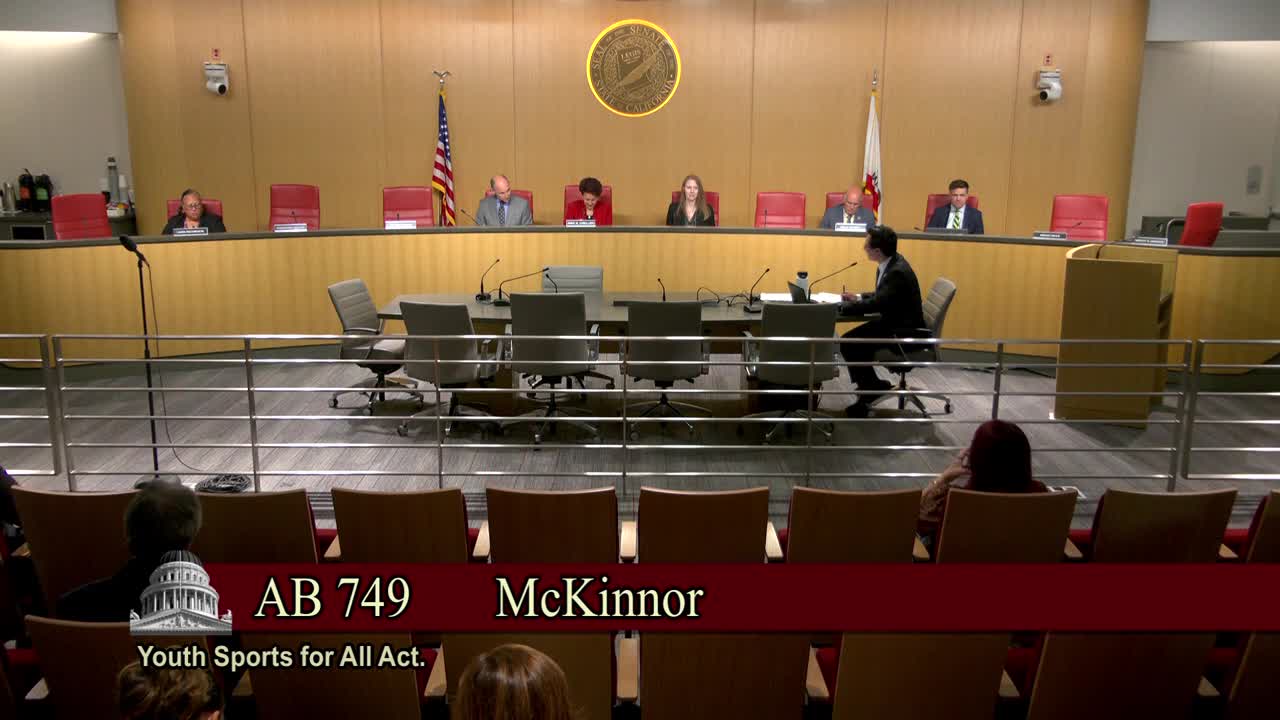 1MIN
Senate Standing Committee on Appropriations
 5MIN
Assembly Floor
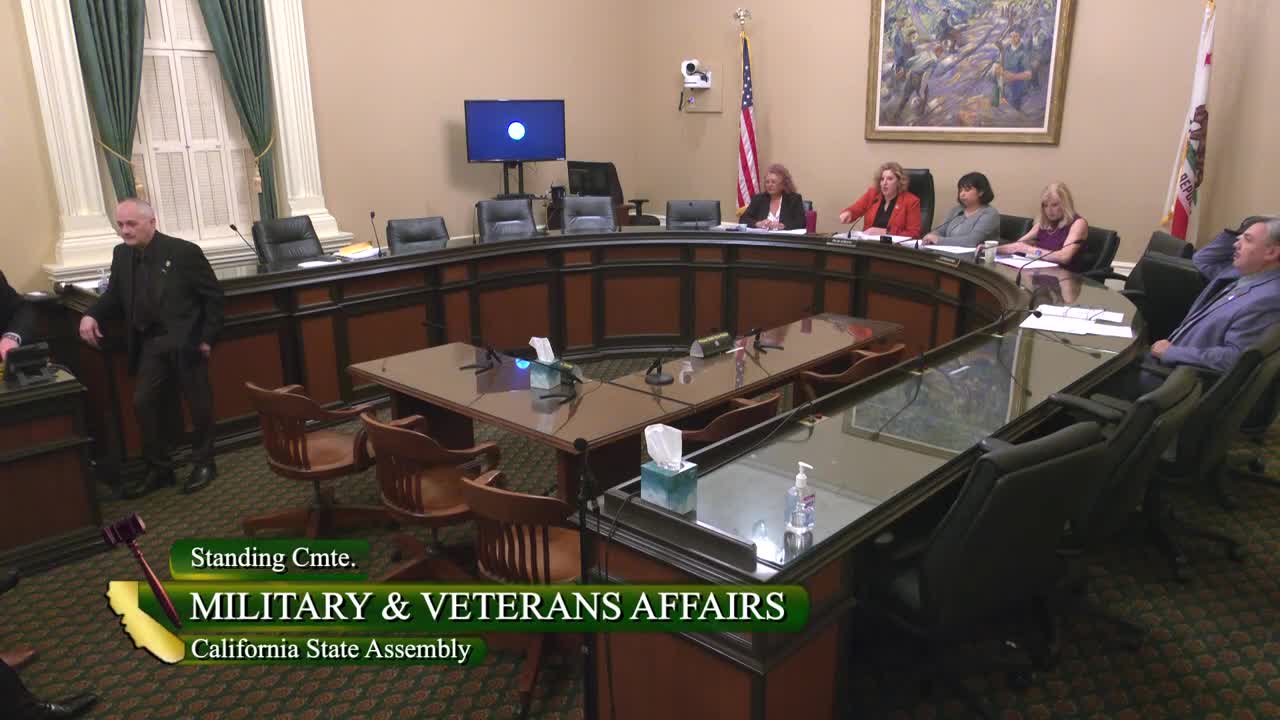 9MIN
Assembly Standing Committee on Military and Veterans Affairs
Bill Author