AB 830: State highways: encroachment permits: relocating or removing encroachments: public utility districts: County of Mendocino.
- Session Year: 2025-2026
- House: Assembly
- Latest Version Date: 2025-09-10
Current Status:
Failed
(2026-01-22: Consideration of Governor's veto stricken from file.)
Introduced
In Committee
Awaiting First Chamber Vote
Passed First Chamber
In Committee
Awaiting Second Chamber Vote
Passed Second Chamber
Enacted
Existing law establishes the Department of Transportation and vests it with full possession and control of all state highways and all property and rights in property acquired for state highway purposes. Existing law authorizes the department to issue written permits to, among other things, place, change, or renew an encroachment. Existing law requires a permit issued to a county, city, public corporation, or political subdivision that is authorized by law to establish or maintain any works or facilities in, under, or over any public highway, to contain a provision that, in the event the future improvement of the highway necessitates the relocation or removal of the encroachment, the permittee will relocate or remove the encroachment at the permittees sole expense, as provided.
This bill would, until January 1, 2031, exempt a public utility district in the County of Mendocino with a ratepayer base of 5,000 households or fewer from the above-described provision and instead would require the department to bear the sole expense of relocating or removing the public utility districts encroachment in the event a future improvement of the highway necessitates the relocation or removal of the encroachment and to notify the public utility district at each stage of a project that necessitates the relocation or removal of the public utility districts encroachment.
This bill would make legislative findings and declarations as to the necessity of a special statute for the County of Mendocino.
Existing law establishes the Department of Transportation and vests it with full possession and control of all state highways and all property and rights in property acquired for state highway purposes. Existing law authorizes the department to issue written permits to, among other things, place, change, or renew an encroachment. Existing law requires a permit issued to a county, city, public corporation, or political subdivision that is authorized by law to establish or maintain any works or facilities in, under, or over any public highway, to contain a provision that, in the event the future improvement of the highway necessitates the relocation or removal of the encroachment, the permittee will relocate or remove the encroachment at the permittees sole expense, as provided.
This bill would would, until January 1, 2031, exempt a public utility district in the County of Mendocino with a ratepayer base of 5,000 households or fewer from the above-described provision and instead would require the department to bear the sole expense of relocating or removing the public utility districts encroachment in the event a future improvement of the highway necessitates the relocation or removal of the encroachment and to notify the public utility district at each stage of a project that necessitates the relocation or removal of the public utility districts encroachment.
This bill would make legislative findings and declarations as to the necessity of a special statute for the County of Mendocino.
Existing law establishes the Department of Transportation and vests it with full possession and control of all state highways and all property and rights in property acquired for state highway purposes. Existing law authorizes the department to issue written permits to, among other things, place, change, or renew an encroachment. Existing law requires a permit issued to a county, city, public corporation, or political subdivision that is authorized by law to establish or maintain any works or facilities in, under, or over any public highway, to contain a provision that, in the event the future improvement of the highway necessitates the relocation or removal of the encroachment, the permittee will relocate or remove the encroachment at the permittees sole expense, as provided.
This bill would exempt a public utility district in the County of Mendocino with a ratepayer base of 5,000 households or fewer from the above-described provision and instead would require the department to bear the sole expense of relocating or removing the public utility districts encroachment in the event a future improvement of the highway necessitates the relocation or removal of the encroachment and to notify the public utility district at each stage of a project that necessitates the relocation or removal of the public utility districts encroachment.
This bill would make legislative findings and declarations as to the necessity of a special statute for the County of Mendocino.
Existing law establishes the Department of Transportation and vests it with full possession and control of all state highways and all property and rights in property acquired for state highway purposes. Existing law authorizes the department to issue written permits to, among other things, place, change, or renew an encroachment. Existing law requires a permit issued to a county, city, public corporation, or political subdivision that is authorized by law to establish or maintain any works or facilities in, under, or over any public highway, to contain a provision that, in the event the future improvement of the highway necessitates the relocation or removal of the encroachment, the permittee will relocate or remove the encroachment at the permittees sole expense, as provided.
This bill would exempt a public utility district with a ratepayer base of 5,000 households or fewer from the above-described provision and instead would require the department to bear the sole expense of relocating or removing the public utility districts encroachment in the event a future improvement of the highway necessitates the relocation or removal of the encroachment. encroachment and to notify the public utility district at each stage of a project that necessitates the relocation or removal of the public utility districts encroachment.
Existing law establishes the Department of Transportation and vests it with full possession and control of all state highways and all property and rights in property acquired for state highway purposes. Existing law authorizes the department to issue written permits to, among other things, place, change, or renew an encroachment. Existing law requires a permit issued to a county, city, public corporation, or political subdivision that is authorized by law to establish or maintain any works or facilities in, under, or over any public highway, to contain a provision that, in the event the future improvement of the highway necessitates the relocation or removal of the encroachment, the permittee will relocate or remove the encroachment at the permittees sole expense, as provided.
This bill would exempt a public utility district from the above-described provision and instead would require the department to bear the sole expense of relocating or removing the public utility districts encroachment in the event a future improvement of the highway necessitates the relocation or removal of the encroachment.
(a)Any permit issued to a permittee of the class specified in Section 678 shall contain a provision that in the event the future improvement of the highway necessitates the relocation or removal of the encroachment the permittee will relocate or remove the encroachment at the permittees sole expense. In that event, the department shall serve on the permittee its written demand specifying the place of relocation, or that the encroachment is to be removed from the highway, and specifying a reasonable time within which the work of relocation is to be commenced. The permittee shall commence the relocation or removal within the time specified in that demand and thereafter diligently prosecute until completion.
(b)All permits, other than those issued to permittees of the class specified in Section 678 or the class specified in Section 680, are revocable on five days notice and the encroachment shall be removed or relocated as may be specified by the department in the notice revoking the permit and within the time specified by the department, which time shall not be less than five days, unless the permit so provides.
(c)The department may waive the requirement of subdivision (a) that the permittee bear the sole expense of relocating or removing an encroachment, if the encroachment consists of a track or roadway that serves as an exclusive public mass transit guideway owned, operated, and maintained by a publicly owned mass transit authority.
(d)(1)Subdivision (a) shall not apply if the permittee is a public utility district in the County of Mendocino with a ratepayer base of 5,000 or fewer and, in that case, the department shall bear the sole expense of relocating or removing the public utility districts encroachment in the event a future improvement of the highway necessitates the relocation or removal of the encroachment.
(2)The department shall notify a public utility district described in paragraph (1) at each stage of a project that necessitates the relocation or removal of the public utility districts encroachment.
(3)For purposes of this subdivision, public utility district means a public utility district formed pursuant to Division 7 (commencing with Section 15501) of the Public Utilities Code.
(e)This section shall remain in effect only until January 1, 2031, and as of that date is repealed.
SEC. 2.Section 673 is added to the Streets and Highways Code, to read:673.(a)Any permit issued to a permittee of the class specified in Section 678 shall contain a provision that in the event the future improvement of the highway necessitates the relocation or removal of the encroachment the permittee will relocate or remove the encroachment at the permittees sole expense. In that event, the department shall serve on the permittee its written demand specifying the place of relocation, or that the encroachment is to be removed from the highway, and specifying a reasonable time within which the work of relocation is to be commenced. The permittee shall commence the relocation or removal within the time specified in that demand and thereafter diligently prosecute until completion.
(b)All permits, other than those issued to permittees of the class specified in Section 678 or the class specified in Section 680, are revocable on five days notice and the encroachment shall be removed or relocated as may be specified by the department in the notice revoking the permit and within the time specified by the department, which time shall not be less than five days, unless the permit so provides.
(c)The department may waive the requirement of subdivision (a) that the permittee bear the sole expense of relocating or removing an encroachment, if the encroachment consists of a track or roadway that serves as an exclusive public mass transit guideway owned, operated, and maintained by a publicly owned mass transit authority.
(d)This section shall become operative on January 1, 2031.
SEC. 3.The Legislature finds and declares that a special statute is necessary and that a general statute cannot be made applicable within the meaning of Section 16 of Article IV of the California Constitution because the unique geography and rural nature of the County of Mendocino, combined with a state highway dividing many communities throughout the county, place unique burdens on local governmental entities in the County of Mendocino when relocating utilities for transportation projects.
(a)Any permit issued to a permittee of the class specified in Section 678 shall contain a provision that in the event the future improvement of the highway necessitates the relocation or removal of the encroachment the permittee will relocate or remove the encroachment at the permittees sole expense. In that event, the department shall serve on the permittee its written demand specifying the place of relocation, or that the encroachment is to be removed from the highway, and specifying a reasonable time within which the work of relocation is to be commenced. The permittee shall commence the relocation or removal within the time specified in that demand and thereafter diligently prosecute until completion.
(b)All permits, other than those issued to permittees of the class specified in Section 678 or the class specified in Section 680, are revocable on five days notice and the encroachment shall be removed or relocated as may be specified by the department in the notice revoking the permit and within the time specified by the department, which time shall not be less than five days, unless the permit so provides.
(c)The department may waive the requirement of subdivision (a) that the permittee bear the sole expense of relocating or removing an encroachment, if the encroachment consists of a track or roadway that serves as an exclusive public mass transit guideway owned, operated, and maintained by a publicly owned mass transit authority.
(d)(1)Subdivision (a) shall not apply if the permittee is a public utility district in the County of Mendocino with a ratepayer base of 5,000 or fewer and, in that case, the department shall bear the sole expense of relocating or removing the public utility districts encroachment in the event a future improvement of the highway necessitates the relocation or removal of the encroachment.
(2)The department shall notify a public utility district described in paragraph (1) at each stage of a project that necessitates the relocation or removal of the public utility districts encroachment.
(3)For purposes of this subdivision, public utility district means a public utility district formed pursuant to Division 7 (commencing with Section 15501) of the Public Utilities Code.
(e)This section shall remain in effect only until January 1, 2031, and as of that date is repealed.
SEC. 2.Section 673 is added to the Streets and Highways Code, to read:673.(a)Any permit issued to a permittee of the class specified in Section 678 shall contain a provision that in the event the future improvement of the highway necessitates the relocation or removal of the encroachment the permittee will relocate or remove the encroachment at the permittees sole expense. In that event, the department shall serve on the permittee its written demand specifying the place of relocation, or that the encroachment is to be removed from the highway, and specifying a reasonable time within which the work of relocation is to be commenced. The permittee shall commence the relocation or removal within the time specified in that demand and thereafter diligently prosecute until completion.
(b)All permits, other than those issued to permittees of the class specified in Section 678 or the class specified in Section 680, are revocable on five days notice and the encroachment shall be removed or relocated as may be specified by the department in the notice revoking the permit and within the time specified by the department, which time shall not be less than five days, unless the permit so provides.
(c)The department may waive the requirement of subdivision (a) that the permittee bear the sole expense of relocating or removing an encroachment, if the encroachment consists of a track or roadway that serves as an exclusive public mass transit guideway owned, operated, and maintained by a publicly owned mass transit authority.
(d)This section shall become operative on January 1, 2031.
SEC. 2.SEC. 3.The Legislature finds and declares that a special statute is necessary and that a general statute cannot be made applicable within the meaning of Section 16 of Article IV of the California Constitution because the unique geography and rural nature of the County of Mendocino, combined with a state highway dividing many communities throughout the county, place unique burdens on local governmental entities in the County of Mendocino when relocating utilities for transportation projects.
(a)Any permit issued to a permittee of the class specified in Section 678 shall contain a provision that in the event the future improvement of the highway necessitates the relocation or removal of the encroachment the permittee will relocate or remove the encroachment at the permittees sole expense. In that event, the department shall serve on the permittee its written demand specifying the place of relocation, or that the encroachment is to be removed from the highway, and specifying a reasonable time within which the work of relocation is to be commenced. The permittee shall commence the relocation or removal within the time specified in that demand and thereafter diligently prosecute until completion.
(b)All permits, other than those issued to permittees of the class specified in Section 678 or the class specified in Section 680, are revocable on five days notice and the encroachment shall be removed or relocated as may be specified by the department in the notice revoking the permit and within the time specified by the department, which time shall not be less than five days, unless the permit so provides.
(c)The department may waive the requirement of subdivision (a) that the permittee bear the sole expense of relocating or removing an encroachment, if the encroachment consists of a track or roadway that serves as an exclusive public mass transit guideway owned, operated, and maintained by a publicly owned mass transit authority.
(d)(1)Subdivision (a) shall not apply if the permittee is a public utility district in the County of Mendocino with a ratepayer base of 5,000 or fewer and, in that case, the department shall bear the sole expense of relocating or removing the public utility districts encroachment in the event a future improvement of the highway necessitates the relocation or removal of the encroachment.
(2)The department shall notify a public utility district described in paragraph (1) at each stage of a project that necessitates the relocation or removal of the public utility districts encroachment.
(3)For purposes of this subdivision, public utility district means a public utility district formed pursuant to Division 7 (commencing with Section 15501) of the Public Utilities Code.
SEC. 2.The Legislature finds and declares that a special statute is necessary and that a general statute cannot be made applicable within the meaning of Section 16 of Article IV of the California Constitution because the unique geography and rural nature of the County of Mendocino, combined with a state highway dividing many communities throughout the county, place unique burdens on local governmental entities in the County of Mendocino when relocating utilities for transportation projects.
(a)Any permit issued to a permittee of the class specified in Section 678 shall contain a provision that in the event the future improvement of the highway necessitates the relocation or removal of the encroachment the permittee will relocate or remove the encroachment at the permittees sole expense. In that event, the department shall serve on the permittee its written demand specifying the place of relocation, or that the encroachment is to be removed from the highway, and specifying a reasonable time within which the work of relocation is to be commenced. The permittee shall commence the relocation or removal within the time specified in that demand and thereafter diligently prosecute until completion.
(b)All permits, other than those issued to permittees of the class specified in Section 678 or the class specified in Section 680, are revocable on five days notice and the encroachment shall be removed or relocated as may be specified by the department in the notice revoking the permit and within the time specified by the department, which time shall not be less than five days, unless the permit so provides.
(c)The department may waive the requirement of subdivision (a) that the permittee bear the sole expense of relocating or removing an encroachment, if the encroachment consists of a track or roadway that serves as an exclusive public mass transit guideway owned, operated, and maintained by a publicly owned mass transit authority.
(d)(1)Subdivision (a) shall not apply if the permittee is a public utility district with a ratepayer base of 5,000 or fewer and, in that case, the department shall bear the sole expense of relocating or removing the public utility districts encroachment in the event a future improvement of the highway necessitates the relocation or removal of the encroachment.
(2)The department shall notify a public utility district described in paragraph (1) at each stage of a project that necessitates the relocation or removal of the public utility districts encroachment.
(2)(3)For purposes of this subdivision, public utility district means a public utility district formed pursuant to Division 7 (commencing with Section 15501) of the Public Utilities Code.
(a)Any permit issued to a permittee of the class specified in Section 678 shall contain a provision that in the event the future improvement of the highway necessitates the relocation or removal of the encroachment the permittee will relocate or remove the same encroachment at the permittees sole expense. In that event, the department shall serve on the permittee its written demand specifying the place of relocation, or that the encroachment is to be removed from the highway, and specifying a reasonable time within which the work of relocation is to be commenced. The permittee shall commence the relocation or removal within the time specified in that demand and thereafter diligently prosecute until completion.
(b)All permits, other than those issued to permittees of the class specified in Section 678 or the class specified in Section 680, are revocable on five days notice and the encroachment shall be removed or relocated as may be specified by the department in the notice revoking the permit and within the time specified by the department, which time shall not be less than five days, unless the permit so provides.
(c)The department may waive the requirement of subdivision (a) that the permittee bear the sole expense of relocating or removing an encroachment, if the encroachment consists of a track or roadway that serves as an exclusive public mass transit guideway owned, operated, and maintained by a publicly owned mass transit authority.
(d)(1)Subdivision (a) shall not apply if the permittee is a public utility district and, in that case, the department shall bear the sole expense of relocating or removing the public utility districts encroachment in the event a future improvement of the highway necessitates the relocation or removal of the encroachment.
(2)For purposes of this subdivision, public utility district means a public utility district formed pursuant to Division 7 (commencing with Section 15501) of the Public Utilities Code.
|
Date
|
Status
|
|---|---|
| Jan 22, 2026 | Consideration of Governor's veto stricken from file. |
| Oct 3, 2025 | Consideration of Governor's veto pending. |
| Oct 3, 2025 | Vetoed by Governor. |
| Sep 15, 2025 | Enrolled and presented to the Governor at 4:30 p.m. |
| Sep 8, 2025 | Senate amendments concurred in. To Engrossing and Enrolling. (Ayes 79. Noes 0. Page 3031.). |
| Sep 4, 2025 | In Assembly. Concurrence in Senate amendments pending. |
| Sep 4, 2025 | Read third time. Passed. Ordered to the Assembly. (Ayes 39. Noes 0. Page 2506.). |
| Sep 2, 2025 | Read second time. Ordered to third reading. |
| Aug 29, 2025 | Read second time and amended. Ordered returned to second reading. |
| Aug 29, 2025 | From committee: Amend, and do pass as amended. (Ayes 7. Noes 0.) (August 29). |
| Aug 18, 2025 | In committee: Referred to suspense file. |
| Jul 9, 2025 | From committee: Do pass and re-refer to Com. on APPR. (Ayes 15. Noes 0.) (July 8). Re-referred to Com. on APPR. |
| Jun 18, 2025 | Referred to Com. on TRANS. |
| Jun 5, 2025 | In Senate. Read first time. To Com. on RLS. for assignment. |
| Jun 4, 2025 | Read third time. Passed. Ordered to the Senate. (Ayes 79. Noes 0. Page 2068.) |
| May 27, 2025 | Read second time. Ordered to third reading. |
| May 23, 2025 | Read second time and amended. Ordered returned to second reading. |
| May 23, 2025 | From committee: Amend, and do pass as amended. (Ayes 11. Noes 0.) (May 23). |
| May 23, 2025 | Assembly Rule 63 suspended. (Ayes 51. Noes 16. Page 1644.) |
| May 14, 2025 | In committee: Set, first hearing. Referred to APPR. suspense file. |
| Apr 22, 2025 | From committee: Do pass and re-refer to Com. on APPR. with recommendation: To Consent Calendar. (Ayes 15. Noes 0.) (April 21). Re-referred to Com. on APPR. |
| Apr 10, 2025 | Re-referred to Com. on TRANS. |
| Apr 9, 2025 | From committee chair, with author's amendments: Amend, and re-refer to Com. on TRANS. Read second time and amended. |
| Mar 10, 2025 | Referred to Com. on TRANS. |
| Feb 20, 2025 | From printer. May be heard in committee March 22. |
| Feb 19, 2025 | Read first time. To print. |
|
Date
|
Description
|
Location
|
Votes
|
|
|---|---|---|---|---|
| Sep 8, 2025 | AB 830 Rogers Concurrence in Senate Amendments | Assembly Floor |
Passed |
|
| Sep 4, 2025 | Assembly 3rd Reading AB830 Rogers By Grove | Senate Floor |
Passed |
|
| Aug 29, 2025 | Do pass as amended | Senate Standing Committee on Appropriations |
Passed |
|
| Aug 18, 2025 | Placed on suspense file | Senate Standing Committee on Appropriations |
Passed |
|
| Jul 8, 2025 | Do pass, but first be re-referred to the Committee on [Appropriations] | Senate Standing Committee on Transportation |
Passed |
|
| Jun 4, 2025 | AB 830 Rogers Assembly Third Reading | Assembly Floor |
Passed |
|
| May 23, 2025 | Do pass as amended. | Assembly Standing Committee on Appropriations |
Passed |
|
| Apr 21, 2025 | Do pass and be re-referred to the Committee on [Appropriations] with recommendation: To Consent Calendar | Assembly Standing Committee on Transportation |
Passed |
This list shows positions taken on this bill by organizations on the date displayed, which is linked to the original source.
Positions by individuals are not included.
|
Organization
|
Position
|
Date
|
|---|---|---|
| California Municipal Utilities Association | ** Support | |
| California Special Districts Association | ** Support | |
| County of Mendocino | ** Support | |
| Hopland Public Utility District | ** Support | |
| Mendocino Council of Governments | ** Support | |
| Rural County Representatives of California | ** Support | |
| Trinity Public Utilities District | ** Support |
GOVERNOR'S VETO
GV Bill Id:AB 830
Author:(Rogers)
As Enrolled Ver:September 10, 2025
2/3 vote
SUMMARY
Requires the Department of Transportation (Caltrans), until January 1, 2031, to pay for relocating or removing the encroachment of a public utility district (PUD) with a ratepayer base of 5,000 households or fewer in the County of Mendocino in the event of a future improvement to the highway, and to notify the PUD at each stage of a project.
Governor's Veto Message
"This requires Caltrans to pay for removing or relocating utility infrastructure owned by public utility districts in Mendocino County that serve 5,000 or fewer households when such work is needed for a future state highway improvement.
While I recognize the challenges that relocation costs and infrastructure constraints can pose for communities, this bill sets a concerning precedent by merely shifting those costs to the state, directly at odds with longstanding requirements for permitees to cover the cost or relocating or removing an encroachment when needed for a highway improvement. Creating a statutory exception for one utility in a single county undermines fiscal discipline and creates inequities across California.
Instead, comprehensive and sustainable solution should be developed in coordination with Caltrans, rather than relying on one-off exemptions that set problematic precedents."
COMMENTS
An encroachment is a temporary use of state right-of-way for purposes other than transportation. An encroachment permit is required for any activity on the state right-of-way. Some examples of work requiring an encroachment permit are utilities, excavations, encroachment renewals, advertisements, vegetation planting or trimming, surveys, mailboxes, driveways, installation or removal of tire chains for compensation, special events, and commercial filming activities.
A utility is any privately, publicly or cooperatively owned line, facility or system for producing, transmitting or distributing electricity, gas, water, communications, waste or other similar commodity which serves the public.
To obtain an encroachment permit, applicants must complete an application and attach supporting documentation such as: plans, location map, environmental documentation, letter of authorization, surety bonds, liability insurance, any applicable fees, and submit them to the Caltrans' district encroachment permit office that has jurisdiction over the proposed encroachment site.
Caltrans must approve or deny an encroachment permit application within 60 calendar days, upon determination that the submittal is complete. The actual time needed to review and approve an application depends on the completeness of the submittal, scope, and complexity of the proposed work.
Broadband and complete streets projects on state right-of-way have a slightly different process than other infrastructure under existing law. Broadband encroachment requires coordinated communication and an expedited review process for broadband infrastructure. Caltrans is required to develop and adopt a process for encroachment permit review for complete streets facilities, including pedestrian, bicycle, and transit priority facilities
If an encroachment needs to be relocated as a result of improvements on the state highway system, it is the responsibility of the encroachment permit holder (permittee) to pay for the relocation of the infrastructure encroaching on Caltrans right-of-way.
Hopland 101 Project. Caltrans proposes to construct improvements on U.S. Highway 101 (US 101) in downtown Hopland in Mendocino County (post miles 10.7 and 11.2) for compliance with the Americans for Disabilities Act (ADA). Work would include improving curb ramps, sidewalks, and driveways, reconstructing the roadway, rehabilitating pavement, and signage.
Caltrans has identified access barriers within the project location These barriers include pedestrian facilities that are non-compliant with current accessibility standards such as missing curb ramps, sidewalks, and driveways that prevent persons with mobility challenges from accessing public facilities, local stores, and restaurants. Caltrans completed a feasibility study in September 2015 with the objectives to optimize the Hopland "main street" corridor on US 101 and provide complete streets that consider all road users, including pedestrians, cyclists, trucks, transit vehicles, and motorists. Other deficiencies within the project limits include roadway pavement in fair condition, aging or degraded signage, insufficient Transportation Management Systems (TMS) assets, and drainage facilities in poor condition. TMS assets are technology-based communication infrastructure on the highway system dedicated to improving the safety, operational efficiency, and sustainability of the transportation network by reducing traffic congestion, such as changeable message signs, traffic lights, and traffic census stations.
The purpose of this project is to upgrade existing ADA pedestrian facilities to comply with current standards and to upgrade roadway pavement, signage, TMS assets, and drainage to good condition. Construction is scheduled to begin spring 2026, and end December 2027.
The Hopland Public Utility District (HPUD) provides water and sewer service to the Hopland community. There is currently HPUD infrastructure encroaching on US 101 Caltrans right-of-way. Existing law requires HPUD to bear the sole cost of moving the utility infrastructure for the Hopland 101 Project. There are approximately 326 water connections and 274 sewer connections within HPUD's jurisdiction, and approximately 340 ratepayers.
Hopland is considered a disadvantaged unincorporated community (DUC), according to the Local Agency Formation Commission. A DUC is defined as any area with 12 or more registered voters where the median household income is less than 80% of the statewide median household income. Within a DUC, three basic services are evaluated: water, sewage, and fire protection. The HPUD provides water and wastewater, and is responsible for assuring that these services are adequately provided to the community. In 2023, Hopland's average per capita income is $48,466, and Hopland's median household income was $80,298.
The expected cost to HPUD as a result of the Hopland 101 Project is $3 million to move or relocate existing water and sewer infrastructure within Caltrans' right-of-way. HPUD does not have the funding to pay for the needed utility relocation. As a result, Caltrans has proposed the Hopland 101 project be completed within two phases; phase two of the project is contingent on HPUD acquiring the necessary funding to relocate utilities in the project area.
This bill requires Caltrans to pay for the relocation of public utilities infrastructure if the PUD has 5,000 ratepayers or less. This bill also requires Caltrans to inform the public utility district at each stage of the project. This bill attempts to resolve the disparity between what is expected of disadvantaged PUDs and what the state requires. The author may wish to further clarify this only applies to DUC.
According to the Author
"Caltrans discovered during the planning phase for a pedestrian safety project in the Hopland community in Mendocino County that in order to make these pedestrian improvements along Highway 101, water and sewer lines maintained and owned by the Hopland Public Utilities District would need to be relocated. However, the rural PUD does not have the funding to move these utility lines. This then places the burden on a rural PUD to come up the funding to support the transportation infrastructure project."
Arguments in Support
Rural County Representatives of California writes, "This measure seeks to tackle a unique yet persistent challenge amongst smaller PUDs across the state regarding fiscal obligations for operational changes outside of their local control. Generally, this challenge is not due to any lack of coordination or cooperation between a given PUD and the Caltrans, but instead arises from legal constraints in the state framework that currently prohibit Caltrans from utilizing their funds to move utilities under encroachment permits when necessary for construction on state highways."
Arguments in Opposition
None on file.
FISCAL COMMENTS
According to the Senate Committee on Appropriations:
"Caltrans indicates that costs for removing or relocating a single encroachment can be in the range of $2-3 million, depending on the scope and scale of the necessary relocation or removal. While there is one known qualifying PUD with an encroachment in Caltrans right-of-way that requires relocation in the near term, it is unclear at this time how many qualifying PUDs in Mendocino County have encroachments that may require relocation or removal as a result of future highway improvements. (State Highway Account)"
VOTES
ASM TRANSPORTATION: 15-0-1
YES: Wilson, Davies, Aguiar-Curry, Ahrens, Carrillo, Harabedian, Hart, Hoover, Jackson, Lackey, Lowenthal, Macedo, Ransom, Rogers, Ward
ABS, ABST OR NV: Papan
ASM APPROPRIATIONS: 11-0-4
YES: Wicks, Arambula, Calderon, Caloza, Elhawary, Fong, Mark González, Hart, Pacheco, Pellerin, Solache
ABS, ABST OR NV: Sanchez, Dixon, Ta, Tangipa
ASSEMBLY FLOOR: 79-0-0
YES: Addis, Aguiar-Curry, Ahrens, Alanis, Alvarez, Arambula, Ávila Farías, Bains, Bauer-Kahan, Bennett, Berman, Boerner, Bonta, Bryan, Calderon, Caloza, Carrillo, Castillo, Chen, Connolly, Davies, DeMaio, Dixon, Elhawary, Ellis, Flora, Fong, Gabriel, Gallagher, Garcia, Gipson, Jeff Gonzalez, Mark González, Hadwick, Haney, Harabedian, Hart, Hoover, Irwin, Jackson, Kalra, Krell, Lackey, Lee, Lowenthal, Macedo, McKinnor, Muratsuchi, Nguyen, Ortega, Pacheco, Papan, Patel, Patterson, Pellerin, Petrie-Norris, Quirk-Silva, Ramos, Ransom, Celeste Rodriguez, Michelle Rodriguez, Rogers, Blanca Rubio, Sanchez, Schiavo, Schultz, Sharp-Collins, Solache, Soria, Stefani, Ta, Tangipa, Valencia, Wallis, Ward, Wicks, Wilson, Zbur, Rivas
SENATE FLOOR: 39-0-1
YES: Allen, Alvarado-Gil, Archuleta, Arreguín, Ashby, Becker, Blakespear, Cabaldon, Caballero, Cervantes, Choi, Cortese, Dahle, Durazo, Gonzalez, Grayson, Grove, Hurtado, Jones, Laird, Limón, McGuire, McNerney, Menjivar, Niello, Ochoa Bogh, Padilla, Pérez, Richardson, Rubio, Seyarto, Smallwood-Cuevas, Stern, Strickland, Umberg, Valladares, Wahab, Weber Pierson, Wiener
ABS, ABST OR NV: Reyes
ASSEMBLY FLOOR: 79-0-1
YES: Addis, Aguiar-Curry, Ahrens, Alanis, Alvarez, Arambula, Ávila Farías, Bains, Bauer-Kahan, Bennett, Berman, Boerner, Bonta, Bryan, Calderon, Caloza, Carrillo, Castillo, Chen, Connolly, Davies, DeMaio, Dixon, Elhawary, Ellis, Flora, Fong, Gabriel, Gallagher, Garcia, Gipson, Jeff Gonzalez, Mark González, Hadwick, Haney, Harabedian, Hart, Hoover, Irwin, Jackson, Johnson, Kalra, Krell, Lackey, Lee, Lowenthal, Macedo, McKinnor, Muratsuchi, Ortega, Pacheco, Papan, Patel, Patterson, Pellerin, Petrie-Norris, Quirk-Silva, Ramos, Ransom, Celeste Rodriguez, Michelle Rodriguez, Rogers, Blanca Rubio, Sanchez, Schiavo, Schultz, Sharp-Collins, Solache, Soria, Stefani, Ta, Tangipa, Valencia, Wallis, Ward, Wicks, Wilson, Zbur, Rivas
ABS, ABST OR NV: Nguyen
UPDATED
VERSION: September 10, 2025
CONSULTANT: Julia Kingsley / TRANS. / (916) 319-2093 FN: 0002144
CONCURRENCE IN SENATE AMENDMENTS
CSA1 Bill Id:AB 830
Author:(Rogers)
As Amended Ver:August 29, 2025
Majority vote
SUMMARY
Requires the Department of Transportation (Caltrans) to pay for relocating or removing the encroachment of a public utility district (PUD) with a ratepayer base of 5,000 households or fewer in the County of Mendocino in the event of a future improvement to the highway, and to notify the PUD at each stage of a project.
Senate Amendments
- Sunset the provisions of the bill on January 1, 2031.
COMMENTS
An encroachment is a temporary use of state right-of-way for purposes other than transportation. An encroachment permit is required for any activity on the state right-of-way. Some examples of work requiring an encroachment permit are utilities, excavations, encroachment renewals, advertisements, vegetation planting or trimming, surveys, mailboxes, driveways, installation or removal of tire chains for compensation, special events, and commercial filming activities.
A utility is any privately, publicly or cooperatively owned line, facility or system for producing, transmitting or distributing electricity, gas, water, communications, waste or other similar commodity which serves the public.
To obtain an encroachment permit, applicants must complete an application and attach supporting documentation such as: plans, location map, environmental documentation, letter of authorization, surety bonds, liability insurance, any applicable fees, and submit them to the Caltrans' district encroachment permit office that has jurisdiction over the proposed encroachment site.
Caltrans must approve or deny an encroachment permit application within 60 calendar days, upon determination that the submittal is complete. The actual time needed to review and approve an application depends on the completeness of the submittal, scope, and complexity of the proposed work.
Broadband and complete streets projects on state right-of-way have a slightly different process than other infrastructure under existing law. Broadband encroachment requires coordinated communication and an expedited review process for broadband infrastructure. Caltrans is required to develop and adopt a process for encroachment permit review for complete streets facilities, including pedestrian, bicycle, and transit priority facilities.
If an encroachment needs to be relocated as a result of improvements on the state highway system, it is the responsibility of the encroachment permit holder (permittee) to pay for the relocation of the infrastructure encroaching on Caltrans right-of-way.
Hopland 101 Project. Caltrans proposes to construct improvements on U.S. Highway 101 (US 101) in downtown Hopland in Mendocino County (post miles 10.7 and 11.2) for compliance with the Americans for Disabilities Act (ADA). Work would include improving curb ramps, sidewalks, and driveways, reconstructing the roadway, rehabilitating pavement, and signage.
Caltrans has identified access barriers within the project location These barriers include pedestrian facilities that are non-compliant with current accessibility standards such as missing curb ramps, sidewalks, and driveways that prevent persons with mobility challenges from accessing public facilities, local stores, and restaurants. Caltrans completed a feasibility study in September 2015 with the objectives to optimize the Hopland "main street" corridor on US 101 and provide complete streets that consider all road users, including pedestrians, cyclists, trucks, transit vehicles, and motorists. Other deficiencies within the project limits include roadway pavement in fair condition, aging or degraded signage, insufficient Transportation Management Systems (TMS) assets, and drainage facilities in poor condition. TMS assets are technology-based communication infrastructure on the highway system dedicated to improving the safety, operational efficiency, and sustainability of the transportation network by reducing traffic congestion, such as changeable message signs, traffic lights, and traffic census stations.
The purpose of this project is to upgrade existing ADA pedestrian facilities to comply with current standards and to upgrade roadway pavement, signage, TMS assets, and drainage to good condition. Construction is scheduled to begin spring 2026, and end December 2027.
The Hopland Public Utility District (HPUD) provides water and sewer service to the Hopland community. There is currently HPUD infrastructure encroaching on US 101 Caltrans right-of-way. Existing law requires HPUD to bear the sole cost of moving the utility infrastructure for the Hopland 101 Project. There are approximately 326 water connections and 274 sewer connections within HPUD's jurisdiction, and approximately 340 ratepayers.
Hopland is considered a disadvantaged unincorporated community (DUC), according to the Local Agency Formation Commission. A DUC is defined as any area with 12 or more registered voters where the median household income is less than 80% of the statewide median household income. Within a DUC, three basic services are evaluated: water, sewage, and fire protection. The HPUD provides water and wastewater, and is responsible for assuring that these services are adequately provided to the community. In 2023, Hopland's average per capita income is $48,466, and Hopland's median household income was $80,298.
The expected cost to HPUD as a result of the Hopland 101 Project is $3 million to move or relocate existing water and sewer infrastructure within Caltrans' right-of-way. HPUD does not have the funding to pay for the needed utility relocation. As a result, Caltrans has proposed the Hopland 101 project be completed within two phases; phase two of the project is contingent on HPUD acquiring the necessary funding to relocate utilities in the project area.
This bill requires Caltrans to pay for the relocation of public utilities infrastructure if the PUD has 5,000 ratepayers or less. This bill also requires Caltrans to inform the public utility district at each stage of the project. This bill attempts to resolve the disparity between what is expected of disadvantaged PUDs and what the state requires. The author may wish to further clarify this only applies to DUC.
According to the Author
"Caltrans discovered during the planning phase for a pedestrian safety project in the Hopland community in Mendocino County that in order to make these pedestrian improvements along Highway 101, water and sewer lines maintained and owned by the Hopland Public Utilities District would need to be relocated. However, the rural PUD does not have the funding to move these utility lines. This then places the burden on a rural PUD to come up the funding to support the transportation infrastructure project."
Arguments in Support
Rural County Representatives of California writes, "This measure seeks to tackle a unique yet persistent challenge amongst smaller PUDs across the state regarding fiscal obligations for operational changes outside of their local control. Generally, this challenge is not due to any lack of coordination or cooperation between a given PUD and the Caltrans, but instead arises from legal constraints in the state framework that currently prohibit Caltrans from utilizing their funds to move utilities under encroachment permits when necessary for construction on state highways."
Arguments in Opposition
None on file.
FISCAL COMMENTS
According to the Senate Committee on Appropriations:
"Caltrans indicates that costs for removing or relocating a single encroachment can be in the range of $2-3 million, depending on the scope and scale of the necessary relocation or removal. While there is one known qualifying PUD with an encroachment in Caltrans right-of-way that requires relocation in the near term, it is unclear at this time how many qualifying PUDs in Mendocino County have encroachments that may require relocation or removal as a result of future highway improvements. (State Highway Account)"
VOTES:
ASM TRANSPORTATION: 15-0-1
YES: Wilson, Davies, Aguiar-Curry, Ahrens, Carrillo, Harabedian, Hart, Hoover, Jackson, Lackey, Lowenthal, Macedo, Ransom, Rogers, Ward
ABS, ABST OR NV: Papan
ASM APPROPRIATIONS: 11-0-4
YES: Wicks, Arambula, Calderon, Caloza, Elhawary, Fong, Mark González, Hart, Pacheco, Pellerin, Solache
ABS, ABST OR NV: Sanchez, Dixon, Ta, Tangipa
ASSEMBLY FLOOR: 79-0-0
YES: Addis, Aguiar-Curry, Ahrens, Alanis, Alvarez, Arambula, Ávila Farías, Bains, Bauer-Kahan, Bennett, Berman, Boerner, Bonta, Bryan, Calderon, Caloza, Carrillo, Castillo, Chen, Connolly, Davies, DeMaio, Dixon, Elhawary, Ellis, Flora, Fong, Gabriel, Gallagher, Garcia, Gipson, Jeff Gonzalez, Mark González, Hadwick, Haney, Harabedian, Hart, Hoover, Irwin, Jackson, Kalra, Krell, Lackey, Lee, Lowenthal, Macedo, McKinnor, Muratsuchi, Nguyen, Ortega, Pacheco, Papan, Patel, Patterson, Pellerin, Petrie-Norris, Quirk-Silva, Ramos, Ransom, Celeste Rodriguez, Michelle Rodriguez, Rogers, Blanca Rubio, Sanchez, Schiavo, Schultz, Sharp-Collins, Solache, Soria, Stefani, Ta, Tangipa, Valencia, Wallis, Ward, Wicks, Wilson, Zbur, Rivas
SENATE FLOOR: 39-0-1
YES: Allen, Alvarado-Gil, Archuleta, Arreguín, Ashby, Becker, Blakespear, Cabaldon, Caballero, Cervantes, Choi, Cortese, Dahle, Durazo, Gonzalez, Grayson, Grove, Hurtado, Jones, Laird, Limón, McGuire, McNerney, Menjivar, Niello, Ochoa Bogh, Padilla, Pérez, Richardson, Rubio, Seyarto, Smallwood-Cuevas, Stern, Strickland, Umberg, Valladares, Wahab, Weber Pierson, Wiener
ABS, ABST OR NV: Reyes
UPDATED
VERSION: August 29, 2025
CONSULTANT: Julia Kingsley / TRANS. / (916) 319-2093 FN: 0001666
SENATE RULES COMMITTEE Office of Senate Floor Analyses (916) 651-1520 Fax: (916) 327-4478 | AB 830 |
THIRD READING
Bill No: AB 830
Author: Rogers (D)
Amended: 8/29/25 in Senate
Vote: 21
SENATE TRANSPORTATION COMMITTEE: 15-0, 7/8/25
AYES: Cortese, Strickland, Archuleta, Arreguín, Blakespear, Cervantes, Dahle, Gonzalez, Grayson, Limón, Menjivar, Richardson, Seyarto, Umberg, Valladares
SENATE APPROPRIATIONS COMMITTEE: 7-0, 8/29/25
AYES: Caballero, Seyarto, Cabaldon, Dahle, Grayson, Richardson, Wahab
ASSEMBLY FLOOR: 79-0, 6/4/25 - See last page for vote
SUBJECT: State highways: encroachment permits: relocating or removing encroachments: public utility districts: County of Mendocino
SOURCE: Author
DIGEST:
This bill requires the California Department of Transportation (Caltrans) to bear the sole expense for relocating or removing the encroachment of a public utility district (PUD) with a ratepayer base of 5,000 households or fewer in the County of Mendocino in the event of a future improvement to the highway, and to notify the PUD at each stage of a project.
ANALYSIS:
Existing law:
- Establishes Caltrans and provides that it has full possession and control of all state highways and property and rights in property acquired for state highway purposes, construct all state highways.
- Defines “encroachment” to mean any tower, pole, pole line, pipe, pipeline, fence, billboard, stand or building, or any structure, object of any kind, or special event such as a street festival, sidewalk sale, community-sponsored activity, or community-approved activity which is in, under, or over any portion of the state highway right of way.
- Authorizes Caltrans to issue written permits for a permittee to make an opening or excavation in any state highway, place, and change or renew an encroachment, place advertising on a state highway, plant or remove trees and shrubs on the state highways, and install or remove chain tires on the state highway.
- Requires a permittee to pay the sole expense to relocate or remove the encroachment if necessitated by a future improvement of the highway.
- Requires the permittee to commence the relocation or removal within the time specified in the permit and thereafter diligently prosecute until completion.
- Exempts a permittee from bearing the sole expense of relocating or removing an encroachment, if the encroachment consists of a track or roadway that serves as an exclusive public mass transit guideway owned, operated, and maintained by a publicly owned mass transit authority.
- Caltrans may require any person who has placed and maintained any pole, pole line, pipe, pipeline, conduit, street railroad tracks, or other structures or facilities upon any state highway, whether under that or any franchise, to move it at his or her own cost and expense to such different location in the highway as is specified in a written demand of the department, whenever necessary to insure the safety of the traveling public or to permit the improvement of the highway.
This bill:
- Requires Caltrans bear the sole expense of relocating or removing the PUD’s encroachment in the event a future improvement of the highway necessitates the relocation or removal of the encroachment for a permittee that is a public utility district in the County of Mendocino with a ratepayer base of 5,000 or fewer.
- Requires Caltrans to notify a PUD, as specified, at each stage of a project that necessitates the relocation or removal of the PUD’s encroachment.
- Defines “public utility district” to mean a PUD formed pursuant to existing law, as specified.
- Includes a sunset provision of January 1, 2031.
- Stipulates that the Legislature finds and declares that a special statute is necessary because the unique geography and rural nature of the County of Mendocino, combined with a state highway dividing many communities throughout the county, place unique burdens on local governmental entities in the County of Mendocino when relocating utilities for transportation projects.
Comments
- Purpose of this bill. According to the author, “This bill would support rural community of Hopland by allowing Caltrans to fund the relocation or removal of the Hopland Public Utility District’s utilities under the district’s encroachment permit with Caltrans. This bill would ensure that highway improvements are completed in a timely manner and rural communities would not bear the burden of any infrastructure improvements.”
- What is an encroachment? An encroachment is a temporary use of the state right-of-way for purposes other than transportation. An encroachment permit is required for any activity on the state right-of-way. Some examples of work requiring an encroachment permit are utilities, excavations, encroachment renewals, advertisements, vegetation planting or trimming, surveys, mailboxes, driveways, installation or removal of tire chains for compensation, special events, and commercial filming activities.
Specifically, a utility is any privately, publicly or cooperatively owned line, facility or system for producing, transmitting or distributing electricity, gas, water, communications, waste or other similar commodity which serves the public.
To obtain an encroachment permit from Caltrans, applicants must complete an application and attach supporting documentation such as plans, location map, environmental documentation, letter of authorization, surety bonds, liability insurance, and any applicable fees. The completed application package must be submitted to the Caltrans’ district encroachment permit office that has jurisdiction over the proposed encroachment site.
Caltrans must approve or deny an encroachment permit application within 60 calendar days, upon determination that the submittal is complete. The actual time needed to review and approve an application depends on the completeness of the submittal, scope, and complexity of the proposed work.
If an encroachment needs to be relocated as a result of improvements on the state highway system, it is the responsibility of the encroachment permit holder (permittee) to pay for the relocation of the infrastructure encroaching on Caltrans right-of-way.
- Hopland 101 Project. Caltrans proposes to construct improvements on U.S. Highway 101 (US 101) in downtown Hopland in Mendocino County for compliance with the Americans for Disabilities Act (ADA). Work includes improving curb ramps, sidewalks, and driveways, reconstructing the roadway, rehabilitating pavement, and signage.
Caltrans identified access barriers within the project location. These barriers include pedestrian facilities that are non-compliant with current accessibility standards such as missing curb ramps, sidewalks, and driveways that prevent persons with mobility challenges from accessing public facilities, local stores, and restaurants. Caltrans completed a feasibility study in September 2015 with the objectives to optimize the Hopland “main street” corridor on US 101 and provide complete streets that consider all road users, including pedestrians, cyclists, trucks, transit vehicles, and motorists.
Other deficiencies within the project limits include roadway pavement in fair condition, aging or degraded signage, insufficient Transportation Management Systems (TMS) assets, and drainage facilities in poor condition. TMS assets are technology-based communications infrastructure on the highway system dedicated to improving the safety, operational efficiency, and sustainability of the transportation network by reducing traffic congestion, such as changeable message signs, traffic lights, and traffic census stations.
As noted, the purpose of this project is to upgrade existing ADA pedestrian facilities to comply with current standards and to upgrade roadway pavement, signage, TMS assets, and drainage to good condition. According to Caltrans, the project is estimated to cost roughly $11 million and construction is scheduled to begin spring 2026 with a completion schedule of December 2027.
- Hopland Public Utility District. The Hopland Public Utility District (HPUD) was established in 1950 is in the Sanel Valley, located approximately 12 miles south of Ukiah, and provides water and sewer service to the Hopland community. There are approximately 326 water connections and 274 sewer connections within HPUD’s jurisdiction, and approximately 340 ratepayers.
Hopland is considered a disadvantaged unincorporated community (DUC), according to the Local Agency Formation Commission. A DUC is defined as any area with 12 or more registered voters where the median household income is less than 80% of the statewide median household income. Within a DUC, three basic services are evaluated: water, sewage, and fire protection. HPUD provides water and wastewater, and is responsible for assuring that these services are adequately provided to the community. In 2023, Hopland's average per capita income is $48,466, and Hopland’s median household income was $80,298.
- Hopland’s water main needs to be moved. There is currently HPUD existing water and sewer infrastructure encroaching on Caltrans right-of-way needed for the US 101 project. As detailed above, if an encroachment needs to be relocated as a result of improvements on the state highway system, current law requires the encroachment permit holder, HPUD, to pay for the relocation of the infrastructure encroaching on Caltrans right-of-way. Therefore, HPUD is required to bear the sole cost of moving the utility infrastructure for the Hopland 101 Project.
According to Caltrans, the expected cost to HPUD as a result of the Hopland 101 Project is between $1 to $3 million to move or relocate the water main. According to HPUD, it does not have the funding to pay for the needed utility relocation. The water main was replaced in 2000-2001 and HPUD is still repaying a federal loan that funded the project. According to HPUD, they have also approved a rate study but noted that rates are already rising.
In reaction to the Hopland situation, Caltrans has proposed the Hopland 101 project be completed in two phases with Phase II of the project being contingent upon HPUD acquiring the necessary funding to relocate utilities in the project area. Phase I construction would commence early next year. According to Caltrans, Phase II would be delayed until 2033 and costs could increase by up to $4 million.
- AB 830 hopes to solve the problem. AB 830 would require Caltrans to bear the sole expense for the relocation of public utilities infrastructure for a an encroachment permit holder if the permittee is a public utility district in the County of Mendocino with a ratepayer base of 5,000 or fewer, which would be Hopland PUD. This bill also requires Caltrans to inform the public utility district at each stage of the project.
FISCAL EFFECT: Appropriation: No Fiscal Com.: Yes Local: No
According to the Senate Appropriations Committee:
- Caltrans indicates that costs for removing or relocating a single encroachment can be in the range of $2-3 million, depending on the scope and scale of the necessary relocation or removal. While there is one known qualifying PUD with an encroachment in Caltrans right-of-way that requires relocation in the near term, it is unclear at this time how many qualifying PUDs in Mendocino County have encroachments that may require relocation or removal as a result of future highway improvements. (State Highway Account)
SUPPORT: (Verified 8/29/25)
California Municipal Utilities Association
California Special Districts Association
County of Mendocino
Hopland Public Utility District
Mendocino Council of Governments
Rural County Representatives of California
Trinity Public Utilities District
OPPOSITION: (Verified 8/29/25)
None received
ARGUMENTS IN SUPPORT: Writing in support of this bill, the Mendocino Council of Governments states, “As the regional transportation planning agency for Mendocino County, we at MCOG are well aware of the need for this bill. The state highways serve a “Main Street” in many of our small, rural communities, including the community of Hopland. A Caltrans project in this community has been facing severe challenges in moving forward due to the project’s impacts on the small, local public utility district (PUD). Caltrans has worked with the PUD to try to reduce the impacts, but despite these efforts, the necessitated relocations would still be a huge financial burden to the district and its few hundred rate payers. Current law prohibits Caltrans from using their funds to move utilities for construction improvements including crucial pedestrian safety projects, on state highways. As a result, Caltrans will have to delay critical project components, including some safety features, without a change in law. AB 830 would allow important projects like the Hopland project to move forward without unfair financial burden on the community.”
ASSEMBLY FLOOR: 79-0, 6/4/25
AYES: Addis, Aguiar-Curry, Ahrens, Alanis, Alvarez, Arambula, Ávila Farías, Bains, Bauer-Kahan, Bennett, Berman, Boerner, Bonta, Bryan, Calderon, Caloza, Carrillo, Castillo, Chen, Connolly, Davies, DeMaio, Dixon, Elhawary, Ellis, Flora, Fong, Gabriel, Gallagher, Garcia, Gipson, Jeff Gonzalez, Mark González, Hadwick, Haney, Harabedian, Hart, Hoover, Irwin, Jackson, Kalra, Krell, Lackey, Lee, Lowenthal, Macedo, McKinnor, Muratsuchi, Nguyen, Ortega, Pacheco, Papan, Patel, Patterson, Pellerin, Petrie-Norris, Quirk-Silva, Ramos, Ransom, Celeste Rodriguez, Michelle Rodriguez, Rogers, Blanca Rubio, Sanchez, Schiavo, Schultz, Sharp-Collins, Solache, Soria, Stefani, Ta, Tangipa, Valencia, Wallis, Ward, Wicks, Wilson, Zbur, Rivas
Prepared by: Melissa White / TRANS. / (916) 651-4121
9/2/25 18:08:37
**** END ****
SENATE COMMITTEE ON APPROPRIATIONS
Senator Anna Caballero, Chair
2025 - 2026 Regular Session
AB 830 (Rogers) - State highways: encroachment permits: relocating or removing encroachments: public utility districts: County of Mendocino
Version: May 23, 2025 | Policy Vote: TRANS. 15 - 0 |
Urgency: No | Mandate: No |
Hearing Date: August 29, 2025 | Consultant: Mark McKenzie |
Bill Summary:
AB 830 would exempt a public utility district (PUD) in Mendocino County with 5,000 or fewer ratepayers from the requirement that an encroachment permittee must pay for the relocation or removal of the encroachment if a highway improvement requires that encroachment to be relocated or removed. The bill would instead require the Department of Transportation (Caltrans) to bear the cost of relocating or removing the encroachment in those circumstances.
*********** ANALYSIS ADDENDUM – SUSPENSE FILE ***********
The following information is revised to reflect amendments
adopted by the committee on August 29, 2025
Fiscal Impact:
- Caltrans indicates that costs for removing or relocating a single encroachment can be in the range of $2-3 million, depending on the scope and scale of the necessary relocation or removal. While there is one known qualifying PUD with an encroachment in Caltrans right-of-way that requires relocation in the near term, it is unclear at this time how many qualifying PUDs in Mendocino County have encroachments that may require relocation or removal as a result of future highway improvements. (State Highway Account)
Committee Amendments:
Sunset the provisions of the bill on January 1, 2031.
-- END --
SENATE COMMITTEE ON APPROPRIATIONS
Senator Anna Caballero, Chair
2025 - 2026 Regular Session
AB 830 (Rogers) - State highways: encroachment permits: relocating or removing encroachments: public utility districts: County of Mendocino
Version: May 23, 2025 | Policy Vote: TRANS. 15 - 0 |
Urgency: No | Mandate: No |
Hearing Date: August 18, 2025 | Consultant: Mark McKenzie |
Bill Summary:
AB 830 would exempt a public utility district (PUD) in Mendocino County with 5,000 or fewer ratepayers from the requirement that an encroachment permittee must pay for the relocation or removal of the encroachment if a highway improvement requires that the encroachment be relocated or removed. The bill would instead require the Department of Transportation (Caltrans) to bear the cost of relocating or removing the encroachment in those circumstances.
Fiscal Impact:
- Caltrans indicates that costs for removing or relocating a single encroachment can be in the range of $2-3 million, depending on the scope and scale of the necessary relocation or removal. While there is one known qualifying PUD with an encroachment in Caltrans right-of-way that requires relocation in the near term, it is unclear at this time how many qualifying PUDs in Mendocino County have encroachments that may require relocation or removal as a result of future highway improvements. See Staff Comments. (State Highway Account)
Background:
In the context of the state highway system, existing law defines an “encroachment” as any tower, pole, pole line, pipe, pipeline, fence, billboard, stand or building, or any structure, object of any kind or character, or special event, which is in, under, or over any portion of the state highway rights-of-way. Caltrans requires a party to apply for an encroachment permit whenever any planned activity would place an encroachment within, over, or under the state highway right-of-way. Examples of work that requires an encroachment permit include utilities, excavations, encroachment renewals, advertisements, vegetation planting or trimming, surveys, mailboxes, driveways, installation or removal of tire chains for compensation, special events, and commercial filming activities.
Existing law requires any encroachment permit issued by Caltrans to contain a provision that requires the permittee to relocate or remove the encroachment at the permittee’s sole expense if there is a future highway improvement that requires that relocation or removal. In those instances, Caltrans serves the permittee with a written demand specifying the place of relocation or requirement for removal, as well as a reasonable time within which the relocation work is to begin, and the permittee must commence the relocation or removal within the timeframe specified and to diligently complete the work. Existing law authorizes Caltrans to waive the permit requirement that the permittee bear the sole expense of relocating or removing an encroachment, if the encroachment is a track or roadway that serves as an exclusive public mass transit guideway owned, operated, and maintained by a publicly-owned mass transit authority.
Proposed Law:
AB 830 would exempt a PUD in Mendocino County with a ratepayer base of 5,000 or fewer from the requirement that encroachment permits contain a provision that requires the permittee to relocate or remove an encroachment at the permittee’s sole expense in the event that a future improvement of a highway necessitates the relocation or removal of the permittee’s encroachment. In such a case, the bill would require Caltrans to bear the sole expense of relocating the public utility’s encroachment. The bill would also require Caltrans to notify a qualifying PUD at each stage of a project that necessitates the relocation or removal of an encroachment.
Related Legislation:
AB 391 (Kehoe), Chap. 152/2001, authorized Caltrans to waive the permit requirement that the permittee bear the sole expense of relocating or removing an encroachment, if the encroachment is a track or roadway that serves as an exclusive public mass transit guideway owned, operated, and maintained by a publicly-owned mass transit authority.
Staff Comments:
Caltrans completed a feasibility study in September 2015 with the objectives to optimize the City of Hopland’s “main street” corridor on U.S. Highway 101 (US 101) and provide complete streets that consider all road users, including pedestrians, cyclists, trucks, transit vehicles, and motorists. Caltrans proposes to construct improvements on US 101 in downtown Hopland for compliance with the Americans for Disabilities Act (ADA). Work includes improving curb ramps, sidewalks, and driveways, reconstructing the roadway, rehabilitating pavement, traffic signals and other traffic management systems, and signage. According to Caltrans, the project is estimated to cost roughly $11 million and construction is scheduled to begin in the spring of 2026 with a completion schedule of December 2027.
The Hopland Public Utility District (HPUD), which provides water and sewer service to approximately 340 ratepayers, has water and sewer infrastructure within the Caltrans right-of-way in the Hopland project area on US 101. Current law requires HPUD to pay for the full cost of relocating its encroachment facilities for the Hopland 101 Project. The expected cost for HPUD to move its existing water and sewer infrastructure is approximately $3 million, and HPUD indicates that it does not have sufficient resources to pay for the utility relocations. In reaction to these difficulties, Caltrans has proposed that the Hopland 101 project be completed in two phases with Phase II of the project being contingent upon HPUD acquiring the necessary funding to relocate utilities in the project area. Phase I construction would commence early next year. According to Caltrans, Phase II would be delayed until 2033, which could increase overall project costs by up to $4 million.
This bill would shift the full cost burden of relocating HPUD’s water and sewer facilities from HPUD to Caltrans. As such, the near term costs of this bill would be in the range of $2-3 million. As of this analysis, it is unclear how many other PUDs in Mendocino County with 5,000 or fewer ratepayers currently have encroachments in the Caltrans rights-of-way that may qualify for an exemption from paying the full costs of relocating or removing an encroachment as a result of future highway improvements. Future state costs would depend upon the number of future highway projects in Mendocino County that require a small PUD to relocate or remove utility infrastructure.
-- END --
ASSEMBLY THIRD READING
ATR Bill Id:AB 830
Author:(Rogers)
As Amended Ver:May 23, 2025
Majority vote
SUMMARY
Requires the Department of Transportation (Caltrans) to pay for relocating or removing the encroachment of a public utility district (PUD) with a ratepayer base of 5,000 households or fewer in the County of Mendocino in the event of a future improvement to the highway, and to notify the PUD at each stage of a project.
Major Provisions
COMMENTS
An encroachment is a temporary use of state right-of-way for purposes other than transportation. An encroachment permit is required for any activity on the state right-of-way. Some examples of work requiring an encroachment permit are utilities, excavations, encroachment renewals, advertisements, vegetation planting or trimming, surveys, mailboxes, driveways, installation or removal of tire chains for compensation, special events, and commercial filming activities.
A utility is any privately, publicly or cooperatively owned line, facility or system for producing, transmitting or distributing electricity, gas, water, communications, waste or other similar commodity which serves the public.
To obtain an encroachment permit, applicants must complete an application and attach supporting documentation such as: plans, location map, environmental documentation, letter of authorization, surety bonds, liability insurance, any applicable fees, and submit them to the Caltrans' district encroachment permit office that has jurisdiction over the proposed encroachment site.
Caltrans must approve or deny an encroachment permit application within 60 calendar days, upon determination that the submittal is complete. The actual time needed to review and approve an application depends on the completeness of the submittal, scope, and complexity of the proposed work.
Broadband and complete streets projects on state right-of-way have a slightly different process than other infrastructure under existing law. Broadband encroachment requires coordinated communication and an expedited review process for broadband infrastructure. Caltrans is required to develop and adopt a process for encroachment permit review for complete streets facilities, including pedestrian, bicycle, and transit priority facilities.
If an encroachment needs to be relocated as a result of improvements on the state highway system, it is the responsibility of the encroachment permit holder (permittee) to pay for the relocation of the infrastructure encroaching on Caltrans right-of-way.
Hopland 101 Project. Caltrans proposes to construct improvements on U.S. Highway 101 (US 101) in downtown Hopland in Mendocino County (post miles 10.7 and 11.2) for compliance with the Americans for Disabilities Act (ADA). Work would include improving curb ramps, sidewalks, and driveways, reconstructing the roadway, rehabilitating pavement, and signage.
Caltrans has identified access barriers within the project location These barriers include pedestrian facilities that are non-compliant with current accessibility standards such as missing curb ramps, sidewalks, and driveways that prevent persons with mobility challenges from accessing public facilities, local stores, and restaurants. Caltrans completed a feasibility study in September 2015 with the objectives to optimize the Hopland "main street" corridor on US 101 and provide complete streets that consider all road users, including pedestrians, cyclists, trucks, transit vehicles, and motorists. Other deficiencies within the project limits include roadway pavement in fair condition, aging or degraded signage, insufficient Transportation Management Systems (TMS) assets, and drainage facilities in poor condition. TMS assets are technology-based communication infrastructure on the highway system dedicated to improving the safety, operational efficiency, and sustainability of the transportation network by reducing traffic congestion, such as changeable message signs, traffic lights, and traffic census stations.
The purpose of this project is to upgrade existing ADA pedestrian facilities to comply with current standards and to upgrade roadway pavement, signage, TMS assets, and drainage to good condition. Construction is scheduled to begin spring 2026, and end December 2027.
The Hopland Public Utility District (HPUD) provides water and sewer service to the Hopland community. There is currently HPUD infrastructure encroaching on US 101 Caltrans right-of-way. Existing law requires HPUD to bear the sole cost of moving the utility infrastructure for the Hopland 101 Project. There are approximately 326 water connections and 274 sewer connections within HPUD's jurisdiction, and approximately 340 ratepayers.
Hopland is considered a disadvantaged unincorporated community (DUC), according to the Local Agency Formation Commission. A DUC is defined as any area with 12 or more registered voters where the median household income is less than 80% of the statewide median household income. Within a DUC, three basic services are evaluated: water, sewage, and fire protection. The HPUD provides water and wastewater, and is responsible for assuring that these services are adequately provided to the community. In 2023, Hopland's average per capita income is $48,466, and Hopland's median household income was $80,298.
The expected cost to HPUD as a result of the Hopland 101 Project is $3 million to move or relocate existing water and sewer infrastructure within Caltrans' right-of-way. HPUD does not have the funding to pay for the needed utility relocation. As a result, Caltrans has proposed the Hopland 101 project be completed within two phases; phase two of the project is contingent on HPUD acquiring the necessary funding to relocate utilities in the project area.
This bill requires Caltrans to pay for the relocation of public utilities infrastructure if the PUD has 5,000 ratepayers or less. This bill also requires Caltrans to inform the public utility district at each stage of the project. This bill attempts to resolve the disparity between what is expected of disadvantaged PUDs and what the state requires. The author may wish to further clarify this only applies to DUC.
According to the Author
"Caltrans discovered during the planning phase for a pedestrian safety project in the Hopland community in Mendocino County that in order to make these pedestrian improvements along Highway 101, water and sewer lines maintained and owned by the Hopland Public Utilities District would need to be relocated. However, the rural PUD does not have the funding to move these utility lines. This then places the burden on a rural PUD to come up the funding to support the transportation infrastructure project."
Arguments in Support
Rural County Representatives of California writes, "This measure seeks to tackle a unique yet persistent challenge amongst smaller PUDs across the state regarding fiscal obligations for operational changes outside of their local control. Generally, this challenge is not due to any lack of coordination or cooperation between a given PUD and the Caltrans, but instead arises from legal constraints in the state framework that currently prohibit Caltrans from utilizing their funds to move utilities under encroachment permits when necessary for construction on state highways."
Arguments in Opposition
None on file.
FISCAL COMMENTS
According to the Assembly Committee on Appropriations:
"The annual costs that result to the state from this bill depend on 1) the number of encroachment relocation projects that qualify for the bill's exemption in a given year and 2) the collective cost of those relocation projects.
Caltrans notes there are, as best as it can determine, 52 PUDs in California with 5,000 households or fewer. Of these, 34 have valid encroachment permits to place utilities under state highways and the approximate cost to relocate one encroachment is $2 million to $3 million (special fund). Therefore, if only one PUD encroachment relocation qualifies for the bill's exemption, costs to the state would exceed the committee's threshold for the suspense file."
VOTES
ASM TRANSPORTATION: 15-0-1
YES: Wilson, Davies, Aguiar-Curry, Ahrens, Carrillo, Harabedian, Hart, Hoover, Jackson, Lackey, Lowenthal, Macedo, Ransom, Rogers, Ward
ABS, ABST OR NV: Papan
ASM APPROPRIATIONS: 11-0-4
YES: Wicks, Arambula, Calderon, Caloza, Elhawary, Fong, Mark González, Hart, Pacheco, Pellerin, Solache
ABS, ABST OR NV: Sanchez, Dixon, Ta, Tangipa
UPDATED
VERSION: May 23, 2025
CONSULTANT: Julia Kingsley / TRANS. / (916) 319-2093 FN: 0000889
Date of Hearing: May 14, 2025
ASSEMBLY COMMITTEE ON APPROPRIATIONS
Buffy Wicks, Chair
ABPCA Bill Id:AB 830
Author:(Rogers) – As Amended Ver:April 9, 2025
Policy Committee: | Transportation | Vote: | 15 - 0 |
|
| ||
|
|
Urgency: No State Mandated Local Program: No Reimbursable: No
SUMMARY:
This bill makes an exception to existing law, which requires the holder of an encroachment permit to a state highway to pay any costs for relocation or removal of the encroachment if a future improvement of the highway necessitates relocation or removal of the encroachment. Under this bill, the Department of Transportation (Caltrans) is to pay the cost of removing or relocating an encroachment if the encroachment permittee is a public utility district (PUD) with a ratepayer base of 5,000 or fewer.
FISCAL EFFECT:
The annual costs that result to the state from this bill depend on (1) the number of encroachment relocation projects that qualify for the bill’s exemption in a given year and (2) the collective cost of those relocation projects.
Caltrans notes there are, as best as it can determine, 52 PUDs in California with 5,000 households or fewer. Of these, 34 have valid encroachment permits to place utilities under state highways and the approximate cost to relocate one encroachment is $2 million to $3 million (special fund). Therefore, if only one PUD encroachment relocation qualifies for the bill’s exemption, costs to the state would exceed the committee’s threshold for the suspense file.
COMMENTS:
In the context California highways, an encroachment occupies space in the state highway. Streets and Highway Code section 660 provides a more precise definition: any tower, pole, pole line, pipe, pipeline, fence, billboard, stand or building, or any structure, object of any kind or character not particularly mentioned in the section, or special event, which is in, under, or over any portion of the state highway rights of way.
Caltrans requires a party apply to it for an encroachment permit whenever planned activity would place an encroachment within, over or under the state highway right of way. Caltrans provides the following examples of encroachments: utilities, excavations, encroachment renewals, advertisements (when allowed by statute), vegetation planting or trimming, surveys, mailboxes, driveways, installation or removal of tire chains for compensation, special events, and commercial filming activities.
State law provides that any encroachment permit Caltrans issues contain a provision that, in the event the future improvement of the highway necessitates the relocation or removal of the encroachment, the permittee will relocate or remove the encroachment at the permittee’s sole expense.
Writing in support of this measure, several local governments, the California Municipal Utilities Association and the Rural County Representatives of California note that state law seems to prevent Caltrans from paying for relocation or removal of encroachments necessary to accommodate highway improvements. Yet, small utility districts lack the ratepayer base to afford to pay to relocate or remove the encroachment. The result is delay of needed roadwork.
As an example, the author tells the story of Highway 101 as it passes through the small, rural community of Hopland. According to the author:
Caltrans discovered during the planning phase for a pedestrian safety project in the Hopland community in Mendocino County that in order to make these pedestrian improvements along Highway 101, water and sewer lines maintained and owned by the Hopland Public Utilities District would need to be relocated. However, the rural PUD does not have the funding to move these utility lines. This then places the burden on a rural PUD to come up the funding to support the transportation infrastructure project.
The committee knows of no opposition to this bill.
Analysis Prepared by: Jay Dickenson / APPR. / (916) 319-2081
Date of Hearing: April 21, 2025
ASSEMBLY COMMITTEE ON TRANSPORTATION
Lori D. Wilson, Chair
ABPCA Bill Id:AB 830 (
Author:Rogers) – As Amended Ver:April 9, 2025
SUBJECT: State highways: encroachment permits: relocating or removing encroachments: public utility districts
SUMMARY: Requires the Department of Transportation (Caltrans) to pay for relocating or removing the encroachment of a public utility district (PUD) with a ratepayer base of 5,000 households or fewer in the event of a future improvement to the highway, and to notify the PUD at each stage of a project.
EXISTING LAW:
- Establishes the California Department of Transportation (Caltrans) and provides that it has full possession and control of all state highways and property and rights in property acquired for state highway purposes, construct all state highways. (Streets and Highways Code Section (SHC) 90)
- Defines encroachment as any tower, pole, pole line, pipe, pipeline, fence, billboard, stand or building, or any structure, object of any kind, or special event such as a street festival, sidewalk sale, community-sponsored activity, or community-approved activity which is in, under, or over any portion of the state highway right of way. (SHC 660)
- Authorizes Caltrans to issue written permits for a permittee to make an opening or excavation in any state highway, place, and change or renew an encroachment, place advertising on a state highway, plant or remove trees and shrubs on the state highways, and install or remove chain tires on the state highway. (Streets and Highways Code Section (SHC) 670)
- Requires a permittee to pay the sole expense to relocate or remove the encroachment if necessitated by a future improvement of the highway. (SHC 673)
- Requires the permittee to commence the relocation or removal within the time specified in the permit and thereafter diligently prosecute until completion. (SHC 673)
- Exempts a permittee from bearing the sole expense of relocating or removing an encroachment, if the encroachment consists of a track or roadway that serves as an exclusive public mass transit guideway owned, operated, and maintained by a publicly owned mass transit authority. (SHC 678)
- Caltrans may require any person who has placed and maintained any pole, pole line, pipe, pipeline, conduit, street railroad tracks, or other structures or facilities upon any state highway, whether under that or any franchise, to move it at his or her own cost and expense to such different location in the highway as is specified in a written demand of the department, whenever necessary to insure the safety of the traveling public or to permit the improvement of the highway. (SHC 680)
- Requires Caltrans to approve or deny an application for encroachment permit for a broadband facility within 60 days of receiving a completed application, as determined by the department. (SHC 671.5)
FISCAL EFFECT: Unknown
COMMENTS: An encroachment is a temporary use of state right-of-way for purposes other than transportation. An encroachment permit is required for any activity on the state right-of-way. Some examples of work requiring an encroachment permit are utilities, excavations, encroachment renewals, advertisements, vegetation planting or trimming, surveys, mailboxes, driveways, installation or removal of tire chains for compensation, special events, and commercial filming activities.
A utility is any privately, publicly or cooperatively owned line, facility or system for producing, transmitting or distributing electricity, gas, water, communications, waste or other similar commodity which serves the public.
To obtain an encroachment permit, applicants must complete an application and attach supporting documentation such as: plans, location map, environmental documentation, letter of authorization, surety bonds, liability insurance, any applicable fees, and submit them to the Caltrans’ district encroachment permit office that has jurisdiction over the proposed encroachment site.
Caltrans must approve or deny an encroachment permit application within 60 calendar days, upon determination that the submittal is complete. The actual time needed to review and approve an application depends on the completeness of the submittal, scope, and complexity of the proposed work.
Broadband and complete streets projects on state right-of-way have a slightly different process than other infrastructure under existing law. Broadband encroachment requires coordinated communication and an expedited review process for broadband infrastructure. Caltrans is required to develop and adopt a process for encroachment permit review for complete streets facilities, including pedestrian, bicycle, and transit priority facilities.
If an encroachment needs to be relocated as a result of improvements on the state highway system, it is the responsibility of the encroachment permit holder (permittee) to pay for the relocation of the infrastructure encroaching on Caltrans right-of-way.
Hopland 101 Project. Caltrans proposes to construct improvements on U.S. Highway 101 (US 101) in downtown Hopland in Mendocino County (post miles 10.7 and 11.2) for compliance with the Americans for Disabilities Act (ADA). Work would include improving curb ramps, sidewalks, and driveways, reconstructing the roadway, rehabilitating pavement, and signage.
Caltrans has identified access barriers within the project location These barriers include pedestrian facilities that are non-compliant with current accessibility standards such as missing curb ramps, sidewalks, and driveways that prevent persons with mobility challenges from accessing public facilities, local stores, and restaurants. Caltrans completed a feasibility study in September 2015 with the objectives to optimize the Hopland “main street” corridor on US 101 and provide complete streets that consider all road users, including pedestrians, cyclists, trucks, transit vehicles, and motorists. Other deficiencies within the project limits include roadway pavement in fair condition, aging or degraded signage, insufficient Transportation Management Systems (TMS) assets, and drainage facilities in poor condition. TMS assets are technology-based communication infrastructure on the highway system dedicated to improving the safety, operational efficiency, and sustainability of the transportation network by reducing traffic congestion, such as changeable message signs, traffic lights, and traffic census stations.
The purpose of this project is to upgrade existing ADA pedestrian facilities to comply with current standards and to upgrade roadway pavement, signage, TMS assets, and drainage to good condition. Construction is scheduled to begin spring 2026, and end December 2027.
The Hopland Public Utility District (HPUD) provides water and sewer service to the Hopland community. There is currently HPUD infrastructure encroaching on US 101 Caltrans right-of-way. Existing law requires HPUD to bear the sole cost of moving the utility infrastructure for the Hopland 101 Project. There are approximately 326 water connections and 274 sewer connections within HPUD’s jurisdiction, and approximately 340 ratepayers.
Hopland is considered a disadvantaged unincorporated community (DUC), according to the Local Agency Formation Commission. A DUC is defined as any area with 12 or more registered voters where the median household income is less than 80% of the statewide median household income. Within a DUC, three basic services are evaluated: water, sewage, and fire protection. The HPUD provides water and wastewater, and is responsible for assuring that these services are adequately provided to the community. In 2023, Hopland's average per capita income is $48,466, and Hopland’s median household income was $80,298.
The expected cost to HPUD as a result of the Hopland 101 Project is $3 million to move or relocate existing water and sewer infrastructure within Caltrans’ right-of-way. HPUD does not have the funding to pay for the needed utility relocation. As a result, Caltrans has proposed the Hopland 101 project be completed within two phases; phase two of the project is contingent on HPUD acquiring the necessary funding to relocate utilities in the project area.
This bill requires Caltrans to pay for the relocation of public utilities infrastructure if the PUD has 5,000 ratepayers or less. This bill also requires Caltrans to inform the public utility district at each stage of the project. This bill attempts to resolve the disparity between what is expected of disadvantaged PUDs and what the state requires. The author may wish to further clarify this only applies to DUC.
According to the author, “AB 830 shall require the California Department of Transportation (Caltrans) to fund the relocation or removal of utilities owned by a public utility district when Caltrans needs to perform necessary highway infrastructure improvements.
Caltrans discovered during the planning phase for a pedestrian safety project in the Hopland community in Mendocino County that in order to make these pedestrian improvements along Highway 101, water and sewer lines maintained and owned by the Hopland Public Utilities District would need to be relocated. However, the rural PUD does not have the funding to move these utility lines. This then places the burden on a rural PUD to come up the funding to support the transportation infrastructure project.”
In support, the Rural County Representatives of California writes, “This measure seeks to tackle a unique yet persistent challenge amongst smaller PUDs across the state regarding fiscal obligations for operational changes outside of their local control. Generally, this challenge is not due to any lack of coordination or cooperation between a given PUD and the Caltrans, but instead arises from legal constraints in the state framework that currently prohibit Caltrans from utilizing their funds to move utilities under encroachment permits when necessary for construction on state highways.”
Previous legislation. SB 960 (Wiener) Chapter 630, Statutes of 2024 requires Caltrans to include complete streets assets in its asset management plan, system highway management plan, and in the plain language performance report for the state highway operation and protection program (SHOPP).
AB 955 (Quirk) Chapter 670, Statutes of 2021 establishes additional requirements for the Department of Transportation (Caltrans) when it reviews an application for an encroachment permit for a broadband facility.
AB 1549 (Wood) Chapter 505, Statutes of 2016 requires that Caltrans, during the planning phase of specified Caltrans-led highway construction projects, notify broadband deployment companies and organizations on its Internet Web site of transportation projects that involve construction methods suitable for the installation of broadband.
AB 391 (Kehoe) Chapter 152, Statutes of 2001 authorizes the Department of Transportation to waive the requirement that an entity holding a highway encroachment permit must relocate or remove the encroachment at the entity's sole expense, when the encroachment consists of a track or roadway that serves as an exclusive public mass transit guideway owned, operated and maintained by a public mass transit authority.
REGISTERED SUPPORT / OPPOSITION:
Support
California Municipal Utilities Association
County of Mendocino
Hopland Public Utility District
Rural County Representatives of California
Trinity Public Utilities District
Opposition
None on file
Analysis Prepared by: Julia Kingsley / TRANS. / (916) 319-2093
Discussed in Hearing
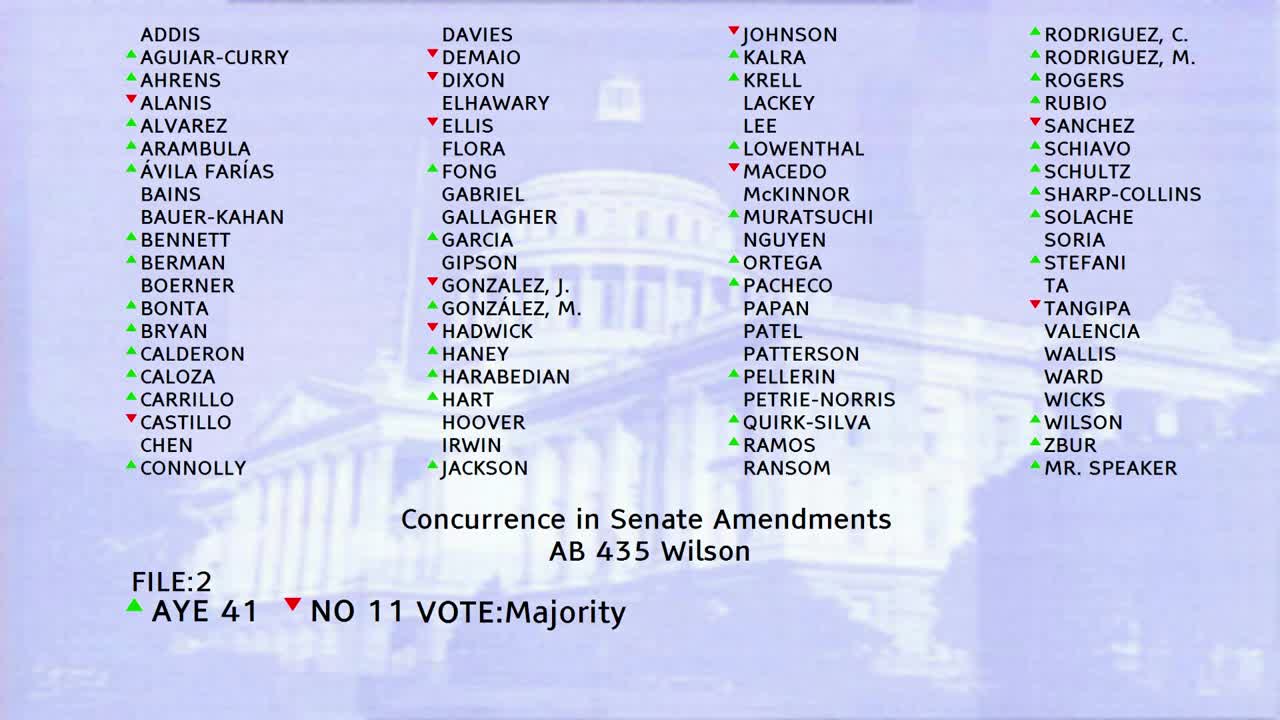 25SEC
Assembly Floor
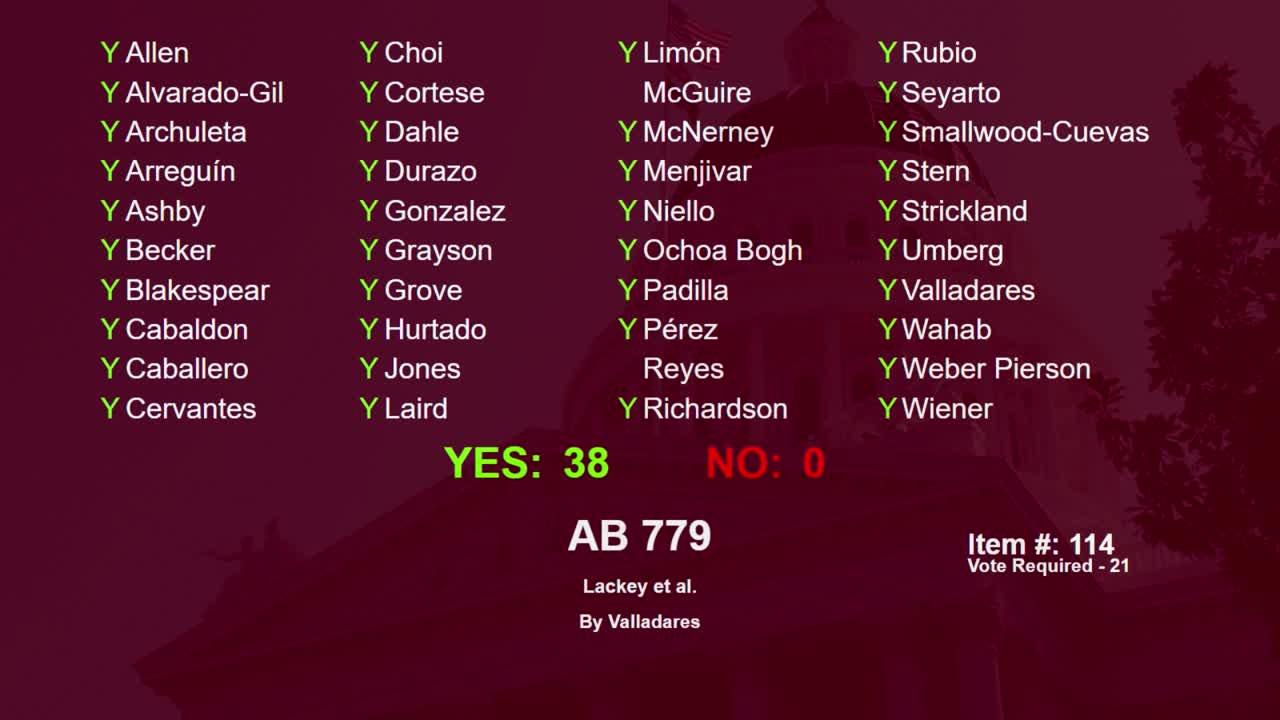 3MIN
Senate Floor
 6MIN
Senate Standing Committee on Transportation
 1MIN
Assembly Floor
Bill Author

Bill Co-Author(s):