AB 867: Veterinary medicine: cat declawing.
- Session Year: 2025-2026
- House: Assembly
- Latest Version Date: 2025-10-09
Current Status:
Passed
(2025-10-09: Chaptered by Secretary of State - Chapter 479, Statutes of 2025.)
Introduced
In Committee
Awaiting First Chamber Vote
Passed First Chamber
In Committee
Awaiting Second Chamber Vote
Passed Second Chamber
Enacted
Existing law, the Veterinary Medicine Practice Act, establishes the California Veterinary Medical Board to regulate the practice of veterinary medicine, and specifies acts the performance of which constitutes the practice of veterinary medicine, surgery, and dentistry, including performing a surgical operation upon an animal. Existing law provides that nothing in the act prohibits a person from practicing veterinary medicine as a bona fide owner of ones own animals. A violation of the act is a crime.
This bill would include the performance of a tendonectomy, onychectomy, or any type of claw removal on a feline within the practice of veterinary medicine, surgery, and dentistry. The bill would require those procedures to be performed only for a therapeutic purpose, as defined, and would authorize the board to deny, revoke, or suspend a license or registration or assess a fine for performing those procedures for any reason other than a therapeutic purpose. This bill would exclude the performance of those procedures from the provisions authorizing a person to practice veterinary medicine as an owner of ones own animals. The bill would specify that the bills provision shall not be interpreted to preempt a local ordinance adopted before January 1, 2026, limiting the performance of the feline declawing procedures identified in the bill. Because a violation of these provisions would be a crime under the act, the bill would impose a state-mandated local program.
This bill would incorporate additional changes to Sections 4827 and 4883 of the Business and Professions Code proposed by AB 1502 to be operative only if this bill and AB 1502 are enacted and this bill is enacted last.
The California Constitution requires the state to reimburse local agencies and school districts for certain costs mandated by the state. Statutory provisions establish procedures for making that reimbursement.
This bill would provide that no reimbursement is required by this act for a specified reason.
Existing law, the Veterinary Medicine Practice Act, establishes the California Veterinary Medical Board to regulate the practice of veterinary medicine, which includes and specifies acts the performance of which constitutes the practice of veterinary medicine, surgery, and dentistry, including performing a surgical operation upon an animal. Existing law provides that nothing in the act prohibits a person from practicing veterinary medicine as a bona fide owner of ones own animals. A violation of the act is a crime.
This bill would prohibit a person from performing a declawing or similar procedures on any cat unless the person is licensed as a veterinarian pursuant to the act and the veterinarian is performing the declawing for a therapeutic purpose, as defined. The bill would require a veterinarian, if they determine declawing is necessary for a therapeutic purpose, to file a written statement with the board that includes, among other information, the purpose for performing the procedure, and would require the veterinarian to also provide a copy of the statement to the owner of the cat. include the performance of a tendonectomy, onychectomy, or any type of claw removal on a feline within the practice of veterinary medicine, surgery, and dentistry. The bill would require those procedures to be performed only for a therapeutic purpose, as defined, and would authorize the board to deny, revoke, or suspend a license or registration or assess a fine for performing those procedures for any reason other than a therapeutic purpose. This bill would exclude the performance of those procedures from the provisions authorizing a person to practice veterinary medicine as an owner of ones own animals. The bill would specify that the bills provision shall not be interpreted to preempt a local ordinance adopted before January 1, 2026, limiting the performance of the feline declawing procedures identified in the bill. Because a violation of these provisions would be a crime under the act, the bill would impose a state-mandated local program. The bill would also make a veterinarians violation of the bills provisions subject to discipline by the board.
The California Constitution requires the state to reimburse local agencies and school districts for certain costs mandated by the state. Statutory provisions establish procedures for making that reimbursement.
This bill would provide that no reimbursement is required by this act for a specified reason.
Existing law makes it a misdemeanor for any person to perform surgical claw removal, declawing, onychectomy, tendonectomy, or similar procedures on a cat that is a member of an exotic or native wild cat species, except solely for a therapeutic purpose.
Existing law, the Veterinary Medicine Practice Act, establishes the California Veterinary Medical Board to regulate the practice of veterinary medicine, which includes performing a surgical operation upon an animal. A violation of the act is a crime.
This bill would prohibit a person from performing a declawing or similar procedures on any cat or other animal unless the person is licensed as a veterinarian pursuant to the act and the veterinarian is performing the declawing for a therapeutic purpose, as defined. The bill would require a veterinarian, if they determine declawing is necessary for a therapeutic purpose, to file a written statement with the board that includes, among other information, the purpose for performing the procedure, and would require the veterinarian to also provide a copy of the statement to the owner of the animal. cat. Because a violation of these provisions would be a crime under the act, the bill would impose a state-mandated local program. The bill would also make a veterinarians violation of the bills provisions subject to discipline by the board.
The California Constitution requires the state to reimburse local agencies and school districts for certain costs mandated by the state. Statutory provisions establish procedures for making that reimbursement.
This bill would provide that no reimbursement is required by this act for a specified reason.
Existing law makes it a misdemeanor for any person to perform surgical claw removal, declawing, onychectomy, tendonectomy, or similar procedures on a cat that is a member of an exotic or native wild cat species, except solely for a therapeutic purpose.
Existing law, the Veterinary Medicine Practice Act, establishes the California Veterinary Medical Board to regulate the practice of veterinary medicine, which includes performing a surgical operation upon an animal. A violation of the act is a crime.
This bill would prohibit a person from performing a declawing or similar procedures on any cat or other animal unless the person is licensed as a veterinarian pursuant to the act and the veterinarian is performing the declawing for a therapeutic purpose, as defined. The bill would require a veterinarian, if they determine declawing is necessary for a therapeutic purpose, to file a written statement with the board that includes, among other information, the purpose for performing the procedure, and would require the veterinarian to also provide a copy of the statement to the owner of the animal. Because a violation of these provisions would be a crime under the act, the bill would impose a state-mandated local program. The bill would also make a veterinarians violation of the bills provisions subject to discipline by the board.
The California Constitution requires the state to reimburse local agencies and school districts for certain costs mandated by the state. Statutory provisions establish procedures for making that reimbursement.
This bill would provide that no reimbursement is required by this act for a specified reason.
A person practices veterinary medicine, surgery, and dentistry, and the various branches thereof, when the person does any one of the following:
(a)Represents oneself as engaged in the practice of veterinary medicine, veterinary surgery, or veterinary dentistry in any of its branches.
(b)Diagnoses or prescribes a drug, medicine, appliance, application, or treatment of whatever nature for the prevention, cure, or relief of a wound, fracture, bodily injury, or disease of animals.
(c)Administers a drug, medicine, appliance, application, or treatment of whatever nature for the prevention, cure, or relief of a wound, fracture, bodily injury, or disease of animals, except where the medicine, appliance, application, or treatment is administered by a registered veterinary technician or a veterinary assistant at the direction of and under the direct supervision of a licensed veterinarian subject to Article 2.5 (commencing with Section 4836) or where the drug, including, but not limited to, a drug that is a controlled substance, is administered by a registered veterinary technician or a veterinary assistant pursuant to Section 4836.1. However, no person, other than a licensed veterinarian, may induce anesthesia unless authorized by regulation of the board.
(d)Performs a surgical or dental operation upon an animal.
(e)Performs a tendonectomy, onychectomy, or any type of claw removal on a feline.
(f)Performs any manual procedure for the diagnosis of pregnancy, sterility, or infertility upon livestock or Equidae.
(g)Collects blood from an animal for the purpose of transferring or selling that blood and blood component products to a licensed veterinarian at a registered premises, except where the blood is collected by a registered veterinary technician or veterinary assistant at the direction of, and under the direct supervision of, a licensed veterinarian subject to Article 2.5 (commencing with Section 4836) or where the blood is collected by a registered veterinary technician or a veterinary assistant pursuant to Section 4836.5. For purposes of this section, blood and blood component products has the same meaning as defined in Section 4920.
(h)Uses any words, letters, or titles in such connection or under such circumstances as to induce the belief that the person using them is engaged in the practice of veterinary medicine, veterinary surgery, or veterinary dentistry. This use shall be prima facie evidence of the intention to represent oneself as engaged in the practice of veterinary medicine, veterinary surgery, or veterinary dentistry.
SEC. 2.Section 4826.8 is added to the Business and Professions Code, to read:4826.8.(a)An onychectomy, tendonectomy, surgical claw removal, or declaw on any feline or any procedure to otherwise alter a felines toes, claws, or paws to prevent or impair the normal function of the felines toes, claws, or paws shall be performed solely for a therapeutic purpose.
(b)For purposes of this section, therapeutic purpose means a medically necessary procedure to address an existing or recurring infection, disease, injury, or abnormal condition in the claws, nail bed, or toe bone, which jeopardizes the felines health. Therapeutic purpose does not include a procedure performed for a cosmetic or aesthetic purpose or to make the feline more convenient to keep or handle.
(c)This section shall not prohibit a veterinarian from nail trimming or applying nonsurgical scratching mitigation solutions, such as the application of a device to the tip of a claw.
SEC. 3.Section 4827 of the Business and Professions Code is amended to read:4827.(a)Nothing in this chapter prohibits any person from:
(1)Practicing veterinary medicine as a bona fide owner of ones own animals, except for the procedures specified in Section 4826.8. This exemption applies to the following:
(A)The owners bona fide employees.
(B)Any person assisting the owner, provided that the practice is performed gratuitously.
(2)Lay testing of poultry by the whole blood agglutination test. For purposes of this section, poultry means flocks of avian species maintained for food production, including, but not limited to, chickens, turkeys, and exotic fowl.
(3)Making any determination as to the status of pregnancy, sterility, or infertility upon livestock, equine, or food animals at the time an animal is being inseminated, providing no charge is made for this determination.
(4)Administering sodium pentobarbital for euthanasia of sick, injured, homeless, or surrendered domestic pets or animals without the presence of a veterinarian when the person is an employee of an animal control shelter and its agencies or humane society and has received proper training in the administration of sodium pentobarbital for these purposes.
(5)Providing the following care to animals lawfully deposited with or impounded by a shelter not registered with the board pursuant to Section 4853:
(A)Administering preventative or prophylactic nonprescription vaccinations to the animal pursuant to protocols written by a veterinarian licensed in this state for the purposes of preventing the spread of communicable diseases, without the presence of a veterinarian when the person has received proper training in the administration of the nonprescription preventative or prophylactic vaccinations.
(B)Administering nonprescription medications to the animal pursuant to protocols written by a veterinarian licensed in this state, for the control or eradication of apparent or anticipated internal or external parasites, including, but not limited to, fleas, ticks, or worms, without the presence of a veterinarian when the person has received proper training in the administration of the nonprescription medications for the control or eradication of those internal or external parasites. A persons decision to administer these medications shall not be construed to mean the person has made a diagnosis of the animals medical condition.
(C)Administering medications prescribed by a veterinarian licensed in the state to the animal without the presence of a veterinarian when the shelter has received a written treatment plan from the licensed veterinarian for that specific animal and has a dispensing protocol in place for the tracking of dispensed prescribed medications and when the person has received proper training in the administration of prescription medications.
(b)For the purposes of paragraph (5) of subdivision (a):
(1)Proper training means completing a training curriculum of at least four hours provided by a veterinarian licensed to practice in this state, and includes, but is not limited to, an overview of intake procedures and preventative medicine, recognizing when an animal is required to be seen by a veterinarian, prescription and nonprescription medications, humane animal restraint techniques, vaccination injection methods and procedures, and documentation.
(2)Shelter means a public animal control agency or shelter, society for the prevention of cruelty to animals shelter, or humane society shelter that is not registered with the board pursuant to Section 4853.
(c)A shelter providing care to an animal pursuant to this section that is not registered with the board pursuant to Section 4853 shall report to the board any adverse event resulting in significant impairment or death from the care provided, on a form prescribed by the board, including severe injuries, infections, and unintended reactions caused by the incorrect or inappropriate administration of a vaccine or medications.
SEC. 3.5.Section 4827 of the Business and Professions Code is amended to read:4827.(a)Nothing in this chapter prohibits any person from:
(1)Practicing veterinary medicine as a bona fide owner of ones own animals, except for the procedures specified in Section 4826.8. This exemption applies to the following:
(A)The owners bona fide employees.
(B)Any person assisting the owner, provided that the practice is performed gratuitously.
(2)Lay testing of poultry by the whole blood agglutination test. For purposes of this section, poultry means flocks of avian species maintained for food production, including, but not limited to, chickens, turkeys, and exotic fowl.
(3)Making any determination as to the status of pregnancy, sterility, or infertility upon livestock, equine, or food animals at the time an animal is being inseminated, providing no charge is made for this determination.
(4)Administering sodium pentobarbital for euthanasia of sick, injured, homeless, or surrendered domestic pets or animals without the presence of a veterinarian when the person is administering the treatment in their capacity as an employee of an animal control shelter and its agencies or humane society and has received proper training in the administration of sodium pentobarbital for these purposes.
(5)Providing the following care to animals lawfully deposited with or impounded by a shelter not registered with the board pursuant to Section 4853:
(A)Administering preventative or prophylactic nonprescription vaccinations to the animal pursuant to protocols written by a veterinarian licensed in this state for the purposes of preventing the spread of communicable diseases, without the presence of a veterinarian when the person has received proper training in the administration of the nonprescription preventative or prophylactic vaccinations.
(B)Administering nonprescription medications to the animal pursuant to protocols written by a veterinarian licensed in this state, for the control or eradication of apparent or anticipated internal or external parasites, including, but not limited to, fleas, ticks, or worms, without the presence of a veterinarian when the person has received proper training in the administration of the nonprescription medications for the control or eradication of those internal or external parasites. A persons decision to administer these medications shall not be construed to mean the person has made a diagnosis of the animals medical condition.
(C)Administering medications prescribed by a veterinarian licensed in the state to the animal without the presence of a veterinarian when the shelter has received a written treatment plan from the licensed veterinarian for that specific animal and has a dispensing protocol in place for the tracking of dispensed prescribed medications and when the person has received proper training in the administration of prescription medications.
(b)For the purposes of paragraph (5) of subdivision (a):
(1)Proper training means completing a training curriculum of at least four hours provided by a veterinarian licensed to practice in this state, and includes, but is not limited to, an overview of intake procedures and preventative medicine, recognizing when an animal is required to be seen by a veterinarian, prescription and nonprescription medications, humane animal restraint techniques, vaccination injection methods and procedures, and documentation.
(2)Shelter means a public animal control agency or shelter, society for the prevention of cruelty to animals shelter, or humane society shelter that is not registered with the board pursuant to Section 4853.
(c)A shelter providing care to an animal pursuant to this section that is not registered with the board pursuant to Section 4853 shall report to the board any adverse event resulting in significant impairment or death from the care provided, on a form prescribed by the board, including severe injuries, infections, and unintended reactions caused by the incorrect or inappropriate administration of a vaccine or medications.
SEC. 4.Section 4883 of the Business and Professions Code is amended to read:4883.The board may deny, revoke, or suspend a license or registration or assess a fine as provided in Section 4875 for any of the following:
(a)Conviction of a crime substantially related to the qualifications, functions, or duties of veterinary medicine, surgery, or dentistry, in which case the record of the conviction shall be conclusive evidence.
(b)For having professional connection with, or lending the licensees or registrants name to, any illegal practitioner of veterinary medicine and the various branches thereof.
(c)Violation or attempting to violate, directly or indirectly, any of the provisions of this chapter.
(d)Fraud or dishonesty in applying, treating, or reporting on tuberculin or other biological tests.
(e)Employment of anyone but a veterinarian licensed in the state to demonstrate the use of biologics in the treatment of animals.
(f)False or misleading advertising.
(g)Unprofessional conduct, that includes, but is not limited to, the following:
(1)Conviction of a charge of violating any federal statutes or rules or any statute or rule of this state regulating dangerous drugs or controlled substances. The record of the conviction is conclusive evidence thereof. A plea or verdict of guilty or a conviction following a plea of nolo contendere is deemed to be a conviction within the meaning of this section. The board may order the license or registration to be suspended or revoked, or assess a fine, or decline to issue a license or registration, when the time for appeal has elapsed, or the judgment of conviction has been affirmed on appeal or when an order granting probation is made suspending the imposition of sentence, irrespective of a subsequent order under Section 1203.4, 1210.1, or 3063.1 of the Penal Code allowing the person to withdraw a plea of guilty and to enter a plea of not guilty, or setting aside the verdict of guilty, or dismissing the accusation, information, or indictment.
(2)(A)The use of, or prescribing for or administering to oneself, any controlled substance.
(B)The use of any of the dangerous drugs specified in Section 4022, or of alcoholic beverages to the extent, or in any manner as to be dangerous or injurious to a person licensed or registered under this chapter, or to any other person or to the public, or to the extent that the use impairs the ability of the person so licensed or registered to conduct with safety the practice authorized by the license or registration.
(C)The conviction of more than one misdemeanor or any felony involving the use, consumption, or self-administration of any of the substances referred to in this section or any combination thereof, and the record of the conviction is conclusive evidence.
A plea or verdict of guilty or a conviction following a plea of nolo contendere is deemed to be a conviction within the meaning of this section. The board may order the license or registration to be suspended or revoked or assess a fine, or may decline to issue a license or registration, when the time for appeal has elapsed or the judgment of conviction has been affirmed on appeal or when an order granting probation is made suspending imposition of sentence, irrespective of a subsequent order under Section 1203.4, 1210.1, or 3063.1 of the Penal Code allowing the person to withdraw a plea of guilty and to enter a plea of not guilty, or setting aside the verdict of guilty, or dismissing the accusation, information, or indictment.
(3)A violation of any federal statute, rule, or regulation or any of the statutes, rules, or regulations of this state regulating dangerous drugs or controlled substances.
(h)Failure to keep the licensees or registrants premises and all equipment therein in a clean and sanitary condition.
(i)Fraud, deception, negligence, or incompetence in the practice of veterinary medicine.
(j)Aiding or abetting in any acts that are in violation of any of the provisions of this chapter.
(k)The employment of fraud, misrepresentation, or deception in obtaining the license or registration.
(l)The revocation, suspension, or other discipline by another state or territory of a license, certificate, or registration to practice veterinary medicine or as a veterinary technician in that state or territory.
(m)Cruelty to animals, conviction on a charge of cruelty to animals, or both.
(n)Disciplinary action taken by any public agency in any state or territory for any act substantially related to the practice of veterinary medicine or the practice of a veterinary technician.
(o)Violation, or the assisting or abetting violation, of any regulations adopted by the board pursuant to this chapter.
(p)Accepting, soliciting, or offering any form of remuneration from or to a cannabis licensee if the veterinarian or the veterinarians immediate family have a financial interest with the cannabis licensee. For purposes of this subdivision, the following definitions shall apply:
(1)Cannabis licensee shall have the same meaning as licensee in Section 26001.
(2)Financial interest shall have the same meaning as in Section 650.01.
(q)Discussing or recommending cannabis for use with a client while the veterinarian is employed by, or has an agreement with, a cannabis licensee. For purposes of this subdivision, cannabis licensee shall have the same meaning as licensee in Section 26001.
(r)Distributing any form of advertising for cannabis in California.
(s)Making any statement, claim, or advertisement that the licensee or registrant is a veterinary specialist or board certified unless they are certified by an American Veterinary Medical Association-Recognized Veterinary Specialty Organization or a National Association of Veterinary Technicians in America-Recognized Veterinary Specialty Organization.
(t)Exercising control over, interfering with, or attempting to influence the professional judgment of another California-licensed veterinarian or registered veterinary technician through coercion, extortion, inducement, collusion, or intimidation through any means, including, but not limited to, compensation, in order to require the other California-licensed veterinarian or registered veterinary technician to perform veterinary services in a manner inconsistent with current veterinary medical practice in this state.
(u)Performing a surgical claw removal, declawing, onychectomy, or a tendonectomy on any feline or otherwise altering a felines toes, claws, or paws to prevent or impair the normal function of the felines toes, claws, or paws for any reason other than a therapeutic purpose.
SEC. 4.5.Section 4883 of the Business and Professions Code is amended to read:4883.The board may deny, revoke, suspend, or place on probation a license, registration, or permit or assess a fine as provided in Section 4875 for any of the following:
(a)Conviction of a crime substantially related to the qualifications, functions, or duties of veterinary medicine, surgery, or dentistry, in which case the record of the conviction shall be conclusive evidence.
(b)For having professional connection with, or lending the licensees, registrants, or permitholders name to, any illegal practitioner of veterinary medicine and the various branches thereof.
(c)Violation or attempting to violate, directly or indirectly, any of the provisions of this chapter.
(d)Fraud or dishonesty in applying, treating, or reporting on tuberculin or other biological tests.
(e)Employment of anyone but a veterinarian licensed in the state to demonstrate the use of biologics in the treatment of animals.
(f)False or misleading advertising.
(g)Unprofessional conduct, that includes, but is not limited to, the following:
(1)Conviction of a charge of violating any federal statutes or rules or any statute or rule of this state regulating dangerous drugs or controlled substances. The record of the conviction is conclusive evidence thereof. A plea or verdict of guilty or a conviction following a plea of nolo contendere is deemed to be a conviction within the meaning of this section. The board may order the license, registration, or permit to be suspended or revoked, or assess a fine, or decline to issue a license, registration, or permit when the time for appeal has elapsed, or the judgment of conviction has been affirmed on appeal or when an order granting probation is made suspending the imposition of sentence, irrespective of a subsequent order under Section 1203.4, 1210.1, or 3063.1 of the Penal Code allowing the person to withdraw a plea of guilty and to enter a plea of not guilty, or setting aside the verdict of guilty, or dismissing the accusation, information, or indictment.
(2)(A)The use of, or prescribing for or administering to oneself, any controlled substance.
(B)The use of any of the dangerous drugs specified in Section 4022, or of alcoholic beverages to the extent, or in any manner as to be dangerous or injurious to a person issued a license, registration, or permit under this chapter, or to any other person or to the public, or to the extent that the use impairs the ability of the licensee, registrant, or permitholder to conduct with safety the practice authorized by the license, registration, or permit.
(C)The conviction of more than one misdemeanor or any felony involving the use, consumption, or self-administration of any of the substances referred to in this section or any combination thereof, and the record of the conviction is conclusive evidence.
A plea or verdict of guilty or a conviction following a plea of nolo contendere is deemed to be a conviction within the meaning of this section. The board may order the license, registration, or permit to be suspended or revoked or assess a fine, or may decline to issue a license, registration, or permit when the time for appeal has elapsed or the judgment of conviction has been affirmed on appeal or when an order granting probation is made suspending imposition of sentence, irrespective of a subsequent order under Section 1203.4, 1210.1, or 3063.1 of the Penal Code allowing the person to withdraw a plea of guilty and to enter a plea of not guilty, or setting aside the verdict of guilty, or dismissing the accusation, information, or indictment.
(3)A violation of any federal statute, rule, or regulation or any of the statutes, rules, or regulations of this state regulating dangerous drugs, including antimicrobial drugs in animal feed, or controlled substances.
(h)Failure to keep the licensees or registrants premises and all equipment therein in a clean and sanitary condition.
(i)Fraud, deception, negligence, or incompetence in the practice of veterinary medicine.
(j)Aiding or abetting in any acts that are in violation of any of the provisions of this chapter.
(k)The employment of fraud, misrepresentation, or deception in obtaining the license, registration, or permit.
(l)The revocation, suspension, or other discipline by another state or territory of a license, certificate, or registration to practice veterinary medicine or as a veterinary technician in that state or territory.
(m)Cruelty to animals, conviction on a charge of cruelty to animals, or both.
(n)Disciplinary action taken by any public agency in any state or territory for any act substantially related to the practice of veterinary medicine or the practice of a veterinary technician, or veterinary assistant controlled substance permitholder.
(o)Violation, or the assisting or abetting violation, of any regulations adopted by the board pursuant to this chapter.
(p)Accepting, soliciting, or offering any form of remuneration from or to a cannabis licensee if the veterinarian or the veterinarians immediate family have a financial interest with the cannabis licensee. For purposes of this subdivision, the following definitions shall apply:
(1)Cannabis licensee shall have the same meaning as licensee in Section 26001.
(2)Financial interest shall have the same meaning as in Section 650.01.
(q)Discussing or recommending cannabis for use with a client while the veterinarian is employed by, or has an agreement with, a cannabis licensee. For purposes of this subdivision, cannabis licensee shall have the same meaning as licensee in Section 26001.
(r)Distributing any form of advertising for cannabis in California.
(s)Making any statement, claim, or advertisement that the licensee or registrant is a veterinary specialist or board certified unless they are certified by an American Veterinary Medical Association-Recognized Veterinary Specialty Organization or a National Association of Veterinary Technicians in America-Recognized Veterinary Specialty Organization.
(t)Exercising control over, interfering with, or attempting to influence the professional judgment of another California-licensed veterinarian or registered veterinary technician through coercion, extortion, inducement, collusion, or intimidation through any means, including, but not limited to, compensation, in order to require the other California-licensed veterinarian or registered veterinary technician to perform veterinary services in a manner inconsistent with current veterinary medical practice in this state.
(u)Performing a surgical claw removal, declawing, onychectomy, or a tendonectomy on any feline or otherwise altering a felines toes, claws, or paws to prevent or impair the normal function of the felines toes, claws, or paws for any reason other than a therapeutic purpose.
SEC. 5.Nothing in this measure shall be interpreted to preempt any local ordinance adopted before January 1, 2026, limiting the performance of the feline declawing procedures identified in this measure, or any penalties imposed for a violation of the ordinance.
SEC. 6.Section 3.5 of this bill incorporates amendments to Section 4827 of the Business and Professions Code proposed by both this bill and Assembly Bill 1502. That section of this bill shall only become operative if (1) both bills are enacted and become effective on or before January 1, 2026, (2) each bill amends Section 4827 of the Business and Professions Code, and (3) this bill is enacted after Assembly Bill 1502, in which case Section 3 of this bill shall not become operative.
SEC. 7.Section 4.5 of this bill incorporates amendments to Section 4883 of the Business and Professions Code proposed by both this bill and Assembly Bill 1502. That section of this bill shall only become operative if (1) both bills are enacted and become effective on or before January 1, 2026, (2) each bill amends Section 4883 of the Business and Professions Code, and (3) this bill is enacted after Assembly Bill 1502, in which case Section 4 of this bill shall not become operative.
SEC. 8.No reimbursement is required by this act pursuant to Section 6 of Article XIIIB of the California Constitution because the only costs that may be incurred by a local agency or school district will be incurred because this act creates a new crime or infraction, eliminates a crime or infraction, or changes the penalty for a crime or infraction, within the meaning of Section 17556 of the Government Code, or changes the definition of a crime within the meaning of Section 6 of Article XIIIB of the California Constitution.
A person practices veterinary medicine, surgery, and dentistry, and the various branches thereof, when the person does any one of the following:
(a)Represents oneself as engaged in the practice of veterinary medicine, veterinary surgery, or veterinary dentistry in any of its branches.
(b)Diagnoses or prescribes a drug, medicine, appliance, application, or treatment of whatever nature for the prevention, cure, or relief of a wound, fracture, bodily injury, or disease of animals.
(c)Administers a drug, medicine, appliance, application, or treatment of whatever nature for the prevention, cure, or relief of a wound, fracture, bodily injury, or disease of animals, except where the medicine, appliance, application, or treatment is administered by a registered veterinary technician or a veterinary assistant at the direction of and under the direct supervision of a licensed veterinarian subject to Article 2.5 (commencing with Section 4836) or where the drug, including, but not limited to, a drug that is a controlled substance, is administered by a registered veterinary technician or a veterinary assistant pursuant to Section 4836.1. However, no person, other than a licensed veterinarian, may induce anesthesia unless authorized by regulation of the board.
(d)Performs a surgical or dental operation upon an animal.
(e)Performs a tendonectomy, onychectomy, or any type of claw removal on a feline.
(f)Performs any manual procedure for the diagnosis of pregnancy, sterility, or infertility upon livestock or Equidae.
(g)Collects blood from an animal for the purpose of transferring or selling that blood and blood component products to a licensed veterinarian at a registered premises, except where the blood is collected by a registered veterinary technician or veterinary assistant at the direction of, and under the direct supervision of, a licensed veterinarian subject to Article 2.5 (commencing with Section 4836) or where the blood is collected by a registered veterinary technician or a veterinary assistant pursuant to Section 4836.5. For purposes of this section, blood and blood component products has the same meaning as defined in Section 4920.
(h)Uses any words, letters, or titles in such connection or under such circumstances as to induce the belief that the person using them is engaged in the practice of veterinary medicine, veterinary surgery, or veterinary dentistry. This use shall be prima facie evidence of the intention to represent oneself as engaged in the practice of veterinary medicine, veterinary surgery, or veterinary dentistry.
SEC. 2.Section 4826.8 is added to the Business and Professions Code, to read:4826.8.(a)An onychectomy, tendonectomy, surgical claw removal, or declaw on any feline or any procedure to otherwise alter a felines toes, claws, or paws to prevent or impair the normal function of the felines toes, claws, or paws shall be performed solely for a therapeutic purpose.
(b)For purposes of this section, therapeutic purpose means a medically necessary procedure to address an existing or recurring infection, disease, injury, or abnormal condition in the claws, nail bed, or toe bone, which jeopardizes the felines health. Therapeutic purpose does not include a procedure performed for a cosmetic or aesthetic purpose or to make the feline more convenient to keep or handle.
(c)This section shall not prohibit a veterinarian from nail trimming or applying nonsurgical scratching mitigation solutions, such as the application of a device to the tip of a claw.
SEC. 3.Section 4827 of the Business and Professions Code is amended to read:4827.(a)Nothing in this chapter prohibits any person from:
(1)Practicing veterinary medicine as a bona fide owner of ones own animals, except for the procedures specified in Section 4826.8. This exemption applies to the following:
(A)The owners bona fide employees.
(B)Any person assisting the owner, provided that the practice is performed gratuitously.
(2)Lay testing of poultry by the whole blood agglutination test. For purposes of this section, poultry means flocks of avian species maintained for food production, including, but not limited to, chickens, turkeys, and exotic fowl.
(3)Making any determination as to the status of pregnancy, sterility, or infertility upon livestock, equine, or food animals at the time an animal is being inseminated, providing no charge is made for this determination.
(4)Administering sodium pentobarbital for euthanasia of sick, injured, homeless, or surrendered domestic pets or animals without the presence of a veterinarian when the person is an employee of an animal control shelter and its agencies or humane society and has received proper training in the administration of sodium pentobarbital for these purposes.
(5)Providing the following care to animals lawfully deposited with or impounded by a shelter not registered with the board pursuant to Section 4853:
(A)Administering preventative or prophylactic nonprescription vaccinations to the animal pursuant to protocols written by a veterinarian licensed in this state for the purposes of preventing the spread of communicable diseases, without the presence of a veterinarian when the person has received proper training in the administration of the nonprescription preventative or prophylactic vaccinations.
(B)Administering nonprescription medications to the animal pursuant to protocols written by a veterinarian licensed in this state, for the control or eradication of apparent or anticipated internal or external parasites, including, but not limited to, fleas, ticks, or worms, without the presence of a veterinarian when the person has received proper training in the administration of the nonprescription medications for the control or eradication of those internal or external parasites. A persons decision to administer these medications shall not be construed to mean the person has made a diagnosis of the animals medical condition.
(C)Administering medications prescribed by a veterinarian licensed in the state to the animal without the presence of a veterinarian when the shelter has received a written treatment plan from the licensed veterinarian for that specific animal and has a dispensing protocol in place for the tracking of dispensed prescribed medications and when the person has received proper training in the administration of prescription medications.
(b)For the purposes of paragraph (5) of subdivision (a):
(1)Proper training means completing a training curriculum of at least four hours provided by a veterinarian licensed to practice in this state, and includes, but is not limited to, an overview of intake procedures and preventative medicine, recognizing when an animal is required to be seen by a veterinarian, prescription and nonprescription medications, humane animal restraint techniques, vaccination injection methods and procedures, and documentation.
(2)Shelter means a public animal control agency or shelter, society for the prevention of cruelty to animals shelter, or humane society shelter that is not registered with the board pursuant to Section 4853.
(c)A shelter providing care to an animal pursuant to this section that is not registered with the board pursuant to Section 4853 shall report to the board any adverse event resulting in significant impairment or death from the care provided, on a form prescribed by the board, including severe injuries, infections, and unintended reactions caused by the incorrect or inappropriate administration of a vaccine or medications.
SEC. 3.5.Section 4827 of the Business and Professions Code is amended to read:4827.(a)Nothing in this chapter prohibits any person from:
(1)Practicing veterinary medicine as a bona fide owner of ones own animals. animals, except for the procedures specified in Section 4826.8. This exemption applies to the following:
(A)The owners bona fide employees.
(B)Any person assisting the owner, provided that the practice is performed gratuitously.
(2)Lay testing of poultry by the whole blood agglutination test. For purposes of this section, poultry means flocks of avian species maintained for food production, including, but not limited to, chickens, turkeys, and exotic fowl.
(3)Making any determination as to the status of pregnancy, sterility, or infertility upon livestock, equine, or food animals at the time an animal is being inseminated, providing no charge is made for this determination.
(4)Administering sodium pentobarbital for euthanasia of sick, injured, homeless, or surrendered domestic pets or animals without the presence of a veterinarian when the person is administering the treatment in their capacity as an employee of an animal control shelter and its agencies or humane society and has received proper training in the administration of sodium pentobarbital for these purposes.
(5)Providing the following care to animals lawfully deposited with or impounded by a shelter not registered with the board pursuant to Section 4853:
(A)Administering preventative or prophylactic nonprescription vaccinations to the animal pursuant to protocols written by a veterinarian licensed in this state for the purposes of preventing the spread of communicable diseases, without the presence of a veterinarian when the person has received proper training in the administration of the nonprescription preventative or prophylactic vaccinations.
(B)Administering nonprescription medications to the animal pursuant to protocols written by a veterinarian licensed in this state, for the control or eradication of apparent or anticipated internal or external parasites, including, but not limited to, fleas, ticks, or worms, without the presence of a veterinarian when the person has received proper training in the administration of the nonprescription medications for the control or eradication of those internal or external parasites. A persons decision to administer these medications shall not be construed to mean the person has made a diagnosis of the animals medical condition.
(C)Administering medications prescribed by a veterinarian licensed in the state to the animal without the presence of a veterinarian when the shelter has received a written treatment plan from the licensed veterinarian for that specific animal and has a dispensing protocol in place for the tracking of dispensed prescribed medications and when the person has received proper training in the administration of prescription medications.
(b)For the purposes of paragraph (5) of subdivision (a):
(1)Proper training means completing a training curriculum of at least four hours provided by a veterinarian licensed to practice in this state, and includes, but is not limited to, an overview of intake procedures and preventative medicine, recognizing when an animal is required to be seen by a veterinarian, prescription and nonprescription medications, humane animal restraint techniques, vaccination injection methods and procedures, and documentation.
(2)Shelter means a public animal control agency or shelter, society for the prevention of cruelty to animals shelter, or humane society shelter that is not registered with the board pursuant to Section 4853.
(c)A shelter providing care to an animal pursuant to this section that is not registered with the board pursuant to Section 4853 shall report to the board any adverse event resulting in significant impairment or death from the care provided, on a form prescribed by the board, including severe injuries, infections, and unintended reactions caused by the incorrect or inappropriate administration of a vaccine or medications.
SEC. 4.Section 4883 of the Business and Professions Code is amended to read:4883.The board may deny, revoke, or suspend a license or registration or assess a fine as provided in Section 4875 for any of the following:
(a)Conviction of a crime substantially related to the qualifications, functions, or duties of veterinary medicine, surgery, or dentistry, in which case the record of the conviction shall be conclusive evidence.
(b)For having professional connection with, or lending the licensees or registrants name to, any illegal practitioner of veterinary medicine and the various branches thereof.
(c)Violation or attempting to violate, directly or indirectly, any of the provisions of this chapter.
(d)Fraud or dishonesty in applying, treating, or reporting on tuberculin or other biological tests.
(e)Employment of anyone but a veterinarian licensed in the state to demonstrate the use of biologics in the treatment of animals.
(f)False or misleading advertising.
(g)Unprofessional conduct, that includes, but is not limited to, the following:
(1)Conviction of a charge of violating any federal statutes or rules or any statute or rule of this state regulating dangerous drugs or controlled substances. The record of the conviction is conclusive evidence thereof. A plea or verdict of guilty or a conviction following a plea of nolo contendere is deemed to be a conviction within the meaning of this section. The board may order the license or registration to be suspended or revoked, or assess a fine, or decline to issue a license or registration, when the time for appeal has elapsed, or the judgment of conviction has been affirmed on appeal or when an order granting probation is made suspending the imposition of sentence, irrespective of a subsequent order under Section 1203.4, 1210.1, or 3063.1 of the Penal Code allowing the person to withdraw a plea of guilty and to enter a plea of not guilty, or setting aside the verdict of guilty, or dismissing the accusation, information, or indictment.
(2)(A)The use of, or prescribing for or administering to oneself, any controlled substance.
(B)The use of any of the dangerous drugs specified in Section 4022, or of alcoholic beverages to the extent, or in any manner as to be dangerous or injurious to a person licensed or registered under this chapter, or to any other person or to the public, or to the extent that the use impairs the ability of the person so licensed or registered to conduct with safety the practice authorized by the license or registration.
(C)The conviction of more than one misdemeanor or any felony involving the use, consumption, or self-administration of any of the substances referred to in this section or any combination thereof, and the record of the conviction is conclusive evidence.
A plea or verdict of guilty or a conviction following a plea of nolo contendere is deemed to be a conviction within the meaning of this section. The board may order the license or registration to be suspended or revoked or assess a fine, or may decline to issue a license or registration, when the time for appeal has elapsed or the judgment of conviction has been affirmed on appeal or when an order granting probation is made suspending imposition of sentence, irrespective of a subsequent order under Section 1203.4, 1210.1, or 3063.1 of the Penal Code allowing the person to withdraw a plea of guilty and to enter a plea of not guilty, or setting aside the verdict of guilty, or dismissing the accusation, information, or indictment.
(3)A violation of any federal statute, rule, or regulation or any of the statutes, rules, or regulations of this state regulating dangerous drugs or controlled substances.
(h)Failure to keep the licensees or registrants premises and all equipment therein in a clean and sanitary condition.
(i)Fraud, deception, negligence, or incompetence in the practice of veterinary medicine.
(j)Aiding or abetting in any acts that are in violation of any of the provisions of this chapter.
(k)The employment of fraud, misrepresentation, or deception in obtaining the license or registration.
(l)The revocation, suspension, or other discipline by another state or territory of a license, certificate, or registration to practice veterinary medicine or as a veterinary technician in that state or territory.
(m)Cruelty to animals, conviction on a charge of cruelty to animals, or both.
(n)Disciplinary action taken by any public agency in any state or territory for any act substantially related to the practice of veterinary medicine or the practice of a veterinary technician.
(o)Violation, or the assisting or abetting violation, of any regulations adopted by the board pursuant to this chapter.
(p)Accepting, soliciting, or offering any form of remuneration from or to a cannabis licensee if the veterinarian or the veterinarians immediate family have a financial interest with the cannabis licensee. For purposes of this subdivision, the following definitions shall apply:
(1)Cannabis licensee shall have the same meaning as licensee in Section 26001.
(2)Financial interest shall have the same meaning as in Section 650.01.
(q)Discussing or recommending cannabis for use with a client while the veterinarian is employed by, or has an agreement with, a cannabis licensee. For purposes of this subdivision, cannabis licensee shall have the same meaning as licensee in Section 26001.
(r)Distributing any form of advertising for cannabis in California.
(s)Making any statement, claim, or advertisement that the licensee or registrant is a veterinary specialist or board certified unless they are certified by an American Veterinary Medical Association-Recognized Veterinary Specialty Organization or a National Association of Veterinary Technicians in America-Recognized Veterinary Specialty Organization.
(t)Exercising control over, interfering with, or attempting to influence the professional judgment of another California-licensed veterinarian or registered veterinary technician through coercion, extortion, inducement, collusion, or intimidation through any means, including, but not limited to, compensation, in order to require the other California-licensed veterinarian or registered veterinary technician to perform veterinary services in a manner inconsistent with current veterinary medical practice in this state.
(u)Performing a surgical claw removal, declawing, onychectomy, or a tendonectomy on any feline or otherwise altering a felines toes, claws, or paws to prevent or impair the normal function of the felines toes, claws, or paws for any reason other than a therapeutic purpose.
SEC. 4.5.Section 4883 of the Business and Professions Code is amended to read:4883.The board may deny, revoke, or suspend a license or registration suspend, or place on probation a license, registration, or permit or assess a fine as provided in Section 4875 for any of the following:
(a)Conviction of a crime substantially related to the qualifications, functions, or duties of veterinary medicine, surgery, or dentistry, in which case the record of the conviction shall be conclusive evidence.
(b)For having professional connection with, or lending the licensees or registrants licensees, registrants, or permitholders name to, any illegal practitioner of veterinary medicine and the various branches thereof.
(c)Violation or attempting to violate, directly or indirectly, any of the provisions of this chapter.
(d)Fraud or dishonesty in applying, treating, or reporting on tuberculin or other biological tests.
(e)Employment of anyone but a veterinarian licensed in the state to demonstrate the use of biologics in the treatment of animals.
(f)False or misleading advertising.
(g)Unprofessional conduct, that includes, but is not limited to, the following:
(1)Conviction of a charge of violating any federal statutes or rules or any statute or rule of this state regulating dangerous drugs or controlled substances. The record of the conviction is conclusive evidence thereof. A plea or verdict of guilty or a conviction following a plea of nolo contendere is deemed to be a conviction within the meaning of this section. The board may order the license or registration license, registration, or permit to be suspended or revoked, or assess a fine, or decline to issue a license or registration, license, registration, or permit when the time for appeal has elapsed, or the judgment of conviction has been affirmed on appeal or when an order granting probation is made suspending the imposition of sentence, irrespective of a subsequent order under Section 1203.4, 1210.1, or 3063.1 of the Penal Code allowing the person to withdraw a plea of guilty and to enter a plea of not guilty, or setting aside the verdict of guilty, or dismissing the accusation, information, or indictment.
(2)(A)The use of, or prescribing for or administering to oneself, any controlled substance.
(B)The use of any of the dangerous drugs specified in Section 4022, or of alcoholic beverages to the extent, or in any manner as to be dangerous or injurious to a person licensed or registered issued a license, registration, or permit under this chapter, or to any other person or to the public, or to the extent that the use impairs the ability of the person so licensed or registered licensee, registrant, or permitholder to conduct with safety the practice authorized by the license or registration. license, registration, or permit.
(C)The conviction of more than one misdemeanor or any felony involving the use, consumption, or self-administration of any of the substances referred to in this section or any combination thereof, and the record of the conviction is conclusive evidence.
A plea or verdict of guilty or a conviction following a plea of nolo contendere is deemed to be a conviction within the meaning of this section. The board may order the license or registration license, registration, or permit to be suspended or revoked or assess a fine, or may decline to issue a license or registration, license, registration, or permit when the time for appeal has elapsed or the judgment of conviction has been affirmed on appeal or when an order granting probation is made suspending imposition of sentence, irrespective of a subsequent order under Section 1203.4, 1210.1, or 3063.1 of the Penal Code allowing the person to withdraw a plea of guilty and to enter a plea of not guilty, or setting aside the verdict of guilty, or dismissing the accusation, information, or indictment.
(3)A violation of any federal statute, rule, or regulation or any of the statutes, rules, or regulations of this state regulating dangerous drugs drugs, including antimicrobial drugs in animal feed, or controlled substances.
(h)Failure to keep the licensees or registrants premises and all equipment therein in a clean and sanitary condition.
(i)Fraud, deception, negligence, or incompetence in the practice of veterinary medicine.
(j)Aiding or abetting in any acts that are in violation of any of the provisions of this chapter.
(k)The employment of fraud, misrepresentation, or deception in obtaining the license or registration. license, registration, or permit.
(l)The revocation, suspension, or other discipline by another state or territory of a license, certificate, or registration to practice veterinary medicine or as a veterinary technician in that state or territory.
(m)Cruelty to animals, conviction on a charge of cruelty to animals, or both.
(n)Disciplinary action taken by any public agency in any state or territory for any act substantially related to the practice of veterinary medicine or the practice of a veterinary technician. technician, or veterinary assistant controlled substance permitholder.
(o)Violation, or the assisting or abetting violation, of any regulations adopted by the board pursuant to this chapter.
(p)Accepting, soliciting, or offering any form of remuneration from or to a cannabis licensee if the veterinarian or the veterinarians immediate family have a financial interest with the cannabis licensee. For purposes of this subdivision, the following definitions shall apply:
(1)Cannabis licensee shall have the same meaning as licensee in Section 26001.
(2)Financial interest shall have the same meaning as in Section 650.01.
(q)Discussing or recommending cannabis for use with a client while the veterinarian is employed by, or has an agreement with, a cannabis licensee. For purposes of this subdivision, cannabis licensee shall have the same meaning as licensee in Section 26001.
(r)Distributing any form of advertising for cannabis in California.
(s)Making any statement, claim, or advertisement that the licensee or registrant is a veterinary specialist or board certified unless they are certified by an American Veterinary Medical Association-Recognized Veterinary Specialty Organization or a National Association of Veterinary Technicians in America-Recognized Veterinary Specialty Organization.
(t)Exercising control over, interfering with, or attempting to influence the professional judgment of another California-licensed veterinarian or registered veterinary technician through coercion, extortion, inducement, collusion, or intimidation through any means, including, but not limited to, compensation, in order to require the other California-licensed veterinarian or registered veterinary technician to perform veterinary services in a manner inconsistent with current veterinary medical practice in this state.
(u)Performing a surgical claw removal, declawing, onychectomy, or a tendonectomy on any feline or otherwise altering a felines toes, claws, or paws to prevent or impair the normal function of the felines toes, claws, or paws for any reason other than a therapeutic purpose.
SEC. 5.Nothing in this measure shall be interpreted to preempt any local ordinance adopted before January 1, 2026, limiting the performance of the feline declawing procedures identified in this measure, or any penalties imposed for a violation of the ordinance.
SEC. 6.Section 3.5 of this bill incorporates amendments to Section 4827 of the Business and Professions Code proposed by both this bill and Assembly Bill 1502. That section of this bill shall only become operative if (1) both bills are enacted and become effective on or before January 1, 2026, (2) each bill amends Section 4827 of the Business and Professions Code, and (3) this bill is enacted after Assembly Bill 1502, in which case Section 3 of this bill shall not become operative.
SEC. 7.Section 4.5 of this bill incorporates amendments to Section 4883 of the Business and Professions Code proposed by both this bill and Assembly Bill 1502. That section of this bill shall only become operative if (1) both bills are enacted and become effective on or before January 1, 2026, (2) each bill amends Section 4883 of the Business and Professions Code, and (3) this bill is enacted after Assembly Bill 1502, in which case Section 4 of this bill shall not become operative.
SEC. 6.SEC. 8.No reimbursement is required by this act pursuant to Section 6 of Article XIIIB of the California Constitution because the only costs that may be incurred by a local agency or school district will be incurred because this act creates a new crime or infraction, eliminates a crime or infraction, or changes the penalty for a crime or infraction, within the meaning of Section 17556 of the Government Code, or changes the definition of a crime within the meaning of Section 6 of Article XIIIB of the California Constitution.
A person practices veterinary medicine, surgery, and dentistry, and the various branches thereof, when the person does any one of the following:
(a)Represents oneself as engaged in the practice of veterinary medicine, veterinary surgery, or veterinary dentistry in any of its branches.
(b)Diagnoses or prescribes a drug, medicine, appliance, application, or treatment of whatever nature for the prevention, cure, or relief of a wound, fracture, bodily injury, or disease of animals.
(c)Administers a drug, medicine, appliance, application, or treatment of whatever nature for the prevention, cure, or relief of a wound, fracture, bodily injury, or disease of animals, except where the medicine, appliance, application, or treatment is administered by a registered veterinary technician or a veterinary assistant at the direction of and under the direct supervision of a licensed veterinarian subject to Article 2.5 (commencing with Section 4836) or where the drug, including, but not limited to, a drug that is a controlled substance, is administered by a registered veterinary technician or a veterinary assistant pursuant to Section 4836.1. However, no person, other than a licensed veterinarian, may induce anesthesia unless authorized by regulation of the board.
(d)Performs a surgical or dental operation upon an animal.
(e)Performs a tendonectomy, onychectomy, or any type of claw removal on a feline.
(e)(f)Performs any manual procedure for the diagnosis of pregnancy, sterility, or infertility upon livestock or Equidae.
(f)(g)Collects blood from an animal for the purpose of transferring or selling that blood and blood component products to a licensed veterinarian at a registered premises, except where the blood is collected by a registered veterinary technician or veterinary assistant at the direction of, and under the direct supervision of, a licensed veterinarian subject to Article 2.5 (commencing with Section 4836) or where the blood is collected by a registered veterinary technician or a veterinary assistant pursuant to Section 4836.5. For purposes of this section, blood and blood component products has the same meaning as defined in Section 4920.
(g)(h)Uses any words, letters, or titles in such connection or under such circumstances as to induce the belief that the person using them is engaged in the practice of veterinary medicine, veterinary surgery, or veterinary dentistry. This use shall be prima facie evidence of the intention to represent oneself as engaged in the practice of veterinary medicine, veterinary surgery, or veterinary dentistry.
SEC. 2.Section 4826.8 is added to the Business and Professions Code, to read:4826.8.(a)An onychectomy, tendonectomy, surgical claw removal, or declaw on any feline or any procedure to otherwise alter a felines toes, claws, or paws to prevent or impair the normal function of the felines toes, claws, or paws shall be performed solely for a therapeutic purpose.
(b)For purposes of this section, therapeutic purpose means a medically necessary procedure to address an existing or recurring infection, disease, injury, or abnormal condition in the claws, nail bed, or toe bone, which jeopardizes the felines health. Therapeutic purpose does not include a procedure performed for a cosmetic or aesthetic purpose or to make the feline more convenient to keep or handle.
SEC. 3.Section 4827 of the Business and Professions Code is amended to read:4827.(a)Nothing in this chapter prohibits any person from:
(1)Practicing veterinary medicine as a bona fide owner of ones own animals. animals, except for the procedures specified in Section 4826.8. This exemption applies to the following:
(A)The owners bona fide employees.
(B)Any person assisting the owner, provided that the practice is performed gratuitously.
(2)Lay testing of poultry by the whole blood agglutination test. For purposes of this section, poultry means flocks of avian species maintained for food production, including, but not limited to, chickens, turkeys, and exotic fowl.
(3)Making any determination as to the status of pregnancy, sterility, or infertility upon livestock, equine, or food animals at the time an animal is being inseminated, providing no charge is made for this determination.
(4)Administering sodium pentobarbital for euthanasia of sick, injured, homeless, or surrendered domestic pets or animals without the presence of a veterinarian when the person is an employee of an animal control shelter and its agencies or humane society and has received proper training in the administration of sodium pentobarbital for these purposes.
(5)Providing the following care to animals lawfully deposited with or impounded by a shelter not registered with the board pursuant to Section 4853:
(A)Administering preventative or prophylactic nonprescription vaccinations to the animal pursuant to protocols written by a veterinarian licensed in this state for the purposes of preventing the spread of communicable diseases, without the presence of a veterinarian when the person has received proper training in the administration of the nonprescription preventative or prophylactic vaccinations.
(B)Administering nonprescription medications to the animal pursuant to protocols written by a veterinarian licensed in this state, for the control or eradication of apparent or anticipated internal or external parasites, including, but not limited to, fleas, ticks, or worms, without the presence of a veterinarian when the person has received proper training in the administration of the nonprescription medications for the control or eradication of those internal or external parasites. A persons decision to administer these medications shall not be construed to mean the person has made a diagnosis of the animals medical condition.
(C)Administering medications prescribed by a veterinarian licensed in the state to the animal without the presence of a veterinarian when the shelter has received a written treatment plan from the licensed veterinarian for that specific animal and has a dispensing protocol in place for the tracking of dispensed prescribed medications and when the person has received proper training in the administration of prescription medications.
(b)For the purposes of paragraph (5) of subdivision (a):
(1)Proper training means completing a training curriculum of at least four hours provided by a veterinarian licensed to practice in this state, and includes, but is not limited to, an overview of intake procedures and preventative medicine, recognizing when an animal is required to be seen by a veterinarian, prescription and nonprescription medications, humane animal restraint techniques, vaccination injection methods and procedures, and documentation.
(2)Shelter means a public animal control agency or shelter, society for the prevention of cruelty to animals shelter, or humane society shelter that is not registered with the board pursuant to Section 4853.
(c)A shelter providing care to an animal pursuant to this section that is not registered with the board pursuant to Section 4853 shall report to the board any adverse event resulting in significant impairment or death from the care provided, on a form prescribed by the board, including severe injuries, infections, and unintended reactions caused by the incorrect or inappropriate administration of a vaccine or medications.
SEC. 4.Section 4883 of the Business and Professions Code is amended to read:4883.The board may deny, revoke, or suspend a license or registration or assess a fine as provided in Section 4875 for any of the following:
(a)Conviction of a crime substantially related to the qualifications, functions, or duties of veterinary medicine, surgery, or dentistry, in which case the record of the conviction shall be conclusive evidence.
(b)For having professional connection with, or lending the licensees or registrants name to, any illegal practitioner of veterinary medicine and the various branches thereof.
(c)Violation or attempting to violate, directly or indirectly, any of the provisions of this chapter.
(d)Fraud or dishonesty in applying, treating, or reporting on tuberculin or other biological tests.
(e)Employment of anyone but a veterinarian licensed in the state to demonstrate the use of biologics in the treatment of animals.
(f)False or misleading advertising.
(g)Unprofessional conduct, that includes, but is not limited to, the following:
(1)Conviction of a charge of violating any federal statutes or rules or any statute or rule of this state regulating dangerous drugs or controlled substances. The record of the conviction is conclusive evidence thereof. A plea or verdict of guilty or a conviction following a plea of nolo contendere is deemed to be a conviction within the meaning of this section. The board may order the license or registration to be suspended or revoked, or assess a fine, or decline to issue a license or registration, when the time for appeal has elapsed, or the judgment of conviction has been affirmed on appeal or when an order granting probation is made suspending the imposition of sentence, irrespective of a subsequent order under Section 1203.4, 1210.1, or 3063.1 of the Penal Code allowing the person to withdraw a plea of guilty and to enter a plea of not guilty, or setting aside the verdict of guilty, or dismissing the accusation, information, or indictment.
(2)(A)The use of, or prescribing for or administering to oneself, any controlled substance.
(B)The use of any of the dangerous drugs specified in Section 4022, or of alcoholic beverages to the extent, or in any manner as to be dangerous or injurious to a person licensed or registered under this chapter, or to any other person or to the public, or to the extent that the use impairs the ability of the person so licensed or registered to conduct with safety the practice authorized by the license or registration.
(C)The conviction of more than one misdemeanor or any felony involving the use, consumption, or self-administration of any of the substances referred to in this section or any combination thereof, and the record of the conviction is conclusive evidence.
A plea or verdict of guilty or a conviction following a plea of nolo contendere is deemed to be a conviction within the meaning of this section. The board may order the license or registration to be suspended or revoked or assess a fine, or may decline to issue a license or registration, when the time for appeal has elapsed or the judgment of conviction has been affirmed on appeal or when an order granting probation is made suspending imposition of sentence, irrespective of a subsequent order under Section 1203.4, 1210.1, or 3063.1 of the Penal Code allowing the person to withdraw a plea of guilty and to enter a plea of not guilty, or setting aside the verdict of guilty, or dismissing the accusation, information, or indictment.
(3)A violation of any federal statute, rule, or regulation or any of the statutes, rules, or regulations of this state regulating dangerous drugs or controlled substances.
(h)Failure to keep the licensees or registrants premises and all equipment therein in a clean and sanitary condition.
(i)Fraud, deception, negligence, or incompetence in the practice of veterinary medicine.
(j)Aiding or abetting in any acts that are in violation of any of the provisions of this chapter.
(k)The employment of fraud, misrepresentation, or deception in obtaining the license or registration.
(l)The revocation, suspension, or other discipline by another state or territory of a license, certificate, or registration to practice veterinary medicine or as a veterinary technician in that state or territory.
(m)Cruelty to animals, conviction on a charge of cruelty to animals, or both.
(n)Disciplinary action taken by any public agency in any state or territory for any act substantially related to the practice of veterinary medicine or the practice of a veterinary technician.
(o)Violation, or the assisting or abetting violation, of any regulations adopted by the board pursuant to this chapter.
(p)Accepting, soliciting, or offering any form of remuneration from or to a cannabis licensee if the veterinarian or the veterinarians immediate family have a financial interest with the cannabis licensee. For purposes of this subdivision, the following definitions shall apply:
(1)Cannabis licensee shall have the same meaning as licensee in Section 26001.
(2)Financial interest shall have the same meaning as in Section 650.01.
(q)Discussing or recommending cannabis for use with a client while the veterinarian is employed by, or has an agreement with, a cannabis licensee. For purposes of this subdivision, cannabis licensee shall have the same meaning as licensee in Section 26001.
(r)Distributing any form of advertising for cannabis in California.
(s)Making any statement, claim, or advertisement that the licensee or registrant is a veterinary specialist or board certified unless they are certified by an American Veterinary Medical Association-Recognized Veterinary Specialty Organization or a National Association of Veterinary Technicians in America-Recognized Veterinary Specialty Organization.
(t)Exercising control over, interfering with, or attempting to influence the professional judgment of another California-licensed veterinarian or registered veterinary technician through coercion, extortion, inducement, collusion, or intimidation through any means, including, but not limited to, compensation, in order to require the other California-licensed veterinarian or registered veterinary technician to perform veterinary services in a manner inconsistent with current veterinary medical practice in this state.
(u)Performing a surgical claw removal, declawing, onychectomy, or a tendonectomy on any feline or otherwise altering a felines toes, claws, or paws to prevent or impair the normal function of the felines toes, claws, or paws for any reason other than a therapeutic purpose.
SEC. 5.Nothing in this measure shall be interpreted to preempt any local ordinance adopted before January 1, 2026, limiting the performance of the feline declawing procedures identified in this measure, or any penalties imposed for a violation of the ordinance.
SEC. 2.SEC. 6.No reimbursement is required by this act pursuant to Section 6 of Article XIIIB of the California Constitution because the only costs that may be incurred by a local agency or school district will be incurred because this act creates a new crime or infraction, eliminates a crime or infraction, or changes the penalty for a crime or infraction, within the meaning of Section 17556 of the Government Code, or changes the definition of a crime within the meaning of Section 6 of Article XIIIB of the California Constitution.
(a)For purposes of this section, the following definitions apply:
(1)Declawing means any of the following:
(A)An onychectomy, dactylectomy, phalangectomy, partial digital amputation, or any other surgical procedure in which a portion of an animals a cats paw is amputated to remove the animals cats claw.
(B)A tendonectomy, or surgical procedure in which the tendons of an animals a cats limbs, paws, or toes are cut or modified so that the claws cannot be extended.
(C)Any other procedure that prevents the normal functioning of an animals a cats claws.
(2)Therapeutic purpose means a medically necessary procedure to address an existing or recurring infection, disease, injury, or abnormal condition in the claws, nail bed, or toe bone, which jeopardizes the animals cats health. Therapeutic purpose does not include a procedure performed for a cosmetic or aesthetic purpose or to make the cat animal convenient to keep or handle.
(b)Notwithstanding any other law, a person shall not perform a declawing on any cat or other animal unless both of the following conditions are satisfied:
(1)The person is licensed as a veterinarian pursuant to this chapter.
(2)The veterinarian is performing the declawing for a therapeutic purpose.
(c)If a veterinarian determines that declawing is necessary for a therapeutic purpose, the veterinarian shall prepare and file a written statement with the board setting forth the purpose for performing the procedure and providing the date on which the procedure was performed. The veterinarian shall also provide a copy of that statement to the owner of the animal. cat.
(d)A veterinarian who fails to comply with this section shall be subject to discipline by the board, which shall make a determination as to whether or not to impose penalties, including, but not limited to, fines, suspension of license, or revocation of license.
(e)Nothing in this section shall be interpreted to preempt any local ordinance prohibiting the procedures identified in subdivision (d) nor any penalties imposed for a violation of such an ordinance.
SEC. 2.No reimbursement is required by this act pursuant to Section 6 of Article XIIIB of the California Constitution because the only costs that may be incurred by a local agency or school district will be incurred because this act creates a new crime or infraction, eliminates a crime or infraction, or changes the penalty for a crime or infraction, within the meaning of Section 17556 of the Government Code, or changes the definition of a crime within the meaning of Section 6 of Article XIIIB of the California Constitution.
(a)For purposes of this section, the following definitions apply:
(1)Declawing means any of the following:
(A)An onychectomy, dactylectomy, phalangectomy, partial digital amputation, or any other surgical procedure in which a portion of an animals paw is amputated to remove the animals claw.
(B)A tendonectomy, or surgical procedure in which the tendons of an animals limbs, paws, or toes are cut or modified so that the claws cannot be extended.
(C)Any other procedure that prevents the normal functioning of an animals claws.
(2)Therapeutic purpose means a medically necessary procedure to address an existing or recurring infection, disease, injury, or abnormal condition in the claws, nail bed, or toe bone, which jeopardizes the animals health. Therapeutic purpose does not include a procedure performed for a cosmetic or aesthetic purpose or to make the cat animal convenient to keep or handle.
(b)Notwithstanding any other law, a person shall not perform a declawing on any cat or other animal unless both of the following conditions are satisfied:
(1)The person is licensed as a veterinarian pursuant to this chapter.
(2)The veterinarian is performing the declawing for a therapeutic purpose.
(c)If a veterinarian determines that declawing is necessary for a therapeutic purpose, the veterinarian shall prepare and file a written statement with the board setting forth the purpose for performing the procedure and providing the date on which the procedure was performed. The veterinarian shall also provide a copy of that statement to the owner of the animal.
(d)A veterinarian who fails to comply with this section shall be subject to discipline by the board, which shall make a determination as to whether or not to impose penalties, including, but not limited to, fines, suspension of license, or revocation of license.
(e)Nothing in this section shall be interpreted to preempt any local ordinance prohibiting the procedures identified in subdivision (d) nor any penalties imposed for a violation of such an ordinance.
SEC. 2.No reimbursement is required by this act pursuant to Section 6 of Article XIIIB of the California Constitution because the only costs that may be incurred by a local agency or school district will be incurred because this act creates a new crime or infraction, eliminates a crime or infraction, or changes the penalty for a crime or infraction, within the meaning of Section 17556 of the Government Code, or changes the definition of a crime within the meaning of Section 6 of Article XIIIB of the California Constitution.
|
Date
|
Status
|
|---|---|
| Oct 9, 2025 | Chaptered by Secretary of State - Chapter 479, Statutes of 2025. |
| Oct 9, 2025 | Approved by the Governor. |
| Sep 16, 2025 | Enrolled and presented to the Governor at 2 p.m. |
| Sep 9, 2025 | Senate amendments concurred in. To Engrossing and Enrolling. (Ayes 74. Noes 0. Page 3112.). |
| Sep 8, 2025 | In Assembly. Concurrence in Senate amendments pending. |
| Sep 8, 2025 | Read third time. Passed. Ordered to the Assembly. (Ayes 36. Noes 0. Page 2624.). |
| Sep 4, 2025 | Read second time. Ordered to third reading. |
| Sep 3, 2025 | Read third time and amended. Ordered to second reading. |
| Jul 1, 2025 | Read second time. Ordered to third reading. |
| Jun 30, 2025 | From committee: Be ordered to second reading pursuant to Senate Rule 28.8. |
| Jun 23, 2025 | From committee: Do pass and re-refer to Com. on APPR. (Ayes 10. Noes 0.) (June 23). Re-referred to Com. on APPR. |
| Jun 17, 2025 | From committee chair, with author's amendments: Amend, and re-refer to committee. Read second time, amended, and re-referred to Com. on B. P. & E.D. |
| Jun 9, 2025 | In committee: Set, first hearing. Hearing canceled at the request of author. |
| May 7, 2025 | Referred to Com. on B. P. & E.D. |
| Apr 29, 2025 | In Senate. Read first time. To Com. on RLS. for assignment. |
| Apr 28, 2025 | Read third time. Passed. Ordered to the Senate. (Ayes 72. Noes 0. Page 1319.) |
| Apr 24, 2025 | Read second time. Ordered to third reading. |
| Apr 23, 2025 | From committee: Do pass. (Ayes 11. Noes 0.) (April 23). |
| Apr 1, 2025 | From committee: Do pass and re-refer to Com. on APPR. (Ayes 13. Noes 0.) (April 1). Re-referred to Com. on APPR. |
| Mar 25, 2025 | Re-referred to Com. on B. & P. |
| Mar 24, 2025 | From committee chair, with author's amendments: Amend, and re-refer to Com. on B. & P. Read second time and amended. |
| Mar 3, 2025 | Referred to Com. on B. & P. |
| Feb 20, 2025 | From printer. May be heard in committee March 22. |
| Feb 19, 2025 | Read first time. To print. |
|
Date
|
Description
|
Location
|
Votes
|
|
|---|---|---|---|---|
| Sep 9, 2025 | AB 867 Lee Concurrence in Senate Amendments | Assembly Floor |
Passed |
|
| Sep 8, 2025 | Assembly 3rd Reading AB867 Lee et al. By Arreguín | Senate Floor |
Passed |
|
| Jun 23, 2025 | Do pass, but first be re-referred to the Committee on [Appropriations] | Senate Standing Committee on Business, Professions and Economic Development |
Passed |
|
| Apr 28, 2025 | AB 867 Lee Assembly Third Reading | Assembly Floor |
Passed |
|
| Apr 23, 2025 | Do pass. | Assembly Standing Committee on Appropriations |
Passed |
|
| Apr 1, 2025 | Do pass and be re-referred to the Committee on [Appropriations] | Assembly Standing Committee on Business and Professions |
Passed |
This list shows positions taken on this bill by organizations on the date displayed, which is linked to the original source.
Positions by individuals are not included.
|
Organization
|
Position
|
Date
|
|---|---|---|
| alley cat allies | ** Support | |
| Animal Advocates Society for the Prevention of Cruelty to Animals | ** Support | |
| Animal Legal Defense Fund (co-source) | ** Support | |
| California Veterinary Medical Association | ** Against | |
| Castillo Animal Veterinary Corp | ** Support | |
| Cat Town | ** Support | |
| City of West Hollywood | ** Support | |
| Conference of California Bar Associations | ** Support | |
| Crooked Tails Senior Rescue | ** Support | |
| DEMOCRATS FOR THE PROTECTION OF ANIMALS | ** Support | |
| Filoli Gardens | ** Support | |
| Humane Veterinary Medical Alliance | ** Support | |
| Humane World for Animals (co-source) | ** Support | |
| Kitten Rescue | ** Support | |
| Laguna Woods Cat Club | ** Support | |
| Michelson Center For Public Policy | ** Support | |
| Our Honor | ** Support | |
| Patricia H. Ladew Foundation | ** Support | |
| Patricia H. Ladew Foundation, INC. | ** Support | |
| San Diego Humane Society | ** Support | |
| Snap Cats | ** Support | |
| Social Compassion In Legislation | ** Support | |
| Strategic Action for Animals | ** Support | |
| The Paw Project | ** Support | |
| The Paw Project (co-source) | ** Support | |
| VCA Canada | ** Support | |
| West Radiologic Services | ** Support |
CONCURRENCE IN SENATE AMENDMENTS
CSA1 Bill Id:AB 867
Author:(Lee)
As Amended Ver:September 3, 2025
Majority vote
SUMMARY
Prohibits a person from performing a declawing or similar procedures on any cat unless the person is licensed as a veterinarian in California and the veterinarian is performing the declawing for a therapeutic purpose, as defined.
Senate Amendments
- Includes performing a "tendonectomy, onychectomy, or any type of claw removal on a feline" as an action that constitutes the practice of veterinary medicine.
- Mandates that a tendonectomy, onychectomy, or any type of claw removal on a feline, or "otherwise alter a feline's toes, claws, or paws to prevent or impair the normal function" shall be performed solely for a therapeutic purpose.
- Defines "therapeutic purpose" as a medically necessary procedure to address an existing or recurring infection, disease, injury, or abnormal condition in the claws, nail bed, or toe bone, which jeopardizes the feline's health.
- Clarifies that "therapeutic purpose" does not include a procedure performed for a cosmetic or aesthetic purpose or to make the feline more convenient to keep or handle.
- Clarifies that veterinarians are not prohibited from nail trimming or applying nonsurgical scratching mitigation solutions, such as the application of a device to the tip of a claw.
- Makes "performing a surgical claw removal, declawing, onychectomy, or a tendonectomy on any feline or otherwise altering a feline's toes, claws, or paws" an action that constitutes denial, revocation, or suspension of a veterinarian license.
COMMENTS
Cat Declawing. Speaking generally, "declawing" refers to any procedure intended to prevent an animal from using its claws, through removal of either the claws or the animal's ability to use them. Onychectomy involves removing an animal's claws through a surgery that may include the amputation of bone through nail trimmers, scalpels, or lasers. Tendonectomy is a procedure performed for a similar purpose in which a cat's tendons are severed to prevent a cat from extending its claws.
According to recent data, an estimated 20-24% of cats in the United States have been declawed. Declawing is performed on domesticated cats to prevent the animal from scratching humans or other animals, as well as furniture and other possessions within a home. Studies indicate that many individuals who declaw their cats would likely give up their pets if the scratching were allowed to continue, and surveys have demonstrated that pet owners believe their relationships with their cats improve following declawing. However, the author of a prior related bill previously provided data suggesting the relinquishing of cats has decreased in cities that banned declawing.
Notwithstanding the asserted benefits of declawing domesticated cats, there have long been criticisms that declawing is inherently inhumane toward cats when done purely for the convenience of an owner. There is an assumption that declawing is a painful or uncomfortable procedure for cats, though the extent to which this is true remains to be a matter of medical consensus. Complications can also arise as a result of the procedure, as with any other invasive surgery performed on an animal.
In January of 2020, the American Veterinary Medical Association (AVMA) revised its formal policy regarding the declawing of domestic cats. Previously, the AVMA focused on encouraging client education prior to consideration of declawing procedures, citing scientific data indicating that cats that have destructive scratching behavior are more likely to be euthanatized or abandoned. The new policy continues to defer to a veterinarian's professional judgment, while more strongly discouraging elective declawing. The full text of the statement is as follow:
The AVMA discourages the declawing (onychectomy) of cats as an elective procedure and supports non-surgical alternatives to the procedure. The AVMA respects the veterinarian's right to use professional judgment when deciding how to best protect their individual patients' health and welfare. Therefore, it is incumbent upon the veterinarian to counsel the owner about the natural scratching behavior of cats, the alternatives to surgery, as well as the details of the procedure itself and subsequent potential complications. Onychectomy is a surgical amputation and if performed, multi-modal perioperative pain management must be utilized.
Historically, the overall lack of scientific consensus as to what constitutes an appropriate clinical context for claw removal, as well as a lack of moral consensus about whether the procedure should be generally prohibited on a humanitarian basis, has led to active debates in various local jurisdictions, as well as within foreign governments. Australia, Austria, Brazil, Croatia, Germany, Ireland, New Zealand, Norway, Sweden, Switzerland, and the United Kingdom have all banned declawing in some way. Meanwhile, Los Angeles, San Francisco, Berkeley, Burbank, Culver City, West Hollywood, Santa Monica, and Beverly Hills have all banned declawing.
However, in 2008, legislation was introduced in California in response to concerns about local governments enacting their own local ordinances to carve away portions of licensed veterinary scope of practice authorized at the state level. Following litigation by the California Veterinary Medical Association (CVMA) against the City of West Hollywood over its local ban on declawing, the CVMA sponsored AB 2427 (Eng) of 2008 to expressly state that it is unlawful for a locality to prevent a healing arts licensee from engaging within the licensed scope of their practice. Supported by a broad range of healing arts professional associations beyond veterinary medicine, this bill effectively stopped the trend of local governments banning declawing within their jurisdictions.
Existing law within the Veterinary Medicine Practice Act already prohibits any non-veterinarian from performing surgical procedures, including declaw procedures. The measure before this committee would prohibit any person, regardless of whether they are a licensed veterinarian, from performing an onychetomy, tendonectomy, or similarly disruptive procedures on a cat. Violations would be subject to specified civil penalties. Only a "therapeutic purpose," as defined, would allow a licensed veterinarian to perform the procedures, and only a cat's physical medical condition would provide that justification. The veterinarian would not be allowed to perform a procedure for a cosmetic or aesthetic purpose or to make the cat convenient to keep or handle.
According to the Author
"Cat declawing, the amputation of the first knuckle of each cat's toes, is an outdated, cruel, and unethical surgical procedure that results in lifelong disfigurement and pain. Many countries have already outlawed this inhumane practice. AB 867 shows the nation and world that California does not endorse surgical mutilation performed electively on healthy cats for human convenience. This bill safeguards the welfare of cats by protecting them from the harmful and barbaric surgical procedure of declawing."
Arguments in Support
The Paw Project is sponsoring this bill, writing: "Declawing is a series of amputations of all or most of the last bone of each of an animal's toes and performed to prevent unwanted scratching. Declawing removes an integral part of an animal's anatomy and subjects animals to the risks of pain, infection, behavioral changes, and lifelong lameness. Safe and effective alternatives to declawing include simple training, nail caps, and other established deterrent methods."
Arguments in Opposition
The California Veterinary Medical Association (CVMA) opposes this bill, writing: "While this bill is aimed at prohibiting veterinarians from performing a surgical declawing procedure on cats under certain circumstances, it would—if passed—have a far-reaching and precedential impact on a veterinarian's ability to practice veterinary medicine." CVMA states that it is "deeply concerned that the veterinary profession is being singled out among our fellow healing arts professionals with legislation proposing to ban specific medical and surgical procedures in statute, which is a dangerous precedent."
FISCAL COMMENTS
According to the Assembly Appropriations Committee, this bill has "Minor and absorbable costs to the Board, as it anticipates a minor increase in complaints and already has an established investigation process for the types of complaints that might arise as a result of this bill."
VOTES:
ASM BUSINESS AND PROFESSIONS: 13-0-5
YES: Berman, Ahrens, Bains, Caloza, Chen, Elhawary, Haney, Irwin, Jackson, Krell, Lowenthal, Nguyen, Pellerin
ABS, ABST OR NV: Flora, Alanis, Bauer-Kahan, Hadwick, Macedo
ASM APPROPRIATIONS: 11-0-4
YES: Wicks, Arambula, Calderon, Caloza, Elhawary, Fong, Mark González, Hart, Pacheco, Pellerin, Solache
ABS, ABST OR NV: Sanchez, Dixon, Ta, Tangipa
ASSEMBLY FLOOR: 72-0-7
YES: Addis, Aguiar-Curry, Ahrens, Alanis, Alvarez, Arambula, Ávila Farías, Bains, Bauer‑Kahan, Bennett, Berman, Boerner, Bonta, Bryan, Calderon, Caloza, Carrillo, Castillo, Chen, Connolly, Davies, DeMaio, Dixon, Elhawary, Fong, Gabriel, Garcia, Gipson, Jeff Gonzalez, Mark González, Haney, Harabedian, Hart, Hoover, Irwin, Jackson, Kalra, Lackey, Lee, Lowenthal, McKinnor, Muratsuchi, Nguyen, Ortega, Pacheco, Papan, Patel, Patterson, Pellerin, Petrie-Norris, Quirk-Silva, Ramos, Ransom, Celeste Rodriguez, Michelle Rodriguez, Rogers, Blanca Rubio, Schiavo, Schultz, Sharp-Collins, Solache, Soria, Stefani, Ta, Tangipa, Valencia, Wallis, Ward, Wicks, Wilson, Zbur, Rivas
ABS, ABST OR NV: Ellis, Flora, Gallagher, Hadwick, Krell, Macedo, Sanchez
UPDATED
VERSION: September 3, 2025
CONSULTANT: Edward Franco / B. & P. / (916) 319-3301 FN: 0001906
SENATE RULES COMMITTEE Office of Senate Floor Analyses (916) 651-1520 Fax: (916) 327-4478 | AB 867 |
THIRD READING
Bill No: AB 867
Author: Lee (D), et al.
Amended: 9/3/25 in Senate
Vote: 21
SENATE BUS., PROF. & ECON. DEV. COMMITTEE: 10-0, 6/23/25
AYES: Ashby, Choi, Archuleta, Arreguín, Grayson, Menjivar, Niello, Smallwood-Cuevas, Strickland, Umberg
NO VOTE RECORDED: Weber Pierson
SENATE APPROPRIATIONS COMMITTEE: Senate Rule 28.8
ASSEMBLY FLOOR: 72-0, 4/28/25 - See last page for vote
SUBJECT: Veterinary medicine: cat declawing
SOURCE: Animal Legal Defense Fund
Humane World for Animals
The Paw Project
DIGEST:
This bill prohibits a veterinarian from performing a declaw procedure, as defined, on any feline unless the declaw procedure is for a therapeutic purpose as specified.
Senate Floor Amendments of 9/3/25 clarify that this bill does not prohibit a veterinarian from trimming a feline’s nail or applying nonsurgical scratching mitigation solutions and add language to resolve a chaptering conflict.
ANALYSIS:
Existing law:
- Establishes the Veterinary Medical Board (VMB) under the Department of Consumer Affairs, to license and regulate veterinarians and registered veterinary technicians (RVT), issue premises permits for veterinary hospitals and Veterinary Assistant Controlled Substances Permits (VACSP). (Business and Professions Code (Business and Professions Code (BPC) § 4800 et seq.)
- Authorizes the VMB, at any time, to inspect the premises in which veterinary medicine, veterinary dentistry, or veterinary surgery is practiced, and specifies that the VMB’s inspection authority does not extend to premises that are not registered with the VMB. (BPC § 4809.5)
- States that a person practices veterinary medicine whenever they perform a surgical or dental operation upon an animal, as specified. (BPC § 4826)
- Provides specific exemptions from licensure requirements, as specified. (BPC § 4827(a))
- Prohibits a local government from prohibiting a licensed healing arts professional from engaging in any act or performing any procedure that falls within the professionally recognized scope of practice of that licensee. (BPC § 460)
- Prohibits an individual from performing, or arranging for the performance of, surgical claw removal, declawing, onychectomy, or tendonectomy on any cat that is a member of an exotic or native wild cat species, with the exception of procedures performed solely for a therapeutic purpose. (Penal Code § 597.6)
This bill:
- Clarifies that performing a tendonectomy, onychectomy, or any type of claw removal (declaw procedure) on a feline is the practice of veterinary medicine.
- Requires an onychectomy, tendonectomy, surgical claw removal, or declaw on any feline or any procedure to otherwise alter a feline’s toes, claws, or paws to prevent or impair the normal function of the feline’s toes, claws, or paws to be performed solely for a therapeutic purpose.
- Defines a “therapeutic purpose” for purposes of this bill to mean a, “medically necessary procedure to address an existing or recurring infection, disease, injury, or abnormal condition in the claws, nail bed, or toe bone, which jeopardizes the feline’s health. “Therapeutic purpose” does not include a procedure performed for cosmetic or aesthetic purposes or to make the feline more convenient to keep or handle.
- Excludes performing a declaw procedure from the ownership exemption, as specified.
- States that the provisions of this bill do not prohibit a veterinarian from nail trimming or applying nonsurgical scratching mitigation solutions, such as the application of a device to the tip of a claw.
- Subjects a licensee or registrant of the VMB to discipline for performing a declaw procedure without a therapeutic purpose, as specified.
- Adds language to resolve a chaptering conflict with AB 1502 (Berman).
Background
Declawing. According to information from the American Veterinary Medical Association, “cat declawing is the surgical amputation of all or part of a cat’s third phalanges (toe bones) and the attached claws. Most often, the procedure involves the front paws only, but sometimes the claws are removed from all four paws.” Ethical concerns have been raised about elective cat declawing, which may be completed for non-medical reasons, as being rather cruel to the animal, painful, with little benefit to the overall health of the animal. The benefit seems to exist for the animal owner with respect to furniture saved from scratches. There are reported instances when declawing a cat is medically necessary including for the removal of cancerous nail beds, among others. This bill would prohibit a veterinarian from performing a declaw procedure on a feline, unless it is performed for a medically necessary purpose of the feline.
In 2004, AB 1857 (Koretz, Chapter 876, Statues of 2004) prohibited declawing “exotic” or “big” cats. That bill established misdemeanor penalties for a violation, which is punishable by imprisonment in a county jail for up to one year, a fine of $10,000, or by both, unless the procedure was the result of a medical necessity. AB 1857 was applicable only to “exotic or native wild cat species” which may include lions, tigers, cougars, leopards, lynxes, bobcats, caracals, ocelots, margays, servals, cheetahs, snow leopards, clouded leopards, jungle cats, leopard cats and jaguars, or any hybrid thereof AB 1857, did not apply to domestic house cats.
There are a number of jurisdictions in California that had passed local ordinances restricting cat-declaw procedures (without a medical purpose) prior to that time and remain today. This bill clarifies that existing ordinances adopted before January 1, 2026, which prohibit cat declaws (many with exemptions designated for a therapeutic purpose) are not preempted by the provisions of this bill.
Veterinary Medical Board. In order to practice veterinary medicine in California, an individual must have a license issued by the VMB. The VMB protects the public from unprofessional and unlicensed practice of veterinary medicine. The VMB requires adherence to strict licensure or registration requirements for veterinarians, RVTs, and VACSP holders and ensures that each licensee or registrant has met the necessary level of competence required to perform animal health care services. The VMB investigates complaints – and if violations are confirmed, may take disciplinary actions against its licensees or those individuals that may be providing unlicensed practice. In order to obtain a license to practice veterinary medicine an individual must meet specified education requirements and pass an examination.
According to information on the American Veterinary Medical Association’s (AVMA) website, “The AVMA discourages the declawing of cats as an elective procedure and supports non-surgical alternatives to the procedure. The AVMA respects the veterinarian’s right to use professional judgement when deciding how best to protect their individual patients’ health and welfare.”
This bill maintains a veterinarian’s discretion to perform a declaw procedure if it is determined to be medically necessary. This bill makes it clear that a declaw procedure may not be performed to make the feline “more convenient” to be kept as a pet, such as to protect furniture or to address a human health condition. Should a veterinarian perform the procedure for a non-therapeutic purpose as defined in this bill, the veterinarian may be subject to discipline by the VMB. This bill exempts a declaw procedure from the ownership exemption to the practice of veterinary medicine. This bill further clarifies that a declaw procedure is considered the practice of veterinary medicine, and therefore anyone who performs such a procedure who is not a veterinarian will be subject to enforcement for unlicensed veterinary practice. Recent amendments clarify that nail filing or other nonsurgical scratching mitigation solutions are not prohibited.
FISCAL EFFECT: Appropriation: No Fiscal Com.: Yes Local: Yes
SUPPORT: (Verified 9/3/25)
Animal Legal Defense Fund (co-source)
Humane World for Animals (co-source)
The Paw Project (co-source)
Alley Cat Allies
Animal Advocates Society for the Prevention of Cruelty to Animals
Cat Town
City of West Hollywood
Democrats for the Protection of Animals
Filoli Gardens
Humane Veterinary Medical Alliance
Kitten Rescue
Laguna Woods Cat Club
Michelson Center for Public Policy
Patricia H. Ladew Foundation, INC.
San Diego Humane Society
Strategic Action for Animals
West Radiologic Services
OPPOSITION: (Verified 9/3/25)
California Veterinary Medical Association
ARGUMENTS IN SUPPORT: Supporters note generally that declawing cats for non-medical reasons to protect human health is not necessary as other alternative methods exist, and there are numerous jurisdictions with prohibitions currently in place.
ARGUMENTS IN OPPOSITION: The California Veterinary Medical Association writes in opposition and notes, “…the CVMA is deeply concerned that the veterinary profession is being singled out among our fellow healing arts professionals with legislation proposing to ban specific medical and surgical procedures in statute, which is a dangerous precedent.”
ASSEMBLY FLOOR: 72-0, 4/28/25
AYES: Addis, Aguiar-Curry, Ahrens, Alanis, Alvarez, Arambula, Ávila Farías, Bains, Bauer-Kahan, Bennett, Berman, Boerner, Bonta, Bryan, Calderon, Caloza, Carrillo, Castillo, Chen, Connolly, Davies, DeMaio, Dixon, Elhawary, Fong, Gabriel, Garcia, Gipson, Jeff Gonzalez, Mark González, Haney, Harabedian, Hart, Hoover, Irwin, Jackson, Kalra, Lackey, Lee, Lowenthal, McKinnor, Muratsuchi, Nguyen, Ortega, Pacheco, Papan, Patel, Patterson, Pellerin, Petrie-Norris, Quirk-Silva, Ramos, Ransom, Celeste Rodriguez, Michelle Rodriguez, Rogers, Blanca Rubio, Schiavo, Schultz, Sharp-Collins, Solache, Soria, Stefani, Ta, Tangipa, Valencia, Wallis, Ward, Wicks, Wilson, Zbur, Rivas
NO VOTE RECORDED: Ellis, Flora, Gallagher, Hadwick, Krell, Macedo, Sanchez
Prepared by: Elissa Silva / B., P. & E.D. /
9/6/25 10:30:13
**** END ****
SENATE COMMITTEE ON
BUSINESS, PROFESSIONS AND ECONOMIC DEVELOPMENT
Senator Angelique Ashby, Chair
2025 - 2026 Regular
Bill No: AB 867 Hearing Date: June 23, 2025
Author: | Lee | ||
Version: |
| ||
Urgency: | Fiscal: | ||
Consultant: | |||
Subject: Veterinary medicine: cat declawing.
SUMMARY:
Prohibits a veterinarian from performing a declaw procedure, as defined, on any feline unless the declaw procedure is for a therapeutic purpose, as specified.
Existing law:
- Establishes the VMB under the Department of Consumer Affairs, to license and regulate veterinarians and registered veterinary technicians (RVT), issue premises permits for veterinary hospitals and Veterinary Assistant Controlled Substances Permits (VACSP). (Business and Professions Code (BPC § 4800 et seq.)
- Authorizes the VMB, at any time, to inspect the premises in which veterinary medicine, veterinary dentistry, or veterinary surgery is practiced, and specifies that the VMB’s inspection authority does not extend to premises that are not registered with the VMB. (BPC § 4809.5)
- States that a person practices veterinary medicine whenever they perform a surgical or dental operation upon an animal, as specified. (BPC § 4826)
- Authorizes the VMB to deny, revoke, or suspend a license or registration or assess a fine for specified violations of the Veterinary Practice Act (Act). (BPC § 4883)
- Provides specific exemptions from licensure requirements including:
- Practicing veterinary medicine as a bona fide owner of one’s own animals, as specified;
- Lay testing of poultry;
- Making any determination as to the status of pregnancy, sterility, or infertility upon livestock, equine, or food animals at the time an animal is being inseminated, providing no charge is made for this determination;
- Providing specified care to animals lawfully deposited with or impounded by a shelter not registered with the VMB, as specified;
- Administering sodium pentobarbital for euthanasia of sick, injured, homeless, or surrendered domestic pets or animals without the presence of a veterinarian when the person is an employee of an animal control shelter and its agencies or humane society and has received proper training in the administration of sodium pentobarbital for these purposes. (BPC § 4827(a))
- Prohibits a local government from prohibiting a licensed healing arts professional from engaging in any act or performing any procedure that falls within the professionally recognized scope of practice of that licensee. (BPC § 460)
- Prohibits an individual from performing, or arranging for the performance of, surgical claw removal, declawing, onychectomy, or tendonectomy on any cat that is a member of an exotic or native wild cat species, with the exception of procedures performed solely for a therapeutic purpose. (Penal Code § 597.6)
This bill:
- Clarifies that performing a tendonectomy, onychectomy, or any type of claw removal (declaw procedure) on a feline is the practice of veterinary medicine.
- Requires an onychectomy, tendonectomy, surgical claw removal, or declaw on any feline or any procedure to otherwise alter a feline’s toes, claws, or paws to prevent or impair the normal function of the feline’s toes, claws, or paws to be performed solely for a therapeutic purpose.
- Defines a “therapeutic purpose” for purposes of this bill to mean a, “medically necessary procedure to address an existing or recurring infection, disease, injury, or abnormal condition in the claws, nail bed, or toe bone, which jeopardizes the feline’s health. “Therapeutic purpose” does not include a procedure performed for cosmetic or aesthetic purposes or to make the feline more convenient to keep or handle.
- Excludes performing a declaw procedure from the ownership exemption, as specified.
- Subjects a licensee or registrant of the VMB to discipline for performing a declaw procedure without a therapeutic purpose, as specified.
FISCAL EFFECT:
According to the Assembly Committee on Appropriations’ analysis, “minor and absorbable costs to VMB, as it anticipates a minor increase in complaints and already has an established investigation process for the types of complaints that might arise as a result of this bill.”
COMMENTS:
- Purpose. The Paw Project, Animal Legal Defense Fund, and Humane World for Animals are the sponsors of this bill. According to the Author, “Cat declawing, the amputation of the first knuckle of each cat’s toes, is an outdated, cruel, and unethical surgical procedure that results in lifelong disfigurement and pain. Many countries have already outlawed this inhumane practice. AB 867 shows the nation and world that California does not endorse surgical mutilation performed electively on healthy cats for human convenience. This bill safeguards the welfare of cats by protecting them from the harmful and barbaric surgical procedure of declawing.”
- Background.
Declawing. According to information from the American Veterinary Medical Association, “cat declawing is the surgical amputation of all or part of a cat’s third phalanges (toe bones) and the attached claws. Most often, the procedure involves the front paws only, but sometimes the claws are removed from all four paws.” Ethical concerns have been raised about elective cat-declawing, which is often completed for non-medical reasons, as being rather cruel to the animal, painful, with little benefit to the overall health of the animal. The benefit seems to exist for the animal owner with respect to furniture saved from scratches. There are reported instances when declawing a cat is deemed medically necessary including for the removal of cancerous nail beds, among others. This bill would prohibit a veterinarian from performing a declaw procedure on a feline, unless the declaw is performed for a medically necessary purpose of the feline.
In 2004, AB 1857 (Koretz, Chapter 876, Statues of 2004) prohibited declawing “exotic” or “big” cats. That bill established misdemeanor penalties for a violation, which is punishable by imprisonment in a county jail for up to one year, a fine of $10,000, or by both, unless the procedure was the result of a medical necessity. AB 1857 was applicable only to “exotic or native wild cat species” which may include lions, tigers, cougars, leopards, lynxes, bobcats, caracals, ocelots, margays, servals, cheetahs, snow leopards, clouded leopards, jungle cats, leopard cats and jaguars, or any hybrid thereof AB 1857, did not apply to domestic house cats.
Over the last few years, the practice of feline declaw for elective purposes (to address a non-medically necessary health care issue) has shifted amongst animal medical professionals. According to a 2017 position statement from the Feline Veterinary Medical Association (FVMA), the [FVMA] “strongly opposes declawing (onychectomy) as an elective procedure. It is the obligation of Veterinarians to provide cat owners with alternatives to declawing. If owners are considering declawing, they must be provided with complete education about feline declawing.”
There have been a number of legislative attempts since the early 2000’s, to ban cat declaw procedures for the domestic house cat, including some local jurisdictions enacting ordinances to prohibit declawing. In 2008, legislation was introduced in response to concerns about local governments enacting their own local ordinances to carve away portions of licensed scope of practice authorized at the state level for veterinarians. Following litigation by the California Veterinary Medical Association (CVMA) against the City of West Hollywood over its local ban on declawing, the CVMA sponsored AB 2427 (Eng of 2008) to expressly state that it is unlawful for a locality to prevent a healing arts licensee from engaging within the licensed scope of their practice. Supported by a broad range of healing arts professional associations beyond veterinary medicine. Although the bill was ultimately vetoed due to the historic delay in passing the 2008-2009 State Budget, the bill was effective in ending the practice of local governments banning certain healthcare services within their jurisdictions. There are a number of jurisdictions in California that had passed local ordinances restricting cat-declaw procedures (without a medical purpose) prior to that time and remain today. This bill clarifies that existing ordinances adopted before January 1, 2026, which prohibit cat declaws (many with exemptions designated for a therapeutic purpose) are not preempted by the provisions of this bill.
In 2019, the State of New York banned declawing and other states have since followed, including Maryland, Rhode Island, Virginia and the District of Columbia. Oregon allows the procedure for medically necessary conditions. A limited number of cities in Missouri, Pennsylvania, Texas, Washington and Wisconsin have also enacted ordinances that prohibit declaw under specified circumstances. In California, the cities of Los Angeles, San Francisco, Berkeley, Burbank, Culver City, West Hollywood, Santa Monica, and Beverly Hills have all banned declawing through local ordinances, with varying exceptions for medical reasons. It is also reported that a number of European countries including the following have some prohibition on the declawing of cats: England, Scotland, Wales, Italy, France, Germany, Austria, Switzerland, Norway, Sweden, Netherlands, Northern Ireland, Ireland, Denmark, Finland, Slovenia, Portugal, Belgium, Spain, Brazil, Australia, New Zealand.
Veterinary Medical Board. In order to practice veterinary medicine in California, an individual must have a license issued by the VMB. The VMB protects the public from unprofessional and unlicensed practice of veterinary medicine. The VMB requires adherence to strict licensure or registration requirements for veterinarians, RVTs, and VACSP holders and ensures that each licensee or registrant has met the necessary level of competence required to perform animal health care services. The VMB investigates complaints – and if violations are confirmed, may take disciplinary actions against its licensees or those individuals that may be providing unlicensed practice. In order to obtain a license to practice veterinary medicine an individual must meet specified education requirements and pass an examination.
According to information on the American Veterinary Medical Association’s website, “The AVMA discourages the declawing of cats as an elective procedure and supports non-surgical alternatives to the procedure. The AVMA respects the veterinarian’s right to use professional judgement when deciding how best to protect their individual patients’ health and welfare.”
This bill maintains a veterinarian’s discretion to perform a declaw procedure if it is determined to be medically necessary. This bill makes it clear that a declaw procedure may not be performed to make the feline “more convenient” to be kept as a pet, such as to protect furniture or to address a human health condition. Should a veterinarian perform the procedure for a non-therapeutic purpose as defined in this bill, the veterinarian may be subject to discipline by the VMB. This bill exempts a declaw procedure from the ownership exemption to the practice of veterinary medicine. This bill further clarifies that a declaw procedure is considered the practice of veterinary medicine, and therefore anyone who performs such a procedure who is not a veterinarian will be subject to enforcement for unlicensed veterinary practice.
- Related Legislation. AB 2954 (Wendy Carrillo of 2024) would have prohibited any person from performing declawing on any cat except for a therapeutic purpose. (Status: This bill died in the Assembly Committee on Business and Professions).
AB 2606 (Wendy Carrillo of 2022) would have prohibited any person from performing declawing on any cat except for a therapeutic purpose. (Status: This bill died in the Senate Committee on Business, Professions, and Economic Development.)
SB 585 (Stern of 2022) would have prohibited an individual from declawing a cat unless it is for a specified therapeutic purpose and imposes a penalty for a violation. Requires veterinarians who perform a declawing to report specified information to the Veterinary Medical Board (VMB). (Status: This bill died in the Senate Committee on Business, Professions and Economic Development)
AB 1230 (Quirk of 2020), sought to prohibit a veterinarian from performing a declawing on any cat or any other animal except for a therapeutic purpose. (Status: This bill died in the Assembly Committee on Business and Professions)
SB 1441 (Stern of 2017), sought to prohibit a person from performing the surgical declawing of a domestic cat. (Status: This bill failed passage in the Senate Committee on Public Safety)
SB 1229 (Pavley, Chapter 596, Statutes of 2012), prohibits landlords from imposing conditions on occupancy of real property that might cause an animal that is allowed on the premises to be devocalized or declawed.
AB 1857 (Koretz, Chapter 876, Statues of 2004) made it a misdemeanor punishable by imprisonment in a county jail for a period not to exceed one year, by a fine of $10,000, or by both, to declaw any cat that is a member of an exotic or native wild cat species, as defined.
- Arguments in Support. Supporters note generally that declawing cats for non-medical reasons to protect human health is not necessary as other alternative methods exist, and there are numerous other jurisdictions with prohibitions currently in place.
- Arguments in Opposition. The California Veterinary Medical Association writes in opposition and notes, “…the CVMA is deeply concerned that the veterinary profession is being singled out among our fellow healing arts professionals with legislation proposing to ban specific medical and surgical procedures in statute, which is a dangerous precedent.”
SUPPORT AND OPPOSITION:
Support:
Animal Legal Defense Fund (co-sponsor)
The Paw Project (co-sponsor)
Humane World for Animals (co sponsor)
Alley Cat Allies
Animal Advocates Society for the Prevention of Cruelty to Animals
Cat Town
City of West Hollywood
Democrats for the Protection of Animals
Humane Veterinary Medical Alliance (HUMANEVMA)
Kitten Rescue
Laguna Woods Cat Club
Michelson Center for Public Policy
Patricia H. Ladew Foundation, INC.
Strategic Action for Animals
West Radiologic Services
Opposition:
California Veterinary Medical Association
-- END --
ASSEMBLY THIRD READING
ATR Bill Id:AB 867
Author:(Lee)
As Amended Ver:March 24, 2025
Majority vote
SUMMARY
Prohibits a person from performing a declawing or similar procedures on any cat unless the person is licensed as a veterinarian in California and the veterinarian is performing the declawing for a therapeutic purpose, as defined.
Major Provisions
- Prohibits a person from performing a declawing on any cat unless both of the following conditions are satisfied:
- The person is licensed as a veterinarian in California, and
- The veterinarian is performing the declawing for a therapeutic purpose.
- Defines ″declawing″ as any of the following:
- An onychectomy, dactylectomy, phalangectomy, partial digital amputation, or any other surgical procedure in which a portion of a cat′s paw is amputated to remove the animal′s claw,
- A tendonectomy, or surgical procedure in which the tendons of a cat′s limbs, paws, or toes are cut or modified so that the claws cannot be extended, or
- Any other procedure that prevents the normal functioning of a cat′s claws.
- Defines a ″therapeutic purpose″ as a medically necessary procedure to address an existing or recurring infection, disease, injury, or abnormal condition in the claws, nail bed, or toe bone, which jeopardizes the cat′s health.
- Excludes a procedure performed for a cosmetic or aesthetic purpose or to make the cat convenient to keep or handle from the definition of ″therapeutic purpose.″
- Requires that, if a veterinarian determines that declawing is necessary for a therapeutic purpose, the veterinarian shall prepare and file a written statement with the VMB setting forth the purpose for performing the procedure and providing the date on which the procedure was performed, and shall also provide a copy of that statement to the owner of the cat.
- Makes violation of this law subject to discipline by the VMB, which shall make a determination as to whether or not to impose penalties, including, but not limited to, fines, suspension of license, or revocation of license.
- Clarifies that nothing in the bill shall be interpreted to preempt any local ordinance prohibiting declawing procedures, nor any penalties imposed for a violation of such an ordinance.
COMMENTS
Cat Declawing. Speaking generally, ″declawing″ refers to any procedure intended to prevent an animal from using its claws, through removal of either the claws or the animal′s ability to use them. Onychectomy involves removing an animal′s claws through a surgery that may include the amputation of bone through nail trimmers, scalpels, or lasers. Tendonectomy is a procedure performed for a similar purpose in which a cat′s tendons are severed to prevent a cat from extending its claws.
According to recent data, an estimated 20-24% of cats in the United States have been declawed. Declawing is performed on domesticated cats to prevent the animal from scratching humans or other animals, as well as furniture and other possessions within a home. Studies indicate that many individuals who declaw their cats would likely give up their pets if the scratching were allowed to continue, and surveys have demonstrated that pet owners believe their relationships with their cats improve following declawing. However, the author of a prior related bill previously provided data suggesting the relinquishing of cats has decreased in cities that banned declawing.
Notwithstanding the asserted benefits of declawing domesticated cats, there have long been criticisms that declawing is inherently inhumane toward cats when done purely for the convenience of an owner. There is an assumption that declawing is a painful or uncomfortable procedure for cats, though the extent to which this is true remains to be a matter of medical consensus. Complications can also arise as a result of the procedure, as with any other invasive surgery performed on an animal.
In January of 2020, the American Veterinary Medical Association (AVMA) revised its formal policy regarding the declawing of domestic cats. Previously, the AVMA focused on encouraging client education prior to consideration of declawing procedures, citing scientific data indicating that cats that have destructive scratching behavior are more likely to be euthanatized or abandoned. The new policy continues to defer to a veterinarian′s professional judgment, while more strongly discouraging elective declawing. The full text of the statement is as follow:
The AVMA discourages the declawing (onychectomy) of cats as an elective procedure and supports non-surgical alternatives to the procedure. The AVMA respects the veterinarian′s right to use professional judgment when deciding how to best protect their individual patients′ health and welfare. Therefore, it is incumbent upon the veterinarian to counsel the owner about the natural scratching behavior of cats, the alternatives to surgery, as well as the details of the procedure itself and subsequent potential complications. Onychectomy is a surgical amputation and if performed, multi-modal perioperative pain management must be utilized.
Historically, the overall lack of scientific consensus as to what constitutes an appropriate clinical context for claw removal, as well as a lack of moral consensus about whether the procedure should be generally prohibited on a humanitarian basis, has led to active debates in various local jurisdictions, as well as within foreign governments. Australia, Austria, Brazil, Croatia, Germany, Ireland, New Zealand, Norway, Sweden, Switzerland, and the United Kingdom have all banned declawing in some way. Meanwhile, Los Angeles, San Francisco, Berkeley, Burbank, Culver City, West Hollywood, Santa Monica, and Beverly Hills have all banned declawing.
However, in 2008, legislation was introduced in California in response to concerns about local governments enacting their own local ordinances to carve away portions of licensed veterinary scope of practice authorized at the state level. Following litigation by the California Veterinary Medical Association (CVMA) against the City of West Hollywood over its local ban on declawing, the CVMA sponsored AB 2427 (Eng) of 2008 to expressly state that it is unlawful for a locality to prevent a healing arts licensee from engaging within the licensed scope of their practice. Supported by a broad range of healing arts professional associations beyond veterinary medicine, this bill effectively stopped the trend of local governments banning declawing within their jurisdictions.
Existing law within the Veterinary Medicine Practice Act already prohibits any non-veterinarian from performing surgical procedures, including declaw procedures. The measure before this committee would prohibit any person, regardless of whether they are a licensed veterinarian, from performing an onychetomy, tendonectomy, or similarly disruptive procedures on a cat. Violations would be subject to specified civil penalties. Only a ″therapeutic purpose,″ as defined, would allow a licensed veterinarian to perform the procedures, and only a cat′s physical medical condition would provide that justification. The veterinarian would not be allowed to perform a procedure for a cosmetic or aesthetic purpose or to make the cat convenient to keep or handle.
According to the Author
″Cat declawing, the amputation of the first knuckle of each cat′s toes, is an outdated, cruel, and unethical surgical procedure that results in lifelong disfigurement and pain. Many countries have already outlawed this inhumane practice. AB 867 shows the nation and world that California does not endorse surgical mutilation performed electively on healthy cats for human convenience. This bill safeguards the welfare of cats by protecting them from the harmful and barbaric surgical procedure of declawing.″
Arguments in Support
The Paw Project is sponsoring this bill, writing: ″Declawing is a series of amputations of all or most of the last bone of each of an animal′s toes and performed to prevent unwanted scratching. Declawing removes an integral part of an animal′s anatomy and subjects animals to the risks of pain, infection, behavioral changes, and lifelong lameness. Safe and effective alternatives to declawing include simple training, nail caps, and other established deterrent methods.″
Arguments in Opposition
The California Veterinary Medical Association (CVMA) opposes this bill, writing: ″While this bill is aimed at prohibiting veterinarians from performing a surgical declawing procedure on cats under certain circumstances, it would—if passed—have a far-reaching and precedential impact on a veterinarian′s ability to practice veterinary medicine.″ CVMA states that it is ″deeply concerned that the veterinary profession is being singled out among our fellow healing arts professionals with legislation proposing to ban specific medical and surgical procedures in statute, which is a dangerous precedent.″
FISCAL COMMENTS
According to the Assembly Appropriations Committee, this bill has ″Minor and absorbable costs to the Board, as it anticipates a minor increase in complaints and already has an established investigation process for the types of complaints that might arise as a result of this bill.″
VOTES
ASM BUSINESS AND PROFESSIONS: 13-0-5
YES: Berman, Ahrens, Bains, Caloza, Chen, Elhawary, Haney, Irwin, Jackson, Krell, Lowenthal, Nguyen, Pellerin
ABS, ABST OR NV: Flora, Alanis, Bauer-Kahan, Hadwick, Macedo
ASM APPROPRIATIONS: 11-0-4
YES: Wicks, Arambula, Calderon, Caloza, Elhawary, Fong, Mark González, Hart, Pacheco, Pellerin, Solache
ABS, ABST OR NV: Sanchez, Dixon, Ta, Tangipa
UPDATED
VERSION: March 24, 2025
CONSULTANT: Robert Sumner / B. & P. / (916) 319-3301, Edward Franco / B. & P. / (916) 319-3301 FN: 0000269
Date of Hearing: April 23, 2025
ASSEMBLY COMMITTEE ON APPROPRIATIONS
Buffy Wicks, Chair
ABPCA Bill Id:AB 867
Author:(Lee) – As Amended Ver:March 24, 2025
Policy Committee: | Business and Professions | Vote: | 13 - 0 |
|
| ||
|
|
Urgency: No State Mandated Local Program: Yes Reimbursable: No
SUMMARY:
This bill prohibits a person other than a licensed veterinarian from performing a declawing or similar procedure on any cat, unless performed for a therapeutic purpose, and requires a veterinarian who performs a declawing procedure to file with the Veterinary Medical Board (Board) a written statement justifying the need for the procedure.
Specifically, this bill:
- Defines “declawing” to mean any of specified surgical procedures in which a portion of a cat’s paw is amputated to remove the cat’s claw, a procedure that modifies a cat’s tendons so the cat cannot extend its claws, or any other procedure that prevents the normal functioning of a cat’s claws.
- Defines “therapeutic purpose” to mean a medically necessary procedure to address an existing or recurring infection, disease, injury, or abnormal condition in the claws, nail bed, or toe bone, which jeopardizes the cat’s health, and does not include a procedure performed for a cosmetic or aesthetic purpose or to make the cat convenient to keep or handle.
- Requires the Board to make a determination as to whether to impose penalties on a veterinarian who fails to comply with the provisions of this bill, including, but not limited to, fines or suspension or revocation of license.
- Clarifies that the bill shall not be interpreted to preempt any local ordinance prohibiting declawing procedures, nor any penalties imposed for a violation of such an ordinance.
FISCAL EFFECT:
Minor and absorbable costs to the Board, as it anticipates a minor increase in complaints and already has an established investigation process for the types of complaints that might arise as a result of this bill.
COMMENTS:
- Purpose. This bill is sponsored by the Paw Project. According to the author:
Cat declawing, the amputation of the first knuckle of each cat’s toes, is an outdated, cruel, and unethical surgical procedure that results in lifelong disfigurement and pain. Many countries have already outlawed this inhumane practice. AB 867 shows the nation and world that California does not endorse surgical mutilation performed electively on healthy cats for human convenience. This bill safeguards the welfare of cats by protecting them from the harmful and barbaric surgical procedure of declawing.
- Background. Speaking generally, “declawing” refers to any procedure intended to prevent an animal from using its claws, through removal of either the claws or the animal’s ability to use them. Onychectomy involves removing an animal’s claws through a surgery that may include the amputation of bone through nail trimmers, scalpels, or lasers. Tendonectomy is a procedure in which a cat’s tendons are severed to prevent a cat from extending its claws.
California Veterinary Medical Association (CVMA). CVMA opposes this bill, stating it is concerned that the veterinary profession is being singled out with legislation proposing to ban specific surgical procedures in statute, which it asserts is a dangerous precedent.
American Veterinary Medical Association (AVMA). In January of 2020, AVMA revised its formal policy regarding the declawing of domestic cats. Previously, AVMA focused on encouraging client education prior to consideration of declawing procedures, citing scientific data indicating that cats that have destructive scratching behavior are more likely to be euthanized or abandoned. The new policy continues to defer to a veterinarian’s professional judgment, while more strongly discouraging elective declawing, stating:
[It] is incumbent upon the veterinarian to counsel the owner about the natural scratching behavior of cats, the alternatives to surgery, as well as the details of the procedure itself and subsequent potential complications. Onychectomy is a surgical amputation and if performed, multi-modal perioperative pain management must be utilized.
Declawing Bans. Australia, Austria, Brazil, Croatia, Germany, Ireland, New Zealand, Norway, Sweden, Switzerland, and the United Kingdom have banned declawing in some way. In California, the cities of Los Angeles, San Francisco, Berkeley, Burbank, Culver City, West Hollywood, Santa Monica, and Beverly Hills have banned declawing.
- Prior Legislation. AB 2954 (Wendy Carrillo), of the 2023-24 Legislative Session, AB 2606 (Wendy Carrillo) and SB 585 (Stern), of the 2021-22 Legislative Session, AB 1230 (Quirk), of the 2019-20 Legislative Session, and SB 1441 (Stern), of the 2017-18 Legislative Session, would have prohibited declawing except for therapeutic purposes. Each of these bills died in a policy committee.
Analysis Prepared by: Allegra Kim / APPR. / (916) 319-2081
Date of Hearing:
ASSEMBLY COMMITTEE ON BUSINESS AND PROFESSIONS
Marc Berman, Chair
ABPCA Bill Id:AB 867
Author:(Lee) – As Amended Ver:March 24, 2025
SUBJECT: Veterinary medicine: cat declawing.
SUMMARY: Prohibits a person from performing a declawing or similar procedures on any cat unless the person is licensed as a veterinarian in California and the veterinarian is performing the declawing for a therapeutic purpose, as defined.
EXISTING LAW:
- Establishes the Veterinary Medicine Practice Act for the regulation and oversight of licensed veterinarians by the Veterinary Medical Board of California (VMB). (Business and Professions Code (BPC) §§ 4800 et seq.)
- States that a person practices veterinary medicine whenever they perform a surgical or dental operation upon an animal. (BPC § 4826)
- Prohibits a local government from prohibiting a licensed healing arts professional from engaging in any act or performing any procedure that falls within the professionally recognized scope of practice of that licensee. (BPC § 460)
- Provides that every person who maliciously and intentionally maims, mutilates, tortures, or wounds a living animal, or maliciously and intentionally kills an animal, is guilty of a crime. (Penal Code (PEN) § 597)
- Prohibits an individual from performing, or arranging for the performance of, surgical claw removal, declawing, onychectomy, or tendonectomy on any cat that is a member of an exotic or native wild cat species, with the exception of procedures performed solely for a therapeutic purpose. (PEN § 597.6)
- Prohibits property managers from refusing to rent real property to an individual who refuses to declaw or devocalize an animal. (Civil Code § 1942.7)
- Provides for the general regulation of cats, with specific requirements and prohibitions placed on public animal control agencies, shelters, and rescue groups. (Food and Agricultural Code §§ 31751 et seq.)
THIS BILL:
- Prohibits a person from performing a declawing on any cat unless both of the following conditions are satisfied:
- The person is licensed as a veterinarian in California, and
- The veterinarian is performing the declawing for a therapeutic purpose.
- Defines “declawing” as any of the following:
- An onychectomy, dactylectomy, phalangectomy, partial digital amputation, or any other surgical procedure in which a portion of a cat’s paw is amputated to remove the animal’s claw,
- A tendonectomy, or surgical procedure in which the tendons of a cat’s limbs, paws, or toes are cut or modified so that the claws cannot be extended, or
- Any other procedure that prevents the normal functioning of a cat’s claws.
- Defines a “therapeutic purpose” as a medically necessary procedure to address an existing or recurring infection, disease, injury, or abnormal condition in the claws, nail bed, or toe bone, which jeopardizes the cat’s health.
- Excludes a procedure performed for a cosmetic or aesthetic purpose or to make the cat convenient to keep or handle from the definition of “therapeutic purpose.”
- Requires that, if a veterinarian determines that declawing is necessary for a therapeutic purpose, the veterinarian shall prepare and file a written statement with the VMB setting forth the purpose for performing the procedure and providing the date on which the procedure was performed, and shall also provide a copy of that statement to the owner of the cat.
- Makes violation of this law subject to discipline by the VMB, which shall make a determination as to whether or not to impose penalties, including, but not limited to, fines, suspension of license, or revocation of license.
- Clarifies that nothing in the bill shall be interpreted to preempt any local ordinance prohibiting declawing procedures, nor any penalties imposed for a violation of such an ordinance.
FISCAL EFFECT: Unknown; this bill is keyed fiscal by the Legislative Counsel.
COMMENTS:
Purpose. This bill is sponsored by the Paw Project. According to the author:
Cat declawing, the amputation of the first knuckle of each cat’s toes, is an outdated, cruel, and unethical surgical procedure that results in lifelong disfigurement and pain. Many countries have already outlawed this inhumane practice. AB 867 shows the nation and world that California does not endorse surgical mutilation performed electively on healthy cats for human convenience. This bill safeguards the welfare of cats by protecting them from the harmful and barbaric surgical procedure of declawing.
Background.
Cat Declawing. Speaking generally, “declawing” refers to any procedure intended to prevent an animal from using its claws, through removal of either the claws or the animal’s ability to use them. Onychectomy involves removing an animal’s claws through a surgery that may include the amputation of bone through nail trimmers, scalpels, or lasers. Tendonectomy is a procedure performed for a similar purpose in which a cat’s tendons are severed to prevent a cat from extending its claws.
According to recent data, an estimated 20-24% of cats in the United States have been declawed. Declawing is performed on domesticated cats to prevent the animal from scratching humans or other animals, as well as furniture and other possessions within a home. Studies indicate that many individuals who declaw their cats would likely give up their pets if the scratching were allowed to continue, and surveys have demonstrated that pet owners believe their relationships with their cats improve following declawing. However, the author of a prior related bill previously provided data suggesting the relinquishing of cats has decreased in cities that banned declawing.
Notwithstanding the asserted benefits of declawing domesticated cats, there have long been criticisms that declawing is inherently inhumane toward cats when done purely for the convenience of an owner. There is an assumption that declawing is a painful or uncomfortable procedure for cats, though the extent to which this is true remains to be a matter of medical consensus. Complications can also arise as a result of the procedure, as with any other invasive surgery performed on an animal.
In January of 2020, the American Veterinary Medical Association (AVMA) revised its formal policy regarding the declawing of domestic cats. Previously, the AVMA focused on encouraging client education prior to consideration of declawing procedures, citing scientific data indicating that cats that have destructive scratching behavior are more likely to be euthanatized or abandoned. The new policy continues to defer to a veterinarian’s professional judgment, while more strongly discouraging elective declawing. The full text of the statement is as follow:
The AVMA discourages the declawing (onychectomy) of cats as an elective procedure and supports non-surgical alternatives to the procedure. The AVMA respects the veterinarian’s right to use professional judgment when deciding how to best protect their individual patients’ health and welfare. Therefore, it is incumbent upon the veterinarian to counsel the owner about the natural scratching behavior of cats, the alternatives to surgery, as well as the details of the procedure itself and subsequent potential complications. Onychectomy is a surgical amputation and if performed, multi-modal perioperative pain management must be utilized.
Historically, the overall lack of scientific consensus as to what constitutes an appropriate clinical context for claw removal, as well as a lack of moral consensus about whether the procedure should be generally prohibited on a humanitarian basis, has led to active debates in various local jurisdictions, as well as within foreign governments. Australia, Austria, Brazil, Croatia, Germany, Ireland, New Zealand, Norway, Sweden, Switzerland, and the United Kingdom have all banned declawing in some way. Meanwhile, Los Angeles, San Francisco, Berkeley, Burbank, Culver City, West Hollywood, Santa Monica, and Beverly Hills have all banned declawing.
However, in 2008, legislation was introduced in California in response to concerns about local governments enacting their own local ordinances to carve away portions of licensed veterinary scope of practice authorized at the state level. Following litigation by the California Veterinary Medical Association (CVMA) against the City of West Hollywood over its local ban on declawing, the CVMA sponsored AB 2427 (Eng) of 2008 to expressly state that it is unlawful for a locality to prevent a healing arts licensee from engaging within the licensed scope of their practice. Supported by a broad range of healing arts professional associations beyond veterinary medicine, this bill effectively stopped the trend of local governments banning declawing within their jurisdictions.
Existing law within the Veterinary Medicine Practice Act already prohibits any non-veterinarian from performing surgical procedures, including declaw procedures. The measure before this committee would prohibit any person, regardless of whether they are a licensed veterinarian, from performing an onychetomy, tendonectomy, or similarly disruptive procedures on a cat. Violations would be subject to specified civil penalties. Only a “therapeutic purpose,” as defined, would allow a licensed veterinarian to perform the procedures, and only a cat’s physical medical condition would provide that justification. The veterinarian would not be allowed to perform a procedure for a cosmetic or aesthetic purpose or to make the cat convenient to keep or handle.
Current Related Legislation. AB 1502 (Committee on Business and Professions) is the VMB’s current sunset review vehicle. This bill is pending in this committee.
Prior Related Legislation. AB 2954 (Wendy Carrillo) of 2024 would have prohibited any person from performing declawing on any cat except for a therapeutic purpose. This bill died in this committee.
AB 2606 (Wendy Carrillo) of 2022 would have prohibited any person from performing declawing on any cat except for a therapeutic purpose. This bill died in the Senate Committee on Business, Professions, and Economic Development.
SB 585 (Stern) of 2021 would have prohibited an individual from declawing a cat except for a therapeutic purpose and imposed a penalty for a violation. This bill died in the Senate Committee on Business, Professions, and Economic Development.
AB 1230 (Quirk) of 2019 would have prohibited a veterinarian from performing a declawing on any cat or any other animal except for a therapeutic purpose. This bill died in this committee.
SB 1441 (Stern) of 2018 would have prohibited a person from performing the surgical declawing of a domestic cat. This bill died in the Senate Public Safety Committee.
ARGUMENTS IN SUPPORT:
The Paw Project is sponsoring this bill, writing: “Declawing is a series of amputations of all or most of the last bone of each of an animal's toes and performed to prevent unwanted scratching. Declawing removes an integral part of an animal's anatomy and subjects animals to the risks of pain, infection, behavioral changes, and lifelong lameness. Safe and effective alternatives to declawing include simple training, nail caps, and other established deterrent methods.”
ARGUMENTS IN OPPOSITION:
The California Veterinary Medical Association (CVMA) opposes this bill, writing: “While this bill is aimed at prohibiting veterinarians from performing a surgical declawing procedure on cats under certain circumstances, it would—if passed—have a far-reaching and precedential impact on a veterinarian’s ability to practice veterinary medicine.” CVMA states that it is “deeply concerned that the veterinary profession is being singled out among our fellow healing arts professionals with legislation proposing to ban specific medical and surgical procedures in statute, which is a dangerous precedent.”
POLICY ISSUE(S) FOR CONSIDERATION:
Interference with Professional Judgement. This bill’s opposition points out that legislation specifically prohibiting a healing arts licensee from engaging in a procedure that the licensee is trained to perform is exceptionally rare. While many procedures are frequently discouraged or reserved for only certain situations, statute generally provides licensees with the discretion to determine whether the procedure is appropriate based on the specifics of the situation. This tendency to avoid “legislating the practice of medicine” is rooted in the common denominator for most healing arts regulation, in which practitioners are not expected to follow step-by-step directions outlined in statute when engaged in clinical practice, but are instead entrusted with freedom to exercise their judgement, as guided by extensive education and training. However, this bill does leave it up to each individual veterinarian to determine whether there is a therapeutic purpose for declawing from the perspective of the animal patient, which arguably retains the appropriate level of deference to professional judgment.
REGISTERED SUPPORT:
The Paw Project (Co-Sponsor)
Animal Legal Defense Fund (Co-Sponsor)
Castillo Animal Veterinary Corp
Cat Town
City of West Hollywood
Conference of California Bar Associations
Crooked Tails Senior Rescue
Democrats for the Protection of Animals
Humane Veterinary Medical Alliance
Humane World for Animals
Michelson Center for Public Policy
Our Honor
Patricia H. Ladew Foundation
SNAP CATS
Social Compassion in Legislation
VCA Canada
West Radiologic Services
42 individuals
REGISTERED OPPOSITION:
California Veterinary Medical Association
Analysis Prepared by: Robert Sumner / B. & P. / (916) 319-3301, Edward Franco / B. & P. / (916) 319-3301
Discussed in Hearing
 1MIN
Assembly Floor
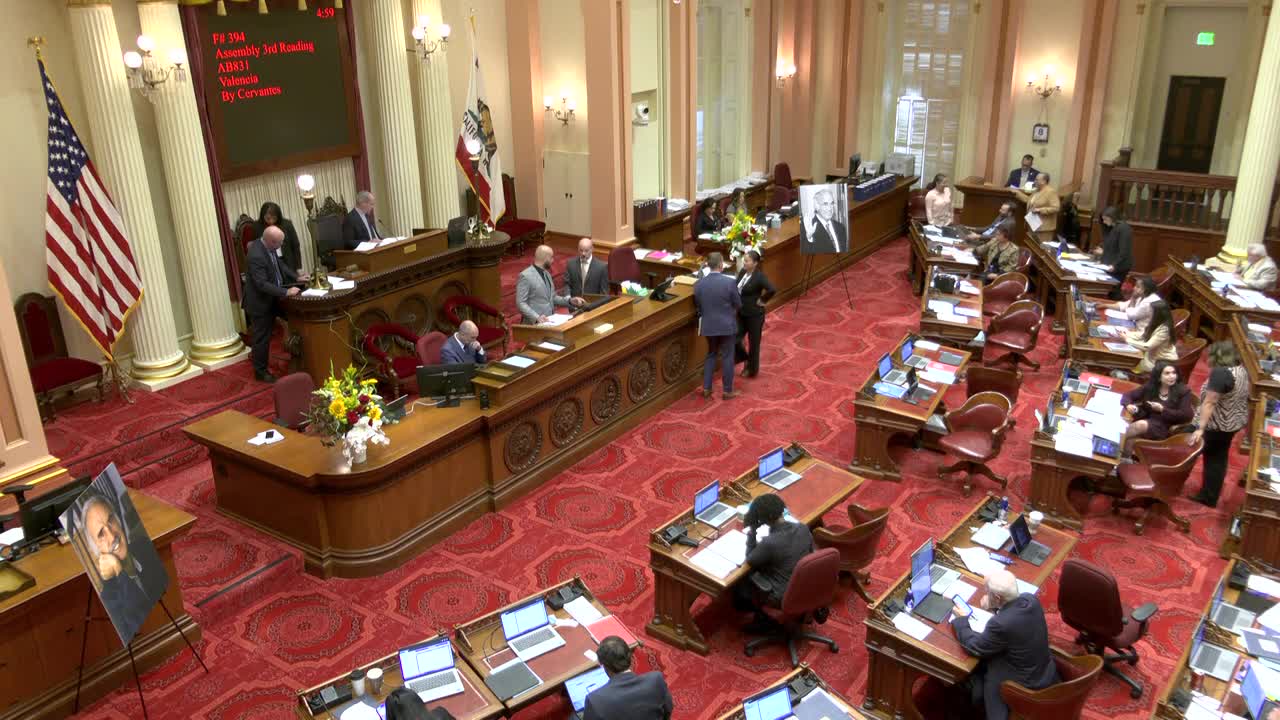 2MIN
Senate Floor
 25MIN
Senate Standing Committee on Business, Professions and Economic Development
 3MIN
Assembly Floor
 2MIN
Assembly Standing Committee on Appropriations
 10MIN
Assembly Standing Committee on Business and Professions
Bill Author