AB 870: California Children’s Services Program: county designation.
- Session Year: 2025-2026
- House: Assembly
- Latest Version Date: 2025-10-01
Current Status:
Passed
(2025-10-01: Chaptered by Secretary of State - Chapter 167, Statutes of 2025.)
Introduced
In Committee
Awaiting First Chamber Vote
Passed First Chamber
In Committee
Awaiting Second Chamber Vote
Passed Second Chamber
Enacted
Existing law establishes the California Childrens Services (CCS) Program, administered by the State Department of Health Care Services and counties, to provide medically necessary services, based on financial eligibility, for persons under 21 years of age who have any of specified medical conditions, including, among others, cystic fibrosis or hemophilia.
Existing law requires the board of supervisors of each county to designate the county department of public health or the county department of social welfare as the designated agency to administer the program. Existing law authorizes counties with a total population under 200,000 persons to administer the county program independently or jointly with the department. Existing law requires counties with a total population in excess of 200,000 persons to administer the county program independently.
This bill would authorize counties with a total population under 2,000 persons to designate another county to administer the program, if the other county agrees to the designation and otherwise meets certain CCS standards established by the Director of Health Care Services and if neither county is a Whole Child Model county under certain provisions of the Medi-Cal program. The bill would require the department to adopt regulations necessary to implement these provisions.
Existing law establishes the California Childrens Services (CCS) Program, administered by the State Department of Health Care Services and counties, to provide medically necessary services, based on financial eligibility, for persons under 21 years of age who have any of specified medical conditions, including, among others, cystic fibrosis or hemophilia.
Existing law requires the board of supervisors of each county to designate the county department of public health or the county department of social welfare as the designated agency to administer the program. Existing law authorizes counties with a total population under 200,000 persons to administer the county program independently or jointly with the department. Existing law requires counties with a total population in excess of 200,000 persons to administer the county program independently.
This bill would authorize counties with a total population under 2,000 persons to designate another county to administer the program, if the other county agrees to the designation and otherwise meets certain CCS standards established by the Director of Health Care Services and if neither county is a Whole Child Model county under certain provisions of the Medi-Cal program. The bill would require the department to adopt regulations necessary to implement these provisions.
Existing law establishes the California Childrens Services (CCS) Program, administered by the State Department of Health Care Services and counties, to provide medically necessary services, based on financial eligibility, for persons under 21 years of age who have any of specified medical conditions, including, among others, cystic fibrosis or hemophilia.
Existing law requires the board of supervisors of each county to designate the county department of public health or the county department of social welfare as the designated agency to administer the program. Existing law authorizes counties with a total population under 200,000 persons to administer the county program independently or jointly with the department. Existing law requires counties with a total population in excess of 200,000 persons to administer the county program independently.
This bill would authorize counties with a total population under 2,000 persons to designate another county to administer the program, if the other county agrees to the designation and otherwise meets certain CCS standards established by the Director of Health Care Services and if neither county is a Whole Child Model county under certain provisions of the Medi-Cal program. The bill would require the department to adopt regulations necessary to implement these provisions.
Existing law, the California Childrens Services (CCS) program, is a statewide program providing medically necessary services required by physically handicapped children whose parents are unable to pay for those services. Existing law requires the State Department of Health Care Services to administer the program. Existing law establishes the California Childrens Services (CCS) Program, administered by the State Department of Health Care Services and counties, to provide medically necessary services, based on financial eligibility, for persons under 21 years of age who have any of specified medical conditions, including, among others, cystic fibrosis or hemophilia.
Existing law requires the board of supervisors of each county to designate the county department of public health or the county department of social welfare as the designated agency to administer the program. Existing law authorizes counties with a total population under 200,000 persons to administer the county program independently or jointly with the department. Existing law requires counties with a total population in excess of 200,000 persons to administer the county program independently.
This bill would authorize counties with a total population under 2,000 persons to designate another county to administer the program, if that county otherwise meets the standards set forth by the Director of Health Care Services. the other county agrees to the designation and otherwise meets certain CCS standards established by the Director of Health Care Services and if neither county is a Whole Child Model county under certain provisions of the Medi-Cal program.
Existing law, the California Childrens Services (CCS) program, is a statewide program providing medically necessary services required by physically handicapped children whose parents are unable to pay for those services. Existing law requires the State Department of Health Care Services to administer the program. Existing law requires the board of supervisors of each county to designate the county department of public health or the county department of social welfare as the designated agency to administer the program. Existing law authorizes counties with a total population under 200,000 persons to administer the county program independently or jointly with the department. Existing law requires counties with a total population in excess of 200,000 persons to administer the county program independently.
This bill would authorize counties with a total population under 2,000 persons to designate another county to administer the program, if that county otherwise meets the standards set forth by the Director of Health Care Services.
(a)(1)The board of supervisors of each county shall designate the county department of public health or the county department of social welfare as the designated agency to administer the California Childrens Services (CCS) program. Counties with a total population under 200,000 persons may administer the county program independently or jointly with the department. Counties with a total population in excess of 200,000 persons shall administer the county program independently. Except as otherwise provided in this article, the director shall establish standards relating to the local administration and minimum services to be offered by counties in the conduct of the CCS program.
(2)Counties with a total population under 2,000 persons may designate another county to administer the program, if all of the following conditions are met:
(A)The other county agrees to the designation.
(B)The other county otherwise meets the standards established by the director pursuant to paragraph (1) and pursuant to any other applicable provisions of this article.
(C)Neither county is a Whole Child Model county under Article 2.985 (commencing with Section 14094.4) of Chapter 7 of Part 3 of Division 9 of the Welfare and Institutions Code.
(3)(A)The department shall adopt regulations necessary to implement this section, including, but not limited to, requirements applicable to written agreements between the counties.
(B)Notwithstanding the rulemaking provisions of the Administrative Procedure Act (Chapter 3.5 (commencing with Section 11340) of Part 1 of Division 3 of Title 2 of the Government Code), the department may, if it deems appropriate, implement, interpret, or make specific this section by means of provider bulletins, written guidelines, or similar instructions from the department until regulations are adopted.
(b)(1)Upon a determination by the director that a Medi-Cal managed care plan and participating county have met all of the State Department of Health Care Services readiness requirements, the designated county agency and a Medi-Cal managed care health plan serving the county, as determined by the director, shall provide for the transition of CCS program services, except for services provided pursuant to subdivision (c), into the Medi-Cal managed care health plan contract in Whole Child Model counties pursuant to Article 2.985 (commencing with Section 14094.4) of Chapter 7 of Part 3 of Division 9 of the Welfare and Institutions Code for children who are enrolled in the Medi-Cal managed care plan and CCS. For children enrolled in a Medi-Cal managed care plan and CCS in Whole Child Model counties pursuant to Article 2.985 (commencing with Section 14094.4) of Chapter 7 of Part 3 of Division 9 of the Welfare and Institutions Code, the case management, care coordination, provider referral, and service authorization administrative functions of the CCS program shall then be the responsibility of the Medi-Cal managed care health plan in accordance with Section 14094.13 of the Welfare and Institutions Code and a written transition plan prepared by the designated county agency and the Medi-Cal managed care health plan. The director shall provide an implementation date for the transition and identify how the state shall continue to fulfill the requirements set forth in Sections 123855, 123925, and 123960. CCS program eligibility determination shall remain the responsibility of the designated county agency in accordance with the provisions of this article.
(2)The case management, care coordination, provider referral, and service authorization functions of the CCS program shall remain the responsibility of the county for CCS beneficiaries exempt from mandatory enrollment in the Medi-Cal managed care plan.
(c)The CCS Medical Therapy program shall remain responsible for the provision of medically necessary occupational and physical therapy services prescribed by the CCS Medical Therapy Unit Conference Team Physician or the CCS-paneled physician who is providing the medical direction for occupational and physical therapy services.
(d)Notwithstanding Chapter 3.5 (commencing with Section 11340) of Part 1 of Division 3 of Title 2 of the Government Code, the department may implement, interpret, or make specific this article, Article 2.97 (commencing with Section 14093) and Article 2.985 (commencing with Section 14094.4) of Chapter 7 of Part 3 of Division 9 of the Welfare and Institutions Code, and any applicable federal waivers and state plan amendments by means of all-county letters, plan letters, CCS numbered letters, plan or provider bulletins, or similar instructions, without taking regulatory action in order to implement the Whole Child Model established pursuant to Article 2.985 (commencing with Section 14094.4) of Chapter 7 of Part 3 of Division 9 of the Welfare and Institutions Code. By July 1, 2020, the department shall adopt regulations in accordance with the requirements of Chapter 3.5 (commencing with Section 11340) of Part 1 of Division 3 of Title 2 of the Government Code. Commencing January 1, 2018, the department shall provide a status report to the Legislature on a semiannual basis, in compliance with Section 9795 of the Government Code, until regulations have been adopted.
(a)(1)The board of supervisors of each county shall designate the county department of public health or the county department of social welfare as the designated agency to administer the California Childrens Services (CCS) program. Counties with a total population under 200,000 persons may administer the county program independently or jointly with the department. Counties with a total population in excess of 200,000 persons shall administer the county program independently. Except as otherwise provided in this article, the director shall establish standards relating to the local administration and minimum services to be offered by counties in the conduct of the CCS program.
(2)Counties with a total population under 2,000 persons may designate another county to administer the program, if all of the following conditions are met:
(A)The other county agrees to the designation.
(B)The other county otherwise meets the standards established by the director pursuant to paragraph (1) and pursuant to any other applicable provisions of this article.
(C)Neither county is a Whole Child Model county under Article 2.985 (commencing with Section 14094.4) of Chapter 7 of Part 3 of Division 9 of the Welfare and Institutions Code.
(3)(A)The department shall adopt regulations necessary to implement this section, including, but not limited to, requirements applicable to written agreements between the counties.
(B)Notwithstanding the rulemaking provisions of the Administrative Procedure Act (Chapter 3.5 (commencing with Section 11340) of Part 1 of Division 3 of Title 2 of the Government Code), the department may, if it deems appropriate, implement, interpret, or make specific this section by means of provider bulletins, written guidelines, or similar instructions from the department until regulations are adopted.
(b)(1)Upon a determination by the director that a Medi-Cal managed care plan and participating county have met all of the State Department of Health Care Services readiness requirements, the designated county agency and a Medi-Cal managed care health plan serving the county, as determined by the director, shall provide for the transition of CCS program services, except for services provided pursuant to subdivision (c), into the Medi-Cal managed care health plan contract in Whole Child Model counties pursuant to Article 2.985 (commencing with Section 14094.4) of Chapter 7 of Part 3 of Division 9 of the Welfare and Institutions Code for children who are enrolled in the Medi-Cal managed care plan and CCS. For children enrolled in a Medi-Cal managed care plan and CCS in Whole Child Model counties pursuant to Article 2.985 (commencing with Section 14094.4) of Chapter 7 of Part 3 of Division 9 of the Welfare and Institutions Code, the case management, care coordination, provider referral, and service authorization administrative functions of the CCS program shall then be the responsibility of the Medi-Cal managed care health plan in accordance with Section 14094.13 of the Welfare and Institutions Code and a written transition plan prepared by the designated county agency and the Medi-Cal managed care health plan. The director shall provide an implementation date for the transition and identify how the state shall continue to fulfill the requirements set forth in Sections 123855, 123925, and 123960. CCS program eligibility determination shall remain the responsibility of the designated county agency in accordance with the provisions of this article.
(2)The case management, care coordination, provider referral, and service authorization functions of the CCS program shall remain the responsibility of the county for CCS beneficiaries exempt from mandatory enrollment in the Medi-Cal managed care plan.
(c)The CCS Medical Therapy program shall remain responsible for the provision of medically necessary occupational and physical therapy services prescribed by the CCS Medical Therapy Unit Conference Team Physician or the CCS-paneled physician who is providing the medical direction for occupational and physical therapy services.
(d)Notwithstanding Chapter 3.5 (commencing with Section 11340) of Part 1 of Division 3 of Title 2 of the Government Code, the department may implement, interpret, or make specific this article, Article 2.97 (commencing with Section 14093) and Article 2.985 (commencing with Section 14094.4) of Chapter 7 of Part 3 of Division 9 of the Welfare and Institutions Code, and any applicable federal waivers and state plan amendments by means of all-county letters, plan letters, CCS numbered letters, plan or provider bulletins, or similar instructions, without taking regulatory action in order to implement the Whole Child Model established pursuant to Article 2.985 (commencing with Section 14094.4) of Chapter 7 of Part 3 of Division 9 of the Welfare and Institutions Code. By July 1, 2020, the department shall adopt regulations in accordance with the requirements of Chapter 3.5 (commencing with Section 11340) of Part 1 of Division 3 of Title 2 of the Government Code. Commencing January 1, 2018, the department shall provide a status report to the Legislature on a semiannual basis, in compliance with Section 9795 of the Government Code, until regulations have been adopted.
(a)(1)The board of supervisors of each county shall designate the county department of public health or the county department of social welfare as the designated agency to administer the California Childrens Services (CCS) program. Counties with a total population under 200,000 persons may administer the county program independently or jointly with the department. Counties with a total population in excess of 200,000 persons shall administer the county program independently. Except as otherwise provided in this article, the director shall establish standards relating to the local administration and minimum services to be offered by counties in the conduct of the CCS program.
(2)Counties with a total population under 2,000 persons may designate another county to administer the program, if all of the following conditions are met:
(A)The other county agrees to the designation.
(B)The other county otherwise meets the standards established by the director pursuant to paragraph (1) and pursuant to any other applicable provisions of this article.
(C)Neither county is a Whole Child Model county under Article 2.985 (commencing with Section 14094.4) of Chapter 7 of Part 3 of Division 9 of the Welfare and Institutions Code.
(3)(A)The department shall adopt regulations necessary to implement this section, including, but not limited to, requirements applicable to written agreements between the counties.
(B)Notwithstanding the rulemaking provisions of the Administrative Procedure Act (Chapter 3.5 (commencing with Section 11340) of Part 1 of Division 3 of Title 2 of the Government Code), the department may, if it deems appropriate, implement, interpret, or make specific this section by means of provider bulletins, written guidelines, or similar instructions from the department until regulations are adopted.
(b)(1)Upon a determination by the director that a Medi-Cal managed care plan and participating county have met all of the State Department of Health Care Services readiness requirements, the designated county agency and a Medi-Cal managed care health plan serving the county, as determined by the director, shall provide for the transition of CCS program services, except for services provided pursuant to subdivision (c), into the Medi-Cal managed care health plan contract in Whole Child Model counties pursuant to Article 2.985 (commencing with Section 14094.4) of Chapter 7 of Part 3 of Division 9 of the Welfare and Institutions Code for children who are enrolled in the Medi-Cal managed care plan and CCS. For children enrolled in a Medi-Cal managed care plan and CCS in Whole Child Model counties pursuant to Article 2.985 (commencing with Section 14094.4) of Chapter 7 of Part 3 of Division 9 of the Welfare and Institutions Code, the case management, care coordination, provider referral, and service authorization administrative functions of the CCS program shall then be the responsibility of the Medi-Cal managed care health plan in accordance with Section 14094.13 of the Welfare and Institutions Code and a written transition plan prepared by the designated county agency and the Medi-Cal managed care health plan. The director shall provide an implementation date for the transition and identify how the state shall continue to fulfill the requirements set forth in Sections 123855, 123925, and 123960. CCS program eligibility determination shall remain the responsibility of the designated county agency in accordance with the provisions of this article.
(2)The case management, care coordination, provider referral, and service authorization functions of the CCS program shall remain the responsibility of the county for CCS beneficiaries exempt from mandatory enrollment in the Medi-Cal managed care plan.
(c)The CCS Medical Therapy program shall remain responsible for the provision of medically necessary occupational and physical therapy services prescribed by the CCS Medical Therapy Unit Conference Team Physician or the CCS-paneled physician who is providing the medical direction for occupational and physical therapy services.
(d)Notwithstanding Chapter 3.5 (commencing with Section 11340) of Part 1 of Division 3 of Title 2 of the Government Code, the department may implement, interpret, or make specific this article, Article 2.97 (commencing with Section 14093) and Article 2.985 (commencing with Section 14094.4) of Chapter 7 of Part 3 of Division 9 of the Welfare and Institutions Code, and any applicable federal waivers and state plan amendments by means of all-county letters, plan letters, CCS numbered letters, plan or provider bulletins, or similar instructions, without taking regulatory action in order to implement the Whole Child Model established pursuant to Article 2.985 (commencing with Section 14094.4) of Chapter 7 of Part 3 of Division 9 of the Welfare and Institutions Code. By July 1, 2020, the department shall adopt regulations in accordance with the requirements of Chapter 3.5 (commencing with Section 11340) of Part 1 of Division 3 of Title 2 of the Government Code. Commencing January 1, 2018, the department shall provide a status report to the Legislature on a semiannual basis, in compliance with Section 9795 of the Government Code, until regulations have been adopted.
(a)(1)The board of supervisors of each county shall designate the county department of public health or the county department of social welfare as the designated agency to administer the California Childrens Services (CCS) program. Counties with a total population under 200,000 persons may administer the county program independently or jointly with the department. Counties with a total population in excess of 200,000 persons shall administer the county program independently. Except as otherwise provided in this article, the director shall establish standards relating to the local administration and minimum services to be offered by counties in the conduct of the CCS program.
(2)Counties with a total population under 2,000 persons may designate another county to administer the program, if that county otherwise meets the standards set forth by the director. all of the following conditions are met:
(A)The other county agrees to the designation.
(B)The other county otherwise meets the standards established by the director pursuant to paragraph (1) and pursuant to any other applicable provisions of this article.
(C)Neither county is a Whole Child Model county under Article 2.985 (commencing with Section 14094.4) of Chapter 7 of Part 3 of Division 9 of the Welfare and Institutions Code.
(b)(1)Upon a determination by the director that a Medi-Cal managed care plan and participating county have met all of the State Department of Health Care Services readiness requirements, the designated county agency and a Medi-Cal managed care health plan serving the county, as determined by the director, shall provide for the transition of CCS program services, except for services provided pursuant to subdivision (c), into the Medi-Cal managed care health plan contract in Whole Child Model counties pursuant to Article 2.985 (commencing with Section 14094.4) of Chapter 7 of Part 3 of Division 9 of the Welfare and Institutions Code for children who are enrolled in the Medi-Cal managed care plan and CCS. For children enrolled in a Medi-Cal managed care plan and CCS in Whole Child Model counties pursuant to Article 2.985 (commencing with Section 14094.4) of Chapter 7 of Part 3 of Division 9 of the Welfare and Institutions Code, the case management, care coordination, provider referral, and service authorization administrative functions of the CCS program shall then be the responsibility of the Medi-Cal managed care health plan in accordance with Section 14094.13 of the Welfare and Institutions Code and a written transition plan prepared by the designated county agency and the Medi-Cal managed care health plan. The director shall provide an implementation date for the transition and identify how the state shall continue to fulfill the requirements set forth in Sections 123855, 123925, and 123960. CCS program eligibility determination shall remain the responsibility of the designated county agency in accordance with the provisions of this article.
(2)The case management, care coordination, provider referral, and service authorization functions of the CCS program shall remain the responsibility of the county for CCS beneficiaries exempt from mandatory enrollment in the Medi-Cal managed care plan.
(c)The CCS Medical Therapy program shall remain responsible for the provision of medically necessary occupational and physical therapy services prescribed by the CCS Medical Therapy Unit Conference Team Physician or the CCS-paneled physician who is providing the medical direction for occupational and physical therapy services.
(d)Notwithstanding Chapter 3.5 (commencing with Section 11340) of Part 1 of Division 3 of Title 2 of the Government Code, the department may implement, interpret, or make specific this article, Article 2.97 (commencing with Section 14093) and Article 2.985 (commencing with Section 14094.4) of Chapter 7 of Part 3 of Division 9 of the Welfare and Institutions Code, and any applicable federal waivers and state plan amendments by means of all-county letters, plan letters, CCS numbered letters, plan or provider bulletins, or similar instructions, without taking regulatory action in order to implement the Whole Child Model established pursuant to Article 2.985 (commencing with Section 14094.4) of Chapter 7 of Part 3 of Division 9. 9 of the Welfare and Institutions Code. By July 1, 2020, the department shall adopt regulations in accordance with the requirements of Chapter 3.5 (commencing with Section 11340) of Part 1 of Division 3 of Title 2 of the Government Code. Commencing January 1, 2018, the department shall provide a status report to the Legislature on a semiannual basis, in compliance with Section 9795 of the Government Code, until regulations have been adopted.
(a)(1)The board of supervisors of each county shall designate the county department of public health or the county department of social welfare as the designated agency to administer the California Childrens Services (CCS) program. Counties with total population under 200,000 persons may administer the county program independently or jointly with the department. Counties with a total population in excess of 200,000 persons shall administer the county program independently. Except as otherwise provided in this article, the director shall establish standards relating to the local administration and minimum services to be offered by counties in the conduct of the CCS program.
(2)Counties with a total population under 2,000 persons may designate another county to administer the program, if that county otherwise meets the standards set forth by the director.
(b)(1)Upon a determination by the director that a Medi-Cal managed care plan and participating county have met all of the State Department of Health Care Services readiness requirements, the designated county agency and a Medi-Cal managed care health plan serving the county, as determined by the director, shall provide for the transition of CCS program services, except for services provided pursuant to subdivision (c), into the Medi-Cal managed care health plan contract in Whole Child Model counties pursuant to Article 2.985 (commencing with Section 14094.4) of Chapter 7 of Part 3 of Division 9 of the Welfare and Institutions Code for children who are enrolled in the Medi-Cal managed care plan and CCS. For children enrolled in a Medi-Cal managed care plan and CCS in Whole Child Model counties pursuant to Article 2.985 (commencing with Section 14094.4), 14094.4) of Chapter 7 of Part 3 of Division 9 of the Welfare and Institutions Code, the case management, care coordination, provider referral, and service authorization administrative functions of the CCS program shall then be the responsibility of the Medi-Cal managed care health plan in accordance with Section 14094.13 of the Welfare and Institutions Code and a written transition plan prepared by the designated county agency and the Medi-Cal managed care health plan. The director shall provide an implementation date for the transition and identify how the state shall continue to fulfill the requirements set forth in Sections 123855, 123925, and 123960. CCS program eligibility determination shall remain the responsibility of the designated county agency in accordance with the provisions of this article.
(2)The case management, care coordination, provider referral, and service authorization functions of the CCS program shall remain the responsibility of the county for CCS beneficiaries exempt from mandatory enrollment in the Medi-Cal managed care plan.
(c)The CCS Medical Therapy program shall remain responsible for the provision of medically necessary occupational and physical therapy services prescribed by the CCS Medical Therapy Unit Conference Team Physician or the CCS-paneled physician who is providing the medical direction for occupational and physical therapy services.
(d)Notwithstanding Chapter 3.5 (commencing with Section 11340) of Part 1 of Division 3 of Title 2 of the Government Code, the department may implement, interpret, or make specific this article, Article 2.97 (commencing with Section 14093) and Article 2.985 (commencing with Section 14094.4) of Chapter 7 of Part 3 of Division 9 of the Welfare and Institutions Code, and any applicable federal waivers and state plan amendments by means of all-county letters, plan letters, CCS numbered letters, plan or provider bulletins, or similar instructions, without taking regulatory action in order to implement the Whole Child Model established pursuant to Article 2.985 (commencing with Section 14094.4). 14094.4) of Chapter 7 of Part 3 of Division 9. By July 1, 2020, the department shall adopt regulations in accordance with the requirements of Chapter 3.5 (commencing with Section 11340) of Part 1 of Division 3 of Title 2 of the Government Code. Commencing January 1, 2018, the department shall provide a status report to the Legislature on a semiannual basis, in compliance with Section 9795 of the Government Code, until regulations have been adopted.
|
Date
|
Status
|
|---|---|
| Oct 1, 2025 | Chaptered by Secretary of State - Chapter 167, Statutes of 2025. |
| Oct 1, 2025 | Approved by the Governor. |
| Sep 24, 2025 | Enrolled and presented to the Governor at 3 p.m. |
| Sep 13, 2025 | Senate amendments concurred in. To Engrossing and Enrolling. (Ayes 73. Noes 0. Page 3507.). |
| Sep 13, 2025 | Joint Rules 61(a)(14) and 51(a)(4) suspended. (Ayes 59. Noes 20. Page 3413.) |
| Sep 12, 2025 | In Assembly. Concurrence in Senate amendments pending. |
| Sep 12, 2025 | Senate Rule 29 suspended. (Page 2961.) |
| Sep 12, 2025 | Read third time. Passed. Ordered to the Assembly. (Ayes 38. Noes 0. Page 2991.). |
| Sep 12, 2025 | Read second time. Ordered to third reading. |
| Sep 11, 2025 | From committee: Do pass. (Ayes 6. Noes 0.) (September 11). |
| Sep 10, 2025 | Joint Rules 61 and 62(a) suspended. (Ayes 40. Noes 0. Page 2802.) |
| Sep 8, 2025 | Read second time. Ordered to third reading. |
| Sep 8, 2025 | Re-referred to Com. on APPR. pursuant to Joint Rule 10.5. |
| Sep 4, 2025 | Read third time and amended. Ordered to second reading. |
| Jun 19, 2025 | Ordered to third reading. |
| Jun 19, 2025 | From Consent Calendar. |
| Jun 13, 2025 | Read second time. Ordered to Consent Calendar. |
| Jun 12, 2025 | From committee: Do pass. To Consent Calendar. (Ayes 9. Noes 0.) (June 11). |
| May 14, 2025 | Referred to Com. on HEALTH. |
| May 1, 2025 | In Senate. Read first time. To Com. on RLS. for assignment. |
| May 1, 2025 | Read third time. Passed. Ordered to the Senate. (Ayes 76. Noes 0. Page 1385.) |
| Apr 24, 2025 | Read second time. Ordered to Consent Calendar. |
| Apr 23, 2025 | From committee: Do pass. To Consent Calendar. (Ayes 16. Noes 0.) (April 22). |
| Apr 22, 2025 | Re-referred to Com. on HEALTH. |
| Apr 21, 2025 | From committee chair, with author's amendments: Amend, and re-refer to Com. on HEALTH. Read second time and amended. |
| Mar 26, 2025 | In committee: Hearing postponed by committee. |
| Mar 3, 2025 | Referred to Com. on HEALTH. |
| Feb 20, 2025 | From printer. May be heard in committee March 22. |
| Feb 19, 2025 | Read first time. To print. |
|
Date
|
Description
|
Location
|
Votes
|
|
|---|---|---|---|---|
| Sep 13, 2025 | AB 870 Hadwick Concurrence in Senate Amendments | Assembly Floor |
Passed |
|
| Sep 12, 2025 | Assembly 2nd Reading AB870 Hadwick By Seyarto | Senate Floor |
Passed |
|
| Sep 11, 2025 | Do pass | Senate Standing Committee on Appropriations |
Passed |
|
| Jun 11, 2025 | Do pass and be ordered to the Consent Calendar | Senate Standing Committee on Health |
Passed |
|
| May 1, 2025 | AB 870 Hadwick Consent Calendar Second Day | Assembly Floor |
Passed |
|
| Apr 22, 2025 | Do pass. To Consent Calendar. | Assembly Standing Committee on Health |
Passed |
This list shows positions taken on this bill by organizations on the date displayed, which is linked to the original source.
Positions by individuals are not included.
|
Organization
|
Position
|
Date
|
|---|---|---|
| Alpine County | ** Support | |
| Alpine County Board of Supervisors | ** Support | |
| California Health Executives Association of California (CHEAC) | ** Support | |
| California State Association Of Counties | ** Support | |
| County Health Executives Association Of California | ** Support | |
| Health Officers Association Of California | ** Support | |
| Rural County Representatives of California | ** Support |
SENATE RULES COMMITTEE Office of Senate Floor Analyses (916) 651-1520 Fax: (916) 327-4478 | AB 870 |
THIRD READING
Bill No: AB 870
Author: Hadwick (R)
Amended: 9/4/25 in Senate
Vote: 21
SENATE APPROPRIATIONS COMMITTEE: 6-0, 9/11/25
AYES: Caballero, Seyarto, Cabaldon, Dahle, Richardson, Wahab
NO VOTE RECORDED: Grayson
ASSEMBLY FLOOR: 76-0, 5/1/25 (Consent) - See last page for vote
SUBJECT: California Children’s Services Program: county designation
SOURCE: Alpine County Board of Supervisors
DIGEST:
This bill allows counties with populations under 2,000 to designate another county to administer its California Children’s Services (CCS) program so long as the other county agrees, abides by the CCS program standards, and neither county is a “Whole Child Model” county that provides CCS services through Medi-Cal managed care plans.
Senate Floor Amendments of 9/4/25 requires the Department of Health Care Services (DHCS) to adopt the necessary regulations to implement this bill, including requirements for applicable written agreements between the counties, but authorizes DHCS to implement instead via guidance until regulations are adopted.
ANALYSIS:
Existing law:
- Establishes CCS, administered by DHCS, under which individuals under the age of 21 who have eligible medical conditions established in regulation and meet financial requirements, are eligible to receive medically necessary services and treatments. [Health and Safety Code (HSC) §123800, et seq.]
- Authorizes DHCS to establish a “Whole Child Model” (WCM) program for children enrolled in a Medi-Cal managed care plan who are also enrolled in CCS in 33 specified counties. [Welfare & Institutions Code §14094.4, et seq.]
- Requires each county board of supervisors to designate a county agency to administer the CCS program. Permits counties with populations under 200,000 to administer the county program independently or jointly with DHCS. Requires counties with populations over 200,000 to administer the county program independently. [HSC §123850]
- Requires the DHCS director to establish standards relating to the local administration and minimum services counties must offer in the CCS program. [HSC §123850]
This bill:
- Allows counties with populations under 2,000 to designate another county to administer the CCS program so long as: the other county agrees to the designation; the other county meets the required CCS program standards; and, neither county is a WCM county.
- Allows DHCS to issue guidance regarding the administration of the CCS program by counties, including agreements between counties, prior to adopting regulations.
Comments
According to the author of this bill:
Alpine County is the smallest county in California with a total population of roughly 1,200 residents. There is a single Public Health Nurse who manages their CCS program; when the nurse is sick or misses work for any reason, the program comes to a halt as no one else in the county carries the credentials to administer the CCS program. This leaves sick and/or physically handicapped children to go without medically-necessary services until the employee is back to work. This bill would allow neighboring El Dorado County to operate Alpine County’s CCS program.
Background
CCS. The CCS program provides diagnostic and treatment services, medical case management, and physical and occupational therapy health care services to children under 21 years of age with CCS-eligible conditions (e.g., severe genetic diseases, chronic medical conditions, infectious diseases producing major sequelae, and traumatic injuries) from families unable to afford catastrophic health care costs. A child eligible for CCS must be a resident of California, have a CCS-eligible condition, and generally be income eligible. According to March 2025 data, approximately 185,000 children are in CCS; of those, roughly 93% are also in Medi-Cal and 7% are in the CCS-only program.
CCS “carve out” and WCM. Children who are eligible for both Medi-Cal and the CCS program are enrolled in a Medi-Cal plan and receive CCS-covered services through the CCS program on a fee-for-service basis. SB 586 (Hernandez, Chapter 625, Statutes of 2015) authorized DHCS to establish WCM in 21 counties, in which both Medi-Cal and most CCS services would be covered and paid for by the Medi-Cal plan. SB 586 also required DHCS to create a statewide WCM stakeholder advisory group to inform implementation, as well as, the development of the monitoring and evaluation process. AB 118 (Committee on Budget, Chapter 42, Statutes of 2023) authorized the expansion of WCM to 12 additional counties starting January 1, 2025.
CCS program administration. Current law requires counties with over 200,000 residents to administer their own CCS program, and allows counties with under 200,000 residents to either independently administer their CCS program or do so jointly with DHCS. This bill would allow a county with fewer than 2,000 residents to designate another county to administer the program so long as neither county is not a WCM county. Alpine County is currently the only county in California with fewer than 2,000 residents, and neither it nor neighboring El Dorado County are WCM counties. Additionally, Alpine county does not currently have any children enrolled in the CCS program.
FISCAL EFFECT: Appropriation: No Fiscal Com.: Yes Local: No
According to the Senate Appropriations Committee, DHCS estimates costs for staffing resources of approximately $164,000 ($82,000 General Fund and $82,000 federal funds) in 2026-27, and $155,000 ($78,000 General Fund and $77,000 federal funds) in 2027-28 and annually thereafter. The DHCS indicates that while the bill would require the department to set standards for a county to designate another county as the administrator of their CCS program, the DHCS does not currently have standards in place to support this type of program transition.
SUPPORT: (Verified 9/11/25)
Alpine County Board of Supervisors (source)
California State Association of Counties
County Health Executives Association of California
Health Officers Association of California
Rural County Representatives of California
OPPOSITION: (Verified 9/11/25)
None received
ARGUMENTS IN SUPPORT: This bill is sponsored by the Alpine County Board of Supervisors who write that Alpine County is the state’s smallest county, consisting largely of federal land, no incorporated cities, and 85 county employees. Alpine County’s current CCS program has been administered with a single public health nurse. When this employee is not available, there is no one to manage the program in her absence, as nursing credentials are required to process and coordinate care for recipients. This bill would allow Alpine County to enter into an agreement with a neighboring county to administer its CCS program to facilitate the most timely and effective care for CCS recipients. Current law does not allow this flexibility. As the state’s smallest county, Alpine County requires an alternative approach to ensure consistent and quality care for CCS-eligible children.
ASSEMBLY FLOOR: 76-0, 5/1/25
AYES: Addis, Aguiar-Curry, Ahrens, Alanis, Alvarez, Arambula, Ávila Farías, Bains, Bauer-Kahan, Bennett, Berman, Boerner, Bonta, Bryan, Calderon, Caloza, Carrillo, Castillo, Connolly, Davies, DeMaio, Dixon, Elhawary, Ellis, Flora, Fong, Gabriel, Gallagher, Garcia, Gipson, Jeff Gonzalez, Mark González, Hadwick, Haney, Harabedian, Hart, Hoover, Irwin, Jackson, Kalra, Krell, Lackey, Lee, Lowenthal, Macedo, Muratsuchi, Nguyen, Ortega, Pacheco, Patel, Patterson, Pellerin, Petrie-Norris, Quirk-Silva, Ramos, Ransom, Celeste Rodriguez, Michelle Rodriguez, Rogers, Blanca Rubio, Sanchez, Schiavo, Schultz, Sharp-Collins, Solache, Soria, Stefani, Ta, Tangipa, Valencia, Wallis, Ward, Wicks, Wilson, Zbur, Rivas
NO VOTE RECORDED: Chen, McKinnor, Papan
Prepared by: Jen Flory / HEALTH / (916) 651-4111
9/12/25 11:10:02
**** END ****
CONCURRENCE IN SENATE AMENDMENTS
CSA1 Bill Id:AB 870
Author:(Hadwick)
As Amended Ver:September 04, 2025
Majority vote
SUMMARY
Authorizes counties with a total population under 2,000 persons (Alpine County) to designate another county to administer the California Children's Services (CCS) program, if that county agrees and otherwise meets the standards set forth by the Department of Health Care Services (DHCS), and neither county is a "Whole Child Model" county (a county where CCS services are provided through managed care plans).
Senate Amendments
Require DHCS to adopt regulations necessary to implement the bill, including, but not limited to, requirements applicable to written agreements between the counties, and allows DHCS to implement the bill through non-regulatory guidance until regulations are adopted.
COMMENTS
California Children's Services (CCS) program. The CCS program provides diagnostic and treatment services, medical case management, and physical and occupational therapy health care services to children under 21 years of age with CCS-eligible conditions (e.g., severe genetic diseases, chronic medical conditions, infectious diseases producing major complications, and traumatic injuries) who are income eligible or otherwise unable to afford catastrophic health care costs. Nearly 200,000 California children are enrolled in CCS, and the majority of these children are also enrolled in Medi-Cal.
CCS Program Administration. In counties with populations greater than 200,000 (independent counties), county staff perform all case management activities for eligible children residing within their county. This includes determining all phases of program eligibility, evaluating needs for specific services, determining the appropriate provider(s), and authorizing for medically necessary care. For 27 smaller, more rural counties with populations under 200,000 (dependent counties), DHCS provides medical case management and eligibility and benefits determination through its regional offices located in Sacramento and Los Angeles, while dependent counties interact directly with families to perform some functions. According to a 2023 overview published by DHCS outlining state and local responsibilities for CCS in dependent counties, each county is assigned to a specific level of responsibility for eligibility determinations, case management, and other functions. The overview indicates Alpine County retains responsibility for CCS financial and residential program eligibility determinations and less complex CCS case management procedures and liaison functions.
CCS and Medi-Cal Managed Care. In most counties, children who are eligible for both Medi-Cal and the CCS program are enrolled in Medi-Cal managed care and receive CCS-covered services through the CCS program on a fee-for-service basis. However, in counties whose Medi-Cal services are provided through County Organized Health Systems (a single managed care plan authorized at the county level) counties assume full financial responsibility, with some exceptions. In addition, SB 586 (Hernandez, Chapter 625, Statutes of 2015) authorizes DHCS to establish the Whole Child Model, in which both Medi-Cal and most CCS services would be covered and paid for by the Medi-Cal managed care plan. AB 113 (Committee on Budget), Chapter 42, Statutes of 2023, expanded DHCS's authority to implement Whole Child Model programs in Butte, Colusa, Glenn, Nevada, Placer, Plumas, Sierra, Sutter, Tehama, Yuba, Mariposa, and San Benito Counties, no sooner than January 1, 2025.
According to the Author
Alpine County is the smallest county in California, with a total population of roughly 1,200 residents and a single public health nurse who manages their CCS program. The author indicates that when the single nurse is unavailable, the program comes to a halt as no one else in the county has the credentials to administer the CCS program, which could leave sick and/or physically handicapped children without services. Recently, when this employee was out on extended leave, Alpine County worked with neighboring El Dorado County to ensure continued administration of CCS. Although no current residents of Alpine County are enrolled in CCS, the county must maintain infrastructure to administer CCS. This bill would authorize such an arrangement as a sustainable long-term solution for a very small county that struggles to maintain sufficient resources to administer the CCS program.
Arguments in Support
This bill is supported by Alpine County and a number of county-based organizations, including the California Health Executives Association of California (CHEAC). According to CHEAC, this bill would enable the smallest county in the state to partner with a willing county for program administration to ensure quality care for all CCS-eligible children.
Arguments in Opposition
None.
FISCAL COMMENTS
According to the Senate Committee on Appropriations, the Department of Health Care Services (DHCS) estimates costs for staffing resources of approximately $164,000 ($82,000 General Fund and $82,000 federal funds) in 2026-27, and $155,000 ($78,000 General Fund and $77,000 federal funds) in 2027-28 and annually thereafter. DHCS indicates that while the bill would require the department to set standards for a county to designate another county as the administrator of their CCS program, DHCS does not currently have standards in place to support this type of program transition.
VOTES:
ASM HEALTH: 16-0-0
YES: Bonta, Chen, Addis, Aguiar-Curry, Rogers, Carrillo, Flora, Mark González, Krell, Patel, Patterson, Celeste Rodriguez, Sanchez, Schiavo, Sharp-Collins, Stefani
ASSEMBLY FLOOR: 76-0-3
YES: Addis, Aguiar-Curry, Ahrens, Alanis, Alvarez, Arambula, Ávila Farías, Bains, Bauer-Kahan, Bennett, Berman, Boerner, Bonta, Bryan, Calderon, Caloza, Carrillo, Castillo, Connolly, Davies, DeMaio, Dixon, Elhawary, Ellis, Flora, Fong, Gabriel, Gallagher, Garcia, Gipson, Jeff Gonzalez, Mark González, Hadwick, Haney, Harabedian, Hart, Hoover, Irwin, Jackson, Kalra, Krell, Lackey, Lee, Lowenthal, Macedo, Muratsuchi, Nguyen, Ortega, Pacheco, Patel, Patterson, Pellerin, Petrie-Norris, Quirk-Silva, Ramos, Ransom, Celeste Rodriguez, Michelle Rodriguez, Rogers, Blanca Rubio, Sanchez, Schiavo, Schultz, Sharp-Collins, Solache, Soria, Stefani, Ta, Tangipa, Valencia, Wallis, Ward, Wicks, Wilson, Zbur, Rivas
ABS, ABST OR NV: Chen, McKinnor, Papan
UPDATED
VERSION: September 04, 2025
CONSULTANT: Lisa Murawski / HEALTH / (916) 319-2097 FN: 0002080
SENATE COMMITTEE ON
Senator Anna Caballero, Chair
2025 - 2026 Regular Session
AB 870 (Hadwick) - California Children’s Services Program: county designation
Version: | Policy Vote: |
Urgency: | Mandate: |
Hearing Date: September 11, 2025 | Consultant: |
Bill Summary:
AB 870 would allow counties with a total population under 2,000 persons to designate another county to administer the California Children’s Services (CCS) program, as specified.
Fiscal Impact:
The Department of Health Care Services (DHCS) estimates costs for staffing resources of approximately $164,000 ($82,000 General Fund and $82,000 federal funds) in 2026-27, and $155,000 ($78,000 General Fund and $77,000 federal funds) in 2027-28 and annually thereafter. The DHCS indicates that while the bill would require the department to set standards for a county to designate another county as the administrator of their CCS program, the DHCS does not currently have standards in place to support this type of program transition.
Background:
The CCS program provides diagnostic and treatment services, medical case management, and physical and occupational therapy health care services to children under 21 years of age with CCS-eligible conditions (e.g. severe genetic diseases, chronic medical conditions, infectious diseases producing major sequelae, and traumatic injuries) from families unable to afford catastrophic health care costs.
Current law requires counties with over 200,000 residents to administer their own CCS program, and allows counties with under 200,000 residents to either independently administer their CCS program or jointly with the DHCS. The director of the DHCS must establish standards relating to the local administration and minimum services to be offered by counties in the CCS program.
Children who are eligible for both Medi-Cal and the CCS program are enrolled in a Medi-Cal plan and receive CCS-covered services through the CCS program on a fee-for-service basis. Current law authorizes the DHCS to establish a “Whole Child Model” in specified counties, in which both Medi-Cal and most CCS services would be covered and paid for by the Medi-Cal plan.
Proposed Law:
Specific provisions of the bill would:
- Allow counties with a total population under 2,000 persons to designate another county to administer the CCS program, if all of the following conditions are met:
- The other county agrees to the designation.
- The other county otherwise meets CCS program standards, as specified.
- Neither county is a Whole Child Model county.
- Require the DHCS to adopt regulations necessary for implementation; and authorize the DHCS, if it deems appropriate, to implement the bill’s provisions by means of provider bulletins, written guidelines, or similar instructions from the department until regulations are adopted.
-- END --
SENATE RULES COMMITTEE Office of Senate Floor Analyses (916) 651-1520 Fax: (916) 327-4478 | AB 870 |
THIRD READING
Bill No: AB 870
Author: Hadwick (R)
Amended: 9/4/25 in Senate
Vote: 21
SENATE HEALTH COMMITTEE: 9-0, 6/11/25
AYES: Menjivar, Valladares, Durazo, Grove, Limón, Padilla, Richardson, Rubio, Wiener
NO VOTE RECORDED: Gonzalez, Weber Pierson
ASSEMBLY FLOOR: 76-0, 5/1/25 (Consent) - See last page for vote
SUBJECT: California Children’s Services Program: county designation
SOURCE: Alpine County Board of Supervisors
DIGEST:
This bill allows counties with populations under 2,000 to designate another county to administer its California Children’s Services (CCS) program so long as the other county agrees, abides by the CCS program standards, and neither county is a “Whole Child Model” county that provides CCS services through Medi-Cal managed care plans.
Senate Floor Amendments of 9/4/25 requires the Department of Health Care Services (DHCS) to adopt the necessary regulations to implement this bill, including requirements for applicable written agreements between the counties, but authorizes DHCS to implement instead via guidance until regulations are adopted.
ANALYSIS:
Existing law:
- Establishes CCS, administered by DHCS, under which individuals under the age of 21 who have eligible medical conditions established in regulation and meet financial requirements, are eligible to receive medically necessary services and treatments. [Health and Safety Code (HSC) §123800, et seq.]
- Authorizes DHCS to establish a “Whole Child Model” (WCM) program for children enrolled in a Medi-Cal managed care plan who are also enrolled in CCS in 33 specified counties. [Welfare & Institutions Code §14094.4, et seq.]
- Requires each county board of supervisors to designate a county agency to administer the CCS program. Permits counties with populations under 200,000 to administer the county program independently or jointly with DHCS. Requires counties with populations over 200,000 to administer the county program independently. [HSC §123850]
- Requires the DHCS director to establish standards relating to the local administration and minimum services counties must offer in the CCS program. [HSC §123850]
This bill:
- Allows counties with populations under 2,000 to designate another county to administer the CCS program so long as: the other county agrees to the designation; the other county meets the required CCS program standards; and, neither county is a WCM county.
- Allows DHCS to issue guidance regarding the administration of the CCS program by counties, including agreements between counties, prior to adopting regulations.
Comments
According to the author of this bill:
Alpine County is the smallest county in California with a total population of roughly 1,200 residents. There is a single Public Health Nurse who manages their CCS program; when the nurse is sick or misses work for any reason, the program comes to a halt as no one else in the county carries the credentials to administer the CCS program. This leaves sick and/or physically handicapped children to go without medically-necessary services until the employee is back to work. This bill would allow neighboring El Dorado County to operate Alpine County’s CCS program.
Background
CCS. The CCS program provides diagnostic and treatment services, medical case management, and physical and occupational therapy health care services to children under 21 years of age with CCS-eligible conditions (e.g., severe genetic diseases, chronic medical conditions, infectious diseases producing major sequelae, and traumatic injuries) from families unable to afford catastrophic health care costs. A child eligible for CCS must be a resident of California, have a CCS-eligible condition, and generally be income eligible. According to March 2025 data, approximately 185,000 children are in CCS; of those, roughly 93% are also in Medi-Cal and 7% are in the CCS-only program.
CCS “carve out” and WCM. Children who are eligible for both Medi-Cal and the CCS program are enrolled in a Medi-Cal plan and receive CCS-covered services through the CCS program on a fee-for-service basis. SB 586 (Hernandez, Chapter 625, Statutes of 2015) authorized DHCS to establish WCM in 21 counties, in which both Medi-Cal and most CCS services would be covered and paid for by the Medi-Cal plan. SB 586 also required DHCS to create a statewide WCM stakeholder advisory group to inform implementation, as well as, the development of the monitoring and evaluation process. AB 118 (Committee on Budget, Chapter 42, Statutes of 2023) authorized the expansion of WCM to 12 additional counties starting January 1, 2025.
CCS program administration. Current law requires counties with over 200,000 residents to administer their own CCS program, and allows counties with under 200,000 residents to either independently administer their CCS program or do so jointly with DHCS. This bill would allow a county with fewer than 2,000 residents to designate another county to administer the program so long as neither county is not a WCM county. Alpine County is currently the only county in California with fewer than 2,000 residents, and neither it nor neighboring El Dorado County are WCM counties. Additionally, Alpine county does not currently have any children enrolled in the CCS program.
FISCAL EFFECT: Appropriation: No Fiscal Com.: No Local: No
SUPPORT: (Verified 9/4/25)
Alpine County Board of Supervisors (source)
California State Association of Counties
County Health Executives Association of California
Health Officers Association of California
Rural County Representatives of California
OPPOSITION: (Verified 9/4/25)
None received
ARGUMENTS IN SUPPORT: This bill is sponsored by the Alpine County Board of Supervisors who write that Alpine County is the state’s smallest county, consisting largely of federal land, no incorporated cities, and 85 county employees. Alpine County’s current CCS program has been administered with a single public health nurse. When this employee is not available, there is no one to manage the program in her absence, as nursing credentials are required to process and coordinate care for recipients. This bill would allow Alpine County to enter into an agreement with a neighboring county to administer its CCS program to facilitate the most timely and effective care for CCS recipients. Current law does not allow this flexibility. As the state’s smallest county, Alpine County requires an alternative approach to ensure consistent and quality care for CCS-eligible children.
ASSEMBLY FLOOR: 76-0, 5/1/25
AYES: Addis, Aguiar-Curry, Ahrens, Alanis, Alvarez, Arambula, Ávila Farías, Bains, Bauer-Kahan, Bennett, Berman, Boerner, Bonta, Bryan, Calderon, Caloza, Carrillo, Castillo, Connolly, Davies, DeMaio, Dixon, Elhawary, Ellis, Flora, Fong, Gabriel, Gallagher, Garcia, Gipson, Jeff Gonzalez, Mark González, Hadwick, Haney, Harabedian, Hart, Hoover, Irwin, Jackson, Kalra, Krell, Lackey, Lee, Lowenthal, Macedo, Muratsuchi, Nguyen, Ortega, Pacheco, Patel, Patterson, Pellerin, Petrie-Norris, Quirk-Silva, Ramos, Ransom, Celeste Rodriguez, Michelle Rodriguez, Rogers, Blanca Rubio, Sanchez, Schiavo, Schultz, Sharp-Collins, Solache, Soria, Stefani, Ta, Tangipa, Valencia, Wallis, Ward, Wicks, Wilson, Zbur, Rivas
NO VOTE RECORDED: Chen, McKinnor, Papan
Prepared by: Jen Flory / HEALTH / (916) 651-4111
9/8/25 21:26:39
**** END ****
SENATE RULES COMMITTEE Office of Senate Floor Analyses (916) 651-1520 Fax: (916) 327-4478 | AB 870 |
THIRD READING
Bill No: AB 870
Author: Hadwick (R)
Amended: 4/21/25 in Assembly
Vote: 21
SENATE HEALTH COMMITTEE: 9-0, 6/11/25
AYES: Menjivar, Valladares, Durazo, Grove, Limón, Padilla, Richardson, Rubio, Wiener
NO VOTE RECORDED: Gonzalez, Weber Pierson
ASSEMBLY FLOOR: 76-0, 5/1/25 (Consent) - See last page for vote
SUBJECT: California Children’s Services Program: county designation
SOURCE: Alpine County Board of Supervisors
DIGEST:
This bill allows counties with populations under 2,000 to designate another county to administer its California Children’s Services (CCS) program so long as the other county agrees, abides by the CCS program standards, and neither county is a “Whole Child Model” county that provides CCS services through Medi-Cal managed care plans.
ANALYSIS:
Existing law:
- Establishes CCS, administered by the Department of Health Care Services (DHCS), under which individuals under the age of 21 who have eligible medical conditions established in regulation and meet financial requirements, are eligible to receive medically necessary services and treatments. [Health and Safety Code (HSC) §123800, et seq.]
- Authorizes DHCS to establish a “Whole Child Model” (WCM) program for children enrolled in a Medi-Cal managed care plan who are also enrolled in CCS in 33 specified counties. [Welfare & Institutions Code §14094.4, et seq.]
- Requires each county board of supervisors to designate a county agency to administer the CCS program. Permits counties with populations under 200,000 to administer the county program independently or jointly with DHCS. Requires counties with populations over 200,000 to administer the county program independently. [HSC §123850]
- Requires the DHCS director to establish standards relating to the local administration and minimum services counties must offer in the CCS program. [HSC §123850]
This bill allows counties with populations under 2,000 to designate another county to administer the CCS program so long as: the other county agrees to the designation; the other county meets the required CCS program standards; and, neither county is a WCM county.
Comments
According to the author of this bill:
Alpine County is the smallest county in California with a total population of roughly 1,200 residents. There is a single Public Health Nurse who manages their CCS program; when the nurse is sick or misses work for any reason, the program comes to a halt as no one else in the county carries the credentials to administer the CCS program. This leaves sick and/or physically handicapped children to go without medically-necessary services until the employee is back to work. This bill would allow neighboring El Dorado County to operate Alpine County’s CCS program.
Background
CCS. The CCS program provides diagnostic and treatment services, medical case management, and physical and occupational therapy health care services to children under 21 years of age with CCS-eligible conditions (e.g., severe genetic diseases, chronic medical conditions, infectious diseases producing major sequelae, and traumatic injuries) from families unable to afford catastrophic health care costs. A child eligible for CCS must be a resident of California, have a CCS-eligible condition, and generally be income eligible. According to March 2025 data, approximately 185,000 children are in CCS; of those, roughly 93% are also in Medi-Cal and 7% are in the CCS-only program.
CCS “carve out” and WCM. Children who are eligible for both Medi-Cal and the CCS program are enrolled in a Medi-Cal plan and receive CCS-covered services through the CCS program on a fee-for-service basis. SB 586 (Hernandez, Chapter 625, Statutes of 2015) authorized DHCS to establish WCM in 21 counties, in which both Medi-Cal and most CCS services would be covered and paid for by the Medi-Cal plan. SB 586 also required DHCS to create a statewide WCM stakeholder advisory group to inform implementation, as well as, the development of the monitoring and evaluation process. AB 118 (Committee on Budget, Chapter 42, Statutes of 2023) authorized the expansion of WCM to 12 additional counties starting January 1, 2025.
CCS program administration. Current law requires counties with over 200,000 residents to administer their own CCS program, and allows counties with under 200,000 residents to either independently administer their CCS program or do so jointly with DHCS. This bill would allow a county with fewer than 2,000 residents to designate another county to administer the program so long as neither county is not a WCM county. Alpine County is currently the only county in California with fewer than 2,000 residents, and neither it nor neighboring El Dorado County are WCM counties. Additionally, Alpine county does not currently have any children enrolled in the CCS program.
FISCAL EFFECT: Appropriation: No Fiscal Com.: No Local: No
SUPPORT: (Verified 6/19/25)
Alpine County Board of Supervisors (source)
California State Association of Counties
County Health Executives Association of California
Health Officers Association of California
Rural County Representatives of California
OPPOSITION: (Verified 6/19/25)
None received
ARGUMENTS IN SUPPORT: This bill is sponsored by the Alpine County Board of Supervisors who write that Alpine County is the state’s smallest county, consisting largely of federal land, no incorporated cities, and 85 county employees. Alpine County’s current CCS program has been administered with a single public health nurse. When this employee is not available, there is no one to manage the program in her absence, as nursing credentials are required to process and coordinate care for recipients. This bill would allow Alpine County to enter into an agreement with a neighboring county to administer its CCS program to facilitate the most timely and effective care for CCS recipients. Current law does not allow this flexibility. As the state’s smallest county, Alpine County requires an alternative approach to ensure consistent and quality care for CCS-eligible children.
ASSEMBLY FLOOR: 76-0, 5/1/25
AYES: Addis, Aguiar-Curry, Ahrens, Alanis, Alvarez, Arambula, Ávila Farías, Bains, Bauer-Kahan, Bennett, Berman, Boerner, Bonta, Bryan, Calderon, Caloza, Carrillo, Castillo, Connolly, Davies, DeMaio, Dixon, Elhawary, Ellis, Flora, Fong, Gabriel, Gallagher, Garcia, Gipson, Jeff Gonzalez, Mark González, Hadwick, Haney, Harabedian, Hart, Hoover, Irwin, Jackson, Kalra, Krell, Lackey, Lee, Lowenthal, Macedo, Muratsuchi, Nguyen, Ortega, Pacheco, Patel, Patterson, Pellerin, Petrie-Norris, Quirk-Silva, Ramos, Ransom, Celeste Rodriguez, Michelle Rodriguez, Rogers, Blanca Rubio, Sanchez, Schiavo, Schultz, Sharp-Collins, Solache, Soria, Stefani, Ta, Tangipa, Valencia, Wallis, Ward, Wicks, Wilson, Zbur, Rivas
NO VOTE RECORDED: Chen, McKinnor, Papan
Prepared by: Jen Flory / HEALTH / (916) 651-4111
6/19/25 12:29:23
**** END ****
SENATE RULES COMMITTEE Office of Senate Floor Analyses (916) 651-1520 Fax: (916) 327-4478 | AB 870 |
CONSENT
Bill No: AB 870
Author: Hadwick (R)
Amended: 4/21/25 in Assembly
Vote: 21
SENATE HEALTH COMMITTEE: 9-0, 6/11/25
AYES: Menjivar, Valladares, Durazo, Grove, Limón, Padilla, Richardson, Rubio, Wiener
NO VOTE RECORDED: Gonzalez, Weber Pierson
ASSEMBLY FLOOR: 76-0, 5/1/25 (Consent) - See last page for vote
SUBJECT: California Children’s Services Program: county designation
SOURCE: Alpine County Board of Supervisors
DIGEST:
This bill allows counties with populations under 2,000 to designate another county to administer its California Children’s Services (CCS) program so long as the other county agrees, abides by the CCS program standards, and neither county is a “Whole Child Model” county that provides CCS services through Medi-Cal managed care plans.
ANALYSIS:
Existing law:
- Establishes CCS, administered by the Department of Health Care Services (DHCS), under which individuals under the age of 21 who have eligible medical conditions established in regulation and meet financial requirements, are eligible to receive medically necessary services and treatments. [Health and Safety Code (HSC) §123800, et seq.]
- Authorizes DHCS to establish a “Whole Child Model” (WCM) program for children enrolled in a Medi-Cal managed care plan who are also enrolled in CCS in 33 specified counties. [Welfare & Institutions Code §14094.4, et seq.]
- Requires each county board of supervisors to designate a county agency to administer the CCS program. Permits counties with populations under 200,000 to administer the county program independently or jointly with DHCS. Requires counties with populations over 200,000 to administer the county program independently. [HSC §123850]
- Requires the DHCS director to establish standards relating to the local administration and minimum services counties must offer in the CCS program. [HSC §123850]
This bill allows counties with populations under 2,000 to designate another county to administer the CCS program so long as: the other county agrees to the designation; the other county meets the required CCS program standards; and, neither county is a WCM county.
Comments
According to the author of this bill:
Alpine County is the smallest county in California with a total population of roughly 1,200 residents. There is a single Public Health Nurse who manages their CCS program; when the nurse is sick or misses work for any reason, the program comes to a halt as no one else in the county carries the credentials to administer the CCS program. This leaves sick and/or physically handicapped children to go without medically-necessary services until the employee is back to work. This bill would allow neighboring El Dorado County to operate Alpine County’s CCS program.
Background
CCS. The CCS program provides diagnostic and treatment services, medical case management, and physical and occupational therapy health care services to children under 21 years of age with CCS-eligible conditions (e.g., severe genetic diseases, chronic medical conditions, infectious diseases producing major sequelae, and traumatic injuries) from families unable to afford catastrophic health care costs. A child eligible for CCS must be a resident of California, have a CCS-eligible condition, and generally be income eligible. According to March 2025 data, approximately 185,000 children are in CCS; of those, roughly 93% are also in Medi-Cal and 7% are in the CCS-only program.
CCS “carve out” and WCM. Children who are eligible for both Medi-Cal and the CCS program are enrolled in a Medi-Cal plan and receive CCS-covered services through the CCS program on a fee-for-service basis. SB 586 (Hernandez, Chapter 625, Statutes of 2015) authorized DHCS to establish WCM in 21 counties, in which both Medi-Cal and most CCS services would be covered and paid for by the Medi-Cal plan. SB 586 also required DHCS to create a statewide WCM stakeholder advisory group to inform implementation, as well as, the development of the monitoring and evaluation process. AB 118 (Committee on Budget, Chapter 42, Statutes of 2023) authorized the expansion of WCM to 12 additional counties starting January 1, 2025.
CCS program administration. Current law requires counties with over 200,000 residents to administer their own CCS program, and allows counties with under 200,000 residents to either independently administer their CCS program or do so jointly with DHCS. This bill would allow a county with fewer than 2,000 residents to designate another county to administer the program so long as neither county is not a WCM county. Alpine County is currently the only county in California with fewer than 2,000 residents, and neither it nor neighboring El Dorado County are WCM counties. Additionally, Alpine county does not currently have any children enrolled in the CCS program.
FISCAL EFFECT: Appropriation: No Fiscal Com.: No Local: No
SUPPORT: (Verified 6/12/25)
Alpine County Board of Supervisors (source)
California State Association of Counties
County Health Executives Association of California
Health Officers Association of California
Rural County Representatives of California
OPPOSITION: (Verified 6/12/25)
None received
ARGUMENTS IN SUPPORT: This bill is sponsored by the Alpine County Board of Supervisors who write that Alpine County is the state’s smallest county, consisting largely of federal land, no incorporated cities, and 85 county employees. Alpine County’s current CCS program has been administered with a single public health nurse. When this employee is not available, there is no one to manage the program in her absence, as nursing credentials are required to process and coordinate care for recipients. This bill would allow Alpine County to enter into an agreement with a neighboring county to administer its CCS program to facilitate the most timely and effective care for CCS recipients. Current law does not allow this flexibility. As the state’s smallest county, Alpine County requires an alternative approach to ensure consistent and quality care for CCS-eligible children.
ASSEMBLY FLOOR: 76-0, 5/1/25
AYES: Addis, Aguiar-Curry, Ahrens, Alanis, Alvarez, Arambula, Ávila Farías, Bains, Bauer-Kahan, Bennett, Berman, Boerner, Bonta, Bryan, Calderon, Caloza, Carrillo, Castillo, Connolly, Davies, DeMaio, Dixon, Elhawary, Ellis, Flora, Fong, Gabriel, Gallagher, Garcia, Gipson, Jeff Gonzalez, Mark González, Hadwick, Haney, Harabedian, Hart, Hoover, Irwin, Jackson, Kalra, Krell, Lackey, Lee, Lowenthal, Macedo, Muratsuchi, Nguyen, Ortega, Pacheco, Patel, Patterson, Pellerin, Petrie-Norris, Quirk-Silva, Ramos, Ransom, Celeste Rodriguez, Michelle Rodriguez, Rogers, Blanca Rubio, Sanchez, Schiavo, Schultz, Sharp-Collins, Solache, Soria, Stefani, Ta, Tangipa, Valencia, Wallis, Ward, Wicks, Wilson, Zbur, Rivas
NO VOTE RECORDED: Chen, McKinnor, Papan
Prepared by: Jen Flory / HEALTH / (916) 651-4111
6/16/25 15:58:30
**** END ****
SENATE COMMITTEE ON HEALTH
Senator Caroline Menjivar, Chair
BILL NO: AB 870
AUTHOR: | Hadwick | ||
VERSION: | April 21, 2025 | ||
HEARING DATE: | June 11, 2025 | ||
CONSULTANT: | Jen Flory | ||
SUBJECT: California Children’s Services Program: county designation.
SUMMARY:
Allows counties with populations under 2,000 to designate another county to administer its California Children’s Services (CCS) program so long as the other county agrees, abides by the CCS program standards, and neither county is a “Whole Child Model” county that provides CCS services through Medi-Cal managed care plans.
Existing law:
- Establishes California Children’s Services (CCS), administered by the Department of Health Care Services (DHCS), under which individuals under the age of 21 who have eligible medical conditions established in regulation and meet financial requirements, are eligible to receive medically necessary services and treatments. [HSC §123800, et seq.]
- Authorizes DHCS to establish a “Whole Child Model” (WCM) program for children enrolled in a Medi-Cal managed care plan who are also enrolled in CCS in 33 specified counties. [WIC §14094.4, et seq.]
- Requires each county board of supervisors to designate a county agency to administer the CCS program. Permits counties with populations under 200,000 to administer the county program independently or jointly with DHCS. Requires counties with populations over 200,000 to administer the county program independently. [HSC §123850]
- Requires the DHCS director to establish standards relating to the local administration and minimum services counties must offer in the CCS program. [HSC §123850]
This bill: Allows counties with populations under 2,000 to designate another county to administer the CCS program so long as: the other county agrees to the designation; the other county meets the required CCS program standards; and, neither county is a WCM county.
FISCAL EFFECT:
This bill is keyed non-fiscal.
PRIOR VOTES:
Assembly Floor: | 76 - 0 |
Assembly Health Committee: | 16 - 0 |
COMMENTS:
- Author’s statement. According to the author, Alpine County is the smallest county in California with a total population of roughly 1,200 residents. There is a single Public Health Nurse who manages their CCS program; when the nurse is sick or misses work for any reason, the program comes to a halt as no one else in the county carries the credentials to administer the CCS program. This leaves sick and/or physically handicapped children to go without medically-necessary services until the employee is back to work. This bill would allow neighboring El Dorado County to operate Alpine County’s CCS program.
- CCS. The CCS program provides diagnostic and treatment services, medical case management, and physical and occupational therapy health care services to children under 21 years of age with CCS-eligible conditions (e.g., severe genetic diseases, chronic medical conditions, infectious diseases producing major sequelae, and traumatic injuries) from families unable to afford catastrophic health care costs. A child eligible for CCS must be a resident of California, have a CCS-eligible condition, and generally be income eligible. According to March 2025 data, approximately 185,000 children are in CCS; of those, roughly 93% are also in Medi-Cal and 7% are in the CCS-only program.
- CCS “carve out” and WCM. Children who are eligible for both Medi-Cal and the CCS program are enrolled in a Medi-Cal plan and receive CCS-covered services through the CCS program on a fee-for-service basis. SB 586 (Hernandez, Chapter 625, Statutes of 2015) authorized DHCS to establish WCM in 21 counties, in which both Medi-Cal and most CCS services would be covered and paid for by the Medi-Cal plan. SB 586 also required DHCS to create a statewide WCM stakeholder advisory group to inform implementation, as well as, the development of the monitoring and evaluation process. AB 118 (Committee on Budget, Chapter 42, Statutes of 2023) authorized the expansion of WCM to 12 additional counties starting January 1, 2025.
- CCS program administration. Current law requires counties with over 200,000 residents to administer their own CCS program, and allows counties with under 200,000 residents to either independently administer their CCS program or do so jointly with DHCS. This bill would allow a county with fewer than 2,000 residents to designate another county to administer the program so long as neither county is not a WCM county. Alpine County is currently the only county in California with fewer than 2,000 residents, and neither it nor neighboring El Dorado County are WCM counties. Additionally, Alpine county does not currently have any children enrolled in the CCS program.
- Prior legislation. AB 118 (Committee on Budget, Chapter 42, Statutes of 2023) authorizes DHCS to expand the WCM program for Medi-Cal eligible CCS children and youth enrolled in a managed care plan to additional specified counties.
SB 424 (Durazo of 2023) would have addressed a number of issues in the CCS program, including codifying CCS-eligible conditions, increasing payment rates, creating a grant program for hospitals, and prohibiting the expansion of the WCM program. SB 424 was amended to a different purpose.
SB 586 (Hernández, Chapter 625, Statutes of 2015) authorized DHCS to establish WCM in specified counties.
- Support. This bill is sponsored by the Alpine County Board of Supervisors who write that Alpine County is the state’s smallest county, consisting largely of federal land, no incorporated cities, and 85 county employees. Alpine County’s current CCS program has been administered with a single public health nurse. When this employee is not available, there is no one to manage the program in her absence, as nursing credentials are required to process and coordinate care for recipients. This bill would allow Alpine County to enter into an agreement with a neighboring county to administer its CCS program to facilitate the most timely and effective care for CCS recipients. Current law does not allow this flexibility. As the state’s smallest county, Alpine County requires an alternative approach to ensure consistent and quality care for CCS-eligible children.
SUPPORT AND OPPOSITION:
Support: Alpine County Board of Supervisors (sponsor)
California State Association of Counties
County Health Executives Association of California
Health Officers Association of California
Rural County Representatives of California
Oppose: None received.
-- END --
Date of Hearing: April 22, 2025
ASSEMBLY COMMITTEE ON HEALTH
Mia Bonta, Chair
ABPCA Bill Id:AB 870
Author:(Hadwick) – As Amended Ver:April 21, 2025
SUBJECT: Children’s services.
SUMMARY: Authorizes counties with a total population under 2,000 persons (Alpine County) to designate another county to administer the California Children’s Services (CCS) program, if that county agrees and otherwise meets the standards set forth by the Department of Health Care Services (DHCS), and neither county is a “Whole Child Model” county (a county where CCS services are provided through managed care plans).
EXISTING LAW:
- Establishes the Medi-Cal program, administered by DHCS, under which low-income individuals, including children, are eligible for medical coverage. [Welfare and Institutions Code (WIC) § 14000, et seq.]
- Establishes CCS, administered by DHCS, under which individuals under the age of 21 who have eligible medical conditions established in regulation and meet financial requirements, are eligible to receive medically necessary services and treatments. [Health and Safety Code (HSC) § 123800, et seq.]
- Establishes medical and financial eligibility for the CCS program. [HSC § 123830; Title 22, California Code of Regulations §§ 41515.1-41518.9; and HSC §123870]
- Prohibits CCS covered services from being be incorporated into any Medi-Cal managed care contract entered into after August 1, 1994 until January 1, 2022, except for contracts entered into for county organized health systems (COHS) or a Regional Health Authority in the Counties of San Mateo, Santa Barbara, Solano, Yolo, Marin, and Napa. [WIC § 14094.3]
- Authorizes DHCS to establish a “Whole Child Model” (WCM) program for Medi-Cal enrolled children who are also enrolled in CCS in specified counties. [WIC § 14094.4]
- Requires the board of supervisors of each county to designate the county department of public health or the county department of social welfare as the designated agency to administer the CCS program. [WIC § 123850]
- Authorizes counties with total population under 200,000 persons to administer the county CSS program independently or jointly with DHCS and requires counties with a total population in excess of 200,000 persons to administer the county CCS program independently. [Ibid.]
FISCAL EFFECT: This bill is keyed non-fiscal.
COMMENTS:
- PURPOSE OF THIS BILL. According to the author, Alpine County is the smallest county in California, with a total population of roughly 1,200 residents and a single public health nurse who manages their CCS program. The author indicates that when the single nurse is unavailable, the program comes to a halt as no one else in the county has the credentials to administer the CCS program, which could leave sick and/or physically handicapped children without services. Recently, when this employee was out on extended leave, Alpine County worked with neighboring El Dorado County to ensure continued administration of CCS. Although no current residents of Alpine County are enrolled in CCS, the county must maintain infrastructure to administer CCS. This bill would authorize such an arrangement as a sustainable long-term solution for a very small county that struggles to maintain sufficient resources to administer the CCS program.
- BACKGROUND.
- CCS. The CCS program provides diagnostic and treatment services, medical case management, and physical and occupational therapy health care services to children under 21 years of age with CCS-eligible conditions (e.g., severe genetic diseases, chronic medical conditions, infectious diseases producing major complications, and traumatic injuries) who are income eligible or otherwise unable to afford catastrophic health care costs. Nearly 200,000 California children are enrolled in CCS, and the majority of these children are also enrolled in Medi-Cal.
- CCS Program Administration. In counties with populations greater than 200,000 (independent counties), county staff perform all case management activities for eligible children residing within their county. This includes determining all phases of program eligibility, evaluating needs for specific services, determining the appropriate provider(s), and authorizing for medically necessary care. For 27 smaller, more rural counties with populations under 200,000 (dependent counties), DHCS provides medical case management and eligibility and benefits determination through its regional offices located in Sacramento and Los Angeles, while dependent counties interact directly with families to perform some functions. According to a 2023 overview published by DHCS outlining state and local responsibilities for CCS in dependent counties, each county is assigned to a specific levels of responsibility for eligibility determinations, case management and other functions. The overview indicates Alpine County retains responsibility for CCS financial and residential program eligibility determinations and less complex CCS case management procedures and liaison functions.
- CCS and Medi-Cal Managed Care. In most counties, children who are eligible for both Medi-Cal and the CCS program are enrolled in Medi-Cal managed care and receive CCS-covered services through the CCS program on a fee-for-service basis. However, in counties whose Medi-Cal services are provided through County Organized Health Systems (a single managed care plan authorized at the county level) counties assume full financial responsibility, with some exceptions. In addition, SB 586 (Hernandez, Chapter 625, Statutes of 2015) authorized DHCS to establish the Whole Child Model, in which both Medi-Cal and most CCS services would be covered and paid for by the Medi-Cal managed care plan. AB 113 (Committee on Budget), Chapter 42, Statutes of 2023, expanded DHCS’s authority to implement Whole Child Model programs in Butte, Colusa, Glenn, Nevada, Placer, Plumas, Sierra, Sutter, Tehama, Yuba, Mariposa, and San Benito Counties, no sooner than January 1, 2025.
This bill has been recently amended to address concerns from specialty care providers with respect to potentially designating a Whole Child Model counties to perform CCS functions on behalf of another county. Specifically, it was amended to allow a county under 2,000 people to designate a neighboring county to provide services only if both counties are not Whole Child Model counties. Neither Alpine nor El Dorado, the county Alpine would seek to contract with, are Whole Child Model counties at this time.
- SUPPORT. This bill is supported by Alpine County and a number of county-based organizations, including the California Health Executives Association of California (CHEAC). According to CHEAC, this bill would enable the smallest county in the state to partner with a willing county for program administration to ensure quality care for all CCS-eligible children.
- RELATED LEGISLATION. AB 1450 (Hoover), pending in this committee, would define “advanced practice provider” as a nurse practitioner, physician assistant, or certified registered nurse anesthetist that meets certain criteria, would allow such providers to be “paneled” (to be a qualified service provider) in the CCS program, and would specify various requirements related to these providers.
- PREVIOUS LEGISLATION.
- AB 113 authorizes DHCS, no sooner than January 1, 2025, to establish a Whole Child Model program for Medi-Cal eligible CCS children and youth enrolled in a managed care plan in additional counties.
- SB 424 (Durazo) would have addressed a number of issues in the CCS program, including codifying CCS-eligible conditions, increasing payment rates and creating a grant program for hospitals, and prohibiting the expansion of the Medi-Cal managed care Whole Child Model program for Medi-Cal eligible CCS children and youth enrolled in specified counties. SB 424 was referred to the Assembly Health Committee and not heard, and was later amended to a different subject matter.
- SB 586 (Hernández, Chapter 625, Statutes of 2015) authorized DHCS to establish the Whole Child Model.
REGISTERED SUPPORT / OPPOSITION:
Support
Alpine County
California State Association of Counties (CSAC)
County Health Executives Association of California (CHEAC)
Health Officers Association of California
Rural County Representatives of California (RCRC)
Opposition
None on file
Analysis Prepared by: Lisa Murawski / HEALTH / (916) 319-2097
Date of Hearing: April 22, 2025
ASSEMBLY COMMITTEE ON HEALTH
Mia Bonta, Chair
ABPCA Bill Id:AB 870
Author:(Hadwick) – As Introduced Ver:April 21, 2025
SUBJECT: Children’s services.
SUMMARY: Authorizes counties with a total population under 2,000 persons (Alpine County) to designate another county to administer the California Children’s Services (CCS) program, if that county agrees and otherwise meets the standards set forth by the Department of Health Care Services (DHCS), and neither county is a “Whole Child Model” county (a county where CCS services are provided through managed care plans).
EXISTING LAW:
- Establishes the Medi-Cal program, administered by DHCS, under which low-income individuals, including children, are eligible for medical coverage. [Welfare and Institutions Code (WIC) § 14000, et seq.]
- Establishes CCS, administered by DHCS, under which individuals under the age of 21 who have eligible medical conditions established in regulation and meet financial requirements, are eligible to receive medically necessary services and treatments. [Health and Safety Code (HSC) § 123800, et seq.]
- Establishes medical and financial eligibility for the CCS program. [HSC § 123830; Title 22, California Code of Regulations §§ 41515.1-41518.9; and HSC §123870]
- Prohibits CCS covered services from being be incorporated into any Medi-Cal managed care contract entered into after August 1, 1994 until January 1, 2022, except for contracts entered into for county organized health systems (COHS) or a Regional Health Authority in the Counties of San Mateo, Santa Barbara, Solano, Yolo, Marin, and Napa. [WIC § 14094.3]
- Authorizes DHCS to establish a “Whole Child Model” (WCM) program for Medi-Cal enrolled children who are also enrolled in CCS in specified counties. [WIC § 14094.4]
- Requires the board of supervisors of each county to designate the county department of public health or the county department of social welfare as the designated agency to administer the CCS program. [WIC § 123850]
- Authorizes counties with total population under 200,000 persons to administer the county CSS program independently or jointly with DHCS and requires counties with a total population in excess of 200,000 persons to administer the county CCS program independently. [Ibid.]
FISCAL EFFECT: This bill is keyed non-fiscal.
COMMENTS:
- PURPOSE OF THIS BILL. According to the author, Alpine County is the smallest county in California, with a total population of roughly 1,200 residents and a single public health nurse who manages their CCS program. The author indicates that when the single nurse is unavailable, the program comes to a halt as no one else in the county has the credentials to administer the CCS program, which could leave sick and/or physically handicapped children without services. Recently, when this employee was out on extended leave, Alpine County worked with neighboring El Dorado County to ensure continued administration of CCS. Although no current residents of Alpine County are enrolled in CCS, the county must maintain infrastructure to administer CCS. This bill would authorize such an arrangement as a sustainable long-term solution for a very small county that struggles to maintain sufficient resources to administer the CCS program.
- BACKGROUND.
- CCS. The CCS program provides diagnostic and treatment services, medical case management, and physical and occupational therapy health care services to children under 21 years of age with CCS-eligible conditions (e.g., severe genetic diseases, chronic medical conditions, infectious diseases producing major complications, and traumatic injuries) who are income eligible or otherwise unable to afford catastrophic health care costs. Nearly 200,000 California children are enrolled in CCS, and the majority of these children are also enrolled in Medi-Cal.
- CCS Program Administration. In counties with populations greater than 200,000 (independent counties), county staff perform all case management activities for eligible children residing within their county. This includes determining all phases of program eligibility, evaluating needs for specific services, determining the appropriate provider(s), and authorizing for medically necessary care. For 27 smaller, more rural counties with populations under 200,000 (dependent counties), DHCS provides medical case management and eligibility and benefits determination through its regional offices located in Sacramento and Los Angeles, while dependent counties interact directly with families to perform some functions. According to a 2023 overview published by DHCS outlining state and local responsibilities for CCS in dependent counties, each county is assigned to a specific levels of responsibility for eligibility determinations, case management and other functions. The overview indicates Alpine County retains responsibility for CCS financial and residential program eligibility determinations and less complex CCS case management procedures and liaison functions.
- CCS and Medi-Cal Managed Care. In most counties, children who are eligible for both Medi-Cal and the CCS program are enrolled in Medi-Cal managed care and receive CCS-covered services through the CCS program on a fee-for-service basis. However, in counties whose Medi-Cal services are provided through County Organized Health Systems (a single managed care plan authorized at the county level) counties assume full financial responsibility, with some exceptions. In addition, SB 586 (Hernandez, Chapter 625, Statutes of 2015) authorized DHCS to establish the Whole Child Model, in which both Medi-Cal and most CCS services would be covered and paid for by the Medi-Cal managed care plan. AB 113 (Committee on Budget), Chapter 42, Statutes of 2023, expanded DHCS’s authority to implement Whole Child Model programs in Butte, Colusa, Glenn, Nevada, Placer, Plumas, Sierra, Sutter, Tehama, Yuba, Mariposa, and San Benito Counties, no sooner than January 1, 2025.
This bill has been recently amended to address concerns from specialty care providers with respect to potentially designating a Whole Child Model counties to perform CCS functions on behalf of another county. Specifically, it was amended to allow a county under 2,000 people to designate a neighboring county to provide services only if both counties are not Whole Child Model counties. Neither Alpine nor El Dorado, the county Alpine would seek to contract with, are Whole Child Model counties at this time.
- SUPPORT. This bill is supported by Alpine County and a number of county-based organizations, including the California Health Executives Association of California (CHEAC). According to CHEAC, this bill would enable the smallest county in the state to partner with a willing county for program administration to ensure quality care for all CCS-eligible children.
- RELATED LEGISLATION. AB 1450 (Hoover), pending in this committee, would define “advanced practice provider” as a nurse practitioner, physician assistant, or certified registered nurse anesthetist that meets certain criteria, would allow such providers to be “paneled” (to be a qualified service provider) in the CCS program, and would specify various requirements related to these providers.
- PREVIOUS LEGISLATION.
- AB 113 authorizes DHCS, no sooner than January 1, 2025, to establish a Whole Child Model program for Medi-Cal eligible CCS children and youth enrolled in a managed care plan in additional counties.
- SB 424 (Durazo) would have addressed a number of issues in the CCS program, including codifying CCS-eligible conditions, increasing payment rates and creating a grant program for hospitals, and prohibiting the expansion of the Medi-Cal managed care Whole Child Model program for Medi-Cal eligible CCS children and youth enrolled in specified counties. SB 424 was referred to the Assembly Health Committee and not heard, and was later amended to a different subject matter.
- SB 586 (Hernández, Chapter 625, Statutes of 2015) authorized DHCS to establish the Whole Child Model.
REGISTERED SUPPORT / OPPOSITION:
Support
Alpine County
California State Association of Counties (CSAC)
County Health Executives Association of California (CHEAC)
Health Officers Association of California
Rural County Representatives of California (RCRC)
Opposition
None on file
Analysis Prepared by: Lisa Murawski / HEALTH / (916) 319-2097
Discussed in Hearing
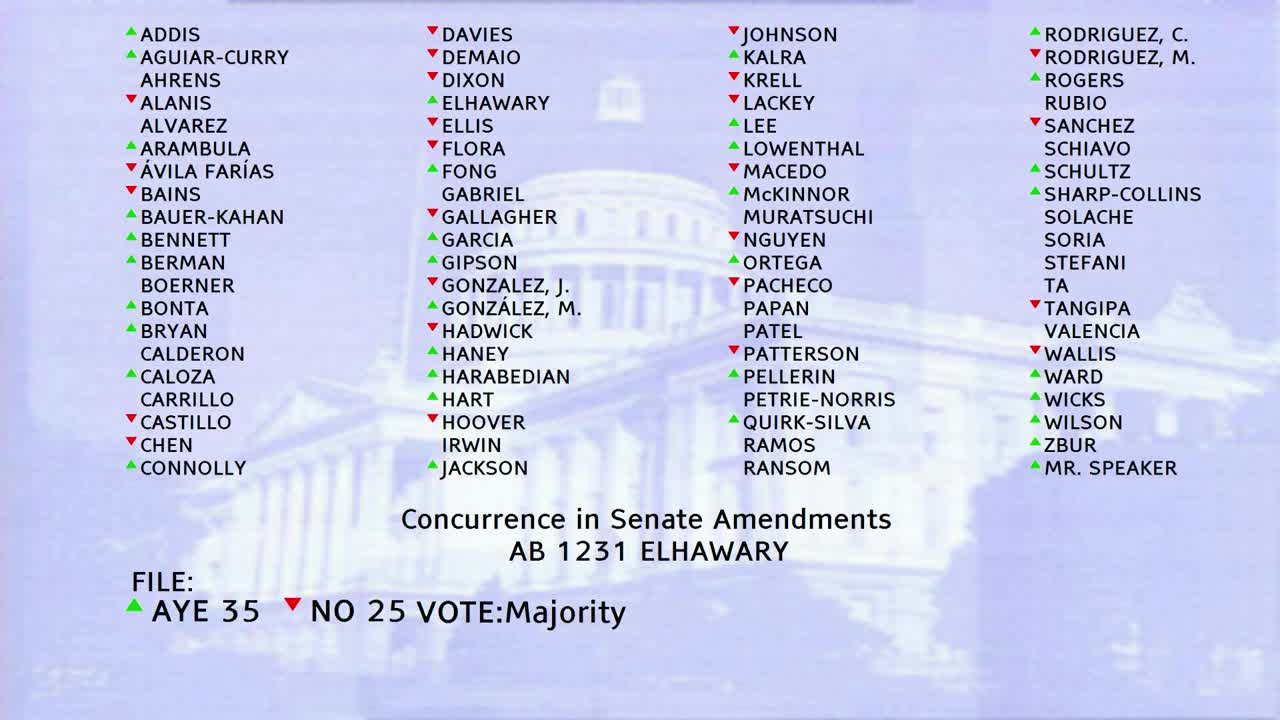 45SEC
Assembly Floor
 2MIN
Senate Floor
 3MIN
Senate Standing Committee on Appropriations
Bill Author
Bill Co-Author(s):