AB 895: Personal Income Tax Law: Corporation Tax Law: credits: fast food restaurants.
- Session Year: 2025-2026
- House: Assembly
- Latest Version Date: 2025-03-24
Current Status:
Failed
(2026-02-02: From committee: Filed with the Chief Clerk pursuant to Joint Rule 56.)
Introduced
In Committee
Awaiting First Chamber Vote
Passed First Chamber
In Committee
Awaiting Second Chamber Vote
Passed Second Chamber
Enacted
The Personal Income Tax Law and the Corporation Tax Law allow various credits against the taxes imposed by those laws.
This bill, for taxable years beginning on or after January 1, 2026, and before January 1, 2031, would allow a credit against those taxes to qualified taxpayers, defined to mean certain fast food restaurant franchisees or independent operators, in the amount of $12,000 per qualified fast food restaurant, as defined.
Existing law requires any bill authorizing a new tax expenditure to contain, among other things, specific goals that the tax expenditure will achieve, detailed performance indicators, and data collection requirements.
This bill also would include additional information required for any bill authorizing a new tax expenditure.
This bill would take effect immediately as a tax levy.
Existing law, the Control, Regulate and Tax Adult Use of Marijuana Act (AUMA), an initiative measure, authorizes a person who obtains a state license under AUMA to engage in commercial adult-use cannabis activity pursuant to that license and applicable local ordinances.Existing law, the Medicinal and Adult-Use Cannabis Regulation and Safety Act (MAUCRSA), among other things, consolidates the licensure and regulation of commercial medicinal and adult-use cannabis activities and requires the Department of Cannabis Control to administer its provisions. Under MAUCRSA, the Department of Cannabis Control has sole authority to license and regulate commercial cannabis activity, which MAUCRSA defines to include, among other activities, the sale of cannabis and cannabis products. MAUCRSA prohibits a licensee from giving away any amount of cannabis or cannabis product as part of a business promotion or other commercial activity, as specified.This bill would make a nonsubstantive change to an exception to that prohibition.Existing law, the Control, Regulate and Tax Adult Use of Marijuana Act (AUMA), an initiative measure, authorizes a person who obtains a state license under AUMA to engage in commercial adult-use cannabis activity pursuant to that license and applicable local ordinances.
Existing law, the Medicinal and Adult-Use Cannabis Regulation and Safety Act (MAUCRSA), among other things, consolidates the licensure and regulation of commercial medicinal and adult-use cannabis activities and requires the Department of Cannabis Control to administer its provisions. Under MAUCRSA, the Department of Cannabis Control has sole authority to license and regulate commercial cannabis activity, which MAUCRSA defines to include, among other activities, the sale of cannabis and cannabis products. MAUCRSA prohibits a licensee from giving away any amount of cannabis or cannabis product as part of a business promotion or other commercial activity, as specified.
This bill would make a nonsubstantive change to an exception to that prohibition.
This measure shall be known, and may be cited, as the Quick-Service Restaurant Affordability Act of 2025.
SEC. 2.(a) The Legislature finds and declares all of the following:
(1)It is a priority to promote policies that enhance affordability for businesses and residents, ensuring that economic growth and job opportunities remain accessible to all.
(2)The average quick-service restaurant experienced an overall cost increase of 35 percent in 2024.
(3)On April 1, 2024, the state mandated a 25 percent increase in the minimum wage that is paid to all employees of quick-service restaurants.
(4)Family-owned quick-service restaurants in California incur, on average, an additional $12,000 per location in unemployment insurance contributions compared to other restaurant establishments within the state.
(b)It is the intent of the Legislature to provide financial relief to quick-service restaurant owners impacted by rising unemployment insurance costs due to state-mandated minimum wage increases. The purpose of this act is to establish a tax credit to offset these increased costs to quick-service restaurants.
SEC. 3.Section 17053.92 is added to the Revenue and Taxation Code, to read:17053.92.(a)For each taxable year beginning on or after January 1, 2026, and before January 1, 2031, there shall be allowed as a credit against the net tax, as defined in Section 17039, an amount equal to twelve thousand dollars ($12,000) per qualified taxpayer per qualified fast food restaurant during the taxable year.
(b)For purposes of this section, the following definitions shall apply:
(1)Qualified fast food restaurant shall mean a restaurant that is subject to Part 4.5.5 (commencing with Section 1474) of Division 2 of the Labor Code.
(2)Qualified taxpayer shall mean a franchisee or independent fast food restaurant operator with no more than 45 locations under common ownership within the State of California.
(c)In the case where the credit allowed pursuant to this section exceeds the net tax, the excess may be carried over to reduce the net tax in the following taxable year, and succeeding two years, if necessary, until the credit is exhausted.
(d)(1)In order to qualify for the credit, an employer shall annually demonstrate by reasonable means its compliance with appropriate provisions of the Labor Code, and shall maintain an active unemployment insurance account with the Employment Development Department.
(2)The Franchise Tax Board may request any information necessary from the Department of Industrial Relations to assist in the administration of this credit and ensure compliance by qualified taxpayers.
(e)(1)The Franchise Tax Board may prescribe rules, guidelines, procedures, or other guidance to carry out the purposes of this section. Chapter 3.5 (commencing with Section 11340) of Part 1 of Division 3 of Title 2 of the Government Code shall not apply to any rule, guideline, or procedure prescribed by the Franchise Tax Board pursuant to this section.
(2)The Franchise Tax Board may prescribe any regulations necessary or appropriate to carry out the purposes of this section, including any regulations to prevent improper claims from being filed.
(f)(1)For purposes of complying with Section 41, as it relates to the credit allowed by this section and Section 23692, the Legislature finds and declares as follows:
(A)The specific goal of the credit is to provide financial relief to fast food restaurant owners impacted by rising unemployment insurance costs.
(B)The performance indicators for the Legislature to use in determining if the credit has achieved this goal shall be the number of taxpayers claiming the credit, and the total dollar value of credit claimed per taxpayer.
(2)(A)The Franchise Tax Board, no later than December 1, 2027, and annually thereafter, shall submit a report to the Legislature, in compliance with Section 9795 of the Government Code, detailing the number of taxpayers claiming a credit pursuant to this section or Section 23692, and the total dollar value of credits claimed.
(B)The disclosure requirements of this subdivision shall be treated as an exception to Section 19542.
(g)This section shall remain operative only until December 1, 2031, and as of that date is repealed.
SEC. 4.Section 23692 is added to the Revenue and Taxation Code, to read:23692.(a)For each taxable year beginning on or after January 1, 2026, and before January 1, 2031, there shall be allowed as a credit against the tax, as defined in Section 23036, an amount equal to twelve thousand dollars ($12,000) per qualified taxpayer per qualified fast food restaurant during the taxable year.
(b)For purposes of this section, the following definitions shall apply:
(1)Qualified fast food restaurant shall mean a restaurant that is subject to Part 4.5.5 (commencing with Section 1474) of Division 2 of the Labor Code.
(2)Qualified taxpayer shall mean a franchisee or independent fast food restaurant operator with no more than 45 locations under common ownership within the State of California.
(c)In the case where the credit allowed pursuant to this section exceeds the tax, the excess may be carried over to reduce the tax in the following taxable year, and succeeding two years, if necessary, until the credit is exhausted.
(d)(1)In order to qualify for the credit, an employer shall annually demonstrate by reasonable means its compliance with appropriate provisions of the Labor Code, and shall maintain an active unemployment insurance account with the Employment Development Department.
(2)The Franchise Tax Board may request any information necessary from the Department of Industrial Relations to assist in the administration of this credit and ensure compliance by qualified taxpayers.
(e)(1)The Franchise Tax Board may prescribe rules, guidelines, procedures, or other guidance to carry out the purposes of this section. Chapter 3.5 (commencing with Section 11340) of Part 1 of Division 3 of Title 2 of the Government Code shall not apply to any rule, guideline, or procedure prescribed by the Franchise Tax Board pursuant to this section.
(2)The Franchise Tax Board may prescribe any regulations necessary or appropriate to carry out the purposes of this section, including any regulations to prevent improper claims from being filed.
(f)This section shall remain operative only until December 1, 2031, and as of that date is repealed.
SEC. 5.This act provides for a tax levy within the meaning of Article IV of the California Constitution and shall go into immediate effect.
SECTION 1.Section 26153 of the Business and Professions Code is amended to read:26153.(a)A licensee shall not give away any amount of cannabis or cannabis products, or any cannabis accessories, as part of a business promotion or other commercial activity.(b)For purposes of this section, a donation of cannabis or cannabis products by a licensee to a patient or the primary caregiver of a patient pursuant to Section 26071 shall not be considered a business promotion or other commercial activity.(c)For purposes of this section, the provision of cannabis or cannabis products by a licensee pursuant to Section 26153.1 shall not be considered a business promotion or other commercial activity.(a)A licensee shall not give away any amount of cannabis or cannabis products, or any cannabis accessories, as part of a business promotion or other commercial activity.
(b)For purposes of this section, the a donation of cannabis or cannabis products by a licensee to a patient or the primary caregiver of a patient pursuant to Section 26071 shall not be considered a business promotion or other commercial activity.
(c)For purposes of this section, the provision of cannabis or cannabis products by a licensee pursuant to Section 26153.1 shall not be considered a business promotion or other commercial activity.
|
Date
|
Status
|
|---|---|
| Feb 2, 2026 | From committee: Filed with the Chief Clerk pursuant to Joint Rule 56. |
| Jan 31, 2026 | Died pursuant to Art. IV, Sec. 10(c) of the Constitution. |
| May 5, 2025 | In committee: Set, second hearing. Held under submission. |
| Apr 7, 2025 | In committee: Set, first hearing. Referred to REV. & TAX. suspense file. |
| Mar 25, 2025 | Re-referred to Com. on REV. & TAX. |
| Mar 24, 2025 | From committee chair, with author's amendments: Amend, and re-refer to Com. on REV. & TAX. Read second time and amended. |
| Mar 24, 2025 | Referred to Com. on REV. & TAX. |
| Feb 20, 2025 | From printer. May be heard in committee March 22. |
| Feb 19, 2025 | Read first time. To print. |
This list shows positions taken on this bill by organizations on the date displayed, which is linked to the original source.
Positions by individuals are not included.
|
Organization
|
Position
|
Date
|
|---|---|---|
| California Alliance Of Family Businesses | ** Support | |
| California Restaurant Association | ** Support | |
| California Tax Reform Association | ** Against |
Date of Hearing: May 5, 2025
ASSEMBLY COMMITTEE ON REVENUE AND TAXATION
Mike Gipson, Chair
ABPCA Bill Id:AB 895 (
Author:Blanca Rubio) – As Amended Ver:March 24, 2025
SUSPENSE
Majority vote. Tax levy. Fiscal committee.
SUBJECT: Personal Income Tax Law: Corporation Tax Law: credits: fast food restaurants
SUMMARY: Allows, under the Personal Income Tax (PIT) Law and the Corporation Tax (CT) Law, a credit to a "qualified taxpayer" of $12,000 per "qualified fast food restaurant", as specified. Specifically, this bill:
- Allows a credit for taxable years beginning on or after January 1, 2026, and before January 1, 2031, to a "qualified taxpayer" of $12,000 per "qualified fast food restaurant" during the taxable year.
- Defines both of the following terms:
- "Qualified taxpayer" is a franchisee or independent fast food restaurant operator with no more than 45 locations under common ownership within California; and,
- "Qualified fast food restaurant" is a restaurant that is subject to Labor Code Section 1474 et seq.
- Provides that any unused credit amounts may be carried forward for up to three years, if necessary, until the credit is exhausted.
- Requires an employer to annually demonstrate by reasonable means its compliance with appropriate provisions of the Labor Code and maintain an active unemployment insurance account with the Employment Development Department (EDD).
- Authorizes the Franchise Tax Board (FTB) to do both of the following:
- Request any information necessary to administer this credit and ensure compliance from the Department of Industrial Relations; and,
- Prescribe rules, guidelines, procedures, or other guidance to carry out the purposes of this bill. The Administrative Procedure Act would not apply to any rule, guideline, or procedure prescribed by the FTB pursuant to this bill.
- Finds and declares the following for the purposes of satisfying the requirements of Revenue and Taxation Code (R&TC) Section 41:
- The specific purpose of the credit is to provide financial relief to fast food restaurant owners impacted by rising unemployment insurance costs;
- The performance indicators for the Legislature to use in determining whether the credit achieves its stated goal are the number of taxpayers allowed a credit and the total dollar value of credits allowed; and,
- Requires the FTB, on or before December 1, 2027, and annually thereafter, to submit a report to the Legislature detailing the number of taxpayers allowed a credit and the total dollar value of credits allowed.
- Takes immediate effect as a tax levy.
- Sunsets the credit's statutory provisions on December 1, 2031.
EXISTING LAW:
- Allows various tax credits under the PIT Law and the CT Law. These credits are generally designed to encourage socially beneficial behavior or to provide relief to taxpayers who incur specified expenses.
- Requires any bill authorizing a new credit to contain all of the following:
- Specific goals, purposes, and objectives that the tax credit will achieve;
- Detailed performance indicators for the Legislature to use when measuring whether the tax credit meets the goals, purposes, and objectives stated in the bill; and,
- Data collection requirements to enable the Legislature to determine whether the tax credit is meeting, failing to meet, or exceeding those specific goals, purposes, and objectives. The requirements shall include the specific data and baseline measurements to be collected and remitted in each year the credit is in effect, for the Legislature to measure the change in performance indicators, and the specific taxpayers, state agencies, or other entities required to collect and remit data. (R&TC Section 41.)
FISCAL EFFECT: The FTB estimates General Fund revenue losses of $45 million in fiscal year (FY) 2025-26, $85 million in FY 2026-27, and $90 million in FY 2027-28.
COMMENTS:
- The author has provided the following statement in support of the bill:
AB 895 is critical, not merely as economic relief, but as an investment in preserving employment opportunities, sustaining small businesses, and enhancing the economic resilience of our diverse communities across California. The predominantly independent franchisees and family-operated restaurants, including significant representation from minority and women-owned businesses, have faced severe economic pressures since the recent substantial rise in the fast-food minimum wage. AB 895 directly addresses these hardships by offering targeted tax relief to quick-service restaurants, offsetting rising workers compensation costs and other operational expenses. Additionally, the bill includes measures for accountability and transparency through defined performance indicators and data reporting to ensure efficient use of taxpayer funds.
- Writing in support of this bill, the California Alliance of Family Owned Businesses (CAFOB) notes, in part:
The fast-food industry in California has been disproportionately affected by rising operational costs, with workers compensation expenses alone increasing by an average of $12,000 per location. According to a report by Berkeley Research Group, between June 2023 and June 2024, California's quick-service restaurant sector lost 10,700 jobs, marking the steepest decline outside of the Great Recession and the COVID-19 pandemic. Furthermore, food prices at local quick-service restaurants have surged by 14.5% (nearly double the national average of 8.2%) since the implementation of AB 1228. Small, family-owned fast-food restaurants, which comprise a significant portion of our membership, are particularly vulnerable. These businesses, often operated by individuals from diverse backgrounds, including immigrants and minority entrepreneurs, are operating on razor-thin profit margins. Business owners have reported cutting employee hours, raising menu prices, and even halting growth and expansion plans just to survive.
- Writing in opposition to this bill, the California Tax Reform Association notes, in part:
We see no justification for a substantial tax credit for this industry. All industries may face rising costs, and may further face those from expected tariffs. These costs are just a fact of doing business, whether as a franchise owner or an independent business, and can include all businesses located in cities where minimum wages have been increased, such as Los Angeles. California has rejected the very costly federal pass-through for certain non-corporate businesses. The best system is one where businesses face a consistent and knowable environment, and make their choices accordingly, not a system which chooses particular industries for tax benefits. There are also technical problems with this bill, e.g. does the credit apply to each location or one owner with multiple locations. In any event, California should not adjust its tax system for particular shifts in costs and in the market.
- Committee Staff Comments:
- What is a "tax expenditure"? Existing law provides various credits, deductions, exclusions, and exemptions for particular taxpayer groups. In the late 1960s, U.S. Treasury officials began arguing that these features of the tax law should be referred to as "expenditures" since they are generally enacted to accomplish some governmental purpose and there is a determinable cost associated with each (in the form of foregone revenues).
As the Department of Finance notes in its annual Tax Expenditure Report, there are several key differences between tax expenditures and direct expenditures. First, tax expenditures are typically reviewed less frequently than direct expenditures. Second, there is generally no control over the amount of revenue losses associated with any given tax expenditure. Finally, it should also be noted that, once enacted, it takes a two-thirds vote to rescind an existing tax expenditure absent a sunset date. This effectively results in a "one-way ratchet" whereby tax expenditures can be conferred by majority vote, but cannot be rescinded, irrespective of their efficacy or cost, without a supermajority vote.
- What problem is this bill attempting to solve? According to the author and supporters, this bill seeks to address increased costs on owners and operators of fast food restaurants resulting from increased labor and food expenses. Proponents cite legislation passed in recent years that, among other things, increased the minimum wage for certain fast food workers by roughly 25% as a major increase to ongoing operating costs. As a result, proponents argue that fast food operators are either raising prices, reducing staff hours and/or benefits, or a combination of both. It should be noted, however, that the specific impacts of minimum wage policies are the subject of spirited debate.
As currently drafted, this bill refers to "rising unemployment insurance costs"; however, the author's office has indicated that this was a drafting error and this bill will be amended to instead refer to "rising workers' compensation costs."
- Who stands to benefit? The credits created by this bill are available to taxpayers who are franchisees or independent fast food restaurant operators with no more than 45 locations in California. By creating parallel credits under the PIT and CT laws, these credits would be available to businesses that are structured either as a pass-through entity (e.g. a sole proprietorship or limited liability company) or as a corporation.
- The franchise model: Under the franchise business model, a franchisor grants the franchisee the right to operate a business under its brand, leveraging the franchisor's trademarks, business strategies, and operational procedures. The franchisee invests their own capital, paying an initial fee and ongoing royalties, which affords them access to a proven business model, training, and support systems. This symbiotic relationship allows the franchisee to run their own business while benefiting from the brand recognition and established customer base of the franchisor. However, it also demands adherence to the franchisor's guidelines to ensure consistency and quality across all franchise units, preserving the brand's integrity and customer experience. This model exists across various sectors, ranging from fast food and retail to services.
- California Fast Food Council: In 2021, the Service Employees International Union of California proposed a European-style state council by which fast food workers and business owners would bargain directly with each other over wages and working conditions on behalf of the entire industry. Proponents argued that fast food workers were chronically underpaid; subject to unsafe working conditions; and unable to hold employers responsible when they violated labor laws, such as mandatory meal and rest breaks. AB 257 (Holden), Chapter 246, Statutes of 2022, established the Fast Food Council and a minimum wage of $22 per hour. Under AB 257, a "fast food chain" was defined as a set of restaurants consisting of 100 or more establishments nationally that share a common brand or are characterized by standardized options for décor, marketing, packaging, products, and services.
- Who stands to benefit? The credits created by this bill are available to taxpayers who are franchisees or independent fast food restaurant operators with no more than 45 locations in California. By creating parallel credits under the PIT and CT laws, these credits would be available to businesses that are structured either as a pass-through entity (e.g. a sole proprietorship or limited liability company) or as a corporation.
After the fast food industry qualified a ballot measure to repeal AB 257, a compromise was negotiated and the Legislature passed AB 1228 (Holden), Chapter 262, Statutes of 2023. Pursuant to AB 1228, workers at fast food restaurants belonging to a chain with 60 or more locations nationwide must be paid at least $20 per hour. Additionally, the Fast Food Council was re-established in a modified form – split evenly between business and labor, with one neutral chairperson – with the authority to approve further raises but with limited authority over other working conditions.
- Impacts so far: The Berkeley Research Group – a private consulting firm that is not affiliated with the University of California (UC), Berkeley – found that menu prices at California's fast food restaurants increased by 14.5% between September 2023 (the month AB 1228 was signed into law) and October 2024, nearly double the national average (8.2%).[1] On the other hand, researchers at the UC Berkeley Institute for Research on Labor and Employment (IRLE) found that the increased minimum wage for fast food workers did not adversely impact overall fast food employment and increased menu prices by about 3.7%, or about $0.15 on a $4 hamburger. [2] These researchers further found that about 62% of the increased costs were passed on to consumers in higher prices.
The Employment Policies Institute (EPI) has critiqued the IRLE findings described above, arguing that their analysis relies on data from just two weeks prior to and two weeks after the minimum wage hike took effect on April 1, 2024, despite media reports indicating restaurants began raising prices as early as November 2023.[3] EPI argues that seasonally adjusted federal data show that more than 4,400 California fast food jobs have been lost since January 2024. - Committee's tax expenditure policy: Both R&TC Section 41 and Committee policy require any tax expenditure bill to outline specific goals, purposes, and objectives that the tax expenditure will achieve, along with detailed performance indicators for the Legislature to use when measuring whether the tax expenditure meets those stated goals, purposes, and objectives. A tax expenditure bill will not be eligible for a Committee vote unless it has complied with these requirements. In its current form, this bill states that the credit is designed to provide financial relief to fast food restaurant owners impacted by rising unemployment insurance costs.
In addition to the R&TC Section 41 requirements, this Committee's policy also requires that all tax expenditure proposals contain an appropriate sunset provision to be eligible for a vote. According to this policy, an "appropriate sunset provision" means 5 years, except in the case of a tax expenditure measure providing relief to California veterans, in which case "appropriate sunset provision" means 10 years. This bill, as currently drafted, complies with the Committee's policy on sunset dates. - Technical considerations:
- Report timeline: This bill would require the FTB to submit a report to the Legislature detailing the number of taxpayers that receive a credit and the total dollar amount of credits allowed by December 1, 2027. If the author's intent is to review a report that contains complete information for the 2026 taxable year, the FTB recommends that the reporting due date be extended to July 1, 2028. The FTB needs approximately six months to complete return processing and to compile the needed data to prepare a report.
- Lack of clarity: As currently drafted, this bill allows a credit "in an amount equal to $12,000 per qualified taxpayer per qualified fast food restaurant during the taxable year." For the sake of clarity, the author may consider replacing "per qualified taxpayer" with "to a qualified taxpayer" and adding the word "operated" before "during the taxable year."
- Report timeline: This bill would require the FTB to submit a report to the Legislature detailing the number of taxpayers that receive a credit and the total dollar amount of credits allowed by December 1, 2027. If the author's intent is to review a report that contains complete information for the 2026 taxable year, the FTB recommends that the reporting due date be extended to July 1, 2028. The FTB needs approximately six months to complete return processing and to compile the needed data to prepare a report.
- Related legislation: AB 244 (Alanis) would require the Division of Apprenticeship Standards to establish and administer a Quick Service Restaurant Young Workforce Apprenticeship Program, as well as allow a credit of $1,000 per registered apprentice employed for at least six-months by a qualified taxpayer, as specified. AB 244 is currently pending hearing by the Assembly Committee on Labor and Employment.
- Prior legislation:
- AB 1228 (Holden), Chapter 262, Statutes of 2023, established a $20 minimum wage for workers in fast-food restaurants and snack and nonalcoholic beverage bars, effective April 1, 2024, as well as reestablished a modified version of the Fast Food Council.
- AB 257 (Holden), Chapter 246, Statutes of 2022, established the Fast Food Council until January 1, 2029, for the purpose of establishing sector-wide minimum standards on wages, working hours, and other working conditions related to the health, safety, and welfare of, and supplying the necessary cost of proper living to, fast food restaurant workers.
- AB 1228 (Holden), Chapter 262, Statutes of 2023, established a $20 minimum wage for workers in fast-food restaurants and snack and nonalcoholic beverage bars, effective April 1, 2024, as well as reestablished a modified version of the Fast Food Council.
- Impacts so far: The Berkeley Research Group – a private consulting firm that is not affiliated with the University of California (UC), Berkeley – found that menu prices at California's fast food restaurants increased by 14.5% between September 2023 (the month AB 1228 was signed into law) and October 2024, nearly double the national average (8.2%).[1] On the other hand, researchers at the UC Berkeley Institute for Research on Labor and Employment (IRLE) found that the increased minimum wage for fast food workers did not adversely impact overall fast food employment and increased menu prices by about 3.7%, or about $0.15 on a $4 hamburger. [2] These researchers further found that about 62% of the increased costs were passed on to consumers in higher prices.
REGISTERED SUPPORT / OPPOSITION:
Support
California Alliance of Family Businesses
California Restaurant Association
Opposition
California Tax Reform Association
Analysis Prepared by: Wesley Whitaker / REV. & TAX. / (916) 319-2098
Christensen, Groehn, and Hamm, Impact of the $20 per Hour Minimum Wage on California's Fast Food Workers: Early Indications, Berkeley Research Group (February 18, 2025). ↑
Reich and Sosinskiy, Sectoral Wage-Setting in California, UC Berkeley Institute for Research on Labor and Employment, Working Paper No. 104-24. http://irle.berkeley.edu/publications/working-papers/sectoral-wage-setting-in-california/. ↑
Policy Brief: Union-Backed Researchers Miss the Mark on California’s $20 Fast Food Wage, Employment Policies Institute (November 2024). https://epionline.org/app/uploads/2024/11/241101_EPI_PolicyBrief_Fastfood.pdf. ↑
Date of Hearing: April 7, 2025
ASSEMBLY COMMITTEE ON REVENUE AND TAXATION
Mike Gipson, Chair
ABPCA Bill Id:AB 895 (
Author:Blanca Rubio) – As Amended Ver:March 24, 2025
Majority vote. Tax levy. Fiscal committee.
SUBJECT: Personal Income Tax Law: Corporation Tax Law: credits: fast food restaurants
SUMMARY: Allows, under the Personal Income Tax (PIT) Law and the Corporation Tax (CT) Law, a credit to a "qualified taxpayer" of $12,000 per "qualified fast food restaurant", as specified. Specifically, this bill:
- Allows a credit for taxable years beginning on or after January 1, 2026, and before January 1, 2031, to a "qualified taxpayer" of $12,000 per "qualified fast food restaurant" during the taxable year.
- Defines both of the following terms:
- "Qualified taxpayer" is a franchisee or independent fast food restaurant operator with no more than 45 locations under common ownership within California; and,
- "Qualified fast food restaurant" is a restaurant that is subject to Labor Code Section 1474 et seq.
- Provides that any unused credit amounts may be carried forward for up to three years, if necessary, until the credit is exhausted.
- Requires an employer to annually demonstrate by reasonable means its compliance with appropriate provisions of the Labor Code and maintain an active unemployment insurance account with the Employment Development Department (EDD).
- Authorizes the Franchise Tax Board (FTB) to do both of the following:
- Request any information necessary to administer this credit and ensure compliance from the Department of Industrial Relations; and,
- Prescribe rules, guidelines, procedures, or other guidance to carry out the purposes of this bill. The Administrative Procedure Act would not apply to any rule, guideline, or procedure prescribed by the FTB pursuant to this bill.
- Finds and declares the following for the purposes of satisfying the requirements of Revenue and Taxation Code (R&TC) Section 41:
- The specific purpose of the credit is to provide financial relief to fast food restaurant owners impacted by rising unemployment insurance costs;
- The performance indicators for the Legislature to use in determining whether the credit achieves its stated goal are the number of taxpayers allowed a credit and the total dollar value of credits allowed; and,
- Requires the FTB, on or before December 1, 2027, and annually thereafter, to submit a report to the Legislature detailing the number of taxpayers allowed a credit and the total dollar value of credits allowed.
- Takes immediate effect as a tax levy.
- Sunsets the credit's statutory provisions on December 1, 2031.
EXISTING LAW:
- Allows various tax credits under the PIT Law and the CT Law. These credits are generally designed to encourage socially beneficial behavior or to provide relief to taxpayers who incur specified expenses.
- Requires any bill authorizing a new credit to contain all of the following:
- Specific goals, purposes, and objectives that the tax credit will achieve;
- Detailed performance indicators for the Legislature to use when measuring whether the tax credit meets the goals, purposes, and objectives stated in the bill; and,
- Data collection requirements to enable the Legislature to determine whether the tax credit is meeting, failing to meet, or exceeding those specific goals, purposes, and objectives. The requirements shall include the specific data and baseline measurements to be collected and remitted in each year the credit is in effect, for the Legislature to measure the change in performance indicators, and the specific taxpayers, state agencies, or other entities required to collect and remit data. (R&TC Section 41.)
FISCAL EFFECT: The FTB estimates General Fund revenue losses of $45 million in fiscal year (FY) 2025-26, $85 million in FY 2026-27, and $90 million in FY 2027-28.
COMMENTS:
- The author has provided the following statement in support of the bill:
AB 895 is critical, not merely as economic relief, but as an investment in preserving employment opportunities, sustaining small businesses, and enhancing the economic resilience of our diverse communities across California. The predominantly independent franchisees and family-operated restaurants, including significant representation from minority and women-owned businesses, have faced severe economic pressures since the recent substantial rise in the fast-food minimum wage. AB 895 directly addresses these hardships by offering targeted tax relief to quick-service restaurants, offsetting rising workers compensation costs and other operational expenses. Additionally, the bill includes measures for accountability and transparency through defined performance indicators and data reporting to ensure efficient use of taxpayer funds.
- Writing in support of this bill, the California Alliance of Family Owned Businesses (CAFOB) notes, in part:
The fast-food industry in California has been disproportionately affected by rising operational costs, with workers compensation expenses alone increasing by an average of $12,000 per location. According to a report by Berkeley Research Group, between June 2023 and June 2024, California's quick-service restaurant sector lost 10,700 jobs, marking the steepest decline outside of the Great Recession and the COVID-19 pandemic. Furthermore, food prices at local quick-service restaurants have surged by 14.5% (nearly double the national average of 8.2%) since the implementation of AB 1228. Small, family-owned fast-food restaurants, which comprise a significant portion of our membership, are particularly vulnerable. These businesses, often operated by individuals from diverse backgrounds, including immigrants and minority entrepreneurs, are operating on razor-thin profit margins. Business owners have reported cutting employee hours, raising menu prices, and even halting growth and expansion plans just to survive.
- Committee Staff Comments:
- What is a "tax expenditure"? Existing law provides various credits, deductions, exclusions, and exemptions for particular taxpayer groups. In the late 1960s, U.S. Treasury officials began arguing that these features of the tax law should be referred to as "expenditures" since they are generally enacted to accomplish some governmental purpose and there is a determinable cost associated with each (in the form of foregone revenues).
As the Department of Finance notes in its annual Tax Expenditure Report, there are several key differences between tax expenditures and direct expenditures. First, tax expenditures are typically reviewed less frequently than direct expenditures. Second, there is generally no control over the amount of revenue losses associated with any given tax expenditure. Finally, it should also be noted that, once enacted, it takes a two-thirds vote to rescind an existing tax expenditure absent a sunset date. This effectively results in a "one-way ratchet" whereby tax expenditures can be conferred by majority vote, but cannot be rescinded, irrespective of their efficacy or cost, without a supermajority vote.
- What problem is this bill attempting to solve? According to the author and supporters, this bill seeks to address increased costs on owners and operators of fast food restaurants resulting from increased labor and food expenses. Proponents cite legislation passed in recent years that, among other things, increased the minimum wage for certain fast food workers by roughly 25% as a major increase to ongoing operating costs. As a result, proponents argue that fast food operators are either raising prices, reducing staff hours and/or benefits, or a combination of both. It should be noted, however, that the specific impacts of minimum wage policies are the subject of spirited debate.
As currently drafted, this bill refers to "rising unemployment insurance costs"; however, the author's office has indicated that this was a drafting error and this bill will be amended to instead refer to "rising workers' compensation costs."
- Who stands to benefit? The credits created by this bill are available to taxpayers who are franchisees or independent fast food restaurant operators with no more than 45 locations in California. By creating parallel credits under the PIT and CT laws, these credits would be available to businesses that are structured either as a pass-through entity (e.g. a sole proprietorship or limited liability company) or as a corporation.
- The franchise model: Under the franchise business model, a franchisor grants the franchisee the right to operate a business under its brand, leveraging the franchisor's trademarks, business strategies, and operational procedures. The franchisee invests their own capital, paying an initial fee and ongoing royalties, which affords them access to a proven business model, training, and support systems. This symbiotic relationship allows the franchisee to run their own business while benefiting from the brand recognition and established customer base of the franchisor. However, it also demands adherence to the franchisor's guidelines to ensure consistency and quality across all franchise units, preserving the brand's integrity and customer experience. This model exists across various sectors, ranging from fast food and retail to services.
- California Fast Food Council: In 2021, the Service Employees International Union of California proposed a European-style state council by which fast food workers and business owners would bargain directly with each other over wages and working conditions on behalf of the entire industry. Proponents argued that fast food workers were chronically underpaid; subject to unsafe working conditions; and unable to hold employers responsible when they violated labor laws, such as mandatory meal and rest breaks. AB 257 (Holden), Chapter 246, Statutes of 2022, established the Fast Food Council and a minimum wage of $22 per hour. Under AB 257, a "fast food chain" was defined as a set of restaurants consisting of 100 or more establishments nationally that share a common brand or are characterized by standardized options for décor, marketing, packaging, products, and services.
- Who stands to benefit? The credits created by this bill are available to taxpayers who are franchisees or independent fast food restaurant operators with no more than 45 locations in California. By creating parallel credits under the PIT and CT laws, these credits would be available to businesses that are structured either as a pass-through entity (e.g. a sole proprietorship or limited liability company) or as a corporation.
After the fast food industry qualified a ballot measure to repeal AB 257, a compromise was negotiated and the Legislature passed AB 1228 (Holden), Chapter 262, Statutes of 2023. Pursuant to AB 1228, workers at fast food restaurants belonging to a chain with 60 or more locations nationwide must be paid at least $20 per hour. Additionally, the Fast Food Council was re-established in a modified form – split evenly between business and labor, with one neutral chairperson – with the authority to approve further raises but with limited authority over other working conditions.
- Impacts so far: The Berkeley Research Group – a private consulting firm that is not affiliated with the University of California (UC), Berkeley – found that menu prices at California's fast food restaurants increased by 14.5% between September 2023 (the month AB 1228 was signed into law) and October 2024, nearly double the national average (8.2%).[1] On the other hand, researchers at the UC Berkeley Institute for Research on Labor and Employment (IRLE) found that the increased minimum wage for fast food workers did not adversely impact overall fast food employment and increased menu prices by about 3.7%, or about $0.15 on a $4 hamburger. [2] These researchers further found that about 62% of the increased costs were passed on to consumers in higher prices.
The Employment Policies Institute (EPI) has critiqued the IRLE findings described above, arguing that their analysis relies on data from just two weeks prior to and two weeks after the minimum wage hike took effect on April 1, 2024, despite media reports indicating restaurants began raising prices as early as November 2023.[3] EPI argues that seasonally adjusted federal data show that more than 4,400 California fast food jobs have been lost since January 2024. - Committee's tax expenditure policy: Both R&TC Section 41 and Committee policy require any tax expenditure bill to outline specific goals, purposes, and objectives that the tax expenditure will achieve, along with detailed performance indicators for the Legislature to use when measuring whether the tax expenditure meets those stated goals, purposes, and objectives. A tax expenditure bill will not be eligible for a Committee vote unless it has complied with these requirements. In its current form, this bill states that the credit is designed to provide financial relief to fast food restaurant owners impacted by rising unemployment insurance costs.
In addition to the R&TC Section 41 requirements, this Committee's policy also requires that all tax expenditure proposals contain an appropriate sunset provision to be eligible for a vote. According to this policy, an "appropriate sunset provision" means 5 years, except in the case of a tax expenditure measure providing relief to California veterans, in which case "appropriate sunset provision" means 10 years. This bill, as currently drafted, complies with the Committee's policy on sunset dates. - Technical considerations:
- Report timeline: This bill would require the FTB to submit a report to the Legislature detailing the number of taxpayers that receive a credit and the total dollar amount of credits allowed by December 1, 2027. If the author's intent is to review a report that contains complete information for the 2026 taxable year, the FTB recommends that the reporting due date be extended to July 1, 2028. The FTB needs approximately six months to complete return processing and to compile the needed data to prepare a report.
- Lack of clarity: As currently drafted, this bill allows a credit "in an amount equal to $12,000 per qualified taxpayer per qualified fast food restaurant during the taxable year." For the sake of clarity, the author may consider replacing "per qualified taxpayer" with "to a qualified taxpayer" and adding the word "operated" before "during the taxable year."
- Report timeline: This bill would require the FTB to submit a report to the Legislature detailing the number of taxpayers that receive a credit and the total dollar amount of credits allowed by December 1, 2027. If the author's intent is to review a report that contains complete information for the 2026 taxable year, the FTB recommends that the reporting due date be extended to July 1, 2028. The FTB needs approximately six months to complete return processing and to compile the needed data to prepare a report.
- Related legislation: AB 244 (Alanis) would require the Division of Apprenticeship Standards to establish and administer a Quick Service Restaurant Young Workforce Apprenticeship Program, as well as allow a credit of $1,000 per registered apprentice employed for at least six-months by a qualified taxpayer, as specified. AB 244 is currently pending hearing by the Assembly Committee on Labor and Employment.
- Prior legislation:
- AB 1228 (Holden), Chapter 262, Statutes of 2023, established a $20 minimum wage for workers in fast-food restaurants and snack and nonalcoholic beverage bars, effective April 1, 2024, as well as reestablished a modified version of the Fast Food Council.
- AB 257 (Holden), Chapter 246, Statutes of 2022, established the Fast Food Council until January 1, 2029, for the purpose of establishing sector-wide minimum standards on wages, working hours, and other working conditions related to the health, safety, and welfare of, and supplying the necessary cost of proper living to, fast food restaurant workers.
- AB 1228 (Holden), Chapter 262, Statutes of 2023, established a $20 minimum wage for workers in fast-food restaurants and snack and nonalcoholic beverage bars, effective April 1, 2024, as well as reestablished a modified version of the Fast Food Council.
- Impacts so far: The Berkeley Research Group – a private consulting firm that is not affiliated with the University of California (UC), Berkeley – found that menu prices at California's fast food restaurants increased by 14.5% between September 2023 (the month AB 1228 was signed into law) and October 2024, nearly double the national average (8.2%).[1] On the other hand, researchers at the UC Berkeley Institute for Research on Labor and Employment (IRLE) found that the increased minimum wage for fast food workers did not adversely impact overall fast food employment and increased menu prices by about 3.7%, or about $0.15 on a $4 hamburger. [2] These researchers further found that about 62% of the increased costs were passed on to consumers in higher prices.
REGISTERED SUPPORT / OPPOSITION:
Support
California Alliance of Family Businesses
California Restaurant Association
Opposition
None on file
Analysis Prepared by: Wesley Whitaker / REV. & TAX. / (916) 319-2098
Christensen, Groehn, and Hamm, Impact of the $20 per Hour Minimum Wage on California's Fast Food Workers: Early Indications, Berkeley Research Group (February 18, 2025). ↑
Reich and Sosinskiy, Sectoral Wage-Setting in California, UC Berkeley Institute for Research on Labor and Employment, Working Paper No. 104-24. http://irle.berkeley.edu/publications/working-papers/sectoral-wage-setting-in-california/. ↑
Policy Brief: Union-Backed Researchers Miss the Mark on California’s $20 Fast Food Wage, Employment Policies Institute (November 2024). https://epionline.org/app/uploads/2024/11/241101_EPI_PolicyBrief_Fastfood.pdf. ↑
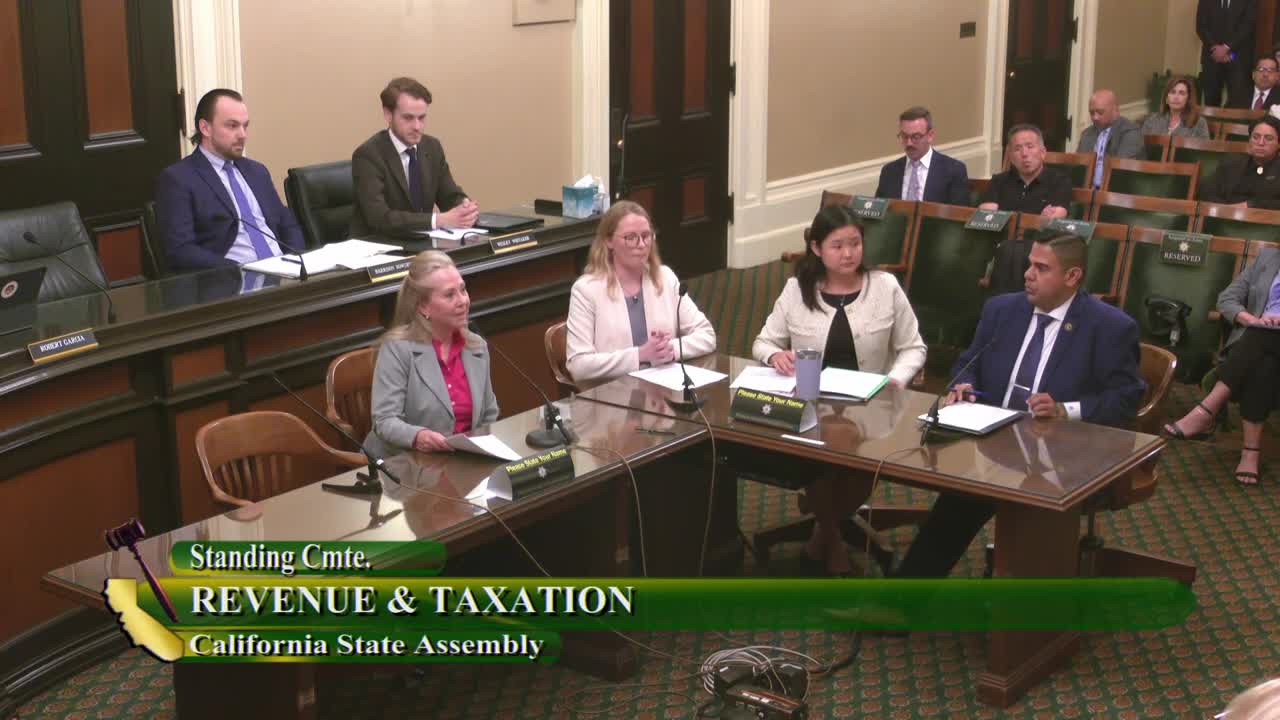
Discussed in Hearing
 7MIN
Assembly Standing Committee on Revenue and Taxation
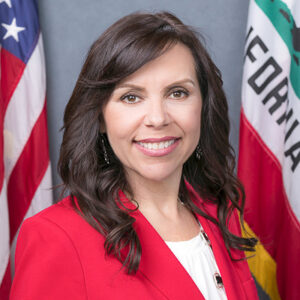
Bill Author
Bill Co-Author(s):