AB 912: Vallejo Flood and Wastewater District: trustees.
- Session Year: 2025-2026
- House: Assembly
- Latest Version Date: 2026-09-27
Current Status:
Passed
(2026-09-27: Chaptered by Secretary of State - Chapter 509, Statutes of 2026.)
Introduced
In Committee
Awaiting First Chamber Vote
Passed First Chamber
In Committee
Awaiting Second Chamber Vote
Passed Second Chamber
Enacted
Existing law, the Vallejo Flood and Wastewater District Act, establishes the Vallejo Flood and Wastewater District governed by, and under the control of, 8 trustees. The act requires that 7 of the trustees are the 7 members of the City Council of the City of Vallejo and the 8th member-at-large trustee is appointed by the Board of Supervisors of the County of Solano, as specified. The act prescribes the compensation for each trustee or alternate, including that each trustee of the district who is a member of the City Council of the City of Vallejo receives $100 per month for their services as a trustee of the board and may receive their actual and necessary expenses incurred in the performance of their duties as trustee, as provided. Under existing law, the member-at-large trustee or alternate receives $100 for each district meeting attended, as provided, and the trustee or alternate is prohibited from being compensated for more than 3 meetings, or $300, in any calendar month.
Existing law requires certain legislative bodies to prepare annually a list of, among other things, all appointive terms that will expire during the next calendar year, known as the Local Appointments List, and prescribes rules for filling unscheduled vacancies of boards, commissions, or committees for which the legislative body has the appointing power.
This bill would revise the membership and size of the governing board of the district, as specified. The bill would repeal the payment for trustees who are members of the city council described above and would instead apply the above-described at-large trustee or alternate payment and prohibition to all trustees, among other changes. To the extent that the bill would impose new duties on the City Council of the City of Vallejo, the Board of Supervisors of the County of Solano, and the remaining members of the Vallejo Flood and Wastewater District regarding the appointment of trustees and alternates, this bill would constitute a state-mandated local program. This bill would apply the provisions regarding the Local Appointments List and prescribed rules described above to the public members of the governing board of the district.
The California Constitution requires the state to reimburse local agencies and school districts for certain costs mandated by the state. Statutory provisions establish procedures for making that reimbursement.
This bill would provide that, if the Commission on State Mandates determines that the bill contains costs mandated by the state, reimbursement for those costs shall be made pursuant to the statutory provisions noted above.
Existing law, the Vallejo Flood and Wastewater District Act, establishes the Vallejo Flood and Wastewater District governed by, and under the control of, 8 trustees. The act requires that 7 of the trustees are the 7 members of the City Council of the City of Vallejo and the 8th member-at-large trustee is appointed by the Board of Supervisors of the County of Solano, as specified. The act prescribes the compensation for each trustee or alternate. alternate, including that each trustee of the district who is a member of the City Council of the City of Vallejo receives $100 per month for their services as a trustee of the board and may receive their actual and necessary expenses incurred in the performance of their duties as trustee, as provided. Under existing law, the member-at-large trustee or alternate receives $100 for each district meeting attended, as provided, and the trustee or alternate is prohibited from being compensated for more than 3 meetings, or $300, in any calendar month.
Existing law requires certain legislative bodies to prepare annually a list of, among other things, all appointive terms that will expire during the next calendar year, known as the Local Appointments List, and prescribes rules for filling unscheduled vacancies of boards, commissions, or committees for which the legislative body has the appointing power.
This bill would revise the membership and size of the governing board of the district, as specified. The bill would repeal the payment for trustees who are members of the city council described above and would instead apply the above-described at-large trustee or alternate payment and prohibition to all trustees, among other changes. To the extent that the bill would impose new duties on the City Council of the City of Vallejo, the Board of Supervisors of the County of Solano, and the remaining members of the Vallejo Flood and Wastewater District regarding the appointment of trustees and alternates, this bill would constitute a state-mandated local program. This bill would apply the provisions regarding the Local Appointments List and prescribed rules described above to the public members of the governing board of the district.
The California Constitution requires the state to reimburse local agencies and school districts for certain costs mandated by the state. Statutory provisions establish procedures for making that reimbursement.
This bill would provide that, if the Commission on State Mandates determines that the bill contains costs mandated by the state, reimbursement for those costs shall be made pursuant to the statutory provisions noted above.
This bill would declare that it is to take effect immediately as an urgency statute.Existing law, the Vallejo Flood and Wastewater District Act, establishes the Vallejo Flood and Wastewater District governed by, and under the control of, 8 trustees. The act requires that 7 of the trustees are the 7 members of the City Council of the City of Vallejo and the 8th trustee is appointed by the Board of Supervisors of the County of Solano, as specified. The act prescribes the compensation for each trustee or alternate.
This bill would revise the membership and size of the governing board of the district, as specified. To the extent that the bill would impose new duties on the City Council of the City of Vallejo, the Board of Supervisors of the County of Solano, and the remaining members of the Vallejo Flood and Wastewater District regarding the appointment of trustees and alternates, this bill would constitute a state-mandated local program.
The California Constitution requires the state to reimburse local agencies and school districts for certain costs mandated by the state. Statutory provisions establish procedures for making that reimbursement.
This bill would provide that, if the Commission on State Mandates determines that the bill contains costs mandated by the state, reimbursement for those costs shall be made pursuant to the statutory provisions noted above.
This bill would declare that it is to take effect immediately as an urgency statute.
Existing law, the State Civil Service Act, regulates employment with the state and vests in the Department of Human Resources (CalHR) all powers, duties, and authority necessary to operate the state civil service system. Existing law also establishes the Department of Corrections and Rehabilitation within state government, with jurisdiction over the state correctional system, including persons committed to state prison.This bill would require the CalHR, along with the Department of Corrections and Rehabilitation and other state agencies in consultation with the exclusive representative, as specified, to establish a pilot civil service apprenticeship program by July 1, 2026, for people with disabilities to become civil service environmental service technicians at correctional facilities under the jurisdiction of the Department of Corrections and Rehabilitation.Existing law, the State Civil Service Act, regulates employment with the state and vests in the Department of Human Resources (CalHR) all powers, duties, and authority necessary to operate the state civil service system. Existing law also establishes the Department of Corrections and Rehabilitation within state government, with jurisdiction over the state correctional system, including persons committed to state prison.
This bill would require the CalHR, along with the Department of Corrections and Rehabilitation and other state agencies in consultation with the exclusive representative, as specified, to establish a pilot civil service apprenticeship program by July 1, 2026, for people with disabilities to become civil service environmental service technicians at correctional facilities under the jurisdiction of the Department of Corrections and Rehabilitation.
Existing law requires that a correctional industry safety committee be established in accordance with Department of Corrections and Rehabilitation administrative procedures at each facility maintaining a correctional industry, as defined, and requires the Division of Occupational Safety and Health to promulgate, and the Department of Corrections and Rehabilitation to implement, regulations concerning the duties and functions that govern the operation of each committee.This bill would make nonsubstantive changes to those provisions.Existing law requires that a correctional industry safety committee be established in accordance with Department of Corrections and Rehabilitation administrative procedures at each facility maintaining a correctional industry, as defined, and requires the Division of Occupational Safety and Health to promulgate, and the Department of Corrections and Rehabilitation to implement, regulations concerning the duties and functions that govern the operation of each committee.
This bill would make nonsubstantive changes to those provisions.
The Vallejo Flood and Wastewater District shall be governed by, and under the control of, a board of five trustees, as follows:
(a)Two trustees and an alternate appointed by, and selected from among, the members of the City Council of the City of Vallejo.
(b)One trustee and an alternate appointed by, and selected from among, the members of the Board of Supervisors of the County of Solano.
(1)The trustee appointed pursuant to this subdivision must reside within the boundaries of the Vallejo Flood and Wastewater District.
(2)The alternate appointed pursuant to this subdivision must be a member whose supervisorial district includes territory within the boundaries of the Vallejo Flood and Wastewater District.
(c)Two at-large trustees, appointed by a majority of the remaining members of the board of trustees, who each reside within the boundaries of the Vallejo Flood and Wastewater District and each is neither a member of the City Council of the City of Vallejo nor a member of the Board of Supervisors of the County of Solano.
(1)The appointment of the public members are subject to Sections 54970 to 54974, inclusive, of the Government Code.
(2)The first term of the first at-large trustee shall be until December 31, 2027, and appointed to a four-year term thereafter.
(3)The first term of the second at-large trustee shall be until December 31, 2029, and appointed to a four-year term thereafter.
SEC. 2.Section 6 of the Vallejo Flood and Wastewater District Act (Chapter 17 of the First Extraordinary Session of the Statutes of 1952), as amended by Section 15 of Chapter 489 of the Statutes of 1997, is amended to read:Sec.6.(a)Each trustee or alternate shall receive one hundred dollars ($100) for each district meeting attended, whether regular or special, and for any other meeting attended by that trustee, or alternate, at the request of the board as its representative. That trustee, or alternate, shall not, however, be compensated for more than three meetings, or three hundred dollars ($300), in any calendar month. Additionally, that trustee, or alternate, may receive their actual and necessary expenses incurred in the performance of their duties as trustee or alternate.
(b)The trustees shall annually elect the following officers from among the trustees to serve for a term of one year: president, vice president, and secretary. These officers shall not receive any additional compensation for their services in their capacity as officers for the board. The finance director or the chief financial officer of the district shall be the treasurer of the district.
(c)The district shall remain a legal and political entity separate and apart from the City of Vallejo and shall enjoy all powers granted by this act without exception, including, but not limited to, its operational functions, appointment of staff, planning, financing, and contractual authority. The board may adopt and enforce reasonable rules and regulations, ordinances, and resolutions, for the administration and government of the district and to facilitate the exercise of its powers and duties, and exercise all police powers necessary for the maintenance, operation, preservation, use, and enjoyment of its works and facilities.
(d)The trustees shall maintain an office within the district for the transaction of the business of the district at which office all books, records, and papers of the district shall be maintained and shall be open to inspection during normal business hours.
(e)The trustees shall hold regular meetings, in compliance with the Ralph M. Brown Act (Chapter 9 (commencing with Section 54950) of Part 1 of Division 2 of Title 5 of the Government Code), at those places and those times as the trustees shall, by resolution, prescribe.
SEC. 3.If the Commission on State Mandates determines that this act contains costs mandated by the state, reimbursement to local agencies and school districts for those costs shall be made pursuant to Part 7 (commencing with Section 17500) of Division 4 of Title 2 of the Government Code.
The Vallejo Flood and Wastewater District shall be governed by, and under the control of, a board of five trustees, as follows:
(a)Two trustees and an alternate appointed by, and selected from among, the members of the City Council of the City of Vallejo.
(b)One trustee and an alternate appointed by, and selected from among, the members of the Board of Supervisors of the County of Solano.
(1)The trustee appointed pursuant to this subdivision must reside within the boundaries of the Vallejo Flood and Wastewater District.
(2)The alternate appointed pursuant to this subdivision must be a member whose supervisorial district includes territory within the boundaries of the Vallejo Flood and Wastewater District.
(c)Two at-large trustees, appointed by a majority of the remaining members of the board of trustees, who each reside within the boundaries of the Vallejo Flood and Wastewater District and each is neither a member of the City Council of the City of Vallejo or nor a member of the Board of Supervisors of the County of Solano.
(1)The appointment of the public members are subject to Sections 54970 to 54974, inclusive, of the Government Code.
(2)The first term of the first at-large trustee shall be until December 31, 2027, and appointed to a four-year term thereafter.
(3)The first term of the second at-large trustee shall be until December 31, 2029, and appointed to a four-year term thereafter.
SEC. 2.Section 6 of the Vallejo Flood and Wastewater District Act (Chapter 17 of the First Extraordinary Session of the Statutes of 1952), as amended by Section 15 of Chapter 489 of the Statutes of 1997, is amended to read:Sec. 6.(a)Each trustee of the district who is a member of the City Council of the City of Vallejo shall receive one hundred dollars ($100) per month for their services as a trustee of the board and may receive their actual and necessary expenses incurred in the performance of their duties as trustee, payable from the funds of the district.(b) Sec. 6.(a)Each at-large trustee, trustee or alternate, alternate shall receive one hundred dollars ($100) for each district meeting attended, whether regular or special, and for any other meeting attended by that trustee, or alternate, at the request of the board as its representative. That trustee, or alternate, shall not, however, be compensated for more than three meetings, or three hundred dollars ($300), in any calendar month. Additionally, that trustee, or alternate, may receive their actual and necessary expenses incurred in the performance of their duties as trustee or alternate.
(c)(b)The trustees shall annually elect the following officers from among the trustees to serve for a term of one year: president, vice president, and secretary. These officers shall not receive any additional compensation for their services in their capacity as officers for the board. The finance director or the chief financial officer of the district shall be the treasurer of the district.
(d)(c)The district shall remain a legal and political entity separate and apart from the City of Vallejo and shall enjoy all powers granted by this act without exception, including, but not limited to, its operational functions, appointment of staff, planning, financing financing, and contractual authority. The board may adopt and enforce reasonable rules and regulations, ordinances, and resolutions, for the administration and government of the district and to facilitate the exercise of its powers and duties, and exercise all police powers necessary for the maintenance, operation, preservation, use, and enjoyment of its works and facilities.
(e)(d)The trustees shall maintain an office within the district for the transaction of the business of the district at which office all books, records, and papers of the district shall be maintained and shall be open to inspection during normal business hours.
(f)(e)The trustees shall hold regular meetings, in compliance with the Ralph M. Brown Act (Chapter 9 (commencing with Section 54950) of Part 1 of Division 2 of Title 5 of the Government Code), at those places and those times as the trustees shall, by resolution, prescribe.
SEC. 3.If the Commission on State Mandates determines that this act contains costs mandated by the state, reimbursement to local agencies and school districts for those costs shall be made pursuant to Part 7 (commencing with Section 17500) of Division 4 of Title 2 of the Government Code.
SEC. 4.This act is an urgency statute necessary for the immediate preservation of the public peace, health, or safety within the meaning of Article IV of the California Constitution and shall go into immediate effect. The facts constituting the necessity are:In order to protect the governmental structure and fiscal health of the Vallejo Flood and Wastewater District and to ensure that the districts operational needs continue to be met, it is necessary for this act to take effect immediately.(a)The Vallejo Flood and Wastewater District shall be governed by, and under the control of, eight trustees. Seven of the trustees shall be the seven members of the Vallejo City Council. The eighth trustee shall be a member-at-large appointed pursuant to subdivision (b). Each city council member shall cease to be a trustee of the district, and his or her office on the board shall become vacant, at any time that he or she ceases to be a member of the Vallejo City Council. a board of five trustees, as follows:
(a)Two trustees and an alternate appointed by, and selected from among, the members of the City Council of the City of Vallejo.
(b)One trustee and an alternate appointed by, and selected from among, the members of the Board of Supervisors of the County of Solano.
(1)The trustee appointed pursuant to this subdivision must reside within the boundaries of the Vallejo Flood and Wastewater District.
(2)The alternate appointed pursuant to this subdivision must be a member whose supervisorial district includes territory within the boundaries of the Vallejo Flood and Wastewater District.
(c)Two at-large trustees, appointed by a majority of the remaining members of the board of trustees, who each reside within the boundaries of the Vallejo Flood and Wastewater District and each is neither a member of the City Council of the City of Vallejo or a member of the Board of Supervisors of the County of Solano.
(b)On or before the date of the first regular meeting of the district, the eighth member-at-large of the board of trustees shall be appointed by the Board of Supervisors of the County of Solano. The board may appoint one of the following persons to be the eighth trustee:(1)A member of the Board of Supervisors of the County of Solano that represents Supervisorial District 1 or District 2.(2)A public member who resides in the unincorporated area within the boundaries of the Vallejo Flood and Wastewater District.(c)The Board of Supervisors of the County of Solano may appoint an alternate to the eighth member-at-large of the board of trustees. Appointment of the alternate shall be made pursuant to subdivision (b).SEC. 2.Section 6 of the Vallejo Flood and Wastewater District Act (Chapter 17 of the First Extraordinary Session of the Statutes of 1952), as amended by Section 15 of Chapter 489 of the Statutes of 1997, is amended to read:Sec. 6.(a)Each trustee of the district who is a member of the Vallejo City Council City Council of the City of Vallejo shall receive one hundred dollars ($100) per month for his or her their services as a trustee of the board and may receive his or her their actual and necessary expenses incurred in the performance of his or her their duties as trustee, payable from the funds of the district.
(b)The eighth member-at-large trustee, or alternate, Each at-large trustee, or alternate, shall receive one hundred dollars ($100) for each district meeting attended, whether regular or special, and for any other meeting attended by that trustee, or alternate, at the request of the board as its representative. That trustee, or alternate, shall not, however, be compensated for more than three meetings, or three hundred dollars ($300), in any calendar month. Additionally, that trustee, or alternate, may receive his or her their actual and necessary expenses incurred in the performance of his or her their duties as trustee or alternate.
(c)The trustees shall annually elect the following officers from among the trustees to serve for a term of one year: president, vice president, and secretary. These officers shall not receive any additional compensation for their services in their capacity as officers for the board. The finance director or the chief financial officer of the district shall be the treasurer of the district.
(d)The district shall remain a legal and political entity separate and apart from the City of Vallejo and shall enjoy all powers granted by this act without exception, including, but not limited to, its operational functions, appointment of staff, planning, financing and contractual authority. The board may adopt and enforce reasonable rules and regulations, ordinances, and resolutions, for the administration and government of the district and to facilitate the exercise of its powers and duties, and exercise all police powers necessary for the maintenance, operation, preservation, use, and enjoyment of its works and facilities.
(e)The trustees shall maintain an office within the district for the transaction of the business of the district at which office all books, records, and papers of the district shall be maintained and shall be open to inspection during normal business hours.
(f)The trustees shall hold regular meetings, in compliance with the Ralph M. Brown Act (Chapter 9 (commencing with Section 54950) of Part 1 of Division 2 of Title 5 of the Government Code), at those places and those times as the trustees shall, by resolution, prescribe.
SEC. 3.If the Commission on State Mandates determines that this act contains costs mandated by the state, reimbursement to local agencies and school districts for those costs shall be made pursuant to Part 7 (commencing with Section 17500) of Division 4 of Title 2 of the Government Code.
SEC. 4.This act is an urgency statute necessary for the immediate preservation of the public peace, health, or safety within the meaning of Article IV of the California Constitution and shall go into immediate effect. The facts constituting the necessity are:
In order to protect the governmental structure and fiscal health of the Vallejo Flood and Wastewater District and to ensure that the districts operational needs continue to be met, it is necessary for this act to take effect immediately.
SECTION 1.The Legislature finds and declares all of the following:(a)The State of California is home to over 7 million residents with disabilities who represent a substantial talent pool. Nevertheless, systemic barriers impede their potential participation in the workforce, hindering economic progress and integration.(b)As of 2023, the unemployment rate for individuals with disabilities in the United States was 7.2%, in contrast to 3.5% for those without disabilities. This disparity underscores persistent obstacles that require dismantling to ensure equal employment opportunities.(c)Americans with disabilities of working age encounter accessibility challenges and employer prejudices. Eliminating these barriers is crucial to leverage their potential and increase economic contributions through enhanced workforce involvement.(d)Implementing a successful pilot program to transition workers with disabilities into state civil service roles will broaden opportunities and support the state in meeting its hiring objectives for persons with disabilities.SEC. 2.Section 19816.22 is added to the Government Code, immediately following Section 19816.21, to read:19816.22.By July 1, 2026, the California Department of Human Resources, along with the Department of Corrections and Rehabilitation, the Department of Rehabilitation, the Department of Industrial Relations, the Prison Industry Authority, and the Department of General Services, in consultation with the exclusive representative shall establish a pilot civil service apprenticeship program for people with disabilities to become civil service environmental service technicians at correctional facilities under the jurisdiction of the Department of Corrections and Rehabilitation.The Legislature finds and declares all of the following:
(a)The State of California is home to over 7 million residents with disabilities who represent a substantial talent pool. Nevertheless, systemic barriers impede their potential participation in the workforce, hindering economic progress and integration.
(b)As of 2023, the unemployment rate for individuals with disabilities in the United States was 7.2%, in contrast to 3.5% for those without disabilities. This disparity underscores persistent obstacles that require dismantling to ensure equal employment opportunities.
(c)Americans with disabilities of working age encounter accessibility challenges and employer prejudices. Eliminating these barriers is crucial to leverage their potential and increase economic contributions through enhanced workforce involvement.
(d)Implementing a successful pilot program to transition workers with disabilities into state civil service roles will broaden opportunities and support the state in meeting its hiring objectives for persons with disabilities.
SEC. 2.Section 19816.22 is added to the Government Code, immediately following Section 19816.21, to read:19816.22.By July 1, 2026, the California Department of Human Resources, along with the Department of Corrections and Rehabilitation, the Department of Rehabilitation, the Department of Industrial Relations, the Prison Industry Authority, and the Department of General Services, in consultation with the exclusive representative shall establish a pilot civil service apprenticeship program for people with disabilities to become civil service environmental service technicians at correctional facilities under the jurisdiction of the Department of Corrections and Rehabilitation.
SECTION 1.Section 6304.3 of the Labor Code is amended to read:6304.3.(a)A Correctional Industry Safety Committee shall be established in accordance with Department of Corrections and Rehabilitation administrative procedures at each facility maintaining a correctional industry, as defined by the Department of Corrections and Rehabilitation. The Division of Occupational Safety and Health shall promulgate, and the Department of Corrections and Rehabilitation shall implement, regulations concerning the duties and functions that shall govern the operation of each such committee.(b)(1)All complaints alleging unsafe or unhealthy working conditions in a correctional industry shall initially be directed to the Correctional Industry Safety Committee of the facility prison. The committee shall attempt to resolve all complaints.(2)If a complaint is not resolved by the committee within 15 calendar days, the complaint shall be referred by the committee to the division where it shall be reviewed. When the division receives a complaint that, in its determination, constitutes a bona fide allegation of a safety or health violation, the division shall summarily investigate the same as soon as possible, but not later than three working days after receipt of a complaint charging a serious violation, as defined in Section 6309, and not later than 14 calendar days after receipt of a complaint charging a nonserious violation.(c)Except as provided in subdivision (b) and in Section 6313, the inspection or investigation of a facility maintaining a correctional industry, as defined by the Department of Corrections and Rehabilitation, shall be discretionary with the division.(d)Notwithstanding Section 6321, the division may give advance notice of an inspection or investigation and may postpone the same if such action is necessary for the maintenance of security at the facility where the inspection or investigation is to be held, or for insuring the safety and health of the divisions representative who will be conducting such inspection or investigation.(a)A Correctional Industry Safety Committee shall be established in accordance with Department of Corrections and Rehabilitation administrative procedures at each facility maintaining a correctional industry, as defined by the Department of Corrections. Corrections and Rehabilitation. The Division of Occupational Safety and Health shall promulgate, and the Department of Corrections and Rehabilitation shall implement, regulations concerning the duties and functions which that shall govern the operation of each such committee.
(b)(1)All complaints alleging unsafe or unhealthy working conditions in a correctional industry shall initially be directed to the Correctional Industry Safety Committee of the facility prison. The committee shall attempt to resolve all complaints.
If(2)If a complaint is not resolved by the committee within 15 calendar days, the complaint shall be referred by the committee to the division where it shall be reviewed. When the division receives a complaint which, that, in its determination, constitutes a bona fide allegation of a safety or health violation, the division shall summarily investigate the same as soon as possible, but not later than three working days after receipt of a complaint charging a serious violation, as defined in Section 6309, and not later than 14 calendar days after receipt of a complaint charging a nonserious violation.
(c)Except as provided in subdivision (b) and in Section 6313, the inspection or investigation of a facility maintaining a correctional industry, as defined by the Department of Corrections, Corrections and Rehabilitation, shall be discretionary with the division.
(d)Notwithstanding Section 6321, the division may give advance notice of an inspection or investigation and may postpone the same if such action is necessary for the maintenance of security at the facility where the inspection or investigation is to be held, or for insuring the safety and health of the divisions representative who will be conducting such inspection or investigation.
|
Date
|
Status
|
|---|---|
| Sep 27, 2026 | Chaptered by Secretary of State - Chapter 509, Statutes of 2026. |
| Sep 27, 2026 | Approved by the Governor. |
| Sep 8, 2026 | Enrolled and presented to the Governor at 3:30 p.m. |
| Aug 28, 2026 | Senate amendments concurred in. To Engrossing and Enrolling. (Ayes 77. Noes 0.). |
| Aug 28, 2026 | Senate amendments concurred in. To Engrossing and Enrolling. (Ayes 77. Noes 0. Page 6782.). |
| Aug 27, 2026 | From committee: That the Senate amendments be concurred in. (Ayes 10. Noes 0.) (August 27). |
| Aug 25, 2026 | Re-referred to Com. on L. GOV. pursuant to Assembly Rule 77.2. |
| Aug 25, 2026 | Joint Rule 62(a), file notice suspended. (Page 6503.) |
| Aug 25, 2026 | Joint Rule 62(a), file notice suspended. |
| Aug 25, 2026 | In Assembly. Concurrence in Senate amendments pending. |
| Aug 25, 2026 | Read third time. Passed. Ordered to the Assembly. (Ayes 40. Noes 0.). |
| Aug 25, 2026 | Read third time. Passed. Ordered to the Assembly. (Ayes 40. Noes 0. Page 5745.). |
| Aug 4, 2026 | Read second time. Ordered to third reading. |
| Aug 3, 2026 | From committee: Be ordered to second reading pursuant to Senate Rule 28.8. |
| Jul 2, 2026 | From committee: Do pass and re-refer to Com. on APPR. (Ayes 7. Noes 0.) (July 1). Re-referred to Com. on APPR. |
| Jun 25, 2026 | From committee chair, with author's amendments: Amend, and re-refer to committee. Read second time, amended, and re-referred to Com. on L. GOV. |
| May 27, 2026 | Re-referred to Com. on L. GOV. |
| May 21, 2026 | Withdrawn from committee. |
| May 21, 2026 | Re-referred to Com. on RLS. |
| May 20, 2026 | From committee chair, with author's amendments: Amend, and re-refer to committee. Read second time, amended, and re-referred to Com. on L., P.E. & R. |
| Jun 18, 2025 | Referred to Com. on L., P.E. & R. |
| Jun 4, 2025 | In Senate. Read first time. To Com. on RLS. for assignment. |
| Jun 3, 2025 | Read third time. Passed. Ordered to the Senate. (Ayes 79. Noes 0. Page 2024.) |
| May 27, 2025 | Read second time. Ordered to third reading. |
| May 23, 2025 | From committee: Do pass. (Ayes 14. Noes 0.) (May 23). |
| Apr 30, 2025 | In committee: Set, first hearing. Referred to suspense file. |
| Apr 23, 2025 | From committee: Do pass and re-refer to Com. on APPR. with recommendation: To Consent Calendar. (Ayes 7. Noes 0.) (April 23). Re-referred to Com. on APPR. |
| Apr 1, 2025 | Re-referred to Com. on P. E. & R. |
| Mar 28, 2025 | Referred to Com. on P. E. & R. |
| Mar 28, 2025 | From committee chair, with author's amendments: Amend, and re-refer to Com. on P. E. & R. Read second time and amended. |
| Feb 20, 2025 | From printer. May be heard in committee March 22. |
| Feb 19, 2025 | Read first time. To print. |
|
Date
|
Description
|
Location
|
Votes
|
|
|---|---|---|---|---|
| Aug 28, 2026 | AB 912 Wilson Concurrence in Senate Amendments | Assembly Floor |
Passed |
|
| Aug 27, 2026 | With recommendation: That Senate amendments be concurred in. | Assembly Standing Committee on Local Government |
Passed |
|
| Aug 25, 2026 | Assembly 3rd Reading AB912 Wilson By Cabaldon | Senate Floor |
Passed |
|
| Jul 1, 2026 | Do pass, but first be re-referred to the Committee on [Appropriations] | Senate Standing Committee on Local Government |
Passed |
|
| Jun 3, 2025 | AB 912 Wilson Assembly Third Reading | Assembly Floor |
Passed |
|
| May 23, 2025 | Do pass. | Assembly Standing Committee on Appropriations |
Passed |
|
| Apr 23, 2025 | Do pass and be re-referred to the Committee on [Appropriations] with recommendation: To Consent Calendar | Assembly Standing Committee on Public Employment and Retirement |
Passed |
This list shows positions taken on this bill by organizations on the date displayed, which is linked to the original source.
Positions by individuals are not included.
|
Organization
|
Position
|
Date
|
|---|---|---|
| City Of Vallejo | ** Support | |
| County of Solano | ** Support | |
| Solano County | ** Support | |
| Vallejo Flood And Wastewater District | ** Support |
CONCURRENCE IN SENATE AMENDMENTS
CSA2 Bill Id:AB 912
Author:(Wilson)
As Amended Ver:June 25, 2026
Majority vote
SUMMARY
Original Committee of Reference: Public Employment and Retirement
Makes changes to the board composition and compensation of the Vallejo Flood and Wastewater District (District).
Senate Amendments
Current Committee Recommendation: Concur
- Delete the contents of the bill.
- Require the District to be governed by, and under the control of a board of five trustees, as follows:
- Two trustees and an alternate appointed by, and selected among, the members of the Vallejo City Council (City Council).
- One trustee and an alternate appointed by, and selected from among, the members of the Solano County Board of Supervisors (Board of Supervisors). The trustee appointed by the Board of Supervisors must reside within the boundaries of the District, and the alternate appointed by the Board of Supervisors must be a member whose supervisorial district includes territory within the boundaries of the District.
- Two at-large trustees, appointed by a majority of the remaining members of the board of trustees, who each reside within the boundaries of the District and each is neither a members of the City Council nor a member of the Board of Supervisors.
- Specify that the appointment of the two at-large trustees is subject to existing local appointment list requirements for appointing public members.
- Provide that the first term of the first at-large trustee shall be until December 31, 2027, and appointed to a four-year term thereafter. The first term of the second at-large trustee shall be until December 31, 2029, and appointed to a four-year term thereafter.
- Specify that each trustee or alternate shall receive $100 for each District meeting attended, not to exceed $300 in any calendar month.
- Repeal the provision limiting the compensation of the trustees appointed by the City Council to $100 per month.
- Make other technical changes.
- Specify that, if the Commission on State Mandates determines that this bill contains costs mandated by the state, reimbursement to local agencies and school districts for those costs shall be made.
COMMENTS
- Vallejo Flood and Wastewater District. In 1952, the Legislature created the Vallejo Sanitation and Flood Control District in Solano County [SB 22X1 (Gibson), Chapter 17, statutes of 1952]. The governing board consisted of four members: two Solano county supervisors, and two City of Vallejo councilmembers. In 1955, the board increased to five, adding one public member at-large [SB 87 (Gibson), Chapter 291, Statutes of 1955]. Each member received compensation of $20 per meeting, not to exceed $60 a month. Subsequent legislation changed the board composition to eight board members: seven councilmembers from the City of Vallejo and one member at-large [AB 1388 (Brown), Chapter 118, Statutes of 1995]. The Board of Supervisors appoints the one member at-large who can either be a Solano County Supervisor from the 1st or 2nd District or a resident that lives within the unincorporated area of the district. AB 1388 also set the current trustee compensation to $100 per month for City Council trustees and $100 per meeting, not to exceed $300 a month for the one member at-large and alternates. In 2017, the district was renamed to the Vallejo Flood and Wastewater District [SB 205 (Senate Governance and Finance Committee) Chapter 387, Statutes of 2017].
The District is a special district responsible for providing wastewater collection and treatment services, as well as flood control and stormwater management, within its service boundaries which include the City of Vallejo and portions of the surrounding unincorporated area of Solano County. The District and the City of Vallejo proclaim the current governance model has created governance and legal complexities, particularly in circumstances involving negotiations, litigation, fiduciary responsibilities, and attorney-client privilege concerns.
- Incompatible Office Law. SB 274 (Romero), Chapter 254, Statutes of 2005, codified the common law rule against public officials holding incompatible offices. Incompatible office law generally prohibits a public officer, including, but not limited to, an appointed or elected member of a governmental board, commission, committee, or other body from simultaneously holding two public offices that are incompatible. A public office is incompatible when any of the following circumstances are present:
- Either of the offices may audit, overrule, remove members of, dismiss employees of, or exercise supervisor powers over the other office or body.
- Based on the powers and jurisdiction of the offices, there is a possibility of a significant clash of duties or loyalties between the offices.
- Public policy considerations make it improper for one person to hold both offices.
Notwithstanding these circumstances, state law can expressly authorize the simultaneous holding of the particular offices. When a public officer takes on a second office that is incompatible, state law deems they forfeit the first office.
California Attorney General Edmund G. Brown Jr. issued an opinion (10-506, 2010) on exemptions to the incompatible office requirements, generally stating:
"As we have noted on many occasions, the incompatibility rule does not require an actual occurrence of divided loyalties, but looks to whether the circumstances may reasonably be said to present a substantial latent tension between the two offices. And a single possible clash suffices: Only one potential clash of duties or loyalties is necessary to make offices incompatible. Nor does the incumbent's record or reputation or integrity cure the problem. Regardless of the motives or integrity of the office holder, he or she cannot hold two incompatible offices at once; for it is the nature of the offices, not the individuals, that determines the rule's application. When two offices are inherently incompatible, an incumbent holding both can only perform the duties of one office by neglecting to perform the duties of the other. It is not for him to say in particular instance which he will perform and which he will not. The public has a right to know with certainty."
According to the Author
"AB 912 proposes amendments to the Vallejo Flood and Wastewater District's Enabling Act to modernize the composition of the District's Board of Trustees and improve governance efficiency, responsiveness, and operational effectiveness. The bill would modify the Board's composition to reduce governance conflicts, improve fiduciary independence, and ensure the District can continue to effectively manage long-term infrastructure and service responsibilities."
Arguments in Support
According to the District, the sponsor of this measure, "The District's current governance structure was established in 1995 and consists of the entire Vallejo City Council and one member of the Solano County Board of Supervisors. While this structure was adopted to promote coordination between agencies, experience has shown that it can create significant governance and legal challenges when the interests of the District and the City of Vallejo diverge.
"As independent public agencies, the District and the City periodically engage in negotiations, contractual discussions, claims litigation, and other matters where their interests may not align. In these circumstances, overlapping board membership can create fiduciary conflicts, attorney-client privilege concerns, and practical difficulties in maintaining quorum and conducting District business. Recusal by Board Members or creating special committees does not fully resolve these challenges and can impair the District's ability to act efficiently on important operational matters.
"AB 912 addresses these concerns by establishing a more balanced governance model consisting of:
- Two Vallejo City Councilmembers;
- One Solano County Board of Supervisors member, with an alternate; and
- Two at-large trustees appointed by the remaining trustees.
"This structure is modeled on a governance framework that successfully served the District for decades and maintains meaningful representation from both the City and County while providing greater independence and fiduciary clarity. The proposed changes will help ensure that the District can continue to make timely decisions, maintain quorum during conflicts, and effectively oversee critical wastewater and stormwater infrastructure.
"AB 912 is a targeted governance measure that reflects the District's operational experience and commitment to sound public stewardship. By modernizing the District's enabling act, the bill will strengthen accountability, improve governance effectiveness, and better position VFWD to meet the long-term needs of the community it serves."
Arguments in Opposition
None on file.
FISCAL COMMENTS
According to the Senate Appropriations Committee, pursuant to Senate Rule 28.8, negligible state costs.
VOTES
ASM PUBLIC EMPLOYMENT AND RETIREMENT: 7-0-0
YES: McKinnor, Lackey, Alanis, Boerner, Elhawary, Garcia, Nguyen
ASM APPROPRIATIONS: 14-0-1
YES: Wicks, Arambula, Calderon, Caloza, Dixon, Elhawary, Fong, Mark González, Hart, Pacheco, Pellerin, Solache, Ta, Tangipa
ABS, ABST OR NV: Sanchez
ASSEMBLY FLOOR: 79-0-0
YES: Addis, Aguiar-Curry, Ahrens, Alanis, Alvarez, Arambula, Ávila Farías, Bains, Bauer-Kahan, Bennett, Berman, Boerner, Bonta, Bryan, Calderon, Caloza, Carrillo, Castillo, Chen, Connolly, Davies, DeMaio, Dixon, Elhawary, Ellis, Flora, Fong, Gabriel, Gallagher, Garcia, Gipson, Jeff Gonzalez, Mark González, Hadwick, Haney, Harabedian, Hart, Hoover, Irwin, Jackson, Kalra, Krell, Lackey, Lee, Lowenthal, Macedo, McKinnor, Muratsuchi, Nguyen, Ortega, Pacheco, Papan, Patel, Patterson, Pellerin, Petrie-Norris, Quirk-Silva, Ramos, Ransom, Celeste Rodriguez, Michelle Rodriguez, Rogers, Blanca Rubio, Sanchez, Schiavo, Schultz, Sharp-Collins, Solache, Soria, Stefani, Ta, Tangipa, Valencia, Wallis, Ward, Wicks, Wilson, Zbur, Rivas
SENATE FLOOR: 40-0-0
YES: Allen, Alvarado-Gil, Archuleta, Arreguín, Ashby, Becker, Blakespear, Cabaldon, Caballero, Cervantes, Choi, Cortese, Dahle, Durazo, Gonzalez, Grayson, Grove, Hurtado, Jones, Laird, Limón, McGuire, McNerney, Menjivar, Niello, Ochoa Bogh, Padilla, Pérez, Reyes, Richardson, Rubio, Seyarto, Smallwood-Cuevas, Stern, Strickland, Umberg, Valladares, Wahab, Weber Pierson, Wiener
ASM LOCAL GOVERNMENT: 10-0-0
YES: Carrillo, Ta, Johnson, Pacheco, Ramos, Ransom, Blanca Rubio, Stefani, Ward, Wilson
UPDATED
VERSION: June 25, 2026
CONSULTANT: Jimmy MacDonald / L. GOV. / (916) 319-3958 FN: 0004351
Date of Hearing: August 27, 2026
ASSEMBLY COMMITTEE ON LOCAL GOVERNMENT
Juan Carrillo, Chair
ABPCA Bill Id:AB 912 (
Author:Wilson) – As Amended Ver:June 25, 2026
SUBJECT: Vallejo Flood and Wastewater District: trustees.
SUMMARY: Makes changes to the board composition and compensation of the Vallejo Flood and Wastewater District (District). Specifically, this bill:
- Requires the District to be governed by, and under the control of a board of five trustees, as follows:
- Two trustees and an alternate appointed by, and selected among, the members of the Vallejo City Council (City Council).
- One trustee and an alternate appointed by, and selected from among, the members of the Solano County Board of Supervisors (Board of Supervisors). The trustee appointed by the Board of Supervisors must reside within the boundaries of the District, and the alternate appointed by the Board of Supervisors must be a member whose supervisorial district includes territory within the boundaries of the District.
- Two at-large trustees, appointed by a majority of the remaining members of the board of trustees, who each reside within the boundaries of the District and each is neither a members of the City Council nor a member of the Board of Supervisors.
- Two trustees and an alternate appointed by, and selected among, the members of the Vallejo City Council (City Council).
- Specifies that the appointment of the two at-large trustees is subject to existing local appointment list requirements for appointing public members.
- Provides that the first term of the first at-large trustee shall be until December 31, 2027, and appointed to a four-year term thereafter. The first term of the second at-large trustee shall be until December 31, 2029, and appointed to a four-year term thereafter.
- Specifies that each trustee or alternate shall receive $100 for each District meeting attended, not to exceed $300 in any calendar month.
- Repeals the provision limiting the compensation of the trustees appointed by the City Council to $100 per month.
- Makes other technical changes.
- Specifies that, if the Commission on State Mandates determines that this bill contains costs mandated by the state, reimbursement to local agencies and school districts for those costs shall be made.
FISCAL EFFECT: According to the Senate Appropriations Committee, pursuant to Senate Rule 28.8, negligible state costs.
COMMENTS:
- Bill Summary and Author’s Statement. This bill changes the governing board of the District to comprise five trustees including two appointed by and selected from among the city council members of the City of Vallejo, one appointed by and selected from the Board of Supervisors, and two at-large trustees appointed by the majority of the remaining members of the District board. This bill also allows the District to compensate all trustees $100 for each meeting, not to exceed $300 per month. The District is the sponsor of this bill.
According to the Author, “AB 912 proposes amendments to the Vallejo Flood and Wastewater District’s Enabling Act to modernize the composition of the District’s Board of Trustees and improve governance efficiency, responsiveness, and operational effectiveness. The bill would modify the Board’s composition to reduce governance conflicts, improve fiduciary independence, and ensure the District can continue to effectively manage long-term infrastructure and service responsibilities.”
- Vallejo Flood and Wastewater District. In 1952, the Legislature created the Vallejo Sanitation and Flood Control District in Solano County [SB 22X1 (Gibson), Chapter 17, statutes of 1952]. The governing board consisted of four members: two Solano County supervisors, and two City of Vallejo councilmembers. In 1955, the board increased to five, adding one public member at-large [SB 87 (Gibson), Chapter 291, Statutes of 1955]. Each member received compensation of $20 per meeting, not to exceed $60 a month. Subsequent legislation changed the board composition to eight board members: seven councilmembers from the City of Vallejo and one member at-large [AB 1388 (Brown), Chapter 118, Statutes of 1995]. The Board of Supervisors appoints one member at-large who can either be a Solano County Supervisor from the 1st or 2nd District or a resident that lives within the unincorporated area of the district. AB 1388 also set the current trustee compensation to $100 per month for City Council trustees and $100 per meeting, not to exceed $300 a month for the one member at-large and alternates. In 2017, the district was renamed to the Vallejo Flood and Wastewater District [SB 205 (Senate Governance and Finance Committee) Chapter 387, Statutes of 2017].
The District is a special district responsible for providing wastewater collection and treatment services, as well as flood control and stormwater management, within its service boundaries which include the City of Vallejo and portions of the surrounding unincorporated area of Solano County. The District and the City of Vallejo proclaim the current governance model has created governance and legal complexities, particularly in circumstances involving negotiations, litigation, fiduciary responsibilities, and attorney-client privilege concerns.
- Incompatible Office Law. SB 274 (Romero), Chapter 254, Statutes of 2005, codified the common law rule against public officials holding incompatible offices. Incompatible office law generally prohibits a public officer, including, but not limited to, an appointed or elected member of a governmental board, commission, committee, or other body from simultaneously holding two public offices that are incompatible. A public office is incompatible when any of the following circumstances are present:
- Either of the offices may audit, overrule, remove members of, dismiss employees of, or exercise supervisor powers over the other office or body.
- Based on the powers and jurisdiction of the offices, there is a possibility of a significant clash of duties or loyalties between the offices.
- Public policy considerations make it improper for one person to hold both offices.
Notwithstanding these circumstances, state law can expressly authorize the simultaneous holding of the particular offices. When a public officer takes on a second office that is incompatible, state law deems they forfeit the first office.
California Attorney General Edmund G. Brown Jr. issued an opinion (10-506, 2010) on exemptions to the incompatible office requirements, generally stating:
“As we have noted on many occasions, the incompatibility rule does not require an actual occurrence of divided loyalties, but looks to whether the circumstances may reasonably be said to present a substantial latent tension between the two offices. And a single possible clash suffices: Only one potential clash of duties or loyalties is necessary to make offices incompatible. Nor does the incumbent’s record or reputation or integrity cure the problem. Regardless of the motives or integrity of the office holder, he or she cannot hold two incompatible offices at once; for it is the nature of the offices, not the individuals, that determines the rule’s application. When two offices are inherently incompatible, an incumbent holding both can only perform the duties of one office by neglecting to perform the duties of the other. It is not for him to say in particular instance which he will perform and which he will not. The public has a right to know with certainty.”
- Arguments in Support. According to the District, the sponsor of this measure, “The District's current governance structure was established in 1995 and consists of the entire Vallejo City Council and one member of the Solano County Board of Supervisors. While this structure was adopted to promote coordination between agencies, experience has shown that it can create significant governance and legal challenges when the interests of the District and the City of Vallejo diverge.
“As independent public agencies, the District and the City periodically engage in negotiations, contractual discussions, claims litigation, and other matters where their interests may not align. In these circumstances, overlapping board membership can create fiduciary conflicts, attorney-client privilege concerns, and practical difficulties in maintaining quorum and conducting District business. Recusal by Board Members or creating special committees does not fully resolve these challenges and can impair the District's ability to act efficiently on important operational matters.
“AB 912 addresses these concerns by establishing a more balanced governance model consisting of:
• Two Vallejo City Councilmembers;
• One Solano County Board of Supervisors member, with an alternate; and
• Two at-large trustees appointed by the remaining trustees.
“This structure is modeled on a governance framework that successfully served the District for decades and maintains meaningful representation from both the City and County while providing greater independence and fiduciary clarity. The proposed changes will help ensure that the District can continue to make timely decisions, maintain quorum during conflicts, and effectively oversee critical wastewater and stormwater infrastructure.
“AB 912 is a targeted governance measure that reflects the District's operational experience and commitment to sound public stewardship. By modernizing the District's enabling act, the bill will strengthen accountability, improve governance effectiveness, and better position VFWD to meet the long-term needs of the community it serves.”
- Arguments in Opposition. None on file.
REGISTERED SUPPORT / OPPOSITION:
Support
Vallejo Flood and Wastewater District [SPONSOR]
City of Vallejo
Solano County
Opposition
None on file
Analysis Prepared by: Jimmy MacDonald / L. GOV. / (916) 319-3958
SENATE RULES COMMITTEE Office of Senate Floor Analyses (916) 651-4171 | AB 912 |
THIRD READING
Bill No: AB 912
Author: Wilson (D)
Amended: 6/25/26 in Senate
Vote: 21
SENATE LOCAL GOVERNMENT COMMITTEE: 7-0, 7/1/26
AYES: Durazo, Choi, Arreguín, Ashby, Cervantes, Laird, Seyarto
SENATE APPROPRIATIONS COMMITTEE: Senate Rule 28.8
ASSEMBLY FLOOR: 79-0, 6/3/25 - See last page for vote
SUBJECT: Vallejo Flood and Wastewater District: trustees
SOURCE: Vallejo Flood and Wastewater District
DIGEST:
This bill makes changes to the board composition and compensation of the enabling act of Vallejo Flood and Wastewater district.
ANALYSIS:
Existing law:
- Establishes the Vallejo Flood and Wastewater District (VFWD) governed by, and under the control of, eight trustees.
- Requires that seven of the trustees are the seven members of the City Council of the City of Vallejo.
- Requires the eight member-at-large trustee to be appointed by the Board of Supervisors of the County of Solano, as specified.
- Prescribes the compensation of each trustee to receive $100 per month for their services as a trustee of the board and may receive their actual and necessary expenses incurred in the performance of their duties as trustee, as provided.
- Prescribes the member-at-large or alternate receive $100 for each district meeting attended, as provided.
- Prohibits the trustee or alternate from being compensated for more than three meetings or $300 in any calendar month.
- Requires certain bodies to prepare annually a list of, among other things, all appointive terms that will expire during the next calendar year, known as the Local Appointments List.
- Prescribes the rules for filing unscheduled vacancies of boards, commissions, or committees for which the legislative body has the appointing power.
This bill:
- Modifies VFWD’s governing board to comprise of five trustees:
- Two trustees and an alternate appointed by and selected from among the councilmembers of the City of Vallejo;
- One trustee and an alternate appointed by, and selected from among, the County board of supervisors of Solano County. The appointed trustee must reside within the boundaries of VFWD and the appointed alternate must be a member whose supervisorial district includes territory within the boundaries of VFWD; and
- Two at-large trustees, appointed by the majority of the remaining members of the board of trustees, who reside within the boundaries of VFWD and each is neither a city councilmember of the City of Vallejo nor a member of the board of supervisors of Solano County;
- Appointment of the two at-large trustees is subject to Local Appointment List requirements;
- States the first term of the first at-large trustee is until December 31, 2027, and is appointed to a four-year term thereafter. The first term of the second at-large trustee is until December 31, 2029, and is appointed to a four-year term thereafter.
- Allows the district to compensate each trustee or alternate $100 for each district meeting, not to exceed $300 a month.
- Makes other technical changes.
Background
California state and local officials who negotiate, make, or vote on public contracts are subject to two main conflicts of interest laws: Section 1090 et seq. of the Government Code (known simply as “Section 1090”) and the Political Reform Act of 1974.
Section 1090. Section 1090 formalized the longstanding common law rule prohibiting public officials—including board members, officers, and employees—from having a personal financial interest in the contracts they participate in awarding while exercising their official capacities. Financial interest has been liberally interpreted by the courts and includes the property and income of a public official’s spouse. The consequences of violating Section 1090 are severe: a contract that runs afoul of the law is void, even if the affected official did not intend to receive a personal benefit. Willful violators can also face criminal penalties ranging from fines to prison time, plus a lifetime ban on holding public office.
Section 1090 contains several exceptions. In particular, state law identifies 18 situations that do not constitute financial interests, but that present some risk of undue influence. These “remote interests” include when a public contract would financially benefit a public official’s minor child or a nonprofit corporation at which a public official is also a non-salaried officer. Section 1090 requires an official with a remote interest to publicly disclose their interest, note the interest in the public record, and abstain from voting on the contract or influencing the other board members. The government body on which they sit may only approve the contract if there are sufficient votes to pass it without the interested official. Thus, only public officials that sit on multi-member boards may use the remote interest exception; officers and employees may not. The courts and the Attorney General have found there is an additional, non-statutory exception to Section 1090: a “rule of necessity” that allows an interested public official to participate in a contract if (1) the government agency must contract for essential services but no other source is available, and (2) the board or official is the only authority that can legally act on the matter.
The Political Reform Act. In 1974, California voters passed Proposition 9 to create the Political Reform Act (PRA), along with the Fair Political Practices Commission (FPPC), the agency tasked with enforcing the PRA through administrative and civil penalties. In 2013, the Legislature expanded the FPPC’s jurisdiction to include Section 1090 (AB 1090, Fong, Chapter 650, Statutes of 2013). The PRA is broader than Section 1090 because it prohibits any state or local public official from using his or her official position to influence any “governmental decision” in which the official has a financial interest. The PRA also applies to decisions that will have a material financial effect on a member of the official’s “immediate family,” which the Legislature has defined as a government official’s spouse or dependent children. The PRA supersedes most other conflict of interest laws, including Section 1090, in the case of an inconsistency. Public officials must therefore consider whether a conflict exists under either the PRA or Section 1090, or both.
Common Law Conflict of Interest. In 1850, California’s first Legislature adopted the English common law as the state’s basic legal framework, insofar as it did not conflict with state statutes or the state and federal Constitutions. This legal framework remains in place today. Independent of Section 1090 and the PRA, California courts continue to apply the common law doctrine against conflicts of interests to invalidate public contracts tainted by self-dealing, even in situations when Section 1090 or the PRA do not apply. In several recent opinions, the Attorney General’s Office has suggested the common law doctrine against conflicts of interest is broader than Section 1090 and the PRA, even prohibiting public contracts that raise only potential conflicts of interest, or even the mere appearance of impropriety. For example, the Attorney General has opined that a contract that benefits the adult child of a public official might be prohibited under common law, even though neither the PRA nor Section 1090 consider it a financial interest. Courts can void a contract that violates this common law doctrine.
Incompatible office law. SB 274 (Romero, Chapter 254, Statutes of 2005) codified the common law rule against public officials holding incompatible offices. Incompatible office law generally prohibits a public officer, including, but not limited to, an appointed or elected member of a governmental board, commission, committee, or other body from simultaneously holding two public offices that are incompatible. A public office is incompatible when any of the following circumstances are present:
- Either of the offices may audit, overrule, remove members of, dismiss employees of, or exercise supervisor powers over the other office or body;
- Based on the powers and jurisdiction of the offices, there is a possibility of a significant clash of duties or loyalties between the offices; or
- Public policy considerations make it improper for one person to hold both offices.
Notwithstanding these circumstances, state law can expressly authorize the simultaneous holding of the particular offices. When a public officer takes on a second office that is incompatible, state law deems they forfeit the first office.
Vallejo Flood and Wastewater District (VFWD). In 1952, the Legislature created the Vallejo Sanitation and Flood Control District in Solano County. The governing board consisted of four members: two Solano county supervisors, and two City of Vallejo councilmembers. In 1955, Vallejo Sanitation and Flood Control District board increased to five, adding one public member at-large. Each member received a compensation of $100 per meeting, not to exceed $600 a month. In 1995, City of Vallejo and Vallejo Sanitation and Flood Control District sponsored legislation to change the board composition to eight board members: seven councilmembers from the City of Vallejo and one member at-large (AB 1388, Brown, Statutes of 1995). The Solano County Board of Supervisors appoint the one member at-large who is either a Solano County Supervisor from the 1st or 2nd District or a resident that lives within the unincorporated area of the district. AB 1388 also reduced the compensation to $100 per meeting, not to exceed $300 a month for the one member at large and alternates. The City of Vallejo councilmembers are compensated $100 a month for their service and expenses. In 2017, the district was renamed to Vallejo Flood and Wastewater District (VFWD) (SB 205, Senate Governance and Finance Committee, Chapter 387, Statutes of 2017).
VFWD is a special district responsible for providing wastewater collection and treatment services, as well as flood control and stormwater management, within its service boundaries which include the City of Vallejo and portions of the surrounding unincorporated area of Solano County. VFWD plays an essential role in protecting public health, maintaining critical infrastructure, and managing flooding and wastewater impacts for residents and businesses within its jurisdiction. VFWD reports the current governance model has created operational and legal complexities, particularly in circumstances involving negotiations, litigation, fiduciary responsibilities, and matters implicating attorney-client privilege between the City of Vallejo and the district. While trustees recuse themselves from individual matters, overlapping governing responsibilities can still create governance challenges and quorum concerns that complicate VFWD operations and decision-making.
Comments
According to the author, “AB 912 proposes amendments to the Vallejo Flood and Wastewater District’s Enabling Act to modernize the composition of the District’s Board of Trustees and improve governance efficiency, responsiveness, and operational effectiveness. The bill would modify the Board’s composition to reduce governance conflicts, improve fiduciary independence, and ensure the District can continue to effectively manage long-term infrastructure and service responsibilities.”
Back to the future. The original enabling act for VFWD established a balanced governance structure with the City of Vallejo and County of Solano with each appointing two trustees to the governing board. AB 1388 subsequently revised this structure by expanding the governing board to include the full City of Vallejo council and one at-large member. When these changes took effect, the City of Vallejo experienced significant growth and annexation, resulting in VFWD’s boundaries becoming largely contiguous with the city. In addition, the County of Solano indicated at the time they had a desire to reduce its role on the district board as they were currently serving as decision-makers in an area of which they had limited jurisdiction. According to VFWD, the current governance structure has created practical challenges. Because more than the majority of the board also serve as councilmember for the city of Vallejo, conflicts of interest frequently require recusals, making it difficult to achieve a quorum and conduct district business. This bill seeks to address these governance challenges by revising the board structure to improve the district’s ability to conduct its affairs, maintain continuity of operations, and continue providing services to the public.
FISCAL EFFECT: Appropriation: No Fiscal Com.: Yes Local: Yes
SUPPORT: (Verified 8/4/26)
Vallejo Flood and Wastewater District (Source)
City of Vallejo
County of Solano
OPPOSITION: (Verified 8/4/26)
None received
ASSEMBLY FLOOR: 79-0, 6/3/25
AYES: Addis, Aguiar-Curry, Ahrens, Alanis, Alvarez, Arambula, Ávila Farías, Bains, Bauer-Kahan, Bennett, Berman, Boerner, Bonta, Bryan, Calderon, Caloza, Carrillo, Castillo, Chen, Connolly, Davies, DeMaio, Dixon, Elhawary, Ellis, Flora, Fong, Gabriel, Gallagher, Garcia, Gipson, Jeff Gonzalez, Mark González, Hadwick, Haney, Harabedian, Hart, Hoover, Irwin, Jackson, Kalra, Krell, Lackey, Lee, Lowenthal, Macedo, McKinnor, Muratsuchi, Nguyen, Ortega, Pacheco, Papan, Patel, Patterson, Pellerin, Petrie-Norris, Quirk-Silva, Ramos, Ransom, Celeste Rodriguez, Michelle Rodriguez, Rogers, Blanca Rubio, Sanchez, Schiavo, Schultz, Sharp-Collins, Solache, Soria, Stefani, Ta, Tangipa, Valencia, Wallis, Ward, Wicks, Wilson, Zbur, Rivas
Prepared by: Itzel Vargas / L. GOV. / (916) 651-4119
8/5/26 14:57:32
**** END ****
SENATE COMMITTEE ON LOCAL GOVERNMENT
Senator María Elena Durazo, Chair
2025 - 2026 Regular
Bill No: | AB 912 | Hearing Date: | 7/1/26 |
Author: | Wilson | Fiscal: | Yes |
Version: | 6/25/26 | Consultant: | Vargas |
Vallejo Flood and Wastewater District: trustees
Makes changes to the board composition and compensation of the enabling act of Vallejo Flood and Wastewater district.
Background
California state and local officials who negotiate, make, or vote on public contracts are subject to two main conflicts of interest laws: Section 1090 et seq. of the Government Code (known simply as “Section 1090”) and the Political Reform Act of 1974.
Section 1090. Section 1090 formalized the longstanding common law rule prohibiting public officials—including board members, officers, and employees—from having a personal financial interest in the contracts they participate in awarding while exercising their official capacities. Financial interest has been liberally interpreted by the courts and includes the property and income of a public official’s spouse. The consequences of violating Section 1090 are severe: a contract that runs afoul of the law is void, even if the affected official did not intend to receive a personal benefit. Willful violators can also face criminal penalties ranging from fines to prison time, plus a lifetime ban on holding public office.
Section 1090 contains several exceptions. In particular, state law identifies 18 situations that do not constitute financial interests, but that present some risk of undue influence. These “remote interests” include when a public contract would financially benefit a public official’s minor child or a nonprofit corporation at which a public official is also a non-salaried officer. Section 1090 requires an official with a remote interest to publicly disclose their interest, note the interest in the public record, and abstain from voting on the contract or influencing the other board members. The government body on which they sit may only approve the contract if there are sufficient votes to pass it without the interested official. Thus, only public officials that sit on multi-member boards may use the remote interest exception; officers and employees may not. The courts and the Attorney General have found there is an additional, non-statutory exception to Section 1090: a “rule of necessity” that allows an interested public official to participate in a contract if (1) the government agency must contract for essential services but no other source is available, and (2) the board or official is the only authority that can legally act on the matter.
The Political Reform Act. In 1974, California voters passed Proposition 9 to create the Political Reform Act (PRA), along with the Fair Political Practices Commission (FPPC), the agency tasked with enforcing the PRA through administrative and civil penalties. In 2013, the Legislature expanded the FPPC’s jurisdiction to include Section 1090 (AB 1090, Fong). The PRA is broader than Section 1090 because it prohibits any state or local public official from using his or her official position to influence any “governmental decision” in which the official has a financial interest. The PRA also applies to decisions that will have a material financial effect on a member of the official’s “immediate family,” which the Legislature has defined as a government official’s spouse or dependent children. The PRA supersedes most other conflict of interest laws, including Section 1090, in the case of an inconsistency. Public officials must therefore consider whether a conflict exists under either the PRA or Section 1090, or both.
Common Law Conflict of Interest. In 1850, California’s first Legislature adopted the English common law as the state’s basic legal framework, insofar as it did not conflict with state statutes or the state and federal Constitutions. This legal framework remains in place today. Independent of Section 1090 and the PRA, California courts continue to apply the common law doctrine against conflicts of interests to invalidate public contracts tainted by self-dealing, even in situations when Section 1090 or the PRA do not apply. In several recent opinions, the Attorney General’s Office has suggested the common law doctrine against conflicts of interest is broader than Section 1090 and the PRA, even prohibiting public contracts that raise only potential conflicts of interest, or even the mere appearance of impropriety. For example, the Attorney General has opined that a contract that benefits the adult child of a public official might be prohibited under common law, even though neither the PRA nor Section 1090 consider it a financial interest. Courts can void a contract that violates this common law doctrine.
Incompatible office law. SB 274 (Romero, 2005) codified the common law rule against public officials holding incompatible offices. Incompatible office law generally prohibits a public officer, including, but not limited to, an appointed or elected member of a governmental board, commission, committee, or other body from simultaneously holding two public offices that are incompatible. A public office is incompatible when any of the following circumstances are present:
- Either of the offices may audit, overrule, remove members of, dismiss employees of, or exercise supervisor powers over the other office or body;
- Based on the powers and jurisdiction of the offices, there is a possibility of a significant clash of duties or loyalties between the offices; or
- Public policy considerations make it improper for one person to hold both offices.
Notwithstanding these circumstances, state law can expressly authorize the simultaneous holding of the particular offices. When a public officer takes on a second office that is incompatible, state law deems they forfeit the first office.
Vallejo Flood and Wastewater District (VFWD). In 1952, the Legislature created the Vallejo Sanitation and Flood Control District in Solano County. The governing board consisted of four members: two Solano county supervisors, and two City of Vallejo councilmembers. In 1955, Vallejo Sanitation and Flood Control District board increased to five, adding one public member at-large. Each member received a compensation of $100 per meeting, not to exceed $600 a month. In 1995, City of Vallejo and Vallejo Sanitation and Flood Control District sponsored legislation to change the board composition to eight board members: seven councilmembers from the City of Vallejo and one member at-large (AB 1388, Brown). The Solano County Board of Supervisors appoint the one member at-large who is either a Solano County Supervisor from the 1st or 2nd District or a resident that lives within the unincorporated area of the district. AB 1388 also reduced the compensation to $100 per meeting, not to exceed $300 a month for the one member at large and alternates. The City of Vallejo councilmembers are compensated $100 a month for their service and expenses. In 2017, the district was renamed to Vallejo Flood and Wastewater District (VFWD) (SB 205, Senate Governance and Finance Committee).
VFWD is a special district responsible for providing wastewater collection and treatment services, as well as flood control and stormwater management, within its service boundaries which include the City of Vallejo and portions of the surrounding unincorporated area of Solano County. VFWD plays an essential role in protecting public health, maintaining critical infrastructure, and managing flooding and wastewater impacts for residents and businesses within its jurisdiction. VFWD reports the current governance model has created operational and legal complexities, particularly in circumstances involving negotiations, litigation, fiduciary responsibilities, and matters implicating attorney-client privilege between the City of Vallejo and the district. While trustees recuse themselves from individual matters, overlapping governing responsibilities can still create governance challenges and quorum concerns that complicate VFWD operations and decision-making.
VFWD wants to change its governing board similar to when it was first enacted in 1952.
Proposed Law
Assembly Bill 912 modifies VFWD’s governing board to comprise:
- Two trustees and an alternate appointed by and selected from among the councilmembers of the City of Vallejo;
- One trustee and an alternate appointed by, and selected from among, the County board of supervisors of Solano County. The appointed trustee must reside within the boundaries of VFWD and the appointed alternate must be a member whose supervisorial district includes territory within the boundaries of VFWD; and
- Two at-large trustees, appointed by the majority of the remaining members of the board of trustees, who reside within the boundaries of VFWD and each is neither a city councilmember of the City of Vallejo nor a member of the board of supervisors of Solano County.
The appointment of the two at-large trustees is subject to Local Appointment List requirements, which prescribe rules for public member seats and filling unscheduled vacancies of boards, commissions, or committees for which the legislative body has appointing power. AB 912 also states the first term of the first at-large trustee is until December 31, 2027, and is appointed to a four-year term thereafter. The first term of the second at-large trustee is until December 31, 2029, and is appointed to a four-year term thereafter.
AB 912 also allows the district to compensate each trustee or alternate $100 for each district meeting, not to exceed $300 a month. It repeals the ability of members of the City of Vallejo to receive $100 a month for their services and expenses.
AB 912 makes other technical changes.
Comments
1. Purpose of the bill. According to the author, “AB 912 proposes amendments to the Vallejo Flood and Wastewater District’s Enabling Act to modernize the composition of the District’s Board of Trustees and improve governance efficiency, responsiveness, and operational effectiveness. The bill would modify the Board’s composition to reduce governance conflicts, improve fiduciary independence, and ensure the District can continue to effectively manage long-term infrastructure and service responsibilities.”
2. Back to the future. The original enabling act for VFWD established a balanced governance structure with the City of Vallejo and County of Solano with each appointing two trustees to the governing board. AB 1388 subsequently revised this structure by expanding the governing board to include the full City of Vallejo council and one at-large member. When these changes took effect, the City of Vallejo experienced significant growth and annexation, resulting in VFWD’s boundaries becoming largely contiguous with the city. In addition, the County of Solano indicated at the time they had a desire to reduce its role on the district board as they were currently serving as decision-makers in an area of which they had limited jurisdiction. According to VFWD, the current governance structure has created practical challenges. Because more than the majority of the board also serve as councilmember for the city of Vallejo, conflicts of interest frequently require recusals, making it difficult to achieve a quorum and conduct district business. AB 912 seeks to address these governance challenges by revising the board structure to improve the district’s ability to conduct its affairs, maintain continuity of operations, and continue providing services to the public.
3. Gut and amend. As introduced and approved by the Assembly, AB 912 contained provisions related to a pilot civil service apprenticeship program for people with disabilities. Amendments taken in the Senate deleted the initial contents of AB 912 and inserted the current language relating to Vallejo Flood and Wastewater District.
Assembly Actions
Prior votes not relevant to the current version of the bill.
Support and Opposition
(6/26/26)
Support: Vallejo Flood and Wastewater District (Sponsor)
City of Vallejo
County of Solano
Opposition: None Submitted
-- END --
ASSEMBLY THIRD READING
ATR Bill Id:AB 912
Author:(Wilson)
As Amended Ver:March 28, 2025
Majority vote
SUMMARY
Requires the California Department of Human Resources (CalHR), along with other state agencies and the exclusive representative, to establish a pilot civil service apprenticeship program by July 1, 2026, for disabled persons.
Major Provisions
Requires the CalHR, along with the California Department of Corrections and Rehabilitation (CDCR), the Department of Rehabilitation (DOR), the Department of Industrial Relations (DIR), the Prison Industry Authority (PIA), and the Department of General Services (DGS), in consultation with the exclusive representative, to establish a pilot civil service apprenticeship program for people with disabilities to become civil service environmental service technicians at correctional facilities within the CDCR's jurisdiction.
COMMENTS
The State Civil Service and Its Limited Examination and Appointment Program (LEAP) for Disabled Persons
Under current law, in the state civil service the LEAP is an examination program that assesses the qualifications and skills of job applicants with disabilities for employment by the state. The LEAP serves as an alternative to the traditional civil service examination and appointment process for disabled individuals to compete for a position in state service by proving eligibility and meeting certain criteria, among other requirements.
To be eligible for the LEAP, candidates must be certified by the DOR and have their LEAP certification information entered into the CalHR's database. Once a LEAP candidate is selected for a position, the candidate must complete an on-the-job testing phase, called the job examination period (JEP). After successful completion of the JEP, candidates may be appointed to the parallel civil service classification.
Please see the policy committee analysis for a full discussion of this bill.
According to the Author
"[This bill] establishes a meaningful opportunity for Californians with disabilities to gain employment and serve the public through a supportive and structured civil service apprenticeship," and "… demonstrates our state's commitment to equity and accessibility within state employment."
Arguments in Support
None.
Arguments in Opposition
None.
FISCAL COMMENTS
According to the Assembly Committee on Appropriations, this bill would result in the following:
- One-time costs of an unknown, but likely significant amount, in excess of $150,000, to CalHR and the other named state agencies to consult with the appropriate labor union to develop an agreeable pilot program (General Fund).
- One-time costs of an unknown amount, potentially in the millions of dollars per institution, to CDCR to participate in the pilot program. CDCR notes the magnitude of costs is dependent on the number of persons employed, number of facilities covered, and the compensation provided for civil service ESTs. CDCR further notes that it has 31 institutions across the state and the EST position is not a current CalHR classification. Costs also depend on the duration of the pilot program.
VOTES
ASM PUBLIC EMPLOYMENT AND RETIREMENT: 7-0-0
YES: McKinnor, Lackey, Alanis, Boerner, Elhawary, Garcia, Nguyen
ASM APPROPRIATIONS: 14-0-1
YES: Wicks, Arambula, Calderon, Caloza, Dixon, Elhawary, Fong, Mark González, Hart, Pacheco, Pellerin, Solache, Ta, Tangipa
ABS, ABST OR NV: Sanchez
UPDATED
VERSION: March 28, 2025
CONSULTANT: Michael Bolden / P. E. & R. / (916) 319-3957 FN: 0000801
Date of Hearing: April 30, 2025
ASSEMBLY COMMITTEE ON APPROPRIATIONS
Buffy Wicks, Chair
ABPCA Bill Id:AB 912
Author:(Wilson) – As Amended Ver:March 28, 2025
Policy Committee: | Public Employment and Retirement | Vote: | 7 - 0 |
|
| ||
|
|
Urgency: No State Mandated Local Program: No Reimbursable: No
SUMMARY:
This bill requires the Department of Human Resources (CalHR), along with other state agencies, to establish a civil service apprenticeship pilot program for people with disabilities to become civil service environmental service technicians (ESTs) at Department of Corrections and Rehabilitation (CDCR) facilities.
The other named agencies in this bill are CDCR, Department of Rehabilitation (DOR), Department of Industrial Relations, Prison Industry Authority, and Department of General Services. CalHR must consult with the exclusive representative to establish the pilot program.
FISCAL EFFECT:
- One-time costs of an unknown, but likely significant amount, in excess of $150,000, to CalHR and the other named state agencies to consult with the appropriate labor union to develop an agreeable pilot program (General Fund).
- One-time costs of an unknown amount, potentially in the millions of dollars per institution, to CDCR to participate in the pilot program. CDCR notes the magnitude of costs is dependent on the number of persons employed, number of facilities covered, and the compensation provided for civil service ESTs. CDCR further notes that it has 31 institutions across the state and the EST position is not a current CalHR classification. Costs also depend on the duration of the pilot program.
COMMENTS:
- Purpose. According to the author, this bill “establishes a meaningful opportunity for Californians with disabilities to gain employment and serve the public through a supportive and structured civil service apprenticeship.” The author adds, “by focusing on [ESTs] at correctional facilities, the pilot targets a critical need within the workforce and creates a model that can scale to other job classifications and departments if successful.”
- Background.
Limited Examination and Appointment Program (LEAP). LEAP is an optional pathway to state civil service for individuals with disabilities. LEAP is an alternative to the traditional testing process, allowing applicants to demonstrate competencies through on-the-job testing.
Other State Efforts to Hire Individuals with Disabilities. In 2015, a joint effort between CalHR, the State Personnel Board (SPB), and DOR to evaluate civil service policies and processes relating to employment of persons with disabilities in state civil service found several deficiencies. Specifically, the report found: (a) the state is inconsistent in its policies, procedures, education, accountability, and data collection regarding employment of persons with disabilities; (b) many opportunities exist to standardize methodology across all state agencies; and (c) the state must make fundamental changes to its employment of persons with disabilities if the state wishes to further its goal of increasing employment of persons with disabilities.
Existing law requires each state agency to develop and implement an employment plan for persons with disabilities. An agency with a disability representation below 80% of the disability parity rate (16.6%) must set a hiring goal and develop an action plan to increase representation of persons with disabilities. According to an article dated January 6, 2025, published in The Sacramento Bee, only 22% of the 116 reporting state departments met the hiring goal as of September 2024.
This bill requires CalHR to stablish a civil service apprenticeship pilot program for individuals with disabilities to become CDCR ESTs. As noted in the Assembly Public Employment and Retirement Committee’s analysis of this bill, this bill does not include a sunset date to mark the end of the pilot program, nor a reporting provision to evaluate the efficacy of the pilot program. The analysis further notes that an “environmental service technician” classification does not exist in civil service and establishing the classification in statute may violate the SPB’s constitutional authority regarding such matters.
Analysis Prepared by: Irene Ho / APPR. / (916) 319-2081
Date of Hearing: April 23, 2025
ASSEMBLY COMMITTEE ON PUBLIC EMPLOYMENT AND RETIREMENT
Tina S. McKinnor, Chair
ABPCA Bill Id:AB 912 (
Author:Wilson) – As Amended Ver:March 28, 2025
SUBJECT: People with disabilities: pilot civil service apprenticeship program: environmental service technicians: correctional facilities
SUMMARY: Requires the California Department of Human Resources (CalHR) along with other state agencies and the exclusive representative, as specified, to establish a pilot civil service apprenticeship program by July 1, 2026, for disabled persons, as provided. Specifically, this bill:
Requires the CalHR, along with the California Department of Corrections and Rehabilitation (CDCR), the Department of Rehabilitation (DOR), the Department of Industrial Relations (DIR), the Prison Industry Authority (PIA), and the Department of General Services (DGS), in consultation with the exclusive representative, to establish a pilot civil service apprenticeship program for people with disabilities to become civil service environmental service technicians at correctional facilities within the CDCR’s jurisdiction.
EXISTING LAW:
- Creates the state civil service that includes every officer and employee of the state except a limited number of specified, exempted officers and employees. Existing law also requires that the state make “permanent appointment and promotion in the civil service under a general system based on merit ascertained by competitive examination.” Case law and custom refer to this provision as the merit principle and it governs the administration of the state’s civil service system. (Sections 1 and 4, art. VII, California Constitution (Cal. Const.))
- Establishes the State Personnel Board (SPB) to enforce the civil service statutes and prescribe probationary periods and classifications, adopt other rules authorized by statute, and review disciplinary actions. (Sections 2 and 3, art. VII, Cal. Const.)
- Creates the California Department of Human Resources (CalHR) and vests it with the powers, duties, and authorities necessary to operate the state civil service system pursuant to Article VII of the California Constitution, the Government Code, the merit principle, and applicable rules duly adopted by the State Personnel Board. (Section 18502, Government (Gov.) Code.)
- Establishes the State Civil Service Act to facilitate the operation of the Constitution’s merit principle for the state civil service, and requires state employment to be based on the merit principle; that appointments are based upon merit and fitness ascertained through practical and competitive examination; and that tenure of civil service employment is subject to good behavior. (Sections 18500 et seq., Gov. Code.)
- Establishes, relating to persons with disabilities, the Limited Examination and Appointment Program (LEAP) in the state civil service, which provides an alternative to the traditional civil service exam and appointment process to permit a disabled individual to compete for a position in state service by proving eligibility and meeting other specified criteria, and includes other provisions relating to the program, including, but not limited to, each of the following in Sections 19240 et seq., Gov. Code:
- Defines "disability" for the purpose of the LEAP to be consistent with the definition of "disability" found in state laws governing fair employment and housing and the federal Americans with Disabilities Act (ADA).
- Establishes that the CalHR, consistent with State Personnel Board (SPB) rules, is responsible for implementation of the LEAP, which may provide for the establishment of eligibility criteria for participation, special job classifications, examination techniques, and appointment and appeals procedures.
- Provides for the conducting of competitive examinations to determine the qualifications and readiness of persons with disabilities for state employment, which may include on-the-job (OJT) performance evaluation and any other selection techniques deemed appropriate, including, among other things, use of an internship as a competitive examination of a person with a developmental disability.
- Requires the CalHR, or its designee, to create a referral list containing certain specified information of persons with disabilities who meet the eligibility criteria for participation and the minimum qualifications of the job classification and any other requirements deemed appropriate by the SPB to be used by appointing powers for examination appointments, among other provisions.
- Requires that candidates first be certified as disabled and meet certain minimum qualifications, which may be ascertained through written examination, before being placed on a referral list. CalHR then refers the names of eligible candidates to agencies that are seeking employees for LEAP-eligible positions.
- Requires that LEAP employees are appointed on a temporary and provisional basis to allow them to demonstrate their abilities to perform the duties of their positions during a period of time known as the job examination period (JEP). During this time, LEAP employees do not acquire permanent civil service status, but receive the same salaries and benefits provided to other temporary state employees.
- Allows, upon successful completion of the JEP, the employing department to appoint the LEAP employee to an appropriate civil service position.
- Creates a process for LEAP candidates and employees to appeal in situations in which CalHR refuses to certify the employee's eligibility to participate in LEAP or the individual is rejected during the application, selection, or JEP, or is denied reasonable accommodation.
- Requires, in the state civil service, that applicants meet minimum qualifications and undergo a competitive process before being appointed to a position and, in general, creates ranked hiring lists based on the competitive application process from which state employers may choose eligible candidates. (Sections 18900, et seq. Gov. Code.)
FISCAL EFFECT: Unknown. This bill is flagged as fiscal by Legislative Counsel.
COMMENTS:
- Background
Information provided by the author states that, “[this bill] establishes a pilot civil service apprenticeship program to provide people with disabilities an accessible entry point into state service. A pilot approach allows the state to identify best practices, assess feasibility, and gather data that can inform broader implementation across state agencies,” and “…serves as a testing ground for addressing systemic employment barriers, including outdated hiring mechanisms, inaccessible application processes, and bias in hiring decisions. Additionally, by focusing on Environmental Service Technicians at correctional facilities, the pilot targets a critical need within the workforce and creates a model that can scale to other job classifications and departments if successful.”
Among other things, the information states that, “[existing] policies lack targeted mechanisms that support skill development and accommodation integration from the start of employment,” and “[the] state’s employment data consistently shows underrepresentation of individuals with disabilities in public sector jobs, despite existing hiring goals and mandates. The unemployment rate for people with a disability (7.2 percent) continued to be about twice as high as the rate for people with no disability (3.5 percent) in 2023, [according to the United States Bureau of Labor Statistics].[1]
“[This bill] addresses this gap….”
- What is the State Civil Service Act, the Merit Principle, and Why Do They Exist?
To facilitate the operation of Article VII of the California Constitution, the State Civil Service Act regulates employment with the state, and vests the CalHR authority to operate the state civil service system in accordance with the California Constitution, Government Code, the merit principle, and applicable rules.
What is the merit principle? Also referred to as the “merit system,” this principle eliminates the “spoils system” where appointment to the state civil service is awarded based on, for example, an individual’s political affiliation, ethnicity, gender, personal or familial relationship, etc., prior to its enactment. The merit principle exists to prohibit appointments and promotions in the state civil service, except on the basis of merit, efficiency, and fitness ascertained by competitive examination. This ensures that an individual’s merit and job qualifications are considered when making hiring and promotion decisions in the state civil service.
- What is the LEAP?
The LEAP is an alternative examination program that offers a means of assessing the qualifications and skills of job applicants with disabilities for employment by the state. To be eligible for the LEAP, candidates must be certified by the DOR and have their LEAP certification information entered into CalHR’s database.
Once a LEAP candidate is selected for a position, the candidate must complete an on-the-job testing phase, called the JEP. After successful completion of the JEP, candidates may be appointed to the parallel civil service classification.[2]
- The Duties of the CalHR Relating to Individuals with a Disability
Among other things, the CalHR is required to outline specific actions to improve the representation of individuals with a disability in the state workforce and to ensure equal and fair employment practices for employees who are individuals with a disability. The requirement includes that CalHR survey the number of individuals with a disability in each department by at least job category and salary range for the purpose of developing goals and timetables and compare those numbers with the number of disabled individuals in the workforce.
CalHR must also establish guidelines for state agencies and departments to set goals and timetables to improve the representation of individuals with a disability in the state workforce, and such goals and timetables must be set by at least job category.
- A “Pilot Project” Without an End Date?
It is noted that although uncodified legislative findings and declarations expressly state, among other things, that, “[implementing] a successful pilot program to transition workers with disabilities into state civil service…,” the operative provisions of this bill are inconsistent with that statement, and do not provide a finite date of when the “pilot project” would end. (Emphasis added.)
The committee and the author is informed that, historically, pilot projects have a finite date of operation, usually ending within 3-5 years form its effective date, and stated in the proposed statute’s operative provisions creating the pilot project.
Further, in any proposed statute, it is important that statements that express legislative findings, declarations (and/or intent), whether codified or uncodified, be aligned and consistent with the operative provisions of a bill. The importance for this alignment and consistency serves to provide additional clarity while guarding against ambiguity, confusion, misinterpretation, and administrative complexity among those and the operative provisions, and as a potential guide to assist in judicial review and interpretation of the statute should a need arise for such review and interpretation.
- Suggestion to the Author Regarding this Matter
The author is informed that should this bill advance beyond this committee, it must include, within its operative provisions, a date certain as to the end of the pilot project, not to exceed 3-5 years from the effective date of the proposed statute.
- No Information or Data? Being Able to Evaluate “Pilot Project” Efficacy is an Important Public Policy Tool. There Exists a Need for a Report to the Legislature
Notwithstanding that the legislative and findings and declarations of this bill are inconsistent with respect to the proposed “pilot project,” previously discussed, it also does not offer a method by which the “pilot project” can be evaluated for purposes of efficacy as a matter of prudent public policy and expenditure of taxpayer monies, including should there be an attempt to extend the “pilot project” in the future.
This goes to follow that this bill does not include a requirement for a report to be submitted to the Legislature to evaluate the efficacy of the “pilot project” towards considering whether to extend the program in the future.
- Suggestion to the Author Regarding this Matter
The author is informed that this committee considered a somewhat similar bill relating to an apprenticeship program or project and the state civil service. As to that bill, similar concerns were expressed relating to a need for information or data to evaluate the efficacy of that program for future consideration by the Legislature.
The author may wish to review the analysis by this committee and the rationale for the committee’s proposed amendments of that bill.[3]
Further, towards ensuring transparency, accountability, and efficacy regarding performance and expenditure of taxpayer monies, it is suggested that if this bill advances beyond this committee, the author appropriately amend this bill in the future to include a report requirement of CalHR and a deadline for that report to the Legislature that provides the following information, at the least:
- The number of unemployed disabled individuals that submitted an application for the apprenticeship pilot project;
- The number of unemployed disabled individuals who were accepted for participation in the apprenticeship pilot project;
- The number of unemployed disabled individuals who did not complete the apprenticeship pilot project (including reasons);
- The number of disabled individuals who successfully completed the apprenticeship pilot project;
- The average number of hours worked by pilot project participants;
- A detailed description of the nature of work performed by apprentice pilot project participants; and,
- A description of successful attributes of the pilot project at its completion, and a description of pilot €project attributes that may require additional improvement and how those improvements may be achieved.
- Proposes to Statutorily Create a State Civil Service Employment Classification; Thereby, Ignoring or Dismissing the Constitutional and Statutory Authorities of the SPB as Well as the Statutory Authority of the CalHR Regarding Such Matters, and Could be Construed as Legislative Intrusion or Overreach as to that Authority
Among other things, this bill would create an apprenticeship pilot project for disabled individuals to enter the state civil service as an “environmental service technician.” However, a simple search on the CalHR website provides that no such classification exists, nor has been established by the SPB or CalHR.[4] In doing so via statute, this bill ignores the constitutional authorities of the SPB pursuant to Section 3 of Article VII, and Sections 18500, et seq., Gov. Code, as well as statutory responsibilities of the CalHR.
Because of the SPB’s constitutional authority regarding such matters, this bill could be construed as impermissible statutory intrusion or overreach by the Legislature, if legally challenged in court of competent jurisdiction.
8) Questions Exist Regarding the Need for this Bill Given the Existing LEAP, and Concerns Exist Regarding Potential Circumvention of the State Civil Service Merit Principle
Notwithstanding the commentary and suggestion above, because of the existing well-developed and well-established LEAP, questions exist as to the need for this proposed statute and its potentially duplicative public policy purposes.
In addition, questions exist as to whether the proposed statute may circumvent the state civil service merit principle; thereby, potentially undermining the foundation of the State Civil Service Act to the extent that it might serve as an impetus for a return of the “spoils system” where state civil service jobs were awarded based on non-merit, i.e., suspect factors, including for disabled persons.
- Alternate Pathway for Disabled Persons?
The committee is informed or reminded of its two informational hearings titled, “Strengthening California through the Public Sector and its Workforce,” on May 10, 2023, followed by “Public Service Delivery and Workforce Wellbeing – Addressing the Vacancy Crisis in Local Government,” April 17, 2024, where it focused on vacancies throughout California government.
Notwithstanding the discussions in this writing, the goals of the author regarding the employment of disabled persons are, indeed, laudable. Apprenticeship programs offer many individuals a direct opportunity to obtain necessary skills, experience, or educational requirements to overcome barriers to employment, and an ability to become increasingly competitive in the employment market. Participation in such programs provide an avenue to obtaining gainful employment in both the public and private sectors.
As the author continues work with stakeholders and this committee to address the subject as well as the discussions in this writing, such work may include exploring alternate pathways within, or in addition to, the LEAP that may differ from what is currently proposed by this bill. Given this, the committee may consider that the intent of this bill as being aligned with its ongoing work towards resolving the crisis of government vacancies, particularly in the state civil service, including the hiring of disabled persons. (Emphasis.)
- Statement by the Author
“[This bill] establishes a meaningful opportunity for Californians with disabilities to gain employment and serve the public through a supportive and structured civil service apprenticeship,” and “… demonstrates our state’s commitment to equity and accessibility within state employment.”
- Comments by Supporters
None on file.
- Comments by Opponents
None on file.
- Prior or Related Legislation
Assembly Bill 3041 (W. Carrillo, 2024) proposed to address persistently high vacancy rates in certain designated classifications within the state civil service and provide broader access to civil service careers by eliminating barriers to employment, this bill establishes the Career Development Apprenticeship Program (CDAP) to be administered and overseen by the California Department of Human Resources (CalHR) by providing an alternative to the traditional civil service examination appointment process, and requires the Division of Apprenticeship Standards (DAS) within the Department of Industrial Relations (DIR) to issue rules and regulations pursuant to, and consistent with, provisions governing the CDAP, among other provisions. This bill was held in the Assembly Committee on Labor and Employment at the request of the author.
Assembly Bill 1493 (W. Carrillo, 2023) proposed to establish the CDAP, administered and overseen by the CalHR, to provide an alternative to the traditional civil service examination appointment process, among other provisions. This bill was held in the Assembly Committee on Public Employment and Retirement at the request of the author.
Chapter 515, Statutes of 2021 (Assembly Bill 313, C. Garcia) requires each state agency to develop a reasonable accommodation policy for individuals with disabilities to address requests for reasonable accommodation, and among other things, modifies and adds legislative findings and declarations for these purposes.
Assembly Bill 2328 (C. Garcia, 2020) proposed to make changes to the LEAP. This bill was held in the Assembly Committee on Public Employment and Retirement at the request of the author following disruption to the legislative calendar resulting from the COVID-19 pandemic.
Assembly Bill 3069 (Lackey, 2020) proposed to establish a LEAP pilot project relating to state internship and employment opportunities for homeless and former foster youth, among other provisions. This bill was held on the Assembly Committee on Appropriations Suspense File.
Assembly Bill 365 (C. Garcia, 2019) was substantially similar to Assembly Bill 313 (C. Garcia), above, which proposed to make changes relating to the LEAP. However, this bill was vetoed by the Governing stating that:
“Being inclusive and accommodating of people with disabilities is critical to creating a diverse workforce. Assembly Bill 365, however, would make permanent, at a significant cost, a pilot program that is still in need of improvement. Furthermore, this effort can be addressed administratively.
“As a result, I am directing the Government Operations Agency, in collaboration with CalHR, to ensure that disability policies are included in the newly established Diversity Taskforce. This Taskforce has been created in order to ensure we achieve a state workforce that reflects the Californians we serve. The Taskforce will bring together civil and public servants to improve the State's hiring and retention of persons with disabilities, among other diversity issues.
“For these reasons, I am unable to sign this bill but remain determined in our efforts to address this important issue.”
Chapter 35, Statutes of 2016 (Senate Bill 848, Committee on Budget and Fiscal Review), provides that a candidate appointed through the LEAP is not required to serve a probation period, upon successful completion of the job examination period.
Chapter 356, Statutes of 2015 (Senate Bill 644, Hancock), changed the method for a person with a developmental disability to qualify under the LEAP from the current written exam or readiness evaluation, to an internship with a state agency, as specified.
Chapter 677, Statutes of 2013 (Assembly Bill 1041, Chesbro), created a statewide Employment First Policy and sets forth requirements related to the inclusion of employment opportunities and services in a regional center participant's individual program plan.
Chapter 231, Statutes of 2009 (Assembly Bill 287, Beall), established the Employment First Committee as a standing committee of the State Council on Developmental Disabilities to identify strategies and best practices for significantly increasing the numbers of people with developmental disabilities in competitive integrated employment and the number who earn wages at or above minimum wage.
Chapter 1088, Statutes of 2002 (Assembly Bill 925, Aroner), required, in addition to other measures intended to bring adults with disabilities into gainful employment, that the state government become a model employer of individuals with disabilities.
Chapter 738, Statutes of 1988 (Senate Bill 2677, Green), established the LEAP.
The federal Americans with Disabilities Act of 1990 is a comprehensive civil rights policy that establishes a clear, comprehensive prohibition on discrimination on the basis of disability and guarantees that people with disabilities have the same opportunities as others. (Section 1201, Title 42, United States Code (U.S.C.).)
The federal Rehabilitation Act of 1973 prohibits discrimination on the basis of disability in employment (including the practices of federal contractors), federal programs (including programs receiving federal financial assistance), and employment. (Sections 501, 503, and 508, Title 29, United States Code (U.S.C).)
REGISTERED SUPPORT / OPPOSITION:
Support
None on file.
Opposition
None on file.
Analysis Prepared by: Michael Bolden / P. E. & R. / (916) 319-3957
“TED: The Economics Daily: Employment-population ratio for people with a disability increases to series high in 2023.” U.S. Bureau of Labor Statistics, March 5, 2024. ↑
“Human Resources Manual, 1107 – LEAP,” CalHR. Visit: https://hrmanual.calhr.ca.gov/Home/ManualItem/1/1107 ↑
Analysis of Assembly Bill 3041 (W. Carrillo, 2024), Assembly Committee on Public Employment and Retirement, April 3, 2024. ↑
Perform as search of “environmental service technician” via “Job Descriptions,” CalHR. Visit: https://www.calhr.ca.gov/state-hr-professionals/Pages/job-descriptions/aspx/ or, via “CalCareers,” visit: https://calcareers/ca/gov. ↑
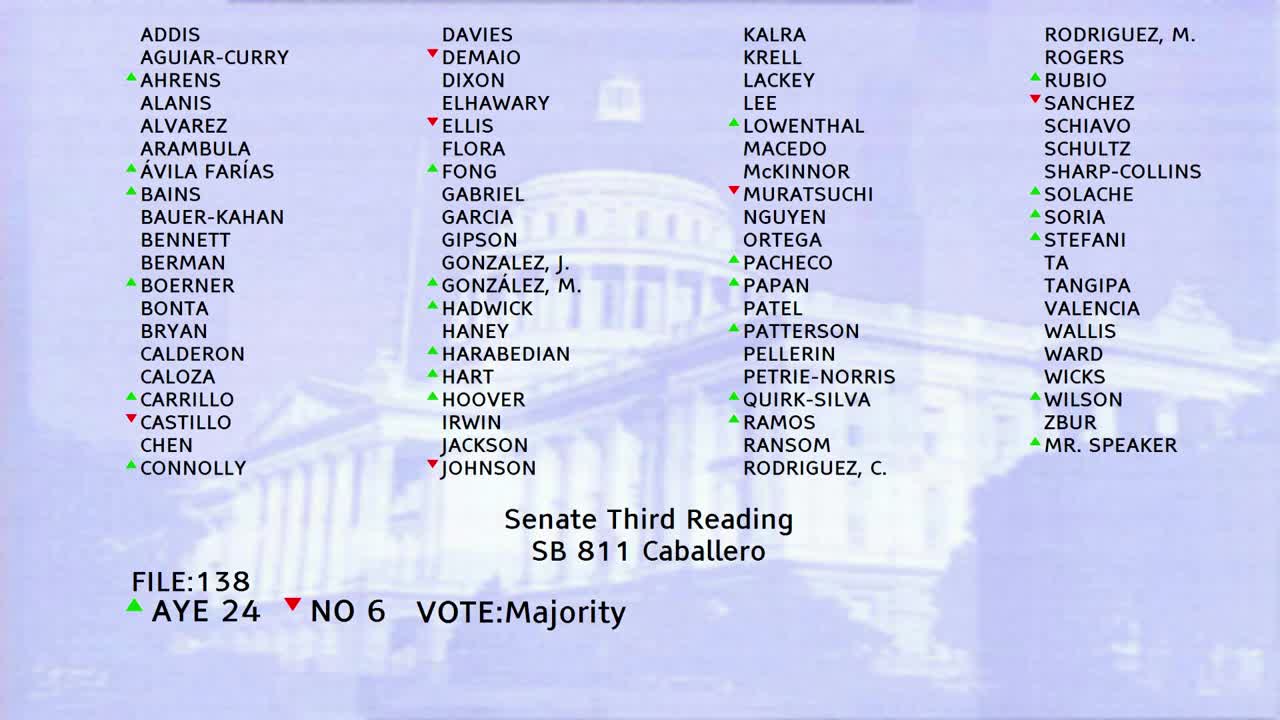
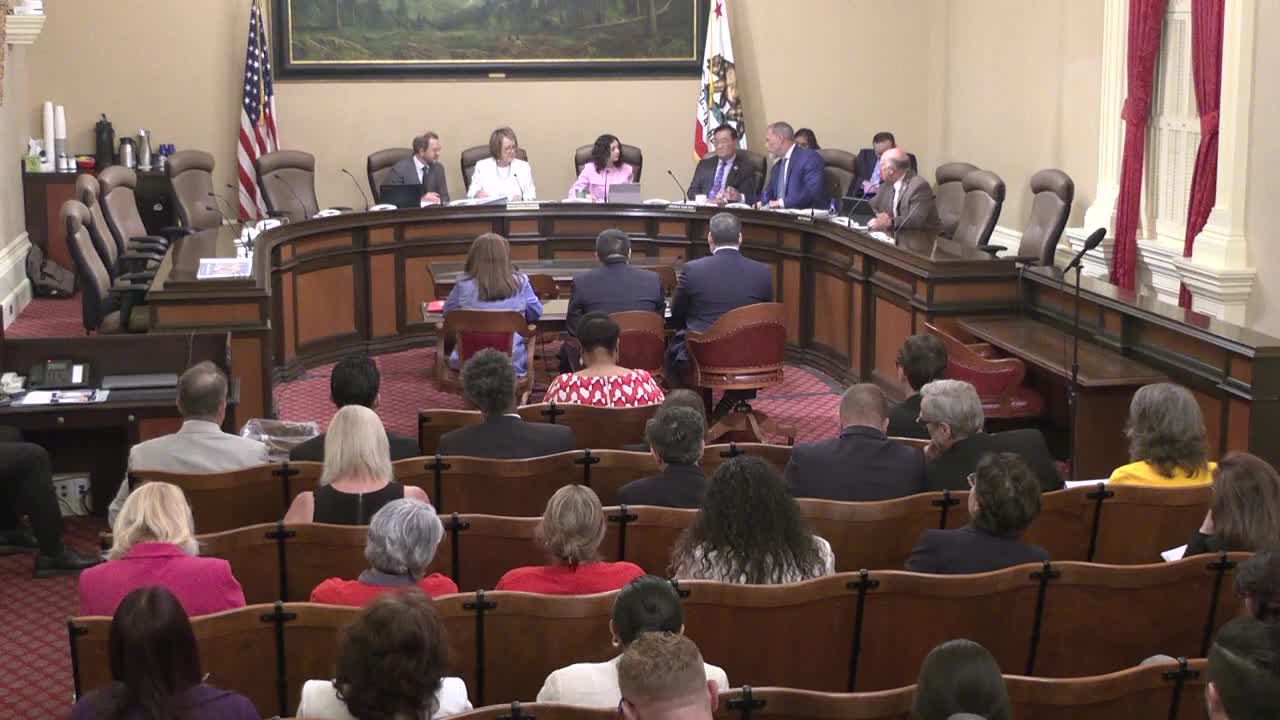
Bill Author

Bill Co-Author(s):