SB 1036: Mitigation Fee Act.
- Session Year: 2025-2026
- House: Senate
- Latest Version Date: 2026-06-30
Current Status:
Passed
(2026-06-30: Chaptered by Secretary of State. Chapter 54, Statutes of 2026.)
Introduced
In Committee
Awaiting First Chamber Vote
Passed First Chamber
In Committee
Awaiting Second Chamber Vote
Passed Second Chamber
Enacted
Existing law, the Mitigation Fee Act, imposes various requirements with respect to the establishment, increase, or imposition of a fee by a local agency as a condition of approval of a development project, including requiring the local agency to identify the use to which the fee is to be put and determine how there is a reasonable relationship between the fees use and the type of development project on which the fee is imposed.
This bill would require the amount of a fee that is imposed on a development project that demolishes or changes an existing use to be offset to account for the demolition or change so that the amount of the fee is attributable only to the development projects incremental impact on public facilities or services, as provided.
Existing law provides that when a local agency imposes a fee for water connections or sewer connections, or imposes a capacity charge, as defined, those fees or charges shall not exceed the estimated reasonable cost of providing the service for which the fee or charge is imposed, except as specified.
This bill would provide that when a change in the capacity of an existing water or sewer connection is proposed, a local agency, in calculating the estimated reasonable cost of a capacity charge, shall only calculate an amount attributable to the change in the capacity. If the existing capacity exceeds the proposed capacity, the bill would prohibit any amount from being refunded, credited, transferred, assigned, or otherwise applied to offset any other charge or fee.
Existing law, the Mitigation Fee Act, imposes various requirements with respect to the establishment, increase, or imposition of a fee by a local agency as a condition of approval of a development project, including requiring the local agency to identify the use to which the fee is to be put and determine how there is a reasonable relationship between the fees use and the type of development project on which the fee is imposed. Existing law further provides that when a local agency imposes a fee for water connections or sewer connections, or imposes a capacity charge, as defined, those fees or charges shall not exceed the estimated reasonable cost of providing the service for which the fee or charge is imposed, except as specified.
This bill would require the amount of a fee or charge described above that is imposed on a development project that demolishes or changes an existing use to be offset to account for the demolition or change so that the amount of the fee or charge is attributable only to the development projects incremental impact on public facilities or services, as provided.
Existing law provides that when a local agency imposes a fee for water connections or sewer connections, or imposes a capacity charge, as defined, those fees or charges shall not exceed the estimated reasonable cost of providing the service for which the fee or charge is imposed, except as specified.
This bill would provide that when a change in the capacity of an existing water or sewer connection is proposed, a local agency, in calculating the estimated reasonable cost of a capacity charge, shall only calculate an amount attributable to the change in the capacity. If the existing capacity exceeds the proposed capacity, the bill would prohibit any amount from being refunded, credited, transferred, assigned, or otherwise applied to offset any other charge or fee.
Existing law, the Mitigation Fee Act, imposes various requirements with respect to the establishment, increase, or imposition of a fee by a local agency as a condition of approval of a development project, including requiring the local agency to identify the use to which the fee is to be put and determine how there is a reasonable relationship between the fees use and the type of development project on which the fee is imposed. Existing law also requires a local agency, upon receipt of a fee subject to these provisions, to deposit, invest, account for, and expend the fees as specified. Existing law further provides that when a local agency imposes a fee for water connections or sewer connections, or imposes a capacity charge, as defined, those fees or charges shall not exceed the estimated reasonable cost of providing the service for which the fee or charge is imposed, except as specified.
This bill would additionally require any fee established, increased, or imposed to be based on the net impact on the need for the public facility being funded by the fee and account for whether the development project is removing or replacing an existing use or a previous use that existed at the time the fee was established, as specified. The bill would require, in this redevelopment scenario, the local agency to provide a fee credit or otherwise reduce the fee in an amount proportionate to the impact caused by the use that is being removed or replaced.This bill would require the amount of a fee or charge described above that is imposed on a development project that demolishes or changes an existing use to be offset to account for the demolition or change so that the amount of the fee or charge is attributable only to the development projects incremental impact on public facilities or services, as provided.
Existing law, the Mitigation Fee Act, imposes various requirements with respect to the establishment, increase, or imposition of a fee by a local agency as a condition of approval of a development project, including requiring the local agency to identify the use to which the fee is to be put and determine how there is a reasonable relationship between the fees use and the type of development project on which the fee is imposed. Existing law also requires a local agency, upon receipt of a fee subject to these provisions, to deposit, invest, account for, and expend the fees as specified.
This bill would additionally require any fee established, increased, or imposed to be based on the net impact on the need for the public facility being funded by the fee and account for whether the development project is removing or replacing an existing use or a previous use that existed at the time the fee was established, as specified. The bill would require, in this redevelopment scenario, the local agency to provide a fee credit or otherwise reduce the fee in an amount proportionate to the impact caused by the use that is being removed or replaced.
(a)In any action establishing, increasing, or imposing a fee as a condition of approval of a development project by a local agency, the local agency shall do all of the following:
(1)Identify the purpose of the fee.
(2)Identify the use to which the fee is to be put. If the use is financing public facilities, the facilities shall be identified. That identification may, but need not, be made by reference to a capital improvement plan as specified in Section 65403 or 66002, may be made in applicable general or specific plan requirements, or may be made in other public documents that identify the public facilities for which the fee is charged.
(3)Determine how there is a reasonable relationship between the fees use and the type of development project on which the fee is imposed.
(4)Determine how there is a reasonable relationship between the need for the public facility and the type of development project on which the fee is imposed.
(b)In any action imposing a fee as a condition of approval of a development project by a local agency, the local agency shall determine how there is a reasonable relationship between the amount of the fee and the cost of the public facility or portion of the public facility attributable to the development on which the fee is imposed.
(c)Upon receipt of a fee subject to this section, the local agency shall deposit, invest, account for, and expend the fees pursuant to Section 66006.
(d)(1)For the fifth fiscal year following the first deposit into the account or fund, and every five years thereafter, the local agency shall make all of the following findings with respect to that portion of the account or fund remaining unexpended, whether committed or uncommitted:
(A)Identify the purpose to which the fee is to be put.
(B)Demonstrate a reasonable relationship between the fee and the purpose for which it is charged.
(C)Identify all sources and amounts of funding anticipated to complete financing in incomplete improvements identified in paragraph (2) of subdivision (a).
(D)Designate the approximate dates on which the funding referred to in subparagraph (C) is expected to be deposited into the appropriate account or fund.
(2)When findings are required by this subdivision, they shall be made in connection with the public information required by subdivision (b) of Section 66006. The findings required by this subdivision need only be made for moneys in possession of the local agency, and need not be made with respect to letters of credit, bonds, or other instruments taken to secure payment of the fee at a future date. If the findings are not made as required by this subdivision, the local agency shall refund the moneys in the account or fund as provided in subdivision (e).
(e)Except as provided in subdivision (f), when sufficient funds have been collected, as determined pursuant to subparagraph (F) of paragraph (1) of subdivision (b) of Section 66006, to complete financing on incomplete public improvements identified in paragraph (2) of subdivision (a), and the public improvements remain incomplete, the local agency shall identify, within 180 days of the determination that sufficient funds have been collected, an approximate date by which the construction of the public improvement will be commenced, or shall refund to the then current record owner or owners of the lots or units, as identified on the last equalized assessment roll, of the development project or projects on a prorated basis, the unexpended portion of the fee, and any interest accrued thereon. By means consistent with the intent of this section, a local agency may refund the unexpended revenues by direct payment, by providing a temporary suspension of fees, or by any other reasonable means. The determination by the governing body of the local agency of the means by which those revenues are to be refunded is a legislative act.
(f)If the administrative costs of refunding unexpended revenues pursuant to subdivision (e) exceed the amount to be refunded, the local agency, after a public hearing, notice of which has been published pursuant to Section 6061 and posted in three prominent places within the area of the development project, may determine that the revenues shall be allocated for some other purpose for which fees are collected subject to this chapter and which serves the project on which the fee was originally imposed.
(g)A fee shall not include the costs attributable to existing deficiencies in public facilities, but may include the costs attributable to the increased demand for public facilities reasonably related to the development project in order to (1) refurbish existing facilities to maintain the existing level of service or (2) achieve an adopted level of service that is consistent with the general plan.
(h)If a development project demolishes or changes an existing use, the amount of a fee imposed on the development project shall be offset to account for the demolition or change so that the amount of the fee is attributable only to the development projects incremental impact on public facilities or services.
(1)For purposes of this subdivision, an offset amount that exceeds the fee amount shall not be refundable or used to offset any other fee.
(2)For purposes of this subdivision, changes an existing use means that no demolition is proposed, but the use within an existing structure changes to a new use.
SEC. 2.Section 66013 of the Government Code is amended to read:66013.(a)Notwithstanding any other law, when a local agency imposes fees for water connections or sewer connections, or imposes capacity charges, those fees or charges shall not exceed the estimated reasonable cost of providing the service for which the fee or charge is imposed, unless a question regarding the amount of the fee or charge imposed in excess of the estimated reasonable cost of providing the services or materials is submitted to, and approved by, a popular vote of two-thirds of those electors voting on the issue.
(b)As used in this section:
(1)Sewer connection means the connection of a structure or project to a public sewer system.
(2)Water connection means the connection of a structure or project to a public water system, as defined in subdivision (h) of Section 116275 of the Health and Safety Code.
(3)Capacity charge means a charge for public facilities in existence at the time a charge is imposed or charges for new public facilities to be acquired or constructed in the future that are of proportional benefit to the person or property being charged, including supply or capacity contracts for rights or entitlements, real property interests, and entitlements and other rights of the local agency involving capital expense relating to its use of existing or new public facilities. A capacity charge does not include a commodity charge.
(4)Local agency means a local agency as defined in Section 66000.
(5)Fee means a fee for the physical facilities necessary to make a water connection or sewer connection, including, but not limited to, meters, meter boxes, and pipelines from the structure or project to a water distribution line or sewer main, and the estimated reasonable cost of labor and materials for installation of those facilities bears a fair or reasonable relationship to the payors burdens on, or benefits received from, the water connection or sewer connection.
(6)Public facilities means public facilities as defined in Section 66000.
(c)A local agency receiving payment of a charge as specified in paragraph (3) of subdivision (b) shall deposit it in a separate capital facilities fund with other charges received, and account for the charges in a manner to avoid any commingling with other moneys of the local agency, except for investments, and shall expend those charges solely for the purposes for which the charges were collected. Any interest income earned from the investment of moneys in the capital facilities fund shall be deposited in that fund.
(d)For a fund established pursuant to subdivision (c), a local agency shall make available to the public, within 180 days after the last day of each fiscal year, the following information for that fiscal year:
(1)A description of the charges deposited in the fund.
(2)The beginning and ending balance of the fund and the interest earned from investment of moneys in the fund.
(3)The amount of charges collected in that fiscal year.
(4)An identification of all of the following:
(A)Each public improvement on which charges were expended and the amount of the expenditure for each improvement, including the percentage of the total cost of the public improvement that was funded with those charges if more than one source of funding was used.
(B)Each public improvement on which charges were expended that was completed during that fiscal year.
(C)Each public improvement that is anticipated to be undertaken in the following fiscal year.
(5)A description of each interfund transfer or loan made from the capital facilities fund. The information provided, in the case of an interfund transfer, shall identify the public improvements on which the transferred moneys are, or will be, expended. The information, in the case of an interfund loan, shall include the date on which the loan will be repaid, and the rate of interest that the fund will receive on the loan.
(e)The information required pursuant to subdivision (d) may be included in the local agencys annual financial report.
(f)The provisions of subdivisions (c) and (d) shall not apply to any of the following:
(1)Moneys received to construct public facilities pursuant to a contract between a local agency and a person or entity, including, but not limited to, a reimbursement agreement pursuant to Section 66003.
(2)Charges that are used to pay existing debt service or which are subject to a contract with a trustee for bondholders that requires a different accounting of the charges, or charges that are used to reimburse the local agency or to reimburse a person or entity who advanced funds under a reimbursement agreement or contract for facilities in existence at the time the charges are collected.
(3)Charges collected on or before December 31, 1998.
(g)Any judicial action or proceeding to attack, review, set aside, void, or annul the ordinance, resolution, or motion imposing a fee or capacity charge subject to this section shall be brought pursuant to Section 66022.
(h)Fees and charges subject to this section are not subject to the provisions of Chapter 5 (commencing with Section 66000), but are subject to the provisions of Sections 66016, 66022, and 66023.
(i)Subdivisions (c) and (d) only apply to capacity charges levied pursuant to this section.
(j)When a change in the capacity of an existing water or sewer connection is proposed, the local agency, in calculating the estimated reasonable cost of a capacity charge, shall only calculate an amount attributable to the change in the capacity. For purposes of this subdivision, if the existing capacity exceeds the proposed capacity, no amount shall be refunded, credited, transferred, assigned, or otherwise applied to offset any other charge or fee.
(a)In any action establishing, increasing, or imposing a fee as a condition of approval of a development project by a local agency, the local agency shall do all of the following:
(1)Identify the purpose of the fee.
(2)Identify the use to which the fee is to be put. If the use is financing public facilities, the facilities shall be identified. That identification may, but need not, be made by reference to a capital improvement plan as specified in Section 65403 or 66002, may be made in applicable general or specific plan requirements, or may be made in other public documents that identify the public facilities for which the fee is charged.
(3)Determine how there is a reasonable relationship between the fees use and the type of development project on which the fee is imposed.
(4)Determine how there is a reasonable relationship between the need for the public facility and the type of development project on which the fee is imposed.
(b)In any action imposing a fee as a condition of approval of a development project by a local agency, the local agency shall determine how there is a reasonable relationship between the amount of the fee and the cost of the public facility or portion of the public facility attributable to the development on which the fee is imposed.
(c)Upon receipt of a fee subject to this section, the local agency shall deposit, invest, account for, and expend the fees pursuant to Section 66006.
(d)(1)For the fifth fiscal year following the first deposit into the account or fund, and every five years thereafter, the local agency shall make all of the following findings with respect to that portion of the account or fund remaining unexpended, whether committed or uncommitted:
(A)Identify the purpose to which the fee is to be put.
(B)Demonstrate a reasonable relationship between the fee and the purpose for which it is charged.
(C)Identify all sources and amounts of funding anticipated to complete financing in incomplete improvements identified in paragraph (2) of subdivision (a).
(D)Designate the approximate dates on which the funding referred to in subparagraph (C) is expected to be deposited into the appropriate account or fund.
(2)When findings are required by this subdivision, they shall be made in connection with the public information required by subdivision (b) of Section 66006. The findings required by this subdivision need only be made for moneys in possession of the local agency, and need not be made with respect to letters of credit, bonds, or other instruments taken to secure payment of the fee at a future date. If the findings are not made as required by this subdivision, the local agency shall refund the moneys in the account or fund as provided in subdivision (e).
(e)Except as provided in subdivision (f), when sufficient funds have been collected, as determined pursuant to subparagraph (F) of paragraph (1) of subdivision (b) of Section 66006, to complete financing on incomplete public improvements identified in paragraph (2) of subdivision (a), and the public improvements remain incomplete, the local agency shall identify, within 180 days of the determination that sufficient funds have been collected, an approximate date by which the construction of the public improvement will be commenced, or shall refund to the then current record owner or owners of the lots or units, as identified on the last equalized assessment roll, of the development project or projects on a prorated basis, the unexpended portion of the fee, and any interest accrued thereon. By means consistent with the intent of this section, a local agency may refund the unexpended revenues by direct payment, by providing a temporary suspension of fees, or by any other reasonable means. The determination by the governing body of the local agency of the means by which those revenues are to be refunded is a legislative act.
(f)If the administrative costs of refunding unexpended revenues pursuant to subdivision (e) exceed the amount to be refunded, the local agency, after a public hearing, notice of which has been published pursuant to Section 6061 and posted in three prominent places within the area of the development project, may determine that the revenues shall be allocated for some other purpose for which fees are collected subject to this chapter and which serves the project on which the fee was originally imposed.
(g)A fee shall not include the costs attributable to existing deficiencies in public facilities, but may include the costs attributable to the increased demand for public facilities reasonably related to the development project in order to (1) refurbish existing facilities to maintain the existing level of service or (2) achieve an adopted level of service that is consistent with the general plan.
(h)If a development project demolishes or changes an existing use, the amount of a fee imposed on the development project shall be offset to account for the demolition or change so that the amount of the fee is attributable only to the development projects incremental impact on public facilities or services.
(1)For purposes of this subdivision, an offset amount that exceeds the fee amount shall not be refundable or used to offset any other fee.
(2)For purposes of this subdivision, changes an existing use means that no demolition is proposed, but the use within an existing structure changes to a new use.
SEC. 2.Section 66013 of the Government Code is amended to read:66013.(a)Notwithstanding any other law, when a local agency imposes fees for water connections or sewer connections, or imposes capacity charges, those fees or charges shall not exceed the estimated reasonable cost of providing the service for which the fee or charge is imposed, unless a question regarding the amount of the fee or charge imposed in excess of the estimated reasonable cost of providing the services or materials is submitted to, and approved by, a popular vote of two-thirds of those electors voting on the issue.
(b)As used in this section:
(1)Sewer connection means the connection of a structure or project to a public sewer system.
(2)Water connection means the connection of a structure or project to a public water system, as defined in subdivision (h) of Section 116275 of the Health and Safety Code.
(3)Capacity charge means a charge for public facilities in existence at the time a charge is imposed or charges for new public facilities to be acquired or constructed in the future that are of proportional benefit to the person or property being charged, including supply or capacity contracts for rights or entitlements, real property interests, and entitlements and other rights of the local agency involving capital expense relating to its use of existing or new public facilities. A capacity charge does not include a commodity charge.
(4)Local agency means a local agency as defined in Section 66000.
(5)Fee means a fee for the physical facilities necessary to make a water connection or sewer connection, including, but not limited to, meters, meter boxes, and pipelines from the structure or project to a water distribution line or sewer main, and the estimated reasonable cost of labor and materials for installation of those facilities bears a fair or reasonable relationship to the payors burdens on, or benefits received from, the water connection or sewer connection.
(6)Public facilities means public facilities as defined in Section 66000.
(c)A local agency receiving payment of a charge as specified in paragraph (3) of subdivision (b) shall deposit it in a separate capital facilities fund with other charges received, and account for the charges in a manner to avoid any commingling with other moneys of the local agency, except for investments, and shall expend those charges solely for the purposes for which the charges were collected. Any interest income earned from the investment of moneys in the capital facilities fund shall be deposited in that fund.
(d)For a fund established pursuant to subdivision (c), a local agency shall make available to the public, within 180 days after the last day of each fiscal year, the following information for that fiscal year:
(1)A description of the charges deposited in the fund.
(2)The beginning and ending balance of the fund and the interest earned from investment of moneys in the fund.
(3)The amount of charges collected in that fiscal year.
(4)An identification of all of the following:
(A)Each public improvement on which charges were expended and the amount of the expenditure for each improvement, including the percentage of the total cost of the public improvement that was funded with those charges if more than one source of funding was used.
(B)Each public improvement on which charges were expended that was completed during that fiscal year.
(C)Each public improvement that is anticipated to be undertaken in the following fiscal year.
(5)A description of each interfund transfer or loan made from the capital facilities fund. The information provided, in the case of an interfund transfer, shall identify the public improvements on which the transferred moneys are, or will be, expended. The information, in the case of an interfund loan, shall include the date on which the loan will be repaid, and the rate of interest that the fund will receive on the loan.
(e)The information required pursuant to subdivision (d) may be included in the local agencys annual financial report.
(f)The provisions of subdivisions (c) and (d) shall not apply to any of the following:
(1)Moneys received to construct public facilities pursuant to a contract between a local agency and a person or entity, including, but not limited to, a reimbursement agreement pursuant to Section 66003.
(2)Charges that are used to pay existing debt service or which are subject to a contract with a trustee for bondholders that requires a different accounting of the charges, or charges that are used to reimburse the local agency or to reimburse a person or entity who advanced funds under a reimbursement agreement or contract for facilities in existence at the time the charges are collected.
(3)Charges collected on or before December 31, 1998.
(g)Any judicial action or proceeding to attack, review, set aside, void, or annul the ordinance, resolution, or motion imposing a fee or capacity charge subject to this section shall be brought pursuant to Section 66022.
(h)Fees and charges subject to this section are not subject to the provisions of Chapter 5 (commencing with Section 66000), but are subject to the provisions of Sections 66016, 66022, and 66023.
(i)Subdivisions (c) and (d) only apply to capacity charges levied pursuant to this section.
(j)If a development project demolishes or changes an existing use, the amount of a fee or charge imposed on the development project shall be offset to account for the demolition or change so that the amount of the fee or charge is attributable only to the development projects incremental impact on public facilities or services.(1)For purposes of this subdivision, an offset amount that exceeds the fee or charge amount shall not be refundable or used to offset any other fee or charge.(2)For purposes of this subdivision, changes an existing use means that no demolition is proposed, but the use within an existing structure changes to a new use.(j)When a change in the capacity of an existing water or sewer connection is proposed, the local agency, in calculating the estimated reasonable cost of a capacity charge, shall only calculate an amount attributable to the change in the capacity. For purposes of this subdivision, if the existing capacity exceeds the proposed capacity, no amount shall be refunded, credited, transferred, assigned, or otherwise applied to offset any other charge or fee.
(a)In any action establishing, increasing, or imposing a fee as a condition of approval of a development project by a local agency, the local agency shall do all of the following:
(1)Identify the purpose of the fee.
(2)Identify the use to which the fee is to be put. If the use is financing public facilities, the facilities shall be identified. That identification may, but need not, be made by reference to a capital improvement plan as specified in Section 65403 or 66002, may be made in applicable general or specific plan requirements, or may be made in other public documents that identify the public facilities for which the fee is charged.
(3)Determine how there is a reasonable relationship between the fees use and the type of development project on which the fee is imposed.
(4)Determine how there is a reasonable relationship between the need for the public facility and the type of development project on which the fee is imposed.
(b)In any action imposing a fee as a condition of approval of a development project by a local agency, the local agency shall determine how there is a reasonable relationship between the amount of the fee and the cost of the public facility or portion of the public facility attributable to the development on which the fee is imposed.
(c)Upon receipt of a fee subject to this section, the local agency shall deposit, invest, account for, and expend the fees pursuant to Section 66006.
(d)(1)For the fifth fiscal year following the first deposit into the account or fund, and every five years thereafter, the local agency shall make all of the following findings with respect to that portion of the account or fund remaining unexpended, whether committed or uncommitted:
(A)Identify the purpose to which the fee is to be put.
(B)Demonstrate a reasonable relationship between the fee and the purpose for which it is charged.
(C)Identify all sources and amounts of funding anticipated to complete financing in incomplete improvements identified in paragraph (2) of subdivision (a).
(D)Designate the approximate dates on which the funding referred to in subparagraph (C) is expected to be deposited into the appropriate account or fund.
(2)When findings are required by this subdivision, they shall be made in connection with the public information required by subdivision (b) of Section 66006. The findings required by this subdivision need only be made for moneys in possession of the local agency, and need not be made with respect to letters of credit, bonds, or other instruments taken to secure payment of the fee at a future date. If the findings are not made as required by this subdivision, the local agency shall refund the moneys in the account or fund as provided in subdivision (e).
(e)Except as provided in subdivision (f), when sufficient funds have been collected, as determined pursuant to subparagraph (F) of paragraph (1) of subdivision (b) of Section 66006, to complete financing on incomplete public improvements identified in paragraph (2) of subdivision (a), and the public improvements remain incomplete, the local agency shall identify, within 180 days of the determination that sufficient funds have been collected, an approximate date by which the construction of the public improvement will be commenced, or shall refund to the then current record owner or owners of the lots or units, as identified on the last equalized assessment roll, of the development project or projects on a prorated basis, the unexpended portion of the fee, and any interest accrued thereon. By means consistent with the intent of this section, a local agency may refund the unexpended revenues by direct payment, by providing a temporary suspension of fees, or by any other reasonable means. The determination by the governing body of the local agency of the means by which those revenues are to be refunded is a legislative act.
(f)If the administrative costs of refunding unexpended revenues pursuant to subdivision (e) exceed the amount to be refunded, the local agency, after a public hearing, notice of which has been published pursuant to Section 6061 and posted in three prominent places within the area of the development project, may determine that the revenues shall be allocated for some other purpose for which fees are collected subject to this chapter and which serves the project on which the fee was originally imposed.
(g)A fee shall not include the costs attributable to existing deficiencies in public facilities, but may include the costs attributable to the increased demand for public facilities reasonably related to the development project in order to (1) refurbish existing facilities to maintain the existing level of service or (2) achieve an adopted level of service that is consistent with the general plan.
(h)Any fee established, increased, or imposed under this section shall be based on the net impact on the need for the public facility being funded by the fee, and shall be done by accounting for whether the development project is removing or replacing an existing use or a previous use that existed at the time the fee was established, where the removed or replaced use also caused the need for the public facility that will be funded by the fee. In this redevelopment scenario, the local agency shall provide a fee credit or otherwise reduce the fee in an amount proportionate to the impact caused by the use that is being removed or replaced.(h)If a development project demolishes or changes an existing use, the amount of a fee imposed on the development project shall be offset to account for the demolition or change so that the amount of the fee is attributable only to the development projects incremental impact on public facilities or services.
(1)For purposes of this subdivision, an offset amount that exceeds the fee amount shall not be refundable or used to offset any other fee.
(2)For purposes of this subdivision, changes an existing use means that no demolition is proposed, but the use within an existing structure changes to a new use.
SEC. 2.Section 66013 of the Government Code is amended to read:66013.(a)Notwithstanding any other provision of law, when a local agency imposes fees for water connections or sewer connections, or imposes capacity charges, those fees or charges shall not exceed the estimated reasonable cost of providing the service for which the fee or charge is imposed, unless a question regarding the amount of the fee or charge imposed in excess of the estimated reasonable cost of providing the services or materials is submitted to, and approved by, a popular vote of two-thirds of those electors voting on the issue.
(b)As used in this section:
(1)Sewer connection means the connection of a structure or project to a public sewer system.
(2)Water connection means the connection of a structure or project to a public water system, as defined in subdivision (h) of Section 116275 of the Health and Safety Code.
(3)Capacity charge means a charge for public facilities in existence at the time a charge is imposed or charges for new public facilities to be acquired or constructed in the future that are of proportional benefit to the person or property being charged, including supply or capacity contracts for rights or entitlements, real property interests, and entitlements and other rights of the local agency involving capital expense relating to its use of existing or new public facilities. A capacity charge does not include a commodity charge.
(4)Local agency means a local agency as defined in Section 66000.
(5)Fee means a fee for the physical facilities necessary to make a water connection or sewer connection, including, but not limited to, meters, meter boxes, and pipelines from the structure or project to a water distribution line or sewer main, and the estimated reasonable cost of labor and materials for installation of those facilities bears a fair or reasonable relationship to the payors burdens on, or benefits received from, the water connection or sewer connection.
(6)Public facilities means public facilities as defined in Section 66000.
(c)A local agency receiving payment of a charge as specified in paragraph (3) of subdivision (b) shall deposit it in a separate capital facilities fund with other charges received, and account for the charges in a manner to avoid any commingling with other moneys of the local agency, except for investments, and shall expend those charges solely for the purposes for which the charges were collected. Any interest income earned from the investment of moneys in the capital facilities fund shall be deposited in that fund.
(d)For a fund established pursuant to subdivision (c), a local agency shall make available to the public, within 180 days after the last day of each fiscal year, the following information for that fiscal year:
(1)A description of the charges deposited in the fund.
(2)The beginning and ending balance of the fund and the interest earned from investment of moneys in the fund.
(3)The amount of charges collected in that fiscal year.
(4)An identification of all of the following:
(A)Each public improvement on which charges were expended and the amount of the expenditure for each improvement, including the percentage of the total cost of the public improvement that was funded with those charges if more than one source of funding was used.
(B)Each public improvement on which charges were expended that was completed during that fiscal year.
(C)Each public improvement that is anticipated to be undertaken in the following fiscal year.
(5)A description of each interfund transfer or loan made from the capital facilities fund. The information provided, in the case of an interfund transfer, shall identify the public improvements on which the transferred moneys are, or will be, expended. The information, in the case of an interfund loan, shall include the date on which the loan will be repaid, and the rate of interest that the fund will receive on the loan.
(e)The information required pursuant to subdivision (d) may be included in the local agencys annual financial report.
(f)The provisions of subdivisions (c) and (d) shall not apply to any of the following:
(1)Moneys received to construct public facilities pursuant to a contract between a local agency and a person or entity, including, but not limited to, a reimbursement agreement pursuant to Section 66003.
(2)Charges that are used to pay existing debt service or which are subject to a contract with a trustee for bondholders that requires a different accounting of the charges, or charges that are used to reimburse the local agency or to reimburse a person or entity who advanced funds under a reimbursement agreement or contract for facilities in existence at the time the charges are collected.
(3)Charges collected on or before December 31, 1998.
(g)Any judicial action or proceeding to attack, review, set aside, void, or annul the ordinance, resolution, or motion imposing a fee or capacity charge subject to this section shall be brought pursuant to Section 66022.
(h)Fees and charges subject to this section are not subject to the provisions of Chapter 5 (commencing with Section 66000), but are subject to the provisions of Sections 66016, 66022, and 66023.
(i)Subdivisions (c) and (d) only apply to capacity charges levied pursuant to this section.
(j)If a development project demolishes or changes an existing use, the amount of a fee or charge imposed on the development project shall be offset to account for the demolition or change so that the amount of the fee or charge is attributable only to the development projects incremental impact on public facilities or services.
(1)For purposes of this subdivision, an offset amount that exceeds the fee or charge amount shall not be refundable or used to offset any other fee or charge.
(2)For purposes of this subdivision, changes an existing use means that no demolition is proposed, but the use within an existing structure changes to a new use.
(a)In any action establishing, increasing, or imposing a fee as a condition of approval of a development project by a local agency, the local agency shall do all of the following:
(1)Identify the purpose of the fee.
(2)Identify the use to which the fee is to be put. If the use is financing public facilities, the facilities shall be identified. That identification may, but need not, be made by reference to a capital improvement plan as specified in Section 65403 or 66002, may be made in applicable general or specific plan requirements, or may be made in other public documents that identify the public facilities for which the fee is charged.
(3)Determine how there is a reasonable relationship between the fees use and the type of development project on which the fee is imposed.
(4)Determine how there is a reasonable relationship between the need for the public facility and the type of development project on which the fee is imposed.
(b)In any action imposing a fee as a condition of approval of a development project by a local agency, the local agency shall determine how there is a reasonable relationship between the amount of the fee and the cost of the public facility or portion of the public facility attributable to the development on which the fee is imposed.
(c)Upon receipt of a fee subject to this section, the local agency shall deposit, invest, account for, and expend the fees pursuant to Section 66006.
(d)(1)For the fifth fiscal year following the first deposit into the account or fund, and every five years thereafter, the local agency shall make all of the following findings with respect to that portion of the account or fund remaining unexpended, whether committed or uncommitted:
(A)Identify the purpose to which the fee is to be put.
(B)Demonstrate a reasonable relationship between the fee and the purpose for which it is charged.
(C)Identify all sources and amounts of funding anticipated to complete financing in incomplete improvements identified in paragraph (2) of subdivision (a).
(D)Designate the approximate dates on which the funding referred to in subparagraph (C) is expected to be deposited into the appropriate account or fund.
(2)When findings are required by this subdivision, they shall be made in connection with the public information required by subdivision (b) of Section 66006. The findings required by this subdivision need only be made for moneys in possession of the local agency, and need not be made with respect to letters of credit, bonds, or other instruments taken to secure payment of the fee at a future date. If the findings are not made as required by this subdivision, the local agency shall refund the moneys in the account or fund as provided in subdivision (e).
(e)Except as provided in subdivision (f), when sufficient funds have been collected, as determined pursuant to subparagraph (F) of paragraph (1) of subdivision (b) of Section 66006, to complete financing on incomplete public improvements identified in paragraph (2) of subdivision (a), and the public improvements remain incomplete, the local agency shall identify, within 180 days of the determination that sufficient funds have been collected, an approximate date by which the construction of the public improvement will be commenced, or shall refund to the then current record owner or owners of the lots or units, as identified on the last equalized assessment roll, of the development project or projects on a prorated basis, the unexpended portion of the fee, and any interest accrued thereon. By means consistent with the intent of this section, a local agency may refund the unexpended revenues by direct payment, by providing a temporary suspension of fees, or by any other reasonable means. The determination by the governing body of the local agency of the means by which those revenues are to be refunded is a legislative act.
(f)If the administrative costs of refunding unexpended revenues pursuant to subdivision (e) exceed the amount to be refunded, the local agency, after a public hearing, notice of which has been published pursuant to Section 6061 and posted in three prominent places within the area of the development project, may determine that the revenues shall be allocated for some other purpose for which fees are collected subject to this chapter and which serves the project on which the fee was originally imposed.
(g)A fee shall not include the costs attributable to existing deficiencies in public facilities, but may include the costs attributable to the increased demand for public facilities reasonably related to the development project in order to (1) refurbish existing facilities to maintain the existing level of service or (2) achieve an adopted level of service that is consistent with the general plan.
(h)Any fee established, increased, or imposed under this section shall be based on the net impact on the need for the public facility being funded by the fee, and shall be done by accounting for whether the development project is removing or replacing an existing use or a previous use that existed at the time the fee was established, where the removed or replaced use also caused the need for the public facility that will be funded by the fee. In this redevelopment scenario, the local agency shall provide a fee credit or otherwise reduce the fee in an amount proportionate to the impact caused by the use that is being removed or replaced.
|
Date
|
Status
|
|---|---|
| Jun 30, 2026 | Chaptered by Secretary of State. Chapter 54, Statutes of 2026. |
| Jun 30, 2026 | Approved by the Governor. |
| Jun 24, 2026 | Enrolled and presented to the Governor at 3 p.m. |
| Jun 18, 2026 | In Senate. Ordered to engrossing and enrolling. |
| Jun 18, 2026 | Read third time. Passed. (Ayes 61. Noes 0. Page 5760.) Ordered to the Senate. |
| Jun 18, 2026 | Read third time. Passed. Ordered to the Senate. |
| Jun 4, 2026 | Read second time. Ordered to third reading. |
| Jun 3, 2026 | From committee: Do pass. (Ayes 10. Noes 0.) (June 3). |
| May 11, 2026 | Referred to Com. on L. GOV. |
| Apr 27, 2026 | In Assembly. Read first time. Held at Desk. |
| Apr 27, 2026 | Read third time. Passed. (Ayes 37. Noes 0.) Ordered to the Assembly. |
| Apr 27, 2026 | Read third time. Passed. (Ayes 37. Noes 0. Page 4066.) Ordered to the Assembly. |
| Apr 16, 2026 | Read second time and amended. Ordered to third reading. |
| Apr 15, 2026 | From committee: Do pass as amended. (Ayes 7. Noes 0.) (April 15). |
| Apr 15, 2026 | From committee: Do pass as amended. (Ayes 7. Noes 0. Page 3904.) (April 15). |
| Apr 8, 2026 | From committee with author's amendments. Read second time and amended. Re-referred to Com. on L. GOV. |
| Apr 2, 2026 | Set for hearing April 15. |
| Feb 18, 2026 | Referred to Com. on L. GOV. |
| Feb 12, 2026 | From printer. May be acted upon on or after March 14. |
| Feb 11, 2026 | Introduced. Read first time. To Com. on RLS. for assignment. To print. |
|
Date
|
Description
|
Location
|
Votes
|
|
|---|---|---|---|---|
| Jun 18, 2026 | SB 1036 Grayson Senate Third Reading By Blanca Rubio | Assembly Floor |
Passed |
|
| Jun 3, 2026 | Do pass. | Assembly Standing Committee on Local Government |
Passed |
|
| Apr 27, 2026 | Senate 3rd Reading SB1036 Grayson | Senate Floor |
Passed |
|
| Apr 15, 2026 | Do pass as amended | Senate Standing Committee on Local Government |
Passed |
This list shows positions taken on this bill by organizations on the date displayed, which is linked to the original source.
Positions by individuals are not included.
|
Organization
|
Position
|
Date
|
|---|---|---|
| AARP | ** Support | |
| Bay Area Council | ** Support | |
| Cal Chamber | ** Support | |
| California Apartment Association | ** Support | |
| California Association Of Realtors | ** Support | |
| California Building Industry Association | ** Support | |
| California Council For Affordable Housing | ** Support | |
| City of Pico Rivera | ** Against | |
| City of Pico Rivera (Previous Version) | ** Against | |
| Fieldstead And Company, Inc. | ** Support | |
| Habitat For Humanity California | ** Support | |
| SPUR | ** Support | |
| Valley Sanitary District | ** Support | |
| Zillow Group | ** Support |
SENATE THIRD READING
STR Bill Id:SB 1036
Author:(Grayson)
As Amended Ver:April 16, 2026
Majority vote
SUMMARY
Requires, if a development demolishes or changes an existing use, local agencies to offset the fee amount to account for the demolition or change so that the fee amount is attributable only to the development project's incremental impact on public facilities or services and imposes similar requirements on capacity charges.
Major Provisions
- Requires, if a development project demolishes or changes an existing use, the amount of a fee imposed on the development project to be offset for the demolition or change so that the amount of the fee is attributable only to the development project's incremental impact on public facilities or services.
- Provides that an offset amount that exceeds the fee amount shall not be refundable or used to offset any other fee.
- Defines, for purposes of this bill, "changes an existing use" to mean that no demolition is proposed, but the use within an existing structure changes to a new use.
- Requires, in calculating the estimated reasonable cost of a capacity charge when a change in the capacity of an existing water or sewer connection is proposed, a local agency to only calculate an amount attributable to the change in the capacity.
- Provides that if the existing capacity exceeds the proposed capacity, no amount shall be refunded, credited, transferred, assigned, or otherwise applied to offset any other charge or fee.
- Makes a technical and conforming change.
COMMENTS
- The Mitigation Fee Act. When approving development projects, cities and counties can require the applicants to mitigate the project's effects by paying fees – known as impact fees, mitigation fees, or developer fees. Impact fees stem from a straightforward principle: new developments should pay for the impacts that they have on the community and the burden they impose on public services. Prior to establishing, increasing, or imposing a fee as a condition of approving a development project, the Mitigation Fee Act requires local officials to:
- Identify the fee's purpose.
- Identify the fee's use, including the public facilities to be financed.
- Determine a reasonable relationship between the fee's use and the development.
- Determine a reasonable relationship between the public facility's need and the development.
- Determine a reasonable relationship between the amount of the fee and the cost of the public facility or portion of the public facility attributable to the development on which the fee is imposed.
The developer is typically required to pay multiple impact fees, each corresponding to different public services or infrastructure needs that the development will affect, such as roadways, schools, water and sewer infrastructure, public facilities, affordable housing, and parks.
- "Essential Nexus" and "Rough Proportionality." The U.S. Supreme Court and the California Supreme Court issued a series of decisions in the 1980s and 1990s that affected the scope and application of impact fees. In its 1987 Nollan decision, the U.S. Supreme Court said there must be an "essential nexus" between a project's impacts and the conditions for approval. In the 1994 Dolan decision, the U.S. Supreme Court opined that conditions placed on development must have a "rough proportionality" to a project's impacts.
In the 1996 Ehrlich decision, the California Supreme Court distinguished between "legislatively enacted" conditions that apply to all projects and "ad hoc" conditions imposed on a project-by-project basis. Ehrlich applied the "essential nexus" test from Nollan and the "rough proportionality" test from Dolan to "ad hoc" conditions. The Court did not apply the Nollan and Dolan tests to the conditions that were "legislatively enacted." In the 2024 U.S. Supreme Court decision Sheetz vs. County of El Dorado, the Supreme Court opined that that the U.S. Constitution does not distinguish between legislatively enacted and ad-hoc conditions.
As a result of these decisions and the Mitigation Fee Act, local agencies must conduct a nexus study to ensure that any proposed impact fees meet these legal tests. Other requirements in the Mitigation Fee Act ensure that impact fees are appropriately levied and spent, including that a local agency must:
- Hold at least one open and public meeting prior to levying a new fee or increasing an existing one.
- Deposit and spend the fees within five years of collecting them.
- Refund fees or make specific findings on when and how the fees will be spent for construction, if the fees are not spent within five years of collection.
If a local agency levies an impact fee to fund a capital improvement associated with a development, it must deposit the fees with any other fees for that improvement in a separate account or fund. Any person may request an independent audit of how the impact fees have been collected and spent, including an assessment of whether the fees exceed the amount reasonably necessary to cover the costs of the stated projects or services.
- Connection Fees and Capacity Charges. Connection fees and capacity charges are one-time fees assessed on new customers that reflect the reasonable cost of providing service, typically for water or sewer systems. A local agency assesses a connection fee when it physically connects a structure to the water or sewer system, which pays for the physical facilities necessary to make a water connection or sewer connection, such as meters, meter boxes, pipelines, and the estimated reasonable cost of labor and materials for their installation of those facilities. A local agency assesses a capacity charge on the customer to cover the proportional cost of maintaining or constructing system wide infrastructure necessary to meet the additional water or sewer demand for new users of the system. The Mitigation Fee Act governs connection fees and capacity charges, but state law provides separate provisions related to their oversight and accounting.
- AB 1483 of 2019. In response to a 2019 Terner Center for Housing Innovation report that studied fee transparency, among other issues, AB 1483 (Grayson), Chapter 662, Statutes of 2019, required cities, counties, and special districts to post specified housing related information on their websites. This information included the following:
- A current schedule of fees, exactions, and affordability requirements imposed by the city, county, or special district, including any dependent special districts, of the city or county applicable to a proposed housing development project, which must be presented in a manner that clearly identifies the fees, exactions, and affordability requirements that apply to each parcel.
- All zoning ordinances and development standards, which must specify the zoning, design, and development standards that apply to each parcel.
- A list that cities and counties must develop under existing law of projects located within military use airspace or a low-level flight path.
- Specified annual fee reports or specified annual financial reports.
- An archive of impact fee nexus studies, cost of service studies, or equivalent, conducted by the city, county, or special district on or after January 1, 2018.
Since the passage of AB 1483, the information required to be posted on a local agency's website has changed. AB 1473 (Senate Committee on Governance and Finance), Chapter 371, Statutes of 2020, required local agencies to separately post their connection fees and capacity charges, without being tied to specific parcels, and made technical fixes to ensure that special districts were properly accounted for by AB 1483. Additionally, AB 602 (Grayson), Chapter 347, Statutes of 2021, required local agencies, among other things, to do the following:
- Post a written fee schedule or a link directly to the written fee schedule on its internet website.
- Request from a development proponent, upon issuance of a certificate of occupancy or the final inspection, whichever occurs last, the total amount of fees and exactions associated with the project for which the certificate was issued. The city or county must post this information on its website and update it at least twice per year. A city or county is not responsible for the accuracy of the information received by the development proponent.
According to the Author
"The Mitigation Fee Act allows local jurisdictions to impose impact fees on specific developments to help 'mitigate' the costs of new or additional facilities that are needed to serve those developments. In order to charge a fee, there must be a reasonable relationship between the fee's use and the project on which the fee is imposed. Many development projects involve the redevelopment of sites with existing uses that already contribute to the demand for services or facilities funded by a particular impact fee. In certain cases, during redevelopment projects, local agencies can provide a 'credit' to help reduce fees to account for prior usage. When accounting for prior use, many local jurisdictions currently recognize credits for most impact fees, however, this is not always the case throughout the state. To help provide uniformity and clarity under the Mitigation Fee Act, SB 1036 would require that all jurisdictions provide "credit" for prior uses when a project is redeveloping a site with similar prior uses. This bill would help reduce the costs of duplicative impact fees, helping to lower overall development costs and unlock more housing across California."
Arguments in Support
SPUR, the sponsor of the bill, writes in support, "The Mitigation Fee Act allows local jurisdictions to impose impact fees on development projects to help offset the costs of new or expanded public facilities needed to serve those developments, provided there is a reasonable relationship between the fee and the project. Many redevelopment projects occur on sites with existing uses that already contribute to demand for services funded by these fees, and in some cases local agencies provide credits to account for prior use, a concept recognized by courts, including Warmington Old Town Associates v. Tustin Unified School District (2002). However, not all jurisdictions consistently apply these credits. Because development and impact fees can account for roughly 6% to 13% of total housing development costs, failing to account for prior use can result in excessive or duplicative fees that "over-mitigate" impacts, increasing costs and potentially making new housing development financially infeasible."
"SB 1036 would help provide uniformity and clarity under the Mitigation Fee Act, by requiring that all jurisdictions provide 'credit' for prior uses when a project is redeveloping a site with similar prior uses. Ultimately, this bill would help reduce the costs of duplicative impact fees, helping to lower overall development costs and unlock more housing across California."
Arguments in Opposition
The City of Pico Rivera writes in opposition to a previous version of the bill, "SB 1036 would impose new requirements that fees be based on the 'net impact on the need for public facilities,' and it would mandate fee credits or reductions in certain redevelopment scenarios. In practice, these provisions risk narrowing the methodologies that local agencies rely upon to accurately recover facility impacts across a wide range of capital needs, particularly in infill and corridor revitalization contexts where public improvements are often necessary to make development feasible and safe. Pico Rivera is actively pursuing long-term revitalization and infrastructure modernization efforts through coordinated strategies, which depend on predictable, locally calibrated financing tools to deliver complete, safe, and functional public environments alongside new development."
"The City is also concerned that SB 1036, by reshaping the legal and administrative standards for establishing or adjusting fees, will create additional procedural burdens and litigation exposure, diverting limited staff time and resources away from project delivery and public service. Pico Rivera has consistently opposed state actions that erode local control and impose costly, rigid, one-size-fits-all requirements that do not reflect local conditions or fiscal realities. Our experience with state proposals that add complex compliance duties without providing a corresponding reimbursement mechanism underscores the practical risk: such measure make it harder, not easier, for cities to deliver the outcomes the Legislature seeks, including housing, mobility, and infrastructure improvements."
FISCAL COMMENTS
None.
VOTES
SENATE FLOOR: 37-0-3
YES: Allen, Alvarado-Gil, Archuleta, Arreguín, Ashby, Becker, Blakespear, Cabaldon, Cervantes, Choi, Cortese, Dahle, Durazo, Grayson, Grove, Hurtado, Jones, Laird, Limón, McGuire, McNerney, Menjivar, Niello, Ochoa Bogh, Padilla, Pérez, Reyes, Richardson, Seyarto, Smallwood-Cuevas, Stern, Strickland, Umberg, Valladares, Wahab, Weber Pierson, Wiener
ABS, ABST OR NV: Caballero, Gonzalez, Rubio
ASM LOCAL GOVERNMENT: 10-0-0
YES: Carrillo, Ta, Johnson, Pacheco, Caloza, Ransom, Blanca Rubio, Stefani, Ward, Wilson
UPDATED
VERSION: April 16, 2026
CONSULTANT: Linda Rios / L. GOV. / (916) 319-3958 FN: 0003145
Date of Hearing: June 3, 2026
ASSEMBLY COMMITTEE ON LOCAL GOVERNMENT
Juan Carrillo, Chair
SBPCA Bill Id:SB 1036
Author:(Grayson) – As Amended Ver:April 16, 2026
SENATE VOTE: 37-0
SUBJECT: Mitigation Fee Act
SUMMARY: Requires, if a development demolishes or changes an existing use, local agencies to offset the fee amount to account for the demolition or change so that the fee amount is attributable only to the development project’s incremental impact on public facilities or services and imposes similar requirements on capacity charges. Specifically, this bill:
- Requires, if a development project demolishes or changes an existing use, the amount of a fee imposed on the development project to be offset for the demolition or change so that the amount of the fee is attributable only to the development project’s incremental impact on public facilities or services.
- Provides that an offset amount that exceeds the fee amount shall not be refundable or used to offset any other fee.
- Defines, for purposes of this bill, “changes an existing use” to mean that no demolition is proposed, but the use within an existing structure changes to a new use.
- Requires, in calculating the estimated reasonable cost of a capacity charge when a change in the capacity of an existing water or sewer connection is proposed, a local agency to only calculate an amount attributable to the change in the capacity.
- Provides that if the existing capacity exceeds the proposed capacity, no amount shall be refunded, credited, transferred, assigned, or otherwise applied to offset any other charge or fee.
- Makes a technical and conforming change.
EXISTING LAW:
- Establishes the Mitigation Fee Act [Government Code (GOV) § 66000- 66025], which:
- Requires a local agency to do all of the following when establishing, increasing, or imposing a fee on a development project:
- Identify the purpose of the fee.
- Identify the use to which the fee is to be put.
- Determine how there is a nexus between the fee’s use and the type of development project on which the fee is imposed.
- Determine how there is a nexus between the need for a public facility and the type of development project on which the fee is imposed. (GOV § 66000)
- Requires local agencies that impose mitigation fees to produce an annual report within 180 days of the end of the fiscal year that includes specified information. (GOV § 66006)
- Defines “capacity charge” to mean a charge for public facilities in existence at the time a charge is imposed or charges for new public facilities to be acquired or constructed in the future that are of proportional benefit to the person or property being charged, including supply or capacity contracts for rights or entitlements, real property interests, and entitlements and other rights of the local agency involving capital expense relating to its use of existing or new public facilities. “Capacity charge” does not include a commodity charge. (GOV § 66013)
- Requires local agencies to deposit capacity charges collected in a separate capital facilities fund with other charges received, and account for the charges in a manner to avoid any comingling with other moneys of the local agency, except for investments, and shall expend those charges solely for the purposes for which the charges were collected. Any interest income earned from the investment of moneys in the capital facilities fund shall be deposited in that fund. (GOV § 66013)
- Requires local agencies to hold at least one open and public meeting prior to levying a new fee or increasing an existing one. (GOV § 66016)
- Requires a local agency to do all of the following when establishing, increasing, or imposing a fee on a development project:
FISCAL EFFECT: None.
COMMENTS:
- Bill Summary. This bill requires, in cases where a development project demolishes or changes an existing use, local agencies to offset the amount of a development fee imposed on a development project so that the amount is attributable only to the development project’s incremental impact on public facilities or services. This bill defines “changes an existing use” to mean circumstances when no demolition is proposed but the use within an existing structure changes to a new use. If the offset amount exceeds the fee amount, this bill prohibits the local agency from issuing a refund or using the amount to offset any other fee.
Additionally, this bill requires local agencies to calculate the development project’s capacity charge to the attributable change in capacity when there is a change in capacity of existing water or sewer connection. If the existing capacity exceeds the proposed capacity, the bill prohibits any amount from being refunded or used to offset any other charge or fee.
The bill is sponsored by the San Franscisco Bay Area Planning and Urban Research Association (SPUR).
- Author’s Statement. According to author, “The Mitigation Fee Act allows local jurisdictions to impose impact fees on specific developments to help ‘mitigate’ the costs of new or additional facilities that are needed to serve those developments. In order to charge a fee, there must be a reasonable relationship between the fee’s use and the project on which the fee is imposed. Many development projects involve the redevelopment of sites with existing uses that already contribute to the demand for services or facilities funded by a particular impact fee. In certain cases, during redevelopment projects, local agencies can provide a ‘credit’ to help reduce fees to account for prior usage. When accounting for prior use, many local jurisdictions currently recognize credits for most impact fees, however, this is not always the case throughout the state. To help provide uniformity and clarity under the Mitigation Fee Act, SB 1036 would require that all jurisdictions provide “credit” for prior uses when a project is redeveloping a site with similar prior uses. This bill would help reduce the costs of duplicative impact fees, helping to lower overall development costs and unlock more housing across California.”
- The Mitigation Fee Act. When approving development projects, cities and counties can require the applicants to mitigate the project's effects by paying fees – known as impact fees, mitigation fees, or developer fees. Impact fees stem from a straightforward principle: new developments should pay for the impacts that they have on the community and the burden they impose on public services. Prior to establishing, increasing, or imposing a fee as a condition of approving a development project, the Mitigation Fee Act requires local officials to:
- Identify the fee's purpose.
- Identify the fee's use, including the public facilities to be financed.
- Determine a reasonable relationship between the fee's use and the development.
- Determine a reasonable relationship between the public facility's need and the development.
- Determine a reasonable relationship between the amount of the fee and the cost of the public facility or portion of the public facility attributable to the development on which the fee is imposed.
The developer is typically required to pay multiple impact fees, each corresponding to different public services or infrastructure needs that the development will affect, such as roadways, schools, water and sewer infrastructure, public facilities, affordable housing, and parks.
- “Essential Nexus” and “Rough Proportionality.” The U.S. Supreme Court and the California Supreme Court issued a series of decisions in the 1980s and 1990s that affected the scope and application of impact fees. In its 1987 Nollan decision, the U.S. Supreme Court said there must be an "essential nexus" between a project's impacts and the conditions for approval. In the 1994 Dolan decision, the U.S. Supreme Court opined that conditions placed on development must have a "rough proportionality" to a project's impacts.
In the 1996 Ehrlich decision, the California Supreme Court distinguished between "legislatively enacted" conditions that apply to all projects and "ad hoc" conditions imposed on a project-by-project basis. Ehrlich applied the "essential nexus" test from Nollan and the "rough proportionality" test from Dolan to "ad hoc" conditions. The Court did not apply the Nollan and Dolan tests to the conditions that were "legislatively enacted." In the 2024 U.S. Supreme Court decision Sheetz vs. County of El Dorado, the Supreme Court opined that that the U.S. Constitution does not distinguish between legislatively enacted and ad-hoc conditions.
As a result of these decisions and the Mitigation Fee Act, local agencies must conduct a nexus study to ensure that any proposed impact fees meet these legal tests. Other requirements in the Mitigation Fee Act ensure that impact fees are appropriately levied and spent, including that a local agency must:
- Hold at least one open and public meeting prior to levying a new fee or increasing an existing one.
- Deposit and spend the fees within five years of collecting them.
- Refund fees or make specific findings on when and how the fees will be spent for construction, if the fees are not spent within five years of collection.
If a local agency levies an impact fee to fund a capital improvement associated with a development, it must deposit the fees with any other fees for that improvement in a separate account or fund. Any person may request an independent audit of how the impact fees have been collected and spent, including an assessment of whether the fees exceed the amount reasonably necessary to cover the costs of the stated projects or services.
- Connection Fees and Capacity Charges. Connection fees and capacity charges are one-time fees assessed on new customers that reflect the reasonable cost of providing service, typically for water or sewer systems. A local agency assesses a connection fee when it physically connects a structure to the water or sewer system, which pays for the physical facilities necessary to make a water connection or sewer connection, such as meters, meter boxes, pipelines, and the estimated reasonable cost of labor and materials for their installation of those facilities. A local agency assesses a capacity charge on the customer to cover the proportional cost of maintaining or constructing system wide infrastructure necessary to meet the additional water or sewer demand for new users of the system. The Mitigation Fee Act governs connection fees and capacity charges, but state law provides separate provisions related to their oversight and accounting.
- AB 1483 of 2019. In response to a 2019 Terner Center for Housing Innovation report that studied fee transparency, among other issues, AB 1483 (Grayson), Chapter 662, Statutes of 2019, required cities, counties, and special districts to post specified housing related information on their websites. This information included the following:
- A current schedule of fees, exactions, and affordability requirements imposed by the city, county, or special district, including any dependent special districts, of the city or county applicable to a proposed housing development project, which must be presented in a manner that clearly identifies the fees, exactions, and affordability requirements that apply to each parcel.
- All zoning ordinances and development standards, which must specify the zoning, design, and development standards that apply to each parcel.
- A list that cities and counties must develop under existing law of projects located within military use airspace or a low-level flight path.
- Specified annual fee reports or specified annual financial reports.
- An archive of impact fee nexus studies, cost of service studies, or equivalent, conducted by the city, county, or special district on or after January 1, 2018.
- A current schedule of fees, exactions, and affordability requirements imposed by the city, county, or special district, including any dependent special districts, of the city or county applicable to a proposed housing development project, which must be presented in a manner that clearly identifies the fees, exactions, and affordability requirements that apply to each parcel.
Since the passage of AB 1483, the information required to be posted on a local agency’s website has changed. AB 1473 (Senate Committee on Governance and Finance), Chapter 371, Statutes of 2020, required local agencies to separately post their connection fees and capacity charges, without being tied to specific parcels, and made technical fixes to ensure that special districts were properly accounted for by AB 1483. Additionally, AB 602 (Grayson), Chapter 347, Statutes of 2021, required local agencies, among other things, to do the following:
- Post a written fee schedule or a link directly to the written fee schedule on its internet website.
- Request from a development proponent, upon issuance of a certificate of occupancy or the final inspection, whichever occurs last, the total amount of fees and exactions associated with the project for which the certificate was issued. The city or county must post this information on its website and update it at least twice per year. A city or county is not responsible for the accuracy of the information received by the development proponent.
- Post a written fee schedule or a link directly to the written fee schedule on its internet website.
- Related Legislation. SB 1117 (Cervantes) provides that impact fees that are assessed on accessory dwelling units that exceed 750 square feet in size may only be charged on the total square footage that exceeds 750 square feet, not the entirety of the accessory dwelling unit. This bill is in the Housing and Community Development Committee.
- Previous Legislation. AB 1820 (Schiavo), Chapter 358, Statutes of 2025, established a process through which development proponents can request preliminary project fee and exaction estimates when submitting a preliminary application, and receive a final good faith estimate of all fees and exactions related to the project after final approval, within a specified timeframe.
- Arguments in Support. SPUR, the sponsor of the bill, writes in support, “The Mitigation Fee Act allows local jurisdictions to impose impact fees on development projects to help offset the costs of new or expanded public facilities needed to serve those developments, provided there is a reasonable relationship between the fee and the project. Many redevelopment projects occur on sites with existing uses that already contribute to demand for services funded by these fees, and in some cases local agencies provide credits to account for prior use, a concept recognized by courts, including Warmington Old Town Associates v. Tustin Unified School District (2002). However, not all jurisdictions consistently apply these credits. Because development and impact fees can account for roughly 6% to 13% of total housing development costs, failing to account for prior use can result in excessive or duplicative fees that “over-mitigate” impacts, increasing costs and potentially making new housing development financially infeasible.
“SB 1036 would help provide uniformity and clarity under the Mitigation Fee Act, by requiring that all jurisdictions provide ‘credit’ for prior uses when a project is redeveloping a site with similar prior uses. Ultimately, this bill would help reduce the costs of duplicative impact fees, helping to lower overall development costs and unlock more housing across California.” - Arguments in Opposition. The City of Pico Rivera writes in opposition to a previous version of the bill, “SB 1036 would impose new requirements that fees be based on the ‘net impact on the need for public facilities,’ and it would mandate fee credits or reductions in certain redevelopment scenarios. In practice, these provisions risk narrowing the methodologies that local agencies rely upon to accurately recover facility impacts across a wide range of capital needs, particularly in infill and corridor revitalization contexts where public improvements are often necessary to make development feasible and safe. Pico Rivera is actively pursuing long-term revitalization and infrastructure modernization efforts through coordinated strategies, which depend on predictable, locally calibrated financing tools to deliver complete, safe, and functional public environments alongside new development.
“The City is also concerned that SB 1036, by reshaping the legal and administrative standards for establishing or adjusting fees, will create additional procedural burdens and litigation exposure, diverting limited staff time and resources away from project delivery and public service. Pico Rivera has consistently opposed state actions that erode local control and impose costly, rigid, one-size-fits-all requirements that do not reflect local conditions or fiscal realities. Our experience with state proposals that add complex compliance duties without providing a corresponding reimbursement mechanism underscores the practical risk: such measure make it harder, not easier, for cities to deliver the outcomes the Legislature seeks, including housing, mobility, and infrastructure improvements.”
REGISTERED SUPPORT / OPPOSITION:
Support
SPUR (SPONSOR)
AARP
Bay Area Council
Cal Chamber
California Apartment Association
California Association of Realtors
California Building Industry Association
California Council for Affordable Housing
Fieldstead and Company, INC.
Habitat for Humanity California
Valley Sanitary District
Zillow Group
Opposition
City of Pico Rivera (Previous Version)
Analysis Prepared by: Linda Rios / L. GOV. / (916) 319-3958
SENATE RULES COMMITTEE Office of Senate Floor Analyses (916) 651-4171 | SB 1036 |
THIRD READING
Bill No: SB 1036
Author: Grayson (D)
Amended: 4/8/26
Vote: 21
SENATE LOCAL GOVERNMENT COMMITTEE: 7-0, 4/15/26
AYES: Durazo, Choi, Arreguín, Ashby, Cervantes, Laird, Seyarto
SUBJECT: Mitigation Fee Act
SOURCE: Author
DIGEST:
This bill requires that, if a development demolishes or changes an existing use, the local agency has to offset the fee amount to account for the demolition or change so that the fee amount is attributable only to the development’s incremental impact on public facilities or services.
ANALYSIS:
Existing law:
- Allows local governments to require applicants for development projects to pay fees to mitigate the project’s effects, known as mitigation or development impact fees.
- Requires, under the Mitigation Fee Act, local officials that are establishing, increasing, or imposing a fee as a condition of approving a development project to:
- Identify the fee's purpose.
- Identify the fee's use, including the public facilities to be financed.
- Determine a reasonable relationship between the fee's use and the development.
- Determine a reasonable relationship between the public facility's need and the development.
- Determine a reasonable relationship between the fee's amount and the cost of the public facility.
- Hold at least one open and public meeting prior to levying a new fee or increasing an existing one.
- If they decide to adopt capital improvement plans, indicate the approximate location, size, time of availability, and estimates of cost for all facilities or improvements to be financed with the fees.
- Deposit and spend the fees within five years of collecting them.
- Refund fees or make specific findings on when and how the fees will be spent for construction, if the fees aren’t spent within five years of collection.
- Requires local agencies to deposit mitigation fees to fund a capital improvement associated with a development in a separate account or fund.
- Requires local agencies that impose mitigation fees to produce an annual report within 180 days of the end of the fiscal year that includes specified information.
- Requires a city, county, or special district that has an internet website to post and update on their websites specified information, including a current schedule of housing development project costs, zoning ordinances and development standards, annual impact fee reports, and an archive of specified impact fee nexus studies.
- Requires local agencies to conduct and adopt a nexus study prior to the adoption of an impact fee, and specified standards and practices.
This bill:
- Requires that, if a development demolishes or changes an existing use, the local agency has to offset the fee amount to account for the demolition or change so that the fee amount is attributable only to the development’s incremental impact on public facilities or services.
- Provides that it applies to capacity charges.
- Provides that, if the offset amount exceeds the fee amount, the developer cannot use that remainder to refund or offset any other fees.
Background
Connection and capacity charges. Connection fees and capacity charges are one-time fees assessed on new customers that reflect the reasonable cost of providing service, typically for water or sewer systems. A local agency assesses a connection fee when it physically connects a structure to the water or sewer system, which pays for or the physical facilities necessary to make a water connection or sewer connection, such as meters, meter boxes, pipelines, and the estimated reasonable cost of labor and materials for their installation of those facilities. A local agency assesses a capacity charge on the customer to cover the proportional cost of maintaining or constructing system wide infrastructure necessary to meet the additional water or sewer demand for new users of the system. The Mitigation Fee Act governs connection fees and capacity charges, but state law provides separate provisions related to their oversight and accounting.
Net impacts. Not all development projects are on empty parcels. In some cases, they replace one use for another, which may change the impact that development project has on local agencies. The underlying project may have paid impact fees for its use as an office, but that did not account for the additional public services necessary to support residential development, like increased utility usage, schools, and other public services. If the local agency applied the same fees on the development reusing the existing development as it did for an entirely new residential development, the fees would not account for the existing infrastructure serving the development.
Comments
Purpose of the bill. According to the author, “The Mitigation Fee Act allows local jurisdictions to impose impact fees on specific developments to help “mitigate” the costs of new or additional facilities that are needed to serve those developments. In order to charge a fee, there must be a reasonable relationship between the fee’s use and the project on which the fee is imposed. Many development projects involve the redevelopment of sites with existing uses that already contribute to the demand for services or facilities funded by a particular impact fee. In certain cases, during redevelopment projects, local agencies can provide a “credit” to help reduce fees to account for prior usage. When accounting for prior use, many local jurisdictions currently recognize credits for most impact fees, however, this is not always the case throughout the state. To help provide uniformity and clarity under the Mitigation Fee Act, SB 1036 would require that all jurisdictions provide “credit” for prior uses when a project is redeveloping a site with similar prior uses. This bill would help reduce the costs of duplicative impact fees, helping to lower overall development costs and unlock more housing across California.”
FISCAL EFFECT: Appropriation: No Fiscal Com.: No Local: No
SUPPORT: (Verified 4/16/26)
AARP
Bay Area Council
Cal Chamber
California Association of Realtors
California Building Industry Association
California Council for Affordable Housing
Cbia
Fieldstead and Company, INC.
Habitat for Humanity California
Spur
Zillow Group
OPPOSITION: (Verified 4/16/26)
Prepared by: Jonathan Peterson / L. GOV. / (916) 651-4119
4/20/26 9:40:33
**** END ****
SENATE COMMITTEE ON LOCAL GOVERNMENT
Senator María Elena Durazo, Chair
2025 - 2026 Regular
Bill No: | SB 1036 | Hearing Date: | 4/15/26 |
Author: | Grayson | Fiscal: | No |
Version: | 4/8/26 | Consultant: | Peterson |
Mitigation Fee Act
Requires that, if a development demolishes or changes an existing use, the local agency has to offset the fee amount to account for the demolition or change so that the fee amount is attributable only to the development’s incremental impact on public facilities or services.
Background
Local government finance after Proposition 13. A series of propositions have drastically cut into local revenue sources, requiring local governments to look elsewhere to fund services that the public demands. First, Proposition 13 (1978) capped property tax rates at 1% of assessed value (which only changes upon new construction or when ownership changes) and required 2/3 voter approval for special taxes; as a result local governments turned to general taxes to avoid the higher voter threshold. When Proposition 62 (1986) required majority voter approval of general taxes, local agencies imposed assessments that were more closely tied to the benefit that an individual property owner receives. Subsequently, Proposition 218 (1996) required voter approval of parcel taxes, assessments, and property-related fees.
Since they cannot impose broad-based taxes without great difficulty, cities and counties follow a simple principle: new developments should pay for the impacts they have on the community and the burden they impose on public services.
Mitigation Fee Act. When approving development projects, counties and cities can require the applicants to mitigate the project's effects by paying fees—known as mitigation fees, impact fees, or developer fees. The California courts have upheld impact fees for sidewalks, parks, school construction, and many other public purposes.
When establishing, increasing, or imposing a fee as a condition of approving a development project, the Mitigation Fee Act requires local officials to:
- Identify the fee’s purpose;
- Identify the fee’s use, including the public facilities to be financed;
- Determine a reasonable relationship between the fee’s use and the development; and
- Determine a reasonable relationship between the public facility’s need and the development.
When imposing a fee as a condition of approving a development project, the Mitigation Fee Act also requires local officials to determine a reasonable relationship between the fee’s amount and the cost of the public facility. In its 1987 Nollan decision, the U.S. Supreme Court said there must be an “essential nexus” between a project's impacts and the conditions for approval. In the 1994 Dolan decision, the U.S. Supreme Court said that conditions on development must have a "rough proportionality" to a project's impacts.
In the 1996 Ehrlich decision, the California Supreme Court distinguished between “legislatively enacted” conditions that apply to all projects and “ad hoc” conditions imposed on a project-by- project basis. Ehrlich applied the “essential nexus” test from Nollan and the “rough proportionality” test from Dolan to “ad hoc’ conditions. The Court did not apply the Nollan and Dolan tests to the conditions that were “legislatively enacted.” In other words, local officials face greater scrutiny when they impose conditions on a project-by-project basis. In the 2024 U.S. Supreme Court decision Sheetz vs. County of El Dorado, the Supreme Court opined that that the U.S. Constitution does not distinguish between legislatively enacted and ad-hoc conditions.
As a result of these decisions and the Mitigation Fee Act, local agencies must conduct a nexus study to ensure any proposed impact fees meet these legal tests for most impact fees. Other requirements in the Mitigation Fee Act ensure that impact fees are appropriately levied and spent, including that a local agency must:
- Hold at least one open and public meeting prior to levying a new fee or increasing an existing one;
- If it decides to adopt capital improvement plans, indicate the approximate location, size, time of availability, and estimates of cost for all facilities or improvements to be financed with the fees;
- Deposit and spend the fees within five years of collecting them; and
- Refund fees or make specific findings on when and how the fees will be spent for construction, if the fees are not spent within five years of collection.
If a local agency levies an impact fee to fund a capital improvement associated with a development, it must deposit the fees with any other fees for that improvement in a separate account or fund. Any person may request an independent audit of how the impact fees have been collected and spent, including an assessment of whether the fees exceed the amount reasonably necessary to cover the costs of the stated projects or services.
Connection and capacity charges. Connection fees and capacity charges are one-time fees assessed on new customers that reflect the reasonable cost of providing service, typically for water or sewer systems. A local agency assesses a connection fee when it physically connects a structure to the water or sewer system, which pays for or the physical facilities necessary to make a water connection or sewer connection, such as meters, meter boxes, pipelines, and the estimated reasonable cost of labor and materials for their installation of those facilities. A local agency assesses a capacity charge on the customer to cover the proportional cost of maintaining or constructing system wide infrastructure necessary to meet the additional water or sewer demand for new users of the system. The Mitigation Fee Act governs connection fees and capacity charges, but state law provides separate provisions related to their oversight and accounting.
When a local agency imposes water or sewer connection fees or capacity charges, the fees or charges cannot exceed the estimated reasonable cost of providing the service without a 2/3 vote. If the local agency imposes a capacity charge, it must deposit revenues in a separate capital facilities fund to avoid any commingling with other moneys of the local agency, except for investments, and must only spend those charges for the purposes for which the charges were collected. Any interest income earned from the investment of moneys in the capital facilities fund must be deposited in that fund.
Not all development projects are on empty parcels. In some cases, they replace one use for another, which may change the impact that development project has on local agencies. The underlying project may have paid impact fees for its use as an office, but that did not account for the additional public services necessary to support residential development, like increased utility usage, schools, and other public services. If the local agency applied the same fees on the development reusing the existing development as it did for an entirely new residential development, the fees would not account for the existing infrastructure serving the development.
To ensure that developers are not paying more in impact fees that it costs the local agency to increase public services for the replacement development, the author wants to require local agencies to base their fees on the net impact that development has on public services.
Proposed Law
Senate Bill 1036 requires that, if a development demolishes or changes an existing use, the local agency has to offset the fee amount to account for the demolition or change so that the fee amount is attributable only to the development’s incremental impact on public facilities or services. The measure applies to mitigation fees as well as connection fees and capacity charges. If the offset amount exceeds the fee amount, the developer cannot use that remainder to refund or offset any other fees.
SB 1036 also defines its terms.
Comments
1. Purpose of the bill. According to the author, “The Mitigation Fee Act allows local jurisdictions to impose impact fees on specific developments to help “mitigate” the costs of new or additional facilities that are needed to serve those developments. In order to charge a fee, there must be a reasonable relationship between the fee’s use and the project on which the fee is imposed. Many development projects involve the redevelopment of sites with existing uses that already contribute to the demand for services or facilities funded by a particular impact fee. In certain cases, during redevelopment projects, local agencies can provide a “credit” to help reduce fees to account for prior usage. When accounting for prior use, many local jurisdictions currently recognize credits for most impact fees, however, this is not always the case throughout the state. To help provide uniformity and clarity under the Mitigation Fee Act, SB 1036 would require that all jurisdictions provide “credit” for prior uses when a project is redeveloping a site with similar prior uses. This bill would help reduce the costs of duplicative impact fees, helping to lower overall development costs and unlock more housing across California.”
2. What if? SB 1036 follows a relatively straightforward principle. A developer paid impact fees and charges for the initial use of a parcel, so when a new developer comes in and changes the use of the parcel, they should only pay impact fees on the new impact the new development causes. For example, a local agency might impose a transportation impact fee so that the local agency can finance road improvements needed to serve the development, which might include things like turn lanes. If the initial development is an office building, the local agency calculated the impact of the commercial development knowing that it would only be used during office hours, not 24 hours per day. When that office building gets redeveloped into a housing development, it could have a greater impact since residents will be coming and going throughout the day. SB 1036 ensures that when local agencies calculate impact fees, they only charge for impacts associated with the new use, not the original use and the new use. While this may make sense in most cases, it may prove more difficult to separate out the net impact of a conversion of use for certain fees or charges. For example, local agencies collect connection fees to cover the cost of the physical infrastructure needed for a connection, and could include new meters and the labor needed for installment. There is not any sort of offset in this case. When local agencies collect capacity charges, on the other hand, the local agency calculates the charge based on the increased new capacity needed. To ensure that SB 1036 does not unintentionally prevent local agencies from financing the infrastructure they need to provide services to developments, the Committee may wish to consider amending the bill to apply only to capacity charges, not connection fees.
Support and Opposition
(4/10/2026)
Support: AARP
Bay Area Council
Cal Chamber
California Building Industry Association
California Council for Affordable Housing
Cbia
Fieldstead and Company, INC.
Habitat for Humanity California
Spur
Zillow Group
Opposition: City of Pico Rivera
-- END --
Discussed in Hearing
 3MIN
Assembly Standing Committee on Local Government
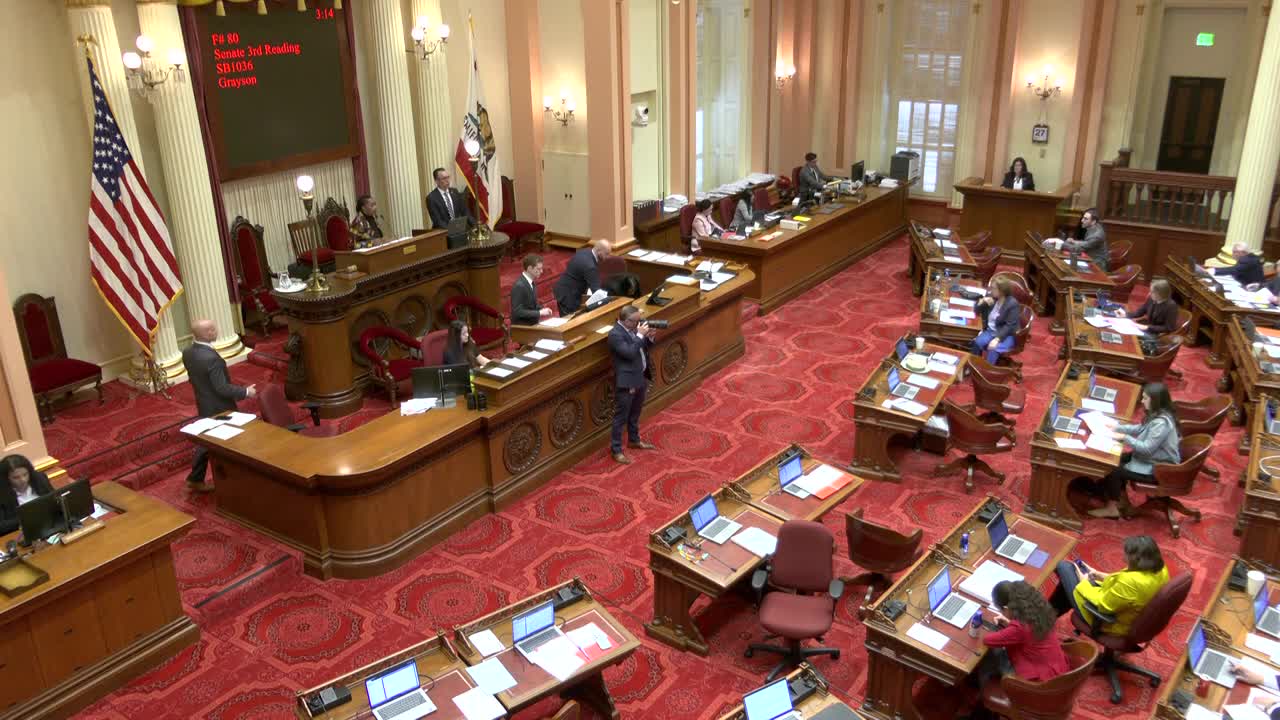 1MIN
Senate Floor
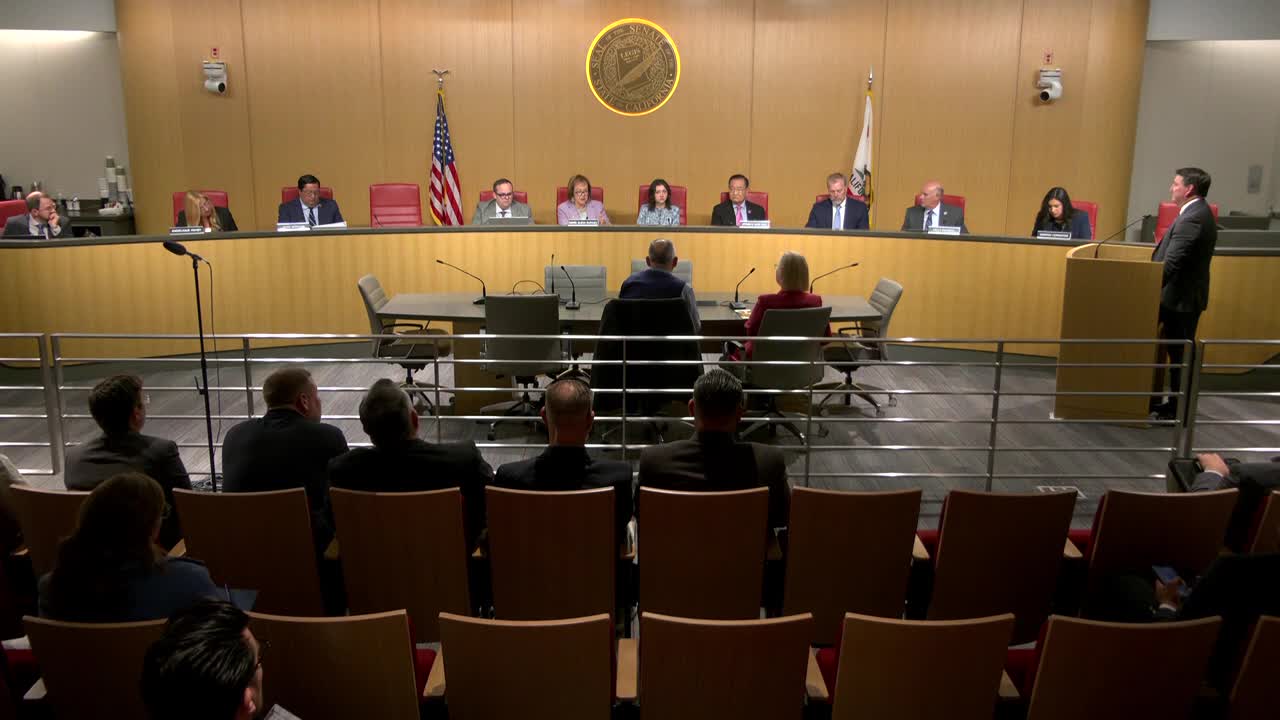 3MIN
Senate Standing Committee on Local Government
Bill Author

Bill Co-Author(s):