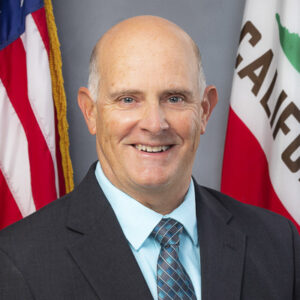
SB 1084: Personal income taxes: Fire Safe Home Tax Credits Act.
- Session Year: 2025-2026
- House: Senate
- Latest Version Date: 2026-04-23
Current Status:
In Progress
(2026-05-14: May 14 hearing: Held in committee and under submission.)
Introduced
In Committee
Awaiting First Chamber Vote
Passed First Chamber
In Committee
Awaiting Second Chamber Vote
Passed Second Chamber
Enacted
The Personal Income Tax Law allows various credits against the tax imposed by that law. Existing law requires any bill authorizing a new tax credit to contain, among other things, specific goals, purposes, and objectives that the tax credit will achieve, detailed performance indicators, and data collection requirements.
This bill would allow credits against the tax imposed by the Personal Income Tax Law for each taxable year taxable years beginning on or after January 1, 2027, and before January 1, 2032, to a qualified taxpayer for qualified costs relating to qualified home hardening, as defined, and for qualified costs relating to qualified vegetation management, as defined, in specified amounts, not to exceed an aggregate amount of $50,000,000 per taxable year.
This bill would require a qualified taxpayer to reserve a credit for qualified costs relating to qualified home hardening or qualified vegetation management to be eligible for the above-described credits and provide all necessary information for this purpose, as specified.
This bill also would include additional information required for any bill authorizing a new income tax credit and would require the Legislative Analysts Office to prepare a written report regarding the credits, as provided.
This bill would take effect immediately as a tax levy.
The Personal Income Tax Law allows various credits against the tax imposed by that law. Existing law requires any bill authorizing a new tax credit to contain, among other things, specific goals, purposes, and objectives that the tax credit will achieve, detailed performance indicators, and data collection requirements.
This bill would allow credits against the tax imposed by the Personal Income Tax Law for each taxable year beginning on or after January 1, 2027, and before January 1, 2032, to a qualified taxpayer for qualified costs relating to qualified home hardening, as defined, and for qualified costs relating to qualified vegetation management, as defined, in specified amounts, not to exceed an aggregate amount of $50,000,000 per taxable year.
This bill would require a qualified taxpayer to reserve a credit for qualified costs relating to qualified home hardening or qualified vegetation management to be eligible for the above-described credits and provide all necessary information for this purpose, as specified.
This bill also would include additional information required for any bill authorizing a new income tax credit and would require the Legislative Analysts Office to prepare a written report regarding the credits, as provided.
This bill would take effect immediately as a tax levy.
The credits allowed by Sections 17052.13 and 17052.14 of the Revenue and Taxation Code, as added by this act, shall be known, and may be cited, as the Fire Safe Home Tax Credits Act.
SEC. 2.Section 17052.13 is added to the Revenue and Taxation Code, to read:17052.13.(a)(1)For each taxable year taxable years beginning on or after January 1, 2027, and before January 1, 2032, there shall be allowed a credit against the net tax, as defined in Section 17039, to a qualified taxpayer who pays or incurs qualified costs for qualified home hardening on a qualified property, in an amount determined pursuant to paragraph (2).
(2)Subject to the credit reservation requirements of subdivision (f), the credit amount shall be in an amount equal to:
(A)Fifty percent of qualified costs paid or incurred, not to exceed five one thousand dollars ($5,000) ($1,000) of credit allowed, if the qualified property is located in a high fire hazard severity zone, per taxable year.
(B)Fifty percent of qualified costs paid or incurred, not to exceed ten two thousand dollars ($10,000) ($2,000) of credit allowed, if the qualified property is located in a very high fire hazard severity zone, per taxable year.
(b)For purposes of this section:
(1)High fire hazard severity zone means land classified by the State Fire Marshal pursuant to Section 4202 of the Public Resources Code as within a high fire hazard severity zone.
(2)Very high fire hazard severity zone means either land classified by the State Fire Marshal pursuant to Section 4202 of the Public Resources Code as within a very high fire hazard severity zone or an area designated by the State Fire Marshal pursuant to Section 51178 of the Government Code that is not a state responsibility area.
(3)(A)Qualified costs means any unreimbursed expense paid or incurred by the qualified taxpayer during the taxable year in which the credit allowed by this section is claimed, documented by receipt, for qualified home hardening.
(B)Qualified costs do not include either any of the following:
(i)Costs of any inspection or certification fees, in-kind contributions, donations, or incentives. fees.
(ii)Costs covered or paid for through in-kind contributions, donations, or incentives.
(ii)(iii)Expenses paid or incurred by the qualified taxpayer from any grants awarded to the qualified taxpayer for qualified home hardening.
(C)For purposes of this paragraph the following definitions shall apply:
(i)Incentive means a payment made by a third party to the qualified taxpayer under a cost-sharing or grant program.
(ii)In-kind contribution means a nonmonetary resource provided to, or used by, a qualified taxpayer, including, but not limited to, personnel, equipment, facilities, and services, by a third party.
(5)(4)(A)Qualified home hardening means the replacement or repair of structural features that are affixed to the qualified property and performed or implemented for the primary purpose of reducing risk to structures from wildland fire.
(B)For purposes of this paragraph, structural features includes any of the following structural features that meet the requirements of Chapter 7A of the California Building Code: (commencing with Section 701A.1) of Part 2 of Title 24 of the California Code of Regulations, or its successor code: roofs, exterior walls, vents, eave assemblies, decks, fences, driveways, and chimneys.
(6)(5)Qualified property means a dwelling or housing unit that is located in a high fire hazard severity zone or very high fire hazard severity zone for which a homeowners exemption pursuant to Section 218 has been granted to the qualified taxpayer in the taxable year for which the credit allowed by this section is claimed.
(7)(6)Qualified taxpayer means a taxpayer who satisfies both of the following requirements:
(A)Has an adjusted gross income for the taxable year in which the credit allowed by this section does not exceed one hundred forty thousand dollars ($140,000) in the case of spouses filing a joint return, heads of households, and surviving spouses, as defined in Section 17046, or seventy thousand dollars ($70,000) for a single individual or a married individual filing separately.
(B)Owns a qualified property.
(c)In the case where the credit allowed under this section exceeds the net tax, the excess credit may be carried over to reduce the net tax in the following taxable year, and succeeding eight taxable years, if necessary, or until the credit has been exhausted.
(d)(1)In the case of two taxpayers filing a joint return, only one credit may be claimed. In the case of two taxpayers who may file a joint return but file separate returns, only one of the taxpayers may claim the credit allowed by this section.
(2)A qualified property shall only be eligible for one credit allowed by this section per taxable year.
(3)Taxpayers who share ownership in a qualified property but are ineligible to file a joint return shall not claim more than one credit on the same property.
(e)If the credit allowed by this section is claimed by the qualified taxpayer, any deduction or credit otherwise allowed under this part for any qualified expenditure made by the qualified taxpayer as a trade or business expense shall be reduced by the amount of the qualified costs taken into account in calculating the credit allowed under this section.
(f)(1)The total aggregate amount of the credit that may be allocated by credit reservations to all qualified taxpayers pursuant to this section and Section 17052.14 shall not exceed fifty million dollars ($50,000,000) per taxable year plus the unused credit amount, if any, for the preceding taxable years.
(2)To be eligible for the credit allowed by this section and Section 17052.14, a qualified taxpayer shall request a credit reservation from the Franchise Tax Board during the month of July for each taxable year or within 30 days of the start of their taxable year if the qualified taxpayers taxable year begins after July, in the form and manner prescribed by the Franchise Tax Board.
(3)To obtain a credit reservation with respect to a qualified expenditure, the qualified taxpayer shall provide all necessary information, as determined by the Franchise Tax Board.
(4)The Franchise Tax Board shall approve tentative credit reservations with respect to qualified expenditures paid or incurred during a taxable year for qualified taxpayers, subject to the cap established under paragraph (1).
(g)(1)For purposes of complying with Section 41 of the Revenue and Taxation Code, with respect to the Fire Safe Home Tax Credits Act, the Legislature finds and declares as follows:
(A)The specific goals of the credits are as follows:
(i)To increase wildfire preparedness by providing a tax incentive to property owners that live in fire-prone parts of the state.
(ii)To compensate taxpayers for costly mitigation measures that prepare their homes for wildfire season.
(B)The performance indicators used to determine if the credits allowed by this section and Section 17052.14 are achieving the stated goal shall be the number of taxpayers allowed a credit, and the average dollar value amount of credits allowed.
(2)(A)The Franchise Tax Board shall, no later than April 1, 2029, and annually thereafter, submit a report to the Legislature, in compliance with Section 9795 of the Government Code detailing the number of taxpayers claiming either or both of the credits allowed by this section and Section 17052.14 and the average dollar value amount of credits allowed.
(B)The disclosure requirements of this paragraph shall be treated as an exception to Section 19542.
(h) This section shall remain in effect only until December 1, 2032, and as of that date is repealed.
SEC. 3.Section 17052.14 is added to the Revenue and Taxation Code, to read:17052.14.(a)For each taxable year taxable years beginning on or after January 1, 2027, and before January 1, 2032, there shall be allowed as a credit against the net tax, as defined in Section 17039, to a qualified taxpayer in an amount equal to 50 percent of qualified costs paid or incurred by the taxpayer, subject to the credit reservation requirements of subdivision (f) and not to exceed two thousand five hundred dollars ($2,500) ($500) of credit allowed per taxable year, for qualified vegetation management on qualified property.
(b)For purposes of this section:
(1)High fire hazard severity zone means land classified by the State Fire Marshal pursuant to Section 4202 of the Public Resources Code as within a high fire hazard severity zone.
(2)Very high fire hazard severity zone means either land classified by the State Fire Marshal pursuant to Section 4202 of the Public Resources Code as within a very high fire hazard severity zone or an area designated by the State Fire Marshal pursuant to Section 51178 of the Government Code that is not a state responsibility area.
(3)(A)Qualified costs means any unreimbursed expense paid or incurred by the qualified taxpayer during the taxable year in which the credit allowed by this section is claimed, documented by receipt, for qualified vegetation management.
(B)Qualified costs do not include either any of the following:
(i)Costs of any inspection or certification fees, in-kind contributions, donations, or incentives. fees.
(ii)Costs covered by in-kind contributions, donations, or incentives.
(ii)(iii)Expenses paid or incurred by the qualified taxpayer from any grants awarded to the qualified taxpayer for qualified vegetation management.
(C)For purposes of this paragraph, the following definitions apply:
(i)Incentive means a payment made by a third party to the qualified taxpayer under a cost-sharing or grant program.
(ii)In-kind contribution means a nonmonetary resource provided to, or used by, a qualified taxpayer, including, but not limited to, personnel, equipment, facilities, and services, by a third party.
(4)Qualified property means a dwelling or housing unit that is located in a high fire hazard severity zone or very high fire hazard severity zone for which a homeowners exemption pursuant to Section 218 has been granted to the qualified taxpayer in the taxable year for which the credit allowed by this section is claimed.
(5)Qualified taxpayer means a taxpayer who satisfies both of the following requirements:
(A)Has an adjusted gross income for the taxable year in which the credit allowed by this section does not exceed one hundred forty thousand dollars ($140,000) in the case of spouses filing a joint return, heads of households, and surviving spouses, as defined in Section 17046, or seventy thousand dollars ($70,000) for a single individual or a married individual filing separately.
(B)Owns a qualified property.
(6)Qualified vegetation management means any of the following activities that meet the requirements of Section 4291 of the Public Resources Code performed by the qualified taxpayer or implemented for the primary purpose of reducing risk to structures from wildland fire:
(A)The creation of defensible space around structures.
(B)The establishment of fuel breaks.
(C)The thinning of woody vegetation.
(D)The secondary treatment of woody fuels by lopping and scattering, piling, chipping, removing from site, or prescribed burning.
(c)In the case where the credit allowed under this section exceeds the net tax, the excess credit may be carried over to reduce the net tax in the following taxable year, and succeeding eight taxable years, if necessary, or until the credit has been exhausted.
(d)(1)In the case of two taxpayers filing a joint return, only one credit may be claimed. In the case of two taxpayers who may file a joint return but file separate returns, only one of the taxpayers may claim the credit allowed by this section.
(2)A qualified property shall only be eligible for one credit allowed by this section per taxable year.
(3)Taxpayers who share ownership in a qualified property but are ineligible to file a joint return shall not claim more than one credit on the same property.
(e)If the credit allowed by this section is claimed by the qualified taxpayer, any deduction or credit otherwise allowed under this part for any qualified expenditure made by the qualified taxpayer as a trade or business expense shall be reduced by the amount of qualified costs taken into account in calculating the credit under this section.
(f)(1)The total aggregate amount of the credit that may be allocated by credit reservations to all qualified taxpayers pursuant to this section and Section 17052.13 shall not exceed fifty million dollars ($50,000,000) per taxable year plus the unused credit amount, if any, for the preceding taxable years.
(2)To be eligible for the credit allowed by this section and Section 17052.13, a qualified taxpayer shall request a credit reservation from the Franchise Tax Board during the month of July for each taxable year or within 30 days of the start of their taxable year if the qualified taxpayers taxable year begins after July, in the form and manner prescribed by the Franchise Tax Board.
(3)To obtain a credit reservation with respect to a qualified expenditure, the qualified taxpayer shall provide all necessary information, as determined by the Franchise Tax Board.
(4)The Franchise Tax Board shall approve tentative credit reservations with respect to qualified expenditures paid or incurred during a taxable year for qualified taxpayers, subject to the cap established under paragraph (1).
(g) This section shall remain in effect only until December 1, 2032, and as of that date is repealed.
SEC. 4.This act provides for a tax levy within the meaning of Article IV of the California Constitution and shall go into immediate effect.
The credits allowed by Sections 17052.13 and 17052.14 of the Revenue and Taxation Code, as added by this act, shall be known, and may be cited, as the Fire Safe Home Tax Credits Act.
SEC. 2.Section 17052.13 is added to the Revenue and Taxation Code, to read:17052.13.(a)(1)For each taxable year beginning on or after January 1, 2027, and before January 1, 2032, there shall be allowed a credit against the net tax, as defined in Section 17039, to a qualified taxpayer who pays or incurs qualified costs for qualified home hardening on a qualified property, in an amount determined pursuant to paragraph (2).
(2)Subject to the credit reservation requirements of subdivision (f), the credit amount shall be in an amount equal to:
(A)Fifty percent of qualified costs paid or incurred, not to exceed five thousand dollars ($5,000) of credit allowed, if the qualified property is located in a high fire hazard severity zone, per taxable year.
(B)Fifty percent of qualified costs paid or incurred, not to exceed ten thousand dollars ($10,000) of credit allowed, if the qualified property is located in a very high fire hazard severity zone, per taxable year.
(b)For purposes of this section:
(1)High fire hazard severity zone means land classified by the State Fire Marshal pursuant to Section 4202 of the Public Resources Code as within a high fire hazard severity zone.
(2)Very high fire hazard severity zone means either land classified by the State Fire Marshal pursuant to Section 4202 of the Public Resources Code as within a very high fire hazard severity zone or an area designated by the State Fire Marshal pursuant to Section 51178 of the Government Code that is not a state responsibility area.
(3)(A)Qualified costs means any expense paid or incurred by the qualified taxpayer during the taxable year in which the credit allowed by this section is claimed, documented by receipt, for qualified home hardening.
(B)Qualified costs do not include either of the following:
(i)Costs of any inspection or certification fees, in-kind contributions, donations, or incentives.
(ii)Expenses paid or incurred by the qualified taxpayer from any grants awarded to the qualified taxpayer for qualified home hardening.
(5)(A)Qualified home hardening means the replacement or repair of structural features that are affixed to the qualified property and performed or implemented for the primary purpose of reducing risk to structures from wildland fire.
(B)For purposes of this paragraph, structural features includes any of the following structural features that meet the requirements of Chapter 7A of the California Building Code: roofs, exterior walls, vents, eave assemblies, decks, fences, driveways, and chimneys.
(6)Qualified property means a dwelling or housing unit that is located in a high fire hazard severity zone or very high fire hazard severity zone for which a homeowners exemption pursuant to Section 218 has been granted to the qualified taxpayer in the taxable year for which the credit allowed by this section is claimed.
(7)Qualified taxpayer means a taxpayer who satisfies both of the following requirements:
(A)Has an adjusted gross income for the taxable year in which the credit allowed by this section does not exceed one hundred forty thousand dollars ($140,000) in the case of spouses filing a joint return, heads of households, and surviving spouses, as defined in Section 17046, or seventy thousand dollars ($70,000) for a single individual or a married individual filing separately.
(B)Owns a qualified property.
(c)In the case where the credit allowed under this section exceeds the net tax, the excess credit may be carried over to reduce the net tax in the following taxable year, and succeeding eight taxable years, if necessary, or until the credit has been exhausted.
(d)(1)In the case of two taxpayers filing a joint return, only one credit may be claimed. In the case of two taxpayers who may file a joint return but file separate returns, only one of the taxpayers may claim the credit allowed by this section.
(2)A qualified property shall only be eligible for one credit allowed by this section per taxable year.
(3)Taxpayers who share ownership in a qualified property but are ineligible to file a joint return shall not claim more than one credit on the same property.
(e)If the credit allowed by this section is claimed by the qualified taxpayer, any deduction or credit otherwise allowed under this part for any qualified expenditure made by the qualified taxpayer as a trade or business expense shall be reduced by the amount of the qualified costs taken into account in calculating the credit allowed under this section.
(f)(1)The total aggregate amount of the credit that may be allocated by credit reservations to all qualified taxpayers pursuant to this section and Section 17052.14 shall not exceed fifty million dollars ($50,000,000) per taxable year plus the unused credit amount, if any, for the preceding taxable years.
(2)To be eligible for the credit allowed by this section and Section 17052.14, a qualified taxpayer shall request a credit reservation from the Franchise Tax Board during the month of July for each taxable year or within 30 days of the start of their taxable year if the qualified taxpayers taxable year begins after July, in the form and manner prescribed by the Franchise Tax Board.
(3)To obtain a credit reservation with respect to a qualified expenditure, the qualified taxpayer shall provide all necessary information, as determined by the Franchise Tax Board.
(4)The Franchise Tax Board shall approve tentative credit reservations with respect to qualified expenditures paid or incurred during a taxable year for qualified taxpayers, subject to the cap established under paragraph (1).
(g)(1)For purposes of complying with Section 41 of the Revenue and Taxation Code, with respect to the Fire Safe Home Tax Credits Act, the Legislature finds and declares as follows:
(A)The specific goals of the credits are as follows:
(i)To increase wildfire preparedness by providing a tax incentive to property owners that live in fire-prone parts of the state.
(ii)To compensate taxpayers for costly mitigation measures that prepare their homes for wildfire season.
(B)The performance indicators used to determine if the credits allowed by this section and Section 17052.14 are achieving the stated goal shall be the number of taxpayers allowed a credit, and the average dollar value of credits allowed.
(2)(A)The Franchise Tax Board shall, no later than April 1, 2029, and annually thereafter, submit a report to the Legislature, in compliance with Section 9795 of the Government Code detailing the number of taxpayers claiming either or both of the credits allowed by this section and Section 17052.14 and the average dollar value of credits allowed.
(B)The disclosure requirements of this paragraph shall be treated as an exception to Section 19542.
(h) This section shall remain in effect only until December 1, 2032, and as of that date is repealed.
SEC. 3.Section 17052.14 is added to the Revenue and Taxation Code, to read:17052.14.(a)For each taxable year beginning on or after January 1, 2027, and before January 1, 2032, there shall be allowed as a credit against the net tax, as defined in Section 17039, to a qualified taxpayer in an amount equal to 50 percent of qualified costs paid or incurred by the taxpayer, subject to the credit reservation requirements of subdivision (f) and not to exceed two thousand five hundred dollars ($2,500) of credit allowed per taxable year, for qualified vegetation management on qualified property.
(b)For purposes of this section:
(1)High fire hazard severity zone means land classified by the State Fire Marshal pursuant to Section 4202 of the Public Resources Code as within a high fire hazard severity zone.
(2)Very high fire hazard severity zone means either land classified by the State Fire Marshal pursuant to Section 4202 of the Public Resources Code as within a very high fire hazard severity zone or an area designated by the State Fire Marshal pursuant to Section 51178 of the Government Code that is not a state responsibility area.
(3)(A)Qualified costs means any expense paid or incurred by the qualified taxpayer during the taxable year in which the credit allowed by this section is claimed, documented by receipt, for qualified vegetation management.
(B)Qualified costs do not include either of the following:
(i)Costs of any inspection or certification fees, in-kind contributions, donations, or incentives.
(ii)Expenses paid or incurred by the qualified taxpayer from any grants awarded to the qualified taxpayer for qualified vegetation management.
(C)For purposes of this paragraph, the following definitions apply:
(i)Incentive means a payment made by a third party to the qualified taxpayer under a cost-sharing or grant program.
(ii)In-kind contribution means a nonmonetary resource provided to, or used by, a qualified taxpayer, including, but not limited to, personnel, equipment, facilities, and services, by a third party.
(4)Qualified property means a dwelling or housing unit that is located in a high fire hazard severity zone or very high fire hazard severity zone for which a homeowners exemption pursuant to Section 218 has been granted to the qualified taxpayer in the taxable year for which the credit allowed by this section is claimed.
(5)Qualified taxpayer means a taxpayer who satisfies both of the following requirements:
(A)Has an adjusted gross income for the taxable year in which the credit allowed by this section does not exceed one hundred forty thousand dollars ($140,000) in the case of spouses filing a joint return, heads of households, and surviving spouses, as defined in Section 17046, or seventy thousand dollars ($70,000) for a single individual or a married individual filing separately.
(B)Owns a qualified property.
(6)Qualified vegetation management means any of the following activities that meet the requirements of Section 4291 of the Public Resources Code performed by the qualified taxpayer for the primary purpose of reducing risk to structures from wildland fire:
(A)The creation of defensible space around structures.
(B)The establishment of fuel breaks.
(C)The thinning of woody vegetation.
(D)The secondary treatment of woody fuels by lopping and scattering, piling, chipping, removing from site, or prescribed burning.
(c)In the case where the credit allowed under this section exceeds the net tax, the excess credit may be carried over to reduce the net tax in the following taxable year, and succeeding eight taxable years, if necessary, or until the credit has been exhausted.
(d)(1)In the case of two taxpayers filing a joint return, only one credit may be claimed. In the case of two taxpayers who may file a joint return but file separate returns, only one of the taxpayers may claim the credit allowed by this section.
(2)A qualified property shall only be eligible for one credit allowed by this section per taxable year.
(3)Taxpayers who share ownership in a qualified property but are ineligible to file a joint return shall not claim more than one credit on the same property.
(e)If the credit allowed by this section is claimed by the qualified taxpayer, any deduction or credit otherwise allowed under this part for any qualified expenditure made by the qualified taxpayer as a trade or business expense shall be reduced by the amount of qualified costs taken into account in calculating the credit under this section.
(f)(1)The total aggregate amount of the credit that may be allocated by credit reservations to all qualified taxpayers pursuant to this section and Section 17052.13 shall not exceed fifty million dollars ($50,000,000) per taxable year plus the unused credit amount, if any, for the preceding taxable years.
(2)To be eligible for the credit allowed by this section and Section 17052.13, a qualified taxpayer shall request a credit reservation from the Franchise Tax Board during the month of July for each taxable year or within 30 days of the start of their taxable year if the qualified taxpayers taxable year begins after July, in the form and manner prescribed by the Franchise Tax Board.
(3)To obtain a credit reservation with respect to a qualified expenditure, the qualified taxpayer shall provide all necessary information, as determined by the Franchise Tax Board.
(4)The Franchise Tax Board shall approve tentative credit reservations with respect to qualified expenditures paid or incurred during a taxable year for qualified taxpayers, subject to the cap established under paragraph (1).
(g) This section shall remain in effect only until December 1, 2032, and as of that date is repealed.
SEC. 4.This act provides for a tax levy within the meaning of Article IV of the California Constitution and shall go into immediate effect.
|
Date
|
Status
|
|---|---|
| May 14, 2026 | May 14 hearing: Held in committee and under submission. |
| May 12, 2026 | Set for hearing May 14. |
| May 11, 2026 | May 11 hearing: Placed on APPR. suspense file. |
| May 7, 2026 | Set for hearing May 11. |
| May 6, 2026 | From committee: Do pass and re-refer to Com. on APPR. (Ayes 5. Noes 0. Page 4154.) (May 6). Re-referred to Com. on APPR. |
| May 6, 2026 | From committee: Do pass and re-refer to Com. on APPR. (Ayes 5. Noes 0.) (May 6). Re-referred to Com. on APPR. |
| Apr 23, 2026 | From committee with author's amendments. Read second time and amended. Re-referred to Com. on REV. & TAX. |
| Apr 9, 2026 | Set for hearing May 6. |
| Feb 26, 2026 | Referred to Com. on REV. & TAX. |
| Feb 17, 2026 | From printer. May be acted upon on or after March 16. |
| Feb 13, 2026 | Introduced. Read first time. To Com. on RLS. for assignment. To print. |
|
Date
|
Description
|
Location
|
Votes
|
|
|---|---|---|---|---|
| May 11, 2026 | Placed on suspense file | Senate Standing Committee on Appropriations |
Passed |
|
| May 6, 2026 | Do pass, but first be re-referred to the Committee on [Appropriations] | Senate Standing Committee on Revenue and Taxation |
Passed |
This list shows positions taken on this bill by organizations on the date displayed, which is linked to the original source.
Positions by individuals are not included.
|
Organization
|
Position
|
Date
|
|---|---|---|
| California Association Of Realtors | ** Support | |
| California Teachers Association | ** Against | |
| Eastern Sierra Council of Governments | ** Support | |
| El Dorado County Fire Protection District | ** Support | |
| Mariposa County Sheriff's Office | ** Support | |
| Megafire Action | ** Support | |
| Town of Truckee | ** Support |
SENATE COMMITTEE ON
Senator Sabrina Cervantes, Chair
2025 - 2026 Regular Session
SB 1084 (Alvarado-Gil) - Personal income taxes: Fire Safe Home Tax Credits Act
Version: | Policy Vote: |
Urgency: | Mandate: |
Hearing Date: | Consultant: |
Bill Summary:
SB 1084 would authorize, as specified, (1) a home hardening credit, and (2) and vegetation management credit against the Personal Income Tax.
Fiscal Impact:
The Franchise Tax Board (FTB) estimates that this bill would result in General Fund revenue losses of $8.7 million in 2026-27, $21 million in 2027-28, and $28 million in 2028-29. FTB’s administrative costs have yet to be identified.
Background:
Tax expenditure programs (TEPs) are special tax provisions that reduce the amount of revenues the “basic” tax system would otherwise generate in order to provide (1) benefits to certain groups of taxpayers, and/or (2) incentives to encourage certain types of behavior and activities, such as charitable giving. Specifically, current law provides for, among other things, various income and corporation tax credits and deductions, as well as exemptions from the sales and use tax. The Department of Finance is required to publish a list of TEPs (currently totaling several hundred), which currently exceed $94 billion annually.
Tax credits directly reduce the amount of tax owed by a taxpayer, making them more impactful than deductions because they result in a dollar-for-dollar reduction. They come in two main types: nonrefundable credits, which can reduce tax to zero, and refundable credits, which can result in a refund if they exceed tax liability. They are used to encourage specific behaviors like working, raising children, pursuing education, or investing in clean energy, but each credit has its own eligibility rules, income limits, and phase-outs. Under current state law, the only refundable credits are the Earned Income Tax Credit, the Young Child Tax Credit, the Foster Youth Tax Credit, and the Motion Picture and Television Production Credit.
The California Department of Forestry and Fire Protection (CAL FIRE) indicates that in 2025 there were 608,571 emergency responses; 8,232 wildfires; 507,817 acres burned; 16,627 structures damaged or destroyed; and 31 fatalities. Partial data for 2026 show that there have already been 172,125 emergency responses; 707 wildfires; 6,812 acres burned; and one structure damaged or destroyed. Fires attributed to power lines and electrical equipment comprise nine of California’s 20 most destructive fires.
In 1982, the Legislature directed CAL FIRE to designate fire hazard zones in the state responsibility area (SRA) (SB 1916, Ayala, 1982). SRA lands are territories in the State outside the Federal Responsibility Area (FRA) and outside of local government land outside local agency fire protection, which is known as the Local Responsibility Areas (LRA). Following the 1991 Oakland-Berkeley firestorm, the Legislature mandated that CAL FIRE also designate Very High FHSZ in LRAs and, in 2021, required the adoption of all three FHSZ classes in LRAs (AB 337, Bates, 1992; SB 63 (Stern, 2021). The fire hazard zones fall into three categories: Moderate, High, and Very High Fire Hazard.
Landowners in the SRA and the very high FHSZs must follow specified fire prevention practices and meet standards developed by the Board (AB 337, Bates, 1992). These practices and standards include maintaining a defensible space of 100 feet around structures, performing certain activities to reduce the amount of flammable material near and on structures, and meeting specific building standards developed by CAL FIRE and the Department of Housing and Community Development that help a structure withstand ignition and reduce fire risk. State fire marshals make site inspections in high-risk areas and cite homeowners if any violations are observed. Homeowners must make any necessary improvements to their property to ensure compliance.
In 2019, the Legislature required the Office of Emergency Services (OES) to enter into a joint powers agreement with CAL FIRE to develop and administer a comprehensive Wildfire Mitigation Program to provide financial assistance to create fire-resistant homes, businesses, and public buildings and facilitate vegetation management. Areas eligible for financial aid under the program include very high FHSZs, SRA, and any other lands designated by the JPA (AB 38, Wood, 2019). The pilot home hardening initiative provides funding for defensible space and ignition-resistant retrofits to harden approximately 2,500 homes in six counties over the next three years by leveraging funds provided by the Federal Emergency Management Agency (FEMA). The State provides 25 percent of funding, while FEMA provides the remaining 75 percent. In 2024, the Legislature authorized a gross income exclusion, for state tax purposes, of a qualified wildfire loss mitigation payment received by a qualified taxpayer through the California Wildfire Mitigation Financial Assistance Program (SB 946, McGuire).
Proposed Law:
This bill, among other things, would do the following:
- Authorize two credits against the Personal Income Tax, as specified, for tax years 2027 through 2031:
- A home hardening credit equal to 50 percent of the costs incurred for “Qualified home hardening,” as defined. The measure would cap the per taxable year credit based on the zone designation where the residence is located:
- $1,000 if located in a high fire hazard severity zone.
- $2,000 if located in a very high fire hazard severity zone.
- A vegetation management credit equal to 50 percent, up to $500, of the cost of “Qualified vegetation management,” utilizing the definition in existing law of activities to reduce risk to structures from wildland fire.
- A home hardening credit equal to 50 percent of the costs incurred for “Qualified home hardening,” as defined. The measure would cap the per taxable year credit based on the zone designation where the residence is located:
Related Legislation:
- SB 295 (McGuire, 2019) was very similar to this bill, and was held under submission on the Suspense File of the Assembly Appropriations Committee.
- SB 952 (Dahle, 2024), also was very similar to this bill, and was held under submission on the Suspense File of this Committee.
- SB 269 (Choi, 2025) also was very similar to this bill, and was held under submission on the Suspense File of this Committee.
-- END --
SENATE COMMITTEE ON REVENUE AND TAXATION
Senator Jerry McNerney, Chair
2025 - 2026 Regular
Bill No: | SB 1084 | Hearing Date: | 5/6/26 |
Author: | Alvarado-Gil | Tax Levy: | Yes |
Version: | 4/23/26 Amended | Fiscal: | Yes |
Consultant: | Summers | ||
Personal income taxes: Fire Safe Home Tax Credits Act
Enacts the Fire Safe Home Tax Credits Act, which authorizes a home hardening credit and vegetation management credit against the Personal Income Tax.
Background
Tax expenditures. California law allows various income tax credits, deductions, exemptions, and exclusions. When a tax law is determined to have a cost in the form of foregone revenues, such as a tax exemption, state law refers to them as “tax expenditures.” The Legislature enacts such tax incentives to compensate taxpayers for incurring certain expenses, such as child adoption, or to influence certain behaviors, such as participating in charitable giving. The Legislature uses tax incentives to encourage taxpayers to do something they would otherwise not do “but for” the tax incentive. The Department of Finance must publish an annual list of tax expenditures, currently totaling around $94.2 billion in forgone General Fund revenue.
Credits. Tax credits reduce the amount of tax owed by a taxpayer on a dollar-for-dollar basis. Credit amounts that exceed the taxpayer’s current tax year liability can either be refunded to the taxpayer or carried forward to reduce tax in future years. However, except for the Earned Income Tax Credit, the Young Child Tax Credit, the Foster Youth Tax Credit, and the Motion Picture and Television Production Credit, all credits against California Personal Income and Corporation Tax are nonrefundable.
California Fires. Over the last decade, California has experienced increased, intense, and record-breaking wildfires. These fires have resulted in a devastating loss of life and billions of dollars in damage to property and infrastructure. According to the California Department of Forestry and Fire Protection (CAL FIRE), in 2025 alone, there were 608,571 emergency responses; 8,232 wildfires; 507,817 acres burned; 16,627 structures damaged or destroyed; and 31 fatalities. As of April 13, 2026, for the year 2026, there have already been 172,125 emergency responses; 707 wildfires; 6,812 acres burned; 1 structure damaged or destroyed; and 0 fatalities.
Governor Newsom’s State Emergency Proclamation to Fast-track Critical Wildfire Prevention Projects Statewide. On March 1, 2025, Governor Newsom proclaimed a state of emergency due to the escalating risk of catastrophic wildfires driven by widespread tree die-offs, deteriorating forest conditions, and extreme shifts between rain and drought. This state of emergency proclamation, still in effect as of April 2026, was issued following a series of catastrophic fires in Los Angeles County that began on January 7, 2025, and were not contained until January 31, 2025. The two primary fires, the Palisades and Eaton fires, burned 37,728 acres, destroyed 18,298 structures, and claimed 29 lives. The proclamation directed that state statutes, rules, regulations, and requirements that fall within the jurisdiction of boards, departments, and offices within the California Environmental Protection Agency and the California Natural Resources Agency be suspended, allowing critical fuel reduction projects to be accelerated. Critical fuel reduction projects include:
- Removal of hazardous, dead, and/or dying trees;
- Removal of vegetation for the creation of strategic fuel breaks identified by approved fire prevention plans, including CAL FIRE Unit Fire Plans or Community Wildfire Preparedness Plans;
- Removal of vegetation for community defensible space;
- Removal of vegetation along roadways, highways, and freeways for the creation of safer ingress and egress routes for the public and responders and to reduce roadside ignitions;
- Removal of vegetation using cultural traditional ecological knowledge for cultural burning and/or prescribed fire treatments for fuel reduction; or
- Maintenance of previously established fuel breaks or fuel modification projects.
Governor’s Budget Proposal 2025-26. The 2024 Climate Bond invests $10 billion in projects that strengthen communities and support stewardship of natural resources and the environment (SB 867, Allen 2023; Proposition 4, 2024). The Governor’s Proposed Budget builds on existing investments in wildfire resilience and forest health projects with $314 million investments from the Climate Bond in 2026-27 for the following wildfire and forest resilience efforts:
- Local Fire Prevention Grants ($58 million) for wildfire prevention and hazardous fuels reduction projects in and near wildfire-threatened communities;
- Fire Resilience ($19.6 million) for technical and financial assistance to homeowners in wildfire-vulnerable areas to implement defensible space mitigations, including Zone 0 ember-resistant space; and
- Wildfire Risk Reduction Related to Electricity Transmission ($15.2 million) for grants, in coordination with the Office of Energy Infrastructure Safety, to support fuel reduction around wildfire-vulnerable communities and reduce wildfire ignitions.
Fire Hazard Severity Zones. In 1982, the Legislature directed the Director of Forestry, now known as CAL FIRE, to designate fire hazard zones in the state responsibility area (SRA) (SB 1916, Ayala, 1982). SRA lands are territories in the state outside the Federal Responsibility Area (FRA) and outside local agency fire protection, which is known as the Local Responsibility Areas (LRA). Following the 1991 Oakland-Berkeley firestorm, the Legislature mandated that CAL FIRE also designate Very High FHSZ in LRAs and, in 2021, required the adoption of all three FHSZ classes in LRAs (AB 337, Bates, 1992; SB 63, Stern, 2021).
The fire hazard zones fall into three categories: Moderate, High, and Very High Fire Hazard Severity Zones (FHSZ), which are based on statewide criteria to determine the severity of fire hazard expected in those areas using factors such as fuel loading, slope, fire weather, winds, and others the State Fire Marshal may identify as a major cause of wildfire spread. “Hazard” is also based on the physical conditions that create a likelihood and expected fire behavior over a 30- to 50-year period without considering mitigation measures such as home hardening, defensible space, vegetation management, or fuel reduction efforts.
Fire Hazard Severity Zones Acreage Data. The most recent SRA hazard maps, which took effect on April 1, 2024, indicate that a little over 27 million acres of the SRA are located in high- or very-high-hazard fire zones. California’s total state acreage is approximately 100 million; however, a little over 45 million acres of that is federal land. This means that of the approximately 55 non-federal acres, about half are in an SRA with a high or very high fire hazard zone. Additionally, approximately 4 million acres in California are designated as being in a moderate fire hazard zone, which means over 56% of the SRA is in a fire hazard zone.
Responsibilities of Property Owners in the SRA. Landowners in the SRA and the very high FHSZs must follow specified fire prevention practices and meet standards developed by the Board of Forestry and Fire Protection. These practices and standards include maintaining a defensible space of 100 feet around structures, performing certain activities to reduce the amount of flammable material near and on structures, and meeting specific building standards developed by CAL FIRE and the Department of Housing and Community Development that help a structure withstand ignition and reduce fire risk. CAL FIRE/local fire officials conduct property inspections in high-risk areas and cite homeowners if any violations are observed. Homeowners must make any necessary improvements to their property to ensure compliance.
Wildfire mitigation grants. In 2019, the Legislature required the Office of Emergency Services (OES) to enter into a joint powers agreement with CAL FIRE to develop and administer a comprehensive Wildfire Mitigation Program to provide financial assistance for creating fire-resistant homes, businesses, and public buildings, and to facilitate vegetation management. Areas eligible for financial aid under the program include very high FHSZs, SRA, and any other lands designated by the JPA (AB 38, Wood, 2019). The pilot home hardening initiative provides funding for defensible space and ignition-resistant retrofits to harden approximately 2,500 homes in six counties over the next three years, leveraging funds from the Federal Emergency Management Agency (FEMA). The state provides 25% of funding, while FEMA provides 75%. In 2024, the Legislature authorized a gross income exclusion, for state tax purposes, of a qualified wildfire loss mitigation payment received by a qualified taxpayer through the California Wildfire Mitigation Financial Assistance Program (SB 946, McGuire).
According to the OES California Wildfire Mitigation Program Status Report from March 2026, the following six participant communities have received financial assistance:
Sub-recipient | County | Community |
North Coast Opportunities | Lake | Kelseyville Riviera |
San Diego County Fire Protection District | San Diego | Dulzura, Campo, Potrero |
Shasta County Fire Safe Council | Shasta | Whitmore, Oak Run, Lakehead |
Shasta Valley Resource Conservation District | Siskiyou | Mount Shasta |
El Dorado County Office of Wildfire Preparedness and Resilience | El Dorado | Weber Creek |
Tuolumne County Office of Emergency Services | Tuolumne | Ponderosa |
Arguing that homeowners are at the forefront of fire threat and risk reduction, the author wants to encourage low- to moderate-income homeowners to utilize home hardening and vegetation management strategies in moderate to very high fire hazard zones by authorizing personal income tax credits for taxpayers who implement those strategies.
Proposed Law
Senate Bill 1084 enacts the Fire Safe Home Tax Credits Act, which authorizes two credits against the Personal Income Tax, beginning on or after January 1, 2027, and before January 1, 2032.
Home hardening. SB 1084’s home hardening credits are equal to 50% of the costs incurred for “Qualified home hardening,” which is defined as the replacement or repair of structural features that are affixed to the qualified property to meet the requirements of Chapter 7A of the California Building Code, including roofs, exterior walls, vents, eave assemblies, decks, fences, driveways, and chimneys. The credit only applies to primary residences, as evidenced by the homeowners’ exemption from property tax, and solely to homeowners with an income of less than $70,000 (single)/$140,000 (joint). The measure caps the per taxable year credit based on the zone designation where the residence is located:
- $1,000 if located in a high fire hazard severity zone.
- $2,000 if located in a very high fire hazard severity zone.
Vegetation management. The measure’s credit for vegetation management is equal to 50%, up to $500, of the cost of “Qualified vegetation management,” utilizing the definition in existing law of activities to reduce risk to structures from wildland fire:
- The creation of defensible space around structures.
- The establishment of fuel breaks.
- The thinning of woody vegetation.
- The secondary treatment of woody fuels by lopping and scattering, piling, chipping, removing from the site, or prescribed burning.
The measure applies the same restrictions regarding the taxpayer’s primary residence and annual income requirements as the home hardening credit.
Both credits are subject to a reservation system administered by the Franchise Tax Board (FTB). Taxpayers must request a credit reservation from FTB in July for each taxable year (or within 30 days of the start of their taxable year if the qualified taxpayer’s taxable year begins after July) in the form and manner prescribed by the FTB, including any necessary information FTB needs. FTB must approve reservations up to the measure’s cap of $50 million annually, plus any unused amount from previous taxable years.
The credits are not refundable; taxpayers may carry forward unused credits for nine taxable years. Taxpayers must reduce any deduction they claim for expenses that qualify for the credit. Additionally, the measure repeals its provisions on December 1, 2032, and includes legislative findings and declarations to comply with Section 41 of the Revenue and Taxation Code.
State Revenue Impact
According to the FTB, the 2/13/26 version of SB 1084 would result in revenue losses of $8.7 million in FY 2026-27, $21 million in FY 2027-28, and $28 million in 2028-29. The amendments made to the 4/23/26 version of the bill are expected to reduce revenue loss estimates.
Comments
- Purpose of the bill. According to the author, “California faces a persistent and growing threat from catastrophic wildfires, which have displaced thousands of residents and destroyed entire communities. While the state has invested in large-scale forest management, the individual responsibility of homeowners to harden their properties remains a critical line of defense; however, the costs associated with home hardening and vegetation management can be a barrier for families living in wildfire-prone regions. SB 1084 addresses this challenge by establishing the Fire Safe Home Tax Credits Act. This bill provides a necessary financial incentive for property owners to invest in their own safety. Providing tax credits for qualified costs relating to home hardening and vegetation management empowers Californians to take proactive steps to protect their homes and neighborhoods. This legislation is a vital component of a comprehensive strategy to bolster wildfire preparedness and ensure that the financial burden of safety does not fall solely on the backs of individual taxpayers.”
- “Windfall” or “but for” tax benefit? Tax expenditures produce two different outcomes. The first outcome is a “windfall,” in which the tax expenditure rewards behavior that would have occurred even without the tax benefit. The second outcome is a “but for tax benefit,” where a certain activity would not have occurred without the incentive created by the tax expenditure. Under very high FHSZs, current law requires taxpayers to meet defensible space, fuel-reduction, and building standards. The tax credits authorized by this bill may serve as a “windfall” when homeowners use the credit to comply with state and local laws for defensible spaces, vegetation management, and home improvements to reduce fire risk. However, the credits may provide a benefit to the extent a homeowner fortifies their home beyond the requirements mandated by state and local law, such as repairing or installing an ember-resistant roof.
- Revenue loss. Existing tax law provides various credits, deductions, exclusions, and exemptions for certain taxpayers. By authorizing a credit for home hardening and vegetation management against personal income, SB 1084 will result in the State General Fund receiving less revenue. As a result, the state will have to reduce spending or increase taxes to account for the loss. Additionally, because Proposition 98 establishes a minimum funding guarantee for K-14 education in California, which generally represents roughly 40% of the state’s General Fund revenues, every dollar of General Fund loss results in approximately 40 cents less of funding for K-14 education.
- Highest and best? California continues to make substantial direct appropriations for wildfire and forest resilience. Proposition 4, approved by voters in 2024, provides $1.5 billion for wildfire and forest resilience, and the Governor’s 2026-27 budget proposes $314 million for those purposes, including funding for local fire prevention grants, fire resilience assistance for homeowners, defensible space and Zone 0 mitigation, forest health, regional capacity, and wildfire-risk reduction near electricity transmission infrastructure. After accounting for $181 million in early action funding, $417 million in 2025-26, and the proposed $314 million in 2026-27, roughly $588 million of the wildfire and forest resilience bond allocation would remain available for future years. SB 1084 adds to these amounts up to $50 million in tax credits annually for five years to create incentives for homeowners to harden homes and manage vegetation. Instead of funding flowing through state agencies, SB 1084 seeks to accomplish similar goals by directly assisting homeowners in fire-prone areas. Further, the state’s taxpayers finance these credits through foregone revenue, but the benefits accrue to private property owners who choose to live in fire-prone areas. In a time of limited fiscal resources, is SB 1084 the best way to reduce wildfire risk in California?
- Narrowly tailored. SB 1084 allows a tax credit for a broad range of activities – home hardening and vegetation management – while limiting eligibility solely for homeowners within specified FHSZs that meet specified income limits. To claim either credit, the taxpayer’s AGI must be less than $70,000 or less than $140,000 AGI for joint returns, heads of households, and surviving spouses. Additionally, to be a qualified property, the property must also claim the homeowners’ exemption from property tax. The taxpayer’s home must also be within a high or very high FHSZ.
- Nonrefundable. The state Earned Income Tax Credit, Young Child Tax Credit, and Foster Youth Tax Credit are refundable. In contrast, SB 1084’s credits are not refundable, meaning they can reduce a taxpayer’s liability to zero, but the taxpayer will not receive a refund for any remaining credit. The maximum credit amounts for home hardening are $1,000 to $2,000, and for vegetation management, $500. Therefore, if a taxpayer claimed the maximum credit amount for both credits, they could claim up to $1,500 or $2,500 of credits per tax year. However, taxpayers with incomes that qualify for the credit ($70,000 single/$140,000 joint) typically have lower tax liabilities and so may not be able to use the full credit in one taxable year. However, the bill allows them to carry forward any unused amount to the next nine tax years.
- Precedent. Income is generally taxable, regardless of the source from which it is derived. If the Legislature authorizes a credit for home hardening and vegetation management against personal income, why should it not extend the same treatment to other home fortifications, such as for flooding, extreme heat, or earthquakes? This may lead to a slippery slope in which home fortifications are treated as credits against net income, thereby eroding the income tax base.
- Equity. The bill’s income-restricted tax credits could expand wildfire resilience for many owner-occupied homes in high-risk zones, but they only reach households that can afford to pay mitigation costs up front and wait for reimbursement. The pay-first, credit-later structure privileges households with savings or access to credit, while liquidity-constrained taxpayers may be effectively locked out. The Committee may wish to consider whether income-excluded grants would better help low to middle-income households with home hardening and vegetation management.
- Who benefits? California’s progressive income tax system applies to higher marginal rates as taxable income exceeds certain thresholds. As a result, enacting a personal income tax credit benefits higher-income earners more than lower-income taxpayers, since they are more likely to be able to use the full credit amount than lower-income taxpayers with smaller tax liabilities, unless the tax credit is nonrefundable. However, SB 1084 has AGI limits of $70,000 (single)/$140,000 (joint), which help ensure that families of low- to middle-income receive the benefits of the credits.
- Related legislation. This measure is very similar to SB 295 (McGuire, 2019), which was approved by the Assembly Revenue and Taxation Committee but held on the Assembly Appropriations Committee’s suspense file; SB 952 (Dahle, 2024), which the Committee approved by a vote of 5 to 0 but was held on the Senate Appropriations Committee’s suspense file; and Senate Bill 269 (Choi, 2025), which the Committee approved by a vote of 5 to 0 but was held on the Senate Appropriations Committee’s suspense file.
11. Section 41. Section 41 of the Revenue and Taxation Code requires any bill enacting a new tax expenditure to contain, among other things, specific goals, purposes, and objectives that the tax expenditure will achieve and detailed performance indicators, along with data collection and reporting requirements (SB 1335, Leno, 2014). To satisfy these requirements, SB 1084 states that its purpose is to increase wildfire preparedness by providing a tax incentive to property owners who live in fire-prone parts of the state and to compensate taxpayers for costly mitigation measures that prepare their homes for wildfire season. The detailed performance indicators are the number of taxpayers claiming either or both of the credits and the average credit amount claimed on tax returns. The measure then directs the FTB to report to the Legislature regarding the performance indicators.
12. Related legislation. Also set to be heard at the committee’s May 6th hearing is SB 1118 (Alvarado-Gil), which would authorize an income tax credit for tax years 2027 through 2031 for the purchase of a backup electricity generator or solar battery for use in a designated wildfire zone.
Support and Opposition
(5/1/26)
Support: California Association of Realtors
Eastern Sierra Council of Governments
El Dorado County Fire Protection District
Mariposa County Sheriff’s Office
Megafire Action
Town of Truckee
Opposition: California Teachers Association
-- END --
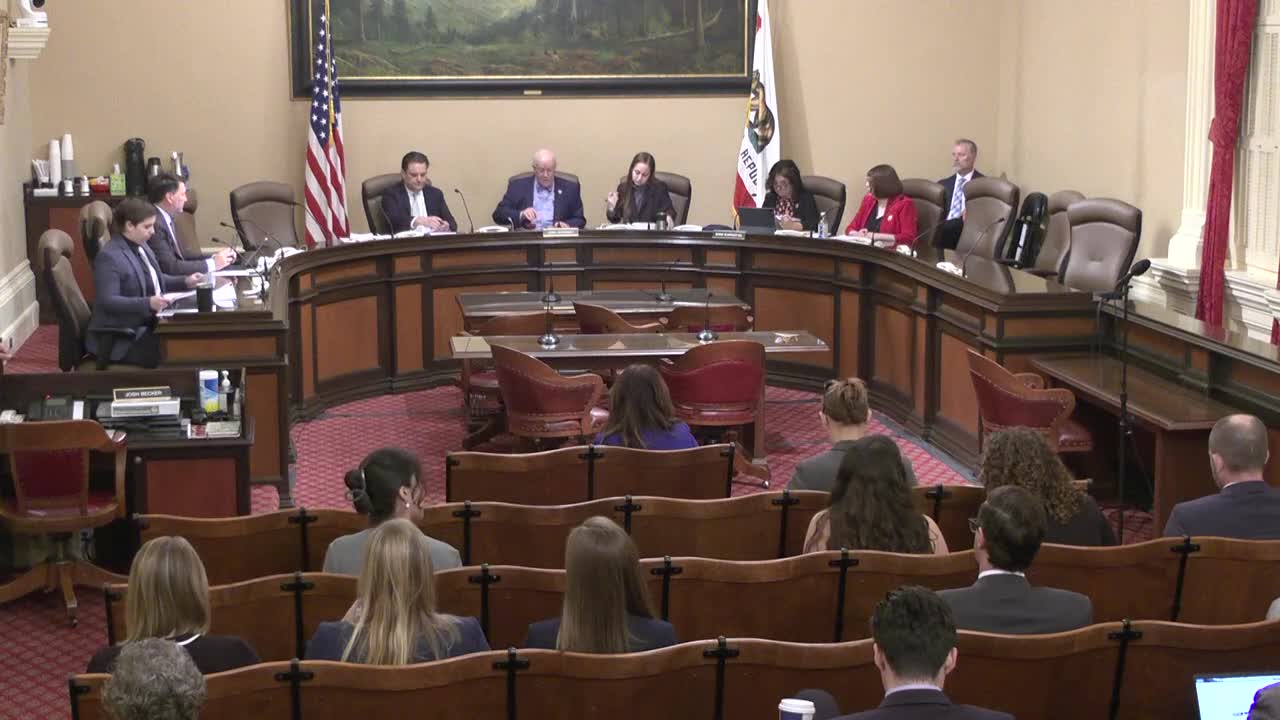
Discussed in Hearing
 9MIN