SB 1099: State and local public benefits.
- Session Year: 2025-2026
- House: Senate
- Latest Version Date: 2026-09-30
Current Status:
Passed
(2026-09-30: Chaptered by Secretary of State. Chapter 1009, Statutes of 2026.)
Introduced
In Committee
Awaiting First Chamber Vote
Passed First Chamber
In Committee
Awaiting Second Chamber Vote
Passed Second Chamber
Enacted
What does this bill do?
This bill clarifies that cities, counties, and hospital districts may, at their own option, provide state or local public benefits — including health care — to residents who would otherwise be ineligible under the federal PRWORA law. It also defines “state or local public benefit” to match the federal PRWORA Section 411 definition (programs such as welfare, health care, housing, and food assistance).
The summary is provided by generative AI which can make mistakes. For original language, please view the details in the table below.
Existing law establishes various public social services programs to provide eligible recipients with certain aid or health care benefits, among others. Existing law also requires each county to provide aid to its indigent residents who are not supported by other means under programs known as general assistance programs.
Existing federal law, the Personal Responsibility and Work Opportunity Reconciliation Act of 1996 (PRWORA), makes specified persons without lawful status in the United States ineligible for state and local public benefits unless a state law is enacted that affirmatively provides for that eligibility, and defines state or local public benefit to mean, among other things, any retirement, welfare, health, disability, public or assisted housing, postsecondary education, food assistance, unemployment benefit, or any other similar benefit for which payments or assistance are provided to an individual, household, or family eligibility unit by an agency of a state or local government or by appropriated funds of a state or local government. Existing state law authorizes a city, county, city and county, or hospital district, at its discretion, to provide aid, including health care, to persons who, but for the previously described provision of the federal PRWORA, would meet the eligibility requirements for any program of that entity.
This bill would clarify that the above-described authorization for provision of aid is an authorization to provide a state or local public benefit, as defined by the federal PRWORA.
(a)It is the intent of the Legislature in enacting this part to affirm the ability of counties, cities, and hospital districts to provide a state or local public benefit, including health care and other services, to all residents, if any of these entities has decided to do so at its own discretion.
(b)For purposes of this part, state or local public benefit has the same meaning as that term as defined in Section 411 of the federal Personal Responsibility and Work Opportunity Reconciliation Act of 1996 (P.L. 104-193; 8 U.S.C. Sec. 1621) or any successor provision.
SEC. 2.Section 17851 of the Welfare and Institutions Code is amended to read:17851.A city, county, city and county, or hospital district may, at its discretion, provide a state or local public benefit, including health care and other services, to persons who, but for Section 411 of the federal Personal Responsibility and Work Opportunity Reconciliation Act of 1996 (P.L. 104-193; 8 U.S.C. Sec. 1621), would meet eligibility requirements for the state or local public benefit.
(a)It is the intent of the Legislature in enacting this part to affirm the ability of counties, cities, and hospital districts to provide a state or local public benefit, including health care and other services services, to all residents, if any of these entities has decided to do so at its own discretion.
(b)For purposes of this part, state or local public benefit has the same meaning as that term as defined in Section 411 of the federal Personal Responsibility and Work Opportunity Reconciliation Act of 1996 (P.L. 104-193; 8 U.S.C. Sec. 1621) or any successor provision.
SEC. 2.Section 17851 of the Welfare and Institutions Code is amended to read:17851.A city, county, city and county, or hospital district may, at its discretion, provide aid, a state or local public benefit, including health care, care and other services, to persons who, but for Section 411 of the federal Personal Responsibility and Work Opportunity Reconciliation Act of 1996 (P.L. 104-193; 8 U.S.C. Sec. 1621), would meet eligibility requirements for any program of that entity. the state or local public benefit.
|
Date
|
Status
|
|---|---|
| Sep 30, 2026 | Chaptered by Secretary of State. Chapter 1009, Statutes of 2026. |
| Sep 30, 2026 | Approved by the Governor. |
| Aug 28, 2026 | Enrolled and presented to the Governor at 11 a.m. |
| Aug 24, 2026 | In Senate. Ordered to engrossing and enrolling. |
| Aug 24, 2026 | Read third time. Passed. (Ayes 63. Noes 4. Page 6371.) Ordered to the Senate. |
| Aug 24, 2026 | Read third time. Passed. Ordered to the Senate. |
| Jul 2, 2026 | Read second time. Ordered to third reading. |
| Jul 1, 2026 | From committee: Do pass. (Ayes 5. Noes 1.) (June 30). |
| Jun 10, 2026 | From committee: Do pass and re-refer to Com. on HUM. S. (Ayes 12. Noes 1.) (June 9). Re-referred to Com. on HUM. S. |
| May 18, 2026 | Referred to Coms. on HEALTH and HUM. S. |
| May 4, 2026 | In Assembly. Read first time. Held at Desk. |
| May 4, 2026 | Read third time. Passed. (Ayes 40. Noes 0. Page 4131.) Ordered to the Assembly. |
| May 4, 2026 | Read third time. Passed. (Ayes 40. Noes 0.) Ordered to the Assembly. |
| Apr 22, 2026 | Read second time. Ordered to third reading. |
| Apr 21, 2026 | From committee: Do pass. (Ayes 3. Noes 0.) (April 20). |
| Apr 21, 2026 | From committee: Do pass. (Ayes 3. Noes 0. Page 3955.) (April 20). |
| Apr 9, 2026 | Set for hearing April 20. |
| Mar 26, 2026 | From committee: Do pass and re-refer to Com. on HUMAN S. (Ayes 11. Noes 0.) (March 25). Re-referred to Com. on HUMAN S. |
| Mar 26, 2026 | From committee: Do pass and re-refer to Com. on HUMAN S. (Ayes 11. Noes 0. Page 3690.) (March 25). Re-referred to Com. on HUMAN S. |
| Mar 9, 2026 | Set for hearing March 25. |
| Feb 26, 2026 | Referred to Coms. on HEALTH and HUMAN S. |
| Feb 17, 2026 | From printer. May be acted upon on or after March 16. |
| Feb 13, 2026 | Introduced. Read first time. To Com. on RLS. for assignment. To print. |
|
Date
|
Description
|
Location
|
Votes
|
|
|---|---|---|---|---|
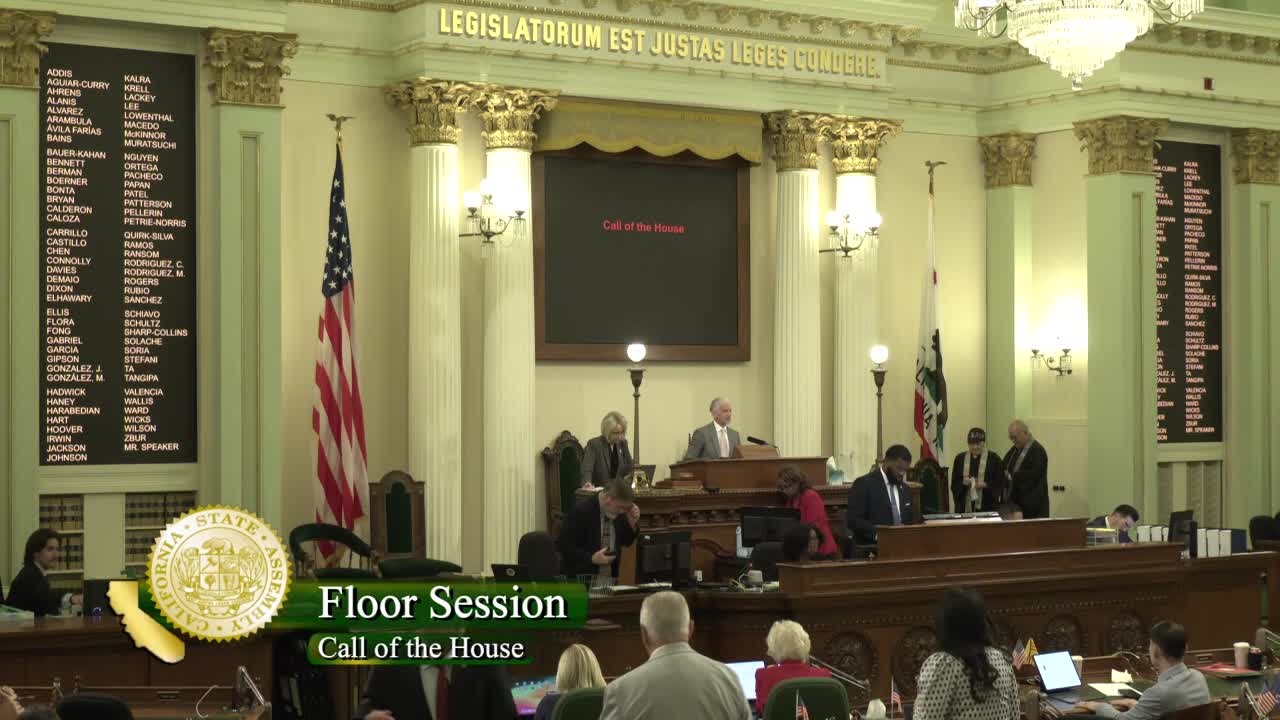
| Aug 24, 2026 | SB 1099 Reyes Senate Third Reading By Harabedian | Assembly Floor |
Passed |
|
| Jun 30, 2026 | Do pass. | Assembly Standing Committee on Human Services |
Passed |
|
| Jun 9, 2026 | Do pass and be re-referred to the Committee on [Human Services] | Assembly Standing Committee on Health |
Passed |
|
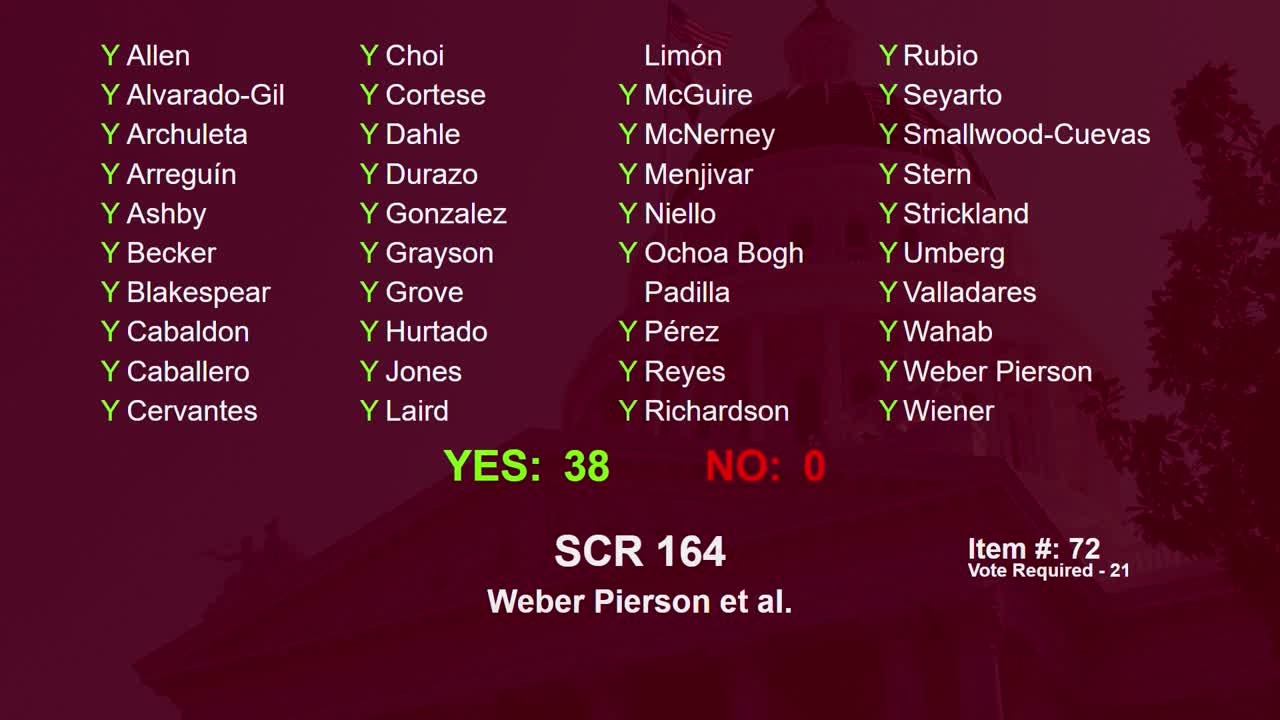
| May 4, 2026 | Senate 3rd Reading SB1099 Reyes | Senate Floor |
Passed |
|
| Apr 20, 2026 | Do pass | Senate Standing Committee on Human Services |
Passed |
|
| Mar 25, 2026 | Do pass, but first be re-referred to the Committee on [Human Services] | Senate Standing Committee on Health |
Passed |
This list shows positions taken on this bill by organizations on the date displayed, which is linked to the original source.
Positions by individuals are not included.
|
Organization
|
Position
|
Date
|
|---|---|---|
| California Primary Care Association | ** Support | |
| City and County of San Francisco | ** Support | |
| Civil Prosecutors Coalition | ** Support | |
| Civil Prosecutors Coalition (Sponsor) | ** Support | |
| County of Santa Clara | ** Support | |
| CPCA Advocates, Subsidiary of The California Primary Care Association | ** Support | |
| David Chiu, San Francisco City Attorney | ** Support | |
| Los Angeles LGBT Center | ** Support | |
| San Diego City Attorney's Office | ** Support | |
| San Diego City Attorney, Heather Ferbert | ** Support |
SENATE THIRD READING
STR Bill Id:SB 1099
Author:(Reyes)
As Introduced Ver:February 13, 2026
Majority vote
SUMMARY
Clarifies the ability of local governments to provide "state or local public benefits" at their discretion, for purposes of compliance with federal law.
Major Provisions
COMMENTS
The federal Personal Responsibility and Work Opportunity Reconciliation Act (PRWORA) was a major bipartisan "welfare reform" law enacted in 1996 that made dramatic changes to federal cash and child care assistance programs. It also tightened eligibility for public benefits generally. Specifically, PRWORA restricts a "federal public benefit" from being provided to immigrants who are not deemed "qualified" under federal law. In 1998, the U.S. Department of Health and Human Services (HHS) identified a list of health and social programs considered to be "federal public benefits" that are not accessible by non-qualified immigrants, including Medicaid, Medicare, Foster Care, Temporary Assistance for Needy Families (TANF), and others.
PRWORA also prohibits a state or locality from providing a "state or local public benefit" to non-qualified immigrants, unless the state affirmatively provides for such eligibility after the passage of PRWORA. California passed SB 1534 (Ortiz), Chapter 801, Statutes of 2006, to explicitly provide for such eligibility (this is informally called the "PRWORA exemption").
On July 10, 2025, HHS released guidance that reinterprets what constitutes a "federal public benefit" under PRWORA. The new interpretation newly barred a number of additional federally funded programs from providing services to nonqualified immigrants. For instance, HHS added federally qualified health centers to the list of programs considered to be a "federal public benefit" under PRWORA. However, this interpretation is currently enjoined in California and other states that sued to challenge this interpretation.
Given these recent actions and the federal government's active pursuit of policies to eliminate services to non-qualified immigrants and to deter them from seeking health care or otherwise participating in society, some California city and county attorneys have raised questions about whether California's PRWORA exemption should be further clarified to ensure California's localities stay in compliance with PRWORA when they provide basic services to these immigrants. Critically, in addition to providing services to immigrants, many programs simply do not screen for immigration status. The city and county attorneys want to ensure that no future reinterpretation of PRWORA would force programs to begin screening for immigration status, because implementing such screening would be costly and administratively burdensome. Finally, localities are motivated to seek this clarity because federal cutbacks and recent state budget actions to reduce Medi-Cal services for non-qualified immigrants are likely to increase the demand for health services provided by local governments.
According to the Author
Historically, California has relied on a statutory exemption under federal PRWORA that allows local governments, at their discretion, to provide state and local public benefits to all residents. Unfortunately, the author states, California statute that provides this PRWORA exemption is too vague and is not directly tied to how "local and state public benefits" are defined at the federal level. This is an issue because the federal definition can be, and has been, subject to regulatory interpretation. If the federal definition of public benefit is expanded and California's statute does not reflect that change, then it puts our local governments at risk of being out of compliance with federal law. According to the author, this bill addresses the issues by tying the existing exemption in state law to the PRWORA definition of "state or local public benefit." In doing so, it ensures that local governments have the certainty they need to continue providing critical services that protect community health, safety, and economic stability, while remaining in compliance with federal law.
Arguments in Support
According to the Civil Prosecutors Coalition, this bill's sponsor, the federal definition of state and local public benefits is complex, and the existing California statutes do not precisely mirror the federal terminology. Furthermore, the federal definition is subject to interpretation by federal agencies. These factors can create ambiguity about the scope of California's PRWORA exemption. The sponsor notes uncertainty about California's existing exemption from PRWORA, particularly at a time of heightened focus on immigration compliance, may create confusion and deter local governments from continuing to provide critical services that protect community health, safety, and economic stability. Moreover, this lack of clarity could impact services for all community members because many programs would be operationally unable to screen for immigration status.
Arguments in Opposition
None.
FISCAL COMMENTS
None.
VOTES
SENATE FLOOR: 40-0-0
YES: Allen, Alvarado-Gil, Archuleta, Arreguín, Ashby, Becker, Blakespear, Cabaldon, Caballero, Cervantes, Choi, Cortese, Dahle, Durazo, Gonzalez, Grayson, Grove, Hurtado, Jones, Laird, Limón, McGuire, McNerney, Menjivar, Niello, Ochoa Bogh, Padilla, Pérez, Reyes, Richardson, Rubio, Seyarto, Smallwood-Cuevas, Stern, Strickland, Umberg, Valladares, Wahab, Weber Pierson, Wiener
ASM HEALTH: 12-1-3
YES: Bonta, Chen, Addis, Aguiar-Curry, Ahrens, Caloza, Carrillo, Elhawary, Patel, Celeste Rodriguez, Sharp-Collins, Stefani
NO: Sanchez
ABS, ABST OR NV: Johnson, Patterson, Schiavo
ASM HUMAN SERVICES: 5-1-1
YES: Lee, Calderon, Elhawary, Jackson, Celeste Rodriguez
NO: Sanchez
ABS, ABST OR NV: Tangipa
UPDATED
VERSION: February 13, 2026
CONSULTANT: Lisa Murawski / HEALTH / (916) 319-2097 FN: 0003284
Date of Hearing: June 30, 2026
ASSEMBLY COMMITTEE ON HUMAN SERVICES
Alex Lee, Chair
SBPCA Bill Id:SB 1099
Author:(Reyes) – As Introduced Ver:February 13, 2026
SENATE VOTE: 40-0
SUBJECT: State and local public benefits
SUMMARY: Clarifies the ability of local governments to provide “state or local public benefits” at their discretion, for purposes of compliance with federal law. Specifically, this bill:
- Defines “state or local public benefit” as the same meaning as it is defined in the federal Personal Responsibility and Work Opportunity Reconciliation Act (PRWORA) of 1996, for purposes of state law that affirms the ability of counties, cities, and hospital districts to provide such benefits at their discretion.
- Clarifies the ability of local governments to provide state or local public benefits at their discretion and makes conforming changes to legislative intent.
EXISTING LAW:
State law:
- States the intent of the Legislature to affirm the ability of counties, cities, and hospital districts to provide health care and other services to all residents, if any of these entities decides to do so at its own discretion. (Welfare and Institutions Code [WIC] § 17850)
- Authorizes a city, county, city and county, or hospital district, at its discretion, to provide aid, including health care, to persons who, but for PRWORA, would meet eligibility requirements for the program of that entity. (WIC § 17851)
Federal law:
- Prohibits, under PRWORA, individuals without a qualified immigration status, as specified, from being eligible for any state or local public benefits, except for assistance for health care items and services that are necessary for the treatment of an emergency medical condition; short-term, non-cash, in-kind emergency disaster relief; public health assistance for immunizations; public health assistance for testing and treatment of symptoms of communicable disease; and other community in-kind services specified by the Attorney General. [8 United States Code [U.S.C.] § 1621]
- Defines state and local public benefits, as:
- Any grant, contract, loan, professional license, or commercial license provided by an agency of a state or local government or by appropriated funds of a state or local government; and,
- Any retirement, welfare, health, disability, public or assisted housing, postsecondary education, food assistance, unemployment benefit, or any other similar benefit for which payments or assistance are provided to an individual, household, or family eligibility unit by an agency of a state or local government or by appropriated funds of a state or local government. (8 U.S.C. § 1621(c)(1))
- Allows a state to permit a local entity to provide an immigrant who is not lawfully present in the United States any state or local public benefit, for which such person would otherwise be ineligible, through the enactment of a state law after August 22, 1996. (8 U.S.C. § 1621(d))
FISCAL EFFECT: This bill was keyed non-fiscal by the Legislative Counsel.
COMMENTS:
Background: Personal Responsibility and Work Opportunity Reconciliation Act of 1996 was a major reform of the Aid to Families with Dependent Children welfare program that shifted public assistance from a long-term entitlement into a more work-focused, time-limited system and significantly restricted many public benefits for non-citizens. PRWORA restricts benefits from immigrants who are undocumented or do not have a qualifying citizenship status. In 1998, the U.S. Department of Health and Human Services (HHS) identified a list of health and social programs considered to be federal public benefits which non-qualified immigrants, as determined by federal law, can access. These non-accessible benefits include Foster Care, Temporary Assistance for Needy Families, Supplemental Nutrition Assistance Program, Medicare, and Medicaid.
PRWORA also prohibits a state or locality from providing a “state or local public benefit” to non-qualified immigrants, unless the state affirmatively provides for such eligibility after the passage of PRWORA. California did so through SB 1534 (Ortiz), Chapter 801, Statutes of 2006, to explicitly provide for such an exemption.
Updated Federal Orders and Guidance. On February 19, 2025, President Donald Trump signed Executive Order 14218 “to prevent taxpayer resources from acting as a magnet and fueling illegal immigration to the United States, and to ensure, to the maximum extent permitted by law, that no taxpayer-funded benefits go to unqualified aliens.”[1] The Executive Order further instructed “identify all federally funded programs administered by the agency that currently permit illegal aliens to obtain any cash or non-cash public benefit, and, consistent with applicable law, take all appropriate actions to align such programs with the purposes of this order…”
As such, on July 10, 2025, HHS released guidance that reinterprets what constitutes a “federal public benefit” under PRWORA. The new interpretation has newly barred a number of additional federally funded programs from providing services to nonqualified immigrants. These programs now include: Head Start, the Kinship Guardianship Assistance Program, the Child Care and Development Block Grant, and many other programs supporting children, people experiencing homelessness, people with behavioral health disorders, and foster youth.
On July 21, 2025, the Attorneys General of 23 states, including California, filed a lawsuit and were granted a preliminary injunction to pause the enforcement of the new rules.
Some California city and county attorneys have questioned whether California’s exemption should be clarified further to ensure local governments remain compliant with PRWORA when providing basic services to these populations. They are also concerned that, while some state and local programs expressly serve non-qualified noncitizens, many programs do not currently verify immigration status. The attorneys seek assurance that future interpretations of PRWORA will not require such programs to begin screening for immigration status, as doing so would impose significant administrative and financial burdens.
Author’s Statement: According to the Author, “Historically, California has relied on a statutory exemption under the federal Personal Responsibility and Work Opportunity Reconciliation Act of 1996 (PRWORA) that allows local governments, at their discretion, to provide state and local public benefits to all residents. Unfortunately, the California statute that provides this PRWORA exemption is too vague and is not directly tied to how “local and state public benefits” are defined at the federal level. This is an issue because the federal definition can be, and has been, subject to regulatory interpretation. If the federal definition of public benefit is expanded and California’s statute does not reflect that change, then it puts our local governments at risk of being out of compliance with federal law.
“[This bill] addresses this issue by tying the existing exemption in state law to the PRWORA definition of “state or local public benefit.” In doing so, it ensures that local governments have the certainty they need to continue providing critical services that protect community health, safety, and economic stability.”
Equity Implications: Denying immigrants access to public benefits can lead to unmet health and social needs, increased reliance on emergency and locally funded services, heightened public health risks, and greater fiscal and administrative burdens on local governments. These effects may be particularly pronounced when federal and state benefit reductions shift demand for essential services to counties, cities, and other local providers. This bill may help ensure immigrants still have access to social benefits.
Double referral: This bill was previously heard in the Assembly Committee on Health on June 9, 2026, and was approved on a 12 to 1 vote.
RELATED AND PRIOR LEGISLATION:
SB 1534 (Ortiz) Chapter 801, Statutes of 2006, permitted cities, counties, city and counties, and hospital districts to provide healthcare and other services for residents who, except for citizenship restrictions in the PRWORA, would meet eligibility requirements for the services.
Arguments in Support: The California Primary Care Association, “[This bill] addresses a critical, technical gap in California law. The existing state statute authorizing local governments to provide benefits to all residents — regardless of immigration status — is too vague and is not expressly tied to the federal PRWORA definition of “state or local public benefit.” This ambiguity creates legal uncertainty that could deter local governments from continuing to offer health care, safety-net services, and other essential programs to all community members. By expressly aligning state law with the federal definition, SB 1099 provides clarity and legal protection for local governments to continue providing these vital services without fear of federal non-compliance. This bill does not require any local government to expand or alter its current eligibility rules — it simply affirms the authority they already have. The patients served by our community health centers depend on local safety-net programs as part of a broader continuum of care. Legal uncertainty that causes counties or cities to scale back these programs would have a direct and harmful impact on the health and well-being of the communities we serve.”
Arguments in Opposition: None on file.
REGISTERED SUPPORT / OPPOSITION:
Support
Civil Prosecutors Coalition (Co-Sponsor)
County of Santa Clara (Co-Sponsor)
CPCA Advocates, Subsidiary of the California Primary Care Association
Los Angeles LGBT Center
Opposition
None on file.
Analysis Prepared by: Alexandria Smith / HUM. S. / (916) 319-2089
https://www.federalregister.gov/documents/2025/02/25/2025-03137/ending-taxpayer-subsidization-of-open-borders ↑
Date of Hearing: June 9, 2026
ASSEMBLY COMMITTEE ON HEALTH
Mia Bonta, Chair
SBPCA Bill Id:SB 1099
Author:(Reyes) – As Introduced Ver:February 13, 2026
SENATE VOTE: 40-0
SUBJECT: State and local public benefits.
SUMMARY: Clarifies the ability of local governments to provide “state or local public benefits” at their discretion, for purposes of compliance with federal law. Specifically, this bill:
- Defines “state or local public benefit” as the term is defined in the federal Personal Responsibility and Work Opportunity Reconciliation Act (PRWORA) of 1996, for purposes of state law that affirms the ability of counties, cities, and hospital districts to provide such benefits at their discretion.
- Clarifies the ability of local governments to provide benefits at their discretion and makes conforming changes to legislative intent.
EXISTING FEDERAL LAW:
- Prohibits, under PRWORA, individuals without a qualified immigration status, as specified, from being eligible for any state or local public benefits, except for assistance for health care items and services that are necessary for the treatment of an emergency medical condition; short-term, non-cash, in-kind emergency disaster relief; public health assistance for immunizations; public health assistance for testing and treatment of symptoms of communicable disease; and other community in-kind services specified by the Attorney General. [8 United States Code § 1621]
- Defines a “state or local public benefit,” with specified exceptions:
- Any grant, contract, loan, professional license, or commercial license provided by an agency of a state or local government or by appropriated funds of a state or local government; and,
- Any retirement, welfare, health, disability, public or assisted housing, postsecondary education, food assistance, unemployment benefit, or any other similar benefit for which payments or assistance are provided to an individual, household, or family eligibility unit by an agency of a state or local government or by appropriated funds of a state or local government. [Ibid.]
- Authorizes states to provide eligibility for state and local public benefits to immigrants without qualified immigration status only upon the enactment of a statute after August 22, 1996, which affirmatively provides for such eligibility. [Ibid.]
EXISTING STATE LAW:
- States the intent of the Legislature to affirm the ability of counties, cities, and hospital districts to provide health care and other services to all residents, if any of these entities decides to do so at its own discretion. [Welfare and Institutions Code (WIC) § 17850]
- Authorizes a city, county, city and county, or hospital district, at its discretion, to provide aid, including health care, to persons who, but for PRWORA, would meet eligibility requirements for the program of that entity. [WIC § 17851]
FISCAL EFFECT: None. This bill is currently keyed non-fiscal.
COMMENTS:
- PURPOSE OF THIS BILL. According to the author, historically, California has relied on a statutory exemption under federal PRWORA that allows local governments, at their discretion, to provide state and local public benefits to all residents. Unfortunately, the author states, California statute that provides this PRWORA exemption is too vague and is not directly tied to how “local and state public benefits” are defined at the federal level. This is an issue because the federal definition can be, and has been, subject to regulatory interpretation. If the federal definition of public benefit is expanded and California’s statute does not reflect that change, then it puts our local governments at risk of being out of compliance with federal law. According to the author, this bill addresses the issues by tying the existing exemption in state law to the PRWORA definition of “state or local public benefit.” In doing so, it ensures that local governments have the certainty they need to continue providing critical services that protect community health, safety, and economic stability.
- BACKGROUND. PRWORA was a major bipartisan “welfare reform” law enacted in 1996 that made dramatic changes to federal cash and child care assistance programs. It also tightened eligibility for public benefits generally. Specifically, PRWORA restricts a “federal public benefit” from being provided to immigrants who are not deemed "qualified” under federal law. In 1998, the U.S. Department of Health and Human Services (HHS) identified a list of health and social programs considered to be “federal public benefits” that are not accessible by non-qualified immigrants, including Medicaid, Medicare, Foster Care, Temporary Assistance for Needy Families (TANF), and others.
PRWORA also prohibits a state or locality from providing a “state or local public benefit” to non-qualified immigrants, unless the state affirmatively provides for such eligibility after the passage of PRWORA. California passed SB 1534 (Ortiz), Chapter 801, Statutes of 2006, to explicitly provide for such an exemption.
On July 10, 2025, HHS released guidance that reinterprets what constitutes a “federal public benefit” under PRWORA. The new interpretation newly barred a number of additional federally funded programs from providing services to nonqualified immigrants. For instance, HHS added federally qualified health centers (FQHCs) to the list of programs considered to be a “federal public benefit” under PRWORA. However, this interpretation is currently enjoined in California and other states that sued to challenge this interpretation.
Given these recent actions and the federal government’s active pursuit of policies to eliminate services to non-qualified immigrants and to deter them from seeking health care or otherwise participating in society, some California city and county attorneys have raised questions about whether California’s exemption should be further clarified to ensure California’s localities stay in compliance with PRWORA when they provide basic services to these immigrants. Additionally, although some state and local public programs explicitly provide services to non-qualified noncitizens, many programs simply do not screen for immigration status. The city and county attorneys want to ensure that no future reinterpretation of PRWORA would force programs to begin screening for immigration status, because implementing such screening would be costly and administratively burdensome. Finally, localities are motivated to seek this clarity because federal cutbacks and recent state budget actions to reduce Medi-Cal services for non-qualified immigrants are likely to increase the demand for health services provided by local governments.
- SUPPORT. According to the Civil Prosecutors Coalition, this bill’s sponsor, the federal definition of state and local public benefits is complex, and the existing California statutes do not precisely mirror the federal terminology. Furthermore, the federal definition is subject to interpretation by federal agencies. These factors can create ambiguity about the scope of California’s PRWORA exemption. The sponsor notes uncertainty about California’s existing exemption from PRWORA, particularly at a time of heightened focus on immigration compliance, may create confusion and deter local governments from continuing to provide critical services that protect community health, safety, and economic stability. Moreover, this lack of clarity could impact services for all community members because many programs would be operationally unable to screen for immigration status.
- PREVIOUS LEGISLATION. SB 1534 (Ortiz), Chapter 801, Statutes of 2006 authorizes a city, county, city and county, or hospital district to, at its discretion, provide aid, including health care, to persons who, but for provisions of PRWORA, would meet eligibility requirements for any program of that entity.
- DOUBLE REFERRAL. This bill is double referred; upon passage of this committee, it will be referred to the Assembly Committee on Human Services.
REGISTERED SUPPORT / OPPOSITION:
Support
Civil Prosecutors Coalition (sponsor)
County of Santa Clara (sponsor)
City and County of San Francisco
CPCA Advocates, Subsidiary of the California Primary Care Association
David Chiu, San Francisco City Attorney
Los Angeles LGBT Center
San Diego City Attorney's Office
Opposition
None on file
Analysis Prepared by: Lisa Murawski / HEALTH / (916) 319-2097
SENATE RULES COMMITTEE Office of Senate Floor Analyses (916) 651-4171 | SB 1099 |
THIRD READING
Bill No: SB 1099
Author: Reyes (D)
Introduced: 2/13/26
Vote: 21
SENATE HEALTH COMMITTEE: 11-0, 3/25/26
AYES: Weber Pierson, Valladares, Caballero, Durazo, Gonzalez, Grove, Menjivar, Padilla, Pérez, Rubio, Smallwood-Cuevas
SENATE HUMAN SERVICES COMMITTEE: 3-0, 4/20/26
AYES: Becker, Laird, Weber Pierson
NO VOTE RECORDED: Niello, Pérez
SUBJECT: State and local public benefits
SOURCE: Civil Prosecutors Coalition
DIGEST:
This bill aligns terminology in state statute that permits local entities to provide benefits for immigrants ineligible for those benefits under federal law with the federal statute that requires a state to expressly authorize such eligibility.
ANALYSIS:
Existing federal law:
- Prohibits, under the Personal Responsibility and Work Opportunity Reconciliation Act of 1996 (PRWORA), individuals without a qualified immigration status, as defined, from being eligible for any state or local public benefits, except for assistance for health care items and services that are necessary for the treatment of an emergency medical condition, short-term, non-cash, in-kind emergency disaster relief, public health assistance for immunizations, public health assistance for testing and treatment of symptoms of communicable disease, and other community in-kind services specified by the Attorney General. [8 United States Code (USC) §1621]
- Defines “state or local public benefit” as a grant, contract, loan, professional or commercial license, or a retirement, welfare, health, disability, public or assisted housing, postsecondary education, food assistance, unemployment or other similar benefit, unless the individual or benefit meets a specified exception. [8 USC §1621]
- Authorizes states to provide eligibility for state and local public benefits to immigrants without qualified immigration status only upon the enactment of a statute after August 22, 1996, which affirmatively provides for such eligibility. [8 USC §1621]
Existing state law:
- States the intent of the Legislature to affirm the ability of counties, cities, and hospital districts to provide health care and other services to all residents, if any of these entities decides to do so at its own discretion. [Welfare and Institutions Code (WIC) §17850]
- Authorizes a city, county, city and county, or hospital district, at its discretion, to provide aid, including health care, to persons who, but for the federal law restricting immigrant access to public benefits, would meet eligibility requirements for the program of that entity. [WIC §17851]
This bill aligns terminology in state statute that permits local entities to provide benefits for immigrants ineligible for those benefits under federal law with the federal statute that requires a state to expressly authorize such eligibility.
Comments
According to the author of this bill:
Historically, California has relied on a statutory exemption under PRWORA that allows local governments, at their discretion, to provide state and local public benefits to all residents. Unfortunately, the California statute that provides this PRWORA exemption is too vague and is not directly tied to how “local and state public benefits” are defined at the federal level. This is an issue because the federal definition can be, and has been, subject to regulatory interpretation. If the federal definition of public benefit is expanded and California’s statute does not reflect that change, then it puts our local governments at risk of being out of compliance with federal law. This bill addresses this issue by tying the existing exemption in state law to the PRWORA definition of “state or local public benefit.” In doing so, it ensures that local governments have the certainty they need to continue providing critical services that protect community health, safety, and economic stability.
Background
PRWORA. In 1996, Congress passed and President Clinton signed PRWORA (also known as “welfare reform”) into law to tighten eligibility for federal public benefits including Medicaid (Medi-Cal in California), Temporary Assistance for Needy Families (TANF or CalWORKs in California) and the Supplemental Nutrition Assistance Program (SNAP or CalFresh in California) and give states greater control over their administration. One way PRWORA reduced eligibility for federal public benefits was by restricting which lawfully present immigrants could access those programs either due to their specific immigration category or due to the length of time they had resided in the U.S. PRWORA not only applied to federal public benefits, but it also prohibited state and local entities from including immigrants without a qualified immigration status in their state and local programs unless the states enacted specific legislation after the passage of PWRORA authorizing such eligibility.
Recent reductions of services to immigrants. This past July, the U.S. Department of Health and Human Services (HHS) announced that it had rescinded a 1998 rule interpreting PRWORA defining which federal public benefits could exclude individuals for reasons of immigration status. The new policy reinterpreted what programs qualify as an HHS program benefit that could not be provided to individuals without a qualified immigration status, adding 13 new programs. The prohibited health programs added were certified community behavioral health clinics, health center programs, programs funded through community mental health services block grants, mental health and substance use programs administered by the Substance Abuse and Mental Health Services Administration, and Title X family planning programs. In the meantime, the California Attorney General, along with 19 other state attorneys general, sued the Trump Administration on the decision to restrict access to these programs and obtained a stay in the implementation of the policy. While federal, rather than state and local public benefits, are the topic of this controversy, reinterpretation of PRWORA has understandably caused concern among providers of any public benefits.
Also in July, Congress passed and President Trump signed H.R. 1, a vast budget reconciliation bill, into law. H.R. 1 restricted access to and funding for SNAP and Medicaid. It also cut federal funding for these programs for additional groups of immigrants who are lawfully present, including refugees, asylees, victims of trafficking and others under humanitarian immigration statuses. Similarly, health insurance exchanges, such as Covered California, can no longer give federal subsidies to these same groups of immigrants, putting commercial insurance out of reach. Finally, to address state budget concerns, California also reduced access to Medi-Cal for certain groups of immigrants who are not qualified for federal benefits by enacting a freeze on enrollment, reducing dental benefits, and will soon be charging premiums. Given this vast reduction in the availability of public benefits, local entities may be looking to fill in some of the gaps with their own programs to affected populations.
FISCAL EFFECT: Appropriation: No Fiscal Com.: No Local: No
SUPPORT: (Verified 4/21/2026)
Civil Prosecutors Coalition (source)
California Primary Care Association
City and County of San Francisco
County of Santa Clara
Los Angeles LGBT Center
San Diego City Attorney, Heather Ferbert
San Francisco City Attorney, David Chiu
OPPOSITION: (Verified 4/21/2026)
Three individuals
ARGUMENTS IN SUPPORT: The source of this bill, the Civil Prosecutors Coalition, which includes many of the largest city attorney and county counsel offices in California, write that this bill would clarify the existing authority of local governments to provide state or local benefits to all residents at their discretion. Uncertainty about California's existing exemption from PRWORA, particularly at a time of heightened focus on immigration compliance, may create confusion and deter local governments from continuing to provide critical services that protect community health, safety, and economic stability. Moreover, they add, this lack of clarity could impact services for all community members because many programs would be operationally unable to screen for immigration status. For example, programs that help individuals experiencing homelessness obtain identification documents or access basic shelter cannot feasibly verify citizenship before providing assistance. Eliminating any uncertainty about California's PRWORA exemption would thus benefit the community overall.
ARGUMENTS IN OPPOSITION: Three individuals write in opposition not wanting any programs except emergency services to be provided to individuals who are undocumented.
Prepared by: Jen Flory / HEALTH / (916) 651-4111
4/22/26 16:11:12
**** END ****
SENATE COMMITTEE ON HUMAN SERVICES
Senator Becker, Chair
2025 - 2026 Regular
Bill No: | SB 1099 | ||
Author: | Reyes | ||
Version: | February 13, 2026 | Hearing Date: | April 20, 2026 |
Urgency: | No | Fiscal: | No |
Consultant: | Naima Ford Antal | ||
Subject: State and local public benefits
SUMMARY
This bill clarifies that local governments may provide state and local social service programs to all residents, regardless of immigration status, by adding and defining “state or local public benefit” to align with the federal definition to qualify for the exemption permitted in the Personal Responsibility and Work Opportunity Reconciliation Act of 1996.
ABSTRACT
Existing Law:
- Establishes the Personal Responsibility and Work Opportunity Reconciliation Act of 1996 which creates a grant program to increase the flexibility of states in operating a program designed to provide assistance to needy families so that children may be cared for in their own homes or in the homes of relatives; end the dependence of needy parents on government benefits by promoting job preparation, work, and marriage; prevent and reduce the incidence of out-of-wedlock pregnancies and establish annual numerical goals for preventing and reducing the incidence of these pregnancies; and encourage the formation and maintenance of two-parent families. ((42 United States Code [USC] 601 et seq.)
- Notwithstanding any other provision of law and except for certain emergency services, an undocumented person or immigrant who is not a qualified is not eligible for any federal public benefits. (8 USC 1611(a))
- Allows an immigrant who is not qualified for federal public benefits to receive federal public benefits that meet the following exceptions:
- Medical assistance for an emergency condition
- Short-term, non-cash, in-kind emergency disaster relief
- Immunizations and testing for communicable diseases
- Programs, services, or assistance specified by the Attorney General that do all of the following:
- Deliver in-kind services at the community level, including through public or private nonprofit agencies.
- Do not condition the provision of assistance, the amount of assistance provided, or the cost of assistance provided on the individual recipient’s income or resources.
- Are necessary for the protection of life or safety.
- Programs for housing or community development assistance or financial assistance (8 USC 1611(b))
- Defines “federal public benefit” to mean any grant, contract, loan, professional license, or commercial license provided by an agency of the United States or by appropriated funds of the United States and any retirement, welfare, health, disability, public or assisted housing, postsecondary education, food assistance, unemployment benefit, or any other similar benefit for which payments or assistance are provided to an individual, household, or family eligibility unit by an agency of the United States or by appropriated funds of the United States. (8 USC 1611(c))
- Defines a “state and local public benefit” to mean any grant, contract, loan, professional license, or commercial license provided by an agency of a State or local government or by appropriated funds of a State or local government; and any retirement, welfare, health, disability, public or assisted housing, postsecondary education, food assistance, unemployment benefit, or any other similar benefit for which payments or assistance are provided to an individual, household, or family eligibility unit by an agency of a State or local government or by appropriated funds of a State or local government. (8 USC 1621(c)(1))
- Allows a state to permit a local entity to provide an immigrant who is not lawfully present in the United States any state or local public benefit, for which such person would otherwise be ineligible, through the enactment of a state law after August 22, 1996. (8 USC 1621(d))
- States that it is the intent of the Legislature in enacting this part to affirm the ability of counties, cities, and hospital districts to provide health care and other services to all residents, if any of these entities has decided to do so at its own discretion. (Welfare and Institutions Code [WIC] 17850)
- Allows a city, county, city and county, or hospital district to, at its discretion, provide aid, including health care, to persons who, but for Section 411 of the federal Personal Responsibility and Work Opportunity Reconciliation Act of 1996 (P.L. 104-193; 8 U.S.C. Sec. 1621), would meet eligibility requirements for any program of that entity. (WIC 17851)
This Bill:
- States that it is the intent of the legislature to affirm the ability of counties, cities, and hospital districts to provide a state or local public benefit, including health care and other services, to all residents if the entity has decided to do so.
- Defines “state or local public benefit” to have the same meaning as in Section 411 of the federal Personal Responsibility and Work Opportunity Reconciliation Act of 1996 (P.L. 104-193; 8 USC Sec. 1621) or any successor provision.
- Clarifies that a city, county, city and county, or hospital district may, at its discretion provide a state or local public benefit to people who, except for the restrictions in Section 411 of the federal Personal Responsibility and Work Opportunity Reconciliation Act of 1996, would meet the eligibility requirements for the state or local public benefit.
FISCAL IMPACT
This bill has been keyed non-fiscal by Legislative Counsel.
BACKGROUND AND DISCUSSION
Purpose of the Bill:
According to the author, “Historically, California has relied on a statutory exemption under the federal Personal Responsibility and Work Opportunity Reconciliation Act of 1996 (PRWORA) that allows local governments, at their discretion, to provide state and local public benefits to all residents. Unfortunately, the California statute that provides this PRWORA exemption is too vague and is not directly tied to how ‘local and state public benefits’ are defined at the federal level. This is an issue because the federal definition can be, and has been, subject to regulatory interpretation. If the federal definition of public benefit is expanded and California’s statute does not reflect that change, then it puts our local governments at risk of being out of compliance with federal law.
“SB 1099 addresses this issue by tying the existing exemption in state law to the PRWORA definition of ‘state or local public benefit.’ In doing so, it ensures that local governments have the certainty they need to continue providing critical services that protect community health, safety, and economic stability.”
Personal Responsibility and Work Opportunity Reconciliation Act of 1996 (PRWORA)
In 1996, the federal government changed the way social service benefits are provided through a major reform of the Aid to Families with Dependent Children welfare program. The reform bill was called the Personal Responsibility and Work Opportunity Reconciliation Act of 1996. The bill came in response to concerns that the number of families relying on welfare was growing too quickly due to an increase in single mothers. The program was renamed the Temporary Assistance to Needy Families (TANF) program and included major changes including being funded as a block grant to states with a capped amount instead of an entitlement guaranteed by the federal government.
The bill also codified benefit restrictions to unqualified immigrants, specifically those who are undocumented or do not have a qualifying citizenship status. The law states that unqualified immigrants cannot receive federal public benefits except for a limited number of exceptions. One exception allows unqualified immigrants to use programs, services, or assistance that, at the discretion of the Attorney General, (1) deliver in-kind services at the community level; (2) do not condition assistance, the amount of assistance, or the cost of assistance on the recipient's income; and (3) are necessary for the protection of life or safety. The Attorney General is also charged with creating regulations for citizen status verification and procedures to ensure compliance with the Personal Responsibility and Work Opportunity Reconciliation Act.
In 2001, the Attorney General issued Order No. 2353-2001 which most recently defined what federal public benefits unqualified immigrants could and could not receive. There were 41 federal benefit programs identified as restricted including state developmental disabilities councils, foster care, Medicare, Medicaid (except for emergency conditions), refugee cash assistance, and TANF. The services allowed for unqualified immigrants included federally funded short-term emergency shelters, disaster relief, soup kitchens, food banks and programs like child protection, adult protective services, medical, and public health services that are provided regardless of a person’s resources.[1]
The Personal Responsibility and Work Opportunity Reconciliation Act also states that unqualified immigrants can receive services funded by the state or local government if the state passes a law allowing local public entities to provide a “state or local public benefit” if they choose. California passed SB 1534 (Ortiz, Chapter 801, Statutes of 2006) allowing cities, counties, a city and county, and hospital districts to provide healthcare and other services to all residents, regardless of immigration status, if they choose. This allowed local governments and hospital districts to continue providing services like homelessness supportive services, crisis hotlines, and emergency medical care to all residents without verifying their immigration status.
This bill would update that statute to explicitly state that cities, counties, a city and county, and hospital districts can provide a “state or local public benefit” if they choose and clarify that “state or local public benefit” means the same as in the exception described in the Personal Responsibility and Work Opportunity Reconciliation Act.
Executive Order 14218
On February 19, 2025, the President signed Executive Order 14218, “Ending Taxpayer Subsidization of Open Borders.” The stated goal of the order was to ensure, “to the maximum extent permitted by law, that no taxpayer-funded benefits go to unqualified aliens.” It requires a formal review and update of the Personal Responsibility and Work Opportunity Reconciliation Act and the programs that are identified as federal public benefits. Specifically, all federal agencies needed to identify “all federally funded programs administered by the agency that currently permit illegal aliens to obtain any cash or non-cash public benefit.”[2]
This led to a revocation of the 2001 Attorney General Order and a new Order issued in 2025 which significantly narrowed the definition of what programs are considered necessary for “life and safety” saying that federal departments have interpreted that rule too loosely. The new order allows only the benefits exempted explicitly in the Personal Responsibility and Work Opportunity Reconciliation Act to be available for unqualified immigrants including services from police, fire, emergency medical services, emergency disaster relief, sanitation, and other similar services.
To comply with the new order from the Attorney General the United States Health and Human Services Agency issued a notice announcing the additional programs that will be considered federal public benefits under the Personal Responsibility and Work Opportunity Reconciliation Act, including Head Start, the Kinship Guardianship Assistance Program, the Child Care and Development Block Grant and many other programs supporting children, people experiencing homelessness, people with behavioral health disorders, and foster youth. On July 21st, 2025, the Attorneys General of 23 states, including California, filed a lawsuit and were granted a preliminary injunction to pause the enforcement of the new rules.
This bill updates state law to clarify that benefits offered at the local level do not need to change despite potential benefit changes at the federal level.
Related/Prior Legislation:
SB 1534 (Ortiz, Chapter 801, Statutes of 2006) permits cities, counties, city and counties, and hospital districts to provide healthcare and other services for residents who, except for citizenship restrictions in the Personal Responsibility and Work Opportunity Reconciliation Act, would meet eligibility requirements for the services.
COMMENTS
SB 1099 clarifies that services offered locally that fall under the Personal Responsibility and Work Opportunity Reconciliation Act “state and local benefit” definition can continue to operate as they are now despite potential changes happening at the federal level as a result of Executive Order 14218. The federal law created by the Personal Responsibility and Work Opportunity Reconciliation Act restricts the social service programs and services that immigrants receive from the federal government. However local governments are given the flexibility to provide locally funded services and programs in a way that best suits their communities. Many local governments and nonprofit organizations see benefit in offering homeless support services, emergency health care, emergency food assistance, and other services to all their residents without the additional administrative burden of checking their immigration status. This bill ensures that as the programs and services available to immigrants changes at the federal level, services remain the same at the local level while still being fully in compliance with federal law.
PRIOR VOTES
Senate Health Committee: | 11 - 0 |
POSITIONS
Support:
Civil Prosecutors Coalition (Sponsor)
County of Santa Clara (Co-Sponsor)
City and County of San Francisco
CPCA Advocates
David Chiu, San Francisco City Attorney
Oppose:
None Received
-- END --
aphsa.org/wp-content/uploads/2025/07/HHS-Program-Impacts-of-Expanded-PRWORA.pdf ↑
Exec. Order No. 14218, 90 FR 10581. Feb 19, 2025 https://www.federalregister.gov/d/2025-03137 ↑
SENATE COMMITTEE ON HEALTH
Senator Dr. Akilah Weber Pierson, Chair
BILL NO: SB 1099
AUTHOR: | Reyes | ||
VERSION: | February 13, 2026 | ||
HEARING DATE: | March 25, 2026 | ||
CONSULTANT: | Jen Flory | ||
SUBJECT: State and local public benefits.
SUMMARY:
Aligns terminology in state statute that permits local entities to provide benefits for immigrants ineligible for those benefits under federal law with the federal statute that requires a state to expressly authorize such eligibility.
Existing federal law:
- Prohibits, under the Personal Responsibility and Work Opportunity Reconciliation Act of 1996 (PRWORA), individuals without a qualified immigration status, as defined, from being eligible for any state or local public benefits, except for assistance for health care items and services that are necessary for the treatment of an emergency medical condition, short-term, non-cash, in-kind emergency disaster relief, public health assistance for immunizations, public health assistance for testing and treatment of symptoms of communicable disease, and other community in-kind services specified by the Attorney General. [8 USC §1621]
- Defines “state or local public benefit” as a grant, contract, loan, professional or commercial license, or a retirement, welfare, health, disability, public or assisted housing, postsecondary education, food assistance, unemployment or other similar benefit, unless the individual or benefit meets a specified exception. [8 USC §1621]
- Authorizes states to provide eligibility for state and local public benefits to immigrants without qualified immigration status only upon the enactment of a statute after August 22, 1996, which affirmatively provides for such eligibility. [8 USC §1621]
Existing state law:
- States the intent of the Legislature to affirm the ability of counties, cities, and hospital districts to provide health care and other services to all residents, if any of these entities decides to do so at its own discretion. [WIC §17850]
- Authorizes a city, county, city and county, or hospital district, at its discretion, to provide aid, including health care, to persons who, but for the federal law restricting immigrant access to public benefits, would meet eligibility requirements for the program of that entity. [WIC §17851]
This bill: Aligns terminology in state statute that permits local entities to provide benefits for immigrants ineligible for those benefits under federal law with the federal statute that requires a state to expressly authorize such eligibility.
FISCAL EFFECT:
This bill is keyed non-fiscal.
COMMENTS:
- Author’s statement. According to the author, historically, California has relied on a statutory exemption under PRWORA that allows local governments, at their discretion, to provide state and local public benefits to all residents. Unfortunately, the California statute that provides this PRWORA exemption is too vague and is not directly tied to how “local and state public benefits” are defined at the federal level. This is an issue because the federal definition can be, and has been, subject to regulatory interpretation. If the federal definition of public benefit is expanded and California’s statute does not reflect that change, then it puts our local governments at risk of being out of compliance with federal law. This bill addresses this issue by tying the existing exemption in state law to the PRWORA definition of “state or local public benefit.” In doing so, it ensures that local governments have the certainty they need to continue providing critical services that protect community health, safety, and economic stability.
- PRWORA. In 1996, Congress passed and President Clinton signed PRWORA (also known as “welfare reform”) into law to tighten eligibility for federal public benefits including Medicaid (Medi-Cal in California), Temporary Assistance for Needy Families (TANF or CalWORKs in California) and the Supplemental Nutrition Assistance Program (SNAP or CalFresh in California) and give states greater control over their administration. One way PRWORA reduced eligibility for federal public benefits was by restricting which lawfully present immigrants could access those programs either due to their specific immigration category or due to the length of time they had resided in the U.S. PRWORA not only applied to federal public benefits, but it also prohibited state and local entities from including immigrants without a qualified immigration status in their state and local programs unless the states enacted specific legislation after the passage of PWRORA authorizing such eligibility.
- Recent reductions of services to immigrants. This past July, the U.S. Department of Health and Human Services (HHS) announced that it had rescinded a 1998 rule interpreting PRWORA defining which federal public benefits could exclude individuals for reasons of immigration status. The new policy reinterpreted what programs qualify as an HHS program benefit that could not be provided to individuals without a qualified immigration status, adding 13 new programs. The prohibited health programs added were certified community behavioral health clinics, health center programs, programs funded through community mental health services block grants, mental health and substance use programs administered by the Substance Abuse and Mental Health Services Administration, and Title X family planning programs. In the meantime, the California Attorney General, along with 19 other state attorneys general, sued the Trump Administration on the decision to restrict access to these programs and obtained a stay in the implementation of the policy. While federal, rather than state and local public benefits, are the topic of this controversy, reinterpretation of PRWORA has understandably caused concern among providers of any public benefits.
Also in July, Congress passed and President Trump signed H.R. 1, a vast budget reconciliation bill, into law. H.R. 1 restricted access to and funding for SNAP and Medicaid. It also cut federal funding for these programs for additional groups of immigrants who are lawfully present, including refugees, asylees, victims of trafficking and others under humanitarian immigration statuses. Similarly, health insurance exchanges, such as Covered California, can no longer give federal subsidies to these same groups of immigrants, putting commercial insurance out of reach. Finally, to address state budget concerns, California also reduced access to Medi-Cal for certain groups of immigrants who are not qualified for federal benefits by enacting a freeze on enrollment, reducing dental benefits, and will soon be charging premiums. Given this vast reduction in the availability of public benefits, local entities may be looking to fill in some of the gaps with their own programs to affected populations.
- Double referral. This bill is double referred. Should it pass out of this committee, it will be referred to the Senate Committee on Human Services.
- Prior legislation. SB 1534 (Ortiz, Chapter 801, Statutes of 2006) authorized a city, county, city and county, or hospital district to, at its discretion, provide aid, including health care, to persons who, but for the abovementioned federal law, would meet eligibility requirements for any program of that entity.
- Support. Sponsors, the Civil Prosecutors Coalition, which includes many of the largest city attorney and county counsel offices in California, write that this bill would clarify the existing authority of local governments to provide state or local benefits to all residents at their discretion. Uncertainty about California's existing exemption from PRWORA, particularly at a time of heightened focus on immigration compliance, may create confusion and deter local governments from continuing to provide critical services that protect community health, safety, and economic stability. Moreover, they add, this lack of clarity could impact services for all community members because many programs would be operationally unable to screen for immigration status. For example, programs that help individuals experiencing homelessness obtain identification documents or access basic shelter cannot feasibly verify citizenship before providing assistance. Eliminating any uncertainty about California's PRWORA exemption would thus benefit the community overall.
SUPPORT AND OPPOSITION:
Support: Civil Prosecutors Coalition (sponsor)
City and County of San Francisco
County of Santa Clara
San Diego City Attorney, Heather Ferbert
San Francisco City Attorney, David Chiu
Oppose: None received.
-- END --
Discussed in Hearing
 1MIN
Assembly Floor
 3MIN
Assembly Standing Committee on Human Services
 7MIN
Assembly Standing Committee on Health
 1MIN
Senate Floor
 6MIN
Senate Standing Committee on Human Services
 9MIN
Senate Standing Committee on Health
Bill Author

Bill Co-Author(s):