SB 1131: Debt collection.
- Session Year: 2025-2026
- House: Senate
- Latest Version Date: 2026-04-08
Current Status:
In Progress
(2026-05-14: May 14 hearing: Held in committee and under submission.)
Introduced
In Committee
Awaiting First Chamber Vote
Passed First Chamber
In Committee
Awaiting Second Chamber Vote
Passed Second Chamber
Enacted
What does this bill do?
The bill changes California’s debt-collector licensing rules so each debt collection business needs a single state license (not separate licenses for every branch), raises the application fee to $1,000, and sets three annual fee tiers ($1,000, $4,000, $7,000) based on how many California debtor accounts a business handles. It lets the commissioner examine licensees remotely unless an on-site visit is needed — for example after a court finds a violation — requires licensees to pay exam costs, and creates an advisory board the commissioner must consult on fee schedules that is exempt from the state’s open-meeting law.
The summary is provided by generative AI which can make mistakes. For original language, please view the details in the table below.
The Debt Collection Licensing Act generally regulates the business of debt collection and prohibits a person from engaging in the business of debt collection in this state without first obtaining a license pursuant to the act. The act requires a license to be obtained for a licensees principal place of business and does not require separate licenses for each individual branch office. The act exempts specified persons and activities from its provisions. The act prescribes the duties and powers of the Commissioner of Financial Protection and Innovation, which includes revoking or suspending any license for a violation of the Fair Debt Collection Practices Act or specified fair debt buying practices provisions. The act requires an applicant to, among other things, pay an application fee of $350 and an annual fee based on a prescribed formula, as specified. The act also requires a licensee to file an annual report with prescribed information, including the total or face dollar amount of various kinds of accounts. The act also requires the commissioner to conduct include conducting prescribed examinations as often as the commissioner deems necessary and appropriate, and authorizes authorizing the commissioner to conduct those examinations electronically, as specified. The act also establishes the Debt Collection Advisory Committee to advise the commissioner on matters relating to debt collection or the debt collection business, as specified.
This bill would rename the act to the Debt Collector Licensing Act. The bill would instead require a single license for a licensees business and not require separate licenses for each individual branch office, facility, affiliate, or subsidiary of the licensee. This bill would exempt additional persons and activities from the acts provisions. The bill would also limit the commissioners power to suspend a license for a violation of the Fair Debt Collection Practices Act or specified fair debt buying practices provisions if the violation has been adjudicated by a court. The bill would also increase the application fee to $1,000 and change the annual fee to $1,000, $4,000, or $7,000 based on the number of California debtor accounts in active collection, as specified. The bill would remove the requirement to report information regarding total or face dollar amounts of various kinds of accounts referenced above. The bill would require the commissioner to conduct examinations remotely unless an onsite examination is considered necessary for the protection of the public, as specified. The bill would also rename the Debt Collection Advisory Committee as the Debt Collection Advisory Board, require the commissioner to request the advice of the board before the initial publication or adoption of fee schedules or a proposed regulation, except as specified, and exempt the board from the Bagley-Keene Open Meeting Act. The bill would also make other technical and conforming changes.
Existing constitutional provisions require that a statute that limits the right of access to the meetings of public bodies or the writings of public officials and agencies be adopted with findings demonstrating the interest protected by the limitation and the need for protecting that interest.
This bill would make legislative findings to that effect.
The Debt Collection Licensing Act generally regulates the business of debt collection and prohibits a person from engaging in the business of debt collection in this state without first obtaining a license pursuant to the act. The act requires a license to be obtained for a licensees principal place of business and does not require separate licenses for each individual branch office. The act exempts specified persons and activities from its provisions. The act prescribes the duties and powers of the Commissioner of Financial Protection and Innovation, which includes revoking or suspending any license for a violation of the Fair Debt Collection Practices Act or specified fair debt buying practices provisions. The act requires an applicant to, among other things, pay an application fee of $350 and an annual fee based on a prescribed formula, as specified. The act also requires a licensee to file an annual report with prescribed information, including the total or face dollar amount of various kinds of accounts. The act also requires the commissioner to conduct prescribed examinations as often as the commissioner deems necessary and appropriate, and authorizes the commissioner to conduct those examinations electronically, as specified. The act also establishes the Debt Collection Advisory Committee to advise the commissioner on matters relating to debt collection or the debt collection business, as specified.
This bill would rename the act to the Debt Collector Licensing Act. The bill would instead require a single license for a licensees business and not require separate licenses for each individual branch office, facility, affiliate, or subsidiary of the licensee. This bill would exempt additional persons and activities from the acts provisions. The bill would also limit the commissioners power to suspend a license for a violation of the Fair Debt Collection Practices Act or specified fair debt buying practices provisions if the violation has been adjudicated by a court. The bill would also increase the application fee to $1,000 and change the annual fee to $1,000, $4,000, or $7,000 based on the number of California debtor accounts in active collection, as specified. The bill would remove the requirement to report information regarding total or face dollar amounts of various kinds of accounts referenced above. The bill would require the commissioner to conduct examinations remotely unless an onsite examination is considered necessary for the protection of the public, as specified. The bill would also rename the Debt Collection Advisory Committee as the Debt Collection Advisory Board, require the commissioner to request the advice of the board before the initial publication or adoption of fee schedules or a proposed regulation, except as specified, and exempt the board from the Bagley-Keene Open Meeting Act. The bill would also make other technical and conforming changes.
Existing constitutional provisions require that a statute that limits the right of access to the meetings of public bodies or the writings of public officials and agencies be adopted with findings demonstrating the interest protected by the limitation and the need for protecting that interest.
This bill would make legislative findings to that effect.
Existing law, the California Credit Union Law, provides for the licensure and regulation of credit unions by the Commissioner of Financial Protection and Innovation, and authorizes the commissioner to investigate into the affairs and examine the books, accounts, records, files, and any office used in the business of every credit union.This bill would make a nonsubstantive change to that provision.Existing law, the California Credit Union Law, provides for the licensure and regulation of credit unions by the Commissioner of Financial Protection and Innovation, and authorizes the commissioner to investigate into the affairs and examine the books, accounts, records, files, and any office used in the business of every credit union.
This bill would make a nonsubstantive change to that provision.
(a)Subject to subdivision (c), the commissioner shall examine the affairs of each licensee for compliance with this division. The commissioner shall appoint suitable persons to perform the examination. The commissioner and their appointees may examine the books, records, and documents of the licensee, and may examine the licensees officers, directors, employees, or agents under oath regarding the licensees debt collection operations.
(b)The commissioner may cooperate with any agency of the state, the federal government, or other states in performing license examinations.
(c)(1)(c)(1)Unless an onsite examination is considered necessary for the protection of the public, the commissioner shall conduct all examinations without a site visit to the business office of a licensee through the use of video technology by requesting that licensees submit required books and records to the department electronically, via a secure portal.
(2)For purposes of paragraph (1), the commissioner may determine that an onsite examination is necessary for the protection of the public when any of the following conditions is met:
(A)There is a court-adjudicated violation of Title 1.6C (commencing with Section 1788) of Part 4 of Division 3 of the Civil Code.
(B)There is a court-adjudicated violation of Title 1.6C.5 (commencing with Section 1788.50) of Part 4 of Division 3 of the Civil Code.
(C)The licensee has had a debt collector license in another state suspended or revoked.
(D)There is a concern identified during a remote examination.
(3)(A)The commissioner shall adopt regulations determining the frequency of examinations required pursuant to this section.
(B)The commissioner may reduce the frequency or scope of an examination if the commissioner can obtain the results of a recent independent third-party audit or examination of the licensee that the commissioner finds to be of suitable quality and reliability, which may include, but is not limited to, any of the following:
(i)An audit or examination conducted by another state that licenses debt collectors.
(ii)An audit or examination conducted by the federal Consumer Financial Protection Bureau.
(iii)An independent third-party audit or examination done in connection with a program administered by a nonprofit trade association that maintains rigorous compliance standards, as determined by the commissioner.
(d)Unless otherwise exempt pursuant to Section 100001, affiliates of a licensee are subject to examination by the commissioner on the same terms as the licensee, but only when reports from, or examination of, a licensee provides documented evidence of unlawful activity between a licensee and affiliate benefitting, affecting, or arising from the activities regulated by this division.
(e)The cost of each examination of a licensee shall be paid to the commissioner by the licensee examined, and the commissioner may maintain an action for the recovery of the cost in any court of competent jurisdiction. In determining the cost of the examination, the commissioner may use the estimated average hourly cost for all persons performing examinations of licensees or other persons subject to this division for the fiscal year.
(f)The statement of the findings of an examination shall belong to the commissioner and shall not be disclosed to anyone other than the licensee, law enforcement officials, or other state or federal regulatory agencies for further investigation and enforcement. Reports required of licensees by the commissioner under this division and results of examinations performed by the commissioner under this division are the property of the commissioner.
(g)The commissioner shall provide a written statement of the findings of the examination, issue a copy of that statement to the licensee licensee, and take appropriate steps to ensure correction of any violations of this division.
(h)Notwithstanding any provision of this division, the commissioner shall conduct an examination at each location operated by a licensee unless the operations are centralized or there are other factors acceptable to the commissioner.
(i)In any proceeding under this division, the burden of proving an exemption or an exception from a definition is upon the person claiming it.
SEC. 13.SEC. 2.Section 100025 of the Financial Code is amended to read:100025.(a)There is within the Department of Financial Protection and Innovation, a Debt Collection Advisory Board.
(b)(1)The Debt Collection Advisory Board shall advise the commissioner on matters relating to debt collection or the debt collection industry, including proposed fee schedules and the mechanics and feasibility of implementing requirements to be proposed in regulations.
(2)Unless engaging in emergency rulemaking, the commissioner shall request the advice of the Debt Collection Advisory Board before the initial publication or adoption of fee schedules or a proposed regulation.
(c)The Debt Collection Advisory Board shall consist of seven members; one of whom shall represent consumers.
(1)The members of the Debt Collection Advisory Board shall be appointed by the commissioner.
(2)The term of a member of the Debt Collection Advisory Board shall be two years. However, a member may be reappointed.
(3)Membership in the Debt Collection Advisory Board shall be voluntary. No person shall be required to accept an appointment to the Debt Collection Advisory Board, and any member may resign at any time by filing a resignation with the commissioner.
(4)No member of the Debt Collection Advisory Board shall receive any compensation, reimbursement for expenses, or other payment from the state in connection with service on the Debt Collection Advisory Board.
(d)The Debt Collection Advisory Board shall meet at least twice each calendar year.
(e)The commissioner may, by order or regulation, prescribe rules governing the Debt Collection Advisory Board and its members, including, but not limited to, matters relating to meetings, quorum, and actions.
(f)The Debt Collection Advisory Board is not subject to the Bagley-Keene Open Meeting Act (Article 9 (commencing with Section 11120) of Chapter 1 of Part 1 of Division 3 of Title 2 of the Government Code).
SEC. 14.SEC. 3.The Legislature finds and declares that Section 13 2 of this act, which amends Section 100025 of the Financial Code, imposes a limitation on the publics right of access to the meetings of public bodies or the writings of public officials and agencies within the meaning of Section 3 of Article I of the California Constitution. Pursuant to that constitutional provision, the Legislature makes the following findings to demonstrate the interest protected by this limitation and the need for protecting that interest:
Due to the unique nature of the matters dealt with by the Debt Collection Advisory Board, it is necessary for the board to be exempted from the Bagley-Keene Open Meeting Act.
This division shall be known, and may be cited, as the Debt Collection Collector Licensing Act.
SEC. 2.Section 100000.7 of the Financial Code is amended to read:100000.7.No A county, city, or other political subdivision within this state shall not require a debt collector to be licensed or to register as a debt collector.
SEC. 3.Section 100001 of the Financial Code is amended to read:100001.(a)(1)A person shall not operate as a debt collector in this state without first obtaining a license pursuant to this division.
(a) No person shall engage in the business(2)For purposes of debt collection in this state without first obtaining a license pursuant paragraph (1), to this division. To the extent permitted by federal law, a person is acting in this state if the person is located in this state and is seeking to collect from a debtor that resides inside or outside the state, or is located outside of the state and is seeking to collect from a debtor that resides in this state. A license shall be obtained for the licensees principal place of business and shall not be transferred or assigned. A separate license is not required for each individual branch office.
(3)A single license shall be obtained for the licensees business and shall not be transferred or assigned.
(4)A separate license is not required for each individual branch office, facility, affiliate, or subsidiary of the licensee.
(b)(1)Except as provided in paragraph (2), this division shall not apply to any of the following:
(A)A depository institution, as defined in Section 1420, or any regulated affiliate or subsidiary of that institution.
(B)A person licensed pursuant to Division 9 (commencing with Section 22000).
(C)A person licensed pursuant to Division 20 (commencing with Section 50000).
(D)A person licensed pursuant to Part 1 (commencing with Section 10000) of Division 4 of the Business and Professions Code.
(E)A person who is subject to the Karnette Rental-Purchase Act (Title 2.96 (commencing with Section 1812.620) of Part 4 of Division 3 of the Civil Code).
(b)(1) Except as provided in paragraph (2), this division shall not apply to a depository institution, as defined in Section 1420, a person licensed pursuant to Division 9 (commencing with Section 22000) or Division 20 (commencing with Section 50000), a person licensed pursuant to Part 1 (commencing with Section 10000) of Division 4 of the Business and Professions Code, a person who is subject to the Karnette Rental-Purchase Act (Title 2.96 (commencing with Section 1812.620) of Part 4 of Division 3 of the Civil Code), or a(F)A trustee performing acts in connection with a nonjudicial foreclosure pursuant to Article 1 (commencing with Section 2920) of Chapter 2 of Title 14 of Part 4 of Division 3 of the Civil Code.
(G)A person described in Section 1692a(6)(F) of Title 15 of the United States Code.
(H)A person or entity licensed pursuant to or subject to the State Bar Act (Chapter 4 (commencing with Section 6000) of Division 3 of the Business and Professions Code).
(2)The commissioner may use the authority described in Section 100005 in connection with a court-adjudicated violation of Title 1.6C (commencing with Section 1788) or Title 1.6C.5 (commencing with Section 1788.50) of Part 4 of Division 3 of the Civil Code by a person described in paragraph (1).
(c)This division shall not apply to any of the following:
(1)Debt collection regulated pursuant to Division 12.5 (commencing with Section 28100).
(c)This division shall not apply to debt(2)The collection regulated pursuant to Division 12.5 (commencing with Section 28100) or to the collection of covered commercial debt or covered commercial credit, as those terms are defined in Title 1.6C (commencing with Section 1788) 1788.2 of Part 4 of Division 3 of the Civil Code.
(3)Debt collection regulated pursuant to Section 6077.5 of the Business and Profession Code.
SEC. 4.Section 100002 of the Financial Code is amended to read:100002.For purposes of this division, the following terms have the following meanings:
(a)Applicant means a person, including a natural person, partnership, corporation, limited liability company, trust, estate, cooperative, association, or other entity, who applied for a license pursuant to this division.
(b)California debtor accounts means accounts that are owned by consumers who reside in California at the time that the consumer makes a payment on the account.
(c)Collection agency means a business entity through which a debt collector or an association of debt collectors engage in debt collection. (d)(c)Commissioner means the Commissioner of Financial Protection and Innovation.
(e)(d)Consumer credit transaction means a transaction between a natural person and another person in which property, services, or money is acquired on credit by that natural person from the other person primarily for personal, family, or household purposes.
(f)(e)Consumer debt or consumer credit means money, property, or their equivalent, due or owing, or alleged to be due or owing, from a natural person by reason of a consumer credit transaction. The term consumer debt includes a mortgage debt. The term consumer debt includes charged-off consumer debt as defined in Section 1788.50 of the Civil Code.
(g)(f)Creditor means a person who extends consumer credit to a debtor.
(h)(g)Debt means money, property, or their equivalent that is due or owning or alleged to be due or owing from a natural person to another person.
(i)(h)Debt collection means any act or practice in connection with the collection of consumer debt.
(j)(i)Debt collector means any person who, in the ordinary course of business, regularly, on the persons own behalf or on behalf of others, engages in debt collection. The term includes any person who composes and sells, or offers to compose and sell, forms, letters and other collection media used or intended to be used for debt collection. The term debt collector includes debt buyer as defined in Section 1788.50 of the Civil Code.
(k)(j)Debtor means a natural person from whom a debt collector seeks to collect a consumer debt that is due or owing or alleged to be due or owing from the person.
(l)(k)Department means the Department of Financial Protection and Innovation.
(m)(l)Fund means the Debt Collection Licensing Fund established pursuant to Section 100006.5.
(n)(m)Licensee means a person licensed, conditionally or unconditionally, pursuant to this chapter.
(o)(n)Nationwide Multistate Licensing System & Registry means a system of record, created by the Conference of State Bank Supervisors and the American Association of Residential Mortgage Regulators, for nondepository, financial services licensing or registration in participating state agencies, the District of Columbia, Puerto Rico, the United States Virgin Islands, and Guam.
(p)(o)Person means a natural person, partnership, corporation, limited liability company, trust, estate, cooperative, association, or other similar entity.
SEC. 5.Section 100003 of the Financial Code is amended to read:100003.(a)The commissioner shall administer this division and may adopt rules and regulations, and issue orders, consistent with that authority.
(b)Without limitation, the functions, powers, and duties of the commissioner include all of the following:
(1)To issue or to refuse to issue a license as provided in this division.
(2)To allow affiliated companies to be under a single license. The commissioner shall adopt regulations specifying what constitutes an affiliated company for these purposes.
(3)To revoke or suspend any license for a violation of this division or a court-adjudicated violation of Title 1.6C (commencing with Section 1788) or Title 1.6C.5 (commencing with Section 1788.50) of Part 4 of Division 3 of the Civil Code.
(4)To keep records of licenses issued under this division.
(5)To receive, consider, investigate, and act upon a complaint made in connection with a licensee.
(6)To prescribe the form of and to receive applications for licenses and reports, books, and records required to be made or retained by a licensee.
(7)To subpoena documents and witnesses, and to compel their attendance and production, to administer oaths, and to require the production of books, papers, or other materials relevant to any inquiry authorized by this division.
(8)To require information with regard to an applicant that the commissioner may deem necessary, with regard for the paramount public interest in ascertaining the experience, background, honesty, truthfulness, integrity, and competency of an applicant for collecting consumer debt, and if an applicant is an entity other than an individual, in ascertaining the honesty, truthfulness, integrity, and competency of officers, directors, or managing members of the corporation, association, or other entity, or the general patters of a partnership.
(9)To enforce by order any provision of this division.
(10)To levy fees, fines, and charges in an amount sufficient to cover the cost of the services performed in administering this division. The fees collected pursuant to this division shall not exceed the costs of administering this division.
SEC. 6.Section 100004 of the Financial Code is amended to read:100004.(a)Notwithstanding any law the commissioner shall have the authority to conduct investigations and examinations of an applicant or licensee as follows:
(1)For purposes of determining whether an applicant is eligible for a license, or that a licensee is complying with the provisions of this division or any regulation or order of the commissioner, the commissioner may access, receive, and use any books, accounts, records, files, documents, information, or evidence that relates to debt collection, including, but not limited to, any of the following relating to the intent to, or the practice of, collecting consumer debt:
(A)Criminal, civil, and administrative history information.
(B)Personal history and experience information, including, but not limited to, independent credit reports obtained from a consumer reporting agency.
(C)Any other documents, information, or evidence that the commissioner deems relevant to the inquiry or investigation regardless of the location, possession, control, or custody of those documents, information, or evidence.
(2)For the purposes of investigating violations or complaints arising under this division, the commissioner may direct, subpoena, or order the attendance of, and examine under oath, any person whose testimony may be required about the consumer debt or account of the debtor.
(b)In making any examination or investigation authorized by this section, the commissioner may control access to any documents and records of the licensee or person under examination or investigation. The commissioner may take possession of the documents and records or place a person in exclusive charge of the documents and records in the place where they are usually kept. During the period of control, no a person shall not remove or attempt to remove any of the documents and records except pursuant to a court order or with the consent of the commissioner. Unless the commissioner has reasonable grounds to believe the documents or records of a licensee have been, or are at risk of being, altered or destroyed for purposes of concealing a violation of this division, the licensee or owner of the documents and records shall have access to the documents or records as necessary to conduct their ordinary business affairs.
(c)The commissioner may permit affiliated companies to be subject to a single examination. The department shall list all affiliated company names on the license and shall post them on the departments internet website.
SEC. 7.Section 100005 of the Financial Code is amended to read:100005.(a)If, in the opinion of the commissioner, a person who is required to be licensed under this division is engaged in business operating as a debt collector without a license from the commissioner, or a person or licensee has violated any provision of this division, an order, or a regulation adopted pursuant to this division, or Title 1.6C (commencing with Section 1788) or Title 1.6C.5 (commencing with Section 1788.50) of Part 4 of Division 3 of the Civil Code, the commissioner may do any of the following:
(1)After notice and an opportunity for a hearing, order the person or licensee to desist and to refrain from engaging in the business of further continuing the violation.
(2)After notice and an opportunity for a hearing, order the person or licensee to pay ancillary relief. The ancillary relief may include, but need not be limited to, refunds, restitution, disgorgement, and payment of damages, as appropriate, on behalf of a person injured by the conduct or practice that constitutes the subject matter of the assessment. A person or licensee may dispute an order to pay ancillary relief for an individual violation of Title 1.6C (commencing with Section 1788) or Title 1.6C.5 (commencing with Section 1788.50) of Part 4 of Division 3 of the Civil Code, if the same injured person brought an action for the same violation against the same person or licensee in court, the action resulted in a final judgment on the merits, and all damages, penalties, or fees have been paid to the injured person.
(b)If, in the opinion of the commissioner, a depository institution, as defined in Section 1420, a person licensed pursuant to Division 9 (commencing with Section 22000) or Division 20 (commencing with Section 50000), or a person licensed pursuant to Part 1 (commencing with Section 10000) of Division 4 of the Business and Professions Code, has violated Title 1.6C (commencing with Section 1788) or Title 1.6C.5 (commencing with Section 1788.50) of Part 4 of Division 3 of the Civil Code, the commissioner may take the actions described in paragraphs (1) and (2) of subdivision (a).
(c)If, within 30 days after an order issued pursuant to subdivision (a) or (b) is served, a written request for a hearing is filed and no hearing is held within 30 days thereafter, the order shall be deemed rescinded.
SEC. 8.Section 100007 of the Financial Code is amended to read:100007.An applicant shall apply for a license by submitting all both of the following to the commissioner:
(a)A completed application for a license in a form prescribed by the commissioner and signed under penalty of perjury. An application shall include the location of the applicants principal place of business and all branch office locations.
(b)(1)An application fee, of three hundred fifty one thousand dollars ($350), ($1,000), and an investigation fee, the amount of which shall be determined by the department, to cover any costs incurred in processing an application, including a fingerprint processing and criminal history record check under Section 100009. The investigation fee, including the amount for the criminal history record check, and the application fee are not refundable if an application is denied or withdrawn.
(2)The fees assessed pursuant to this subdivision shall be billed and collected by the commissioner at the time of initial application.
(c)A sample of the initial letter required pursuant to Section 1692g of Title 15 of the United States Code that the licensee will use in correspondence with California consumers. SEC. 9.Section 100018 of the Financial Code is amended to read:100018.(a)A licensee shall notify the commissioner, in writing, of any change in the information provided in the application for a license, as applicable, not later than 30 days after the occurrence of the event that results in the information becoming inaccurate or incomplete.
(b)(1)If a licensee seeks to change its place of business to a street address other than that designated in its license, the licensee shall provide written notice to the commissioner at least 10 days prior to the change.
(2)A licensee shall not engage in the business of operate as a debt collection collector at a new location in a name other than a name approved by the commissioner.
(3)A licensee that opens a new branch office or changes the location of an existing branch office shall notify the commissioner in writing of the new or changed branch office location within 30 days after the branch office begins business.
SEC. 10.Section 100020 of the Financial Code is amended to read:100020.(a)(1)Each licensee shall pay to the commissioner its an annual pro rata share of fee for all costs and expenses reasonably incurred in the administration of this division, as estimated by the commissioner, for the ensuing year and any deficit actually incurred or anticipated in the administration of the division in the year in which the annual fee is levied. The division by December 31 of each year, as determined pursuant to paragraph (2).
(2)(A)Subject to subparagraph (B), the annual pro rata share shall be based upon the proportion of net proceeds generated by California debtor accounts in the preceding year after the amount levied pursuant to subdivision (c). be divided into three tiers based on the total number of California debtor accounts in active collection in the preceding year, as follows:
(i)Tier 1 shall be one thousand dollars ($1,000).
(ii)Tier 2 shall be four thousand dollars ($4,000).
(iii)Tier 3 shall be seven thousand dollars ($7,000).
(B)A fee charged pursuant to subparagraph (A) shall not exceed the reasonable costs to the department to administer this division.
(C)The commissioner, with the advice of the Debt Collection Advisory Board, shall determine the threshold number of California debtor accounts in active collection for each tier described in subparagraph (A) by June 30 of each year for the amount due by December 31 of that year.
(b) On or before September 30 in each year, the commissioner shall notify each licensee of the amount of the annual fee schedule that will take effect on January 1. If payment is not made by January 1, December 31, the commissioner shall assess and collect a penalty, in addition to the fee, of 1 5 percent of the assessment for each month or part of a month that the payment is delayed or withheld.
(c)In the levying and collection Annual fees are independent of the annual fees, a licensee shall neither be charged for nor be permitted to pay less than two hundred fifty dollars ($250) nor more than an aggregate of all reasonable costs to operate this division, with the exception of fees associated with investigations and examinations.
(d)If a licensee fails to pay the annual fees on or before January 1, December 31, the commissioner may by order summarily suspend or revoke the license issued to the licensee. licensee within 30 days. If, after an order is made, a request for hearing is filed in writing within 30 days, and a hearing is not held within 60 days thereafter, the order is deemed rescinded as of its effective date. During any period when the license is revoked or suspended, a licensee shall not engage in the business of collecting operate as a debt collector in this state pursuant to this division except as may be permitted by order of the commissioner. However, the revocation, suspension, or surrender of a license shall not affect the powers of the commissioner as provided in this division.
(e)Notwithstanding subdivisions (a) to (d), inclusive, the commissioner may by rule require licensees to pay annual fees through the Nationwide Multistate Licensing System & Registry.
SEC. 11.Section 100021 of the Financial Code is amended to read:100021.(a)A licensee shall file an annual report with the commissioner, on or before March 15, that contains all relevant information that the commissioner reasonably requires concerning the business and operations conducted by the licensee in the state during the preceding calendar year, including information regarding collection activity. The report shall, at minimum, require disclosure of all of the following information:
(1)The total number of California debtor accounts purchased or collected on in in active collections in the preceding year.
(2)The total dollar amount of California debtor accounts purchased in the preceding year. (3)The face value dollar amount of California debtor accounts in the licensees portfolio in the preceding year. (4)The total dollar amount of California debtor accounts collected in the preceding year, and the total dollar amount of outstanding debt that remains uncollected. (5)The total dollar amount of net proceeds generated by California debtor accounts in the preceding year. (6)(2)Whether or not the licensee is acting as a debt collector, debt buyer, or both.
(7)(3)The case number of any action in which the licensee was held liable by final judgment under Title 1.6C (commencing with Section 1788) or Title 1.6C.5 (commencing with Section 1788.50) of Part 4 of Division 3 of the Civil Code.
(b)The individual annual reports filed pursuant to this section shall be made available to the public for inspection.
(c)The report shall be made under oath and in the form prescribed by the commissioner.
(d)A licensee shall make other special reports that may be required by the commissioner.
SEC. 12.Section 100023 of the Financial Code is amended to read:100023.(a)As often as Subject to subdivision (c), the commissioner deems necessary and appropriate, the commissioner shall examine the affairs of each licensee for compliance with this division. The commissioner shall appoint suitable persons to perform the examination. The commissioner and their appointees may examine the books, records, and documents of the licensee, and may examine the licensees officers, directors, employees, or agents under oath regarding the licensees debt collection operations.
(b)The commissioner may cooperate with any agency of the state, the federal government, or other states in performing license examinations.
(c)This section does not require the commissioner to conduct examinations at the business offices of licensees. (1)Unless an onsite examination is considered necessary for the protection of the public, the commissioner may shall conduct some or all examinations without a site visit to the business office of a licensee, licensee through the use of video technology by requesting that licensees submit required books and records to the department electronically, via a secure portal.
(2)For purposes of paragraph (1), the commissioner may determine that an onsite examination is necessary for the protection of the public when any of the following conditions is met:
(A)There is a court-adjudicated violation of Title 1.6C (commencing with Section 1788) of Part 4 of Division 3 of the Civil Code.
(B)There is a court-adjudicated violation of Title 1.6C.5 (commencing with Section 1788.50) of Part 4 of Division 3 of the Civil Code.
(C)The licensee has had a debt collector license in another state suspended or revoked.
(D)There is a concern identified during a remote examination.
(3)(A)The commissioner shall adopt regulations determining the frequency of examinations required pursuant to this section.
(B)The commissioner may reduce the frequency or scope of an examination if the commissioner can obtain the results of a recent independent third-party audit or examination of the licensee that the commissioner finds to be of suitable quality and reliability, which may include, but is not limited to, any of the following:
(i)An audit or examination conducted by another state that licenses debt collectors.
(ii)An audit or examination conducted by the federal Consumer Financial Protection Bureau.
(iii)An independent third-party audit or examination done in connection with a program administered by a nonprofit trade association that maintains rigorous compliance standards, as determined by the commissioner.
(d)Unless otherwise exempt pursuant to Section 100001, affiliates of a licensee are subject to examination by the commissioner on the same terms as the licensee, but only when reports from, or examination of, a licensee provides documented evidence of unlawful activity between a licensee and affiliate benefitting, affecting, or arising from the activities regulated by this division.
(e)The cost of each examination of a licensee shall be paid to the commissioner by the licensee examined, and the commissioner may maintain an action for the recovery of the cost in any court of competent jurisdiction. In determining the cost of the examination, the commissioner may use the estimated average hourly cost for all persons performing examinations of licensees or other persons subject to this division for the fiscal year.
(f)The statement of the findings of an examination shall belong to the commissioner and shall not be disclosed to anyone other than the licensee, law enforcement officials, or other state or federal regulatory agencies for further investigation and enforcement. Reports required of licensees by the commissioner under this division and results of examinations performed by the commissioner under this division are the property of the commissioner.
(g)The commissioner shall provide a written statement of the findings of the examination, issue a copy of that statement to the licensee and take appropriate steps to ensure correction of any violations of this division.
(h)Notwithstanding any provision of this division, the commissioner shall have the authority to waive one or more branch office examinations, if the commissioner deems that the branch office examinations conduct an examination at each location operated by a licensee unless the operations are not necessary for the protection of the public, due to the centralized operations of the licensee or or there are other factors acceptable to the commissioner.
(i)In any proceeding under this division, the burden of proving an exemption or an exception from a definition is upon the person claiming it.
SEC. 13.Section 100025 of the Financial Code is amended to read:100025.(a)There is within the Department of Financial Protection and Innovation, a Debt Collection Advisory Committee. Board.
(b)(1)The Debt Collection Advisory Committee Board shall advise the commissioner on matters relating to debt collection or the debt collection business, industry, including proposed fee schedules and the mechanics and feasibility of implementing requirements to be proposed in regulations.
(2)Unless engaging in emergency rulemaking, the commissioner shall request the advice of the Debt Collection Advisory Board before the initial publication or adoption of fee schedules or a proposed regulation.
(c)The Debt Collection Advisory Committee Board shall consist of seven members; one of whom shall represent consumers.
(1)The members of the Debt Collection Advisory Committee Board shall be appointed by the commissioner.
(2)The term of a member of the Debt Collection Advisory Committee Board shall be two years. However, a member may be reappointed.
(3)Membership in the Debt Collection Advisory Committee Board shall be voluntary. No person shall be required to accept an appointment to the Debt Collection Advisory Committee, Board, and any member may resign at any time by filing a resignation with the commissioner.
(4)No member of the Debt Collection Advisory Committee Board shall receive any compensation, reimbursement for expenses, or other payment from the state in connection with service on the Debt Collection Advisory Committee. Board.
(d)The Debt Collection Advisory Committee Board shall meet at least twice each calendar year.
(e)The commissioner may, by order or regulation, prescribe rules governing the Debt Collection Advisory Committee Board and its members, including, but not limited to, matters relating to meetings, quorum, and actions.
(f)The Debt Collection Advisory Board is not subject to the Bagley-Keene Open Meeting Act (Article 9 (commencing with Section 11120) of Chapter 1 of Part 1 of Division 3 of Title 2 of the Government Code).
SEC. 14.The Legislature finds and declares that Section 13 of this act, which amends Section 100025 of the Financial Code, imposes a limitation on the publics right of access to the meetings of public bodies or the writings of public officials and agencies within the meaning of Section 3 of Article I of the California Constitution. Pursuant to that constitutional provision, the Legislature makes the following findings to demonstrate the interest protected by this limitation and the need for protecting that interest:
Due to the unique nature of the matters dealt with by the Debt Collection Advisory Board, it is necessary for the board to be exempted from the Bagley-Keene Open Meeting Act.
SECTION 1.Section 14250 of the Financial Code is amended to read:14250.(a)(1)The commissioner may at any time investigate into the affairs and examine the books, accounts, records, files, and any office inside or outside of this state used in the business of every credit union, whether it acts or claims to act under or without authority of this division.(2)The commissioner and the commissioners duly designated representatives shall have free access to the offices and places of business, books, accounts, papers, records, files, safes, and vaults of a credit union referred to in paragraph (1).(3)The officers and employees of a credit union being examined shall exhibit to the examiners, on request, any or all of its securities, books, records, and accounts and shall otherwise cooperate with the examination so far as it is in their power.(b)(1)The commissioner shall examine every credit union organized under the laws of this state to the extent and whenever and as often as the commissioner shall deem it advisable but in no case less than once every two years.(2)For purposes of this subdivision, an examination made by the commissioner in conjunction with or with assistance from the National Credit Union Administration or a credit union regulatory agency of another state of the United States is deemed to be an examination made by the commissioner.(3)For purposes of this subdivision, an examination made by the National Credit Union Administration pursuant to an alternating examination schedule approved by both the commissioner and the National Credit Union Administration is deemed to be an examination made by the commissioner.(4)This subdivision does not require the commissioner to make an examination onsite at the offices of a credit union.(a)(1)The commissioner may at any time investigate into the affairs and examine the books, accounts, records, files, and any office within inside or outside of this state used in the business of every credit union, whether it acts or claims to act under or without authority of this division.
(2)The commissioner and the commissioners duly designated representatives shall have free access to the offices and places of business, books, accounts, papers, records, files, safes, and vaults of a credit union referred to in paragraph (1).
(3)The officers and employees of a credit union being examined shall exhibit to the examiners, on request, any or all of its securities, books, records, and accounts and shall otherwise cooperate with the examination so far as it is in their power.
(b)(1)The commissioner shall examine every credit union organized under the laws of this state to the extent and whenever and as often as the commissioner shall deem it advisable but in no case less than once every two years.
(2)For purposes of this subdivision, an examination made by the commissioner in conjunction with or with assistance from the National Credit Union Administration or a credit union regulatory agency of another state of the United States is deemed to be an examination made by the commissioner.
(3)For purposes of this subdivision, an examination made by the National Credit Union Administration pursuant to an alternating examination schedule approved by both the commissioner and the National Credit Union Administration is deemed to be an examination made by the commissioner.
(4)This subdivision does not require the commissioner to make an examination onsite at the offices of a credit union.
|
Date
|
Status
|
|---|---|
| May 14, 2026 | May 14 hearing: Held in committee and under submission. |
| May 8, 2026 | Set for hearing May 14. |
| Apr 27, 2026 | April 27 hearing: Placed on APPR. suspense file. |
| Apr 17, 2026 | Set for hearing April 27. |
| Apr 15, 2026 | From committee: Do pass and re-refer to Com. on APPR. (Ayes 7. Noes 0. Page 3898.) (April 15). Re-referred to Com. on APPR. |
| Apr 15, 2026 | From committee: Do pass and re-refer to Com. on APPR. (Ayes 7. Noes 0.) (April 15). Re-referred to Com. on APPR. |
| Apr 9, 2026 | Set for hearing April 15. |
| Apr 8, 2026 | From committee with author's amendments. Read second time and amended. Re-referred to Com. on B. & F.I. |
| Apr 8, 2026 | Re-referred to Com. on B. & F.I. |
| Mar 23, 2026 | From committee with author's amendments. Read second time and amended. Re-referred to Com. on RLS. |
| Feb 26, 2026 | Referred to Com. on RLS. |
| Feb 18, 2026 | From printer. May be acted upon on or after March 20. |
| Feb 17, 2026 | Introduced. Read first time. To Com. on RLS. for assignment. To print. |
|
Date
|
Description
|
Location
|
Votes
|
|
|---|---|---|---|---|
| Apr 27, 2026 | Placed on suspense file | Senate Standing Committee on Appropriations |
Passed |
|
| Apr 15, 2026 | Do pass, but first be re-referred to the Committee on [Appropriations] | Senate Standing Committee on Banking and Financial Institutions |
Passed |
This list shows positions taken on this bill by organizations on the date displayed, which is linked to the original source.
Positions by individuals are not included.
|
Organization
|
Position
|
Date
|
|---|---|---|
| California Association Of Collectors | ** Support |
SENATE COMMITTEE ON
Senator Sabrina Cervantes, Chair
2025 - 2026 Regular Session
SB 1131 (Jones) - Debt collection
Version: | Policy Vote: |
Urgency: | Mandate: |
Hearing Date: | Consultant: |
Bill Summary:
SB 1131 requires the Department of Financial Protection and Innovation (DFPI) to conduct all examinations of a debt collector licensee using video technology, unless a specified condition is satisfied for the use of an onsite examination. SB 1131 also requires DFPI to request the advice of the Debt Collection Advisory Board (Board) before the initial publication or adoption of fee schedules or a proposed regulation and exempts the Board from the Bagley-Keene Open Meeting Act.
Fiscal Impact:
Unknown, significant fiscal impact to DFPI, ranging in the low hundreds of thousands of dollars (Financial Protection Fund). DFPI anticipates that shifting from on-site to remote examinations will likely increase its costs to administer the program and necessitate additional staff resources. The department notes that remote exams often face delays in communication, file sharing, and accountability. These inefficiencies are anticipated to increase the time required for each exam, which would reduce the total number of exams that may be completed annually. Consequently, DFPI may require additional staff to maintain current examination levels.
Staff notes that DFPI’s activities are funded by regulatory and license fees. To the extent any additional examination or enforcement workload is not absorbable, the subsequent cost pressures would impact DFPI’s operating budget and potentially require an increase in license fees.
Background:
SB 908 (Wieckowski, Chapter 163, Statutes of 2020) established the Debt Collector Licensing Act (DCLA). Generally, debt collection encompasses any act or practice related to collecting consumer debt. The DCLA defines a debt collector as any person who regularly engages in debt collection, on their own behalf or for others. This definition also includes persons who compose and sell debt collection media, such as forms and letters. Under the DCLA, the term "debt collector" extends to debt buyers and their affiliates. A debt buyer is an entity regularly engaged in purchasing charged-off consumer debt for collection, whether it pursues the debt directly, utilizes a third party, or retains legal counsel for litigation.
The DCLA exempts several entities from licensure, including depository institutions (such as FDIC-insured banks and credit unions), DFPI-licensed finance lenders and brokers, and DFPI-licensed mortgage lenders and servicers. Additional exemptions apply to Department of Real Estate-licensed agents, persons subject to the Karnette Rental-Purchase Act, trustees for nonjudicial foreclosures, and debt collectors regulated under the Student Loan Servicing Act.
Proposed Law:
- Requires DFPI to conduct all examinations without a site visit to the business office of a debt collector licensee by using video technology unless any of the following conditions is met:
- There is a court-adjudicated violation of the Rosenthal Fair Debt Collection Practices Act or the Fair Debt Buying Practices Act.
- The licensee has had a debt collector license suspended or revoked in another state.
- There is a concern identified in a remote examination.
- Requires DFPI to adopt a regulation determining the frequency of examinations.
- Authorizes DFPI to reduce the frequency or scope of an examination if the DFPI can obtain the results of a recent independent third-party audit or examination of the licensee that the DFPI finds to be of suitable quality and reliability, as specified.
- Requires DFPI to conduct an examination at each location operated by a licensee unless the operations are centralized or there are other factors acceptable to DFPI.
- Changes the Debt Collection Advisory Committee to the Debt Collection Advisory Board.
- Requires DFPI to request the advice of the Board before the initial publication or adoption of fee schedules or a proposed regulation, unless DFPI is engaging in emergency rulemaking.
- Exempts the Board from the Bagley-Keene Open Meeting Act “due to the unique nature of the matters dealt with” by the Board.
-- END --
SENATE COMMITTEE ON
BANKING AND FINANCIAL INSTITUTIONS
Senator Timothy Grayson, Chair
2025 - 2026 Regular
Bill No: SB 1131 Hearing Date: April 15, 2026
Author: | Jones | ||
Version: | April 8, 2026 Amended | ||
Urgency: | No | Fiscal: | Yes |
Consultant: | Michael Burdick | ||
Subject: Debt collection
SUMMARY
This bill requires the Department of Financial Protection and Innovation (DFPI) to conduct all examinations of a debt collector licensee using video technology, unless a specified condition is satisfied for the use of an onsite examination. The bill requires DFPI to request the advice of the Debt Collection Advisory Board (“Board”) before the initial publication or adoption of fee schedules or a proposed regulation and exempts the Board from the Bagley-Keene Open Meeting Act.
EXISTING LAW
- Provides the Debt Collection Licensing Act (DCLA) which requires the licensure of persons who engage in the business of debt collection and is administered by DFPI. (Division 25 of the Financial Code, commencing with Section 100000)
- Requires DFPI to examine the affairs of each DCLA licensee for compliance with the law, as often as DFPI deems necessary and appropriate. Authorizes DFPI to examine the books, records, and documents of the licensee and to examine the licensee’s officers, directors, employees, or agents under oath regarding the licensee’s debt collection operations. (Financial Code Section 100023(a))
- Authorizes DFPI to conduct some or all examinations without a site visit to the business office of a licensee, by requesting that licensees submit required books and records to DFPI electronically, via a secure portal, unless an onsite examination is considered necessary for the protection of the public. (Financial Code Section 100023(c))
- Authorizes DFPI to waive one or more branch office examinations, if the commissioner deems that the branch office examinations are not necessary for the protection fo the public, due to the centralized operations of the licensee or other factors acceptable to the commissioner. (Financial Code Section 100023(h))
- Establishes the Debt Collection Advisory Committee to advise DFPI on matters relating to debt collection, including proposed fee schedules and the mechanics and feasibility of implementing requirements proposed in regulations. (Financial Code Section 100025)
THIS BILL
- Requires DFPI to conduct all examinations without a site visit to the business office of a debt collector licensee by using video technology unless any of the following conditions is met:
- There is a court-adjudicated violation of the Rosenthal Fair Debt Collection Practices Act or the Fair Debt Buying Practices Act.
- The licensee has had a debt collector license suspended or revoked in another state.
- There is a concern identified in a remote examination.
- Requires DFPI to adopt a regulation determining the frequency of examinations.
- Authorizes DFPI to reduce the frequency or scope of an examination if the DFPI can obtain the results of a recent independent third-party audit or examination of the licensee that the DFPI finds to be of suitable quality and reliability, as specified.
- Requires DFPI to conduct an examination at each location operated by a licensee unless the operations are centralized or there are other factors acceptable to DFPI.
- Changes the Debt Collection Advisory Committee to the Debt Collection Advisory Board. Requires DFPI to request the advice of the Board before the initial publication or adoption of fee schedules or a proposed regulation, unless DFPI is engaging in emergency rulemaking. Exempts the Board from the Bagley-Keene Open Meeting Act “due to the unique nature of the matters dealt with” by the Board.
COMMENTS
- Purpose
According to the author, the bill is “designed to help mitigate the costs associated with examinations which are disproportionately impacting small businesses. Additionally, the Debt Collection Advisory Committee has not been able to operate as intended in the 2020 law. The law directs the Commissioner to obtain the feedback of the committee prior to any rulemaking and implementation of any fees, but due to being deemed a public meeting, such advice and input has been after the rule and fee have been developed and the date for public comment has passed.”
- Background
In 2020 California enacted the Debt Collector Licensing Act (Wieckowski, Chapter 163, Statutes of 2020), starting the lengthy process for DFPI to implement the law (“the DCLA”). The sponsor of this bill, the California Association of Collectors (CAC), supported SB 908, telling the legislature that the bill “provides consumer protection and state oversight that is not overly burdensome or unreasonably costly for businesses, especially small businesses.”[1] The Receivables Management Association International (RMAI) also supported SB 908, touting the bill’s modern approach to licensing and that RMAI expected the bill would become the template for other states to adopt.[2] Note that the versions of SB 908 supported by CAC and RMAI had a fiscal estimate from the Assembly Appropriations Committee that SB 908 would “generate significant costs…possibly in excess of $10 million each year” and that the program would “be self-funded through license fees and assessments.”[3] In other words, the expected costs of the program and how those costs would be recovered were known and publicly communicated prior to the enactment of the bill.
The following year, the Governor’s budget included an initial funding plan to implement the DCLA. In the spring of 2021, CAC reported the following to its members:
CAC has made the case that the number of anticipated staff members to administer the licensing program is overstated. The DFPI predicts as many as 7,000 licensees and CAC and others peg this number as closer to 2,000 to 2,500. The ultimate number of licensees is important since the annual cost of administering the licensing program is passed through to the licensees in an annual assessment.[4]
In the summer of 2021, CAC touted that it “was successful in getting [DFPI] to recalculate the estimated number of licensees which might have impacted the licensing fee.”[5] The 2021-22 budget adopted by the Legislature and Governor included a $10.2 million appropriation for the debt collector program. The final budget reflected a reduction in positions for the DCLA program to 51 positions by the 2023-24 budget year, compared to 90 positions as initially requested in the Governor’s January budget.[6]
In 2024 the Governor sought continued expenditure authority of $11.75 million annually for two additional fiscal years to support the 51 positions associated with the DCLA program. Committee staff reviewed archived video of budget subcommittee hearings held in the Senate and Assembly of the proposal; no witnesses spoke in opposition to the continuation of this funding.
As mentioned above, DFPI recovers the costs of licensing programs through licensing fees and assessments. Due to a variety of implementation delays, the first annual assessments were not levied on licensees until late 2025. As enacted by the Legislature and Governor, the DCLA assessments are calculated pro rata based on the licensee’s net proceeds for debt collection activities, related to the total net proceeds of all licensees. This means that large licensees pay more than small licensees, based on a metric that approximates the income generated by debt collection activities. This assessment model is common for licensing laws administered by DFPI with banks, credit unions, nondepository lenders, student loan servicers, and independent mortgage companies all subject to a similar assessment methodology as debt collectors.
CAC and RMAI are now complaining about the cost of the program, after six years of advocating for the enactment of the DCLA, tracking the implementation of the program, and commenting on the budget to implement the DCLA.[7] Over those six years, the expected cost of the program has not deviated substantially from the Appropriations Committee estimate in 2020, nor has the mechanism of pro rata apportionment of the annual assessments changed. Despite the use of pro rata apportionment for decades across other licensing laws administered by DFPI, RMAI and the national trade association for debt collectors, ACA International, filed a lawsuit in April 2026 against the DFPI, claiming that the assessments are an illegal tax. After years of engagement on the DCLA and after claiming victory in convincing DFPI to right-size the program, the collections industry has resorted to suing over the implementation of a statute that the industry supported enacting in the first place.
This bill, as amended on March 23, 2026, was part of the collections industry’s strategy to reduce the cost of the DCLA program. Upon hearing concerns from Committee staff that the bill focused on matters in the jurisdiction of the Budget Committee, the author agreed to amendments to reduce the scope of the bill to its current version, which went into print on April 8, 2026. This narrower version focuses on changes to examinations and the advisory committee, as discussed in the following comment.
- Intent may not be realized
Per the author, the intent of this bill is to help mitigate the cost of examinations under the DCLA program. Based on conversations between Committee staff and DFPI, the requirement to move examinations to fully remote via videoconferencing may actually increase costs to licensees. In the department’s experience, examinations conclude more efficiently when examiners meet in-person with a licensee’s management and employees. When conducting remote examinations, DFPI has experienced significant delays in licensees’ responding to requests for information. These delays have led to referrals to DFPI enforcement attorneys to issue legal demand letters – increasing workload hours and costs incurred by the department.
DFPI further expounded on operational hindrances that would disrupt full-scope exams. For example, during a full-scope examination, DFPI staff sits alongside a licensee’s employee to listen to interactions between the collector and debtor to evaluate compliance with fair debt collection practices laws. To date, no licensee has provided DFPI with the capability to remotely conduct live call monitoring.
Not only is the provision related to remote examinations potentially misdirected, but the proposed change to the advisory committee is also problematic. The current committee is subject to Bagley-Keene open meeting requirements. As proposed to be amended, the analogous board is exempted from Bagley-Keene. Paired with the requirement to notify the board of potential regulations, this bill may put DFPI in a position of either not complying with this bill or violating the department’s duties under the Administrative Procedure Act by seeking nonpublic input on a rule before it is formally proposed. This provision subjects DFPI to heightened risk of litigation related to rulemaking, which would create increased costs that would be recoverable against licensees.
- Arguments in Support
The California Association of Collectors writes, as sponsor, that the proposed change to move examinations to videoconferencing and to allow for the waiver of examinations in certain cases “will reduce duplicative efforts and lower compliance costs while maintaining strong oversight.” The change in structure of the advisory committee enables “more timely consultation prior to rulemaking, ensuring stakeholder input is incorporated effectively.”
LIST OF REGISTERED SUPPORT/OPPOSITION
Support
California Association of Collectors (sponsor)
Opposition
None received
-- END --
Floor Alert regarding SB 908 from CAC, dated August 25, 2020. ↑
Support letter regarding SB908 from RMAI, dated August 7, 2020. ↑
Assembly Appropriations Committee analysis of SB 908, dated August 18, 2020. ↑
https://www.calcollectors.net/collectors-ink/2021/03/01/2021-spring/, accessed on April 12, 2026. ↑
https://www.calcollectors.net/collectors-ink/2021/06/01/2021-summer/, accessed on April 12, 2026. ↑
See, e.g., the comments from representatives of these organizations at the March 12, 2026, hearing of the Senate Budget and Fiscal Review Subcommittee No. 4 on State Administration and General Government, during which the committee heard an item related to a request for continued funding for the DCLA program. ↑
Discussed in Hearing
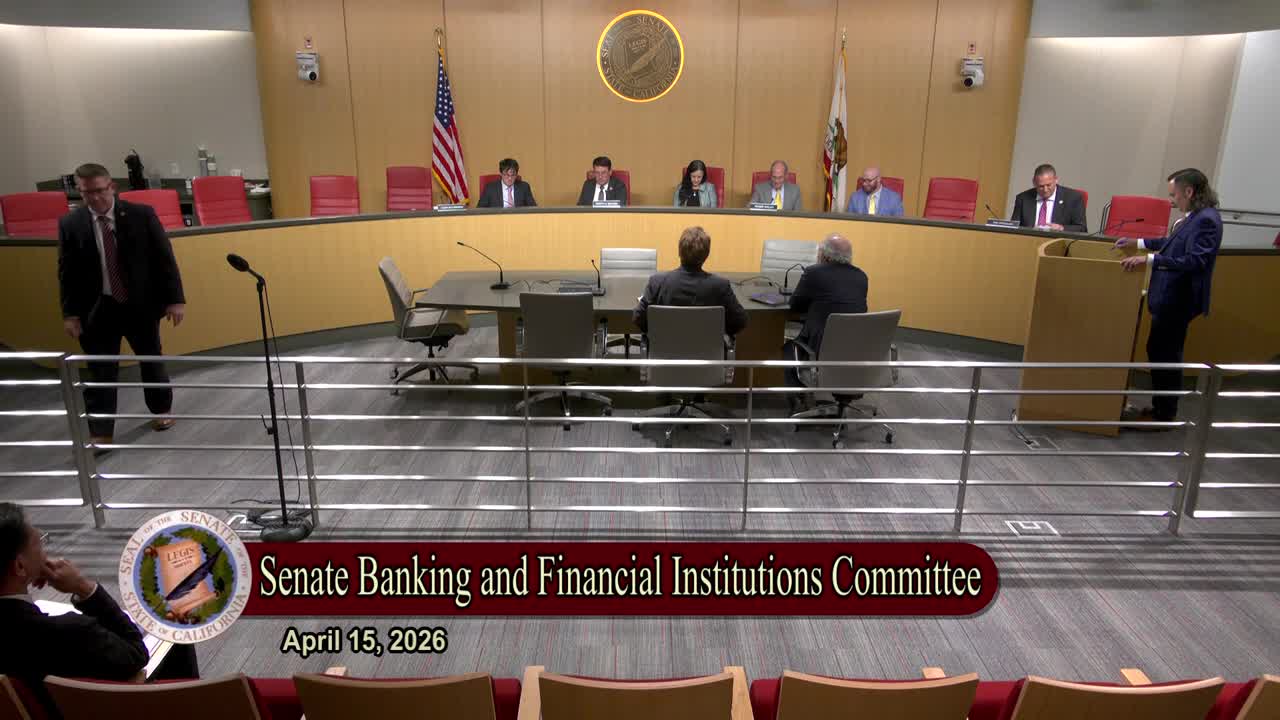 8MIN
Senate Standing Committee on Banking and Financial Institutions
Bill Author
Bill Co-Author(s):