SB 1173: Jury instructions: lesser related offenses.
- Session Year: 2025-2026
- House: Senate
- Latest Version Date: 2026-08-30
Current Status:
In Progress
(2026-09-27: In Senate. Consideration of Governor's veto pending.)
Introduced
In Committee
Awaiting First Chamber Vote
Passed First Chamber
In Committee
Awaiting Second Chamber Vote
Passed Second Chamber
Enacted
What does this bill do?
The bill lets a defendant ask that the jury, or the judge if there is no jury, be allowed to convict them of a lesser offense closely related to the crime charged. The court must allow that only if the defendant’s defense fits a conviction for the lesser offense, the evidence of the lesser offense is admitted and relevant to guilt on the charged crime, and there is a factual basis on which the jury could find a lesser crime. The defendant must notify the prosecutor by the start of jury selection, or before evidence if there is no jury.
The summary is provided by generative AI which can make mistakes. For original language, please view the details in the table below.
Existing law authorizes the finder of fact in a criminal prosecution to find the defendant guilty of an offense that is necessarily included in the charged offense. Case law requires the trial court to instruct the jury that it must find the defendant guilty of a necessarily included offense if there is substantial evidence that the defendant is guilty of the necessarily included offense.
This bill would require the court, if requested by a defendant, to instruct the jury on a lesser offense, which is closely related to the offense charged, if the court finds that the defendant has relied on a theory of defense consistent with a conviction for the lesser offense, the evidence of the lesser offense is relevant to and admitted for the purpose of establishing guilt of the charged offense, and a basis exists on which the jury could find the offense to be less than charged. The bill would also authorize the judge to find the defendant guilty of the lesser offense if there is no jury. The bill would require the defendant to provide notice to the prosecution of the intent to seek the above-described jury instruction, as specified.
Existing law authorizes the finder of fact in a criminal prosecution to find the defendant guilty of an offense that is necessarily included in the charged offense. Case law requires the trial court to instruct the jury that it must find the defendant guilty of a necessarily included offense if there is substantial evidence that the defendant is guilty of the necessarily included offense.
This bill would require the court, if requested by a defendant, to instruct the jury on a lesser offense, which is closely related to the offense charged, if the court finds that the defendant has relied on a theory of defense consistent with a conviction for the lesser offense, the evidence of the lesser offense is relevant to and admitted for the purpose of establishing guilt of the charged offense, and a basis exists on which the jury could find the offense to be less than charged. The bill would also authorize the judge to find the defendant guilty of the lesser offense if there is no jury. The bill would require the defendant to provide notice to the prosecution of the intent to seek the above-described jury instruction, as specified. The bill would state the intent of the Legislature that the bill restores rights previously found by the California Supreme Court in People v. Geiger (1984) 35 Cal.3d 510.
Existing law authorizes the finder of fact in a criminal prosecution to find the defendant guilty of an offense that is necessarily included in the charged offense. Case law requires the trial court to instruct the jury that it must find the defendant guilty of a necessarily included offense if there is substantial evidence that the defendant is guilty of the necessarily included offense.
This bill would require the court, if requested by a defendant, to instruct the jury on a lesser offense, which is closely related to the offense charged, if the court finds that the defendant has relied on a theory of defense consistent with a conviction for the lesser offense, the evidence of the lesser offense is relevant to and admitted for the purpose of establishing guilt of the charged offense, and a basis exists on which the jury could find the offense to be less than charged. The bill would also authorize the judge to find the defendant guilty of the lesser offense if there is no jury. The bill would state the intent of the Legislature that the bill restores rights previously found by the California Supreme Court in People v. Geiger (1984) 35 Cal.3d 510.
Existing law makes it a felony for specified individuals authorized by law to determine a question or controversy to ask, receive, or agree to receive any bribe upon the agreement or understanding that their vote, opinion, or decision upon a matter will be influenced by the bribe. This bill would make technical, nonsubstantive changes to these provisions.Existing law makes it a felony for specified individuals authorized by law to determine a question or controversy to ask, receive, or agree to receive any bribe upon the agreement or understanding that their vote, opinion, or decision upon a matter will be influenced by the bribe.
This bill would make technical, nonsubstantive changes to these provisions.
(a)A jury, or a judge if a jury trial is waived, may find a defendant guilty of an offense, the commission of which is necessarily included in that with which the defendant is charged, or of an attempt to commit the offense.
(b)A jury, or a judge if a jury trial is waived, upon request of a defendant, may find the defendant guilty of a lesser offense, the commission of which is closely related to the offense with which the defendant is charged, if the court determines that all of the following conditions are met:
(1)The defendant relies on a theory of defense that is consistent with a conviction for the lesser offense.
(2)The evidence of the lesser offense is relevant to and admitted for the purpose of establishing whether the defendant is guilty of the charged offense.
(3)A basis exists, other than an unexplainable rejection of prosecution evidence, on which the jury could find the offense to be less than that charged.
(c)A defendant seeking lesser related offense instruction in a jury trial shall provide notice of intent to seek this instruction to the prosecution no later than the commencement of jury selection. If a jury is waived, notice shall be given before the presentation of evidence. These notice provisions shall be waived only with the consent of the prosecution or upon a showing of good cause.
(d)It is the intent of the Legislature in enacting subdivision (b) to restore the right of a defendant to receive jury instructions on lesser related offenses as originally guaranteed by the California Supreme Court in People v. Geiger (1984) 35 Cal.3d 510.(a)A jury, or a judge if a jury trial is waived, may find a defendant guilty of an offense, the commission of which is necessarily included in that with which the defendant is charged, or of an attempt to commit the offense.
(b)A jury, or a judge if a jury trial is waived, upon request of a defendant, may find the defendant guilty of a lesser offense, the commission of which is closely related to the offense with which the defendant is charged, if the court determines that all of the following conditions are met:
(1)The defendant relies on a theory of defense that is consistent with a conviction for the lesser offense.
(2)The evidence of the lesser offense is relevant to and admitted for the purpose of establishing whether the defendant is guilty of the charged offense.
(3)A basis exists, other than an unexplainable rejection of prosecution evidence, on which the jury could find the offense to be less than that charged.
(c)A defendant seeking lesser related offense instruction in a jury trial shall provide notice of intent to seek this instruction to the prosecution no later than the commencement of jury selection. If a jury is waived, notice shall be given before the presentation of evidence. These notice provisions shall be waived only with the consent of the prosecution or upon a showing of good cause.
(c)(d)It is the intent of the Legislature in enacting subdivision (b) to restore the right of a defendant to receive jury instructions on lesser related offenses as originally guaranteed by the California Supreme Court in People v. Geiger (1984) 35 Cal.3d 510.
The (a)A jury, or the a judge if a jury trial is waived, may find the a defendant guilty of any an offense, the commission of which is necessarily included in that with which he the defendant is charged, or of an attempt to commit the offense.
(b)A jury, or a judge if a jury trial is waived, upon request of a defendant, may find the defendant guilty of a lesser offense, the commission of which is closely related to the offense with which the defendant is charged, if the court determines that all of the following conditions are met:
(1)The defendant relies on a theory of defense that is consistent with a conviction for the lesser offense.
(2)The evidence of the lesser offense is relevant to and admitted for the purpose of establishing whether the defendant is guilty of the charged offense.
(3)A basis exists, other than an unexplainable rejection of prosecution evidence, on which the jury could find the offense to be less than that charged.
(c)It is the intent of the Legislature in enacting subdivision (b) to restore the right of a defendant to receive jury instructions on lesser related offenses as originally guaranteed by the California Supreme Court in People v. Geiger (1984) 35 Cal.3d 510.
SECTION 1.Section 93 of the Penal Code is amended to read:93.(a)Every judicial officer, juror, referee, arbitrator, or umpire, and every person authorized by law to hear or determine any question or controversy, who asks, receives, or agrees to receive, any bribe, upon any agreement or understanding that their vote, opinion, or decision upon any matters or question that is or may be brought before them for decision, shall be influenced thereby, is punishable by imprisonment in the state prison for two, three, or four years and, if no bribe has been actually received, by a restitution fine of not less than two thousand dollars ($2,000) or not more than ten thousand dollars ($10,000) or, if a bribe was actually received, by a restitution fine of at least the actual amount of the bribe received or two thousand dollars ($2,000), whichever is greater, or any larger amount of not more than double the amount of any bribe received or ten thousand dollars ($10,000), whichever is greater.(b)In imposing a restitution fine under this section, the court shall consider the defendants ability to pay the fine. REVISIONS: HeadingLine 2.(a)Every judicial officer, juror, referee, arbitrator, or umpire, and every person authorized by law to hear or determine any question or controversy, who asks, receives, or agrees to receive, any bribe, upon any agreement or understanding that his or her their vote, opinion, or decision upon any matters or question which that is or may be brought before him or her them for decision, shall be influenced thereby, is punishable by imprisonment in the state prison for two, three, or four years and, in cases where if no bribe has been actually received, by a restitution fine of not less than two thousand dollars ($2,000) or not more than ten thousand dollars ($10,000) or, in cases where if a bribe was actually received, by a restitution fine of at least the actual amount of the bribe received or two thousand dollars ($2,000), whichever is greater, or any larger amount of not more than double the amount of any bribe received or ten thousand dollars ($10,000), whichever is greater.
(b)In imposing a restitution fine under this section, the court shall consider the defendants ability to pay the fine.
|
Date
|
Status
|
|---|---|
| Sep 27, 2026 | In Senate. Consideration of Governor's veto pending. |
| Sep 27, 2026 | Vetoed by the Governor. |
| Sep 3, 2026 | Enrolled and presented to the Governor at 3 p.m. |
| Aug 27, 2026 | Assembly amendments concurred in. (Ayes 28. Noes 10. Page 5943.) Ordered to engrossing and enrolling. |
| Aug 27, 2026 | Assembly amendments concurred in. (Ayes 27. Noes 10.) Ordered to engrossing and enrolling. |
| Aug 26, 2026 | In Senate. Concurrence in Assembly amendments pending. |
| Aug 26, 2026 | Read third time. Passed. (Ayes 44. Noes 19. Page 6612.) Ordered to the Senate. |
| Aug 26, 2026 | Read third time. Passed. Ordered to the Senate. |
| Aug 20, 2026 | Read third time and amended. |
| Aug 20, 2026 | Ordered to third reading. |
| Aug 17, 2026 | Read second time. Ordered to third reading. |
| Aug 13, 2026 | Read second time and amended. Ordered to second reading. |
| Aug 13, 2026 | From committee: Do pass as amended. (Ayes 11. Noes 4.) (August 13). |
| Aug 13, 2026 | Assembly Rule 63 suspended. |
| Aug 5, 2026 | August 5 set for first hearing. Placed on suspense file. |
| Jun 25, 2026 | Read second time. Ordered to third reading. |
| Jun 25, 2026 | Re-referred to Com. on APPR. pursuant to Assembly Rule 97. |
| Jun 24, 2026 | From committee: Do pass. (Ayes 6. Noes 2.) (June 23). |
| Jun 24, 2026 | Coauthors revised. |
| Jun 4, 2026 | Referred to Com. on PUB. S. |
| May 27, 2026 | In Assembly. Read first time. Held at Desk. |
| May 27, 2026 | Read third time. Passed. (Ayes 25. Noes 10.) Ordered to the Assembly. |
| May 27, 2026 | Read third time. Passed. (Ayes 25. Noes 10. Page 4480.) Ordered to the Assembly. |
| Apr 15, 2026 | Read second time. Ordered to third reading. |
| Apr 14, 2026 | From committee: Do pass. (Ayes 5. Noes 1.) (April 14). |
| Apr 14, 2026 | From committee: Do pass. (Ayes 5. Noes 1. Page 3872.) (April 14). |
| Apr 9, 2026 | Set for hearing April 14. |
| Apr 8, 2026 | Re-referred to Com. on PUB. S. |
| Mar 23, 2026 | From committee with author's amendments. Read second time and amended. Re-referred to Com. on RLS. |
| Feb 26, 2026 | Referred to Com. on RLS. |
| Feb 19, 2026 | From printer. May be acted upon on or after March 21. |
| Feb 18, 2026 | Introduced. Read first time. To Com. on RLS. for assignment. To print. |
|
Date
|
Description
|
Location
|
Votes
|
|
|---|---|---|---|---|
| Aug 27, 2026 | Unfinished Business SB1173 Caballero et al. Concurrence | Senate Floor |
Passed |
|
| Aug 26, 2026 | SB 1173 Caballero Senate Third Reading By Schultz | Assembly Floor |
Passed |
|
| Aug 13, 2026 | Do pass as amended. | Assembly Standing Committee on Appropriations |
Passed |
|
| Jun 23, 2026 | Do pass. | Assembly Standing Committee on Public Safety |
Passed |
|
| May 27, 2026 | Senate 3rd Reading SB1173 Caballero | Senate Floor |
Passed |
|
| Apr 14, 2026 | Do pass | Senate Standing Committee on Public Safety |
Passed |
This list shows positions taken on this bill by organizations on the date displayed, which is linked to the original source.
Positions by individuals are not included.
|
Organization
|
Position
|
Date
|
|---|---|---|
| Aclu California Action | ** Support | |
| Aclu California Action | ** Support | |
| California Attorneys For Criminal Justice | ** Support | |
| California Attorneys For Criminal Justice | ** Support | |
| California District Attorneys Association | ** Against | |
| California District Attorneys Association | ** Against | |
| California Public Defenders Association | ** Support | |
| California Public Defenders Association | ** Support | |
| Californians for Safety and Justice | ** Support | |
| Californians for Safety and Justice | ** Support | |
| Communities United for Restorative Youth Justice | ** Support | |
| Communities United for Restorative Youth Justice | ** Support | |
| Courage California | ** Support | |
| Courage California | ** Support | |
| Drug Policy Alliance | ** Support | |
| Drug Policy Alliance | ** Support | |
| Drug Policy Alliance 1 | ** Support | |
| Drug Policy Alliance 1 | ** Support | |
| Ella Baker Center For Human Rights | ** Support | |
| Ella Baker Center For Human Rights | ** Support | |
| Felony Murder Elimination Project | ** Support | |
| Felony Murder Elimination Project | ** Support | |
| Friends Committee On Legislation Of California | ** Support | |
| Friends Committee On Legislation Of California | ** Support | |
| Justice2jobs Coalition | ** Support | |
| Justice2jobs Coalition | ** Support | |
| LA Defensa | ** Support | |
| LA Defensa | ** Support | |
| Local 148 Los Angeles County Public Defender's Union | ** Support | |
| Local 148 Los Angeles County Public Defender's Union | ** Support | |
| Los Angeles County District Attorney'S Office | ** Against | |
| Los Angeles County District Attorney'S Office | ** Against | |
| San Diego County District Attorney's Office | ** Against | |
| San Diego County District Attorney's Office | ** Against | |
| San Francisco Public Defender | ** Support | |
| San Francisco Public Defender | ** Support | |
| San Quentin Skunkworks | ** Support | |
| San Quentin Skunkworks | ** Support | |
| Silicon Valley De-Bug | ** Support | |
| Silicon Valley De-Bug | ** Support | |
| Smart Justice California | ** Support | |
| Smart Justice California | ** Support | |
| The W. Haywood Burns Institute | ** Support | |
| The W. Haywood Burns Institute | ** Support |
SENATE RULES COMMITTEE Office of Senate Floor Analyses (916) 651-4171 | SB 1173 |
UNFINISHED BUSINESS
Bill No: SB 1173
Author: Caballero (D), et al.
Amended: 8/20/26
Vote: 21
SENATE PUBLIC SAFETY COMMITTEE: 5-1, 4/14/26
AYES: Arreguín, Caballero, Cortese, Pérez, Wiener
NOES: Seyarto
SENATE FLOOR: 25-10, 5/27/26
AYES: Allen, Archuleta, Arreguín, Ashby, Becker, Blakespear, Cabaldon, Caballero, Cortese, Durazo, Grayson, Laird, Limón, McGuire, Menjivar, Padilla, Pérez, Reyes, Richardson, Rubio, Smallwood-Cuevas, Stern, Wahab, Weber Pierson, Wiener
NOES: Alvarado-Gil, Choi, Grove, Jones, McNerney, Niello, Ochoa Bogh, Seyarto, Strickland, Valladares
NO VOTE RECORDED: Cervantes, Dahle, Gonzalez, Hurtado, Umberg
ASSEMBLY FLOOR: 44-19, 8/26/26 - See last page for vote
SUBJECT: Jury instructions: lesser related offenses
SOURCE: California Attorneys for Criminal Justice; Californians for Safety and Justice
DIGEST:
This bill restores a criminal defendant’s right to a jury instruction on lesser related offenses to the offense charged, and permits a jury, or a judge if a jury trial is waived, to find the defendant guilty of the lesser offense if certain conditions are met.
Assembly Amendments
require that the defendant provide notice to the prosecution of the intent to seek the above-described jury instruction, and strike a statement of legislative intent regarding a related court case.
ANALYSIS:
Existing law:
- Provides that after closing arguments in a criminal trial, the judge may then charge the jury, and shall do so on any points of law pertinent to the issue, if requested by either party. (Penal (Pen.) Code, § 1093, subd. (f).)
- Provides that at the beginning of the trial or from time to time during the trial, and without any request from either party, the trial judge may give the jury such instructions on the law applicable to the case as the judge may deem necessary for their guidance on hearing the case. (Ibid.)
- Provides that in any criminal case which is being tried before the court with a jury, all requests for instructions on points of law must be made to the court and all proposed instructions must be delivered to the court before commencement of argument. (Pen. Code, § 1093.5)
- Provides that before the commencement of the argument, the court, on request of counsel, must:
- Decide whether to give, refuse, or modify the proposed instructions.’
- Decide which instructions shall be given in addition to those proposed, if any.
- Advise counsel of all instructions to be given. (Ibid.)
- Provides that if, during the argument, issues are raised which have not been covered by instructions given or refused, the court may, on request of counsel, give additional instructions on the subject matter thereof. (Ibid.)
- Provides that when it appears that the defendant has committed a public offense, or attempted to commit a public offense, and there is reasonable ground of doubt in which of two or more degrees of the crime or attempted crime he is guilty, he can be convicted of the lowest of such degrees only. (Pen. Code, § 1097.)
- Defines a special verdict as that by which the jury finds the facts only, leaving judgment to the court, as specified. (Pen. Code § 1152.)
- Provides that the court must give judgment upon the special verdict as follows:
- If the plea is not guilty, and the facts prove the defendant guilty of the offense charged in the indictment or information, or of any other offense of which he could be convicted under that indictment or information, judgment must be given accordingly. But if otherwise, judgment of acquittal must be given.
- If the plea is a former conviction or acquittal or once in jeopardy of the same offense, the court must give judgment of acquittal or conviction, as the facts prove or fail to prove the former conviction or acquittal or jeopardy. (Pen. Code, § 1155.)
- Provides that whenever a defendant is convicted of a crime or attempt to commit a crime which is distinguished into degrees, the jury, or the court if a jury trial is waived, must find the degree of the crime or attempted crime of which he is guilty. Upon the failure of the jury or the court to so determine, the degree of the crime or attempted crime of which the defendant is guilty, shall be deemed to be of the lesser degree. (Pen. Code, § 1157.)
- Provides that the jury, or the judge if a jury trial is waived, may find the defendant guilty of any offense, the commission of which is necessarily included in that with which he is charged, or of an attempt to commit the offense. (Pen. Code, § 1159.)
This bill:
- Provides that a jury, or a judge if a trial is waived, upon request of a defendant, may find the defendant guilty of a lesser offense, the commission of which is closely related to the offense with which the defendant is charged, if the court determines that all of the following conditions are met:
- The defendant relies on a theory of defense that is consistent with a conviction for the lesser offense.
- The evidence of the lesser offense is relevant to and admitted for the purpose of establishing whether the defendant is guilty of the charged offense.
- A basis exists, other than an unexplainable rejection of prosecution evidence, on which the jury could find the offense to be less than that charged.
- Provides that a defendant seeking lesser related offense instruction in a jury trial shall provide notice of intent to seek this instruction to the prosecution no later than the commencement of jury selection. If a jury is waived, notice shall be given before the presentation of evidence.
- Specifies that the notice provisions above shall be waived only with the consent of the prosecution or upon a showing of good cause.
FISCAL EFFECT: Appropriation: No Fiscal Com.: No Local: No
According to the Assembly Appropriations Committee:
- Court cost pressures of $540,000 to $4.86 million annually (Trial Court Trust Fund) due to increased workload and trial time at both the superior court and appellate court levels. The courts derived this range from trial data in the most recent Court Statistics Report, which reflects approximately 7,000 misdemeanor and felony trials annually, and applied an assumed 25% to 75% share of trials in which a defendant may request a lesser related offense instruction. Additional trial time reflects explaining jury instructions and allowing additional argument. It generally costs approximately $1,000 to operate a courtroom for one hour. Although trial courts are not funded on the basis of workload, increased pressure on the Trial Court Trust Fund may create a need for increased General Fund support. The 2025-26 budget includes $117.3 million General Fund to backfill the Trial Court Trust Fund.
- Minor and absorbable workload to the Judicial Council to adopt or modify jury instructions and develop supplemental hearing materials for judicial officers and court staff.
SUPPORT: (Verified 8/26/26)
California Attorneys for Criminal Justice (co-source)
Californians for Safety and Justice (co-source)
ACLU California Action
California Public Defenders Association
Communities United for Restorative Youth Justice
Courage California
Drug Policy Alliance
Drug Policy Alliance 1
Ella Baker Center for Human Rights
Felony Murder Elimination Project
Friends Committee on Legislation of California
Justice2jobs Coalition
LA Defensa
Local 148 Los Angeles County Public Defender's Union
San Francisco Public Defender
San Quentin Skunkworks
Silicon Valley De-bug
Smart Justice California
The W. Haywood Burns Institute
OPPOSITION: (Verified 8/26/26)
California District Attorneys Association
Los Angeles County District Attorney's Office
San Diego County District Attorney's Office
ASSEMBLY FLOOR: 44-19 8/26/26
AYES: Aguiar-Curry, Ahrens, Alvarez, Arambula, Ávila Farías, Bauer-Kahan, Bennett, Berman, Bonta, Bryan, Calderon, Caloza, Carrillo, Connolly, Elhawary, Fong, Garcia, Gipson, Mark González, Haney, Harabedian, Hart, Irwin, Jackson, Kalra, Lee, Lowenthal, McKinnor, Ortega, Papan, Petrie-Norris, Quirk-Silva, Ransom, Celeste Rodriguez, Rogers, Schultz, Sharp-Collins, Solache, Soria, Valencia, Wicks, Wilson, Zbur, Rivas
NOES: Alanis, Castillo, Chen, Davies, DeMaio, Dixon, Ellis, Flora, Jeff Gonzalez, Hadwick, Hoover, Johnson, Lackey, Macedo, Patterson, Sanchez, Ta, Tangipa, Wallis
NO VOTE RECORDED: Addis, Bains, Boerner, Gabriel, Krell, Muratsuchi, Nguyen, Pacheco, Patel, Pellerin, Ramos, Michelle Rodriguez, Blanca Rubio, Schiavo, Stefani, Ward
Prepared by: Alex Barnett / PUB. S. /
10/2/26 9:49:21
**** END ****
SENATE RULES COMMITTEE Office of Senate Floor Analyses (916) 651-4171 | SB 1173 |
VETO
Bill No: SB 1173
Author: Caballero (D), et al.
Enrolled: 8/30/26
Vote: 27
SENATE PUBLIC SAFETY COMMITTEE: 5-1, 4/14/26
AYES: Arreguín, Caballero, Cortese, Pérez, Wiener
NOES: Seyarto
SENATE FLOOR: 25-10, 5/27/26
AYES: Allen, Archuleta, Arreguín, Ashby, Becker, Blakespear, Cabaldon, Caballero, Cortese, Durazo, Grayson, Laird, Limón, McGuire, Menjivar, Padilla, Pérez, Reyes, Richardson, Rubio, Smallwood-Cuevas, Stern, Wahab, Weber Pierson, Wiener
NOES: Alvarado-Gil, Choi, Grove, Jones, McNerney, Niello, Ochoa Bogh, Seyarto, Strickland, Valladares
NO VOTE RECORDED: Cervantes, Dahle, Gonzalez, Hurtado, Umberg
SENATE FLOOR: 28-10, 8/27/26
AYES: Allen, Archuleta, Arreguín, Ashby, Becker, Blakespear, Cabaldon, Caballero, Cervantes, Cortese, Durazo, Gonzalez, Grayson, Hurtado, Laird, Limón, McGuire, Menjivar, Padilla, Pérez, Reyes, Richardson, Rubio, Smallwood-Cuevas, Stern, Wahab, Weber Pierson, Wiener
NOES: Alvarado-Gil, Choi, Dahle, Grove, Jones, Niello, Ochoa Bogh, Seyarto, Strickland, Valladares
NO VOTE RECORDED: McNerney, Umberg
ASSEMBLY FLOOR: 44-19, 8/26/26 - See last page for vote
SUBJECT: Jury instructions: lesser related offenses
SOURCE: California Attorneys for Criminal Justice; Californians for Safety and Justice
DIGEST:
This bill restores a criminal defendant’s right to a jury instruction on lesser related offenses to the offense charged, and permits a jury, or a judge if a jury trial is waived, to find the defendant guilty of the lesser offense if certain conditions are met.
ANALYSIS:
Existing law:
- Provides that after closing arguments in a criminal trial, the judge may then charge the jury, and shall do so on any points of law pertinent to the issue, if requested by either party. (Pen. Code, § 1093, subd. (f).)
- Provides that at the beginning of the trial or from time to time during the trial, and without any request from either party, the trial judge may give the jury such instructions on the law applicable to the case as the judge may deem necessary for their guidance on hearing the case. (Ibid.)
- Provides that in any criminal case which is being tried before the court with a jury, all requests for instructions on points of law must be made to the court and all proposed instructions must be delivered to the court before commencement of argument. (Pen. Code, § 1093.5)
- Provides that before the commencement of the argument, the court, on request of counsel, must:
- Decide whether to give, refuse, or modify the proposed instructions.’
- Decide which instructions shall be given in addition to those proposed, if any.
- Advise counsel of all instructions to be given. (Ibid.)
- Provides that if, during the argument, issues are raised which have not been covered by instructions given or refused, the court may, on request of counsel, give additional instructions on the subject matter thereof. (Ibid.)
- Provides that when it appears that the defendant has committed a public offense, or attempted to commit a public offense, and there is reasonable ground of doubt in which of two or more degrees of the crime or attempted crime he is guilty, he can be convicted of the lowest of such degrees only. (Pen. Code, § 1097.)
- Defines a special verdict as that by which the jury finds the facts only, leaving judgment to the court, as specified. (Pen. Code § 1152.)
- Provides that the court must give judgment upon the special verdict as follows:
- If the plea is not guilty, and the facts prove the defendant guilty of the offense charged in the indictment or information, or of any other offense of which he could be convicted under that indictment or information, judgment must be given accordingly. But if otherwise, judgment of acquittal must be given.
- If the plea is a former conviction or acquittal or once in jeopardy of the same offense, the court must give judgment of acquittal or conviction, as the facts prove or fail to prove the former conviction or acquittal or jeopardy. (Pen. Code, § 1155.)
- Provides that whenever a defendant is convicted of a crime or attempt to commit a crime which is distinguished into degrees, the jury, or the court if a jury trial is waived, must find the degree of the crime or attempted crime of which he is guilty. Upon the failure of the jury or the court to so determine, the degree of the crime or attempted crime of which the defendant is guilty, shall be deemed to be of the lesser degree. (Pen. Code, § 1157.)
- Provides that the jury, or the judge if a jury trial is waived, may find the defendant guilty of any offense, the commission of which is necessarily included in that with which he is charged, or of an attempt to commit the offense. (Pen. Code, § 1159.)
This bill:
- Provides that a jury, or a judge if a trial is waived, upon request of a defendant, may find the defendant guilty of a lesser offense, the commission of which is closely related to the offense with which the defendant is charged, if the court determines that all of the following conditions are met:
- The defendant relies on a theory of defense that is consistent with a conviction for the lesser offense.
- The evidence of the lesser offense is relevant to and admitted for the purpose of establishing whether the defendant is guilty of the charged offense.
- A basis exists, other than an unexplainable rejection of prosecution evidence, on which the jury could find the offense to be less than that charged.
- Provides that a defendant seeking lesser related offense instruction in a jury trial shall provide notice of intent to seek this instruction to the prosecution no later than the commencement of jury selection. If a jury is waived, notice shall be given before the presentation of evidence.
- Specifies that the notice provisions above shall be waived only with the consent of the prosecution or upon a showing of good cause.
FISCAL EFFECT: Appropriation: No Fiscal Com.: No Local: No
According to the Assembly Appropriations Committee:
- Court cost pressures of $540,000 to $4.86 million annually (Trial Court Trust Fund) due to increased workload and trial time at both the superior court and appellate court levels. The courts derived this range from trial data in the most recent Court Statistics Report, which reflects approximately 7,000 misdemeanor and felony trials annually, and applied an assumed 25% to 75% share of trials in which a defendant may request a lesser related offense instruction. Additional trial time reflects explaining jury instructions and allowing additional argument. It generally costs approximately $1,000 to operate a courtroom for one hour. Although trial courts are not funded on the basis of workload, increased pressure on the Trial Court Trust Fund may create a need for increased General Fund support. The 2025-26 budget includes $117.3 million General Fund to backfill the Trial Court Trust Fund.
- Minor and absorbable workload to the Judicial Council to adopt or modify jury instructions and develop supplemental hearing materials for judicial officers and court staff.
SUPPORT: (Verified 9/29/26)
California Attorneys for Criminal Justice (co-source)
Californians for Safety and Justice (co-source)
ACLU California Action
California Public Defenders Association
Communities United for Restorative Youth Justice
Courage California
Drug Policy Alliance
Drug Policy Alliance 1
Ella Baker Center for Human Rights
Felony Murder Elimination Project
Friends Committee on Legislation of California
Justice2jobs Coalition
LA Defensa
Local 148 Los Angeles County Public Defender's Union
San Francisco Public Defender
San Quentin Skunkworks
Silicon Valley De-bug
Smart Justice California
The W. Haywood Burns Institute
OPPOSITION: (Verified 9/29/26)
California District Attorneys Association
Los Angeles County District Attorney's Office
San Diego County District Attorney's Office
GOVERNOR'S VETO MESSAGE:
I am returning Senate Bill 1173 without my signature.
This bill would authorize a Criminal Court to instruct a jury and convict on a “lesser related offense” of the defendant's choosing, over the objection of the prosecutor.
The propriety of lesser related defense rule contemplated by this bill was considered and rejected by the California Supreme Court more than 25 years ago in People v. Birks (1998) 19 Cal.4th 108. The court explained that the lesser related offense rule “can be unfair to the prosecution,” that it “actually promotes fact finding,” and that it may well violate the constitution separation of powers clause. These concerns are equally valid today and I do not support upsetting the balance struck by the California Supreme Court in the Birks decision.
For these reasons, I cannot sign Senate Bill 1173.
ASSEMBLY FLOOR: 44-19, 8/26/26
AYES: Aguiar-Curry, Ahrens, Alvarez, Arambula, Ávila Farías, Bauer-Kahan, Bennett, Berman, Bonta, Bryan, Calderon, Caloza, Carrillo, Connolly, Elhawary, Fong, Garcia, Gipson, Mark González, Haney, Harabedian, Hart, Irwin, Jackson, Kalra, Lee, Lowenthal, McKinnor, Ortega, Papan, Petrie-Norris, Quirk-Silva, Ransom, Celeste Rodriguez, Rogers, Schultz, Sharp-Collins, Solache, Soria, Valencia, Wicks, Wilson, Zbur, Rivas
NOES: Alanis, Castillo, Chen, Davies, DeMaio, Dixon, Ellis, Flora, Jeff Gonzalez, Hadwick, Hoover, Johnson, Lackey, Macedo, Patterson, Sanchez, Ta, Tangipa, Wallis
NO VOTE RECORDED: Addis, Bains, Boerner, Gabriel, Krell, Muratsuchi, Nguyen, Pacheco, Patel, Pellerin, Ramos, Michelle Rodriguez, Blanca Rubio, Schiavo, Stefani, Ward
Prepared by: Alex Barnett / PUB. S. /
10/2/26 12:36:24
**** END ****
SENATE RULES COMMITTEE Office of Senate Floor Analyses (916) 651-4171 | SB 1173 |
UNFINISHED BUSINESS
Bill No: SB 1173
Author: Caballero (D), et al.
Amended: 8/20/26
Vote: 21
SENATE PUBLIC SAFETY COMMITTEE: 5-1, 4/14/26
AYES: Arreguín, Caballero, Cortese, Pérez, Wiener
NOES: Seyarto
SENATE FLOOR: 25-10, 5/27/26
AYES: Allen, Archuleta, Arreguín, Ashby, Becker, Blakespear, Cabaldon, Caballero, Cortese, Durazo, Grayson, Laird, Limón, McGuire, Menjivar, Padilla, Pérez, Reyes, Richardson, Rubio, Smallwood-Cuevas, Stern, Wahab, Weber Pierson, Wiener
NOES: Alvarado-Gil, Choi, Grove, Jones, McNerney, Niello, Ochoa Bogh, Seyarto, Strickland, Valladares
NO VOTE RECORDED: Cervantes, Dahle, Gonzalez, Hurtado, Umberg
ASSEMBLY FLOOR: Passed, 8/26/26
SUBJECT: Jury instructions: lesser related offenses
SOURCE: California Attorneys for Criminal Justice; Californians for Safety and Justice
DIGEST:
This bill restores a criminal defendant’s right to a jury instruction on lesser related offenses to the offense charged, and permits a jury, or a judge if a jury trial is waived, to find the defendant guilty of the lesser offense if certain conditions are met.
Assembly Amendments
require that the defendant provide notice to the prosecution of the intent to seek the above-described jury instruction, and strike a statement of legislative intent regarding a related court case.
ANALYSIS:
Existing law:
- Provides that after closing arguments in a criminal trial, the judge may then charge the jury, and shall do so on any points of law pertinent to the issue, if requested by either party. (Penal (Pen.) Code, § 1093, subd. (f).)
- Provides that at the beginning of the trial or from time to time during the trial, and without any request from either party, the trial judge may give the jury such instructions on the law applicable to the case as the judge may deem necessary for their guidance on hearing the case. (Ibid.)
- Provides that in any criminal case which is being tried before the court with a jury, all requests for instructions on points of law must be made to the court and all proposed instructions must be delivered to the court before commencement of argument. (Pen. Code, § 1093.5)
- Provides that before the commencement of the argument, the court, on request of counsel, must:
- Decide whether to give, refuse, or modify the proposed instructions.’
- Decide which instructions shall be given in addition to those proposed, if any.
- Advise counsel of all instructions to be given. (Ibid.)
- Provides that if, during the argument, issues are raised which have not been covered by instructions given or refused, the court may, on request of counsel, give additional instructions on the subject matter thereof. (Ibid.)
- Provides that when it appears that the defendant has committed a public offense, or attempted to commit a public offense, and there is reasonable ground of doubt in which of two or more degrees of the crime or attempted crime he is guilty, he can be convicted of the lowest of such degrees only. (Pen. Code, § 1097.)
- Defines a special verdict as that by which the jury finds the facts only, leaving judgment to the court, as specified. (Pen. Code § 1152.)
- Provides that the court must give judgment upon the special verdict as follows:
- If the plea is not guilty, and the facts prove the defendant guilty of the offense charged in the indictment or information, or of any other offense of which he could be convicted under that indictment or information, judgment must be given accordingly. But if otherwise, judgment of acquittal must be given.
- If the plea is a former conviction or acquittal or once in jeopardy of the same offense, the court must give judgment of acquittal or conviction, as the facts prove or fail to prove the former conviction or acquittal or jeopardy. (Pen. Code, § 1155.)
- Provides that whenever a defendant is convicted of a crime or attempt to commit a crime which is distinguished into degrees, the jury, or the court if a jury trial is waived, must find the degree of the crime or attempted crime of which he is guilty. Upon the failure of the jury or the court to so determine, the degree of the crime or attempted crime of which the defendant is guilty, shall be deemed to be of the lesser degree. (Pen. Code, § 1157.)
- Provides that the jury, or the judge if a jury trial is waived, may find the defendant guilty of any offense, the commission of which is necessarily included in that with which he is charged, or of an attempt to commit the offense. (Pen. Code, § 1159.)
This bill:
- Provides that a jury, or a judge if a trial is waived, upon request of a defendant, may find the defendant guilty of a lesser offense, the commission of which is closely related to the offense with which the defendant is charged, if the court determines that all of the following conditions are met:
- The defendant relies on a theory of defense that is consistent with a conviction for the lesser offense.
- The evidence of the lesser offense is relevant to and admitted for the purpose of establishing whether the defendant is guilty of the charged offense.
- A basis exists, other than an unexplainable rejection of prosecution evidence, on which the jury could find the offense to be less than that charged.
- Provides that a defendant seeking lesser related offense instruction in a jury trial shall provide notice of intent to seek this instruction to the prosecution no later than the commencement of jury selection. If a jury is waived, notice shall be given before the presentation of evidence.
- Specifies that the notice provisions above shall be waived only with the consent of the prosecution or upon a showing of good cause.
FISCAL EFFECT: Appropriation: No Fiscal Com.: No Local: No
According to the Assembly Appropriations Committee:
- Court cost pressures of $540,000 to $4.86 million annually (Trial Court Trust Fund) due to increased workload and trial time at both the superior court and appellate court levels. The courts derived this range from trial data in the most recent Court Statistics Report, which reflects approximately 7,000 misdemeanor and felony trials annually, and applied an assumed 25% to 75% share of trials in which a defendant may request a lesser related offense instruction. Additional trial time reflects explaining jury instructions and allowing additional argument. It generally costs approximately $1,000 to operate a courtroom for one hour. Although trial courts are not funded on the basis of workload, increased pressure on the Trial Court Trust Fund may create a need for increased General Fund support. The 2025-26 budget includes $117.3 million General Fund to backfill the Trial Court Trust Fund.
- Minor and absorbable workload to the Judicial Council to adopt or modify jury instructions and develop supplemental hearing materials for judicial officers and court staff.
SUPPORT: (Verified 8/26/26)
California Attorneys for Criminal Justice (co-source)
Californians for Safety and Justice (co-source)
ACLU California Action
California Public Defenders Association
Communities United for Restorative Youth Justice
Courage California
Drug Policy Alliance
Drug Policy Alliance 1
Ella Baker Center for Human Rights
Felony Murder Elimination Project
Friends Committee on Legislation of California
Justice2jobs Coalition
LA Defensa
Local 148 Los Angeles County Public Defender's Union
San Francisco Public Defender
San Quentin Skunkworks
Silicon Valley De-bug
Smart Justice California
The W. Haywood Burns Institute
OPPOSITION: (Verified 8/26/26)
California District Attorneys Association
Los Angeles County District Attorney's Office
San Diego County District Attorney's Office
Prepared by: Alex Barnett / PUB. S. /
8/26/26 16:00:17
**** END ****
SENATE THIRD READING
STR Bill Id:SB 1173
Author:(Caballero)
As Amended Ver:August 20, 2026
Majority vote
SUMMARY
Restores a defendant's right to an instruction on lesser related offenses to the offense charged, if certain conditions are met.
Major Provisions
- Authorizes a jury, or a judge if a jury trial is waived, upon request of a defendant, to find the defendant guilty of a lesser offense, the commission of which is closely related to the offense with which the defendant is charged if all of the following conditions are met:
- The defendant relies on a theory of defense that is consistent with a conviction for the lesser offense;
- The evidence of the lesser offense is relevant to, and admitted for the purpose of, establishing whether the defendant is guilty of the charged offense; and,
- A basis exists, other than an unexplainable rejection of prosecution evidence, on which the jury could find the offense to be less than that charged.
- Requires a defendant seeking a lesser related offense instruction in a jury trial to provide notice of intent to seek this instruction to the prosecution no later than the commencement of jury selection. If a jury is waived, notice must be given before the presentation of evidence.
- States notice may only be waived only with the consent of the prosecution or upon a showing of good cause.
COMMENTS
According to the Author
"In 1998, the California Supreme Court ruled in People v. Birks, that there is neither a statutory or constitutional right to have a lesser related offense presented to a jury. This decision reversed the longstanding ability of a defense attorney to request that the jury consider a lesser charge, if the facts presented at trial supported the elements of the lesser offense, but it did foreclose the possibility of restoration, but noted there is no statutory authority.
"Currently, jury deliberations are limited to the charges brought by the prosecution, even when the evidence supports a different, lesser offense. At the height of the war on crime era, the Birks Court reduced judicial discretion to allow for lesser charges to be considered, and narrowed a defendant's ability to ask for lesser related crimes to be heard.
"SB 1173 restores balance in the criminal courtroom. It allows a judge to include a lesser-related offense in jury instructions if the evidence supports it. This reform strengthens due process, supports fair outcomes, ensures that juries can consider the facts before them, and helps juries connect the evidence with the appropriate offense."
Arguments in Support
According to the American Civil Liberties Union (ACLU) California Action, "Under current law, juries are not permitted to consider lesser related offenses at trial, but only the charges brought forth by the prosecution, even when presented evidence does not accurately reflect the charges. For example, if a jury believes the evidence proves the accused has committed a criminal offense, but the prosecutor has only presented the highest level offense, with a longer potential prison sentence than what the evidence supports, the jury must decide whether to convict someone of a crime they did not actually commit, or find the accused not guilty, even though the jury believes that an alternative offense was committed. This procedure comes from a 1998 appellate court case that overturned a previous rule allowing defendants to request jury instructions on a lesser related offense.1 This ruling has left defendants without the ability to argue that an alternative charge would be more accurate, violating the principle that the evidence should dictate the offense. Prior to 1998, juries were allowed to consider lesser related offenses. SB 1173 restores this legal option.
"This limitation undermines due process and fairness. When juries are not allowed to consider all charges supported by the evidence, there is an increased risk of conviction for offenses that may not accurately align with the facts of the case. For example, someone may be arrested for attempted breaking and entering a business after hours. However, the evidence may show that the individual was recently terminated from the business, and they were vandalizing the exterior of the building out of frustration without the intent to commit burglary. If a prosecutor only presents the breaking and entering (burglary) charge and not the vandalism, a jury may never get the option to even consider the lesser related offense despite the facts supporting such an alternative. SB 1173 addresses this by giving authority to a judge to decide if evidence supports the inclusion of a lesser related offense, ensuring that the charges presented match the facts of the case.
"This legislation offers a balanced approach to criminal trial court, by allowing judges the discretion to include the jury instruction or not only when appropriate. This establishes important safeguards while continuing to allow for judicial authority. SB 1173 promotes critical protections needed to strengthen confidence in California's criminal justice system. Ensuring that juries are fully informed of every charge that is factually supported upholds a more balanced and just process for every individual involved."
Arguments in Opposition
According to the California District Attorneys Association, "This bill would go backwards in our approach to criminal law. It also would run afoul of the California Supreme Court's clear language noting a serious constitutional concern. This same bill, introduced four years ago (AB 2435 (Lee), [of] 2021-2022 Sess[ion].), failed to pass the Assembly for the same reasons it is bad policy today. The bill proposes an outdated, unconstitutional, and unworkable rule requiring courts to instruct juries on lesser related offenses. In 1998, the California Supreme Court specifically ruled that courts shall not instruct on lesser related offenses, holding that prior opinions authorizing such a practice were simply "wrong." (People v. Birks (1998) 19 Cal.4th 108, 136.) This has been the law of the land in California for nearly 30 years. SB 1173 states that the intent of the bill is to restore this "wrong" practice as authorized in People v. Geiger (1984) 35 Cal.3d 510, a criticized Justice Rose Bird era opinion. The best argument against this bill can be found in the Supreme Court's own language in the Birks opinion:
Geiger's rationale has since been expressly repudiated for federal purposes by the United States Supreme Court, and it continues to find little support in other jurisdictions. The Geiger rule can be unfair to the prosecution, and actually promotes inaccurate factfinding, because it gives the defendant a superior trial right to seek and obtain conviction for a lesser uncharged offense whose elements the prosecution has neither pled nor sought to prove. Moreover, serious questions arise whether the holding of Geiger, ostensibly based on the due process clause of the California Constitution, can be reconciled with other provisions of the same charter. By according the defendant the power to insist, over the prosecution's objection, that an uncharged, nonincluded offense be placed before the jury, the Geiger rule may usurp the prosecution's exclusive charging discretion, and may therefore violate the Constitution's separation of powers clause.
"(People v. Birks, supra, 19 Cal.4th at 112-113.)
"[California District Attorneys Association] (CDAA) echoes the Supreme Court's concerns that such instructions "promotes inaccurate factfinding." Additionally, SB 1173 in its application would lead to disparate outcomes depending on factors irrelevant to the case such judicial draw and local county practice. The current state of the law is predictable and is applied uniformly across the state."
FISCAL COMMENTS
According to the Assembly Appropriations Committee:
- Court cost pressures of $540,000 to $4.86 million annually (Trial Court Trust Fund) due to increased workload and trial time at both the superior court and appellate court levels. The courts derived this range from trial data in the most recent Court Statistics Report, which reflects approximately 7,000 misdemeanor and felony trials annually, and applied an assumed 25% to 75% share of trials in which a defendant may request a lesser related offense instruction. Additional trial time reflects explaining jury instructions and allowing additional argument. It generally costs approximately $1,000 to operate a courtroom for one hour. Although trial courts are not funded on the basis of workload, increased pressure on the Trial Court Trust Fund may create a need for increased General Fund support. The 2025-26 budget includes $117.3 million General Fund to backfill the Trial Court Trust Fund.
- Minor and absorbable workload to the Judicial Council to adopt or modify jury instructions and develop supplemental hearing materials for judicial officers and court staff.
VOTES
SENATE FLOOR: 25-10-5
YES: Allen, Archuleta, Arreguín, Ashby, Becker, Blakespear, Cabaldon, Caballero, Cortese, Durazo, Grayson, Laird, Limón, McGuire, Menjivar, Padilla, Pérez, Reyes, Richardson, Rubio, Smallwood-Cuevas, Stern, Wahab, Weber Pierson, Wiener
NO: Alvarado-Gil, Choi, Grove, Jones, McNerney, Niello, Ochoa Bogh, Seyarto, Strickland, Valladares
ABS, ABST OR NV: Cervantes, Dahle, Gonzalez, Hurtado, Umberg
ASM PUBLIC SAFETY: 6-2-1
YES: Schultz, Mark González, Haney, Harabedian, Ramos, Sharp-Collins
NO: Alanis, Lackey
ABS, ABST OR NV: Nguyen
ASM APPROPRIATIONS: 11-4-0
YES: Wicks, Arambula, Calderon, Caloza, Fong, Mark González, Krell, Pacheco, Pellerin, Sharp-Collins, Solache
NO: Hoover, Dixon, Ta, Tangipa
UPDATED
VERSION: August 20, 2026
CONSULTANT: Kimberly Horiuchi / PUB. S. / (916) 319-3744 FN: 0003936
SENATE THIRD READING
STR Bill Id:SB 1173
Author:(Caballero)
As Amended Ver:August 13, 2026
Majority vote
SUMMARY
Restores a defendant's right to an instruction on lesser related offenses to the offense charged, if certain conditions are met.
Major Provisions
- Authorizes a jury, or a judge if a jury trial is waived, upon request of a defendant, to find the defendant guilty of a lesser offense, the commission of which is closely related to the offense with which the defendant is charged if all of the following conditions are met:
- The defendant relies on a theory of defense that is consistent with a conviction for the lesser offense;
- The evidence of the lesser offense is relevant to, and admitted for the purpose of, establishing whether the defendant is guilty of the charged offense; and,
- A basis exists, other than an unexplainable rejection of prosecution evidence, on which the jury could find the offense to be less than that charged.
- States the intent of the Legislature to restore the defendant's right to receive jury instructions on lesser related offenses as originally guaranteed by the California Supreme Court in People v. Geiger (1994) 35 Cal.3d 510.
- Requires a defendant seeking a lesser related offense instruction in a jury trial to provide notice of intent to seek this instruction to the prosecution no later than the commencement of jury selection. If a jury is waived, notice must be given before the presentation of evidence.
- States notice may only be waived only with the consent of the prosecution or upon a showing of good cause.
COMMENTS
According to the Author
"In 1998, the California Supreme Court ruled in People v. Birks, that there is neither a statutory or constitutional right to have a lesser related offense presented to a jury. This decision reversed the longstanding ability of a defense attorney to request that the jury consider a lesser charge, if the facts presented at trial supported the elements of the lesser offense, but it did foreclose the possibility of restoration, but noted there is no statutory authority.
"Currently, jury deliberations are limited to the charges brought by the prosecution, even when the evidence supports a different, lesser offense. At the height of the war on crime era, the Birks Court reduced judicial discretion to allow for lesser charges to be considered, and narrowed a defendant's ability to ask for lesser related crimes to be heard.
"SB 1173 restores balance in the criminal courtroom. It allows a judge to include a lesser-related offense in jury instructions if the evidence supports it. This reform strengthens due process, supports fair outcomes, ensures that juries can consider the facts before them, and helps juries connect the evidence with the appropriate offense."
Arguments in Support
According to the ACLU California Action, "Under current law, juries are not permitted to consider lesser related offenses at trial, but only the charges brought forth by the prosecution, even when presented evidence does not accurately reflect the charges. For example, if a jury believes the evidence proves the accused has committed a criminal offense, but the prosecutor has only presented the highest level offense, with a longer potential prison sentence than what the evidence supports, the jury must decide whether to convict someone of a crime they did not actually commit, or find the accused not guilty, even though the jury believes that an alternative offense was committed. This procedure comes from a 1998 appellate court case that overturned a previous rule allowing defendants to request jury instructions on a lesser related offense.1 This ruling has left defendants without the ability to argue that an alternative charge would be more accurate, violating the principle that the evidence should dictate the offense. Prior to 1998, juries were allowed to consider lesser related offenses. SB 1173 restores this legal option.
"This limitation undermines due process and fairness. When juries are not allowed to consider all charges supported by the evidence, there is an increased risk of conviction for offenses that may not accurately align with the facts of the case. For example, someone may be arrested for attempted breaking and entering a business after hours. However, the evidence may show that the individual was recently terminated from the business, and they were vandalizing the exterior of the building out of frustration without the intent to commit burglary. If a prosecutor only presents the breaking and entering (burglary) charge and not the vandalism, a jury may never get the option to even consider the lesser related offense despite the facts supporting such an alternative. SB 1173 addresses this by giving authority to a judge to decide if evidence supports the inclusion of a lesser related offense, ensuring that the charges presented match the facts of the case.
"This legislation offers a balanced approach to criminal trial court, by allowing judges the discretion to include the jury instruction or not only when appropriate. This establishes important safeguards while continuing to allow for judicial authority. SB 1173 promotes critical protections needed to strengthen confidence in California's criminal justice system. Ensuring that juries are fully informed of every charge that is factually supported upholds a more balanced and just process for every individual involved."
Arguments in Opposition
According to the California District Attorneys Association, "This bill would go backwards in our approach to criminal law. It also would run afoul of the California Supreme Court's clear language noting a serious constitutional concern. This same bill, introduced four years ago (AB 2435 (Lee), [of] 2021-2022 Sess[ion].), failed to pass the Assembly for the same reasons it is bad policy today. The bill proposes an outdated, unconstitutional, and unworkable rule requiring courts to instruct juries on lesser related offenses. In 1998, the California Supreme Court specifically ruled that courts shall not instruct on lesser related offenses, holding that prior opinions authorizing such a practice were simply "wrong." (People v. Birks (1998) 19 Cal.4th 108, 136.) This has been the law of the land in California for nearly 30 years. SB 1173 states that the intent of the bill is to restore this "wrong" practice as authorized in People v. Geiger (1984) 35 Cal.3d 510, a criticized Justice Rose Bird era opinion. The best argument against this bill can be found in the Supreme Court’s own language in the Birks opinion:
Geiger's rationale has since been expressly repudiated for federal purposes by the United States Supreme Court, and it continues to find little support in other jurisdictions. The Geiger rule can be unfair to the prosecution, and actually promotes inaccurate factfinding, because it gives the defendant a superior trial right to seek and obtain conviction for a lesser uncharged offense whose elements the prosecution has neither pled nor sought to prove. Moreover, serious questions arise whether the holding of Geiger, ostensibly based on the due process clause of the California Constitution, can be reconciled with other provisions of the same charter. By according the defendant the power to insist, over the prosecution's objection, that an uncharged, nonincluded offense be placed before the jury, the Geiger rule may usurp the prosecution's exclusive charging discretion, and may therefore violate the Constitution's separation of powers clause.
"(People v. Birks, supra, 19 Cal.4th at 112-113.)
"CDAA echoes the Supreme Court's concerns that such instructions "promotes inaccurate factfinding." Additionally, SB 1173 in its application would lead to disparate outcomes depending on factors irrelevant to the case such judicial draw and local county practice. The current state of the law is predictable and is applied uniformly across the state."
FISCAL COMMENTS
According to the Assembly Appropriations Committee:
- Court cost pressures of $540,000 to $4.86 million annually (Trial Court Trust Fund) due to increased workload and trial time at both the superior court and appellate court levels. The courts derived this range from trial data in the most recent Court Statistics Report, which reflects approximately 7,000 misdemeanor and felony trials annually, and applied an assumed 25% to 75% share of trials in which a defendant may request a lesser related offense instruction. Additional trial time reflects explaining jury instructions and allowing additional argument. It generally costs approximately $1,000 to operate a courtroom for one hour. Although trial courts are not funded on the basis of workload, increased pressure on the Trial Court Trust Fund may create a need for increased General Fund support. The 2025-26 budget includes $117.3 million General Fund to backfill the Trial Court Trust Fund.
- Minor and absorbable workload to the Judicial Council to adopt or modify jury instructions and develop supplemental hearing materials for judicial officers and court staff.
VOTES
SENATE FLOOR: 25-10-5
YES: Allen, Archuleta, Arreguín, Ashby, Becker, Blakespear, Cabaldon, Caballero, Cortese, Durazo, Grayson, Laird, Limón, McGuire, Menjivar, Padilla, Pérez, Reyes, Richardson, Rubio, Smallwood-Cuevas, Stern, Wahab, Weber Pierson, Wiener
NO: Alvarado-Gil, Choi, Grove, Jones, McNerney, Niello, Ochoa Bogh, Seyarto, Strickland, Valladares
ABS, ABST OR NV: Cervantes, Dahle, Gonzalez, Hurtado, Umberg
ASM PUBLIC SAFETY: 6-2-1
YES: Schultz, Mark González, Haney, Harabedian, Ramos, Sharp-Collins
NO: Alanis, Lackey
ABS, ABST OR NV: Nguyen
ASM APPROPRIATIONS: 11-4-0
YES: Wicks, Arambula, Calderon, Caloza, Fong, Mark González, Krell, Pacheco, Pellerin, Sharp-Collins, Solache
NO: Hoover, Dixon, Ta, Tangipa
UPDATED
VERSION: August 13, 2026
CONSULTANT: Kimberly Horiuchi / PUB. S. / (916) 319-3744 FN: 0003548
Date of Hearing: August 5, 2026
ASSEMBLY COMMITTEE ON APPROPRIATIONS
Buffy Wicks, Chair
SBPCA Bill Id:SB 1173
Author:(Caballero) – As Amended Ver:March 23, 2026
Policy Committee: | Public Safety | Vote: | 6 - 2 |
|
| ||
|
|
Urgency: No State Mandated Local Program: No Reimbursable: No
SUMMARY:
This bill restores a defendant’s right to a jury instruction on a lesser related offense to the offense charged, if certain conditions are met.
More specifically, this bill:
- Authorizes a jury, or a judge if a jury trial is waived, upon request of a defendant, to find the defendant guilty of a lesser offense closely related to the offense charged, if the court determines all of the following conditions are met:
- The defendant relies on a theory of defense consistent with a conviction for the lesser offense;
- The evidence of the lesser offense is relevant to, and admitted for the purpose of, establishing whether the defendant is guilty of the charged offense;
- A basis exists, other than an unexplainable rejection of prosecution evidence, on which the jury could find the offense to be less than that charged.
- States the intent of the Legislature to restore the right of a defendant to receive jury instructions on lesser related offenses as originally guaranteed by the California Supreme Court in People v. Geiger (1984) 35 Cal.3d 510.
FISCAL EFFECT:
- Court cost pressures of $540,000 to $4.86 million annually (Trial Court Trust Fund) due to increased workload and trial time at both the superior court and appellate court levels. The courts derived this range from trial data in the most recent Court Statistics Report, which reflects approximately 7,000 misdemeanor and felony trials annually, and applied an assumed 25% to 75% share of trials in which a defendant may request a lesser related offense instruction. Additional trial time reflects explaining jury instructions and allowing additional argument. It generally costs approximately $1,000 to operate a courtroom for one hour. Although trial courts are not funded on the basis of workload, increased pressure on the Trial Court Trust Fund may create a need for increased General Fund support. The 2025-26 budget includes $117.3 million General Fund to backfill the Trial Court Trust Fund.
- Minor and absorbable workload to the Judicial Council to adopt or modify jury instructions and develop supplemental hearing materials for judicial officers and court staff.
COMMENTS:
- Purpose. The bill is sponsored by California Attorneys for Criminal Justice, the California Public Defenders Association, and Californians for Safety and Justice. According to the author:
SB 1173 restores balance in the criminal courtroom. It allows a judge to include a lesser-related offense in jury instructions if the evidence supports it. This reform strengthens due process, supports fair outcomes, ensures that juries can consider the facts before them, and helps juries connect the evidence with the appropriate offense.
- Background. From 1984 to 1998, under People v. Geiger (1984), a defendant was entitled to jury instructions on lesser related offenses—offenses sharing common elements with, or arising from the same course of conduct as, the charged offense, but not necessarily included within the charged offense. For example, a defendant charged with burglary could request an instruction on trespass — an offense arising from the same conduct but containing an element (unlawful presence) not required for burglary. In People v. Birks (1998) 19 Cal.4th 108, the California Supreme Court overruled Geiger, holding that a defendant has no due process right to an instruction on a lesser related offense, and observing that the Geiger rule may raise separation of powers concerns by intruding on the prosecution’s exclusive charging discretion. The Birks court noted, however, that the Legislature remains free to revise the statutes on which the court’s holding rested. This bill amends Penal Code section 1159 to create an express statutory basis for lesser related offense instructions, subject to the three Geiger conditions, which require a consistent defense theory, evidence of the lesser offense already admitted at trial, and a rational basis for the lesser verdict, with the court as gatekeeper. Supporters argue restoring the instruction corrects an all-or-nothing verdict structure that pressures a jury to convict of the charged offense rather than acquit a defendant the jury believes committed some crime, undermining the reasonable doubt standard; permitting a jury to consider a lesser offense the evidence actually supports promotes accurate factfinding and reduces the leverage of over-charging. Opponents contend the bill revives a rule the Supreme Court has repudiated and could invite constitutional challenge on separation of powers grounds; any such litigation would be defended by the Department of Justice at some cost to the General Fund.
- Prior Legislation. AB 2435 (Lee), of the 2021-22 Legislative Session, was identical to this bill and failed passage on the Assembly Floor.
Analysis Prepared by: Shiran Zohar / APPR. / (916) 319-2081
SENATE THIRD READING
STR Bill Id:SB 1173
Author:(Caballero)
As Amended Ver:March 23, 2026
Majority vote
SUMMARY
Restores a defendant's right to an instruction on lesser related offenses to the offense charged, if certain conditions are met.
Major Provisions
- Authorizes a jury, or a judge if a jury trial is waived, upon request of a defendant, to find the defendant guilty of a lesser offense, the commission of which is closely related to the offense with which the defendant is charged if all of the following conditions are met:
- The defendant relies on a theory of defense that is consistent with a conviction for the lesser offense;
- The evidence of the lesser offense is relevant to, and admitted for the purpose of, establishing whether the defendant is guilty of the charged offense; and,
- A basis exists, other than an unexplainable rejection of prosecution evidence, on which the jury could find the offense to be less than that charged.
- States the intent of the Legislature to restore the defendant's right to receive jury instructions on lesser related offenses as originally guaranteed by the California Supreme Court in People v. Geiger (1994) 35 Cal.3d 510.
COMMENTS
According to the Author
"In 1998, the California Supreme Court ruled in People v. Birks, that there is neither a statutory or constitutional right to have a lesser related offense presented to a jury. This decision reversed the longstanding ability of a defense attorney to request that the jury consider a lesser charge, if the facts presented at trial supported the elements of the lesser offense, but it did foreclose the possibility of restoration, but noted there is no statutory authority.
"Currently, jury deliberations are limited to the charges brought by the prosecution, even when the evidence supports a different, lesser offense. At the height of the war on crime era, the Birks Court reduced judicial discretion to allow for lesser charges to be considered, and narrowed a defendant’s ability to ask for lesser related crimes to be heard.
"SB 1173 restores balance in the criminal courtroom. It allows a judge to include a lesser-related offense in jury instructions if the evidence supports it. This reform strengthens due process, supports fair outcomes, ensures that juries can consider the facts before them, and helps juries connect the evidence with the appropriate offense."
Arguments in Support
According to the ACLU California Action, "Under current law, juries are not permitted to consider lesser related offenses at trial, but only the charges brought forth by the prosecution, even when presented evidence does not accurately reflect the charges. For example, if a jury believes the evidence proves the accused has committed a criminal offense, but the prosecutor has only presented the highest level offense, with a longer potential prison sentence than what the evidence supports, the jury must decide whether to convict someone of a crime they did not actually commit, or find the accused not guilty, even though the jury believes that an alternative offense was committed. This procedure comes from a 1998 appellate court case that overturned a previous rule allowing defendants to request jury instructions on a lesser related offense.1 This ruling has left defendants without the ability to argue that an alternative charge would be more accurate, violating the principle that the evidence should dictate the offense. Prior to 1998, juries were allowed to consider lesser related offenses. SB 1173 restores this legal option.
"This limitation undermines due process and fairness. When juries are not allowed to consider all charges supported by the evidence, there is an increased risk of conviction for offenses that may not accurately align with the facts of the case. For example, someone may be arrested for attempted breaking and entering a business after hours. However, the evidence may show that the individual was recently terminated from the business, and they were vandalizing the exterior of the building out of frustration without the intent to commit burglary. If a prosecutor only presents the breaking and entering (burglary) charge and not the vandalism, a jury may never get the option to even consider the lesser related offense despite the facts supporting such an alternative. SB 1173 addresses this by giving authority to a judge to decide if evidence supports the inclusion of a lesser related offense, ensuring that the charges presented match the facts of the case.
"This legislation offers a balanced approach to criminal trial court, by allowing judges the discretion to include the jury instruction or not only when appropriate. This establishes important safeguards while continuing to allow for judicial authority. SB 1173 promotes critical protections needed to strengthen confidence in California's criminal justice system. Ensuring that juries are fully informed of every charge that is factually supported upholds a more balanced and just process for every individual involved."
Arguments in Opposition
According to the California District Attorneys Association, "This bill would go backwards in our approach to criminal law. It also would run afoul of the California Supreme Court's clear language noting a serious constitutional concern. This same bill, introduced four years ago (AB 2435 (Lee), 2021-2022 Sess.), failed to pass the Assembly for the same reasons it is bad policy today. The bill proposes an outdated, unconstitutional, and unworkable rule requiring courts to instruct juries on lesser related offenses. In 1998, the California Supreme Court specifically ruled that courts shall not instruct on lesser related offenses, holding that prior opinions authorizing such a practice were simply "wrong." (People v. Birks (1998) 19 Cal.4th 108, 136.) This has been the law of the land in California for nearly 30 years. SB 1173 states that the intent of the bill is to restore this “wrong” practice as authorized in People v. Geiger (1984) 35 Cal.3d 510, a criticized Justice Rose Bird era opinion. The best argument against this bill can be found in the Supreme Court's own language in the Birks opinion:
Geiger's rationale has since been expressly repudiated for federal purposes by the United States Supreme Court, and it continues to find little support in other jurisdictions. The Geiger rule can be unfair to the prosecution, and actually promotes inaccurate factfinding, because it gives the defendant a superior trial right to seek and obtain conviction for a lesser uncharged offense whose elements the prosecution has neither pled nor sought to prove. Moreover, serious questions arise whether the holding of Geiger, ostensibly based on the due process clause of the California Constitution, can be reconciled with other provisions of the same charter. By according the defendant the power to insist, over the prosecution's objection, that an uncharged, nonincluded offense be placed before the jury, the Geiger rule may usurp the prosecution's exclusive charging discretion, and may therefore violate the Constitution's separation of powers clause.
"(People v. Birks, supra, 19 Cal.4th at 112-113.)
"CDAA echoes the Supreme Court's concerns that such instructions "promotes inaccurate factfinding." Additionally, SB 1173 in its application would lead to disparate outcomes depending on factors irrelevant to the case such judicial draw and local county practice. The current state of the law is predictable and is applied uniformly across the state."
FISCAL COMMENTS
Unknown. This bill is keyed non-fiscal by the legislative counsel.
VOTES
SENATE FLOOR: 25-10-5
YES: Allen, Archuleta, Arreguín, Ashby, Becker, Blakespear, Cabaldon, Caballero, Cortese, Durazo, Grayson, Laird, Limón, McGuire, Menjivar, Padilla, Pérez, Reyes, Richardson, Rubio, Smallwood-Cuevas, Stern, Wahab, Weber Pierson, Wiener
NO: Alvarado-Gil, Choi, Grove, Jones, McNerney, Niello, Ochoa Bogh, Seyarto, Strickland, Valladares
ABS, ABST OR NV: Cervantes, Dahle, Gonzalez, Hurtado, Umberg
ASM PUBLIC SAFETY: 6-2-1
YES: Schultz, Mark González, Haney, Harabedian, Ramos, Sharp-Collins
NO: Alanis, Lackey
ABS, ABST OR NV: Nguyen
UPDATED
VERSION: March 23, 2026
CONSULTANT: Kimberly Horiuchi / PUB. S. / (916) 319-3744 FN: 0003205
Date of Hearing: June 23, 2026
Counsel: Kimberly Horiuchi
ASSEMBLY COMMITTEE ON PUBLIC SAFETY
Nick Schultz, Chair
SBPCA Bill Id:SB 1173
Author:(Caballero) – As Amended Ver:March 23, 2026
SUMMARY: Restores a defendant’s right to an instruction on lesser related offenses to the offense charged, if certain conditions are met. Specifically, this bill:
- Authorizes a jury, or a judge if a jury trial is waived, upon request of a defendant, to find the defendant guilty of a lesser offense, the commission of which is closely related to the offense with which the defendant is charged if all of the following conditions are met:
- The defendant relies on a theory of defense that is consistent with a conviction for the lesser offense;
- The evidence of the lesser offense is relevant to, and admitted for the purpose of, establishing whether the defendant is guilty of the charged offense; and,
- A basis exists, other than an unexplainable rejection of prosecution evidence, on which the jury could find the offense to be less than that charged.
- The defendant relies on a theory of defense that is consistent with a conviction for the lesser offense;
- States the intent of the Legislature to restore the defendant’s right to receive jury instructions on lesser related offenses as originally guaranteed by the California Supreme Court in People v. Geiger (1994) 35 Cal.3d 510.
EXISTING LAW:
- Provides that the defendant may be found guilty “of any offense, the commission of which is necessarily included in that with which he is charged.” (Pen. Code, § 1159.)
- Requires that in any criminal case which is being tried before the court with a jury, all requests for instructions on points of law be made to the court and all proposed instructions be delivered to the court before commencement of argument. (Pen. Code, § 1093.5.)
- Specifies that before the commencement of the argument, the court, on request of counsel, must:
- Decide whether to give, refuse, or modify the proposed instructions;
- Decide which instructions shall be given in addition to those proposed, if any; and,
- Advise counsel of all instructions to be given. (Pen. Code, § 1093.5.)
- Provides, however, that if during the argument, issues are raised which have not been covered by instructions given or refused, the court may, on request of counsel, give additional instructions on the subject matter thereof. (Pen. Code, § 1093.5.)
FISCAL EFFECT: Unknown.
COMMENTS:
- Sponsors: California Attorneys for Criminal Justice, Californians for Safety & Justice, and California Public Defenders Association
- Author’s Statement: “In 1998, the California Supreme Court ruled in People v. Birks, that there is neither a statutory or constitutional right to have a lesser related offense presented to a jury. This decision reversed the longstanding ability of a defense attorney to request that the jury consider a lesser charge, if the facts presented at trial supported the elements of the lesser offense, but it did foreclose the possibility of restoration, but noted there is no statutory authority.
“Currently, jury deliberations are limited to the charges brought by the prosecution, even when the evidence supports a different, lesser offense. At the height of the war on crime era, the Birks Court reduced judicial discretion to allow for lesser charges to be considered, and narrowed a defendant’s ability to ask for lesser related crimes to be heard.
“SB 1173 restores balance in the criminal courtroom. It allows a judge to include a lesser-related offense in jury instructions if the evidence supports it. This reform strengthens due process, supports fair outcomes, ensures that juries can consider the facts before them, and helps juries connect the evidence with the appropriate offense.”
- Jury Instructions on Lesser Related Offenses: The trial court has a “duty to instruct the jury not only on the crime with which the defendant is charged, but also on any lesser penalty crime that is both included in the offense charged and shown by the evidence to have been committed.” (People v. Foster (2010) 50 Cal.4th 1301, 1343 [citation and quotations omitted].)
“Under California law, a lesser offense is necessarily included in a greater offense if either the statutory elements of the greater offense, or the facts actually alleged in the accusatory pleading, include all the elements of the lesser offense, such that the greater cannot be committed without also committing the lesser.” (People v. Birks (1998) 19 Cal.4th 108 (Birks).) “If a lesser offense shares some common elements with the greater offense, or if it arises out of the same criminal course of conduct as the greater offense, but it has one or more elements that are not elements of the greater offense as alleged, then it is a lesser related offense, not a necessarily included offense.” (People v. Hicks (2017) 4 Cal.5th 203, 208-209, citing Birks, supra, at pp. 119-120.)
From 1984 to 1998 a defendant was entitled to have the jury instructed on lesser-related offenses, as well as lesser included offenses. (See People v. Geiger (1984) 35 Cal.3d 510, overruled in Birks, supra, 19 Cal.4th at pp. 116-137.) In Geiger, the California Supreme Court held that the trial court is required to instruct on lesser offenses when the defendant requests it, if the offense is closely related to the charged offense and the evidence provides a basis for finding the defendant guilty of the lesser, but innocent of the charged offense. In addition, the Court indicated the rule barring conviction of both a greater and lesser offense holds true as to lesser related offenses. Hence, “The conviction of a [lesser] related offense constitutes an acquittal of the charged offense.” (Id. at p. 528.)
The Geiger Court reasoned that California's due process clause (Cal. Const., art. I, § 15) requires accurate factfinding procedures leading to deprivation of personal liberty. The Court suggested that the removal of plausible lesser offenses from the jury’s consideration undermines the reasonable doubt standard by imposing pressure to over-convict in order to avoid a complete acquittal. (Geiger, supra, 35 Cal.3d at p. 520.) The Court determined that the considerations of fairness and accuracy which supported California’s previously recognized entitlement to instructions on lesser necessarily included offenses applied with equal force to lesser related offenses. (Id. at pp. 518-526.)
In 1998, the Geiger lesser-related instruction rule was abolished by the California Supreme Court in Birks. (Birks, supra, 19 Cal.4th at pp. 116-137.) The Court held that a defendant is not entitled to instruction on a lesser related offense as a matter of due process, though the parties are not foreclosed from agreeing to it. (Birks, supra, at p. 136, fn. 19.) The Court stated “the Geiger rule contravenes the principle of mutual fairness by giving the defendant substantially greater rights either to require, or to prevent, the consideration of lesser nonincluded offenses than are accorded to the People, the party specifically responsible for determining the charges.” (Id. at p. 126.) While not resolving whether this violates the separation of powers clause, the Birks Court discussed that separation of powers issues may arise. (Birks, supra, 19 Cal.4th at pp. 135-136.)
The Geiger Court had reasoned that the proper balance would be restored, similar to with lesser included offenses, by the prosecution’s authority to frame the accusatory pleading from the start. The Geiger Court reflected:
In most cases the prosecution can foresee whether the proof is likely to develop strongly favoring a verdict on a lesser included offense, in which event the indictment should so charge, which is the prosecutor’s option. If the evidence is such that a jury can rationally -- and is likely -- to choose the lesser offense, then the interests of justice call for the defense to have the option of the lesser included offense -- whether the prosecution chose to put it in the indictment or has the right later to request it or not. This recognizes ‘the jury’s central role in our jurisprudence, . . .
(Geiger, supra, 35 Cal.3d at p. 521 [citation and quotations omitted]; Birks, supra, 19 Cal.4th at p 129.)
Based on these same considerations, the Geiger Court opined “it would be fundamentally unfair to deny the defendant the right to have the court or jury consider the ‘third option’ of convicting the defendant of the related offense.” (Geiger, supra, 35 Cal.3d at p. 521.) The Geiger Court reflected: “We have repeatedly recognized the defendant’s right to have the jury or court determine every material issue presented by the evidence. Denial of instructions on related offenses may affect the reliability of that fact finding process. (Id. at p. 526.)
The Geiger Court also reasoned that the prosecution would benefit from lesser related instructions: “Just as the lesser included offense doctrine serves the interests of the People by permitting conviction of a lesser offense rather than acquittal of a clearly guilty defendant when the prosecution fails to prove the charged offense, instructions on related offenses will ensure that some guilty defendants who would otherwise go free will be punished for a crime which they committed even though it was overlooked by a prosecutor or was not charged because the prosecutor overestimated the strength of the People’s evidence.” (Geiger, supra, 35 Cal.3d at p. 531.)
- Legislative Validity: While the Birks Court disagreed with the Geiger Court and concluded a defendant was not constitutionally entitled to instruction on lesser related offenses, it noted the Legislature is free to overturn its readings of statutes. (Birks, supra, 19 Cal.4th at p. 117.) The Geiger Court opined that the option to convict of a lesser related offense was consistent with the legislative intent in providing for conviction of included offenses (Pen. Code, § 1159). The Birks Court, on the other hand, concluded Penal Code section 1159 explicitly provides that the defendant may be found guilty of any offense “necessarily included” within the offense charged. (Birk’s, supra, 19 Cal.4th at p. 118.) However, this bill specifically alters Penal Code section 1159 to allow a defendant to seek a lesser related jury instruction.
Ultimately, with the benefit of nearly three decades of hindsight, it appears the Birks Court over-emphasized the need for district attorneys to have sole authority in determining what charges are put to a jury. This posture lead to significant over-charging and mass incarceration. Existing law today allows courts to intervene in any number of instances to provide a more equitable outcome, including granting diversion, reducing offenses from felonies to misdemeanors, striking prior convictions and enhancements, and reducing criminal sentences where the law allows for it.
Opponents to this bill contend that use of a lesser related charge is disapproved by the U.S. Supreme Court in Schmuck v. United States (1988) 489 U.S. 705. However, Schmuck stands for the proposition that, in accordance with Federal Rule of Criminal Procedure 31, subdivision (c), the defendant is not entitled to anything other than lesser included charges that appear within the charged statute. (Id. at 719.)
While Birks concluded a defendant does not have an absolute right to a jury instruction on a lesser related offense for purposes of due process, nothing prevents the Legislature from granting that right to a defendant. This bill would create a statutory basis for a court to issue a less-related charge where appropriate. Per the Geiger opinion, and as required under this bill, three conditions would have to be met to trigger the trial court’s duty to instruct on a closely related lesser offense upon the defendant’s request:
- The defendant relies on a theory of defense that is consistent with a conviction for the lesser offense;
- The evidence of the lesser offense is relevant to and admitted for the purpose of establishing whether the defendant is guilty of the charged offense; and,
- A basis exists, other than an unexplainable rejection of prosecution evidence, on which the jury could find the offense to be less than that charged (Geiger, supra, 35 Cal. 3d at p. 531.)
The Geiger Court acknowledged there may be circumstances in which courts grapple with a request for instruction on a lesser related offense under this standard. (Geiger, supra, 35 Cal.3d 510, 532, fn. 12; Birks, supra, 19 Cal.4th at p. 131.) To that end, the Geiger Court instructed: “In doubtful situations, however, the determinative factor should be whether the option to convict a defendant of a related offense is reasonably necessary to insure that the jury is afforded the opportunity to decide all material issues presented by the evidence in accord with the defendant's theory of the case, where denial of that opportunity might undermine the reasonable doubt standard.” (Geiger, supra, 35 Cal.3d 510, 532, fn. 12.)
- Argument in Support: According to the ACLU California Action, “Under current law, juries are not permitted to consider lesser related offenses at trial, but only the charges brought forth by the prosecution, even when presented evidence does not accurately reflect the charges. For example, if a jury believes the evidence proves the accused has committed a criminal offense, but the prosecutor has only presented the highest level offense, with a longer potential prison sentence than what the evidence supports, the jury must decide whether to convict someone of a crime they did not actually commit, or find the accused not guilty, even though the jury believes that an alternative offense was committed. This procedure comes from a 1998 appellate court case that overturned a previous rule allowing defendants to request jury instructions on a lesser related offense.1 This ruling has left defendants without the ability to argue that an alternative charge would be more accurate, violating the principle that the evidence should dictate the offense. Prior to 1998, juries were allowed to consider lesser related offenses. SB 1173 restores this legal option.
“This limitation undermines due process and fairness. When juries are not allowed to consider all charges supported by the evidence, there is an increased risk of conviction for offenses that may not accurately align with the facts of the case. For example, someone may be arrested for attempted breaking and entering a business after hours. However, the evidence may show that the individual was recently terminated from the business, and they were vandalizing the exterior of the building out of frustration without the intent to commit burglary. If a prosecutor only presents the breaking and entering (burglary) charge and not the vandalism, a jury may never get the option to even consider the lesser related offense despite the facts supporting such an alternative. SB 1173 addresses this by giving authority to a judge to decide if evidence supports the inclusion of a lesser related offense, ensuring that the charges presented match the facts of the case.
“This legislation offers a balanced approach to criminal trial court, by allowing judges the discretion to include the jury instruction or not only when appropriate. This establishes important safeguards while continuing to allow for judicial authority. SB 1173 promotes critical protections needed to strengthen confidence in California’s criminal justice system. Ensuring that juries are fully informed of every charge that is factually supported upholds a more balanced and just process for every individual involved.”
- Argument in Opposition: According to the California District Attorneys Association,“This bill would go backwards in our approach to criminal law. It also would run afoul of the California Supreme Court’s clear language noting a serious constitutional concern. This same bill, introduced four years ago (AB 2435 (Lee), 2021-2022 Sess.), failed to pass the Assembly for the same reasons it is bad policy today. The bill proposes an outdated, unconstitutional, and unworkable rule requiring courts to instruct juries on lesser related offenses. In 1998, the California Supreme Court specifically ruled that courts shall not instruct on lesser related offenses, holding that prior opinions authorizing such a practice were simply “wrong.” (People v. Birks (1998) 19 Cal.4th 108, 136.) This has been the law of the land in California for nearly 30 years. SB 1173 states that the intent of the bill is to restore this “wrong” practice as authorized in People v. Geiger (1984) 35 Cal.3d 510, a criticized Justice Rose Bird era opinion. The best argument against this bill can be found in the Supreme Court’s own language in the Birks opinion:
Geiger’s rationale has since been expressly repudiated for federal purposes by the United States Supreme Court, and it continues to find little support in other jurisdictions. The Geiger rule can be unfair to the prosecution, and actually promotes inaccurate factfinding, because it gives the defendant a superior trial right to seek and obtain conviction for a lesser uncharged offense whose elements the prosecution has neither pled nor sought to prove. Moreover, serious questions arise whether the holding of Geiger, ostensibly based on the due process clause of the California Constitution, can be reconciled with other provisions of the same charter. By according the defendant the power to insist, over the prosecution’s objection, that an uncharged, nonincluded offense be placed before the jury, the Geiger rule may usurp the prosecution’s exclusive charging discretion, and may therefore violate the Constitution's separation of powers clause.
“(People v. Birks, supra, 19 Cal.4th at 112-113.)
“CDAA echoes the Supreme Court’s concerns that such instructions “promotes inaccurate factfinding.” Additionally, SB 1173 in its application would lead to disparate outcomes depending on factors irrelevant to the case such judicial draw and local county practice. The current state of the law is predictable and is applied uniformly across the state.”
- Prior Legislation: AB 2435 (Lee), of the 2021-22 Legislative Session, was identical to this bill and failed passage on the Assembly Floor.
REGISTERED SUPPORT / OPPOSITION:
Support
California Attorneys for Criminal Justice (Co-Sponsor)
California Public Defenders Association (Co-Sponsor)
Californians for Safety and Justice (Co-Sponsor)
ACLU California Action
Communities United for Restorative Youth Justice
Courage California
Drug Policy Alliance
Drug Policy Alliance 1
Ella Baker Center for Human Rights
Felony Murder Elimination Project
Friends Committee on Legislation of California
Justice2jobs Coalition
LA Defensa
Local 148 Los Angeles County Public Defender's Union
San Francisco Public Defender
San Quentin Skunkworks
Silicon Valley De-bug
Smart Justice California, a Project of Beyond Impact
The W. Haywood Burns Institute
Opposition
California District Attorneys Association
Los Angeles County District Attorney's Office
San Diego County District Attorney's Office
Analysis Prepared by: Kimberly Horiuchi / PUB. S. / (916) 319-3744
SENATE RULES COMMITTEE Office of Senate Floor Analyses (916) 651-4171 | SB 1173 |
THIRD READING
Bill No: SB 1173
Author: Caballero (D)
Amended: 3/23/26
Vote: 21
SENATE PUBLIC SAFETY COMMITTEE: 5-1, 4/14/26
AYES: Arreguín, Caballero, Cortese, Pérez, Wiener
NOES: Seyarto
SUBJECT: Jury instructions: lesser related offenses
SOURCE: California Attorneys for Criminal Justice; Californians for Safety and Justice
DIGEST:
This bill restores a criminal defendant’s right to a jury instruction on lesser related offenses to the offense charged, and permits a jury, or a judge if a jury trial is waived, to find the defendant guilty of the lesser offense if certain conditions are met.
ANALYSIS:
Existing law:
- Provides that after closing arguments in a criminal trial, the judge may then charge the jury, and shall do so on any points of law pertinent to the issue, if requested by either party. (Penal (Pen.) Code, § 1093, subd. (f).)
- Provides that at the beginning of the trial or from time to time during the trial, and without any request from either party, the trial judge may give the jury such instructions on the law applicable to the case as the judge may deem necessary for their guidance on hearing the case. (Ibid.)
- Provides that in any criminal case which is being tried before the court with a jury, all requests for instructions on points of law must be made to the court and all proposed instructions must be delivered to the court before commencement of argument. (Pen. Code, § 1093.5)
- Provides that before the commencement of the argument, the court, on request of counsel, must:
- Decide whether to give, refuse, or modify the proposed instructions.’
- Decide which instructions shall be given in addition to those proposed, if any.
- Advise counsel of all instructions to be given. (Ibid.)
- Provides that if, during the argument, issues are raised which have not been covered by instructions given or refused, the court may, on request of counsel, give additional instructions on the subject matter thereof. (Ibid.)
- Provides that when it appears that the defendant has committed a public offense, or attempted to commit a public offense, and there is reasonable ground of doubt in which of two or more degrees of the crime or attempted crime he is guilty, he can be convicted of the lowest of such degrees only. (Pen. Code, § 1097.)
- Defines a special verdict as that by which the jury finds the facts only, leaving judgment to the court, as specified. (Pen. Code § 1152.)
- Provides that the court must give judgment upon the special verdict as follows:
- If the plea is not guilty, and the facts prove the defendant guilty of the offense charged in the indictment or information, or of any other offense of which he could be convicted under that indictment or information, judgment must be given accordingly. But if otherwise, judgment of acquittal must be given.
- If the plea is a former conviction or acquittal or once in jeopardy of the same offense, the court must give judgment of acquittal or conviction, as the facts prove or fail to prove the former conviction or acquittal or jeopardy. (Pen. Code, § 1155.)
- Provides that whenever a defendant is convicted of a crime or attempt to commit a crime which is distinguished into degrees, the jury, or the court if a jury trial is waived, must find the degree of the crime or attempted crime of which he is guilty. Upon the failure of the jury or the court to so determine, the degree of the crime or attempted crime of which the defendant is guilty, shall be deemed to be of the lesser degree. (Pen. Code, § 1157.)
- Provides that the jury, or the judge if a jury trial is waived, may find the defendant guilty of any offense, the commission of which is necessarily included in that with which he is charged, or of an attempt to commit the offense. (Pen. Code, § 1159.)
This bill:
- Provides that a jury, or a judge if a trial is waived, upon request of a defendant, may find the defendant guilty of a lesser offense, the commission of which is closely related to the offense with which the defendant is charged, if the court determines that all of the following conditions are met:
- The defendant relies on a theory of defense that is consistent with a conviction for the lesser offense.
- The evidence of the lesser offense is relevant to and admitted for the purpose of establishing whether the defendant is guilty of the charged offense.
- A basis exists, other than an unexplainable rejection of prosecution evidence, on which the jury could find the offense to be less than that charged.
- States that it is the intent of the Legislature in enacting the provision above to restore the right of a defendant to receive jury instructions on lesser related offenses as originally guaranteed by the California Supreme Court in People v. Geiger (1984) 35 Cal.3d.510.
Comments
California law has long provided that a trial court must instruct a criminal jury on any lesser included offense if there is substantial evidence only the lesser crime was committed. In 1984, however, the California Supreme Court in People v. Geiger (1984) 35 Cal.3d 510 ruled that in certain circumstances, and only upon the request of the defendant, the defendant also has a right to have the jury instructed on lesser related offenses that bear some conceptual and evidentiary relationship to the greater offense. The Geiger Court rooted its reasoning in the constitutional principles requiring instruction on lesser included offenses:
The necessity for instructions on lesser offenses is founded in the defendant's ‘constitutional right to have the jury determine every material issue presented by the evidence.’ […] The requirement of instructions on lesser included offenses is based on the elementary principle that the court should instruct the jury on every material question. The state has no interest in a defendant obtaining an acquittal where he is innocent of the primary offense charged but guilty of a necessarily included offense. Nor has the state any legitimate interest in obtaining a conviction of the offense charged where the jury entertains a reasonable doubt of guilt of the charged offense but returns a verdict of guilty of that offense solely because the jury is unwilling to acquit where it is satisfied that the defendant has been guilty of wrongful conduct constituting a necessarily included offense. Likewise, a defendant has no legitimate interest in compelling the jury to adopt an all or nothing approach to the issue of guilt.
As such, the Court in Geiger opined that “it would be fundamentally unfair to deny the defendant the right to have the court or jury consider the ‘third option’ of convicting the defendant of the related offense,” and that the prosecution would also benefit because “some guilty defendants who would otherwise go free will be punished for a crime which they committed even though it was overlooked by a prosecutor or was not charged because the prosecutor overestimated the strength of the Peoples’ evidence.”
Reasoning that these considerations of due process, fairness, and accuracy should apply to lesser related offenses with equal force, the Court held that, upon the defendant’s request, a trial court must instruct a jury on lesser related offenses, but only when three prerequisites are met. First, there must be some basis, other than an unexplainable rejection of the prosecution evidence on which the jury could find the offense to be less than that charged. Second, although some evidence offered by the prosecution or the defendant may indicate that the defendant committed a crime other than that charged, instructions regarding that crime need not be given “unless the evidence is also relevant to and admitted for the purpose of establishing whether the defendant is guilty of the charged offense.” Finally, the instructions must be justified by the defendant’s reliance on a theory of defense that would be consistent with a conviction for a related offense. That is, if the defense was predicated on a complete denial of criminal culpability, or mistaken identity, a lesser related offense instruction was unnecessary.
A California criminal defendant’s right to have the jury instructed on lesser related offenses lasted until the California Supreme Court overruled its decision in Geiger when it handed down People v. Birks (1998) 19 Cal.4th 108. In Birks, the Court held that a defendant is not entitled to jury instructions on lesser related offenses as a matter of due process, even if he or she requests the instruction and it would have been supported by substantial evidence, and courts may not instruct concerning an uncharged lesser related crimes unless agreed to by both parties. The Court reasoned that “the Geiger rule contravenes the principle of mutual fairness by giving the defendant substantially greater rights either to require, or to prevent, the consideration of lesser nonincluded offenses than are accorded to the People, the party specifically responsible for determining the charges,” and, moreover “invites the jury to convict the defendant of a crime that no party may have attempted to establish beyond a reasonable doubt.” The Court also suggested that the Geiger rule may raise separation of powers issues under Article 3 of the California Constitution, but refrained from resolving such issues in its opinion.
This bill, reinstating the Geiger rule, additionally provides that a jury, or a judge if a jury trial is waived, upon request of the defendant, may find the defendant guilty of a lesser offense, the commission of which is closely related to the offense with which the defendant is charged. Per the Geiger ruling, the bill, prior to an instruction on a lesser related offense, requires the court to determine that all of the following conditions have been met:
- The defendant relies on a theory of defense that is consistent with a conviction for the lesser offense.
- The evidence of the lesser offense is relevant to and admitted for the purpose of establishing whether the defendant is guilty of the charged offense.
- A basis exists, other than an unexplainable rejection of prosecution evidence, on which the jury could find the offense to be less than that charged.
FISCAL EFFECT: Appropriation: No Fiscal Com.: No Local: No
SUPPORT: (Verified 4/14/26)
California Attorneys for Criminal Justice (co-source)
Californians for Safety and Justice (co-source)
ACLU California Action
California Public Defenders Association
Communities United for Restorative Youth Justice
Courage California
Drug Policy Alliance
Ella Baker Center for Human Rights
Felony Murder Elimination Project
Justice2Jobs Coalition
La Defensa
San Francisco Public Defender
Silicon Valley De-Bug
Smart Justice California
The W. Haywood Burns Institute
OPPOSITION: (Verified 4/14/26)
California District Attorneys Association
Prepared by: Alex Barnett / PUB. S. /
4/15/26 19:55:20
**** END ****
SENATE COMMITTEE ON PUBLIC SAFETY
Senator Jesse Arreguín, Chair
2025 - 2026 Regular
Bill No: SB 1173 Hearing Date: April 14, 2026
Author: | Caballero | ||
Version: | March 23, 2026 | ||
Urgency: | No | Fiscal: | No |
Consultant: | AB | ||
Subject: Jury instructions: lesser related offenses
HISTORY
Source: California Attorneys for Criminal Justice; Californians for Safety and Justice
Prior Legislation: AB 2435 (Lee), failed on the Assembly Floor, 2022
Support: California Attorneys for Criminal Justice; California Public Defenders Association; Californians for Safety and Justice; Communities United for Restorative Youth Justice; Ella Baker Center for Human Rights; Smart Justice California
Opposition: California District Attorneys Association
PURPOSE
The purpose of this bill is to restore a criminal defendant’s right to a jury instruction on lesser related offenses to the offense charged, and to permit a jury, or a judge if a jury trial is waived, to find the defendant guilty of the lesser offense if certain conditions are met.
Existing law provides that after closing arguments in a criminal trial, the judge may then charge the jury, and shall do so on any points of law pertinent to the issue, if requested by either party. (Pen. Code, § 1093, subd. (f).)
Existing law provides that at the beginning of the trial or from time to time during the trial, and without any request from either party, the trial judge may give the jury such instructions on the law applicable to the case as the judge may deem necessary for their guidance on hearing the case. (Ibid.)
Existing law provides that in any criminal case which is being tried before the court with a jury, all requests for instructions on points of law must be made to the court and all proposed instructions must be delivered to the court before commencement of argument. (Pen. Code, § 1093.5)
Existing law provides that before the commencement of the argument, the court, on request of counsel, must:
- Decide whether to give, refuse, or modify the proposed instructions.
- Decide which instructions shall be given in addition to those proposed, if any.
- Advise counsel of all instructions to be given. (Ibid.)
Existing law provides that if, during the argument, issues are raised which have not been covered by instructions given or refused, the court may, on request of counsel, give additional instructions on the subject matter thereof. (Ibid.)
Existing law provides that when it appears that the defendant has committed a public offense, or attempted to commit a public offense, and there is reasonable ground of doubt in which of two or more degrees of the crime or attempted crime he is guilty, he can be convicted of the lowest of such degrees only. (Pen. Code, § 1097.)
Existing law defines a special verdict as that by which the jury finds the facts only, leaving judgment to the court, as specified. (Pen. Code § 1152.)
Existing law provides that the court must give judgment upon the special verdict as follows:
- If the plea is not guilty, and the facts prove the defendant guilty of the offense charged in the indictment or information, or of any other offense of which he could be convicted under that indictment or information, judgment must be given accordingly. But if otherwise, judgment of acquittal must be given.
- If the plea is a former conviction or acquittal or once in jeopardy of the same offense, the court must give judgment of acquittal or conviction, as the facts prove or fail to prove the former conviction or acquittal or jeopardy. (Pen. Code, § 1155.)
Existing law provides that whenever a defendant is convicted of a crime or attempt to commit a crime which is distinguished into degrees, the jury, or the court if a jury trial is waived, must find the degree of the crime or attempted crime of which he is guilty. Upon the failure of the jury or the court to so determine, the degree of the crime or attempted crime of which the defendant is guilty, shall be deemed to be of the lesser degree. (Pen. Code, § 1157.)
Existing law provides that the jury, or the judge if a jury trial is waived, may find the defendant guilty of any offense, the commission of which is necessarily included in that with which he is charged, or of an attempt to commit the offense. (Pen. Code, § 1159.)
This bill provides that a jury, or a judge if a trial is waived, upon request of a defendant, may find the defendant guilty of a lesser offense, the commission of which is closely related to the offense with which the defendant is charged, if the court determines that all of the following conditions are met:
- The defendant relies on a theory of defense that is consistent with a conviction for the lesser offense.
- The evidence of the lesser offense is relevant to and admitted for the purpose of establishing whether the defendant is guilty of the charged offense.
- A basis exists, other than an unexplainable rejection of prosecution evidence, on which the jury could find the offense to be less than that charged.
This bill states that it is the intent of the Legislature in enacting the provision above to restore the right of a defendant to receive jury instructions on lesser related offenses as originally guaranteed by the California Supreme Court in People v. Geiger (1984) 35 Cal.3d.510.
COMMENTS
- Need For This Bill
According to the author:
In 1998, the California Supreme Court ruled in People v. Birks, that there is neither a statutory or constitutional right to have a lesser related offense presented to a jury. This decision reversed the longstanding ability of a defense attorney to request that the jury consider a lesser charge, if the facts presented at trial supported the elements of the lesser offense, but it did foreclose the possibility of restoration, but noted there is no statutory authority.
Currently, jury deliberations are limited to the charges brought by the prosecution, even when the evidence supports a different, lesser offense. At the height of the war on crime era, the Birks Court reduced judicial discretion to allow for lesser charges to be considered, and narrowed a defendant’s ability to ask for lesser related crimes to be heard.
SB 1173 restores balance in the criminal courtroom. It allows a judge to include a lesser-related offense in jury instructions if the evidence supports it. This reform strengthens due process, supports fair outcomes, ensures that juries can consider the facts before them, and helps juries connect the evidence with the appropriate offense.
- Geiger, Birks, and Jury Instructions on Lesser Related Offenses
Under California law, a “lesser included offense” is necessarily included in a greater offense if either the statutory elements of the greater offense, or the facts actually alleged in the accusatory pleading, include all the elements of the lesser offense, such that the greater cannot be committed without also committing the lesser.[1] Put simply, a lesser included offense is a crime whose elements are completely contained within a greater offense. For instance, involuntary manslaughter is a lesser included offense of murder, because murder includes all the elements of involuntary manslaughter, in addition to the element of malice on the part of the accused.[2] It is well-established that the trial court has a duty to instruct the jury not only on the crime with which the defendant is charged, but also on any lesser offense that is both included in the offense charged and shown by the evidence to have been committed.[3]
Distinct from a lesser included offense is a “lesser related offense,” which shares similarities with the greater offense, but whose elements are not completely subsumed by it. Specifically, if a lesser offense shares some common elements with the greater offense, or if it arises out of the same criminal course of conduct as the greater offense, but it has one or more elements that are not elements of the greater offense as alleged, then it is a lesser related offense, not a necessarily included offense.[4] For example, the crime of vandalism – defacing, damaging or destroying the personal property of another – is a lesser related offense to burglary, which involves the entry of a building or vehicle with the intent to commit theft or a felony, because the two offenses require similar proof and protect the same societal interest, security of property.[5]
As mentioned above, California law has long provided that a trial court must instruct a criminal jury on any lesser included offense if there is substantial evidence only the lesser crime was committed. In 1984, however, the California Supreme Court in People v. Geiger (1984) 35 Cal.3d 510 ruled that in certain circumstances, and only upon the request of the defendant, the defendant also has a right to have the jury instructed on lesser related offenses that bear some conceptual and evidentiary relationship to the greater offense. The Geiger Court rooted its reasoning in the constitutional principles requiring instruction on lesser included offenses:
The necessity for instructions on lesser offenses is founded in the defendant's ‘constitutional right to have the jury determine every material issue presented by the evidence.’ […] The requirement of instructions on lesser included offenses is based on the elementary principle that the court should instruct the jury on every material question. The state has no interest in a defendant obtaining an acquittal where he is innocent of the primary offense charged but guilty of a necessarily included offense. Nor has the state any legitimate interest in obtaining a conviction of the offense charged where the jury entertains a reasonable doubt of guilt of the charged offense but returns a verdict of guilty of that offense solely because the jury is unwilling to acquit where it is satisfied that the defendant has been guilty of wrongful conduct constituting a necessarily included offense. Likewise, a defendant has no legitimate interest in compelling the jury to adopt an all or nothing approach to the issue of guilt.[6]
As such, the Court in Geiger opined that “it would be fundamentally unfair to deny the defendant the right to have the court or jury consider the ‘third option’ of convicting the defendant of the related offense,” and that the prosecution would also benefit because “some guilty defendants who would otherwise go free will be punished for a crime which they committed even though it was overlooked by a prosecutor or was not charged because the prosecutor overestimated the strength of the Peoples’ evidence.”[7]
Reasoning that these considerations of due process, fairness, and accuracy should apply to lesser related offenses with equal force, the Court held that, upon the defendant’s request, a trial court must instruct a jury on lesser related offenses, but only when three prerequisites are met. First, there must be some basis, other than an unexplainable rejection of the prosecution evidence on which the jury could find the offense to be less than that charged. Second, although some
evidence offered by the prosecution or the defendant may indicate that the defendant committed a crime other than that charged, instructions regarding that crime need not be given “unless the evidence is also relevant to and admitted for the purpose of establishing whether the defendant is guilty of the charged offense.”[8] Finally, the instructions must be justified by the defendant’s reliance on a theory of defense that would be consistent with a conviction for a related offense.[9] That is, if the defense was predicated on a complete denial of criminal culpability, or mistaken identity, a lesser related offense instruction was unnecessary.
A California criminal defendant’s right to have the jury instructed on lesser related offenses lasted until the California Supreme Court overruled its decision in Geiger when it handed down People v. Birks (1998) 19 Cal.4th 108. In Birks, the Court held that a defendant is not entitled to jury instructions on lesser related offenses as a matter of due process, even if he or she requests the instruction and it would have been supported by substantial evidence, and courts may not instruct concerning an uncharged lesser related crimes unless agreed to by both parties.[10] The Court reasoned that “the Geiger rule contravenes the principle of mutual fairness by giving the defendant substantially greater rights either to require, or to prevent, the consideration of lesser nonincluded offenses than are accorded to the People, the party specifically responsible for determining the charges,” and, moreover “invites the jury to convict the defendant of a crime that no party may have attempted to establish beyond a reasonable doubt.”[11] The Court also suggested that the Geiger rule may raise separation of powers issues under Article 3 of the California Constitution, but refrained from resolving such issues in its opinion.[12]
The Birks Court noted in its opinion that while the Supreme Court is the final arbiter of the meaning of the California Constitution, the Legislature is free to overturn its statutory interpretations when dissatisfied with them.[13] Heeding this invitation, the author proposes this bill to abrogate the holding in Birks and reinstate the Geiger rule granting defendants the right to have a jury instructed on lesser related offenses.
- Effect of This Bill
California law requires the judge in a criminal case to instruct the jury after closing arguments have been concluded.[14] Both the prosecution and defense are permitted to request specific instructions, and the judge must determine which proposed instructions will be given prior to the commencement of argument.[15] In general, the court must, even in the absence of a request, instruct the jury on all general principles of law relevant to the issues raised by the evidence.[16] As referenced above, existing law also requires the judge to give instructions on lesser included offenses if the evidence raises a question as to whether all elements of the charged offense were present, but not when there is no evidence the offense was less than that charged.[17] California Penal Code section 1159 expressly provides that the jury, or the judge if a jury trial is waived
may find the defendant guilty of any offense, the commission of which is necessarily included in that with which the defendant is charged. This bill, reinstating the Geiger rule, additionally provides that a jury, or a judge if a jury trial is waived, upon request of the defendant, may find the defendant guilty of a lesser offense, the commission of which is closely related to the offense with which the defendant is charged. Per the Geiger ruling, the bill, prior to an instruction on a lesser related offense, requires the court to determine that all of the following conditions have been met:
- The defendant relies on a theory of defense that is consistent with a conviction for the lesser offense.
- The evidence of the lesser offense is relevant to and admitted for the purpose of establishing whether the defendant is guilty of the charged offense.
- A basis exists, other than an unexplainable rejection of prosecution evidence, on which the jury could find the offense to be less than that charged.
The Geiger Court acknowledged that it could not anticipate all of the circumstances in which instructions on related offenses may be requested, and that time may reveal the criteria listed above to be over- or under-inclusive, but that “in doubtful situations […] the determinative factor should be whether the option to convict a defendant of a related offense is reasonably necessary to insure that the jury is afforded the opportunity to decide all material issues presented by the evidence in accord with the defendant's theory of the case, where denial of that opportunity might undermine the reasonable doubt standard.”[18] The Court in Birks, however, recognized Geiger’s apprehension as well-justified, citing to roughly a dozen cases in which “California courts have […] grappled earnestly but uncertainly with the numerous difficulties of applying Geiger to the diverse facts of individual cases.”[19] The author and Committee should be aware of the possibility that, without additional guidance beyond that which was offered by the Geiger Court, the enactment of this bill may result in similar challenges for courts. Neither this bill nor the Geiger opinion provides a clear and specific definition for what constitutes a “related offense,” and courts will have to develop their own tests for making such a determination, likely leading to more appeals to higher courts to resolve diverging interpretations.
- Prior Legislation
This bill is nearly identical to AB 2435 (Lee) of the 2021-2022 legislative session, except that AB 2435 included a slightly different construction of the operative requirement, permitting a verdict on a lesser related offense “if all of the following conditions are met” (then listing the conditions), whereas this bill specifies that such a verdict is permissible “if the court determines that all of the following conditions are met” prior to listing the conditions. Functionally, this difference does not change the effect of the bill, as it would be up to a judge to determine whether the specified conditions were met even under AB 2435’s construction of the provision. AB 2435 died on the Assembly Floor.
- Argument in Support
According to the California Public Defenders Association:
SB 1173 is a measured reform that improves the accuracy and reliability of trial outcomes without impeding prosecutorial charging authority or expanding criminal liability. Under SB 1173, a lesser related offense instruction may be given only where the accused’s theory is consistent with that offense, the evidence supporting it has already been admitted at trial, and the court determines there is a genuine evidentiary basis for the jury to return that verdict. These constraints ensure the instruction is available only in cases where it is grounded in the record and aligned with the defense presented.
The need for this reform arises from verdicts that do not reflect the actual conduct of an accused person. When juries are presented only with a single charged offense, even where the evidence supports a different and less serious form of culpability, they are effectively forced into an all-or-nothing choice—convict of more than the conduct requires or acquit entirely. That creates two well-recognized risks: jurors may convict of a more serious offense than the evidence supports rather than allow an accused person to go free, or they may acquit entirely where they believe some wrongdoing occurred but reject the severity of the charge. Neither outcome promotes accuracy or public confidence in the system. […]
It is important to understand that SB 1173 does not alter the prosecution’s charging authority. The bill permits the defense to request a jury instruction on a lesser related offense when supported by the evidence presented at trial. It does not create an entitlement to such an instruction. Trial courts retain full discretion to deny the request where the legal or evidentiary requirements are not met, reinforcing their traditional gatekeeping role. This approach preserves prosecutorial discretion and judicial control, while ensuring juries are not forced into all-or-nothing decisions when the evidence supports a more accurate outcome.
- Argument in Opposition
The California District Attorneys Association writes:
This bill would go backwards in our approach to criminal law. It also would run afoul of the California Supreme Court’s clear language noting a serious constitutional concern. This same bill, introduced four years ago (AB 2435 (Lee), 2021-2022 Sess.), failed to pass the Assembly for the same reasons it is bad policy today. The bill proposes an outdated, unconstitutional, and unworkable rule requiring courts to instruct juries on lesser related offenses.
In 1998, the California Supreme Court specifically ruled that courts shall not instruct on lesser related offenses, holding that prior opinions authorizing such a practice were simply “wrong.” (People v. Birks (1998) 19 Cal.4th 108, 136.) This has been the law of the land in California for nearly 30 years. SB 1173 states that the intent of the bill is to restore this “wrong” practice as authorized in People v. Geiger (1984) 35 Cal.3d 510, a criticized Justice Rose Bird era opinion. […] CDAA echoes the Supreme Court’s concerns that such instructions “promotes inaccurate factfinding.” Additionally, SB 1173 in its application would lead to disparate outcomes depending on factors irrelevant to the case such judicial draw and local county practice. The current state of the law is predictable and is applied uniformly across the state.
-- END --
People v. Lohbauer (1981) 29 Cal.3d 364, 368-69. ↑
People v. Orr (1994) 22 Cal.App.4th 780, 784. Pen. Code, § 192, subd. (b). ↑
People v. Foster (2010) 50 Cal.4th 1301, 1343; People v. Gutierrez (2009) 45 Cal.4th 789, 826. ↑
People v. Hicks (2017) 4 Cal.5th 203, 208-09. ↑
People v. Birks (1998) 19 Cal.4th 108, 123, quoting People v. Geiger (1984) 35 Cal.3d 510, 523. ↑
Geiger, supra, at 519-520, quoting People v. Modesto (1963) 59 Cal.2d 722, 730 and People v. St. Martin (1970) 1 Cal.3d 524, 533. ↑
Geiger, supra, at pp. 521, 531. ↑
Geiger, at p.531. ↑
Id. ↑
Birks, at pp. 136-137. ↑
Id. at pp. 126, 132. ↑
Id. at p. 135-136. ↑
Id. at p. 117. ↑
Pen. Code, § 1093, subd. (f). ↑
Pen. Code, § 1093.5 ↑
People v. Blair (2005) 36 Cal.4th. 686, 744. ↑
People v. Manriquez (2005) 37 Cal.4th 547, 587-588. ↑
Geiger, supra, at pp.531-532, fn. 12. ↑
Birks, supra, at pp.131. ↑
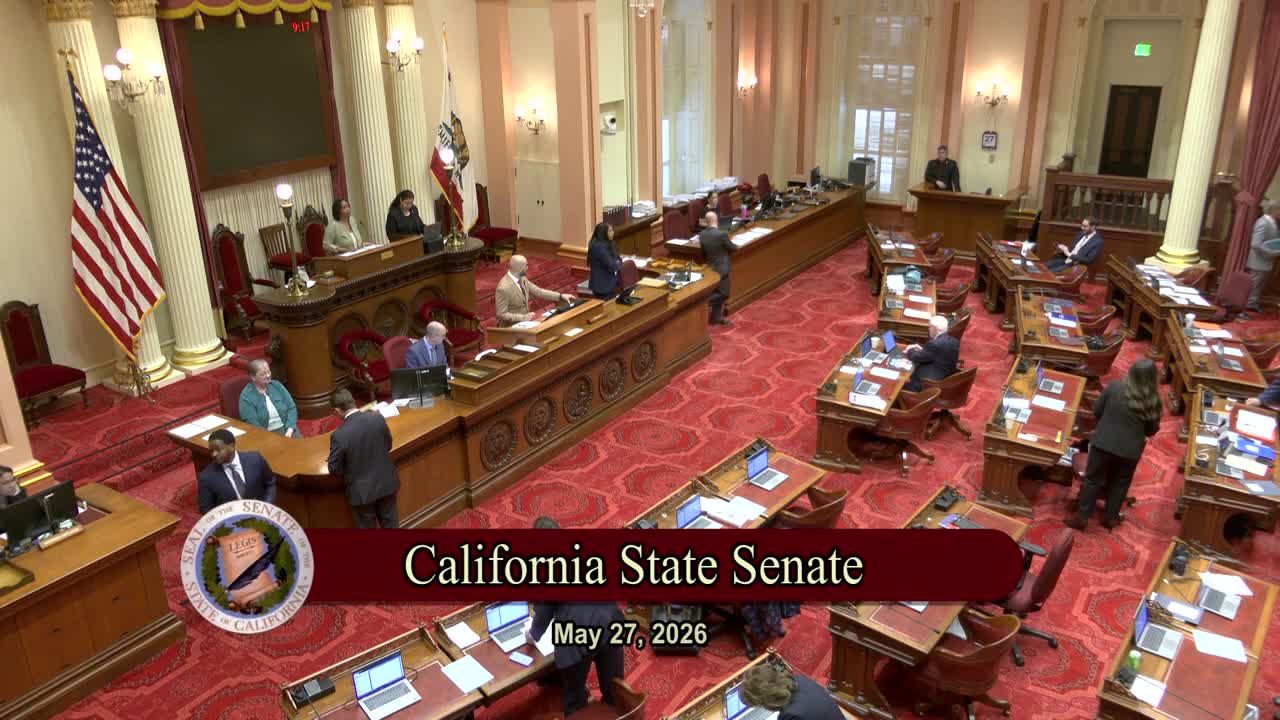
Bill Author