SB 1205: Public contracts: retention: architecture or engineering services.
- Session Year: 2025-2026
- House: Senate
- Latest Version Date: 2026-09-20
Current Status:
Passed
(2026-09-20: Chaptered by Secretary of State. Chapter 424, Statutes of 2026.)
Introduced
In Committee
Awaiting First Chamber Vote
Passed First Chamber
In Committee
Awaiting Second Chamber Vote
Passed Second Chamber
Enacted
What does this bill do?
The bill limits money a public agency can withhold from payments to architects and engineers on design–bid–build contracts to 5% of the payment. An agency may approve a higher withholding for a specific, unusually complex project only if it makes that finding before bids and puts the reasons and amount in the bid documents. Any withheld funds must be released within 60 days after the firm finishes its contracted services, even if the overall project is not yet complete.
The summary is provided by generative AI which can make mistakes. For original language, please view the details in the table below.
Existing law imposes various requirements regarding the formation, content, and enforcement of public works contracts. Existing law generally requires that retention proceeds withheld from payment by a public entity be released within 60 days after the date of completion of the work of improvement, except as specified in case of a dispute. Existing law limits the allowable amount of retention proceeds withheld in a contract between a public entity and the original contractor, a contract between the original contractor and a subcontractor, and a contract between subcontractors, as specified. Existing law defines public entity differently for these various purposes.
This bill would prohibit any retention payments from exceeding 5% of the payment for contracts under design-bid-build, and amendments thereto, entered into on or after January 1, 2027, directly between a public entity and an individual or legal entity permitted by law to practice the profession of architecture or engineering, except for specific projects where, among other things, a finding has been made that the project is substantially complex and requires a higher retention amount. The bill would require any retention withheld to be released no later than 60 days after completion of services under contract. The bill would define terms for its purposes, including public entity.
Existing law imposes various requirements regarding the formation, content, and enforcement of public works contracts. Existing law generally requires that retention proceeds withheld from payment by a public entity be released within 60 days after the date of completion of the work of improvement, except as specified in case of a dispute. Existing law limits the allowable amount of retention proceeds withheld in a contract between a public entity and the original contractor, a contract between the original contractor and a subcontractor, and a contract between subcontractors, as specified. Existing law defines public entity differently for these various purposes.
This bill would prohibit any retention payments from exceeding 5% of the payment for contracts under design-bid-build, and amendments thereto, entered into on or after January 1, 2027, directly between a public entity and an individual or legal entity permitted by law to practice the profession of architecture or engineering, unless the public entity makes a finding that the project is substantially complex and therefore requires a higher retention amount and the public entity includes in the contract details explaining the basis for the finding and the actual retention amount. except for specific projects where, among other things, a finding has been made that the project is substantially complex and requires a higher retention amount. The bill would require any retention withheld to be released no later than 60 days after completion of services under contract. The bill would define terms for its purposes, including public entity.
Existing law imposes various requirements regarding the formation, content, and enforcement of public works contracts. Existing law generally requires that retention proceeds withheld from payment by a public entity be released within 60 days after the date of completion of the work of improvement, except as specified in case of a dispute. Existing law limits the allowable amount of retention proceeds withheld in a contract between a public entity and the original contractor, a contract between the original contractor and a subcontractor, and a contract between subcontractors, as specified. Existing law defines public entity differently for these various purposes.
This bill would prohibit any retention payments from exceeding 5% of the payment for contracts under design-bid-build, and amendments thereto, entered into on or after January 1, 2027, directly between a public entity and an individual or legal entity permitted by law to practice the profession of architecture or engineering. engineering, unless the public entity makes a finding that the project is substantially complex and therefore requires a higher retention amount and the public entity includes in the contract details explaining the basis for the finding and the actual retention amount. The bill would require any retention withheld to be released no later than 60 days after completion of services under contract. The bill would define terms for its purposes, including public entity.
Existing law imposes various requirements regarding the formation, content, and enforcement of public works contracts. Existing law generally requires that retention proceeds withheld from payment by a public entity be released within 60 days after the date of completion of the work of improvement, except as specified in case of a dispute. Existing law limits the allowable amount of retention proceeds withheld in a contract between a public entity and the original contractor, a contract between the original contractor and a subcontractor, and a contract between subcontractors, as specified. Existing law defines public entity differently for these various purposes.
This bill would prohibit any retention of payment retention payments from exceeding 5% of the payment for all contracts, contracts under design-bid-build, and amendments thereto, entered into on or after January 1, 2027, directly between a public entity and an individual or legal entity permitted by law to practice the profession of architecture or engineering. The bill would require any retention withheld to be released no later than 60 days after completion of services under contract. The bill would define terms for its purposes, including public entity.
Existing law imposes various requirements regarding the formation, content, and enforcement of public works contracts. Existing law generally requires that retention proceeds withheld from payment by a public entity be released within 60 days after the date of completion of the work of improvement, except as specified in case of a dispute. Existing law limits the allowable amount of retention proceeds withheld in a contract between a public entity and the original contractor, a contract between the original contractor and a subcontractor, and a contract between subcontractors, as specified. Existing law defines public entity differently for these various purposes.
This bill would prohibit any retention of payment for all contracts, and amendments thereto, entered into on or after January 1, 2027, directly between a public entity and an individual or legal entity permitted by law to practice the profession of architecture or engineering. The bill would define terms for its purposes, including public entity.
Existing law requires a state agency, before awarding a contract for work to be performed by a contractor, to verify with the Contractors State License Board that the person seeking the contract is licensed in a classification appropriate to the work to be undertaken. Under existing law, in lieu of the verification, the state entity is authorized to require the person seeking the contract to present their pocket license or certificate of licensure and provide a signed statement, as specified.This bill would make nonsubstantive changes to these provisions.Existing law requires a state agency, before awarding a contract for work to be performed by a contractor, to verify with the Contractors State License Board that the person seeking the contract is licensed in a classification appropriate to the work to be undertaken. Under existing law, in lieu of the verification, the state entity is authorized to require the person seeking the contract to present their pocket license or certificate of licensure and provide a signed statement, as specified.
This bill would make nonsubstantive changes to these provisions.
(a)For contracts under design-bid-build, and amendments thereto, entered into on or after January 1, 2027, directly between a public entity and a firm, any retention payments to the firm for services shall not exceed 5 percent of the payment.
(b)Notwithstanding subdivision (a), the retention proceeds withheld from any payment to a firm by an awarding entity set forth in paragraphs (1) to (5), inclusive, of subdivision (a) of Section 10106, may exceed 5 percent on specific projects for which the director of the department has made a finding prior to the bid that the project is substantially complex and therefore requires a retention amount higher than 5 percent and the department includes in the bid documents details explaining the basis for the finding and the actual retention amount.
(c)Notwithstanding subdivision (a), the retention proceeds withheld from any payment to a firm by the awarding entity of a city, county, city and county, including charter cities and charter counties, district, special district, public authority, political subdivision, public corporation, or nonprofit transit corporation wholly owned by a public agency and formed to carry out the purposes of the public agency, may exceed 5 percent on specific projects where the governing body of the public entity or designee, including, but not limited to, a general manager or other director of an appropriate department, has approved a finding, on a project-by-project basis, during a properly noticed and normally scheduled public hearing, and prior to the bid, that the project is substantially complex and therefore requires a retention amount higher than 5 percent and the awarding entity includes in the bid documents details explaining the basis for the finding and the actual retention amount.
(d)Any finding by a public entity that a project is substantially complex shall include a description of the specific project and why it is a unique project that is not regularly, customarily, or routinely performed by the agency or licensed contractors.
(e)Any retention withheld pursuant to subdivision (a) shall be released no later than 60 days upon completion of the firms services under contract, regardless of whether the project for which the services were provided has been completed.
(f)For purposes of this section, the following definitions shall apply:
(1)Firm means an individual, firm, partnership, corporation, association, or other legal entity permitted by law to practice the profession of architecture or engineering.
(2)Public entity means the state, including every state agency, office, department, division, bureau, board, or commission, the California State University, the University of California, a city, county, city and county, including charter cities and charter counties, district, special district, public authority, political subdivision, public corporation, or nonprofit transit corporation wholly owned by a public agency and formed to carry out the purposes of the public agency.
(a)For contracts under design-bid-build, and amendments thereto, entered into on or after January 1, 2027, directly between a public entity and a firm, any retention payments to the firm for services shall not exceed 5 percent of the payment unless the public entity makes a finding that the project is substantially complex and therefore requires a higher retention amount than 5 percent and the public entity includes in the contract details explaining the basis for the finding and the actual retention amount. payment.
(b)Notwithstanding subdivision (a), the retention proceeds withheld from any payment to a firm by an awarding entity set forth in paragraphs (1) to (5), inclusive, of subdivision (a) of Section 10106, may exceed 5 percent on specific projects for which the director of the department has made a finding prior to the bid that the project is substantially complex and therefore requires a retention amount higher than 5 percent and the department includes in the bid documents details explaining the basis for the finding and the actual retention amount.
(c)Notwithstanding subdivision (a), the retention proceeds withheld from any payment to a firm by the awarding entity of a city, county, city and county, including charter cities and charter counties, district, special district, public authority, political subdivision, public corporation, or nonprofit transit corporation wholly owned by a public agency and formed to carry out the purposes of the public agency, may exceed 5 percent on specific projects where the governing body of the public entity or designee, including, but not limited to, a general manager or other director of an appropriate department, has approved a finding, on a project-by-project basis, during a properly noticed and normally scheduled public hearing, and prior to the bid, that the project is substantially complex and therefore requires a retention amount higher than 5 percent and the awarding entity includes in the bid documents details explaining the basis for the finding and the actual retention amount.
(d)Any finding by a public entity that a project is substantially complex shall include a description of the specific project and why it is a unique project that is not regularly, customarily, or routinely performed by the agency or licensed contractors.
(b)(e)Any retention withheld pursuant to subdivision (a) shall be released no later than 60 days upon completion of the firms services under contract, regardless of whether the project for which the services were provided has been completed.
(c)(f)For purposes of this section, the following definitions shall apply:
(1)Firm means an individual, firm, partnership, corporation, association, or other legal entity permitted by law to practice the profession of architecture or engineering.
(2)Public entity means the state, including every state agency, office, department, division, bureau, board, or commission, the California State University, the University of California, a city, county, city and county, including charter cities and charter counties, district, special district, public authority, political subdivision, public corporation, or nonprofit transit corporation wholly owned by a public agency and formed to carry out the purposes of the public agency.
(a)For contracts under design-bid-build, and amendments thereto, entered into on or after January 1, 2027, directly between a public entity and a firm, any retention payments to the firm for services shall not exceed 5 percent of the payment. payment unless the public entity makes a finding that the project is substantially complex and therefore requires a higher retention amount than 5 percent and the public entity includes in the contract details explaining the basis for the finding and the actual retention amount.
(b)Any retention withheld pursuant to subdivision (a) shall be released no later than 60 days upon completion of the firms services under contract, regardless of whether the project for which the services were provided has been completed.
(c)For purposes of this section, the following definitions shall apply:
(1)Firm means an individual, firm, partnership, corporation, association, or other legal entity permitted by law to practice the profession of architecture or engineering.
(2)Public entity means the state, including every state agency, office, department, division, bureau, board, or commission, the California State University, the University of California, a city, county, city and county, including charter cities and charter counties, district, special district, public authority, political subdivision, public corporation, or nonprofit transit corporation wholly owned by a public agency and formed to carry out the purposes of the public agency.
(a)For all contracts, contracts under design-bid-build, and amendments thereto, entered into on or after January 1, 2027, directly between a public entity and a firm, any retention payments to the firm for services shall not be subject to retention. exceed 5 percent of the payment.
(b)Any retention withheld pursuant to subdivision (a) shall be released no later than 60 days upon completion of the firms services under contract, regardless of whether the project for which the services were provided has been completed.
(b)(c)For purposes of this section, the following definitions shall apply:
(1)Firm means an individual, firm, partnership, corporation, association, or other legal entity permitted by law to practice the profession of architecture or engineering.
(2)Public entity means the state, including every state agency, office, department, division, bureau, board, or commission, the California State University, the University of California, a city, county, city and county, including charter cities and charter counties, district, special district, public authority, political subdivision, public corporation, or nonprofit transit corporation wholly owned by a public agency and formed to carry out the purposes of the public agency.
(a)For all contracts, and amendments thereto, entered into on or after January 1, 2027, directly between a public entity and a firm, any payments to the firm for services shall not be subject to retention.
(b)For purposes of this section, the following definitions shall apply:
(1)Firm means an individual, firm, partnership, corporation, association, or other legal entity permitted by law to practice the profession of architecture or engineering.
(2)Public entity means the state, including every state agency, office, department, division, bureau, board, or commission, the California State University, the University of California, a city, county, city and county, including charter cities and charter counties, district, special district, public authority, political subdivision, public corporation, or nonprofit transit corporation wholly owned by a public agency and formed to carry out the purposes of the public agency.
SECTION 1.Section 6100 of the Public Contract Code is amended to read:6100.(a)A state agency, as defined in Section 10335.7 that is subject to this code, shall, before awarding a contract for work to be performed by a contractor, as defined by Section 7026 of the Business and Professions Code, verify with the Contractors State License Board that the person seeking the contract is licensed in a classification appropriate to the work to be undertaken. Verification as required by this section need only be made once every two years with respect to the same contractor.(b)In lieu of the verification, the state entity may require the person seeking the contract to present their pocket license or certificate of licensure and provide a signed statement that swears, under penalty of perjury, that the pocket license or certificate of licensure presented is theirs, is current and valid, and is in a classification appropriate to the work to be undertaken.(a)A state agency, as defined in Section 10335.7 that is subject to this code, shall, prior to before awarding a contract for work to be performed by a contractor, as defined by Section 7026 of the Business and Professions Code, verify with the Contractors State License Board that the person seeking the contract is licensed in a classification appropriate to the work to be undertaken. Verification as required by this section need only be made once every two years with respect to the same contractor.
(b)In lieu of the verification, the state entity may require the person seeking the contract to present his or her their pocket license or certificate of licensure and provide a signed statement which that swears, under penalty of perjury, that the pocket license or certificate of licensure presented is his or hers, theirs, is current and valid, and is in a classification appropriate to the work to be undertaken.
|
Date
|
Status
|
|---|---|
| Sep 20, 2026 | Chaptered by Secretary of State. Chapter 424, Statutes of 2026. |
| Sep 20, 2026 | Approved by the Governor. |
| Sep 3, 2026 | Enrolled and presented to the Governor at 3 p.m. |
| Aug 27, 2026 | Assembly amendments concurred in. (Ayes 40. Noes 0.) Ordered to engrossing and enrolling. |
| Aug 27, 2026 | Assembly amendments concurred in. (Ayes 40. Noes 0. Page 5997.) Ordered to engrossing and enrolling. |
| Aug 26, 2026 | In Senate. Concurrence in Assembly amendments pending. |
| Aug 26, 2026 | Read third time. Passed. (Ayes 78. Noes 0. Page 6613.) Ordered to the Senate. |
| Aug 26, 2026 | Read third time. Passed. Ordered to the Senate. |
| Aug 21, 2026 | Ordered to third reading. |
| Aug 21, 2026 | Assembly Rule 69(b)(1) suspended. |
| Aug 21, 2026 | Assembly Rule 69(b)(1) suspended. (Ayes 55. Noes 17. Page 6296.) |
| Aug 21, 2026 | Read third time and amended. |
| Aug 17, 2026 | Read second time. Ordered to third reading. |
| Aug 13, 2026 | Read second time and amended. Ordered to second reading. |
| Aug 13, 2026 | From committee: Do pass as amended. (Ayes 11. Noes 0.) (August 13). |
| Aug 13, 2026 | Assembly Rule 63 suspended. |
| Jun 24, 2026 | June 24 set for first hearing. Placed on suspense file. |
| Jun 10, 2026 | From committee: Do pass and re-refer to Com. on APPR. with recommendation: To consent calendar. (Ayes 18. Noes 0.) (June 10). Re-referred to Com. on APPR. |
| Jun 1, 2026 | Referred to Com. on G.O. |
| May 22, 2026 | In Assembly. Read first time. Held at Desk. |
| May 22, 2026 | Read third time. Passed. (Ayes 33. Noes 0. Page 4420.) Ordered to the Assembly. |
| May 22, 2026 | Read third time. Passed. (Ayes 33. Noes 0.) Ordered to the Assembly. |
| May 20, 2026 | Ordered to special consent calendar. |
| May 14, 2026 | Read second time. Ordered to third reading. |
| May 14, 2026 | From committee: Do pass. (Ayes 7. Noes 0.) (May 14). |
| May 14, 2026 | From committee: Do pass. (Ayes 7. Noes 0. Page 4269.) (May 14). |
| May 8, 2026 | Set for hearing May 14. |
| May 4, 2026 | May 4 hearing: Placed on APPR. suspense file. |
| Apr 24, 2026 | Set for hearing May 4. |
| Apr 22, 2026 | From committee: Do pass and re-refer to Com. on APPR. with recommendation: To consent calendar. (Ayes 7. Noes 0.) (April 22). Re-referred to Com. on APPR. |
| Apr 22, 2026 | From committee: Do pass and re-refer to Com. on APPR. with recommendation: To consent calendar. (Ayes 7. Noes 0. Page 4015.) (April 22). Re-referred to Com. on APPR. |
| Apr 14, 2026 | Set for hearing April 22 in L. GOV. pending receipt. |
| Apr 14, 2026 | From committee: Do pass and re-refer to Com. on L. GOV. with recommendation: To consent calendar. (Ayes 15. Noes 0.) (April 14). Re-referred to Com. on L. GOV. |
| Apr 14, 2026 | From committee: Do pass and re-refer to Com. on L. GOV. with recommendation: To consent calendar. (Ayes 15. Noes 0. Page 3866.) (April 14). Re-referred to Com. on L. GOV. |
| Apr 9, 2026 | Set for hearing April 14. |
| Apr 9, 2026 | From committee with author's amendments. Read second time and amended. Re-referred to Com. on G.O. |
| Apr 8, 2026 | Re-referred to Coms. on G.O. and L. GOV. |
| Mar 24, 2026 | From committee with author's amendments. Read second time and amended. Re-referred to Com. on RLS. |
| Mar 4, 2026 | Referred to Com. on RLS. |
| Feb 20, 2026 | From printer. May be acted upon on or after March 22. |
| Feb 19, 2026 | Introduced. Read first time. To Com. on RLS. for assignment. To print. |
|
Date
|
Description
|
Location
|
Votes
|
|
|---|---|---|---|---|
| Aug 27, 2026 | Unfinished Business SB1205 Valladares Concurrence | Senate Floor |
Passed |
|
| Aug 26, 2026 | SB 1205 Valladares Senate Third Reading By Carrillo | Assembly Floor |
Passed |
|
| Aug 13, 2026 | Do pass as amended. | Assembly Standing Committee on Appropriations |
Passed |
|
| Jun 10, 2026 | Do pass and be re-referred to the Committee on [Appropriations] with recommendation: To Consent Calendar | Assembly Standing Committee on Governmental Organization |
Passed |
|
| May 22, 2026 | Special Consent SB1205 Valladares | Senate Floor |
Passed |
|
| May 14, 2026 | Do pass | Senate Standing Committee on Appropriations |
Passed |
|
| May 4, 2026 | Placed on suspense file | Senate Standing Committee on Appropriations |
Passed |
|
| Apr 22, 2026 | Do pass, but first be re-referred to the Committee on [Appropriations] with the recommendation: To Consent Calendar | Senate Standing Committee on Local Government |
Passed |
|
| Apr 14, 2026 | Do pass, but first be re-referred to the Committee on [Local Government] with the recommendation: To Consent Calendar | Senate Standing Committee on Governmental Organization |
Passed |
This list shows positions taken on this bill by organizations on the date displayed, which is linked to the original source.
Positions by individuals are not included.
|
Organization
|
Position
|
Date
|
|---|---|---|
| American Council of Engineering Companies of California | ** Support | |
| American Institute of Architects, California | ** Support | |
| American Institute of Architects, California (Sponsor) | ** Support |
SENATE RULES COMMITTEE Office of Senate Floor Analyses (916) 651-4171 | SB 1205 |
UNFINISHED BUSINESS
Bill No: SB 1205
Author: Valladares (R)
Amended: 8/21/26
Vote: 21
SENATE GOVERNMENTAL ORG. COMMITTEE: 15-0, 4/14/26
AYES: Rubio, Alvarado-Gil, Archuleta, Ashby, Blakespear, Cervantes, Choi, Dahle, Hurtado, Ochoa Bogh, Padilla, Richardson, Smallwood-Cuevas, Wahab, Weber Pierson
SENATE LOCAL GOVERNMENT COMMITTEE: 7-0, 4/22/26
AYES: Durazo, Choi, Arreguín, Ashby, Cervantes, Laird, Seyarto
SENATE APPROPRIATIONS COMMITTEE: 7-0, 5/14/26
AYES: Cervantes, Seyarto, Cabaldon, Dahle, Grayson, Richardson, Wahab
SENATE FLOOR: 33-0, 5/22/26
AYES: Archuleta, Arreguín, Ashby, Blakespear, Cabaldon, Caballero, Cervantes, Choi, Cortese, Dahle, Durazo, Gonzalez, Grayson, Grove, Jones, Laird, Limón, McGuire, McNerney, Menjivar, Ochoa Bogh, Pérez, Reyes, Richardson, Rubio, Seyarto, Smallwood-Cuevas, Strickland, Umberg, Valladares, Wahab, Weber Pierson, Wiener
NO VOTE RECORDED: Allen, Alvarado-Gil, Becker, Hurtado, Niello, Padilla, Stern
ASSEMBLY FLOOR: Passed, 8/26/26
SUBJECT: Public contracts: retention: architecture or engineering services
SOURCE: American Institute of Architects, California
DIGEST:
This bill prohibits any retention payments for contracts under design-bid-build directly between a public entity and an individual or legal entity permitted by law to practice the profession of architecture or engineering from exceeding five percent of the payment, except for specific projects where, among other things, a finding has been made that the project is substantially complex and requires a higher retention amount.
Assembly Amendments
allow for the retention proceeds to exceed five percent on specific projects where the governing body of the public entity has approved a finding that, among other things, finds that the project is substantially complex and therefore requires a retention amount higher than five percent.
ANALYSIS:
Existing law:
- Prohibits the retention proceeds withheld from any payment by a public entity from the original contractor, by the original contractor from any subcontractor, and by a subcontractor from any subcontractor, from exceeding five percent of the payment for all contracts between a public agency and a contractor relating to the construction of any public works project. (Public Contract Code § 7201)
- Defines “public works” to mean the erection, construction, alteration, repair, or improvement of any public structure, building, road, or other public improvement of any kind.
- Prohibits a retention payment withheld from a payment by an owner from the direct contractor, by the direct contractor from any subcontractor, and by a subcontractor from any subcontractor thereunder, for a private work of improvement, from exceeding five percent of the payment. (Civil Code § 8811)
This bill:
- Provides that any retention payments for contracts under design-bid-build directly between a public entity and an individual or legal entity permitted by law to practice the profession of architecture or engineering shall not exceed five percent of the payment. The bill exempts specific projects where, among other things, a finding has been made that the project is substantially complex and requires a higher retention amount, as specified.
- Requires that any retention withheld shall be released no later than 60 days upon completion of the firm’s design services under contract, regardless of whether the project for which the services were provided has been completed.
- Defines “firm” to mean an individual, firm, partnership, corporation, association, or other legal entity permitted by law to practice the profession of architecture or engineering.
- Defines “public entity” to mean the state, including every state agency, office, department, division, bureau, board, or commission, the California State University, the University of California, a city, county, city and county, including charter cities and charter counties, district, special district, public authority, political subdivision, public corporation, or nonprofit transit corporation wholly owned by a public agency and formed to carry out the purposes of the public agency.
Background
Author’s Statement. According to the author’s office, “California relies on architects to design safe, resilient, and innovative public infrastructure. Yet under current practice, many architects are forced to wait years to receive full payment for work they completed long before construction is finished. SB 1205 ensures that payment practices reflect the realities of professional services, not construction risk. This bill supports small businesses, improves cash flow, and promotes a more efficient and equitable public contracting system.”
Five-Percent Retention Cap. The five percent retention cap represents a critical policy for the construction industry, particularly in supporting small and emerging contractors. By limiting the amount of payment withheld, the cap helps ensure these businesses maintain sufficient cash flow to meet ongoing obligations, including payroll, employee benefits, material costs, and applicable taxes. Given the typically low profit margins in construction, timely and predictable payments are essential to sustaining operations. This financial stability enables contractors to continue bidding on future public works projects without relying on costly lines of credit or operating under uncertain financial conditions. Absent the retention cap, contractors may face constrained cash flow and heightened financial risk, limiting their ability to compete and remain viable.
In California and many other states, a public agency is entitled to withhold a percentage of a contract which allows the public agency to maintain some control over the project and ensure that the contractor performs the work, on time, and within a budget. Prior to 2011, state law allowed a public agency to retain no less than five percent from the contractor until the project was completed; the usual standard for public entities was 10%, although this was not set by statute. In 2011, SB 293 (Padilla, Chapter 700, Statutes of 2011) was enacted which capped the percentage that could be withheld to five percent.
The only identified exception to the five percent retention limit is when a public entity deems that a project is substantially complex during a properly noticed and regularly scheduled public meeting prior to bidding the project. In that case, retention proceeds may exceed the five percent retention cap.
Determining whether a project is substantially complex for purposes of requiring retention in excess of five percent must be analyzed and approved on a project-by-project basis. The finding and the designated retention amount must be included in the project’s bid documents. Existing law establishing the general five percent retention limit but allowing higher retention for substantially complex. Last year, Governor Newsom signed SB 61 (Cortese, Chapter 49, Statutes of 2025) which established a five percent cap on retention on most private construction projects – bringing private sector rules in line with existing public works law.
However, while a five percent retention cap is an established policy standard for construction projects, no equivalent statutory limitation exists for professional services contracts, including those for architects and engineers. According to the author’s office, public entities often apply construction-style retention provisions to architectural contracts, withholding up to 10% of payments. Unlike contractors, architects typically complete their scope of work well before construction is finished; however, retained funds are frequently not released until overall project completion, which may occur years after design services are rendered. The author’s office contends that, for smaller and mid-sized firms, these delayed payments can significantly affect business operations and hiring decisions.
This bill establishes a five percent retention cap for all contracts between a public entity and a licensed architect or engineer. It would also require that any retention withheld be released no later than 60 days after completion of the firm’s design services, regardless of whether the broader construction project has been completed. The bill exempts specific projects where, among other things, a finding has been made that the project is substantially complex and requires a higher retention amount, as specified.
According to the author’s office, this approach “will ensure that architects are paid in a timely manner upon completion of their scope of work, rather than being tied to construction completion.” In doing so, the bill seeks to align payment practices with the actual risk profile of professional services, modernize public contracting, and promote fair and timely compensation for design professionals.
Design-Bid-Build. Design–bid–build (DBB) is a construction project delivery method in which the work is completed in three distinct, sequential phases: design, bidding, and construction. In California this is a “traditional” method that is frequently used for public infrastructure projects. First, the project owner hires a designer—typically an architect or engineer—to develop complete plans and specifications for the project. Once the design is finalized, the project moves into the bidding phase, where contractors submit competitive bids based on those plans, and the owner usually selects the lowest responsible bidder. After a contractor is chosen, the project enters the construction phase, during which the contractor builds the project according to the completed design. This method is widely used because it provides a clear structure, defined roles, and a transparent bidding process that can help control costs.
Related/Prior Legislation
SB 61 (Cortese, Chapter 49, Statutes of 2025) prohibits an owner, direct contractor, or a subcontractor of a private work of improvement from withholding a retention payment from a direct contractor or subcontractor of more than five percent, except as specified.
AB 1885 (Carillo, 2026) reduces that amount of retention proceeds state agencies may withhold, from 5% to 3.5% from a progress payment to certain contractors on a public works project. (Pending in the Assembly Appropriations Committee)
AB 2173 (Petrie-Norris, Chapter 121, Statutes of 2022) removed the sunset clause on the five percent retention cap policy related to public works.
AB 92 (Bonta, Chapter 37, Statutes of 2017) extended, from January 1, 2018, to January 1, 2023, the sunset date on existing statutes governing the amount of money a public agency can retain from a contractor or subcontractor prior to completion of a public works project.
AB 1705 (Williams, Chapter 670, Statutes of 2014) limited the circumstances under which public agencies may withhold more than five percent of total payment amounts for time and materials on substantially complex public works projects and extended the repeal date of the provisions governing retention proceeds from January 1, 2016, to January 1, 2018.
SB 293 (Padilla, Chapter 700, Statutes of 2011) capped the amount of money that public agencies can withhold from a contractor prior to completion of a public works project at five percent of the total contract, with specified exceptions, with a sunset of January 1, 2016.
FISCAL EFFECT: Appropriation: No Fiscal Com.: Yes Local: No
According to the Assembly Committee on Appropriations, likely absorbable costs to impacted state and local entities to adjust retention payment rules.
SUPPORT: (Verified 8/24/26)
American Institute of Architects, California (Source)
American Council of Engineering Companies of California
OPPOSITION: (Verified 8/24/26)
None received
ARGUMENTS IN SUPPORT: According to the American Council of Engineering Companies of California, “SB 1205 aligns with this policy by reinforcing a 5% on retention for contracts involving design professionals working with public agencies. It also supports timely release of any retained funds, ensuring payments are issued within 60 days after completion of services.”
Prepared by: Felipe Lopez / G.O. / (916) 651-1530
8/26/26 15:30:24
**** END ****
SENATE THIRD READING
STR Bill Id:SB 1205
Author:(Valladares)
As Amended Ver:August 21, 2026
Majority vote
SUMMARY
This bill would impose requirements for a retention payment for contracts under design-bid-build between a public entity and an architecture or engineering firm, except for specific projects, as described.
Major Provisions
1) Provides for contracts under design-bid-build, and amendments thereto, entered into on or after January 1, 2027, directly between a public entity and a firm, any retention payments to the firm for services shall not exceed 5% of the payment.
2) Provides the retention proceeds withheld from any payment to a firm by an awarding entity, as described, may exceed 5% on specific projects for which the director of the department has made a finding prior to the bid that the project is substantially complex and therefore requires a retention amount higher than 5% and the department includes in the bid documents details explaining the basis for the finding and the actual retention amount.
3) Provides the retention proceeds withheld from any payment to a firm by the awarding entity of public entity, as described, may exceed 5% on specific projects where the governing body of the public entity or designee, as defined, has approved a finding, on a project-by-project basis, during a properly noticed and normally scheduled public hearing, and prior to the bid, that the project is substantially complex and therefore requires a retention amount higher than 5% and the awarding entity includes in the bid documents details explaining the basis for the finding and the actual retention amount.
4) Provides any finding by a public entity that a project is substantially complex shall include a description of the specific project and why it is a unique project that is not regularly, customarily, or routinely performed by the agency or licensed contractors.
5) Requires that any retention withheld shall be released no later than 60 days upon completion of the firm's design services under contract, regardless of whether the project for which the services were provided has been completed.
6) Defines "firm" to mean an individual, firm, partnership, corporation, association, or other legal entity permitted by law to practice the profession of architecture or engineering.
7) Defines a "public entity" to mean a list of state entities, including each state agency, department, or commission, the California State University, the University of California, and a list of local entities, such as a city, special district, or public authority.
COMMENTS
Background.
Design-Bid-Build. Design–bid–build (DBB) is a construction project delivery method in which a project is completed through three distinct, sequential phases: design, bidding, and construction. In California, DBB is considered the traditional project delivery method and is commonly used for public infrastructure projects.
Under the DBB method, the owner hires a design professional (architect or engineer) to prepare complete plans and specifications. After the design is finalized, the project is advertised for competitive bidding. Once a contractor is selected and the contract is awarded, the contractor constructs the project in accordance with the plans and specifications.
Once the design is finalized, the project moves into the bidding phase, where contractors submit competitive bids based on those plans, and the owner usually selects the lowest responsible bidder. After a contractor is chosen, the project enters the construction phase, during which the contractor builds the project according to the completed design. This method is widely used because it provides a clear structure, defined roles, and a transparent bidding process that can help control costs.
Retention Cap. In 2012, California made sweeping changes to its retention laws on public works projects. These changes (Public Contract Code sections 7200, et. seq.) have impacted how contractors are able to deal with retention and when retention is to be paid. Previously, public agency owners and original (i.e., general) contractors had discretion as to the amount of retention they could withhold on a public works project. Under most situations, the parties negotiated to withhold 10% in retention of the contract amount until completion. The withholding of 10% from progress payments was commonly viewed as reasonable and a necessary incentive for the original contractors and subcontractors to complete their respective scopes of work on time. However, under California's current retention laws, these parties no longer have such discretion.
SB 293 (Padilla), Chapter 700, Statutes of 2011, limited the allowable withholding percentage to 5%. The bill included a five‑year sunset provision, which was later extended through subsequent legislation. Specifically, for public works contracts entered into on or after January 1, 2012, public agency owners, original contractors and subcontractors were required to withhold no more than 5% retention. With respect to subcontracts, the amount of withheld retention cannot exceed the amount specified in the contract between the original contractor and the owner.[1]
Many original contractors and subcontractors welcome reduced retentions, as a lower retention percentage improves cash flow and enhances financial flexibility. Increased cash flow can be especially beneficial when contract margins are thin or when there are unpaid claims for extra work.
AB 2173 (Petrie‑Norris), Chapter 121, Statutes of 2022, removed the prior legislative sunset date and made permanent the statute that limited the amount of retention that a public entity may withhold on public works projects from construction contractors to no more than 5% of the public works contract, unless the director of the applicable department has made, or the governing body of the public entity or designated official of the public entity makes a finding prior to bidding that the project is "substantially complex" and requires the withholding of more than 5%. This was accomplished by amending Section 7201 and Section 10261 of the Public Contract Code (PCC).
It should be noted that the federal government and Caltrans adhere to 'zero percent' retention policies under SB 197 (Beall) Chapter 842, Statutes of 2019, paying one hundred percent for work completed and accepted. Under this framework, agencies rely on performance bonds and retain the right to withhold necessary amounts from progress payments for any work in dispute. The Federal Acquisition Regulation (FAR) 32.103 states; "retainage should not be used as a substitute for good contract management, and the contracting officers should not withhold funds without cause." The prohibition on Caltrans holding retainage can be found in PPC Section 7202. In addition, cities and counties using design-build and other alternative construction delivery methods are allowed to hold no more than 5% retention on contractors.
According to the Author
The author states, "California relies on architects to design safe, resilient, and innovative public infrastructure. Yet under current practice, many architects are forced to wait years to receive full payment for work they completed long before construction is finished. SB 1205 ensures that payment practices reflect the realities of professional services, not construction risk. This bill supports small businesses, improves cash flow, and promotes a more efficient and equitable public contracting system."
Arguments in Support
The American Council of Engineering Companies of California writes, "This bill aligns with this policy by reinforcing a 5% on retention for contracts involving design professionals working with public agencies. It also supports timely release of any retained funds, ensuring payments are issued within 60 days after completion of services."
This bill is also supported by the American Council of Engineering Companies of California.
Arguments in Opposition
None on file.
FISCAL COMMENTS
According to the Assembly Committee on Appropriations analysis, "Likely absorbable costs to impacted state and local entities to adjust retention payment rules."
VOTES
SENATE FLOOR: 33-0-7
YES: Archuleta, Arreguín, Ashby, Blakespear, Cabaldon, Caballero, Cervantes, Choi, Cortese, Dahle, Durazo, Gonzalez, Grayson, Grove, Jones, Laird, Limón, McGuire, McNerney, Menjivar, Ochoa Bogh, Pérez, Reyes, Richardson, Rubio, Seyarto, Smallwood-Cuevas, Strickland, Umberg, Valladares, Wahab, Weber Pierson, Wiener
ABS, ABST OR NV: Allen, Alvarado-Gil, Becker, Hurtado, Niello, Padilla, Stern
ASM GOVERNMENTAL ORGANIZATION: 18-0-3
YES: Blanca Rubio, Davies, Alvarez, Berman, Bryan, Dixon, Fong, Gabriel, Gipson, McKinnor, Nguyen, Pacheco, Ramos, Michelle Rodriguez, Solache, Soria, Ta, Wallis
ABS, ABST OR NV: Carrillo, Macedo, Valencia
ASM APPROPRIATIONS: 11-0-4
YES: Wicks, Arambula, Calderon, Caloza, Fong, Mark González, Krell, Pacheco, Pellerin, Sharp-Collins, Solache
ABS, ABST OR NV: Hoover, Dixon, Ta, Tangipa
UPDATED
VERSION: August 21, 2026
CONSULTANT: Eric Johnson / G.O. / (916) 319-2531 FN: 0004015
https://www.smtdlaw.com/how-californias-retention-laws-on-public-works-projects-impact-project-completion/ ↑
SENATE THIRD READING
STR Bill Id:SB 1205
Author:(Valladares)
As Amended Ver:August 21, 2026
Majority vote
SUMMARY
This bill would impose requirements for a retention payment for contracts under design-bid-build between a public entity and an architecture or engineering firm, except for specific projects, as described.
Major Provisions
1) Provides for contracts under design-bid-build, and amendments thereto, entered into on or after January 1, 2027, directly between a public entity and a firm, any retention payments to the firm for services shall not exceed 5% of the payment.
2) Provides the retention proceeds withheld from any payment to a firm by an awarding entity, as described, may exceed 5% on specific projects for which the director of the department has made a finding prior to the bid that the project is substantially complex and therefore requires a retention amount higher than 5% and the department includes in the bid documents details explaining the basis for the finding and the actual retention amount.
3) Provides the retention proceeds withheld from any payment to a firm by the awarding entity of public entity, as described, may exceed 5% on specific projects where the governing body of the public entity or designee, as defined, has approved a finding, on a project-by-project basis, during a properly noticed and normally scheduled public hearing, and prior to the bid, that the project is substantially complex and therefore requires a retention amount higher than 5% and the awarding entity includes in the bid documents details explaining the basis for the finding and the actual retention amount.
4) Provides any finding by a public entity that a project is substantially complex shall include a description of the specific project and why it is a unique project that is not regularly, customarily, or routinely performed by the agency or licensed contractors.
5) Requires that any retention withheld shall be released no later than 60 days upon completion of the firm's design services under contract, regardless of whether the project for which the services were provided has been completed.
6) Defines "firm" to mean an individual, firm, partnership, corporation, association, or other legal entity permitted by law to practice the profession of architecture or engineering.
7) Defines a "public entity" to mean a list of state entities, including each state agency, department, or commission, the California State University, the University of California, and a list of local entities, such as a city, special district, or public authority.
COMMENTS
Background.
Design-Bid-Build. Design–bid–build (DBB) is a construction project delivery method in which a project is completed through three distinct, sequential phases: design, bidding, and construction. In California, DBB is considered the traditional project delivery method and is commonly used for public infrastructure projects.
Under the DBB method, the owner hires a design professional (architect or engineer) to prepare complete plans and specifications. After the design is finalized, the project is advertised for competitive bidding. Once a contractor is selected and the contract is awarded, the contractor constructs the project in accordance with the plans and specifications.
Once the design is finalized, the project moves into the bidding phase, where contractors submit competitive bids based on those plans, and the owner usually selects the lowest responsible bidder. After a contractor is chosen, the project enters the construction phase, during which the contractor builds the project according to the completed design. This method is widely used because it provides a clear structure, defined roles, and a transparent bidding process that can help control costs.
Retention Cap. In 2012, California made sweeping changes to its retention laws on public works projects. These changes (Public Contract Code sections 7200, et. seq.) have impacted how contractors are able to deal with retention and when retention is to be paid. Previously, public agency owners and original (i.e., general) contractors had discretion as to the amount of retention they could withhold on a public works project. Under most situations, the parties negotiated to withhold ten percent (10%) in retention of the contract amount until completion. The withholding of ten percent from progress payments was commonly viewed as reasonable and a necessary incentive for the original contractors and subcontractors to complete their respective scopes of work on time. However, under California's current retention laws, these parties no longer have such discretion.
SB 293 (Padilla), Chapter 700, Statutes of 2011, limited the allowable withholding percentage to 5%. The bill included a five‑year sunset provision, which was later extended through subsequent legislation. Specifically, for public works contracts entered into on or after January 1, 2012, public agency owners, original contractors and subcontractors were required to withhold no more than 5% retention. With respect to subcontracts, the amount of withheld retention cannot exceed the amount specified in the contract between the original contractor and the owner.[1]
Many original contractors and subcontractors welcome reduced retentions, as a lower retention percentage improves cash flow and enhances financial flexibility. Increased cash flow can be especially beneficial when contract margins are thin or when there are unpaid claims for extra work.
AB 2173 (Petrie‑Norris), Chapter 121, Statutes of 2022, removed the prior legislative sunset date and made permanent the statute that limited the amount of retention that a public entity may withhold on public works projects from construction contractors to no more than 5% of the public works contract, unless the director of the applicable department has made, or the governing body of the public entity or designated official of the public entity makes a finding prior to bidding that the project is "substantially complex" and requires the withholding of more than 5%. This was accomplished by amending Section 7201 and Section 10261 of the Public Contract Code (PCC).
It should be noted that the federal government and Caltrans adhere to 'zero percent' retention policies under SB 197 (Beall) Chapter 842, Statutes of 2019, paying one hundred percent for work completed and accepted. Under this framework, agencies rely on performance bonds and retain the right to withhold necessary amounts from progress payments for any work in dispute. The Federal Acquisition Regulation (FAR) 32.103 states; "retainage should not be used as a substitute for good contract management, and the contracting officers should not withhold funds without cause." The prohibition on Caltrans holding retainage can be found in PPC Section 7202. In addition, cities and counties using design-build and other alternative construction delivery methods are allowed to hold no more than 5% retention on contractors.
According to the Author
The author states, "California relies on architects to design safe, resilient, and innovative public infrastructure. Yet under current practice, many architects are forced to wait years to receive full payment for work they completed long before construction is finished. SB 1205 ensures that payment practices reflect the realities of professional services, not construction risk. This bill supports small businesses, improves cash flow, and promotes a more efficient and equitable public contracting system."
Arguments in Support
The American Council of Engineering Companies of California writes, "This bill aligns with this policy by reinforcing a 5% on retention for contracts involving design professionals working with public agencies. It also supports timely release of any retained funds, ensuring payments are issued within 60 days after completion of services."
This bill is also supported by the American Council of Engineering Companies of California.
Arguments in Opposition
None on file.
FISCAL COMMENTS
According to the Assembly Committee on Appropriations analysis, "Likely absorbable costs to impacted state and local entities to adjust retention payment rules."
VOTES
SENATE FLOOR: 33-0-7
YES: Archuleta, Arreguín, Ashby, Blakespear, Cabaldon, Caballero, Cervantes, Choi, Cortese, Dahle, Durazo, Gonzalez, Grayson, Grove, Jones, Laird, Limón, McGuire, McNerney, Menjivar, Ochoa Bogh, Pérez, Reyes, Richardson, Rubio, Seyarto, Smallwood-Cuevas, Strickland, Umberg, Valladares, Wahab, Weber Pierson, Wiener
ABS, ABST OR NV: Allen, Alvarado-Gil, Becker, Hurtado, Niello, Padilla, Stern
ASM GOVERNMENTAL ORGANIZATION: 18-0-3
YES: Blanca Rubio, Davies, Alvarez, Berman, Bryan, Dixon, Fong, Gabriel, Gipson, McKinnor, Nguyen, Pacheco, Ramos, Michelle Rodriguez, Solache, Soria, Ta, Wallis
ABS, ABST OR NV: Carrillo, Macedo, Valencia
ASM APPROPRIATIONS: 11-0-4
YES: Wicks, Arambula, Calderon, Caloza, Fong, Mark González, Krell, Pacheco, Pellerin, Sharp-Collins, Solache
ABS, ABST OR NV: Hoover, Dixon, Ta, Tangipa
UPDATED
VERSION: August 21, 2026
CONSULTANT: Eric Johnson / G.O. / (916) 319-2531 FN: 0004015
https://www.smtdlaw.com/how-californias-retention-laws-on-public-works-projects-impact-project-completion/ ↑
SENATE THIRD READING
STR Bill Id:SB 1205
Author:(Valladares)
As Amended Ver:August 13, 2026
Majority vote
SUMMARY
This bill would impose requirements for a retention payment between a public entity and an architecture or engineering firm, as specified. Specifically, this bill:
Major Provisions
1) Provides for contracts under design-bid-build, and amendments thereto, entered into on or after January 1, 2027, directly between a public entity and a firm, any retention payments to the firm for services shall not exceed 5 percent of the payment unless the public entity makes a finding that the project is substantially complex and therefore requires a higher retention amount than 5 percent and the public entity includes in the contract details explaining the basis for the finding and the actual retention amount.
2) Requires that any retention withheld shall be released no later than 60 days upon completion of the firm's design services under contract, regardless of whether the project for which the services were provided has been completed.
3) Defines "firm" to mean an individual, firm, partnership, corporation, association, or other legal entity permitted by law to practice the profession of architecture or engineering.
4) Defines a "public entity" to mean a list of state entities, including each state agency, department, or commission, the California State University, the University of California, and a list of local entities, such as a city, special district, or public authority.
COMMENTS
Background.
Design-Bid-Build. Design–bid–build (DBB) is a construction project delivery method in which a project is completed through three distinct, sequential phases: design, bidding, and construction. In California, DBB is considered the traditional project delivery method and is commonly used for public infrastructure projects.
Under the DBB method, the owner hires a design professional (architect or engineer) to prepare complete plans and specifications. After the design is finalized, the project is advertised for competitive bidding. Once a contractor is selected and the contract is awarded, the contractor constructs the project in accordance with the plans and specifications.
Once the design is finalized, the project moves into the bidding phase, where contractors submit competitive bids based on those plans, and the owner usually selects the lowest responsible bidder. After a contractor is chosen, the project enters the construction phase, during which the contractor builds the project according to the completed design. This method is widely used because it provides a clear structure, defined roles, and a transparent bidding process that can help control costs.
Retention Cap. In 2012, California made sweeping changes to its retention laws on public works projects. These changes (Public Contract Code sections 7200, et. seq.) have impacted how contractors are able to deal with retention and when retention is to be paid. Previously, public agency owners and original (i.e., general) contractors had discretion as to the amount of retention they could withhold on a public works project. Under most situations, the parties negotiated to withhold ten percent (10%) in retention of the contract amount until completion. The withholding of ten percent from progress payments was commonly viewed as reasonable and a necessary incentive for the original contractors and subcontractors to complete their respective scopes of work on time. However, under California's current retention laws, these parties no longer have such discretion.
SB 293 (Padilla), Chapter 700, Statutes of 2011, limited the allowable withholding percentage to 5%. The bill included a five‑year sunset provision, which was later extended through subsequent legislation. Specifically, for public works contracts entered into on or after January 1, 2012, public agency owners, original contractors and subcontractors were required to withhold no more than 5% retention. With respect to subcontracts, the amount of withheld retention cannot exceed the amount specified in the contract between the original contractor and the owner.[1]
Many original contractors and subcontractors welcome reduced retentions, as a lower retention percentage improves cash flow and enhances financial flexibility. Increased cash flow can be especially beneficial when contract margins are thin or when there are unpaid claims for extra work.
AB 2173 (Petrie‑Norris), Chapter 121, Statutes of 2022, removed the prior legislative sunset date and made permanent the statute that limited the amount of retention that a public entity may withhold on public works projects from construction contractors to no more than 5% of the public works contract, unless the director of the applicable department has made, or the governing body of the public entity or designated official of the public entity makes a finding prior to bidding that the project is "substantially complex" and requires the withholding of more than 5%. This was accomplished by amending Section 7201 and Section 10261 of the Public Contract Code (PCC).
It should be noted that the federal government and Caltrans adhere to 'zero percent' retention policies under SB 197 (Beall) Chapter 842, Statutes of 2019, paying one hundred percent for work completed and accepted. Under this framework, agencies rely on performance bonds and retain the right to withhold necessary amounts from progress payments for any work in dispute. The Federal Acquisition Regulation (FAR) 32.103 states; "retainage should not be used as a substitute for good contract management, and the contracting officers should not withhold funds without cause." The prohibition on Caltrans holding retainage can be found in PPC Section 7202. In addition, cities and counties using design-build and other alternative construction delivery methods are allowed to hold no more than 5% retention on contractors.
According to the Author
The author states, "California relies on architects to design safe, resilient, and innovative public infrastructure. Yet under current practice, many architects are forced to wait years to receive full payment for work they completed long before construction is finished. SB 1205 ensures that payment practices reflect the realities of professional services, not construction risk. This bill supports small businesses, improves cash flow, and promotes a more efficient and equitable public contracting system."
Arguments in Support
The American Council of Engineering Companies of California writes, "This bill aligns with this policy by reinforcing a 5% on retention for contracts involving design professionals working with public agencies. It also supports timely release of any retained funds, ensuring payments are issued within 60 days after completion of services."
This bill is also supported by the American Council of Engineering Companies of California.
Arguments in Opposition
None on file.
FISCAL COMMENTS
According to the Assembly Committee on Appropriations analysis, "Likely absorbable costs to impacted state and local entities to adjust retention payment rules."
VOTES
SENATE FLOOR: 33-0-7
YES: Archuleta, Arreguín, Ashby, Blakespear, Cabaldon, Caballero, Cervantes, Choi, Cortese, Dahle, Durazo, Gonzalez, Grayson, Grove, Jones, Laird, Limón, McGuire, McNerney, Menjivar, Ochoa Bogh, Pérez, Reyes, Richardson, Rubio, Seyarto, Smallwood-Cuevas, Strickland, Umberg, Valladares, Wahab, Weber Pierson, Wiener
ABS, ABST OR NV: Allen, Alvarado-Gil, Becker, Hurtado, Niello, Padilla, Stern
ASM GOVERNMENTAL ORGANIZATION: 18-0-3
YES: Blanca Rubio, Davies, Alvarez, Berman, Bryan, Dixon, Fong, Gabriel, Gipson, McKinnor, Nguyen, Pacheco, Ramos, Michelle Rodriguez, Solache, Soria, Ta, Wallis
ABS, ABST OR NV: Carrillo, Macedo, Valencia
ASM APPROPRIATIONS: 11-0-4
YES: Wicks, Arambula, Calderon, Caloza, Fong, Mark González, Krell, Pacheco, Pellerin, Sharp-Collins, Solache
ABS, ABST OR NV: Hoover, Dixon, Ta, Tangipa
UPDATED
VERSION: August 13, 2026
CONSULTANT: Eric Johnson / G.O. / (916) 319-2531 FN: 0003629
https://www.smtdlaw.com/how-californias-retention-laws-on-public-works-projects-impact-project-completion/ ↑
Date of Hearing: June 24, 2026
ASSEMBLY COMMITTEE ON APPROPRIATIONS
Buffy Wicks, Chair
SBPCA Bill Id:SB 1205
Author:(Valladares) – As Amended Ver:April 9, 2026
Policy Committee: | Governmental Organization | Vote: | 18 - 0 |
|
| ||
|
|
Urgency: No State Mandated Local Program: No Reimbursable: No
SUMMARY:
This bill imposes requirements for a retention payment between a public entity and an architecture or engineering firm.
Specifically, this bill:
- Prohibits a retention payment from exceeding 5% of the payment for a design-bid-build architecture or engineering services contract, or amendment thereto, entered into on or after January 1, 2027, between a public entity and a firm.
- Requires a withheld retention payment be released no later than 60 days upon completion of the firm’s contractual services, regardless of whether the project for which architecture or engineering services were provided has been completed.
- Defines a “public entity” to mean a list of state entities, including each state agency, department, or commission, the California State University, the University of California, and a list of local entities, such as a city, special district, or public authority.
FISCAL EFFECT:
- Likely absorbable costs to impacted state and local entities to adjust retention payment rules.
- Costs of an unknown amount, potentially in excess of $150,000, across impacted state and local entities to the extent limiting retention proceeds for design-bid-build architecture or engineering services contracts and requiring the release of payments within a certain timeframe increases the risk of design delays, disputes, litigation, or the need for additional administrative oversight over contracts (General Fund, special funds, or local funds). Actual costs may range from absorbable to significant, depending on the scope of each design project and each public entity’s existing retention payment policy for such contracts.
COMMENTS:
- Purpose. According to the author:
California relies on architects to design safe, resilient, and innovative public infrastructure. Yet under current practice, many architects are forced to wait years to receive full payment for work they completed long before construction is finished. SB 1205 ensures that payment practices reflect the realities of professional services, not construction risk. This bill supports small businesses, improves cash flow, and promotes a more efficient and equitable public contracting system.
This bill is sponsored by the American Institute of Architects, California, and supported by the American Council of Engineering Companies of California.
- Retention Proceeds. For a construction project, retention proceeds are monies a contractor has already earned, but does not receive, until final completion of a project after all work is accepted. Existing law generally limits the allowable retention proceeds that a public entity may withhold on a public works project to 5% of the payment, but allows a higher retention rate if the public entity determines prior to the bid that the project is substantially complex and requires a higher retention rate. Lower retention rates benefit contractors, as increased payments improve cash flow and financial flexibility, but diminish the ability of the contracting agency to use retention as leverage to incentivize completion of difficult projects or remedy defective or non-conforming work, potentially affecting the agency’s ability to complete the project in a timely manner.
While this 5% cap on retention proceeds applies to public works construction projects, there is no equivalent statutory cap on retention proceeds applicable to professional services contracts, such as contracts for architecture or engineering services. As a result, public entities retain broad discretion in setting retention payment amounts and dates for design services. This bill similarly establishes a 5% cap on retention proceeds for architecture or engineering services provided under a design-bid-build contract and requires such payments be released no later than 60 days upon completion of the firm’s contractual services, regardless of whether subsequent project construction is complete. However, this bill does not provide a similar mechanism for a public entity to set a higher retention rate if the public entity deems the design project to be substantially complex.
- Related Legislation. AB 1885 (Carrillo) reduces the amount of retention proceeds certain state agencies may withhold, from 5% to 3.5%, from a progress payment to certain contractors on a public works project. AB 1885 was held on this committee’s suspense file.
Analysis Prepared by: Irene Ho / APPR. / (916) 319-2081
Date of Hearing: June 10, 2026
ASSEMBLY COMMITTEE ON GOVERNMENTAL ORGANIZATION
Blanca Rubio, Chair
SBPCA Bill Id:SB 1205
Author:(Valladares) – As Amended Ver:April 9, 2026
SENATE VOTE: 33-0
SUBJECT: Public contracts: retention: architecture or engineering services
SUMMARY: This bill would prohibit any retention payments from exceeding 5% of the payment for contracts under design-bid-build directly between a public entity and an individual or legal entity permitted by law to practice the profession of architecture or engineering. The bill would also require any retention withheld to be released no later than 60 days after completion of services under contract. Specifically, this bill:
1) Provides for contracts under design-bid-build, and amendments thereto, entered into on or after January 1, 2027, directly between a public entity and a firm, any retention payments to the firm for services shall not exceed 5 percent of the payment.
2) Requires that any retention withheld shall be released no later than 60 days upon completion of the firm’s design services under contract, regardless of whether the project for which the services were provided has been completed.
3) Defines “firm” to mean an individual, firm, partnership, corporation, association, or other legal entity permitted by law to practice the profession of architecture or engineering.
4) Defines “public entity” to mean the state, including every state agency, office, department, division, bureau, board, or commission, the California State University, the University of California, a city, county, city and county, including charter cities and charter counties, district, special district, public authority, political subdivision, public corporation, or nonprofit transit corporation wholly owned by a public agency and formed to carry out the purposes of the public agency.
EXISTING LAW:
1) Provides under the State Contract Act a contracting process by state agencies for public
improvement works pursuant to a competitive bidding process, under which bids are awarded to
the lowest responsible bidder, with specified alternative procurement procedures authorized in
certain cases.
2) Prohibits the retention proceeds withheld from any payment by a public entity from the original contractor, by the original contractor from any subcontractor, and by a subcontractor from any subcontractor, from exceeding five percent of the payment for all contracts between a public agency and a contractor relating to the construction of any public works project. (Public Contract Code (PCC) § 7201)
3) Defines “Public works contract” to mean a contract awarded through competitive bids by the
state or any of its political subdivisions or public agencies for the erection, construction,
alteration, repair, or improvement of any structure, building, road, or other improvement of any
kind. (PCC § 1101)
4) Requires, in most cases that retention proceeds withheld from payment by a public entity be released within 60 days after the date of completion of the work of improvement, except as specified in case of a dispute.
5) The primary statutory authority for public works contracting by California general law cites is
codified at PCC §§ 20160 through 20174. § 20162 provides that “[w]hen the expenditure required for a public project exceeds five thousand dollars ($5,000), it shall be contracted for and let to the lowest responsible bidder after notice.”
FISCAL EFFECT: This bill is keyed fiscal by Legislative Counsel.
COMMENTS:
Purpose of the bill. According to the author’s office, “California relies on architects to design safe, resilient, and innovative public infrastructure. Yet under current practice, many architects are forced to wait years to receive full payment for work they completed long before construction is finished. SB 1205 ensures that payment practices reflect the realities of professional services, not construction risk. This bill supports small businesses, improves cash flow, and promotes a more efficient and equitable public contracting system.”
Background.
Design-Bid-Build. Design–bid–build (DBB) is a construction project delivery method in which a project is completed through three distinct, sequential phases: design, bidding, and construction. In California, DBB is considered the traditional project delivery method and is commonly used for public infrastructure projects.
Under the DBB method, the owner hires a design professional (architect or engineer) to prepare complete plans and specifications. After the design is finalized, the project is advertised for competitive bidding. Once a contractor is selected and the contract is awarded, the contractor constructs the project in accordance with the plans and specifications.
Once the design is finalized, the project moves into the bidding phase, where contractors submit competitive bids based on those plans, and the owner usually selects the lowest responsible bidder. After a contractor is chosen, the project enters the construction phase, during which the contractor builds the project according to the completed design. This method is widely used because it provides a clear structure, defined roles, and a transparent bidding process that can help control costs.
Retention Cap. In 2012, California made sweeping changes to its retention laws on public works projects. These changes (Public Contract Code sections 7200, et. seq.) have impacted how contractors are able to deal with retention and when retention is to be paid. Previously, public agency owners and original (i.e., general) contractors had discretion as to the amount of retention they could withhold on a public works project. Under most situations, the parties negotiated to withhold ten percent (10%) in retention of the contract amount until completion. The withholding of ten percent from progress payments was commonly viewed as reasonable and a necessary incentive for the original contractors and subcontractors to complete their respective scopes of work on time. However, under California’s current retention laws, these parties no longer have such discretion.
SB 293 (Padilla), Chapter 700, Statutes of 2011, limited the allowable withholding percentage to 5%. The bill included a five‑year sunset provision, which was later extended through subsequent legislation. Specifically, for public works contracts entered into on or after January 1, 2012, public agency owners, original contractors and subcontractors were required to withhold no more than 5% retention. With respect to subcontracts, the amount of withheld retention cannot exceed the amount specified in the contract between the original contractor and the owner.[1]
Many original contractors and subcontractors welcome reduced retentions, as a lower retention percentage improves cash flow and enhances financial flexibility. Increased cash flow can be especially beneficial when contract margins are thin or when there are unpaid claims for extra work.
AB 2173 (Petrie‑Norris), Statutes of 2022, removed the prior legislative sunset date and made permanent the statute that limited the amount of retention that a public entity may withhold on public works projects from construction contractors to no more than 5% of the public works contract, unless the director of the applicable department has made, or the governing body of the public entity or designated official of the public entity makes a finding prior to bidding that the project is "substantially complex" and requires the withholding of more than 5%. This was accomplished by amending Section 7201 and Section 10261 of the PCC.
It should be noted that the federal government and Caltrans adhere to 'zero percent' retention policies under SB 197 (Beall, Statutes of 2019), paying one hundred percent for work completed and accepted. Under this framework, agencies rely on performance bonds and retain the right to withhold necessary amounts from progress payments for any work in dispute. The Federal Acquisition Regulation (FAR) 32.103 states; "retainage should not be used as a substitute for good contract management, and the contracting officers should not withhold funds without cause." The prohibition on Caltrans holding retainage can be found in PPC § 7202. In addition, cities and counties using design-build and other alternative construction delivery methods are allowed to hold no more than 5% retention on contractors.
Policy consideration. It is worth noting that, although a 5% retention cap is a well-established policy standard for construction projects, no equivalent statutory limitation applies to professional services contracts, including contracts for architectural and engineering services. As a result, public agencies retain broad discretion in setting retention amounts for design services. This can cause financial strain on design firms, particularly smaller entities with limited cash flow. In addition, the timing of retention release by public agencies for design services is often inconsistent and, in some cases, delayed until completion of the overall project. Because construction timelines may extend over several years, design firms may not see their retention funds returned for several years.
In support. According to the American Council of Engineering Companies of California, “This bill aligns with this policy by reinforcing a 5% on retention for contracts involving design professionals working with public agencies. It also supports timely release of any retained funds, ensuring payments are issued within 60 days after completion of services.”
Related legislation. AB 1885 (Carrillo) of 2026. This bill would have reduced the amount of retention proceeds certain state agencies may withhold, from 5% to 3.5%, from a progress payment to certain contractors on a public works project. (Assembly Committee on Appropriations - Held on Suspense File)
Prior legislation. SB 61 (Cortese), Chapter 49, Statutes of 2025. Imposed limits on the amount an
owner can withhold from a direct contractor, or a contractor from a subcontractor, for a private
construction projects of improvement to 5% or less. This cap was designed to protect contractors
and subcontractors by improving cash flow during the project.
AB 2173 (Petrie-Norris), Chapter 121, Statutes of 2022. Removed the sunset clause on the 5%
retention cap policy related to public works projects, thereby permanently establishing it.
SB 1192 (Ochoa Bogh), Chapter 93, Statutes of 2022. Clarified that the term “contractor”
includes design professionals for the purpose of authorizing the substitution of alternative
securities in lieu of retention payments withheld when contracting with a state agency on a
public works project, as specified.
SB 197 (Beall), Chapter 842, Statutes of 2019. Eliminated the sunset date related to existing law
prohibiting Caltrans from withholding retention proceeds to its contractors when making
progress payments for work performed on a public works project.
AB 92 (Bonta), Chapter 37, Statutes of 2017. Extended, from January 1, 2018, to January 1, 2023, the sunset date on existing statutes governing the amount of money a public agency can retain from a contractor or subcontractor prior to completion of a public works project.
AB 1705 (Williams), Chapter 670, Statutes of 2014. Limited the circumstances under which public agencies may withhold more than five percent of total payment amounts for time and materials on substantially complex public works projects and extended the repeal date of the provisions governing retention proceeds from January 1, 2016, to January 1, 2018.
SB 293 (Padilla), Chapter 700, Statutes of 2011. Capped the amount of money that public agencies can withhold from a contractor prior to completion of a public works project at 5% of the total contract, with specified exceptions, with a sunset of January 1, 2016.
AB 2230 (Wiggins), Chapter 758, Statutes of 2000. Allowed contractors providing architectural,
engineering and land surveying services to state agencies to earn interest on the portion of their fees retained by the state, provided the retention amount is in excess of $10,000 and is held for a
period of at least 60 days.
REGISTERED SUPPORT / OPPOSITION:
Support
American Institute of Architects, California (Sponsor)
American Council of Engineering Companies of California
Opposition
None on file
Analysis Prepared by: Eric Johnson / G.O. / (916) 319-2531
https://www.smtdlaw.com/how-californias-retention-laws-on-public-works-projects-impact-project-completion/ ↑
SENATE RULES COMMITTEE Office of Senate Floor Analyses (916) 651-4171 | SB 1205 |
THIRD READING
Bill No: SB 1205
Author: Valladares (R)
Amended: 4/9/26
Vote: 21
SENATE GOVERNMENTAL ORG. COMMITTEE: 15-0, 4/14/26
AYES: Rubio, Alvarado-Gil, Archuleta, Ashby, Blakespear, Cervantes, Choi, Dahle, Hurtado, Ochoa Bogh, Padilla, Richardson, Smallwood-Cuevas, Wahab, Weber Pierson
SENATE LOCAL GOVERNMENT COMMITTEE: 7-0, 4/22/26
AYES: Durazo, Choi, Arreguín, Ashby, Cervantes, Laird, Seyarto
SENATE APPROPRIATIONS COMMITTEE: 7-0, 5/14/26
AYES: Cervantes, Seyarto, Cabaldon, Dahle, Grayson, Richardson, Wahab
SUBJECT: Public contracts: retention: architecture or engineering services
SOURCE: American Institute of Architects, California
DIGEST: This bill prohibits any retention payments for contracts under design-bid-build directly between a public entity and an individual or legal entity permitted by law to practice the profession of architecture or engineering from exceeding five percent of the payment.
ANALYSIS:
Existing law:
- Prohibits the retention proceeds withheld from any payment by a public entity from the original contractor, by the original contractor from any subcontractor, and by a subcontractor from any subcontractor, from exceeding five percent of the payment for all contracts between a public agency and a contractor relating to the construction of any public works project. (Public Contract Code § 7201)
- Defines “public works” to mean the erection, construction, alteration, repair, or improvement of any public structure, building, road, or other public improvement of any kind.
- Prohibits a retention payment withheld from a payment by an owner from the direct contractor, by the direct contractor from any subcontractor, and by a subcontractor from any subcontractor thereunder, for a private work of improvement, from exceeding five percent of the payment. (Civil Code § 8811)
This bill:
- Provides that any retention payments for contracts under design-bid-build directly between a public entity and an individual or legal entity permitted by law to practice the profession of architecture or engineering shall not exceed five percent of the payment.
- Requires that any retention withheld shall be released no later than 60 days upon completion of the firm’s design services under contract, regardless of whether the project for which the services were provided has been completed.
- Defines “firm” to mean an individual, firm, partnership, corporation, association, or other legal entity permitted by law to practice the profession of architecture or engineering.
- Defines “public entity” to mean the state, including every state agency, office, department, division, bureau, board, or commission, the California State University, the University of California, a city, county, city and county, including charter cities and charter counties, district, special district, public authority, political subdivision, public corporation, or nonprofit transit corporation wholly owned by a public agency and formed to carry out the purposes of the public agency.
Background
Author’s Statement. According to the author’s office, “California relies on architects to design safe, resilient, and innovative public infrastructure. Yet under current practice, many architects are forced to wait years to receive full payment for work they completed long before construction is finished. SB 1205 ensures that payment practices reflect the realities of professional services, not construction risk. This bill supports small businesses, improves cash flow, and promotes a more efficient and equitable public contracting system.”
Five-Percent Retention Cap. The five percent retention cap represents a critical policy for the construction industry, particularly in supporting small and emerging contractors. By limiting the amount of payment withheld, the cap helps ensure these businesses maintain sufficient cash flow to meet ongoing obligations, including payroll, employee benefits, material costs, and applicable taxes. Given the typically low profit margins in construction, timely and predictable payments are essential to sustaining operations. This financial stability enables contractors to continue bidding on future public works projects without relying on costly lines of credit or operating under uncertain financial conditions. Absent the retention cap, contractors may face constrained cash flow and heightened financial risk, limiting their ability to compete and remain viable.
In California and many other states, a public agency is entitled to withhold a percentage of a contract which allows the public agency to maintain some control over the project and ensure that the contractor performs the work, on time, and within a budget. Prior to 2011, state law allowed a public agency to retain no less than five percent from the contractor until the project was completed; the usual standard for public entities was 10%, although this was not set by statute. In 2011, SB 293 (Padilla, Chapter 700, Statutes of 2011) was enacted which capped the percentage that could be withheld to five percent.
The only identified exception to the five percent retention limit is when a public entity deems that a project is substantially complex during a properly noticed and regularly scheduled public meeting prior to bidding the project. In that case, retention proceeds may exceed the five percent retention cap.
Determining whether a project is substantially complex for purposes of requiring retention in excess of five percent must be analyzed and approved on a project-by-project basis. The finding and the designated retention amount must be included in the project’s bid documents. Existing law establishing the general five percent retention limit but allowing higher retention for substantially complex. Last year, Governor Newsom signed SB 61 (Cortese, Chapter 49, Statutes of 2025) which established a five percent cap on retention on most private construction projects – bringing private sector rules in line with existing public works law.
However, while a five percent retention cap is an established policy standard for construction projects, no equivalent statutory limitation exists for professional services contracts, including those for architects and engineers. According to the author’s office, public entities often apply construction-style retention provisions to architectural contracts, withholding up to 10% of payments. Unlike contractors, architects typically complete their scope of work well before construction is finished; however, retained funds are frequently not released until overall project completion, which may occur years after design services are rendered. The author’s office contends that, for smaller and mid-sized firms, these delayed payments can significantly affect business operations and hiring decisions.
This bill establishes a five percent retention cap for all contracts between a public entity and a licensed architect or engineer. It would also require that any retention withheld be released no later than 45 days after completion of the firm’s design services, regardless of whether the broader construction project has been completed. According to the author’s office, this approach “will ensure that architects are paid in a timely manner upon completion of their scope of work, rather than being tied to construction completion.” In doing so, the bill seeks to align payment practices with the actual risk profile of professional services, modernize public contracting, and promote fair and timely compensation for design professionals.
Design-Bid-Build. Design–bid–build (DBB) is a construction project delivery method in which the work is completed in three distinct, sequential phases: design, bidding, and construction. In California this is a “traditional” method that is frequently used for public infrastructure projects. First, the project owner hires a designer—typically an architect or engineer—to develop complete plans and specifications for the project. Once the design is finalized, the project moves into the bidding phase, where contractors submit competitive bids based on those plans, and the owner usually selects the lowest responsible bidder. After a contractor is chosen, the project enters the construction phase, during which the contractor builds the project according to the completed design. This method is widely used because it provides a clear structure, defined roles, and a transparent bidding process that can help control costs.
Related/Prior Legislation
SB 61 (Cortese, Chapter 49, Statutes of 2025) prohibits an owner, direct contractor, or a subcontractor of a private work of improvement from withholding a retention payment from a direct contractor or subcontractor of more than five percent, except as specified.
AB 1885 (Carillo, 2026) reduces that amount of retention proceeds state agencies may withhold, from 5% to 3.5% from a progress payment to certain contractors on a public works project. (Pending in the Assembly Appropriations Committee)
AB 2173 (Petrie-Norris, Chapter 121, Statutes of 2022) removed the sunset clause on the five percent retention cap policy related to public works.
AB 92 (Bonta, Chapter 37, Statutes of 2017) extended, from January 1, 2018, to January 1, 2023, the sunset date on existing statutes governing the amount of money a public agency can retain from a contractor or subcontractor prior to completion of a public works project.
AB 1705 (Williams, Chapter 670, Statutes of 2014) limited the circumstances under which public agencies may withhold more than five percent of total payment amounts for time and materials on substantially complex public works projects and extended the repeal date of the provisions governing retention proceeds from January 1, 2016, to January 1, 2018.
SB 293 (Padilla, Chapter 700, Statutes of 2011) capped the amount of money that public agencies can withhold from a contractor prior to completion of a public works project at five percent of the total contract, with specified exceptions, with a sunset of January 1, 2016.
FISCAL EFFECT: Appropriation: No Fiscal Com.: Yes Local: No
According to the Senate Appropriations Committee, unknown fiscal impact on state and local agencies undertaking design-bid-build projects (various special funds). Limiting the amount of retention payments that can be withheld and mandating release of payment as prescribed by this bill may increase the risk of a firm failing to complete its work. Such occurrences could result in additional administrative burden, project delays, and potential litigation for the contracting public entity. Actual cost pressures will vary depending on project scope and may range from absorbable to significant.
SUPPORT: (Verified 5/14/26)
American Institute of Architects, California (Source)
American Council of Engineering Companies of California
OPPOSITION: (Verified 5/14/26)
None received
ARGUMENTS IN SUPPORT: According to the American Council of Engineering Companies of California, “SB 1205 aligns with this policy by reinforcing a 5% on retention for contracts involving design professionals working with public agencies. It also supports timely release of any retained funds, ensuring payments are issued within 60 days after completion of services.”
Prepared by: Felipe Lopez / G.O. / (916) 651-1530
5/16/26 10:45:21
**** END ****
SENATE COMMITTEE ON
Senator Sabrina Cervantes, Chair
2025 - 2026 Regular Session
SB 1205 (Valladares) - Public contracts: retention: architecture or engineering services
Version: | Policy Vote: |
Urgency: | Mandate: |
Hearing Date: | Consultant: |
Bill Summary:
SB 1205 prohibits any retention payments for contracts under design-bid-build directly between a public entity and an individual or legal entity permitted by law to practice the profession of architecture or engineering from exceeding five percent of the payment.
Fiscal Impact:
Unknown fiscal impact on state and local agencies undertaking design-bid-build projects (various special funds). Limiting the amount of retention payments that can be withheld and mandating release of payment as prescribed by this bill may increase the risk of a firm failing to complete its work. Such occurrences could result in additional administrative burden, project delays, and potential litigation for the contracting public entity. Actual cost pressures will vary depending on project scope and may range from absorbable to significant.
Background:
In California and many other states, a public agency is entitled to withhold a percentage of a contract which allows the public agency to maintain some control over the project and ensure that the contractor performs the work, on time, and within a budget. Prior to 2011, state law allowed a public agency to retain no less than five percent from the contractor until the project was completed; the usual standard for public entities was 10%, although this was not set by statute. In 2011, SB 293 (Padilla, Chapter 700, Statutes of 2011) was enacted which capped the percentage that could be withheld to five percent.
The only identified exception to the five percent retention limit is when a public entity deems that a project is substantially complex during a properly noticed and regularly scheduled public meeting prior to bidding on the project. In that case, retention proceeds may exceed the five percent retention cap.
Determining whether a project is substantially complex for purposes of requiring retention in excess of five percent must be analyzed and approved on a project-by-project basis. The finding and the designated retention amount must be included in the project’s bid documents. Existing law establishing the general five percent retention limit but allowing higher retention for substantially complex. Last year, Governor Newsom signed SB 61 (Cortese, Chapter 49, Statutes of 2025) which established a five percent cap on retention on most private construction projects – bringing private sector rules in line with existing public works law.
However, while a five percent retention cap is an established policy standard for construction projects, no equivalent statutory limitation exists for professional services contracts, including those for architects and engineers. According to the author’s office, public entities often apply construction-style retention provisions to architectural contracts, withholding up to 10% of payments. Unlike contractors, architects typically complete their scope of work well before construction is finished; however, retained funds are frequently not released until overall project completion, which may occur years after design services are rendered.
Proposed Law:
- Provides that any retention payments for contracts under design-bid-build directly between a public entity and an individual or legal entity permitted by law to practice the profession of architecture or engineering shall not exceed five percent of the payment.
- Requires that any retention withheld shall be released no later than 60 days upon completion of the firm’s design services under contract, regardless of whether the project for which the services were provided has been completed.
- Defines “firm” to mean an individual, firm, partnership, corporation, association, or other legal entity permitted by law to practice the profession of architecture or engineering.
- Defines “public entity” to mean the state, including every state agency, office, department, division, bureau, board, or commission, the California State University, the University of California, a city, county, city and county, including charter cities and charter counties, district, special district, public authority, political subdivision, public corporation, or nonprofit transit corporation wholly owned by a public agency and formed to carry out the purposes of the public agency.
Related Legislation:
AB 1885 (Carillo, 2026) prohibits retention proceeds withheld from payment by a state agency when making progress payments to a contractor from exceeding 3.5 percent, as specified. AB 1885 is pending in the Assembly Appropriations Committee.
-- END --
SENATE COMMITTEE ON LOCAL GOVERNMENT
Senator María Elena Durazo, Chair
2025 - 2026 Regular
Bill No: | SB 1205 | Hearing Date: | 4/22/26 |
Author: | Valladares | Fiscal: | Yes |
Version: | 4/9/26 | Consultant: | Vargas |
Public contracts: retention: architecture or engineering services
Prohibits retention payments for certain contracts between a public entity and an entity that provides design services from exceeding 5% of the payment.
Background
Contracting. The Local Agency Public Construction Act generally requires local agencies to invite bids for construction projects and award contracts to the lowest responsible bidder. Local agencies typically use the traditional design-bid-build method for constructing public works. This approach splits construction projects into two distinct phases: design and construction. During the design phase, the local agency prepares detailed project plans and specifications using its own employees or by hiring outside architects and engineers. Once project designs are complete, local agencies invite bids from the construction community and award the contract to the lowest responsible bidder. Over the last couple of decades, legislators have gradually expanded local agencies’ authority to procure construction projects using various alternatives to the design-bid-build project delivery method.
Retention Cap. Public agencies in California can withhold a percentage of a contract which allows the public agency to maintain some control over the project and ensure that the contractor performs the work, on time, and within a budget. Prior to 2011, state law allowed a public agency to retain no less than 5% from the contractor until the project was completed; the usual standard for public entities was 10%. This was not set by statute. In 2011, the Legislature enacted SB 293 (Padilla) which capped the percentage that could be withheld to 5%.
By limiting the amount of payment withheld, the cap helps ensure these businesses maintain sufficient cash flow to meet ongoing obligations, including payroll, employee benefits, material costs, and applicable taxes. This financial stability enables contractors to continue bidding on future public works projects without relying on costly lines of credit or operating under uncertain financial conditions. Absent the retention cap, contractors may face constrained cash flow and heightened financial risk, limiting their ability to remain viable.
The only exception to the 5% retention limit applies when a public entity deems that a project is substantially complex at a properly noticed and regularly scheduled public meeting held before bidding out the project. Determining whether a project is substantially complex, for purposes of requiring retention more than 5%, must be analyzed and approved on a project-by-project basis. The finding and the designated retention amount must be included in the project’s bid documents. In such cases, retention proceeds may exceed the 5% retention cap.
While a 5% retention cap is an established policy standard for construction projects, no equivalent statutory limit exists for professional services contracts, including those for architects and engineers. As a result, public agencies retain broad discretion in setting retention amounts for design services. This can cause financial strain on design firms, particularly smaller entities with limited cash flow. In addition, the timing of retention release by public agencies for design services is often inconsistent and, in some cases, delayed until completion of the overall project. Because construction timelines may extend over several years, design firms may not see their retention funds returned for several years.
The author wants to establish a 5% retention cap for design services.
Proposed Law
Senate Bill 1205 provides that, in design-bid-build contracts between a public entity and a firm authorized to practice architecture or engineering, retention payments must not exceed 5% of the payment. SB 1205 also requires any retention withheld to be released no later than 60 days upon completion of the entity’s design services, even if construction of the project has not been completed.
SB 1205 also defines its terms.
Comments
1. Purpose of the bill. According to the author, “California relies on architects to design safe, resilient, and innovative public infrastructure. Yet under current practice, many architects are forced to wait years to receive full payment for work they completed long before construction is finished.
SB 1205 ensures that payment practices reflect the realities of professional services, not construction risk. By eliminating unnecessary retention requirements for architects, this bill supports small businesses, improves cash flow, and promotes a more efficient and equitable public contracting system.”
2. Trade-offs. Retention fees on design services provide public agencies financial assurance that consultants fully complete their work and remain accountable after deliverables are submitted. Because design services can have significant impacts down the line during construction, including errors or omissions that may result in costly change orders, project delays, or inspection failures, retention fees can serve as leverage for public agencies to ensure designers or architects correct deficiencies and remain responsive during construction. It also helps protect public agencies in case there are disputes, claims, or failures to meet contractual obligations. On the other hand, retention on design services also reduces cash flow for firms which view their work as substantially complete since they submit their designs prior to the start of construction. SB 1205 reflects on a balance between minimizing a financial strain on design firms and protecting public agencies.
3. Incoming! The Senate Rules Committee has ordered a double referral of SB 1205: first to the Committee on Governmental Organization, which approved the bill at its April 14th hearing on a vote of 15-0, and second to the Committee on Local Government.
Support and Opposition
(4/17/2026)
Support: American Council of Engineering Companies of California
Opposition: None Submitted
-- END --
SENATE COMMITTEE ON GOVERNMENTAL ORGANIZATION
Senator Susan Rubio
Chair
2025 - 2026 Regular
Bill No: Hearing Date: 4/14/2026
Author: | |||
Version: | Amended | ||
Urgency: | Fiscal: | ||
Consultant: | |||
SUBJECT:
DIGEST: This bill prohibits any retention payments for contracts under design-bid-build directly between a public entity and an individual or legal entity permitted by law to practice the profession of architecture or engineering from exceeding five percent of the payment.
ANALYSIS:
Existing law:
- Prohibits the retention proceeds withheld from any payment by a public entity from the original contractor, by the original contractor from any subcontractor, and by a subcontractor from any subcontractor, from exceeding five percent of the payment for all contracts between a public agency and a contractor relating to the construction of any public works project. (Public Contract Code § 7201)
- Defines “public works” to mean the erection, construction, alteration, repair, or improvement of any public structure, building, road, or other public improvement of any kind.
- Prohibits a retention payment withheld from a payment by an owner from the direct contractor, by the direct contractor from any subcontractor, and by a subcontractor from any subcontractor thereunder, for a private work of improvement, from exceeding five percent of the payment. (Civil Code § 8811)
This bill:
- Provides that any retention payments for contracts under design-bid-build directly between a public entity and an individual or legal entity permitted by law to practice the profession of architecture or engineering shall not exceed five percent of the payment.
- Requires that any retention withheld shall be released no later than 60 days upon completion of the firm’s design services under contract, regardless of whether the project for which the services were provided has been completed.
- Defines “firm” to mean an individual, firm, partnership, corporation, association, or other legal entity permitted by law to practice the profession of architecture or engineering.
- Defines “public entity” to mean the state, including every state agency, office, department, division, bureau, board, or commission, the California State University, the University of California, a city, county, city and county, including charter cities and charter counties, district, special district, public authority, political subdivision, public corporation, or nonprofit transit corporation wholly owned by a public agency and formed to carry out the purposes of the public agency.
Background
Author’s Statement. According to the author’s office, “California relies on architects to design safe, resilient, and innovative public infrastructure. Yet under current practice, many architects are forced to wait years to receive full payment for work they completed long before construction is finished. SB 1205 ensures that payment practices reflect the realities of professional services, not construction risk. This bill supports small businesses, improves cash flow, and promotes a more efficient and equitable public contracting system.”
Five-Percent Retention Cap. The five percent retention cap represents a critical policy for the construction industry, particularly in supporting small and emerging contractors. By limiting the amount of payment withheld, the cap helps ensure these businesses maintain sufficient cash flow to meet ongoing obligations, including payroll, employee benefits, material costs, and applicable taxes. Given the typically low profit margins in construction, timely and predictable payments are essential to sustaining operations. This financial stability enables contractors to continue bidding on future public works projects without relying on costly lines of credit or operating under uncertain financial conditions. Absent the retention cap, contractors may face constrained cash flow and heightened financial risk, limiting their ability to compete and remain viable.
In California and many other states, a public agency is entitled to withhold a percentage of a contract which allows the public agency to maintain some control over the project and ensure that the contractor performs the work, on time, and within a budget. Prior to 2011, state law allowed a public agency to retain no less than five percent from the contractor until the project was completed; the usual standard for public entities was 10%, although this was not set by statute. In 2011, SB 293 (Padilla, Chapter 700, Statutes of 2011) was enacted which capped the percentage that could be withheld to five percent.
The only identified exception to the five percent retention limit is when a public entity deems that a project is substantially complex during a properly noticed and regularly scheduled public meeting prior to bidding the project. In that case, retention proceeds may exceed the five percent retention cap.
Determining whether a project is substantially complex for purposes of requiring retention in excess of five percent must be analyzed and approved on a project-by-project basis. The finding and the designated retention amount must be included in the project’s bid documents. Existing law establishing the general five percent retention limit but allowing higher retention for substantially complex. Last year, Governor Newsom signed SB 61 (Cortese, Chapter 49, Statutes of 2025) which established a five percent cap on retention on most private construction projects – bringing private sector rules in line with existing public works law.
However, while a five percent retention cap is an established policy standard for construction projects, no equivalent statutory limitation exists for professional services contracts, including those for architects and engineers. According to the author’s office, public entities often apply construction-style retention provisions to architectural contracts, withholding up to 10% of payments. Unlike contractors, architects typically complete their scope of work well before construction is finished; however, retained funds are frequently not released until overall project completion, which may occur years after design services are rendered. The author’s office contends that, for smaller and mid-sized firms, these delayed payments can significantly affect business operations and hiring decisions.
This bill would establish a five percent retention cap for all contracts between a public entity and a licensed architect or engineer. It would also require that any retention withheld be released no later than 45 days after completion of the firm’s design services, regardless of whether the broader construction project has been completed. According to the author’s office, this approach “will ensure that architects are paid in a timely manner upon completion of their scope of work, rather than being tied to construction completion.” In doing so, the bill seeks to align payment practices with the actual risk profile of professional services, modernize public contracting, and promote fair and timely compensation for design professionals.
Design-Bid-Build. Design–bid–build (DBB) is a construction project delivery method in which the work is completed in three distinct, sequential phases: design, bidding, and construction. In California this is a “traditional” method that is frequently used for public infrastructure projects. First, the project owner hires a designer—typically an architect or engineer—to develop complete plans and specifications for the project. Once the design is finalized, the project moves into the bidding phase, where contractors submit competitive bids based on those plans, and the owner usually selects the lowest responsible bidder. After a contractor is chosen, the project enters the construction phase, during which the contractor builds the project according to the completed design. This method is widely used because it provides a clear structure, defined roles, and a transparent bidding process that can help control costs.
Prior/Related Legislation
SB 61 (Cortese, Chapter 49, Statutes of 2025) prohibits an owner, direct contractor, or a subcontractor of a private work of improvement from withholding a retention payment from a direct contractor or subcontractor of more than five percent, except as specified.
AB 2173 (Petrie-Norris, Chapter 121, Statutes of 2022) removed the sunset clause on the five percent retention cap policy related to public works.
AB 92 (Bonta, Chapter 37, Statutes of 2017) extended, from January 1, 2018, to January 1, 2023, the sunset date on existing statutes governing the amount of money a public agency can retain from a contractor or subcontractor prior to completion of a public works project.
AB 1705 (Williams, Chapter 670, Statutes of 2014) limited the circumstances under which public agencies may withhold more than five percent of total payment amounts for time and materials on substantially complex public works projects and extended the repeal date of the provisions governing retention proceeds from January 1, 2016, to January 1, 2018.
SB 293 (Padilla, Chapter 700, Statutes of 2011) capped the amount of money that public agencies can withhold from a contractor prior to completion of a public works project at five percent of the total contract, with specified exceptions, with a sunset of January 1, 2016.
FISCAL EFFECT: Appropriation: Fiscal Com.: Local:
SUPPORT:
None received
OPPOSITION:
None received
Discussed in Hearing
View Older Hearings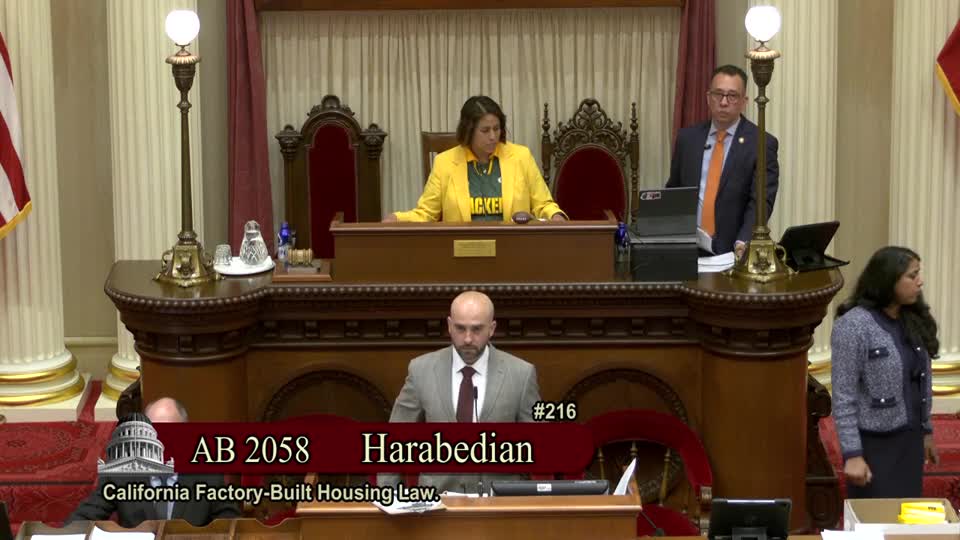
Bill Author

Bill Co-Author(s):