SB 1210: Gang databases.
- Session Year: 2025-2026
- House: Senate
- Latest Version Date: 2026-03-25
Current Status:
In Progress
(2026-05-14: May 14 hearing: Held in committee and under submission.)
Introduced
In Committee
Awaiting First Chamber Vote
Passed First Chamber
In Committee
Awaiting Second Chamber Vote
Passed Second Chamber
Enacted
What does this bill do?
This bill expands rules that used to apply only to “shared” gang databases so they apply to all law enforcement gang databases (a gang database is any police database that labels someone as a gang member or associate). It makes the Department of Justice the regulator and overseer (including oversight of CalGang), requires notice and a process for people to request and contest a gang designation and to petition a court, mandates audits and purges of unsupported records, limits who may access and how data may be used (for example, not for employment or military screening and generally not for immigration enforcement unless required by law), and creates a technical advisory committee.
The summary is provided by generative AI which can make mistakes. For original language, please view the details in the table below.
Existing law, the California Street Terrorism Enforcement and Prevention Act (act), provides specified punishments for certain crimes committed for the benefit of, at the direction of, or in association with a criminal street gang, as specified. The act defines a shared gang database as a database accessed by a law enforcement agency that designates a person as a gang member or associate, or includes or points to information, including, but not limited to, fact-based or uncorroborated information, that reflects a designation of that person as a gang member or associate that is accessed by an agency or person outside of the agency that created the records that populate the database. Existing law requires the Department of Justice to regulate and oversee any shared gang databases in which California law enforcement agencies, participate, as specified.
This bill would remove the term shared gang database and make the provisions under the act applicable to all gang databases, regardless of whether a gang database is accessed by an agency or person outside of the agency that created the database. The bill would make specified regulations applicable to all gang databases beginning on January 1, 2027.
Existing law requires the State Department of Public Health to develop a coordinated state strategy for addressing the health-related needs of women and makes the department responsible for approved programmatic costs associated with this strategy.This bill would make a technical, nonsubstantive change to that provision.Existing law requires the State Department of Public Health to develop a coordinated state strategy for addressing the health-related needs of women and makes the department responsible for approved programmatic costs associated with this strategy.
This bill would make a technical, nonsubstantive change to that provision.
(a)For purposes of this section and Sections 186.35 and 186.36, the following definitions apply:
(1)Criminal street gang means an ongoing organization, organized association, or group of three or more persons, whether formal or informal, having as one of its primary activities the commission of crimes enumerated in paragraphs (1) to (25), inclusive, and paragraphs (31) to (33), inclusive, paragraph (1) of subdivision (e) of Section 186.22 who have a common identifying sign, symbol, or name, and whose members individually or collectively engage in or have engaged in a pattern of definable criminal activity.
(2)Gang database means any database accessed by a law enforcement agency that designates a person as a gang member or associate, or includes or points to information, including, but not limited to, fact-based or uncorroborated information, that reflects a designation of that person as a gang member or associate.
(3)Law enforcement agency means a governmental agency or a subunit of a governmental agency, and its authorized support staff and contractors, whose primary function is detection, investigation, or apprehension of criminal offenders, or whose primary duties include detention, pretrial release, posttrial release, correctional supervision, or the collection, storage, or dissemination of criminal history record information.
(4)Shared gang database means a gang database that is accessed by an agency or person outside of the agency that created the records that populate the database.(b)Notwithstanding subdivision (a), the following are not subject to this section, or Sections 186.35 and 186.36:
(1)Databases that designate persons as gang members or associates using only criminal offender record information, as defined in Section 13102, or information collected pursuant to Section 186.30.
(2)Databases accessed solely by jail or custodial facility staff for classification or operational decisions in the administration of the facility.
(c)(1)To the extent a local law enforcement agency elects to utilize a shared gang database prior to a local law enforcement agency designating a person as a suspected gang member, associate, or affiliate in a shared gang database, or submitting a document to the Attorney Generals office for the purpose of designating a person in a shared gang database, or otherwise identifying the person in a shared gang database, the local law enforcement agency shall provide written notice to the person, and shall, if the person is under 18 years of age, provide written notice to the person and the persons parent or guardian, of the designation and the basis for the designation, unless providing that notification would compromise an active criminal investigation or compromise the health or safety of the minor.
(2)The notice described in paragraph (1) shall describe the process for the person, or, if the person is under 18 years of age, for the persons parent or guardian, or an attorney working on behalf of the person, to contest the designation of the person in the database. The notice shall also inform the person of the reason for the persons designation in the database.
(d)(1)(A)A person, or, if the person is under 18 years of age, the persons parent or guardian, or an attorney working on behalf of the person, may request information of any law enforcement agency as to whether the person is designated as a suspected gang member, associate, or affiliate in a shared gang database accessible by that law enforcement agency and the name of the law enforcement agency that made the designation. A request pursuant to this paragraph shall be in writing.
(B)If a person about whom information is requested pursuant to subparagraph (A) is designated as a suspected gang member, associate, or affiliate in a shared gang database by that law enforcement agency, the person making the request may also request information as to the basis for the designation for the purpose of contesting the designation as described in subdivision (e).
(2)The law enforcement agency shall provide information requested under paragraph (1), unless doing so would compromise an active criminal investigation or compromise the health or safety of the person if the person is under 18 years of age.
(3)The law enforcement agency shall respond to a valid request pursuant to paragraph (1) in writing to the person making the request within 30 calendar days of receipt of the request.
(e)Subsequent to the notice described in subdivision (c) or the law enforcement agencys response to an information request described in subdivision (d), the person designated or to be designated as a suspected gang member, associate, or affiliate, or the persons parent or guardian if the person is under 18 years of age, may submit written documentation to the local law enforcement agency contesting the designation. The local law enforcement agency shall review the documentation, and if the agency determines that the person is not a suspected gang member, associate, or affiliate, the agency shall remove the person from the shared gang database. The local law enforcement agency shall provide the person and, if the person is under 18 years of age, the persons parent or guardian, with written verification of the agencys decision within 30 days of submission of the written documentation contesting the designation. If the law enforcement agency denies the request for removal, the notice of its determination shall state the reason for the denial. If the law enforcement agency does not provide a verification of the agencys decision within the required 30-day period, the request to remove the person from the gang database shall be deemed denied. The person or, if the person is under 18 years of age, the persons parent or guardian may petition the court to review the law enforcement agencys denial of the request for removal and order the law enforcement agency to remove the person from the shared gang database pursuant to Section 186.35.
(f)Nothing in this section shall require a local law enforcement agency to disclose any information protected under Section 1040 or 1041 of the Evidence Code or any provision listed in Section 7920.505 of the Government Code.
SEC. 2.Section 186.35 of the Penal Code is amended to read:186.35.(a)A person who is listed by a law enforcement agency in a shared gang database as a gang member, suspected gang member, associate, or affiliate and who has contested his or her their designation pursuant to subdivision (e) of Section 186.34, may petition the court to review the law enforcement agencys denial of the request for removal and to order the law enforcement agency to remove the person from the shared gang database. The petition may be brought by the person or the persons attorney, or if the person is under 18 years of age, by his or her their parent or guardian or an attorney on behalf of the parent or guardian.
(b)The petition shall be filed and served within 90 calendar days of the agencys mailing or personal service of the verification of the decision to deny the request for removal from the shared gang database or the date that the request is deemed denied under subdivision (e) of Section 186.34. A proceeding under this subdivision is not a criminal case. The petition shall be filed in either the superior court of the county in which the local law enforcement agency is located or, if the person resides in California, in the county in which the person resides. A copy of the petition shall be served on the agency in person or by first-class mail. Proof of service of the petition on the agency shall be filed in the superior court. For purposes of computing the 90-calendar-day period, Section 1013 of the Code of Civil Procedure shall be applicable.
(c)The evidentiary record for the courts determination of the petition shall be limited to the agencys statement of the basis of its designation made pursuant to subdivision (c) or (d) of Section 186.34, and the documentation provided to the agency by the person contesting the designation pursuant to subdivision (e) of Section 186.34.
(d)If, upon de novo review of the record and any arguments presented to the court, the court finds that the law enforcement agency has failed to establish the persons active gang membership, associate status, or affiliate status by clear and convincing evidence, the court shall order the law enforcement agency to remove the name of the person from the shared gang database.
(e)The fee for filing the petition is as provided in Section 70615 of the Government Code. The court shall notify the person of the appearance date by mail or personal delivery. The court shall retain the fee under Section 70615 of the Government Code regardless of the outcome of the petition. If the court finds in favor of the person, the amount of the fee shall be reimbursed to the person by the agency.
SEC. 3.Section 186.36 of the Penal Code is amended to read:186.36.(a)(1)The Department of Justice is responsible for establishing regulations for shared gang databases. All shared gang databases shall comply with those regulations.
(2)The regulations set forth in Chapter 7.6 of Division 1 of Title 11 of the California Code of Regulations, or any successor regulations thereto, shall constitute compliance with this subdivision.
(3)Commencing January 1, 2027, the regulations in Chapter 7.6 of Division 1 of Title 11 of the California Code of Regulations, or any successor regulations thereto, shall apply to all gang databases, regardless of whether such databases are accessed by an agency or person outside of the agency that created the database.
(b)The department shall administer and oversee the CalGang database. Commencing January 1, 2018, the CalGang Executive Board shall not administer or oversee the CalGang database.
(c)The department shall establish the Gang Database Technical Advisory Committee.
(d)Each appointee to the committee, regardless of the appointing authority, shall have the following characteristics:
(1)Substantial prior knowledge of issues related to gang intervention, suppression, or prevention efforts.
(2)Decisionmaking authority for, or direct access to those who have decisionmaking authority for, the agency or organization he or she represents.
(3)A willingness to serve on the committee and a commitment to contribute to the committees work.
(e)The membership of the committee shall be as follows:
(1)The Attorney General, or his or her their designee.
(2)The President of the California District Attorneys Association, or his or her their designee.
(3)The President of the California Public Defenders Association, or his or her their designee.
(4)A representative of organizations that specialize in gang violence intervention, appointed by the Senate Committee on Rules.
(5)A representative of organizations that provide immigration services, appointed by the Senate Committee on Rules.
(6)The President of the California Gang Investigators Association, or his or her their designee.
(7)A representative of community organizations that specialize in civil or human rights, appointed by the Speaker of the Assembly.
(8)A person who has personal experience with a shared gang database as someone who is or was impacted by gang labeling, appointed by the Speaker of the Assembly.
(9)The chairperson of the California Gang Node Advisory Committee, or his or her their designee.
(10)The President of the California Police Chiefs Association, or his or her their designee.
(11)The President of the California State Sheriffs Association, or his or her their designee.
(f)The committee shall appoint a chairperson from among the members appointed pursuant to subdivision (e). The chairperson shall serve in that capacity at the pleasure of the committee.
(g)Each member of the committee who is appointed pursuant to this section shall serve without compensation.
(h)If a committee member is unable to adequately perform his or her their duties, he or she the committee member is subject to removal from the board by a majority vote of the full committee.
(i)A vacancy on the committee as a result of the removal of a member shall be filled by the appointing authority of the removed member within 30 days of the vacancy.
(j)Committee meetings are subject to the Bagley-Keene Open Meeting Act (Article 9 (commencing with Section 11120) of Chapter 1 of Part 1 of Division 3 of Title 2 of the Government Code).
(k)The department, with the advice of the committee, shall promulgate regulations governing the use, operation, and oversight of shared gang databases. The regulations issued by the department shall, at minimum, ensure the following:
(1)The system integrity of a shared gang database.
(2)All law enforcement agency and criminal justice agency personnel who access a shared gang database undergo comprehensive and standardized training on the use of shared gang databases and related policies and procedures.
(3)Proper criteria are established for supervisory reviews of all database entries and regular reviews of records entered into a shared gang database.
(4)Reasonable measures are taken to locate equipment related to the operation of a shared gang database in a secure area in order to preclude access by unauthorized personnel.
(5)Law enforcement agencies and criminal justice agencies notify the department of any missing equipment that could potentially compromise a shared gang database.
(6)Personnel authorized to access a shared gang database are limited to sworn law enforcement personnel, nonsworn law enforcement support personnel, or noncriminal justice technical or maintenance personnel, including information technology and information security staff and contract employees, who have been subject to character or security clearance and who have received approved training.
(7)Any records contained in a shared gang database are not disclosed for employment or military screening purposes.
(8)Any records contained in a shared gang database are not disclosed for purposes of enforcing federal immigration law, unless required by state or federal statute or regulation.
(9)The committee does not discuss or access individual records contained in a shared gang database.
(l)The regulations issued by the department shall include, but not be limited to, establishing the following:
(1)Policies and procedures for entering, reviewing, and purging documentation.
(2)Criteria for designating a person as a gang member or associate that are unambiguous, not overbroad, and consistent with empirical research on gangs and gang membership.
(3)Retention periods for information about a person in a shared gang database that is consistent with empirical research on the duration of gang membership.
(4)Criteria for designating an organization as a criminal street gang and retention periods for information about criminal street gangs.
(5)Policies and procedures for notice to a person in a shared gang database. This includes policies and procedures for when notification would compromise an active criminal investigation or the health or safety of a minor.
(6)Policies and procedures for responding to an information request, a request for removal, or a petition for removal under Sections 186.34 and 186.35, respectively. This includes policies and procedures for a request or petition that could compromise an active criminal investigation or the health or safety of a minor.
(7)Policies and procedures for sharing information from a shared gang database with a federal agency, multistate agency, or agency of another state that is otherwise denied access. This includes sharing of information with a partner in a joint task force.
(8)Implementation of supervisory review procedures and periodic record reviews by law enforcement agencies and criminal justice agencies, and reporting of the results of those reviews to the department.
(m)Shared gang Gang databases shall be used and operated in compliance with all applicable state and federal regulations, statutes, and guidelines. These include Part 23 of Title 28 of the Code of Federal Regulations and the departments Model Standards and Procedures for Maintaining Criminal Intelligence Files and Criminal Intelligence Operational Activities.
(n)The department, with the advice of the committee, no later than January 1, 2020, shall promulgate regulations to provide for periodic audits of each CalGang node and user agency to ensure the accuracy, reliability, and proper use of the CalGang database. The department shall mandate the purge of any information for which a user agency cannot establish adequate support.
(o)The department, with the advice of the committee, shall develop and implement standardized periodic training for everyone with access to the CalGang database.
(p)Commencing February 15, 2018, and annually on February 15 thereafter, the department shall publish an annual report on the CalGang database.
(1)The report shall include, in a format developed by the department, that contains, by ZIP Code, referring agency, race, gender, and age, the following information for each user agency:
(A)The number of persons included in the CalGang database on the day of reporting.
(B)The number of persons added to the CalGang database during the immediately preceding 12 months.
(C)The number of requests for removal of information about a person from the CalGang database pursuant to Section 186.34 received during the immediately preceding 12 months.
(D)The number of requests for removal of information about a person from the CalGang database pursuant to Section 186.34 that were granted during the immediately preceding 12 months.
(E)The number of petitions for removal of information about a person from the CalGang database pursuant to Section 186.35 adjudicated in the immediately preceding 12 months, including their dispositions.
(F)The number of persons whose information was removed from the CalGang database due to the expiration of a retention period during the immediately preceding 12 months.
(G)The number of times an agency did not provide notice or documentation described in Section 186.34 because providing that notice or documentation would compromise an active criminal investigation, in the immediately preceding 12 months.
(H)The number of times an agency did not provide notice or documentation described in Section 186.34 because providing that notice or documentation would compromise the health or safety of the designated minor, in the immediately preceding 12 months.
(2)The report shall include the results from each user agencys periodic audit conducted pursuant to subdivision (n).
(3)The department shall post the report on the departments Internet Web site. internet website.
(4)The department shall invite and assess public comments following the reports release, and each report shall summarize public comments received on prior reports and the actions taken in response to comments.
(q)The department shall instruct all user agencies to review the records of criminal street gang members entered into a shared gang database to ensure the existence of proper support for each criterion for entry in the shared gang database.
(r)(1)The department shall instruct each CalGang node agency to purge from a shared gang database any record of a person entered into the database designated as a suspected gang member, associate, or affiliate that does not meet criteria for entry or whose entry was based upon the following criteria: jail classification, frequenting gang neighborhoods, or on the basis of an untested informant. Unsupported criteria shall be purged and the records of a person shall be purged if the remaining criteria are not sufficient to support the persons designation.
(2)After the purge is completed, the shared gang database shall be examined using a statistically valid sample, pursuant to professional auditing standards to ensure that all fields in the database are accurate.
(s)(1)Commencing January 1, 2018, any shared gang database operated by law enforcement in California including, but not limited to, the CalGang database, shall be under a moratorium. During the moratorium, data shall not be added to the database. Data in the database shall not be accessed by participating agencies or shared with other entities. The moratorium on a shared gang database shall not be lifted until the Attorney General certifies that the purge required in subdivision (r) has been completed. After the purge has been completed and before the department adopts the regulations required by this section, new data may be entered, provided the new data meets the criteria established by the conditions of the purge.
(2)The department shall not use regulations developed pursuant to this section to invalidate data entries entered prior to the adoption of those regulations.
(t)The department shall be responsible for overseeing shared gang database system discipline and conformity with all applicable state and federal regulations, statutes, and guidelines.
(u)The department may enforce a violation of a state or federal law or regulation with respect to a shared gang database, or a violation of regulation, policy, or procedure established by the department pursuant to this title by any of the following methods:
(1)Letter of censure.
(2)Temporary suspension of access privileges to the shared gang database system.
(3)Revocation of access privileges to the shared gang database system.
(v)The department shall temporarily suspend access to a shared gang database system or revoke access to a shared gang database system for any individual who shares information from a shared gang database for employment or military screening purposes.
(w)The department shall temporarily suspend access to a shared gang database system or revoke access to a shared gang database system for an individual who shares information from a shared gang database for federal immigration law purposes, unless required by state or federal statute or regulation.
(x)The department shall ensure that the shared gang database user account of an individual is disabled if the individual no longer has a need or right to access a shared gang database because he or she the individual has separated from his or her their employment with a user agency or for another reason.
SECTION 1.Section 137 of the Health and Safety Code is amended to read:137.(a)The State Department of Public Health shall develop a coordinated state strategy for addressing the health-related needs of women, including implementation of goals and objectives for womens health.(b)The approved programmatic costs associated with this strategy shall be the responsibility of the department unless otherwise provided by law.(a)The State Department of Public Health shall develop a coordinated state strategy for addressing the health-related needs of women, including implementation of goals and objectives for womens health.
(b)The approved programmatic costs associated with this strategy shall be the responsibility of the State Department of Public Health department unless otherwise provided by law.
|
Date
|
Status
|
|---|---|
| May 14, 2026 | May 14 hearing: Held in committee and under submission. |
| May 8, 2026 | Set for hearing May 14. |
| May 4, 2026 | May 4 hearing: Placed on APPR. suspense file. |
| Apr 24, 2026 | Set for hearing May 4. |
| Apr 22, 2026 | From committee: Do pass and re-refer to Com. on APPR. (Ayes 5. Noes 1. Page 3983.) (April 21). Re-referred to Com. on APPR. |
| Apr 22, 2026 | From committee: Do pass and re-refer to Com. on APPR. (Ayes 5. Noes 1.) (April 21). Re-referred to Com. on APPR. |
| Apr 10, 2026 | Set for hearing April 21. |
| Apr 8, 2026 | Re-referred to Com. on PUB. S. |
| Mar 25, 2026 | From committee with author's amendments. Read second time and amended. Re-referred to Com. on RLS. |
| Mar 4, 2026 | Referred to Com. on RLS. |
| Feb 20, 2026 | From printer. May be acted upon on or after March 22. |
| Feb 19, 2026 | Introduced. Read first time. To Com. on RLS. for assignment. To print. |
|
Date
|
Description
|
Location
|
Votes
|
|
|---|---|---|---|---|
| May 4, 2026 | Placed on suspense file | Senate Standing Committee on Appropriations |
Passed |
|
| Apr 21, 2026 | Do pass, but first be re-referred to the Committee on [Appropriations] | Senate Standing Committee on Public Safety |
Passed |
This list shows positions taken on this bill by organizations on the date displayed, which is linked to the original source.
Positions by individuals are not included.
|
Organization
|
Position
|
Date
|
|---|---|---|
| Aclu California Action | ** Support | |
| All of Us or None | ** Support | |
| California Police Chiefs Association | ** Against | |
| California Public Defenders Association | ** Support | |
| California State Sheriffs’ Association | ** Against | |
| Californians for Safety and Justice | ** Support | |
| Center on Juvenile and Criminal Justice | ** Support | |
| Communities United for Restorative Youth Justice | ** Support | |
| Courage California | ** Support | |
| Ella Baker Center For Human Rights | ** Support | |
| Justice2jobs Coalition | ** Support | |
| LA Defensa | ** Support | |
| Legal Services for Prisoners with Children | ** Support | |
| Silicon Valley De-Bug | ** Support |
SENATE COMMITTEE ON
Senator Sabrina Cervantes, Chair
2025 - 2026 Regular Session
SB 1210 (Weber Pierson) - Gang databases
Version: | Policy Vote: |
Urgency: | Mandate: |
Hearing Date: | Consultant: |
Bill Summary:
SB 1210 would amend the California Street Terrorism Enforcement and Prevention Act to (1) eliminate the term “shared gang database” and replace it with the term “gang database” and (2) change the definition of a “criminal street gang” to mean “an ongoing organized association” rather than “an ongoing organization” solely as applied to the provisions of (1) above governing gang databases.
Fiscal Impact:
- Estimated costs of $1.2 million in 2027-28, $3.5 million in 2028-29, and annual ongoing costs of $2.1 million for the Department of Justice (DOJ) for IT programming and personnel to comply with the provisions of this bill (General Fund).
Unknown, but likely significant costs to ensure local agency compliance, provide staff training, review existing entries for street gang members, and purge databases as necessary.
Background:
Existing law authorizes law enforcement agencies to keep and use shared gang databases, including the CalGang system. A “gang database” is defined to mean any database accessed by a law enforcement agency that designates a person as a gang member or associate, or includes or points to information, including, but not limited to, fact-based or uncorroborated information, that reflects a designation of that person as a gang member or associate. A “shared gang database” is defined to mean a gang database that is accessed by an agency or person outside of the agency that created the records that populate the database.
DOJ is responsible for establishing regulations for shared gang databases. All shared gang databases are required to comply with those regulations. The DOJ administers and oversees the CalGang database and may suspend or revoke a law enforcement agency’s access to the database.
Proposed Law:
The provisions of this bill apply only to shared gang databases, defined as a gang database that is accessed by an agency or person outside of the agency that created the records that populate the database. This bill would remove the term “shared” from the Fair and Accurate Gang Database Act, thereby applying its provisions to all gang databases, not only shared gang databases.
This bill additionally changes the definition of a “criminal street gang.” Under the existing definition, a criminal street gang is “an ongoing organization, association, or group of three or more persons, whether formal or informal, having as one of its primary activities the commission of crimes enumerated, who have a common identifying sign, symbol, or name, and whose members individually or collectively engage in or have engaged in a pattern of definable criminal activity.”
Under this bill, a criminal street gang is “an ongoing organized association, or group of three or more persons, whether formal or informal, having as one of its primary activities the commission of crimes enumerated, who have a common identifying sign, symbol, or name, and whose members individually or collectively engage in or have engaged in a pattern of definable criminal activity”
Related Legislation:
AB 90 (Weber), Chapter 695/2017 implemented major reforms to the administration and oversight of gang databases, as specified,
SENATE COMMITTEE ON PUBLIC SAFETY
Senator Jesse Arreguín, Chair
2025 - 2026 Regular
Bill No: SB 1210 Hearing Date: April 21, 2026
Author: | Weber Pierson | ||
Version: | March 25, 2026 | ||
Urgency: | No | Fiscal: | Yes |
Consultant: | ML | ||
Subject: Gang databases
HISTORY
Source: The Peace and Justice Law Center
Prior Legislation: AB 90 (Weber), Ch. 695, Stats. of 2017
AB 2298 (Weber), Ch. 752, Stats. of 2016
SB 458 (Wright), Ch. 797, Stats. of 2013
Support: ACLU California Action; All of Us or None; California Public Defenders Association; Californians for Safety and Justice; Center on Juvenile and Criminal Justice; Communities United for Restorative Youth Justice; Courage California; Ella Baker Center for Human Rights; Justice2Jobs Coalition; La Defensa; Legal Services for Prisoners with Children; Silicon Valley De-Bug
Opposition: California Police Chiefs Association; California State Sheriffs’ Association
PURPOSE
The purpose of this bill is to expand the application of the California Street Terrorism Enforcement and Prevention Act from “shared” gang databases to all gang databases in California.
Existing law defines a “criminal street gang” as any ongoing organization, association, or group of three or more persons . . . having as one of its primary activities the commission of one or more enumerated offenses, having a common name or identifying sign or symbol, and whose members individually or collectively engage in a pattern of criminal gang activity. (Pen. Code, § 186.22, subd. (f).)
Existing law provides that any person who actively participates in a criminal street gang with knowledge that its members engage in or have engaged in a pattern of criminal gang activity and who promotes, furthers, or assists in any felonious conduct by members of the gang is guilty of an alternate felony-misdemeanor. (Pen. Code, § 186.22, subd. (a).)
Existing law provides that any person who is convicted of a felony committed for the benefit of, at the direction of, or in association with any criminal street gang, with the specific intent to promote, further, or assist in criminal conduct by gang members, shall receive a sentence enhancement, as specified. (Pen. Code, § 186.22, subd. (b).)
Existing law requires any person convicted in a criminal court or who has had a petition sustained in a juvenile court for certain gang-related offenses, as specified, to register with the chief of police of the city in which he or she resides, or the sheriff of the county if he or she resides in an unincorporated area, within 10 days of release from custody or within 10 days of his or her arrival in any city or county to reside there, whichever occurs first. (Pen. Code, § 186.30.)
Existing law requires the court, at the time of sentencing in adult court or dispositional hearing in juvenile court, to inform any person subject to registration detailed above of their duty to register. Requires that the parole or probation officer assigned to that person verify that the person has complied with the registration requirements. (Pen. Code, § 186.31.)
Existing law requires that the registration requirements set forth above terminate five years after the last imposition of a registration requirement. (Pen. Code, §186.32, subd. (c).)
Existing law makes violation of the registration requirements above a misdemeanor. Requires any person who knowingly fails to register and is subsequently convicted of a gang-related offense, as specified, to be punished by an enhanced term of imprisonment for 16 months, two years, or three years. (Pen. Code, § 186.32., subd. (a).)
Existing law defines, for the purpose of the above provisions, “gang database” to mean any database accessed by a law enforcement agency that designates a person as a gang member or associate, or includes or points to information, including, but not limited to, fact-based or uncorroborated information, that reflects a designation of that person as a gang member or associate. (Pen. Code, § 186.34., subd. (a).)
Existing law defines “shared gang database” to mean a gang database that is accessed by an agency or person outside of the agency that created the records that populate the database. (Pen. Code, § 186.36, subd. (b).)
Existing law requires local law enforcement to notify a person, and his or her parent or guardian if a minor, before designating that person as a gang member, associate, or affiliate in a shared gang database. Requires law enforcement to provide the basis for the designation. (Pen. Code, § 186.34., subd. (c).)
Existing law authorizes a person included in a shared gang database, their parent or guardian if a minor, or their attorney, to request, with supporting documentation, the relevant local law enforcement agency to remove the minor’s name and information from the database. Gives the law enforcement agency 30 days to act on the request. Provides that if the law enforcement agency does not provide a verification of the agency’s decision within the required 30-day period, the request to remove the person from the gang database shall be deemed denied. (Pen. Code, § 186.36, subd. (e).)
Existing law provides that a person who is listed by a law enforcement agency in a shared gang database who has contested his or her designation may petition the court to review the law enforcement agency’s denial of the request for removal and to order the law enforcement agency to remove the person from the shared gang database. (Pen. Code, § 186.35.)
Existing law designates the Department of Justice (DOJ) responsible for establishing regulations for shared gang databases. Requires all shared gang databases to comply with those regulations. (Pen. Code, § 186.36, subd. (a).)
Existing law requires the DOJ to administer and oversee the CalGang database. (Pen. Code, § 186.36, subd. (b).)
Existing law prohibits a person under the age of 13 from being entered into a shared gang database. (11 CCR §771.6, subd. (a).)
Existing law prohibits a person from being designated as a gang member or associate in a shared gang database without the law enforcement agency having reasonable suspicion that the person actively participates in a criminal street gang with knowledge that its members engage in, or have engaged in, a pattern of criminal gang activity, or the person willfully promotes, furthers, or assists in any felonious criminal conduct by members of that gang. Requires the law enforcement officer to document the specific information that serves as the basis for the reasonable suspicion based on the criteria. Requires that reasonable suspicion be based on the totality of circumstances, but considering only the information documented by the law enforcement officer(s) to demonstrate the satisfaction of each criterion and any other legally obtained information that supports or undermines the existence of each criterion. (11 CCR § 771.6, subd. (b).)
Existing law requires that a person may only be entered into a shared gang database and designated as a gang member or associate when at least two unique criteria listed below are found to exist, within a one-year period, provided that the criminal street gang's existence has been documented in the database:
- The person has admitted to being an active member or associate of an active criminal street gang under circumstances that do not undercut truthfulness.
- The person has been arrested for an offense consistent with gang activity, as defined. The law enforcement officer shall document how the facts and circumstances of the offense are consistent with gang activity.
- The person has been identified as an active member or associate of an active criminal street gang by a reliable source.
- The law enforcement officer has observed the person associating with person(s) who are already entered, or are in the process of being entered, into the CalGang database and the circumstances of the observed association indicate gang affiliation.
- The law enforcement officer has observed the person displaying one or more symbols or hand signs tied to a specific active criminal street gang to identify their affiliation.
- The law enforcement officer has observed the person at one or more gang-related addresses. This criterion shall not be satisfied solely by the fact that the address is the residential address of a person who is already entered into the CalGang database.
- The law enforcement officer has observed the person wearing one or more items of clothing or colors that the law enforcement officer believes are tied to a specific and active criminal street gang.
- The law enforcement officer has observed the person having one or more tattoos, marks, scars, or brandings indicating criminal street gang membership or association. (11 CCR §§ 771.6, subd (c), 771.6, subd. (a).)
Existing law requires the existence of all these criteria to be supported by source documents. Allows photographs and videos to be used as source documents, but only if they are legally obtained, are not more than one year old, and were not created before the person was 13 years old. (11 CCR § 771.6, subds. (b)-(e).)
Existing law requires a supervisor to review the entry of any person into a shared gang database, to ensure compliance with these rules. (11 CCR § 752.8.)
Existing law provides that any law enforcement agency that elects to utilize a shared gang database must submit an annual report to the DOJ, in a format developed by the department, that contains, by ZIP Code, referring agency, race, gender, and age, the following information:
- The number of persons included in the database on the day of reporting;
- The number of persons added to the database during the immediately preceding 12 months;
- The number of requests for removal of a person from the database received during the immediately preceding 12 months;
- The number of requests for removal of a person from the database that were granted during the immediately preceding 12 months; and
- The number of persons automatically removed from the database during the immediately preceding 12 months. (Pen. Code, § 186.36, subd. (p).)
Existing law requires that DOJ post each law enforcement agency’s report that contains the information collected on DOJ’s website. (Ibid.)
Existing law requires DOJ to instruct all user agencies to review the records of criminal street gang members entered into a shared gang database to ensure the existence of proper support for each criterion for entry in the shared gang database. (Pen. Code, § 186.36, subd. (q).)
Existing law requires DOJ to instruct each CalGang node agency to purge from a shared gang database any record of a person entered into the database who does not meet criteria for entry or whose entry was based upon the following criteria: jail classification, frequenting gang neighborhoods, or on the basis of an untested informant. (Pen. Code, § 186.36, subd. (r)(1).)
Existing law provides that the following are not subject to the requirements above:
- Databases that designate persons as gang members or associates using only criminal offender record information, as specified, or information collected pursuant to the registration process described above
- Databases accessed solely by jail or custodial facility staff for classification or operational decisions in the administration of the facility. (Pen. Code, § 186.34, subd. (b).)
Existing law provides that DOJ may enforce a violation of a state or federal law or regulation with respect to a shared gang database, or a violation of regulation, policy, or procedure established by the department pursuant to this title by any of the following methods: letter of censure, temporary suspension of access privileges, and revocation of access privileges. (Pen. Code, § 186.36, subd. (u).)
Existing law requires DOJ to temporarily suspend access or revoke access for any individual who shares information from a shared gang database for employment purposes, military screening, or federal immigration law, unless required by state or federal statute or regulation. (Pen. Code, § 186.36, subds. (v), (w).)
This bill eliminates the term “shared gang database” and replaces it with the term “gang database” throughout the California Street Terrorism Enforcement and Prevention Act.
This bill changes the definition of a “criminal street gang” to mean “an ongoing organized association” rather than “an ongoing organization,” solely as applied to the provisions above governing gang databases.
COMMENTS
- The Need For This Bill
The author writes:
California’s gang databases operated for decades without adequate oversight, transparency, or accountability, raising significant concerns about privacy violations, racial disparities, and the criminalization of individuals and communities. Previous legislative reforms, including SB 458, AB 2298, and AB 90, all made strides in addressing these issues by introducing notification requirements, due process protections, and oversight mechanisms. However, these reforms were limited to only “shared” gang databases, creating a loophole that allows law enforcement agencies to evade oversight by shifting to unregulated internal databases.
A 2015 audit of CalGang highlighted the consequences of this weak oversight structure, finding “questionable information that may violate individuals’ privacy rights.” The audit revealed that more than 600 individuals in CalGang had purge dates extending beyond the five-year limit—many set more than 100 years out—and that agencies often failed to document the basis for gang designations.
SB 1210 closes this loophole by applying existing regulations to all gang databases, whether shared or internal. This ensures that all individuals documented in gang databases are afforded the same rights to notification, the ability to contest their designation, and protection from misuse of their data. By removing the term “shared” from the relevant statutes, SB 1210 restores the original legislative intent of creating a fair and transparent system that protects civil rights while enhancing public safety.
This bill is not only a matter of good governance but also a principled stand against the misuse of gang allegations. SB 1210 will rebuild trust between law enforcement and communities, reduce racial disparities, and ensure that gang databases serve their intended purpose as effective tools for crime prevention and investigation.
- History of Gang Databases
In 1987, the Los Angeles County Sheriff’s Department developed the Gang Reporting, Evaluation and Tracking System (GREAT), the nation’s first gang database. “Before GREAT existed, police departments collected information on gang members in locally maintained files but could not access information that had been collected by other law enforcement agencies.”[1] Using GREAT, local law enforcement could collect, store, centralize, analyze and disperse information about alleged gang members.
In 1988, the Legislature passed the Street Terrorism Enforcement and Prevention (STEP) Act, asserting California to be “in a state of crisis… caused by violent street gangs whose members threaten, terrorize and commit a multitude of crimes against the peaceful citizens of their neighborhoods.”[2] The STEP Act established the nation’s first definitions of “criminal street gang,” “pattern of criminal gang activity,” and codified penalties for participation in a criminal street gang.
In 1997, less than a decade after the regional GREAT database was first created, the regional GREAT databases were integrated into a new unified statewide database, CalGang, with the goals of making the database easier to use and less expensive to access.[3] CalGang is a web-based intranet system accessible by police departments by way of computer, telephone, and web browser that allows law enforcement to check an individual’s record in real time.[4] CalGang tracks 200 data fields including name, address, physical information, social security number, and racial makeup and records all encounters police have with the individual.[5]
- Due Process Concerns
Concerns were raised in the past regarding the secrecy of the CalGang database and the accuracy of records entered into CalGang. In August 2016, the California State Auditor presented a report concerning the CalGang Database to the Joint Legislative Audit Committee.
The State Auditor concluded:
CalGang’s current oversight structure does not ensure that law enforcement agencies (user agencies) collect and maintain criminal intelligence in a manner that preserves individuals’ privacy rights. Although the California Department of Justice funds it, CalGang is not established in state statute and consequently receives no state oversight. Instead, the CalGang Executive Board and the California Gang Node Advisory Committee (CalGang’s governance) oversee CalGang and function independently from the State and without transparency or meaningful opportunities for public input.
Inadequate oversight contributed to the numerous instances in which the four user agencies we examined could not substantiate the validity of CalGang entries. Specifically, the agencies lacked adequate support for 13 of 100 people we reviewed in CalGang and for 131 of 563 (23 percent) of the CalGang criteria entries we reviewed. Although a person’s CalGang record must be purged after five years unless updated with subsequent criteria, we found more than 600 people in CalGang whose purge dates extended beyond the five-year limit, many of which were more than 100 years in the future. Finally, the user agencies have poorly implemented a 2014 state law requiring notifications before adding a juvenile to CalGang. Two agencies we reviewed did not provide juveniles and parents with enough information to reasonably contest the juveniles’ gang designations, thereby denying many people their right to contest a juvenile’s gang designation.
Although it asserts compliance with federal regulations and state guidelines—standards designed to protect privacy and other constitutional rights—little evidence exists that CalGang’s governance has ensured these standards are met. As a result, user agencies are tracking some people in CalGang without adequate justification, potentially violating their privacy rights. Further, by not reviewing information as required, CalGang’s governance and user agencies have diminished the system’s crime-fighting value. Although CalGang is not to be used for expert opinion or employment screenings, we found at least four appellate cases referencing expert opinions based on CalGang and three agencies we surveyed confirmed they use CalGang for employment screenings. Although these practices do not appear to be common place, they emphasize the effect CalGang can have on a person’s life.
We believe that CalGang needs an oversight structure that ensures that information is reliable and that users adhere to requirements that protect individuals’ rights. Thus, we recommend that the Legislature adopt state law assigning [DOJ] the responsibility for CalGang oversight and specifying that CalGang must operate under defined requirements, such as supervisory and periodic record reviews.[6]
As a practical matter, it may be difficult for a minor, or a young-adult, living in a gang-heavy community to avoid qualifying criteria when the list of behaviors has included items such as “is in a photograph with known gang members,” “name is on a gang document, hit list or gang-related graffiti” or “corresponds with known gang members or writes and/or receives correspondence.” In a media-heavy environment, replete with camera phones and social media, it may be challenging for a teenager aware of the exact parameters to avoid such criteria, let alone a teenager unaware they are being held to such standards.
- Prior Legislation
In 2013, SB 458 (Wright) established some due process protections for minors who are entered into a shared gang database. (Ch. 797, Stats. of 2013.) In particular, it required local law enforcement to notify a minor and the minor’s parent or guardian prior to designating that minor as a gang member, associate or affiliate in a shared gang database, and the basis for that designation. The bill also allowed the minor or their guardian to challenge the designation. In 2016, AB 2298 (Weber), extended these due process protections to adults entered into any shared gang database and required law enforcement agencies that use a shared database to submit a report to DOJ information about the contents and uses of the databases. (Ch. 752, Stats. of 2016.)
In 2017, AB 90 (Weber), also known as the Fair and Accurate Gang Database Act of 2017, established the framework that exists today governing shared gang databases. (Ch. 695, Stats. of 2017.) This framework created due process protections, transparency, oversight, and constraints on the use of such databases.
- Today’s Existing Law Governing Gang Databases
- Gang Registration
Any person convicted in a criminal court or who has had a petition sustained in a juvenile court for certain gang-related offenses, as specified, must register with the chief of police of the city in which he or she resides, or the sheriff of the county in an unincorporated area, within 10 days of release from custody or within 10 days of his or her arrival in any city or county.[7] The court must, at the time of sentencing in adult court or dispositional hearing in juvenile court, inform any person subject to registration detailed above of their duty to register. The parole or probation officer assigned to that person must verify that the person has complied with the registration requirements.[8] The registration requirements set forth above must terminate five years after the last imposition of a registration requirement.[9]
Violation of the registration requirements above is a misdemeanor. Any person who knowingly fails to register and is subsequently convicted of a gang-related offense, as specified, may be punished by an enhanced term of imprisonment of 16 months, two years, or three years.[10]
- Gang Database Regulation
Existing law defines “gang database” to mean any database accessed by a law enforcement agency that designates a person as a gang member or associate, or includes or points to information, including, but not limited to, fact-based or uncorroborated information, that reflects a designation of that person as a gang member or associate.[11] A “shared gang database” means a gang database that is accessed by an agency or person outside of the agency that created the records that populate the database.[12] Notably, the provisions below apply only to shared gang databases, which is the term used throughout the Fair and Accurate Gang Database Act.
DOJ is responsible for establishing regulations for shared gang databases. All shared gang databases are required to comply with those regulations.[13] The DOJ administers and oversees the CalGang database.[14]
DOJ regulations prohibit someone from being designated as a gang member or associate in a shared gang database without the law enforcement agency having reasonable suspicion that the person actively participates in a criminal street gang with knowledge that its members engage in, or have engaged in, a pattern of criminal gang activity, or the person willfully promotes, furthers, or assists in any felonious criminal conduct by members of that gang. The law enforcement officer must document the specific information that serves as the basis for the reasonable suspicion based on the criteria.[15]
A person may be only entered into a shared database and designated as a gang member or associate when at least two unique criteria listed below are found to exist, within a one-year period:
- The person has admitted to being an active member or associate of an active criminal street gang under circumstances that do not undercut truthfulness.
- The person has been arrested for an offense consistent with gang activity, as defined.
- The person has been identified as an active member or associate of an active criminal street gang by a reliable source.
- The law enforcement officer has observed the person associating with person(s) who are already entered, or are in the process of being entered, into the CalGang database and the circumstances of the observed association indicates gang affiliation.
- The law enforcement officer has observed the person displaying one or more symbols or hand signs tied to a specific active criminal street gang to identify their affiliation.
- The law enforcement officer has observed the person at one or more gang-related addresses. This criterion shall not be satisfied solely by the fact that the address is the residential address of a person who is already entered into the CalGang database.
- The law enforcement officer has observed the person wearing one or more items of clothing or colors that the law enforcement officer believes are tied to a specific and active criminal street gang.
- The law enforcement officer has observed the person having one or more tattoos, marks, scars, or brandings indicating criminal street gang membership or association.[16]
The existence of all these criteria to be supported by source documents, such as photographs and videos are permitted to be used as source documents, but only if they are legally obtained, are not more than one year old, and were not created before the person was 13-years-old.[17] A person under the age of 13 may not be entered into a shared gang database.[18]
A person included in a shared gang database, their parent or guardian if a minor, or their attorney, may request the relevant local law enforcement agency to remove the person’s name and information from the database, with supporting documentation.[19] A person who is listed by a law enforcement agency in a shared gang database who has contested his or her designation may petition the court to review the law enforcement agency’s denial of the request for removal. The court may order the law enforcement agency to remove the person from the shared gang database.[20]
Any law enforcement agency that elects to utilize a shared gang database must submit an annual report to the DOJ, that contains, by ZIP Code, referring agency, race, gender, and age, the following information:
- The number of persons included in the database on the day of reporting;
- The number of persons added to the database during the immediately preceding 12 months;
- The number of requests for removal of a person from the database received during the immediately preceding 12 months;
- The number of requests for removal of a person from the database that were granted during the immediately preceding 12 months; and
- The number of persons automatically removed from the database during the immediately preceding 12 months.[21]
The DOJ posts these reports on its website.[22]
DOJ must instruct each CalGang node agency to purge from a shared gang database any record of a person entered into the database designated as a suspected gang member or associate that does not meet criteria for entry or whose entry was based upon the following criteria: jail classification, frequenting gang neighborhoods, or on the basis of an untested informant.[23]
The following databases are explicitly not subject to the requirements above:
- Databases that designate persons as gang members or associates using only criminal offender record information, as specified, or information collected pursuant to the registration process, described above
- Databases accessed solely by jail or custodial facility staff for classification or operational decisions in the administration of the facility.[24]
DOJ may enforce a violation of a state or federal law or regulation with respect to a shared gang database, or a violation of regulation, policy, or procedure established by the department pursuant to this title by any of the following methods: letter of censure, temporary suspension of access privileges, and revocation of access privileges.[25] DOJ must temporarily suspend access or revoke access for an individual who shares information from a shared gang database for employment purposes, military screening, or federal immigration law, unless required by state or federal statute or regulation.[26]
- The Effect of This Bill
As noted above, the reforms of AB 90 apply only to shared gang databases, defined as a gang database that is accessed by an agency or person outside of the agency that created the records that populate the database. This bill would remove the term “shared” from the Fair and Accurate Gang Database Act, thereby applying its provisions to all gang databases, not only shared gang databases.
This bill additionally changes the definition of a “criminal street gang.” Under the existing definition, a criminal street gang is “an ongoing organization, association, or group of three or more persons, whether formal or informal, having as one of its primary activities the commission of crimes enumerated, who have a common identifying sign, symbol, or name, and whose members individually or collectively engage in or have engaged in a pattern of definable criminal activity.”[27]
Under this bill, a criminal street gang is “an ongoing organized association, or group of three or more persons, whether formal or informal, having as one of its primary activities the commission of crimes enumerated, who have a common identifying sign, symbol, or name, and whose members individually or collectively engage in or have engaged in a pattern of definable criminal activity” [emphasis added].
- Policy Considerations
- Shared Gang Databases
The author submits that after the enactment of AB 90, the Fair and Accurate Gang Database Act, the number of law enforcement agencies entering records into CalGang dropped from 214 to 19, leaving Los Angeles, San Bernardino, and Riverside Sheriff’s Departments as the database’s primary users. The author further argues that many law enforcement agencies began using in-house databases to take advantage of the law’s application to only CalGang and other “shared” gang databases.
As a policy matter, the due process protections established by AB 90 were intended to address the risks and harms of unregulated use of gang databases generally. Those risks and harms exist in all gang databases, regardless of whether they are shared between agencies. As supporters of this bill note, gang membership allegations can have significant collateral consequences, such as providing the basis for federal deportation proceedings, as was true in the case of Kilmar Abrego Garcia. If the legislature’s goal is to ensure these databases are used with transparency and oversight, then it would be appropriate to expand the application of the Fair and Accurate Gang Database Act to all gang databases, not only shared ones.
One issue for the Committee to consider is that the primary tool available to DOJ to enforce the provisions of the Fair and Accurate Gang Database Act is to suspend or revoke a law enforcement agency’s access to the database. However, if the database is not shared, DOJ may not have the practical power to revoke access to the database because it is generated and accessed internally by a law enforcement agency. Can DOJ prohibit a law enforcement agency from accessing its own database? If so, could the law enforcement agency generate new data to populate a new database and circumvent this prohibition? The author and Committee may consider including alternate enforcement mechanisms for violation of the statute to ensure its provisions are followed.
- Definition of “Criminal Street Gang”
Opposition expresses concerns that the new definition of the term criminal street gang is substantive and will require proof of an “organized association” to establish a street gang. They argue this term implies a level of formal hierarchy, structure, and coordination that does not reflect how many modern gangs actually operate.
However, the definition of a criminal street gang under this bill includes an “organized association, or a group of three or more persons, whether formal or informal” [emphasis added]. Thus, this bill’s definition does not necessarily require an organized association, because it can be an informal group of three or more people. This change to the definition of the term criminal street gang is, therefore, likely not substantive.
- Argument in Support
La Defensa writes:
California has made significant progress in reforming gang database practices through previous legislative efforts, including SB 458 (2013), AB 2298 (2016), and AB 90 (2017). These laws introduced essential protections such as notification requirements, the right to contest gang designations, and oversight by the Department of Justice (DOJ). However, these reforms only apply to "shared" gang databases, such as CalGang, which are accessible by multiple agencies.
Unfortunately, many law enforcement agencies have circumvented these regulations by abandoning shared databases and creating unregulated internal systems. This loophole undermines the intent of previous reforms, allowing agencies to document individuals without notice, due process, or accountability. These unregulated databases pose significant risks to public safety and civil rights, as they often contain inaccurate or outdated information and are not subject to audits or quality control.
Moreover, the misuse of gang database information by federal authorities for immigration enforcement has highlighted the urgent need for comprehensive oversight. The deportation of individuals based on unverified gang allegations, such as the widely publicized case of Kilmar Abrego Garcia, demonstrates the devastating consequences of unaccountable databases. California has protections against sharing gang database information with immigration enforcement agencies, but without DOJ training and oversight, there is no certainty that agencies using unregulated gang databases will adhere to those laws.
- Argument in Opposition
According to the California Police Chiefs Association:
SB 1210 departs substantially from the original framework established under AB 90 (2017), which CPCA negotiated and was carefully tailored to apply to “shared gang databases” such as CalGang—systems that are centralized, standardized, and designed for multi-agency access and oversight. That framework explicitly excluded traditional investigative materials such as criminal intelligence files, investigative reports, and other case-specific documentation maintained by local agencies.
By contrast, SB 1210 removes the “shared gang database” limitation and applies the same regulatory structure to all gang databases, regardless of type or function. This change would dramatically expand the bill’s reach to include informal, localized, and actively used investigative systems—many of which are not databases in the traditional sense, but rather evolving intelligence files, field interview records, case notes, and analytical products used in ongoing investigations.
This expansion is highly problematic. Local law enforcement agencies maintain a wide range of gang-related information that is dynamic, incomplete, and continuously updated as investigations develop. Applying rigid statutory requirements—such as notice, disclosure, and removal timelines—to these materials would interfere with active investigations, compromise sensitive intelligence, and create significant administrative burdens. It would also sweep in thousands of additional data points and records that were never intended to fall within the scope of AB 90, fundamentally altering the balance that the Legislature previously struck.
Equally concerning are the bill’s proposed changes to the definition of a “criminal street gang.” SB 1210 introduces language requiring proof of an “organized association,” which implies a level of formal hierarchy, structure, and coordination that does not reflect how many modern gangs actually operate. In practice, many criminal street gangs—particularly those engaged in retail crime, drug distribution, or localized violence—function as loose networks or affiliations rather than rigid, hierarchical organizations.
This shift in definition risks excluding a significant portion of real-world gang activity from legal recognition. By requiring proof of formal organization rather than demonstrated patterns of coordinated criminal behavior, SB 1210 could make it more difficult to identify gang members, track associations, and prosecute gang-related crimes. This would directly undermine existing enforcement tools designed to address gang violence and organized criminal activity.
SB 1210 creates both operational and legal uncertainty. Officers and investigators will be forced to determine whether routine investigative materials fall within the scope of the statute, raising concerns about compliance, liability, and the potential disclosure of sensitive information. At the same time, narrowing the definition of gangs will make it more difficult to intervene in emerging criminal networks before they escalate into more serious threats.
Importantly, AB 90 was designed as a targeted reform to address specific concerns identified in centralized gang databases, including transparency, due process, and data accuracy. SB 1210 goes far beyond those original goals by imposing a one-size-fits-all statewide framework on fundamentally different types of law enforcement records and intelligence systems.
-- END --
Stacey Leyton, The New Blacklists: The Threat to Civil Liberties Posed by Gang Databases (a chapter in Crime Control and Social Justice: The Delicate Balance, edited by Darnell F. Hawkins, Samuel L. Myers Jr. and Randolph N. Stone, Westport, CT, 2003.) <http://testaae.greenwood.com/doc_print.aspx?fileID=GM0790E&chapterID=GM0790E-643&path=chunkbook>, citing: GREAT System Overview, The Eighth Annual Organized Crime and Criminal Intelligence Training Conference, August 23-26, 1994. ↑
Pen. Code, § 186.21, 1988. ↑
Leyton, supra, note 1, at p. 113. ↑
Ibid. ↑
Ibid. ↑
Cal. State Auditor, The CalGang Criminal Intelligence System: As the Result of Its Weak Oversight Structure, It Contains Questionable Information That May Violate Individuals’ Privacy Rights (Aug. 2016), <https://www.auditor.ca.gov/pdfs/reports/2015-130.pdf> [as of April 10, 2026]. ↑
Pen. Code, § 186.30. ↑
Pen. Code, § 186.31. ↑
Pen. Code, §186.32, subd. (c). ↑
Pen. Code, § 186.32., subd. (a). ↑
Pen. Code, § 186.34., subd. (a). ↑
Pen. Code, § 186.36, subd. (b). ↑
Pen. Code, § 186.36, subd. (a). ↑
Pen. Code, § 186.36, subd. (b). ↑
11 CCR § 771.6, subd. (b).) ↑
11 CCR §§ 771.6, subd (c), 771.6, subd. (a). ↑
11 CCR § 771.6, subds. (b)-(e). ↑
11 CCR §771.6, subd. (a). ↑
Pen. Code, § 186.36, subd. (e). ↑
Pen. Code, § 186.35. ↑
Pen. Code, § 186.36, subd. (p). ↑
See Office of the Attorney General, CalGang Reports, <https://oag.ca.gov/calgang/reports> [accessed April 10, 2026]. ↑
Pen. Code, § 186.36, subd. (r)(1). ↑
Pen. Code, § 186.34, subd. (b). ↑
Pen. Code, § 186.36, subd. (u). ↑
Pen. Code, § 186.36, subds. (v), (w). ↑
Pen. Code, § 186.34, subd. (a). ↑
Discussed in Hearing
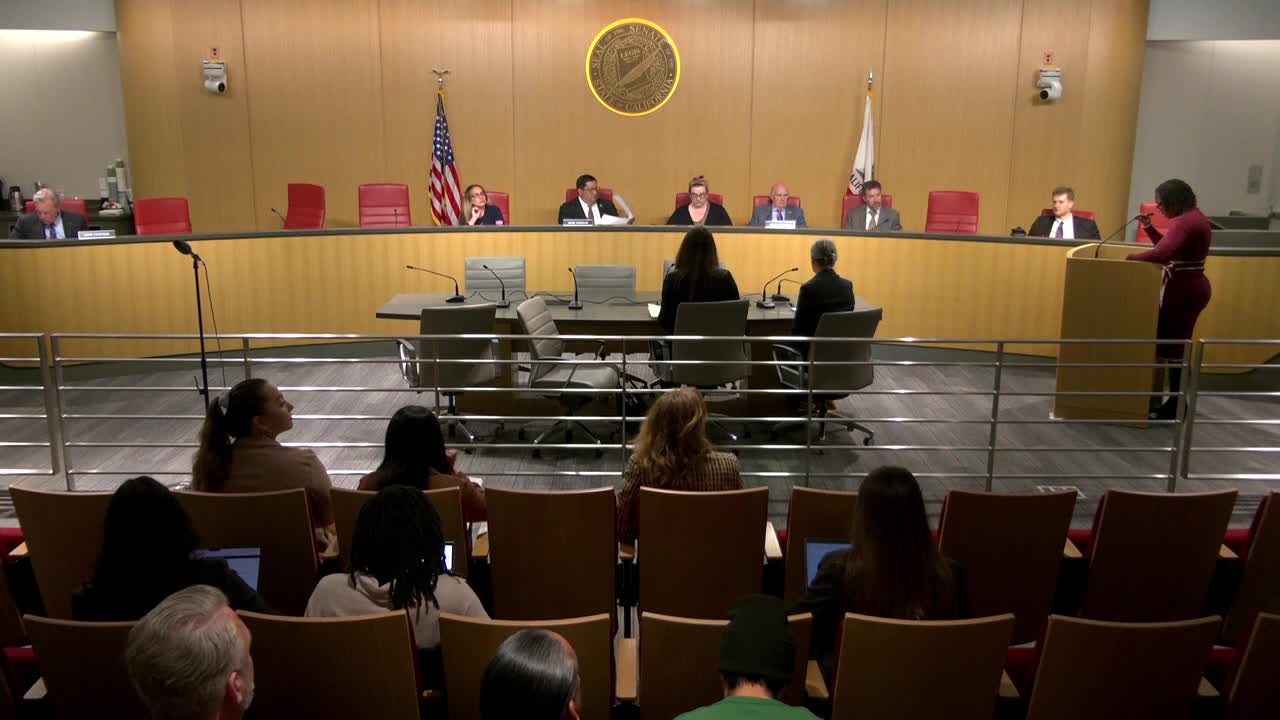 19MIN
Senate Standing Committee on Public Safety
Bill Author

Bill Co-Author(s):