SB 1220: Firearms: prohibited persons.
- Session Year: 2025-2026
- House: Senate
- Latest Version Date: 2026-09-26
Current Status:
Passed
(2026-09-26: Chaptered by Secretary of State. Chapter 466, Statutes of 2026.)
Introduced
In Committee
Awaiting First Chamber Vote
Passed First Chamber
In Committee
Awaiting Second Chamber Vote
Passed Second Chamber
Enacted
Existing law, subject to exceptions, provides that any person who has been convicted of certain misdemeanors may not, within 10 years of the conviction, own, purchase, receive, possess or have under their custody or control, any firearm and makes a violation of that prohibition punishable as a misdemeanor or a felony.
Under existing law, a person who alters, removes, or obliterates, or who buys, receives, disposes of, sells, offers for sale, or has in possession any pistol, revolver, or other firearm that has had the name of the maker or model or the manufacturers number or other mark of identification changed, altered, removed, or obliterated is guilty of a misdemeanor.
This bill would prohibit a person, who is convicted on or after January 1, 2027, of the above prohibition, from owning, purchasing, receiving, or having in their possession or under their custody or control any firearm within 10 years of the conviction. By expanding the scope of an existing crime, the bill would create a state-mandated local program.
This bill would provide that the provisions of this bill are severable.
This bill would incorporate additional changes to Section 29805 of the Penal Code proposed by AB 1753 to be operative only if this bill and AB 1753 are enacted and this bill is enacted last.
The California Constitution requires the state to reimburse local agencies and school districts for certain costs mandated by the state. Statutory provisions establish procedures for making that reimbursement.
This bill would provide that no reimbursement is required by this act for a specified reason.
Existing law, subject to exceptions, provides that any person who has been convicted of certain misdemeanors may not, within 10 years of the conviction, own, purchase, receive, possess or have under their custody or control, any firearm and makes a violation of that prohibition punishable as a misdemeanor or a felony.
Under existing law, a person who alters, removes, or obliterates, or who buys, receives, disposes of, sells, offers for sale, or has in possession any pistol, revolver, or other firearm that has had the name of the maker or model or the manufacturers number or other mark of identification changed, altered, removed, or obliterated is guilty of a misdemeanor.
This bill would prohibit a person, who is convicted on or after January 1, 2027, of the above prohibition, from owning, purchasing, receiving, or having in their possession or under their custody or control any firearm within 10 years of the conviction. By expanding the scope of an existing crime, the bill would create a state-mandated local program.
The California Constitution requires the state to reimburse local agencies and school districts for certain costs mandated by the state. Statutory provisions establish procedures for making that reimbursement.
This bill would provide that no reimbursement is required by this act for a specified reason.
(a)(1)Except as provided in Section 29855, subdivision (a) of Section 29800, or subdivision (b), any person who has been convicted of a misdemeanor violation of Section 71, 76, 136.1, 136.5, or 140, subdivision (d) of Section 148, subdivision (f) of Section 148.5, Section 171b, paragraph (1) of subdivision (a) of Section 171c, Section 171d, 186.28, 240, 241, 242, 243, 243.4, 244.5, 245, 245.5, 246.3, 247, 273.5, 273.6, 417, 417.6, 422, 422.6, 626.9, 646.9, 830.95, 17500, 17510, 25300, 25800, 30315, or 32625, subdivision (b) or (d) of Section 26100, or Section 27510, or Section 8100, 8101, or 8103 of the Welfare and Institutions Code, any firearm-related offense pursuant to Sections 871.5 and 1001.5 of the Welfare and Institutions Code, Section 487 if the property taken was a firearm, or of the conduct punished in subdivision (c) of Section 27590, and who, within 10 years of the conviction, owns, purchases, receives, or has in possession or under custody or control, any firearm is guilty of a public offense, punishable by imprisonment in a county jail not exceeding one year or in the state prison, by a fine not exceeding one thousand dollars ($1,000), or by both that imprisonment and fine.
(2)Any person who has an outstanding warrant for any misdemeanor offense described in this subdivision, and who has knowledge of the outstanding warrant, and who owns, purchases, receives, or has in possession or under custody or control any firearm is guilty of a public offense, punishable by imprisonment in a county jail not exceeding one year or in the state prison, by a fine not exceeding one thousand dollars ($1,000), or by both that imprisonment and fine.
(b)Any person who is convicted, on or after January 1, 2019, of a misdemeanor violation of Section 273.5, and who subsequently owns, purchases, receives, or has in possession or under custody or control, any firearm is guilty of a public offense, punishable by imprisonment in a county jail not exceeding one year or in the state prison, by a fine not exceeding one thousand dollars ($1,000), or by both that imprisonment and fine.
(c)Any person who is convicted on or after January 1, 2020, of a misdemeanor violation of Section 25100, 25135, or 25200, and who, within 10 years of the conviction, owns, purchases, receives, or has in possession or under custody or control, any firearm is guilty of a public offense, punishable by imprisonment in a county jail not exceeding one year or in the state prison, by a fine not exceeding one thousand dollars ($1,000), or by both that fine and imprisonment.
(d)Any person who is convicted on or after January 1, 2023, of a misdemeanor violation of Section 273a, subdivision (b) or (c) of Section 368, or subdivision (e) or (f) of Section 29180, and who, within 10 years of the conviction, owns, purchases, receives, or has in possession or under custody or control, any firearm is guilty of a public offense, punishable by imprisonment in a county jail not exceeding one year or in the state prison, by a fine not exceeding one thousand dollars ($1,000), or by both that fine and imprisonment.
(e)Except as provided in Section 29855 or subdivision (a) of Section 29800, any person who is convicted on or after January 1, 2024, of a misdemeanor violation of this section, and who, within 10 years of the conviction, owns, purchases, receives, or has in possession or under custody or control, any firearm is guilty of a public offense, punishable by imprisonment in a county jail not exceeding one year or in the state prison, by a fine not exceeding one thousand dollars ($1,000), or by both that fine and imprisonment.
(f)Any person who is convicted on or after January 1, 2024, of a misdemeanor violation of paragraph (5), (6), or (7) of subdivision (c) of Section 25400, paragraph (5), (6), or (7) of subdivision (c) of Section 25850, subdivision (a) of Section 26350, or subdivision (a) of Section 26400, and who, within 10 years of the conviction, owns, purchases, receives, or has in possession or under custody or control, any firearm is guilty of a public offense, punishable by imprisonment in a county jail not exceeding one year or in the state prison, by a fine not exceeding one thousand dollars ($1,000), or by both that fine and imprisonment.
(g)Any person who is convicted on or after January 1, 2025, of a misdemeanor violation of subdivision (a) of Section 597, and who, within 10 years of the conviction, owns, purchases, receives, or has in possession or under custody or control, any firearm is guilty of a public offense, punishable by imprisonment in a county jail not exceeding one year, by a fine not exceeding one thousand dollars ($1,000), or by both that fine and imprisonment.
(h)Any person, who is convicted on or after January 1, 2026, of a misdemeanor violation of Section 24610, 27530, 29185, 29186, 30605, 30610, 32900, 33215, or 33600, and who, within 10 years of the conviction, owns, purchases, receives, or has in their possession or under their custody or control any firearm, is guilty of a public offense, punishable by imprisonment in a county jail not exceeding one year, by a fine not exceeding one thousand dollars ($1,000), or by both that fine and imprisonment.
(i)Any person, who is convicted on or after January 1, 2027, of a violation of subdivision (a) of Section 23920 and who, within 10 years of the conviction, owns, purchases, receives, or has in their possession or under their custody or control any firearm, is guilty of a public offense, punishable by imprisonment in a county jail not exceeding one year, by a fine not exceeding one thousand dollars ($1,000), or by both that fine and imprisonment.
(j)The court, on forms prescribed by the Department of Justice, shall notify the department of persons subject to this section. However, the prohibition in this section may be reduced, eliminated, or conditioned as provided in Section 29855 or 29860.
SEC. 1.5.Section 29805 of the Penal Code is amended to read:29805.(a)(1)Except as provided in Section 29855, subdivision (a) of Section 29800, or subdivision (b), any person who has been convicted of a misdemeanor violation of Section 71, 76, 136.1, 136.5, or 140, subdivision (d) of Section 148, subdivision (f) of Section 148.5, Section 171b, paragraph (1) of subdivision (a) of Section 171c, Section 171d, 186.28, 240, 241, 242, 243, 243.4, 244.5, 245, 245.5, 246.3, 247, 273.5, 273.6, 417, 417.6, 422, 422.6, 626.9, 646.9, 830.95, 17500, 17510, 25300, 25800, 30315, or 32625, subdivision (b) or (d) of Section 26100, or Section 27510, or Section 8100, 8101, or 8103 of the Welfare and Institutions Code, any firearm-related offense pursuant to Sections 871.5 and 1001.5 of the Welfare and Institutions Code, Section 487 if the property taken was a firearm, or of the conduct punished in subdivision (c) of Section 27590, and who, within 10 years of the conviction, owns, purchases, receives, or has in possession or under custody or control, any firearm is guilty of a public offense, punishable by imprisonment in a county jail not exceeding 1 year or in the state prison, by a fine not exceeding one thousand dollars ($1,000), or by both that imprisonment and fine.
(2)Any person who has an outstanding warrant for any misdemeanor offense described in this subdivision, and who has knowledge of the outstanding warrant, and who owns, purchases, receives, or has in possession or under custody or control any firearm is guilty of a public offense, punishable by imprisonment in a county jail not exceeding one year or in the state prison, by a fine not exceeding one thousand dollars ($1,000), or by both that imprisonment and fine.
(b)Any person who is convicted, on or after January 1, 2019, of a misdemeanor violation of Section 273.5, and who subsequently owns, purchases, receives, or has in possession or under custody or control, any firearm is guilty of a public offense, punishable by imprisonment in a county jail not exceeding one year or in the state prison, by a fine not exceeding one thousand dollars ($1,000), or by both that imprisonment and fine.
(c)Any person who is convicted on or after January 1, 2020, of a misdemeanor violation of Section 25100, 25135, or 25200, and who, within 10 years of the conviction, owns, purchases, receives, or has in possession or under custody or control, any firearm is guilty of a public offense, punishable by imprisonment in a county jail not exceeding 1 year or in the state prison, by a fine not exceeding one thousand dollars ($1,000), or by both that fine and imprisonment.
(d)Any person who is convicted on or after January 1, 2023, of a misdemeanor violation of Section 273a, subdivision (b) or (c) of Section 368, or subdivision (e) or (f) of Section 29180, and who, within 10 years of the conviction, owns, purchases, receives, or has in possession or under custody or control, any firearm is guilty of a public offense, punishable by imprisonment in a county jail not exceeding 1 year or in the state prison, by a fine not exceeding one thousand dollars ($1,000), or by both that fine and imprisonment.
(e)Except as provided in Section 29855 or subdivision (a) of Section 29800, any person who is convicted on or after January 1, 2024, of a misdemeanor violation of this section, and who, within 10 years of the conviction, owns, purchases, receives, or has in possession or under custody or control, any firearm is guilty of a public offense, punishable by imprisonment in a county jail not exceeding 1 year or in the state prison, by a fine not exceeding one thousand dollars ($1,000), or by both that fine and imprisonment.
(f)Any person who is convicted on or after January 1, 2024, of a misdemeanor violation of paragraph (5), (6), or (7) of subdivision (c) of Section 25400, paragraph (5), (6), or (7) of subdivision (c) of Section 25850, subdivision (a) of Section 26350, or subdivision (a) of Section 26400, and who, within 10 years of the conviction, owns, purchases, receives, or has in possession or under custody or control, any firearm is guilty of a public offense, punishable by imprisonment in a county jail not exceeding 1 year or in the state prison, by a fine not exceeding one thousand dollars ($1,000), or by both that fine and imprisonment.
(g)Any person who is convicted on or after January 1, 2025, of a misdemeanor violation of subdivision (a) of Section 597, and who, within 10 years of the conviction, owns, purchases, receives, or has in possession or under custody or control, any firearm is guilty of a public offense, punishable by imprisonment in a county jail not exceeding 1 year, by a fine not exceeding one thousand dollars ($1,000), or by both that fine and imprisonment.
(h)Any person, who is convicted on or after January 1, 2026, of a misdemeanor violation of Section 24610, 27530, 29185, 29186, 30605, 30610, 32900, 33215, or 33600, and who, within 10 years of the conviction, owns, purchases, receives, or has in their possession or under their custody or control any firearm, is guilty of a public offense, punishable by imprisonment in a county jail not exceeding 1 year, by a fine not exceeding one thousand dollars ($1,000), or by both that fine and imprisonment.
(i)Any person who is convicted on or after January 1, 2027, of a misdemeanor violation of Section 273.65, 422.3, 422.7, 422.77, 18205, 29815, 29825, or 30305, or of subdivision (c) or (d) of Section 166, or any other offense that is defined as a hate crime under Title 11.6 of Part 1, and who, within 10 years of the conviction, owns, purchases, receives, or has in possession or under custody or control, any firearm is guilty of a public offense, punishable by imprisonment in a county jail not exceeding 1 year, by a fine not exceeding one thousand dollars ($1,000), or by both that fine and imprisonment.
(j)Any person, who is convicted on or after January 1, 2027, of a violation of subdivision (a) of Section 23920 and who, within 10 years of the conviction, owns, purchases, receives, or has in their possession or under their custody or control any firearm, is guilty of a public offense, punishable by imprisonment in a county jail not exceeding one year, by a fine not exceeding one thousand dollars ($1,000), or by both that fine and imprisonment.
(k)The court, on forms prescribed by the Department of Justice, shall notify the department of persons subject to this section. However, the prohibition in this section may be reduced, eliminated, or conditioned as provided in Section 29855 or 29860.
SEC. 2.The provisions of this act are severable. If any provision of this act or its application is held invalid, that invalidity shall not affect other provisions or applications that can be given effect without the invalid provision or application.
SEC. 3.Section 1.5 of this bill incorporates amendments to Section 29805 of the Penal Code proposed by both this bill and Assembly Bill 1753. That section of this bill shall only become operative if (1) both bills are enacted and become effective on or before January 1, 2027, (2) each bill amends Section 29805 of the Penal Code, and (3) this bill is enacted after Assembly Bill 1753, in which case Section 1 of this bill shall not become operative.
SEC. 4.No reimbursement is required by this act pursuant to Section 6 of Article XIIIB of the California Constitution because the only costs that may be incurred by a local agency or school district will be incurred because this act creates a new crime or infraction, eliminates a crime or infraction, or changes the penalty for a crime or infraction, within the meaning of Section 17556 of the Government Code, or changes the definition of a crime within the meaning of Section 6 of Article XIIIB of the California Constitution.
(a)(1)Except as provided in Section 29855, subdivision (a) of Section 29800, or subdivision (b), any person who has been convicted of a misdemeanor violation of Section 71, 76, 136.1, 136.5, or 140, subdivision (d) of Section 148, subdivision (f) of Section 148.5, Section 171b, paragraph (1) of subdivision (a) of Section 171c, Section 171d, 186.28, 240, 241, 242, 243, 243.4, 244.5, 245, 245.5, 246.3, 247, 273.5, 273.6, 417, 417.6, 422, 422.6, 626.9, 646.9, 830.95, 17500, 17510, 25300, 25800, 30315, or 32625, subdivision (b) or (d) of Section 26100, or Section 27510, or Section 8100, 8101, or 8103 of the Welfare and Institutions Code, any firearm-related offense pursuant to Sections 871.5 and 1001.5 of the Welfare and Institutions Code, Section 487 if the property taken was a firearm, or of the conduct punished in subdivision (c) of Section 27590, and who, within 10 years of the conviction, owns, purchases, receives, or has in possession or under custody or control, any firearm is guilty of a public offense, punishable by imprisonment in a county jail not exceeding one year or in the state prison, by a fine not exceeding one thousand dollars ($1,000), or by both that imprisonment and fine.
(2)Any person who has an outstanding warrant for any misdemeanor offense described in this subdivision, and who has knowledge of the outstanding warrant, and who owns, purchases, receives, or has in possession or under custody or control any firearm is guilty of a public offense, punishable by imprisonment in a county jail not exceeding one year or in the state prison, by a fine not exceeding one thousand dollars ($1,000), or by both that imprisonment and fine.
(b)Any person who is convicted, on or after January 1, 2019, of a misdemeanor violation of Section 273.5, and who subsequently owns, purchases, receives, or has in possession or under custody or control, any firearm is guilty of a public offense, punishable by imprisonment in a county jail not exceeding one year or in the state prison, by a fine not exceeding one thousand dollars ($1,000), or by both that imprisonment and fine.
(c)Any person who is convicted on or after January 1, 2020, of a misdemeanor violation of Section 25100, 25135, or 25200, and who, within 10 years of the conviction, owns, purchases, receives, or has in possession or under custody or control, any firearm is guilty of a public offense, punishable by imprisonment in a county jail not exceeding one year or in the state prison, by a fine not exceeding one thousand dollars ($1,000), or by both that fine and imprisonment.
(d)Any person who is convicted on or after January 1, 2023, of a misdemeanor violation of Section 273a, subdivision (b) or (c) of Section 368, or subdivision (e) or (f) of Section 29180, and who, within 10 years of the conviction, owns, purchases, receives, or has in possession or under custody or control, any firearm is guilty of a public offense, punishable by imprisonment in a county jail not exceeding one year or in the state prison, by a fine not exceeding one thousand dollars ($1,000), or by both that fine and imprisonment.
(e)Except as provided in Section 29855 or subdivision (a) of Section 29800, any person who is convicted on or after January 1, 2024, of a misdemeanor violation of this section, and who, within 10 years of the conviction, owns, purchases, receives, or has in possession or under custody or control, any firearm is guilty of a public offense, punishable by imprisonment in a county jail not exceeding one year or in the state prison, by a fine not exceeding one thousand dollars ($1,000), or by both that fine and imprisonment.
(f)Any person who is convicted on or after January 1, 2024, of a misdemeanor violation of paragraph (5), (6), or (7) of subdivision (c) of Section 25400, paragraph (5), (6), or (7) of subdivision (c) of Section 25850, subdivision (a) of Section 26350, or subdivision (a) of Section 26400, and who, within 10 years of the conviction, owns, purchases, receives, or has in possession or under custody or control, any firearm is guilty of a public offense, punishable by imprisonment in a county jail not exceeding one year or in the state prison, by a fine not exceeding one thousand dollars ($1,000), or by both that fine and imprisonment.
(g)Any person who is convicted on or after January 1, 2025, of a misdemeanor violation of subdivision (a) of Section 597, and who, within 10 years of the conviction, owns, purchases, receives, or has in possession or under custody or control, any firearm is guilty of a public offense, punishable by imprisonment in a county jail not exceeding one year, by a fine not exceeding one thousand dollars ($1,000), or by both that fine and imprisonment.
(h)Any person, who is convicted on or after January 1, 2026, of a misdemeanor violation of Section 24610, 27530, 29185, 29186, 30605, 30610, 32900, 33215, or 33600, and who, within 10 years of the conviction, owns, purchases, receives, or has in their possession or under their custody or control any firearm, is guilty of a public offense, punishable by imprisonment in a county jail not exceeding one year, by a fine not exceeding one thousand dollars ($1,000), or by both that fine and imprisonment.
(i)Any person, who is convicted on or after January 1, 2027, of a violation of subdivision (a) of Section 23920 and who, within 10 years of the conviction, owns, purchases, receives, or has in their possession or under their custody or control any firearm, is guilty of a public offense, punishable by imprisonment in a county jail not exceeding one year, by a fine not exceeding one thousand dollars ($1,000), or by both that fine and imprisonment.
(j)The court, on forms prescribed by the Department of Justice, shall notify the department of persons subject to this section. However, the prohibition in this section may be reduced, eliminated, or conditioned as provided in Section 29855 or 29860.
SEC. 1.5.Section 29805 of the Penal Code is amended to read:29805.(a)(1)Except as provided in Section 29855, subdivision (a) of Section 29800, or subdivision (b), any person who has been convicted of a misdemeanor violation of Section 71, 76, 136.1, 136.5, or 140, subdivision (d) of Section 148, subdivision (f) of Section 148.5, Section 171b, paragraph (1) of subdivision (a) of Section 171c, Section 171d, 186.28, 240, 241, 242, 243, 243.4, 244.5, 245, 245.5, 246.3, 247, 273.5, 273.6, 417, 417.6, 422, 422.6, 626.9, 646.9, 830.95, 17500, 17510, 25300, 25800, 30315, or 32625, subdivision (b) or (d) of Section 26100, or Section 27510, or Section 8100, 8101, or 8103 of the Welfare and Institutions Code, any firearm-related offense pursuant to Sections 871.5 and 1001.5 of the Welfare and Institutions Code, Section 487 if the property taken was a firearm, or of the conduct punished in subdivision (c) of Section 27590, and who, within 10 years of the conviction, owns, purchases, receives, or has in possession or under custody or control, any firearm is guilty of a public offense, punishable by imprisonment in a county jail not exceeding one 1 year or in the state prison, by a fine not exceeding one thousand dollars ($1,000), or by both that imprisonment and fine.
(2)Any person who has an outstanding warrant for any misdemeanor offense described in this subdivision, and who has knowledge of the outstanding warrant, and who owns, purchases, receives, or has in possession or under custody or control any firearm is guilty of a public offense, punishable by imprisonment in a county jail not exceeding one year or in the state prison, by a fine not exceeding one thousand dollars ($1,000), or by both that imprisonment and fine.
(b)Any person who is convicted, on or after January 1, 2019, of a misdemeanor violation of Section 273.5, and who subsequently owns, purchases, receives, or has in possession or under custody or control, any firearm is guilty of a public offense, punishable by imprisonment in a county jail not exceeding one year or in the state prison, by a fine not exceeding one thousand dollars ($1,000), or by both that imprisonment and fine.
(c)Any person who is convicted on or after January 1, 2020, of a misdemeanor violation of Section 25100, 25135, or 25200, and who, within 10 years of the conviction, owns, purchases, receives, or has in possession or under custody or control, any firearm is guilty of a public offense, punishable by imprisonment in a county jail not exceeding one 1 year or in the state prison, by a fine not exceeding one thousand dollars ($1,000), or by both that fine and imprisonment.
(d)Any person who is convicted on or after January 1, 2023, of a misdemeanor violation of Section 273a, subdivision (b) or (c) of Section 368, or subdivision (e) or (f) of Section 29180, and who, within 10 years of the conviction, owns, purchases, receives, or has in possession or under custody or control, any firearm is guilty of a public offense, punishable by imprisonment in a county jail not exceeding one 1 year or in the state prison, by a fine not exceeding one thousand dollars ($1,000), or by both that fine and imprisonment.
(e)Except as provided in Section 29855 or subdivision (a) of Section 29800, any person who is convicted on or after January 1, 2024, of a misdemeanor violation of this section, and who, within 10 years of the conviction, owns, purchases, receives, or has in possession or under custody or control, any firearm is guilty of a public offense, punishable by imprisonment in a county jail not exceeding one 1 year or in the state prison, by a fine not exceeding one thousand dollars ($1,000), or by both that fine and imprisonment.
(f)Any person who is convicted on or after January 1, 2024, of a misdemeanor violation of paragraph (5), (6), or (7) of subdivision (c) of Section 25400, paragraph (5), (6), or (7) of subdivision (c) of Section 25850, subdivision (a) of Section 26350, or subdivision (a) of Section 26400, and who, within 10 years of the conviction, owns, purchases, receives, or has in possession or under custody or control, any firearm is guilty of a public offense, punishable by imprisonment in a county jail not exceeding one 1 year or in the state prison, by a fine not exceeding one thousand dollars ($1,000), or by both that fine and imprisonment.
(g)Any person who is convicted on or after January 1, 2025, of a misdemeanor violation of subdivision (a) of Section 597, and who, within 10 years of the conviction, owns, purchases, receives, or has in possession or under custody or control, any firearm is guilty of a public offense, punishable by imprisonment in a county jail not exceeding one 1 year, by a fine not exceeding one thousand dollars ($1,000), or by both that fine and imprisonment.
(h)Any person, who is convicted on or after January 1, 2026, of a misdemeanor violation of Section 24610, 27530, 29185, 29186, 30605, 30610, 32900, 33215, or 33600, and who, within 10 years of the conviction, owns, purchases, receives, or has in their possession or under their custody or control any firearm, is guilty of a public offense, punishable by imprisonment in a county jail not exceeding one 1 year, by a fine not exceeding one thousand dollars ($1,000), or by both that fine and imprisonment.
(i)Any person who is convicted on or after January 1, 2027, of a misdemeanor violation of Section 273.65, 422.3, 422.7, 422.77, 18205, 29815, 29825, or 30305, or of subdivision (c) or (d) of Section 166, or any other offense that is defined as a hate crime under Title 11.6 of Part 1, and who, within 10 years of the conviction, owns, purchases, receives, or has in possession or under custody or control, any firearm is guilty of a public offense, punishable by imprisonment in a county jail not exceeding 1 year, by a fine not exceeding one thousand dollars ($1,000), or by both that fine and imprisonment.
(j)Any person, who is convicted on or after January 1, 2027, of a violation of subdivision (a) of Section 23920 and who, within 10 years of the conviction, owns, purchases, receives, or has in their possession or under their custody or control any firearm, is guilty of a public offense, punishable by imprisonment in a county jail not exceeding one year, by a fine not exceeding one thousand dollars ($1,000), or by both that fine and imprisonment.
(i)(k)The court, on forms prescribed by the Department of Justice, shall notify the department of persons subject to this section. However, the prohibition in this section may be reduced, eliminated, or conditioned as provided in Section 29855 or 29860.
SEC. 2.The provisions of this act are severable. If any provision of this act or its application is held invalid, that invalidity shall not affect other provisions or applications that can be given effect without the invalid provision or application.
SEC. 3.Section 1.5 of this bill incorporates amendments to Section 29805 of the Penal Code proposed by both this bill and Assembly Bill 1753. That section of this bill shall only become operative if (1) both bills are enacted and become effective on or before January 1, 2027, (2) each bill amends Section 29805 of the Penal Code, and (3) this bill is enacted after Assembly Bill 1753, in which case Section 1 of this bill shall not become operative.
SEC. 2.SEC. 4.No reimbursement is required by this act pursuant to Section 6 of Article XIIIB of the California Constitution because the only costs that may be incurred by a local agency or school district will be incurred because this act creates a new crime or infraction, eliminates a crime or infraction, or changes the penalty for a crime or infraction, within the meaning of Section 17556 of the Government Code, or changes the definition of a crime within the meaning of Section 6 of Article XIIIB of the California Constitution.
(a)(1)Except as provided in Section 29855, subdivision (a) of Section 29800, or subdivision (b), any person who has been convicted of a misdemeanor violation of Section 71, 76, 136.1, 136.5, or 140, subdivision (d) of Section 148, subdivision (f) of Section 148.5, Section 171b, paragraph (1) of subdivision (a) of Section 171c, Section 171d, 186.28, 240, 241, 242, 243, 243.4, 244.5, 245, 245.5, 246.3, 247, 273.5, 273.6, 417, 417.6, 422, 422.6, 626.9, 646.9, 830.95, 17500, 17510, 25300, 25800, 30315, or 32625, subdivision (b) or (d) of Section 26100, or Section 27510, or Section 8100, 8101, or 8103 of the Welfare and Institutions Code, any firearm-related offense pursuant to Sections 871.5 and 1001.5 of the Welfare and Institutions Code, Section 487 if the property taken was a firearm, or of the conduct punished in subdivision (c) of Section 27590, and who, within 10 years of the conviction, owns, purchases, receives, or has in possession or under custody or control, any firearm is guilty of a public offense, punishable by imprisonment in a county jail not exceeding one year or in the state prison, by a fine not exceeding one thousand dollars ($1,000), or by both that imprisonment and fine.
(2)Any person who has an outstanding warrant for any misdemeanor offense described in this subdivision, and who has knowledge of the outstanding warrant, and who owns, purchases, receives, or has in possession or under custody or control any firearm is guilty of a public offense, punishable by imprisonment in a county jail not exceeding one year or in the state prison, by a fine not exceeding one thousand dollars ($1,000), or by both that imprisonment and fine.
(b)Any person who is convicted, on or after January 1, 2019, of a misdemeanor violation of Section 273.5, and who subsequently owns, purchases, receives, or has in possession or under custody or control, any firearm is guilty of a public offense, punishable by imprisonment in a county jail not exceeding one year or in the state prison, by a fine not exceeding one thousand dollars ($1,000), or by both that imprisonment and fine.
(c)Any person who is convicted on or after January 1, 2020, of a misdemeanor violation of Section 25100, 25135, or 25200, and who, within 10 years of the conviction, owns, purchases, receives, or has in possession or under custody or control, any firearm is guilty of a public offense, punishable by imprisonment in a county jail not exceeding one year or in the state prison, by a fine not exceeding one thousand dollars ($1,000), or by both that fine and imprisonment.
(d)Any person who is convicted on or after January 1, 2023, of a misdemeanor violation of Section 273a, subdivision (b) or (c) of Section 368, or subdivision (e) or (f) of Section 29180, and who, within 10 years of the conviction, owns, purchases, receives, or has in possession or under custody or control, any firearm is guilty of a public offense, punishable by imprisonment in a county jail not exceeding one year or in the state prison, by a fine not exceeding one thousand dollars ($1,000), or by both that fine and imprisonment.
(e)Except as provided in Section 29855 or subdivision (a) of Section 29800, any person who is convicted on or after January 1, 2024, of a misdemeanor violation of this section, and who, within 10 years of the conviction, owns, purchases, receives, or has in possession or under custody or control, any firearm is guilty of a public offense, punishable by imprisonment in a county jail not exceeding one year or in the state prison, by a fine not exceeding one thousand dollars ($1,000), or by both that fine and imprisonment.
(f)Any person who is convicted on or after January 1, 2024, of a misdemeanor violation of paragraph (5), (6), or (7) of subdivision (c) of Section 25400, paragraph (5), (6), or (7) of subdivision (c) of Section 25850, subdivision (a) of Section 26350, or subdivision (a) of Section 26400, and who, within 10 years of the conviction, owns, purchases, receives, or has in possession or under custody or control, any firearm is guilty of a public offense, punishable by imprisonment in a county jail not exceeding one year or in the state prison, by a fine not exceeding one thousand dollars ($1,000), or by both that fine and imprisonment.
(g)Any person who is convicted on or after January 1, 2025, of a misdemeanor violation of subdivision (a) of Section 597, and who, within 10 years of the conviction, owns, purchases, receives, or has in possession or under custody or control, any firearm is guilty of a public offense, punishable by imprisonment in a county jail not exceeding one year, by a fine not exceeding one thousand dollars ($1,000), or by both that fine and imprisonment.
(h)Any person, who is convicted on or after January 1, 2026, of a misdemeanor violation of Section 24610, 27530, 29185, 29186, 30605, 30610, 32900, 33215, or 33600, and who, within 10 years of the conviction, owns, purchases, receives, or has in their possession or under their custody or control any firearm, is guilty of a public offense, punishable by imprisonment in a county jail not exceeding one year, by a fine not exceeding one thousand dollars ($1,000), or by both that fine and imprisonment.
(i)Any person, who is convicted on or after January 1, 2027, of a violation of subdivision (a) of Section 23920 and who, within 10 years of the conviction, owns, purchases, receives, or has in their possession or under their custody or control any firearm, is guilty of a public offense, punishable by imprisonment in a county jail not exceeding one year, by a fine not exceeding one thousand dollars ($1,000), or by both that fine and imprisonment.
(i)(j)The court, on forms prescribed by the Department of Justice, shall notify the department of persons subject to this section. However, the prohibition in this section may be reduced, eliminated, or conditioned as provided in Section 29855 or 29860.
SEC. 2.No reimbursement is required by this act pursuant to Section 6 of Article XIIIB of the California Constitution because the only costs that may be incurred by a local agency or school district will be incurred because this act creates a new crime or infraction, eliminates a crime or infraction, or changes the penalty for a crime or infraction, within the meaning of Section 17556 of the Government Code, or changes the definition of a crime within the meaning of Section 6 of Article XIIIB of the California Constitution.
|
Date
|
Status
|
|---|---|
| Sep 26, 2026 | Chaptered by Secretary of State. Chapter 466, Statutes of 2026. |
| Sep 26, 2026 | Approved by the Governor. |
| Aug 30, 2026 | Enrolled and presented to the Governor at 6 p.m. |
| Aug 25, 2026 | Assembly amendments concurred in. (Ayes 30. Noes 9.) Ordered to engrossing and enrolling. |
| Aug 25, 2026 | Assembly amendments concurred in. (Ayes 30. Noes 9. Page 5795.) Ordered to engrossing and enrolling. |
| Aug 25, 2026 | Assembly amendments concurred in. (Ayes 30. Noes 8.) Ordered to engrossing and enrolling. |
| Aug 24, 2026 | In Senate. Concurrence in Assembly amendments pending. |
| Aug 24, 2026 | Read third time. Passed. (Ayes 59. Noes 12. Page 6394.) Ordered to the Senate. |
| Aug 24, 2026 | Read third time. Passed. Ordered to the Senate. |
| Aug 19, 2026 | Read third time and amended. |
| Aug 19, 2026 | Ordered to third reading. |
| Aug 13, 2026 | Read second time. Ordered to third reading. |
| Aug 13, 2026 | From committee: Do pass. (Ayes 11. Noes 3.) (August 13). |
| Aug 13, 2026 | Assembly Rule 63 suspended. |
| Aug 5, 2026 | August 5 set for first hearing. Placed on suspense file. |
| Jun 24, 2026 | From committee: Do pass and re-refer to Com. on APPR. (Ayes 8. Noes 0.) (June 23). Re-referred to Com. on APPR. |
| Jun 4, 2026 | Referred to Com. on PUB. S. |
| May 27, 2026 | In Assembly. Read first time. Held at Desk. |
| May 27, 2026 | Read third time. Passed. (Ayes 30. Noes 8.) Ordered to the Assembly. |
| May 27, 2026 | Read third time. Passed. (Ayes 30. Noes 8. Page 4493.) Ordered to the Assembly. |
| May 14, 2026 | Read second time. Ordered to third reading. |
| May 14, 2026 | From committee: Do pass. (Ayes 5. Noes 2.) (May 14). |
| May 14, 2026 | From committee: Do pass. (Ayes 5. Noes 2. Page 4269.) (May 14). |
| May 8, 2026 | Set for hearing May 14. |
| Apr 20, 2026 | April 20 hearing: Placed on APPR. suspense file. |
| Apr 10, 2026 | Set for hearing April 20. |
| Apr 7, 2026 | From committee: Do pass and re-refer to Com. on APPR. (Ayes 5. Noes 1.) (April 7). Re-referred to Com. on APPR. |
| Apr 7, 2026 | From committee: Do pass and re-refer to Com. on APPR. (Ayes 5. Noes 1. Page 3759.) (April 7). Re-referred to Com. on APPR. |
| Mar 23, 2026 | Set for hearing April 7. |
| Mar 4, 2026 | Referred to Com. on PUB. S. |
| Feb 20, 2026 | From printer. May be acted upon on or after March 22. |
| Feb 19, 2026 | Introduced. Read first time. To Com. on RLS. for assignment. To print. |
|
Date
|
Description
|
Location
|
Votes
|
|
|---|---|---|---|---|
| Aug 25, 2026 | Unfinished Business SB1220 Hurtado Concurrence | Senate Floor |
Passed |
|
| Aug 24, 2026 | SB 1220 Hurtado Senate Third Reading By Schiavo | Assembly Floor |
Passed |
|
| Aug 13, 2026 | Do pass. | Assembly Standing Committee on Appropriations |
Passed |
|
| Jun 23, 2026 | Do pass and be re-referred to the Committee on [Appropriations] | Assembly Standing Committee on Public Safety |
Passed |
|
| May 27, 2026 | Senate 3rd Reading SB1220 Hurtado | Senate Floor |
Passed |
|
| May 14, 2026 | Do pass | Senate Standing Committee on Appropriations |
Passed |
|
| Apr 20, 2026 | Placed on suspense file | Senate Standing Committee on Appropriations |
Passed |
|
| Apr 7, 2026 | Do pass, but first be re-referred to the Committee on [Appropriations] | Senate Standing Committee on Public Safety |
Passed |
This list shows positions taken on this bill by organizations on the date displayed, which is linked to the original source.
Positions by individuals are not included.
|
Organization
|
Position
|
Date
|
|---|---|---|
| California Police Chiefs Association | ** Support | |
| California Rifle and Pistol Association | ** Against | |
| City of Alameda | ** Support | |
| Los Angeles County District AttorneyS Office | ** Support |
SENATE RULES COMMITTEE Office of Senate Floor Analyses (916) 651-4171 | SB 1220 |
UNFINISHED BUSINESS
Bill No: SB 1220
Author: Hurtado (D)
Introduced: 2/19/26
Vote: 21
SENATE PUBLIC SAFETY COMMITTEE: 5-1, 4/7/26
AYES: Arreguín, Caballero, Cortese, Pérez, Wiener
NOES: Seyarto
SENATE APPROPRIATIONS COMMITTEE: 5-2, 5/14/26
AYES: Cervantes, Cabaldon, Grayson, Richardson, Wahab
NOES: Seyarto, Dahle
SENATE FLOOR: 30-8, 5/27/26
AYES: Allen, Archuleta, Arreguín, Ashby, Becker, Blakespear, Cabaldon, Caballero, Cervantes, Cortese, Durazo, Gonzalez, Grayson, Hurtado, Laird, Limón, McGuire, McNerney, Menjivar, Padilla, Pérez, Reyes, Richardson, Rubio, Smallwood-Cuevas, Stern, Umberg, Wahab, Weber Pierson, Wiener
NOES: Alvarado-Gil, Choi, Grove, Jones, Niello, Ochoa Bogh, Seyarto, Strickland
NO VOTE RECORDED: Dahle, Valladares
ASSEMBLY FLOOR: Passed, 8/24/26
SUBJECT: Firearms: prohibited persons
SOURCE: California Police Chiefs Association
DIGEST:
This bill imposes a 10-year prohibition on the purchase or possession of firearms for individuals convicted of buying, receiving, selling, or possessing a firearm that has had specified identifying marks or engravings illegally modified or removed.
Assembly Amendments
resolve chaptering conflicts.
ANALYSIS:
Existing law:
- Provides that any person who has been convicted of a felony under the laws of the United States, the State of California, or any other state, government, or country, or of an offense involving the violent use of a firearm or who is addicted to the use of any narcotic drug, and who owns, purchases, receives, or has in possession or under custody or control any firearm is guilty of a felony. (Penal [Pen.] Code, § 29800, subd. (a)(1).)
- Provides that any person who has two or more specified convictions related to making criminal threats and who owns, purchases, receives, or has in possession or under custody or control any firearm is guilty of a felony. (Pen. Code, § 29800, subd. (a)(2).)
- Provides that any person who has an outstanding warrant for any offense listed in this subdivision and who has knowledge of the outstanding warrant, and who owns, purchases, receives, or has in possession or under custody or control any firearm is guilty of a felony. (Pen. Code, § 29800, subd. (a)(3).)
- Provides that persons convicted of specified serious or violent misdemeanors are prohibited from possession of firearms for a period of 10 years and that a violation of that prohibition is punishable as a misdemeanor with imprisonment up to one year or as a state prison felony. (Pen. Code, § 29805, subd. (a).)
- Includes within the list of misdemeanors triggering a 10-year firearm prohibition the crimes of stalking, sexual battery, assault with a deadly weapon, battery with serious bodily injury, brandishing a firearm of deadly weapon, assault with force likely to produce great bodily injury, battery on a peace officer, corporal injury to spouse, cohabitant or fellow parent, child abuse, elder abuse, unsafe storage of a firearm, threats of bodily injury or death, as well as specified crimes related to undetectable firearms, unserialized firearms, computer numerical control (CNC) milling machines, 3d printers used to manufacture firearms, assault weapons, .50 BMG rifles, multiburst trigger activators, and other firearms, among other misdemeanors. (Pen. Code, § 29805, subds. (a), (h).)
- Provides that persons with the knowledge that they have an outstanding warrant for any of the specified serious or violent misdemeanors that result in a 10-year prohibition are guilty of a crime if they possess a firearm while the warrant is outstanding. Provides that a violation is punishable as a misdemeanor, with imprisonment up to one year, or as a state prison felony. (Pen. Code, §§ 29805, subd. (a), 29851.)
- Requires any person subject to a firearm prohibition based on a conviction of a felony or specified misdemeanor to relinquish any firearms they own, possess or have under their control or custody within 48 hours if the defendant is out of custody or within 14 days if the defendant is in custody. (Pen. Code, § 29810, subd. (a).)
- Contains an exception to the 10-year firearm ban based on a conviction of specified misdemeanors for individuals who took the firearm from someone committing a crime against them and delivered it to law enforcement. (Pen. Code, § 29850.)
- Authorizes specified peace officers who have been convicted of a specified misdemeanor subject to a 10-year firearm prohibition to petition for relief. Requires the court, in deciding the petition, to consider the petitioner’s continued employment, the interest of justice, any relevant evidence, whether the petitioner is otherwise not prohibited, and the totality of the circumstances. (Pen. Code, § 29855.)
- Permits any person convicted of a specified misdemeanor, before that misdemeanor was added to the list of misdemeanors triggering a 10-year prohibition, to petition for relief. Requires the court, in deciding the petition, to ensure the petitioner is not otherwise prohibited, and may consider the interest of justice, any relevant evidence, and the totality of the circumstances. (Pen. Code, § 29860.)
- Requires the Attorney General to establish and maintain an online database to be known as the Prohibited Armed Persons File; the purpose of which is to cross-reference persons who have ownership or possession of a firearm on or after January 1, 1996, as indicated by a record in the Consolidated Firearms Information System, and who, subsequent to the date of that ownership or possession of a firearm, fall within a class of persons who are prohibited from owning or possessing a firearm. (Pen. Code, § 30000 (a).)
- Provides that, except as provided, any person who, with knowledge of any change, alteration, removal or obliteration of a specified identifying mark on a firearm, buys, receives, disposes of, sells, offers for sale, or has in possession any pistol, revolver, or other firearm that has had the name of the maker or model, or the manufacturer’s number or other mark of identification, including any distinguishing number or mark assigned by the Department of Justice (DOJ), changed, altered, removed, or obliterated (hereinafter, an “unserialized firearm”) is guilty of a misdemeanor. (Pen. Code, § 23920, subd. (a).)
- Specifies that the above prohibition does not apply to any of the following:
- The acquisition or possession of an unserialized firearm by any member of the military forces of California or the United States, while on duty and acting within the scope and course of employment.
- The acquisition or possession of an unserialized firearm by any peace officer while on duty and acting within the scope and course of employment.
- The acquisition or possession of an unserialized firearm by any employee of a forensic laboratory, while on duty and acting within the scope and course of employment.
- A person possessing and transporting the unserialized firearm to a law enforcement agency for disposition by that agency, as specified. (Pen. Code, § 23925, subd. (a).)
This bill provides that any person who is convicted of knowingly possessing, purchasing, receiving, selling or offering for sale an unserialized firearm in violation of Penal Code Section 23920 subdivision (a) shall not own, purchase, receive or have in their possession any firearm for a period of 10 years, a violation of which is punishable as an aggravated misdemeanor.
FISCAL EFFECT: Appropriation: No Fiscal Com.: Yes Local: Yes
According to the Assembly Appropriations Committee:
Costs of an unknown amount, likely in excess of this committee’s threshold, to the Department of Justice (DOJ) to investigate and enforce the new prohibition through the Armed and Prohibited Persons System (APPS) (General Fund, Dealers Record of Sale Special Account). By adding another qualifying offense, the bill will add individuals to the APPS database and increase the associated review, investigation, and firearm-seizure workload. As of January 1, 2026, the APPS database contained 27,199 armed and prohibited persons, including 10,893 active cases and 16,306 pending cases; the bill would contribute an incremental, currently unquantifiable number of additional cases beginning in 2027. The DOJ was unable to provide an estimate of costs at the time of this analysis.
SUPPORT: (Verified 8/24/26)
California Police Chiefs Association (source)
City of Alameda
Los Angeles County District Attorneys Office
OPPOSITION: (Verified 8/24/26)
California Rifle and Pistol Association
Prepared by: Alex Barnett / PUB. S. /
8/24/26 16:37:25
**** END ****
SENATE THIRD READING
STR Bill Id:SB 1220
Author:(Hurtado)
As Amended Ver:August 19, 2026
Majority vote
SUMMARY
Provides that any person who is convicted of knowingly possessing, purchasing, receiving, selling or offering for sale an unserialized firearm shall not own, purchase, receive or have in their possession any firearm for a period of 10 years, and a violation is punishable as a misdemeanor by imprisonment in a county jail not exceeding one year, by a fine not exceeding $1,000, or by both that fine and imprisonment.
Major Provisions
- Double joints this bill with AB 1753 (Stefani) in order to avoid chaptering issues.
- Adds severability clause.
COMMENTS
According to the Author
″SB 1220 closes a narrow but important gap in California's firearm prohibition laws.
″California currently imposes a 10-year firearm prohibition on individuals convicted of specified misdemeanor offenses involving violence, threats of violence, and firearm-related misconduct. In recent years, the Legislature has expanded that list to include numerous offenses involving ghost guns and unlawful firearm manufacturing.
″Yet a conviction for knowingly buying, receiving, selling, offering for sale, or possessing a firearm with altered or removed identifying markings is not currently included on that list.
″Firearms with obliterated serial numbers are inherently difficult to trace and are frequently associated with unlawful firearm activity. Individuals convicted of knowingly possessing or trafficking such weapons should be treated consistently with individuals convicted of comparable firearm-related offenses already subject to California's 10-year firearm prohibition.
″This bill targets unlawful conduct, improves accountability, and helps law enforcement address the growing threat posed by ghost guns and unserialized firearms while preserving lawful firearm ownership.″
Arguments in Support
According to the California Police Chiefs Association, ″SB 1220 makes targeted and necessary updates to Penal Code Section 29805, which governs individuals prohibited from possessing firearms due to prior criminal conduct. By refining and expanding these prohibitions, the bill helps ensure that individuals who have demonstrated behavior posing a risk to public safety are appropriately restricted from accessing firearms.
″From a law enforcement perspective, firearm prohibition laws are a critical tool in preventing violence before it occurs. Officers across California routinely encounter situations involving individuals with prior convictions who remain in possession of firearms despite existing restrictions. Strengthening and clarifying these prohibitions enhances enforceability, improves compliance, and reduces the likelihood that firearms fall into the hands of individuals who present an elevated risk to the community.
″SB 1220 also supports consistency and clarity in the law, which is essential for both enforcement and public understanding. Clear statutory standards allow officers, prosecutors, and courts to apply the law effectively, while also ensuring that prohibited individuals are aware of their legal obligations.
″Ultimately, this measure represents a proactive step toward improving public safety by addressing known risk factors associated with firearm-related violence. By reinforcing existing safeguards and closing potential gaps in the law, SB 1220 will help protect communities and support law enforcement efforts statewide.″
Arguments in Opposition
According to the California Rifle and Pistol Association, ″SB 1220 amends Penal Code Section 29805 to expand the list of misdemeanors that trigger a 10-year prohibition on owning, purchasing, receiving, or possessing firearms. Specifically, it adds violations of subdivision (a) of Section 23920 (altering, removing, or obliterating a firearm’s serial number or identifying marks) to the list of disqualifying offenses for convictions on or after January 1, 2027.
″While CRPA supports keeping firearms out of the hands of truly dangerous individuals, this bill further expands California’s already broad prohibited persons regime in a way that risks sweeping in low-level, non-violent, or technical violations without adequate due process protections.
″Key Concerns:
″Overbreadth and Due Process Issues: Serial number violations can arise from technical or good-faith situations involving lawfully owned firearms. Imposing a 10-year blanket prohibition on Second Amendment rights for such misdemeanors goes beyond what is necessary for public safety and raises constitutional concerns under the U.S. Supreme Court’s Bruen framework.
″Disproportionate Impact: The bill adds another layer of lifetime-style restrictions on law-abiding citizens who may have made a one-time mistake, while doing little to address repeat violent offenders who are already prohibited under existing law.
″Cumulative Effect of Gun Control Laws: California already maintains one of the strictest prohibited persons frameworks in the nation. Continually expanding the list of disqualifying misdemeanors creates a complex web of restrictions that disproportionately burdens responsible firearm owners and erodes core constitutional rights.″
FISCAL COMMENTS
According to the Assembly Appropriations Committee, ″Costs of an unknown amount, likely in excess of this committee’s threshold, to the Department of Justice (DOJ) to investigate and enforce the new prohibition through the Armed and Prohibited Persons System (APPS) (General Fund, Dealers Record of Sale Special Account). By adding another qualifying offense, the bill will add individuals to the APPS database and increase the associated review, investigation, and firearm-seizure workload. As of January 1, 2026, the APPS database contained 27,199 armed and prohibited persons, including 10,893 active cases and 16,306 pending cases; the bill would contribute an incremental, currently unquantifiable number of additional cases beginning in 2027. The DOJ was unable to provide an estimate of costs at the time of this analysis.″
VOTES
SENATE FLOOR: 30-8-2
YES: Allen, Archuleta, Arreguín, Ashby, Becker, Blakespear, Cabaldon, Caballero, Cervantes, Cortese, Durazo, Gonzalez, Grayson, Hurtado, Laird, Limón, McGuire, McNerney, Menjivar, Padilla, Pérez, Reyes, Richardson, Rubio, Smallwood-Cuevas, Stern, Umberg, Wahab, Weber Pierson, Wiener
NO: Alvarado-Gil, Choi, Grove, Jones, Niello, Ochoa Bogh, Seyarto, Strickland
ABS, ABST OR NV: Dahle, Valladares
ASM PUBLIC SAFETY: 8-0-1
YES: Schultz, Alanis, Mark González, Haney, Harabedian, Nguyen, Ramos, Sharp-Collins
ABS, ABST OR NV: Lackey
ASM APPROPRIATIONS: 11-3-1
YES: Wicks, Arambula, Calderon, Caloza, Fong, Mark González, Krell, Pacheco, Pellerin, Sharp-Collins, Solache
NO: Hoover, Ta, Tangipa
ABS, ABST OR NV: Dixon
UPDATED
VERSION: August 19, 2026
CONSULTANT: Dustin Weber / PUB. S. / (916) 319-3744 FN: 0003855
SENATE THIRD READING
STR Bill Id:SB 1220
Author:(Hurtado)
As Introduced Ver:February 19, 2026
Majority vote
SUMMARY
Provides that any person who is convicted of knowingly possessing, purchasing, receiving, selling or offering for sale an unserialized firearm shall not own, purchase, receive or have in their possession any firearm for a period of 10 years, and a violation is punishable as a misdemeanor by imprisonment in a county jail not exceeding one year, by a fine not exceeding $1,000, or by both that fine and imprisonment.
Major Provisions
COMMENTS
According to the Author
"SB 1220 closes a narrow but important gap in California's firearm prohibition laws.
"California currently imposes a 10-year firearm prohibition on individuals convicted of specified misdemeanor offenses involving violence, threats of violence, and firearm-related misconduct. In recent years, the Legislature has expanded that list to include numerous offenses involving ghost guns and unlawful firearm manufacturing.
"Yet a conviction for knowingly buying, receiving, selling, offering for sale, or possessing a firearm with altered or removed identifying markings is not currently included on that list.
"Firearms with obliterated serial numbers are inherently difficult to trace and are frequently associated with unlawful firearm activity. Individuals convicted of knowingly possessing or trafficking such weapons should be treated consistently with individuals convicted of comparable firearm-related offenses already subject to California's 10-year firearm prohibition.
"This bill targets unlawful conduct, improves accountability, and helps law enforcement address the growing threat posed by ghost guns and unserialized firearms while preserving lawful firearm ownership."
Arguments in Support
According to the California Police Chiefs Association, "SB 1220 makes targeted and necessary updates to Penal Code Section 29805, which governs individuals prohibited from possessing firearms due to prior criminal conduct. By refining and expanding these prohibitions, the bill helps ensure that individuals who have demonstrated behavior posing a risk to public safety are appropriately restricted from accessing firearms.
"From a law enforcement perspective, firearm prohibition laws are a critical tool in preventing violence before it occurs. Officers across California routinely encounter situations involving individuals with prior convictions who remain in possession of firearms despite existing restrictions. Strengthening and clarifying these prohibitions enhances enforceability, improves compliance, and reduces the likelihood that firearms fall into the hands of individuals who present an elevated risk to the community.
"SB 1220 also supports consistency and clarity in the law, which is essential for both enforcement and public understanding. Clear statutory standards allow officers, prosecutors, and courts to apply the law effectively, while also ensuring that prohibited individuals are aware of their legal obligations.
"Ultimately, this measure represents a proactive step toward improving public safety by addressing known risk factors associated with firearm-related violence. By reinforcing existing safeguards and closing potential gaps in the law, SB 1220 will help protect communities and support law enforcement efforts statewide."
Arguments in Opposition
According to the California Rifle and Pistol Association, "SB 1220 amends Penal Code Section 29805 to expand the list of misdemeanors that trigger a 10-year prohibition on owning, purchasing, receiving, or possessing firearms. Specifically, it adds violations of subdivision (a) of Section 23920 (altering, removing, or obliterating a firearm’s serial number or identifying marks) to the list of disqualifying offenses for convictions on or after January 1, 2027.
"While CRPA supports keeping firearms out of the hands of truly dangerous individuals, this bill further expands California’s already broad prohibited persons regime in a way that risks sweeping in low-level, non-violent, or technical violations without adequate due process protections.
"Key Concerns:
"Overbreadth and Due Process Issues: Serial number violations can arise from technical or good-faith situations involving lawfully owned firearms. Imposing a 10-year blanket prohibition on Second Amendment rights for such misdemeanors goes beyond what is necessary for public safety and raises constitutional concerns under the U.S. Supreme Court’s Bruen framework.
"Disproportionate Impact: The bill adds another layer of lifetime-style restrictions on law-abiding citizens who may have made a one-time mistake, while doing little to address repeat violent offenders who are already prohibited under existing law.
"Cumulative Effect of Gun Control Laws: California already maintains one of the strictest prohibited persons frameworks in the nation. Continually expanding the list of disqualifying misdemeanors creates a complex web of restrictions that disproportionately burdens responsible firearm owners and erodes core constitutional rights.”
FISCAL COMMENTS
According to the Assembly Appropriations Committee, "Costs of an unknown amount, likely in excess of this committee's threshold, to the Department of Justice (DOJ) to investigate and enforce the new prohibition through the Armed and Prohibited Persons System (APPS) (General Fund, Dealers Record of Sale Special Account). By adding another qualifying offense, the bill will add individuals to the APPS database and increase the associated review, investigation, and firearm-seizure workload. As of January 1, 2026, the APPS database contained 27,199 armed and prohibited persons, including 10,893 active cases and 16,306 pending cases; the bill would contribute an incremental, currently unquantifiable number of additional cases beginning in 2027. The DOJ was unable to provide an estimate of costs at the time of this analysis."
VOTES
SENATE FLOOR: 30-8-2
YES: Allen, Archuleta, Arreguín, Ashby, Becker, Blakespear, Cabaldon, Caballero, Cervantes, Cortese, Durazo, Gonzalez, Grayson, Hurtado, Laird, Limón, McGuire, McNerney, Menjivar, Padilla, Pérez, Reyes, Richardson, Rubio, Smallwood-Cuevas, Stern, Umberg, Wahab, Weber Pierson, Wiener
NO: Alvarado-Gil, Choi, Grove, Jones, Niello, Ochoa Bogh, Seyarto, Strickland
ABS, ABST OR NV: Dahle, Valladares
ASM PUBLIC SAFETY: 8-0-1
YES: Schultz, Alanis, Mark González, Haney, Harabedian, Nguyen, Ramos, Sharp-Collins
ABS, ABST OR NV: Lackey
ASM APPROPRIATIONS: 11-3-1
YES: Wicks, Arambula, Calderon, Caloza, Fong, Mark González, Krell, Pacheco, Pellerin, Sharp-Collins, Solache
NO: Hoover, Ta, Tangipa
ABS, ABST OR NV: Dixon
UPDATED
VERSION: February 19, 2026
CONSULTANT: Dustin Weber / PUB. S. / (916) 319-3744 FN: 0003515
Date of Hearing: August 5, 2026
ASSEMBLY COMMITTEE ON APPROPRIATIONS
Buffy Wicks, Chair
SBPCA Bill Id:SB 1220
Author:(Hurtado) – As Introduced Ver:February 19, 2026
Policy Committee: | Public Safety | Vote: | 8 - 0 |
|
| ||
|
|
Urgency: No State Mandated Local Program: Yes Reimbursable: No
SUMMARY:
This bill adds a conviction for knowingly possessing, purchasing, receiving, selling, or offering for sale an unserialized firearm to the list of misdemeanors that trigger a 10-year prohibition on owning, purchasing, receiving, or possessing a firearm.
Specifically, this bill provides that a person convicted on or after January 1, 2027, of a violation of this bill may not own, purchase, receive, or possess a firearm for 10 years following the conviction, and makes a violation of that prohibition punishable as a misdemeanor by up to one year in county jail, a fine of up to $1,000, or both.
FISCAL EFFECT:
Costs of an unknown amount, likely in excess of this committee’s threshold, to the Department of Justice (DOJ) to investigate and enforce the new prohibition through the Armed and Prohibited Persons System (APPS) (General Fund, Dealers Record of Sale Special Account). By adding another qualifying offense, the bill will add individuals to the APPS database and increase the associated review, investigation, and firearm-seizure workload. As of January 1, 2026, the APPS database contained 27,199 armed and prohibited persons, including 10,893 active cases and 16,306 pending cases; the bill would contribute an incremental, currently unquantifiable number of additional cases beginning in 2027. The DOJ was unable to provide an estimate of costs at the time of this analysis.
COMMENTS:
- Purpose. According to the author:
SB 1220 closes a narrow but important gap in California’s firearm prohibition laws, treating individuals convicted of knowingly possessing or trafficking firearms with altered or removed identifying markings consistently with individuals convicted of comparable firearm-related offenses already subject to California’s 10-year firearm prohibition.
- Background. Existing law imposes a 10-year firearm prohibition on individuals convicted of numerous misdemeanors involving violence, threats of violence, or firearm-related misconduct, and in recent years the Legislature has added several ghost-gun and unlawful-manufacturing offenses to that list. Existing law separately makes it a misdemeanor to knowingly buy, receive, sell, offer for sale, or possess a firearm with a removed or altered identifying mark. This bill adds that unserialized-firearm offense to the 10-year prohibition list for convictions on or after January 1, 2027. To the extent the bill is challenged in court, any defense costs would be borne by the DOJ.
Analysis Prepared by: Shiran Zohar / APPR. / (916) 319-2081
Date of Hearing: June 23, 2026
Counsel: Dustin Weber
ASSEMBLY COMMITTEE ON PUBLIC SAFETY
Nick Schultz, Chair
SBPCA Bill Id:SB 1220
Author:(Hurtado) – As Introduced Ver:February 19, 2026
SUMMARY: Provides that any person who is convicted of knowingly possessing, purchasing, receiving, selling or offering for sale an unserialized firearm shall not own, purchase, receive or have in their possession any firearm for a period of 10 years, and a violation is punishable as a misdemeanor by imprisonment in a county jail not exceeding one year, by a fine not exceeding $1,000, or by both that fine and imprisonment.
EXISTING FEDERAL LAW:
- States that the right of the people to keep and bear arms shall not be infringed. (U.S. Const., 2d Amend.)
- States that it shall be unlawful for any person knowingly to transport, ship, or receive, in interstate or foreign commerce, any firearm which has had the importer’s or manufacturer’s serial number removed, obliterated, or altered or to possess or receive any firearm which has had the importer’s or manufacturer’s serial number removed, obliterated, or altered and has, at any time, been shipped or transported in interstate or foreign commerce. (18 U.S.C. § 922(k).)
EXISTING STATE LAW:
- Provides that, except as provided, any person who, with knowledge of any change, alteration, removal or obliteration of a specified identifying mark on a firearm, buys, receives, disposes of, sells, offers for sale, or has in possession any pistol, revolver, or other firearm that has had the name of the maker or model, or the manufacturer’s number or other mark of identification, including any distinguishing number or mark assigned by the Department of Justice (DOJ), an unserialized firearm is guilty of a misdemeanor. (Pen. Code, § 23920, subd. (a).)
- States that before manufacturing or assembling a firearm, a person manufacturing or assembling the firearm shall, for any firearm that does not have a valid state or federal serial number or mark of identification imprinted on the frame or receiver, as specified. (Pen. Code, § 29180.)
- Establishes that persons convicted of specified serious or violent misdemeanors are prohibited from possession of firearms for a period of 10 years and that a violation of that prohibition is punishable as a misdemeanor with imprisonment up to one year or as a state prison felony. (Pen. Code, § 29805, subd. (a).)
- Includes within the list of misdemeanors triggering a 10-year firearm prohibition the crimes of stalking, sexual battery, assault with a deadly weapon, battery with serious bodily injury, brandishing a firearm of deadly weapon, assault with force likely to produce great bodily injury, battery on a peace officer, corporal injury to spouse, cohabitant or fellow parent, child abuse, elder abuse, unsafe storage of a firearm, threats of bodily injury or death, as well as specified crimes related to undetectable firearms, unserialized firearms, computer numerical control (CNC) milling machines, 3D printers used to manufacture firearms, assault weapons, .50 BMG rifles, multiburst trigger activators, and other firearms, among other misdemeanors. (Pen. Code, § 29805, subds. (a) & (h).)
- States that persons with the knowledge that they have an outstanding warrant for any of the specified serious or violent misdemeanors that result in a 10-year prohibition are guilty of a crime if they possess a firearm while the warrant is outstanding. Provides that a violation is punishable as a misdemeanor, with imprisonment up to one year, or as a state prison felony. (Pen. Code, §§ 29805, subd. (a), 29851.)
- Requires any person subject to a firearm prohibition based on a conviction of a felony or specified misdemeanor to relinquish any firearms they own, possess or have under their control or custody within 48 hours if the defendant is out of custody or within 14 days if the defendant is in custody. (Pen. Code, § 29810, subd. (a).)
- Authorizes specified peace officers who have been convicted of a specified misdemeanor subject to a 10-year firearm prohibition to petition for relief. Requires the court, in deciding the petition, to consider the petitioner’s continued employment, the interest of justice, any relevant evidence, whether the petitioner is otherwise not prohibited, and the totality of the circumstances. (Pen. Code, § 29855.)
- Permits any person convicted of a specified misdemeanor, before that misdemeanor was added to the list of misdemeanors triggering a 10-year prohibition, to petition for relief. Requires the court, in deciding the petition, to ensure the petitioner is not otherwise prohibited, and may consider the interest of justice, any relevant evidence, and the totality of the circumstances. (Pen. Code, § 29860.)
- Requires the Attorney General to establish and maintain an online database to be known as the Prohibited Armed Persons File, and who, subsequent to the date of ownership or possession of a firearm, fall within a class of persons who are prohibited from owning or possessing a firearm. (Pen. Code, § 30000, subd. (a).)
FISCAL EFFECT: Unknown
COMMENTS:
- Sponsor: California Police Chiefs Association
- Author's Statement: According to the author, “SB 1220 closes a narrow but important gap in California’s firearm prohibition laws.
“California currently imposes a 10-year firearm prohibition on individuals convicted of specified misdemeanor offenses involving violence, threats of violence, and firearm-related misconduct. In recent years, the Legislature has expanded that list to include numerous offenses involving ghost guns and unlawful firearm manufacturing.
“Yet a conviction for knowingly buying, receiving, selling, offering for sale, or possessing a firearm with altered or removed identifying markings is not currently included on that list.
“Firearms with obliterated serial numbers are inherently difficult to trace and are frequently associated with unlawful firearm activity. Individuals convicted of knowingly possessing or trafficking such weapons should be treated consistently with individuals convicted of comparable firearm-related offenses already subject to California’s 10-year firearm prohibition.
“This bill targets unlawful conduct, improves accountability, and helps law enforcement address the growing threat posed by ghost guns and unserialized firearms while preserving lawful firearm ownership.”
- Effect of the Bill: Existing state and federal law contains a myriad of prohibitions on the possession and attempted purchase of firearms by certain individuals. Under both state and federal law, all felony convictions lead to a lifetime prohibition. (18 U.S.C. § 922(g); Pen. Code, § 29800.) California law goes further and imposes a 10-year prohibition on the possession and purchase of firearms for individuals convicted of numerous misdemeanor offenses that involve either violence or threat of violence as well as certain firearm-related crimes. (Pen. Code, § 29805.)
Existing law, subject to specified exceptions, makes it a misdemeanor for any person to, with knowledge of any change, alteration, removal or obliteration of certain identifying marks on firearms, to buy, receive, dispose of, sell, offer for sale or possess any firearm that has had such identifying mark removed or altered. This crime is generally referred to as the knowing possession of an unserialized firearm. SB 1220 adds a conviction for this crime to the 10-year firearm prohibition list described above.
- Armed and Prohibited Persons (APPS) Background: In 2013, SB 140 (Leno), Chapter 2, Statutes of 2013, appropriated $24 million from the Dealers Record of Sale (DROS) Special Account to the DOJ to fund enforcement of illegal gun possession by prohibited persons. SB 140 required the DOJ to address the prohibited persons backlog and issue an annual report to the legislature for five years to provide updates on DOJ’s progress in reducing the backlog. In 2019, at the expiration of that 5-year reporting requirement, SB 94 (Committee on Budget), Chapter 25, Statutes of 2019, provided updated requirements regarding the mandated reporting of APPS database statistics. SB 94 defined “backlog,” for the purposes of the APPS, as “the number of cases for which the Department of Justice did not initiate an investigation within six months of the case being added to the APPS database or for which it has not completed investigatory work within six months of initiating an investigation on the case.”
The most recent APPS SB 94 report to the Legislature covers calendar year 2025. According to the report, in 2025, DOJ removed 10,746 prohibited persons from the APPS database and added 12,035 prohibited persons.[1] Active cases are those for which the DOJ has not yet begun investigations or is in the process of investigating, while pending cases are those for which the DOJ has exhausted all leads or determined that the person is not within their jurisdiction.[2] As of January 1, 2026, the APPS database contained 27,199 armed and prohibited persons, and included 10,893 active cases and 16,306 pending cases.[3] The prior year’s report indicated that the system had 10,044 active cases and 15,867 pending cases.[4] According to the DOJ, “A combination of factors resulted in a large increase in the number of individuals who were identified as subject to state or federal firearm prohibitions in 2025,” including “legislation creating new misdemeanor prohibitions, increases in the number of individuals with firearm records known to DOJ, increases in the number of prohibiting events such as convictions and restraining orders, local record auditing efforts to identify and report previously unreported prohibiting events, as well as certain state and federal process changes related to individuals subject to outstanding felony arrest warrants and criminal protective orders.”[5] It should be noted that the data covered by this report likely does not include APPS additions resulting from AB 1263 (Gipson), Chapter 636, Statutes of 2025, which only took effect January 1, 2026.
By adding yet another crime to the 10-year firearm prohibition list, this bill will invariably add new individuals to the APPS database, increase the ongoing backlog, and require additional reviews, investigations, and seizure operations by DOJ.
- The Bruen Analysis: SB 1220 may invite judicial scrutiny, though it has a fair chance to survive constitutional review. To evaluate whether a law comports with the Second Amendment, the threshold consideration is determining whether the law infringes on plain text Second Amendment conduct. (New York State Rifle & Pistol Association, Inc. v. Bruen (2022) 597 U.S. 1, 17.) This is a low threshold to clear and generally will be cleared when a law purports to regulate a person’s conduct with firearms. Assuming the threshold step is cleared, to survive constitutional scrutiny the government must demonstrate the law is “consistent with the nation’s historical tradition of firearms regulation.” (Id. at p. 24.) A firearms regulation is constitutional if the government establishes the proposed law is “relevantly similar” to historical laws, regulations, and traditions. (Id. at p. 29.) This means showing that historical laws comparably regulated for comparable reasons, i.e., how the laws regulated conduct and why the laws were established. (Ibid.) The appropriate analysis involves evaluating whether the law is consistent with the principles that underpin the Nation’s regulatory tradition. (United States v. Rahimi (2024) 602 U.S. 680, 692.)
Whether SB 1220 is constitutional may, at least in part, depend on how the issue is presented. Under the Bruen test, asking whether the Second Amendment was originally understood to protect self-made arms may produce a different answer than asking whether there is a tradition, at least in principle, of regulating unmarked arms. Very few courts have squarely addressed the constitutionality of laws regulating conduct with unserialized firearms since Bruen and only one federal district court found the requirement unconstitutional. (United States v. Price (S.D. W.Va. Oct. 12, 2022) 635 F.Supp.3d 455.) It is important to note that of all the cases addressing the constitutionality of the federal unserialized firearms prohibition the one court that found it unconstitutional was overturned by the Fourth Circuit Court of Appeals.[6] This court, however, did not decide the issue based on the Bruen historical tradition test but rather found that unserialized firearms were never in common use. (United States v. Price (4th Cir. 2024) 111 F.4th 392.) While no other federal appellate court appears to have traveled this path to uphold the constitutionality of unserialized firearms prohibitions, this approach seems to be supported by the Heller Court. (Heller, supra, at p. 627 [“. . . the sorts of weapons protected were those ‘in common use at the time.’ We think that limitation is fairly supported by the historical tradition . . .”].) Another federal appellate court though did hold the Gun Control Act’s (GCA) unserialized firearms prohibition constitutional under the Bruen test. (United States v. Reyna (7th Cir. 2026) 165 F.4th 1056.)
At the threshold step, SB 1220 does infringe on plain text Second Amendment conduct because it would limit an individual’s ability to keep and bear arms, and it would subject a violator of the law to criminal penalties. While this bill’s focus is subjecting violators of our unserialized firearms prohibition to inclusion on the 10-year firearms prohibition list, the constitutionality of the underlying law must be valid to support further prohibitions. (See In re Rogers (Cal. 1980) 28 Cal.3d 429.) The analysis then focuses on whether there is a historical tradition of regulating unserialized firearms.
There does appear to be some identifiable historical tradition of unserialized firearms regulation, though it is unclear whether that tradition is constitutionally sufficient. A helpful analogue to California’s unserialized firearm prohibition is the GCA’s similar prohibition. (18 U.S.C. § 922(k); Pen. Codes, §§ 23920, 29180.) Because there is almost no California case law on point and the Second Amendment has been incorporated to the States (McDonald v. City of Chicago (2010) 561 U.S. 742, 787), a review of other relevant case law and historical data should be helpful.
Early American governments established some regulations addressing the marking of firearms, barrels, gunpowder, and laws involving the firearms trade. (See Teixeira v. County. of Alameda (9th Cir. 2017) 873 F.3d 670, 685 [en banc].) Though serialization as we know it today was not in use during the ratification period, various regulations were implemented during the Framing-era to inventory and track firearms. (Reyna, supra, at p. 1063.) Even before the ratification era, Virginia required plantation commanders to take an annual count of arms and munitions. (Ibid.) During this era, it was also common for states to do inventories of firearms for militia purposes. (Ibid.) While laws tracking arms are not perfectly analogous to regulating unserialized firearms, they are arguably similar in principle to historical laws. Comparing how and why these regulations were implemented, however, is not clearly analogous.
There is additionally something of a Framing-era tradition requiring the marking of firearms. Serialization appears to have begun in the early nineteenth century. One source has serialization dating as far back as 1812 by John Dickson & Sons, though there is scant evidence that serialization was done during this period for public safety reasons.[7] At least from review of this source, it also appears that serialization was not common until at least the Civil War-era but really became ubiquitous in the twentieth century.[8]
George Washington required all firearms to be stamped with insignia during the Revolutionary War to keep track of arms and prevent theft. (Reyna, supra, at p. 1064.) Certain states required gun barrels to be marked, and violators were penalized for obliterating the marks. (Ibid.) Massachusetts established a process that required inspectors to stamp compliant firearms with their initials, the year of the inspection, and the letters “P” and “M.” (Ibid.) Maine implemented a law requiring all barrels be permanently stamped and to provide a certificate attesting to the proof with their initials and the date. (Ibid.)
Though evidence for a historical tradition exists, there remain notable counterpoints. Because the burden is on government to demonstrate a longstanding tradition, either showing no representative regulatory tradition or evidence of an opposing tradition can constitutionally doom a firearms regulation. Beginning again in colonial America, the 1620 Charter of New England “granted colonists the right ‘to take, load, carry, and transport’ . . . shipping, armor, weapons, ordinances, munition, powder . . . and all other things necessary . . . for their use and defense.”[9] Some of the most popular firearms in early America were made by solo gunsmiths who did not serialize their firearms.[10]
Self-made arms were not typically marked or serialized, especially as we understand those requirements today. Because nearly every able-bodied male between 16-60 years of age during the Framing era was required to provide his own arms, and arms were not typically abundant, some built their own arms.[11] There were no restrictions on the manufacture of arms for personal use until the twentieth century.[12] The personal manufacture of firearms, instead, historically has been celebrated and unregulated.[13] In 1793, Thomas Jefferson said, “our citizens have always been free to make, vend, and export arms.”[14] It remains lawful today in many states, though not in California, to manufacture arms for one’s own use with limited restrictions.[15]
The U.S. Supreme Court narrowed the application of the GCAs prohibition on firearms for unlawful users of drugs. (U.S. v. Hemani (June 18, 2026 No. 24-1234) 608 U.S.___ [2026 U.S. LEXIS 2559].) While the Court’s holding is narrow and the issue in Hemani is not relevant to this bill, the Court’s application of Bruen and Rahimi in this case could impact SB 1220. (See Hemani, supra [finding the GCAs blanket firearms prohibition for “unlawful users of drugs” unconstitutional because the historical laws were not relevantly similar, i.e., “. . . the governments analogy fails under every measure it asks us to consider: The historical laws on which it relies targeted different kinds of people, did so for different reasons, and operated in different ways.”].) Evaluating the constitutionality of a firearms regulation like SB 1220 depends in significant parts on exactly what question is being asked and the level of abstraction applied to the analogous historical regulations. Based on the available, relevant case law and some historical data, this bill is at least not clearly unconstitutional.
- Argument in Support: According to the California Police Chiefs Association, “SB 1220 makes targeted and necessary updates to Penal Code Section 29805, which governs individuals prohibited from possessing firearms due to prior criminal conduct. By refining and expanding these prohibitions, the bill helps ensure that individuals who have demonstrated behavior posing a risk to public safety are appropriately restricted from accessing firearms.
“From a law enforcement perspective, firearm prohibition laws are a critical tool in preventing violence before it occurs. Officers across California routinely encounter situations involving individuals with prior convictions who remain in possession of firearms despite existing restrictions. Strengthening and clarifying these prohibitions enhances enforceability, improves compliance, and reduces the likelihood that firearms fall into the hands of individuals who present an elevated risk to the community.
“SB 1220 also supports consistency and clarity in the law, which is essential for both enforcement and public understanding. Clear statutory standards allow officers, prosecutors, and courts to apply the law effectively, while also ensuring that prohibited individuals are aware of their legal obligations.
“Ultimately, this measure represents a proactive step toward improving public safety by
addressing known risk factors associated with firearm-related violence. By reinforcing existing safeguards and closing potential gaps in the law, SB 1220 will help protect communities and support law enforcement efforts statewide.”
- Argument in Opposition: According to the California Rifle and Pistol Association, “SB 1220 amends Penal Code Section 29805 to expand the list of misdemeanors that trigger a 10-year prohibition on owning, purchasing, receiving, or possessing firearms. Specifically, it adds violations of subdivision (a) of Section 23920 (altering, removing, or obliterating a firearm’s serial number or identifying marks) to the list of disqualifying offenses for convictions on or after January 1, 2027.
“While CRPA supports keeping firearms out of the hands of truly dangerous individuals, this bill further expands California’s already broad prohibited persons regime in a way that risks sweeping in low-level, non-violent, or technical violations without adequate due process protections.
“Key Concerns:
“Overbreadth and Due Process Issues: Serial number violations can arise from technical or good-faith situations involving lawfully owned firearms. Imposing a 10-year blanket prohibition on Second Amendment rights for such misdemeanors goes beyond what is necessary for public safety and raises constitutional concerns under the U.S. Supreme Court’s Bruen framework.
“Disproportionate Impact: The bill adds another layer of lifetime-style restrictions on law-abiding citizens who may have made a one-time mistake, while doing little to address repeat violent offenders who are already prohibited under existing law.
“Cumulative Effect of Gun Control Laws: California already maintains one of the strictest prohibited persons frameworks in the nation. Continually expanding the list of disqualifying misdemeanors creates a complex web of restrictions that disproportionately burdens responsible firearm owners and erodes core constitutional rights.”
- Related Legislation:
- SB 948 (Arreguin) would require new California residents to register their firearm(s) with DOJ in addition to securing a Firearm Safety Certificate, which would include four hours of in-person training from a certified instructor. SB 948 is pending hearing in the Assembly Public Safety Committee.
- AB 1810 (Berman) would place new requirements on firearms dealers in California and subject those dealers with the highest percentage of sales to increased inspections, where the firearm is found as part of criminal activity. AB 1810 is pending hearing in the Senate Public Safety Committee.
- AB 1948 (Ramos) would extend the concealed carry licensure duration from two years to three years. AB 1948 is pending a vote on the Senate floor.
- AB 2047 (Bauer-Kahan) would prohibit various conduct with firearms manufacture software as applied to three-dimensional printers and create a misdemeanor for the prohibited conduct. AB 2047 is pending hearing in the Senate Judiciary Committee.
- Prior Legislation:
- AB 1263 (Gipson), Chapter 636, Statutes of 2025, prohibited a person from knowingly or willfully causing another person to engage in the unlawful manufacture of firearms or knowingly or willfully aiding, abetting, prompting, or facilitating the unlawful manufacture of firearms, including the manufacture of assault weapons or .50 BMG rifles or the manufacture of any firearm using a three-dimensional printer or CNC milling machine, as specified.
- SB 902 (Roth), Chapter 545, Statutes of 2024, provided that any person convicted of a misdemeanor violation of specified crimes, on or after January 1, 2025, may not, within 10 years of the conviction, access a firearm and would make a violation of that prohibition a misdemeanor.
- SB 368 (Portantino), Chapter 251, Statutes of 2023, required a licensed firearms dealer, as specified, to accept for storage a firearm transferred by an individual to prevent it from being accessed or used during periods of crisis or heightened risk to the owner of the firearm or members of their household.
- AB 2239 (Maienschein), Chapter 143, Statutes of 2022, prohibited a person convicted of specified child abuse crimes and elder abuse crimes from possessing a firearm for a period of 10 years after that conviction.
- SB 701 (Jones), of the 2019-20 Legislative Session, would have made it a misdemeanor for a person with an outstanding warrant to own or possess a firearm or ammunition. SB 701 was vetoed by the Governor.
- AB 1121 (Bauer-Kahan), of the 2019-2020 Legislative Session, would have prohibited a person who is granted mental health diversion based on a mental health disorder from owning or possessing a firearm, or other dangerous or deadly weapon, as specified. AB 1121 was held in Assembly Appropriations.
- AB 3129 (Rubio), Chapter 883, Statutes of 2018, prohibited a person who is convicted on or after January 1, 2019, of a misdemeanor violation of willful infliction of corporal injury upon a spouse, cohabitant, or other specified person, from ever possessing a firearm.
- AB 785 (Jones-Sawyer), Chapter 784, Statutes of 2017, subjected persons to the prohibition on possessing a firearm within 10 years of the conviction who are convicted of, by force or threat of force, interfering with another person’s free exercise of any constitutional right or privilege because of the other person’s actual or perceived race, religion, national origin, disability, gender, or sexual orientation.
REGISTERED SUPPORT / OPPOSITION:
Support
California Police Chiefs Association (Sponsor)
Los Angeles County District Attorney's Office
Opposition
California Rifle and Pistol Association, INC.
Analysis Prepared by: Dustin Weber / PUB. S. / (916) 319-3744
Cal. Dept. of Justice, Armed and Prohibited Persons Systems Report 2025: Annual Report to the Legislature, SB 94 Legislative Report, Calendar Year 2025 <https://oag.ca.gov/system/files/media/2025-apps-report.pdf> [as of June 12, 2026]. ↑
Ibid. ↑
Ibid. ↑
Ibid. ↑
Id. at p. 5. ↑
See, e.g., United States v. Reyna (7th Cir. 2026) 165 F.4th 1056; United States v. Price (4th Cir. 2024) 111 F.4th 392 [en banc]; United States v. Avila (D. Colo. May 8, 2023) 670 F.Supp.3d 1137; United States v. Trujillo (D.N.M. April 26, 2023) 670 F.Supp.3d 1235; United States v. Bradley (S.D. W.Va. Mar. 23, 2023) No. 2:22-CR-00098; United States v. Serrano (S.D. Cal. Jan 17, 2023) No. 3:21-CR-1590; United States v. Tita (D. Md. Dec. 22, 2022) No. l:21-CR-334; United States v. Holton (N.D. Tex. Nov. 3, 2022) No. 3:21-CR-0482-B. ↑
Serialization, National Rifle Association <https://www.nramuseum.org/media/940941/serialization-date%20of%20manufacture.pdf> [as of June 12, 2026]. ↑
Ibid. ↑
Greenlee, The American Tradition of Self-Made Arms (2023) St. Mary’s L.J., at p. 45 <https://commons.stmarytx.edu/cgi/viewcontent.cgi?article=2119&context=thestmaryslawjournal> [as of June 16, 2026] (for ease of reading modern changes were made to the spelling and punctuation from the original source.) ↑
Id., at p. 47. ↑
Id., at p. 62. ↑
Id., at p. 80. ↑
Ibid. ↑
Ibid. ↑
Ibid. ↑
SENATE RULES COMMITTEE Office of Senate Floor Analyses (916) 651-4171 | SB 1220 |
THIRD READING
Bill No: SB 1220
Author: Hurtado (D)
Introduced: 2/19/26
Vote: 21
SENATE PUBLIC SAFETY COMMITTEE: 5-1, 4/7/26
AYES: Arreguín, Caballero, Cortese, Pérez, Wiener
NOES: Seyarto
SENATE APPROPRIATIONS COMMITTEE: 7-0, 4/20/26
AYES: Cervantes, Seyarto, Cabaldon, Dahle, Grayson, Richardson, Wahab
SENATE APPROPRIATIONS COMMITTEE: 5-2, 5/14/26
AYES: Cervantes, Cabaldon, Grayson, Richardson, Wahab
NOES: Seyarto, Dahle
SUBJECT: Firearms: prohibited persons
SOURCE: California Police Chiefs Association
DIGEST:
This bill imposes a 10-year prohibition on the purchase or possession of firearms for individuals convicted of buying, receiving, selling, or possessing a firearm that has had specified identifying marks or engravings illegally modified or removed.
ANALYSIS:
Existing law:
- Provides that any person who has been convicted of a felony under the laws of the United States, the State of California, or any other state, government, or country, or of an offense involving the violent use of a firearm or who is addicted to the use of any narcotic drug, and who owns, purchases, receives, or has in possession or under custody or control any firearm is guilty of a felony. (Penal Code (PEN) § 29800, subd. (a)(1).)
- Provides that any person who has two or more specified convictions related to making criminal threats and who owns, purchases, receives, or has in possession or under custody or control any firearm is guilty of a felony. (PEN § 29800, subd. (a)(2).)
- Provides that any person who has an outstanding warrant for any offense listed in this subdivision and who has knowledge of the outstanding warrant, and who owns, purchases, receives, or has in possession or under custody or control any firearm is guilty of a felony. (PEN § 29800, subd. (a)(3).)
- Provides that persons convicted of specified serious or violent misdemeanors are prohibited from possession of firearms for a period of 10 years and that a violation of that prohibition is punishable as a misdemeanor with imprisonment up to one year or as a state prison felony. (PEN § 29805, subd. (a).)
- Includes within the list of misdemeanors triggering a 10-year firearm prohibition the crimes of stalking, sexual battery, assault with a deadly weapon, battery with serious bodily injury, brandishing a firearm of deadly weapon, assault with force likely to produce great bodily injury, battery on a peace officer, corporal injury to spouse, cohabitant or fellow parent, child abuse, elder abuse, unsafe storage of a firearm, threats of bodily injury or death, as well as specified crimes related to undetectable firearms, unserialized firearms, computer numerical control (CNC) milling machines, 3d printers used to manufacture firearms, assault weapons, .50 BMG rifles, multiburst trigger activators, and other firearms, among other misdemeanors. (PEN § 29805, subds. (a), (h).)
- Provides that persons with the knowledge that they have an outstanding warrant for any of the specified serious or violent misdemeanors that result in a 10-year prohibition are guilty of a crime if they possess a firearm while the warrant is outstanding. Provides that a violation is punishable as a misdemeanor, with imprisonment up to one year, or as a state prison felony. (PEN §§ 29805, subd. (a), 29851.)
- Requires any person subject to a firearm prohibition based on a conviction of a felony or specified misdemeanor to relinquish any firearms they own, possess or have under their control or custody within 48 hours if the defendant is out of custody or within 14 days if the defendant is in custody. (PEN § 29810, subd. (a).)
- Contains an exception to the 10-year firearm ban based on a conviction of specified misdemeanors for individuals who took the firearm from someone committing a crime against them and delivered it to law enforcement. (PEN § 29850.)
- Authorizes specified peace officers who have been convicted of a specified misdemeanor subject to a 10-year firearm prohibition to petition for relief. Requires the court, in deciding the petition, to consider the petitioner’s continued employment, the interest of justice, any relevant evidence, whether the petitioner is otherwise not prohibited, and the totality of the circumstances. (PEN § 29855.)
- Permits any person convicted of a specified misdemeanor, before that misdemeanor was added to the list of misdemeanors triggering a 10-year prohibition, to petition for relief. Requires the court, in deciding the petition, to ensure the petitioner is not otherwise prohibited, and may consider the interest of justice, any relevant evidence, and the totality of the circumstances. (PEN § 29860.)
- Requires the Attorney General to establish and maintain an online database to be known as the Prohibited Armed Persons File; the purpose of which is to cross-reference persons who have ownership or possession of a firearm on or after January 1, 1996, as indicated by a record in the Consolidated Firearms Information System, and who, subsequent to the date of that ownership or possession of a firearm, fall within a class of persons who are prohibited from owning or possessing a firearm. (PEN § 30000 (a).)
- Provides that, except as provided, any person who, with knowledge of any change, alteration, removal or obliteration of a specified identifying mark on a firearm, buys, receives, disposes of, sells, offers for sale, or has in possession any pistol, revolver, or other firearm that has had the name of the maker or model, or the manufacturer’s number or other mark of identification, including any distinguishing number or mark assigned by the Department of Justice (DOJ), changed, altered, removed, or obliterated (hereinafter, an “unserialized firearm”) is guilty of a misdemeanor. (PEN § 23920, subd. (a).)
- Specifies that the above prohibition does not apply to any of the following:
- The acquisition or possession of an unserialized firearm by any member of the military forces of California or the United States, while on duty and acting within the scope and course of employment.
- The acquisition or possession of an unserialized firearm by any peace officer while on duty and acting within the scope and course of employment.
- The acquisition or possession of an unserialized firearm by any employee of a forensic laboratory, while on duty and acting within the scope and course of employment.
- A person possessing and transporting the unserialized firearm to a law enforcement agency for disposition by that agency, as specified. (PEN § 23925, subd. (a).)
This bill:
- Provides that any person who is convicted of knowingly possessing, purchasing, receiving, selling or offering for sale an unserialized firearm in violation of PEN § 23920 subdivision (a) shall not own, purchase, receive or have in their possession any firearm for a period of 10 years, a violation of which is punishable as an aggravated misdemeanor.
Comments
Existing state and federal law contains a myriad of prohibitions on the possession and attempted purchase of firearms by certain individuals. Under both state and federal law, all felony convictions lead to a lifetime prohibition. California law goes further and imposes a 10-year prohibition on the possession and purchase of firearms for individuals convicted of numerous misdemeanor offenses that involve either violence or threat of violence as well as certain firearm-related crimes. Since the 10-year firearm prohibition for certain misdemeanor convictions was enacted in 1991, several bills over the past several decades have sought to add offenses to the “10-year list,” which now includes over 60 misdemeanor offenses. Last year, AB 1263 (Gipson Chapter 636, Statutes of 2025), added over a dozen distinct firearm-related offenses to the 10-year list, among which were the illegal transfer of an unserialized firearm, the illegal manufacture of a gun with a 3D printer or computer numerical control (CNC) milling machine, and knowingly or willfully causing a person to engage in the unlawful manufacture of firearms.
Existing law, subject to specified exceptions, makes it a misdemeanor for any person to, with knowledge of any change, alteration, removal or obliteration of certain identifying marks on firearms, to buy, receive, dispose of, sell, offer for sale or possess any firearm that has had such identifying mark removed or altered. This crime is generally referred to as the knowing possession of an unserialized firearm, and this bill adds a conviction for this crime to the 10-year firearm prohibition list described above.
FISCAL EFFECT: Appropriation: No Fiscal Com.: Yes Local: Yes
According to the Senate Appropriations Committee:
Unknown, potentially significant costs to the state funded trial court system (Trial Court Trust Fund, General Fund) to adjudicate violations. The fiscal impact of this bill to the courts will depend on many unknowns, including the numbers of people charged with an offense and the factors unique to each case. An eight-hour court day costs approximately $10,500 in staff in workload. This is a conservative estimate, based on the hourly rate of court personnel including at minimum the judge, clerk, bailiff, court reporter, jury administrator, administrative staff, and jury per-diems. If court days exceed 10, costs to the trial courts could reach hundreds of thousands of dollars. While the courts are not funded on a workload basis, an increase in workload could result in delayed court services and would put pressure on the General Fund to fund additional staff and resources and to increase the amount appropriated to backfill for trial court operations. […] Unknown, potentially significant to major costs (General Fund) to the California Department of Corrections and Rehabilitation to incarcerate people for violations of this bill. The estimated 2026–27 average annual cost to incarcerate one person in state prison is $138,000 based on an average daily population of 87,760 inmates.
SUPPORT: (Verified 5/14/26)
California Police Chiefs Association (Source)
OPPOSITION: (Verified 5/14/26)
California Rifle and Pistol Association
Prepared by: Alex Barnett / PUB. S. /
5/16/26 10:48:21
**** END ****
SENATE COMMITTEE ON
Senator Sabrina Cervantes, Chair
2025 - 2026 Regular Session
SB 1220 (Hurtado) - Firearms: prohibited persons
Version: | Policy Vote: |
Urgency: | Mandate: |
Hearing Date: | Consultant: |
Bill Summary:
SB 1220 would prohibit a person convicted of buying, receiving, selling, or possessing a firearm that has identification information changed, altered, removed or obliterated from purchasing or possessing a firearm for ten years.
Fiscal Impact:
Unknown, potentially significant costs to the state funded trial court system (Trial Court Trust Fund, General Fund) to adjudicate violations. The fiscal impact of this bill to the courts will depend on many unknowns, including the numbers of people charged with an offense and the factors unique to each case. An eight-hour court day costs approximately $10,500 in staff in workload. This is a conservative estimate, based on the hourly rate of court personnel including at minimum the judge, clerk, bailiff, court reporter, jury administrator, administrative staff, and jury per-diems. If court days exceed 10, costs to the trial courts could reach hundreds of thousands of dollars. While the courts are not funded on a workload basis, an increase in workload could result in delayed court services and would put pressure on the General Fund to fund additional staff and resources and to increase the amount appropriated to backfill for trial court operations.
Unknown, potentially significant costs (local funds, General Fund) to the counties to incarcerate people for violations of this bill. The average annual cost to incarcerate one person in county jail varies by county but likely ranges from $70,000 to $90,000 per year. For example, in 2021, Los Angeles County budgeted $1.3 billion for jail spending, including $89,580 per incarcerated person. Actual incarceration costs to counties will depend on the number of convictions and the length of each sentence. Generally, county incarceration costs are not reimbursable state mandates pursuant to Proposition 30 (2012).
Unknown, potentially significant to major costs (General Fund) to the California Department of Corrections and Rehabilitation to incarcerate people for violations of this bill. The estimated 2026-27 average annual cost to incarcerate one person in state prison is $138,000 based on an average daily population of 87,760 inmates.
Background:
Existing state and federal law contains a myriad of prohibitions on the possession and attempted purchase of firearms by certain individuals. Under both state and federal law, all felony convictions lead to a lifetime prohibition. California law goes further and imposes a 10-year prohibition on the possession and purchase of firearms for individuals convicted of numerous misdemeanor offenses that involve either violence or threat of violence as well as certain firearm-related crimes. Since the 10-year firearm prohibition for certain misdemeanor convictions was enacted in 1991, several bills over the past several decades have sought to add offenses to the “10-year list,” which now includes over 60 misdemeanor offenses.
Existing law, subject to specified exceptions, makes it a misdemeanor for any person to, with knowledge of any change, alteration, removal or obliteration of certain identifying marks on firearms, to buy, receive, dispose of, sell, offer for sale or possess any firearm that has had such identifying mark removed or altered. This crime is generally referred to as the knowing possession of an unserialized firearm, and this bill adds a conviction for this crime to the 10-year firearm prohibition list described above.
Proposed Law:
This bill provides that any person who is convicted of knowingly possessing, purchasing, receiving, selling or offering for sale an unserialized firearm in violation of Penal Code Section 23920 subdivision (a) shall not own, purchase, receive or have in their possession any firearm for a period of 10 years, a violation of which is punishable as an aggravated misdemeanor.
Related Legislation:
AB 1263 (Gipson), Chapter 636, Statutes of 2025, added over a dozen distinct firearm-related offenses to the 10-year list, among which were the illegal transfer of an unserialized firearm, the illegal manufacture of a gun with a 3D printer or computer numerical control (CNC) milling machine, and knowingly or willfully causing a person to engage in the unlawful manufacture of firearms
SENATE COMMITTEE ON PUBLIC SAFETY
Senator Jesse Arreguín, Chair
2025 - 2026 Regular
Bill No: SB 1220 Hearing Date: April 7, 2026
Author: | Hurtado | ||
Version: | February 19, 2026 | ||
Urgency: | No | Fiscal: | Yes |
Consultant: | AB | ||
Subject: Firearms: prohibited persons
HISTORY
Source: California Police Chiefs Association
Prior Legislation: AB 1263 (Gipson), Ch. 636, Stats. of 2025
SB 902 (Roth), Ch. 545, Stats. of 2024
SB 368 (Portantino), Ch. 251, Stats. of 2023
AB 2239 (Maienschein), Ch. 143, Stats. of 2022
SB 723 (Jones), Ch. 306, Stats. of 2020
SB 701 (Jones), vetoed, 2019
AB 1121 (Bauer-Kahan), held in Assembly Appropriations, 2019
AB 3129 (Rubio), Ch. 883, Stats. of 2018
AB 785 (Jones-Sawyer), Ch. 784, Stats. of 2017
AB 1084 (Melendez), failed in Assembly Public Safety, 2013
SB 580 (Jackson), held in Assembly Appropriations, 2013
SB 140 (Leno), Ch. 2, Stats. of 2013
Support: Unknown
Opposition: California Rifle and Pistol Association
PURPOSE
The purpose of this bill is to impose a 10-year prohibition on the purchase or possession of firearms for individuals convicted of buying, receiving, selling, or possessing a firearm that has had specified identifying marks or engravings illegally modified or removed.
Existing law provides that any person who has been convicted of a felony under the laws of the United States, the State of California, or any other state, government, or country, or of an offense involving the violent use of a firearm or who is addicted to the use of any narcotic drug, and who owns, purchases, receives, or has in possession or under custody or control any firearm is guilty of a felony. (Pen. Code, § 29800, subd. (a)(1).)
Existing law provides that any person who has two or more specified convictions related to making criminal threats and who owns, purchases, receives, or has in possession or under custody or control any firearm is guilty of a felony. (Pen. Code, § 29800, subd. (a)(2).)
Existing law provides that any person who has an outstanding warrant for any offense listed in this subdivision and who has knowledge of the outstanding warrant, and who owns, purchases, receives, or has in possession or under custody or control any firearm is guilty of a felony. (Pen. Code, § 29800, subd. (a)(3).)
Existing law provides that persons convicted of specified serious or violent misdemeanors are prohibited from possession of firearms for a period of 10 years and that a violation of that prohibition is punishable as a misdemeanor with imprisonment up to one year or as a state prison felony. (Pen. Code, § 29805, subd. (a).)
Existing law includes within the list of misdemeanors triggering a 10-year firearm prohibition the crimes of stalking, sexual battery, assault with a deadly weapon, battery with serious bodily injury, brandishing a firearm of deadly weapon, assault with force likely to produce great bodily injury, battery on a peace officer, corporal injury to spouse, cohabitant or fellow parent, child abuse, elder abuse, unsafe storage of a firearm, threats of bodily injury or death, as well as specified crimes related to undetectable firearms, unserialized firearms, computer numerical control (CNC) milling machines, 3d printers used to manufacture firearms, assault weapons, .50 BMG rifles, multiburst trigger activators, and other firearms, among other misdemeanors. (Pen. Code, § 29805, subds. (a), (h).)
Existing law provides that persons with the knowledge that they have an outstanding warrant for any of the specified serious or violent misdemeanors that result in a 10-year prohibition are guilty of a crime if they possess a firearm while the warrant is outstanding. Provides that a violation is punishable as a misdemeanor, with imprisonment up to one year, or as a state prison felony. (Pen. Code, §§ 29805, subd. (a), 29851.)
Existing law requires any person subject to a firearm prohibition based on a conviction of a felony or specified misdemeanor to relinquish any firearms they own, possess or have under their control or custody within 48 hours if the defendant is out of custody or within 14 days if the defendant is in custody. (Pen. Code, § 29810, subd. (a).)
Existing law contains an exception to the 10-year firearm ban based on a conviction of specified misdemeanors for individuals who took the firearm from someone committing a crime against them and delivered it to law enforcement. (Pen. Code, § 29850.)
Existing law authorizes specified peace officers who have been convicted of a specified misdemeanor subject to a 10-year firearm prohibition to petition for relief. Requires the court, in deciding the petition, to consider the petitioner’s continued employment, the interest of justice, any relevant evidence, whether the petitioner is otherwise not prohibited, and the totality of the circumstances. (Pen. Code, § 29855.)
Existing law permits any person convicted of a specified misdemeanor, before that misdemeanor was added to the list of misdemeanors triggering a 10-year prohibition, to petition for relief. Requires the court, in deciding the petition, to ensure the petitioner is not otherwise prohibited, and may consider the interest of justice, any relevant evidence, and the totality of the circumstances. (Pen. Code, § 29860.)
Existing law requires the Attorney General to establish and maintain an online database to be known as the Prohibited Armed Persons File; the purpose of which is to cross-reference persons who have ownership or possession of a firearm on or after January 1, 1996, as indicated by a record in the Consolidated Firearms Information System, and who, subsequent to the date of that ownership or possession of a firearm, fall within a class of persons who are prohibited from owning or possessing a firearm. (Pen. Code, § 30000 (a).)
Existing law provides that, except as provided, any person who, with knowledge of any change, alteration, removal or obliteration of a specified identifying mark on a firearm, buys, receives, disposes of, sells, offers for sale, or has in possession any pistol, revolver, or other firearm that has had the name of the maker or model, or the manufacturer’s number or other mark of identification, including any distinguishing number or mark assigned by the Department of Justice (DOJ), changed, altered, removed, or obliterated (hereinafter, an “unserialized firearm”) is guilty of a misdemeanor. (Pen. Code, § 23920, subd. (a).)
Existing law specifies that the above prohibition does not apply to any of the following:
- The acquisition or possession of an unserialized firearm by any member of the military forces of California or the United States, while on duty and acting within the scope and course of employment.
- The acquisition or possession of an unserialized firearm by any peace officer while on duty and acting within the scope and course of employment.
- The acquisition or possession of an unserialized firearm by any employee of a forensic laboratory, while on duty and acting within the scope and course of employment.
- A person possessing and transporting the unserialized firearm to a law enforcement agency for disposition by that agency, as specified. (Pen. Code, § 23925, subd. (a).)
This bill provides that any person who is convicted of knowingly possessing, purchasing, receiving, selling or offering for sale an unserialized firearm in violation of Penal Code Section 23920 subdivision (a) shall not own, purchase, receive or have in their possession any firearm for a period of 10 years, a violation of which is punishable as an aggravated misdemeanor.
COMMENTS
- Need for This Bill
According to the author:
Experts are calling ghost guns the fastest-growing gun safety problem in America. The number of ghost guns recovered from crime scenes by the Bureau of Alcohol, Tobacco, Firearms and Explosives (ATF), has risen by more than 1,000% since 2017. Senate Bill 1220 builds on prior State legislative efforts to address possession of ghost guns. Making and distribution of so-called ghost guns which can consist of guns that were never serialized or whose serial numbers have been obliterated in violation of law.
SB 1220 would prohibit a person, who is convicted on or after January 1, 2027, of the above prohibition, from owning, purchasing, receiving, or having in their possession or under their custody or control any firearm within 10 years of the conviction. By expanding the scope of an existing crime SB 1220 seeks to curb this growing threat.
- Firearm Prohibitions for Criminal Convictions
Existing state and federal law contains a myriad of prohibitions on the possession and attempted purchase of firearms by certain individuals. Under both state and federal law, all felony convictions lead to a lifetime prohibition.[1] California law goes further and imposes a 10-year prohibition on the possession and purchase of firearms for individuals convicted of numerous misdemeanor offenses that involve either violence or threat of violence as well as certain firearm-related crimes.[2] Since the 10-year firearm prohibition for certain misdemeanor convictions was enacted in 1991, several bills over the past several decades have sought to add offenses to the “10-year list,” which now includes over 60 misdemeanor offenses. Last year, AB 1263 (Gipson), Chapter 636, Statutes of 2025, added over a dozen distinct firearm-related offenses to the 10-year list, among which were the illegal transfer of an unserialized firearm, the illegal manufacture of a gun with a 3D printer or computer numerical control (CNC) milling machine, and knowingly or willfully causing a person to engage in the unlawful manufacture of firearms.[3]
Existing law, subject to specified exceptions, makes it a misdemeanor for any person to, with knowledge of any change, alteration, removal or obliteration of certain identifying marks on firearms,[4] to buy, receive, dispose of, sell, offer for sale or possess any firearm that has had such identifying mark removed or altered.[5] This crime is generally referred to as the knowing possession of an unserialized firearm, and this bill adds a conviction for this this crime to the 10-year firearm prohibition list described above.
- Armed and Prohibited Persons (APPS) – Background and Backlog
In 2001, SB 950 (Brulte), Chapter 944, Statutes of 2001, created the APPS in response to several high-profile murder cases involving people prohibited from owning firearms. After APPS was eventually implemented in 2006, the number of individuals found to be prohibited from possessing – and in possession – of a firearm increased dramatically, and in the years since has increased at a steady and considerable rate. In 2008, there were 10,266 individuals on the APPS list, and in 2021, the list comprised 23,598 individuals.[6]
In 2013, SB 140 (Leno), Chapter 2, Statutes of 2013, appropriated $24 million from the Dealers Record of Sale (DROS) Special Account to the DOJ to fund enforcement of illegal gun possession by prohibited persons. SB 140 included the following finding and declaration:
The list of armed prohibited persons in California grows by about 15 to 20 people per day. There are currently more than 19,000 armed prohibited persons in California. Collectively, these individuals are believed to be in possession of over 34,000 handguns and 1,590 assault weapons. Neither the Department of Justice nor local law enforcement has sufficient resources to confiscate the enormous backlog of weapons, nor can they keep up with the daily influx of newly prohibited persons.
The 19,000+ cases on the APPS list at the time SB 140 was passed is referred to as the “APPS backlog.” SB 140 required the DOJ to address the backlog and issue an annual report to the legislature for five years in order to provide updates on DOJ’s progress in reducing the backlog. In 2019, at the expiration of that 5-year reporting requirement, SB 94 (Committee on Budget), Chapter 25, Statutes of 2019, provided updated requirements regarding the mandated reporting of APPS database statistics. SB 94 defined “backlog,” for the purposes of the APPS as “the number of cases for which the Department of Justice” did not initiate an investigation within six months of the case being added to the APPS database or for which it has not completed investigatory work within six months of initiating an investigation on the case.”
The most recent APPS report to the Legislature pursuant to SB 94 covers calendar year 2025. According to the report, in 2025, DOJ removed 10,746 prohibited persons from the APPS database, and added 12,035 prohibited persons. As of January 1, 2026, the APPS database contained 27,199 armed and prohibited persons, and included 10,893 active cases and 16,306 pending cases.[7] Compare this to the prior year’s report, which indicated that the system had 10,044 active cases and 15,867 pending cases. According to the DOJ, “A combination of factors resulted in a large increase in the number of individuals who were identified as subject to state or federal firearm prohibitions in 2025,” including “legislation creating new misdemeanor prohibitions, increases in the number of individuals with firearm records known to DOJ, increases in the number of prohibiting events such as convictions and restraining orders, local record auditing efforts to identify and report previously unreported prohibiting events, as well as certain state and federal process changes related to individuals subject to outstanding felony arrest warrants and criminal protective orders.”[8] It should be noted that the data covered by this report likely does not include APPS additions resulting from AB 1263 (Gipson), Chapter 636, Statutes of 2025, which only took effect January 1, 2026. By adding yet another crime to the 10-year firearm prohibition list, this bill will invariably add new individuals to the APPS database, requiring additional reviews, investigations and seizure operations by DOJ.
- Argument in Opposition
According to the California Rifle and Pistol Association:
California already maintains one of the nation’s most expansive lists of firearm prohibitions, including lengthy bans for many misdemeanors and lifetime bans for felonies and certain domestic violence offenses. SB 1220 further expands this list by automatically stripping Second Amendment rights for 10 years based on a non-violent property offense involving serial number markings—without any requirement of actual violence, threat to public safety, or use of the firearm in a crime.
The U.S. Supreme Court’s decision in New York State Rifle & Pistol Association v. Bruen (2022) requires that firearm regulations be consistent with this nation’s historical tradition of firearm regulation. Historically, temporary disarmament was rare and typically tied to serious violent conduct or judicial findings of dangerousness—not mere possession of a firearm with altered markings. SB 1220 lacks such historical analogues and risks rendering an entire category of law-abiding citizens (after serving any sentence) presumptively disarmed for a decade.
Moreover, the bill adds little to public safety. Existing laws already criminalize possession of firearms with obliterated serial numbers and prohibit felons and other dangerous persons from possessing firearms. Prosecutors can and do charge these offenses aggressively. Converting this misdemeanor into an automatic 10-year prohibition simply creates another redundant layer of punishment that disproportionately burdens individuals who pose no ongoing threat while doing nothing to address actual criminal firearm misuse.
CRPA supports strong enforcement against illegal firearm trafficking and violent crime. However, SB 1220 continues California’s pattern of incrementally expanding prohibited-person categories without meaningful evidence that such measures reduce crime or enhance safety beyond existing tools. It imposes severe, long-term collateral consequences on non-violent conduct and further erodes the rights of Californians who have paid their debt to society.
-- END --
18 U.S.C. § 922(g); Penal Code § 29800 ↑
Pen. Code, § 29805. ↑
See Pen. Code, § 29805, subd. (h).) ↑
These marks include the name of the maker or model, the manufacturer’s number or other mark of identification, including any distinguishing number or mark assigned by the DOJ. ↑
Pen. Code, § 23920, subd. (a). ↑
“Armed and Prohibited Persons Systems Report 2021: Annual Report to the Legislature, SB 94 Legislative Report, Calendar Year 2021.” Available at <https://oag.ca.gov/system/files/attachments/press-docs/APPS%20Report%202021.pdf> ↑
“Armed and Prohibited Persons Systems Report 2025: Annual Report to the Legislature, SB 94 Legislative Report, Calendar Year 2025.” Available at <https://oag.ca.gov/system/files/media/2025-apps-report.pdf>. Active cases are those for which the DOJ has not yet begun investigations or is in the process of investigating, while pending cases are those for which the DOJ has exhausted all leads or determined that the person is not within their jurisdiction. ↑
Ibid at p.5. ↑
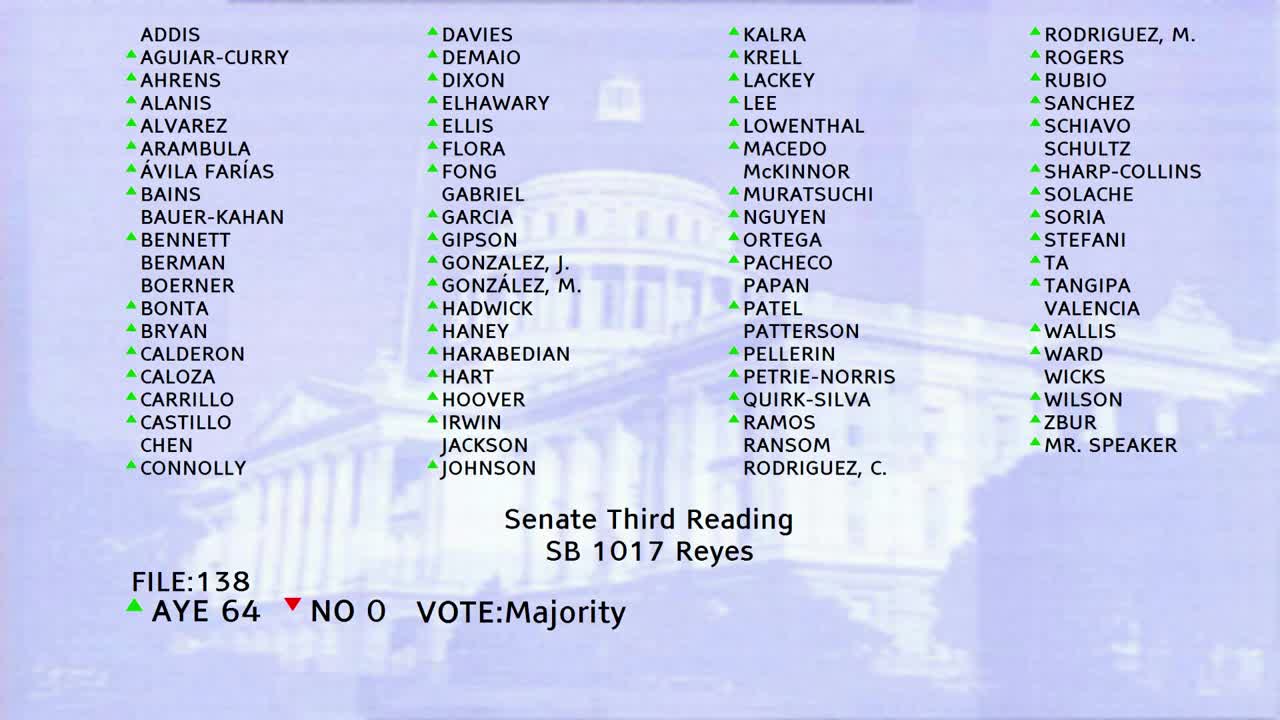

Bill Author

Bill Co-Author(s):