SB 1247: Social media platforms: child influencers.
- Session Year: 2025-2026
- House: Senate
- Latest Version Date: 2026-09-30
Current Status:
Passed
(2026-09-30: Chaptered by Secretary of State. Chapter 1022, Statutes of 2026.)
Introduced
In Committee
Awaiting First Chamber Vote
Passed First Chamber
In Committee
Awaiting Second Chamber Vote
Passed Second Chamber
Enacted
What does this bill do?
The bill lets people who were featured as minors in paid social media posts (called “child influencers”) ask a family member or guardian who posted the content (a “vlogger”) to delete or edit those posts so the person is no longer shown, and requires platforms to provide a clear way to make that request. If a vlogger does not comply within 10 business days, the person can sue for actual damages, $3,000 per day while the content remains, injunctive relief, and attorneys’ fees, with courts weighing emotional harm, safety risks, loss of privacy, and harm to future opportunities.
The summary is provided by generative AI which can make mistakes. For original language, please view the details in the table below.
Existing law requires a vlogger to compensate a minor under 18 years of age if the minor is engaged in the work of vlogging, as specified.
Existing law generally provides for the protection of minors on the internet, including by imposing certain requirements on an operator of an internet website, online service, online application, or mobile application if it is directed to minors or the operator has actual knowledge that a minor is using it. Among those provisions, existing law requires the operator to permit a minor who is a registered user to remove content or information that the user posted on the operators internet website, online service, online application, or mobile application, as specified.
This bill would require a social media platform to provide a clear and conspicuous mechanism by which a child influencer, as defined, can request a vlogger, either directly or through a specified notice process, to delete or edit certain paid content that features the child influencer as a minor, as prescribed. The bill would require the vlogger to delete or edit the content so that the child influencer is no longer featured within 10 business days of receiving the request. The bill would define vlogger to mean a person who is a parent, legal guardian, or family member of a child influencer who shared images or video content featuring that child influencer constituting at least 30% of the persons content shared on social media platforms and who received compensation for sharing that content featuring the child influencer. The bill would authorize a child influencer to bring a specified civil action against a vlogger who violates the bill.
Existing law generally provides for the protection of minors on the internet, including by imposing certain requirements on an operator of an internet website, online service, online application, or mobile application if it is directed to minors or the operator has actual knowledge that a minor is using it. Among those provisions, existing law requires the operator to permit a minor who is a registered user to remove content or information that the user posted on the operators internet website, online service, online application, or mobile application, as specified.
This bill would require a social media platform to provide a clear and conspicuous mechanism by which a child influencer can, after reaching 18 years of age, request their parent, legal guardian, or family member to edit or delete content that features the child influencer as a minor and for which the parent, legal guardian, or family member received compensation for sharing on the platform, as specified. influencer, as defined, can request a vlogger, either directly or through a specified notice process, to delete or edit certain paid content that features the child influencer as a minor, as prescribed. The bill would require the parent, legal guardian, or family member vlogger to delete or edit the content so that the child influencer is no longer featured within 10 business days of receiving the notification of the request. The bill would define vlogger to mean a person who is a parent, legal guardian, or family member of a child influencer who shared images or video content featuring that child influencer constituting at least 30% of the persons content shared on social media platforms and who received compensation for sharing that content featuring the child influencer. The bill would authorize a child influencer to bring a specified civil action against a parent, legal guardian, or family member vlogger who violates the bill.
Existing law generally provides for the protection of minors on the internet, including by imposing certain requirements on an operator of an internet website, online service, online application, or mobile application if it is directed to minors or the operator has actual knowledge that a minor is using it. Among those provisions, existing law requires the operator to permit a minor who is a registered user to remove content or information that the user posted on the operators internet website, online service, online application, or mobile application, as specified.
This bill would require a social media platform to provide a mechanism by which a child influencer can, after reaching 18 years of age, request their parent, legal guardian, or family member to edit or delete content that features the child influencer as a minor and for which the parent, legal guardian, or family member received compensation for sharing on the platform, as specified. The bill would require the parent, legal guardian, or family member to delete or edit the content so that the child influencer is no longer featured within 10 business days of receiving the notification of the request. The bill would authorize a child influencer to bring a specified civil action against a parent, legal guardian, or family member who violates the bill.
As used in this part:
(a)Child influencer means a person who is at least 18 years of age who is featured as a minor in paid content on a social media platform.
(b)Paid content means image or video content shared on a social media platform by a vlogger for which the vlogger receives compensation.
(c)Social media platform has the meaning defined in Section 22675 of the Business and Professions Code.
(d)Vlogger means a person who meets both of the following criteria:
(1)The person is a parent, legal guardian, or family member of a child influencer who shared images or video content featuring that child influencer constituting at least 30 percent of the persons content shared on social media platforms.
(2)The person received compensation for sharing the content featuring the child influencer described in paragraph (1).
6666.(a)A social media platform shall provide a clear and conspicuous mechanism by which a child influencer can request a vlogger, either directly or pursuant to the notice described in subdivision (b), to delete or edit paid content, pursuant to subdivision (c), that meets both of the following criteria:
(1)The paid content is adequately identified by the child influencer so that the social media platform is able to notify the vlogger who is able to remove the paid content from the social media platform.
(2)The paid content features the child influencer as a minor.
(b)If the mechanism provided pursuant to subdivision (a) does not enable the child influencer to submit a request directly to the vlogger, the social media platform shall notify the vlogger of the request within three business days of its receipt.
(c)Within 10 business days of receiving a notice or direct request pursuant to this section, a vlogger shall delete the paid content or edit the paid content in such a way that the child influencer is no longer featured in the paid content.
6667.(a)A child influencer may bring a civil action against a vlogger who violates this chapter for all of the following relief:
(1)Actual damages.
(2)Statutory damages in the amount of three thousand dollars ($3,000) for each day that a vlogger is in violation of this chapter.
(3)Injunctive relief.
(4)Reasonable attorneys fees and costs.
(b)In considering whether to grant injunctive relief pursuant to subdivision (a), a court shall consider all of the following:
(1)Emotional harm or substantial embarrassment the paid content causes the child influencer.
(2)Increased risk to the child influencer of harassment or compromised safety.
(3)Loss of control of personal information.
(4)Harm to future opportunities.
SECTION 1.Chapter 22.1.3 (commencing with Section 22583) is added to Division 8 of the Business and Professions Code, to read:22.1.3.Privacy of Child Influencers22583.As used in this chapter:(a)Child influencer means a person who is at least 18 years of age who is featured as a minor in paid content on a social media platform.(b)Paid content means image or video content shared on a social media platform by a vlogger for which the vlogger receives compensation.(c)Social media platform has the meaning defined in Section 22675.(d)Vlogger means a person who meets both of the following criteria:(1)The person is a parent, legal guardian, or family member of a child influencer who shared images or video content featuring that child influencer constituting at least 30 percent of the persons content shared on social media platforms.(2)The person received compensation for sharing the content featuring the child influencer described in paragraph (1).22583.1.(a)A social media platform shall provide a clear and conspicuous mechanism by which a child influencer can request a vlogger, either directly or pursuant to the notice described in subdivision (b), to delete or edit paid content, pursuant to subdivision (c), that meets both of the following criteria: (1)The paid content is adequately identified by the child influencer so that the social media platform is able to notify the vlogger who is able to remove the paid content from the social media platform.(2)The paid content features the child influencer as a minor.(b)If the mechanism provided pursuant to subdivision (a) does not enable the child influencer to submit a request directly to the vlogger, the social media platform shall notify the vlogger of the request within three business days of its receipt.(c)Within 10 business days of receiving a notice or direct request pursuant to this section, a vlogger shall delete the paid content or edit the paid content in such a way that the child influencer is no longer featured in the paid content.22583.2.(a)A child influencer may bring a civil action against a vlogger who violates this chapter for all of the following relief:(1)Actual damages.(2)Statutory damages in the amount of three thousand dollars ($3,000) for each day that a vlogger is in violation of this chapter.(3)Injunctive relief.(4)Reasonable attorneys fees and costs.(b)In considering whether to grant injunctive relief pursuant to subdivision (a), a court shall consider all of the following:(1)Emotional harm or substantial embarrassment the paid content causes the child influencer.(2)Increased risk to the child influencer of harassment or compromised safety.(3)Loss of control of personal information.(4)Harm to future opportunities.As used in this chapter:
(a)Child influencer means a person who is at least 18 years of age who is featured as a minor in paid content on a social media platform.
(b)Paid content means image or video content shared on a social media platform by a vlogger for which the vlogger receives compensation.
(c)Social media platform has the meaning defined in Section 22675.
(d)Vlogger means a person who shared images or video content featuring a child influencer as a minor, who received compensation for sharing that content on a social media platform, and who is a parent, legal guardian, or family member of the child influencer. meets both of the following criteria:
(1)The person is a parent, legal guardian, or family member of a child influencer who shared images or video content featuring that child influencer constituting at least 30 percent of the persons content shared on social media platforms.
(2)The person received compensation for sharing the content featuring the child influencer described in paragraph (1).
22583.1.(a)A social media platform shall provide a clear and conspicuous mechanism by which a child influencer can request a vlogger vlogger, either directly or pursuant to the notice described in subdivision (b), to delete or edit paid content, pursuant to subdivision (c), that meets both of the following criteria:
(1)The paid content is adequately identified by the child influencer so that the social media platform is able to notify the vlogger who is able to remove the paid content from the social media platform.
(2)The paid content features the child influencer as a minor.
(b)When a social media platform receives a request through If the mechanism provided pursuant to subdivision (a), (a) does not enable the child influencer to submit a request directly to the vlogger, the social media platform shall notify the vlogger of the request within three business days of its receipt.
(c)Within ten 10 business days of receiving a notice or direct request pursuant to subdivision (b), this section, a vlogger shall delete the paid content or edit the paid content in such a way that the child influencer is no longer featured in the paid content.
22583.2.(a)A child influencer may bring a civil action against a vlogger who violates this chapter for all of the following relief:
(1)Actual damages.
(2)Statutory damages in the amount of three thousand dollars ($3,000) for each day that a vlogger is in violation of this chapter.
(3)Injunctive relief.
(4)Reasonable attorneys fees and costs.
(b)In a civil action brought pursuant to this section, considering whether to grant injunctive relief pursuant to subdivision (a), a court shall consider all of the following:
(1)Emotional harm or substantial embarrassment the paid content causes the child influencer.
(2)Increased risk to the child influencer of harassment or compromised safety.
(3)Loss of control of personal information.
(4)Harm to future opportunities.
REVISIONS: HeadingLine 2.As used in this chapter:
(a)Child influencer means a person who is at least 18 years of age who is featured as a minor in paid content on a social media platform.
(b)Paid content means image or video content shared on a social media platform by a vlogger for which the vlogger receives compensation.
(c)Social media platform has the meaning defined in Section 22675.
(d)Vlogger means a person who shared images or video content featuring a child influencer as a minor, who received compensation for sharing that content on a social media platform, and who is a parent, legal guardian, or family member of the child influencer.
22583.1.(a)A social media platform shall provide a clear and conspicuous mechanism by which a child influencer can request a vlogger to delete or edit paid content, pursuant to subdivision (c), that meets both of the following criteria:
(1)The paid content is adequately identified by the child influencer so that the social media platform is able to notify the vlogger who is able to remove the paid content from the social media platform.
(2)The paid content features the child influencer as a minor.
(b)When a social media platform receives a request through the mechanism provided pursuant to subdivision (a), the social media platform shall notify the vlogger of the request within three business days of its receipt.
(c)Within ten business days of receiving a notice pursuant to subdivision (b), a vlogger shall delete the paid content or edit the paid content in such a way that the child influencer is no longer featured in the paid content.
22583.2.(a)A child influencer may bring a civil action against a vlogger who violates this chapter for all of the following relief:
(1)Actual damages.
(2)Statutory damages in the amount of three thousand dollars ($3,000) for each day that a vlogger is in violation of this chapter.
(3)Injunctive relief.
(4)Reasonable attorneys fees and costs.
(b)In a civil action brought pursuant to this section, a court shall consider all of the following:
(1)Emotional harm or substantial embarrassment the paid content causes the child influencer.
(2)Increased risk to the child influencer of harassment or compromised safety.
(3)Loss of control of personal information.
(4)Harm to future opportunities.
|
Date
|
Status
|
|---|---|
| Sep 30, 2026 | Chaptered by Secretary of State. Chapter 1022, Statutes of 2026. |
| Sep 30, 2026 | Approved by the Governor. |
| Sep 3, 2026 | Enrolled and presented to the Governor at 3 p.m. |
| Aug 27, 2026 | Assembly amendments concurred in. (Ayes 40. Noes 0. Page 5945.) Ordered to engrossing and enrolling. |
| Aug 27, 2026 | Assembly amendments concurred in. (Ayes 39. Noes 0.) Ordered to engrossing and enrolling. |
| Aug 26, 2026 | In Senate. Concurrence in Assembly amendments pending. |
| Aug 26, 2026 | Read third time. Passed. (Ayes 79. Noes 0. Page 6551.) Ordered to the Senate. |
| Aug 26, 2026 | Read third time. Passed. Ordered to the Senate. |
| Aug 10, 2026 | Read third time and amended. |
| Aug 10, 2026 | Ordered to third reading. |
| Jun 24, 2026 | Read second time. Ordered to third reading. |
| Jun 23, 2026 | From committee: Do pass. (Ayes 12. Noes 0.) (June 23). |
| Jun 23, 2026 | Coauthors revised. |
| Jun 17, 2026 | From committee: Do pass and re-refer to Com. on JUD. (Ayes 15. Noes 0.) (June 16). Re-referred to Com. on JUD. |
| May 26, 2026 | Referred to Coms. on P. & C.P. and JUD. |
| May 20, 2026 | In Assembly. Read first time. Held at Desk. |
| May 19, 2026 | Read third time. Passed. (Ayes 39. Noes 0. Page 4348.) Ordered to the Assembly. |
| May 19, 2026 | Read third time. Passed. (Ayes 39. Noes 0.) Ordered to the Assembly. |
| May 14, 2026 | Read second time. Ordered to third reading. |
| May 14, 2026 | From committee: Do pass. (Ayes 7. Noes 0.) (May 14). |
| May 14, 2026 | From committee: Do pass. (Ayes 7. Noes 0. Page 4270.) (May 14). |
| May 12, 2026 | Set for hearing May 14. |
| May 11, 2026 | May 11 hearing: Placed on APPR. suspense file. |
| May 4, 2026 | Set for hearing May 11. |
| Apr 23, 2026 | Read second time and amended. Re-referred to Com. on APPR. |
| Apr 22, 2026 | From committee: Do pass as amended and re-refer to Com. on APPR. (Ayes 13. Noes 0.) (April 21). |
| Apr 22, 2026 | From committee: Do pass as amended and re-refer to Com. on APPR. (Ayes 13. Noes 0. Page 3979.) (April 21). |
| Apr 14, 2026 | April 14 set for first hearing canceled at the request of author. |
| Apr 8, 2026 | Set for hearing April 14. |
| Apr 7, 2026 | From committee: Do pass and re-refer to Com. on JUD. (Ayes 9. Noes 0.) (April 6). Re-referred to Com. on JUD. |
| Apr 7, 2026 | From committee: Do pass and re-refer to Com. on JUD. (Ayes 9. Noes 0. Page 3742.) (April 6). Re-referred to Com. on JUD. |
| Mar 10, 2026 | Set for hearing April 6. |
| Mar 4, 2026 | Referred to Coms. on P., D.T., & C.P., JUD., and APPR. |
| Feb 20, 2026 | From printer. May be acted upon on or after March 22. |
| Feb 19, 2026 | Introduced. Read first time. To Com. on RLS. for assignment. To print. |
|
Date
|
Description
|
Location
|
Votes
|
|
|---|---|---|---|---|
| Aug 27, 2026 | Unfinished Business SB1247 Padilla et al. Concurrence | Senate Floor |
Passed |
|
| Aug 26, 2026 | SB 1247 Padilla Senate Third Reading By Bauer-Kahan | Assembly Floor |
Passed |
|
| Jun 23, 2026 | Do pass. | Assembly Standing Committee on Judiciary |
Passed |
|
| Jun 16, 2026 | Do pass and be re-referred to the Committee on [Judiciary] | Assembly Standing Committee on Privacy and Consumer Protection |
Passed |
|
| May 19, 2026 | Senate 3rd Reading SB1247 Padilla | Senate Floor |
Passed |
|
| May 14, 2026 | Do pass | Senate Standing Committee on Appropriations |
Passed |
|
| May 11, 2026 | Placed on suspense file | Senate Standing Committee on Appropriations |
Passed |
|
| Apr 21, 2026 | Do pass as amended, but first amend, and re-refer to the Committee on [Appropriations] | Senate Standing Committee on Judiciary |
Passed |
|
| Apr 6, 2026 | Do pass, but first be re-referred to the Committee on [Judiciary] | Senate Standing Committee on Privacy, Digital Technologies, and Consumer Protection |
Passed |
This list shows positions taken on this bill by organizations on the date displayed, which is linked to the original source.
Positions by individuals are not included.
|
Organization
|
Position
|
Date
|
|---|---|---|
| 1 individual | ** Support | |
| American Academy Of Pediatrics, California | ** Support | |
| Child Protection Task Force (a Committee of SAG-AFTRA) | ** Support | |
| Civil Justice Association Of California | ** Against | |
| National Child Protection Task Force (a Committee of SAG-AFTRA) | ** Support | |
| no affiliation | ** Support | |
| Oakland Privacy | ** Support | |
| Quit Clicking Kids | ** Support | |
| SAG-AFTRA Child Protection Task Force | ** Support |
SENATE RULES COMMITTEE Office of Senate Floor Analyses (916) 651-4171 | SB 1247 |
UNFINISHED BUSINESS
Bill No: SB 1247
Author: Padilla (D), et al.
Amended: 8/10/26
Vote: 21
SENATE PRIV., DIGITAL TECH. & CONS. PROT. COMMITTEE: 9-0, 4/6/26
AYES: Cabaldon, Jones, Gonzalez, McNerney, Ochoa Bogh, Padilla, Reyes, Umberg, Wiener
SENATE JUDICIARY COMMITTEE: 13-0, 4/21/26
AYES: Umberg, Niello, Allen, Ashby, Caballero, Durazo, Laird, Reyes, Stern, Valladares, Wahab, Weber Pierson, Wiener
SENATE APPROPRIATIONS COMMITTEE: 7-0, 5/14/26
AYES: Cervantes, Seyarto, Cabaldon, Dahle, Grayson, Richardson, Wahab
SENATE FLOOR: 39-0, 5/19/26
AYES: Allen, Alvarado-Gil, Archuleta, Arreguín, Ashby, Becker, Blakespear, Cabaldon, Caballero, Cervantes, Choi, Cortese, Dahle, Durazo, Gonzalez, Grayson, Grove, Hurtado, Jones, Laird, Limón, McGuire, McNerney, Menjivar, Ochoa Bogh, Padilla, Pérez, Reyes, Richardson, Rubio, Seyarto, Smallwood-Cuevas, Stern, Strickland, Umberg, Valladares, Wahab, Weber Pierson, Wiener
NO VOTE RECORDED: Niello
ASSEMBLY FLOOR: Passed, 8/26/26
SUBJECT: Social media platforms: child influencers
SOURCE: Author
DIGEST:
This bill requires a social media platform to provide a clear and conspicuous mechanism by which a child influencer who is at least 18 years of age can request a vlogger to delete or edit certain paid content that features the child influencer as a minor.
Assembly Amendments
relocate this bill’s provision from the Business and Professions Code to the Family Code.
ANALYSIS:
Existing law:
- Provides that a minor is an individual who is under 18 years of age. (Family (Fam.) Code, § 6500.)
- Provides that a minor’s parent or guardian is entitled to the earnings of the minor, except as provided in 3), 4), and 6). (Fam. Code, § 7500.)
- Provides that the parent or guardian of a minor who is emancipated—through marriage, serving on active duty with the Armed Forces of the United States, or a declaration of emancipation—is not entitled to the minor’s earnings. (Fam. Code, §§ 7002, 7050.)
- Provides, under “Coogan’s Law,” that the parent or guardian of a minor who enters into a contract for artistic or creative services, including online content creation, or for participating in or playing a sport, is not entitled to the minor’s earnings when specified conditions are met. (Fam. Code, §§ 6750-6753.)
- Defines the following relevant terms:
- “Content” means statements or comments made by users and media that are created, posted, shared, or otherwise interacted with by users on an internet-based service or application, but does not include media put on a service or application exclusively for the purpose of cloud storage, transmitting files, or file collaboration.
- “Family” means a group of persons related by blood or marriage, including civil partnerships, or whose close relationship with each other is considered equivalent to a family relationship by the individuals.
- “Online platform” means any public-facing internet website, web application, or digital application, including a mobile application, and includes a social media platform, advertising network, mobile operating system, search engine, email service, or internet access service.
- “Vlog” means content shared on an online platform in exchange for compensation.
- “Vlogger” means a parent, legal guardian, or family residing in California that creates image or video content that is performed in California in exchange for compensation, but does not include any person under 18 years of age who produces their own content.
- “Vlogging” means the act of sharing content on an online platform in exchange for compensation. (Fam. Code, § 6650.)
- Provides that, when at least 30 percent of a vlogger’s compensated content includes the likeness, name, or photograph of a minor, the vlogger must compensate the minor for their appearance in the content pursuant to a prescribed compensation formula, and the moneys must be held in trust for the minor until they reach the age of majority or are emancipated. (Fam. Code, § 6651-6653.)
- Provides that, if a vlogger knows or should have known that they violated the provisions of 6), the minor appearing in the content may commence an action to enforce the requirements of 6) and may obtain actual damages, punitive damages, and attorney’s fees and costs. (Fam. Code, § 6654.)
- Provides that 6) does not apply to a contract for vlogging services between a parent or guardian and a minor if the court has approved the contract pursuant to Coogan’s law. (Fam. Code, § 6656.)
- Defines “social media platform” as a public or semipublic internet-based service or application that has users in California and that meets both of the following criteria:
- A substantial function of the service or application is to connect users in order to allow users to interact socially with each other within the service or application; email or direct messaging services alone are insufficient to satisfy this criterion.
- The service or application allows users to do all of the following: (1) construct a public or semipublic profile for purposes of signing into and using the service or application; (2) populate a list of other users with whom an individual shares a social connection within the system; and (3) create or post content viewable by other users, including, but not limited to, on message boards, in chat rooms, or through a landing page or main feed that presents the user with content generated by other users. (Business (Bus.) & Professions (Prof.) Code, § 22675(f).)
This bill:
- Defines the following terms:
- “Child influencer” means a person who is at least 18 years of age who is featured as a minor in paid content on a social media platform.
- “Paid content” means image or video content shared on a social media platform by a vlogger for which the vlogger receives compensation.
- “Social media platform” has the same meaning as in section 22675 of the Business and Professions Code.
- “Vlogger” means a person who meets both of the following criteria:
- The person is a parent, legal guardian, or family member of a child influencer who shared images or video content featuring that child influencer constituting at least 30 percent of the person’s content shared on social media platforms.
- The person received compensation for sharing the content featuring the child influencer.
- Requires a social media platform to provide a clear and conspicuous mechanism by which a child influencer can request a vlogger to delete or edit paid content, pursuant to 4), that meets both of the following criteria:
- The paid content is adequately identified by the child influencer so that the social media platform is able to notify the vlogger who is able to remove the paid content from the social media platform.
- The paid content features the child influencer as a minor.
- Requires a social media platform to notify the vlogger of the request within three business days of receipt if the mechanism provided does not enable the child influencer to submit a request directly to the vlogger.
- Requires a vlogger, within 10 business days of receipt of a notice or direct request, to delete the identified paid content or edit the identified paid content in such a way that the child influencer is no longer featured in the paid content.
- Provides that a child influencer may bring a civil action against a vlogger who violates the above for all of the following relief:
- Actual damages.
- Statutory damages in the amount of $3,000 for each day that the vlogger is in violation of 4).
- Injunctive relief.
- Reasonable attorney’s fees and costs.
- Requires a court to consider all of the following when considering whether to grant injunctive relief:
- Emotional harm or substantial embarrassment the paid content causes the child influencer.
- Increased risk to the child influencer of harassment or compromised safety.
- Loss of control of personal information.
- Harm to future opportunities.
Comments
Previous legislation established financial protections for minors whose images are used by vloggers to receive compensation. Under this bill, a child influencer, upon reaching the age of 18, may take control of content featuring images and videos of them as a minor by requesting they be edited or removed. The bill requires social media platforms to provide a clear and conspicuous mechanism for child influencers to request such action, and if certain criteria is met, the platforms must notify the relevant vlogger of the request. The vlogger is thereafter required to delete or edit the paid content, as provided. Vloggers who fail to carry this obligation are subject to civil actions for specified remedies.
Measures to protect children. The dramatic rise of content created and monetized by social media influencers, and specifically content heavily featuring minors, has drawn attention to a gap in these laws. A series of infamous examples of family members exploiting minors appearing in their content has raised calls for legislation to protect the interests of these children. Mirroring a law enacted in Illinois, SB 764 (Padilla, Ch. 611, Stats. 2024) responded to this gap. That law places obligations on adult “vloggers,” creators of online content for compensation, whose online content features minors “engaging in vlogging” to set aside a certain amount of gross earnings in a trust account to be established in a California financial institution. A child is “engaged in vlogging” when a certain percentage of the content includes the minor and the related compensation reaches a certain threshold. Such vloggers are also required to maintain and share records related to the amount of relevant content produced and the compensation received therefrom.
Establishing control and privacy rights. Under this bill, a child influencer, upon reaching the age of 18, may take control of paid content featuring images and videos of them as a minor by requesting they be edited or removed. Current law allows for the financial protection of child influencers but does not give control of their images and videos to those child influencers upon reaching adulthood. The author seeks to establish a process whereby child influencers can take control of their online paid content and secure privacy rights as adults.
This process requires a social media platform to provide a “clear and conspicuous mechanism” for a child influencer to request edits or deletion of vloggers’ paid content featuring them. This provision establishes unambiguous communication between the parties to ensure any child influencer can easily access this mechanism to make a privacy request.
Once the paid content that features the child influencer as a minor has been adequately identified, the child influencer may use the communication mechanism to make a request. Upon receiving this request, the social media platform must inform the vlogger of the request if the mechanism does not enable the child influencer to submit a request directly to the vlogger. Within ten business days of receiving the privacy request, the vlogger must delete or edit the paid content in such a way that the child influencer is no longer featured in the paid content.
Violations are subject to a civil action, to be brought by the child influencer, as specified. For a more thorough analysis of this bill and its provisions, please see the Senate Privacy, Digital Technologies, and Consumer Protection Committee analysis.
According to the author:
Children featured in family videos lose the ability to control their image at a young age and face privacy and security concerns growing up in the public eye. SB 1247 would give children who were monetized online the ability to exert privacy rights by giving child influencers the ability to delete content featuring them as minors once they reach adulthood.
FISCAL EFFECT: Appropriation: No Fiscal Com.: No Local: No
According to the Senate Appropriations Committee:
Costs are unknown, with potentially significant cost pressure to the courts to the extent there are additional civil filings for new violations created by this bill. Actual costs would depend on the number of child influencers seeking to edit or remove content and subsequent civil actions and injunctive relief. Although courts are not funded based on workload, increased pressure on the Trial Court Trust Fund may create a demand for increased funding for courts. The proposed FY 2026-07 Governor’s budget would provide $70 million General Fund support (Trial Court Trust Fund, General Fund).
SUPPORT: (Verified 8/25/2026)
American Academy of Pediatrics, California
Child Protection Task Force (a Committee of Sag-aftra)
No Affiliation
Oakland Privacy
Quit Clicking Kids
OPPOSITION: (Verified 8/25/2026)
Civil Justice Association of California
ARGUMENTS IN SUPPORT: The American Academy of Pediatrics, California, writes:
SB 1247 strikes a thoughtful balance between family expression and a young adult’s right to privacy and dignity. Importantly, the bill does not impose liability on social media platforms for the content itself; rather, it creates a practical process for handling removal requests and places responsibility on the compensated content creator. The measure also appropriately limits its scope to monetized family content where the child influencer appeared in a substantial portion of the material.
California has often led the nation in recognizing emerging harms facing children in digital environments. SB 1247 continues that leadership by ensuring that children who grow up online are afforded basic autonomy over their own image, identity, and personal history.
ARGUMENTS IN OPPOSITION: The Civil Justice Association of California (CJAC) writes:
The bill would impose penalties of a set $3,000 per day for each day of noncompliance. CJAC is concerned about the creation of a private right of action in this manner, as such claims can be readily brought and, when paired with significant statutory penalties, may invite abusive litigation and further burden already strained courts without providing a commensurate public benefit.
CJAC respects the author’s intent to protect minors and to provide individuals with control over content featuring them online. However, for the reasons stated above, we remain concerned with the bill’s penalty structure and the creation of an additional private right of action in this context.
Prepared by: Bill Herms / P., D.T., & C.P. / (916) 651-1548, Christian Kurpiewski / P., D.T., & C.P. / (916) 651-1548, Benjamin Diaz / P., D.T., & C.P. / (916) 651-1548
SENATE THIRD READING
STR Bill Id:SB 1247
Author:(Padilla)
As Amended Ver:August 10, 2026
Majority vote
SUMMARY
Requires social media platforms to provide a clear and conspicuous mechanism to allow child influencers, once they reach 18 years old, to request vloggers to delete or edit out footage of them as a minor. Recent amendments relocate the bill's provisions from the Business and Professions Code to Family Code.
Major Provisions
- Defines the following terms:
- "Child influencer" means a person who is at least 18 years of age who is featured as a minor in paid content on a social media platform.
- "Paid content" means image or video content shared on a social media platform by a vlogger for which the vlogger receives compensation.
- A "vlogger" means a person who both is a parent, legal guardian, or family member of a child influencer who shared images or video content featuring that child influencer constituting at least 30% of the person's content shared on social media platforms and the person received compensation for sharing the content featuring the child influencer.
- Requires a social media platform to provide a clear and conspicuous mechanism by which a child influencer can request a vlogger to delete or edit paid content if the content meets the following standards:
- The paid content is adequately identified by the child influencer so that the social media platform is able to notify the vlogger to remove the paid content from the social media platform.
- The paid content features the child influencer as a minor.
- Requires that if a social media platform does not provide a mechanism that enables the child influencer to submit a request directly to the vlogger, the social media platform must notify the vlogger of the request within three business days of its receipt.
- Mandates that a vlogger must delete the paid content or edit the paid content in such a way that the child influencer is no longer featured in the paid content within ten business days of receiving a notice or direct request to delete or edit the paid content.
- Provides that a child influencer may bring a civil action against a vlogger who violates the bill for all of the following:
- Actual damages.
- Statutory damages up to $3,000 for each day that a vlogger is in violation of the bill.
- Injunctive relief.
- Reasonable attorney's fees and costs.
- Requires a court, in an action under 5), to consider all of the following:
- Emotional harm or substantial embarrassment the paid content causes the child influencer.
- Increased risk to the child influencer of harassment or compromised safety.
- Loss of control of personal information.
- Harm to future opportunities.
COMMENTS
Social media has shifted how many of us engage with the world, serving as an important avenue for connection, commerce, and even job prospects. As millions of people dedicate hours to scrolling social media, the market for influencers – people who amass thousands of followers to sell or promote paid content to – has skyrocketed. The influencer industry is worth roughly $250 billion according to Forbes, a number that is forecasted to nearly double by 2027.[1]
Children, many of whom are the intended audiences for these influencers, can be drawn to these potentially lucrative careers. A 2019 poll conducted by Harris Polls on behalf of Lego found that one-third of children surveyed between the ages of eight and 12 aspire to be a vlogger or YouTuber when they grow up, likely due in part to the increased exposure to vloggers and influencers on common platforms like YouTube.[2]
However, young influencers face particular challenges online, especially if they begin producing content as minors. For one, social media can have negative impacts on developing minds, leading to body image issues and negative self-image. Additionally, child labor laws do not apply to influencers and vloggers, who often work around the clock producing videos and content. Child influencers are also at risk for privacy violations, as being raised in a generation where everyone has a camera in their back pocket with access to the internet can lead to a near incessant stream of content. As noted by a 2022 Wired article:
[T]hose of us who were introduced to social media during adulthood were still able to carve out our online presence from scratch, whether it be as an anonymous lurker on Reddit or a brazen oversharer on Instagram. The next generation are not afforded this freedom of choice; they simply have to lie in utero and pray that the first thing they see upon exiting isn't the glare of a smartphone camera lens, set to an ear-splitting shriek of, "Don't forget to like and subscribe!"[3]
1939, California enacted the famous Coogan Law, named after child actor Jackie Coogan. Coogan was discovered in 1919 by Charlie Chaplin and became a household name after starring in Chaplin's film, The Kid.[4] Despite his fame, Coogan discovered as a young adult that his father, who had since passed, had legally squandered most of his earnings, leaving Coogan penniless. In response, the California legislature passed Coogan's law, which requires that 15% of a minor's earnings from entertainment work be placed in a blocked trust account, often referred to as a "Coogan account." These protections applied only in employment settings and did not extend to children who are directly monetized by their families on social media.
To address these gaps in protections for child influencers, SB 764 (Padilla), Chapter 611, Statutes of 2024 required vlogger parents or guardians that film content with minors to maintain records detailing the compensation generated from vlogs to be provided to the minor monthly. Additionally, vloggers who earn more than $15,000 annually are required to set aside specified portions of their gross earnings in a secure fund for the minor based on the percentage of compensated content in which the minor is featured. SB 764 also provided child influencers with a private right to action against the vlogger who knowingly violates these provisions.
SB 1247 builds upon SB 764 by allowing child influencers the right to request footage of them as a minor be deleted. SB 1247 allows child influencers to request that paid content featuring them as a minor be deleted or edited out by the vlogger parents or guardians. The bill requires social media platforms to provide a clear and conspicuous mechanism for child influencers to request that paid content of them be deleted or edited in such a way that the minor is no longer featured. If a mechanism does not send the deletion request to the vlogger directly, the social media platform must notify the vlogger of the request within three business days. Upon receiving the deletion request, the vlogger will then have ten days to delete or edit the paid content. SB 1247 also provides a private right of action for child influencers against the vlogger to pursue actual damages, statutory damages for $3,000 for each day that the vlogger is in violation, injunctive relief, and reasonable attorney's fees and costs.
According to the Author
Children featured in family videos lose the ability to control their image at a young age and face privacy and security concerns growing up in the public eye. SB 1247 would give children who were monetized online the ability to exert privacy rights by giving child influencers the ability to delete content featuring them as minors once they reach adulthood.
Arguments in Support
Quit Clicking Kids write in support:
California's previous SB 764 ensured that a percentage of this profit was maintained for a child in escrow, following the precedent set by California's groundbreaking Coogan laws. However, child influencers also face a loss of privacy and related risks. Scholar Charlotte Yates lists five central consequences of this loss: 1) Identity theft; 2) Digital kidnapping; 3) Exposure to child predators; 4) Emotional trauma; and 5) Social isolation. These and other risks have been noted by a wide variety of scholars.
In particular, one risk to note is that of a lasting digital footprint: children cannot consent to their name, image, or likeness being used online, and having a publicly accessible profile that catalogues their childhood may come back to haunt them. Imagine if everyone could access, at any time, every mistake and meltdown from your childhood— including your friends, colleagues, and superiors. Children deserve the chance to regain control over their digital record.
Arguments in Opposition
In opposition to the bill, the Civil Justice Association of California (CJAC) argues:
SB 1247 also creates a new private right of action, allowing a child influencer to bring a civil action against a parent, legal guardian, or family member for violating the bill's provisions. The bill would impose penalties of a set $3,000 per day for each day of noncompliance. CJAC is concerned about the creation of a private right of action in this manner, as such claims can be readily brought and, when paired with significant statutory penalties, may invite abusive litigation and further burden already strained courts without providing a commensurate public benefit.
FISCAL COMMENTS
According to the Senate Appropriations Committee:
Unknown, potentially significant cost pressure to the courts to the extent there are additional civil filings for new violations created by this bill. Actual costs would depend on the number of child influencers seeking to edit or remove content and subsequent civil actions and injunctive relief. Although courts are not funded based on workload, increased pressure on the Trial Court Trust Fund may create a demand for increased funding for courts. The proposed FY 2026-07 Governor's budget would provide $70 million General Fund support (Trial Court Trust Fund, General Fund).
VOTES
SENATE FLOOR: 39-0-1
YES: Allen, Alvarado-Gil, Archuleta, Arreguín, Ashby, Becker, Blakespear, Cabaldon, Caballero, Cervantes, Choi, Cortese, Dahle, Durazo, Gonzalez, Grayson, Grove, Hurtado, Jones, Laird, Limón, McGuire, McNerney, Menjivar, Ochoa Bogh, Padilla, Pérez, Reyes, Richardson, Rubio, Seyarto, Smallwood-Cuevas, Stern, Strickland, Umberg, Valladares, Wahab, Weber Pierson, Wiener
ABS, ABST OR NV: Niello
ASM PRIVACY AND CONSUMER PROTECTION: 15-0-0
YES: Bauer-Kahan, Macedo, Bryan, DeMaio, Hoover, Irwin, Lowenthal, McKinnor, Ortega, Patterson, Pellerin, Petrie-Norris, Ward, Wicks, Wilson
ASM JUDICIARY: 12-0-0
YES: Kalra, Macedo, Bauer-Kahan, Bryan, Connolly, Dixon, Harabedian, Pacheco, Papan, Sanchez, Stefani, Zbur
UPDATED
VERSION: August 10, 2026
CONSULTANT: Kate Davis / P. & C.P. / (916) 319-2200 FN: 0003402
Danielle Chemtob, "Forbes Daily: The $250 Billion Influencer Economy Is Booming," Forbes, (Oct. 28, 2024), https://www.forbes.com/sites/daniellechemtob/2024/10/28/forbes-daily-the-250-billion-influencer-economy-is-booming/. ↑
Yelena Dzhanova, "Forget law school, these kids want to be a YouTube star," CNBC News, (Aug. 3, 2019), ↑
Ellen Walker, "Nothing Is Protecting Child Influencers From Exploitation," Wired, (Aug. 25, 2022), https://www.wired.com/story/child-influencers-exploitation-legal-protection/. ↑
SAG-AFTRA, "Coogan Law," https://www.sagaftra.org/membership-benefits/young-performers/coogan-law. ↑
SENATE THIRD READING
STR Bill Id:SB 1247
Author:(Padilla)
As Amended Ver:April 23, 2026
Majority vote
SUMMARY
Requires social media platforms to provide a clear and conspicuous mechanism to allow child influencers, once they reach 18 years old, to request vloggers to delete or edit out footage of them as a minor.
Major Provisions
- Defines the following terms:
- "Child influencer" means a person who is at least 18 years of age who is featured as a minor in paid content on a social media platform.
- "Paid content" means image or video content shared on a social media platform by a vlogger for which the vlogger receives compensation.
- A "vlogger" means a person who both is a parent, legal guardian, or family member of a child influencer who shared images or video content featuring that child influencer constituting at least 30% of the person's content shared on social media platforms and the person received compensation for sharing the content featuring the child influencer.
- Requires a social media platform to provide a clear and conspicuous mechanism by which a child influencer can request a vlogger to delete or edit paid content if the content meets the following standards:
- The paid content is adequately identified by the child influencer so that the social media platform is able to notify the vlogger to remove the paid content from the social media platform.
- The paid content features the child influencer as a minor.
- Requires that if a social media platform does not provide a mechanism that enables the child influencer to submit a request directly to the vlogger, the social media platform must notify the vlogger of the request within three business days of its receipt.
- Mandates that a vlogger must delete the paid content or edit the paid content in such a way that the child influencer is no longer featured in the paid content within ten business days of receiving a notice or direct request to delete or edit the paid content.
- Provides that a child influencer may bring a civil action against a vlogger who violates the bill for all of the following:
- Actual damages.
- Statutory damages up to $3,000 for each day that a vlogger is in violation of the bill.
- Injunctive relief.
- Reasonable attorney's fees and costs.
- Requires a court, in an action under 5), to consider all of the following:
- Emotional harm or substantial embarrassment the paid content causes the child influencer.
- Increased risk to the child influencer of harassment or compromised safety.
- Loss of control of personal information.
- Harm to future opportunities.
COMMENTS
Social media has shifted how many of us engage with the world, serving as an important avenue for connection, commerce, and even job prospects. As millions of people dedicate hours to scrolling social media, the market for influencers – people who amass thousands of followers to sell or promote paid content to – has skyrocketed. The influencer industry is worth roughly $250 billion according to Forbes, a number that is forecasted to nearly double by 2027.[1]
Children, many of whom are the intended audiences for these influencers, can be drawn to these potentially lucrative careers. A 2019 poll conducted by Harris Polls on behalf of Lego found that one-third of children surveyed between the ages of eight and 12 aspire to be a vlogger or YouTuber when they grow up, likely due in part to the increased exposure to vloggers and influencers on common platforms like YouTube.[2]
However, young influencers face particular challenges online, especially if they begin producing content as minors. For one, social media can have negative impacts on developing minds, leading to body image issues and negative self-image. Additionally, child labor laws do not apply to influencers and vloggers, who often work around the clock producing videos and content. Child influencers are also at risk for privacy violations, as being raised in a generation where everyone has a camera in their back pocket with access to the internet can lead to a near incessant stream of content. As noted by a 2022 Wired article:
[T]hose of us who were introduced to social media during adulthood were still able to carve out our online presence from scratch, whether it be as an anonymous lurker on Reddit or a brazen oversharer on Instagram. The next generation are not afforded this freedom of choice; they simply have to lie in utero and pray that the first thing they see upon exiting isn't the glare of a smartphone camera lens, set to an ear-splitting shriek of, "Don't forget to like and subscribe!"[3]
1939, California enacted the famous Coogan Law, named after child actor Jackie Coogan. Coogan was discovered in 1919 by Charlie Chaplin and became a household name after starring in Chaplin's film, The Kid.[4] Despite his fame, Coogan discovered as a young adult that his father, who had since passed, had legally squandered most of his earnings, leaving Coogan penniless. In response, the California legislature passed Coogan's law, which requires that 15% of a minor's earnings from entertainment work be placed in a blocked trust account, often referred to as a "Coogan account." These protections applied only in employment settings and did not extend to children who are directly monetized by their families on social media.
To address these gaps in protections for child influencers, SB 764 (Padilla) Chapter 611, Statutes of 2024 required vlogger parents or guardians that film content with minors to maintain records detailing the compensation generated from vlogs to be provided to the minor monthly. Additionally, vloggers who earn more than $15,000 annually are required to set aside specified portions of their gross earnings in a secure fund for the minor based on the percentage of compensated content in which the minor is featured. SB 764 also provided child influencers with a private right to action against the vlogger who knowingly violates these provisions.
This bill builds upon SB 764 by allowing child influencers the right to request footage of them as a minor be deleted. This bill allows child influencers to request that paid content featuring them as a minor be deleted or edited out by the vlogger parents or guardians. The bill requires social media platforms to provide a clear and conspicuous mechanism for child influencers to request that paid content of them be deleted or edited in such a way that the minor is no longer featured. If a mechanism does not send the deletion request to the vlogger directly, the social media platform must notify the vlogger of the request within three business days. Upon receiving the deletion request, the vlogger will then have ten days to delete or edit the paid content. This bill also provides a private right of action for child influencers against the vlogger to pursue actual damages, statutory damages for $3,000 for each day that the vlogger is in violation, injunctive relief, and reasonable attorney's fees and costs.
According to the Author
Children featured in family videos lose the ability to control their image at a young age and face privacy and security concerns growing up in the public eye. SB 1247 would give children who were monetized online the ability to exert privacy rights by giving child influencers the ability to delete content featuring them as minors once they reach adulthood.
Arguments in Support
Quit Clicking Kids write in support:
California's previous SB 764 ensured that a percentage of this profit was maintained for a child in escrow, following the precedent set by California's groundbreaking Coogan laws. However, child influencers also face a loss of privacy and related risks. Scholar Charlotte Yates lists five central consequences of this loss: 1) Identity theft; 2) Digital kidnapping; 3) Exposure to child predators; 4) Emotional trauma; and 5) Social isolation. These and other risks have been noted by a wide variety of scholars.
In particular, one risk to note is that of a lasting digital footprint: children cannot consent to their name, image, or likeness being used online, and having a publicly accessible profile that catalogues their childhood may come back to haunt them. Imagine if everyone could access, at any time, every mistake and meltdown from your childhood— including your friends, colleagues, and superiors. Children deserve the chance to regain control over their digital record.
Arguments in Opposition
In opposition to the bill, the Civil Justice Association of California argues:
SB 1247 also creates a new private right of action, allowing a child influencer to bring a civil action against a parent, legal guardian, or family member for violating the bill's provisions. The bill would impose penalties of a set $3,000 per day for each day of noncompliance. CJAC is concerned about the creation of a private right of action in this manner, as such claims can be readily brought and, when paired with significant statutory penalties, may invite abusive litigation and further burden already strained courts without providing a commensurate public benefit.
FISCAL COMMENTS
According to the Senate Appropriations Committee:
Unknown, potentially significant cost pressure to the courts to the extent there are additional civil filings for new violations created by this bill. Actual costs would depend on the number of child influencers seeking to edit or remove content and subsequent civil actions and injunctive relief. Although courts are not funded based on workload, increased pressure on the Trial Court Trust Fund may create a demand for increased funding for courts. The proposed FY 2026-07 Governor's budget would provide $70 million General Fund support (Trial Court Trust Fund, General Fund).
VOTES
SENATE FLOOR: 39-0-1
YES: Allen, Alvarado-Gil, Archuleta, Arreguín, Ashby, Becker, Blakespear, Cabaldon, Caballero, Cervantes, Choi, Cortese, Dahle, Durazo, Gonzalez, Grayson, Grove, Hurtado, Jones, Laird, Limón, McGuire, McNerney, Menjivar, Ochoa Bogh, Padilla, Pérez, Reyes, Richardson, Rubio, Seyarto, Smallwood-Cuevas, Stern, Strickland, Umberg, Valladares, Wahab, Weber Pierson, Wiener
ABS, ABST OR NV: Niello
ASM PRIVACY AND CONSUMER PROTECTION: 15-0-0
YES: Bauer-Kahan, Macedo, Bryan, DeMaio, Hoover, Irwin, Lowenthal, McKinnor, Ortega, Patterson, Pellerin, Petrie-Norris, Ward, Wicks, Wilson
ASM JUDICIARY: 12-0-0
YES: Kalra, Macedo, Bauer-Kahan, Bryan, Connolly, Dixon, Harabedian, Pacheco, Papan, Sanchez, Stefani, Zbur
UPDATED
VERSION: April 23, 2026
CONSULTANT: Kate Davis / P. & C.P. / (916) 319-2200 FN: 0003201
Danielle Chemtob, "Forbes Daily: The $250 Billion Influencer Economy Is Booming," Forbes, (Oct. 28, 2024), https://www.forbes.com/sites/daniellechemtob/2024/10/28/forbes-daily-the-250-billion-influencer-economy-is-booming/. ↑
Yelena Dzhanova, "Forget law school, these kids want to be a YouTube star," CNBC News, (Aug. 3, 2019), ↑
Ellen Walker, "Nothing Is Protecting Child Influencers From Exploitation," Wired, (Aug. 25, 2022), https://www.wired.com/story/child-influencers-exploitation-legal-protection/. ↑
SAG-AFTRA, "Coogan Law," https://www.sagaftra.org/membership-benefits/young-performers/coogan-law. ↑
Date of Hearing: June 23, 2026
ASSEMBLY COMMITTEE ON JUDICIARY
Ash Kalra, Chair
SBPCA Bill Id:SB 1247
Author:(Padilla) – As Amended Ver:April 23, 2026
SENATE VOTE: 39-0
SUBJECT: SOCIAL MEDIA PLATFORMS: CHILD INFLUENCERS
SYNOPSIS
The rapid growth of social media in the last 20 years has given rise to a new form of advertisement through the use of social media influencers. Parents can become influencers by creating social media content about their family life, specifically their children, and monetize that content in lucrative ways. California enacted legislation, SB 764 (2024), to ensure children also receive financial benefit from this kind of content that they may appear in. However, even with financial compensation, a child may not want their lives documented and on the internet for the world to see. This bill allows child influencers, once they are adults, to request their vlogger parent or guardian to remove or edit paid content that features the child influencers as minors. The bill requires social media companies to implement a mechanism for child influencers to make this request. If vloggers fail to remove or edit the content as requested, child influencers may bring a civil action against them.
This bill is supported by child rights advocacy organizations and Oakland Privacy. The bill is opposed by the Civil Justice Association of California. The bill passed unanimously out of the Assembly Committee on Privacy and Consumer Protection.
SUMMARY: Requires content creators who feature their minor children and receive compensation to delete or edit content if requested by the child after they reach the age of majority. Specifically, this bill:
- Requires a social media platform to provide a clear and conspicuous mechanism by which a child influencer can request a vlogger to delete or edit paid content if the content meets the following standards:
- The paid content is adequately identified by the child influencer so that the social media platform is able to notify the vlogger to remove the paid content from the social media platform; and
- The paid content features the child influencer as a minor.
- Requires that if a social media platform does not provide a mechanism that enables the child influencer to submit a request directly to the vlogger, the social media platform must notify the vlogger of the request within three business days of its receipt.
- Mandates that a vlogger must delete the paid content or edit the paid content in such a way that the child influencer is no longer featured in the paid content within ten business days of receiving a notice or direct request to delete or edit the paid content.
- Provides that a child influencer may bring a civil action against a vlogger who violates the bill for all of the following:
- Actual damages;
- Statutory damages up to $3,000 for each day that a vlogger is in violation of the bill;
- Injunctive relief; and
- Reasonable attorney’s fees and costs.
- Requires a court, in an action under 5), to consider all of the following:
- Emotional harm or substantial embarrassment the paid content causes the child influencer;
- Increased risk to the child influencer of harassment or compromised safety;
- Loss of control of personal information; and
- Harm to future opportunities.
- Defines the following terms:
- “Child influencer” means a person who is at least 18 years of age who is featured as a minor in paid content on a social media platform.
- “Paid content” means image or video content shared on a social media platform by a vlogger for which the vlogger receives compensation.
- “Social media platform” has the meaning defined in Business and Profession Code Section 22675.
- “Vlogger” means a person who meets both of the following criteria:
- The person is a parent, legal guardian, or family member of a child influencer who shared images or video content featuring that child influencer constituting at least 30 percent of the person’s content shared on social media platforms.
- The person received compensation for sharing the content featuring the child influencer described in i).
EXISTING LAW:
- Defines “social media platform” as a public or semipublic internet-based service or application that has users in California and that meets both of the following criteria:
- A substantial function of the service or application is to connect users in order to allow users to interact socially with each other within the service or application; email or direct messaging services alone are insufficient to satisfy this criterion; and
- The service or application allows users to do all of the following: (1) construct a public or semipublic profile for purposes of signing into and using the service or application; (2) populate a list of other users with whom an individual shares a social connection within the system; and (3) create or post content viewable by other users, including, but not limited to, on message boards, in chat rooms, or through a landing page or main feed that presents the user with content generated by other users. (Business and Professions Code Section 22675 (f).)
- Provides that a minor is an individual who is under 18 years of age. (Family Code Section 6500.)
- Provides that a minor’s parent or guardian is entitled to the earnings of the minor, except as provided in 4), 5), and 7). (Family Code Section 7500.)
- Provides that the parent or guardian of a minor who is emancipated—through marriage, serving on active duty with the Armed Forces of the United States, or a declaration of emancipation—is not entitled to the minor’s earnings. (Family Code Sections 7002, 7050.)
- Provides, under “Coogan’s Law,” that the parent or guardian of a minor who enters into a contract for artistic or creative services, including online content creation, or for participating in or playing a sport, is not entitled to the minor’s earnings when specified conditions are met. (Family Code Sections 6750-6753.)
- Defines the following relevant terms:
- “Content” means statements or comments made by users and media that are created, posted, shared, or otherwise interacted with by users on an internet-based service or application, but does not include media put on a service or application exclusively for the purpose of cloud storage, transmitting files, or file collaboration.
- “Family” means a group of persons related by blood or marriage, including civil partnerships, or whose close relationship with each other is considered equivalent to a family relationship by the individuals.
- “Online platform” means any public-facing internet website, web application, or digital application, including a mobile application, and includes a social media platform, advertising network, mobile operating system, search engine, email service, or internet access service.
- “Vlog” means content shared on an online platform in exchange for compensation.
- “Vlogger” means a parent, legal guardian, or family residing in California that creates image or video content that is performed in California in exchange for compensation, but does not include any person under 18 years of age who produces their own content.
- “Vlogging” means the act of sharing content on an online platform in exchange for compensation. (Family Code Section 6650.)
- Provides that, when at least 30 percent of a vlogger’s compensated content includes the likeness, name, or photograph of a minor, the vlogger must compensate the minor for their appearance in the content pursuant to a prescribed compensation formula, and the moneys must be held in trust for the minor until they reach the age of majority or are emancipated. (Family Code Sections 6651-6653.)
- Provides that, if a vlogger knows or should have known that they violated the provisions of 7), the minor appearing in the content may commence an action to enforce the requirements of 7) and may obtain actual damages, punitive damages, and attorney’s fees and costs. (Family Code Section 6654.)
- Provides that 7) does not apply to a contract for vlogging services between a parent or guardian and a minor if the court has approved the contract pursuant to Coogan’s law. (Family Code Section 6656.)
FISCAL EFFECT: As currently in print this bill is keyed non-fiscal.
COMMENTS: For some children, their online presence begins before birth with parents sharing content about pregnancy, including ultrasound photos and childbirth vlogs. Families with child influencers can amass millions of subscribers by documenting daily activities, such as morning routines and holiday traditions, and even visits to the emergency room. (Dana D. Joss, Notes: Likes, Camera, Action: Safeguarding ‘Child Influencers’ through Expanded Coogan Protections and Increased Regulation of Social Media, 15 Wm. & Mary Bus. L. Rev. 441, 450 (2024).)
This practice can be highly lucrative. Child influencers, and their parents, can earn substantial incomes from monthly subscriptions and interactions with followers. Some can charge $3,000 for a single post. Large followings impress brands and increase the chances of receiving discounts, products, and other financial incentives, and platforms reward these accounts with greater visibility. (Jennifer Valentino-DeVries and Michael H. Keller, Five Takeaways from the Times’s Investigation into Child Influencers, New York Times (Feb. 22, 2024) available at: https://www.nytimes.com/2024/02/22/us/takeaways-instagram-child-influencers.html.) But children may not fully grasp what this content may mean for their loss of privacy. As these children grow up, they may begin to grapple with what it means to have significant portions of your life on the internet for the world to see. (Chris Felts, “Once privacy is lost, it’s lost forever” California bill seeks to protect kids against content posted by influencer parents, CapRadio (Mar. 27, 2026) available at: https://www.capradio.org/articles/2026/03/27/once-privacy-is-lost-its-lost-forever-california-bill-seeks-to-protect-kids-against-content-posted-by-influencer-parents/.) In support of the bill, the author writes:
Children featured in family videos lose the ability to control their image at a young age and face privacy and security concerns growing up in the public eye. SB 1247 would give children who were monetized online the ability to exert privacy rights by giving child influencers the ability to delete content featuring them as minors once they reach adulthood.
California’s protections for child performers. Jackie Coogan was a popular child actor in the 1920s and 1930s, getting his “big break” starring alongside Charlie Chaplin in the 1921 film, The Kid. When Coogan reached adulthood, he found out that his mother and stepfather had squandered his millions of dollars of earnings, and did so legally. In response to Coogan’s story, the Legislature, in 1938, enacted the Coogan Law. (Family Code Section 6750 et seq.) In accordance with the Coogan Law, courts must approve contracts in which a minor is employed or agrees to render artistic, creative, or athletic services, and the employer must set aside 15% of the minor’s gross earnings in a trust that is typically administered by one of the child’s parents or legal guardians. (Id.) While groundbreaking at the time, the Coogan Law did not stop all abuse of child stars. Indeed, a recent court decision noted that, “Inadequacies in the statutory scheme, however, resulted in additional abuses of the finances of such child actors as Shirley Temple, Macaulay Culkin, Lee Aaker, and Gary Coleman—all of whose parents left the minors with at best only a small percentage of what they earned during their careers.” (Phillips v. Bank of America, N.A. (2015) 236 Cal.App.4th 217, 225.)
SB 764 established similar requirements to Coogan’s Law, but for children appearing in paid content on social media. (Padilla, Ch. 611, Stats. 2024.) Vloggers—the adults creating the content—must set aside earnings from monetized social media content into a trust account for minor children who appeared prominently in the monetized content. (Family Code Sections 6650-6653.) SB 764 specified that a minor is considered engaged in vlogging if at least 30% of the vlogger’s compensated video content includes the likeness, name, or photograph of the minor. SB 764 established financial protections for children who appear in paid social media content, but not a method for protecting the child’s privacy.
This bill would require social media platforms to provide a clear and conspicuous mechanism for child influencers to request a vlogger remove or edit paid content where the child influencer appears. A child influencer is a person who is at least 18 years old and is featured as a minor in paid content on a social media platform. The mechanism to make requests for removal or edit can either contact the vlogger directly or the social media company can notify the vlogger within three days of receipt of the request from the child influencer. A vlogger must then, within 10 business days of receiving either the notice or direct request, delete or edit the paid content so that the child influencer is no longer featured.
The bill allows for a child influencer to bring a private right of action against a vlogger who fails to remove or edit the paid content within 10 days of receiving the notice or request. If successful in the action, the child influencer can be entitled to actual damages, $3,000 per day the vlogger fails to remove or edit the content, injunctive relief, and attorney’s fees. Regarding the injunctive relief, the bill specifies that the court must consider (1) the emotional harm or substantial embarrassment the paid content causes the child influencer; (2) the potential for increased risk of harassment or safety to the child influencer; (3) the loss of control of personal information; and (4) harm to future opportunities.
Liability for Social Media Companies. The opposition’s concern is regarding the potential liability of social media companies. As the bill is written, the civil action allowed is only against the vlogger, and not against a social media platform. Therefore, there does not appear to be any potential civil cause of action against a social media company on the face of the bill. In the event, however, a child influencer is successful in a civil action against a vlogger, but the vlogger contests that they received the required notice from the social media company, there may be potential liability for the social media company. If the author wishes to clarify that the bill does not create a civil cause of action against a social media company, they may want to add language stating as such. However, by keeping the bill as written, it may ensure social media companies properly implement the reporting mechanism.
ARGUMENTS IN SUPPORT: This bill is supported by child advocacy organizations and Oakland Privacy. The American Academy of Pediatrics, California writes in support:
SB 1247 takes an important and balanced step forward by allowing an adult who appeared as a minor in paid social media content to request that the content be removed or edited so they are no longer featured. The bill also requires platforms to provide a clear process for submitting those requests and establishes accountability when requests are ignored.
The rapid growth of the influencer economy has fundamentally changed childhood for many young people. According to Goldman Sachs Research, the influencer economy was valued at approximately $250 billion in 2023 and is projected to grow to nearly $480 billion by 2028. () Increasingly, children are not simply appearing incidentally online—they are becoming the central subjects of monetized family content viewed by millions of strangers.
Unlike traditional child performers, however, many child influencers have historically lacked clear legal protections regarding privacy, autonomy, and control over their digital identity. California appropriately addressed financial protections through SB 764 (Padilla, 2024), which extended Coogan Law-style protections to child influencers. SB 1247 builds on that progress by addressing another critical issue: a young adult’s right to reclaim control over deeply personal content shared online during childhood.
The harms associated with involuntary online exposure can be significant and long-lasting. The Senate Judiciary Committee analysis for SB 1247 notes that children featured in family vlogs may face embarrassment, harassment, compromised safety, identity theft concerns, and damage to future educational or employment opportunities. Public testimony supporting the bill has also highlighted situations where intimate medical information, developmental milestones, and deeply personal childhood experiences were permanently shared online without the child’s meaningful consent.
Oakland Privacy writes in support:
Senate Bill 1247 is a privacy bill that focuses on minors who have been featured in paid influencer content by their parents and guardians, often in the context of monetizing advice about child-rearing and household maintenance.
This growing field of Internet influencing has attracted large numbers of people who attempt to monetize the lessons of parenting and make money by sharing their experiences with their kids to audiences newly embarking on the parenthood journey.
Colloquially known as “Momfluencers”, it is probably fair to say that while much of the advice may prove to be helpful, it is also part of the long line of entities seeking to make money off the anxieties of young women that they aren’t doing things right, including taking care of their young children. There seems to be a lot of money to be made by incorporating brand recommendations and sponsorship into blog posts, Tiktok videos and the like once an influencer has developed an online audience.
However, one part of this formula, one of the more creative ways to address the affordability crisis plaguing many California families, likely never consented to star in these productions. The children of Momfluencers are inevitably featured in this content, but in many cases they are too young to consent to their starring roles. And in many others, the coercion present in family situations or a lack of understanding of later consequences to all this online visibility may make what seemed non-problematic at the age of 8 seem extremely problematic at the age of 18, or 35 for that matter.
One would hope that, in most cases, a parent or guardian would respond generously to a desire by an adult child to remove such content because it is interfering with job or professional efforts, university applications or is simply a source of embarrassment or chagrin. That likely happens with no need to rely on state statute.
But not all families are the same, and unfortunately when money is at stake, not all parents and guardians can be relied on to do the right thing. The long history of “stage parents” in Hollywood is a case in point. Senate Bill 1247 posits that when an adult is literally unable to get a parent or guardian to take down posts featuring the adult as a child which were financially renumerative to the parent or guardian, that the adult has some recourse for their wishes to be fulfilled.
ARGUMENTS IN OPPOSITION: This bill is opposed by the Civil Justice Association of California (CJAC). CJAC writes in opposition:
CJAC is concerned about the creation of a private right of action in this manner, as such claims can be readily brought and, when paired with significant statutory penalties, may invite abusive litigation and further burden already strained courts without providing a commensurate public benefit.
CJAC respects the author’s intent to protect minors and provide individuals with greater control over content featuring them online. However, we are also concerned that the bill could be interpreted to create or expand liability for social media platforms beyond the conduct specifically regulated by the measure. To ensure the bill remains targeted to compensated vloggers, we respectfully request clarification that the legislation is not intended to create a civil cause of action against social media platforms.
REGISTERED SUPPORT / OPPOSITION:
Support
American Academy of Pediatrics, California
Child Protection Task Force (a Committee of SAG-AFTRA)
Oakland Privacy
Quit Clicking Kids
Opposition
Civil Justice Association of California (CJAC)
Analysis Prepared by: Griff Ryan-Roberts / JUD. / (916) 319-2334
Date of Hearing: June 9, 2026
Fiscal:
ASSEMBLY COMMITTEE ON PRIVACY AND CONSUMER PROTECTION
Rebecca Bauer-Kahan, Chair
SBPCA Bill Id:SB 1247
Author:(Padilla) – As Amended Ver:April 23, 2026
SENATE VOTE: 39-0
SUBJECT: Social media platforms: child influencers
SYNOPSIS
Child stars have historically faced unique challenges in accessing their hard-won wages, leading California to pass groundbreaking legislation such as Coogan’s Law, which requires 15 percent of the minor’s earnings to be held in trust, to protect minors’ earnings from parents and caregivers. However, the rise of mommy blogs and child influencers, bolstered by social media platforms, has allowed a new generation of families to earn money through promotional deals with brands and viewer engagement without the protections afforded by Coogan’s Law. SB 764 (Padilla, Ch. 611, Stats. 2024) attempted to close this loophole by requiring that vloggers who collect a certain amount of income from vlogs featuring minors set aside a portion of the proceeds for the featured child.
This bill builds upon SB 764 by allowing child influencers, upon reaching adulthood, to request that their vlogger parent or guardian delete or edit paid content featuring them as minors. Social media platforms must provide a mechanism for child influencers to submit such requests. Vloggers who fail to follow through on the request are subject to civil actions by the child influencer.
This bill is author-sponsored and supported by child and privacy rights advocates such as the American Academy of Pediatrics, Quit Clicking Kids, and Oakland Privacy. The bill is opposed by the Civil Justice Association of California.
If passed by this Committee, the bill will next be re-referred to the Judiciary Committee.
EXISTING LAW:
- Provides, under “Coogan’s Law,” that the parent or guardian of a minor who enters into a contract for artistic or creative services, including online content creation, or for participating in or playing a sport, is not entitled to the minor’s earnings when specified conditions are met. (Fam. Code §§ 6750-6753.)
- Defines the following relevant terms:
- “Content” means statements or comments made by users and media that are created, posted, shared, or otherwise interacted with by users on an internet-based service or application, but does not include media put on a service or application exclusively for the purpose of cloud storage, transmitting files, or file collaboration.
- “Family” means a group of persons related by blood or marriage, including civil partnerships, or whose close relationship with each other is considered equivalent to a family relationship by the individuals.
- “Online platform” means any public-facing internet website, web application, or digital application, including a mobile application, and includes a social media platform, advertising network, mobile operating system, search engine, email service, or internet access service.
- “Vlog” means content shared on an online platform in exchange for compensation.
- “Vlogger” means a parent, legal guardian, or family residing in California that creates image or video content that is performed in California in exchange for compensation, but does not include any person under 18 years of age who produces their own content.
- “Vlogging” means the act of sharing content on an online platform in exchange for compensation. (Fam. Code § 6650.)
- Provides that, when at least 30 percent of a vlogger’s compensated content includes the likeness, name, or photograph of a minor, the vlogger must compensate the minor for their appearance in the content pursuant to a prescribed compensation formula, and the moneys must be held in trust for the minor until they reach the age of majority or are emancipated. (Fam. Code §§ 6651-6653.)
- Provides that, if a vlogger knows or should have known that they violated the provisions of 3), the minor appearing in the content may commence an action to enforce the requirements of 3) and may obtain actual damages, punitive damages, and attorney’s fees and costs. (Fam. Code § 6654.)
- Provides that 3) does not apply to a contract for vlogging services between a parent or guardian and a minor if the court has approved the contract pursuant to Coogan’s law. (Fam. Code § 6656.)
- Defines “social media platform” as a public or semipublic internet-based service or application that has users in California and that meets both of the following criteria:
- A substantial function of the service or application is to connect users in order to allow users to interact socially with each other within the service or application; email or direct messaging services alone are insufficient to satisfy this criterion.
- The service or application allows users to do all of the following: (1) construct a public or semipublic profile for purposes of signing into and using the service or application; (2) populate a list of other users with whom an individual shares a social connection within the system; and (3) create or post content viewable by other users, including, but not limited to, on message boards, in chat rooms, or through a landing page or main feed that presents the user with content generated by other users. (Bus. & Prof. Code § 22675(f).)
THIS BILL:
- Defines the following terms:
- “Child influencer” means a person who is at least 18 years of age who is featured as a minor in paid content on a social media platform.
- “Paid content” means image or video content shared on a social media platform by a vlogger for which the vlogger receives compensation.
- A “vlogger” means a person who both is a parent, legal guardian, or family member of a child influencer who shared images or video content featuring that child influencer constituting at least 30 percent of the person’s content shared on social media platforms and the person received compensation for sharing the content featuring the child influencer.
- Requires a social media platform to provide a clear and conspicuous mechanism by which a child influencer can request a vlogger to delete or edit paid content if the content meets the following standards:
- The paid content is adequately identified by the child influencer so that the social media platform is able to notify the vlogger to remove the paid content from the social media platform.
- The paid content features the child influencer as a minor.
- Requires that if a social media platform does not provide a mechanism that enables the child influencer to submit a request directly to the vlogger, the social media platform must notify the vlogger of the request within three business days of its receipt.
- Mandates that a vlogger must delete the paid content or edit the paid content in such a way that the child influencer is no longer featured in the paid content within ten business days of receiving a notice or direct request to delete or edit the paid content.
- Provides that a child influencer may bring a civil action against a vlogger who violates the bill for all of the following:
- Actual damages.
- Statutory damages up to $3,000 for each day that a vlogger is in violation of the bill.
- Injunctive relief.
- Reasonable attorney’s fees and costs.
- Requires a court, in an action under 5), to consider all of the following:
- Emotional harm or substantial embarrassment the paid content causes the child influencer.
- Increased risk to the child influencer of harassment or compromised safety.
- Loss of control of personal information.
- Harm to future opportunities.
COMMENTS:
1) Author’s statement. According to the author:
Children featured in family videos lose the ability to control their image at a young age and face privacy and security concerns growing up in the public eye. SB 1247 would give children who were monetized online the ability to exert privacy rights by giving child influencers the ability to delete content featuring them as minors once they reach adulthood.
2) Background. Social media has shifted how many of us engage with the world, serving as an important avenue for connection, commerce, and even job prospects. As millions of people dedicate hours to scrolling social media, the market for influencers – people who amass thousands of followers to sell or promote paid content to – has skyrocketed. The influencer industry is worth approximately $250 billion according to Forbes, a number that is forecasted to nearly double by 2027.[1] Mr. Beast, for example, a YouTube vlogger who pulls elaborate stunts and challenges, has collected over 634 million followers with his videos, generating approximately $85 billion in earnings and making him both the most followed person on social media and one of the wealthiest influencers.[2]
Children, many of whom are the intended audiences for these influencers, can be drawn to these potentially lucrative careers. A 2019 poll conducted by Harris Polls on behalf of Lego found that one-third of children surveyed between the ages of eight and 12 aspire to be a vlogger or YouTuber when they grow up, likely due in part to the increased exposure to vloggers and influencers on common platforms like YouTube.[3] These numbers may have only increased in recent years, as a 2023 Morning Consult survey of people aged 13 to 26 found that over half (57 percent) want to be influencers.
However, young influencers face particular challenges online, especially if they begin producing content as minors. For one, social media can have negative impacts on developing minds, leading to body image issues and negative self-image. Additionally, child labor laws do not apply to influencers and vloggers, who often work around the clock producing videos and content. Child influencers are also at risk for privacy violations, as being raised in a generation where everyone has a camera in their back pocket with access to the internet can lead to a near incessant stream of content. As noted by a 2022 Wired article:
[T]hose of us who were introduced to social media during adulthood were still able to carve out our online presence from scratch, whether it be as an anonymous lurker on Reddit or a brazen oversharer on Instagram. The next generation are not afforded this freedom of choice; they simply have to lie in utero and pray that the first thing they see upon exiting isn't the glare of a smartphone camera lens, set to an ear-splitting shriek of, “Don’t forget to like and subscribe!”[4]
Young girls interested in being influencers may be at even greater risk due to potential predators who may be drawn to their content and, in extreme cases, may attempt to purchase or blackmail parents and the young girls into releasing child sexual abuse material (CSAM). This was the case for Elissa, a mom who has been managing her tween daughter’s Instagram account of over 100,000 followers since she was 11 years old. In 2023, Elissa started receiving concerning messages demanding CSAM content of her daughter:
The account’s risks became apparent last spring when the person messaging her threatened to report her to the police and others unless she completed “a small task.” When she did not respond, the person emailed the girl’s school, saying Elissa sold “naughty” pictures to pedophiles.
Days later, the girl tearfully explained to her mother that school officials had questioned her about the Instagram account. They showed her images that her mother had posted — one of the girl in hot pants and fishnets, another in a leotard and sweatshirt.
Elissa had reported the blackmail to the local sheriff, but school officials only dropped the matter after an emotional interrogation of the girl.[5]
The constant deluge of men interacting with young girl influencers, many of whom are involved in dance and gymnastics where the outfits are often form-fitting and more revealing than typical clothing, can significantly impact these girls’ self-image, leading them to assign their worth largely to the responses they get to their photos and body.
Kaelyn, whose daughter is now 17, said she worried that a childhood spent sporting bikinis online for adult men had scarred her.
“She’s written herself off and decided that the only way she’s going to have a future is to make a mint on OnlyFans,” she said, referring to a website that allows users to sell adult content to subscribers. “She has way more than that to offer.”[6]
Additionally, some children may find themselves acting as influencers without their consent due to the rise of “mommy bloggers”: parents who post about their children and their families for views and advertising deals. These parents often share personal stories and tips about childrearing, ranging from what to eat while pregnant to how to potty train and discipline misbehaving children, often detailing intimate details of the child’s life for viewership and engagement. One such blogger, Ruby Franke, ran a successful YouTube channel called 8 Passengers that chronicled the lives of her and her husband and their six children in Utah. Despite gathering millions of subscribers, Franke’s parenting style received heavy criticism after she posted videos where she admitted to taking extreme disciplinary measures, including taking away her then-15-year-old son’s bed and forcing him to sleep on a beanbag for months, refusing to deliver her six year-old’s lunch that she forgot to pack to school, and requiring her children perform manual tasks outside for hours without shoes.[7] Following her 12-year-old’s son escape from their home in search for food and medical attention, Franke was arrested and pleaded guilty in 2023 to four counts of aggravated child abuse, a sentence that may result in up to 30 years in prison.[8]
3) Laws protecting child influencers. In the aftermath of the abuse allegations, Franke’s eldest, Shari Franke, has spoken out against family vloggers and the harm it can inflict on young children, claiming that “there’s no ethical way to do it.”[9] According to Shari, the constant pressures of family vlogging often felt like an intrusion of privacy, recounting one incident when she was 18 and her mother insisted on filming her bra-shopping experience for viewers.[10] In 2024, Shari testified in front of the Utah legislature about her experiences as a child influencer, stating:
Most child influencers would probably tell you they have full control over what is posted; but the reality is that their parents bribe and shame them into posting their most vulnerable moments.
[…]
We cannot give consent to our parents to post our lives. In any other context, it is understood that children cannot consent, but for some reason, people think family vlogging is different.[11]
In response to Shari’s testimony, Utah enacted House Bill (HB) 322 which established greater protections for child influencers. Among the provisions of HB 322, parents or guardians of minors who earn more than $20,000 annually must establish a separate trust for the child that holds a portion of the minor’s earnings until they reach adulthood. Additionally, HB 322 established the right of child influencers to request that footage of them as a minor be deleted or edited out of vlogs once they turn 18.
California has more robust protections for child actors and influencers than most other states. In 1939, California enacted the famous Coogan Law, named after child actor Jackie Coogan. Coogan was discovered in 1919 by Charlie Chaplin and became a household name after starring in Chaplin’s film, The Kid.[12] Despite his fame, Coogan discovered as a young adult that his father, who had since passed, had legally squandered most of his earnings, leaving Coogan penniless. In response, the California legislature passed Coogan’s law, which requires that 15 percent of a minor’s earnings from entertainment work be placed in a blocked trust account, often referred to as a “Coogan account.” However, loopholes in the statute resulted in similar financial abuses for child actors such as Shirley Temple, Macauly Culkin, Lee Aaker, and Gary Coleman – all of whose parents left the actors with a fraction of their earnings.[13] These protections applied only in employment settings and did not extend to children who are directly monetized by their families on social media..
To address these gaps in protections for child influencers, SB 764 (Padilla, Ch. 611, Stats. 2024) required vlogger parents or guardians that film content with minors to maintain records detailing the compensation generated from vlogs to be provided to the minor monthly. Additionally, vloggers who earn more than $15,000 annually are required to set aside specified portions of their gross earnings in a secure fund for the minor based on the percentage of compensated content in which the minor is featured. SB 764 also provided child influencers with a private right to action against the vlogger who knowingly violates these provisions.
4) This bill allows child influencers to request paid content of them as a minor be deleted or edited by the vlog poster. SB 1247 builds upon SB 764 by allowing child influencers the right to request footage of them as a minor be deleted. Functionally similar to Utah’s child influencer bill, SB 1247 allows child influencers to request that paid content featuring them as a minor be deleted or edited out by the vlogger parents or guardians. The bill requires social media platforms to provide a clear and conspicuous mechanism for child influencers to request that paid content of them be deleted or edited in such a way that the minor is no longer featured. If a mechanism does not send the deletion request to the vlogger directly, the social media platform must notify the vlogger of the request within three business days. Upon receiving the deletion request, the vlogger will then have ten days to delete or edit the paid content. SB 1247 also provides a private right of action for child influencers against the vlogger to pursue actual damages, statutory damages for $3,000 for each day that the vlogger is in violation, injunctive relief, and reasonable attorney’s fees and costs.
ARGUMENTS IN SUPPORT: Quit Clicking Kids write in support:
California’s previous SB 764 ensured that a percentage of this profit was maintained for a child in escrow, following the precedent set by California’s groundbreaking Coogan laws. However, child influencers also face a loss of privacy and related risks. Scholar Charlotte Yates lists five central consequences of this loss: 1) Identity theft; 2) Digital kidnapping; 3) Exposure to child predators; 4) Emotional trauma; and 5) Social isolation. These and other risks have been noted by a wide variety of scholars.
In particular, one risk to note is that of a lasting digital footprint: children cannot consent to their name, image, or likeness being used online, and having a publicly accessible profile that catalogues their childhood may come back to haunt them. Imagine if everyone could access, at any time, every mistake and meltdown from your childhood— including your friends, colleagues, and superiors. Children deserve the chance to regain control over their digital record.
The American Academy of Pediatrics, supporters of the bill, write:
Unlike traditional child performers, however, many child influencers have historically lacked clear legal protections regarding privacy, autonomy, and control over their digital identity. California appropriately addressed financial protections through SB 764 (Padilla, 2024), which extended Coogan Law-style protections to child influencers. SB 1247 builds on that progress by addressing another critical issue: a young adult’s right to reclaim control over deeply personal content shared online during childhood.
The harms associated with involuntary online exposure can be significant and long-lasting. The Senate Judiciary Committee analysis for SB 1247 notes that children featured in family vlogs may face embarrassment, harassment, compromised safety, identity theft concerns, and damage to future educational or employment opportunities. Public testimony supporting the bill has also highlighted situations where intimate medical information, developmental milestones, and deeply personal childhood experiences were permanently shared online without the child’s meaningful consent.
These concerns are particularly important in the context of the broader youth mental health crisis. Research consistently shows that many adolescents report negative effects from social media exposure, including impacts on self-esteem, sleep, anxiety, and emotional well-being. National survey data show that nearly one-third of teens believe social media negatively affects people their age, while many parents report concerns about anxiety and depression linked to social media use. Young people deserve the opportunity, upon reaching adulthood, to decide whether content created about them during childhood should remain permanently online.
Oakland Privacy write in support:
The children of Momfluencers are inevitably featured in this content, but in many cases they are too young to consent to their starring roles. And in many others, the coercion present in family situations or a lack of understanding of later consequences to all this online visibility may make what seemed non-problematic at the age of 8 seem extremely problematic at the age of 18, or 35 for that matter.
One would hope that, in most cases, a parent or guardian would respond generously to a desire by an adult child to remove such content because it is interfering with job or professional efforts, university applications or is simply a source of embarrassment or chagrin. That likely happens with no need to rely on state statute.
But not all families are the same, and unfortunately when money is at stake, not all parents and guardians can be relied on to do the right thing. The long history of “stage parents” in Hollywood is a case in point.[14] Senate Bill 1247 posits that when an adult is literally unable to get a parent or guardian to take down posts featuring the adult as a child which were financially renumerative to the parent or guardian, that the adult has some recourse for their wishes to be fulfilled.
ARGUMENTS IN OPPOSITION: In opposition to the bill, the Civil Justice Association of California argues:
SB 1247 also creates a new private right of action, allowing a child influencer to bring a civil action against a parent, legal guardian, or family member for violating the bill’s provisions. The bill would impose penalties of a set $3,000 per day for each day of noncompliance. CJAC is concerned about the creation of a private right of action in this manner, as such claims can be readily brought and, when paired with significant statutory penalties, may invite abusive litigation and further burden already strained courts without providing a commensurate public benefit.
REGISTERED SUPPORT / OPPOSITION:
Support
American Academy of Pediatrics, California
Oakland Privacy
Quit Clicking Kids
Oppose
Civil Justice Association of California (CJAC)
Analysis Prepared by: Kate Davis / P. & C.P. / (916) 319-2200
Danielle Chemtob, “Forbes Daily: The $250 Billion Influencer Economy Is Booming,” Forbes, (Oct. 28, 2024), https://www.forbes.com/sites/daniellechemtob/2024/10/28/forbes-daily-the-250-billion-influencer-economy-is-booming/. ↑
Zola Hasan, A. York, & S. Bertoni. “Forbes Top Creators 2025,” Forbes, (Aug. 18, 2025), https://www.forbes.com/sites/stevenbertoni/2025/06/16/forbes-top-creators-2025/. ↑
Yelena Dzhanova, “Forget law school, these kids want to be a YouTube star,” CNBC News, (Aug. 3, 2019), ↑
Ellen Walker, “Nothing Is Protecting Child Influencers From Exploitation,” Wired, (Aug. 25, 2022), https://www.wired.com/story/child-influencers-exploitation-legal-protection/. ↑
Jennifer Valentino-DeVries & M. Keller, “A Marketplace of Girl Influencers Managed by Moms and Stalked by Men,” The New York Times, (Feb. 22, 2024), https://www.nytimes.com/2024/02/22/us/instagram-child-influencers.html. ↑
Ibid. ↑
Tyler Piccotti, “The Story of Ruby Franke’s Chilling Spiral from Popular ‘Momfluencer’ to Convicted Felon,” Biography, (Dec. 29, 2025), https://www.biography.com/crime/a65924884/ruby-franke-story-and-conviction. ↑
Ibid. ↑
Carly Tagen-Dye and C. Pelisek, “Why Shari Franke Is Speaking Out Against Family Vlogging After Surviving Mom’s Abuse: ‘No Ethical Way to Do It’,” People, (Jan. 4, 2025), https://people.com/why-shari-franke-is-speaking-out-against-family-vlogging-8768838. ↑
Ibid. ↑
Katie Kindelan, “Ruby Franke’s daughter speaks out to lawmakers on family vlogging dangers,” ABC News, (Oct. 17, 2024), https://abcnews.com/GMA/Family/ruby-frankes-daughter-speaks-lawmakers-family-vlogging-dangers/story?id=114904176. ↑
SAG-AFTRA, “Coogan Law,” https://www.sagaftra.org/membership-benefits/young-performers/coogan-law. ↑
Phillips v. Bank of America, N.A. (2015) 236 Cal.App.4th 217, 225, citations omitted. ↑
https://abcnews.com/Entertainment/lohans-john-phillips-joe-jackson-top-list-worst/story?id=9068114. ↑
SENATE RULES COMMITTEE Office of Senate Floor Analyses (916) 651-4171 | SB 1247 |
THIRD READING
Bill No: SB 1247
Author: Padilla (D)
Amended: 4/23/26
Vote: 21
SENATE PRIV., DIGITAL TECH. & CONS. PROT. COMMITTEE: 9-0, 4/6/26
AYES: Cabaldon, Jones, Gonzalez, McNerney, Ochoa Bogh, Padilla, Reyes, Umberg, Wiener
SENATE JUDICIARY COMMITTEE: 13-0, 4/21/26
AYES: Umberg, Niello, Allen, Ashby, Caballero, Durazo, Laird, Reyes, Stern, Valladares, Wahab, Weber Pierson, Wiener
SENATE APPROPRIATIONS COMMITTEE: 7-0, 5/14/26
AYES: Cervantes, Seyarto, Cabaldon, Dahle, Grayson, Richardson, Wahab
SUBJECT: Social media platforms: child influencers
SOURCE: Author
DIGEST:
This bill requires a social media platform to provide a clear and conspicuous mechanism by which a child influencer who is at least 18 years of age can request a vlogger to delete or edit certain paid content that features the child influencer as a minor.
ANALYSIS:
- Provides that a minor is an individual who is under 18 years of age. (Family (Fam.) Code, § 6500.)
- Provides that a minor’s parent or guardian is entitled to the earnings of the minor, except as provided in 3), 4), and 6). (Fam. Code, § 7500.)
- Provides that the parent or guardian of a minor who is emancipated—through marriage, serving on active duty with the Armed Forces of the United States, or a declaration of emancipation—is not entitled to the minor’s earnings. (Fam. Code, §§ 7002, 7050.)
- Provides, under “Coogan’s Law,” that the parent or guardian of a minor who enters into a contract for artistic or creative services, including online content creation, or for participating in or playing a sport, is not entitled to the minor’s earnings when specified conditions are met. (Fam. Code, §§ 6750-6753.)
- Defines the following relevant terms:
- “Content” means statements or comments made by users and media that are created, posted, shared, or otherwise interacted with by users on an internet-based service or application, but does not include media put on a service or application exclusively for the purpose of cloud storage, transmitting files, or file collaboration.
- “Family” means a group of persons related by blood or marriage, including civil partnerships, or whose close relationship with each other is considered equivalent to a family relationship by the individuals.
- “Online platform” means any public-facing internet website, web application, or digital application, including a mobile application, and includes a social media platform, advertising network, mobile operating system, search engine, email service, or internet access service.
- “Vlog” means content shared on an online platform in exchange for compensation.
- “Vlogger” means a parent, legal guardian, or family residing in California that creates image or video content that is performed in California in exchange for compensation, but does not include any person under 18 years of age who produces their own content.
- “Vlogging” means the act of sharing content on an online platform in exchange for compensation. (Fam. Code, § 6650.)
- Provides that, when at least 30 percent of a vlogger’s compensated content includes the likeness, name, or photograph of a minor, the vlogger must compensate the minor for their appearance in the content pursuant to a prescribed compensation formula, and the moneys must be held in trust for the minor until they reach the age of majority or are emancipated. (Fam. Code, § 6651-6653.)
- Provides that, if a vlogger knows or should have known that they violated the provisions of 6), the minor appearing in the content may commence an action to enforce the requirements of 6) and may obtain actual damages, punitive damages, and attorney’s fees and costs. (Fam. Code, § 6654.)
- Provides that 6) does not apply to a contract for vlogging services between a parent or guardian and a minor if the court has approved the contract pursuant to Coogan’s law. (Fam. Code, § 6656.)
- Defines “social media platform” as a public or semipublic internet-based service or application that has users in California and that meets both of the following criteria:
- A substantial function of the service or application is to connect users in order to allow users to interact socially with each other within the service or application; email or direct messaging services alone are insufficient to satisfy this criterion.
- The service or application allows users to do all of the following: (1) construct a public or semipublic profile for purposes of signing into and using the service or application; (2) populate a list of other users with whom an individual shares a social connection within the system; and (3) create or post content viewable by other users, including, but not limited to, on message boards, in chat rooms, or through a landing page or main feed that presents the user with content generated by other users. (Bus. & Prof. Code, § 22675(f).)
This bill:
- Defines the following terms:
- “Child influencer” means a person who is at least 18 years of age who is featured as a minor in paid content on a social media platform.
- “Paid content” means image or video content shared on a social media platform by a vlogger for which the vlogger receives compensation.
- “Social media platform” has the same meaning as in section 22675 of the Business and Professions Code.
- “Vlogger” means a person who meets both of the following criteria:
- The person is a parent, legal guardian, or family member of a child influencer who shared images or video content featuring that child influencer constituting at least 30 percent of the person’s content shared on social media platforms.
- The person received compensation for sharing the content featuring the child influencer.
- Requires a social media platform to provide a clear and conspicuous mechanism by which a child influencer can request a vlogger to delete or edit paid content, pursuant to 4), that meets both of the following criteria:
- The paid content is adequately identified by the child influencer so that the social media platform is able to notify the vlogger who is able to remove the paid content from the social media platform.
- The paid content features the child influencer as a minor.
- Requires a social media platform to notify the vlogger of the request within three business days of receipt if the mechanism provided does not enable the child influencer to submit a request directly to the vlogger.
- Requires a vlogger, within 10 business days of receipt of a notice or direct request, to delete the identified paid content or edit the identified paid content in such a way that the child influencer is no longer featured in the paid content.
- Provides that a child influencer may bring a civil action against a vlogger who violates the above for all of the following relief:
- Actual damages.
- Statutory damages in the amount of $3,000 for each day that the vlogger is in violation of 4).
- Injunctive relief.
- Reasonable attorney’s fees and costs.
- Requires a court to consider all of the following when considering whether to grant injunctive relief:
- Emotional harm or substantial embarrassment the paid content causes the child influencer.
- Increased risk to the child influencer of harassment or compromised safety.
- Loss of control of personal information.
- Harm to future opportunities.
Comments
Previous legislation established financial protections for minors whose images are used by vloggers to receive compensation. Under this bill, a child influencer, upon reaching the age of 18, may take control of content featuring images and videos of them as a minor by requesting they be edited or removed. The bill requires social media platforms to provide a clear and conspicuous mechanism for child influencers to request such action, and if certain criteria is met, the platforms must notify the relevant vlogger of the request. The vlogger is thereafter required to delete or edit the paid content, as provided. Vloggers who fail to carry this obligation are subject to civil actions for specified remedies.
Measures to protect children. The dramatic rise of content created and monetized by social media influencers, and specifically content heavily featuring minors, has drawn attention to a gap in these laws. A series of infamous examples of family members exploiting minors appearing in their content has raised calls for legislation to protect the interests of these children. Mirroring a law enacted in Illinois, SB 764 (Padilla, Chapter 611, Statutes of 2024) responded to this gap. That law places obligations on adult “vloggers,” creators of online content for compensation, whose online content features minors “engaging in vlogging” to set aside a certain amount of gross earnings in a trust account to be established in a California financial institution. A child is “engaged in vlogging” when a certain percentage of the content includes the minor and the related compensation reaches a certain threshold. Such vloggers are also required to maintain and share records related to the amount of relevant content produced and the compensation received therefrom.
Establishing control and privacy rights. Under this bill, a child influencer, upon reaching the age of 18, may take control of paid content featuring images and videos of them as a minor by requesting they be edited or removed. Current law allows for the financial protection of child influencers but does not give control of their images and videos to those child influencers upon reaching adulthood. The author seeks to establish a process whereby child influencers can take control of their online paid content and secure privacy rights as adults.
This process requires a social media platform to provide a “clear and conspicuous mechanism” for a child influencer to request edits or deletion of vloggers’ paid content featuring them. This provision establishes unambiguous communication between the parties to ensure any child influencer can easily access this mechanism to make a privacy request.
Once the paid content that features the child influencer as a minor has been adequately identified, the child influencer may use the communication mechanism to make a request. Upon receiving this request, the social media platform must inform the vlogger of the request if the mechanism does not enable the child influencer to submit a request directly to the vlogger. Within ten business days of receiving the privacy request, the vlogger must delete or edit the paid content in such a way that the child influencer is no longer featured in the paid content.
Violations are subject to a civil action, to be brought by the child influencer, as specified.
According to the author:
Children featured in family videos lose the ability to control their image at a young age and face privacy and security concerns growing up in the public eye. SB 1247 would give children who were monetized online the ability to exert privacy rights by giving child influencers the ability to delete content featuring them as minors once they reach adulthood.
The need for more control for those who are featured in such content as kids is made clear by reporting showing such minors are often sought out by predators online.
FISCAL EFFECT: Appropriation: No Fiscal Com.: No Local: No
According to the Senate Appropriations Committee:
Costs are unknown, with potentially significant cost pressure to the courts to the extent there are additional civil filings for new violations created by this bill. Actual costs would depend on the number of child influencers seeking to edit or remove content and subsequent civil actions and injunctive relief. Although courts are not funded based on workload, increased pressure on the Trial Court Trust Fund may create a demand for increased funding for courts. The proposed FY 2026-07 Governor’s budget would provide $70 million General Fund support (Trial Court Trust Fund, General Fund).
SUPPORT: (Verified 5/14/26)
American Academy of Pediatrics, CA
Child Protection Task Force (SAG-AFTRA)
Oakland Privacy
Quit Clicking Kids
OPPOSITION: (Verified 5/14026)
Civil Justice Association of California
ARGUMENTS IN SUPPORT: The American Academy of Pediatrics writes in support:
“California has long been a national leader in protecting children in entertainment and media industries. As online content creation and family vlogging continue to grow into a multi-billion-dollar industry, our laws must evolve to ensure that children featured in monetized online content have meaningful privacy rights and protections once they become adults.
SB 1247 takes an important and balanced step forward by allowing an adult who appeared as a minor in paid social medial content to request that the content be removed or edited so they are no longer featured. The bill also requires platforms to provide a clear process for submitting those requests and establishes accountability when requests are ignored.”
ARGUMENTS IN OPPOSITION: The Civil Justice Association of California argues in opposition:
“ SB 1247 also creates a new private right of action, allowing a child influencer to bring a civil action against a parent, legal guardian, or family member for violating the bill’s provisions. The bill would impose penalties of a set $3,000 per day for each day of noncompliance. CJAC is concerned about the creation of a private right of action in this manner, as such claims can be readily brought and, when paired with significant statutory penalties, may invite abusive litigation and further burden already strained courts without providing a commensurate public benefit.”
Prepared by: Bill Herms / P., D.T., & C.P. / (916) 651-1548
5/16/26 12:10:37
**** END ****
SENATE COMMITTEE ON
Senator Sabrina Cervantes, Chair
2025 - 2026 Regular Session
SB 1247 (Padilla) - Social media platforms: child influencers
Version: | Policy Vote: |
Urgency: | Mandate: |
Hearing Date: | Consultant: |
Bill Summary:
SB 1247 would allow a child influencer, who is at least 18 years of age and is featured as a minor in paid content on a social media platform, to have that content edited or removed. The bill would authorize a child influencer to bring a specified civil action against a vlogger for relief.
Fiscal Impact:
Unknown, potentially significant cost pressure to the courts to the extent there are additional civil filings for new violations created by this bill. Actual costs would depend on the number of child influencers seeking to edit or remove content and subsequent civil actions and injunctive relief. Although courts are not funded based on workload, increased pressure on the Trial Court Trust Fund may create a demand for increased funding for courts. The proposed FY 2026-07 Governor’s budget would provide $70 million General Fund support (Trial Court Trust Fund, General Fund).
Background:
Ever since the advent of the image capturing cell phone, the number of online images and videos of family members has skyrocketed. In an increasing number of cases, parents, legal guardians, or other family members of children may share these images on social media platforms and receive compensation in return, referred to as “vloggers” in some instances.
Proposed Law:
This bill would enable a child influencer to bring a civil action against a vlogger who violates this chapter for relief including (1) actual damages, (2) statutory damages in the amount of three thousand dollars ($3,000) for each day that a vlogger is in violation, (3) injunctive relief and (4) reasonable attorney’s fees and costs.
In considering whether to grant injunctive relief, a court shall consider (1) emotional harm or substantial embarrassment the paid content causes the child influencer, (2) increased risk to the child influencer of harassment or compromised safety, (3) loss of control of personal information and (4) harm to future opportunities.
Related Legislation:
SB 764 (Padilla), Chapter 611/2024 placed obligations on adult “vloggers,” creators of online content for compensation, whose online content features minors “engaging in vlogging,” to set aside a certain amount of gross earnings in a trust account to be established in a California financial institution. A child is “engaged in vlogging” when a certain percentage of the content includes the minor and the related compensation reaches a certain threshold.
Senator Thomas Umberg, Chair
2025-2026 Regular Session
Bill No: SB 1247 (Author:Padilla)
Version: February 19, 2026
Hearing Date: April 21, 2026
Fiscal: No
Urgency: No
Consultant: AWM
SUBJECT
Social media platforms: child influencers
DIGEST
This bill requires a family vlogger, at the request of a child influencer aged 18 or older who appeared in the vlogger’s paid content as a minor, to remove content featuring the child influencer, or edit the content to remove the child influencer, upon receipt of a request from the child influencer transmitted through the platform on which the content was posted; and permits a child influencer to seek damages from a family vlogger who fails to remove or edit content upon request.
EXECUTIVE SUMMARY
“Family vlogging”—the practice of posting videos documenting a family’s daily life, including their children, on social media—is undergoing a cultural and legal reckoning. While posting videos of precious moments might be great for engagement (and profit), broadcasting a child’s life online for the world to see can cause them embarrassment, put them at risk for harassment and identity theft, and hurt their job prospects as adults.
This bill is intended to give a child influencer—a child who appears in their family’s monetized content—some measure of control over their image once they reach adulthood. The bill requires a social media platform to establish a mechanism through which a child influencer aged 18 or older can submit a request for a family vlogger to remove content featuring the child influencer as a minor, or to edit the content to remove the child influencer. Once the platform passes the request on to the family vlogger, the vlogger must remove or edit the content within 10 business days. If the family vlogger fails to timely remove or edit the content, a child influencer may sue them for damages, including statutory damages of $3,000 per day that the vlogger is in violation of the bill’s requirements. The author has agreed to minor amendments to clarify provision of the bill and to respond to stakeholder concerns.
This bill is sponsored by the author and is supported by Quit Clicking Kids, the SAG-AFTRA Child Protection Task Force, and 12 individuals. This bill is opposed by the Civil Justice Association of California. The Senate Privacy, Digital Technologies, and Consumer Protection Committee passed this bill with a vote of 9-0. Should the bill pass this Committee, it would then be referred to the Senate Appropriations Committee.
PROPOSED CHANGES TO THE LAW
Existing law:
- Provides that a minor is an individual who is under 18 years of age. (Fam. Code, § 6500.)
- Provides that a minor’s parent or guardian is entitled to the earnings of the minor, except as provided in 3), 4), and 6). (Fam. Code, § 7500.)
- Provides that the parent or guardian of a minor who is emancipated—through marriage, serving on active duty with the Armed Forces of the United States, or a declaration of emancipation—is not entitled to the minor’s earnings. (Fam. Code, §§ 7002, 7050.)
- Provides, under “Coogan’s Law,” that the parent or guardian of a minor who enters into a contract for artistic or creative services, including online content creation, or for participating in or playing a sport, is not entitled to the minor’s earnings when specified conditions are met. (Fam. Code, §§ 6750-6753.)
- Defines the following relevant terms:
- “Content” means statements or comments made by users and media that are created, posted, shared, or otherwise interacted with by users on an internet-based service or application, but does not include media put on a service or application exclusively for the purpose of cloud storage, transmitting files, or file collaboration.
- “Family” means a group of persons related by blood or marriage, including civil partnerships, or whose close relationship with each other is considered equivalent to a family relationship by the individuals.
- “Online platform” means any public-facing internet website, web application, or digital application, including a mobile application, and includes a social media platform, advertising network, mobile operating system, search engine, email service, or internet access service.
- “Vlog” means content shared on an online platform in exchange for compensation.
- “Vlogger” means a parent, legal guardian, or family residing in California that creates image or video content that is performed in California in exchange for compensation, but does not include any person under 18 years of age who produces their own content.
- “Vlogging” means the act of sharing content on an online platform in exchange for compensation. (Fam. Code, § 6650.)
- Provides that, when at least 30 percent of a vlogger’s compensated content includes the likeness, name, or photograph of a minor, the vlogger must compensate the minor for their appearance in the content pursuant to a prescribed compensation formula, and the moneys must be held in trust for the minor until they reach the age of majority or are emancipated. (Fam. Code, § 6651-6653.)
- Provides that, if a vlogger knows or should have known that they violated the provisions of 6), the minor appearing in the content may commence an action to enforce the requirements of 6) and may obtain actual damages, punitive damages, and attorney’s fees and costs. (Fam. Code, § 6654.)
- Provides that 6) does not apply to a contract for vlogging services between a parent or guardian and a minor if the court has approved the contract pursuant to Coogan’s law. (Fam. Code, § 6656.)
- Defines “social media platform” as a public or semipublic internet-based service or application that has users in California and that meets both of the following criteria:
- A substantial function of the service or application is to connect users in order to allow users to interact socially with each other within the service or application; email or direct messaging services alone are insufficient to satisfy this criterion.
- The service or application allows users to do all of the following: (1) construct a public or semipublic profile for purposes of signing into and using the service or application; (2) populate a list of other users with whom an individual shares a social connection within the system; and (3) create or post content viewable by other users, including, but not limited to, on message boards, in chat rooms, or through a landing page or main feed that presents the user with content generated by other users. (Bus. & Prof. Code, § 22675(f).)
This bill:
- Defines the following terms:
- “Child influencer” means a person who is at least 18 years of age who is featured as a minor in paid content on a social media platform.
- “Paid content” means image or video content shared on a social media platform by a vlogger for which the vlogger receives compensation.
- “Social media platform” has the same meaning as in section 22675 of the Business and Professions Code.
- “Vlogger” means a person who shares images or video content featuring a child influencer as a minor, who receives compensation for sharing that content on a social media platform, and who is a parent, guardian,[1] or family member of the child influencer.
- Requires a social media platform to provide a clear and conspicuous mechanism by which a child influencer can request a vlogger to delete or edit paid content, pursuant to 4), that meets both of the following criteria:
- The paid content is adequately identified by the child influencer so that the social media platform is able to notify the vlogger who is able to remove the paid content from the social media platform.
- The paid content features the child influencer as a minor.
- Requires a social media platform that receives a request through the mechanism in 2) to notify the vlogger of the request within three business days of receipt.
- Requires a vlogger, within 10 business days of receipt of the notice in 3), to delete the identified paid content or edit the identified paid content in such a way that the child influencer is no longer featured in the paid content.
- Provides that a child influencer may bring a civil action against a vlogger who violates 4) for all of the following relief:
- Actual damages.
- Statutory damages in the amount of $3,000 for each day that the vlogger is in violation of 4).
- Injunctive relief.
- Reasonable attorney’s fees and costs.
- Requires a court to consider all of the following in a civil action brought under 5):
- Emotional harm or substantial embarrassment the paid content causes the child influencer.
- Increased risk to the child influencer of harassment or compromised safety.
- Loss of control of personal information.
- Harm to future opportunities.
COMMENTS
- Author’s comment
According to the author:
Children featured in family videos lose the ability to control their image at a young age and face privacy and security concerns growing up in the public eye. SB 1247 would give children who were monetized online the ability to exert privacy rights by giving child influencers the ability to delete content featuring them as minors once they reach adulthood.
2. Background on family vloggers and the harms inflicted on some child influencers
“For some children, their online footprint starts before they are even born when parents post and create content about pregnancy. … Indeed, some child influencers have their very first moments on earth posted on YouTube for millions of subscribers to view.”[2] Some families with child influencers “have amassed millions of subscribers, chronicling their children’s morning routines, holiday traditions, and even visits to the emergency room.”[3]
Family vlogging can be lucrative for families[4] and hugely invasive for child influencers. Although California law provides strong privacy protections, parental or guardian consent for children under age 13 overrides many of those protections.[5] “[T]hose of us who were introduced to social media during adulthood were still able to carve out our online presence from scratch, whether it be as an anonymous lurker on Reddit or a brazen oversharer on Instagram. The next generation are not afforded this freedom of choice; they simply have to lie in utero and pray that the first thing they see upon exiting isn’t the glare of a smartphone camera lens, set to an ear-splitting shriek of, ‘Don’t forget to like and subscribe!’”[6]
In 2024, the Legislature enacted SB 764[7] to protect the children appearing in their families’ monetized accounts from financial exploitation. SB 764 provided that, when a minor appears in at least 30 percent of the monetized video content created by their parent, and the content meets certain viewership and compensation thresholds, the parent must keep records relating to the minor’s appearances and compensate the minor with a specified percentage of the parent’s profits from the videos featuring the minor.[8] SB 764 also requires that the minor’s share of the profits be held in trust for the minor, as specified.[9] Multiple other states now have similar laws requiring parent-vloggers to share their profits with their children featured in their online content.[10]
3. This bill permits a child influencer who was featured in monetized family vlogging content as a minor to demand that the content be taken down or edited to remove them, and provides a private right of action against a vlogger who fails to comply
While SB 764 provides a measure of financial protection to child influencers featured in monetized family vlogging content, it does not protect child influencers’ privacy. This bill aims to add such protections by giving a child influencer, after they have turned 18, the right to demand that a family vlogger remove or edit content in which the child influencer appeared as a minor. Specifically, the bill requires the following:
- A social media platform must provide a mechanism by which a child influencer can request a vlogger to delete or edit paid content, provided that the content is clearly identified and features the child influencer as a minor.
- Upon receipt of such a request, the platform must forward the request to the vlogger within three business days of the receipt.
- Within ten business days of receiving the request, the vlogger must delete the paid content or edit the content in such a way that the child is no longer featured.
As currently in print, the bill extends to any minor featured in paid content on a social media platform. Because this definition would allow removal requests for incidental appearances, the author has agreed to amend the bill to provide that a minor must have appeared in 30 percent of the family vlogger’s content in order to be able to request a removal. The definition of “vlogger” includes the requirement that the content creator is the parent, legal guardian, or family member of the child influencer, thereby ensuring that this bill is limited to paid content created by the minor’s family.
The Senate Privacy, Digital Technologies, and Consumer Protection Committee, which passed this bill with a vote of 9-0, considered the overarching policy set forth in this bill. This Committee has jurisdiction over the bill’s private right of action. Specifically, this bill permits a child influencer to bring a civil action against a family vlogger who fails to remove or edit a video within 10 business days of receiving a notice from the social media platform. The private right of action permits the child influencer to seek all of the following:
- Actual damages;
- Statutory damages of $3,000 per day for each day that a vlogger fails to remove or edit the video;
- Injunctive relief; and
- Attorney’s fees and costs.
The private right of action created in the bill lies against the vlogger only; the bill does not create any liability for the platform.
The bill also provides that the court may grant injunctive relief, including pre-judgment injunctive relief, under existing law. The bill specifies that a court should consider, as part of the determination of whether to grant an injunction: the emotional harm or substantial embarrassment the paid content causes the child influencer; increased risk to the child influencer of harassment or compromised safety; the loss of control of personal information; and harm to future opportunities. The author has agreed to a minor amendment to clarify this provision.
Given that this bill relates to posting creative content, minors’ privacy, and parental rights, this bill could implicate constitutional concerns. Given the relative novelty of this legal issue, however, there is no case law addressing the nexus of these various rights and privileges. This bill is modeled after existing statutes in Minnesota and Utah,[11] and neither law appears to have been challenged in court.
4. Amendments
As noted above, the author has agreed to minor amendments to clarify (1) that the bill applies to child influencers who appear in at least 30 percent of a family vlogger’s paid content and (2) the factors to be considered in the private right of action. The amendments are set forth below, subject to any nonsubstantive changes the Office of Legislative Counsel may make.
Amendment 1
At page 2, between lines 18 and 19, add “who featured the child influencer as a minor in at least 30 percent of their paid content,”
Amendment 2
At page 2, delete line 30 and insert “If”
Amendment 3
At page 2, after “subdivision (a)” insert “does not enable the child influencer to submit a request directly to the vlogger”
Amendment 4
At page 2, in line 34, after “notice” insert “or a direct request”
Amendment 5
On page 3, in line 10, delete “a civil action brought pursuant to this section” and insert considering a request for an injunction pursuant to subdivision (a)”
5. Arguments in support
According to the SAG-AFTRA Child Protection Task Force:
With the rise of social media, specifically YouTube, family vloggers have exploded in popularity, many filming their daily lives and raking in thousands of dollars in ad revenue, sponsorships, and advertising. Many family vloggers include their young children in their content, filming intimate details of their personal lives for their audience of millions to see. The rise of so many family vloggers raises questions about cases of child abuse and exploitation by parents, and the issue that children lose their privacy as they are filmed without consent and without compensation.
An investigation into parents managing child influencers found these accounts drew a large audience of Adult men who seek explicit photos. Because a larger audience draws more lucrative brand deals, some parents continue to post their children online in hopes of compensation for sponsored posts, starting their child’s modeling career, and even selling additional photos to interested followers.
SB 1247 would allow children who were monetized on social media to request deletion of content featuring them after they turn 18.
We live in dangerous times and ANYTHING we can do to help protect children is essential.
6. Arguments in opposition
According to the Civil Justice Association of California:
SB 1247 also creates a new private right of action, allowing a child influencer to bring a civil action against a parent, legal guardian, or family member for violating the bill’s provisions. The bill would impose penalties of a set $3,000 per day for each day of noncompliance. CJAC is concerned about the creation of a private right of action in this manner, as such claims can be readily brought and, when paired with significant statutory penalties, may invite abusive litigation and further burden already strained courts without providing a commensurate public benefit.
CJAC respects the author’s intent to protect minors and to provide individuals with control over content featuring them online. However, for the reasons stated above, we remain concerned with the bill’s penalty structure and the creation of an additional private right of action in this context.
SUPPORT
Quit Clicking Kids
SAG-AFTRA Child Protection Task Force
12 individuals
OPPOSITION
Civil Justice Association of California
RELATED LEGISLATION
Pending legislation: None known.
Prior legislation:
SB 764 (Padilla, Ch. 611, Stats. 2024) provided protections to children performing in monetized content appearing on online platforms, including through the establishment of trust accounts for the benefit of those minors and specified accounting practices. SB 764 is discussed in Comment 2 of this analysis.
AB 1880 (Alanis, Ch. 610, Stats. 2024) extended California’s “Coogan law,” which provides protections to minors providing artistic or creative services, to cover contracts for services as “content creators.”
PRIOR VOTES
Senate Privacy, Digital Technologies, and Consumer Protection Committee (Ayes 9, Noes 0)
**************
Going forward, this analysis uses “parent” to include “guardian.” ↑
Joss, Likes, Camera, Action: Safeguarding ‘Child Influencers’ through Expanded Coogan Protections and Increased Regulation of Social Media (2024) 15 Wm. & Mary Bus. L. Rev. 441, 450. ↑
Ellen Walker, “Nothing Is Protecting Child Influencers From Exploitation” (Aug. 25, 2022) Wired, https://www.wired.com/story/child-influencers-exploitation-legal-protection/. All links in this analysis are current as of April 10, 2026. ↑
See, e.g., Safronova, Child Influencers Make Big Money. Who Gets It? (October 10, 2023) New York Times, https://www.nytimes.com/2023/10/10/style/children-influencers-money.html. ↑
Civ. Code, § 1798.120(c). ↑
Walker, supra. ↑
SB 764 (Padilla, Ch. 611, Stats. 2024). ↑
Bus. & Prof. Code, §§ 6651-6653. ↑
Id., § 6653. ↑
See, e.g., 820 ILCS § 206/100; Minn. Stats. Ann. § 181A.13; Utah Code Ann. § 34-23-502. ↑
Minn. Stats. Ann. § 181A.13; Utah Code Ann. § 34-23-504. Arizona’s Legislature is currently considering a similar measure. (See Az. HB 2192 (57th Leg., 2d Reg. Sess.).) ↑
SENATE PRIVACY, DIGITAL TECHNOLOGIES, AND CONSUMER PROTECTION COMMITTEE
Senator Christopher Cabaldon, Chair
2025-2026 Regular Session
Bill No: SB 1247 (Author:Padilla)
Version: February 19, 2026
Hearing Date: April 6, 2026
Fiscal: No
Urgency: No
Consultant: BH
SUBJECT
Social media platforms: child influencers
DIGEST
This bill allows a child Influencer, who is at least 18 years of age and is featured as a minor in paid content on a social media platform, to have that content edited or removed.
EXECUTIVE SUMMARY
Ever since the advent of the image capturing cell phone, the number of online images and videos of family members has skyrocketed. In an increasing number of cases, parents, legal guardians, or other family members of children may share these images on social media platforms and receive compensation in return, referred to as “vloggers” in some instances.
Previous legislation established financial protections for minors whose images are used by vloggers to receive compensation. Under this bill, a young person upon reaching the age of 18 may take control of content featuring images and videos of them as a minor by requesting they be edited or removed. The bill requires social media platforms to provide a clear mechanism for child influencers to request such action, and if certain criteria is met, the platforms must notify the relevant vlogger of the request. The vlogger is thereafter required to delete or edit the paid content, as provided. Vloggers who fail to carry this obligation are subject to civil actions for specified remedies.
This is an author sponsored bill. The bill is supported by several advocacy groups, including the National Child Protection Task Force and Quit Clicking Kids. The bill is opposed by the Civil Justice Association of California. Should the bill pass out of this Committee, it will next be heard by the Senate Judiciary Committee.
PROPOSED CHANGES TO THE LAW
Existing law:
- Places obligations on adult “vloggers,” creators of online content for compensation, whose online content features minors “engaging in vlogging” to set aside a certain amount of gross earnings in a trust account to be established in a California financial institution. A child is “engaged in vlogging” when a certain percentage of the content includes the minor and the related compensation reaches a certain threshold. Such vloggers are also required to maintain and share records related to the amount of relevant content produced and the compensation received therefrom. (Fam. Code § 6650 et seq.)
- Regulates the following contracts entered into between an unemancipated minor and a third party:
- A contract pursuant to which a minor is employed or agrees to render artistic or creative services, either directly or through a third party. “Artistic or creative services” includes services as an actor, actress, dancer, musician, comedian, singer, stuntperson, voice-over artist, or other performer or entertainer, or as a songwriter, musical producer or arranger, writer, director, producer, production executive, choreographer, composer, conductor, or designer.
- A contract pursuant to which a minor agrees to purchase, or otherwise secure, sell, lease, license, or otherwise dispose of literary, musical, or dramatic properties, or use of a person’s likeness, voice recording, performance, or story of or incidents in the person’s life, either tangible or intangible, or any rights therein for use in motion pictures, television, the production of sound recordings in any format now known or hereafter devised, the legitimate or living stage, or otherwise in the entertainment field.
- A contract pursuant to which a minor is employed or agrees to render services as a participant or player in a sport. (Fam. Code § 6750.)
This bill:
- Provides the following definitions:
- “Child influencer” means a person who is at least 18 years of age who is featured as a minor in paid content on a social media platform.
- “Paid content” means image or video content shared on a social media platform by a vlogger for which the vlogger receives compensation.
- “Social media platform” has the meaning defined in Section 22675 of the Business and Professions Code.
- “Vlogger” means a person who shared images or video content featuring a child influencer as a minor, who received compensation for sharing that content on a social media platform, and who is a parent, legal guardian, or family member of the child influencer.
- Requires a social media platform to provide a clear and conspicuous mechanism by which a child influencer can request a vlogger to delete or edit paid content as specified. The request must meet the following criteria:
- The paid content is adequately identified by the child influencer so that the social media platform is able to notify the vlogger who is able to remove the paid content from the social media platform.
- The paid content features the child influencer as a minor.
- Requires the social media platform to notify the vlogger of the request within three business days of its receipt through the specified mechanism.
- Requires a vlogger to delete paid content or edit paid content within 10 business days of receiving a notice pursuant to 3) above.
- Provides that a child influencer may bring a civil action against a vlogger who violates the chapter for all of the following relief:
- Actual damages.
- Statutory damages in the amount of three thousand dollars ($3,000) for each day that a vlogger is in violation of the chapter.
- Injunctive relief.
- Reasonable attorney’s fees and costs.
- Provides that when a civil action is brought pursuant to this section, a court shall consider all of the following:
- Emotional harm or substantial embarrassment the paid content causes the child influencer.
- Increased risk to the child influencer of harassment or compromised safety.
- Loss of control of personal information.
- Harm to future opportunities.
COMMENTS
Measures to protect children
Jackie Coogan was a famous child actor of the early 20th Century. Charlie Chaplin discovered Coogan in 1919 and subsequently featured him in Chaplin’s film, The Kid. Coogan’s rise to fame in the 1920’s created opportunities for the sale of merchandise dedicated to his image. After a life as a child star, Jackie Coogan, upon turning 21, found himself with dwindling film opportunities. After the death of his father, Coogan realized he was left with none of the earnings he had worked so hard for. At the time, California law required the earnings of a minor to belong solely to the parent.
In response, California passed its “Coogan law,” which requires funds to be set aside in specified trusts for the benefit of minor actors. Similar protections were subsequently created in other states. However, these protections do not extend to minors appearing in content posted on online platforms.
The dramatic rise of content created and monetized by social media influencers, and specifically content heavily featuring minors, has drawn attention to a gap in these laws. A series of infamous examples of family members exploiting minors appearing in their content has raised calls for legislation to protect the interests of these children. Mirroring a law enacted in Illinois, SB 764 (Padilla, Ch. 611, Stats. 2024) responded to this gap. That law places obligations on adult “vloggers,” creators of online content for compensation, whose online content features minors “engaging in vlogging” to set aside a certain amount of gross earnings in a trust account to be established in a California financial institution. A child is “engaged in vlogging” when a certain percentage of the content includes the minor and the related compensation reaches a certain threshold. Such vloggers are also required to maintain and share records related to the amount of relevant content produced and the compensation received therefrom.
Establishing control and privacy rights.
Under this bill, a young person upon reaching the age of 18 may take control of paid content featuring images and videos of them as a minor by requesting they be edited or removed. Current law allows for the financial protection of child influencers (see above) but does not give control of their images and videos to those child influencers upon reaching adulthood. The author seeks to establish a process whereby child influencers can take control of their online paid content and secure privacy rights as adults.
This process requires a social media platform to provide a “clear and conspicuous mechanism” for a child influencer to request edits or deletion of vloggers’ paid content featuring them. This provision establishes unambiguous communication between the parties to ensure any child influencer can easily access this mechanism to make a privacy request.
Once the paid content that features the child influencer as a minor has been adequately identified, the child influencer may use the communication mechanism to make a request. Upon receiving this request, the social media platform must inform the vlogger of the request. Within ten business days of receiving the privacy request from the social media platform, the vlogger must delete or edit the paid content in such a way that the child influencer is no longer featured in the paid content. Violations are subject to a civil action, to be brought by the child influencer.
According to the author:
Children featured in family videos lose the ability to control their image at a young age and face privacy and security concerns growing up in the public eye. SB 1247 would give children who were monetized online the ability to exert privacy rights by giving child influencers the ability to delete content featuring them as minors once they reach adulthood.
The need for more control for those who are featured in such content as kids is made clear by reporting showing such minors are often sought out by predators online:
The ominous messages began arriving in Elissa’s inbox early last year.
“You sell pics of your underage daughter to pedophiles,” read one. “You’re such a naughty sick mom, you’re just as sick as us pedophiles,” read another. “I will make your life hell for you and your daughter.”
Elissa has been running her daughter’s Instagram account since 2020, when the girl was 11 and too young to have her own. Photos show a bright, bubbly girl modeling evening dresses, high-end workout gear, and dance leotards. She has more than 100,000 followers, some so enthusiastic about her posts that they pay $9.99 a month for more photos.
Over the years, Elissa has fielded all kinds of criticism and knows full well that some people think she is exploiting her daughter. She has even gotten used to receiving creepy messages, but these — from “Instamodelfan” — were extreme. “I think they’re all pedophiles,” she said of the many online followers obsessed with her daughter and other young girls.
Elissa and her daughter inhabit the world of Instagram influencers whose accounts are managed by their parents. Although the site prohibits children under 13, parents can open so-called mom-run accounts for them, and they can live on even when the girls become teenagers.[1]
Stakeholder positions
The National Child Protection Task Force (a committee of SAG-AFTRA) writes in support:
With the rise of social media, specifically YouTube, family vloggers have exploded in popularity, many filming their daily lives and raking in thousands of dollars in ad revenue, sponsorships, and advertising. Many family vloggers include their young children in their content, filming intimate details of their personal lives for their audience of millions to see. The rise of so many family vloggers raises questions about cases of child abuse and exploitation by parents, and the issue that children lose their privacy as they are filmed without consent and without compensation. . . .
SB 1247 would allow children who were monetized on social media to request deletion of content featuring them after they turn 18.
The Civil Justice Association of California writes in opposition:
SB 1247 . . . creates a new private right of action, allowing a child influencer to bring a civil action against a parent, legal guardian, or family member for violating the bill’s provisions. The bill would impose penalties of a set $3,000 per day for each day of noncompliance. CJAC is concerned about the creation of a private right of action in this manner, as such claims can be readily brought and, when paired with significant statutory penalties, may invite abusive litigation and further burden already strained courts without providing a commensurate public benefit.
SUPPORT
National Child Protection Task Force (a Committee of SAG-AFTRA)
No Affiliation
Quit Clicking Kids
1 Individual
OPPOSITION
Civil Justice Association of California
RELATED LEGISLATION
SB 764 (Padilla, Ch. 611, Stats. 2024) See Comment 1.
**************
Jennifer Valentino-DeVries and Michael H. Keller, A Marketplace of Girl Influencers Managed by Moms and Stalked by Men (February 22, 2024) The New York Times, https://www.nytimes.com/2024/02/22/us/instagram-child-influencers.html [as of March 29, 2026]. ↑
Discussed in Hearing
 1MIN
Senate Floor
 1MIN
Assembly Floor
 7MIN
Assembly Standing Committee on Judiciary
 4MIN
Assembly Standing Committee on Privacy and Consumer Protection
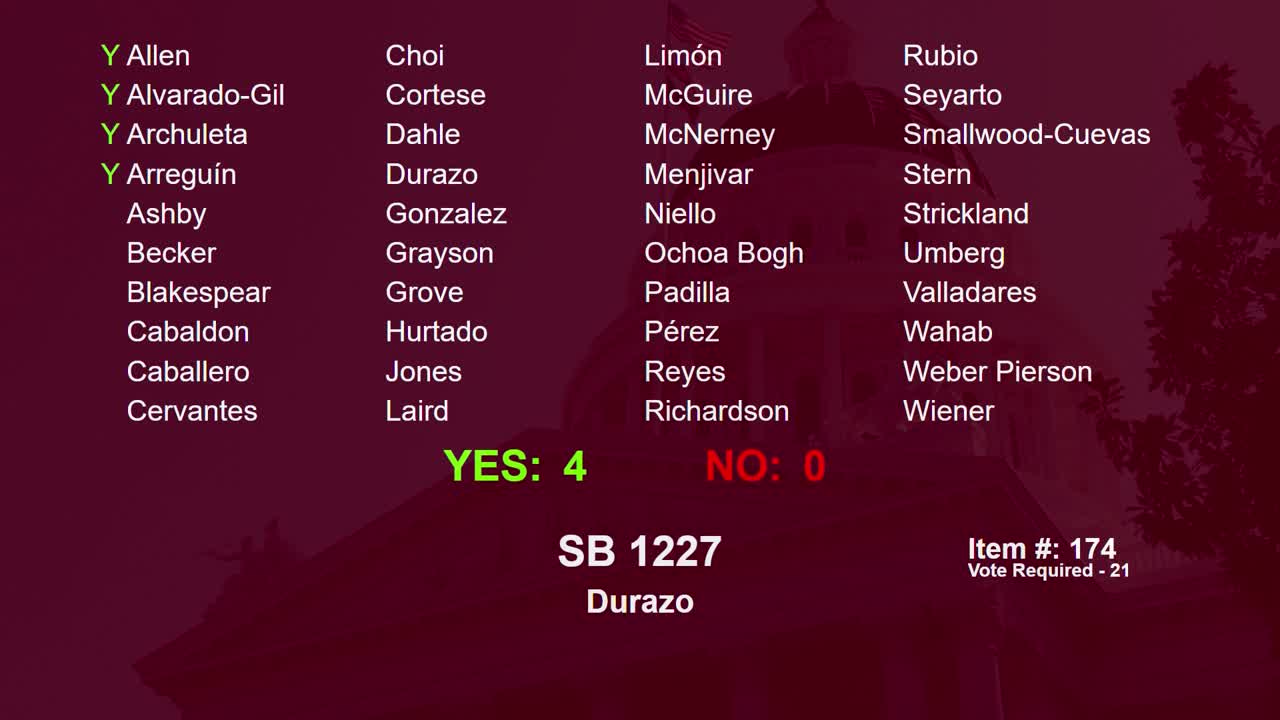 2MIN
Senate Floor
 5MIN
Senate Standing Committee on Judiciary
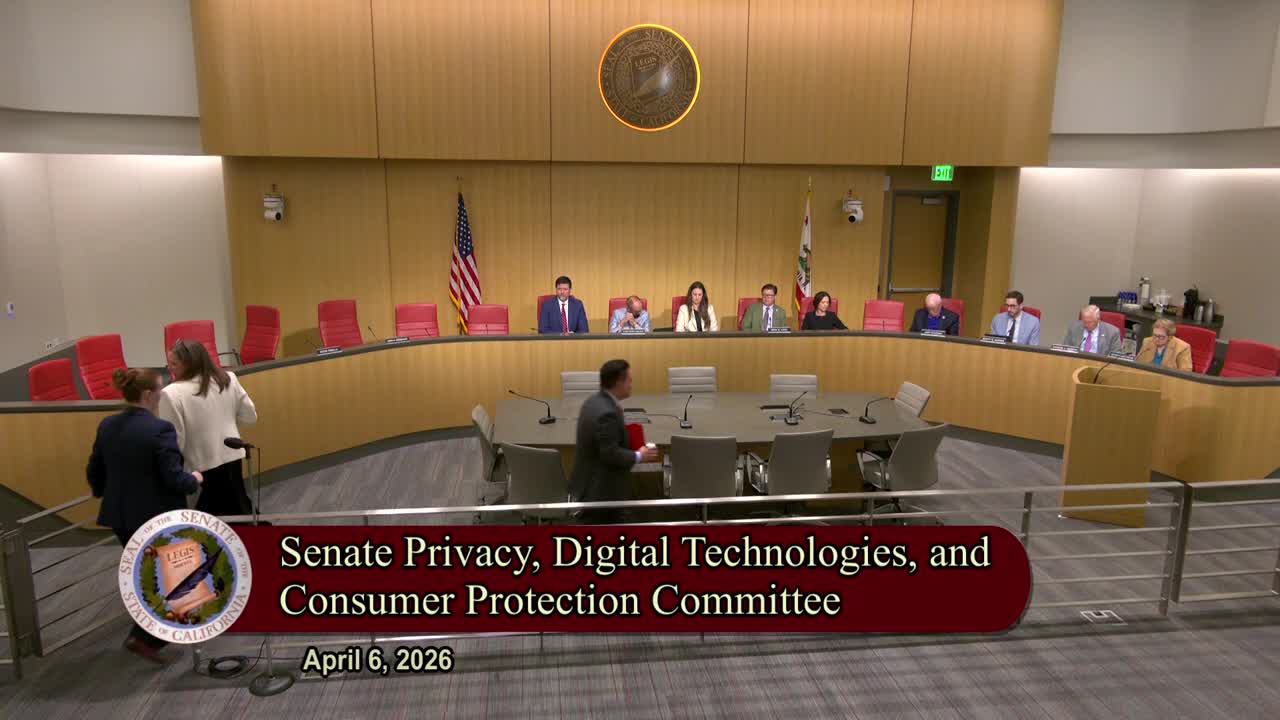 3MIN
Senate Standing Committee on Privacy, Digital Technologies, and Consumer Protection
Bill Author

Bill Co-Author(s):
