SB 1366: Public Utilities Commission: report.
- Session Year: 2025-2026
- House: Senate
- Latest Version Date: 2026-04-28
Current Status:
In Progress
(2026-08-13: August 13 hearing: Held in committee and under submission.)
Introduced
In Committee
Awaiting First Chamber Vote
Passed First Chamber
In Committee
Awaiting Second Chamber Vote
Passed Second Chamber
Enacted
Existing law vests the Public Utilities Commission (PUC) with regulatory authority over public utilities, including every common carrier, toll bridge corporation, pipeline corporation, gas corporation, electrical corporation, telephone corporation, telegraph corporation, water corporation, sewer system corporation, and heat corporation, as specified. Existing law requires each state agency, including the commission, to provide the Director of General Services with an annual report on late payment penalties that were paid by the agency, as provided.
Existing law vests the State Energy Resources Conservation and Development Commission (Energy Commission) with various responsibilities for developing and implementing the states energy policies.This bill would require the PUC and the Energy Commission, in administering or approving programs, to comply with the California Prompt Payment Act and to ensure that payment timelines, advance payment structures, and accountability measures required under the act are incorporated into program designs, implementation plans, and cost recovery authorizations. The bill would require the PUC and the Energy Commission to provide a minimum advance payment of 25%, and, if the nonprofit organization has been in good standing with the state for at least 3 years, to provide an advanced payment of 100%, except as provided. The bill would prohibit the PUC and the Energy Commission from structuring procurement or payment terms in a way that unreasonably restricts participation by small businesses, nonprofit organizations, community-based organizations, or certain certified suppliers, as specified. The bill would require the PUC and the Energy Commission the commission to annually submit a report to the Legislature with information related to the payment of invoices. invoices, as provided.
Under existing law, a violation of an order, decision, rule, direction, demand, or requirement of the PUC is a crime.Because a violation of a PUC action implementing this bills requirements would be a crime, the bill would impose a state-mandated local program.The California Constitution requires the state to reimburse local agencies and school districts for certain costs mandated by the state. Statutory provisions establish procedures for making that reimbursement.This bill would provide that no reimbursement is required by this act for a specified reason.The California Prompt Payment Act requires a state agency that awards a grant or that acquires property or services pursuant to a contract to make timely payments pursuant to the grant or contract. If a state agency fails to take certain timely actions and payment is not issued within 45 calendar days from the state agencys receipt of an undisputed invoice, the act requires the state agency to pay certain penalties.
Existing law vests the Public Utilities Commission (PUC) with regulatory authority over public utilities, including every common carrier, toll bridge corporation, pipeline corporation, gas corporation, electrical corporation, telephone corporation, telegraph corporation, water corporation, sewer system corporation, and heat corporation, as specified.
Existing law vests the State Energy Resources Conservation and Development Commission (Energy Commission) with various responsibilities for developing and implementing the states energy policies.
This bill would require the PUC and the Energy Commission, in administering or approving programs, to comply with the California Prompt Payment Act and to ensure that payment timelines, advance payment structures, and accountability measures required under the act are incorporated into program designs, implementation plans, and cost recovery authorizations. The bill would require the PUC and the Energy Commission to provide a minimum advance payment of 25%, and, if the nonprofit organization has been in good standing with the state for at least 3 years, to provide an advanced payment of 100%, except as provided. The bill would prohibit the PUC and the Energy Commission from structuring procurement or payment terms in a way that unreasonably restricts participation by small businesses, nonprofit organizations, community-based organizations, or certain certified suppliers, as specified. The bill would require the PUC and the Energy Commission to annually submit a report to the Legislature with information related to the payment of invoices.
Under existing law, a violation of an order, decision, rule, direction, demand, or requirement of the PUC is a crime.
Because a violation of a PUC action implementing this bills requirements would be a crime, the bill would impose a state-mandated local program.
The California Constitution requires the state to reimburse local agencies and school districts for certain costs mandated by the state. Statutory provisions establish procedures for making that reimbursement.
This bill would provide that no reimbursement is required by this act for a specified reason.
The California Prompt Payment Act requires a state agency that acquires property or services pursuant to a contract with a business to make payment to the person or business on the date required by the contract or be subject to a late payment penalty, as specified. The act requires a state agency that awards a grant to make payment to the person or business that is the recipient of the grant on the date required by the grant or be subject to a late payment penalty, as specified. The act provides that, to avoid late payment penalties, the maximum time from state agency receipt of an undisputed invoice to the date of payment is 45 calendar days.This bill would state the intent of the Legislature to enact legislation relating to the act.The California Prompt Payment Act requires a state agency that acquires property or services pursuant to a contract with a business to make payment to the person or business on the date required by the contract or be subject to a late payment penalty, as specified. The act requires a state agency that awards a grant to make payment to the person or business that is the recipient of the grant on the date required by the grant or be subject to a late payment penalty, as specified. The act provides that, to avoid late payment penalties, the maximum time from state agency receipt of an undisputed invoice to the date of payment is 45 calendar days.
This bill would state the intent of the Legislature to enact legislation relating to the act.
The commission shall annually submit a report to the Legislature that includes all of the following:
(a)The information provided in the report required pursuant to Section 927.9 of the Government Code.
(b)The number of invoices submitted to the commission that were considered disputed.
(c)The number of invoices that were paid by the commission more than 45 days after receipt.
(d)Steps taken to mitigate cashflow barriers to the entities identified in subdivision (c) of Section 701.7 during procurement design. of small businesses and diverse suppliers participating in programs administered by the commission.
SEC. 4.No reimbursement is required by this act pursuant to Section 6 of Article XIIIB of the California Constitution because the only costs that may be incurred by a local agency or school district will be incurred because this act creates a new crime or infraction, eliminates a crime or infraction, or changes the penalty for a crime or infraction, within the meaning of Section 17556 of the Government Code, or changes the definition of a crime within the meaning of Section 6 of Article XIIIB of the California Constitution.(a)In administering or approving any program, the commission shall comply with the California Prompt Payment Act (Chapter 4.5 (commencing with Section 927) of Part 3 of Division 3.6 of Title 1 of the Government Code).
(b)(1)The commission shall ensure that payment timelines, advance payment structures, and accountability measures required under the California Prompt Payment Act are incorporated into program designs, implementation plans, and cost recovery authorizations.
(2)Notwithstanding any other law, payment shall be made within 45 calendar days from receipt of an invoice. An invoice shall not be disputed on the basis of a minor or technical defect in order to circumvent or avoid the general intent of any of the specifics of this section.
(3)Interest on late payment penalties shall accrue automatically and shall not be waived by contract terms.
(4)The commission shall provide a minimum advance payment of 25 percent, unless a written justification is provided. If the nonprofit organization has been in good standing with the state for at least three years, the commission shall provide an advanced payment of 100 percent, unless a written justification is provided.
(c)The commission shall not structure procurement or payment terms in a way that unreasonably restricts participation by small businesses, nonprofit organizations, community-based organizations, or suppliers certified pursuant to General Order 156.
(d)(1)The commission shall annually submit a report to the Legislature that includes all of the following:
(A)The information provided in the report required pursuant to Section 927.9 of the Government Code.
(B)The number of invoices submitted to the commission that were considered disputed.
(C)The number of invoices that were paid by the commission more than 45 days after receipt.
(D)Steps taken to mitigate cashflow barriers to the entities identified in subdivision (c) during procurement design.
(2)A report to be submitted pursuant to paragraph (1) shall be submitted in compliance with Section 9795 of the Government Code.
SEC. 2.Section 701.7 is added to the Public Utilities Code, to read:701.7.(a)In administering or approving any ratepayer-funded program, the commission shall comply with the California Prompt Payment Act (Chapter 4.5 (commencing with Section 927) of Part 3 of Division 3.6 of Title 1 of the Government Code).
(b)(1)The commission shall ensure that payment timelines, advance payment structures, and accountability measures required under the California Prompt Payment Act are incorporated into program designs, implementation plans, and cost recovery authorizations.
(2)Notwithstanding any other law, payment shall be made within 45 calendar days from receipt of an invoice. An invoice shall not be disputed on the basis of a minor or technical defect in order to circumvent or avoid the general intent of any of the specifics of this section.
(3)Interest on late payment penalties shall accrue automatically and shall not be waived by contract terms.
(4)The commission shall provide a minimum advance payment of 25 percent, unless a written justification is provided. If the nonprofit organization has been in good standing with the state for at least three years, the commission shall provide an advanced payment of 100 percent, unless a written justification is provided.
(c)The commission shall not structure procurement or payment terms in a way that unreasonably restricts participation by small businesses, nonprofit organizations, community-based organizations, or suppliers certified pursuant to General Order 156.
(d)This section does not alter the commissions ratemaking authority or obligation to protect ratepayers.
SEC. 3.Section 910.11 is added to the Public Utilities Code, to read:910.11.The commission shall annually submit a report to the Legislature that includes all of the following:
(a)The information provided in the report required pursuant to Section 927.9 of the Government Code.
(b)The number of invoices submitted to the commission that were considered disputed.
(c)The number of invoices that were paid by the commission more than 45 days after receipt.
(d)Steps taken to mitigate cashflow barriers to the entities identified in subdivision (c) of Section 701.7 during procurement design.
SEC. 4.No reimbursement is required by this act pursuant to Section 6 of Article XIIIB of the California Constitution because the only costs that may be incurred by a local agency or school district will be incurred because this act creates a new crime or infraction, eliminates a crime or infraction, or changes the penalty for a crime or infraction, within the meaning of Section 17556 of the Government Code, or changes the definition of a crime within the meaning of Section 6 of Article XIIIB of the California Constitution.
SECTION 1.It is the intent of the Legislature to enact legislation relating to the California Prompt Payment Act (Chapter 4.5 (commencing with Section 927) of Part 3 of Division 3.6 of Title 1 of the Government Code).It is the intent of the Legislature to enact legislation relating to the California Prompt Payment Act (Chapter 4.5 (commencing with Section 927) of Part 3 of Division 3.6 of Title 1 of the Government Code).
|
Date
|
Status
|
|---|---|
| Aug 13, 2026 | August 13 hearing: Held in committee and under submission. |
| Aug 5, 2026 | August 5 set for first hearing. Placed on suspense file. |
| Jun 25, 2026 | From committee: Do pass and re-refer to Com. on APPR. with recommendation: To consent calendar. (Ayes 18. Noes 0.) (June 24). Re-referred to Com. on APPR. |
| Jun 4, 2026 | Referred to Com. on U. & E. |
| May 27, 2026 | In Assembly. Read first time. Held at Desk. |
| May 27, 2026 | Read third time. Passed. (Ayes 39. Noes 0.) Ordered to the Assembly. |
| May 27, 2026 | Read third time. Passed. (Ayes 39. Noes 0. Page 4495.) Ordered to the Assembly. |
| May 14, 2026 | Read second time. Ordered to third reading. |
| May 14, 2026 | From committee: Do pass. (Ayes 7. Noes 0.) (May 14). |
| May 14, 2026 | From committee: Do pass. (Ayes 7. Noes 0. Page 4274.) (May 14). |
| May 12, 2026 | Set for hearing May 14. |
| May 11, 2026 | May 11 hearing: Placed on APPR. suspense file. |
| May 4, 2026 | Set for hearing May 11. |
| Apr 28, 2026 | Read second time and amended. Re-referred to Com. on APPR. |
| Apr 27, 2026 | From committee: Do pass as amended and re-refer to Com. on APPR. (Ayes 12. Noes 1.) (April 21). |
| Apr 27, 2026 | From committee: Do pass as amended and re-refer to Com. on APPR. (Ayes 12. Noes 1. Page 3974.) (April 21). |
| Apr 16, 2026 | Set for hearing April 21. |
| Apr 8, 2026 | Re-referred to Com. on E., U & C. |
| Mar 23, 2026 | From committee with author's amendments. Read second time and amended. Re-referred to Com. on RLS. |
| Mar 4, 2026 | Referred to Com. on RLS. |
| Feb 23, 2026 | Read first time. |
| Feb 23, 2026 | From printer. May be acted upon on or after March 23. |
| Feb 20, 2026 | Introduced. To Com. on RLS. for assignment. To print. |
|
Date
|
Description
|
Location
|
Votes
|
|
|---|---|---|---|---|
| Jun 24, 2026 | Do pass and be re-referred to the Committee on [Appropriations] with recommendation: To Consent Calendar | Assembly Standing Committee on Utilities and Energy |
Passed |
|
| May 27, 2026 | Senate 3rd Reading SB1366 Rubio | Senate Floor |
Passed |
|
| May 14, 2026 | Do pass | Senate Standing Committee on Appropriations |
Passed |
|
| May 11, 2026 | Placed on suspense file | Senate Standing Committee on Appropriations |
Passed |
|
| Apr 21, 2026 | Do pass as amended, but first amend, and re-refer to the Committee on [Appropriations] | Senate Standing Committee on Energy, Utilities and Communications |
Passed |
This list shows positions taken on this bill by organizations on the date displayed, which is linked to the original source.
Positions by individuals are not included.
|
Organization
|
Position
|
Date
|
|---|---|---|
| California Hispanic Chambers Of Commerce | ** Support | |
| Energy Transition Collective | ** Support | |
| Little Hoover Commission | ** Support |
Date of Hearing: August 5, 2026
ASSEMBLY COMMITTEE ON APPROPRIATIONS
Buffy Wicks, Chair
SBPCA Bill Id:SB 1366
Author:(Rubio) – As Amended Ver:April 28, 2026
Policy Committee: | Utilities and Energy | Vote: | 18 - 0 |
|
| ||
|
|
Urgency: No State Mandated Local Program: No Reimbursable: No
SUMMARY:
This bill requires the California Public Utilities Commission (CPUC) to annually submit a report to the Legislature on late payments to contractors, disputed invoices and steps the CPUC has taken to address funding-opportunity challenges faced by small and diverse businesses supplying services to the CPUC.
FISCAL EFFECT:
This bill likely creates little new work of the CPUC as existing law requires the CPUC, and every state agency, as described in the comments section, below, to report annually any late payments to the Department of General Services.
Nonetheless, because this bill has the primary effect of creating a reporting requirement, it is a candidate for the committee’s suspense file, regardless of costs, consistent with the committee’s rules and practice.
COMMENTS:
State law, the California Prompt Payment Act, requires each state agency to pay undisputed invoices within 45 calendar days, with certain exceptions. In addition, state law requires each state agency to annually report to the Department of General Services any payments the agency did not pay within 45 calendar days during the prior fiscal year.
The author asserts “Delayed reimbursements, insufficient indirect cost recovery, and inconsistent application of the Prompt Payment Act create chronic cash-flow instability—especially for smaller, less-resourced organizations serving disadvantaged communities” and intends this bill to “shine a light on these inequities and harmful practices by requiring a report to document the scope of these problems.”
According to information on the DGS website, which the CPUC provided to DGS, the CPUC made six late payments to small businesses in fiscal year 2023-24 and paid just over $3,700 in penalties for those late payments.
The bill is supported by, among others, the Little Hoover Commission, which describes the bill as consistent with recommendations it made in a recent report, “Shared Priorities, Strained Systems: Modernizing State Grants and Contracts with Nonprofits.”
Analysis Prepared by: Jay Dickenson / APPR. / (916) 319-2081
Date of Hearing: June 24, 2026
ASSEMBLY COMMITTEE ON UTILITIES AND ENERGY
Cottie Petrie-Norris, Chair
SBPCA Bill Id:SB 1366
Author:(Rubio) – As Amended Ver:April 28, 2026
SENATE VOTE: 39-0
SUBJECT: Public Utilities Commission: report
SUMMARY: Requires the California Public Utilities Commission (CPUC) to annually submit a report to the Legislature on late payments to contractors, disputed invoices, and steps the CPUC has taken to address funding-opportunity challenges faced by small and diverse businesses supplying services to the CPUC.
EXISTING LAW:
- Requires the CPUC to prepare an annual report on its activities and performance and requires the president of the CPUC to appear annually before the appropriate policy committees of the Legislature to present the report. (Public Utilities Code §§ 910 and 321.6)
- Establishes a supplier diversity program by requiring the CPUC to direct each electrical corporation, gas corporation, water corporation, telephone corporation, and wireless telecommunications service provider with gross annual revenues exceeding $25 million to annually submit a plan for increasing procurement with women, minority, disabled veteran, and LGBT business enterprises. (Public Utilities Code § 8283)
- Establishes the California Prompt Payment Act, which sets forth various requirements to ensure that state agencies promptly pay invoices and fund grants, including, but not limited to, the following:
- Requiring state agencies to pay undisputed invoices within 45 calendar days, with certain exceptions.
- Establishing specific requirements for state agency submissions to the Controller to ensure compliance with the California Prompt Payment Act.
- Prohibiting state agency employees from disputing an invoice on the basis of minor or technical defects to circumvent requirements of the California Prompt Payment Act.
- Establishing specific requirements for interest accrual on late undisputed invoices and sets forth specific financial penalties for a state agency violating the California Prompt Payment Act. (Government Code § 927 et. seq.)
- Requires every state agency to annually provide the Director of the Department of General Services (DGS) with a specified report on late payments paid by the agency in the prior fiscal year. (Government Code § 927.9)
FISCAL EFFECT: According to the Senate Committee on Appropriations, the CPUC estimates ongoing costs of about $220,000 annually to submit the required report to the Legislature.
BACKGROUND:
California Prompt Payment Act – The California Prompt Payment Act mandates specific timeframes and financial penalties for late payments on both state government contracts and state construction projects.[1] This includes requirements such as making payments for undisputed invoices within 45 days of receipt. In recent years, legislation has modified various requirements of the Act, specifically as they relate to payments for nonprofit organizations. For example, AB 590 (Hart, Chapter 535, Statutes of 2023) authorized state agencies to provide up to 25% of the total funding approved by the agency for a nonprofit in advance if the nonprofit meets certain requirements. The bill also enabled state agencies to exceed this 25% cap under certain circumstances. These changes were intended to address nonprofits’ limited ability to cover costs of completing services without funding up-front. However, the legislation also established criteria to ensure that sufficient oversight and accounting mechanisms existed for the funding of these services.
The challenges of nonprofits applying for and managing grants and contracts from California state government agencies were recently highlighted in a report from the Little Hoover Commission (LHC).[2] The report surveys almost 400 nonprofits, 72% of which said they were moderately to severely impacted by delayed payment from government agencies. These late payments often meant nonprofits had to rely on reserve funds. Despite these and other challenges (such as insufficient indirect costs and barriers to advance payment), 83% of the entities surveyed said they were still likely to pursue future state funding opportunities. This highlights that these opportunities are incredibly valuable to these nonprofits and are often needed to sustain their operations.
COMMENTS:
- Author’s statement. According to the author, “California’s grant and contract administration systems have not kept pace with the State’s growing reliance on nonprofit and small-business partners. Delayed reimbursements, insufficient indirect cost recovery, and inconsistent application of the Prompt Payment Act create chronic cash-flow instability—especially for smaller, less-resourced organizations serving disadvantaged communities. These failures materially constrain who can afford to deliver state programs and reduce on-the-ground capacity. No nonprofit or small business should be forced to subsidize the delivery of state services. Yet every day, these nonprofits and small businesses are doing just that when the systems falter. Worst of all, these entities are often the least able to afford it, serve communities least able to weather service disruptions, and are staffed by employees unlikely to have a financial safety net to endure unpredictability. This bill will shine a light on these inequities and harmful practices by requiring a report to document the scope of these problems.”
- Purpose of the bill. The goal of this bill is to provide additional transparency on payments made by the CPUC to small businesses and nonprofits completing contracted services for the CPUC. That transparency will come via a report to the Legislature highlighting late payments from the CPUC, disputed invoices, and information from the CPUC regarding steps taken to mitigate cash flow to small businesses and diverse suppliers (author has communicated to the committee that diverse suppliers are often nonprofits).
Some of this information is already available. Indeed, the CPUC, along with every other state agency, must submit information on late payments to DGS. This includes information on the monetary amount paid in penalties as a result of late payments, with separate data highlighting the number of late payments to small businesses.[3] For example, in fiscal year 2023-2024, the CPUC had 6 recorded instances of late payment penalties to small businesses and paid just over $3700 in penalties for those late payments. This is out of a total of over a billion dollars in invoices the CPUC paid during that same fiscal year, with an additional $87,000 in penalties for 44 other late payments. While small in overall cost and volume, any form of late payment to the small businesses and nonprofits who rely on these payments to keep their operations running, as highlighted by the LHC report, can be impactful. While the existing data to DGS show the penalties, they don't show what the CPUC is doing to avoid those penalties — which is the gap this bill's reporting requirement would seek to close.
To receive the most pertinent information from the CPUC, the author may wish to refine the bill language to request information from the CPUC that it sees as currently lacking from available data that is already publicly available. This may include providing further details on the desired reporting as it relates to diverse suppliers, which is not currently defined in the bill. With a more refined legislative direction, this report may yield the desired transparency and insight into more targeted approaches that can minimize harm to the small businesses and nonprofits relying on payment from the CPUC for their services.
- Related legislation.
SB 2272 (Caloza) authorizes a subcontractor or supplier performing work under a state contract to request payment status information from the awarding state agency regarding invoices submitted by the prime contractor. Additionally, this bill requires a prime contractor to provide confirmation to the awarding agency, upon the agency’s request, regarding payments made to subcontractors, as specified. Status: set for hearing in the Senate Governmental Organization Committee on June 23rd.
- Prior legislation.
AB 3017 (Hart) expanded the entities that can receive advance payments from state agencies to include federally recognized Native American tribes. The bill also authorized an entity receiving a state grant to provide an advance payment to a sub-recipient under certain circumstances. Status: Chapter 664, Statutes of 2024
AB 590 (Hart) authorized state agencies to provide up to 25% of the total funding approved by the agency for a nonprofit in advance if the nonprofit meets certain requirements. The bill also enabled state agencies to exceed this 25% cap under certain circumstances. Status: Chapter 535, Statutes of 2023
REGISTERED SUPPORT / OPPOSITION:
Support
California Hispanic Chambers of Commerce
Energy Transition Collective
Little Hoover Commission
Opposition
None on file.
Analysis Prepared by: Alexa Cohill-Milanick / U. & E. / (916) 319-2083
SENATE RULES COMMITTEE Office of Senate Floor Analyses (916) 651-4171 | SB 1366 |
THIRD READING
Bill No: SB 1366
Author: Rubio (D)
Amended: 4/28/26
Vote: 21
SENATE ENERGY, U. & C. COMMITTEE: 12-1, 4/21/26
AYES: Allen, Ochoa Bogh, Archuleta, Arreguín, Becker, Caballero, Gonzalez, Hurtado, McNerney, Richardson, Rubio, Wahab
NOES: Grove
NO VOTE RECORDED: Dahle, Reyes, Stern, Strickland
SENATE APPROPRIATIONS COMMITTEE: 7-0, 5/14/26
AYES: Cervantes, Seyarto, Cabaldon, Dahle, Grayson, Richardson, Wahab
SUBJECT: Public Utilities Commission: report
SOURCE: California Hispanic Chambers of Commerce
The Energy Transition Collective
DIGEST:
This bill requires the California Public Utilities Commission (CPUC) to annually submit a report to the Legislature on late payments for contractors, disputed invoices, and steps taken by the CPUC to address funding opportunity challenges faced by small businesses, nonprofit organizations, community-based organizations, or diverse suppliers.
ANALYSIS:
Existing law:
- Establishes the CPUC, consisting of five members appointed by the Governor, and authorizes the CPUC to fix rates and establish rules for public utilities. (Article XII of the California Constitution)
- Requires the CPUC to prepare an annual report on its activities and performance and requires the president of the CPUC to appear annually before the appropriate policy committees of the Legislature to present the report. (Public Utilities Code (PUC) §§ 910 and 321.6)
- Establishes a supplier diversity program by requiring the CPUC to direct each electrical corporation, gas corporation, water corporation, telephone corporation, and wireless telecommunications service provider with gross annual revenues exceeding $25 million, to annually submit a plan for increasing procurement with women, minority, disabled veteran, and LGBT business enterprises (WMDVLGBTBEs). (PUC § 8283)
- Establishes the California Prompt Payment Act, which sets forth various requirements to ensure that state agencies promptly pay invoices and fund grants, including, but not limited to the following:
- Requiring state agencies to pay undisputed invoices within 45 calendar days, with certain exceptions.
- Establishing specific requirements for state agency submissions to the Controller to ensure compliance with the California Prompt Payment Act.
- Prohibiting state agency employees from disputing an invoice on the basis of minor or technical defects to circumvent requirements of the California Prompt Payment Act.
- Establishing specific requirements for interest accrual on late undisputed invoices and sets forth specific financial penalties for a state agency violating the California Prompt Payment Act. (Government Code (GOV) § 927 et. seq.
- Requires every state agency to annually provide the Director of the Department of General Services (DGS) with a specified report on late payments paid by the agency in the prior fiscal year. (GOV § 927.9)
This bill requires the CPUC to annually submit a report to the Legislature on the following:
- Information submitted to the Director of DGS about late payments paid by the agency in the prior fiscal year.
- The number of disputed invoices received by the agencies.
- The number of invoices that were paid more than 45 days after receipt.
- Steps taken by the CPUC in designing ratepayer-funded procurements to mitigate cashflow issues experienced by small businesses, nonprofit organizations, community-based organizations, or diverse suppliers.
Background
The California Prompt Payment Act sets payment requirements for all agencies. This bill requires the CPUC and California Energy Commission (CEC) to comply with the California Prompt Payment Act. Under existing law, the California Prompt Payment Act applies to all state agencies. While the Act sets specific payment requirements needed for certain agencies that administer programs that must comply with federal funding requirements (such as the Department of Health Care Services administration of payments for Medi-Cal), all agencies must comply with the provisions of the California Prompt Payment Act. Since the establishment of the California Prompt Payment Act, legislation has modified various requirements under the Act. Recent legislation (AB 590, Hart, Chapter 535, Statutes of 2023) authorized state agencies to provide up to 25% of the total funding approved by the agency for a nonprofit in advance if the nonprofit meets certain requirements. The bill also enabled state agencies to exceed this 25% cap under certain circumstances. These changes were intended to address nonprofits’ limited ability to cover costs of completing services without funding up-front. However, the legislation also established criteria to ensure that sufficient oversight and accounting mechanisms existed for the funding of these services.
Bill is aimed at addressing concerns about funding opportunities at the state level. This bill is aimed at addressing concerns raised by the Little Hoover Commission regarding nonprofits’ ability to compete for state funding opportunities. The Little Hoover Commission conducted a survey of nonprofits participating in state funding opportunities, and 40% of those nonprofits surveyed indicated that they did not receive any of their funding in the form of advance payments. The Little Hoover Commission’s report made a number of recommendations, including that state agencies should provide 25% of the funding for a nonprofit’s contract up front and provide 100% of a grant award for a nonprofit in advance if the nonprofit has been in good standing with the state for at least three years. Under existing law, agencies can already award between 25% to 100% of nonprofits’ funding in advance if the nonprofit meets certain requirements, including accounting and oversight requirements. As a result, it is not clear that a statutory change is needed to achieve the Little Hoover Commission’s recommendations regarding advance payments for nonprofits. The Little Hoover Commission’s report did not include recommendations specific to the CPUC, and it is not clear if the nonprofits that experience funding challenges and obtaining advance payments are nonprofits contracting with the CPUC. Existing law requires each state agency to report to the Director of DGS about late payments paid by the agency in the prior fiscal year. This bill requires the CPUC to annually report to the Legislature on late and disputed invoices. This bill also requires the CPUC to annually report on steps the CPUC has taken to mitigate cashflow barriers facing small businesses and diverse suppliers participating in CPUC programs.
Related/Prior Legislation
SB 924 (Hurtado) of 2026, modifies the types of upgrades expressly eligible for funding from the CPUC’s Energy Savings Assistance Program (ESAP) and requires the CPUC to ensure diverse contractors can compete for ESAP funding. The bill is pending in the Senate.
AB 3017 (Hart, Chapter 664, Statutes of 2024) expanded the entities that can receive advance payments from state agencies to include federally recognized Native American tribes. The bill also authorized an entity receiving a state grant to provide an advance payment to a sub-recipient under certain circumstances.
AB 590 (Hart, Chapter 535, Statutes of 2023) authorized state agencies to provide up to 25% of the total funding approved by the agency for a nonprofit in advance if the nonprofit meets certain requirements. The bill also enabled state agencies to exceed this 25% cap under certain circumstances.
FISCAL EFFECT: Appropriation: No Fiscal Com.: Yes Local: No
According to the Senate Appropriations Committee, the CPUC estimates ongoing costs of about $220,000 annually (ratepayer funds) to annually submit a report to the Legislature that includes the number of disputed invoices submitted to the commission, the number of invoices paid more than 45 days after receipt, and steps taken to mitigate cashflow barriers for small businesses and diverse suppliers participating in CPUC-administered programs.
SUPPORT: (Verified 5/14/26)
California Hispanic Chambers of Commerce (Co-source)
The Energy Transition Collective (Co-source)
Little Hoover Commission
OPPOSITION: (Verified 5/14/26)
None received
ARGUMENTS IN SUPPORT: According to the author:
California’s grant and contract administration systems have not kept pace with the State’s growing reliance on nonprofit and small-business partners. Delayed reimbursements, insufficient indirect cost recovery, and inconsistent application of the Prompt Payment Act create chronic cash-flow instability—especially for smaller, less-resourced organizations serving disadvantaged communities. These failures materially constrain who can afford to deliver state programs and reduce on-the-ground capacity. No nonprofit or small business should be forced to subsidize the delivery of state services. Yet every day, these nonprofits and small businesses are doing just that when the systems falter. Worst of all, these entities are often the least able to afford it, serve communities least able to weather service disruptions, and are staffed by employees unlikely to have a financial safety net to endure unpredictability
Prepared by: Sarah Smith / E., U. & C. / (916) 651-4107
5/16/26 11:19:07
**** END ****
SENATE COMMITTEE ON
Senator Sabrina Cervantes, Chair
2025 - 2026 Regular Session
SB 1366 (Rubio) - Public Utilities Commission: report
Version: | Policy Vote: |
Urgency: | Mandate: |
Hearing Date: | Consultant: |
Bill Summary:
This bill would require the California Public Utilities Commission (CPUC) to submit a report annually to the Legislature with information related to the payment of invoices.
Fiscal Impact:
- The CPUC estimates ongoing costs of about $220,000 annually (ratepayer funds) to annually submit a report to the Legislature that includes the number of disputed invoices submitted to the commission, the number of invoices paid more than 45 days after receipt, and steps taken to mitigate cashflow barriers for small businesses and diverse suppliers participating in CPUC-administered programs.
Background:
Under existing law, the California Prompt Payment Act applies to all state agencies. While the Act sets specific payment requirements needed for certain agencies that administer programs that must comply with federal funding requirements (such as the Department of Health Care Services administration of payments for Medi-Cal), all agencies must comply with the provisions of the California Prompt Payment Act. Since the establishment of the California Prompt Payment Act, legislation has modified various requirements under the Act. Recent legislation (AB 590, Hart, Chapter 535, Statutes of 2023) authorized state agencies to provide up to 25% of the total funding approved by the agency for a non-profit in advance if the non-profit meets certain requirements. The bill also enabled state agencies to exceed this 25% cap under certain circumstances. These changes were intended to address non-profits’ limited ability to cover costs of completing services without funding up-front. However, the legislation also established criteria to ensure that sufficient oversight and accounting mechanisms existed for the funding of these services.
Proposed Law:
This bill would require the CPUC to report information annually about the payment of invoices. Specifically, it would require the CPUC to submit a report to the Legislature annually that includes all of the following:
(a) The information provided required pursuant to Section 927.9 of the Government Code.
(b) The number of invoices submitted to the CPUC that were considered disputed.
(c) The number of invoices that were paid by the commission more than 45 days after receipt.
(d) Steps taken to mitigate cashflow barriers of small businesses and diverse suppliers participating in programs administered by the CPUC.
Related Legislation:
SB 924 (Hurtado) of 2026 would modify the types of upgrades expressly eligible for funding from the CPUC’s Energy Savings Assistance Program (ESAP) and require the CPUC to ensure diverse contractors can compete for ESAP funding.
AB 3017 (Hart, Chapter 664, Statutes of 2024) expanded the entities that can receive advance payments from state agencies to include federally recognized Native American tribes. The bill also authorized an entity receiving a state grant to provide an advance payment to a sub-recipient under certain circumstances.
AB 590 (Hart, Chapter 535, Statutes of 2023) authorized state agencies to provide up to 25% of the total funding approved by the agency for a non-profit in advance if the non-profit meets certain requirements. The bill also enabled state agencies to exceed this 25% cap under certain circumstances.
-- END --
SENATE COMMITTEE ON ENERGY, UTILITIES AND COMMUNICATIONS
Senator Benjamin Allen, Chair
2025 - 2026 Regular
Bill No: Hearing Date: 4/21/2026
Author: | |||
Version: | Amended | ||
Urgency: | Fiscal: | ||
Consultant: | |||
SUBJECT:
DIGEST: This bill requires the California Energy Commission (CEC) and California Public Utilities Commission (CPUC) to comply with the California Prompt Payment Act, except that this bill establishes advance payment requirements for the CEC and CPUC that differ from those in the California Prompt Payment Act. Specifically, this bill requires the CPUC and CEC to provide 25% of funding authorized by these agencies in advance, unless the agencies provide written justification for not doing so. For non-profits, this bill requires the CEC and CPUC to provide 100% of authorized funding to the non-profit, unless the CEC or CPUC provide written justification for not doing so. This bill also requires the CPUC and CEC to annually report to the Legislature on specified payment, procurement, and contracting activities.
ANALYSIS:
Existing law:
- Establishes the CEC, consisting of five members appointed by the Governor, and specifies the duties of the CEC. Every two years, the Governor must designate a chair and vice chair from the CEC’s membership. The CEC must appoint a public adviser every three years to carry out certain public engagement duties. (Public Resources Code §25200 et. seq.)
- Establishes the CPUC, consisting of five members appointed by the Governor, and authorizes the CPUC to fix rates and establish rules for public utilities. (Article XII of the California Constitution)
- Requires the CPUC to prepare an annual report on its activities and performance and requires the president of the CPUC to appear annually before the appropriate policy committees of the Legislature to present the report. (Public Utilities Code §§910 and 321.6)
- Establishes a supplier diversity program by requiring the CPUC to direct each electrical corporation, gas corporation, water corporation, telephone corporation, and wireless telecommunications service provider with gross annual revenues exceeding $25 million, to annually submit a plan for increasing procurement with women, minority, disabled veteran, and LGBT business enterprises (WMDVLGBTBEs). (Public Utilities Code §8283)
- Establishes the California Prompt Payment Act, which sets forth various requirements to ensure that state agencies promptly pay invoices and fund grants, including, but not limited to the following:
- Requiring state agencies to pay undisputed invoices within 45 calendar days, with certain exceptions.
- Establishing specific requirements for state agency submissions to the Controller to ensure compliance with the California Prompt Payment Act.
- Prohibiting state agency employees from disputing an invoice on the basis of minor or technical defects to circumvent requirements of the California Prompt Payment Act.
- Establishing specific requirements for interest accrual on late undisputed invoices and sets forth specific financial penalties for a state agency violating the California Prompt Payment Act. (Government Code §927 et. seq.)
- Requires every state agency to annually provide the Director of General Services with a specified report on late payments paid by the agency in the prior fiscal year. (Government Code §927.9)
- Establishes requirements for advance payments for state grants and contracts between state agencies and nonprofits. Existing law requires state agencies to prioritize funding opportunities that serve disadvantaged, low-income, and under-resourced communities or organizations with modest reserves and potential cashflow problems. Existing law authorizes state agencies to provide up to 25% of a payment for a non-profit in advance if a non-profit meets certain requirements. Existing law authorizes a state agency to exceed this 25% cap on advance payments if the state agency determines that a project requires a larger advance and the nonprofit provides sufficient justification and documentation for that larger advance to the state agency. (Government Code §11019.3)
This bill:
- Requires the CPUC and CEC to comply with the California Prompt Payment Act when establishing and administering programs.
- Requires the CPUC and CEC to ensure that payment timelines, advance payment structures and accountability measures included in the California Prompt Payment Act are incorporated into all program designs, implementation plans, and cost-recovery authorizations.
- Requires the CPUC and CEC to pay an invoice within 45 calendar days of receiving the invoice and prohibits the CPUC and CEC from disputing an invoice on the basis of a minor or technical defect in order to circumvent this bill.
- Specifies that interest on late payments will accrue automatically and cannot be waived by contract terms.
- Requires the CPUC and CEC to provide any entity that receives a funding award from these agencies with a minimum advance payment of 25% of the total funding authorized by the agency, unless the agency provides a written justification for not doing so.
- Requires the CPUC and CEC to provide 100% of the total funding authorized for a non-profit in advance, unless the agency provides written justification. This bill specifies that this 100% advance payment requirement applies to non-profits that have been in good standing with the state for at least three years.
- Prohibits the CPUC and CEC from structuring procurement or payment terms in a way that unreasonably restricts participation by small businesses, non-profit organizations, or diverse suppliers as defined under existing law.
- Specifies that nothing in this bill alters the CPUC’s ratemaking authority or obligation to protect ratepayers.
- Requires the CPUC and CEC to annually submit reports to the Legislature on the following:
- Information submitted to the Director of General Services about late payments paid by the agency in the prior fiscal year.
- The number of disputed invoices received by the agencies.
- The number of invoices that were paid more than 45 days after receipt.
- Steps taken by the CPUC in designing ratepayer-funded procurements to mitigate cashflow issues experienced by small businesses, nonprofit organizations, community-based organizations, or diverse suppliers.
Background
The California Prompt Payment Act sets payment requirements for all agencies. This bill requires the CPUC and CEC to comply with the California Prompt Payment Act. Under existing law, the California Prompt Payment Act applies to all state agencies. While the Act sets specific payment requirements needed for certain agencies that administer programs that must comply with federal funding requirements (such as the Department of Health Care Services administration of payments for Medi-Cal), all agencies must comply with the provisions of the California Prompt Payment Act. Since the establishment of the California Prompt Payment Act, legislation has modified various requirements under the Act. Recent legislation (AB 590, Hart, Chapter 535, Statutes of 2023) authorized state agencies to provide up to 25% of the total funding approved by the agency for a non-profit in advance if the non-profit meets certain requirements. The bill also enabled state agencies to exceed this 25% cap under certain circumstances. These changes were intended to address non-profits’ limited ability to cover costs of completing services without funding up-front. However, the legislation also established criteria to ensure that sufficient oversight and accounting mechanisms existed for the funding of these services.
Bill establishes payment requirements for the CPUC and CEC that differ from those in the California Prompt Payment Act. This bill is aimed at addressing concerns raised by the Little Hoover Commission regarding non-profits’ ability to compete for state funding opportunities. The Little Hoover Commission conducted a survey of non-profits participating in state funding opportunities, and 40% of those non-profits surveyed indicated that they did not receive any of their funding in the form of advance payments. The Little Hoover Commission’s report made a number of recommendations, including that state agencies should provide 25% of the funding for a non-profit’s contract up front and provide 100% of a grant award for a non-profit in advance if the non-profit has been in good standing with the state for at least three years. Under existing law, agencies can already award between 25% to 100% of non-profits’ funding in advance if the non-profit meets certain requirements, including accounting and oversight requirements. As a result, it is not clear that a statutory change is needed to achieve the Little Hoover Commission’s recommendations regarding advance payments for non-profits. The Little Hoover Commission’s report did not include recommendations specific to the CPUC and CEC, and it is not clear if the non-profits that experience funding challenges and obtaining advance payments are non-profits contracting with the CPUC and CEC.
This bill differs from the recommendations in the Little Hoover Commission report and the California Prompt Payment Act by requiring only the CEC and CPUC to provide a minimum of 25% of funding opportunities in advance for any contractor – not solely non-profits. This bill also requires the CEC and CPUC to provide non-profits in good standing with the state 100% of authorized funding in advance without requiring non-profits to comply with the conditions required for advance payments in the California Prompt Payment Act.
This bill would also codify certain elements of the California Prompt Payment Act in the Public Utilities Code in a manner that could create uncertainty regarding the CPUC and CEC’s ability to fully comply with the California Prompt Payment Act. For example, the California Prompt Payment Act requires state agencies to pay undisputed invoices within 45 calendar days, with certain exceptions. This bill requires the CPUC and CEC to pay any invoice within 45 calendar days of receiving the invoice – regardless of whether the invoice is disputed or not. While this bill requires the CPUC and CEC to comply with the California Prompt Payment Act, it is unclear how the CPUC and CEC can simultaneously comply with both the existing law and the provisions of this bill that set separate, potentially conflicting requirements for the CPUC and CEC.
Providing all non-profit funding in advance without more oversight may not be in the best interest of ratepayers. This bill would expressly require the CPUC and CEC to provide advance payments for any funding opportunities, contracts, or awards using ratepayer funds. While this bill states that nothing in this bill alters the CPUC’s obligation to protect ratepayers, providing a non-profit with 100% of authorized funding in advance without structuring a grant or contract to ensure benchmarks are met to obtain funding may limit CPUC and CEC oversight of ratepayer-funded programs. While non-profits generally comply with state contracting and funding obligations, some non-profits that have received ratepayer funds from CPUC awards have failed to deliver services or maintain adequate records of how ratepayer funds were used. For example, in 2018, the CPUC initiated an investigation of One Million New Internet Users Coalition following a report from the California State Auditor indicating that the organization had not accurately accounted for the use of ratepayer funds received from the California Advanced Services Fund (CASF). The One Million New Internet Users Coalition was a non-profit operating as a broadband consortium in the Los Angeles area to provide broadband adoption services to unserved communities. The CPUC’s investigation concluded that the consortium failed to provide promised services and may have used ratepayer funds for services already paid for by other funding sources. The non-profit subsequently ceased operations and a new Los Angeles broadband consortium formed to provide broadband adoption support.
Need for amendments. Under existing law, all agencies are currently subject to the requirements of the California Prompt Payment Act. This bill expressly requires the CPUC and CEC to comply with the California Prompt Payment Act. However, this bill also establishes requirements for advance payments, interest accrual, and invoice deadlines that differ from those in the California Prompt Payment Act and existing law regarding state agency payments. As a result, it is unclear how the CPUC and CEC can comply with the California Prompt Payment Act and provisions in this bill that conflict with the California Prompt Payment Act. It is also unclear if setting separate requirements for the CEC and CPUC amongst all agencies would address broader needs of non-profits in state contracting or address the needs of ratepayers to ensure effective use of ratepayer monies. For these reasons, the author and committee may wish to amend this bill to delete sections 1 and 2 of this bill.
Prior/Related Legislation
SB 924 (Hurtado) of 2026, modifies the types of upgrades expressly eligible for funding from the CPUC’s Energy Savings Assistance Program (ESAP) and requires the CPUC to ensure diverse contractors can compete for ESAP funding. The bill is currently pending in the Senate Appropriations Committee.
AB 3017 (Hart, Chapter 664, Statutes of 2024) expanded the entities that can receive advance payments from state agencies to include federally recognized Native American tribes. The bill also authorized an entity receiving a state grant to provide an advance payment to a sub-recipient under certain circumstances.
AB 590 (Hart, Chapter 535, Statutes of 2023) authorized state agencies to provide up to 25% of the total funding approved by the agency for a non-profit in advance if the non-profit meets certain requirements. The bill also enabled state agencies to exceed this 25% cap under certain circumstances.
FISCAL EFFECT: Appropriation: Fiscal Com.: Local:
SUPPORT:
Little Hoover Commission
OPPOSITION:
None received
ARGUMENTS IN SUPPORT: According to the author:
California’s grant and contract administration systems have not kept pace with the State’s growing reliance on nonprofit and small-business partners. Delayed reimbursements, insufficient indirect cost recovery, and inconsistent application of the Prompt Payment Act create chronic cash-flow instability—especially for smaller, less-resourced organizations serving disadvantaged communities. These failures materially constrain who can afford to deliver state programs and reduce on-the-ground capacity. No nonprofit or small business should be forced to subsidize the delivery of state services. Yet every day, these nonprofits and small businesses are doing just that when the systems falter. Worst of all, these entities are often the least able to afford it, serve communities least able to weather service disruptions, and are staffed by employees unlikely to have a financial safety net to endure unpredictability
-- END --
Discussed in Hearing
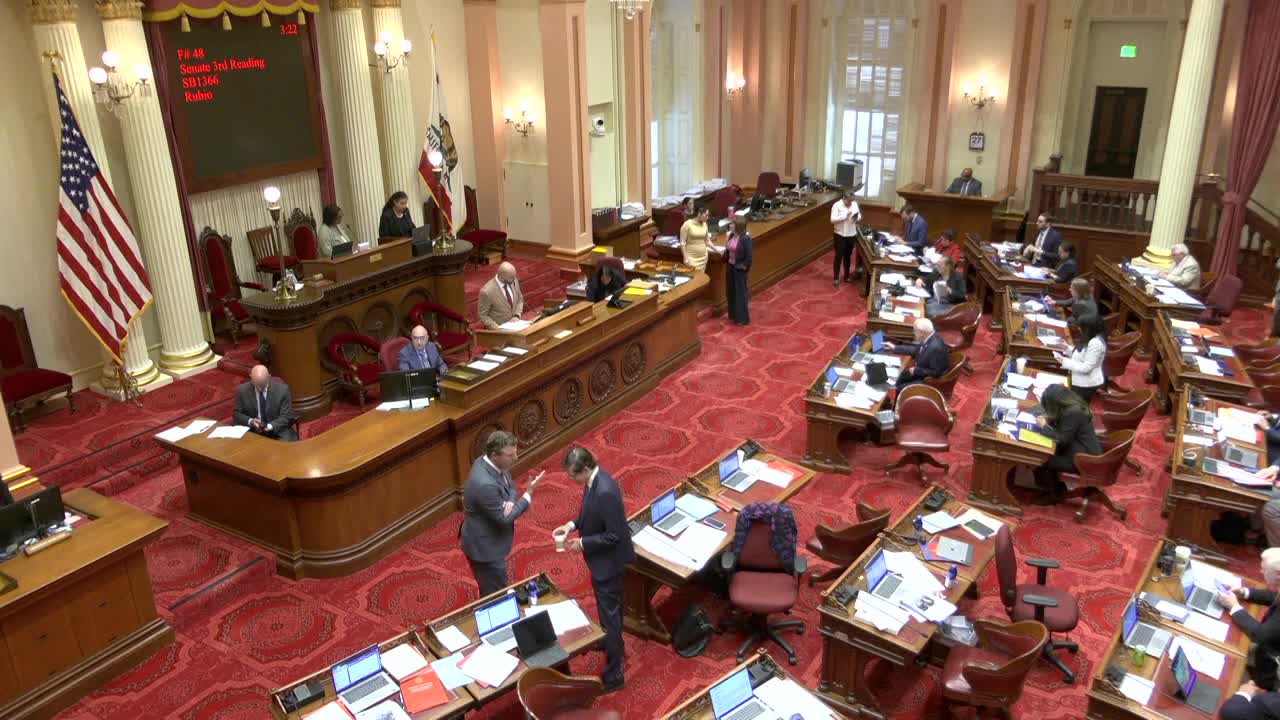 2MIN
Senate Floor
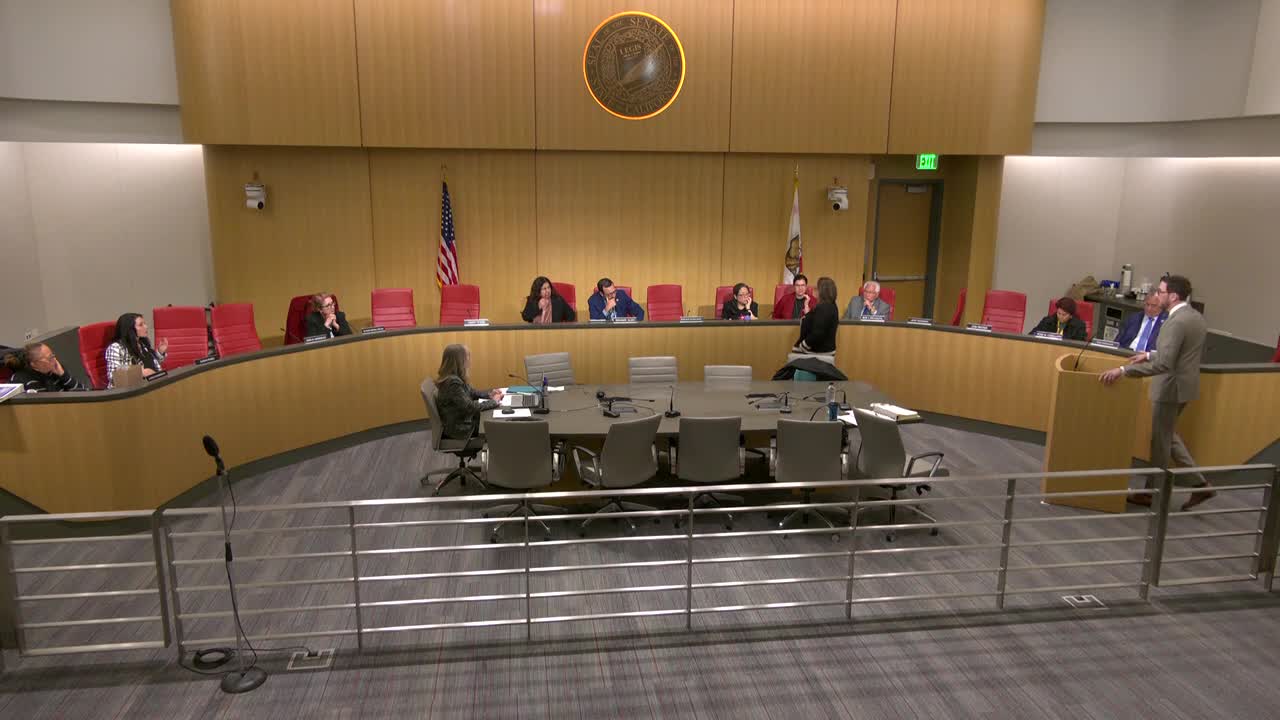 8MIN
Senate Standing Committee on Energy, Utilities and Communications
Bill Author

Bill Co-Author(s):