SB 1379: County of Riverside: separation of county offices: in-custody reports.
- Session Year: 2025-2026
- House: Senate
- Latest Version Date: 2026-09-30
Current Status:
Passed
(2026-09-30: Chaptered by Secretary of State. Chapter 1031, Statutes of 2026.)
Introduced
In Committee
Awaiting First Chamber Vote
Passed First Chamber
In Committee
Awaiting Second Chamber Vote
Passed Second Chamber
Enacted
What does this bill do?
The bill requires Riverside County to split the sheriff and coroner roles, abolish the coroner, and create a county medical examiner’s office to run medicolegal death investigations and be the only person who can sign death certificates and parts of postmortem reports. It moves coroner staff into the new office while preserving their pay, benefits, union representation and peace‑officer status, and requires the county to publish timely in‑custody incident reports (initial within 24 hours, preliminary within 72), centralized death data, and notify next of kin of the cause of death within 72 hours of determination.
The summary is provided by generative AI which can make mistakes. For original language, please view the details in the table below.
Existing law generally regulates the government of counties. Existing law authorizes the board of supervisors of a county to consolidate the duties of various county offices in various combinations, including combining the duties of the sheriff and the coroner. Existing law also authorizes the board of supervisors of a county to separate the duties of consolidated offices. Existing law authorizes the board of supervisors to abolish the office of coroner by ordinance and provide instead for the office of medical examiner, to be appointed by the board, as specified.
This bill would require the board of supervisors for the County of Riverside to separate the offices of sheriff and coroner, abolish the office of coroner, and provide for the office of medical examiner, pursuant to the provisions described above, by July 1, 2027, as specified. The bill would require the countys board of supervisors to move medicolegal death investigation services to the office of medical examiner. The bill would prohibit a person other than the countys medical examiner from signing specified documents. The bill would require the county to publish specified information regarding in-custody persons on its internet website.
This bill would make legislative findings and declarations as to the necessity of a special statute for County of Riverside.
The California Constitution requires the state to reimburse local agencies and school districts for certain costs mandated by the state. Statutory provisions establish procedures for making that reimbursement. By requiring the county to provide a higher level of service, this bill would impose a state-mandated local program.
This bill would provide that, if the Commission on State Mandates determines that the bill contains costs mandated by the state, reimbursement for those costs shall be made pursuant to the statutory provisions noted above.
Existing law generally regulates the government of counties. Existing law authorizes the board of supervisors of a county to consolidate the duties of various county offices in various combinations, including combining the duties of the sheriff and the coroner. Existing law also authorizes the board of supervisors of a county to separate the duties of consolidated offices. Existing law authorizes the board of supervisors to abolish the office of coroner by ordinance and provide instead for the office of medical examiner, to be appointed by the board, as specified.
This bill would require the board of supervisors for the County of Riverside to separate the offices of sheriff and coroner coroner, abolish the office of coroner, and provide for the office of medical examiner, pursuant to the provisions described above, by July 1, 2027, as specified. The bill would require the countys board of supervisors to take certain actions with respect to move medicolegal death investigation services. services to the office of medical examiner. The bill would prohibit a person other than the countys coroner or a medical examiner from signing specified documents. The bill would require the county to publish specified information regarding in-custody persons on its internet website.
This bill would make legislative findings and declarations as to the necessity of a special statute for County of Riverside.
The California Constitution requires the state to reimburse local agencies and school districts for certain costs mandated by the state. Statutory provisions establish procedures for making that reimbursement. By requiring the county to provide a higher level of service, this bill would impose a state-mandated local program.
This bill would provide that, if the Commission on State Mandates determines that the bill contains costs mandated by the state, reimbursement for those costs shall be made pursuant to the statutory provisions noted above.
Existing law generally regulates the government of counties. Existing law authorizes the board of supervisors of a county to consolidate the duties of various county offices in various combinations, including combining the duties of the sheriff and the coroner. Existing law also authorizes the board of supervisors of a county to separate the duties of consolidated offices.
This bill would require the board of supervisors for the County of Riverside to separate the offices of sheriff and coroner by July 1, 2027. 2027, as specified. The bill would require the countys board of supervisors to take certain actions with respect to medicolegal death investigation services. The bill would prohibit a person other than the countys coroner or a medical examiner from signing specified documents. The bill would require the county to publish specified information regarding in-custody persons on its internet website.
This bill would make legislative findings and declarations as to the necessity of a special statute for County of Riverside.
The California Constitution requires the state to reimburse local agencies and school districts for certain costs mandated by the state. Statutory provisions establish procedures for making that reimbursement. By requiring the county to provide a higher level of service, this bill would impose a state-mandated local program.
This bill would provide that, if the Commission on State Mandates determines that the bill contains costs mandated by the state, reimbursement for those costs shall be made pursuant to the statutory provisions noted above.
Existing law generally regulates the government of counties. Existing law authorizes the board of supervisors of a county to consolidate the duties of various county offices in various combinations, including combining the duties of the sheriff and the coroner. Existing law also authorizes the board of supervisors of a county to separate the duties of consolidated offices.
This bill would require the board of supervisors for the County of Riverside to separate the offices of sheriff and coroner by July 1, 2027. The bill would require the countys board of supervisors to take certain actions with respect to medicolegal death investigation services. The bill would prohibit a person other than the countys coroner or a medical examiner from signing specified documents. The bill would require the county to publish specified information regarding in-custody persons on its internet website.
The California Constitution requires the state to reimburse local agencies and school districts for certain costs mandated by the state. Statutory provisions establish procedures for making that reimbursement. By requiring the county to provide a higher level of service, this bill would impose a state-mandated local program.
This bill would provide that, if the Commission on State Mandates determines that the bill contains costs mandated by the state, reimbursement for those costs shall be made pursuant to the statutory provisions noted above.
Existing law establishes the Alfred E. Alquist Seismic Safety Commission as a separate unit within the Office of Emergency Services to, among other things, monitor and track the activities and responsibilities of various government agencies related to earthquake preparedness and seismic safety and to develop findings and recommendations to reduce losses and to speed recovery following a destructive earthquake.This bill would make nonsubstantive changes to these provisions.Existing law establishes the Alfred E. Alquist Seismic Safety Commission as a separate unit within the Office of Emergency Services to, among other things, monitor and track the activities and responsibilities of various government agencies related to earthquake preparedness and seismic safety and to develop findings and recommendations to reduce losses and to speed recovery following a destructive earthquake.
This bill would make nonsubstantive changes to these provisions.
The Legislature finds and declares all of the following:
(a)Although the County of Riverside makes up only about 6 percent of Californias population, it accounts for approximately 10 percent of the states in-custody deaths, with Latinos representing at least 43 percent of those deaths from 2005 to 2024, inclusive.
(b)In 2024, a CalMatters investigation into deaths of individuals in custody in County of Riverside jails concluded, Some of Californias deadliest jails are in Riverside County, where 45 people have died since Jan. 1, 2021.
(c)A 2025 article from the New York Times said the number of deaths in County of Riverside jails from 2020 to 2023, inclusive, made the countys system the second deadliest in the nation during that period.
(d)Lawsuits by family members of individuals who have died while in custody at County of Riverside jails have resulted in nearly $100,000,000 in settlements paid by the countys taxpayers from 2014 to 2024, inclusive.
SEC. 2.Section 24309 is added to the Government Code, to read:24309.(a)For purposes of this section:
(1)Board of supervisors means the board of supervisors for the county.
(2)County means the County of Riverside.
(3)In-custody death means the death of a person who is any of the following:
(A)Detained, under arrest, or in the process of being arrested by the county sheriffs office.
(B)En route to be incarcerated by the county sheriffs office.
(C)Incarcerated at a county jail.
(D)At a medical facility while in custody of the county sheriffs office.
(4)Recognized employee organization has the same meaning as defined in Section 3501.
(b)Notwithstanding any other law, the board of supervisors shall do all of the following by July 1, 2027:
(1)Separate the offices of sheriff and coroner pursuant to Section 24301.
(2)Abolish the office of coroner and provide instead for the office of medical examiner pursuant to Section 24010.
(3)Transfer each employee of the coroners office, including each employees functions, duties, classification, and position, to the office of medical examiner.
(c)The board of supervisors shall move medicolegal death investigation services to the office of medical examiner.
(d)A person other than the medical examiner shall not sign either of the following:
(1)A death certificate.
(2)Any portion of a postmortem examination.
(e)(1)Notwithstanding any other law, both of the following apply to an employee represented by a recognized employee organization on the date the act adding this paragraph is enacted who is transferred, reassigned, reclassified, retitled, or moved to a different office or agency as a result of this section:
(A)They shall remain within the same recognized bargaining unit.
(B)They shall continue to be represented by the employee organization that served as the employees exclusive representative immediately prior to the transfer.
(2)An employee transferred pursuant to this section shall retain all rights, benefits, retirement status, seniority, compensation, and representation status applicable immediately prior to the transfer.
(3)Notwithstanding any other law, an affected employee who holds peace officer status pursuant to subdivision (c) of Section 830.35 of the Penal Code shall retain, or be placed in, a classification qualifying for peace officer status pursuant to subdivision (c) of Section 830.35 of the Penal Code until the expiration of the memorandum of understanding that is in effect on the date the act adding this paragraph is enacted.
(4)The transfer of functions, duties, classifications, positions, or employees pursuant to this section shall not constitute grounds for any of the following:
(A)The creation of a new bargaining unit.
(B)The modification of an existing bargaining unit.
(C)The removal of an employee from a bargaining unit represented by the affected employee organization.
(5)The implementation of this section shall not diminish, impair, alter, or affect the rights of a recognized employee organization or any memorandum of understanding in effect on the date the act adding this paragraph is enacted.
(f)The county shall publish all of the following on its internet website:
(1)An initial incident report of an in-custody death within 24 hours of the death.
(2)A preliminary report of an in-custody death within 72 hours of the death.
(3)In-custody death data in a centralized public database that includes, but is not limited to, all of the following:
(A)The number of deaths by facility.
(B)The cause of death for each death.
(C)Demographic data of the deceased.
(D)Medical response times to the incident resulting in the death.
(4)A notice of each in-custody serious incident, including, but not limited to, all of the following:
(A)A suicide attempt.
(B)A drug overdose, including any Narcan reversal.
(C)A person suffering severe withdrawal symptoms.
(D)A person suffering medical distress during restraint.
(E)Any time a persons medical request is ignored and that person is subsequently taken to the hospital.
(5)Any Department of Justice in-custody death reporting form submitted to the Department of Justice for an in-custody death.
(g)The county shall notify the next of kin of the cause of death of an in-custody death within 72 hours of the determination of the cause of death.
SEC. 3.The Legislature finds and declares that a special statute is necessary and that a general statute cannot be made applicable within the meaning of Section 16 of Article IV of the California Constitution because of the significantly higher rates of deaths in County of Riverside jails compared to the rest of the state.
SEC. 4.If the Commission on State Mandates determines that this act contains costs mandated by the state, reimbursement to local agencies and school districts for those costs shall be made pursuant to Part 7 (commencing with Section 17500) of Division 4 of Title 2 of the Government Code.
The Legislature finds and declares all of the following:
(a)Although the County of Riverside makes up only about 6 percent of Californias population, it accounts for approximately 10 percent of the states in-custody deaths, with Latinos representing at least 43 percent of those deaths from 2005 to 2024, inclusive.
(b)In 2024, a CalMatters investigation into deaths of individuals in custody in County of Riverside jails concluded, Some of Californias deadliest jails are in Riverside County, where 45 people have died since Jan. 1, 2021.
(c)A 2025 article from the New York Times said the number of deaths in County of Riverside jails from 2020 to 2023, inclusive, made the countys system the second deadliest in the nation during that period.
(d)Lawsuits by family members of individuals who have died while in custody at County of Riverside jails have resulted in nearly $100,000,000 in settlements paid by the countys taxpayers from 2014 to 2024, inclusive.
SECTION 1.SEC. 2.Section 24309 is added to the Government Code, to read:24309.(a)For purposes of this section:
(1)Board of supervisors means the board of supervisors for the county.
(2)County means the County of Riverside.
(3)In-custody death means the death of a person who is any of the following:
(A)Detained, under arrest, or in the process of being arrested by the county sheriffs office.
(B)En route to be incarcerated by the county sheriffs office.
(C)Incarcerated at a county jail.
(D)At a medical facility while in custody of the county sheriffs office.
(4)Recognized employee organization has the same meaning as defined in Section 3501.
(b)Notwithstanding any other law, the board of supervisors shall separate the offices of sheriff and coroner do all of the following by July 1, 2027. 2027:
(1)Separate the offices of sheriff and coroner pursuant to Section 24301.
(2)Abolish the office of coroner and provide instead for the office of medical examiner pursuant to Section 24010.
(3)Transfer each employee of the coroners office, including each employees functions, duties, classification, and position, to the office of medical examiner.
(c)The board of supervisors shall do both of the following for move medicolegal death investigation services: services to the office of medical examiner.
(1)Move the services to the coroners office.(2)Require the use of an independent medical examiner model for the services.(d)A person other than the coroner or a medical examiner shall not sign either of the following:
(1)A death certificate.
(2)Any portion of a postmortem examination.
(e)(1)Notwithstanding any other law, both of the following apply to an employee represented by a recognized employee organization on the date the act adding this paragraph is enacted who is transferred, reassigned, reclassified, retitled, or moved to a different office or agency as a result of this section:
(A)They shall remain within the same recognized bargaining unit.
(B)They shall continue to be represented by the employee organization that served as the employees exclusive representative immediately prior to the transfer.
(2)An employee transferred pursuant to this section shall retain all rights, benefits, retirement status, seniority, compensation, and representation status applicable immediately prior to the transfer.
(3)Notwithstanding any other law, an affected employee who holds peace officer status pursuant to subdivision (c) of Section 830.35 of the Penal Code shall retain, or be placed in, a classification qualifying for peace officer status pursuant to subdivision (c) of Section 830.35 of the Penal Code until the expiration of the memorandum of understanding that is in effect on the date the act adding this paragraph is enacted.
(4)The transfer of functions, duties, classifications, positions, or employees pursuant to this section shall not constitute grounds for any of the following:
(A)The creation of a new bargaining unit.
(B)The modification of an existing bargaining unit.
(C)The removal of an employee from a bargaining unit represented by the affected employee organization.
(5)The implementation of this section shall not diminish, impair, alter, or affect the rights of a recognized employee organization or any memorandum of understanding in effect on the date the act adding this paragraph is enacted.
(f)The county shall publish all of the following on its internet website:
(1)An initial incident report of an in-custody death within 24 hours of the death.
(2)A preliminary report of an in-custody death within 72 hours of the death.
(3)In-custody death data in a centralized public database that includes, but is not limited to, all of the following:
(A)The number of deaths by facility.
(B)The cause of death for each death.
(C)Demographic data of the deceased.
(D)Medical response times to the incident resulting in the death.
(4)A notice of each in-custody serious incident, including, but not limited to, all of the following:
(A)A suicide attempt.
(B)A drug overdose, including any Narcan reversal.
(C)A person suffering severe withdrawal symptoms.
(D)A person suffering medical distress during restraint.
(E)Any time a persons medical request is ignored and that person is subsequently taken to the hospital.
(5)Any Department of Justice in-custody death reporting form submitted to the Department of Justice for an in-custody death.
(g)The county shall notify the next of kin of the cause of death of an in-custody death within 72 hours of the determination of the cause of death.
SEC. 2.SEC. 3.The Legislature finds and declares that a special statute is necessary and that a general statute cannot be made applicable within the meaning of Section 16 of Article IV of the California Constitution because of the significantly higher rates of deaths in County of Riverside jails compared to the rest of the state.
SEC. 3.SEC. 4.If the Commission on State Mandates determines that this act contains costs mandated by the state, reimbursement to local agencies and school districts for those costs shall be made pursuant to Part 7 (commencing with Section 17500) of Division 4 of Title 2 of the Government Code.
(a)For purposes of this section:
(1)Board of supervisors means the board of supervisors for the county.
(2)County means the County of Riverside.
(3)In-custody death means the death of a person who is any of the following:
(A)Detained, under arrest, or is in the process of being arrested by the county sheriffs office.
(B)Is en En route to be incarcerated by the county sheriffs office.
(C)Is incarcerated Incarcerated at a county jail.
(D)Is at At a medical facility while in custody of the county sheriffs office.
(4)Recognized employee organization has the same meaning as defined in Section 3501.
(b)Notwithstanding any other law, the board of supervisors shall separate the offices of sheriff and coroner by July 1, 2027.
(c)The board of supervisors shall do both of the following for medicolegal death investigation services:
(1)Move the services to the coroners office.
(2)Require the use of an independent medical examiner model for the services.
(d)A person other than the coroner or a medical examiner shall not sign either of the following:
(1)A death certificate.
(2)Any portion of a postmortem examination.
(e)(1)Notwithstanding any other law, both of the following apply to an employee represented by a recognized employee organization on the date the act adding this paragraph is enacted who is transferred, reassigned, reclassified, retitled, or moved to a different office or agency as a result of this section:
(A)They shall remain within the same recognized bargaining unit.
(B)They shall continue to be represented by the employee organization that served as the employees exclusive representative immediately prior to the transfer.
(2)An employee transferred pursuant to this section shall retain all rights, benefits, retirement status, seniority, compensation, and representation status applicable immediately prior to the transfer.
(3)Notwithstanding any other law, an affected employee who holds peace officer status pursuant to subdivision (c) of Section 830.35 of the Penal Code shall retain, or be placed in, a classification qualifying for peace officer status pursuant to subdivision (c) of Section 830.35 of the Penal Code until the expiration of the memorandum of understanding that is in effect on the date the act adding this paragraph is enacted.
(4)The transfer of functions, duties, classifications, positions, or employees pursuant to this section shall not constitute grounds for any of the following:
(A)The creation of a new bargaining unit.
(B)The modification of an existing bargaining unit.
(C)The removal of an employee from a bargaining unit represented by the affected employee organization.
(5)The implementation of this section shall not diminish, impair, alter, or affect the rights of a recognized employee organization or any memorandum of understanding in effect on the date the act adding this paragraph is enacted.
(e)(f)The county shall publish all of the following on its internet website:
(1)An initial incident report of an in-custody death within 24 hours of the death.
(2)A preliminary report of an in-custody death within 72 hours of the death.
(3)In-custody death data in a centralized public database that includes, but is not limited to, all of the following:
(A)The number of deaths by facility.
(B)The cause of death for each death.
(C)Demographic data of the deceased.
(D)Medical response times to the incident resulting in the death.
(4)A notice of each in-custody serious incident, including, but not limited to, all of the following:
(A)A suicide attempt.
(B)A drug overdose, including any Narcan reversal.
(C)A person suffering severe withdrawal symptoms.
(D)A person suffering medical distress during restraint.
(E)Any time a persons medical request is ignored and that person is subsequently taken to the hospital.
(5)Any Department of Justice in-custody death reporting form submitted to the Department of Justice for an in-custody death.
(f)(g)The county shall notify the next of kin of the cause of death of an in-custody death within 72 hours of the determination of the cause of death.
SEC. 2.The Legislature finds and declares that a special statute is necessary and that a general statute cannot be made applicable within the meaning of Section 16 of Article IV of the California Constitution because of the significantly higher rates of deaths in County of Riverside jails compared to the rest of the state.
SEC. 3.If the Commission on State Mandates determines that this act contains costs mandated by the state, reimbursement to local agencies and school districts for those costs shall be made pursuant to Part 7 (commencing with Section 17500) of Division 4 of Title 2 of the Government Code.
REVISIONS: HeadingLine 2.(a)For purposes of this section:
(1)Board of supervisors means the board of supervisors for the county.
(2)County means the County of Riverside.
(3)In-custody death means the death of a person who is any of the following:
(A)Detained, under arrest, or is in the process of being arrested by the county sheriffs office.
(B)Is en route to be incarcerated by the county sheriffs office.
(C)Is incarcerated at a county jail.
(D)Is at a medical facility while in custody of the county sheriffs office.
(b)Notwithstanding any other law, the board of supervisors shall separate the offices of sheriff and coroner by July 1, 2027.
(c)The board of supervisors shall do both of the following for medicolegal death investigation services:
(1)Move the services to the coroners office.
(2)Require the use of an independent medical examiner model for the services.
(d)A person other than the coroner or a medical examiner shall not sign either of the following:
(1)A death certificate.
(2)Any portion of a postmortem examination.
(e)The county shall publish all of the following on its internet website:
(1)An initial incident report of an in-custody death within 24 hours of the death.
(2)A preliminary report of an in-custody death within 72 hours of the death.
(3)In-custody death data in a centralized public database that includes, but is not limited to, all of the following:
(A)The number of deaths by facility.
(B)The cause of death for each death.
(C)Demographic data of the deceased.
(D)Medical response times to the incident resulting in the death.
(4)A notice of each in-custody serious incident, including, but not limited to, all of the following:
(A)A suicide attempt.
(B)A drug overdose, including any Narcan reversal.
(C)A person suffering severe withdrawal symptoms.
(D)A person suffering medical distress during restraint.
(E)Any time a persons medical requests are repeatedly ignored. request is ignored and that person is subsequently taken to the hospital.
(5)Any Department of Justice in-custody death reporting form submitted to the Department of Justice for an in-custody death.
(f)The county shall notify the next of kin of the cause of death of an in-custody death within 72 hours of the determination of the cause of death.
SEC. 2.The Legislature finds and declares that a special statute is necessary and that a general statute cannot be made applicable within the meaning of Section 16 of Article IV of the California Constitution because of the significantly higher rates of deaths in County of Riverside jails compared to the rest of the state.
SEC. 3.If the Commission on State Mandates determines that this act contains costs mandated by the state, reimbursement to local agencies and school districts for those costs shall be made pursuant to Part 7 (commencing with Section 17500) of Division 4 of Title 2 of the Government Code.
(a)For purposes of this section:
(1)Board of supervisors means the board of supervisors for the county.
(2)County means the County of Riverside.
(b)Notwithstanding any other law, the board of supervisors shall separate the offices of sheriff and coroner by July 1, 2027.
(c)The board of supervisors shall do both of the following for medicolegal death investigation services:
(1)Move the services to the coroners office.
(2)Require the use of an independent medical examiner model for the services.
(d)A person other than the coroner or a medical examiner shall not sign either of the following:
(1)A death certificate.
(2)Any portion of a postmortem examination.
(e)The county shall publish all of the following on its internet website:
(1)An initial incident report of an in-custody death within 24 hours of the death.
(2)A preliminary report of an in-custody death within 72 hours of the death.
(3)In-custody death data in a centralized public database that includes, but is not limited to, all of the following:
(A)The number of deaths by facility.
(B)The cause of death for each death.
(C)Demographic data of the deceased.
(D)Medical response times to the incident resulting in the death.
(4)A notice of each in-custody serious incident, including, but not limited to, all of the following:
(A)A suicide attempt.
(B)A drug overdose, including any Narcan reversal.
(C)A person suffering severe withdrawal symptoms.
(D)A person suffering medical distress during restraint.
(E)Any time a persons medical requests are repeatedly ignored.
SEC. 2.The Legislature finds and declares that a special statute is necessary and that a general statute cannot be made applicable within the meaning of Section 16 of Article IV of the California Constitution because of the significantly higher rates of deaths in County of Riverside jails compared to the rest of the state.
SEC. 2.SEC. 3.If the Commission on State Mandates determines that this act contains costs mandated by the state, reimbursement to local agencies and school districts for those costs shall be made pursuant to Part 7 (commencing with Section 17500) of Division 4 of Title 2 of the Government Code.
(a)For purposes of this section:
(1)Board of supervisors means the board of supervisors for the county.
(2)County means the County of Riverside.
(b)Notwithstanding any other law, the board of supervisors shall separate the offices of sheriff and coroner by July 1, 2027.
(c)The board of supervisors shall do both of the following for medicolegal death investigation services:
(1)Move the services to the coroners office.
(2)Require the use of an independent medical examiner model for the services.
(d)A person other than the coroner or a medical examiner shall not sign either of the following:
(1)A death certificate.
(2)Any portion of a postmortem examination.
(e)The county shall publish all of the following on its internet website:
(1)An initial incident report of an in-custody death within 24 hours of the death.
(2)A preliminary report of an in-custody death within 72 hours of the death.
(3)In-custody death data in a centralized public database that includes, but is not limited to, all of the following:
(A)The number of deaths by facility.
(B)The cause of death for each death.
(C)Demographic data of the deceased.
(D)Medical response times to the incident resulting in the death.
(4)A notice of each in-custody serious incident, including, but not limited to, all of the following:
(A)A suicide attempt.
(B)A drug overdose, including any Narcan reversal.
(C)A person suffering severe withdrawal symptoms.
(D)A person suffering medical distress during restraint.
(E)Any time a persons medical requests are repeatedly ignored.
SEC. 2.If the Commission on State Mandates determines that this act contains costs mandated by the state, reimbursement to local agencies and school districts for those costs shall be made pursuant to Part 7 (commencing with Section 17500) of Division 4 of Title 2 of the Government Code.
SECTION 1.Section 8589.75 of the Government Code, as amended by Section 1 of Chapter 212 of the Statutes of 2024, is amended to read:8589.75.(a)The commission exists as a separate unit within the Office of Emergency Services. The commission may recommend policies, hold meetings, hold hearings, set dates of the meetings or hearings, and positions on proposed state and federal legislation. The commission shall retain authority to issue reports, publications, and literature.(b)(1)At a minimum, the commission shall report annually to the Governor and the Legislature on its findings, progress, and recommendations related to activities of the commission and the state toward higher levels of seismic safety and any other seismic safety issues.(2)The Legislature finds that numerous agencies at various levels of government have substantial responsibilities in the fields of earthquake preparedness and seismic safety. To provide a consistent policy framework to track and monitor those activities, the commission shall, at a minimum, work with agencies that include, but are not limited to, the entities listed in subparagraphs (A) to (I), inclusive, to identify key activities and responsibilities related to seismic safety and develop a schedule to provide periodic updates to the commission on their activities. This information shall be summarized in the report required in paragraph (1) and include information to find additional information related to these activities therein:(A)California Geological Survey, Department of Conservation.(B)California Earthquake Authority.(C)Department of Health Care Access and Information.(D)Department of Transportation.(E)Division of Safety of Dams.(F)Public Utilities Commission.(G)State Energy Resources Conservation and Development Commission.(H)University of California.(I)California State University.(c)(1)The commission may coordinate with the Department of Forestry and Fire Protection and the Office of Emergency Services to do any of the following:(A)Develop a list of all fire stations in California and each stations status in meeting the standards of the Essential Services Buildings Seismic Safety Act of 1986 (Chapter 2 (commencing with Section 16000) of Division 12.5 of the Health and Safety Code) to determine which stations are adequately designed and constructed to minimize fire hazards and to resist the forces generated by earthquakes, gravity, and winds.(B)Collect data on the implementation of earthquake early warning technology in all fire stations in California and their interest in implementing that technology.(C)Research other potential sources of funding for seismic mitigation activities.(2)By January 1, 2026, and annually thereafter, the commission shall provide a report to the Assembly Committee on Emergency Management and the Senate Committee on Governmental Organization describing the commissions actions and conclusions pursuant to paragraph (1).(d)This section shall remain in effect only until January 1, 2030, and as of that date is repealed.(a)The commission exists as a separate unit within the Office of Emergency Services, and may Services. The commission may recommend policies, hold meetings, hold hearings, set dates of the meetings or hearings, and positions on proposed state and federal legislation. The commission shall retain authority to issue reports, publications, and literature.
(b)(1)At a minimum, the commission shall report annually to the Governor and the Legislature on its findings, progress, and recommendations related to activities of the commission and the state toward higher levels of seismic safety and any other seismic safety issues.
(2)The Legislature finds that numerous agencies at various levels of government have substantial responsibilities in the fields of earthquake preparedness and seismic safety. To provide a consistent policy framework to track and monitor those activities, the commission shall, at a minimum, work with agencies that include, but are not limited to, the entities listed in subparagraphs (A) to (I), inclusive, to identify key activities and responsibilities related to seismic safety and develop a schedule to provide periodic updates to the commission on their activities. This information shall be summarized in the report required in paragraph (1) and include information to find additional information related to these activities therein:
(A)Department of Conservation, California Geological Survey. Survey, Department of Conservation.
(B)California Earthquake Authority.
(C)Office of Statewide Health Planning and Development. Department of Health Care Access and Information.
(D)Department of Transportation.
(E)Department of Water Resources, Division of Safety of Dams.
(F)Public Utilities Commission.
(G)State Energy Resources Conservation and Development Commission.
(H)University of California.
(I)The California State University.
(c)(1)The commission may coordinate with the Department of Forestry and Fire Protection and the Office of Emergency Services to do any of the following:
(A)Develop a list of all fire stations in California and each stations status in meeting the standards of the Essential Services Buildings Seismic Safety Act of 1986 (Article 1 (Chapter 2 (commencing with Section 16000) of Chapter 2 of Division 12.5 of the Health and Safety Code) to determine which stations are adequately designed and constructed to minimize fire hazards and to resist the forces generated by earthquakes, gravity, and winds.
(B)Collect data on the implementation of earthquake early warning technology in all fire stations in California and their interest in implementing that technology.
(C)Research other potential sources of funding for seismic mitigation activities.
(2)By January 1, 2026, and annually thereafter, the commission shall provide a report to the Assembly Committee on Emergency Management and the Senate Committee on Governmental Organization describing the commissions actions and conclusions pursuant to paragraph (1).
(d)This section shall remain in effect only until January 1, 2030, and as of that date is repealed.
|
Date
|
Status
|
|---|---|
| Sep 30, 2026 | Chaptered by Secretary of State. Chapter 1031, Statutes of 2026. |
| Sep 30, 2026 | Approved by the Governor. |
| Aug 31, 2026 | Enrolled and presented to the Governor at 6 p.m. |
| Aug 26, 2026 | Assembly amendments concurred in. (Ayes 30. Noes 10.) Ordered to engrossing and enrolling. |
| Aug 26, 2026 | Assembly amendments concurred in. (Ayes 30. Noes 10. Page 5916.) Ordered to engrossing and enrolling. |
| Aug 25, 2026 | In Senate. Concurrence in Assembly amendments pending. |
| Aug 25, 2026 | Read third time. Passed. (Ayes 59. Noes 19. Page 6477.) Ordered to the Senate. |
| Aug 25, 2026 | Read third time. Passed. Ordered to the Senate. |
| Aug 17, 2026 | Read second time. Ordered to third reading. |
| Aug 13, 2026 | From committee: Do pass as amended. (Ayes 11. Noes 4.) (August 13). |
| Aug 13, 2026 | Assembly Rule 63 suspended. |
| Aug 13, 2026 | Read second time and amended. Ordered to second reading. |
| Aug 5, 2026 | August 5 set for first hearing. Placed on suspense file. |
| Jul 1, 2026 | From committee: Do pass and re-refer to Com. on APPR. (Ayes 7. Noes 2.) (June 30). Re-referred to Com. on APPR. |
| Jul 1, 2026 | Coauthors revised. |
| Jun 23, 2026 | From committee with author's amendments. Read second time and amended. Re-referred to Com. on PUB. S. |
| Jun 18, 2026 | From committee: Do pass and re-refer to Com. on PUB. S. (Ayes 8. Noes 2.) (June 17). Re-referred to Com. on PUB. S. |
| Jun 9, 2026 | From committee with author's amendments. Read second time and amended. Re-referred to Com. on L. GOV. |
| May 26, 2026 | Referred to Coms. on L. GOV. and PUB. S. |
| May 20, 2026 | In Assembly. Read first time. Held at Desk. |
| May 19, 2026 | Read third time. Passed. (Ayes 30. Noes 9. Page 4355.) Ordered to the Assembly. |
| May 19, 2026 | Read third time. Passed. (Ayes 30. Noes 9.) Ordered to the Assembly. |
| May 14, 2026 | Read second time. Ordered to third reading. |
| May 14, 2026 | From committee: Do pass. (Ayes 5. Noes 2.) (May 14). |
| May 14, 2026 | From committee: Do pass. (Ayes 5. Noes 2. Page 4275.) (May 14). |
| May 12, 2026 | Set for hearing May 14. |
| May 11, 2026 | May 11 hearing: Placed on APPR. suspense file. |
| May 4, 2026 | Set for hearing May 11. |
| Apr 23, 2026 | Read second time and amended. Re-referred to Com. on APPR. |
| Apr 22, 2026 | From committee: Do pass as amended and re-refer to Com. on APPR. (Ayes 5. Noes 1.) (April 21). |
| Apr 22, 2026 | From committee: Do pass as amended and re-refer to Com. on APPR. (Ayes 5. Noes 1. Page 3984.) (April 21). |
| Apr 15, 2026 | From committee: Do pass and re-refer to Com. on PUB. S. (Ayes 5. Noes 1.) (April 15). Re-referred to Com. on PUB. S. |
| Apr 15, 2026 | From committee: Do pass and re-refer to Com. on PUB. S. (Ayes 5. Noes 1. Page 3904.) (April 15). Re-referred to Com. on PUB. S. |
| Apr 14, 2026 | Set for hearing April 21 in PUB. S. pending receipt. |
| Apr 9, 2026 | Set for hearing April 15. |
| Apr 8, 2026 | Re-referred to Coms. on L. GOV. and PUB. S. |
| Mar 26, 2026 | Withdrawn from committee. |
| Mar 26, 2026 | Re-referred to Com. on RLS. |
| Mar 25, 2026 | From committee with author's amendments. Read second time and amended. Re-referred to Com. on E.M. |
| Mar 4, 2026 | Referred to Com. on E.M. |
| Feb 23, 2026 | Read first time. |
| Feb 23, 2026 | From printer. May be acted upon on or after March 23. |
| Feb 20, 2026 | Introduced. To Com. on RLS. for assignment. To print. |
|
Date
|
Description
|
Location
|
Votes
|
|
|---|---|---|---|---|
| Aug 26, 2026 | Unfinished Business SB1379 Cervantes et al. Concurrence | Senate Floor |
Passed |
|
| Aug 25, 2026 | SB 1379 Cervantes Senate Third Reading By Jackson | Assembly Floor |
Passed |
|
| Aug 13, 2026 | Do pass as amended. | Assembly Standing Committee on Appropriations |
Passed |
|
| Jun 30, 2026 | Do pass and be re-referred to the Committee on [Appropriations] | Assembly Standing Committee on Public Safety |
Passed |
|
| Jun 17, 2026 | Do pass and be re-referred to the Committee on [Public Safety] | Assembly Standing Committee on Local Government |
Passed |
|
| May 19, 2026 | Senate 3rd Reading SB1379 Cervantes | Senate Floor |
Passed |
|
| May 14, 2026 | Do pass | Senate Standing Committee on Appropriations |
Passed |
|
| May 11, 2026 | Placed on suspense file | Senate Standing Committee on Appropriations |
Passed |
|
| Apr 21, 2026 | Do pass as amended, but first amend, and re-refer to the Committee on [Appropriations] | Senate Standing Committee on Public Safety |
Passed |
|
| Apr 15, 2026 | Do pass, but first be re-referred to the Committee on [Public Safety] | Senate Standing Committee on Local Government |
Passed |
This list shows positions taken on this bill by organizations on the date displayed, which is linked to the original source.
Positions by individuals are not included.
|
Organization
|
Position
|
Date
|
|---|---|---|
| Aclu California Action | ** Support | |
| California Association of Public Administrators, Public Guardians and Public Conservators | ** Against | |
| California Coalition for Sheriff Oversight (CCSO) | ** Support | |
| California Public Defenders Association | ** Support | |
| California State Association Of Public Administrators, Public Guardians, And Public Conservators | ** Against | |
| California State Sheriffs' Association | ** Against | |
| California State Sheriffs’ Association | ** Against | |
| City of Indian Wells | ** Against | |
| City of Palm Desert | ** Against | |
| County of Fresno | ** Against | |
| Drug Policy Alliance | ** Support | |
| Ella Baker Center For Human Rights | ** Support | |
| Justice2jobs Coalition | ** Support | |
| LA Defensa | ** Support | |
| Riverside County Board of Supervisors | ** Against | |
| Riverside County Executive Office | ** Against | |
| Riverside County Sheriff’s Office | ** Against | |
| Riverside Sheriffs' Association | ** Against | |
| Smart Justice California, a Project of Beyond Impact | ** Support |
SENATE RULES COMMITTEE Office of Senate Floor Analyses (916) 651-4171 | SB 1379 |
UNFINISHED BUSINESS
Bill No: SB 1379
Author: Cervantes (D), et al.
Amended: 8/13/26
Vote: 21
SENATE LOCAL GOVERNMENT COMMITTEE: 5-1, 4/15/26
AYES: Durazo, Arreguín, Ashby, Cervantes, Laird
NOES: Choi
NO VOTE RECORDED: Seyarto
SENATE PUBLIC SAFETY COMMITTEE: 5-1, 4/21/26
AYES: Arreguín, Caballero, Cortese, Pérez, Wiener
NOES: Seyarto
SENATE APPROPRIATIONS COMMITTEE: 5-2, 5/14/26
AYES: Cervantes, Cabaldon, Grayson, Richardson, Wahab
NOES: Seyarto, Dahle
SENATE FLOOR: 30-9, 5/19/26
AYES: Allen, Archuleta, Arreguín, Ashby, Becker, Blakespear, Cabaldon, Caballero, Cervantes, Cortese, Durazo, Gonzalez, Grayson, Hurtado, Laird, Limón, McGuire, McNerney, Menjivar, Padilla, Pérez, Reyes, Richardson, Rubio, Smallwood-Cuevas, Stern, Umberg, Wahab, Weber Pierson, Wiener
NOES: Alvarado-Gil, Choi, Dahle, Grove, Jones, Ochoa Bogh, Seyarto, Strickland, Valladares
NO VOTE RECORDED: Niello
ASSEMBLY FLOOR: Passed, 8/25/26
SUBJECT: County of Riverside: separation of county offices: in-custody reports
SOURCE: Author
DIGEST:
This bill requires the Riverside County Board of Supervisors to separate its sheriff and coroner offices, abolish the coroner office, transfer the coroner functions to an office of medical examiner, report specified information on in-custody deaths on the county’s website, and notify the next of kin of the cause of death of an in-custody death within 72 hours of the determination.
Assembly Amendments
(1) require Riverside County to abolish the coroner office and create a new office of the medical examiner, (2) transfer employees from the coroner office to the medical examiner office as specified, (3) expand the information the county must post on its website, and (4) require the county to notify the next of kin of the cause of death of an in-custody death within 72 hours of the determination.
ANALYSIS:
Existing law:
- Provides that officers of a county include a sheriff and coroner, among others.
- Authorizes county boards of supervisors to consolidate by ordinance the duties of certain county offices into one or more combinations, including the sheriff and the coroner.
- Authorizes the board of supervisors to abolish by ordinance the office of coroner and provide instead for the office of medical examiner, to be appointed by the board and to exercise the powers and perform the duties of the coroner. The medical examiner shall be a licensed physician and surgeon duly qualified as a specialist in pathology.
- Requires coroners to determine the manner, circumstances and cause of death in specified circumstances.
- Prohibits sheriff-coroners, in any county where those offices are consolidated, from determining the circumstances, manner and cause of death for any in-custody death, and instead requires sheriff-coroners to either contract with another county that has an independent coroner’s office or office of the medical examiner, or to contract with a third-party medical examination provider that is “separate and independent” from the office of the sheriff-coroner to make that evaluation, as specified.
- Provides that a forensic autopsy shall only be conducted by a licensed physician and surgeon, and that the results of a forensic autopsy shall only be determined by a licensed physician and surgeon.
This bill:
- Requires the County of Riverside Board of Supervisors to do all the following by July 1, 2027:
- Separate the offices of sheriff and coroner;
- Abolish the office of coroner and create the office of medical examiner; and
- Transfer each employee of the coroner’s office to the office of the medical examiner.
- Moves medicolegal death investigation services to the office of the medical examiner.
- Prohibits anyone other than the medical examiner from signing a death certificate or any portion of a postmortem examination.
- Provides that both the following apply to employees represented by a recognized employee organization upon the transfer in offices:
- They must remain with the same recognized bargaining unit; and
- They must continue to be represented by the by the employee organization that served as the employee’s exclusive representative immediately prior to the transfer.
- Provides that a transferred employee must retain all rights, benefits, retirement status, seniority, compensation, and representation status applicable immediately prior to the transfer.
- Requires that affected employees who hold peace officer status must retain that status until the expiration of the memorandum of understanding currently in effect.
- Provides that the transfer of employees does not constitute grounds for the creation of a new bargaining unit, the modification of an existing bargaining unit, or the removal of an employee from a bargaining unit.
- Provides that the implementation of this bill does not change the rights of a recognized employee organization or any memorandum of understanding currently in effect.
- Requires the county to post the following on its website:
- An initial incident report of an in-custody death within 24 hours of the death;
- A preliminary report of an in-custody death within 72 hours of the death;
- In-custody death data including the number of deaths, causes, demographic data, and medical response times;
- A notice of each in-custody serious incident as specified; and
- Any Department of Justice (DOJ) in-custody death reporting form submitted to DOJ for an in-custody death.
- Requires the county to notify the next of kin of the cause of death of an in-custody death within 72 hours of the determination of the cause of death.
Background
Riverside County consolidated their sheriff and coroner offices in 1999. Riverside County’s Sheriff Department has come under scrutiny for the relatively high number of in-custody deaths. In 2023, the board of supervisors authorized staff to complete a study on the separation of the sheriff and coroner offices. On March 12, 2024, the board voted unanimously to not separate the offices, and instead to contract with neighboring counties to perform autopsies and create a family liaison position to assist families with in-custody deaths.
Comments
- Purpose of the bill. According to the author, “Under current law, counties may consolidate the offices of sheriff and coroner. In Riverside County, this structure has contributed to persistent challenges regarding the deaths of individuals in custody in the county’s jails, including underreporting, inconsistent determinations of causes of death, and limited access to information for families and the public. In some cases, deaths involving trauma or neglect have been classified as ‘natural’ or ‘undetermined,’ raising serious concerns about investigative integrity and oversight. According to the Inland Empire Lives Lost report, between 2012 and 2022, over 226 people died while in custody in Riverside County jails. In addition, the County has had to pay out nearly $100 million in taxpayer funds for judicial settlements related to in-custody deaths. Senate Bill 1379 would require the Riverside County Board of Supervisors to separate the offices of county sheriff and coroner by July 1, 2027, and employ an independent medical examiner model. By ensuring that in-custody deaths investigations are conducted by independent, qualified medical professionals and strengthening transparency requirements, SB 1379 will help renew public confidence in Riverside County’s justice system.”
- Home rule. State law allows counties to consolidate various offices, including the sheriff and coroner. However, counties can also decide to retain separate positions, or adopt an ordinance to abolish the coroner position and provide instead for the office of an independent medical examiner. State law gives counties various options to respond to community concerns regarding the independence of the sheriff and coroner positions. Instead of keeping these decisions at the local level, SB 1379 decides that Riverside County should not have a consolidated sheriff-coroner position overriding the county’s conclusion that the costs outweighed the benefits, and makes the county create a new office of the medical examiner. On the other hand, a significant number of deaths in custody and questions from the community persist.
FISCAL EFFECT: Appropriation: No Fiscal Com.: Yes Local: Yes
According to the Assembly Appropriations Committee:
- This bill imposes a state-mandate on Riverside County by requiring the separation of the consolidated sheriff-coroner office into separate entities. To the extent Riverside County files a mandate reimbursement claim that is approved by the Commission on State Mandates, the state General Fund (GF) would reimburse the county for approved local costs to establish and operate separate sheriff and coroner offices.
- The amount of these costs is unknown but likely over $1 million annually (GF), for Riverside County to establish separate offices of sheriff and coroner, require medicolegal death investigation services to be conducted through an independent medical examiner, and compile and report specified information on in-custody deaths and serious incidents on its website, which also includes building a centralized public database that hosts specified information on in-custody deaths. The county may also incur one-time costs to establish an administrative structure, develop and adopt policies and procedures, and purchase any necessary equipment, as well as ongoing costs for staff and operating expenses of the separated office.
- Actual GF costs are subject to a determination by the Commission on State Mandates regarding what local expenditures are deemed reimbursable.
SUPPORT: (Verified 8/25/26)
ACLU California Action
California Public Defenders Association
Drug Policy Alliance
Ella Baker Center for Human Rights
Justice2Jobs Coalition
La Defensa
Smart Justice California, a Project of Beyond Impact
OPPOSITION: (Verified 8/25/26)
California Association of Public Administrators, Public Guardians and Public Conservators
California State Sheriffs’ Association
City of Indian Wells
City of Palm Desert
County of Fresno
Riverside County Sheriff’s Office
Prepared by: Jonathan Peterson / L. GOV. / (916) 651-4119
8/25/26 13:19:50
**** END ****
SENATE THIRD READING
STR Bill Id:SB 1379
Author:(Cervantes)
As Amended Ver:August 13, 2026
Majority vote
SUMMARY
Requires the Riverside County Board of Supervisors to separate its sheriff and coroner offices, abolish the office of coroner and provide instead for the office of medical examiner, transfer employees of the coroner's office to the medical examiner's office, publish specified information regarding in-custody deaths or serious incidents on the county's website, and notify the next of kin of the cause of death within specified timeframes.
Major Provisions
- Requires the Riverside County Board of Supervisors to do all of the following by July 1, 2027:
- Separate the offices of sheriff and coroner pursuant to existing law, as specified.
- Abolish the office of coroner and provide instead for the office of medical examiner pursuant to existing law, as specified.
- Transfer each employee of the coroner's office, including each employee's functions, duties, classification, and position, to the office of medical examiner.
- Requires the Riverside County Board of Supervisors to move medicolegal death investigation services to the office of medical examiner.
- Prohibits a person other than the medical examiner from signing a death certificate or any portion of a postmortem examination.
- Provides that both of the following apply to an employee represented by a recognized employee organization on the date this bill is enacted who is transferred, reassigned, reclassified, retitled, or moved to a different office or agency as a result of this bill:
- They shall remain within the same recognized bargaining unit.
- They shall continue to be represented by the employee organization that served as the employee's exclusive representative immediately prior to the transfer.
- Provides that an employee transferred pursuant to this bill shall retain all rights, benefits, retirement status, seniority, compensation, and representation status applicable immediately prior to the transfer.
- Provides that an affected employee who holds peace officer status shall retain, or be placed in, a classification qualifying for peace officer status until the expiration of the memorandum of understanding that is in effect on the date this bill is enacted, as specified.
- Provides that the transfer of functions, duties, classifications, positions, or employees pursuant to this bill shall not constitute grounds for any of the following:
- The creation of a new bargaining unit.
- The modification of an existing bargaining unit.
- The removal of an employee from a bargaining unit represented by the affected employee organization.
- Provides that the implementation of this bill shall not diminish, impair, alter, or affect the rights of a recognized employee organization or any memorandum of understanding in effect on the date this bill is enacted.
- Requires Riverside County to publish all of the following on its website:
- An initial incident report of an in-custody death within 24 hours of the death.
- A preliminary report of an in-custody death within 72 hours of the death.
- In-custody death data in a centralized database that includes, but is not limited to, all of the following: the number of deaths by facility, the cause of death for each death, demographic data of the deceased, and medical response times to the incident resulting in the death.
- A notice of each in-custody serious incident, including, but not limited to, all of the following:
- A suicide attempt.
- A drug overdose, including any Narcan reversal.
- A person suffering severe withdrawal symptoms.
- A person suffering medical distress during restraint.
- Any time a person’s medical request is ignored and that person is subsequently taken to the hospital.
- Any Department of Justice (DOJ) in-custody death reporting form submitted to the DOJ for an in-custody death.
- Requires the county to notify the next of kin of the cause of death of an in-custody death within 72 hours of the determination of the cause of death.
- Defines "in-custody death" to mean the death of a person who is any of the following:
- Detained, under arrest, or in the process of being arrested by the Riverside County sheriff's office.
- En route to be incarcerated by the Riverside County sheriff’s office.
- Incarcerated at a Riverside County jail.
- At a medical facility while in custody of the Riverside County sheriff’s office.
COMMENTS
- Offices of the Sheriff and Coroner. The California Constitution specifies that the sheriff is an elected office, while the coroner may be elected or appointed, depending on the county's governance structure. State law permits counties – whether general law or charter – to combine the sheriff and coroner into a single elected office. This combined office is specified in the charters of some counties. For general law counties or charter counties whose charters do not specify a sheriff-coroner model, the board of supervisors may enact an ordinance to consolidate the offices. Alternatively, the board of supervisors may, by ordinance, abolish the office of coroner and instead appoint a medical examiner to carry out the coroner's duties. A medical examiner must be a licensed physician and surgeon specializing in pathology.
Of California's 58 counties, 48 have consolidated the sheriff and coroner into a single office. Three counties – Inyo, Sacramento, and San Mateo – maintain separate offices for the sheriff and the coroner. The remaining seven counties – Alameda, Los Angeles, San Diego, San Francisco, San Joaquin, Santa Clara, and Ventura – have adopted an independent medical examiner model.
- Responsibilities of the Sheriff and Coroner. Under existing law, the sheriff is responsible for preserving the peace and, to accomplish this objective, is authorized to sponsor, supervise or participate in any object of crime prevention, rehabilitation of persons previously convicted of crime, or the suppression of delinquency.
The coroner's office is generally responsible for medical, investigative, and administrative duties related to death investigations. Medical responsibilities include performing autopsies and determining causes of death for cases under the coroner's jurisdiction. Investigative responsibilities include conducting investigations into the cause of death and identifying deceased individuals, including holding inquests when necessary. Administrative responsibilities include managing records, responding to inquiries, and securing valuables from the deceased.
The coroner is legally responsible for determining the cause, manner, and circumstances of deaths that are, among other things, violent, sudden, or unusual; unattended; or, potentially criminal in nature. Further, the coroner has discretion to conduct autopsies upon any victim of a death that is sudden, unexpected, unexplained, or known or suspected of resulting from an accident, suicide, or apparent criminal means. A death that occurred during or soon after the deceased individual interacted with law enforcement may, therefore, fall under the jurisdiction of the coroner.
- Recent Legislation. The Legislature enacted SB 1189 (Pan), Chapter 787, Statutes of 2016, to address concerns about interference in autopsies where the death involves law enforcement. SB 1189 required forensic autopsies to be performed by a licensed physician and surgeon, regardless of the county office structure. SB 1189 prohibited, when an individual dies as a result of law enforcement activity, law enforcement personnel involved in the death from entering the autopsy suite or having any involvement in the examination. However, the coroner – who may not be a medical professional – still determines the manner of death. While the circumstances and causes of death can vary widely, there are only five manners of death: natural, accidental, homicide, suicide, or undetermined.
AB 360 (Gipson), Chapter 431, Statutes of 2023, prohibited excited delirium from being recognized as a valid medical diagnosis or cause of death.
AB 1108 (Hart), Chapter 389, Statutes of 2025, prohibited a sheriff-coroner, in any county where the offices of sheriff and coroner are combined, from determining the circumstances, manner, and cause of death for any in-custody death, and instead required the sheriff-coroner to contract with another county or third-party medical examination provider to determine the manner, circumstances, and cause of the in-custody death. AB 1108 contained a delayed operative date of January 1, 2027.
- Riverside County. Riverside County consolidated their sheriff and coroner offices in 1999. The Riverside County's Sheriff Department has come under scrutiny for its relatively high number of in-custody deaths. According to a 2025 article in the New York Times, "Killings are relatively rare in American jails, but those in Riverside County experienced a surge in them. They had the highest homicide rate among large jails in California from 2020 through 2023, according to state data. The murders and other deaths made the county's five jails the second-deadliest in the nation during that period.
"In 2022, the jail system's worst year, 19 detainees would die from homicides, suicides, overdoses and natural causes…There were clear patterns of security lapses, negligence and policy violations that contributed to the six homicides in the county jails from 2020 through last year, The New York Times and The Desert Sun found. The California Department of Justice has been conducting a civil rights investigation, and more than a dozen lawsuits making wrongful death claims have been filed against Riverside County, which has paid more than $13.3 million in settlements."
In 2023, the Riverside County Board of Supervisors authorized staff to complete a study on the separation of the sheriff and coroner offices. The study concluded: "As a result of an extensive evaluation, the Executive Office has reached the conclusion that the negative impacts of separating the Coroner Bureau and/or Public Administrator from the Sheriff’s Department significantly outweigh the perceived benefit and would not be in the best interests of the community. Additionally, the Executive Office has determined there are currently implemented measures and safeguards designed to provide increased transparency and public trust in the outcome of investigations involving uses of force, generally, and within the unique environment of a correctional setting." On March 12, 2024, the board voted unanimously to not separate the offices, and instead to contract with neighboring counties to perform autopsies and create a family liaison position to assist families with in-custody deaths.
Please refer to policy committee analyses for additional information regarding this bill.
According to the Author
"Under current law, counties may consolidate the offices of sheriff and coroner. In Riverside County, this structure has contributed to persistent challenges regarding the deaths of individuals in custody in the county's jails, including underreporting, inconsistent determinations of causes of death, and limited access to information for families and the public. In some cases, deaths involving trauma or neglect have been classified as 'natural' or 'undetermined,' raising serious concerns about investigative integrity and oversight.
"According to the Inland Empire Lives Lost report, between 2012 and 2022, over 226 people died while in custody in Riverside County jails. In addition, the County has had to pay out nearly $100 million in taxpayer funds for judicial settlements related to in-custody deaths. Senate Bill 1379 would require the Riverside County Board of Supervisors to separate the offices of county sheriff and coroner by July 1, 2027, and employ an independent medical examiner model. By ensuring that in-custody deaths investigations are conducted by independent, qualified medical professionals and strengthening transparency requirements, SB 1379 will help renew public confidence in Riverside County's justice system."
Arguments in Support
The American Civil Liberties Union California Action writes, "As long as sheriff-coroner offices remain combined, the inherent conflict of interests will obscure the truth about how loved ones died under the Sheriff's custody. While this issue persists throughout California, SB 1379's approach of separating the offices of the sheriff and coroner in a county with a disproportionate number of in-custody deaths is an important step in the right direction. The costs associated with SB 1379 are outweighed by State’s obligation to provide impacted families closure and the truth. SB 1379 will also reduce the litigation costs associated with these families suing the Riverside Sheriff’s Department for documentation surrounding their loved one's death…
"SB 1379 will ensure that medical examinations and investigations of sudden, violent, or unexplained/suspicious deaths in Riverside County jails are conducted with integrity, providing families with the closure and dignity they deserve. Moreover, these objective medical reports will help Riverside County implement the necessary reforms to drive down their epidemic of in-custody deaths, producing long-term litigation cost savings. As long as Sheriff-Coroner Offices are allowed to conduct medical examinations for law enforcement-involved incidents, conflicts of interest and bias will get in the way of the truth."
Arguments in Opposition
The California State Sheriffs' Association states, "The current sheriff-coroner model utilized by choice by a vast majority of California's counties (48 of 58) enjoys the benefit of operational and budgetary efficiency. Separating these offices will remove investigative efficiencies and drastically increase county costs unnecessarily by requiring the county to stand up a separate coroner office.
"From a governance perspective, this bill is heavy-handed and disregards local control. Existing law already permits counties to pursue multiple models of county office consolidation or separation. In fact, in late 2023, the Riverside County Board of Supervisors directed its Executive Office to evaluate separating the coroner’s bureau from the sheriff's department. Having done that, the Executive Office communicated the following to the Board: 'As a result of an extensive evaluation, the Executive Office has reached the conclusion that the negative impacts of separating the Coroner’s Bureau and/or Public Administrator from the Sheriff's Department significantly outweigh the perceived benefit and would not be in the best interests of the community.'
"This is a decision best left to the sound discretion of local officials who have budget authority and relevant local experience."
FISCAL COMMENTS
According to the Assembly Appropriations Committee:
This bill imposes a state-mandate on Riverside County by requiring the county to separate the consolidated offices of the sheriff and coroner, abolish the office of coroner, and provide instead for the office of medical examiner. To the extent Riverside County files a mandate reimbursement claim that is approved by the Commission on State Mandates, the state General Fund (GF) would reimburse the county for approved local costs to establish and operate separate sheriff and medical examiner offices.
The amount of these costs is unknown but likely over $1 million annually (GF), for Riverside County to establish separate offices of sheriff and medical examiner, move medicolegal death investigation services to the office of medical examiner, and compile and report specified information on in-custody deaths and serious incidents on its website, which also includes building a centralized public database that hosts specified information on in-custody deaths. The county may also incur one-time costs to establish an administrative structure, develop and adopt policies and procedures, and purchase any necessary equipment, as well as ongoing costs for staff and operating expenses of the new office.
Actual GF costs are subject to a determination by the Commission on State Mandates regarding what local expenditures are deemed reimbursable.
VOTES
SENATE FLOOR: 30-9-1
YES: Allen, Archuleta, Arreguín, Ashby, Becker, Blakespear, Cabaldon, Caballero, Cervantes, Cortese, Durazo, Gonzalez, Grayson, Hurtado, Laird, Limón, McGuire, McNerney, Menjivar, Padilla, Pérez, Reyes, Richardson, Rubio, Smallwood-Cuevas, Stern, Umberg, Wahab, Weber Pierson, Wiener
NO: Alvarado-Gil, Choi, Dahle, Grove, Jones, Ochoa Bogh, Seyarto, Strickland, Valladares
ABS, ABST OR NV: Niello
ASM LOCAL GOVERNMENT: 8-2-0
YES: Carrillo, Pacheco, Fong, Ransom, Blanca Rubio, Stefani, Ward, Wilson
NO: Ta, Alanis
ASM PUBLIC SAFETY: 7-2-0
YES: Schultz, Mark González, Haney, Harabedian, Nguyen, Ramos, Sharp-Collins
NO: Alanis, Lackey
ASM APPROPRIATIONS: 11-4-0
YES: Wicks, Arambula, Calderon, Caloza, Fong, Mark González, Krell, Pacheco, Pellerin, Sharp-Collins, Solache
NO: Hoover, Dixon, Ta, Tangipa
UPDATED
VERSION: August 13, 2026
CONSULTANT: Angela Mapp / L. GOV. / (916) 319-3958 FN: 0003493
Date of Hearing: August 5, 2026
ASSEMBLY COMMITTEE ON APPROPRIATIONS
Buffy Wicks, Chair
SBPCA Bill Id:SB 1379
Author:(Cervantes) – As Amended Ver:June 23, 2026
Policy Committee: | Local Government | Vote: | 8 - 2 |
Public Safety | 7 - 2 | ||
|
|
Urgency: No State Mandated Local Program: Yes Reimbursable: Yes
SUMMARY:
This bill requires the Riverside County Board of Supervisors to separate the offices of sheriff and coroner by July 1, 2027.
Additionally, this bill, among other provisions:
- Requires the Riverside County Board of Supervisors, for medicolegal death investigation services, to move the services to the coroner’s office and require the use of an independent medical examiner model for the services.
- Prohibits a person other than the coroner or a medical examiner from signing a death certificate or any portion of a postmortem examination.
- Requires Riverside County to publish the following in-custody death information on its website: (a) an initial incident report within 24 hours of the death, (b) a preliminary report within 72 hours of the death, (c) in-custody death data in a centralized public database, (d) a notice of each in-custody serious incident, as described, and (e) any Department of Justice (DOJ) in-custody death reporting form submitted to the DOJ for an in-custody death.
- Requires Riverside County to notify the next of kin of the cause of death of an in-custody death within 72 hours of the determination of the cause of death and defines “in-custody death” for these purposes.
- Provides numerous protections for workers who are transferred or reassigned due to the office separation, including, among other things, that an affected employee remain within the same recognized bargaining unit and retain all rights, benefits, retirement status, seniority, compensation, and representation status applicable immediately prior to the transfer.
- Requires an affected employee who holds peace officer status as a corner or deputy corner, to retain, or be placed in, a classification qualifying for such peace officer status until the memorandum of understanding (MOU) in effect on the date this bill is enacted expires.
FISCAL EFFECT:
This bill imposes a state-mandate on Riverside County by requiring the separation of the consolidated sheriff-coroner office into separate entities. To the extent Riverside County files a mandate reimbursement claim that is approved by the Commission on State Mandates, the state General Fund (GF) would reimburse the county for approved local costs to establish and operate separate sheriff and coroner offices.
The amount of these costs is unknown but likely over $1 million annually (GF), for Riverside County to establish separate offices of sheriff and coroner, require medicolegal death investigation services to be conducted through an independent medical examiner, and compile and report specified information on in-custody deaths and serious incidents on its website, which also includes building a centralized public database that hosts specified information on in-custody deaths. The county may also incur one-time costs to establish an administrative structure, develop and adopt policies and procedures, and purchase any necessary equipment, as well as ongoing costs for staff and operating expenses of the separated office.
Actual GF costs are subject to a determination by the Commission on State Mandates regarding what local expenditures are deemed reimbursable.
COMMENTS:
- Purpose. According to the author:
Under current law, counties may consolidate the offices of sheriff and coroner. In Riverside County, this structure has contributed to persistent challenges regarding the deaths of individuals in custody in the county’s jails, including underreporting, inconsistent determinations of causes of death, and limited access to information for families and the public. In some cases, deaths involving trauma or neglect have been classified as ‘natural’ or ‘undetermined,’ raising serious concerns about investigative integrity and oversight. [This bill] will help renew public confidence in Riverside County’s justice system.
- Background. Sheriff-Coroner. The California Constitution requires all counties to elect, among other offices, a sheriff. The county coroner position may be elected or appointed, depending on the county’s governance structure. Existing law authorizes a board of supervisors, by ordinance, to consolidate the sheriff and coroner into a single elected office or abolish the office of coroner and instead appoint a medical examiner to exercise the powers and perform the duties of the coroner. A medical examiner must be a licensed physician and surgeon qualified as a specialist in pathology.
Existing law makes the county coroner responsible for determining the circumstances, cause, and manner of deaths that are violent, sudden, or unusual, or potentially stem from criminal activity. Regardless of whether a county has a medical examiner, separate coroner, or sheriff-coroner, a medical professional always performs the forensic autopsy to determine the cause of death. The manner of death, however, must be determined by the coroner, who may or may not be a medical professional. While the circumstances and causes of death can vary widely, there are only five manners of death: natural, accidental, homicide, suicide, or undetermined.
Forty-eight of California’s 58 counties have a combined sheriff-coroner office. Only three have separate sheriff and coroner offices. A county typically consolidates the offices because maintaining and operating separate offices is expensive (and especially burdensome for smaller counties), and because many deaths that must be investigated by a coroner have a criminal or law enforcement component. The remaining seven counties (larger, better-resourced counties) have an independent medical examiner that performs the functions of the coroner.
Medical professionals and others argue that the consolidated sheriff-coroner system presents an inherent conflict because, while medical experts determine the cause of death, the sheriff, as an elected official, possesses final say in determining the manner of death.
Riverside County. Riverside County operates a combined sheriff-coroner office. The county’s sheriff department has come under scrutiny for the relatively high number of in-custody deaths. A 2025 New York Times article noted that the Riverside County jail had the highest homicide rate among large jails in California from 2020 to 2023, and more than a dozen lawsuits making wrongful death claims have been filed against the county, which has paid more than $13.3 million in settlements.
In 2023, the board of supervisors authorized staff to complete a study on the separation of the sheriff and coroner offices. The study concluded, “the negative impacts of separating the Coroner Bureau and/or Public Administrator from the Sheriff’s Department significantly outweigh the perceived benefit and would not be in the best interests of the community.” On March 12, 2024, the board voted unanimously to not separate the offices, and instead to contract with neighboring counties to perform autopsies and create a family liaison position to assist families with in-custody deaths.
- Support and Opposition. This bill is supported by the California Public Defenders Association, the Drug Policy Alliance, ACLU California Action, and human rights groups. ACLU asserts, “As long as sheriff-coroner offices remain combined, the inherent conflict of interests will obscure the truth about how loved ones died under the Sheriff’s custody.” They contend the approach of “separating the sheriff and coroner in a county with a disproportionate number of in-custody deaths is an important first step in the right direction.”
This bill is opposed by the Riverside County Sheriff’s Office, the California State Sheriffs’ Association (CSSA), and a handful of local jurisdictions. CSSA asserts, “Separating these offices will remove investigative efficiencies and drastically increase county costs unnecessarily by requiring the county to stand up a separate coroner office.” They also contend, from a governance perspective, that the bill is “heavy-handed and disregards local control” and that establishment of a separate coroner’s office is a “decision best left to the sound discretion of local officials who have budget authority and relevant local experience.”
- Related Legislation. AB 1108 (Hart), Chapter 389, Statutes of 2025, prohibits a sheriff-coroner, beginning January 1, 2027, in any county where the offices of sheriff and coroner are combined (including Riverside County) from determining the circumstances, manner, and cause of death for an in-custody death, and instead requires the sheriff-coroner to contract with either (a) another county that has a coroner’s office that operates independently from the office of the sheriff, or that has established an office of medical examiner, or (b) private, third-party medical examination providers that are separate and independent from sheriff-coroner’s office to determine the manner, circumstances, and cause of the in-custody death.
Analysis Prepared by: Jennifer Swenson / APPR. / (916) 319-2081
Date of Hearing: June 30, 2026
Counsel: Ilan Zur
ASSEMBLY COMMITTEE ON PUBLIC SAFETY
Nick Schultz, Chair
SBPCA Bill Id:SB 1379
Author:(Cervantes) – As Amended Ver:June 23, 2026
SUMMARY: Requires the Board of Supervisors (BOS) for the County of Riverside to separate the offices of sheriff and coroner, as specified. Specifically, this bill:
- Requires, notwithstanding any other law, that the Riverside BOS separate the offices of sheriff and coroner by July 1, 2027.
- Requires the BOS, for medicolegal death investigation services, to move the services to the coroner’s office and require the use of an independent medical examiner model for the services.
- Prohibits a person other than the coroner or a medical examiner from signing a death certificate or any portion of a postmortem examination.
- Requires Riverside County to publish the following information on its internet website:
- An initial incident report of an in-custody death within 24 hours of the death.
- A preliminary report of an in-custody death within 72 hours of the death.
- In-custody death data in a centralized public database that includes the number of deaths by facility, the cause of death for each death, demographic data of the deceased, and medical response times to the incident resulting in the death.
- Notice of each in-custody serious incident, including, but not limited to, a suicide attempt, drug overdose, including any Narcan reversal, a person suffering severe withdrawal symptoms, a person suffering medical distress during restraint, and any time a person’s medical request is ignored and that person is subsequently taken to the hospital.
- Any Department of Justice (DOJ) in-custody death reporting form submitted to the DOJ for an in-custody death.
- Requires Riverside County to notify the next of kin of the cause of death of an in-custody death within 72 hours of the determination of the cause of death.
- States that, notwithstanding any other law, both of the following apply to an employee represented by a recognized employee organization, as defined, on the date this bill is enacted who is transferred, reassigned, reclassified, retitled, or moved to a different office or agency as a result of this bill:
- They shall remain within the same recognized bargaining unit.
- They shall continue to be represented by the employee organization that served as the employee’s exclusive representative immediately prior to the transfer.
- States that an employee transferred pursuant to this bill shall retain all rights, benefits, retirement status, seniority, compensation, and representation status applicable immediately prior to the transfer.
- States that an affected employee who holds peace officer status as a corner or deputy corner, as specified, shall retain, or be placed in, a classification qualifying for such peace officer status until the expiration of the memorandum of understanding that is in effect on the date this bill is enacted.
- States that the transfer of functions, duties, classifications, positions, or employees pursuant to this bill shall not constitute grounds for any of the following:
- The creation of a new bargaining unit.
- The modification of an existing bargaining unit.
- The removal of an employee from a bargaining unit represented by the affected employee organization.
- States that the implementation of this section shall not diminish, impair, alter, or affect the rights of a recognized employee organization or any memorandum of understanding in effect on the date this bill is enacted.
- Defines “in-custody death” as the death of a person who is detained, under arrest, or is in the process of being arrested by the county sheriff’s office, is en route to be incarcerated by the county sheriff’s office, is incarcerated at a county jail, or is at a medical facility while in custody of the county sheriff’s office.
- Makes this bill a special statute, and states that a special statute is necessary “because of the significantly higher rates of deaths in County of Riverside jails compared to the rest of the state.”
EXISTING LAW:
- States that officers of a county include a sheriff and coroner, among others. (Gov. Code, § 24000 subds. (b) & (m).)
- Authorizes a BOS to abolish the office of coroner and provide instead for the office of medical examiner, to be appointed by the BOS and to exercise the powers and perform the duties of the coroner. The medical examiner shall be a licensed physician and surgeon duly qualified as a specialist in pathology. (Gov. Code, § 24010)
- Authorizes a BOS to consolidate by ordinance the duties of certain county offices into one or more combinations, including the sheriff and the coroner. (Gov. Code, § 24300, subd. (n).)
- Requires coroners to determine the manner, circumstances, and cause of death in specified circumstances, including violent, sudden or unusual deaths, unattended deaths, deaths known or suspected as due to homicide or suicide, deaths suspected as a result of an accident or injury, deaths in whole or in part occasioned by criminal means, deaths in prison or while under sentence, and deaths where a reasonable ground exists to suspect the death was caused by the criminal act of another, among others. (Gov. Code, § 27491, subd. (a).)
- Authorizes a coroner, in any case where a coroner is required to inquire into a death, to delegate their jurisdiction to an agency of another county or the federal government if the other agency has requested the delegation, or has agreed to take jurisdiction, the other agency has the authority to perform the functions being delegated, and when the coroner and other agency have a jurisdictional interest or involvement in the death. (Gov. Code, § 27491.55.)
- Requires a forensic autopsy to be conducted by a licensed physician and surgeon and the results of such an autopsy to be determined by said person. (Pen. Code, § 27522, subd. (a).)
- States that the manner of death shall be determined by the coroner or medical examiner of a county and that if forensic autopsy is conducted by a licensed physician and surgeon, the coroner shall consult with the physician in determining the manner of death. (Gov. Code, § 27522, subd. (d)(1).)
- Specifies that commencing January 1, 2027, the above provision does not apply to an independent medical examination conducted by a third-party medical examination provider, as specified. (Gov. Code, § 27522, subd. (d)(2).)
- States that only persons directly involved in the investigation of the death of the decedent shall be allowed into the autopsy suite. (Gov. Code, § 27522, subd. (f)(1).)
- Provides that if an individual dies due to the involvement of law enforcement activity, law enforcement directly involved with the death of that individual shall not be involved with any portion of the post-mortem examination, nor allowed into the autopsy suite during the performance of the autopsy. (Gov. Code, § 27522, subd. (f)(2).)
- Prohibits, commencing January 1, 2027, a combined Sheriff-Coroner office from determining the cause of death for certain deaths, as follows:
- Prohibits, in any county where the offices of the sheriff and the coroner are combined, the sheriff-coroner from determining the circumstances, manner, and cause of death, as specified, for any in-custody death, but instead must do one or both of the following:
- Contract with one or more counties that have a coroner’s office that operates independently from the sheriff, or that have established an office of medical examiner, to determine the circumstances, manner, and cause of death. The contracted entities must operate independently from the sheriff-coroner in conducting the medical examination, as specified. (Gov. Code, § 27491.56, subd. (b)(1).)
- Contract with one or more private third-party medical examination providers that are separate and independent from the sheriff-coroner and that meet specified physician qualification requirements to determine the circumstances, manner, and cause of death. The private provider shall operate independently from the sheriff-coroner in conducting the medical examination process, as specified. (Gov. Code, § 27491.56, subd. (b)(2).)
- Requires the cause and manner of death listed on the death certificate to match the cause and manner of death determined by the coroner, medical examiner, or private third-party medical examination provider, as specified. (Gov. Code, § 27491.56, subd. (c).)
- Requires, in a county with a combined sheriff-coroner, the BOS to annually select and enter into a service agreement with medical examiners or independent coroner offices from other counties, or with a private third-party medical examination provider, or with any combination of those entities. (Gov. Code, § 27491.56, subd. (d)(1).)
- Prohibits a private third-party medical examination provider that has entered into such a service agreement from, during the term of that service agreement, being contracted by the county or the sheriff-coroner of that county to provide medical examination for any cases that do not involve in-custody deaths. (Gov. Code, § 27491.56, subd. (d)(2).)
- Requires, upon the determination of the circumstances, manner, and cause of death, that the findings of the examination shall be delivered to the sheriff-coroner, district attorney, county health officer, and board of supervisors of the county in which the death occurred, as well as to the decedent’s next of kin. (Gov. Code, § 27491.56, subd. (e).)
- Defines “in-custody death” to mean either of the following:
- The death of a person who is detained, under arrest, or is in the process of being arrested, is en route to be incarcerated, or is incarcerated at a municipal or county jail, state prison, state-run boot camp prison, boot camp prison that is contracted out by the state, any state or local contract facility, or other local or state correctional facility, including any juvenile facility, as well as a death that occur in medical facilities while in law-enforcement custody.
- A death of a person who is detained, under arrest, or is in the process of being detained or arrested, by a federal law enforcement officer, including for the purposes of immigration enforcement, or who is en route to be detained, or is detained, at a federal correctional facility or immigration detention facility, and for which the sheriff-coroner has jurisdiction or the federal government has requested an autopsy be performed by the sheriff-coroner’s office. (Gov. Code, § 27491.56, subd. (f)(1)-(2); Pen. Code, § 10008, subd. (c).)
- Prohibits, in any county where the offices of the sheriff and the coroner are combined, the sheriff-coroner from determining the circumstances, manner, and cause of death, as specified, for any in-custody death, but instead must do one or both of the following:
FISCAL EFFECT: Unknown.
COMMENTS:
- Sponsor: Author-sponsored.
- Author's Statement: According to the author, “Under current law, counties may consolidate the offices of sheriff and coroner. In Riverside County, this structure has contributed to persistent challenges regarding the deaths of individuals in custody in the county’s jails, including underreporting, inconsistent determinations of causes of death, and limited access to information for families and the public. In some cases, deaths involving trauma or neglect have been classified as ‘natural’ or ‘undetermined,’ raising serious concerns about investigative integrity and oversight. According to the Inland Empire Lives Lost report, between 2012 and 2022, over 226 people died while in custody in Riverside County jails. In addition, the County has had to pay out nearly $100 million in taxpayer funds for judicial settlements related to in-custody deaths. Senate Bill 1379 would require the Riverside County Board of Supervisors to separate the offices of county sheriff and coroner by July 1, 2027, and employ an independent medical examiner model. By ensuring that in-custody deaths investigations are conducted by independent, qualified medical professionals and strengthening transparency requirements, SB 1379 will help renew public confidence in Riverside County’s justice system.”
- Sheriff-Coroner Offices and Office of Medical Examiners: The Office of the Coroner typically has three main responsibilities: medical, investigative, and administrative.[1] Medical responsibilities include conducting autopsies to determine cause of death within the jurisdiction, transporting and removing bodies, verifying cause of death and signing death certificates, and appearing at all unattended deaths unless the deceased has been seen by a physician within a specified period of time.[2] Investigative functions are composed of conducting investigations to determine causes of death and establishing the identity of the deceased person.[3] Finally, administrative responsibilities include maintaining records and responding to inquiries by law enforcement agencies and doctors with potential cases.[4]
Forty-eight of California’s 58 counties have combined Sheriff-Coroner offices, meaning the two offices are consolidated, and the sheriff also serves as the coroner.[5] The consolidation typically occurs for two reasons: 1) the maintenance and function of two separate offices is more expensive, especially for smaller counties; and 2) many of the deaths that a coroner investigates have criminal or other law enforcement components.
The duality of Sheriff-Coroners may present a conflict of interest. Medical experts determine a subject’s cause of death, but the sheriff, as an elected official, possesses final say in determining a subject’s manner of death. In San Joaquin County, for example, a lawsuit was filed in 2018 alleging the sheriff’s department changed an autopsy report at the center of a police excessive-force case.[6] The year before in that same county, two pathologists resigned from the office and alleged that the sheriff changed the manner of death in autopsy reports without their knowledge. The pathologists called for a split of the offices so that the independence of the coroner could be guaranteed.[7] The San Joaquin County Board of Supervisors ultimately voted to replace the coroner’s office with a medical examiner.[8]
In contrast, other counties utilize an office of the medical examiner that is independent from the Sheriff’s Office. Existing law authorizes a BOS to abolish the office of coroner and provide instead for the office of medical examiner, to be appointed by the board and to exercise the powers and perform the duties of the coroner. (Gov. Code, § 24010.) Given the lower costs associated with maintaining a single Sheriff-Coroner Office, this option is typically utilized by larger, better-resourced counties. A medical examiner functions as the medical doctor responsible for examining bodies post-mortem to determine cause of death. Unlike Sheriff-Coroners, a medical examiner must be a licensed physician and surgeon duly qualified as a specialist in pathology. (Gov. Code, § 24010). Medical examiners' responsibilities may include investigating sudden or unnatural deaths, performing forensic medicine and pathology consultations, counseling families regarding manners and causes of death, testifying in courts, conducting physical examinations and laboratory tests, conducting inquests, and serving subpoenas for witnesses.
- In-Custody Deaths in Riverside County: Riverside County operates a combined sheriff-coroner office.[9] In 2024, the New York Times labeled Riverside “one of America’s deadliest jail systems.”[10] There were 226 jail in-custody deaths from 2011 to 2022 in Riverside County, according to a report by the criminal justice nonprofit Care First California.[11] In 2022, at least 19 people died while held in Riverside County detention facilities, which is a higher rate of jail deaths than in LA County that year, which had three times as many inmates.[12] According to Attorney General Bonta, 2022 was the deadliest year in Riverside County jails in over two decades.[13] A New York Times investigation determined that “the department has omitted pertinent facts about the deaths in communications to families of the deceased and to the public.”[14] Attorney General Bonta recently opened an ongoing civil rights investigation into the increase in deaths in custody, and Riverside County agreed to pay more than $12 million to settle lawsuits linked to detainee deaths going back to 2020.[15] In 2024, at least a dozen cases were still pending.[16]
In December 2023, Riverside County supervisors Kevin Jeffries and V. Manuel Perez authored a proposal to study the separation of the coroner from the sheriff, stating that “[w]hile there is no evidence of any improprieties in Riverside County regarding the operations of the coroner’s office under the sheriff… the optics of a potential conflict of interest can lead to a loss of confidence in our institutions.” [17] The Executive Office to the Board of Supervisors, which analyzed this proposal, advised against separating the sheriff’s office from the coroner, in part because of costs.[18] The report additionally recommended that the Sheriff’s department enter arrangements with neighboring counties to investigate jail deaths and deaths involving use of force.[19] In March of 2024, the Riverside BOS agreed to maintain a combined sheriff-coroner’s office.[20] They additionally voted to adopt a new arrangement of referring autopsies for individuals who died in county jails to be outsourced to neighboring agencies.[21]
- AB 1108 (Hart), Chapter 389, Statutes of 2025: While counties are permitted to establish an independent office of medical examiners, this is subject to the discretion of the BOS. In 2025, the Legislature enacted AB 1108 (Hart), Chapter 389, Statutes of 2025. This bill went a step further and prohibited any combined Sheriff-Coroner from determining the manner of death for certain types of “in-custody deaths.” (Gov. Code, § 27491.56, subd. (b).) This prohibition applies to the death of a person who is detained, under arrest, or is in the process of being arrested, is en route to be incarcerated, or is incarcerated at a municipal or county jail, state prison, including any juvenile facility, as well as a death that occurs in medical facilities while in law-enforcement custody, and certain immigration-enforcement related deaths. (Gov. Code, § 27491.56, subd. (f)(1). Notably, it does not include deaths caused by law enforcement that occur outside of custody. AB 1108 prohibited Sheriff-Coroner’s from making death determinations for these types of deaths, and instead, required them to either: 1) contract with a county that has a coroner’s office that operates independently from the office of the sheriff, or that has established an office of medical examiner to determine the manner of death; or 2) contract with one or more private third-party medical examination providers that are separate and independent from the office of the sheriff-coroner and that meet specified physician qualification requirements to determine the circumstances, manner, and cause of death. (Gov. Code, § 27491.56, subd. (b)(2).) The provisions of AB 1108 go into effect on January 1, 2027. Given that Riverside County operates a combined sheriff-coroner’s office, the county will be required to comply with the above requirements.
- Effect of this Bill: California counties are authorized, but not required, to abolish the office of the coroner and provide instead for the office of the medical examiner, which exercises the powers and performs the duties of the coroner. (Gov. Code, § 24010). This bill, a special statute specific to Riverside County, removes this discretion and requires the Riverside BOS to separate the offices of the sheriff and coroner by July 1, 2027. As part of this change, it requires the BOS, for “medicolegal death investigation services”, to move those services to the coroner’s office and require the use of an independent medical examiner model for the services. It also prohibits a person other than the coroner or a medical examiner from signing a death certificate or any portion of a postmortem examination.
The author may wish to clarify whether the purpose of this bill is to establish a separate office of the Coroner in Riverside County or to adopt an office of a medical examiner, as authorized by Government Code 23010. The bill requires that death investigation services be “move[d] to the coroner’s office, which suggests intent to require Riverside County to maintain a separate and independent office of the Coroner. On the other hand, the bill “[r]equire[s] the use of an independent medical examiner model for the [death investigation] services,” and prohibits anyone other than “the coroner or a medical examiner” from signing a death certificate, which suggests that it may be requiring Riverside County to adopt an office of a medical examiner, as authorized under Government Code 24010. If the intent is to simply separate the offices and create an independent coroner’s office, the author may wish to clarify the references to a medical examiner in this bill.
The bill imposes in-custody reporting and notification requirements on Riverside County. It requires Riverside County to publish specified information on its website. Information that must be posted includes: 1) an initial incident report of an in-custody death within 24 hours of the death; 2) a preliminary report of an in-custody death within 72 hours of the death; 3) in-custody death data in a centralized public database that includes the number of deaths by facility, the cause of death for each death, demographic data of the deceased, and medical response times to the incident resulting in the death; 4) notice of each in-custody serious incident, including a suicide attempt, drug overdose, a person suffering severe withdrawal symptoms, a person suffering medical distress during restraint, and any time a person’s medical request is ignored and that person is subsequently taken to the hospital; and 5) any DOJ in-custody death reporting form submitted to the DOJ for an in-custody death. It also requires Riverside County to notify the next of kin of the cause of death of an in-custody death within 72 hours of the determination of the cause of death. These requirements apply to the County of Riverside, not the office of the sheriff.
This reporting would encompass “in-custody” deaths, which means the death of a person who is detained, under arrest, or is in the process of being arrested by the county sheriff’s office, is en route to be incarcerated by the county sheriff’s office, is incarcerated at a county jail, and is at a medical facility while in custody of the county sheriff’s office. This definition is similar to the definition of “in-custody death” used in AB 1108 (Hart), Chapter 389, Statutes of 2025. Like the definition used in AB 1108, it does not apply to deaths that occur outside of law enforcement custody, even if they were caused by law enforcement use of force.
These reporting provisions raise several issues for the author to consider. First, some of the proposed new reporting obligations on Riverside County are duplicative of existing law. Law enforcement agencies are already subject to certain reporting obligations when a person dies in custody. If a person dies in law enforcement custody, the law enforcement agency or agency in charge of the correctional facility must report to the DOJ, within 10 days after the death, all facts in the possession of the agency concerning the death. (Gov. Code, § 12525, subds. (a) & (b).) If any of that information changes or new information becomes available, the agency must update its written report to the AG within 10 days of the date that new information becomes available. (Ibid.) These records are subject to public disclosure under the California Public Records Act. (Gov. Code, § 12525, subd. (c).)
In addition to the above reporting to the DOJ, an in-custody death also requires the agency with jurisdiction over the applicable correctional facility to post specified information on its website within 10 days of the death. (Pen. Code, § 10008, subd. (a).) Particularly, the applicable agency must post: 1) the name of the agency with custodial responsibility at the time of death; 2) the county in which the death occurred; 3) the facility in which the death occurred; 4) the location within that facility where the death occurred; 5) the race, gender, and age of the decedent; 6) the date on which the death occurred; 7) the custodial status of the decedent; and 8) the manner and means of death. (Pen. Code, § 10008, subd. (a).) Similar to the reporting to the DOJ, if any of the information changes, the agency shall update the posting within 30 days of the change. (Pen. Code, § 10008, subd. (b)(1).)
Some of the information this bill requires to be reported, such as initial and preliminary reports surrounding the death and demographic information of the decedent, may already be included in reporting to the DOJ and the public. The bill also creates multiple disclosure timelines following an in-custody death. Currently, an in-custody death requires reporting to the DOJ and online reporting to the public within 10 days of the death. (Pen. Code, § 10008, subd. (b); Gov. Code, § 12525, subd. (a).) This bill would require Riverside County to post online an initial incident report of an in-custody death within 24 hours of the death, and a preliminary report of an in-custody death within 72 hours of the death. These different timelines may contribute to inconsistent and duplicative in-custody death reporting timelines in Riverside County.
Given that in-custody deaths already trigger reporting obligations, including to the public and to the AG, the need for additional reporting requirements is somewhat unclear. If the goal is to supplement existing reporting obligations for in-custody deaths, it may be prudent to do so through generally applicable laws, rather than singling out one particular county for heightened disclosure obligations. This is particularly true given that Riverside County is by no means the only county jail system that has experienced an increase in in-custody deaths.[22]
Finally, the author may wish to clarify the meaning of some of the terms used to describe reportable information. The bill requires the online reporting of any in-custody “serious” incident, which, among other things, is defined to include a person suffering “severe” withdrawal symptoms, and a person suffering “medical distress” during restraint. The author may wish to define or expand upon the use of the term “serious incident,” identify what type of symptoms are considered “severe,” and define the term “medical distress. Compliance with the reporting requirements of this bill may be difficult absent additional specificity and clarity as to what type of incidents are reportable.
- Special Statute: The California Constitution states that “a local or special statute is invalid in any case if a general statute can be made applicable.” (Cal Const, art. IV, § 16.) Effectively, special legislation is generally prohibited unless the exigency of the circumstances demands a special law. (Sacramento v. Swanston (1915) 29 Cal.App. 212, 216.) A law is considered “special” “if it confers particular privileges, or imposes peculiar disabilities or burdensome conditions, in the exercise of a common right, upon a class of persons arbitrarily selected from the general body of those who stand in precisely the same relation to the subject of the law.” (Law School Admission Council, Inc. v. State of California (2014) 222 Cal.App.4th 1265, 1298.) This bill establishes specific requirements and conditions for a single California county, a strong indicator of special legislation.
The constitutional prohibition against special legislation does not prohibit the Legislature from enacting statutes, such as this bill, that "apply solely to a particular county or local entity… if there is a rational relationship between the purpose of the statute… and the singling out of [a single]… county affected by the statute.” (City of Malibu v. California Coastal Com. (2004) 121 Cal.App.4th 989, 995 [quoting (White v. Cal. (2001) 88 Cal.App.4th 298, 305).] The Legislature’s determination that a rational relationship exists is “entitled to great weight and will not be reversed unless the determination is arbitrary and without conceivable factual or legal basis.” (White, supra, 88 Cal.App.4th at p. 305). In support of this special statute, the bill states, “the significantly higher rates of deaths in the County of Riverside jails compared to the rest of the state.” While there has been an increase in in-custody deaths in Riverside County jails in recent years, there has also been a substantial increase in jail deaths across the state more generally.[23] If this bill is challenged as an unconstitutional special statute, whether the specific conditions in Riverside County justify special legislation will be up to a court to decide.
- Argument in Support: According to the Drug Policy Alliance, “As long as sheriff-coroner offices remain combined, the inherent conflict of interests will obscure the truth about how loved ones died under the Sheriff’s custody. While this issue persists throughout California, SB 1379’s approach of separating the offices of the sheriff and coroner in a county with a disproportionate number of in-custody deaths is an important first step in the right direction…
“Riverside County has reported disproportionately high in-custody deaths for over a decade, including high in-custody death rates during Sheriff Chad Bianco’s tenure. From 2011-2022, there were 226 in-custody deaths reported in Riverside County and 216 in San Bernardino County. In other words, these counties accounted for 19% of the state’s in-custody deaths during that period, despite only making up around 12% of the state population. These deaths have only continued since then, with 45 in-custody deaths recorded in Riverside County from 2021-2024.
“SB 1379 will ensure that medical examinations and investigations of sudden, violent, unexplained, or suspicious deaths in Riverside County jails are conducted with integrity, providing families with the closure and dignity they deserve. Moreover, these objective medical reports will help Riverside County implement the necessary reforms to drive down their epidemic of in-custody deaths. As long as Sheriff-Coroner Offices are allowed to conduct medical examinations for law enforcement-involved incidents, conflicts of interest and bias will get in the way of the truth.”
- Argument in Opposition: According to the California State Sheriff’s Association, “The current sheriff-coroner model utilized by choice by a vast majority of California’s counties (48 of 58) enjoys the benefit of operational and budgetary efficiency. Separating these offices will remove investigative efficiencies and drastically increase county costs unnecessarily by requiring the county to stand up a separate coroner office.
“From a governance perspective, this bill is heavy-handed and disregards local control. Existing law already permits counties to pursue multiple models of county office consolidation or separation. In fact, in late 2023, the Riverside County Board of Supervisors directed its Executive Office to evaluate separating the coroner’s bureau from the sheriff’s department. Having done that, the Executive Office communicated the following to the Board: ‘As a result of an extensive evaluation, the Executive Office has reached the conclusion that the negative impacts of separating the Coroner’s Bureau and/or Public Administrator from the Sheriff’s Department significantly outweigh the perceived benefit and would not be in the best interests of the community.’
“This is a decision best left to the sound discretion of local officials who have budget authority and relevant local experience.”
- Prior Legislation:
- AB 1108 (Hart), Chapter 389, Statutes of 2025, prohibited a sheriff-coroner, in any county where the offices of the sheriff and the coroner are combined, from determining the circumstances, manner, and cause of death for any in-custody death, and instead requires the sheriff-coroner to contract with another county or a private third-party medical examination provider, as specified, to determine the manner, circumstances, and cause of the in-custody death.
- AB 360 (Gipson), Chapter 431, Statutes of 2023, provided that “excited delirium” is not a validly recognized medical diagnosis or cause of death.
- AB 2531 (Bryan), Chapter 968, Statutes of 2024, clarified that death-in-custody reporting requirements apply to juveniles who die in custody and defined "in-custody death."
- AB 1608 (Gipson), of the 2021-2022 Legislative Session, would have eliminated the authority of a county board of supervisors to consolidate the duties of the sheriff with the duties of the coroner, or the duties of the sheriff with the tax collector. AB 1608 failed passage on the Senate Floor.
- AB 2761 (McCarty), Chapter 802, Statutes of 2022, required a state or local correctional facility to post specified information on its website within 10 days after the death of a person who died while in custody, and to update that information within 30 days of any change.
- SB 1303 (Pan), of the 2017-2018 Legislative session, would have replaced the coroner with an independent office of the medical examiner in counties with 500,000 or more residents or allowed counties to retain the sheriff-coroner position and adopt a policy to refer cases where the sheriff-coroner may have a conflict to a county that has an independent medical examiner. SB 1303 was vetoed.
- SB 1189 (Pan), Chapter 787, Statutes of 2017, prohibited, if an individual dies due to the involvement of law enforcement activity, law enforcement personnel directly involved with the care and custody of that individual from being involved with any portion of the postmortem examination, nor allowed inside the autopsy suite during the performance of the autopsy.
REGISTERED SUPPORT / OPPOSITION:
Support
ACLU California Action
California Coalition for Sheriff Oversight (CCSO)
California Public Defenders Association
Drug Policy Alliance 1
Ella Baker Center for Human Rights
Smart Justice California, a Project of Beyond Impact
Opposition
California State Association of Public Administrators, Public Guardians, and Public Conservators
California State Sheriffs' Association
County of Fresno
Fresno County Board of Supervisors
Riverside County Sheriff's Office
Analysis Prepared by: Ilan Zur / PUB. S. / (916) 319-3744
California State Association of Counties, Sheriff-Coroner (accessed March 28, 2025) <https://www.counties.org/county-office/sheriff-coroner> [as of June 14, 2026]. ↑
Ibid. ↑
Ibid. ↑
Ibid. ↑
California State Association of Counties, Sheriff-Coroner <available at: https://www.counties.org/county-office/sheriff-coroner> [as of June 14, 2026]. ↑
CBS News, Lawsuit: Sheriff’s Department Changed Autopsy Report in Police Excessive Force Case (April 21, 2018<https://www.cbsnews.com/sacramento/news/lawsuit-sheriff-changed-autopsy-report/> [as of June 14, 2026]. ↑
CBS News, Pathologists Who Resigned Call for San Joaquin County Sheriff-Coroner Split (Dec. 8, 2017) <https://www.cbsnews.com/sacramento/news/pathologists-who-resigned-call-for-san-joaquin-county-sheriff-coroner-split/> [as of June 14, 2026]. ↑
KQED, San Joaquin County Sheriff Stripped of Role in Death Investigations (April 25, 2018) <https://www.kqed.org/news/11664465/san-joaquin-county-sheriff-stripped-of-role-in-death-investigations> [as of June 14, 2026]. ↑
Riverside County Sheriff, Coroner’s Bureau <https://www.riversidesheriff.org/389/Coroners-Bureau> [as of June 14, 2026]. ↑
Christopher Damien, The Deadliest Year Inside One of America’s Deadliest Jail Systems, The New York Times (Nov. 1, 2024) <https://www.nytimes.com/2024/11/01/us/california-jail-deaths-riverside-county.html> [as of June 14, 2026]. ↑
Deborah Brennan, Amid jail deaths spike, groups call for splitting coroner from Riverside sheriff’s Office, CalMatters (Apr. 2, 2025) <https://calmatters.org/justice/2025/04/riverside-sheriffs-office/> [as of June 14, 2026]. ↑
Aument and Kessler, In a California county where the sheriff is also the coroner, families seek change (June 6, 2024) <https://www.theguardian.com/us-news/article/2024/jun/06/riverside-california-sheriff-chad-bianco-coroner> [as of June 14, 2026]. ↑
Terry Castleman, Death in sheriff’s custody leads Riverside County to pay $7.5 million settlement (May 21, 2024) <https://www.latimes.com/california/story/2024-05-21/riverside-county-pays-7-5-million-settlement-death-in-custody> [as of June 14, 2026]. ↑
Damien, supra. ↑
Ibid. ↑
Ibid. ↑
Aument and Kessler, supra. ↑
Ibid. ↑
Jeff Horseman, Keep Riverside County Sheriff’s Department and Coroner together, report says (March 11, 2024) < https://www.pressenterprise.com/2024/03/11/keep-riverside-county-sheriffs-department-and-coroner-together-report-says/> [as of June 14, 2026]. ↑
Jeff Horseman, Coroner, sheriff’s will be kept together, Riverside County board decides (March 12, 2024) <https://www.pressenterprise.com/2024/03/12/coroner-sheriffs-will-be-kept-together-riverside-county-board-decides/> [as of June 14, 2026]. ↑
Aument and Kessler, supra. ↑
Between 2006 and 2020, 185 people died in San Diego County jails – one of the highest totals among counties in the State. (California State Auditor, Report 2021-109, San Diego County Sheriff’s Department – It Has Failed to Adequately Prevent and Respond to the Deaths of Individuals in Its Custody (Feb. 3, 2022) <https://www.auditor.ca.gov/reports/2021-109/index.html> [as of March 26, 2024].) ↑
Duara and Kimelman, California jails are holding thousands fewer people, but far more are dying in them (March 25, 2024) <https://calmatters.org/justice/2024/03/death-in-california-jails/> [as of June 21, 2026]. ↑
Date of Hearing: June 17, 2026
ASSEMBLY COMMITTEE ON LOCAL GOVERNMENT
Juan Carrillo, Chair
SBPCA Bill Id:SB 1379
Author:(Cervantes) – As Amended Ver:June 9, 2026
SENATE VOTE: 30-9
SUBJECT: County of Riverside: separation of county offices: in-custody reports.
SUMMARY: Requires the County of Riverside (Riverside County) Board of Supervisors to separate its sheriff and coroner offices, report specified information on the county’s website, and notify the next of kin of the cause of death of an in-custody death. Specifically, this bill:
- Requires the Riverside County Board of Supervisors to separate the county offices of sheriff and coroner by July 1, 2027.
- Requires the Riverside County Board of Supervisors to do both of the following for medicolegal death investigation services:
- Move the services to the coroner’s office.
- Require the use of an independent medical examiner model for the services.
- Prohibits a person other than the coroner or a medical examiner from signing a death certificate or any portion of a postmortem examination.
- Requires Riverside County to post the following on its website:
- An initial incident report of an in-custody death within 24 hours of the death.
- A preliminary report of an in-custody death within 72 hours of the death.
- In-custody death data in a centralized database that includes, but is not limited to, the number of deaths by facility, the cause of death for each death, demographic data of the deceased, and medical response times to the incident resulting in the death.
- A notice of each in-custody serious incident, including, but not limited to, all of the following:
- A suicide attempt.
- A drug overdose, including any Narcan reversal.
- A person suffering severe withdrawal symptoms.
- A person suffering medical distress during restraint.
- Any time a person’s medical request is ignored and that person is subsequently taken to the hospital.
- Any Department of Justice (DOJ) in-custody death reporting form submitted to the DOJ for an in-custody death.
- Requires the county to notify the next of kin of the cause of death of an in-custody death within 72 hours of the determination of the cause of death.
- Defines “in-custody death” to mean the death of a person who is any of the following:
- Detained, under arrest, or is in the process of being arrested by the Riverside County sheriff’s office.
- Is en route to be incarcerated by the Riverside County sheriff’s office.
- Is incarcerated at a Riverside County jail.
- Is at a medical facility while in custody of the Riverside County sheriff’s office.
- Finds and declares that a special statute is necessary and that a general statute cannot be made applicable within the meaning of Section 16 of Article IV of the California Constitution because of the significantly higher rates of deaths in County of Riverside jails compared to the rest of the state.
- Provides that, if the Commission on State Mandates determines that this bill contains costs mandated by the state, reimbursement to local agencies and school districts for those costs shall be made pursuant to Part 7 (commencing with Section 17500) of Division 4 of Title 2 of the Government Code.
EXISTING LAW:
- Provides that officers of a county include a sheriff and coroner, among others. [Government Code (GOV) 24000]
- Authorizes county boards of supervisors to consolidate by ordinance the duties of certain county offices into one or more combinations, including the sheriff and the coroner. (GOV 24300)
- Authorizes the board of supervisors to abolish by ordinance the office of coroner and provide instead for the office of medical examiner, to be appointed by the board and to exercise the powers and perform the duties of the coroner. The medical examiner shall be a licensed physician and surgeon duly qualified as a specialist in pathology. (GOV 24010)
- Requires coroners to determine the manner, circumstances and cause of death in specified circumstances. [Health and Safety Code (HSC) 102850 – 102870)
- Prohibits sheriff-coroners, in any county where those offices are consolidated, from determining the circumstances, manner and cause of death for any in-custody death, and instead requires sheriff-coroners to either contract with another county that has an independent coroner’s office or office of the medical examiner, or to contract with a third-party medical examination provider that is “separate and independent” from the office of the sheriff-coroner to make that evaluation, as specified. (GOV 27491.56)
- Provides that a forensic autopsy shall only be conducted by a licensed physician and surgeon, and that the results of a forensic autopsy shall only be determined by a licensed physician and surgeon. (GOV 27522)
FISCAL EFFECT: According to the Senate Appropriations Committee:
Unknown reimbursable mandate costs, potentially over $1 million annually (General Fund), for Riverside County to establish separate offices of sheriff and coroner, require medicolegal death investigation services to be conducted through an independent medical examiner, and compile and report specified information on in-custody deaths and serious incidents on its website. Actual costs would be subject to a determination by the Commission on State Mandates regarding what local expenditures are deemed reimbursable, to the extent a successful reimbursement claim is filed by the County.
COMMENTS:
- Author’s Statement. According to the author, “Under current law, counties may consolidate the offices of sheriff and coroner. In Riverside County, this structure has contributed to persistent challenges regarding the deaths of individuals in custody in the county’s jails, including underreporting, inconsistent determinations of causes of death, and limited access to information for families and the public. In some cases, deaths involving trauma or neglect have been classified as ‘natural’ or ‘undetermined,’ raising serious concerns about investigative integrity and oversight.
“According to the Inland Empire Lives Lost report, between 2012 and 2022, over 226 people died while in custody in Riverside County jails. In addition, the County has had to pay out nearly $100 million in taxpayer funds for judicial settlements related to in-custody deaths. Senate Bill 1379 would require the Riverside County Board of Supervisors to separate the offices of county sheriff and coroner by July 1, 2027, and employ an independent medical examiner model. By ensuring that in-custody deaths investigations are conducted by independent, qualified medical professionals and strengthening transparency requirements, SB 1379 will help renew public confidence in Riverside County’s justice system.”
- Background. Each county elects or appoints a variety of officials to carry out local governance. The California Constitution requires all counties to elect, among other offices, a sheriff and a board of supervisors. For general law counties – those governed by state statutes rather than a local charter – state law specifies additional required officers, including a coroner. In contrast, the state’s 15 charter counties – Alameda, Butte, El Dorado, Fresno, Los Angeles, Orange, Placer, Sacramento, San Bernardino, San Diego, San Francisco, San Mateo, Santa Clara, Shasta, and Tehama – have greater leeway to determine their own governance structure. Most charter counties specify the coroner as a county office in their charter.
- Offices of the Sheriff and Coroner. The California Constitution specifies that the sheriff is an elected office, while the coroner may be elected or appointed, depending on the county’s governance structure. For example, the charter for Los Angeles County specifies that the coroner is appointed by the Board of Supervisors, while in Sacramento County, the coroner is appointed by the County Executive and subject to confirmation by the Board of Supervisors.
State law permits counties – whether general law or charter – to combine the sheriff and coroner into a single elected office, commonly referred to as the sheriff-coroner. This combined office is specified in the charters of some counties, including Butte, El Dorado, Placer, and Shasta. For general law counties or charter counties whose charters do not specify a sheriff-coroner model, the board of supervisors may enact an ordinance to consolidate the offices. Alternatively, the board of supervisors may, by ordinance, abolish the office of coroner and instead appoint a medical examiner to carry out the coroner’s duties. A medical examiner must be a licensed physician and surgeon specializing in pathology.
Of California’s 58 counties, 48 have consolidated the sheriff and coroner into a single office. Three counties – Inyo, Sacramento, and San Mateo – maintain separate offices for the sheriff and the coroner. The remaining seven counties – Alameda, Los Angeles, San Diego, San Francisco, San Joaquin, Santa Clara, and Ventura – have adopted an independent medical examiner model.
- Responsibilities of the Sheriff and Coroner. Under existing law, the sheriff is responsible for preserving the peace and, to accomplish this objective, is authorized to sponsor, supervise or participate in any object of crime prevention, rehabilitation of persons previously convicted of crime, or the suppression of delinquency.
The coroner’s office is generally responsible for medical, investigative, and administrative duties related to death investigations, as follows:
- Medical responsibilities include performing autopsies and determining causes of death for cases under the coroner’s jurisdiction.
- Investigative responsibilities include conducting investigations into the cause of death and identifying deceased individuals, including holding inquests when necessary.
- Administrative responsibilities include managing records, responding to inquiries, and securing valuables from the deceased.
The coroner is legally responsible for determining the cause, manner, and circumstances of deaths that are, among other things, violent, sudden, or unusual; unattended; or, potentially criminal in nature. Further, the coroner has discretion to conduct autopsies upon any victim of a death that is sudden, unexpected, unexplained, or known or suspected of resulting from an accident, suicide, or apparent criminal means. A death that occurred during or soon after the deceased individual interacted with law enforcement may, therefore, fall under the jurisdiction of the coroner.
- SB 1189 of 2016. The Legislature enacted SB 1189 (Pan), Chapter 787, Statutes of 2016, to address concerns about interference in autopsies where the death involves law enforcement. SB 1189 required forensic autopsies to be performed by a licensed physician and surgeon, regardless of the county officer structure. SB 1189 prohibited, when an individual dies as a result of law enforcement activity, law enforcement personnel involved in the death from entering the autopsy suite or having any involvement in the examination. However, the coroner – who may not be a medical professional – still determines the manner of death. While the circumstances and causes of death can vary widely, there are only five manners of death: natural, accidental, homicide, suicide, or undetermined.
- Conflict of Interest Controversies. There have been controversies related to a conflict of interest when sheriff-coroner offices have determined the cause of death in law enforcement-related cases.
- San Joaquin County Controversy. In December 2017, two pathologists in San Joaquin County – Dr. Bennet Omalu and Dr. Susan Parson – resigned after documenting numerous incidents of alleged interference by the sheriff in their death investigations, including changing the manner of death from "homicide" to "accident" in three cases of law enforcement-involved deaths. Since then, the county Board of Supervisors voted to create an independent medical examiner's office and voters in the county elected a new sheriff.
- “Excited Delirium.” The use of “excited delirium” as a cause of death in law enforcement-related deaths illustrates potential conflicts of interest in combined sheriff-coroner offices. Existing law [AB 360 (Gipson), Chapter 431, Statutes of 2023] defines excited delirium as “a term used to describe a person’s state of agitation, excitability, paranoia, extreme aggression, physical violence, and apparent immunity to pain that is not listed in the most current version of the Diagnostic and Statistical Manual of Mental Disorders, or for which the court finds there is insufficient scientific evidence or diagnostic criteria to be recognized as a medical condition.”
Excited delirium has been attributed to sudden, unexplained deaths of individuals while in police custody. For example, this diagnosis was listed as the cause of death by Contra Costa County, which has a combined sheriff-coroner’s office, in the case of Angelo Quinto in 2020. Quinto’s family alleged that a responding officer knelt on Angelo’s neck for nearly five minutes while another officer restrained his legs, causing Angelo to lose consciousness. He later died in the hospital.
In 2021, the American Medical Association adopted a policy opposing “excited delirium” as a medical diagnosis, stating in a press release, “The new policy addresses reports that show a pattern of using the term ‘excited delirium’ and pharmacological interventions such as ketamine as justification for excessive police force, disproportionately cited in cases where Black men die in law enforcement custody.”
AB 360 (Gipson), Chapter 431, Statutes of 2023, prohibited excited delirium from being recognized as a valid medical diagnosis or cause of death.
- Riverside County. Riverside County consolidated their sheriff and coroner offices in 1999. Riverside County’s Sheriff Department has come under scrutiny for the relatively high number of in-custody deaths. According to a 2025 article in the New York Times, “Killings are relatively rare in American jails, but those in Riverside County experienced a surge in them. They had the highest homicide rate among large jails in California from 2020 through 2023, according to state data. The murders and other deaths made the county’s five jails the second-deadliest in the nation during that period.
“In 2022, the jail system’s worst year, 19 detainees would die from homicides, suicides, overdoses and natural causes…There were clear patterns of security lapses, negligence and policy violations that contributed to the six homicides in the county jails from 2020 through last year, The New York Times and The Desert Sun found. The California Department of Justice has been conducting a civil rights investigation, and more than a dozen lawsuits making wrongful death claims have been filed against Riverside County, which has paid more than $13.3 million in settlements.”
In 2023, the board of supervisors authorized staff to complete a study on the separation of the sheriff and coroner offices. The study concluded: “As a result of an extensive evaluation, the Executive Office has reached the conclusion that the negative impacts of separating the Coroner Bureau and/or Public Administrator from the Sheriff’s Department significantly outweigh the perceived benefit and would not be in the best interests of the community. Additionally, the Executive Office has determined there are currently implemented measures and safeguards designed to provide increased transparency and public trust in the outcome of investigations involving uses of force, generally, and within the unique environment of a correctional setting.”
On March 12, 2024, the board voted unanimously to not separate the offices, and instead to contract with neighboring counties to perform autopsies and create a family liaison position to assist families with in-custody deaths.
- Legislation Last Year. AB 1108 (Hart), Chapter 389, Statutes of 2025, prohibited a sheriff-coroner, in any county where the offices of sheriff and coroner are combined, from determining the circumstances, manner, and cause of death for any in-custody death, and instead required the sheriff-coroner to contract with another county or third-party medical examination provider to determine the manner, circumstances, and cause of the in-custody death. AB 1108 goes into effect January 1, 2027
- Bill Summary. This bill requires the Riverside County Board of Supervisors to separate the county offices of sheriff and coroner by July 1, 2027. This bill also requires the Riverside County Board of Supervisors to do both of the following for medicolegal death investigation services: move the services to the coroner’s office; and, require the use of an independent medical examiner model for the services. This bill also prohibits a person other than the coroner or a medical examiner from signing a death certificate or any portion of a postmortem examination.
This bill requires Riverside County to post the following on its website:
- An initial incident report of an in-custody death within 24 hours of the death.
- A preliminary report of an in-custody death within 72 hours of the death.
- In-custody death data in a centralized database that includes, but is not limited to, the number of deaths by facility, the cause of death for each death, demographic data of the deceased, and medical response times to the incident resulting in the death.
- A notice of each in-custody serious incident, including, but not limited to, all of the following:
i) A suicide attempt.
ii) A drug overdose, including any Narcan reversal.
iii) A person suffering severe withdrawal symptoms.
iv) A person suffering medical distress during restraint.
v) Any time a person’s medical request is ignored and that person is subsequently taken to the hospital.
- Any DOJ in-custody death reporting form submitted to the DOJ for an in-custody death.
This bill requires Riverside County to notify the next of kin of the cause of death of an in-custody death within 72 hours of the determination of the cause of death. “In-custody death” means the death of a person who is any of the following:
- Detained, under arrest, or is in the process of being arrested by the Riverside County sheriff’s office.
- Is en route to be incarcerated by the Riverside County sheriff’s office.
- Is incarcerated at a Riverside County jail.
- Is at a medical facility while in custody of the Riverside County sheriff’s office.
This bill is sponsored by the author.
- Arguments in Support. The American Civil Liberties Union California Action writes, “As long as sheriff-coroner offices remain combined, the inherent conflict of interests will obscure the truth about how loved ones died under the Sheriff’s custody. While this issue persists throughout California, SB 1379’s approach of separating the offices of the sheriff and coroner in a county with a disproportionate number of in-custody deaths is an important step in the right direction. The costs associated with SB 1379 are outweighed by State’s obligation to provide impacted families closure and the truth. SB 1379 will also reduce the litigation costs associated with these families suing the Riverside Sheriff’s Department for documentation surrounding their loved one’s death.
“In California, 48 of the state’s 58 counties place the functions of the coroner or medical examiner’s office under the sheriff, although sheriffs are not required to have any medical background or certification to assume the duties of a coroner. California is one of only three states that allow the offices of the coroner to be combined with sheriffs despite the inherent conflicts of interest with respect to investigating causes of death at the hands of law enforcement. Counties like Los Angeles, San Diego, and San Francisco have already separated the duties of the coroner from the sheriff. Their coroners are independent medical examiners, who are required to be licensed physicians and surgeons duly qualified as a specialist in pathology. Californians in all counties - regardless of their population size or budget - deserve access to a fair, unbiased, and transparent process.
“Riverside County has reported disproportionately high in-custody deaths for over a decade, including high in-custody death rates during Sheriff Chad Bianco’s tenure. From 2011-2022, there were 226 in-custody deaths reported in Riverside County and 216 in San Bernadino County.1 In other words, these counties accounted for 19% of the state’s in-custody deaths during that period, despite only making up around 12% of the state population.2 These deaths have only continued since then, with 45 in-custody deaths recorded in Riverside County from 2021 – 2024.3
“SB 1379 will ensure that medical examinations and investigations of sudden, violent, or unexplained/suspicious deaths in Riverside County jails are conducted with integrity, providing families with the closure and dignity they deserve. Moreover, these objective medical reports will help Riverside County implement the necessary reforms to drive down their epidemic of in-custody deaths, producing long-term litigation cost savings. As long as Sheriff-Coroner Offices are allowed to conduct medical examinations for law enforcement-involved incidents, conflicts of interest and bias will get in the way of the truth.”
- Arguments in Opposition. The California State Sheriffs’ Association (CSSA) writes, “The current sheriff-coroner model utilized by choice by a vast majority of California’s counties (48 of 58) enjoys the benefit of operational and budgetary efficiency. Separating these offices will remove investigative efficiencies and drastically increase county costs unnecessarily by requiring the county to stand up a separate coroner office.
“From a governance perspective, this bill is heavy-handed and disregards local control. Existing law already permits counties to pursue multiple models of county office consolidation or separation. In fact, in late 2023, the Riverside County Board of Supervisors directed its Executive Office to evaluate separating the coroner’s bureau from the sheriff’s department. Having done that, the Executive Office communicated the following to the Board: “As a result of an extensive evaluation, the Executive Office has reached the conclusion that the negative impacts of separating the Coroner’s Bureau and/or Public Administrator from the Sheriff’s Department significantly outweigh the perceived benefit and would not be in the best interests of the community.”
“This is a decision best left to the sound discretion of local officials who have budget authority and relevant local experience.”
- Double-Referral. This bill is double-referred to the Public Safety Committee.
REGISTERED SUPPORT / OPPOSITION:
Support
ACLU California Action
Drug Policy Alliance 1
Opposition
California State Sheriffs' Association
Fresno County Board of Supervisors
Riverside County Sheriff's Office
Riverside Sheriffs' Association
Analysis Prepared by: Angela Mapp / L. GOV. / (916) 319-3958
SENATE RULES COMMITTEE Office of Senate Floor Analyses (916) 651-4171 | SB 1379 |
THIRD READING
Bill No: SB 1379
Author: Cervantes (D)
Amended: 4/23/26
Vote: 21
SENATE LOCAL GOVERNMENT COMMITTEE: 5-1, 4/15/26
AYES: Durazo, Arreguín, Ashby, Cervantes, Laird
NOES: Choi
NO VOTE RECORDED: Seyarto
SENATE PUBLIC SAFETY COMMITTEE: 5-1, 4/21/26
AYES: Arreguín, Caballero, Cortese, Pérez, Wiener
NOES: Seyarto
SENATE APPROPRIATIONS COMMITTEE: 5-2, 5/14/26
AYES: Cervantes, Cabaldon, Grayson, Richardson, Wahab
NOES: Seyarto, Dahle
SUBJECT: County of Riverside: separation of county offices: in-custody reports
SOURCE: Author
DIGEST:
This bill requires the Riverside County Board of Supervisors to separate its sheriff and coroner offices and report specified information on the county’s website.
ANALYSIS:
Existing law:
- Provides that officers of a county include a sheriff and coroner, among others.
- Authorizes county boards of supervisors to consolidate by ordinance the duties of certain county offices into one or more combinations, including the sheriff and the coroner.
- Authorizes the board of supervisors to abolish by ordinance the office of coroner and provide instead for the office of medical examiner, to be appointed by the board and to exercise the powers and perform the duties of the coroner. The medical examiner shall be a licensed physician and surgeon duly qualified as a specialist in pathology.
- Requires coroners to determine the manner, circumstances and cause of death in specified circumstances.
- Prohibits sheriff-coroners, in any county where those offices are consolidated, from determining the circumstances, manner and cause of death for any in-custody death, and instead requires sheriff-coroners to either contract with another county that has an independent coroner’s office or office of the medical examiner, or to contract with a third-party medical examination provider that is “separate and independent” from the office of the sheriff-coroner to make that evaluation, as specified.
- Provides that a forensic autopsy shall only be conducted by a licensed physician and surgeon, and that the results of a forensic autopsy shall only be determined by a licensed physician and surgeon.
This bill:
- Requires the County of Riverside Board of Supervisors to separate the county offices of sheriff and coroner by July 1, 2027.
- Moves medicolegal death investigation services to the coroner’s office and requires the use of an independent medical examiner model for those services.
- Prohibits anyone other than the coroner or a medical examiner from signing a death certificate or any portion of a postmortem examination.
- Requires the county to post the following on its website:
- An initial incident report of an in-custody death within 24 hours of the death;
- A preliminary report of an in-custody death within 72 hours of the death; and
- In-custody death data including the number of deaths, causes, demographic data, and medical response times.
Background
Riverside County consolidated their sheriff and coroner offices in 1999. Riverside County’s Sheriff Department has come under scrutiny for the relatively high number of in-custody deaths. In 2023, the board of supervisors authorized staff to complete a study on the separation of the sheriff and coroner offices. On March 12, 2024, the board voted unanimously to not separate the offices, and instead to contract with neighboring counties to perform autopsies and create a family liaison position to assist families with in-custody deaths.
Comments
- Purpose of the bill. According to the author, “Under current law, counties may consolidate the offices of sheriff and coroner. In Riverside County, this structure has contributed to persistent challenges regarding the deaths of individuals in custody in the county’s jails, including underreporting, inconsistent determinations of causes of death, and limited access to information for families and the public. In some cases, deaths involving trauma or neglect have been classified as ‘natural’ or ‘undetermined,’ raising serious concerns about investigative integrity and oversight. According to the Inland Empire Lives Lost report, between 2012 and 2022, over 226 people died while in custody in Riverside County jails. In addition, the County has had to pay out nearly $100 million in taxpayer funds for judicial settlements related to in-custody deaths. Senate Bill 1379 would require the Riverside County Board of Supervisors to separate the offices of county sheriff and coroner by July 1, 2027, and employ an independent medical examiner model. By ensuring that in-custody deaths investigations are conducted by independent, qualified medical professionals and strengthening transparency requirements, SB 1379 will help renew public confidence in Riverside County’s justice system.”
- Home rule. State law allows counties to consolidate various offices, including the sheriff and coroner. However, counties can also decide to retain separate positions, or adopt an ordinance to abolish the coroner position and provide instead for the office of an independent medical examiner. State law gives counties various options to respond to community concerns regarding the independence of the sheriff and coroner positions. Instead of keeping these decisions at the local level, SB 1379 decides that Riverside County should not have a consolidated sheriff-coroner position overriding the county’s conclusion that the costs outweighed the benefits. On the other hand, a significant number of deaths in custody and questions from the community persist.
FISCAL EFFECT: Appropriation: No Fiscal Com.: Yes Local: Yes
According to the Senate Appropriations Committee: “Unknown reimbursable mandate costs, potentially over $1 million annually (General Fund), for Riverside County to establish separate offices of sheriff and coroner, require medicolegal death investigation services to be conducted through an independent medical examiner, and compile and report specified information on in-custody deaths and serious incidents on its website. Actual costs would be subject to a determination by the Commission on State Mandates regarding what local expenditures are deemed reimbursable, to the extent a successful reimbursement claim is filed by the County.”
SUPPORT: (Verified 5/14/26)
ACLU California Action
California Public Defenders Association
Ella Baker Center for Human Rights
Justice2Jobs Coalition
La Defensa
Smart Justice California, a Project of Beyond Impact
OPPOSITION: (Verified 5/14/26)
California Association of Public Administrators, Public Guardians and Public Conservators
California State Sheriffs’ Association
County of Fresno
Riverside County Sheriff’s Office
Prepared by: Jonathan Peterson / L. GOV. / (916) 651-4119
5/17/26 9:38:32
**** END ****
SENATE COMMITTEE ON
Senator Sabrina Cervantes, Chair
2025 - 2026 Regular Session
SB 1379 (Cervantes) - County of Riverside: separation of county offices: in-custody reports
Version: | Policy Vote: |
Urgency: | Mandate: |
Hearing Date: | Consultant: |
Bill Summary:
SB 1379 would require the Riverside County Board of Supervisors to separate the offices of sheriff and coroner by July 1, 2027, require medicolegal death investigation services to be moved to the coroner’s office using an independent medical examiner, and require the County to publish specified information regarding in-custody serious incidents and deaths on its website.
Fiscal Impact:
- Unknown reimbursable mandate costs, potentially over $1 million annually (General Fund), for Riverside County to establish separate offices of sheriff and coroner, require medicolegal death investigation services to be conducted through an independent medical examiner, and compile and report specified information on in-custody deaths and serious incidents on its website. Actual costs would be subject to a determination by the Commission on State Mandates regarding what local expenditures are deemed reimbursable, to the extent a successful reimbursement claim is filed by the County. (See Staff Comments)
Background:
Existing law specifies a number of county officers, including a sheriff and coroner. While existing law requires both of these officers to be elected, they can be changed from elective to appointed if the voters approve such a proposal submitted by the board of supervisors. Existing law authorizes a board of supervisors, by ordinance, to consolidate the sheriff and coroner into a single elected office, or abolish the office of coroner and instead appoint a medical examiner to exercise the powers and perform the duties of the coroner. A medical examiner must be a licensed physician and surgeon qualified as a specialist in pathology.
The county coroner is responsible for determining the circumstances, cause, and manner of deaths that are violent, sudden, or unusual, or potentially stem from criminal activity. Regardless of whether a county has a medical examiner, separate coroner, or sheriff-coroner, a medical professional always performs the forensic autopsy to determine the cause of death. The manner of death, however, must be determined by the coroner, who may or may not be a medical professional. While the circumstances and causes of death can vary widely, there are only five manners of death: natural, accidental, homicide, suicide, or undetermined.
The vast majority of counties in California (48 of 58 counties) have a combined sheriff-coroner structure. Only three (Inyo, Sacramento, and San Mateo) have separate sheriff and coroner offices. The primary reasons for consolidating the offices are financial, because the maintenance and operation of separate offices is expensive (and especially burdensome for smaller counties), and functional, because many deaths that must be investigated by a coroner have a criminal or law enforcement components. Currently, seven counties have independent medical examiners that perform the functions of the coroner: Alameda, Los Angeles, San Diego, San Francisco, San Joaquin, Santa Clara, and Ventura.
In December 2017, the chief medical examiner in San Joaquin County and another forensic pathologist working under the Sheriff-Coroner resigned after documenting numerous incidents of alleged interference by the Sheriff in their death investigations, including changing the manner of death from “homicide” to “accident” in three cases of law enforcement-involved deaths. Medical professionals and others argue that the consolidated sheriff-coroner system presents an inherent conflict. In order to address this potential conflicts, the San Joaquin County Board of Supervisors voted to create an independent Office of the Medical Examiner on April 24, 2018.
More recently, in December 2020, 30-year-old Navy veteran and Antioch resident Angelo Quinto died in police custody while suffering a mental health episode. Quinto’s family alleged that on the night he was taken into custody, officers knelt on Quinto’s neck for nearly 5 minutes until he became unresponsive, a claim disputed by police. Quinto died in the hospital 3 days later, and the Contra Costa County Sheriff-Coroner’s Office ruled that the death was a result of “excited delirium.” In response to Quinto's death, and other incidents, the Legislature enacted several measures to ban law enforcement from using chokeholds and restraints that lead to potential asphyxiation, and also restarted conversations about the separation of coroner and sheriff's offices to account for potential conflicts of interest. AB 1108 (Hart, 2025) commencing January 1, 2027, prohibits a sheriff-coroner, in any county where the offices of sheriff and coroner are combined, from determining the circumstances, manner, and cause of death for any in-custody death, as defined, and instead requires the sheriff-coroner to contract with another county or third-party medical examination provider to determine the manner, circumstances, and cause of the in-custody death.
Riverside County consolidated their sheriff and coroner offices in 1999. Riverside County’s Sheriff Department has come under scrutiny for the relatively high number of in-custody deaths. A 2025 New York Times article noted that Riverside County had the highest homicide rate among large jails in California from 2020-2023, and more than a dozen lawsuits making wrongful death claims have been filed against the County, which has paid more than $13.3 million in settlements.
In 2023, the board of supervisors authorized staff to complete a study on the separation of the sheriff and coroner offices. The study concluded:
“As a result of an extensive evaluation, the Executive Office has reached the conclusion that the negative impacts of separating the Coroner Bureau and/or Public Administrator from the Sheriff’s Department significantly outweigh the perceived benefit and would not be in the best interests of the community. Additionally, the Executive Office has determined there are currently implemented measures and safeguards designed to provide increased transparency and public trust in the outcome of investigations involving uses of force, generally, and within the unique environment of a correctional setting.”
On March 12, 2024, the board voted unanimously to not separate the offices, and instead to contract with neighboring counties to perform autopsies and create a family liaison position to assist families with in-custody deaths.
Proposed Law:
SB 1379 would require the Riverside County Board of Supervisors to separate the offices of sheriff and coroner by July 1, 2027 and impose the following requirements on the County:
- Require the Board of Supervisors to move medicolegal death investigation services to the coroner’s office and require the use of an independent medical examiner model for those services.
- Prohibit anyone other than the coroner or a medical examiner from signing a death certificate or any portion of a postmortem examination.
- Require Riverside County to post the following information on its website:
- An initial incident report of an in-custody death within 24 hours of the death.
- A preliminary report of an in-custody death within 72 hours of the death.
- In-custody death data in a centralized public database that includes the number of deaths by facility, the cause for each death, demographic data of the deceased, and medical response times to the incident resulting in death.
- A notice of each in-custody serious incident, including a suicide attempt, a drug overdose, including any Narcan reversal, a person suffering severe withdrawal symptoms, a person suffering medical distress during restraint, and any time a person’s medical requests are repeatedly ignored.
Related Legislation:
AB 1108 (Hart), Chap. 389/2025, prohibits a sheriff-coroner, beginning on January 1, 2027 in any county where the offices of sheriff and coroner are combined, from determining the circumstances, manner, and cause of death for any in-custody death, as defined, and instead requires the sheriff-coroner to contract with another county or third-party medical examination provider to determine the manner, circumstances, and cause of the in-custody death, as specified.
AB 1608 (Gipson), which failed passage on the Senate Floor in 2022, would have eliminated the authority for counties to consolidate the offices of sheriff and coroner, and required counties that have consolidated offices as of January 1, 2023 to separate those offices, as specified.
SB 1303 (Pan), which was vetoed by Governor Brown in 2018, would have replaced the office of coroner or sheriff-coroner with an independent office of the medical examiner in non-charter counties with 500,000 or more residents, or allow counties to retain the sheriff-coroner position and adopt a policy to refer cases where the sheriff-coroner may have a conflict to a county that has an independent medical examiner. The veto message stated, in part:
Counties have several options when delivering coroner services to the public. This decision is best left to the discretion of local elected officials who are in the best position to determine how their county offices are organized.
Staff Comments:
This bill imposes a state-mandate on Riverside County by requiring the separation of the consolidated sheriff-coroner office into separate entities. To the extent Riverside County files a mandate reimbursement claim that is approved by the Commission on State Mandates, the state General Fund would reimburse the County for approved local costs to establish and operate separate sheriff and coroner offices, as specified. The County would also incur additional costs to use an independent medical examiner model to provide medicolegal death investigation services, and to publish specified information on its website regarding in-custody deaths and serious incidents, which also includes building a centralized public database that hosts specified information on in-custody deaths. While actual costs would depend upon a determination by the Commission regarding what specific county claimed expenditures are deemed reimbursable, staff estimates that state costs to reimburse Riverside County to separate the sheriff and coroner into stand-alone offices would likely exceed $1 million, not including potentially reimbursable costs for implementing a medical examiner model for investigation services, and collecting and posting specified information on the County’s website. The County would likely incur one-time costs to develop and establish an administrative structure, develop and adopt policies and procedures, hire new staff, conduct staff training and certifications, and purchase any necessary equipment, as well as ongoing costs for staff and operating expenses of the separated office.
-- END --
SENATE COMMITTEE ON PUBLIC SAFETY
Senator Jesse Arreguín, Chair
2025 - 2026 Regular
Bill No: SB 1379 Hearing Date: April 21, 2026
Author: | Cervantes | ||
Version: | March 25, 2026 | ||
Urgency: | No | Fiscal: | Yes |
Consultant: | ML | ||
Subject: County of Riverside: separation of county offices: in-custody reports
HISTORY
Source: Author
Prior Legislation: AB 1109 (Hart), Ch. 389, Stats. of 2025
AB 2531 (Bryan), Ch. 968, Stats. of 2024
AB 360 (Gipson), Ch. 431, Stats. of 2023
SB 519 (Atkins), Ch. 306, Stats. of 2023
AB 2761 (McCarty), Ch. 802, Stats. of 2022
AB 1608 (Gipson), died on Senate floor, 2022
SB 1303 (Pan), vetoed, 2018
SB 1189 (Pan), Ch. 787, Stats. of 2016
Support: ACLU California Action; California Public Defenders Association; Ella Baker Center for Human Rights; Justice2Jobs Coalition; La Defensa
Opposition: California State Sheriffs’ Association; Riverside County Sheriff’s Office
PURPOSE
The purpose of this bill is to require the County of Riverside Board of Supervisors to separate the county offices of sheriff and coroner by July 1, 2027; to move medicolegal death investigation services to the coroner’s office; to require the use of an independent medical examiner model for those services; and to require the county to publish incident reports related to in-custody deaths on its website.
Existing law organizes the 58 counties of the state into classes based upon their population, for purposes of determining the compensation of county officers. (Gov. Code, §§ 28020-28079.)
Existing law provides that officers of a county include a sheriff and coroner, among others. (Gov. Code, § 24000 subd. (b) & (m).)
Existing law authorizes the board of supervisors to abolish by ordinance the office of coroner and provide instead for the office of medical examiner, to be appointed by the board and to exercise the powers and perform the duties of the coroner. The medical examiner shall be a licensed physician and surgeon duly qualified as a specialist in pathology. (Gov. Code, § 24010.)
Existing law requires coroners to determine the manner, circumstances and cause of death in the following circumstances: violent, sudden or unusual deaths; unattended deaths; when the deceased was not attended by a physician, or registered nurse who is part of a hospice care interdisciplinary team, in the 20 days before death; when the death is related to known or suspected self-induced or criminal abortion; known or suspected homicide, suicide, or accidental poisoning; deaths suspected as a result of an accident or injury either old or recent; drowning, fire, hanging, gunshot, stabbing, cutting, exposure, starvation, acute alcoholism, drug addiction, strangulation, aspiration, or sudden infant death syndrome; deaths in whole or in part occasioned by criminal means; deaths associated with a known or alleged rape or crime against nature; deaths in prison or while under sentence; deaths known or suspected as due to contagious disease and constituting a public hazard; deaths from occupational diseases or occupational hazards; deaths of patients in state mental hospitals operated by the State Department of State Hospitals; deaths of patients in state hospitals serving the developmentally disabled operated by the State Department of Development Services; deaths where a reasonable ground exists to suspect the death was caused by the criminal act of another; and, deaths reported for inquiry by physicians and other persons having knowledge of the death. (Gov. Code, § 27491.)
Existing law requires the coroner or a deputy to sign the certificate of death when they perform a mandatory inquiry. (Gov. Code, § 27491, subd. (a).)
Existing law allows the coroner or medical examiner discretion when determining the extent of the inquiry required to determine the manner, circumstances and cause of death. (Gov. Code, § 27491, subd. (b).)
Existing law provides that in all cases in which a person has died under circumstances that afford a reasonable ground to suspect that the person’s death has been occasioned by the act of another by criminal means, the coroner, upon determining that those reasonable grounds exist, shall immediately notify the law enforcement agency having jurisdiction over the criminal investigation, as specified. (Gov. Code, § 27491.1)
Existing law provides that the cause of death appearing on a certificate of death signed by the coroner shall be in conformity with the facts ascertained from inquiry, autopsy, and other scientific findings, and prohibits the coroner from finally excluding crime, suicide, or accident as a cause of death because of lack of evidence. (Gov. Code, § 27491.5.)
Existing law authorizes a coroner, in any case where a coroner is required to inquire into a death, to delegate their jurisdiction over the death to an agency of another county or the federal government when all of the following conditions have been met:
- The other agency has either requested the delegation of jurisdiction, or has agreed to take jurisdiction at the request of the coroner;
- The other agency has the authority to perform the functions being delegated; and,
- When both the coroner and the other agency have a jurisdictional interest or involvement in the death. (Gov. Code, § 27491.55.)
Existing law authorizes county boards of supervisors to consolidate by ordinance the duties of certain county offices into one or more combinations, including the sheriff and the coroner. (Gov. Code, § 24300.)
Existing law authorizes certain classifications of counties to additionally combine the duties of the sheriff, tax collector, and coroner. (Gov. Code, §§ 24304 & 24304.1.)
Existing law prohibits sheriff-coroners, in any county where those offices are consolidated, from determining the circumstances, manner and cause of death for any in-custody death, and instead requires sheriff-coroners to either contract with another county that has an independent coroner’s office or office of the medical examiner, or to contract with a third-party medical examination provider that is “separate and independent” from the office of the sheriff-coroner to make that evaluation. Requires that the contracted entity must operate independently from the sheriff-coroner’s office in conducting the medical examination process, including, but not limited to, exercising professional judgement to make determinations of the circumstances, manner, and cause of death. (Gov. Code, § 27491.556, subd. b.)
Existing law requires that for any in-custody death investigated by such a contracted entity, the cause and manner of death listed on the death certificate must match the cause and manner of death determined by the contracted party. (Gov. Code, § 27491.556, subd. c.)
Existing law provides that a forensic autopsy shall only be conducted by a licensed physician and surgeon, and that the results of a forensic autopsy shall only be determined by a licensed physician and surgeon. (Gov. Code, § 27522, subds. (a), (b).)
Existing law provides that the manner of death shall be determined by the coroner or medical examiner of a county. If a forensic autopsy is conducted by a licensed physician and surgeon, the coroner shall consult with the physician in determining the cause of death. (Gov. Code, § 27522, subd. (d).)
Existing law provides that only persons directly involved in the investigation of the death of the decedent shall be allowed into the autopsy suite. (Gov. Code, § 27522, subd. (f)(1).)
Existing law provides that if an individual dies due to the involvement of law enforcement activity, law enforcement directly involved with the death of that individual shall not be involved with any portion of the post mortem examination, nor allowed into the autopsy suite during the performance of the autopsy. (Gov. Code, § 27522, subd. (f)(2).)
Existing law requires that any police reports, crime scene or other information, videos, or laboratory test that are in the possession of law enforcement and are related to a death that is incident to law enforcement activity be made available to the forensic pathologist prior to the completion of the investigation of the death. (Gov. Code, § 27522, subd. (g).)
Existing law states that the content of a death certificate must include, among other things, personal data of the decedent, date of death, place of death, disease or conditions leading directly to death and antecedent causes, accident and injury information, and information regarding pregnancy. (Health & Saf. Code, § 102875.)
Existing law requires an attending physician’s certificate be completed within 15 hours of death, or, if a coroner examined the body, within three days after examination of the body. (Health & Saf. Code, § 102800.)
Existing law provides that if a person dies while in the custody of any law enforcement agency or while in custody in a local or state correctional facility in California, the law enforcement agency or the agency in charge of the correctional facility shall report in writing to the Department of Justice (DOJ), within 10 days after the death, all facts in the possession of the law enforcement agency or agency in charge of the correctional facility concerning the death. (Gov. Code, § 12525.)
Existing law establishes the position of Director of In-Custody Death Review within the Board of State and Community Corrections (BSCC), to review investigations of death incidents occurring in local detention facilities and make recommendations to the sheriff or administrator of the local detention facility who operates the local detention facility regarding changes to policies, procedures, and practices. (Pen. Code, § 6034.)
Existing law provides that within 90 days of receipt of the director’s recommendations, the sheriff or administrator who operates the local detention facility shall identify the director’s recommendations that will be implemented and shall provide a timeline for implementation and the anticipated cost of implementing those recommendations. (Pen. Code, § 6034, subd. (c).)
Existing law provides that when a person, including a juvenile, who is in custody dies, the agency with jurisdiction over the state or local correctional facility with custodial responsibility for the person at the time of their death, shall post specified information on its website for the public to view within 10 days of the date of death. (Pen. Code, § 10008, subds. (a) & (b).)
Existing law, for the purposes of the provision above, defines an “in-custody death” as the death of a person who is detained, under arrest, or is in the process of being arrested, is en route to be incarcerated, or is incarcerated at a municipal or county jail, state prison, state-run boot camp prison, boot camp prison that is contracted out by the state, any state or local contract facility, or other local or state correctional facility, including any juvenile facility. “In-custody death” also includes deaths that occur in medical facilities while in law-enforcement custody. (Pen. Code, § 10008, subd. (c).)
This bill requires the County of Riverside Board of Supervisors to separate the county offices of sheriff and coroner by July 1, 2027.
This bill moves medicolegal death investigation services to the coroner’s office and requires the use of an independent medical examiner model for those services.
The bill prohibits anyone other than the coroner or a medical examiner from signing a death certificate or any portion of a postmortem examination.
This bill requires the county to publish the following on its website:
- An initial incident report of an in-custody death within 24 hours of the death.
- A preliminary report of an in-custody death within 72 hours of the death.
- In-custody death data in a centralized public database that includes, but is not limited to, all of the following:
- The number of deaths by facility.
- The cause of death for each death.
- Demographic data of the deceased.
- Medical response times to the incident resulting in the death.
- A notice of each in-custody serious incident, including, but not limited to, all of the following:
- A suicide attempt.
- A drug overdose, including any Narcan reversal.
- A person suffering severe withdrawal symptoms.
- A person suffering medical distress during restraint.
- Any time a person’s medical requests are repeatedly ignored.
COMMENTS
- The Need for This Bill
The author writes:
Under current law, counties may consolidate the offices of sheriff and coroner. In Riverside County, this structure has contributed to persistent challenges regarding the deaths of individuals in custody in the county’s jails, including underreporting, inconsistent determinations of causes of death, and limited access to information for families and the public. In some cases, deaths involving trauma or neglect have been classified as ‘natural’ or ‘undetermined,’ raising serious concerns about investigative integrity and oversight. According to the Inland Empire Lives Lost report, between 2012 and 2022, over 226 people died while in custody in Riverside County jails. In addition, the County has had to pay out nearly $100 million in taxpayer funds for judicial settlements related to in-custody deaths. A CalMatters investigation found that ‘some of the state’s deadliest jails are in Riverside County and counted 45 people who have died in lockup there since Jan. 1, 2021.’ Senate Bill 1379 would require the Riverside County Board of Supervisors to separate the offices of county sheriff and coroner by July 1, 2027, and employ an independent medical examiner model. By ensuring that in-custody deaths investigations are conducted by independent, qualified medical professionals and strengthening transparency requirements, SB 1379 will help renew public confidence in Riverside County’s justice system
- Consolidated Sheriff-Coroners
- Coroners
Under existing law, it is the duty of the county coroner to inquire into and determine the circumstances, manner and cause of deaths that occur within their jurisdiction, including violent, sudden or unusual deaths, unattended deaths, known or suspected homicide, suicide or accidental poisoning, deaths from or related to injury or accident, and death in whole or in part occasioned by criminal means, among others.[1] Existing law also authorizes the coroner to perform an
autopsy upon any victim of sudden, unexpected, or unexplained death, or any death known or suspected of resulting from an accident, suicide, or apparent criminal means.[2] The coroner is required to perform an autopsy if the surviving spouse requests them to do so in writing. If there is no surviving spouse, that right devolves to a surviving parent or child, and subsequently, if there is no surviving parent or child, to the next of kin.[3] There is no existing requirement that county coroners, including sheriff-coroners, be licensed physicians or surgeons.[4]
Coroners are also authorized to conduct inquests or more formal investigations into the cause of a death of their own volition, and they are required to conduct them if requested to do so by the Attorney General, district attorney, sheriff, city prosecutor, city attorney, or chief of police in their jurisdiction.[5] Autopsies are usually, but not always, a central component of inquests, if they had not been conducted prior to the commencement of the inquest. Pursuant to their statutory duties, coroners are responsible for the production and completion of various records and documents regarding a particular death under investigation. Centrally, coroners are generally responsible for signing death certificates, which indicate the manner of death.
- Sheriffs
County sheriffs in California have three primary duties: keeping the peace (involving patrol and arrest), attending the courts (including providing courthouse security), and operating the county jails. The sheriff is a constitutionally elected official in all counties. Some counties have elected coroners and others have appointed coroners, or medical examiners, who perform the duties of a coroner.
- Sheriff-Coroners
Under existing law, counties have the authority to consolidate the offices of sheriff and coroner.[6] As of 2024, 48 counties have done so.[7] This consolidation usually occurs because the maintenance and function of two separate officers is more expensive, especially for smaller counties, and because many of the deaths that a coroner investigates have criminal or other law enforcement components.
California is one of just four states that uses a sheriff-coroner system, according to the US Centers for Disease Control and Prevention.[8] Many states, like Virginia, Maryland, and Massachusetts, use state-run systems made up of forensic pathologists overseen by medical examiners, who are either physicians, forensic pathologists or both; those systems are not associated with law enforcement agencies.[9]
Critics of consolidated sheriff-coroners argue that the duality of these offices constitutes an inherent conflict of interest because the position oversees investigation of deaths that occur in custody or at the hands of law enforcement. A 2023 study by researchers at the University of Southern California found that California counties that use a sheriff-coroner system “grossly undercount” deaths involving officers.[10]
- Prior Legislation
AB 1189 (Pan), Chapter 787, Statutes of 2016, required that a forensic autopsy must be conducted by a licensed physician, and, for cases where an individual dies due to law enforcement activity, prohibited law enforcement personnel directly involved with the care and custody of that individual from being involved with the postmortem examination.
SB 1303 (Pan) of the 2017-2018 would have required non-charter counties with a population greater than 500,000 to replace the office of the coroner or sheriff-coroner with an office of the medical examiner. Governor Brown vetoed that measure, writing in his veto message that “[c]ounties have several options when delivering coroner services to the public. This decision is best left to the discretion of local elected officials who are in the best position to determine how their county offices are organized.” AB 1608 (Gipson) of the 2021-2022 legislative session would have required all counties to separate the offices of sheriff and coroner. That bill died on the Senate floor.
AB 1108 (Hart), Chapter 389, Statutes of 2025, prohibited sheriff-coroners, in any county where those offices are consolidated, from determining the circumstances, manner and cause of death for any in-custody death. Instead, the bill required them to either contract with another county that has an independent coroner’s office or office of the medical examiner, or to contract with a third-party medical examination provider that is “separate and independent” from the office of the sheriff-coroner to make that evaluation.[11] Under the bill, the selected contracted entity must operate independently from the sheriff-coroner’s office in conducting the medical examination process, including, but not limited to, exercising professional judgement to make determinations of the circumstances, manner, and cause of death. Finally, for any death investigation conducted under its provisions, the bill required the cause and manner of death listed on the death certificate to match the cause and manner of death determined by the contracted party.
- In-Custody Deaths in Riverside County Jails
In 2024, the New York Times labeled Riverside “one of America’s deadliest jail systems.”[12] There were 226 jail in-custody deaths from 2011 to 2022 in Riverside County, according to a report by the criminal justice nonprofit Care First California.[13] In 2022, at least 19 people died while held in Riverside County detention facilities, which is a higher rate of jail deaths than in LA County that year, which had three times as many inmates.[14] A New York Times investigation determined that “the department has omitted pertinent facts about the deaths in communications to the families of the dead and to the public.”[15] Attorney General Bonta opened an ongoing civil rights investigation into the increase in deaths in custody last year, and Riverside County agreed to pay more than $12 million to settle lawsuits linked to detainee deaths going back to 2020. In 2024, at least a dozen cases were still pending.[16]
In one case, Lisa Matus’s son Richard died of a fentanyl overdose at one of Riverside County’s jails in 2022. The autopsy performed by the sheriff-coroner Chad Bianco ruled that Richard Matus had died of a fentanyl overdose. But it also found that his left anterior descending artery, which provides half the heart’s blood, was 80-90% closed. Richard’s family alleges he was not given adequate medical attention while in jail, despite requesting care on multiple occasions. Lisa Matus said she called the sheriff’s department multiple times to locate Richard’s body but could not get answers until she got an attorney involved. Lisa Matus has filed a civil suit against the department, which is ongoing.[17]
In another case, Christopher Zumwalt died in 2020 after sheriff’s deputies raided his jail cell with pepper spray and shocked and restrained him, according to reporting by the New York Times. The sheriff’s department determined Zumwalt’s cause of death to be cardiac arrest, yet the coroner ruled it a justified homicide.[18]
In December 2023, Riverside County supervisors Kevin Jeffries and V. Manuel Perez authored a proposal to study the separation of the coroner from the sheriff. “While there is no evidence of any improprieties in Riverside County regarding the operations of the coroner’s office under the sheriff,” they wrote, “the optics of a potential conflict of interest can lead to a loss of confidence in our institutions.” The group that conducted the study ultimately advised against separating the sheriff from the coroner, citing costs. However, in March of 2024, the board voted in favor of a new arrangement: autopsies for people who die in the county’s detention facilities will be outsourced to neighboring counties.[19]
- The Effect of This Bill
This bill would require the County of Riverside Board of Supervisors to separate the county offices of sheriff and coroner by July 1, 2027. It would move medicolegal death investigation services to the coroner’s office and require the use of an independent medical examiner model for those services. The bill would further prohibit anyone other than the coroner or a medical examiner from signing a death certificate or any portion of a postmortem examination.
Finally, the bill would require the county to publish the following on its website:
- An initial incident report of an in-custody death within 24 hours of the death.
- A preliminary report of an in-custody death within 72 hours of the death.
- In-custody death data in a centralized public database that includes, but is not limited to, all of the following:
- The number of deaths by facility.
- The cause of death for each death.
- Demographic data of the deceased.
- Medical response times to the incident resulting in the death.
- A notice of each in-custody serious incident, including, but not limited to, all of the following:
- A suicide attempt.
- A drug overdose, including any Narcan reversal.
- A person suffering severe withdrawal symptoms.
- A person suffering medical distress during restraint.
- Any time a person’s medical requests are repeatedly ignored.
- Policy Considerations
- AB 1108
The Riverside County Sheriff-Coroner’s Office argues that the issue of conflict of interest in in-custody death investigations was addressed under AB 1108 (Hart, 2025), discussed above, which requires independent medical determinations in in-custody death cases.[20] Therefore, they argue, this bill is unnecessary.
As discussed above, under AB 1108, a sheriff-coroner must contract with a coroner or medical examiner from another county (provided it is not a sheriff-coroner), or a third-party medical examination service, to determine the circumstances, manner, and cause of an in-custody death.[21] The bill’s provisions stress that the contracted coroner’s office or third-party service must operate independently from the sheriff-coroner who engaged their services, including but not limited to exercising professional judgment to make determinations of the circumstances, manner, and cause of death.[22] Further, the cause and manner of death listed on the death certificate must match the cause and manner of death determined by the coroner or third-party medical examination provider.[23]
It appears possible, on its face, that AB 1108 addressed the conflict of interests inherent in a sheriff-coroner conducting investigations into in-custody deaths, because the bill requires those deaths to be investigated by independent, contracted entities. However, it is not yet clear exactly how these independent entities will function in practice, and it remains possible that their independence will not function as well as intended. Because AB 1108 was enacted last year, counties such as Riverside are still in the process of implementing the bill. The bill under consideration by the Committee would intervene to restructure the sheriff-coroner before the effects of AB 1108 are known.
AB 1108, notably, however, only applies to in-custody deaths. It does not apply to deaths involving law enforcement that are not in-custody deaths. For example, if a law enforcement officer shot a suspect in the street, that death would still be investigated by the sheriff-coroner, presenting a potential conflict of interest. However, Riverside County is singled out in this legislation because of in-custody deaths, not because of law enforcement deaths generally.
- Cost and Efficiency Concerns
The Riverside County Board of Supervisors recently conducted an evaluation of whether to separate the Coroner and Public Administrator from the Sheriff’s Office. According to the analysis, the Coroner’s Bureau operates with a budget of approximately $20.6 million, with an additional $6 million in shared overhead spread across the Sheriff’s Department. Separation would eliminate those efficiencies and “result in a greater cost” due to duplication of core functions. The County further found that separation would lead to “increased budgets, bureaucracy, communication challenges, and duplication of efforts, all while decreasing overall effectiveness.”
- Application to Riverside County Only
As noted, this bill targets only Riverside County, yet Riverside County is not the only county in California with significant numbers of in-custody deaths and concerns regarding the conflict of interest within the sheriff-coroner office. San Bernardino, for example, had 216 deaths in custody from 2011-2022.[24] This record of deaths has drawn criticism from civil rights advocates and prompted calls for greater transparency and stronger medical oversight.[25]
Riverside County’s Sheriff-Coroner Office has had high-profile instances where the office’s determinations have conflicted with other factual accounts, raising concerns specifically about conflicts of interest. On the other hand, the San Bernardino County sheriff-coroner has not produced the same track record of controversy. Still, given the constitutional issues outlined below, the author and Committee may consider addressing this distinction in the legislative findings of the bill.
- Constitutional Issues
- Special Legislation
Article IV, Section 16(b) of the California Constitution states: “A local or special statute is invalid in any case if a general statute can be made applicable.”[26] “A law is a general one when it applies equally to all persons embraced in a class founded upon some natural, intrinsic, or constitutional distinction; on the other hand, it is special legislation if it confers particular privileges, or imposes peculiar disabilities or burdensome conditions, in the exercise of a common right, upon a class of persons arbitrarily selected from the general body of those who stand in precisely the same relation to the subject of the law.”[27]
Here, the state already has a general statutory scheme that grants the Boards of Supervisors in all general law counties the discretion to consolidate or separate the offices of sheriff and coroner. (Gov. Code, §§ 24300, 24304.). Requiring Riverside County to separate its offices and incur the administrative costs of two departments—while allowing San Bernardino or Kern counties to consolidate theirs—imposes a “peculiar disability” on a specially selected county.
The most analogous precedent is White v. Church (1986) 185 Cal.App.3d 627. In White, the state legislature passed a law specifically canceling a San Mateo County sheriff’s election following the death of a candidate, overriding the general statutory framework that governed such scenarios. The Court of Appeal struck down the statute as unconstitutional special legislation, reasoning that the legislature cannot arbitrarily displace a functioning general law with a localized mandate.
Similarly, here, this bill displaces Government Code section 24300 solely for Riverside County. Because a general statute is already successfully applied to govern the consolidation of county offices statewide, displacing it for a single county likely constitutes special legislation.
The state’s primary defense will rely on the “rational classification” exception. The courts will occasionally uphold legislation applicable to a single county or entity, provided there is a rational basis for it.[28] For the legislation to survive, the state must prove that there is a “conceivable state of facts which can reasonably support difference in legislative treatment.”[29] For example, in City of Los Angeles v. City of Artesia (1977), the court upheld a statute regarding police service contracts that effectively only applied to Los Angeles County, reasoning that the county's unprecedented size and complex web of 78 incorporated cities created a genuinely unique law enforcement environment justifying special state intervention.[30]
To apply this defense to this bill, the legislative record must demonstrate that Riverside County presents unique, insurmountable challenges under a consolidated model that do not exist in similarly situated counties (such as San Bernardino or Kern). Here, the amended legislative findings note that Riverside has incurred an exceptionally high rate of in-custody deaths, which may justify this special statute. However, as noted above, San Bernardino has also experienced a high rate of in-custody deaths—the findings may need to be modified to make clear why the bill is singling out Riverside and not San Bernardino or other counties with high rates of in-custody deaths.
- Vagueness
There are a number of provisions in this bill that may be unconstitutionally vague. A statute is unconstitutionally vague if it does not provide adequate notice of the conduct proscribed.[31] “A statute which either forbids or requires the doing of an act in terms so vague that men of common intelligence must necessarily guess at its meaning and differ as to its application, violates the first essential of due process of law.”[32]
This bill requires Riverside County to post a notice of each in-custody serious incident, including, but not limited to:
- A suicide attempt.
- A drug overdose, including any Narcan reversal.
- A person suffering severe withdrawal symptoms.
- A person suffering medical distress during restraint.
- Any time a person’s medical requests are repeatedly ignored.
There may be some ambiguity as to what qualifies as a “serious incident.” For example, “a person suffering from severe withdrawal symptoms,” could be interpreted multiple ways. What symptoms qualify as “severe”?
Similarly, the phrase “a person suffering medical distress during restraint” is open to interpretation. What is “medical distress”? If someone has a panic attack, is that medical distress?
Finally, the phrase “any time a person’s medical requests are repeatedly ignored” may be too vague as well. How many instances constitute “repeatedly”? What is a “medical request”? Is a medical request a request for medical care, only? If a request is acknowledged, but not acted upon, is it “ignored?”
The author and Committee may consider providing more specific guidelines on these points to assist Riverside County in following the reporting provisions of this bill.
- Amendments
The author has agreed to take amendments within the Senate Local Government Committee’s jurisdiction. However, given the timing of the two hearings on this bill, the amendments will be taken in this Committee. The amendments add findings and declarations that a special statute is necessary in this case due to the high rate of in-custody deaths in Riverside. The language of the amendments is as follows:
“SEC. 3. The Legislature finds and declares that a special statute is necessary and that a general statute cannot be made applicable within the meaning of Section 16 of Article IV of the California Constitution because of the significantly higher rates of deaths in Riverside County jails compared to the rest of the state.”
- Argument in Support
ACLU California Action writes:
As long as sheriff-coroner offices remain combined, the inherent conflict of interests will obscure the truth about how loved ones died under the sheriff’s custody. While this issue persists throughout California, SB 1379’s approach of separating the offices of the sheriff and coroner in a county with a disproportionate number of in-custody deaths is an important step in the right direction.
In California, 48 of the state’s 58 counties place the functions of the coroner or medical examiner’s office under the sheriff, although sheriffs are not required to have any medical background or certification to assume the duties of a coroner. California is one of only three states that allow the offices of the coroner to be combined with sheriffs despite the inherent conflicts of interest with respect to investigating causes of death at the hands of law enforcement. Counties like Los Angeles, San Diego, and San Francisco have already separated the duties of the coroner from the sheriff. Their coroners are independent medical examiners, who are required to be licensed physicians and surgeons duly qualified as a specialist in pathology. Californians in all counties - regardless of their population size or budget - deserve access to a fair, unbiased, and transparent process.
Riverside County has reported disproportionately high in-custody deaths for over a decade, including high in-custody death rates during sheriff Chad Bianco’s tenure. From 2011-2022, there were 226 in-custody deaths reported in Riverside County and 216 in San Bernadino County. In other words, these counties accounted for 19% of the state’s in-custody deaths during that period, despite only making up around 12% of the state population. These deaths have only continued since then, with 45 in-custody deaths recorded in Riverside County from 2021 – 2024.
One unfortunate example of the failures in Riverside’s jails is the story of Richard Matus. Matus had been in Riverside’s custody for four years when he reported being sick and dizzy. Despite his symptoms not improving with blood pressure medication, Matus was never taken to the hospital. Hours after a phone call with his mother, Matus was found unresponsive in his cell. Despite no history of addiction and the County’s autopsy listing that one of his coronary arteries was 80-90% blocked, the County reported his cause of death as a fentanyl overdose. When the Matus family pressed Riverside County for more details, sheriff Bianco dismissed their complaints as “fabrications or misleading at best”.
SB 1379 will ensure that medical examinations and investigations of sudden, violent, or unexplained/suspicious deaths in Riverside County jails are conducted with integrity, providing families with the closure and dignity they deserve. Moreover, these objective medical reports will help Riverside County implement the necessary reforms to drive down their epidemic of in-custody deaths. As long as sheriff-coroner Offices are allowed to conduct medical examinations for law enforcement-involved incidents, conflicts of interest and bias will get in the way of the truth.
- Argument in Opposition
The Office of the Riverside Sheriff-Coroner writes:
On behalf of the Riverside County Sheriff’s Office, we oppose SB 1379 on procedural, substantive, and local governance grounds.
Riverside County recently conducted a comprehensive, multi-month evaluation of whether to separate the Coroner and Public Administrator from the Sheriff’s Office. That analysis… reached a clear conclusion: “the negative impacts of separating the Coroner’s Bureau and/or Public Administrator from the Sheriff’s Department significantly outweigh the perceived benefit (emphasis added) and would not be in the best interests of the community.” SB 1379 ignores that formal finding and mandates a structural change the County has already determined would be costly, inefficient, and ineffective.
The stated basis for SB 1379 is the perceived conflict of interest in custodial death investigations. The Legislature already addressed that issue through AB 1108 (2025), which requires independent medical determinations in in-custody death cases.
…
SB 1379 does not address a new issue. It imposes a second, far more disruptive solution while counties are still implementing the first.
Riverside County has already identified specific, measurable impacts that SB 1379 proposes. The Coroner’s Bureau operates with a budget of approximately $20.6 million, with an additional $6 million in shared overhead spread across the Sheriff’s Department. Separation would eliminate those efficiencies and “result in a greater cost” due to duplication of core functions. The County further found that separation would lead to “increased budgets, bureaucracy, communication challenges, and duplication of efforts, all while decreasing overall effectiveness.”
…
SB 1379 does not account for the impact on the Public Administrator (PA) either, which is operationally tied to the Coroner. The County found that approximately 40% of PA investigations are Coroner-referred, and both functions rely on shared systems, coordination, and immediate access to case data. Separation would disrupt next-of-kin identification, eliminate shared case system access, and slow investigations and estate administration.
…
Riverside County already operates with multiple independent layers of review: District Attorney criminal investigations, Independent Force Investigation Detail (FID), Central Corrections Investigation (CCI), Attorney General oversight, and Civil Grand Jury review. The County concluded, “there are currently implemented measures and safeguards designed to provide increased transparency and public trust in the outcome of investigations.”
…
The County also reviewed public claims regarding custodial deaths and found material inaccuracies. For example, publicly cited figures significantly overstated both totals and averages. Verified County data reflects approximately 8 custodial deaths per year, not the higher numbers often claimed. The County further found that broader systemic factors – particularly AB 109 (2011) realignment and the rise in fentanyl-related overdoses are the primary drivers of these trends, not the structure of the Coroner’s Office.
…
SB 1379 is not a statewide reform – it is targeted to a single county. The Legislature has historically addressed custodial death issues through uniform statewide policy, as seen with AB 1108. Moving away from that approach to impose a county-specific structural mandate raises concerns about consistency and precedent. If governance structures can be overridden county-by-county, it creates uncertainty for local governments and undermines local accountability.
-- END --
Gov. Code §27491, (a), (b), §§ 27491.2, 27491.5 ↑
Gov. Code §§ 27491.4(c), 27491.43(c). ↑
Gov. Code § 27520. ↑
Medical examiners, however, must be licensed physicians or surgeons with a specialization in pathology under Gov. Code, § 24010. ↑
Gov. Code § 27491.6. ↑
Gov. Code, §§ 24300, 24304. ↑
Madison Aument and Mike Kessler, In a California county where the sheriff is also the coroner, families seek change, The Guardian (Jun. 6, 2024) <https://www.theguardian.com/us-news/article/2024/jun/06/riverside-california-sheriff-chad-bianco-coroner> [hereafter “Aument and Kessler”]. ↑
Ibid. ↑
Ibid. ↑
Prados et al., Do sheriff-coroners Underreport Officer-Involved Homicides? (2022) 12 Acad. Forensic Pathol. 140. ↑
Ch. 389, Stats. of 2025; Gov. Code, § 27491.56. ↑
Christopher Damien, The Deadliest Year Inside One of America’s Deadliest Jail Systems, The New York Times, (Nov. 1, 2024) <https://www.nytimes.com/2024/11/01/us/california-jail-deaths-riverside-county.html> [hereafter “Damien”]. ↑
Deborah Brennan, Amid jail deaths spike, groups call for splitting coroner from Riverside sheriff’s Office, CalMatters (Apr. 2, 2025) <https://calmatters.org/justice/2025/04/riverside-sheriffs-office/> [access April 13, 2026]. ↑
Aument and Kessler, supra. ↑
Damien, supra. ↑
Ibid. ↑
Ibid. ↑
Damien, supra. ↑
Damien, supra. ↑
Ch. 389, Stats. of 2025. ↑
Gov. Code, § 27491.56., subd. (b). ↑
Ibid. ↑
Gov. Code, § 27491.56., subd. (c). ↑
Deborah Brennan, Inland Empire has high number of jail deaths, CalMatters (Oct. 16, 2024) <https://calmatters.org/justice/2024/10/inland-empire-jail-deaths/> [accessed April 14, 2026]. ↑
Sofia Youngs, West Valley Jail Death Highlights Ongoing Concerns Over In-Custody Care, Los Angeles Magazine (Feb. 18, 2026) < https://lamag.com/news/west-valley-jail-death-highlights-ongoing-concerns-over-in-custody-care/> [accessed April 14, 2026]. ↑
Cal. Const., art. IV, § 16 ↑
People v. Western Fruit Growers, Inc., 22 Cal.2d 494, 506. ↑
Board of Education v. Watson (1966) 63 Cal.2d 829, 833. ↑
City of Los Angeles v. City of Artesia (1977) 73 Cal.App.3d 450, 456. ↑
Ibid. ↑
People v. Superior Court (Caswell) (1988) 46 Cal. 3d 381, 389. ↑
Connally v. General Const. Co. (1926) 269 U.S. 385, 391. ↑
SENATE COMMITTEE ON LOCAL GOVERNMENT
Senator María Elena Durazo, Chair
2025 - 2026 Regular
Bill No: | SB 1379 | Hearing Date: | 4/15/26 |
Author: | Cervantes | Fiscal: | Yes |
Version: | 3/25/26 | Consultant: | Peterson |
County of Riverside: separation of county offices: in-custody reports
Requires the Riverside County Board of Supervisors to separate its sheriff and coroner offices and report specified information on the county’s website.
Background
County governance. Counties fall into two types: “general law” and “charter.” General law counties are organized according to the generally applicable laws for county governance established by the Legislature that set the number, appointment, and election procedures for county officials, including the board of supervisors.
Charter counties have greater leeway to determine their own governance structure, including to elect additional supervisors and appoint or elect additional officers. A new charter, or the amendment of an existing charter, may be proposed by the Board of Supervisors, a charter commission, or an initiative petition. There are 14 charter counties: Alameda, Butte, El Dorado, Fresno, Los Angeles, Orange, Placer, Sacramento, San Bernardino, San Diego, San Francisco, San Mateo, Santa Clara, and Tehama. Most large counties are charter counties: eight of the ten largest counties by population have adopted charters.
All counties elect or appoint a variety of county officials. The California Constitution requires all counties to elect a sheriff, district attorney, assessor, and board of supervisors, and state law lists the officers that general law counties must have. State law gives county boards of supervisors the authority to consolidate the duties of certain of the county offices by ordinance.
Duties of sheriff and coroner. The board of supervisors in a county can enact an ordinance to consolidate the sheriff and coroner into a single elected office. Whether combined or separate offices, the sheriff and coroner must both be elected unless voters in that county allow for an appointed coroner. However, the board can, by ordinance, abolish the office of coroner and instead appoint a medical examiner to carry out the coroner’s duties. A medical examiner must be a licensed physician and surgeon specializing in pathology.
Sheriffs have three primary duties: (1) police unincorporated areas, (2) operate the county jail, and (3) attend to and execute orders of the courts. In large counties, they manage thousands of employees, including both sworn peace officers and other non-sworn staff.
The county coroner is tasked with determining the circumstances, cause, and manner of certain deaths—such as deaths that are violent, sudden, or unusual, or potentially stem from criminal activity. Regardless of whether a county has a medical examiner, separate coroner, or sheriff-coroner, a medical professional always performs the forensic autopsy to determine the cause of death. In response to concerns over interference in autopsies of deaths that involved law enforcement, the Legislature enacted SB 1189 (Pan, 2016). SB 1189 required forensic autopsies to be performed by a licensed physician and surgeon, and, where an individual dies as a result of law enforcement activity, prohibited law enforcement involved in the death from entering the autopsy room or having any involvement in the examination. However, SB 1189 still required the coroner—who may not be a medical professional—to determine the manner of death. While the circumstances and causes of death can vary widely, there are only five manners of death: natural, accidental, homicide, suicide, or undetermined.
Of California’s 58 counties:
- 48 have consolidated their sheriff and coroner offices;
- Seven counties have independent medical examiners (Alameda, Los Angeles, San Diego, San Francisco, San Joaquin, Santa Clara, and Ventura); and
- Three counties have separate sheriff and coroner offices (Inyo, Sacramento, San Mateo).
Recent sheriff controversies. Over the last few years, law enforcement-involved deaths and alleged interference by sheriffs have led to legislative action.
San Joaquin County. In December 2017, the chief medical examiner in San Joaquin County resigned after documenting numerous incidents of alleged interference by the Sheriff in their death investigations, including changing the manner of death from “homicide” to “accident” in three cases of law enforcement-involved deaths. Medical professionals and others argue that the consolidated sheriff-coroner system presents an inherent conflict. In order to address this potential conflict, on April 24, 2018, the San Joaquin County Board of Supervisors voted to create an independent Office of the Medical Examiner. SB 1303 (Pan, 2018) would have replaced the county office of the coroner or the sheriff-coroner’s office with an office of medical examiner in counties that have not adopted a charter and have 500,000 or more residents, or required these counties to adopt a policy requiring referral of death investigations to a county with a medical examiner's office for any case representing a potential conflict of interest. Governor Newsom vetoed SB 1303 with the following message:
“Counties have several options when delivering coroner services to the public. This decision is best left to the discretion of local elected officials who are in the best position to determine how their county offices are organized.”
Contra Costa County. According to various news reports, in December 2020, Angelo Quinto died in police custody while suffering a mental health episode. Quinto's family alleged that a responding officer knelt on Angelo's neck for nearly five minutes while another officer restrained his legs, causing Angelo to lose consciousness. He later died in the hospital. The Contra Costa County's Coroner Office, which is combined with its Sheriff’s office, ruled the cause of Angelo’s death was a result of “excited delirium.” In response to Quinto's death, and other incidents, the Legislature enacted AB 1196 (Gipson, 2020) and AB 490 (Gipson, 2021) to ban law enforcement from using chokeholds and restraints that lead to potential asphyxiation, and also restarted conversations about the separation of coroner and sheriff's offices to account for potential conflicts of interest. AB 1108 (Hart, 2025) commencing January 1, 2027, prohibits a sheriff-coroner, in any county where the offices of sheriff and coroner are combined, from determining the circumstances, manner, and cause of death for any in-custody death, as defined, and instead requires the sheriff-coroner to contract with another county or third-party medical examination provider to determine the manner, circumstances, and cause of the in-custody death.
Riverside County. Riverside County consolidated their sheriff and coroner offices in 1999. Riverside County’s Sheriff Department has come under scrutiny for the relatively high number of in-custody deaths. According to a 2025 article in the New York Times:
“Killings are relatively rare in American jails, but those in Riverside County experienced a surge in them. They had the highest homicide rate among large jails in California from 2020 through 2023, according to state data. The murders and other deaths made the county’s five jails the second-deadliest in the nation during that period. In 2022, the jail system’s worst year, 19 detainees would die from homicides, suicides, overdoses and natural causes…There were clear patterns of security lapses, negligence and policy violations that contributed to the six homicides in the county jails from 2020 through last year, The New York Times and The Desert Sun found. The California Department of Justice has been conducting a civil rights investigation, and more than a dozen lawsuits making wrongful death claims have been filed against Riverside County, which has paid more than $13.3 million in settlements.”[1]
In 2023, the board of supervisors authorized staff to complete a study on the separation of the sheriff and coroner offices. The study concluded:
“As a result of an extensive evaluation, the Executive Office has reached the conclusion that the negative impacts of separating the Coroner Bureau and/or Public Administrator from the Sheriff’s Department significantly outweigh the perceived benefit and would not be in the best interests of the community. Additionally, the Executive Office has determined there are currently implemented measures and safeguards designed to provide increased transparency and public trust in the outcome of investigations involving uses of force, generally, and within the unique environment of a correctional setting.”
On March 12, 2024, the board voted unanimously to not separate the offices, and instead to contract with neighboring counties to perform autopsies and create a family liaison position to assist families with in-custody deaths.
In an effort to create more independence when it comes to investigating in-custody deaths, the author wants to separate the sheriff and coroner offices in Riverside County.
Proposed Law
Senate Bill 1379 requires the Riverside County Board of Supervisors to separate the offices of sheriff and coroner by July 1, 2027. For death investigations, the board must move the services to the coroner’s office, and require the use of an independent medical examiner. The measure also provides that no one except the coroner or medical examiner can sign death certificates or postmortem examinations.
SB 1379 also requires the county to post the following on its website:
- An initial incident report of an in-custody death within 24 hours of the death;
- A preliminary report of an in-custody death within 72 hours of the death; and
- In-custody death data including the number of deaths, causes, demographic data, and medical response times.
The measure also defines its terms.
Comments
1. Purpose of the bill. According to the author, “Under current law, counties may consolidate the offices of sheriff and coroner. In Riverside County, this structure has contributed to persistent challenges regarding the deaths of individuals in custody in the county’s jails, including underreporting, inconsistent determinations of causes of death, and limited access to information for families and the public. In some cases, deaths involving trauma or neglect have been classified as ‘natural’ or ‘undetermined,’ raising serious concerns about investigative integrity and oversight. According to the Inland Empire Lives Lost report, between 2012 and 2022, over 226 people died while in custody in Riverside County jails. In addition, the County has had to pay out nearly $100 million in taxpayer funds for judicial settlements related to in-custody deaths. Senate Bill 1379 would require the Riverside County Board of Supervisors to separate the offices of county sheriff and coroner by July 1, 2027, and employ an independent medical examiner model. By ensuring that in-custody deaths investigations are conducted by independent, qualified medical professionals and strengthening transparency requirements, SB 1379 will help renew public confidence in Riverside County’s justice system.”
2. Home rule. State law allows counties to consolidate various offices, including the sheriff and coroner. However, counties can also decide to retain separate positions, or adopt an ordinance to abolish the coroner position and provide instead for the office of an independent medical examiner. State law gives counties various options to respond to community concerns regarding the independence of the sheriff and coroner positions. Instead of keeping these decisions at the local level, SB 1379 decides that Riverside County should not have a consolidated sheriff-coroner position overriding the county’s conclusion that the costs outweighed the benefits. On the other hand, a significant number of deaths in custody and questions from the community persist.
3. Mandate. The California Constitution requires the state to reimburse local governments for the costs of new or expanded state mandated local programs. Because SB 1379 imposes new duties on local officials with respect to splitting county offices, Legislative Counsel says it imposes a new state mandate. The measure states that if the Commission on State Mandates determines that the bill imposes a reimbursable mandate, then reimbursement must be made pursuant to existing statutory provisions.
4. Special legislation. The California Constitution prohibits special legislation when a general law can apply (Section 16 of Article IV). SB 1379 does not contain findings and declarations explaining the need for legislation that applies only to the County of Riverside. The Committee may wish to consider amending the bill to include these findings and declarations.
5. Coming and going. The Senate Rules Committee has ordered a double referral of SB 1379: first to the Committee on Local Government to hear issues of county governance, and then to the Committee on Public Safety.
Support and Opposition
(4/10/2026)
Support: None Submitted
Opposition: California State Sheriffs' Association
-- END --
https://www.nytimes.com/2025/04/23/us/riverside-county-jails-homicides.html ↑
Discussed in Hearing
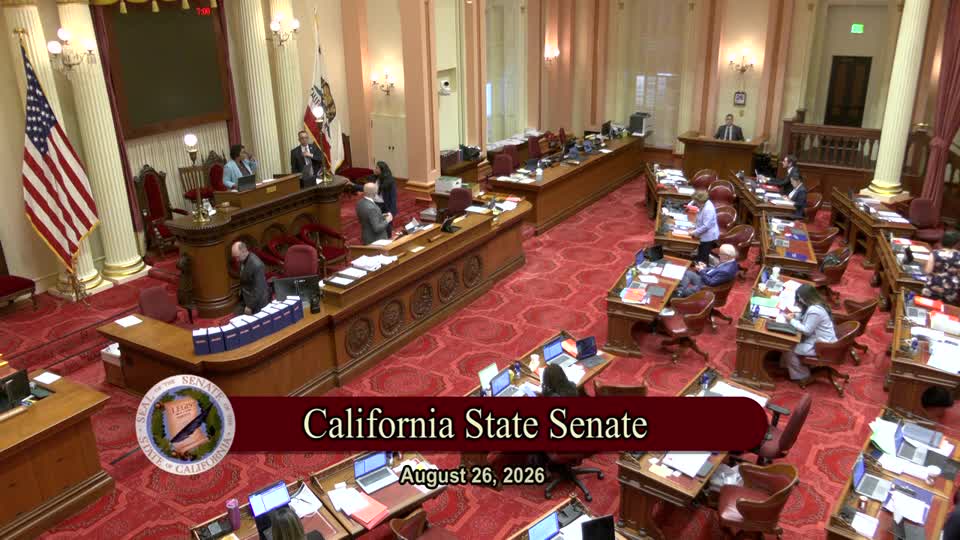 1MIN
Senate Floor
 2MIN
Assembly Floor
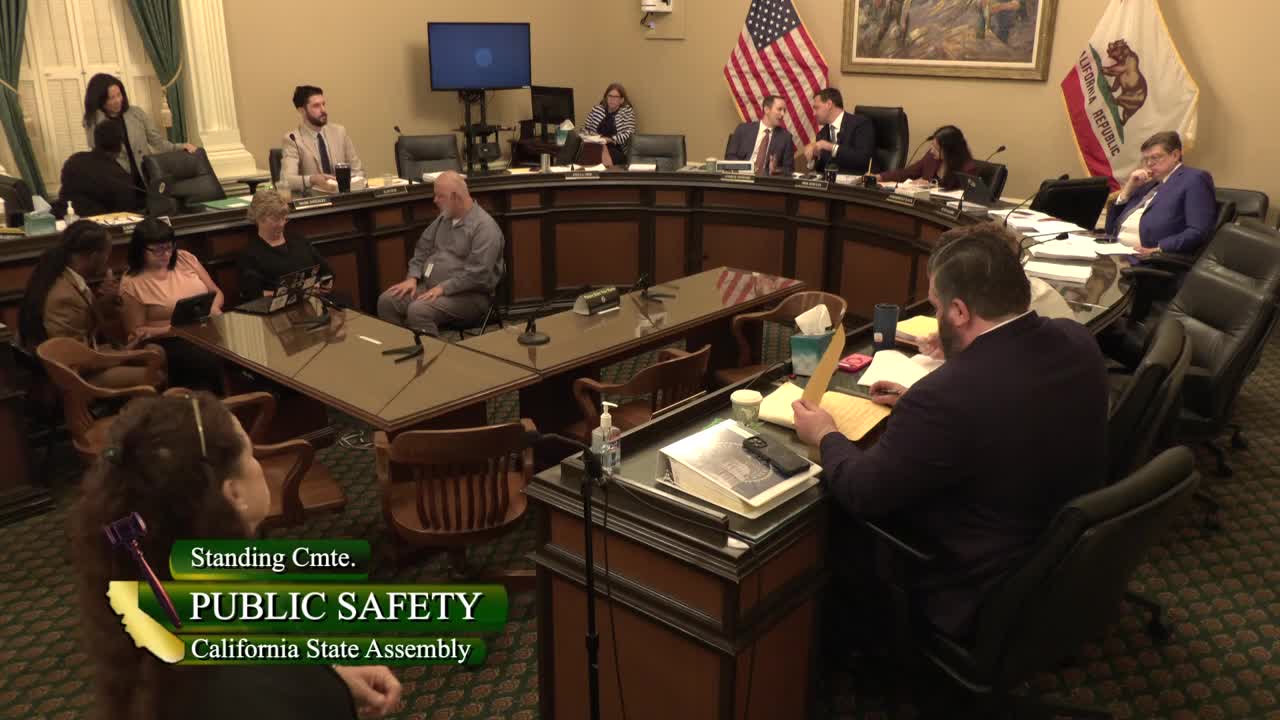 16MIN
Assembly Standing Committee on Public Safety
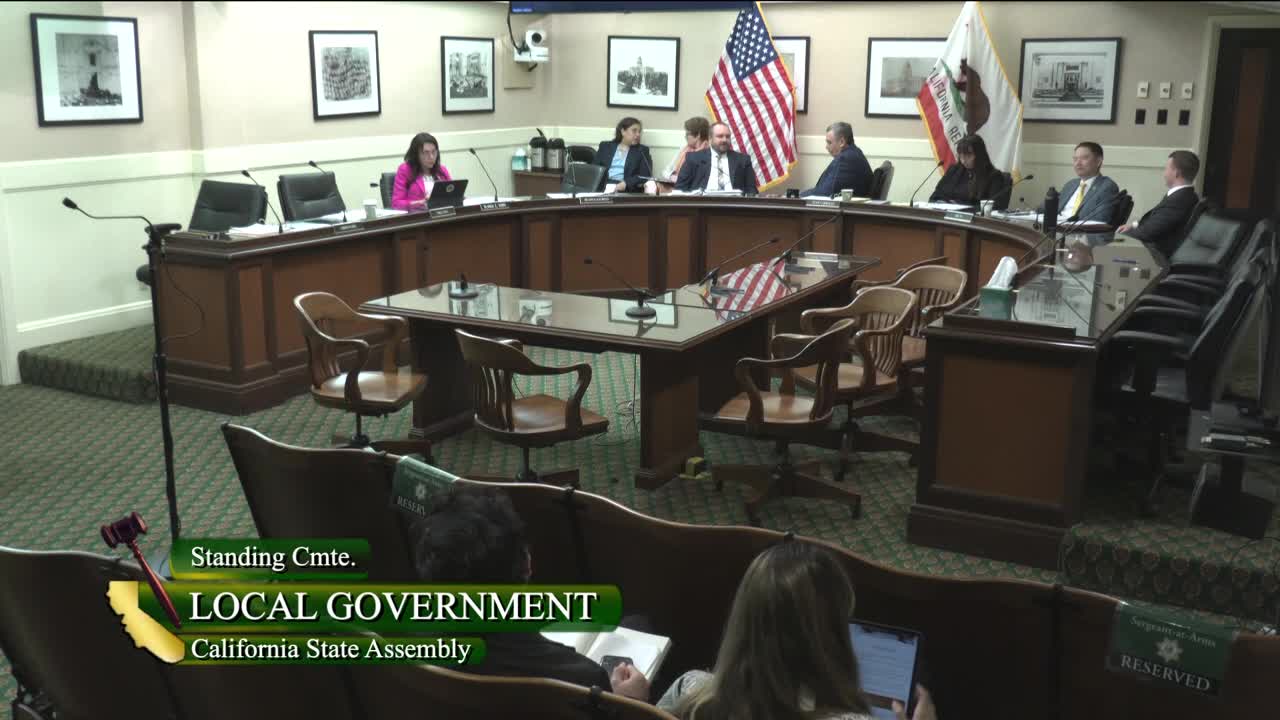 24MIN
Assembly Standing Committee on Local Government
 6MIN
Senate Floor
 20MIN
Senate Standing Committee on Public Safety
 20MIN
Senate Standing Committee on Local Government
Bill Author

Bill Co-Author(s):