SB 1405: Unclaimed personal property: employee benefit plan distributions.
- Session Year: 2025-2026
- House: Senate
- Latest Version Date: 2026-09-27
Current Status:
Passed
(2026-09-27: Chaptered by Secretary of State. Chapter 711, Statutes of 2026.)
Introduced
In Committee
Awaiting First Chamber Vote
Passed First Chamber
In Committee
Awaiting Second Chamber Vote
Passed Second Chamber
Enacted
Under existing law, employee benefit plan distributions and any income or other increment thereon escheats to the state if the owner has not, within 3 years after it becomes payable or distributable, accepted the distribution, corresponded in writing concerning the distribution, or otherwise indicated an interest as evidenced by a memorandum or other record on file with the fiduciary of the trust or custodial fund or administrator of the plan under which the trust or fund is established. Existing law provides for an exception to escheatment if, at the time the distribution becomes payable to a participant in an employee benefit plan, the plan contains a provision for forfeiture or expressly authorizes the administrator to declare a forfeiture of a distribution to a beneficiary who cannot be found after a period of time specified in the plan, as specified.
This bill would establish, as an additional condition for the above exception to apply, the requirement that the distribution have been subject to a forfeiture that has not been reversed by the plan.
This bill would also provide that to the extent a court determines the above provisions to be inoperative, preempted, or otherwise limited, in whole or in part, by the federal Employee Retirement Income Security Act of 1974, or any other federal law, the above provisions will be operative in the manner and to the extent allowed pursuant to any federal statute, regulations, or guidance governing this matter that are adopted by the United States Department of Labor. The bill would also provide that if the Controller finds it necessary, the Controller may enter into a multistate collaborative agreement or other contract for the purpose of ensuring that any property delivered to this state that may be subject to the above provisions regarding employee benefit plan distributions complies with federal law.
Under existing law, employee benefit plan distributions and any income or other increment thereon escheats to the state if the owner has not, within 3 years after it becomes payable or distributable, accepted the distribution, corresponded in writing concerning the distribution, or otherwise indicated an interest as evidenced by a memorandum or other record on file with the fiduciary of the trust or custodial fund or administrator of the plan under which the trust or fund is established. Existing law provides for an exception to escheatment if, at the time the distribution becomes payable to a participant in an employee benefit plan, the plan contains a provision for forfeiture or expressly authorizes the administrator to declare a forfeiture of a distribution to a beneficiary who cannot be found after a period of time specified in the plan, as specified.
This bill would establish, as an additional condition for the above exception to apply, the requirement that the distribution have been subject to a forfeiture that has not been reversed by the plan.
This bill would also provide that to the extent a court determines the above provisions to be inoperative, preempted, or otherwise limited, in whole or in part, by the federal Employee Retirement Income Security Act of 1974, or any other federal law, the above provisions will be operative in the manner and to the extent allowed pursuant to any federal statute, regulations, or guidance governing this matter that are adopted by the United States Department of Labor. The bill would also provide that if the Controller finds it necessary, the Controller may enter into a multistate collaborative agreement or other contract for the purpose of ensuring that any property delivered to this state that may be subject to the above provisions regarding employee benefit plan distributions complies with federal law.
Under existing law, employee benefit plan distributions and any income or other increment thereon escheats to the state if the owner has not, within 3 years after it becomes payable or distributable, accepted the distribution, corresponded in writing concerning the distribution, or otherwise indicated an interest as evidenced by a memorandum or other record on file with the fiduciary of the trust or custodial fund or administrator of the plan under which the trust or fund is established. Existing law provides for an exception to escheatment if, at the time the distribution becomes payable to a participant in an employee benefit plan, the plan contains a provision for forfeiture or expressly authorizes the administrator to declare a forfeiture of a distribution to a beneficiary who cannot be found after a period of time specified in the plan, as specified.
This bill would establish, as an additional condition for the above exception to apply, the requirement that the distribution have been subject to a forfeiture that has not been reversed by the plan.
This bill would also provide that to the extent a court determines the above provisions to be inoperative, preempted, or otherwise limited, in whole or in part, by the federal Employee Retirement Income Security Act of 1974, or any other federal law, the above provisions will be operative in the manner and to the extent allowed pursuant to any federal statute or regulations statute, regulations, or guidance governing this matter that are adopted by the United States Department of Labor. The bill would also provide that if the Controller finds it necessary, the Controller may enter into a multistate collaborative agreement or other contract for the purpose of ensuring that any property delivered to this state that may be subject to the above provisions regarding employee benefit plan distributions complies with federal law.
Under existing law, employee benefit plan distributions and any income or other increment thereon escheats to the state if the owner has not, within 3 years after it becomes payable or distributable, accepted the distribution, corresponded in writing concerning the distribution, or otherwise indicated an interest as evidenced by a memorandum or other record on file with the fiduciary of the trust or custodial fund or administrator of the plan under which the trust or fund is established, except as specified. Existing law defines fiduciary and administrator for purposes of this provision.
This bill would make a nonsubstantive change to this provision. established. Existing law provides for an exception if, at the time the distribution becomes payable to a participant in an employee benefit plan, the plan contains a provision for forfeiture or expressly authorizes the administrator to declare a forfeiture of a distribution to a beneficiary who cannot be found after a period of time specified in the plan, as specified.
This bill would provide that to the extent a court determines the above provisions to be inoperative, preempted, or otherwise limited, in whole or in part, by the federal Employee Retirement Income Security Act of 1974, or any other federal law, the above provisions will be operative in the manner and to the extent allowed pursuant to any federal statute or regulations governing this matter that are adopted by the United States Department of Labor. The bill would also provide that if the Controller finds it necessary, the Controller may enter into a multistate collaborative agreement or other contract for the purpose of ensuring that any property delivered to this state that may be subject to the above provisions regarding employee benefit plan distributions complies with federal law.
Under existing law, employee benefit plan distributions and any income or other increment thereon escheats to the state if the owner has not, within 3 years after it becomes payable or distributable, accepted the distribution, corresponded in writing concerning the distribution, or otherwise indicated an interest as evidenced by a memorandum or other record on file with the fiduciary of the trust or custodial fund or administrator of the plan under which the trust or fund is established, except as specified. Existing law defines fiduciary and administrator for purposes of this provision.
This bill would make a nonsubstantive change to this provision.
(a)Except as provided in subdivision (b), and subject to Section 1510, all employee benefit plan distributions and any income or other increment thereon escheats to the state if the owner has not, within three years after it becomes payable or distributable, accepted the distribution, corresponded in writing concerning the distribution, or otherwise indicated an interest as evidenced by a memorandum or other record on file with the fiduciary of the trust or custodial fund or administrator of the plan under which the trust or fund is established.
(b)Except as provided in subdivision (c), an employee benefit plan distribution and any income or other increment thereon shall not escheat to this state if, at the time the distribution shall become payable to a participant in an employee benefit plan, the plan contains a provision for forfeiture or expressly authorizes the administrator to declare a forfeiture of a distribution to a beneficiary thereof who cannot be found after a period of time specified in the plan, the distribution has been subjected to a forfeiture that has not been reversed by the plan, and the trust or fund established under the plan has not terminated prior to the date on which the distribution would become forfeitable in accordance with the provision.
(c)A participant entitled to an employee benefit plan distribution in the form of residuals shall be relieved from a forfeiture declared under subdivision (b) upon the making of a claim therefor.
(d)For purposes of this section, the following terms have the following meanings:
(1)Fiduciary means any person exercising any power, authority, or responsibility of management or disposition with respect to any money or other property of a retirement system or plan.
(2)Administrator means the person specifically so designated by the plan, trust agreement, contract, or other instrument under which the retirement system or plan is operated, or if none is designated, the employer.
(e)(1)To the extent that a court determines this section to be inoperative, preempted, or otherwise limited, in whole or in part, by the federal Employee Retirement Income Security Act of 1974 (P.L. 93-406), or any other federal law, this section shall be operative in the manner and to the extent allowed pursuant to any federal statute, regulations, or guidance governing this matter that are adopted by the United States Department of Labor.
(2)If the Controller finds it necessary, the Controller may enter into a multistate collaborative agreement, or other contract, for the purpose of ensuring that any property delivered to this state that may be subject to this section complies with federal law.
(a)Except as provided in subdivision (b), and subject to Section 1510, all employee benefit plan distributions and any income or other increment thereon escheats to the state if the owner has not, within three years after it becomes payable or distributable, accepted the distribution, corresponded in writing concerning the distribution, or otherwise indicated an interest as evidenced by a memorandum or other record on file with the fiduciary of the trust or custodial fund or administrator of the plan under which the trust or fund is established.
(b)Except as provided in subdivision (c), an employee benefit plan distribution and any income or other increment thereon shall not escheat to this state if, at the time the distribution shall become payable to a participant in an employee benefit plan, the plan contains a provision for forfeiture or expressly authorizes the administrator to declare a forfeiture of a distribution to a beneficiary thereof who cannot be found after a period of time specified in the plan, the distribution has been subjected to a forfeiture that has not been reversed by the plan, and the trust or fund established under the plan has not terminated prior to the date on which the distribution would become forfeitable in accordance with the provision.
(c)A participant entitled to an employee benefit plan distribution in the form of residuals shall be relieved from a forfeiture declared under subdivision (b) upon the making of a claim therefor.
(d)For purposes of this section, the following terms have the following meanings:
(1)Fiduciary means any person exercising any power, authority, or responsibility of management or disposition with respect to any money or other property of a retirement system or plan.
(2)Administrator means the person specifically so designated by the plan, trust agreement, contract, or other instrument under which the retirement system or plan is operated, or if none is designated, the employer.
(e)(1)To the extent that a court determines this section to be inoperative, preempted, or otherwise limited, in whole or in part, by the federal Employee Retirement Income Security Act of 1974 (P.L. 93-406), or any other federal law, this section shall be operative in the manner and to the extent allowed pursuant to any federal statute, regulations, or guidance governing this matter that are adopted by the United States Department of Labor.
(2)If the Controller finds it necessary, the Controller may enter into a multistate collaborative agreement, or other contract, for the purpose of ensuring that any property delivered to this state that may be subject to this section complies with federal law.
(a)Except as provided in subdivision (b), and subject to Section 1510, all employee benefit plan distributions and any income or other increment thereon escheats to the state if the owner has not, within three years after it becomes payable or distributable, accepted the distribution, corresponded in writing concerning the distribution, or otherwise indicated an interest as evidenced by a memorandum or other record on file with the fiduciary of the trust or custodial fund or administrator of the plan under which the trust or fund is established.
(b)Except as provided in subdivision (c), an employee benefit plan distribution and any income or other increment thereon shall not escheat to this state if, at the time the distribution shall become payable to a participant in an employee benefit plan, the plan contains a provision for forfeiture or expressly authorizes the administrator to declare a forfeiture of a distribution to a beneficiary thereof who cannot be found after a period of time specified in the plan, the distribution has been subjected to a forfeiture that has not been reversed by the plan, and the trust or fund established under the plan has not terminated prior to the date on which the distribution would become forfeitable in accordance with the provision.
(c)A participant entitled to an employee benefit plan distribution in the form of residuals shall be relieved from a forfeiture declared under subdivision (b) upon the making of a claim therefor.
(d)For purposes of this section, the following terms have the following meanings:
(1)Fiduciary means any person exercising any power, authority, or responsibility of management or disposition with respect to any money or other property of a retirement system or plan.
(2)Administrator means the person specifically so designated by the plan, trust agreement, contract, or other instrument under which the retirement system or plan is operated, or if none is designated, the employer.
(e)(1)To the extent that a court determines this section to be inoperative, preempted, or otherwise limited, in whole or in part, by the federal Employee Retirement Income Security Act of 1974 (P.L. 93-406), or any other federal law, this section shall be operative in the manner and to the extent allowed pursuant to any federal statute or regulations statute, regulations, or guidance governing this matter that are adopted by the United States Department of Labor.
(2)If the Controller finds it necessary, the Controller may enter into a multistate collaborative agreement, or other contract, for the purpose of ensuring that any property delivered to this state that may be subject to this section complies with federal law.
(a)Except as provided in subdivision (b), and subject to Section 1510, all employee benefit plan distributions and any income or other increment thereon escheats to the state if the owner has not, within three years after it becomes payable or distributable, accepted the distribution, corresponded in writing concerning the distribution, or otherwise indicated an interest as evidenced by a memorandum or other record on file with the fiduciary of the trust or custodial fund or administrator of the plan under which the trust or fund is established.
(b)Except as provided in subdivision (c), an employee benefit plan distribution and any income or other increment thereon shall not escheat to this state if, at the time the distribution shall become payable to a participant in an employee benefit plan, the plan contains a provision for forfeiture or expressly authorizes the administrator to declare a forfeiture of a distribution to a beneficiary thereof who cannot be found after a period of time specified in the plan, and the trust or fund established under the plan has not terminated prior to the date on which the distribution would become forfeitable in accordance with the provision.
(c)A participant entitled to an employee benefit plan distribution in the form of residuals shall be relieved from a forfeiture declared under subdivision (b) upon the making of a claim therefor.
(d)For purposes of this section, the following terms have the following meanings:
(1)Fiduciary means any person exercising any power, authority, or responsibility of management or disposition with respect to any money or other property of a retirement system or plan.
(2)Administrator means the person specifically so designated by the plan, trust agreement, contract, or other instrument under which the retirement system or plan is operated, or if none is designated, the employer.
(e)(1)To the extent that a court determines this section to be inoperative, preempted, or otherwise limited, in whole or in part, by the Employee Retirement Income Security Act of 1974 (P.L. 93-406), or any other federal law, this section shall be operative in the manner and to the extent allowed pursuant to any federal statute or regulations governing this matter that are adopted by the United States Department of Labor.
(2)If the Controller finds it necessary, the Controller may enter into a multistate collaborative agreement, or other contract, for the purpose of ensuring that any property delivered to this state that may be subject to this section complies with federal law.
(a)Except as provided in subdivision (b), and subject to Section 1510, all employee benefit plan distributions and any income or other increment thereon escheats to the state if the owner has not, within three years after it becomes payable or distributable, accepted the distribution, corresponded in writing concerning the distribution, or otherwise indicated an interest as evidenced by a memorandum or other record on file with the fiduciary of the trust or custodial fund or administrator of the plan under which the trust or fund is established. As used in this section, fiduciary means any person exercising any power, authority, or responsibility of management or disposition with respect to any money or other property of a retirement system or plan, and administrator means the person specifically so designated by the plan, trust agreement, contract, or other instrument under which the retirement system or plan is operated, or if none is designated, the employer.
(b)Except as provided in subdivision (c), an employee benefit plan distribution and any income or other increment thereon shall not escheat to this state if, at the time the distribution shall become payable to a participant in an employee benefit plan, the plan contains a provision for forfeiture or expressly authorizes the administrator to declare a forfeiture of a distribution to a beneficiary thereof who cannot be found after a period of time specified in the plan, and the trust or fund established under the plan has not terminated prior to the date on which the distribution would become forfeitable in accordance with the provision.
(c)A participant entitled to an employee benefit plan distribution in the form of residuals shall be relieved from a forfeiture declared under subdivision (b) upon the making of a claim therefor.
(d)For purposes of this section, the following terms have the following meanings:
(1)Fiduciary means any person exercising any power, authority, or responsibility of management or disposition with respect to any money or other property of a retirement system or plan.
(2)Administrator means the person specifically so designated by the plan, trust agreement, contract, or other instrument under which the retirement system or plan is operated, or if none is designated, the employer.
|
Date
|
Status
|
|---|---|
| Sep 27, 2026 | Chaptered by Secretary of State. Chapter 711, Statutes of 2026. |
| Sep 27, 2026 | Approved by the Governor. |
| Aug 21, 2026 | Enrolled and presented to the Governor at 3 p.m. |
| Aug 18, 2026 | In Senate. Ordered to engrossing and enrolling. |
| Aug 17, 2026 | Read third time. Passed. (Ayes 74. Noes 0. Page 6208.) Ordered to the Senate. |
| Aug 17, 2026 | Read third time. Passed. Ordered to the Senate. |
| Aug 10, 2026 | Ordered to third reading. |
| Aug 10, 2026 | From consent calendar on motion of Assembly Member Aguiar-Curry. |
| Aug 6, 2026 | Read second time. Ordered to consent calendar. |
| Aug 5, 2026 | From committee: Do pass. Ordered to consent calendar. (Ayes 15. Noes 0.) (August 5). |
| Jun 23, 2026 | From committee: Do pass and re-refer to Com. on APPR. with recommendation: To consent calendar. (Ayes 12. Noes 0.) (June 23). Re-referred to Com. on APPR. |
| May 18, 2026 | Referred to Com. on JUD. |
| May 7, 2026 | In Assembly. Read first time. Held at Desk. |
| May 7, 2026 | Read third time. Passed. (Ayes 36. Noes 0. Page 4167.) Ordered to the Assembly. |
| May 7, 2026 | Read third time. Passed. (Ayes 36. Noes 0.) Ordered to the Assembly. |
| May 5, 2026 | Read second time. Ordered to consent calendar. |
| May 4, 2026 | From committee: Be ordered to second reading pursuant to Senate Rule 28.8 and ordered to consent calendar. |
| Apr 24, 2026 | Set for hearing May 4. |
| Apr 22, 2026 | From committee: Do pass and re-refer to Com. on APPR. with recommendation: To consent calendar. (Ayes 13. Noes 0.) (April 21). Re-referred to Com. on APPR. |
| Apr 22, 2026 | From committee: Do pass and re-refer to Com. on APPR. with recommendation: To consent calendar. (Ayes 13. Noes 0. Page 3980.) (April 21). Re-referred to Com. on APPR. |
| Apr 13, 2026 | From committee with author's amendments. Read second time and amended. Re-referred to Com. on JUD. |
| Apr 10, 2026 | Set for hearing April 21. |
| Apr 8, 2026 | Re-referred to Com. on JUD. |
| Mar 24, 2026 | From committee with author's amendments. Read second time and amended. Re-referred to Com. on RLS. |
| Mar 4, 2026 | Referred to Com. on RLS. |
| Feb 23, 2026 | Read first time. |
| Feb 23, 2026 | From printer. May be acted upon on or after March 23. |
| Feb 20, 2026 | Introduced. To Com. on RLS. for assignment. To print. |
|
Date
|
Description
|
Location
|
Votes
|
|
|---|---|---|---|---|
| Aug 17, 2026 | SB 1405 Smallwood-Cuevas Senate Third Reading By Harabedian | Assembly Floor |
Passed |
|
| Aug 5, 2026 | Do pass. To Consent Calendar. | Assembly Standing Committee on Appropriations |
Passed |
|
| Jun 23, 2026 | Do pass and be re-referred to the Committee on [Appropriations] with recommendation: To Consent Calendar | Assembly Standing Committee on Judiciary |
Passed |
|
| May 7, 2026 | Consent Calendar 2nd SB1405 Smallwood-Cuevas | Senate Floor |
Passed |
|
| Apr 21, 2026 | Do pass, but first be re-referred to the Committee on [Appropriations] with the recommendation: To Consent Calendar | Senate Standing Committee on Judiciary |
Passed |
This list shows positions taken on this bill by organizations on the date displayed, which is linked to the original source.
Positions by individuals are not included.
|
Organization
|
Position
|
Date
|
|---|---|---|
| National Association of State Treasurers | ** Support | |
| The National Association of Treasurers | ** Support |
SENATE THIRD READING
STR Bill Id:SB 1405
Author:(Smallwood-Cuevas)
As Amended Ver:April 13, 2026
Majority vote
SUMMARY
Makes changes to the unclaimed property statute as it relates to employee benefit plan distributions and permits the State Controller to enter California into a multistate collaborative agreement for ensuring the delivery of escheated employee plan distributions.
Major Provisions
- Adds, as a required condition for an employee benefit distribution or income or increment not to escheat to the state, the requirement that the distribution has been subjected to a forfeiture that has not been reversed by the plan.
- Provides that, to the extent that a court determines the Unclaimed Property Law statute governing the escheat of employee benefit plan distributions to be inoperative, preempted, or otherwise limited, in whole or in part, by the federal Employee Retirement Income Security Act (ERISA), or any other federal law, the statute will be operative in the manner and to the extent allowed pursuant to any federal statute, regulations, or guidance governing this matter that are adopted by the United States Department of Labor.
- Specifies that, if the Controller finds it necessary, the Controller may enter into a multistate collaborative agreement, or other contract, for the purpose of ensuring that any employee benefit plan distribution delivered to this state that may be subject to escheatment complies with federal law.
COMMENTS
According to the author and the bill's sponsor, State Controller Malia Cohen, each year numerous employee retirement and other benefit distributions, including uncashed retirement checks, go unclaimed because participants cannot be located. Estimates from industry experts suggest that the value of uncashed retirement checks likely exceeds $100 million per year. (Advisory Council on Employee Welfare and Pension Benefit Plans, Voluntary Transfer of Uncashed Checks from ERISA Plans to State Unclaimed Property Programs, (Nov. 2019) p. 12, available at: https://www.dol.gov/sites/dolgov/files/EBSA/about-ebsa/about-us/erisa-advisory-council/employee-advisory-council-voluntary-transfers-uncashed-checks.pdf.) While a central clearinghouse now exists to facilitate the reporting of these kinds of distributions to state unclaimed property programs, it is unclear whether the State Controller possesses the authority to participate in this multi-state initiative. Additionally, existing law precludes certain employee benefit plan distributions from escheating to the state, leaving many Californians without access to their promised benefits.
To allow the reporting of these unclaimed distributions and facilitate their return to the rightful owners through the State Controller's unclaimed property program, the author introduced this measure.
The Unclaimed Property Law (UPL). California's Unclaimed Property Law (UPL) governs the process by which unclaimed personal property escheats to the state. The policy rationale behind the law is twofold: to reunite owners with their property and, pending such reunion, to allow the state to utilize the property for the public benefit. Under the UPL holders of abandoned property must transfer the property to the state controller, if the property remains unclaimed by its owner for a statutory dormancy period—usually three years. Once in the controller's custody, the property is either retained (in the case of tangible property) or liquidated and deposited in the Unclaimed Property Fund. An owner can reclaim the property from the controller at any time, and if the owner believes a claim was improperly denied or if the claim remains unresolved within 180 days of filing, the owner can bring a claim against the controller in superior court. The UPL applies to a wide range of intangible personal property, including employee benefit plan distributions (e.g., retirement checks).
The problem of unclaimed retirement benefits. As mentioned above, retirement checks go uncashed every year because employee benefit plans are unable to locate participants and beneficiaries. In recent years, the United States Department of Labor has taken the position that, as part of a plan's fiduciary duties, a plan must perform ongoing searches for missing participants and beneficiaries, even where the participants or beneficiary's benefits have been forfeited to the plan. (See United States Department of Labor, Missing Participants – Best Practices for Pension Plans, (Jan. 12, 2021) available at: https://www.dol.gov/agencies/ebsa/employers-and-advisers/plan-administration-and-compliance/retirement/missing-participants-guidance/best-practices-for-pension-plans.) At the same time, current state law does not allow certain employee benefit plan distributions to be escheated to the state (See Code of Civil Procedure Section 1521(b)), and the Department of Labor has consistently taken the position that state unclaimed property laws requiring plans to remit these kinds of distributions to the state are preempted by the federal Employee Retirement Income Security Act (ERISA). (See United States Department of Labor, Advisory Opinion 94-41A, (Dec. 7, 1994), available at: https://www.dol.gov/agencies/ebsa/about-ebsa/our-activities/resource-center/advisory-opinions/1994-41a.) This dynamic has potentially led to some confusion regarding whether voluntary transfers to these programs are appropriate.
As part of addressing the growing problem of uncashed retirement checks, the ERISA Advisory Council recommended that the Department of Labor issue guidance stating, among other things, that a "plan fiduciary will be viewed as having satisfied its fiduciary responsibility to the extent the fiduciary transfers amounts attributable to a Missing Participant's uncashed check to a state unclaimed property program that meets minimum standards." (Advisory Council on Employee Welfare and Pension Benefit Plans, Voluntary Transfer of Uncashed Checks from ERISA Plans to State Unclaimed Property Programs, (Nov. 2019) p. 7, available at: https://www.dol.gov/sites/dolgov/files/EBSA/about-ebsa/about-us/erisa-advisory-council/employee-advisory-council-voluntary-transfers-uncashed-checks.pdf.) The Advisory Council's report specifically noted that unclaimed property programs have an improved chance of helping missing participants be reunited with their retirement checks.
In January 2025, the Department of Labor issued a Field Assistance Bulletin which essentially adopted the Council's recommendation. The Bulletin specified that the department would not pursue violations of the ERISA statute setting forth a plan's fiduciary obligations, if plans voluntarily transferred retirement benefit payments owed to missing participants or beneficiaries from an ongoing plan to a state unclaimed property fund, if certain conditions are met. (United States Department of Labor, Field Assistance Bulletin No. 2025-01, (Jan. 14, 2025) available at: https://www.dol.gov/agencies/ebsa/employers-and-advisers/guidance/field-assistance-bulletins/2025-01.) Pending further guidance, plans can transfer these distributions to unclaimed property funds without fear of enforcement action from the department. (Id.) To do so, the value of the nonforfeitable accrued benefit must be $1,000 or less and the plan must comply with the following conditions:
- The plan fiduciary determines that the transfer to a state unclaimed property fund is a prudent destination for the participant's or beneficiary's retirement benefit payments;
- The plan fiduciary has implemented a prudent program to find missing participants consistent with the Department of Labor's Best Practices for Pension Plans, and nevertheless has been unable to locate the participant or beneficiary;
- The plan selects the state unclaimed property fund offered by the state of the last known address of the participant or beneficiary;
- The plan's summary plan description explains that retirement benefit payments of missing participants or beneficiaries may be transferred to an eligible state fund and identifies the name, address, and phone number of a plan contact for further information concerning the eligible state funds; and
- The state unclaimed property fund qualifies as an eligible state fund. (Id.)
To be an "eligible state fund," Department of Labor guidance specifies that the state unclaimed property fund must participate in the States's Unclaimed Property Clearing House (SURCH), as operated by the National Association of State Treasurers, among other things. (Id.)
States' Unclaimed Retirement Clearing House. As part of its 2019 report, the ERISA Advisory Council noted that while many countries maintain central repositories or clearinghouses for missing or unresponsive participants, the United States lacked such options. (Advisory Council on Employee Welfare and Pension Benefit Plans, supra, at p. 13.) Accordingly, the National Association of State Treasurers and its affiliated network, the National Association of Unclaimed Property Administrators, formed the States' Unclaimed Retirement Clearing House (SURCH). SURCH is designed to permit a retirement plan to report and remit uncashed distribution checks to all participating states contemporaneously. SURCH then distributes the reporting data and funds to the respective state unclaimed property programs.
California's unclaimed property fund is currently not participating in SURCH, and according to the sponsor, it is unclear under existing state law whether the state controller has the authority to do so.
This bill simply permits the controller to participate in the SURCH initiative, by specifying that the controller is allowed to enter into a multistate collaborative agreement, or other contract, for the purpose of ensuring that any employee benefit distributions that may be delivered to the state pursuant to the unclaimed property statute, are delivered in compliance with federal law. Should California become a participating state, plans will be able to remit unclaimed retirement checks to the state's unclaimed property fund, and those will appear in the office's unclaimed property listings, alongside other properties. Individuals will be able to search these listings and potentially become reunited with their lost funds.
To that end, this bill also amends state law to allow states to report certain employee benefit plan distributions to the state controller. Right now, employee benefit plan distributions cannot escheat to the state if: 1) at the time the distribution becomes payable, the plan contains a provision for forfeiture or expressly authorizes the administrator to declare a forfeiture of a distribution under specified circumstances, and 2) the trust or fund established under the plan has not terminated before the distribution became forfeitable. (Code of Civil Procedure Section 1521 (b).) This bill adds a third required condition to the above list – that the distribution has been subjected to a forfeiture that has not been reversed by the plan (i.e., where the plan retains the distribution as an asset). Under the bill, a distribution cannot escheat to the state, only if all of those conditions are met.
By adding this condition, the bill clarifies that the state controller can accept employee benefit plan distributions in cases where, for example, an uncashed retirement check has not in fact been forfeited to a plan. While a district court has previously held that California's UPL was preempted where the state "wishes to seize funds to which the ERISA plan has a contractual right," the court did not opine on whether the UPL would be preempted if a plan has not retained the benefit as a plan asset. (Manufacturers Life Ins. Co. v. East Bay Restaurant and Tavern Retirement Plan (N.D. Cal. 1999) 57 F.Supp.2d 921, 924.) Because the bill specifically addresses distributions that have not been retaken by the plan following forfeiture, it arguably does not conflict with the district court's decision, and thereby, ERISA. Further, the bill also provides that, to the extent the statute is preempted by ERISA, it should remain operative to the greatest extent permitted under federal law, regulations, and guidance.
Taken together, these provisions should allow more unclaimed retirement checks to be reported to the state's unclaimed property fund, increasing the likelihood that participants and beneficiaries will be reunited with their hard-earned retirement savings.
According to the Author
SB 1405 is about something simple but essential: helping Californians reclaim the retirement money they earned. Too often, seniors lose track of retirement accounts after a lifetime of work. Each year, millions of dollars in required retirement distributions go unclaimed—often because people move, change jobs, or lose contact with plan administrators. Once these checks go uncashed, the funds cannot be reinvested and remain out of reach of the people who need them. At the same time, retirement plans face costly, ongoing efforts to locate missing beneficiaries, with no efficient way to return these funds.
SB 1405 allows California to participate in the States' Unclaimed Retirement Clearinghouse, enabling unclaimed funds to be transferred to the State Controller's Office and returned to rightful owners through the Unclaimed Property Program. This bill helps restore financial security, dignity, and peace of mind for California's seniors by reconnecting them with their hard-earned savings.
Arguments in Support
The National Association of Treasurers believes this bill represents "a thoughtful approach to strengthening consumer protections while providing needed clarity for plan administrators navigating federal and state requirements." Additionally, they state:
Each year, a growing volume of required minimum distributions and other retirement plan checks go uncashed because participants cannot be located, an issue estimated to exceed $100 million annually nationwide. Although federal policy has evolved to discourage forfeitures and permit voluntary transfer of uncashed distributions to state unclaimed property programs, California's statute currently prevents the State Controller from accepting certain unclaimed retirement checks, even when no forfeiture has occurred.
SB 1405 provides a practical and legally sound solution. By allowing voluntary reporting of uncashed retirement distributions that have not been forfeited, clarifying application consistent with ERISA, and authorizing participation in the States' Unclaimed Retirement Clearing House (SURCH), the bill aligns California law with current federal guidance and best practices.
Arguments in Opposition
None on file
FISCAL COMMENTS
According to the Assembly Appropriations Committee, minor and absorbable costs to the State Controller's Office.
VOTES
SENATE FLOOR: 36-0-4
YES: Allen, Archuleta, Arreguín, Ashby, Becker, Blakespear, Cabaldon, Caballero, Cervantes, Choi, Cortese, Dahle, Durazo, Grayson, Hurtado, Jones, Laird, Limón, McGuire, McNerney, Menjivar, Ochoa Bogh, Padilla, Pérez, Reyes, Richardson, Rubio, Seyarto, Smallwood-Cuevas, Stern, Strickland, Umberg, Valladares, Wahab, Weber Pierson, Wiener
ABS, ABST OR NV: Alvarado-Gil, Gonzalez, Grove, Niello
ASM JUDICIARY: 12-0-0
YES: Kalra, Macedo, Bauer-Kahan, Bryan, Connolly, Dixon, Harabedian, Pacheco, Papan, Sanchez, Stefani, Zbur
ASM APPROPRIATIONS: 15-0-0
YES: Wicks, Hoover, Arambula, Calderon, Caloza, Dixon, Fong, Mark González, Krell, Pacheco, Pellerin, Sharp-Collins, Solache, Ta, Tangipa
UPDATED
VERSION: April 13, 2026
CONSULTANT: Kristian Wright / JUD. / (916) 319-2334 FN: 0003407
Date of Hearing: August 5, 2026
ASSEMBLY COMMITTEE ON APPROPRIATIONS
Buffy Wicks, Chair
SBPCA Bill Id:SB 1405
Author:(Smallwood-Cuevas) – As Amended Ver:April 13, 2026
Policy Committee: | Judiciary | Vote: | 12 - 0 |
|
| ||
|
|
Urgency: No State Mandated Local Program: No Reimbursable: No
SUMMARY:
This bill, sponsored by the State Controller’s Office, amends the Unclaimed Property Law statute as it relates to employee benefit plan distributions and permits the State Controller to enter California into a multistate collaborative agreement for ensuring the delivery of escheated, or transferred, employee plan distributions.
FISCAL EFFECT:
Minor and absorbable costs to the State Controller’s Office.
COMMENTS:
- Purpose. According to the author:
SB 1405 is about something simple but essential: helping Californians reclaim the retirement money they earned. Too often, seniors lose track of retirement accounts after a lifetime of work. Each year, millions of dollars in required retirement distributions go unclaimed—often because people move, change jobs, or lose contact with plan administrators. Once these checks go uncashed, the funds cannot be reinvested and remain out of reach of the people who need them. At the same time, retirement plans face costly, ongoing efforts to locate missing beneficiaries, with no efficient way to return these funds.
SB 1405 allows California to participate in the States’ Unclaimed Retirement Clearinghouse, enabling unclaimed funds to be transferred to the State Controller’s Office and returned to rightful owners through the Unclaimed Property Program. This bill helps restore financial security, dignity, and peace of mind for California’s seniors by reconnecting them with their hard-earned savings.
- Background. California’s Unclaimed Property Law requires holders of abandoned property to transfer the property to the State Controller after a statutory dormancy period, generally three years, after which the state either retains or liquidates the property pending an owner’s claim — a structure meant both to reunite owners with their property and to allow the state to use the property for public benefit in the meantime. Existing law prohibits certain employee benefit plan distributions from escheating, reflecting the U.S. Department of Labor’s position that the federal Employee Retirement Income Security Act preempts state escheatment of those funds, with the result that uncashed retirement checks owed to participants who cannot be located go unclaimed. The Department of Labor has since issued guidance stating that the department will not pursue fiduciary violations where a plan voluntarily transfers those payments to a state unclaimed property fund, provided the fund qualifies as an “eligible state fund,” which requires participation in the States’ Unclaimed Property Clearinghouse operated by the National Association of State Treasurers. California does not participate, and according to the sponsor, whether the Controller has authority to do so under existing law is unclear. This bill permits that participation and adds a condition to the existing escheatment prohibition, allowing more unclaimed retirement checks to be reported to the state and listed where owners can find them.
Analysis Prepared by: Shiran Zohar / APPR. / (916) 319-2081
Date of Hearing: June 23, 2026
ASSEMBLY COMMITTEE ON JUDICIARY
Ash Kalra, Chair
SBPCA Bill Id:SB 1405
Author:(Smallwood-Cuevas) – As Amended Ver:April 13, 2026
SENATE VOTE: 36-0
SUBJECT: UNCLAIMED PERSONAL PROPERTY: EMPLOYEE BENEFIT PLAN DISTRIBUTIONS
SYNOPSIS
California’s Unclaimed Property Law (UPL) governs the process by which unclaimed personal property “escheats” or transfers to the state. The UPL applies to a wide range of intangible personal property, including bank accounts, uncashed checks, wages, stocks, and insurance proceeds. Property is presumed abandoned if it remains unclaimed by its owner for a statutory dormancy period, typically three years. When property escheats to the state, it is transferred to the State Controller’s unclaimed property program. Individuals can search the Controller’s unclaimed property listings and make a claim to be reunited with their property.
Currently, California is unable to accept certain employee benefit plans distributions into its unclaimed property program. Unclaimed retirement checks have been a particularly challenging issue that the federal Department of Labor and other stakeholders have been working to resolve. Through a nationwide clearinghouse, employee benefit plans are now able to report specified unclaimed retirement checks to unclaimed property programs of participating states. Because California is not participating in this initiative, plans cannot report and transfer these payments in cases where the last known address of the intended recipient is in California. Additionally, the UPL precludes certain kinds of distributions from ever being reported to the state, including employee benefit plan distributions where the plan contains a provision for forfeiture or expressly authorizes the administrator to declare a forfeiture of a distribution.
This bill allows the Controller to participate in the nationwide clearinghouse initiative, if the Controller finds it necessary, and amends the UPL to allow plans to report unclaimed employee benefit plan distributions to the state’s unclaimed property program, where the employee benefit plan has not in fact been forfeited to a plan. This bill is sponsored by the State Controller Malia M. Cohen and supported by the National Association of State Treasurers. There is no registered opposition on file.
SUMMARY: Makes changes to the unclaimed property statute as it relates to employee benefit plan distributions and permits the State Controller to enter California into a multistate collaborative agreement for ensuring the delivery of escheated employee plan distributions. Specifically, this bill:
- Adds, as a required condition for an employee benefit distribution or income or increment not to escheat to the state, the requirement that the distribution has been subjected to a forfeiture that has not been reversed by the plan.
- Provides that, to the extent that a court determines the UPL statute governing the escheat of employee benefit plan distributions to be inoperative, preempted, or otherwise limited, in whole or in part, by the federal Employee Retirement Income Security Act, or any other federal law, the statute will be operative in the manner and to the extent allowed pursuant to any federal statute, regulations, or guidance governing this matter that are adopted by the United States Department of Labor.
- Specifies that, if the Controller finds it necessary, the Controller may enter into a multistate collaborative agreement, or other contract, for the purpose of ensuring that any employee benefit plan distribution delivered to this state that may be subject to escheatment complies with federal law.
- Makes technical and conforming changes.
EXISTING LAW:
- Establishes the Unclaimed Property Law (UPL), which directs when and how intangible property escheats to the state for the state to take custody of, but not own, unclaimed property. (Code of Civil Procedure Section 1500 et seq.)
- Defines “employee benefit plan distribution” to mean any money, life insurance, endowment or annuity policy or proceeds thereof, securities or other intangible property, or any tangible property, distributable to a participant, former participant, or the beneficiary or estate or heirs of a participant or former participant or beneficiary, from a trust or custodial fund established under a plan to provide health and welfare, pension, vacation, severance, retirement benefit, death benefit, stock purchase, profit sharing, employee savings, supplemental unemployment insurance benefits or similar benefits, or which is established under a plan by a business association functioning as or in conjunction with a labor union that receives for distribution residuals on behalf of employees working under collective-bargaining agreements. (Code of Civil Procedure Section 1501 (e).)
- Provides that property received by the state pursuant to the UPL shall not permanently escheat to the state, and that it is the intent of the Legislature that property owners be reunited with their property. (Code of Civil Procedure Section 1501.5.)
- Specifies that, in addition to other specified requirements, intangible property must satisfy one of the following conditions before it escheats to the state:
- The last known address, as shown on the records of the holder, of the apparent owner is in this state.
- No address of the apparent owner is in this state; the holder is domiciled in this state and has not previously paid the property to the state of the last known address of the apparent owner; or the holder is a government or governmental subdivision or agency of this state and has not previously paid the property to the state of the last known address of the apparent owner.
- The last known address, as shown by the records of the holder, of the apparent owner is in a state that does not provide by law for the escheat of such property and the holder is either domiciled in this state or is a government or governmental subdivision or agency of this state.
- The last known address, as shown in the records of the holder, of the apparent owner is in a foreign nation and the holder is either domiciled in this state or a government or governmental subdivision or agency of this state. (Code of Civil Procedure Section 1510.)
- Specifies that all tangible personal property located in this state, and, subject to 4), all intangible personal property, held for the owner by any government or governmental subdivision or agency, that has remained unclaimed by the owner for more than three years escheats to this state. (Code of Civil Procedure Section 1519.)
- Specifies that employee benefit plan distributions and any income or increment thereon escheats to the state if the owner has not, within three years after it becomes payable or distributable, accepted the distribution, corresponded in writing concerning the distribution, or otherwise indicated an interest in the property, as specified; except that this property will not escheat to the state if the plan contains a specific provision for forfeiture or expressly authorizes the administrator to declare a forfeiture of a distribution to a beneficiary, and the trust or plan has not terminated prior to the date on which the distribution would become forfeitable. (Code of Civil Procedure Section 1521 (a) – (b).)
- Specifies that a participant entitled to an employee benefit plan distribution in the form of residuals will be relieved from forfeiture declared under 6) upon making a claim. (Code of Civil Procedure Section 1521 (c).)
- Requires a holder of funds or other personal property to report to the Controller, on a form prescribed by the Controller, specified information relating to the property and the holder. (Code of Civil Procedure Section 1530.)
- Allows any person, excluding another state, who claims to have been the owner of property paid or delivered to the Controller under the UPL to file a claim to the property or to the net proceeds from its sale. (Code of Civil Procedure Section 1540.)
- Specifies that any person aggrieved by a decision of the Controller, as it relates to 9), or as to whose claim the Controller has failed to make a decision within 180 days after filing the claim, may commence an action, naming the Controller as a defendant. (Code of Civil Procedure Section 1541.)
- Provides that, upon the payment or delivery of escheated property to the Controller, the state will assume custody and will be responsible for the safekeeping of the property. (Code of Civil Procedure Section 1560 (a).)
- Establishes the Employee Retirement Income Security Act (ERISA) of 1974, which sets minimum standards for most voluntarily established retirement and health plans in private industry. (29 U.S.C. Section 1001 et seq.)
FISCAL EFFECT: As currently in print this bill is keyed fiscal.
COMMENTS: According to the author and the bill’s sponsor, State Controller Malia Cohen, each year numerous employee retirement and other benefit distributions, including uncashed retirement checks, go unclaimed because participants cannot be located. Estimates from industry experts suggest that the value of uncashed retirement checks likely exceeds $100 million per year. (Advisory Council on Employee Welfare and Pension Benefit Plans, Voluntary Transfer of Uncashed Checks from ERISA Plans to State Unclaimed Property Programs, (Nov. 2019) p. 12, available at: https://www.dol.gov/sites/dolgov/files/EBSA/about-ebsa/about-us/erisa-advisory-council/employee-advisory-council-voluntary-transfers-uncashed-checks.pdf.) While a central clearinghouse now exists to facilitate the reporting of these kinds of distributions to state unclaimed property programs, it is unclear whether the State Controller possesses the authority to participate in this multi-state initiative. Additionally, existing law precludes certain employee benefit plan distributions from escheating to the state, leaving many Californians without access to their promised benefits.
To allow the reporting of these unclaimed distributions and facilitate their return to the rightful owners through the State Controller’s unclaimed property program, the author introduced this measure. In support of the bill, the author states:
SB 1405 is about something simple but essential: helping Californians reclaim the retirement money they earned. Too often, seniors lose track of retirement accounts after a lifetime of work. Each year, millions of dollars in required retirement distributions go unclaimed—often because people move, change jobs, or lose contact with plan administrators. Once these checks go uncashed, the funds cannot be reinvested and remain out of reach of the people who need them. At the same time, retirement plans face costly, ongoing efforts to locate missing beneficiaries, with no efficient way to return these funds.
SB 1405 allows California to participate in the States’ Unclaimed Retirement Clearinghouse, enabling unclaimed funds to be transferred to the State Controller’s Office and returned to rightful owners through the Unclaimed Property Program. This bill helps restore financial security, dignity, and peace of mind for California’s seniors by reconnecting them with their hard-earned savings.
The Unclaimed Property Law (UPL). California’s Unclaimed Property Law (UPL) governs the process by which unclaimed personal property escheats to the state. The policy rationale behind the law is twofold: to reunite owners with their property and, pending such reunion, to allow the state to utilize the property for the public benefit. Under the UPL holders of abandoned property must transfer the property to the state controller, if the property remains unclaimed by its owner for a statutory dormancy period—usually three years. Once in the controller’s custody, the property is either retained (in the case of tangible property) or liquidated and deposited in the Unclaimed Property Fund. An owner can reclaim the property from the controller at any time, and if the owner believes a claim was improperly denied or if the claim remains unresolved within 180 days of filing, the owner can bring a claim against the controller in superior court. The UPL applies to a wide range of intangible personal property, including employee benefit plan distributions (e.g., retirement checks).
The problem of unclaimed retirement benefits. As mentioned above, retirement checks go uncashed every year because employee benefit plans are unable to locate participants and beneficiaries. In recent years, the United States Department of Labor has taken the position that, as part of a plan’s fiduciary duties, a plan must perform ongoing searches for missing participants and beneficiaries, even where the participants or beneficiary’s benefits have been forfeited to the plan. (See United States Department of Labor, Missing Participants – Best Practices for Pension Plans, (Jan. 12, 2021) available at: https://www.dol.gov/agencies/ebsa/employers-and-advisers/plan-administration-and-compliance/retirement/missing-participants-guidance/best-practices-for-pension-plans.) At the same time, current state law does not allow certain employee benefit plan distributions to be escheated to the state (See Code of Civil Procedure Section 1521 (b)), and the Department of Labor has consistently taken the position that state unclaimed property laws requiring plans to remit these kinds of distributions to the state are preempted by the federal Employee Retirement Income Security Act (ERISA) (See United States Department of Labor, Advisory Opinion 94-41A, (Dec. 7, 1994), available at: https://www.dol.gov/agencies/ebsa/about-ebsa/our-activities/resource-center/advisory-opinions/1994-41a.) This dynamic has potentially led to some confusion regarding whether voluntary transfers to these programs are appropriate.
As part of addressing the growing problem of uncashed retirement checks, the ERISA Advisory Council recommended that the Department of Labor issue guidance stating, among other things, that a “plan fiduciary will be viewed as having satisfied its fiduciary responsibility to the extent the fiduciary transfers amounts attributable to a Missing Participant’s uncashed check to a state unclaimed property program that meets minimum standards.” (Advisory Council on Employee Welfare and Pension Benefit Plans, Voluntary Transfer of Uncashed Checks from ERISA Plans to State Unclaimed Property Programs, (Nov. 2019) p. 7, available at: https://www.dol.gov/sites/dolgov/files/EBSA/about-ebsa/about-us/erisa-advisory-council/employee-advisory-council-voluntary-transfers-uncashed-checks.pdf.) The Advisory Council’s report specifically noted that unclaimed property programs have an improved chance of helping missing participants be reunited with their retirement checks.
In January 2025, the Department of Labor issued a Field Assistance Bulletin which essentially adopted the Council’s recommendation. The Bulletin specified that the department would not pursue violations of the ERISA statute setting forth a plan’s fiduciary obligations, if plans voluntarily transferred retirement benefit payments owed to missing participants or beneficiaries from an ongoing plan to a state unclaimed property fund, if certain conditions are met. (United States Department of Labor, Field Assistance Bulletin No. 2025-01, (Jan. 14, 2025) available at: https://www.dol.gov/agencies/ebsa/employers-and-advisers/guidance/field-assistance-bulletins/2025-01.) Pending further guidance, plans can transfer these distributions to unclaimed property funds without fear of enforcement action from the department. (Id.) To do so, the value of the nonforfeitable accrued benefit must be $1,000 or less and the plan must comply with the following conditions:
- The plan fiduciary determines that the transfer to a state unclaimed property fund is a prudent destination for the participant's or beneficiary's retirement benefit payments;
- The plan fiduciary has implemented a prudent program to find missing participants consistent with the Department of Labor’s Best Practices for Pension Plans, and nevertheless has been unable to locate the participant or beneficiary;
- The plan selects the state unclaimed property fund offered by the state of the last known address of the participant or beneficiary;
- The plan's summary plan description explains that retirement benefit payments of missing participants or beneficiaries may be transferred to an eligible state fund and identifies the name, address, and phone number of a plan contact for further information concerning the eligible state funds; and
- The state unclaimed property fund qualifies as an eligible state fund. (Id.)
To be an “eligible state fund,” Department of Labor guidance specifies that the state unclaimed property fund must participate in the States’s Unclaimed Property Clearing House (SURCH), as operated by the National Association of State Treasurers, among other things. (Id.)
States’ Unclaimed Retirement Clearing House. As part of its 2019 report, the ERISA Advisory Council noted that while many countries maintain central repositories or clearinghouses for missing or unresponsive participants, the United States lacked such options. (Advisory Council on Employee Welfare and Pension Benefit Plans, supra, at p. 13.) Accordingly, the National Association of State Treasurers and its affiliated network, the National Association of Unclaimed Property Administrators, formed the States’ Unclaimed Retirement Clearing House (SURCH). SURCH is designed to permit a retirement plan to report and remit uncashed distribution checks to all participating states contemporaneously. SURCH then distributes the reporting data and funds to the respective state unclaimed property programs.
California’s unclaimed property fund is currently not participating in SURCH, and according to the sponsor, it is unclear under existing state law whether the state controller has the authority to do so.
This bill simply permits the controller to participate in the SURCH initiative, by specifying that the controller is allowed to enter into a multistate collaborative agreement, or other contract, for the purpose of ensuring that any employee benefit distributions that may be delivered to the state pursuant to the unclaimed property statute, are delivered in compliance with federal law. Should California become a participating state, plans will be able to remit unclaimed retirement checks to the state’s unclaimed property fund, and those will appear in the office’s unclaimed property listings, alongside other properties. Individuals will be able to search these listings and potentially become reunited with their lost funds.
To that end, this bill also amends state law to allow states to report certain employee benefit plan distributions to the state controller. Right now, employee benefit plan distributions cannot escheat to the state if: 1) at the time the distribution becomes payable, the plan contains a provision for forfeiture or expressly authorizes the administrator to declare a forfeiture of a distribution under specified circumstances, and 2) the trust or fund established under the plan has not terminated before the distribution became forfeitable. (Code of Civil Procedure Section 1521 (b).) This bill adds a third required condition to the above list – that the distribution has been subjected to a forfeiture that has not been reversed by the plan (i.e., where the plan retains the distribution as an asset). Under the bill, a distribution cannot escheat to the state, only if all of those conditions are met.
By adding this condition, the bill clarifies that the state controller can accept employee benefit plan distributions in cases where, for example, an uncashed retirement check has not in fact been forfeited to a plan. While a district court has previously held that California’s UPL was preempted where the state “wishes to seize funds to which the ERISA plan has a contractual right,” the court did not opine on whether the UPL would be preempted if a plan has not retained the benefit as a plan asset. (Manufacturers Life Ins. Co. v. East Bay Restaurant and Tavern Retirement Plan (N.D. Cal. 1999) 57 F.Supp.2d 921, 924.) Because the bill specifically addresses distributions that have not been retaken by the plan following forfeiture, it arguably does not conflict with the district court’s decision, and thereby, ERISA. Further, the bill also provides that, to the extent the statute is preempted by ERISA, it should remain operative to the greatest extent permitted under federal law, regulations, and guidance.
Taken together, these provisions should allow more unclaimed retirement checks to be reported to the state’s unclaimed property fund, increasing the likelihood that participants and beneficiaries will be reunited with their hard-earned retirement savings.
ARGUMENTS IN SUPPORT: The National Association of Treasurers believes this bill represents “a thoughtful approach to strengthening consumer protections while providing needed clarity for plan administrators navigating federal and state requirements.” Additionally, they state:
Each year, a growing volume of required minimum distributions and other retirement plan checks go uncashed because participants cannot be located, an issue estimated to exceed $100 million annually nationwide. Although federal policy has evolved to discourage forfeitures and permit voluntary transfer of uncashed distributions to state unclaimed property programs, California’s statute currently prevents the State Controller from accepting certain unclaimed retirement checks, even when no forfeiture has occurred.
SB 1405 provides a practical and legally sound solution. By allowing voluntary reporting of uncashed retirement distributions that have not been forfeited, clarifying application consistent with ERISA, and authorizing participation in the States’ Unclaimed Retirement Clearing House (SURCH), the bill aligns California law with current federal guidance and best practices.
REGISTERED SUPPORT / OPPOSITION:
Support
National Association of State Treasurers
Opposition
None on file
Analysis Prepared by: Kristian Wright / JUD. / (916) 319-2334
SENATE RULES COMMITTEE Office of Senate Floor Analyses (916) 651-4171 | SB 1405 |
CONSENT
Bill No: SB 1405
Author: Smallwood-Cuevas (D)
Amended: 4/13/26
Vote: 21
SENATE JUDICIARY COMMITTEE: 13-0, 4/21/26
AYES: Umberg, Niello, Allen, Ashby, Caballero, Durazo, Laird, Reyes, Stern, Valladares, Wahab, Weber Pierson, Wiener
SENATE APPROPRIATIONS COMMITTEE: Senate Rule 28.8
SUBJECT: Unclaimed personal property: employee benefit plan distributions
SOURCE: Author
DIGEST:
This bill makes changes to the Unclaimed Property Law’s (UPL) provisions relating to the escheat of employee plan distributions to allow the escheat of forfeited distributions where the employee plan has reversed the forfeiture, and permits the Controller to enter California into a multistate collaborative agreement for ensuring the delivery of escheated employee plan distributions.
ANALYSIS:
Existing law:
- Establishes the UPL, which establishes when and how intangible property escheats to the state for the state to take custody of, but not own, unclaimed property. (Code Civil Procedure (Civ. Proc.), pt. 3, Title 10, Chapter 7, §§ 1500 et seq.)
- Provides that property received by the state pursuant to the UPL shall not permanently escheat to the state, and that it is the intent of the Legislature that property owners be reunited with their property. (Code Civ. Proc., § 1501.5.)
- Defines the following relevant terms:
- “Unclaimed property,” unless specifically qualified, means all property (1) which is unclaimed, abandoned, escheated, permanently escheated, or distributed to the state, or (2) which, under any provision of law, will become unclaimed, abandoned, escheated, permanently escheated, or distributed to the state, or (3) to the possession of which the state will become entitled, if not claimed by the person or persons entitled thereto within the time allowed by law, whether or not there has been a judicial determination that such property is unclaimed, abandoned, escheated, permanently escheated, or distributed to the state. (Code Civ. Proc., § 1300(b).)
- “Escheat,” unless specifically qualified, means the vesting in the state of title to property the whereabouts of whose owner is unknown or whose owner is unknown or which a known owner has refused to accept, whether by judicial determination or by operation of law, subject to the right of claimants to appear and claim the escheated property or any portion thereof. (Code Civ. Proc., § 1300(c).)
- “Employee benefit plan distribution” means any money, life insurance, endowment or annuity policy or proceeds thereof, securities or other intangible property, or any tangible property, distributable to a participant, former participant, or the beneficiary or estate of heirs of a participant or former participant or beneficiary, from a trust or custodial fund established under a plan to provide health and welfare, pension, vacation, severance, retirement benefit, death benefit, stock purchase, profit sharing, employee savings, supplemental unemployment insurance benefits or similar benefits, or which is established under a plan by a business association functioning as or in conjunction with a labor union that receives for distribution residuals on behalf of employees working under collective-bargaining agreements. (Code Civ. Proc., § 1501(e).)
- “Owner” means a depositor in case of a deposit, a beneficiary in case of a trust, or a creditor, claimant, or payee in case of any other choses in action, or any person having a legal or equitable interest in property subject to the UPL, or their legal representative. (Code Civ. Proc., § 1501(i).)
- “Person” means any individual, business association, government or governmental subdivision or agency, two or more persons having a joint or common interest, or any other legal or commercial entity, whether that person is acting in their own right or in a representative fiduciary capacity. (Code Civ. Proc., § 1501(j).)
- Provides that all employee benefit plan distributions and any income or other increment thereon escheats to the state if the owner has not, within three years after it becomes payable or distributable, accepted the distribution, corresponded in writing concerning the distribution, or otherwise indicated an interest as evidenced by a memorandum or other record on file with the fiduciary of the trust or custodial fund or administrator of the plan under which the trust or fund is established.
- “Fiduciary” means any person exercising any power, authority, or responsibility of management or distribution with respect to any money or other property of a retirement system or plan.
- “Administrator” means the person specifically so designated by the plan, trust agreement, contract, or other instrument under which the retirement system or plan is operated, or if none is designated, the employer. (Code Civ. Proc., § 1521(a).)
- Provides that, except as provided in 6), an employee benefit plan distribution and any income or other increment thereon shall not escheat to this state if, at the time the distribution shall become payable to a participant in an employee benefit plan, the plan contains a provision for forfeiture or expressly authorizes the administrator to declare a forfeiture of a distribution to a beneficiary thereof who cannot be found after a period of time specified in the plan, and the trust or fund established under the plan has not terminated prior to the date on which the distribution would become forfeitable in accordance with the provision. (Code Civ. Proc., § 1521(b).)
- Provides that a participant entitled to an employee plan distribution in the form of residuals shall be relieved from a forfeiture declared under 5) upon the claim of making an error. (Code Civ. Proc., § 1521(c).)
This bill:
- Adds, as a required condition for an employee benefit distribution or income or increment thereon not to escheat to the state, the requirement that the distribution has been subjected to a forfeiture that has not been reversed by the plan.
- Provides that, to the extent the court determines that the UPL statute governing the escheat of employee benefit plan distributions is preempted, or otherwise limited, by ERISA or any other federal law, the statute shall remain operative in the manner and to the extent allowed pursuant to any federal statute, regulations, or guidance governing this matter that are adopted by the United States Department of Labor.
- Provides that, if the Controller finds it necessary, the Controller may enter into a multistate collaborative agreement, or other contract, for the purpose of ensuring that any property delivered to this state that may be subject to the UPL employee benefit plan escheat statute complies with federal law.
- Makes nonsubstantive technical and conforming changes.
Comments
The UPL provides for the “escheat” of unclaimed personal property to the state, which is the reversion of property to the state due to the failure of the owner of the property to inherit or claim the property. When property escheats to the state, the state assumes custody of the property in perpetuity, unless and until the owner claims the property. The UPL also sets forth how a holder of unclaimed property must transfer unclaimed property to the state, how the Controller is to provide notice of the unclaimed property to its apparent owner, and how a rightful owner may apply to receive their property (or the monetary value thereof) after it has been transferred to the state.
Federal law, the Employee Retirement Income Security Act of 1974 (ERISA), establishes requirements for employee benefit plans, which includes pension plans and welfare plans managed by employers for their employees. In 1999, a federal district court ruled that a portion of California’s UPL relating to the escheat of employee benefit plans was preempted by ERISA. (See Manufacturers Life Ins. Co. v. East Bay Restaurant and Tavern Retirement Plan (N.D. Cal. 1999) 57 F.Supp.2d 921.) Specifically, the court held that the state could not take possession of abandoned employee benefit plan distributions if the plan itself established what happens to abandoned distributions (generally, the distributions revert to the plan itself).
This bill clarifies that a plan must report, and the Controller can take possession of, employee benefit plan distributions that have been subject to a forfeiture that has not been reversed by the plan. In such a case, the plan will not have acted to retake control of the funds, so there should be no conflict between the UPL and ERISA. The bill also provides that, to the extent the statute is preempted by ERISA, it should remain operative to the greatest extent permitted under federal law, regulations, and guidance. Finally, the bill authorizes the Controller to enter into a multistate collaborative agreement for the return of unclaimed employee benefit plan distributions.
FISCAL EFFECT: Appropriation: No Fiscal Com.: Yes Local: No
SUPPORT: (Verified 5/4/26)
National Association of State Treasurers
OPPOSITION: (Verified 5/4/26)
None received
ARGUMENTS IN SUPPORT: According to the National Association of State Treasurers:
Each year, a growing volume of required minimum distributions and other retirement plan checks go uncashed because participants cannot be located, an issue estimated to exceed $100 million annually nationwide. Although federal policy has evolved to discourage forfeitures and permit voluntary transfer of uncashed distributions to state unclaimed property programs, California’s statute currently prevents the State Controller from accepting certain unclaimed retirement checks, even when no forfeiture has occurred.
SB 1405 provides a practical and legally sound solution. By allowing voluntary reporting of uncashed retirement distributions that have not been forfeited, clarifying application consistent with ERISA, and authorizing participation in the States’ Unclaimed Retirement Clearing House (SURCH), the bill aligns California law with current federal guidance and best practices.
SURCH offers a streamlined, multi-state reporting mechanism approved by the U.S. Department of Labor, reducing administrative burden for retirement plans while improving outcomes for participants. Importantly, this legislation strengthens consumer protection by ensuring retirement funds are safeguarded and returned to their rightful owners.
Prepared by: Allison Whitt Meredith / JUD. / (916) 651-4113
5/5/26 15:55:50
**** END ****
Senator Thomas Umberg, Chair
2025-2026 Regular Session
Bill No: SB 1405 (Author:Smallwood-Cuevas)
Version: April 13, 2026
Hearing Date: April 21, 2026
Fiscal: Yes
Urgency: No
Consultant: AWM
SUBJECT
Unclaimed personal property: employee benefit plan distributions
DIGEST
This bill makes changes to the Unclaimed Property Law’s (UPL) provisions relating to the escheat of employee plan distributions to allow the escheat of forfeited distributions where the employee plan has reversed the forfeiture, and permits the Controller to enter California into a multistate collaborative agreement for ensuring the delivery of escheated employee plan distributions.
EXECUTIVE SUMMARY
The UPL provides for the “escheat” of unclaimed personal property to the state, which is the reversion of property to the state due to the failure of the owner of the property to inherit or claim the property. When property escheats to the state, the state assumes custody of the property in perpetuity, unless and until the owner claims the property. The UPL also sets forth how a holder of unclaimed property must transfer unclaimed property to the state, how the Controller is to provide notice of the unclaimed property to its apparent owner, and how a rightful owner may apply to receive their property (or the monetary value thereof) after it has been transferred to the state.
Federal law, the Employee Retirement Income Security Act of 1974 (ERISA), establishes requirements for employee benefit plans, which includes pension plans and welfare plans managed by employers for their employees. In 1999, a federal district court ruled that a portion of California’s UPL relating to the escheat of employee benefit plans was preempted by ERISA. (See Manufacturers Life Ins. Co. v. East Bay Restaurant and Tavern Retirement Plan (N.D. Cal. 1999) 57 F.Supp.2d 921.) Specifically, the court held that the state could not take possession of abandoned employee benefit plan distributions if the plan itself established what happens to abandoned distributions (generally, the distributions revert to the plan itself).
This bill clarifies that a plan must report, and the Controller can take possession of, employee benefit plan distributions that have been subject to a forfeiture that has not been reversed by the plan. In such a case, the plan will not have acted to retake control of the funds, so there should be no conflict between the UPL and ERISA. The bill also provides that, to the extent the statute is preempted by ERISA, it should remain operative to the greatest extent permitted under federal law, regulations, and guidance. Finally, the bill authorizes the Controller to enter into a multistate collaborative agreement for the return of unclaimed employee benefit plan distributions.
This bill is sponsored by the author and is supported by the National Association of State Treasurers. The Committee has not received timely opposition to this bill.
PROPOSED CHANGES TO THE LAW
Existing law:
- Establishes the UPL, which establishes when and how intangible property escheats to the state for the state to take custody of, but not own, unclaimed property. (Code Civ. Proc., pt. 3, tit. 10, ch. 7, §§ 1500 et seq.)
- Provides that property received by the state pursuant to the UPL shall not permanently escheat to the state, and that it is the intent of the Legislature that property owners be reunited with their property. (Code Civ. Proc., § 1501.5.)
- Defines the following relevant terms:
- “Unclaimed property,” unless specifically qualified, means all property (1) which is unclaimed, abandoned, escheated, permanently escheated, or distributed to the state, or (2) which, under any provision of law, will become unclaimed, abandoned, escheated, permanently escheated, or distributed to the state, or (3) to the possession of which the state will become entitled, if not claimed by the person or persons entitled thereto within the time allowed by law, whether or not there has been a judicial determination that such property is unclaimed, abandoned, escheated, permanently escheated, or distributed to the state. (Code Civ. Proc., § 1300(b).)
- “Escheat,” unless specifically qualified, means the vesting in the state of title to property the whereabouts of whose owner is unknown or whose owner is unknown or which a known owner has refused to accept, whether by judicial determination or by operation of law, subject to the right of claimants to appear and claim the escheated property or any portion thereof. (Code Civ. Proc., § 1300(c).)
- “Apparent owner” means the person who appears from the records of the holder to be entitled to property held by the holder. (Code Civ. Proc., § 1501(a).)
- “Business organization” means any private corporation, joint stock company, business trust, partnership, or any association for business purposes of two or more individuals, whether or not for profit, including, but not by way of limitation, a banking organization, financial organization, life insurance corporation, and utility. (Code Civ. Proc., § 1501(c).)
- “Digital financial asset” means a digital representation of value that is used as a medium of exchange, unit of account, or store of value, and that is not legal tender, whether or not denominated in legal tender, and does not include specified grants within an affinity rewards program or game platform or securities registered with the United States Securities and Exchange Commission. (Code Civ. Proc., § 1501(d); Fin. Code, § 3102(g).)
- “Employee benefit plan distribution” means any money, life insurance, endowment or annuity policy or proceeds thereof, securities or other intangible property, or any tangible property, distributable to a participant, former participant, or the beneficiary or estate of heirs of a participant or former participant or beneficiary, from a trust or custodial fund established under a plan to provide health and welfare, pension, vacation, severance, retirement benefit, death benefit, stock purchase, profit sharing, employee savings, supplemental unemployment insurance benefits or similar benefits, or which is established under a plan by a business association functioning as or in conjunction with a labor union that receives for distribution residuals on behalf of employees working under collective-bargaining agreements. (Code Civ. Proc., § 1501(e).)
- “Holder” means any person in possession of property subject to the UPL belonging to another, or who is a trustee in case of a trust, or is indebted to another on an obligation subject to the UPL. (Code Civ. Proc., § 1501(g).)
- “Owner” means a depositor in case of a deposit, a beneficiary in case of a trust, or a creditor, claimant, or payee in case of any other choses in action, or any person having a legal or equitable interest in property subject to the UPL, or their legal representative. (Code Civ. Proc., § 1501(i).)
- “Person” means any individual, business association, government or governmental subdivision or agency, two or more persons having a joint or common interest, or any other legal or commercial entity, whether that person is acting in their own right or in a representative fiduciary capacity. (Code Civ. Proc., § 1501(j).)
- Establishes a default rule that all tangible and intangible personal property, except for property types otherwise specified, that is held or owing in the ordinary course of the holder’s business and has remained unclaimed by the owner for more than three years after it became payable or distributable, escheats to the state.
- Except where a statute establishes a different notice requirement for specific types of property, notice must be given as provided when the property is valued at $50 or more. The holder shall make reasonable efforts to notify the owner by mail or, if the owner has consented to electronic delivery, electronically; the notice shall be mailed not fewer than 6 and not more than 12 months before the time when the property becomes reportable to the Controller as unclaimed.
- The notice must be accompanied by a form which the owner can return to the holder to indicate that they are active; if the owner signs and returns the form, the escheat period recommences.
- A holder can provide a telephone number or electronic means for the owner to contact them in lieu of the form. (Code Civ. Proc., § 1520.)
- Provides that all employee benefit plan distributions and any income or other increment thereon escheats to the state if the owner has not, within three years after it becomes payable or distributable, accepted the distribution, corresponded in writing concerning the distribution, or otherwise indicated an interest as evidenced by a memorandum or other record on file with the fiduciary of the trust or custodial fund or administrator of the plan under which the trust or fund is established.
- “Fiduciary” means any person exercising any power, authority, or responsibility of management or distribution with respect to any money or other property of a retirement system or plan.
- “Administrator” means the person specifically so designated by the plan, trust agreement, contract, or other instrument under which the retirement system or plan is operated, or if none is designated, the employer. (Code Civ. Proc., § 1521(a).)
- Provides that, except as provided in 7), an employee benefit plan distribution and any income or other increment thereon shall not escheat to this state if, at the time the distribution shall become payable to a participant in an employee benefit plan, the plan contains a provision for forfeiture or expressly authorizes the administrator to declare a forfeiture of a distribution to a beneficiary thereof who cannot be found after a period of time specified in the plan, and the trust or fund established under the plan has not terminated prior to the date on which the distribution would become forfeitable in accordance with the provision. (Code Civ. Proc., § 1521(b).)
- Provides that a participant entitled to an employee plan distribution in the form of residuals shall be relieved from a forfeiture declared under 6) upon the claim of making an error. (Code Civ. Proc., § 1521(c).)
This bill:
- Adds, as a required condition for an employee benefit distribution or income or increment thereon not to escheat to the state, the requirement that the distribution has been subjected to a forfeiture that has not been reversed by the plan.
- Provides that, to the extent the court determines that the UPL statute governing the escheat of employee benefit plan distributions is preempted, or otherwise limited, by ERISA or any other federal law, the statute shall remain operative in the manner and to the extent allowed pursuant to any federal statute, regulations, or guidance governing this matter that are adopted by the United States Department of Labor.
- Provides that, if the Controller finds it necessary, the Controller may enter into a multistate collaborative agreement, or other contract, for the purpose of ensuring that any property delivered to this state that may be subject to the UPL employee benefit plan escheat statute complies with federal law.
- Makes nonsubstantive technical and conforming changes.
COMMENTS
- Author’s comment
According to the author:
SB 1405 is about something simple but essential: helping Californians reclaim the retirement money they earned. Too often, seniors lose track of retirement accounts after a lifetime of work. Each year, millions of dollars in required retirement distributions go unclaimed—often because people move, change jobs, or lose contact with plan administrators. Once these checks go uncashed, the funds cannot be reinvested and remain out of reach of the people who need them. At the same time, retirement plans face costly, ongoing efforts to locate missing beneficiaries, with no efficient way to return these funds.
SB 1405 allows California to participate in the States’ Unclaimed Retirement Clearinghouse, enabling unclaimed funds to be transferred to the State Controller’s Office and returned to rightful owners through the Unclaimed Property Program. This bill helps restore financial security, dignity, and peace of mind for California’s seniors by reconnecting them with their hard-earned savings.
2. Background on the UPL
The UPL provides for the “escheat” of unclaimed personal property to the state, which is the reversion of property to the state due to the failure of the owner of the property to inherit or claim the property.[1] “The UPL is not a permanent or ‘true’ escheat statute” because it does not transfer legal ownership of the property to the state.[2] Instead, the state assumes custody of the property in perpetuity unless and until the owner claims the property, at which point the Controller must return the property to the owner.[3]
There are three significant players under the UPL: the owner, the holder, and the state. The “owner” is the person to whom the property actually belongs.[4] The “holder” is the person who has possession of the property, such as a bank holding funds or a brokerage account holding securities.[5] Holders of unclaimed property have no ownership interest in the unclaimed property; they are simply trustees of the property while the property is in their possession.[6] The third party is the state, which assumes custody of unclaimed property from the holder. The state’s custody has two purposes: by assuming custody of unclaimed property, the state can protect the owner’s interests; and, less altruistically, custody of unclaimed property allows the state to benefit from the use of the unclaimed property (generally in the form of interest or other investment income) until the rightful owner comes along.[7]
The UPL establishes procedures to be followed when property goes unclaimed and custody reverts to the state.[8] Most property escheats to the state after three years of inactivity; the nature of the inactivity varies based on the type of property in question.[9] When the requisite inactivity period runs, the holder must file an annual report on unclaimed property and turn the property over to the Controller.[10] Assuming the Controller does not decline to take custody of the property,[11] the holder then must transfer the property to the Controller within a specified time.[12] The Controller must attempt to notify the apparent owner that it is holding property on the apparent owner’s behalf, including by mailing a notice to the apparent owner where the apparent owner’s address is listed in the report or can be obtained from the FTB.[13]
Once the Controller takes control of property, the Controller generally must sell the property for its fair market value and hold onto the proceeds.[14] The UPL gives the Controller broad discretion to determine whether a price represents the property’s fair market value, except that for stocks traded on a major exchange or otherwise over the counter, the Controller must sell the stocks at the prevailing prices in the relevant market.[15] The Controller then holds the proceeds (or other property) in perpetuity, unless and until the rightful owner makes a claim for its return.[16] The Controller retains the interest or other income on property or moneys that accrue after the state takes custody of the property.[17] A claimant who recovers property from the Controller is not entitled to interest on their property for the period it was held by the Controller.[18]
3. The conflict between ERISA and the UPL’s application to employee benefit plans that include provisions for the reversion of unclaimed funds
The UPL provides for the escheat of employee benefit plan distributions after they have been abandoned by the owner for three years.[19] An employee benefit plan includes any moneys or property distributable to a participant, former participant, or their heirs or beneficiaries through a plan to provide health and welfare, pension, vacation, severance, retirement benefits, death benefits, stock purchases, profit sharing, employee savings, unemployment insurance, or other similar benefit that is established by the employer for the benefit of employees.[20]
ERISA is the federal law governing employee benefit plans.[21] “ERISA is a comprehensive statute designed to promote the interests of employees and their beneficiaries in employee benefit plans.”[22] ERISA expressly preempts state laws that “relate to” employee benefit plans.[23] This preemption clause is “deliberately expansive, and [is] designed to ‘establish pension plan regulation as exclusively a federal concern.’ ”[24]
In 1999, the United States District Court for the Northern District of California ruled in Manufacturers Life Ins. Co. v. East Bay Restaurant and Tavern Retirement Plan that the UPL’s provisions for the escheat of employee benefit plan distributions was preempted by ERISA to the extent the UPL required the escheat of funds which, under the terms of the plan, would be returned to the plan.[25] In other words, where the benefit plan itself included terms for the disposition of forfeited assets, the UPL could not override the plan’s terms and take possession of those assets instead. The district court did, however, affirm that “[e]scheat of abandoned property is…an area of traditional state authority” and that state laws “which are of general application, often traditional exercises of state power or regulatory authority, and whose effect on ERISA plans are incidental are generally not preempted.”[26]
4. This bill clarifies the scope of the UPL as it applies to employee benefit plan distributions and authorizes the Controller to join an interstate agreement for the purpose of ensuring that escheated plan distributions are delivered to their rightful owner
According to the author and bill’s sponsor, State Controller Malia M. Cohen, many employee benefit plans do not want to hold onto funds that have gone unclaimed by beneficiaries. In such cases, the reverted funds cannot be reinvested, and the plan is responsible for attempting to find the missing beneficiary, resulting in net losses to the plan.
This bill allows plans to report unclaimed benefit plan distributions to the Controller, and for such moneys to escheat to the state, when the plan does not provide for the disposition of unclaimed distributions. This exception appears consistent with ERISA and the court’s order in Manufacturers Life Ins. Co. v. East Bay Restaurant and Tavern Retirement Plan, because it expressly applies only in cases where the plan is silent, and so cannot conflict with the plan’s own terms. The bill also provides that, to the extent the statute is held to be preempted by ERISA, it should remain operative to the extent permitted under federal statute, regulation, or guidance.
Finally, this bill permits the Controller to enter into a multistate collaborative agreement for the purpose of ensuring that plan distributions that escheat to the state complies with federal law. This provision is intended to ensure that the Controller has the necessary authority to join the States’ Unclaimed Retirement Clearinghouse (SURCH). SURCH’s portal allows participating states’ records of escheated employee distribution plans to be included in the unclaimed property records of other participating states; if California were allowed to participate in SURCH, then all of the employee benefit plan distributions held by the Controller would be listed in the unclaimed property records of other participating states. Listing plan distributions held by the Controller on other states’ unclaimed property websites should increase the likelihood of reuniting the distributions with the people who earned them.
SUPPORT
National Association of State Treasurers
OPPOSITION
None received
RELATED LEGISLATION
Pending legislation:
SB 1066 (Niello, 2026) extends the period before most property escheats under the UPL to seven years and requires the Controller to hold most escheated property in its original form. SB 1016 is pending before this Committee and is set to be heard on the same date as this bill.
AB 2335 (Valencia, 2026) requires the Controller, when digital assets are transferred to the Controller under the UPL, to hold the assets as high-quality digital assets, as specified. AB 2335 is pending before the Assembly Banking and Finance Committee.
AB 1447 (Gipson, 2025) amends the Unclaimed Property Law (UPL) to clarify when the State Controller must provide notice by mail to an apparent owner that the apparent owner appears to be entitled to property in excess of $50 that escheated to the Controller under the UPL. AB 1447 is pending on the Senate Floor.
Prior legislation:
SB 822 (Becker, Ch. 660, Stats. 2025) amended the UPL to provide when and how digital financial assets, as defined, escheat to the state.
AB 2280 (Reyes, Ch. 282, Stats. 2022) authorized the Controller to establish the California Voluntary Compliance Program, for the voluntary compliance of holders for the purpose of resolving unclaimed property that is due and owing to the state under the UPL.
SB 301 (Min, Ch. 103, Stats. 2021) lowered the amount under the UPL at which point a transfer of unclaimed cash must be paid to the Controller via electronic transfer, from $20,000 to $2,000.
**************
Code Civ. Proc., pt. 3, tit. 10, ch. 7, §§ 1500 et seq. ↑
Azure Limited v. I-Flow Corp. (2009) 46 Cal.4th 1323, 1328 (some internal quotation marks removed); Civ. Code, § 1501.5. ↑
Id., § 1540. ↑
Id., § 1501(i). ↑
Id., § 1501(g). ↑
Bank of America v. Cory (1985) 164 Cal.App.3d 66, 74 ↑
Azure Limited, supra, at p. 1328. ↑
Code Civ. Proc., § 1520. ↑
Id., §§ 1510-1519.5. ↑
Id., § 1530. ↑
Id., § 1533. ↑
Id., § 1532. ↑
Id., § 1531. ↑
Id., § 1563. ↑
Id., § 1563(b). ↑
Id., §§ 1540, 1563. ↑
Id., § 1562. ↑
Id., § 1540. ↑
Id., § 1521. ↑
Id., § 1501(e). ↑
See 29 U.S.C. §§ 1001 et seq. ↑
Shaw v. Delta Air Lines (1983) 463 U.S. 85, 90. ↑
29 U.S.C. § 1144. ↑
Pilot Life Ins. Co. v. Dedeaux (1987) 481 U.S. 1, 45-46. ↑
Manufacturers Life Ins. Co. v. East Bay Restaurant and Tavern Retirement Plan (N.D. Cal. 1999) 57 F.Supp.2d 921, 924. ↑
Id. at p. 923. ↑
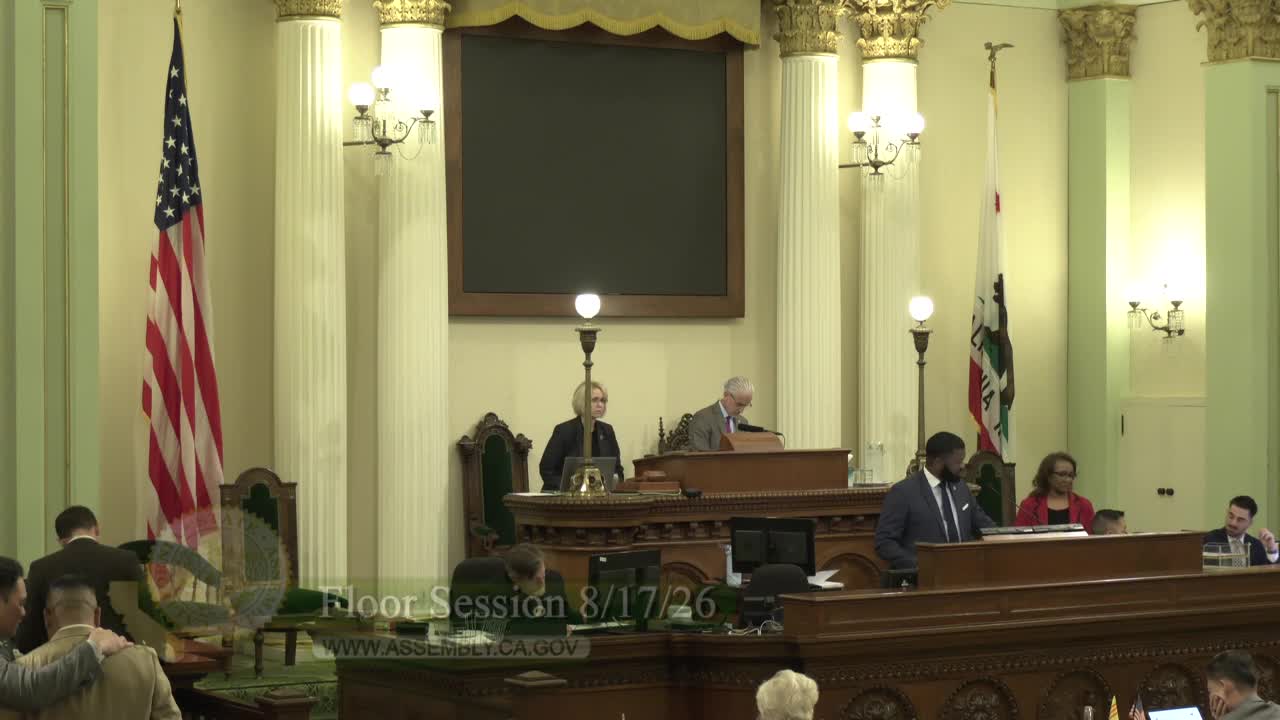
Bill Author

Bill Co-Author(s):