SB 1408: Contra Costa Transportation Authority: transactions and use tax.
- Session Year: 2025-2026
- House: Senate
- Latest Version Date: 2026-09-20
Current Status:
Passed
(2026-09-20: Chaptered by Secretary of State. Chapter 401, Statutes of 2026.)
Introduced
In Committee
Awaiting First Chamber Vote
Passed First Chamber
In Committee
Awaiting Second Chamber Vote
Passed Second Chamber
Enacted
What does this bill do?
This bill lets the Contra Costa Transportation Authority ask voters to approve a countywide transactions and use tax (a type of sales tax) up to 1% to pay for countywide transportation programs. If voters approve it, that 1% would be allowed even if it makes the county’s total transactions and use taxes exceed the usual 2% limit, because the bill says that tax would not count toward the combined-rate cap.
The summary is provided by generative AI which can make mistakes. For original language, please view the details in the table below.
Existing law authorizes various local governmental entities, subject to certain limitations and approval requirements, to levy a transactions and use tax for general purposes, in accordance with the procedures and requirements set forth in the Transactions and Use Tax Law, including a requirement that the combined rate of all taxes that may be imposed in accordance with that law in the county not exceed 2%.
This bill would authorize, until January 1, 2045, the Contra Costa Transportation Authority to impose a transactions and use tax for the support of countywide transportation programs at a rate of no more than 1% that would, in combination with other transactions and use taxes, exceed the above-described combined rate limit of 2%, if the ordinance proposing the tax is approved by the voters, subject to applicable voter approval requirements, as specified. The bill would provide that a transactions and use tax rate imposed pursuant to the bill will not be considered for purposes of that combined rate limit described above.
This bill would make legislative findings and declarations as to the necessity of a special statute for the County of Contra Costa.
The California Constitution requires the state to reimburse local agencies and school districts for certain costs mandated by the state. Statutory provisions establish procedures for making that reimbursement.This bill would provide that, if the Commission on State Mandates determines that the bill contains costs mandated by the state, reimbursement for those costs shall be made pursuant to the statutory provisions noted above.The Local Transportation Authority and Improvement Act authorizes a county board of supervisors to create or otherwise designate a local transportation authority in the county that may impose a transactions and use tax subject to voter approval and other specified requirements. The act authorizes revenues from the transactions and use tax to be allocated for, among other things, the construction, improvement, and operation of public transit systems.
This bill would expressly state that the Contra Costa Transportation Authority (CCTA) has all powers granted by the act to a local transportation authority, thereby authorizing the CCTA to impose a transactions and use tax pursuant to the act. The bill would authorize the CCTA to use revenues from a transactions and use tax imposed pursuant to the act to be allocated for the acquisition, construction, maintenance, and operation of vehicles and facilities related to public transportation systems and for the development, construction, and installation of components of public transportation systems, as specified. The bill would authorize the CCTA to acquire, develop, own, and operate facilities, systems, and devices, as specified. The bill would require the CCTA to be responsible for the coordination of public transit systems within the County of Contra Costa, and would require, upon request by the CCTA, transit operators within the County of Contra Costa to work with the CCTA to promote the purposes of this paragraph. The bill would require the CCTA to serve as a clearinghouse to facilitate the exchange of information related to signal coordination and signal prioritization within the County of Contra Costa, as specified. The bill would authorize the CCTA to acquire and dispose of real and personal property by certain means, including, but not limited to, acquisition by eminent domain, as specified. By creating new duties for the CCTA and other public transit operators within the County of Contra Costa, the bill would impose a state-mandated local program.
Existing law authorizes various local governmental entities, subject to certain limitations and approval requirements, to levy a transactions and use tax for general purposes, in accordance with the procedures and requirements set forth in the Transactions and Use Tax Law, including a requirement that the combined rate of all taxes that may be imposed in accordance with that law in the county not exceed 2%.
This bill would authorize, until January 1, 2045, the Contra Costa Transportation Authority to impose a transactions and use tax for the support of countywide transportation programs at a rate of no more than 1% that would, in combination with other transactions and use taxes, exceed the above-described combined rate limit of 2%, if the ordinance proposing the tax is approved by the voters, subject to applicable voter approval requirements, as specified. The bill would provide that a transactions and use tax rate imposed pursuant to the bill will not be considered for purposes of that combined rate limit described above.
This bill would make legislative findings and declarations as to the necessity of a special statute for the County of Contra Costa.
The California Constitution requires the state to reimburse local agencies and school districts for certain costs mandated by the state. Statutory provisions establish procedures for making that reimbursement.
This bill would provide that, if the Commission on State Mandates determines that the bill contains costs mandated by the state, reimbursement for those costs shall be made pursuant to the statutory provisions noted above.
(a)Notwithstanding any other law, the Contra Costa Transportation Authority may impose a transactions and use tax for the support of countywide transportation programs at a rate of no more than 1 percent that would, in combination with all taxes imposed pursuant to Part 1.6 (commencing with Section 7251), exceed the limit established in Section 7251.1, if all of the following requirements are met:
(1)The Contra Costa Transportation Authority adopts an ordinance proposing the transactions and use tax by any applicable voting approval requirement.
(2)The ordinance proposing the transactions and use tax is submitted to the electorate and is approved by the voters voting on the ordinance in accordance with the California Constitution.
(3)The transactions and use tax conforms to the Transactions and Use Tax Law (Part 1.6 (commencing with Section 7251)), other than Section 7251.1.
(b)Notwithstanding Section 7251.1, a transactions and use tax rate imposed pursuant to subdivision (a) shall not be considered for purposes of the combined rate limit established by Section 7251.1.
7290.8.If an ordinance proposing the transactions and use tax authorized by this chapter is not approved pursuant to Section 7290.7 on or before January 1, 2045, this chapter shall be repealed on January 1, 2045.
SEC. 2.The Legislature finds and declares that a special statute is necessary and that a general statute cannot be made applicable within the meaning of Section 16 of Article IV of the California Constitution because of the unique circumstances in the County of Contra Costa.
(a)Notwithstanding any other law, the Contra Costa Transportation Authority may impose or extend a transactions and use tax for the support of countywide transportation programs at a rate of no more than 1 percent that would, in combination with all taxes imposed pursuant to Part 1.6 (commencing with Section 7251), exceed the limit established in Section 7251.1, if all of the following requirements are met:
(1)The Contra Costa Transportation Authority adopts an ordinance proposing the transactions and use tax by any applicable voting approval requirement.
(2)The ordinance proposing the transactions and use tax is submitted to the electorate and is approved by the voters voting on the ordinance in accordance with the California Constitution.
(3)The transactions and use tax conforms to the Transactions and Use Tax Law (Part 1.6 (commencing with Section 7251)), other than Section 7251.1.
(b)Notwithstanding Section 7251.1, a transactions and use tax rate imposed pursuant to subdivision (a) shall not be considered for purposes of the combined rate limit established by Section 7251.1.
7290.8.If an ordinance proposing the transactions and use tax authorized by this chapter is not approved pursuant to Section 7290.7 on or before January 1, 2045, this chapter shall be repealed on January 1, 2045.
SEC. 3.SEC. 2.The Legislature finds and declares that a special statute is necessary and that a general statute cannot be made applicable within the meaning of Section 16 of Article IV of the California Constitution because of the unique circumstances in the County of Contra Costa.
SEC. 4.If the Commission on State Mandates determines that this act contains costs mandated by the state, reimbursement to local agencies and school districts for those costs shall be made pursuant to Part 7 (commencing with Section 17500) of Division 4 of Title 2 of the Government Code.The Legislature finds and declares both of the following:
(a)The Contra Costa Transportation Authority has been designated as the agency responsible for developing, adopting, and updating the County of Contra Costas congestion management program pursuant to Section 65089 of the Government Code.
(b)The Contra Costa Transportation Authority has been designated as the agency responsible for developing and updating the County of Contra Costas transportation plan for the county and the cities within the County of Contra Costa, pursuant to Section 66531 of the Government Code.
180351.For purposes of this division, the Contra Costa Transportation Authority is an authority, as that term is defined in Section 180002, with all powers granted to an authority by this division.
180352.For purposes of Section 180205, as it applies to the Contra Costa Transportation Authority, public transit systems includes, but is not limited to, both of the following:
(a)The acquisition, construction, maintenance, and operation, of vehicles and facilities related to public transportation systems, as defined in Section 99211.
(b)The development, construction, and installation of components of public transit systems, including, but not limited to, facilities and devices related to bike share facilities, bus stops, innovative mobility systems, ferries, mobility hubs, and similar systems.
180353.The Contra Costa Transportation Authority may acquire, develop, own, and operate facilities, systems, and devices on a standalone basis, or through a collaborative basis with one or more regional or local transit systems, as determined by the Contra Costa Transportation Authority in its discretion.
180354.The Contra Costa Transportation Authority shall be considered a transit district for purposes of Chapter 3 (commencing with Section 99150) of Part 11 of Division 10, when exercising powers described in Sections 180352 or 180353.
180355.(a)The Contra Costa Transportation Authority shall be responsible for the coordination of public transit systems within the County of Contra Costa.
(b)Upon request by the Contra Costa Transportation Authority, transit operators within the County of Contra Costa shall work with the Contra Costa Transportation Authority to promote the purposes of this chapter.
180356.The Contra Costa Transportation Authority shall serve as a clearinghouse to facilitate the exchange of information related to signal coordination and signal prioritization for signals operated by the County of Contra Costa, a city in the County of Contra Costa, and the Department of Transportation, whenever the Contra Costa Transportation Authority, the County of Contra Costa, a city in the County of Contra Costa, or the Department of Transportation determines that an exchange of information on those topics is appropriate or necessary.
180357.(a)The Contra Costa Transportation Authority may take by grant, purchase, gift, devise, or lease, or condemn in proceedings under eminent domain, or otherwise acquire, and hold and enjoy, real and personal property of every kind within or without the jurisdictional boundaries of the Contra Costa Transportation Authority necessary to the full or convenient exercise of its powers.
(b)The governing board of the Contra Costa Transportation Authority may lease, mortgage, sell, or otherwise dispose of any real or personal property within or without the jurisdictional boundaries of the Contra Costa Transportation Authority when, in its judgment, it is for the best interests of the Contra Costa Transportation Authority.
SEC. 2.Chapter 3.66 (commencing with Section 7290.7) is added to Part 1.7 of Division 2 of the Revenue and Taxation Code, to read:3.66.Local Government Finance in the County of Contra Costa7290.7.(a)Notwithstanding any other law, the Contra Costa Transportation Authority may impose or extend a transactions and use tax for the support of countywide transportation programs at a rate of no more than 1 percent that would, in combination with all taxes imposed pursuant to Part 1.6 (commencing with Section 7251), exceed the limit established in Section 7251.1, if all of the following requirements are met:
(1)The Contra Costa Transportation Authority adopts an ordinance proposing the transactions and use tax by any applicable voting approval requirement.
(2)The ordinance proposing the transactions and use tax is submitted to the electorate and is approved by the voters voting on the ordinance in accordance with the California Constitution.
(3)The transactions and use tax conforms to the Transactions and Use Tax Law (Part 1.6 (commencing with Section 7251)), other than Section 7251.1.
(b)Notwithstanding Section 7251.1, a transactions and use tax rate imposed pursuant to subdivision (a) shall not be considered for purposes of the combined rate limit established by Section 7251.1.
7290.8.If an ordinance proposing the transactions and use tax authorized by this chapter is not approved pursuant to Section 7290.7 on or before January 1, 2045, this chapter shall be repealed on January 1, 2045.
SEC. 3.The Legislature finds and declares that a special statute is necessary and that a general statute cannot be made applicable within the meaning of Section 16 of Article IV of the California Constitution because of the unique circumstances in the County of Contra Costa.
SEC. 4.If the Commission on State Mandates determines that this act contains costs mandated by the state, reimbursement to local agencies and school districts for those costs shall be made pursuant to Part 7 (commencing with Section 17500) of Division 4 of Title 2 of the Government Code.
|
Date
|
Status
|
|---|---|
| Sep 20, 2026 | Chaptered by Secretary of State. Chapter 401, Statutes of 2026. |
| Sep 20, 2026 | Approved by the Governor. |
| Sep 3, 2026 | Enrolled and presented to the Governor at 3 p.m. |
| Aug 27, 2026 | In Senate. Ordered to engrossing and enrolling. |
| Aug 26, 2026 | Read third time. Passed. (Ayes 48. Noes 19. Page 6620.) Ordered to the Senate. |
| Aug 26, 2026 | Read third time. Passed. Ordered to the Senate. |
| Jul 1, 2026 | Read second time. Ordered to third reading. |
| Jun 30, 2026 | From committee: Do pass. (Ayes 4. Noes 2.) (June 29). |
| Jun 18, 2026 | From committee: Do pass and re-refer to Com. on REV. & TAX. (Ayes 8. Noes 1.) (June 17). Re-referred to Com. on REV. & TAX. |
| Jun 8, 2026 | Referred to Coms. on L. GOV. and REV. & TAX. |
| May 20, 2026 | In Assembly. Read first time. Held at Desk. |
| May 19, 2026 | Read third time. Passed. (Ayes 30. Noes 9. Page 4336.) Ordered to the Assembly. |
| May 19, 2026 | Read third time. Passed. (Ayes 30. Noes 9.) Ordered to the Assembly. |
| Apr 23, 2026 | Read second time. Ordered to third reading. |
| Apr 22, 2026 | From committee: Do pass. (Ayes 4. Noes 1.) (April 22). |
| Apr 22, 2026 | From committee: Do pass. (Ayes 4. Noes 1. Page 4016.) (April 22). |
| Apr 14, 2026 | From committee with author's amendments. Read second time and amended. Re-referred to Com. on REV. & TAX. |
| Apr 9, 2026 | Set for hearing April 22. |
| Apr 8, 2026 | From committee: Do pass and re-refer to Com. on REV. & TAX. (Ayes 9. Noes 2.) (April 7). Re-referred to Com. on REV. & TAX. |
| Apr 8, 2026 | From committee: Do pass and re-refer to Com. on REV. & TAX. (Ayes 9. Noes 2. Page 3761.) (April 7). Re-referred to Com. on REV. & TAX. |
| Mar 23, 2026 | From committee with author's amendments. Read second time and amended. Re-referred to Com. on TRANS. |
| Mar 17, 2026 | Set for hearing April 7. |
| Mar 4, 2026 | Referred to Coms. on TRANS. and REV. & TAX. |
| Feb 23, 2026 | Read first time. |
| Feb 23, 2026 | From printer. May be acted upon on or after March 23. |
| Feb 20, 2026 | Introduced. To Com. on RLS. for assignment. To print. |
|
Date
|
Description
|
Location
|
Votes
|
|
|---|---|---|---|---|
| Aug 26, 2026 | SB 1408 Arreguín Senate Third Reading By Ávila Farías | Assembly Floor |
Passed |
|
| Jun 29, 2026 | Do pass. | Assembly Standing Committee on Revenue and Taxation |
Passed |
|
| Jun 17, 2026 | Do pass and be re-referred to the Committee on [Revenue and Taxation] | Assembly Standing Committee on Local Government |
Passed |
|
| May 19, 2026 | Senate 3rd Reading SB1408 Arreguín | Senate Floor |
Passed |
|
| Apr 22, 2026 | Do pass | Senate Standing Committee on Revenue and Taxation |
Passed |
|
| Apr 7, 2026 | Do pass, but first be re-referred to the Committee on [Revenue and Taxation] | Senate Standing Committee on Transportation |
Passed |
This list shows positions taken on this bill by organizations on the date displayed, which is linked to the original source.
Positions by individuals are not included.
|
Organization
|
Position
|
Date
|
|---|---|---|
| Alameda County Taxpayers' Association, INC. | ** Against | |
| Alameda County Taxpayers’ Association | ** Against | |
| California Special Districts Association | ** Support | |
| California Taxpayers Association | ** Against | |
| Central Contra Costa Transit Authority | ** Support | |
| Choice in Aging | ** Support | |
| Choice of Aging | ** Support | |
| City of Concord | ** Support | |
| City of El Cerrito | ** Support | |
| City Of Oakley | ** Support | |
| Contra Costa Taxpayers Association | ** Against | |
| Contra Costa Transportation Authority | ** Support | |
| Contra Costa Transportation Authority (Sponsor) | ** Support | |
| County of Contra Costa | ** Support | |
| East Bay Leadership Council | ** Support | |
| Eastern Contra Costa Transit Authority | ** Support | |
| Howard Jarvis Taxpayers Association | ** Against | |
| Lamorinda Legislative Coalition | ** Support | |
| San Francisco Bay Area Rapid Transit District | ** Support | |
| San Francisco Bay Ferry | ** Support | |
| Town of Danville | ** Support | |
| Tri Delta Transit | ** Support | |
| Western Contra Costa Transit Authority | ** Support |
SENATE RULES COMMITTEE Office of Senate Floor Analyses (916) 651-4171 | SB 1408 |
THIRD READING
Bill No: SB 1408
Author: Arreguín (D)
Amended: 4/14/26
Vote: 21
SENATE TRANSPORTATION COMMITTEE: 9-2, 4/7/26
AYES: Cortese, Archuleta, Arreguín, Blakespear, Gonzalez, Grayson, Menjivar, Richardson, Wiener
NOES: Seyarto, Valladares
NO VOTE RECORDED: Strickland, Dahle
SENATE REVENUE AND TAXATION COMMITTEE: 4-1, 4/22/26
AYES: McNerney, Ashby, Becker, Grayson
NOES: Alvarado-Gil
SUBJECT: Contra Costa Transportation Authority: transactions and use tax
SOURCE: Contra Costa Transportation Authority
DIGEST:
This bill authorizes, until January 1, 2045, the Contra Costa Transportation Authority (CCTA) to impose or extend a transactions and use tax (TUT), as specified, for the support of countywide transportation programs at up to 1% even if it exceeds the combined countywide rate limit of 2%.
ANALYSIS:
Existing law:
- Requires each county, within the jurisdiction of the Metropolitan Transportation Commission (MTC), to develop a transportation plan for the county, together with the cities and transit operators within the county.
- Requires every county that includes an urbanized area to develop, adopt, and update a congestion management program consistent with the regional transportation improvement program.
- Authorizes a county board of supervisors to create a local transportation authority (authority) to operate within the county.
- Provides that a county that chooses to create an entirely new entity as an authority shall determine the membership of the authority with the concurrence of a majority of the cities having a majority of the population in the incorporated area of the county and provides for the board membership of the authority.
- Requires an authority to prepare and adopt an annual report each year on progress made to achieve the objective of improving transportation conditions related to priority highway operation and local transportation needs.
- Authorizes an authority to impose a retail TUT ordinance applicable in the incorporated and unincorporated territory of a county if the tax ordinance is adopted by a two-thirds vote of the authority and imposition of the tax is subsequently approved by the electors voting on the measure, or by any otherwise applicable voter approval requirement, at a special election called for that purpose by the board of supervisors, at the request of the authority, and a specified county transportation expenditure plan is adopted.
- Requires the authority, in the ordinance, to state the nature of the tax to be imposed, to provide the tax rate or the maximum tax rate, to specify the period during which the tax will be imposed, and to specify the purposes for which the revenue derived from the tax will be used. The tax rate may be in .25% (1/4-cent) increments and shall not exceed a maximum rate of 1%. Provides election procedures for the adoption of the ordinance.
- Authorizes the revenues from an imposed tax to be allocated by the authority for construction and improvement of state highways, the construction, maintenance, improvement, and operation of local streets, roads, and highways, and the construction, improvement, and operation of public transit systems.
- Requires a county transportation expenditure plan to be prepared for the expenditure of the revenues expected to be derived from the tax, together with other federal, state, and local funds expected to be available for transportation improvements, for the period during which the tax is to be imposed. A county transportation expenditure plan shall not be adopted until it has received the approval of the board of supervisors and the city council representing both a majority of the cities in the county and a majority of the population residing in the incorporated areas of the county. Requires the expenditure plan to be adopted prior to the call of the election.
- Authorizes the authority to annually review and propose amendments to the expenditure plan to provide for the use of additional federal, state, and local funds, to account for unexpected revenues, or to take into consideration unforeseen circumstances.
- Authorizes various local governmental entities, subject to certain limitations and approval requirements, to levy a TUT, in accordance with the procedures and requirements of TUT law, including a requirement that the combined rate of all taxes that may be imposed in accordance with that law in the county not exceed 2%.
This bill:
- Authorizes, until January 1, 2045, CCTA to impose or extend a TUT for the support of countywide transportation programs at up to 1% even if it exceeds the combined rate limit of 2%, if the following requirements are met:
- CCTA adopts an ordinance proposing the TUT by any applicable voting approval requirement.
- The ordinance proposing the TUT is approved by voters in accordance with the California Constitution.
- The TUT conforms to state TUT law, other than the combined rate limit, as specified.
- Allows a TUT rate imposed pursuant to this bill will not be considered for purposes of the 2% combined rate limit.
- Makes legislative findings and declarations that a special statute for the County of Contra Costa is necessary.
Comments
Purpose of this bill. According to the author, “SB 1408 would allow the Contra Costa Transportation Authority to place a sales tax measure on the ballot that would be subject to voter approval by residents of Contra Costa County. The revenue would continue the County’s investment in transportation solutions, including public transit, biking and pedestrian infrastructure, highway and local street improvements, and programs that expand mobility options.”
Who is CCTA? CCTA is a public agency formed by Contra Costa County voters in 1988 to manage the county’s transportation sales tax program and oversee countywide transportation planning efforts. CCTA manages a multibillion-dollar suite of projects and programs and is responsible for planning, funding, and delivering transportation infrastructure projects. Some major projects, primarily on state highways, are being developed directly by CCTA. Others are administered by cities, the county, or transit districts with funds provided by CCTA.
CCTA is also responsible for developing and updating the transportation plan for the county which contributes to the development of MTC’s regional transportation plan and sustainable communities’ strategies. Additionally, CCTA serves as the county’s designated Congestion Management Agency, and is responsible for developing, adopting, and updating the county’s congestion management program.
What is Transaction and Use Tax? State law allows cities, counties, and specified special districts to increase the sales and use tax applicable in their jurisdiction, also known as district taxes or TUTs. Generally, the combined TUT tax rate imposed within a local jurisdiction cannot exceed 2%. To determine whether a county has reached this rate limitation, all countywide taxes and the highest combined rate imposed by a city within the county are counted towards the county's rate limit. For example, if a county imposes three 0.5% countywide taxes and two cities within the county each impose a 0.5% tax, the combined rate in those two cities would be 2%. In such a circumstance, the two cities could not impose another TUT, and the county could not impose another countywide TUT, absent special authority to exceed the rate limitation.
Prior to 2003, cities lacked the ability to place TUTs before their voters without first obtaining approval by the Legislature to bring an ordinance before the city council, and, if approved at the council level, to the voters. This was remedied by SB 566 (Scott, Chapter 709, Statutes of 2003), which imposed the uniform 2% countywide cap.
As of January 1, 2026, local agencies impose 484 district taxes for general or special purposes: 407 imposed citywide, 71 imposed countywide, and six imposed in unincorporated county areas. Generally, local agencies impose these taxes throughout the entire area of a single county, the entire unincorporated area within a single county, or a single incorporated city. However, three transportation operators in the Bay Area have regional district taxes: the Bay Area Rapid Transit (BART) District, which covers Alameda, Contra Costa, and San Francisco; the Peninsula Corridor Joint Powers Board (Caltrain), which covers San Francisco, San Mateo, and Santa Clara counties; Sonoma-Marin Rail Transit District, which includes Sonoma and Marin counties.
Measure C and Measure J. In 1988, Contra Costa County voters approved Measure C, a countywide sales tax measure for transportation. Measure C provided for a 0.5% sales tax for 20 years, through March 2009, to pay for transportation projects and programs included in a voter-approved expenditure plan. The measure was estimated to generate $1 billion over 20 years for projects such as a BART extension, freeway improvements, better bus service, enhanced bicycle facilities and more transportation options for senior citizens and people with disabilities. Measure C also created the county’s first Growth Management Program to link planning for growth and development with transportation.
In November 2004, voters approved Measure J with a 71% vote. The measure provided for the continuation of Measure C’s 0.5% for 25 more years beyond the original expiration date of 2009. As with Measure C, the tax revenues are used to fund a voter-approved expenditure plan of transportation programs and projects. Measure J is estimated to provide approximately $2.5 billion for countywide and local transportation projects and programs through the year 2034. CCTA worked with local governments, stakeholders, and residents to develop the expenditure plan. According to CCTA, the sponsors of SB 1408, "Over its lifespan, Measure J has supported critical freeway and interchange improvements, including key corridors such as Interstate 80, Interstate 680, and State Route 4, and played a significant role in funding the fourth bore of the Caldecott Tunnel. It has also enabled investments in expanded bus and rail service and the extension of BART to Antioch, as well as enhancements for active transportation like pedestrian and bicycle bridges. Measure J supports essential programs such as paratransit services for seniors and people with disabilities, transportation demand management initiatives, and youth transportation programs. The measure also provides direct funding to local jurisdictions for street maintenance and repair.”
SB 1408 allows CCTA to impose a new TUT or extend the current TUT and exceed the 2% cap. According to the California Department of Tax and Fee Administration data, as of January 1, 2026, Contra Costa County has 24 TUTs levied within its borders, including three countywide taxes and 21 citywide taxes. In addition to Measure J at 0.5%, Contra Costa County currently imposes a countywide tax of 0.5% and a 0.5% tax is also imposed as part of BART service territory. The BART tax is exempt from the 2% cap. Therefore, the total countywide tax rate for the Contra Costa County is 1%.
Additionally, the Cities of El Cerrito and Pinole have the highest city TUT tax rates in the county at 1.5%. However, the additional 0.5% tax imposed by each city is excluded from the 2% combined rate limitation. Therefore, the highest city rate subject to the limitation is 1%, meaning Contra Costa County has reached the 2% combined rate limitation.
As noted, Measure J, which is 0.5%, is set to expire in 2034. SB 1408 would authorize CCTA to impose or extend, with voter approval, a TUT at a rate of up to 1% for the support of countywide transportation programs. It is unclear if CCTA is pursuing an extension of the existing Measure J at 0.5% rate or may pursue an additional 0.5% TUT.
Additionally, as authorized by last year’s SB 63 (Wiener, Chapter 740, Statutes of 2025), Contra Costa County will join neighboring counties in supporting a regional TUT to fund Bay Area transit on the November 2026 ballot. As with the BART measure, this potential 0.5% TUT would be exempt from the 2% cap.
We’ve done this before. The Legislature has, on numerous occasions, granted specific statutory authority to exceed the general 2% rate limitation. Specifically, such authority has been granted to the Counties of Alameda, Contra Costa, Humboldt, Los Angeles, Monterey, San Mateo, Santa Clara, Solano, Sonoma, and Ventura. This authority has also been granted to the cities of Alameda, Berkeley, Campbell, El Cerrito, Lancaster, Palmdale, Pinole, Santa Fe Springs, any cities in the County of Solano, Victorville, and to BART and Caltrain.
FISCAL EFFECT: Appropriation: No Fiscal Com.: No Local: No
SUPPORT: (Verified 4/23/26)
Contra Costa Transportation Authority (source)
California Special Districts Association
Central Contra Costa Transit Authority
Choice in Aging
City of Concord
County of Contra Costa
East Bay Leadership Council
Eastern Contra Costa Transit Authority
San Francisco Bay Ferry
Town of Danville
Western Contra Costa Transit Authority
OPPOSITION: (Verified 4/23/26)
Alameda County Taxpayers' Association, INC.
California Taxpayers Association
Contra Costa Taxpayers Association
Howard Jarvis Taxpayers Association
ARGUMENTS IN SUPPORT: Writing in support, the California Special Districts Association states, “As the State navigates difficult conversations around budget priorities, opportunities to provide congestion management agencies with the ability and authority to diversify locally generated revenue streams serve dual purposes: these opportunities reduce the need for state funding while also enhancing the ability of these agencies to continue executing their mission of supporting countywide transportation programs. SB 1408 would achieve this by providing the Contra Costa Transportation Authority with the authority to pursue alternative, locally generated revenue for the support of its countywide transportation programs.”
ARGUMENTS IN OPPOSITION: Writing in opposition, the California Taxpayer Association states, “SB 1408 would undermine taxpayer protections and make California’s affordability crisis worse by paving the way for regressive tax increases in Contra Costa County – where the combined state and local sales tax rate is already over 10 percent in some cities.”
Prepared by: Melissa White / TRANS. / (916) 651-4121
10/29/26 9:38:29
SENATE THIRD READING
STR Bill Id:SB 1408
Author:(Arreguín)
As Amended Ver:April 14, 2026
Majority vote
SUMMARY
Allows the Contra Costa Transportation Authority (CCTA) to impose a transaction and use tax (TUT) that exceeds the 2% statutory limitation.
Major Provisions
- Allows CCTA to impose a TUT for the support of countywide transportation programs at a rate of no more than 1% that would, in combination with all TUTs imposed, exceed the 2% cap in existing law, if all the following requirements are met:
- CCTA adopts an ordinance proposing the TUT by any applicable voting approval requirement.
- The ordinance proposing the TUT is submitted to the electorate and is approved by the voters voting on the ordinance in accordance with the California Constitution.
- The TUT conforms to TUT Law.
- Provides that a TUT rate imposed to 1), above, shall not be considered for purposes of the combined rate limit established in existing law.
- Specifies that if an ordinance proposing the TUT authorized by this bill is not approved on or before January 1, 2045, this bill shall be repealed on January 1, 2045.
COMMENTS
- Sales and Use Taxes. State law imposes the sales tax on every retailer "engaged in business in this state" that sells tangible personal property, and requires them to register with the California Department of Tax and Fee Administration (CDTFA), as well as collect the appropriate tax at purchase and remit the amount to CDFTA. Sales tax applies whenever a retail sale occurs, which is generally any sale other than one for resale in the regular course of business. The current rate is 7.25%.
Unless the purchaser pays the sales tax to the retailer, he or she is liable for the use tax, which the law imposes on any person consuming tangible personal property in the state. The use tax is the same rate as the sales tax, and also like the sales tax, must be remitted on or before the last day of the month following the quarterly period in which the person made the purchase.
- Transactions and Use Taxes. The California Constitution states that taxes levied by local governments are either general taxes, subject to majority approval of its voters, or special taxes, subject to 2/3 vote (Article XIII C). Proposition 13 (1978) required a 2/3 vote of each house of the Legislature for state tax increases, and a 2/3 vote for local special taxes. Proposition 62 (1986) prohibited local agencies from imposing general taxes without majority approval of local voters, and a 2/3 vote for special taxes. Proposition 218 (1996) extended those vote thresholds to charter cities, and limited local agencies' powers to levy new assessments, fees, and taxes. Local agencies generally propose to increase taxes by adopting an ordinance or a resolution at a public hearing.
State law allows cities, counties, and specified special districts to increase the sales and use tax applicable in their jurisdiction, also known as district taxes or TUTs. Generally, the combined TUT tax rate imposed within a local jurisdiction cannot exceed 2%. To determine whether a county has reached this rate limitation, all countywide taxes and the highest combined rate imposed by a city within the county are counted towards the county's rate limit. For example, if a county imposes three 0.5% countywide taxes and two cities within the county each impose a 0.5% tax, the combined rate in those two cities would be 2%. In such a circumstance, the two cities could not impose another TUT, and the county could not impose another countywide TUT, absent special authority to exceed the rate limitation.
Prior to 2003, cities lacked the ability to place TUTs before their voters without first obtaining approval by the Legislature to bring an ordinance before the city council, and, if approved at the council level, to the voters. This was remedied by SB 566 (Scott), Chapter 709, Statutes of 2003, which imposed the uniform 2% countywide cap.
AB 464 (Mullin) of 2015 would have increased the maximum combined rate of all TUTs that may be levied by authorized entities within a county from 2% to 3%. This bill was vetoed by Governor Brown stating, "This bill would raise, on a blanket basis, the limit on local transactions and use tax for all counties and cities from two percent to three percent. Although I have approved raising the limit for individual counties, I am reluctant to approve this measure in view of all the taxes being discussed and proposed for the 2016 ballot."
As of April 1, 2026, local agencies impose 486 district taxes for general or special purposes: 408 imposed citywide, 72 imposed countywide, and six imposed in unincorporated county areas. Generally, local agencies impose these taxes throughout the entire area of a single county, the entire unincorporated area within a single county, or a single incorporated city. However, three transportation operators in the Bay Area have regional district taxes:
- The Bay Area Rapid Transit (BART) District, which covers Alameda, Contra Costa, and San Francisco counties.
- The Peninsula Corridor Joint Powers Board (CalTrain), which covers San Francisco, San Mateo, and Santa Clara counties.
- The Sonoma-Marin Rail Transit District, which includes Sonoma and Marin counties.
- Contra Costa Transportation Authority. CCTA is a public agency formed by Contra Costa County voters in 1988 to manage the county's transportation sales tax program and oversee countywide transportation planning efforts. CCTA manages a multibillion-dollar suite of projects and programs and is responsible for planning, funding, and delivering transportation infrastructure projects. Some major projects, primarily on state highways, are being developed directly by CCTA. Others are administered by cities, the county, or transit districts with funds provided by CCTA
CCTA is also responsible for developing and updating the transportation plan for the county which contributes to the development of the Metropolitan Transportation Commission's regional transportation plan and sustainable communities' strategy. Additionally, CCTA serves as the county's designated congestion management agency, and is responsible for developing, adopting, and updating the county's congestion management program.
The Local Transportation Authority and Improvement Act authorizes CCTA to impose a TUT of up to 1% to fund projects relating to highways, local streets and roads, and public transit systems. In 1988, the CCTA used this authority to impose a .5% district tax, known as Measure C, to support a wide range of transportation projects. The measure was later renewed as Measure J in 2004, which is scheduled to expire on March 31, 2034.
- Contra Costa County. Contra Costa County has 24 TUTs levied within its borders—three countywide taxes (two for transportations purposes and one for general or specific purposes), and 23 city-wide taxes. Currently, two of the three countywide TUTs remain subject to the 2% combined TUT rate limitation, while one, imposed by BART, is exempt. An additional countywide TUT rate of up to .5%, that is not subject to the 2% combined district tax rate limitation is authorized; however, this tax is not yet imposed under that authority.
According to the Author
According to the Author, "SB 1408 would allow the Contra Costa Transportation Authority to place a sales tax measure on the ballot that would be subject to voter approval by residents of Contra Costa County. The revenue would continue the County's investment in transportation solutions, including public transit, biking and pedestrian infrastructure, highway and local street improvements, and programs that expand mobility options."
Arguments in Support
According to CCTA, the sponsor of this bill, "This measure will give county voters the opportunity to shape the next phase of transportation funding and deliver solutions that meet the evolving needs of our communities.
"CCTA's existing funding measure, Measure J, is set to expire in 2034. Over its lifespan, Measure J has supported critical freeway and interchange improvements, including key corridors such as Interstate 80, Interstate 680, and State Route 4, and played a significant role in funding the fourth bore of the Caldecott Tunnel. It has also enabled investments in expanded bus and rail service and the extension of Bay Area Rapid Transit (BART) to Antioch, as well as enhancements for active transportation like pedestrian and bicycle bridges. Measure J supports essential programs such as paratransit services for seniors and people with disabilities, transportation demand management initiatives, and youth transportation programs. The measure also provides direct funding to local jurisdictions for street maintenance and repair.
"SB 1408 authorizes the CCTA, until January 1, 2045, to propose a transactions and use tax at a rate not to exceed one percent, subject to voter approval, to support continued investment in countywide transportation programs and infrastructure."
Arguments in Opposition
According to the California Taxpayers Association, The Contra Costa Taxpayers Association, and the Howard Jarvis Taxpayers Association, "…By lowering the threshold for passage of a tax increase in the countywide Contra Costa Transportation Authority, SB 1408 would make it easier to enact a transactions and use tax in an area that already has a very high tax burden. This tax is among the most regressive forms of taxation, and has an especially heavy impact on low-income Californians because it increases the cost of necessities. As inflation, tariffs, shipping costs and other factors drive up the prices of goods, the sales tax burden grows in tandem, further straining household budgets and exacerbating economic inequality. Contra Costa County already is a very expensive place to live, and a tax increase on everyday items would only make things worse.
"…After comparing the costs of operating in California with the costs in other states, many employers have left our state in recent years. A Hoover Institution report found that from 2018 to 2022, at least 352 companies relocated their headquarters out of California – with many businesses citing the state's tax burden as the deciding factor in their relocation. Many other large employers have left since that report was released. The relocation of these companies and their employees to lower-cost states has a major impact on state and local tax revenue, causes unemployment for workers who cannot move to the new location, and is a sign that California must find ways to be more competitive. SB 1408 takes a large step in the wrong direction, paving the way for additional taxes that will encourage more employers to move workers and investments to other states.
"…Unlike the federal government, state and local agencies must pay sales tax on their purchases. As more sales taxes are enacted, the cost of government operations – including schools, universities, and municipal services – will rise, diverting resources away from core public functions."
FISCAL COMMENTS
None.
VOTES
SENATE FLOOR: 30-9-1
YES: Allen, Archuleta, Arreguín, Ashby, Becker, Blakespear, Cabaldon, Caballero, Cervantes, Cortese, Durazo, Gonzalez, Grayson, Hurtado, Laird, Limón, McGuire, McNerney, Menjivar, Padilla, Pérez, Reyes, Richardson, Rubio, Smallwood-Cuevas, Stern, Umberg, Wahab, Weber Pierson, Wiener
NO: Alvarado-Gil, Choi, Dahle, Grove, Jones, Ochoa Bogh, Seyarto, Strickland, Valladares
ABS, ABST OR NV: Niello
ASM LOCAL GOVERNMENT: 8-1-1
YES: Carrillo, Pacheco, Fong, Ransom, Blanca Rubio, Stefani, Ward, Wilson
NO: Ta
ABS, ABST OR NV: Alanis
ASM REVENUE AND TAXATION: 4-2-1
YES: Gipson, Carrillo, McKinnor, Quirk-Silva
NO: Sanchez, DeMaio
ABS, ABST OR NV: Michelle Rodriguez
UPDATED
VERSION: April 14, 2026
CONSULTANT: Jimmy MacDonald / L. GOV. / (916) 319-3958 FN: 0003268
Date of Hearing: June 29, 2026
ASSEMBLY COMMITTEE ON REVENUE AND TAXATION
Mike Gipson, Chair
SBPCA Bill Id:SB 1408
Author:(Arreguín) – As Amended Ver:April 14, 2026
Majority vote.
SENATE VOTE: 30-9
SUBJECT: Contra Costa Transportation Authority: transactions and use tax
SUMMARY: Authorizes, until January 1, 2045, the Contra Costa Transportation Authority to impose a transactions and use tax (TUT) for the support of countywide transportation programs at a rate of no more than 1% that would, in combination with all taxes imposed pursuant to the TUT Law, exceed the 2% rate limit established in Revenue and Taxation Code (R&TC) Section 7251.1. Specifically, this bill:
- Provides that all the following requirements must be met to impose a tax pursuant to this bill's authority:
- The Contra Costa Transportation Authority must adopt an ordinance proposing the TUT by any applicable voting approval requirement;
- The ordinance proposing the TUT must be submitted to the electorate and be approved by the voters voting on the ordinance in accordance with the California Constitution; and,
- The TUT must conform to the TUT Law, other than the combined rate limit prescribed by R&TC Section 7251.1.
- Provides that, notwithstanding R&TC Section 7251.1, a TUT rate imposed pursuant to this bill shall not be considered for purposes of the combined rate limit established by existing law.
- Provides that, if an ordinance proposing the TUT authorized by this bill is not approved on or before January 1, 2045, this statutory authorization shall be repealed as of the same date.
- Finds and declares that a special statute is necessary and that a general statute cannot be made applicable within the meaning of Section 16 of Article IV of the California Constitution because of the unique circumstances in the County of Contra Costa.
EXISTING LAW:
- Authorizes cities and counties, subject to certain limitations and approval requirements, to levy a TUT for general or specific purposes in accordance with the procedures and requirements set forth in the TUT Law. (R&TC Section 7251 et seq.)
- Provides that the combined rate of all taxes imposed in accordance with the TUT Law in any county may not exceed 2%. (R&TC Section 7251.1)
FISCAL EFFECT: This bill would not impact state revenues.
COMMENTS:
- The author has provided the following statement in support of this bill:
SB 1408 would allow the Contra Costa Transportation Authority to place a sales tax measure on the ballot that would be subject to voter approval by residents of Contra Costa County. The revenue would continue the County's investment in transportation solutions, including public transit, biking and pedestrian infrastructure, highway and local street improvements, and programs that expand mobility options.
- This bill is supported by the County of Contra Costa, which notes:
Since 1988, the CCTA has served as an effective steward of voter-approved funds, managing transportation sales tax programs and countywide transportation planning. Through the previously approved Measures C and J, the CCTA has demonstrated a proven track record of delivering major projects that reduce commute times, boost the local economy, and implement sustainable transportation solutions. Despite these successes, we continue to face persistent transportation challenges. Many residents endure long commutes and heavy congestion on major corridors. It remains difficult for many, especially seniors, students, and low-income individuals, to move freely and safely throughout the county and region.
SB 1408 is a critical mechanism for ensuring that we can continue to plan, fund, and implement the transportation projects and programs our residents need throughout the entire county. This legislation is essential for creating a safer, connected, and more accessible system for everyone.
- This bill is opposed by the California Taxpayers Association, which notes:
Makes Regressive Transportation Taxes More Prevalent. By lowering the threshold for passage of a tax increase in the countywide Contra Costa Transportation Authority, SB 1408 would make it easier to enact a transactions and use tax in an area that already has a very high tax burden. This tax is among the most regressive forms of taxation, and has an especially heavy impact on low-income Californians because it increases the cost of necessities. As inflation, tariffs, shipping costs and other factors drive up the prices of goods, the sales tax burden grows in tandem, further straining household budgets and exacerbating economic inequality. Contra Costa County already is a very expensive place to live, and a tax increase on everyday items would only make things worse.
Harms California Workers. After comparing the costs of operating in California with the costs in other states, many employers have left our state in recent years. A Hoover Institution report found that from 2018 to 2022, at least 352 companies relocated their headquarters out of California – with many businesses citing the state's tax burden as the deciding factor in their relocation.
- Committee Staff Comments:
- The TUT Law: The TUT Law authorizes cities and counties (and special purpose entities) to impose TUTs under specified conditions. Counties may impose a TUT for general or specific purposes at a rate of 0.125%, or multiples thereof, if the required percentage of county voters approves the ordinance imposing the tax. Cities may also impose a TUT for general or specific purposes at a rate of 0.125%, or multiples thereof, if the required percentage of city voters approves the ordinance imposing the tax.
Generally, the combined TUT rate imposed within any local jurisdiction cannot exceed 2%. To evaluate whether a county has reached the combined TUT rate limitation, all countywide taxes and the highest combined tax rate imposed by a city within the county are counted towards the county's combined TUT rate cap.
- What would this bill do? This bill would authorize the Contra Costa Transportation Authority to impose a TUT for the support of countywide transportation programs at a rate of no more than 1% that would, in combination with all taxes imposed pursuant to the TUT Law, exceed the 2% rate limit. According to the Contra Costa Transportation Authority's website:
CCTA is Contra Costa's designated Congestion Management Agency (CMA), responsible for putting programs in place to keep traffic levels manageable. Currently, the county's transportation needs significantly exceed available revenue and over the next 30 years, our population will continue to grow which means the travel needs will continue to change.
The Local Transportation Authority and Improvement Act currently authorizes a local transportation authority to impose a TUT up to 1%. Committee staff is informed that, in 1988, the Contra Costa Transportation Authority used this authority to impose a 0.5% tax, known as Measure C, to support a wide range of transportation projects. The measure was subsequently renewed as Measure J in 2004, which is scheduled to expire on March 31, 2034.
- A well-established precedent: It should be noted that the Legislature has, on numerous occasions, granted specific statutory authority to exceed the general 2% rate limitation. For example, such authority has been granted to the Counties of Alameda, Contra Costa, Humboldt, Los Angeles, Monterey, San Luis Obispo, San Mateo, Santa Clara, Solano, Sonoma, and Ventura; the cities of Alameda, Berkeley, Campbell, El Cerrito, Lancaster, Palmdale, Pinole, Santa Fe Springs, Victorville; and any cities in the Counties of Solano or Sonoma.
- A less than perfect tax: The sales tax has been widely criticized as a regressive exaction that most heavily impacts those least able to pay. For example, a survey by the Nevada Legislative Counsel Bureau long ago concluded that in the case of a retail sales tax with food exempt, "the lowest income group would experience the highest ratio of tax to income . . . ." [Survey of Sales Taxes Applicable to Nevada 59 (Bull. No. 3, May 1948).] Others, however, contend that a degree of progressivity is provided via the various exemptions built into most state sales tax laws (i.e., for certain necessities of life such as food, housing, and medical care). California already has a relatively high sales tax rate. High rates arguably promote non-compliance and encourage out-of-state purchases, placing California retailers at a competitive disadvantage. High rates also risk impacting consumer decision-making, which runs counter to widely accepted principles of sound tax policy.
- Double referral: This bill was double referred with the Assembly Committee on Local Government, and passed out of that committee on June 17, 2026, by a vote of 8 to 1. For additional discussion of this bill's provisions, please refer to the analysis prepared by the Assembly Committee on Local Government.
- Related legislation:
- AB 1768 (Bryan), Chapter 11, Statutes of 2026, authorizes the County of Los Angeles, by ordinance, to levy a TUT at a rate not to exceed 0.5% for general or special purposes, subject to voter approval, as specified. AB 1768 (Bryan) also authorizes the County of Contra Costa, by ordinance, to levy a TUT at a rate not to exceed 0.625% for general or specific purposes, subject to voter approval, as specified.
- AB 2484 (Alvarez) would authorize a San Diego Metropolitan Transit System TUT to be imposed by a qualified voter initiative. AB 2484 (Alvarez) is pending hearing by Senate Committee on Transportation.
- SB 762 (Arreguín) would authorize, generally until December 31, 2031, various local jurisdictions to levy taxes pursuant to the TUT Law at specified rates, as prescribed. SB 762 (Arreguín) is currently pending on the Assembly Floor.
REGISTERED SUPPORT / OPPOSITION:
Support
California Special Districts Association
Central Contra Costa Transit Authority
City of Concord
City of El Cerrito
City of Oakley
County of Contra Costa
East Bay Leadership Council
Lamorinda Legislative Coalition
San Francisco Bay Area Rapid Transit District (BART)
San Francisco Bay Ferry
Tri Delta Transit
Western Contra Costa Transit Authority
Opposition
Alameda County Taxpayers' Association, Inc.
California Taxpayers Association
Contra Costa Taxpayers Association
Howard Jarvis Taxpayers Association
Analysis Prepared by: M. David Ruff / REV. & TAX. / (916) 319-2098
Date of Hearing: June 17, 2026
ASSEMBLY COMMITTEE ON LOCAL GOVERNMENT
Juan Carrillo, Chair
SBPCA Bill Id:SB 1408
Author:(Arreguín) – As Amended Ver:April 14, 2026
SENATE VOTE: 30-9
SUBJECT: Contra Costa Transportation Authority: transactions and use tax.
SUMMARY: Allows the Contra Costa Transportation Authority (CCTA) to impose a transaction and use tax (TUT) that exceeds the 2% statutory limitation. Specifically, this bill:
- Allows CCTA to impose a TUT for the support of countywide transportation programs at a rate of no more than 1% that would, in combination with all TUTs imposed, exceed the 2% cap in existing law, if all the following requirements are met:
- CCTA adopts an ordinance proposing the TUT by any applicable voting approval requirement.
- The ordinance proposing the TUT is submitted to the electorate and is approved by the voters voting on the ordinance in accordance with the California Constitution.
- The TUT conforms to TUT Law.
- Provides that a TUT rate imposed to 1), above, shall not be considered for purposes of the combined rate limit established in existing law.
- Specifies that if an ordinance proposing the TUT authorized by this bill is not approved on or before January 1, 2045, this bill shall be repealed on January 1, 2045.
- Finds and declares that a special statute is necessary and that a general statute cannot be made applicable because of the unique circumstances in Contra Costa County.
FISCAL EFFECT: None
COMMENTS:
- Bill Summary and Author’s Statement. This bill allows CCTA to impose a TUT that exceeds the 2% statutory limitation, as specified. This bill also provides that if an ordinance proposing the TUT authorized by this bill is not approved on or before January 1, 2045, the provisions of this bill must be repealed on that date. CCTA is the sponsor of this bill.
According to the Author, “SB 1408 would allow the Contra Costa Transportation Authority to place a sales tax measure on the ballot that would be subject to voter approval by residents of Contra Costa County. The revenue would continue the County’s investment in transportation solutions, including public transit, biking and pedestrian infrastructure, highway and local street improvements, and programs that expand mobility options.”
- Sales and Use Taxes. State law imposes the sales tax on every retailer “engaged in business in this state” that sells tangible personal property, and requires them to register with the California Department of Tax and Fee Administration (CDTFA), as well as collect the appropriate tax at purchase and remit the amount to CDFTA. Sales tax applies whenever a retail sale occurs, which is generally any sale other than one for resale in the regular course of business. The current rate is 7.25% as shown in the table below.
Rate | Jurisdiction | Purpose/Authority | |
|---|---|---|---|
3.9375% | State (General Fund) | State general purposes | |
1.0625% |
| Local governments to fund local public safety services | |
0.50% | State (1991 Realignment) | Local governments to fund health and welfare programs | |
0.50% | State (Proposition 172 - 1993) | Local governments to fund public safety services | |
1.25% | Local (City/County) |
| |
7.25% | Total Statewide Rate |
Unless the purchaser pays the sales tax to the retailer, he or she is liable for the use tax, which the law imposes on any person consuming tangible personal property in the state. The use tax is the same rate as the sales tax, and also like the sales tax, must be remitted on or before the last day of the month following the quarterly period in which the person made the purchase.
- Transactions and Use Taxes. The California Constitution states that taxes levied by local governments are either general taxes, subject to majority approval of its voters, or special taxes, subject to 2/3 vote (Article XIII C). Proposition 13 (1978) required a 2/3 vote of each house of the Legislature for state tax increases, and a 2/3 vote for local special taxes. Proposition 62 (1986) prohibited local agencies from imposing general taxes without majority approval of local voters, and a 2/3 vote for special taxes. Proposition 218 (1996) extended those vote thresholds to charter cities, and limited local agencies' powers to levy new assessments, fees, and taxes. Local agencies generally propose to increase taxes by adopting an ordinance or a resolution at a public hearing.
State law allows cities, counties, and specified special districts to increase the sales and use tax applicable in their jurisdiction, also known as district taxes or TUTs. Generally, the combined TUT tax rate imposed within a local jurisdiction cannot exceed 2%. To determine whether a county has reached this rate limitation, all countywide taxes and the highest combined rate imposed by a city within the county are counted towards the county's rate limit. For example, if a county imposes three 0.5% countywide taxes and two cities within the county each impose a 0.5% tax, the combined rate in those two cities would be 2%. In such a circumstance, the two cities could not impose another TUT, and the county could not impose another countywide TUT, absent special authority to exceed the rate limitation.
Prior to 2003, cities lacked the ability to place TUTs before their voters without first obtaining approval by the Legislature to bring an ordinance before the city council, and, if approved at the council level, to the voters. This was remedied by SB 566 (Scott), Chapter 709, Statutes of 2003, which imposed the uniform 2% countywide cap.
AB 464 (Mullin) of 2015 would have increased the maximum combined rate of all TUTs that may be levied by authorized entities within a county from 2% to 3%. This bill was vetoed by Governor Brown stating, "This bill would raise, on a blanket basis, the limit on local transactions and use tax for all counties and cities from two percent to three percent. Although I have approved raising the limit for individual counties, I am reluctant to approve this measure in view of all the taxes being discussed and proposed for the 2016 ballot."
As of April 1, 2026, local agencies impose 486 district taxes for general or special purposes: 408 imposed citywide, 72 imposed countywide, and six imposed in unincorporated county areas. Generally, local agencies impose these taxes throughout the entire area of a single county, the entire unincorporated area within a single county, or a single incorporated city. However, three transportation operators in the Bay Area have regional district taxes:
- The Bay Area Rapid Transit (BART) District, which covers Alameda, Contra Costa, and San Francisco counties.
- The Peninsula Corridor Joint Powers Board (CalTrain), which covers San Francisco, San Mateo, and Santa Clara counties.
- The Sonoma-Marin Rail Transit District, which includes Sonoma and Marin counties.
- Contra Costa Transportation Authority. CCTA is a public agency formed by Contra Costa County voters in 1988 to manage the county’s transportation sales tax program and oversee countywide transportation planning efforts. CCTA manages a multibillion-dollar suite of projects and programs and is responsible for planning, funding, and delivering transportation infrastructure projects. Some major projects, primarily on state highways, are being developed directly by CCTA. Others are administered by cities, the county, or transit districts with funds provided by CCTA
CCTA is also responsible for developing and updating the transportation plan for the county which contributes to the development of the Metropolitan Transportation Commission’s regional transportation plan and sustainable communities’ strategy. Additionally, CCTA serves as the county’s designated congestion management agency, and is responsible for developing, adopting, and updating the county’s congestion management program.
The Local Transportation Authority and Improvement Act authorizes CCTA to impose a TUT of up to 1% to fund projects relating to highways, local streets and roads, and public transit systems. In 1988, the CCTA used this authority to impose a .5% district tax, known as Measure C, to support a wide range of transportation projects. The measure was later renewed as Measure J in 2004, which is scheduled to expire on March 31, 2034.
- Contra Costa County. Contra Costa County has 24 TUTs levied within its borders—three countywide taxes (two for transportations purposes and one for general or specific purposes), and 23 city-wide taxes. Currently, two of the three countywide TUTs remain subject to the 2% combined TUT rate limitation, while one, imposed by BART, is exempt. An additional countywide TUT rate of up to .5%, that is not subject to the 2% combined district tax rate limitation is authorized; however, this tax is not yet imposed under that authority.
- Related Legislation. AB 1919 (Pellerin) specifies that special taxes may be imposed through the initiative process in the Santa Cruz Metropolitan Transit District (SC Metro) and establishes procedures for the placement of a retail TUT ordinance on the ballot for the consideration of SC Metro voters. This bill is currently pending in the Senate Rules Committee.
AB 2484 (Alvarez) authorizes the San Diego Metropolitan Transit System (MTS) to impose a TUT that exceeds the 2% statutory limitation, and specifies that the TUT may be imposed by a qualified voter initiative. This bill is currently pending in the Senate Rules Committee.
SB 762 (Arreguin) authorizes various cities and counties to impose a TUT that exceeds the 2% statutory limitation. This bill is currently pending in this committee.
- Previous Legislation. AB 618 (Stone) of 2019 would have permitted the Cities of Emeryville (Alameda County) and Scotts Valley (Santa Cruz County) to impose a tax of up to 0.25% that exceeds the 2% cap. AB 618 was vetoed with a message that stated, “The Cities of Emeryville and Scotts Valley have not yet reached the statewide cap of 2 percent, making it unclear why additional tax authority is needed.”
AB 723 (Quirk), Chapter 747, Statutes of 2019, provided that neither the tax imposed by BART nor the tax imposed by the Alameda County Transportation Commission counts against the 2% cap and made a similar change in Santa Cruz County.
SB 1349 (Glazer), Chapter 369, Statutes of 2020, permitted Contra Costa County, and cities within Contra Costa County, additional legal flexibility to impose local TUTs.
AB 2453 (Bennett), Chapter 286, Statutes of 2022, authorized the Ventura County Transportation Commission to impose a TUT of no more than 0.5% that does not count against the cap in Ventura County.
AB 1256 (Wood), Chapter 572, Statutes of 2023, authorized Humboldt County to impose a TUT of up to 1% that exceeds the 2% statutory limitation.
AB 1385 (Garcia), Chapter 578, Statutes of 2023, raised the maximum TUT that RCTC may impose, from 1% to 1.5%.
AB 1679 (Santiago), Chapter 731, Statutes of 2023, authorizes Los Angeles County to impose a TUT of up to .5% that exceeds the 2% statutory limitation, as specified.
SB 335 (Cortese), Chapter 391, Statutes of 2023, allows the Santa Clara County Board of Supervisors to propose a TUT of up to .625% in Santa Clara County that exceeds the 2% cap and shifted the authority to impose a TUT for countywide transportation purposes in Ventura County that exceeds the 2% cap from the Ventura County Transportation Commission to the County.
SB 862 (Laird), Chapter 296, Statutes of 2023, authorized the board of directors of the Santa Cruz Metropolitan Transit District to impose a retail TUT of up to .5% after January 1, 2024, that is excluded from the 2% combined rate limit, if certain conditions are met.
SB 904 (Dodd), Chapter 866, Statutes of 2024, specified that special taxes may be imposed through the initiative process in the Sonoma-Marin Area Rail Transit District, among other provisions.
AB 2431 (Mathis) of 2024 would have authorized a city, county, or city and county to impose a TUT at an unspecified rate that exceeds the 2% statutory limitation if certain conditions are met. This bill died in the Assembly Local Government Committee.
AB 2443 (Carrillo), Chapter 961, Statutes of 2024, authorized the cities of Lancaster, Palmdale, and Victorville to impose a transaction and use tax (TUT) that exceeds the 2% statutory limitation.
AB 3259 (Wilson), Chapter 852, Statutes of 2024, allowed the cities of Campbell and Pinole, the Solano County Board of Supervisors and a city council in Solano County to impose a TUT, by ordinance or voter initiative, of up to 0.5% even if it exceeds the 2% cap. This bill is currently pending on the Senate Floor.
AB 761 (Addis), Chapter 706, Statutes of 2025, made changes to Monterey-Salinas Transit District’s authority to impose a TUT.
SB 63 (Wiener), Chapter 740, Statutes of 2025, established the Public Transit Revenue Measure District including Alameda, Contra Costa, Santa Clara, and San Mateo Counties and the City and County of San Francisco, and specified that special taxes may be imposed through the initiative process in that district, among other provisions.
SB 333 (Laird), Chapter 750, Statutes of 2025, allowed the San Luis Obispo Council of Governments to impose a TUT by ordinance of up to 1% even if it exceeds the 2% cap.
SB 512 (Pérez) of 2025, would have specified that voters of a district may impose TUTs for transportation purposes by a citizen’s initiative. SB 512 was vetoed by Governor Newsom. In his veto message, the Governor wrote, “This bill reaffirms that jurisdictions may use the initiative process to impose transactions and use taxes for transportation purposes. The courts have consistently and repeatedly affirmed this existing authority; therefore, this bill is unnecessary.”
AB 1768 (Bryan), Chapter 11, Statutes of 2026, allowed Los Angeles and Contra Costa Counties to impose TUT that exceeds the 2% statutory limitation.
- Arguments in Support. According to CCTA, the sponsor of this bill, “This measure will give county voters the opportunity to shape the next phase of transportation funding and deliver solutions that meet the evolving needs of our communities.
“CCTA’s existing funding measure, Measure J, is set to expire in 2034. Over its lifespan, Measure J has supported critical freeway and interchange improvements, including key corridors such as Interstate 80, Interstate 680, and State Route 4, and played a significant role in funding the fourth bore of the Caldecott Tunnel. It has also enabled investments in expanded bus and rail service and the extension of Bay Area Rapid Transit (BART) to Antioch, as well as enhancements for active transportation like pedestrian and bicycle bridges. Measure J supports essential programs such as paratransit services for seniors and people with disabilities, transportation demand management initiatives, and youth transportation programs. The measure also provides direct funding to local jurisdictions for street maintenance and repair.
“SB 1408 authorizes the CCTA, until January 1, 2045, to propose a transactions and use tax at a rate not to exceed one percent, subject to voter approval, to support continued investment in countywide transportation programs and infrastructure.”
- Arguments in Opposition. According to the California Taxpayers Association, The Contra Costa Taxpayers Association, and the Howard Jarvis Taxpayers Association, “…By lowering the threshold for passage of a tax increase in the countywide Contra Costa Transportation Authority, SB 1408 would make it easier to enact a transactions and use tax in an area that already has a very high tax burden. This tax is among the most regressive forms of taxation, and has an especially heavy impact on low-income Californians because it increases the cost of necessities. As inflation, tariffs, shipping costs and other factors drive up the prices of goods, the sales tax burden grows in tandem, further straining household budgets and exacerbating economic inequality. Contra Costa County already is a very expensive place to live, and a tax increase on everyday items would only make things worse.
“…After comparing the costs of operating in California with the costs in other states, many employers have left our state in recent years. A Hoover Institution report found that from 2018 to 2022, at least 352 companies relocated their headquarters out of California – with many businesses citing the state’s tax burden as the deciding factor in their relocation. Many other large employers have left since that report was released. The relocation of these companies and their employees to lower-cost states has a major impact on state and local tax revenue, causes unemployment for workers who cannot move to the new location, and is a sign that California must find ways to be more competitive. SB 1408 takes a large step in the wrong direction, paving the way for additional taxes that will encourage more employers to move workers and investments to other states.
“…Unlike the federal government, state and local agencies must pay sales tax on their purchases. As more sales taxes are enacted, the cost of government operations – including schools, universities, and municipal services – will rise, diverting resources away from core public functions.”
- Double-Referral. This bill is double-referred to the Revenue and Taxation Committee.
REGISTERED SUPPORT / OPPOSITION:
Support
Conta Costa Transportation Authority [SPONSOR]
California Special Districts Association
Central Contra Costa Transit Authority
Choice of Aging
City of Concord
City of El Cerrito
City of Oakley
Contra Costa County
East Bay Leadership Council
Eastern Contra Costa Transit Authority
Lamorinda Legislative Coalition
San Francisco Bay Area Rapid Transit District (BART)
San Francisco Bay Ferry
Town of Danville
Western Contra Costa Transit Authority
Opposition
Alameda County Taxpayers’ Association
California Taxpayers Association
Contra Costa Taxpayers Association
Howard Jarvis Taxpayers Association
Analysis Prepared by: Jimmy MacDonald / L. GOV. / (916) 319-3958
SENATE RULES COMMITTEE Office of Senate Floor Analyses (916) 651-4171 | SB 1408 |
THIRD READING
Bill No: SB 1408
Author: Arreguín (D)
Amended: 4/14/26
Vote: 21
SENATE TRANSPORTATION COMMITTEE: 9-2, 4/7/26
AYES: Cortese, Archuleta, Arreguín, Blakespear, Gonzalez, Grayson, Menjivar, Richardson, Wiener
NOES: Seyarto, Valladares
NO VOTE RECORDED: Strickland, Dahle
SENATE REVENUE AND TAXATION COMMITTEE: 4-1, 4/22/26
AYES: McNerney, Ashby, Becker, Grayson
NOES: Alvarado-Gil
SUBJECT: Contra Costa Transportation Authority: transactions and use tax
SOURCE: Contra Costa Transportation Authority
DIGEST:
This bill would authorize, until January 1, 2045, the Contra Costa Transportation Authority (CCTA) to impose or extend a transactions and use tax (TUT), as specified, for the support of countywide transportation programs at up to 1% even if it exceeds the combined countywide rate limit of 2%.
ANALYSIS:
Existing law:
- Requires each county, within the jurisdiction of the Metropolitan Transportation Commission (MTC), to develop a transportation plan for the county, together with the cities and transit operators within the county.
- Requires every county that includes an urbanized area to develop, adopt, and update a congestion management program consistent with the regional transportation improvement program.
- Authorizes a county board of supervisors to create a local transportation authority (authority) to operate within the county.
- Provides that a county that chooses to create an entirely new entity as an authority shall determine the membership of the authority with the concurrence of a majority of the cities having a majority of the population in the incorporated area of the county and provides for the board membership of the authority.
- Requires an authority to prepare and adopt an annual report each year on progress made to achieve the objective of improving transportation conditions related to priority highway operation and local transportation needs.
- Authorizes an authority to impose a retail TUT ordinance applicable in the incorporated and unincorporated territory of a county if the tax ordinance is adopted by a two-thirds vote of the authority and imposition of the tax is subsequently approved by the electors voting on the measure, or by any otherwise applicable voter approval requirement, at a special election called for that purpose by the board of supervisors, at the request of the authority, and a specified county transportation expenditure plan is adopted.
- Requires the authority, in the ordinance, to state the nature of the tax to be imposed, to provide the tax rate or the maximum tax rate, to specify the period during which the tax will be imposed, and to specify the purposes for which the revenue derived from the tax will be used. The tax rate may be in .25% (1/4-cent) increments and shall not exceed a maximum rate of 1%. Provides election procedures for the adoption of the ordinance.
- Authorizes the revenues from an imposed tax to be allocated by the authority for construction and improvement of state highways, the construction, maintenance, improvement, and operation of local streets, roads, and highways, and the construction, improvement, and operation of public transit systems.
- Requires a county transportation expenditure plan to be prepared for the expenditure of the revenues expected to be derived from the tax, together with other federal, state, and local funds expected to be available for transportation improvements, for the period during which the tax is to be imposed. A county transportation expenditure plan shall not be adopted until it has received the approval of the board of supervisors and the city council representing both a majority of the cities in the county and a majority of the population residing in the incorporated areas of the county. Requires the expenditure plan to be adopted prior to the call of the election.
- Authorizes the authority to annually review and propose amendments to the expenditure plan to provide for the use of additional federal, state, and local funds, to account for unexpected revenues, or to take into consideration unforeseen circumstances.
- Authorizes various local governmental entities, subject to certain limitations and approval requirements, to levy a TUT, in accordance with the procedures and requirements of TUT law, including a requirement that the combined rate of all taxes that may be imposed in accordance with that law in the county not exceed 2%.
This bill:
- Authorizes, until January 1, 2045, CCTA to impose or extend a TUT for the support of countywide transportation programs at up to 1% even if it exceeds the combined rate limit of 2%, if the following requirements are met:
- CCTA adopts an ordinance proposing the TUT by any applicable voting approval requirement.
- The ordinance proposing the TUT is approved by voters in accordance with the California Constitution.
- The TUT conforms to state TUT law, other than the combined rate limit, as specified.
- Allows a TUT rate imposed pursuant to this bill will not be considered for purposes of the 2% combined rate limit.
- Makes legislative findings and declarations that a special statute for the County of Contra Costa is necessary.
Comments
Purpose of this bill. According to the author, “SB 1408 would allow the Contra Costa Transportation Authority to place a sales tax measure on the ballot that would be subject to voter approval by residents of Contra Costa County. The revenue would continue the County’s investment in transportation solutions, including public transit, biking and pedestrian infrastructure, highway and local street improvements, and programs that expand mobility options.”
Who is CCTA? CCTA is a public agency formed by Contra Costa County voters in 1988 to manage the county’s transportation sales tax program and oversee countywide transportation planning efforts. CCTA manages a multibillion-dollar suite of projects and programs and is responsible for planning, funding, and delivering transportation infrastructure projects. Some major projects, primarily on state highways, are being developed directly by CCTA. Others are administered by cities, the county, or transit districts with funds provided by CCTA.
CCTA is also responsible for developing and updating the transportation plan for the county which contributes to the development of MTC’s regional transportation plan and sustainable communities’ strategies. Additionally, CCTA serves as the county’s designated Congestion Management Agency, and is responsible for developing, adopting, and updating the county’s congestion management program.
What is Transaction and Use Tax? State law allows cities, counties, and specified special districts to increase the sales and use tax applicable in their jurisdiction, also known as district taxes or TUTs. Generally, the combined TUT tax rate imposed within a local jurisdiction cannot exceed 2%. To determine whether a county has reached this rate limitation, all countywide taxes and the highest combined rate imposed by a city within the county are counted towards the county's rate limit. For example, if a county imposes three 0.5% countywide taxes and two cities within the county each impose a 0.5% tax, the combined rate in those two cities would be 2%. In such a circumstance, the two cities could not impose another TUT, and the county could not impose another countywide TUT, absent special authority to exceed the rate limitation.
Prior to 2003, cities lacked the ability to place TUTs before their voters without first obtaining approval by the Legislature to bring an ordinance before the city council, and, if approved at the council level, to the voters. This was remedied by SB 566 (Scott, Chapter 709, Statutes of 2003), which imposed the uniform 2% countywide cap.
As of January 1, 2026, local agencies impose 484 district taxes for general or special purposes: 407 imposed citywide, 71 imposed countywide, and six imposed in unincorporated county areas. Generally, local agencies impose these taxes throughout the entire area of a single county, the entire unincorporated area within a single county, or a single incorporated city. However, three transportation operators in the Bay Area have regional district taxes: the Bay Area Rapid Transit (BART) District, which covers Alameda, Contra Costa, and San Francisco; the Peninsula Corridor Joint Powers Board (Caltrain), which covers San Francisco, San Mateo, and Santa Clara counties; Sonoma-Marin Rail Transit District, which includes Sonoma and Marin counties.
Measure C and Measure J. In 1988, Contra Costa County voters approved Measure C, a countywide sales tax measure for transportation. Measure C provided for a 0.5% sales tax for 20 years, through March 2009, to pay for transportation projects and programs included in a voter-approved expenditure plan. The measure was estimated to generate $1 billion over 20 years for projects such as a BART extension, freeway improvements, better bus service, enhanced bicycle facilities and more transportation options for senior citizens and people with disabilities. Measure C also created the county’s first Growth Management Program to link planning for growth and development with transportation.
In November 2004, voters approved Measure J with a 71% vote. The measure provided for the continuation of Measure C’s 0.5% for 25 more years beyond the original expiration date of 2009. As with Measure C, the tax revenues are used to fund a voter-approved expenditure plan of transportation programs and projects. Measure J is estimated to provide approximately $2.5 billion for countywide and local transportation projects and programs through the year 2034. CCTA worked with local governments, stakeholders, and residents to develop the expenditure plan. According to CCTA, the sponsors of SB 1408, "Over its lifespan, Measure J has supported critical freeway and interchange improvements, including key corridors such as Interstate 80, Interstate 680, and State Route 4, and played a significant role in funding the fourth bore of the Caldecott Tunnel. It has also enabled investments in expanded bus and rail service and the extension of BART to Antioch, as well as enhancements for active transportation like pedestrian and bicycle bridges. Measure J supports essential programs such as paratransit services for seniors and people with disabilities, transportation demand management initiatives, and youth transportation programs. The measure also provides direct funding to local jurisdictions for street maintenance and repair.”
SB 1408 allows CCTA to impose a new TUT or extend the current TUT and exceed the 2% cap. According to the California Department of Tax and Fee Administration data, as of January 1, 2026, Contra Costa County has 24 TUTs levied within its borders, including three countywide taxes and 21 citywide taxes. In addition to Measure J at 0.5%, Contra Costa County currently imposes a countywide tax of 0.5% and a 0.5% tax is also imposed as part of BART service territory. The BART tax is exempt from the 2% cap. Therefore, the total countywide tax rate for the Contra Costa County is 1%.
Additionally, the Cities of El Cerrito and Pinole have the highest city TUT tax rates in the county at 1.5%. However, the additional 0.5% tax imposed by each city is excluded from the 2% combined rate limitation. Therefore, the highest city rate subject to the limitation is 1%, meaning Contra Costa County has reached the 2% combined rate limitation.
As noted, Measure J, which is 0.5%, is set to expire in 2034. SB 1408 would authorize CCTA to impose or extend, with voter approval, a TUT at a rate of up to 1% for the support of countywide transportation programs. It is unclear if CCTA is pursuing an extension of the existing Measure J at 0.5% rate or may pursue an additional 0.5% TUT.
Additionally, as authorized by last year’s SB 63 (Wiener, Chapter 740, Statutes of 2025), Contra Costa County will join neighboring counties in supporting a regional TUT to fund Bay Area transit on the November 2026 ballot. As with the BART measure, this potential 0.5% TUT would be exempt from the 2% cap.
We’ve done this before. The Legislature has, on numerous occasions, granted specific statutory authority to exceed the general 2% rate limitation. Specifically, such authority has been granted to the Counties of Alameda, Contra Costa, Humboldt, Los Angeles, Monterey, San Mateo, Santa Clara, Solano, Sonoma, and Ventura. This authority has also been granted to the cities of Alameda, Berkeley, Campbell, El Cerrito, Lancaster, Palmdale, Pinole, Santa Fe Springs, any cities in the County of Solano, Victorville, and to BART and Caltrain.
FISCAL EFFECT: Appropriation: No Fiscal Com.: No Local: No
SUPPORT: (Verified 4/23/26)
Contra Costa Transportation Authority (source)
California Special Districts Association
Central Contra Costa Transit Authority
Choice in Aging
City of Concord
County of Contra Costa
East Bay Leadership Council
Eastern Contra Costa Transit Authority
San Francisco Bay Ferry
Town of Danville
Western Contra Costa Transit Authority
OPPOSITION: (Verified 4/23/26)
Alameda County Taxpayers' Association, INC.
California Taxpayers Association
Contra Costa Taxpayers Association
Howard Jarvis Taxpayers Association
ARGUMENTS IN SUPPORT: Writing in support, the California Special Districts Association states, “As the State navigates difficult conversations around budget priorities, opportunities to provide congestion management agencies with the ability and authority to diversify locally generated revenue streams serve dual purposes: these opportunities reduce the need for state funding while also enhancing the ability of these agencies to continue executing their mission of supporting countywide transportation programs. SB 1408 would achieve this by providing the Contra Costa Transportation Authority with the authority to pursue alternative, locally generated revenue for the support of its countywide transportation programs.”
ARGUMENTS IN OPPOSITION: Writing in opposition, the California Taxpayer Association states, “SB 1408 would undermine taxpayer protections and make California’s affordability crisis worse by paving the way for regressive tax increases in Contra Costa County – where the combined state and local sales tax rate is already over 10 percent in some cities.”
Prepared by: Melissa White / TRANS. / (916) 651-4121
4/24/26 11:07:16
SENATE COMMITTEE ON REVENUE AND TAXATION
Senator Jerry McNerney, Chair
2025 - 2026 Regular
Bill No: | SB 1408 | Hearing Date: | 4/22/26 |
Author: | Arreguín | Tax Levy: | No |
Version: | 4/14/26 Amended | Fiscal: | No |
Consultant: | Grinnell | ||
Contra Costa Transportation Authority: transactions and use tax
Allows the Contra Costa County Transportation Authority to impose or extend a district tax by ordinance of up to 1%, even if it exceeds the 2% cap.
Background
Sales and use tax. State law imposes the sales tax on every retailer “engaged in business in this state” that sells tangible personal property, requiring them to register with the California Department of Fee & Tax Administration (CDTFA) and remit the taxes collected from purchasers to CDTFA. Sales tax applies whenever there is a retail sale. The current sales and use tax rate is 7.25%, as noted in the table below. Additionally, cities, counties, and specified special districts may increase the sales and use tax rate that applies in its jurisdiction, also known as district, or transactions and use, taxes.
Rate | Jurisdiction | Purpose/Authority |
|---|---|---|
3.9375% | State (General Fund) | State general purposes |
1.0625% | Local Revenue Fund (2011 Realignment) | Local governments to fund local public safety services |
0.50% | State (1991 Realignment) | Local governments to fund health and welfare programs |
0.50% | State (Proposition 172 - 1993) | Local governments to fund public safety services |
1.25% | Local (City/County) 1.00% City and County | City and county general operations. Dedicated to county transportation purposes |
7.25% | Total Statewide Rate |
CDTFA collects sales taxes from retailers, deposits the state share in the General Fund, and then allocates the local share of the Bradley-Burns sales tax and any district tax to the appropriate jurisdiction. Unless the purchaser pays the sales tax to the retailer, they are liable for the use tax, which the law imposes on any person consuming tangible personal property in the state. The use tax is assessed at the same rate as the sales tax and must be remitted on or before the last day of the month following the quarterly period in which the purchase was made.
District Taxes. The California Constitution states that taxes levied by local governments are either general taxes or special taxes. General taxes are levied to fund general governmental purposes, without being imposed for any specific purpose, and are subject to majority approval by voters. Special taxes are subject to a 2/3 vote approval by voters. Proposition 13 (1978) required a 2/3 vote of each house of the Legislature for state tax increases, and a 2/3 vote for local special taxes. Proposition 62 (1986) prohibited local agencies from imposing general taxes without majority approval of local voters or a 2/3 vote for special taxes. Proposition 218 (1996) extended those vote thresholds to charter cities and limited local agencies’ powers to levy new assessments, fees, and taxes. Local agencies generally propose to increase taxes by adopting an ordinance or a resolution at a public hearing.
State law allows cities, counties, and specified special districts including county transportation authorities to increase the sales and use tax applicable in their jurisdiction, also known as district or transactions and use taxes. As of January 1, 2026, local jurisdictions impose a combined 484 district taxes for general or special purposes. Of the 484 district taxes, 71 are imposed countywide, six are imposed in county unincorporated areas, and 407 are imposed citywide. Generally, local agencies impose these taxes across an entire jurisdiction, such as a single county, an unincorporated area within a county, or an incorporated city. However, transportation operators in the San Francisco Bay Area have regional district taxes, among them the Bay Area Rapid Transit (BART) District, which covers Alameda and Contra Costa counties, as well as the City and County of San Francisco.
State law caps the total rate for district or transactions and use taxes in any county to 2%. The cap applies countywide, so if one agency imposes a district tax, it may limit the ability of another agency in the same county to impose an additional district tax. For example, if city x (located in county a) imposes a 1% district tax, county a could not impose an additional county-wide district tax of 1.5% because city x would now be subject to district taxes of 2.5%, which is above the 2% cap. Therefore, county a could only enact an additional district tax of up to 1%. Anything greater would exceed the 2% cap.
The Legislature generally enacts exceptions to the 2% cap annually. In 2024, the Legislature enacted exemptions for Solano County, any of its cities, and the Cities of Pinole and Campbell (AB 3259, Wilson); as well as for the Cities of Lancaster, Palmdale, and Victorville (AB 2443, J. Carrillo). Last year, the Legislature enacted similar exemptions for the San Luis Obispo Council of Governments (SB 333, Laird) and the Monterey-Salinas Transit District (AB 761, Addis). According to CDTFA, the Legislature has approved 25 bills granting local governments specific authority to impose district taxes that exceed the 2% cap.
Contra Costa County. There are three countywide 0.5% taxes imposed in the County of Contra Costa (BART, Contra Costa County Transportation Authority, and Contra Costa County), resulting in an 8.75% countywide rate; however, BART’s rate does not count towards the cap (AB 723, Quirk, 2020). Additionally, several Contra Costa County cities have imposed 1% taxes, for a current rate of 9.75%, while the Cities of El Cerrito and Pinole impose an additional 0.5% that the Legislature has exempted from the cap (AB 1324, Skinner, 2014, and AB 3259, Wilson, 2024, respectively), for a current rate of 10.25%.
Central Contra Costa Transit Authority (CCTA) is a public agency formed by Contra Costa County voters in 1988 to manage the county’s transportation sales tax program and oversee countywide transportation planning efforts. CCTA manages a multibillion-dollar suite of projects and programs and is responsible for planning, funding, and delivering transportation infrastructure projects. Some major projects, primarily on state highways, are being developed directly by CCTA. Others are administered by cities, the county, or transit districts with funds provided by CCTA.
Under the Local Transportation Authority and Improvement Act, CCTA can impose a tax up to 1% to fund local transportation improvements. In 1988, the CCTA used this authority to impose a 0.5% district tax, known as Measure C, which voters renewed as Measure J in 2004. However, Measure J is scheduled to expire on March 31, 2034. While CCTA can extend the tax at the current rate within the cap, any increase in the rate requires a statutory exemption.
Proposed Law
Senate Bill 1408 allows the Contra Costa County Transportation Authority to impose or extend a district tax by ordinance of up to 1%, even if it exceeds the 2% cap when combined with other district taxes imposed by local agencies. CCTA must adopt an ordinance proposing the tax, submit it to the electorate for approval, and have it approved by voters according to the appropriate Constitutional voter approval threshold. Other than the 2% cap, the tax must otherwise conform to district tax law. The bill repeals the authority for the County of Contra Costa to impose a tax in excess of the cap on January 1, 2045.
State Revenue Impact
No estimate.
Comments
1. Purpose of the bill. According to the author, “SB 1408 would allow the Contra Costa Transportation Authority to place a sales tax measure on the ballot that would be subject to voter approval by residents of Contra Costa County. The revenue would continue the County’s investment in transportation solutions, including public transit, biking and pedestrian infrastructure, highway and local street improvements, and programs that expand mobility options.”
2. Too high? California’s sales and use tax rate is high compared to other states, especially when incorporating locally imposed district taxes. Tax experts generally agree that sales and use taxes are regressive, meaning the tax incidence falls more heavily on low-income individuals than on high-income individuals. This is because those of lesser means generally spend a greater percentage of their income on taxable sales, even if California exempts many necessities such as food and prescription medication. SB 1408 could lead to a 9.75% countywide rate and up to an 11.25% rate in some cities if CCTA imposes the maximum rate allowed under the bill. Additionally, the Legislature included Contra Costa County within the Public Transportation Revenue Measure District, which proposes a 0.5% rate in Contra Costa County to fund Bay Area transit, set for the November General Election (SB 63, Wiener, 2025). If both are enacted, the above rates could climb up to 10.25% and 11.75%. While local voters must approve any tax, the Committee may wish to consider whether SB 1408 allows for rates that are too high.
3. Existing cap. SB 566 (Scott, 2003) imposed the uniform 2% cap for both cities and counties in response to a multitude of jurisdiction-specific bills seeking to authorize district taxes. The cap set an upper limit on the local rate, since, as noted above, California’s sales and use tax rate is very high. In 2015, AB 464 (Mullin) attempted to raise the cap to 3%; however, Governor Brown vetoed the bill, stating:
“This bill would raise, on a blanket basis, the limit on local transactions and use tax for all counties and cities from two percent to three percent. Although I have approved raising the limit for individual counties, I am reluctant to approve this measure in view of all the taxes being discussed and proposed for the 2016 ballot.”
4. Special legislation. The California Constitution prohibits special legislation when a general law can apply (Section 16 of Article IV). SB 1408 contains findings and declarations explaining the need for legislation that applies only to transaction and use taxes imposed within the County of Contra Costa.
5. Hello friend. The Senate Rules Committee ordered a double referral of SB 1408. The Committee on Transportation approved SB 1408 by a vote of 9 to 2 on April 7th. The Committee on Revenue & Taxation is hearing the measure as the Committee of second reference.
6. Related legislation. The Legislature is considering similar measures for other jurisdictions, including:
- AB 1768 (Bryan) allows the County of Los Angeles to impose a district tax, by ordinance, of up to 0.5% even if it exceeds the 2% cap when combined with other district taxes imposed by local agencies. The measure is currently pending in the Assembly Committee on Local Government.
- AB 1919 (Pellerin) allows voters of the Santa Cruz Metropolitan Transit District to submit district taxes via initiative. The measure is currently pending in the Assembly Committee on Rules.
- AB 2484 (Alvarez) allows voters of the San Diego Metropolitan Transit System to submit district taxes via initiative. The measure is currently pending in the Assembly Committee on Rules.
- The Committee and the Senate approved SB 762 (Arreguín) in January, which allows the City of Hercules to impose a district tax, by ordinance, of up to 1% even if it exceeds the 2% cap when combined with other district taxes imposed by local agencies. The measure is currently pending at the Assembly Desk.
- The Committee approved SB 1078 (Laird) on March 26th, which allows the County of Santa Cruz to impose a district tax of up to 0.5%, even if it exceeds the 2% cap. The Senate approved the measure, which is currently pending at the Assembly Desk.
Support and Opposition
(4/16/26)
Support: Contra Costa Transportation Authority (Sponsor)
California Special Districts Association
Central Contra Costa Transit Authority
Choice in Aging
City of Concord
County of Contra Costa
East Bay Leadership Council
San Francisco Bay Ferry
Town of Danville
Western Contra Costa Transit Authority
Opposition: California Taxpayers Association
Contra Costa Taxpayers Association
Howard Jarvis Taxpayers Association
-- END --
SENATE COMMITTEE ON TRANSPORTATION
Senator Dave Cortese, Chair
2025 - 2026 Regular
Bill No: Hearing Date: 4/7/2026
Author: | Arreguín | ||
Version: | 3/23/2026 Amended | ||
Urgency: | No | Fiscal: | No |
Consultant: | Melissa White | ||
SUBJECT:
DIGEST: This bill would authorize, until January 1, 2045, the Contra Costa Transportation Authority (CCTA) to impose or extend a transactions and use tax (TUT), as specified, for the support of countywide transportation programs at up to 1% even if it exceeds the combined countywide rate limit of 2%.
ANALYSIS:
Existing law:
- Requires each county, within the jurisdiction of the Metropolitan Transportation Commission (MTC), to develop a transportation plan for the county, together with the cities and transit operators within the county.
- Requires every county that includes an urbanized area to develop, adopt, and update a congestion management program consistent with the regional transportation improvement program.
- Authorizes a county board of supervisors to create a local transportation authority (authority) to operate within the county.
- Provides that a county that chooses to create an entirely new entity as an authority shall determine the membership of the authority with the concurrence of a majority of the cities having a majority of the population in the incorporated area of the county and provides for the board membership of the authority.
- Requires an authority to prepare and adopt an annual report each year on progress made to achieve the objective of improving transportation conditions related to priority highway operation and local transportation needs.
- Authorizes an authority to impose a retail TUT ordinance applicable in the incorporated and unincorporated territory of a county if the tax ordinance is adopted by a two-thirds vote of the authority and imposition of the tax is subsequently approved by the electors voting on the measure, or by any otherwise applicable voter approval requirement, at a special election called for that purpose by the board of supervisors, at the request of the authority, and a specified county transportation expenditure plan is adopted.
- Requires the authority, in the ordinance, to state the nature of the tax to be imposed, to provide the tax rate or the maximum tax rate, to specify the period during which the tax will be imposed, and to specify the purposes for which the revenue derived from the tax will be used. The tax rate may be in .25% (1/4-cent) increments and shall not exceed a maximum rate of 1%.
- Provides election procedures for the adoption of the ordinance.
- Authorizes the revenues from an imposed tax to be allocated by the authority for construction and improvement of state highways, the construction, maintenance, improvement, and operation of local streets, roads, and highways, and the construction, improvement, and operation of public transit systems.
- Requires a county transportation expenditure plan to be prepared for the expenditure of the revenues expected to be derived from the tax, together with other federal, state, and local funds expected to be available for transportation improvements, for the period during which the tax is to be imposed. A county transportation expenditure plan shall not be adopted until it has received the approval of the board of supervisors and the city council representing both a majority of the cities in the county and a majority of the population residing in the incorporated areas of the county. Requires the expenditure plan to be adopted prior to the call of the election.
- Authorizes the authority to annually review and propose amendments to the expenditure plan to provide for the use of additional federal, state, and local funds, to account for unexpected revenues, or to take into consideration unforeseen circumstances.
- Authorizes various local governmental entities, subject to certain limitations and approval requirements, to levy a TUT, in accordance with the procedures and requirements of TUT law, including a requirement that the combined rate of all taxes that may be imposed in accordance with that law in the county not exceed 2%.
This bill:
- Authorizes, until January 1, 2045, CCTA to impose or extend a TUT for the support of countywide transportation programs at up to 1% even if it exceeds the combined rate limit of 2%, if the following requirements are met:
- CCTA adopts an ordinance proposing the TUT by any applicable voting approval requirement.
- The ordinance proposing the TUT is approved by voters in accordance with the California Constitution.
- The TUT conforms to state TUT law, other than the combined rate limit, as specified.
- Allows a TUT rate imposed pursuant to the bill will not be considered for purposes of the 2% combined rate limit.
- Makes legislative findings and declarations that a special statute for the County of Contra Costa is necessary.
COMMENTS:
- Purpose of the bill. According to the author, “SB 1408 would allow the Contra Costa Transportation Authority to place a sales tax measure on the ballot that would be subject to voter approval by residents of Contra Costa County. The revenue would continue the County’s investment in transportation solutions, including public transit, biking and pedestrian infrastructure, highway and local street improvements, and programs that expand mobility options.”
- Who is CCTA? CCTA is a public agency formed by Contra Costa County voters in 1988 to manage the county’s transportation sales tax program and oversee countywide transportation planning efforts. CCTA manages a multibillion-dollar suite of projects and programs and is responsible for planning, funding, and delivering transportation infrastructure projects. Some major projects, primarily on state highways, are being developed directly by CCTA. Others are administered by cities, the county, or transit districts with funds provided by CCTA
CCTA is also responsible for developing and updating the transportation plan for the county which contributes to the development of MTC’s regional transportation plan and sustainable communities’ strategies. Additionally, CCTA serves as the county’s designated Congestion Management Agency, and is responsible for developing, adopting, and updating the county’s congestion management program.
- What is Transaction and Use Tax? State law allows cities, counties, and specified special districts to increase the sales and use tax applicable in their jurisdiction, also known as district taxes or TUTs. Generally, the combined TUT tax rate imposed within a local jurisdiction cannot exceed 2%. To determine whether a county has reached this rate limitation, all countywide taxes and the highest combined rate imposed by a city within the county are counted towards the county's rate limit. For example, if a county imposes three 0.5% countywide taxes and two cities within the county each impose a 0.5% tax, the combined rate in those two cities would be 2%. In such a circumstance, the two cities could not impose another TUT, and the county could not impose another countywide TUT, absent special authority to exceed the rate limitation.
Prior to 2003, cities lacked the ability to place TUTs before their voters without first obtaining approval by the Legislature to bring an ordinance before the city council, and, if approved at the council level, to the voters. This was remedied by SB 566 (Scott, Chapter 709, Statutes of 2003), which imposed the uniform 2% countywide cap.
As of January 1, 2026, local agencies impose 484 district taxes for general or special purposes: 407 imposed citywide, 71 imposed countywide, and six imposed in unincorporated county areas. Generally, local agencies impose these taxes throughout the entire area of a single county, the entire unincorporated area within a single county, or a single incorporated city. However, three transportation operators in the Bay Area have regional district taxes: the Bay Area Rapid Transit (BART) District, which covers Alameda, Contra Costa, and San Francisco; the Peninsula Corridor Joint Powers Board (Caltrain), which covers San Francisco, San Mateo, and Santa Clara counties; Sonoma-Marin Rail Transit District (SMART), which includes Sonoma and Marin counties.
- Measure C and Measure J. In 1988, Contra Costa County voters approved Measure C, a countywide sales tax measure for transportation. Measure C provided for a 0.5% sales tax for 20 years, through March 2009, to pay for transportation projects and programs included in a voter-approved expenditure plan. The measure was estimated to generate $1 billion over 20 years for projects such as a BART extension, freeway improvements, better bus service, enhanced bicycle facilities and more transportation options for senior citizens and people with disabilities. Measure C also created the county’s first Growth Management Program to link planning for growth and development with transportation.
In November 2004, voters approved Measure J with a 71% vote. The measure provided for the continuation of Measure C’s 0.5% for 25 more years beyond the original expiration date of 2009. As with Measure C, the tax revenues are used to fund a voter-approved expenditure plan of transportation programs and projects. Measure J is estimated to provide approximately $2.5 billion for countywide and local transportation projects and programs through the year 2034. CCTA worked with local governments, stakeholders, and residents to develop the expenditure plan. According to CCTA, the sponsors of SB 1408,
"Over its lifespan, Measure J has supported critical freeway and interchange improvements, including key corridors such as Interstate 80, Interstate 680, and State Route 4, and played a significant role in funding the fourth bore of the Caldecott Tunnel. It has also enabled investments in expanded bus and rail service and the extension of Bay Area Rapid Transit (BART) to Antioch, as well as enhancements for active transportation like pedestrian and bicycle bridges. Measure J supports essential programs such as paratransit services for seniors and people with disabilities, transportation demand management initiatives, and youth transportation programs. The measure also provides direct funding to local jurisdictions for street maintenance and repair.”
- SB 1408 allows CCTA to impose a new TUT or extend the current TUT and exceed the 2% cap. According to the California Department of Tax and Fee Administration (CDTFA) data, as of January 1, 2026, Contra Costa County has 24 TUTs levied within its borders, including three countywide taxes and 21 citywide taxes. In addition to Measure J at 0.5%, Contra Costa County currently imposes a countywide tax of 0.5% and a 0.5% tax is also imposed as part of BART service territory. The BART tax is exempt from the 2% cap. Therefore, the total countywide tax rate for the Contra Costa County is 1%.
Additionally, the Cities of El Cerrito and Pinole have the highest city TUT tax rates in the county at 1.5%. However, the additional 0.5% tax imposed by each city is excluded from the 2% combined rate limitation. Therefore, the highest city rate subject to the limitation is 1%, meaning Contra Costa County has reached the 2% combined rate limitation.
As noted, Measure J, which is 0.5%, is set to expire in 2034. SB 1408 would authorize CCTA to impose or extend, with voter approval, a TUT at a rate of up to 1% for the support of countywide transportation programs. It is unclear if CCTA is pursuing an extension of the existing Measure J at 0.5% rate or may pursue an additional 0.5% TUT.
Additionally, as authorized by last year’s SB 63 (Wiener, Chapter 740, Statutes of 2025), Contra Costa County will join neighboring counties in supporting a regional TUT to fund Bay Area transit on the November 2026 ballot. As with the BART measure, this potential 0.5% TUT would be exempt from the 2% cap.
- We’ve done this before. The Legislature has, on numerous occasions, granted specific statutory authority to exceed the general 2% rate limitation. Specifically, such authority has been granted to the Counties of Alameda, Contra Costa, Humboldt, Los Angeles, Monterey, San Mateo, Santa Clara, Solano, Sonoma, and Ventura. This authority has also been granted to the cities of Alameda, Berkeley, Campbell, El Cerrito, Lancaster, Palmdale, Pinole, Santa Fe Springs, any cities in the County of Solano, Victorville, and to BART and Caltrain.
- Support and opposition. Writing in support, the California Special Districts Association states, “As the State navigates difficult conversations around budget priorities, opportunities to provide congestion management agencies with the ability and authority to diversify locally generated revenue streams serve dual purposes: these opportunities reduce the need for state funding while also enhancing the ability of these agencies to continue executing their mission of supporting countywide transportation programs. SB 1408 would achieve this by providing the Contra Costa Transportation Authority with the authority to pursue alternative, locally generated revenue for the support of its countywide transportation programs.”
Writing in opposition, the California Taxpayer Association states, “SB 1408 would undermine taxpayer protections and make California’s affordability crisis worse by paving the way for regressive tax increases in Contra Costa County – where the combined state and local sales tax rate is already over 10 percent in some cities.”
- Double Referral. This bill has been double referred to the Senate Revenue and Taxation Committee.
Related/Previous Legislation:
SB 762 (Arreguin) – Authorizes the City of Hercules to impose a TUT, by ordinance or voter initiative, up to 1% even if it exceeds the 2% cap. This bill is pending referral at the Assembly desk.
SB 63 (Wiener, Chapter 740, Statutes of 2025) – Among other provisions, created the Transportation Revenue Measure District and authorized the District to impose a retail TUT and generally in the amount of 0.5%, to be administered by MTC, for a duration of 14 years, to be placed on the November 2026 ballot to fund transit operations for Bay Area transit operators.
SB 333 (Laird, Chapter 750, Statutes of 2025) – Would authorize the San Luis Obispo Council of Governments to impose a district tax by ordinance of up to 1% even if it exceeds the 2% cap.
AB 3259 (Wilson, Chapter 852, Statutes of 2024) – Allowed the cities of Campbell and Pinole, the Solano County Board of Supervisors and a city council in Solano County to impose a TUT, by ordinance or voter initiative, of up to 0.5% even if it exceeds the 2% cap.
AB 2443 (Carrillo, Chapter 961, Statutes of 2024) – Authorized the cities of Lancaster, Palmdale, and Victorville to impose a TUT that exceeds the 2% statutory limitation.
AB 2431 (Mathis, 2024) – Would have authorized a city, county, or city and county to impose a TUT at an unspecified rate that exceeds the 2% statutory limitation if certain conditions are met. This bill died in the Assembly Local Government Committee.
SB 862 (Laird, Chapter 296, Statutes of 2023) – Authorized the board of directors of the Santa Cruz Metropolitan Transit District to impose a retail TUT of up to .5% after January 1, 2024, that is excluded from the 2% combined rate limit, if certain conditions are met.
SB 335 (Cortese, Chapter 391, Statutes of 2023) – Allows the Santa Clara County Board of Supervisors to propose a TUT of up to .625% in Santa Clara County that exceeds the 2% cap and shifted the authority to impose a TUT for countywide transportation purposes in Ventura County that exceeds the 2% cap from the Ventura County Transportation Commission to the County.
AB 1679 (Santiago, Chapter 731, Statutes of 2023) – Authorized Los Angeles County to impose a TUT of up to .5% that exceeds the 2% statutory limitation, as specified.
AB 1385 (Garcia, Chapter 578, Statutes of 2023) – Raised the maximum TUT that RCTC may impose, from 1% to 1.5%.
AB 1256 (Wood, Chapter 572, Statutes of 2023) – Authorized Humboldt County to impose a TUT of up to 1% that exceeds the 2% statutory limitation.
AB 2453 (Bennett, Chapter 286, Statutes of 2022) – Authorized the Ventura County Transportation Commission to impose a TUT of no more than 0.5% that does not count against the cap in Ventura County.
SB 1349 (Glazer, Chapter 369, Statutes of 2020) -- Permitted Contra Costa County, and cities within Contra Costa County, additional legal flexibility to impose local TUTs.
AB 723 (Quirk, Chapter 747, Statutes of 2019) – Provided that neither the tax imposed by BART nor the tax imposed by the Alameda County Transportation Commission counts against the 2% cap, and made a similar change in Santa Cruz County
SB 142 (Deddeh, Chapter 786, Statutes of 1987) – Local Transportation Authority and Improvement Act provided a process for individual counties to create a local transportation authority and implement local sales taxes of up to 1% for transportation purposes.
FISCAL EFFECT: Appropriation: Fiscal Com.: Local:
POSITIONS: (Communicated to the committee before noon on Wednesday,
April 1, 2026.)
SUPPORT:
CCTA (sponsors)
California Special Districts Association
OPPOSITION:
California Taxpayers Association
-- END --
Discussed in Hearing
 1MIN
Assembly Floor
 5MIN
Assembly Standing Committee on Revenue and Taxation
 9MIN
Assembly Standing Committee on Local Government
 2MIN
Senate Floor
 10MIN
Senate Standing Committee on Revenue and Taxation
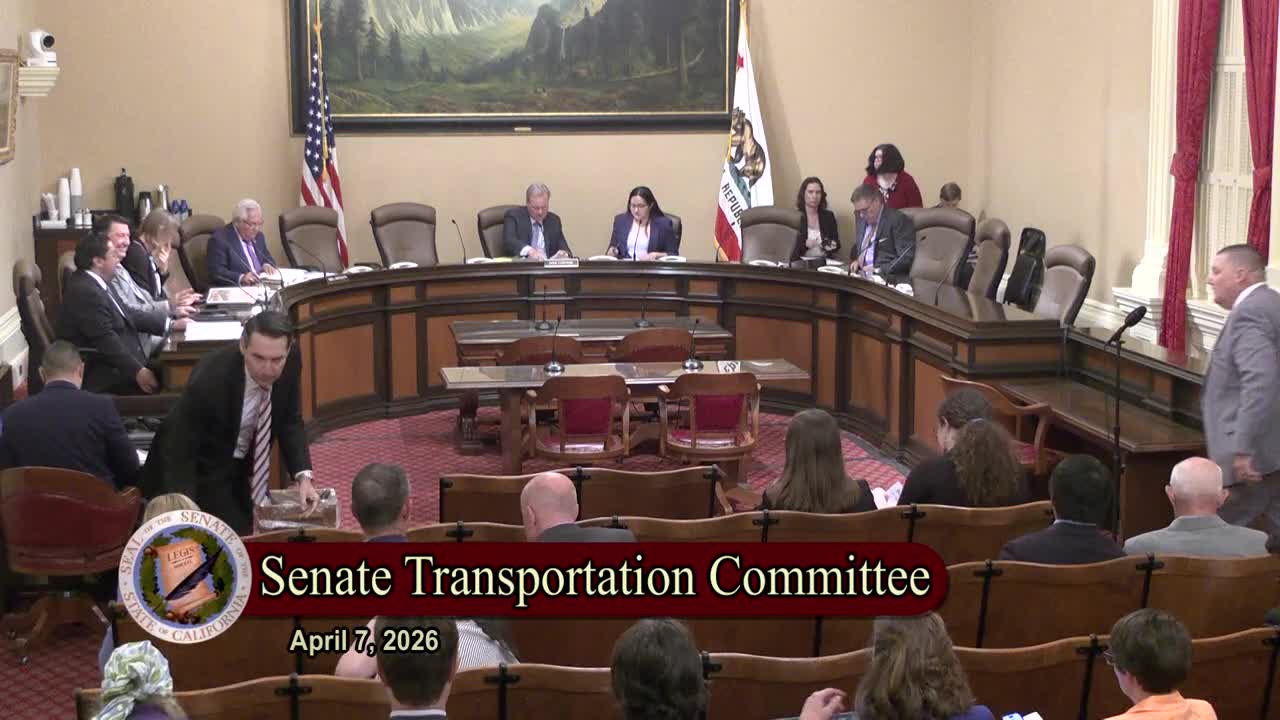 9MIN
Senate Standing Committee on Transportation
Bill Author
Bill Co-Author(s):