SB 226: Infrastructure revitalization financing districts.
- Session Year: 2025-2026
- House: Senate
- Latest Version Date: 2026-09-30
Current Status:
Passed
(2026-09-30: Chaptered by Secretary of State. Chapter 965, Statutes of 2026.)
Introduced
In Committee
Awaiting First Chamber Vote
Passed First Chamber
In Committee
Awaiting Second Chamber Vote
Passed Second Chamber
Enacted
Existing law authorizes a legislative body of a city to designate one or more proposed infrastructure revitalization financing districts, as specified, which are legally constituted governmental entities established for the sole purpose of financing certain types of facilities, as specified. Existing law limits districts to only financing facilities or projects of communitywide significance, including the acquisition, construction, or repair of commercial or industrial structures for private use.
This bill would specify that a facility or project to acquire, construct, or repair commercial or industrial structures for private use includes entertainment or sports facilities.
Existing law establishes the California Community Colleges, under the administration of the Board of Governors of the California Community Colleges, as one of the segments of public postsecondary education in the state. The segment comprises 73 community college districts and a total of 116 community colleges throughout the state. Existing law establishes requirements and procedures for the initiation and approval of proposals to reorganize community college districts through the transfer of territory between existing districts.This bill, notwithstanding certain requirement and procedure provisions described above, would authorize the board of governors to approve the transfer of territory, in whole or in part, from specified community college districts to another district upon its own initiative or upon the filing of a petition by the governing board of a district or the county committee on school district organization for the county where territory would be transferred. The bill would require the board of governors to ensure that a transfer of territory and any necessary agreements between the community college districts comply with and meet the requirements of specified provisions of existing state law, including, among others, that the reorganization of any district or districts does not affect the classification of academic employees already employed by any district affected and that the transfer agreement provides for the allocation of funds, property, and obligations affected by the transfer, as provided.Existing law establishes the California Community Colleges, under the administration of the Board of Governors of the California Community Colleges, as one of the segments of public postsecondary education in the state. The segment comprises 73 community college districts and a total of 116 community colleges throughout the state. Existing law establishes requirements and procedures for the initiation and approval of proposals to reorganize community college districts through the transfer of territory between existing districts.
This bill, notwithstanding certain requirement and procedure provisions described above, would authorize the board of governors to approve the transfer of territory, in whole or in part, from specified community college districts to another district upon its own initiative or upon the filing of a petition by the governing board of a district or the county committee on school district organization for the county where territory would be transferred. The bill would require the board of governors to ensure that a transfer of territory and any necessary agreements between the community college districts comply with and meet the requirements of specified provisions of existing state law, including, among others, that the reorganization of any district or districts does not affect the classification of academic employees already employed by any district affected and that the transfer agreement provides for the allocation of funds, property, and obligations affected by the transfer, as provided.
(a)A district may finance (1) the purchase, construction, expansion, improvement, seismic retrofit, or rehabilitation of any real or other tangible property with an estimated useful life of 15 years or longer which satisfies the requirements of subdivision (b), (2) planning and design work that is directly related to the purchase, construction, expansion, improvement, rehabilitation, or seismic retrofit of that property, and (3) the costs described in Sections 53369.6 and 53369.31. The facilities need not be physically located within the boundaries of the district. A district may not finance routine maintenance, repair work, or the costs of ongoing operation or providing services of any kind.
(b)The district shall finance only facilities or projects of communitywide significance, including, but not limited to, any of the following:
(1)Highways, interchanges, ramps and bridges, arterial streets, parking facilities, and transit facilities.
(2)Sewage treatment and water reclamation plants and interceptor pipes.
(3)Facilities and watershed lands used for the collection and treatment of water for urban uses.
(4)Flood management, including levees, bypasses, dams, retention basins, and drainage channels.
(5)Child care facilities.
(6)Libraries.
(7)Parks, recreational facilities, open space, and habitat restoration.
(8)Facilities for the transfer and disposal of solid waste, including transfer stations and vehicles.
(9)Brownfields restoration and other environmental mitigation.
(10)Purchase of land and property for development purposes and related site improvements.
(11)Acquisition, construction, or repair of housing for rental or purchase, including multipurpose facilities.
(12)Acquisition, construction, or repair of commercial or industrial structures for private use, including, but not limited to, entertainment or sports facilities.
(13)The repayment of the transfer of funds to a military base reuse authority pursuant to Section 67851 that occurred on or after the creation of the district.
(c)Any district that constructs dwelling units shall set aside not less than 20 percent of those units to increase and improve the communitys supply of low- and moderate-income housing available at an affordable housing cost, as defined by Section 50052.5 of the Health and Safety Code, or at an affordable rent, as defined by Section 50053 of the Health and Safety Code, to persons and families of low and moderate income, as defined in Section 50093 of the Health and Safety Code.
(d)A district may utilize any powers under the Polanco Redevelopment Act (Article 12.5 (commencing with Section 33459) of Chapter 4 of Part 1 of Division 24 of the Health and Safety Code), and finance any action necessary to implement that act.
(e)A district may finance any project that implements a sustainable communities strategy prepared pursuant to Section 65080.
(a)A district may finance (1) the purchase, construction, expansion, improvement, seismic retrofit, or rehabilitation of any real or other tangible property with an estimated useful life of 15 years or longer which satisfies the requirements of subdivision (b), (2) planning and design work that is directly related to the purchase, construction, expansion, improvement, rehabilitation, or seismic retrofit of that property, and (3) the costs described in Sections 53369.6 and 53369.31. The facilities need not be physically located within the boundaries of the district. A district may not finance routine maintenance, repair work, or the costs of ongoing operation or providing services of any kind.
(b)The district shall finance only facilities or projects of communitywide significance, including, but not limited to, any of the following:
(1)Highways, interchanges, ramps and bridges, arterial streets, parking facilities, and transit facilities.
(2)Sewage treatment and water reclamation plants and interceptor pipes.
(3)Facilities and watershed lands used for the collection and treatment of water for urban uses.
(4)Flood management, including levees, bypasses, dams, retention basins, and drainage channels.
(5)Child care facilities.
(6)Libraries.
(7)Parks, recreational facilities, open space, and habitat restoration.
(8)Facilities for the transfer and disposal of solid waste, including transfer stations and vehicles.
(9)Brownfields restoration and other environmental mitigation.
(10)Purchase of land and property for development purposes and related site improvements.
(11)Acquisition, construction, or repair of housing for rental or purchase, including multipurpose facilities.
(12)Acquisition, construction, or repair of commercial or industrial structures for private use. use, including, but not limited to, entertainment or sports facilities.
(13)The repayment of the transfer of funds to a military base reuse authority pursuant to Section 67851 that occurred on or after the creation of the district.
(c)Any district that constructs dwelling units shall set aside not less than 20 percent of those units to increase and improve the communitys supply of low- and moderate-income housing available at an affordable housing cost, as defined by Section 50052.5 of the Health and Safety Code, or at an affordable rent, as defined by Section 50053 of the Health and Safety Code, to persons and families of low and moderate income, as defined in Section 50093 of the Health and Safety Code.
(d)A district may utilize any powers under the Polanco Redevelopment Act (Article 12.5 (commencing with Section 33459) of Chapter 4 of Part 1 of Division 24 of the Health and Safety Code), and finance any action necessary to implement that act.
(e)A district may finance any project that implements a sustainable communities strategy prepared pursuant to Section 65080.
SECTION 1.Article 6 (commencing with Section 74298) is added to Chapter 5 of Part 46 of Division 7 of Title 3 of the Education Code, to read:6.Special Transfer of Territory74298.(a)This article shall only apply to the transfer of territory from a community college district that meets both of the following criteria:(1)The community college district is located in a county whose territory is divided among three or more community college districts and a majority of the population residing in the territory of each of those districts is located in one or more other counties.(2)The community college district territory is being transferred, in whole or in part, to one of the districts described in paragraph (1).(b)Notwithstanding Chapter 2 (commencing with Section 74100) and Chapter 3 (commencing with Section 74201), the transfer of territory to another community college district pursuant to this article may be approved by the board of governors upon its own initiative or upon the filing of a petition by the governing board of a district or the county committee on school district organization for the county where territory would be transferred.(c)In approving a transfer of territory pursuant to this article, the board of governors shall ensure that the transfer of territory and any necessary agreements between the community college districts comply with and meet the requirements of Article 2 (commencing with Section 74270), Article 3 (commencing with Section 74280), and Article 4 (commencing with Section 74290).(d)An action to transfer territory that is approved by the board of governors pursuant to this article shall be deemed as approved for purposes of Section 74250, without election.(a)This article shall only apply to the transfer of territory from a community college district that meets both of the following criteria:
(1)The community college district is located in a county whose territory is divided among three or more community college districts and a majority of the population residing in the territory of each of those districts is located in one or more other counties.
(2)The community college district territory is being transferred, in whole or in part, to one of the districts described in paragraph (1).
(b)Notwithstanding Chapter 2 (commencing with Section 74100) and Chapter 3 (commencing with Section 74201), the transfer of territory to another community college district pursuant to this article may be approved by the board of governors upon its own initiative or upon the filing of a petition by the governing board of a district or the county committee on school district organization for the county where territory would be transferred.
(c)In approving a transfer of territory pursuant to this article, the board of governors shall ensure that the transfer of territory and any necessary agreements between the community college districts comply with and meet the requirements of Article 2 (commencing with Section 74270), Article 3 (commencing with Section 74280), and Article 4 (commencing with Section 74290).
(d)An action to transfer territory that is approved by the board of governors pursuant to this article shall be deemed as approved for purposes of Section 74250, without election.
|
Date
|
Status
|
|---|---|
| Sep 30, 2026 | Chaptered by Secretary of State. Chapter 965, Statutes of 2026. |
| Sep 30, 2026 | Approved by the Governor. |
| Sep 8, 2026 | Enrolled and presented to the Governor at 4 p.m. |
| Aug 30, 2026 | Ordered to special consent calendar. |
| Aug 30, 2026 | Assembly amendments concurred in. (Ayes 40. Noes 0.) Ordered to engrossing and enrolling. |
| Aug 26, 2026 | From committee: That the Assembly amendments be concurred in. (Ayes 6. Noes 0.) |
| Aug 26, 2026 | From committee: That the Assembly amendments be concurred in. (Ayes 6. Noes 0. Page 5925.) |
| Aug 24, 2026 | Re-referred to Com. on RLS. pursuant to Senate Rule 29.10(d). |
| Aug 24, 2026 | From committee: Be re-referred to Com. on L. GOV. pursuant to Senate Rule 29.10(d). (Ayes 5. Noes 0.) Re-referred to Com. on L. GOV. |
| Aug 24, 2026 | From committee: Be re-referred to Com. on L. GOV. pursuant to Senate Rule 29.10(d). (Ayes 5. Noes 0. Page 5618.) Re-referred to Com. on L. GOV. |
| Aug 20, 2026 | In Senate. Concurrence in Assembly amendments pending. |
| Aug 20, 2026 | Read third time. Passed. (Ayes 77. Noes 0. Page 6300.) Ordered to the Senate. |
| Aug 20, 2026 | Read third time. Passed. Ordered to the Senate. |
| Aug 3, 2026 | Read second time. Ordered to third reading. |
| Jul 2, 2026 | From committee: Do pass. (Ayes 10. Noes 0.) (July 1). |
| Jun 23, 2026 | From committee: Do pass and re-refer to Com. on L. GOV. (Ayes 9. Noes 0.) (June 23). Re-referred to Com. on L. GOV. |
| Jun 15, 2026 | Re-referred to Coms. on A.,E.,S., & T. and L. GOV. pursuant to Assembly Rule 96. |
| Jun 11, 2026 | From committee with author's amendments. Read second time and amended. Re-referred to Com. on HIGHER ED. |
| Jul 9, 2025 | July 8 set for first hearing canceled at the request of author. |
| Jun 9, 2025 | Referred to Com. on HIGHER ED. |
| Jun 3, 2025 | In Assembly. Read first time. Held at Desk. |
| Jun 2, 2025 | Read third time. Passed. (Ayes 32. Noes 0. Page 1390.) Ordered to the Assembly. |
| May 23, 2025 | Read second time. Ordered to third reading. |
| May 23, 2025 | From committee: Do pass. (Ayes 5. Noes 0. Page 1192.) (May 23). |
| May 16, 2025 | Set for hearing May 23. |
| May 12, 2025 | May 12 hearing: Placed on APPR. suspense file. |
| May 2, 2025 | Set for hearing May 12. |
| Apr 23, 2025 | From committee: Do pass and re-refer to Com. on APPR. (Ayes 5. Noes 0. Page 865.) (April 23). Re-referred to Com. on APPR. |
| Apr 4, 2025 | Set for hearing April 23. |
| Feb 5, 2025 | Referred to Com. on ED. |
| Jan 29, 2025 | From printer. May be acted upon on or after February 28. |
| Jan 28, 2025 | Introduced. Read first time. To Com. on RLS. for assignment. To print. |
|
Date
|
Description
|
Location
|
Votes
|
|
|---|---|---|---|---|
| Aug 30, 2026 | Unfinished Business SB226 Cabaldon et al. Concurrence | Senate Floor |
Passed |
|
| Aug 26, 2026 | That the Assembly amendments be concurred in | Senate Standing Committee on Local Government |
Passed |
|
| Aug 20, 2026 | SB 226 Cabaldon Senate Third Reading By Aguiar-Curry | Assembly Floor |
Passed |
|
| Jul 1, 2026 | Do pass. | Assembly Standing Committee on Local Government |
Passed |
|
| Jun 23, 2026 | Do pass and be re-referred to the Committee on [Local Government] | Assembly Standing Committee on Arts, Entertainment, Sports, and Tourism |
Passed |
|
| Jun 2, 2025 | Senate 3rd Reading SB226 Cabaldon | Senate Floor |
Passed |
|
| May 23, 2025 | Do pass | Senate Standing Committee on Appropriations |
Passed |
|
| May 12, 2025 | Placed on suspense file | Senate Standing Committee on Appropriations |
Passed |
|
| Apr 23, 2025 | Do pass, but first be re-referred to the Committee on [Appropriations] | Senate Standing Committee on Education |
Passed |
This list shows positions taken on this bill by organizations on the date displayed, which is linked to the original source.
Positions by individuals are not included.
|
Organization
|
Position
|
Date
|
|---|---|---|
| Cabrillo Community College District | ** Against | |
| California Hotel & Lodging Association | ** Support | |
| California Retailers Association | ** Support | |
| California Travel Association (CALTRAVEL) | ** Support | |
| CFT- a Union of Educators & Classified Professionals, Aft, Afl-cio | ** Against | |
| City of Davis | ** Support | |
| City Of Sacramento | ** Support | |
| city of west sacramento | ** Support | |
| City of Woodland | ** Support | |
| Community College League of California | ** Against | |
| County of Yolo | ** Support | |
| Esparto Unified School District | ** Support | |
| Greater Sacramento Economic Council | ** Support | |
| la Cooperativa Campesina de California | ** Support | |
| Sacramento Hotel Association (SHA) | ** Support | |
| Washington Unified School District | ** Support | |
| Winters Joint Unified School District | ** Support | |
| Woodland Joint Unified School District | ** Support | |
| Yolo County Office of Education | ** Support | |
| Yuba Community College District | ** Against |
SENATE RULES COMMITTEE Office of Senate Floor Analyses (916) 651-4171 | SB 226 |
UNFINISHED BUSINESS
Bill No: SB 226
Author: Cabaldon (D), et al.
Amended: 6/11/26
Vote: 21
Prior Senate votes not relevant.
SENATE LOCAL GOVERNMENT COMMITTEE: 6-0, 8/26/26
AYES: Durazo, Choi, Arreguín, Cervantes, Laird, Seyarto
NO VOTE RECORDED: Ashby
ASSEMBLY FLOOR: 77-0, 8/20/26 - See last page for vote
SUBJECT: Infrastructure revitalization financing districts
SOURCE: Author
DIGEST:
This bill allows infrastructure revitalization financing districts to finance entertainment and sports facilities.
Assembly Amendments
deleted the contents of the bill and inserted the current provisions.
ANALYSIS:
Existing law:
- Authorizes a city or county to create an infrastructure revitalization financing districts (IRFDs) by adopting a resolution of intention that outlines the types of facilities it will finance, that it will use tax-increment financing (TIF) to finance those facilities, and fix a time and place for a public hearing on the proposed district. The city or county must mail a copy of the resolution to each landowner and affected taxing entity. After adopting the resolution, the city or county must direct the city engineer to prepare an infrastructure financing plan (IFP) describing the proposed district as specified.
- Requires the city or county to send each landowner and affected taxing entity a copy of the IFP and conduct a public hearing no sooner than 60 days after sending the plan. At the conclusion of the hearing, the city or county can adopt a resolution proposing formation of the district.
- Requires, upon adopting the resolution, the city or county to receive 2/3 voter approval at the next general election to form the district. The IRFD must also receive 2/3 voter approval to issue bonds, but can consolidate the elections to form the district and issue bonds.
- Allows IRFDs to finance the purchase, construction, expansion, improvement, seismic retrofit, or rehabilitation of any real or other tangible property with an estimated useful life of 15 years or longer, planning and design work directly related to that property and other specified costs. However, IRFDs must not finance routine maintenance, repair work, or the costs of ongoing operation or for providing services of any kind. These projects must be of communitywide significance, and can include everything from highways and public utility infrastructure to the acquisition, construction, or repair of commercial or industrial structures for private use.
This bill allows IRFDs to finance entertainment or sports facilities.
Background
From the early 1950s until their dissolution in 2011, California redevelopment agencies (RDAs) used property tax increment financing (TIF) to pay for economic development projects in blighted areas pursuant to Community Redevelopment Law. Generally, TIF involves a local government forming a TIF district to issue bonds and use the bond proceeds to pay project costs within the boundaries of a specified project area. To repay the bonds, the district captures increased property tax revenues generated when projects the bonds finance increase assessed property values within the project area. To calculate the increased property tax revenues captured by the district, the amount of property tax revenues received by any local agency participating in the district is “frozen” at the amount it received from property within a project area prior to the project area’s formation. In future years, as the project area’s assessed valuation grows above the frozen base, the resulting additional property tax revenues—the so-called property tax “increment” revenues—flow to the TIF district instead of other local agencies. After the district has repaid the bonds using the incremental property tax revenues, the district dissolves, ending the diversion of tax increment revenues from participating local agencies.
Following their dissolution, local officials sought other ways to use TIF to raise the capital they need to fund public works projects. In response, the Legislature enacted SB 628 (Beall, Chapter 785, Statutes of 2014) to allow local officials to create Enhanced Infrastructure Financing Districts (EIFDs), which augment the tax increment financing powers available to local agencies under existing infrastructure financing district statutes. While the Legislature has created other similar financing tools, they have seldom, or never, been used.
The Legislature authorized the creation of IRFDs in 2014 (AB 229, Pérez, Chapter 775, Statutes of 2014). In 2017, the City and County of San Francisco formed an IRFD to finance infrastructure projects on Treasure Island.
Comments
- Purpose of the bill. According to the author, “The City of West Sacramento has emerged as one of the jurisdictions in California effectively using infrastructure financing districts and similar tools to drive development. When putting together large revitalization and infrastructure projects representing hundreds of millions or billions of dollars in investments, certainty matters. By making this straightforward clarification to existing law, any ambiguity would be removed, providing legal certainty to local agencies. Importantly, the major economic development opportunities utilizing IRFDs and the like, generate jobs and revitalize communities without burdening taxpayers or general fund resources.”
- Sure, but will it work? Proposition 13 (1978) capped property tax rates at 1% of assessed value (which only changes upon new construction or when ownership changes). If properties do not get reassessed, the Constitution caps growth at 2% per year. The general theory behind TIF is that a local agency creates a district because it expects significant property tax growth generated through reassessments when property changes hands or is improved. Otherwise, a TIF district only receives the increment that comes from the 2% growth, which may not be sufficient to generate enough revenue to finance significant infrastructure projects in a timely fashion. When the TIF district uses these resources to finance infrastructure projects, it can springboard additional property tax growth. In other words, the TIF district pays for itself. When RDAs existed, they had at least two important advantages over current TIF districts. First, they received increment from the school share of property tax revenue, which the state backfilled from the General Fund in many cases. Second, they received increment that would have otherwise gone to other local agencies without their approval. This generated billions of dollars in additional funds that cities and counties could only access through redevelopment. Even with these key features, research has found that RDAs generally did not generate enough growth in property values to justify the property tax revenue they received. This research suggests that TIF districts, like IRFDs, won’t effectively finance infrastructure projects without a subsidy.
- Pick me. Since RDAs dissolved in 2012, the Legislature has created numerous TIF tools. Despite the creation of these numerous tools, local agencies so far have largely relied upon EIFDs to use TIF financing. This is for several reasons, including recent efforts to streamline their formation process and because they do not require voter approval to form or issue bonds. Instead, EIFDs rely upon a process that allows residents to protest their formation. SB 226 picks a different TIF tool, which has been used more sparingly, to give the authority to finance sports and entertainment facilities. IRFDs, unlike EIFDs, require 2/3 voter approval for formation and to issue bonds, making them more time-consuming and costly to form. However, the additional public input that IRFD law requires may be justified because IRFDs can finance any commercial facilities, but EIFDs only have the explicit authority to finance commercial facilities for small businesses. One of the critiques of original RDAs was that cities used them to finance commercial facilities that had greater private commercial benefits than public benefits. While SB 226 expands the types of commercial facilities IRFDs can finance to include entertainment and sports facilities, it preserves the 2/3 vote requirement to form IRFDs and issue bonds, which ensures the public has adequate input in decisions to use TIF to finance commercial facilities.
- Necessary? Since 2014, IRFDs have had the authority to finance the acquisition, construction, or repair of commercial or industrial structures for private use. This would appear to include entertainment or sports facilities. While SB 226 would explicitly authorize entertainment or sports facilities, IRFDs may already have this authority.
FISCAL EFFECT: Appropriation: No Fiscal Com.: No Local: No
SUPPORT: (Verified 8/26/26)
California Hotel & Lodging Association
California Retailers Association
California Travel Association (CALTRAVEL)
City of Sacramento
City of West Sacramento
Greater Sacramento Economic Council
Sacramento Hotel Association (SHA)
OPPOSITION: (Verified 8/26/26)
None received
ASSEMBLY FLOOR: 77-0, 8/20/26
AYES: Addis, Aguiar-Curry, Ahrens, Alanis, Alvarez, Arambula, Ávila Farías, Bains, Bauer-Kahan, Bennett, Berman, Boerner, Bonta, Bryan, Calderon, Caloza, Carrillo, Castillo, Connolly, Davies, DeMaio, Dixon, Elhawary, Ellis, Flora, Fong, Gabriel, Garcia, Gipson, Jeff Gonzalez, Mark González, Hadwick, Haney, Harabedian, Hart, Hoover, Irwin, Johnson, Kalra, Krell, Lackey, Lee, Lowenthal, Macedo, McKinnor, Muratsuchi, Nguyen, Ortega, Pacheco, Papan, Patel, Patterson, Pellerin, Petrie-Norris, Quirk-Silva, Ramos, Ransom, Celeste Rodriguez, Michelle Rodriguez, Rogers, Blanca Rubio, Sanchez, Schiavo, Schultz, Sharp-Collins, Solache, Soria, Stefani, Ta, Tangipa, Valencia, Wallis, Ward, Wicks, Wilson, Zbur, Rivas
NO VOTE RECORDED: Chen, Jackson
Prepared by: Jonathan Peterson / L. GOV. / (916) 651-4119
8/26/26 13:00:01
**** END ****
SENATE COMMITTEE ON LOCAL GOVERNMENT
Senator María Elena Durazo, Chair
2025 - 2026 Regular
Pursuant to Rule 29.10(d)
Bill No: | SB 226 | Hearing Date: | 8/26/26 |
Author: | Cabaldon | Fiscal: | No |
Version: | 6/11/26 | Consultant: | Peterson |
Infrastructure revitalization financing districts
Allows infrastructure revitalization financing districts to finance entertainment and sports facilities.
Background
Redevelopment agencies. From the early 1950s until their dissolution in 2011, California redevelopment agencies (RDAs) used property tax increment financing (TIF) to pay for economic development projects in blighted areas pursuant to Community Redevelopment Law. Generally, TIF involves a local government forming a TIF district to issue bonds and use the bond proceeds to pay project costs within the boundaries of a specified project area. To repay the bonds, the district captures increased property tax revenues generated when projects the bonds finance increase assessed property values within the project area. To calculate the increased property tax revenues captured by the district, the amount of property tax revenues received by any local agency participating in the district is “frozen” at the amount it received from property within a project area prior to the project area’s formation. In future years, as the project area’s assessed valuation grows above the frozen base, the resulting additional property tax revenues—the so-called property tax “increment” revenues—flow to the TIF district instead of other local agencies. After the district has repaid the bonds using the incremental property tax revenues, the district dissolves, ending the diversion of tax increment revenues from participating local agencies.
Citing a significant state General Fund deficit, Governor Brown’s 2011-12 budget proposed eliminating RDAs and diverting billions of dollars of property tax revenues back to schools, cities, and counties to fund core services. Among the statutory changes the Legislature adopted to implement the 2011-12 budget, AB X1 26 (Blumenfield, 2011) dissolved all RDAs. The California Supreme Court's 2011 ruling in California Redevelopment Association v. Matosantos upheld the dissolution of RDAs.
RDAs’ dissolution deprived many local governments of the primary tool they used to eliminate physical and economic blight, finance new construction, improve public infrastructure, rehabilitate existing buildings, and increase the supply of affordable housing.
Following their dissolution, local officials sought other ways to use TIF to raise the capital they need to fund public works projects. In response, the Legislature enacted SB 628 (Beall, 2014) to allow local officials to create Enhanced Infrastructure Financing Districts (EIFDs), which augment the tax increment financing powers available to local agencies under existing infrastructure financing district statutes. While the Legislature has created other similar financing tools, they have seldom, or never, been used.
Infrastructure revitalization financing districts (IRFDs). The Legislature authorized the creation of IRFDs in 2014 (AB 229, Perez). Similar to EIFDs, IRFDs use TIF to fund infrastructure projects. To establish an IRFD, a city or county must adopt a resolution of intention that outlines the types of facilities it will finance, that it will use TIF to finance those facilities, and fix a time and place for a public hearing on the proposed district. The city or county must mail a copy of the resolution to each landowner and affected taxing entity. After adopting the resolution, the city or county must direct the city engineer to prepare an infrastructure financing plan (IFP) describing the proposed district, including:
- A map of the district;
- A description of the facilities the district will finance;
- A finding that the facilities are of communitywide significance;
- The amount of tax increment taxing entities will contribute; and
- A date when the district will cease to exist, which cannot exceed 40 years from the date the city or county forms the district.
The city or county must send each landowner and affected taxing entity a copy of the IFP and conduct a public hearing no sooner than 60 days after sending the plan. At the conclusion of the hearing, the city or county can adopt a resolution proposing formation of the district. Upon adopting the resolution, the city or county must receive 2/3 voter approval at the next general election to form the district. The IRFD must also receive 2/3 voter approval to issue bonds, but can consolidate the elections to form the district and issue bonds.
Once formed, IRFDs can finance the purchase, construction, expansion, improvement, seismic retrofit, or rehabilitation of any real or other tangible property with an estimated useful life of 15 years or longer, planning and design work directly related to that property and other specified costs. However, IRFDs must not finance routine maintenance, repair work, or the costs of ongoing operation or for providing services of any kind. These projects must be of communitywide significance, and can include everything from highways and public utility infrastructure to the acquisition, construction, or repair of commercial or industrial structures for private use. In 2017, the City and County of San Francisco formed an IRFD to finance infrastructure projects on Treasure Island.
City of West Sacramento. The City of West Sacramento, a city of over 50,000 residents in Yolo County, borders the City of Sacramento. Since 2000, the city has housed Sutter Health Park, which is home to the Sacramento River Cats, a minor league affiliate of the San Francisco Giants, and is the temporary home of Major League Baseball’s (MLB) Athletics. The ballpark serves as the primary anchor of the city’s riverfront Bridge District. City officials have credited the stadium with attracting housing, restaurants, entertainment venues, and other private investment to the riverfront, while helping secure infrastructure funding and economic development opportunities that may not otherwise have occurred. Private financing, not public financing, was used to build the ballpark. Since 2014, West Sacramento has had an EIFD to use TIF to finance projects in the Bridge District.
In May 2026, officials from West Sacramento and Sacramento announced a $1 billion plan to attract a permanent MLB franchise in West Sacramento. The plan includes a new stadium, with income coming from TIF.
To prepare for financing the new stadium and associated infrastructure, the author wants to allow IRFDs to finance entertainment or sports facilities.
Proposed Law
Senate Bill 226 allows IRFDs to finance entertainment or sports facilities.
Comments
1. Purpose of the bill. According to the author, “The City of West Sacramento has emerged as one of the jurisdictions in California effectively using infrastructure financing districts and similar tools to drive development. When putting together large revitalization and infrastructure projects representing hundreds of millions or billions of dollars in investments, certainty matters. By making this straightforward clarification to existing law, any ambiguity would be removed, providing legal certainty to local agencies. Importantly, the major economic development opportunities utilizing IRFDs and the like, generate jobs and revitalize communities without burdening taxpayers or general fund resources.”
2. Sure, but will it work? Proposition 13 (1978) capped property tax rates at 1% of assessed value (which only changes upon new construction or when ownership changes). If properties do not get reassessed, the Constitution caps growth at 2% per year. The general theory behind TIF is that a local agency creates a district because it expects significant property tax growth generated through reassessments when property changes hands or is improved. Otherwise, a TIF district only receives the increment that comes from the 2% growth, which may not be sufficient to generate enough revenue to finance significant infrastructure projects in a timely fashion. When the TIF district uses these resources to finance infrastructure projects, it can springboard additional property tax growth. In other words, the TIF district pays for itself.
When RDAs existed, they had at least two important advantages over current TIF districts. First, they received increment from the school share of property tax revenue, which the state backfilled from the General Fund in many cases. Second, they received increment that would have otherwise gone to other local agencies without their approval. This generated billions of dollars in additional funds that cities and counties could only access through redevelopment. Even with these key features, research has found that RDAs generally did not generate enough growth in property values to justify the property tax revenue they received. For example, a Public Policy Institute of California study on 38 different RDA projects found that, “Across all the projects, the RDAs generated just 51 percent of their tax increment revenues in fiscal year 1994–1995. This means that other governments—the state, counties, and special districts—provided subsidies to these RDAs of over $38 million that year (after accounting for pass-through payments).”[1] This research suggests that TIF districts, like IRFDs, won’t effectively finance infrastructure projects without a subsidy.
3. Pick me. Since RDAs dissolved in 2012, the Legislature has created numerous TIF tools. Despite the creation of these numerous tools, local agencies so far have largely relied upon EIFDs to use TIF financing. This is for several reasons, including recent efforts to streamline their formation process [SB 780 (Cortese, 2021), SB 1140 (Caballero, 2024), and AB 417 (Carrillo, 2025)] and because they do not require voter approval to form or issue bonds. Instead, EIFDs rely upon a process that allows residents to protest their formation. SB 226 picks a different TIF tool, which has been used more sparingly, to give the authority to finance sports and entertainment facilities. IRFDs, unlike EIFDs, require 2/3 voter approval for formation and to issue bonds, making them more time-consuming and costly to form. However, the additional public input that IRFD law requires may be justified because IRFDs can finance any commercial facilities, but EIFDs only have the explicit authority to finance commercial facilities for small businesses. One of the critiques of original RDAs was that cities used them to finance commercial facilities that had greater private commercial benefits than public benefits. While SB 226 expands the types of commercial facilities IRFDs can finance to include entertainment and sports facilities, it preserves the 2/3 vote requirement to form IRFDs and issue bonds, which ensures the public has adequate input in decisions to use TIF to finance commercial facilities.
4. Necessary? Since 2014, IRFDs have had the authority to finance the acquisition, construction, or repair of commercial or industrial structures for private use. This would appear to include entertainment or sports facilities. While SB 226 would explicitly authorize entertainment or sports facilities, IRFDs may already have this authority.
5. Gut and amend. As introduced in January 2025, SB 226 authorized a community college board of governors to approve the transfer of territory to another district. On June 11, 2026, the author amended the bill to remove those contents and insert provisions pertaining to IRFDs. Because this topic was never heard in the Senate, the Senate Rules Committee referred the amended bill under Senate Rule 29.10(d) to the Senate Committee on Local Government for a hearing on the Assembly’s amendments. At its hearing, the Committee has four choices:
- Send the bill back to the Senate Floor, recommending concurrence;
- Send the bill back to the Senate Floor, recommending nonconcurrence;
- Send the bill back to the Senate Floor, without recommendation; or
- Hold the bill.
Assembly Actions
Assembly Arts, Entertainment, Sports, and Tourism Committee: 9-0
Assembly Local Government Committee: 10-0
Assembly Floor: 77-0
Support and Opposition
(8/25/26)
Support: California Hotel & Lodging Association
California Retailers Association
California Travel Association (CALTRAVEL)
City of Sacramento
City of West Sacramento
Greater Sacramento Economic Council
Sacramento Hotel Association (SHA)
Opposition: None Submitted
-- END --
Michael Dardia, Subsidizing Redevelopment in California (Public Policy Institute of California: January 1998). http://www.ppic.org/content/pubs/report/R_298MDR.pdf ↑
SENATE THIRD READING
STR Bill Id:SB 226
Author:(Cabaldon)
As Amended Ver:June 11, 2026
Majority vote
SUMMARY
SB 226 amends existing state law on Infrastructure Revitalization Financing Districts (IRFDs) to specify that they can be used for entertainment or sports facilities.
Major Provisions
- Allows an IRFD to finance facilities or projects of communitywide significance, including, but not limited to, the acquisition, construction, or repair of commercial or industrial structures for private use, including, but not limited to, entertainment or sports facilities.
COMMENTS
Background. IRFDs were authorized under AB 229 (Pérez, Chapter 775, Statutes of 2014) with the primary purpose of giving local governments tools and resources to fund public infrastructure, affordable housing, economic development and job creation, and environmental protection and remediation. To that end, IRFDs are authorized to undertake and finance specified activities to meet those goals. IRFDs are formed through an approval process that is subject to a vote of qualified electors, requires a 2/3 vote in favor of creating the district, and have a maximum term of 40 years. In comparison to other types of financing districts, IRFDs are unique in that they allow for the acquisition, construction, or repair of commercial structures for private use, without conditions that would apply to funding by an Enhanced Infrastructure Refinancing District (EIFDs).
IRFDs may use two sources of funds. The first is property tax increment generated by properties within the boundaries of the district that is voluntarily dedicated by participating taxing agencies. The second is eligible distributions to the sponsoring jurisdiction's Redevelopment Property Tax Trust Fund after all legal obligations from that revenue have been made.
Potential impacts of a new sports and entertainment facility. Sutter Health Park, home of the Sacramento River Cats and temporary home of the Major League Baseball Athletics, has been an important aspect associated with two decades of investment and redevelopment of West Sacramento. Since opening in 2000, the ballpark has served as the primary anchor of the city's riverfront revitalization strategy, transforming what was once a largely industrial waterfront into the mixed-use Bridge District. City officials have credited the stadium with attracting housing, restaurants, entertainment venues, and other private investment to the riverfront, while helping secure infrastructure funding and economic development opportunities that may not otherwise have occurred. Of note, the original ballpark was privately financed and did not require direct taxpayer funding for construction.
The facility has generated substantial indirect economic benefits through adjacent development and increased visitor activity. The Bridge District now encompasses a significant concentration of residential, commercial, and entertainment uses, with city planning documents envisioning up to 12.5 million square feet of development at full buildout. Local businesses have reported that game-day activity serves as an important driver of customer traffic, and city leaders have consistently described the ballpark as a catalyst for ongoing investment in the surrounding district.
Of note, when comparing revenue that the City of West Sacramento received in the form of sales tax, transient occupancy tax, and City parking revenues associated with the 2025 combined A's/River Cats season vs. the 2024 River Cats-only season, the city saw a net increase of $872,814 (51%) in revenue associated with the stadium and the surround area in 2025.
Using an IRFD to potentially build or renovate an entertainment and sports facility could potentially attract or allow for the expansion of a new Major League Baseball team, which would further expand the economic activity generated by the riverfront district by supporting additional mixed-use development, increasing tourism and visitor spending, and enhancing the region's national profile.
According to the Author
"The City of West Sacramento has emerged as one of the jurisdictions in California effectively using infrastructure financing districts and similar tools to drive development. When putting together large revitalization and infrastructure projects representing hundreds of millions or billions of dollars in investments, certainty matters. By making this straightforward clarification to existing law, any ambiguity would be removed, providing legal certainty to local agencies. Importantly, the major economic development opportunities utilizing IRFDs and the like, generate jobs and revitalize communities without burdening taxpayers or general fund resources."
Arguments in Support
According to the City of West Sacramento, "IRFDs are a valuable tool for local governments seeking to finance major infrastructure and economic development projects without relying on General Fund resources. SB 226 offers a straightforward clarification that entertainment and sports facilities qualify as commercial or industrial structures eligible for IRFD financing, providing greater certainty to local agencies, investors, and financing partners."
"For communities pursuing transformative projects, certainty in state law is critical. Ambiguity regarding project eligibility can create unnecessary risk, delay investment, and hinder economic development opportunities. By clearly affirming the eligibility of entertainment and sports facilities, SB 226 strengthens a financing mechanism that helps local governments leverage future tax increment generated by development to fund projects of communitywide significance."
"West Sacramento has been a leader in utilizing innovative financing tools to support economic growth and community revitalization, including establishing the state's first Enhanced Infrastructure Financing District. As our city advances significant waterfront and economic development initiatives, including the pursuit of a Major League Baseball expansion franchise, the clarification provided by SB 226 will help ensure that local governments can confidently utilize IRFDs consistent with state law. If successful, a new MLB stadium in the City's Bridge District will catalyze dense urban infill development for which the City has long planned, generating significant private investment, jobs, housing, and public infrastructure improvements."
"Beyond its local economic benefits to the Greater Sacramento region, this effort carries statewide significance. With the Athletics departing for Las Vegas, securing a new franchise in West Sacramento would allow California to maintain its current number of Major League Baseball teams.
"It is also important to note that SB 226 does not expand taxing authority or require the use of public funds. Rather, it simply provides needed statutory clarity that will support responsible local economic development efforts throughout California."
Arguments in Opposition
None on file.
FISCAL COMMENTS
None. This measure was keyed non-fiscal by Legislative Counsel
VOTES
SENATE FLOOR: 32-0-8
YES: Allen, Archuleta, Arreguín, Ashby, Becker, Blakespear, Cabaldon, Caballero, Cervantes, Cortese, Gonzalez, Grayson, Grove, Jones, Laird, Limón, McGuire, McNerney, Menjivar, Niello, Padilla, Pérez, Richardson, Rubio, Seyarto, Stern, Strickland, Umberg, Valladares, Wahab, Weber Pierson, Wiener
ABS, ABST OR NV: Alvarado-Gil, Choi, Dahle, Durazo, Hurtado, Ochoa Bogh, Reyes, Smallwood-Cuevas
ASM ARTS, ENTERTAINMENT, SPORTS, AND TOURISM: 9-0-0
YES: Ward, Lackey, Elhawary, Jeff Gonzalez, McKinnor, Ortega, Quirk-Silva, Valencia, Zbur
ASM LOCAL GOVERNMENT: 10-0-0
YES: Carrillo, Ta, Johnson, Pacheco, Ramos, Ransom, Blanca Rubio, Stefani, Ward, Wilson
UPDATED
VERSION: June 11, 2026
CONSULTANT: Brian V. Anderson, Jr. / A.,E.,S., & T. / (916) 319-3450 FN: 0003292
Date of Hearing: July 1, 2026
ASSEMBLY COMMITTEE ON LOCAL GOVERNMENT
Juan Carrillo, Chair
SBPCA Bill Id:SB 226
Author:(Cabaldon) – As Amended Ver:June 11, 2026
SENATE VOTE: 32-0
SUBJECT: Infrastructure revitalization financing districts.
SUMMARY: Specifies that an Infrastructure Revitalization Financing District (IRFD) may finance entertainment and sports facilities.
FISCAL EFFECT: None.
COMMENTS:
- Bill Summary and Author’s Statement. This bill specifies that an IRFD may finance entertainment and sports facilities. The Author is the sponsor of this bill.
According to the Author, “The City of West Sacramento has emerged as one of the jurisdictions in California effectively using infrastructure financing districts and similar tools to drive development. When putting together large revitalization and infrastructure projects representing hundreds of millions or billions of dollars in investments, certainty matters. By making this straightforward clarification to existing law, any ambiguity would be removed, providing legal certainty to local agencies. Importantly, the major economic development opportunities utilizing IRFDs and the like, generate jobs and revitalize communities without burdening taxpayers or general fund resources.”
- Local Infrastructure Financing. Funding and financing local government infrastructure is a core responsibility for local governments. The ways in which local governments have addressed these responsibilities have changed over time. Until voters passed Proposition 13 in 1978, cities, counties, and special districts could generally set property tax rates on property within its jurisdiction without an aggregate cap. Local governments received property tax revenue resulting from the appropriate property tax rate fixed by the local governments and could use that revenue to build infrastructure projects and meet other needs. If a local government wanted to pay to build infrastructure in an area it planned to develop, it could increase its property tax rates to pay for those projects. Local governments could also enact taxes by ordinance. Proposition 13 both limited the maximum amount of any ad valorem tax on real property at 1% of full cash value and imposed voter approval requirements for local taxes. Despite the notable benefits to property owners, these changes hampered local governments’ ability to address infrastructure needs related to new development.
- Redevelopment. Article XVI, Section 16 of the California Constitution authorizes the Legislature to provide for the formation of RDAs to eliminate blight in an area by means of a self-financing schedule that pays for the redevelopment project with tax increment derived from any increase in the assessed value of property within the redevelopment project area (or tax increment). Generally, property tax increment financing involves a local government forming a tax increment financing district to issue bonds and use the bond proceeds to pay project costs within the boundaries of a specified project area. To repay the bonds, the district captures increased property tax revenues that are generated when projects financed by the bonds increase assessed property values within the project area.
To calculate the increased property tax revenues captured by the district, the amount of property tax revenues received by any local government participating in the district is “frozen” at the amount it received from property within a project area prior to the project area’s formation. In future years, as the project area's assessed valuation grows above the frozen base, the resulting additional property tax revenues — the so-called property tax “increment” revenues — flow to the tax increment financing district instead of other local governments. After the bonds have been fully repaid using the incremental property tax revenues, the district is dissolved, ending the diversion of tax increment revenues from participating local governments.
Prior to Proposition 13, very few RDAs existed; however, after its passage, RDAs became a source of funding for a variety of local infrastructure activities. Eventually, RDAs were required to set aside 20% of funding generated in a project area to increase the supply of low and moderate income housing in the project areas. At the time RDAs were dissolved, the Controller estimated that statewide, RDAs were obligated to spend $1 billion on affordable housing. At the time of dissolution, over 400 RDAs statewide were diverting 12% of property taxes, over $5.6 billion yearly.
In 2011, facing a severe budget shortfall, the Governor proposed eliminating RDAs in order to deliver more property taxes to other local agencies. Ultimately, the Legislature approved, and the Governor signed two measures, ABX1 26 (Blumenfield), Chapter 5 and ABX1 27 (Blumenfield), Chapter 6 that together dissolved RDAs as they existed at the time and created a voluntary redevelopment program on a smaller scale. In response, the California Redevelopment Association (CRA) and the League of California Cities, along with other parties, filed suit challenging the two measures. The Supreme Court denied the petition for peremptory writ of mandate with respect to ABX1 26. However, the Court did grant CRA's petition with respect to ABX1 27. As a result, all RDAs were required to dissolve as of February 1, 2012.
- Attempts to Replace RDAs. After the Supreme Court’s 2011 Matosantos decision dissolved all RDAs, legislators enacted several measures creating new tax increment financing tools to pay for local economic development. The Legislature authorized the creation of IRFDs [AB 229 (Perez), Chapter 775, Statutes of 2014 and enhanced infrastructure financing district (EIFDs) [SB 628 (Beall), Chapter 785, Statutes of 2014] and they were quickly followed by community revitalizations and investment authorities (CRIAs) [AB 2 (Alejo), Chapter 319, Statutes of 2015]. Similar to IRFDs, EIFDs and CRIAs use tax increment financing to fund infrastructure projects. CRIAs may currently only be formed in economically depressed areas.
The Legislature has also authorized the formation of affordable housing authorities (AHAs), which may use tax increment financing exclusively for rehabilitating and constructing affordable housing and also do not require voter approval to issue bonds [AB 1598 (Mullin), Chapter 764, Statutes of 2017]. SB 961 (Allen), Chapter 559, Statutes of 2018, removed the vote requirement for a subset of EIFDs to issue bonds and required these EIFDs to instead solicit public input, and AB 116 (Ting), Chapter 656, Statutes of 2019, removed the voter requirement for any EIFD to issues bonds in favor of a formal protest process. SB 852 (Dodd), Chapter 266, Statutes of 2022, created climate resilience districts (CRDs), which can also utilize tax-increment financing. CRDs were also given the authority to issue general obligation bonds and impose special taxes. In response to recent fires in California, SB 782 (Perez), Chapter 552, Statutes of 2025, created a subcategory of climate resilience districts (CRDs) to finance disaster recovery efforts.
While these entities share fundamental similarities with RDAs in terms of using various forms of tax-increment financing, they differ in two significant aspects, 1) not having access to the school’s share of property tax increment, and 2) not automatically including the tax increment of other taxing entities.
- IRFDs. Existing law allows a city to designate one or more IRFDs. The city or county must first adopt a resolution of intention to establish the proposed IRFD and must state the following in the resolution: That the IRFD is proposed to be established, the types of facilities proposed to be financed by the IRFD, that incremental property tax revenue from the city and some or all affected taxing entities, as defined, within the IRFD may be used to finance these facilities, and fix a time and place for a public hearing on the proposal. The resolution of intention must then be mailed to each landowner and each affected taxing entity. Once the resolution of intention is adopted, the city must direct the city engineer to prepare an infrastructure financing plan (IFP). The IFP must include specified information, including:
- A map and legal description of the proposed IRFD.
- A description of the facilities required to serve the development proposed in the area of the IRFD.
- A finding that the facilities are of communitywide significance.
- Information related to the amount of incremental property tax revenue the city and each affected taxing entity will commit and a date on which the IRFD will cease to exist, which must not be more than 40 years from the date the ordinance forming the IRFD is adopted or a later date on which the allocation of tax increment will begin. The IRFD may issue debt with a final maturity date of up to 30 years from the date of issuance of each debt issue, subject to the time limit on tax allocation to the IRFD.
The IFP must then be sent to each landowner within the proposed IRFD and each affected taxing entity. The city must conduct a public hearing prior to adopting the proposed IFP. The public hearing must not be called sooner than 60 days after the plan has been sent to each affected taxing entity. At the conclusion of the hearing, the city may adopt a resolution proposing adoption of the IFP or it may abandon proceedings. However, the city must not enact a resolution proposing formation of a district and providing for taxes from any affected taxing entity unless a resolution approving the plan has been adopted by the governing body of each affected taxing entity.
If the city adopts the resolution, it must submit the proposal to create the IRFD to the qualified voters, as specified, in the next general election. The city may, by ordinance, adopt the IFP and create the IRFD if two-thirds of votes are in favor of creating the IRFD. The city may also, by majority vote, initiate proceedings to issue bonds by adopting a resolution stating its intent to issue bonds. The city must then submit the proposal to issue bonds to the voters who reside within the IRFD, and the bonds may be issued only if two-thirds of the voters are in favor of issuing bonds. The election to create the IRFD and the election to issue bonds may be consolidated.
- What can IRFDs Finance? IRFDs may finance the purchase, construction, expansion, improvement, seismic retrofit, or rehabilitation of any real or other tangible property with an estimated useful life of 15 years or longer, planning and design work directly related to that property and other specified costs. However, and IRFD must not finance routine maintenance, repair work, or the costs of ongoing operation or for providing services of any kind. Specifically, IRFDs may only finance facilities or projects of communitywide significance, including, but not limited to, any of the following:
- Highways, interchanges, ramps and bridges, arterial streets, parking facilities, and transit facilities.
- Sewage treatment and water reclamation plants and interceptor pipes.
- Facilities and watershed lands used for the collection and treatment of water for urban uses.
- Flood management, including levees, bypasses, dams, retention basins, and drainage channels.
- Child care facilities.
- Libraries.
- Parks, recreational facilities, open space, and habitat restoration.
- Facilities for the transfer and disposal of solid waste, including transfer stations and vehicles.
- Brownfields restoration and other environmental mitigation.
- Purchase of land and property for development purposes and related site improvements.
- Acquisition, construction, or repair of housing for rental or purchase, including multipurpose facilities.
- Acquisition, construction, or repair of commercial or industrial structures for private use.
- The repayment of the transfer of funds to a military base reuse authority that occurred on or after the creation of the district.
Any IRFD that constructs dwelling units must set aside at least 20% of those units to increase and improve the community’s supply of low- and moderate-income housing available at an affordable housing cost, as defined, at an affordable rent, as defined. Lastly, an IRFD may utilize any powers under the Polanco Redevelopment Act and to implement a prepared sustainable communities strategy.
- Potential Impacts of New Sports and Entertainment Facilities. According to the Arts, Entertainment, Sports, and Tourism Committee’s analysis, Sutter Health Park, home of the Sacramento River Cats and temporary home of the Major League Baseball Athletics, has been an important aspect associated with two decades of investment and redevelopment of West Sacramento. Since opening in 2000, the ballpark has served as the primary anchor of the city's riverfront revitalization strategy, transforming what was once a largely industrial waterfront into the mixed-use Bridge District. City officials have credited the stadium with attracting housing, restaurants, entertainment venues, and other private investment to the riverfront, while helping secure infrastructure funding and economic development opportunities that may not otherwise have occurred. Of note, the original ballpark was privately financed and did not require direct taxpayer funding for construction.
The facility has generated substantial indirect economic benefits through adjacent development and increased visitor activity. The Bridge District now encompasses a significant concentration of residential, commercial, and entertainment uses, with city planning documents envisioning up to 12.5 million square feet of development at full buildout. Local businesses have reported that game-day activity serves as an important driver of customer traffic, and city leaders have consistently described the ballpark as a catalyst for ongoing investment in the surrounding district.
Of note, when comparing revenue that the City of West Sacramento received in the form of sales tax, transient occupancy tax, and City parking revenues associated with the 2025 combined A’s/River Cats season vs. the 2024 River Cats-only season, the city saw a net increase of $872,814 (51%) in revenue associated with the stadium and the surrounding area in 2025.
- Prior Legislation. AB 304 (Arreguín), Chapter 578, Statutes of 2025, lifted the granting statute and public trust doctrine use restrictions on certain lands in Jack London Square until February 1, 2066, and required the Port of Oakland (Port) to make specified findings in a public meeting in order to lease these lands for nontrust uses, among other provisions, as provided.
AB 1191 (Bonta), Chapter 752, Statutes of 2019, enacted the Oakland Waterfront Sports and Mixed-Use Project, Waterfront Access, Environmental Justice, and Revitalization Act which authorized the State Lands Commission to approve an exchange at the Howard Terminal Property, approve a Ballpark and Public Lands Development on the final trust lands under specified conditions, and placed specified requirements on the San Francisco Bay Conservation and Development Commission regarding the Seaport Plan and permitting of the development.
AB 734 (Bonta), Chapter 959, Statutes of 2018, established special procedures for California Environmental Quality Act (CEQA) review, additional conditions for certification, and expedited (270 day) judicial review for a proposed baseball park and mixed-use development in the City of Oakland.
AB 987 (Kamlager-Dove), Chapter 961, Statutes of 2018, established special procedures for CEQA review, additional conditions for certification, and expedited (270 day) judicial review for a proposed basketball arena and related development in the City of Inglewood.
AB 229 (Pérez), Chapter 775, Statutes of 2014, created IRFDs modeled after infrastructure financing districts (IFDs). The bill authorized military base reuse authorities to form districts and allowed these districts to finance a broader range of projects and facilities to clean-up and develop former military bases.
- Arguments in Support. According to the City of West Sacramento, “IRFDs are a valuable tool for local governments seeking to finance major infrastructure and economic development projects without relying on General Fund resources. SB 226 offers a straightforward clarification that entertainment and sports facilities qualify as commercial or industrial structures eligible for IRFD financing, providing greater certainty to local agencies, investors, and financing partners.
“For communities pursuing transformative projects, certainty in state law is critical. Ambiguity regarding project eligibility can create unnecessary risk, delay investment, and hinder economic development opportunities. By clearly affirming the eligibility of entertainment and sports facilities, SB 226 strengthens a financing mechanism that helps local governments leverage future tax increment generated by development to fund projects of communitywide significance.
“West Sacramento has been a leader in utilizing innovative financing tools to support economic growth and community revitalization, including establishing the state’s first Enhanced Infrastructure Financing District. As our city advances significant waterfront and economic development initiatives, including the pursuit of a Major League Baseball expansion franchise, the clarification provided by SB 226 will help ensure that local governments can confidently utilize IRFDs consistent with state law. If successful, a new MLB stadium in the City’s Bridge District will catalyze dense urban infill development for which the City has long planned, generating significant private investment, jobs, housing, and public infrastructure improvements.
“Beyond its local economic benefits to the Greater Sacramento region, this effort carries statewide significance. With the Athletics departing for Las Vegas, securing a new franchise in West Sacramento would allow California to maintain its current number of Major League Baseball teams.
“It is also important to note that SB 226 does not expand taxing authority or require the use of public funds. Rather, it simply provides needed statutory clarity that will support responsible local economic development efforts throughout California.”
Arguments in Opposition. None on file.
- Double-Referral. This bill is double referred to the Arts, Entertainment, Sports, and Tourism Committee, where it passed on 9-0 vote on June 23, 2026.
REGISTERED SUPPORT / OPPOSITION:
Support
City of Sacramento
City of West Sacramento
Opposition
None on file
Analysis Prepared by: Jimmy MacDonald / L. GOV. / (916) 319-3958
Date of Hearing: June 23, 2026
ASSEMBLY COMMITTEE ON ARTS, ENTERTAINMENT, SPORTS, AND TOURISM
Christopher M. Ward, Chair
SBPCA Bill Id:SB 226
Author:(Cabaldon) – As Amended Ver:June 11, 2026
SENATE VOTE:
SUBJECT: Infrastructure revitalization financing districts
SUMMARY: SB 226 amends existing state law on Infrastructure Revitalization Financing Districts (IRFDs) to specify that the acquisition, construction, or repair of commercial or industrial structures for private use, which are considered facilities or projects of communitywide significance, would include entertainment or sports facilities.
EXISTING LAW:
- Allows a district to finance the purchase, construction, expansion, improvement, seismic retrofit, or rehabilitation of any real or other tangible property with an estimated useful life of 15 years or longer which satisfies certain requirements, as specified, planning and design work that is directly related to the purchase, construction, expansion, improvement, rehabilitation, or seismic retrofit of that property, and the costs described in Government Code Sections 53369.6 and 53369.31. The facilities need not be physically located within the boundaries of the district. A district may not finance routine maintenance, repair work, or the costs of ongoing operation or providing services of any kind. (Government Code Section (GOV) 53369.3)
- Allows a district to finance only facilities or projects of communitywide significance, including, but not limited to, any of the following (GOV 53369.3):
- Highways, interchanges, ramps and bridges, arterial streets, parking facilities, and transit facilities.
- Sewage treatment and water reclamation plants and interceptor pipes.
- Facilities and watershed lands used for the collection and treatment of water for urban uses.
- Flood management, including levees, bypasses, dams, retention basins, and drainage channels.
- Child care facilities.
- Libraries.
- Parks, recreational facilities, open space, and habitat restoration.
- Facilities for the transfer and disposal of solid waste, including transfer stations and vehicles.
- Brownfields restoration and other environmental mitigation.
- Purchase of land and property for development purposes and related site improvements.
- Acquisition, construction, or repair of housing for rental or purchase, including multipurpose facilities.
- Acquisition, construction, or repair of commercial or industrial structures for private use.
- The repayment of the transfer of funds to a military base reuse authority pursuant to Section 67851 that occurred on or after the creation of the district.
- Specifies that any district that constructs dwelling units must set aside not less than 20% of those units to increase and improve the community’s supply of low- and moderate-income housing available at an affordable housing cost, as defined by Section 50052.5 of the Health and Safety Code, or at an affordable rent, as defined by Section 50053 of the Health and Safety Code, to persons and families of low and moderate income, as defined in Section 50093 of the Health and Safety Code (GOV 53369.3).
- Allows a district to utilize any powers under the Polanco Redevelopment Act (Article 12.5 commencing with Section 33459) of Chapter 4 of Part 1 of Division 24 of the Health and Safety Code), and finance any action necessary to implement that act (GOV 53369.3).
- Allows a district to finance any project that implements a sustainable communities strategy prepared pursuant to Section 65080 (GOV 53369.3).
FISCAL EFFECT: None. This measure was keyed non-fiscal by Legislative Counsel
COMMENTS:
- Author’s statement. According to the author, “The City of West Sacramento has emerged as one of the jurisdictions in California effectively using infrastructure financing districts and similar tools to drive development. When putting together large revitalization and infrastructure projects representing hundreds of millions or billions of dollars in investments, certainty matters. By making this straightforward clarification to existing law, any ambiguity would be removed, providing legal certainty to local agencies. Importantly, the major economic development opportunities utilizing IRFDs and the like, generate jobs and revitalize communities without burdening taxpayers or general fund resources.”
- Background. IRFDs were authorized under AB 229 (Pérez, Chapter 775, Statutes of 2014) with the primary purpose of giving local governments tools and resources to fund public infrastructure, affordable housing, economic development and job creation, and environmental protection and remediation. To that end, IRFDs are authorized to undertake and finance specified activities to meet those goals. IRFDs are formed through an approval process that is subject to a vote of qualified electors, requires a 2/3s vote in favor of creating the district, and have a maximum term of 40 years. In comparison to other types of financing districts, IRFDs are unique in that they allow for the acquisition, construction, or repair of commercial structures for private use, without conditions that would apply to funding by an Enhanced Infrastructure Refinancing District (EIFDs).
IRFDs may use two sources of funds. The first is property tax increment generated by properties within the boundaries of the district that is voluntarily dedicated by participating taxing agencies. The second is eligible distributions to the sponsoring jurisdiction’s Redevelopment Property Tax Trust Fund after all legal obligations from that revenue have been made.
- Potential impacts of a new sports and entertainment facility. Sutter Health Park, home of the Sacramento River Cats and temporary home of the Major League Baseball Athletics, has been an important aspect associated with two decades of investment and redevelopment of West Sacramento. Since opening in 2000, the ballpark has served as the primary anchor of the city's riverfront revitalization strategy, transforming what was once a largely industrial waterfront into the mixed-use Bridge District. City officials have credited the stadium with attracting housing, restaurants, entertainment venues, and other private investment to the riverfront, while helping secure infrastructure funding and economic development opportunities that may not otherwise have occurred. Of note, the original ballpark was privately financed and did not require direct taxpayer funding for construction.
The facility has generated substantial indirect economic benefits through adjacent development and increased visitor activity. The Bridge District now encompasses a significant concentration of residential, commercial, and entertainment uses, with city planning documents envisioning up to 12.5 million square feet of development at full buildout. Local businesses have reported that game-day activity serves as an important driver of customer traffic, and city leaders have consistently described the ballpark as a catalyst for ongoing investment in the surrounding district.
Of note, when comparing revenue that the City of West Sacramento received in the form of sales tax, transient occupancy tax, and City parking revenues associated with the 2025 combined A’s/River Cats season vs. the 2024 River Cats-only season, the city saw a net increase of $872,814 (51%) in revenue associated with the stadium and the surround area in 2025.
Using an IRFD to potentially build or renovate an entertainment and sports facility could potentially attract or allow for the expansion of a new Major League Baseball team, which would further expand the economic activity generated by the riverfront district by supporting additional mixed-use development, increasing tourism and visitor spending, and enhancing the region's national profile.
- Arguments in support. According to the City of West Sacramento in support, “IRFDs are a valuable tool for local governments seeking to finance major infrastructure and economic development projects without relying on General Fund resources. SB 226 offers a straightforward clarification that entertainment and sports facilities qualify as commercial or industrial structures eligible for IRFD financing, providing greater certainty to local agencies, investors, and financing partners.
“For communities pursuing transformative projects, certainty in state law is critical. Ambiguity regarding project eligibility can create unnecessary risk, delay investment, and hinder economic development opportunities. By clearly affirming the eligibility of entertainment and sports facilities, SB 226 strengthens a financing mechanism that helps local governments leverage future tax increment generated by development to fund projects of communitywide significance… It is also important to note that SB 226 does not expand taxing authority or require the use of public funds. Rather, it simply provides needed statutory clarity that will support responsible local economic development efforts throughout California.”
- Double-referral. Should the bill pass from this committee, it will be re-referred to the Assembly Committee on Local Government.
- Prior and related legislation:
- AB 304 (Arreguín), Chapter 578, Statutes of 2025, lifted the granting statute and public trust doctrine use restrictions on certain lands in Jack London Square until February 1, 2066, and requires the Port of Oakland (Port) to make specified findings in a public meeting in order to lease these lands for nontrust uses, among other provisions, as provided.
- AB 1191 (Bonta), Chapter 752, Statutes of 2019, enacted the Oakland Waterfront Sports and Mixed-Use Project, Waterfront Access, Environmental Justice, and Revitalization Act which authorized the State Lands Commission to approve an exchange at the Howard Terminal Property, approve a Ballpark and Public Lands Development on the final trust lands under specified conditions, and placed specified requirements on the San Francisco Bay Conservation and Development Commission regarding the Seaport Plan and permitting of the development.
- AB 734 (Bonta), Chapter 959, Statutes of 2018, established special procedures for California Environmental Quality Act (CEQA) review, additional conditions for certification, and expedited (270 day) judicial review for a proposed baseball park and mixed-use development in the City of Oakland.
- AB 987 (Kamlager-Dove), Chapter 961, Statutes of 2018, established special procedures for CEQA review, additional conditions for certification, and expedited (270 day) judicial review for a proposed basketball arena and related development in the City of Inglewood.
- AB 229 (Pérez), Chapter 775, Statutes of 2014, created IRFDs modeled after infrastructure financing districts (IFDs). The bill authorized military base reuse authorities to form districts and allowed these districts to finance a broader range of projects and facilities to clean-up and develop former military bases.
REGISTERED SUPPORT / OPPOSITION:
Support
City of West Sacramento
Opposition
None on file.
Analysis Prepared by: Brian V. Anderson, Jr. / A.,E.,S., & T. / (916) 319-3450
Date of Hearing: June 23, 2026
ASSEMBLY COMMITTEE ON ARTS, ENTERTAINMENT, SPORTS, AND TOURISM
Christopher M. Ward, Chair
SBPCA Bill Id:SB 226
Author:(Cabaldon) – As Amended Ver:June 11, 2026
SENATE VOTE: 32-0
SUBJECT: Infrastructure revitalization financing districts
SUMMARY: SB 226 amends existing state law on Infrastructure Revitalization Financing Districts (IRFDs) to specify that the acquisition, construction, or repair of commercial or industrial structures for private use, which are considered facilities or projects of communitywide significance, would include entertainment or sports facilities.
EXISTING LAW:
- Allows a district to finance the purchase, construction, expansion, improvement, seismic retrofit, or rehabilitation of any real or other tangible property with an estimated useful life of 15 years or longer which satisfies certain requirements, as specified, planning and design work that is directly related to the purchase, construction, expansion, improvement, rehabilitation, or seismic retrofit of that property, and the costs described in Government Code Sections 53369.6 and 53369.31. The facilities need not be physically located within the boundaries of the district. A district may not finance routine maintenance, repair work, or the costs of ongoing operation or providing services of any kind. (Government Code Section (GOV) 53369.3)
- Allows a district to finance only facilities or projects of communitywide significance, including, but not limited to, any of the following (GOV 53369.3):
- Highways, interchanges, ramps and bridges, arterial streets, parking facilities, and transit facilities.
- Sewage treatment and water reclamation plants and interceptor pipes.
- Facilities and watershed lands used for the collection and treatment of water for urban uses.
- Flood management, including levees, bypasses, dams, retention basins, and drainage channels.
- Child care facilities.
- Libraries.
- Parks, recreational facilities, open space, and habitat restoration.
- Facilities for the transfer and disposal of solid waste, including transfer stations and vehicles.
- Brownfields restoration and other environmental mitigation.
- Purchase of land and property for development purposes and related site improvements.
- Acquisition, construction, or repair of housing for rental or purchase, including multipurpose facilities.
- Acquisition, construction, or repair of commercial or industrial structures for private use.
- The repayment of the transfer of funds to a military base reuse authority pursuant to Section 67851 that occurred on or after the creation of the district.
- Specifies that any district that constructs dwelling units must set aside not less than 20% of those units to increase and improve the community’s supply of low- and moderate-income housing available at an affordable housing cost, as defined by Section 50052.5 of the Health and Safety Code, or at an affordable rent, as defined by Section 50053 of the Health and Safety Code, to persons and families of low and moderate income, as defined in Section 50093 of the Health and Safety Code (GOV 53369.3).
- Allows a district to utilize any powers under the Polanco Redevelopment Act (Article 12.5 commencing with Section 33459) of Chapter 4 of Part 1 of Division 24 of the Health and Safety Code), and finance any action necessary to implement that act (GOV 53369.3).
- Allows a district to finance any project that implements a sustainable communities strategy prepared pursuant to Section 65080 (GOV 53369.3).
FISCAL EFFECT: None. This measure was keyed non-fiscal by Legislative Counsel
COMMENTS:
- Author’s statement. According to the author, “The City of West Sacramento has emerged as one of the jurisdictions in California effectively using infrastructure financing districts and similar tools to drive development. When putting together large revitalization and infrastructure projects representing hundreds of millions or billions of dollars in investments, certainty matters. By making this straightforward clarification to existing law, any ambiguity would be removed, providing legal certainty to local agencies. Importantly, the major economic development opportunities utilizing IRFDs and the like, generate jobs and revitalize communities without burdening taxpayers or general fund resources.”
- Background. IRFDs were authorized under AB 229 (Pérez, Chapter 775, Statutes of 2014) with the primary purpose of giving local governments tools and resources to fund public infrastructure, affordable housing, economic development and job creation, and environmental protection and remediation. To that end, IRFDs are authorized to undertake and finance specified activities to meet those goals. IRFDs are formed through an approval process that is subject to a vote of qualified electors, requires a 2/3s vote in favor of creating the district, and have a maximum term of 40 years. In comparison to other types of financing districts, IRFDs are unique in that they allow for the acquisition, construction, or repair of commercial structures for private use, without conditions that would apply to funding by an Enhanced Infrastructure Refinancing District (EIFDs).
IRFDs may use two sources of funds. The first is property tax increment generated by properties within the boundaries of the district that is voluntarily dedicated by participating taxing agencies. The second is eligible distributions to the sponsoring jurisdiction’s Redevelopment Property Tax Trust Fund after all legal obligations from that revenue have been made.
- Potential impacts of a new sports and entertainment facility. Sutter Health Park, home of the Sacramento River Cats and temporary home of the Major League Baseball Athletics, has been an important aspect associated with two decades of investment and redevelopment of West Sacramento. Since opening in 2000, the ballpark has served as the primary anchor of the city's riverfront revitalization strategy, transforming what was once a largely industrial waterfront into the mixed-use Bridge District. City officials have credited the stadium with attracting housing, restaurants, entertainment venues, and other private investment to the riverfront, while helping secure infrastructure funding and economic development opportunities that may not otherwise have occurred. Of note, the original ballpark was privately financed and did not require direct taxpayer funding for construction.
The facility has generated substantial indirect economic benefits through adjacent development and increased visitor activity. The Bridge District now encompasses a significant concentration of residential, commercial, and entertainment uses, with city planning documents envisioning up to 12.5 million square feet of development at full buildout. Local businesses have reported that game-day activity serves as an important driver of customer traffic, and city leaders have consistently described the ballpark as a catalyst for ongoing investment in the surrounding district.
Of note, when comparing revenue that the City of West Sacramento received in the form of sales tax, transient occupancy tax, and City parking revenues associated with the 2025 combined A’s/River Cats season vs. the 2024 River Cats-only season, the city saw a net increase of $872,814 (51%) in revenue associated with the stadium and the surround area in 2025.
Using an IRFD to potentially build or renovate an entertainment and sports facility could potentially attract or allow for the expansion of a new Major League Baseball team, which would further expand the economic activity generated by the riverfront district by supporting additional mixed-use development, increasing tourism and visitor spending, and enhancing the region's national profile.
- Arguments in support. According to the City of West Sacramento in support, “IRFDs are a valuable tool for local governments seeking to finance major infrastructure and economic development projects without relying on General Fund resources. SB 226 offers a straightforward clarification that entertainment and sports facilities qualify as commercial or industrial structures eligible for IRFD financing, providing greater certainty to local agencies, investors, and financing partners.
“For communities pursuing transformative projects, certainty in state law is critical. Ambiguity regarding project eligibility can create unnecessary risk, delay investment, and hinder economic development opportunities. By clearly affirming the eligibility of entertainment and sports facilities, SB 226 strengthens a financing mechanism that helps local governments leverage future tax increment generated by development to fund projects of communitywide significance… It is also important to note that SB 226 does not expand taxing authority or require the use of public funds. Rather, it simply provides needed statutory clarity that will support responsible local economic development efforts throughout California.”
- Double-referral. Should the bill pass from this committee, it will be re-referred to the Assembly Committee on Local Government.
- Prior and related legislation:
- AB 304 (Arreguín), Chapter 578, Statutes of 2025, lifted the granting statute and public trust doctrine use restrictions on certain lands in Jack London Square until February 1, 2066, and requires the Port of Oakland (Port) to make specified findings in a public meeting in order to lease these lands for nontrust uses, among other provisions, as provided.
- AB 1191 (Bonta), Chapter 752, Statutes of 2019, enacted the Oakland Waterfront Sports and Mixed-Use Project, Waterfront Access, Environmental Justice, and Revitalization Act which authorized the State Lands Commission to approve an exchange at the Howard Terminal Property, approve a Ballpark and Public Lands Development on the final trust lands under specified conditions, and placed specified requirements on the San Francisco Bay Conservation and Development Commission regarding the Seaport Plan and permitting of the development.
- AB 734 (Bonta), Chapter 959, Statutes of 2018, established special procedures for California Environmental Quality Act (CEQA) review, additional conditions for certification, and expedited (270 day) judicial review for a proposed baseball park and mixed-use development in the City of Oakland.
- AB 987 (Kamlager-Dove), Chapter 961, Statutes of 2018, established special procedures for CEQA review, additional conditions for certification, and expedited (270 day) judicial review for a proposed basketball arena and related development in the City of Inglewood.
- AB 229 (Pérez), Chapter 775, Statutes of 2014, created IRFDs modeled after infrastructure financing districts (IFDs). The bill authorized military base reuse authorities to form districts and allowed these districts to finance a broader range of projects and facilities to clean-up and develop former military bases.
REGISTERED SUPPORT / OPPOSITION:
Support
City of West Sacramento
Opposition
None on file.
Analysis Prepared by: Brian V. Anderson, Jr. / A.,E.,S., & T. / (916) 319-3450
SENATE RULES COMMITTEE Office of Senate Floor Analyses (916) 651-1520 Fax: (916) 327-4478 | SB 226 |
THIRD READING
Bill No: SB 226
Author: Cabaldon (D)
Introduced: 1/28/25
Vote: 21
SENATE EDUCATION COMMITTEE: 5-0, 4/23/25
AYES: Pérez, Cabaldon, Cortese, Gonzalez, Laird
NO VOTE RECORDED: Ochoa Bogh, Choi
SENATE APPROPRIATIONS COMMITTEE: 5-0, 5/23/25
AYES: Caballero, Cabaldon, Grayson, Richardson, Wahab
NO VOTE RECORDED: Seyarto, Dahle
SUBJECT: Community colleges: territory transfers between districts
SOURCE: Author
DIGEST:
This bill establishes an alternative process for California Community College (CCC) districts that meet the specified conditions for the initiation and approval of a petition to reorganize CCC districts through the transfer of territory between CCC districts.
ANALYSIS:
Existing law:
- Establishes the California Community Colleges, under the administration of the Board of Governors of the California Community Colleges, as one of the segments of public postsecondary education in the state. The segment comprises 73 CCC districts and a total of 116 community colleges throughout the state. (Education Code (EC) § 70900)
- Establishes requirements and procedures for the initiation and approval of proposals to reorganize CCC districts through the transfer of territory between existing districts. Existing law specifically stipulates that the process be initiated through the filing of a petition with the county superintendent of schools having jurisdiction. The petition is to be signed by either at least 25 percent of registered voters residing in the territory proposed for transfer or a majority of the members of each governing board of the affected districts. (EC § 74100)
- Requires, at least 10 days before the public hearing on the petition, the county committee make available to the public, the governing boards affected by the petition, and the Board of Governors a description of the petition and a report that includes a description or analysis of all the following:
- The rights of the employees in the affected districts to continued employment.
- The financial impact of the proposed change on each affected district.
- Whether the districts involved will be governed, in part, by provisions of a city charter and, if so, in what way.
- A description of the territory affected.
- A description of how the property, obligations, and bonded indebtedness of existing districts will be divided.
- Whether the reorganization will significantly affect racial or ethnic composition of districts.
- Determination of impact of proposed change upon boards of trustees.
- A draft statement of the terms of the agreement regarding all conditions of the transfer, when applicable, for consideration by governing boards of affected districts.
- Whether the change is compatible with the district master plan of the county. (EC § 74106 (b))
- Authorizes the county committee to approve a petition only if either of the following conditions are met:
- The petition is to transfer uninhabited territory from one district to another and the owner of the territory or a majority of the owners of the territory, and the governing board of the receiving district involved in the transfer consent to the transfer.
- The petition is to transfer inhabited territory, and all the following conditions are satisfied.
- The governing board of the receiving district has consented to all conditions of transfer by an agreement signed by a majority of the members of the board.
- The county committee finds that:
- The transfer will not result in any increased cost to the state.
- The transfer will not result in a reduction in state aid to CCC districts not party to the petition.
- The reallocation of local property tax revenues has been accurately determined and will be appropriately transferred.
- The transfer will not significantly affect the racial or ethnic composition of the districts affected.
- The transfer will not decrease educational opportunities for residents of all districts involved. (EC § 74108)
- Requires that when an action to reorganize or form districts would affect territory that is located in more than one county, or that is under the jurisdiction of more than one county superintendent of schools, the proceedings to be conducted or the actions to be taken by county officers or agencies be conducted or actions be taken according to state law related to reorganization of districts under the jurisdiction of different counties. (EC § 74180 and 35520)
- Requires when any action to reorganize school districts, which are located in more than one county and are under the jurisdiction of different county superintendents of schools, the proceedings to be conducted or the actions to be taken by county officers or agencies be conducted or taken in each of the counties involved, with some exceptions. (EC § 35520)
- Requires the Board of Governors to give notice of approval or disapproval, after affording interested persons an opportunity to present their views on the proposal, to the county committee and county superintendents of schools having jurisdiction over any of the districts whose boundaries would be affected by the reorganization. It further requires, whenever a proposal is disapproved, the Board of Governors to provide in writing the basis for rejection. (EC § 74205)
- Requires that an election be called if approval is given by the Board of Governors to a reorganization proposal that results in an increase in taxes levied on behalf of the districts involved or that requires changes in district governing boards, such as a change that results in the reapportionment of trustee areas or a change in the number of trustee areas, the county superintendent of schools, within 30 days after receiving notification from the Board of Governors (74205). It requires that the election be called in the manner prescribed, and be conducted at the next available regular election scheduled in the territory of districts defined in the approved proposal according to the prescribed procedures. (EC § 74230)
This bill:
- Provides that the provisions of this bill only apply to the transfer of territory from a CCC district that meets both of the following criteria:
- The CCC district is located in a county whose territory is
divided among three or more CCC districts, and a majority of the population residing in the territory of each of those districts is located in one or more other counties.
- The CCC district territory is being transferred, in whole or in
part, to one of the districts described in a) above of this analysis.
- Not withstands existing law related to district transfer procedures, to authorize the transfer of territory to another CCC district as prescribed in this bill to be approved by the Board of Governors upon its own initiative or upon the filing of a petition by the governing board of a district or the county committee on school district organizations for the county where territory would be transferred.
- Requires, in approving a transfer of territory, the Board of Governors to ensure that the transfer of territory and any necessary agreements between the CCC districts comply with and meet the requirements of existing law related to classification and rights of employees and the disposition of records, funds, property and obligations during district reorganization.
- Requires that an action to transfer territory that is approved by the Board of Governors be deemed approved for purposes of existing district reorganization law without election.
Comments
Need for this bill. According to the author, “When community college districts span multiple counties and K-12 school districts, the resulting fragmentation inhibits access to higher education. Students residing in these fractured areas often must enroll in multiple community college districts.
“With a population of 220,000 spread across three community college districts, Yolo County offers a clear example of how these divisions impact access to education. This model creates barriers for students, including:
- Accessing district-specific transfer guarantee agreements with the principal university destinations of Yolo students: UC Davis and Sacramento State University.
- Navigating career pathways directed at dramatically different job markets, and coordination with local and regional economic and workforce development.
- Difficulty accessing dual enrollment prior to community college because K-12 districts must coordinate with multiple districts.
- Translating course selection for credit transfers.
“Consolidating fragmented community college districts creates an integrated environment thus fostering greater alignment, equity, and access to education. However, the process of transferring territory is often too onerous to be implemented.
“Although current policy allows for the reorganization of community college districts, the statutory criteria and procedure normally required can be overly restrictive. In districts spanning three or more counties, it would be in the best interest of students to grant the authority to approve reorganization more efficiently.”
Existing transfer process is multifaceted. Current law prescribes the procedures for initiating and processing petitions to reorganize CCC districts, including the transfer of territory. The process is initiated through the filing of a petition with the county superintendent of schools with jurisdiction, signed by at least 25 percent of registered voters residing in the territory proposed for transfer or a majority of the members of each governing board of the affected districts. The process proceeds with public hearings in each of the affected districts and opportunities for analysis regarding the rights of employees, fiscal impact, and district governance. It culminates in a review and subsequent action by the county committee with consent from the receiving district, followed by the board of governors. Prior to approval, the county committee must ensure that certain conditions are met, including determinations of fiscal impact, and the transfer will not decrease educational opportunities for residents of all districts. Finally, if the board of governors approves a reorganization petition that increases taxes or changes the district governing boards, such as changing the areas that trustees represent or the number of those areas, existing law requires an election to confirm the transfer of territory. This bill notwithstands those provisions to create an alternative process around these existing requirements, giving the board of governors the authority to initiate a petition and sole authority to approve territory transfers for a CCC district that has territory located in a multi-district county. Information provided by the author’s office indicates that these parameters effectively impact two of the 73 CCC districts--Los Rios Community College and Yuba Community College Districts.
What is the impact on affected districts? Senate Education Committee staff understands that it is the intent of the author to streamline the process for the transfer of Woodland College from the Yuba Community College District to the Los Rios Community College District in Sacramento. The Yuba Community College District is composed of two campuses, Yuba College and Woodland College, which together serve 13,000 students in the Yolo, Yuba, Lake, Colusa, and Sutter counties. The district’s governing board is composed of seven elected members, one of whom represents an area that encompasses Woodland Community College. The transfers would reduce Yuba Community College District from two to one college and expand Los Rios Community College District from four to five colleges. Under existing law, such a change prior to approval would require a report with a description or analysis of the impact of reorganization on affected districts. This information seems essential for decision-making regarding district reorganization. This bill does not require any reporting, analysis, or verification of impact on the affected districts. This bill does retain provisions related the preservation of the rights of employees and guidance used for determining the disposition of records, funds, property and obligations. However, the Committee may wish to consider whether an action for reorganization should include some type of impact assessment before approval can be confirmed.
Transfer of territory successfully attempted in 2016. In 2016, the CCC Board of Governors approved a petition to transfer territory from the Redwood Community College District to the Mendocino-Lake Community College District. Such a transfer of territory had not taken place in over 25 years. The districts mutually agreed to the territory transfer and completed the steps necessary, leading to the Board of Governors approval. The district endured the multi-layered process of acquiring support from the county office of education, county board of education, the County Committee on School District Organization, the Redwoods Community College District, and the Board of Governors. However, the Mendocino County Board of Education submitted a request to waive the election requirement for transferring territory. The waiver request was submitted on behalf of the Mendocino-Lake Community College District, as existing law does not permit CCC districts to submit such waivers directly to the state board of education. The rationale for the request to waive election requirements stated that the waiver is necessary to avoid the expense of an election to confirm the transfer of territory.
FISCAL EFFECT: Appropriation: No Fiscal Com.: Yes Local: No
According to the Senate Appropriations Committee analysis, this bill would have the following fiscal impact:
- The Chancellor’s Office estimates that state-level Proposition 98 General Fund costs resulting from the Board’s decision to shift a college from one community college district to another district would be minor because the spirit of the existing provisions in law regarding reorganization is that any shift be cost neutral at the state level. Additionally, the bill does not change any existing Student Centered Funding Formula or Categorical Program allocation formulas. However, staff notes that the community college districts involved in a reorganization could incur significant local costs, including long-term costs associated with employment benefit liabilities and one-time costs associated with technology and systems integration, facilities, and infrastructure. Staff also notes that the bill does not require any reporting, analysis, or verification of the impact on the affected districts unlike the process in existing law which requires, prior to approval, a report with a description or analysis of the impact of reorganization on the affected community college districts.
- The Chancellor’s Office indicates that to the extent the Board of Governors initiates or receives a petition for the transfer of district territory under the provisions of this bill, it would incur one-time General Fund workload costs of $33,000 to $53,000. These costs would be used to review the petition, verify compliance with specified laws, review collective bargaining agreements, and analyze district finances, and then provide a final recommendation to the Board of Governors.
SUPPORT: (Verified 5/23/25)
City of Davis
City of West Sacramento
City of Woodland
County of Yolo
Esparto Unified School District
La Cooperativa Campesina de California
Washington Unified School District
Winters Joint Unified School District
Woodland Joint Unified School District
Yolo County Office of Education
5 Individuals
OPPOSITION: (Verified 5/23/25)
Cabrillo Community College District
CFT- A Union of Educators & Classified Professionals, AFT, AFL-CIO
Community College League of California
Yuba Community College District
ARGUMENTS IN SUPPORT: According to the letter of support submitted to the Committee from the Yolo County Superintendent of Schools, in part, “The Yolo County Office of Education is closely aligned with the three community college districts that serve our county. However, it is challenging and creates unnecessary barriers for students and our school districts to coordinate and manage relationships with three separate community college districts. Senate Bill 226 offers a thoughtful and practical solution by granting the Board of Governors of the California Community Colleges the authority to approve transfers of territory—either on its own initiative or through a petition by a local governing board or county community.”
ARGUMENTS IN OPPOSITION: The Community College League of California, an association representing the 73 community college districts, argues, in part, in their opposition letter, “As outlined in the Education Code, local control is vital to the success of our system and is centered in all the work we do. With 116 colleges and 73 districts, it is imperative to preserve the ability of the locally elected community college governing board to make decisions on what best serves their institution, their students, and their communities. SB 226 further circumvents this local process by not providing a seat at the table for the district receiving the proposed territory transfer. This legislation establishes a concerning precedent by permitting the reorganization of districts without their approval, which is especially concerning as we enter hard budget years.”
Prepared by: Olgalilia Ramirez / ED. / (916) 651-4105
5/25/25 13:54:56
**** END ****
SENATE COMMITTEE ON APPROPRIATIONS
Senator Anna Caballero, Chair
2025 - 2026 Regular Session
SB 226 (Cabaldon) - Community colleges: territory transfers between districts
Version: January 28, 2025 | Policy Vote: ED. 5 - 0 |
Urgency: No | Mandate: No |
Hearing Date: May 12, 2025 | Consultant: Lenin Del Castillo |
Bill Summary:
This bill establishes an alternative process for California Community College (CCC) districts to initiate and approve a petition to reorganize, including the transfer of territory between districts.
Fiscal Impact:
- The Chancellor’s Office estimates that state-level Proposition 98 General Fund costs resulting from the Board’s decision to shift a college from one community college district to another district would be minor because the spirit of the existing provisions in law regarding reorganization is that any shift be cost neutral at the state level. Additionally, the bill does not change any existing Student Centered Funding Formula or Categorical Program allocation formulas. However, staff notes that the community college districts involved in a reorganization could incur significant local costs, including long-term costs associated with employment benefit liabilities and one-time costs associated with technology and systems integration, facilities, and infrastructure. Staff also notes that the bill does not require any reporting, analysis, or verification of the impact on the affected districts unlike the process in existing law which requires, prior to approval, a report with a description or analysis of the impact of reorganization on the affected community college districts.
- The Chancellor’s Office indicates that to the extent the Board of Governors initiates or receives a petition for the transfer of district territory under the provisions of this bill, it would incur one-time General Fund workload costs of $33,000 to $53,000. These costs would be used to review the petition, verify compliance with specified laws, review collective bargaining agreements, and analyze district finances, and then provide a final recommendation to the Board of Governors.
Background:
Existing law establishes requirements and procedures for the initiation and approval of proposals to reorganize CCC districts through the transfer of territory between existing districts. It provides that the process be initiated through the filing of a petition with the county superintendent of schools having jurisdiction. The petition is to be signed by either at least 25 percent of registered voters residing in the territory proposed for transfer or a majority of the members of each governing board of the affected districts.
Existing law requires, at least 10 days before the public hearing on the petition, the county committee make available to the public, the governing boards affected by the petition, and the Board of Governors a description of the petition and a report that includes a description or analysis, as specified, including the rights of the employees in the affected districts to continued employment, the financial impact of the proposed change on each affected district, and whether the districts involved will be governed, in part, by provisions of a city charter and, if so, in what way.
Existing law authorizes the county committee to approve a petition only if either of the following conditions are met:
- The petition is to transfer uninhabited territory from one district to another and the owner of the territory or a majority of the owners of the territory, and the governing board of the receiving district involved in the transfer consent to the transfer.
- The petition is to transfer inhabited territory and that specified conditions are satisfied, including the condition in which the governing board of the receiving district has consented to all conditions of transfer by an agreement signed by a majority of the members of the board and that the county committee finds that the transfer will not result in any increased cost to the state.
Existing law requires that when an action to reorganize or form districts would affect territory that is located in more than one county, or that is under the jurisdiction of more than one county superintendent of schools, the proceedings to be conducted or the actions to be taken by county officers or agencies be conducted or actions be taken according to state law related to reorganization of districts under the jurisdiction of different counties. It also requires when any action to reorganize school districts, which are located in more than one county and are under the jurisdiction of different county superintendents of schools, the proceedings to be conducted or the actions to be taken by county officers or agencies be conducted or taken in each of the counties involved, with some exceptions.
Existing law requires the Board of Governors to give notice of approval or disapproval, after affording interested persons an opportunity to present their views on the proposal, to the county committee and county superintendents of schools having jurisdiction over any of the districts whose boundaries would be affected by the reorganization. It further requires, whenever a proposal is disapproved, the Board of Governors to provide in writing the basis for rejection.
Proposed Law:
This bill provides its provisions only apply to the transfer of territory from a CCC district that meets both of the following criteria:
- The CCC district is located in a county whose territory is divided among three or more CCC districts, and a majority of the population residing in the territory of each of those districts is located in one or more other counties.
- The CCC district territory is being transferred, in whole or in part, to one of the districts described in a) above of this analysis.
This bill notwithstands existing law related to district transfer procedures, to authorize the transfer of territory to another CCC district as prescribed in the bill to be approved by the Board of Governors upon its own initiative or upon the filing of a petition by the governing board of a district or the county committee on school district organizations for the county where territory would be transferred.
This bill requires, in approving a transfer of territory, the Board of Governors to ensure that the transfer of territory and any necessary agreements between the CCC districts comply with and meet the requirements of existing law related to classification and rights of employees and the disposition of records, funds, property and obligations during district reorganization.
This bill requires that an action to transfer territory that is approved by the Board of Governors be deemed approved for purposes of existing district reorganization law without election.
Staff Comments:
Current law prescribes the procedures for initiating and processing petitions to reorganize CCC districts, including the transfer of territory. The process is initiated through the filing of a petition with the county superintendent of schools with jurisdiction, signed by at least 25 percent of registered voters residing in the territory proposed for transfer or a majority of the members of each governing board of the affected districts. The process proceeds with public hearings in each of the affected districts and opportunities for analysis regarding the rights of employees, fiscal impact, and district governance. It culminates in a review and subsequent action by the county committee with consent from the receiving district, followed by the board of governors.
SB 226 would notwithstand these provisions and create an alternative process. Specifically, this bill would give the board of governors the authority to initiate a petition and sole authority to approve territory transfers for a CCC district that has territory located in a multi-district county. These paramaters would effectively impact two of the state’s 73 community college districts—the Los Rios Community College and Yuba Community College Districts. Staff understands that the author’s intent is to streamline the process for the transfer of Woodland College from the Yuba Community College District to the Los Rios Community College District in Sacramento, which would reduce the Yuba Community College District to only one college (Yuba College) and expand the Los Rios Community College District from four to five colleges.
-- END --
SENATE COMMITTEE ON EDUCATION
Senator Sasha Renée Pérez, Chair
2025 - 2026 Regular
Bill No: Hearing Date: April 23, 2025
Author: | Cabaldon | ||
Version: |
| ||
Urgency: | Fiscal: | ||
Consultant: | |||
Subject: .
SUMMARY
This bill establishes an alternative process for California Community College (CCC) districts that meet the specified conditions for the initiation and approval of a petition to reorganize CCC districts through the transfer of territory between CCC districts.
BACKGROUND
Existing law:
- Establishes the California Community Colleges, under the administration of the Board of Governors of the California Community Colleges, as one of the segments of public postsecondary education in the state. The segment comprises 73 CCC districts and a total of 116 community colleges throughout the state. (Education Code (EC) § 70900)
- Establishes requirements and procedures for the initiation and approval of proposals to reorganize CCC districts through the transfer of territory between existing districts. Existing law specifically stipulates that the process be initiated through the filing of a petition with the county superintendent of schools having jurisdiction. The petition is to be signed by either at least 25 percent of registered voters residing in the territory proposed for transfer or a majority of the members of each governing board of the affected districts. (EC § 74100)
- Requires, at least 10 days before the public hearing on the petition, the county committee make available to the public, the governing boards affected by the petition, and the Board of Governors a description of the petition and a report that includes a description or analysis of all the following:
- The rights of the employees in the affected districts to continued employment.
- The financial impact of the proposed change on each affected district.
- Whether the districts involved will be governed, in part, by provisions of a city charter and, if so, in what way.
- A description of the territory affected.
- A description of how the property, obligations, and bonded indebtedness of existing districts will be divided.
- Whether the reorganization will significantly affect racial or ethnic composition of districts.
- Determination of impact of proposed change upon boards of trustees.
- A draft statement of the terms of the agreement regarding all conditions of the transfer, when applicable, for consideration by governing boards of affected districts.
- Whether the change is compatible with the district master plan of the county. (EC § 74106 (b))
- Authorizes the county committee to approve a petition only if either of the following conditions are met:
- The petition is to transfer uninhabited territory from one district to another and the owner of the territory or a majority of the owners of the territory, and the governing board of the receiving district involved in the transfer consent to the transfer.
- The petition is to transfer inhabited territory, and all the following conditions are satisfied.
- The governing board of the receiving district has consented to all conditions of transfer by an agreement signed by a majority of the members of the board.
- The county committee finds that:
- The transfer will not result in any increased cost to the state.
- The transfer will not result in a reduction in state aid to CCC districts not party to the petition.
- The reallocation of local property tax revenues has been accurately determined and will be appropriately transferred.
- The transfer will not significantly affect the racial or ethnic composition of the districts affected.
- The transfer will not decrease educational opportunities for residents of all districts involved. (EC § 74108)
- Requires that when an action to reorganize or form districts would affect territory that is located in more than one county, or that is under the jurisdiction of more than one county superintendent of schools, the proceedings to be conducted or the actions to be taken by county officers or agencies be conducted or actions be taken according to state law related to reorganization of districts under the jurisdiction of different counties. (EC § 74180 and 35520)
- Requires when any action to reorganize school districts, which are located in more than one county and are under the jurisdiction of different county superintendents of schools, the proceedings to be conducted or the actions to be taken by county officers or agencies be conducted or taken in each of the counties involved, with some exceptions. (EC § 35520)
- Requires the Board of Governors to give notice of approval or disapproval, after affording interested persons an opportunity to present their views on the proposal, to the county committee and county superintendents of schools having jurisdiction over any of the districts whose boundaries would be affected by the reorganization. It further requires, whenever a proposal is disapproved, the Board of Governors to provide in writing the basis for rejection. (EC § 74205)
- Requires that an election be called if approval is given by the Board of Governors to a reorganization proposal that results in an increase in taxes levied on behalf of the districts involved or that requires changes in district governing boards, such as a change that results in the reapportionment of trustee areas or a change in the number of trustee areas, the county superintendent of schools, within 30 days after receiving notification from the Board of Governors (74205). It requires that the election be called in the manner prescribed, and be conducted at the next available regular election scheduled in the territory of districts defined in the approved proposal according to the prescribed procedures. (EC § 74230)
ANALYSIS
This bill:
- Provides that the provisions of the bill only apply to the transfer of territory from a CCC district that meets both of the following criteria:
- The CCC district is located in a county whose territory is
divided among three or more CCC districts, and a majority of the population residing in the territory of each of those districts is located in one or more other counties.
- The CCC district territory is being transferred, in whole or in
part, to one of the districts described in a) above of this analysis.
- Notwithstands existing law related to district transfer procedures, to authorize the transfer of territory to another CCC district as prescribed in the bill to be approved by the Board of Governors upon its own initiative or upon the filing of a petition by the governing board of a district or the county committee on school district organizations for the county where territory would be transferred.
- Requires, in approving a transfer of territory, the Board of Governors to ensure that the transfer of territory and any necessary agreements between the CCC districts comply with and meet the requirements of existing law related to classification and rights of employees and the disposition of records, funds, property and obligations during district reorganization.
- Requires that an action to transfer territory that is approved by the Board of Governors be deemed approved for purposes of existing district reorganization law without election.
STAFF COMMENTS
- Need for the bill. According to the author, “When community college districts span multiple counties and K-12 school districts, the resulting fragmentation inhibits access to higher education. Students residing in these fractured areas often must enroll in multiple community college districts.
“With a population of 220,000 spread across three community college districts, Yolo County offers a clear example of how these divisions impact access to education. This model creates barriers for students, including:
- Accessing district-specific transfer guarantee agreements with the principal university destinations of Yolo students: UC Davis and Sacramento State University.
- Navigating career pathways directed at dramatically different job markets, and coordination with local and regional economic and workforce development.
- Difficulty accessing dual enrollment prior to community college because K-12 districts must coordinate with multiple districts.
- Translating course selection for credit transfers.
“Consolidating fragmented community college districts creates an integrated environment thus fostering greater alignment, equity, and access to education. However, the process of transferring territory is often too onerous to be implemented.
“Although current policy allows for the reorganization of community college districts, the statutory criteria and procedure normally required can be overly restrictive. In districts spanning three or more counties, it would be in the best interest of students to grant the authority to approve reorganization more efficiently.”
- Existing transfer process is multifaceted. Current law prescribes the procedures for initiating and processing petitions to reorganize CCC districts, including the transfer of territory. The process is initiated through the filing of a petition with the county superintendent of schools with jurisdiction, signed by at least 25 percent of registered voters residing in the territory proposed for transfer or a majority of the members of each governing board of the affected districts. The process proceeds with public hearings in each of the affected districts and opportunities for analysis regarding the rights of employees, fiscal impact, and district governance. It culminates in a review and subsequent action by the county committee with consent from the receiving district, followed by the board of governors. Prior to approval, the county committee must ensure that certain conditions are met, including determinations of fiscal impact, and the transfer will not decrease educational opportunities for residents of all districts. Finally, if the board of governors approves a reorganization petition that increases taxes or changes the district governing boards, such as changing the areas that trustees represent or the number of those areas, existing law requires an election to confirm the transfer of territory. This bill notwithstands those provisions to create an alternative process around these existing requirements, giving the board of governors the authority to initiate a petition and sole authority to approve territory transfers for a CCC district that has territory located in a multi-district county. Information provided by the author’s office indicates that these parameters effectively impact two of the 73 CCC districts--Los Rios Community College and Yuba Community College Districts.
- What is the impact on affected districts? Committee staff understands that it is the intent of the author to streamline the process for the transfer of Woodland College from the Yuba Community College District to the Los Rios Community College District in Sacramento. The Yuba Community College District is composed of two campuses, Yuba College and Woodland College, which together serve 13,000 students in the Yolo, Yuba, Lake, Colusa, and Sutter counties. The district’s governing board is composed of seven elected members, one of whom represents an area that encompasses Woodland Community College. The transfers would reduce Yuba Community College District from two to one college and expand Los Rios Community College District from four to five colleges. Under existing law, such a change prior to approval would require a report with a description or analysis of the impact of reorganization on affected districts. This information seems essential for decision-making regarding district reorganization. This bill does not require any reporting, analysis, or verification of impact on the affected districts. The bill does retain provisions related the preservation of the rights of employees and guidance used for determining the disposition of records, funds, property and obligations. However, the Committee may wish to consider whether an action for reorganization should include some type of impact assessment before approval can be confirmed.
- Transfer of territory successfully attempted in 2016. In 2016, the CCC Board of Governors approved a petition to transfer territory from the Redwood Community College District to the Mendocino-Lake Community College District. Such a transfer of territory had not taken place in over 25 years. The districts mutually agreed to the territory transfer and completed the steps necessary, leading to the Board of Governors approval. The district endured the multi-layered process of acquiring support from the county office of education, county board of education, the County Committee on School District Organization, the Redwoods Community College District, and the Board of Governors. However, the Mendocino County Board of Education submitted a request to waive the election requirement for transferring territory. The waiver request was submitted on behalf of the Mendocino-Lake Community College District, as existing law does not permit CCC districts to submit such waivers directly to the state board of education. The rationale for the request to waive election requirements stated that the waiver is necessary to avoid the expense of an election to confirm the transfer of territory.
- Is this the appropriate remedy? An argument can be made for streamlining procedures for transferring territory between districts. Existing procedures can present challenges such as delays that prolong results and financial and administrative burdens because of their complexity. The current process, albeit burdensome, is designed for transparency, vetting potential fiscal and educational impacts, and securing community input. By authorizing the Board of Governors upon its own initiative to approve territory transfers, if only for a limited number of districts, this bill appears to reduce the discretion of local governing boards to initiate, vet, and agree to changes concerning district boundaries. For the purposes of maintaining local decision-making authority regarding the transfer of territory between districts and preserving educational opportunities for students committee staff recommends that the bill be amended to include the following:
- If the transfer of territory pursuant to the bill is initiated by the Board of Governors, the transfer shall not be approved unless a majority of the members of each governing board of the affected districts consent to the transfer.
- In reviewing a petition for transfer of territory, the Board of Governors shall ensure that the transfer of territory will not decrease educational opportunities for residents of the affected districts.
- Arguments in opposition. The Community College League of California, an association representing the 73 community college districts, argues, in part, in their opposition letter, “As outlined in the Education Code, local control is vital to the success of our system and is centered in all the work we do. With 116 colleges and 73 districts, it is imperative to preserve the ability of the locally elected community college governing board to make decisions on what best serves their institution, their students, and their communities. SB 226 further circumvents this local process by not providing a seat at the table for the district receiving the proposed territory transfer. This legislation establishes a concerning precedent by permitting the reorganization of districts without their approval, which is especially concerning as we enter hard budget years.”
- Arguments in support. According to the letter of support submitted to the committee from the Yolo County Superintendent of Schools, in part, “The Yolo County Office of Education is closely aligned with the three community college districts that serve our county. However, it is challenging and creates unnecessary barriers for students and our school districts to coordinate and manage relationships with three separate community college districts. Senate Bill 226 offers a thoughtful and practical solution by granting the Board of Governors of the California Community Colleges the authority to approve transfers of territory—either on its own initiative or through a petition by a local governing board or county community.”
SUPPORT
City of West Sacramento
City of Woodland
County of Yolo
Esparto Unified School District
La Cooperativa Campesina de California
Washington Unified School District
Winters Joint Unified School District
Woodland Joint Unified School District
Yolo County Office of Education
5 Individuals
OPPOSITION
Cabrillo Community College District
CFT- A Union of Educators & Classified Professionals, AFT, AFL-CIO
Community College League of California
-- END --
Discussed in Hearing
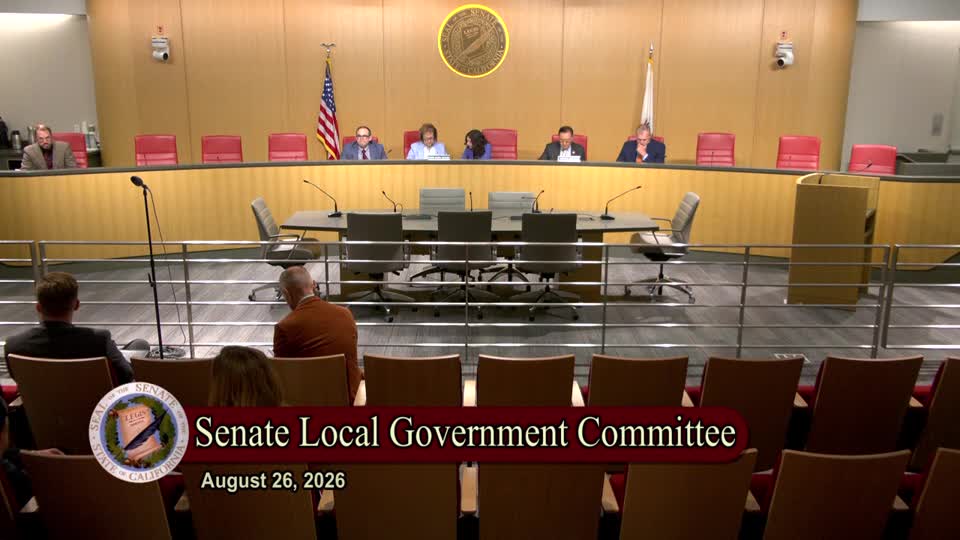 13MIN
Senate Standing Committee on Local Government
 1MIN
Assembly Floor
 6MIN
Assembly Standing Committee on Local Government
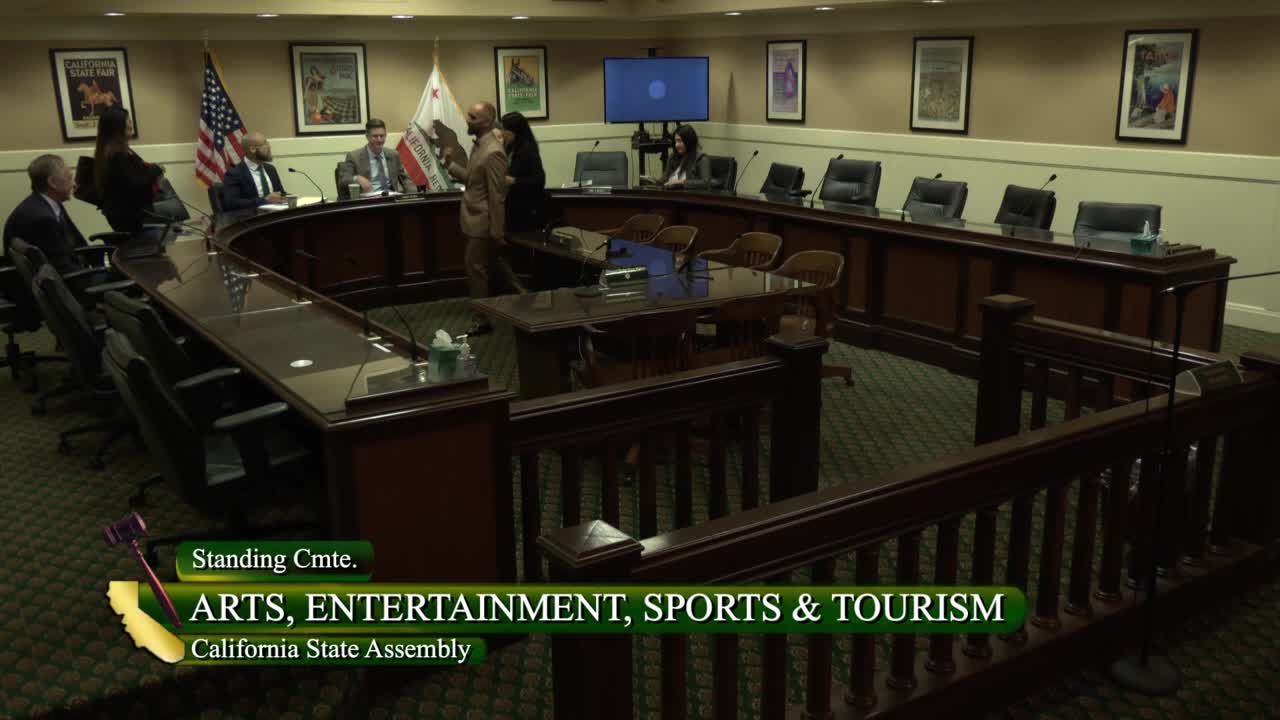 12MIN
Assembly Standing Committee on Arts, Entertainment, Sports, and Tourism
 8MIN
Senate Floor
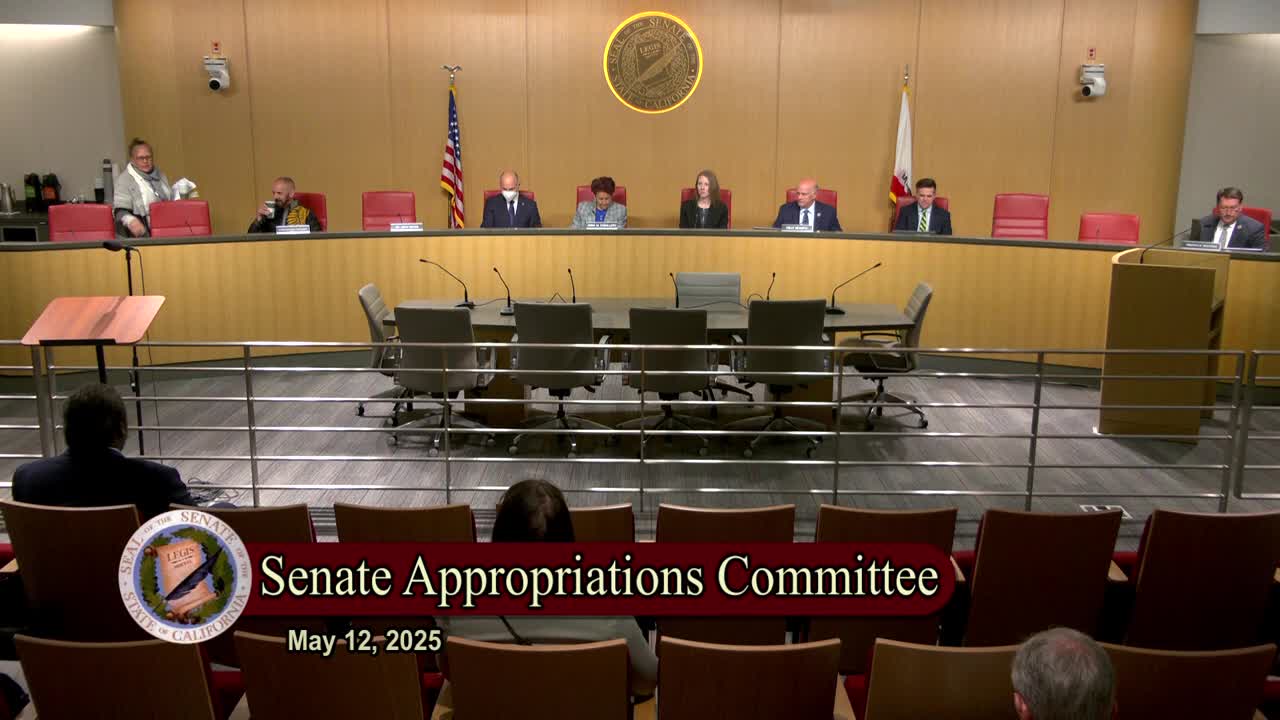 3MIN
Senate Standing Committee on Appropriations
 23MIN
Senate Standing Committee on Education
Bill Author

Bill Co-Author(s):
