SB 230: Workers’ compensation: firefighters.
- Session Year: 2025-2026
- House: Senate
- Latest Version Date: 2025-10-06
Current Status:
Passed
(2025-10-06: Chaptered by Secretary of State. Chapter 404, Statutes of 2025.)
Introduced
In Committee
Awaiting First Chamber Vote
Passed First Chamber
In Committee
Awaiting Second Chamber Vote
Passed Second Chamber
Enacted
Existing law establishes a workers compensation system, administered by the Administrative Director of the Division of Workers Compensation, to compensate an employee, as defined, for injuries sustained in the course of employment. Existing law creates a rebuttable presumption that specified injuries, such as cancer or post-traumatic stress disorder, developed or manifested in the course of employment of a specified member of law enforcement or a specified first responder arose out of and in the course of employment. Existing law makes these provisions applicable to certain active firefighting members, including active firefighting members of a fire department that serves a United States Department of Defense installation or active firefighting members of a fire department that serves a National Aeronautics and Space Administration installation.
This bill would, for injuries occurring on or after January 1, 2026, additionally apply these provisions to active firefighting members of a fire department that provides fire protection to a commercial airport, as specified.
Existing law creates a rebuttable presumption that other injuries, including pneumonia, tuberculosis, or meningitis, developed or manifested in the course of employment of a specified member of law enforcement or a specified first responder arose out of and in the course of employment. Existing law makes these provisions applicable to certain active firefighting members, including volunteers who are partly paid or fully paid by, among others, the Department of Forestry and Fire Protection or a county forestry or firefighting unit.
The bill would, for injuries occurring on or after January 1, 2026, also apply these provisions to active firefighting members of a fire department that provides fire protection to a commercial airport, National Aeronautics and Space Administration installation, or United States Department of Defense installation.
Existing law establishes a workers compensation system, administered by the Administrative Director of the Division of Workers Compensation, to compensate an employee, as defined, for injuries sustained in the course of employment. Existing law creates a rebuttable presumption that specified injuries, such as cancer or post-traumatic stress disorder, developed or manifested in the course of employment of a specified member of law enforcement or a specified first responder arose out of and in the course of employment. Existing law makes these provisions applicable to certain active firefighting members, including active firefighting members of a fire department that serves a United States Department of Defense installation or active firefighting members of a fire department that serves a National Aeronautics and Space Administration installation.
This bill would would, for injuries occurring on or after January 1, 2026, additionally apply these provisions to active firefighting members of a fire department that provides fire protection to a commercial airport, as specified.
Existing law creates a rebuttable presumption that other injuries, including pneumonia, tuberculosis, or meningitis, developed or manifested in the course of employment of a specified member of law enforcement or a specified first responder arose out of and in the course of employment. Existing law makes these provisions applicable to certain active firefighting members, including volunteers who are partly paid or fully paid by, among others, the Department of Forestry and Fire Protection or a county forestry or firefighting unit.
The bill would would, for injuries occurring on or after January 1, 2026, also apply these provisions to active firefighting members of a fire department that provides fire protection to a commercial airport, National Aeronautics and Space Administration installation, or United States Department of Defense installation.
Existing law establishes a workers compensation system, administered by the Administrative Director of the Division of Workers Compensation, to compensate an employee, as defined, for injuries sustained in the course of employment. Existing law creates a rebuttable presumption that specified injuries, such as cancer, cancer or post-traumatic stress disorder, developed or manifested in the course of employment of a specified member of law enforcement or a specified first responder arose out of and in the course of employment. Existing law makes these provisions applicable to certain active firefighting members, including volunteers who are partly paid or fully paid by, among others, the Department of Forestry and Fire Protection or a county forestry or firefighting unit. active firefighting members of a fire department that serves a United States Department of Defense installation or active firefighting members of a fire department that serves a National Aeronautics and Space Administration installation.
This bill would additionally apply these provisions to active firefighting members of a fire department that provides fire protection to a commercial airport, as specified.
Existing law creates a rebuttable presumption that other injuries, including pneumonia, tuberculosis, or meningitis, developed or manifested in the course of employment of a specified member of law enforcement or a specified first responder arose out of and in the course of employment. Existing law makes these provisions applicable to certain active firefighting members, including volunteers who are partly paid or fully paid by, among others, the Department of Forestry and Fire Protection or a county forestry or firefighting unit.
The bill would also apply these provisions to active firefighting members of a fire department that provides fire protection to a commercial airport, National Aeronautics and Space Administration installation, or United States Department of Defense installation.
Existing law establishes a workers compensation system, administered by the Administrative Director of the Division of Workers Compensation, to compensate an employee, as defined, for injuries sustained in the course of employment. Existing law creates a rebuttable presumption that specified injuries, such as cancer, developed or manifested in the course of employment of a specified member of law enforcement or a specified first responder arose out of and in the course of employment. Existing law makes these provisions applicable to certain active firefighting members, including volunteers who are partly paid or fully paid by, among others, the Department of Forestry and Fire Protection or a county forestry or firefighting unit.
This bill would additionally apply these provisions to active firefighting members of a fire department that provides fire protection to a commercial airport, as specified.
(a)(1)In the case of members of a sheriffs office or the California Highway Patrol, district attorneys staff of inspectors and investigators or of police or fire departments of cities, counties, cities and counties, districts or other public or municipal corporations or political subdivisions, whether those members are volunteer, partly paid, or fully paid, and in the case of active firefighting members of the Department of Forestry and Fire Protection whose duties require firefighting or of any county forestry or firefighting department or unit, whether voluntary, fully paid, or partly paid, and in the case of members of the warden service of the Wildlife Protection Branch of the Department of Fish and Game whose principal duties consist of active law enforcement service, excepting those whose principal duties are clerical or otherwise do not clearly fall within the scope of active law enforcement service such as stenographers, telephone operators, and other officeworkers, the term injury as used in this act includes hernia when any part of the hernia develops or manifests itself during a period while the member is in the service in the office, staff, division, department, or unit, and in the case of members of fire departments, except those whose principal duties are clerical, such as stenographers, telephone operators, and other officeworkers, and in the case of county forestry or firefighting departments, except those whose principal duties are clerical, such as stenographers, telephone operators, and other officeworkers, and in the case of active firefighting members of the Department of Forestry and Fire Protection whose duties require firefighting, and in the case of members of the warden service of the Wildlife Protection Branch of the Department of Fish and Game whose principal duties consist of active law enforcement service, excepting those whose principal duties are clerical or otherwise do not clearly fall within the scope of active law enforcement service such as stenographers, telephone operators, and other officeworkers, the term injury includes pneumonia and heart trouble that develops or manifests itself during a period while the member is in the service of the office, staff, department, or unit. In the case of regular salaried county or city and county peace officers, the term injury also includes any hernia that manifests itself or develops during a period while the officer is in the service. The compensation that is awarded for the hernia, heart trouble, or pneumonia shall include full hospital, surgical, medical treatment, disability indemnity, and death benefits, as provided by the workers compensation laws of this state.
(2)The hernia, heart trouble, or pneumonia so developing or manifesting itself in those cases shall be presumed to arise out of and in the course of the employment. This presumption is disputable and may be controverted by other evidence, but unless so controverted, the appeals board is bound to find in accordance with it. The presumption shall be extended to a member following termination of service for a period of three calendar months for each full year of the requisite service, but not to exceed 60 months in any circumstance, commencing with the last date actually worked in the specified capacity.
(3)The hernia, heart trouble, or pneumonia so developing or manifesting itself in those cases shall in no case be attributed to any disease existing prior to that development or manifestation.
(b)This section also applies to all of the following, for injuries occurring on or after January 1, 2026:
(1)Active firefighting members of a fire department that serves a United States Department of Defense installation and who are certified by the United States Department of Defense as meeting its standards for firefighters.
(2)Active firefighting members of a fire department that serves a National Aeronautics and Space Administration installation and who adhere to training standards established in accordance with Article 4 (commencing with Section 13155) of Chapter 1 of Part 2 of Division 12 of the Health and Safety Code.
(3)Active firefighting members of a fire department that provides fire protection to a commercial airport regulated by the Federal Aviation Administration (FAA) under Part 139 (commencing with Section 139.1) of Subchapter G of Chapter I of Title 14 of the Federal Code of Regulations and are trained and certified by the State Fire Marshal as meeting the standards of Fire Control 5 and Section 139.319 of Title 14 of the Federal Code of Regulations.
SEC. 2.Section 3212.1 of the Labor Code is amended to read:3212.1.(a)This section applies to all of the following:
(1)Active firefighting members, whether volunteers, partly paid, or fully paid, of all of the following fire departments:
(A)A fire department of a city, county, city and county, district, or other public or municipal corporation or political subdivision.
(B)A fire department of the University of California and the California State University.
(C)The Department of Forestry and Fire Protection.
(D)A county forestry or firefighting department or unit.
(2)Active firefighting members of a fire department that serves a United States Department of Defense installation and who are certified by the Department of Defense as meeting its standards for firefighters.
(3)Active firefighting members of a fire department that serves a National Aeronautics and Space Administration installation and who adhere to training standards established in accordance with Article 4 (commencing with Section 13155) of Chapter 1 of Part 2 of Division 12 of the Health and Safety Code.
(4)Active firefighting members of a fire department that provides fire protection to a commercial airport regulated by the Federal Aviation Administration (FAA) under Part 139 (commencing with Section 139.1) of Subchapter G of Chapter I of Title 14 of the Federal Code of Regulations and are trained and certified by the State Fire Marshal as meeting the standards of Fire Control 5 and Section 139.319 of Title 14 of the Federal Code of Regulations for injuries occurring on or after January 1, 2026.
(5)Peace officers, as defined in Section 830.1, subdivision (a) of Section 830.2, and subdivisions (a) and (b) of Section 830.37, of the Penal Code, who are primarily engaged in active law enforcement activities.
(6)(A)Fire and rescue services coordinators who work for the Office of Emergency Services.
(B)For purposes of this paragraph, fire and rescue services coordinators means coordinators with any of the following job classifications: coordinator, senior coordinator, or chief coordinator.
(b)The term injury, as used in this division, includes cancer, including leukemia, that develops or manifests itself during a period in which any member described in subdivision (a) is in the service of the department or unit, if the member demonstrates that they were exposed, while in the service of the department or unit, to a known carcinogen as defined by the International Agency for Research on Cancer, or as defined by the director.
(c)The compensation that is awarded for cancer shall include full hospital, surgical, medical treatment, disability indemnity, and death benefits, as provided by this division.
(d)The cancer so developing or manifesting itself in these cases shall be presumed to arise out of and in the course of the employment. This presumption is disputable and may be controverted by evidence that the primary site of the cancer has been established and that the carcinogen to which the member has demonstrated exposure is not reasonably linked to the disabling cancer. Unless so controverted, the appeals board is bound to find in accordance with the presumption. This presumption shall be extended to a member following termination of service for a period of three calendar months for each full year of the requisite service, but not to exceed 120 months in any circumstance, commencing with the last date actually worked in the specified capacity.
(e)The amendments to this section enacted during the 1999 portion of the 19992000 Regular Session shall be applied to claims for benefits filed or pending on or after January 1, 1997, including, but not limited to, claims for benefits filed on or after that date that have previously been denied, or that are being appealed following denial.
(f)This section shall be known, and may be cited, as the William Dallas Jones Cancer Presumption Act of 2010.
SEC. 3.Section 3212.15 of the Labor Code is amended to read:3212.15.(a)This section applies to all of the following:
(1)Active firefighting members, whether volunteers, partly paid, or fully paid, of all of the following fire departments:
(A)A fire department of a city, county, city and county, district, or other public or municipal corporation or political subdivision.
(B)A fire department of the University of California and the California State University.
(C)The Department of Forestry and Fire Protection.
(D)A county forestry or firefighting department or unit.
(2)Active firefighting members of a fire department that serves a United States Department of Defense installation and who are certified by the Department of Defense as meeting its standards for firefighters.
(3)Active firefighting members of a fire department that serves a National Aeronautics and Space Administration installation and who adhere to training standards established in accordance with Article 4 (commencing with Section 13155) of Chapter 1 of Part 2 of Division 12 of the Health and Safety Code.
(4)Active firefighting members of a fire department that provides fire protection to a commercial airport regulated by the Federal Aviation Administration (FAA) under Part 139 (commencing with Section 139.1) of Subchapter G of Chapter I of Title 14 of the Federal Code of Regulations and are trained and certified by the State Fire Marshal as meeting the standards of Fire Control 5 and Section 139.319 of Title 14 of the Federal Code of Regulations for injuries occurring on or after January 1, 2026.
(5)Peace officers, as defined in Section 830.1 of, subdivisions (a), (b), and (c) of Section 830.2 of, Section 830.32 of, subdivisions (a) and (b) of Section 830.37 of, Section 830.5 of, and Section 830.55 of, the Penal Code, who are primarily engaged in active law enforcement activities.
(6)(A)Fire and rescue services coordinators who work for the Office of Emergency Services.
(B)For purposes of this paragraph, fire and rescue services coordinators means coordinators with any of the following job classifications: coordinator, senior coordinator, or chief coordinator.
(b)In the case of a person described in subdivision (a), the term injury, as used in this division, includes post-traumatic stress disorder, as diagnosed according to the most recent edition of the Diagnostic and Statistical Manual of Mental Disorders published by the American Psychiatric Association and that develops or manifests itself during a period in which any person described in subdivision (a) is in the service of the department, unit, office, or agency.
(c)For an injury that is diagnosed as specified in subdivision (b):
(1)The compensation that is awarded shall include full hospital, surgical, medical treatment, disability indemnity, and death benefits, as provided by this division.
(2)The injury so developing or manifesting itself in these cases shall be presumed to arise out of and in the course of the employment. This presumption is disputable and may be controverted by other evidence, but unless so controverted, the appeals board is bound to find in accordance with the presumption. This presumption shall be extended to a person described in subdivision (a) following termination of service for a period of 3 calendar months for each full year of the requisite service, but not to exceed 60 months in any circumstance, commencing with the last date actually worked in the specified capacity.
(d)Compensation shall not be paid pursuant to this section for a claim of injury unless the person has performed services for the department, unit, office, or agency for at least six months. The six months of employment need not be continuous. This subdivision does not apply if the injury is caused by a sudden and extraordinary employment condition.
(e)This section, as added by Section 2 of Chapter 390 of the Statutes of 2019, applies to injuries occurring on or after January 1, 2020.
(f)(1)The Commission on Health and Safety and Workers Compensation shall submit a report to the Legislature analyzing the effectiveness of the presumption created by this section. The report shall review data from post-traumatic stress disorder injuries for which compensation is claimed under this section from January 1, 2020, through December 31, 2025. The report shall be provided to the Senate Committee on Labor, Public Employment and Retirement and the Assembly Committee on Insurance no later than January 1, 2027.
(2)The Commission on Health and Safety and Workers Compensation shall submit a report to the Legislature analyzing claims filed for post-traumatic stress disorder injury for which compensation is claimed by public safety dispatchers, public safety telecommunicators, and emergency response communication employees, from January 1, 2020, through December 31, 2023. The study shall review data, including, but not limited to, the total number of claims, frequency of claim acceptance, frequency of claim denial, the initial claim determination, and the average time between the filing of a claim and the final determination of compensability. The report shall be provided to the Senate Committee on Labor, Public Employment and Retirement and the Assembly Committee on Insurance no later than January 1, 2025. For purposes of this subdivision, a public safety dispatcher, public safety telecommunicator, or emergency response communication employee means an individual employed by a public safety agency whose primary responsibility is to receive, process, transmit, or dispatch emergency and nonemergency calls for law enforcement, fire, emergency medical, and other public safety services by telephone, radio, or other communication device, and includes an individual who supervises other individuals who perform these functions.
(3)A report submitted pursuant to this subdivision shall be submitted in compliance with Section 9795 of the Government Code.
(g)This section shall remain in effect only until January 1, 2029, and as of that date is repealed.
SEC. 4.Section 3212.6 of the Labor Code is amended to read:3212.6.(a)(1)In the case of a member of a police department of a city or county, or a member of the sheriffs office of a county, or a member of the California Highway Patrol, or an inspector or investigator in a district attorneys office of any county whose principal duties consist of active law enforcement service, or a prison or jail guard or correctional officer who is employed by a public agency, when that person is employed upon a regular, full-time salary, or in the case of members of fire departments of any city, county, or district, or other public or municipal corporations or political subdivisions, when those members are employed on a regular fully paid basis, and in the case of active firefighting members of the Department of Forestry and Fire Protection whose duties require firefighting and first-aid response services, or of any county forestry or firefighting department or unit, where those members are employed on a regular fully paid basis, excepting those whose principal duties are clerical or otherwise do not clearly fall within the scope of active law enforcement, firefighting, or emergency first-aid response service such as stenographers, telephone operators, and other officeworkers, the term injury includes tuberculosis that develops or manifests itself during a period while that member is in the service of that department or office. The compensation that is awarded for the tuberculosis shall include full hospital, surgical, medical treatment, disability indemnity, and death benefits as provided by the provisions of this division.
(2)The tuberculosis so developing or manifesting itself shall be presumed to arise out of and in the course of the employment. This presumption is disputable and may be controverted by other evidence, but unless so controverted, the appeals board is bound to find in accordance with it. This presumption shall be extended to a member following termination of service for a period of three calendar months for each full year of the requisite service, but not to exceed 60 months in any circumstance, commencing with the last date actually worked in the specified capacity.
(3)A public entity may require applicants for employment in firefighting positions who would be entitled to the benefits granted by this section to be tested for infection for tuberculosis.
(b)This section also applies to all of the following, for injuries occurring on or after January 1, 2026:
(1)Active firefighting members of a fire department that serves a United States Department of Defense installation and who are certified by the United States Department of Defense as meeting its standards for firefighters.
(2)Active firefighting members of a fire department that serves a National Aeronautics and Space Administration installation and who adhere to training standards established in accordance with Article 4 (commencing with Section 13155) of Chapter 1 of Part 2 of Division 12 of the Health and Safety Code.
(3)Active firefighting members of a fire department that provides fire protection to a commercial airport regulated by the Federal Aviation Administration (FAA) under Part 139 (commencing with Section 139.1) of Subchapter G of Chapter I of Title 14 of the Federal Code of Regulations and are trained and certified by the State Fire Marshal as meeting the standards of Fire Control 5 and Section 139.319 of Title 14 of the Federal Code of Regulations.
SEC. 5.Section 3212.8 of the Labor Code is amended to read:3212.8.(a)In the case of members of a sheriffs office, of police or fire departments of cities, counties, cities and counties, districts, or other public or municipal corporations or political subdivisions, or individuals described in Chapter 4.5 (commencing with Section 830) of Title 3 of Part 2 of the Penal Code, whether those persons are volunteer, partly paid, or fully paid, and in the case of active firefighting members of the Department of Forestry and Fire Protection, or of any county forestry or firefighting department or unit, whether voluntary, fully paid, or partly paid, excepting those whose principal duties are clerical or otherwise do not clearly fall within the scope of active law enforcement service or active firefighting services, such as stenographers, telephone operators, and other officeworkers, the term injury as used in this division, includes a blood-borne infectious disease or methicillin-resistant Staphylococcus aureus skin infection when any part of the blood-borne infectious disease or methicillin-resistant Staphylococcus aureus skin infection develops or manifests itself during a period while that person is in the service of that office, staff, division, department, or unit. The compensation that is awarded for a blood-borne infectious disease or methicillin-resistant Staphylococcus aureus skin infection shall include, but not be limited to, full hospital, surgical, medical treatment, disability indemnity, and death benefits, as provided by the workers compensation laws of this state.
(b)(1)The blood-borne infectious disease or methicillin-resistant Staphylococcus aureus skin infection so developing or manifesting itself in those cases shall be presumed to arise out of and in the course of the employment or service. This presumption is disputable and may be controverted by other evidence, but unless so controverted, the appeals board is bound to find in accordance with it.
(2)The blood-borne infectious disease presumption shall be extended to a person covered by subdivision (a) following termination of service for a period of three calendar months for each full year of service, but not to exceed 60 months in any circumstance, commencing with the last date actually worked in the specified capacity.
(3)Notwithstanding paragraph (2), the methicillin-resistant Staphylococcus aureus skin infection presumption shall be extended to a person covered by subdivision (a) following termination of service for a period of 90 days, commencing with the last day actually worked in the specified capacity.
(c)The blood-borne infectious disease or methicillin-resistant Staphylococcus aureus skin infection so developing or manifesting itself in those cases shall in no case be attributed to any disease or skin infection existing prior to that development or manifestation.
(d)For the purposes of this section, blood-borne infectious disease means a disease caused by exposure to pathogenic microorganisms that are present in human blood that can cause disease in humans, including those pathogenic microorganisms defined as blood-borne pathogens by the Department of Industrial Relations.
(e)This section also applies to all of the following, for injuries occurring on or after January 1, 2026:
(1)Active firefighting members of a fire department that serves a United States Department of Defense installation and who are certified by the United States Department of Defense as meeting its standards for firefighters.
(2)Active firefighting members of a fire department that serves a National Aeronautics and Space Administration installation and who adhere to training standards established in accordance with Article 4 (commencing with Section 13155) of Chapter 1 of Part 2 of Division 12 of the Health and Safety Code.
(3)Active firefighting members of a fire department that provides fire protection to a commercial airport regulated by the Federal Aviation Administration (FAA) under Part 139 (commencing with Section 139.1) of Subchapter G of Chapter I of Title 14 of the Federal Code of Regulations and are trained and certified by the State Fire Marshal as meeting the standards of Fire Control 5 and Section 139.319 of Title 14 of the Federal Code of Regulations.
SEC. 6.Section 3212.85 of the Labor Code is amended to read:3212.85.(a)This section applies to peace officers described in Sections 830.1 to 830.5, inclusive, of the Penal Code, and members of a fire department.
(b)The term injury, as used in this division, includes illness or resulting death due to exposure to a biochemical substance that develops or occurs during a period in which any member described in subdivision (a) is in the service of the department or unit.
(c)The compensation that is awarded for injury pursuant to this section shall include full hospital, surgical, medical treatment, disability indemnity, and death benefits, as provided by this division.
(d)The injury that develops or manifests itself in these cases shall be presumed to arise out of, and in the course of, the employment. This presumption is disputable and may be controverted by other evidence. Unless controverted, the appeals board is bound to find in accordance with the presumption. This presumption shall be extended to a member following termination of service for a period of three calendar months for each full year of the requisite service, but not to exceed 60 months in any circumstance, commencing with the last date actually worked in the specified capacity.
(e)For purposes of this section, the following definitions apply:
(1)Biochemical substance means any biological or chemical agent that may be used as a weapon of mass destruction, including, but not limited to, any chemical warfare agent, weaponized biological agent, or nuclear or radiological agent, as these terms are defined in Section 11417 of the Penal Code.
(2)Members of a fire department includes, but is not limited to, an apprentice, volunteer, partly paid, or fully paid member of any of the following:
(A)A fire department of a city, county, city and county, district, or other public or municipal corporation or political subdivision.
(B)A fire department of the University of California and the California State University.
(C)The Department of Forestry and Fire Protection.
(D)A county forestry or firefighting department or unit.
(E)Active firefighting members of a fire department that serves a United States Department of Defense installation and who are certified by the United States Department of Defense as meeting its standards for firefighters for injuries occurring on or after January 1, 2026.
(F)Active firefighting members of a fire department that serves a National Aeronautics and Space Administration installation and who adhere to training standards established in accordance with Article 4 (commencing with Section 13155) of Chapter 1 of Part 2 of Division 12 of the Health and Safety Code for injuries occurring on or after January 1, 2026.
(G)Active firefighting members of a fire department that provides fire protection to a commercial airport regulated by the Federal Aviation Administration (FAA) under Part 139 (commencing with Section 139.1) of Subchapter G of Chapter I of Title 14 of the Federal Code of Regulations and are trained and certified by the State Fire Marshal as meeting the standards of Fire Control 5 and Section 139.319 of Title 14 of the Code of Federal Regulations for injuries occurring on or after January 1, 2026.
SEC. 7.Section 3212.9 of the Labor Code is amended to read:3212.9.(a)(1)In the case of a member of a police department of a city, county, or city and county, or a member of the sheriffs office of a county, or a member of the California Highway Patrol, or a county probation officer, or an inspector or investigator in a district attorneys office of any county whose principal duties consist of active law enforcement service, when that person is employed on a regular, full-time salary, or in the case of a member of a fire department of any city, county, or district, or other public or municipal corporation or political subdivision, or any county forestry or firefighting department or unit, when those members are employed on a regular full-time salary, excepting those whose principal duties are clerical or otherwise do not clearly fall within the scope of active law enforcement or firefighting, such as stenographers, telephone operators, and other officeworkers, the term injury includes meningitis that develops or manifests itself during a period while that person is in the service of that department, office, or unit. The compensation that is awarded for the meningitis shall include full hospital, surgical, medical treatment, disability indemnity, and death benefits as provided by the provisions of this division.
(2)The meningitis so developing or manifesting itself shall be presumed to arise out of and in the course of the employment. This presumption is disputable and may be controverted by other evidence, but unless so controverted, the appeals board is bound to find in accordance with it. This presumption shall be extended to a person following termination of service for a period of three calendar months for each full year of the requisite service, but not to exceed 60 months in any circumstance, commencing with the last date actually worked in the specified capacity.
(b)This section also applies to all of the following, for injuries occurring on or after January 1, 2026:
(1)Active firefighting members of a fire department that serves a United States Department of Defense installation and who are certified by the United States Department of Defense as meeting its standards for firefighters.
(2)Active firefighting members of a fire department that serves a National Aeronautics and Space Administration installation and who adhere to training standards established in accordance with Article 4 (commencing with Section 13155) of Chapter 1 of Part 2 of Division 12 of the Health and Safety Code.
(3)Active firefighting members of a fire department that provides fire protection to a commercial airport regulated by the Federal Aviation Administration (FAA) under Part 139 (commencing with Section 139.1) of Subchapter G of Chapter I of Title 14 of the Federal Code of Regulations and are trained and certified by the State Fire Marshal as meeting the standards of Fire Control 5 and Section 139.319 of Title 14 of the Federal Code of Regulations.
(a)(1)In the case of members of a sheriffs office or the California Highway Patrol, district attorneys staff of inspectors and investigators or of police or fire departments of cities, counties, cities and counties, districts or other public or municipal corporations or political subdivisions, whether those members are volunteer, partly paid, or fully paid, and in the case of active firefighting members of the Department of Forestry and Fire Protection whose duties require firefighting or of any county forestry or firefighting department or unit, whether voluntary, fully paid, or partly paid, and in the case of members of the warden service of the Wildlife Protection Branch of the Department of Fish and Game whose principal duties consist of active law enforcement service, excepting those whose principal duties are clerical or otherwise do not clearly fall within the scope of active law enforcement service such as stenographers, telephone operators, and other officeworkers, the term injury as used in this act includes hernia when any part of the hernia develops or manifests itself during a period while the member is in the service in the office, staff, division, department, or unit, and in the case of members of fire departments, except those whose principal duties are clerical, such as stenographers, telephone operators, and other officeworkers, and in the case of county forestry or firefighting departments, except those whose principal duties are clerical, such as stenographers, telephone operators, and other officeworkers, and in the case of active firefighting members of the Department of Forestry and Fire Protection whose duties require firefighting, and in the case of members of the warden service of the Wildlife Protection Branch of the Department of Fish and Game whose principal duties consist of active law enforcement service, excepting those whose principal duties are clerical or otherwise do not clearly fall within the scope of active law enforcement service such as stenographers, telephone operators, and other officeworkers, the term injury includes pneumonia and heart trouble that develops or manifests itself during a period while the member is in the service of the office, staff, department, or unit. In the case of regular salaried county or city and county peace officers, the term injury also includes any hernia that manifests itself or develops during a period while the officer is in the service. The compensation that is awarded for the hernia, heart trouble, or pneumonia shall include full hospital, surgical, medical treatment, disability indemnity, and death benefits, as provided by the workers compensation laws of this state.
(2)The hernia, heart trouble, or pneumonia so developing or manifesting itself in those cases shall be presumed to arise out of and in the course of the employment. This presumption is disputable and may be controverted by other evidence, but unless so controverted, the appeals board is bound to find in accordance with it. The presumption shall be extended to a member following termination of service for a period of three calendar months for each full year of the requisite service, but not to exceed 60 months in any circumstance, commencing with the last date actually worked in the specified capacity.
(3)The hernia, heart trouble, or pneumonia so developing or manifesting itself in those cases shall in no case be attributed to any disease existing prior to that development or manifestation.
(b)This section also applies to all of the following: following, for injuries occurring on or after January 1, 2026:
(1)Active firefighting members of a fire department that serves a United States Department of Defense installation and who are certified by the United States Department of Defense as meeting its standards for firefighters.
(2)Active firefighting members of a fire department that serves a National Aeronautics and Space Administration installation and who adhere to training standards established in accordance with Article 4 (commencing with Section 13155) of Chapter 1 of Part 2 of Division 12 of the Health and Safety Code.
(3)Active firefighting members of a fire department that provides fire protection to a commercial airport regulated by the Federal Aviation Administration (FAA) under Part 139 (commencing with Section 139.1) of Subchapter G of Chapter I of Title 14 of the Federal Code of Regulations and are trained and certified by the State Fire Marshal as meeting the standards of Fire Control 5 and Section 139.319 of Title 14 of the Federal Code of Regulations.
SEC. 2.Section 3212.1 of the Labor Code is amended to read:3212.1.(a)This section applies to all of the following:
(1)Active firefighting members, whether volunteers, partly paid, or fully paid, of all of the following fire departments:
(A)A fire department of a city, county, city and county, district, or other public or municipal corporation or political subdivision.
(B)A fire department of the University of California and the California State University.
(C)The Department of Forestry and Fire Protection.
(D)A county forestry or firefighting department or unit.
(2)Active firefighting members of a fire department that serves a United States Department of Defense installation and who are certified by the Department of Defense as meeting its standards for firefighters.
(3)Active firefighting members of a fire department that serves a National Aeronautics and Space Administration installation and who adhere to training standards established in accordance with Article 4 (commencing with Section 13155) of Chapter 1 of Part 2 of Division 12 of the Health and Safety Code.
(4)Active firefighting members of a fire department that provides fire protection to a commercial airport regulated by the Federal Aviation Administration (FAA) under Part 139 (commencing with Section 139.1) of Subchapter G of Chapter I of Title 14 of the Federal Code of Regulations and are trained and certified by the State Fire Marshal as meeting the standards of Fire Control 5 and Section 139.319 of Title 14 of the Federal Code of Regulations. Regulations for injuries occurring on or after January 1, 2026.
(5)Peace officers, as defined in Section 830.1, subdivision (a) of Section 830.2, and subdivisions (a) and (b) of Section 830.37, of the Penal Code, who are primarily engaged in active law enforcement activities.
(6)(A)Fire and rescue services coordinators who work for the Office of Emergency Services.
(B)For purposes of this paragraph, fire and rescue services coordinators means coordinators with any of the following job classifications: coordinator, senior coordinator, or chief coordinator.
(b)The term injury, as used in this division, includes cancer, including leukemia, that develops or manifests itself during a period in which any member described in subdivision (a) is in the service of the department or unit, if the member demonstrates that they were exposed, while in the service of the department or unit, to a known carcinogen as defined by the International Agency for Research on Cancer, or as defined by the director.
(c)The compensation that is awarded for cancer shall include full hospital, surgical, medical treatment, disability indemnity, and death benefits, as provided by this division.
(d)The cancer so developing or manifesting itself in these cases shall be presumed to arise out of and in the course of the employment. This presumption is disputable and may be controverted by evidence that the primary site of the cancer has been established and that the carcinogen to which the member has demonstrated exposure is not reasonably linked to the disabling cancer. Unless so controverted, the appeals board is bound to find in accordance with the presumption. This presumption shall be extended to a member following termination of service for a period of three calendar months for each full year of the requisite service, but not to exceed 120 months in any circumstance, commencing with the last date actually worked in the specified capacity.
(e)The amendments to this section enacted during the 1999 portion of the 19992000 Regular Session shall be applied to claims for benefits filed or pending on or after January 1, 1997, including, but not limited to, claims for benefits filed on or after that date that have previously been denied, or that are being appealed following denial.
(f)This section shall be known, and may be cited, as the William Dallas Jones Cancer Presumption Act of 2010.
SEC. 3.Section 3212.15 of the Labor Code is amended to read:3212.15.(a)This section applies to all of the following:
(1)Active firefighting members, whether volunteers, partly paid, or fully paid, of all of the following fire departments:
(A)A fire department of a city, county, city and county, district, or other public or municipal corporation or political subdivision.
(B)A fire department of the University of California and the California State University.
(C)The Department of Forestry and Fire Protection.
(D)A county forestry or firefighting department or unit.
(2)Active firefighting members of a fire department that serves a United States Department of Defense installation and who are certified by the Department of Defense as meeting its standards for firefighters.
(3)Active firefighting members of a fire department that serves a National Aeronautics and Space Administration installation and who adhere to training standards established in accordance with Article 4 (commencing with Section 13155) of Chapter 1 of Part 2 of Division 12 of the Health and Safety Code.
(4)Active firefighting members of a fire department that provides fire protection to a commercial airport regulated by the Federal Aviation Administration (FAA) under Part 139 (commencing with Section 139.1) of Subchapter G of Chapter I of Title 14 of the Federal Code of Regulations and are trained and certified by the State Fire Marshal as meeting the standards of Fire Control 5 and Section 139.319 of Title 14 of the Federal Code of Regulations. Regulations for injuries occurring on or after January 1, 2026.
(5)Peace officers, as defined in Section 830.1 of, subdivisions (a), (b), and (c) of Section 830.2 of, Section 830.32 of, subdivisions (a) and (b) of Section 830.37 of, Section 830.5 of, and Section 830.55 of, the Penal Code, who are primarily engaged in active law enforcement activities.
(6)(A)Fire and rescue services coordinators who work for the Office of Emergency Services.
(B)For purposes of this paragraph, fire and rescue services coordinators means coordinators with any of the following job classifications: coordinator, senior coordinator, or chief coordinator.
(b)In the case of a person described in subdivision (a), the term injury, as used in this division, includes post-traumatic stress disorder, as diagnosed according to the most recent edition of the Diagnostic and Statistical Manual of Mental Disorders published by the American Psychiatric Association and that develops or manifests itself during a period in which any person described in subdivision (a) is in the service of the department, unit, office, or agency.
(c)For an injury that is diagnosed as specified in subdivision (b):
(1)The compensation that is awarded shall include full hospital, surgical, medical treatment, disability indemnity, and death benefits, as provided by this division.
(2)The injury so developing or manifesting itself in these cases shall be presumed to arise out of and in the course of the employment. This presumption is disputable and may be controverted by other evidence, but unless so controverted, the appeals board is bound to find in accordance with the presumption. This presumption shall be extended to a person described in subdivision (a) following termination of service for a period of 3 calendar months for each full year of the requisite service, but not to exceed 60 months in any circumstance, commencing with the last date actually worked in the specified capacity.
(d)Compensation shall not be paid pursuant to this section for a claim of injury unless the person has performed services for the department, unit, office, or agency for at least six months. The six months of employment need not be continuous. This subdivision does not apply if the injury is caused by a sudden and extraordinary employment condition.
(e)This section, as added by Section 2 of Chapter 390 of the Statutes of 2019, applies to injuries occurring on or after January 1, 2020.
(f)(1)The Commission on Health and Safety and Workers Compensation shall submit a report to the Legislature analyzing the effectiveness of the presumption created by this section. The report shall review data from post-traumatic stress disorder injuries for which compensation is claimed under this section from January 1, 2020, through December 31, 2025. The report shall be provided to the Senate Committee on Labor, Public Employment and Retirement and the Assembly Committee on Insurance no later than January 1, 2027.
(2)The Commission on Health and Safety and Workers Compensation shall submit a report to the Legislature analyzing claims filed for post-traumatic stress disorder injury for which compensation is claimed by public safety dispatchers, public safety telecommunicators, and emergency response communication employees, from January 1, 2020, through December 31, 2023. The study shall review data, including, but not limited to, the total number of claims, frequency of claim acceptance, frequency of claim denial, the initial claim determination, and the average time between the filing of a claim and the final determination of compensability. The report shall be provided to the Senate Committee on Labor, Public Employment and Retirement and the Assembly Committee on Insurance no later than January 1, 2025. For purposes of this subdivision, a public safety dispatcher, public safety telecommunicator, or emergency response communication employee means an individual employed by a public safety agency whose primary responsibility is to receive, process, transmit, or dispatch emergency and nonemergency calls for law enforcement, fire, emergency medical, and other public safety services by telephone, radio, or other communication device, and includes an individual who supervises other individuals who perform these functions.
(3)A report submitted pursuant to this subdivision shall be submitted in compliance with Section 9795 of the Government Code.
(g)This section shall remain in effect only until January 1, 2029, and as of that date is repealed.
SEC. 4.Section 3212.6 of the Labor Code is amended to read:3212.6.(a)(1)In the case of a member of a police department of a city or county, or a member of the sheriffs office of a county, or a member of the California Highway Patrol, or an inspector or investigator in a district attorneys office of any county whose principal duties consist of active law enforcement service, or a prison or jail guard or correctional officer who is employed by a public agency, when that person is employed upon a regular, full-time salary, or in the case of members of fire departments of any city, county, or district, or other public or municipal corporations or political subdivisions, when those members are employed on a regular fully paid basis, and in the case of active firefighting members of the Department of Forestry and Fire Protection whose duties require firefighting and first-aid response services, or of any county forestry or firefighting department or unit, where those members are employed on a regular fully paid basis, excepting those whose principal duties are clerical or otherwise do not clearly fall within the scope of active law enforcement, firefighting, or emergency first-aid response service such as stenographers, telephone operators, and other officeworkers, the term injury includes tuberculosis that develops or manifests itself during a period while that member is in the service of that department or office. The compensation that is awarded for the tuberculosis shall include full hospital, surgical, medical treatment, disability indemnity, and death benefits as provided by the provisions of this division.
(2)The tuberculosis so developing or manifesting itself shall be presumed to arise out of and in the course of the employment. This presumption is disputable and may be controverted by other evidence, but unless so controverted, the appeals board is bound to find in accordance with it. This presumption shall be extended to a member following termination of service for a period of three calendar months for each full year of the requisite service, but not to exceed 60 months in any circumstance, commencing with the last date actually worked in the specified capacity.
(3)A public entity may require applicants for employment in firefighting positions who would be entitled to the benefits granted by this section to be tested for infection for tuberculosis.
(b)This section also applies to all of the following: following, for injuries occurring on or after January 1, 2026:
(1)Active firefighting members of a fire department that serves a United States Department of Defense installation and who are certified by the United States Department of Defense as meeting its standards for firefighters.
(2)Active firefighting members of a fire department that serves a National Aeronautics and Space Administration installation and who adhere to training standards established in accordance with Article 4 (commencing with Section 13155) of Chapter 1 of Part 2 of Division 12 of the Health and Safety Code.
(3)Active firefighting members of a fire department that provides fire protection to a commercial airport regulated by the Federal Aviation Administration (FAA) under Part 139 (commencing with Section 139.1) of Subchapter G of Chapter I of Title 14 of the Federal Code of Regulations and are trained and certified by the State Fire Marshal as meeting the standards of Fire Control 5 and Section 139.319 of Title 14 of the Federal Code of Regulations.
SEC. 5.Section 3212.8 of the Labor Code is amended to read:3212.8.(a)In the case of members of a sheriffs office, of police or fire departments of cities, counties, cities and counties, districts, or other public or municipal corporations or political subdivisions, or individuals described in Chapter 4.5 (commencing with Section 830) of Title 3 of Part 2 of the Penal Code, whether those persons are volunteer, partly paid, or fully paid, and in the case of active firefighting members of the Department of Forestry and Fire Protection, or of any county forestry or firefighting department or unit, whether voluntary, fully paid, or partly paid, excepting those whose principal duties are clerical or otherwise do not clearly fall within the scope of active law enforcement service or active firefighting services, such as stenographers, telephone operators, and other officeworkers, the term injury as used in this division, includes a blood-borne infectious disease or methicillin-resistant Staphylococcus aureus skin infection when any part of the blood-borne infectious disease or methicillin-resistant Staphylococcus aureus skin infection develops or manifests itself during a period while that person is in the service of that office, staff, division, department, or unit. The compensation that is awarded for a blood-borne infectious disease or methicillin-resistant Staphylococcus aureus skin infection shall include, but not be limited to, full hospital, surgical, medical treatment, disability indemnity, and death benefits, as provided by the workers compensation laws of this state.
(b)(1)The blood-borne infectious disease or methicillin-resistant Staphylococcus aureus skin infection so developing or manifesting itself in those cases shall be presumed to arise out of and in the course of the employment or service. This presumption is disputable and may be controverted by other evidence, but unless so controverted, the appeals board is bound to find in accordance with it.
(2)The blood-borne infectious disease presumption shall be extended to a person covered by subdivision (a) following termination of service for a period of three calendar months for each full year of service, but not to exceed 60 months in any circumstance, commencing with the last date actually worked in the specified capacity.
(3)Notwithstanding paragraph (2), the methicillin-resistant Staphylococcus aureus skin infection presumption shall be extended to a person covered by subdivision (a) following termination of service for a period of 90 days, commencing with the last day actually worked in the specified capacity.
(c)The blood-borne infectious disease or methicillin-resistant Staphylococcus aureus skin infection so developing or manifesting itself in those cases shall in no case be attributed to any disease or skin infection existing prior to that development or manifestation.
(d)For the purposes of this section, blood-borne infectious disease means a disease caused by exposure to pathogenic microorganisms that are present in human blood that can cause disease in humans, including those pathogenic microorganisms defined as blood-borne pathogens by the Department of Industrial Relations.
(e)This section also applies to all of the following: following, for injuries occurring on or after January 1, 2026:
(1)Active firefighting members of a fire department that serves a United States Department of Defense installation and who are certified by the United States Department of Defense as meeting its standards for firefighters.
(2)Active firefighting members of a fire department that serves a National Aeronautics and Space Administration installation and who adhere to training standards established in accordance with Article 4 (commencing with Section 13155) of Chapter 1 of Part 2 of Division 12 of the Health and Safety Code.
(3)Active firefighting members of a fire department that provides fire protection to a commercial airport regulated by the Federal Aviation Administration (FAA) under Part 139 (commencing with Section 139.1) of Subchapter G of Chapter I of Title 14 of the Federal Code of Regulations and are trained and certified by the State Fire Marshal as meeting the standards of Fire Control 5 and Section 139.319 of Title 14 of the Federal Code of Regulations.
SEC. 6.Section 3212.85 of the Labor Code is amended to read:3212.85.(a)This section applies to peace officers described in Sections 830.1 to 830.5, inclusive, of the Penal Code, and members of a fire department.
(b)The term injury, as used in this division, includes illness or resulting death due to exposure to a biochemical substance that develops or occurs during a period in which any member described in subdivision (a) is in the service of the department or unit.
(c)The compensation that is awarded for injury pursuant to this section shall include full hospital, surgical, medical treatment, disability indemnity, and death benefits, as provided by this division.
(d)The injury that develops or manifests itself in these cases shall be presumed to arise out of, and in the course of, the employment. This presumption is disputable and may be controverted by other evidence. Unless controverted, the appeals board is bound to find in accordance with the presumption. This presumption shall be extended to a member following termination of service for a period of three calendar months for each full year of the requisite service, but not to exceed 60 months in any circumstance, commencing with the last date actually worked in the specified capacity.
(e)For purposes of this section, the following definitions apply:
(1)Biochemical substance means any biological or chemical agent that may be used as a weapon of mass destruction, including, but not limited to, any chemical warfare agent, weaponized biological agent, or nuclear or radiological agent, as these terms are defined in Section 11417 of the Penal Code.
(2)Members of a fire department includes, but is not limited to, an apprentice, volunteer, partly paid, or fully paid member of any of the following:
(A)A fire department of a city, county, city and county, district, or other public or municipal corporation or political subdivision.
(B)A fire department of the University of California and the California State University.
(C)The Department of Forestry and Fire Protection.
(D)A county forestry or firefighting department or unit.
(E)Active firefighting members of a fire department that serves a United States Department of Defense installation and who are certified by the United States Department of Defense as meeting its standards for firefighters. firefighters for injuries occurring on or after January 1, 2026.
(F)Active firefighting members of a fire department that serves a National Aeronautics and Space administration Administration installation and who adhere to training standards established in accordance with Article 4 (commencing with Section 13155) of Chapter 1 of Part 2 of Division 12 of the Health and Safety Code. Code for injuries occurring on or after January 1, 2026.
(G)Active firefighting members of a fire department that provides fire protection to a commercial airport regulated by the Federal Aviation Administration (FAA) under Part 139 (commencing with Section 139.1) of Subchapter G of Chapter I of Title 14 of the Federal Code of Regulations and are trained and certified by the State Fire Marshal as meeting the standards of Fire Control 5 and Section 139.319 of Title 14 of the Code of Federal Regulations. Regulations for injuries occurring on or after January 1, 2026.
SEC. 7.Section 3212.9 of the Labor Code is amended to read:3212.9.(a)(1)In the case of a member of a police department of a city, county, or city and county, or a member of the sheriffs office of a county, or a member of the California Highway Patrol, or a county probation officer, or an inspector or investigator in a district attorneys office of any county whose principal duties consist of active law enforcement service, when that person is employed on a regular, full-time salary, or in the case of a member of a fire department of any city, county, or district, or other public or municipal corporation or political subdivision, or any county forestry or firefighting department or unit, when those members are employed on a regular full-time salary, excepting those whose principal duties are clerical or otherwise do not clearly fall within the scope of active law enforcement or firefighting, such as stenographers, telephone operators, and other officeworkers, the term injury includes meningitis that develops or manifests itself during a period while that person is in the service of that department, office, or unit. The compensation that is awarded for the meningitis shall include full hospital, surgical, medical treatment, disability indemnity, and death benefits as provided by the provisions of this division.
(2)The meningitis so developing or manifesting itself shall be presumed to arise out of and in the course of the employment. This presumption is disputable and may be controverted by other evidence, but unless so controverted, the appeals board is bound to find in accordance with it. This presumption shall be extended to a person following termination of service for a period of three calendar months for each full year of the requisite service, but not to exceed 60 months in any circumstance, commencing with the last date actually worked in the specified capacity.
(b)This section also applies to all of the following: following, for injuries occurring on or after January 1, 2026:
(1)Active firefighting members of a fire department that serves a United States Department of Defense installation and who are certified by the United States Department of Defense as meeting its standards for firefighters.
(2)Active firefighting members of a fire department that serves a National Aeronautics and Space Administration installation and who adhere to training standards established in accordance with Article 4 (commencing with Section 13155) of Chapter 1 of Part 2 of Division 12 of the Health and Safety Code.
(3)Active firefighting members of a fire department that provides fire protection to a commercial airport regulated by the Federal Aviation Administration (FAA) under Part 139 (commencing with Section 139.1) of Subchapter G of Chapter I of Title 14 of the Federal Code of Regulations and are trained and certified by the State Fire Marshal as meeting the standards of Fire Control 5 and Section 139.319 of Title 14 of the Federal Code of Regulations.
(a)(1)In the case of members of a sheriffs office or the California Highway Patrol, district attorneys staff of inspectors and investigators or of police or fire departments of cities, counties, cities and counties, districts or other public or municipal corporations or political subdivisions, whether those members are volunteer, partly paid, or fully paid, and in the case of active firefighting members of the Department of Forestry and Fire Protection whose duties require firefighting or of any county forestry or firefighting department or unit, whether voluntary, fully paid, or partly paid, and in the case of members of the warden service of the Wildlife Protection Branch of the Department of Fish and Game whose principal duties consist of active law enforcement service, excepting those whose principal duties are clerical or otherwise do not clearly fall within the scope of active law enforcement service such as stenographers, telephone operators, and other officeworkers, the term injury as used in this act includes hernia when any part of the hernia develops or manifests itself during a period while the member is in the service in the office, staff, division, department, or unit, and in the case of members of fire departments, except those whose principal duties are clerical, such as stenographers, telephone operators, and other officeworkers, and in the case of county forestry or firefighting departments, except those whose principal duties are clerical, such as stenographers, telephone operators, and other officeworkers, and in the case of active firefighting members of the Department of Forestry and Fire Protection whose duties require firefighting, and in the case of members of the warden service of the Wildlife Protection Branch of the Department of Fish and Game whose principal duties consist of active law enforcement service, excepting those whose principal duties are clerical or otherwise do not clearly fall within the scope of active law enforcement service such as stenographers, telephone operators, and other officeworkers, the term injury includes pneumonia and heart trouble that develops or manifests itself during a period while the member is in the service of the office, staff, department, or unit. In the case of regular salaried county or city and county peace officers, the term injury also includes any hernia that manifests itself or develops during a period while the officer is in the service. The compensation that is awarded for the hernia, heart trouble, or pneumonia shall include full hospital, surgical, medical treatment, disability indemnity, and death benefits, as provided by the workers compensation laws of this state.
The(2)The hernia, heart trouble, or pneumonia so developing or manifesting itself in those cases shall be presumed to arise out of and in the course of the employment. This presumption is disputable and may be controverted by other evidence, but unless so controverted, the appeals board is bound to find in accordance with it. The presumption shall be extended to a member following termination of service for a period of three calendar months for each full year of the requisite service, but not to exceed 60 months in any circumstance, commencing with the last date actually worked in the specified capacity.
The(3)The hernia, heart trouble, or pneumonia so developing or manifesting itself in those cases shall in no case be attributed to any disease existing prior to that development or manifestation.
(b)This section also applies to all of the following:
(1)Active firefighting members of a fire department that serves a United States Department of Defense installation and who are certified by the United States Department of Defense as meeting its standards for firefighters.
(2)Active firefighting members of a fire department that serves a National Aeronautics and Space Administration installation and who adhere to training standards established in accordance with Article 4 (commencing with Section 13155) of Chapter 1 of Part 2 of Division 12 of the Health and Safety Code.
(3)Active firefighting members of a fire department that provides fire protection to a commercial airport regulated by the Federal Aviation Administration (FAA) under Part 139 (commencing with Section 139.1) of Subchapter G of Chapter I of Title 14 of the Federal Code of Regulations and are trained and certified by the State Fire Marshal as meeting the standards of Fire Control 5 and Section 139.319 of Title 14 of the Federal Code of Regulations.
SECTION 1.SEC. 2.Section 3212.1 of the Labor Code is amended to read:3212.1.(a)This section applies to all of the following:
(1)Active firefighting members, whether volunteers, partly paid, or fully paid, of all of the following fire departments:
(A)A fire department of a city, county, city and county, district, or other public or municipal corporation or political subdivision.
(B)A fire department of the University of California and the California State University.
(C)The Department of Forestry and Fire Protection.
(D)A county forestry or firefighting department or unit.
(2)Active firefighting members of a fire department that serves a United States Department of Defense installation and who are certified by the Department of Defense as meeting its standards for firefighters.
(3)Active firefighting members of a fire department that serves a National Aeronautics and Space Administration installation and who adhere to training standards established in accordance with Article 4 (commencing with Section 13155) of Chapter 1 of Part 2 of Division 12 of the Health and Safety Code.
(4)Active firefighting members of a fire department that provides fire protection to a commercial airport regulated by the Federal Aviation Administration (FAA) under Part 139 (commencing with Section 139.5) 139.1) of Subchapter G of Chapter I of Title 14 of the Federal Code of Regulations and are trained and certified by the State Fire Marshal as meeting the standards of Fire Control 5 and Section 139.319 of Title 14 of the Federal Code of Regulations.
(5)Peace officers, as defined in Section 830.1, subdivision (a) of Section 830.2, and subdivisions (a) and (b) of Section 830.37, of the Penal Code, who are primarily engaged in active law enforcement activities.
(6)(A)Fire and rescue services coordinators who work for the Office of Emergency Services.
(B)For purposes of this paragraph, fire and rescue services coordinators means coordinators with any of the following job classifications: coordinator, senior coordinator, or chief coordinator.
(b)The term injury, as used in this division, includes cancer, including leukemia, that develops or manifests itself during a period in which any member described in subdivision (a) is in the service of the department or unit, if the member demonstrates that they were exposed, while in the service of the department or unit, to a known carcinogen as defined by the International Agency for Research on Cancer, or as defined by the director.
(c)The compensation that is awarded for cancer shall include full hospital, surgical, medical treatment, disability indemnity, and death benefits, as provided by this division.
(d)The cancer so developing or manifesting itself in these cases shall be presumed to arise out of and in the course of the employment. This presumption is disputable and may be controverted by evidence that the primary site of the cancer has been established and that the carcinogen to which the member has demonstrated exposure is not reasonably linked to the disabling cancer. Unless so controverted, the appeals board is bound to find in accordance with the presumption. This presumption shall be extended to a member following termination of service for a period of three calendar months for each full year of the requisite service, but not to exceed 120 months in any circumstance, commencing with the last date actually worked in the specified capacity.
(e)The amendments to this section enacted during the 1999 portion of the 19992000 Regular Session shall be applied to claims for benefits filed or pending on or after January 1, 1997, including, but not limited to, claims for benefits filed on or after that date that have previously been denied, or that are being appealed following denial.
(f)This section shall be known, and may be cited, as the William Dallas Jones Cancer Presumption Act of 2010.
SEC. 3.Section 3212.15 of the Labor Code is amended to read:3212.15.(a)This section applies to all of the following:
(1)Active firefighting members, whether volunteers, partly paid, or fully paid, of all of the following fire departments:
(A)A fire department of a city, county, city and county, district, or other public or municipal corporation or political subdivision.
(B)A fire department of the University of California and the California State University.
(C)The Department of Forestry and Fire Protection.
(D)A county forestry or firefighting department or unit.
(2)Active firefighting members of a fire department that serves a United States Department of Defense installation and who are certified by the Department of Defense as meeting its standards for firefighters.
(3)Active firefighting members of a fire department that serves a National Aeronautics and Space Administration installation and who adhere to training standards established in accordance with Article 4 (commencing with Section 13155) of Chapter 1 of Part 2 of Division 12 of the Health and Safety Code.
(4)Active firefighting members of a fire department that provides fire protection to a commercial airport regulated by the Federal Aviation Administration (FAA) under Part 139 (commencing with Section 139.1) of Subchapter G of Chapter I of Title 14 of the Federal Code of Regulations and are trained and certified by the State Fire Marshal as meeting the standards of Fire Control 5 and Section 139.319 of Title 14 of the Federal Code of Regulations.
(4)(5)Peace officers, as defined in Section 830.1 of, subdivisions (a), (b), and (c) of Section 830.2 of, Section 830.32 of, subdivisions (a) and (b) of Section 830.37 of, Section 830.5 of, and Section 830.55 of, the Penal Code, who are primarily engaged in active law enforcement activities.
(5)(6)(A)Fire and rescue services coordinators who work for the Office of Emergency Services.
(B)For purposes of this paragraph, fire and rescue services coordinators means coordinators with any of the following job classifications: coordinator, senior coordinator, or chief coordinator.
(b)In the case of a person described in subdivision (a), the term injury, as used in this division, includes post-traumatic stress disorder, as diagnosed according to the most recent edition of the Diagnostic and Statistical Manual of Mental Disorders published by the American Psychiatric Association and that develops or manifests itself during a period in which any person described in subdivision (a) is in the service of the department, unit, office, or agency.
(c)For an injury that is diagnosed as specified in subdivision (b):
(1)The compensation that is awarded shall include full hospital, surgical, medical treatment, disability indemnity, and death benefits, as provided by this division.
(2)The injury so developing or manifesting itself in these cases shall be presumed to arise out of and in the course of the employment. This presumption is disputable and may be controverted by other evidence, but unless so controverted, the appeals board is bound to find in accordance with the presumption. This presumption shall be extended to a person described in subdivision (a) following termination of service for a period of 3 calendar months for each full year of the requisite service, but not to exceed 60 months in any circumstance, commencing with the last date actually worked in the specified capacity.
(d)Compensation shall not be paid pursuant to this section for a claim of injury unless the person has performed services for the department, unit, office, or agency for at least six months. The six months of employment need not be continuous. This subdivision does not apply if the injury is caused by a sudden and extraordinary employment condition.
(e)This section, as added by Section 2 of Chapter 390 of the Statutes of 2019, applies to injuries occurring on or after January 1, 2020.
(f)(1)The Commission on Health and Safety and Workers Compensation shall submit a report to the Legislature analyzing the effectiveness of the presumption created by this section. The report shall review data from post-traumatic stress disorder injuries for which compensation is claimed under this section from January 1, 2020, through December 31, 2025. The report shall be provided to the Senate Committee on Labor, Public Employment and Retirement and the Assembly Committee on Insurance no later than January 1, 2027.
(2)The Commission on Health and Safety and Workers Compensation shall submit a report to the Legislature analyzing claims filed for post-traumatic stress disorder injury for which compensation is claimed by public safety dispatchers, public safety telecommunicators, and emergency response communication employees, from January 1, 2020, through December 31, 2023. The study shall review data, including, but not limited to, the total number of claims, frequency of claim acceptance, frequency of claim denial, the initial claim determination, and the average time between the filing of a claim and the final determination of compensability. The report shall be provided to the Senate Committee on Labor, Public Employment and Retirement and the Assembly Committee on Insurance no later than January 1, 2025. For purposes of this subdivision, a public safety dispatcher, public safety telecommunicator, or emergency response communication employee means an individual employed by a public safety agency whose primary responsibility is to receive, process, transmit, or dispatch emergency and nonemergency calls for law enforcement, fire, emergency medical, and other public safety services by telephone, radio, or other communication device, and includes an individual who supervises other individuals who perform these functions.
(3)A report submitted pursuant to this subdivision shall be submitted in compliance with Section 9795 of the Government Code.
(g)This section shall remain in effect only until January 1, 2029, and as of that date is repealed.
SEC. 4.Section 3212.6 of the Labor Code is amended to read:3212.6.(a)(1)In the case of a member of a police department of a city or county, or a member of the sheriffs office of a county, or a member of the California Highway Patrol, or an inspector or investigator in a district attorneys office of any county whose principal duties consist of active law enforcement service, or a prison or jail guard or correctional officer who is employed by a public agency, when that person is employed upon a regular, full-time salary, or in the case of members of fire departments of any city, county, or district, or other public or municipal corporations or political subdivisions, when those members are employed on a regular fully paid basis, and in the case of active firefighting members of the Department of Forestry and Fire Protection whose duties require firefighting and first-aid response services, or of any county forestry or firefighting department or unit, where those members are employed on a regular fully paid basis, excepting those whose principal duties are clerical or otherwise do not clearly fall within the scope of active law enforcement, firefighting, or emergency first-aid response service such as stenographers, telephone operators, and other officeworkers, the term injury includes tuberculosis that develops or manifests itself during a period while that member is in the service of that department or office. The compensation that is awarded for the tuberculosis shall include full hospital, surgical, medical treatment, disability indemnity, and death benefits as provided by the provisions of this division.
The(2)The tuberculosis so developing or manifesting itself shall be presumed to arise out of and in the course of the employment. This presumption is disputable and may be controverted by other evidence, but unless so controverted, the appeals board is bound to find in accordance with it. This presumption shall be extended to a member following termination of service for a period of three calendar months for each full year of the requisite service, but not to exceed 60 months in any circumstance, commencing with the last date actually worked in the specified capacity.
A(3)A public entity may require applicants for employment in firefighting positions who would be entitled to the benefits granted by this section to be tested for infection for tuberculosis.
(b)This section also applies to all of the following:
(1)Active firefighting members of a fire department that serves a United States Department of Defense installation and who are certified by the United States Department of Defense as meeting its standards for firefighters.
(2)Active firefighting members of a fire department that serves a National Aeronautics and Space Administration installation and who adhere to training standards established in accordance with Article 4 (commencing with Section 13155) of Chapter 1 of Part 2 of Division 12 of the Health and Safety Code.
(3)Active firefighting members of a fire department that provides fire protection to a commercial airport regulated by the Federal Aviation Administration (FAA) under Part 139 (commencing with Section 139.1) of Subchapter G of Chapter I of Title 14 of the Federal Code of Regulations and are trained and certified by the State Fire Marshal as meeting the standards of Fire Control 5 and Section 139.319 of Title 14 of the Federal Code of Regulations.
SEC. 5.Section 3212.8 of the Labor Code is amended to read:3212.8.(a)In the case of members of a sheriffs office, of police or fire departments of cities, counties, cities and counties, districts, or other public or municipal corporations or political subdivisions, or individuals described in Chapter 4.5 (commencing with Section 830) of Title 3 of Part 2 of the Penal Code, whether those persons are volunteer, partly paid, or fully paid, and in the case of active firefighting members of the Department of Forestry and Fire Protection, or of any county forestry or firefighting department or unit, whether voluntary, fully paid, or partly paid, excepting those whose principal duties are clerical or otherwise do not clearly fall within the scope of active law enforcement service or active firefighting services, such as stenographers, telephone operators, and other office workers, officeworkers, the term injury as used in this division, includes a blood-borne infectious disease or methicillin-resistant Staphylococcus aureus skin infection when any part of the blood-borne infectious disease or methicillin-resistant Staphylococcus aureus skin infection develops or manifests itself during a period while that person is in the service of that office, staff, division, department, or unit. The compensation that is awarded for a blood-borne infectious disease or methicillin-resistant Staphylococcus aureus skin infection shall include, but not be limited to, full hospital, surgical, medical treatment, disability indemnity, and death benefits, as provided by the workers compensation laws of this state.
(b)(1)The blood-borne infectious disease or methicillin-resistant Staphylococcus aureus skin infection so developing or manifesting itself in those cases shall be presumed to arise out of and in the course of the employment or service. This presumption is disputable and may be controverted by other evidence, but unless so controverted, the appeals board is bound to find in accordance with it.
(2)The blood-borne infectious disease presumption shall be extended to a person covered by subdivision (a) following termination of service for a period of three calendar months for each full year of service, but not to exceed 60 months in any circumstance, commencing with the last date actually worked in the specified capacity.
(3)Notwithstanding paragraph (2), the methicillin-resistant Staphylococcus aureus skin infection presumption shall be extended to a person covered by subdivision (a) following termination of service for a period of 90 days, commencing with the last day actually worked in the specified capacity.
(c)The blood-borne infectious disease or methicillin-resistant Staphylococcus aureus skin infection so developing or manifesting itself in those cases shall in no case be attributed to any disease or skin infection existing prior to that development or manifestation.
(d)For the purposes of this section, blood-borne infectious disease means a disease caused by exposure to pathogenic microorganisms that are present in human blood that can cause disease in humans, including those pathogenic microorganisms defined as blood-borne pathogens by the Department of Industrial Relations.
(e)This section also applies to all of the following:
(1)Active firefighting members of a fire department that serves a United States Department of Defense installation and who are certified by the United States Department of Defense as meeting its standards for firefighters.
(2)Active firefighting members of a fire department that serves a National Aeronautics and Space Administration installation and who adhere to training standards established in accordance with Article 4 (commencing with Section 13155) of Chapter 1 of Part 2 of Division 12 of the Health and Safety Code.
(3)Active firefighting members of a fire department that provides fire protection to a commercial airport regulated by the Federal Aviation Administration (FAA) under Part 139 (commencing with Section 139.1) of Subchapter G of Chapter I of Title 14 of the Federal Code of Regulations and are trained and certified by the State Fire Marshal as meeting the standards of Fire Control 5 and Section 139.319 of Title 14 of the Federal Code of Regulations.
SEC. 6.Section 3212.85 of the Labor Code is amended to read:3212.85.(a)This section applies to peace officers described in Sections 830.1 to 830.5, inclusive, of the Penal Code, and members of a fire department.
(b)The term injury, as used in this division, includes illness or resulting death due to exposure to a biochemical substance that develops or occurs during a period in which any member described in subdivision (a) is in the service of the department or unit.
(c)The compensation that is awarded for injury pursuant to this section shall include full hospital, surgical, medical treatment, disability indemnity, and death benefits, as provided by this division.
(d)The injury that develops or manifests itself in these cases shall be presumed to arise out of, and in the course of, the employment. This presumption is disputable and may be controverted by other evidence. Unless controverted, the appeals board is bound to find in accordance with the presumption. This presumption shall be extended to a member following termination of service for a period of three calendar months for each full year of the requisite service, but not to exceed 60 months in any circumstance, commencing with the last date actually worked in the specified capacity.
(e)For purposes of this section, the following definitions apply:
(1)Biochemical substance means any biological or chemical agent that may be used as a weapon of mass destruction, including, but not limited to, any chemical warfare agent, weaponized biological agent, or nuclear or radiological agent, as these terms are defined in Section 11417 of the Penal Code.
(2)Members of a fire department includes, but is not limited to, an apprentice, volunteer, partly paid, or fully paid member of any of the following:
(A)A fire department of a city, county, city and county, district, or other public or municipal corporation or political subdivision.
(B)A fire department of the University of California and the California State University.
(C)The Department of Forestry and Fire Protection.
(D)A county forestry or firefighting department or unit.
(E)Active firefighting members of a fire department that serves a United States Department of Defense installation and who are certified by the United States Department of Defense as meeting its standards for firefighters.
(F)Active firefighting members of a fire department that serves a National Aeronautics and Space administration installation and who adhere to training standards established in accordance with Article 4 (commencing with Section 13155) of Chapter 1 of Part 2 of Division 12 of the Health and Safety Code.
(G)Active firefighting members of a fire department that provides fire protection to a commercial airport regulated by the Federal Aviation Administration (FAA) under Part 139 (commencing with Section 139.1) of Subchapter G of Chapter I of Title 14 of the Federal Code of Regulations and are trained and certified by the State Fire Marshal as meeting the standards of Fire Control 5 and Section 139.319 of Title 14 of the Code of Federal Regulations.
SEC. 7.Section 3212.9 of the Labor Code is amended to read:3212.9.(a)(1)In the case of a member of a police department of a city, county, or city and county, or a member of the sheriffs office of a county, or a member of the California Highway Patrol, or a county probation officer, or an inspector or investigator in a district attorneys office of any county whose principal duties consist of active law enforcement service, when that person is employed on a regular, full-time salary, or in the case of a member of a fire department of any city, county, or district, or other public or municipal corporation or political subdivision, or any county forestry or firefighting department or unit, when those members are employed on a regular full-time salary, excepting those whose principal duties are clerical or otherwise do not clearly fall within the scope of active law enforcement or firefighting, such as stenographers, telephone operators, and other officeworkers, the term injury includes meningitis that develops or manifests itself during a period while that person is in the service of that department, office, or unit. The compensation that is awarded for the meningitis shall include full hospital, surgical, medical treatment, disability indemnity, and death benefits as provided by the provisions of this division.
The(2)The meningitis so developing or manifesting itself shall be presumed to arise out of and in the course of the employment. This presumption is disputable and may be controverted by other evidence, but unless so controverted, the appeals board is bound to find in accordance with it. This presumption shall be extended to a person following termination of service for a period of three calendar months for each full year of the requisite service, but not to exceed 60 months in any circumstance, commencing with the last date actually worked in the specified capacity.
(b)This section also applies to all of the following:
(1)Active firefighting members of a fire department that serves a United States Department of Defense installation and who are certified by the United States Department of Defense as meeting its standards for firefighters.
(2)Active firefighting members of a fire department that serves a National Aeronautics and Space Administration installation and who adhere to training standards established in accordance with Article 4 (commencing with Section 13155) of Chapter 1 of Part 2 of Division 12 of the Health and Safety Code.
(3)Active firefighting members of a fire department that provides fire protection to a commercial airport regulated by the Federal Aviation Administration (FAA) under Part 139 (commencing with Section 139.1) of Subchapter G of Chapter I of Title 14 of the Federal Code of Regulations and are trained and certified by the State Fire Marshal as meeting the standards of Fire Control 5 and Section 139.319 of Title 14 of the Federal Code of Regulations.
(a)This section applies to all of the following:
(1)Active firefighting members, whether volunteers, partly paid, or fully paid, of all of the following fire departments:
(A)A fire department of a city, county, city and county, district, or other public or municipal corporation or political subdivision.
(B)A fire department of the University of California and the California State University.
(C)The Department of Forestry and Fire Protection.
(D)A county forestry or firefighting department or unit.
(2)Active firefighting members of a fire department that serves a United States Department of Defense installation and who are certified by the Department of Defense as meeting its standards for firefighters.
(3)Active firefighting members of a fire department that serves a National Aeronautics and Space Administration installation and who adhere to training standards established in accordance with Article 4 (commencing with Section 13155) of Chapter 1 of Part 2 of Division 12 of the Health and Safety Code.
(4)Active firefighting members of a fire department that provides fire protection to a commercial airport regulated by the Federal Aviation Administration (FAA) under Part 139 (commencing with Section 139.5) of Subchapter G of Chapter I of Title 14 of the Federal Code of Regulations and are trained and certified by the State Fire Marshal as meeting the standards of Fire Control 5 and Section 139.319 of Title 14 of the Federal Code of Regulations.
(4)(5)Peace officers, as defined in Section 830.1, subdivision (a) of Section 830.2, and subdivisions (a) and (b) of Section 830.37, of the Penal Code, who are primarily engaged in active law enforcement activities.
(5)(6)(A)Fire and rescue services coordinators who work for the Office of Emergency Services.
(B)For purposes of this paragraph, fire and rescue services coordinators means coordinators with any of the following job classifications: coordinator, senior coordinator, or chief coordinator.
(b)The term injury, as used in this division, includes cancer, including leukemia, that develops or manifests itself during a period in which any member described in subdivision (a) is in the service of the department or unit, if the member demonstrates that he or she was they were exposed, while in the service of the department or unit, to a known carcinogen as defined by the International Agency for Research on Cancer, or as defined by the director.
(c)The compensation that is awarded for cancer shall include full hospital, surgical, medical treatment, disability indemnity, and death benefits, as provided by this division.
(d)The cancer so developing or manifesting itself in these cases shall be presumed to arise out of and in the course of the employment. This presumption is disputable and may be controverted by evidence that the primary site of the cancer has been established and that the carcinogen to which the member has demonstrated exposure is not reasonably linked to the disabling cancer. Unless so controverted, the appeals board is bound to find in accordance with the presumption. This presumption shall be extended to a member following termination of service for a period of three calendar months for each full year of the requisite service, but not to exceed 120 months in any circumstance, commencing with the last date actually worked in the specified capacity.
(e)The amendments to this section enacted during the 1999 portion of the 19992000 Regular Session shall be applied to claims for benefits filed or pending on or after January 1, 1997, including, but not limited to, claims for benefits filed on or after that date that have previously been denied, or that are being appealed following denial.
(f)This section shall be known, and may be cited, as the William Dallas Jones Cancer Presumption Act of 2010.
|
Date
|
Status
|
|---|---|
| Oct 6, 2025 | Chaptered by Secretary of State. Chapter 404, Statutes of 2025. |
| Oct 6, 2025 | Approved by the Governor. |
| Sep 9, 2025 | Enrolled and presented to the Governor at 2 p.m. |
| Sep 4, 2025 | Assembly amendments concurred in. (Ayes 39. Noes 0. Page 2512.) Ordered to engrossing and enrolling. |
| Sep 3, 2025 | In Senate. Concurrence in Assembly amendments pending. |
| Sep 3, 2025 | Read third time. Passed. (Ayes 79. Noes 0. Page 2863.) Ordered to the Senate. |
| Aug 20, 2025 | Read third time and amended. |
| Aug 20, 2025 | Ordered to third reading. |
| Jul 14, 2025 | Ordered to third reading. |
| Jul 14, 2025 | From consent calendar on motion of Assembly Member Aguiar-Curry. |
| Jul 10, 2025 | Read second time. Ordered to consent calendar. |
| Jul 9, 2025 | From committee: Do pass. Ordered to consent calendar. (Ayes 15. Noes 0.) (July 9). |
| May 12, 2025 | Referred to Com. on INS. |
| Apr 1, 2025 | In Assembly. Read first time. Held at Desk. |
| Apr 1, 2025 | Read third time. Passed. (Ayes 39. Noes 0. Page 604.) Ordered to the Assembly. |
| Mar 27, 2025 | Read second time. Ordered to consent calendar. |
| Mar 26, 2025 | From committee: Do pass. Ordered to consent calendar. (Ayes 5. Noes 0. Page 567.) (March 26). |
| Mar 18, 2025 | Set for hearing March 26. |
| Mar 4, 2025 | From committee with author's amendments. Read second time and amended. Re-referred to Com. on L., P.E. & R. |
| Feb 5, 2025 | Referred to Com. on L., P.E. & R. |
| Jan 29, 2025 | From printer. May be acted upon on or after February 28. |
| Jan 28, 2025 | Introduced. Read first time. To Com. on RLS. for assignment. To print. |
|
Date
|
Description
|
Location
|
Votes
|
|
|---|---|---|---|---|
| Sep 4, 2025 | Unfinished Business SB230 Laird et al. Concurrence | Senate Floor |
Passed |
|
| Sep 3, 2025 | The committee(s) on CPN recommend(s) that the measure be PASSED, WITH AMENDMENTS and be recommitted | Assembly Floor |
Passed |
|
| Jul 9, 2025 | Do pass. To Consent Calendar. | Assembly Standing Committee on Insurance |
Passed |
|
| Apr 1, 2025 | Consent Calendar 2nd SB230 Laird et al. | Senate Floor |
Passed |
|
| Mar 26, 2025 | Do pass and be ordered to the Consent Calendar | Senate Standing Committee on Labor, Public Employment and Retirement |
Passed |
This list shows positions taken on this bill by organizations on the date displayed, which is linked to the original source.
Positions by individuals are not included.
|
Organization
|
Position
|
Date
|
|---|---|---|
| Burbank Airport Professional Firefighters Local I-16 | ** Support | |
| Burbank Airport Professional Firefighters, Local #i-61 | ** Support | |
| California Federation of Labor Unions | ** Support | |
| California Labor Federation | ** Support | |
| California Professional Firefighters | ** Support | |
| Moffett Field Firefighters Association Local I-79 | ** Support | |
| NASA JPL Professional Firefighters Local I-94 | ** Support |
SENATE RULES COMMITTEE Office of Senate Floor Analyses (916) 651-1520 Fax: (916) 327-4478 | SB 230 |
UNFINISHED BUSINESS
Bill No: SB 230
Author: Laird (D), et al.
Amended: 8/20/25
Vote: 21
SENATE LABOR, PUB. EMP. & RET. COMMITTEE: 5-0, 3/26/25
AYES: Smallwood-Cuevas, Strickland, Cortese, Durazo, Laird
SENATE FLOOR: 39-0, 4/1/25 (Consent)
AYES: Allen, Alvarado-Gil, Archuleta, Arreguín, Ashby, Becker, Blakespear, Cabaldon, Caballero, Cervantes, Choi, Cortese, Dahle, Durazo, Gonzalez, Grayson, Grove, Hurtado, Jones, Laird, Limón, McGuire, McNerney, Menjivar, Niello, Ochoa Bogh, Padilla, Pérez, Richardson, Rubio, Seyarto, Smallwood-Cuevas, Stern, Strickland, Umberg, Valladares, Wahab, Weber Pierson, Wiener
NO VOTE RECORDED: Reyes
ASSEMBLY FLOOR: 79-0, 9/3/25 - See last page for vote
SUBJECT: Workers’ compensation: firefighters
SOURCE: California Professional Firefighters
DIGEST:
This bill, for injuries occurring on or after January 1, 2026, expands rebuttable presumptions that specified diagnoses are occupational and therefore covered by workers’ compensation to active firefighting members of a fire department that serve a United States Department of Defense (DOD) installation, a National Aeronautics and Space Administration (NASA) installation, and provide fire protection to a commercial airport, as specified.
Assembly Amendments
specify this bill applies to injuries occurring on or after January 1, 2026.
ANALYSIS:
Existing law:
- Establishes a comprehensive system of workers’ compensation that provides a range of benefits for an employee who suffers from an injury or illness that arises out of and in the course of employment, regardless of fault. This system requires all employers to insure payment of benefits by either securing the consent of the Department of Industrial Relations to self-insure or by obtaining insurance from a company authorized by the state. (Labor Code §§3200-6002)
- Creates a series of rebuttable presumptions of an occupational injury for peace and safety officers for the purpose of the workers’ compensation system. These presumptions include: heart disease, hernias, pneumonia, cancer, tuberculosis, blood-borne infectious disease or methicillin-resistant Staphylococcus aureus skin infection (MRSA), bio-chemical illness, and meningitis. The compensation awarded for these injuries must include full hospital, surgical, medical treatment, disability indemnity, and death benefits, as provided by workers’ compensation law. (Labor Code §§3212-3213.2)
- Provides, until January 1, 2029, a rebuttable presumption that a diagnosis of Post-Traumatic Stress Disorder (PTSD) injuries for specified peace officers and firefighters is an occupational injury. The benefit includes full hospital, surgical, medical treatment, disability indemnity, and death benefits, but only applies to peace officers who have served at least six months. (Labor Code §3212.15)
This bill:
- For injuries occurring on or after January 1, 2026, expands the rebuttable presumptions for heart disease, hernias, pneumonia, tuberculosis, blood-borne infectious disease or MRSA, bio-chemical illness, and meningitis to all of the following active firefighting members of:
- A fire department that serves a DOD installation and is certified by the DOD as meeting its standards for firefighters.
- A fire department that serves a NASA installation and adheres to training standards established in accordance with specified Health and Safety Code provisions.
- A fire department that provides fire protection to a commercial airport regulated by the Federal Aviation Administration (FAA) and is trained and certified by the State Fire Marshall, as specified.
- For injuries occurring on or after January 1, 2026, expands the rebuttable presumptions for cancer and post-traumatic stress disorder injuries to active firefighting members of a fire department that provides fire protection to a commercial airport, as specified.
Background
Workers’ Compensation Presumptions. The Legislature has created disputable or rebuttable presumptions within the workers’ compensation system, which shifts the burden of proof in an injury claim from the employee to the employer. If an injury is covered by a presumption, the employer, in most cases, carries a larger burden to prove the injury is not related to work. For certain occupations, such as firefighters and peace officers, where employees can be exposed to more types of injuries than in other occupations, the law provides presumptions for injury and illness more likely to be caused by work-related exposure.
Currently, some firefighters have rebuttable presumptions that the following diagnoses are occupational injuries for purposes of workers’ compensation coverage:
- Heart disease, hernias, pneumonia,
- Cancer,
- Post-traumatic stress disorder injuries (PTSI)[1]
- Tuberculosis,
- Blood-borne infectious disease or MRSA
- Bio-chemical illness
- Meningitis
Under existing law, active firefighting members of a fire department that provides fire protection to a NASA installation, or DOD installation have rebuttable presumptions only for cancer and PTSI. This bill proposes to extend the full list of rebuttable presumptions - heart disease, hernias, pneumonia, tuberculosis, MRSA, bio-chemical illness, and meningitis – that are occupational injuries to these firefighters.
When originally created, the presumption of cancer as an occupational injury was only extended to city, county, city and county, and municipal fire departments, as well as the University of California and the California State University fire departments. Over time, this exemption has been extended to additional groups of firefighters, including fire departments on DOD installations (SB 1271, 2008), and then to firefighters at NASA (SB 585, 2011).
The table below shows which firefighter workers’ compensation presumptions exist in current law.
Workers’ Compensation Presumptions | DOD Firefighters | NASA Firefighters | Commercial airport Firefighters |
Heart, hernia, pneumonia [2] | No | No | No |
Cancer [3] | Included | Included | No |
Post- traumatic disorder injuries (PTSI) [4] | Included | Included | No |
Tuberculosis [5] | No | No | No |
Blood-borne disease & MRSA [6] | No | No | No |
Biochemical [7] | No | No | No |
Meningitis [8] | No | No | No |
This bill proposes to expand all of the existing workers’ compensation presumptions, as shown in the table above, to firefighters at DOD, NASA, and commercial airports, as defined.
According to the author and sponsors, closing the gap on the workers’ compensation presumptions for firefighters employed at NASA, DOD installations, and at commercial airports will cover about 538 additional firefighters (452 working at the DOD and NASA, and 86 covering the airports).
Although firefighters at a commercial airport are not included in any of the existing rebuttable presumption protections, these firefighters were included in the rebuttable presumptions for COVID-19, which expired on January 1, 2024.
[NOTE: See the Senate Labor, Public Employment and Retirement Committee analysis for detailed background on this bill.]
Prior/Related Legislation
SB 623 (Laird, Chapter 621, Statutes of 2023) extended the sunset until January 1, 2029 for a rebuttable presumption that a diagnosis of post-traumatic stress disorder injuries for specified peace officers and firefighters is an occupational injury, and required the Commission on Health and Safety and Workers’ Compensation to submit both reports to the Legislature analyzing the effectiveness of the presumption and a review of claims filed by specified types of employees not included in the presumption, such as public safety dispatchers, as defined.
AB 699 (Weber, 2023) would have extended rebuttable presumptions for hernia, pneumonia, heart trouble, cancer, tuberculosis, blood-borne infectious disease, methicillin-resistant Staphylococcus aureus skin infection, and meningitis-related illnesses and injuries to a lifeguard employed on a year-round, full-time basis in the Boating Safety Unit by the City of San Diego Fire-Rescue Department, as specified. It would also have expanded the presumptions for post-traumatic stress disorder or exposure to biochemical substances, as defined, to a lifeguard employed in the Boating Safety Unit by the City of San Diego Fire-Rescue Department. This bill was vetoed.
AB 597 (Rodriguez, 2023) would have, for injuries occurring on or after January 1, 2025, created a rebuttable presumption for emergency medical technicians and paramedics that PTSI is an occupational injury and covered under workers’ compensation. This bill was held in the Assembly Insurance Committee.
SB 284 (Stern, 2022) would have expanded the existing PTSI rebuttable presumption to specified public first responders. This bill was vetoed.
SB 1159 (Hill, Chapter 85, Statutes of 2020) created a rebuttable presumption for specified employees, including active firefighting members of a fire department that provides fire protection to a commercial airport, as defined, that illness or death resulting from COVID-19 under specified circumstances, and until January 1, 2023, is an occupational injury and therefore covered by workers’ compensation.
SB 542 (Stern, Chapter 390, Statutes of 2019) created the rebuttable presumption for specified peace officers that a diagnosis of PTSI is occupational and therefore covered by workers’ compensation.
SB 585 (Fong, Chapter 550, Statutes of 2011) extended the rebuttable presumption that cancer is an occupational injury and covered by workers’ compensation to active firefighting members of a fire department serving a NASA installation who adhere to specified training standards.
SB 1271 (Cedillo, Chapter 747, Statutes of 2008) extended the rebuttable presumption of cancer as an occupational injury for firefighters to firefighters on DOD installations.
FISCAL EFFECT: Appropriation: No Fiscal Com.: No Local: No
SUPPORT: (Verified 9/3/25)
California Professional Firefighters (Source)
Burbank Airport Professional Firefighters Local I-16
Burbank Airport Professional Firefighters, Local #i-61
California Federation of Labor Unions
California Labor Federation
Moffett Field Firefighters Association Local I-79
NASA JPL Professional Firefighters Local I-94
OPPOSITION: (Verified 9/3/25)
None received
ARGUMENTS IN SUPPORT:
According to the sponsors, the California Professional Firefighters:
“Firefighters and other public safety employees work in dangerous, demanding jobs for the public good, risking their lives each day protecting their communities. The nature of their work is such that certain injuries and illnesses are more likely contracted on the job than that of other professions, oftentimes with catastrophic or deadly consequences. It is on account of these dangers and many others that over the course of the last 40 years lawmakers have established rebuttable presumptions in the workers’ compensation system to improve access to care for injured workers, allow them to more efficiently adjudicate their claims, and successfully return to the job they love. Additionally, presumptions serve to streamline these claims and reduce frictional costs within the system. The protections provided by workers’ compensation presumptions are invaluable to the firefighters that are impacted by job-caused illnesses. When diagnosed with a serious illness such as cancer or heart disease, the most important focus should be on treatment and recovery, not struggling to have a workers’ compensation claim approved. Unfortunately, not all California firefighters are extended these critical protections. Firefighters who are employed at Department of Defense installations, airports, and NASA facilities are not included in most, and in some cases, all of the Labor Code sections that establish the presumptions, leaving them vulnerable to cruel denials when they are stricken with the same illnesses as their brothers and sisters throughout the state.”
ASSEMBLY FLOOR: 79-0, 9/3/25
AYES: Addis, Aguiar-Curry, Ahrens, Alanis, Alvarez, Arambula, Ávila Farías, Bains, Bauer-Kahan, Bennett, Berman, Boerner, Bonta, Bryan, Calderon, Caloza, Carrillo, Castillo, Chen, Connolly, Davies, DeMaio, Dixon, Elhawary, Ellis, Flora, Fong, Gabriel, Gallagher, Garcia, Gipson, Jeff Gonzalez, Mark González, Hadwick, Haney, Harabedian, Hart, Hoover, Irwin, Jackson, Kalra, Krell, Lackey, Lee, Lowenthal, Macedo, McKinnor, Muratsuchi, Nguyen, Ortega, Pacheco, Papan, Patel, Patterson, Pellerin, Petrie-Norris, Quirk-Silva, Ramos, Ransom, Celeste Rodriguez, Michelle Rodriguez, Rogers, Blanca Rubio, Sanchez, Schiavo, Schultz, Sharp-Collins, Solache, Soria, Stefani, Ta, Tangipa, Valencia, Wallis, Ward, Wicks, Wilson, Zbur, Rivas
Prepared by: Jazmin Marroquin / L., P.E. & R. / (916) 651-1556
9/14/26 11:02:51
**** END ****
SENATE RULES COMMITTEE Office of Senate Floor Analyses (916) 651-1520 Fax: (916) 327-4478 | SB 230 |
UNFINISHED BUSINESS
Bill No: SB 230
Author: Laird (D), et al.
Amended: 8/20/25 in Assembly
Vote: 21
SENATE LABOR, PUB. EMP. & RET. COMMITTEE: 5-0, 3/26/25
AYES: Smallwood-Cuevas, Strickland, Cortese, Durazo, Laird
SENATE FLOOR: 39-0, 4/1/25 (Consent)
AYES: Allen, Alvarado-Gil, Archuleta, Arreguín, Ashby, Becker, Blakespear, Cabaldon, Caballero, Cervantes, Choi, Cortese, Dahle, Durazo, Gonzalez, Grayson, Grove, Hurtado, Jones, Laird, Limón, McGuire, McNerney, Menjivar, Niello, Ochoa Bogh, Padilla, Pérez, Richardson, Rubio, Seyarto, Smallwood-Cuevas, Stern, Strickland, Umberg, Valladares, Wahab, Weber Pierson, Wiener
NO VOTE RECORDED: Reyes
ASSEMBLY FLOOR: 79-0, 9/3/25 - See last page for vote
SUBJECT: Workers’ compensation: firefighters
SOURCE: California Professional Firefighters
DIGEST:
This bill, for injuries occurring on or after January 1, 2026, expands rebuttable presumptions that specified diagnoses are occupational and therefore covered by workers’ compensation to active firefighting members of a fire department that serve a United States Department of Defense (DOD) installation, a National Aeronautics and Space Administration (NASA) installation, and provide fire protection to a commercial airport, as specified.
Assembly Amendments
specify this bill applies to injuries occurring on or after January 1, 2026.
ANALYSIS:
Existing law:
- Establishes a comprehensive system of workers’ compensation that provides a range of benefits for an employee who suffers from an injury or illness that arises out of and in the course of employment, regardless of fault. This system requires all employers to insure payment of benefits by either securing the consent of the Department of Industrial Relations to self-insure or by obtaining insurance from a company authorized by the state. (Labor Code §§3200-6002)
- Creates a series of rebuttable presumptions of an occupational injury for peace and safety officers for the purpose of the workers’ compensation system. These presumptions include: heart disease, hernias, pneumonia, cancer, tuberculosis, blood-borne infectious disease or methicillin-resistant Staphylococcus aureus skin infection (MRSA), bio-chemical illness, and meningitis. The compensation awarded for these injuries must include full hospital, surgical, medical treatment, disability indemnity, and death benefits, as provided by workers’ compensation law. (Labor Code §§3212-3213.2)
- Provides, until January 1, 2029, a rebuttable presumption that a diagnosis of Post-Traumatic Stress Disorder (PTSD) injuries for specified peace officers and firefighters is an occupational injury. The benefit includes full hospital, surgical, medical treatment, disability indemnity, and death benefits, but only applies to peace officers who have served at least six months. (Labor Code §3212.15)
This bill:
- For injuries occurring on or after January 1, 2026, expands the rebuttable presumptions for heart disease, hernias, pneumonia, tuberculosis, blood-borne infectious disease or MRSA, bio-chemical illness, and meningitis to all of the following active firefighting members of:
- A fire department that serves a DOD installation and is certified by the DOD as meeting its standards for firefighters.
- A fire department that serves a NASA installation and adheres to training standards established in accordance with specified Health and Safety Code provisions.
- A fire department that provides fire protection to a commercial airport regulated by the Federal Aviation Administration (FAA) and is trained and certified by the State Fire Marshall, as specified.
- For injuries occurring on or after January 1, 2026, expands the rebuttable presumptions for cancer and post-traumatic stress disorder injuries to active firefighting members of a fire department that provides fire protection to a commercial airport, as specified.
Background
Workers’ Compensation Presumptions. The Legislature has created disputable or rebuttable presumptions within the workers’ compensation system, which shifts the burden of proof in an injury claim from the employee to the employer. If an injury is covered by a presumption, the employer, in most cases, carries a larger burden to prove the injury is not related to work. For certain occupations, such as firefighters and peace officers, where employees can be exposed to more types of injuries than in other occupations, the law provides presumptions for injury and illness more likely to be caused by work-related exposure.
Currently, some firefighters have rebuttable presumptions that the following diagnoses are occupational injuries for purposes of workers’ compensation coverage:
- Heart disease, hernias, pneumonia,
- Cancer,
- Post-traumatic stress disorder injuries (PTSI)[1]
- Tuberculosis,
- Blood-borne infectious disease or MRSA
- Bio-chemical illness
- Meningitis
Under existing law, active firefighting members of a fire department that provides fire protection to a NASA installation, or DOD installation have rebuttable presumptions only for cancer and PTSI. This bill proposes to extend the full list of rebuttable presumptions - heart disease, hernias, pneumonia, tuberculosis, MRSA, bio-chemical illness, and meningitis – that are occupational injuries to these firefighters.
When originally created, the presumption of cancer as an occupational injury was only extended to city, county, city and county, and municipal fire departments, as well as the University of California and the California State University fire departments. Over time, this exemption has been extended to additional groups of firefighters, including fire departments on DOD installations (SB 1271, 2008), and then to firefighters at NASA (SB 585, 2011).
The table below shows which firefighter workers’ compensation presumptions exist in current law.
Workers’ Compensation Presumptions | DOD Firefighters | NASA Firefighters | Commercial airport Firefighters |
Heart, hernia, pneumonia [2] | No | No | No |
Cancer [3] | Included | Included | No |
Post- traumatic disorder injuries (PTSI) [4] | Included | Included | No |
Tuberculosis [5] | No | No | No |
Blood-borne disease & MRSA [6] | No | No | No |
Biochemical [7] | No | No | No |
Meningitis [8] | No | No | No |
This bill proposes to expand all of the existing workers’ compensation presumptions, as shown in the table above, to firefighters at DOD, NASA, and commercial airports, as defined.
According to the author and sponsors, closing the gap on the workers’ compensation presumptions for firefighters employed at NASA, DOD installations, and at commercial airports will cover about 538 additional firefighters (452 working at the DOD and NASA, and 86 covering the airports).
Although firefighters at a commercial airport are not included in any of the existing rebuttable presumption protections, these firefighters were included in the rebuttable presumptions for COVID-19, which expired on January 1, 2024.
[NOTE: See the Senate Labor, Public Employment and Retirement Committee analysis for detailed background on this bill.]
Prior/Related Legislation
SB 623 (Laird, Chapter 621, Statutes of 2023) extended the sunset until January 1, 2029 for a rebuttable presumption that a diagnosis of post-traumatic stress disorder injuries for specified peace officers and firefighters is an occupational injury, and required the Commission on Health and Safety and Workers’ Compensation to submit both reports to the Legislature analyzing the effectiveness of the presumption and a review of claims filed by specified types of employees not included in the presumption, such as public safety dispatchers, as defined.
AB 699 (Weber, 2023) would have extended rebuttable presumptions for hernia, pneumonia, heart trouble, cancer, tuberculosis, blood-borne infectious disease, methicillin-resistant Staphylococcus aureus skin infection, and meningitis-related illnesses and injuries to a lifeguard employed on a year-round, full-time basis in the Boating Safety Unit by the City of San Diego Fire-Rescue Department, as specified. It would also have expanded the presumptions for post-traumatic stress disorder or exposure to biochemical substances, as defined, to a lifeguard employed in the Boating Safety Unit by the City of San Diego Fire-Rescue Department. This bill was vetoed.
AB 597 (Rodriguez, 2023) would have, for injuries occurring on or after January 1, 2025, created a rebuttable presumption for emergency medical technicians and paramedics that PTSI is an occupational injury and covered under workers’ compensation. This bill was held in the Assembly Insurance Committee.
SB 284 (Stern, 2022) would have expanded the existing PTSI rebuttable presumption to specified public first responders. This bill was vetoed.
SB 1159 (Hill, Chapter 85, Statutes of 2020) created a rebuttable presumption for specified employees, including active firefighting members of a fire department that provides fire protection to a commercial airport, as defined, that illness or death resulting from COVID-19 under specified circumstances, and until January 1, 2023, is an occupational injury and therefore covered by workers’ compensation.
SB 542 (Stern, Chapter 390, Statutes of 2019) created the rebuttable presumption for specified peace officers that a diagnosis of PTSI is occupational and therefore covered by workers’ compensation.
SB 585 (Fong, Chapter 550, Statutes of 2011) extended the rebuttable presumption that cancer is an occupational injury and covered by workers’ compensation to active firefighting members of a fire department serving a NASA installation who adhere to specified training standards.
SB 1271 (Cedillo, Chapter 747, Statutes of 2008) extended the rebuttable presumption of cancer as an occupational injury for firefighters to firefighters on DOD installations.
FISCAL EFFECT: Appropriation: No Fiscal Com.: No Local: No
SUPPORT: (Verified 9/3/25)
California Professional Firefighters (Source)
Burbank Airport Professional Firefighters Local I-16
Burbank Airport Professional Firefighters, Local #i-61
California Federation of Labor Unions
California Labor Federation
Moffett Field Firefighters Association Local I-79
NASA JPL Professional Firefighters Local I-94
OPPOSITION: (Verified 9/3/25)
None received
ARGUMENTS IN SUPPORT:
According to the sponsors, the California Professional Firefighters:
“Firefighters and other public safety employees work in dangerous, demanding jobs for the public good, risking their lives each day protecting their communities. The nature of their work is such that certain injuries and illnesses are more likely contracted on the job than that of other professions, oftentimes with catastrophic or deadly consequences. It is on account of these dangers and many others that over the course of the last 40 years lawmakers have established rebuttable presumptions in the workers’ compensation system to improve access to care for injured workers, allow them to more efficiently adjudicate their claims, and successfully return to the job they love. Additionally, presumptions serve to streamline these claims and reduce frictional costs within the system. The protections provided by workers’ compensation presumptions are invaluable to the firefighters that are impacted by job-caused illnesses. When diagnosed with a serious illness such as cancer or heart disease, the most important focus should be on treatment and recovery, not struggling to have a workers’ compensation claim approved. Unfortunately, not all California firefighters are extended these critical protections. Firefighters who are employed at Department of Defense installations, airports, and NASA facilities are not included in most, and in some cases, all of the Labor Code sections that establish the presumptions, leaving them vulnerable to cruel denials when they are stricken with the same illnesses as their brothers and sisters throughout the state.”
Prepared by: Jazmin Marroquin / L., P.E. & R. / (916) 651-1556
9/3/25 18:38:08
**** END ****
SENATE THIRD READING
STR Bill Id:SB 230
Author:(Laird)
As Amended Ver:August 20, 2025
Majority vote
SUMMARY
Expands the classes of firefighters who receive presumptions for specific injuries or illnesses in the workers' compensation system occurring on or after January 1, 2026.
Major Provisions
- For injuries occurring on or after January 1, 2026, expands the rebuttable presumptions for heart disease, hernias, pneumonia, tuberculosis, blood-borne infectious disease or methicillin-resistant Staphylococcus aureus skin infection (MRSA), bio-chemical illness, and meningitis to all of the following active firefighting members of:
- A fire department that serves a United States Department of Defense (DOD) installation and is certified by the United States Department of Defense as meeting its standards for firefighters.
- A fire department that serves a National Aeronautics and Space Administration (NASA) installation and adheres to training standards established in accordance with specified Health and Safety Code provisions, and
- A fire department that provides fire protection to a commercial airport regulated by the Federal Aviation Administration (FAA) and is trained and certified by the State Fire Marshall.
- For injuries occurring on or after January 1, 2026, expands the rebuttable presumptions for cancer and post-traumatic stress disorder injuries to active firefighting members of a fire department that provides fire protection to a commercial airport.
COMMENTS
- Presumptions: Presumptions of compensability have generally been adopted to reflect unique circumstances where injuries or illnesses appear to logically be work related, but it is difficult for the employee to prove it is work related. It is worth noting that while the statute provides that presumptions are rebuttable, rebutting a presumption would require the employer to prove the illness/injury was not work related. This requirement to prove a negative renders any illness/injury subject to a presumption automatically compensable in fact.
The author and sponsors note that the NASA and airport firefighters are not federal employees. They are privately contracted and get state workers' compensation benefits. The Legislature has previously extended some workers' compensation presumptions for these firefighters. DOD and NASA firefighters are already afforded rebuttable presumptions for cancer and post-traumatic stress disorder injuries.
The sponsors note that firefighters at all these facilities perform duties that municipal or county firefighters might not encounter regularly. This includes "dangerous chemical fires, interacting with heavy equipment such as airplanes or related machinery, or responding to fires involving military apparatus [and] extended exposures to toxic chemicals such as PFAS contained in aqueous film forming foam (AFFF) used at airports and other facilities to extinguish flammable liquid fires."
- Commercial Airport Firefighters: According to the sponsor of the bill, the only commercial airport in California with privately employed firefighters is Hollywood Burbank Airport. Firefighters at the other commercial airports in California are employed by a local government agency and are covered by existing presumption provisions.
According to the Author
"Firefighters put their lives on the line to protect our communities, and they deserve the same access to care no matter where they work. Senate Bill 230 closes a gap in workers' compensation coverage by extending existing presumptions to federal firefighters, and those stationed at NASA facilities and airports. These brave professionals face the same risks and illnesses as their peers across the state. This bill ensures all California firefighters receive equitable and timely care for injuries and illnesses sustained on the job."
Arguments in Support
According to the California Professional Firefighters Association, "This measure seeks to provide equity to all professional firefighters serving in California, no matter where they work. It has been widely agreed by lawmakers that rebuttable presumptions are a fair and necessary tool to ensure that injured firefighters receive the care they need for job-caused injuries, and to provide them that care in an expedient manner so that they can return to the jobs they love. The fact that a firefighter performs their duties at a NASA installation or an airport should not prevent them from accessing this care, and this measure will end that inequity."
Arguments in Opposition
None on file.
FISCAL COMMENTS
None
VOTES
SENATE FLOOR: 39-0-1
YES: Allen, Alvarado-Gil, Archuleta, Arreguín, Ashby, Becker, Blakespear, Cabaldon, Caballero, Cervantes, Choi, Cortese, Dahle, Durazo, Gonzalez, Grayson, Grove, Hurtado, Jones, Laird, Limón, McGuire, McNerney, Menjivar, Niello, Ochoa Bogh, Padilla, Pérez, Richardson, Rubio, Seyarto, Smallwood-Cuevas, Stern, Strickland, Umberg, Valladares, Wahab, Weber Pierson, Wiener
ABS, ABST OR NV: Reyes
ASM INSURANCE: 15-0-2
YES: Calderon, Wallis, Addis, Alvarez, Ávila Farías, Berman, Chen, Ellis, Gipson, Hadwick, Harabedian, Nguyen, Ortega, Petrie-Norris, Michelle Rodriguez
ABS, ABST OR NV: Krell, Valencia
UPDATED
VERSION: August 20, 2025
CONSULTANT: Landon Klein / INS. / (916) 319-2086 FN: 0001184
SENATE THIRD READING
STR Bill Id:SB 230
Author:(Laird)
As Amended Ver:March 4, 2025
Majority vote
SUMMARY
Expands the classes of firefighters who receive presumptions for specific injuries or illnesses in the workers' compensation system.
Major Provisions
- Expands the rebuttable presumptions for heart disease, hernias, pneumonia, tuberculosis, blood-borne infectious disease or methicillin-resistant Staphylococcus aureus skin infection (MRSA), bio-chemical illness, and meningitis to all of the following active firefighting members of:
- A fire department that serves a United States Department of Defense (DOD) installation and is certified by the United States Department of Defense as meeting its standards for firefighters.
- A fire department that serves a National Aeronautics and Space Administration (NASA) installation and adheres to training standards established in accordance with specified Health and Safety Code provisions, and
- A fire department that provides fire protection to a commercial airport regulated by the Federal Aviation Administration (FAA) and is trained and certified by the State Fire Marshall.
- Expands the rebuttable presumptions for cancer and post-traumatic stress disorder injuries to active firefighting members of a fire department that provides fire protection to a commercial airport.
COMMENTS
- Presumptions: Presumptions of compensability have generally been adopted to reflect unique circumstances where injuries or illnesses appear to logically be work related, but it is difficult for the employee to prove it is work related. It is worth noting that while the statute provides that presumptions are rebuttable, rebutting a presumption would require the employer to prove the illness/injury was not work related. This requirement to prove a negative renders any illness/injury subject to a presumption automatically compensable in fact.
The author and sponsors note that the NASA and airport firefighters are not federal employees. They are privately contracted and get state workers' compensation benefits. The Legislature has previously extended some workers' compensation presumptions for these firefighters. DOD and NASA firefighters are already afforded rebuttable presumptions for cancer and post-traumatic stress disorder injuries.
The sponsors note that firefighters at all these facilities perform duties that municipal or county firefighters might not encounter regularly. This includes "dangerous chemical fires, interacting with heavy equipment such as airplanes or related machinery, or responding to fires involving military apparatus [and] extended exposures to toxic chemicals such as PFAS contained in aqueous film forming foam (AFFF) used at airports and other facilities to extinguish flammable liquid fires."
- Commercial Airport Firefighters: According to the sponsor of the bill, the only commercial airport in California with privately employed firefighters is Hollywood Burbank Airport. Firefighters at the other commercial airports in California are employed by a local government agency and are covered by existing presumption provisions.
According to the Author
"Firefighters put their lives on the line to protect our communities, and they deserve the same access to care no matter where they work. Senate Bill 230 closes a gap in workers' compensation coverage by extending existing presumptions to federal firefighters, and those stationed at NASA facilities and airports. These brave professionals face the same risks and illnesses as their peers across the state. This bill ensures all California firefighters receive equitable and timely care for injuries and illnesses sustained on the job."
Arguments in Support
According to the California Professional Firefighters Association, "This measure seeks to provide equity to all professional firefighters serving in California, no matter where they work. It has been widely agreed by lawmakers that rebuttable presumptions are a fair and necessary tool to ensure that injured firefighters receive the care they need for job-caused injuries, and to provide them that care in an expedient manner so that they can return to the jobs they love. The fact that a firefighter performs their duties at a NASA installation or an airport should not prevent them from accessing this care, and this measure will end that inequity."
Arguments in Opposition
None on file.
FISCAL COMMENTS
None
VOTES
SENATE FLOOR: 39-0-1
YES: Allen, Alvarado-Gil, Archuleta, Arreguín, Ashby, Becker, Blakespear, Cabaldon, Caballero, Cervantes, Choi, Cortese, Dahle, Durazo, Gonzalez, Grayson, Grove, Hurtado, Jones, Laird, Limón, McGuire, McNerney, Menjivar, Niello, Ochoa Bogh, Padilla, Pérez, Richardson, Rubio, Seyarto, Smallwood-Cuevas, Stern, Strickland, Umberg, Valladares, Wahab, Weber Pierson, Wiener
ABS, ABST OR NV: Reyes
ASM INSURANCE: 15-0-2
YES: Calderon, Wallis, Addis, Alvarez, Ávila Farías, Berman, Chen, Ellis, Gipson, Hadwick, Harabedian, Nguyen, Ortega, Petrie-Norris, Michelle Rodriguez
ABS, ABST OR NV: Krell, Valencia
UPDATED
VERSION: March 4, 2025
CONSULTANT: Paul Riches / INS. / (916) 319-2086 FN: 0001108
Date of Hearing: July 9, 2025
ASSEMBLY COMMITTEE ON INSURANCE
Lisa Calderon, Chair
SBPCA Bill Id:SB 230
Author:(Laird) – As Amended Ver:March 4, 2025
SENATE VOTE: 39-0
SUBJECT: Workers’ compensation: firefighters
SUMMARY: Expands the classes of firefighters who receive presumptions for specific injuries or illnesses in the workers’ compensation system.
Specifically, this bill:
- Expands the rebuttable presumptions for heart disease, hernias, pneumonia, tuberculosis, blood-borne infectious disease or methicillin-resistant Staphylococcus aureus skin infection (MRSA), bio-chemical illness, and meningitis to all of the following active firefighting members of:
- A fire department that serves a United States Department of Defense (DOD) installation and is certified by the United States Department of Defense as meeting its standards for firefighters.
- A fire department that serves a National Aeronautics and Space Administration (NASA) installation and adheres to training standards established in accordance with specified Health and Safety Code provisions, and
- A fire department that provides fire protection to a commercial airport regulated by the Federal Aviation Administration (FAA) and is trained and certified by the State Fire Marshall.
- Expands the rebuttable presumptions for cancer and post-traumatic stress disorder injuries to active firefighting members of a fire department that provides fire protection to a commercial airport.
EXISTING LAW:
- Establishes a comprehensive system of workers’ compensation that provides a range of benefits for an employee who suffers from an injury or illness that arises out of and in the course of employment, regardless of fault. This system requires all employers to insure payment of benefits by either securing the consent of the Department of Industrial Relations to self-insure or by obtaining insurance from a company authorized by the state. (Labor Code §§3200-6002)
- Creates a series of rebuttable presumptions of an occupational injury for peace and safety officers for the purpose of the workers’ compensation system. These presumptions include:
- heart disease
- hernias
- pneumonia
- cancer
- tuberculosis
- blood-borne infectious disease or methicillin-resistant Staphylococcus aureus skin infection (MRSA)
- bio-chemical illness, and
- meningitis
- The compensation awarded for these injuries must include full hospital, surgical, medical treatment, disability indemnity, and death benefits, as provided by workers’ compensation law. (Labor Code §§3212-3213.2)
- Provides, until January 1, 2029, a rebuttable presumption that a diagnosis of Post-Traumatic Stress Disorder (PTSD) injuries for specified peace officers and firefighters is an occupational injury. The benefit includes full hospital, surgical, medical treatment, disability indemnity, and death benefits, but only applies to peace officers who have served at least six months. (Labor Code §3212.15)
FISCAL EFFECT: None.
COMMENTS:
- Purpose: According to the author, "Firefighters put their lives on the line to protect our communities, and they deserve the same access to care no matter where they work. Senate Bill 230 closes a gap in workers' compensation coverage by extending existing presumptions to federal firefighters, and those stationed at NASA facilities and airports. These brave professionals face the same risks and illnesses as their peers across the state. This bill ensures all California firefighters receive equitable and timely care for injuries and illnesses sustained on the job."
- Presumptions: Presumptions of compensability have generally been adopted to reflect unique circumstances where injuries or illnesses appear to logically be work related, but it is difficult for the employee to prove it is work related. It is worth noting that while the statute provides that presumptions are rebuttable, rebutting a presumption would require the employer to prove the illness/injury was not work related. This requirement to prove a negative renders any illness/injury subject to a presumption automatically compensable in fact.
The author and sponsors note that the NASA and airport firefighters are not federal employees. They are privately contracted and get state workers’ compensation benefits. The Legislature has previously extended some workers’ compensation presumptions for these firefighters. DOD and NASA firefighters are already afforded rebuttable presumptions for cancer and post-traumatic stress disorder injuries.
The sponsors note that firefighters at all these facilities perform duties that municipal or county firefighters might not encounter regularly. This includes “dangerous chemical fires, interacting with heavy equipment such as airplanes or related machinery, or responding to fires involving military apparatus [and] extended exposures to toxic chemicals such as PFAS contained in aqueous film forming foam (AFFF) used at airports and other facilities to extinguish flammable liquid fires.”
- Commercial Airport Firefighters: According to the sponsor of the bill, the only commercial airport in California with privately employed firefighters is Hollywood Burbank Airport. Firefighters at the other commercial airports in California are employed by a local government agency and are covered by existing presumption provisions.
REGISTERED SUPPORT / OPPOSITION:
Support
Burbank Airport Professional Firefighters, Local #i-61
California Federation of Labor Unions, Afl-cio
California Professional Firefighters
Moffett Field Firefighters Association Local I-79
Nasa Jpl Professional Firefighters Local I-94
Opposition
None on file.
Analysis Prepared by: Paul Riches / INS. / (916) 319-2086
SENATE RULES COMMITTEE Office of Senate Floor Analyses (916) 651-1520 Fax: (916) 327-4478 | SB 230 |
CONSENT
Bill No: SB 230
Author: Laird (D), et al.
Amended: 3/4/25
Vote: 21
SENATE LABOR, PUB. EMP. & RET. COMMITTEE: 5-0, 3/26/25
AYES: Smallwood-Cuevas, Strickland, Cortese, Durazo, Laird
SUBJECT: Workers’ compensation: firefighters
SOURCE: California Professional Firefighters
DIGEST:
This bill expands rebuttable presumptions that specified diagnoses are occupational and therefore covered by workers’ compensation to active firefighting members of a fire department that serve a United States Department of Defense (DOD) installation, a National Aeronautics and Space Administration (NASA) installation, and provide fire protection to a commercial airport, as specified.
ANALYSIS:
Existing law:
- Establishes a comprehensive system of workers’ compensation that provides a range of benefits for an employee who suffers from an injury or illness that arises out of and in the course of employment, regardless of fault. This system requires all employers to insure payment of benefits by either securing the consent of the Department of Industrial Relations to self-insure or by obtaining insurance from a company authorized by the state. (Labor Code §§3200-6002)
- Creates a series of rebuttable presumptions of an occupational injury for peace and safety officers for the purpose of the workers’ compensation system. These presumptions include: heart disease, hernias, pneumonia, cancer, tuberculosis, blood-borne infectious disease or methicillin-resistant Staphylococcus aureus skin infection (MRSA), bio-chemical illness, and meningitis. The compensation awarded for these injuries must include full hospital, surgical, medical treatment, disability indemnity, and death benefits, as provided by workers’ compensation law. (Labor Code §§3212-3213.2)
- Provides, until January 1, 2029, a rebuttable presumption that a diagnosis of Post-Traumatic Stress Disorder (PTSD) injuries for specified peace officers and firefighters is an occupational injury. The benefit includes full hospital, surgical, medical treatment, disability indemnity, and death benefits, but only applies to peace officers who have served at least six months. (Labor Code §3212.15)
This bill:
- Expands the rebuttable presumptions for heart disease, hernias, pneumonia, tuberculosis, blood-borne infectious disease or MRSA, bio-chemical illness, and meningitis to all of the following active firefighting members of:
- A fire department that serves a DOD installation and is certified by the DOD as meeting its standards for firefighters.
- A fire department that serves a NASA installation and adheres to training standards established in accordance with specified Health and Safety Code provisions.
- A fire department that provides fire protection to a commercial airport regulated by the Federal Aviation Administration (FAA) and is trained and certified by the State Fire Marshall, as specified.
- Expands the rebuttable presumptions for cancer and post-traumatic stress disorder injuries to active firefighting members of a fire department that provides fire protection to a commercial airport, as specified.
Background
Workers’ Compensation Presumptions. The Legislature has created disputable or rebuttable presumptions within the workers’ compensation system, which shifts the burden of proof in an injury claim from the employee to the employer. If an injury is covered by a presumption, the employer, in most cases, carries a larger burden to prove the injury is not related to work. For certain occupations, such as firefighters and peace officers, where employees can be exposed to more types of injuries than in other occupations, the law provides presumptions for injury and illness more likely to be caused by work-related exposure.
Currently, some firefighters have rebuttable presumptions that the following diagnoses are occupational injuries for purposes of workers’ compensation coverage:
- Heart disease, hernias, pneumonia,
- Cancer,
- Post-traumatic stress disorder injuries (PTSI)[1]
- Tuberculosis,
- Blood-borne infectious disease or MRSA
- Bio-chemical illness
- Meningitis
Under existing law, active firefighting members of a fire department that provides fire protection to a NASA installation, or DOD installation have rebuttable presumptions only for cancer and PTSI. This bill proposes to extend the full list of rebuttable presumptions - heart disease, hernias, pneumonia, tuberculosis, MRSA, bio-chemical illness, and meningitis – that are occupational injuries to these firefighters.
When originally created, the presumption of cancer as an occupational injury was only extended to city, county, city and county, and municipal fire departments, as well as the University of California and the California State University fire departments. Over time, this exemption has been extended to additional groups of firefighters, including fire departments on DOD installations (SB 1271, 2008), and then to firefighters at NASA (SB 585, 2011).
The table below shows which firefighter workers’ compensation presumptions exist in current law.
Workers’ Compensation Presumptions | DOD Firefighters | NASA Firefighters | Commercial airport Firefighters |
Heart, hernia, pneumonia [2] | No | No | No |
Cancer [3] | Included | Included | No |
Post- traumatic disorder injuries (PTSI) [4] | Included | Included | No |
Tuberculosis [5] | No | No | No |
Blood-borne disease & MRSA [6] | No | No | No |
Biochemical [7] | No | No | No |
Meningitis [8] | No | No | No |
This bill proposes to expand all of the existing workers’ compensation presumptions, as shown in the table above, to firefighters at DOD, NASA, and commercial airports, as defined.
According to the author and sponsors, closing the gap on the workers’ compensation presumptions for firefighters employed at NASA, DOD installations, and at commercial airports will cover about 538 additional firefighters (452 working at the DOD and NASA, and 86 covering the airports).
Although firefighters at a commercial airport are not included in any of the existing rebuttable presumption protections, these firefighters were included in the rebuttable presumptions for COVID-19, which expired on January 1, 2024.
[NOTE: See the Senate Labor, Public Employment and Retirement Committee analysis for detailed background on this bill.]
Related/Prior Legislation
SB 623 (Laird, Chapter 621, Statutes of 2023) extended the sunset until January 1, 2029 for a rebuttable presumption that a diagnosis of post-traumatic stress disorder injuries for specified peace officers and firefighters is an occupational injury, and required the Commission on Health and Safety and Workers’ Compensation to submit both reports to the Legislature analyzing the effectiveness of the presumption and a review of claims filed by specified types of employees not included in the presumption, such as public safety dispatchers, as defined.
AB 699 (Weber) of 2023 would have extended rebuttable presumptions for hernia, pneumonia, heart trouble, cancer, tuberculosis, blood-borne infectious disease, methicillin-resistant Staphylococcus aureus skin infection, and meningitis-related illnesses and injuries to a lifeguard employed on a year-round, full-time basis in the Boating Safety Unit by the City of San Diego Fire-Rescue Department, as specified. It would also have expanded the presumptions for post-traumatic stress disorder or exposure to biochemical substances, as defined, to a lifeguard employed in the Boating Safety Unit by the City of San Diego Fire-Rescue Department. This bill was vetoed.
AB 597 (Rodriguez) of 2023 would have, for injuries occurring on or after January 1, 2025, created a rebuttable presumption for emergency medical technicians and paramedics that PTSI is an occupational injury and covered under workers’ compensation. This bill was held in the Assembly Insurance Committee.
SB 284 (Stern) of 2022 would have expanded the existing PTSI rebuttable presumption to specified public first responders. This bill was vetoed.
SB 1159 (Hill, Chapter 85, Statutes of 2020) created a rebuttable presumption for specified employees, including active firefighting members of a fire department that provides fire protection to a commercial airport, as defined, that illness or death resulting from COVID-19 under specified circumstances, and until January 1, 2023, is an occupational injury and therefore covered by workers’ compensation.
SB 542 (Stern, Chapter 390, Statutes of 2019) created the rebuttable presumption for specified peace officers that a diagnosis of PTSI is occupational and therefore covered by workers’ compensation.
SB 585 (Fong, Chapter 550, Statutes of 2011) extended the rebuttable presumption that cancer is an occupational injury and covered by workers’ compensation to active firefighting members of a fire department serving a NASA installation who adhere to specified training standards.
SB 1271 (Cedillo, Chapter 747, Statutes of 2008) extended the rebuttable presumption of cancer as an occupational injury for firefighters to firefighters on DOD installations.
FISCAL EFFECT: Appropriation: No Fiscal Com.: No Local: No
SUPPORT: (Verified 3/26/25)
California Professional Firefighters (Source)
Burbank Airport Professional Firefighters Local I-16
California Federation of Labor Unions, AFL-CIO
Moffett Field Firefighters Association Local I-79
NASA JPL Professional Firefighters Local I-94
OPPOSITION: (Verified 3/26/25)
None received
ARGUMENTS IN SUPPORT: According to the sponsors, the California Professional Firefighters:
“Firefighters and other public safety employees work in dangerous, demanding jobs for the public good, risking their lives each day protecting their communities. The nature of their work is such that certain injuries and illnesses are more likely contracted on the job than that of other professions, oftentimes with catastrophic or deadly consequences. It is on account of these dangers and many others that over the course of the last 40 years lawmakers have established rebuttable presumptions in the workers’ compensation system to improve access to care for injured workers, allow them to more efficiently adjudicate their claims, and successfully return to the job they love. Additionally, presumptions serve to streamline these claims and reduce frictional costs within the system. The protections provided by workers’ compensation presumptions are invaluable to the firefighters that are impacted by job-caused illnesses. When diagnosed with a serious illness such as cancer or heart disease, the most important focus should be on treatment and recovery, not struggling to have a workers’ compensation claim approved. Unfortunately, not all California firefighters are extended these critical protections. Firefighters who are employed at Department of Defense installations, airports, and NASA facilities are not included in most, and in some cases, all of the Labor Code sections that establish the presumptions, leaving them vulnerable to cruel
denials when they are stricken with the same illnesses as their brothers and sisters throughout the state.”
Prepared by: Jazmin Marroquin / L., P.E. & R. / (916) 651-1556
3/27/25 15:58:00
**** END ****
SENATE COMMITTEE ON LABOR, PUBLIC EMPLOYMENT AND RETIREMENT
Senator Lola Smallwood-Cuevas, Chair
2025 - 2026 Regular
Bill No: SB 230 Hearing Date: March 26, 2025
Author: | Laird | ||
Version: | March 4, 2025 | ||
Urgency: | No | Fiscal: | No |
Consultant: | Jazmin Marroquin | ||
SUBJECT: Workers’ compensation: firefighters
KEY ISSUE
This bill expands rebuttable presumptions that specified diagnoses are occupational and therefore covered by workers’ compensation to active firefighting members of a fire department that serve a United States Department of Defense installation, a National Aeronautics and Space Administration installation, and provide fire protection to a commercial airport, as specified.
ANALYSIS
Existing law:
- Establishes a comprehensive system of workers’ compensation that provides a range of benefits for an employee who suffers from an injury or illness that arises out of and in the course of employment, regardless of fault. This system requires all employers to insure payment of benefits by either securing the consent of the Department of Industrial Relations to self-insure or by obtaining insurance from a company authorized by the state. (Labor Code §§3200-6002)
- Creates a series of rebuttable presumptions of an occupational injury for peace and safety officers for the purpose of the workers’ compensation system. These presumptions include: heart disease, hernias, pneumonia, cancer, tuberculosis, blood-borne infectious disease or methicillin-resistant Staphylococcus aureus skin infection (MRSA), bio-chemical illness, and meningitis. The compensation awarded for these injuries must include full hospital, surgical, medical treatment, disability indemnity, and death benefits, as provided by workers’ compensation law. (Labor Code §§3212-3213.2)
- Provides, until January 1, 2029, a rebuttable presumption that a diagnosis of Post-Traumatic Stress Disorder (PTSD) injuries for specified peace officers and firefighters is an occupational injury. The benefit includes full hospital, surgical, medical treatment, disability indemnity, and death benefits, but only applies to peace officers who have served at least six months. (Labor Code §3212.15)
This bill:
- Expands the rebuttable presumptions for heart disease, hernias, pneumonia, tuberculosis, blood-borne infectious disease or methicillin-resistant Staphylococcus aureus skin infection (MRSA), bio-chemical illness, and meningitis to all of the following active firefighting members of:
- A fire department that serves a United States Department of Defense installation and is certified by the United States Department of Defense as meeting its standards for firefighters.
- A fire department that serves a National Aeronautics and Space Administration installation and adheres to training standards established in accordance with specified Health and Safety Code provisions, and
- A fire department that provides fire protection to a commercial airport regulated by the Federal Aviation Administration (FAA) and is trained and certified by the State Fire Marshall, as specified.
- Expands the rebuttable presumptions for cancer and post-traumatic stress disorder injuries to active firefighting members of a fire department that provides fire protection to a commercial airport, as specified.
COMMENTS
1. Background
Workers’ Compensation Presumptions
The Legislature has created disputable or rebuttable presumptions within the workers’ compensation system, which shifts the burden of proof in an injury claim from the employee to the employer. If an injury is covered by a presumption, the employer, in most cases, carries a larger burden to prove the injury is not related to work. For certain occupations, such as firefighters and peace officers, where employees can be exposed to more types of injuries than in other occupations, the law provides presumptions for injury and illness more likely to be caused by work-related exposure.
Currently, some firefighters have rebuttable presumptions that the following diagnoses are occupational injuries for purposes of workers’ compensation coverage:
- Heart disease, hernias, pneumonia,
- Cancer,
- Post-traumatic stress disorder injuries (PTSI)[1]
- Tuberculosis,
- Blood-borne infectious disease or methicillin-resistant Staphylococcus aureus skin infection (MRSA),
- Bio-chemical illness, and
- Meningitis.
Under existing law, active firefighting members of a fire department that provides fire protection to a National Aeronautics and Space Administration (NASA) installation, or United States Department of Defense (DOD) installation have rebuttable presumptions only for: cancer and PTSI. This bill proposes to extend the full list of rebuttable presumptions - heart disease, hernias, pneumonia, tuberculosis, MRSA, bio-chemical illness, and meningitis – that are occupational injuries to these firefighters.
When originally created, the presumption of cancer as an occupational injury was only extended to city, county, city and county, and municipal fire departments, as well as the University of California and the California State University fire departments. Over time, this exemption has been extended to additional groups of firefighters, including fire departments on Department of Defense installations (SB 1271, 2008), and then to firefighters at NASA (SB 585, 2011).
The table below shows which firefighter workers’ compensation presumptions exist in current law.
Workers’ Compensation Presumptions | DOD Firefighters | NASA Firefighters | Commercial airport Firefighters |
Heart, hernia, pneumonia [2] | No | No | No |
Cancer [3] | Included | Included | No |
Post- traumatic disorder injuries (PTSI) [4] | Included | Included | No |
Tuberculosis [5] | No | No | No |
Blood-borne disease & MRSA [6] | No | No | No |
Biochemical [7] | No | No | No |
Meningitis [8] | No | No | No |
This bill proposes to expand all of the existing workers’ compensation presumptions, as shown in the table above, to firefighters at DOD, NASA, and commercial airports, as defined.
According to the author and sponsors, closing the gap on the workers’ compensation presumptions for firefighters employed at NASA, DOD installations, and at commercial airports will cover about 538 additional firefighters (452 working at the DOD and NASA, and 86 covering the airports).
Please note: Although firefighters at a commercial airport are not included in any of the existing rebuttable presumption protections, these firefighters were included in the rebuttable presumptions for COVID-19, but those provisions expired on January 1, 2024.
- Need for this bill?
According to the author:
“Firefighters and other public safety employees work in dangerous, demanding jobs for the public good, risking their lives each day protecting our communities. The nature of their work is such that certain injuries and illnesses are more likely contracted on the job than that of other professions, oftentimes with catastrophic or deadly consequences.
It is on account of these dangers and many others that lawmakers have established rebuttable presumptions in the workers’ compensation system over the course of the last 40 years to improve access to care for injured firefighters.
Existing presumptions for firefighters include cancer, tuberculosis, post-traumatic stress, bio-chemical exposures, meningitis, and others. These presumptions ensure that firefighters who risk their lives in public service can access medical treatment for their work-caused injuries quickly and efficiently, and have their claim processed expediently. This allows firefighters to more efficiently adjudicate their claims and successfully return to the job they love. Additionally, presumptions serve to streamline these claims and reduce frictional costs within the system.
While existing presumptions cover municipal, county, and state firefighters in California, they are not extended to every professional firefighter working in the state. While the definitions in sections (a) of Labor Code 3212.1 and Labor Code 3212.15 respectively both include Department of Defense (DOD) installations and NASA facilities in cancer and post-traumatic stress presumptions, none of the other presumptions in statute include these provisions, leaving federal firefighters and those employed at airports and NASA installations out of their coverage. This omission leaves them vulnerable to delayed or denied care when they are stricken with the same illnesses as their fellow firefighters throughout the state.”
3. Staff Comments
Expansion of rebuttable presumptions
The author and sponsors note that the NASA and airport firefighters are not federal employees; they are privately contracted and get state workers’ compensation benefits. They also state that the DOD firefighters are federal employees and do not get state worker’s compensation benefits; they are subject to federal workers’ compensation protections. In fact, the National Defense Authorization Act of 2023 (NDAA), Section 5305 “Fairness for Federal Firefighters,” which was signed into law on December 23, 2022, established that certain illnesses and diseases, like cancer, are presumed to be caused by employment in federal fire protection activities. That law aimed at providing federal firefighters the same protections as those used by state and local governments. This bill, SB 230, proposes to expand the state’s workers’ compensation presumptions to include all firefighters serving in California, no matter where they work.
It is also worth noting that the Legislature has already extended some workers’ compensation presumptions for these firefighters. DOD and NASA firefighters are already afforded rebuttable presumptions for cancer and post-traumatic stress disorder injuries. Extending the rest of the existing presumptions to the DOD, NASA, and airport firefighters would be consistent with policy the State has previously supported and approved.
In fact, the sponsors note that firefighters at all these facilities are especially at-risk and perform duties that municipal or county firefighters might not encounter regularly. This includes “dangerous chemical fires, interacting with heavy equipment such as airplanes or related machinery, or responding to fires involving military apparatus [and] extended exposures to toxic chemicals such as PFAS contained in aqueous film forming foam (AFFF) used at airports and other facilities to extinguish flammable liquid fires.” They argue that this measure seeks to provide equity to all professional firefighters serving in California, no matter where they work. They further state, “[t]he fact that a firefighter performs their duties at a Department of Defense installation, or an airport should not prevent them from accessing this care, and this measure will end that inequity.”
4. Proponent Arguments
According to the sponsors, the California Professional Firefighters:
“Firefighters and other public safety employees work in dangerous, demanding jobs for the public good, risking their lives each day protecting their communities. The nature of their work is such that certain injuries and illnesses are more likely contracted on the job than that of other professions, oftentimes with catastrophic or deadly consequences.
It is on account of these dangers and many others that over the course of the last 40 years lawmakers have established rebuttable presumptions in the workers’ compensation system to improve access to care for injured workers, allow them to more efficiently adjudicate their claims, and successfully return to the job they love. Additionally, presumptions serve to streamline these claims and reduce frictional costs within the system. The protections provided by workers’ compensation presumptions are invaluable to the firefighters that are impacted by job-caused illnesses. When diagnosed with a serious illness such as cancer or heart disease, the most important focus should be on treatment and recovery, not struggling to have a workers’ compensation claim approved.
Unfortunately, not all California firefighters are extended these critical protections. Firefighters who are employed at Department of Defense installations, airports, and NASA facilities are not included in most, and in some cases, all of the Labor Code sections that establish the presumptions, leaving them vulnerable to cruel denials when they are stricken with the same illnesses as their brothers and sisters throughout the state.”
5. Opponent Arguments:
None received.
6. Prior Legislation:
SB 623 (Laird, Chapter 621, Statutes of 2023) extended the sunset until January 1, 2029 for a rebuttable presumption that a diagnosis of post-traumatic stress disorder injuries for specified peace officers and firefighters is an occupational injury, and required the Commission on Health and Safety and Workers’ Compensation to submit both reports to the Legislature analyzing the effectiveness of the presumption and a review of claims filed by specified types of employees not included in the presumption, such as public safety dispatchers, as defined.
AB 699 (Weber, 2023, Vetoed) would have extended rebuttable presumptions for hernia, pneumonia, heart trouble, cancer, tuberculosis, blood-borne infectious disease, methicillin-resistant Staphylococcus aureus skin infection, and meningitis-related illnesses and injuries to a lifeguard employed on a year-round, full-time basis in the Boating Safety Unit by the City of San Diego Fire-Rescue Department, as specified. It would also have expanded the presumptions for post-traumatic stress disorder or exposure to biochemical substances, as defined, to a lifeguard employed in the Boating Safety Unit by the City of San Diego Fire-Rescue Department. Governor Newsom vetoed this bill. In his veto, he stated:
“A presumption is not required for an occupational disease to be compensable. Although lifeguards engage in hazardous responsibilities, a presumption should be provided sparingly and based upon the unique hazards or proven difficulty of establishing a direct relationship between a disease or injury and the employee's work. Although well-intentioned, the need for the presumption envisioned by this bill must be supported by clear and compelling evidence.”
AB 597 (Rodriguez, 2023) would have, for injuries occurring on or after January 1, 2025, created a rebuttable presumption for emergency medical technicians and paramedics that PTSI is an occupational injury and covered under workers’ compensation. This bill was held in the Assembly Committee on Insurance.
SB 284 (Stern, 2022, Vetoed) would have expanded the existing PTSI rebuttable presumption to specified public first responders. Governor Newsom vetoed the bill. In his veto, he stated:
“Current law, applicable for injuries occurring on or after 2020 and to be repealed on 1/1/2025, allows a rebuttable presumption of PTSD injury to apply for specified classes of active firefighting members, peace officers, and fire and rescue service coordinators who work for the Office of Emergency Services. This presumption is a careful step acknowledging the increasingly hazardous conditions to which the subject class members are exposed, balanced against the principles of workers' compensation law that dictates conservatism with respect to presumptions and psychiatric injuries. As such, it was intended to allow for the study of the benefits and effectiveness of the PTSD presumption.
Expanding coverage of the PTSD injury presumption to significant classes of employees before any studies have been conducted on the existing class for whom the presumption is temporarily in place could set a dangerous precedent that has the potential to destabilize the workers' compensation system going forward, as stakeholders push for similarly unsubstantiated presumptions.”
SB 1159 (Hill, Chapter 85, Statutes of 2020) created a rebuttable presumption for specified employees, including active firefighting members of a fire department that provides fire protection to a commercial airport, as defined, that illness or death resulting from COVID-19 under specified circumstances, and until January 1, 2023, is an occupational injury and therefore covered by workers’ compensation.
SB 542 (Stern, Chapter 390, Statutes of 2019) created the rebuttable presumption for specified peace officers that a diagnosis of PTSI is occupational and therefore covered by workers’ compensation.
SB 585 (Fong, Chapter 550, Statutes of 2011) extended the rebuttable presumption that cancer is an occupational injury and covered by workers’ compensation to active firefighting members of a fire department serving a NASA installation who adhere to specified training standards.
SB 1271 (Cedillo, Chapter 747, Statutes of 2008) extended the rebuttable presumption of cancer as an occupational injury for firefighters to firefighters on DOD installations.
SUPPORT
California Professional Firefighters (Sponsor)
Burbank Airport Professional Firefighters Local I-16
California Federation of Labor Unions, AFL-CIO
Moffett Field Firefighters Association Local I-79
NASA JPL Professional Firefighters Local I-94
OPPOSITION
None received.
-- END --
Discussed in Hearing
View Older Hearings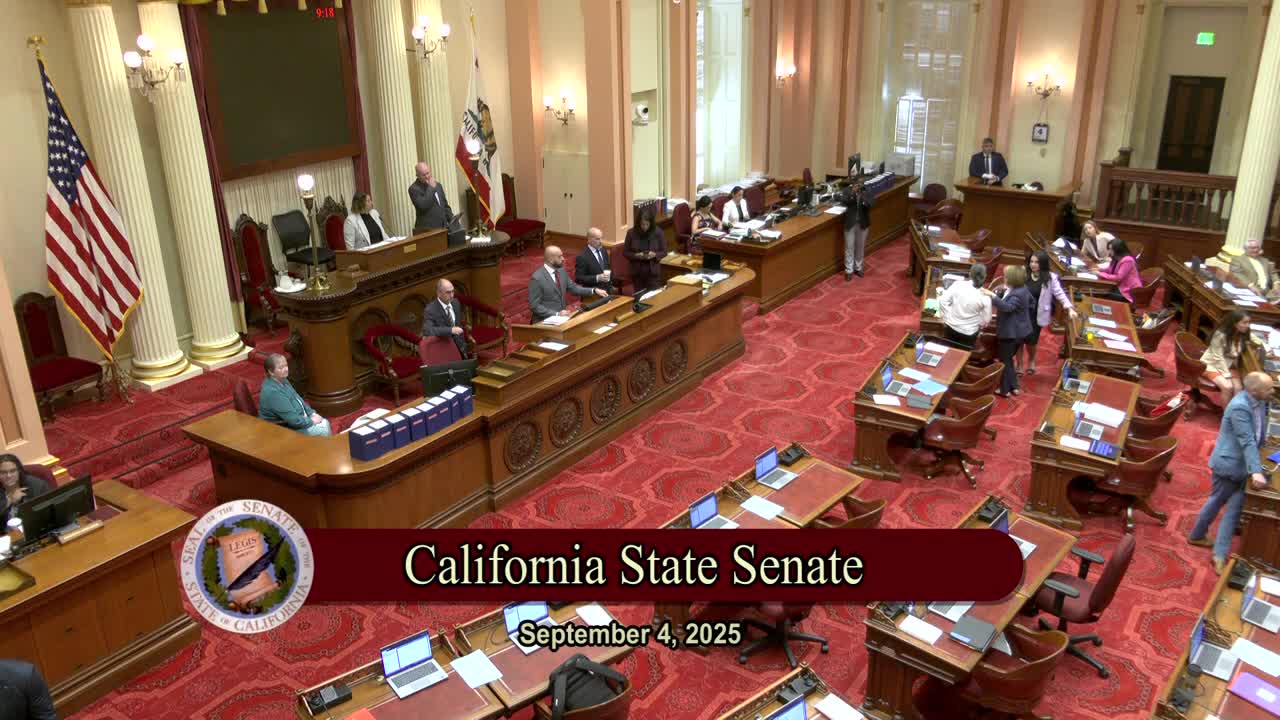

Bill Author