SB 26: Civil actions: restitution for or replacement of a new motor vehicle.
- Session Year: 2025-2026
- House: Senate
- Latest Version Date: 2025-04-02
Current Status:
Passed
(2025-04-02: Chaptered by Secretary of State. Chapter 1, Statutes of 2025.)
Introduced
In Committee
Awaiting First Chamber Vote
Passed First Chamber
In Committee
Awaiting Second Chamber Vote
Passed Second Chamber
Enacted
(1)Existing law prescribes specified procedures to govern actions seeking the restitution for or replacement of a new motor vehicle, or for civil penalties, pursuant to the provisions of the Song-Beverly Consumer Warranty Act or Tanner Consumer Protection Act. Beginning April 1, 2025, existing law will require the consumer to, prior to seeking civil penalties, provide a written notice to the manufacturer that, among other things, demands the manufacturers restitution for or replacement of the consumers vehicle.
This bill would provide that certain procedures described above would instead become operative on July 1, 2025. The bill would specify that the procedures described above would apply to the manufacturer of a motor vehicle only if the manufacturer elects to be governed by those procedures by reporting the election to the Arbitration Certification Program within the Department of Consumer Affairs. The bill would require a manufacturer that wishes to make this election regarding its motor vehicles sold in the year 2025 and all prior years to make the election within 30 days after the effective date of this bill. Thereafter, the bill would require a manufacturer that wishes to make this election to make an irrevocable election, as specified, regarding motor vehicles sold during the five calendar years following the date of the election. The bill would require the Arbitration Certification Program within the Department of Consumer Affairs, by December 15 of each year, to publish to its website a list of the manufacturers that have elected to be governed by the procedures described above for a period that includes the following calendar year.
(2)Under existing law, beginning April 1, 2025, a consumer who demands restitution for or replacement of a new motor vehicle may, if specified conditions are met, instead sell the vehicle and seek remedies against the manufacturer, including civil penalties.
This bill would change the operative date of that provision to July 1, 2025. The bill would prohibit a consumer who sells their vehicle after demanding restitution or replacement from seeking civil penalties unless the consumer provides to the prospective buyer or recipient of the vehicle, prior to the sale, written notice of the consumers basis for seeking restitution or replacement and of any pending action against the manufacturer, as specified.
This bill would declare that it is to take effect immediately as an urgency statute.
(1)Existing law prescribes specified procedures to govern actions seeking the restitution for or replacement of a new motor vehicle, or for civil penalties, pursuant to the provisions of the Song-Beverly Consumer Warranty Act or Tanner Consumer Protection Act. Beginning April 1, 2025, existing law will require the consumer to, prior to seeking civil penalties, provide a written notice to the manufacturer that, among other things, demands the manufacturers restitution for or replacement of the consumers vehicle.
This bill would provide that certain procedures described above would instead become operative on July 1, 2025. The bill would specify that the procedures described above would apply to the manufacturer of a motor vehicle only if the manufacturer elects to be governed by those procedures by reporting the election to the Arbitration Certification Program within the Department of Consumer Affairs. The bill would require a manufacturer that wishes to make this election regarding its motor vehicles sold in the year 2025 and all prior years within 30 days after the effective date of this bill. Thereafter, the bill would require a manufacturer that wishes to make this election to make an irrevocable election, as specified, regarding motor vehicles sold during the five calendar years following the date of the election. The bill would require the Arbitration Certification Program within the Department of Consumer Affairs, by December 15 of each year, to publish to its website a list of the manufacturers that have elected to be governed by the procedures described above for a period that includes the following calendar year.
(2)Under existing law, beginning April 1, 2025, a consumer who demands restitution for or replacement of a new motor vehicle may, if specified conditions are met, instead sell the vehicle and seek remedies against the manufacturer, including civil penalties.
This bill would change the operative date of that provision to July 1, 2025. The bill would prohibit a consumer who sells their vehicle after demanding restitution or replacement from seeking civil penalties unless the consumer provides to the prospective buyer or recipient of the vehicle, prior to the sale, written notice of the consumers basis for seeking restitution or replacement and of any pending action against the manufacturer, as specified.
This bill would declare that it is to take effect immediately as an urgency statute.
(1)Existing law prescribes specified procedures to govern actions seeking the restitution for or replacement of a new motor vehicle, or for civil penalties, pursuant to the provisions of the Song-Beverly Consumer Warranty Act or Tanner Consumer Protection Act. Beginning April 1, 2025, existing law will require the consumer to, prior to seeking civil penalties, provide a written notice to the manufacturer that, among other things, demands the manufacturers restitution for or replacement of the consumers vehicle.
This bill would provide that certain procedures described above would instead become operative on July 1, 2025. The bill would specify that the procedures described above would apply to the manufacturer of a new motor vehicle only if the manufacturer elects to be governed by those procedures by reporting the election to the Department of Consumer Affairs. The bill would require a manufacturer that wishes to make this election regarding its motor vehicles sold new in the year 2025 and all prior years within 30 days after the effective date of this bill. Thereafter, the bill would require a manufacturer that wishes to make this election to make an irrevocable election, as specified, regarding motor vehicles sold new during the five calendar years following the date of the election. The bill would require the Department of Consumer Affairs, by December 15 of each year, to publish to its website a list of the manufacturers that have elected to be governed by the procedures described above for a period that includes the following calendar year.
(2)Under existing law, beginning April 1, 2025, a consumer who demands restitution for or replacement of a new motor vehicle may, if specified conditions are met, instead sell the vehicle and seek remedies against the manufacturer, including civil penalties.
This bill would change the operative date of that provision to July 1, 2025. The bill would prohibit a consumer who sells their vehicle after demanding restitution or replacement from seeking civil penalties unless the consumer provides to the prospective buyer or recipient of the vehicle, prior to the sale, written notice of the consumers basis for seeking restitution or replacement and of any pending action against the manufacturer, as specified.
This bill would declare that it is to take effect immediately as an urgency statute.
(1)Existing law prescribes specified procedures to govern actions seeking the restitution for or replacement of a new motor vehicle, or for civil penalties, pursuant to the provisions of the Song-Beverly Consumer Warranty Act or Tanner Consumer Protection Act. Beginning April 1, 2025, existing law will require the consumer to, prior to seeking civil penalties, provide a written notice to the manufacturer that, among other things, demands the manufacturers restitution for or replacement of the consumers vehicle.
This bill would specify that the procedures described above would apply to the manufacturer of a new vehicle only if the manufacturer elects to be governed by those procedures by reporting the election to the Department of Consumer Affairs. The bill would require a manufacturer that wishes to make this election regarding its vehicles sold new in the year 2025 and all prior years within 30 days after the effective date of this bill. Thereafter, the bill would require a manufacturer that wishes to make this election to make an irrevocable election, as specified, regarding vehicles sold new during the five calendar years following the date of the election. The bill would require the Department of Consumer Affairs, by December 15 of each year, to publish to its website a list of the manufacturers that have elected to be governed by the procedures described above for a period that includes the following calendar year.
(2)Under existing law, beginning April 1, 2025, a consumer who demands restitution for or replacement of a new motor vehicle may, if specified conditions are met, instead sell the vehicle and seek remedies against the manufacturer, including civil penalties.
This bill would prohibit a consumer who sells their vehicle after demanding restitution or replacement from seeking civil penalties unless the consumer provides to the prospective buyer or recipient of the vehicle, prior to the sale, written notice of the consumers basis for seeking restitution or replacement and of any pending action against the manufacturer, as specified.
This bill would declare that it is to take effect immediately as an urgency statute.
It is the intent of the Legislature to evaluate the provisions of Assembly Bill 1755 of the 202324 Regular Session and Senate Bill 26 of the 202324 Regular Session beginning on January 1, 2029, to determine outcomes; the effect of the law on consumers who purchase motor vehicles, the effect of the law on the manufacturers of those vehicles, and the effect of the law on the courts; whether the procedures outlined by the bills cause harm; and to establish whether the law is functioning as intended or should be reevaluated or repealed.
SEC. 2.Section 871.20 of the Code of Civil Procedure is amended to read:871.20.(a)Notwithstanding any other law, this chapter applies to an action, brought against a manufacturer who has elected under Section 871.29 to proceed under this chapter, seeking restitution or replacement of a motor vehicle pursuant to subdivision (b) or (d) of Section 1793.2, Section 1793.22, or Section 1794 of the Civil Code, or for civil penalties pursuant to subdivision (c) of Section 1794 of the Civil Code, where the request for restitution or replacement is based on noncompliance with the applicable express warranty.
(b)This chapter does not apply to service contract claims under Section 1794 of the Civil Code or any action seeking remedies that are not restitution or replacement of a motor vehicle.
SEC. 3.Section 871.24 of the Code of Civil Procedure is amended to read:871.24.(a)At least 30 days prior to the commencement of an action seeking civil penalties under subdivision (c) of Section 1794 of the Civil Code, the consumer shall do all of the following:
(1)Notify the manufacturer of the consumers name, the accurate Vehicle Identification Number (VIN) of the motor vehicle, and a brief summary of the repair history and problems with the motor vehicle.
(2)Demand that the manufacturer repurchase or replace the motor vehicle.
(b)Minor deviations in the notice submitted pursuant to subdivision (a) shall not disqualify consumers from seeking civil penalties.
(c)At the time that the notice submitted pursuant to subdivision (a) is sent, the consumer shall have possession of the motor vehicle.
(d)The notice required by subdivision (a) shall be in writing and shall be sent either by email to the email address prominently displayed on the manufacturers website for this purpose or by certified or registered mail, return receipt requested, to the address provided by the manufacturer in the owners manual or warranty booklet. The notice information on the manufacturers website, owners manual, and warranty booklet shall be provided in both English and Spanish.
(e)(1)A request for or action seeking civil penalties under subdivision (c) of Section 1794 of the Civil Code shall not be allowed or maintained if both of the following conditions are present:
(A)Within 30 days after receipt of the notice, the manufacturer makes an offer of restitution or replacement of the motor vehicle for the amount provided by subdivision (d) of Section 1793.2 of the Civil Code and Section 871.27, plus reasonable attorneys fees and costs, if the consumer is represented by an attorney.
(B)The motor vehicle replacement or restitution is completed within 60 days from the date of receipt of the original notice.
(2)The consumer shall comply in good faith with reasonable requests from the manufacturer for documentation required to complete the requested restitution or replacement of the motor vehicle.
(f)A prelitigation dispute as to attorneys fees and costs shall be resolved by neutral, binding arbitration. A dispute as to the amount of attorneys fees and costs shall not, by itself, be a sufficient basis to show that the manufacturers offer is out of compliance with this section.
(g)The consumer shall maintain possession of the motor vehicle for at least 30 days after the manufacturers receipt of written notice seeking restitution or replacement.
(1)If the manufacturer does not offer restitution or replacement of the motor vehicle within 30 days of receiving the consumers notice, the consumer shall be permitted to sell their motor vehicle and seek remedies, including, but not limited to, civil penalties under subdivision (c) of Section 1794 of the Civil Code.
(2)If the manufacturer offers restitution or replacement of the motor vehicle, the consumer shall maintain possession of the motor vehicle for the full 60 days after the manufacturers receipt of the consumers notice.
(h)An action seeking restitution or replacement under Section 871.20 may be commenced without compliance with subdivision (a). In that event, the consumer shall have possession of the motor vehicle at the time of the filing of the complaint, and shall not seek civil penalties, whether by amendment of the complaint or otherwise. If, however, notice is provided pursuant to subdivision (a) and the manufacturer fails to comply with their obligations under subdivision (e), the consumer may commence an action for restitution or replacement, including, but not limited to, civil penalties under subdivision (c) of Section 1794 of the Civil Code.
(i)If a consumer sells their vehicle as authorized by subdivision (g), the consumer may not seek civil penalties under subdivision (c) of Section 1794 of the Civil Code unless the consumer provided to the prospective buyer or recipient of the vehicle, prior to the sale, written notice of the basis for the consumers request for restitution or replacement from the manufacturer and of any pending action described in subdivision (a) of Section 871.20.
(j)A consumer shall act in good faith in order to comply with this section.
(k)This section shall become operative on July 1, 2025.
SEC. 4.Section 871.29 is added to the Code of Civil Procedure, to read:871.29.(a)(1)A manufacturer may elect to be governed by this chapter for all actions described in subdivision (a) of Section 871.20 with respect to all of the manufacturers motor vehicles sold during a period of five consecutive calendar years by providing written notice of that election to the Arbitration Certification Program within the Department of Consumer Affairs by October 31 of the preceding calendar year, except as provided in Section 871.30.
(2)A manufacturer who makes the election described in paragraph (1) may not revoke that election during the five-year period covered by the election, but the manufacturer may make a new election under paragraph (1) that will cover motor vehicles sold in a subsequent five-year period.
(b)Unless a manufacturer has made the election described in subdivision (a) that covers a given year, Sections 871.20 to 871.28, inclusive, shall not apply to an action described in subdivision (a) of Section 871.20 with respect to all of the manufacturers motor vehicles sold during that year, except as provided in Section 871.30.
(c)By December 15 of each year, the Arbitration Certification Program within the Department of Consumer Affairs shall publish to its website a list of the manufacturers that have elected to proceed under this chapter for a period that includes the following calendar year, except as provided in Section 871.30.
(d)At the time a motor vehicle is sold new, a manufacturer shall provide notice to a consumer specifying which one of the following procedures governs the vehicle:
(1)The procedures set forth in this chapter.
(2)The procedures set forth in Article 3 (commencing with Section 1792) of Chapter 1 of Title 1.7 of Part 4 of Division 3 of the Civil Code.
SEC. 5.Section 871.30 is added to the Code of Civil Procedure, to read:871.30.(a)Within 30 days of the effective date of the act adding this section, a manufacturer may elect to be governed by this chapter for all actions described in subdivision (a) of Section 871.20 with respect to all of its motor vehicles sold in the year 2025 and in all prior years by providing written notice of that election to the Arbitration Certification Program within the Department of Consumer Affairs.
(b)Within 60 days of the effective date of the act adding this section, the Arbitration Certification Program within the Department of Consumer Affairs shall publish to its website the list of all manufacturers that have elected under subdivision (a) to proceed under this chapter for actions related to motor vehicles sold in the year 2025 and in all prior years.
(c)Unless a manufacturer has made the election described in subdivision (a), Sections 871.20 to 871.28, inclusive, shall not apply to an action described in subdivision (a) of Section 871.20, including actions already filed between January 1, 2025 and the effective date of the act adding this section, with respect to all of its vehicles sold new in the year 2025 and in all prior years.
SEC. 6.This act is an urgency statute necessary for the immediate preservation of the public peace, health, or safety within the meaning of Article IV of the California Constitution and shall go into immediate effect. The facts constituting the necessity are:
Certain provisions of Assembly Bill 1755 of the 202324 Regular Session, which prescribes specified procedures to govern actions seeking the restitution for or replacement of a new motor vehicle, do not become operative until April 1, 2025. To ensure that manufacturers of new motor vehicles have sufficient time to opt out of those procedures before April 1, 2025, as permitted by this act, it is necessary for this act to take effect immediately.
It is the intent of the Legislature to evaluate the provisions of Assembly Bill 1755 of the 202324 Regular Session and Senate Bill 26 of the 202324 Regular Session beginning on January 1, 2029, to determine outcomes; the effect of the law on consumers who purchase motor vehicles, the effect of the law on the manufacturers of those vehicles, and the effect of the law on the courts; whether the procedures outlined by the bills cause harm; and to establish whether the law is functioning as intended or should be reevaluated or repealed.
SEC. 2.Section 871.20 of the Code of Civil Procedure is amended to read:871.20.(a)Notwithstanding any other law, this chapter applies to an action, brought against a manufacturer who has elected under Section 871.29 to proceed under this chapter, seeking restitution or replacement of a motor vehicle pursuant to subdivision (b) or (d) of Section 1793.2, Section 1793.22, or Section 1794 of the Civil Code, or for civil penalties pursuant to subdivision (c) of Section 1794 of the Civil Code, where the request for restitution or replacement is based on noncompliance with the applicable express warranty.
(b)This chapter does not apply to service contract claims under Section 1794 of the Civil Code or any action seeking remedies that are not restitution or replacement of a motor vehicle.
SEC. 3.Section 871.24 of the Code of Civil Procedure is amended to read:871.24.(a)At least 30 days prior to the commencement of an action seeking civil penalties under subdivision (c) of Section 1794 of the Civil Code, the consumer shall do all of the following:
(1)Notify the manufacturer of the consumers name, the accurate Vehicle Identification Number (VIN) (VIN) of the motor vehicle, and a brief summary of the repair history and problems with the motor vehicle.
(2)Demand that the manufacturer repurchase or replace the motor vehicle.
(b)Minor deviations in the notice submitted pursuant to subdivision (a) shall not disqualify consumers from seeking civil penalties.
(c)At the time that the notice submitted pursuant to subdivision (a) is sent, the consumer shall have possession of the motor vehicle.
(d)The notice required by subdivision (a) shall be in writing and shall be sent either by email to the email address prominently displayed on the manufacturers website for this purpose or by certified or registered mail, return receipt requested, to the address provided by the manufacturer in the owners manual or warranty booklet. The notice information on the manufacturers website, owners manual, and warranty booklet shall be provided in both English and Spanish.
(e)(1)A request for or action seeking civil penalties under subdivision (c) of Section 1794 of the Civil Code shall not be allowed or maintained if both of the following conditions are present:
(A)Within 30 days after receipt of the notice, the manufacturer makes an offer of restitution or replacement of the motor vehicle for the amount provided by subdivision (d) of Section 1793.2 of the Civil Code and Section 871.27, plus reasonable attorneys attorneys fees and costs, if the consumer is represented by an attorney.
(B)The motor vehicle replacement or restitution is completed within 60 days from the date of receipt of the original notice.
(2)The consumer shall comply in good faith with reasonable requests from the manufacturer for documentation required to complete the requested restitution or replacement of the motor vehicle.
(f)A prelitigation dispute as to attorneys fees and costs shall be resolved by neutral, binding arbitration. A dispute as to the amount of attorneys fees and costs shall not, by itself, be a sufficient basis to show that the manufacturers offer is out of compliance with this section.
(g)The consumer shall maintain possession of the motor vehicle for at least 30 days after the manufacturers receipt of written notice seeking restitution or replacement.
(1)If the manufacturer does not offer restitution or replacement of the motor vehicle within 30 days of receiving the consumers notice, the consumer shall be permitted to sell their motor vehicle and seek remedies, including, but not limited to, civil penalties under subdivision (c) of Section 1794 of the Civil Code.
(2)If the manufacturer offers restitution or replacement of the motor vehicle, the consumer shall maintain possession of the motor vehicle for the full 60 days after the manufacturers receipt of the consumers notice.
(h)An action seeking restitution or replacement under Section 871.20 may be commenced without compliance with subdivision (a). In that event, the consumer shall have possession of the motor vehicle at the time of the filing of the complaint, and shall not seek civil penalties, whether by amendment of the complaint or otherwise. If, however, notice is provided pursuant to subdivision (a) and the manufacturer fails to comply with their obligations under subdivision (e), the consumer may commence an action for restitution or replacement, including, but not limited to, civil penalties under subdivision (c) of Section 1794 of the Civil Code.
(i)If a consumer sells their vehicle as authorized by subdivision (g), the consumer may not seek civil penalties under subdivision (c) of Section 1794 of the Civil Code unless the consumer provided to the prospective buyer or recipient of the vehicle, prior to the sale, written notice of the basis for the consumers request for restitution or replacement from the manufacturer and of any pending action described in subdivision (a) of Section 871.20.
(j)A consumer shall act in good faith in order to comply with this section.
(k)This section shall become operative on July 1, 2025.
SEC. 4.Section 871.29 is added to the Code of Civil Procedure, to read:871.29.(a)(1)A manufacturer may elect to be governed by this chapter for all actions described in subdivision (a) of Section 871.20 with respect to all of the manufacturers motor vehicles sold during a period of five consecutive calendar years by providing written notice of that election to the Arbitration Certification Program within the Department of Consumer Affairs by October 31 of the preceding calendar year, except as provided in Section 871.30.
(2)A manufacturer who makes the election described in paragraph (1) may not revoke that election during the five-year period covered by the election, but the manufacturer may make a new election under paragraph (1) that will cover motor vehicles sold in a subsequent five-year period.
(b)Unless a manufacturer has made the election described in subdivision (a) that covers a given year, Sections 871.20 to 871.28, inclusive, shall not apply to an action described in subdivision (a) of Section 871.20 with respect to all of the manufacturers motor vehicles sold during that year, except as provided in Section 871.30.
(c)By December 15 of each year, the Arbitration Certification Program within the Department of Consumer Affairs shall publish to its website a list of the manufacturers that have elected to proceed under this chapter for a period that includes the following calendar year, except as provided in Section 871.30.
(d)At the time a motor vehicle is sold new, a manufacturer shall provide notice to a consumer specifying which one of the following procedures governs the vehicle:
(1)The procedures set forth in this chapter.
(2)The procedures set forth in Article 3 (commencing with Section 1792) of Chapter 1 of Title 1.7 of Part 4 of Division 3 of the Civil Code.
(e)The Department of Consumer Affairs may adopt one or both of the following to implement the election process described in this section:(1)Regulations.(2)Nonbinding guidelines not subject to the Administrative Procedure Act (Chapter 3.5 (commencing with Section 11340) of Part 1 of Division 3 of Title 2 of the Government Code).SEC. 5.Section 871.30 is added to the Code of Civil Procedure, to read:871.30.(a)Within 30 days of the effective date of the act adding this section, a manufacturer may elect to be governed by this chapter for all actions described in subdivision (a) of Section 871.20 with respect to all of its motor vehicles sold in the year 2025 and in all prior years by providing written notice of that election to the Arbitration Certification Program within the Department of Consumer Affairs.
(b)Within 60 days of the effective date of the act adding this section, the Arbitration Certification Program within the Department of Consumer Affairs shall publish to its website the list of all manufacturers that have elected under subdivision (a) to proceed under this chapter for actions related to motor vehicles sold in the year 2025 and in all prior years.
(c)Unless a manufacturer has made the election described in subdivision (a), Sections 871.20 to 871.28, inclusive, shall not apply to an action described in subdivision (a) of Section 871.20, including actions already filed between January 1, 2025 and the effective date of the act adding this section, with respect to all of its vehicles sold new in the year 2025 and in all prior years.
SEC. 6.This act is an urgency statute necessary for the immediate preservation of the public peace, health, or safety within the meaning of Article IV of the California Constitution and shall go into immediate effect. The facts constituting the necessity are:
Certain provisions of Assembly Bill 1755 of the 202324 Regular Session, which prescribes specified procedures to govern actions seeking the restitution for or replacement of a new motor vehicle, do not become operative until April 1, 2025. To ensure that manufacturers of new motor vehicles have sufficient time to opt out of those procedures before April 1, 2025, as permitted by this act, it is necessary for this act to take effect immediately.
It is the intent of the Legislature to evaluate the provisions of Assembly Bill 1755 of the 202324 Regular Session and Senate Bill 26 of the 202324 Regular Session beginning on January 1, 2029, to determine outcomes; the effect of the law on consumers who purchase motor vehicles, the effect of the law on the manufacturers of those vehicles, and the effect of the law on the courts; whether the procedures outlined by the bills cause harm; and to establish whether the law is functioning as intended or should be reevaluated or repealed.
SECTION 1.SEC. 2.Section 871.20 of the Code of Civil Procedure is amended to read:871.20.(a)Notwithstanding any other law, this chapter applies to an action, brought against a manufacturer who has elected under Section 871.29 to proceed under this chapter, seeking restitution or replacement of a motor vehicle pursuant to subdivision (b) or (d) of Section 1793.2, Section 1793.22, or Section 1794 of the Civil Code, or for civil penalties pursuant to subdivision (c) of Section 1794 of the Civil Code, where the request for restitution or replacement is based on noncompliance with the applicable express warranty.
(b)This chapter does not apply to service contract claims under Section 1794 of the Civil Code or any action seeking remedies that are not restitution or replacement of a motor vehicle.
SEC. 2.SEC. 3.Section 871.24 of the Code of Civil Procedure is amended to read:871.24.(a)At least 30 days prior to the commencement of an action seeking civil penalties under subdivision (c) of Section 1794 of the Civil Code, the consumer shall do all of the following:
(1)Notify the manufacturer of the consumers name, the accurate Vehicle Identification Number (VIN) of the motor vehicle, and a brief summary of the repair history and problems with the motor vehicle.
(2)Demand that the manufacturer repurchase or replace the motor vehicle.
(b)Minor deviations in the notice submitted pursuant to subdivision (a) shall not disqualify consumers from seeking civil penalties.
(c)At the time that notice submitted pursuant to subdivision (a) is sent, the consumer shall have possession of the motor vehicle.
(d)The notice required by subdivision (a) shall be in writing and shall be sent either by email to the email address prominently displayed on the manufacturers website for this purpose or by certified or registered mail, return receipt requested, to the address provided by the manufacturer in the owners manual or warranty booklet. The notice information on the manufacturers website, owners manual, and warranty booklet shall be provided in both English and Spanish.
(e)(1)A request for or action seeking civil penalties under subdivision (c) of Section 1794 of the Civil Code shall not be allowed or maintained if both of the following conditions are present:
(A)Within 30 days after receipt of the notice, the manufacturer makes an offer of restitution or replacement of the motor vehicle for the amount provided by subdivision (d) of Section 1793.2 of the Civil Code and Section 871.27, plus reasonable attorneys fees and costs, if the consumer is represented by an attorney.
(B)The motor vehicle replacement or restitution is completed within 60 days from the date of receipt of the original notice.
(2)The consumer shall comply in good faith with reasonable requests from the manufacturer for documentation required to complete the requested restitution or replacement of the motor vehicle.
(f)A prelitigation dispute as to attorneys fees and costs shall be resolved by neutral, binding arbitration. A dispute as to the amount of attorneys fees and costs shall not, by itself, be a sufficient basis to show that the manufacturers offer is out of compliance with this section.
(g)The consumer shall maintain possession of the motor vehicle for at least 30 days after the manufacturers receipt of written notice seeking restitution or replacement.
(1)If the manufacturer does not offer restitution or replacement of the motor vehicle within 30 days of receiving the consumers notice, the consumer shall be permitted to sell their motor vehicle and seek remedies, including, but not limited to, civil penalties under subdivision (c) of Section 1794 of the Civil Code.
(2)If the manufacturer offers restitution or replacement of the motor vehicle, the consumer shall maintain possession of the motor vehicle for the full 60 days after the manufacturers receipt of the consumers notice.
(h)An action seeking restitution or replacement under Section 871.20 may be commenced without compliance with subdivision (a). In that event, the consumer shall have possession of the motor vehicle at the time of the filing of the complaint, and shall not seek civil penalties, whether by amendment of the complaint or otherwise. If, however, notice is provided pursuant to subdivision (a) and the manufacturer fails to comply with their obligations under subdivision (e), the consumer may commence an action for restitution or replacement, including, but not limited to, civil penalties under subdivision (c) of Section 1794 of the Civil Code.
(i)If a consumer sells their vehicle as authorized by subdivision (g), the consumer may not seek civil penalties under subdivision (c) of Section 1794 of the Civil Code unless the consumer provided to the prospective buyer or recipient of the vehicle, prior to the sale, written notice of the basis for the consumers request for restitution or replacement from the manufacturer and of any pending action described in subdivision (a) of Section 871.20.
(j)A consumer shall act in good faith in order to comply with this section.
(k)This section shall become operative on April July 1, 2025.
SEC. 3.SEC. 4.Section 871.29 is added to the Code of Civil Procedure, to read:871.29.(a)(1)A manufacturer may elect to be governed by this chapter for all actions described in subdivision (a) of Section 871.20 with respect to all of the manufacturers motor vehicles sold new during a period of five consecutive calendar years by providing written notice of that election to the Department of Consumer Affairs by October 31 of the preceding calendar year, except as provided in Section 871.30.
(2)A manufacturer who makes the election described in paragraph (1) may not revoke that election during the five-year period covered by the election, but the manufacturer may make a new election under paragraph (1) that will cover motor vehicles sold new for in a subsequent five-year period.
(b)Unless a manufacturer has made the election described in subdivision (a) that covers a given year, Sections 871.20 to 871.28, inclusive, shall not apply to an action described in subdivision (a) of Section 871.20 with respect to all of the manufacturers motor vehicles sold new during that year, except as provided in Section 871.30.
(c)By December 15 of each year, the Department of Consumer Affairs shall publish to its website a list of the manufacturers that have elected to proceed under this chapter for a period that includes the following calendar year, except as provided in Section 871.30.
(d)At the time a motor vehicle is sold new, a manufacturer shall provide notice to a consumer specifying which one of the following procedures governs the vehicle:
(1)The procedures set forth in this chapter.
(2)The procedures set forth in Article 3 (commencing with Section 1792) of Chapter 1 of Title 1.7 of Part 4 of Division 3 of the Civil Code.
(e)The Department of Consumer Affairs may adopt one or both of the following to implement the election process described in this section:
(1)Regulations.
(2)Nonbinding guidelines not subject to the Administrative Procedure Act (Chapter 3.5 (commencing with Section 11340) of Part 1 of Division 3 of Title 2 of the Government Code).
SEC. 4.SEC. 5.Section 871.30 is added to the Code of Civil Procedure, to read:871.30.(a)Within 30 days of the effective date of the act adding this section, a manufacturer may elect to be governed by this chapter for all actions described in subdivision (a) of Section 871.20 with respect to all of its motor vehicles sold new in the year 2025 and in all prior years by providing written notice of that election to the Department of Consumer Affairs.
(b)Within 60 days of the effective date of the act adding this section, the Department of Consumer Affairs shall publish to its website the list of all manufacturers that have elected under subdivision (a) to proceed under this chapter for actions related to motor vehicles sold new in the year 2025 and in all prior years.
(c)Unless a manufacturer has made the election described in subdivision (a), Sections 871.20 to 871.28, inclusive, shall not apply to an action described in subdivision (a) of Section 871.20, including actions already filed between January 1, 2025 and the effective date of the act adding this section, with respect to all of its vehicles sold new in the year 2025 and in all prior years.
SEC. 5.SEC. 6.This act is an urgency statute necessary for the immediate preservation of the public peace, health, or safety within the meaning of Article IV of the California Constitution and shall go into immediate effect. The facts constituting the necessity are:
Certain provisions of Assembly Bill 1755 of the 202324 Regular Session, which prescribes specified procedures to govern actions seeking the restitution for or replacement of a new motor vehicle, do not become operative until April 1, 2025. To ensure that manufacturers of new motor vehicles have sufficient time to opt out of those procedures before April 1, 2025, as permitted by this act, it is necessary for this act to take effect immediately.
(a)Notwithstanding any other law, this chapter applies to an action action, brought against a manufacturer who has elected under Section 871.29 to proceed under this chapter, seeking restitution or replacement of a motor vehicle pursuant to subdivision (b) or (d) of Section 1793.2, Section 1793.22, or Section 1794 of the Civil Code, or for civil penalties pursuant to subdivision (c) of Section 1794 of the Civil Code, where the request for restitution or replacement is based on noncompliance with the applicable express warranty.
(b)This chapter does not apply to service contract claims under Section 1794 of the Civil Code or any action seeking remedies that are not restitution or replacement of a motor vehicle.
SEC. 2.Section 871.24 of the Code of Civil Procedure is amended to read:871.24.(a)At least 30 days prior to the commencement of an action seeking civil penalties under subdivision (c) of Section 1794 of the Civil Code, the consumer shall do all of the following:
(1)Notify the manufacturer of the consumers name, the accurate Vehicle Identification Number (VIN) of the motor vehicle, and a brief summary of the repair history and problems with the motor vehicle.
(2)Demand that the manufacturer repurchase or replace the motor vehicle.
(b)Minor deviations in the notice submitted pursuant to subdivision (a) shall not disqualify consumers from seeking civil penalties.
(c)At the time that notice submitted pursuant to subdivision (a) is sent, the consumer shall have possession of the motor vehicle.
(d)The notice required by subdivision (a) shall be in writing and shall be sent either by email to the email address prominently displayed on the manufacturers website for this purpose or by certified or registered mail, return receipt requested, to the address provided by the manufacturer in the owners manual or warranty booklet. The notice information on the manufacturers website, owners manual, and warranty booklet shall be provided in both English and Spanish.
(e)(1)A request for or action seeking civil penalties under subdivision (c) of Section 1794 of the Civil Code shall not be allowed or maintained if both of the following conditions are present:
(A)Within 30 days after receipt of the notice, the manufacturer makes an offer of restitution or replacement of the motor vehicle for the amount provided by subdivision (d) of Section 1793.2 of the Civil Code and Section 871.27, plus reasonable attorneys fees and costs, if the consumer is represented by an attorney.
(B)The motor vehicle replacement or restitution is completed within 60 days from the date of receipt of the original notice.
(2)The consumer shall comply in good faith with reasonable requests from the manufacturer for documentation required to complete the requested restitution or replacement of the motor vehicle.
(f)A prelitigation dispute as to attorneys fees and costs shall be resolved by neutral, binding arbitration. A dispute as to the amount of attorneys fees and costs shall not, by itself, be a sufficient basis to show that the manufacturers offer is out of compliance with this section.
(g)The consumer shall maintain possession of the motor vehicle for at least 30 days after the manufacturers receipt of written notice seeking restitution or replacement.
(1)If the manufacturer does not offer restitution or replacement of the motor vehicle within 30 days of receiving the consumers notice, the consumer shall be permitted to sell their motor vehicle and seek remedies, including, but not limited to, civil penalties under subdivision (c) of Section 1794 of the Civil Code.
(2)If the manufacturer offers restitution or replacement of the motor vehicle, the consumer shall maintain possession of the motor vehicle for the full 60 days after the manufacturers receipt of the consumers notice.
(h)An action seeking restitution or replacement under Section 871.20 may be commenced without compliance with subdivision (a). In that event, the consumer shall have possession of the motor vehicle at the time of the filing of the complaint, and shall not seek civil penalties, whether by amendment of the complaint or otherwise. If, however, notice is provided pursuant to subdivision (a) and the manufacturer fails to comply with their obligations under subdivision (e), the consumer may commence an action for restitution or replacement, including, but not limited to, civil penalties under subdivision (c) of Section 1794 of the Civil Code.
(i)If a consumer sells their vehicle as authorized by subdivision (g), the consumer may not seek civil penalties under subdivision (c) of Section 1794 of the Civil Code unless the consumer provided to the prospective buyer or recipient of the vehicle, prior to the sale, written notice of the basis for the consumers request for restitution or replacement from the manufacturer and of any pending action described in subdivision (a) of Section 871.20.
(i)(j)A consumer shall act in good faith in order to comply with this section.
(j)(k)This section shall become operative on April 1, 2025.
SEC. 3.Section 871.29 is added to the Code of Civil Procedure, to read:871.29.(a)(1)A manufacturer may elect to be governed by this chapter for all actions described in subdivision (a) of Section 871.20 with respect to all of the manufacturers vehicles sold new during a period of five consecutive calendar years by providing written notice of that election to the Department of Consumer Affairs by October 31 of the preceding calendar year, except as provided in Section 871.30.
(2)A manufacturer who makes the election described in paragraph (1) may not revoke that election during the five-year period covered by the election, but the manufacturer may make a new election under paragraph (1) that will cover vehicles sold new for a subsequent five-year period.
(b)Unless a manufacturer has made the election described in subdivision (a) that covers a given year, Sections 871.20 to 871.28, inclusive, shall not apply to an action described in subdivision (a) of Section 871.20 with respect to all of the manufacturers vehicles sold new during that year, except as provided in Section 871.30.
(c)By December 15 of each year, the Department of Consumer Affairs shall publish to its website a list of the manufacturers that have elected to proceed under this chapter for a period that includes the following calendar year, except as provided in Section 871.30.
(d)At the time a motor vehicle is sold new, a manufacturer shall provide notice to a consumer specifying which one of the following procedures governs the vehicle:
(1)The procedures set forth in this chapter.
(2)The procedures set forth in Article 3 (commencing with Section 1792) of Chapter 1 of Title 1.7 of Part 4 of Division 3 of the Civil Code.
(e)The Department of Consumer Affairs may adopt one or both of the following to implement the election process described in this section:
(1)Regulations.
(2)Nonbinding guidelines not subject to the Administrative Procedure Act (Chapter 3.5 (commencing with Section 11340) of Part 1 of Division 3 of Title 2 of the Government Code).
SEC. 4.Section 871.30 is added to the Code of Civil Procedure, to read:871.30.(a)Within 30 days of the effective date of the act adding this section, a manufacturer may elect to be governed by this chapter for all actions described in subdivision (a) of Section 871.20 with respect to all of its vehicles sold new in the year 2025 and in all prior years by providing written notice of that election to the Department of Consumer Affairs.
(b)Within 60 days of the effective date of the act adding this section, the Department of Consumer Affairs shall publish to its website the list of all manufacturers that have elected under subdivision (a) to proceed under this chapter for actions related to vehicles sold new in the year 2025 and in all prior years.
(c)Unless a manufacturer has made the election described in subdivision (a), Sections 871.20 to 871.28, inclusive, shall not apply to an action described in subdivision (a) of Section 871.20, including actions already filed between January 1, 2025 and the effective date of the act adding this section, with respect to all of its vehicles sold new in the year 2025 and in all prior years.
SEC. 5.This act is an urgency statute necessary for the immediate preservation of the public peace, health, or safety within the meaning of Article IV of the California Constitution and shall go into immediate effect. The facts constituting the necessity are:
Certain provisions of Assembly Bill 1755 of the 202324 Regular Session, which prescribes specified procedures to govern actions seeking the restitution for or replacement of a new motor vehicle, do not become operative until April 1, 2025. To ensure that manufacturers of new motor vehicles have sufficient time to opt out of those procedures before April 1, 2025, as permitted by this act, it is necessary for this act to take effect immediately.
|
Date
|
Status
|
|---|---|
| Apr 2, 2025 | Chaptered by Secretary of State. Chapter 1, Statutes of 2025. |
| Apr 2, 2025 | Approved by the Governor. |
| Apr 1, 2025 | Enrolled and presented to the Governor at 4 p.m. |
| Apr 1, 2025 | Assembly amendments concurred in. (Ayes 38. Noes 1. Page 604.) Ordered to engrossing and enrolling. |
| Apr 1, 2025 | In Senate. Concurrence in Assembly amendments pending. |
| Apr 1, 2025 | Read third time. Urgency clause adopted. Passed. (Ayes 77. Noes 0. Page 948.) Ordered to the Senate. |
| Mar 27, 2025 | Read second time. Ordered to third reading. |
| Mar 26, 2025 | From committee: Do pass. (Ayes 9. Noes 0.) (March 26). |
| Mar 24, 2025 | Referred to Com. on JUD. |
| Mar 24, 2025 | Joint Rule 62(a) suspended. |
| Mar 24, 2025 | From committee with author's amendments. Read second time and amended. Re-referred to Com. on JUD. |
| Mar 13, 2025 | In Assembly. Read first time. Held at Desk. |
| Mar 13, 2025 | Read third time. Urgency clause adopted. Passed. (Ayes 35. Noes 0. Page 364.) Ordered to the Assembly. |
| Mar 10, 2025 | Read second time. Ordered to third reading. |
| Mar 6, 2025 | From committee: Be ordered to second reading pursuant to Senate Rule 28.8. |
| Mar 4, 2025 | Read second time and amended. Re-referred to Com. on APPR. |
| Mar 3, 2025 | From committee: Do pass as amended and re-refer to Com. on APPR. (Ayes 8. Noes 0. Page 304.) (March 3). |
| Feb 28, 2025 | Set for hearing March 3. |
| Feb 11, 2025 | From committee: Do pass and re-refer to Com. on B. P. & E.D. (Ayes 10. Noes 1. Page 176.) (February 11). Re-referred to Com. on B. P. & E.D. |
| Feb 3, 2025 | Set for hearing February 11. |
| Jan 29, 2025 | Referred to Coms. on JUD. and B. P. & E.D. |
| Dec 3, 2024 | From printer. May be acted upon on or after January 2. |
| Dec 2, 2024 | Introduced. Read first time. To Com. on RLS. for assignment. To print. |
|
Date
|
Description
|
Location
|
Votes
|
|
|---|---|---|---|---|
| Apr 1, 2025 | SB 26 Umberg Third Reading Urgency By Kalra | Assembly Floor |
Passed |
|
| Apr 1, 2025 | Unfinished Business SB26 Umberg et al. Urgency Clause Concurrence | Senate Floor |
Passed |
|
| Mar 26, 2025 | Do pass. | Assembly Standing Committee on Judiciary |
Passed |
|
| Mar 13, 2025 | The committee on AGR recommend that the measure be PASSED, UNAMENDED. | Senate Floor |
Passed |
|
| Mar 3, 2025 | Do pass as amended, but first amend, and re-refer to the Committee on [Appropriations] | Senate Standing Committee on Business, Professions and Economic Development |
Passed |
|
| Feb 11, 2025 | Do pass, but first be re-referred to the Committee on [Business, Professions and Economic Development] | Senate Standing Committee on Judiciary |
Passed |
This list shows positions taken on this bill by organizations on the date displayed, which is linked to the original source.
Positions by individuals are not included.
|
Organization
|
Position
|
Date
|
|---|---|---|
| American Honda Motor Company, Inc. | ** Support | |
| Aston Martin | ** Support | |
| Autos Drive America | ** Support | |
| BMW OF NORTH AMERICA, LLC | ** Support | |
| Concerns | ** Against | |
| Consumer Attorneys Of California | ** Support | |
| Consumers For Auto Reliability And Safety | ** Against | |
| GENERAL MOTORS | ** Support | |
| Hyundai Motor America | ** Support | |
| Kia America, INC. | ** Support | |
| Lucid USA, Inc. | ** Support | |
| Mazda North America Operations | ** Support | |
| Mazda North American Operations | ** Support | |
| Mercedes-Benz | ** Support | |
| North American Subaru, INC. | ** Support | |
| Rivian Automotive, INC. | ** Support | |
| Rolls-Royce | ** Support | |
| Scout Motors Inc | ** Support | |
| Scout Motors INC. | ** Support | |
| STRATEGIC LEGAL PRACTICES | ** Against | |
| Tesla Motors, Inc. | ** Support | |
| Toyota Motor North America, Inc. | ** Support | |
| Volkswagen Group Of America, Inc. | ** Support | |
| Volvo Car USA | ** Support |
SENATE RULES COMMITTEE Office of Senate Floor Analyses (916) 651-1520 Fax: (916) 327-4478 | SB 26 |
UNFINISHED BUSINESS
Bill No: SB 26
Author: Umberg (D), et al.
Amended: 4/2/25
Vote: 27- Urgency
SENATE JUDICIARY COMMITTEE: 10-1, 2/11/25
AYES: Umberg, Niello, Allen, Caballero, Durazo, Laird, Stern, Valladares, Weber Pierson, Wiener
NOES: Ashby
NO VOTE RECORDED: Reyes, Wahab
SENATE BUS., PROF. & ECON. DEV. COMMITTEE: 8-0, 3/3/25
AYES: Ashby, Choi, Archuleta, Grayson, Niello, Smallwood-Cuevas, Umberg, Weber Pierson
NO VOTE RECORDED: Arreguín, Menjivar, Valladares
SENATE APPROPRIATIONS COMMITTEE: Senate Rule 28.8
SENATE FLOOR: 35-0, 3/13/25
AYES: Allen, Alvarado-Gil, Archuleta, Arreguín, Ashby, Becker, Blakespear, Cabaldon, Caballero, Cervantes, Choi, Cortese, Durazo, Gonzalez, Grayson, Grove, Jones, Laird, Limón, McGuire, McNerney, Menjivar, Niello, Ochoa Bogh, Padilla, Richardson, Rubio, Seyarto, Smallwood-Cuevas, Stern, Strickland, Umberg, Valladares, Weber Pierson, Wiener
NO VOTE RECORDED: Dahle, Hurtado, Pérez, Reyes, Wahab
ASSEMBLY FLOOR: 77-0, 4/01/25 – See last page for vote
SUBJECT: Civil actions: restitution for or replacement of a new motor vehicle
SOURCE: Author
DIGEST:
This bill makes changes to the recently amended California “Lemon Law” to establish a mechanism for manufacturers to opt in to this new process. This bill restricts a consumer from seeking civil penalties in such actions unless the consumer provides written notice to a prospective buyer or recipient, as provided. This bill delays the effective date of newly enacted procedural guidelines for such cases.
Assembly Amendments
specify that the Arbitration Certification Program within the Department of Consumer Affairs (DCA) will be the relevant contact point for electing into the new process and remove the authorization for DCA to adopt regulations or guidelines.
ANALYSIS:
Existing law:
- Establishes the Song-Beverly Consumer Warranty Act (Song-Beverly Act), which sets forth standards for warranties that govern consumer goods and outlines remedies available to purchasers. (Civil Code § 1790 et seq.)
- Provides, notwithstanding any other law, certain procedures and parameters for actions seeking restitution or replacement of a motor vehicle pursuant to subdivision (b) or (d) of Section 1793.2, Section 1793.22, or Section 1794 of the Civil Code, or for civil penalties pursuant to subdivision (c) of Section 1794 of the Civil Code, where the request for restitution or replacement is based on noncompliance with the applicable express warranty. (Code of Civil Procedure (Code Civ. Proc.) § 871.20 et seq.)
- Prohibits a request for or action seeking civil penalties under Section 1794(c) of the Civil Code from being allowed or maintained if both of the following conditions are present:
- Within 30 days after receipt of the notice, the manufacturer makes an offer of restitution or replacement of the motor vehicle for the specified amount, plus reasonable attorneys’ fees and costs, if the consumer is represented by an attorney.
- The motor vehicle replacement or restitution is completed within 60 days from the date of receipt of the original notice. (Code Civ. Proc. § 871.24.)
- Provides that if the manufacturer does not offer restitution or replacement of the motor vehicle within 30 days of receiving the consumer’s notice, the consumer shall be permitted to sell their motor vehicle and seek remedies, including civil penalties under Section 1794(c) of the Civil Code. If the manufacturer offers restitution or replacement of the motor vehicle, the consumer shall maintain possession of the motor vehicle for the full 60 days after manufacturer’s receipt of the consumer’s notice. (Code Civ. Proc. § 871.24.)
- Requires a consumer to act in good faith in order to comply with the above. These provisions become operative on April 1, 2025. (Code Civ. Proc. § 871.24.)
This bill:
- Provides manufacturers with an opt-in mechanism for the new procedures established by AB 1755 (Kalra & Umberg, Chapter 938, Statutes of 2024). It establishes a process for manufacturers to be governed by the new procedures for a five-year period. It also establishes a special mechanism for manufacturers to opt into the procedures with respect to motor vehicles sold in 2025 and in all prior years. For manufacturers that do not opt in, none of the changes made by AB 1755 would apply.
- Imposes a requirement on consumers to provide specified information, in writing, to a prospective buyer of a vehicle that is the subject of a request for restitution or replacement in order for the consumer to seek civil penalties, as provided.
- Delays the effective date of various consumer obligations imposed by AB 1755.
- Includes an urgency clause.
Background
AB 1755 amended the procedure for seeking specified remedies pursuant to the Song-Beverly Act in connection with nonconforming motor vehicles. The Song-Beverly Act provides consumer warranty protection to buyers of consumer goods, including motor vehicles. The act requires certain implied warranties to accompany the retail sale of consumer goods, including implied warranties of merchantability, as specified.
Relevant here, portions of the Act, referred to as California’s Lemon Law, protect consumers from defective vehicles that are under warranty, when they meet certain other criteria. In response to concerns that the law was being misused, AB 1755 made changes to the underlying processes for such claims, when seeking restitution or replacement of a vehicle, as specified. Pointing to serious concerns raised by a majority of manufacturers about the workability of the new process, Governor Newsom, in a signing message, indicated an agreement between relevant stakeholders that follow up legislation would be carried to make the entirety of this new process opt-in and to require specified notice from consumers to subsequent buyers of a vehicle that is the subject of relevant litigation. This author-sponsored bill represents that agreement. This bill is supported by a number of vehicle manufacturers and the Consumer Attorneys of California. It is opposed by Consumers for Auto Reliability and Safety. This bill includes an urgency clause. For a more thorough overview, please see the Senate Judiciary Committee analysis of the bill.
Comments
AB 1755 reformed California’s Lemon Law. Last year, AB 1755 reformed the process in any ligation seeking restitution or replacement of a motor vehicle pursuant to the above provisions, as specified, where the request is based on noncompliance with the applicable express warranty. A number of concerns were raised in response to AB 1755 and these new procedures. Consumer groups highlighted that this is a drastic change that undermines warranties, such as those for EV batteries, that typically extend longer than six years, and raised concerns about situations where a consumer may try to get rid of their defective vehicle beforehand in order to move on, which would jeopardize their ability to seek the specific remedies of Section 1794(c) of the Civil Code. Consumers for Auto Reliability and Safety (CARS) argued the bill undermined the longstanding protections of the Song-Beverly Act by absolving manufacturers of their affirmative obligations and placing the burden on consumers, who may not be sophisticated enough to be apprised of these revamped procedures. A coalition of over a dozen vehicle manufacturers, including Honda, Kia, and Volvo, wrote in opposition to the bill, agreeing that reform to the Lemon Law is needed but asserting that the bill does not present the right approach.
In a signing statement, Governor Newsom outlined some of these concerns and highlighted an agreement by the authors to carry follow-up legislation:
[T]his bill has drawn substantive opposition from several consumer groups and the majority of automakers, who were not party to the negotiations. While AB 1755 aims to speed resolution of Lemon Law claims and reduce litigation, many automakers, including smaller electric-vehicle automakers, have expressed serious concerns that some of the specific procedures prescribed in AB 1755 are unworkable for them. In light of those concerns, the authors have agreed to introduce a bill early in the 2025-2026 legislative session that would amend the statute enacted by this bill to make its new procedures subject to election by a given automaker. Automakers that do not elect to utilize the new procedures to resolve Lemon Law claims on their vehicles would be subject to existing Lemon Law rules. I urge the Legislature to adopt that compromise proposal swiftly.
The agreed-upon amendments would also require consumers who have made Lemon Law claims under this bill to give notice to prospective buyers if they sell their vehicles prior to resolution of their Lemon Law lawsuit, in order to ensure that buyers are aware of potential defects. The sale of vehicles to buyers unaware of pending Lemon Law claims on the vehicle is a broader problem under current law that puts buyers and the general public at risk from unsafe vehicles on the road, and I encourage the Legislature to consider additional solutions to that issue.
This bill represents that agreement. As outlined in the Governor’s message, this bill provides a mechanism for manufacturers to opt into the new procedures rather than requiring them for all relevant claims. A manufacturer may elect to be governed by AB 1755’s procedures for all actions with respect to the manufacturer’s motor vehicles sold during a period of five consecutive calendar years by providing written notice of that non-revocable election to the Arbitration Certification Program within DCA by October 31 of the preceding calendar year. Unless a manufacturer has made such an election, the law existing prior to AB 1755 would apply with respect to all of the manufacturer’s vehicles sold new during that year, except as provided. The Arbitration Certification Program is required, by December 15 of each year, to publish a list of the manufacturers that have opted into these new procedures. Manufacturers are required, at the time a motor vehicle is sold, to notify a consumer of the applicable procedures governing the vehicle.
As the entirety of the new law went into operation on April 1, 2025, this bill provides a specific opt-in procedure to govern actions with respect to vehicles sold new this year and in all prior years. Manufacturers will have 30 days from the effective date of this bill to elect to be governed by the new procedures. This bill also delays the effective date of various provisions of the new law placing obligations on consumers bringing lemon law claims. As also foreshadowed in the Governor’s message, this bill restricts a consumer from seeking civil penalties in these actions unless the consumer provides written notice to the prospective buyer or recipient of the basis for the consumer’s request for restitution or replacement from the manufacturer and of any pending action, as provided.
According to the author:
During the 2023-2024 Legislative Session AB 1755 (Karla-Umberg) was introduced to modernize California’s Lemon Law statutes in a manner that benefits consumers, expedites dispute resolution, and prevents unjustified litigation tactics that delay access to justice for all parties to a Lemon Law dispute. AB 1755 aimed to speed resolution of Lemon Law claims and reduce litigation. However, many automakers have expressed serious concerns that some procedures laid out in AB 1755 are unworkable and that many of these concerns were echoed in Governor Newsom’s signing message for AB 1755. As a result of those concerns, the authors and support coalition behind AB 1755 have agreed to introduce this bill, SB 26, which allows manufacturers to opt out of the provisions of AB 1755.
FISCAL EFFECT: Appropriation: No Fiscal Com.: Yes Local: No
SUPPORT: (Verified 4/1/25)
American Honda Motor Company, Inc.
Aston Martin
Autos Drive America
BMW of North America, LLC
Consumer Attorneys of California
General Motors
Hyundai Motor America
Kia America, Inc.
Lucid USA, Inc.
Mazda North American Operations
Mercedes-Benz
North American Subaru, Inc.
Rivian Automotive, Inc.
Rolls-Royce
Scout Motors Inc.
Tesla Motors, Inc.
Toyota Motor North America, Inc.
Volkswagen Group of America, Inc.
Volvo Car USA
OPPOSITION: (Verified 4/1/25)
Consumers for Auto Reliability and Safety
ARGUMENTS IN SUPPORT: The Consumer Attorneys of California (CAOC) and General Motors state:
CAOC and GM support SB 26 and its aim to address concerns raised by auto manufacturers in opposition to AB 1755. SB 26 will restore the status quo prior to last year’s reform to any manufacturer that chooses not to opt into the new structure. For these reasons we urge your support of SB 26.
ARGUMENTS IN OPPOSITION: Consumers for Auto Reliability and Safety writes:
If we knew for certain today that all auto manufacturers would exercise the option provided by SB 26 not to opt into the harmful changes to the lemon law enacted under AB 1755, we would be more than happy to support the provisions in SB 26 pertaining to that choice. Now that AB 1755 has taken effect, some owners of lemon vehicles are already being denied warranty coverage, having their pending cases dismissed, and suffering the severe hardships inherent with owning a defective vehicle that is unsafe or unreliable, due to passage of AB 1755.
However, since General Motors, Ford, Stellantis and the RV manufacturers that sponsored and supported passage of AB 1755 can be expected to opt in, and other manufacturers may choose to opt in as well, it is painfully obvious that SB 26 fails to adequately address the serious problems caused by AB 1755, and many more lemon owners will be harmed. . . .
When AB 1755 was presented before the Senate and Assembly Judiciary Committees, the authors repeatedly promised to convene “all of the stakeholders” and to introduce “clean-up” legislation this year to address concerns raised by the opponents.
However, that never happened. Unfortunately, this bill fails to address any of the concerns raised by consumer organizations throughout California and across the nation that opposed AB 1755 because it drastically weakened protections for California lemon owners . . . .
ASSEMBLY FLOOR, 4/1/25:
Ayes: Addis, Aguiar-Curry, Ahrens, Alanis, Arambula, Ávila Farías, Bains, Bauer-Kahan, Bennett, Berman, Boerner, Bonta, Bryan, Calderon, Caloza, Carrillo, Castillo, Chen, Connolly, DeMaio, Dixon, Elhawary, Ellis, Essayli, Flora, Fong, Gabriel, Gallagher, Garcia, Gipson, Jeff Gonzalez, Mark González, Hadwick, Haney, Harabedian, Hart, Hoover, Irwin, Jackson, Kalra, Krell, Lackey, Lee, Lowenthal, Macedo, McKinnor, Muratsuchi, Nguyen, Ortega, Pacheco, Papan, Patel, Patterson, Pellerin, Petrie-Norris, Quirk-Silva, Ramos, Ransom, Celeste Rodriguez, Michelle Rodriguez, Rogers, Blanca Rubio, Sanchez, Schiavo, Schultz, Sharp-Collins, Solache, Soria, Stefani, Ta, Tangipa, Valencia, Wallis, Ward, Wilson, Zbur, Rivas
No Vote Recorded: Alvarez, Davies, Wicks
Prepared by: Hunter Flynn / SFA / (916) 651-1520
7/20/26 11:01:17
**** END ****
SENATE RULES COMMITTEE Office of Senate Floor Analyses (916) 651-1520 Fax: (916) 327-4478 | SB 26 |
UNFINISHED BUSINESS
Bill No: SB 26
Author: Umberg (D), et al.
Amended: 3/24/25
Vote: 27 - Urgency
SENATE JUDICIARY COMMITTEE: 10-1, 2/11/25
AYES: Umberg, Niello, Allen, Caballero, Durazo, Laird, Stern, Valladares, Weber Pierson, Wiener
NOES: Ashby
NO VOTE RECORDED: Reyes, Wahab
SENATE BUS., PROF. & ECON. DEV. COMMITTEE: 8-0, 3/3/25
AYES: Ashby, Choi, Archuleta, Grayson, Niello, Smallwood-Cuevas, Umberg, Weber Pierson
NO VOTE RECORDED: Arreguín, Menjivar, Valladares
SENATE APPROPRIATIONS COMMITTEE: Senate Rule 28.8
SENATE FLOOR: 35-0, 3/13/25
AYES: Allen, Alvarado-Gil, Archuleta, Arreguín, Ashby, Becker, Blakespear, Cabaldon, Caballero, Cervantes, Choi, Cortese, Durazo, Gonzalez, Grayson, Grove, Jones, Laird, Limón, McGuire, McNerney, Menjivar, Niello, Ochoa Bogh, Padilla, Richardson, Rubio, Seyarto, Smallwood-Cuevas, Stern, Strickland, Umberg, Valladares, Weber Pierson, Wiener
NO VOTE RECORDED: Dahle, Hurtado, Pérez, Reyes, Wahab
ASSEMBLY FLOOR: 62-0, 4/01/25 – Roll call not available
SUBJECT: Civil actions: restitution for or replacement of a new motor vehicle
SOURCE: Author
DIGEST:
This bill makes changes to the recently amended California “Lemon Law” to establish a mechanism for manufacturers to opt in to this new process. This bill restricts a consumer from seeking civil penalties in such actions unless the consumer provides written notice to a prospective buyer or recipient, as provided. This bill delays the effective date of newly enacted procedural guidelines for such cases.
Assembly Amendments
specify that the Arbitration Certification Program within the Department of Consumer Affairs (DCA) will be the relevant contact point for electing into the new process and remove the authorization for DCA to adopt regulations or guidelines.
ANALYSIS:
Existing law:
- Establishes the Song-Beverly Consumer Warranty Act (Song-Beverly Act), which sets forth standards for warranties that govern consumer goods and outlines remedies available to purchasers. (Civil Code § 1790 et seq.)
- Provides, notwithstanding any other law, certain procedures and parameters for actions seeking restitution or replacement of a motor vehicle pursuant to subdivision (b) or (d) of Section 1793.2, Section 1793.22, or Section 1794 of the Civil Code, or for civil penalties pursuant to subdivision (c) of Section 1794 of the Civil Code, where the request for restitution or replacement is based on noncompliance with the applicable express warranty. (Code of Civil Procedure (Code Civ. Proc.) § 871.20 et seq.)
- Prohibits a request for or action seeking civil penalties under Section 1794(c) of the Civil Code from being allowed or maintained if both of the following conditions are present:
- Within 30 days after receipt of the notice, the manufacturer makes an offer of restitution or replacement of the motor vehicle for the specified amount, plus reasonable attorneys’ fees and costs, if the consumer is represented by an attorney.
- The motor vehicle replacement or restitution is completed within 60 days from the date of receipt of the original notice. (Code Civ. Proc. § 871.24.)
- Provides that if the manufacturer does not offer restitution or replacement of the motor vehicle within 30 days of receiving the consumer’s notice, the consumer shall be permitted to sell their motor vehicle and seek remedies, including civil penalties under Section 1794(c) of the Civil Code. If the manufacturer offers restitution or replacement of the motor vehicle, the consumer shall maintain possession of the motor vehicle for the full 60 days after manufacturer’s receipt of the consumer’s notice. (Code Civ. Proc. § 871.24.)
- Requires a consumer to act in good faith in order to comply with the above. These provisions become operative on April 1, 2025. (Code Civ. Proc. § 871.24.)
This bill:
- Provides manufacturers with an opt-in mechanism for the new procedures established by AB 1755 (Kalra & Umberg, Chapter 938, Statutes of 2024). It establishes a process for manufacturers to be governed by the new procedures for a five-year period. It also establishes a special mechanism for manufacturers to opt into the procedures with respect to motor vehicles sold in 2025 and in all prior years. For manufacturers that do not opt in, none of the changes made by AB 1755 would apply.
- Imposes a requirement on consumers to provide specified information, in writing, to a prospective buyer of a vehicle that is the subject of a request for restitution or replacement in order for the consumer to seek civil penalties, as provided.
- Delays the effective date of various consumer obligations imposed by AB 1755.
- Includes an urgency clause.
Background
AB 1755 amended the procedure for seeking specified remedies pursuant to the Song-Beverly Act in connection with nonconforming motor vehicles. The Song-Beverly Act provides consumer warranty protection to buyers of consumer goods, including motor vehicles. The act requires certain implied warranties to accompany the retail sale of consumer goods, including implied warranties of merchantability, as specified.
Relevant here, portions of the Act, referred to as California’s Lemon Law, protect consumers from defective vehicles that are under warranty, when they meet certain other criteria. In response to concerns that the law was being misused, AB 1755 made changes to the underlying processes for such claims, when seeking restitution or replacement of a vehicle, as specified. Pointing to serious concerns raised by a majority of manufacturers about the workability of the new process, Governor Newsom, in a signing message, indicated an agreement between relevant stakeholders that follow up legislation would be carried to make the entirety of this new process opt-in and to require specified notice from consumers to subsequent buyers of a vehicle that is the subject of relevant litigation. This author-sponsored bill represents that agreement. This bill is supported by a number of vehicle manufacturers and the Consumer Attorneys of California. It is opposed by Consumers for Auto Reliability and Safety. This bill includes an urgency clause. For a more thorough overview, please see the Senate Judiciary Committee analysis of the bill.
Comments
AB 1755 reformed California’s Lemon Law. Last year, AB 1755 reformed the process in any ligation seeking restitution or replacement of a motor vehicle pursuant to the above provisions, as specified, where the request is based on noncompliance with the applicable express warranty. A number of concerns were raised in response to AB 1755 and these new procedures. Consumer groups highlighted that this is a drastic change that undermines warranties, such as those for EV batteries, that typically extend longer than six years, and raised concerns about situations where a consumer may try to get rid of their defective vehicle beforehand in order to move on, which would jeopardize their ability to seek the specific remedies of Section 1794(c) of the Civil Code. Consumers for Auto Reliability and Safety (CARS) argued the bill undermined the longstanding protections of the Song-Beverly Act by absolving manufacturers of their affirmative obligations and placing the burden on consumers, who may not be sophisticated enough to be apprised of these revamped procedures. A coalition of over a dozen vehicle manufacturers, including Honda, Kia, and Volvo, wrote in opposition to the bill, agreeing that reform to the Lemon Law is needed but asserting that the bill does not present the right approach.
In a signing statement, Governor Newsom outlined some of these concerns and highlighted an agreement by the authors to carry follow-up legislation:
[T]his bill has drawn substantive opposition from several consumer groups and the majority of automakers, who were not party to the negotiations. While AB 1755 aims to speed resolution of Lemon Law claims and reduce litigation, many automakers, including smaller electric-vehicle automakers, have expressed serious concerns that some of the specific procedures prescribed in AB 1755 are unworkable for them. In light of those concerns, the authors have agreed to introduce a bill early in the 2025-2026 legislative session that would amend the statute enacted by this bill to make its new procedures subject to election by a given automaker. Automakers that do not elect to utilize the new procedures to resolve Lemon Law claims on their vehicles would be subject to existing Lemon Law rules. I urge the Legislature to adopt that compromise proposal swiftly.
The agreed-upon amendments would also require consumers who have made Lemon Law claims under this bill to give notice to prospective buyers if they sell their vehicles prior to resolution of their Lemon Law lawsuit, in order to ensure that buyers are aware of potential defects. The sale of vehicles to buyers unaware of pending Lemon Law claims on the vehicle is a broader problem under current law that puts buyers and the general public at risk from unsafe vehicles on the road, and I encourage the Legislature to consider additional solutions to that issue.
This bill represents that agreement. As outlined in the Governor’s message, this bill provides a mechanism for manufacturers to opt into the new procedures rather than requiring them for all relevant claims. A manufacturer may elect to be governed by AB 1755’s procedures for all actions with respect to the manufacturer’s motor vehicles sold during a period of five consecutive calendar years by providing written notice of that non-revocable election to the Arbitration Certification Program within DCA by October 31 of the preceding calendar year. Unless a manufacturer has made such an election, the law existing prior to AB 1755 would apply with respect to all of the manufacturer’s vehicles sold new during that year, except as provided. The Arbitration Certification Program is required, by December 15 of each year, to publish a list of the manufacturers that have opted into these new procedures. Manufacturers are required, at the time a motor vehicle is sold, to notify a consumer of the applicable procedures governing the vehicle.
As the entirety of the new law went into operation on April 1, 2025, this bill provides a specific opt-in procedure to govern actions with respect to vehicles sold new this year and in all prior years. Manufacturers will have 30 days from the effective date of this bill to elect to be governed by the new procedures. This bill also delays the effective date of various provisions of the new law placing obligations on consumers bringing lemon law claims. As also foreshadowed in the Governor’s message, this bill restricts a consumer from seeking civil penalties in these actions unless the consumer provides written notice to the prospective buyer or recipient of the basis for the consumer’s request for restitution or replacement from the manufacturer and of any pending action, as provided.
According to the author:
During the 2023-2024 Legislative Session AB 1755 (Karla-Umberg) was introduced to modernize California’s Lemon Law statutes in a manner that benefits consumers, expedites dispute resolution, and prevents unjustified litigation tactics that delay access to justice for all parties to a Lemon Law dispute. AB 1755 aimed to speed resolution of Lemon Law claims and reduce litigation. However, many automakers have expressed serious concerns that some procedures laid out in AB 1755 are unworkable and that many of these concerns were echoed in Governor Newsom’s signing message for AB 1755. As a result of those concerns, the authors and support coalition behind AB 1755 have agreed to introduce this bill, SB 26, which allows manufacturers to opt out of the provisions of AB 1755.
FISCAL EFFECT: Appropriation: No Fiscal Com.: Yes Local: No
SUPPORT: (Verified 4/1/25)
American Honda Motor Company, Inc.
Aston Martin
Autos Drive America
BMW of North America, LLC
Consumer Attorneys of California
General Motors
Hyundai Motor America
Kia America, Inc.
Lucid USA, Inc.
Mazda North American Operations
Mercedes-Benz
North American Subaru, Inc.
Rivian Automotive, Inc.
Rolls-Royce
Scout Motors Inc.
Tesla Motors, Inc.
Toyota Motor North America, Inc.
Volkswagen Group of America, Inc.
Volvo Car USA
OPPOSITION: (Verified 4/1/25)
Consumers for Auto Reliability and Safety
ARGUMENTS IN SUPPORT: The Consumer Attorneys of California (CAOC) and General Motors state:
CAOC and GM support SB 26 and its aim to address concerns raised by auto manufacturers in opposition to AB 1755. SB 26 will restore the status quo prior to last year’s reform to any manufacturer that chooses not to opt into the new structure. For these reasons we urge your support of SB 26.
ARGUMENTS IN OPPOSITION: Consumers for Auto Reliability and Safety writes:
If we knew for certain today that all auto manufacturers would exercise the option provided by SB 26 not to opt into the harmful changes to the lemon law enacted under AB 1755, we would be more than happy to support the provisions in SB 26 pertaining to that choice. Now that AB 1755 has taken effect, some owners of lemon vehicles are already being denied warranty coverage, having their pending cases dismissed, and suffering the severe hardships inherent with owning a defective vehicle that is unsafe or unreliable, due to passage of AB 1755.
However, since General Motors, Ford, Stellantis and the RV manufacturers that sponsored and supported passage of AB 1755 can be expected to opt in, and other manufacturers may choose to opt in as well, it is painfully obvious that SB 26 fails to adequately address the serious problems caused by AB 1755, and many more lemon owners will be harmed. . . .
When AB 1755 was presented before the Senate and Assembly Judiciary Committees, the authors repeatedly promised to convene “all of the stakeholders” and to introduce “clean-up” legislation this year to address concerns raised by the opponents.
However, that never happened. Unfortunately, this bill fails to address any of the concerns raised by consumer organizations throughout California and across the nation that opposed AB 1755 because it drastically weakened protections for California lemon owners . . . .
Prepared by: Christian Kurpiewski / JUD. / (916) 651-4113
4/1/25 13:46:53
**** END ****
SENATE THIRD READING
STR Bill Id:SB 26
Author:(Umberg)
As Amended Ver:March 24, 2025
2/3 vote. Urgency
SUMMARY
Offers auto manufacturers the ability to opt-in to streamlined litigation procedures adopted by AB 1755 (Kalra & Umberg) Chap. 938, Stats. 2024, which govern actions for restitution or replacement of defective motor vehicles.
Major Provisions
- Provides that a manufacturer may adopt to be governed by the procedures established in AB 1755 (hereinafter described as the "AB 1755 Procedures" and summarized in Existing Law numbers 7) through 11)) by providing written notice of that election to the Arbitration Certification Program within Department of Consumer Affairs by October 31 of the preceding calendar year, except as provided.
- Provides that an auto manufacturer's election pursuant to 1) applies to all new motor vehicles sold for a five-year period.
- Requires the Arbitration Certification Program within Department of Consumer Affairs to publish on its website a list of the manufacturers that have elected to proceed under the AB 1755 for the following calendar year by December 15.
- Requires, at the time a motor vehicle is sold new, a manufacturer to provide notice to a consumer specifying which legal procedures govern claims for restitution or the replacement of a motor vehicle.
- Provides that within 30 days of the enactment of this bill, a manufacturer may elect to be governed by the AB 1755 Procedures for all motor vehicles sold in 2025 and all prior years.
- Requires the Arbitration Certification Program within Department of Consumer Affairs to publish on its website, within 60 days of the enactment of this bill, a list of all manufacturers electing to be governed by the AB 1755 Procedures as specified in 5).
- Delays the enactment of the AB 1755 Procedures until July 1, 2025.
- Prohibits a consumer from seeking civil penalties in an action arising under the Song-Beverly Consumer Warranty Act, unless the consumer provided to the prospective buyer or recipient of the vehicle, prior to the sale, written notice of the basis for the consumer's request for restitution or replacement from the manufacturer and of any pending legal action related to the vehicle.
- Adopts an urgency clause.
- Makes various findings and adopts statements of intent.
COMMENTS
As California's trial courts reopened to the public following the COVID-era restrictions on in-person court proceedings, many superior courts were inundated with filings related to auto repair claims filed under the Song-Beverly Consumer Warranty Act, more commonly known as California's Lemon Laws. Between 2022 and 2023, the number of lemon law case filings in California courts nearly doubled from 14,892 filings in 2022 to 22,655 filings in 2023. In Los Angeles County, post-pandemic lemon law filings represented nearly 10% of all new civil filings in the superior court. The unscrupulous behavior of some lemon law litigators, including filing needless discovery motions and seeking to delay document production, further exacerbated the burden on California's civil courts as many pretrial disputes required calendaring numerous motion hearings to resolve relatively minor evidentiary matters in ordinarily straightforward lemon law matters.
Seeking to relieve the burden on California courts, improve the efficient adjudication of lemon law cases, and preserve the vital consumer protections of the Song-Beverly Consumer Warranty Act, in 2024, the Legislature enacted AB 1755 (Kalra & Umberg) Chap. 938, Stats. 2024, to streamline lemon law litigation while maintaining consumer protections. Because AB 1755 was the result of negotiations between some consumer groups and auto manufacturers that bill was strongly opposed by those not at the negotiating table. That opposition strenuously attacked the bill all the way to the Governor's desk. Seeking compromise, the Governor proposed a solution whereby auto manufacturers could decide whether or not to avail themselves of the streamlined litigation procedures or remain exposed to protected and costly litigation. Although AB 1755 could not be amended to incorporate that compromise, the authors of that bill agreed to run a "clean-up" measure in 2025 to adopt the Governor's proposal. This bill reflects that clean-up effort.
California's lemon law statutes provide critical consumer protections. The Song-Beverly Act sets forth standards for warranties that govern consumer goods and outlines remedies available to purchasers. Under the Song-Beverly Act, every manufacturer of consumer goods sold in this state for which the manufacturer has made an express warranty is required to, among other things, replace the warrantied goods or reimburse the buyer if the manufacturer does not service or repair the goods to conform to the express warranties after a reasonable number of attempts.
The Tanner Act, found within the Song-Beverly Act, applies specifically to new motor vehicles and provides consumers with an additional protection by allowing them to choose whether they want restitution or replacement of a new vehicle if the manufacturer does not service or repair the goods to conform to their express warranties after a reasonable number of attempts (typically two to four attempted repairs). Applicable case law clarifies the manufacturer's duty under the Tanner Act by holding that, "the Act creates an affirmative duty on the manufacturer or its representative to provide restitution or replacement when a covered defect … is not repaired." (Krotin v. Porsche Car North America, Inc. (1995) 38 Cal. App. 4th 294, 302.) This duty attaches upon the failure of the last reasonable repair attempt, whether or not the consumer has requested replacement or restitution.
Although the manufacturer has an affirmative obligation to remedy a lemon, generally the consumer contacts the manufacturer prior to ligation and requests a buy back or replacement. Upon receiving a notice or other communication from a customer in which a replacement or buy back is requested, a manufacturer is obligated to repurchase any vehicle that is truly a lemon. Seeking to expedite this process, the existing law provides that a manufacturer's willful failure to repurchase a vehicle that is a lemon exposes a manufacturer to civil penalties in addition to the cost of the vehicle itself, costs associated with the inoperable vehicle, and reasonable attorney's fees. However, the significant quantity of litigation surrounding lemon laws in California highlights the fact that the current statutory framework is insufficient to compel auto manufacturers to make right by consumers with defective automobiles on their own volition.
At their core, lemon law disputes are largely paperwork driven cases. Prior to the adoption of the AB 1755 procedures, parties squabbled over what maintenance records must be disclosed, what warranty documents must be provided to opposing parties, and how depositions could be conducted. Every time one of these disputes arose, the court was forced to calendar a motion hearing and delay a potential trial. The calendaring backlog caused by these discovery disputes is what bogged down the civil courts prior to AB 1755's enactment.
Recognizing that litigating superfluous discovery motions was needlessly prolonging relatively simple lemon law cases, AB 1755 mandated that specified documents--those most associated with lemon law claims including maintenance records and warranties--be disclosed to the opposing party within 60 days of a defendant answering or otherwise responding to a complaint. Additionally, a scope-limited deposition of the plaintiff and representative of the defendant is now required to be conducted within 120 days of the defendant's response to the complaint. Finally, seeking early out-of-court resolution, the bill mandated mediation take place within the first 150 days of the action.
As a result of the relatively late introduction of AB 1755 as well as disputes between various coalition partners stemming from the unique nature of the negotiations that produced AB 1755, the bill received little constructive feedback and the opposition remained stridently opposed to the measure after the bill passed the Legislature and reached the Governor's desk.
Given the unique alignment of the coalitions supporting and opposing AB 1755, with some consumer advocates and manufacturers supporting the bill while others opposed, the Governor faced a difficult decision when determining whether or not to sign the bill. Recognizing the significant impacts the post-pandemic increase in lemon law filings were having on the courts, the Governor ultimately decided to sign the measure. However, in addition to signing the bill, Governor Newsom issued the following statement:
While AB 1755 aims to speed resolution of lemon law claims and reduce litigation, many automakers, including smaller electric-vehicle automakers, have expressed serious concerns that some of the specific procedures prescribed in AB 1755 are unworkable for them. In light of those concerns, the authors have agreed to introduce a bill early in the 2025-2026 legislative session that would amend the statute enacted by this bill to make its new procedures subject to election by a given automaker. Automakers that do not elect to utilize the new procedures to resolve lemon law claims on their vehicles would be subject to existing lemon law rules. I urge the Legislature to adopt that compromise proposal swiftly.
The Governor's signing message essentially reflected the varying business realities in the realm of automobile manufacturing, sales, and maintenance. Some manufacturers, mostly those who opposed AB 1755, contended that they go to great lengths to avoid litigation and thus would be harmed by AB 1755. At the same time, the Governor recognized the need to provide streamlined litigation procedures for those companies most often hauled into California's civil courts. Although some of the arguments made by the former opposition to AB 1755 appear to be evolving now that the measure has been signed, the Governor's proposed compromise reflected a creative solution to address the concerns raised at the time that AB 1755 was under consideration.
Recognizing that different auto manufacturers adopted varying maintenance and in-house legal operations to best compete in the pre-AB 1755 framework, this bill makes that framework optional. This bill would require an auto manufacturer to opt into the AB 1755 procedures every five years. The bill provides a one-time opt in for all vehicles sold prior to 2026. Recognizing that one of the biggest issues with the existing lemon law framework is the ability for consumers to sell lemons to unsuspecting buyers, the bill requires consumers selling their lemon to provide notice to buyers regarding the nature of the issues with the vehicle and any pending claims related to the vehicle. Finally, the bill tasks the Arbitration Certification Program within Department of Consumer Affairs with new responsibilities to oversee the state's lemon laws and provide notices to consumers.
This bill seeks to ensure that consumers remain aware of their legal rights. A significant topic of discussion surrounding AB 1755 was whether consumers would be aware of the changes to their procedural rights as a result of that bill. This concern was valid, especially in light of AB 1755's requirement that a consumer must formally request restitution or replacement of their vehicle. Proponents of that bill highlighted that under the existing law (i.e. the pre-AB 1755 status quo) a consumer's best source of information regarding their legal rights was the automobile's owner's manual.
Generally, all stakeholders recognized that simply notifying a consumer of their legal rights via an owner's manual may not be sufficient. Such notices are particularly important now that this measure contemplates two different procedures for adjudicating lemon law claims. To that end, this bill tasks the Arbitration Certification Program within Department of Consumer Affairs with maintaining a website listing which automakers have opted into the AB 1755 procedures and what those procedures entail. While not perfect, a publically available website should quickly yield answers to consumers using basic web search engines like Google. Furthermore, it should be noted that in the months leading up to AB 1755's effective date, the Judiciary Committee received several examples of plaintiff's attorneys sending Californians unsolicited mailers outlining their right to file lemon law claims. Accordingly, consumers appear to have several avenues to understand their legal rights without requiring significant effort or expensive legal education.
According to the Author
During the 2023-2024 Legislative session, AB 1755 (Kalra-Umberg) was introduced to modernize California's Lemon Law statutes in a manner that benefits consumers, expedite dispute resolution, and prevent unjustified litigation tactics that delay access to justice for all parties to a lemon law dispute. AB 1755 aimed to speed resolution of Lemon Law claims and reduce litigation. However, many automakers have expressed serious concern that some procedures laid out in AB 1755 are unworkable and that many of these concerns were echoed in Governor Newsom's signing message for AB 1755. As a result of those concerns, the authors and support coalition behind AB 1755 have agreed to introduce this bill, AB 26, which allows manufactures to opt out of the provisions of AB 1755.
Arguments in Support
This bill is supported by the original supporters of AB 1755, including America's "Big Three" auto makers as well as the Consumer Attorneys of California. In support of this clean-up bill, General Motors and the Consumer Attorneys jointly write:
AB 1755 applies streamlined litigation procedures specifically to lemon law cases to set up a statutory structure aimed at securing fast case resolution and penalizing attorneys on either side who do not comply. In the event a case does not resolve using the procedures outlined above, it can continue with full, existing discovery and litigation procedures. If the parties do not comply with these procedures in good faith, mandatory sanctions would be issued against the attorneys and could be reportable to the State Bar. For repeated violations, additional significant sanctions are provided for as recourse.
Lastly, AB 1755 provides further improvements to existing lemon law by including a statutory settlement release, applicable offsets, and a detailed process for surrendering defective vehicles – all of which will further expedite the case resolution, resulting in a faster solution for consumers that is less disruptive to daily life, allowing them to be back on the road more quickly.
SB 26 creates an opt in process where the procedures outlined above only apply if an auto manufacturer chooses to opt in to the AB 1755 expedited process. CAOC and GM support SB 26 and its aim to address concerns raised by auto manufactures in opposition to AB 1755. SB 26 will restore the status quo prior to last year's reform to any manufacturer that chooses not to opt into the new structure. For these reasons we urge your support of SB 26.
Additionally, a coalition of the former opponents to AB 1755, including many foreign automakers, now write in support of the opt-in provisions of this bill. A coalition letter from the automakers who opposed AB 1755, but now support this bill, states:
SB 26 will provide manufacturers with the option to opt-in to the new procedures enacted by AB 1755 (Chapter 938, Statutes 2024) within 30 days after the bill takes effect for all vehicles sold new and in prior years. If an automaker decides to opt-in to AB 1755, the decision will apply for five calendar years before an automaker may elect to opt-in again. If an automaker does not opt-in, the automaker will not be bound any of the provisions of AB 1755. We appreciate the legislative efforts to clarify and streamline the Lemon Law process and welcome further discussion.
Arguments in Opposition
This measure, much like AB 1755, remains opposed by Consumers for Auto Reliability and Safety. In opposition to this bill, they write:
Unfortunately, this bill fails to address any of the concerns raised by consumer organizations throughout California and across the nation that opposed AB 1755 because it drastically weakened protections for California lemon owners.
At a time when the average price of a new vehicle is over $44,000, the average monthly payment is over $750, and vehicle quality has plummeted drastically – particularly among manufacturers such as GM and Ford – due in large measure to the increasing complexity of today's highly computerized vehicles, this bill fails to restore any of the substantive changes enacted under AB 1755 that dramatically weakened California's recipe for auto lemon-aid.
FISCAL COMMENTS
Unknown
VOTES
SENATE FLOOR: 35-0-5
YES: Allen, Alvarado-Gil, Archuleta, Arreguín, Ashby, Becker, Blakespear, Cabaldon, Caballero, Cervantes, Choi, Cortese, Durazo, Gonzalez, Grayson, Grove, Jones, Laird, Limón, McGuire, McNerney, Menjivar, Niello, Ochoa Bogh, Padilla, Richardson, Rubio, Seyarto, Smallwood-Cuevas, Stern, Strickland, Umberg, Valladares, Weber Pierson, Wiener
ABS, ABST OR NV: Dahle, Hurtado, Pérez, Reyes, Wahab
ASM JUDICIARY: 9-0-3
YES: Kalra, Bauer-Kahan, Bryan, Connolly, Harabedian, Pacheco, Papan, Stefani, Ahrens
ABS, ABST OR NV: Dixon, Essayli, Sanchez
UPDATED
VERSION: March 24, 2025
CONSULTANT: Nicholas Liedtke / JUD. / (916) 319-2334 FN: 0000185
Date of Hearing: March 26, 2025
ASSEMBLY COMMITTEE ON JUDICIARY
Ash Kalra, Chair
SBPCA Bill Id:SB 26
Author:(Umberg) – As Amended Ver:March 24, 2025
SENATE VOTE: 35-0
SUBJECT: Civil actions: restitution for or replacement of a new motor vehicle
KEY ISSUES:
- should the newly enacted civil procedures for adjudicating lemon law claims be made optional for auto manufacturers so manufacturers who wished to participate would be requried to opt in?
- Should auto manufacturers be required to provide notice to customers regarding which procedures for adjudicating a lemon law claim apply to a new vehicle at the time of sale?
SYNOPSIS
Since the 1970s, the Song-Beverly Consumer Warranty Act has protected California consumers from defective products. In conjunction with the lesser-known Tanner Consumer Protection Act, these two statutory schemes comprise California’s “lemon laws,” a set of legal protections for car buyers in the event that a new motor vehicle proves to be defective. In 2024, recognizing that abusive litigation tactics and the increased filing of questionable lemon law claims were clogging the civil dockets of California’s civil trial court, the Legislature enacted AB 1755 (Kalra & Umberg) Chap. 938, Stats. 2024, which adopted streamlined litigation procedures to expedite lemon law claims and stop the worst lawsuit abuses.
Despite maintaining the robust consumer protections that undergird the state’s lemon laws, while simultaneously lessening litigation delays, some automakers and some consumer groups opposed that measure. In particular, some automakers contended that the expedited discovery rules proposed by AB 1755 would be difficult for their legal offices to implement and undercut their customer-friendly business practices. Accordingly, when signing AB 1755, the Governor requested follow-up legislation to make the new civil procedures optional for automakers, thus allowing the automakers to pick the litigation processes that worked best for their business model.
This bill reflects the Governor’s proposed compromise. It would permit automakers to opt into the AB 1755 litigation procedures by informing the Arbitration Certification Program within Department of Consumer Affairs of their intent. The state would then publish the list of automakers opting into the new procedures online and require all automakers to disclose to consumers which set of rules would govern a individual new vehicle.
This follow-up measure is supported by the coalition of automakers and consumer advocates that supported AB 1755. Additionally, the automakers who opposed AB 1755 now support this clean-up measure. This bill remains opposed by the Consumers for Auto Reliability and Safety, who also opposed AB 1755. The opposition contends that the entirety of AB 1755 must be heavily modified or stricken from the codes.
SUMMARY: Offers auto manufacturers the ability to opt-in to streamlined litigation procedures adopted by AB 1755 (Kalra & Umberg) Chap. 938, Stats. 2024, which govern actions for restitution or replacement of defective motor vehicles. Specifically, this bill:
- Provides that a manufacturer may adopt to be governed by the procedures established in AB 1755 (hereinafter described as the “AB 1755 Procedures” and summarized in Existing Law numbers 7) through 11)) by providing written notice of that election to the Arbitration Certification Program within Department of Consumer Affairs by October 31 of the preceding calendar year, except as provided.
- Provides that an auto manufacturer’s election pursuant to 1) applies to all new motor vehicles sold for a five-year period.
- Requires the Arbitration Certification Program within Department of Consumer Affairs to publish on its website a list of the manufacturers that have elected to proceed under the AB 1755 for the following calendar year by December 15.
- Requires, at the time a motor vehicle is sold new, a manufacturer to provide notice to a consumer specifying which legal procedures govern claims for restitution or the replacement of a motor vehicle.
- Provides that within 30 days of the enactment of this bill, a manufacturer may elect to be governed by the AB 1755 Procedures for all motor vehicles sold in 2025 and all prior years.
- Requires the Arbitration Certification Program within Department of Consumer Affairs to publish on its website, within 60 days of the enactment of this bill, a list of all manufacturers electing to be governed by the AB 1755 Procedures as specified in 5).
- Delays the enactment of the AB 1755 Procedures until July 1, 2025.
- Prohibits a consumer from seeking civil penalties in an action arising under the Song-Beverly Consumer Warranty Act, unless the consumer provided to the prospective buyer or recipient of the vehicle, prior to the sale, written notice of the basis for the consumer’s request for restitution or replacement from the manufacturer and of any pending legal action related to the vehicle.
- Adopts an urgency clause.
- Makes various findings and adopts statements of intent.
EXISTING LAW:
- Establishes the Song-Beverly Consumer Warranty Act, and provides that any waiver of the provisions of the Act is to be deemed contrary to public policy and be unenforceable and void, unless otherwise specified. (Civil Code Section 1790 et seq.)
- Provides that, except as specified, every sale of consumer goods that are available for purchase by the public in this state are to be accompanied by the manufacturer’s and the retail seller’s implied warranty that the goods are suitable for sale. (Civil Code Section 1792.)
- Defines, for the purpose of the Song-Beverly Consumer Warranty Act, “express warranty” to mean either of the following:
- A written statement arising out of a sale to the consumer of a consumer good that the manufacturer, distributor, or retailer undertakes to preserve or maintain the utility or performance of the consumer good or provide compensation if there is a failure in utility or performance; or
- In the event of any sample or model, that the whole of the goods conforms to the sample or model. (Civil Code Section 1791.2 (a).)
- Requires that, if the manufacturer or its representative in this state does not service or repair the goods to conform to the applicable express warranties after a reasonable number of attempts, the manufacturer must either replace the goods or reimburse the buyer in an amount equal to the purchase price paid by the buyer, less that amount directly attributable to use by the buyer prior to the discovery of the nonconformity. (Civil Code Section 1792 (d).)
- Provides that, except as specified, existing state laws do not affect the right of a manufacturer, distributor, or retailer to make express warranties with respect to consumer goods, provided that the express warranties do not limit, modify, or disclaim the implied warranties. (Civil Code Section 1793.)
- Defines a “new motor vehicle” to mean any of the following:
- A new motor vehicle that is bought or used primarily for personal, family, or household purposes;
- A new motor vehicle with a gross vehicle weight under 10,000 pounds that is bought or used primarily for business purposes by a person, including a partnership, limited liability company, corporation, association, or any other legal entity, to which not more than five motor vehicles are registered in this state; and
- New motor vehicle includes the chassis, chassis cab, and that portion of a motor home devoted to its propulsion, but does not include any portion designed, used, or maintained primarily for human habitation, a dealer-owned vehicle and a “demonstrator” or other motor vehicle sold with a manufacturer’s new car warranty but does not include a motorcycle or a motor vehicle which is not registered under the Vehicle Code because it is to be operated or used exclusively off the highways, as specified. (Civil Code Section 1793.22 (e)(2).)
- Provides that an action seeking restitution or replacement of a motor vehicle pursuant to the Song-Beverly Consumer Warranty Act must be commenced within one year after the expiration of the applicable express warranty and no greater than six years from the date of the original delivery of the motor vehicle. (Code of Civil Procedure Section 871.21.)
- Requires, at least 30 days prior to commencing an action seeking restitution or replacement of a motor vehicle, a consumer to provide specified notices regarding the alleged defects to the manufacturer. (Code of Civil Procedure Section 871.24.)
- Provides that the failure to provide the notice specified in 8) results in a consumer foregoing the ability to seek civil penalties. (Ibid.)
- Specifies various discovery timelines and content requirements for the production of documents and the setting of depositions in actions seeking restitution or replacement of a motor vehicle in which a consumer intends to seek civil penalties. (Code of Civil Procedure Section 871.26.)
- Specifies formulas for calculating the restitution value of a motor vehicle for which a consumer is seeking restitution remedies pursuant to the Song-Beverly Consumer Warranty Act. (Code of Civil Procedure Section 871.27.)
FISCAL EFFECT: As currently in print this bill is keyed fiscal.
COMMENTS: As California’s trial courts reopened to the public following the COVID-era restrictions on in-person court proceedings, many superior courts were inundated with filings related to auto repair claims filed under the Song-Beverly Consumer Warranty Act, more commonly known as California’s Lemon Laws. Between 2022 and 2023, the number of lemon law case filings in California courts nearly doubled from 14,892 filings in 2022 to 22,655 filings in 2023. In Los Angeles County, post-pandemic lemon law filings represented nearly ten percent of all new civil filings in the superior court. The unscrupulous behavior of some lemon law litigators, including filing needless discovery motions and seeking to delay document production, further exacerbated the burden on California’s civil courts as many pretrial disputes required calendaring numerous motion hearings to resolve relatively minor evidentiary matters in ordinarily straightforward lemon law matters.
Seeking to relieve the burden on California courts, improve the efficient adjudication of lemon law cases, and preserve the vital consumer protections of the Song-Beverly Consumer Warranty Act, in 2024, the Legislature enacted AB 1755 (Kalra & Umberg) Chap. 938, Stats. 2024, to streamline lemon law litigation while maintaining consumer protections. Because AB 1755 was the result of negotiations between some consumer groups and auto manufacturers that bill was strongly opposed by those not at the negotiating table. That opposition strenuously attacked the bill all the way to the Governor’s desk. Seeking compromise, the Governor proposed a solution whereby auto manufacturers could decide whether or not to avail themselves of the streamlined litigation procedures or remain exposed to protected and costly litigation. Although AB 1755 could not be amended to incorporate that compromise, the authors of that bill agreed to run a “clean-up” measure in 2025 to adopt the Governor’s proposal. This bill reflects that clean-up effort. In support of this measure, the author states:
During the 2023-2024 Legislative session, AB 1755 (Kalra-Umberg) was introduced to modernize California’s Lemon Law statutes in a manner that benefits consumers, expedite dispute resolution, and prevent unjustified litigation tactics that delay access to justice for all parties to a lemon law dispute. AB 1755 aimed to speed resolution of Lemon Law claims and reduce litigation. However, many automakers have expressed serious concern that some procedures laid out in AB 1755 are unworkable and that many of these concerns were echoed in Governor Newsom’s signing message for AB 1755. As a result of those concerns, the authors and support coalition behind AB 1755 have agreed to introduce this bill, AB 26, which allows manufactures to opt out of the provisions of AB 1755.
California’s lemon law statutes provide critical consumer protections. The Song-Beverly Act sets forth standards for warranties that govern consumer goods and outlines remedies available to purchasers. Under the Song-Beverly Act, every manufacturer of consumer goods sold in this state for which the manufacturer has made an express warranty is required to, among other things, replace the warrantied goods or reimburse the buyer if the manufacturer does not service or repair the goods to conform to the express warranties after a reasonable number of attempts.
The Tanner Act, found within the Song-Beverly Act, applies specifically to new motor vehicles and provides consumers with an additional protection by allowing them to choose whether they want restitution or replacement of a new vehicle if the manufacturer does not service or repair the goods to conform to their express warranties after a reasonable number of attempts (typically two to four attempted repairs). Applicable case law clarifies the manufacturer’s duty under the Tanner Act by holding that, “the Act creates an affirmative duty on the manufacturer or its representative to provide restitution or replacement when a covered defect … is not repaired.” (Krotin v. Porsche Car North America, Inc. (1995) 38 Cal. App. 4th 294, 302.) This duty attaches upon the failure of the last reasonable repair attempt, whether or not the consumer has requested replacement or restitution.
Although the manufacturer has an affirmative obligation to remedy a lemon, generally the consumer contacts the manufacturer prior to ligation and requests a buy back or replacement. Upon receiving a notice or other communication from a customer in which a replacement or buy back is requested, a manufacturer is obligated to repurchase any vehicle that is truly a lemon. Seeking to expedite this process, the existing law provides that a manufacturer’s willful failure to repurchase a vehicle that is a lemon exposes a manufacturer to civil penalties in addition to the cost of the vehicle itself, costs associated with the inoperable vehicle, and reasonable attorney’s fees. However, the significant quantity of litigation surrounding lemon laws in California highlights the fact that the current statutory framework is insufficient to compel auto manufacturers to make right by consumers with defective automobiles on their own volition.
AB 1755 did not alter the consumer protections of California’s lemon laws; rather, it sought to streamline court procedures to ensure the timely resolution of lemon law claims. At their core, lemon law disputes are largely paperwork driven cases. Prior to the adoption of the AB 1755 procedures, parties squabbled over what maintenance records must be disclosed, what warranty documents must be provided to opposing parties, and how depositions could be conducted. Every time one of these disputes arose, the court was forced to calendar a motion hearing and delay a potential trial. The calendaring backlog caused by these discovery disputes is what bogged down the civil courts prior to AB 1755’s enactment.
Recognizing that litigating superfluous discovery motions was needlessly prolonging relatively simple lemon law cases, AB 1755 mandated that specified documents--those most associated with lemon law claims including maintenance records and warranties--be disclosed to the opposing party within 60 days of a defendant answering or otherwise responding to a complaint. Additionally, a scope-limited deposition of the plaintiff and representative of the defendant is now required to be conducted within 120 days of the defendant’s response to the complaint. Finally, seeking early out-of-court resolution, the bill mandated mediation take place within the first 150 days of the action. As was noted in the analysis of that bill by this Committee nothing in AB 1755 limited a consumer’s ability to file a warranty related claim. Given that this measure is clean-up to that bill, similarly, nothing in this bill impacts the ability for a consumer to sue an auto manufacturer for a breach of an express automobile warranty.
As a result of the relatively late introduction of AB 1755 as well as disputes between various coalition partners stemming from the unique nature of the negotiations that produced AB 1755, the bill received little constructive feedback and the opposition remained stridently opposed to the measure after the bill passed the Legislature and reached the Governor’s desk.
The Governor’s AB 1755 Signing Message recognizes different business models within the automotive industry. Given the unique alignment of the coalitions supporting and opposing AB 1755, with some consumer advocates and manufacturers supporting the bill while others opposed, the Governor faced a difficult decision when determining whether or not to sign the bill. Recognizing the significant impacts the post-pandemic increase in lemon law filings were having on the courts, the Governor ultimately decided to sign the measure. However, in addition to signing the bill, Governor Newsom issued the following statement:
While AB 1755 aims to speed resolution of lemon law claims and reduce litigation, many automakers, including smaller electric-vehicle automakers, have expressed serious concerns that some of the specific procedures prescribed in AB 1755 are unworkable for them. In light of those concerns, the authors have agreed to introduce a bill early in the 2025-2026 legislative session that would amend the statute enacted by this bill to make its new procedures subject to election by a given automaker. Automakers that do not elect to utilize the new procedures to resolve lemon law claims on their vehicles would be subject to existing lemon law rules. I urge the Legislature to adopt that compromise proposal swiftly.
The Governor’s signing message essentially reflected the varying business realities in the realm of automobile manufacturing, sales, and maintenance. Some manufacturers, mostly those who opposed AB 1755, contended that they go to great lengths to avoid litigation and thus would be harmed by AB 1755. At the same time, the Governor recognized the need to provide streamlined litigation procedures for those companies most often hauled into California’s civil courts. Although some of the arguments made by the former opposition to AB 1755 appear to be evolving now that the measure has been signed, the Governor’s proposed compromise reflected a creative solution to address the concerns raised at the time that AB 1755 was under consideration.
This bill establishes alternative procedures for adjudicating lemon law claims. Recognizing that different auto manufacturers adopted varying maintenance and in-house legal operations to best compete in the pre-AB 1755 framework, this bill makes that framework optional. This bill would require an auto manufacturer to opt into the AB 1755 procedures every five years. The bill provides a one-time opt in for all vehicles sold prior to 2026. Recognizing that one of the biggest issues with the existing lemon law framework is the ability for consumers to sell lemons to unsuspecting buyers, the bill requires consumers selling their lemon to provide notice to buyers regarding the nature of the issues with the vehicle and any pending claims related to the vehicle. Finally, the bill tasks the Arbitration Certification Program within Department of Consumer Affairs with new responsibilities to oversee the state’s lemon laws and provide notices to consumers.
This bill seeks to ensure that consumers remain aware of their legal rights. A significant topic of discussion surrounding AB 1755 was whether consumers would be aware of the changes to their procedural rights as a result of that bill. This concern was valid, especially in light of AB 1755’s requirement that a consumer must formally request restitution or replacement of their vehicle. Proponents of that bill highlighted that under the existing law (i.e. the pre-AB 1755 status quo) a consumer’s best source of information regarding their legal rights was the automobile’s owner’s manual.
Generally, all stakeholders recognized that simply notifying a consumer of their legal rights via an owner’s manual may not be sufficient. Such notices are particularly important now that this measure contemplates two different procedures for adjudicating lemon law claims. To that end, this bill tasks the Arbitration Certification Program within Department of Consumer Affairs with maintaining a website listing which automakers have opted into the AB 1755 procedures and what those procedures entail. While not perfect, a publically available website should quickly yield answers to consumers using basic web search engines like Google. Furthermore, it should be noted that in the months leading up to AB 1755’s effective date, this Committee received several examples of plaintiff’s attorneys sending Californians unsolicited mailers outlining their right to file lemon law claims. Accordingly, consumers appear to have several avenues to understand their legal rights without requiring significant effort or expensive legal education.
Stakeholders correctly note that the automobile sales and notice provisions of this measure may need adjustment to work in practice. In addition to making the AB 1755 procedures optional, this bill amends those procedures as it relates to a consumer seeking to sell their defective vehicle. Seeking to ensure that used car buyers are aware that the vehicle may be a lemon, this bill prudently requires the seller to notify the buyer of any pending litigation and mechanical issues related to the vehicle. As drafted, this language appears to contemplate peer-to-peer vehicle sales and is appropriate for such transactions.
Stakeholders note that this language may not be entirely appropriate for situations in which a consumer sells a vehicle to a dealership. In this circumstance, consumer advocates note that the dealership should be able to easily access the vehicles maintenance records, and thus be aware of the vehicles status as a potential lemon. Furthermore, consumer advocates note that when a dealership seeks to resell the vehicle, the bill in print contains no affirmative duty of a dealership to notify a consumer that a used car may be a lemon. Given the urgent need to enact this bill prior to AB 1755 taking full effect on April 1, amendments to address this issue appear imprudent at this time. However, given all legislation inherently vests control agencies with rulemaking authority, should legislation need to be clarified, the Department of Consumer Affairs is encouraged to monitor the real world impact of these provisions and adopt any regulations necessary to clarify this provision of law to ensure consumers are not inadvertently purchasing defective vehicles.
The former opposition to AB 1755 would like to see this bill expanded; however, expansion would undercut the vital consumer protections that were preserved in the original bill. At the time AB 1755 was being considered by the Legislature, the majority of industry opposition to that bill focused on automakers ability to comply with the new litigation timelines. Notably, however, subsequent statements regarding the industry’s view of the Song-Beverly Consumer Warranty Act made in response to this measure appear to advance new arguments that differed from the original objections to AB 1755. For example, several members of the former coalition of automakers opposing AB 1755 now note:
As currently written, the law inadvertently incentivizes plaintiff’s counsel to file and prolong lemon law cases simply to receive additional fees, delaying resolutions for affected customers while further straining the judiciary. Improving how attorneys’ fees are managed, for example, among other changes, would represent a more balanced approach that would help keep the focus on the consumers repurchase remedy and not prioritize litigation over reasonable resolutions.
This statement somewhat suggests that part of the coalition’s underlying concern with AB 1755 was that, essentially, that the bill did not impose adequate disincentives to stop attorneys from assisting most Californians in adjudicating their lemon law claims and insufficiently lessened the scope of consumer remedies under the Song-Beverly Consumer Warranty Act. It should be noted that a major aspect of the AB 1755 compromise was the preservation of consumer’s rights and their ability to litigate lemon law claims. Accordingly, any attempt to undermine the public’s ability to seek redress for a defective vehicle would violate the spirit of the AB 1755 compromise and should be viewed with skepticism.
The rapidly growing and evolving electric vehicle market will likely require the Legislature to revisit lemon laws in the coming years. Another area of concern related to AB 1755 raised by the Governor and several stakeholders relates more broadly to the treatment of electric vehicles under the Song-Beverly Consumer Warranty Act. Indeed, the Governor’s signature message specifically mentioned the impact on small electric vehicle manufacturers. While not addressed by AB 1755 or this measure, the electric vehicle issue is valid. Although all automobiles have become increasingly reliant on computers to function, electronic vehicles are particularly dependent on the computer systems that operate the vehicle. Significant questions have been raised about how existing lemon laws, which largely are the product of consumer experiences with non-computerized combustion engine vehicles, apply to “repairs” that may consist of little more than software updates. Nonetheless, given that electric vehicle technology is rapidly evolving, it is premature for the Legislature to step in and begin definitively setting electric vehicle-specific standards. Accordingly, intent language was added to this measure when it was pending in the Senate, stating the Legislature’s intent to revisit the issue before 2030 when automakers, consumer, and advocates will have a better understanding of what issues may arise in electric vehicles after they have been on the road for an extended period of time.
Recently adopted amendments clarify the role of the Department of Consumer Affairs’ Arbitration Certification Program. The Department of Consumer Affairs oversees the Arbitration Certification Program, which certifies and monitors the twenty arbitration programs offered by new car manufacturers. The Arbitration Certification Program ensures that the manufacturers comply with state and federal laws governing the resolution of warranty disputes and that arbitration of disputes is conducted in a fair and expeditious manner. Additionally, the Arbitration Certification Program establishes minimum standards to determine whether a process is in substantial compliance with certification requirements, conducts inspections and audits of state-certified programs, surveys consumers who complete the arbitration process to assess customer satisfaction, and investigates complaints that a certified program failed to follow its operating procedures. Moreover, the Arbitration Certification Program must notify the Department of Motor Vehicles of a manufacturer’s failure to honor a decision of a qualified third-party dispute resolution process. In 2022, the Arbitration Certification Program monitored the return of over $30.9 million to consumers in the form of refunds, replacement vehicles, extended service contracts, and repairs awarded by state-certified arbitration programs.
The Arbitration Certification Program is a special-fund program within the Department of Consumer Affairs. Its budget is generated solely by fees collected from vehicle manufacturers for the sale of new vehicles in California. Business and Professions Code Section 472.5(b) authorizes the New Motor Vehicle Board to collect an amount not to exceed $1 for each motor vehicle sold, leased, or distributed in, by, or for manufacturers in California during the preceding calendar year. The New Motor Vehicle Board determines the fee to be assessed per vehicle by dividing the dollar amount necessary to fully fund the Arbitration Certification Program by the number of new motor vehicles sold, leased, or otherwise distributed in California during the preceding calendar year. The fee is currently $0.919 per vehicle. The New Motor Vehicle Board collects and deposits the fees into the Certification Account.
Recently adopted amendments recognize the role the Arbitration Certification Program plays within the Department of Consumer Affairs and thus the amendments clarify this task assigned to the Arbitration Certification Program within the Department of Consumer Affairs. Additionally, understanding that creating the website contemplated by this bill is not technically a regulation under the Administrative Procedures Act, the recent amendments delete the Administrative Procedures Act exemption from this bill.
ARGUMENTS IN SUPPORT: This bill is supported by the original supporters of AB 1755, including America’s “Big Three” auto makers as well as the Consumer Attorneys of California. In support of this clean-up bill, General Motors and the Consumer Attorneys jointly write:
AB 1755 applies streamlined litigation procedures specifically to lemon law cases to set up a statutory structure aimed at securing fast case resolution and penalizing attorneys on either side who do not comply. In the event a case does not resolve using the procedures outlined above, it can continue with full, existing discovery and litigation procedures. If the parties do not comply with these procedures in good faith, mandatory sanctions would be issued against the attorneys and could be reportable to the State Bar. For repeated violations, additional significant sanctions are provided for as recourse.
Lastly, AB 1755 provides further improvements to existing lemon law by including a statutory settlement release, applicable offsets, and a detailed process for surrendering defective vehicles – all of which will further expedite the case resolution, resulting in a faster solution for consumers that is less disruptive to daily life, allowing them to be back on the road more quickly.
SB 26 creates an opt in process where the procedures outlined above only apply if an auto manufacturer chooses to opt in to the AB 1755 expedited process. CAOC and GM support SB 26 and its aim to address concerns raised by auto manufactures in opposition to AB 1755. SB 26 will restore the status quo prior to last year’s reform to any manufacturer that chooses not to opt into the new structure. For these reasons we urge your support of SB 26.
Additionally, a coalition of the former opponents to AB 1755, including many foreign automakers, now write in support of the opt-in provisions of this bill. A coalition letter from the automakers who opposed AB 1755, but now support this bill, states:
SB 26 will provide manufacturers with the option to opt-in to the new procedures enacted by AB 1755 (Chapter 938, Statutes 2024) within 30 days after the bill takes effect for all vehicles sold new and in prior years. If an automaker decides to opt-in to AB 1755, the decision will apply for five calendar years before an automaker may elect to opt-in again. If an automaker does not opt-in, the automaker will not be bound any of the provisions of AB 1755. We appreciate the legislative efforts to clarify and streamline the Lemon Law process and welcome further discussion.
ARGUMENTS IN OPPOSITION: This measure, much like AB 1755, remains opposed by Consumers for Auto Reliability and Safety. In opposition to this bill, they write:
Unfortunately, this bill fails to address any of the concerns raised by consumer organizations throughout California and across the nation that opposed AB 1755 because it drastically weakened protections for California lemon owners.
At a time when the average price of a new vehicle is over $44,000, the average monthly payment is over $750, and vehicle quality has plummeted drastically – particularly among manufacturers such as GM and Ford – due in large measure to the increasing complexity of today’s highly computerized vehicles, this bill fails to restore any of the substantive changes enacted under AB 1755 that dramatically weakened California’s recipe for auto lemon-aid.
REGISTERED SUPPORT / OPPOSITION:
Support
American Honda Motor Company, Inc.
Aston Martin
Autos Drive America
BMW of North America, LLC
Consumer Attorneys of California
Hyundai Motor America
Kia America, INC.
Lucid USA, INC.
Mazda North American Operations
Mercedes-Benz
North American Subaru, Inc.
Rivian Automotive, Inc.
Rolls-Royce
Scout Motors Inc.
Tesla Motors, Inc.
Toyota Motor North America, Inc.
Volkswagen Group of America, Inc.
Volvo Car USA
Opposition
Consumers for Auto Reliability & Safety
Concerns
Strategic Legal Practices
Analysis Prepared by: Nicholas Liedtke / JUD. / (916) 319-2334
SENATE RULES COMMITTEE Office of Senate Floor Analyses (916) 651-1520 Fax: (916) 327-4478 | SB 26 |
THIRD READING
Bill No: SB 26
Author: Umberg (D), et al.
Amended: 3/4/25
Vote: 27 - Urgency
SENATE JUDICIARY COMMITTEE: 10-1, 2/11/25
AYES: Umberg, Niello, Allen, Caballero, Durazo, Laird, Stern, Valladares, Weber Pierson, Wiener
NOES: Ashby
NO VOTE RECORDED: Reyes, Wahab
SENATE BUS., PROF. & ECON. DEV. COMMITTEE: 8-0, 3/3/25
AYES: Ashby, Choi, Archuleta, Grayson, Niello, Smallwood-Cuevas, Umberg, Weber Pierson
NO VOTE RECORDED: Arreguín, Menjivar, Valladares
SENATE APPROPRIATIONS COMMITTEE: Senate Rule 28.8
SUBJECT: Civil actions: restitution for or replacement of a new motor vehicle
SOURCE: Author
DIGEST:
This bill makes changes to the recently amended California “Lemon Law” to establish a mechanism for manufacturers to opt in to this new process. This bill restricts a consumer from seeking civil penalties in such actions unless the consumer provides written notice to a prospective buyer or recipient, as provided. This bill delays the effective date of newly enacted procedural guidelines for such cases.
ANALYSIS:
Existing law:
- Establishes the Song-Beverly Consumer Warranty Act (Song-Beverly Act), which sets forth standards for warranties that govern consumer goods and outlines remedies available to purchasers. (Civil Code § 1790 et seq.)
- Provides, notwithstanding any other law, certain procedures and parameters for actions seeking restitution or replacement of a motor vehicle pursuant to subdivision (b) or (d) of Section 1793.2, Section 1793.22, or Section 1794 of the Civil Code, or for civil penalties pursuant to subdivision (c) of Section 1794 of the Civil Code, where the request for restitution or replacement is based on noncompliance with the applicable express warranty. (Code of Civil Procedure (Code Civ. Proc.) § 871.20 et seq.)
- Prohibits a request for or action seeking civil penalties under Section 1794(c) of the Civil Code from being allowed or maintained if both of the following conditions are present:
- Within 30 days after receipt of the notice, the manufacturer makes an offer of restitution or replacement of the motor vehicle for the specified amount, plus reasonable attorneys’ fees and costs, if the consumer is represented by an attorney.
- The motor vehicle replacement or restitution is completed within 60 days from the date of receipt of the original notice. (Code Civ. Proc. § 871.24.)
- Provides that if the manufacturer does not offer restitution or replacement of the motor vehicle within 30 days of receiving the consumer’s notice, the consumer shall be permitted to sell their motor vehicle and seek remedies, including civil penalties under Section 1794(c) of the Civil Code. If the manufacturer offers restitution or replacement of the motor vehicle, the consumer shall maintain possession of the motor vehicle for the full 60 days after manufacturer’s receipt of the consumer’s notice. (Code Civ. Proc. § 871.24.)
- Requires a consumer to act in good faith in order to comply with the above. These provisions become operative on April 1, 2025. (Code Civ. Proc. § 871.24.)
This bill:
- Provides manufacturers with an opt-in mechanism for the new procedures established by AB 1755 (Kalra & Umberg, Chapter 938, Statutes of 2024). It establishes a process for manufacturers to be governed by the new procedures for a five-year period. It also establishes a special mechanism for manufacturers to opt into the procedures with respect to motor vehicles sold in 2025 and in all prior years. For manufacturers that do not opt in, none of the changes made by AB 1755 would apply.
- Imposes a requirement on consumers to provide specified information, in writing, to a prospective buyer of a vehicle that is the subject of a request for restitution or replacement in order for the consumer to seek civil penalties, as provided.
- Delays the effective date of various consumer obligations imposed by AB 1755.
- Includes an urgency clause.
Background
AB 1755 amended the procedure for seeking specified remedies pursuant to the Song-Beverly Act in connection with nonconforming motor vehicles. The Song-Beverly Act provides consumer warranty protection to buyers of consumer goods, including motor vehicles. The act requires certain implied warranties to accompany the retail sale of consumer goods, including implied warranties of merchantability, as specified.
Relevant here, portions of the Act, referred to as California’s Lemon Law, protect consumers from defective vehicles that are under warranty, when they meet certain other criteria. In response to concerns that the law was being misused, AB 1755 made changes to the underlying processes for such claims, when seeking restitution or replacement of a vehicle, as specified. Pointing to serious concerns raised by a majority of manufacturers about the workability of the new process, Governor Newsom, in a signing message, indicated an agreement between relevant stakeholders that follow up legislation would be carried to make the entirety of this new process opt-in and to require specified notice from consumers to subsequent buyers of a vehicle that is the subject of relevant litigation. This author-sponsored bill represents that agreement. This bill is supported by a number of vehicle manufacturers and the Consumer Attorneys of California. It is opposed by Consumers for Auto Reliability and Safety. This bill includes an urgency clause. For a more thorough overview, please see the Senate Judiciary Committee analysis of the bill.
Comments
AB 1755 reformed California’s Lemon Law. Last year, AB 1755 reformed the process in any ligation seeking restitution or replacement of a motor vehicle pursuant to the above provisions, as specified, where the request is based on noncompliance with the applicable express warranty. A number of concerns were raised in response to AB 1755 and these new procedures. Consumer groups highlighted that this is a drastic change that undermines warranties, such as those for EV batteries, that typically extend longer than six years, and raised concerns about situations where a consumer may try to get rid of their defective vehicle beforehand in order to move on, which would jeopardize their ability to seek the specific remedies of Section 1794(c) of the Civil Code. Consumers for Auto Reliability and Safety (CARS) argued the bill undermined the longstanding protections of the Song-Beverly Act by absolving manufacturers of their affirmative obligations and placing the burden on consumers, who may not be sophisticated enough to be apprised of these revamped procedures. A coalition of over a dozen vehicle manufacturers, including Honda, Kia, and Volvo, wrote in opposition to the bill, agreeing that reform to the Lemon Law is needed but asserting that the bill does not present the right approach.
In a signing statement, Governor Newsom outlined some of these concerns and highlighted an agreement by the authors to carry follow-up legislation:
[T]his bill has drawn substantive opposition from several consumer groups and the majority of automakers, who were not party to the negotiations. While AB 1755 aims to speed resolution of Lemon Law claims and reduce litigation, many automakers, including smaller electric-vehicle automakers, have expressed serious concerns that some of the specific procedures prescribed in AB 1755 are unworkable for them. In light of those concerns, the authors have agreed to introduce a bill early in the 2025-2026 legislative session that would amend the statute enacted by this bill to make its new procedures subject to election by a given automaker. Automakers that do not elect to utilize the new procedures to resolve Lemon Law claims on their vehicles would be subject to existing Lemon Law rules. I urge the Legislature to adopt that compromise proposal swiftly.
The agreed-upon amendments would also require consumers who have made Lemon Law claims under this bill to give notice to prospective buyers if they sell their vehicles prior to resolution of their Lemon Law lawsuit, in order to ensure that buyers are aware of potential defects. The sale of vehicles to buyers unaware of pending Lemon Law claims on the vehicle is a broader problem under current law that puts buyers and the general public at risk from unsafe vehicles on the road, and I encourage the Legislature to consider additional solutions to that issue.
This bill represents that agreement. As outlined in the Governor’s message, this bill provides a mechanism for manufacturers to opt into the new procedures rather than requiring them for all relevant claims. A manufacturer may elect to be governed by AB 1755’s procedures for all actions with respect to the manufacturer’s motor vehicles sold during a period of five consecutive calendar years by providing written notice of that non-revocable election to the Department of Consumer Affairs (DCA) by October 31 of the preceding calendar year. Unless a manufacturer has made such an election, the law existing prior to AB 1755 would apply with respect to all of the manufacturer’s vehicles sold new during that year, except as provided. DCA is required, by December 15 of each year, to publish a list of the manufacturers that have opted into these new procedures. Manufacturers are required, at the time a motor vehicle is sold, to notify a consumer of the applicable procedures governing the vehicle. DCA is authorized to adopt regulations and nonbinding guidelines to implement the election process.
As the entirety of the new law goes into operation on April 1, 2025, this bill provides a specific opt-in procedure to govern actions with respect to vehicles sold new this year and in all prior years. Manufacturers will have 30 days from the effective date of this bill to elect to be governed by the new procedures. This bill also delays the effective date of various provisions of the new law placing obligations on consumers bringing lemon law claims. As also foreshadowed in the Governor’s message, this bill restricts a consumer from seeking civil penalties in these actions unless the consumer provides written notice to the prospective buyer or recipient of the basis for the consumer’s request for restitution or replacement from the manufacturer and of any pending action, as provided.
According to the author:
During the 2023-2024 Legislative Session AB 1755 (Karla-Umberg) was introduced to modernize California’s Lemon Law statutes in a manner that benefits consumers, expedites dispute resolution, and prevents unjustified litigation tactics that delay access to justice for all parties to a Lemon Law dispute. AB 1755 aimed to speed resolution of Lemon Law claims and reduce litigation. However, many automakers have expressed serious concerns that some procedures laid out in AB 1755 are unworkable and that many of these concerns were echoed in Governor Newsom’s signing message for AB 1755. As a result of those concerns, the authors and support coalition behind AB 1755 have agreed to introduce this bill, SB 26, which allows manufacturers to opt out of the provisions of AB 1755.
FISCAL EFFECT: Appropriation: No Fiscal Com.: Yes Local: No
SUPPORT: (Verified 3/10/25)
American Honda Motor Company, Inc.
Aston Martin
Autos Drive America
BMW of North America, LLC
Consumer Attorneys of California
General Motors
Hyundai Motor America
Kia America, Inc.
Lucid USA, Inc.
Mazda North American Operations
Mercedes-Benz
North American Subaru, Inc.
Rivian Automotive, Inc.
Rolls-Royce
Scout Motors Inc.
Tesla Motors, Inc.
Toyota Motor North America, Inc.
Volkswagen Group of America, Inc.
Volvo Car USA
OPPOSITION: (Verified 3/10/25)
Consumers for Auto Reliability and Safety
ARGUMENTS IN SUPPORT: The Consumer Attorneys of California (CAOC) and General Motors state:
CAOC and GM support SB 26 and its aim to address concerns raised by auto manufacturers in opposition to AB 1755. SB 26 will restore the status quo prior to last year’s reform to any manufacturer that chooses not to opt into the new structure. For these reasons we urge your support of SB 26.
ARGUMENTS IN OPPOSITION: Consumers for Auto Reliability and Safety writes:
If we knew for certain today that all auto manufacturers would exercise the option provided by SB 26 not to opt into the harmful changes to the lemon law enacted under AB 1755, we would be more than happy to support the provisions in SB 26 pertaining to that choice. Now that AB 1755 has taken effect, some owners of lemon vehicles are already being denied warranty coverage, having their pending cases dismissed, and suffering the severe hardships inherent with owning a defective vehicle that is unsafe or unreliable, due to passage of AB 1755.
However, since General Motors, Ford, Stellantis and the RV manufacturers that sponsored and supported passage of AB 1755 can be expected to opt in, and other manufacturers may choose to opt in as well, it is painfully obvious that SB 26 fails to adequately address the serious problems caused by AB 1755, and many more lemon owners will be harmed. . . .
When AB 1755 was presented before the Senate and Assembly Judiciary Committees, the authors repeatedly promised to convene “all of the stakeholders” and to introduce “clean-up” legislation this year to address concerns raised by the opponents.
However, that never happened. Unfortunately, this bill fails to address any of the concerns raised by consumer organizations throughout
California and across the nation that opposed AB 1755 because it drastically weakened protections for California lemon owners . . . .
Prepared by: Christian Kurpiewski / JUD. / (916) 651-4113
3/12/25 16:09:26
**** END ****
SENATE COMMITTEE ON
BUSINESS, PROFESSIONS AND ECONOMIC DEVELOPMENT
Senator Angelique Ashby, Chair
2025 - 2026 Regular
Bill No: Hearing Date: March 3, 2025
Author: | |||
Version: |
| ||
Urgency: | Fiscal: | ||
Consultant: | |||
Subject:
SUMMARY:
An urgency measure that provides motor vehicle manufacturers the option to be governed by newly enacted civil procedures for actions seeking restitution or replacement of a motor vehicle. Requires the Department of Consumer Affairs (DCA) to post a list on its website of manufacturers who elect to be governed by the new civil procedures.
NOTE: This bill was previously heard in the Senate Committee on Judiciary. The bill passed 10-1 on February 11, 2025.
Existing law:
- Establishes the Department of Consumer Affairs (DCA) in the Business, Consumer Services, and Housing Agency, comprised of 38 entities. (Business and Professions Code ((BPC) § 100 and 101).
- Requires specified licensing entities to provide information regarding the status of all of the entity’s licensees on the internet. (BPC § 27)
- Requires the DCA and licensing entities to publish specified information about licensing options available to military spouses on an internet website homepage. (BPC § 115.9)
- Requires DCA to establish a program to certify third-party dispute resolution processes used in dispute arbitration (Arbitration Certification Program) pursuant to the Tanner Consumer Protection Act (Tanner Act). Authorizes vehicle manufacturers to establish or make a qualified third-party dispute resolution process available to buyers or lessees of new motor vehicles. Requires a manufacturer that operates its own third-party dispute resolution process to apply to DCA for certification. Specifies if the manufacturer makes the third-party dispute resolution process through contract or other arrangement with another entity, that entity must also apply to DCA for certification. Requires DCA to conduct an onsite inspection and determine whether a third-party dispute resolution process complies with Tanner and requires DCA to review the operation and performance of each qualified third-party dispute resolution process annually. (BPC §§ 472.1, 472.2, 472.3)
- Requires DCA to establish procedures to assist owners or lessees of new motor vehicles who have complaints about a qualified third-party dispute resolution process. Requires DCA to notify the Department of Motor Vehicle if a manufacturer fails to honor the decision of a qualified third-party dispute resolution process.
- Funds the Arbitration Certification Program through a fee of up to $1 on every motor vehicle sold, leased, or distributed by or for a manufacturer in California during the preceding calendar year. (BPC § 472.5)
- Establishes the Song-Beverly Consumer Warranty Act (Song-Beverly Act), which sets forth standards for warranties that govern consumer goods, and outlines remedies available to purchasers. (Civil Code (CC) § 1790 et seq.)
- Authorizes manufacturers, distributors, and retailers to make express warranties with respect to consumer goods but prohibits, in transacting a sale in which express warranties are given, limiting, modifying, or disclaiming the implied warranties guaranteed by Song-Beverly to the sale of consumer goods. (CC § 1793)
- Requires a manufacturer or its representative in this state, if they are unable to service or repair a new motor vehicle to conform to the applicable express warranties after a reasonable number of attempts, to either promptly replace the new motor vehicle or promptly make restitution to the buyer. Specifies that the buyer shall be free to elect restitution in lieu of replacement, and in no event shall the buyer be required by the manufacturer to accept a replacement vehicle. (CC § 1793.2(d))
- Specifies that a buyer of a new motor vehicle shall also include a lessee of a new motor vehicle. (CC § 1793.2(d)(2)(D))
- Establishes the Tanner Act which specifies that a reasonable number of attempts have been made to conform a new motor vehicle to the applicable express warranties if, within 18 months from delivery to the buyer or 18,000 miles on the odometer of the vehicle, whichever occurs first, one or more of the following occurs:
- The same nonconformity results in a condition that is likely to cause death or serious bodily injury if the vehicle is driven and the nonconformity has been subject to repair two or more times by the manufacturer or its agents, and the buyer or lessee has at least once directly notified the manufacturer of the need for the repair of the nonconformity.
- The same nonconformity has been subject to repair four or more times by the manufacturer or its agents and the buyer has at least once directly notified the manufacturer of the need for the repair of the nonconformity.
- The vehicle is out of service by reason of repair of nonconformities by the manufacturer or its agents for a cumulative total of more than 30 calendar days since delivery of the vehicle to the buyer, as specified. (CC §§ 1793.22 (a) and (b))
- Defines “new motor vehicle” as a new motor vehicle that is bought or used primarily for personal, family, or household purposes. “New motor vehicle” also means a new motor vehicle with a gross vehicle weight under 10,000 pounds that is bought or used primarily for business purposes by a person, including a partnership, limited liability company, corporation, association, or any other legal entity, to which not more than five motor vehicles are registered in this state. “New motor vehicle” includes the chassis, chassis cab, and that portion of a motor home devoted to its propulsion, but does not include any portion designed, used, or maintained primarily for human habitation, a dealer-owned vehicle and a “demonstrator” or other motor vehicle sold with a manufacturer’s new car warranty but does not include a motorcycle or a motor vehicle which is not registered under the Vehicle Code because it is to be operated or used exclusively off the highways. A demonstrator is a vehicle assigned by a dealer for the purpose of demonstrating qualities and characteristics common to vehicles of the same or similar model and type. (CC §1793.22 (e)(2))
- Authorizes any buyer of consumer goods who is damaged by a manufacturer’s failure to comply with any obligation under the Song-Beverly Act, the Tanner Act, or under an implied or express warranty or service contract to bring an action for the recovery of damages and other legal and equitable relief. The measure of the buyer’s damages in an action under this section shall include the rights of replacement or reimbursement, as provided. (CC § 1794)
- Provides that if a buyer prevails in an action, the buyer may recover, as part of the judgment, a sum equal to the aggregate amount of costs and expenses, including attorney’s fees based on actual time expended, determined by the court to have been reasonably incurred by the buyer in connection with the commencement and prosecution of such action. (CC § 1794(d))
- Establishes various civil procedures for actions seeking restitution or replacement of a motor vehicle, as defined in 12) above, pursuant to the Song-Beverly Act or Tanner Act. Specifies that an action must be commenced within one year after an applicable express warranty expires and notwithstanding this limit shall not be brought later than six years after the date of original delivery of the motor vehicle. (Code of Civil Procedure (CCP) § 871.20 and 871.21)
- Places various requirements on consumers prior to the commencement of an action, including notifying the manufacturer in writing by email or registered mail, including a brief summary of the repair history and problems with the vehicle; demanding repurchase or replacement of a motor vehicle and; that the consumer have possession of the vehicle when they notify the manufacturer and. Prohibits an action seeking civil penalties if, within 30 days after receipt of the notice, the manufacturer makes an offer of restitution or replacement of the motor vehicle, plus reasonable attorneys’ fees and costs (if the consumer is represented by an attorney) and the motor vehicle replacement or restitution is completed within 60 days from the date of receipt of the original notice. Requires a consumer to maintain possession of the motor vehicle for at least 30 days after a manufacturer’s receipt of written notice seeking restitution or replacement. Specifies that if the manufacturer does not offer restitution or replacement of the motor vehicle within 30 days of receiving the consumer’s notice, the consumer shall be permitted to sell their motor vehicle and seek remedies, including, but not limited to, civil penalties. Specifies that if the manufacturer offers restitution or replacement of the motor vehicle, the consumer shall maintain possession of the motor vehicle for the full 60 days after the manufacturer’s receipt of the consumer’s notice. (CCP § 871.24)
This bill:
- Specifies that if a consumer sells their vehicle as authorized in 16) above, the consumer may not seek civil penalties unless the consumer provided the prospective buyer or recipient of the vehicle, prior to the sale, written notice of the basis for the consumer’s request for restitution or replacement from the manufacturer and of any pending action.
- Specifies that certain civil procedures, including those in 15) and 16) above, for actions seeking restitution or replacement of a motor vehicle pursuant to the Song-Beverly Act or Tanner Act, apply to a manufacturer who elects to proceed with those requirements. Authorizes a manufacturer to opt-in to be governed by those requirements, within 30 days of this bill taking effect, for all actions with respect to all of the manufacturer’s vehicles sold new during a period of five consecutive calendar years by providing written notice of to DCA by October 31 of the preceding calendar year of this decision.
- Prohibits a manufacturer who opts-in to proceed with these procedures from revoking that decision during the five-year period covered by the election, but authorizes a manufacturer to make a new election to opt-in that will cover vehicles sold new for a subsequent five-year period.
- Requires DCA, by December 15 of each year, to publish a list of manufacturers that have elected to proceed with specified civil procedures for a period that includes the following calendar year. Specifies that DCA may either adopt regulation or adopt nonbinding guidelines not subject to the Administrative Procedure Act to implement this requirement. Requires manufacturers to provide written notice to DCA. Requires DCA to publish a list of manufacturers that elect to proceed with certain requirements within 60 days of the bill taking effect.
- Requires a manufacturer to provide notice to a consumer specifying which of the civil procedures governs the vehicle.
- States that this bill is an urgency statute necessary for the immediate preservation of the public peace, health, or safety because certain provisions of Assembly Bill 1755 of the 2023–24 Regular Session, which prescribes specified procedures to govern actions seeking the restitution for or replacement of a new motor vehicle, do not become operative until April 1, 2025 and it is necessary for this bill to take effect immediately to ensure that manufacturers of new motor vehicles have sufficient time to opt out of those procedures before April 1, 2025.
FISCAL EFFECT:
Unknown. This bill is keyed fiscal by Legislative Counsel.
COMMENTS:
- Purpose. The Author is the Sponsor of this bill. According to the Author. “During the 2023-2024 Legislative Session AB 1755 (Kalra-Umberg) was introduced to modernized California’s Lemon Law statutes in a manner that benefits consumers, expedite dispute resolution, and prevent unjustified litigation tactics that delay access to justice for all parties to a lemon law dispute. AB 1755 aimed to speed resolution of Lemon Law claims and reduce litigation. However, many automakers have expressed serious concern that some procedures laid out in AB 1755 are unworkable and that many of these concerns were echoed in Governor Newsom’s signing message for AB 1755. As a result of those concerns, the authors and support coalition behind AB 1755 have agreed to introduce this bill, SB 26, which allows manufactures to opt out of the provisions of AB 1755.”
- Background.
Lemon Law. Provisions contained in the Song-Beverly Act and Tanner Act together comprise California “lemon law” which provides consumers with specific protections and remedies for their motor vehicles if the manufacturer does not service or repair the goods to conform to their express warranties after a reasonable number of attempts. The law applies to new vehicles purchased or leased in California that are still under the manufacturer’s new-vehicle warranty. It also covers used vehicles if they are still under the manufacturer’s original warranty. If a manufacturer or dealer cannot repair a serious warranty defect after a reasonable number of attempts, they must either replace the vehicle or refund its purchase price, whichever the consumer prefers.
DCA Arbitration Certification Program (ACP). According to its 2021-2022 biennial report to the Legislature, ACP “was created in 1987 pursuant to the Tanner Consumer Protection Act to certify and monitor lemon law arbitration programs sponsored by new vehicle manufacturers…ACP monitors arbitration programs, manufacturers, arbitration meetings, and dealerships, and audits arbitrator training sessions. In addition to monitoring activities, ACP also reviews dispute files, educates the public, verifies performance of settlements and arbitration decisions, investigates complaints, and conducts a consumer satisfaction survey.” The report notes that ACP verifies that manufacturers’ California state-certified arbitration programs comply with federal and state regulations and that arbitrations are conducted in a fair and expeditious manner. As of December 31, 2022, 20 vehicle manufacturers, encompassing more than 40 vehicle brands, have certified arbitration programs
AB 1755. Last year, the Legislature passed, and the Governor signed, AB 1755 (Kalra and Umberg, Chapter 938, Statutes of 2024) which established various new civil procedures for lemon law actions, in response to concerns about rising numbers of cases and the impacts to courts, including the ability for cases to proceed in a timely fashion. In his signing message, Governor Newsom wrote:
“While AB 1755 aims to speed resolution of Lemon Law claims and reduce litigation, many automakers, including smaller electric-vehicle automakers, have expressed serious concerns that some of the specific procedures prescribed in AB 1755 are unworkable for them. In light of those concerns, the authors have agreed to introduce a bill early in the 2025-2026 legislative session that would amend the statute enacted by this bill to make its new procedures subject to election by a given automaker. Automakers that do not elect to utilize the new procedures to resolve Lemon Law claims on their vehicles would be subject to existing Lemon Law rules. I urge the Legislature to adopt that compromise proposal swiftly.
The agreed-upon amendments would also require consumers who have made Lemon Law claims under this bill to give notice to prospective buyers if they sell their vehicles prior to resolution of their Lemon Law lawsuit, in order to ensure that buyers are aware of potential defects. The sale of vehicles to buyers unaware of pending Lemon Law claims on the vehicle is a broader problem under current law that puts buyers and the general public at risk from unsafe vehicles on the road, and I encourage the Legislature to consider additional solutions to that issue.
I also encourage the Legislature to consider whether additional changes to the Lemon Law are needed in light of the transition to electric vehicles and significant advancements in automotive technology. The Lemon Law was enacted in 1970, before cars were equipped with a single computer (today they have as many as 100 separate computers and related electronic sensors) and decades before the first mass-produced electric vehicle. While this issue was not the focus of AB 1755, I encourage the Legislature to consider whether additional updates to the Lemon Law are warranted.”
SB 26 allows manufacturers to make the choice as to which standards they must comply with.
- Arguments in Support. A coalition of manufacturers, including American Honda Motor Company, Inc., Aston Martin, Autos Drive America, BMW of North America, LLC, Hyundai Motor America, Kia America, Inc., Lucid USA, Inc., Mazda North American Operations, Mercedes-Benz, North American Subaru, Inc., Rivian Automotive, Inc., Rolls-Royce, Scout Motors Inc., Tesla Motors, Inc., Toyota Motor North America, Inc., Volkswagen Group of America, Inc., and Volvo Car USA support this bill, noting that “While these changes represent progress, fundamental issues with California’s Lemon Law still exist, including the issue of attorneys’ fees. It will take time for consumers, auto manufacturers, and other relevant stakeholders to fully understand and adapt to the practical implications of having two distinct procedures to resolving Lemon Law claims…The coalition recognizes the importance of protecting consumer rights but the framework governing these rights should be fair and balanced. Improving how attorneys’ fees are managed, for example, among other changes, would represent a more balanced approach that would help keep the focus on the consumers repurchase remedy and not prioritize litigation over reasonable resolutions.”
General Motors and Consumer Attorneys of California support this bill “and its aim to address concerns raised by auto manufactures in opposition to AB 1755. SB 26 will restore the status quo prior to last year’s reform to any manufacturer that chooses not to opt into the new structure.”
- Arguments in Opposition. Consumers for Auto Reliability and Safety (CARS) writes “If we knew for certain today that all auto manufacturers would exercise the option provided by SB 26 not to opt into the harmful changes to the lemon law enacted under AB 1755, we would be more than happy to support the provisions in SB 26 pertaining to that choice. Now that AB 1755 has taken effect, some owners of lemon vehicles are already being denied warranty coverage, having their pending cases dismissed, and suffering the severe hardships.”
According to CARS, “Under AB 1755, the biggest losers are moderate and low-income consumers who cannot afford to pay out of pocket for expensive repairs and end up selling their lemon vehicles at a substantial loss. The biggest winners are the manufacturers who produce seriously defective, often unsafe vehicles on a massive scale, who are now able to foist off much of their billions of dollars in warranty compliance costs onto lemon owners and their families and small businesses.
CARS also notes that “Unfortunately, this bill fails to address any of the concerns
raised by consumer organizations throughout California and across the nation that opposed AB 1755 because it drastically weakened protections for California lemon owners, specifically:
- Reducing the time for bringing a lemon law claim from the entire length of the express warranty to an arbitrary 6 years. This is especially harmful for owners of lemon EVs who paid for lengthy warranties – including mandatory emissions / battery warranties – and experience major problems that arise or continue to occur after the new 6-year cutoff date.
- Reducing the statute of limitations from 4 years to just one year after the applicable express warranty expires. This is especially harmful for owners of vehicles with latent defects or defects that continue to manifest intermittently, and allows unscrupulous manufacturers to get away with approving only cheap, inadequate temporary band-aid repairs until the statute of limitations has expired, then charging the lemon owners for more expensive repairs that actually fix the underlying problem – forcing them to either pay for the manufacturers’ mistakes or sell their vehicles at a substantial loss.
- Allowing auto manufacturers to deduct for negative equity, which will have the harmful effect of trapping large numbers of lemon owners in seriously defective, often unsafe, lemon vehicles when they cannot pay an average of over $6,000 up front and out of pocket in order to have clear title to their lemon car – prerequisite for obtaining a refund or replacement vehicle.
- Requiring lemon owners – even the vast majority who never even talk with an attorney – to provide prior written notice of specific detailed information before they can have the full protection of the lemon law. This overturns decades of case law finding that all consumers have to do is to take their vehicle to the manufacturer’s authorized agent for performing repairs, in order to avail themselves of the protections of the lemon law, and that the manufacturer is the party that is responsible for affirmatively and promptly offering a refund when a vehicle qualifies as a lemon. It is also unclear whether auto manufacturers that opt in to the changes to the lemon law enacted under AB 1755 will comply with the new procedures by providing refunds within the 30 days they are allowed to provide refunds or replacement vehicles after receiving the standardized release from lemon owners, since the penalty for non-compliance is merely $50 per day. Other states assess much higher penalties. For example, the penalty for non-compliance in Connecticut is $1,000 per day, and in New Jersey it is $5,000 per day.”
CARS is also concerned about the provisions in this bill “that require lemon owners to provide written notice about the basis for asserting their vehicles are lemons, including when they are trading in their lemons at a loss to a dealership that is the franchisee of the manufacturer of the lemon and has access to the repair history and technical service bulletins issued by the manufacturer, and also has diagnostic equipment and trained auto technicians who perform warranty repairs. It is unclear why verbal notice would not be sufficient in such instances, which tend to be the most common scenario. Most disturbingly, the bill does not require that the written notice be provided to subsequent consumers who purchase the lemon vehicles, who are the ones who need the notice the most.”
- Comments. Strategic Legal Practices has concerns with SB 26, noting that it is unnecessary and redundant to place the entire burden on consumers to provide prospective motor vehicle buyers notice of their request for restitution or replacement of that vehicle from a manufacturer in order to still seek civil penalties. They write that “under the Tread Act, manufacturers are required to maintain records of customer complaints and demands, including the filing of lemon law complaints. (See 49 C.F.R. § 579.4 [“Consumer complaint means a communication of any kind made by a consumer … expressing dissatisfaction with a product … or relating the unsatisfactory performance of a product …”]; see also 49 C.F.R. § 579.21(c) [reporting of consumer complaints].) Most manufacturers use electronic dealer-communication platforms for warranty claims, technical service bulletins, recalls, parts ordering, etc., making it straightforward for them to track and circulate information about vehicle repurchase demands or pending lemon law actions to their dealerships…Manufacturers can (and should) readily notify their own authorized dealerships of any pending or active lemon law claims or demands.” The group also states that “By tying the ability to seek civil penalties to the consumer’s giving of written notice prior to sale, this proposal effectively incentivizes manufacturers to delay—rather than promptly repurchase—defective vehicles. It overturns existing law aimed at preventing such delay. Under this amendment, if consumers, out of necessity, sell their vehicles before litigation ends, they risk losing their right to pursue civil penalties, thereby rewarding manufacturers for prolonging the legal process.
This result runs contrary to the manufacturer’s affirmative duty under the Song-Beverly Act to replace or refund defective vehicles “promptly.” (See Niedermeier v. FCA (2024) 15 Cal.5th 792, 821 [“[A]llowing a reduction to the statutory restitution remedy in actions pursuant to section 1794 would reward manufacturers for delaying refunds … .”]). Moreover, it conflicts with decisions admonishing manufacturers for forcing consumers to trade in or sell defective vehicles rather than timely repurchasing them. (See Figueroa v. FCA US, LLC, 84 Cal.App.5th 708, 714 (2022) [“FCA operates in open defiance of the Song-Beverly Act. It considers promptly repurchasing, repairing, labeling as a lemon, and selling the vehicle at a deep discount with a one-year warranty a losing proposition. … FCA could have avoided this by complying with the law.”]).
According to Strategic Legal Practices, “Placing the onus of providing notice on the consumer is particularly unfair given that many consumers, frustrated by ongoing mechanical issues and interruptions to their daily lives, feel forced to sell or trade in their defective vehicles. In many cases, dealers may discourage them from disclosing any pending lemon law claims because such disclosures can reduce the vehicle’s trade-in value. This creates a perverse incentive for manufacturers to “wait out” the consumer, betting that the owner will eventually give up on the prolonged legal or repair process and sell the car without formally documenting the claim. By doing so, the manufacturer can then argue that the consumer failed to provide notice—notice the manufacturer itself could have easily supplied through its existing dealer-communication systems. This outcome effectively rewards manufacturers’ inaction and punishes consumers twice: first, by saddling them with a defective vehicle they can no longer tolerate, and second, by depriving them of civil penalties if they sell their lemon vehicle without providing the mandated notice.”
Strategic Legal Practices also notes that “Until very recently, courts uniformly held that used vehicles still under the manufacturer’s warranty qualified as “new motor vehicles” under the Act. (See Jensen v. BMW (1995) 35 Cal.App.4th 112.) However, Rodriguez v. FCA (2022) 77 Cal.App.5th 209 and the California Supreme Court ruling in Rodriguez v. FCA (2024) 17 Cal.5th 189 narrowed that interpretation by holding that a used vehicle with an unexpired new car warranty does not qualify unless the warranty was issued at the time of that specific sale. This leaves many consumers without remedy even though they possess a valid, unexpired manufacturer’s warranty.”
- Suggested Amendments.
Sunset provisions. AB 1755 included changes that may have very real implications for millions of Californians who purchase flawed vehicles, one of a consumer’s major product purchases, in their attempts to safely move about the state. In order to provide the opportunity for a necessary and comprehensive review of the impacts of AB 1755 and this bill, the bill should be amended to ensure that the laws are appropriately reevaluated so that the Legislature to determine in 5 years whether the laws should continue or sunset.
It is the intent of the Legislature to evaluate the provisions of Assembly Bill 1755 of the 2023–24 Regular Session and Senate Bill 26 of the 2024-25 Regular Session beginning on January 1, 2029 to determine outcomes; the effect of the law on consumers who purchase motor vehicles, the effect of the law on the manufacturers of those vehicles, and the effect of the law on the courts; whether procedures outlined by the bills cause harm, and to establish whether the law is functioning as intended or should be reevaluated or sunset.
Definition of motor vehicle. AB 1755 defined “motor vehicle”, for purposes of specific civil procedures, to mean the same as “new motor vehicle” under the Tanner Act. This bill establishes a new definition of motor vehicle so in order to provide clarity and reflect the proper references in the Code of Civil Procedure chapter where the language of SB 26 will be placed, the bill should be amended.
Replace “manufacturer’s vehicles sold new” with “manufacturer’s motor vehicles”
Delayed implementation. Provisions of AB 1755, specifically related to actions consumers must take prior to commencing an action seeking penalties, take effect on April 1, 2025. In order to allow proper updates to the information consumers receive about the legal standard their motor vehicle’s manufacturer will follow, and in order to allow manufacturers time to notify DCA if they elect to opt-in to the procedures outlined by AB 1755, the bill should be amended.
Replace April 1, 2025 with July 1, 2025.
SUPPORT AND OPPOSITION:
Support:
American Honda Motor Company, INC.
Aston Martin
Autos Drive America
Bmw of North America, LLC
Consumer Attorneys of California
General Motors
Hyundai Motor America
Kia America, INC.
Lucid Usa, INC.
Mazda North American Operations
Mercedes-benz
North American Subaru, INC.
Rivian Automotive, INC.
Rolls-royce
Scout Motors INC.
Tesla Motors, INC.
Toyota Motor North America, INC.
Volkswagen Group of America, INC.
Volvo Car USA
Opposition:
Consumers for Auto Reliability and Safety
-- END --
Senator Umberg, Chair
2025-2026 Regular Session
Bill No: SB 26 (Author:Umberg)
Version: December 2, 2024
Hearing Date: February 11, 2025
Fiscal: Yes
Urgency: Yes
Consultant: CK
SUBJECT
Civil actions: restitution for or replacement of a new motor vehicle
DIGEST
This bill makes changes to the recently amended California “Lemon Law” to establish a mechanism for manufacturers to opt in to this new process. The bill restricts a consumer from seeking civil penalties in such actions unless the consumer provides written notice to a prospective buyer or recipient, as provided.
EXECUTIVE SUMMARY
AB 1755 (Kalra & Umberg, Ch. 938, Stats. 2024) amended the procedure for seeking specified remedies pursuant to the Song-Beverly Consumer Warranty Act (the Song-Beverly Act) in connection with nonconforming motor vehicles. The Song-Beverly Act provides consumer warranty protection to buyers of consumer goods, including motor vehicles. The act requires certain implied warranties to accompany the retail sale of consumer goods, including implied warranties of merchantability, as specified.
Relevant here, portions of the Act, referred to as California’s Lemon Law, protect consumers from defective vehicles that are under warranty, when they meet certain other criteria. In response to concerns that the law was being misused, AB 1755 made changes to the underlying processes for such claims, when seeking restitution or replacement of a vehicle, as specified. Pointing to serious concerns raised by a majority of manufacturers about the workability of the new process, Governor Newsom, in a signing message, indicated an agreement between relevant stakeholders that follow up legislation would be carried to make the entirety of this new process opt-in and to require specified notice from consumers to subsequent buyers of a vehicle that is the subject of relevant litigation. This author-sponsored bill represents that agreement. The bill is supported by a number of vehicle manufacturers and the Consumer Attorneys of California. It is opposed by Consumers for Auto Reliability and Safety. This bill includes an urgency clause.
PROPOSED CHANGES TO THE LAW
Existing law:
- Establishes the Song-Beverly Consumer Warranty Act (Song-Beverly Act), which sets forth standards for warranties that govern consumer goods and outlines remedies available to purchasers. (Civ. Code § 1790 et seq.)
- Requires every sale of consumer goods that are sold at retail in this state to be accompanied by the manufacturer’s and the retail seller’s implied warranty that the goods are merchantable. (Civ. Code § 1792.)
- Provides that, except as specified, nothing in the Song-Beverly Act affects the right of the manufacturer, distributor, or retailer to make express warranties with respect to consumer goods. However, a manufacturer, distributor, or retailer, in transacting a sale in which express warranties are given, may not limit, modify, or disclaim the implied warranties guaranteed by this chapter to the sale of consumer goods. (Civ. Code § 1793.)
- Requires that, if the manufacturer or its representative in this state is unable to service or repair a new motor vehicle to conform to the applicable express warranties after a reasonable number of attempts, the manufacturer shall either promptly replace the new motor vehicle or promptly make restitution to the buyer, as provided. However, the buyer shall be free to elect restitution in lieu of replacement, and in no event shall the buyer be required by the manufacturer to accept a replacement vehicle. (Civ. Code § 1793.2(d).)
- Provides that a buyer of a new motor vehicle shall also include a lessee of a new motor vehicle. (Civ. Code § 1793.2(d)(2)(D).)
- Establishes the Tanner Consumer Protection Act (Tanner Act) to govern warranties for new motor vehicles. (Civ. Code § 1793.22.) Presumes, for the purpose of the Tanner Act, that a reasonable number of attempts have been made to conform a new motor vehicle to the applicable express warranties if, within 18 months from delivery to the buyer or 18,000 miles on the odometer of the vehicle, whichever occurs first, one or more of the following occurs:
- The same nonconformity results in a condition that is likely to cause death or serious bodily injury if the vehicle is driven and the nonconformity has been subject to repair two or more times by the manufacturer or its agents, and the buyer or lessee has at least once directly notified the manufacturer of the need for the repair of the nonconformity.
- The same nonconformity has been subject to repair four or more times by the manufacturer or its agents and the buyer has at least once directly notified the manufacturer of the need for the repair of the nonconformity.
- The vehicle is out of service by reason of repair of nonconformities by the manufacturer or its agents for a cumulative total of more than 30 calendar days since delivery of the vehicle to the buyer, as specified. (Civ. Code § 1793.22(b).)
- Defines “nonconformity” to mean a nonconformity which substantially impairs the use, value, or safety of the new motor vehicle to the buyer or lessee. (Civ. Code § 1793.22(e)(1).)
- Prohibits any automobile manufacturer, importer, distributor, dealer, or lienholder who reacquires, or who assists in reacquiring, a motor vehicle, whether by judgment, decree, arbitration award, settlement agreement, or voluntary agreement, from doing either of the following:
- Requiring, as a condition of the reacquisition, that a buyer or lessee agree not to disclose the problems with the vehicle experienced by the buyer or lessee or the nonfinancial terms of the reacquisition.
- Including, in any release or other agreement, for signature by the buyer or lessee, a confidentiality clause, gag clause, or similar clause prohibiting the buyer or lessee from disclosing information to anyone about the problems with the vehicle, or the nonfinancial terms of the reacquisition of the vehicle by the manufacturer, importer, distributor, dealer, or lienholder. (Civ. Code § 1793.26 (a).)
- Provides that any such clause described above in such a release or other agreement related to the reacquisition of a motor vehicle is deemed to be null and void as against the public policy of this state. (Civ. Code § 1793.26(b).)
- Provides that any buyer of consumer goods who is damaged by a manufacturer’s failure to comply with any obligation under the Song-Beverly Consumer Warranty Act, the Tanner Act, or under an implied or express warranty or service contract may bring an action for the recovery of damages and other legal and equitable relief. The measure of the buyer’s damages in an action under this section shall include the rights of replacement or reimbursement, as provided. (Civ. Code § 1794.)
- Provides that where the buyer establishes that the failure to comply was willful, the judgment may include, in addition to the above, a civil penalty of up to two times the amount of actual damages. (Civ. Code § 1794(c).)
- Provides that if a buyer prevails in such an action the buyer may recover, as part of the judgment, a sum equal to the aggregate amount of costs and expenses, including attorney’s fees based on actual time expended, determined by the court to have been reasonably incurred by the buyer in connection with the commencement and prosecution of such action. (Civ. Code § 1794(d).)
- Provides that if a buyer establishes certain violations, the buyer shall recover damages and reasonable attorney’s fees and costs, and may recover a civil penalty of up to two times the amount of damages, as provided. (Civ. Code § 1794(e).)
- Provides, notwithstanding any other law, certain procedures and parameters for actions seeking restitution or replacement of a motor vehicle pursuant to subdivision (b) or (d) of Section 1793.2, Section 1793.22, or Section 1794 of the Civil Code, or for civil penalties pursuant to subdivision (c) of Section 1794 of the Civil Code, where the request for restitution or replacement is based on noncompliance with the applicable express warranty, including the following requirements:
- such actions must be commenced within one year after the expiration of the applicable express warranty but no later than six years after the date of original delivery of the motor vehicle, subject to specified tolling;
- a consumer, at least 30 days prior to the commencement of an action seeking civil penalties under subdivision (c) of Section 1794 of the Civil Code (Section 1794(c)), must provide a specified notice to the manufacturer and demand repurchase or replacement. Minor deviations in the notice does not disqualify consumers from seeking civil penalties;
- the consumer must have possession of the vehicle at the time that notice is sent and to maintain possession of the motor vehicle for at least 30 days after the manufacturer’s receipt of written notice seeking restitution or replacement;
- the consumer must comply in good faith with reasonable requests from the manufacturer for documentation required to complete the requested restitution or replacement of the motor vehicle. (Code Civ. Proc. § 871.20 et seq.)
- Prohibits a request for or action seeking civil penalties under Section 1794(c) of the Civil Code from being allowed or maintained if both of the following conditions are present:
- Within 30 days after receipt of the notice, the manufacturer makes an offer of restitution or replacement of the motor vehicle for the specified amount, plus reasonable attorneys’ fees and costs, if the consumer is represented by an attorney.
- The motor vehicle replacement or restitution is completed within 60 days from the date of receipt of the original notice. (Code Civ. Proc. § 871.24.)
- Provides that if the manufacturer does not offer restitution or replacement of the motor vehicle within 30 days of receiving the consumer’s notice, the consumer shall be permitted to sell their motor vehicle and seek remedies, including civil penalties under Section 1794(c) of the Civil Code. If the manufacturer offers restitution or replacement of the motor vehicle, the consumer shall maintain possession of the motor vehicle for the full 60 days after manufacturer’s receipt of the consumer’s notice. (Code Civ. Proc. § 871.24.)
- Requires a consumer to act in good faith in order to comply with the above. These provisions become operative on April 1, 2025. (Code Civ. Proc. § 871.24.)
This bill:
- Provides manufacturers with an opt-in mechanism for the new procedures established by AB 1755. It establishes a process for manufacturers to be governed by the new procedures for a five-year period. It also establishes a special mechanism for manufacturers to opt into the procedures with respect to vehicles sold new in 2025 and in all prior years. For manufacturers that do not opt in, none of the changes made by AB 1755 would apply.
- Imposes a requirement on consumers to provide specified information, in writing, to a prospective buyer of a vehicle that is the subject of a request for restitution or replacement in order for the consumer to seek civil penalties, as provided.
- Includes an urgency clause.
COMMENTS
- California Lemon Law
- Vehicle Warranties
The Song-Beverly Act sets forth standards for warranties that govern vehicles and other consumer goods and outlines remedies available to buyers. Retail sales of consumer goods are accompanied by the manufacturer’s and the retail seller’s implied warranty that the goods are merchantable. Such implied warranties can generally not be waived or otherwise modified except in limited, specified circumstances.
With respect to vehicles, if the manufacturer is unable to service or repair a new motor vehicle to conform to the applicable express warranties after a reasonable number of attempts, the manufacturer shall either promptly replace the new motor vehicle or promptly make restitution to the buyer. However, the buyer shall be free to elect restitution in lieu of replacement, and in no event shall the buyer be required by the manufacturer to accept a replacement vehicle.
In the case of replacement, the manufacturer shall replace the buyer’s vehicle with a new motor vehicle substantially identical to the vehicle replaced. The replacement vehicle shall be accompanied by all express and implied warranties that normally accompany new motor vehicles of that specific kind. In the case of restitution, the manufacturer shall make restitution in an amount equal to the actual price paid or payable by the buyer, including any charges for transportation and manufacturer-installed options, but excluding nonmanufacturer items installed by a dealer or the buyer, and including any collateral charges.
The law provides a series of remedies for buyers as a result of any violations thereof. Any buyer who is damaged by a failure to comply with any relevant obligation or under an implied or express warranty or service contract may bring an action for the recovery of damages and other legal and equitable relief. A prevailing buyer shall be allowed by the court to recover as part of the judgment a sum equal to the aggregate amount of costs and expenses, including attorney’s fees based on actual time expended, determined by the court to have been reasonably incurred by the buyer in connection with the commencement and prosecution of such action.
If the buyer establishes a violation of the section requiring a manufacturer to replace or provide restitution after a reasonable number of attempts to service or repair the vehicle, the buyer shall recover damages and reasonable attorney’s fees and costs, and may recover a civil penalty of up to two times the amount of damages.
- AB 1755 reformed California’s Lemon Law
Last year, AB 1755 reformed the process in any ligation seeking restitution or replacement of a motor vehicle pursuant to the above provisions, as specified, where the request is based on noncompliance with the applicable express warranty.
First, the new law constricts the timeline for bringing such actions. It requires such actions to be commenced within one year after the expiration of the applicable express warranty, but in no case to be brought more than six years after the date of original delivery, subject to specified tolling.
The law also imposes specified notice requirements on consumers. In an action for penalties pursuant to Section 1794(c), the consumer must provide written notice, as specified, to the manufacturer at least 30 days prior to the action, laying out basic information including a summary of the problems and repair history of the vehicle and demanding the manufacturer repurchase or replace the motor vehicle. The law explicitly provides some flexibility to consumers for complying therewith.
In order to avail themselves of these revamped procedures, manufacturers need to prominently display the appropriate email and mailing address for the above notices on their website and provide this notice information on their website, owner’s manual, and warranty booklet in both English and Spanish.
The new law provides that no action can be maintained if the manufacturer makes an offer of restitution or replacement within 30 days of the notice, plus reasonable attorneys’ fees and costs, as provided, and such replacement or restitution is completed within 60 days.
Consumers must have possession of the vehicle at the time of the notice and maintain it for at least 30 days thereafter. If replacement or restitution is offered in a timely manner, the consumer must maintain possession the additional 30 days. Notwithstanding the above, a consumer can bring an action against a manufacturer without first providing the above notice, but must have possession and cannot seek civil penalties, unless and until the appropriate notice is provided and the manufacturer fails to properly provide timely restitution or replacement. The above provisions become operative on April 1, 2025.
To further expedite Song-Beverly claims, the new law provides for streamlined discovery procedures where the plaintiff seeks restitution or replacement of their vehicle, as specified. First, parties are required to provide initial disclosures within 60 days after the filing of the answer or other responsive pleading, without awaiting a request, that include specified documents and information.
In addition, the parties are granted the right within 120 days of the responsive filing, to conduct truncated initial depositions, not to exceed two hours, of the plaintiff and defendant, or if not a natural person, the person most qualified to testify on the defendant’s behalf, but in this latter case, the deposition shall be limited to specified topics.
Finally, the law mandates that mediation between the plaintiff and a person with the authority to settle on behalf of the manufacturer be scheduled within 90 days of the responsive pleading and be held within 150 days with a court-appointed or private mediator, as provided. All further discovery is stayed until after such mediation is concluded.
To enforce such early litigation procedures, the court is required to issue sanctions, including monetary and evidentiary sanctions, against a party that fails to comply without good cause, as provided. Unrepresented litigants are exempted. These discovery procedures apply to actions filed on or after January 1, 2025.
- Concerns with AB 1755 and Governor Newsom’s signing message
A number of concerns were raised in response to AB 1755 and these new procedures. Consumer groups highlighted that this is a drastic change that undermines warranties, such as those for EV batteries, that typically extend longer than 6 years, and raised concerns about situations where a consumer may try to get rid of their defective vehicle beforehand in order to move on, which would jeopardize their ability to seek the specific remedies of Section 1794(c) of the Civil Code. Consumers for Auto Reliability and Safety (CARS) argued the bill undermined the longstanding protections of the Song-Beverly Act by absolving manufacturers of their affirmative obligations and placing the burden on consumers, who may not be sophisticated enough to be apprised of these revamped procedures:
Instead of improving protections for California car buyers, AB 1755 would drastically weaken them. For the first time in the 54 years since the Song-Beverly Consumer Warranty Act was signed into law by then-Governor Ronald Reagan in 1970, instead of expanding and improving protections for California’s vehicle owners, AB 1755 would take them away.
The worst impacts would be felt by the vast majority of auto lemon owners who lack legal representation. Currently, most auto manufacturers make warranty repairs expeditiously without the consumer needing to send the manufacturer a formal written demand or having to file a lemon law suit.
A coalition of over a dozen vehicle manufacturers, including Honda, Kia, and Volvo, wrote in opposition to the bill, agreeing that reform to the Lemon Law is needed but asserting that the bill does not present the right approach:
AB 1755 incentivizes plaintiff’s counsel to file and prolong lemon law cases so as to receive additional fees, delaying resolutions for affected customers while further straining the judiciary. The bill also unreasonably imposes greater sanctions on manufacturers while restricting their ability to remedy issues, making it significantly worse for both consumers and manufacturers than current law.
The manufacturer coalition further asserted the following:
- Further overburdens the courts by “frontloading” discovery, including disproportionate sanctions against manufacturers for failure to comply and by incentivizing motions.
- Creates an uneven playing field by allowing plaintiffs to sell their vehicle within 30 days of filing a lawsuit.
- Allows plaintiffs’ counsel to recover fees even if a lawsuit is never filed and the manufacturer is in full compliance with the law.
- Mandates binding arbitration when an agreement on those fees cannot be reached.
In a signing statement, Governor Newsom outlined some of these concerns and highlighted an agreement by the authors to carry follow-up legislation:
[T]his bill has drawn substantive opposition from several consumer groups and the majority of automakers, who were not party to the negotiations. While AB 1755 aims to speed resolution of Lemon Law claims and reduce litigation, many automakers, including smaller electric-vehicle automakers, have expressed serious concerns that some of the specific procedures prescribed in AB 1755 are unworkable for them. In light of those concerns, the authors have agreed to introduce a bill early in the 2025-2026 legislative session that would amend the statute enacted by this bill to make its new procedures subject to election by a given automaker. Automakers that do not elect to utilize the new procedures to resolve Lemon Law claims on their vehicles would be subject to existing Lemon Law rules. I urge the Legislature to adopt that compromise proposal swiftly.
The agreed-upon amendments would also require consumers who have made Lemon Law claims under this bill to give notice to prospective buyers if they sell their vehicles prior to resolution of their Lemon Law lawsuit, in order to ensure that buyers are aware of potential defects. The sale of vehicles to buyers unaware of pending Lemon Law claims on the vehicle is a broader problem under current law that puts buyers and the general public at risk from unsafe vehicles on the road, and I encourage the Legislature to consider additional solutions to that issue.
This bill represents that agreement.
- Making the AB 1755 procedures optional for manufacturers and placing additional requirements on consumers
As outlined in the Governor’s message, this bill provides a mechanism for manufacturers to opt into the new procedures rather than requiring them for all relevant claims.
A manufacturer may elect to be governed by AB 1755’s procedures for all actions with respect to all of the manufacturer’s vehicles sold new during a period of five consecutive calendar years by providing written notice of that non-revocable election to the Department of Consumer Affairs (DCA) by October 31 of the preceding calendar year. Unless a manufacturer has made such an election, the law existing prior to AB 1755 would apply with respect to all of the manufacturer’s vehicles sold new during that year, except as provided. DCA is required, by December 15 of each year, to publish a list of the manufacturers that have opted into these new procedures.
Manufacturers are required, at the time a motor vehicle is sold new, to notify a consumer of the applicable procedures governing the vehicle. DCA is authorized to adopt regulations and nonbinding guidelines to implement the election process.
As the entirety of the new law goes into operation on April 1, 2025, the bill provides a specific opt-in procedure to govern actions with respect to vehicles sold new this year and in all prior years. Manufacturers will have 30 days from the effective date of this bill to elect to be governed by the new procedures.
As also foreshadowed in the Governor’s message, the bill restricts a consumer from seeking civil penalties in these actions unless the consumer provides written notice to the prospective buyer or recipient of the basis for the consumer’s request for restitution or replacement from the manufacturer and of any pending action, as provided.
Concerns have been raised about references in the bill to vehicles “sold new.” Attorneys representing consumers in Lemon Law cases argue that the proper term of art is “new motor vehicle.” While the language in the bill is not intended to change the universe of vehicles covered, the author may wish to update that reference.
- Stated intent of the author
According to the author:
During the 2023-2024 Legislative Session AB 1755 (Karla-Umberg) was introduced to modernize California’s Lemon Law statutes in a manner that benefits consumers, expedites dispute resolution, and prevents unjustified litigation tactics that delay access to justice for all parties to a Lemon Law dispute. AB 1755 aimed to speed resolution of Lemon Law claims and reduce litigation. However, many automakers have expressed serious concerns that some procedures laid out in AB 1755 are unworkable and that many of these concerns were echoed in Governor Newsom’s signing message for AB 1755. As a result of those concerns, the authors and support coalition behind AB 1755 have agreed to introduce this bill, SB 26, which allows manufacturers to opt out of the provisions of AB 1755.
- Stakeholder positions
Writing in support, the Consumer Attorneys of California (CAOC) and General Motors state:
CAOC and GM support SB 26 and its aim to address concerns raised by auto manufacturers in opposition to AB 1755. SB 26 will restore the status quo prior to last year’s reform to any manufacturer that chooses not to opt into the new structure. For these reasons we urge your support of SB 26.
A coalition of manufacturers, including Toyota and Tesla, also writes in support of the bill:
SB 26 will provide manufacturers with the option to opt-in to the new procedures enacted by AB 1755 (Chapter 938, Statutes 2024) within 30 days after the bill takes effect for all vehicles sold new and in prior years. If an automaker decides to opt-in to AB 1755, the decision will apply for five calendar years before an automaker may elect to opt-in again. If an automaker does not opt-in, the automaker will not be bound any of the provisions of AB 1755. Among other provisions, the bill also requires manufacturers to inform consumers at the point of sale which legal process governs their vehicle.
However, the coalition also highlights additional changes they would like to see made to the law:
The coalition recognizes the importance of protecting consumer rights but the framework governing these rights should be fair and balanced. Improving how attorneys’ fees are managed, for example, would represent a more balanced approach that would help keep the focus on the consumers repurchase remedy and not prioritize litigation over reasonable resolutions.
Consumers for Auto Reliability and Safety (CARS) writes in opposition to the bill:
If we knew for certain today that all auto manufacturers would exercise the option provided by SB 26 not to opt into the harmful changes to the lemon law enacted under AB 1755, we would be more than happy to support the provisions in SB 26 pertaining to that choice. Now that AB 1755 has taken effect, some owners of lemon vehicles are already being denied warranty coverage, having their pending cases dismissed, and suffering the severe hardships inherent with owning a defective vehicle that is unsafe or unreliable, due to passage of AB 1755.
However, since General Motors, Ford, Stellantis and the RV manufacturers that sponsored and supported passage of AB 1755 can be expected to opt in, and other manufacturers may choose to opt in as well, it is painfully obvious that SB 26 fails to adequately address the serious problems caused by AB 1755, and many more lemon owners will be harmed. . . .
When AB 1755 was presented before the Senate and Assembly Judiciary Committees, the authors repeatedly promised to convene “all of the stakeholders” and to introduce “clean-up” legislation this year to address concerns raised by the opponents.
However, that never happened. Unfortunately, this bill fails to address any of the concerns raised by consumer organizations throughout California and across the nation that opposed AB 1755 because it drastically weakened protections for California lemon owners . . . .
CARS also highlights concerns with the new provision requiring written notice before a consumer can sell the defective vehicle, even when the consumer is trading the vehicle back in to the dealer:
We also have concerns about the provisions in SB 26 that require lemon owners to provide written notice about the basis for asserting their vehicles are lemons, including when they are trading in their lemons at a loss to a dealership that is the franchisee of the manufacturer of the lemon and has access to the repair history and technical service bulletins issued by the manufacturer, and also has diagnostic equipment and trained auto technicians who perform warranty repairs. It is unclear why verbal notice would not be sufficient in such instances, which tend to be the most common scenario. Most disturbingly, the bill does not require that the written notice be provided to subsequent consumers who purchase the lemon vehicles, who are the ones who need the notice the most.
These concerns are echoed by attorneys representing consumers in Lemon Law cases. Strategic Legal Practices writes:
By tying the ability to seek civil penalties to the consumer’s giving of written notice prior to sale, this proposal effectively incentivizes manufacturers to delay—rather than promptly repurchase—defective vehicles. It overturns existing law aimed at preventing such delay. Under this amendment, if consumers, out of necessity, sell their vehicles before litigation ends, they risk losing their right to pursue civil penalties, thereby rewarding manufacturers for prolonging the legal process.
This result runs contrary to the manufacturer’s affirmative duty under the Song-Beverly Act to replace or refund defective vehicles “promptly.” (See Niedermeier v. FCA (2024) 15 Cal.5th 792, 821 [“[A]llowing a reduction to the statutory restitution remedy in actions pursuant to section 1794 would reward manufacturers for delaying refunds … .”]). Moreover, it conflicts with decisions admonishing manufacturers for forcing consumers to trade in or sell defective vehicles rather than timely repurchasing them. (See Figueroa v. FCA US, LLC, 84 Cal.App.5th 708, 714 (2022) [“FCA operates in open defiance of the Song-Beverly Act. It considers promptly repurchasing, repairing, labeling as a lemon, and selling the vehicle at a deep discount with a one-year warranty a losing proposition. … FCA could have avoided this by complying with the law.”]).
They further argue that this provision places an unfair burden on consumers:
Placing the onus of providing notice on the consumer is particularly unfair given that many consumers, frustrated by ongoing mechanical issues and interruptions to their daily lives, feel forced to sell or trade in their defective vehicles. In many cases, dealers may discourage them from disclosing any pending lemon law claims because such disclosures can reduce the vehicle’s trade-in value. This creates a perverse incentive for manufacturers to “wait out” the consumer, betting that the owner will eventually give up on the prolonged legal or repair process and sell the car without formally documenting the claim. By doing so, the manufacturer can then argue that the consumer failed to provide notice—notice the manufacturer itself could have easily supplied through its existing dealer-communication systems. This outcome effectively rewards manufacturers’ inaction and punishes consumers twice: first, by saddling them with a defective vehicle they can no longer tolerate, and second, by depriving them of civil penalties if they sell their lemon vehicle without providing the mandated notice.
It has been highlighted that authorized dealers function as the manufacturer’s designated warranty and service providers and are provided access to information about a vehicle’s warranty history and relevant recalls and Lemon Law demands. Therefore, it can be argued that such dealers have constructive notice of pending Lemon Law claims when they accept a defective vehicle as a trade-in.
SUPPORT
American Honda Motor Company, Inc.
Aston Martin
Autos Drive America
BMW of North America, LLC
Consumer Attorneys of California
General Motors
Hyundai Motor America
Kia America, Inc.
Lucid USA, Inc.
Mazda North American Operations
Mercedes-Benz
North American Subaru, Inc.
Rivian Automotive, Inc.
Rolls-Royce
Scout Motors Inc.
Tesla Motors, Inc.
Toyota Motor North America, Inc.
Volkswagen Group of America, Inc.
Volvo Car USA
OPPOSITION
Consumers for Auto Reliability and Safety
RELATED LEGISLATION
Pending Legislation: None known.
Prior Legislation: AB 1755 (Kalra & Umberg, Ch. 938, Stats. 2024) See Executive Summary & Comment 1.
**************
Discussed in Hearing
 1MIN
Assembly Floor
 2MIN
Senate Floor
 22MIN
Assembly Standing Committee on Judiciary
 4MIN
Senate Floor
 17MIN
Senate Standing Committee on Business, Professions and Economic Development
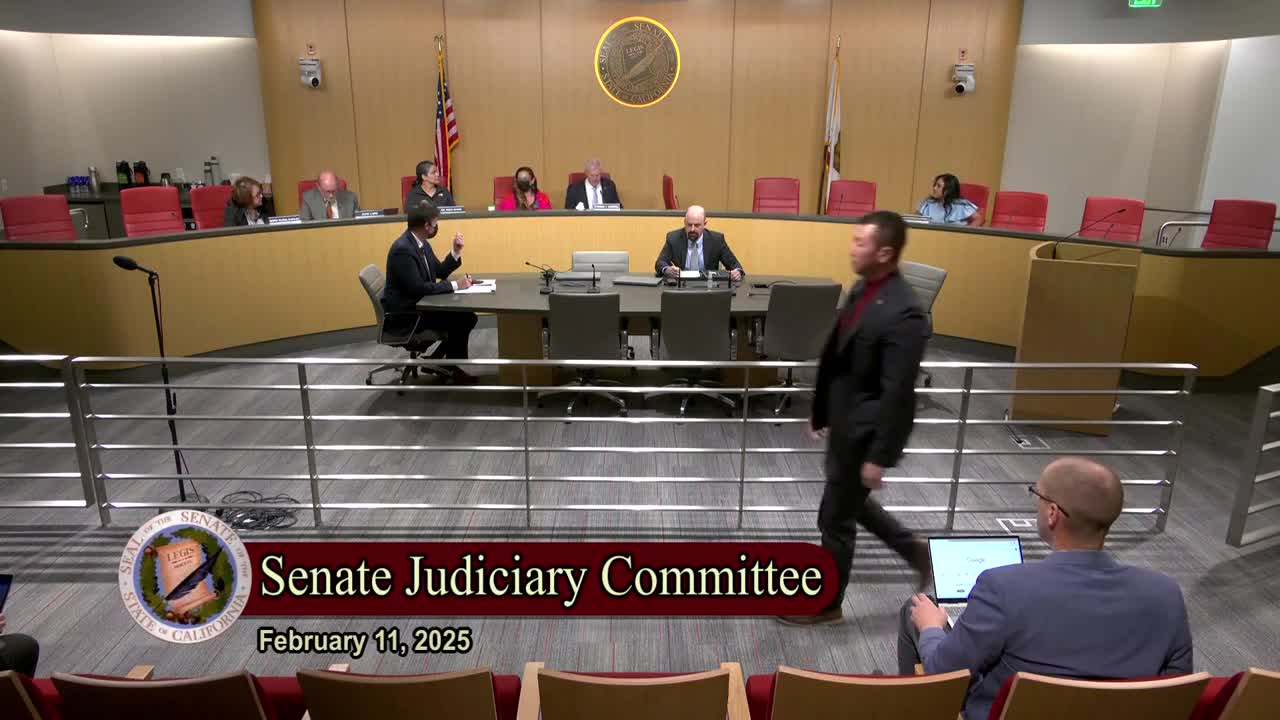 58MIN
Senate Standing Committee on Judiciary
Bill Author

Bill Co-Author(s):
