SB 279: Solid waste: compostable materials.
- Session Year: 2025-2026
- House: Senate
- Latest Version Date: 2025-10-11
Current Status:
Passed
(2025-10-11: Chaptered by Secretary of State. Chapter 651, Statutes of 2025.)
Introduced
In Committee
Awaiting First Chamber Vote
Passed First Chamber
In Committee
Awaiting Second Chamber Vote
Passed Second Chamber
Enacted
Existing law requires the Department of Resources Recycling and Recovery to adopt and revise regulations setting forth minimum standards for composting, in accordance with law. Existing regulations require all compostable materials handling activities to obtain a permit prior to commencing operations and to comply with specified requirements. Existing regulations specify 4 regulatory tiers for composting operations, with different requirements for each tier. The 4 tiers are excluded, enforcement agency notification, registration permit, and full solid waste facility permit.
In the excluded tier, existing regulations specify the excluded activities that do not constitute compostable material handing operations or facilities and, therefore, are not subject to permit requirements or other regulatory requirements. One of the excluded activities is the composting of green material, agricultural material, food material, and vegetative food material, alone or in combination, if the total amount of feedstock and compost onsite at any one time does not exceed 100 cubic yards and 750 square feet.
This bill would expand this excluded activity exemption for composting activities by eliminating the maximum square-foot condition and authorizing a total amount of feedstock and compost onsite at any one time of up to 200 cubic yards, or 500 cubic yards for a composting activity owned by a public agency, as defined. The bill would also authorize the Department of Resources Recycling and Recovery to further increase those amounts by regulation. The bill would also make the composting of agricultural materials and residues that are from a large-scale biomass management event at an agricultural facility that does not otherwise operate as a solid waste facility an excluded activity, as specified.
Existing regulations prohibit a composting operation from giving away or selling more than 1,000 cubic yards of compost product annually if it is in the excluded tier or if it is an agricultural material composting operation in the enforcement agency notification tier, its feedstock is both green material and agricultural material, and the operation is located on land zoned for agricultural uses.
This bill would authorize composting activities to give away or sell up to 5,000 cubic yards of compost product annually. The bill would authorize the Department of Resources Recycling and Recovery to increase, by regulation, that amount when the composting is of agricultural materials and residues that are from a large-scale biomass management event at an agricultural facility.
Existing law requires the Department of Resources Recycling and Recovery to adopt and revise regulations setting forth minimum standards for composting, in accordance with law. Existing regulations require all compostable materials handling activities to obtain a permit prior to commencing operations and to comply with specified requirements. Existing regulations specify 4 regulatory tiers for composting operations, with different requirements for each tier. The 4 tiers are excluded, enforcement agency notification, registration permit, and full solid waste facility permit.
In the excluded tier, existing regulations specify the excluded activities that do not constitute compostable material handing operations or facilities and, therefore, are not subject to permit requirements or other regulatory requirements. One of the excluded activities is the composting of green material, agricultural material, food material, and vegetative food material, alone or in combination, if the total amount of feedstock and compost onsite at any one time does not exceed 100 cubic yards and 750 square feet.
This bill would require that the expand this excluded activity exemption for composting activities by eliminating the maximum square-foot condition and authorizing a total amount of feedstock and compost onsite at any one time not exceed of up to 200 cubic yards, or 500 cubic yards instead of the 100 cubic yards and 750 square feet in the regulations. for a composting activity owned by a public agency, as defined. The bill would also authorize the Department of Resources Recycling and Recovery to further increase those amounts by regulation. The bill would also require make the composting of agricultural materials and residues that are from a large-scale biomass management event at an agricultural facility that does not otherwise operate as a solid waste facility to be an excluded activity, as specified.
Existing regulations prohibit a composting operation from giving away or selling more than 1,000 cubic yards of compost product annually if it is in the excluded tier or if it is an agricultural material composting operation in the enforcement agency notification tier, its feedstock is both green material and agricultural material, and the operation is located on land zoned for agricultural uses.
This bill would authorize those composting operations activities to give away or sell up to 5,000 cubic yards of compost product annually. The bill would authorize the Department of Resources Recycling and Recovery to increase, by regulation, that amount when the composting is of agricultural materials and residues that are from a large-scale biomass management event at an agricultural facility.
Existing law requires the Department of Resources Recycling and Recovery to adopt and revise regulations setting forth minimum standards for composting, in accordance with law. Existing regulations require all compostable materials handling activities to obtain a permit prior to commencing operations and to comply with specified requirements. Existing regulations specify 4 regulatory tiers for composting operations, with different requirements for each tier. The 4 tiers are excluded, enforcement agency notification, registration permit, and full solid waste facility permit.
In the excluded tier, existing regulations specify the excluded activities that do not constitute compostable material handing operations or facilities and, therefore, are not subject to permit requirements or other regulatory requirements. One of the excluded activities is the composting of green material, agricultural material, food material, and vegetative food material, alone or in combination, if the total amount of feedstock and compost onsite at any one time does not exceed 100 cubic yards and 750 square feet.
This bill would require that the total amount of feedstock and compost onsite at any one time not exceed 500 cubic yards instead of the 100 cubic yards and 750 square feet in the regulations. The bill would also require the composting of agricultural materials and residues that are from a large-scale biomass management event at an agricultural facility that does not otherwise operate as a solid waste facility to be an excluded activity, as specified.
Existing regulations prohibit a composting operation from giving away or selling more than 1,000 cubic yards of compost product annually if it is in the excluded tier or if it is an agricultural material composting operation in the enforcement agency notification tier, its feedstock is both green material and agricultural material, and the operation is located on land zoned for agricultural uses.
This bill would authorize those composting operations to give away or sell up to 5,000 cubic yards of compost product annually. The bill would authorize the Department of Resources Recycling and Recovery to increase, by regulation, that amount when the composting is of agricultural materials and residues that are from a large-scale biomass management event at an agricultural facility.
Existing law requires the Department of Resources Recycling and Recovery to adopt and revise regulations setting forth minimum standards for composting, in accordance with law. Existing regulations require all compostable materials handling activities to obtain a permit prior to commencing operations and to comply with specified requirements. Existing regulations specify 4 regulatory tiers for composting operations, with different requirements for each tier. The 4 tiers are excluded, enforcement agency notification, registration permit, and full solid waste facility permit.
In the excluded tier, existing regulations specify the excluded activities that do not constitute compostable material handing operations or facilities and, therefore, are not subject to permit requirements or other regulatory requirements. One of the excluded activities is the composting of green material, agricultural material, food material, and vegetative food material, alone or in combination, if the total amount of feedstock and compost onsite at any one time does not exceed 100 cubic yards and 750 square feet.
This bill would require that the total amount of feedstock and compost onsite at any one time not exceed 500 cubic yards instead of the 100 cubic yards and 750 square feet in the regulations. The bill would also require the composting of agricultural materials and residues that are from a large-scale biomass management event at an agricultural facility that does not otherwise operate as a solid waste facility to be an excluded activity, as specified.
Existing regulations require composting operations in the enforcement agency notification tier to comply with certain solid waste requirements, including, but not limited to, providing written notice to an enforcement agency before commencing operations, as provided. Under existing regulations, the enforcement agency notification tier includes, but is not limited to, certain agricultural, green material, and biosolids composting operations.This bill would require a composting operation to be included in the enforcement agency notification tier and authorize the operation to accept up to 10% food material by volume for a period not to exceed 5 years before applying for a full solid waste facility permit, if specified conditions are met, including, but not limited to, the operation having between 500 and 12,500 cubic yards of material onsite.Existing regulations prohibit a composting operation from giving away or selling more than 1,000 cubic yards of compost product annually if it is in the excluded tier or if it is an agricultural material composting operation in the enforcement agency notification tier, its feedstock is both green material and agricultural material, and the operation is located on land zoned for agricultural uses.
This bill would authorize those composting operations to give away or sell up to 5,000 cubic yards of compost product annually.
Existing law requires the Department of Resources Recycling and Recovery to adopt and revise regulations setting forth minimum standards for composting, in accordance with law. Existing regulations require all compostable materials handling activities to obtain a permit prior to commencing operations and to comply with specified requirements. Existing regulations specify 4 regulatory tiers for composting operations, with different requirements for each tier. The 4 tiers are excluded, enforcement agency notification, registration permit, and full solid waste facility permit.
In the excluded tier, existing regulations specify the excluded activities that do not constitute compostable material handing operations or facilities and, therefore, are not subject to permit requirements or other regulatory requirements. One of the excluded activities is the composting of green material, agricultural material, food material, and vegetative food material, alone or in combination, if the total amount of feedstock and compost onsite at any one time does not exceed 100 cubic yards and 750 square feet.
This bill would require that the total amount of feedstock and compost onsite at any one time not exceed 500 cubic yards instead of the 100 cubic yards and 750 square feet in the regulations. The bill would also require the composting of agricultural materials and residues that are from a large-scale biomass management event at an agricultural facility that does not otherwise operate as a solid waste facility to be an excluded activity, as specified.
Existing regulations require composting operations in the enforcement agency notification tier to comply with certain solid waste requirements, including, but not limited to, providing written notice to an enforcement agency before commencing operations, as provided. Under existing regulations, the enforcement agency notification tier includes, but is not limited to, certain agricultural, green material, and biosolids composting operations.
This bill would require a composting operation to be included in the enforcement agency notification tier and authorize the operation to accept up to 10% food material by volume for a period not to exceed 5 years before applying for a full solid waste facility permit, if specified conditions are met, including, but not limited to, the operation having between 500 and 12,500 cubic yards of material onsite.
Existing regulations prohibit a composting operation from giving away or selling more than 1,000 cubic yards of compost product annually if it is in the excluded tier or if it is an agricultural material composting operation in the enforcement agency notification tier, its feedstock is both green material and agricultural material, and the operation is located on land zoned for agricultural uses.
This bill would authorize those composting operations to give away or sell up to 5,000 cubic yards of compost product annually.
(a)For purposes of this section, all of the following shall apply:
(1)Agricultural byproduct material has the same meaning as defined in paragraph (4.5) of subdivision (a) of Section 17852 of Title 14 of the California Code of Regulations.
(2)Agricultural facility means an area where land is actively used for agricultural operations and includes related commercial activities and structures necessary for these operations if they are consistent with accepted practices and local zoning.
(3)Agricultural material has the same meaning as defined in paragraph (5) of subdivision (a) of Section 17852 of Title 14 of the California Code of Regulations.
(4)Large-scale biomass management event includes, but is not limited to, the removal of a whole orchard or vineyard.
(5)Manure has the same meaning as defined in paragraph (25) of subdivision (a) of Section 17852 of Title 14 of the California Code of Regulations.
(b)The following activities are excluded activities for purposes of paragraph (4) of subdivision (a) of Section 17855 of Title 14 of the California Code of Regulations:
(1)(A)Composting green material, agricultural material, food material, and vegetative food material activities, alone or in combination, if the total amount of feedstock and compost onsite at any one time does not exceed either of the following:
(i)200 cubic yards.
(ii)500 cubic yards for a composting activity owned by a public agency. For the purposes of this subparagraph, public agency means a city, county, city and county, including a charter city or charter county, special district, joint powers authority, state agency, or federal agency.
(B)Notwithstanding subparagraph (A), the department may increase, by regulation, the total amount of feedstock and compost a composting activity may have onsite as an excluded activity.
(2)(A)Subject to subparagraph (C), the composting of agricultural materials and residues that are from a large-scale biomass management event at an agricultural facility that does not otherwise operate as a solid waste facility. Materials or residues from a large-scale biomass management event do not include whole or partial animal carcasses or animal byproducts other than manure.
(B)(i)The excluded activity described in subparagraph (A) may include acquiring and using agricultural materials, agricultural byproduct materials, and manure from an agricultural facility to blend with the onsite agricultural materials and residues resulting from a large-scale biomass management event. Offsite material shall not include whole or partial animal carcasses or animal byproducts other than manure.
(ii)An entity that acquires and uses agricultural materials, agricultural byproduct materials, or manure pursuant to clause (i) shall maintain records identifying the origin of the material or manure for a minimum of five years and present those records to enforcement agencies upon request.
(C)The excluded activity described in this paragraph may be excluded activity for purposes of Section 17855 of Title 14 of the California Code of Regulations not more than once every 10 years and the composting of materials shall not exceed 24 months.
(c)Persons handling compostable material under the exclusions described in subdivision (b) are obligated to obtain all permits, licenses, or other clearances that may be required by other regulatory agencies including, but not limited to, local health entities and local land use authorities.
(d)(1)A composting activity may give away or sell up to 5,000 cubic yards of compost product annually for purposes of both of the following:
(A)Paragraph (1) of subdivision (a) of Section 17855 of Title 14 of the California Code of Regulations.
(B)Subparagraph (A) of paragraph (1) of subdivision (d) of Section 17856 of Title 14 of the California Code of Regulations.
(2)Notwithstanding paragraph (1), the department may increase, by regulation, the amount a composting activity may give away or sell when the composting is of agricultural materials and residues that are from a large-scale biomass management event at an agricultural facility pursuant to paragraph (2) of subdivision (a).
(a)The For purposes of this section, all of the following shall apply:
(1)Agricultural byproduct material has the same meaning as defined in paragraph (4.5) of subdivision (a) of Section 17852 of Title 14 of the California Code of Regulations.
(2)Agricultural facility means an area where land is actively used for agricultural operations and includes related commercial activities and structures necessary for these operations if they are consistent with accepted practices and local zoning.
(3)Agricultural material has the same meaning as defined in paragraph (5) of subdivision (a) of Section 17852 of Title 14 of the California Code of Regulations.
(4)Large-scale biomass management event includes, but is not limited to, the removal of a whole orchard or vineyard.
(5)Manure has the same meaning as defined in paragraph (25) of subdivision (a) of Section 17852 of Title 14 of the California Code of Regulations.
(b)The following activities are excluded activities for purposes of paragraph (4) of subdivision (a) of Section 17855 of Title 14 of the California Code of Regulations:
(1)(A)Composting green material, agricultural material, food material, and vegetative food material activities, alone or in combination, if the total amount of feedstock and compost onsite at any one time does not exceed 500 cubic yards. either of the following:
(i)200 cubic yards.
(ii)500 cubic yards for a composting activity owned by a public agency. For the purposes of this subparagraph, public agency means a city, county, city and county, including a charter city or charter county, special district, joint powers authority, state agency, or federal agency.
(B)Notwithstanding subparagraph (A), the department may increase, by regulation, the total amount of feedstock and compost a composting activity may have onsite as an excluded activity.
(2)(A)Subject to subparagraph (C), the composting of agricultural materials and residues that are from a large-scale biomass management event at an agricultural facility that does not otherwise operate as a solid waste facility. For purposes of this section, a large-scale biomass management event includes, but is not limited to, the removal of a whole orchard or vineyard. Materials or residues from a large-scale biomass management event do not include whole or partial animal carcasses or animal byproducts other than manure.
(B)(i)The excluded activity described in subparagraph (A) may include acquiring and using agricultural materials, agricultural byproduct materials, and agricultural manure from an agricultural site facility to blend with the onsite agricultural materials and residues resulting from a large-scale biomass management event. Offsite material shall not include whole or partial animal carcasses or animal byproducts other than manure.
(ii)An entity that acquires and uses agricultural materials, agricultural byproduct materials, or agricultural manure pursuant to clause (i) shall maintain records identifying the origin of the material or manure for a minimum of five years and present those records to enforcement agencies upon request.
(C)The excluded activity described in this paragraph may be excluded activity for purposes of Section 17855 of Title 14 of the California Code of Regulations not more than once every 10 years and the composting of materials shall not exceed 24 months.
(b)(c)Persons handling compostable material under the exclusions described in subdivision (a) (b) are obligated to obtain all permits, licenses, or other clearances that may be required by other regulatory agencies including, but not limited to, local health entities and local land use authorities.
(c)(d)(1)A composting operation activity may give away or sell up to 5,000 cubic yards of compost product annually for purposes of both of the following:
(A)Paragraph (1) of subdivision (a) of Section 17855 of Title 14 of the California Code of Regulations.
(B)Subparagraph (A) of paragraph (1) of subdivision (d) of Section 17856 of Title 14 of the California Code of Regulations.
(2)Notwithstanding paragraph (1), the department may increase, by regulation, the amount a composting operation activity may give away or sell when the composting is of agricultural materials and residues that are from a large-scale biomass management event at an agricultural facility pursuant to paragraph (2) of subdivision (a).
(a)Composting green material, agricultural material, food material, and vegetative food material activities, alone or in combination, is an excluded activity The following activities are excluded activities for purposes of Section 17855 of Title 14 of the California Code of Regulations if it meets either of the following: Regulations:
(1)The Composting green material, agricultural material, food material, and vegetative food material activities, alone or in combination, if the total amount of feedstock and compost onsite at any one time does not exceed 500 cubic yards.
(2)(A)The Subject to subparagraph (C), the composting is of agricultural materials and residues that are from a large-scale biomass management event at an agricultural facility that does not otherwise operate as a solid waste facility, including, but not limited to, a crop rotation or the removal of a whole orchard or vineyard. facility. For purposes of this section, a large-scale biomass management event includes, but is not limited to, the removal of a whole orchard or vineyard. Materials or residues from a large-scale biomass management event do not include whole or partial animal carcasses. carcasses or animal byproducts other than manure.
(B)(i)The excluded activity described in subparagraph (A) may include acquiring and using agricultural materials, agricultural byproduct materials, and agricultural manure from an agricultural site to blend with the onsite agricultural materials and residues resulting from the removal of the whole orchard or vineyard. a large-scale biomass management event. Offsite material shall not include whole or partial animal carcasses or animal byproducts other than manure.
(ii)An entity that acquires and uses agricultural materials, agricultural byproduct materials, or agricultural manure pursuant to clause (i) shall maintain records identifying the origin of the material or manure for a minimum of five years and present those records to enforcement agencies upon request.
(C)The excluded activity described in this paragraph may be excluded activity for purposes of Section 17855 of Title 14 of the California Code of Regulations not more than once every 10 years and the composting of materials shall not exceed 24 months.
(b)Persons handling compostable material under the exclusions described in subdivision (a) are obligated to obtain all permits, licenses, or other clearances that may be required by other regulatory agencies including, but not limited to, local health entities and local land use authorities.
(b)(c)(1)A composting operation may give away or sell up to 5,000 cubic yards of compost product annually for purposes of both of the following:
(1)(A)Paragraph (1) of subdivision (a) of Section 17855 of Title 14 of the California Code of Regulations.
(2)(B)Subparagraph (A) of paragraph (1) of subdivision (d) of Section 17856 of Title 14 of the California Code of Regulations.
(2)Notwithstanding paragraph (1), the department may increase, by regulation, the amount a composting operation may give away or sell when the composting is of agricultural materials and residues that are from a large-scale biomass management event at an agricultural facility pursuant to paragraph (2) of subdivision (a).
(a)Composting green material, agricultural material, food material, and vegetative food material activities, alone or in combination, is an excluded activity for purposes of Section 17855 of Title 14 of the California Code of Regulations if it meets either of the following:
(1)The total amount of feedstock and compost onsite at any one time does not exceed 500 cubic yards.
(2)(A)The composting is of agricultural materials and residues that are from a large-scale biomass management event at an agricultural facility that does not otherwise operate as a solid waste facility, including, but not limited to, a crop rotation or the removal of a whole orchard or vineyard. Material Materials or residues from a large-scale biomass management event do not include animal carcasses.
(B)(i)The excluded activity described in subparagraph (A) may include acquiring and using agricultural materials, agricultural byproduct materials, and agricultural manure from an agricultural site to blend with the onsite agricultural materials and residues resulting from the removal of the whole orchard or vineyard.
(ii)An entity that acquires and uses agricultural materials, agricultural byproduct materials, or agricultural manure pursuant to clause (i) shall maintain records identifying the origin of the material or manure and present those records to enforcement agencies upon request.
(b)(1)A composting operation is included in the enforcement agency notification tier, as prescribed by Section 17854.1 of Title 14 of the California Code of Regulations, and may accept up to 10 percent food material by volume for a period not to exceed five years before applying for a full solid waste facility permit, if all of the following are met:(A)The operation has between 500 and 12,500 cubic yards of material onsite.(B)The operation is in compliance with Title 14 of the California Code of Regulations.(C)The operation notifies the applicable enforcement agency in writing before accepting food material.(2)The department may adopt best management practices and training requirements for activities described in paragraph (1). (c)(b)A composting operation may give away or sell up to 5,000 cubic yards of compost product annually for purposes of both of the following:
(1)Paragraph (1) of subdivision (a) of Section 17855 of Title 14 of the California Code of Regulations.
(2)Subparagraph (A) of paragraph (1) of subdivision (d) of Section 17856 of Title 14 of the California Code of Regulations.
(a)Composting green material, agricultural material, food material, and vegetative food material activities, alone or in combination, is an excluded activity for purposes of Section 17855 of Title 14 of the California Code of Regulations if it meets either of the following:
(1)The total amount of feedstock and compost onsite at any one time does not exceed 500 cubic yards.
(2)(A)The composting is of agricultural materials and residues that are from a large-scale biomass management event at an agricultural facility that does not otherwise operate as a solid waste facility, including, but not limited to, a crop rotation or the removal of a whole orchard or vineyard. Material or residues from a large scale large-scale biomass management event do not include animal carcasses.
(B)(i)The excluded activity described in subparagraph (A) may include acquiring and using agricultural materials, agricultural byproduct materials, and agricultural manure from an agricultural site to blend with the onsite agricultural materials and residues resulting from the removal of the whole orchard or vineyard.
(ii)An entity that acquires and uses agricultural materials, agricultural byproduct materials, or agricultural manure pursuant to clause (i) shall maintain records identifying the origin of the material or manure and present those records to enforcement agencies upon request.
(b)(1)A composting operation is included in the enforcement agency notification tier, as prescribed by Section 17854.1 of Title 14 of the California Code of Regulations, and may accept up to 10 percent food material by volume for a period not to exceed five years before applying for a full solid waste facility permit, if all of the following are met:
(A)The operation has between 500 and 12,500 cubic yards of material onsite.
(B)The operation is in compliance with Title 14 of the California Code of Regulations.
(C)The operation notifies the applicable enforcement agency in writing before accepting food material.
(2)The department may adopt best management practices and training requirements for activities described in paragraph (1).
(c)A composting operation may give away or sell up to 5,000 cubic yards of compost product annually for purposes of both of the following:
(1)Paragraph (1) of subdivision (a) of Section 17855 of Title 14 of the California Code of Regulations.
(2)Subparagraph (A) of paragraph (1) of subdivision (d) of Section 17856 of Title 14 of the California Code of Regulations.
(a)Composting green material, agricultural material, food material, and vegetative food material activities, alone or in combination, is an excluded activity for purposes of Section 17855 of Title 14 of the California Code of Regulations if it meets either of the following:
(1)The total amount of feedstock and compost onsite at any one time does not exceed 500 cubic yards.
(2)(A)The composting is of agricultural materials and residues that are from a large-scale biomass management event at an agricultural facility that does not otherwise operate as a solid waste facility, including, but not limited to, a crop rotation or the removal of a whole orchard or vineyard. Material or residues from a large scale biomass management event do not include animal carcasses.
(B)(i)The excluded activity described in subparagraph (A) may include acquiring and using agricultural materials, agricultural byproduct materials, and agricultural manure from an agricultural site to blend with the onsite agricultural materials and residues resulting from the removal of the whole orchard or vineyard.
(ii)An entity that acquires and uses agricultural materials, agricultural byproduct materials, or agricultural manure pursuant to clause (i) shall maintain records identifying the origin of the material or manure and present those records to enforcement agencies upon request.
(b)(1)A composting operation is included in the enforcement agency notification tier, as prescribed by Section 17854.1 of Title 14 of the California Code of Regulations, and may accept up to 10 percent food material by volume for a period not to exceed five years before applying for a full solid waste facility permit, if all of the following are met:
(A)The operation has between 500 and 12,500 cubic yards of material onsite.
(B)The operation is in compliance with Title 14 of the California Code of Regulations.
(C)The operation notifies the applicable enforcement agency in writing before accepting food material.
(2)The department may adopt best management practices and training requirements for activities described in paragraph (1).
(c)A composting operation may give away or sell up to 5,000 cubic yards of compost product annually for purposes of both of the following:
(1)Paragraph (1) of subdivision (a) of Section 17855 of Title 14 of the California Code of Regulations.
(2)Subparagraph (A) of paragraph (1) of subdivision (d) of Section 17856 of Title 14 of the California Code of Regulations.
(a)Composting green material, agricultural material, food material, and vegetative food material activities, alone or in combination, is an excluded activity for purposes of Section 17855 of Title 14 of the California Code of Regulations if it meets either of the following:
(1)The total amount of feedstock and compost onsite at any one time does not exceed 500 cubic yards.
(2)(A)The composting is of agricultural materials and residues that are from a large-scale biomass management event at an agricultural facility that does not otherwise operate as a solid waste facility, including, but not limited to, a crop rotation or the removal of a whole orchard or vineyard.
(B)The excluded activity described in subparagraph (A) may include acquiring and using agricultural materials, agricultural byproduct materials, and agricultural manure to blend with the onsite agricultural materials and residues resulting from the removal of the whole orchard or vineyard.
(b)(1)A composting operation is included in the enforcement agency notification tier, as prescribed by Section 17854.1 of Title 14 of the California Code of Regulations, and may accept up to 10 percent food material by volume for a period not to exceed five years before applying for a full solid waste facility permit, if all of the following are met:
(A)The operation has between 500 and 12,500 cubic yards of material onsite.
(B)The operation is in compliance with Title 14 of the California Code of Regulations.
(C)The operation notifies the applicable enforcement agency in writing before accepting food material.
(2)The department may adopt best management practices and training requirements for activities described in paragraph (1).
(c)A composting operation may give away or sell up to 5,000 cubic yards of compost product annually for purposes of both of the following:
(1)Paragraph (1) of subdivision (a) of Section 17855 of Title 14 of the California Code of Regulations.
(2)Subparagraph (A) of paragraph (1) of subdivision (d) of Section 17856 of Title 14 of the California Code of Regulations.
|
Date
|
Status
|
|---|---|
| Oct 11, 2025 | Chaptered by Secretary of State. Chapter 651, Statutes of 2025. |
| Oct 11, 2025 | Approved by the Governor. |
| Sep 16, 2025 | Enrolled and presented to the Governor at 3 p.m. |
| Sep 9, 2025 | Assembly amendments concurred in. (Ayes 40. Noes 0. Page 2712.) Ordered to engrossing and enrolling. |
| Sep 8, 2025 | In Senate. Concurrence in Assembly amendments pending. |
| Sep 8, 2025 | Read third time. Passed. (Ayes 79. Noes 0. Page 3000.) Ordered to the Senate. |
| Sep 3, 2025 | Read second time. Ordered to third reading. |
| Sep 2, 2025 | Read second time and amended. Ordered to second reading. |
| Aug 29, 2025 | From committee: Do pass as amended. (Ayes 11. Noes 0.) (August 29). |
| Aug 20, 2025 | August 20 set for first hearing. Placed on APPR. suspense file. |
| Jul 8, 2025 | From committee: Do pass and re-refer to Com. on APPR. (Ayes 14. Noes 0.) (July 7). Re-referred to Com. on APPR. |
| Jun 30, 2025 | From committee with author's amendments. Read second time and amended. Re-referred to Com. on NAT. RES. |
| Jun 5, 2025 | Referred to Com. on NAT. RES. |
| May 29, 2025 | In Assembly. Read first time. Held at Desk. |
| May 29, 2025 | Read third time. Passed. (Ayes 38. Noes 0. Page 1336.) Ordered to the Assembly. |
| May 27, 2025 | Read second time. Ordered to third reading. |
| May 23, 2025 | Read second time and amended. Ordered to second reading. |
| May 23, 2025 | From committee: Do pass as amended. (Ayes 5. Noes 0. Page 1194.) (May 23). |
| May 16, 2025 | Set for hearing May 23. |
| May 12, 2025 | From committee with author's amendments. Read second time and amended. Re-referred to Com. on APPR. |
| Apr 7, 2025 | April 7 hearing: Placed on APPR. suspense file. |
| Mar 28, 2025 | Set for hearing April 7. |
| Mar 20, 2025 | Read second time and amended. Re-referred to Com. on APPR. |
| Mar 19, 2025 | From committee: Do pass as amended and re-refer to Com. on APPR. (Ayes 7. Noes 0. Page 421.) (March 19). |
| Mar 7, 2025 | Set for hearing March 19. |
| Feb 14, 2025 | Referred to Com. on E.Q. |
| Feb 6, 2025 | From printer. May be acted upon on or after March 8. |
| Feb 5, 2025 | Introduced. Read first time. To Com. on RLS. for assignment. To print. |
|
Date
|
Description
|
Location
|
Votes
|
|
|---|---|---|---|---|
| Sep 9, 2025 | Unfinished Business SB279 McNerney et al. Concurrence | Senate Floor |
Passed |
|
| Sep 8, 2025 | SB 279 McNerney Senate Third Reading By Soria | Assembly Floor |
Passed |
|
| Aug 29, 2025 | Do pass as amended. | Assembly Standing Committee on Appropriations |
Passed |
|
| Jul 7, 2025 | Do pass and be re-referred to the Committee on [Appropriations] | Assembly Standing Committee on Natural Resources |
Passed |
|
| May 29, 2025 | Senate 3rd Reading SB279 McNerney et al. | Senate Floor |
Passed |
|
| May 23, 2025 | Do pass as amended | Senate Standing Committee on Appropriations |
Passed |
|
| Apr 7, 2025 | Placed on suspense file | Senate Standing Committee on Appropriations |
Passed |
|
| Mar 19, 2025 | Do pass as amended, but first amend, and re-refer to the Committee on [Appropriations] | Senate Standing Committee on Environmental Quality |
Passed |
This list shows positions taken on this bill by organizations on the date displayed, which is linked to the original source.
Positions by individuals are not included.
|
Organization
|
Position
|
Date
|
|---|---|---|
| 350 Bay Area Action | ** Support | |
| 350 Humboldt | ** Support | |
| 350 Sacramento | ** Support | |
| Active San Gabriel Valley | ** Support | |
| Agricultural Council Of California | ** Support | |
| Almond Alliance | ** Support | |
| Almond Alliance of California | ** Support | |
| American Pistachio Growers | ** Support | |
| Azul | ** Support | |
| Ban Single Use Plastic | ** Support | |
| Ban Sup (single Use Plastic) | ** Support | |
| Biochosen | ** Support | |
| California Alliance For Community Composting | ** Support | |
| California Association Of Resource Conservation Districts | ** Support | |
| California Association Of Winegrape Growers | ** Support | |
| California Certified Organic Farmers | ** Support | |
| California Climate & Agricultural Network | ** Support | |
| California Compost Coalition | ** Against | |
| California Council For Environmental & Economic Balance | ** Against | |
| California Farm Bureau | ** Support | |
| California Farm Link | ** Support | |
| California Farmlink | ** Support | |
| California Food and Farming Network | ** Support | |
| California Food Producers | ** Support | |
| California Fresh Fruit Association | ** Support | |
| California League of Food Producers | ** Support | |
| California Nurses for Environmental Health & Justice | ** Support | |
| California Waste Haulers Council | ** Against | |
| Californians Against Waste | ** Support | |
| Carbon Cycle Institute | ** Support | |
| Central California Environmental Justice Network | ** Support | |
| Central Valley Air Quality Coalition | ** Support | |
| Ceres Community Project | ** Support | |
| ChicoBag Company | ** Support | |
| Climate Action California | ** Support | |
| Climate Action Petaluma | ** Support | |
| CLIMATE CENTER; THE | ** Support | |
| Climate Health Now Action Fund | ** Support | |
| Climate Reality Project Silicon Valley Chapter | ** Support | |
| Climate Reality Project, Los Angeles Chapter | ** Support | |
| Climate Reality Project, Orange County | ** Support | |
| Community Alliance With Family Farmers | ** Support | |
| Courage California | ** Support | |
| Ecology Center | ** Support | |
| Elders Climate Action Norcal Chapter | ** Support | |
| Elders Climate Action Socal Chapter | ** Support | |
| Endangered Habitats League | ** Support | |
| Friends Committee On Legislation Of California | ** Support | |
| Glendale Environmental Coalition | ** Support | |
| Inland Empire Disposal Association | ** Against | |
| Los Angeles County Waste Management Association | ** Against | |
| Los Angeles Waterkeeper | ** Support | |
| National Resources Defense Council | ** Support | |
| Northern California Recycling Association | ** Support | |
| Oakland Recycles | ** Support | |
| People Food and Land Foundation | ** Support | |
| Plastic Pollution Coalition | ** Support | |
| ReGen Monterey | ** Support | |
| Republic Services | ** Against | |
| Republic Services - Western Region | ** Against | |
| Resource Recovery Coalition Of California | ** Against | |
| Salinas Valley Solid Waste Authority | ** Support | |
| San Francisco Baykeeper | ** Support | |
| Santa Cruz Climate Action Network | ** Support | |
| Save Our Shores | ** Support | |
| Save The Albatross Coalition | ** Support | |
| See | ** Support | |
| SEE (Social Eco Education) | ** Support | |
| Sierra Club California | ** Support | |
| Sierra Harvest | ** Support | |
| SoCal 350 Climate Action | ** Support | |
| Solana Center for Environmental Innovation | ** Support | |
| Solid Waste Association of North America's California Chapters Legislative Task Force | ** Against | |
| Solid Waste Association of North America’s California Chapters Legislative Task Force | ** Against | |
| Solid Waste Association Of Orange County | ** Against | |
| StopWaste | ** Support | |
| Sustainable Rossmoor | ** Support | |
| Swana California Chapters Legislative Task Force | ** Against | |
| The Climate Center | ** Support | |
| The Last Plastic Straw | ** Support | |
| The Office of Kat Taylor | ** Support | |
| Tracy Earth Project | ** Support | |
| U.S. Green Building Council, California | ** Support | |
| US Green Building Council | ** Support | |
| Waste Connections, Inc. | ** Against | |
| Western Growers Association | ** Support | |
| Western Tree Nut Association | ** Support | |
| Wildcoast | ** Support | |
| Wine Institute | ** Support | |
| Wm | ** Against | |
| Wm (waste Management) | ** Against | |
| zero waste marin | ** Support | |
| Zero Waste San Diego | ** Support | |
| Zero Waste Sonoma | ** Support |
SENATE RULES COMMITTEE Office of Senate Floor Analyses (916) 651-1520 Fax: (916) 327-4478 | SB 279 |
UNFINISHED BUSINESS
Bill No: SB 279
Author: McNerney (D), et al.
Amended: 9/2/25
Vote: 21
SENATE ENVIRONMENTAL QUALITY COMMITTEE: 7-0, 3/19/25
AYES: Blakespear, Valladares, Dahle, Gonzalez, Hurtado, Padilla, Pérez
NO VOTE RECORDED: Menjivar
SENATE APPROPRIATIONS COMMITTEE: 5-0, 5/23/25
AYES: Caballero, Cabaldon, Grayson, Richardson, Wahab
NO VOTE RECORDED: Seyarto, Dahle
SENATE FLOOR: 38-0, 5/29/25
AYES: Allen, Alvarado-Gil, Archuleta, Arreguín, Ashby, Becker, Blakespear, Cabaldon, Caballero, Cervantes, Choi, Cortese, Dahle, Durazo, Gonzalez, Grayson, Grove, Hurtado, Jones, Laird, McGuire, McNerney, Menjivar, Niello, Ochoa Bogh, Padilla, Pérez, Richardson, Rubio, Seyarto, Smallwood-Cuevas, Stern, Strickland, Umberg, Valladares, Wahab, Weber Pierson, Wiener
NO VOTE RECORDED: Limón, Reyes
ASSEMBLY FLOOR: 79-0, 9/8/25 - See last page for vote
SUBJECT: Solid waste: compostable materials
SOURCE: Author
DIGEST:
This bill lowers the regulatory requirements for certain composting operations, including agricultural operations.
Assembly Amendments
: Lowers the volume of compost material that can be considered an excluded activity for CalRecycle permitting from 500 cubic yards to 200 cubic yards, unless the composting activity is owned by a public agency
Removes the provision that would have allowed facilities to accept up to 10% food material by volume for five years before applying for a full solid waste facility permit if they met certain conditions.
ANALYSIS:
Existing law:
- Requires the state to reduce the disposal of organic waste by 40% from the 2014 level by 2020 and 75% by 2025 to help achieve the state’s methane reduction goal. (Health and Safety Code (HSC) § 39730.6)
- Requires the Department of Resource Recovery and Recycling (CalRecycle), in consultation with the California Air Resources Board (CARB), to adopt regulations to achieve the state’s organic waste reduction requirements. Specifies the regulations:
- May require jurisdictions to impose requirements on waste generators or other relevant entities and may authorize local jurisdictions to impose penalties on generators for noncompliance;
- May include penalties for noncompliance;
- Require penalties be imposed on jurisdictions that miss the following organic waste procurement targets established by CalRecycle:
- On or after January 1, 2023, each jurisdiction shall procure a quantity of recovered organic waste products that meet or exceed 30% of its recovered organic waste procurement target;
- On or after January 1, 2024, each jurisdiction shall procure a quantity of recovered organic waste products that meet or exceed 65% of its recovered organic waste procurement target; and,
- On and after January 1, 2025, each jurisdiction shall procure a quantity of recovered organic waste products that meet or exceed 100% of its recovered organic waste procurement target.
- Establishes different regulatory tiers for composting facilities based on their size and the materials they process. This includes:
- Excluded Activities Tier. These include, among others:
- Small composting facilities that process green material, agricultural material, food material, and vegetative food material, if the total amount of feedstock and compost on-site at any one time does not exceed 100 cubic yards and 750 square feet. (California Code of Regulations (CCR) § 17855(a)(4))
- An activity that handles agricultural material, derived from an agricultural site if no more than 1,000 cubic yards of compost product are given away or sold annually from this operation. (CCR § 17855(a)(1))
- Excluded Activity Notification Tier which requires notification of operations to local enforcement agencies among other criteria. This tier applies to composting operations for agricultural material, among other activities (CCR tit 14 § 18103.1)
- Registration Tier. Requires operators to submit certain information describing and reporting on the operation including a Report of Facility Information (RFI) and pertinent California Environmental Quality Act (CEQA) documents: compost operations in the registration tier may be approved or denied a permit based on the content of their registration tier application (CCR § 18104). Vegetative food material composting facilities that process up to 12,500 cubic yards of compost fall into this category. (CCR tit 14 § 17857.2)
- Full Tier. Requires operators to submit specific information in an RFI and pertinent CEQA documents and, for landfills, to include a complete closure plan, financial assurance, and operating liability. (CCR tit § 27 21570). Large ( 12,500 cubic yards). Vegetative Food Material Composting Facilities fall into this regulatory tier.
- Excluded Activities Tier. These include, among others:
- Requires that composting facilities accepting food waste be in a full regulatory tier, except in specific cases, including facilities 12,500 cubic yards or smaller. These smaller facilities accepting food waste are subject to the registration permit tier. (CCR14 § 17854.1)
This bill
- Excludes the following activities from specified composting regulatory requirements:
- Composting green material, agricultural material, food material, and vegetative food material activities, alone or in combination, if the total amount of feedstock and compost onsite at any one time does not exceed 200 cubic yards or 500 cubic yards for an activity owned by a public agency, as specified.
- Subject to specified requirements, the composting of agricultural materials and residues from a large-scale biomass management event, as specified, at an agricultural facility that does not otherwise operate as a solid waste facility.
- Provides that the excluded large-scale biomass event activities may include acquiring and using agricultural materials, agricultural byproduct materials, and manure from an agricultural facility to blend with the onsite agricultural materials and residues resulting from the large-scale biomass management event. Specifies that this offsite material shall not include whole or partial animal carcasses or animal byproducts other than manure. Requires specified recordkeeping and provides that this exclusion may not be used more than once every 10 years for a period not to exceed 24 months.
- Authorizes a composting operation to give away or sell up to 5,000 cubic yards of compost product annually, and, authorizes CalRecycle to increase, by regulation, the amount of material a composting activity may give away or sell when the composting is of agricultural materials and residues from a large-scale biomass management event at an agricultural facility, as specified.
- Defines "agricultural byproduct material," "agricultural facility," "agricultural material," "large-scale biomass event," and "manure" for purposes of this bill.
Background
Organic Waste and Short-Lived Climate Pollutants. By weight, organic waste makes up 48% of the annual material added to landfills in California. This includes approximately 2.5 billion meals worth of unspoiled food a year[1].
When food and other organic material are discarded in a landfill, bacteria break down the material aerobically (without oxygen), a process that releases methane, a potent greenhouse gas (GHG). While modern landfills have systems in place to capture this methane, significant amounts of methane and other short-lived climate pollutants (SLCP’s) continue to escape from older landfills into the atmosphere. According to CalRecycle, landfills are the third largest source of methane in California, and organic waste in landfills emits 20% of the state's methane. Approximately 8.5 million tons of carbon dioxide equivalent were released by landfills in 2020[2].
To reduce SLCPs, the Legislature passed SB 1383 (Lara, Chapter 395, Statutes of 2016) which set a target to reduce methane emissions by 40% relative to 2014 levels by 2030. SB 1383 targeted SLCPs emitted from landfills, and set a goal to reduce the landfill disposal of organic waste by 50% by 2020 and 75% by 2025 relative to the 2014 disposal level. Under SB 1383, the organic waste diverted from landfills must go to organics recovery facilities to be recycled into products like compost, mulch, or biogas.
Regulatory Tiers for composting. CalRecycle has established different regulatory tiers for composting facilities that have different requirements[3]. Facilities are slotted into tiers based on their size, activities, and the materials they process. These tiers include[4]:
- Excluded Activity Tier – This tier is not regulated by CalRecycle. Operations that are eligible for the “excluded activity (EA)” tier include small (<100 cubic yards) compost facilities that take food waste, and onsite farm composting operations made from agricultural material if less than 1,000 cubic yards of compost is given away or sold each year.
- Excluded Activity Notification Tier – This tier requires the compost operator to send information to CalRecycle on its intent to operate a compost facility. The operator has to describe how the facility will operate, and send documentation that the operator has notified the local planning department of its intent to commence operations). Notification operations can require submittal of an “operation plan” or an “odor impact minimization plan” (OIMP).[5] Activities that fall into the Excluded Activity Notification Tier include green material composting operations under 12,500 cubic yards of material, and large agricultural material composting operations. This notification tier is not a permit tier.
- Registration Tier – The registration tier requires more information and longer processing times compared to the notification tier, but less than that for full or standardized permits. Vegetative food material composting facilities that process up to 12,500 cubic yards of compost fall into this category.
- Full Regulatory Tier – The process and timelines for processing a full solid waste permit (SWFP) are the most significant of any of the tiers. Examples of facilities that fall into this tier include solid waste facilities and compost facilities that accept vegetative food material and process more than 12,500 cubic yards of material.
Enforcement challenges. The infrastructure needed to implement the requirements of SB 1383 has not kept pace with the increased materials that need to be recycled. This is, in part, due to the costs and timelines associated with facility siting and construction. As a result, some parts of the state are facing increased illegal disposal. According to the Los Angeles Times, more than 80 unpermitted sites in the Antelope Valley appear to be accepting some forms of organic waste for "land application;" however, the materials contain significant amounts of solid waste, including plastics. In some cases, the property owners are the victims of illegal dumping by third parties; in others, landowners are charging to accept illegally disposed material. News reports state that some of these sites cover hundreds of acres and are dozens of feet deep. Residents in the area complain of toxic odors and worry about fire risk.
In response to the deluge of illegal dumping activity, CalRecycle adopted emergency regulations to deal with illegal organic material dumping in February of this year. The regulations incorporate land application activities into CalRecycle's compost facility tiers and subject them to the appropriate operator filing requirements, state minimum standards, record keeping, and LEA inspection requirements to ensure that LEAs are able to appropriately regulate and enforce these activities.
Comments
- Purpose of Bill. According to the author, “Now that California has banned nearly all burning of agricultural waste, the state’s farmers and winegrape growers need assistance in dealing with large amounts of organic material. Currently, farms and vineyards ship large amounts of agricultural waste to offsite composting facilities, often hundreds of miles away, rather than composting the green waste themselves onsite in a sustainable way. SB 279 will help farmers and winegrape growers by allowing them to compost agricultural waste onsite when they have a large biomass removal event, like the removal of an orchard or vineyard. It will also benefit community composters, urban farms and school farms by allowing them to compost larger amounts of green waste and food scraps onsite.”
- Large scale composting: better than burning, still impactful. Up until this year, organic material from a “large biomass event” like clearing a vineyard was likely to be burned in an open pile. However, as of January 1, 2025, agricultural burns like these in the San Joaquin Valley are essentially all banned. (SB 705, Chapter 481, Statutes of 2003).
The material that is no longer allowed to be burned in open piles could be diverted into compost. The scale of material is significant: according to information on the Almond Board’s website, an estimated 71,000 acres of orchards will be removed by the end of the crop year, adding to the 83,000 acres removed in the 2023-24 crop year, according to Land IQ’s estimate issued in November last year.
Composting agricultural waste will have fewer emissions than open-pile burning, and compost is also one of the highest and best uses for recycling organic material. However, composting, especially large-scale composting, does impact the environment, including emissions of air pollutants, odors, and the potential for leaching into the groundwater. In addition to making large-scale composting of agricultural material an excluded activity in CalRecycle’s regulatory tiers, this bill also allows off-site material, including manure, to be brought onto farms to mix with the material from a “large-scale biomass management event” like removing an orchard. Mixing in other agricultural materials can be important to creating healthy and robust compost. However, because there is no size constraint on the amount of material from a large-scale biomass event that can be composted, there is also no constraint on the amount of agricultural material that could be brought in to blend with that material.
This bill adds some level of assurance that off-site material coming onto agricultural lands is (1) sourced from agricultural sites and (2) that there is accountability for farmers to keep track of what offsite material comes in and from where should they be audited.
- Competing composts? This bill quintuples (from 1,000-5,000 cubic yards) the amount of compost that can be given away or sold if it is on agricultural land without increasing the regulatory tier for those composting activities. By increasing the amount of compost that agricultural composters can sell while remaining in the excluded activity tier, this bill could give agricultural compost operations a competitive edge over other compost operations. On the one hand, agricultural material processed on-site can be much cleaner when compared to compost from facilities that accept material from communities and businesses, so agricultural composting operations may not need as much regulation. On the other hand, compost facilities accepting organic material from communities where they are located are essential to reaching the GHG emission and organic waste diversion goals of SB 1383. Their proximity to the communities where they are located keeps composting decentralized and drives down emissions and costs associated with transporting organic waste and compost. In 2023, California had 166 composting facilities, with at least 20 new facilities being prepared specifically to provide local composting options. These emerging compost facilities represent millions of dollars of local investment, and CalRecycle estimates that California currently needs 50-100 new composting operations in order to reach its SB 1383 goals[6].
Related/Prior Legislation
AB 411 (Papan, 2025) authorizes composting of livestock carcasses resulting from a routine livestock mortality event or on-farm processing to be composted if certain requirements are met. The bill is awaiting hearing on the Senate Floor.
FISCAL EFFECT: Appropriation: No Fiscal Com.: Yes Local: No
According to the Assembly Appropriations Committee, the bill will result in “Costs of an unknown amount, likely over $150,000, for CalRecycle to reopen and amend its composting regulations in accordance with the requirements of this bill, provide ongoing compliance-related assistance to stakeholders, review permitting and inspection reports, and conduct oversight, among other tasks (Integrated Waste Management Account (IWMA)). For its part, CalRecycle estimates ongoing annual costs beginning in fiscal year 2025-26 of approximately $327,000 to hire two staff to implement this bill (IWMA). However, it is not clear to this committee that the workload created by this bill alone necessitates two permanent positions.
SUPPORT: (Verified 9/8/25)
350 Bay Area Action
350 Humboldt
350 Sacramento
Active San Gabriel Valley
Agricultural Council of California
Almond Alliance
Almond Alliance of California
American Pistachio Growers
Azul
Ban Single Use Plastic
Ban Sup (single Use Plastic)
Biochosen
California Alliance for Community Composting
California Association of Resource Conservation Districts
California Association of Winegrape Growers
California Certified Organic Farmers
California Climate & Agricultural Network
California Farm Bureau
California Farm Link
California Farmlink
California Food and Farming Network
California Food Producers
California Fresh Fruit Association
California League of Food Producers
California Nurses for Environmental Health & Justice
Californians Against Waste
Carbon Cycle Institute
Central California Environmental Justice Network
Central Valley Air Quality Coalition
Ceres Community Project
Chicobag Company
Climate Action California
Climate Action Petaluma
Climate Center; the
Climate Health Now Action Fund
Climate Reality Project - Silicon Valley Chapter
Climate Reality Project, Los Angeles Chapter
Climate Reality Project, Orange County
Community Aliance With Family Farmers
Community Alliance With Family Farmers
Courage California
Ecology Center
Elders Climate Action Norcal Chapter
Elders Climate Action Socal Chapter
Endangered Habitats League
Friends Committee on Legislation of California
Glendale Environmental Coalition
Los Angeles Waterkeeper
National Resources Defense Council
Northern California Recycling Association
Oakland Recycles
People Food and Land Foundation
Plastic Pollution Coalition
Regen Monterey
Salinas Valley Solid Waste Authority
San Francisco Baykeeper
Santa Cruz Climate Action Network
Save Our Shores
Save the Albatross Coalition
See (social Eco Education)
Sierra Club California
Sierra Harvest
Socal 350 Climate Action
Solana Center for Environmental Innovation
Stopwaste
Sustainable Rossmoor
The Climate Center
The Last Plastic Straw
The Office of Kat Taylor
Tracy Earth Project
U.s. Green Building Council, California
US Green Building Council
Western Growers Association
Western Tree Nut Association
Wildcoast
Wine Institute
Zero Waste Marin
Zero Waste San Diego
Zero Waste Sonoma
OPPOSITION: (Verified 9/8/25)
California Compost Coalition
California Council for Environmental & Economic Balance
California Waste Haulers Council
Inland Empire Disposal Association
Los Angeles County Waste Management Association
Republic Services
Republic Services - Western Region
Resource Recovery Coalition of California
Solid Waste Association of Orange County
Swana California Chapters Legislative Task Force
Waste Connections, INC.
Wm (waste Management)
ASSEMBLY FLOOR: 79-0, 9/8/25
AYES: Addis, Aguiar-Curry, Ahrens, Alanis, Alvarez, Arambula, Ávila Farías, Bains, Bauer-Kahan, Bennett, Berman, Boerner, Bonta, Bryan, Calderon, Caloza, Carrillo, Castillo, Chen, Connolly, Davies, DeMaio, Dixon, Elhawary, Ellis, Flora, Fong, Gabriel, Gallagher, Garcia, Gipson, Jeff Gonzalez, Mark González, Hadwick, Haney, Harabedian, Hart, Hoover, Irwin, Jackson, Johnson, Kalra, Krell, Lackey, Lee, Lowenthal, Macedo, McKinnor, Muratsuchi, Ortega, Pacheco, Papan, Patel, Patterson, Pellerin, Petrie-Norris, Quirk-Silva, Ramos, Ransom, Celeste Rodriguez, Michelle Rodriguez, Rogers, Blanca Rubio, Sanchez, Schiavo, Schultz, Sharp-Collins, Solache, Soria, Stefani, Ta, Tangipa, Valencia, Wallis, Ward, Wicks, Wilson, Zbur, Rivas
NO VOTE RECORDED: Nguyen
Prepared by: Brynn Cook / E.Q. / (916) 651-4108, Taylor McKie / E.Q. / (916) 651-4108, Heather Walters / E.Q. / (916) 651-4108
9/8/25 19:46:30
**** END ****
SENATE THIRD READING
STR Bill Id:SB 279
Author:(McNerney)
As Amended Ver:September 2, 2025
Majority vote
SUMMARY
This bill lowers the regulatory requirements for certain composting operations, including agricultural operations.
Major Provisions
- Excludes the following activities from specified composting regulatory requirements:
- Composting green material, agricultural material, food material, and vegetative food material activities, alone or in combination, if the total amount of feedstock and compost onsite at any one time does not exceed 200 cubic yards (CY) or 500 CY for an activity owned by a public agency, as specified. Authorizes the Department of Resources Recycling and Recovery (CalRecycle) to increase the amount of feedstock by regulation.
- Subject to specified requirements, the composting of agricultural materials and residues from a large-scale biomass management event, as specified, at an agricultural facility that does not otherwise operate as a solid waste facility.
- Specifies that materials or residues from a large-scale biomass management event do not include whole or partial animal carcasses or animal byproducts other than manure.
- Provides that the excluded large-scale biomass event activities may include acquiring and using agricultural materials, agricultural byproduct materials, and manure from an agricultural facility to blend with the onsite agricultural materials and residues resulting from the large-scale biomass management event. Specifies that this offsite material shall not include whole or partial animal carcasses or animal byproducts other than manure. Requires specified recordkeeping and provides that this exclusion may not be used more than once every 10 years for a period not to exceed 24 months.
- Requires a person handling compostable material under the exclusions provided by this bill to obtain all permits, licenses, or other clearances that may be required by other regulatory agencies.
- Authorizes a composting operation to give away or sell up to 5,000 CY of compost product annually, as specified; and, authorizes CalRecycle to increase, by regulation, the amount of material a composting activity may give away or sell when the composting is of agricultural materials and residues from a large-scale biomass management event at an agricultural facility, as specified.
- Defines "agricultural byproduct material," "agricultural facility," "agricultural material," "large-scale biomass event," and "manure" for purposes of the bill.
COMMENTS
Organic waste recycling. Nearly 40 million tons of waste are disposed of in California's landfills annually. Nearly half of those materials are organics (~48%). Organic waste includes food, yard, paper, and other organic materials. As that material decomposes in landfills, it generates significant amounts of methane, a potent greenhouse gas (GHG) with 84 times the climate impact as carbon dioxide. ARB states that about 20% of methane emissions in California comes from landfills.
SB 1383 (Lara), Chapter 395, Statutes of 2016, requires ARB to approve and implement a comprehensive SLCP strategy to achieve, from 2013 levels, a 40% reduction in methane, a 40% reduction in hydrofluorocarbon gases, and a 50% reduction in anthropogenic black carbon, by 2030. In order to accomplish these goals, the law specifies that the methane emission reduction goals include targets to reduce the landfill disposal of organic waste, including food, 50% by 2020 and 75% by 2025 from the 2014 level. SB 1383 also requires that 20% of edible food that would otherwise be sent to landfills is redirected to feed people by 2025.
To achieve this, California's waste management infrastructure is going to have to process and recycle much greater quantities of organic materials, involving significant investments in additional processing infrastructure. Organic waste is primarily recycled by composting the material, which generates compost that can be used in gardening and agriculture as a soil amendment and engineering purposes for things like slope stabilization. Composting operations in California range from large-scale commercial operations to onsite agricultural composting activities to backyards. One important component of California's organics management system is community composters. According to the California Alliance for Community Composting, community composting is any organics recovery program for public benefit and/or for locally-distributed benefits that process locally-generated organic materials, including green materials, agricultural materials, food materials, and vegetative food materials, on a small-scale within the same community where these materials are generated, and which operates to achieve community, social, economic, and environmental well-being and without compounding local or systemic environmental & social justice issues. Anaerobic digestion is also widely used to recycle organic wastes. This technology uses bacteria to break down the material in the absence of oxygen and produces biogas, which can be used as fuel, and digestate, which can also be used as a soil amendment. Tree trimmings and prunings can also be chipped or mulched and applied to agricultural land for beneficial use, known as land application.
Burn ban. Until this year, organic material from a large biomass event, such as clearing a vineyard, was likely to be burned in an open pile. Since the passage of SB 705 (Florez), Chapter 481, Statutes of 2003, the San Joaquin Valley Air Pollution Control District has been required to phase out agricultural burning. Originally required by 2010, the air district was allowed to postpone the ban based on specified criteria, which it did in 2005, 2007, 2010, 2012, 2015, and 2024, when the last postponement ended.
The material that is no longer allowed to be burned will need alternative management options. The scale of material is significant: according to the Almond Board, an estimated 71,000 acres of orchards will be removed by the end of the crop year. The most environmentally sound option is generally composting. Composting agricultural waste has fewer emissions than open-pile burning, and compost is also one of the highest and best uses for recycling organic material. However, composting, especially large-scale composting, does have environmental impacts, including emissions of air pollutants, odors, and the potential for leaching into the groundwater. The potential impacts increase dramatically if compost facilities are not operated properly. In addition to making large-scale composting of agricultural material an excluded activity in CalRecycle's regulatory tiers, SB 279 also allows off-site material, including manure, to be brought onto farms to mix with the material from a "large-scale biomass management event" like removing an orchard. Mixing in other agricultural materials can be necessary to create healthy and robust compost. However, because there is no size constraint on the amount of material from a large-scale biomass event that can be composted, there is also no constraint on the amount of agricultural material that could be brought in to blend with that material. This means that large quantities of manure, which can have health and nuisance smell impacts on nearby communities, could be brought into areas and still be considered an excluded activity under the bill.
Enforcement challenges. The infrastructure needed to implement the requirements of SB 1383 has not kept pace with the increased materials that need to be recycled. This is, in part, due to the costs and timelines associated with facility siting and construction. As a result, some parts of the state are facing increased illegal disposal. According to the Los Angeles Times, more than 80 unpermitted sites in the Antelope Valley appear to be accepting some forms of organic waste for "land application;" however, the materials contain significant amounts of solid waste, including plastics. In some cases, the property owners are the victims of illegal dumping by third parties; in others, landowners are charging to accept illegally disposed material. At least one site is located in sensitive Joshua Tree habitat. News reports state that some of these sites cover hundreds of acres and are dozens of feet deep. Residents in the area complain of toxic odors and worry about fire risk.
In response to the deluge of illegal dumping activity, CalRecycle adopted emergency regulations in February of this year. The regulations define land application activities as "the final deposition of compostable material and/or digestate spread on a parcel of land that meet the conditions for physical contamination, metals concentrations, pathogen levels, application frequency and depth, and includes the act of incorporating the material into the soil." The regulations incorporate land application activities into CalRecycle's compost facility tiers and subject them to the appropriate operator filing requirements, state minimum standards, record keeping, and LEA inspection requirements to ensure that LEAs are able to appropriately regulate and enforce these activities.
This bill. This bill is intended to ease the regulatory burdens on small scale community compost operations and agricultural composting activities for large-scale biomass events. These changes are likely to help those entities comply with complex state regulatory requirements and potentially increase composting capacity in the state. While this bill is focused on composting operations rather than land application activities, increasing the size and number of operations that will be excluded from CalRecycle regulatory oversight may make it more challenging for CalRecycle and LEAs to ensure that these facilities are operated properly.
According to the Author
Now that California has banned nearly all burning of agricultural waste, the state's farmers and winegrape growers need assistance in dealing with large amounts of organic material. Currently, farms and vineyards ship large amounts of agricultural waste to offsite composting facilities, often hundreds of miles away, rather than composting the green waste themselves onsite in a sustainable way. SB 279 will help farmers and winegrape growers by allowing them to compost agricultural waste onsite when they have a large biomass removal event, like the removal or an orchard or vineyard. It will also benefit community composters, urban farms and school farms by allowing them to compost larger amounts of green waste and food scraps onsite.
Arguments in Support
Writing in support, a coalition of organizations contends this bill will "expand composting capacity, divert more food scraps from landfills, and provide California growers with a sustainable, climate-friendly alternative to open burning." The coalition writes: "By allowing growers and community composters to meaningfully participate in the state's compost market, SB 279 will increase organics diversion and accelerate progress towards the state's climate goal."
Further, the organizations note that the ability of community composters to establish sites in places where a larger processing capacity is feasible "is currently limited by an inconsistent and unfounded regulatory cap of 100 cubic yards on-site before triggering costly and complex compost facility permitting requirements."
Arguments in Opposition
Writing in an oppose-unless-amended position, the Solid Waste Association of North America's California Chapters Legislative Task Force argues this bill "goes beyond allowing the onsite composting of agricultural waste to also include offsite organic waste as well." The organization contends that allowing farms and other locations to accept offsite organic or agricultural waste would divert feedstock away from permitted solid waste facilities and composters in the area – which have "extensive permitting requirements leading to a costly process which can take years."
FISCAL COMMENTS
According to the Assembly Appropriations Committee:
- Costs of an unknown amount, likely over $150,000, for CalRecycle to reopen and amend its composting regulations in accordance with the requirements of this bill, provide ongoing compliance-related assistance to stakeholders, review permitting and inspection reports, and conduct oversight, among other tasks (Integrated Waste Management Account (IWMA)).
- For its part, CalRecycle estimates ongoing annual costs beginning in fiscal year 2025-26 of approximately $327,000 to hire two staff to implement this bill (IWMA). However, it is not clear to this committee that the workload created by this bill alone necessitates two permanent positions.
- According to CalRecycle, based on current accounting data through June 2025, the fund balance in IWMA is approximately $45 million. CalRecycle notes this figure is subject to change once the department closes out its year-end reports in the coming weeks.
VOTES
SENATE FLOOR: 38-0-2
YES: Allen, Alvarado-Gil, Archuleta, Arreguín, Ashby, Becker, Blakespear, Cabaldon, Caballero, Cervantes, Choi, Cortese, Dahle, Durazo, Gonzalez, Grayson, Grove, Hurtado, Jones, Laird, McGuire, McNerney, Menjivar, Niello, Ochoa Bogh, Padilla, Pérez, Richardson, Rubio, Seyarto, Smallwood-Cuevas, Stern, Strickland, Umberg, Valladares, Wahab, Weber Pierson, Wiener
ABS, ABST OR NV: Limón, Reyes
ASM NATURAL RESOURCES: 14-0-0
YES: Bryan, Alanis, Connolly, Ellis, Flora, Garcia, Haney, Hoover, Kalra, Muratsuchi, Pellerin, Schultz, Wicks, Zbur
ASM APPROPRIATIONS: 11-0-4
YES: Wicks, Arambula, Calderon, Caloza, Elhawary, Fong, Mark González, Ahrens, Pacheco, Pellerin, Solache
ABS, ABST OR NV: Sanchez, Dixon, Ta, Tangipa
UPDATED
VERSION: September 2, 2025
CONSULTANT: Elizabeth MacMillan / NAT. RES. / (916) 319-2092 FN: 0001451
Date of Hearing: August 20, 2025
ASSEMBLY COMMITTEE ON APPROPRIATIONS
Buffy Wicks, Chair
SBPCA Bill Id:SB 279
Author:(McNerney) – As Amended Ver:June 30, 2025
Policy Committee: | Natural Resources | Vote: | 14 - 0 |
|
| ||
|
|
Urgency: No State Mandated Local Program: No Reimbursable: No
SUMMARY:
This bill lowers the regulatory requirements for certain composting operations, including agricultural operations.
Specifically, this bill, among other things:
- Excludes the following activities from specified composting regulatory requirements:
- Composting green material, agricultural material, food material, and vegetative food material activities, alone or in combination, if the total amount of feedstock and compost onsite at any one time does not exceed 500 cubic yards (CY).
- Subject to specified requirements, the composting of agricultural materials and residues from a large-scale biomass management event, such as removing a whole orchard or vineyard, at an agricultural facility that does not otherwise operate as a solid waste facility.
- Specifies that materials or residues from a large-scale biomass management event do not include whole or partial animal carcasses or animal byproducts other than manure.
- Provides that the excluded activity described in item b, above, may include acquiring and using agricultural materials, agricultural byproduct materials, and agricultural manure from an agricultural site to blend with the onsite agricultural materials and residues resulting from a large-scale biomass management event. Specifies that this offsite material shall not include whole or partial animal carcasses or animal byproducts other than manure. Requires specified recordkeeping and provides that this exclusion may not be used more than once every 10 years for a period not to exceed 24 months.
- Requires a person handling compostable material under the exclusions provided by this bill, as described above, to obtain all permits, licenses, or other clearances that may be required by other regulatory agencies.
- Authorizes (a) a composting operation to give away or sell up to 5,000 CY of compost product annually, as specified and (b) CalRecycle to increase, by regulation, the amount of material a composting operation may give away or sell when the composting is of agricultural materials and residues from a large-scale biomass management event at an agricultural facility, as specified.
FISCAL EFFECT:
Costs of an unknown amount, likely over $150,000, for CalRecycle to reopen and amend its composting regulations in accordance with the requirements of this bill, provide ongoing compliance-related assistance to stakeholders, review permitting and inspection reports, and conduct oversight, among other tasks (Integrated Waste Management Account (IWMA)).
For its part, CalRecycle estimates ongoing annual costs beginning in fiscal year 2025-26 of approximately $327,000 to hire two staff to implement this bill (IWMA). However, it is not clear to this committee that the workload created by this bill alone necessitates two permanent positions.
According to CalRecycle, based on current accounting data through June 2025, the fund balance in IWMA is approximately $45 million. CalRecycle notes this figure is subject to change once the department closes out its year-end reports in the coming weeks.
COMMENTS:
1) Purpose. According to the author:
Now that California has banned nearly all burning of agricultural waste, the state’s farmers and winegrape growers need assistance in dealing with large amounts of organic material. Currently, farms and vineyards ship large amounts of agricultural waste to offsite composting facilities, often hundreds of miles away, rather than composting the green waste themselves onsite in a sustainable way. SB 279 will help farmers and winegrape growers by allowing them to compost agricultural waste onsite when they have a large biomass removal event, like the removal or an orchard or vineyard. It will also benefit community composters, urban farms and school farms by allowing them to compost larger amounts of green waste and food scraps onsite.
2) Background. Until this year, organic material from a large biomass event, such as clearing a vineyard, was likely to be burned in an open pile. Since the passage of SB 705 (Florez), Chapter 481, Statutes of 2003, the San Joaquin Valley Air Pollution Control District had been required to phase out agricultural burning by 2010. Since the passage of SB 705, the air district requested, and the Air Resources Board concurred with, postponements of the requirements of SB 705, in 2005, 2007, 2010, 2012, 2015, 2021, and 2024, when the last postponement ended.
The material that may no longer be burned will need alternative management options. According to the Almond Board, an estimated 71,000 acres of orchards will be removed by the end of the crop year. As discussed in the Assembly Natural Resources Committee’s analysis of this bill, the most environmentally sound option, generally, is composting. Composting agricultural waste has fewer emissions than open-pile burning, and compost is also one of the highest and best uses for recycling organic material. However, composting, especially large-scale composting, does have environmental impacts, including emissions of air pollutants, odors, and the potential for leaching into groundwater. The potential impacts increase dramatically if compost facilities are not operated properly.
Writing in support, a coalition of organizations contends this bill will “expand composting capacity, divert more food scraps from landfills, and provide California growers with a sustainable, climate-friendly alternative to open burning.” The coalition notes that, according to CalRecycle, the state still needs 50 to 100 new or expanded organic waste processing facilities to meet its organic waste reduction targets; however, permitting and constructing large-scale composting facilities is a long and complex process. The coalition writes: “By allowing growers and community composters to meaningfully participate in the state’s compost market, SB 279 will increase organics diversion and accelerate progress towards the state’s climate goal.”
Further, the organizations note that the ability of community composters to establish sites in places where a larger processing capacity is feasible “is currently limited by an inconsistent and unfounded regulatory cap of 100 cubic yards on-site before triggering costly and complex compost facility permitting requirements.” This bill slightly increases this volume limit for “excluded activities” to 500 cubic yards, aligning it with the Water Board’s de minimis exclusion for on-farm composting and synchronizing air district rule exemptions for small-scale sites, while maintaining local enforcement authority over nuisance and odor complaints.
Writing in an oppose-unless-amended position, the Solid Waste Association of North America’s California Chapters Legislative Task Force argues this bill “goes beyond allowing the onsite composting of agricultural waste to also include offsite organic waste as well.” The organization contends that allowing farms and other locations to accept offsite organic or agricultural waste would divert feedstock away from permitted solid waste facilities and composters in the area – which have “extensive permitting requirements leading to a costly process which can take years.”
Analysis Prepared by: Nikita Koraddi / APPR. / (916) 319-2081
SENATE RULES COMMITTEE Office of Senate Floor Analyses (916) 651-1520 Fax: (916) 327-4478 | SB 279 |
THIRD READING
Bill No: SB 279
Author: McNerney (D), et al.
Amended: 5/23/25
Vote: 21
SENATE ENVIRONMENTAL QUALITY COMMITTEE: 7-0, 3/19/25
AYES: Blakespear, Valladares, Dahle, Gonzalez, Hurtado, Padilla, Pérez
NO VOTE RECORDED: Menjivar
SENATE APPROPRIATIONS COMMITTEE: 5-0, 5/23/25
AYES: Caballero, Cabaldon, Grayson, Richardson, Wahab
NO VOTE RECORDED: Seyarto, Dahle
SUBJECT: Solid waste: compostable materials
SOURCE: Author
DIGEST: This bill reduces the regulatory requirements for certain composting operations, including for agricultural operations.
ANALYSIS:
Existing law:
- Requires the state to reduce the disposal of organic waste by 40% from the 2014 level by 2020 and 75% by 2025 to help achieve the state’s methane reduction goal. (Health and Safety Code (HSC) § 39730.6)
- Requires the Department of Resource Recovery and Recycling (CalRecycle), in consultation with the California Air Resources Board (CARB), to adopt regulations to achieve the state’s organic waste reduction requirements. Specifies the regulations:
- May require jurisdictions to impose requirements on waste generators or other relevant entities and may authorize local jurisdictions to impose penalties on generators for noncompliance;
- May include penalties for noncompliance;
- Require penalties be imposed on jurisdictions that miss the following organic waste procurement targets established by CalRecycle:
- On or after January 1, 2023, each jurisdiction shall procure a quantity of recovered organic waste products that meet or exceed 30% of its recovered organic waste procurement target;
- On or after January 1, 2024, each jurisdiction shall procure a quantity of recovered organic waste products that meet or exceed 65% of its recovered organic waste procurement target; and,
- On and after January 1, 2025, each jurisdiction shall procure a quantity of recovered organic waste products that meet or exceed 100% of its recovered organic waste procurement target.
- Established different regulatory tiers for composting facilities based on their size and the materials they process. This includes:
- Excluded Activities Tier. These include, among others:
- Small composting facilities that process green material, agricultural material, food material, and vegetative food material, if the total amount of feedstock and compost on-site at any one time does not exceed 100 cubic yards and 750 square feet. (California Code of Regulations (CCR) § 17855(a)(4))
- An activity that handles agricultural material, derived from an agricultural site if no more than 1,000 cubic yards of compost product are given away or sold annually from this operation. (CCR § 17855(a)(1))
- Excluded Activity Notification Tier which requires notification of operations to local enforcement agencies among other criteria. This tier applies to composting operations for agricultural material, among other activities (CCR tit 14 § 18103.1)
- Registration Tier. Requires operators to submit certain information describing and reporting on the operation including a Report of Facility Information (RFI) and pertinent California Environmental Quality Act (CEQA) documents: compost operations in the registration tier may be approved or denied a permit based on the content of their registration tier application (CCR § 18104). Vegetative food material composting facilities that process up to 12,500 cubic yards of compost fall into this category. (CCR tit 14 § 17857.2)
- Full Tier. Requires operators to submit specific information in an RFI and pertinent CEQA documents and, for landfills, to include a complete closure plan, financial assurance, and operating liability. (CCR tit § 27 21570). Large ( 12,500 cubic yards). Vegetative Food Material Composting Facilities fall into this regulatory tier.
- Excluded Activities Tier. These include, among others:
- Requires that composting facilities accepting food waste be in a full regulatory tier, except in specific cases, including facilities 12,500 cubic yards or smaller. These smaller facilities accepting food waste are subject to the registration permit tier. (CCR14 § 17854.1)
This bill:
- Increases the amount of organic material that is excluded from regulation for composting (in the excluded activity regulatory tier) from 100 cubic yards to 500 cubic yards of material.
- Excludes on-site composting of agricultural materials from a large-scale biomass event (e.g. from removing a vineyard) from compost regulations.
- Specifies that off-site and byproduct agricultural material can be used to blend with the onsite materials for this excluded activity.
- Increases the amount of compost that agricultural operations can give away or sell and still have their compost operations be an excluded activity from 1,000 cubic yards to 5,000 cubic yards.
Background
- Organic Waste and Short-Lived Climate Pollutants. By weight, organic waste makes up 48% of the annual material added to landfills in California. This includes approximately 2.5 billion meals worth of unspoiled food a year[1].
When food and other organic material are discarded in a landfill, bacteria break down the material aerobically (without oxygen), a process that releases methane, a potent greenhouse gas (GHG). While modern landfills have systems in place to capture this methane, significant amounts of methane and other short-lived climate pollutants (SLCP’s) continue to escape from older landfills into the atmosphere. According to CalRecycle, landfills are the third largest source of methane in California, and organic waste in landfills emits 20% of the state's methane. Approximately 8.5 million tons of carbon dioxide equivalent were released by landfills in 2020[2].
To reduce SLCPs, the Legislature passed SB 1383 (Lara, Chapter 395, Statutes of 2016) which set a target to reduce methane emissions by 40% relative to 2014 levels by 2030. SB 1383 targeted SLCPs emitted from landfills, and set a goal to reduce the landfill disposal of organic waste by 50% by 2020 and 75% by 2025 relative to the 2014 disposal level. Under SB 1383, the organic waste diverted from landfills must go to organics recovery facilities to be recycled into products like compost, mulch, or biogas.
- Regulatory Tiers for composting. CalRecycle has established different regulatory tiers for composting facilities that have different requirements[3]. Facilities are slotted into tiers based on their size, activities, and the materials they process. These tiers are[4]:
- Excluded Activity Tier – This tier is not regulated by CalRecycle. Operations that are eligible for the “excluded activity (EA)” tier include small (<100 cubic yards) compost facilities that take food waste, and onsite farm composting operations made from agricultural material if less than 1,000 cubic yards of compost is given away or sold each year.
- Excluded Activity Notification Tier – This tier requires the compost operator to send information to CalRecycle on its intent to operate a compost facility. The operator has to describe how the facility will operate, and send documentation that the operator has notified the local planning department of its intent to commence operations). Notification operations can require submittal of an “operation plan” or an “odor impact minimization plan” (OIMP).[5] Activities that fall into the Excluded Activity Notification Tier include green material composting operations under 12,500 cubic yards of material, and large agricultural material composting operations. This notification tier is not a permit tier.
- Registration Tier – The registration tier requires more information and longer processing times compared to the notification tier, but less than that for full or standardized permits. Vegetative food material composting facilities that process up to 12,500 cubic yards of compost fall into this category.
- Standardized Permit Tier – As of April 4, 2003, there are no longer any compost facilities in this tier.
- Full Regulatory Tier – The process and timelines for processing a full solid waste permit (SWFP) are the most significant of any of the tiers. Examples of facilities that fall into this tier include solid waste facilities and compost facilities that accept vegetative food material and process more than 12,500 cubic yards of material.
- Oversight of compost facilities water boards and air districts. Compost facilities have the potential to impact water and air quality, so in addition to complying with CalRecycle’s requirements, they also must adhere to requirements from local air districts and water boards. In August 2015, the California State Water Resources Control Board (SWRCB) adopted a General Order for composting facilities, establishing standard requirements for larger, primarily commercial, composting operations. These requirements include lined detention basins, surfaces with low permeability in the areas where composting occurs, and berms and ditches designed to prevent water from running on or off the site for facilities accepting food waste or processing over 25,000 cubic yards at any given time. Regional water boards may require other criteria for compost operations if warranted. Smaller compost facilities are regulated through individual waste discharge requirements or waivers of waste discharge requirements[6].
The air districts also play a role in regulating compost facilities. The composting process can generate odors and result in emissions of air pollutants (including volatile organic compounds, which are important precursors to ozone and other carcinogenic air pollutants) and GHG emissions. Notably, while air districts receive odor complaints associated with compost facilities, they do not have enforcement authority over odors from composting facilities. The local enforcement agency (LEA) has enforcement authority over nuisance odors from composting facilities and can issue violations for nuisance odors.[7]
Comments
- Purpose of Bill. According to the author, “Now that California has banned nearly all burning of agricultural waste, the state’s farmers and winegrape growers need assistance in dealing with large amounts of organic material. Currently, farms and vineyards ship large amounts of agricultural waste to offsite composting facilities, often hundreds of miles away, rather than composting the green waste themselves onsite in a sustainable way. SB 279 will help farmers and winegrape growers by allowing them to compost agricultural waste onsite when they have a large biomass removal event, like the removal of an orchard or vineyard. It will also benefit community composters, urban farms and school farms by allowing them to compost larger amounts of green waste and food scraps onsite.”
- Large scale composting: better than burning, still impactful. Up until this year, organic material from a “large biomass event” like clearing a vineyard was likely to be burned in an open pile. However, as of January 1, 2025, agricultural burns like these in the San Joaquin Valley are essentially all banned. (SB 705, Chapter 481, Statutes of 2003).
The material that is no longer allowed to be burned in open piles could be diverted into compost. The scale of material is significant: according to information on the Almond Board’s website, an estimated 71,000 acres of orchards will be removed by the end of the crop year, adding to the 83,000 acres removed in the 2023-24 crop year, according to Land IQ’s estimate issued in November last year.
Composting agricultural waste will have fewer emissions than open-pile burning, and compost is also one of the highest and best uses for recycling organic material. However, composting, especially large-scale composting, does impact the environment, including emissions of air pollutants, odors, and the potential for leaching into the groundwater. In addition to making large-scale composting of agricultural material an excluded activity in CalRecycle’s regulatory tiers, SB 279 also allows off-site material, including manure, to be brought onto farms to mix with the material from a “large-scale biomass management event” like removing an orchard. Mixing in other agricultural materials can be important to creating healthy and robust compost. However, because there is no size constraint on the amount of material from a large-scale biomass event that can be composted, there is also no constraint on the amount of agricultural material that could be brought in to blend with that material. This means that large quantities of manure, which can have health and nuisance smell impacts on nearby communities, could be brought into areas and still be considered an excluded activity under SB 279. However, excluded activities can still be subject to enforcement from air districts and water boards, although the compost operations would not be required to plan for odor or other impacts and report to the LEA.
SB 279 adds some level of assurance that off-site material coming onto agricultural lands is (1) sourced from agricultural sites and (2) that there is accountability for farmers to keep track of what offsite material comes in and from where should they be audited.
- Competing composts? This bill quintuples (from 1,000-5,000 cubic yards) the amount of compost that can be given away or sold if it is on agricultural land without increasing the regulatory tier for those composting activities. By increasing the amount of compost that agricultural composters can sell while remaining in the excluded activity tier, SB 279 could give agricultural compost operations a competitive edge over other compost operations. On the one hand, agricultural material processed on-site can be much cleaner when compared to compost from facilities that accept material from communities and businesses, so agricultural composting operations may not need as much regulation. On the other hand, compost facilities accepting organic material from communities where they are located are essential to reaching the GHG emission and organic waste diversion goals of SB 1383. Their proximity to the communities where they are located keeps composting decentralized and drives down emissions and costs associated with transporting organic waste and compost. In 2023, California had 166 composting facilities, with at least 20 new facilities being prepared specifically to provide local composting options. These emerging compost facilities represent millions of dollars of local investment, and CalRecycle estimates that California currently needs 50-100 new composting operations in order to reach its SB 1383 goals[8]. It may be worth asking whether adding new competitive pressure to these compost facilities by lowering the regulation on agricultural operations could jeopardize new compost facilities, if that is balanced out by the cleaner streams of compost on agricultural sites, and how that impacts the decision to support agricultural composting.
Related/Prior Legislation
AB 411 (Papan, 2025) authorizes composting of livestock carcasses resulting from a routine livestock mortality event or on-farm processing to be composted if certain requirements are met. This bill is awaiting hearing in the Assembly Agriculture Committee.
AB 2346 (Lee, Chapter 712, Statutes of 2024) revised the organic materials procurement requirements established by SB 1383 (Lara) Chapter 395, Statutes of 2016. It authorized local jurisdictions to invest in specified activities related to organic materials recycling in lieu of procuring recovered organics, expanded the types of products eligible for procurement credit, and made other changes to the calculations used to establish procurement credits and targets.
AB 2902 (Wood, Chapter 421, Statutes of 2024) revised the state's organic waste reduction requirements established by SB 1383 (Lara) Chapter 395, Statutes of 2016, and postponed the need for rural jurisdictions to meet collection and procurement requirements until January 1, 2037.
FISCAL EFFECT: Appropriation: No Fiscal Com.: Yes Local: No
According to the Senate Appropriates committee, there are :
“Ongoing costs in the hundreds of thousands of dollars annually for CalRecycle (Integrated Waste Management Account [IWMA]) to develop compostable material regulation, prepare rulemaking documents, provide ongoing assistance to stakeholders, and implement review of permitting and inspection reports.
Unknown, potentially significant costs for the State Water Resources Control Board and other state agencies as a result of additional composting operations as allowed under the provisions of this bill.”
SUPPORT: (Verified 5/22/25)
350 Bay Area Action
350 Humboldt
350 Sacramento
Active San Gabriel Valley
Agricultural Council of California
Almond Alliance
Almond Alliance of California
American Pistachio Growers
Azul
Ban Single Use Plastic (SUP)
Ban Sup (single Use Plastic)
Biochosen
California Alliance for Community Composting
California Association of Resource Conservation Districts
California Association of Winegrape Growers
California Certified Organic Farmers (CCOF)
California Climate & Agricultural Network (CALCAN)
California Farm Bureau
California Farm Link
California Farmlink
California Food and Farming Network
California Food Producers
California Fresh Fruit Association
California League of Food Producers
California Nurses for Environmental Health & Justice
Californians Against Waste
Carbon Cycle Institute
Central California Environmental Justice Network
Central Valley Air Quality Coalition
Ceres Community Project
Chicobag Company
Climate Action California
Climate Action Petaluma
Climate Center; the
Climate Health Now Action Fund
Climate Reality Project - Silicon Valley Chapter
Climate Reality Project, Los Angeles Chapter
Climate Reality Project, Orange County
Community Aliance With Family Farmers
Community Alliance With Family Farmers
Courage California
Ecology Center
Elders Climate Action Norcal Chapter
Elders Climate Action Socal Chapter
Endangered Habitats League
Friends Committee on Legislation of California
Glendale Environmental Coalition
Los Angeles Waterkeeper
National Resources Defense Council
Northern California Recycling Association
Oakland Recycles
People Food and Land Foundation
Plastic Pollution Coalition
Regen Monterey
Salinas Valley Solid Waste Authority
San Francisco Baykeeper
Santa Cruz Climate Action Network
Save Our Shores
Save the Albatross Coalition
See (social Eco Education)
Sierra Club California
Sierra Harvest
Socal 350 Climate Action
Solana Center for Environmental Innovation
Stopwaste
Sustainable Rossmoor
The Climate Center
The Last Plastic Straw
The Office of Kat Taylor
Tracy Earth Project
U.s. Green Building Council, California
US Green Building Council
Western Growers Association
Western Tree Nut Association
Wildcoast
Wine Institute
Zero Waste Marin
Zero Waste San Diego
Zero Waste Sonoma
OPPOSITION: (Verified 5/22/25)
California Compost Coalition
California Council for Environmental & Economic Balance
California Waste Haulers Council
Inland Empire Disposal Association
Los Angeles County Waste Management Association
Republic Services
Republic Services - Western Region
Resource Recovery Coalition of California
Solid Waste Association of Orange County
Swana California Chapters Legislative Task Force
Waste Connections, INC.
Wm (waste Management)
Prepared by: Brynn Cook / E.Q. / (916) 651-4108
5/27/25 11:17:09
**** END ****
California’s Short-Lived Climate Pollutant Reduction Strategy - CalRecycle Home Page ↑
State Water Resources Control Board. August 4, 2015. Order WQ 2015-0121-DWQ, General Waste Discharge Requirements for Composting Operations. https://www.waterboards.ca.gov/board_decisions/adopted_orders/water_quality/2015/wqo2015_0121_dwq.pdf. ↑
SENATE COMMITTEE ON
Senator Anna Caballero, Chair
2025 - 2026 Regular Session
SB 279 (McNerney) - Solid waste: compostable materials
Version: | Policy Vote: |
Urgency: | Mandate: |
Hearing Date: | Consultant: |
Bill Summary:
This bill would reduce the regulatory requirements for certain composting operations, including for agricultural operations, and create a five year ‘onramp’ for medium sized compost facilities to process food waste before applying for a solid waste facility permit under certain conditions.
*********** ANALYSIS ADDENDUM – SUSPENSE FILE ***********
The following information is revised to reflect amendments
adopted by the committee on May 23, 2025
Fiscal Impact:
- Ongoing costs in the hundreds of thousands of dollars annually for CalRecycle (Integrated Waste Management Account [IWMA]) to develop compostable material regulation, prepare rulemaking documents, provide ongoing assistance to stakeholders, and implement review of permitting and inspection reports.
- Unknown, potentially significant costs for the State Water Resources Control Board and other state agencies as a result of additional composting operations as allowed under the provisions of this bill.
Committee Amendments:
Committee amendments would remove the portion of the bill allowing facilities to accept 10% food waste and still be regulated at a lower tier for 5 years.
-- END --
SENATE COMMITTEE ON APPROPRIATIONS
Senator Anna Caballero, Chair
2025 - 2026 Regular Session
SB 279 (McNerney) - Solid waste: compostable materials
Version: March 20, 2025 | Policy Vote: E.Q. 7 - 0 |
Urgency: No | Mandate: No |
Hearing Date: April 7, 2025 | Consultant: Ashley Ames |
Bill Summary:
This bill would reduce the regulatory requirements for certain composting operations, including for agricultural operations, and create a five year ‘onramp’ for medium sized compost facilities to process food waste before applying for a solid waste facility permit under certain conditions.
Fiscal Impact:
- The Department of Resources Recycling and Recovery (CalRecycle) estimates ongoing costs of about $327,000 annually (Integrated Waste Management Account [IWMA]) for two positions to develop compostable material regulation, prepare rulemaking documents, provide ongoing assistance to stakeholders, and implement review of permitting and inspection reports.
- Unknown, potentially significant costs for the State Water Resources Control Board (State Water Board) and other state agencies as a result of additional composting operations as allowed under the provisions of this bill.
Background:
By weight, organic waste makes up 48% of the annual material added to landfills in California. When food and other organic material are discarded in a landfill, bacteria break down the material aerobically (without oxygen), a process that releases methane, a potent greenhouse gas (GHG). While modern landfills have systems in place to capture this methane, significant amounts of methane and other short-lived climate pollutants (SLCP’s) continue to escape from older landfills into the atmosphere. According to CalRecycle, landfills are the third largest source of methane in California, and organic waste in landfills emits 20% of the state's methane. Approximately 8.5 million tons of carbon dioxide equivalent were released by landfills in 2020.
To reduce SLCPs, the Legislature passed SB 1383 (Lara, Chapter 395, Statutes of 2016) which set a target to reduce methane emissions by 40% relative to 2014 levels by 2030. SB 1383 targeted SLCPs emitted from landfills, and set a goal to reduce the landfill disposal of organic waste by 50% by 2020 and 75% by 2025 relative to the 2014 disposal level. Under SB 1383, the organic waste diverted from landfills must go to organics recovery facilities to be recycled into products like compost, mulch, or biogas. CalRecycle has established different regulatory tiers for composting facilities that have different requirements. Facilities are slotted into tiers based on their size, activities, and the materials they process.
Oversight of compost facilities water boards and air districts. Compost facilities have the potential to impact water and air quality, so in addition to complying with CalRecycle’s requirements, they also must adhere to requirements from local air districts and water boards. In August 2015, the State Water Board adopted a General Order for composting facilities, establishing standard requirements for larger, primarily commercial, composting operations. These requirements include lined detention basins, surfaces with low permeability in the areas where composting occurs, and berms and ditches designed to prevent water from running on or off the site for facilities accepting food waste or processing over 25,000 cubic yards at any given time. Regional water boards may require other criteria for compost operations if warranted. Smaller compost facilities are regulated through individual waste discharge requirements or waivers of waste discharge requirements.
The air districts also play a role in regulating compost facilities. The composting process can generate odors and result in emissions of air pollutants (including volatile organic compounds, which are important precursors to ozone and other carcinogenic air pollutants) and GHG emissions. Notably, while air districts receive odor complaints associated with compost facilities, they do not have enforcement authority over odors from composting facilities. The local enforcement agency (LEA) has enforcement authority over nuisance odors from composting facilities and can issue violations for nuisance odors.
Proposed Law:
This bill would reduce the regulatory requirements for certain composting operations, including for agricultural operations, and creates a five year ‘onramp’ for medium sized compost facilities to process food waste before applying for a solid waste facility permit under certain conditions. Specifically, this bill would:
- Increase the amount of organic material that is excluded from regulation for composting (in the excluded activity regulatory tier) from 100 cubic yards to 500 cubic yards of material.
- Exclude on-site composting of agricultural materials from a large-scale biomass event (e.g. from removing a vineyard) from compost regulations. Specify that:
- Material or residues from a large scale biomass management event do not include animal carcasses.
- Off-site and byproduct agricultural material can be used to blend with the onsite materials for this excluded activity.
- An entity that acquires and uses agricultural materials, agricultural byproduct materials, or agricultural manure shall maintain records identifying the origin of the material or manure and present those records to enforcement agencies upon request.
- Allow mid-tier composting operations (12,500 cubic yards or less) to accept up to 10% food material and be regulated in the ‘notification tier’ for five years before beginning an application for the ‘full permitted tier’ required for facilities of this size that accept food waste under existing law.
- Increase the amount of compost that agricultural operations can give away or sell and still have their compost operations be an excluded activity from 1,000 cubic yards to 5,000 cubic yards.
Related Legislation:
AB 411 (Papan, 2025) would authorize composting of livestock carcasses resulting from a routine livestock mortality event or on-farm processing to be composted if certain requirements are met.
AB 2346 (Lee, Chapter 712, Statutes of 2024) revised the organic materials procurement requirements established by SB 1383 (Lara) Chapter 395, Statutes of 2016. It authorized local jurisdictions to invest in specified activities related to organic materials recycling in lieu of procuring recovered organics, expanded the types of products eligible for procurement credit, and made other changes to the calculations used to establish procurement credits and targets.
AB 2902 (Wood, Chapter 421, Statutes of 2024) revised the state's organic waste reduction requirements established by SB 1383 (Lara) Chapter 395, Statutes of 2016, and postponed the need for rural jurisdictions to meet collection and procurement requirements until January 1, 2037.
SB 1046 (Laird, Chapter 452, Statutes of 2024) requires CalRecycle to complete a program environmental impact report (EIR) for small and for medium sized compost facilities.
-- END --
SENATE COMMITTEE ON ENVIRONMENTAL QUALITY
Senator Blakespear, Chair
2025 - 2026 Regular
Bill No: SB 279
Author: | McNerney | ||
Version: | 2/5/2025 | Hearing Date: | 3/19/2025 |
Urgency: | No | Fiscal: | Yes |
Consultant: | Brynn Cook | ||
SUBJECT: Solid waste: compostable materials
DIGEST: This bill reduces the regulatory requirements for certain composting operations, including for agricultural operations, and creates a five year ‘onramp’ for medium sized compost facilities to process food waste before applying for a solid waste facility permit under certain conditions.
ANALYSIS:
Existing law:
- Requires the state to reduce the disposal of organic waste by 40% from the 2014 level by 2020 and 75% by 2025 to help achieve the state’s methane reduction goal. (Health and Safety Code (HSC) § 39730.6)
- Requires the Department of Resource Recovery and Recycling (CalRecycle), in consultation with the California Air Resources Board (CARB), to adopt regulations to achieve the state’s organic waste reduction requirements. Specifies the regulations:
- May require jurisdictions to impose requirements on waste generators or other relevant entities and may authorize local jurisdictions to impose penalties on generators for noncompliance;
- May include penalties for noncompliance;
- Require penalties be imposed on jurisdictions that miss the following organic waste procurement targets established by CalRecycle:
- On or after January 1, 2023, each jurisdiction shall procure a quantity of recovered organic waste products that meet or exceed 30% of its recovered organic waste procurement target;
- On or after January 1, 2024, each jurisdiction shall procure a quantity of recovered organic waste products that meet or exceed 65% of its recovered organic waste procurement target; and,
- On and after January 1, 2025, each jurisdiction shall procure a quantity of recovered organic waste products that meet or exceed 100% of its recovered organic waste procurement target.
- Established different regulatory tiers for composting facilities based on their size and the materials they process. This includes:
- Excluded Activities Tier. These include, among others:
- Small composting facilities that process green material, agricultural material, food material, and vegetative food material, if the total amount of feedstock and compost on-site at any one time does not exceed 100 cubic yards and 750 square feet. (California Code of Regulations (CCR) § 17855(a)(4))
- An activity that handles agricultural material, derived from an agricultural site if no more than 1,000 cubic yards of compost product are given away or sold annually from this operation. (CCR § 17855(a)(1))
- Excluded Activity Notification Tier which requires notification of operations to local enforcement agencies among other criteria. This tier applies to composting operations for agricultural material, among other activities (CCR tit 14 § 18103.1)
- Registration Tier. Requires operators to submit certain information describing and reporting on the operation including a Report of Facility Information (RFI) and pertinent California Environmental Quality Act (CEQA) documents: compost operations in the registration tier may be approved or denied a permit based on the content of their registration tier application (CCR § 18104). Vegetative food material composting facilities that process up to 12,500 cubic yards of compost fall into this category. (CCR tit 14 § 17857.2)
- Full Tier. Requires operators to submit specific information in an RFI and pertinent CEQA documents and, for landfills, to include a complete closure plan, financial assurance, and operating liability. (CCR tit § 27 21570). Large (> 12,500 cubic yards). Vegetative Food Material Composting Facilities fall into this regulatory tier.
- Excluded Activities Tier. These include, among others:
- Requires that composting facilities accepting food waste be in a full regulatory tier, except in specific cases, including facilities 12,500 cubic yards or smaller. These smaller facilities accepting food waste are subject to the registration permit tier. (CCR14 § 17854.1)
This bill:
- Increases the amount of organic material that is excluded from regulation for composting (in the excluded activity regulatory tier) from 100 cubic yards to 500 cubic yards of material.
- Excludes on-site composting of agricultural materials from a large-scale biomass event (e.g. from removing a vineyard) from compost regulations.
- Specifies that off-site and byproduct agricultural material can be used to blend with the onsite materials for this excluded activity.
- Allows mid-tier composting operations (12,500 cubic yards or less) to accept up to 10% food material and be regulated in the ‘notification tier’ for five years before beginning an application for the ‘full permitted tier’ required for facilities of this size that accept food waste under existing law.
- Increases the amount of compost that agricultural operations can give away or sell and still have their compost operations be an excluded activity from 1,000 cubic yards to 5,000 cubic yards.
Background
- Organic Waste and Short-Lived Climate Pollutants. By weight, organic waste makes up 48% of the annual material added to landfills in California. This includes approximately 2.5 billion meals worth of unspoiled food a year[1].
When food and other organic material are discarded in a landfill, bacteria break down the material aerobically (without oxygen), a process that releases methane, a potent greenhouse gas (GHG). While modern landfills have systems in place to capture this methane, significant amounts of methane and other short-lived climate pollutants (SLCP’s) continue to escape from older landfills into the atmosphere. According to CalRecycle, landfills are the third largest source of methane in California, and organic waste in landfills emits 20% of the state's methane. Approximately 8.5 million tons of carbon dioxide equivalent were released by landfills in 2020[2].
To reduce SLCPs, the Legislature passed SB 1383 (Lara, Chapter 395, Statutes of 2016) which set a target to reduce methane emissions by 40% relative to 2014 levels by 2030. SB 1383 targeted SLCPs emitted from landfills, and set a goal to reduce the landfill disposal of organic waste by 50% by 2020 and 75% by 2025 relative to the 2014 disposal level. Under SB 1383, the organic waste diverted from landfills must go to organics recovery facilities to be recycled into products like compost, mulch, or biogas.
- What is composting and how is it done? Composting is the aerobic decomposition of organic waste (grass clippings, leaves, food waste, etc.) into a humus material. Composting relies on microbes to break down organic materials in a process that generates heat and reduces pathogens. A succession of microbes and fungi, which thrive on different materials and at different temperature ranges in the compost heap, are essential to the composting process. As the organic material decomposes, it must be continually exposed to oxygen, which the microbes require to consume the organic materials for energy[3].
Once complete, compost is screened for contaminants and sold for agricultural and horticultural uses. In California, agriculture is the primary consumer of compost, and organic farms use compost under strict regulatory standards. The California Department of Food & Agriculture (CDFA) oversees compost sales, ensuring compliance with organic input requirements[4].
Compost facilities have significantly fewer emissions from organic waste compared to landfills, since aerobic (with oxygen) decomposition of this material does not produce methane.
- Regulatory Tiers for composting. CalRecycle has established different regulatory tiers for composting facilities that have different requirements[5]. Facilities are slotted into tiers based on their size, activities, and the materials they process. These tiers are[6]:
- Excluded Activity Tier – This tier is not regulated by CalRecycle. Operations that are eligible for the “excluded activity (EA)” tier include small (<100 cubic yards) compost facilities that take food waste, and onsite farm composting operations made from agricultural material if less than 1,000 cubic yards of compost is given away or sold each year.
- Excluded Activity Notification Tier – This tier requires the compost operator to send information to CalRecycle on its intent to operate a compost facility. The operator has to describe how the facility will operate, and send documentation that the operator has notified the local planning department of its intent to commence operations). Notification operations can require submittal of an “operation plan” or an “odor impact minimization plan” (OIMP).[7] Activities that fall into the Excluded Activity Notification Tier include green material composting operations under 12,500 cubic yards of material, and large agricultural material composting operations. This notification tier is not a permit tier.
- Registration Tier – The registration tier requires more information and longer processing times compared to the notification tier, but less than that for full or standardized permits. Vegetative food material composting facilities that process up to 12,500 cubic yards of compost fall into this category.
- Standardized Permit Tier – As of April 4, 2003, there are no longer any compost facilities in this tier.
- Full Regulatory Tier – The process and timelines for processing a full solid waste permit (SWFP) are the most significant of any of the tiers. Examples of facilities that fall into this tier include solid waste facilities and compost facilities that accept vegetative food material and process more than 12,500 cubic yards of material.
- Food waste for compost. In the U.S., food is the most prevalent material in municipal landfills, comprising 24% of landfill content as of 2018. Food waste can be turned into compost. However, post-consumer food waste, which includes food waste in curbside bins, is often contaminated with plastics and other non-organic material. Removing contamination is expensive: according to one study by the Composting Consortium – 21% of composter operating costs are spent on contamination removal on average[8]. As a result, while most composting facilities accept pre-consumer vegetative food waste (from supermarkets and restaurants, and commercial and institutional source-separated food waste) which is relatively clean, they may be unwilling to accept post-consumer food waste. One study examining food waste acceptance at compost facilities in three states found that California only had 35 compost facilities that accept food waste. On the other hand, the number of facilities willing to accept food waste may be increasing. Of 105 facilities surveyed in California, 14 began accepting food waste between 2020 and 2023.[9]
- Oversight of compost facilities water boards and air districts. Compost facilities have the potential to impact water and air quality, so in addition to complying with CalRecycle’s requirements, they also must adhere to requirements from local air districts and water boards. In August 2015, the California State Water Resources Control Board (SWRCB) adopted a General Order for composting facilities, establishing standard requirements for larger, primarily commercial, composting operations. These requirements include lined detention basins, surfaces with low permeability in the areas where composting occurs, and berms and ditches designed to prevent water from running on or off the site for facilities accepting food waste or processing over 25,000 cubic yards at any given time. Regional water boards may require other criteria for compost operations if warranted. Smaller compost facilities are regulated through individual waste discharge requirements or waivers of waste discharge requirements[10].
The air districts also play a role in regulating compost facilities. The composting process can generate odors and result in emissions of air pollutants (including volatile organic compounds, which are important precursors to ozone and other carcinogenic air pollutants) and GHG emissions. Notably, while air districts receive odor complaints associated with compost facilities, they do not have enforcement authority over odors from composting facilities. The local enforcement agency (LEA) has enforcement authority over nuisance odors from composting facilities and can issue violations for nuisance odors.[11]
Comments
- Purpose of Bill. According to the author, “Now that California has banned nearly all burning of agricultural waste, the state’s farmers and winegrape growers need assistance in dealing with large amounts of organic material. Currently, farms and vineyards ship large amounts of agricultural waste to offsite composting facilities, often hundreds of miles away, rather than composting the green waste themselves onsite in a sustainable way. SB 279 will help farmers and winegrape growers by allowing them to compost agricultural waste onsite when they have a large biomass removal event, like the removal of an orchard or vineyard. It will also benefit community composters, urban farms and school farms by allowing them to compost larger amounts of green waste and food scraps onsite.”
- Large scale composting: better than burning, still impactful. Up until this year, organic material from a “large biomass event” like clearing a vineyard was likely to be burned in an open pile. However, as of January 1, 2025, agricultural burns like these in the San Joaquin Valley are essentially all banned. (SB 705, Chapter 481, Statutes of 2003).
The material that is no longer allowed to be burned in open piles could be diverted into compost. The scale of material is significant: according to information on the Almond Board’s website, an estimated 71,000 acres of orchards will be removed by the end of the crop year, adding to the 83,000 acres removed in the 2023-24 crop year, according to Land IQ’s estimate issued in November last year.
Composting agricultural waste will have fewer emissions than open-pile burning, and compost is also one of the highest and best uses for recycling organic material. However, composting, especially large-scale composting, does impact the environment, including emissions of air pollutants, odors, and the potential for leaching into the groundwater. In addition to making large-scale composting of agricultural material an excluded activity in CalRecycle’s regulatory tiers, SB 279 also allows off-site material, including manure, to be brought onto farms to mix with the material from a “large-scale biomass management event” like removing an orchard. Mixing in other agricultural materials can be important to creating healthy and robust compost. However, because there is no size constraint on the amount of material from a large-scale biomass event that can be composted, there is also no constraint on the amount of agricultural material that could be brought in to blend with that material. This means that large quantities of manure, which can have health and nuisance smell impacts on nearby communities, could be brought into areas and still be considered an excluded activity under SB 279. However, excluded activities can still be subject to enforcement from air districts and water boards, although the compost operations would not be required to plan for odor or other impacts and report to the LEA.
In addition, while the bill specifies that only agricultural material can be brought onsite to mix with clear cut orchards etc to create compost, the author and committee may wish to amend the bill to specify that the offfsite agricultural material will come from an agricultural site, and that records of where that material comes from will be retained and made available to any regulatory or enforcement agency to ensure that the off-site agricultural material coming in is clean agricultural material.
- Does biomass include animals? SB 297 makes large-scale biomass management events an ‘excluded activity’ from CalRecycle’s regulator tiers. The bill provides examples of what these events might be, including crop rotation or removing a whole orchard or vineyard. The term ‘large-scale biomass management events’ is intended to provide a path to composting material that, until recently, had been burned in open piles, which could also apply to large-scale animal die-offs on farms. Currently, when there is an outbreak of avian flu or mad cow disease and there are many dead animals on agricultural sites, those carcasses are either composted, landfilled, or sent to rending facilities.
In making large-scale biomass events an ‘excluded activity,’ SB 279 reduces the regulatory requirements for composting this material, including removing the requirement that the operator develop an odor impact minimization plan §17863.4 Odor Impact Minimization Plan (notification tier) and §17868.3 Pathogen Reduction (the enforcement agency can approve alternative methods of sampling), among other actions. The potential for odors and pathogens from crop rotation materials and cleared orchards is not likely to be as severe as for large piles of animal carcasses: The author and committee may wish to specify that animal die offs do not count as a “large scale biomass event.”
- Competing composts? This bill quintuples (from 1,000-5,000 cubic yards) the amount of compost that can be given away or sold if it is on agricultural land without increasing the regulatory tier for those composting activities. By increasing the amount of compost that agricultural composters can sell while remaining in the excluded activity tier, SB 279 could give agricultural compost operations a competitive edge over other compost operations. On the one hand, agricultural material processed on-site can be much cleaner when compared to compost from facilities that accept material from communities and businesses, so agricultural composting operations may not need as much regulation. On the other hand, compost facilities accepting organic material from communities where they are located are essential to reaching the GHG emission and organic waste diversion goals of SB 1383. Their proximity to the communities where they are located keeps composting decentralized and drives down emissions and costs associated with transporting organic waste and compost. In 2023, California had 166 composting facilities, with at least 20 new facilities being prepared specifically to provide local composting options. These emerging compost facilities represent millions of dollars of local investment, and CalRecycle estimates that California currently needs 50-100 new composting operations in order to reach its SB 1383 goals[12]. It may be worth asking whether adding new competitive pressure to these compost facilities by lowering the regulation on agricultural operations could jeopardize new compost facilities, if that is balanced out by the cleaner stremas of compost on agricultural sites, and how that impacts the decision to support agricultural composting.
- Food fight: who wants food waste? This bill creates an on-ramp to full regulation for mid-size composting facilities wanting to accept food: under SB 279, these facilities can be regulated in the ‘registration tier’ and accept up to 10% food waste for five years before applying for a full solid waste facility permit.
Food waste is a major component of organic material that ends up in landfills, and the state has yet to provide a solution to recycle post-consumer food waste. However, it is unclear if this regulatory onramp will increase food waste composting in California: currently, the majority of compost facilities do not want post-consumer food waste because it is contaminated and expensive to decontaminate to make useable compost. Allowing facilities to process food waste without being regulated in the same way as a full solid waste facility could enable composting facilities to accept curbside green waste that is mixed with food—however, it is worth considering whether creating that option would help recycle more food waste or perpetuate the dearth of clean streams of organic material.
- Committee amendments. Staff recommends the committee adopt the bolded amendments contained in comments 2 & 3 above.
Related/Prior Legislation
AB 411 (Papan, 2025) authorizes composting of livestock carcasses resulting from a routine livestock mortality event or on-farm processing to be composted if certain requirements are met. This bill is awaiting hearing in the Assembly Agriculture Committee.
AB 2346 (Lee, Chapter 712, Statutes of 2024) revised the organic materials procurement requirements established by SB 1383 (Lara) Chapter 395, Statutes of 2016. It authorized local jurisdictions to invest in specified activities related to organic materials recycling in lieu of procuring recovered organics, expanded the types of products eligible for procurement credit, and made other changes to the calculations used to establish procurement credits and targets.
AB 2902 (Wood, Chapter 421, Statutes of 2024) revised the state's organic waste reduction requirements established by SB 1383 (Lara) Chapter 395, Statutes of 2016, and postponed the need for rural jurisdictions to meet collection and procurement requirements until January 1, 2037.
SB 1046 (Laird, Chapter 452, Statutes of 2024) requires CalRecycle to complete a program environmental impact report (EIR) for small and for medium sized compost facilities.
SOURCE:
Californians Against Waste
SUPPORT:
350 Bay Area Action
350 Humboldt
350 Sacramento
Active San Gabriel Valley
Agricultural Council of California
Almond Alliance of California
American Pistachio Growers
Ban Sup (single Use Plastic)
California Alliance for Community Composting
California Association of Winegrape Growers
California Certified Organic Farmers (CCOF)
California Climate & Agricultural Network (CALCAN)
California Farm Link
California Fresh Fruit Association
California League of Food Producers
California Nurses for Environmental Health & Justice
Californians Against Waste
Carbon Cycle Institute
Central California Environmental Justice Network
Central Valley Air Quality Coalition
Ceres Community Project
Chicobag Company
Climate Action California
Climate Action Petaluma
Climate Center; the
Climate Reality Project - Silicon Valley Chapter
Climate Reality Project, Los Angeles Chapter
Climate Reality Project, Orange County
Community Alliance With Family Farmers
Courage California
Ecology Center
Elders Climate Action Norcal Chapter
Elders Climate Action Socal Chapter
Endangered Habitats League
Friends Committee on Legislation of California
Glendale Environmental Coalition
People Food and Land Foundation
Plastic Pollution Coalition
Regen Monterey
San Francisco Baykeeper
Santa Cruz Climate Action Network
Save Our Shores
Save the Albatross Coalition
Sierra Harvest
Socal 350 Climate Action
Solana Center for Environmental Innovation
Sustainable Rossmoor
The Climate Center
The Last Plastic Straw
The Office of Kat Taylor
Tracy Earth Project
US Green Building Council
Western Growers Association
Western Tree Nut Association
Wildcoast
Wine Institute
Zero Waste Marin
Zero Waste San Diego
Zero Waste Sonoma
OPPOSITION:
California Compost Coalition
California Waste Haulers Council
Inland Empire Disposal Association
Los Angeles County Waste Management Association
Republic Services - Western Region
Resource Recovery Coalition of California
Solid Waste Association of Orange County
Waste Connections, INC.
Wm (waste Management)
-- END –
California’s Short-Lived Climate Pollutant Reduction Strategy - CalRecycle Home Page ↑
August 2018 Discussion Paper COMPOSTING IN CALIFORNIA Addressing Air Quality Permitting and Regulatory Issues for Expanding Infrastructure ↑
California Department of Food and Agriculture (CDFA). Fertilizing Materials Inspection Program – Organic Input Material Program. https://www.cdfa.ca.gov/is/ffldrs/fertilizer_OIM.html. ↑
Dont_Spoil_the_Soil_CLP_CompostingConsortium.pdf (closedlooppartners.com) ↑
Survey finds more composters are accepting food waste, but challenges remain | Waste Dive ↑
State Water Resources Control Board. August 4, 2015. Order WQ 2015-0121-DWQ, General Waste Discharge Requirements for Composting Operations. https://www.waterboards.ca.gov/board_decisions/adopted_orders/water_quality/2015/wqo2015_0121_dwq.pdf. ↑
Discussed in Hearing
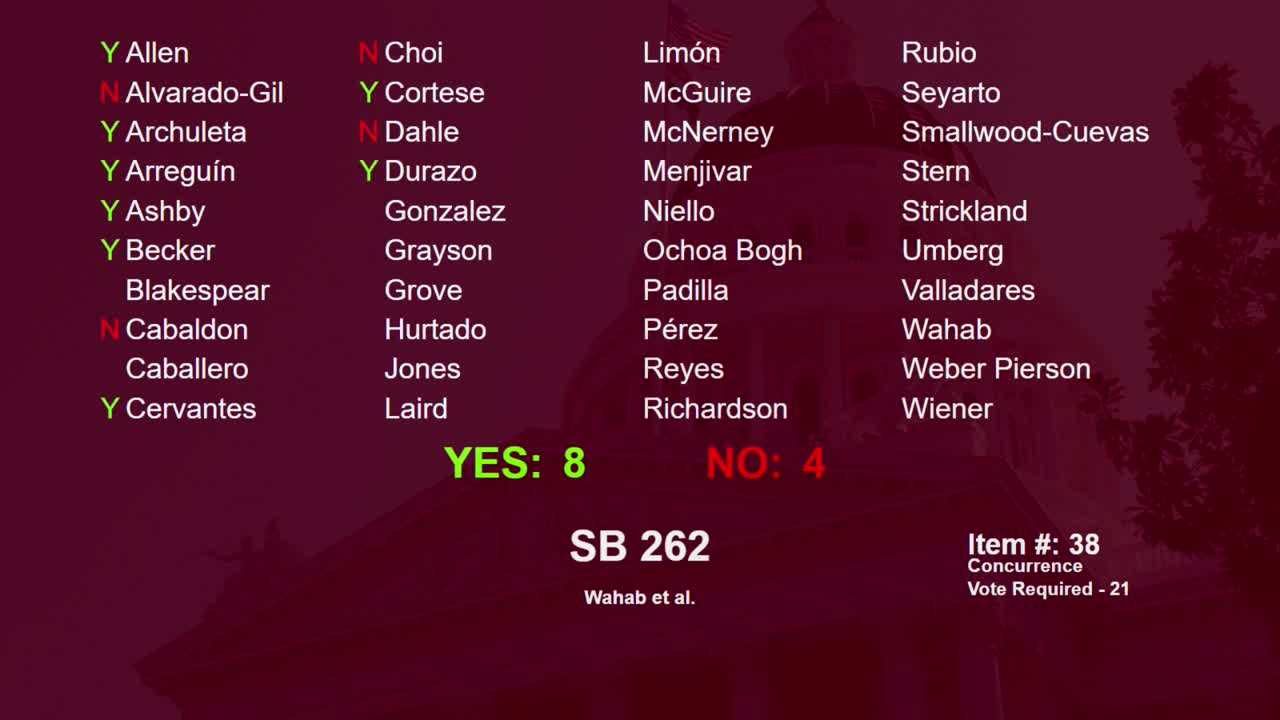 2MIN
Senate Floor
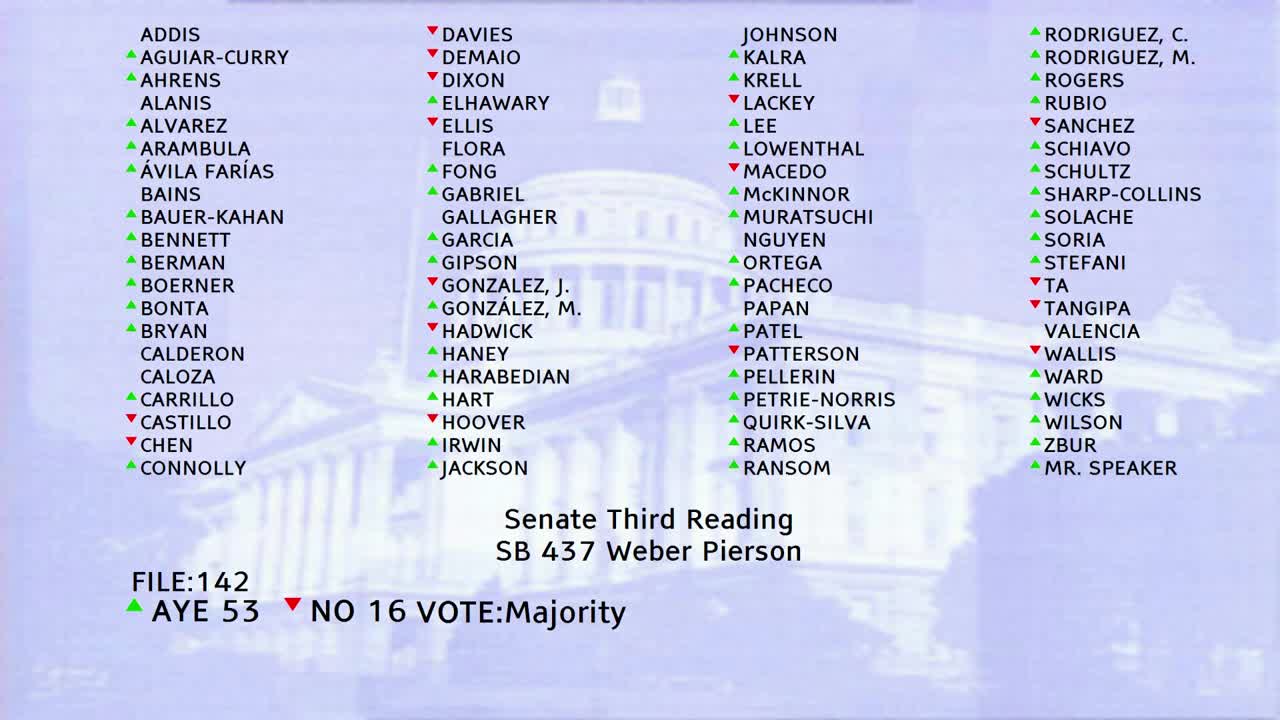 1MIN
Assembly Floor
 17MIN
Assembly Standing Committee on Natural Resources
 1MIN
Senate Floor
 11SEC
Senate Standing Committee on Appropriations
 30MIN
Senate Standing Committee on Environmental Quality
Bill Author